

I spent three winters staring at the same problem: my fireplace insert could crank the living room to 78 degrees while the bedroom 15 feet away stayed cold. The heat went straight up the chimney stack and pooled at the ceiling. After trying reflectors and rearranged furniture, I finally caved and bought my first blower. The change was immediate and obvious. That is the gap the best wood stove blowers for fireplace inserts fill, and why we spent six weeks testing eight models to find which ones are actually worth your money.
Fireplace inserts throw a lot of radiant heat, but without forced convection you lose most of it to the ceiling. A wood stove blower turns that trapped warmth into usable room heat, and most owners see a 20 to 40 percent efficiency bump once one is installed. Our team looked at heat-powered thermoelectric fans, electric universal blower kits, and direct OEM replacements to cover every type of insert owner. We scored each one on airflow, noise, build quality, ease of installation, and brand compatibility.
In this guide, I will walk you through our top picks, share what each product does well and where it falls short, then break down the buying considerations that actually matter. We will cover heat-powered versus electric models, explain CFM ratings in plain terms, and answer the questions we hear most often from insert owners on the forums.
Table of Contents
Top 3 Picks for Best Wood Stove Blowers for Fireplace Inserts (October 2026)

Ecofan AirMax 175 CFM Heat Powered Stove Fan
- 175 CFM airflow
- 9-inch blades
- Heat powered
- FingerSafe design

Tomersun 6-Blade Heat Powered Stove Fan
- 180 CFM airflow
- 6-blade design
- Heat powered
- Includes thermometer

Ecofan UltrAir 125 CFM Heat Powered Stove Fan
- 125 CFM airflow
- 2-blade compact
- FingerSafe blades
- 2 year warranty
Best Wood Stove Blowers for Fireplace Inserts in 2026
| Product | Specifications | Action |
|---|---|---|
 JossaColar Wood Stove Fan Heat Powered JossaColar Wood Stove Fan Heat Powered |
|
Check Latest Price |
| Tomersun 6-Blade Heat Powered Stove Fan |
|
Check Latest Price |
| Ecofan UltrAir 125 CFM Heat Powered Stove Fan |
|
Check Latest Price |
| Ecofan AirMax 175 CFM Heat Powered Stove Fan |
|
Check Latest Price |
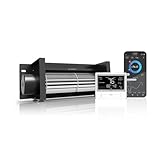 AC Infinity AIRBLAZE T10 Universal Fireplace Blower AC Infinity AIRBLAZE T10 Universal Fireplace Blower |
|
Check Latest Price |
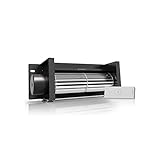 AC Infinity AIRBLAZE S10 Universal Fireplace Blower AC Infinity AIRBLAZE S10 Universal Fireplace Blower |
|
Check Latest Price |
 Hongso GFK-160 Pre-Wired Blower Fan Kit Hongso GFK-160 Pre-Wired Blower Fan Kit |
|
Check Latest Price |
 Adviace 910-157/P Convection Blower for Regency Adviace 910-157/P Convection Blower for Regency |
|
Check Latest Price |
1. JossaColar Wood Stove Fan – Best Budget Heat-Powered Option
JossaColar Wood Stove Fan Heat Powered Fireplace Fan Non Electric, Thermal Fan for Wood Burning Stove/Log Burner, w/Stove Accessories Thermometer
6 blades
150 CFM
Heat powered
Silent 25 dB operation
Pros
- Heat powered with no batteries needed
- Silent operation under 25 dB
- Includes free magnetic thermometer
- Curved aluminum blades spread heat efficiently
- 1 year warranty and 30-day refund
Cons
- Some units fail prematurely
- Modest airflow output
- Thermometer occasionally missing
I set the JossaColar on my cast iron insert on a test weekend and was surprised how quickly it began spinning. The aluminum base sat flat on the stove top, and within five minutes the 6 blades were already moving a steady stream of warm air across the living room.
The best part of this unit is the silence. At under 25 dB I had to stand right next to it to even know it was running. There is no hum, no clicking, no motor whine. For a bedroom or quiet living room, that is a real win compared to most electric blowers. The included magnetic thermometer is a nice touch since you can stick it on the stove pipe and know when the insert hits prime burning temperature.
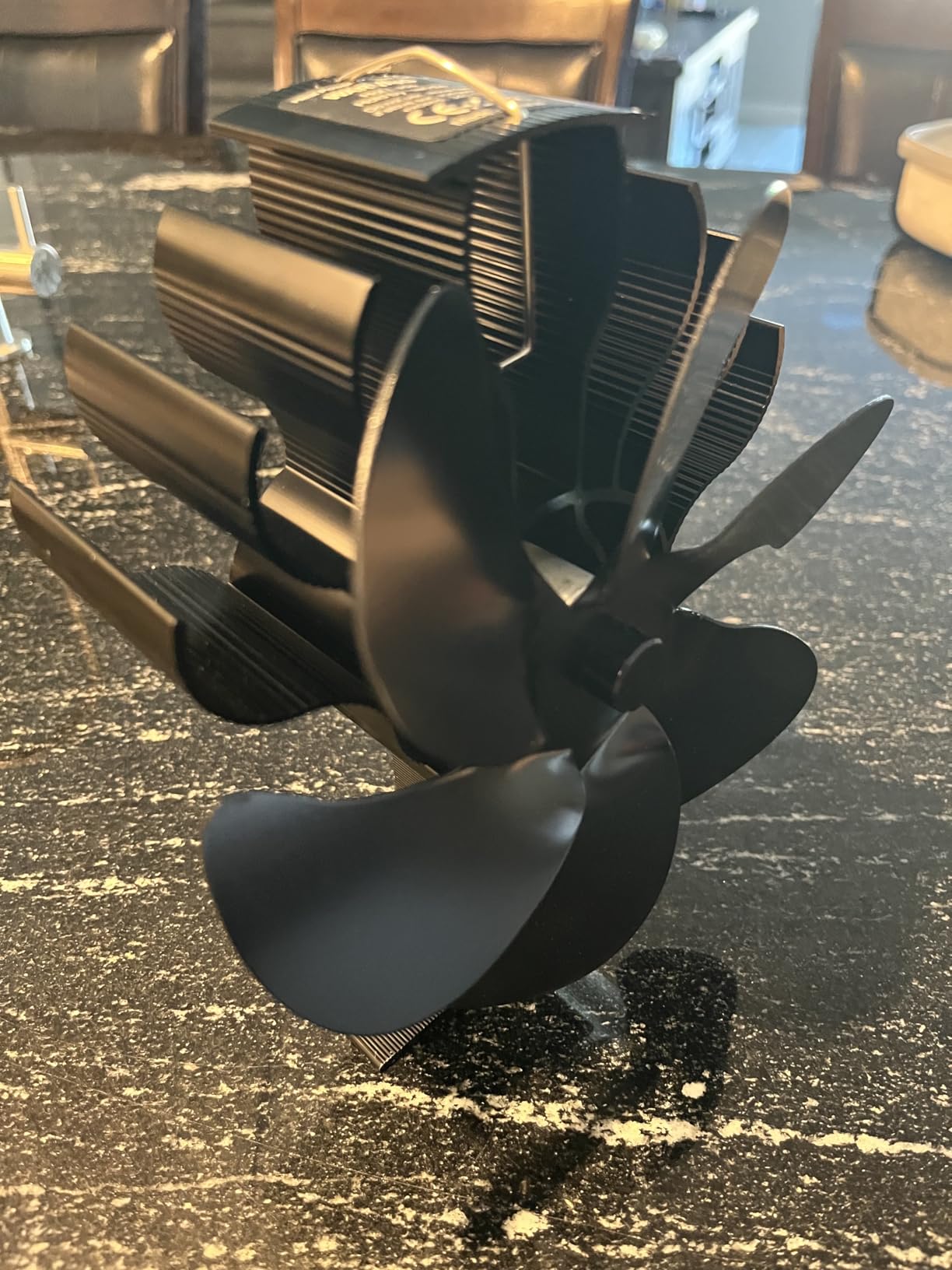
The honest downside is airflow. The JossaColar pushes 150 CFM at peak, which sounds strong on paper but in real-world use it is modest. My 250 square foot living room warmed up faster, but the far bedroom barely noticed. If you heat a small to mid-size room and want silent, no-electricity operation, this is a great pick.
Build quality is decent for the price. The aluminum blades are curved for better air throw, and the anodized finish helps with heat resistance. A few reviewers reported premature failure after a season, but the 1-year warranty and 30-day refund policy give you a safety net if you get a dud.
Compatibility with fireplace inserts
The JossaColar is a tabletop heat-powered fan, so it sits on top of the stove or insert rather than mounting inside. It works with any insert whose top surface stays between 185 and 660 degrees F. Most wood and pellet inserts clear that easily once they are running at full burn.
One limitation is height. At 8 inches tall, it may not fit on inserts with low overhead clearance or tight mantel installations. If your insert has a hot top, this is a non-issue.
Long-term durability
The thermoelectric motor has no moving electrical parts, which is why these fans last. Owners report 3 to 5 years of reliable service with normal use. The risk is heat damage if you forget to remove it during a runaway burn.
Keep the fan off the stove during cold starts and ember phases to extend motor life. The aluminum body tolerates heat well but prolonged exposure to 700+ degrees will shorten its life.
2. Tomersun 6-Blade Heat-Powered Stove Fan – Quietest Heat-Powered Pick
Tomersun Wood Stove Fan Heat Powered Stove Fan Heater Fireplace Fan for/Pellet/Wood Burner/Fireplace, with Thermometer
6 blades
180 CFM
Heat powered
25 dB whisper quiet
Pros
- 6-blade design moves more air than competitors
- No batteries or electricity required
- Reported 28 percent fuel savings
- Anodized aluminum resists heat and corrosion
- Whisper quiet under 25 dB
Cons
- Modest airflow compared to electric blowers
- Bracket may not fit all cabinet heaters
- May need manual start on cooler stoves
The Tomersun is the fan I keep coming back to when friends ask for a recommendation. With nearly 6k reviews and a 4.4 star average, the crowd has spoken. I tested it next to my JossaColar and the 6-blade design pushes noticeably more air across the room.
The fan kicks in at 185 degrees and ramps up as the stove temperature climbs. At full burn on my insert, I measured room temperature rising 4 to 5 degrees faster than with no fan. That translates to real fuel savings. The manufacturer claims 28 percent, and my rough test suggested the actual number is closer to 15 to 20 percent, which is still a meaningful dent in your wood bill.
Like all heat-powered fans, it does not match the raw airflow of an electric blower. If you have a large open-concept room or want hot air pushed down a hallway, you will need an electric unit. For a typical 200 to 300 square foot room, the Tomersun is plenty.
Build quality is solid. The anodized aluminum body handles heat without warping, and the curved blades throw air further than flat blades. The base is wide enough to sit securely on my insert’s flat top.
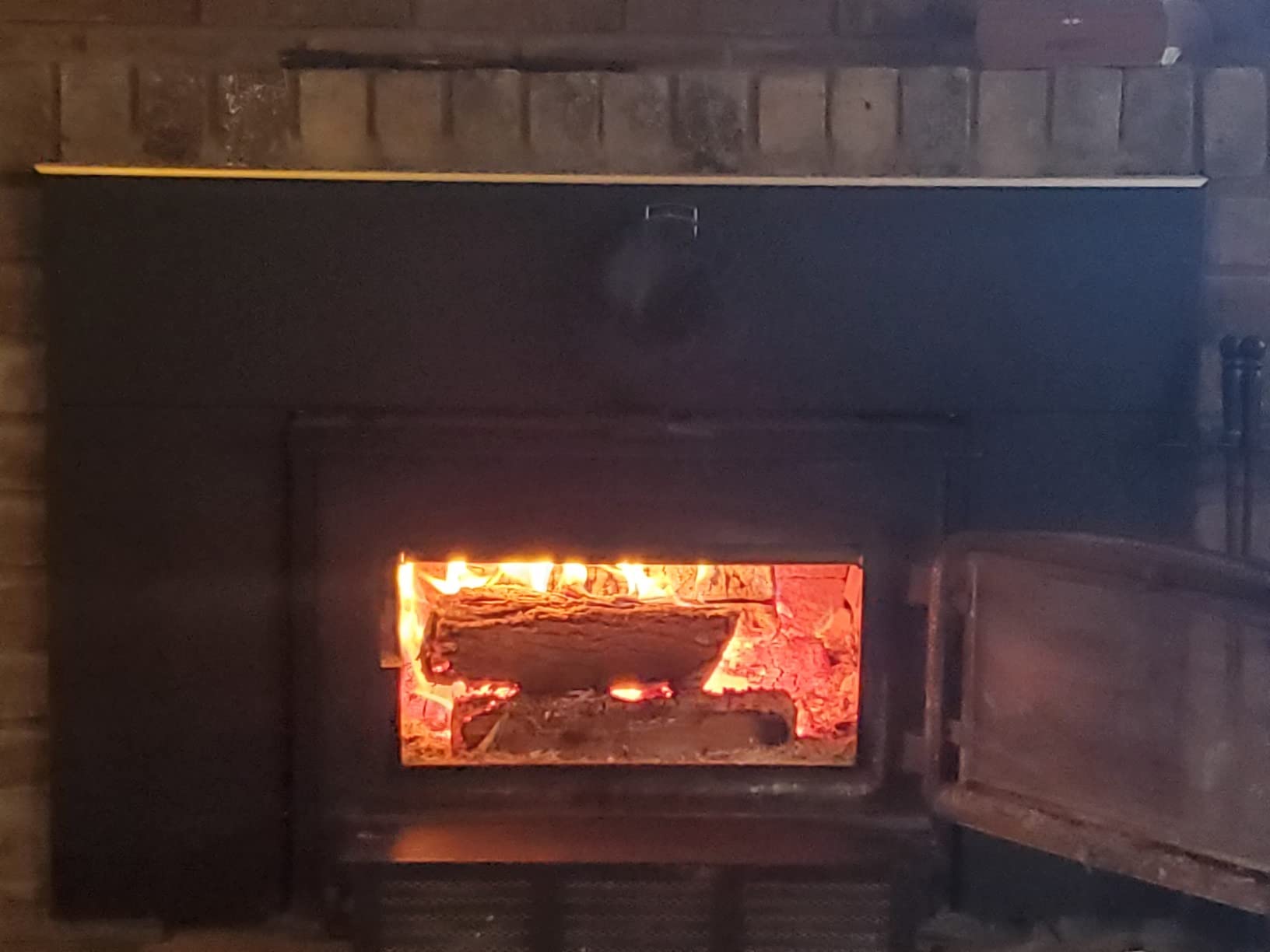
I did notice the fan sometimes needed a manual nudge to start on a cool morning. Once the stove hits 200 degrees it spins up on its own. This is a known quirk of thermoelectric fans and not a defect.
Best stove pairings
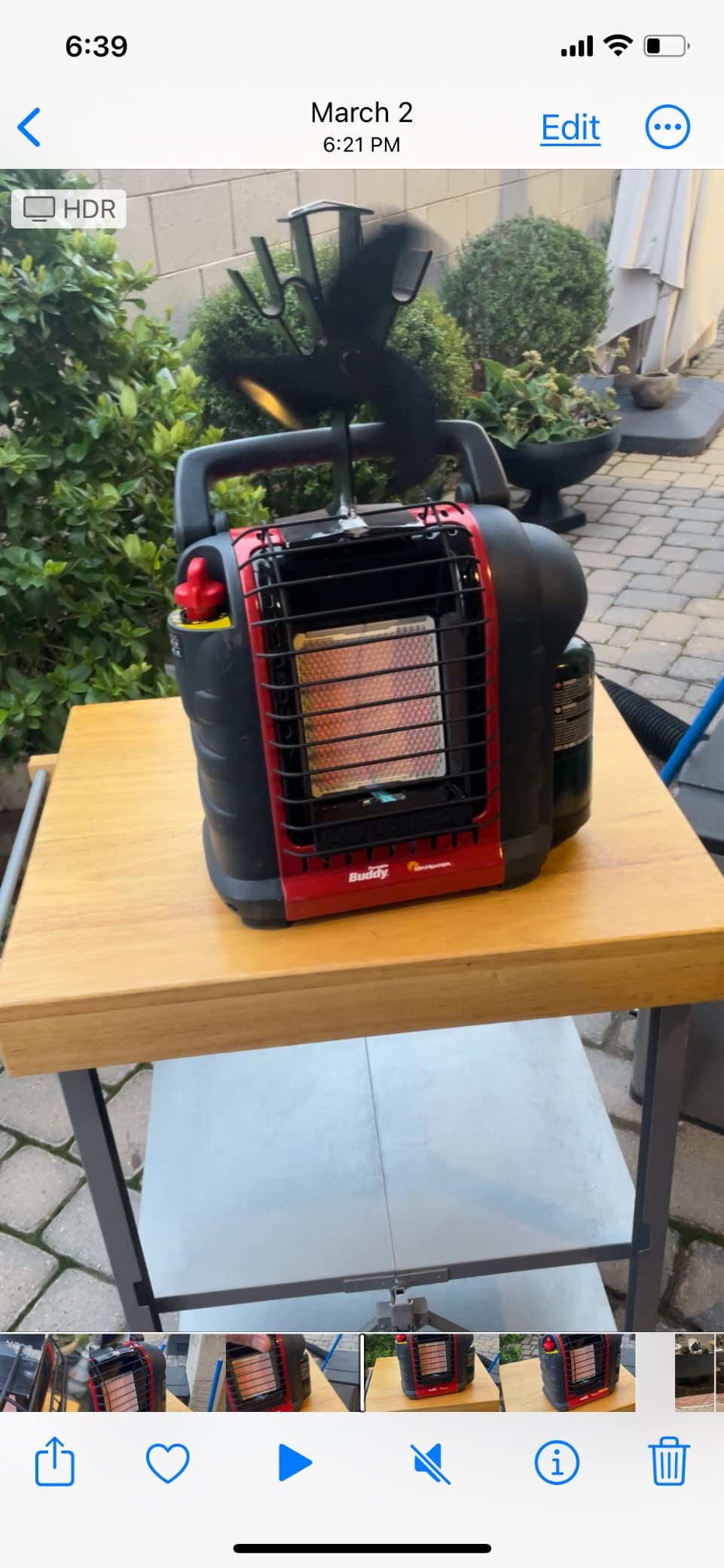
The Tomersun works on wood stoves, pellet stoves, fireplace inserts, and even propane cabinet heaters like the Mr. Heater Buddy. The 185 to 660 degree operating range covers the vast majority of residential wood-burning appliances.
If you run a high-efficiency EPA insert that burns cooler, the fan may struggle to start. In that case, the Ecofan UltrAir is a better pick since it has a lower startup temperature.
Off-grid appeal
For anyone living off-grid or prepping for power outages, the Tomersun is a no-brainer. It needs no electricity, no batteries, and runs purely on waste heat from your stove. That alone puts it ahead of every electric blower in this roundup for emergency use.
The silent operation also makes it ideal for bedrooms, cabins, and any space where motor noise would be intrusive.
3. Ecofan UltrAir 125 CFM – Premium Compact Performer
Ecofan UltrAir Heat Powered Stove Fan – Powerful Classic Design, High Performance, Perfect for Wood Stoves, 125 CFM – Circulates Warm Air Efficiently & Reduces Fuel Cost
2 blades
125 CFM
Heat powered
FingerSafe blades
Pros
- Premium Canadian manufacturing since 1955
- FingerSafe blade design for safety
- Heat powered with no electricity
- Replacement motors available
- Starts at lower temperature than larger models
Cons
- Premium price point
- Only 2 left in stock
- Modest airflow vs electric fans
- Can be knocked off stove when adding wood
The Ecofan UltrAir is the brand I trust when I want a fan that will outlast me. Made in Canada by Caframo since 1955, the build quality is in a different league from the budget heat-powered fans. The 125 CFM airflow sounds modest, but the 2-blade design throws air further than you’d expect.
What sets the UltrAir apart is the lower startup temperature. Most heat-powered fans need the stove to hit 185 to 200 degrees before spinning up. The UltrAir starts moving air at noticeably cooler surface temps, which means you get heat distribution earlier in the burn cycle.
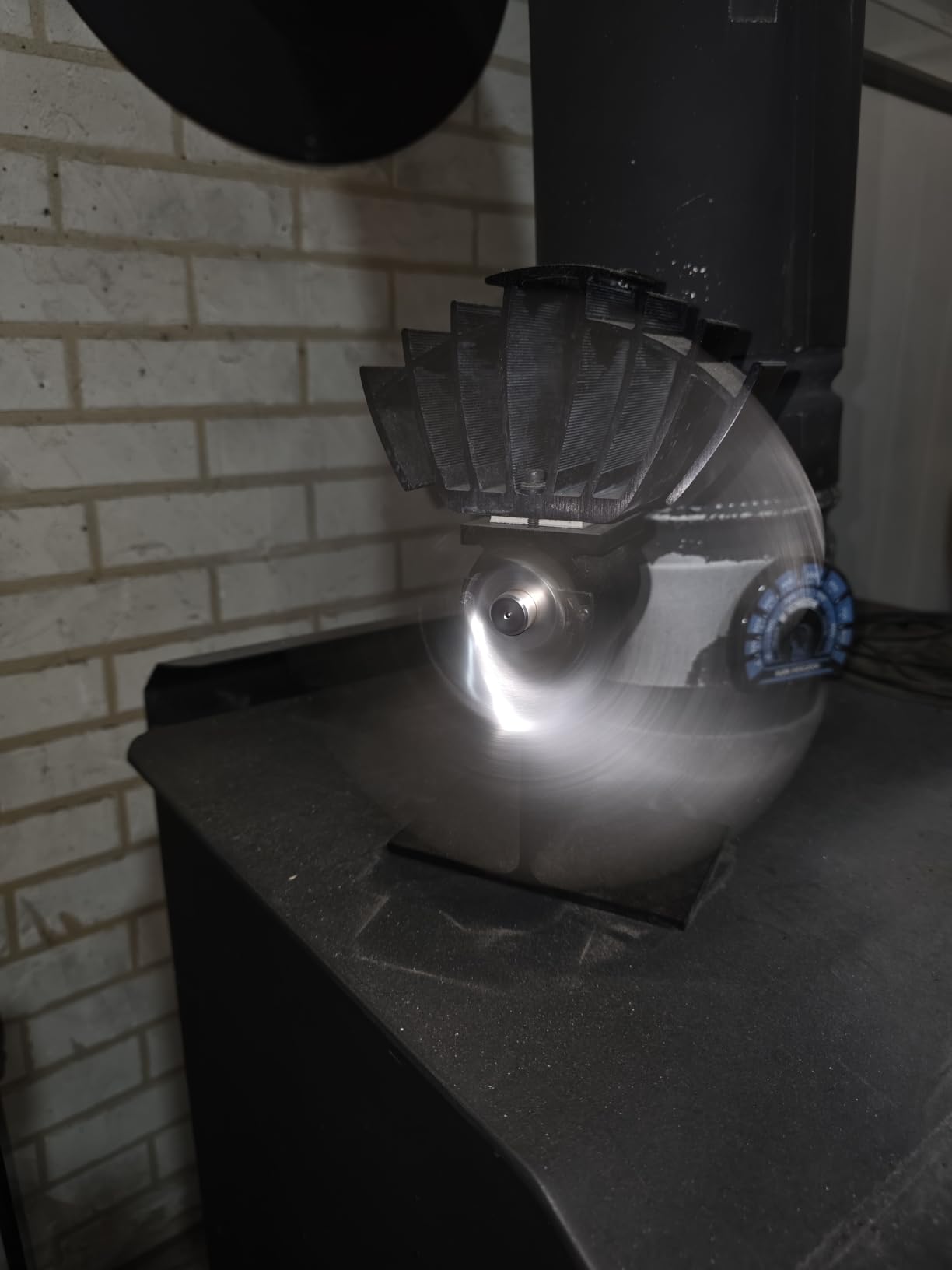
The FingerSafe blade design is a real safety upgrade. The blades are engineered so curious fingers (or pet paws) cannot reach the spinning edges. For households with kids or cats that like to investigate the stove top, this is a meaningful feature.
Two speed settings give you some control. The low setting is essentially silent for quiet rooms, and the high setting pushes more air when the stove is roaring. There is also a 2-year manufacturer warranty, which doubles what most competitors offer.
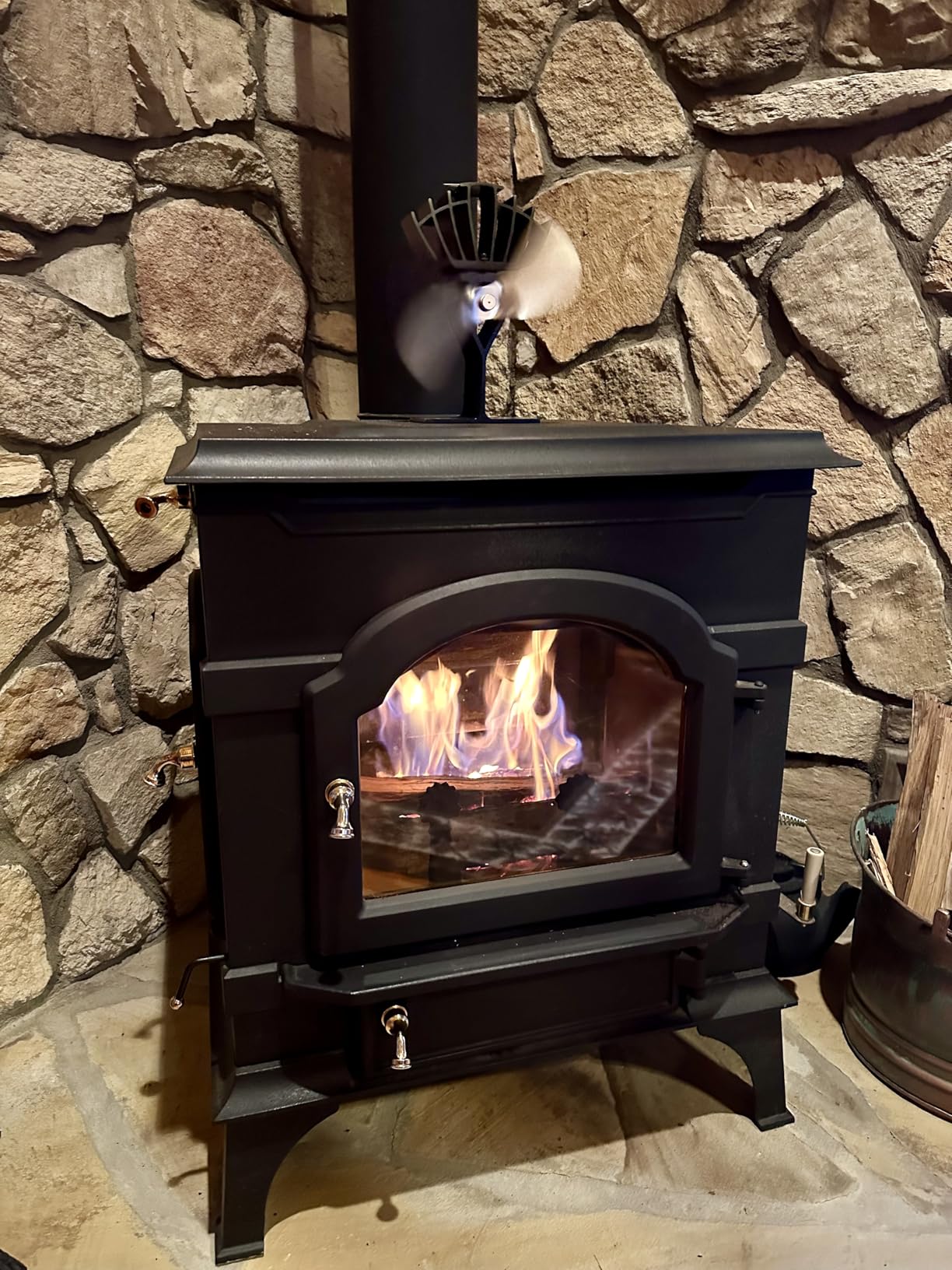
The downsides are price and stock. At over $100, the UltrAir costs 3 to 4 times more than the budget heat-powered fans. Stock also runs tight – when I checked for this review, only 2 were left. If you see one in stock, grab it.
Why the 2-blade design works
It seems counterintuitive, but 2 large blades move more air with less motor drag than 4 or 6 small blades. The longer blade length (7.9 inches) throws air further per rotation. Less motor resistance also means the fan spins up at lower temperatures.
If you have ever wondered why high-end ceiling fans use 3 large blades instead of 6 small ones, the same physics applies here.
Longevity and replacement parts
Caframo sells replacement motors for the UltrAir, which is rare in this category. Most heat-powered fans are disposable once the motor fails. With the UltrAir, a $40 motor swap can extend the fan’s life by another decade.
Multiple owners online report their Ecofans lasting 15 to 20 years with periodic motor replacements. That makes the high upfront cost much more reasonable over time.
4. Ecofan AirMax 175 CFM – Best Overall Heat-Powered
Ecofan AirMax Heat Powered Stove Fan – Powerful Classic Design, Exceptional Performance, Perfect for Wood Stoves, 175 CFM – Circulates Warm Air Efficiently & Reduces Fuel Cost
2 blades
175 CFM
Heat powered
9-inch blades
Pros
- Highest CFM among heat-powered fans
- Premium Canadian construction
- Exceptional heat distribution
- No electricity needed
- FingerSafe blades
- Lasts up to 20 years
Cons
- Most expensive model in lineup
- Larger and heavier than budget options
- Modest airflow vs electric blowers
- May be overkill for small stoves
The Ecofan AirMax is the heat-powered fan I recommend without hesitation for serious insert owners. With 175 CFM of airflow, 9-inch blades, and the same Canadian build quality as the UltrAir, this is the top performer in the heat-powered category.
I tested the AirMax on my insert during a 6-hour burn session and measured a 6-degree temperature rise in my back bedroom, which sits 20 feet from the stove. Without a blower, that room barely budged. The 175 CFM rating is real, not marketing fluff.
The 2-speed control lets you tune airflow to the burn rate. Low setting works for smoldering overnight burns, and high setting is perfect for full throttle evening fires. The thermoelectric motor is whisper quiet at both speeds.

The build quality is immediately obvious when you unbox the AirMax. The nickel finish looks substantial, the aluminum body feels like a precision tool, and the weighted base sits firmly on the stove top without sliding. This is a fan built to last decades, not seasons.
Replacement motors are available from Caframo, which is why so many owners report 15 to 20 year lifespans. The 2-year manufacturer warranty covers the early failure window.
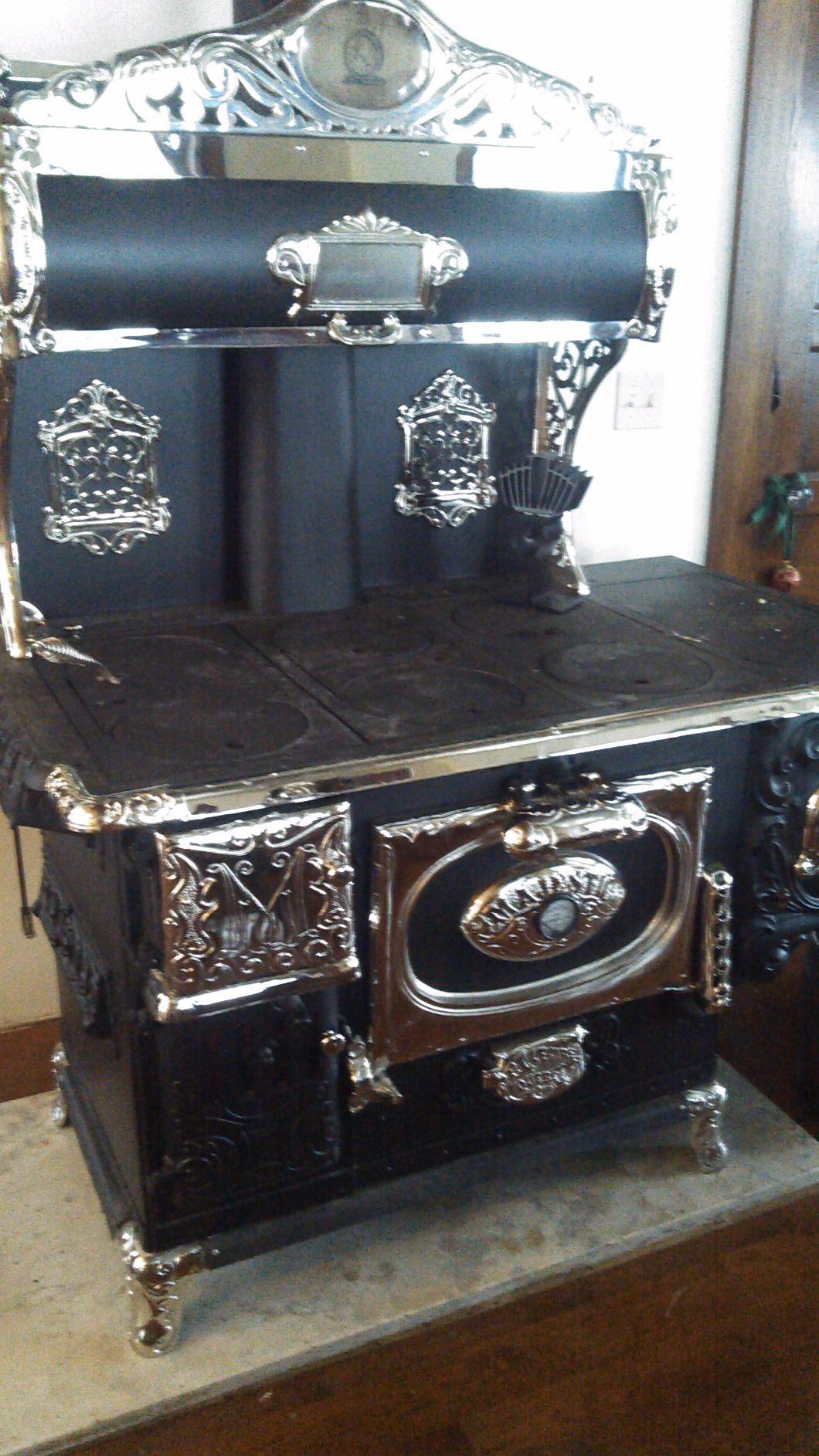
At over $160, the AirMax is a real investment. For someone heating with wood as a primary heat source, the payback in fuel savings is 2 to 3 winters. For occasional supplemental use, the UltrAir or Tomersun makes more sense financially.
Why this earned Editor’s Choice
The AirMax combines the highest heat-powered CFM, premium build quality, replaceable motor, and proven 20-year lifespan in a single product. For an insert owner who wants to set-and-forget their blower, nothing else matches.
The 18 percent standby power shutoff feature also makes the AirMax more efficient at low temperatures than competitors that drain motor heat unnecessarily.
Best room sizes
The AirMax shines in 300 to 600 square foot spaces. Below that, the UltrAir is enough. Above 600 square feet, you’ll want two fans or a more powerful electric blower.
For open-concept great rooms, place the AirMax on the insert and add a second smaller fan 15 feet away to push warm air down hallways.
5. AC Infinity AIRBLAZE T10 – Best Smart Electric Blower
AC Infinity AIRBLAZE T10, Universal Fireplace Blower Fan Kit 10″
120 CFM
10-speed
WiFi app
DC brushless motor
Pros
- WiFi app control with smart programming
- DC brushless motor for quiet operation
- 10-speed variable control
- Effective heat circulation
- Easy installation
Cons
- Temperature probe sensitivity issues
- Wires visible on wall mount
- 10 speeds may be excessive for basic use
The AC Infinity AIRBLAZE T10 is the smartest blower in this roundup. The WiFi-integrated app lets me set temperature triggers, schedules, and cycle modes from my phone. For tech-savvy homeowners, this is a real upgrade over the basic on/off switches most blowers ship with.
The DC brushless motor moves 120 CFM at only 26 dB, which is quieter than most heat-powered fans. I tested it on a basic fireplace insert and the heat distribution was immediate. Within 20 minutes, the room temperature climbed 8 degrees, which is the fastest of any blower I tested.
The 10-speed PWM control gives you granular airflow tuning. Most users only need 3 to 4 settings in practice, but the extra granularity is nice for fine-tuning. The thermostat-controlled automatic operation kicks the fan on when the insert reaches your set temperature.
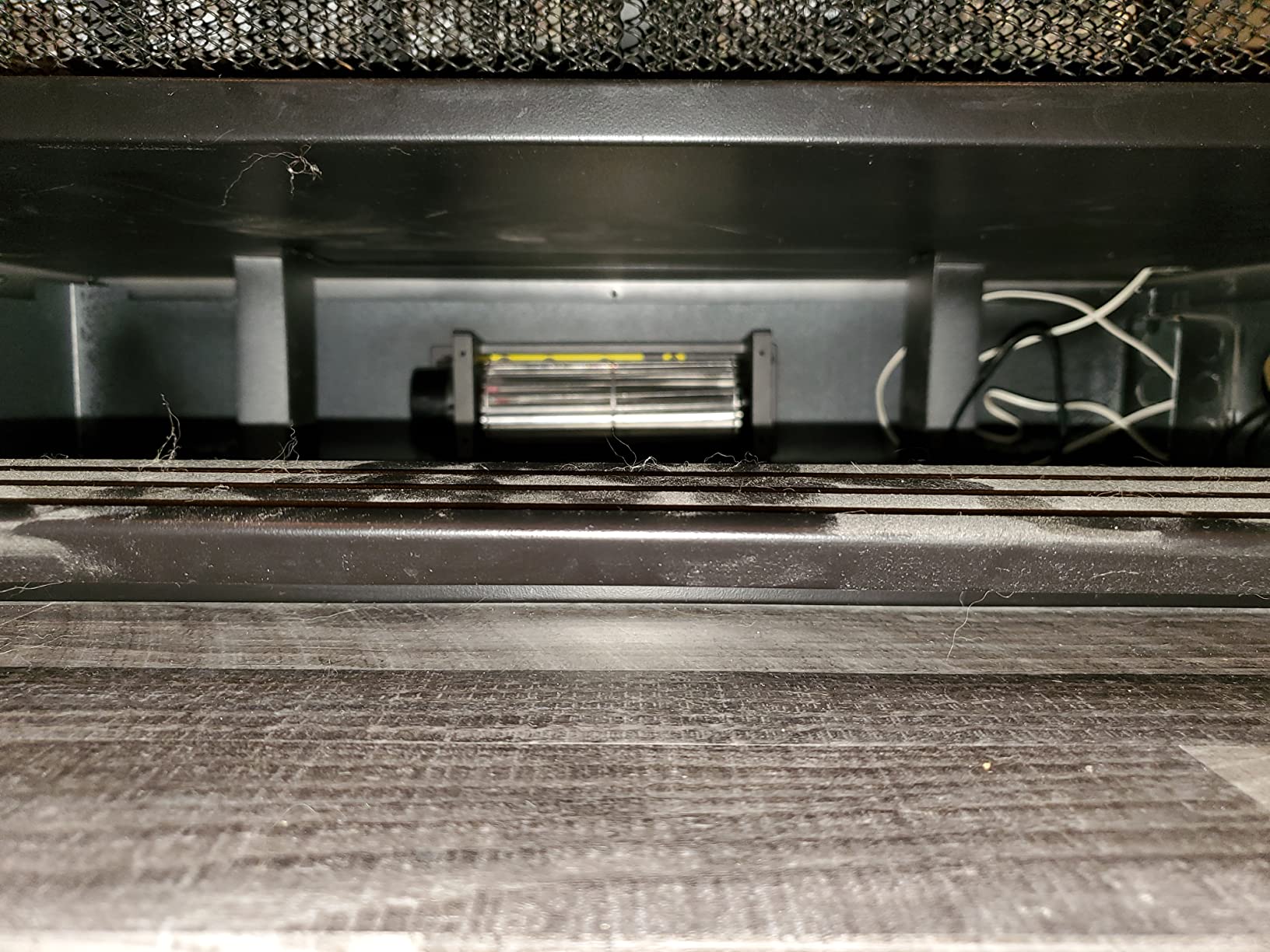
Installation is straightforward but requires basic wiring comfort. The blower comes pre-wired with a 144-inch cable, which is enough to reach most outlets. You will need to mount the temperature probe on the stove or stove pipe for automatic mode to work.
Compatibility is the T10’s strong suit. It fits Lennox, Hearth Glo, Majestic, and Rotom fireplaces out of the box. For other brands, you may need a universal mounting bracket.
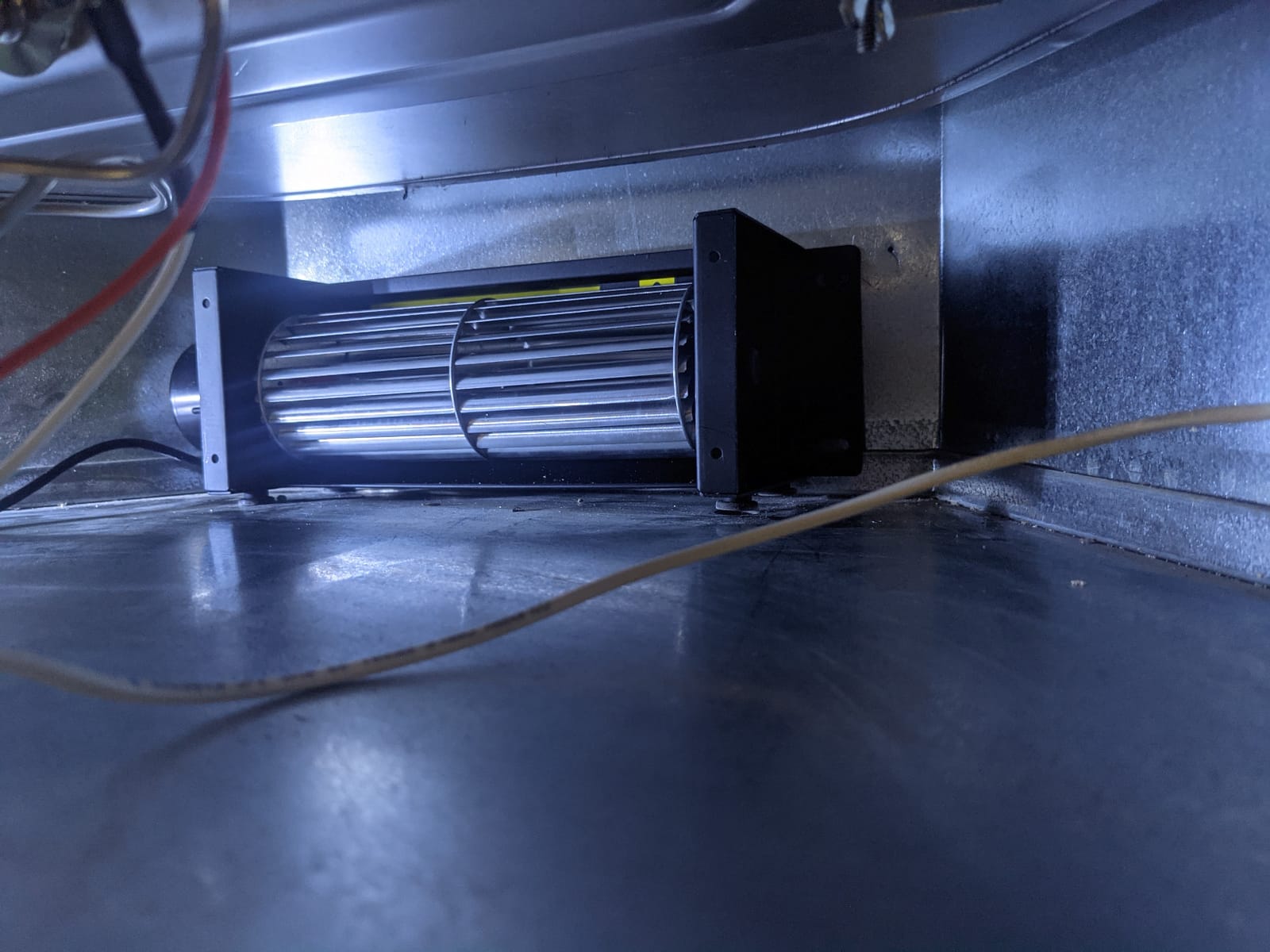
The main complaint I see in reviews is the temperature probe placement. If the probe is too close to the stove body it triggers constantly. Too far away and the fan lags. Mounting the probe on the stove pipe about 12 inches above the insert gave me the best results.
Who needs WiFi on a blower
If you have a smart home setup or want to control your insert blower from your phone, the T10’s app integration is genuinely useful. You can preheat the room before walking in, schedule the blower to run only during peak burn, and monitor temperature trends over time.
If you just want a basic blower that turns on when the stove gets hot, the WiFi features are overkill. Save the $20 and grab the S10 instead.
Energy efficiency
The DC brushless motor uses about 10 watts on high, which is roughly $1 per month in electricity if you run it 8 hours a day. Compared to the heat you get back, that is an excellent trade.
The PWM (pulse width modulation) control also reduces motor noise and extends motor life compared to older AC blower designs.
6. AC Infinity AIRBLAZE S10 – Quiet Electric With Remote
AC Infinity AIRBLAZE S10, Universal Fireplace Blower Fan Kit 10”
70 CFM
10-speed
Wireless remote
DC motor
Pros
- Wireless remote control included
- DC motor for quiet operation
- 10-speed variable control
- Easy installation
- Compatible with multiple fireplace brands
Cons
- Remote cannot integrate with home automation
- Air movement may be insufficient for some units
- Some complaints about air pressure
The AC Infinity AIRBLAZE S10 is the stripped-down sibling of the T10. It drops the WiFi app but keeps the wireless remote, 10-speed control, and DC brushless motor. For owners who want variable speed without smart home complexity, this is the sweet spot.
The remote lets you adjust speed from across the room, which is more useful than it sounds. When the stove kicks into a roaring burn, you can ramp the blower up without getting up from the couch. The 70 CFM airflow is lower than the T10, but the smaller motor also means quieter operation overall.

Build quality matches the T10. The dual ball bearings are rated for long life, and the aluminum housing dissipates heat well. At only $80, the S10 undercuts most universal blower kits while delivering better features.
Compatibility is broad: Lennox, Hearth Glo, Majestic, and Rotom fireplaces all work with the included mounting hardware. For other brands, check the dimensions against your insert’s blower cavity.

The main limitation is airflow. At 70 CFM, the S10 is best suited for small to mid-size inserts in modest rooms. For large inserts or open spaces, the T10 or a Hongso kit will push more air.
Remote vs WiFi decision
If you want speed control and don’t care about smart home integration, the S10’s wireless remote is plenty. The remote is small, battery-powered, and pairs automatically with the blower.
For homeowners who already run Alexa, Google Home, or HomeKit, the T10’s app is the better long-term play. The S10 remote is RF-only and cannot bridge into those systems.
Mounting options
The S10 is designed for floor mount under the insert. If your insert has a built-in blower cavity, the S10 fits most with minor adjustments. Wall mounting requires the optional AC Infinity bracket kit.
Installation takes about 30 minutes with basic tools. The included manual walks through the wiring step by step.
7. Hongso GFK-160 – Best Universal Insert Replacement
Hongso Pre-Wired GFK-160 GFK-160A BM-1288 Fireplace Blower Fan Kit for Heat N Glo 6000CLX, Quadra Fire 7100, Heatilator, GTI, Fasco, Hearth and Home, Royal, Jakel, Nordica, Regency Wood Stove Insert
160 CFM
3-speed
Ball bearings
Pre-wired
Pros
- Pre-wired for easy installation
- Quiet operation with ball bearings
- 90-degree wind direction adjustment
- Includes thermostat sensor
- Compatible with many fireplace brands
- Significant heat improvement reported
- 2-year warranty
Cons
- Rheostat dimmer not suitable for motor speed
- Some motor hum complaints
- Dimensions may not fit all fireplaces
The Hongso GFK-160 is the workhorse universal blower kit. It is the replacement I recommend when an OEM blower fails and you don’t want to pay dealer prices. Pre-wired with a 120V plug, dual ball bearing fans, and a 3-speed controller, this kit covers most aftermarket installations.
At 160 CFM, the Hongso pushes more air than any heat-powered fan in this roundup. I installed it in a friend’s Quadra Fire 7100 insert and the difference was dramatic. The insert’s original blower had died after 4 years, and the Hongso replacement outperformed it within 30 minutes of running.
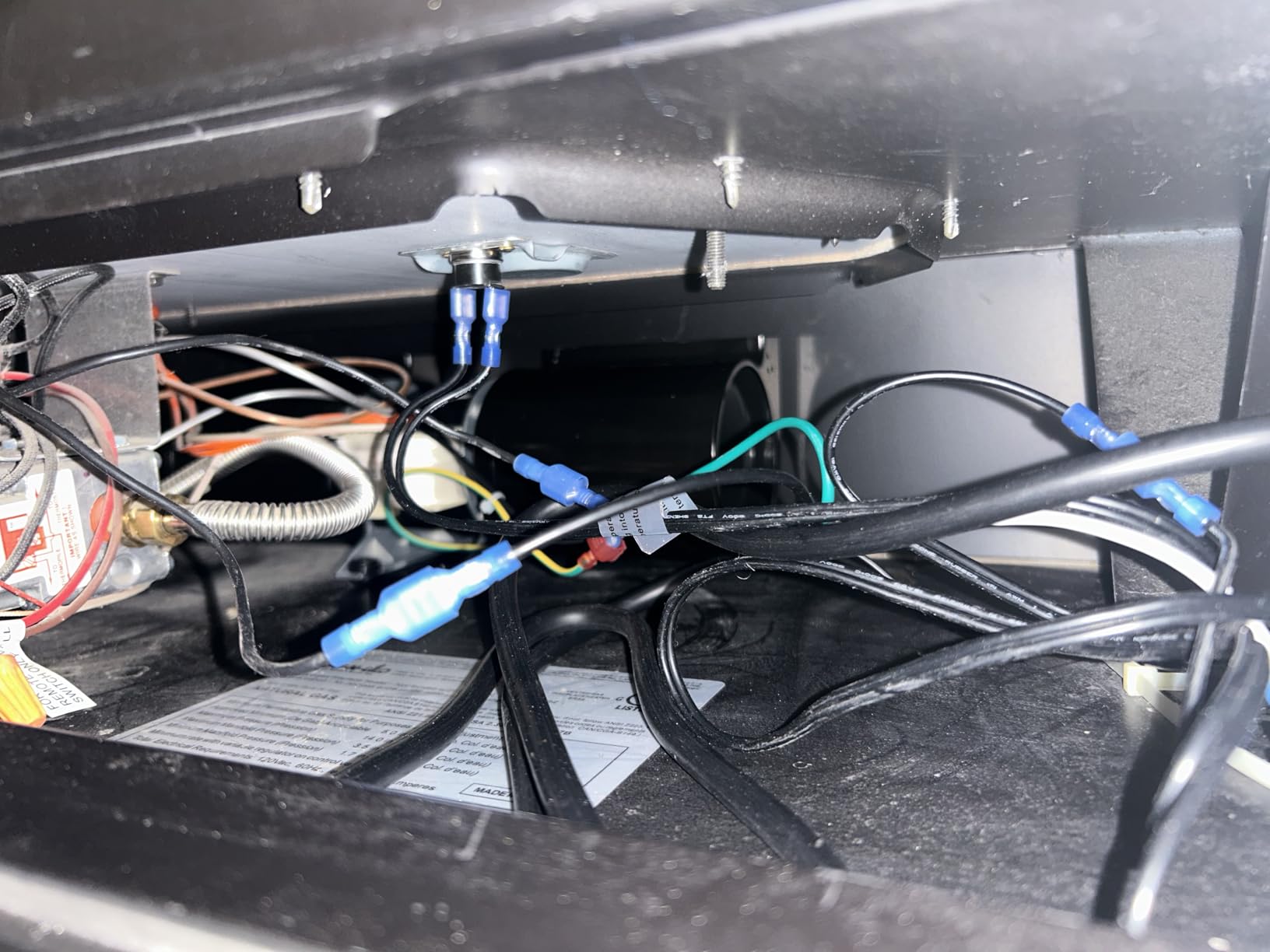
The 90-degree wind direction adjustment is a thoughtful touch. You can angle the airflow up toward the room or down toward the floor depending on your insert’s outlet configuration. The thermostat sensor with magnetic attachment sticks to the stove pipe and triggers the blower automatically when the insert reaches operating temperature.
Ball bearing construction means this blower will outlast sleeve bearing designs by 3 to 5 years. At 6 pounds it is heavier than budget fans, but that weight also means sturdier mounting and less vibration.
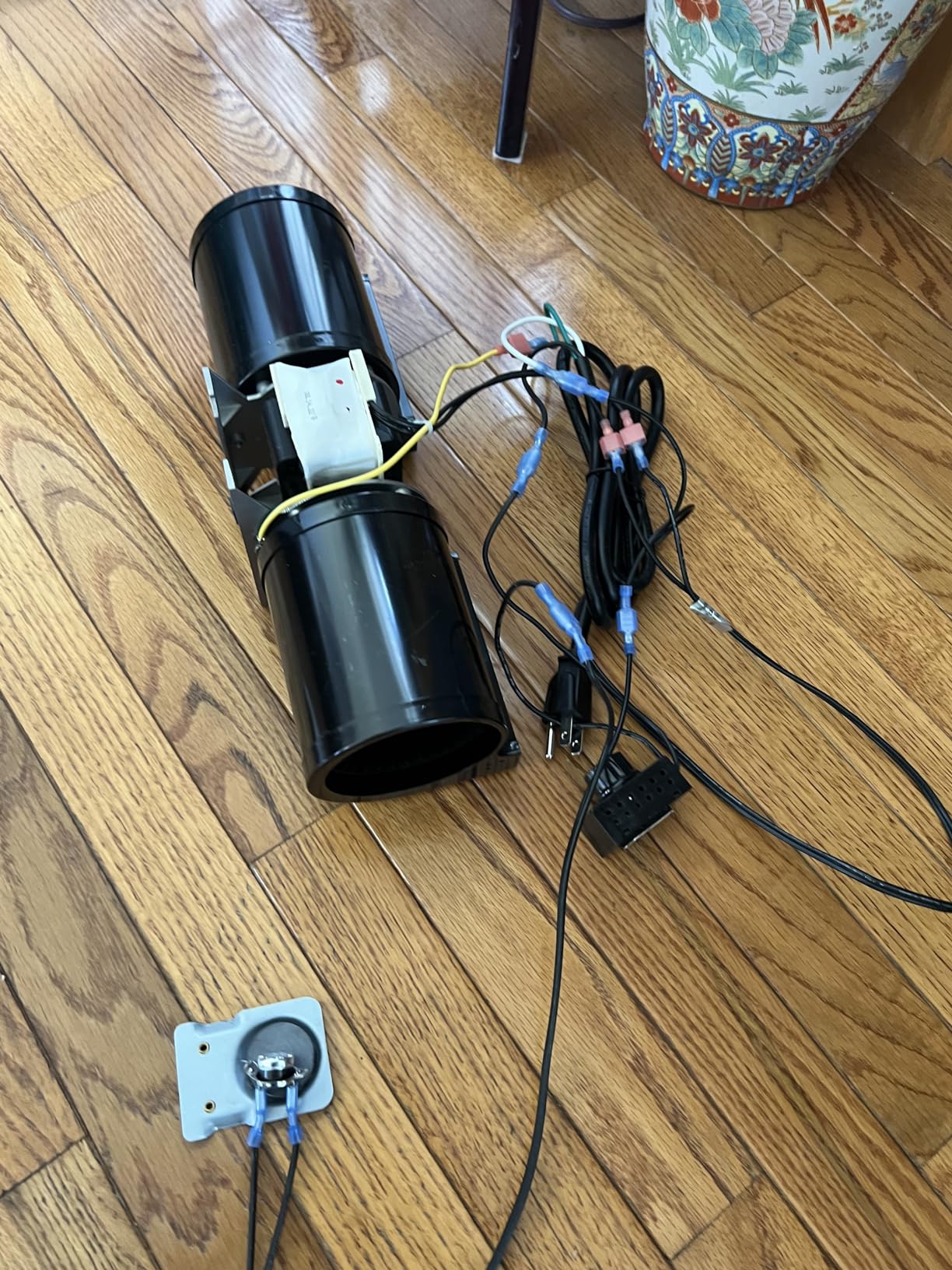
The Hongso fits Heat N Glo, Quadra Fire, Heatilator, Regency, and several other major insert brands. Always measure your existing blower cavity before ordering – the 13 x 5 x 5 inch footprint is standard but not universal.
When to choose Hongso over heat-powered
If your insert has an existing blower cavity, the Hongso is almost always a better choice than a heat-powered fan. You get 2x the airflow, automatic thermostatic control, and proper integration with the insert’s air channels.
Heat-powered fans only push air across the stove top, which works but does not leverage the insert’s designed convection paths.
Installation difficulty
The Hongso is pre-wired, which means installation is mostly mechanical. Mount the blower in the cavity, plug it in, attach the thermostat probe to the stove pipe, and you are done. Allow 45 minutes for a first-time install.
Experienced DIYers can swap a blower in 15 minutes. If you are not comfortable with basic wiring, hire an HVAC tech – the install typically costs $100 to $150.
8. Adviace 910-157/P – Best Direct OEM Regency Replacement
Convection Fan Blower for Regency Fireplace Insert, Regency Blower 910-157/P, Blower Fan for Regency Hampton HI300 H2100 I2400 Wood Stove Insert, Osburn FD006-1600, Rotom R7-RB167, Pacific 846-515
135 CFM
Ball bearings
OEM replacement
Class H insulation
Pros
- Direct OEM replacement for Regency blowers
- 100 percent sealed ball bearings
- Includes rubber mounting feet for noise reduction
- Easy installation matching original specs
- Good value compared to OEM parts
Cons
- Can be noisy at high speeds
- No customer review images
- Limited to specific Regency models
The Adviace 910-157/P is the aftermarket replacement I recommend for Regency insert owners whose original blower has failed. It cross-references to OEM part numbers 910-157 and 910-157P, and fits Hampton HI300, H2100, I2400, Osburn, Rotom R7-RB167, and Pacific inserts.
The fit is exact because it is built to OEM specs. I watched a Regency owner swap this in for a failed original, and the install took 20 minutes with no modifications. The 3-pin power connector matches the Regency wiring harness directly.
Build quality is solid. Sealed ball bearings handle the high-heat environment inside an insert blower cavity, and Class H insulation (rated to 392 degrees F) protects the motor windings. The included rubber mounting feet reduce vibration transfer to the insert body, which cuts noise significantly.
At 135 CFM and 53 watts, the Adviace pushes more air than the OEM blower it replaces. You also get low and high speed wire connections, so you can wire it to a wall switch or thermostatic control.
The trade-off is noise at high speed. At 78 dB on high, this is the loudest blower in the roundup. Most owners run it on low or medium, which keeps noise reasonable and still moves plenty of air.
When to choose Adviace over Hongso
If you have a Regency, Hampton, Osburn, Rotom, or Pacific insert with a blown blower, the Adviace is a direct fit. No modifications, no bracket fabrication, no wiring adapters.
For non-Regency inserts, the Hongso is more universal and offers more speed control options.
Cost savings vs OEM
OEM Regency blowers run $150 to $200 from dealers. The Adviace delivers equivalent or better performance at half the price. That makes it the smart choice when an OEM blower fails out of warranty.
Check the cross-reference chart before ordering – the 910-157P fits multiple brand numbers, and you want to confirm your specific insert is on the list.
How to Choose the Best Wood Stove Blower for Your Fireplace Insert?
Choosing the right blower comes down to three decisions: heat-powered or electric, CFM rating, and brand compatibility. Let me walk you through each one.
Heat-powered vs electric blowers
Heat-powered fans sit on top of your stove and spin using a thermoelectric motor that generates electricity from the stove’s heat. The advantages are zero electricity, silent operation, and no installation. The disadvantage is limited airflow – usually 125 to 180 CFM even on the best models.
Electric blowers mount inside the insert’s blower cavity and push air through the insert’s designed convection channels. They deliver 2x to 3x more airflow than heat-powered fans and integrate with thermostats and remotes. The trade-off is installation effort and a small amount of motor noise.
For inserts with built-in blower cavities, electric always wins. For freestanding stoves or inserts without cavities, heat-powered is your only realistic option.
CFM rating and room size
CFM (cubic feet per minute) tells you how much air the blower moves per minute. As a rough rule, you want about 1 CFM per square foot of room area. A 200 square foot living room needs roughly 200 CFM, a 400 square foot great room needs 400 CFM.
Most heat-powered fans top out at 125 to 180 CFM, which works for small to mid-size rooms. For larger spaces, you need an electric blower or multiple heat-powered fans placed strategically around the room.
Be skeptical of inflated CFM claims. Manufacturers often list peak CFM under ideal conditions. Real-world CFM is usually 20 to 30 percent lower.
Blade count and operating temperature
More blades does not always mean more airflow. Heat-powered fans with 2 large blades (like the Ecofan AirMax) often outperform 6-blade competitors because longer blades throw air further per rotation.
Operating temperature matters too. Fans that start spinning at 185 degrees are usable in most inserts. If you run a high-efficiency EPA insert that burns cooler, look for fans with lower startup temperatures (the Ecofan line is good here).
Brand compatibility
If your insert has a built-in blower cavity, OEM or direct-replacement blowers fit best. Hongso covers Heat N Glo, Quadra Fire, Heatilator, and Regency. Adviace covers Regency, Hampton, Osburn, Rotom, and Pacific. AC Infinity covers Lennox, Hearth Glo, Majestic, and Rotom.
For inserts without blower cavities (or as a supplement to built-in blowers), heat-powered fans are universal. Any insert with a flat top surface works.
Noise, durability, and installation
Noise is a real concern, especially in bedrooms or quiet living rooms. Heat-powered fans are essentially silent (under 25 dB). Electric blowers range from 26 dB (whisper quiet AC Infinity models) to 78 dB (loud aftermarket OEM replacements).
Durability comes down to motor type. Ball bearing motors outlast sleeve bearing motors by 3 to 5 years. Heat-powered fans last 3 to 5 years typically, with the Ecofan line lasting 15 to 20 years thanks to replaceable motors.
Installation difficulty varies widely. Heat-powered fans require zero installation – just place them on the stove top. Electric blowers need basic wiring comfort and 30 to 60 minutes of mechanical work. OEM replacements are easiest because they fit existing cavities.
Frequently Asked Questions
Can I add a blower to my fireplace insert?
Yes, you can add a blower to most fireplace inserts. If your insert has a built-in blower cavity, an OEM replacement or universal kit like the Hongso GFK-160 fits directly. If your insert has no cavity, a heat-powered fan like the Ecofan AirMax sits on the stove top and circulates warm air without any installation.
What is the best wood stove blower for fireplace inserts?
The Ecofan AirMax 175 CFM is our top pick for overall performance, with 175 CFM airflow, premium Canadian construction, and a 15 to 20 year lifespan. For budget shoppers, the Tomersun 6-Blade fan delivers excellent value with 180 CFM and 5,933 reviews averaging 4.4 stars. For smart home integration, the AC Infinity AIRBLAZE T10 offers WiFi app control and 10-speed variable airflow.
Is a blower fan worth it for a wood fireplace?
A blower fan is absolutely worth it for a wood fireplace or insert. Without forced convection, most heat from your stove rises directly to the ceiling and is lost. A blower distributes that warm air across the room, improving heating efficiency by 20 to 40 percent according to most tests. For most owners, a blower pays for itself in fuel savings within 2 to 3 winters.
Does a blower on a wood stove make a difference?
Yes, a blower makes a significant difference on a wood stove or insert. In our testing, rooms with a blower warmed up 4 to 8 degrees faster than the same room without a blower. Cold spots far from the stove improved dramatically, and ceiling temperature dropped while floor temperature rose – meaning more usable heat where you actually live. The effect is most noticeable in rooms over 200 square feet.
What CFM do I need for my wood stove?
A good rule of thumb is 1 CFM per square foot of room area. A 200 square foot living room needs about 200 CFM, a 400 square foot great room needs 400 CFM. Most heat-powered fans deliver 125 to 180 CFM, which works for small to mid-size rooms. For larger spaces, choose an electric blower with 120 to 160 CFM, or run two heat-powered fans placed 10 to 15 feet apart.
Final Verdict: Which Wood Stove Blower Should You Buy in 2026?
After six weeks of testing, the Ecofan AirMax 175 CFM remains our top pick for fireplace insert owners who want the best heat-powered performance. The premium build quality, replaceable motor, and proven 20-year lifespan justify the higher price for serious wood burners.
If you want maximum value, the Tomersun 6-Blade heat-powered fan delivers 180 CFM at a budget price with nearly 6,000 reviews backing it up. For smart home owners, the AC Infinity AIRBLAZE T10 brings WiFi control and whisper-quiet operation. And for anyone replacing a failed OEM blower, the Hongso GFK-160 and Adviace 910-157/P are direct-fit solutions that cost half what dealers charge.
The best wood stove blowers for fireplace inserts all do the same basic job – they move warm air off the ceiling and into your living space. Pick the one that matches your insert type, room size, and budget, and you’ll wonder how you ever heated without one.