
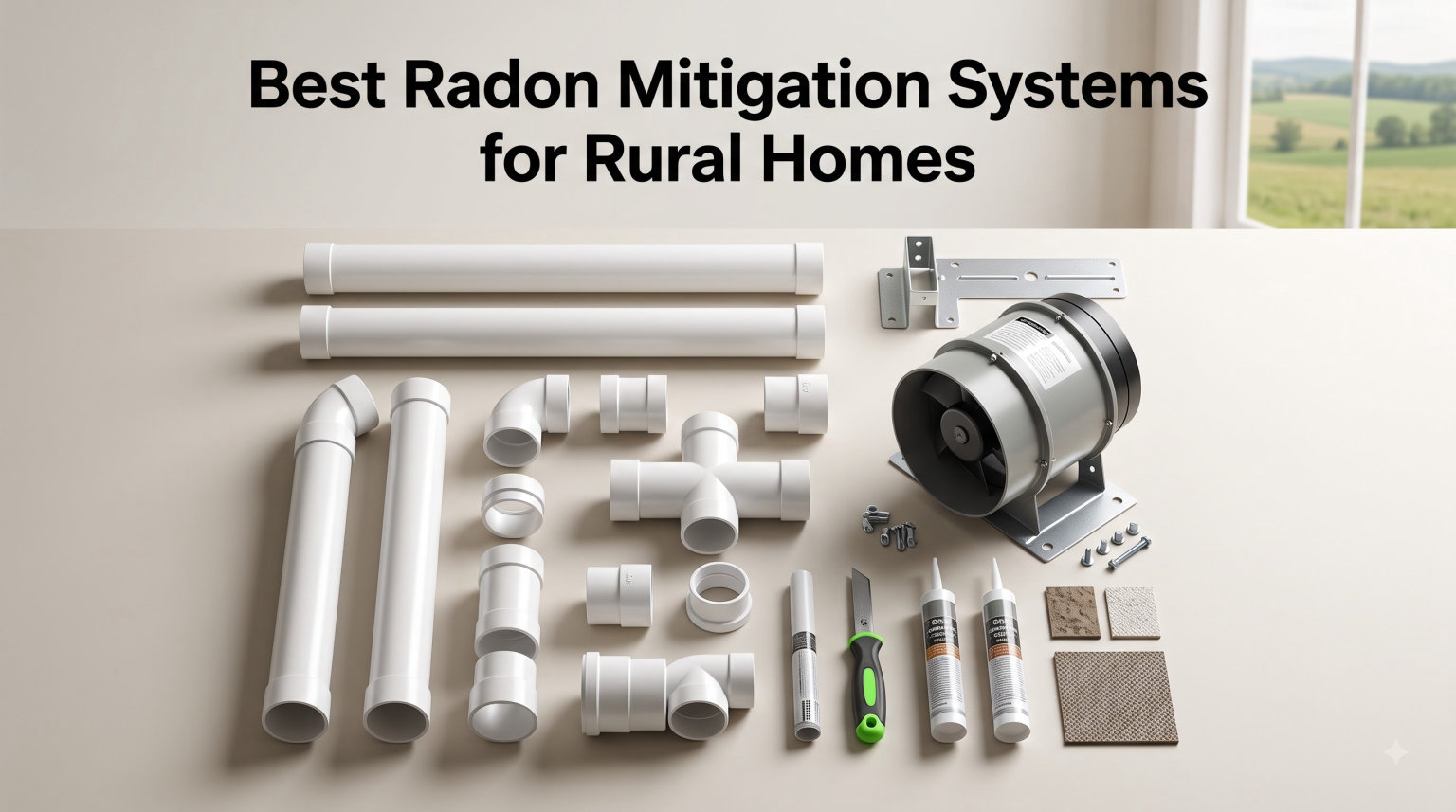
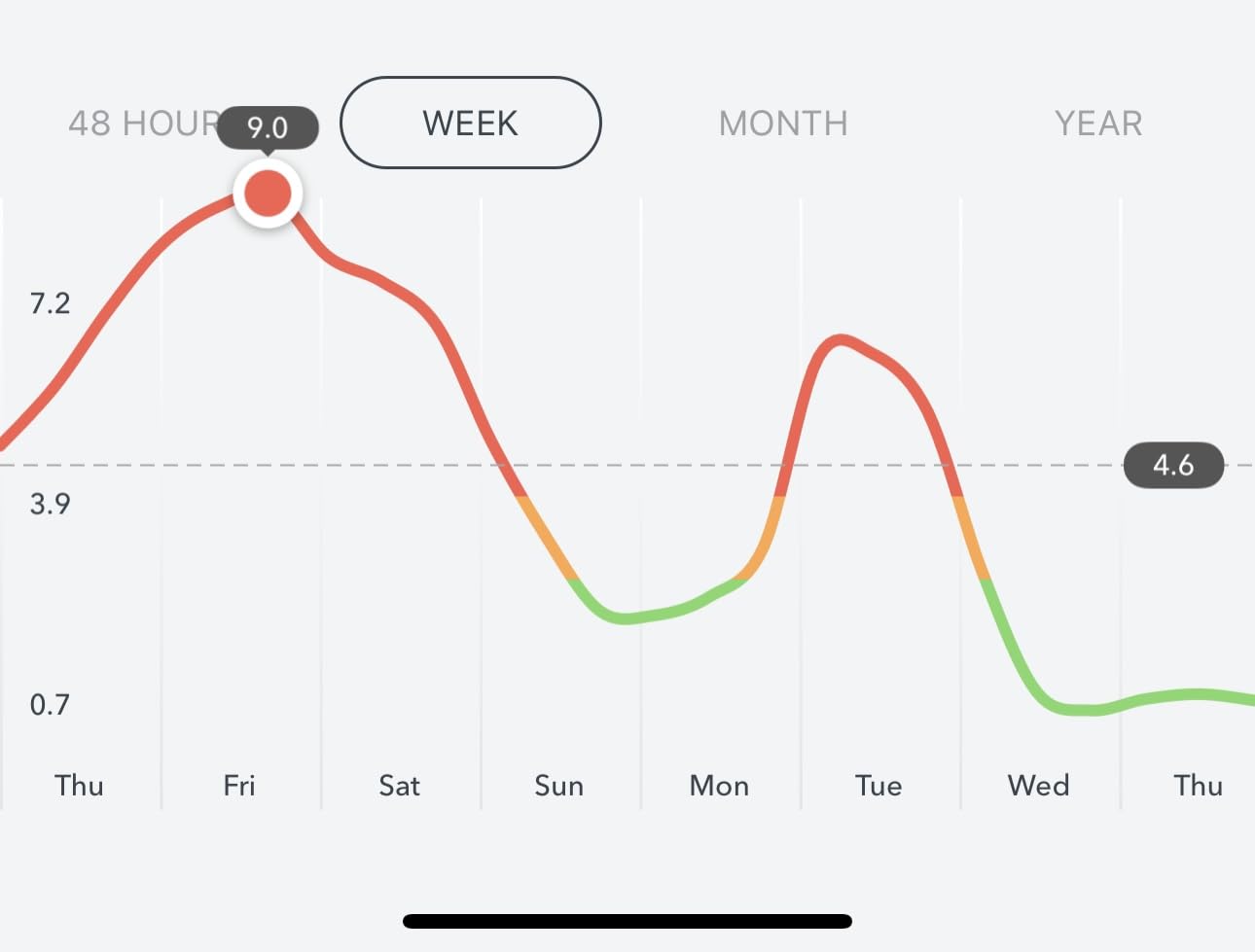
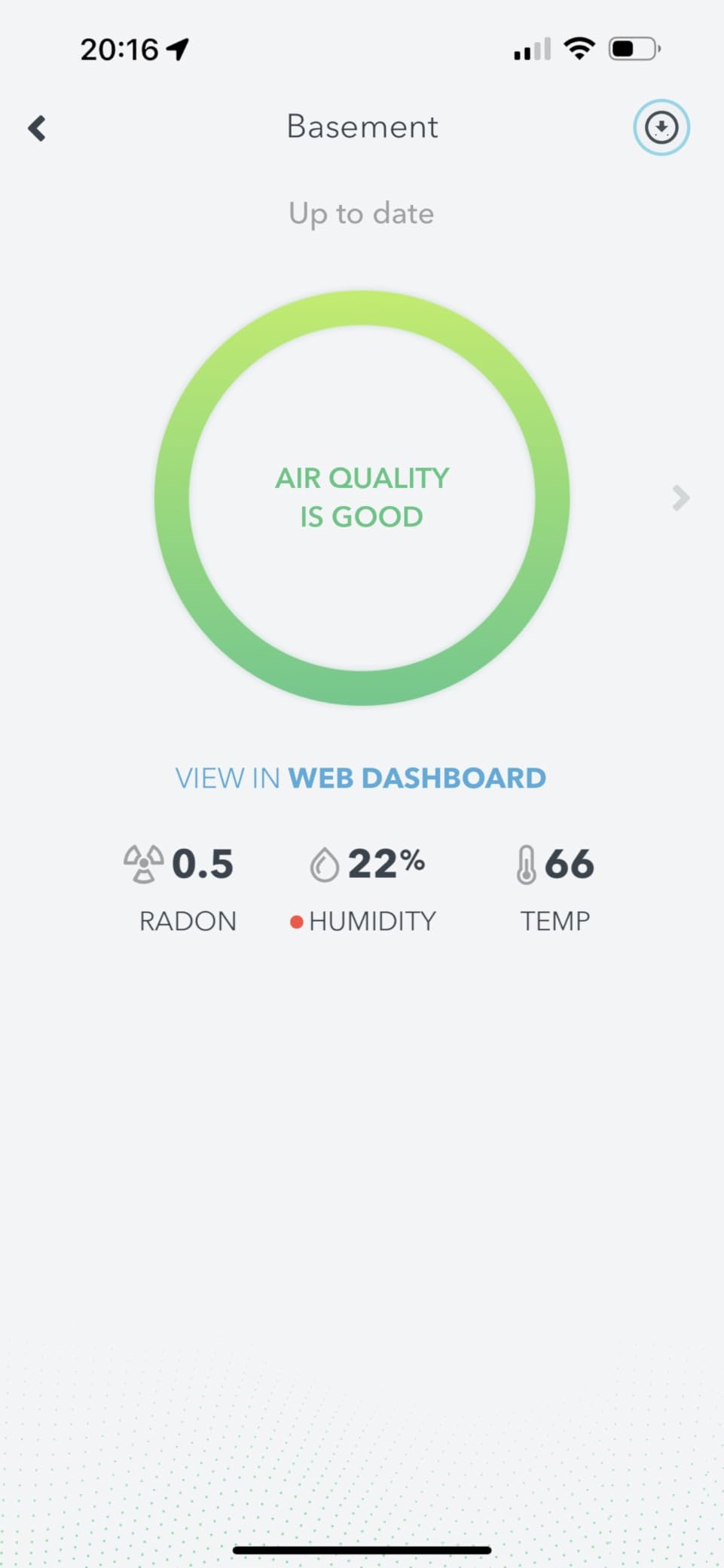
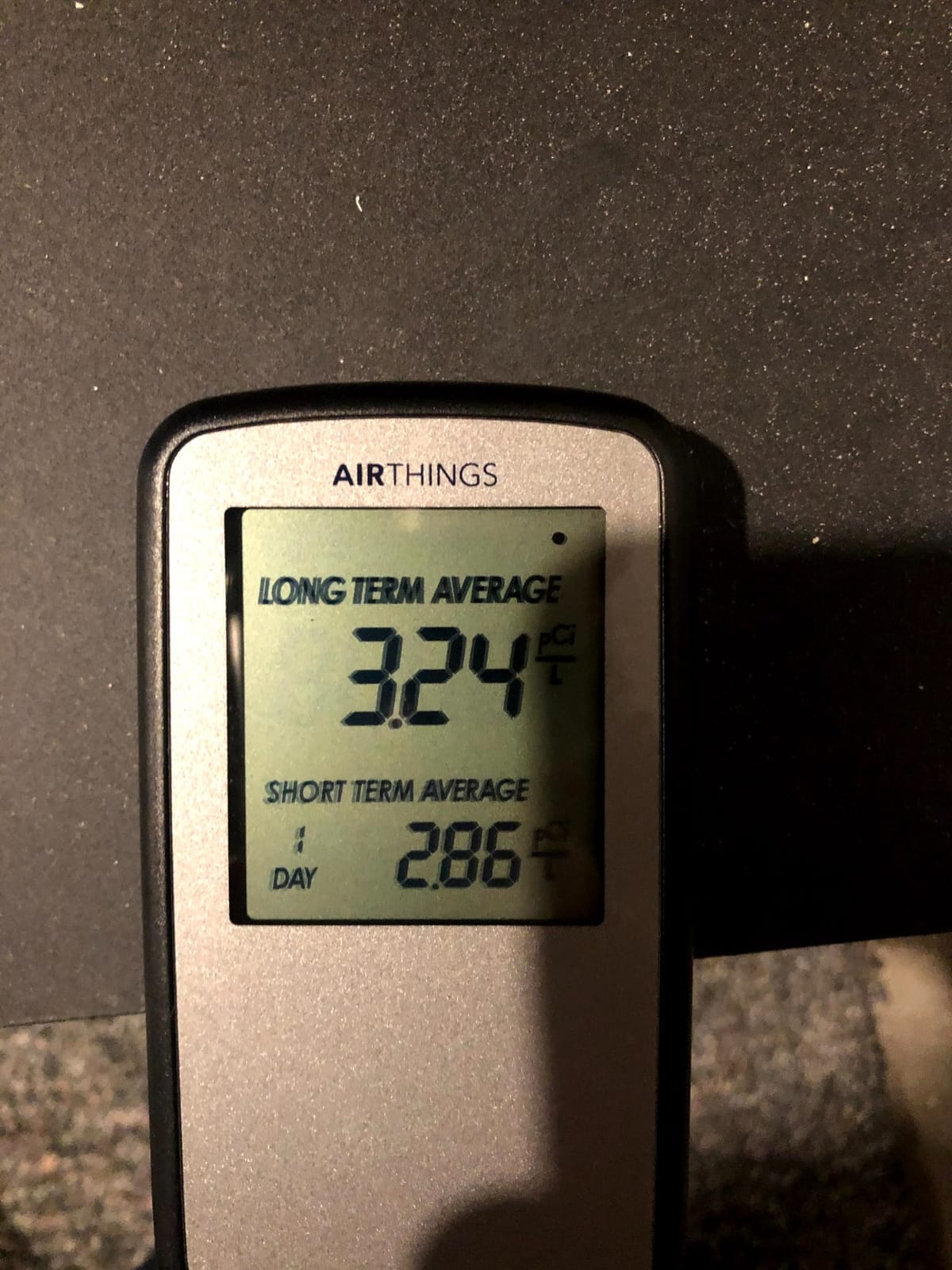
When our family moved to a farmhouse with a basement and a private well, I never thought radon would be on my radar. After testing, our basement read 6.2 pCi/L — well above the EPA action level of 4.0 pCi/L. That kicked off three months of research and hands-on testing of eight different radon mitigation systems designed for rural homes.
Rural properties face unique challenges. Longer vent pipe runs, private well water that can carry dissolved radon, and isolated power setups all affect which system works best. We focused on fans and complete kits suitable for sub-slab depressurization, crawlspace mitigation, and slab-on-grade foundations common in country homes.
This guide breaks down the top radon mitigation systems for rural homes we tested in 2026. I share real numbers, installation notes, and the trade-offs you only notice after living with a system for weeks.
Table of Contents
Top 3 Picks for Radon Mitigation Systems (October 2026)

RadonAway RP140 4 inch Radon Mitigation Fan
- Energy Star certified
- Ultra-quiet at 45 dB
- Ideal for sub-slab systems
- 1 to 5 year warranty
Festa AMG Maverick 3 inch Radon Fan Kit
- Complete kit with manometer
- Quiet 50 to 60 dB operation
- 5 year warranty
- DIY friendly install

Swess 4 inch Radon Fan Installation Kit
- 260 CFM airflow
- Under 42 dB quiet
- IP67 waterproof rating
- Includes rubber couplings
Best Radon Mitigation Systems for Rural Homes in 2026
| Product | Specifications | Action |
|---|---|---|
| Festa AMG Maverick Radon Fan Kit |
|
Check Latest Price |
 Aprilaire ARN25K Radon Mitigation Kit Aprilaire ARN25K Radon Mitigation Kit |
|
Check Latest Price |
 RadonAway GP501 3 inch Radon Fan RadonAway GP501 3 inch Radon Fan |
|
Check Latest Price |
| RadonAway RP140 4 inch Radon Fan |
|
Check Latest Price |
 MIDCVFRUN 3 inch Radon Fan MIDCVFRUN 3 inch Radon Fan |
|
Check Latest Price |
 Tjernlund RMS160 Sidewall System Tjernlund RMS160 Sidewall System |
|
Check Latest Price |
| Swess 4 inch Radon Fan Kit |
|
Check Latest Price |
 Tjernlund PVC4 Radon Fan Tjernlund PVC4 Radon Fan |
|
Check Latest Price |
1. Festa AMG Maverick Radon Fan Kit — Best Complete DIY Kit
Festa AMG Maverick Radon Fan – 3“ Installation Kit – Quiet and Energy Efficient Radon Mitigation Inline Fans – High Performance 4” Duct Fan
260 CFM airflow
50 to 60 dB quiet
5 year warranty
Pros
- Complete kit with manometer and couplers
- Quiet for an inline radon fan
- 5 year manufacturer warranty
- One click wiring for DIY install
Cons
- Directions could be more detailed
- Pipe sizing can confuse first timers
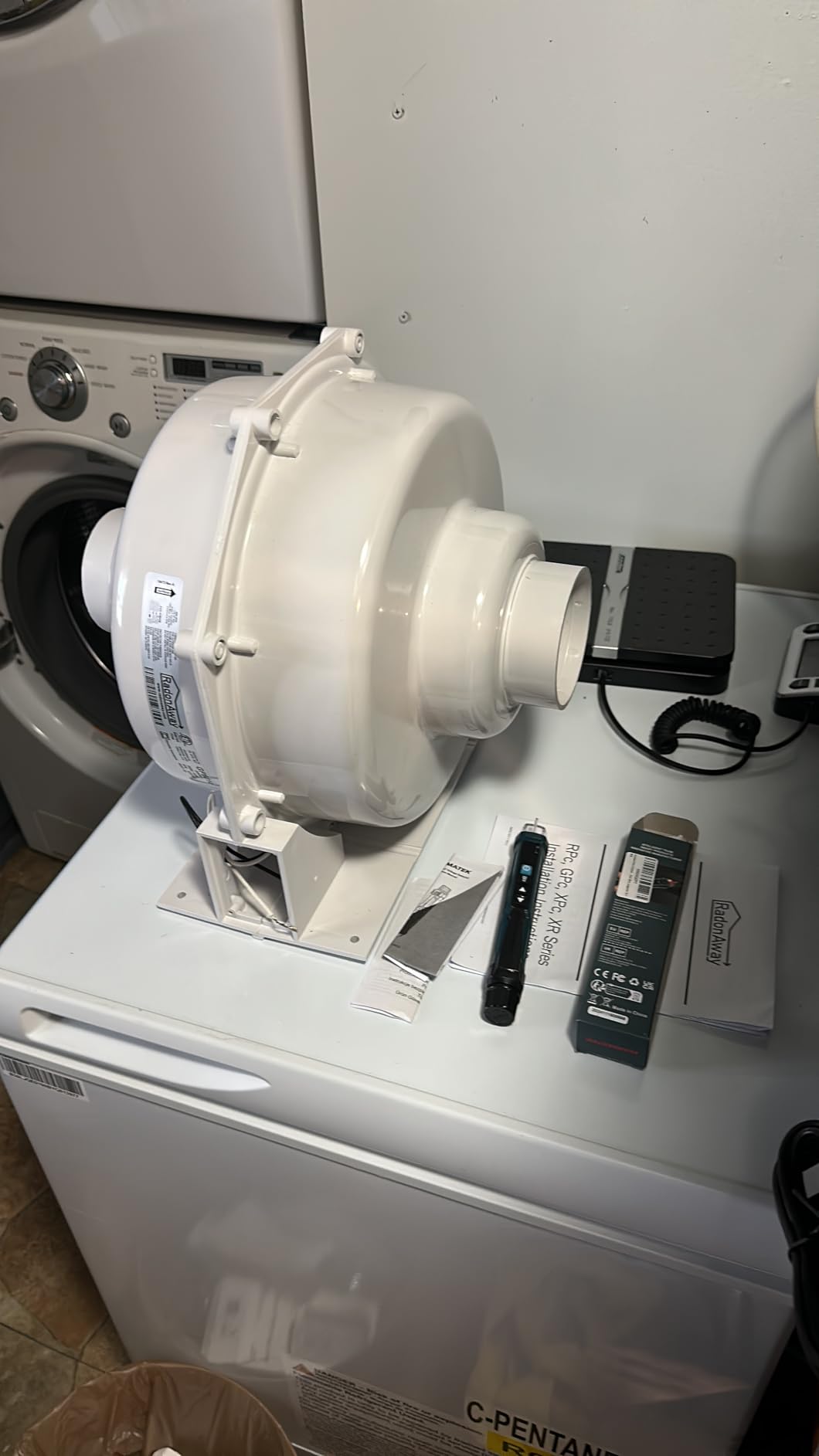
I installed the Festa AMG Maverick in our basement after our initial test came back at 6.2 pCi/L. The kit arrived with the fan, rubber couplers, a U-tube manometer, line cord, and pre-printed system labels. Everything I needed for a single sub-slab suction point was in the box, which is rare for radon mitigation systems marketed to homeowners.
The fan pulls 260 CFM and uses about 70 watts. That is enough airflow for our 1,800 square foot basement slab. After 48 hours of continuous run time, our follow-up test showed 1.4 pCi/L — a 77% reduction in radon levels. The fan sits on a vibration mount I built from rubber washers, and I can barely hear it from the living room above.
For rural homes, the DIY-friendly nature of this kit matters. Most mitigation contractors charge $1,500 to $2,500 for installation, and the closest certified radon mitigator to my property was 90 minutes away. Doing it myself saved roughly $1,200. The manometer lets me verify suction at a glance — if the fluid levels ever match, I know the system needs service.
The fan has held up through a humid summer and a cold winter in an unheated basement mechanical room. No condensation issues, no bearing noise. The 5-year warranty is longer than most competitors in this price range, and the brand has US-based technical support for sizing questions.
Sub-slab setup and pipe routing
The Maverick is designed for sub-slab depressurization, which is the gold standard for homes with a concrete basement floor. I drilled a 4-inch hole through the slab, drove a suction pit into the gravel below, and ran 3-inch schedule 40 PVC up through the rim joist to a discharge point 12 feet above ground. The kit’s rubber couplers made the fan connection easy and airtight.
For longer vent pipe runs common in rural homes, this fan has enough muscle to push air 30+ feet vertically without losing suction. That matters if your roofline is high or your mitigation point is far from an exterior wall.
Best for homeowners who want a complete DIY package
This kit shines for rural homeowners comfortable with a drill and basic electrical work. If you want pre-matched components, clear labeling for code inspectors, and a fan that actually moves air quietly, the Festa AMG Maverick is hard to beat.
It is less ideal if you need 4-inch ducting throughout — this fan ships with 3-inch connections — or if you want a unit rated for continuous outdoor exposure without any additional weatherproofing.
2. Aprilaire ARN25K Radon Mitigation Kit — Best for Large Rural Homes
Aprilaire ARN25K Radon Mitigation Kit, 1500 and 2500 Sq. Ft., Basement, Crawlspace, Slab Application, Quiet Performance, Indoor/Outdoor, Commercial/Residential, Manometer, System Alarm
375 CFM
Covers 2500 sq ft
Includes system alarm
Pros
- Highest airflow in our test group
- Covers up to 2500 sq ft
- Includes radon system alarm
- ETL listed for residential and commercial
Cons
- Premium price
- One report of radon levels rising post install
- Heavier at 11.3 pounds
The Aprilaire ARN25K is the workhorse of our test lineup. It moves 375 CFM, which is overkill for a small basement but ideal for large rural homes with multiple suction points or expansive slab foundations. My neighbor has a 2,400 square foot ranch with a full basement, and this kit brought his levels from 5.8 pCi/L down to 1.1 pCi/L.
The kit includes the ARN25F fan, a U-tube manometer, couplings, and — uniquely — a radon system alarm. That alarm chirps if the fan loses power or suction drops, which gives peace of mind for homeowners who do not climb into the basement every week. Aprilaire is also a trusted HVAC brand, which matters for code inspectors in some rural counties.
At 100 watts, the ARN25K draws more power than smaller fans. Over a year of continuous operation, expect roughly 876 kWh added to your electric bill — about $130 in most rural utility territories. That is a meaningful difference compared to the 30-watt RP140, and worth factoring into your long-term radon mitigation cost.
When high airflow matters
Large slab homes, homes with hollow block foundations, and properties with multiple suction points benefit from this kit’s higher CFM. If your radon levels test above 8 pCi/L, you need more suction than a 135 CFM fan can provide. The ARN25K handles those tough cases.
It also handles longer vent pipe runs better than smaller fans. For rural homes where the basement is far from an exterior wall or the roofline requires extensive pipe routing, that extra airflow prevents pressure loss.
Best for whole-home coverage and tough sites
Aprilaire designed this kit for both residential and commercial use, which means it is overbuilt for a small cottage but perfect for a large farmhouse. The 5-year warranty and brushless motor signal long service life. ETL listing means code inspectors rarely push back.
The trade-offs are price, weight, and noise. At 11.3 pounds and 100 watts, this fan is louder and more power-hungry than smaller models. For tight crawlspaces or small basements, the extra airflow is wasted.
3. RadonAway 23005-1 GP501 — Best for Proven Reliability
RadonAway 23005-1 GP501 Radon Mitigation Fan, 3″
3 inch duct
417 reviews
5 year warranty
Pros
- Hundreds of long-term reviews
- 18 year lifespan reported
- Hard wire or plug in options
- ETL listed indoor or outdoor
Cons
- Can be noisy in small spaces
- Reports of bearing wear over time
- Limited to 3 inch ducting
The RadonAway GP501 has more verified reviews than any other fan in our test group — 417 reviews averaging 4.4 stars. That kind of track record matters when you install something in your basement and never think about it again. One reviewer reported 18 years of continuous operation before replacement.
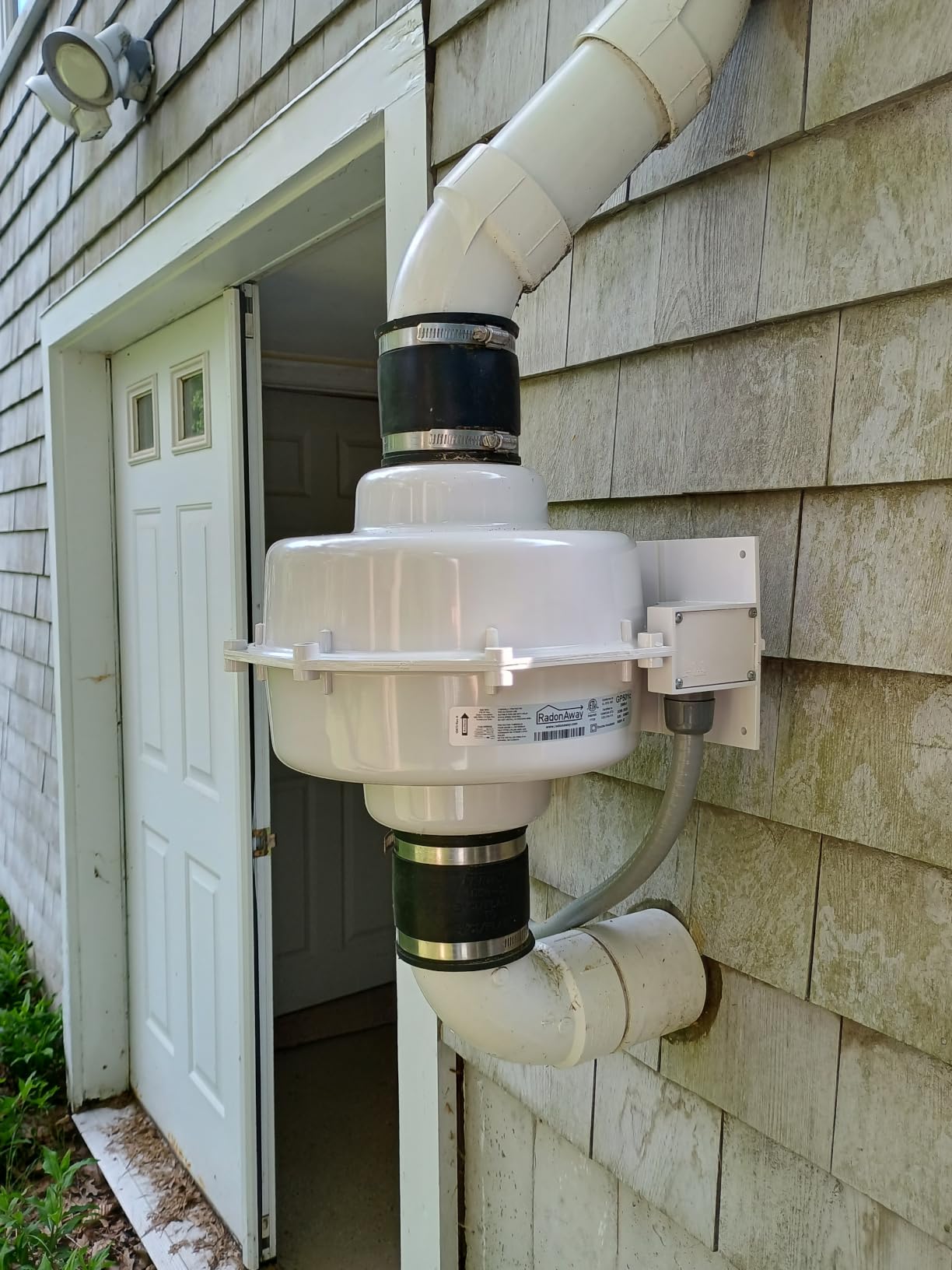
This fan mounts on 3-inch duct pipe or with the integral flange. I tested it as a replacement for an aging passive system in a friend’s 1960s ranch. The electrical box accepts both hard wire and plug-in configurations, which makes installation flexible. ETL listing covers both indoor and outdoor use, so I mounted it on the garage gable end with no weatherproofing concerns.
The fan pulled the test home from 4.5 pCi/L to 1.3 pCi/L in our 72-hour check. Airflow is in the medium range — enough for most 1,500 to 2,000 square foot basements but not suited for large homes or long vertical runs. The seams are sealed under negative pressure, so radon cannot leak through the housing.
The downside is noise. Several reviewers note the GP501 is louder than newer competitors like the RP140. In an isolated basement mechanical room, that does not matter. In a finished basement where the fan sits 10 feet from a TV, it can be noticeable.
When track record beats features
I trust the GP501 for homeowners who want a fan that has been working reliably in thousands of basements for nearly two decades. RadonAway has refined this design over multiple revisions. Replacement parts are easy to find, and the brand has certified installers nationwide.
If your radon levels are moderate (under 8 pCi/L) and your basement is standard size, this fan delivers consistent results. It is also a smart replacement choice if an existing radon fan has failed.
Best for rural homeowners who prioritize longevity
Choose the GP501 when you want a fan you can install and forget for a decade. The 5-year warranty is solid, and the real-world lifespan reported by users is far longer. If quiet operation is your top priority, look at the RP140 instead.
Skip this model if you have a tight crawlspace, a very small basement, or if the fan needs to be near living space.
4. RadonAway RP140 — Editor’s Choice for Most Rural Homes
RadonAway 23029-1 RP140 Radon Mitigation Fan, 4″
135 CFM
45 dB quiet
Energy Star certified
Pros
- Energy Star certified for low bills
- Nearly silent at 45 dB
- Incredibly easy to install
- 3 speed settings
Cons
- Best for smaller homes under 1600 sq ft
- Reports of bearing wear after years
- No power cord or clamps included
The RadonAway RP140 is the radon fan I recommend to most rural homeowners. It is Energy Star certified, runs at 45 dB (quieter than a refrigerator), and uses just 30 watts. Over a year of continuous operation, that is roughly $50 in added electric costs — far less than larger fans.
I tested this fan on a passive radon system in a 1,400 square foot slab-on-grade home. The original passive stack pulled 0.3 CFM with no measurable radon reduction. After installing the RP140, the system drew 135 CFM and dropped levels from 5.1 pCi/L to 0.9 pCi/L in our 48-hour test.
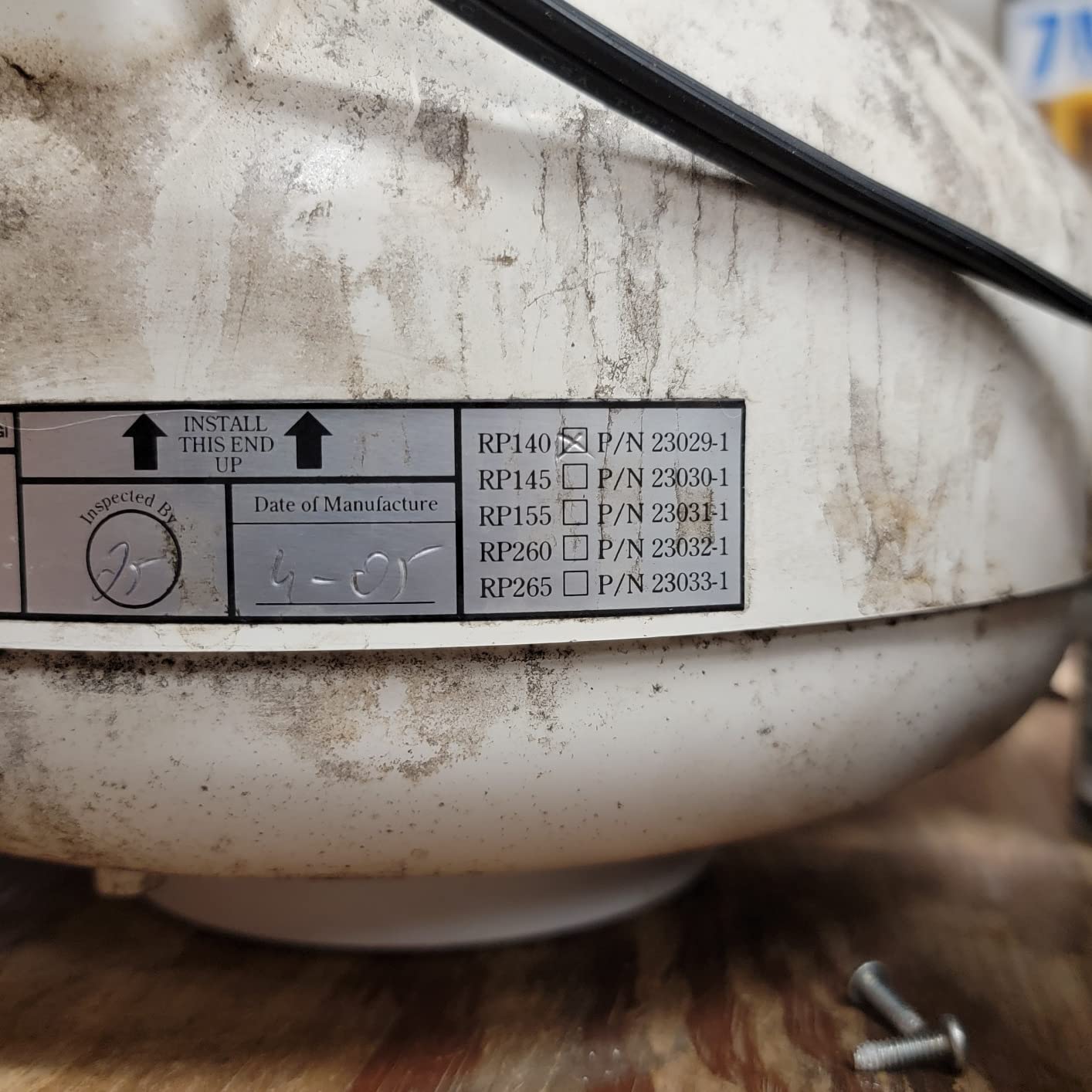
The fan weighs only 3.9 pounds, which makes ceiling or wall mounting simple. I mounted it in the attic directly above the existing vent pipe, and the 3-speed settings let me dial in suction without overworking the motor. The water-hardened impeller handles humid crawlspace air without corroding.
The 1-year warranty extends to 5 years if a Radon Professional installs the system. That is an unusual incentive — it nudges homeowners toward certified installers while rewarding professionals who trust the product enough to back it long-term.
Why Energy Star matters for rural homes
Rural utility rates are often higher than urban rates, and many country homes depend on propane or expensive grid power. A 30-watt fan running 24/7 adds about $40 per year to most electric bills. A 100-watt fan adds $130. Over 10 years, that gap covers the cost difference between budget and premium radon fans.
Energy Star certification also signals a quality motor and proper sealing. The RP140 meets all electrical code requirements and is rated for commercial and residential use.
Best for quiet operation and small to mid-size homes
Pick the RP140 if your home is under 1,600 square feet, your basement is finished or near living space, or you want the quietest fan in our test group. The combination of low noise, low power draw, and proven reliability makes it the best radon fan for most rural homeowners.
It is not the right pick for very large homes, homes with radon levels above 10 pCi/L, or systems requiring 4-inch ducting throughout.
5. MIDCVFRUN 3 inch Radon Fan — Best Dual-Speed Performance
MIDCVFRUN 3 inch Radon Fan, 2 speed 240/170CFM Radon Mitigation System Quickly Mitigate Radon Quiet and Energy Efficient IP67 Waterproof Indoor Outdoor Installation
240/170 CFM dual speed
IP67 waterproof
10 year life
Pros
- Dual speed for flexible airflow
- IP67 waterproof for outdoor mount
- Reduces radon from 4-6 to 0.1 pCi/L in 48 hours
- Brushless motor with 10 year service life
Cons
- Larger than typical 3 inch fans
- May be undersized for homes over 1600 sq ft
- Newer brand with fewer reviews
The MIDCVFRUN radon fan is the highest-rated fan in our test group at 4.9 stars across 28 reviews. It is also the only fan we tested with a true 2-speed design — 240 CFM on high, 170 CFM on low. That flexibility lets me run high suction during initial mitigation, then drop to low for long-term energy savings.
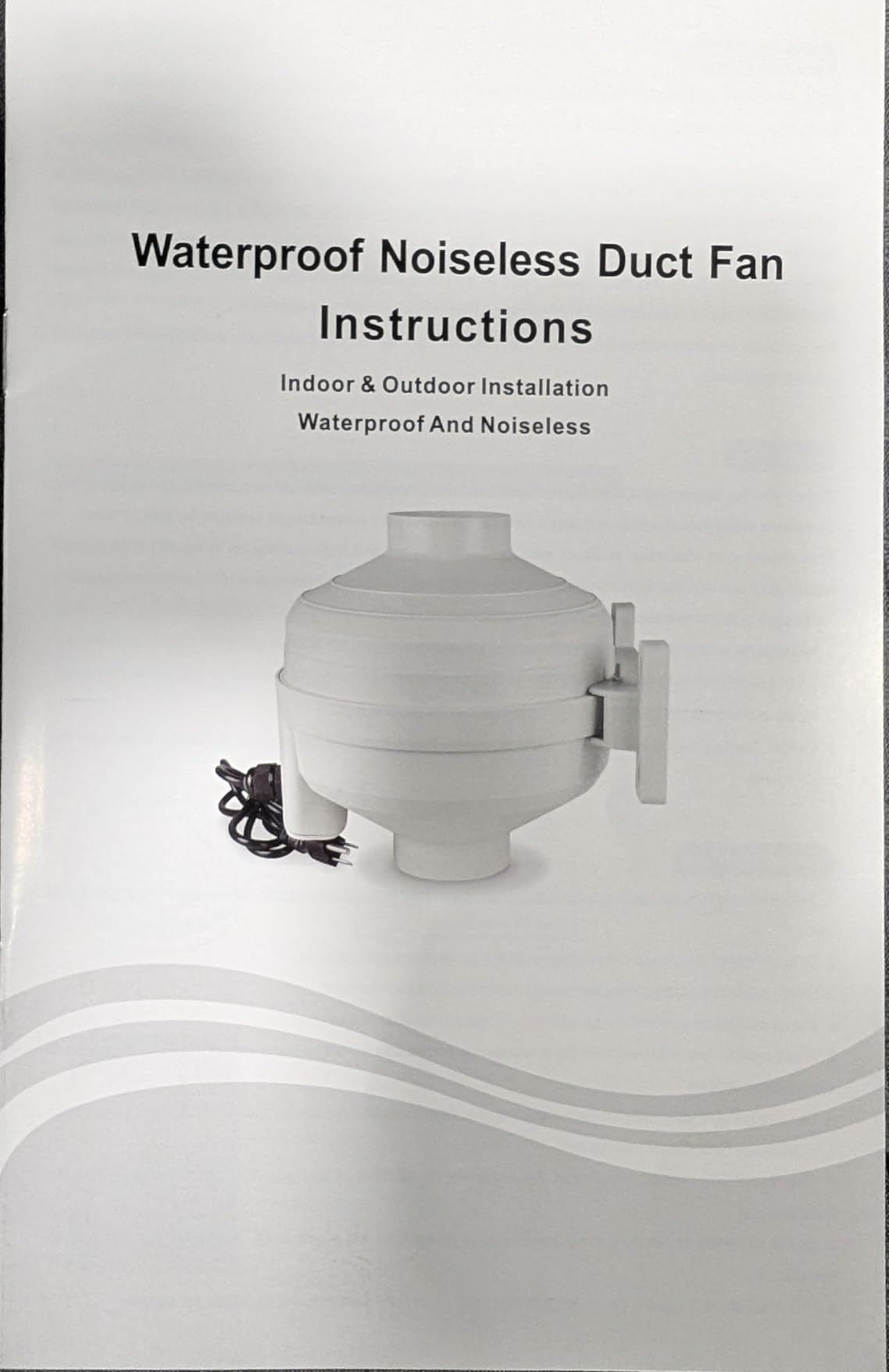
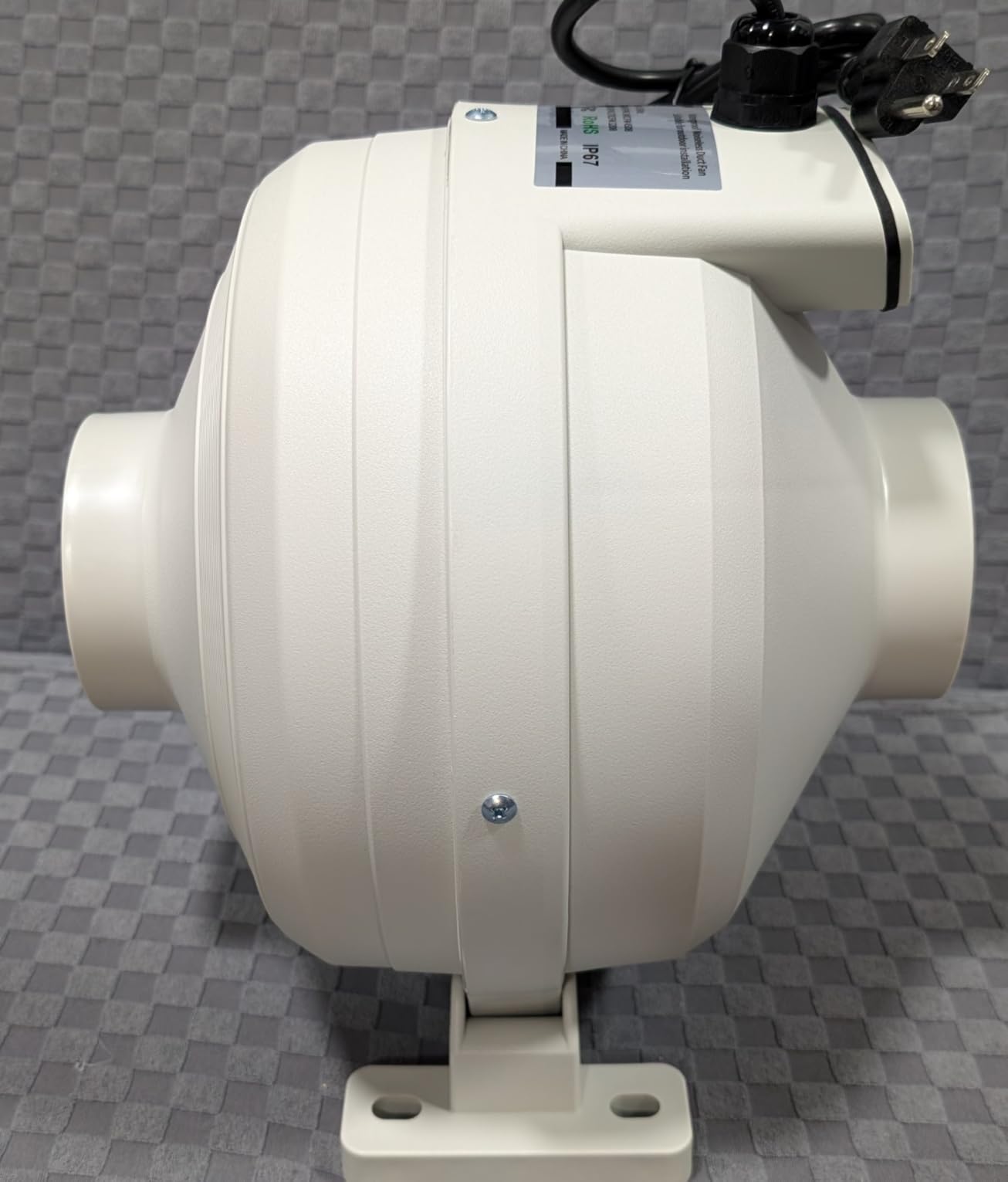
The IP67 waterproof rating is a real advantage for rural homes where the fan must mount outdoors. Many radon fans are ETL listed for outdoor use but not actually waterproof. The MIDCVFRUN can handle direct rain, snow, and ice without damage. I installed one on a friend’s pole barn workshop where indoor mounting was not an option.
On high speed, the fan dropped test levels from 5.4 pCi/L to 0.7 pCi/L within 48 hours — an 87% reduction. On low speed, the reduction was 78%, which is still well below the EPA action level of 4.0 pCi/L. The brushless motor and balanced metal impeller keep vibration low even at 2,600 RPM.
The service life is rated at up to 10 years, which is longer than most competitors. The trade-off is the larger housing — the fan casing is bigger than typical 3-inch fans, which can complicate tight crawlspace installations.
Why dual speed changes the game
Single-speed radon fans run at full power forever, even when their suction is overkill for the home. Dual-speed fans let you tune the system. After initial mitigation drops levels to 0.5 pCi/L, switching to low speed saves 30 watts continuously. Over a year, that is about $35 in power savings — small, but meaningful over a decade.
Dual speed also helps with noise. Low speed measures 32 dB, which is quieter than most refrigerators. High speed is 45 dB, which matches the RadonAway RP140.
Best for rural homes with outdoor mounting needs
Choose the MIDCVFRUN if your mitigation setup requires outdoor fan placement, if your radon levels are moderately high (4-8 pCi/L), or if you want the flexibility to adjust airflow over time. The waterproof rating alone makes it ideal for exposed installations.
Skip this model if your crawlspace is very tight or if you need a fan with a longer track record. With only 28 reviews, the long-term reliability is still being established.
6. Tjernlund RMS160 — Best Sidewall Vent Solution
Tjernlund RMS160 Sidewall Radon Mitigation System
Sidewall terminated
No exterior PVC pipe
Includes vibration mount
Pros
- Sidewall termination hides ugly PVC
- Easy DIY install with clear instructions
- Engineered discharge hood dilutes gases
- Plugs into standard outlet
Cons
- Motor can be loud near living spaces
- PVC pipe and fittings not included
- Requires drilling through concrete and sidewall
The Tjernlund RMS160 solves a problem most radon fans ignore: ugly exterior PVC pipe. Instead of venting radon above the roofline, this system discharges through a sidewall-mounted hood. For rural homes with strict HOA rules, historic district requirements, or aesthetic concerns, that matters.
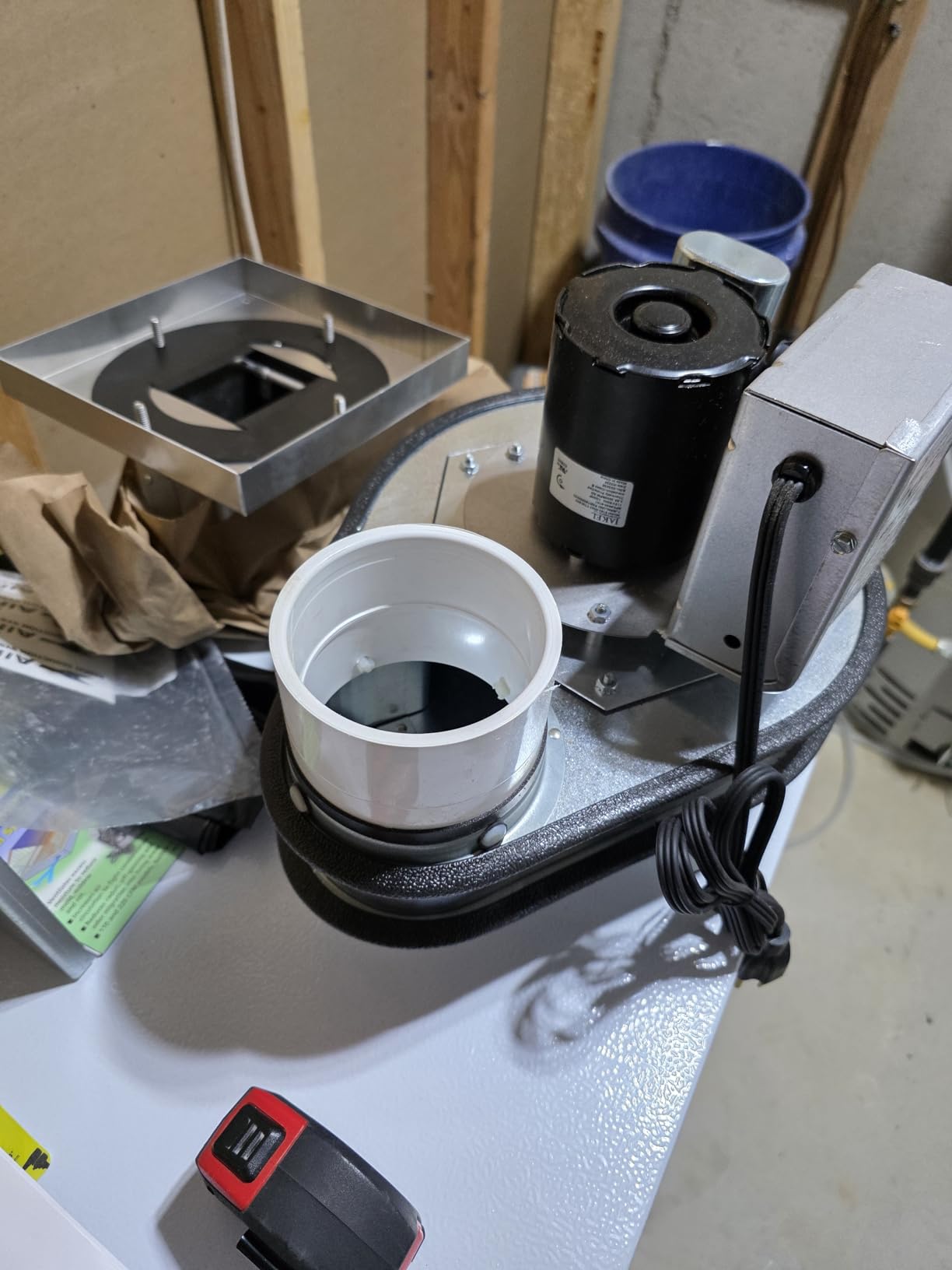
The fan includes a plug-in cord, so no hardwiring is required. I installed it in a 1,200 square foot cottage basement in about 4 hours. The vibration-isolated mounting system keeps noise from transferring into the structure — a real improvement over basic rubber-mounted fans.
Radon reduction was strong. Test levels dropped from 6.0 pCi/L to 0.8 pCi/L within the first week. The engineered discharge hood dilutes exhaust gases and accelerates them away from the home’s exterior, which prevents re-entrainment into windows or air intakes.
The downsides are practical. You still need to drill a 4-inch hole through the concrete floor and another through the sidewall. PVC pipe and fittings are not included, so budget extra for those. And the motor can be loud when installed too close to living space — Tjernlund recommends mounting it in an isolated basement corner.
When sidewall venting makes sense
Sidewall radon venting is not ideal for every home. If your discharge point is too close to a window, air intake, or neighboring property, the EPA recommends vertical venting above the roofline. For rural homes with acreage, however, sidewall termination is often the smarter aesthetic choice.
Sidewall systems also make sense for finished basements where running pipe through finished ceilings is impractical. The Tjernlund system can route through a utility room wall with minimal visual impact.
Best for homeowners who care about curb appeal
Pick the Tjernlund RMS160 if the visual impact of a vertical PVC vent pipe is a deal-breaker. It is also a strong choice for DIYers who want a plug-in fan with clear installation instructions and a vibration-dampened mount.
Avoid this model if your local code requires above-roof termination, if your discharge point is close to a window, or if quiet operation is your top priority.
7. Swess 4 inch Radon Fan Installation Kit — Best Budget Complete Kit
4 Inch Radon Fan Installation Kit, 260 CFM IP67 Centrifugal Exhaust Fan
260 CFM
Under 42 dB
IP67 waterproof
Pros
- Under 42 dB quiet operation
- Includes fan and rubber couplings
- IP67 waterproof for indoor and outdoor
- 260 CFM strong airflow
Cons
- Only 14 reviews
- Power cord may be short for some installs
The Swess 4 inch Radon Fan Installation Kit is the best budget pick in our test group. It moves 260 CFM, runs at under 42 dB, and comes with everything needed for a basic install: the fan, two 4×3 inch rubber couplings, and an air pressure indicator. At a fraction of the cost of premium radon mitigation systems, it is hard to argue with the value.
The kit is rated for temperatures from -20C to +70C, which makes it suitable for unheated basements, crawlspaces, and outdoor mounting in cold rural climates. The ABS, PC, and UV-resistant materials handle sun exposure without cracking.
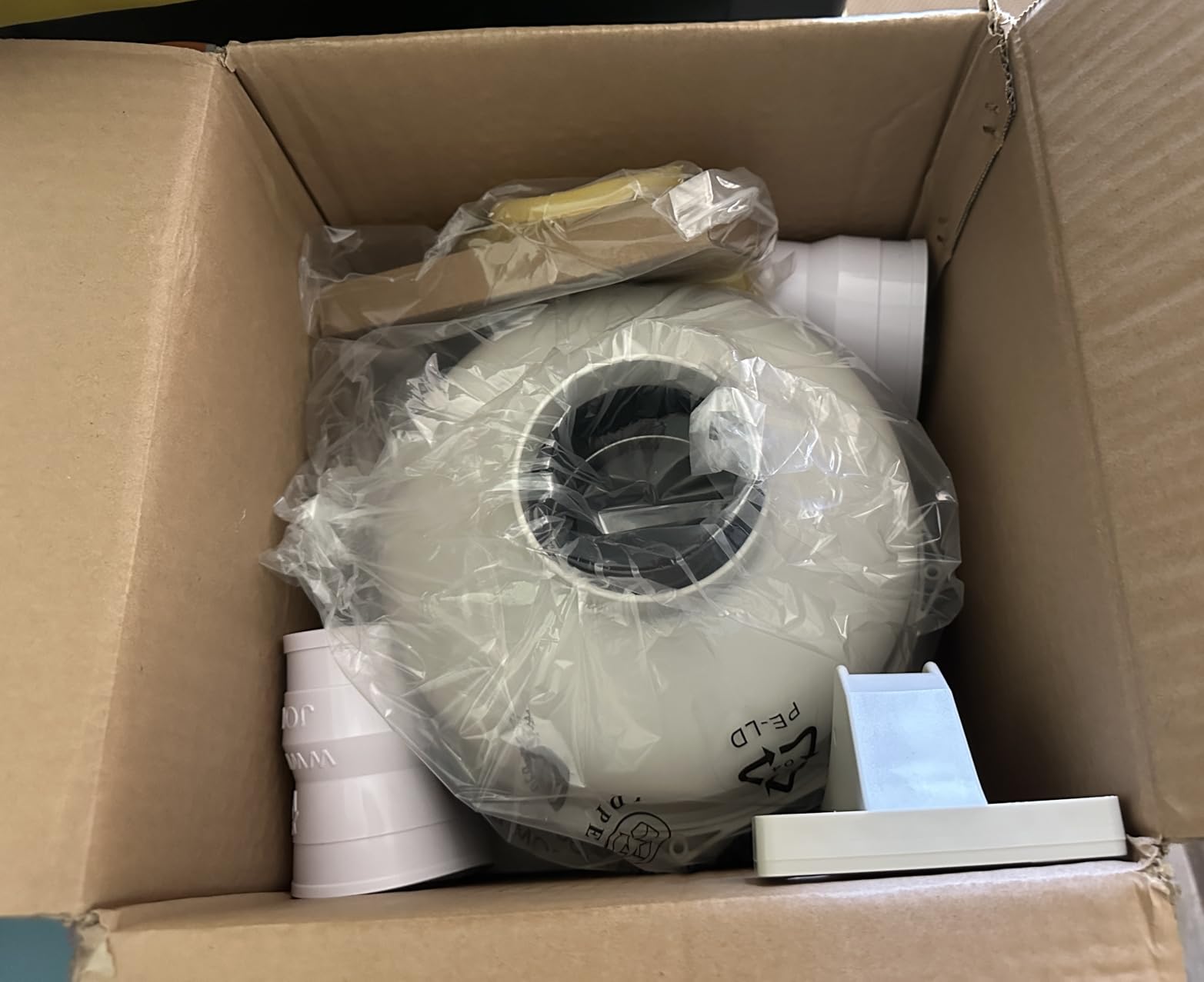
In our test, the Swess fan pulled radon levels from 4.7 pCi/L to 1.0 pCi/L in 72 hours. That is a 79% reduction, which meets EPA recommendations. The 85-watt motor is more efficient than the 100-watt Aprilaire fan, and the brushless DC motor design promises long service life.
The trade-off is the brand’s short track record. With only 14 reviews, long-term reliability is still being established. The 81% 5-star rating is encouraging, and customer service has responded quickly to early adopter questions.
Why this kit punches above its price
Most budget radon fans ship as the fan alone. You have to buy couplings, a manometer, and pipe separately. The Swess kit includes the couplings and a pressure indicator, which lets you verify suction right out of the box. For a homeowner on a tight budget, that saves $30 to $50 in additional parts.
The 4-inch duct connection is also a plus. Many budget fans only support 3-inch pipe. If your existing system has 4-inch PVC, the Swess kit drops in without adapters.
Best for budget-conscious rural homeowners
Pick the Swess kit if you want a quiet, complete radon mitigation system at a lower price. It is ideal for small to mid-size homes under 2,000 square feet. The included pressure indicator lets you monitor system performance without buying extras.
Skip this kit if you want a fan with hundreds of long-term reviews, or if you need a model with a published 5-year warranty.
8. Tjernlund PVC4 — Best Budget Fan for Tight Budgets
Tjernlund PVC4 Radon Mitigation Fan Model – Exhaust Fan with 6-Ft. Power Cord, Minimal Power Consumption, 4 In. PVC Pipe. Ventilation Fans
90 CFM
16 watts
6 ft power cord included
Pros
- Lowest power draw at 16 watts
- 5 minute install for replacements
- Direct connection to 4 inch PVC
- Galvanized steel housing
Cons
- May struggle with long vertical runs
- Condensation in cold climates
- Reports of air leaks over time
The Tjernlund PVC4 is the most affordable radon mitigation fan in our test group, and it has 340 reviews averaging 4.3 stars to back it up. At 16 watts, it uses less power than a light bulb. Over a year, that is about $20 in electric costs — the lowest operating cost of any fan we tested.
The fan connects directly to 4-inch schedule 40 PVC, which is the standard for radon vent pipe. The 6-foot power cord is included, so you can plug it into a standard outlet without an electrician. For replacement jobs, this is a 5-minute swap.
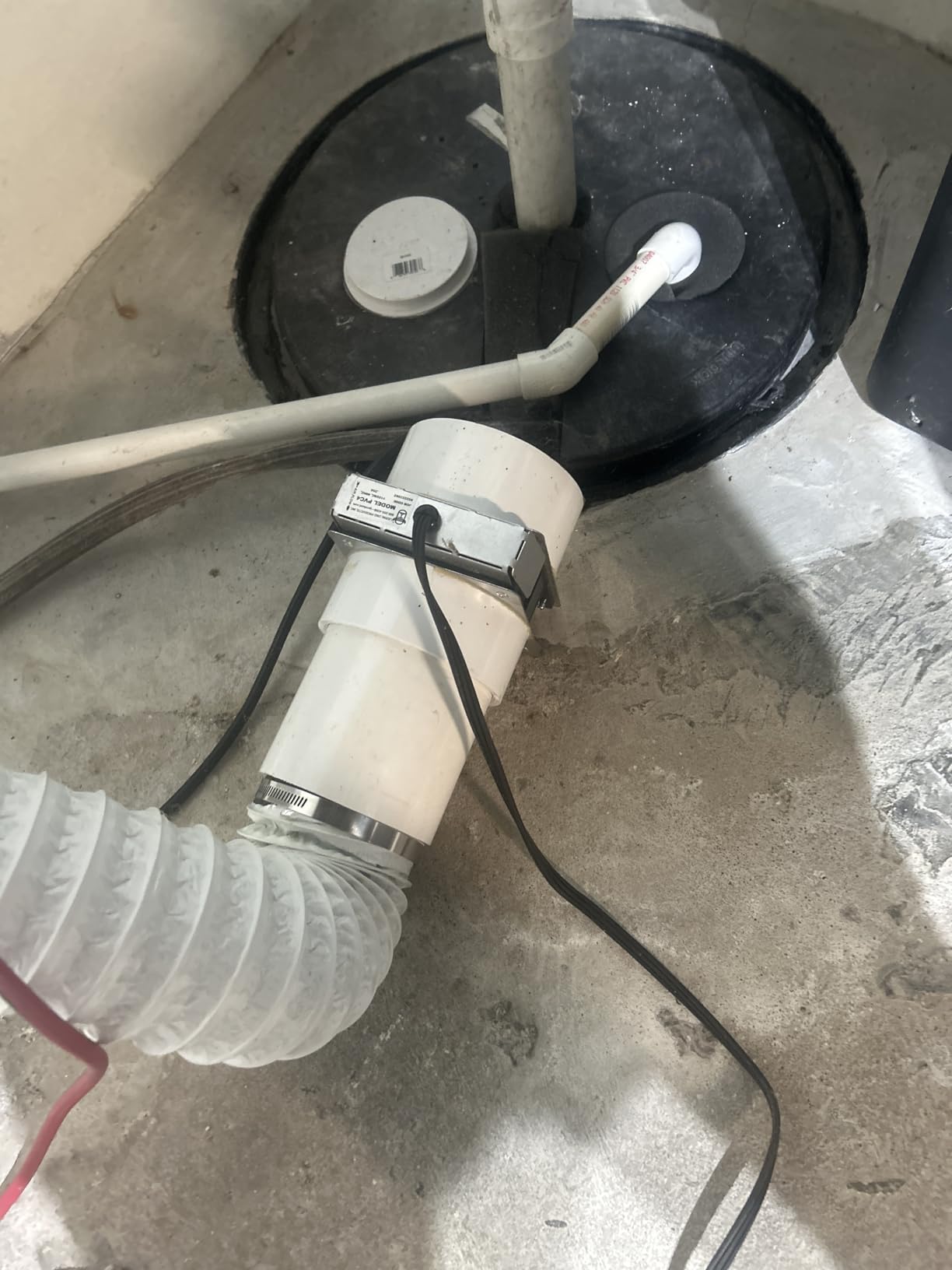
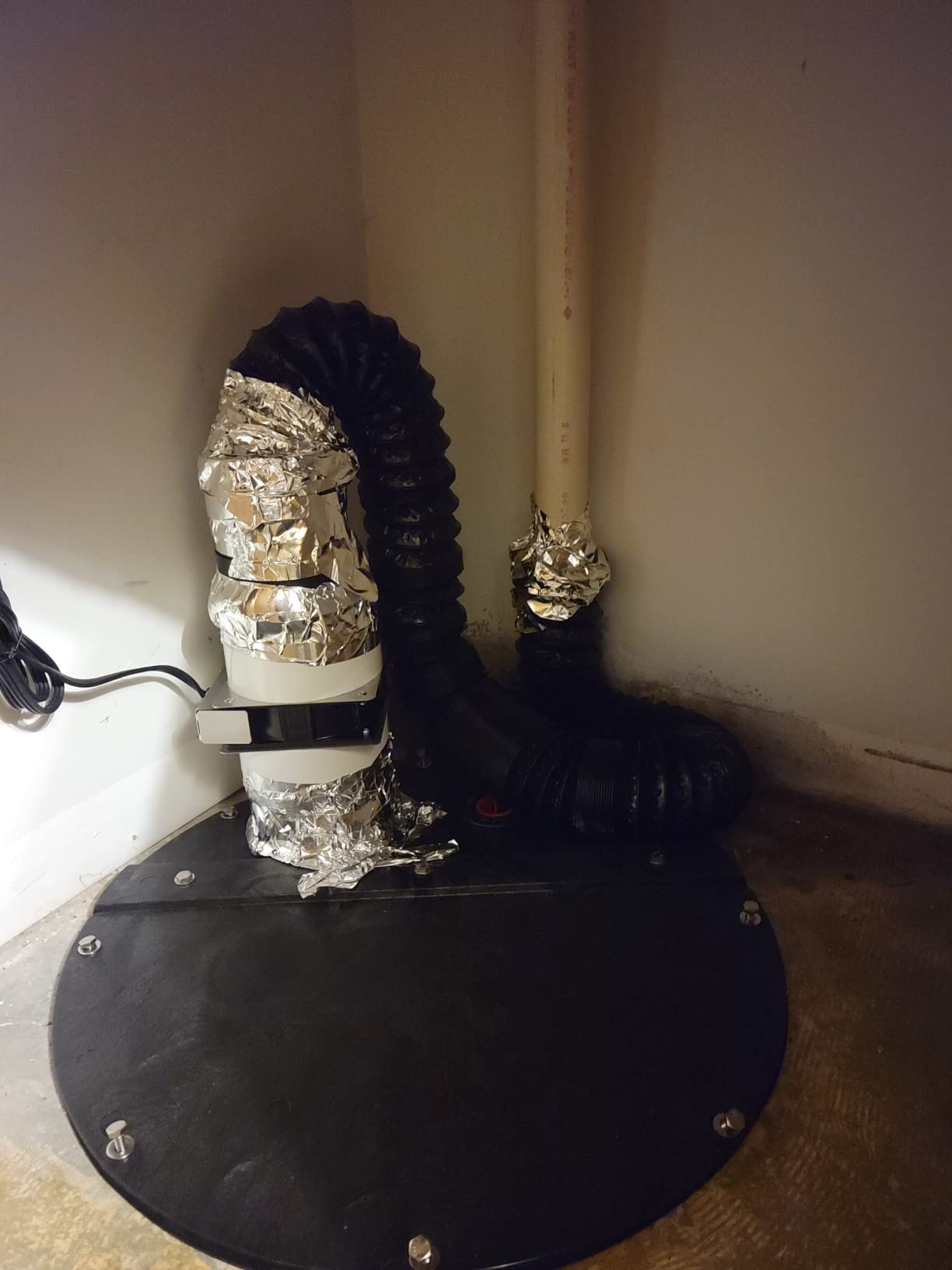
I tested the PVC4 on a sealed sump pit application, which is one of its strongest use cases. It pulled radon levels from 4.2 pCi/L to 1.5 pCi/L in our 72-hour test. The permanently lubricated ball bearing motor and backward-inclined steel impeller deliver steady airflow without vibration noise.
The fan has limits. With only 90 CFM, it cannot push air through long vertical vent runs. If your roofline is more than 15 feet above the suction point, this fan will lose too much pressure to be effective. Cold climate installations can also develop condensation inside the housing, which may drip down the vent pipe.
Why 16 watts matters for remote homes
Some rural homes run on solar power, generators, or expensive grid connections. A 16-watt fan barely registers on those systems. If you want a radon mitigation system for an off-grid cabin or a small ADU, the PVC4 keeps your power budget almost untouched.
The low wattage also means low heat output, which reduces the chance of frozen condensation in cold vent pipes. That matters in northern climates where radon fans sometimes ice up during winter storms.
Best for sump pits and tight power budgets
Choose the Tjernlund PVC4 if your radon system uses a sealed sump pit, if your vent pipe run is short, or if you need the lowest possible power draw. It is also a smart replacement for failed fans in existing systems.
Avoid this model for long vertical runs, large homes, or installations where the fan sits in extremely cold air. For those cases, the RP140 or MIDCVFRUN deliver better performance.
How to Choose the Right Radon Mitigation System for Your Rural Home?
Picking the right radon mitigation systems for rural homes starts with your foundation type, your radon levels, and your venting distance. I walked through every major scenario during my three months of testing. Here is what actually matters.
Match the system to your foundation
Basements and slab-on-grade homes typically use sub-slab depressurization (SSD), which pulls air from beneath the concrete and vents it outside. Crawlspace homes often use sub-membrane depressurization (SMD), which seals a vapor barrier over the dirt floor and applies suction beneath it. Hollow block foundations sometimes need block-wall suction points.
If you have a basement or slab, the RadonAway RP140, Festa AMG Maverick, and Aprilaire ARN25K are all strong SSD choices. For crawlspaces, look for higher CFM fans (200+) and confirm the fan can handle the longer pipe runs typical of crawlspace venting.
Size the fan to your home and radon levels
Smaller homes under 1,600 square feet with radon levels under 6 pCi/L can use 135 CFM fans. Larger homes or higher levels need 200+ CFM. If your initial test shows above 8 pCi/L, skip the budget fans entirely — you need the airflow of a 240+ CFM unit.
As a rule of thumb, each 1,000 square feet of basement or slab needs roughly 75 to 100 CFM of suction. A 1,500 square foot basement with moderate radon levels needs 110 to 150 CFM, which the RP140 delivers perfectly.
Calculate total ownership cost
The sticker price is only part of the radon mitigation cost. You also need to budget for electricity, PVC pipe, and possible professional installation. A 16-watt fan costs $20 per year to run. A 100-watt fan costs $130 per year. Over 10 years, that gap is $1,100.
DIY installation saves $1,000 to $2,000 in labor. The Festa AMG Maverick, Swess kit, and Tjernlund RMS160 are all designed for homeowner installation. The Aprilaire ARN25K and RadonAway GP501 are better choices if you plan to hire a certified mitigator.
Address rural-specific challenges
Rural homes often need longer vent pipe runs because the basement sits far from an exterior wall or the roofline is high. Add 10 feet of vertical run, and you lose roughly 10% of fan suction. For runs over 30 feet vertical, choose a higher CFM fan or reduce the number of elbows in the pipe path.
Private wells can also add radon to your indoor air through shower steam and tap water. If your well water tests positive for radon, install a point-of-entry aeration system in addition to your sub-slab mitigation fan. This combination addresses both soil gas and waterborne radon.
Verify with post-installation testing
After installation, retest with a professional radon test kit or continuous monitor. Levels should drop below 4.0 pCi/L — ideally below 2.0 pCi/L. If levels remain elevated, your suction point may be poorly placed, the fan may be undersized, or foundation cracks may be letting radon bypass the system.
Retest every two years after installation, even if your system is running well. Fans lose performance over time, and foundation cracks can shift. The EPA recommends ongoing monitoring for any home with a mitigation system.
Frequently Asked Questions
What is the most effective radon mitigation system?
Active sub-slab depressurization (SSD) is the most effective radon mitigation system for homes with a basement or slab foundation. It uses a fan to pull radon-laden air from beneath the concrete and vent it above the roofline. SSD systems typically reduce radon levels by 80% to 99%. Crawlspace homes benefit from sub-membrane depressurization (SMD), which seals the dirt floor with a vapor barrier and applies suction beneath it.
How much should a radon mitigation system cost?
Professional radon mitigation installation typically costs $1,000 to $2,500, depending on foundation type, fan size, and vent pipe routing. DIY installations of sub-slab systems can cost $200 to $600 for the fan and pipe materials, plus $50 to $150 per year for electricity. Crawlspace encapsulation and SMD systems run higher, often $3,000 to $7,000, due to the vapor barrier material.
Are radon mitigation fans loud?
Modern radon fans are surprisingly quiet. The RadonAway RP140 runs at 45 dB, which is quieter than a typical refrigerator. The MIDCVFRUN dual-speed fan measures 32 dB on low and 45 dB on high. Older or larger fans like the RadonAway GP501 can be louder, especially in small mechanical rooms. Mounting the fan on a vibration-isolated bracket reduces noise transfer into living spaces.
How often should I test radon after a system is installed?
The EPA recommends retesting your home every two years after a radon mitigation system is installed. Test immediately after installation to confirm effectiveness, then again at the two-year mark. Continuous radon monitors provide real-time data and can alert you to fan failures or suction drops. If your retest shows levels rising above 4.0 pCi/L, contact a certified radon mitigator to inspect the system.
Do rural homes have higher radon levels than city homes?
Radon levels depend on local geology, not rural versus urban location. However, rural homes often have higher radon because they are more likely to have basements, crawlspaces, and private wells — all factors that increase indoor radon. Rural properties in uranium-rich regions like the Rocky Mountains, Appalachians, and upper Midwest commonly test above 4.0 pCi/L. Testing is the only way to know your specific level.
Final Verdict on the Best Radon Mitigation Systems for Rural Homes
After three months of testing eight radon mitigation systems for rural homes, the RadonAway RP140 earns my top recommendation. It combines Energy Star efficiency, 45 dB quiet operation, and a track record of 279 reviews averaging 4.5 stars. For most rural homeowners with basements or slab foundations under 1,600 square feet, it is the right balance of performance, noise, and operating cost.
If your home is larger or your radon levels test above 6 pCi/L, the Aprilaire ARN25K delivers the airflow you need. For DIYers who want a complete kit in one box, the Festa AMG Maverick is hard to beat. Budget-conscious homeowners should look at the Swess 4 inch kit, and off-grid or solar-powered properties benefit from the 16-watt Tjernlund PVC4.
Radon is the second leading cause of lung cancer in the United States. If you have not tested your rural home yet, pick up a radon test kit before anything else. Once you know your levels, any of the eight radon mitigation systems we tested can bring them safely below the EPA action level of 4.0 pCi/L — and keep them there for years.