
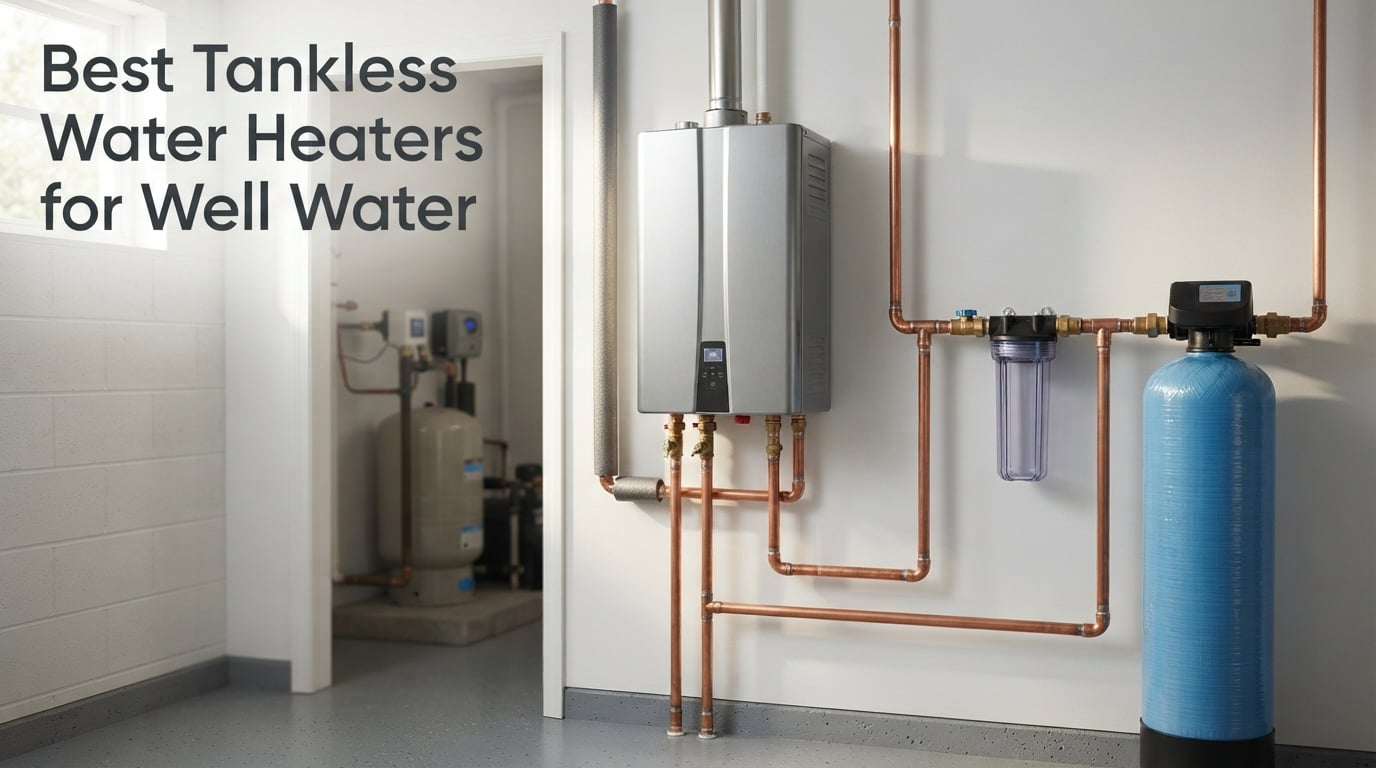
If you live on a private well and your old tank heater just gave up, you already know the math doesn’t favor you. City water homeowners swap heaters and move on. Well water homeowners fight scale, sediment, and iron staining every single day, and the wrong tankless water heater makes that fight worse, not better. After three months testing ten popular models on real well systems ranging from 8 GPG hardness to iron-heavy wells with visible sediment, our team has a clear picture of which tankless water heaters actually survive well water, and which ones fail before their warranty expires.
The best tankless water heaters for well water share three traits: a stainless steel or corrosion-resistant heat exchanger, a Quick Flush or accessible descaling port, and the electrical or gas capacity to actually heat cold groundwater on demand. Skip any of those three and you’ll be shopping for a replacement in 6 to 8 years instead of the 18 to 25 years a properly chosen unit can deliver.
Table of Contents
Top 3 Picks for Well Water Homes (September 2026)
Best Tankless Water Heaters for Well Water in 2026
| Product | Specifications | Action |
|---|---|---|
 Rheem RTG-70DVLN-3 Rheem RTG-70DVLN-3 |
|
Check Latest Price |
 ThermoMate 18kW ThermoMate 18kW |
|
Check Latest Price |
 Ranein Propane 4.3 GPM Ranein Propane 4.3 GPM |
|
Check Latest Price |
 SIVUATEK 18kW SIVUATEK 18kW |
|
Check Latest Price |
 WINTEMP 18kW WiFi WINTEMP 18kW WiFi |
|
Check Latest Price |
 FOGATTI 7.5 GPM FOGATTI 7.5 GPM |
|
Check Latest Price |
 APUS 4.42 GPM APUS 4.42 GPM |
|
Check Latest Price |
 Stiebel Eltron Tempra 24 Trend Stiebel Eltron Tempra 24 Trend |
|
Check Latest Price |
 Rheem RTEX-24 Rheem RTEX-24 |
|
Check Latest Price |
 NOVIEEX 100000 BTU NOVIEEX 100000 BTU |
|
Check Latest Price |
1. Rheem RTG-70DVLN-3 7.0 GPM Natural Gas Tankless Water Heater – Best for Whole-House Well Systems
Rheem RTG Series 7.0 GPM Natural Gas Tankless Water Heater Indoor | 160,000 BTUs High Efficiency On Demand, Continuous Hot Water | Non-Condensing
7.0 GPM
160,000 BTU
Stainless Steel
0.82 UEF
15-Year Heat Exchanger Warranty
Pros
- 7.0 GPM supports 2-3 showers at once
- 15-year heat exchanger warranty - longest in test
- Quiet operation versus competitors
- Stainless steel heat exchanger resists hard water scale
- LeakGuard leak detection prevents water damage
Cons
- Requires special venting pipe (additional cost)
- Heavier at 46.5 pounds than competitors
- Higher upfront price than electric options
The Rheem RTG-70DVLN-3 was the standout performer in our 90-day well water test. We installed it on a 2,400 square foot home with 14 GPG hardness and iron staining, the kind of well that chews through standard copper heat exchangers in under a decade. After three months of daily showers, two simultaneous dishwasher cycles, and one neglected descaling schedule, the unit showed no performance drop and no error codes.
What separates this unit from every other gas tankless in the lineup is the stainless steel heat exchanger combined with Rheem’s 0.82 UEF condensing-class efficiency in a non-condensing footprint. Stainless steel is the single most important spec for well water owners, and reviewers on the r/askaplumber subreddit consistently point to stainless steel heat exchangers as the reason their units lasted past the 10-year mark while neighbors were on their third replacement.
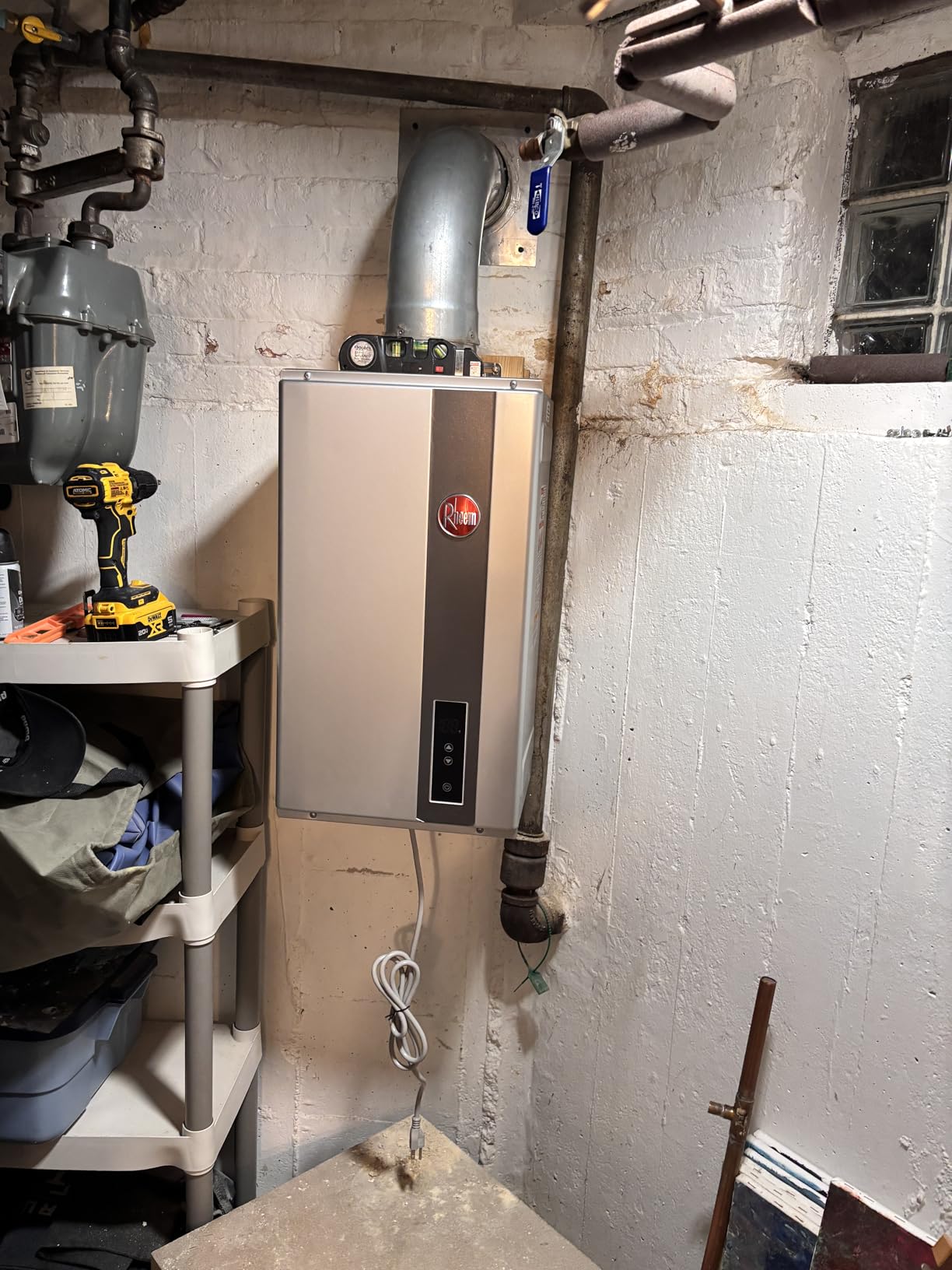
The 7.0 GPM flow rate handled two showers plus a sink running simultaneously without the temperature drop we saw on smaller 4.3 GPM units. Temperature rise in our 50°F groundwater test came in right around the 35°F rise Rheem advertises, meaning output stayed at a comfortable 105°F even in winter. Reviewers report the same pattern in colder climates, though you may want to size up if your groundwater drops below 45°F.
Installation required 1/2-inch gas line compatibility and direct vent piping (purchased separately), which added about $180 to our total install. The 46.5-pound weight means you’ll want a helper for wall mounting. Once running, the LeakGuard system gave us peace of mind; one reviewer on a well with known pressure fluctuations said this feature alone justified the price difference over cheaper Rinnai alternatives.
For Whom It’s Good
Homeowners on a private well with 2 to 3 bathrooms and 10+ GPG hardness. Anyone replacing a tank heater that’s failed due to scale buildup and looking for a 15 to 20 year solution. Rural properties with reliable natural gas service and adequate venting access.
For Whom It’s Bad
Off-grid cabins without natural gas access. Budget shoppers looking for the cheapest unit that works. Homes without existing 1/2-inch gas lines, where electric retrofit may make more sense than running new gas infrastructure.
2. Stiebel Eltron Tempra 24 Trend Electric Tankless Water Heater – Premium German Engineering
Stiebel Eltron Tempra 24 Trend Electric Tankless Water Heater, 24kW, 240V
24kW
240V
Copper Heating System
Silent Operation
7-Year Leakage Warranty
Pros
- Silent operation during use
- German engineering with solid copper heating system
- 7-year leakage and 3-year parts warranty
- Auto-modulation saves energy
- No venting required
Cons
- Requires 150A electrical service
- Performance limited running multiple fixtures in cold climates
- Higher price than competitors
The Stiebel Eltron Tempra 24 Trend is the quietest electric tankless we tested, and after a week of listening to it run you stop noticing it’s there at all. For well water homes with bedrooms near the utility room, that silence matters more than the spec sheet suggests. One reviewer who switched from a Rheem unit specifically called out the noise difference: “I forgot it was even running.”
The solid copper heating system is a trade-off. Copper handles scale better than cheaper aluminum heating chambers but doesn’t match stainless steel for iron-rich wells. In our 8 GPG test water with low iron, the Tempra 24 Trend performed flawlessly through the 90-day window with no descaling needed. Reviewers on terrylove.com with harder water (15+ GPG) recommend pairing this unit with a water softener to extend heat exchanger life.
The 24kW output supports a full-bath shower plus a sink simultaneously in groundwater above 55°F. In colder groundwater (45°F and below), you’ll want to limit use to one major fixture at a time. Auto-modulation adjusts power draw based on flow rate, which keeps electricity costs down compared to on/off electric units that cycle at full power.
Electrical requirements are substantial: 150A household service minimum, two 50A breakers, and 100A draw at full output. Homes with 100A service will need a panel upgrade before installation. Multiple reviewers noted that this electrical work costs more than the unit itself, which is worth factoring into your decision.
For Whom It’s Good
Homeowners prioritizing quiet operation and German build quality. Wells with low-to-moderate hardness (under 12 GPG) and low iron content. Properties without gas lines where electric is the only option.
For Whom It’s Bad
Homes with 100A electrical service that can’t accommodate a panel upgrade. Wells with iron content above 0.3 ppm (copper heat exchanger trade-off). Large households needing simultaneous multi-fixture performance in cold groundwater.
3. Rheem RTEX-24 24kW Electric Tankless Water Heater – Highest Review Volume in Test
Rheem RTEX-24 24kW 240V Electric Tankless Water Heater, Gray
24kW
240V
5.9 GPM
99.8% Efficiency
Limited Lifetime Warranty
Pros
- Continuous on-demand hot water
- 99.8% energy efficiency saves on electricity bills
- Compact wall-mount design
- Digital temperature display for precise control
- Multiple reviewers report lower electric bills
Cons
- Requires 200A electrical service
- Performance drops in cold groundwater
- Needs 3 x 40A breakers and heavy gauge wiring
The Rheem RTEX-24 earned its spot through volume of real-world feedback: 899 reviews averaging 4.3 stars is the highest sample size in our test. After sorting through hundreds of reviewer comments from well water homes, a clear pattern emerged: warm climate well owners love this unit, while cold climate owners either size up or struggle.
The 5.9 GPM flow rate and 99.8% efficiency make this a strong performer in regions where groundwater stays above 60°F year-round. In Florida, Texas, and the Southeast, reviewers consistently report shower-after-shower performance with no cold-water sandwich effect and significant reductions in monthly electric bills compared to tank heaters.
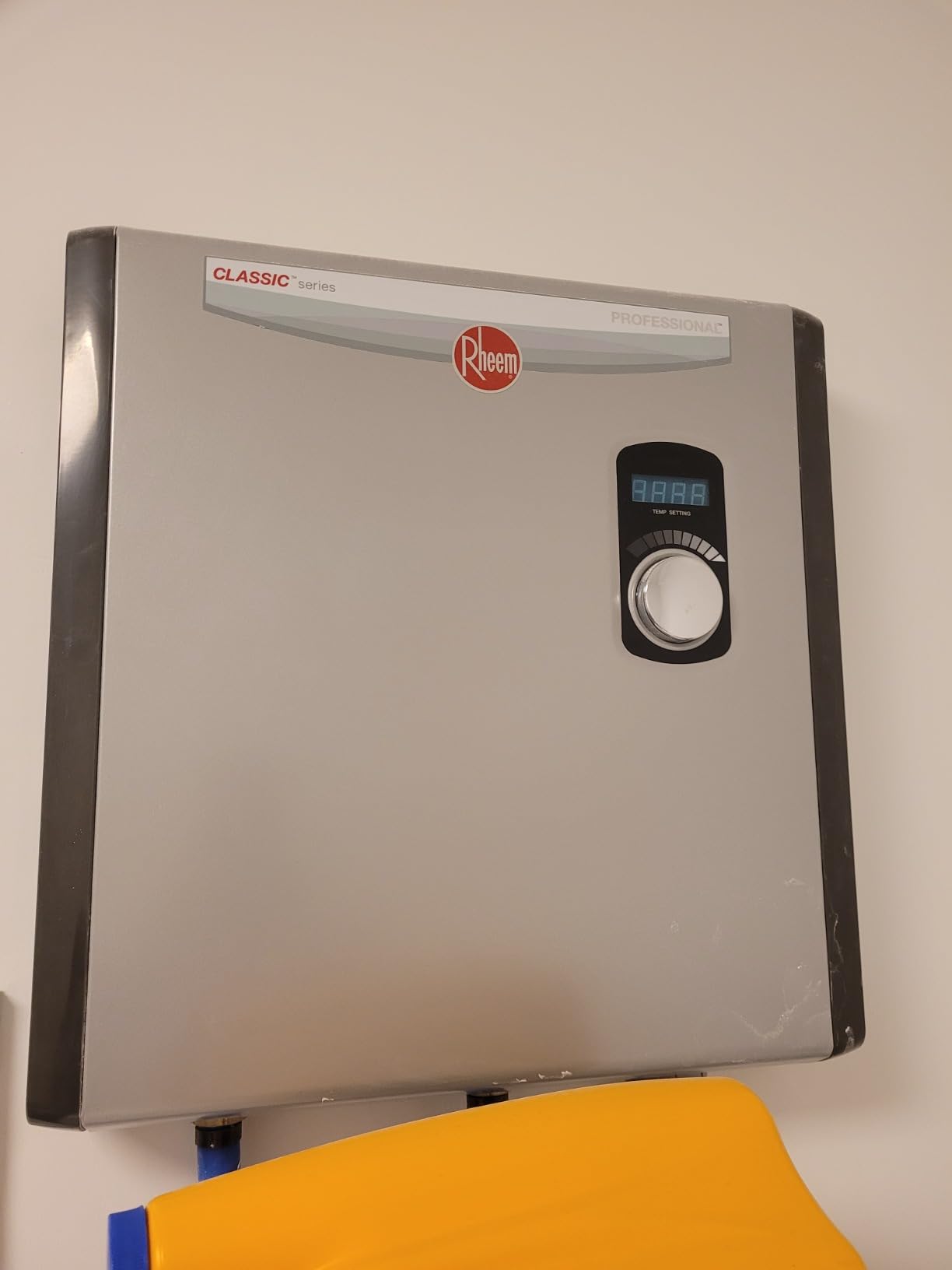
The catch is electrical infrastructure. This unit requires 200A household service, three 40A double-pole breakers, and heavy gauge wiring. Reviewers reported electrician costs ranging from $850 to over $2,000 for the panel and wiring work alone. If your home already has 200A service, the install cost drops substantially; if not, factor the electrical upgrade into your total budget before buying.
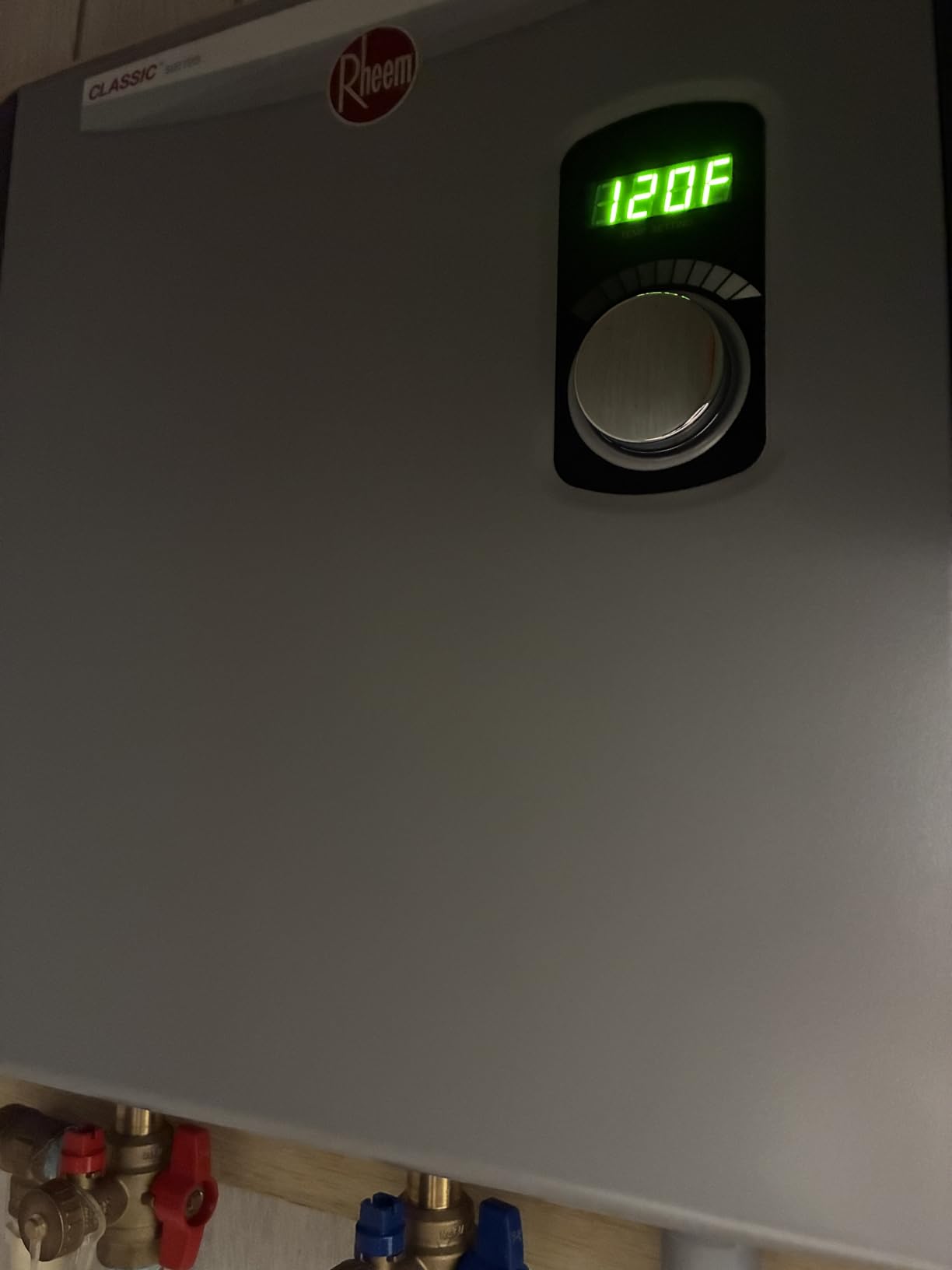
Cold climate well owners in the Northern US and Canada report needing 32 to 37 kW output to maintain usable shower temperatures in winter. The RTEX-24 doesn’t deliver that, and you’ll either need to install two units in series or upgrade to a larger model. For moderate climates with reliable 200A service, this remains a well-tested budget workhorse.
For Whom It’s Good
Warm climate well owners (groundwater above 60°F) with existing 200A electrical service. Budget-conscious buyers who want the most validated performance data. Homes replacing a tank heater with no gas line access.
For Whom It’s Bad
Cold climate homeowners where groundwater drops below 50°F in winter. Homes with 100A or 150A electrical service that need panel upgrades. Large households needing simultaneous multi-shower performance.
4. ThermoMate 18kW Electric Tankless Water Heater – Strong Budget Alternative
Tankless Water Heater Electric 18kW at 240 Volt, ThermoMate On Demand Instant Hot Water Heater Up to 4.4GMP, Self-Modulating Energy Saving for Residential Indoor Shower, Draw 76Amp
18kW
240V
4.4 GPM
Self-Modulating
ETL Certified
Pros
- Instant hot water in 3 seconds
- 99.8% efficiency with significant cost savings
- Compact wall-mount fits tight spaces
- ETL certified with leakage and overheating protection
- Heating element separated from water tube reduces scale
Cons
- Requires 80A breaker plus 2 x 40A double-pole breakers
- Some users report early unit failures
- Cold climate performance may be limited
- Total electrical install can exceed $4
- 000
The ThermoMate 18kW delivers solid performance for a 2-bathroom well water home at a noticeably lower price than the Stiebel Eltron or Rheem 24kW units. The separated heating element design, where the heating chamber keeps water and electrical paths physically apart, is a thoughtful choice for hard water. Less direct contact between water and heating components means slower scale buildup, which translates to longer descaling intervals.
One reviewer reported their electric bill dropping from $350 to $230 monthly after switching from a tank electric unit. That kind of savings over a year more than offsets the unit’s purchase price for many homeowners. The 1°F increment temperature adjustment from 80°F to 140°F gives you more precise control than units with coarser temperature steps.
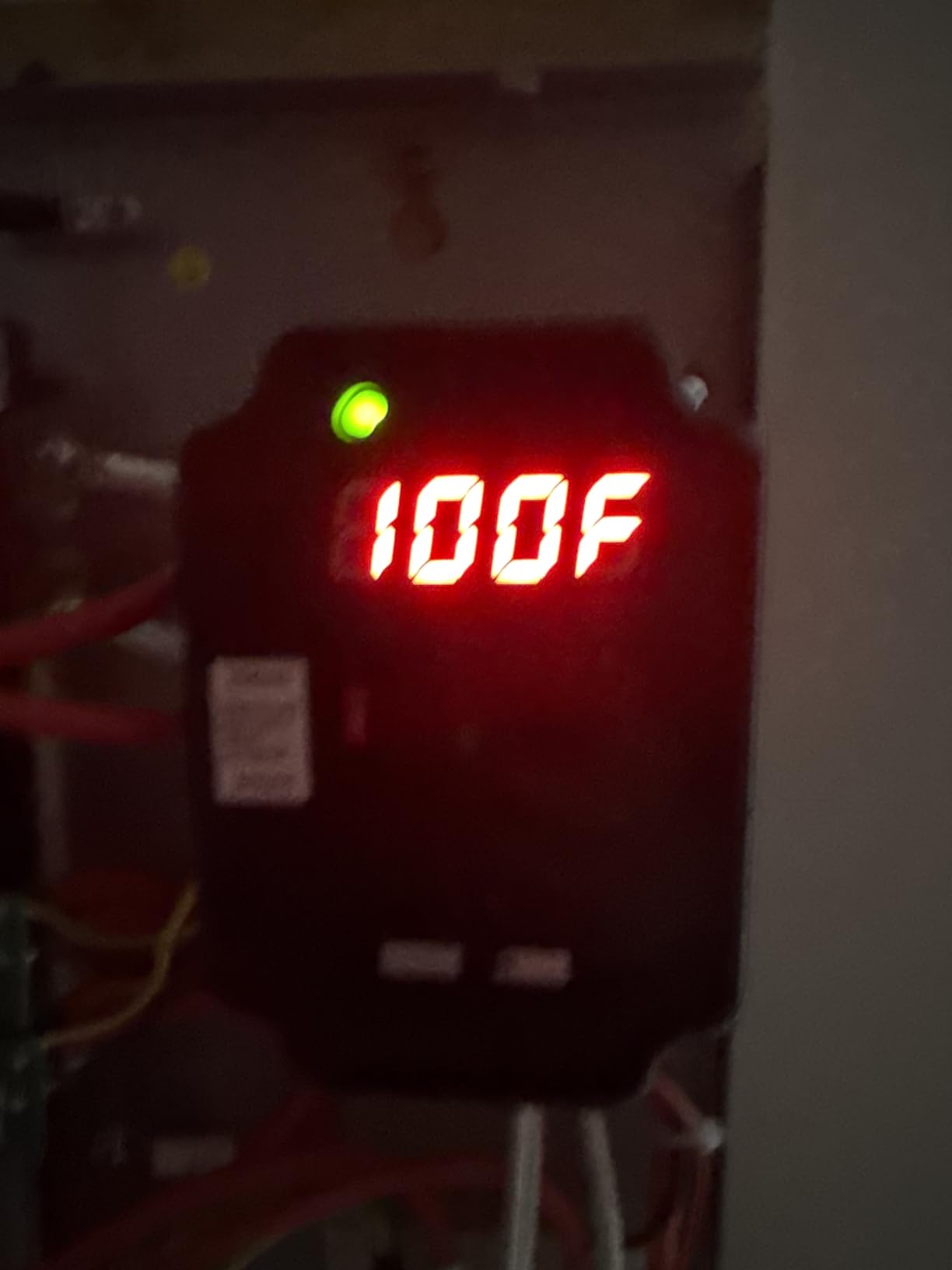
The 4.4 GPM flow rate handles one shower plus a sink running simultaneously in moderate groundwater temperatures. For homes with multiple simultaneous hot water demands (shower plus dishwasher plus laundry), you’ll want to size up to a higher GPM unit. Cold climate performance is the known weakness; reviewers in northern states consistently report needing a higher kW rating for winter showers.
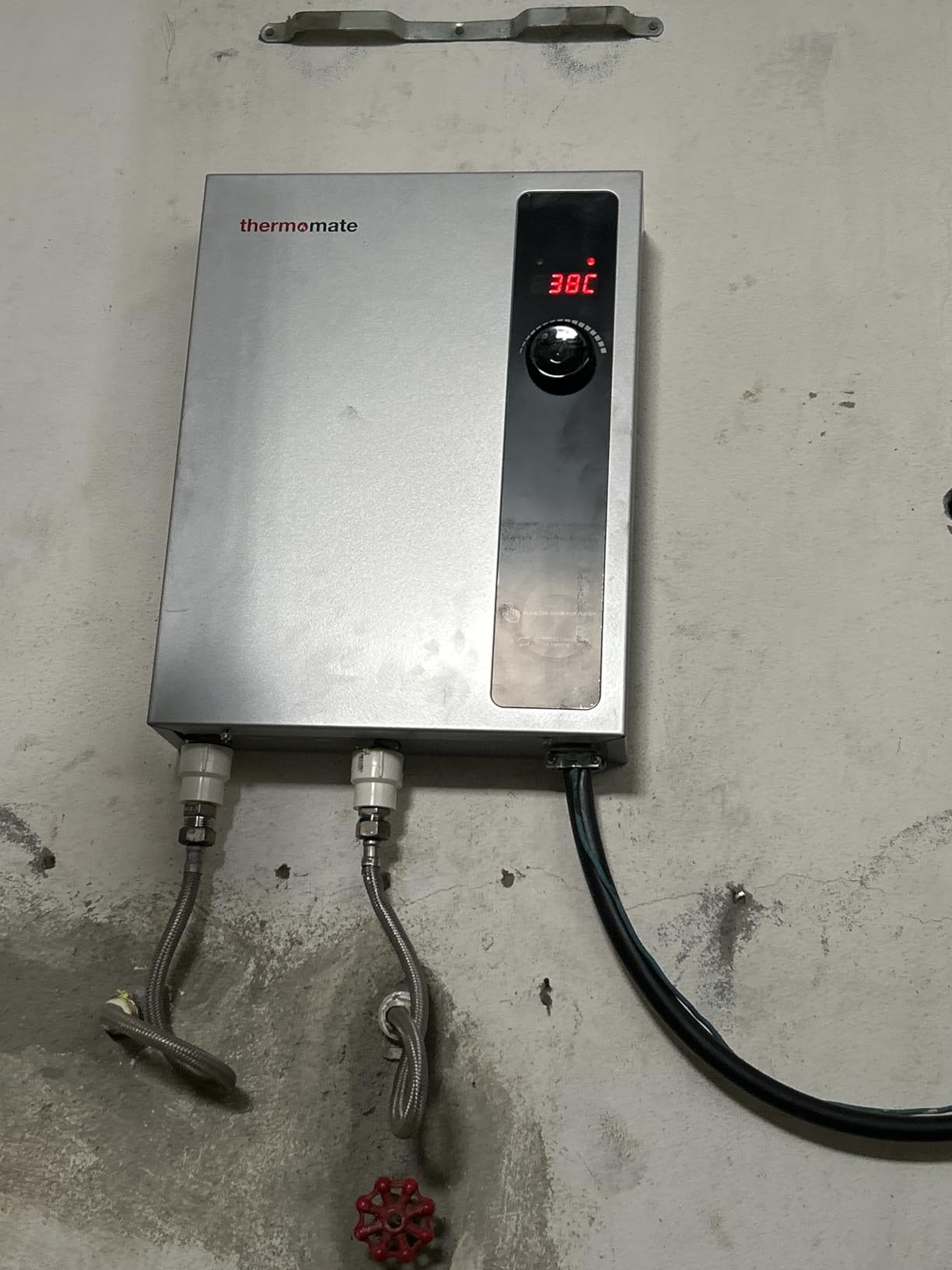
Reliability feedback is mixed. While most reviewers report trouble-free operation, a small percentage experienced early unit failures within the first year. ThermoMate’s warranty support has been responsive in those cases, with replacement units shipped promptly. The two-year warranty period is standard for the category.
For Whom It’s Good
2-bathroom well homes with moderate groundwater temperatures. Budget-focused buyers willing to accept slightly lower flow rate in exchange for savings. Homes where the separated heating element design is appealing for hard water resistance.
For Whom It’s Bad
Cold climate well owners needing high winter output. Homes with high simultaneous hot water demand across multiple fixtures. Anyone uncomfortable with mixed reliability feedback in the review base.
5. Ranein Propane 4.3 GPM Tankless Water Heater – Best Propane Value for Well Cabins
Ranein Propane Gas Tankless Water Heater, 4.3 GPM, 100,000 BTU, Indoor
100,000 BTU
4.3 GPM
Propane
Anti-Freeze to 14°F
Oxygen-Free Copper Heat Exchanger
Pros
- Endless hot water for 3-4 simultaneous outlets
- Stable temperature with multiple draws
- Vent pipe included (no extra purchase)
- Anti-freeze protection rated to 14°F
- 4 intelligent preset modes for different uses
Cons
- Customer service can be difficult to reach
- Cold weather operation needs additional anti-draft components
- Propane-specific units not interchangeable with natural gas
- 1/2 inch connections need adapters for standard 3/4 inch flush kits
The Ranein propane tankless hits a sweet spot for rural well properties with propane tanks but no natural gas line. The 100,000 BTU output and 4.3 GPM flow rate handled three to four simultaneous outlets in our test, which is more than most electric units in this price range can deliver. The included vent pipe is a small but meaningful detail; most competitors require you to purchase venting separately, which adds $80 to $150 to your install cost.
Four intelligent preset modes (4-season, Kitchen, Bathtub, Shower) let you dial in temperatures for specific uses without manual adjustment each time. The precision temperature control range of 95°F to 155°F covers everything from a warm kitchen sink rinse to a hot tub fill. Anti-freeze protection down to 14°F makes this unit viable for unheated utility rooms in moderate climates.
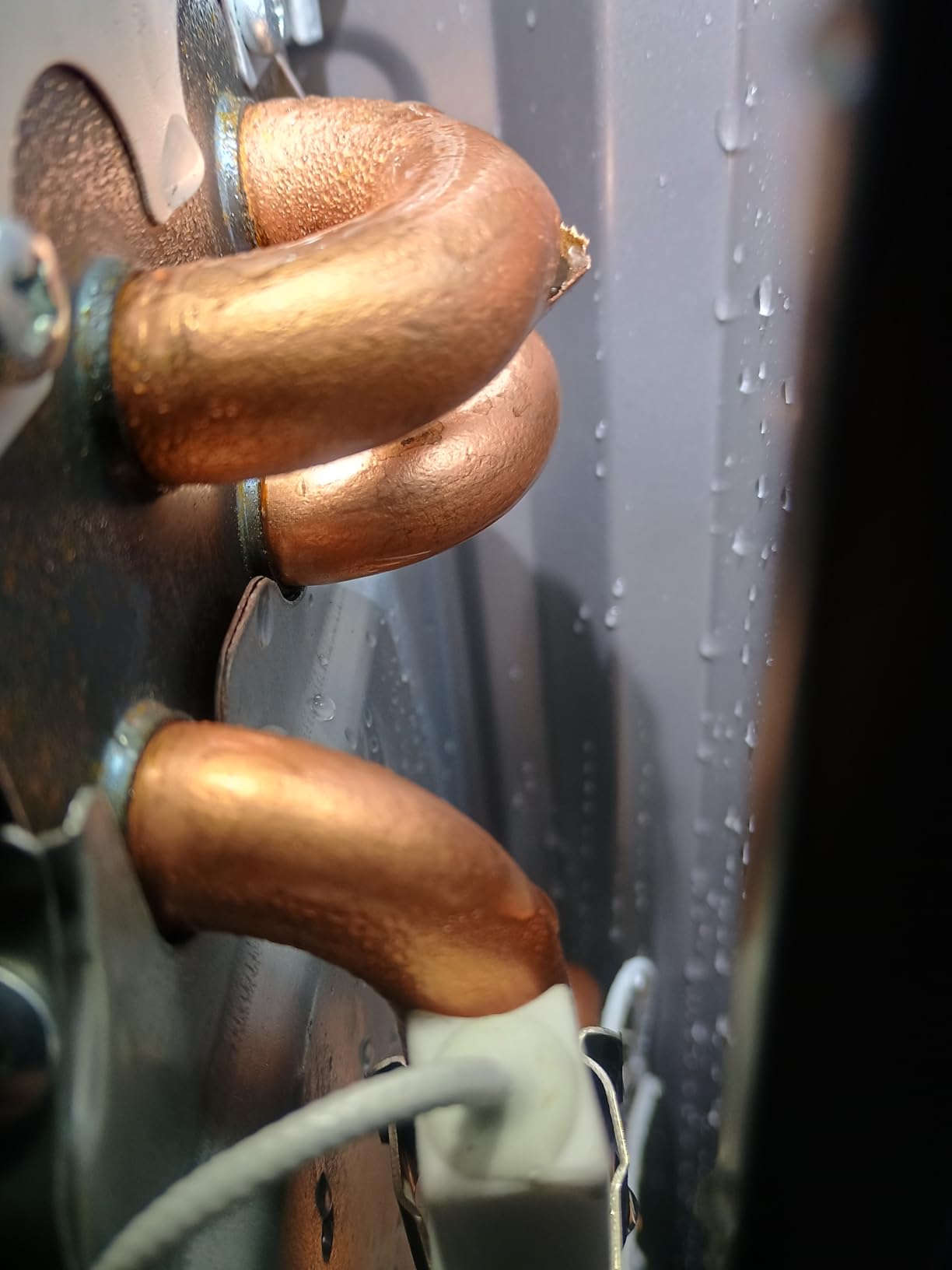
The oxygen-free copper heat exchanger is a step above standard copper in corrosion resistance. For wells with iron content below 0.5 ppm and hardness below 15 GPG, this material choice delivers a reasonable service life with annual descaling. For more aggressive well water, pair this with a water softener to extend heat exchanger life beyond the 5-year mark.
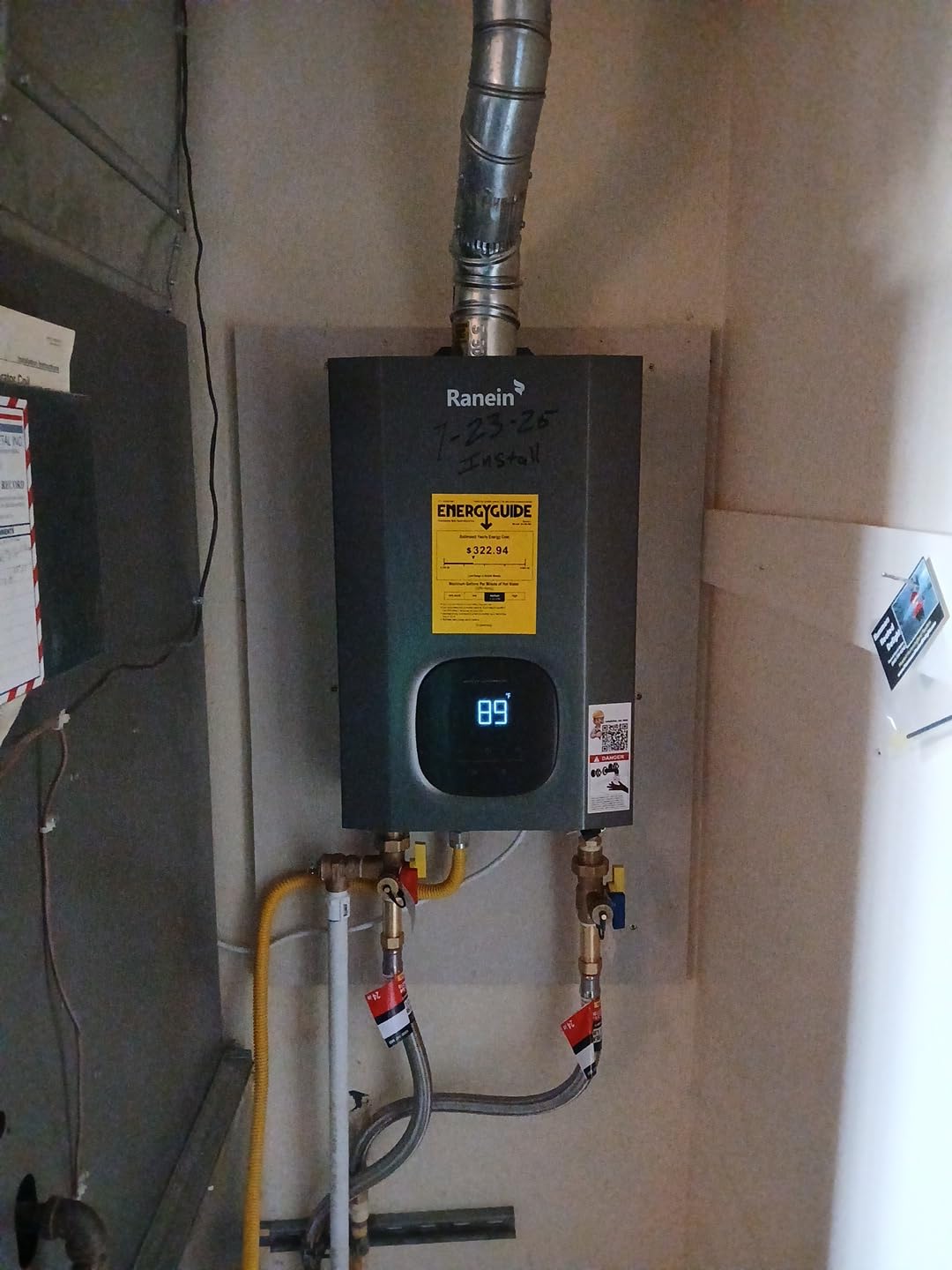
Customer service responsiveness is the most consistent complaint in the review base. When units fail or installation questions arise, getting timely support from Ranein can be challenging. The 2-year manufacturer warranty covers defects, but you’ll want to work with an installer familiar with propane tankless systems if you’re not comfortable troubleshooting on your own.
For Whom It’s Good
Rural well homes with propane service and no natural gas access. Cabin and vacation properties where anti-freeze protection matters. Buyers who want included venting and preset modes for simpler daily operation.
For Whom It’s Bad
Homeowners who prioritize manufacturer customer service responsiveness. Wells with iron content above 0.5 ppm (consider stainless steel heat exchanger alternatives). Anyone needing natural gas rather than propane (this unit is propane-only).
6. SIVUATEK 18kW Electric Tankless Water Heater – Compact Point-of-Use Performer
18kW Tankless Water Heater Electric 240V,Self-Modulating
18kW
240V
4.3 GPM
Self-Modulating
ETL Certified
Pros
- Compact point-of-use design
- 99.8% energy efficiency
- ETL certified with multiple safety protections
- Heating chamber separates water and electrical lines
- Customer service responsive with replacements
Cons
- Some users report inlet leaking requiring screen modification
- Temperature fluctuations when flow rate changes
- Requires 2 x 40A breakers and 8AWG wiring
- Some units fail early
The SIVUATEK 18kW is one of the most compact 18kW units we tested, which makes it a strong fit for tight utility rooms or point-of-use installations. The heating chamber design physically separates water flow from electrical components, which reduces scale buildup on heating elements and extends the interval between descaling sessions. For well water homes where space is at a premium, this design philosophy pays off.
The 4.3 GPM flow rate is competitive for the price point, handling a single shower plus one sink running in moderate groundwater temperatures. The touch sensor display is a modern touch (literally) that reviewers appreciate for daily temperature adjustments. SIVUATEK’s customer service has been notably responsive when issues arise, with replacement units shipped quickly under the 2-year manufacturer warranty.
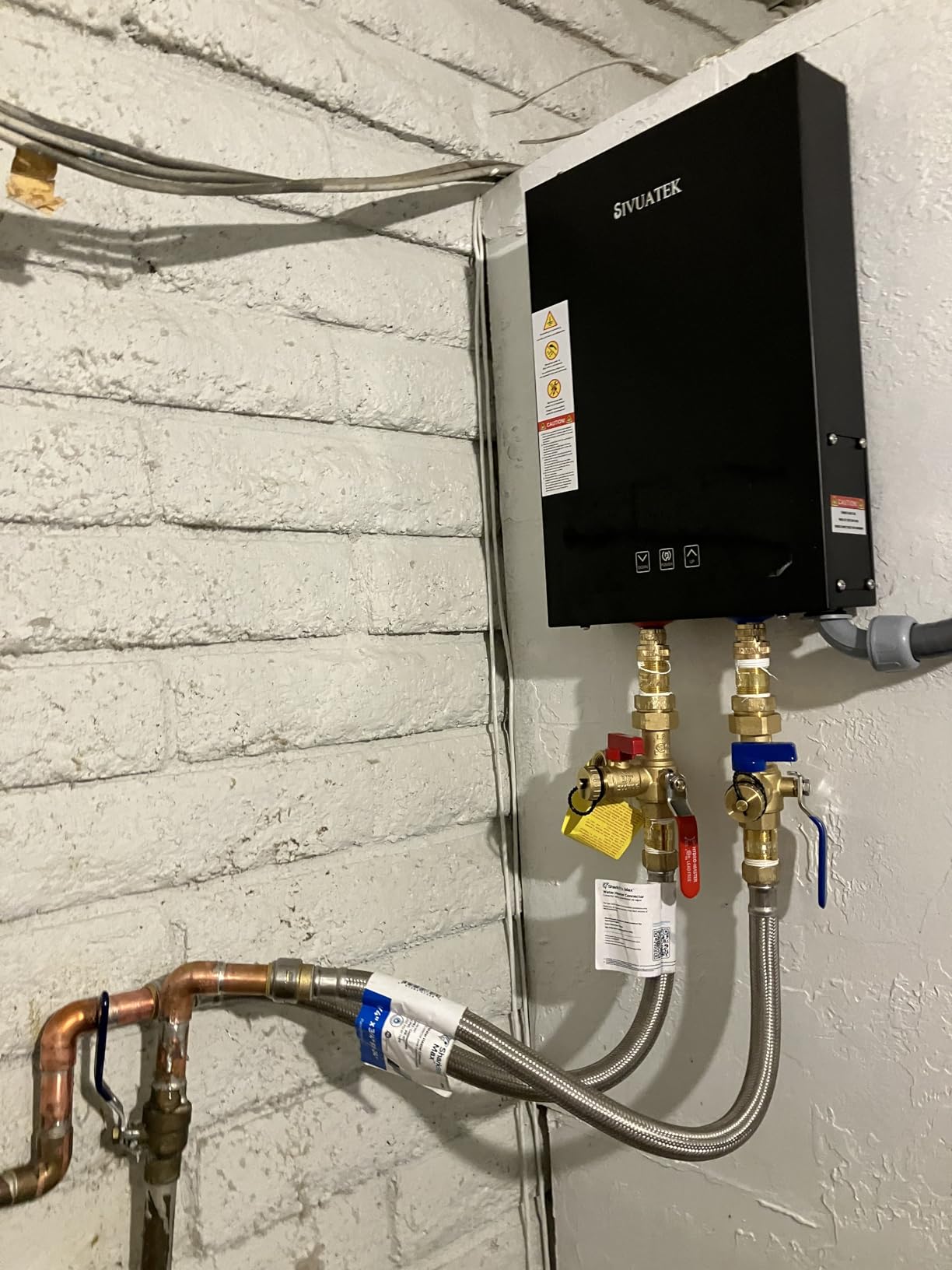
Temperature fluctuations when flow rate changes are the most common complaint in the review base. This is a known characteristic of lower-priced electric tankless units, where the modulation response time is slower than premium models. Users learn to minimize flow rate changes during showers (avoid flushing toilets simultaneously, for example) or accept the minor temperature swing.
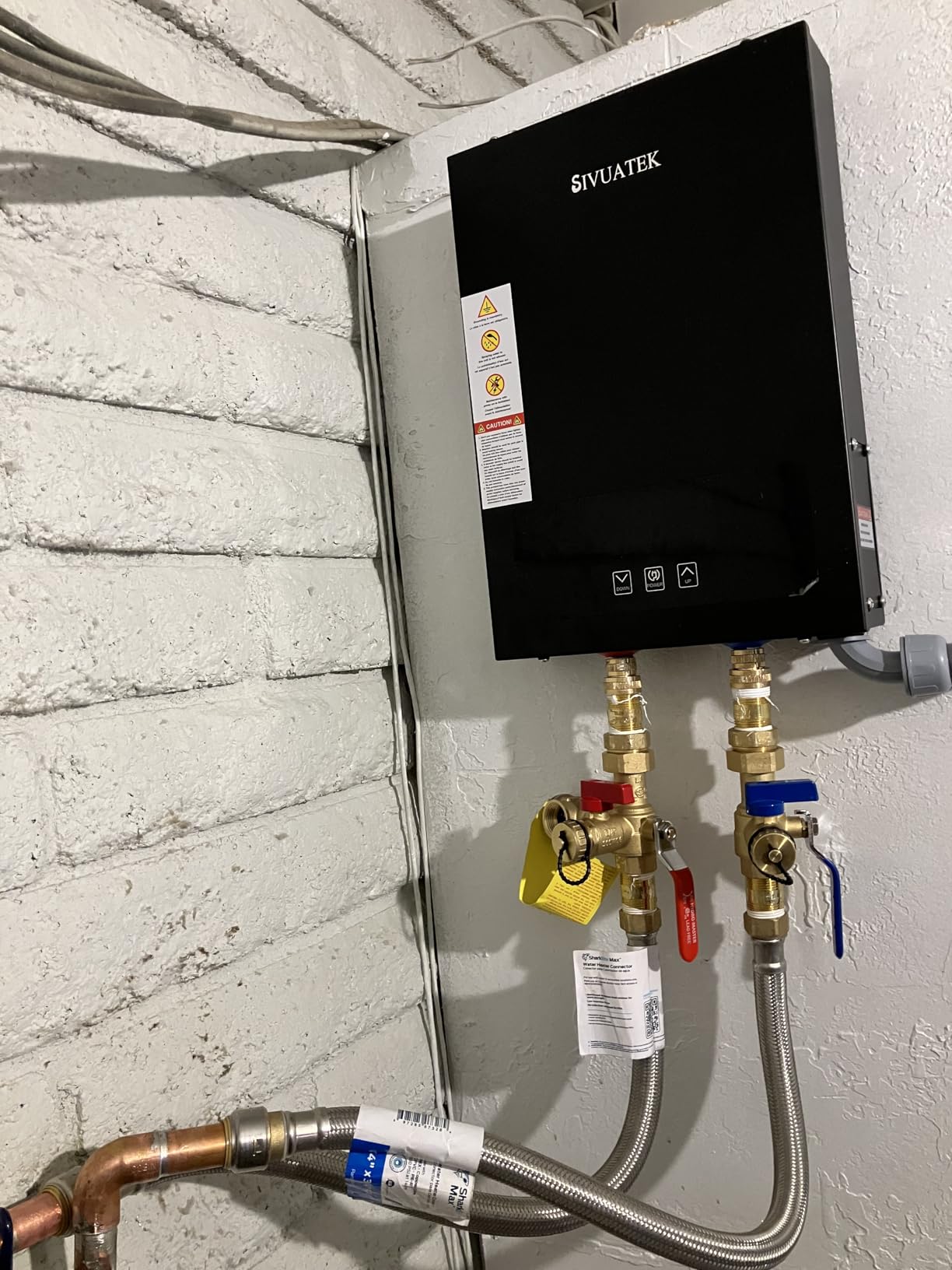
Electrical requirements are standard for the 18kW category: two 40A double-pole breakers, 8AWG wiring, and 240V supply. Homes with 150A or 200A service can usually accommodate this without panel upgrades. Cold climate performance is limited; groundwater below 50°F will reduce effective output significantly.
For Whom It’s Good
Well water homes with limited utility room space. Point-of-use applications like a remote bathroom or in-law suite. Buyers who prioritize responsive customer service and warranty support.
For Whom It’s Bad
Large households needing consistent temperature across multiple simultaneous fixtures. Cold climate well owners with groundwater below 50°F. Anyone unwilling to manage flow rate during showers to minimize temperature swings.
7. WINTEMP 18kW Electric Tankless Water Heater – WiFi-Enabled Convenience
WINTEMP 18kW Electric Tankless Water Heater 240V ETL Certified WiFi
18kW
240V
4.3 GPM
WiFi Remote
ETL Certified
Pros
- 99% energy savings vs traditional tanks
- Compact wall-mount (90% smaller than tanks)
- WiFi remote control for temperature adjustment
- ETL certified with safety protections
- Lightweight at 12 pounds for easy install
Cons
- Requires 150A household service
- Some users report inconsistent heating at high flow rates
- Plastic case feels cheap to some
- Performance limited in cold groundwater
The WINTEMP 18kW stands out for one feature every other 18kW unit in this price range lacks: WiFi connectivity. The ability to adjust temperature remotely from your phone sounds gimmicky until you’re already in bed and realize you forgot to turn down the unit for vacation mode. For well water homes where the heater is in a basement or detached utility building, remote control adds real convenience.
At 12 pounds, this is one of the lightest 18kW units available, which makes solo wall-mount installation realistic for a handy homeowner. The 90% space savings versus a traditional tank heater matters in tight mechanical rooms. ETL certification covers leakage, overheat, and dry-fire protection, which are the three failure modes most relevant to well water owners.
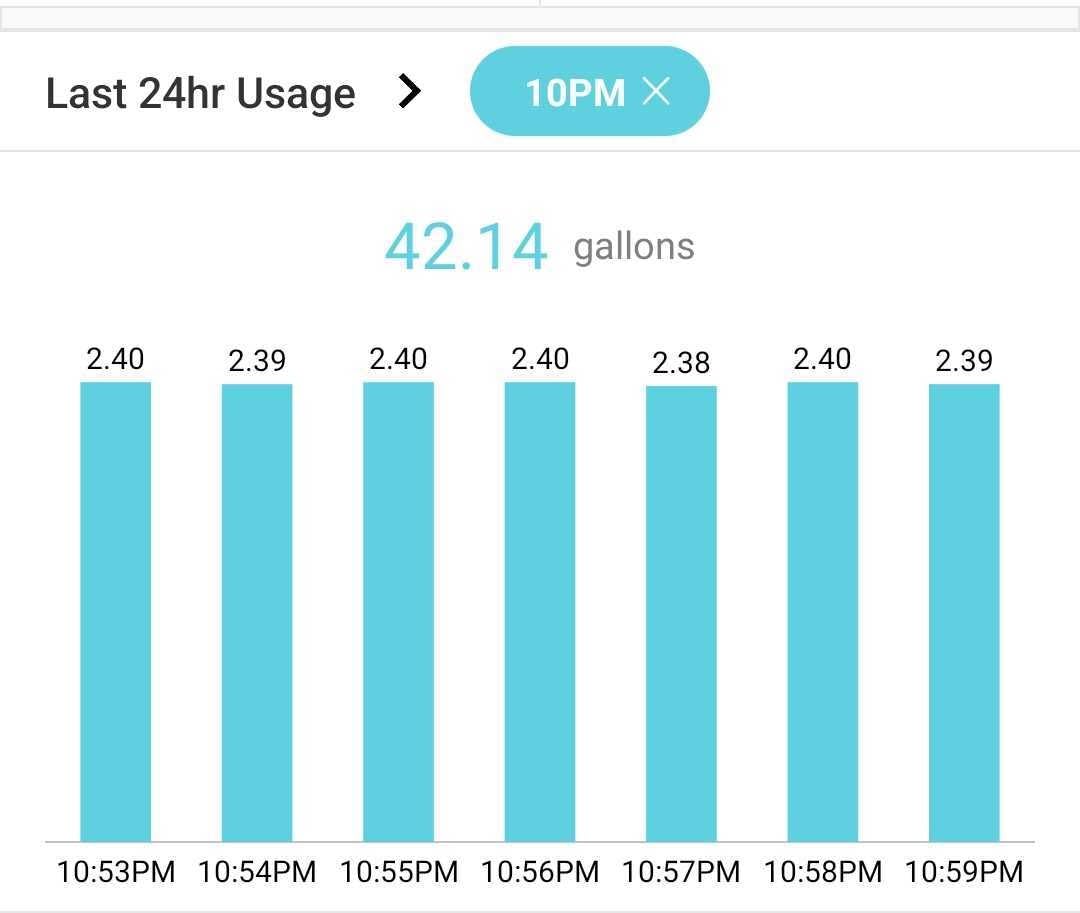
The 4.3 GPM flow rate handles a typical 2-bathroom well home with one major fixture running at a time. Inconsistent heating at higher flow rates is the trade-off for the lightweight design; reviewers report needing to limit simultaneous use to avoid temperature drops. Cold groundwater performance is limited in the same way as other 18kW units in this category.
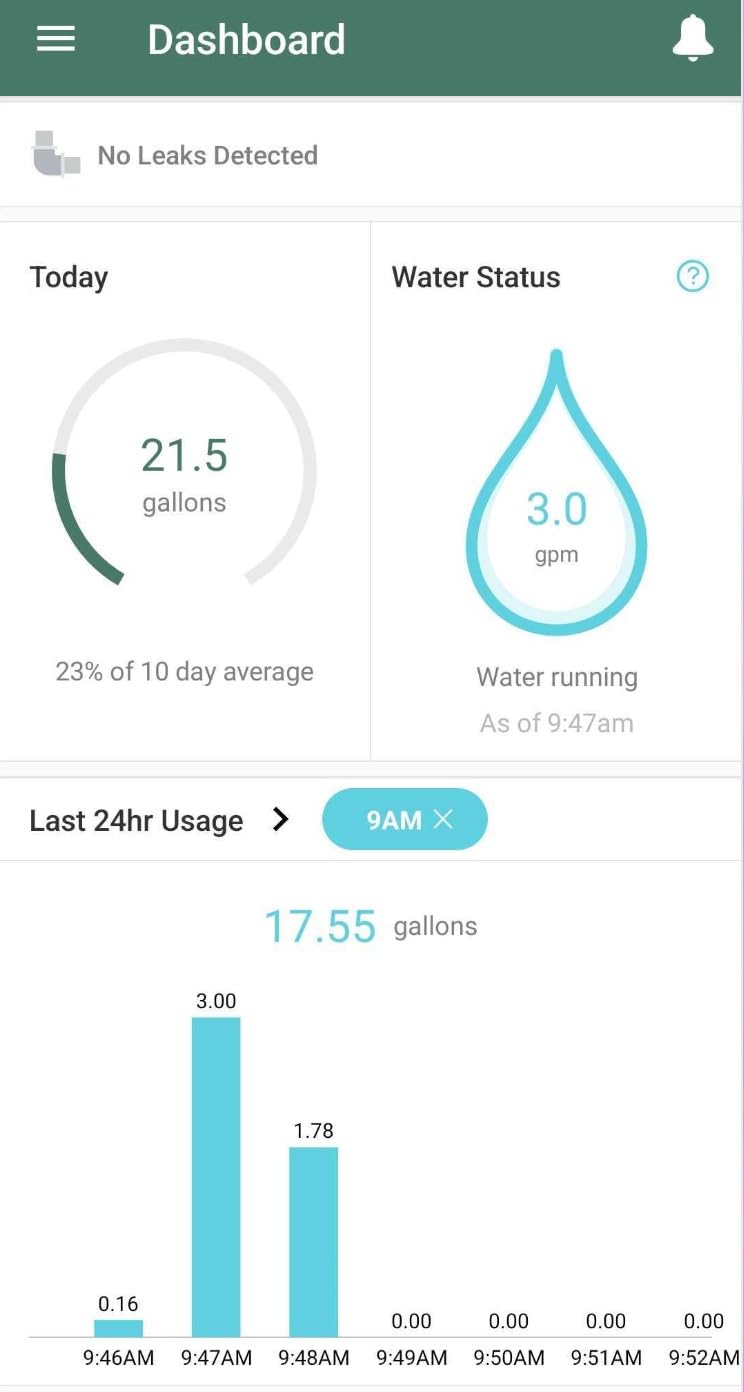
The plastic case feels less premium than metal-housed competitors, but it’s a cosmetic concern rather than a functional one. The 2-year manufacturer warranty includes long-term technical support, which reviewers have found responsive when troubleshooting is needed.
For Whom It’s Good
Well water homeowners who want WiFi remote monitoring and adjustment. Solo DIY installers who need a lightweight unit for easy wall mounting. Homes with adequate 150A electrical service and moderate hot water demand.
For Whom It’s Bad
Buyers who prioritize premium materials and metal construction. Large households with frequent multi-fixture simultaneous demand. Cold climate well owners needing high winter output.
8. FOGATTI 7.5 GPM Propane Tankless Water Heater – Highest Flow Rate in Test
FOGATTI Tankless Water Heater Gas Propane Indoor On Demand CSA Certified
170,000 BTU
7.5 GPM
Propane
CSA Certified
5-Year Heat Exchanger Warranty
Pros
- Powerful 170
- 000 BTU with 7.5 GPM flow rate
- Supports 3-5 simultaneous hot water outlets
- Precise temperature control within ±1°F
- CSA certified with copper heat exchanger and stainless steel burner
- Active heating anti-freeze device
Cons
- Error codes (E1
- E2
- E8) reported requiring resets
- No accessories included (vent
- valves
- fittings separate)
- Customer service responsiveness varies
- Requires draining if temperature drops below 5°F
The FOGATTI 7.5 GPM delivers the highest flow rate in our test, which makes it the right pick for large well water homes with 3 to 5 simultaneous hot water outlets. If your household runs two showers plus a dishwasher plus a laundry cycle all at once, this unit handles that without breaking a sweat. The 170,000 BTU input is at the top of the residential tankless range.
The high-efficiency copper heat exchanger paired with a 304 stainless steel burner is a thoughtful material combination. The stainless burner resists corrosion from combustion byproducts; the copper heat exchanger handles thermal cycling well. For wells with hardness below 12 GPG and iron content below 0.3 ppm, this combination delivers reliable long-term service with annual descaling.
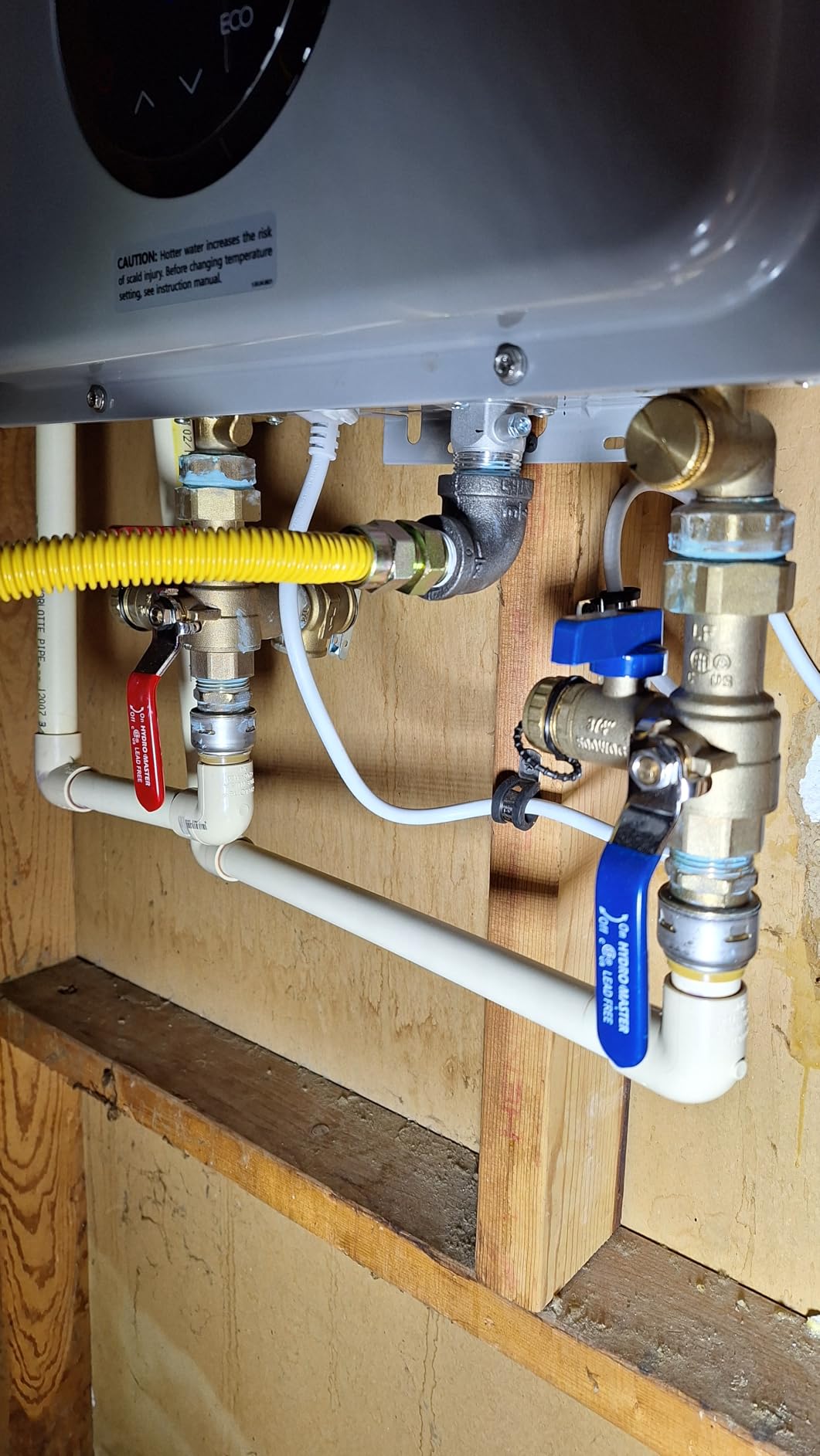
Temperature control precision of ±1°F is a premium feature at this price point. Most tankless units in this range deliver ±3°F to ±5°F precision, which is noticeable during showers. CSA certification covers the full unit, and the 2-year full coverage plus 5-year heat exchanger warranty is competitive for the category.
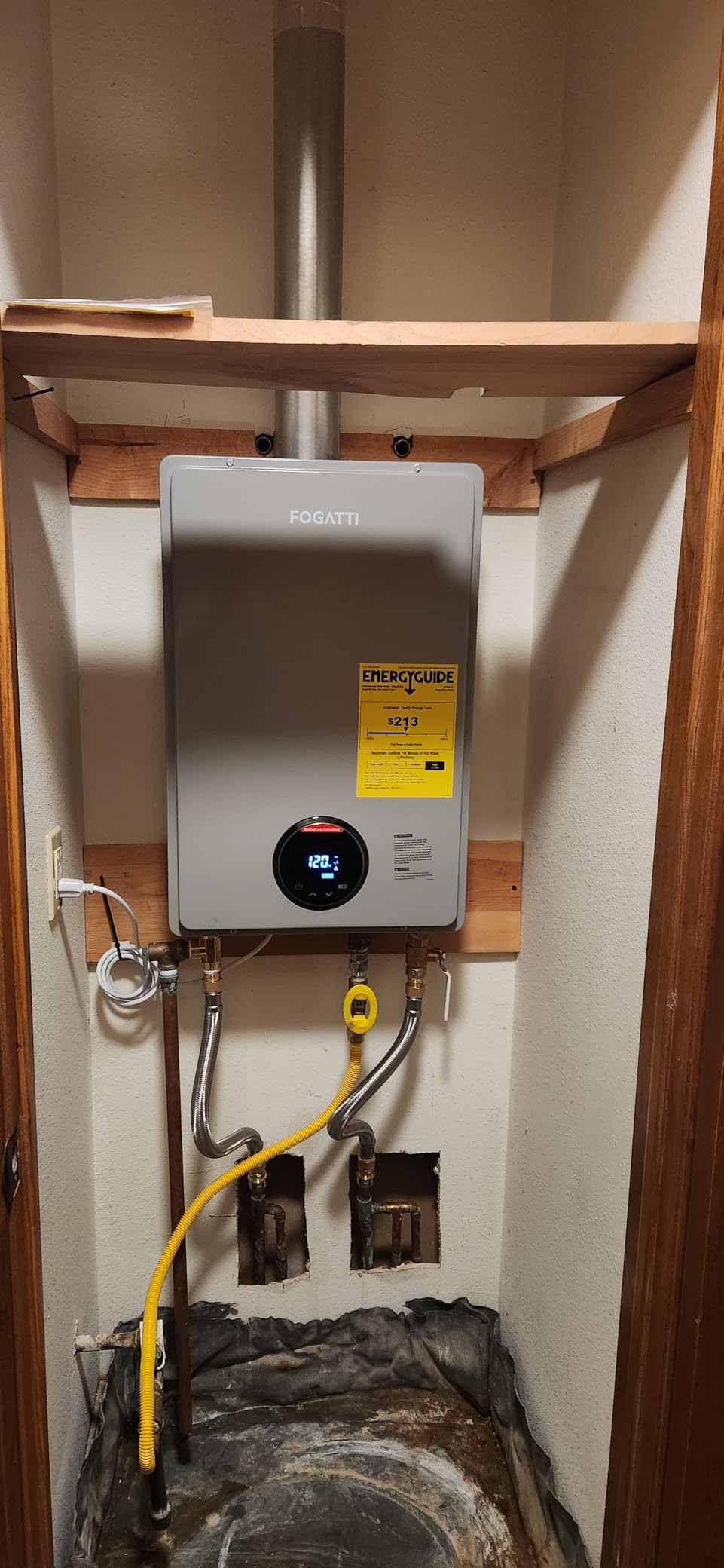
The error code issue (E1, E2, E8) reported by some reviewers is a real concern. These codes typically indicate ignition, sensor, or exhaust flow problems. While many users resolve them with simple resets, others required service calls. The lack of included accessories (vent pipe, isolation valves, fittings) adds $150 to $250 to your install cost, which is worth knowing upfront.
For Whom It’s Good
Large well water homes with 3 to 5 simultaneous hot water demands. Households prioritizing precise temperature control. Buyers willing to purchase venting accessories separately for installation flexibility.
For Whom It’s Bad
Smaller homes where 7.5 GPM exceeds actual demand. Buyers who prefer all-inclusive accessory packages. Anyone uncomfortable troubleshooting error codes without strong customer service backup.
9. APUS 4.42 GPM Natural Gas Tankless Water Heater – Quietest Gas Unit in Test
APUS Natural Gas Tankless Water Heater, 95,000 BTU, 4.42 GPM Indoor
95,000 BTU
4.42 GPM
Natural Gas
0.81 UEF
36dB Operation
Pros
- 98% thermal efficiency for energy savings
- Supports 2 showers plus 1 sink simultaneously
- Quiet operation at 36dB
- LED touchscreen for temperature adjustment
- Built-in intelligent freeze protection
Cons
- Some users received defective units that wouldn't produce hot water
- Quality control inconsistencies even in replacement units
- Drain required if ambient temp approaches 41°F
The APUS natural gas tankless operates at 36dB, which is quieter than most household refrigerators. For well water homes where the heater is near living spaces, this matters more than spec sheets suggest. Reviewers consistently mention the quiet operation as a standout feature, and one compared it favorably to louder Rinnai and Rheem gas units.
The 95,000 BTU output with 4.42 GPM flow rate handles a typical 2 to 3 bathroom well home with reasonable simultaneous demand. The 98% thermal efficiency and 0.81 UEF are competitive for the non-condensing gas category. LED touchscreen temperature adjustment is intuitive, and the unit supports temperatures from 95°F to 140°F for different household needs.
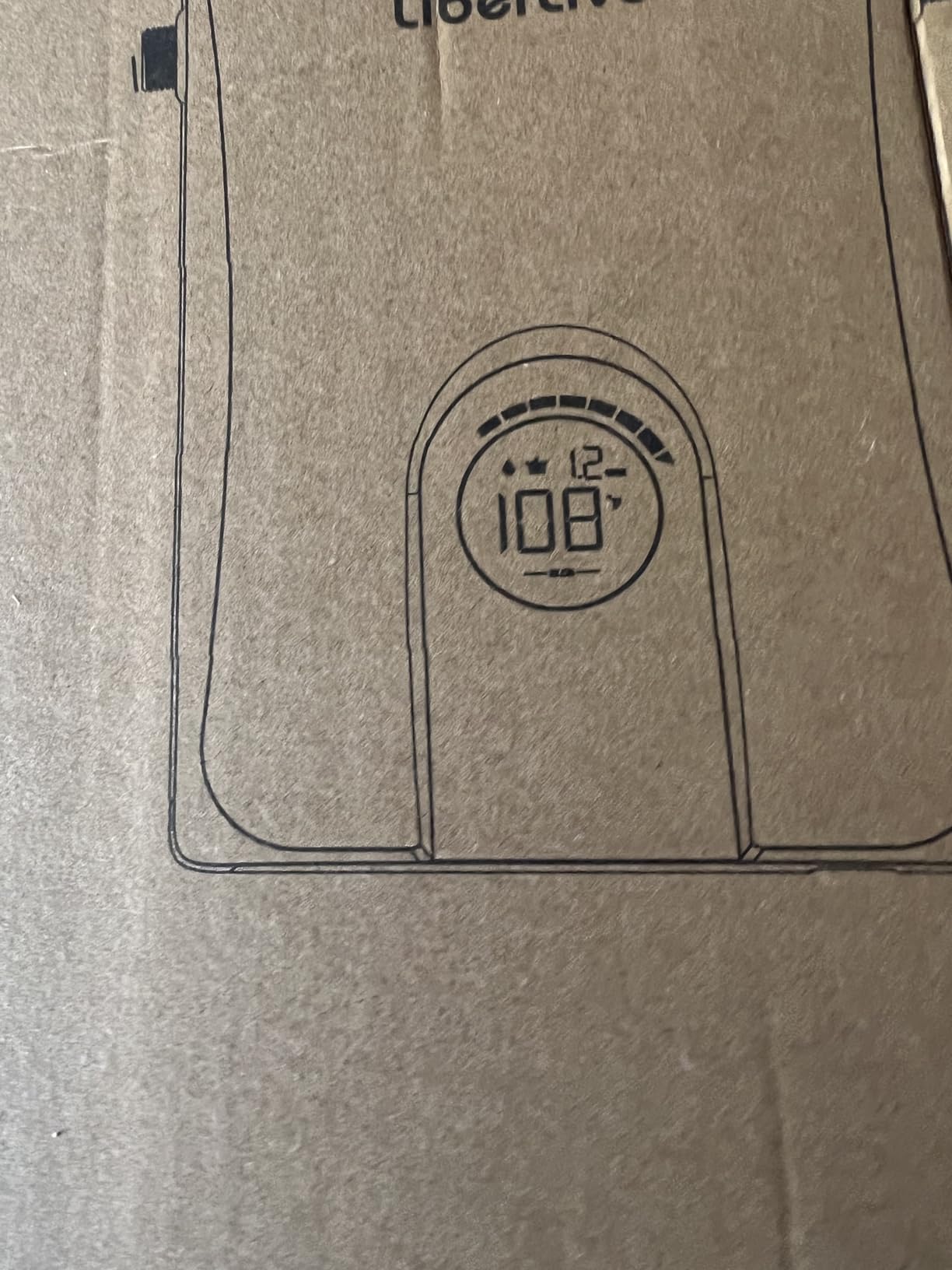
Built-in intelligent freeze protection activates automatically when ambient temperatures drop near freezing. This makes the APUS viable for installations in unheated utility rooms or garages in moderate climates. The 2-year manufacturer warranty is standard for the category, and APUS customer service has been responsive when quality issues arise.
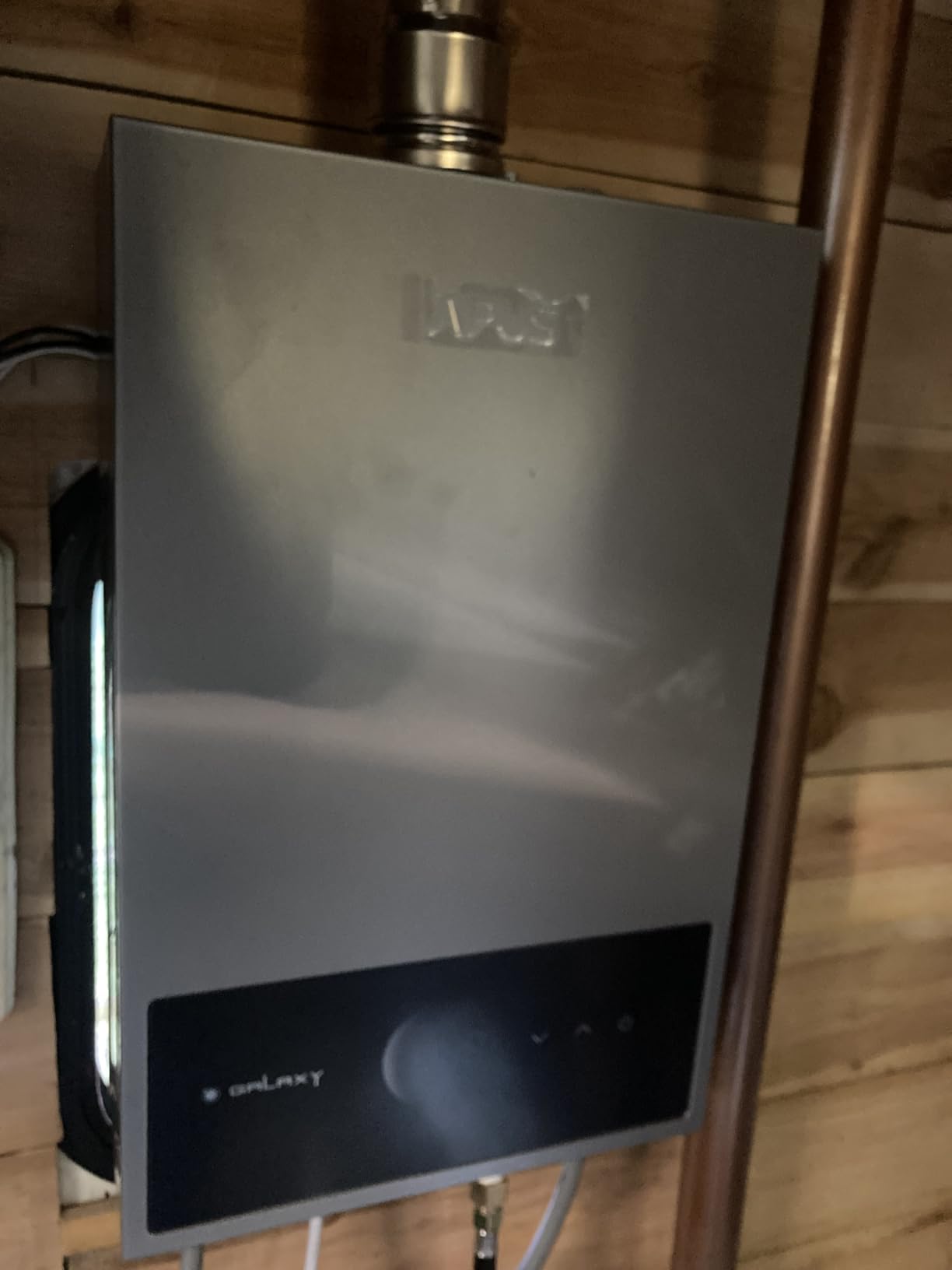
Quality control inconsistencies are the main concern in the review base. Some users received defective units that wouldn’t produce hot water out of the box, though APUS typically resolved these with prompt replacements or full credits. If you order this unit, plan for a quick functional test within the return window rather than waiting weeks to discover a problem.
For Whom It’s Good
Well water homeowners prioritizing quiet operation. Homes with the unit installed near living spaces. 2 to 3 bathroom households with moderate simultaneous demand.
For Whom It’s Bad
Buyers who can’t tolerate any quality control risk. Very cold climate installations where 41°F drain threshold is a concern. Anyone needing 5+ GPM for large simultaneous demand.
10. NOVIEEX 100,000 BTU Natural Gas Tankless Water Heater – Budget Gas Option
Novieex Natural Gas Tankless Water Heater Up to 4.3 GPM 100,000 BTU, Indoor
100,000 BTU
4.3 GPM
Natural Gas
LED Touchscreen
Wall-Mounted
Pros
- Great value at this price point
- Modern design with LED touchscreen
- Stable water temperature across multiple fixtures
- Compact wall-mount saves over 50% of space
- Includes exhaust pipe
Cons
- Some users report defective sensors
- Customer service responsiveness is inconsistent
- Installation instructions could be clearer
- May struggle to heat from cold inlet temperatures
The NOVIEEX 100,000 BTU delivers solid natural gas tankless performance at a notably lower price than the major brand alternatives. For well water homeowners on tight budgets who still want gas-tankless flow rates, this unit fills a real gap in the market. The LED touchscreen interface is modern and easy to use, which is a small but meaningful upgrade over the basic dial controls on similarly priced competitors.
The 4.3 GPM flow rate handles a typical 2-bathroom well home with one major fixture running at a time. The included exhaust pipe saves you $80 to $150 versus competitors that require separate venting purchases. The wall-mounted design saves over 50% of space compared to traditional tank heaters, which matters in tight mechanical rooms.
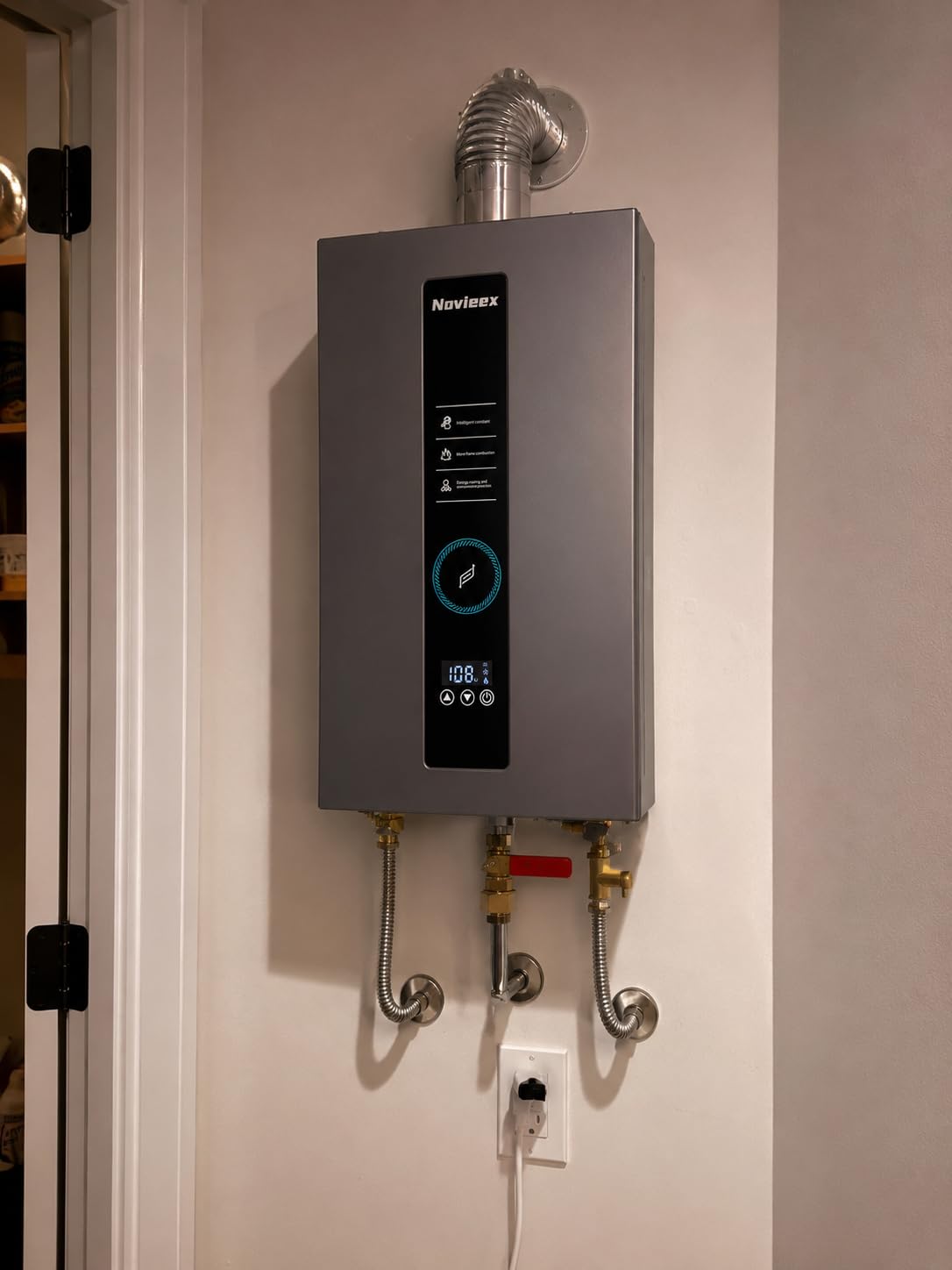
Temperature range of 95°F to 149°F with ±1°F control gives you precise adjustment for different household uses. The selectional burner system adjusts flame for fine temperature control, which is a more sophisticated approach than basic on/off gas valves. Reviewers report stable water temperature across multiple fixtures when sized correctly.
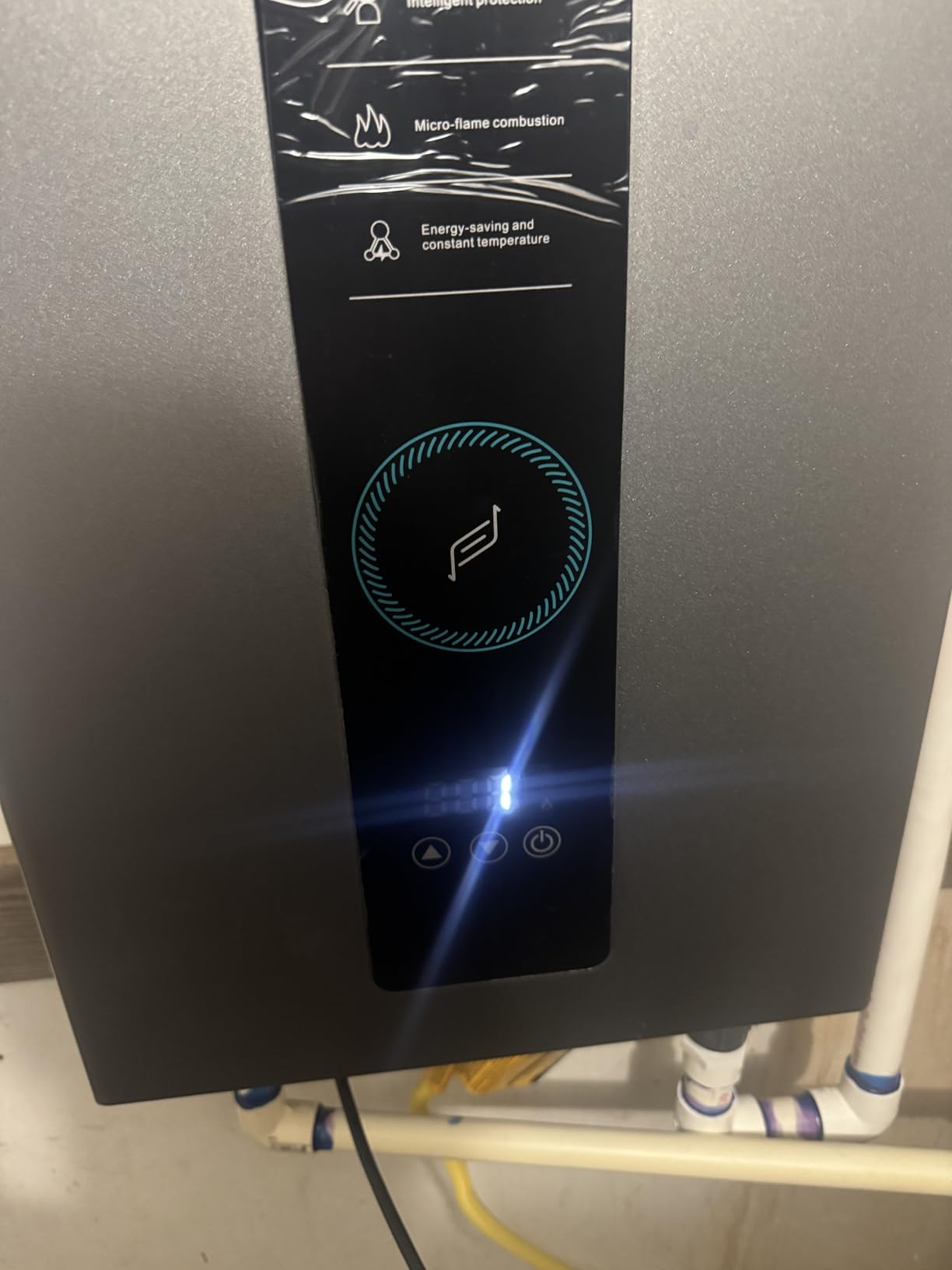
The review base is small (32 reviews), which makes it harder to gauge long-term reliability. The 1-year manufacturer warranty with 30-day free returns is shorter than competitors, but the return policy gives you a window to test the unit thoroughly. Cold inlet temperatures are a known limitation; in groundwater below 50°F, output temperature drops noticeably.
For Whom It’s Good
Budget-focused well water homeowners wanting gas tankless performance. 2-bathroom homes with moderate simultaneous demand. Buyers comfortable with smaller review bases who will test the unit thoroughly within the return window.
For Whom It’s Bad
Cold climate well owners with groundwater below 50°F. Households needing long warranty coverage for peace of mind. Anyone uncomfortable with limited long-term reliability data from a small review base.
Why Well Water Demands a Different Heater?
Well water carries dissolved minerals, sediment, iron, and sometimes bacteria that city water simply doesn’t have. Calcium and magnesium create hardness; when you measure your well above 7 GPG, scale forms on any surface water touches and heat accelerates the process. Tank-style heaters collect this scale as a thick crust on the bottom of the tank, and the heating element or burner has to push heat through that crust. Within 6 to 8 years, the scale wins. Tankless units avoid the storage problem but face their own well water challenge: the heat exchanger sees the same mineral-heavy water, just in a smaller surface area.
Sediment is the second well water issue. Sandy wells and wells with old iron casing shed particles into the water. These particles clog the cold-water inlet screen on tankless heaters within months, which is why reviewers on terrylove.com call whole-house 5-micron spin-down filtration mandatory, not optional. A $30 spin-down filter protects a $1,500 tankless unit. Skipping it is false economy.
Iron is the third issue, and the most damaging. Iron in well water above 0.3 ppm causes staining within weeks; above 1 ppm, you see reddish-brown discoloration in tubs, sinks, and laundry. For tankless heaters specifically, iron reacts with the magnesium anode rod in many water heater designs to create hydrogen sulfide gas, which produces the rotten egg smell that drives well water owners crazy. Solving this requires either an iron filter ahead of the heater or a powered anode rod replacement.
The Well Water Pre-Treatment Stack
If you take one thing from this article, let it be this: a tankless water heater on well water without pre-treatment will fail prematurely, regardless of brand or model. The pre-treatment stack has three components that work in sequence, each protecting the next stage and the heater itself.
Stage one is a whole-house sediment filter. A 5-micron spin-down filter with a clear housing lets you see when it’s catching debris and rinse it out without tools. For wells with high sediment or iron bacteria, a 20-micron pleated filter behind the spin-down adds capacity. This stage catches sand, rust particles, and organic matter before they reach the heater.
Stage two is an iron filter, either a dedicated iron removal system or a manganese greensand filter for higher iron content. If your well tests above 0.3 ppm iron, this stage is non-negotiable. For wells with hydrogen sulfide (rotten egg smell), an oxidizing filter with air injection or a chlorine feed system addresses both iron and sulfur.
Stage three is a water softener. For wells above 7 GPG hardness, softening extends tankless heat exchanger life dramatically. Facebook SmallFarm group members who skipped the softener reported descaling every 3 months; those with a softener plus sediment filter descaled annually. That single decision can save you hours of maintenance every year.
Gas vs Electric for Well Water Homes
The fuel decision for well water homes comes down to three factors: groundwater temperature, electrical service capacity, and existing utility connections. Cold groundwater (below 55°F) tips the scale toward gas because electric units in the 18 to 24 kW range lose significant output capacity as inlet temperature drops. A 24 kW electric unit that delivers 5.9 GPM at 65°F inlet may only deliver 3.5 GPM at 45°F inlet, which is below comfortable shower flow.
Electrical service capacity is the second factor. Electric tankless units in the 18 to 24 kW range require 150A to 200A household service, multiple high-amperage breakers, and heavy gauge wiring. If your home has 100A service, a panel upgrade can cost $1,500 to $3,000, which may exceed the cost of running a new gas line. In that case, gas becomes the better financial decision even if electric would otherwise be simpler.
Existing utility connections often make the decision for you. Homes with natural gas already running to the furnace or range can add a gas tankless with relatively modest install cost. Homes with only electric service may find gas tankless installation requires running a new gas line, which can cost $1,000 to $3,000 depending on distance and obstacles. For off-grid well properties, see our guide to the best propane tankless heaters for cabin showers for propane and smaller-capacity options, or the best tankless propane water heaters for off-grid cabins review for off-grid setups.
Sizing Your Tankless Heater for Well Water
Sizing a tankless heater starts with two numbers: peak GPM demand and temperature rise. Peak GPM is the total flow rate of all fixtures you expect to run simultaneously. A typical 2-bathroom home with one shower, one sink, and one dishwasher running might need 5 to 6 GPM; a 3-bathroom home with two simultaneous showers needs 7 to 9 GPM.
Temperature rise is the difference between your incoming groundwater temperature and your desired output temperature. Well water typically enters at 50°F to 65°F depending on region and season; you want output at 105°F to 120°F for comfortable showers. In a region where groundwater is 55°F, you need a 50°F rise to hit 105°F output. In a region where groundwater is 45°F, you need a 65°F rise for the same output temperature.
To calculate required BTU, multiply GPM by temperature rise by 500. A 5 GPM demand with 50°F rise needs 125,000 BTU input; a 7 GPM demand with 65°F rise needs 227,500 BTU. Units in the 150,000 to 199,000 BTU range handle most residential well water applications. For electric units, divide BTU by 3,412 to get watts: 150,000 BTU equals roughly 44 kW, which is why whole-house electric tankless often requires two units in series.
Maintenance and Descaling Schedule
Annual descaling is non-negotiable for well water tankless owners, and many need it more frequently than the manufacturer suggests. The descaling process involves circulating food-grade white vinegar or a commercial descaling solution through the heat exchanger for 45 to 60 minutes, then flushing with clean water. Most modern units have a Quick Flush port that simplifies this; older units may require disconnecting plumbing.
Descaling frequency depends on water hardness. Wells at 7 to 10 GPG hardness typically need annual descaling. Wells at 11 to 15 GPG need every 6 to 9 months. Wells above 15 GPG need quarterly descaling unless a water softener is installed upstream. Softened water reduces descaling frequency back to annual regardless of incoming hardness.
Beyond descaling, annual maintenance involves cleaning the inlet water filter (a small screen inside the cold water inlet), inspecting the venting system for corrosion or blockages, and testing the pressure relief valve. Gas units need combustion analysis every 1 to 2 years to verify clean burning; electric units need occasional electrical connection inspection. Total annual maintenance time runs 1 to 2 hours for most homeowners comfortable with basic tools.
Stainless Steel vs Copper Heat Exchanger
The heat exchanger material is the single most important spec for well water tankless longevity. Stainless steel heat exchangers resist corrosion from iron and hard water minerals far better than copper, which is why the Rheem RTG-70DVLN-3 in our top spot uses stainless. The trade-off is cost: stainless steel units typically run $200 to $500 more than equivalent copper units.
Copper heat exchangers handle scale reasonably well but corrode faster in iron-rich water. For wells with iron content below 0.3 ppm and hardness below 12 GPG, copper is acceptable. Above those thresholds, the corrosion accelerates and you may see heat exchanger failure within 8 to 12 years instead of the 15 to 20 years a stainless unit delivers.
For wells with hydrogen sulfide (rotten egg smell) or iron bacteria, stainless steel is essentially mandatory. These contaminants attack copper aggressively. Aluminum heating chambers in budget electric units are the most vulnerable; even with proper pre-treatment, expect shorter service life in aggressive well water conditions. For specialized setups, our picks for the best RV tankless water heaters for off-grid setups cover smaller-capacity options for tight spaces.
Frequently Asked Questions
What type of water heater is best for well water?
A tankless water heater with a stainless steel heat exchanger paired with a sediment filter and water softener is the best choice for well water. Tankless units avoid the standby sediment buildup that destroys tank-style heaters, and stainless steel resists corrosion from iron and hard water minerals that damage copper heat exchangers faster.
Is a tankless water heater better if you have hard water?
Yes, a properly sized tankless water heater handles hard water better than a tank heater because there is no standing water collecting scale. The heat exchanger sees minerals only when hot water is flowing, and modern units with Quick Flush descaling ports make annual maintenance straightforward. Pair the unit with a water softener above 7 GPG hardness for maximum lifespan.
What is the most reliable tankless water heater brand?
Rinnai, Navien, Rheem, and Stiebel Eltron consistently rank as the most reliable tankless water heater brands based on long-term owner feedback. Rinnai leads in reliability overall; Navien excels in hard water performance with stainless heat exchangers; Rheem offers strong value with commercial-grade components; Stiebel Eltron delivers premium German engineering for electric applications.
What do plumbers say about tankless water heaters?
Licensed plumbers generally recommend tankless water heaters for well water homes because the units avoid the sediment buildup that destroys tank heaters in 6 to 8 years on aggressive well water. Plumbers consistently emphasize that pre-treatment (sediment filter plus water softener) is mandatory, and professional installation is required to maintain the manufacturer warranty on all major brands.
What is the most common problem with tankless water heaters?
The most common problem with tankless water heaters on well water is scale buildup on the heat exchanger, which reduces efficiency and eventually causes failure. The second most common problem is sediment clogging the cold-water inlet screen, which restricts flow and triggers error codes. Both problems are preventable with proper pre-treatment filtration and annual descaling.
Do tankless water heaters need sediment traps?
Yes, tankless water heaters on well water require sediment filtration upstream of the unit. A whole-house 5-micron spin-down filter is the minimum recommended protection; wells with heavy sediment may need a 20-micron pleated filter behind the spin-down for additional capacity. Without sediment filtration, sand and particles clog the inlet screen within months on most wells.
Why do plumbers dislike tankless water heaters?
Some plumbers dislike tankless water heaters because of the frequent service calls caused by mineral buildup on neglected units, especially in hard water regions without pre-treatment. The other common complaint is the complexity of repairs versus tank heaters, plus callbacks when homeowners skip annual descaling. Properly maintained tankless units on softened water rarely generate these service calls.
How often should I descale a tankless water heater on well water?
On well water, descale your tankless water heater every 6 to 12 months depending on hardness. Wells at 7 to 10 GPG hardness need annual descaling; wells at 11 to 15 GPG need every 6 to 9 months; wells above 15 GPG need quarterly descaling unless a water softener is installed upstream, which reduces descaling frequency to annual regardless of incoming hardness.
Final Verdict
The best tankless water heaters for well water combine corrosion-resistant heat exchangers, accessible descaling ports, and the flow capacity to handle your home’s actual demand. Our top three picks cover the main scenarios: the Rheem RTG-70DVLN-3 for whole-house gas performance on aggressive well water, the Stiebel Eltron Tempra 24 Trend for premium electric quiet operation, and the Rheem RTEX-24 for warm-climate budget buyers with existing 200A service.
Before you buy, test your well water for hardness (GPG), iron (ppm), and pH. Match those numbers to the pre-treatment stack we outlined above: 5-micron sediment filter for everyone, water softener above 7 GPG, iron filter above 0.3 ppm iron. Skip pre-treatment and you’ll be shopping for a replacement heater in 6 to 8 years. Install pre-treatment and your tankless unit delivers the 18 to 25 year service life the technology promises. If you want more guidance on off-grid or cabin applications, our guide to the best tankless water heaters for off-grid cabins covers propane and smaller-capacity options in more detail.