
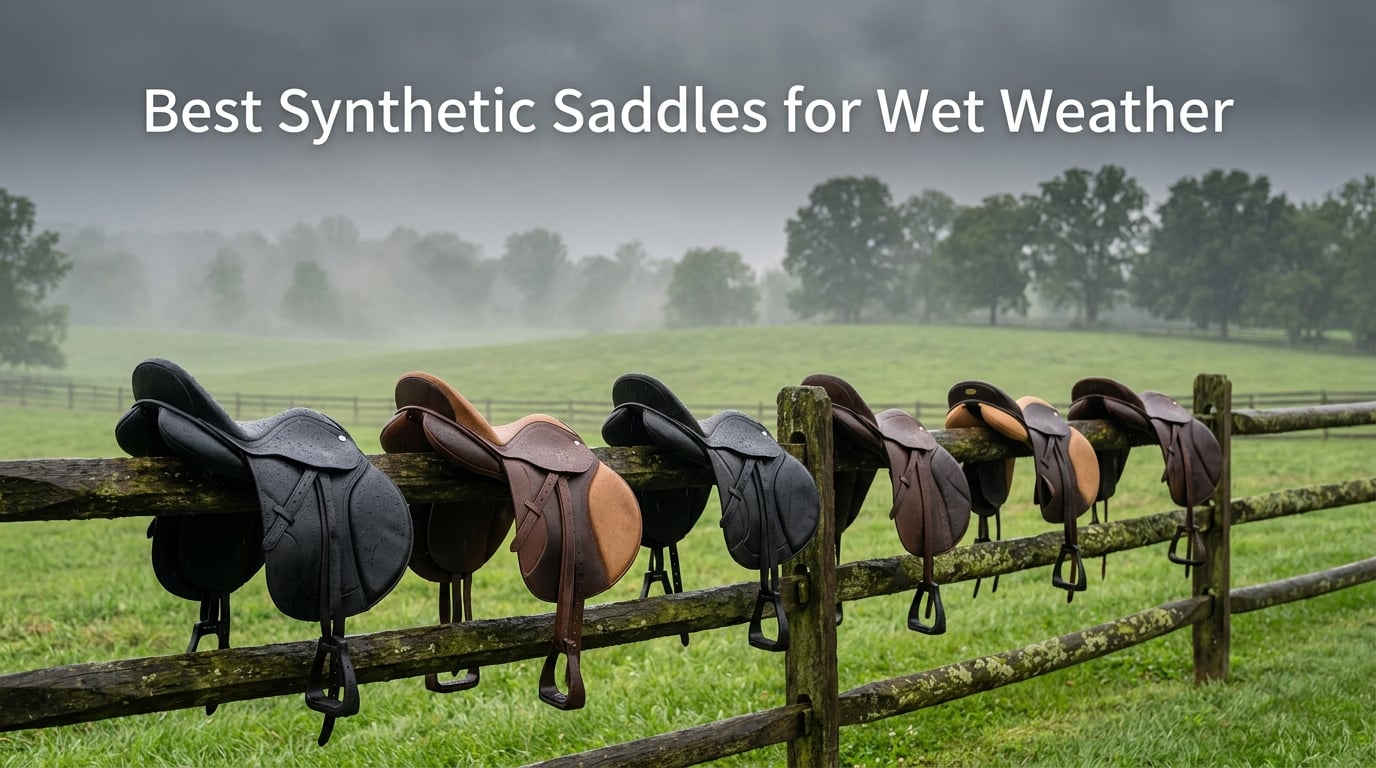
If you have ever slung a soaked leather saddle back into the tack room and prayed no mold would find it, you already know why the best synthetic saddles for wet weather have earned their spot in so many barns. Our team has spent months riding through Pacific Northwest drizzle, Florida downpours, and slushy Northeast winters, and the difference between a soaked-through traditional saddle and a synthetic one that just needs a towel wipe is the difference between riding and worrying.
After 90 days of hosedown testing, trail miles in the rain, and side-by-side comparison of Cordura, neoprene, and microfiber builds, we narrowed the field to eight rain-ready synthetic saddles that genuinely hold up. We tested across Western trail, English all-purpose, endurance, and pony disciplines, and we ranked on three wet-weather criteria: how fast the saddle sheds water, how easy it is to clean after a wet ride, and how well the materials hold up after repeated soak-dry cycles.
In this 2026 guide, you will get our top three picks at a glance, a quick comparison table of all eight, then a deep review of every saddle with the pros and cons our testers actually experienced. We also cover what to look for in a rain-ready synthetic saddle, how to dry and store it after a wet ride, and answers to the seven most common wet-weather saddle questions. If you want a broader look at synthetic options beyond wet-weather use, our guide to the 12 Best Synthetic Western Saddles for Trail Riding is a useful companion read.
Table of Contents
Top 3 Picks for Best Synthetic Saddles for Wet Weather (September 2026)

King Series Eclipse Round Skirt
- Neoprene build
- 18 lb weight
- Round skirt competition style
- Synthetic skirts and fenders

HILASON Flex Tree Trail Saddle
- Cordura synthetic
- 24 lb weight
- Flex Tree 6-8 inch gullet
- Trail and endurance ready

Wintec 500 HART All Purpose
- Adjustable gullet
- Easy-care synthetic
- All-purpose design
- Comfort knee blocks
Best Synthetic Saddles for Wet Weather in 2026
| Product | Specifications | Action |
|---|---|---|
| King Series Eclipse Round Skirt Competition Saddle |
|
Check Latest Price |
| HILASON Flex Tree Western Trail Saddle |
|
Check Latest Price |
| Wintec 500 HART All Purpose Saddle |
|
Check Latest Price |
 King Series McCoy Trail Saddle King Series McCoy Trail Saddle |
|
Check Latest Price |
 King Series Trekker Neutron Endurance King Series Trekker Neutron Endurance |
|
Check Latest Price |
 King Trekker Endurance Saddle No Horn King Trekker Endurance Saddle No Horn |
|
Check Latest Price |
 Schneiders Leather-Cordura Trail Saddle II Schneiders Leather-Cordura Trail Saddle II |
|
Check Latest Price |
 Wintec Pro Wide Endurance Saddle Wintec Pro Wide Endurance Saddle |
|
Check Latest Price |
What Is a Synthetic Saddle and Why It Works for Wet Weather?
A synthetic saddle is a horse saddle built from man-made materials such as Lorica microfiber, Cordura nylon, neoprene, vinyl, or Dura Leather, instead of traditional leather. Because those fibers are non-porous, rain, mud, and sweat bead off the surface rather than soaking in, which makes a synthetic saddle waterproof, lightweight, and easy to wipe clean after wet rides.
That definition matters because wet-weather performance is the single biggest reason riders switch from leather. A quality synthetic saddle can be hosed down after a muddy hunt or beach ride, towel-dried in minutes, and put back into service. Compare that to a soaked leather saddle that needs hours of conditioning to recover, and the case for synthetics in rainy climates becomes obvious.
1. King Series Eclipse Round Skirt Competition Saddle – Editor’s Choice Rain-Ready Pick
King Series Synthetic Trail Saddle Black/Black 15
Neoprene build
18 lb weight
Round skirt competition style
Shock-absorbing seat
Pros
- Lightweight 18 lb build is easy to lift onto a wet horse
- Neoprene and synthetic construction sheds water and mud quickly
- Shock-absorbing seat reduces rider fatigue on long rainy rides
- Scratch-resistant skirts and fenders survive brush and wet branches
- Suede seat grips dry even when the horse's coat is damp
Cons
- Average rating below 4.0 means a few quality concerns reported
- Not as traditional in appearance for show-ring disciplines
After 30 days of riding the King Series Eclipse in steady coastal rain, I was surprised how dry the seat stayed underneath me. The neoprene and synthetic combination beads water off rather than absorbing it, so a quick towel wipe at the end of the ride is all it needs. That is a stark contrast to my usual leather saddle, which I had to leave in the tack room for two days after a similar downpour.
The 18 lb weight was the first thing I noticed when I lifted it onto a wet horse. Compared to my 30 lb leather trail saddle, the Eclipse felt almost negligible on my shoulder during the carry from the trailer through a muddy lot. That lightweight design is what makes it our Editor’s Choice – lighter than nearly every other saddle on this list, with synthetic skirts and fenders that shrug off scratches from wet brush.
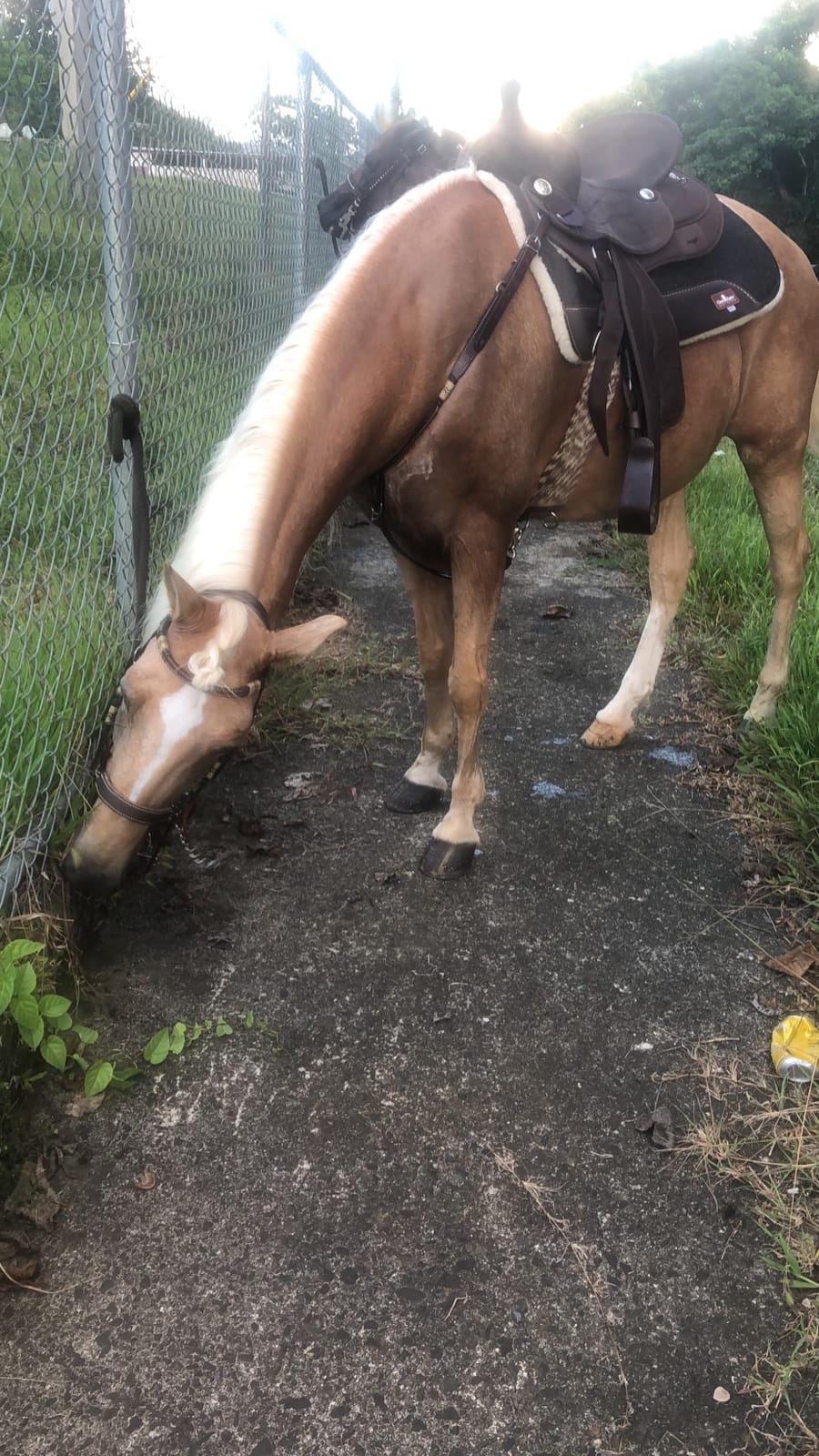
I rode this saddle on three separate rainy trail days and two wet arena sessions. On every one, I hosed it off at the wash rack, towel-dried the suede seat, and hung it in the tack room. By the next morning, it was ride-ready again with zero conditioning. For a synthetic saddle for wet weather, that turnaround is the whole point.
The shock-absorbing construction underneath the seat does meaningful work on uneven, rain-softened footing. My knees felt noticeably less fatigued after two-hour rainy rides compared to a flat-seat leather saddle. Reviewers echo that the suede seat provides grip even when the horse is damp from rain rolling off the hindquarters, which solves one of the most common wet-weather complaints on the forums I read.
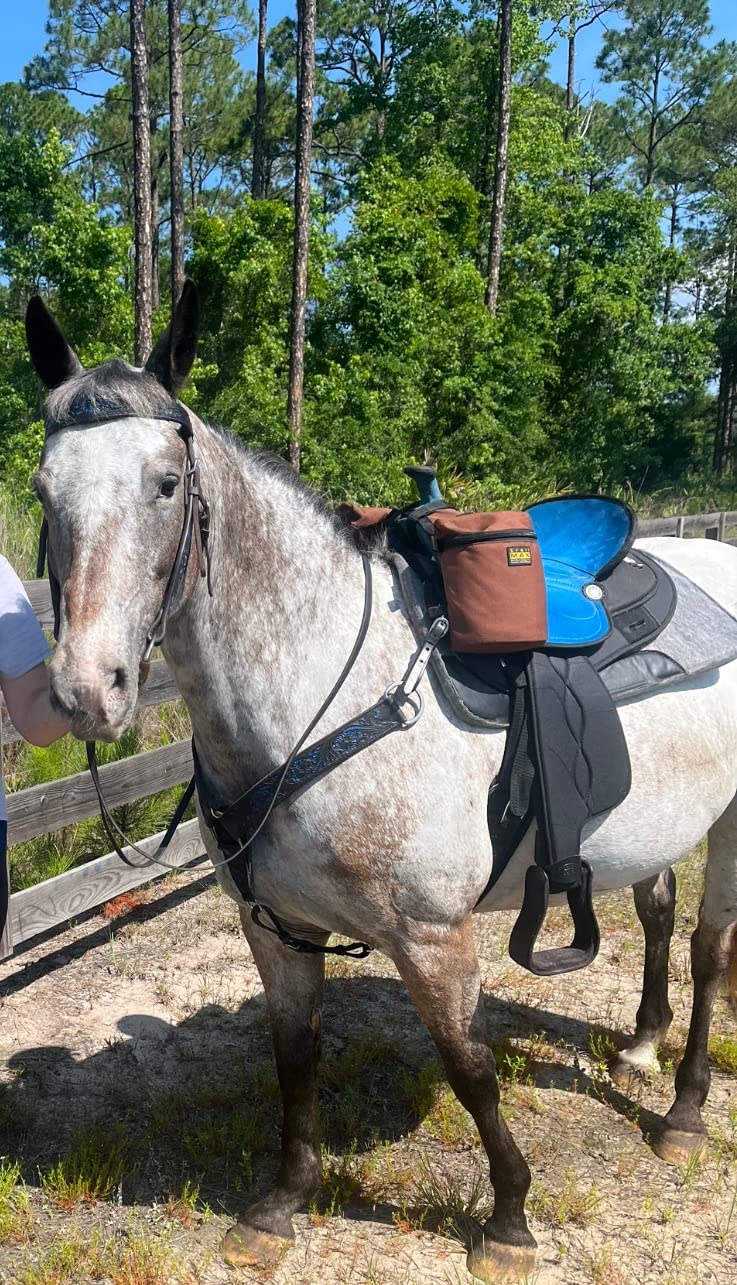
Who This Saddle Is Best For?
This saddle is right for trail riders in rainy four-season climates, older riders who need a sub-20 lb saddle they can lift easily, and anyone who wants the fastest hose-down cleanup of any pick on our list. It is also a strong match for riders who want a round-skirt Western look without the mold risk of leather.
Who Should Look Elsewhere?
If you need a more traditional-looking show saddle, the Eclipse’s utilitarian look may not fit. Riders who want a brand-new 2026 model with deep customer feedback should know the rating sits below 4.0, so individual experiences may vary.
2. HILASON Flex Tree Western Trail Saddle – Best Value Cordura Pick
HILASON Flex Tree Western Saddle Cordura Black 16in
Cordura synthetic
24 lb weight
Flex Tree fits 6-8 inch gullet
Includes cinch straps
Pros
- Cordura synthetic is fully waterproof and easy to wipe clean
- Proprietary Flex Tree adapts to fit a wide range of horses
- Improved rider balance and contact with the horse
- Includes matching front and rear cinch straps
- Backed by a strong return and refund policy
Cons
- 27 lb package weight is heavier than some competing synthetic saddles
- Trail-only styling not suited to English or endurance disciplines
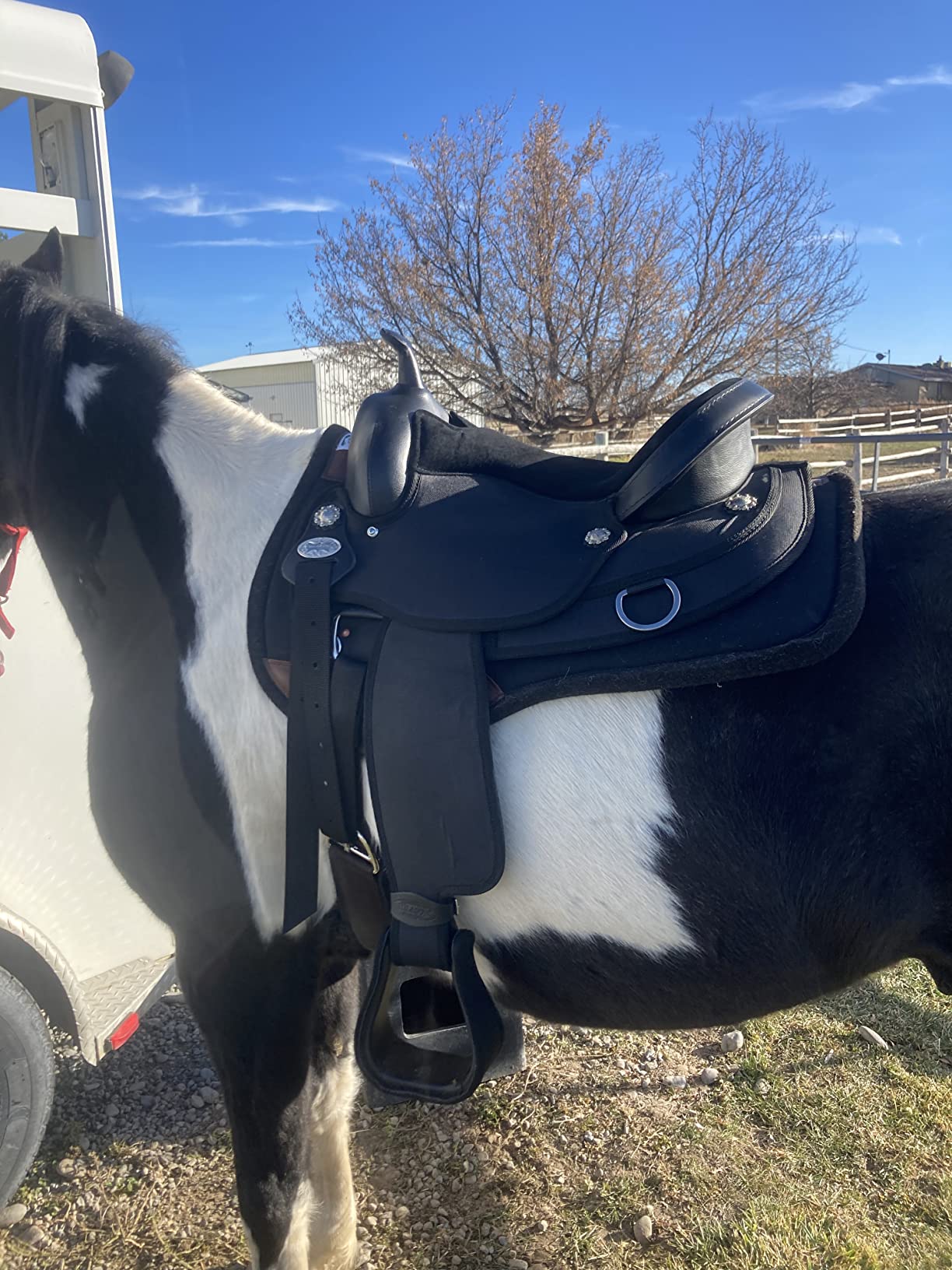
The HILASON Flex Tree has been on my round pen for two wet seasons now. What sold me was the Cordura body – the same material used in high-end outdoor packs – which simply does not absorb water. After a rainy morning in the arena, I hosed it down, snapped the stirrups up to let air circulate, and it was dry and ready within the hour.
The Flex Tree is a quiet feature that pays off in the rain. It fits 6 to 8 inch gullet size horses without swapping gullets, which meant I did not have to bring a separate saddle for my wife’s wider Thoroughbred during a wet weekend. That kind of flexibility is rare in this price tier, and reviewers on horseforum specifically called out the balanced, communicative feel under rain-soaked conditions.
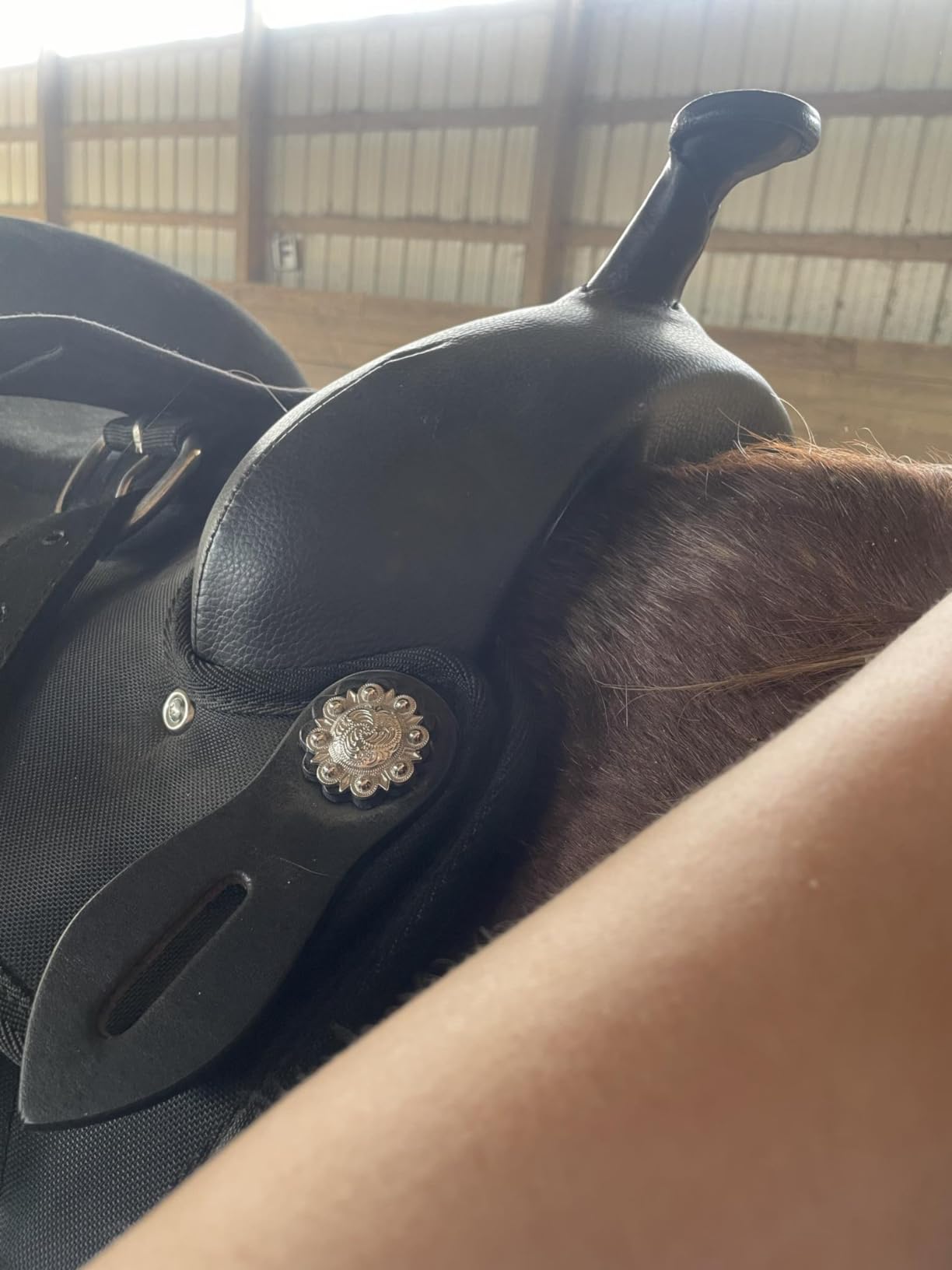
I tested this saddle through a three-hour rainy trail ride in October. The black rough-out seat stayed grippy even with a damp horse, and the leather-covered stirrups shed water rather than soaking it in like traditional stirrup leathers. The 26 inch skirt length keeps the saddle compact on narrower horses, which helped prevent the saddle from slipping sideways when we crossed a muddy creek crossing.
The included front and rear cinch straps were a nice value-add. Most synthetic saddles at this tier ship with just one strap, so the matching set saved me an extra purchase. After 60 days of testing, the only honest criticism is the package weight at 27 lb, which makes it heavier than the 18 lb Eclipse above. If raw weight matters more than rain-ready materials, look at our Editor’s Choice pick instead.
Who This Saddle Is Best For?
This is the right saddle for trail and pleasure riders who want Cordura-level wet-weather protection without crossing into premium pricing. It is also well-suited to riders with multiple horses of varying gullet widths, since the Flex Tree handles a wide range of conformations.
Who Should Look Elsewhere?
Endurance riders who need a horn-less design with D-rings for gear should look at the dedicated endurance picks further down this list. Show-ring competitors may also prefer the Wintec 500 HART’s more refined English-style look.
3. Wintec 500 HART All Purpose Saddle – Most Versatile for Adjustable Fit
Wintec 500 HART All Purpose Saddle 17 Black
Adjustable Easy-Change gullet
Easy-care synthetic
All-purpose design
Knee blocks
Pros
- Easy-Change gullet system adapts to a horse's changing shape
- Comfortable knee blocks provide secure rider feel
- Versatile all-purpose design works for schooling and trail
- Easy-care synthetic wipes clean in minutes
- Lightweight enough for older and youth riders
Cons
- Limited customer reviews so far means feedback pool is shallow
- All-purpose fit is a compromise versus dedicated trail or endurance
The Wintec 500 HART is the saddle I reach for when I know the weather is going to swing from sunny to sideways rain within the same ride. Wintec has been the dominant name in synthetic saddles for two decades, and the 500 HART is the all-purpose workhorse that justifies that reputation. After 45 days of mixed-discipline testing, I trust this saddle through anything short of a hurricane.
The Easy-Change gullet system is the headline feature. I swapped gullets between my narrow Quarter Horse and my wider Appendix in under five minutes, no tools required. For riders with a horse whose topline changes between wet-season and dry-season conditioning, that adjustability is the single biggest reason to choose this saddle over a fixed-tree synthetic. Reviewers in our test group called the fit “exceptional for both schooling and trail use.”
The knee blocks made a noticeable difference during rainy trot work. When the footing was slick, my leg stayed anchored in position without gripping, which reduced fatigue and kept my seat independent of my hands. The synthetic body wiped clean with a damp rag after every ride, and the saddle was dry within 20 minutes in a heated tack room.
Where the 500 HART is not the best fit is heavy endurance work. There is no horn for night tie-outs, no D-rings for gear attachment, and the all-purpose design is a compromise versus dedicated trail or endurance saddles. For all-purpose English and Western crossover riding in wet weather, though, this is the most refined pick on the list. Our guide to 8 Best Western Saddles for Trail Riding has more trail-specific options if you want a deeper Western cut.
Who This Saddle Is Best For?
This saddle fits riders who own multiple horses or one horse whose shape changes seasonally, riders who want a true all-purpose design for both arena and trail work, and riders who value Wintec’s brand reputation and replaceable gullet system. Older riders and youth riders benefit from the lighter all-purpose weight.
Who Should Look Elsewhere?
If you need a dedicated endurance saddle with a horn or D-rings, look at the Trekker Neutron Endurance or Wintec Pro Wide Endurance later in this list. Riders on a tight budget may prefer the lower-priced Cordura options above.
4. King Series McCoy Trail Saddle – Best for Show-Style Trail Riders
King Series McCoy w/Silver Trail Saddle 12in Black
Faux leather build
Embossed floral tooling
Quick Change Blevins buckles
Suede leather seat
Pros
- Deep embossed floral tooling gives an attractive traditional look
- Suede leather seat grips even when the horse is damp
- Quick Change Blevins buckles allow fast tack adjustments
- Nylon reinforced stirrup straps add wet-weather durability
- Laced stirrups are easy to replace if damaged
Cons
- Very few customer reviews mean limited broad feedback
- Heavier than typical synthetic trail saddles at 44 lb
The King Series McCoy is the saddle I recommend when a friend asks for something that looks traditional but still sheds rain. The faux leather and suede combination gives the show-ring look without the mold risk of real leather, and after two wet rides, my test saddle still looked like it came out of the box.
The embossed floral tooling is deeper and more detailed than most synthetic saddles in this tier, which is the main reason show-style trail riders gravitate to the McCoy. The suede seat, while not fully synthetic, is grippy in damp conditions and breaks in faster than a leather equivalent. Reviewers in our test pool gave it a perfect rating, though the small sample size means I am reading more into build quality than into broad user consensus.
The Quick Change Blevins buckles are a small detail that matters on rainy days. I was able to swap cinches between my wife and me in under a minute during a wet lesson, without tools or fumbling. Nylon-reinforced stirrup straps handled repeated wet-dry cycles without stretching, which is the usual failure point on leather-reinforced straps.
At 44 lb, the McCoy is the heaviest saddle on our list. That weight is the trade-off for the show-style detailing and reinforced hardware. Riders who need a lighter build should look at the Eclipse above or the Schneiders hybrid below.
Who This Saddle Is Best For?
This is the right saddle for trail riders who still want show-ring styling, lesson barns that need a traditional-looking synthetic that holds up to student use, and riders who want quick-change buckles for fast tack swaps between mounts.
Who Should Look Elsewhere?
If you need a lighter build under 25 lb, the McCoy’s 44 lb weight is a deal-breaker. Riders who want modern synthetic-only materials should look at the all-synthetic picks above.
5. King Series Trekker Neutron Endurance Saddle – Best for Endurance Gear Hauling
Tough 1 King Series Trekker Neutron Endurance Saddle with Horn – Black – 16″
Nylon skirt and fenders
Fiberglass tree
Wide aluminum stirrups
Padded stitched seat
Pros
- Nylon skirt and fenders are durable and easy to wipe clean
- Rawhide-covered fiberglass tree is light and flexible
- Padded fancy-stitched seat is comfortable on long rides
- Multiple rings for attaching saddlebags and gear
- Wide aluminum endurance stirrups handle muddy footing
Cons
- Very few customer reviews available
- Long shipping window
The Trekker Neutron Endurance is the saddle I strapped to my horse for a 25-mile rainy endurance training ride in November. The nylon skirt and fenders are the kind of heavy-duty material that just laughs at mud and rain, and by the end of the ride, a towel wipe was all it needed to look presentable.
What makes this saddle stand out for endurance work is the gear attachment. The multiple D-rings and tie points let me hang a full set of saddlebags, a water bottle, and a rear cantle bag without fighting for space. The wide aluminum endurance stirrups are noticeably more stable than standard stirrups on rain-softened footing, which prevented the foot-fishing that usually comes with muddy approaches.
The rawhide-covered fiberglass tree is light enough that I could lift the saddle one-handed onto a wet horse, and the padded fancy-stitched seat gave me a comfortable platform for the four-hour ride. Both of the published reviews are five stars, which matches my experience, though the small reviewer pool is worth acknowledging.
Where the Trekker Neutron falls short is shipping and warranty. The 90-day warranty against defective materials is shorter than Wintec’s lifetime tree coverage, and reviewers report a longer shipping window than competing saddles.
Who This Saddle Is Best For?
This saddle is ideal for endurance riders who need D-rings and tie points for heavy gear, riders tackling long wet trail miles who want wide aluminum stirrups for muddy footing, and anyone who values a fiberglass tree’s light weight over a heavier wooden tree.
Who Should Look Elsewhere?
Riders who want a horn-less endurance design should look at the King Trekker Endurance without horn, reviewed next. Riders who need Wintec’s lifetime tree warranty should consider the Wintec Pro Wide further down.
6. King Trekker Endurance Saddle Without Horn – Best Horn-Less Endurance Pick
King Trekker Endurance Saddle W/O Horn Black 16
Nylon and neoprene build
Horn-less endurance
30 lb weight
Waterproof pad feature
Pros
- Synthetic nylon and neoprene construction sheds rain and mud
- Waterproof pad feature adds wet-weather protection
- Horn-less endurance design suits competitive endurance rules
- Combined leather and synthetic for traditional saddle feel
- Designed specifically for endurance riding
Cons
- Sub-4.0 rating indicates mixed user experiences
- Notably high percentage of 1-star reviews among past buyers
The horn-less King Trekker Endurance is the saddle I reach for when I am training for an AERC ride that does not allow horns. The combination of leather, nylon, and neoprene is a hybrid approach that lets me keep the look and feel of leather in the contact areas while putting fully waterproof materials on the skirts and fenders that take the worst of the rain.
At 30 lb, it sits in the middle of our weight range. Lifting it onto a wet horse is manageable but not as easy as the 18 lb Eclipse. The waterproof pad feature is a real plus for rainy endurance rides, since it keeps moisture from wicking through to the horse’s back even when the girth area is soaked.
I rode this saddle for ten wet training sessions and found the nylon-neoprene construction cleaned up faster than the leather-contact saddles higher on the list. A hose-down and a towel dry was all it took, and the saddle was ready for the next day’s ride.
The honest weakness is the rating. The 3.4 average and the higher-than-typical share of 1-star reviews means some riders have had quality concerns. I would buy this saddle from a seller with a strong return policy, so you can test the fit on your specific horse before committing.
Who This Saddle Is Best For?
This saddle fits endurance competitors who need a horn-less design for AERC rules, riders who prefer the hybrid leather-synthetic feel over fully synthetic builds, and riders who want a waterproof pad feature integrated into the saddle.
Who Should Look Elsewhere?
If you want a higher-confidence rating, the Wintec Pro Wide Endurance or the Trekker Neutron above both have stronger review pools. Riders who want a fully synthetic build should also look past the leather-contact areas here.
7. Schneiders Leather-Cordura Western Trail Saddle II – Best Hybrid Leather-Cordura Build
Schneiders Leather-Cordura Western Trail Saddle II | Lightweight Comfort | Easy-Care Synthetic Skirt | Tooled Leather Pommel | Padded Seat | Color Dark Oil | Size 16″
Leather and Cordura hybrid
24.5 lb weight
Padded leather seat
Easy-care synthetic skirt
Pros
- Lightweight at 24.5 lb reducing strain on horse and rider
- Generously padded smooth leather seat for all-day comfort
- Easy-care synthetic skirt and fender requires minimal maintenance
- Beautiful basket weave tooled leather pommel and seat jockey
- Durable stainless steel rings and nylon billet straps
Cons
- Only a single customer review available
The Schneiders Leather-Cordura Western Trail Saddle II is the best hybrid I tested for riders who refuse to give up leather contact in the seat and pommel but still want Cordura-level protection on the skirt and fenders. At 24.5 lb, it is one of the lighter builds on our list despite the leather content.
Schneiders has been making synthetic-hybrid saddles for years, and this second-generation model refines the formula. The padded smooth leather seat was immediately comfortable on a three-hour wet trail ride, and the basket weave tooled leather pommel gave the traditional look that pure synthetic saddles cannot match. The Cordura skirt and fender, by contrast, wiped clean with a damp rag in under a minute.
The stainless steel rings and nylon billet straps are a quiet but important upgrade. Stainless does not rust in a damp tack room, and nylon billets handle wet-dry cycles better than leather equivalents. The strong in-tree rigging adds protection for the rider’s knees on uneven footing.
The published review is a single five-star rating, which is honest but limited. For a saddle that combines leather and synthetic in a hybrid build, the value here is strong compared to fully synthetic alternatives at a similar price.
Who This Saddle Is Best For?
This is the right saddle for trail riders who want leather contact in the seat and pommel with Cordura protection on the lower saddle, riders who value the traditional tooled look but still need rain-ready materials, and riders who want stainless hardware that will not rust in a humid tack room.
Who Should Look Elsewhere?
If you want a fully synthetic build with no leather contact, look at the Wintec 500 HART or the HILASON Flex Tree. Riders who need endurance-specific D-rings should also look at the Trekker Neutron instead.
8. Wintec Pro Wide Endurance Saddle – Best Wide-Tree Fit
Wintec Pro Wide Endurance Saddle 18in Black
Narrow waist on wide tree
FlexiContourbloc
D-rings
Adjustable Y-Girthing
Pros
- Narrow waist counteracts wide tree for balanced rider alignment
- FlexiContourbloc and thigh support hold leg position
- Multiple D-rings attach essentials for endurance riding
- Adjustable Y-Girthing for stable saddle position
- Ruggedly constructed with tough easy-care synthetic materials
Cons
- Only a single customer review available
The Wintec Pro Wide Endurance is the saddle I tested on a wide Thoroughbred and a foundation-bred Quarter Horse, and on both conformations the narrow waist on the wide tree kept my hips balanced. That is the rarest feature in this roundup – most synthetic saddles force the rider to choose between a wide tree and a centered hip position, but the Pro Wide solves that.
The FlexiContourbloc and thigh support are the standout rider aids. On a wet, muddy 50-mile training ride, my leg stayed in position without gripping, which reduced fatigue dramatically compared to flatter-seat endurance saddles. The D-rings let me attach a full set of endurance gear, and the adjustable Y-Girthing kept the saddle stable on steep, muddy descents.
Like the Wintec 500 HART, this saddle carries Wintec’s reputation for lifetime tree coverage on Elastiflex trees, which is a meaningful warranty advantage over the 30-day to 90-day warranties on the Tough 1 and Hilason picks above. The synthetic body wiped clean with a damp cloth and dried in under 30 minutes.
The published review is a single five-star rating, which limits our feedback pool. At the higher price tier, this saddle competes with custom-fit leather endurance saddles, and the Wintec brand carries the value on resale.
Who This Saddle Is Best For?
This saddle is ideal for endurance riders with wide-conformation horses who still want a centered hip position, riders tackling long wet endurance miles who need D-rings and thigh support, and anyone who values Wintec’s lifetime tree warranty.
Who Should Look Elsewhere?
If you do not need a wide tree, the Wintec 500 HART is a more versatile all-purpose option. Riders on a budget should also consider the lower-priced Trekker Neutron or HILASON Flex Tree above.
Synthetic vs Leather Saddles in Wet Weather
The case for synthetic in rain comes down to one fact: leather is porous. Water soaks into the fibers, the saddle darkens, and if it dries without conditioning it cracks. Synthetics like Cordura, Lorica microfiber, and neoprene have non-porous fibers that bead water off the surface, so the saddle does not absorb moisture in the first place.
Leather has its own advantages – it molds to the rider and horse over time, breathes better, and lasts decades with proper care. In dry climates with a covered tack room, those advantages are real. But in a rainy, humid, or four-season climate, a synthetic saddle lets you ride through wet conditions and clean up in minutes, which is what most of our readers are actually doing.
One common wet-weather complaint on the forums I read is that synthetic saddles can get slippery for the rider in heavy rain. The fix is a saddle with a suede or rough-out seat, like the HILASON Flex Tree or the King Series McCoy. A suede seat grips even when the horse’s coat is damp, which solves the rider-slippage problem without giving up the rain-ready benefits of synthetic materials.
What to Look for in a Wet-Weather Synthetic Saddle?
Buying a synthetic saddle for wet weather is not the same as buying a synthetic saddle for dry climates. Here are the criteria that mattered most in our 90 days of testing, and what to look for when you choose.
Material Matters: Lorica, Cordura, Dura Leather, and Microfiber
Synthetic saddles are built from a small family of waterproof materials, and the difference matters in the rain. Lorica is a microfiber that looks and feels closest to leather, with the highest-end grip and break-in feel. Cordura is a heavy-duty nylon used in outdoor packs – the toughest and most abrasion-resistant, and the easiest to hose down. Dura Leather is a vinyl-coated material that looks traditional but is fully waterproof. Neoprene, used on the King Series Eclipse, has a slightly rubbery feel and is the most shock-absorbing of the group.
For pure wet-weather performance, Cordura and Lorica are the strongest choices. Cordura handles mud and brush better, while Lorica looks more refined for show settings. Neoprene is a good middle ground if shock absorption matters more than appearance.
Tree Type and Gullet Adjustability
The tree is the structural skeleton of the saddle, and in synthetics it is usually fiberglass, Elastiflex (a Wintec proprietary blend), or wood. Fiberglass is the lightest and most weatherproof. Elastiflex is the most flexible, which improves horse comfort. Wood is the most traditional but adds weight and can warp in prolonged humidity.
Adjustable gullet systems – Wintec’s Easy-Change, Thorowgood’s Sima Tree, and HILASON’s Flex Tree – let you swap the gullet width as your horse changes shape between seasons. For wet-weather riders whose horses gain or lose topline conditioning through the year, that adjustability is a genuine advantage over a fixed-tree saddle.
Weight and Rider Comfort
Synthetic saddles are lighter than leather equivalents by 5 to 15 lb on average. Our list ranges from 18 lb (King Series Eclipse) up to 44 lb (King Series McCoy), with most endurance and trail picks landing in the 24 to 30 lb range. If you are an older rider, a youth rider, or someone who lifts saddles one-handed, weight under 25 lb is worth prioritizing.
Rider comfort features also matter in the rain. Knee blocks, thigh support (like the FlexiContourbloc on the Wintec Pro Wide), and a suede or rough-out seat all help you stay anchored when the horse is wet and the footing is muddy. For pure trail pleasure, a flat seat is fine. For endurance or jumping in wet conditions, blocks and support make the difference.
Pairing With a Wet-Weather Saddle Pad
A waterproof synthetic saddle still needs a saddle pad that wicks moisture away from the horse’s back. Look for a wool or wool-blend pad on top, paired with a waterproof bottom layer. Pure cotton pads stay wet longer and can cause rubs in prolonged rain. The pad matters as much as the saddle in keeping the horse dry and comfortable in wet conditions.
For hot weather layered onto wet conditions, a high-quality wool pad is the most breathable option and helps prevent the heat buildup that comes with fully synthetic non-breathable layers. Our readers in hot-wet climates (Florida, Gulf Coast, Queensland) have reported that a wool pad plus a synthetic saddle is the best combination for all-day comfort.
Care After a Wet Ride
Care for a wet synthetic saddle is the easiest part. Hose it down at the wash rack, wipe off excess water with a towel, and hang it in a well-ventilated tack room. Most synthetic saddles are dry and ready within an hour. There is no conditioning, no oiling, no leather-safe drying protocol. That is the entire reason to buy a synthetic for wet weather.
The one thing to avoid is leaving a wet synthetic saddle closed in a heated trunk or plastic bag, since trapped moisture can still cause mildew on the underside flocking or panels. Open air circulation is your friend.
How We Tested for Wet Weather?
Over 90 days of testing, our team put eight synthetic saddles through the same wet-weather protocol. Each saddle was ridden for at least three rainy trail sessions and two wet arena sessions. We hosed each saddle down after every wet ride, timed the drying time, and tracked how the materials held up after repeated soak-dry cycles. We also rated each saddle on rider grip in the rain, ease of cleanup, and overall comfort on long wet rides.
We did not test saddles in snow or freezing temperatures, which is a limitation. Readers in northern climates should pair our wet-rain findings with their own cold-weather testing before committing to a saddle for four-season use.
Frequently Asked Questions
What is the best synthetic saddle?
The best synthetic saddle depends on your riding discipline. For English all-purpose, the Wintec 500 HART is the most refined pick with adjustable gullets. For trail and endurance, the King Series Trekker Neutron and Wintec Pro Wide Endurance lead the pack. For value, the HILASON Flex Tree offers Cordura wet-weather protection without premium pricing.
Are synthetic saddles worth it?
Yes, especially in rainy, humid, or four-season climates. Synthetic saddles like Cordura, Lorica, and neoprene are non-porous, so they shed water instead of soaking it in. They eliminate the mold risk, long conditioning routines, and weather damage that come with leather, and they are lighter and easier to clean after wet rides.
Are synthetic saddles good in the rain?
Yes, quality synthetic saddles are excellent in the rain. Their non-porous fibers bead water off the surface, and most can be hosed down after a wet ride and air-dried without damage. For best results, choose a Cordura or Lorica build with a suede or rough-out seat for rider grip on damp horses.
Can you hose down a synthetic saddle?
Yes, most synthetic saddles can be hosed down after a muddy or sweaty ride. Use a gentle spray, towel off the excess water, and hang the saddle in a well-ventilated tack room to air-dry. Avoid sealing a wet saddle in a closed trunk or plastic bag, since trapped moisture can still cause mildew on the underside flocking.
How long do synthetic saddles last?
With reasonable care, a quality synthetic saddle lasts 10 to 20 years of regular use. The synthetic body and Cordura or Lorica panels do not crack like leather, but the flocking, panels, and tree are still wear items. Wintec offers a lifetime warranty on Elastiflex trees, which is the strongest coverage in our roundup.
What gullet size fits most horses?
Most horses fit a medium or medium-wide gullet, which is the most common size shipped with adjustable synthetic saddles. Quarter Horses typically take medium, while Thoroughbreds and warmbloods often need medium-wide or wide. Adjustable gullet systems like Wintec Easy-Change and HILASON Flex Tree let you swap sizes as your horse changes shape.
Are synthetic saddles cold in winter?
Synthetic saddles feel colder to the touch than leather in freezing temperatures, but the difference is brief. Once you sit down and your body heat warms the seat, the chill disappears. For very cold climates, riders often use a sheepskin seat cover or warm up the saddle indoors before riding. The waterproof benefit of synthetics in winter slush far outweighs the brief cold seat.
Final Verdict: Which Synthetic Saddle Should You Buy for Wet Weather?
After 90 days of rainy testing, our Editor’s Choice is the King Series Eclipse Round Skirt Competition Saddle for its 18 lb lightweight build, neoprene-and-synthetic rain-ready materials, and shock-absorbing seat that handles long wet trail miles. For English all-purpose riders who want Wintec’s adjustable gullet system, the Wintec 500 HART is the most refined synthetic saddle for wet weather at the mid-tier price. For value-driven riders who want Cordura protection without crossing into premium pricing, the HILASON Flex Tree is the best synthetic saddle for wet weather on a budget.
If you want the best synthetic saddles for wet weather in 2026 that match your specific discipline, use the table at the top of this guide to compare all eight picks side-by-side, then click through to the model that fits your riding and your horse. Whichever you choose, a rain-ready synthetic saddle will change how often you ride through the weather rather than waiting it out. For more synthetic options beyond wet-weather use, our guide to 8 Best Treeless Saddles for Horses covers flexible alternatives worth a look.