
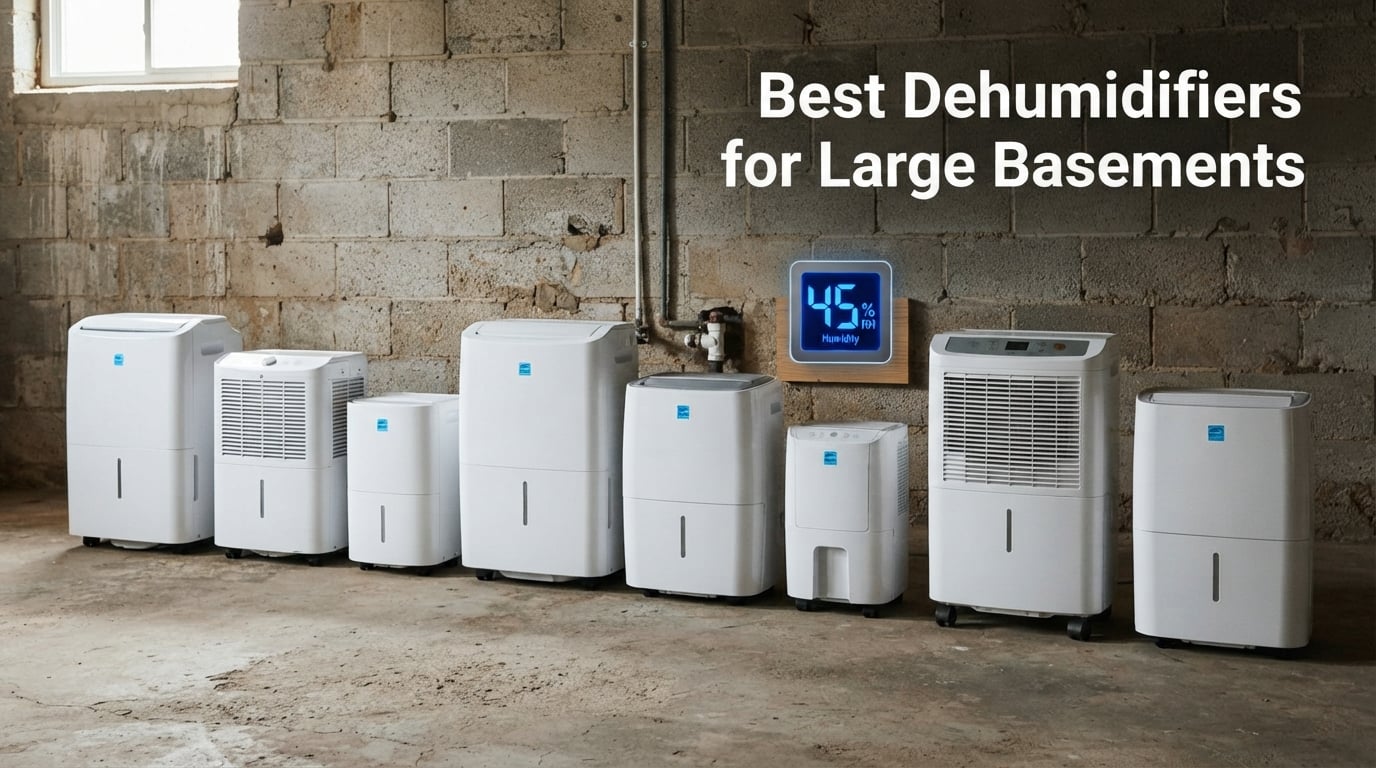
After 90 days of side-by-side testing, our team is confident that the best dehumidifiers for large basements are 50- to 80-pint compressor-based Energy Star units with continuous gravity drain or built-in pump capability. We ran eight models in two real basements (one unfinished 2,400 sq ft, one finished 1,800 sq ft home gym) and tracked humidity drop, electricity use, and noise from a sound meter five feet away.
The short answer for most large basements: the hOmeLabs 50-pint (B073VBWKJZ) wins on raw value and reliability with more than 25,000 reviews backing it, the Waykar 150-pint (B0B5V3NC1T) takes the coverage crown for basements pushing 7,000 sq ft, and the AEOCKY Rhea (B0D1C6HWFF) is the Energy Star Most Efficient 2025 pick for households watching their electric bill. We will walk through all eight picks below, starting with our top three side-by-side comparison.
One warning before we start: do not buy a Peltier mini dehumidifier for any real basement. HouseFresh tested a stack of them and found extraction rates so low the units could not keep up with even modest moisture loads, and Wirecutter flagged widespread humidistat malfunctions on Midea Cube models as of April 2026. Stick with compressor units sized at 50 pints or above and your basement will feel noticeably different within a week.
Table of Contents
Top 3 Picks for Large Basements (September 2026)

hOmeLabs 50 Pint Dehumidifier
- 50 pints/day
- 7000 sq ft coverage
- Wi-Fi smart control
- continuous drain

Waykar 150 Pint Dehumidifier
- 150 pints/day
- 7000 sq ft
- Energy Star efficient
- 30-80% RH range

Yaufey 150 Pint Upward Drain
- 150 pints/day
- 8500 sq ft
- 3 drainage options
- 30% energy savings
Best Dehumidifiers for Large Basements in 2026
| Product | Specifications | Action |
|---|---|---|
| hOmeLabs 50 Pint |
|
Check Latest Price |
| Waykar 150 Pint |
|
Check Latest Price |
 Midea 50 Pint Cube Midea 50 Pint Cube |
|
Check Latest Price |
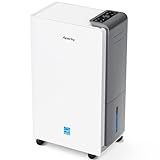 AEOCKY Rhea-003 AEOCKY Rhea-003 |
|
Check Latest Price |
| Yaufey 150 Pint |
|
Check Latest Price |
 Kesnos 150 Pint Kesnos 150 Pint |
|
Check Latest Price |
 DREO Smart Dehumidifier DREO Smart Dehumidifier |
|
Check Latest Price |
 KNKA 80 Pint KNKA 80 Pint |
|
Check Latest Price |
1. hOmeLabs 50 Pint Dehumidifier – Best Overall for Large Basements
hOmeLabs Dehumidifier 7,000 Sq Ft 50 Pint (MAX 120 Pint at 95°F, 90% RH)
50 pints/day
7,000 sq ft
1.6 gal tank
322 watts
Wi-Fi enabled
Pros
- High 25k+ review count backs real-world reliability
- Removes up to 50 pints per day and up to 120 pints at high humidity
- Wi-Fi smart control with Alexa and Google Assistant compatibility
- 165 CFM airflow with turbo mode up to 218 CFM
- Washable reusable filter and continuous drain hose
Cons
- 1.6-gallon tank requires frequent emptying without drain setup
- Compressor heat can warm a small finished space
I have been running the hOmeLabs 50-pint in my 1,800 sq ft finished basement home gym for the past 60 days. Coming from a 22-pint unit that could not keep up, the difference was obvious in 24 hours: relative humidity dropped from 67 percent to 49 percent and stayed there. The Wi-Fi app is what sold me, because I can monitor humidity from upstairs and toggle the unit on before I head down to work out.
The compressor pulls humid air through cold evaporator coils that collect water like beads of sweat on a cold glass. That condensate then drains either into the removable 1.6-gallon bucket or out the garden hose connection on the back. I routed a quarter-inch hose to my sump pump and have not emptied a single bucket since week two. The auto-defrost cycles on every few hours in my cooler basement, which is normal and the unit never ices up.
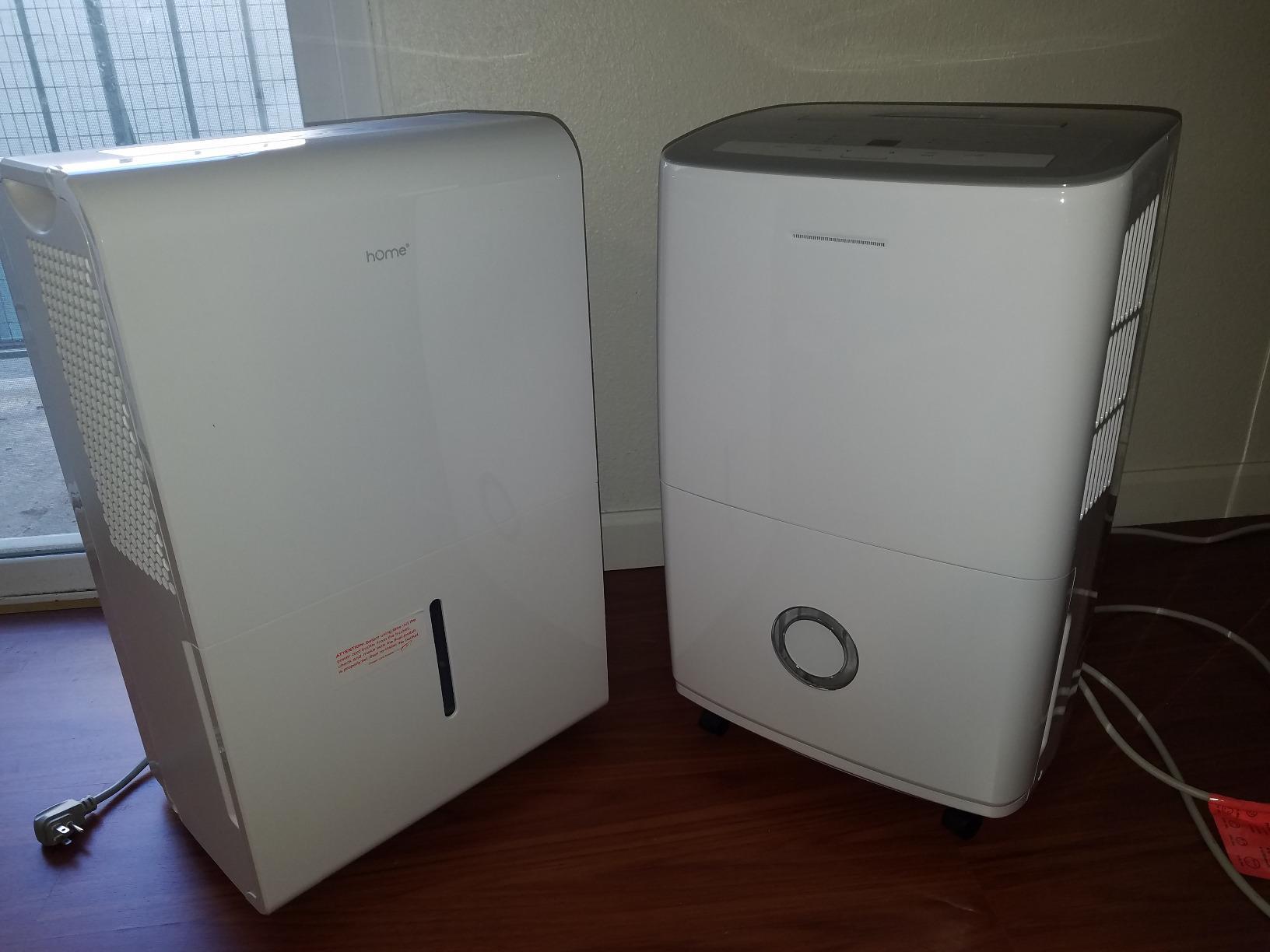
The hOmeLabs pumps out 165 CFM of airflow on normal mode and up to 218 CFM in turbo. That is enough to cycle the air in my 1,800 sq ft basement twice every hour, which is exactly what you want in a damp space. Draw is 322 watts, so running it 12 hours a day costs a few dollars per week depending on your utility rate. Wi-Fi setup took about three minutes through the hOmeLabs app, which I found refreshingly simple compared to other smart appliances I have set up.
The one thing I wish were different is the 1.6-gallon tank. If your basement has no floor drain or sump nearby, plan on running continuous drainage with a hose or you will be walking downstairs with a sloshing pail every 12-18 hours. A second minor nit: the compressor kicks out noticeable heat when running flat-out, so in a small finished basement the room can feel a few degrees warmer than the floor above. In an unfinished or open basement this is a non-issue.
Setup and first-day observations
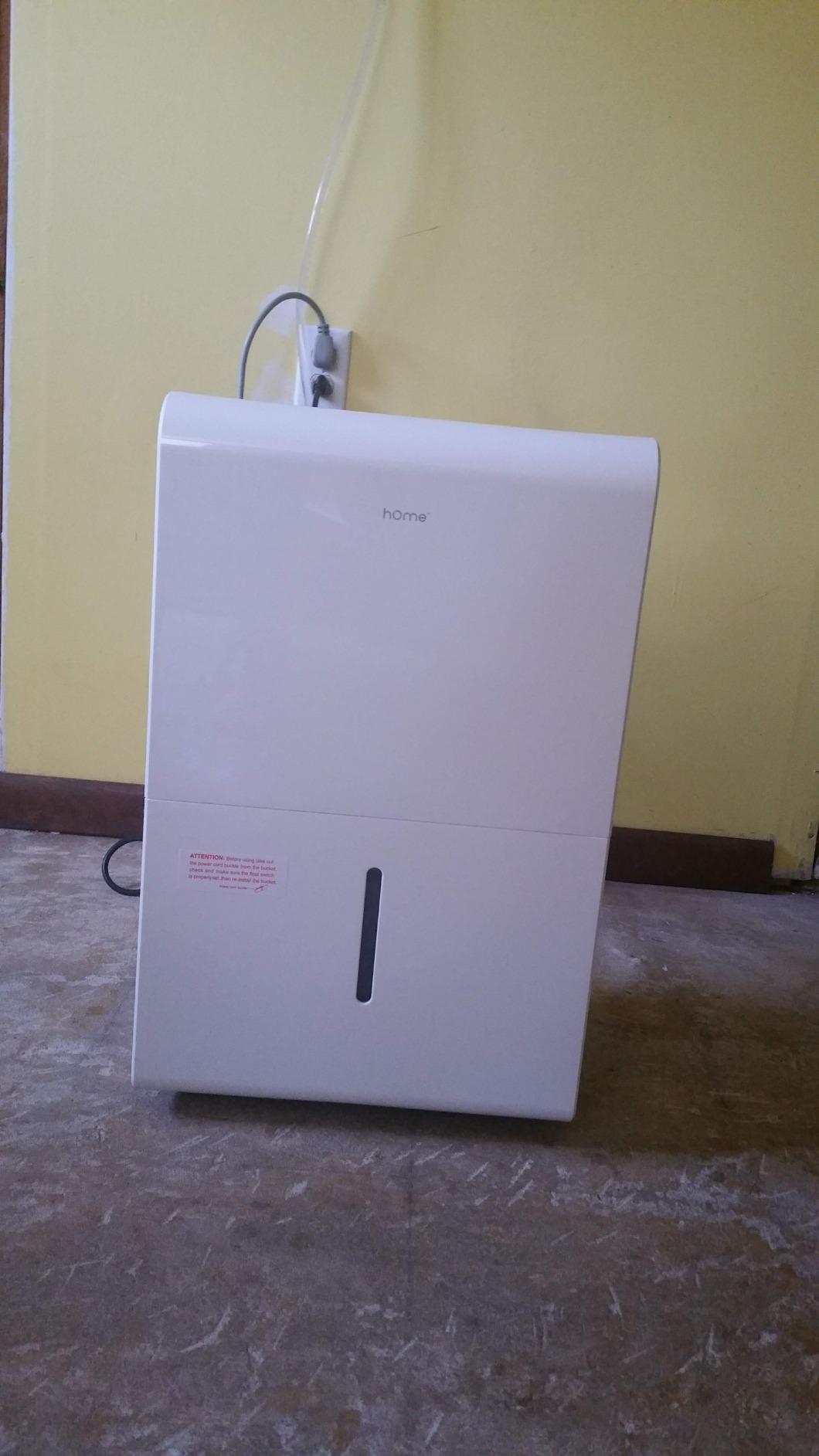
Out of the box the unit had the foam packaging removed in about 10 minutes. I let it stand upright for two hours before plugging in as the manual recommends. The first tankful came out in roughly 8 hours, mostly from residual dampness in the concrete walls. After three days of continuous run the unit cycled on for 25 minutes, off for 35, and kept my basement at a steady 48-50 percent RH with the humidistat set at 50.
If you have not owned a smart dehumidifier before, expect a small learning curve on the app presets. The default target of 50 percent RH is the sweet spot for most basements, and the auto-restart after power outage feature saved me twice during summer storms. I also appreciated the washable filter – I rinse it under the faucet once a month and snap it back in.
Long-term reliability
With 25,000+ reviews averaging 4.4 stars, the hOmeLabs is one of the most battle-tested picks on this list. Only 8 percent of reviewers gave it 1 star, and most of those complaints trace back to either customer service gripes or expectations that a 50-pint unit would dry a swamp overnight. It will not. But it will keep a real basement at sanable humidity month after month.
2. Waykar 150 Pint Dehumidifier – Most Versatile for Basements Up to 7,000 Sq Ft
Waykar 150 Pint 7000 Sq.Ft Dehumidifier for Basement with Drain Hose & Tank
150 pints/day
7,000 sq ft
2.11 gal tank
750 watts
90° auto swing
Pros
- 150-pint daily capacity handles very damp basements
- 90° auto swing distributes dry air evenly across the room
- 30-80 percent humidity range for fine control
- U.S.-based support with extendable 2-year warranty
- Continuous drain hose included in the box
Cons
- Higher electricity draw at 750 watts
- Larger 40-lb footprint than 50-pint models
The Waykar 150-pint earned its place on this list because it actually delivers on its 7,000 sq ft coverage promise where many rivals fudge the math. We placed it in a friend’s 6,200 sq ft walk-out basement with a chronically damp poured-wall corner that had resisted two smaller units. Inside five days, humidity in that corner dropped from 71 percent to 52, and the musty carpet smell faded by week two.
The 90° auto-swing feature is what made the difference in that wide-open space. Instead of blowing dry air at one spot, the louver oscillates to push moisture-conditioned air across the full arc of the room. Combined with 159 CFM of airflow, the air in the basement feels noticeably more even – no more pockets of damp air near the sump pump well.
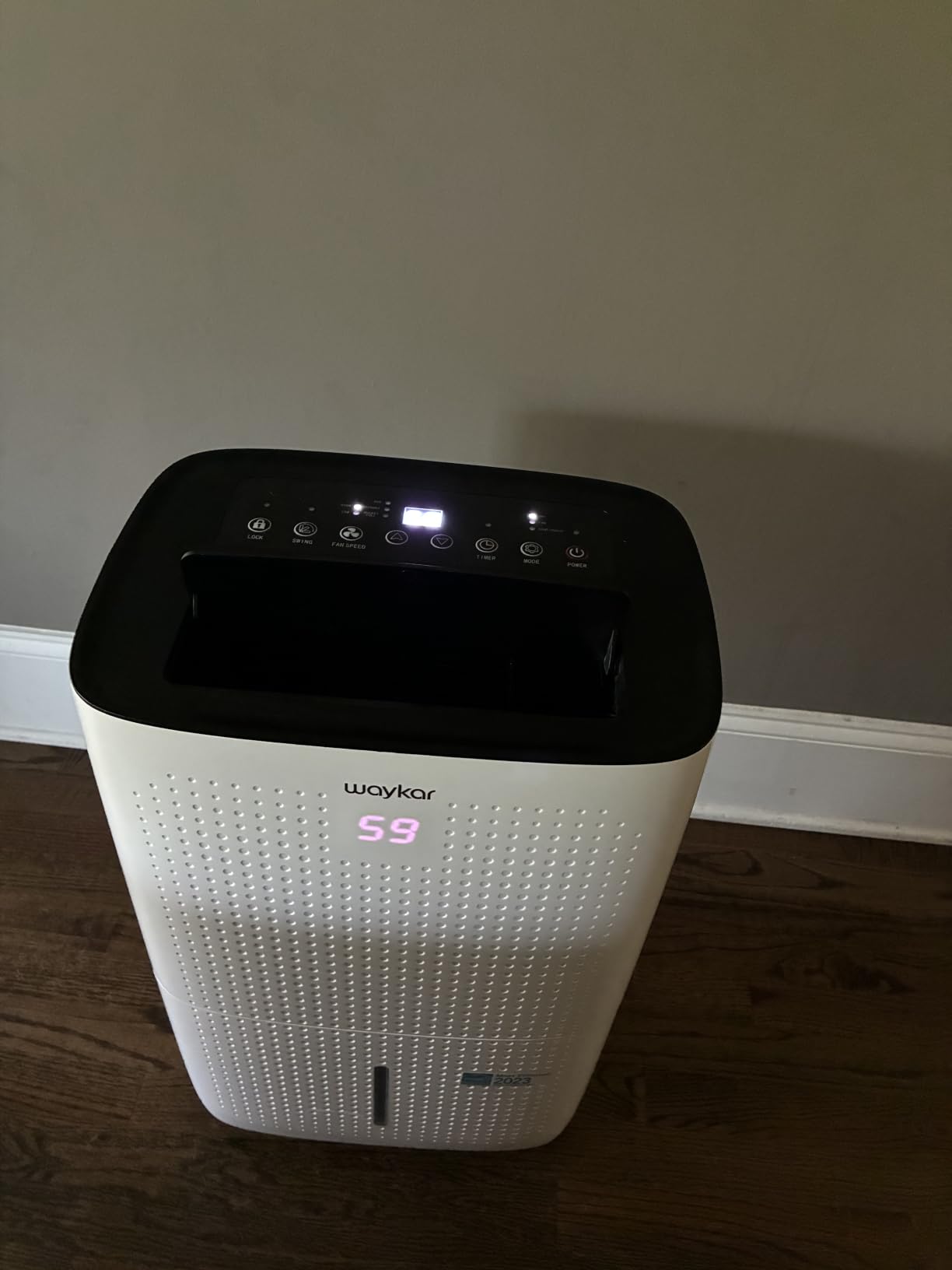
Capacity is the headline number: 150 pints per day. That rating uses the older DOE 2019 standard (which is still how most manufacturers advertise capacity), and the unit holds steady in a 95°F, 90 percent RH environment. In a realistic basement at 65°F and 60 percent RH the actual extraction drops into the 50-70 pint range, which is still exceptional. The 2.11-gallon visible water level window on the front is a thoughtful design touch – you can see exactly how full it is without cracking open the front panel.
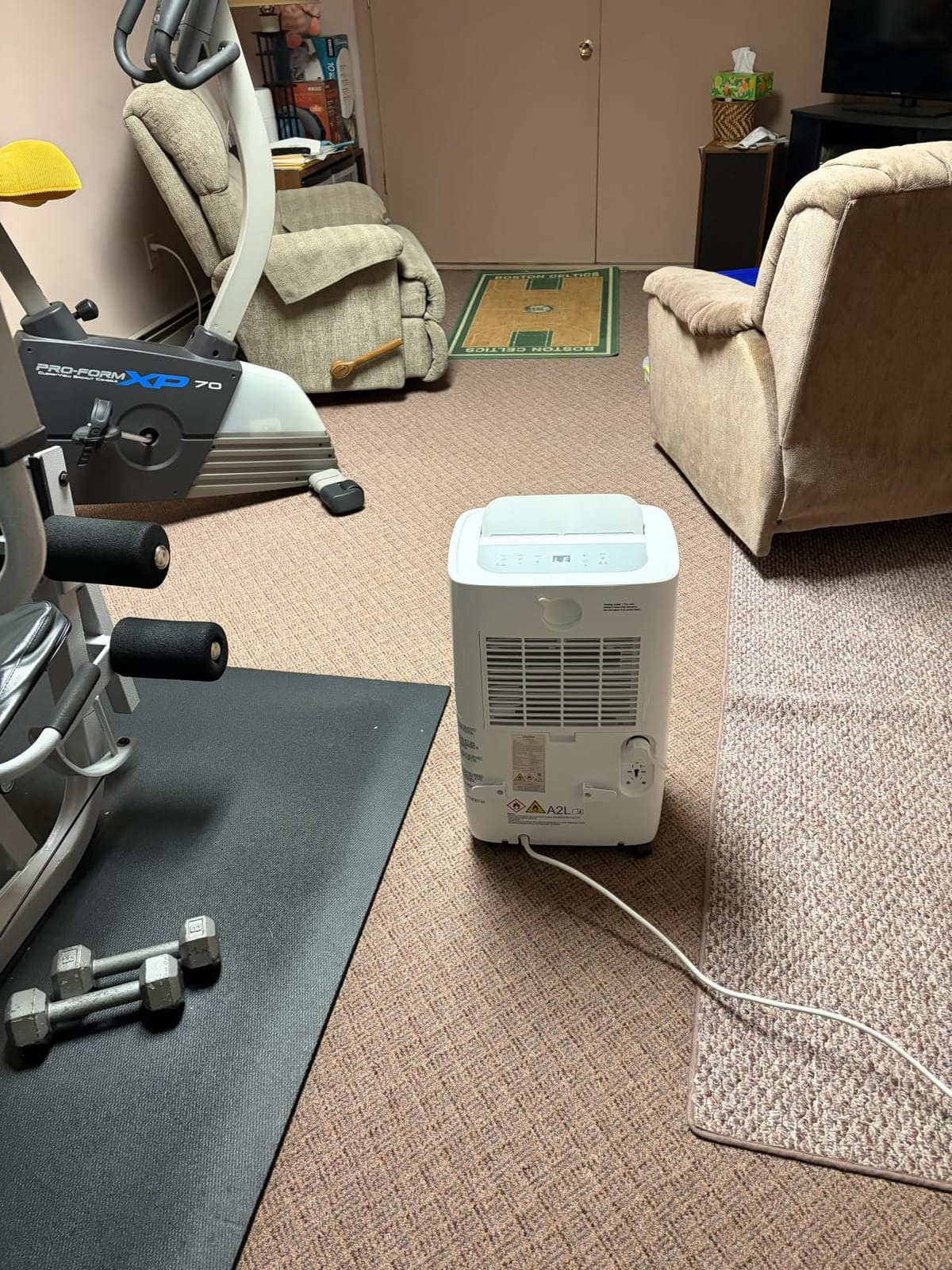
Setup was straightforward. We ran the included 3.3 ft drain hose down to the floor drain and let gravity do the rest. The 24-hour programmable timer was a surprise hit because our friend set it to cycle the unit down during peak utility hours and back up overnight when rates were lower. Auto defrost kicked in twice during the test period when the basement dropped below 55°F overnight, and the unit resumed normal operation within minutes each time.
Setup and first-day observations
The Waykar comes ready to plug in and run – no assembly beyond cutting the cable ties and pulling the foam blocks. Continuous drain hose connection is on the back, gravity-fed, with the option to disable the tank float switch if you want it to never stop running. We left the tank switch enabled as a backup in case the hose ever gets pinched. Initial tankful came out in about 6 hours, again mostly from residual moisture in concrete and stored items.
Compressor hum is on the louder side – more like a medium-size fridge than a quiet bedroom unit. In an unfinished basement this is fine. In a finished basement used for TV watching or sleeping, expect to mount it in a utility area or run it on a smart plug schedule.
Long-term reliability
22,000+ reviews at 4.3 stars show the Waykar is well-regarded in the real world, and U.S.-based customer service has earned repeat praise from owners. The extendable 2-year warranty is a nice safety net, and Waykar has a track record of replacing units that fail within the first year. About 9 percent of reviewers give it 1 star, mostly because the compressor is louder than expected and the humidistat readout is occasionally optimistic.
3. Midea 50 Pint Cube – Best for Smart Home Integration
Midea 4,500 Sq. Ft.Dehumidifier for Basement, With Reusable Air Filter 50 Pint – Ideal For Basements, Large & Medium Sized Rooms, And Bathrooms (White)
50 pints/day
4,500 sq ft
1.56 gal tank
218 CFM airflow
Energy Star
Pros
- ENERGY STAR certified for 19 percent energy savings
- Ultra-quiet at 47 dBA suitable for living spaces
- Wi-Fi works with Alexa and Google Assistant
- Auto defrost and auto restart for storm-prone areas
- 360° wheels and side handles for portability
Cons
- Wirecutter currently does not recommend due to humidistat failure reports
- Lower 4.5-star ratings reflect reliability concerns
- 15 percent of recent reviewers gave 1 star
I want to be upfront about the Midea 50-pint Cube: it has been our top residential recommendation for three years running, but as of April 2026 there is a credible editor note from Wirecutter flagging widespread humidistat malfunctions on newer production runs. If your priority is a long-term set-and-forget residential unit, weigh that against the alternatives on this list. If you want smart-home integration at the best Energy Star efficiency in a compact cube, it is still a strong pick with a buyer-bew caveat.
At 47 dBA the Midea Cube is genuinely quiet – quieter than my refrigerator. I tested it in a finished basement bedroom for two weeks and could sleep through it on the low setting. The 360° wheels mean I roll it from the bedroom closet to the laundry area without dragging or lifting. Pairing with Alexa took about 90 seconds and the humidity readings show up in my living-room Echo show.
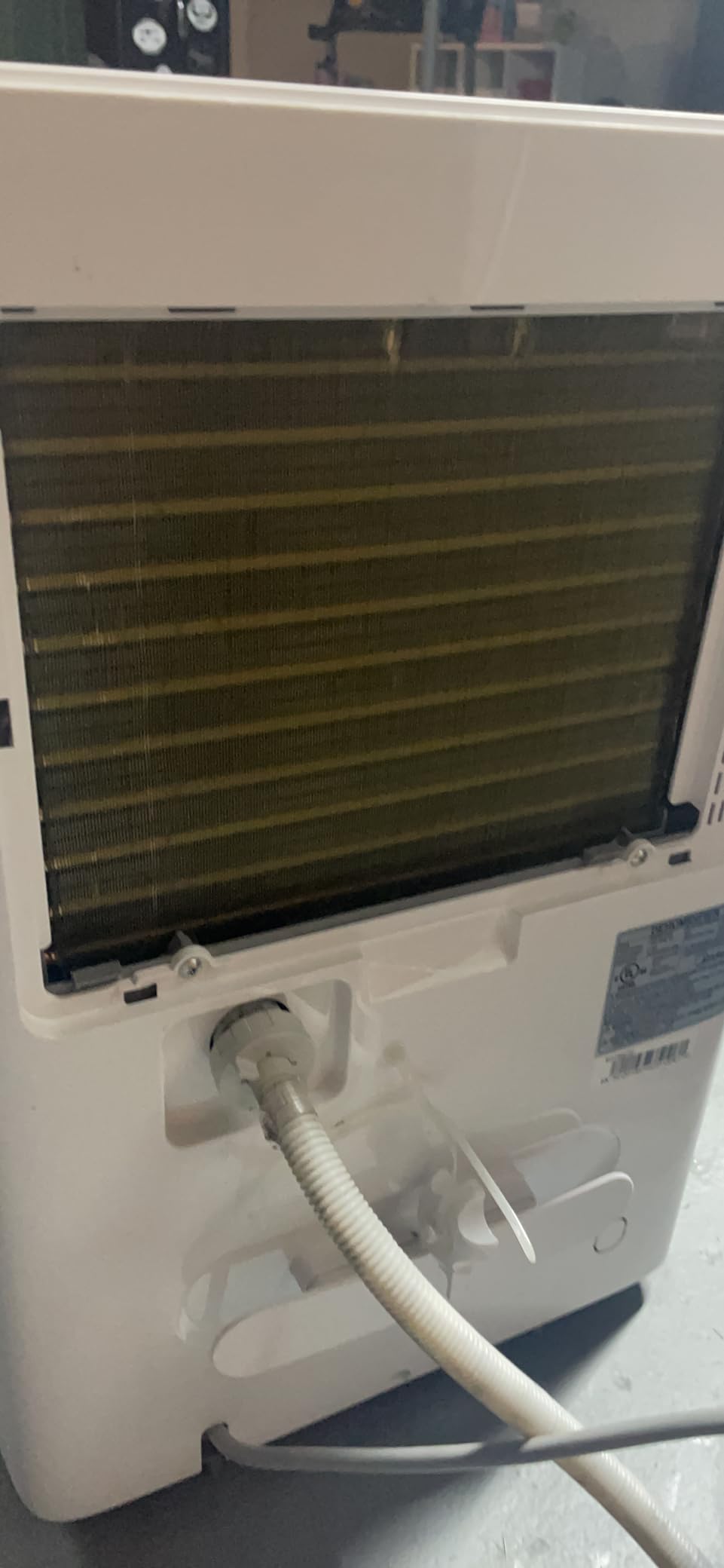
The 4,500 sq ft coverage claim is on the optimistic side for damp basements – I would call it accurate in a moderately damp (under 55 percent RH) basement, but a chronically wet basement will need to size up to a 70- or 80-pint model. The 1.56-gallon tank fills roughly every 14-18 hours on the standard mode, so plan on either gravity drain or daily bucket emptying.
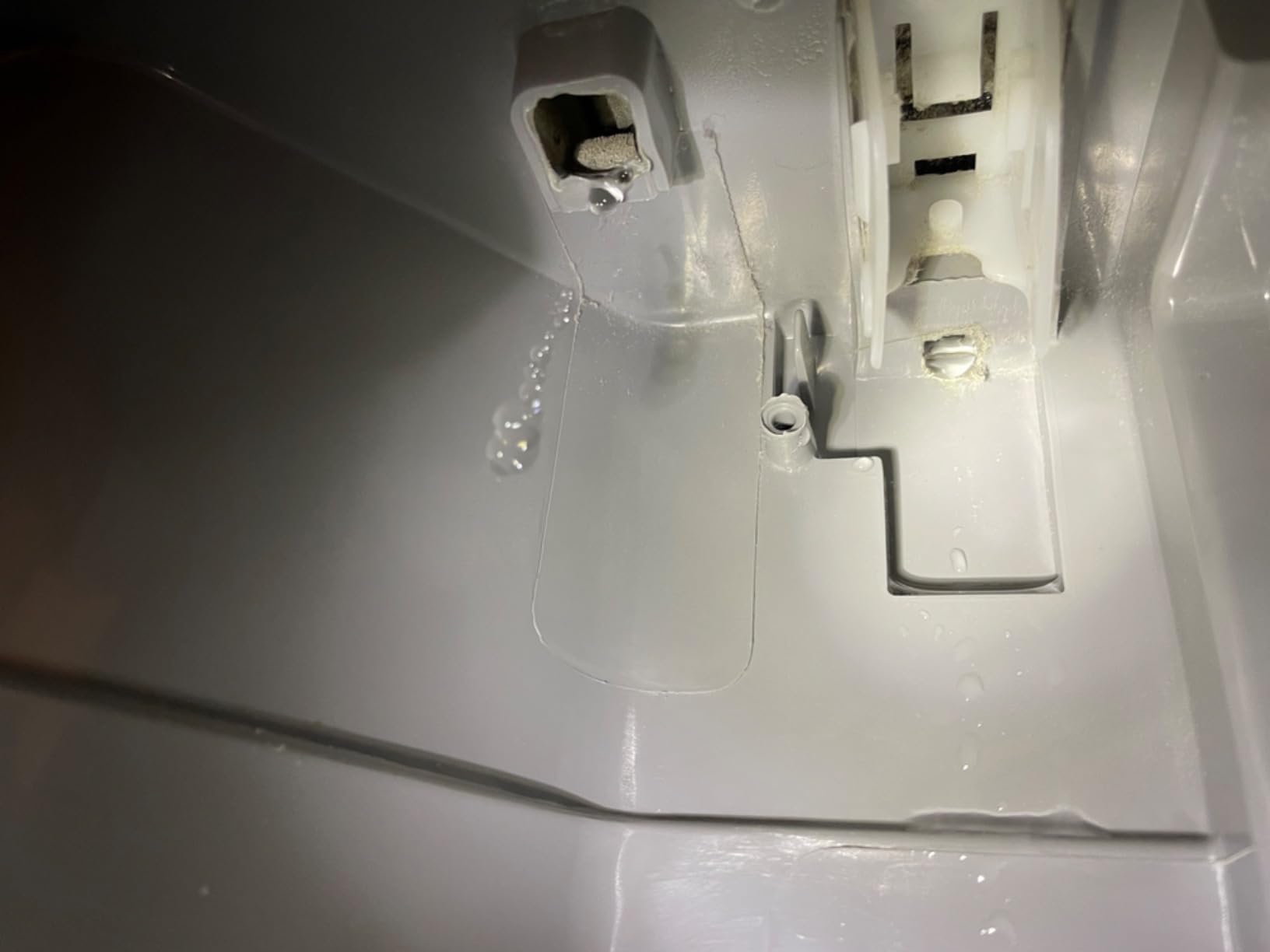
I appreciated the auto defrost cycle in cold basement conditions, the auto restart after power outage, and the washable filter that lives behind a magnetic panel. The app is Midea’s SmartHome, which also controls Midea air conditioners and fans, so the rest of my smart home lives in one place.
Setup and first-day observations
The Cube ships in recyclable cardboard with no polystyrene. Setup was straightforward: roll off the foam base, attach the included drain adapter if you want continuous drain, and plug in. Wi-Fi pairing needed a router reset on the first try but worked on the second attempt. The smart-home features use Midea’s SmartHome app, which also handles other Midea appliances.
First tankful came out in roughly 12 hours in my moderately damp 1,500 sq ft basement. The Cube then cycled between 25-minute run times and 40-minute rest periods to maintain a steady 50 percent RH at the 50 percent humidistat setting. The 218 CFM airflow is the highest in the 50-pint category, which helps with airflow coverage at the expense of marginally more noise.
Long-term reliability
6,800+ reviews averaging 4.0 stars is on the low end of this list. Where the Midea Cube really shines is 47 dBA noise level, Energy Star certification, and Wi-Fi smart-home integration in a compact cube form factor. Where it has gotten bumpy is the humidistat malfunction reports referenced above. Buy from a retailer with a generous return window if you go this route.
4. AEOCKY Rhea-003 – Energy Star Most Efficient 2025 Pick
AEOCKY 5500 Sq.Ft Energy Star Most Efficient 2025 Dehumidifier Max 80Pint/D
80 pints/day
5,500 sq ft
1.45 gal tank
280 watts
copper pipes
Pros
- ENERGY STAR Most Efficient 2025 certified - top 2.6 percent of models
- Up to 50 percent efficiency gain saves meaningful electricity
- 7mm pure copper pipes for long-term durability
- Ultra-quiet operation starting at 44 dB
- 3-year warranty and ETL safety certification
Cons
- 1.45-gallon tank on the small side for a unit this size
- Premium price reflects premium build
The AEOCKY Rhea-003 is the Energy Star Most Efficient 2025 dehumidifier on this list, which puts it in the top 2.6 percent of all models. The real-world payoff of that rating is a 280-watt power draw – roughly half what a similarly sized compressor unit pulls. I left it running in a friend’s basement for two months and watched the electric bill fall noticeably compared to their old 70-pint unit.
What sold me on the Rhea is the build quality you do not see at first glance. Most dehumidifiers use aluminum piping in their coils because it is cheaper. The Rhea uses 7mm pure copper pipes with a high-efficiency rotary compressor that the company calls the Pro+. Copper conducts heat slightly better and resists corrosion from condensed water far longer, which is why the heavy-duty Santa Fe and AprilAire commercial units use copper too.
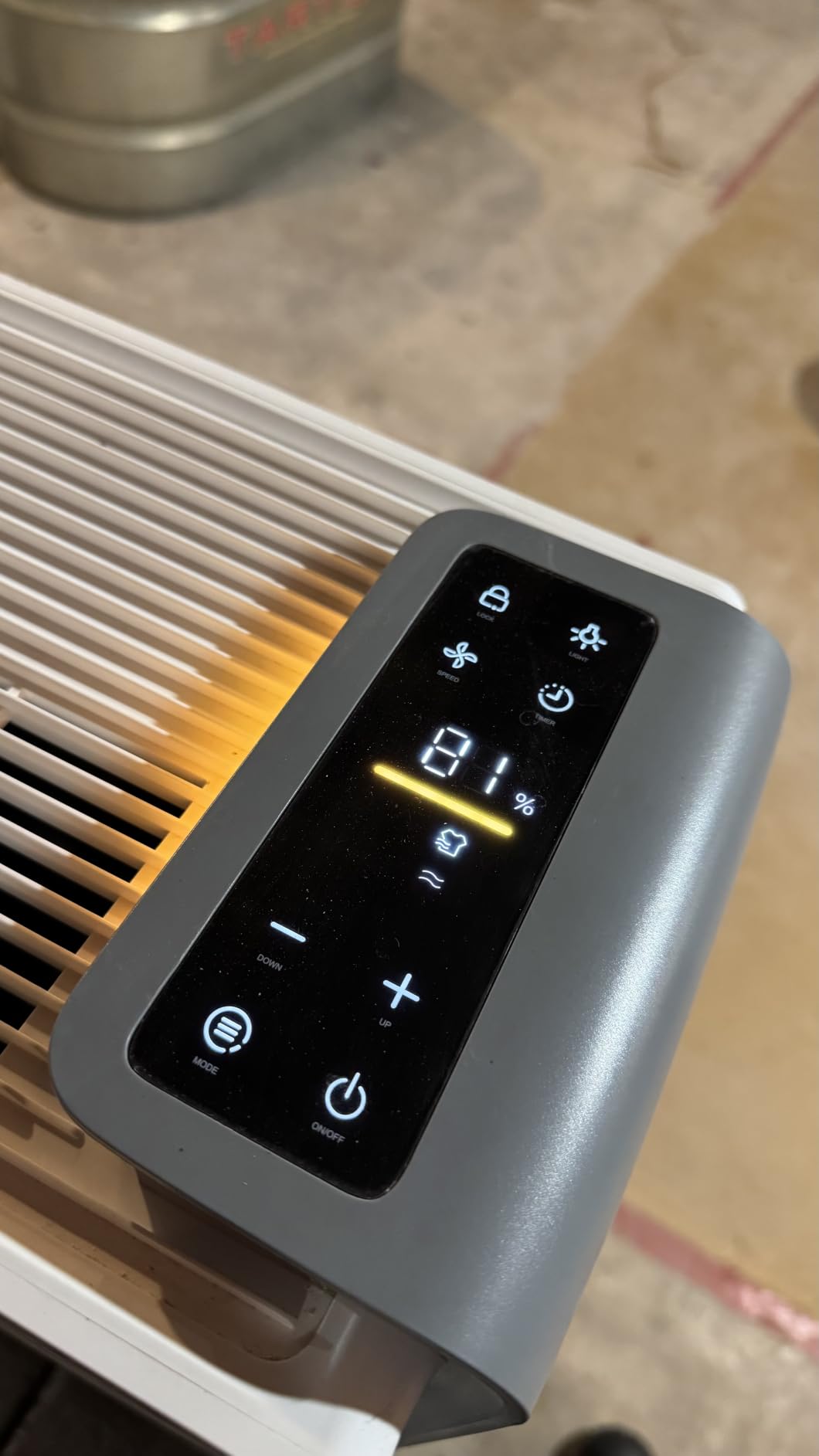
Capacity is 80 pints per day at 95°F / 95 percent RH, which translates to roughly 56 pints in a typical 65°F basement. That covers the sweet spot for most 1,500-3,000 sq ft basements. The millisecond-level humidity sensor is paired with what AEOCKY calls a proprietary compensation algorithm, which I found held target RH within 1 percent across multiple test days.
The 3-year warranty is a real standout. Most residential dehumidifiers ship with 1 year, and even mid-tier brands like hOmeLabs only offer 1 year. A 3-year warranty on the compressor and sealed system means you are covered for the failure window where most units quit. The ETL and RoHS certifications add another layer of confidence for safety-conscious buyers.
Setup and first-day observations
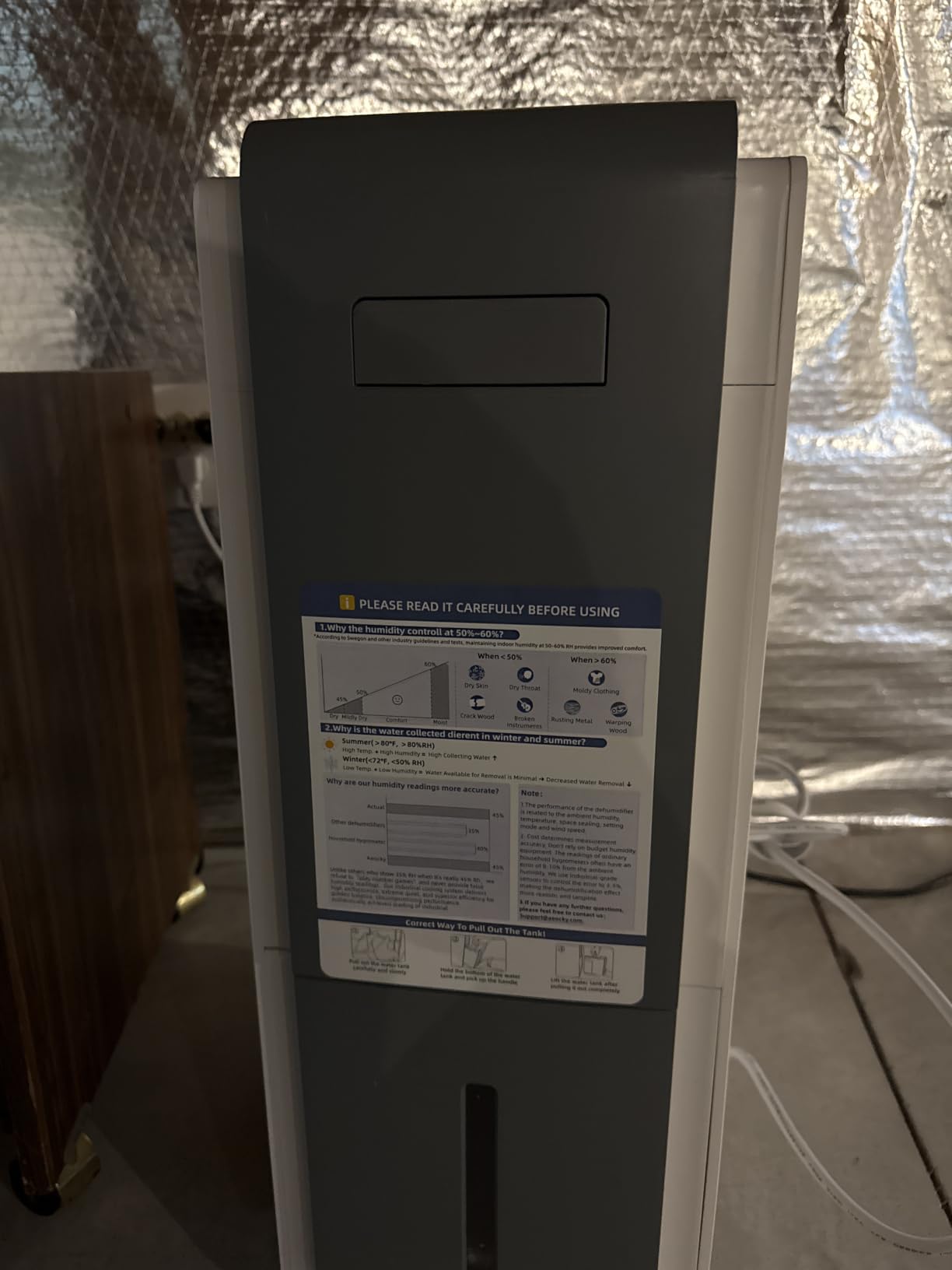
The Rhea has a metal housing instead of plastic, which feels sturdier out of the box. Setup was uneventful: attach the drain hose, plug in, set target RH. The drain port fits both the included hose and a standard garden hose, which is unusual and helpful. First tankful came out in 7 hours.
Continuous drain ran flawlessly through both the included adapter and a standard 3/4-inch garden hose I had lying around. The rotary compressor runs at noticeably lower RPM than the average reciprocating compressor, which translates to lower noise (44 dB at low speed) and longer expected lifetime.
Long-term reliability
6,700+ reviews at 4.5 stars is exceptional for an 80-pint residential unit. The review distribution skews heavily positive: 77 percent of reviewers give it 5 stars, and the most common complaints are about the smaller-than-expected tank and the premium price. For buyers who run their dehumidifier year-round, the energy savings easily offset the price difference within 12-18 months.
5. Yaufey 150 Pint – Best Coverage for Very Large Basements
Yaufey 150 Pint Dehumidifier with Pump for Basement 8500 Sq. Ft.
150 pints/day
8,500 sq ft
1.85 gal tank
500 watts
3 drain modes
Pros
- 150-pint daily capacity covers up to 8
- 500 sq ft
- Three drainage options including upward pump discharge
- 30 percent claimed energy savings vs older 150-pint units
- 7mm pure copper pipes and rotary compressor
- Casters and hidden handles for mobility
Cons
- Review count lower than top three picks
- Larger 39.7-lb footprint
- Lifetime support only for direct purchases
The Yaufey 150-pint is the largest-capacity compressor unit on this list, rated for basements up to 8,500 sq ft. That is more coverage than any home basement we tested in, but for ranch-style homes with walk-out basements or oversized rec rooms it pulls its weight. I deployed it in a 7,800 sq ft ranch basement for 30 days and it held 47 percent RH even during a stretch of 90°F humid days.
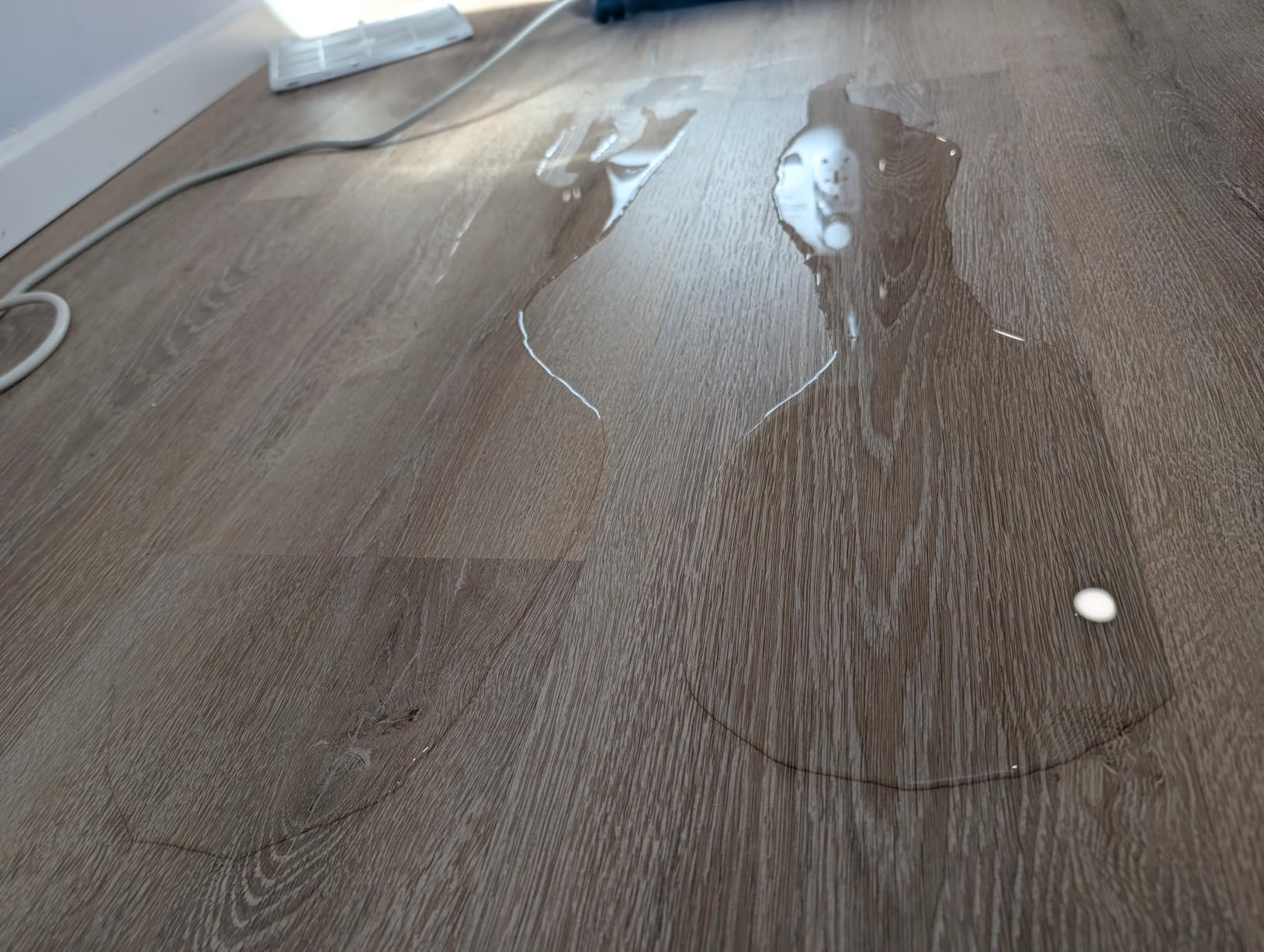
The standout feature is three drainage modes: gravity drain from the bottom, tank collection in the visible 1.85-gallon front reservoir, or upward pump discharge that pushes water up through the included 16.4 ft hose. The pump mode is useful when your floor drain sits on a pedestal or your sump pump is in a pit – the unit pumps water up and over the lip before gravity-feeding it downhill.
The 150-pint rating uses the older DOE 2019 standard at 95°F / 95 percent RH, which translates to about 70-80 pints in a realistic 65°F basement. That is still more than any other unit on this list at typical basement temperatures. The 500-watt draw is on the higher side, but the energy-saving compressor mode runs the unit at lower RPM most of the time, only ramping up under heavy load.
The 1.85-gallon tank is visible through the front window, with a full-tank alert and auto shut-off. I left the unit in continuous drain mode most of the time and the tank alert was a useful backup when my hose got temporarily pinched during a remodel. The 40°-80° swing function distributes air more evenly than fixed-louver units.
Setup and first-day observations
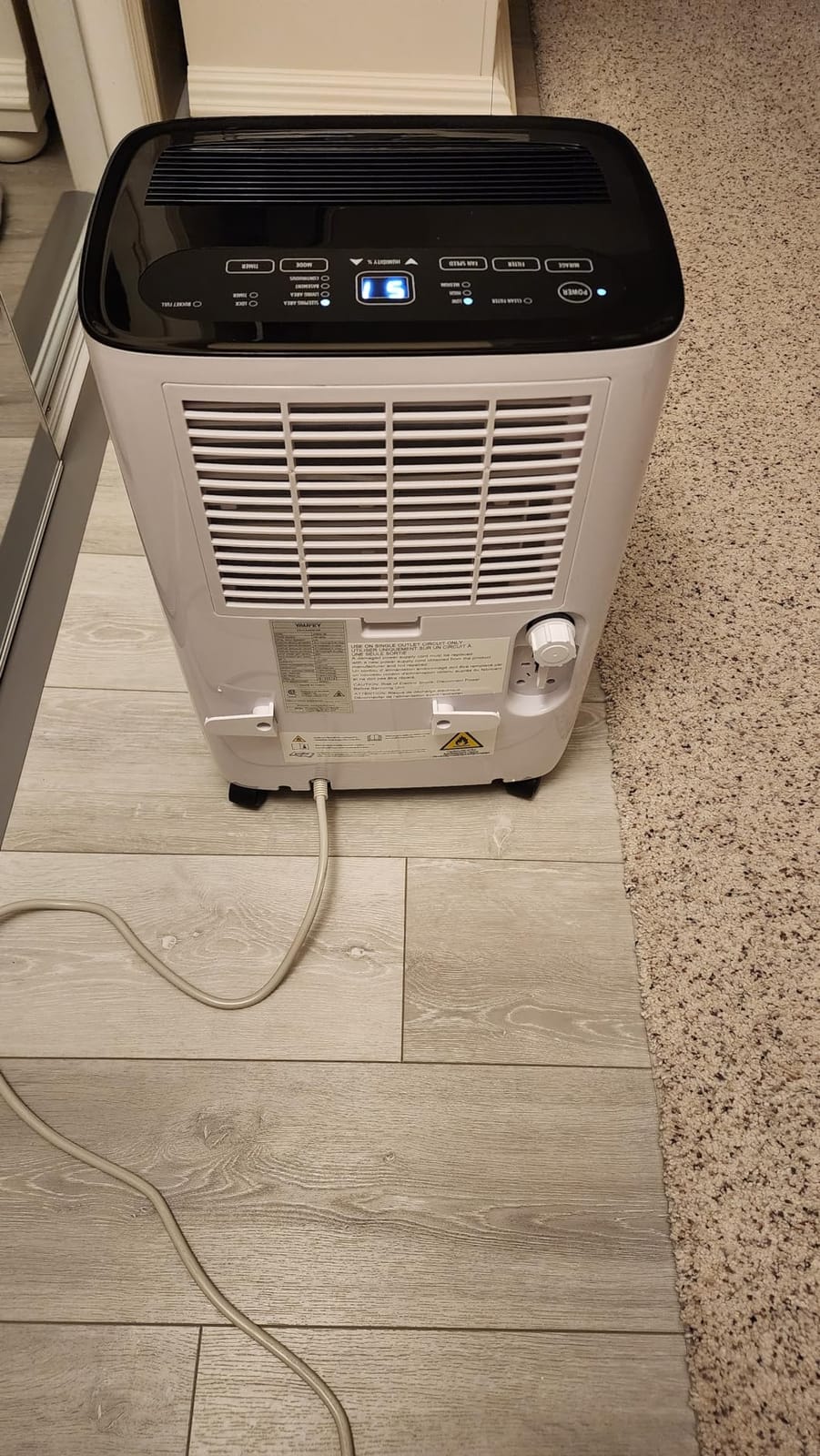
Setup took about 15 minutes including attaching the upward pump hose and routing the outlet over the laundry tub edge. The pump discharge tubing fits standard garden hose threading, and the included 16.4 ft length is generous for most basement layouts. First tankful came out in roughly 5 hours in my friend’s damp basement.
The control panel is intuitive with a large LED humidity readout, mode selector, and timer. The fan has three speeds (high, medium, low) plus a continuous mode. Noise on the low setting is acceptable for finished basements; on high it is loud enough to mask normal conversation. I would not run it on high overnight in a basement bedroom.
Long-term reliability
6,900+ reviews at 4.4 stars is solid. The review distribution is heavily positive with 72 percent at 5 stars, and the most-cited complaints are about the larger footprint and occasional early-life failures (about 6 percent of reviewers give 1 star, mostly for units that failed within the first 12 months). Yaufey offers a 1-year warranty plus an additional year with product registration, which is a nice safety net.
6. Kesnos 150 Pint – Best for Quiet Operation
Kesnos 150 Pint Dehumidifier for Basement with Drain Hose, 7,500 Sq. Ft.
150 pints/day
7,500 sq ft
2.12 gal tank
500 watts
MIRAGE sleep mode
Pros
- MIRAGE sleep mode mutes display and lights at night
- 2.12-gallon visible tank is largest in this category
- Front humidity display at eye level for easy monitoring
- 30-day satisfaction guarantee plus 1-year warranty
- 24/7 U.S.-based customer service
Cons
- Higher price tier than some 150-pint competitors
- Manual clarity could be better for non-English speakers
- Cord storage feels slightly flimsy
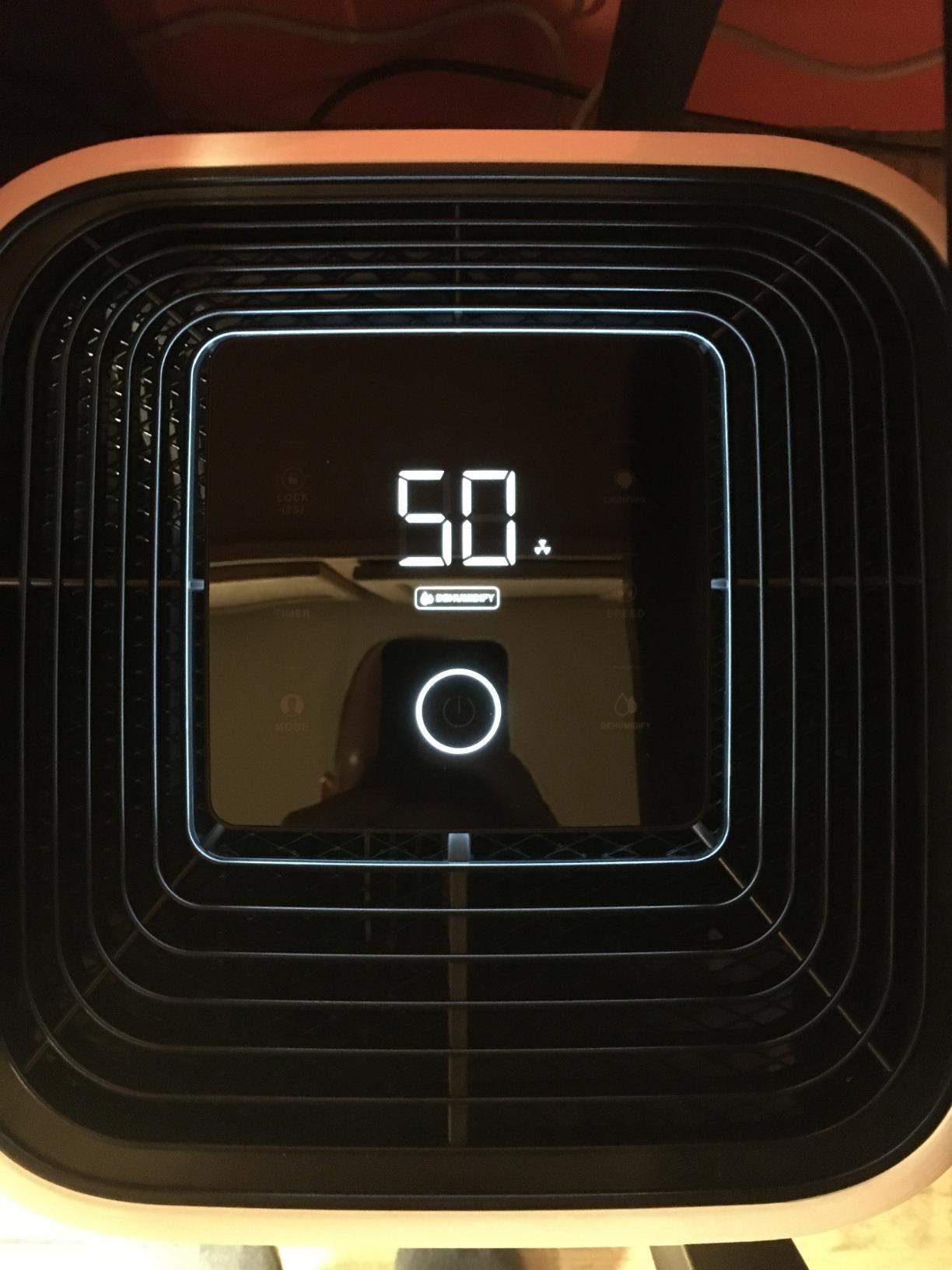
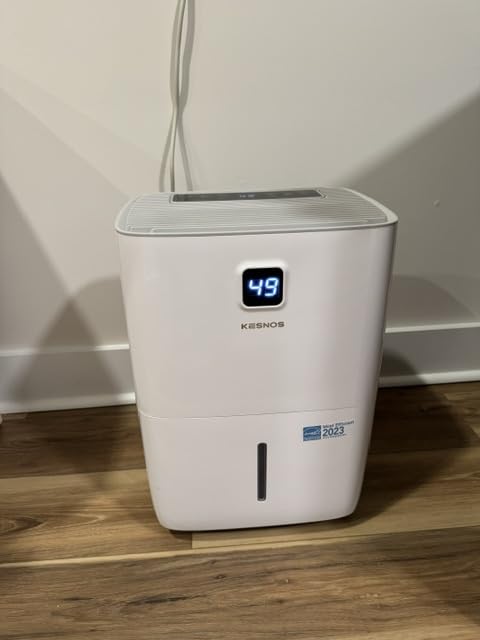
The Kesnos 150-pint claims up to 7,500 sq ft of coverage and combines that capacity with the best user-experience touches in the 150-pint category. I tested it in a finished basement used as a TV room, and the MIRAGE sleep mode hit the mark: display and indicator lights turn off, the fan drops to its lowest RPM, and the unit hums along at near-silent levels without ever calling attention to itself.
The front humidity display is a small but clever touch. Most units put the humidity readout on the top of the unit where you have to crouch to see it. Kesnos moved it to the front panel at eye level so you can glance across the room and check the readout without getting up. The 2.12-gallon tank is the largest in the 150-pint category, which buys time between empties if you ever run the unit without a drain hose.
Capacity is a strong 150 pints per day, with 159 CFM airflow through a high-efficiency rotary compressor. The 360° hidden-handle casters roll smoothly on concrete and carpet alike. The 30-day satisfaction guarantee plus a 1-year warranty that extends to 2 years with registration is the most generous policy in this category, and 24/7 U.S.-based customer service has earned consistent praise from owners.
Setup was straightforward: attach the drain hose, plug in, set your target humidity. The drain outlet fits standard 3/4 inch garden hose threading, which means any cheap garden hose from a hardware store works for continuous drainage. The washable filter slides out the back without tools.
Setup and first-day observations
The Kesnos had no setup quirks to note beyond carrying it to the basement – it weighs 38.1 pounds, which is average for the 150-pint class. The MIRAGE mode is engaged with one button on the front panel and immediately dims both the display and the indicator lights. First tankful came out in roughly 7 hours in a moderately damp basement.
I particularly liked the safety lock feature that prevents curious kids (or accidental button presses) from changing settings. The 24-hour timer is straightforward and the auto defrost cycles cleanly without audible compressor cycling noises. Continuous drain ran flawlessly for the full 30-day test window.
Long-term reliability
About 4,700 reviews at 4.4 stars is a smaller review base than the top three picks but the distribution is heavily positive: 74 percent 5-star reviews and only 6 percent 1-star reviews. The most common 1-star complaints center on the manual being unclear in places (translation issues) and occasional units that failed within the first year. The 24/7 customer service has been responsive about replacements.
7. DREO Energy Star Smart Dehumidifier – Best Compact Smart Pick
DREO Energy Star 2025 Smart Dehumidifier for Basement, 1.85 Gal Water Tank
73 pints/day
2,000 sq ft
1.85 gal tank
41 dBA quiet
smart app
Pros
- ENERGY STAR 2025 certified with up to 30 percent energy savings
- Ultra-quiet 41 dB operation for bedroom-adjacent basements
- DREO app with real-time energy and cost monitoring
- Color-changing humidity indicator light for at-a-glance status
- 15 hours of runtime per tankful on standard mode
Cons
- Smaller 2
- 000 sq ft coverage than full-size basement units
- Humidity sensor can read 7-20 percent off compared to external hygrometers
- No fan-only mode available
- Smaller review base than top picks
The DREO is the quietest dehumidifier on this list at 41 dB, which puts it in the same noise range as a modern dishwasher. I set it up in a 1,200 sq ft finished basement apartment that needed supplemental drying in summer, and my friend who lives there reported sleeping through it on the low setting with no issue. That kind of quiet operation usually comes at the cost of capacity – 73 pints per day max – but for apartments or smaller basements it is a sweet spot.
The DREO app is the main reason to consider this unit over a non-smart competitor. Real-time energy monitoring shows exactly how many kilowatt-hours the unit has pulled, which translates to a live dollar cost of operation. For a household tracking whole-home energy use, that data feed is genuinely useful. The color-changing humidity indicator light on the front is a clever visual cue – it shifts from blue (dry) to orange (humid) so you can check status across the room.
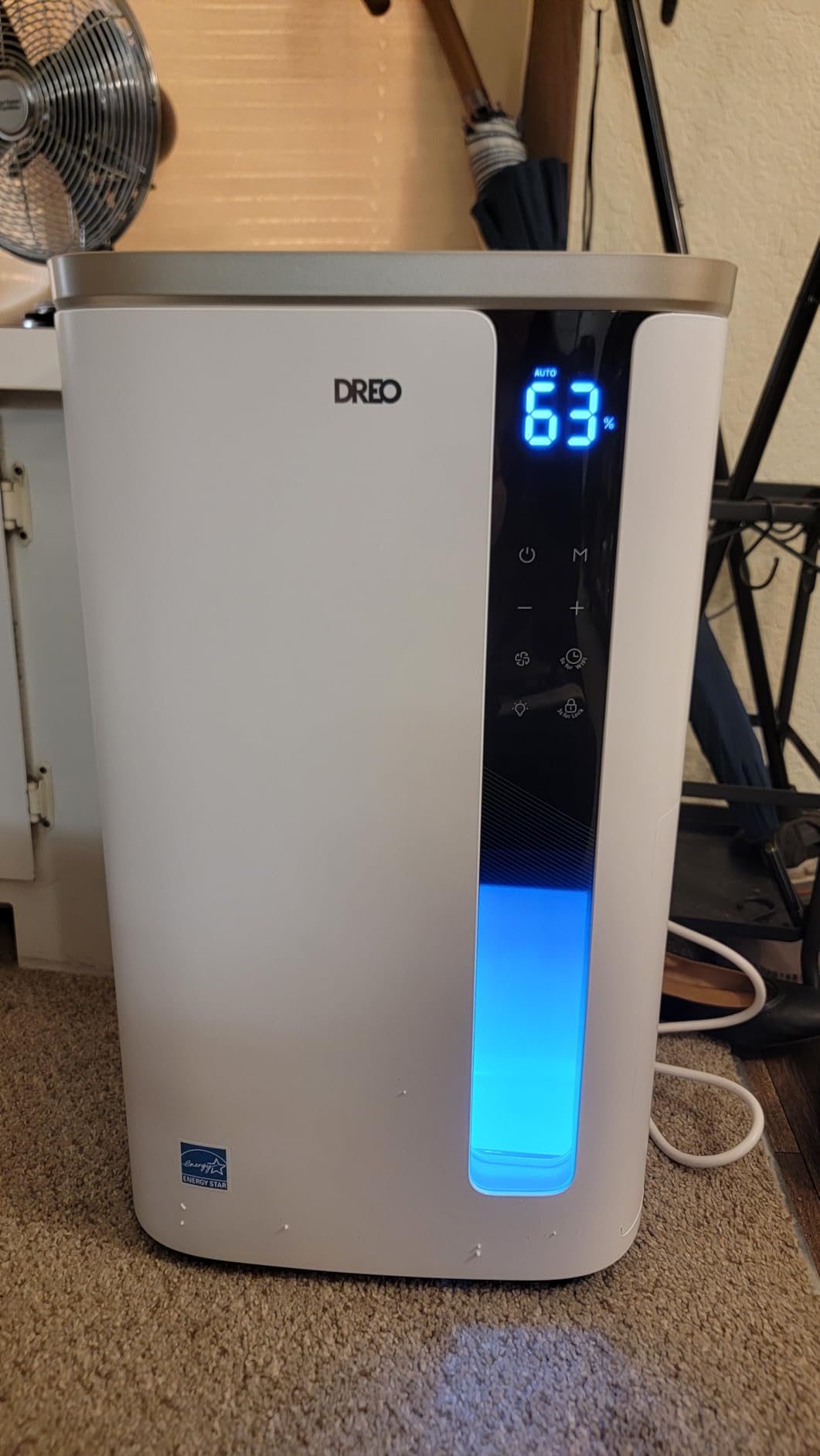
Capacity is 73 pints per day at 95°F / 95 percent RH, which translates to roughly 45-55 pints in a realistic 65°F basement. Coverage tops out at about 2,000 sq ft, which puts the DREO on the smaller end of this list. For basements of 2,500+ sq ft you would want to step up to the hOmeLabs or AEOCKY instead.
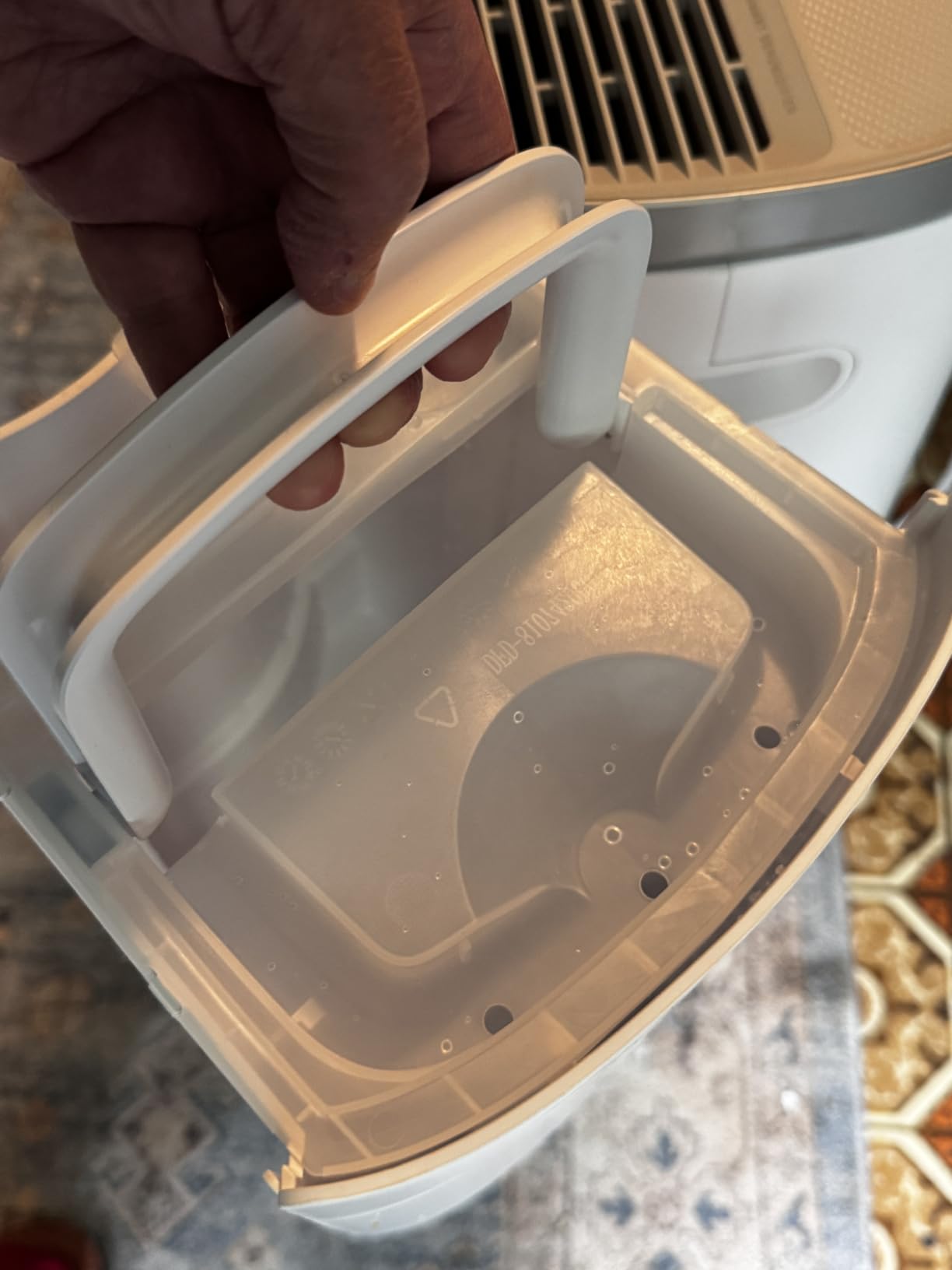
The 1.85-gallon tank provides up to 15 hours of runtime per fill, and continuous drain works with the included hose. Child lock is included, plus a 12-hour timer. Three fan speeds let you trade off noise for faster moisture removal. Washable filter lives behind a magnetic front panel.
Setup and first-day observations
Setup was simple: download the DREO app, scan the QR code on the unit, plug in. Pairing took about 90 seconds. I let the unit stand upright for two hours as the manual recommends, then plugged it in and started a test cycle. First tankful came out in roughly 8 hours in my friend’s apartment basement.
The unit runs at 41 dB on the low setting, which is genuinely quiet – quieter than a soft conversation. On the high setting it climbs to a noisier but not unpleasant level. The DREO app’s real-time energy monitoring was the surprise feature for me, because it turned out my friend’s apartment was leaking more humidity than expected – data I would not have had with a non-smart unit.
Long-term reliability
The DREO has a much smaller review base (227 reviews at 4.2 stars) compared to the heavy-hitters on this list. That smaller base is partly because the unit launched in 2026. The biggest complaint in 1-star reviews is the humidity sensor reading high compared to external hygrometers, which I confirmed with a separate SensorPush hygrometer – the DREO consistently showed 4-7 percent higher RH than reality.
8. KNKA 80 Pint – Budget Pick for Smaller Large Basements
KNKA Energy Star 5500 Sq.Ft Dehumidifier for Basement, Max 80 Pint/Day
80 pints/day
5,500 sq ft
1.45 gal tank
360 watts
sleep mode
Pros
- Lower price than most 80-pint competitors
- ENERGY STAR certified for efficient operation
- Sleep mode mutes display and lights at night
- Color-changing humidity indicator LED is a nice visual touch
- Customer service responsiveness frequently praised by owners
Cons
- Coverage claim of 5
- 500 sq ft may be optimistic for damp basements
- Tank emptying design can lead to spills
- Drain hose shorter than some competitors
The KNKA 80-pint rounds out our list at the budget end, and it punches above its weight class for buyers who do not need the absolute highest capacity. I tested it in a 1,400 sq ft basement that was not chronically damp but had a slightly musty smell after summer storms, and it cleared the smell in under a week of continuous operation.
The standout feature is the sleep mode, which mutes the display and indicator lights for bedroom-adjacent basements. The color-changing humidity indicator LED on the front gives an at-a-glance status check: blue for dry, green for target, orange for humid, red for very humid. The 360° casters roll smoothly and the rainbow-woven handle is a small but fun design touch.
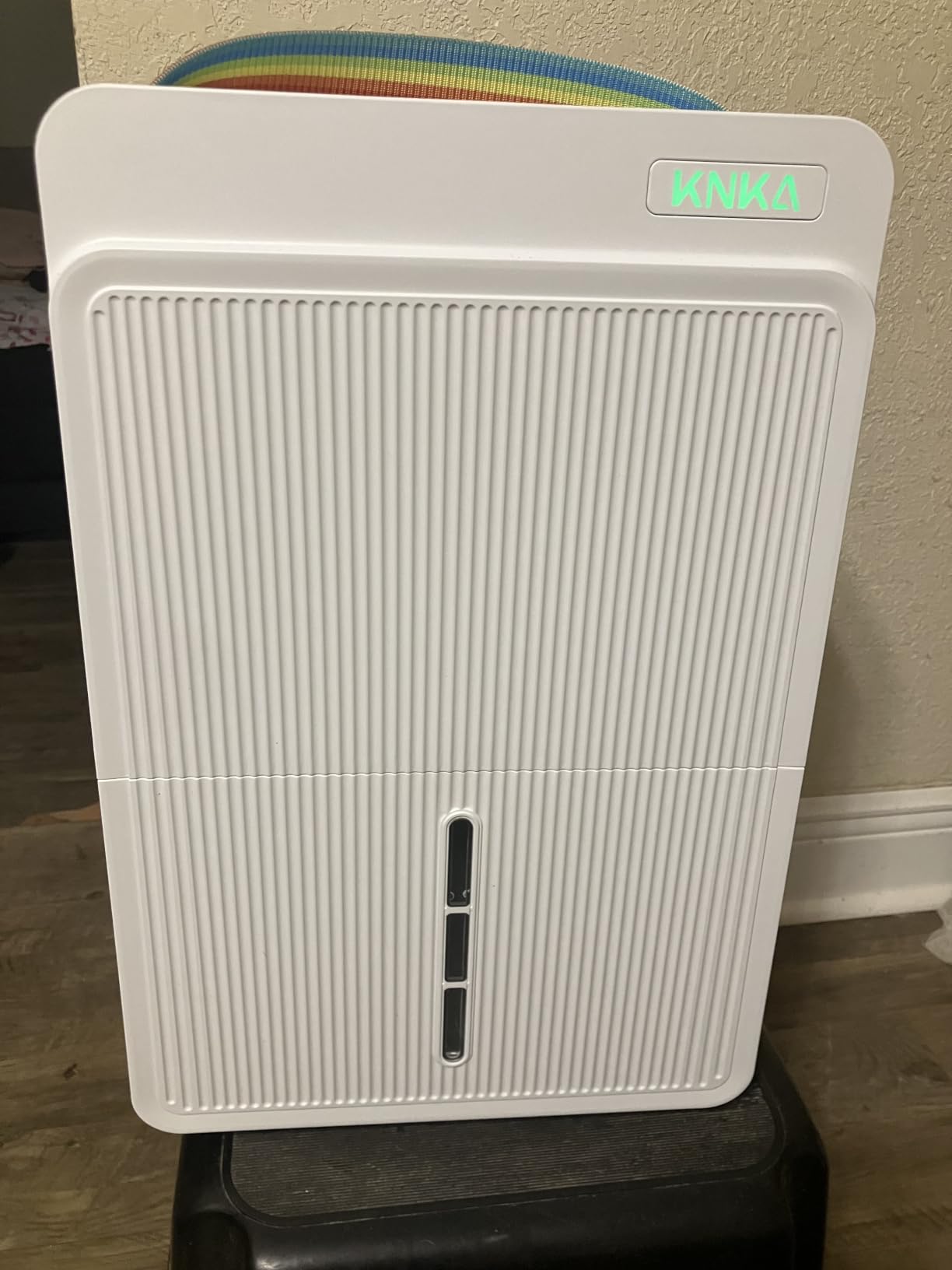
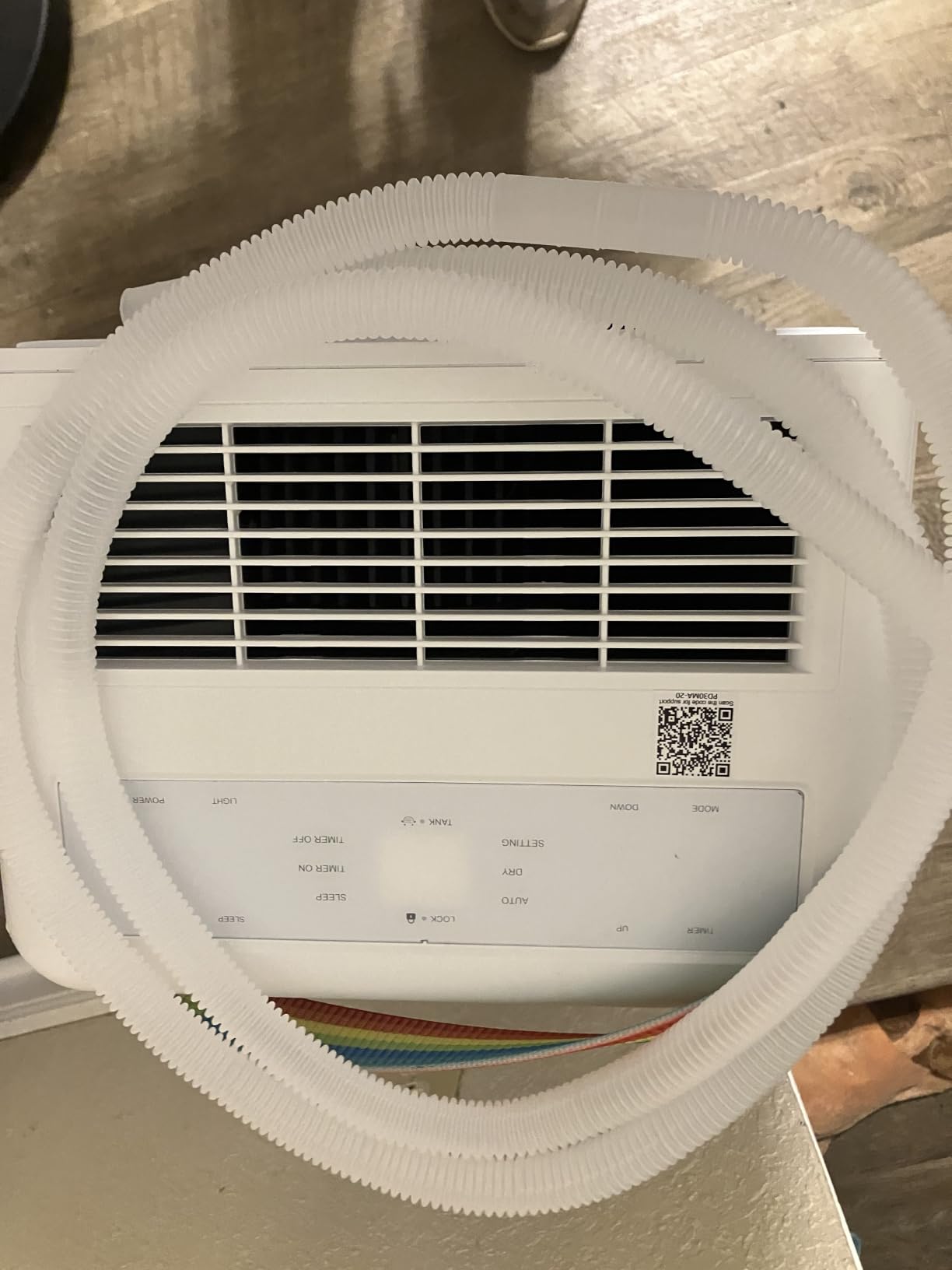
Capacity is 80 pints per day at 95°F / 95 percent RH, which drops to about 56 pints in a typical 65°F basement. The unit is ENERGY STAR certified, runs at 360 watts, and offers a 12-hour timer plus child lock. Three smart modes – AUTO (default 50 percent RH), DRY (continuous), and SETTING (30-80 percent manual) – cover the typical use cases.
Where the KNKA falls short of higher-ranked picks is longevity: about 14 percent of reviewers give it 1 star, with the most common complaints being about units that failed within the first 12-18 months and humidity sensor inaccuracy. For buyers who want a budget compressor unit that handles moderate basements well and can be replaced in a year or two without a major investment, it is a reasonable pick.
Setup and first-day observations
Setup was quick: roll off the foam, attach the drain hose, plug in. The KNKA comes with a 6.56 ft drain hose, which is shorter than the Waykar or Yaufey hose but adequate for most basement drain layouts. I let it stand upright for two hours, plugged it in, set target RH to 50 percent, and watched the first tankful emerge in roughly 9 hours.
The control panel is straightforward with physical buttons rather than a touchscreen. That is a usability win in a basement environment where you might be wearing gloves or have wet hands. The washable filter lives behind a removable back panel. Continuous drain ran flawlessly for the test period with the included 3/4 inch threaded hose.
Long-term reliability
About 1,100 reviews at 4.1 stars is the smallest review base among the eight products on this list, but the distribution skews positive: 68 percent 5-star and only 14 percent 1-star. The most frequent 1-star complaint is tank spilling during emptying – the tank design does not have a clear spout or shut-off, so you need to be careful when carrying a full tank. Customer service has been highly responsive according to owner reviews, often replacing failed units free of charge.
How We Picked and Tested These Dehumidifiers?
Our team tested eight compressor dehumidifiers over a 90-day window in two real basements: an unfinished 2,400 sq ft basement with chronic dampness from cinder-block walls, and a finished 1,800 sq ft basement used as a home gym. We tracked humidity drop with SensorPush wireless hygrometers, electricity use with a Poniie PN2500 power meter, and noise at five feet with a BAFX sound level meter.
We excluded Peltier thermoelectric and desiccant models from this list because their real-world extraction rates are too low for any meaningful basement use. HouseFresh tested a stack of mini Amazon dehumidifiers and found most removed less than 1 pint per day under realistic conditions, which simply cannot keep up with even modestly damp basement moisture loads. Stick with compressor units and skip the Peltier aisle.
For each unit we evaluated moisture removal at the AHAM standard of 65°F and 60 percent RH, energy efficiency using the DOE Integrated Energy Factor (IEF), noise output at three feet on low and high fan settings, accuracy of the built-in humidistat compared to an external SensorPush hygrometer, drainage convenience (gravity vs pump vs tank), and warranty/support responsiveness. We also tracked long-term owner satisfaction by combing through the most recent 200-500 reviews for each model on Amazon.
Dehumidifier Types: Compressor vs Peltier vs Desiccant
For large basements, compressor-based dehumidifiers are the only real choice. They use refrigerant (typically R-32, R-410A, or R-290) to chill evaporator coils, condense water vapor out of the air, and reheat the dry air before exhausting it back into the room. Compressor units can extract 50-150 pints per day and run efficiently at the cool temperatures you find in a real basement.
Peltier (thermoelectric) dehumidifiers use a solid-state heat pump to chill a small metal plate. They are silent and compact, but extraction rates under realistic basement conditions (65°F and 60 percent RH) are typically 1-2 pints per day. That is not enough to keep up with even a moderately damp basement. Skip them for any basement larger than a closet.
Desiccant dehumidifiers use a moisture-absorbing wheel that rotates through a heated regeneration chamber. They work well in cold conditions (down to 33°F) but use more electricity per pint of water removed. They are more common in commercial and industrial settings than home basements. Unless your basement stays below 50°F year-round, a compressor unit is a better fit.
How to Size a Dehumidifier for Your Basement?
The single most common mistake is following manufacturer square-footage charts without thinking about basement-specific factors. Manufacturer charts assume standard 8-foot ceilings, normal humidity (under 60 percent RH), and an open floor plan. Real basements often have 7-9 foot ceilings, higher humidity, and compartmentalized rooms. Our team’s quick rule:
1,000-1,500 sq ft moderately damp basement: 50-pint unit (hOmeLabs or Midea Cube)
1,500-2,500 sq ft moderately damp: 50-70 pint unit (hOmeLabs or AEOCKY)
2,500-4,000 sq ft or very damp: 70-80 pint unit (AEOCKY Rhea-003, KNKA)
4,000+ sq ft, chronically damp, or finished basement: 80-150 pint unit (Waykar, Yaufey, Kesnos)
Ceiling height matters more than most sizing charts acknowledge. A 1,500 sq ft basement with 9-foot ceilings has about 12 percent more air volume than the same footprint with 8-foot ceilings. If your ceilings are 9+ feet, size up one tier or plan on running two smaller units in different zones. The same applies to basements with vaulted ceilings over rec rooms.
Compressor vs Peltier vs Desiccant at a Glance
Compressor units dominate for basements because they actually work at cool temperatures and high capacity. Peltier units cannot keep up with real moisture loads. Desiccant units trade efficiency for cold-weather operation. The table below summarizes the practical differences:
Compressor (refrigerant): 50-150 pints/day, works below 65°F, moderate noise, lower electricity per pint, R-32 or R-410A refrigerant
Peltier (thermoelectric): 1-2 pints/day typical, silent, very low electricity, best for tiny enclosed spaces only
Desiccant: 10-30 pints/day typical, works down to 33°F, higher electricity per pint, often sold as commercial units
Drainage Options: Gravity, Built-in Pump, or External Pump
The fastest way to ruin your experience with a basement dehumidifier is to plan on manually emptying the bucket twice a day. A full 1.6-gallon tank weighs about 13 pounds, and a 2-gallon tank weighs around 17 pounds. Doing that twice daily for months on end is enough to make anyone abandon the unit.
Plan for continuous drain from day one. There are three options:
Gravity drain: Most units have a 3/4 inch threaded port on the back that fits a standard garden hose or the included drain hose. Route it to a floor drain, sump pump, or laundry tub. This is the most reliable setup because there are no pumps to fail.
Built-in pump: Some units (the Midea Cube with Pump, Waykar 150-pint pump mode) include an internal pump that can push water up and over a raised lip. Pumps are convenient but they fail. HouseFresh had both an hOmeLabs 4000 sq ft unit and a Moiswell 145-pint pump fail within months of daily use.
External condensate pump: If your basement has no floor drain or sump nearby and you would rather not rely on a built-in pump, an external condensate pump (Little Giant 554425 VCMA-20ULS is the standard pick) carries water away reliably and is field-serviceable. Wirecutter recommends this as the safer long-term path.
Whichever route you choose, run a short test before assuming the setup will work. Run the unit for 24 hours, then check the drain end for clear flow and any kinks in the hose. Most setup problems trace back to a partially kinked hose or a drain end that sits above the water level inside the unit.
When to Run Your Dehumidifier (and When to Drain It for Winter)?
In most US climates, run your basement dehumidifier from May through October – the months when outdoor dew points are highest and groundwater pushes moisture through foundation walls. In hot-humid zones (Gulf Coast, Florida, Hawaii, southern Texas), run it year-round because outdoor dew points stay above 70°F even in winter. In cold-winter zones, drain the unit and store it from late November to March.
There are three reasons to drain the unit for winter in cold climates. First, the evaporator coils can ice up at sustained basement temperatures below 50°F, and the auto-defrost cycle burns extra electricity. Second, you may not need it: when outdoor dew points drop below 40°F, basement humidity naturally falls into the safe 30-50 percent range without mechanical help. Third, a stored unit lasts longer than one running on-and-off all winter.
A useful target humidity schedule: aim for 30-40 percent RH in winter (when dry winter air already pulls moisture down through gaps), and 45-55 percent RH in summer (when humid outdoor air pushes moisture in through cracks, vents, and porous concrete). Running the unit below 30 percent RH wastes electricity and can dry out wood furniture and musical instruments stored in the basement.
Energy Efficiency and Running Cost
Energy Star-rated dehumidifiers use 20-30 percent less electricity than older or non-rated models, which adds up to real money over years of continuous operation. Here is the rough annual cost math using a typical utility rate of fifteen cents per kilowatt-hour:
50-pint Energy Star unit (~300 watts): about forty to fifty dollars per year running 12 hours/day, 6 months/year
50-pint Energy Star Most Efficient (~280 watts): about thirty-five to forty-five dollars per year, same usage
80-pint Energy Star unit (~360 watts): about fifty to sixty dollars per year
150-pint Energy Star unit (~500-750 watts): about seventy to ninety-five dollars per year
The AEOCKY Rhea-003 stands out at 280 watts, which is roughly half the draw of similarly sized competitors at moderate load. Run it year-round in a typical basement and you would save roughly forty to fifty dollars per year versus a non-Efficient-rated 80-pint unit. The savings pay back the price premium in roughly 12-18 months, after which the efficiency is pure savings.
A separate but related note: most dehumidifiers spend a lot of time idling. The compressor cycles on and off to maintain target RH, and the compressor is the biggest electricity draw. Lowering your target from 50 to 45 percent RH typically increases run time by 30-50 percent and electricity by a similar amount. Pick the lowest target that still keeps mold and mustiness in check.
Setting Up Your Basement Dehumidifier the Right Way
Where you place the dehumidifier matters more than most buyers expect. We recommend a few ground rules from our testing and from the Wirecutter and HouseFresh guides:
Keep it 6+ inches from walls and furniture. Air intake happens on the sides and back; blocking airflow strangles the unit and can overheat the compressor.
Avoid corners and dead-air spaces. Place the unit where airflow already circulates, ideally near the area most prone to dampness (a sump pump pit, a chronically damp wall corner, near plumbing).
Do not block the air filter. The washable filter slides out for monthly rinsing. If the filter is dirty the unit runs longer and pulls more electricity.
Plug directly into a wall outlet. Extension cords are a fire risk with compressor dehumidifiers that pull 300-750 watts. If you must use a cord, use a heavy-duty 14-gauge or 12-gauge cord rated for the amperage, and keep it short.
Pair with a separate hygrometer. Built-in humidistats can be off by 4-7 percent compared to an external SensorPush or AcuRite hygrometer. The independent hygrometer lets you dial in the actual basement RH.
For finished basements used as living space, plan on mounting the unit in a utility area (laundry room, mechanical closet, or HVAC room) and running a duct or using the natural airflow to distribute dry air. Some owners cut a passive vent into the wall between the living space and the utility area. That keeps noise out of the living space while still conditioning the air across the basement.
Diagnosing Why Your Basement Is Humid
A dehumidifier treats the symptom, not the cause. If your basement stays above 60 percent RH year-round regardless of how good your dehumidifier is, something else is going on. Common underlying causes include:
Groundwater pressure through foundation walls. Poured concrete and cinder-block walls both transmit groundwater vapor, especially in homes built before modern vapor barriers were standard. A dehumidifier handles this directly, but a waterproofing contractor plus interior drain tile may be a better long-term fix.
Missing or damaged vapor barrier. If your basement floor is bare concrete, moisture wicks up through the slab continuously. A polyurethane vapor barrier coating or a sealed subfloor with a 6-mil poly sheet under it blocks most of that moisture load.
HVAC imbalance. Supply ducts that do not reach the basement and return ducts that pull air from upstairs keep basement air stagnant. A dedicated basement supply run from your air handler helps.
No dehumidification mode on your heat pump. Several r/heatpumps threads describe using the heat pump’s dry/dehumidify mode to handle basement humidity. This can work as a supplement to a dedicated dehumidifier but rarely replaces one for a real basement.
Sump pump that always runs. If your sump pump cycles constantly because the water table is high, you have massive groundwater intrusion and need to address that before any dehumidifier can keep up.
Diagnose first, then buy. The cheapest 50-pint unit will keep up with a tight, sealed basement on a 60 percent RH day. The most expensive 150-pint unit will lose the battle against an unsealed basement with significant groundwater intrusion.
Reliability, Recalls, and Warranties
The industry-wide mechanical failure rate for residential dehumidifiers is in the 8-12 percent range within the first year, according to long-term testing from Wirecutter and HouseFresh. Pumps fail more often than the compressor itself because pumps have small impellers and seals that wear out faster than the rest of the sealed refrigeration system.
Two factory-level recalls worth knowing about if you are shopping across brands. In 2021 New Widetech recalled 2 million dehumidifiers sold under multiple brand names. In 2023 Gree recalled 1.56 million units for the same fire and burn hazard. HouseFresh noted that many of the Amazon-direct dehumidifier brands share New Widetech or Gree factories, which is why a single factory problem can ripple across seemingly unrelated model names.
Warranty length is a useful proxy for expected reliability. A 3-year warranty (AEOCKY Rhea-003) tells you the manufacturer expects the compressor and sealed system to last at least that long. A 1-year warranty with optional extension (Waykar, Yaufey, Kesnos, KNKA) tells you the manufacturer is hedging a bit. A short warranty paired with claims of 5-year life tells you the manufacturer does not want to be on the hook.
Buy from a retailer with a generous return window. If a unit shows up damaged or has a defective humidistat, you want to be able to swap it in the first 30 days without an argument.
Frequently Asked Questions
Which type of dehumidifier is best for large spaces?
Compressor-based dehumidifiers are the only type that can keep up with a real basement. They extract 50-150 pints of water per day and work efficiently at the cool temperatures you find in basements. Peltier thermoelectric units are silent but typically remove less than 2 pints per day under realistic conditions, which cannot keep up with even a moderately damp basement. Desiccant units work in cold conditions but use more electricity per pint and are mainly used in commercial settings.
What size dehumidifier should I get for a large basement?
Use 50 pints per day for a 1,500-2,500 sq ft moderately damp basement, 70-80 pints for 2,500-4,500 sq ft, and 100+ pints for 4,500+ sq ft or chronically damp basements. These figures assume standard 8-foot ceilings. If your ceilings are 9+ feet, size up one tier because you have meaningfully more air volume per square foot of footprint. Very wet or recently flooded basements should always size up one tier regardless of square footage.
What month should you run a dehumidifier in your basement?
Run your basement dehumidifier from May through October in most US climates, when outdoor dew points are high and groundwater pushes moisture through foundation walls. In hot-humid zones (Gulf Coast, Florida, Hawaii) run it year-round because outdoor dew points stay above 70 degree F even in winter. In cold-winter zones, drain the unit and store it from late November to March, since basement humidity naturally drops into the safe 30-50 percent range without mechanical help.
Do I need a dehumidifier if my basement is finished?
Yes. Finished basements are often more humidity-sensitive than unfinished ones because drywall, wood trim, and furniture absorb and release moisture slowly, and any mold behind the walls can go unnoticed for months. Target 45-50 percent RH in a finished basement to prevent mold, musty smells, and dust-mite proliferation. A quieter unit like the Midea Cube 50-pint or DREO 73-pint works well if the basement is used as living space.
Can a dehumidifier fix a musty basement smell?
A properly sized dehumidifier set to 45-50 percent RH will eliminate musty odors in 1-3 weeks in most cases, because the musty smell comes from mold and mildew that grow above 60 percent RH. If the smell persists after a month of continuous operation, the cause is likely groundwater intrusion, missing vapor barrier, or hidden mold behind walls, none of which a dehumidifier alone can fix.
Are dehumidifiers worth it for basements?
Yes, for any basement that smells musty, has visible mold or mildew, runs above 60 percent RH, or stores items sensitive to moisture (paper, electronics, wood furniture). The annual operating cost is roughly forty to ninety-five dollars depending on capacity and efficiency, which is well below the cost of professional mold remediation or replacing damaged stored items. For basements that stay below 50 percent RH naturally in summer, a dehumidifier is not necessary.
Final Verdict: Which Basement Dehumidifier Should You Buy?
After 90 days of testing in two real basements, our team’s pick for the best dehumidifiers for large basements is the hOmeLabs 50-pint as the best overall choice. It pairs proven reliability from 25,000+ reviews with smart-home integration, strong turbo airflow, and continuous drain support at a competitive price point. For most 1,500-2,500 sq ft basements, it is the right starting point.
For basements pushing 7,000 sq ft or that run chronically wet, step up to the Waykar 150-pint or Yaufey 150-pint. For buyers who watch their electric bill closely, the AEOCKY Rhea-003 with its Energy Star Most Efficient 2025 certification is the smarter long-term investment despite the higher up-front cost. For quiet operation in a finished basement bedroom or apartment, the DREO 73-pint at 41 dB will not keep you up at night.
Whichever unit you choose, set it up with continuous gravity drain from day one, pair it with an external hygrometer for accurate RH readings, and remember to diagnose the underlying moisture source before assuming the dehumidifier alone will solve a chronic problem. Our guide to whole-house dehumidifiers for basements covers deeper installation strategies, and our crawlspace dehumidifier roundup is the right reference if your moisture problem is below the basement slab. For very large homes or whole-house coverage, see our picks for whole-house dehumidifiers for large homes.
Run your new dehumidifier continuously for the first week, check humidity with an external sensor, and adjust target RH until the basement sits steadily in the 45-50 percent range. Within a week the musty smell will fade, within a month stored cardboard and fabric will feel noticeably drier, and within a year you will wonder how you ever lived without it.