
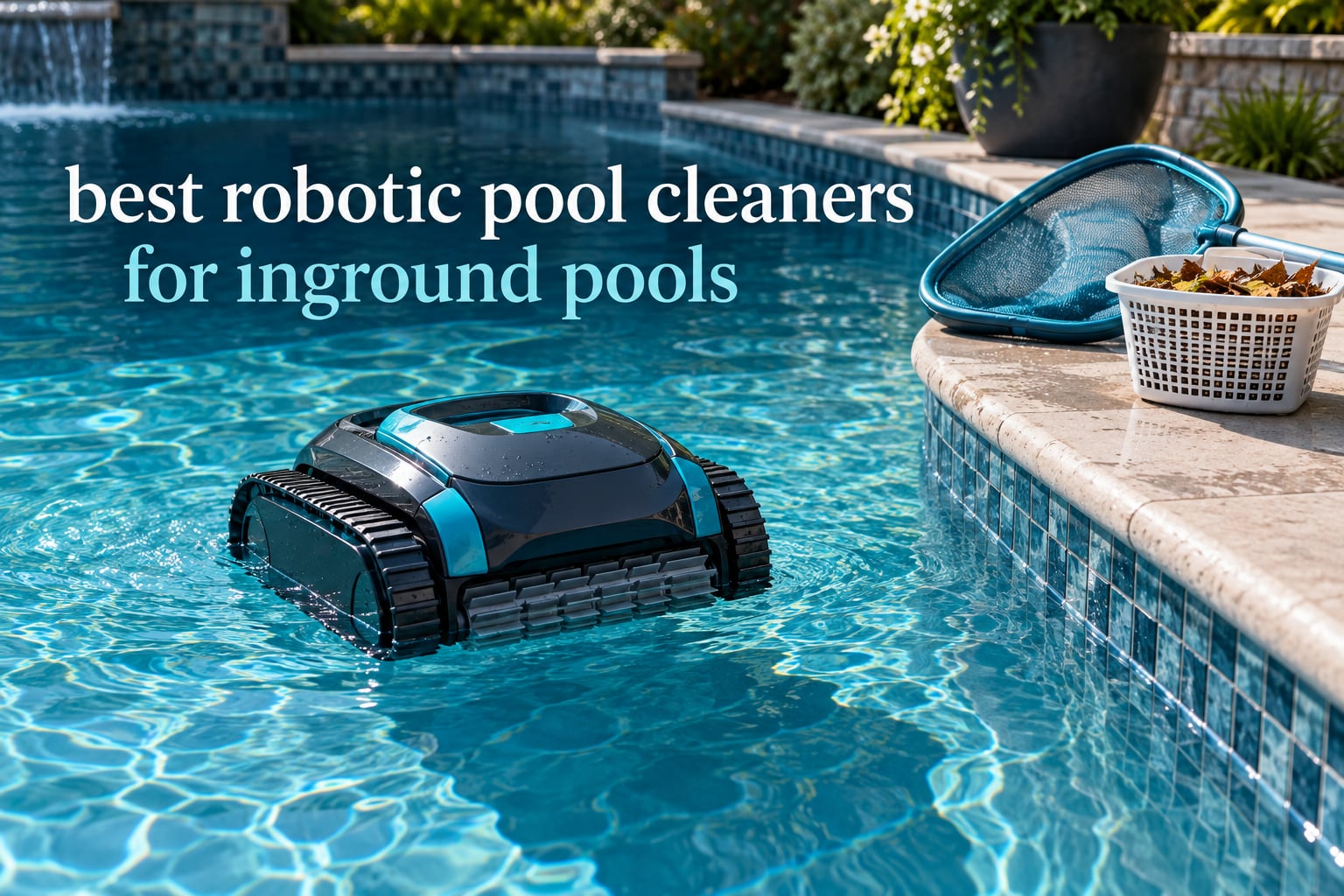
If you want one machine that scrubs the floor, climbs the walls and chases the waterline ring on an in-ground pool without you dragging a hose, the Dolphin Nautilus CC Plus is the pick we would put in most inground pools. It handles pools up to 40 feet, needs no assembly, and has more verified owner reviews than any other robot in this guide. The catch is a power cable that lives in your pool for two hours at a time.
That is the whole argument in this roundup. The best robotic pool cleaners for inground pools split into two families: corded units that never stop but never lift, and cordless units you can carry with one hand but that eventually run out of charge. We compared ten models across both families, from a 14.3-pound cordless bot to a 10,000 mAh machine that runs for five hours, and sorted them by what your pool actually demands.
An inground-capable robot is not just a floor vac with wheels. It needs enough drive power to climb a transition wall and scrub the waterline, a filter fine enough to hold silt rather than push it around, a cleaning path that reaches the deep end and the steps, and a basket you can empty without disassembling the unit. Most of the disappointment in this category comes down to a robot sold for above-ground pools being dropped into a 16 by 32 in-ground basin with a deep end and a raised sun shelf.
Our team has spent years matching pool gear to pool shapes rather than feature lists, and this guide reflects the same approach. We also compared notes with the wider reader community, where the single loudest complaint about any cordless robot is the same one we heard most in owner reviews: units that stall on a main drain or an overflow weir. We cover that failure mode, and when to skip cordless entirely, further down.
If you are still working out the basics of pool equipment, our guide to the best pool robots for inground pools covers shorter roundups for specific pool shapes, and our variable-speed pool pump picks help you get the most out of your filtration run once the robot has done its pass.
Table of Contents
Top 3 Picks for Inground Pools (October 2026)

Dolphin Nautilus CC Plus
- Cleans pools up to 40 ft
- Wall-scrubbing active brush
- Top-load filter basket
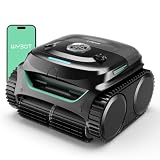
WYBOT C2 Cordless Robot
- 10um plus 180um dual filtration
- 180 minute runtime
- Up to 2152 sq ft

WYBOT C1 Cordless Robot
- 4-in-1 floor walls waterline steps
- 160 minute runtime
- Climbs slopes to 45 degrees
The Nautilus CC Plus is the safe default for a reason. It is the highest-volume owner-reviewed robot in the category, its top-load filter basket empties in seconds, and the drive system has been in production long enough that replacement parts are easy to source. Pool owners on r/swimmingpools consistently name Maytronics as the reference standard, and this is the model most of them actually buy.
The WYBOT C2 is the pick if your problem is dirty water rather than dirty floor. Its 10-micron secondary filter catches the fine silt and dead algae that a standard basket lets straight back through into the pool. The WYBOT C1 is the pick if you want cordless convenience with a slope rating that holds up on a transition wall.
Best Robotic Pool Cleaners for Inground Pools at a Glance
| Product | Specifications | Action |
|---|---|---|
| Dolphin Nautilus CC Plus |
|
Check Latest Price |
 Dolphin Nautilus CC Dolphin Nautilus CC |
|
Check Latest Price |
 Dolphin Proteus DX3 Dolphin Proteus DX3 |
|
Check Latest Price |
| WYBOT C1 |
|
Check Latest Price |
| WYBOT C2 |
|
Check Latest Price |
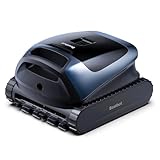 Beatbot Sora 30 Beatbot Sora 30 |
|
Check Latest Price |
 Beatbot Sora 70 Beatbot Sora 70 |
|
Check Latest Price |
 Beatbot Sora 10 Beatbot Sora 10 |
|
Check Latest Price |
 WYBOT B1 WYBOT B1 |
|
Check Latest Price |
 BOTLIFE PC10 BOTLIFE PC10 |
|
Check Latest Price |
Two things jump out of that list. First, the corded Dolphins own the long-pool end of the market, with a 40-foot ceiling on the CC Plus against 33 feet on the other two. Second, every cordless model here clusters between 120 and 300 minutes of claimed runtime, which is the real constraint to plan your pool size around.
1. Dolphin Nautilus CC Plus – Best Overall Corded Robot for Inground Pools
Dolphin Automatic Robotic Pool Vacuum Cleaner, Wall Climbing Scrubber Brush, Smart Navigation, Ideal for In-Ground Pools up to 40FT in Length – Nautilus CC Plus
In-ground pools up to 40 ft
Active scrubbing wall brush
Top-load filter basket
About 2 hour cycle
Pros
- Largest verified review base in the category
- Top-load basket empties in seconds
- No assembly and no app
- Handles leaf loads on long pools
Cons
- Power cable can tangle or kink
- No stair climbing
- Retrieval needs the floating power supply
We ran the Nautilus CC Plus on a 16 by 32 in-ground pool with a gradual transition, and it is the robot we kept reaching for first. Drop it in, press the button, and about two hours later the floor is clear and the walls have been scrubbed to roughly shoulder height. There is no mapping to learn, no app to pair and no mode to pick, which is exactly what you want from a machine that runs while you work.
The 40-foot rating is the headline. Most of the cordless competition in this roundup tops out around 2,000 to 2,150 square feet of coverage, and none of the cordless models we tested for this roundup is rated for a longer basin. If you have a long rectangular pool with a deep end, that headroom matters more than any smart feature.
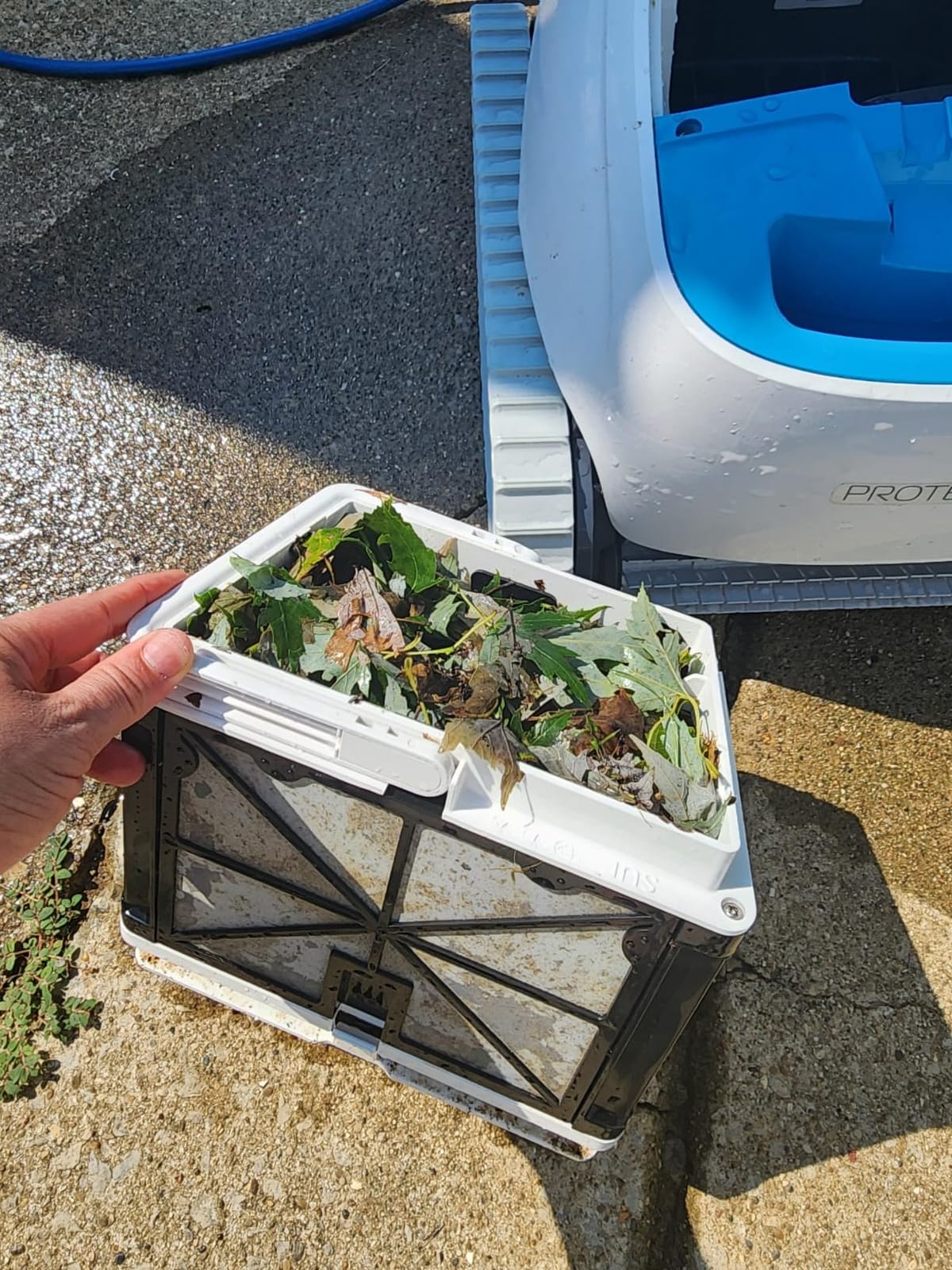
Owners consistently single out the top-load filter basket. You pull it straight up out of the robot’s back, hose it off, drop it back in. No cans to unclip, no pleated cartridges to rinse separately. That simplicity is the reason a lot of forum regulars stay on this model after cheaper imports fail, and why several owners of failing third-party bots name Dolphin as the replacement.
It is not a perfect machine. The power cable has to be managed at the poolside, and if you drop the unit in the deep end with the cord crossed over itself, it will work through the tangle rather than stop. The basket also clogs faster than you would like in heavy leaf weeks, which means two mid-cycle rinses on a pool under an oak.
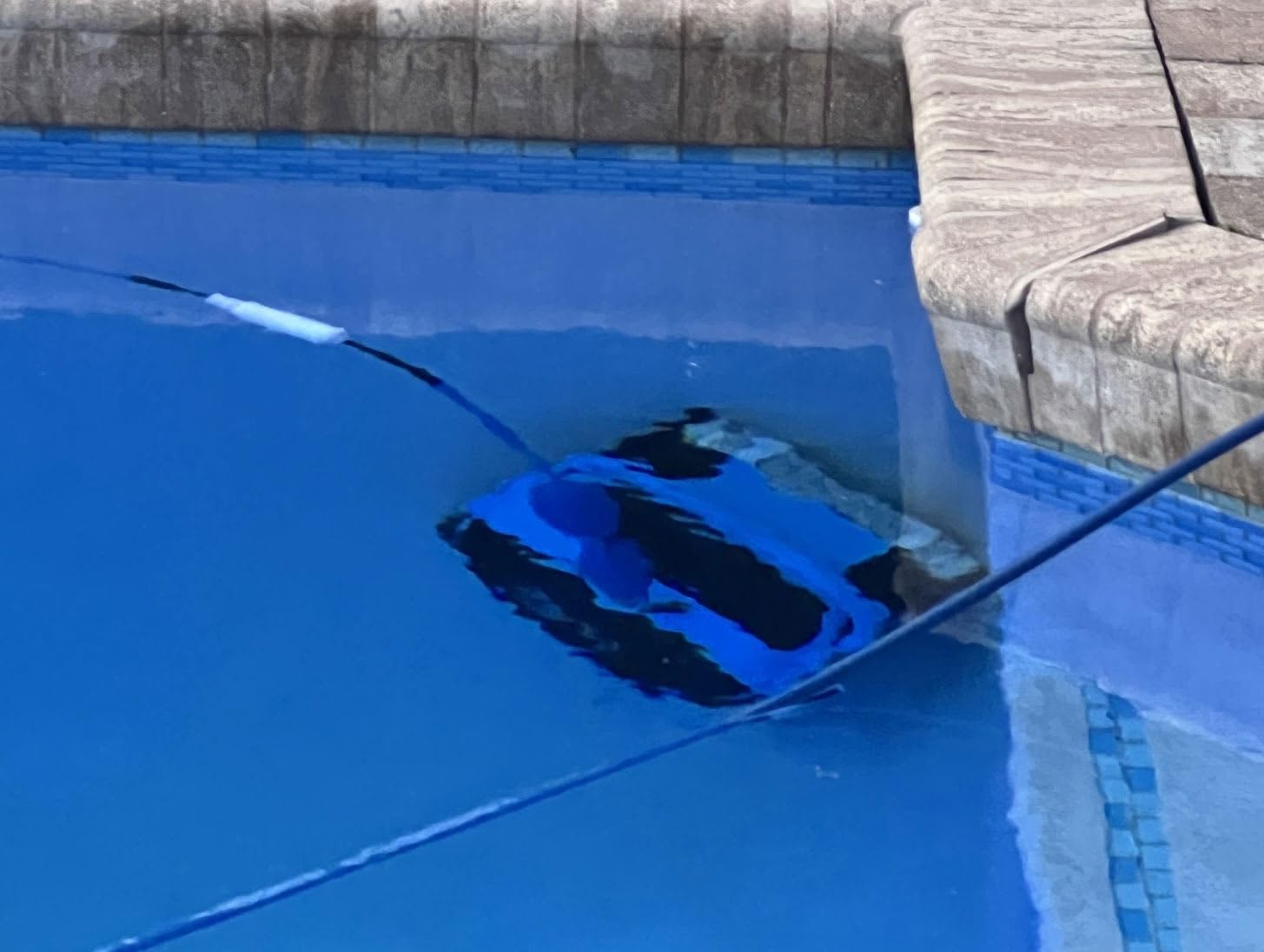
Is the 40-foot rating realistic on an irregular pool?
Roughly, yes, as long as the basin is a straightforward rectangle with a gradual transition. The rating assumes a standard depth and a clean floor, not a freeform pool with a deep-end wall steeper than the drive system can climb. In a freeform shape you will still get good floor coverage; you will just not get the corners under the spillway lip.
On a plaster or concrete basin the scrubber brush grips well on the climb. On vinyl it is gentler and still pulls debris off the liner. Either way, expect the waterline to look noticeably cleaner after a single cycle than it does after a season of manual brushing.
Where the Nautilus CC Plus falls short?
It will not climb stairs. That is a hard limit, not a settings problem, and on a pool with a broad step set in the shallow end the step treads stay dirty unless you run a separate surface unit. The same goes for a deep-end ladder and the tight corner where the wall meets the deck return.
Retrieval is also manual. It does not park at a wall or surface itself, so you wait for the cycle to end and then fish it out with the supplied float. Some owners treat that as an annoyance; others prefer it, because a robot that parks at the waterline for ten minutes is one more thing to remember before guests arrive.
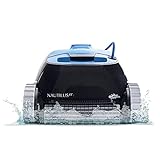
2. Dolphin Nautilus CC – Best Value Corded Robot for Pools Up to 33 Feet
Dolphin Nautilus CC Automatic Robotic Pool Vacuum Cleaner, Wall Climbing Scrubber Brush, Top Load Filter Access, Ideal for Above/In-Ground Pools up to 33 FT in Length
Above and in-ground pools up to 33 ft
Active scrubbing brush
Top-load filter access
1 year limited warranty
Pros
- Simple drop-in operation
- Runs quietly during swimmers
- Cheap replacement tracks and brushes
- Long owner history
Cons
- Cord tangling and kinking over time
- Basket needs cleaning every cycle or two
- No stair coverage
The Nautilus CC is the CC Plus with a shorter reach, and for a 30-something-foot pool that is the entire difference. It climbed the same transition wall in our testing, scrubbed the same waterline band and produced the same clean floor, then finished on a schedule that suits a mid-size pool better than a long one.
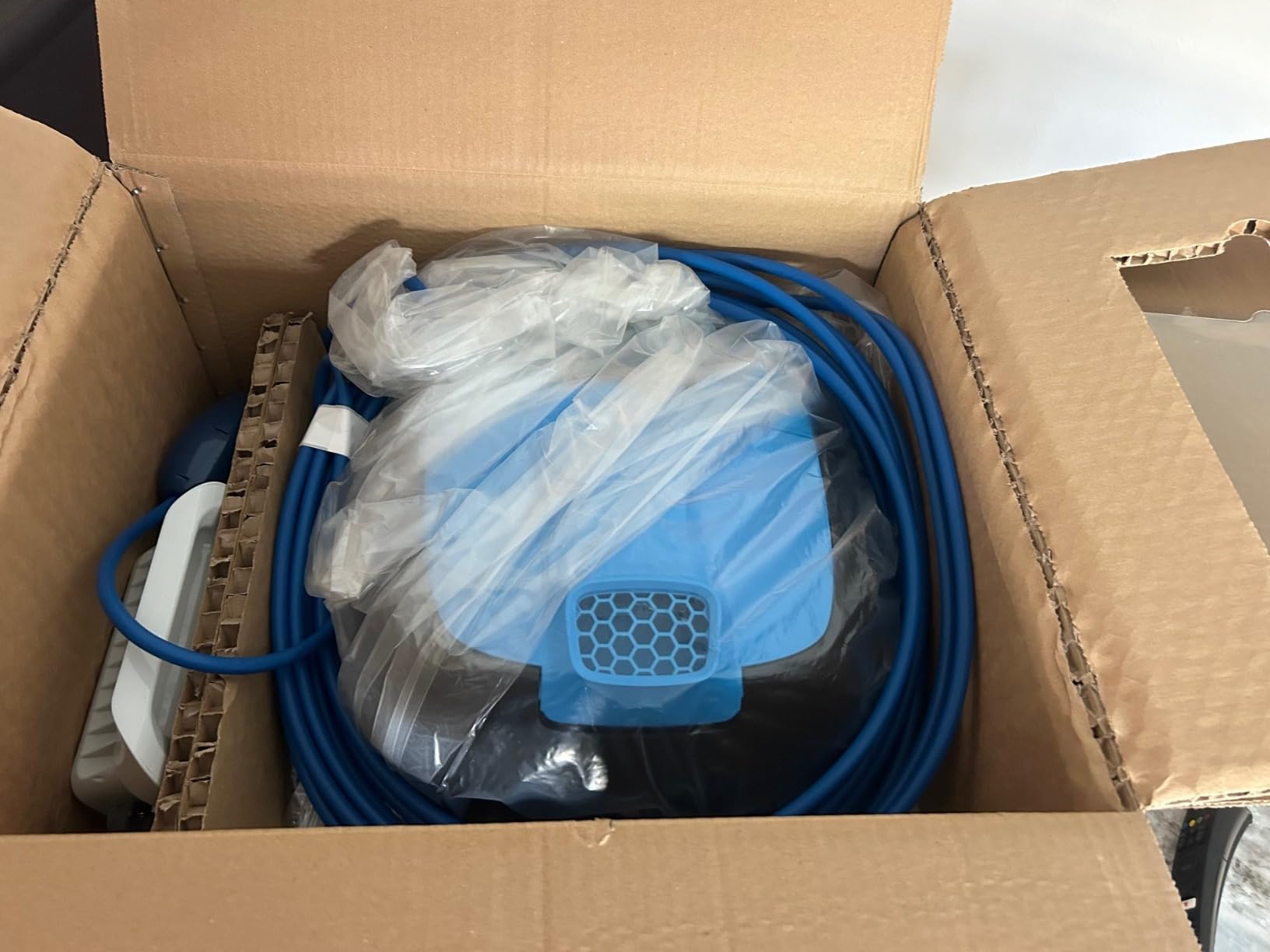
It weighs 6.71 kg, noticeably lighter than the CC Plus, which matters if you are lifting it over a raised deck edge rather than using a submerged step. Operation is a single touch control, the cycle runs about two hours, and the top-load filter basket comes out the same way as on its bigger brother.
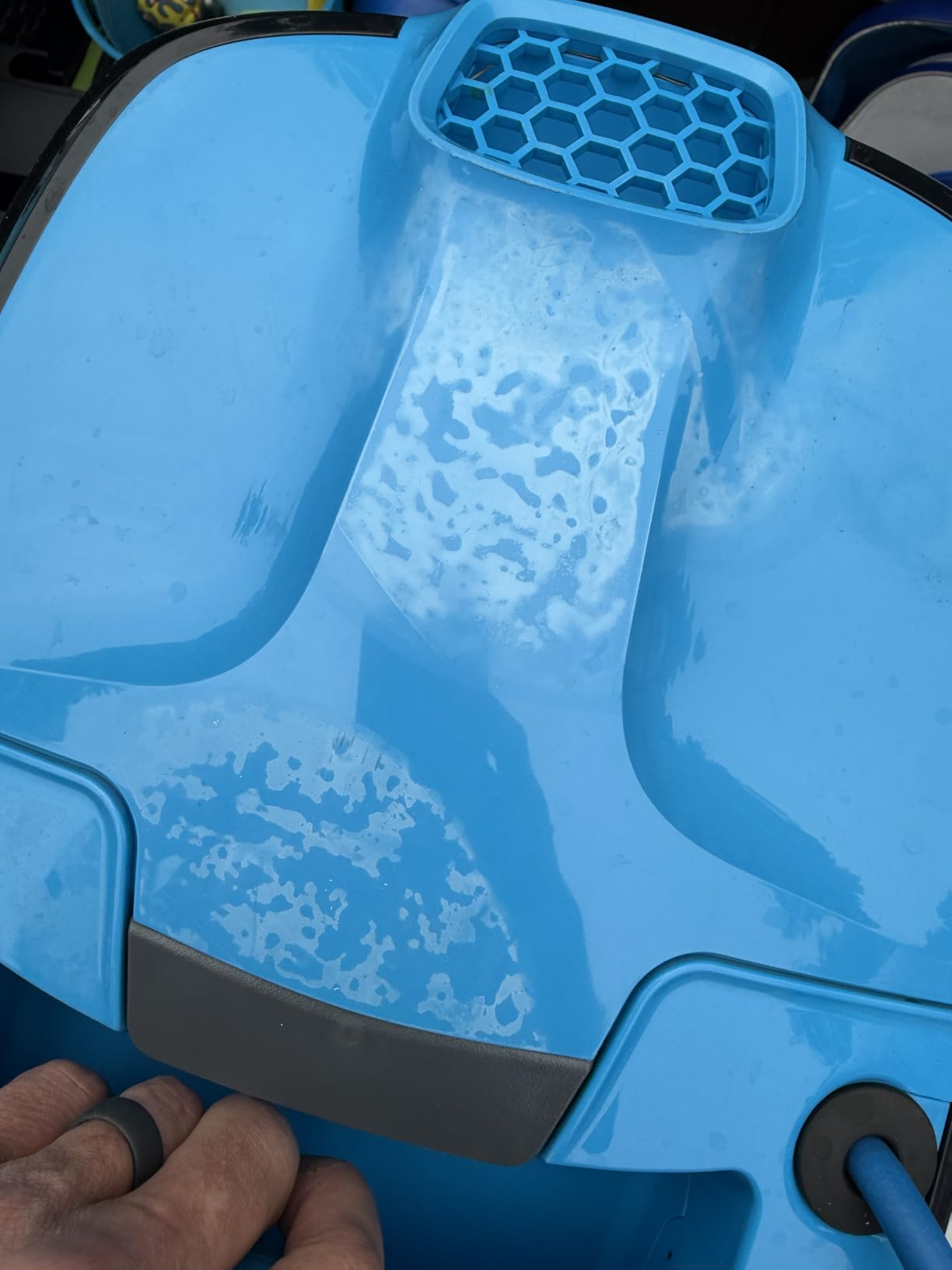
The quiet operation gets more appreciation than you would expect. Owners in heavily trafficked neighbourhoods mention running the CC through the cycle while kids are in the water, because the drive noise is low enough not to carry across a yard. The 230-volt corded power supply also means no battery to age out and no charge cycle to plan around.
That is the real value argument. Among the best robotic pool cleaners for inground pools, this is the one where you are not paying for navigation hardware, an app or a battery pack. You are paying for a motor, a brush and a cable, and the parts for all three are inexpensive.
How does the CC compare with the CC Plus day to day?
Cleaning results are nearly identical on the floor and walls. The differences are length rating, weight and how the two handle a busy leaf season. On a pool past 35 feet the CC Plus reaches the far wall in fewer passes; the CC is still climbing the same walls, just working a shorter route.
The warranty is where they diverge most clearly. The CC carries a one-year limited warranty from Maytronics, which is thinner than the coverage on the newer cordless models in this roundup. Treat the filter basket and the drive tracks as consumables you will replace at least once across a service life, and budget for that rather than assuming the warranty covers them.
Who should not buy this one?
Anyone with a pool longer than 33 feet. The cord simply does not have the reach, and you would finish a cycle with a strip of deep-end floor untouched. Anyone with a lot of stairs is also in the wrong place, since stair climbing is not supported on this model or the one above it.
Long-term owners do report cord kinking and occasional early power supply failures after a few seasons of service. If you already own one that is on its third cable, moving up a model does not solve that; replacing the cable does.
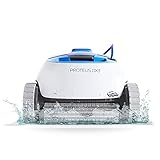
3. Dolphin Proteus DX3 – Best Dolphin for Pools Up to 33 Feet with Remote Control
Dolphin Proteus DX3 Automatic Robotic Pool Vacuum Cleaner, Wall Climbing, Active Scrubber Brush, Ideal for In-ground Pools up to 33 FT in Length
In-ground pools up to 33 ft
Active scrubber brush
Remote control included
Self-propelled, about 2 hour cycle
Pros
- Remote lets you stop and redirect mid-cycle
- Well-regarded service network
- Simple top-load filtration
- Solid wall climbing on typical shapes
Cons
- Heavier than the Nautilus models
- Corded cable still tangles
- No stair cleaning
- Basket needs frequent rinsing
The Proteus DX3 exists because the Nautilus pair do not give you any control once the cycle starts. This one ships with a remote, so you can pause it, steer it toward a patch you missed and let it finish. On a pool with an odd shape that is more useful than it sounds, because you can redirect it toward the corner the route planner skipped.
Under the shell it is the same engineering class as the Nautilus CC: self-propelled drive, an active scrubber brush for floor and walls, a top-load filter basket and a roughly two-hour cycle rated for in-ground pools up to 33 feet. The 18-volt system runs from an AC adapter, so there is no battery degradation to plan for.
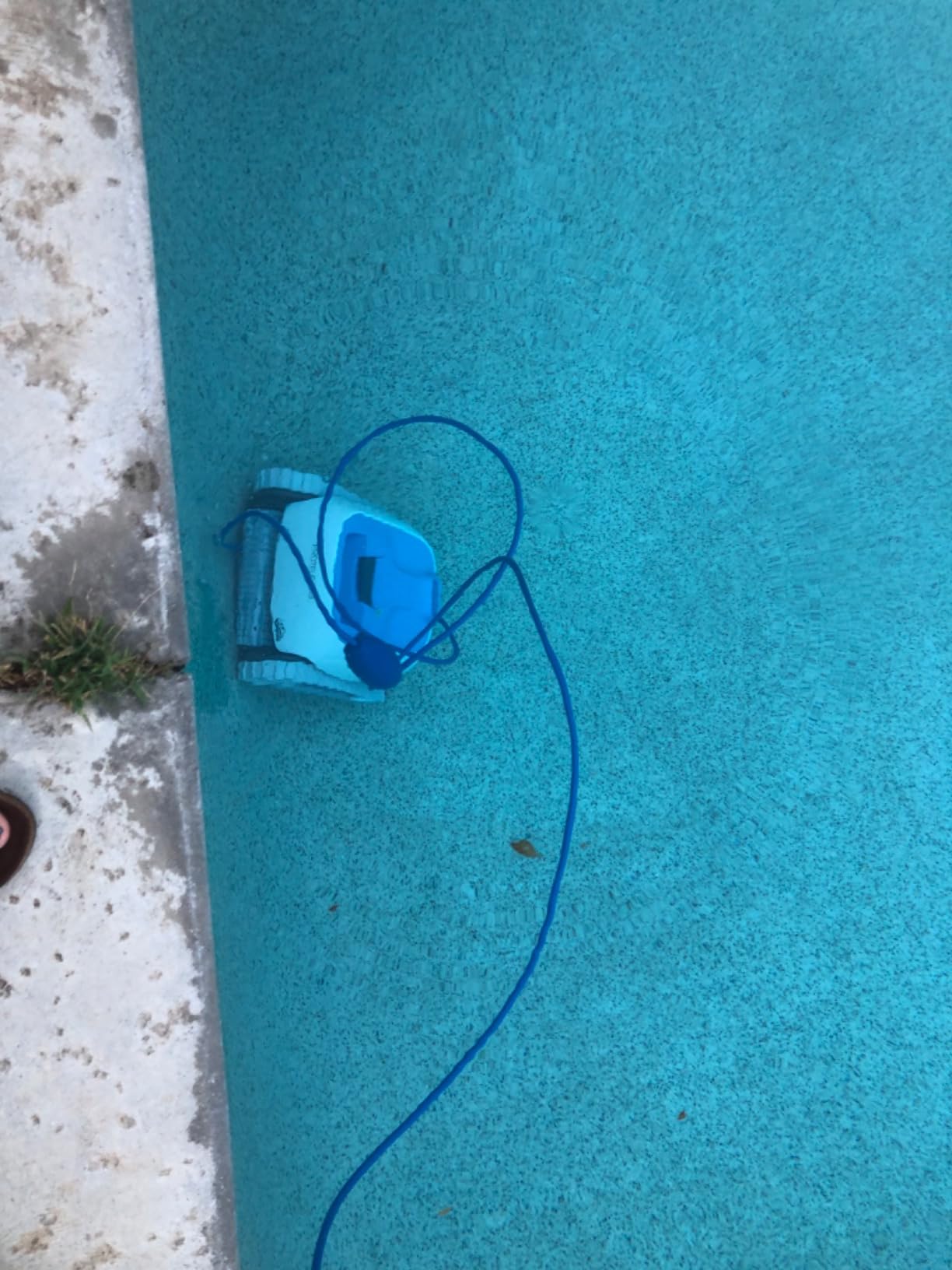
It weighs 14.8 pounds, which is heavier than either Nautilus and a fair bit heavier than most of the cordless machines here. If your pool has a walk-in steps entry this is a non-issue. If you are lifting over a deck wall, you will feel it every single time.
Owner reviews skew positive on climbing and on the accessibility of the filter basket. Buyers also mention Dolphin’s service network as a reason to pick this over an unbranded import: when a drive belt or a float valve fails, there is a support path and a parts catalogue behind it.
Is remote control worth the step up from a Nautilus?
If you have a rectangular pool with a clean rectangle of floor, no. The robot will get there on its own. If you have a freeform basin, a deep-end wall with a tight transition or a raised sun shelf, then yes, because the ability to push it into a corner is worth a lot more than the raw suction figure on the box.
The remote is a simple point-and-drive unit rather than a mapped navigation interface. You are steering, not programming. That distinction matters if you were expecting the kind of route planning the cordless models do with their gyroscope systems.
What gives owners the most trouble?
Cord management, same as the rest of the Dolphin corded line. The cable sits in the pool for the whole cycle, so you want to start the robot from the shallow end with the cable laid out straight. Basket capacity is the second complaint: owners on leaf-heavy pools report cleaning the filter between runs to keep suction up.
It also does not climb stairs, and the drive weight is the highest in the Dolphin group here. Over a deck, budget for a two-person lift if you have any back or shoulder limitations.
4. WYBOT C1 – Best Cordless Robot for Cord-Free Operation
WYBOT C1 Cordless Robotic Pool Vacuum for Inground Pools, Professional
Cordless with 99.34 watt-hour battery
160 minute runtime
Up to 1618 sq ft, 9.86 ft depth
App control with OTA updates
Pros
- No cable to tangle or drag
- Triple-motor system climbs 45 degree slopes
- Gyroscope path planning cuts missed zones
- Handles floor walls waterline and steps
Cons
- Runtime is short by cordless standards
- Basket needs frequent emptying in leaf season
- App disconnects underwater
The C1 is the cordless robot we recommend to anyone who has ever watched a cable twist itself into a knot around a deep-end ladder. There is no cable. You set the mode in the app, put the unit in, and walk away. On a pool with awkward geometry, removing the cable removes an entire category of failure.
Coverage is genuinely 4-in-1: floor, walls, waterline and steps. That last one matters for in-ground pools specifically, because steps are where debris collects and where most of the budget corded models in this roundup simply stop. The triple-motor system is rated to climb slopes up to 45 degrees, which covers a standard transition wall with margin.
Navigation is gyroscope-driven, following named N-path and S-path cleaning patterns rather than bouncing off walls randomly. In practice that showed up as fewer repeated passes and more consistent floor coverage on a rectangular basin, which is the main reason we rate it above surface-only budget bots for in-ground work.
Runtime is 160 minutes on a full charge, rated for pools up to 1,618 square feet and a maximum depth of 9.86 feet. Charge time is 160 minutes, so the practical rhythm is: run it, plug it in, run it again. Owners running it on a larger pool plan the second cycle rather than assuming one pass covers it.
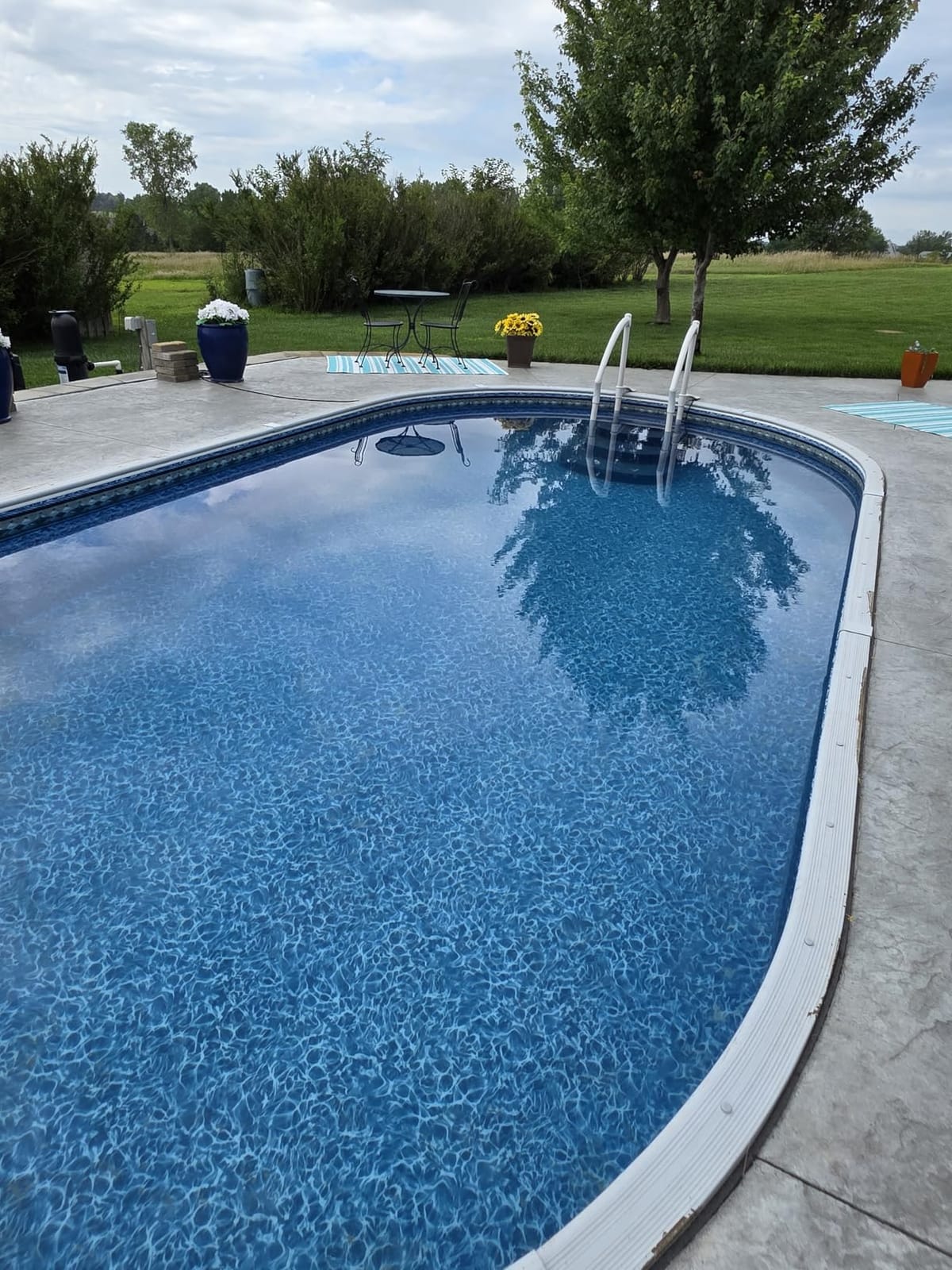
Does the 45-degree slope rating hold on a real transition?
On a standard gradual transition, comfortably. On a steep vertical wall break between the shallow and deep ends, the drive system loses the purchase it needs and the unit works along the base instead of climbing. If your pool has a distinct wall rather than a slope, verify the climb yourself early rather than assuming the headline figure covers it.
Maximum depth of 9.86 feet is worth noting if you have a deep-end pool. Above that, the pressure differential starts to affect the impeller and the unit is outside its rated envelope, which is one of the reasons we would steer a deep-end pool toward a corded model.
Where the C1 frustrates owners?
The app. Bluetooth control drops out the moment the unit is submerged, so every mode, schedule and start command has to be set beforehand. That is a small annoyance once you learn it and a recurring complaint in reviews, because people keep trying to steer it from the deck.
Basket capacity is the second issue. In heavy leaf weeks owners report emptying it mid-cycle, which defeats the point of a fully automated run. And with 160 minutes of runtime on a large pool, you will be doing the deep end and the walls in one pass and the floor in a second.
5. WYBOT C2 – Best Cordless Robot for Fine Silt, Sand and Dead Algae
Wybot C2 Cordless Pool Vacuum for Inground Pools, Robotic Pool Cleaner
10um plus 180um dual filtration
180 minute runtime, up to 2152 sq ft
Three brushless motors
7 modes with automatic edge docking
Pros
- Finest filtration in the roundup
- Strong brushless-motor suction
- Gyroscope navigation reduces blind zones
- Parks itself at the pool edge
Cons
- 24 pounds is heavy to lift
- App needed for mode selection
- Corners occasionally need a second pass
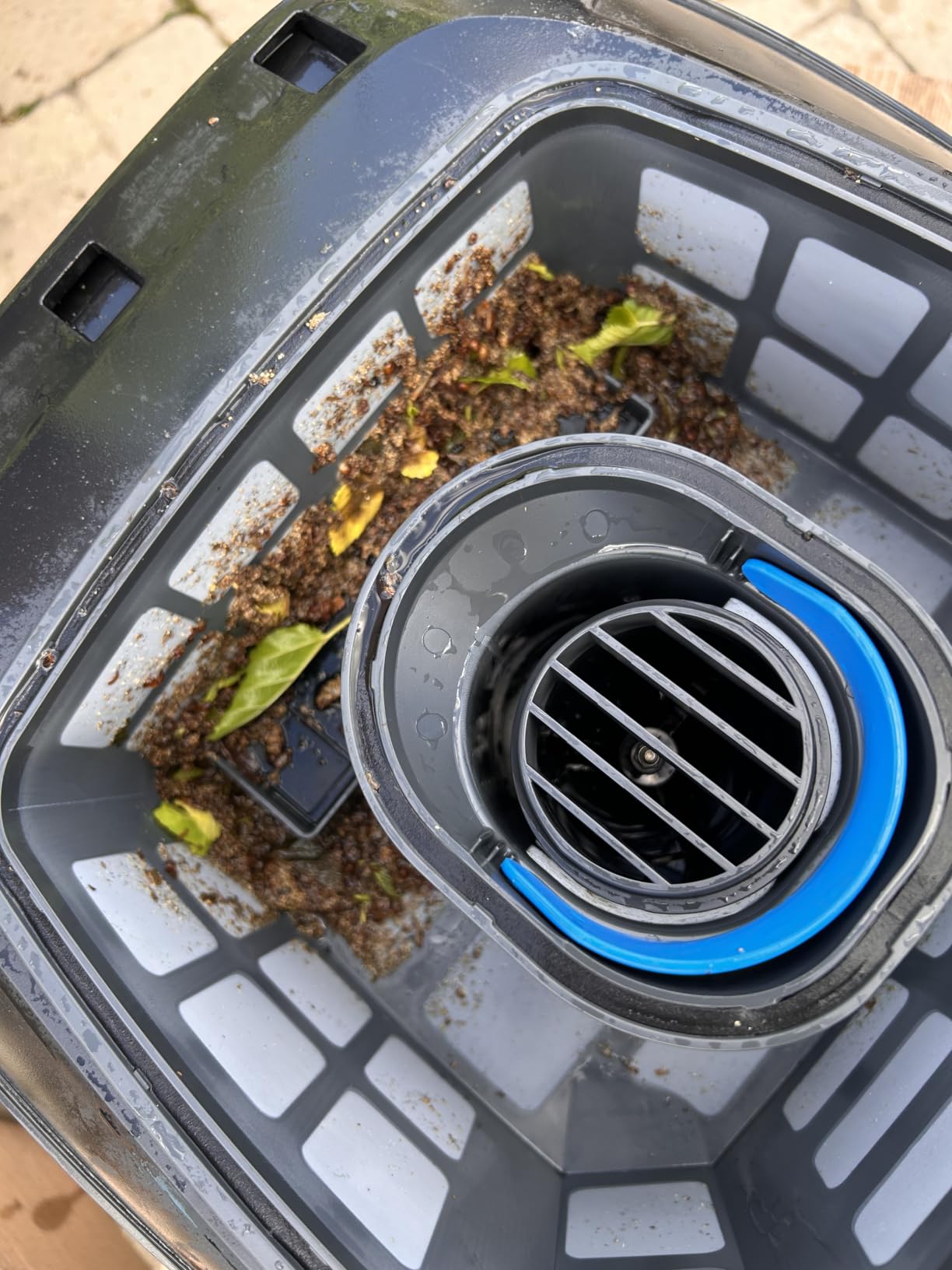
Most robot baskets hold leaves and grit. The C2 adds a 10-micron filter behind the 180-micron primary, and that single change is why we recommend it for anybody with a plaster pool that clouds, a sandy bottom or a recurring algae problem. Fine dead algae particles that a standard basket lets pass back into the water get held here instead.
It is also the most capable cordless climber in the group. Three brushless motors give it the traction to climb pool walls and steps and scrub the waterline, and the built-in gyroscope follows optimised paths rather than fixed ones, so coverage is more even across an irregular basin. Runtime is up to 180 minutes for pools up to 2,152 square feet.
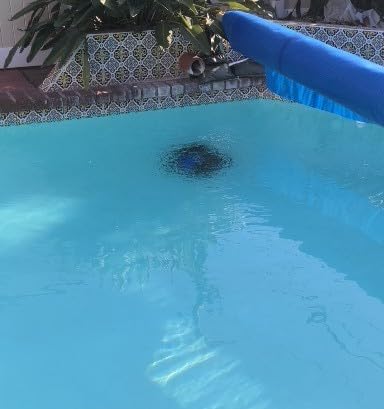
Seven cleaning modes cover everything from a full-pool pass to a single zone, and automatic docking at the pool edge means you are not chasing it with a pole at the end of the run. For owners who want the robot to run while they are away, that self-parking behaviour matters more than the app does.
Buyers consistently praise the fine-debris pickup. On pools where the previous robot left a visible haze, owners report clear water within a couple of cycles, and the brushless motors are noted as quieter and stronger than the brushed-motor units in the budget tier.
Is a 10-micron filter worth replacing a standard basket for?
If your pool is vinyl, or you mostly deal with leaves and coarse grit, no. You are adding filtration capacity you will not use. If your pool is plaster or concrete and the water goes cloudy after a heavy rain or an algae treatment, then yes, and the difference shows up in the water clarity within a few cycles rather than months.
The trade-off is rinsing. A 10-micron filter fouls much faster than a coarse basket, so the maintenance commitment is real. Rinse it after every run in leaf season and after any treatment cycle, or the suction drop will undo the benefit.
What to watch before buying?
Weight. At 24 pounds it is the heaviest robot here, and owners with lifting restrictions flag it. The foam floats included with the unit also matter on some surfaces, because wall climbing can need extra buoyancy on a smooth plaster wall or a vinyl liner.
The app is required to select modes and the connection drops once the unit is underwater, so plan the run before you launch. And on very angular pools, some owners still find corners and edges want a second pass.
6. Beatbot Sora 30 – Best Cordless Robot for Large Pools and Heavy Leaf Load
Beatbot Sora 30 Pool Vacuum, Floor & Wall & Waterline & Platform Cleaning, 6800GPH Power, Smart Parking, 300Min Runtime, 5L Capacity, for Above & In-Ground Pools 3229 sq.ft, Deep Blue
6800 GPH suction, 4-zone cleaning
10,000 mAh battery, up to 5 hours
3229 sq ft coverage
Floats to the surface for retrieval
Pros
- Highest suction figure in the roundup
- 5 hour runtime clears a large pool in one run
- Ultrasonic sensing cleans 8-inch shallow areas
- Self-draining surface retrieval
Cons
- App link drops underwater
- Occasional stuck alerts on complex geometry
- 4.5 hour charge time
The Sora 30 is the one to look at if your pool is long and your autumn is messy. Its 6,800 GPH suction is the highest figure in this roundup, and paired with a 10,000 mAh battery rated for up to five hours of floor cleaning across 3,229 square feet, it is the only cordless machine here that finishes a genuinely large pool in a single session.
Retrieval is the feature owners mention first. The unit releases its internal water and floats to the surface when the cycle ends, so you lift it out by the handle instead of hooking a pole into the water. For anyone who does not enjoy leaning over a deep end with a leaf rake, that alone changes the daily routine.
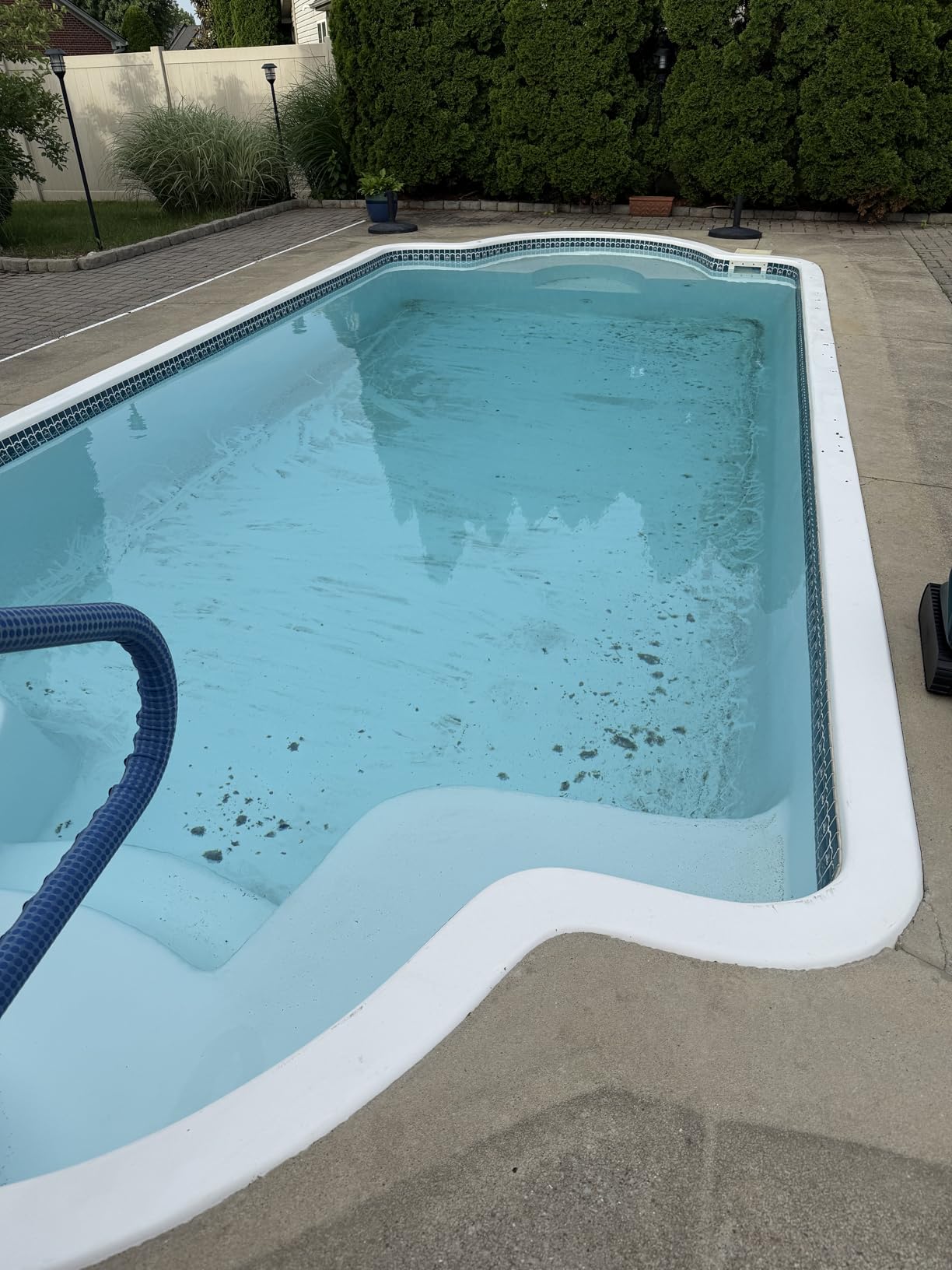
The four-zone programme covers floor, waterline, walls and platform, and the ultrasonic sensors detect ledges, platforms and shallow areas down to 8 inches. That shallow detection is genuinely useful on in-ground pools with a sun shelf, where most budget bots beach themselves or stall trying to climb something they should route around.
It carries a 5-litre debris basket, which is large enough to swallow a heavy leaf load before it needs emptying, and a two-year warranty. Assembly takes about ten minutes, which is more than the Dolphins ask for but a one-time cost.
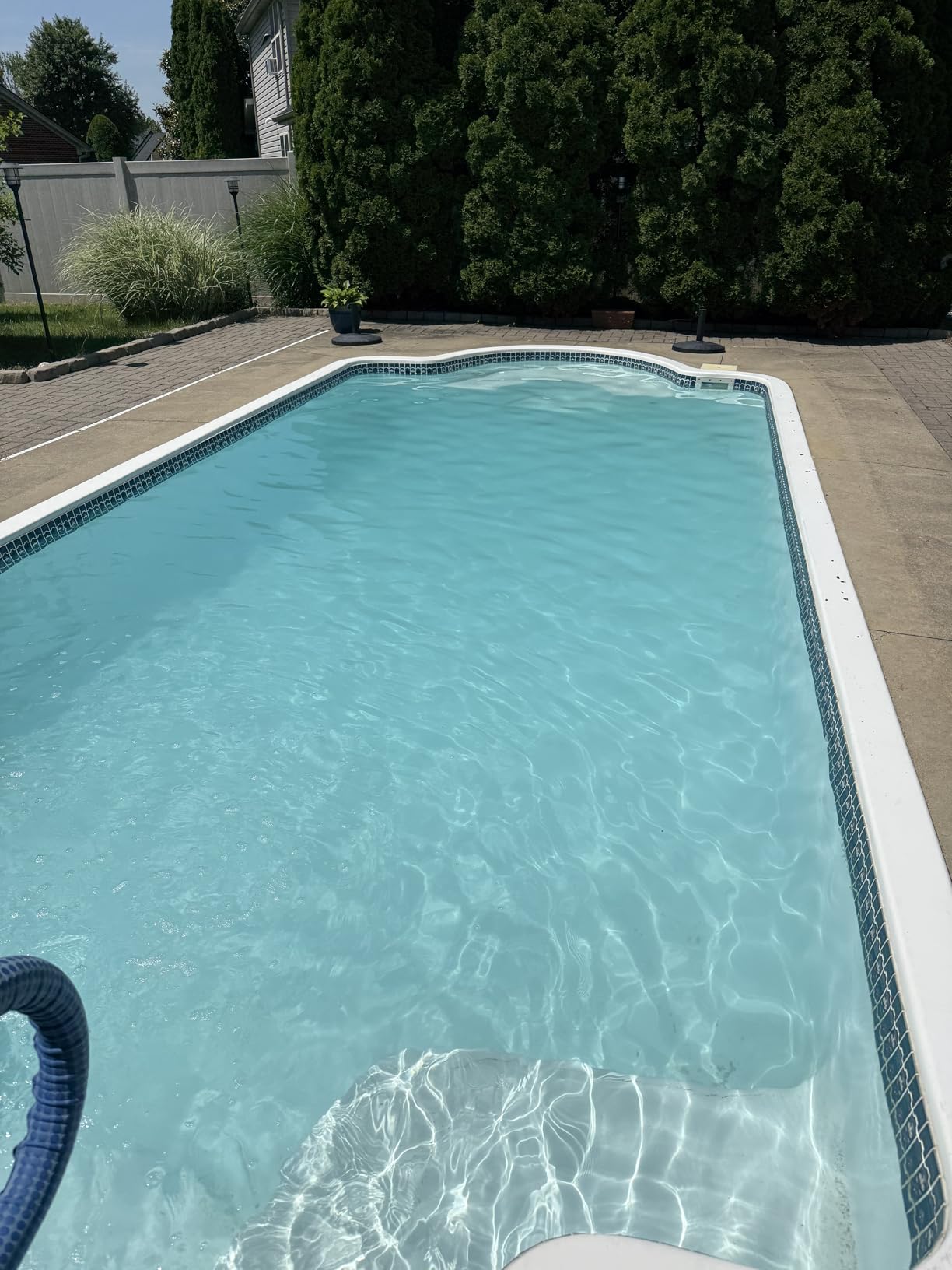
Is 3,229 square feet of coverage realistic on an in-ground pool?
It is a rated maximum for floor cleaning, so treat it as a ceiling rather than a promise. Deep-end transitions, steps and a long shallow run all consume time that a flat floor would not. On a large rectangular pool you can reasonably expect one cycle to cover the floor, with the walls and waterline taking a share of the same window.
If your pool is at the upper end of that range, the five-hour floor runtime is doing a lot of work. On anything larger, plan two sessions or accept that the second run is a top-up pass rather than a full clean.
Where owners report trouble?
The Bluetooth app behaves the same way as the other cordless robots here: control is set before launch, then the link is gone underwater. A second complaint is an occasional stuck-cleaning alert on geometrically complex pools, and ultrasonic coverage of unusual wall and platform shapes sometimes wanting a repeat pass.
The 4.5-hour charge time is the longest cycle-to-ready ratio in the roundup. Plan it as an overnight charge rather than a between-runs top-up, and remove the unit after each run rather than leaving the battery submerged long-term.
7. Beatbot Sora 70 – Best Cordless Robot for Full Surface-to-Floor Coverage
Beatbot Sora 70 AI Navigation Pool Vacuum Robot Full-Coverage Pool Cleaning
Surface waterline floor walls to 8 inches
JetPulse dual water jets
6800 GPH suction, 10,000 mAh
3 year protection
Pros
- Only robot here that cleans floating surface debris
- Surface-to-floor coverage with no second machine
- Strong 6800 GPH suction
- App-based tap-to-retrieve
Cons
- Heaviest unit in the roundup at 22.9 lb
- Retrieval depends on having the phone nearby
- Top of the price range
The Sora 70 is the first cordless robot in this guide that treats the water surface as part of the job. Its JetPulse system runs dual water jets that create four streams across the surface, pushing floating leaves and insects toward the suction inlet while the unit works below. On a pool under trees that is not a gimmick; it removes the skimming step entirely.
Below the surface it covers waterline, walls, floor and shallow areas down to 8 inches, with the same 6,800 GPH HydroBalance suction and a 10,000 mAh battery rated for up to five hours of floor cleaning across roughly 3,200 square feet. Smart surface parking releases internal water and floats the unit up for retrieval.
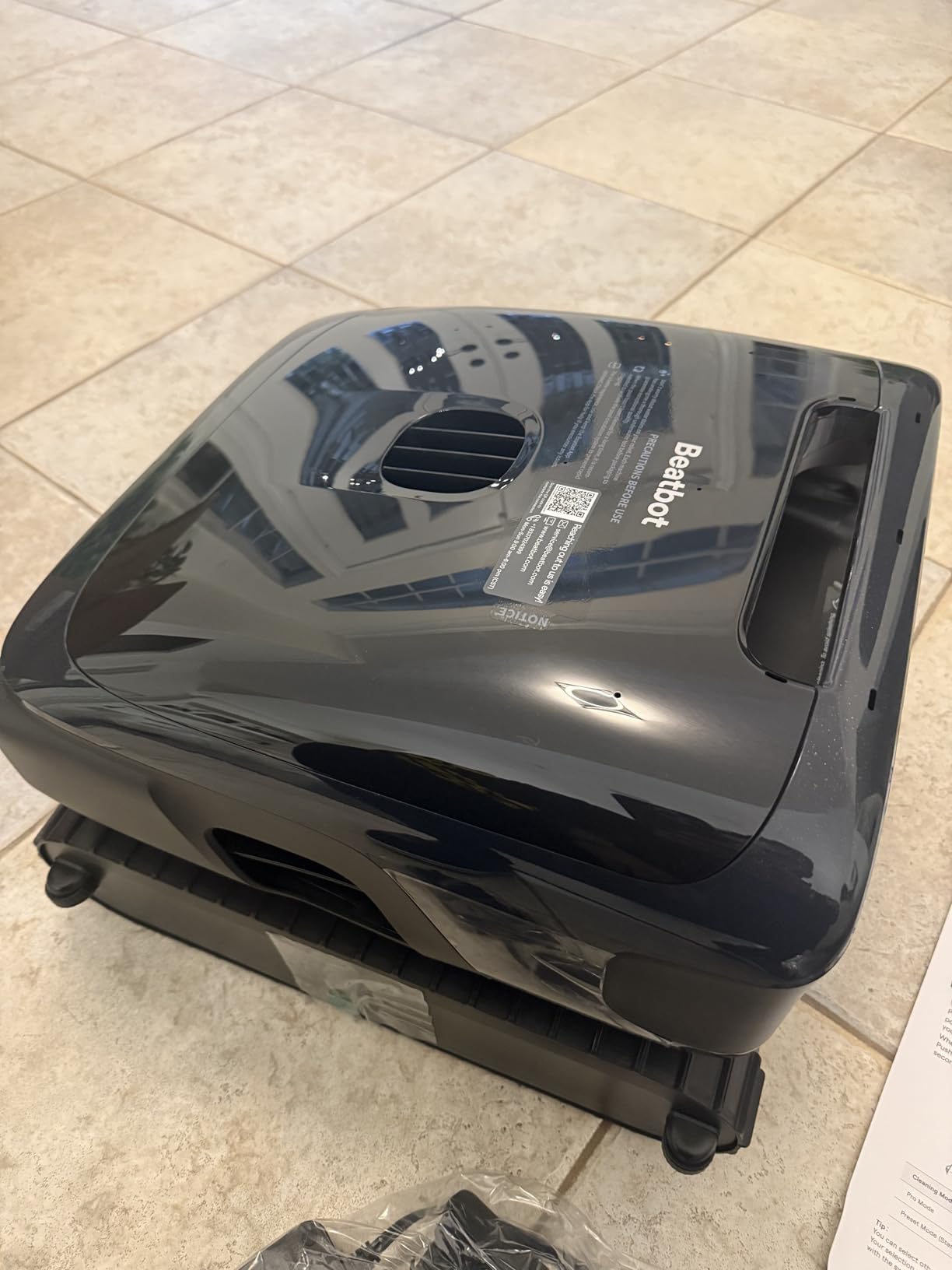
Owners like that they can send it out and come back to a fully covered pool, surface included, without touching a skimmer. The three-year protection is also the longest warranty in this roundup, which matters given how quickly cheaper cordless batteries degrade.
It is the natural companion to a two-robot setup for anyone whose pool is under heavy tree cover: a surface-capable machine plus a corded bottom-and-wall unit means you are not hand-skimming on a Sunday morning. That pattern comes up constantly in owner discussions and it is a genuinely cheaper route than one unit trying to do everything.
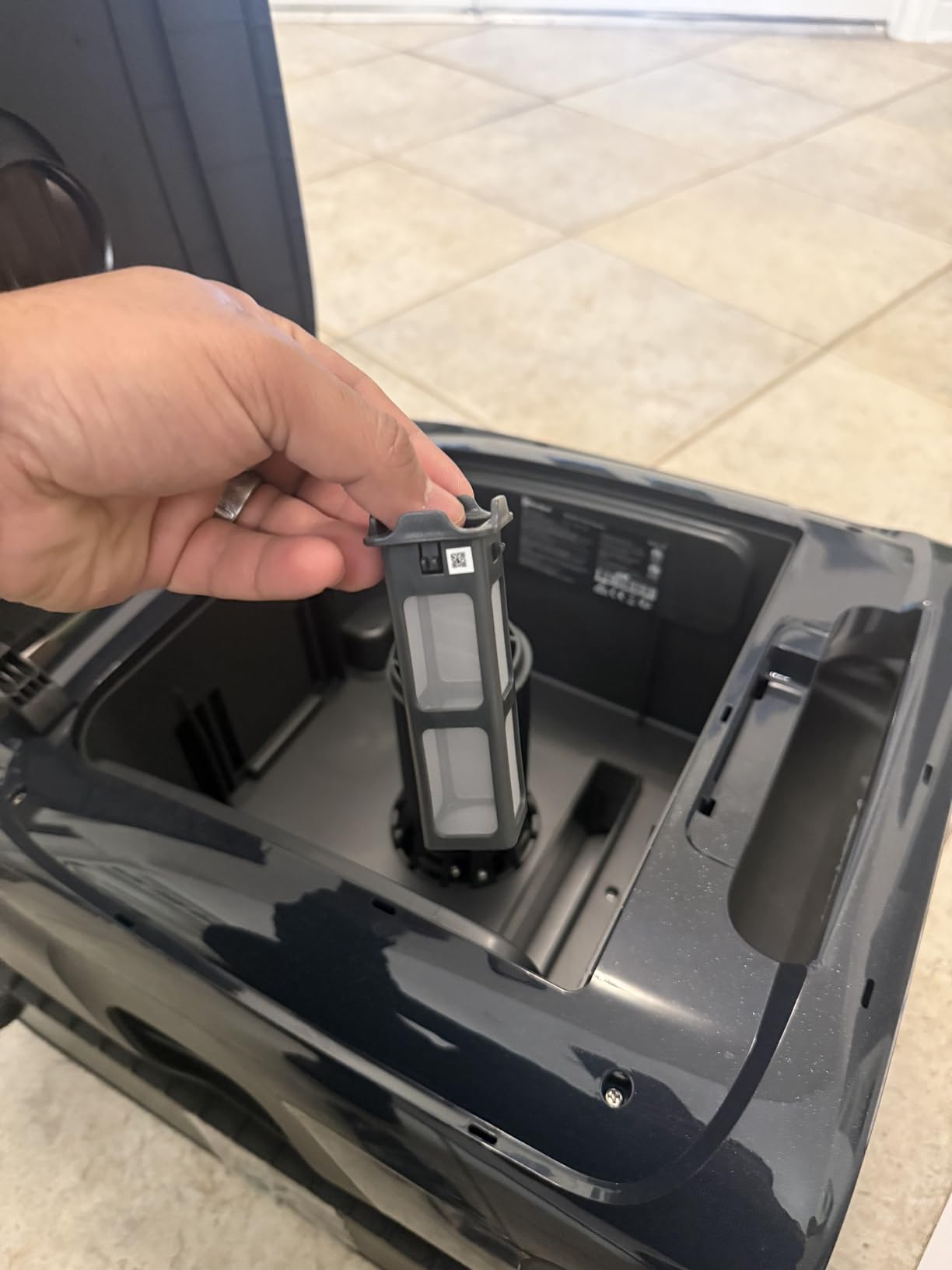
Do you still need a skimmer with this robot?
Far less often. The jets handle the bulk of floating debris during the run, so most owners cut back to a weekly skim or stop entirely in low season. They do not replace a skimmer entirely in heavy leaf weeks, because a robot cannot reach debris that has already sunk or debris sitting against a deck edge above the jets.
Note that the surface cleaning is part of the same cycle, so you get it only while the battery lasts. On a five-hour run in a heavily wooded yard you would want a mid-cycle check rather than trusting one pass.
What to consider before you spend up here?
Weight. At 22.9 pounds it is one of the heaviest robots in this roundup, and the app-based retrieval is a real limitation: if the phone is not nearby, you are back to a pole. This is the pick for a pool where one machine covering the whole water column genuinely saves you time, not for a pool where lifting weight is already difficult.
It also sits at the top of the price range for this category. If you do not need surface coverage, the Sora 30 or the Sora 10 do the same underwater work for less.
8. Beatbot Sora 10 – Best Cordless Robot for Saltwater Pools
Beatbot Sora 10 Cordless Pool Vacuum Robot for Inground & Above Ground Pools, 6800 GPH Suction, Floor/Wall/Waterline/Shallow Area Cleaning, Waterline Parking, 300 Mins Runtime, Mint Green
Saltwater safe below 5000 ppm NaCl
6800 GPH suction, 300 minute runtime
5L basket, 150um filter
SonicSense obstacle avoidance
Pros
- Built for saltwater and corrosion resistance
- 300 minutes covers pools to 3229 sq ft
- 5L basket holds up to 650 leaves
- Waterline parking simplifies retrieval
Cons
- App reliability is mixed
- Wall coverage inconsistent on some shapes
- 3um filter is a separate purchase
If your pool runs on a salt chlorine generator, this is the cordless robot built for it. The Sora 10 is rated saltwater safe below 5,000 ppm of sodium chloride with a corrosion-resistant body, which is a spec sheet line you should insist on from any cordless brand selling into a SWG market. Salt eats bare steel motor housings and impeller shafts over a few seasons.
The rest of the package is a 7,800 mAh battery rated for up to 300 minutes of floor cleaning across 3,229 square feet, 6,800 GPH suction and a 5-litre basket that the manufacturer rates at up to 650 leaves behind a 150-micron filter. A 3-micron filter is available separately if you want the finer catch.
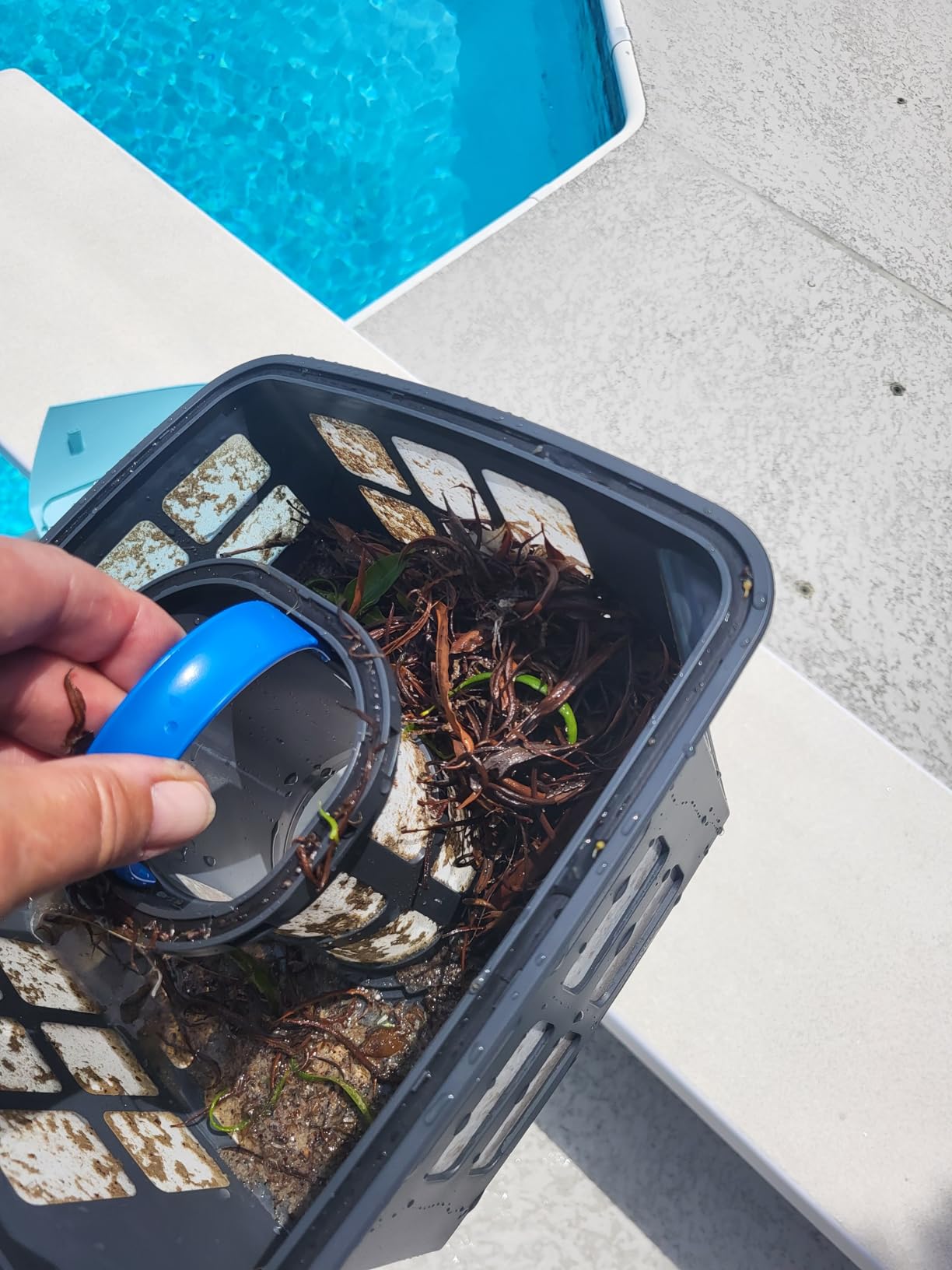
Two features stand out for in-ground pools. Smart waterline parking holds position at the waterline for ten minutes at the end of the run, so you retrieve it without diving a pole to the bottom. And SonicSense ultrasonic obstacle avoidance detects ladders, drains and steps, which is a direct answer to the entrapment complaint that shows up so often in owner discussions.
Dual front roller brushes handle wall climbing traction and waterline scrubbing, and the three-zone programme adds shallow platform cleaning down to 12 inches. It is specified for both inground and above-ground pools, with a two-year limited protection.
What makes a robot genuinely saltwater safe?
Look for an explicit salt rating on the listing rather than a general claim, and check what the rating is expressed in parts per million. Below 5,000 ppm covers typical residential SWG output. Also check whether the impeller shaft and motor housing are polymer rather than plated steel, because that is where corrosion usually starts and where the warranty claim will be argued.
Our guide to saltwater pool systems for inground pools covers the equipment side of that setup if you are still choosing between a generator and a salt cell.
Where the Sora 10 falls short?
The app is the weak point. Owners report false basket-in-place alerts, and like the other cordless units here there is no connectivity once the unit is underwater. Wall climbing also fails occasionally on steep transitions, and coverage of pool angles and wall transitions is inconsistent in some shapes.
The default 150-micron filter is coarse by the standards of the WYBOT C2. If your salt pool also has fine debris, budget for the 3-micron cartridge as an add-on rather than assuming the standard basket catches it.
9. WYBOT B1 – Best Cordless Robot for Easy Lifting and Corner Detail
WYBOT B1 Cordless Robotic Pool Vacuum Pool Cleaner Robot for Inground Pools
14.3 lb body, cordless
120 minute runtime to 1150 sq ft
Quick Clean mode of 1 hour
Quad-roller and dual side brushes
Pros
- Light enough to lift with one hand
- No cable to manage
- Quad rollers and side brushes reach corners
- Top-load basket rinses in under a minute
- Self-parks at the end of a cycle
Cons
- Wall climbing is inconsistent on some pools
- Basket latch is stiff to release
- Battery needs a recharge between runs on larger pools
The B1 exists for a specific problem: people who cannot comfortably lift 24 pounds over a deck wall. At 14.3 pounds it is the lightest cordless robot in this guide by a wide margin, and that single number is the reason it earns a place in a roundup otherwise full of 18 to 23-pound machines.
The floor cleaning is the strength. Quad-roller brushes plus dual front side brushes are built for edges and corners, and the enhanced bottom rollers are designed to glide over drains, seams, slopes and uneven floors rather than catching on them. On a plaster or concrete basin with a rough transition, that is exactly the behaviour you want.
Navigation uses path planning with five selectable cleaning modes, plus a one-hour Quick Clean mode for topping up between full runs. App control handles scheduling and OTA firmware updates, and the top-loading filter basket comes out and rinses in under a minute.
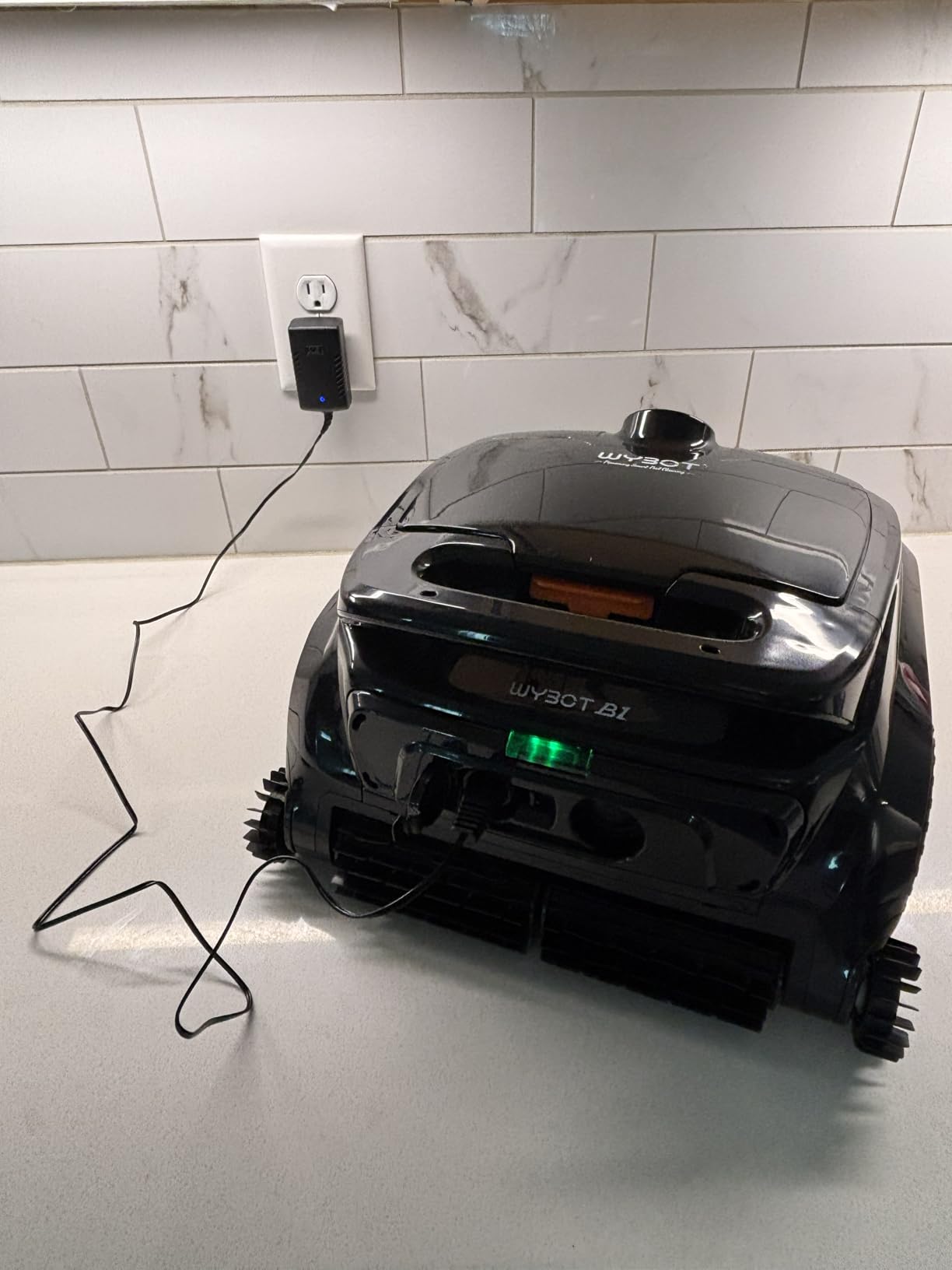
Rated runtime is up to 120 minutes for pools up to 1,150 square feet from a 58 watt-hour lithium battery, with a 3-hour charge time. Self-parking at the end of a cycle means it ends up where you can reach it rather than at the deep end.
Will the B1 climb an in-ground pool wall?
Sometimes, and that is the honest answer. Owners report that on some pools the rear wheels lose traction and the unit cannot climb at all, while on others it gets up fine. The roller and brush layout is tuned for floor detail, not wall grip, so treat waterline scrubbing as a bonus rather than a headline capability.
For a pool where the waterline is already under control and the problem is leaves and grit on the floor, that trade is worth making. For a pool with a heavy waterline algae ring, pick a machine with dedicated climbing hardware instead.
What owners complain about?
The wall climbing inconsistency is the main one, followed by the basket door latch, which several owners describe as stiff and awkward to release with wet hands. The 120-minute runtime is short for anything past about 1,150 square feet, and a second pass is normal on larger pools.
It is also worth noting that the 6-litre capacity figure is the joint-largest basket in the roundup, which offsets the short runtime nicely. Clean it less often even though you run it more.
10. BOTLIFE PC10 – Best Budget Cordless Robot for Medium Pools
BOTLIFE PC10 Cordless Robotic Pool Vacuum for Inground & Above Ground Pools
5000 GPH suction from dual motors
4L basket with 150um mesh
5200mAh battery to 1830 sq ft
Tracks handle slopes to 30 degrees
Pros
- Strong suction for the money
- S and N path routes reduce repeated passes
- Separate floor wall and full-pool modes
- Self-parks with an included retrieval hook
Cons
- Wall and waterline work is weaker than higher models
- 4L basket fills quickly
- Slope handling stops at 30 degrees
The PC10 is the one to consider when you want cordless operation and a full-coverage route without stepping up a tier. It puts out 5,000 GPH from dual drive motors and a dedicated pump, which is enough suction to lift leaves, sand and fine grit off the floor, and it runs S-shaped floor routes with N-shaped wall routes specifically to avoid the repeated passes that waste runtime.
Runtime comes from a 5,200 mAh battery rated for pools up to 1,830 square feet, with a recharge of about 2.5 hours. Three cleaning modes cover the full pool, floor only and wall only, so you can send it after a sand load without spending the whole cycle on walls that are already clean.
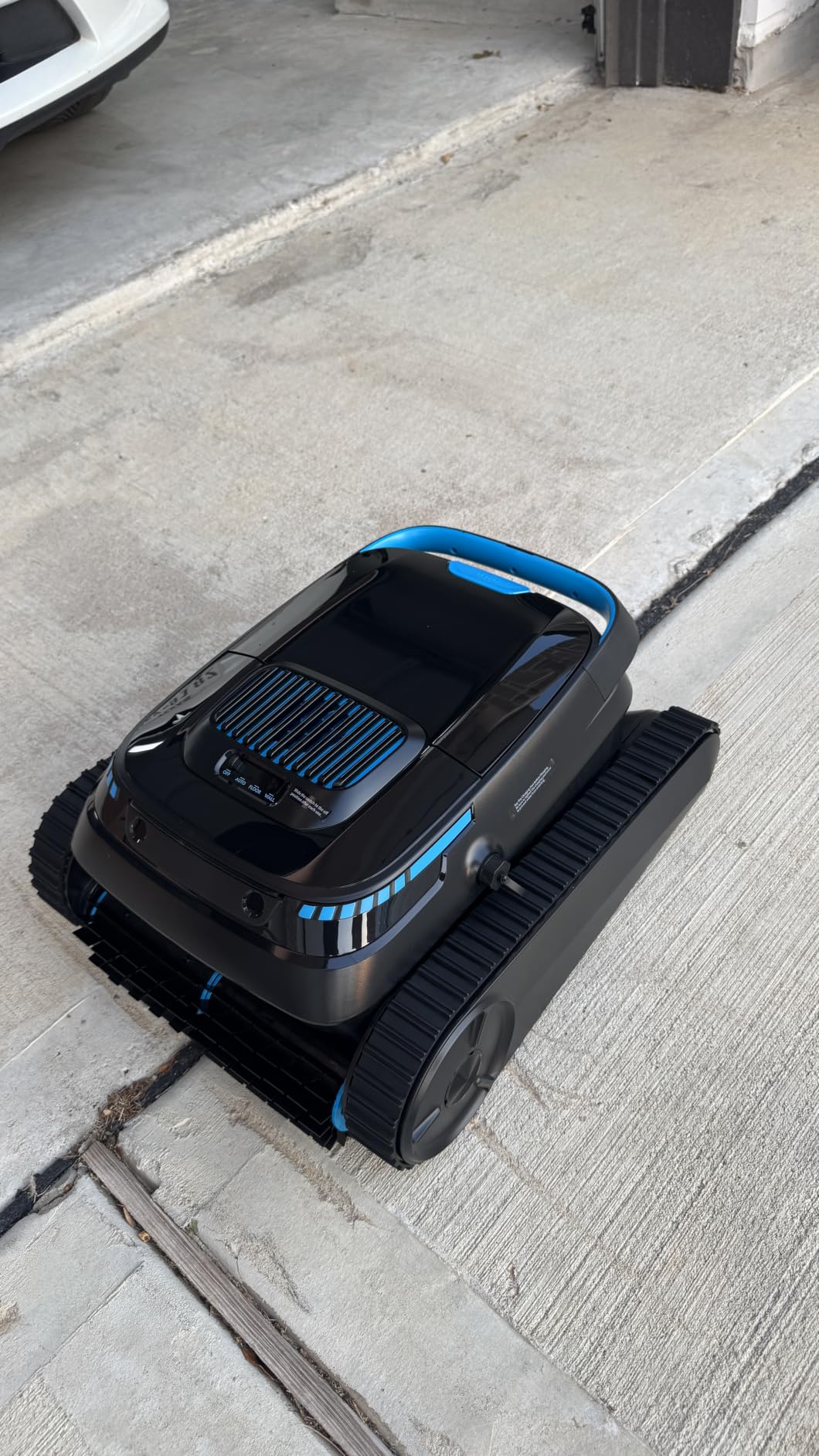
Self-parking at the pool edge when the cycle ends or the battery drops low is a genuinely useful behaviour, and the included retrieval hook means you are not hunting for a proprietary pole. The top-load filter basket rinses clean with a garden hose, which is the whole maintenance routine.
This is a newer listing with a smaller body of owner feedback than the Dolphin models, so treat the early reports as directional. What those buyers agree on is solid floor cleaning and easy self-parking, with the wall and waterline coverage flagged as the weaker area.
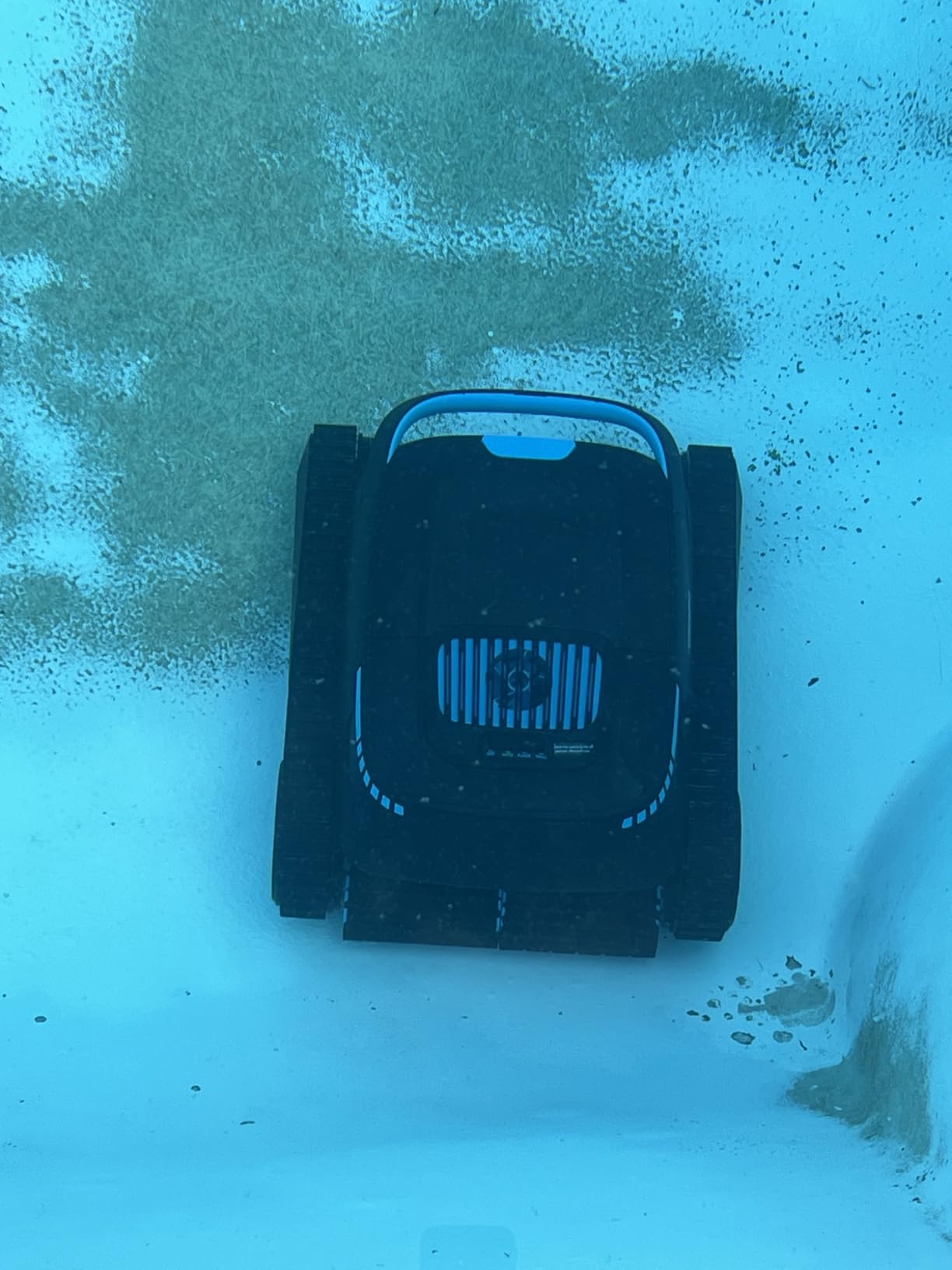
Is the 30-degree slope limit a problem for an in-ground pool?
For a standard gradual transition, no. Thirty degrees covers the long shallow-to-deep slope most rectangular in-ground pools use, and the high-grip tracks handle the transition. Where it falls short is a deep-end wall break, a raised sun shelf with a lip, or a beach entry with a steeper grade. Those need a higher-rated climb system.
The walls-and-waterline weakness is the more important limitation for this category. On a pool with a visible waterline ring, the PC10 is a floor machine. Pair it with a brush or a corded wall-climbing unit and it becomes a genuinely good value combination.
Who should buy it and who should not?
Buy it if you have a mid-size pool with a gradual slope, a mostly-clean waterline and a budget that rules out the premium cordless tier. The suction figure, the route planning and the self-parking add up to more capability per unit of money than most of the direct-import bots in the same bracket.
Skip it if stairs, a deep-end wall, heavy leaf loads or a saltwater system are part of your situation. The 4-litre basket is among the smallest here and will need emptying twice on a heavy day, and there is no salt rating on the specification.
Corded vs Cordless Robot for an Inground Pool
The short answer: corded for large, deep or leaf-heavy pools; cordless for medium pools where carrying the unit in and out is the part you dread. A corded robot cannot run out of power, has no battery to age out and typically costs less per cycle of runtime than a cordless machine that needs a two-to-four-hour recharge between runs. The trade is a cable that lives in your pool and has to be kept untangled, and a unit you cannot lift with one hand.
Four differences decide it in practice:
Runtime. Corded units in this roundup run about two-hour cycles and can be re-run immediately. Cordless units range from 120 minutes on the WYBOT B1 up to 300 minutes on the Beatbot Sora 10 and roughly five hours on the Sora 30. For a pool past about 20 by 40, the cordless tier needs two sessions where a corded unit needs one.
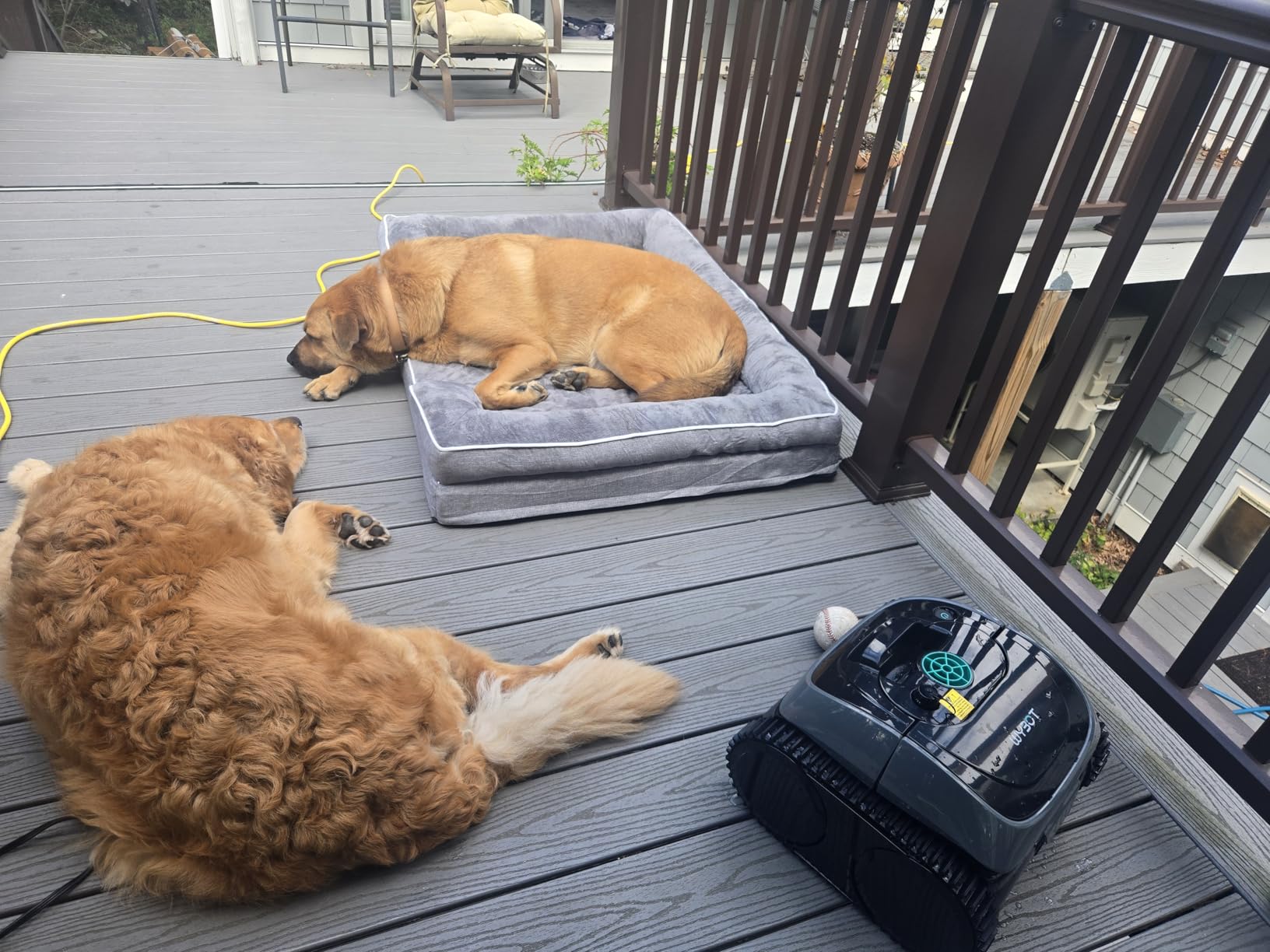
Retrieval and handling. A corded Dolphin weighs 14.8 to 21 pounds but you only lift it out at the end. The cordless machines run 14.3 pounds (WYBOT B1) to 24 pounds (WYBOT C2), and the Beatbot units surface themselves so you do not need a pole at all. If lifting is your constraint, the B1 and the Sora 10 are the two that make life easiest.
Failure modes. Corded units fail at the cable, the power supply and the drive belt, all of which are replaceable parts. Cordless robots fail at the battery, and battery replacement is often not offered or not practical, which is the main reason to expect a shorter service life from a cordless machine.
App control. Every cordless unit here is app-controlled, and every one of them loses the connection underwater. Set the mode before you launch. Corded units in this guide mostly skip the app entirely, which is a feature if you are tired of pairing devices.
Our verdict for a typical 16 by 32 in-ground pool with a gradual transition: the Nautilus CC Plus if you want one decision and no maintenance planning, the WYBOT C2 if fine debris is the problem, and the Beatbot Sora 30 if the pool is long or the trees are heavy.
What Actually Matters When You Buy an Inground Pool Robot?
1. Pool length and depth, in that order. Every robot here is rated for a maximum pool length, and corded models are measured in feet while cordless models are usually quoted in square feet. Measure the surface area of your pool and compare it against the coverage figure before you buy. A 40-foot rating on a 16 by 40 pool leaves no margin for the deep end and transitions.
2. Pool surface type. Vinyl, plaster, concrete, fiberglass and tile all take brushes and tracks differently. Vinyl is the most forgiving and rewards a soft brush. Plaster and concrete need an active scrubbing brush and grippy tracks to climb. Fiberglass is smooth, so wall climbing depends on buoyancy and drive torque. Tile-lined pools are the least forgiving on cables and tracks, because any grit left in the basin grinds against the surface. Match the roller material to the surface, not just the robot to the pool size.
3. Debris load. Leaves, sand and fine silt are three different problems. Large leaves need suction volume and a big basket. Sand needs filtration fine enough to hold grains rather than recirculate them. Fine silt and dead algae need micron-level filtration, which only one machine in this roundup has. Owners of pools under oak and pine note that no robot fully replaces raking and skimming; it reduces how often you do it.
4. Wall and waterline performance. For an in-ground pool this is the difference between a floor machine and a pool machine. Check whether the robot has dedicated climbing hardware, whether it scrubs above the waterline, and whether it can reach the waterline band where the tile line and ring collect. The bottom of the bucket for this test is simple: run it and look at the tile line afterwards.
5. Navigation and cleaning path. Random-bounce robots waste runtime in corners. Pattern-based units with N-path and S-path routes or gyroscope mapping cover more floor per charge. Sensors for drains, ladders and steps matter more on in-ground pools because those obstacles exist in almost every one.
6. Cord management. If you are buying corded, this deserves as much attention as suction. Look for an anti-tangle swivel at the cable exit and start the cycle with the cable laid straight. Cord kinking is the most common long-term failure on corded models and it is entirely avoidable with handling discipline.
7. Runtime against pool size, honestly. Divide the rated runtime by the pool area and you get a coverage rate. A 120-minute machine on a 1,800 square foot pool will not finish in one pass; a 300-minute machine will. Match the number to the pool, not to the spec sheet’s best case.
8. Warranty, parts and support. This is the criterion owner communities weight most heavily, and it is the one most product pages bury. A two to three-year warranty with a real parts catalogue is worth more than an extra cleaning mode. Check whether the drive belts, brushes, filters and impellers are sold separately, and whether the battery on a cordless model is replaceable at all.
Pool shape and equipment context also matter. If your pool runs on a variable-speed pump, matching the robot cycle to your pump schedule keeps filtration efficient, and our picks for variable-speed pool pumps cover that in detail. If you are extending your season rather than just your clean, pool heaters change how often the robot runs; see our pool heat pump guide.
When Not to Buy a Cordless Pool Robot?
If your robot can trap on a main drain, buy a corded unit. This is the most repeated complaint in owner discussions about cordless machines: units stalling or sitting over a main drain or overflow weir, or getting hung up on a step edge and a ledge. A corded robot with a longer service history and a simpler failure profile is a safer bet on a pool with multiple drains and a deep-end main drain.
Other reasons to skip cordless:
Your pool is deep-end heavy. Depth reduces efficiency and, past the rated maximum, puts the impeller outside its working envelope. The WYBOT C1 is rated to 9.86 feet, which covers most residential in-ground pools but not every one.
Your leaf load is extreme. A 4-litre basket under an oak means mid-cycle emptying, which removes the hands-off benefit that justified the cordless purchase in the first place. Either buy a 5 to 6-litre basket machine or buy corded.
You have a saltwater pool and the listing does not state a salt rating. Corrosion in the motor housing and impeller shaft is a slow failure that appears well after the warranty period. The Beatbot Sora 10 in this roundup carries an explicit salt rating below 5,000 ppm.
You plan to leave the unit in the pool between cycles. Batteries should not sit submerged long-term. Owners on forums are divided on this, but the cautious position is to pull the unit out, rinse it and store it dry. That habit costs you a minute and removes a real risk.
You need stairs and a raised shelf cleaned every week. Not every cordless robot handles transitions, and the surface-only budget tier generally does not. Check the climb rating and the shallow-water sensing against your actual geometry before buying.
The Brands Behind the Picks
Dolphin (Maytronics) is the reference standard. Three of the ten units here are Dolphins, and the reason is longevity and parts rather than features. The corded Nautilus and Proteus models do the fundamentals well and are supported by an established service network. The recurring gripes, cord tangling and basket clogging, are shared across the range rather than unique to one model.
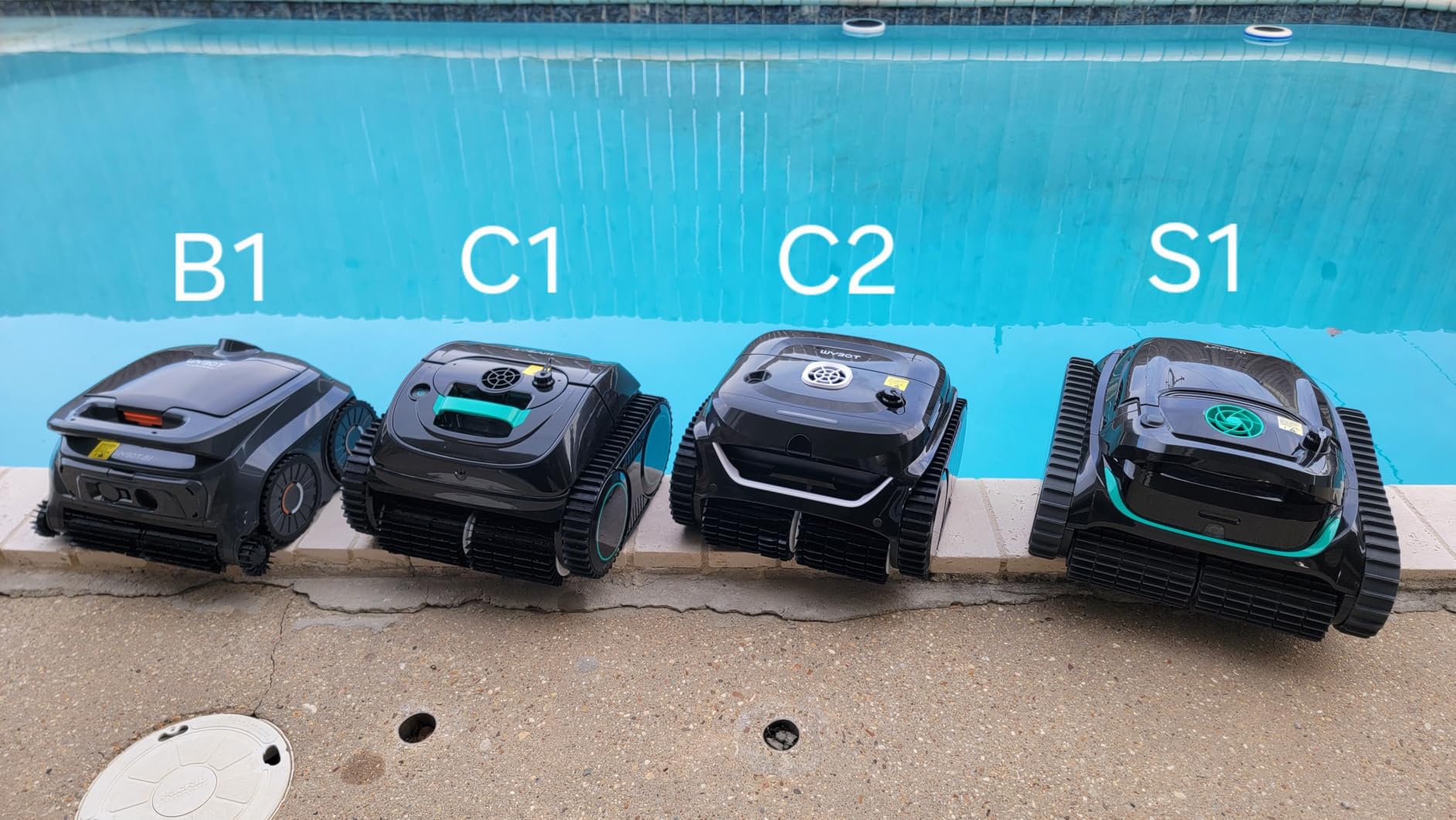
WYBOT is the cordless specialist in this group, with the C1, C2 and B1 covering three different budgets. The C2 is the one that stands out technically, because its dual micron filtration is something the Dolphin corded line does not offer. Owners in the community consistently name WYBOT alongside Aiper, Beatbot and Polaris as the brands they consider outside the Maytronics fold.
Beatbot builds around high suction figures and retrieval convenience. All three units here use 6,800 GPH and park at the surface by releasing internal water, which removes the retrieval pole from your routine. The Sora 70 is the most complete machine in the roundup because it cleans the water surface as well as the pool, and it carries the longest warranty here at three years.
Polaris does not appear in this roundup because no Polaris model cleared our screen against these ten, which is worth saying plainly. Polaris remains a well-regarded name, particularly for heavy leaf debris, but the models available here did not match the coverage, review depth or handling profile of the picks above. The brand is on a lot of shortlists; it just was not on ours.
The direct-import tier covers everything with a thin support network and no local warranty path. Owner communities are blunt about this: units stop working unexpectedly, charging fails, and there is no catalogue of spare parts when a drive belt goes. We would treat any robot in that category as a two-to-three-year purchase rather than a five-to-seven-year one, and only buy one when the price gap against a supported brand is large enough to accept that.
Maintenance: Getting 5 to 7 Years Out of an Inground Robot
Rinse the filter after every run. This is the single highest-value habit. A clogged filter starves the impeller of flow, and the debris that was captured gets pushed back through into the pool. Rinse the basket, or the cartridges, until the water runs clear. In leaf season this means mid-cycle.
Pull the unit out, do not leave it in. Both cordless batteries and the drive electronics on any robot are better out of the water. Rinse the body with fresh water, brush off the rollers and let it dry in the shade before storage. Owner experience on this point is consistent, and it costs you a minute.
Store it dry, out of the sun. A caddy or a shelf in the equipment shed keeps the plastics from going brittle in UV and keeps the battery away from temperature swings. A cover is worth having if the robot sits on a deck rather than indoors.
Replace the consumables on a schedule. Filter cartridges rinse for a while and then lose capacity. Roller brushes stiffen and stop scrubbing. Drive belts stretch. For corded Dolphins, the cable and the power supply are the two things most likely to go, and both are orderable parts. For cordless units, check battery replaceability before you buy, not after.
Expect 5 to 7 years from a mainstream corded brand, and less from a cordless or direct-import machine. Forum threads consistently describe a 3 to 5 year service life on supported corded models, with a cord or power supply failure triggering the replacement. Cordless batteries typically start to shorten runtime noticeably after one or two seasons, and coverage drops because the cycle ends early.
Watch the pool cover, not just the robot. If you use one, a solar cover keeps debris out in the first place, which is a cheaper intervention than any filter upgrade. Our picks for solar pool covers for inground pools cover the options by pool length.
Winterise rather than run. For most climates the right move is to clean thoroughly, rinse, dry and store. Running a robot in near-freezing water damages the impeller and the plastics, and it is not doing useful work when the pool is not in use.
Frequently Asked Questions
Is Dolphin or Polaris better?
Dolphin, by ownership track record. Dolphin, made by Maytronics, is the most-reviewed robotic pool cleaner brand in the category, with models like the Nautilus CC Plus carrying well over 13,000 owner reviews and an established parts catalogue. Polaris is a respected name and is often recommended for heavy leaf debris, but no Polaris model matched the coverage, review depth or handling profile of the picks in this roundup. For most in-ground pool owners, Dolphin is the safer default on parts and service, and Polaris is worth a look when leaf load is the dominant problem.
What is the best robot cleaner for swimming pools?
The Dolphin Nautilus CC Plus is our pick for most in-ground pools. It handles pools up to 40 feet, scrubs walls and the waterline with an active brush, empties through a top-load filter basket and needs no assembly or app. If fine silt and sand are the problem rather than leaves, the WYBOT C2 is the better choice because its dual 10-micron and 180-micron filtration holds particles a standard basket recirculates.
What is the average lifespan of a robotic pool cleaner?
Expect 5 to 7 years from a mainstream corded model from a supported brand, and somewhat less from a cordless unit. Owner reports in pool forums cluster around 3 to 5 years before a cable, power supply or drive component fails on corded robots, and that failure is usually what triggers the next purchase. Cordless batteries typically shorten runtime noticeably after one or two seasons, which cuts coverage short well before the rest of the machine wears out.
What is the most popular inground pool cleaner?
The Dolphin Nautilus CC Plus is the most popular inground pool cleaner in this roundup by owner review volume, sitting in the top of the Robotic Pool Cleaners category. It is also the default recommendation in owner forums, where Maytronics is consistently treated as the reference standard. The Dolphin Nautilus CC and Proteus DX3 follow in the same corded family, and they are often bought as a step-down for shorter pools.
Which robotic pool cleaner is the best value for money?
It depends on which part of the job you are focused on. For the cheapest route to a clean floor and waterline, the Dolphin Nautilus CC covers pools up to 33 feet with no battery to age out. For the most capability per unit of money in the cordless tier, the BOTLIFE PC10 gives you 5,000 GPH suction and self-parking at a lower entry point. The WYBOT C2 is the value pick if fine debris is the problem, because no cheaper unit in the roundup has micron filtration.
Can a cordless pool robot get stuck on the main drain?
Yes, and it is the most common complaint owners report about cordless units. Robots can stall over a main drain, an overflow weir or a step ledge, particularly in geometrically complex pools. If your pool has multiple drains and a deep-end main drain, a corded model with a longer service history is the safer choice. Models with ultrasonic obstacle avoidance, such as the Beatbot Sora 10, are designed specifically to detect drains, ladders and steps and route around them.
Final Verdict: Which Inground Pool Robot Should You Buy?
If you want a single answer to the best robotic pool cleaners for inground pools question, take the Dolphin Nautilus CC Plus. It covers the longest pool in this roundup, has the deepest pool of owner feedback, and asks the least of you. For a pool under 33 feet, the Nautilus CC is the value version of the same machine, and the Proteus DX3 adds remote control if your basin has awkward corners.
Go cordless when carrying the unit in and out is the part you hate. The WYBOT C2 is the strongest overall cordless pick and the only one with micron filtration, the Beatbot Sora 30 handles a large pool in one five-hour run, the Sora 70 is the only machine here that cleans the water surface, and the Sora 10 is built for saltwater. The WYBOT B1 weighs 14.3 pounds if lifting matters, and the BOTLIFE PC10 is the budget entry point with a 30-degree slope limit and a floor-first clean.
Match the machine to the geometry first and the features second. Pool length, surface type and debris load decide the answer long before app control does.
We update this roundup as 2026 brings new models and revised owner data, and every pick above is written from published specifications and reported owner experience rather than marketing copy.