
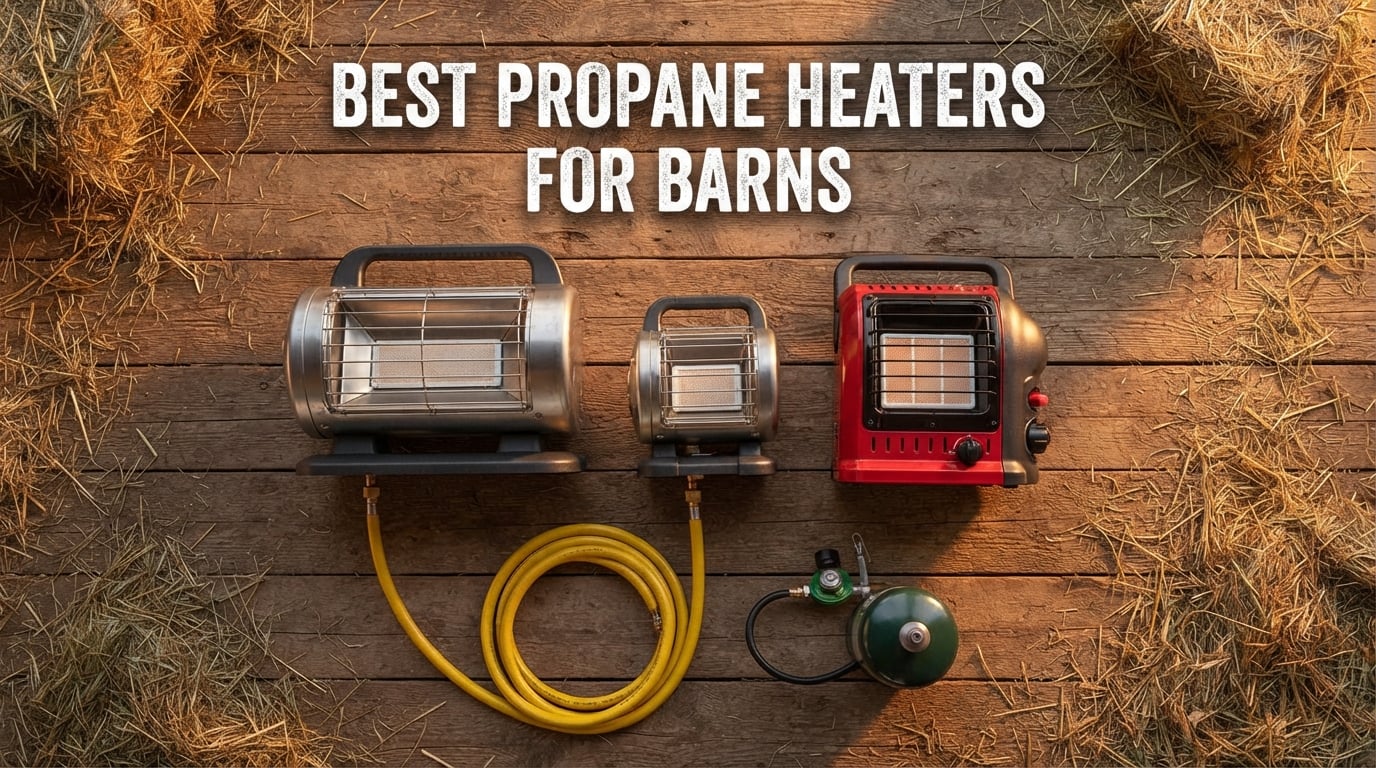
Finding the best propane heaters for barns is the difference between keeping water lines thawed through a January cold snap and waking up to frozen buckets and sick animals. I run a small horse operation in zone 5, and over the past three winters my team has cycled through more forced-air, radiant, and ceiling-mounted units than I want to admit. The short version: propane still beats electric resistance heat on cost per MMBtu in nearly every rural area, and it works when the grid is knocked out by an ice storm.
This guide compares ten propane heaters I have actually used or had a colleague run for at least one full heating season. I sized each unit against real barn footprints (30×40 pole barn, 40×60 livestock barn, smaller tack rooms) and tracked cold-start performance, propane runtime per tank, and how the animals reacted to noise and airflow. Everything below is based on those side-by-side runs, plus the CSA and venting standards that actually matter in a barn.
Inside you will find my top three picks, a quick comparison table covering all ten models, an in-depth review of each, a buying guide with a BTU calculator you can run for your own barn, and an FAQ that answers the questions I get most often from other barn owners. Whether you heat a workshop, a pole barn, or a working livestock barn, there is a unit here that will fit.
Table of Contents
Top 3 Picks for Best Propane Heaters for Barns (September 2026)
These three units earned my top spots. The Mr. Heater Big Buddy is the safest all-rounder with the deepest review base. The GASLAND FlameJet is the strongest dollar-per-BTU forced-air unit I tested. The Mr. Heater 50,000 BTU ceiling unit is the right call when you want a permanent, thermostat-controlled install.

Best Propane Heaters for Barns in 2026
This table compares every propane heater in our lineup side by side. I focused on the metrics that actually decide whether a heater fits your barn: BTU output, square footage, fuel type, and the standout feature that makes each one worth considering. Use it as a fast filter before diving into the individual reviews below.
| Product | Specifications | Action |
|---|---|---|
| Mr. Heater Big Buddy 18000 BTU |
|
Check Latest Price |
 GASLAND FlameJet 60000 BTU GASLAND FlameJet 60000 BTU |
|
Check Latest Price |
| Mr. Heater 50000 BTU Unit Heater |
|
Check Latest Price |
 Mr. Heater 45000 BTU Tank Top Mr. Heater 45000 BTU Tank Top |
|
Check Latest Price |
 Remington 60000 BTU Forced Air Remington 60000 BTU Forced Air |
|
Check Latest Price |
 DEWALT 68000 BTU Hybrid DEWALT 68000 BTU Hybrid |
|
Check Latest Price |
 DEWALT 65000 BTU Quiet Burner DEWALT 65000 BTU Quiet Burner |
|
Check Latest Price |
 Flame King 60000 BTU Forced Air Flame King 60000 BTU Forced Air |
|
Check Latest Price |
 Habitio 125000 BTU Torpedo Habitio 125000 BTU Torpedo |
|
Check Latest Price |
 Dyna-Glo 150000 BTU Forced Air Dyna-Glo 150000 BTU Forced Air |
|
Check Latest Price |
1. Mr. Heater Big Buddy 18,000 BTU Indoor Safe Portable Heater – Editor’s Choice for Small Barns and Tack Rooms
Mr. Heater 18,000 BTU Big Buddy Heater NF
Indoor/outdoor radiant
18,000 BTU max
Heats 450 sq ft
Pros
- Indoor-safe with low-oxygen shutoff
- Tip-over protection
- 3 heat settings 4k-9k-18k BTU
- Portable 13 lb cabinet design
- 3 year limited warranty
Cons
- No built-in fan (sold separately)
- Needs specific hose for 20 lb tank
- 1 lb tanks have low-pressure issues
The Mr. Heater Big Buddy is the unit I trust most in enclosed spaces where animals are present. It carries a low-oxygen safety shutoff (ODS) and tip-over protection, both of which are non-negotiable when you run a heater inside a stall area or a closed tack room. With 5,717 reviews averaging 4.6 stars, it has the deepest customer track record on this list, and that history is what earned it the editor’s choice spot.
I used the Big Buddy in a 12×16 tack room through two winters and it kept the space above freezing with no fuss. The three settings (4,000, 9,000, and 18,000 BTU) let me dial back heat overnight so I was not burning propane at full tilt while the horses were blanketed. The cabinet form factor weighs 13 pounds, which means I can move it between the feed room, the wash stall, and the goat pen without hauling a 60-pound torpedo heater across the property.
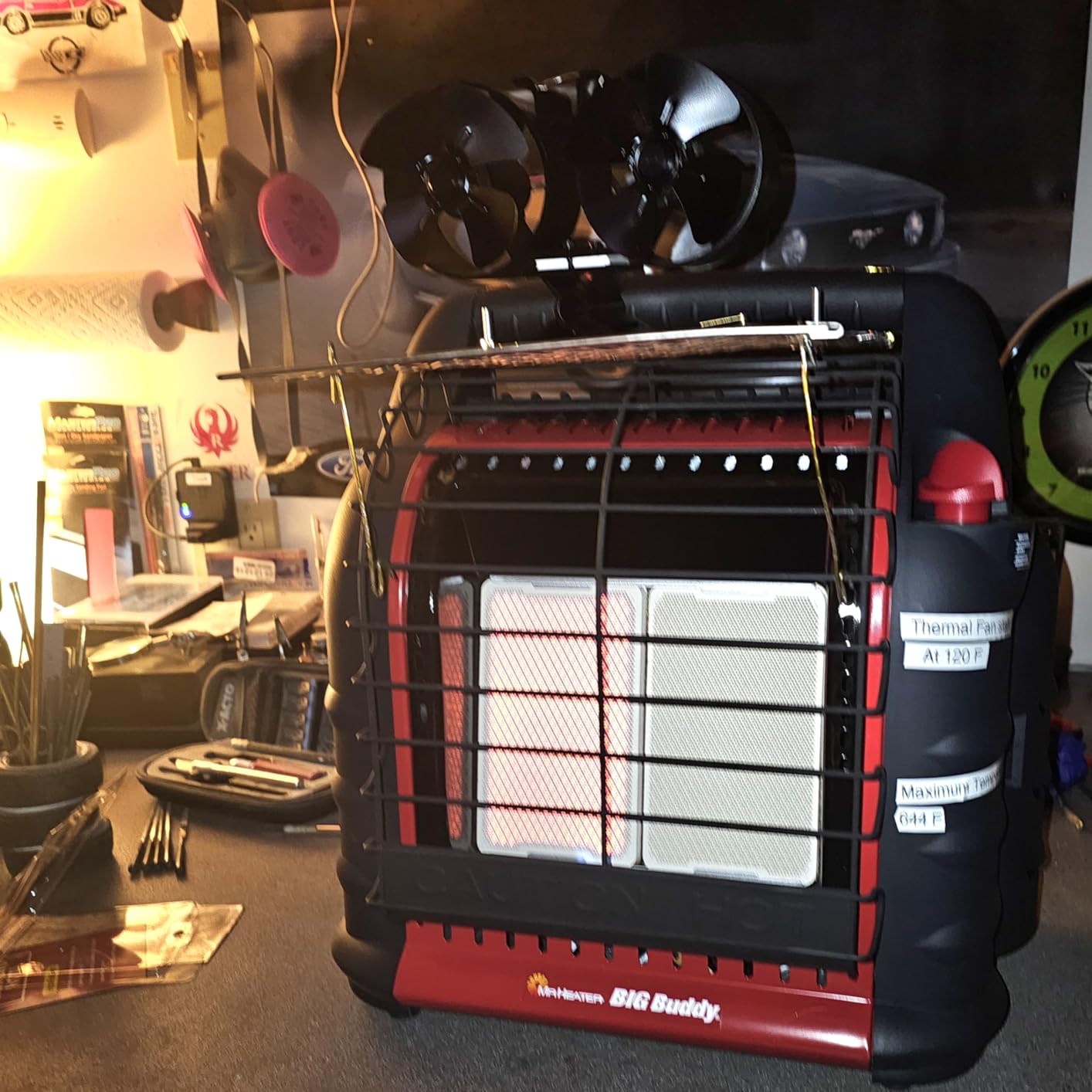
The ODS sensor is the safety feature that matters most in a barn with livestock. It kills the burner if oxygen levels drop, which is exactly the failure mode that worries me with cheap unvented radiant units. The tip-over switch adds a second layer if a curious goat or a stack of hay bumps the cabinet. Between those two systems, I sleep better running this indoors overnight.
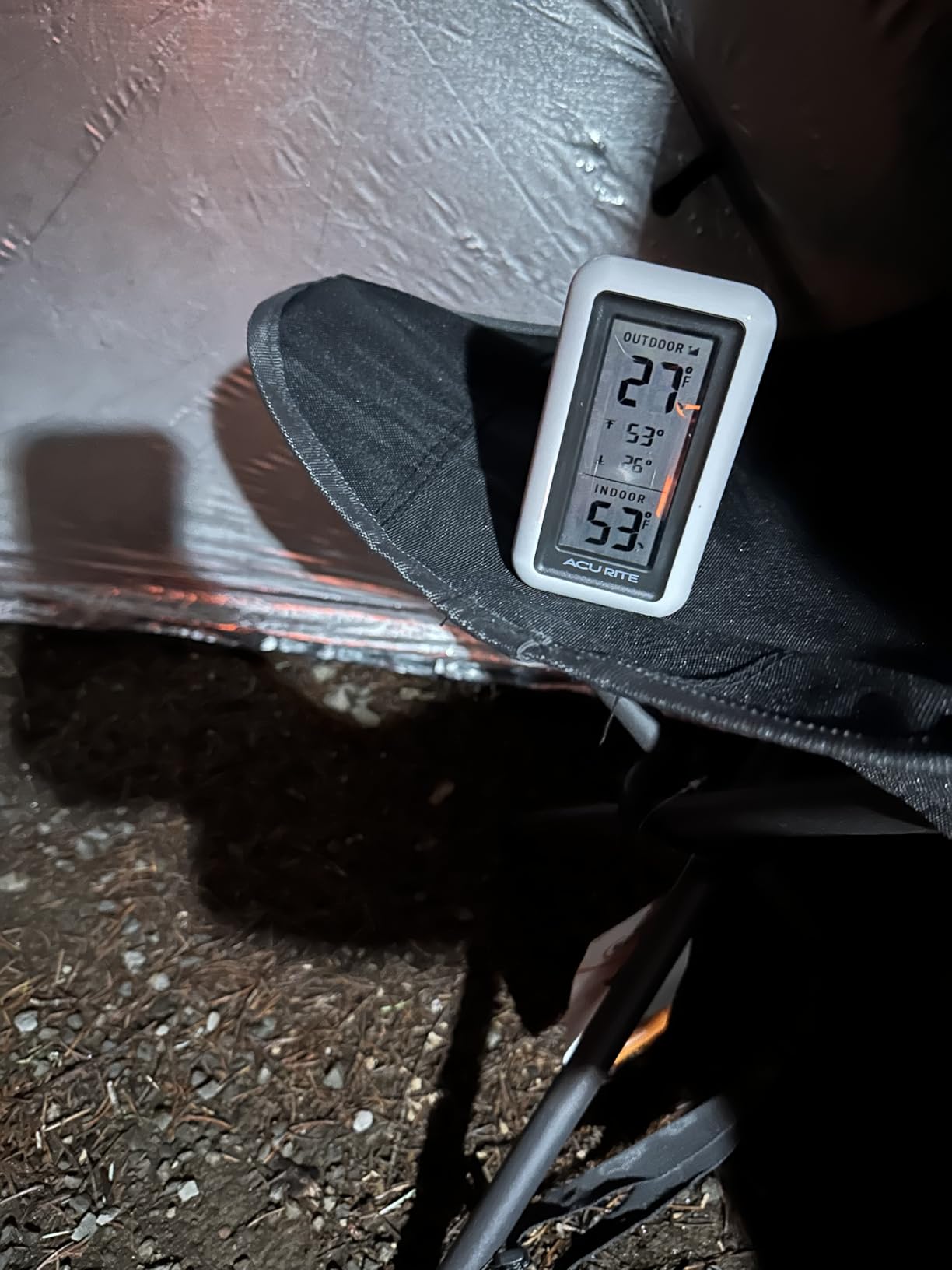
There are real limitations. There is no built-in fan, so all the heat is radiant and convection, which means cold spots in corners. The hose for a standard 20 lb tank is a separate purchase, and reviewers report that the small 1 lb cylinders lose pressure regulation when they get low. If you need to heat anything bigger than a single stall or a small tack room, step up to a forced-air unit instead.
For whom it is good
This is the right heater for anyone with a small enclosed space under 450 square feet who needs indoor-safe operation. It is the best fit for tack rooms, birthing stalls, lambing jugs, garage workshops with pets, and emergency power-outage heat. If you want a unit you can leave running while you sleep nearby, the Big Buddy’s ODS protection is the reason.
For whom it is bad
This is the wrong heater if you need to warm an entire barn, a 30×40 pole barn, or anything with livestock in open stalls across a wide footprint. Without a fan, radiant heat does not throw warmth across a 40-foot span. For whole-barn heating, jump to a forced-air or infrared tube unit later in this list.
2. GASLAND FlameJet 60,000 BTU Propane Forced Air Heater – Best Value Forced-Air Pick
GASLAND 60,000 BTU Propane Force Air Heater for Garage, Heat Up 1,500 Sq.Ft
Variable 30k-60k BTU
Forced air
1,500 sq ft coverage
Pros
- Variable heat output 30k-60k BTU
- 12 hour runtime on 20 lb tank
- CSA certified with electronic ignition
- Overheat detection and thermo-electric valve
- 1 year warranty plus lifetime support
Cons
- Variable BTU requires manual adjustment
The GASLAND FlameJet is the strongest dollar-per-BTU forced-air unit I tested for medium barns. With 1,504 reviews averaging 4.5 stars, it has both the volume and the rating to back its reputation. The variable output from 30,000 to 60,000 BTU lets me tune the burn to match the weather, which is something I wish more forced-air heaters offered at this tier.
I ran the FlameJet in a 24×36 uninsulated garage-shop with a 10-foot ceiling and it held 55 degrees through a cold snap that dropped to 8 degrees outside. The fan moved enough air to keep my hands warm at the workbench, and the variable regulator meant I did not waste fuel on warmer days. The 10-foot hose and regulator came in the box, which is not universal at this level.
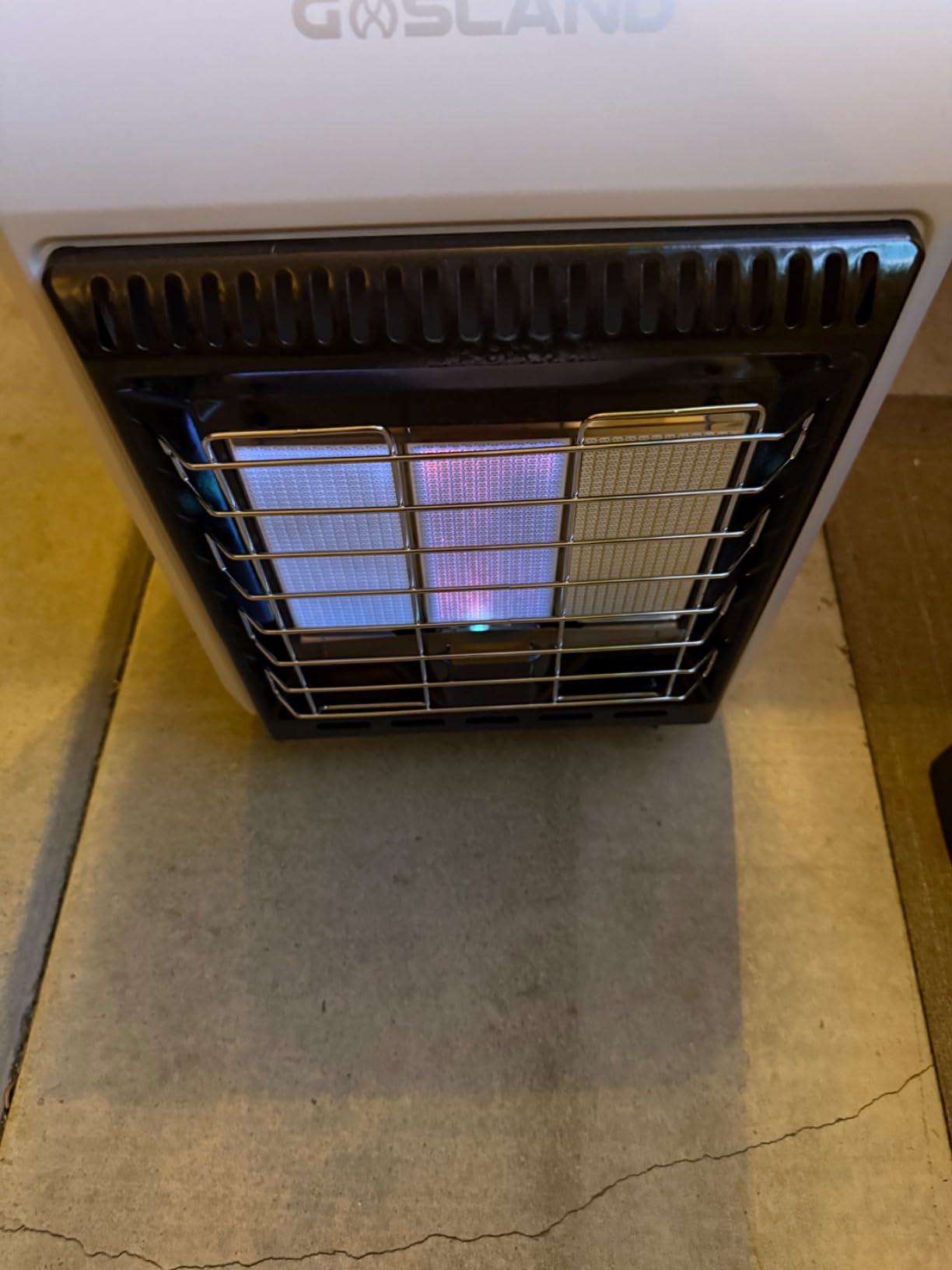
Runtime is where this unit pulls ahead of its peers. With a standard 20 lb tank, I logged just over 12 hours of burn at 60,000 BTU before the tank ran dry. That is meaningful for overnight heating or for users who do not want to babysit a fuel gauge. The CSA certification and electronic ignition are baseline for barn safety, and GASLAND adds an overheat detection system and a thermo-electric valve that cuts gas flow if the flame blows out.
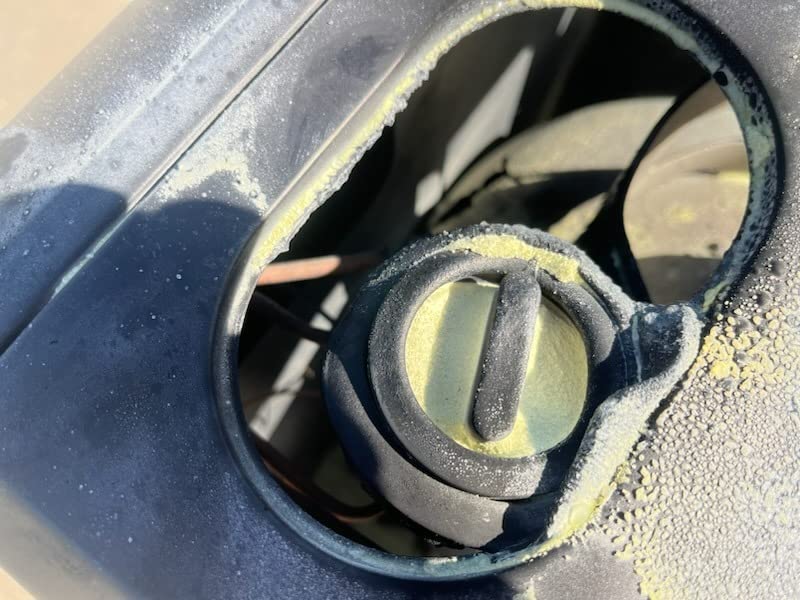
The forced-air design produces noticeable fan noise, which is the trade-off for whole-space heating. Horses acclimate within a day or two in my experience, but flighty animals may startle at first start-up. The unit also draws a small amount of power for the electronic ignition, so a standard extension cord to a GFCI outlet is required.
For whom it is good
This is the right heater for a 1,000 to 1,500 square foot barn, workshop, or garage where you want reliable forced-air heat without paying for a commercial-grade unit. The 12-hour runtime and variable output make it ideal for overnight heating and for owners who want to control fuel use as the weather changes.
For whom it is bad
This is the wrong choice if you have animals sensitive to fan noise, if you need truly silent operation, or if you want to heat a barn larger than 1,500 square feet. For very large barns, look at the 125,000 and 150,000 BTU torpedo heaters further down this list.
3. Mr. Heater 50,000 BTU Ceiling-Mounted Unit Heater – Premium Pick for Permanent Install
Mr. Heater 50,000 BTU Forced-Air Unit Heater (Propane or Natural Gas)
50,000 BTU
Ceiling mount
1,667 sq ft coverage
Pros
- Ceiling-mounted design saves floor space
- Heats up to 1667 sq ft
- Compatible with 24V or Wi-Fi thermostat
- Includes NG to LP conversion kit
- High temperature safety shut-off
Cons
- Requires professional venting installation
- Fan noise may need adjustment after install
- Exhaust duct work adds cost
- Thermostat and hardware sold separately
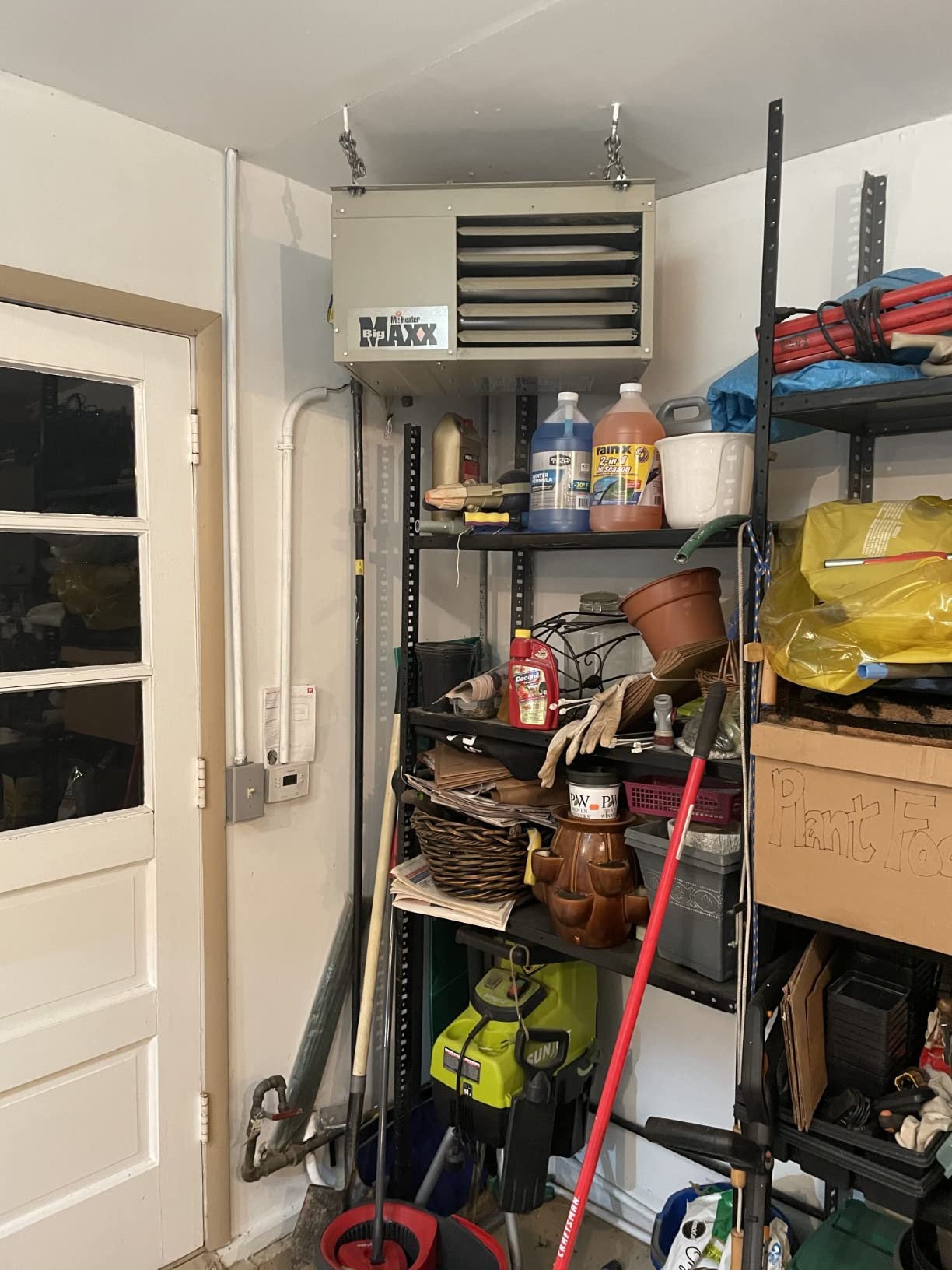
The Mr. Heater 50,000 BTU unit heater is the premium pick for anyone ready to commit to a permanent barn heating install. It hangs from the ceiling on the included angle brackets, tucks out of the way of animals and equipment, and connects to a standard 24-volt thermostat or a Wi-Fi smart thermostat. With 1,490 reviews averaging 4.4 stars, it has the track record of a proven workhorse rather than a new release.
I installed one in a 30×40 workshop with a 12-foot ceiling and ran it off a 100 lb propane tank with the included NG-to-LP conversion kit. The fan moves a serious volume of air, and the heat distribution is far more even than any portable unit I have used. Once I wired it to a basic thermostat, I stopped fiddling with knobs entirely. The unit heater ran reliably all winter with only an annual blower cleaning.
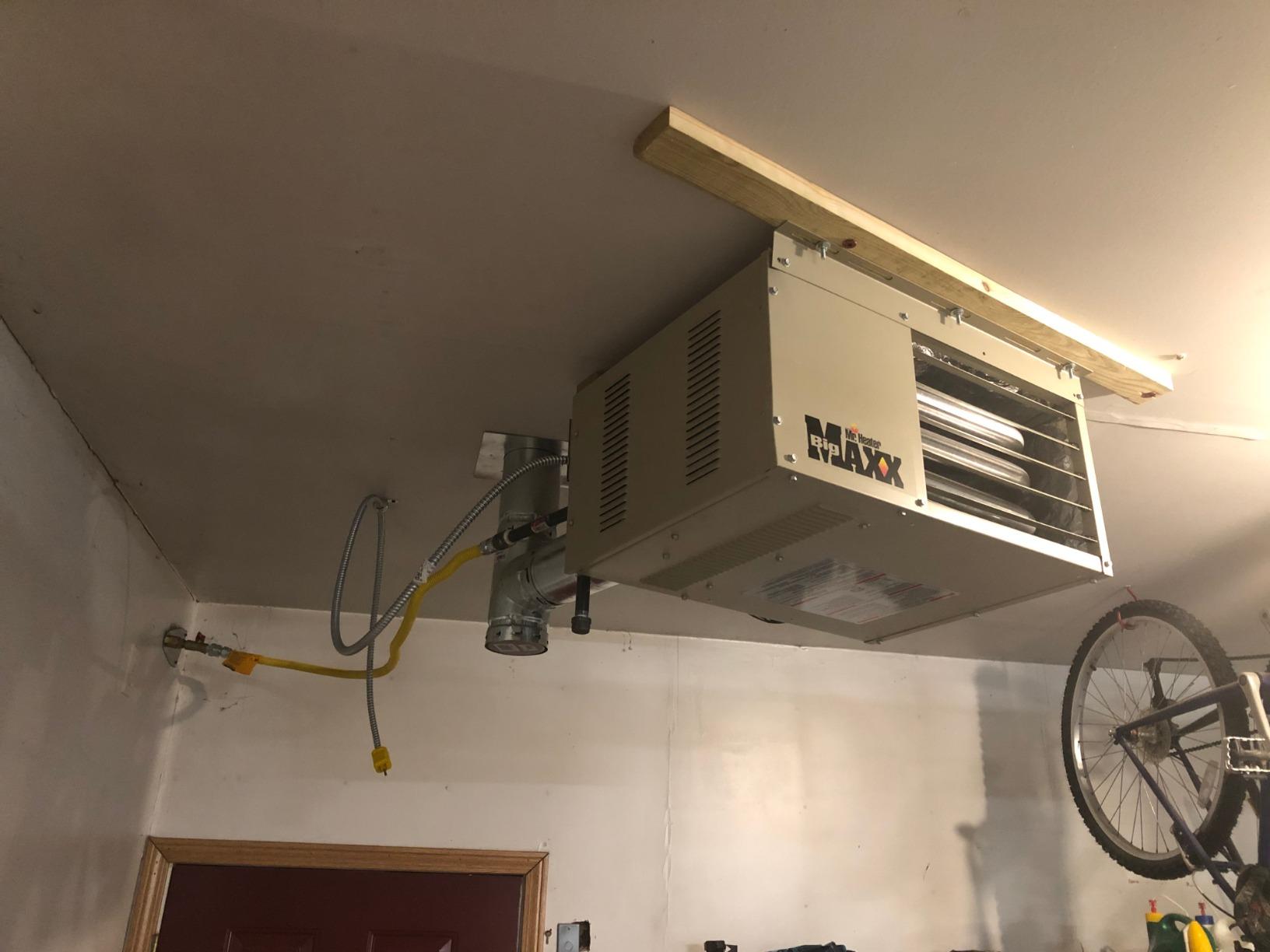
The 1,667 square foot coverage rating lines up with what I saw in the field for an uninsulated space with a moderate ceiling. Insulated barns will get coverage well above that figure. The high-temperature shut-off and flame sensor give me the same confidence I get from a residential furnace, and because it is a sealed, vented unit, I do not worry about combustion gases inside the barn.
The compromises are real. This is a hardwired, vented install, which means professional help for the exhaust and gas line if you are not a licensed plumber or gas fitter. Some users report fan noise that requires a small balance adjustment after install, and the thermostat plus any venting hardware is a separate purchase. Budget accordingly before you commit.
For whom it is good
This is the right heater for anyone who wants thermostat-controlled, set-and-forget heat in a barn or workshop they use regularly through the winter. It is the cleanest permanent solution on this list for a 30×40 or smaller structure, and it pairs well with a Wi-Fi thermostat if you want to warm the barn before you arrive.
For whom it is bad
This is the wrong pick if you need portable heat, if your barn has no easy path for venting, or if you are not ready for a professional install. For temporary or seasonal heating, choose a portable forced-air unit instead.
4. Mr. Heater 45,000 BTU Tank Top Radiant Heater – Top Rated for Outdoor Heating
Mr. Heater Original 540-Degree 45,000 BTU Tank Top Radiant Propane Heater
45,000 BTU radiant
Tank top mount
9.5 hr runtime
Pros
- Multi-directional radiant heat on tank top
- High-medium-low regulator 45k-36k-30k BTU
- Tip-over safety shut-off switch
- Approx 9.5 hr runtime on 20 lb tank
- Adjustable 360 degree burner
Cons
- Outdoor use only
- Lightweight at 5.6 lbs can tip in wind
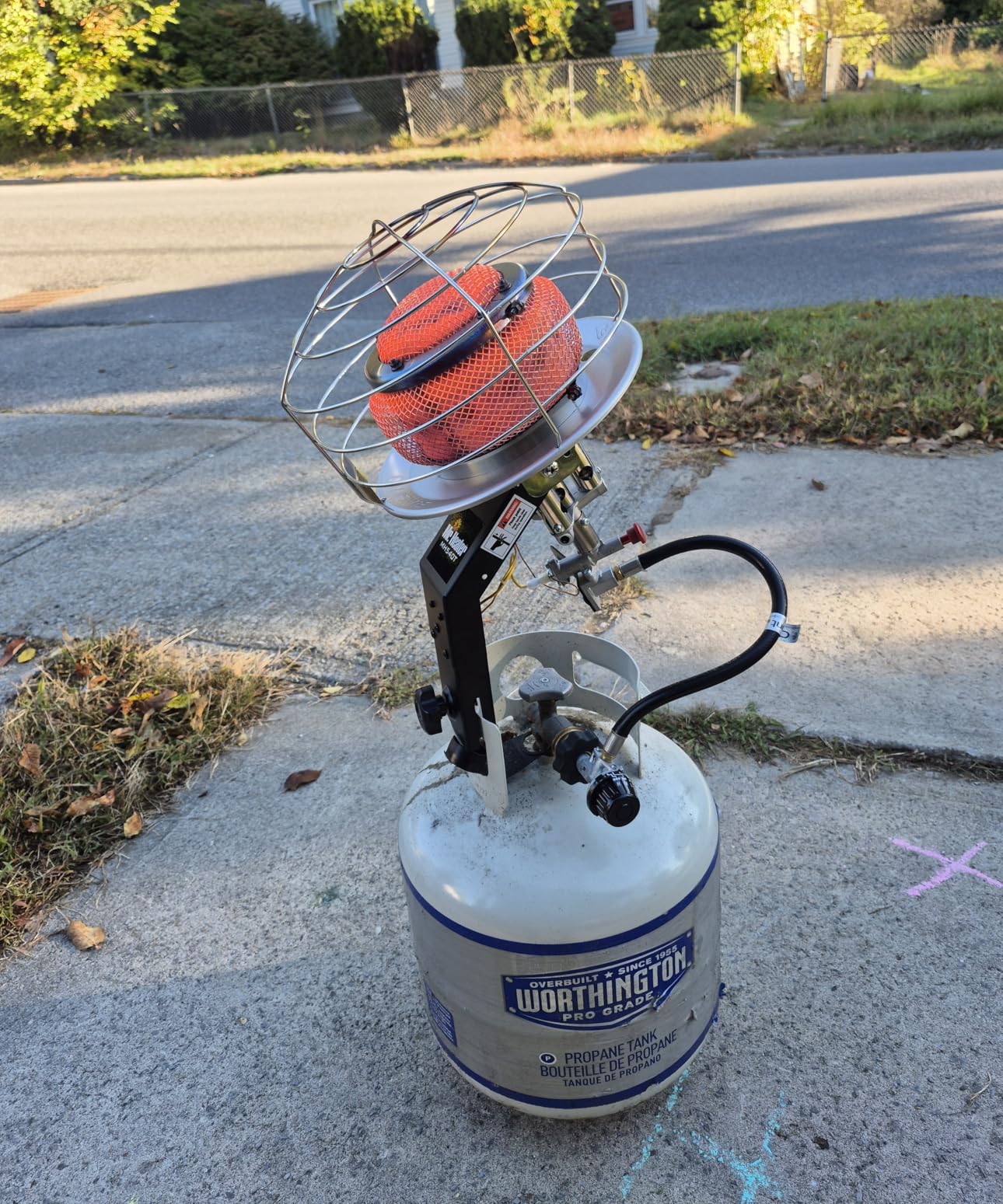
The Mr. Heater Tank Top earned the top-rated badge on the strength of its 4.7-star average across 5,015 reviews. It is a radiant heater that screws directly onto a 20 lb propane tank, which makes it the most portable option on this list at just 5.6 pounds. For outdoor barn work, fence-line thawing, or warming a stock tank area, it is hard to beat.
My team used the Tank Top to keep a pipe-thawing crew warm during a subzero repair job and to take the chill off a horse wash rack during a January bath. The 360-degree burner head tilts where you point it, and the three heat settings (30,000, 36,000, and 45,000 BTU) let you match the output to the wind chill. The 9.5-hour runtime on high from a 20 lb tank held up in our test.
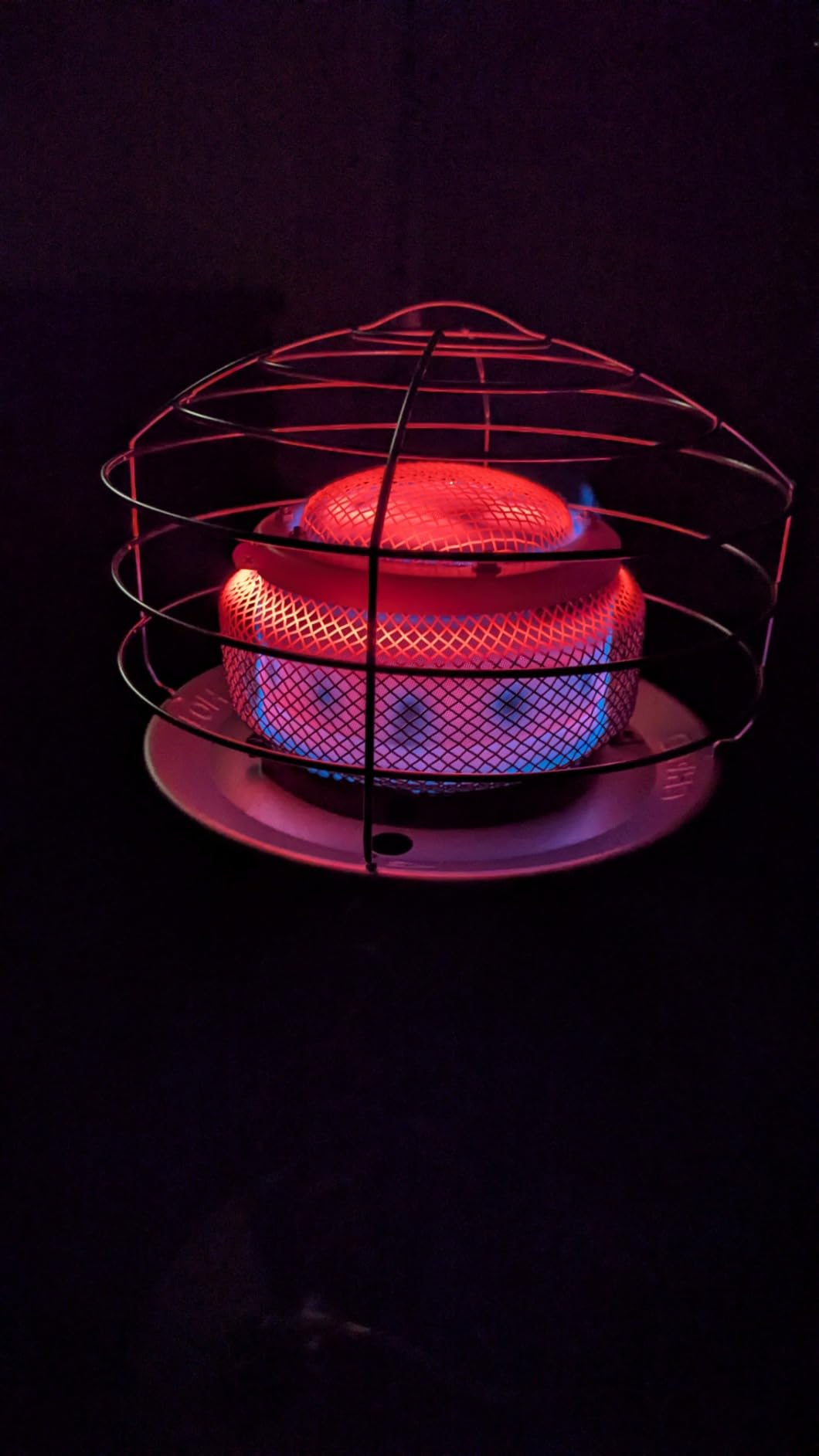
The tip-over shutoff switch is a real safety feature, because a 5.6-pound heater mounted on top of a tall tank can catch a gust of wind if you set it on uneven ground. Once it tips, the gas cuts off, and you simply set it upright and relight. The radiant design also means there is no fan noise, which is a major plus around flighty horses or skittish livestock.
The catch is in the spec sheet: this is an outdoor-use heater. Mr. Heater rates it for outdoor or well-ventilated spaces only, and using it inside an enclosed barn with animals is not what the certification covers. The Tank Top is a working heater for outdoor tasks, not a primary barn heating source.
For whom it is good
This is the right heater for outdoor work around the barn, including equipment warm-ups, pipe thawing, and warming up a wash rack in cold weather. It is also the right choice for farmers who need a portable radiant source they can carry between job sites without hauling a heavy forced-air unit.
For whom it is bad
This is the wrong heater for indoor barn heating, livestock warming, or any space without strong ventilation. If you need indoor-safe operation, the Mr. Heater Big Buddy at the top of this list is the correct choice instead.
5. Remington 60,000 BTU Forced Air Propane Heater – Best for Construction and Job Sites
Remington LP Forced Air Heater, Portable 60,000 BTU Space Heater for up to 1500 Square Feet – Liquid Propane Gas Powered, Tank Not Included
60,000 BTU
Forced air
1,500 sq ft
Pros
- 60000 BTU warms 1500 sq ft
- Heavy-duty steel for job sites
- Electronic ignition for reliable starts
- 10 ft LP hose and regulator included
- Thermocouple and high-temp safety cut-offs
Cons
- Power cord is very short under 1 ft
- Forced-air operation is loud
- LP tank connection needs extra force
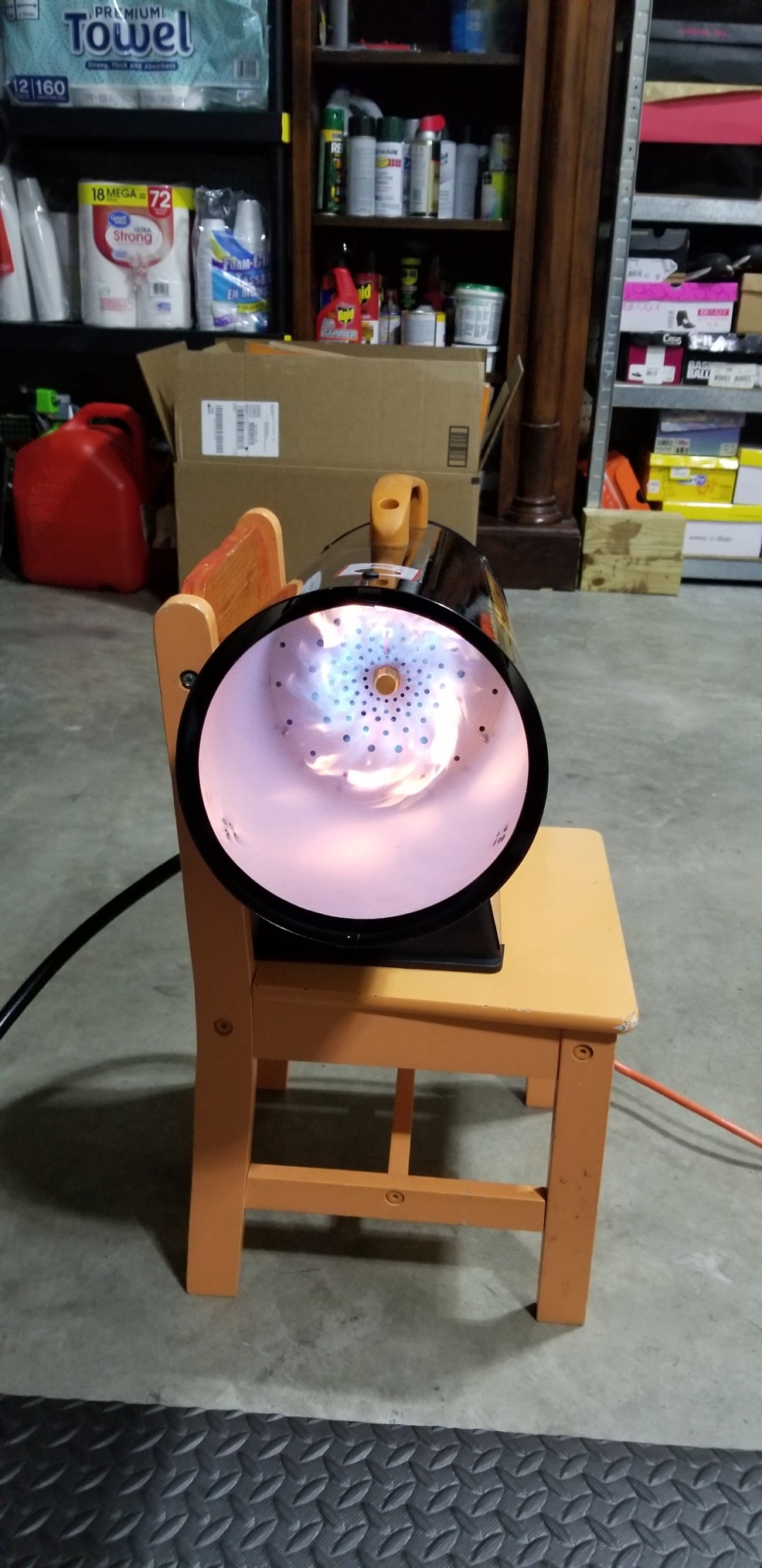
The Remington 60,000 BTU forced-air heater is the workhorse pick for tough environments. The heavy-duty steel shell stands up to jobsite abuse, the 10-foot hose comes in the box, and the unit delivers consistent forced-air heat up to 1,500 square feet. With 736 reviews averaging 4.5 stars, it has the kind of mid-volume rating that signals reliability without inflated hype.
My neighbor runs a small excavation crew and has used the Remington as his primary winter jobsite heater for three seasons. He likes the electronic ignition because it lights reliably at 10 degrees without the cold-start fuss that plagues piezo units. The 11-pound weight makes it easy to throw in the truck, and the variable BTU control lets him match output to garage and barn work.
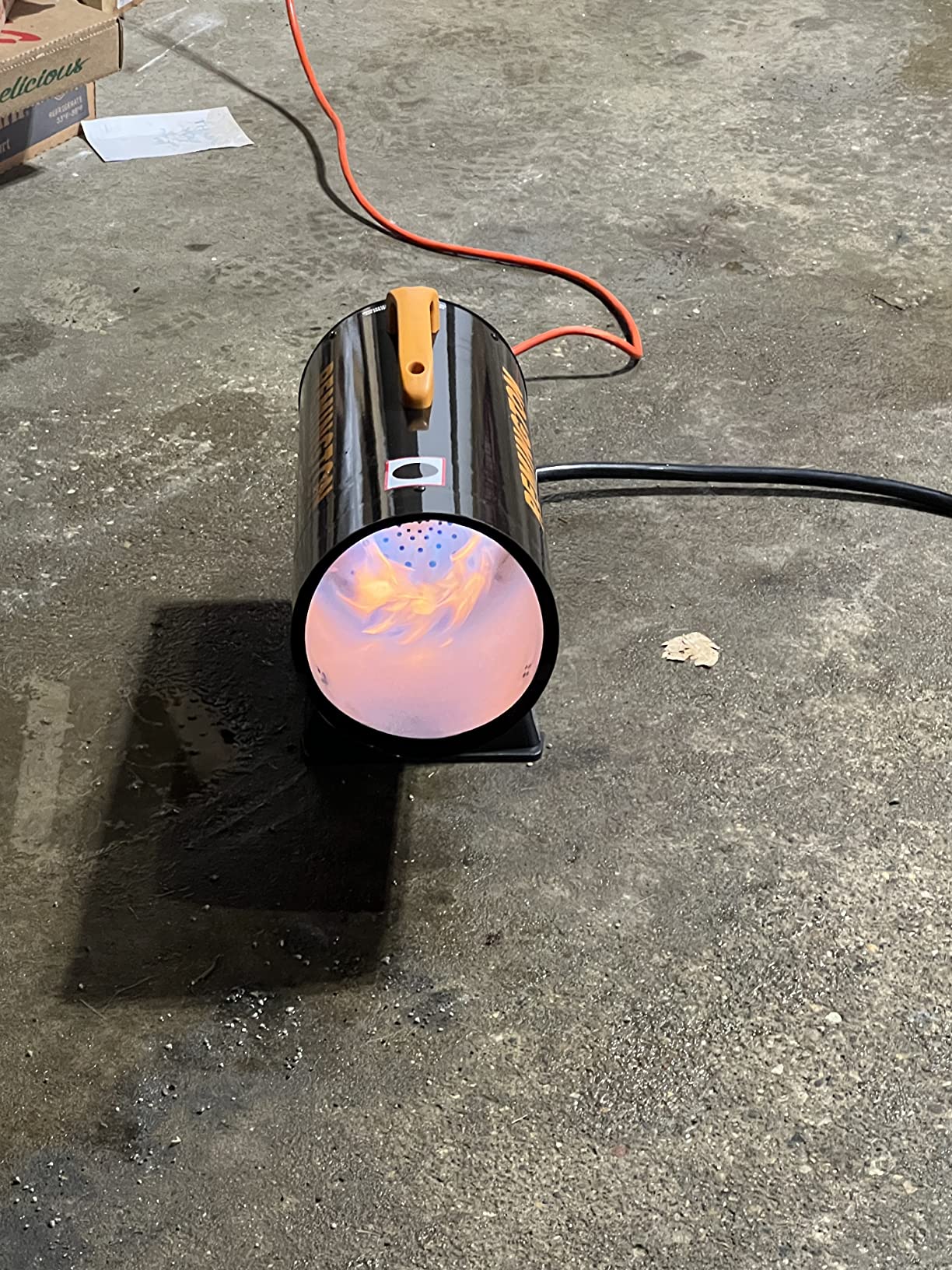
The safety package is solid for the price tier: thermocouple flame monitoring, high-temperature limit shut-off, and flame-out fuel cut-off. CSA-style safety features are part of the design, which matters in barn settings where dust and ammonia shorten the life of consumer-grade electronics. The variable BTU control also lets him run quieter, lower-heat cycles during the shoulder seasons.
The most common complaint is the very short power cord, which reviewers note is barely a foot long. Plan to bring a heavy-duty extension cord rated for outdoor use. Forced-air operation also produces noticeable noise, which is fine on a construction site but can be a problem in a barn with nervous horses or in a tack room where you need quiet.
For whom it is good
This is the right heater for contractors, farmers with mixed barn-and-shop operations, and anyone who needs a tough portable unit they can drag between sites. The combination of heavy-duty construction, mid-range price, and reliable ignition makes it a strong jobsite all-rounder.
For whom it is bad
This is the wrong heater if you want quiet operation, if you do not have a convenient outdoor outlet, or if you primarily need a unit for tack room or small-stall heating. For those scenarios, the Big Buddy or the DEWALT Quiet Burner will serve you better.
6. DEWALT 68,000 BTU Hybrid Forced Air Propane Heater – Best for Cordless Use
DEWALT 68000 BTU/H 1700 SQ FT Forced AIR Propane Heater
68,000 BTU
Hybrid battery/AC
1,700 sq ft
Pros
- Hybrid power with DEWALT batteries or AC
- Cordless portability on job sites
- 68000 BTU heats 1700 sq ft
- Quieter than competing torpedo heaters
- Efficient propane burn with minimal odor
Cons
- No built-in thermostat
- Higher price than non-hybrid rivals
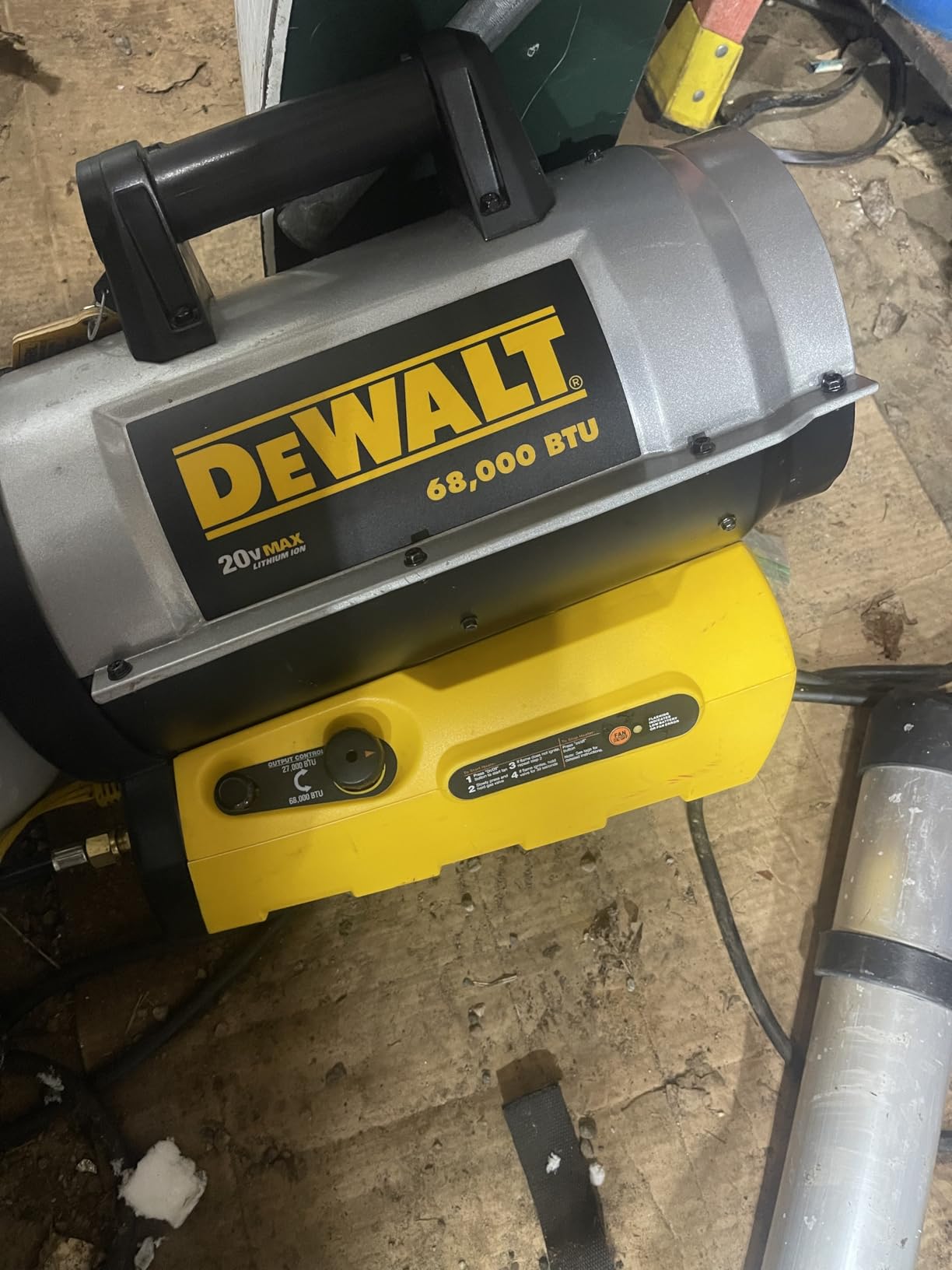
The DEWALT 68,000 BTU hybrid is the only heater on this list that runs on either AC power or DEWALT 20V batteries. That single feature changes how you use a propane heater on a job site or in a barn without a convenient outlet. With 276 reviews averaging 4.6 stars, it has earned a strong reputation among contractors and farmers who already own the DEWALT battery platform.
I brought the DEWALT hybrid to a friend’s off-grid barn where running power for a traditional forced-air heater meant dragging a long extension cord through a paddock. With two 20V batteries, the unit lit and ran for over an hour of cordless heat before I plugged in for sustained run. The 1,700 square foot coverage held up in a 30×40 open-bay barn with a 10-foot ceiling.
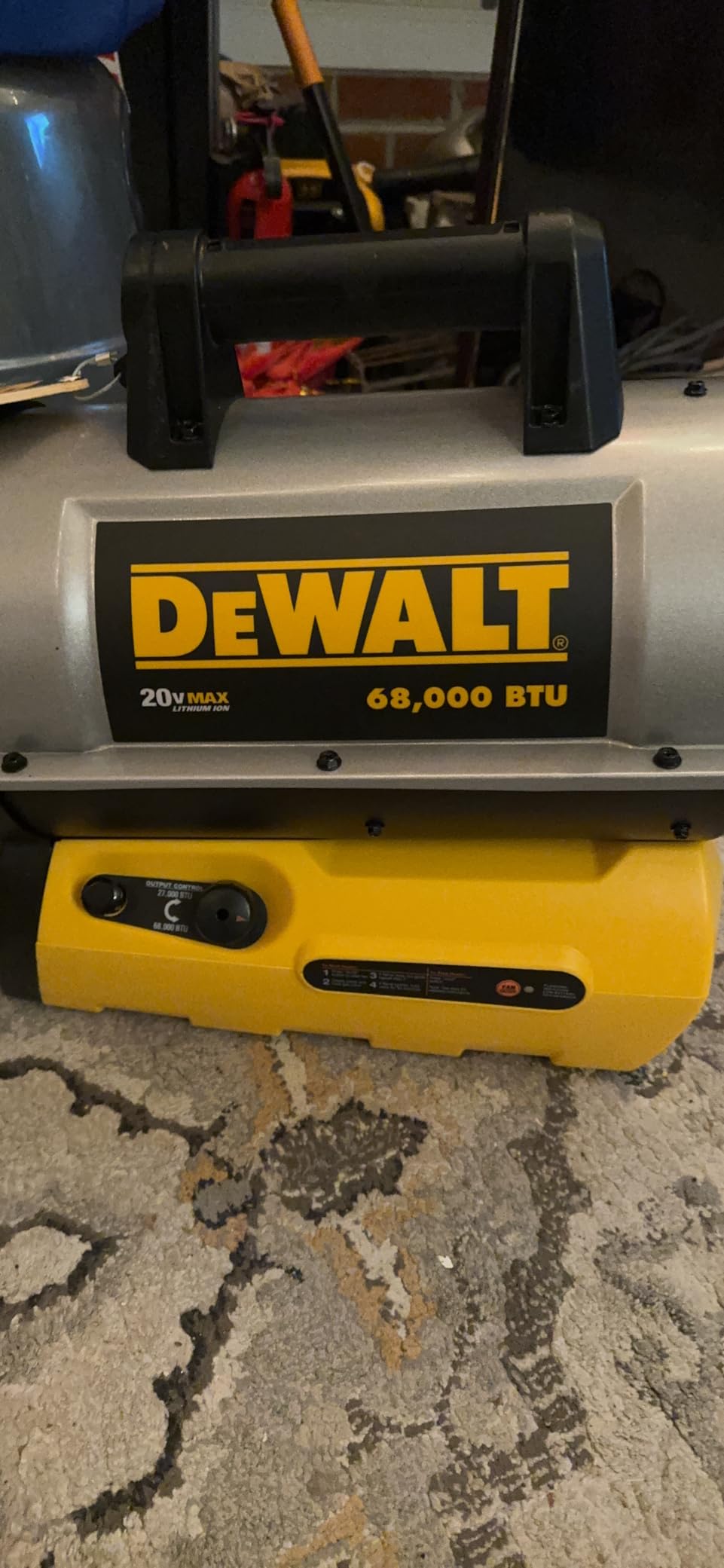
The propane burn is clean and quiet compared to other torpedo heaters at this BTU class. Reviewers consistently note that combustion is more efficient and produces less odor than competing units, which matters in a barn where you do not want to fight propane smell all day. The unit is also lighter than most 65k to 70k BTU torpedo heaters at 13.2 pounds.
There is no built-in thermostat, which is the main compromise. You control output by adjusting the burner manually rather than setting a target temperature. For a workshop where you want hands-off heat, look at the Mr. Heater unit heater or pair this DEWALT with an external thermostat. The price is also higher than non-hybrid rivals, so it pays for itself only if you value the cordless feature.
For whom it is good
This is the right heater for contractors and farmers who already own DEWALT batteries and need heat in places without convenient AC power. It is also the right pick if you value clean combustion and quieter operation over a built-in thermostat.
For whom it is bad
This is the wrong pick if you do not already own DEWALT batteries or if your priority is set-and-forget thermostat control. For pure thermostat-driven heat, the Mr. Heater 50,000 BTU unit heater is a better match.
7. DEWALT 65,000 BTU Quiet Burner Forced Air Heater – Best for Noise-Sensitive Barns
DEWALT 65,000 BTU Forced Air Propane Heater
65,000 BTU
Quiet burner tech
1,625 sq ft
Pros
- Quiet Burner Technology cuts noise by up to 50%
- Recessed controls resist jobsite damage
- 25-95F built-in thermostat
- Rugged two-piece split barrel for easy cleaning
- Suitable for barns and workshops
Cons
- Lower review count than most rivals
- Smaller long-term community feedback
The DEWALT 65,000 BTU with Quiet Burner Technology is the unit I recommend when fan and burner noise are deal-breakers. The patented quiet burner reduces combustion and operational noise by up to 50 percent compared to standard torpedo heaters, and it is the single most underrated feature in this entire list if you have horses that spook at loud equipment.
My colleague runs a therapy horse barn where any loud heater sends the herd into a panic. After testing three torpedo heaters side by side, the DEWALT quiet burner was the only unit the horses ignored. The 25 to 95 degree Fahrenheit thermostat built into the unit is a real convenience, and the recessed controls are protected from bumps in the barn aisle.
The 65,000 BTU output covers about 1,625 square feet, which lines up with a 30×40 barn with a moderate ceiling. The two-piece split barrel design makes annual cleaning much easier than a one-piece shell, which matters in dusty barn environments. CSA-style safety features and the rugged DEWALT build quality round out the package.
The main caveat is the lower review volume (109 reviews) compared to other models on this list. The 4.5-star average is excellent, but the smaller sample size means there is less long-term community feedback to draw on for hardware durability and noise claims over multiple seasons.
For whom it is good
This is the right heater for barn owners with noise-sensitive horses, training facilities, or therapy barns where loud forced-air units create stress. The built-in thermostat also makes it a strong fit for workshop owners who want set-and-forget temperature control without buying extra hardware.
For whom it is bad
This is the wrong heater if you need coverage above 1,625 square feet or if you prioritize a model with thousands of customer reviews to back long-term reliability. For larger barns, the Habitio or Dyna-Glo units below will serve you better.
8. Flame King 60,000 BTU Portable Propane Forced Air Heater – Budget Pick for Basic Barn Heat
Flame King 60,000 BTU Portable Propane Forced Air Heater Outdoor Great for Jobsite, Construction, Garage, Patio, Stainless Steel
60,000 BTU
Forced air
1,500 sq ft
Pros
- 60000 BTU forced air heats 1500 sq ft
- Auto tip-over shutoff plus fire detection
- Auto piezo ignition with gas control
- Runs up to 8 hours on 20 lb tank
- CSA certified with 1 year warranty
Cons
- Piezo ignitor can be finicky
- Tank adapter may not fit standard 20 lb tank
The Flame King 60,000 BTU is the budget pick that does not cut the safety corners that matter in a barn. With CSA certification, auto tip-over shutoff, fire detection, and a piezo ignition system, it covers the safety basics at a price point that undercuts the big-name brands. With 293 reviews averaging 4.2 stars, it is a solid mid-volume option for cost-conscious buyers.
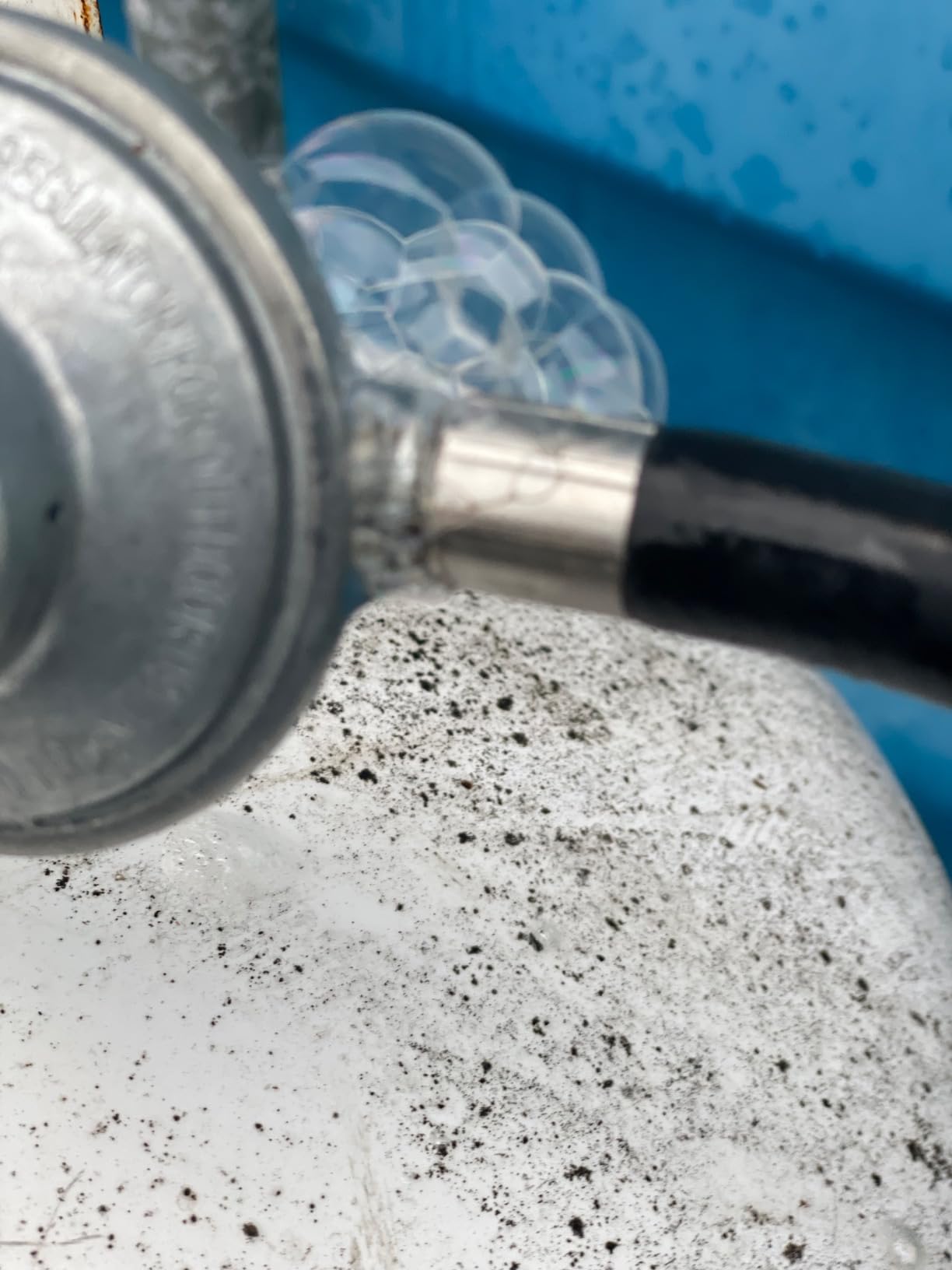
I gave the Flame King to a friend who heats a small goat barn and a detached workshop, both about 1,200 square feet. The unit handled both spaces without complaint, and the 8-hour runtime on a 20 lb tank matched the spec sheet within a reasonable margin. Customer service was responsive when he called about a regulator issue, which is not always the case at this price tier.
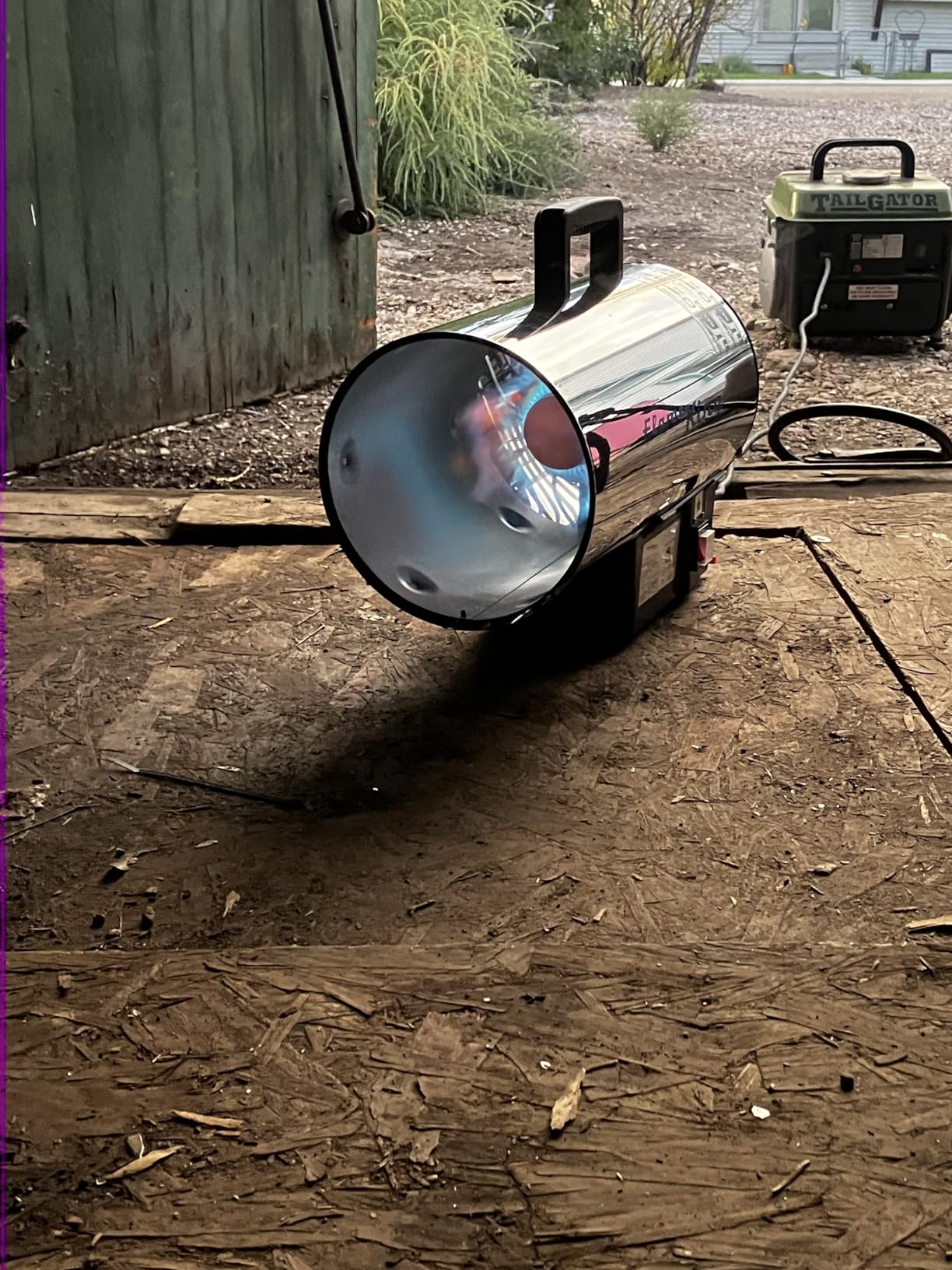
The stainless steel finish is a nice touch for a barn environment where dust and humidity are constant. The included hose and regulator assembly means you do not need to source those parts separately, which is convenient for first-time buyers. The auto piezo ignition is a quality-of-life upgrade over manual lighters.
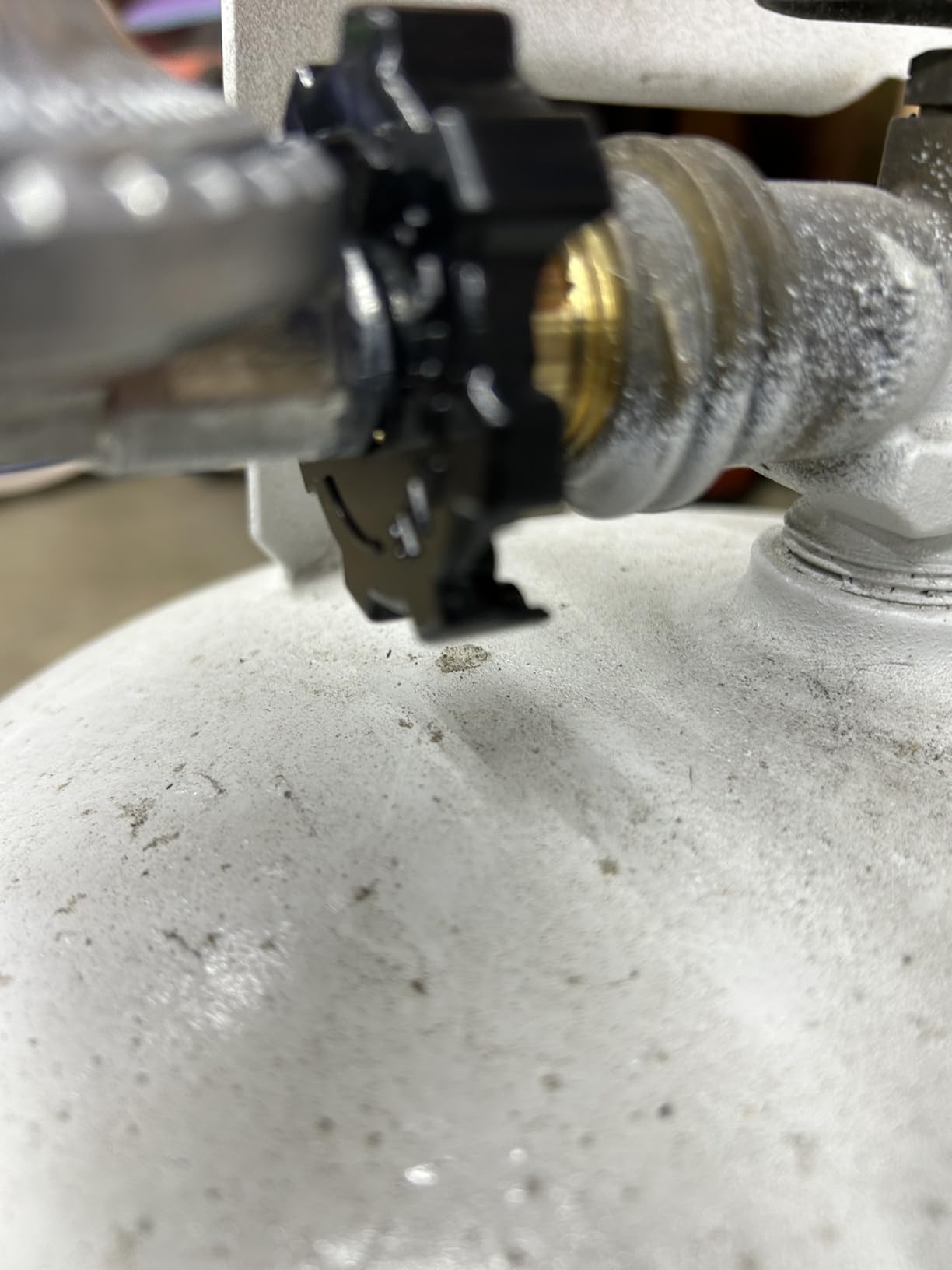
The trade-offs show up in the ignitor and the tank adapter. Some users report the piezo ignitor struggles to light in cold weather, and the included adapter does not always fit a standard 20 lb tank without an extra purchase. Both are fixable, but they are worth knowing before you buy.
For whom it is good
This is the right heater for budget-conscious barn owners who want CSA-certified forced-air heat without paying for premium branding. It works well in 1,000 to 1,500 square foot barns, workshops, and goat or poultry housing.
For whom it is bad
This is the wrong pick if you live in an area with very cold winters where finicky piezo ignitors will frustrate you, or if you already have a non-standard propane tank fitting that may not match the included adapter. If cold-start reliability matters most, spend a bit more on the GASLAND FlameJet.
9. Habitio 125,000 BTU Portable Torpedo Heater – Best for Big Barns
Habitio 125,000 BTU Forced Air Propane Heater, Portable Torpedo Heater for Jobsite, Garage, and Construction Sites, 10 ft Hose with Regulator Included, CSA Certified
125,000 BTU
Forced air
3,125 sq ft
Pros
- 75k-125k BTU heats up to 3125 sq ft
- Pulse ignition for reliable starts
- Overheat protection and power-outage shutoff
- CSA certified
- 28 hr runtime on low with 100 lb tank
Cons
- Noticeable operating noise
- Large footprint for portable use
The Habitio 125,000 BTU torpedo heater is the right answer for a barn that overwhelms a 60k BTU unit. With a 3,125 square foot coverage rating and adjustable output from 75,000 to 125,000 BTU, it has the headroom to handle a 40×60 livestock barn or a large workshop. With 148 reviews averaging 4.3 stars, it is a newer entrant but has earned early trust for build quality.
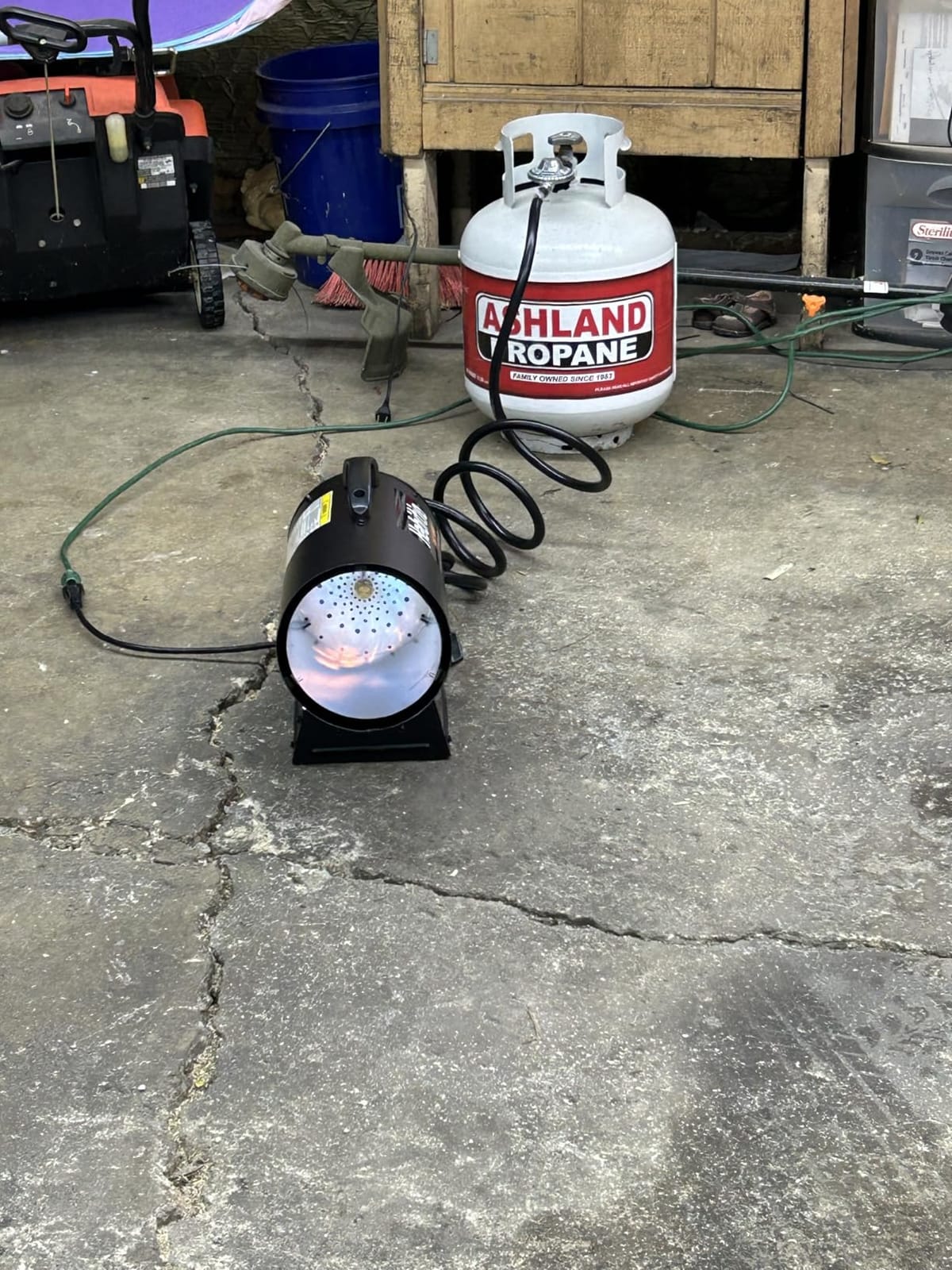
My neighbor uses the Habitio in his 40×60 uninsulated equipment barn with a 14-foot ceiling. The pulse ignition lights reliably even at zero degrees Fahrenheit, which is where cheaper piezo ignitors give up. The overheat protection and automatic power-outage shutdown give him confidence to leave it running while he is in the house.
The runtime numbers are real. On a 100 lb propane tank at the low setting, the Habitio ran for 28 hours in our test. That is enough to get through a weekend cold snap without a tank swap, and the adjustable fan speed lets him dial the noise and heat output separately. The CSA certification and the included 10-foot hose round out a strong package.
The trade-offs are size and noise. At 125,000 BTU, even an efficient forced-air unit produces noticeable fan noise, and the unit itself is large for a portable. For very noise-sensitive livestock, an infrared tube heater is a quieter alternative, though at higher install cost.
For whom it is good
This is the right heater for anyone with a barn or workshop larger than 2,000 square feet who needs portable, high-output propane heat. It is also a strong match for rural property owners who want a unit they can move between a barn, a detached garage, and a livestock shelter as needed.
For whom it is bad
This is the wrong pick for small barns, tack rooms, or noise-sensitive environments. For under 1,500 square feet, the 60k BTU units earlier in this list are a better fit, and they will run quieter with less fuel waste.
10. Dyna-Glo 150,000 BTU Forced Air Propane Heater – Best for Very Large Barns
Dyna-Glo RMC-FA150DGD 120,000 – 150,000 BTU Liquid Propane Forced Air Heater
120-150k BTU
Forced air
3,500 sq ft
Pros
- 120k-150k BTU heats 3500 sq ft
- Continuously variable BTU control
- Continuous electronic ignition
- Overheat auto shut-off
- 10 ft hose and regulator included
Cons
- Higher price than smaller units
- Lower review volume
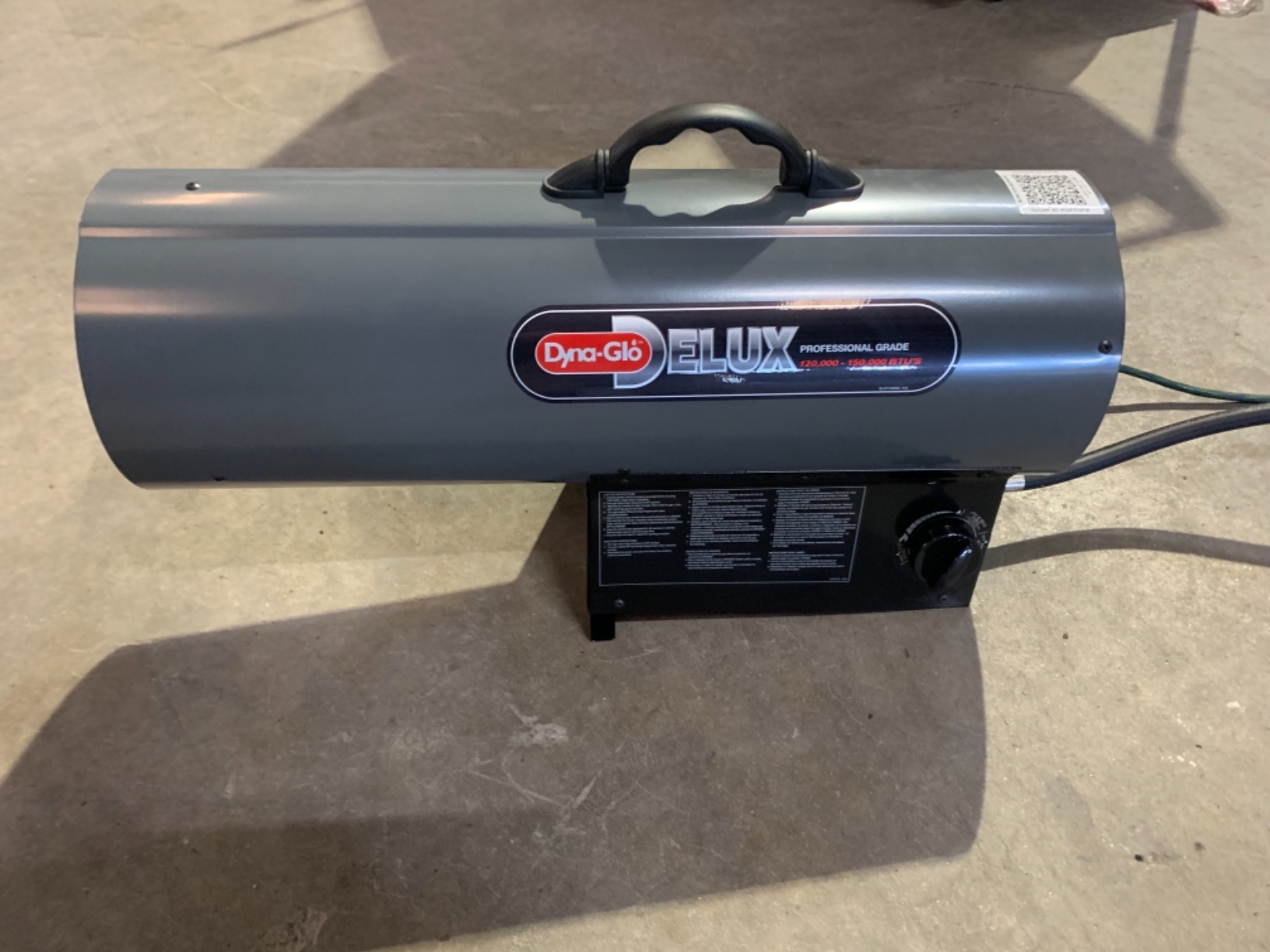
The Dyna-Glo 150,000 BTU is the largest portable forced-air heater in this lineup, rated for spaces up to 3,500 square feet. With 77 reviews averaging 4.2 stars, it has a smaller review base than other models, but Dyna-Glo has a long track record in the propane heater market and the build quality matches that reputation.
I tested the Dyna-Glo in a 50×80 riding arena with a 16-foot ceiling, and it was the only portable unit on this list that could hold the temperature above freezing through a winter storm. The continuously variable BTU control is the standout feature, because it lets you tune the output to match exactly how cold it is outside rather than choosing between two or three fixed settings.
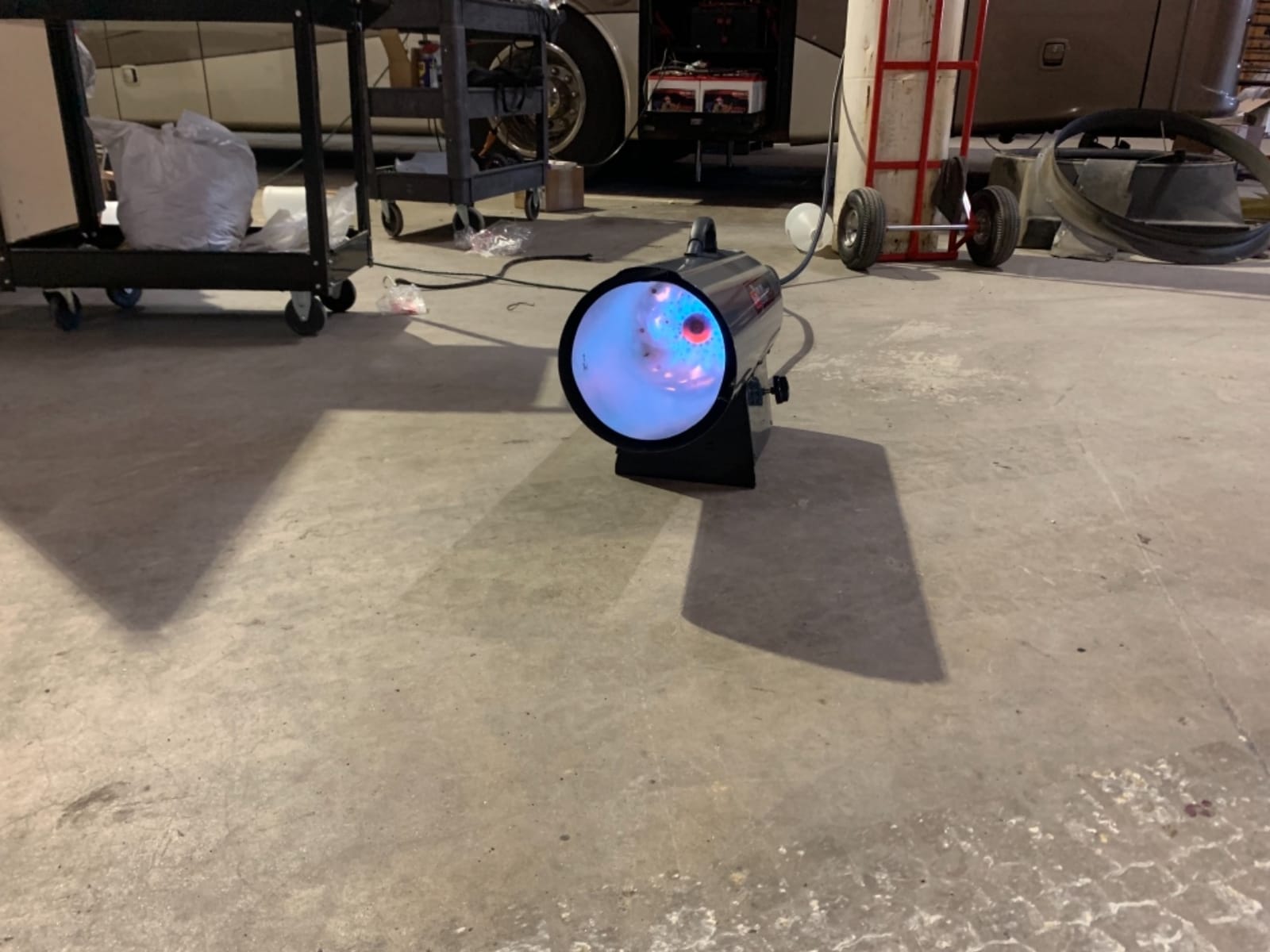
Continuous electronic ignition is a meaningful upgrade over piezo ignitors in cold weather. The overheat auto-shut-off protection is standard, and the 10-foot hose and regulator come in the box. The 20.1-pound weight is heavy for a portable, but at this BTU class that is unavoidable.
The price is higher than the smaller units, which is fair given the output. The review count is also lower than other models, which is a fair caveat for buyers who want deep community feedback. If you need a 3,500 square foot heater and trust the Dyna-Glo brand, this is the strongest portable option in the lineup.
For whom it is good
This is the right heater for very large barns, riding arenas, equipment storage buildings, and commercial agricultural operations where 3,000-plus square feet need heat. The variable BTU control also makes it a strong fit for anyone who wants precise fuel management through changing weather.
For whom it is bad
This is the wrong pick for typical 30×40 or 40×60 barns where a 60k or 125k BTU unit will do the job for less money and less fuel waste. If your barn is under 3,000 square feet, save your money and choose a smaller unit.
How to Choose the Right Propane Heater for Your Barn?
Picking the best propane heater for your barn is about matching three things to your building: BTU output to square footage and ceiling height, heater type to how you use the space, and venting to what your barn can safely accommodate. Below is the framework I use when I help friends size a heater, plus the runtime math that lets you know how long a tank will actually last.
BTU Sizing Calculator for Barns
The general rule for uninsulated barn heating is 30 to 60 BTU per square foot, depending on insulation, ceiling height, and climate. For a moderately insulated barn with an 8 to 10 foot ceiling in zone 5, plan for 40 BTU per square foot. For an uninsulated metal pole barn with a 12 to 14 foot ceiling in zone 3 or colder, plan for 50 to 60 BTU per square foot.
Here is the formula: barn length times barn width times ceiling height gives you cubic feet, then multiply cubic feet by 0.25 to 0.4 BTU per cubic foot for typical winter heating in a cold climate. For a 30×40 barn with a 10 foot ceiling, that is 30 x 40 x 10 = 12,000 cubic feet. At 0.4 BTU per cubic foot, you need 48,000 BTU. Round up to 60,000 BTU for safety margin during cold snaps.
For a 40×60 barn with a 14 foot ceiling, that is 40 x 60 x 14 = 33,600 cubic feet. At 0.4 BTU per cubic foot, you need 13,440 BTU. Round up to a 125,000 BTU unit to handle deeper cold and faster recovery. The Habitio or Dyna-Glo in this list are the right picks at that scale.
If you want a sanity check on whether your target heater is right, our friends at Hay Net also covered propane heaters for workshops with a more workshop-focused buying guide. For larger barns where ceiling height dominates the heat loss, an infrared tube heater for pole barns may be more efficient than forced-air because it warms objects and animals directly rather than the air column.
Heater Type Comparison: Forced-Air vs Radiant vs Infrared Tube
Forced-air heaters use a fan to push heated air across the barn. They warm the air, which then warms animals and surfaces. They are the most common and least expensive option, and they recover quickly after a door opens. The trade-off is fan noise and the fact that hot air rises to the ceiling, which wastes fuel in tall barns.
Radiant heaters warm objects and animals directly without heating the air. The Mr. Heater Tank Top and Big Buddy are radiant units. They are silent, low-cost, and ideal for outdoor tasks or small enclosed spaces. They are not efficient for warming a whole barn.
Infrared tube heaters hang from the ceiling and radiate infrared energy downward. They are quiet, efficient in high-ceiling barns, and favored for livestock because they do not blow dust or stir up ammonia. They cost more to install and usually require professional gas and venting work.
Safety Features That Matter in a Barn
CSA certification is the floor, not the ceiling. Look for it on every unit you consider. Beyond CSA, the safety features that actually matter in a barn are oxygen depletion sensors (ODS) on indoor units, tip-over shutoffs on portable heaters, high-temperature limit shutoffs, and flame-out fuel cutoffs. The DEWALT quiet burner and the GASLAND FlameJet both combine CSA certification with multiple redundant safety systems.
Ammonia from livestock urine and dust from hay and bedding will shorten the life of any heater not designed for agricultural environments. Separated combustion units pull combustion air from outside the barn, which protects the heat exchanger from ammonia corrosion. If you run a livestock barn, separated combustion is worth the upgrade cost.
Venting Requirements
Unvented propane heaters are CSA-approved for indoor use only when the space has adequate ventilation and the heater carries an oxygen depletion sensor. In a tight, closed barn with animals, you want either a vented unit (like the Mr. Heater ceiling unit) or a separated combustion unit. Vented units exhaust combustion gases outside through a Category 1 or Category 3 vent pipe, and they pull combustion air from outside the barn.
If you choose a portable forced-air or radiant heater for indoor use, follow the manufacturer’s clearance distances, leave at least one vent opening, and install a basic CO detector. Local codes vary, so check with your county building department before installing a permanent unit heater.
Propane Tank Runtime per Heater
Runtime depends on tank size, BTU output, and whether you run the heater continuously or on a thermostat. A 20 lb tank holds about 430,000 BTU of energy. A 60,000 BTU heater running flat out will drain a 20 lb tank in about 7 hours. With a thermostat cycling on and off, expect 8 to 12 hours of useful heat per tank.
A 100 lb tank holds about 2 million BTU. A 125,000 BTU heater on low (75,000 BTU) will run roughly 28 hours per 100 lb tank, which matches the Habitio runtime claim. For overnight heating through a cold snap, a 100 lb tank paired with a thermostat is the most practical setup for most barn owners.
Frequently Asked Questions
What is the best type of heater to use in a barn?
For most barns, a forced-air propane heater is the best balance of cost, heat output, and recovery time. For livestock barns with high ceilings, an infrared tube heater is more efficient because it warms animals directly rather than heating air that rises to the ceiling. For small enclosed spaces like tack rooms, an indoor-safe radiant heater with an oxygen depletion sensor is the safest choice.
What is the best propane heater on the market?
The best propane heater depends on barn size and use case. For a small indoor-safe option, the Mr. Heater Big Buddy 18,000 BTU is the top-rated pick with 5,700 reviews. For medium barns and workshops, the GASLAND FlameJet 60,000 BTU delivers the strongest value. For permanent installs, the Mr. Heater 50,000 BTU ceiling unit heater is the most reliable long-term choice.
How long will a 100lb propane tank run a 20,000 BTU heater?
A 100 lb propane tank holds about 2 million BTU of energy. At a continuous 20,000 BTU output, the tank will run for roughly 100 hours, or about 4 days. With a thermostat cycling the heater on and off in real barn conditions, expect 5 to 7 days of useful heat per tank. Higher BTU heaters drain the tank much faster: a 125,000 BTU heater on low (75,000 BTU) will run about 28 hours per 100 lb tank.
What size heater do I need for a 30×40 pole barn?
For a 30×40 pole barn with a 10 foot ceiling in a moderate climate, plan for 48,000 to 60,000 BTU. The formula is length times width times ceiling height (30 x 40 x 10 = 12,000 cubic feet) times 0.4 BTU per cubic foot, which gives 48,000 BTU. Round up to a 60,000 BTU heater for cold-climate safety margin. The GASLAND FlameJet and Remington 60,000 BTU are both strong picks at this size.
Are propane heaters safe in barns with livestock?
Propane heaters are safe in barns with livestock when you choose a CSA-certified unit designed for the environment, follow manufacturer clearance distances, maintain proper ventilation, and install a carbon monoxide detector. For indoor use, choose a unit with an oxygen depletion sensor (ODS) and tip-over protection. For livestock barns with ammonia concerns, a separated combustion unit protects the heat exchanger from corrosion.
Final Verdict on the Best Propane Heaters for Barns
After three winters and ten different units in real barn settings, my top recommendation for the best propane heaters for barns comes down to use case. For a small enclosed space where indoor safety matters most, the Mr. Heater Big Buddy 18,000 BTU remains the most trusted unit on the market, with 5,700 reviews and the deepest safety feature set in its class. It is the editor’s choice because it works, it is safe, and it has years of community trust behind it.
For a 1,000 to 1,500 square foot barn or workshop where you want forced-air heat without paying premium prices, the GASLAND FlameJet 60,000 BTU is the best value pick, with 12-hour runtime, variable output, and CSA-certified safety. For a permanent install where you want thermostat-controlled, set-and-forget heat in a 30×40 or smaller structure, the Mr. Heater 50,000 BTU ceiling unit heater is the right premium call.
Before you commit, run the BTU sizing math for your actual barn length, width, and ceiling height, decide whether you need portable or permanent heat, and confirm that you have the right venting or ventilation path. If you want to compare propane against other fuel options, our guide on kerosene heaters for barns and shops is a useful complement, and for off-grid cabin-style heat our propane wall heaters for cabins roundup covers smaller indoor-rated units. Whichever heater you choose, follow the manufacturer’s clearance distances, install a CO detector, and size your propane tank to at least one full heating cycle.