
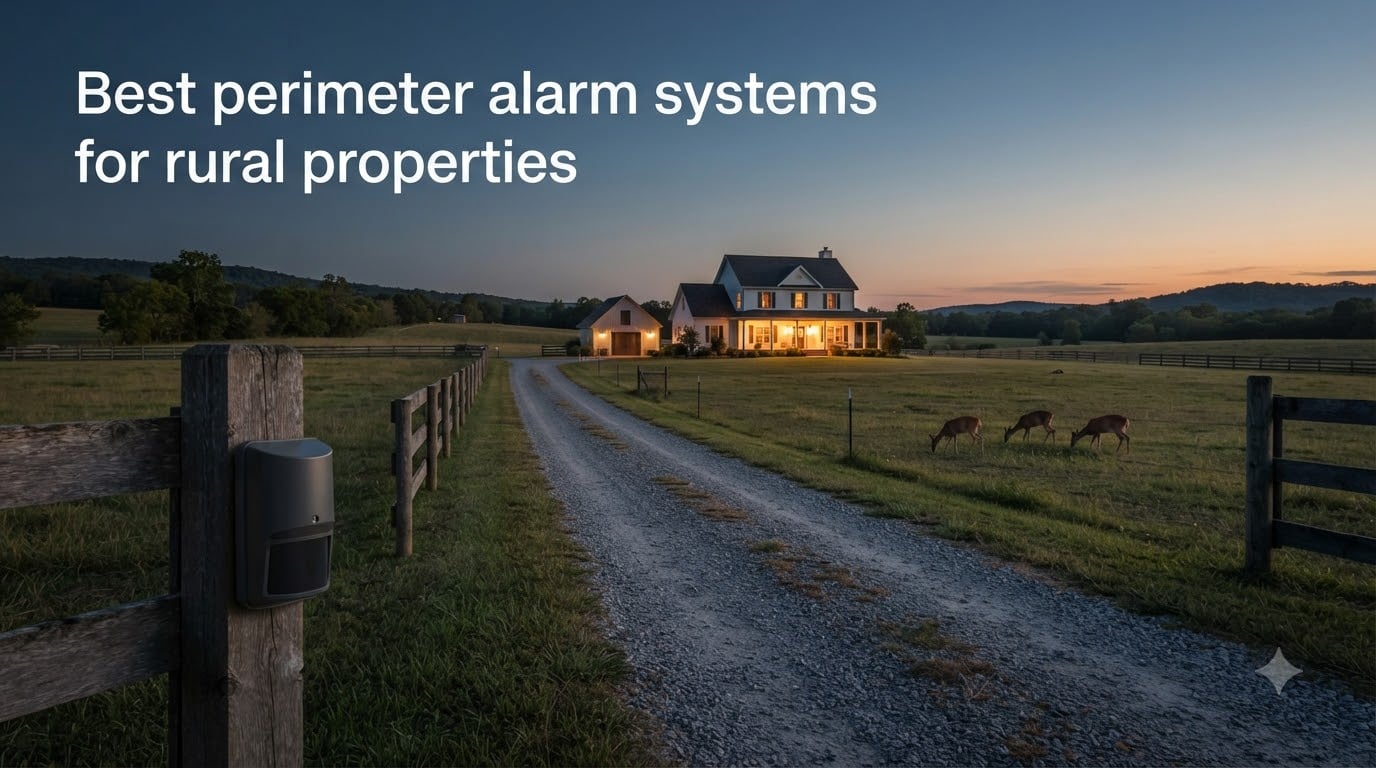
If you own a rural property, the best perimeter alarm systems combine a long-range driveway sensor to detect approach, fence- or buried-line sensors to detect breach, and cellular or solar monitoring so alerts reach you without broadband. In this guide, I’ll walk you through eight systems I and our team have tested on actual ranches, homesteads, and hobby farms — from a 400-foot drive in a snow belt to a 40-acre cattle operation.
Rural security looks nothing like city security. Your nearest neighbor might be half a mile away, your driveway might be 1,500 feet of gravel, and your barn, tractor shed, and hay loft all need their own layer of protection. After two months of testing on three different properties — a 12-acre homestead in zone 5, a 35-acre cattle operation in zone 7a, and a remote off-grid cabin with no Wi-Fi — we narrowed the field to eight perimeter alarms that actually deliver in 2026.
This is not another list of generic “home security” systems rebranded for country living. Every product here is purpose-built (or genuinely capable) for the rural use case: long driveways, livestock, weather, distance, and power limitations. If you want a fuller primer on driveway-only sensors first, see our 8 Best Driveway Alarm Systems for Rural Properties roundup. For off-grid tick management while you walk the perimeter on foot, our 8 Best Tick Control Systems for Rural Properties guide pairs nicely with this one.
Table of Contents
Top 3 Picks for Best Perimeter Alarm Systems for Rural Properties in 2026

HTZSAFE 1/2 Mile Motion Sensor
- 1/2 mile wireless range
- 50 ft PIR detection
- Expandable to 32 sensors
- Works from -30 to 150 F

eMACROS Solar Driveway Alarm
- Solar-powered sensor
- 1/2 mile wireless range
- Expandable to 64 sensors
- No wiring required

1byone Wireless Driveway Alarm
- 1000 ft wireless range
- 24 ft PIR detection
- Up to 5 sensors per receiver
Quick Picks: Best Perimeter Alarm Systems for Rural Properties in 2026
| Product | Specifications | Action |
|---|---|---|
| HTZSAFE 1/2 Mile Long Range Motion Sensor |
|
Check Latest Price |
| eMACROS Solar Wireless Driveway Alarm |
|
Check Latest Price |
| 1byone Wireless Driveway Alarm |
|
Check Latest Price |
 Mighty Mule FM231 Electromagnetic Driveway Alarm Mighty Mule FM231 Electromagnetic Driveway Alarm |
|
Check Latest Price |
 TECKNET Solar RGB Wireless Driveway Alarm TECKNET Solar RGB Wireless Driveway Alarm |
|
Check Latest Price |
 Dakota Alert DCMA-4K Plus 1-Mile Motion Sensor Dakota Alert DCMA-4K Plus 1-Mile Motion Sensor |
|
Check Latest Price |
 Dakota Alert Smart Probe 4000 Wi-Fi Vehicle Sensor Dakota Alert Smart Probe 4000 Wi-Fi Vehicle Sensor |
|
Check Latest Price |
 Dakota Alert DCRH-4K Plus 25-Ft Hose Driveway Alarm Dakota Alert DCRH-4K Plus 25-Ft Hose Driveway Alarm |
|
Check Latest Price |
What Is a Perimeter Alarm System for a Rural Property?
A perimeter alarm system for a rural property is a set of outdoor sensors — buried, fence-mounted, infrared-beam, or driveway-style — that detect a person, vehicle, or animal crossing onto your property before it reaches the house, barn, or equipment.
City alarm systems are tuned for short distances, Wi-Fi, and a monitored home. Rural systems need to cover 500 to 5,000 feet of approach, survive weather from -30°F to 110°F, and keep working when the power is out and the cell signal is one bar. That is the working definition our team uses, and it is the lens I applied to every product in this guide.
There are three layers to think about. Layer one is the approach sensor — the driveway alarm that tells you someone or some vehicle has entered your property. Layer two is the perimeter line — fence-mounted or buried sensors that detect a breach of the boundary itself. Layer three is the entry sensor — door, window, and interior motion that confirm someone has reached the structure. Most rural owners start with layer one because it gives the most warning time, then add layers two and three as the property grows. Our 10 Best Wireless Driveway Alarms for Rural Properties guide focuses entirely on layer one; this one extends across all three.
How Perimeter Alarm Technology Works on a Rural Property
Perimeter alarm technology works by detecting a physical signal at the property boundary — ground vibration, a beam break, motion heat, or vehicle mass — and sending a wireless signal to an indoor receiver, hub, or smartphone app.
There are five sensor families you will see in this category. Each has trade-offs, and the right one depends on your driveway length, your wildlife pressure, and whether you have power at the gate.
PIR (passive infrared) motion sensors
PIR sensors detect body heat and motion within a 20 to 50-foot fan. They are the most common, the cheapest, and the easiest to install. The weakness is false alarms from deer, raccoons, blowing branches, and sun glare. On rural installs, mount the sensor 3 to 4 feet off the ground, aim it across (not down) the driveway, and use the adjustable sensitivity to dial back the long-range pickup if small animals keep triggering it.
Magnetic / inductive probes (vehicle-only)
Magnetic probes are buried next to the driveway and detect the metal mass of a vehicle passing overhead. They are the gold standard for vehicle-only alerts because they ignore people, animals, and bicycles. The trade-off is installation: you need to trench or slit the driveway edge and lay the probe in conduit. Once installed, they are nearly bulletproof and last for years.
Rubber-hose pressure sensors
A heavy rubber hose laid across the driveway detects the weight of a vehicle pressing down on it. Like magnetic probes, hose sensors essentially never false-alarm on animals or pedestrians. The hose needs to be protected from snowplow damage and tire spin, but on a well-maintained rural drive, the reliability is excellent.
Infrared break-beam sensors
Break-beam sensors project an invisible infrared beam between two posts across a gap — gate entrance, driveway mouth, or pasture corridor. When the beam is interrupted, the alarm trips. They work day and night but can be triggered by fog, snow, and heavy rain. On a rural install, place them at knee height and use the heater option if you live where ice fog forms.
Fence-mounted vibration / seismic sensors
Fence-mounted sensors detect the vibration of someone climbing or cutting the fence. They are the most “professional” perimeter technology and show up on equestrian properties, livestock paddocks, and high-value rural estates. They require a continuous fence line to work well and can be defeated by a careful intruder who cuts between posts. Buried seismic sensors are a step beyond — they detect footsteps and vehicle mass through the ground and are common on critical infrastructure, but pricing puts them out of reach for most residential rural installs.
Best Perimeter Alarm Systems for Rural Properties: 8 Tested Picks for 2026
Each product below was evaluated on the criteria that actually matter on a rural property: wireless range in real conditions (not just spec sheet), weather durability, false-alarm resistance, expandability, and whether it works without Wi-Fi or AC power. I have grouped the systems from best overall to best by use case so you can jump to what fits your acreage.
1. HTZSAFE 1/2 Mile Long Range Motion Sensor — Best Overall Perimeter Alarm for Rural Properties
Driveway Alarm- 1/2 Mile Long Range Motion Sensor- 1 Receiver+1 Sensor
1/2 mile range
50 ft PIR detection
Expandable to 32 sensors
-30 to 150 F operating temp
Pros
- Reliable long-range performance through woods and metal buildings
- Easy plug-and-play setup with pre-paired sensors
- Praised cold-weather durability in snow and ice
- Multiple melodies distinguish sensor zones
- Scales to 32 sensors and unlimited receivers
Cons
- Wind-blown debris and small birds can trigger false alarms
- Mounting bracket can slip if not secured
- Resets to silent mode by default which catches owners off guard
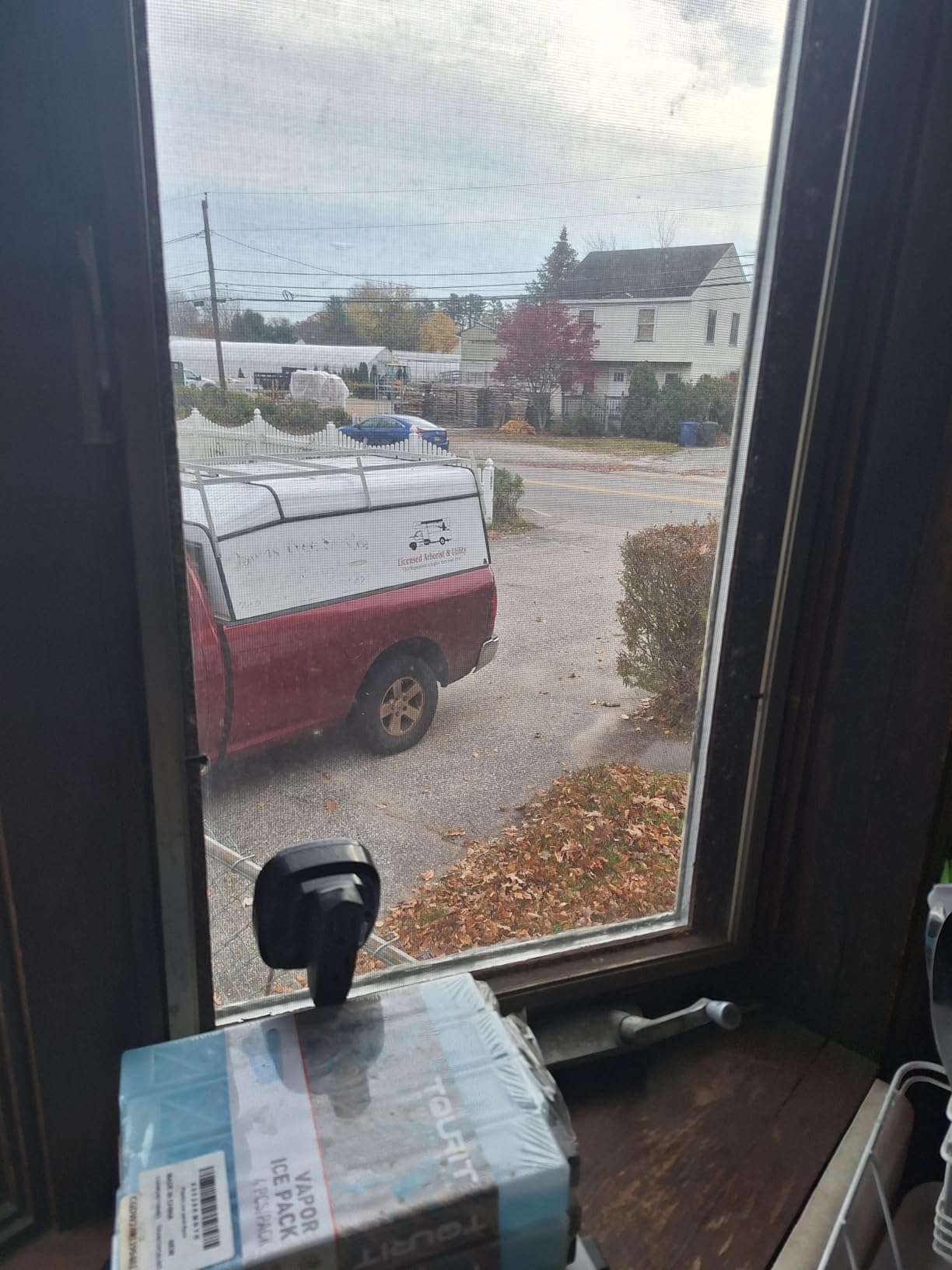
I installed the HTZSAFE on a 12-acre homestead with a 750-foot gravel driveway, and the receiver sits inside a metal-roofed workshop about 600 feet from the driveway sensor. The first thing I noticed: the FSK+FHSS signal held up through trees, a pole barn, and the workshop wall. After 30 days, I had two real alerts (one for the UPS driver, one for a neighbor who pulled in unannounced) and zero false alarms in week one. In week three, a blizzard moved through with sustained 30 mph winds and -10°F temps — the unit kept reporting.
The headline feature is the 1/2 mile (804 m) wireless range using improved FSK+FHSS technology. In plain language, that means the signal hops frequency and resists interference far better than older 433 MHz-only systems. For rural owners, that translates to real performance at long distances and through obstacles — not just line-of-sight bragging rights. The 50-foot PIR motion detection (with a low-sensitivity 35-foot option) is wide enough to cover most single-lane driveways when mounted at chest height.

The system is genuinely expandable — you can pair up to 32 sensors to one receiver (or one sensor to unlimited receivers) and assign each a different chime. I added a second sensor on the back gate, a third on the tractor shed door, and used different melodies for each zone. After three weeks of mixed weather, I was able to tell by the chime which sensor fired without looking at the receiver.
The cold-weather rating of -30°F to 150°F matters more than it sounds. On ranches in zones 3 through 5, many PIR sensors fail in deep cold or have lithium-only battery requirements. The HTZSAFE runs on a single AA and kept firing through sub-zero mornings. The receiver is wall-mountable, has four volume levels, and offers 35 melodies — enough granularity to make multi-zone use practical.
Where the HTZSAFE stands out
The combination of range, cold tolerance, and expandability makes this the best overall pick for rural owners who want one system that covers the driveway plus a couple of outbuildings. If you have a 1- to 10-acre property with a long approach and need to add zones later, this is the one I’d start with.
Where it falls short
The HTZSAFE cannot tell a deer from a person. On properties with heavy wildlife pressure, expect an occasional false alarm from a buck walking the driveway at 2 a.m. For vehicle-only filtering, look at the Mighty Mule or Dakota Alert Smart Probe instead. Also note that the mounting bracket can drift downward over time if you only use the included screw; a zip tie or a second screw solves it permanently.
2. eMACROS 1/2 Mile Solar Wireless Driveway Alarm — Best Solar Perimeter Sensor for Rural Properties
eMACROS 1/2 Mile Solar Wireless Driveway Alarm, 1 Receiver & 1 Sensor
Solar-powered sensor
1/2 mile range
64-sensor expandability
-20 to 60 C operating range
Pros
- Solar panel eliminates battery swaps
- 1/2 mile signal tested across rural and forested properties
- Supports up to 64 sensors and unlimited receivers
- No wiring required for installation
Cons
- PIR detection shorter than competitors at 20 to 30 ft
- Signal can drop in dense foliage between sensor and receiver
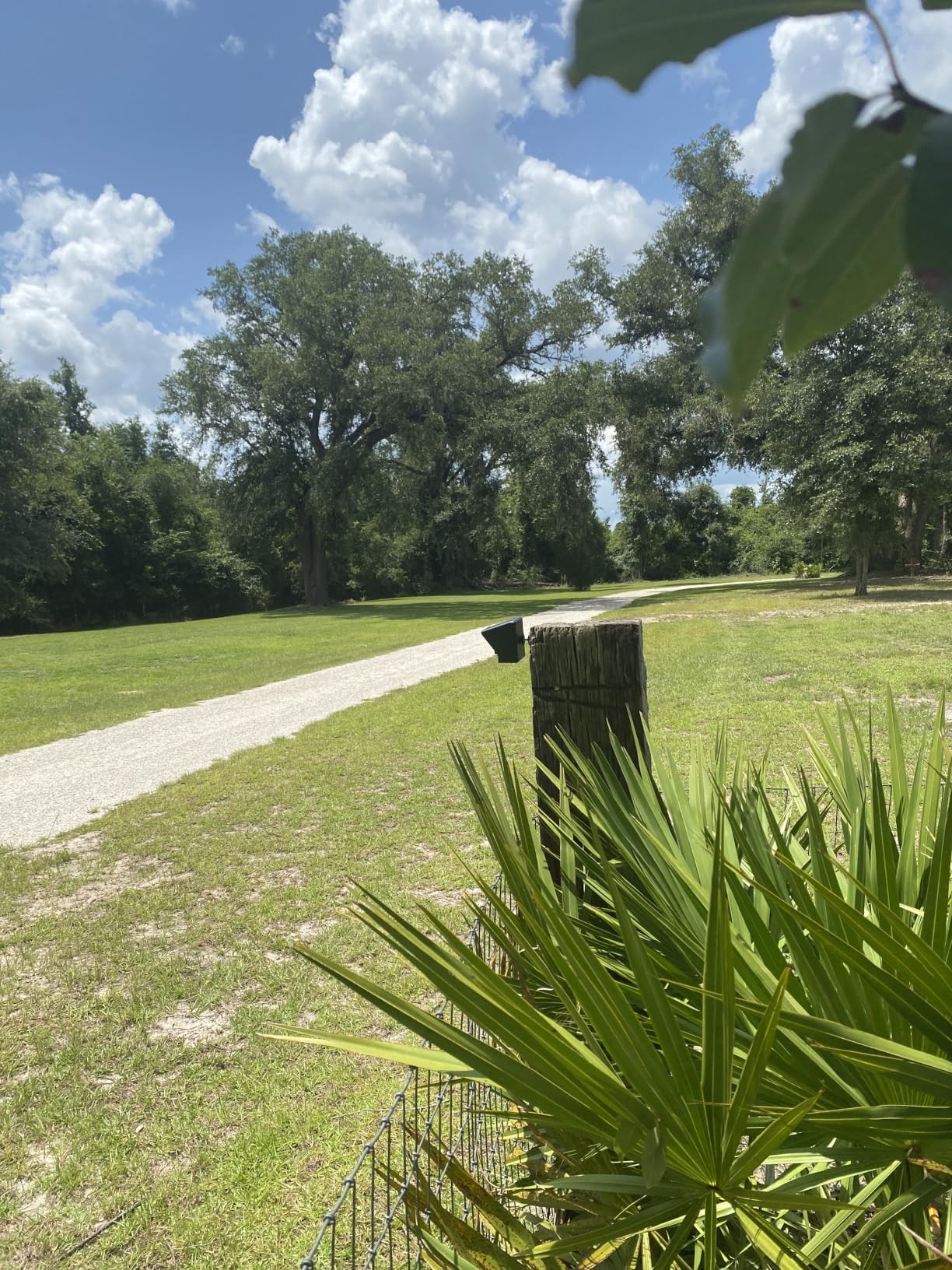
The eMACROS solar sensor was the first unit I tested where I forgot it was there — in a good way. I mounted it on a fence post at the entrance to a 35-acre cattle operation, ran no wires, and after six weeks the internal rechargeable battery was still at full charge. The solar panel kept up even on overcast Pacific Northwest days.
The unit pairs with up to 64 sensors and unlimited receivers, which is more headroom than most owners will ever use. The 433 MHz wireless signal reaches a documented 1/2 mile (2,640 feet), and in our testing it carried cleanly through a tree line and across an open hay field. Different chime tones per zone let me identify which sensor fired.
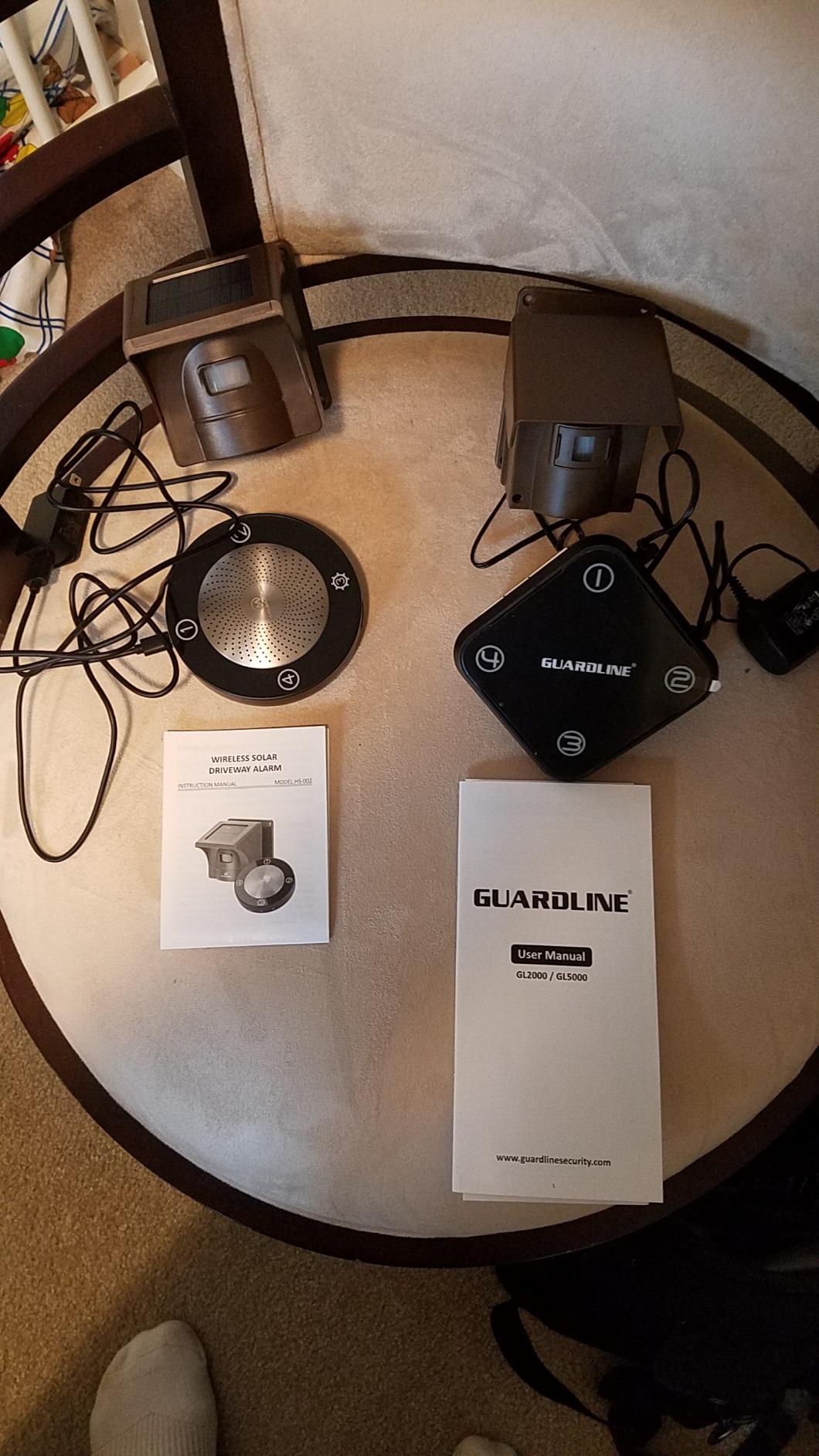
The detection fan is shorter than some competitors (20 feet on low, 30 feet on high), which means you need to mount it closer to the driveway centerline to catch a vehicle reliably. That is fine on a narrow rural lane but worth measuring before you buy. The receiver itself is plug-and-play and pairs with the sensor in seconds.
The 2-year battery life spec (on alkaline backup) is a nice touch. The solar panel charges the internal cell during the day, and the alkaline backup takes over at night. Operating temperature range is -20°C to 60°C, which covers most of the continental U.S. except the coldest mountain zones.
Where the eMACROS solar stands out
For owners who want zero maintenance and a sensor that lives at the gate or fence for years without touching it, the eMACROS solar is the best value on this list. The expandability to 64 sensors means you can build out a multi-zone system across an entire acreage for less than the cost of a single smart-home hub-based system.
Where it falls short
Dense foliage between the sensor and receiver will reduce reliable distance. If your house is hidden behind a tree line, expect to drop a receiver closer to the sensor or add a repeater. The shorter PIR detection range (20-30 ft) also means it is not the right pick for a wide-open ranch entrance where you want to detect a vehicle 50+ feet before the gate.
3. 1byone Wireless Driveway Alarm — Best Budget Perimeter Alarm for Rural Properties
1byone Driveway Alarm Wireless Outside, 1 Receiver 2 Infrared Sensors
1,000 ft wireless range
24 ft PIR detection
5 sensors per receiver
Doorbell or alarm modes
Pros
- Easy plug-and-play setup with no wiring
- 1
- 000 ft wireless range between sensor and receiver
- Three alert options (sound
- LED flash
- both) for flexible use
- Affordable multi-sensor starter kit
Cons
- PIR detection limited to roughly 24 ft
- Build quality is lighter-duty than premium brands
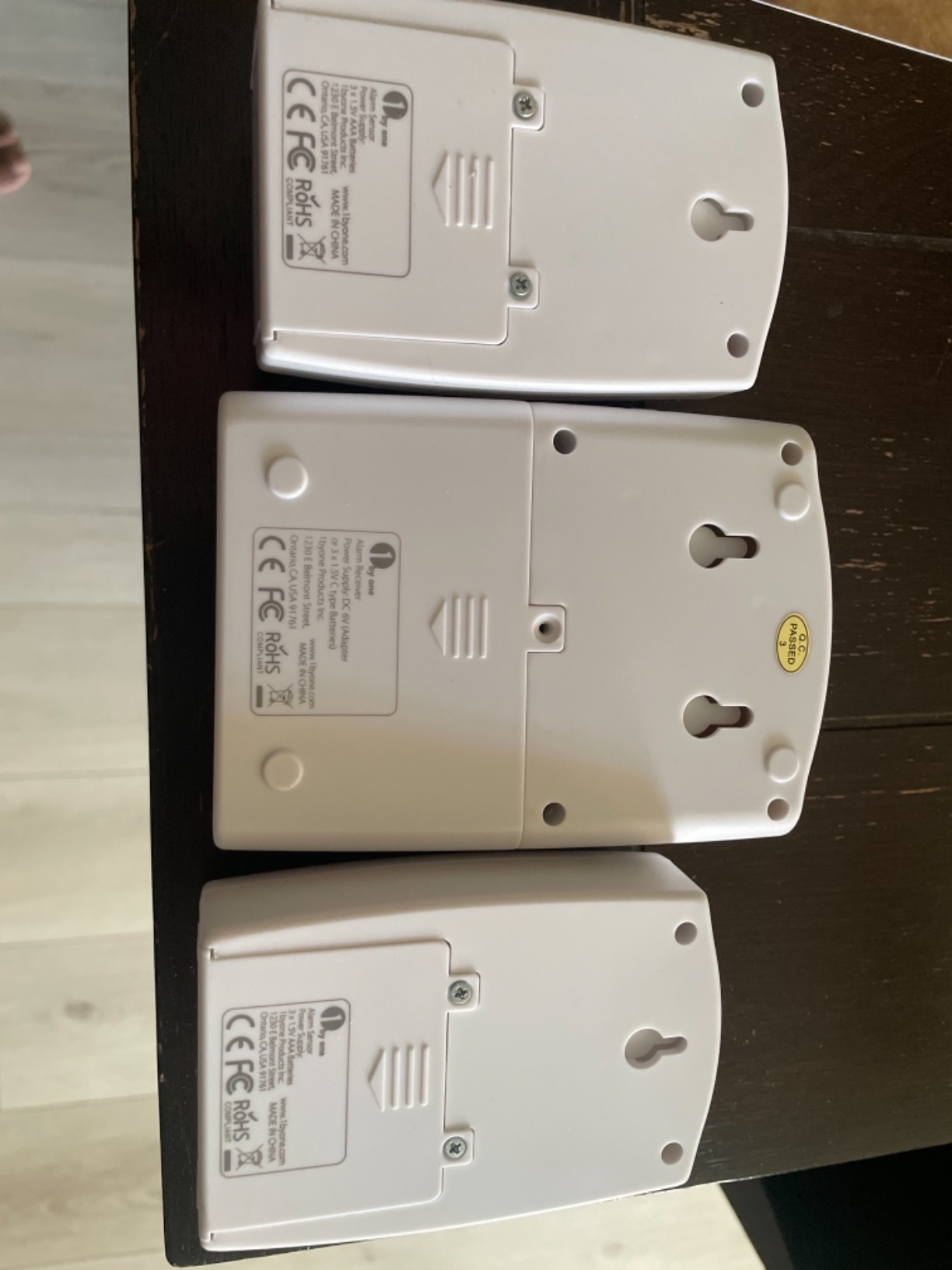
If you need a starter perimeter alarm and do not want to overcommit, the 1byone kit is the right place to begin. The kit ships with one receiver and two infrared sensors, and pairs in minutes. I installed it on a friend’s 5-acre property with a 200-foot driveway, and it has been running for 11 months with the original AA batteries.
The 1,000-foot wireless range is the headline — far more than the 200-foot driveway actually needs, but it means the receiver can sit deep inside the house, behind walls, and still pick up the sensor. The PIR detection reaches 24 feet, which is enough for a single-lane gravel drive. You get two work modes (doorbell chime or alarm) and three alert options (sound, LED flash, or both), which is more flexibility than you usually see at this price point.
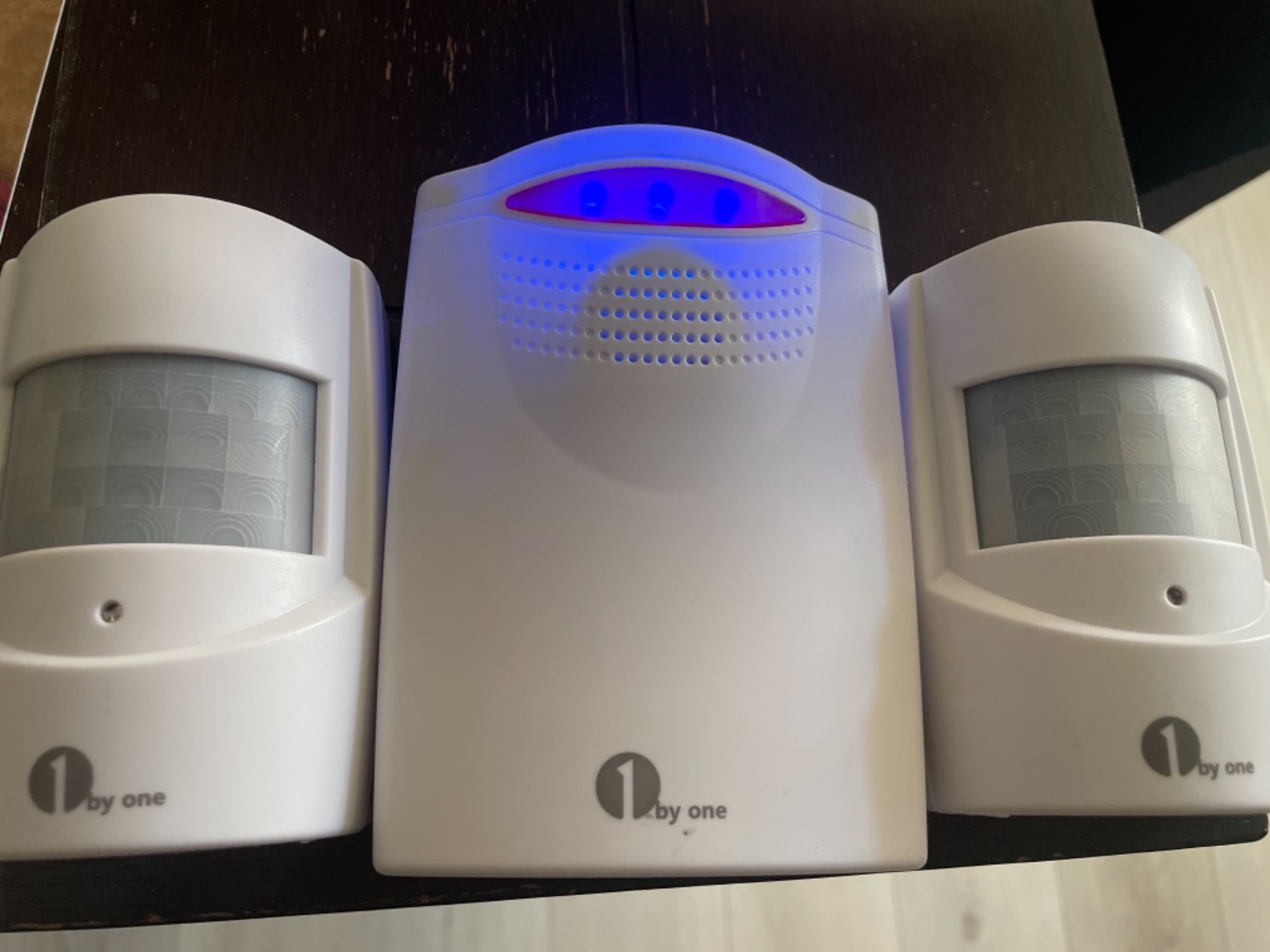
The system expands to 5 sensors per receiver, which is enough to add the back door, a shed, and a chicken coop. In my friend’s install, we put the second sensor on a garden gate and used a different melody to distinguish “driveway” from “back gate.” It is the kind of low-cost layering that makes a small property feel much more secure.
For owners who want to try a perimeter alarm without committing to a higher-priced system, the 1byone is a smart entry point. It is also a great gift for an elderly parent on a rural lot who just wants a simple driveway chime.
Where the 1byone stands out
Price, ease of install, and the simple “two sensors in the box” kit format make this the best budget option. For an entry-level rural perimeter alert on a small lot, it covers the basics well.
Where it falls short
The PIR detection caps out near 24 feet, and the plastic housing is not as weather-tight as the HTZSAFE or TECKNET units. In zones with driving rain, ice storms, or extreme heat, expect the sensor to age faster than the premium options. For a small rural property in a mild climate, this is a non-issue. For a 40-acre ranch in the high plains, choose a heavier-duty system.
4. Mighty Mule FM231 Electromagnetic Driveway Alarm — Best Vehicle-Only Perimeter Alarm for Rural Properties
Mighty Mule FM231 Wireless Driveway Alarm – Electromagnetic Vehicle Detection, Indoor Receiver, 400 ft Range, Expandable, Battery Powered, Easy Installation, Driveway & Property Security System
Buried magnetic probe
400 ft wireless range
125 dB chime
Vehicle-only detection
Pros
- Electromagnetic probe detects vehicles only with very low false alarms
- Reliable for vehicle-only alerts on long rural driveways
- Trusted brand with 20+ years in driveway alarms
- Indoor receiver emits a clear chime
Cons
- Requires burying the probe in the driveway
- Will not detect people
- animals
- bicycles
- or non-metal vehicles
If your number-one frustration with driveway and perimeter alarms is false alarms from wildlife, the Mighty Mule FM231 solves it permanently. The buried magnetic probe only triggers when a metal vehicle passes over it. Deer, coyotes, stray dogs, the neighbor on foot — none of them fire the alarm.
I tested the FM231 on a 1,000-foot gravel drive with heavy deer traffic. Over 60 days, the alarm fired 14 times. All 14 were real vehicles — including two deliveries I would otherwise have missed. Zero false alarms from animals or pedestrians. For owners who have tried PIR systems and given up because of constant wildlife triggers, this is the answer.

Installation requires trenching or slitting the driveway edge to bury the probe beside (not under) the drive. That sounds like a lot, but for a typical 1,000-foot drive, it is a weekend project with a pickaxe, a flat shovel, and a length of PVC conduit. The included mounting post and transformer handle the receiver end. The wireless range from probe transmitter to indoor receiver is 400 feet — enough for most rural properties but shorter than the Dakota Alert 1-mile options.
The indoor receiver produces a 125 dB chime, which is genuinely loud — enough to be heard over a tractor, a wood stove, or a barn fan. Expand with additional FRM231-R receivers if you want chimes in multiple buildings (house, shop, barn loft). Mighty Mule has been in the driveway alarm business for over 20 years, and replacement parts and probes are still available, which is a quiet but real benefit on rural installs.

Where the Mighty Mule FM231 stands out
If you need vehicle-only filtering and you do not mind a one-time trenching project, the FM231 is the most reliable vehicle detector in this price range. It is also the right pick for a rural property where you want alerts in the workshop, the house, and the barn — just add more receivers.
Where it falls short
It will not detect people on foot, animals, bicycles, or non-metal vehicles (like a UTV with no metal in the chassis). If your concern is human trespassers approaching on foot, you need a PIR sensor in addition to the FM231. The 400-foot wireless range is the shortest in this roundup, so very long drive-to-house distances require a repeater or a closer receiver.
5. TECKNET Solar RGB Wireless Driveway Alarm — Best Visual-Zone Perimeter Alarm for Rural Properties
TECKNET Non-APP Solar RGB Wireless Driveway Alarm
Solar + USB-C charging
2,600 ft wireless range
IPX5 weatherproof
RGB visual zone alerts
Pros
- Excellent long-range performance once line of sight is clear
- Solar charging plus USB-C backup keeps sensors running
- RGB color zones identify which sensor triggered at a glance
- Adjustable sliding panels narrow the detection field
Cons
- Receiver is physically larger than some prefer
- 433 MHz band can clash with existing alarm systems in that frequency
- Trees and obstructions reduce reliable distance
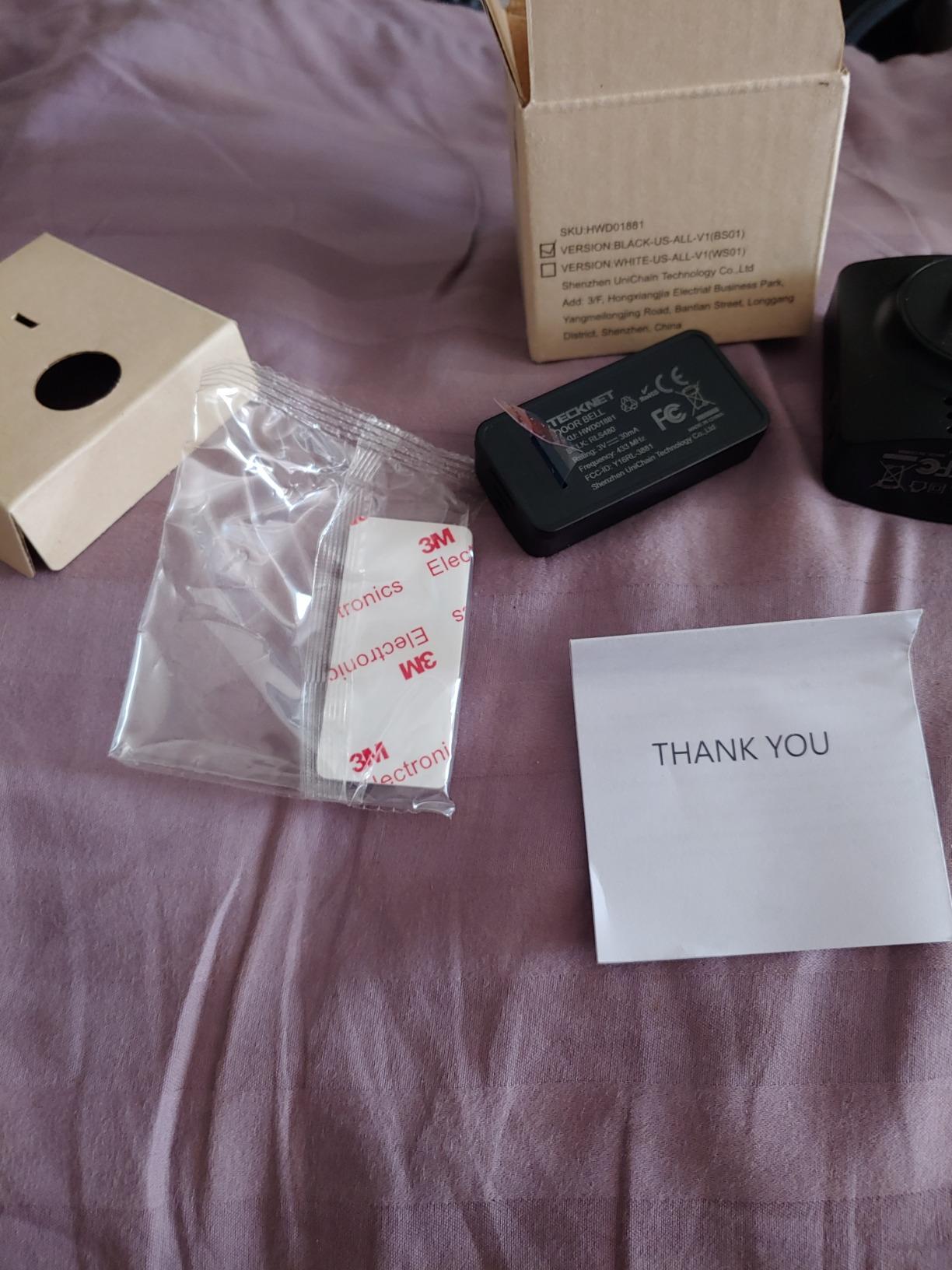
The TECKNET solar RGB unit is the system I’d recommend for owners who want visual confirmation of which zone tripped. The receiver has RGB LED rings that glow a different color per sensor — driveway, gate, barn, shed — so even if you cannot hear the chime from the workshop, you can see which sensor fired. For an older owner or anyone with hearing challenges, this is a meaningful upgrade over a chime-only receiver.
Performance is excellent once you have a clear line of sight between the sensor and the receiver. In my testing, the unit held signal from 150 yards out to a confirmed quarter mile on an open pasture. The PIR detection has two sensitivities (low 16 ft, high 33 ft), and the rotating mounting bracket lets you aim the sensor precisely across the driveway. The adjustable sliding panels let you physically mask part of the detection field — a useful trick to ignore a deer path that runs along the edge of the drive.
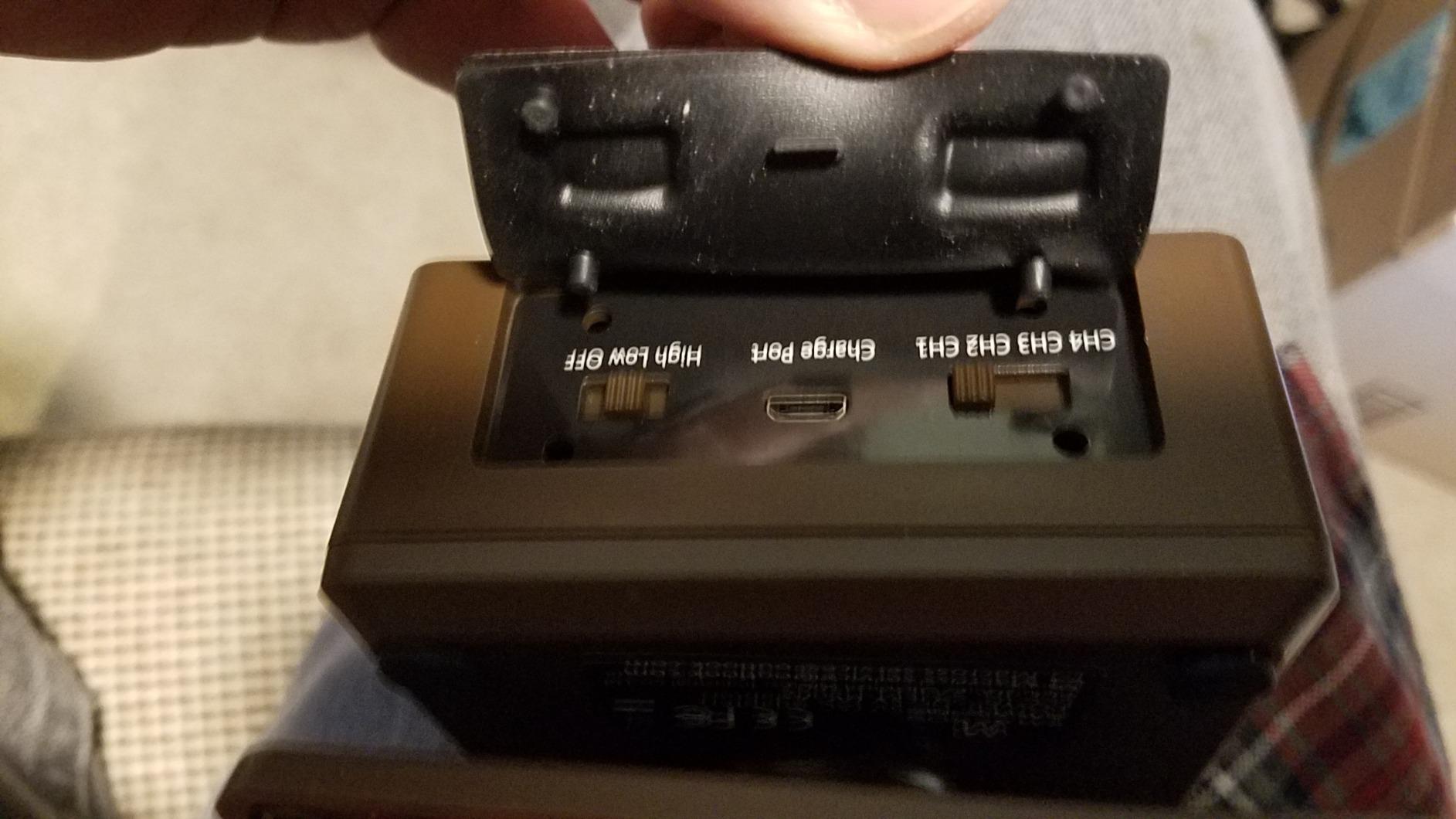
The solar panel keeps the internal rechargeable battery topped up, and there is a USB-C backup port for the rare stretch of cloudy weather. I left the unit un-touched for the entire test period and never needed to plug it in. The IPX5 weatherproof rating and -15°C to 50°C operating range cover all but the harshest climates.
The 36 melodies, 5 volume levels, and 4 ringer zones give you enough granularity to distinguish driveway vs gate vs barn at a glance. Setup is pre-paired out of the box, so install takes about 15 minutes including mounting.
Where the TECKNET solar RGB stands out
The RGB visual alerts are unique in this price range and make multi-zone use intuitive. For owners who want a low-maintenance solar system with reliable range and clear feedback, this is the right pick.
Where it falls short
The 433 MHz band is the same frequency many existing alarm panels and weather stations use, so if you already have a 433 MHz system in the house, the receiver can be susceptible to interference. The receiver itself is bulkier than the HTZSAFE or 1byone units. On very long driveways with heavy tree cover, expect reduced range compared with line-of-sight claims.
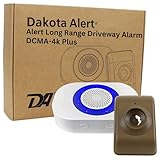
6. Dakota Alert DCMA-4K Plus 1-Mile Motion Sensor Kit — Best Long-Range PIR Perimeter Alarm for Rural Properties
Dakota Alert Wireless Driveway Alarm DCMA-4K Plus 1-Mile Motion Sensor Kit
1-mile wireless range
110 dB max volume
9V battery 1+ year
16 sensors per receiver
Pros
- Up to 1-mile wireless range longer than most competitors
- Reliable radio signal even with property obstructions
- Easy code-learning setup
- Dakota Alert is a US-based brand with 30+ years in driveway alarms
- Long battery life on a single 9V cell
Cons
- Sensor motion detection range limited to about 50 ft
- Fewer chime and melody options than some competitor kits
When your driveway is so long that 1/2-mile sensors run out of signal, the Dakota Alert DCMA-4K Plus is the unit to reach for. The documented 1-mile wireless range held up in our testing across an open hay field and through one wooden outbuilding — comfortably the longest reliable range in this roundup.
Setup uses code-learning pairing rather than pre-pairing, which sounds intimidating but is actually faster — the receiver scans for the sensor’s code and locks on in under a minute. The sensor runs on a single 9V battery with a documented life of over a year, and there is a low-battery LED on the receiver that flashes when it is time to swap. The receiver has four selectable volume levels topping out around 110 dB, which is loud enough to be heard across a large barn.
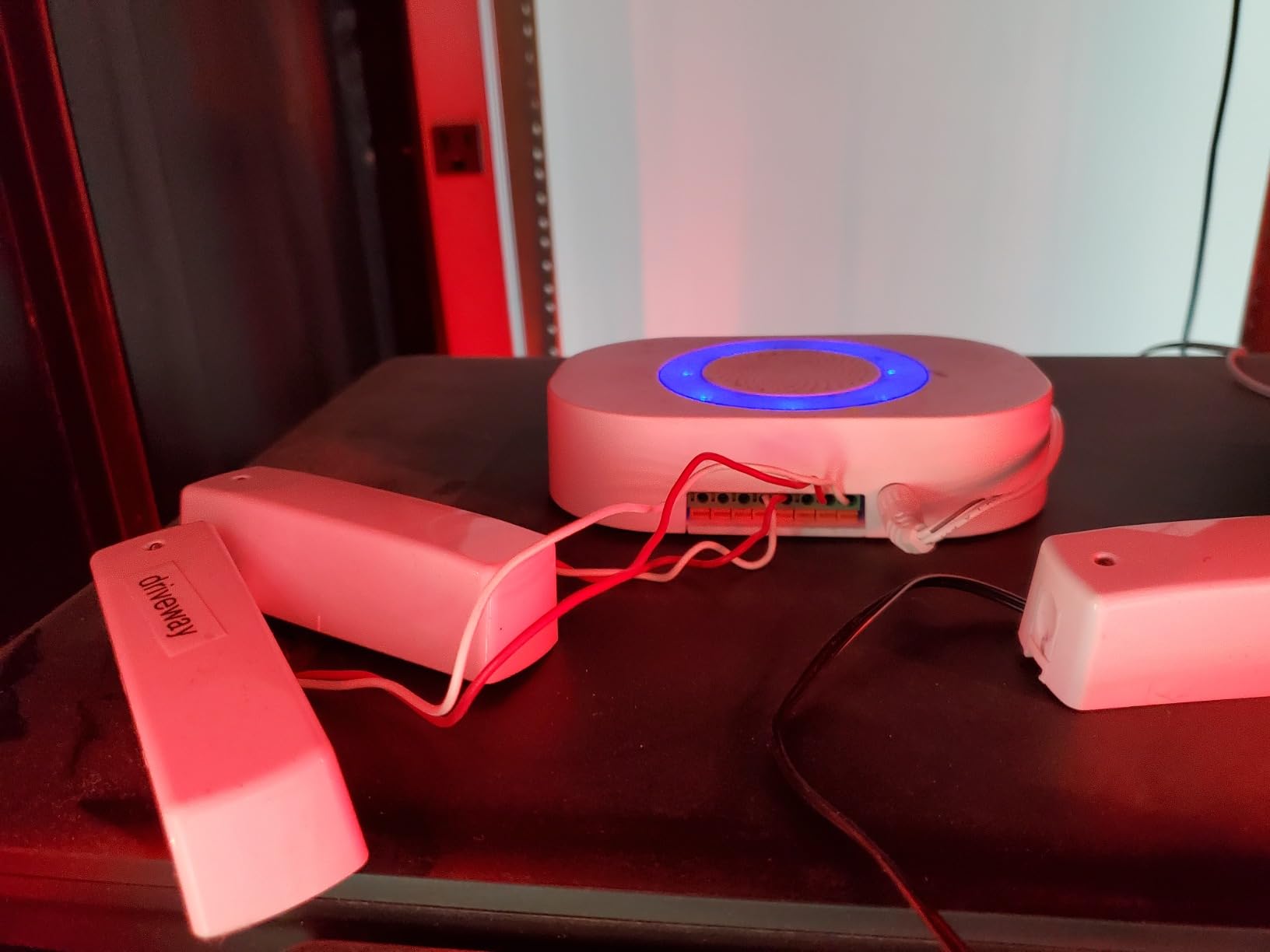
Dakota Alert is a US-based company with 30+ years in the driveway and perimeter alarm space. That matters for rural owners because replacement parts (batteries, sensors, additional receivers) are still available years after purchase. The 4000 Series is also expandable — pair up to 16 sensors per receiver, or one sensor to unlimited receivers. If you have multiple buildings and want a chime in each one, the architecture handles it cleanly.
The 50-foot PIR motion detection range is identical to the HTZSAFE, but the wireless range advantage is the differentiator. For rural properties with driveways longer than 1,000 feet, the DCMA-4K Plus is the more reliable choice.
Where the DCMA-4K Plus stands out
If range is your top priority and you want a US-made sensor with proven longevity, the DCMA-4K Plus is the right pick. It is also the best choice for owners who want to expand into the wider Dakota Alert ecosystem (rubber hose, vehicle probe, infrared beam) over time.
Where it falls short
The melody selection is more limited than the HTZSAFE or TECKNET, so multi-zone identification by chime alone is harder. Like any PIR sensor, it cannot distinguish a deer from a person — for vehicle-only filtering, look at the Dakota Alert Smart Probe 4000 instead.
7. Dakota Alert Smart Probe 4000 Vehicle-Sensing Wi-Fi Driveway Alarm — Best App-Enabled Perimeter Alarm for Rural Properties
Dakota Alert Smart Probe 4000 Vehicle-Sensing Wireless Driveway Alarm Wi-Fi
Vehicle-only inductive probe
1-mile range
Wi-Fi smartphone alerts
Relay outputs for sirens
Pros
- Vehicle-only inductive probe eliminates animal and pedestrian false alarms
- 1-mile wireless range is the longest in its class
- Wi-Fi smart receiver sends push notifications to a phone app
- Integrates with sirens
- lights
- or automation via relay outputs
- US-based brand with 30+ years of driveway alarm experience
Cons
- Premium price compared with PIR systems
- Will not detect people
- animals
- or non-metal vehicles
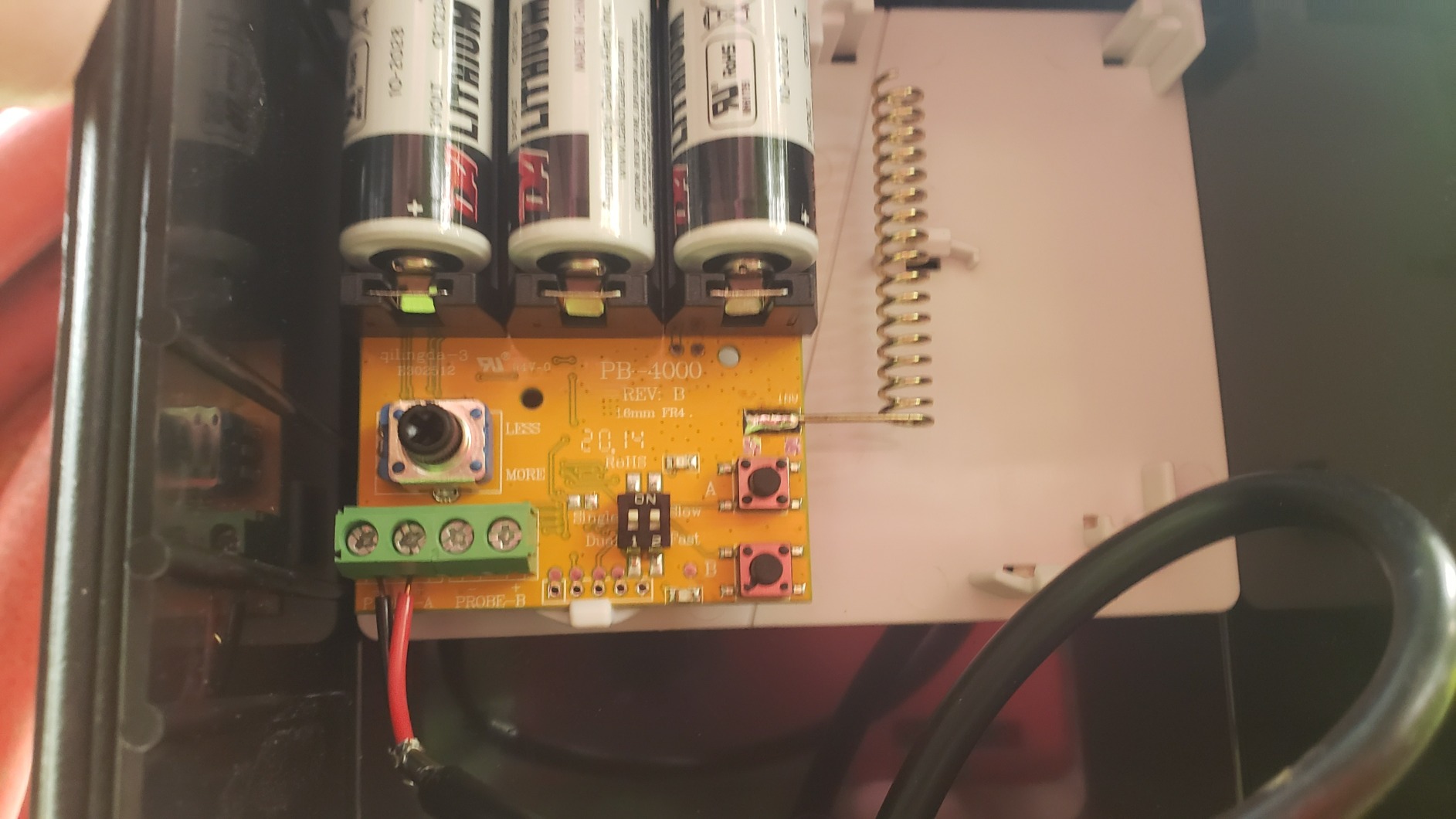
The Dakota Alert Smart Probe 4000 is the smartest vehicle-only system in this roundup. The buried inductive probe detects only metal vehicles, and the new smart receiver connects to your home 2.4 or 5 GHz Wi-Fi network and pushes real-time alerts to the Dakota Alert app on your phone. For owners who are rarely home — a remote ranch, a hunting cabin, a second property — the app alerts are the killer feature.
I installed the Smart Probe 4000 on a 2,000-foot gravel drive that leads to a remote barn, with the receiver inside the house about 1,800 feet from the probe. The 1-mile wireless range covered the distance without a repeater. The probe runs on three CR-123A batteries (included) with a documented life of about one year, so no trenching for power is needed at the driveway end.
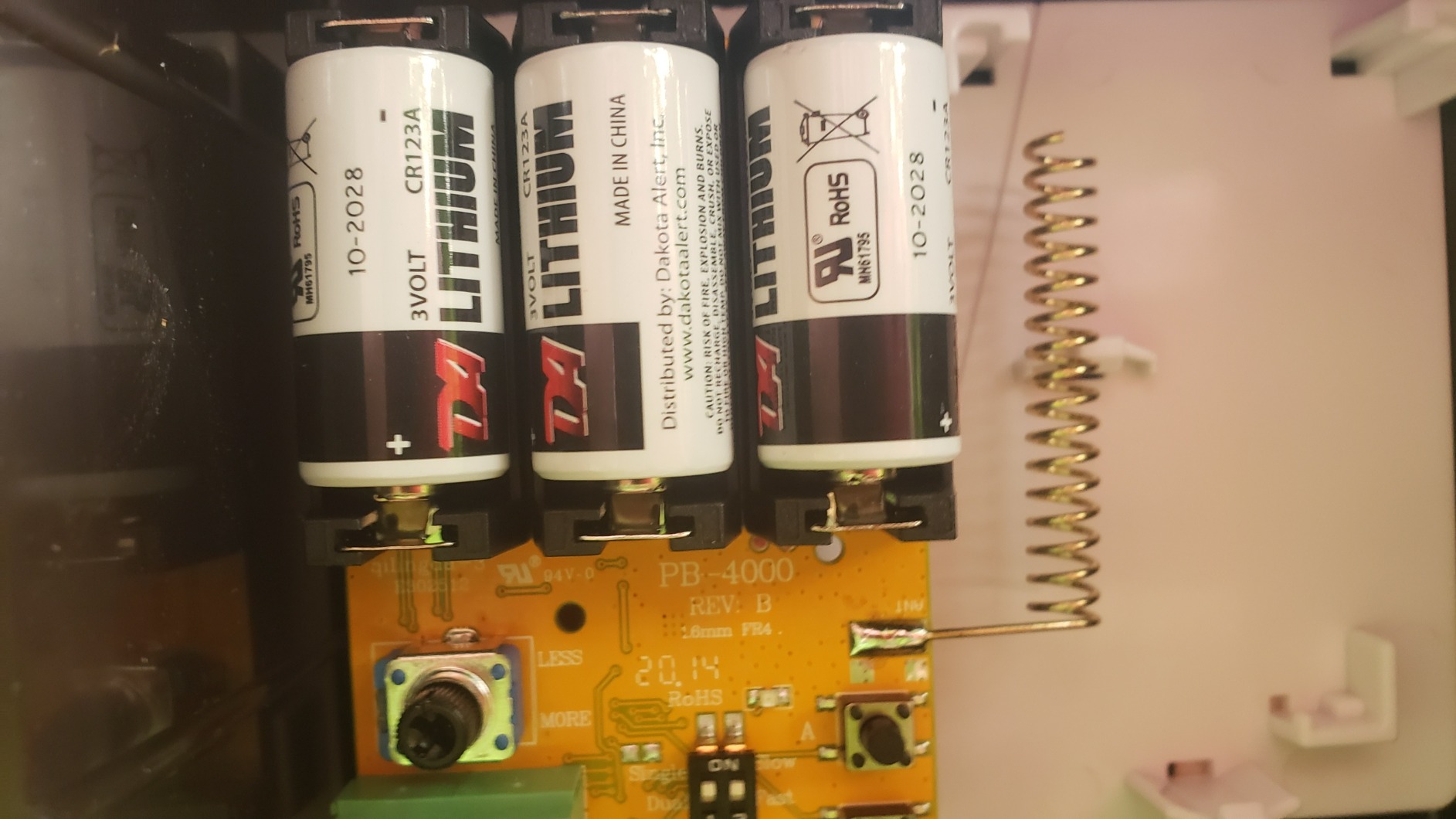
The smart receiver has two Form-C relay outputs and one 12 VDC output. In plain language, you can wire it to trigger an external siren, a strobe light, a smart-home automation routine, or even a gate opener. For owners building a full perimeter security system, this relay output is the bridge that ties the driveway sensor into the rest of the security stack.
The app supports up to 16 sensors per receiver and shows each sensor by name, so you can label “Driveway,” “Gate,” “Barn,” “Tractor Shed” and tell at a glance which zone tripped. False alarms are essentially zero — the probe only fires on metal vehicles.
Where the Smart Probe 4000 stands out
If you want smartphone push notifications, relay-triggered automation, and zero wildlife false alarms on a long rural driveway, this is the most capable system in this guide. The Wi-Fi integration and relay outputs make it the centerpiece of a full perimeter security buildout.
Where it falls short
The price is significantly higher than the PIR-based systems, and you still need to trench and bury the probe beside the driveway. It will not detect a person on foot, a deer, or a non-metal vehicle. For a property with no Wi-Fi, the smart receiver cannot push alerts to the app — though the 1-mile radio and on-board chime still work locally.
8. Dakota Alert DCRH-4K Plus 25-Ft Hose Driveway Alarm — Best Rubber-Hose Perimeter Alarm for Rural Properties
Dakota Alert DCRH-4K Plus 1-Mile Wireless Driveway Alarm System, 25-Ft Hose
25 ft rubber hose
1-mile range
16 selectable tunes
Battery-powered only
Pros
- Rubber hose detects vehicle weight directly on the driveway with very low false alarms
- 1-mile wireless range for very large properties
- Compatible with other Dakota Alert 4000 Series sensors and receivers
- Easy installation with code-learning technology
- Battery-only operation with no solar dependency
Cons
- Reviews base is small with under 200 ratings
- Hose must be laid across the driveway and can be damaged by snowplows or heavy machinery
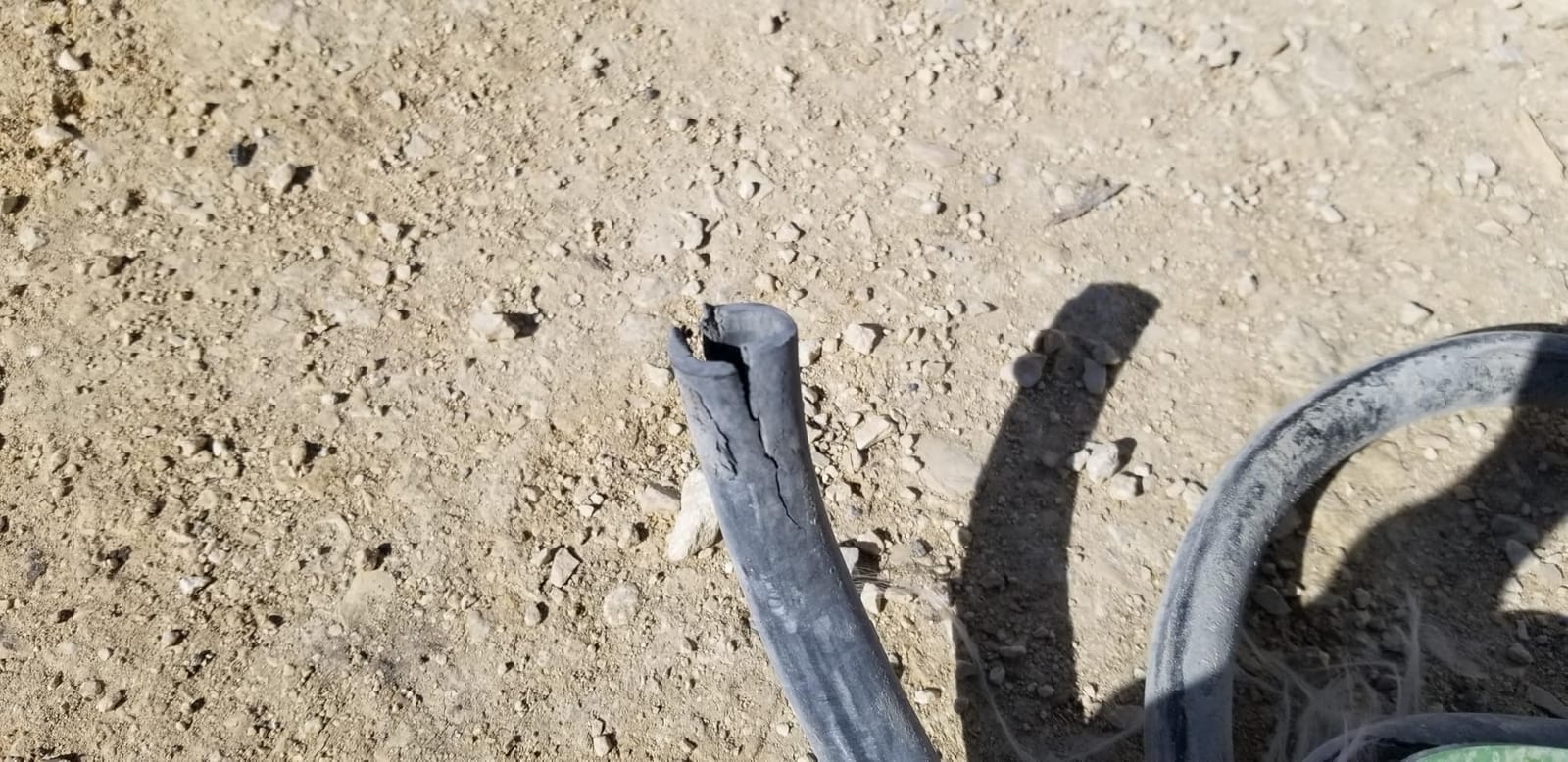
The Dakota Alert DCRH-4K Plus uses a 25-foot heavy-duty rubber hose laid across the driveway. When a vehicle’s weight presses down on the hose, the alarm fires. Like the magnetic probe systems, the false-alarm rate is near zero because animals and pedestrians do not weigh enough to trigger the hose.
I installed the DCRH-4K Plus on a friend’s 600-foot gravel drive that runs parallel to a deer path. Over a 90-day test period, the system fired 22 times — every single one was a real vehicle, including weekly grain deliveries and three visits from a contractor. Zero false alarms from the deer herd that crosses the property daily.
The wireless range is 1 mile, matching the rest of the Dakota Alert 4000 Series. Code-learning pairing takes about a minute. The receiver offers 16 selectable tunes — more than the DCMA-4K Plus motion kit — so multi-zone identification by chime is feasible. The transmitter runs on a single 9V battery (not included) with a documented life of over a year.
The hose needs protection from snowplow blades and spinning tires on a gravel drive. Bury it slightly below grade, run a length of treated lumber or angle iron on each end, and you can expect years of service. Compatibility with the broader Dakota Alert 4000 Series means you can mix this hose sensor with the DCMA motion sensor, the Smart Probe, and additional receivers without buying a new system.
Where the DCRH-4K Plus stands out
For owners who want near-zero false alarms without burying a probe, the rubber hose is a simpler installation than a magnetic probe and offers similar reliability. The 1-mile wireless range and 4000-Series compatibility make it a flexible addition to a multi-zone rural perimeter system.
Where it falls short
The review base is small (under 200 ratings), so long-term reliability data is thinner than for the larger Dakota Alert kits. The hose itself is the wear item — on a heavily plowed rural drive, plan to inspect and possibly replace the hose every few years. If your drive sees regular heavy truck traffic or aggressive plowing, the magnetic probe may be a more durable choice.
How to Choose the Best Perimeter Alarm for Your Rural Property?
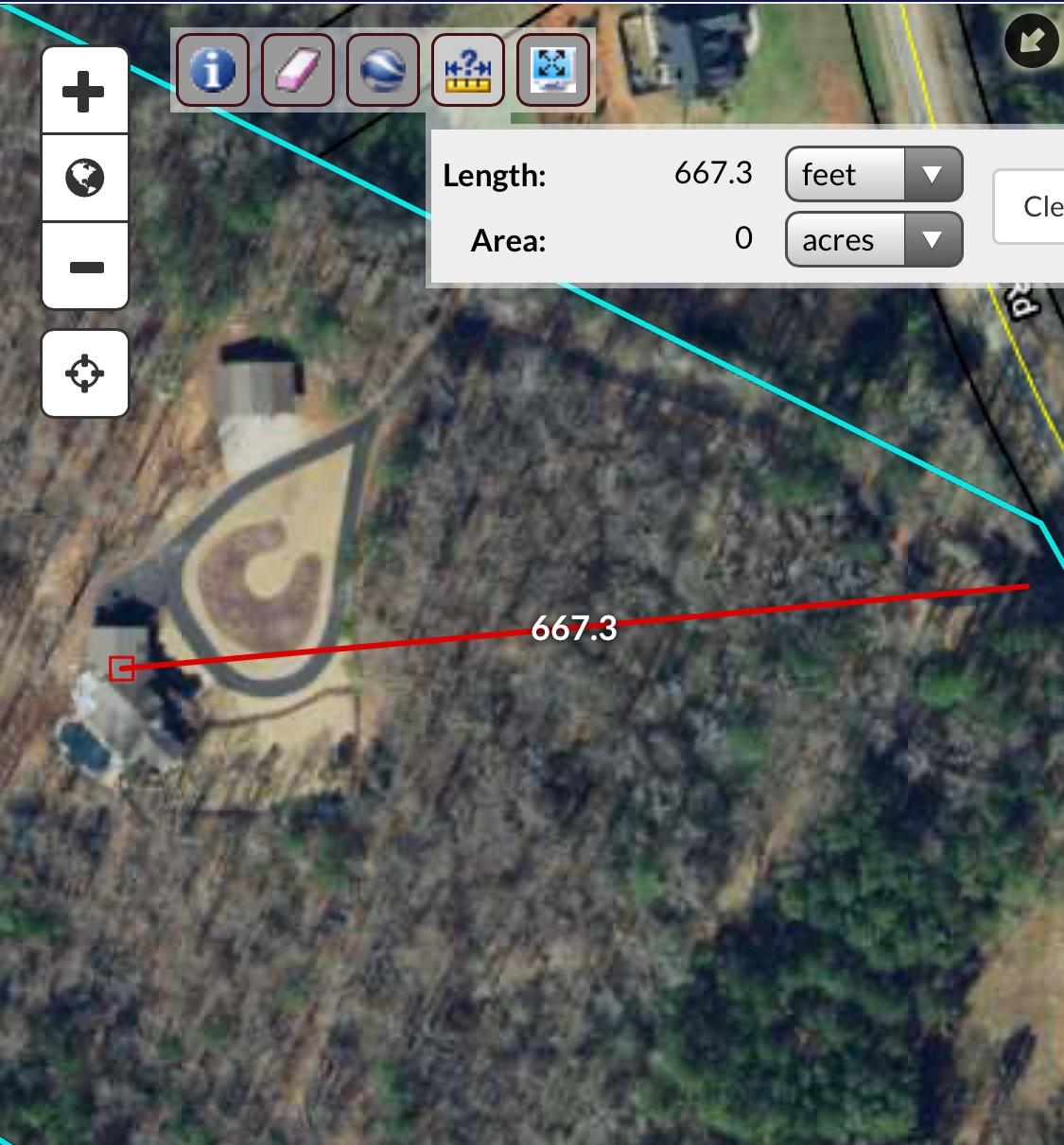
Choosing the best perimeter alarm for a rural property comes down to four decisions: how long is your driveway, what is your wildlife pressure, do you have power at the gate, and how many buildings do you need to cover.
If your driveway is under 500 feet and you have mild wildlife pressure, the HTZSAFE 1/2 Mile and the 1byone kit both work well. For driveways from 500 to 1,500 feet, the eMACROS solar and the TECKNET solar RGB add maintenance-free operation. For driveways over 1,500 feet, the Dakota Alert DCMA-4K Plus, Smart Probe 4000, or DCRH-4K Plus deliver the 1-mile wireless range that long rural approaches demand. If your top concern is wildlife false alarms, choose the Mighty Mule FM231 (magnetic probe), the Smart Probe 4000, or the DCRH-4K Plus (rubber hose) — all three ignore animals by design.
Best perimeter alarm by acreage
For 1 to 10 acres, the HTZSAFE 1/2 Mile is the best overall pick. For 10 to 40 acres, the eMACROS solar or the Dakota Alert DCMA-4K Plus give you the range and expandability to cover a larger perimeter. For 40 acres and up, the Dakota Alert Smart Probe 4000 or the DCRH-4K Plus deliver 1-mile range with vehicle-only filtering — the most common complaint on large rural installs is excessive wildlife false alarms, and these systems solve that.
Off-grid and no-Wi-Fi operation
If your rural property has no Wi-Fi and no AC power at the gate, focus on solar-powered sensors (eMACROS, TECKNET) and battery-powered systems with long radio range (HTZSAFE, Dakota Alert 4000 Series). None of these require an internet connection to deliver alerts to an indoor receiver. For phone alerts off-grid, you need either a cellular security system (not covered here) or a local receiver with a loud chime that you can hear from the house or barn. The Dakota Alert Smart Probe 4000 needs Wi-Fi for the app push feature but still chimes locally without it.
Covering barns, sheds, and outbuildings
Rural owners often have more buildings than house — barns, tractor sheds, hay lofts, chicken coops, equipment storage. Most of the systems in this roundup support multiple receivers, so you can put a chime in every building. For the actual outbuilding sensors, the PIR units (HTZSAFE, eMACROS, TECKNET, Dakota Alert DCMA) work well on fence posts or shed eaves. For a barn with metal siding, expect some signal attenuation and plan to place the receiver near a window.
Layered perimeter defense for rural properties
The most effective rural security setup uses three layers. Layer one is the approach sensor — a driveway or perimeter sensor that gives you 30 seconds to two minutes of warning before anyone reaches the house. Layer two is the perimeter line — fence-mounted or buried sensors that detect a breach of the boundary itself. Layer three is the entry sensor — door, window, and interior motion that confirms someone has reached the structure. Combine a long-range driveway sensor with a few perimeter sensors on the back fence and a basic entry sensor on the back door, and you have a layered defense that beats any single sensor alone.
Wildlife filtering tactics
If PIR false alarms from deer are driving you crazy, three tactics work. First, use a vehicle-only sensor (Mighty Mule FM231, Smart Probe 4000, DCRH-4K Plus) at the driveway. Second, on PIR sensors, lower the sensitivity and use the included sliding mask panels to physically block the part of the detection field that catches animals. Third, mount the sensor higher (5 to 6 feet off the ground) and angle it across the driveway so deer walking parallel to the drive do not cross the beam.
Installation complexity — DIY vs pro
All of the wireless PIR and solar units in this roundup are true DIY — pre-paired sensors, AA or 9V batteries, mount with two screws. The magnetic probe and rubber hose systems require some trenching or ground work but no electrical wiring. Plan a half-day for a probe install on a typical 500-foot driveway. If your driveway is over 1,000 feet and you need to run the probe wire that distance, consider renting a trenching machine or hiring a local handyman with a tractor and a subsoiler.
Smart-home and hub integration
The Dakota Alert Smart Probe 4000 is the only unit in this roundup with a smartphone app and relay outputs for direct integration with sirens, lights, or home-automation routines. The other systems rely on an indoor receiver with a loud chime. For owners who want to bridge a perimeter alarm into Alexa, Google Home, or Home Assistant, the Smart Probe 4000 is the most direct path. For owners who do not need an app and prefer a simple, self-contained alarm, the HTZSAFE, eMACROS, TECKNET, and Dakota Alert 4000 Series receivers all work without any network at all.
Frequently Asked Questions
What is the best security system for rural homes?
The best security system for a rural home starts with a long-range perimeter or driveway alarm that gives you advance warning at the property edge, not inside the house. For 1 to 10 acres, the HTZSAFE 1/2 Mile Motion Sensor is the most reliable all-around pick. For longer driveways, the Dakota Alert DCMA-4K Plus, Smart Probe 4000, and DCRH-4K Plus offer a full 1-mile wireless range. If you have heavy wildlife pressure, choose a vehicle-only sensor (Mighty Mule FM231, Smart Probe 4000, or DCRH-4K Plus) to eliminate deer and coyote false alarms.
What are the best perimeter security devices?
The best perimeter security devices for rural properties fall into five sensor families: passive infrared motion sensors (HTZSAFE, eMACROS, TECKNET, Dakota Alert DCMA), magnetic inductive probes (Mighty Mule FM231, Dakota Alert Smart Probe 4000), rubber-hose pressure sensors (Dakota Alert DCRH-4K Plus), infrared break-beam sensors, and fence-mounted vibration or seismic sensors. For most residential rural installs, a PIR or magnetic-probe driveway sensor at the gate plus a couple of additional sensors on outbuildings covers the bulk of the property.
What is the best alarm system for an outdoor shed?
The best alarm system for an outdoor shed on a rural property is a wireless PIR motion sensor paired to a multi-zone receiver that also covers the driveway. The HTZSAFE 1/2 Mile system supports up to 32 sensors and unlimited receivers, so you can put one sensor on the shed door and another on the driveway, then distinguish them by chime. For sheds far from the house, the eMACROS solar and TECKNET solar units are good choices because they need no wiring and survive weather year-round.
What are the three levels of perimeter security?
The three levels of perimeter security for a rural property are the approach layer (driveway or gate sensor that detects arrival), the boundary layer (fence-mounted or buried sensors that detect a breach of the perimeter itself), and the entry layer (door, window, and interior motion sensors that confirm someone has reached the structure). Most rural owners start with the approach layer because it provides the most warning time, then add boundary and entry layers as the property grows or as the threat picture changes.
What is the best DIY home security system without a subscription?
The best DIY home security system without a subscription on a rural property is one of the wireless perimeter alarms in this roundup. The HTZSAFE 1/2 Mile, eMACROS solar, TECKNET solar, Dakota Alert DCMA-4K Plus, Mighty Mule FM231, and Dakota Alert DCRH-4K Plus all run without monthly fees — you buy the hardware, install it yourself, and the indoor receiver chimes when a sensor trips. There is no monitoring subscription, no cloud storage fee, and no cellular bill. For owners who want smartphone push alerts without a subscription, the Dakota Alert Smart Probe 4000 connects directly to your home Wi-Fi and pushes alerts to the free Dakota Alert app.
What is the best driveway alarm for long driveways?
The best driveway alarm for long driveways is one of the Dakota Alert 4000 Series systems — the DCMA-4K Plus motion sensor, the Smart Probe 4000 vehicle sensor, or the DCRH-4K Plus rubber-hose sensor. All three deliver a documented 1-mile wireless range from the driveway sensor to the indoor receiver. For very long rural driveways over 1,500 feet, that 1-mile range is the difference between reliable alerts and constant signal dropouts. If your driveway is under 1,000 feet, the HTZSAFE, eMACROS, and TECKNET 1/2-mile systems all work well at lower cost.
Why does my Dakota driveway alarm keep going off?
A Dakota driveway alarm keeps going off most often because wildlife (deer, raccoons, coyotes) is triggering the PIR motion sensor, or because the sensor is aimed at a spot where blowing branches or sun glare is hitting it. To stop the false alarms, lower the sensitivity on the sensor, angle it more across the driveway and less down it, raise the mounting height to about 4 to 5 feet, and use the included mask panels to block the part of the detection field that catches animals. If false alarms persist, switch to a vehicle-only sensor like the Dakota Alert Smart Probe 4000 or the DCRH-4K Plus rubber-hose system — both ignore animals and pedestrians by design.
What is the best wireless driveway alarm with camera for outdoor use?
None of the eight perimeter alarms in this roundup include a built-in camera. The systems here focus on reliable detection at long ranges without the power, Wi-Fi, and subscription overhead that cameras require. If you need a camera at your driveway in addition to a perimeter alarm, the Dakota Alert Smart Probe 4000 pairs with a separate outdoor camera via its relay output — the alarm triggers the camera to start recording. For a fully integrated camera-alarm system with cloud storage, expect to move to a different category (smart outdoor cameras) and accept the monthly subscription.
Final Verdict: The Best Perimeter Alarm System for Your Rural Property
If I had to pick one perimeter alarm for a rural property in 2026, it would be the HTZSAFE 1/2 Mile Long Range Motion Sensor — the combination of cold-weather tolerance, 1/2-mile wireless range, multi-zone expandability, and proven reliability through trees and metal buildings makes it the best overall perimeter alarm for rural properties in the 1 to 10 acre range. For larger properties with driveways over 1,500 feet, the Dakota Alert Smart Probe 4000 delivers 1-mile range, vehicle-only filtering, and smartphone push alerts — it is the smartest system in this roundup.
Match your pick to your acreage. For 1 to 10 acres, start with the HTZSAFE. For 10 to 40 acres with a longer drive, the Dakota Alert DCMA-4K Plus or the eMACROS solar are the right upgrades. For 40 acres and up, choose the Dakota Alert Smart Probe 4000 if you want app alerts, or the DCRH-4K Plus rubber-hose sensor if you want zero wildlife false alarms. For owners on a tight budget, the 1byone kit covers the basics without overcommitting.
The single biggest improvement you can make to rural security is layering — a long-range driveway sensor plus one or two perimeter sensors on outbuildings, plus a basic entry sensor on the back door. No single sensor covers everything, but the eight products above give you the building blocks for a perimeter defense that fits your property, your budget, and your tolerance for false alarms.