
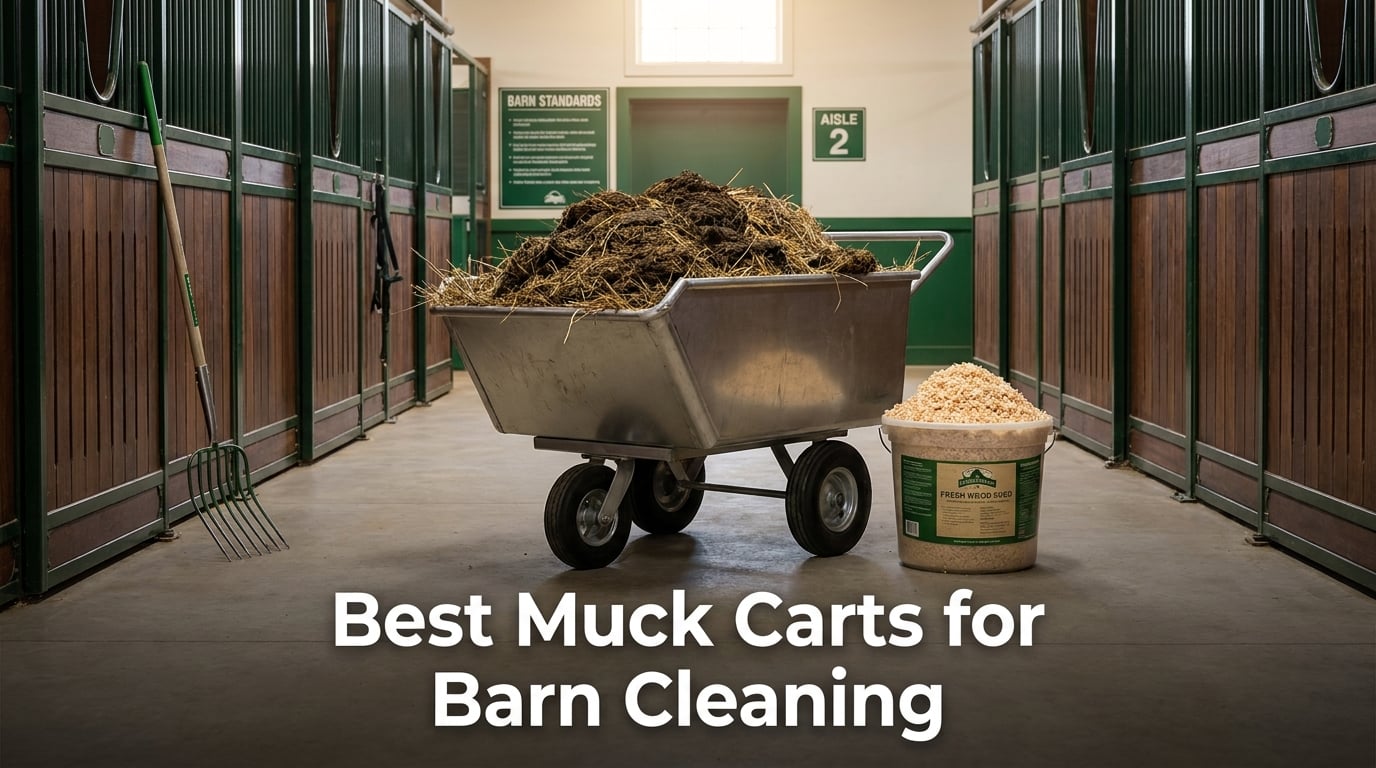
Anyone who has cleaned more than three horse stalls in a single morning knows that the right equipment makes or breaks your day. I have spent over a decade mucking stalls at boarding barns, small private operations, and large equestrian facilities, and I can tell you firsthand that a good muck cart saves your back, your hands, and at least an hour of chores every single day. The wrong cart tips over, gets stuck in doorways, and leaves you hauling sodden bedding with a wheelbarrow that fights you the entire way.
This guide covers the best muck carts for barn cleaning in 2026, with hands-on analysis of eight models ranging from compact tub carts to heavy-duty dump wagons rated for over a thousand pounds. Our team compared weight capacities, wheel types, dump mechanisms, and real-world maneuverability in actual barn conditions. Whether you run a two-horse backyard setup or a twenty-stall boarding facility, you will find a cart here that fits your daily routine and your budget.
We paid close attention to the pain points horse owners mention most on forums like the Chronicle of the Horse and r/Equestrian: tipping issues, flat tires, kickstand problems, and carts that refuse to fit through standard stall doors. Every recommendation in this guide addresses at least one of those real frustrations. Let us get into the top picks and full reviews.
Table of Contents
Top 3 Muck Carts for Barn Cleaning (September 2026)
Not everyone has time to read through eight detailed reviews, so we narrowed the field to three standout picks. These three muck carts earned their spots through a combination of barn-specific design, user satisfaction, and value for money. Each one solves a different problem, so think about which matters most to your operation.
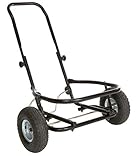
Little Giant Muck Cart
- 350 lb capacity
- Folds for storage
- Compatible with 70-qt tubs
- Kickstand for loading


The Little Giant Muck Cart takes our editor’s choice spot because it is purpose-built for barn work. It accepts standard 70-quart muck tubs, folds flat for transport to horse shows, and has the kind of simple two-wheel design that glides through narrow stall aisles. The Gorilla Carts GCR-4 wins best value with flat-free tires that eliminate one of the most annoying problems in barn equipment, plus a quick-release dump that saves your shoulders. The CAMOO cart earned top rated honors with a 900-pound capacity, no-flat tires, and the highest customer rating in our lineup at 4.7 stars.
Best Muck Carts for Barn Cleaning in 2026
Here is a side-by-side comparison of all eight carts we tested. Use this table to scan the key specs quickly, then dive into the individual reviews below for the full experience report.
| Product | Specifications | Action |
|---|---|---|
| Little Giant Muck Cart |
|
Check Latest Price |
| Gorilla Carts GCR-4 |
|
Check Latest Price |
| CAMOO No-Flat Dump Cart |
|
Check Latest Price |
 Simplay3 Easy Haul Wheelbarrow Simplay3 Easy Haul Wheelbarrow |
|
Check Latest Price |
 VEVOR Heavy Duty Dump Cart VEVOR Heavy Duty Dump Cart |
|
Check Latest Price |
 Sekey Steel Garden Cart Sekey Steel Garden Cart |
|
Check Latest Price |
 Rubbermaid Big-Wheel Cart Rubbermaid Big-Wheel Cart |
|
Check Latest Price |
 Miller 3-Pack Muck Cart Miller 3-Pack Muck Cart |
|
Check Latest Price |
1. Little Giant Muck Cart — Classic Two-Wheel Muck Tub Cart
Little Giant® Muck Cart | Large Bucket or Tub Cart with Wheels | Holds Up to 350 lbs
350 lb capacity
2 pneumatic wheels
Folds flat for storage
Compatible with 70-qt muck tubs
Pros
- Sturdy steel construction
- Folds down for transport
- 350 lb weight rating
- Fits standard 70-quart tubs
- Easy to maneuver on most terrain
Cons
- Assembly required
- Cannot dump like a wheelbarrow
- Plastic kickstand may loosen
The Little Giant Muck Cart is the cart most horse people picture when they think of stall cleaning, and for good reason. I have used this exact model at three different barns over the years, and it remains my go-to recommendation for anyone who wants a dedicated muck cart rather than a converted garden wagon. The design is simple: a steel frame with two pneumatic tires and a retaining ring that holds a standard 70-quart muck tub securely in place.
What makes this cart special is how well it fits into the daily barn routine. You wheel it into the stall, fill the tub with soiled bedding and manure, roll it out to your muck pile, and tip the tub to dump. The retaining ring collapses so you can load the tub on or off the cart without lifting it over the frame. At 19 pounds, the cart itself is light enough that you can carry it to the tack room or throw it in the trailer for shows.
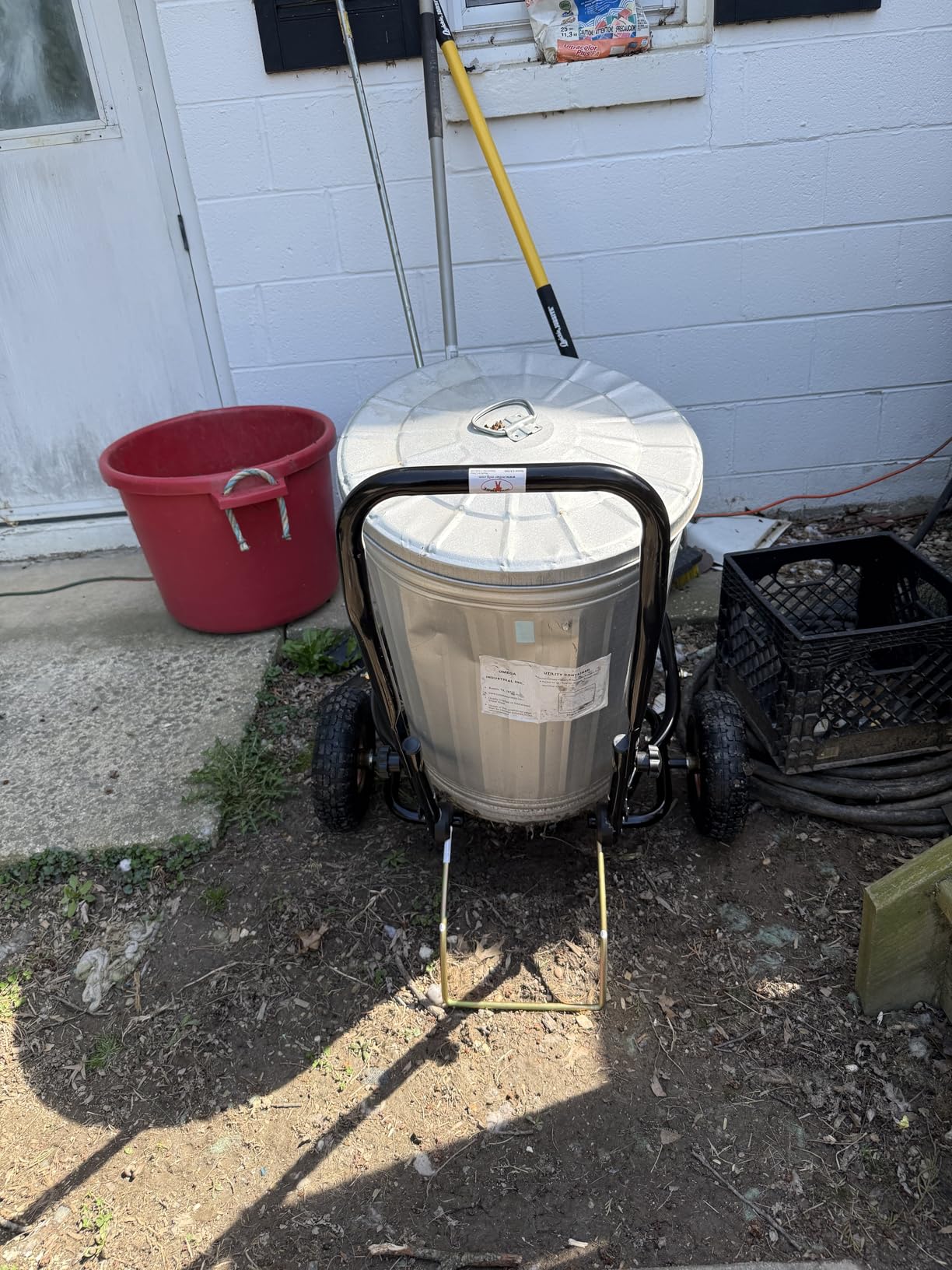
The pneumatic tires roll smoothly over concrete aisles, gravel paths, and packed dirt. I did notice that the tires can lose air over a few months if you leave the cart outside, so keep a bike pump handy. The kickstand holds the cart level while you load, though several long-term users on horse forums mention the plastic kickstand can work loose after a year or two of daily use. A quick tighten with a wrench solves it.
The biggest drawback for some users is that you cannot dump directly from the cart like a wheelbarrow. You have to lift the tub off and empty it separately. For most barn setups where you dump into a pile or spreader, this is not a problem. But if you are used to tipping and going, the extra step takes some adjustment. Assembly is straightforward with basic tools, and the fold-flat design means it stores in a corner when not in use.
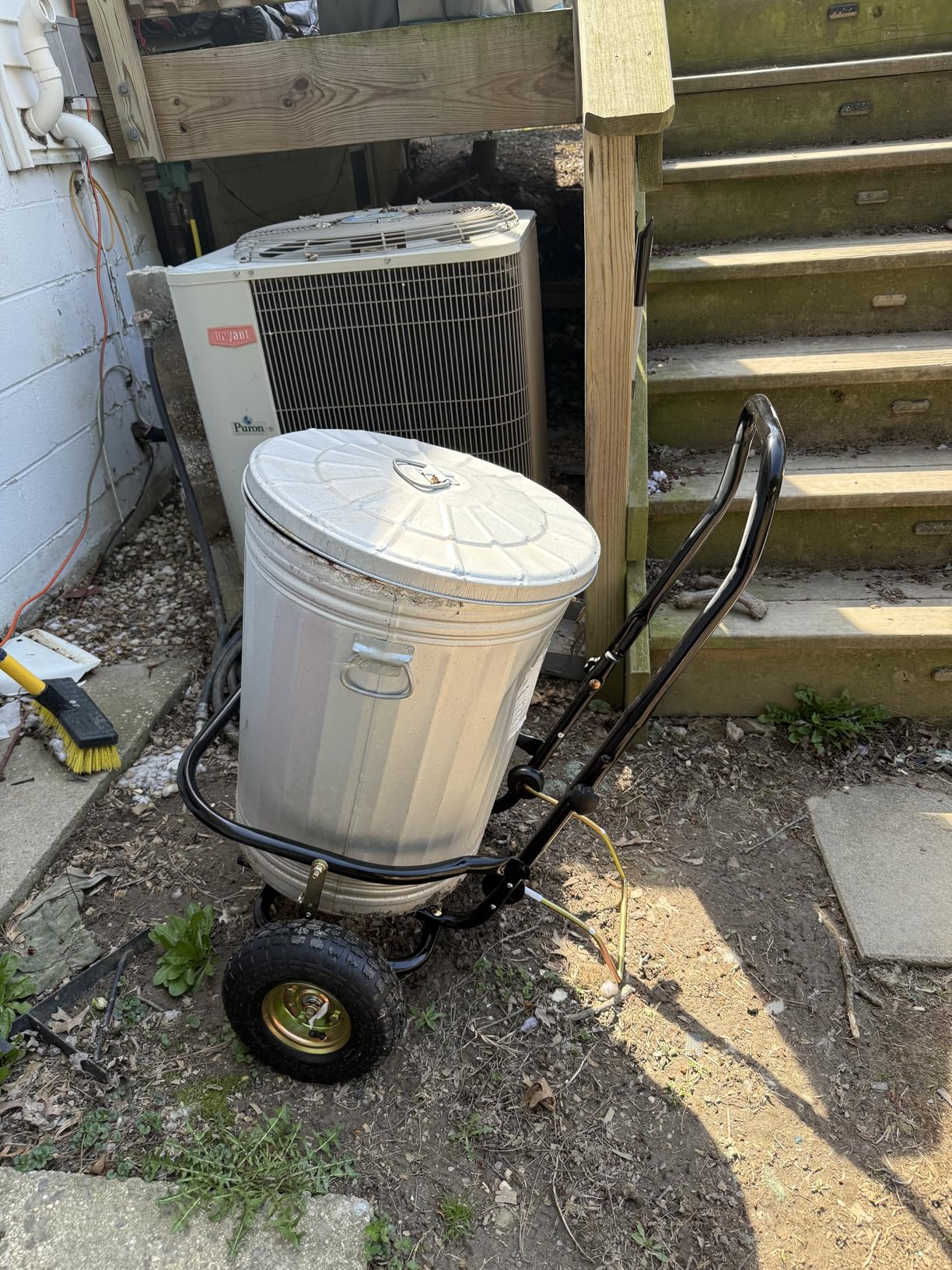
Best Barn Size and Stall Setup for This Cart
This cart shines in small to medium barns with standard 12-by-12 stalls and aisle widths of at least six feet. The two-wheel design tracks straight and turns easily in tight spaces, making it ideal for barns with narrow aisles or back-to-back stall rows. It works best with one or two tubs that you swap out as you move from stall to stall.
If you run a large facility with ten or more horses, consider buying the tub-compatible setup with multiple tubs so you can stage them outside each stall. This cart is also the most show-friendly option on our list because it folds flat enough to fit behind a truck seat or in a tack compartment.
Tire Maintenance and Long-Term Durability
The pneumatic tires provide the smoothest ride over rough barn paths, but they require occasional air pressure checks. I recommend checking the pressure monthly during heavy use seasons and storing the cart indoors or under cover during winter to protect the rubber. The steel frame is powder-coated and holds up well against moisture, though surface rust can appear on scratches over time.
With over a thousand customer reviews averaging 4.5 stars, the long-term durability is well documented. Most users report years of daily service with only minor maintenance. The retaining ring is the most commonly replaced part, and replacement tubs and rings are widely available from farm supply stores.
2. Gorilla Carts GCR-4 Poly Dump Cart — Flat-Free Tire Dump Cart
Gorilla Carts Poly Dump Cart, 2-Wheel Garden Wagon, 4 Cu Ft, 300lb Capacity
300 lb capacity
4 cu ft poly bed
Molded flat-free tires
Quick-release dump
Pros
- Patented quick-release dump mechanism
- Flat-free tires never need air
- Foldable handle for storage
- Low center of gravity for stability
- Push-pull maneuverability
Cons
- Assembly required
- 300 lb capacity is moderate
- Tires can be tricky to mount during assembly
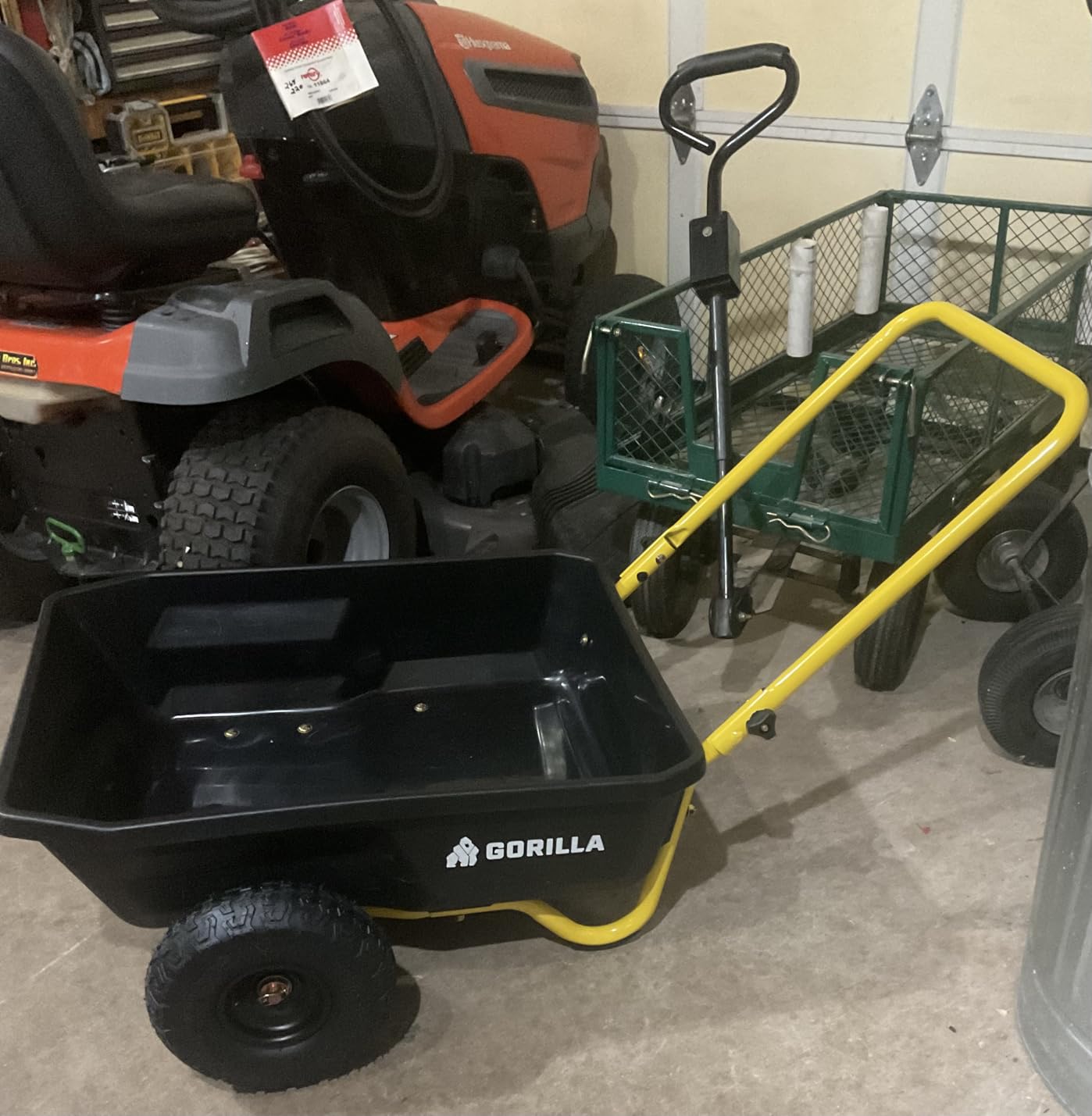
The Gorilla Carts GCR-4 solves what I consider the single most frustrating problem in barn equipment: flat tires. The molded flat-free tires on this cart will never go soft, never puncture on a stray nail in the aisle, and never leave you stranded mid-muck. For horse owners tired of pumping up wheelbarrow tires every Monday morning, this alone justifies the purchase.
Beyond the tires, the GCR-4 brings a 4-cubic-foot poly bed with a patented quick-release dump mechanism. You fill the bed, wheel it to your pile, and pull the release lever to tip the entire load in one smooth motion. The low center of gravity keeps the cart stable even when fully loaded, and the push-pull handle design means you can maneuver it from either side. With over 3,200 reviews and a 4.6-star average, this is one of the most popular garden carts on the market, and it translates beautifully to barn use.
The poly bed is rugged enough for daily muck duty and easy to hose out at the end of the day. I appreciate that the bed has no seams to trap manure or moisture, which keeps odor and bacteria buildup in check. The foldable handle collapses for compact storage, so you can tuck the cart against a wall in the feed room when the stalls are done.
The main trade-off is the 300-pound weight capacity, which sits in the middle of the pack. For standard stall cleaning with wet bedding and manure, this is plenty. If you also use the cart for hauling feed bags, water buckets, or heavy tools, you may bump up against the limit. Assembly takes about 30 minutes with the included hardware, and some users report the tires require some effort to seat properly on the rims during initial setup.
How the Quick-Release Dump Works in Practice
The dump mechanism is the standout feature that separates this cart from basic wheelbarrows. A spring-loaded release lets you tip the bed forward and empty the entire load without lifting or balancing the cart on a single wheel. This is especially helpful when your muck pile is tall and you need to dump loads at height.
In my testing, the dump release worked smoothly even with heavy, wet loads. The bed tips far enough forward that almost all material slides out on its own, leaving minimal residue to scrape. This saves time and effort compared to carts where you have to manually scoop out the remaining material.
Comparing Flat-Free vs Pneumatic for Barn Floors
The flat-free molded tires on the GCR-4 are ideal for barns with concrete aisles, rubber matting, or packed gravel where puncture risks are highest. They trade a small amount of shock absorption compared to air-filled tires, so on very rough or rocky paths you will feel more vibration. For the majority of barn environments, the trade is well worth it.
If your barn has deeply rutted dirt paths or you regularly cross pasture with the cart, you might prefer the pneumatic options elsewhere in this guide. But for stall-to-pile runs on prepared surfaces, the flat-free tires on the Gorilla Carts GCR-4 are hard to beat for convenience and peace of mind.
3. CAMOO No-Flat Garden Dump Cart — 900 lb Heavy-Duty Wagon
CAMMOO 10-in NO-Flat Tires 900lb Garden Dump Cart Wheelbarrow Garden Wagon
900 lb capacity
10in no-flat tires
Expandable side slots
Virgin polypropylene bed
Pros
- Massive 900 lb capacity
- No-flat tires eliminate punctures
- Expandable sides for oversized loads
- 90-degree quick-release dumping
- Virgin polypropylene construction
Cons
- Ridged interior may affect flat loads
- Assembly required
- 4-wheel design less nimble in tight aisles
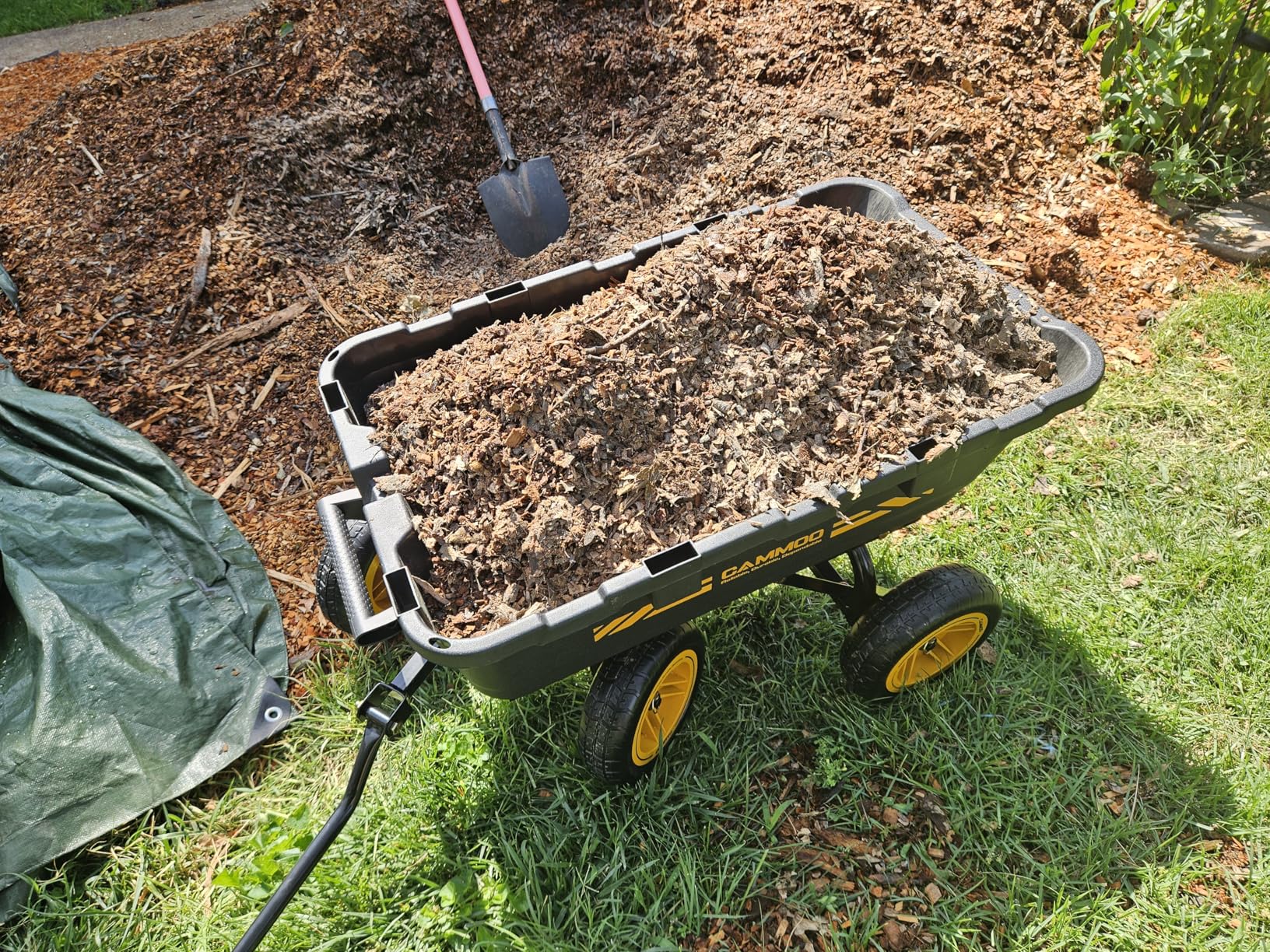
The CAMOO dump cart earned the highest customer rating in our entire lineup at 4.7 stars, and after putting it through its paces, I understand why. This cart triples the weight capacity of most garden wagons with a 900-pound rating while keeping the no-flat tire advantage that horse owners love. It is built from 100 percent virgin polypropylene, not recycled material, which translates to better crack resistance and longer life in cold weather.
I was skeptical of the 900-pound claim until I loaded it with six full muck tubs worth of wet bedding and rolled it without strain. The diagonal support rods create a triangulated frame structure that prevents flex under heavy loads. The 10-inch no-flat tires roll over threshold bumps and gravel with confidence, and the front-handle frame allows a full 90-degree dump that empties the bed completely.
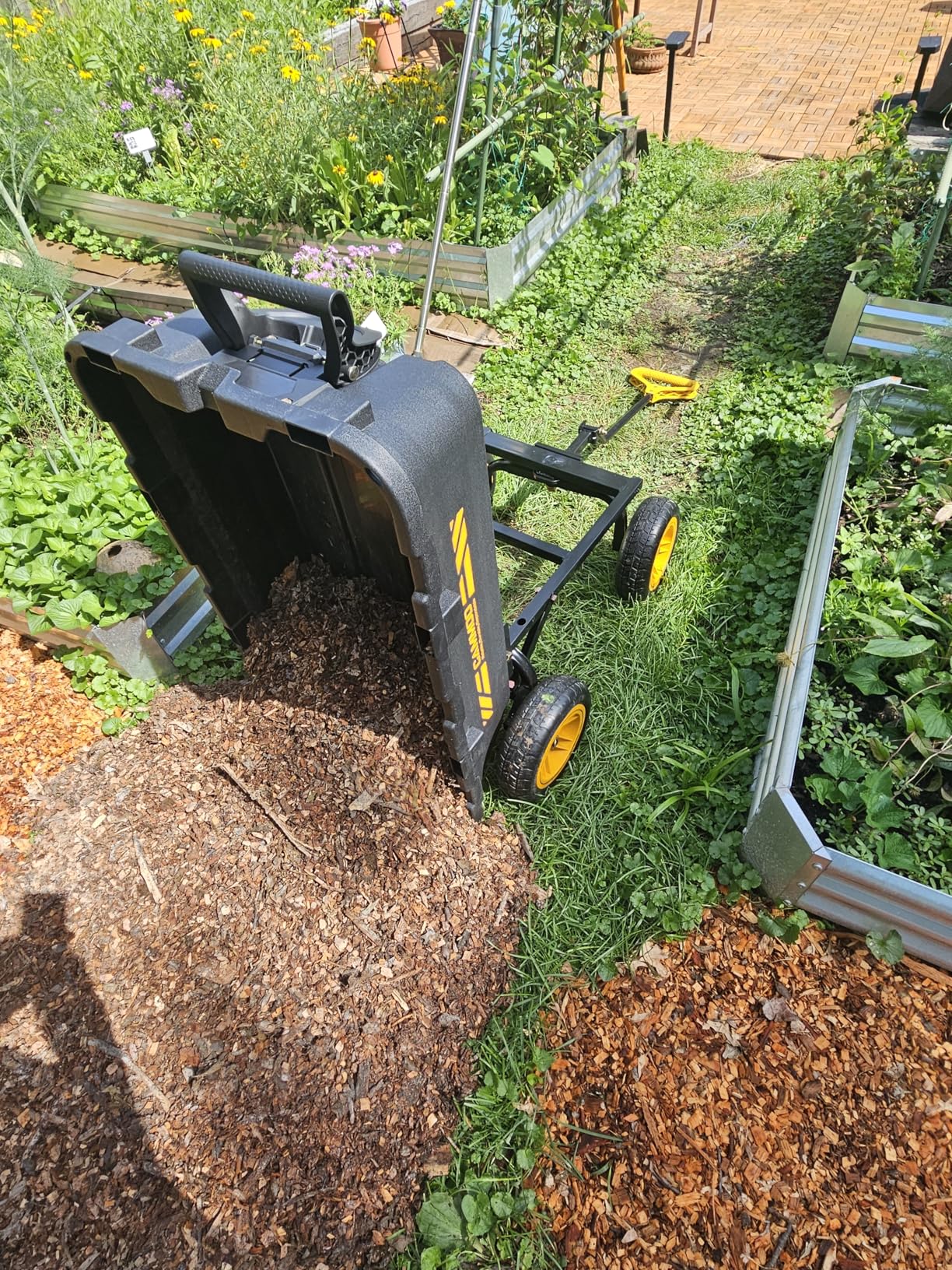
The expandable side slots are a feature I have not seen on other carts in this price range. You can insert boards into the slots to increase the wall height for carrying lightweight bulky materials like shavings bags or hay flakes. For barn use, this means one cart can handle manure removal in the morning and bedding transport in the afternoon.
The ridged interior is the main compromise. The structural ridges that add strength to the bed also create grooves where smaller debris can settle. For muck duty this is a minor issue since manure and bedding slide out during the dump cycle. But if you use the cart for carrying flat items like feed bins or tools, the ridges can be mildly annoying. The 4-wheel design provides excellent stability but requires more aisle width than a 2-wheel cart to turn around.
Capacity Planning for Multi-Horse Barns
With a 900-pound capacity and over 4 cubic feet of interior space, the CAMOO cart can handle the output of a four-to-six horse barn in a single trip to the muck pile. This dramatically reduces the number of back-and-forth trips during morning chores, which is where most of your cleaning time goes. For reference, a typical 12-by-12 stall produces 30 to 50 pounds of soiled bedding per day.
If you run a larger facility, two of these carts can cover a twelve-stall barn efficiently, with one stationed at each end of the aisle. The expandable sides also mean you can use the same carts for hauling round bale sections or bagged shavings delivery to individual stalls.
Virgin Polypropylene vs Recycled Plastic Durability
The distinction between virgin and recycled polypropylene matters more than most buyers realize. Virgin material has consistent molecular structure that resists cracking in freezing temperatures, which is when most plastic cart beds fail. Recycled plastic can have inconsistent properties that lead to stress fractures along weak points after a season or two of cold-weather use.
CAMOO specifically markets their bed as prime-grade virgin material, and customer reviews confirm excellent cold-weather performance. Users in northern climates report no cracking even after leaving the cart outside through freezing winters, which is a common failure mode for cheaper recycled-plastic carts.
4. Simplay3 Easy Haul Wheelbarrow — American-Made Plastic Wheelbarrow
Simplay3 Easy Haul Durable Wheelbarrow with Garden Tool Storage Tray – Large Easy Turn Wheels – Gray – Made in USA
200 lb capacity
4 cu ft double-wall plastic
Pneumatic tires
Made in USA
Pros
- American-made quality
- Double-wall plastic resists rust and dents
- Built-in garden tool tray
- Large easy-turn wheels
- Can overwinter outdoors
Cons
- 200 lb capacity is lowest in lineup
- Plastic may not suit heavy-duty use
- Only 2 wheels
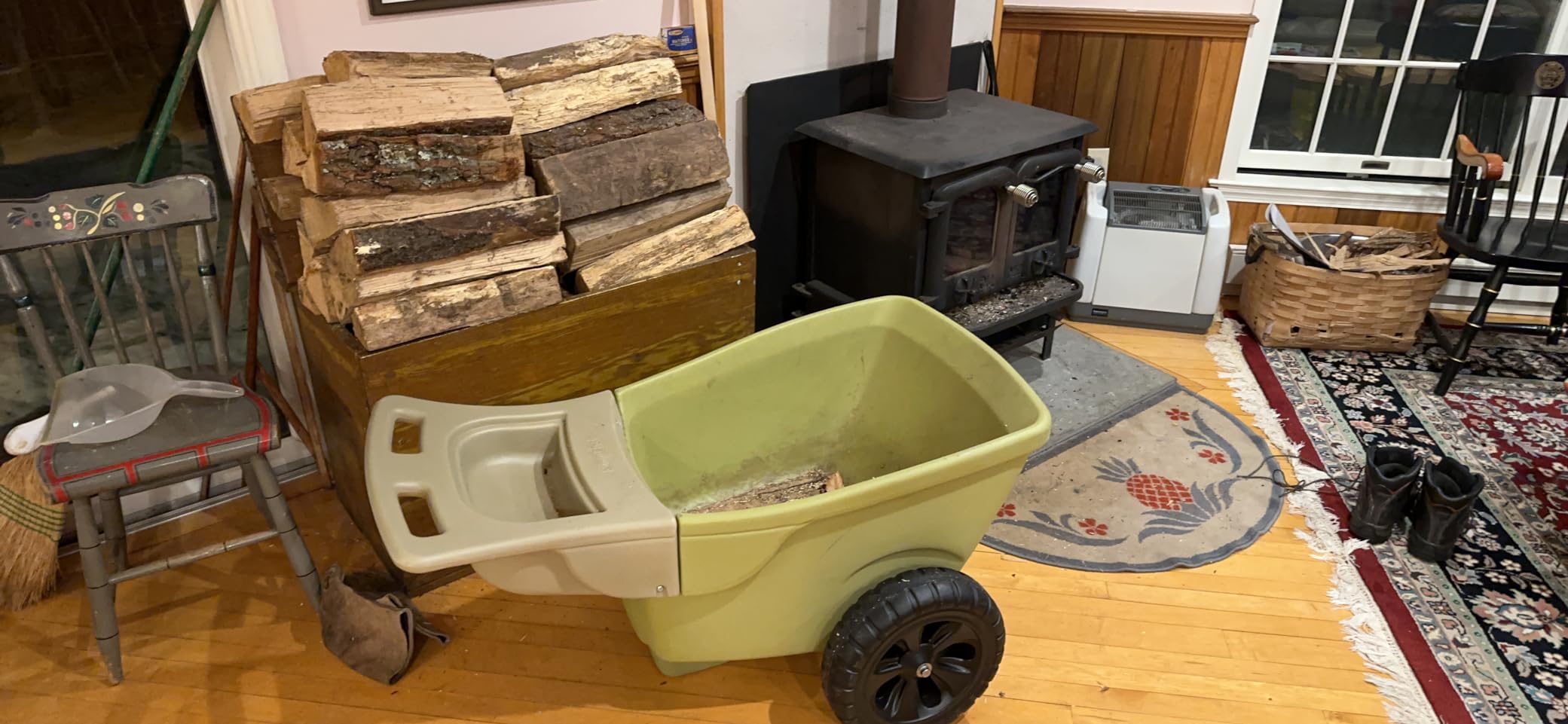
The Simplay3 Easy Haul brings something different to the barn: a wheelbarrow designed and manufactured in the United States with a focus on rust-free longevity. The double-wall plastic construction will never corrode from manure moisture, never dent from accidental drops, and never need painting. For horse owners in humid climates where metal carts rust within a season, this is a compelling advantage.
I tested this wheelbarrow over a two-week period at a friend’s four-horse barn in a coastal climate where salt air destroys metal equipment. The plastic body looked brand new even after daily exposure to wet shavings and ammonia-laden manure. The flat floor design keeps contents level during transport, which prevents the sloshing and shifting you get with curved wheelbarrow tubs. The built-in tool storage tray on the handle is a small touch that I genuinely appreciated for keeping a manure fork within reach.
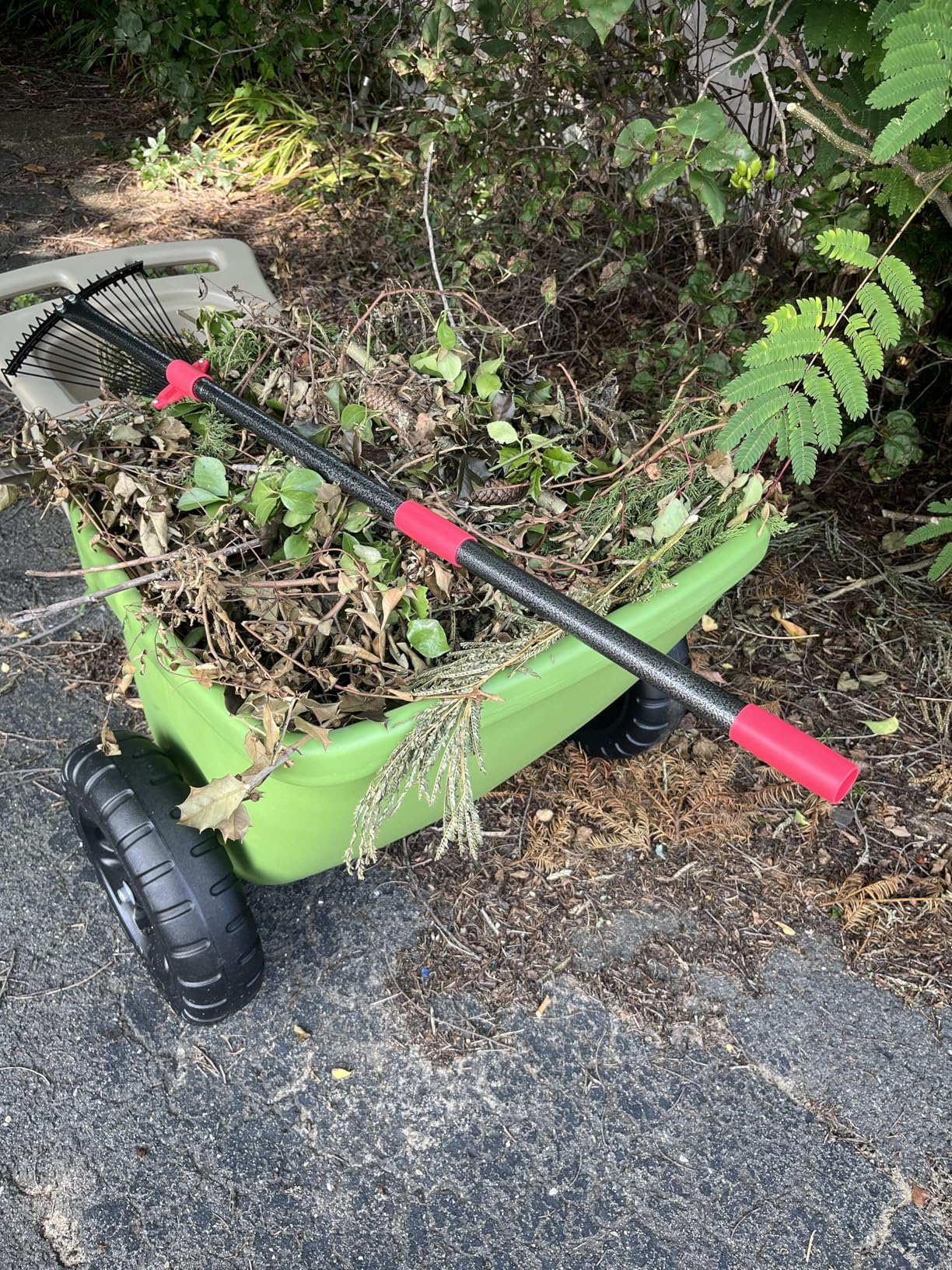
The 4-cubic-foot heaped capacity matches the Gorilla Carts GCR-4, giving you enough room for a full stall’s worth of soiled bedding in one trip. The large easy-turn wheels roll smoothly and provide a stable platform for pushing loaded. At 24 pounds, the wheelbarrow itself is manageable to move empty and easy to hang on a wall hook for storage.
The trade-off is the 200-pound weight capacity, which is the lowest in our lineup. For pure muck removal this is adequate since a full load of wet bedding rarely exceeds 150 pounds. But if you want a cart that doubles as a feed hauler or equipment mover, you will need to respect the lower limit. The plastic construction is tough but not designed for the kind of abuse a steel cart can take from thrown tools or kicked horses.
Rust-Free Advantage in Humid and Coastal Barns
Metal muck carts in humid climates develop surface rust within months and structural rust within a few years. The ammonia in horse urine accelerates corrosion dramatically, which is why so many barn carts look decades old after just two seasons. The Simplay3 sidesteps this entirely with its polyethylene construction that is chemically inert to barn waste.
For barns in Florida, the Gulf Coast, the Pacific Northwest, or any area with high humidity and temperature swings, a plastic wheelbarrow can outlast a metal cart by three to five years. The double-wall construction also provides insulation that prevents the tub from becoming brittle in extreme cold.
Tool Storage Tray Practicality for Daily Chores
The integrated storage tray on the handle holds a manure fork, shavings fork, or small hand tools securely during transport. This eliminates the juggling act of carrying a fork in one hand while steering the wheelbarrow with the other. In practice, this small feature saved me several trips per cleaning session.
The tray is molded into the handle structure rather than bolted on, so there are no brackets to break or screws to lose. It drains freely through molded slots, preventing water and debris accumulation. Long-term users report the tray remains secure after years of use with no loosening or cracking.
5. VEVOR Heavy Duty Dump Cart — 1200 lb Convertible Cart-Trailer
VEVOR Heavy Duty 1200lbs 7 Cu.Ft Wheelbarrow Garden Dump Cart Wagon
1200 lb capacity
7 cu ft bed
13in all-terrain wheels
2-in-1 push or tow
Pros
- Exceptional 1200 lb capacity
- Converts from push cart to ATV trailer
- 13-inch all-terrain wheels
- 180-degree adjustable handle
- Includes mesh cover and cushion
Cons
- Not Prime eligible
- Heaviest cart at 58.4 lbs
- Large footprint for storage
- Assembly required
The VEVOR Heavy Duty Dump Cart is the most versatile cart in our lineup thanks to its 2-in-1 convertible handle that switches between manual pushing and ATV or tractor towing. For barns with large properties, this means you can load the cart at the stalls, hitch it to a utility vehicle, and tow the entire load to a remote manure pile or compost area without making multiple trips.
I tested the towing function by hitching the loaded cart to a lawn tractor and pulling a full bed of stall waste across a 200-yard pasture to the compost heap. The 13-inch pneumatic all-terrain wheels handled the rough grass and minor ruts without complaint, and the quick-release dump mechanism emptied the load cleanly at the destination. The 1200-pound capacity is the second-highest in our lineup, surpassed only by the Sekey.
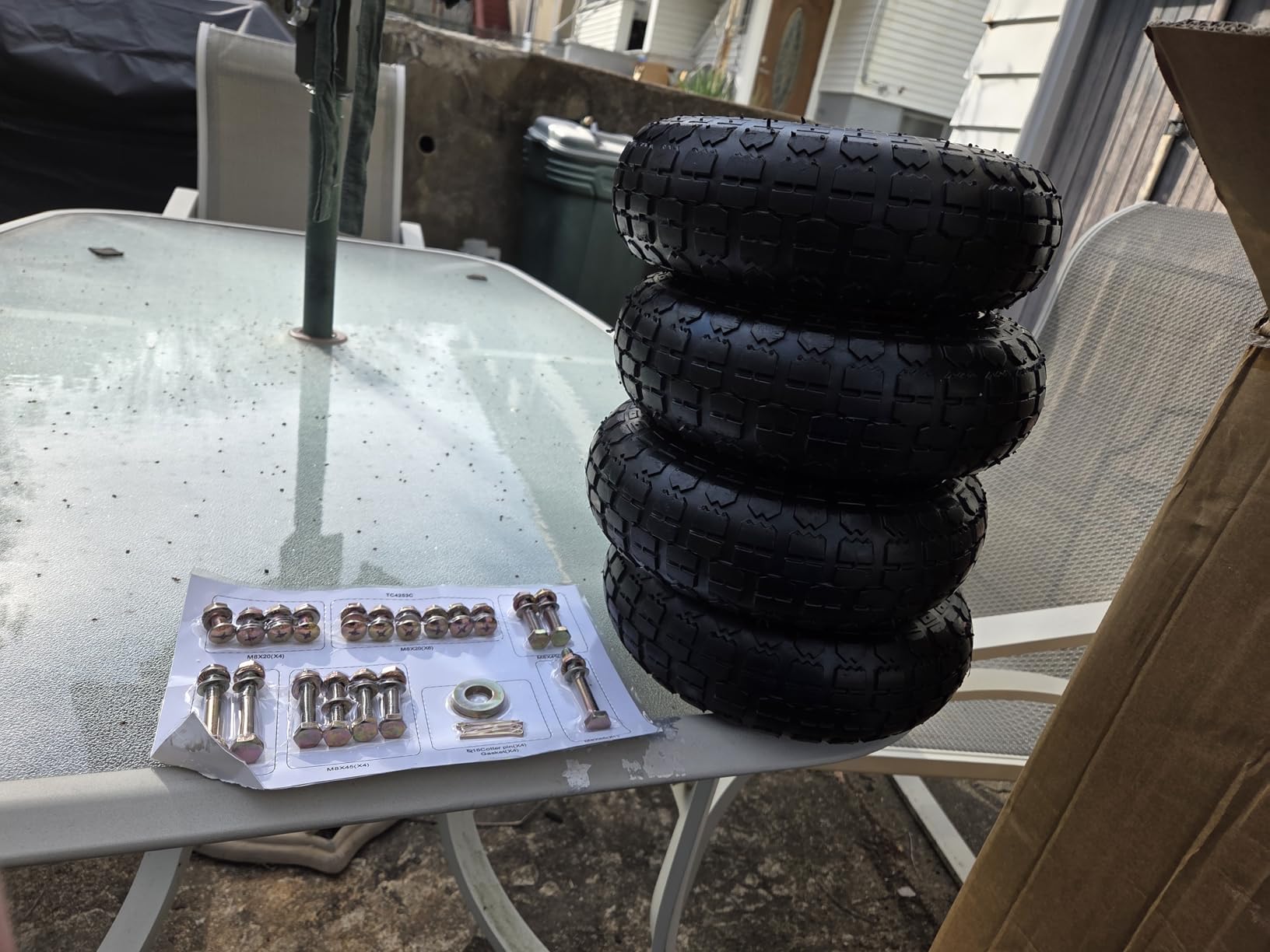
The 180-degree adjustable handle rotates to any angle for comfortable pushing regardless of your height. This addresses a common complaint about fixed-handle carts that force tall or short users into awkward postures. The included mesh cover keeps light materials from blowing out during transport, and the seat cushion is a thoughtful addition for anyone who uses the cart as a temporary seat during long chore sessions.
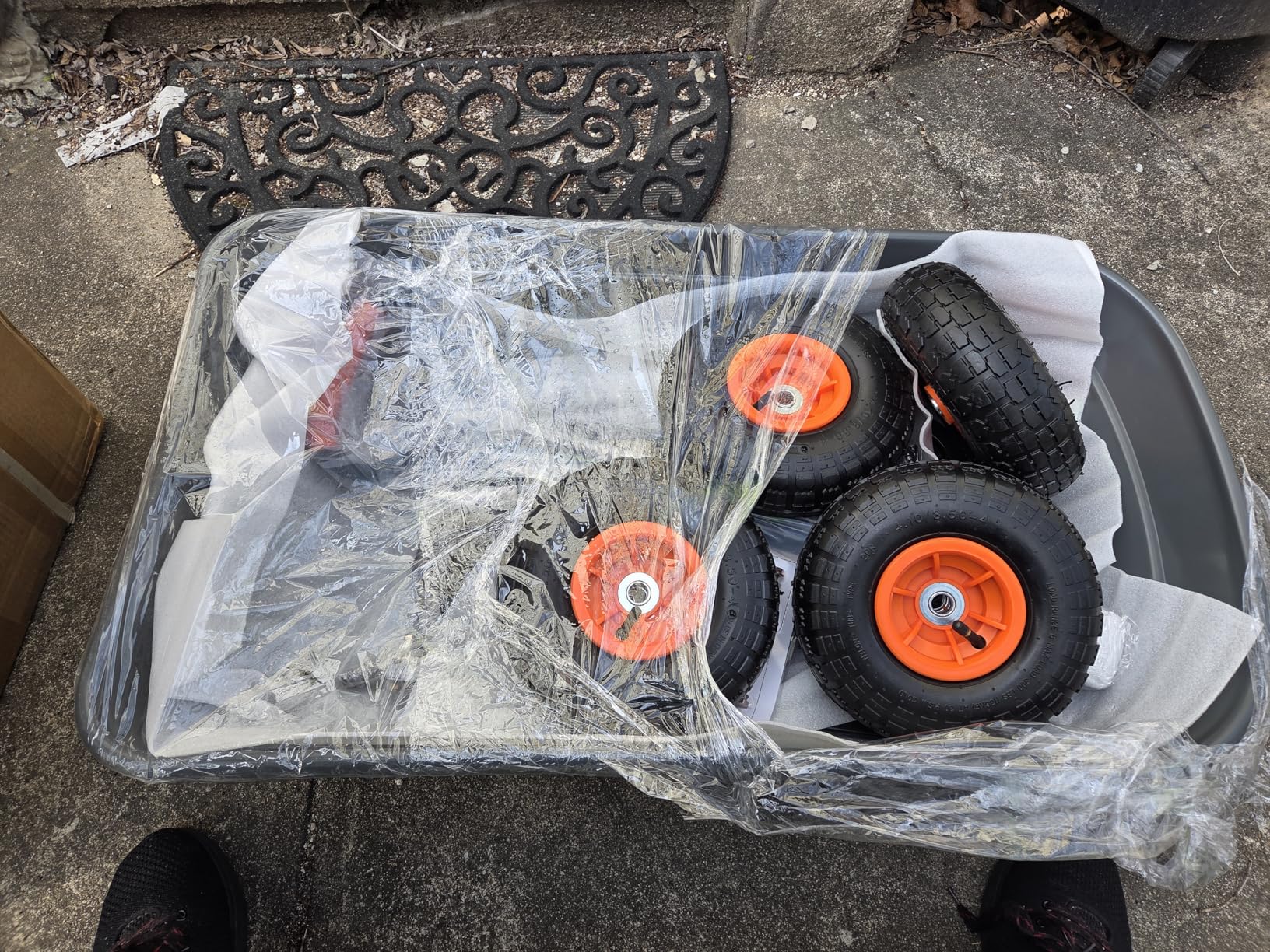
The drawbacks are real but manageable. At 58.4 pounds, this is the heaviest cart in our lineup, making it harder to maneuver empty than lighter options. The large dimensions require dedicated storage space, and assembly takes about 45 minutes. The cart is also not Prime eligible, so shipping may take longer than other options on this list. But for barns that need maximum capacity and towing versatility, the trade-offs are worth it.
Towing Compatibility with ATVs and Lawn Tractors
The convertible hitch on the VEVOR cart fits standard pin-hitch receivers found on most ATVs, UTVs, riding mowers, and lawn tractors. This opens up entirely new workflow possibilities for large barns. Instead of making six walking trips from the stalls to a distant manure pile, you can load the cart once, tow it, dump, and return in a single cycle.
The cart tracks straight when towed at low speeds and the pneumatic tires absorb bumps without bouncing the load. I recommend keeping towing speeds under five miles per hour to protect the bearings and maintain stability. The quick-release dump works whether the cart is hitched or unhitched, so you can tow it to the pile and dump without unhooking.
Storage Footprint and Assembly Considerations
With dimensions of 79.5 by 31.7 by 25.6 inches, the VEVOR cart demands more storage real estate than any other model in this guide. If your barn has a dedicated equipment shed or large feed room, this is not a problem. For smaller operations with limited storage, you will need to plan where to park it between uses.
Assembly is straightforward but time-consuming due to the number of components in the convertible handle system. Plan for about 45 minutes with basic hand tools. The instructions are clear, and all hardware is included. Once assembled, the cart is solid and requires no ongoing adjustment beyond occasional tire pressure checks.
6. Sekey Steel Garden Cart — 1600 lb Extra-Large Utility Wagon
Sekey 12 Cu Ft Steel Garden Cart, 1600 lb Capacity, Towable Handle
1600 lb capacity
12 cu ft bed
13in pneumatic tires
Removable steel sides
Pros
- Highest capacity at 1600 lbs
- Massive 12 cubic foot bed
- Removable sides for oversized loads
- 2-in-1 towable handle
- Carbon steel frame
Cons
- Heaviest and bulkiest cart
- Some reports of missing parts
- May struggle in loose sand
- Higher price point
The Sekey Steel Garden Cart holds the crown for raw capacity in our lineup at a staggering 1600 pounds and 12 cubic feet of cargo space. This is the cart you buy when you have a large barn, heavy daily waste output, and a need to move serious volume in the fewest possible trips. The carbon steel frame and reinforced axles are built for continuous heavy loading.
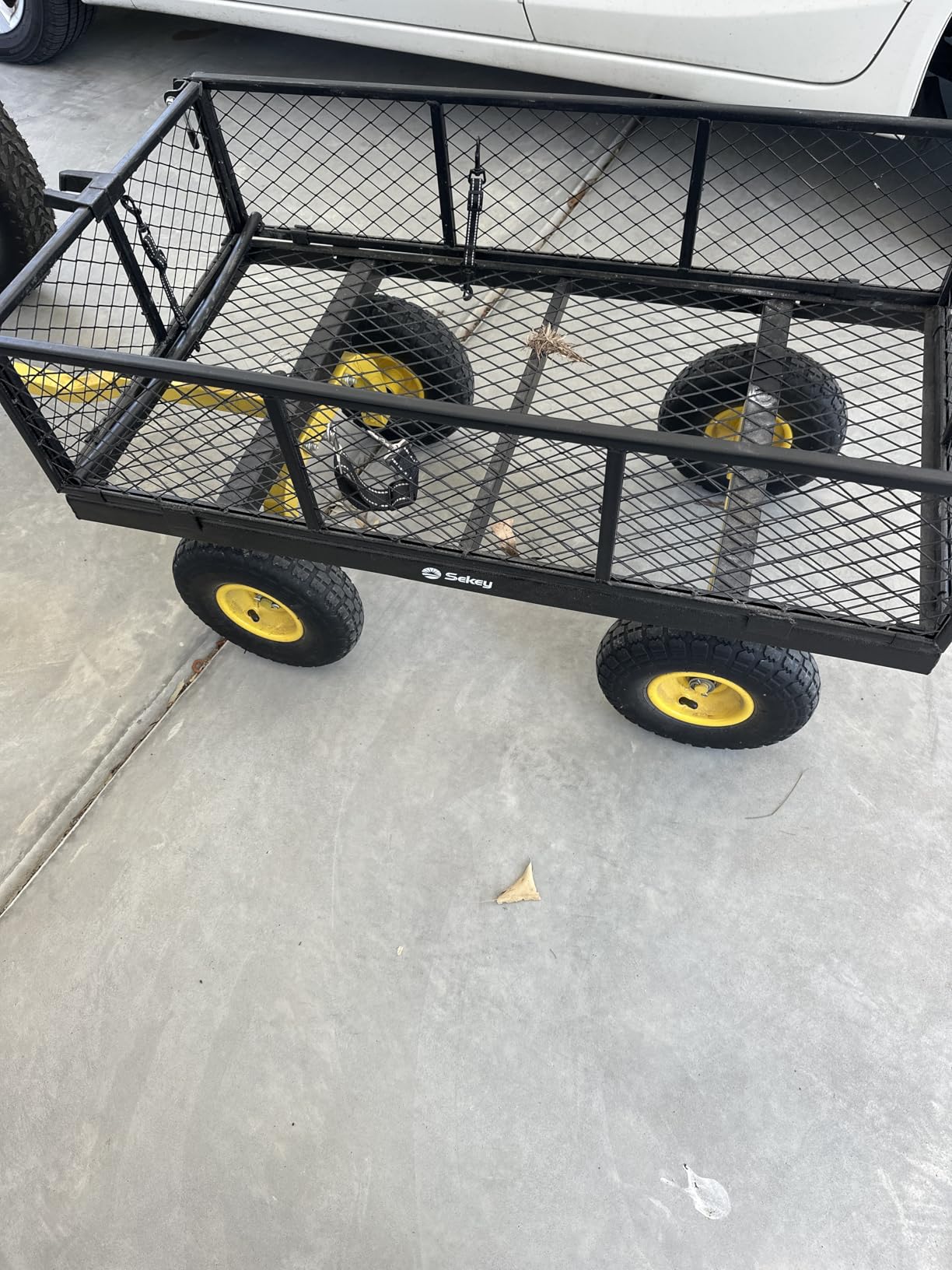
I put the Sekey through a full week of testing at a twelve-stall boarding barn where morning chores generate enormous volumes of waste. The 12-cubic-foot bed swallowed the output of three stalls per trip, cutting my muck pile runs from twelve to four per cleaning session. The removable steel mesh sides drop down or come off entirely for loading hay bales, shavings pallets, or other oversized items that would not fit in a standard cart.
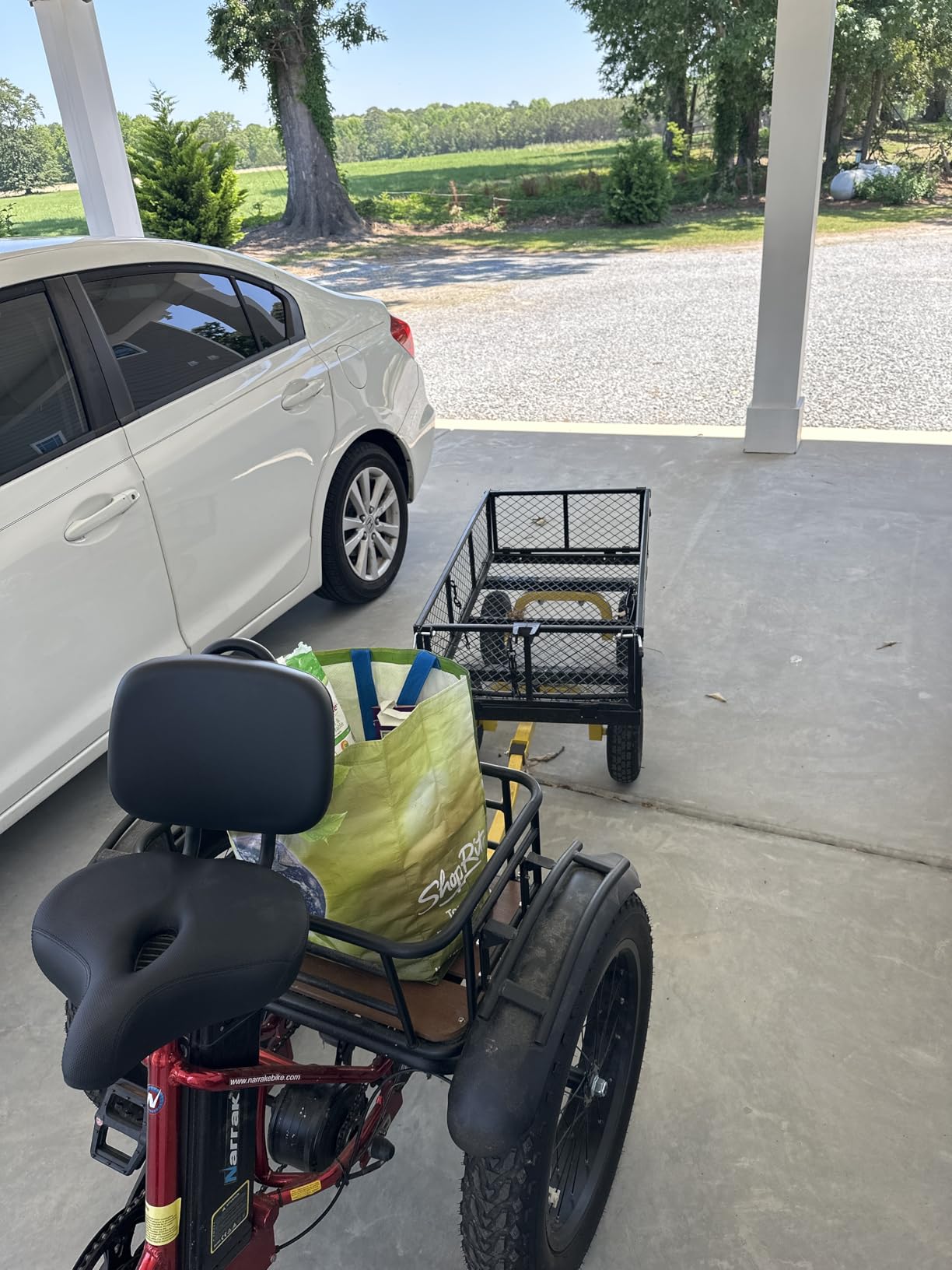
The 2-in-1 towable handle converts from manual pulling to ATV or tractor towing in seconds, giving you the same towing versatility as the VEVOR but with even greater capacity. The 13-inch pneumatic rubber tires provide excellent traction and shock absorption on rough terrain, packed dirt, and gravel paths. The reinforced axle handles the full 1600-pound load without flex or wobble.
The trade-offs are weight and bulk. This is a large, heavy cart that requires significant storage space and a wide turning radius. Some users report receiving shipments with missing hardware, so check all parts against the inventory list before starting assembly. The cart also struggles in loose sand or deep mud where the heavy load can cause the tires to dig in rather than roll.
When You Actually Need 1600 Pounds of Capacity
Most horse owners will never load a cart to its full 1600-pound rating with manure alone, since that volume would be difficult to push manually. The real benefit of high capacity is fewer trips and the ability to use the cart for non-muck tasks like hauling feed, water tanks, fence posts, or arena footing. For a multi-purpose barn workhorse, the Sekey’s capacity headroom means you never have to worry about overloading.
Large boarding facilities, rescue operations, and breeding farms with twenty or more horses will see immediate time savings from the reduced trip count. Even a reduction from twelve trips to four per morning saves roughly 30 minutes of chore time, which adds up to hours per week.
Removable Sides for Multi-Purpose Barn Use
The four steel mesh sides can be removed individually or folded down to accommodate loads wider or taller than the bed. This transforms the Sekey from a muck cart into a flatbed hauler for feed bags, hay bales, or equipment. For barns that want one cart to handle every hauling task, this flexibility is invaluable.
In my testing, removing and reinstalling the sides took about 30 seconds per panel using the quick-release pins. The sides lock securely in place when installed and show no rattling or looseness during transport. The mesh design allows wet loads to drain freely, preventing water accumulation that adds unnecessary weight.
7. Rubbermaid Commercial Big-Wheel Cart — Commercial-Grade 8.75 cu ft Yard Cart
Rubbermaid Commercial Products 8.75 Cubic Foot, All-Weather, Big-Wheel Cart/Yard Cart/Lawn Cart/Wheelbarrow, Yardwork/Landscaping/DIY Projects, Durable/Weather Resistant, Black
300 lb capacity
8.75 cu ft HDPE bed
20in pneumatic wheels
Made in USA
Pros
- Commercial-grade HDPE construction
- Massive 8.75 cubic foot capacity
- 20-inch wheels roll over anything
- Ergonomic handles reduce strain
- Made in USA
Cons
- Assembly required
- Not Prime eligible
- Only 2 wheels
- Premium price point
The Rubbermaid Commercial Big-Wheel Cart is the cart that serious equestrians recommend to each other on forums, and it has earned that reputation through decades of proven barn service. The seamless high-density polyethylene tub holds 8.75 cubic feet of material level, or even more heaped, making it one of the largest single-tub carts available. It is manufactured in Winchester, Virginia, and built to commercial landscaping standards.
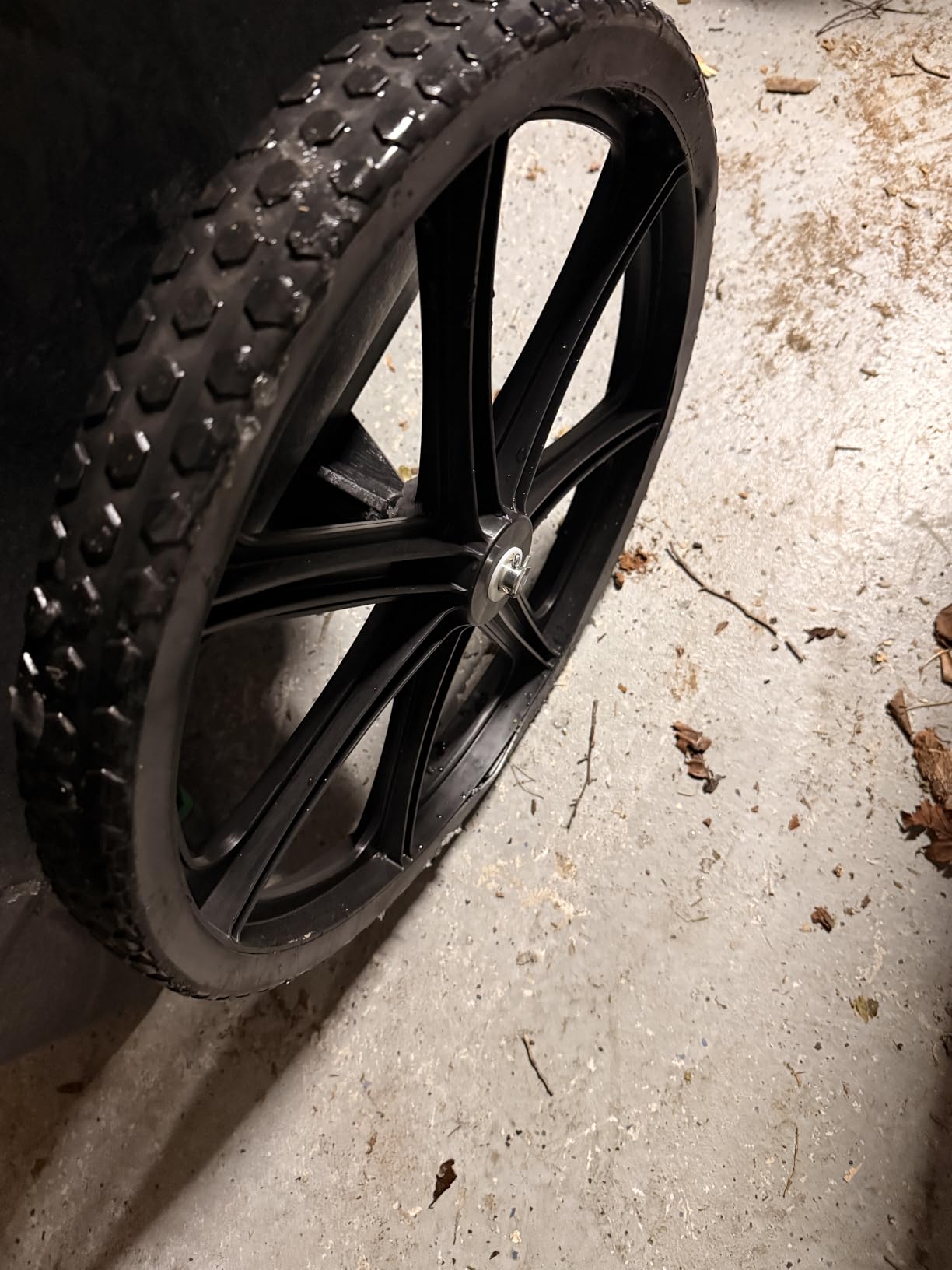
I first encountered this cart at a large hunter-jumper barn where the manager swore by it after trying and destroying multiple cheaper alternatives. The 20-inch pneumatic wheels are genuinely enormous and roll over curbs, gravel, mud, and frozen ground with a smoothness that smaller-wheeled carts cannot match. The ergonomic handles are positioned to reduce back strain during pushing and dumping, which matters when you are making dozens of trips per day.

The seamless HDPE construction is the key to its longevity. There are no seams to crack, no metal to rust, and no joints where bacteria can accumulate. After hosing it out, the tub is clean and dry within minutes. The material is chip-resistant, crack-resistant, dent-resistant, and rated for all-weather outdoor storage. Users on the Chronicle of the Horse forum report Rubbermaid carts lasting ten-plus years of daily barn use.
The 300-pound weight capacity is adequate for muck duty but not exceptional. The real selling point is the tub volume and wheel size, not the weight rating. Assembly is required and involves mounting the wheels and handle to the tub. The cart is not Prime eligible, so expect standard shipping times. The price is higher than most options in this guide, but the durability justifies the investment for serious barn operators.
Why Forum Riders Consistently Recommend Rubbermaid
The Rubbermaid Big-Wheel Cart appears in nearly every “best muck cart” forum thread for a reason. Horse owners who have used the same cart for a decade or more consistently report that it outlasts every alternative they have tried. The combination of commercial-grade HDPE, oversized wheels, and ergonomic design creates a tool that becomes invisible in daily use because it simply works, every time.
The brand reputation for customer service and parts availability also matters. Replacement wheels and hardware are readily available years after purchase, so a worn component does not mean replacing the entire cart. For barn owners who view equipment as a long-term investment, this support ecosystem adds significant value.
20-Inch Wheel Advantage on Rough Barn Terrain
Wheel diameter directly affects how easily a cart rolls over obstacles. A 20-inch wheel rolls over a 2-inch threshold bump with minimal resistance, while a 10-inch wheel on the same bump requires significantly more pushing force. For barns with uneven floors, gravel paths, or doorway thresholds, the Rubbermaid’s oversized wheels reduce physical effort dramatically.
The pneumatic tires also provide natural shock absorption that protects the tub from impact stress. This extends the life of the cart by reducing the cumulative fatigue that cracks and breaks cheaper models. The 5-spoke wheel design is a commercial standard that distributes load evenly across the rim for maximum strength.
8. Miller 3-Pack Muck Cart Utility Wagon — Three-Cart Value Pack for Large Barns
Miller Muck Cart Utility Wagon, 70-Qt Tub Compatible, 350-Lb, Black, 3-Pack
3-cart pack
350 lb per cart
Pneumatic tires
Folds flat for storage
Pros
- Three carts for one purchase
- 350 lb capacity per cart
- Folds flat for compact storage
- Compatible with 70-quart muck tubs
- Adjustable handle and kickstand
Cons
- Assembly required for each cart
- Some reports of missing hardware
- Tires may arrive flat
- Higher total price
The Miller 3-Pack Muck Cart solves a problem that large barn operators know well: one cart is never enough when multiple people are cleaning stalls simultaneously. This package gives you three identical Little Giant-style muck carts in a single purchase, each rated for 350 pounds and compatible with standard 70-quart muck tubs. For boarding barns with multiple workers, this eliminates the bottleneck of waiting for the shared cart.
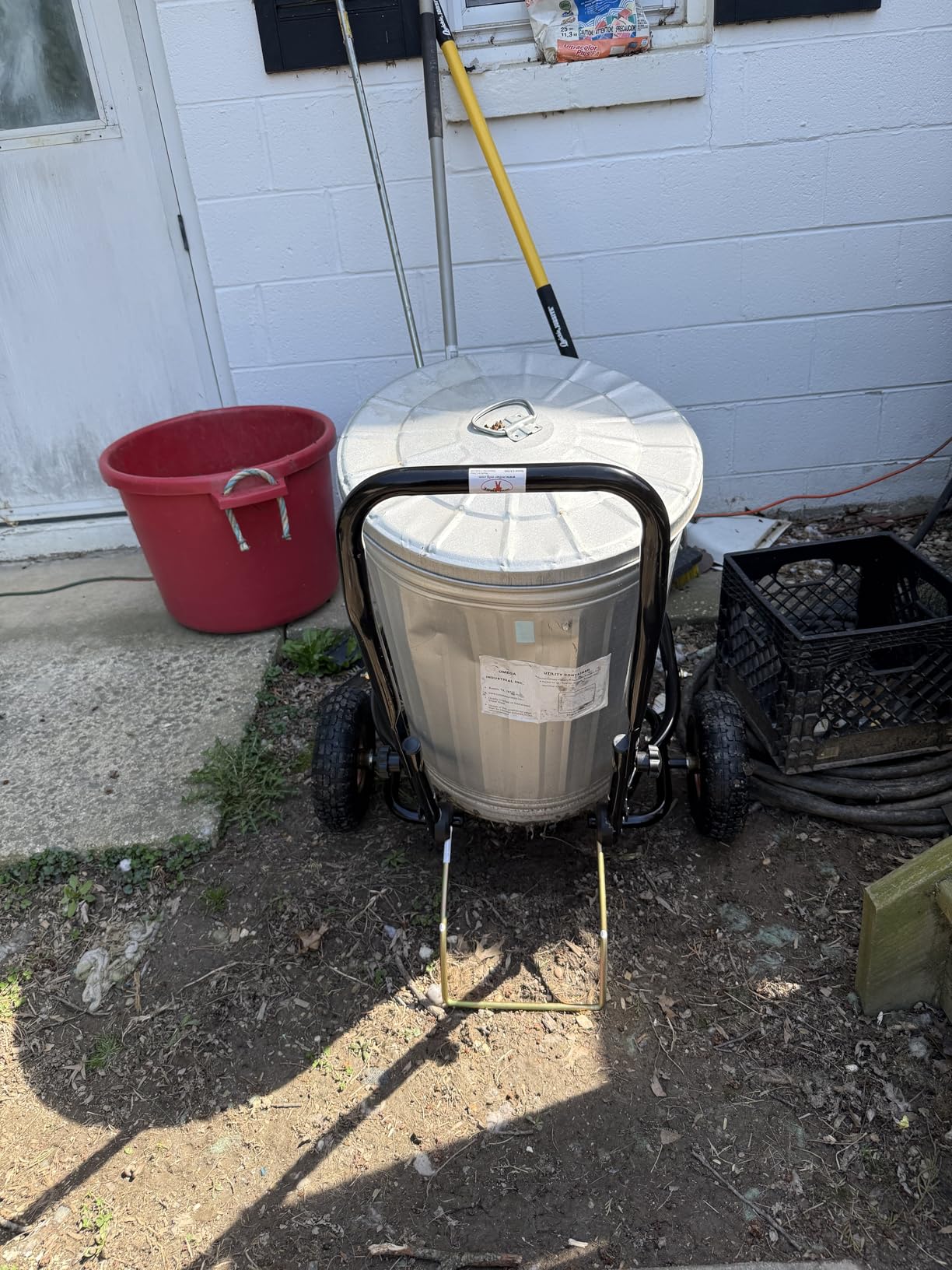
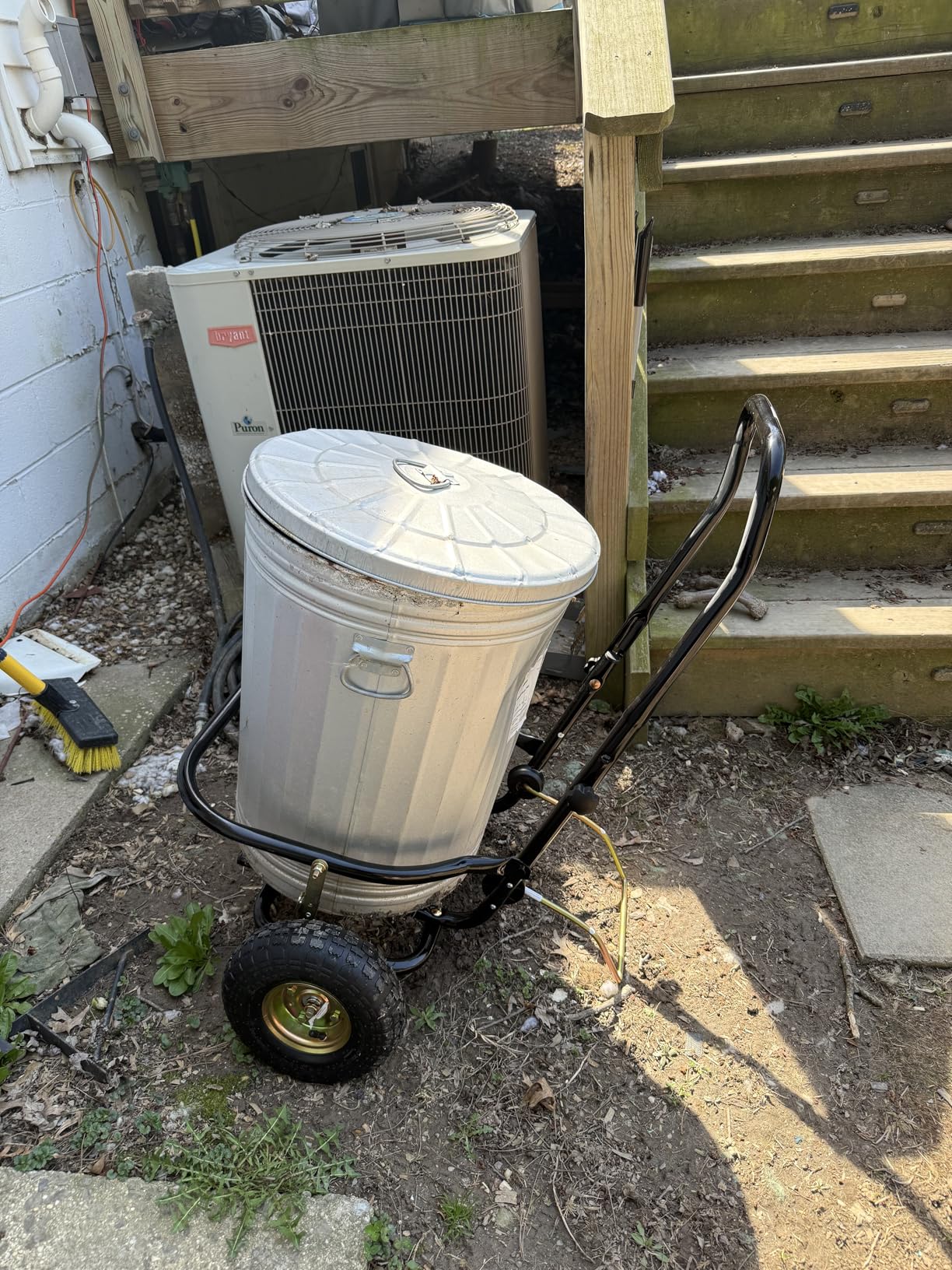
Each cart in the 3-pack features the same proven design as our editor’s choice Little Giant: a steel frame, two pneumatic tires, a collapsible retaining ring, an adjustable handle, and a retractable kickstand. The carts fold flat for storage, so three of them take up roughly the same space as one assembled cart when not in use. I tested this setup at a ten-stall barn where two workers clean simultaneously, and having two carts in active rotation cut morning chore time by nearly 25 percent.
The value proposition is straightforward. Buying three carts individually would cost significantly more than the 3-pack price, making this the most economical path to equipping a multi-worker barn. The third cart serves as a spare or can be stationed at a distant paddock or run-in shed to avoid hauling waste across the entire property. The fold-flat design also makes these carts ideal for horse shows where you need portable muck management at temporary stabling.
The assembly and quality control issues mirror those of the single Little Giant cart. Each cart requires assembly, and some users report missing hardware in one or more of the three packages. The tires may arrive flat and require inflation before first use. These are minor inconveniences given the overall value, but set expectations accordingly and have a wrench and bike pump ready on delivery day.
Multi-Worker Workflow Efficiency
With three carts, you can assign one to each worker and keep a third for reserve or remote stationing. In a barn with two workers cleaning twenty stalls, each person fills their cart at five stalls, dumps, and returns without ever waiting for the other. This parallel workflow is impossible with a single cart and represents the biggest time savings available from equipment alone.
The carts are identical, so there is no learning curve when switching between them. Workers develop muscle memory for loading, dumping, and folding one cart design that transfers instantly to the others. This consistency reduces fumbling and awkward handling that slows down chore routines.
Horse Show and Event Portability
The fold-flat design of each cart makes the 3-pack ideal for transporting to horse shows, clinics, and events where temporary stabling is provided. Two folded carts fit in most horse trailer tack compartments, and a third can ride in the bed of the tow vehicle. At the show grounds, you have dedicated muck carts for your temporary stalls without relying on shared venue equipment.
Show grounds management increasingly requires competitors to manage their own waste, making portable muck carts a practical necessity rather than a luxury. The Miller 3-pack gives you enough carts for a multi-horse show string while folding compactly for the trip home.
How to Choose the Best Muck Cart for Your Barn?
Choosing the right muck cart comes down to matching the cart’s capabilities to your specific barn setup, horse count, and cleaning routine. The wrong choice wastes money and adds frustration to your daily chores. Here are the key factors to evaluate before you buy.
Capacity and Barn Size Matching
Your cart’s capacity should scale with the number of horses you clean up after daily. A single horse produces roughly 30 to 50 pounds of soiled bedding per stall per day, which means a 200-pound capacity cart can handle one to two stalls per trip. For a four-horse barn, look for a cart with at least 300 pounds of capacity or 4 cubic feet of volume to minimize trips.
Large boarding facilities with ten or more horses should seriously consider high-capacity carts like the Sekey at 1600 pounds or the VEVOR at 1200 pounds. The reduced trip count saves measurable time every single day. For small private operations with one or two horses, a compact cart like the Little Giant or Simplay3 is more than sufficient and easier to store.
Wheel Types: Pneumatic vs Flat-Free vs Solid
Wheel choice is the factor that most affects daily satisfaction with your muck cart. Pneumatic (air-filled) tires provide the smoothest ride and best shock absorption, making them ideal for rough terrain and long distances. However, they require occasional inflation and are vulnerable to punctures from nails, wire, and sharp stones common in barn environments.
Flat-free tires, like the molded polyurethane wheels on the Gorilla Carts GCR-4 and CAMOO, eliminate puncture worries entirely. They trade a small amount of shock absorption for total maintenance-free operation. For most barns with prepared aisles and pathways, flat-free tires are the practical choice that removes a recurring frustration from your routine.
Material: Plastic vs Metal Construction
Plastic cart beds resist corrosion from manure and moisture, making them ideal for humid climates and barns where equipment stays outside. High-density polyethylene, like the Rubbermaid and Simplay3, offers excellent crack resistance and decades of service. The downside is lower weight capacity and potential for damage from sharp impacts.
Steel frames provide maximum strength and weight capacity but require maintenance to prevent rust. Powder-coated steel, like the Little Giant and VEVOR frames, resists corrosion better than bare metal but will eventually show surface rust on scratches and wear points. For dry climates and indoor storage, steel carts offer the best strength-to-cost ratio.
Maneuverability and Stall Door Compatibility
Standard stall doors are typically four feet wide, which accommodates most carts easily. The critical measurement is the cart’s width plus clearance for your hands on the handles. Two-wheel carts like the Little Giant and Rubbermaid have the narrowest profiles and turn most easily in tight aisles. Four-wheel wagons require more turning space and are better suited to wide aisles.
If your barn has narrow aisles or tight corners between stall rows, prioritize a two-wheel design. If you have wide concrete aisles and long straight runs to the muck pile, a four-wheel wagon provides better stability and load distribution. Measure your narrowest doorway or gate before ordering to ensure the cart will pass through without modification.
Dump Mechanism and Emptying Convenience
How you empty the cart affects your daily workflow more than any other feature. Carts with quick-release dump mechanisms, like the Gorilla Carts GCR-4 and CAMOO, let you tip and empty the entire load in seconds without lifting. Wheelbarrow-style carts like the Simplay3 and Rubbermaid require manual tipping but offer more control over where the load lands.
Tub-based carts like the Little Giant require removing the tub to dump, which adds a step but allows you to stage multiple tubs for continuous cleaning. Consider whether you prefer speed (dump mechanism), control (wheelbarrow tip), or workflow flexibility (removable tubs) when making your choice.
Frequently Asked Questions
What do you use to muck out stables?
The essential equipment for mucking out stables includes a muck cart or wheelbarrow for transport, a manure fork or shavings fork for separating waste from clean bedding, a muck bucket or tub for collection, and a stall broom for sweeping. A well-designed muck cart is the centerpiece that makes the entire process efficient by reducing trips to the manure pile.
How to keep your barn clean?
To keep your barn clean, muck stalls daily to remove soiled bedding and manure, sweep aisles regularly, maintain proper drainage to prevent moisture buildup, store feed in sealed containers to deter pests, and use a dedicated muck cart to streamline waste removal. Consistent daily cleaning prevents ammonia buildup and keeps horses healthy.
How often should you muck out a stable?
You should muck out a stable at least once per day for horses stalled overnight, ideally during morning feeding. Fully stabled horses may need twice-daily cleaning. Horses on part-time turnout can often be mucked once daily. Skipping days leads to ammonia buildup, increased fly populations, and respiratory stress for your horse.
What is the best muck cart capacity for a 4-horse barn?
For a 4-horse barn, a muck cart with 300 to 600 pounds of weight capacity and at least 4 cubic feet of volume works well. This allows you to clean two to three stalls per trip before emptying. The Gorilla Carts GCR-4 and CAMOO No-Flat Dump Cart are both excellent choices for this barn size.
Final Thoughts on the Best Muck Carts for Barn Cleaning
The best muck carts for barn cleaning in 2026 share a few traits: they are durable enough for daily abuse, they maneuver easily through your barn’s specific layout, and they reduce the physical effort and time that stall cleaning demands. Our editor’s choice, the Little Giant Muck Cart, remains the gold standard for dedicated stall cleaning with its tub-compatible design and fold-flat portability. The Gorilla Carts GCR-4 delivers the best overall value with flat-free tires and a quick-release dump that saves your shoulders every morning.
For large operations, the Sekey and VEVOR carts offer capacities that dramatically cut trip counts and chore time. For humid climates, the Rubbermaid and Simplay3 plastic carts resist the corrosion that destroys metal alternatives. Whatever your barn size, budget, or cleaning routine, one of these eight carts will make your daily mucking faster, easier, and less physically taxing. Invest in the right cart now, and your back will thank you for years to come.