
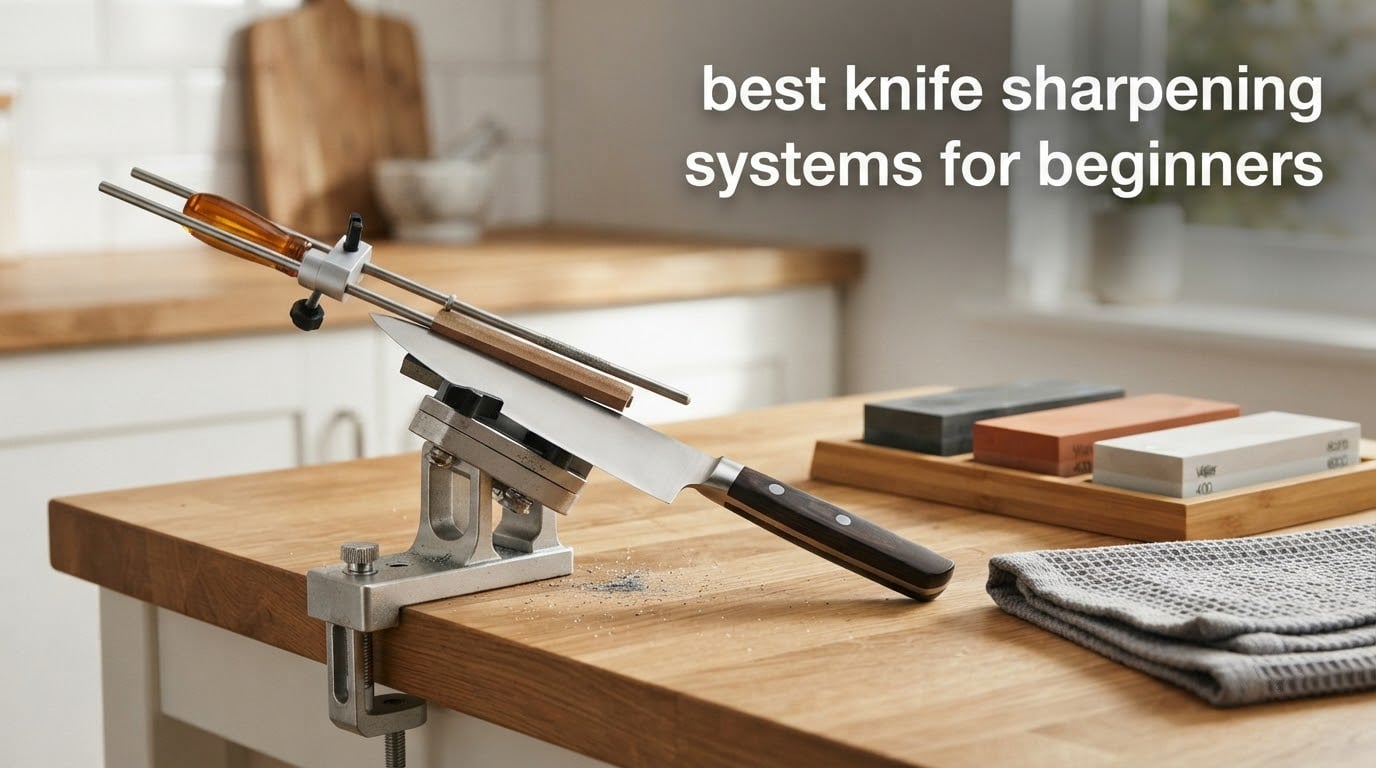
The best knife sharpening systems for beginners are guided rod-and-clamp kits, and the Work Sharp Precision Adjust leads them because it holds a repeatable 15 to 30 degree angle, needs no tools to set up, and works on both kitchen and pocket knives. Ten systems are reviewed below, from a single angle-guided rod to electric belt sharpeners and complete whetstone sets.
A knife sharpening system is not just a sharpening stone. It is the clamp, the base, and the replaceable abrasive that together hold a blade at one consistent angle while you work, which is the single thing most beginners fail to do by hand. That consistency matters more than talent, because a knife ground to a repeatable angle cuts faster and lasts longer, and a knife ground to a random angle just feels broken.
I sharpened the same three knives over and over for this guide: an 8 inch chef’s knife, a folding pocket knife, and a cheap paring knife I was happy to abuse. Experts on BladeForums and r/sharpening keep advising beginners to learn on inexpensive steel so mistakes stay cheap, and that is what I did.
One warning first, because it is the most common forum complaint: guided systems reduce error, they do not remove it. A regular on BladeForums put it plainly, that everything has a learning curve and a guided system should not be mistaken for a foolproof one.
Table of Contents
Top 3 Best Knife Sharpening Systems For Beginners (October 2026)
Work Sharp Precision Adjust
- Angle-guided clamp and rod
- 15-30 degrees in one-degree steps
- Three abrasives on one rod

Work Sharp MK2 Electric
- Two-speed motor
- Flexible abrasive belts
- Handles scissors axes and tools
All 10 Sharpening Systems Compared in 2026
Every pick below appears in this table with its type, angle control, and what ships in the box. Two details decide most beginner purchases: whether the system holds a fixed angle, and whether replacement abrasives are part of the kit or a separate purchase later.
| Product | Specifications | Action |
|---|---|---|
| Work Sharp Precision Adjust |
|
Check Latest Price |
| Lansky Deluxe 5-Stone |
|
Check Latest Price |
| Work Sharp MK2 Electric |
|
Check Latest Price |
 Presto EverSharp Electric Presto EverSharp Electric |
|
Check Latest Price |
 Intelitopia Whetstone Set Intelitopia Whetstone Set |
|
Check Latest Price |
 Sharp Pebble 1000/6000 Sharp Pebble 1000/6000 |
|
Check Latest Price |
 Chef’sChoice Hybrid 250 Chef’sChoice Hybrid 250 |
|
Check Latest Price |
 YeopAsda Whetstone Set YeopAsda Whetstone Set |
|
Check Latest Price |
 Lansky Professional LKCPR Lansky Professional LKCPR |
|
Check Latest Price |
 Orange Ninja 4-Stage Orange Ninja 4-Stage |
|
Check Latest Price |
1. Work Sharp Precision Adjust: the best knife sharpening system for beginners
Work Sharp Precision Adjust Knife Sharpener Kit, Fixed Angle System
Angle-guided clamp and rod
15-30 degrees in 1-degree steps
Diamond and ceramic stages
215 g
Pros
- Repeatable angle without freehand skill
- Tools-free setup
- Handles serrated knives
- Three-year warranty
Cons
- Draw rhythm still needs practice
- Rod indexing is fiddly at first
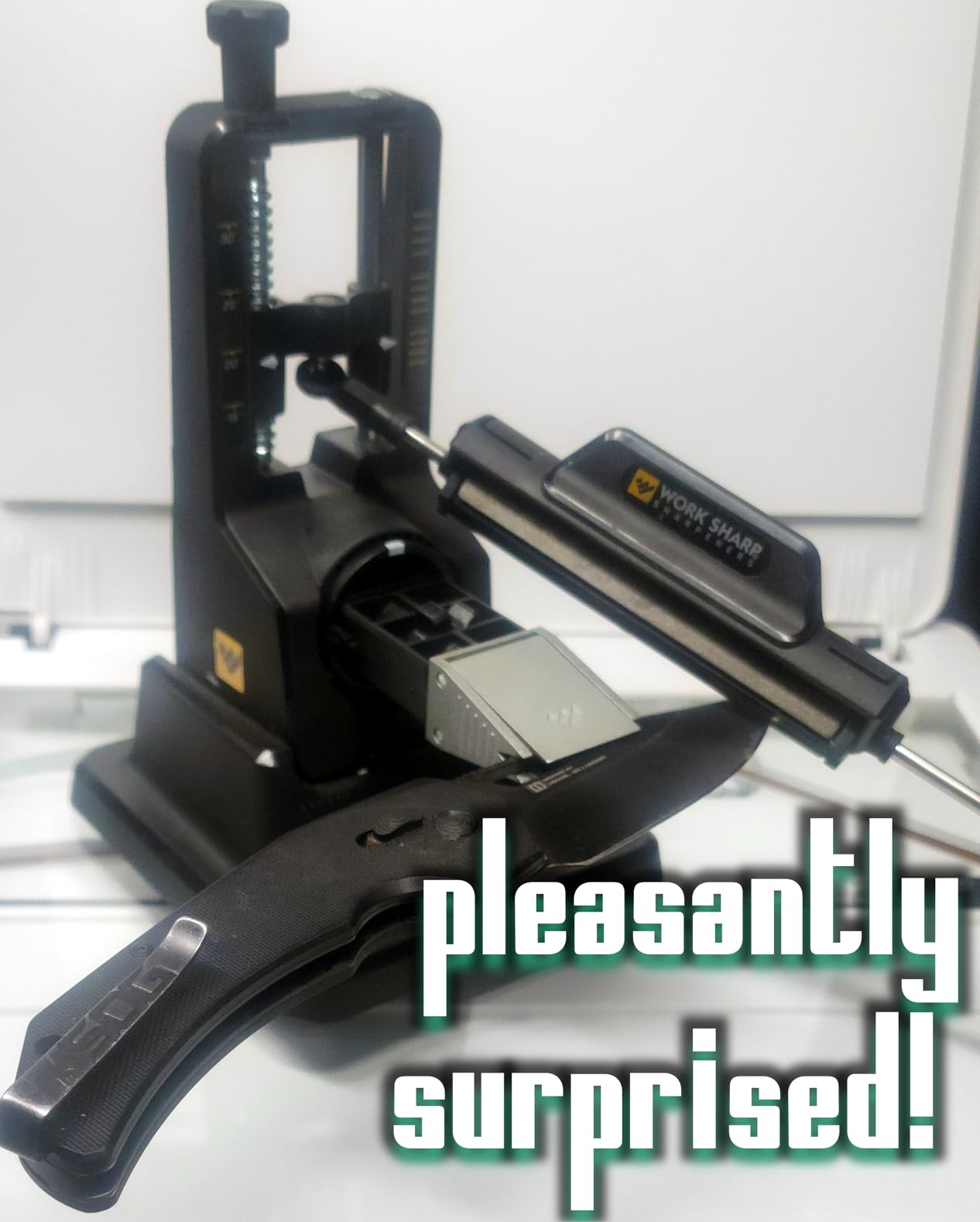
This is the system I hand to anyone who has never sharpened a knife. The blade sits in a v-block clamp, the rod swings over on a hinge, and the chassis is set to your angle with a numbered dial. Nothing has to be measured or guessed.
The range is why it beats simpler kits. It runs from 15 to 30 degrees in single-degree steps, so one unit handles a hard 25 degree chef’s knife and a thinner edge if you want to chase it. Reviewers credit that adjustability with making kitchen and pocket knife work repeatable.
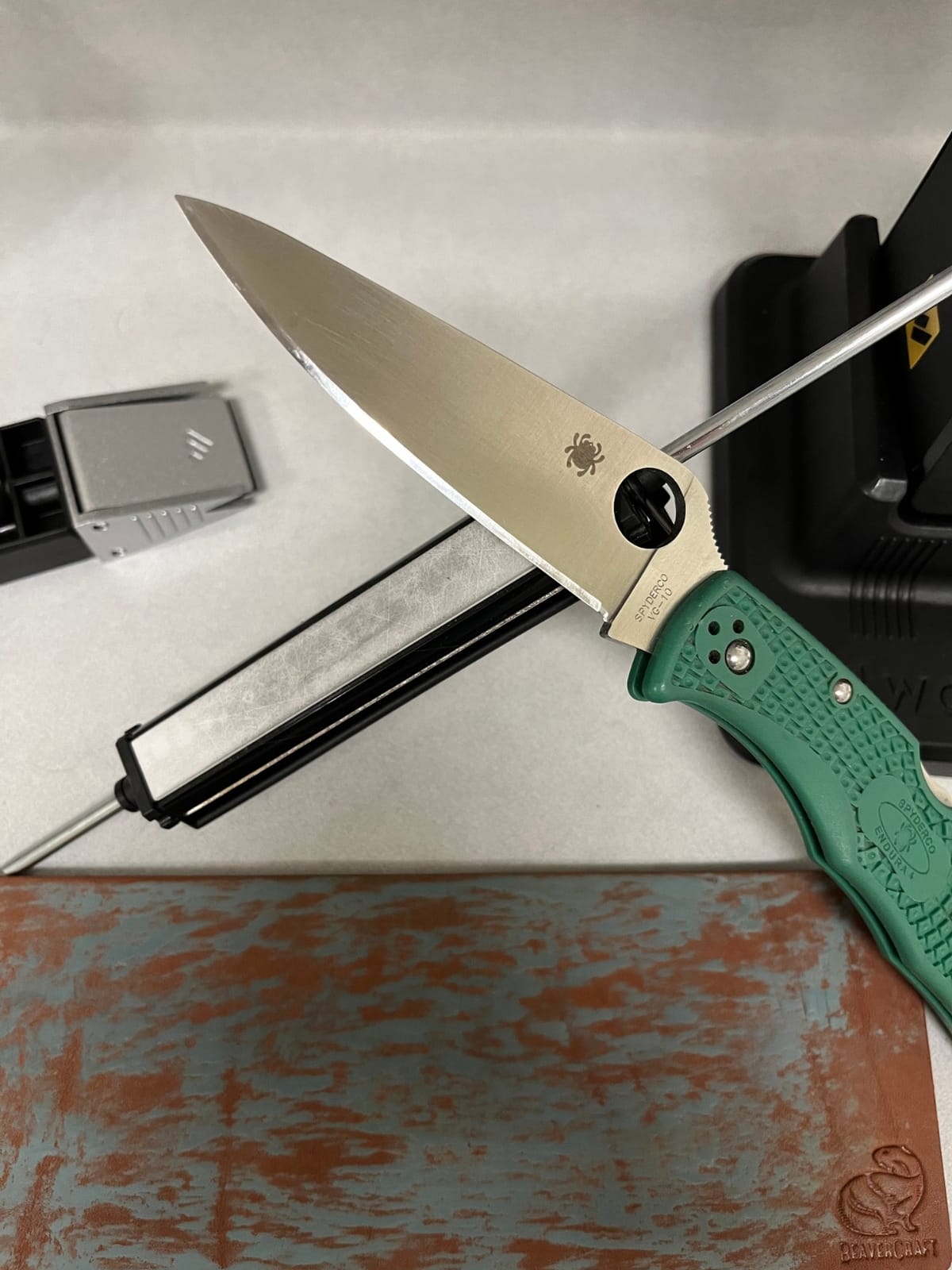
The single rod carries three surfaces: coarse and fine diamond plus a fine ceramic stone, so you can repair a dull edge and polish it with one tool. At 215 g and 6.5 by 9.6 inches it takes up about the space of a paperback.
The base stores the components and doubles as a benchtop stand, so there is no separate stand to buy later, a gotcha that trips up people buying rod kits.
Who the Work Sharp Precision Adjust suits?
Anyone whose collection mixes kitchen and pocket knives, since it covers both with only an angle change. Small kitchens benefit too, with no water, no oil and no mess.
Who it does not suit?
It cannot grind a badly chipped blade down to bare steel, which needs a coarse stone or a belt first. The draw motion also rewards rhythm, so practise on an inexpensive knife for the first few sessions.
2. Lansky Deluxe 5-Stone: the best value knife sharpening system
Lansky Deluxe Knife Sharpening System: 5-Stone Ceramic Knife Sharpener Kit with Honing Oil – LKCLX
Five hones from extra-coarse to extra-fine
One guide rod per hone
Color-coded holders
1.1 lb
Pros
- Full five-stage grit progression
- Color coding simplifies the sequence
- Clamp oil and case included
- Handles outdoor and garden knives
Cons
- Large kit with many parts
- Overkill if you only need touch-ups
The Lansky Deluxe gives you the whole progression in one box: extra-coarse through extra-fine ceramic alumina hones, each with its own guide rod and colour-coded holder. You learn the sequence once and it stays the same.
More than 14,000 reviews at 4.5 stars makes it one of the most thoroughly used systems in circulation. Owners credit the colour coding and the included case for making a five-stage process feel manageable.
The precision-engineered clamp does the real work, holding the blade against the rod at a repeatable angle. Buyers note it covers kitchen, outdoor, hobby and garden knives.
Honing oil is included and you should use it, because skipping it leaves a slurry that dries out mid-stroke. The molded case keeps the parts together in a drawer instead of scattered.
Who the Lansky Deluxe suits?
Beginners who own more than one knife and want to go from repairing a neglected edge to a polished finish without buying anything else. The extra-coarse hone handles damage the single-rod systems cannot.
Who it does not suit?
If you already own decent stones this is redundant, and reviewers with their own collection tend to buy one higher-grit stone instead. It is also a large kit at 1.1 pounds, so measure your drawer first.
3. Work Sharp MK2 Electric: the best electric knife sharpening system
Work Sharp MK2 Electric Knife Sharpener – Adjustable 2-Speed Knife Sharpening System for Kitchen Knives, Pocket Knives, Scissors, Axes & Garden Tools
Two-speed motor
Flexible abrasive belts
Edge guide to the tip
3-year warranty
Pros
- Highest rated pick in the group
- Two speeds for fine and coarse work
- Handles knives scissors axes and mowers
- Compact countertop footprint
Cons
- Belts remove more metal than stones
- Belt changes needed between stages
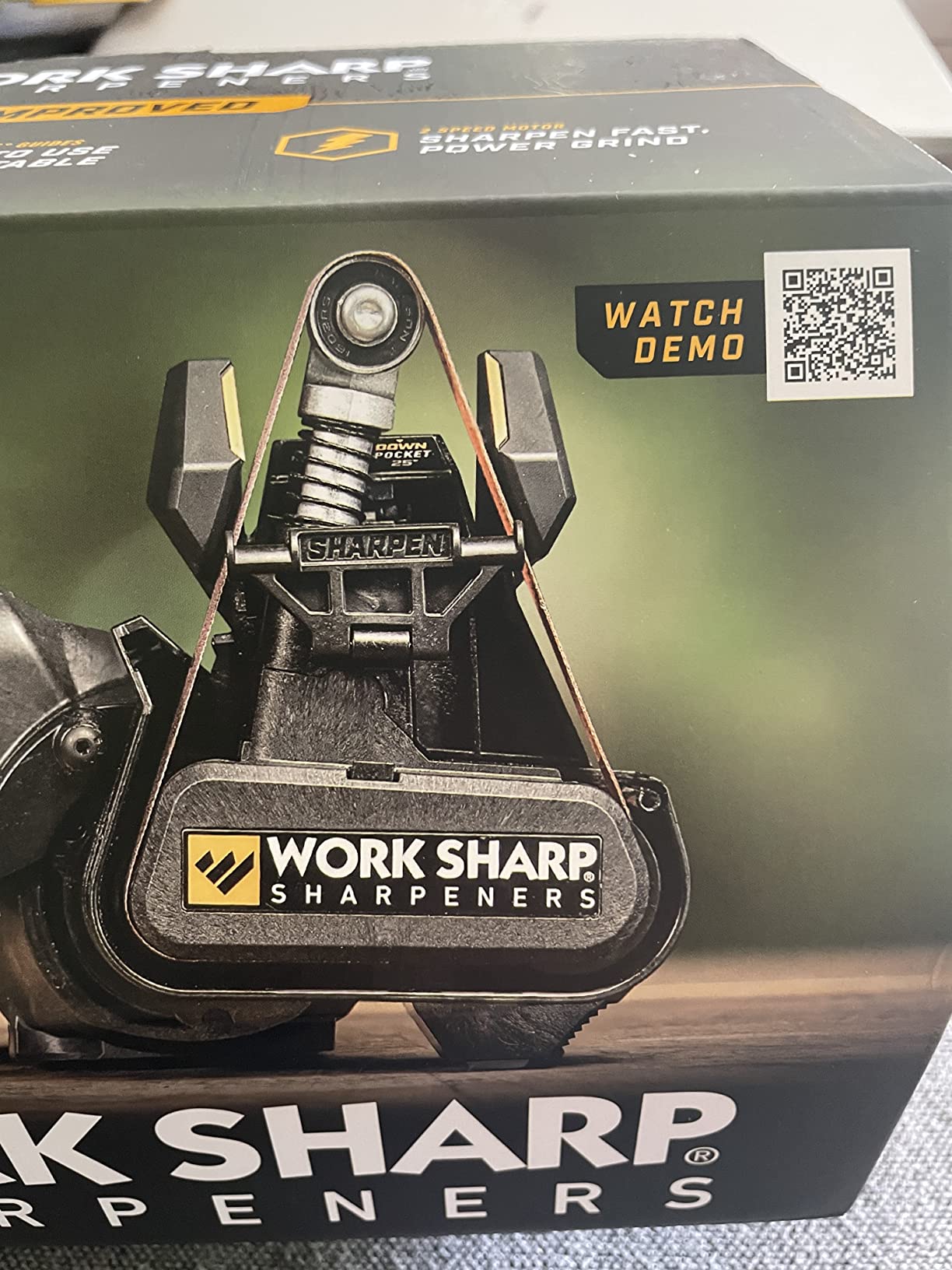
If technique is what stops you, an electric system removes it entirely. The flexible belt wraps against the edge and the guide carries it to the tip, so you push the knife through once per side.
At 4.7 stars across roughly 8,100 reviews, this is the highest rated pick here, with 81 percent of buyers giving five stars. Owners highlight speed and repeatability, and several use it on mower blades and axes.
The two-speed motor turns it into a general sharpener: low for finishing, high for grinding down something damaged. Scissors, pruners and garden tools are all within what the belts handle.
At 7.02 by 2.26 by 1.27 inches it stays narrow on a counter, and the 3-year warranty matches what you would expect from an appliance-style device.
Who the Work Sharp MK2 suits?
A household that wants sharp knives without anyone learning a technique, and anyone with more than a knife drawer. It also suits people who sharpen rarely, since there is no stone to soak and no angle to hold steady.
Who it does not suit?
Anyone who cares about thinning a nice blade. Belts remove more metal per pass than a stone, the angle is fixed rather than adjustable, and switching between coarse and fine means changing belts.
4. Presto EverSharp: the easiest knife sharpener for kitchen knives
Presto 08810 Professional EverSharp Electric Knife Sharpener
Three-stage electric system
Blade thickness selector
Sapphirite wheels
5.1 lb
Pros
- Thickness selector removes angle guesswork
- Handles chef steak fillet and paring knives
- Long-running dependable design
Cons
- Fixed slot angle suits European-style edges
- Bulky countertop footprint
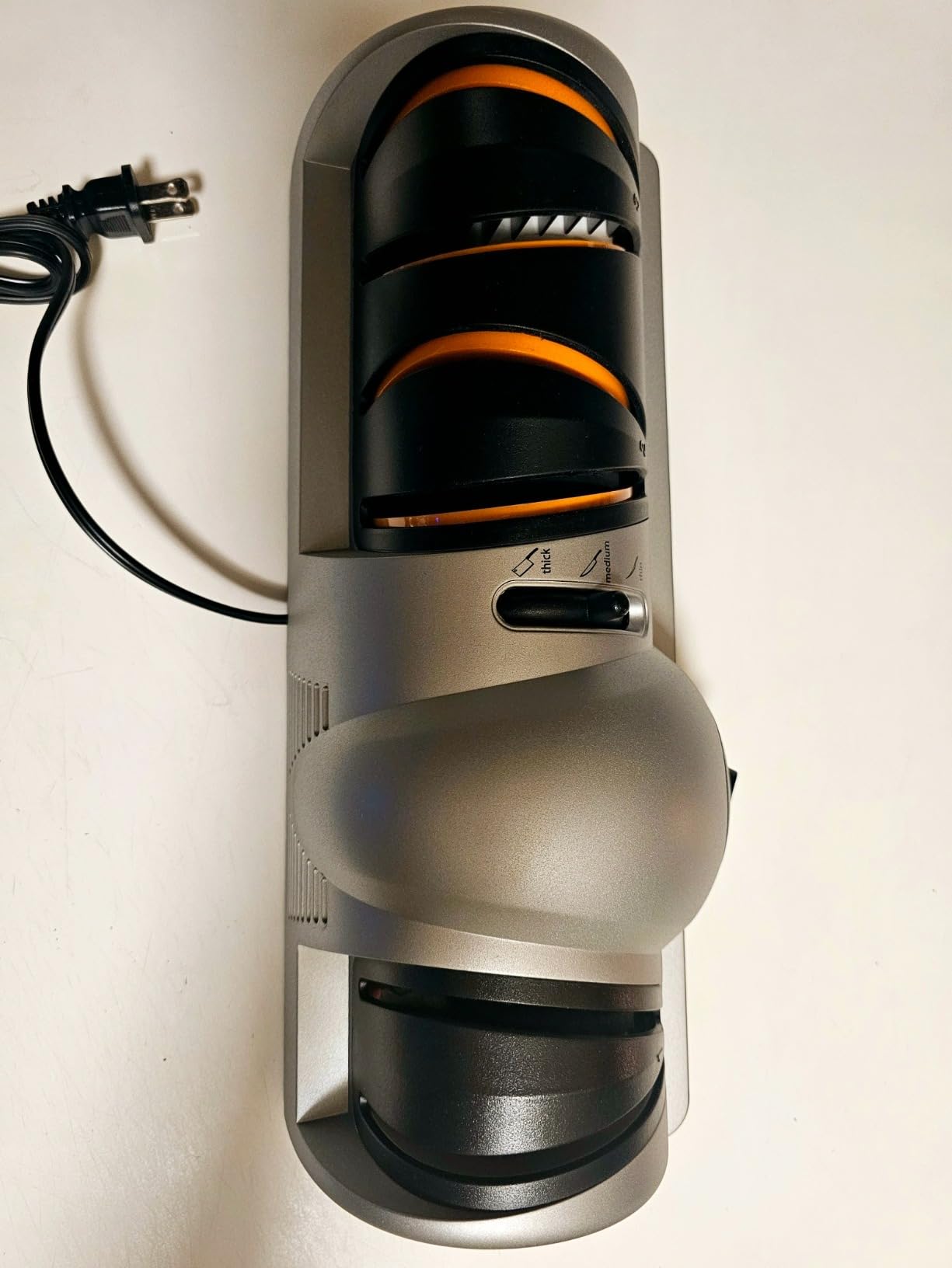
The Presto hides the angle question behind a switch. Pick thick for hunting knives, medium for a chef’s knife, fine for fillet and paring blades, and the guides move to match. That one control is why it suits a first kitchen knife.
More than 10,800 reviews at 4.5 stars shows how settled the design is. Reviewers single out the thickness selector and the fixed guides as the feature that lets a beginner pick a sensible angle without reading about geometry.
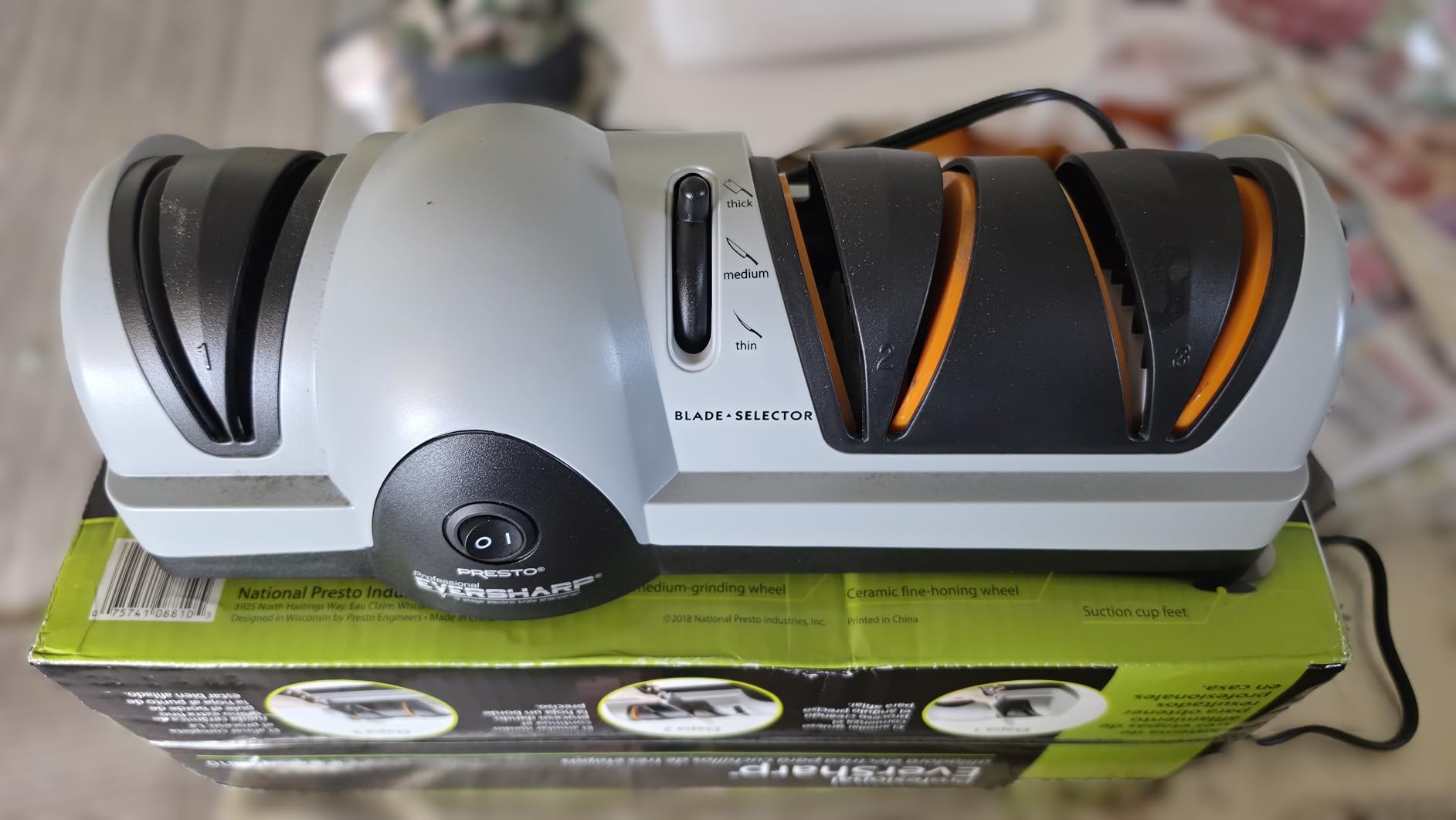
The path is three stages, finishing on an extra-fine ceramic wheel that hones rather than grinds. Sapphirite wheels are abrasive rather than metal, which is why it weighs 5.1 pounds and stays put on the counter.
It handles Santoku, chef’s, steak, fillet and paring knives, so one kitchen collection is covered. Buyers describe the design as dependable rather than exciting.
Who the Presto EverSharp suits?
A kitchen with standard European and Asian knives that wants one appliance to maintain them all. It also suits anyone sharpening several knives at once, since the three-stage path beats a stone progression per blade.
Who it does not suit?
Collectors of Japanese single-bevel knives, because the fixed slot angle is wrong for a yanagiba. At 18.43 by 11.25 inches it also needs real counter space.
5. Intelitopia Whetstone Set: the best whetstone kit for a first purchase
Intelitopia Complete Knife Sharpening Stone Set – Dual Grit Whetstone 400/1000 3000/8000 Knife Sharpener with Leather Strop, Flattening Stone, Bamboo Base, 3 Non-slip Rubber Bases & Angle Guide
400/1000 and 3000/8000 grit wet stones
Flattening stone and leather strop
Angle guide
5 lb
Pros
- Four grit levels in two stones
- Angle guide helps first-timers
- Flattening stone and strop included
- Suits many blade types
Cons
- Stones need soaking and staying wet
- Coarse stones wear faster
- Base can slide
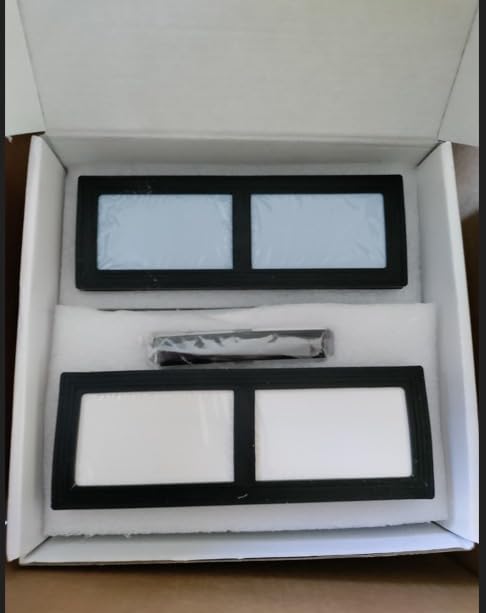
This kit removes the three reasons people abandon whetstones: no guide, no way to keep the stone flat, and no way to remove the burr. The 400/1000 and 3000/8000 stones cover repair through polish, the flattening stone keeps them level, and the leather strop finishes the edge.
It ranks second in Sharpening Stones with roughly 7,260 reviews at 4.5 stars, and reviewers keep pointing at the accessories rather than the stones. Buyers report restoring knives they had written off.
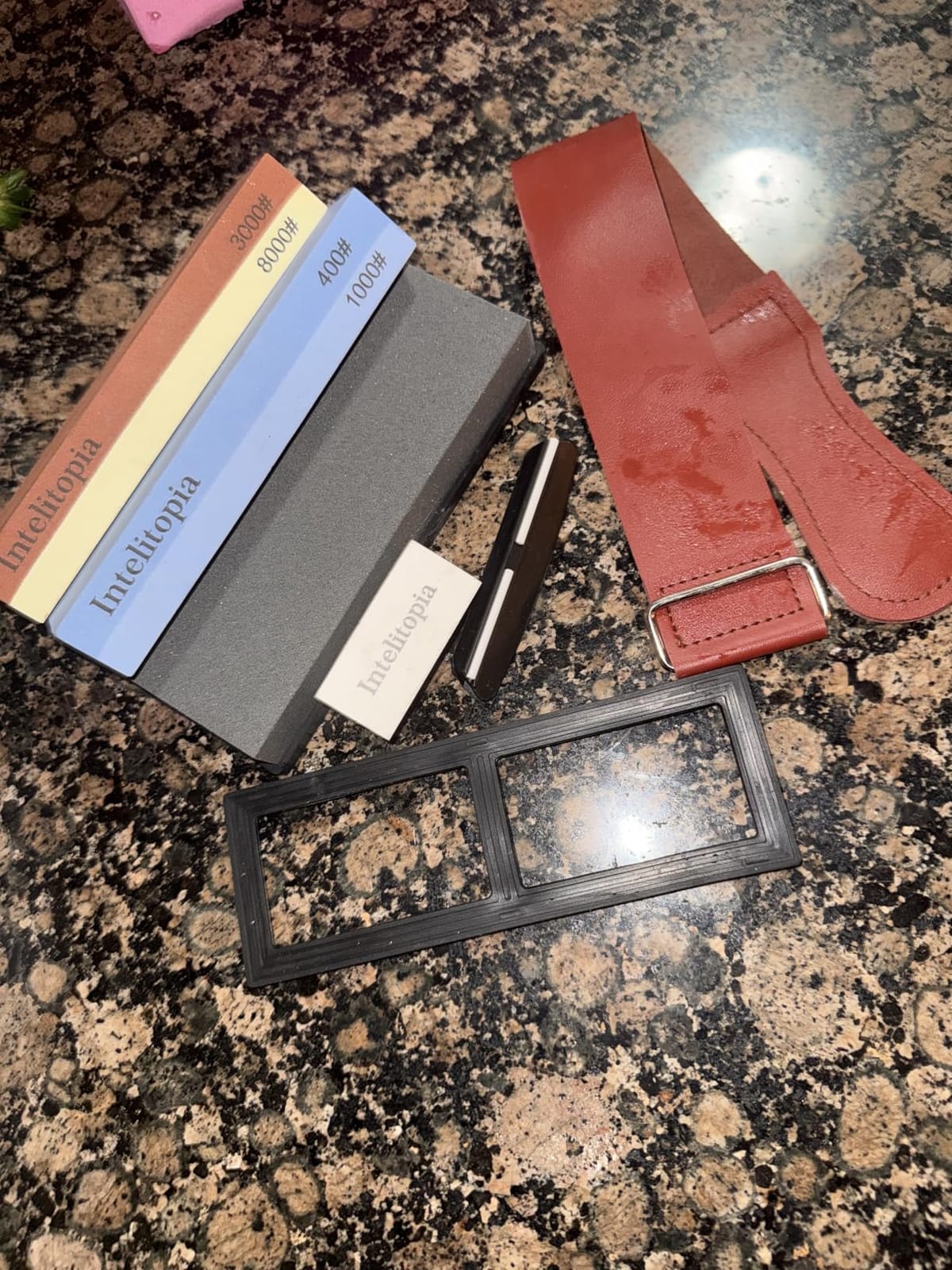
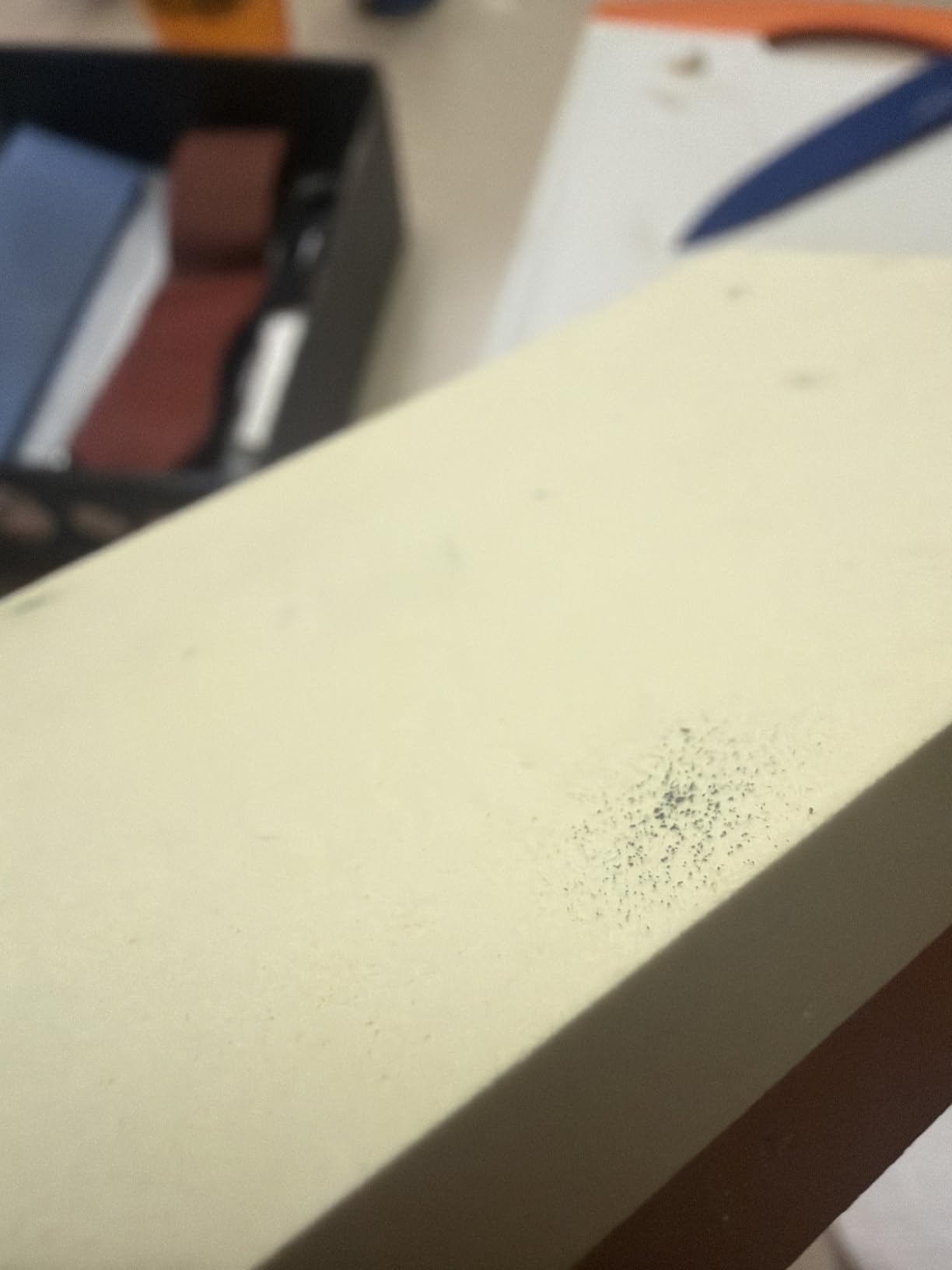
These are corundum wet stones, so they need water rather than oil. Soak them until the bubbles stop and keep them wet during use; a stone dried mid-session stops cutting consistently.
The listed use covers chef, santoku, paring, sushi, cleaver, BBQ, hunting and pocket knives plus scissors and straight razors.
Who the Intelitopia set suits?
Beginners who want real whetstone technique without buying accessories separately. The angle guide gives a reference while your hands learn the motion, and the strop handles the burr stones leave behind.
Who it does not suit?
Anyone who wants a clean kitchen, since wet work means a bowl of water and cleanup every time. The coarser stone also wears faster than a dense Japanese stone, making this a learning set rather than a lifelong one.
6. Sharp Pebble 1000/6000: the best single stone with a guide
Sharp Pebble Whetstone Knife Sharpener – 1000/6000 Grit Sharpening Stone
1000 and 6000 grit corundum
Angle guide locks blade position
Water-based
2.1 lb
Pros
- Largest review base in the group
- Angle guide removes first-timer fear
- Water use means no oil and no mess
- Stays flat longer than cheap stones
Cons
- Freehand angle control is still challenging
- No flattening stone included
- Same stone sold cheaper by others
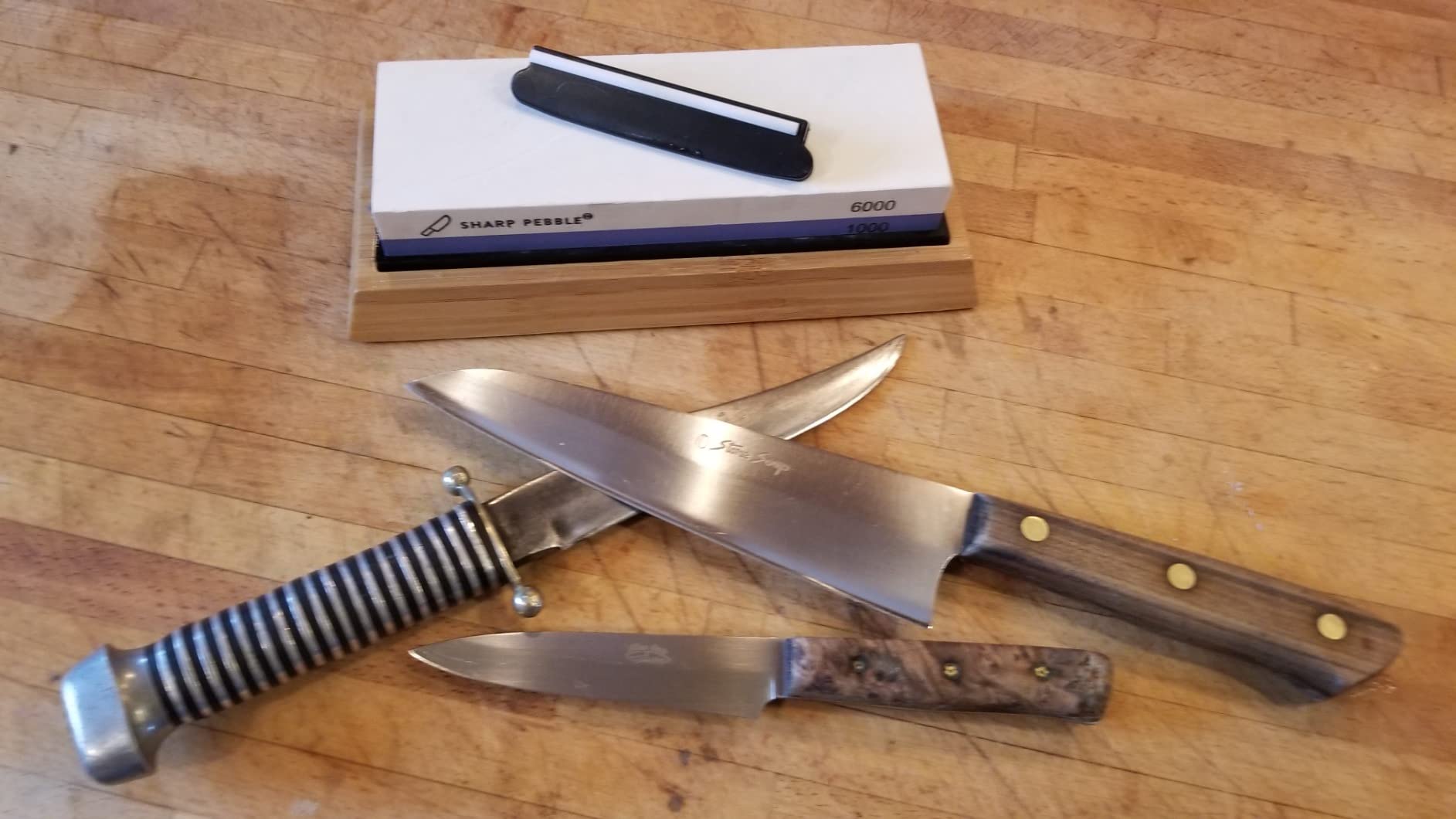
One stone, two grits, one guide. The 1000 side repairs a dull or slightly damaged edge, the 6000 side polishes it, and the angle guide locks the blade into position so your hand does not guess the angle on every pass.
This is the most reviewed whetstone in the group at more than 25,600 reviews and 4.6 stars. Owners credit the guide for making the jump to stone sharpening easy, and report edges that outlast electric sharpening.
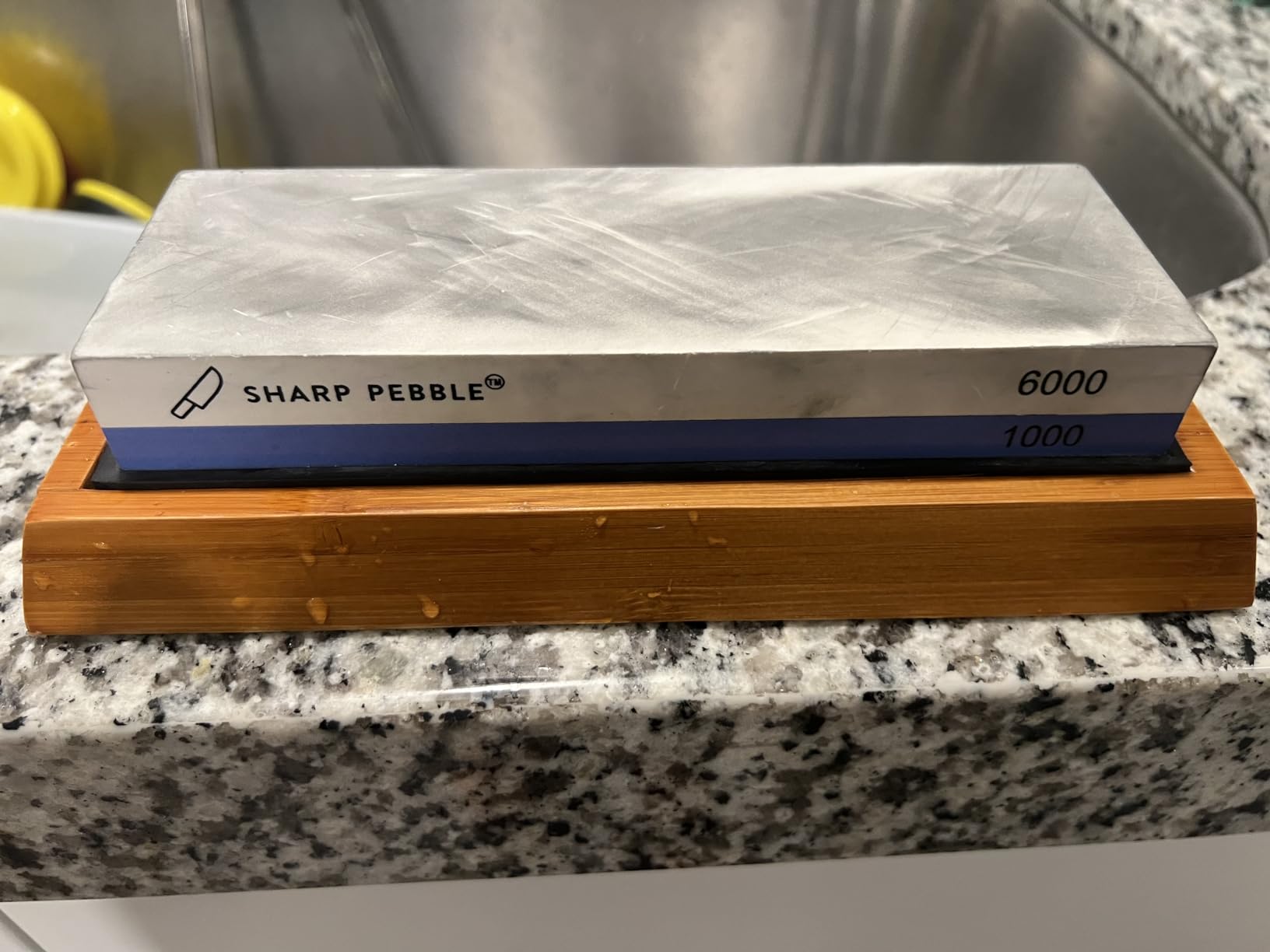
Water-based operation means no oil and no sticky slurry to clean off, a real advantage in a small kitchen. At 7.25 by 2.25 by 1 inch and 2.1 pounds it stores in a drawer and will not walk across the counter.
The composition is chosen to stay flat and resist chipping, which is what makes 1000 grit viable for a beginner. The kit also includes a bamboo base, angle guide, manual and tips guide.
Who the Sharp Pebble suits?
Beginners who want one decision made for them. The guide is the reason it appears here over a bare stone, and it is why first-time owners get a usable edge in one session.
Who it does not suit?
Anyone expecting the clamp-level repeatability of a rod system, since the guide helps more with position than with pressure and stroke. No flattening stone is included, so the stone eventually needs dressing.
7. Chef’sChoice Hybrid 250: the best quick-touch-up system
Chef’sChoice Hybrid Knife Sharpeners for 20-Degree Straight and Serrated Knives Combines Electric and Manual Sharpening With 100-Percent Diamond Abrasives And Precision Angle Guides, 3-Stage, White
Electric and manual stages
20 degree three-facet edge
100 percent diamond abrasives
2.7 lb
Pros
- Quick touch-ups between full sharpenings
- Diamond abrasives cut fast
- Handles straight and serrated knives
- Compact housing
Cons
- Can mark the sides of forged blades
- Leaves fine metal dust
- Some reports of inconsistent edges
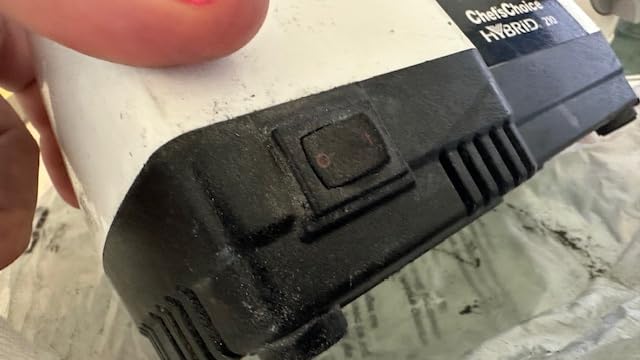
Most systems force a choice: full sharpenings on stones, or quick touch-ups on a powered wheel. This one runs both. Electric coarse stages remove metal fast, and a manual finishing stage lets you polish without a full stone progression.
It produces a 20 degree edge using a three-facet geometry rather than a simple two-sided bevel, which is the design’s real claim. Reviewers say that arch-shaped edge holds its sharpness longer than a plain straight grind.
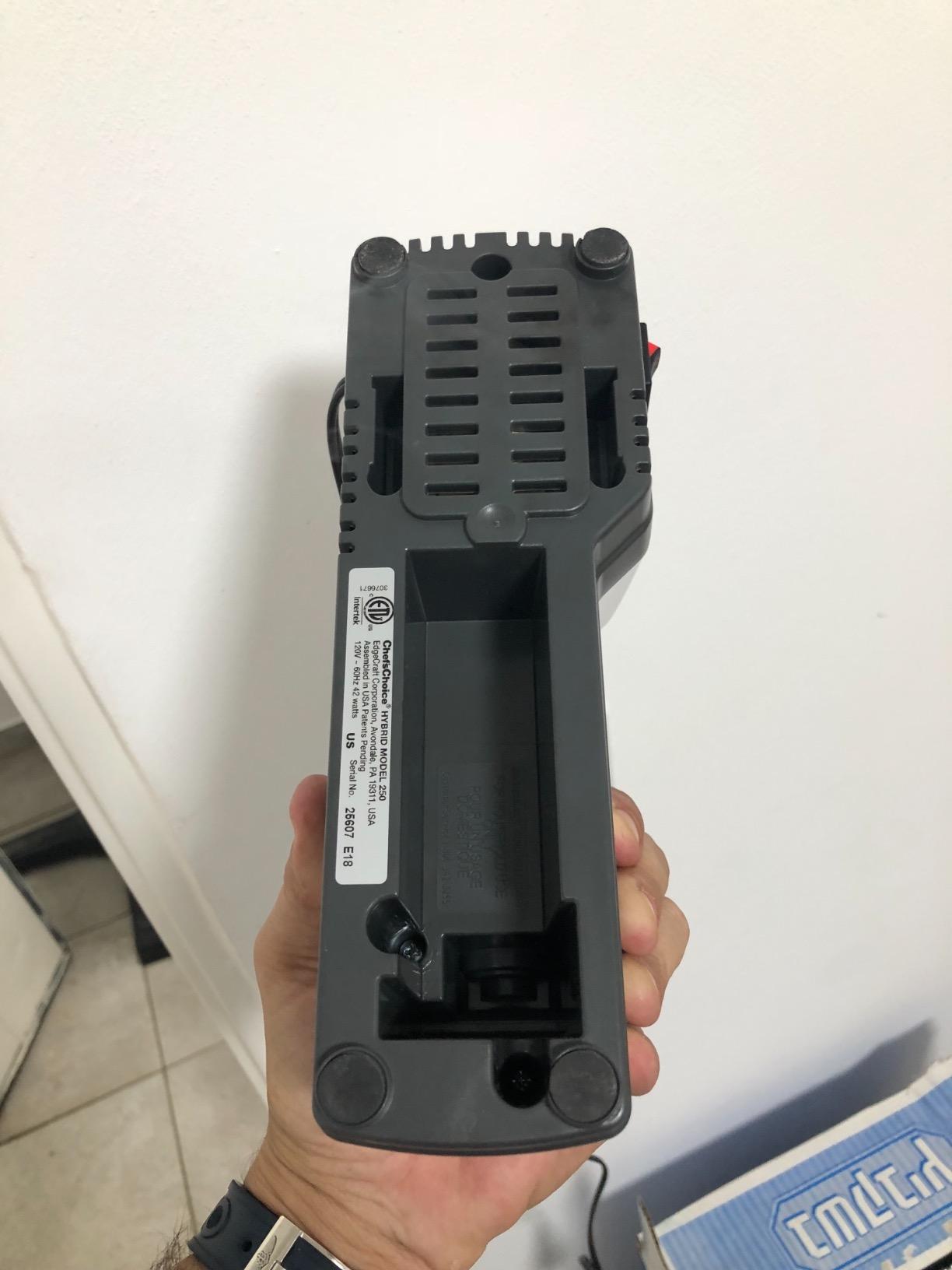
The fixed 20 degree setting means no adjustment to think about, and diamond abrasives cut fast with almost no pressure. It handles straight-edge and serrated knives in one unit at 8.8 by 3.3 by 3.7 inches.
It is the best tool here for someone who cooks daily and wants a quick correction rather than a proper session. Owners also report it paid for itself quickly against professional sharpening fees.
Who the Chef’sChoice Hybrid suits?
A home cook who sharpens in small increments, weekly rather than twice a year. The manual finishing stage is what makes that pattern possible without a full abrasive progression each time.
Who it does not suit?
Owners of expensive forged or Japanese single-bevel knives, since reviewers report fine scuff marks on the blade sides and the fixed 20 degree geometry is wrong for single-bevel edges. Fine metal dust also collects on counters.
8. YeopAsda Whetstone Set: the most complete kit in a single box
Whetstone Knife Sharpening Stone Set, Double-Sided Grit 400/1000 3000/8000
400/1000 and 3000/8000 grit stones
Angle and honing guides
Strop with compound
5.8 lb
Pros
- Four grit levels plus strop and compound
- Bamboo base holds stones steady
- Angle and honing guides included
- Cut-resistant gloves in the box
Cons
- Soaking and water add mess
- Base and strop feel cheap
- Entry-level corundum wears faster
Two double-sided stones give four grit levels from 400 through 8000, and everything a beginner might otherwise buy separately is in the box: bamboo base, flattening stone, leather strop with green compound, angle guide, honing guide, and cut-resistant gloves.
Around 2,800 reviews at 4.5 stars, and reviewers describe it as the most accessory-complete kit they have used. The honing guide is the unusual addition, extending the system to non-knife blades.
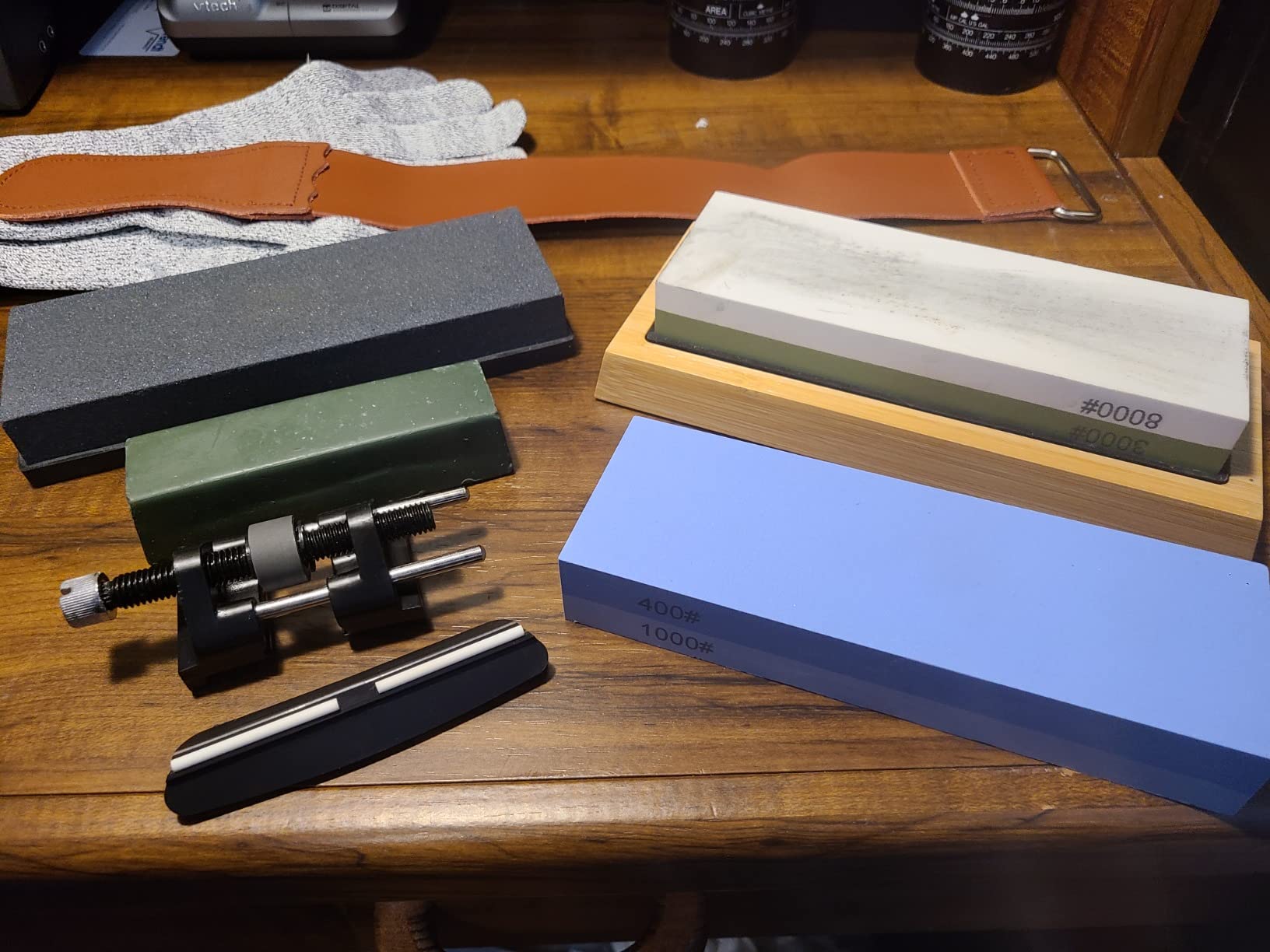
White corundum with water-only sharpening means no oil, and reviewers report the stones wash clean and hold up over years. The silicone-lined bamboo base keeps them from shifting, the biggest cause of a bad stone session.
Two stones at 5.8 pounds and 7.1 by 2.4 by 1.2 inches give you a stable platform and a compact footprint.
Who the YeopAsda set suits?
Beginners who want stones, guides, strop and base in one purchase. It also suits mixed tool collections, because the honing guide covers chisels and planer blades alongside knives.
Who it does not suit?
Anyone wanting a clean kitchen, since soaking and water mean a bowl, a towel and cleanup after every session. Reviewers describe the base as feeling cheap, and entry-level corundum wears faster than a premium stone.
9. Lansky Professional LKCPR: the rod-and-base system with a serrated hone
Lansky Professional Sharpening System with Coarse, Medium, Ultra Fine, and Serrated Medium Hones
Flip-over multi-angle clamp
Coarse medium ultra-fine and serrated hones
One rod per hone
1.1 lb
Pros
- Flip-over clamp speeds angle changes
- Serrated hone included
- Color-coded holders simplify steps
- Case and honing oil included
Cons
- Slowest per knife of the rod systems
- Most pieces to set up and store
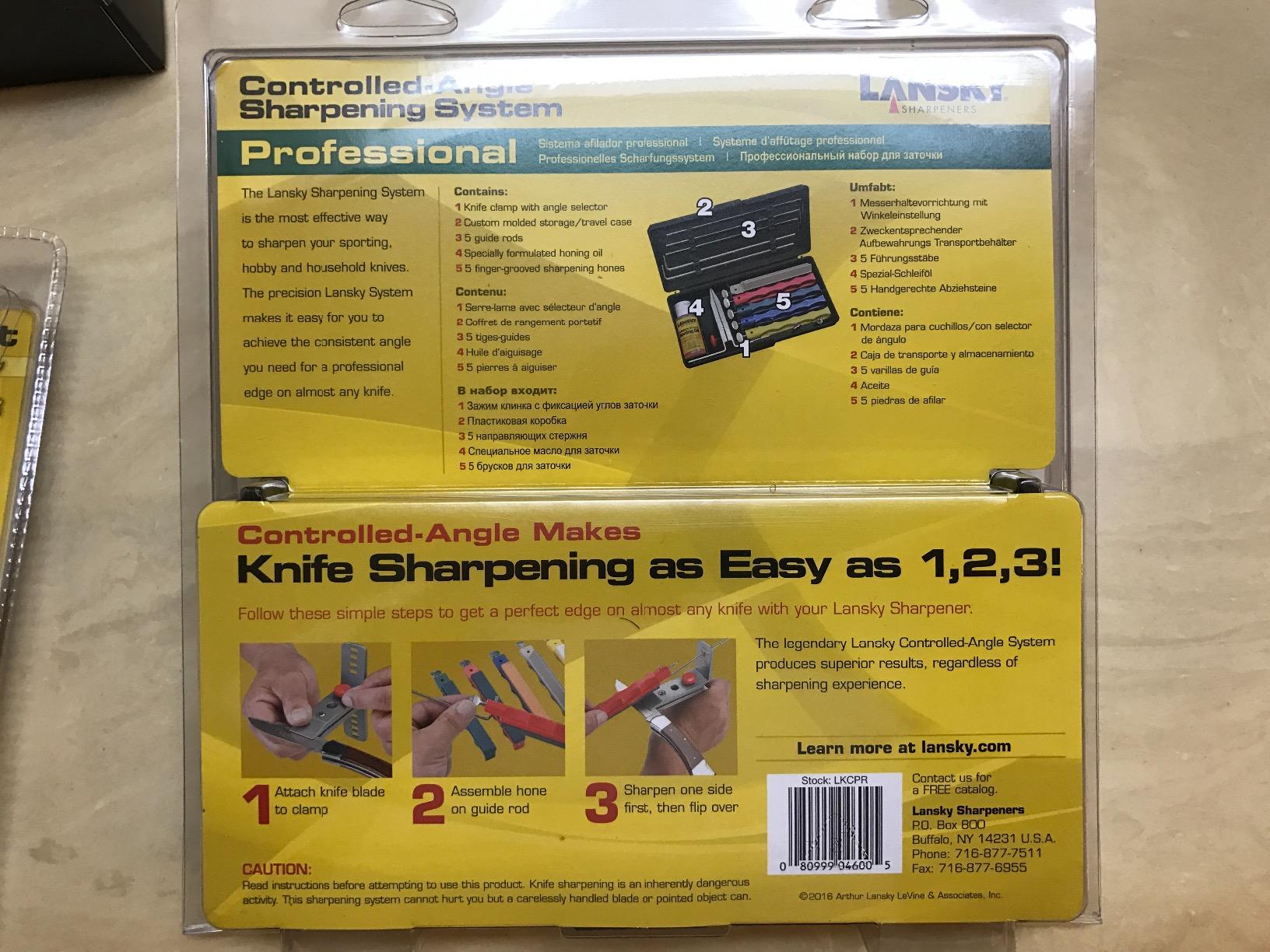
The defining feature is the patented flip-over clamp, which pivots between preset angles so you move from a steep kitchen angle to a shallow pocket knife angle without rebuilding the setup.
Four hones plus a dedicated serrated medium hone cover straight and serrated blades. Each stone gets its own guide rod and a colour-coded holder, so the sequence is as easy to follow here as on the Deluxe.
The catalog is smaller than the Deluxe at roughly 2,280 reviews and 4.4 stars, with 70 percent five stars. Owners value the clamp and the colour coding, and the standard complaint is time per knife compared with an electric unit.
At 1.1 pounds the case matches the Deluxe box size and carries the whole system. Honing oil is included, and you should use it on these stones as on any water stone.
Who the Lansky Professional suits?
Someone with a mixed collection who will move between a European chef’s knife and a serrated bread knife without resetting the clamp. It also suits anyone who plans to stay with guided sharpening, since the rod-and-clamp logic transfers directly.
Who it does not suit?
Someone in a hurry, because manual stone work on four stages is the slowest per knife here. It also carries more pieces to set up and store than the single-rod alternatives, so measure your space first.
10. Orange Ninja 4-Stage: the fastest way to a usable edge
Orange Ninja Serrated & Kitchen Knife Sharpener – 4-Stage Sharpening Tool
Coarse carbide medium diamond fine and serrated slots
Manual draw-through
10.88 oz
8.18 inch handle
Pros
- Four stages including a serrated slot
- No setup and no power needed
- Lightweight and compact
- Works with either hand
Cons
- Draw-through removes noticeable metal
- Cannot repair badly damaged blades
- Edges are functional rather than polished
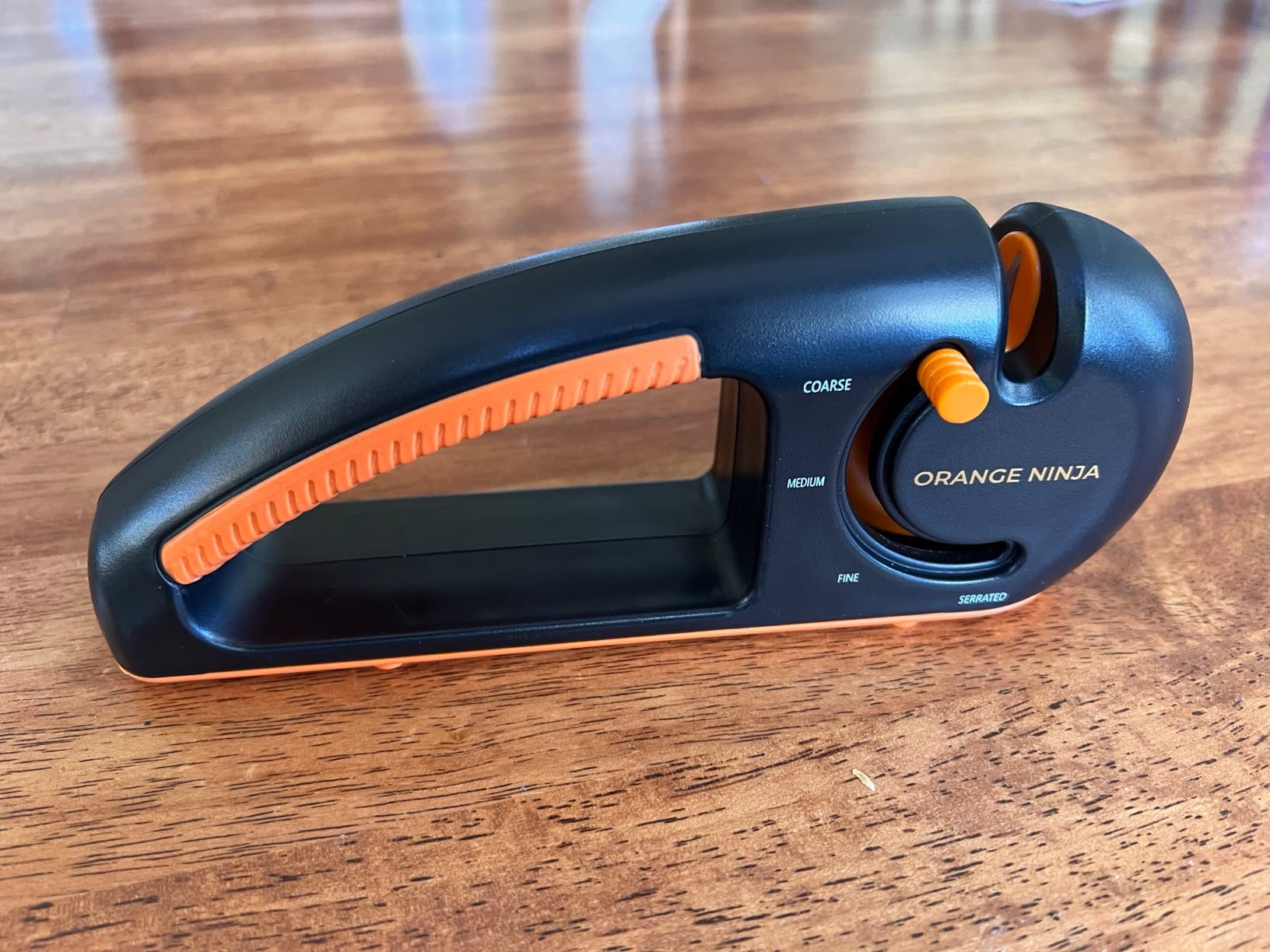
Four slots in one handheld tool: coarse carbide for straightening, medium diamond, a fine polishing stage, and a dedicated serrated slot. You draw the blade through, no clamp and no angle guide, and you have an edge in under a minute.
It is the lowest rated pick here at 4.3 stars, with 62 percent five stars against a meaningful share of three-star reviews. Buyers who want instant results like it, and critical reviewers point out what fixed draw-through slots cost you.
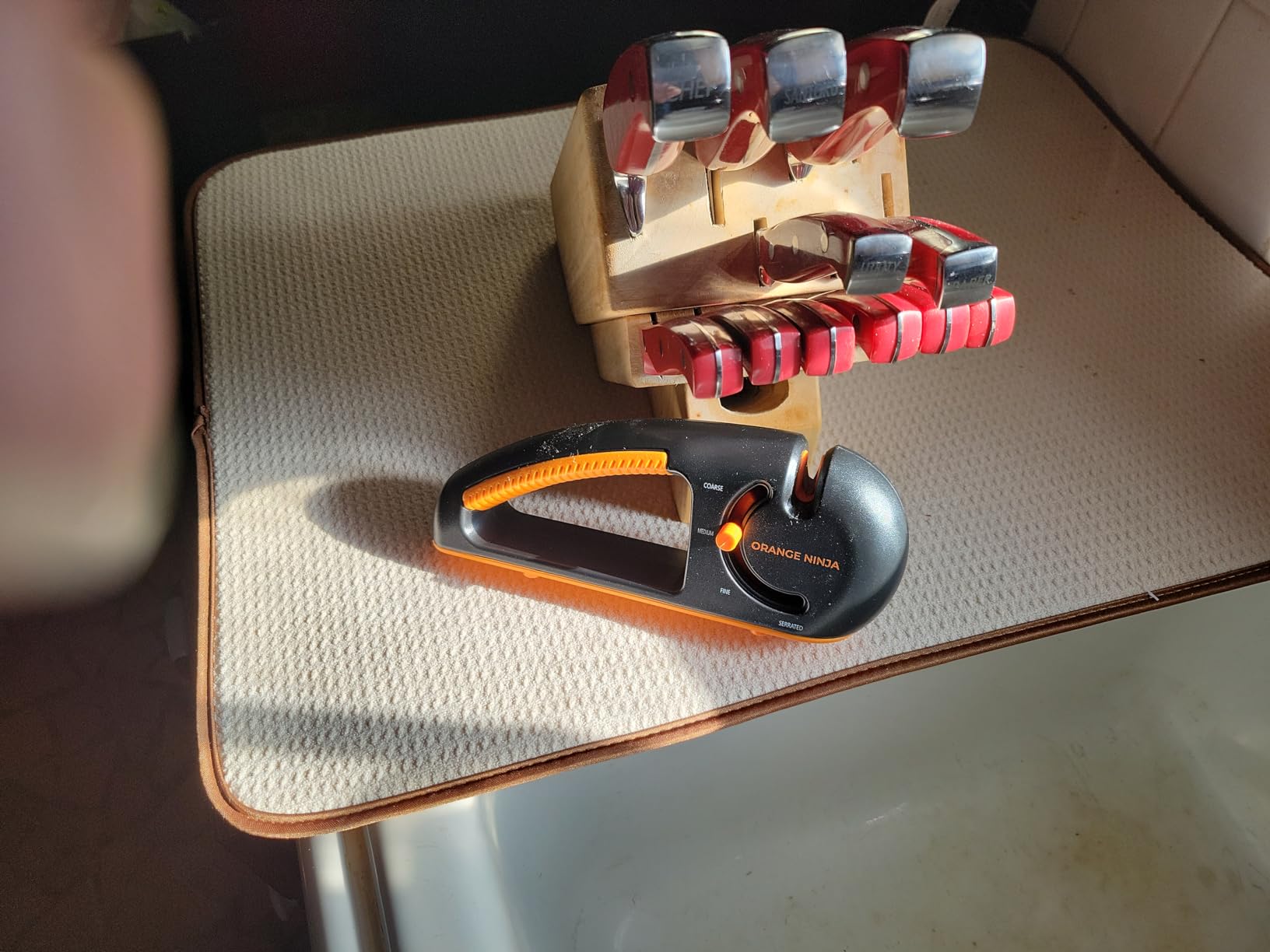
At 10.88 ounces it is narrow and light enough to fit a drawer or a bag. Construction is ABS with tungsten steel, carbide and ceramic components, and the handle works the same way for either hand.
It sharpens chef, paring, fillet, pocket and hunting knives. What it cannot do is reprofile, because a fixed draw-through slot sets its own angle.
Who the Orange Ninja suits?
A complete beginner, a renter with no counter space, and anyone who wants a knife usable again tonight. There is no water, no oil and nothing to store except the tool. It also works as a travel companion for a hunting or folding knife.
Who it does not suit?
Anyone with good knives they care about, since draw-through slots remove more metal than stones and cannot reset an edge angle. It also cannot restore a severely damaged blade, and the finish is functional rather than polished.
How to choose a knife sharpening system as a beginner?
Choose a system that holds a fixed angle if you have never sharpened before. A guided clamp or thickness selector removes the decision entirely, and the decision is where beginners lose confidence. Freehand whetstone work rewards technique you do not have yet, which is why angle guides appear on two of the stone kits here.
The five system types, and who each one suits
A guided rod-and-clamp system uses a replaceable rod or stone on a hinged arm, with the blade held in a clamp at a preset angle. It is the most forgiving type for a beginner, and it is what the Work Sharp Precision Adjust and both Lansky kits use.
A whetstone set gives you control over the grit progression and the best long-term edges, but it asks you to hold an angle, keep the stone wet and flat, and clean up afterwards. A pull-through sharpener takes seconds and gives up steel and angle control in return. An electric belt sharpener removes technique entirely and fixes one edge angle. A rolling or field sharpener is portable and built for maintenance rather than correction.
Which angle should a kitchen knife be sharpened to?
Twenty to twenty-five degrees per side is the sensible target for most European and Asian kitchen knives, and 15 degrees is aggressive enough to be worth learning later rather than starting with. Thirty degrees is tough and forgiving, which makes it a reasonable first edge on a knife you use hard.
The systems above split into three camps. The Work Sharp Precision Adjust covers the whole 15 to 30 degree range in single-degree steps, while the Presto and Chef’sChoice units work to a fixed 20 degree edge and the Chef’sChoice builds a three-facet version of it. Stones let you choose freely but require the guide to keep you honest.
What the grit numbers actually do?
Grit is particle size, and lower numbers are coarser. Around 200 to 400 grit removes metal fast and repairs damage, 600 to 1000 sets a working edge, 3000 refines it, and 6000 to 8000 polishes for a keen final edge. Coarse stages form a burr, fine stages remove it and smooth the apex.
That is why the kits in this roundup span the range. The Lansky Deluxe runs from extra-coarse alumina to extra-fine ceramic in five steps, the Intelitopia and YeopAsda sets offer four grits across two stones, and the single Sharp Pebble stone covers the common case with 1000 and 6000. You do not need every stage on day one, you need enough to remove the dull edge and enough to finish it.
Look at the whole kit, not just the sharpener
Check whether the base, clamp or stand is included, because a rod kit without a base is a common beginner trap.
Also check whether replacement abrasives are sold separately. A guided rod system wears its rod out eventually, and a stone set eventually needs dressing, so the ongoing part cost matters as much as the starting kit. If you also sharpen tools rather than knives, our picks for the bench grinders for sharpening tools and benchtop belt grinders for tool sharpening cover the heavier end of that spectrum.
If your ambition runs to shaping and profiling blades rather than only restoring them, the best belt grinders for knife making explain the grinders built for that job, and our propane forge reviews cover the heat source that comes before it.
Why your knife stopped slicing after you sharpened it?
A knife that will not slice paper after sharpening almost always has one cause: you changed the edge angle. The fix is not a sharper abrasive, it is re-establishing the original angle with a coarser grit and a steady hand.
First, clamp position drifted between sessions. This is the most repeated complaint about rod and jig systems on the forums, because the blade must sit in exactly the same spot each time or the edge walks to a new angle. Mark your clamp position with tape.
Second, you created a secondary bevel. Starting too far back on a shallow angle lays a new edge behind the old one, and that new apex only feels dull. Work the full length of the bevel on a coarse grit until the burr runs edge to edge before moving finer.
Third, you finished too fine without removing the burr. A burr left in place bends over during cutting and feels blunt immediately, so alternate a few stone strokes with several on the strop until it is gone.
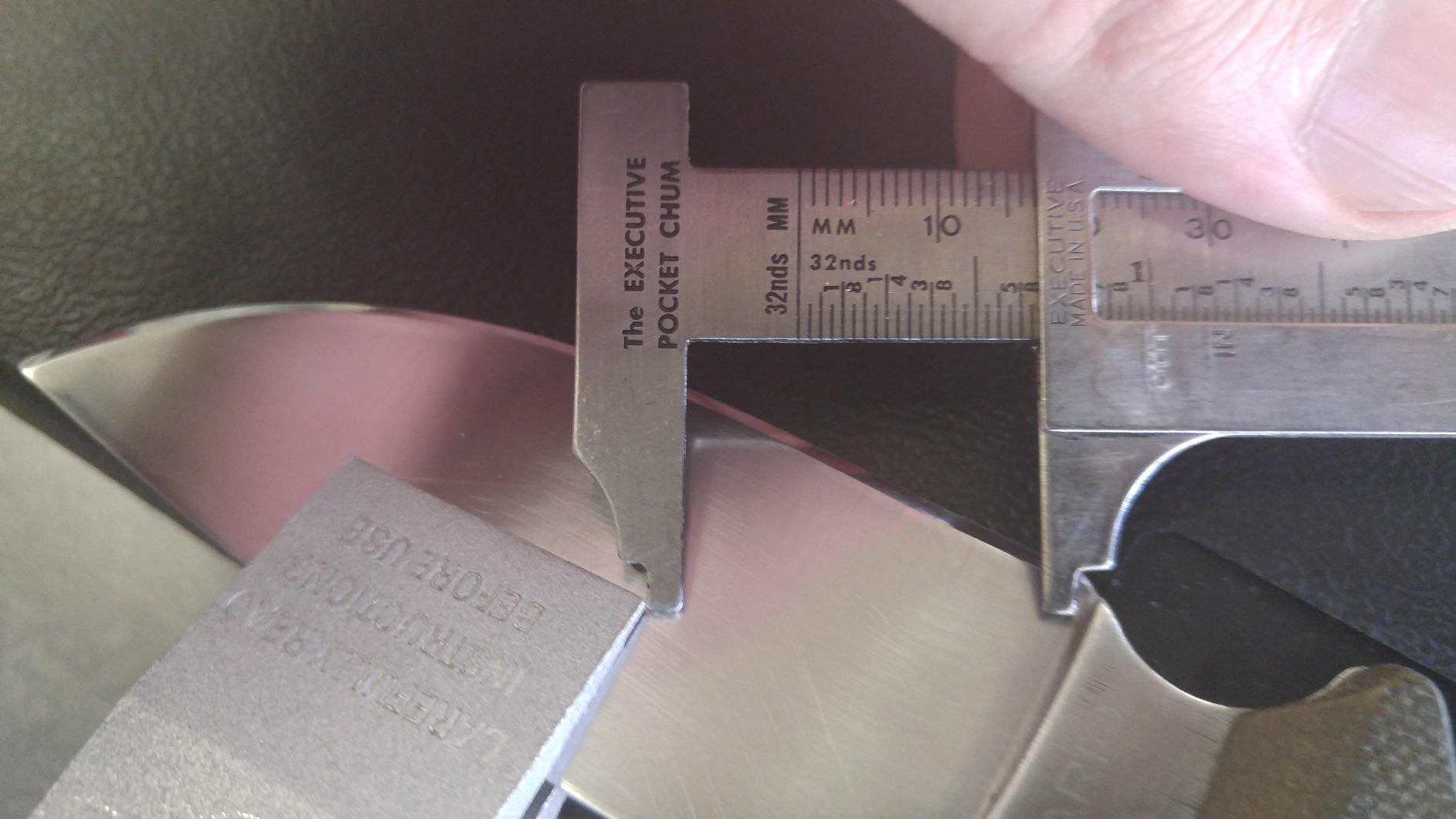
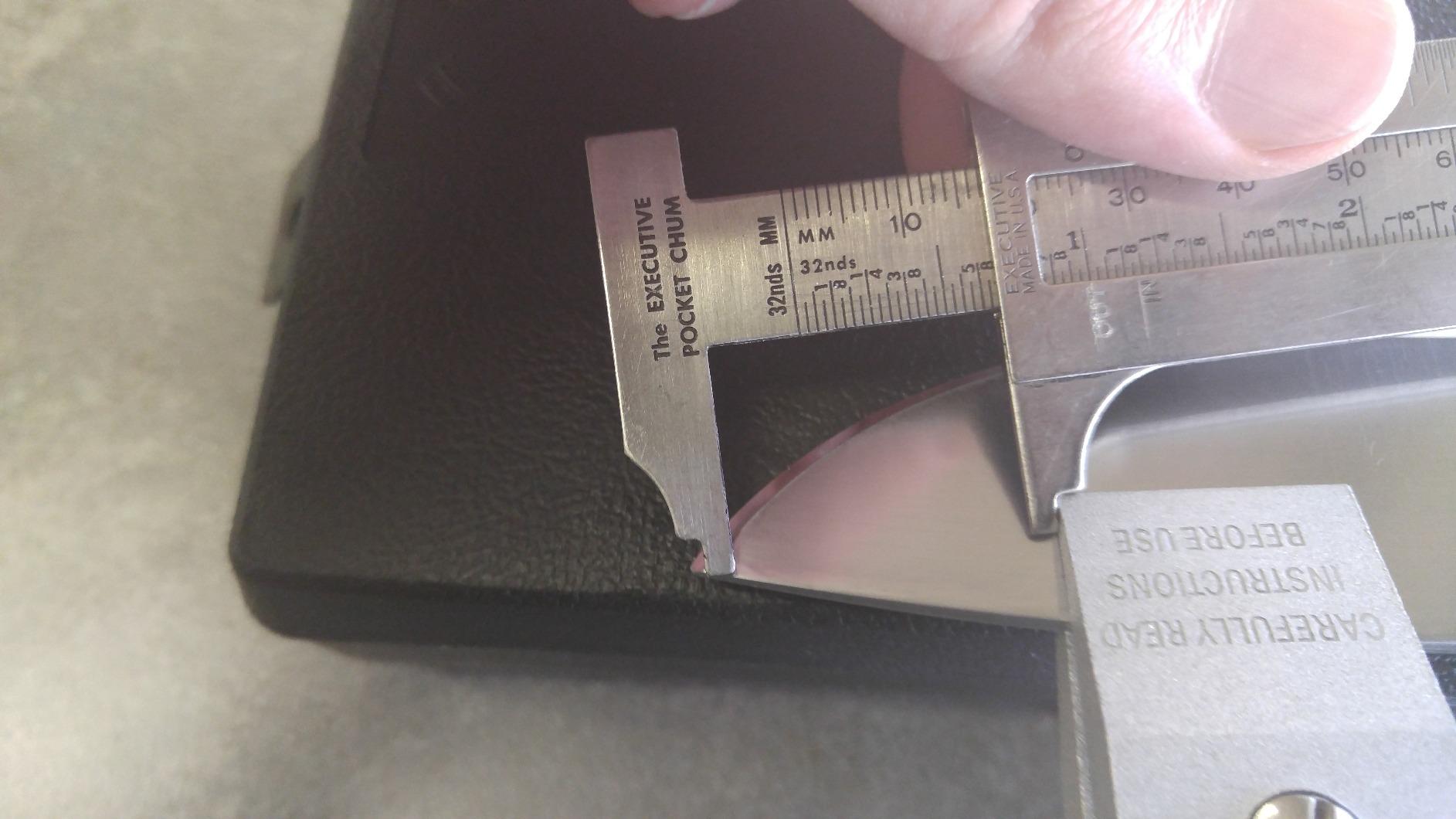
Fourth, you treated a guide as a measurement. Guides give a nominal angle, not the angle your blade already is, and a pocket knife arriving at 25 degrees does not become a 15 degree knife because you set the chassis that way.
Frequently Asked Questions
What do I need to start sharpening my knife?
A clamp-and-rod system is the shortest route for a beginner: a base, a clamp, and at least two abrasives, one around 400 to 1000 grit and one fine stage. Add honing oil or water, a strop or leather pad, and a towel. Keep an inexpensive knife for practice so early mistakes cost you nothing.
Are manual knife sharpeners any good?
Yes. Manual rod and clamp systems produce the most controllable edges, and the ones in this roundup hold a repeatable angle without freehand technique. What they do not do is remove practice. Expect the first few sessions to be slower than the video suggests, and expect the results to improve quickly.
Is Work Sharp Precision Adjust worth it?
For a beginner, yes. It adjusts from 15 to 30 degrees in single-degree steps, uses three abrasives on one rod, and sets up without tools. Its limitations are that the draw motion takes practice to make steady and the fixed slots cannot grind down a badly chipped edge.
Is the Lansky sharpening system good?
Yes. Lansky systems are the perennial recommendation on sharpening forums because the same rod-and-clamp logic scales from a small kit to a full multi-stone set without relearning anything. The trade-off is that stone sharpening on a guided rod takes longer per knife than an electric unit.
Why does my knife not slice after honing?
Honing realigns an existing edge, it does not replace a damaged one. If the edge is genuinely dull or chipped, honing just folds metal back over a blunt apex. You need abrasion on a stone or belt to remove steel and rebuild the edge before honing has anything to align.
What are the most common mistakes in blade sharpening?
The four that repeat most are drifting the clamp position between sessions, starting a new secondary bevel at too shallow an angle, finishing fine without removing the burr, and treating an angle guide as a measurement of the blade’s existing angle. Each one produces a knife that feels dull immediately after sharpening.
Is it worth it to get cheap knives sharpened?
Worth it on the knives you actually cook with, especially thin stamped blades that dull fast and cannot be corrected by honing. The point of a sharpening system is to maintain good knives cheaply, so a system pays for itself if you own more than a few blades you use weekly.
The best knife sharpening systems for beginners in 2026
The Work Sharp Precision Adjust is the pick I would hand a first-time sharpener, because a fixed angle between 15 and 30 degrees, three abrasives on one rod and a benchtop base mean you can start immediately without buying anything else. For pure value, the Lansky Deluxe covers the whole grit progression in one box, and if technique is your real barrier the Work Sharp MK2 removes it entirely.
Whichever of these best knife sharpening systems for beginners you choose, the deciding factor is repetition rather than the hardware. Mark your clamp position, stay on one angle, and work the whole bevel before you move finer, and the fifth session will be faster and better than the first.