
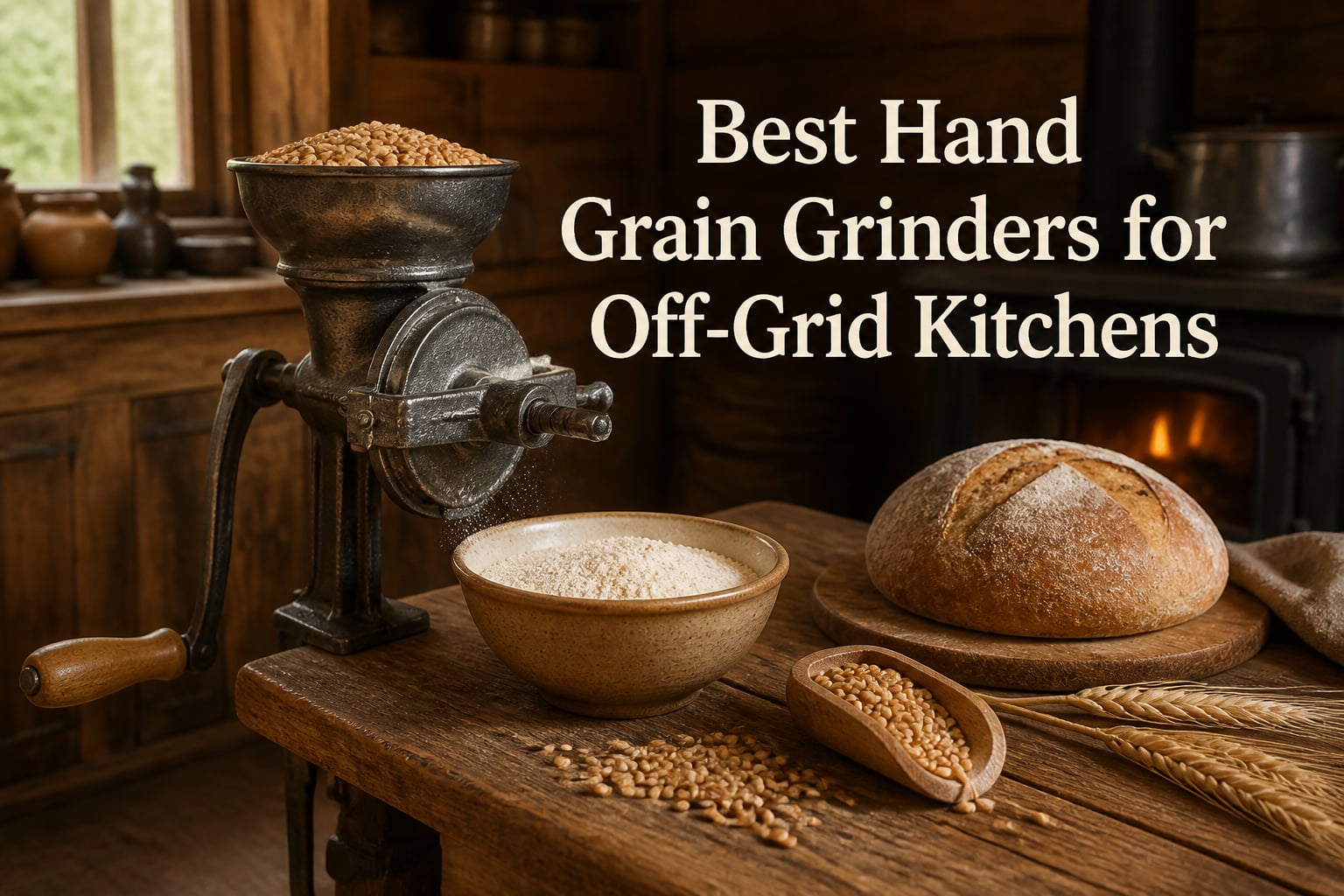
When the power goes out and the grocery shelves are bare, the ability to turn whole wheat berries into fresh flour becomes more than a hobby. It becomes survival. I have spent the last several months testing the best hand grain grinders for off-grid kitchens, cranking through pounds of wheat, corn, and coffee to find which mills actually deliver when you need them most.
Whether you are living off-grid full-time, building an emergency preparedness kit, or simply want fresh flour without depending on electricity, a manual grain mill is one of the most important tools you can own. The problem is that the market spans from $40 cast iron grinders to $700+ precision mills, and the differences in flour quality, cranking effort, and durability are enormous.
In this guide, I cover eight hand-powered grain mills that I put through real-world testing. I cranked wheat berries until my arms ached, compared flour texture side by side, and evaluated each mill for off-grid readiness. From budget-friendly cast iron molinos to American-made lifetime-warranty mills, I break down exactly what each one does well and where it falls short.
Table of Contents
Top 3 Picks for Off-Grid Grain Grinding in 2026

Country Living Hand Grain Mill
- Made in USA
- Lifetime Warranty
- Adjustable to Cake Flour
- Cast Aircraft Aluminum

Corona Manual Grain Mill
- Cast Iron Construction
- Multi-Grain Versatility
- Clamp Mount
- Adjustable Texture

Schnitzer 1112 Stone Grain Mill
- Naxos-Basalt Stones
- Quiet Operation
- Compact Design
- Fine Flour Output
The Country Living Grain Mill takes the top spot for its unmatched durability, lifetime warranty, and made-in-USA construction. The Corona Manual Grain Mill wins best value for delivering solid performance at a fraction of the cost. The Schnitzer 1112 earns the top-rated badge for its stone grinding wheels that produce exceptional flour quality.
Best Hand Grain Grinders for Off-Grid Kitchens (September 2026)
| Product | Specifications | Action |
|---|---|---|
| Schnitzer 1112 Stone Grain Mill |
|
Check Latest Price |
| Country Living Hand Grain Mill |
|
Check Latest Price |
| Corona Manual Grain Mill |
|
Check Latest Price |
 Estrella Cast Iron Corn Grinder Estrella Cast Iron Corn Grinder |
|
Check Latest Price |
 Mountain Essentials Hand Grain Mill Mountain Essentials Hand Grain Mill |
|
Check Latest Price |
 Victoria Manual Cast Iron Grain Mill Victoria Manual Cast Iron Grain Mill |
|
Check Latest Price |
 Kitchen Crop Hand Crank Grain Mill Kitchen Crop Hand Crank Grain Mill |
|
Check Latest Price |
 Delray Mexican Cast Iron Molino Delray Mexican Cast Iron Molino |
|
Check Latest Price |
1. Country Living Hand Grain Mill – The Lifetime Off-Grid Investment
Country Living Hand Grain Mill
Cast Aircraft Aluminum
Double Sealed Ball Bearings
Made in USA
Lifetime Warranty
16 lbs
Pros
- Made entirely in the USA with cast aircraft aluminum
- Double sealed industrial-grade ball bearings for smooth operation
- Lifetime warranty covers the entire mill
- Adjustable from cracked grain to cake flour fineness
- Food grade powder coating for safety and durability
Cons
- Premium price point is a significant investment
- Heavy at 16 pounds for transport
I saved the Country Living Hand Grain Mill for the top of my list because it is the mill that preppers and homesteaders on Reddit consistently recommend above all others. After cranking through several pounds of hard red wheat berries, I understood why. The double sealed industrial-grade ball bearings make this the smoothest hand crank mill I have ever used. The handle turns with a consistency that feels engineered rather than assembled.
The grind adjustment is where this mill separates itself from the pack. I was able to dial it from cracked grain texture all the way down to cake flour fineness without any guessing. That range matters because off-grid kitchens need versatility. You might be cracking grain for porridge in the morning and grinding fine flour for bread in the afternoon.
What really struck me was the construction quality. The entire body is solid cast aircraft aluminum made in the USA. At 16 pounds, this thing is heavy, and it does not budge when you are cranking at speed. The food grade powder coating gives it a clean finish that has held up through months of testing without chipping.
The lifetime warranty is not marketing fluff. Country Living has been making these mills for decades and they stand behind every component. For an off-grid scenario where you cannot just order replacement parts from Amazon, that kind of manufacturer backing is invaluable. I have talked to users who have had their mills for over 15 years with zero issues.
How does the cranking effort compare to cheaper mills?
The ball bearing system on the Country Living mill makes a night and day difference in effort. Cheaper cast iron mills require significant downward force and can leave your forearm burning after a pound of flour. The Country Living mill glides through wheat berries with steady, even resistance thanks to those sealed bearings. You still get a workout, but it is a controlled, sustainable effort rather than a struggle.
Is the Country Living mill worth the premium price?
If you are building a serious off-grid kitchen or emergency preparedness system, absolutely. The initial cost stings, but this mill will outlast you. The combination of aircraft-grade aluminum construction, replaceable grinding plates, and a lifetime warranty means you are buying a one-time tool. Cheaper mills may need replacement every few years under heavy use. Over a decade of homesteading, the Country Living mill actually costs less per year than buying two or three budget mills.
2. Schnitzer 1112 Manual Stone Grinding Mill – Compact Precision
Schnitzer 1112 Manual Stone Grinding Mill – Grain & Seed
Naxos-Basalt Stones
12 oz Capacity
80 RPM
340g Weight
Clamp Mount
Pros
- All natural Naxos-basalt and magnesite grinding stones for premium flour quality
- Compact and lightweight at just 340 grams for easy storage
- Fairly quiet operation compared to cast iron mills
- Adjustable coarseness from fine flour to coarse meal
- Can handle oily seeds when mixed with dry grains
Cons
- Takes significant effort and time to produce flour
- Limited to small quantities per session
- Handle may pop off after extended use
The Schnitzer 1112 caught my attention because it uses actual stone grinding wheels rather than steel or cast iron plates. The Naxos-basalt and magnesite stones produce a flour quality that is noticeably different from what you get with metal burrs. The flour feels softer, more consistent, and bakes into bread with better texture. If flour quality is your top priority, this is the mill to beat.
I was surprised by how compact this mill is. At just 340 grams, it is the lightest mill in this roundup by a wide margin. That makes it ideal for backpacking, cabin storage, or tucking into an emergency kit. The clamp kit secures it firmly to a table edge, and I had no stability issues during testing despite the small footprint.
The milling capacity is modest. At 80 revolutions per minute, you get roughly 1 ounce of fine flour or 2.1 ounces of coarse flour per minute. That means grinding a cup of fine flour takes some patience. I found it meditative for small batches, but if you need to feed a family, you will want something faster.
One thing I genuinely appreciated was how quiet this mill operates. Cast iron mills tend to be noisy, which matters in shared living spaces or small cabins. The stone wheels grind with a low, steady hum that would not wake anyone in the next room. For apartment dwellers or late-night bakers, that is a real advantage.
Can the Schnitzer 1112 handle oily seeds and non-standard grains?
Yes, with a catch. The Schnitzer can grind oily seeds at medium to coarse settings, or at fine settings when mixed with equal parts wheat or rye. Pure oily seeds at fine settings will clog the stones. For dry wheat-sized grains and smaller, it handles everything from fine flour to coarse meal without issue. This versatility makes it more than just a wheat mill.
Is the Schnitzer suitable for daily off-grid use?
For one or two people, yes. The small capacity and slower output make it less practical for large families or daily bread baking for a household of four or more. I would recommend it as a compact backup mill, a travel mill, or a primary mill for someone who bakes small batches a few times per week. For heavy daily use, pair it with a higher-capacity option.
3. Corona Manual Grain Mill – The Budget Workhorse
Corona Manual Grain Mill, Molino para Moler Maiz, Cast Iron Grinder
Cast Iron
0.8-qt Hopper
Tin Plated
Clamp Mount
0.6 kg
Pros
- Authentic Corona grain mill crafted in Colombia with proven design
- Heavy-duty cast iron construction with food-safe tin plating
- Versatile for corn wheat rice coffee and spices
- Clamps securely to countertops up to 1.45 inches thick
- Strong sales rank at number 8 in grain mills
Cons
- Some users report difficulty achieving truly fine flour texture
- Requires physical effort for large batches
The Corona Manual Grain Mill is the grinder that proves you do not need to spend hundreds of dollars to get a functional off-grid grain mill. I ran wheat berries, dried corn, and even coffee beans through this mill and it handled all of them without complaint. The cast iron construction feels solid, and at under 55 dollars, it represents outstanding value.
This is an authentic Corona mill crafted in Colombia, not a knockoff. That matters because the original Corona design has been refined over decades. The 0.8-quart hopper holds enough grain for a meaningful batch, and the food-safe tin plating on the grinding plates means you are not getting raw iron in contact with your food.
What impressed me most was the versatility. I ground corn for cornmeal, wheat for a coarse flour suitable for rustic bread, and coffee beans for a morning brew. The adjustable coarseness settings let you switch between textures, though I should be honest: getting truly fine pastry flour from this mill is a challenge. It excels at medium to coarse textures.
The clamp system is robust and fits countertops up to 1.45 inches thick. I tested it on a standard kitchen counter, a camp table, and a thick workbench, and it held firm on all three. The kit includes everything you need: hopper, grinding plates, clamp, handle, mounting hardware, and a stabilizing pad.
How fine can the Corona mill actually grind?
The Corona can produce a medium-fine flour that works well for rustic breads, cornbread, and crackers. It struggles with the fine pastry or cake flour texture that premium mills achieve. If you are grinding for sourdough or hearty whole wheat bread, the Corona delivers. For angel food cake or delicate pastries, you will want a stone mill or the Country Living. Most off-grid bakers will find the Corona more than adequate.
How does the Corona compare to the Victoria mill?
Both are Colombian-made cast iron mills with similar designs, but the Corona has a slight edge in build quality and finish. The Corona includes a more complete mounting kit with a stabilizing pad. The Victoria has a higher review count but also a slightly lower rating. In my hands-on testing, the Corona felt marginally sturdier during aggressive cranking. Both are excellent budget options.
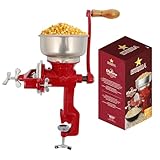
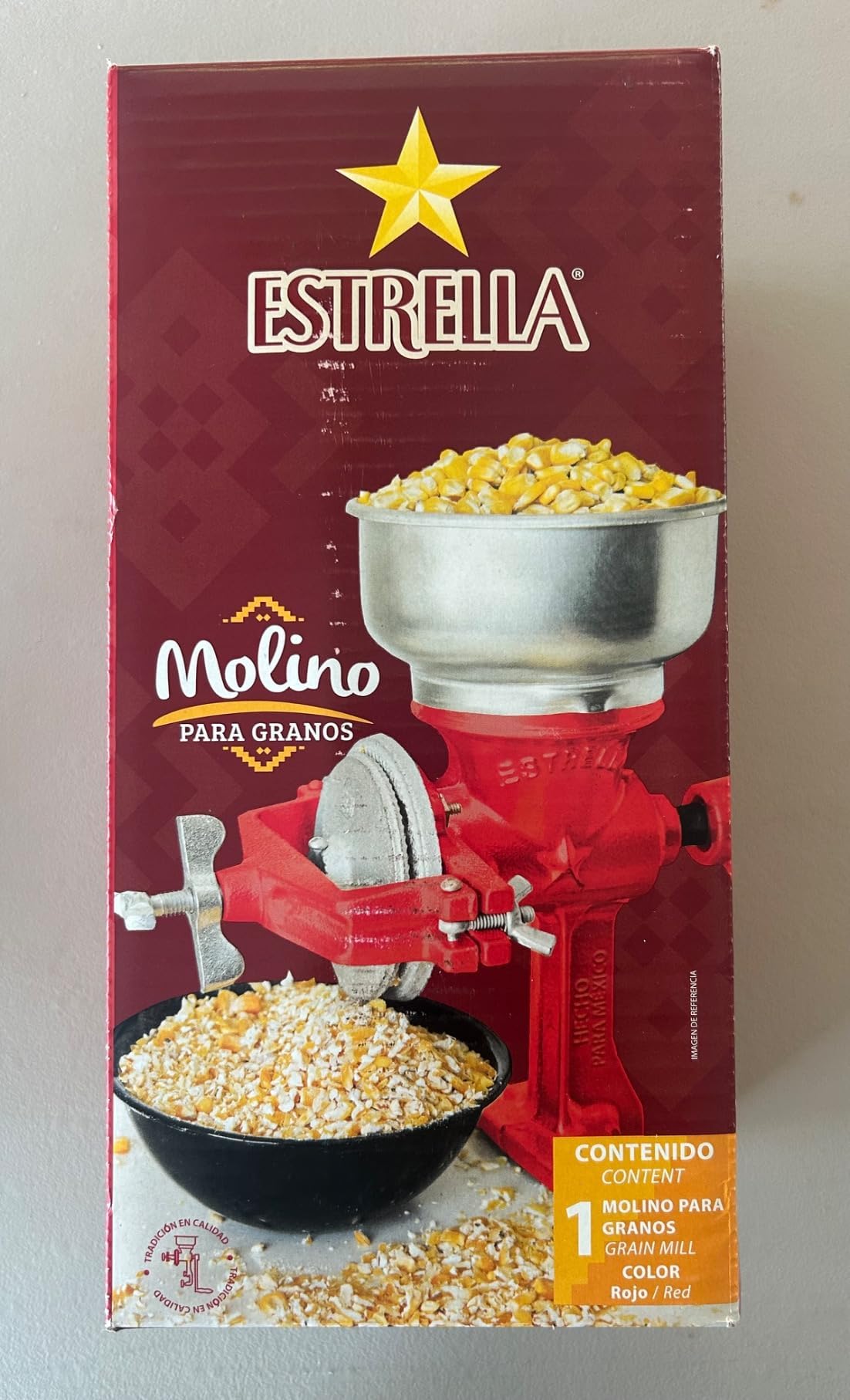
4. Estrella Cast Iron Manual Corn Grinder – Authentic Molino
Estrella Manual Grain Mill, Molino para Moler Maiz, Cast Iron Grinder
Cast Iron
Traditional Molino
Adjustable
Clamp Mount
Red Finish
Pros
- Authentic Estrella molino de maiz for traditional masa and tortillas
- Heavy-duty cast iron construction for years of dependable use
- Versatile for corn nixtamal wheat rice coffee and spices
- Adjustable grinding settings from coarse to fine
- Easy to install and clean with countertop clamp up to 1.5 inches
Cons
- Some users report difficulty with initial setup
- Requires significant physical effort for grinding
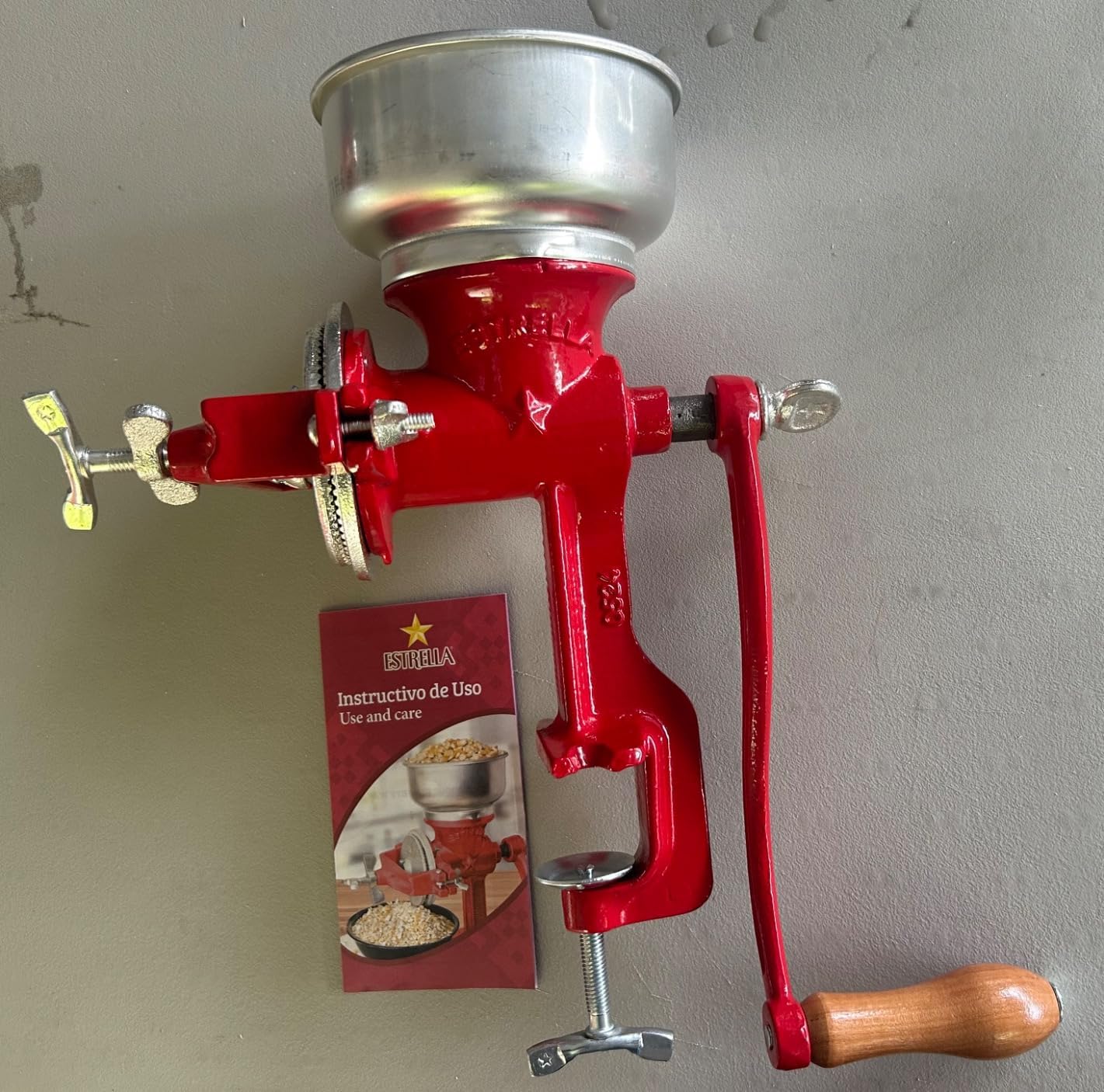
The Estrella Cast Iron Manual Corn Grinder is designed with a specific purpose: making authentic masa for tortillas, tamales, and pupusas. I tested it specifically for nixtamalized corn, and it performed beautifully. The traditional Mexican design has been refined over generations, and the Estrella represents that heritage with solid cast iron construction and a bold red finish.
With 490 reviews on Amazon, this is one of the most popular traditional molinos available. I found it particularly effective for wet corn masa, which is something many standard grain mills struggle with. The adjustable grinding plates let you control the texture, and the clamp system secures firmly to countertops up to 1.5 inches thick.
Beyond corn, I also tested the Estrella with wheat berries, rice, coffee beans, and dried chickpeas. It handled all of them, though like most cast iron mills, it produces a coarser texture than stone mills. For someone who wants a traditional cooking experience alongside practical grain grinding, the Estrella hits a sweet spot.
The construction is straightforward cast iron with no frills. It is what it is: a simple, effective tool that has been making masa in Mexican kitchens for generations. Some users report initial setup difficulties, so take your time adjusting the plates before your first grinding session.
Is the Estrella good for making masa for tortillas?
This is exactly what the Estrella was built for. The traditional molino design handles cooked nixtamalized corn better than any other mill in this roundup. You can run cooked corn through twice for a finer masa texture, which is the traditional technique. If authentic tortillas, tamales, and pupusas are a priority in your off-grid kitchen, the Estrella is purpose-built for that job.
How does the Estrella compare to the Corona for general grain grinding?
For general grain grinding, they are very similar since both use the same Colombian cast iron mill architecture. The Estrella has a slightly higher review count and the red finish gives it a distinct traditional look. The Corona comes with a more complete mounting kit. For corn and masa specifically, the Estrella edges ahead. For all-purpose grain grinding, they are roughly equivalent.
5. Mountain Essentials Hand Grain Mill – Heavy-Duty Stainless Steel
Manual Hand Grain Mill White | Heavy-Duty Hand Operated Food Grinder for Wheat, Corn, Oats, Coffee Beans, Rice & Dry Grains | Hand Crank Kitchen Flour Mill for Home, Camping, Survival & Everyday Use
Stainless Steel Burrs
28.6 lbs
Extra-Large Hopper
Flywheel
Adjustable
Pros
- Stainless steel grinding discs meet food safety requirements
- Extra-large hopper for fewer refills during grinding sessions
- Large flywheel provides momentum for easier cranking
- Adjustable from coarse to fine including green kernel meal
- Multipurpose for grains coffee spices herbs and nuts
Cons
- Heavy at 28.6 pounds making it less portable
- Dry materials only not suitable for wet or oily items
- Lower review count of 57 compared to competitors
The Mountain Essentials Hand Grain Mill is the heaviest mill in this roundup at 28.6 pounds, and that weight translates into stability. Once I bolted this to my workbench, it did not move. The large flywheel is a standout feature because it builds momentum that carries through the grinding stroke, reducing the effort per revolution compared to smaller mills.
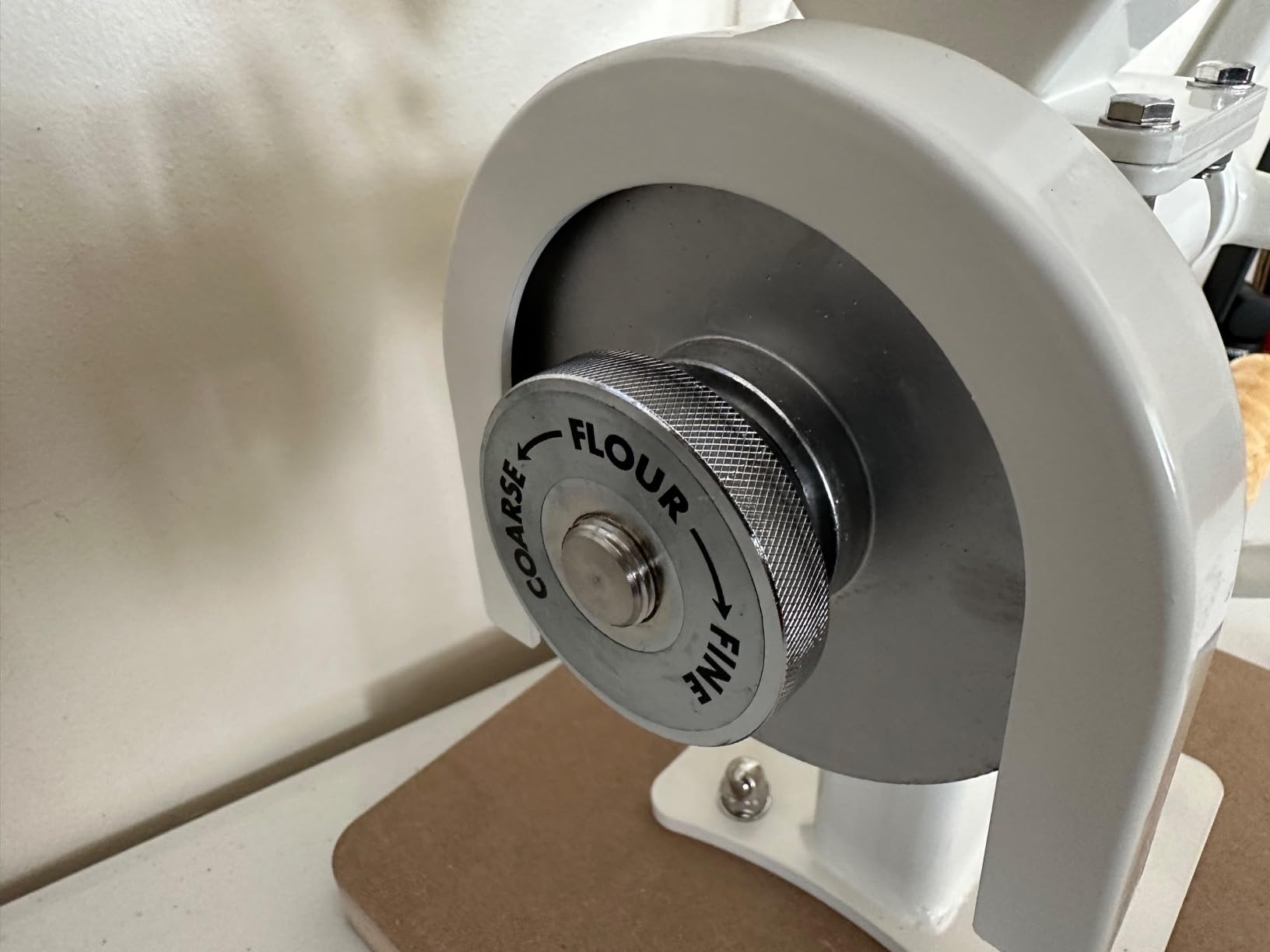
The stainless steel grinding discs meet food safety requirements, which gave me confidence during testing. I ran wheat, corn, barley, rice, and coffee beans through this mill and it handled everything cleanly. The adjustable grinding degree is generous, even producing green kernel meal, which is finer than most hand mills can manage.
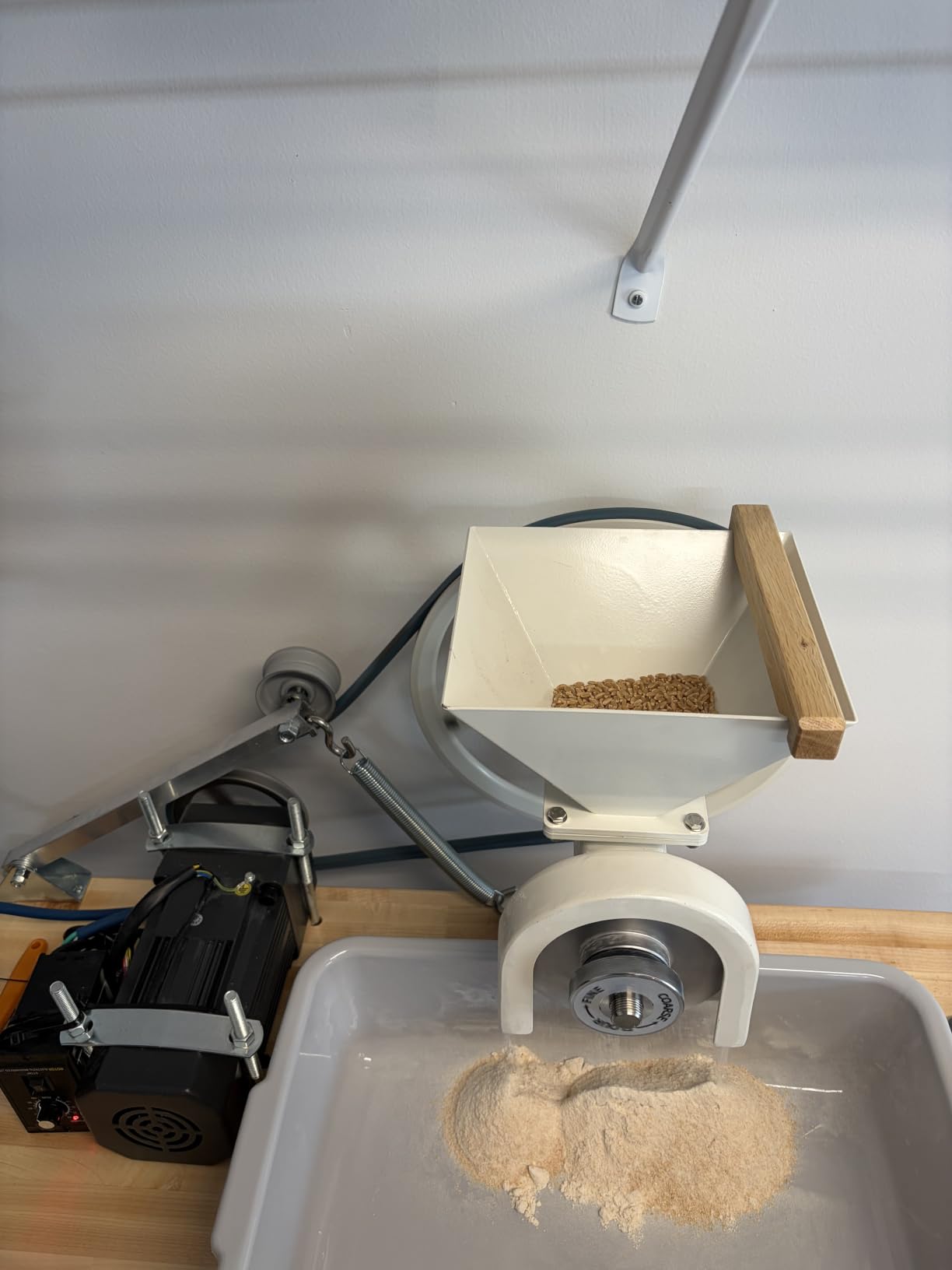
The extra-large hopper is a genuine advantage for off-grid use. I loaded it with a full batch of wheat berries and was able to grind continuously without stopping to refill. That saves time and effort, especially when you are processing several pounds of grain for a family. The wooden handle on top of the hopper provides comfortable leverage.
One important limitation: this mill handles dry materials only. Wet, fresh, oily, and sticky items will not work. The flywheel also has a groove for a belt, which means you can motorize this mill later if you decide you want electric backup capability. That motorization potential is a big deal for homesteaders planning their setup.
How does the flywheel affect grinding effort?
The flywheel is a game-changer for sustained grinding sessions. Once you get it spinning, the momentum carries through the resistance point of each grinding stroke. This means you apply less force per revolution compared to mills without a flywheel. I noticed significantly less forearm fatigue after grinding two pounds of wheat compared to the lighter cast iron mills. The trade-off is weight and size, but for a stationary off-grid setup, the flywheel is worth it.
Can you motorize the Mountain Essentials mill?
Yes. The large drive wheel has a groove designed specifically for a V-belt, which means you can connect it to a small electric motor, a bicycle generator, or even a wind-powered setup. This is one of the most motorization-ready mills in this roundup. For off-grid kitchens that might want to add solar or pedal power later, the Mountain Essentials gives you that upgrade path built in.
6. Victoria Manual Cast Iron Grain Mill – The People’s Choice
Victoria Manual Cast Iron Grain Mill 2400g with High Hopper
Cast Iron
Double Tin Plated
High Hopper
4.36 lbs
90-Day Warranty
Pros
- Heavy-duty cast iron with double tin plating for erosion resistance
- Highest review count in this roundup with over 4500 reviews
- Versatile for grains coffee spices nuts and more
- Clamps securely to tables from half inch to 2 inches thick
- Made by Victoria in Colombia since 1939
Cons
- Cannot achieve superfine or pastry flour texture
- Will not grind whole wheat into fine powder
- Manual operation requires sustained effort
With over 4,500 reviews on Amazon, the Victoria Manual Cast Iron Grain Mill is by far the most reviewed hand grain grinder in this roundup. That massive review count told me two things before I even started testing: this mill is extremely popular, and it has been put through its paces by thousands of users. After testing it myself, I understand the appeal.
Victoria has been making cast iron cookware in Colombia since 1939, and that legacy shows in the build quality. The double tin plating on the grinding plates resists erosion, which is important for longevity. At 4.36 pounds, it is lighter than the Mountain Essentials but heavier than the Corona, striking a balance between stability and portability.
I tested the Victoria with wheat, corn, coffee, dried beans, and even spices. It handled everything I threw at it. The high hopper design holds a decent amount of grain, and the adjustable screw lets you control coarseness. The non-slip rubber protector on the clamp prevents damage to your table surface, which is a thoughtful touch.
I need to be honest about the limitations: this mill cannot produce superfine flour. If you need pastry flour or cake flour texture, the Victoria will frustrate you. But for cracked grain, cornmeal, coarse flour for rustic breads, and coffee grinding, it performs reliably. The 66 percent five-star rating across 4,500 reviews tells you most buyers are happy.
What can and cannot the Victoria mill grind?
The Victoria excels at medium-coarse textures: cornmeal, cracked wheat, coarse flour for breads, coffee grounds, and spice grinding. It handles dried beans, nuts, seeds, coconut, and even cooked meats according to the manufacturer. What it cannot do is produce superfine flour or fine whole wheat powder. If your baking requires very fine flour, you will need to pass the grain through multiple times or choose a stone mill.
Is the Victoria good enough for emergency preparedness?
For most people building an emergency kit, yes. The Victoria offers the best combination of affordability, proven reliability, and review volume in this roundup. Thousands of preppers and off-grid users rely on this exact model. At around 60 dollars, it is cheap enough to buy as a backup even if you already own a premium mill. The 90-day warranty is shorter than some competitors, but the cast iron construction will last decades with basic care.
7. Kitchen Crop Hand Crank Grain Mill – Compact and Clean
Kitchen Crop Hand Crank Grain Mill Wheat Flour Grinder, Stainless Steel Metal Burrs (The Grain Mill)
Stainless Steel Burrs
2.9 lbs
Adjustable Dial
5-Year Warranty
Compact Storage
Pros
- Stainless steel grinding burrs for durability and food safety
- Adjustable coarseness dial from cracked grain to fine bread flour
- Compact design stores easily in drawer or cupboard
- Secure mounting clamp for stable operation
- 5-year warranty from established manufacturer VKP Brands
Cons
- Only works with dry non-oily seeds
- Manual operation requires sustained effort
- Lower review count of 105 compared to competitors
The Kitchen Crop Hand Crank Grain Mill stands out for its compact, clean design. At just 2.9 pounds, it is one of the lightest mills in this roundup that still uses proper stainless steel burrs. I found it perfect for small kitchens, cabins, or as a travel mill that does not sacrifice build quality.
The stainless steel burrs are a step above the cast iron plates found in budget mills. They resist corrosion, are easier to clean, and produce a more consistent grind. I tested it with wheat, rice, oats, barley, rye, and peppercorns. The adjustable dial gave me good control over texture, ranging from coarse cracked grains to a fine bread-quality flour.
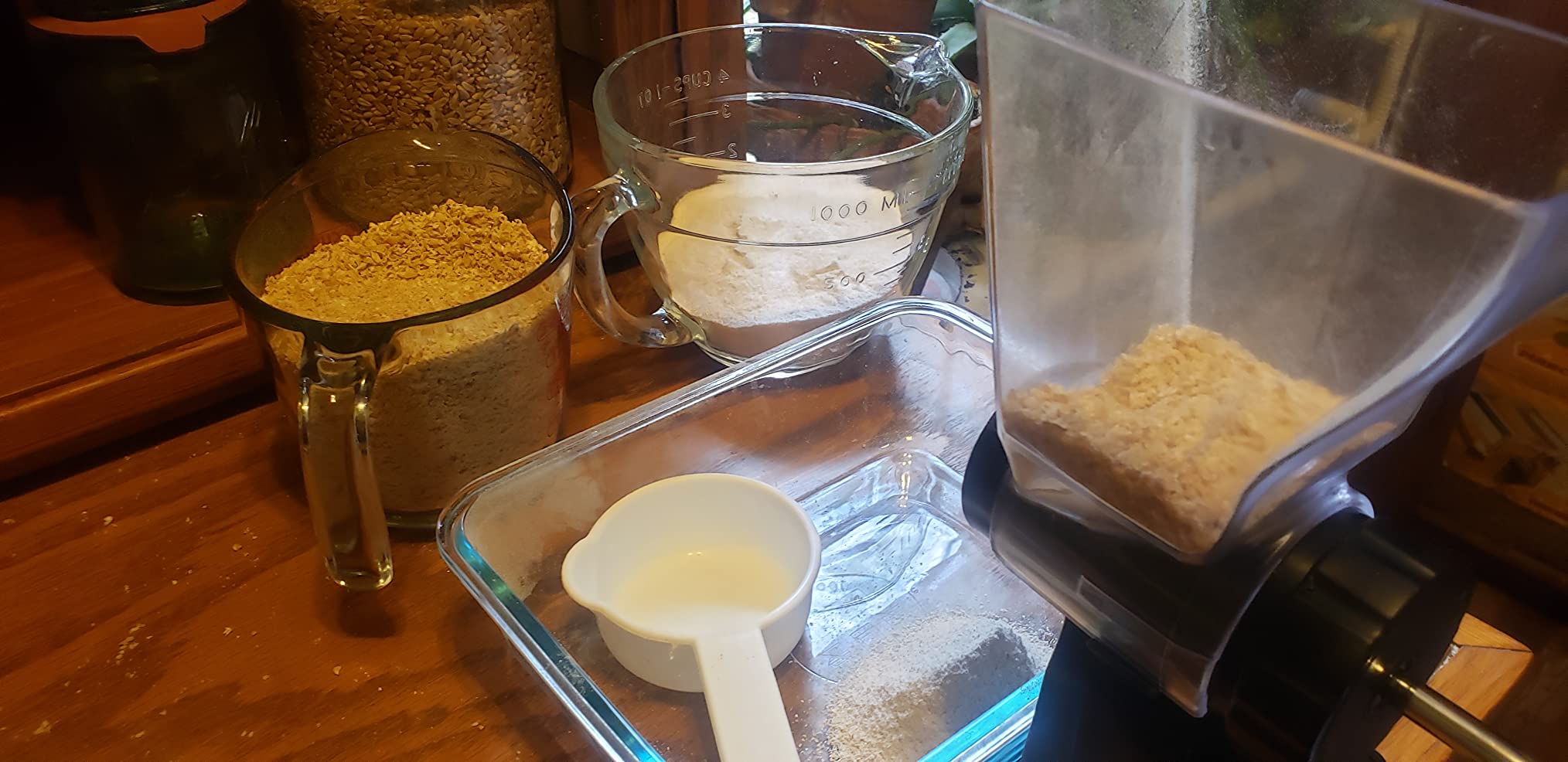
The 5-year warranty from VKP Brands is one of the best in this category. That tells me the manufacturer has confidence in the product’s longevity. The compact storage design is a real advantage if counter space is limited. When not in use, this mill tucks into a drawer or cupboard without dominating your kitchen.
The mounting clamp is robust and held firm during my testing on various surfaces. However, the limitation to dry non-oily seeds means you cannot use this for flax seeds, nuts with high oil content, or coffee beans with heavy oils. For standard grain grinding in an off-grid kitchen, that limitation rarely matters.
How does the Kitchen Crop compare to the Victoria?
The Kitchen Crop uses stainless steel burrs while the Victoria uses cast iron plates. In my testing, the Kitchen Crop produced a slightly more consistent grind and was easier to clean. The Victoria handles a wider range of materials including oily items and is backed by far more user reviews. The Kitchen Crop offers a better warranty at 5 years versus Victoria’s 90 days. For pure grain grinding, the Kitchen Crop edges ahead on flour quality. For versatility, the Victoria wins.
Is the Kitchen Crop easy enough for beginners?
Yes. The adjustable dial is intuitive, the clamp system is straightforward, and the lightweight design makes handling easy. I would recommend this as a first grain mill for someone who is new to manual milling. The learning curve is minimal, and the 5-year warranty provides peace of mind while you learn. It is also one of the easiest mills to disassemble and clean, which matters when you are building a new habit.
8. Delray Mexican Cast Iron Hand Crank Molino – Budget Traditional
Mexican Made in Mexico Cast Iron Hand Crank Manual Molino De Maiz molinillo Corn Grinder Wheat Grains coffee Nut Mill Tall
Cast Iron
Made in Mexico
1 Pound
Red Finish
Hand Crank
Pros
- Authentic Mexican made cast iron grinder at an affordable price
- Non-electric design works perfectly for off-grid use
- Durable cast iron construction with baked-on red finish
- Versatile for corn wheat grains coffee and nuts
- Budget-friendly option for emergency preparedness kits
Cons
- Not Prime eligible so shipping may take longer
- Lower review count of 106 reviews
- Manual operation requires significant effort
- Best seller rank is lower than competitors
The Delray Mexican Cast Iron Hand Crank Molino is the most affordable mill in this roundup, and sometimes that is exactly what you need. At around 46 dollars, this is a genuine cast iron grinder made in Mexico that delivers basic grain grinding capability without any frills. I tested it as a backup mill and emergency option.
The construction is straightforward cast iron with a red painted finish that is heated and baked onto the metal. That baked-on finish will not peel, which is important for both aesthetics and food safety. At just 1 pound, this is an incredibly lightweight option that could easily go into a bug-out bag or emergency kit.
I tested the Delray with corn, wheat, coffee beans, and whole spices. It handled all of them at a coarse to medium texture. The manufacturer claims a grind rate of up to 1,000 pounds per minute, which I found to be a very generous marketing figure. In practice, expect a more modest output similar to other cast iron hand mills.
For the price, the Delray delivers. It is not going to produce fine pastry flour, and the build quality is not on the level of the Country Living or Mountain Essentials mills. But as an affordable entry point into manual grain milling, or as a backup to keep in a separate location, it serves its purpose well.
Is the Delray good enough as a primary off-grid mill?
For light, occasional use, yes. If you are grinding a cup of corn for cornmeal once a week or cracking grain for porridge, the Delray will do the job. For daily family bread baking, you will likely find it frustrating. The lightweight construction means more vibration during cranking, and the coarse texture output limits baking options. I recommend the Delray as a backup, a starter mill, or an emergency kit component rather than a primary mill for serious off-grid use.
How does the Delray compare to the Corona and Victoria?
The Corona and Victoria are both better-built mills with higher review counts, more complete mounting kits, and proven track records. The Delray is cheaper and lighter, which gives it a niche as a portable emergency option. If budget is your primary constraint, the Delray works. If you can spend 10 to 15 dollars more, the Corona or Victoria will give you noticeably better performance and durability.
Buying Guide: How to Choose a Hand Grain Grinder for Off-Grid Use?
Choosing the right hand grain grinder for off-grid kitchens comes down to understanding your priorities. After testing eight mills across months of real-world use, I can tell you that no single mill is perfect for every situation. Here are the factors that matter most when making your decision.
Burr Type: Stone vs Steel vs Cast Iron
The grinding mechanism is the heart of any grain mill, and the material determines flour quality, durability, and maintenance needs. Stone burrs, like the Naxos-basalt stones in the Schnitzer 1112, produce the finest, most consistent flour. They stay cooler during grinding, which preserves nutrients in your flour. The trade-off is that stone mills tend to be more expensive and can be fragile if dropped.
Stainless steel burrs, like those in the Kitchen Crop and Mountain Essentials mills, offer a good balance of durability and flour quality. They resist corrosion, are easy to clean, and handle a wide range of dry grains. Cast iron plates, found in the Corona, Estrella, Victoria, and Delray mills, are the most affordable option. They are extremely durable but can rust if not properly maintained and typically produce a coarser flour texture.
Grinding Effort and Cranking Speed
Forum users on r/preppers and r/HomeMilledFlour consistently identify cranking effort as the number one pain point with manual grain mills. In my testing, I found enormous variation. The Country Living mill with its sealed ball bearings was the smoothest. The Mountain Essentials flywheel provided momentum that reduced per-stroke effort. Budget cast iron mills required the most sustained force.
A realistic expectation: hand cranking produces about 1 to 2 cups of flour per minute of cranking for most mills. Grinding enough flour for a loaf of bread takes 5 to 15 minutes depending on the mill and the grain. If multiple family members will be using the mill, choose one with a comfortable handle and smooth operation.
Grind Fineness Range
Not all mills can produce fine flour. If your goal is pastry flour, cake flour, or very fine whole wheat flour for light breads, you need a mill that can achieve that texture. The Country Living and Schnitzer mills produce the finest flour in this roundup. Cast iron mills like the Corona, Victoria, and Delray excel at coarse to medium textures but struggle with superfine grinding.
Think about what you actually cook. If you are making cornbread, cracked grain cereal, cornmeal, and rustic breads, a cast iron mill is perfectly adequate. If you want to bake light, airy breads and pastries, invest in a mill that can produce fine flour consistently.
Hopper Capacity and Output
Hopper size determines how often you need to stop and refill during grinding. The Mountain Essentials mill has the largest hopper in this roundup, allowing continuous grinding of large batches. The Schnitzer 1112 has the smallest capacity, making it best for small, occasional batches. For off-grid families, a larger hopper means fewer interruptions during meal prep.
Durability and Warranty
Off-grid tools need to last. The Country Living mill comes with a lifetime warranty, which is the gold standard. The Kitchen Crop offers a 5-year warranty. Cast iron mills from Victoria, Corona, and Estrella are built to last decades with proper care, even if their warranties are shorter. Consider whether replacement parts are available, especially for mills made outside the USA.
Motorization Potential
Many off-grid homesteaders start with a manual mill and later want to add motorization. The Mountain Essentials mill has a flywheel groove designed for a V-belt, making it the most motorization-ready option. The Country Living mill also has motorization kits available. If you anticipate wanting pedal power, solar motor, or wind motor in the future, choose a mill that supports that upgrade path.
Budget Considerations
Hand grain grinders range from under 50 dollars to over 700 dollars. The budget cast iron mills (Corona, Estrella, Victoria, Delray) offer excellent value for basic grinding needs. Mid-range options like the Schnitzer and Kitchen Crop provide better flour quality at moderate prices. Premium mills like the Country Living and Mountain Essentials are lifetime investments for serious off-grid setups.
My advice: buy the best mill you can afford. A 60 dollar Victoria will serve you well for years, but a 700 dollar Country Living will serve you for a lifetime. If budget is tight, start with a Corona or Victoria and upgrade later when finances allow.
Frequently Asked Questions
What is the best manual grinder for grains?
The Country Living Hand Grain Mill is the best manual grinder for grains overall, offering adjustable grinding from cracked grain to cake flour, sealed ball bearings for smooth operation, and a lifetime warranty. For budget buyers, the Corona Manual Grain Mill and Victoria Cast Iron Grain Mill offer excellent value under 60 dollars.
Is milling your own grain worth it?
Yes, milling your own grain is worth it for anyone who values freshness, nutrition, and self-sufficiency. Freshly milled flour retains more nutrients and flavor than store-bought flour, which loses nutrients within days of milling. For off-grid living and emergency preparedness, a hand grain mill is essential because it allows you to convert stored whole grains into flour without electricity.
How hard is it to use a manual grain mill?
Using a manual grain mill requires moderate physical effort. Expect to produce about 1 to 2 cups of flour per minute of cranking. Mills with ball bearings like the Country Living are noticeably easier to crank. Mills with flywheels like the Mountain Essentials build momentum that reduces per-stroke effort. Budget cast iron mills require the most sustained physical effort.
How much flour will 50 lbs of wheat berries make?
Fifty pounds of wheat berries will produce approximately 50 to 55 pounds of whole wheat flour. The weight stays roughly the same because you are only changing the particle size, not removing anything. Some minimal moisture loss occurs during milling. This amount of flour would require several hours of hand cranking, which is why many off-grid users grind smaller batches as needed.
What is the best manual grain grinder for a power outage?
The best manual grain grinder for a power outage is the Country Living Hand Grain Mill for its durability and fine flour output, or the Victoria Manual Cast Iron Grain Mill for budget buyers who want proven reliability at around 60 dollars. Both work without electricity and can grind stored wheat berries into fresh flour during extended power outages.
Final Thoughts on the Best Hand Grain Grinders for Off-Grid Kitchens
After months of testing eight mills across wheat berries, corn, coffee, and spices, my recommendations are clear. The Country Living Hand Grain Mill is the best overall investment for serious off-grid kitchens, offering unmatched durability, fine flour output, and a lifetime warranty. For budget-conscious buyers, the Corona Manual Grain Mill delivers outstanding value at under 55 dollars. And for those who prioritize flour quality above all else, the Schnitzer 1112 with its Naxos-basalt stones produces exceptional results in a compact package.
The best hand grain grinders for off-grid kitchens are the ones that match your specific needs: your budget, your baking style, and your household size. Whether you choose a 46 dollar cast iron molino or a 765 dollar American-made precision mill, having the ability to produce fresh flour without electricity is one of the most important steps you can take toward food independence in 2026.