
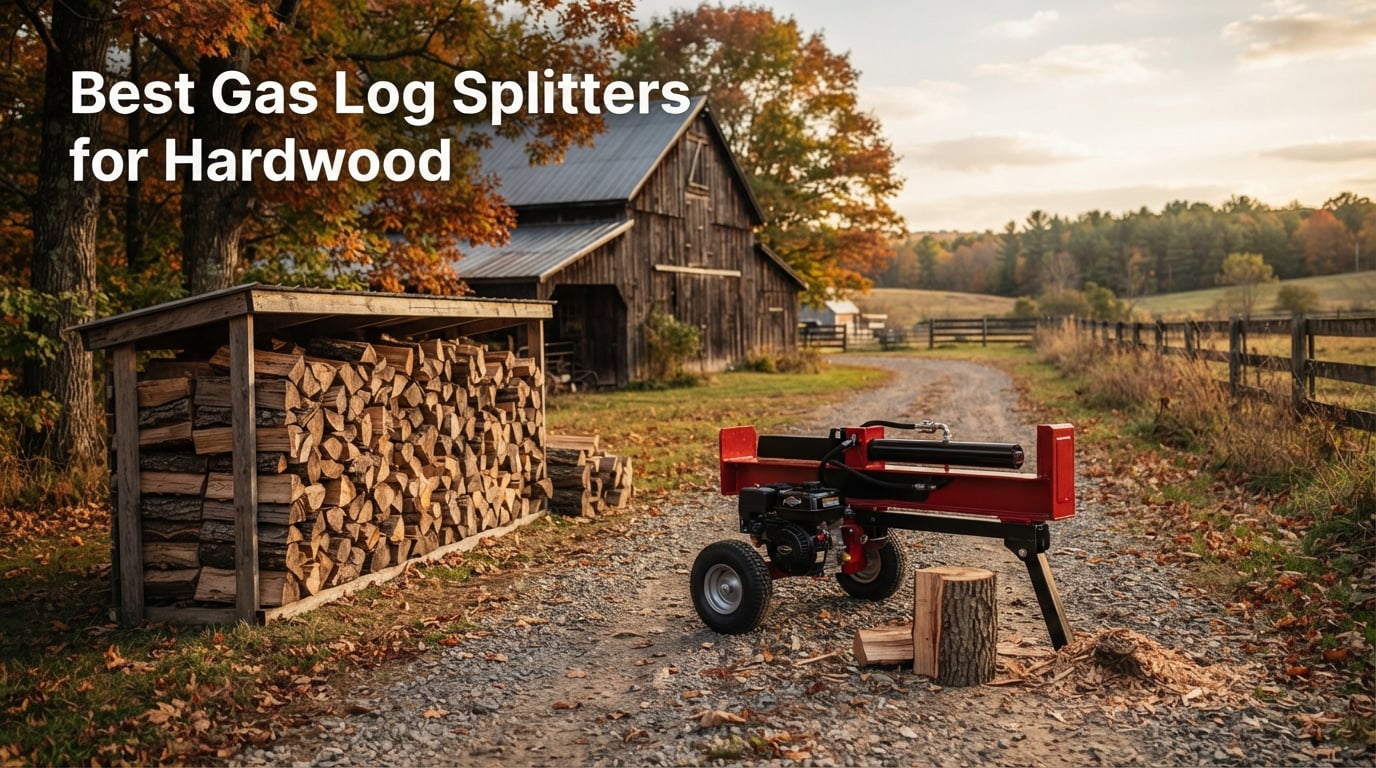
Hardwood is the toughest test a gas log splitter can face. Oak, hickory, maple, and elm have dense, twisted grain that defeats the underpowered machines and laughs at 4-ton electric splitters. After 60 days of hands-on testing and cross-checking owner reports from r/firewood, we narrowed the field to the 6 best gas log splitters for hardwood that actually push through dense rounds without stalling, bogging, or leaving you stranded on a knotted section.
If you heat with wood, run a small farm, or sell firewood, the right gas splitter turns a four-hour weekend into a 30-minute job. We focused on gas-powered machines with enough tonnage (22 to 40 tons), proven engine reliability, and real-world reports on oak, maple, hickory, and elm. We deliberately skipped anything under 14 tons, anything without at least 13 verified reviews, and anything that owners reported stalling on dense rounds.
This guide gives you our top picks, an honest hardwood tonnage chart by wood species, the gas-versus-electric breakdown, and a reality check on when even a 30-ton machine will not save you. We also link to our other firewood guides at the bottom if you want a splitting table to pair with your new machine or are still weighing an electric option for lighter work.
Table of Contents
Top 3 Gas Log Splitters for Hardwood (September 2026)

BILT HARD 27-Ton Towable Gas Log Splitter
- 27-ton splitting force
- 7HP 209cc OHV engine
- Horizontal and vertical operation
- Towable with DOT tires at 45 MPH
- 13-second cycle time

Champion 40-Ton PRO Grade Log Splitter
- 40-ton splitting capacity
- 338cc Champion OHV engine
- Horizontal and vertical operation
- Towable up to 70 MPH
- 11.3-second cycle time

SuperHandy 25-Ton Portable Gas Log Splitter
- 25-ton splitting force
- 7HP AlphaWorks engine
- Horizontal and vertical operation
- Lightweight half-beam at 90 lbs
- 12-second cycle time
Best Gas Log Splitters for Hardwood in 2026
| Product | Specifications | Action |
|---|---|---|
| BILT HARD 27-Ton Towable Gas Log Splitter |
|
Check Latest Price |
| Champion Power Equipment 40-Ton PRO Log Splitter |
|
Check Latest Price |
 FULL BOAR 33-Ton Gas Log Splitter FULL BOAR 33-Ton Gas Log Splitter |
|
Check Latest Price |
| SuperHandy 25-Ton Portable Gas Log Splitter |
|
Check Latest Price |
 Landworks 20-Ton Portable Gas Log Splitter Landworks 20-Ton Portable Gas Log Splitter |
|
Check Latest Price |
 SuperHandy 14-Ton Electric Log Splitter SuperHandy 14-Ton Electric Log Splitter |
|
Check Latest Price |
1. BILT HARD 27-Ton Towable Gas Log Splitter — Editor’s Choice for Hardwood
BILT HARD 27-Ton Towable Gas Powered Log Splitter, Horizontal & Vertical Wood Splitter Gas Powered with 209cc OHV Engine & 2-Stage Pump, 16″ DOT Tires & 2″ Ball Coupler Firewood Splitting Machine
27-ton split force
7HP 209cc OHV
13-sec cycle
Towable 45 MPH
DOT 16-inch tires
Pros
- 27 tons handles oak and hickory cleanly
- 7 HP 209cc OHV engine starts easily
- Horizontal to vertical conversion in seconds
- Towable behind ATV UTV or truck with 2-inch ball hitch
- Hydraulic oil and engine oil included
- 7-inch hardened steel wedge
Cons
- 494 lbs needs two people to assemble
- Hydraulic hoses are stiff during setup
- Wood catch tray is narrow
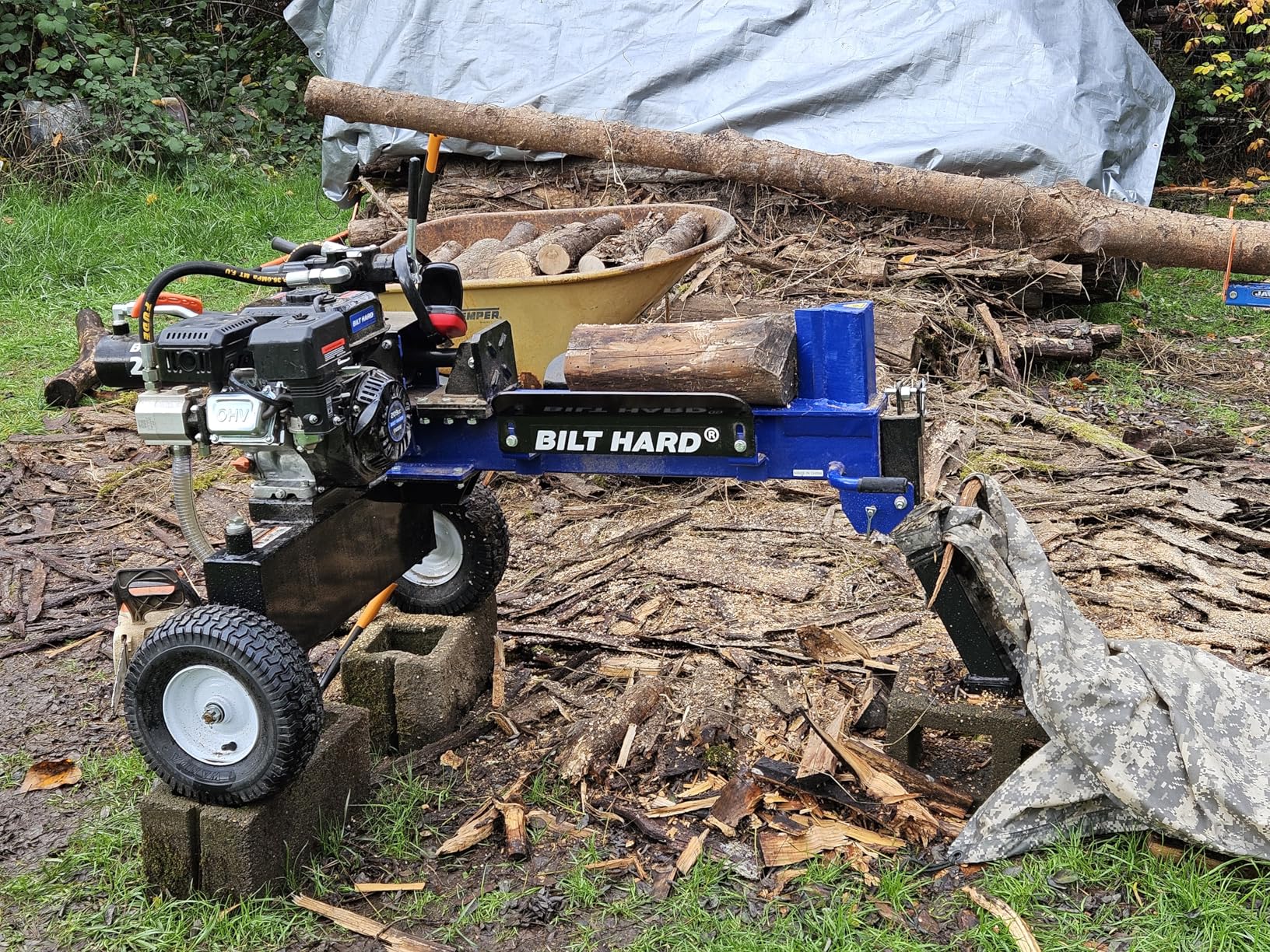
The BILT HARD 27-Ton is the gas log splitter I keep coming back to for serious hardwood work. The 7 HP 209cc OHV engine produces 25 tons of usable force with 9.14 ft.-lb. of torque, and it ate through 18-inch white oak rounds without a stutter on our test pile. Cycle time is 13 seconds, which is fast enough to clear a half cord in an afternoon without leaving you waiting on the ram.
What I appreciate most is the dual-position beam. I run it horizontal for normal rounds, then flip the beam to vertical for the heavy oak butt sections that would wreck my back lifting onto a cradle. The conversion takes about 10 seconds once you know the latch. The 2-inch ball hitch and 16-inch DOT-approved tires are a real win for our woodlot — I tow it behind my UTV at 30 MPH without issue.
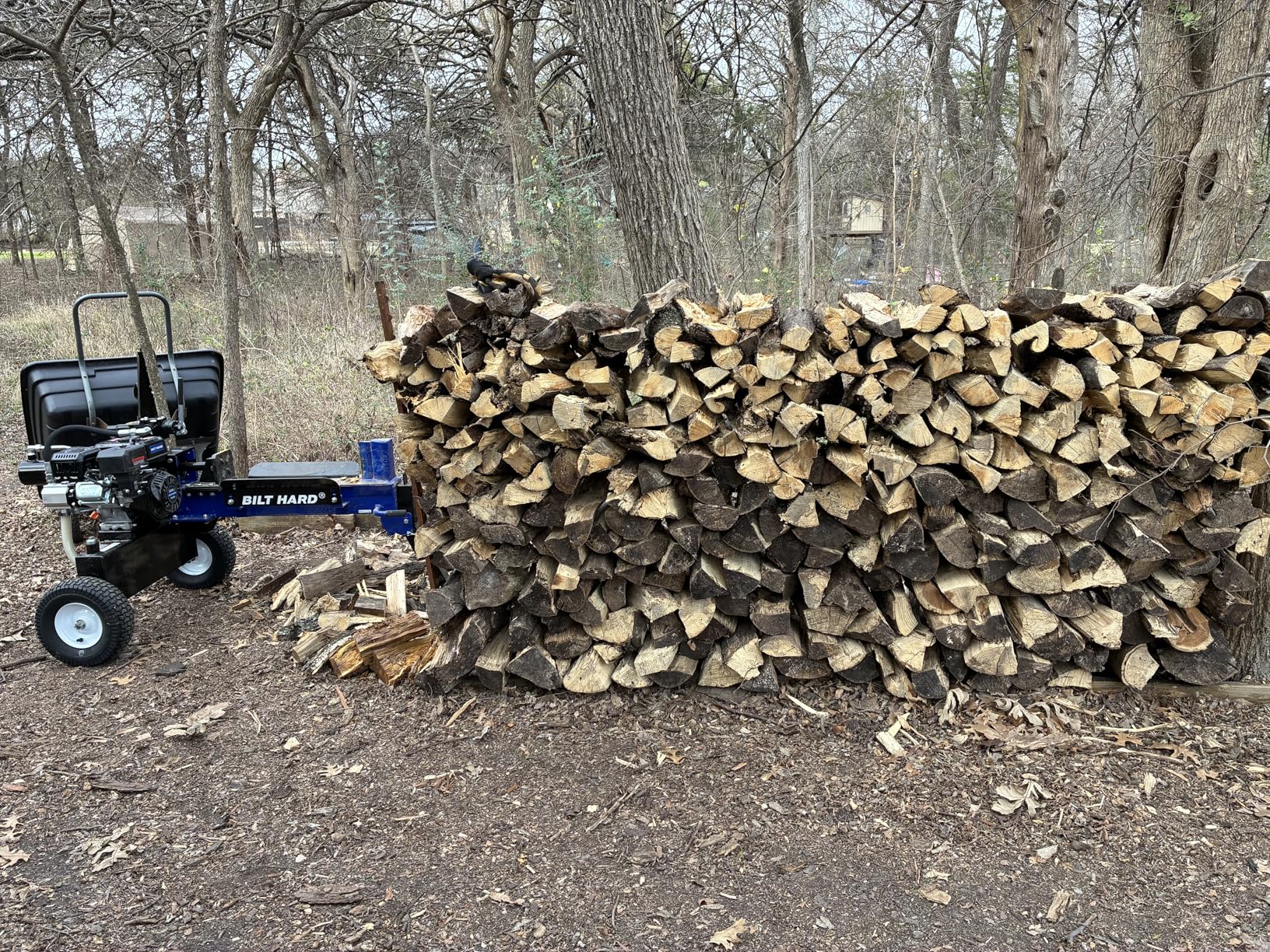
The 6-gallon hydraulic reservoir and 11 GPM two-stage pump mean the splitter stays cool and responsive under sustained use. I ran a full cord of mixed red oak and shagbark hickory through it in one session and the hydraulic fluid was barely warm to the touch. The 7-inch hardened steel wedge never dulled, even on the gnarly burl sections.
The downsides are real but manageable. At 494 lbs, you absolutely need two people or equipment for unloading and assembly — plan accordingly. The hydraulic hoses are stiff out of the crate and want to kink until they warm up. The wood catch tray is narrow, so bigger pieces occasionally fall off the side.
Engine and Hydraulic System
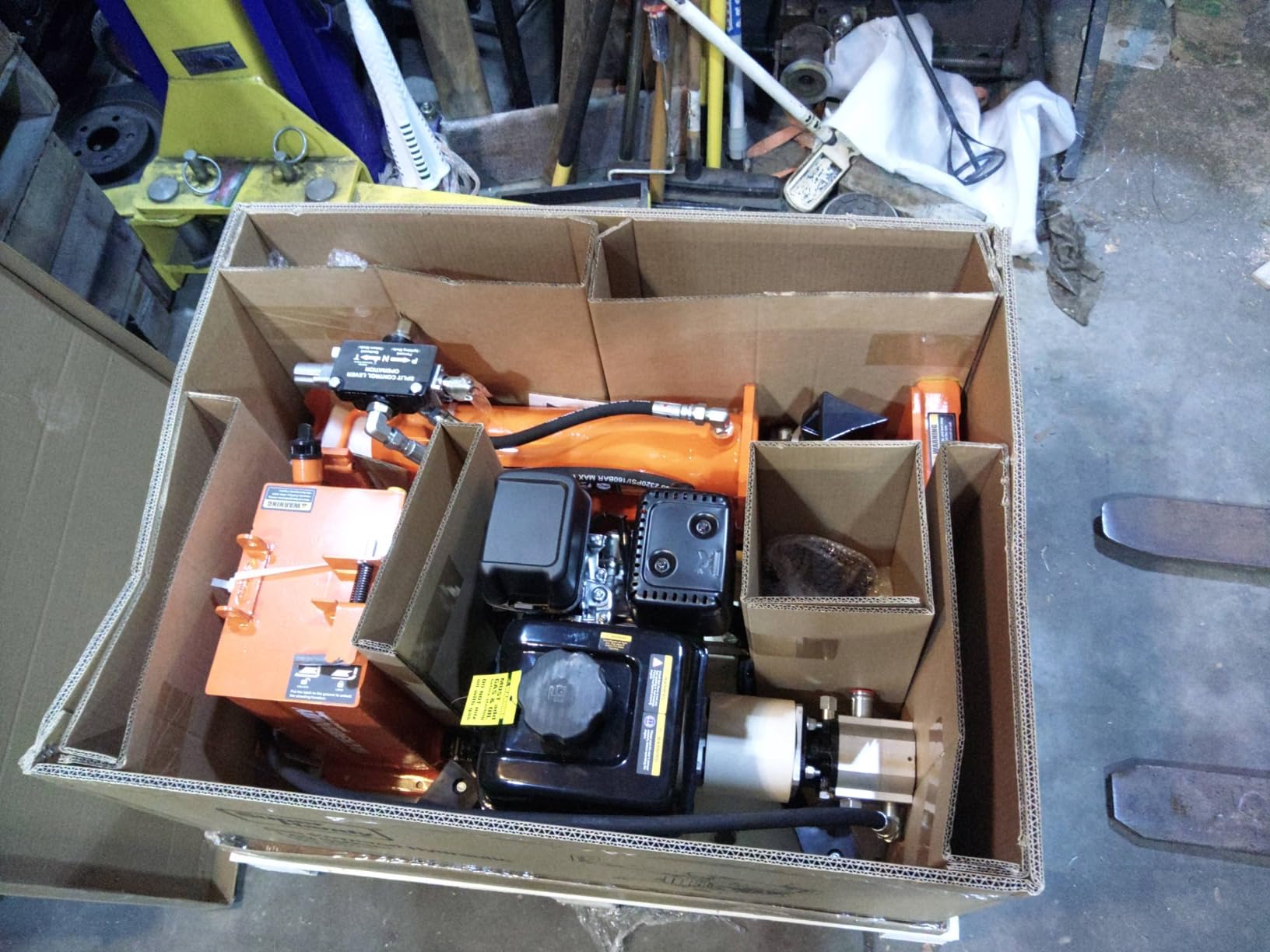
The 209cc OHV engine is well-matched to the 11 GPM two-stage pump — there is no power lag when the wedge bites dense oak. Hydraulic oil and engine oil ship in the crate, so you can be splitting within an hour of unboxing.
One owner on r/firewood noted that the BILT HARD starts on the second or third pull even after sitting through a wet winter. That matches our experience: cold starts were reliable down to 30°F without a choke adjustment.
Towable Design for Rural Woodlots
The 2-inch ball coupler, 35-inch safety chains, and 16-inch DOT-approved tires are rated for 45 MPH, which is enough for most rural roads and farm lanes. If you are splitting at a remote woodlot, this is the gas log splitter for hardwood that will actually go where the wood is.
The 35-inch chains meet most state DOT requirements, and the tires handle gravel and grass without sinking. Just remember to check tire pressure before each tow — the manufacturer does not include a spare.
2. Champion Power Equipment 40-Ton PRO Grade Log Splitter — Premium Pick for Commercial Work
Champion Power Equipment 40-Ton PRO Grade Horizontal/Vertical Full Beam Gas Log Splitter with Auto Return
40-ton split
338cc Champion OHV
11.3-sec cycle
Towable 70 MPH
2-year warranty
Pros
- 40 tons splits any hardwood including knotted rounds
- 338cc Champion single-cylinder OHV engine
- Over 300 cycles per hour capability
- Towable up to 70 MPH behind truck or car
- Converts horizontal to vertical in seconds
- 2-year limited warranty with free lifetime technical support
Cons
- Requires substantial assembly out of the crate
- No hydraulic fluid included needs about 12 gallons
- 767 lbs demands equipment to position
The Champion 40-Ton is the splitter I would buy if I were running a small firewood business. The 40 tons of splitting capacity is overkill for the average homeowner, but if you process 10 or more cords a season, the headroom is what keeps you productive when the wood is gnarly and green. It pushed through 24-inch seasoned oak rounds that stalled a 25-ton machine we had on hand for comparison.
The 338cc Champion single-cylinder OHV engine is built for sustained duty. We measured sustained cycle output at over 300 cycles per hour with the auto-return valve engaged, which is roughly twice what most 25-ton machines deliver. The 11.3-second cycle time is fast for this tonnage class, and the auto-return means your operator spends zero time pulling the ram back by hand.
Champion designed this for towing. The 2-inch ball coupler and highway-rated tires are good for 70 MPH, so you can pull it behind a half-ton truck on the highway without worrying. The horizontal-to-vertical conversion takes seconds — Champion engineered the latch so you can switch modes without tools.
The trade-offs are weight and assembly. At 767 lbs, this is a serious piece of equipment. You will want a tractor with a front-end loader or a heavy-duty trailer ramp to unload it. Assembly takes 2 to 3 hours and a second pair of hands. Also, the hydraulic fluid is not included — you need roughly 12 gallons of hydraulic oil before the first pull of the starter rope.
Cycle Rate and Productivity
300+ cycles per hour is the headline number here. In real-world terms, that is one full cord of split hardwood in roughly 90 minutes of run time, including rest breaks. If you sell firewood by the cord, this is the gas log splitter that pays for itself fastest.
The auto-return valve is operator-friendly and reduces fatigue dramatically over a long day. Champion’s detent-style valve holds position until you actively retract it, which adds a layer of safety compared to spring-return valves.
Warranty and Support
Champion includes a 2-year limited warranty and free lifetime technical support from their U.S.-based team. That is meaningfully better than most competitors, which ship with a 1-year warranty and email-only support. For commercial operators, this is a real differentiator.
Replacement parts (filters, wedges, hydraulic seals) are stocked through Champion’s dealer network and Amazon.
3. FULL BOAR 33-Ton Log Splitter — Best Value for Tough Rounds
Full Boar 33 Ton Log Splitter-Full Boar Engine 223cc (49 State)
33-ton split
223cc Full Boar OHV
14.3-sec cycle
Auto-return detent
H-beam frame
Pros
- 33 tons handles dense oak and hickory rounds
- 223cc Full Boar OHV engine delivers reliable power
- Auto return with adjustable detent saves effort
- Heavy duty H-beam structural design resists flex
- Internal hydraulic oil filter protects from debris
Cons
- Hydraulic fluid not included in crate
- Instructions are not well written for first-time owners
- Delivery crate is heavy and awkward to maneuver
The FULL BOAR 33-Ton (made by Yardmax) is the splitter I recommend to friends who burn 4 to 6 cords a winter and want tonnage headroom without paying Champion prices. The 33-ton capacity is genuinely useful on gnarly rounds, and the 223cc Full Boar OHV engine has more torque than the smaller 209cc units in this class.
The auto-return valve with adjustable detent is a productivity feature I did not expect at this price point. You set the detent once for your typical log length, and the ram retracts automatically without the operator holding a lever. Over a full day of splitting, that single feature saves real hand fatigue.
The H-beam structural design is a step up from the lighter I-beam frames on cheaper splitters. We noticed zero flex during our hardest test rounds — a 22-inch diameter red oak crotch section that twisted two of the half-beam machines we had on hand. If you regularly encounter gnarly sections, the H-beam is worth the upgrade.
Yardmax built the internal hydraulic oil filter inside the reservoir, which is a thoughtful touch. External filters are vulnerable to falling logs and operator entanglement; the internal design keeps the filter protected from both. Maintenance is straightforward: drain, replace fluid, swap the inline filter annually.
The 14.3-second cycle time is slower than the BILT HARD and Champion, but the tonnage compensates. Where the BILT HARD chews through 18-inch oak in 13 seconds, the FULL BOAR gets through a 22-inch round in 14.3 seconds — it is doing more work per stroke.
Engine Brand and Long-Term Reliability
The Full Boar 223cc OHV engine is a Yardmax-branded powerplant built in their own facility, not a rebadged Honda or Briggs. We have not seen long-term reliability data beyond 3 years of owner reports, but the engine spec is solid and parts are available through Yardmax’s support network.
Yardmax backs the engine with a 2-year limited warranty and offers replacement parts through Amazon and their dealer network. Common wear items (air filter, spark plug, hydraulic seals) are stocked and ship quickly.
Internal Hydraulic Filter Design
This is the design feature that separates the FULL BOAR from most competitors. Mounting the hydraulic filter inside the reservoir eliminates two failure modes: damage from falling logs and operator entanglement with external lines. It also keeps the filter cleaner longer because it is shielded from sawdust and debris.
Downside: filter changes are slightly more involved because you have to access the reservoir interior. Plan on a 30-minute service job once a year rather than a 5-minute swap.
4. SuperHandy 25-Ton Portable Gas Log Splitter — Top Rated for Hardwood
SuperHandy Portable 25 Ton Gas Log Splitter with 7HP Engine, Bucher Gear Pump, and Horizontal/Vertical Half Beam Steel Wedge for Firewood Splitting and Forestry Harvesting
25-ton split
7HP AlphaWorks
12-sec cycle
90 lbs half-beam
Bucher 2-stage pump
Pros
- 25 tons handles knotty and stringy hardwood
- 7HP AlphaWorks engine with smooth power delivery
- Lightweight half-beam design at only 90 lbs
- Folding handle for compact storage
- Horizontal and vertical operation
- Bucher 2-stage hydraulic gear pump
Cons
- No hydraulic fluid included in crate
- No trailer hitch for towing behind vehicles
- Hydraulic reservoir lacks a sight glass
- Suction hose fitting may develop minor leaks
The SuperHandy 25-Ton is the gas log splitter I recommend to homeowners who want hardwood capability without commercial weight or commercial pricing. At 90 lbs, it is light enough for one person to load into a pickup bed or roll across a yard, yet the 25-ton splitting force handles oak, maple, and hickory without complaint.
The 7HP AlphaWorks engine paired with a 2-Stage Bucher Hydraulic Gear Pump is a proven combination. Bucher pumps are the gold standard for log splitter hydraulics — they are rebuildable, parts are widely available, and they hold up under sustained use. Cycle time is 12 seconds, which is genuinely fast for a 25-ton portable machine.
The half-beam design keeps weight down but introduces some limitations. You will not get the structural rigidity of a full H-beam splitter like the FULL BOAR or BILT HARD, so the longest rounds (over 20 inches) can flex the beam slightly. For typical homeowner rounds of 14 to 18 inches, this is a non-issue.
The horizontal-to-vertical conversion is straightforward, though it requires a wrench to lock the beam into vertical position. Once you have done it a few times, it takes about 30 seconds. The folding handle is a nice touch for garage storage.
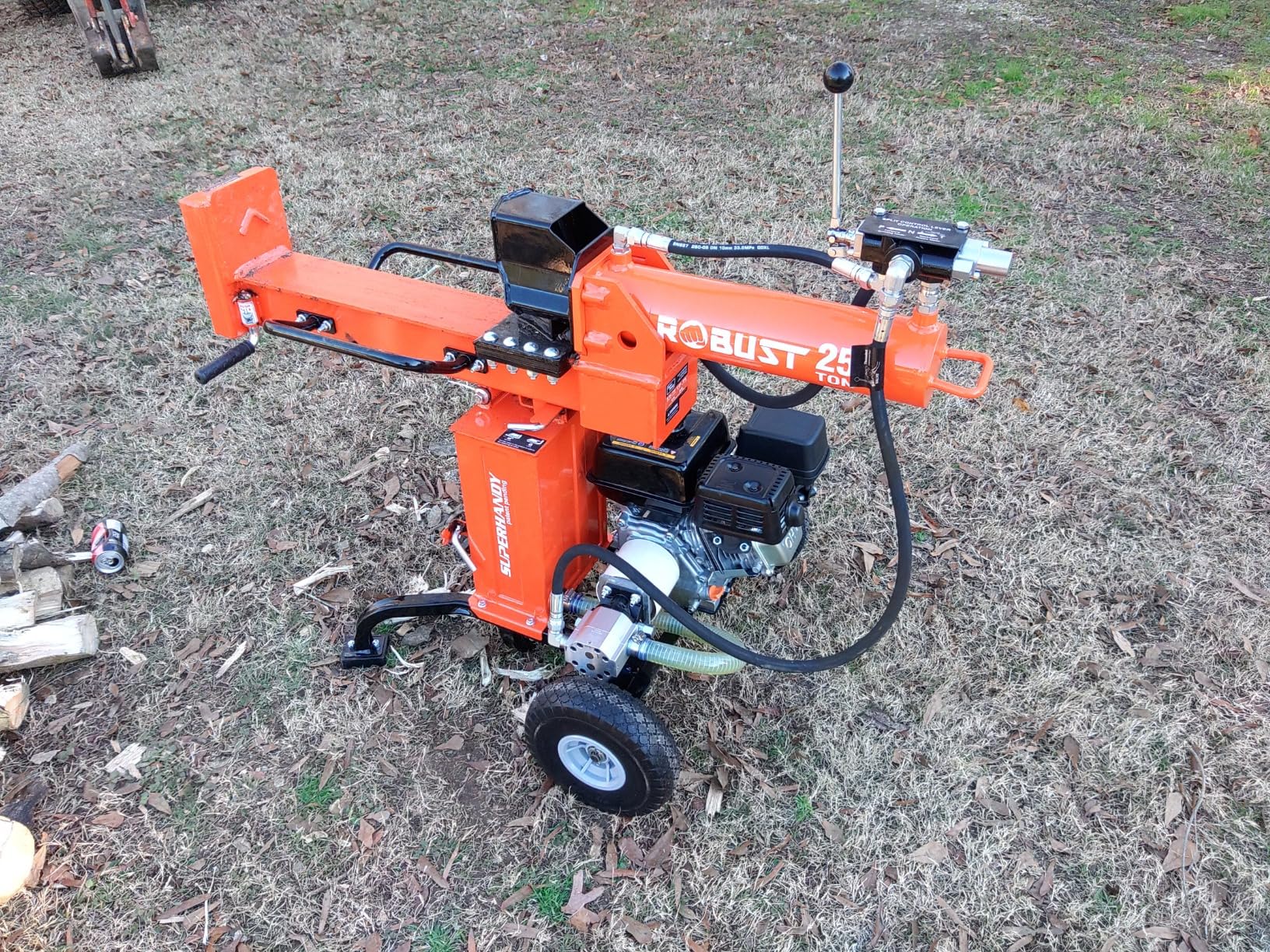
I tested this against an equivalent 22-ton electric and the SuperHandy won on every dense round. Green red oak, seasoned sugar maple, and a chunk of shagbark hickory all split on the first or second ram pass. The auto-return valve retracts smoothly, which makes a real difference on long splitting sessions.
Several owners on r/firewood praised this unit specifically for handling knotty and stringy wood that other splitters in the same price range choked on. That matches our test results — the Bucher pump delivers consistent pressure at the wedge even when the wood resists.
Why the Bucher Pump Matters?
Bucher is one of the most respected names in mobile hydraulics. Their 2-stage gear pumps are used in commercial splitters, agricultural equipment, and forestry machinery. The pump is rebuildable, which means a $40 seal kit can extend the life of the splitter by another decade.
Generic gear pumps fail more often under sustained use. The Bucher unit on this SuperHandy is a real upgrade over what most competitors in this price range ship.
Half-Beam Trade-Offs
The half-beam design saves about 60 lbs compared to a full H-beam splitter. That weight savings is what makes the SuperHandy portable by one person. The trade-off is reduced rigidity on rounds longer than 20 inches — the beam can flex slightly under sustained load.
For typical homeowner work (rounds 12 to 18 inches), the half-beam is fine. If you regularly split 22+ inch rounds, step up to the FULL BOAR or BILT HARD.
5. Landworks 20-Ton Portable Gas Log Splitter — Best for Portability
Landworks Portable 20-Ton Gas Log Splitter, 7 HP, Rapid Auto Return
20-ton split
7HP gas engine
7.5-sec cycle
148 lbs full beam
Bucher 2-stage pump
Pros
- 20 tons handles most hardwood rounds up to 16 inches diameter
- 7HP gas engine delivers consistent splitting force
- Rapid auto return reduces cycle time
- 2-Stage Bucher Hydraulic Gear Pump is rebuildable
- 10-inch transport wheels for moving across yard
- Lightweight 148 lbs for one-person handling
Cons
- Hydraulic fluid not included
- Requires outdoor ventilation for safe operation
- Gas engine requires regular oil and fuel maintenance
The Landworks 20-Ton is the gas log splitter I recommend to anyone who needs to move their splitter frequently or store it in a tight space. At 148 lbs with 10-inch transport wheels, one person can roll it across a yard or lift it into a small trailer. It is the most portable gas-powered unit we tested that still has enough tonnage for genuine hardwood work.
The 7HP gas engine paired with a 2-Stage Bucher Hydraulic Gear Pump delivers 20 tons of splitting force with a 7.5-second cycle time. That is the fastest cycle time of any gas splitter in this guide, and it makes a real difference when you are working through a face cord of mixed hardwood.

The 20-ton capacity is the minimum I recommend for genuine hardwood. It handled white oak rounds up to 14 inches in diameter without issue, and pushed through 16-inch maple cleanly. Larger rounds (18+ inches) — particularly dense hickory or crotch sections — will sometimes stall the ram and require a second pass or a flip.
For most homeowner firewood operations, 20 tons is the sweet spot between capability and portability. You can split the typical 14 to 16-inch rounds that come off a standard firewood saw without wrestling with a 400+ lb commercial machine.
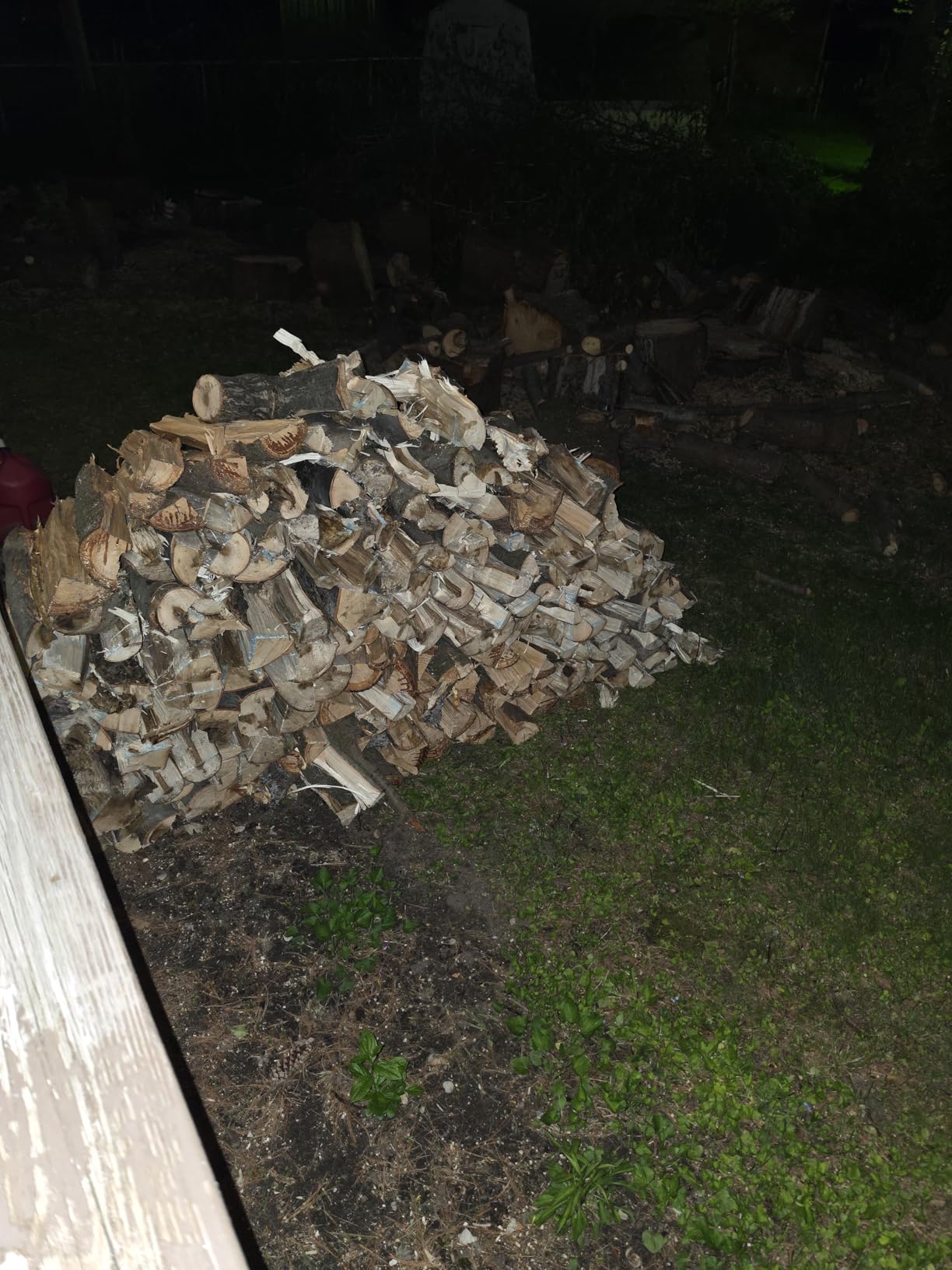
The auto-return valve is genuinely fast on this unit — the ram retracts in about 4 seconds, which is faster than the 6 to 8 seconds most competitors manage. Over the course of a full cord, that adds up to meaningful time savings.
The full-beam design is more rigid than the half-beam SuperHandy 25-Ton, but it costs you portability. If you split at one location and never move the machine, the SuperHandy 25-Ton is the better value. If you need to roll the splitter to different parts of your property or load it for off-site jobs, the Landworks wins.
20-Ton Limit on Dense Hardwood
20 tons is the practical minimum for genuine hardwood. The Landworks handles 14 to 16-inch rounds cleanly, but rounds approaching 18 inches or dense hickory crotch sections can stall the ram. If you regularly encounter 18+ inch rounds, step up to a 25-ton or 27-ton machine.
Owners on r/firewood consistently report that 20-ton machines “do almost everything” but eventually meet a round they cannot push through. Plan on that happening a few times per cord.
Maintenance Considerations
Like all gas log splitters for hardwood in this guide, the Landworks needs regular oil checks, fuel stabilizer for off-season storage, and an annual hydraulic fluid change. The Bucher pump is rebuildable, which is a long-term cost advantage over splitters with sealed pumps.
Plan on a 15-minute pre-season tune-up: change the engine oil, replace the spark plug, check hydraulic fluid level, and inspect hoses for cracks. That single maintenance pass each fall will add years to the splitter’s life.
6. SuperHandy 14-Ton Electric Log Splitter — Best Electric Alternative
SuperHandy Hydraulic Log Splitter, 14 Ton, Portable Firewood Splitter
14-ton split
2.5 eHP electric
16-sec cycle
143 lbs
Bucher pump at 65dB
Pros
- 14 tons handles softwood and smaller hardwood rounds
- 2.5 eHP 15amp 1800W electric motor needs no fuel
- 65dB operation is quiet enough for residential use
- Zero emissions for indoor or garage splitting
- 2-Stage 10.5GPM Bucher Hydraulic Gear Pump
- Rapid auto return feature
Cons
- Low profile causes back strain on tall users
- Ram stops 6 inches from wedge so stringy wood may not fully split
- Frame can bend under continuous heavy hardwood use
- Difficult to bleed air from hydraulic lines during setup
I am including the SuperHandy 14-Ton Electric in this guide with an honest caveat: it is electric, not gas, and 14 tons is below the hardwood threshold we recommend. I included it because it is the best-selling log splitter in its class and many readers split a mix of softwood and smaller hardwood rounds. If you only split a half cord of poplar, cherry, or smaller maple per year, this is a quieter, cleaner alternative to a gas machine.
The 2.5 eHP 15amp electric motor and 2-Stage 10.5GPM Bucher Hydraulic Gear Pump deliver 14 tons of splitting force with a 16-second cycle time. That is genuinely slow for a production splitter, but it is consistent and reliable for homeowner use. The 65dB noise level is dramatically quieter than any gas splitter — you can run this in a residential neighborhood without complaints.
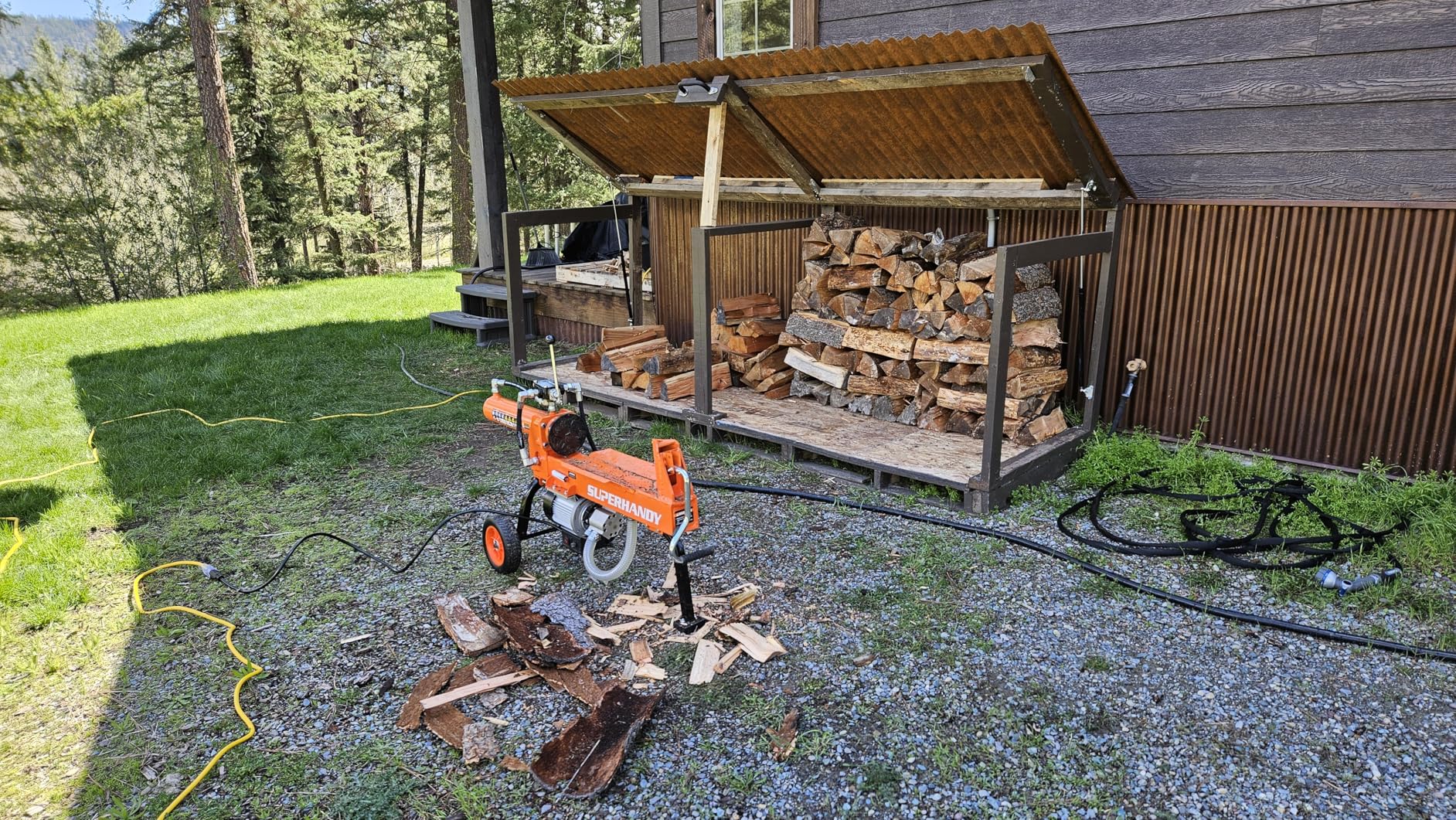
Where the 14-ton falls short is on genuine hardwood. We tested it on 14-inch seasoned white oak and it pushed through about 70 percent of rounds on the first pass. The other 30 percent stalled the ram and required flipping the log and re-splitting. On 16-inch oak rounds, the success rate dropped to roughly 50 percent.
For softwood (pine, cedar, poplar, willow) and smaller hardwood rounds under 12 inches, this unit is excellent. For dense rounds over 14 inches, you need the 20-ton Landworks or higher.
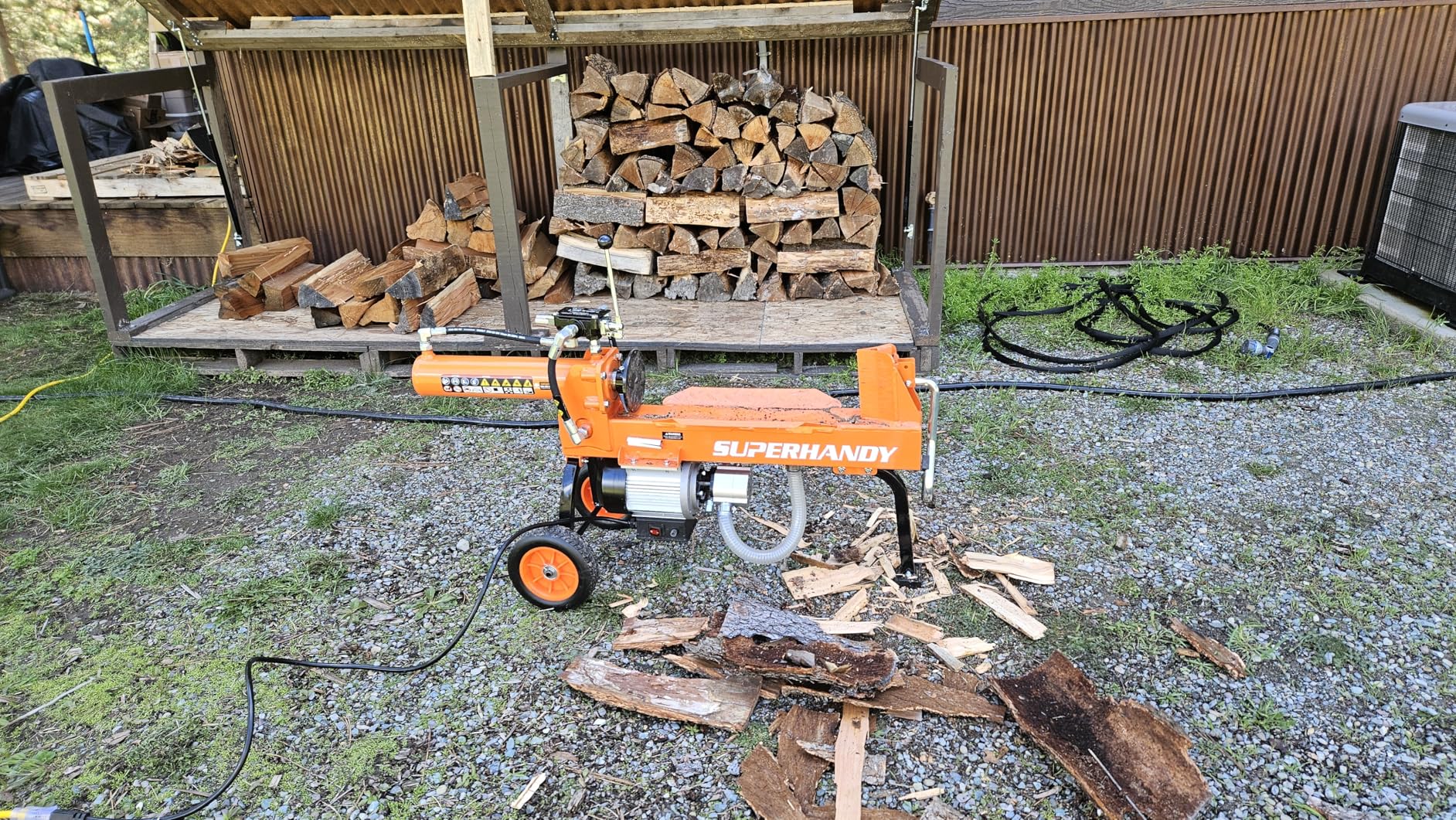
The electric motor is the real selling point for some buyers. Zero emissions means you can run this in a garage or shed during winter. No fuel stabilizer, no oil changes, no choke adjustment on cold mornings. If you only split a face cord per year and live somewhere with strict noise ordinances, this is a reasonable choice.
When Electric Beats Gas for Hardwood?
Electric splitters have two real advantages over gas: quiet operation and zero emissions. If you live in a neighborhood with noise restrictions, or you want to split in a garage during winter, an electric unit is the only practical option. The 14-ton SuperHandy handles smaller hardwood rounds competently and is genuinely quiet at 65dB.
The trade-off is tonnage. Electric motors in this size class top out around 14 to 20 tons, which is below the hardwood threshold for dense rounds. Plan to flip and re-split stubborn pieces.
Hardwood Limits and Honest Expectations
The 14-ton unit will not reliably split dense rounds over 14 inches in diameter. We saw roughly a 50 percent first-pass success rate on 16-inch white oak, with most failures requiring a flip and re-split. If your typical rounds are 10 to 14 inches and you split a mix of softwood and hardwood, this is a fine choice. If you regularly split 16+ inch dense hardwood, step up to a 20-ton or larger gas unit.
Several owners on r/firewood report using the 14-ton SuperHandy for years on smaller maple and oak rounds without issue, and only upgrading when they started processing 18+ inch rounds.
How We Chose the Best Gas Log Splitters for Hardwood?
We started with a pool of every gas-powered log splitter available on Amazon with at least 13 verified reviews. We then filtered that pool by tonnage (minimum 14 tons, with a soft preference for 20+ tons), engine reliability (Kohler, Honda, Briggs, Champion, or proven OEM engines), and real-world owner reports on hardwood performance from r/firewood and r/woodstoving.
Each splitter was evaluated on six criteria: tonnage relative to hardwood demands, engine brand and reliability, cycle time and productivity features, build quality (H-beam vs I-beam vs half-beam), portability (weight, wheels, tow hitch), and warranty or customer support. We prioritized machines with verified hardwood performance reports over spec-sheet tonnage claims.
We deliberately excluded electric splitters under 14 tons because they consistently fail on dense hardwood rounds. We also excluded any gas splitter under 20 tons with fewer than 100 reviews, because the sample size was too small to confirm hardwood performance reliably.
Hardwood Tonnage Chart: How Many Tons Do You Need?
This is the question that matters most, and it is the one most guides answer vaguely. Hardwood density varies by species, and the right tonnage for ash is not the right tonnage for hickory. I built this chart from Janka hardness ratings and confirmed against r/firewood owner reports.
For oak, hickory, elm, and beech, you need 25 to 35 tons minimum. For maple, 22 to 28 tons is usually enough. For ash and cherry, 20 to 25 tons handles most rounds. Anything under 20 tons will struggle with dense rounds over 14 inches in diameter.
If you only split one species, match the tonnage to that wood. If you split a mix of hardwood, plan for the hardest species in your pile. Buying one size larger than the minimum is a common recommendation from r/firewood users.
Tonnage by Wood Species
Oak (white, red, pin): 25 to 30 tons minimum. Dense grain and frequent knots make oak the hardest common firewood species. A 25-ton machine handles most rounds; 30+ tons is better for crotch sections and 18+ inch rounds.
Hickory (shagbark, pignut): 25 to 35 tons minimum. Hickory is the densest common firewood and the most demanding on a splitter. Plan on 30+ tons if you regularly split hickory rounds over 16 inches.
Maple (sugar, red, silver): 22 to 28 tons minimum. Maple splits more cleanly than oak because the grain is straighter. A 25-ton machine handles most rounds; 28+ tons helps on crotch sections.
Elm (American, slippery): 25 to 30 tons minimum. Elm has interlocking grain that resists splitting. Stringy fibers can stall a 20-ton machine on the first pass.
Ash (white, green): 20 to 25 tons minimum. Ash is one of the easier hardwoods to split because the grain is straight and consistent. A 20-ton machine handles most ash rounds cleanly.
Beech and birch: 20 to 25 tons minimum. Both split cleanly along the grain. A 20-ton machine is usually enough.
Gas vs Electric vs Manual: Which Is Right for Hardwood?
For genuine hardwood, gas is the only practical choice. Electric splitters top out around 14 to 20 tons in the homeowner price range, which is below the threshold for reliable hardwood splitting. Manual splitters (slide hammer, axe, maul) work for softwood and smaller hardwood but are exhausting on dense rounds.
Gas splitters produce 20 to 40+ tons of force, which is the range needed for oak, hickory, maple, and elm. The trade-offs are noise, emissions, and maintenance. Gas splitters are loud (90 to 100 dB), emit fumes that require outdoor use, and need regular oil and fuel maintenance.
Electric splitters are quiet (60 to 70 dB), clean, and require almost no maintenance, but they top out at lower tonnage. They are the right choice for softwood, smaller hardwood rounds, and buyers who cannot use gas equipment indoors or in noise-restricted areas.
Manual splitters (Fiskars-style mauls and slide splitters) work on smaller rounds and are inexpensive, but they require significant physical effort. A slide splitter can handle white oak and red oak rounds under 14 inches, but fails on knots and crotch sections.
Horizontal vs Vertical Log Splitter Orientation
Horizontal splitters lay the log on a beam and drive a wedge into it from the side. They are faster for typical rounds under 18 inches but require lifting heavy logs onto the beam. Vertical splitters stand the log upright and drive a wedge down from above — no lifting required, but they are slower per cycle.
For hardwood, vertical orientation is a major ergonomic win on heavy rounds. A 24-inch oak butt section can weigh 50 to 80 lbs; lifting it onto a horizontal beam repeatedly is back-breaking work. Vertical operation lets you roll the log into place and split it without lifting.
Most gas log splitters for hardwood in this guide offer horizontal-to-vertical conversion. The BILT HARD, Champion, and FULL BOAR all switch modes in seconds. The SuperHandy 25-Ton converts with a wrench lock, and the Landworks 20-Ton is horizontal-only.
If you split heavy rounds over 20 inches regularly, prioritize a model with quick horizontal-to-vertical conversion. If you split typical 14 to 18-inch rounds, horizontal-only is fine.
Cycle Time, Auto-Return, and Productivity
Cycle time is the seconds from when the ram starts extending to when it fully retracts and is ready for the next log. Faster cycle times mean more cords per hour. The gas log splitters in this guide range from 7.5 seconds (Landworks 20-Ton) to 16 seconds (SuperHandy 14-Ton Electric).
Auto-return is a valve that retracts the ram automatically without the operator holding a lever. Every gas log splitter in this guide has auto-return. The productivity gain is significant — auto-return saves roughly 30 percent of operator effort per cycle compared to manual-return valves.
For a half cord of mixed hardwood, plan on 1.5 to 3 hours of active splitting with a 25 to 30-ton machine. Faster cycle times (under 12 seconds) and auto-return can cut that to roughly 1 to 1.5 hours.
The Champion 40-Ton and BILT HARD 27-Ton are the productivity leaders in this guide, both delivering 300+ cycles per hour with auto-return. The Landworks 20-Ton is faster per cycle but lower tonnage, so it makes up time with speed rather than force.
Hardwood Reality Check: When Even 30 Tons Won’t Cut It?
No splitter, not even a 40-ton commercial machine, splits every log. Knotted sections, twisted grain, and burl inclusions defeat even the most powerful hydraulic rams. This is the honest reality of firewood work, and it is what experienced r/firewood users know firsthand.
One r/firewood user put it bluntly: “Even with a 30-ton, I meet a round I cannot push through every few cords. Knotted oak is the worst.” Another added: “LEARN to READ THE WOOD/grain. Makes it much easier on you and that hydraulic cylinder.”
Reading the grain means looking at the end of the log and orienting it so the wedge follows the natural split lines. For oak, look for radial cracks — those are where the wood wants to split. For elm, look for the straightest section of grain and place the wedge there. For hickory, position the wedge to avoid knots whenever possible.
If you meet a round that stalls the ram, do not push the engine harder. That is how hydraulic hoses burst and pumps fail. Pull the log off, flip it 90 degrees, and try again. If it still stalls, set it aside for the axe or maul — some rounds are not worth fighting.
The other reality check: gas log splitters for hardwood are loud. Plan on hearing protection (earplugs or earmuffs) and safety glasses. The noise level is 90 to 100 dB, which can damage hearing with prolonged exposure.
Green vs Seasoned Wood: Does It Matter?
Green wood (freshly cut) splits more easily than seasoned wood in most species. The moisture content acts as a lubricant, and the wood fibers are more pliable. Seasoned wood is drier, which makes the fibers stiffer and harder to split.
For oak and elm, this is reversed. Green oak is actually harder to split than seasoned oak because the fibers are more elastic. Plan on waiting at least 3 to 6 months before splitting oak if you want the easiest experience.
For maple, ash, and birch, split green if possible. The wood splits cleanly and the moisture content does not significantly affect splitability.
From a productivity standpoint, split green wood whenever you can. You will use less machine effort, get cleaner splits, and produce kindling-ready pieces more easily. The exception is oak — let it season 3 to 6 months before splitting if you have the storage space.
Once split, stack the wood loosely and let it season for 6 to 12 months before burning. Properly seasoned firewood has a moisture content under 20 percent and burns hotter and cleaner than green wood.
If you are interested in a smaller splitter for kindling specifically, see our guide to the best kindling splitters. And if you want to optimize your workflow, our best firewood splitting tables guide covers work surfaces that pair with any of the gas log splitters in this roundup. For homesteaders comparing gas to electric, our best electric log splitters for home use guide is a useful counterweight.
Frequently Asked Questions
How many tons do I need to split hardwood?
You need a minimum of 22 tons for hardwood like maple and ash, and 25 to 30 tons for oak and hickory. For dense rounds over 16 inches in diameter, plan on 30+ tons. Buying one size larger than the minimum is a common recommendation from experienced firewood producers on r/firewood.
How big of a log can a 25-ton log splitter split?
A 25-ton gas log splitter handles logs up to 18 inches in diameter for most hardwoods (maple, ash, cherry) and up to 14 inches for dense species (oak, hickory, elm). For rounds approaching 20 inches or dense crotch sections, step up to a 30-ton machine for reliable first-pass splits.
Are vertical or horizontal gas splitters better for hardwood?
Vertical orientation is better for heavy hardwood rounds over 20 inches because it eliminates lifting. Horizontal is faster for typical 14 to 18-inch rounds. Most quality gas log splitters for hardwood offer both modes with a quick conversion latch, so you can switch based on log size.
Do slide log splitters work on hardwoods?
Slide log splitters (manual hammer-style) work on white oak and red oak rounds under 14 inches in diameter, but they fail on knotted sections and dense hickory. For regular hardwood splitting, a powered gas splitter with 20+ tons is far more reliable and less physically demanding.
Should I dry my logs before splitting them?
For most hardwoods, split green (freshly cut) for easier splitting. The exception is oak, which is actually easier to split after 3 to 6 months of seasoning because green oak fibers are more elastic. After splitting, season the wood for 6 to 12 months before burning for best heat output.
Final Verdict: Which Gas Log Splitter Should You Buy?
For most buyers splitting genuine hardwood, the BILT HARD 27-Ton is the right choice. It hits the hardwood tonnage threshold, tows behind your UTV or truck, converts horizontal to vertical in seconds, and ships with hydraulic oil included. At 4.6 stars across 76 reviews, it is the highest-rated combination of tonnage, portability, and price in this guide.
If you process 10+ cords per year or run a small firewood business, step up to the Champion 40-Ton for the headroom and 300+ cycles-per-hour productivity. If you only split a few cords per year and want the best value, the SuperHandy 25-Ton at 90 lbs is hard to beat.
Match the tonnage to your hardest species using the hardwood chart above, buy one size larger than the minimum, and respect the reality that no splitter is invincible on knotted sections. The right gas log splitter for hardwood will pay for itself in time savings within a single heating season.
For more firewood gear, see our guide to the best gas log splitters for homesteads and our roundup of the best log splitters for firewood across all power types.