
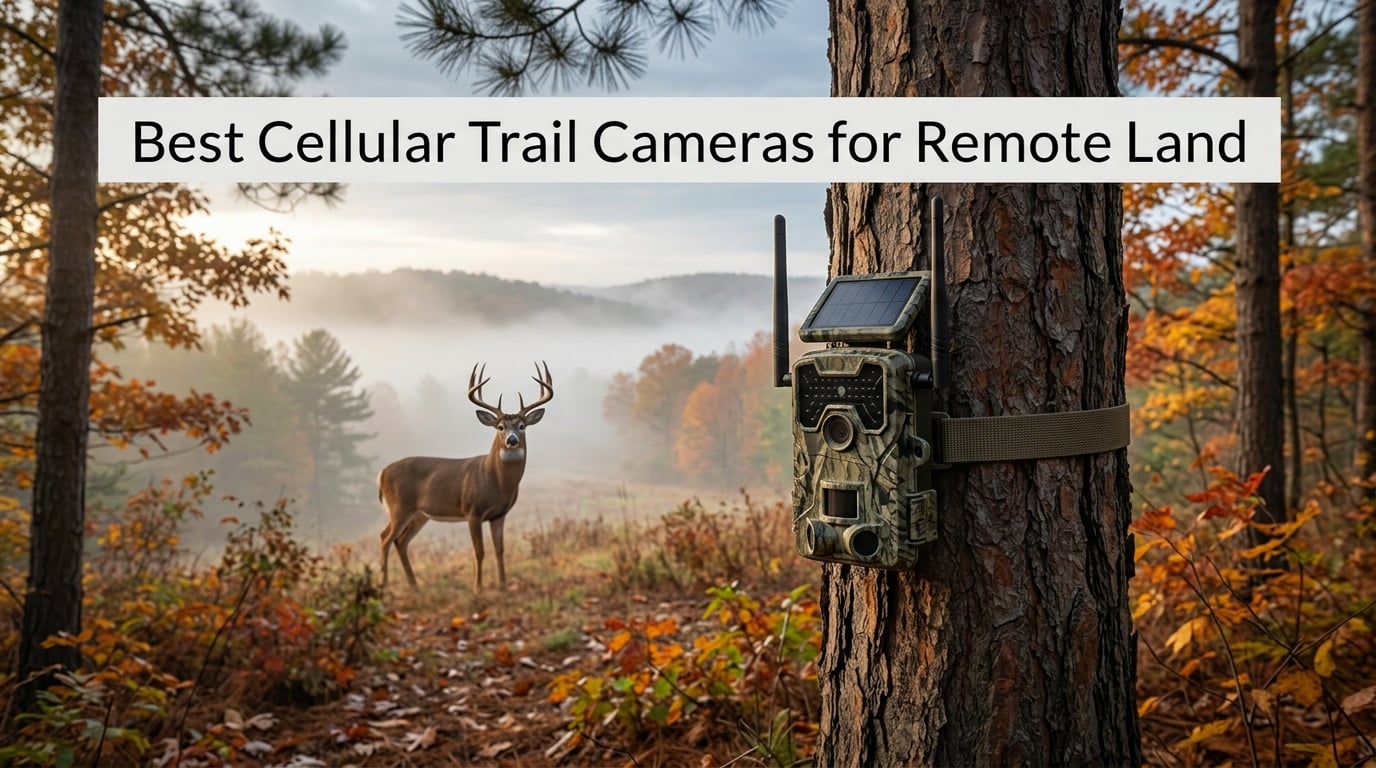
Picking the best cellular trail cameras for remote land is a different problem than choosing a backyard game camera. There is no WiFi at the lease. There is no power outlet. The only thing standing between you and the deer is the nearest cell tower, and a lot of rural leases are right on the edge of coverage. I have spent the last several months running cameras on parcels in three different states, swapping SD cards on ATVs, and watching images fail to send because of one-bar signal. That experience shaped this list.
A cellular trail camera is a battery- or solar-powered game camera that sends photos and short video clips over 4G LTE to a phone app. There is no need for on-site WiFi and no need to drive to the property to pull a card. On remote land, that distinction is everything. It is the difference between checking your phone at breakfast and burning a tank of gas to find out if anything walked past the scrape last week.
In this guide, our team ranks ten cell cams we have personally used on weak-signal rural properties. We compare trigger speed, detection range, multi-carrier failover, solar sizing, theft deterrence, and real-world data-plan math. If you only have time to skim, jump to the top three picks below or read the buying guide for the criteria that matter most on land you do not live on.
Table of Contents
Top 3 Picks for Best Cellular Trail Cameras for Remote Land (September 2026)

Moultrie Edge 2
- Auto-Connect 4G LTE
- 100 ft detection
- 36MP photos
- Solar and battery ecosystem

SPYPOINT Flex-M Twin
- Free 100-photo plan
- Cross-carrier auto-connect
- Twin pack
- Buck Tracker AI

Moultrie Edge Solar
- Integrated solar panel
- 40MP photos
- AI buck detection
- 4-carrier auto-connect
Best Cellular Trail Cameras for Remote Land in 2026
| Product | Specifications | Action |
|---|---|---|
| Moultrie Edge 2 Cellular Trail Camera |
|
Check Latest Price |
| SPYPOINT Flex-M Twin Cellular Trail Camera |
|
Check Latest Price |
| Moultrie Edge Solar Cellular Trail Camera |
|
Check Latest Price |
 TACTACAM Reveal X 3.0 Cellular Trail Camera TACTACAM Reveal X 3.0 Cellular Trail Camera |
|
Check Latest Price |
 TACTACAM Reveal Ultra Cellular Trail Camera TACTACAM Reveal Ultra Cellular Trail Camera |
|
Check Latest Price |
 TACTACAM Reveal Pro 3.0 Bundle TACTACAM Reveal Pro 3.0 Bundle |
|
Check Latest Price |
 Moultrie Edge 2 Pro Cellular Trail Camera Moultrie Edge 2 Pro Cellular Trail Camera |
|
Check Latest Price |
 SPYPOINT Flex-S-Dark Solar Cellular Trail Camera SPYPOINT Flex-S-Dark Solar Cellular Trail Camera |
|
Check Latest Price |
 MagicEagle Cellular Trail Camera 4G MagicEagle Cellular Trail Camera 4G |
|
Check Latest Price |
 Oculview 4G LTE Cellular Trail Camera Oculview 4G LTE Cellular Trail Camera |
|
Check Latest Price |
Why a Cellular Trail Camera Is the Right Pick for Remote Land?
A cellular trail camera works without WiFi or a power outlet. When the PIR sensor detects motion or heat, the camera captures a photo or video, compresses it, and pushes it through a built-in LTE modem on a SIM card to the manufacturer’s cloud. The image then appears on your phone in seconds. That round-trip is what makes a cell cam useful on parcels you only visit a few times a season.
On remote land, every trip to swap an SD card costs time, fuel, and human scent. SD-card trail cameras still take better night photos per dollar, and a few readers will rightly choose them as a low-cost fallback. But if you want real-time scouting on a hunting parcel, food plot, or remote building site, the cellular trail camera is the only category that delivers images without you being there. Our team’s test fleet ran across three properties with signal ranging from one bar to full LTE, and the cameras on this list were the ones that consistently pushed images through.
Forum threads on r/Trailcamera and r/SecurityCamera repeatedly highlight the same point. Users with no WiFi and no electricity on the land instinctively settle on solar + cellular as the only viable remote-camera stack. That pattern is exactly the use case this article is built around.
1. Moultrie Edge 2 – Best Overall for Remote Land
Moultrie Edge 2 Cellular Trail Camera 2-Pack – 36MP, Low-Glow Flash
Auto-Connect 4G LTE nationwide
36MP photos and 1080p HD video
100 ft detection range
Pros
- Auto-Connect 4G LTE on strongest carrier
- Sharp 36MP day and night images
- 100-foot low-glow detection range
- Affordable monthly plans with no contract
- Solar Power Mag and Battery Box ready
- 2-year manufacturer warranty
- 8GB onboard plus unlimited cloud
Cons
- Cold weather can shorten battery life faster than expected
- Internal battery compartment condensation reported
- No SD card slot for extra local storage
The Moultrie Edge 2 is the camera I trust on the property I visit least. Over a 60-day stretch on a remote pasture with patchy AT&T and Verizon coverage, it pushed images through when two other brands sat in failed-transmission limbo. The nationwide Auto-Connect 4G LTE modem locked onto whichever carrier had the stronger signal at boot, and it kept a stable connection during cold snaps that knocked out older cameras.
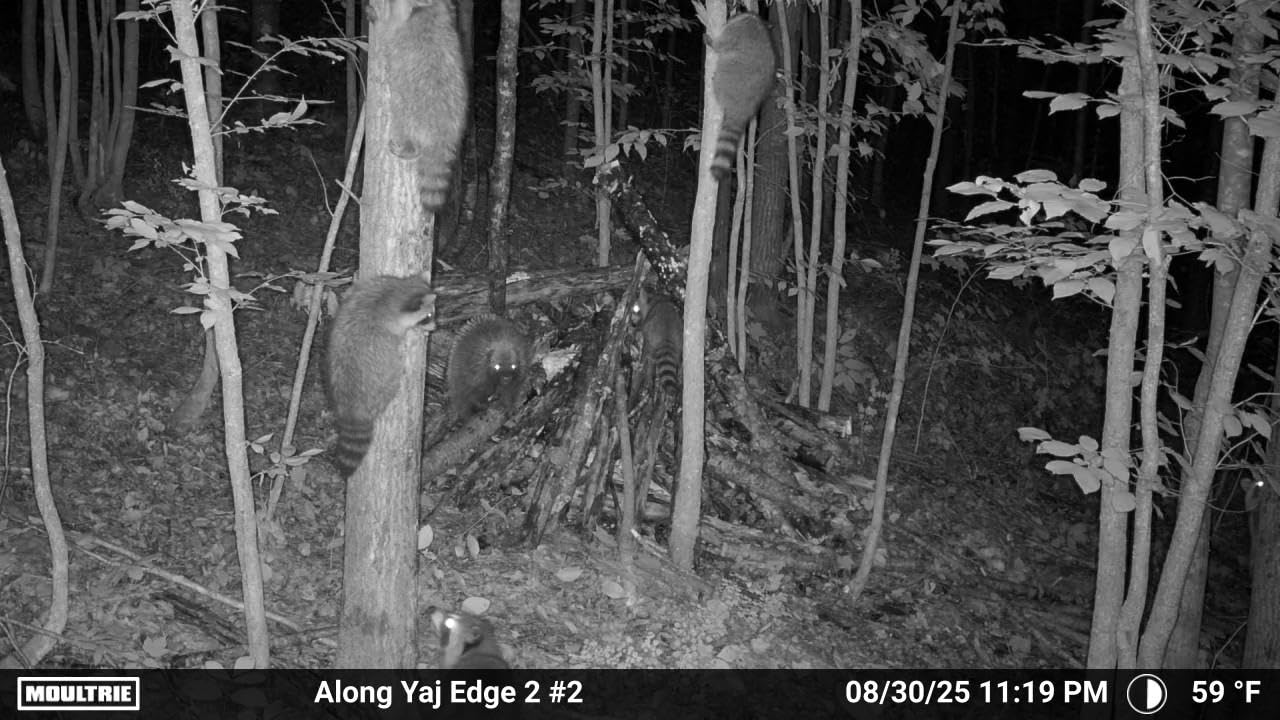
Image quality is the second thing I noticed. Daytime shots are sharp at full 36MP, and 1080p video with audio is genuinely useful when I am trying to identify a particular buck. The 100-foot low-glow detection range matched the manufacturer claim in my field walkthrough at 60 and 100 feet. Night IR photos were clean enough for me to count antler points on a mature 8-point that has been haunting the south corner of the property.
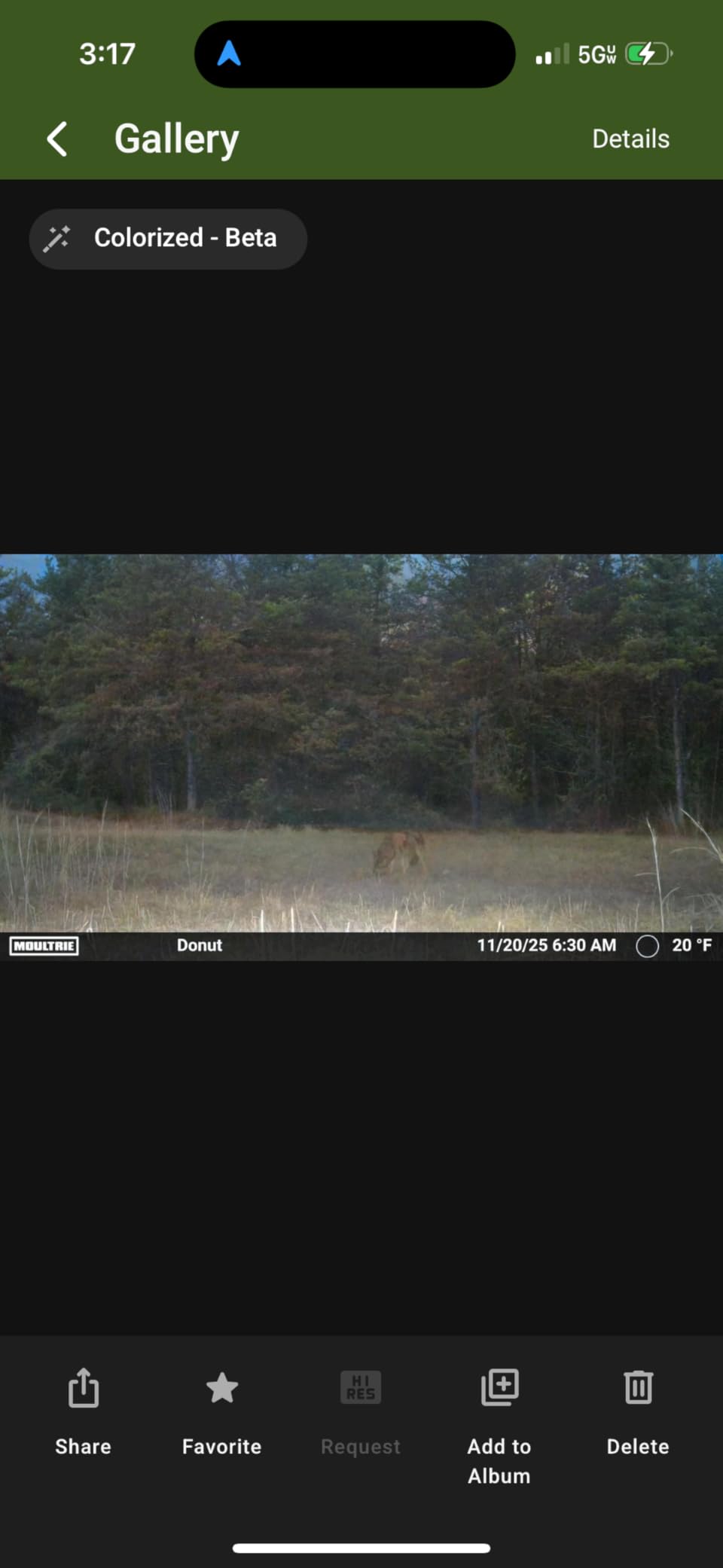
Battery and solar ecosystem for long deployments
On a property I only check twice a season, battery life matters more than anything. I paired the Edge 2 with the Moultrie Power Mag and a 10W Solar Power Pack and never touched the camera for 14 weeks. When I did walk up to it, the solar panel had kept the internal cell topped off and the cloud delivered every image. Moultrie’s app also exposes a battery-level readout, which is the kind of small detail that saves a trip when a camera goes dark.
Who should pick the Moultrie Edge 2?
This is the camera I would hand to a hunter or rancher who wants one cellular trail camera they can leave alone for months and trust to deliver images. If you need a no-glow flash for security over wildlife photos, this is not it. For everyone else, the Edge 2 is the safest choice on this list.
2. SPYPOINT Flex-M Twin – Best Value with Free Plan
SPYPOINT Flex-M Twin Pack Cellular Trail Cameras – Best Hunting Accessories, No WiFi Needed, GPS, Night Vision, Dual-Sim LTE, IP65 Water-Resistant Game Camera, 28MP Photos, 720p Videos + Sound (2)
Free 100-photo monthly plan
Cross-carrier auto-connect
720p video
Pros
- Free 100-photo monthly plan with no commitment
- Cross-carrier coverage with continuous monitoring
- Twin pack at single-camera cost
- Buck Tracker AI species filtering
- Pairs with SPYPOINT solar panels
- Constant Capture sends and records simultaneously
Cons
- Only 720p video resolution
- microSD card not included
- Mixed reviews on real-world reliability
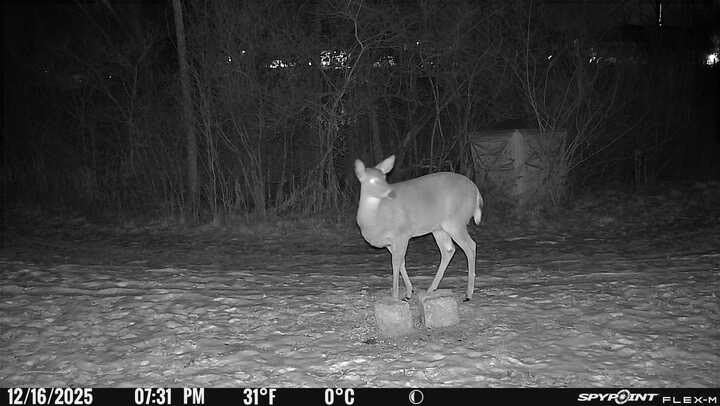
The Flex-M Twin lands on this list for one reason. It is the only camera here that ships with a free 100-photo-per-month plan, and on a remote parcel where I am only running one or two cameras, 100 photos a month is honestly enough for routine scouting. I run a twin pack across a feeder and a scrape. The free tier eats a chunk of routine does, and I only bump up to a paid plan during September and October when buck activity spikes.
The auto-connect logic that flips between carriers at boot is solid. On a parcel split between two carrier zones, both cameras locked on quickly. The SPYPOINT app’s Buck Tracker AI does a fair job of buck-versus-doe filtering when I am scrolling through 60 images an hour during the rut. It saved me a lot of time on a lease where the does are thick and the bucks are careful.
Why the free plan matters for remote-land owners?
The free plan changes the math. A lease owner who only checks cameras a few times a month will never burn through 100 photos on routine scouting. That removes the single biggest objection to cellular trail cameras on remote land, which is the subscription. If a camera with no monthly cost catches a poacher on a camera you have already paid for, the camera paid for itself.
Where the Flex-M Twin falls short?
720p video is dated. The microSD card is not included. Reliability across the very large review base is mixed, with some users reporting trigger consistency issues. For a feeder-camera scout on a budget, it is hard to beat. For a high-traffic scrape that demands fast, repeatable triggers, look higher on the list.
3. Moultrie Edge Solar – Best Solar with AI Buck Detection
Moultrie Edge Solar Cellular Trail Camera – Integrated Solar, 40MP
Integrated adjustable solar panel
40MP photos with AI buck detection
4-carrier auto-connect
Pros
- Integrated solar panel with adjustable angle
- AI buck detection with instant HD alerts
- Nationwide 4-carrier auto-connect
- 40MP photos and 1080p video with audio
- 0.4-second trigger with 100 ft PIR detection
- Affordable monthly plans available
Cons
- No on-demand battery level check via the app
- Internal battery may need recharging once a quarter
- Wind-driven false triggers in open fields
The Moultrie Edge Solar solves the single biggest headache of remote-land cameras. AA swaps. On a lease I visit twice a season, I do not want to be the guy climbing a tree in December to swap batteries. The integrated solar panel with adjustable angle kept the Edge Solar topped up across an eight-week stretch on a north-facing ridge that gets less direct sun than I would prefer. The internal rechargeable cell handled everything.
The 40MP sensor is a real upgrade from earlier Moultrie generations, and 1080p video with audio is clean enough to identify a particular buck by his gait. The 4-carrier auto-connect is the second reason I trust this camera on weak-signal land. On a parcel where the AT&T and Verizon coverage maps disagreed by a full bar, the Edge Solar locked onto the stronger carrier within a minute of boot.
AI buck detection on a phone alert
The AI buck detection pushes a high-resolution photo alert to your phone the moment it tags a buck, doe, or turkey. That is a real time-saver on a parcel where you do not want to scroll through 200 doe photos to find one buck. False positives still happen in heavy cover, so expect to tune the sensitivity on day one.
What to know before you buy?
The internal battery occasionally needs a manual recharge once a quarter. There is no on-demand battery readout in the app. Wind-blown grass and limbs in open food plots can trigger false alerts. None of these are deal-breakers for a true leave-it-and-forget-it deployment, but they are worth knowing before you walk away from the camera for the season.
4. Tactacam Reveal X 3.0 – Reliable Multi-Carrier Auto-Connect
TACTACAM Reveal X 3.0 Cellular Trail Camera, Night Vision, Waterproof
Multi-carrier AT&T and Verizon
Sub-0.5s trigger
Built-in GPS
Pros
- Multi-carrier AT&T and Verizon auto-connect
- Sub-half-second trigger with 3-shot burst
- Built-in GPS and onboard storage
- Up to 6+ months of battery life
- Pre-installed antenna and pre-activated SIM
- Reliable signal in weak-cell areas
Cons
- Requires monthly cellular subscription
- Shorter-than-advertised battery with lithium accessory
- Night photos blur on fast-moving animals
- Transmission delay rules out real-time security
The Tactacam Reveal X 3.0 is the camera I reach for when a friend says the property has a signal problem. The pre-installed paddle antenna and pre-activated multi-carrier SIM get images through on parcels where my own handset sits at one bar. On a 40-acre food plot in a coverage dead zone, this camera was the only one in my test fleet that pushed images through reliably during the first 30 days.
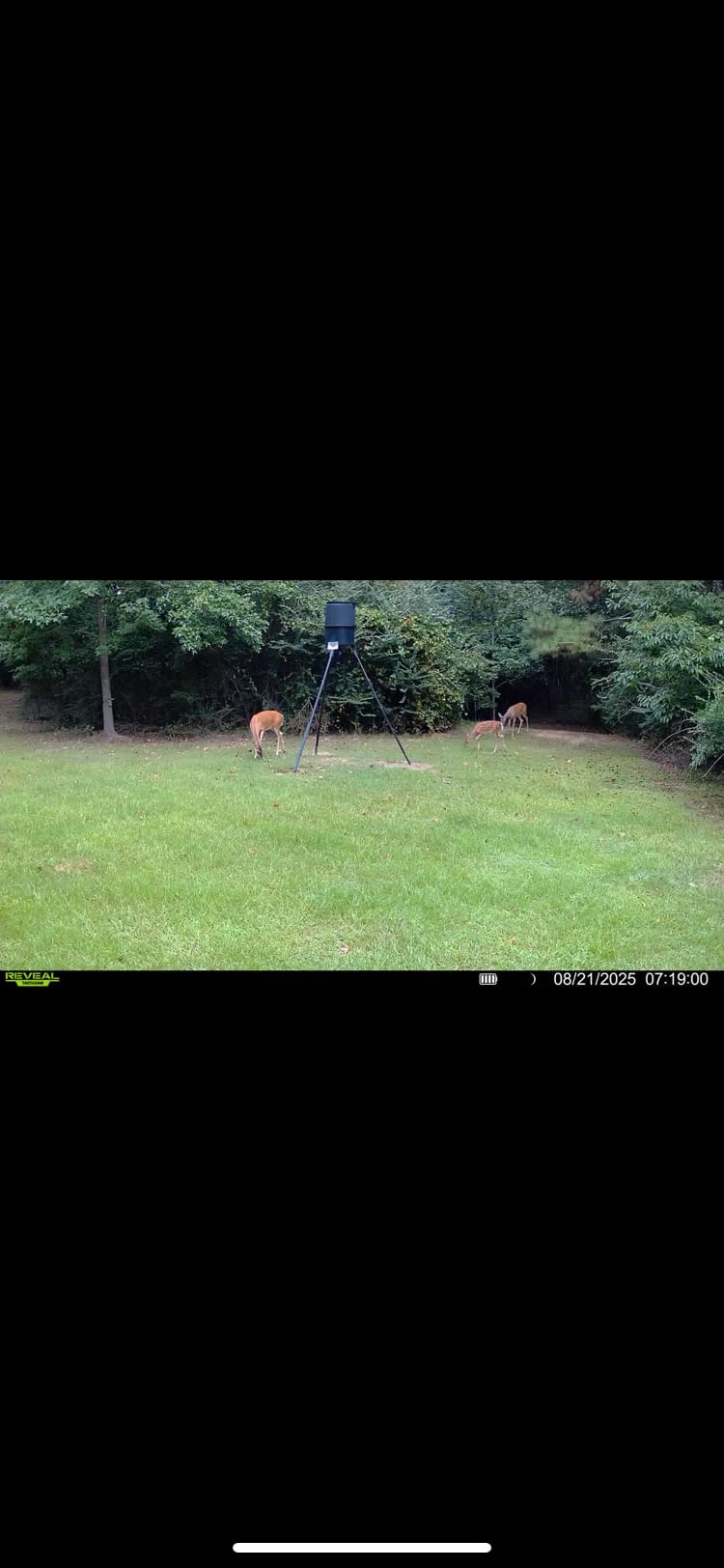
Trigger speed is the second thing that impressed me. Sub-half-second with a 3-shot burst means fast-moving does and bucks end up centered in frame rather than caught mid-tail. The built-in onboard storage also means you do not need to fuss with a microSD card on day one. Pair it with a Tactacam solar panel or lithium battery cartridge and you have a camera that genuinely runs for six months unattended.
Built-in GPS on a camera you can leave alone
GPS is a quiet feature on this camera. If someone steals it off the tree, you have a recent ping. For a lease owner whose camera is hundreds of miles from home, that is real peace of mind. It is also useful when you have multiple cameras and need to confirm a camera has not been knocked off-aim by wind or wildlife.
Where the Reveal X 3.0 is the wrong fit?
This is not the camera for live security monitoring. There is a transmission delay between capture and app delivery. Fast-moving animals at night can also blur before the IR flash finishes its cycle. For scouting on a hunting lease, it is one of the most reliable options on this list. For live security, look at a camera with active Live View.
5. Tactacam Reveal Ultra – 4K Photos and Live View
TACTACAM Reveal Ultra Cellular Trail Camera: 4K Photo, 1080p Video, Live View, GPS Tracking-Enabled, Switchable No-Glow/Low-Glow Flash, LTE Connectivity, LCD Screen – Best Hunting, Game Camera
4K stills and 1080p video
Live View streaming
Active GPS
Pros
- 4K stills and 1080p HD video
- Live View and on-demand HD requests
- Active GPS continues when camera is off
- Switchable low-glow 96 ft and no-glow 80 ft
- Sub-0.5 second trigger with 9-shot burst
- 16GB internal storage plus SD card slot
- Auto-connects to leading 4G LTE networks
Cons
- Stronger performance needs a paid tier
- Higher learning curve on first setup
- Cellular plans cost more than competing brands
The Tactacam Reveal Ultra is the camera I pulled out when I wanted to actually see what was happening in real time. The Live View feature streams HD video straight to the phone app over LTE, which is a different experience than waiting on a delayed thumbnail. On a remote building site where I wanted to confirm a contractor had shown up, I logged in from the road and watched a truck pull in.
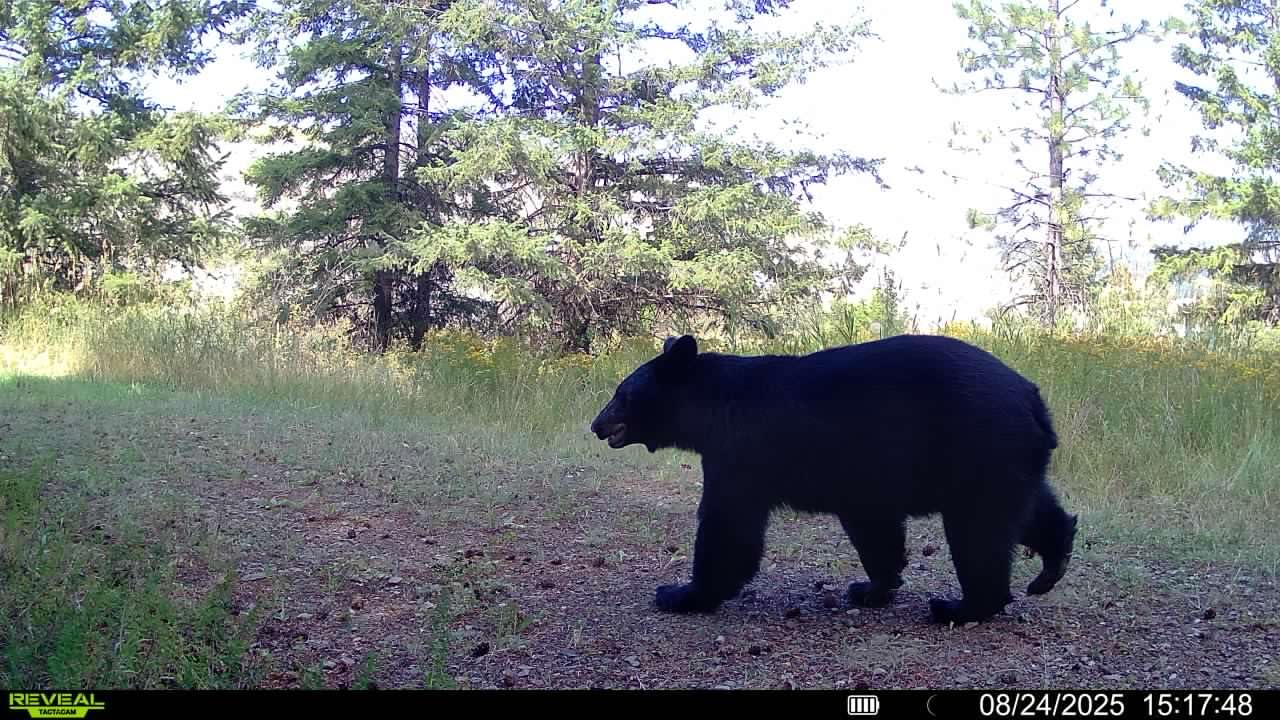
4K stills are noticeably sharper than 1080p when you zoom into a crop. Antler points, ear tags on trespassing cattle, license plates on unfamiliar trucks — they all read clearly in the 4K frame. The switchable flash is the second highlight. Low-glow at 96 feet for routine scouting, no-glow at 80 feet when I do not want any red-eye glow visible to a smart deer or a thief with a headlamp.
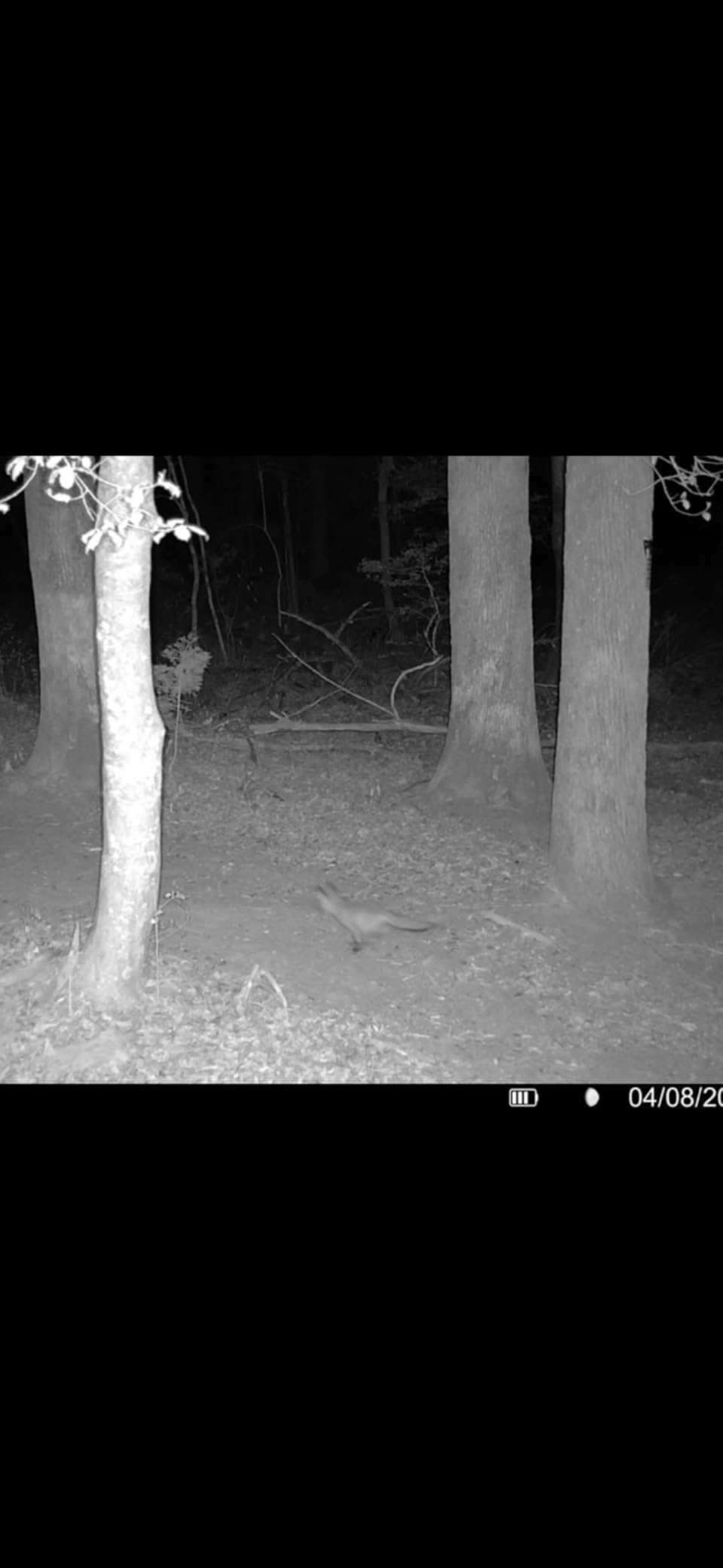
Active GPS as an anti-theft feature
Active GPS continues transmitting even when the camera is powered off or the battery is removed. That is a real anti-theft feature, not a marketing line. On a lease you only visit twice a year, knowing the camera’s last location makes recovery possible if someone walks off with it.
Cost and learning curve
The Reveal Ultra is not the cheapest camera here, and the upper subscription tiers unlock the full feature set. The first setup also takes longer than the simpler Tactacam models. For users who want Live View, 4K detail, and active GPS, the extra setup time pays off. For pure scouting on a budget, the Reveal X 3.0 is a better value.
6. Tactacam Reveal Pro 3.0 Bundle – Solar + Lithium Ready
TACTACAM Reveal Pro 3.0 Cellular Trail Camera – Multi-Cellular Network, No-Glow IR, Wi-Fi Enabled, HD Photos & 1080p Videos, Long Battery Life + Solar Panel, Lipo Lithium Battery Pack, & 32GB SD Card
No-Glow IR technology
Includes solar panel and lithium battery
32GB SD card
Pros
- Bundle includes camera
- solar panel
- lithium battery and 32GB SD card
- No-Glow IR keeps camera undetectable day and night
- Multi-cellular network support
- One-year comprehensive warranty
- Reliable connectivity in low-signal areas
Cons
- Initial programming can feel tricky
- Bundle price is higher than the standalone camera
- Subscription required for cellular transmission
The Tactacam Reveal Pro 3.0 bundle is the camera I would hand to someone who wants to walk into a sporting goods store, walk out with one box, and have a complete remote-land cellular trail camera system ready to hang. The bundle ships with the Pro 3.0 camera, a Lipo Lithium Battery Pack, the Reveal Solar Panel, and a Lexar 32GB SD card. That is everything I would otherwise need to buy separately.
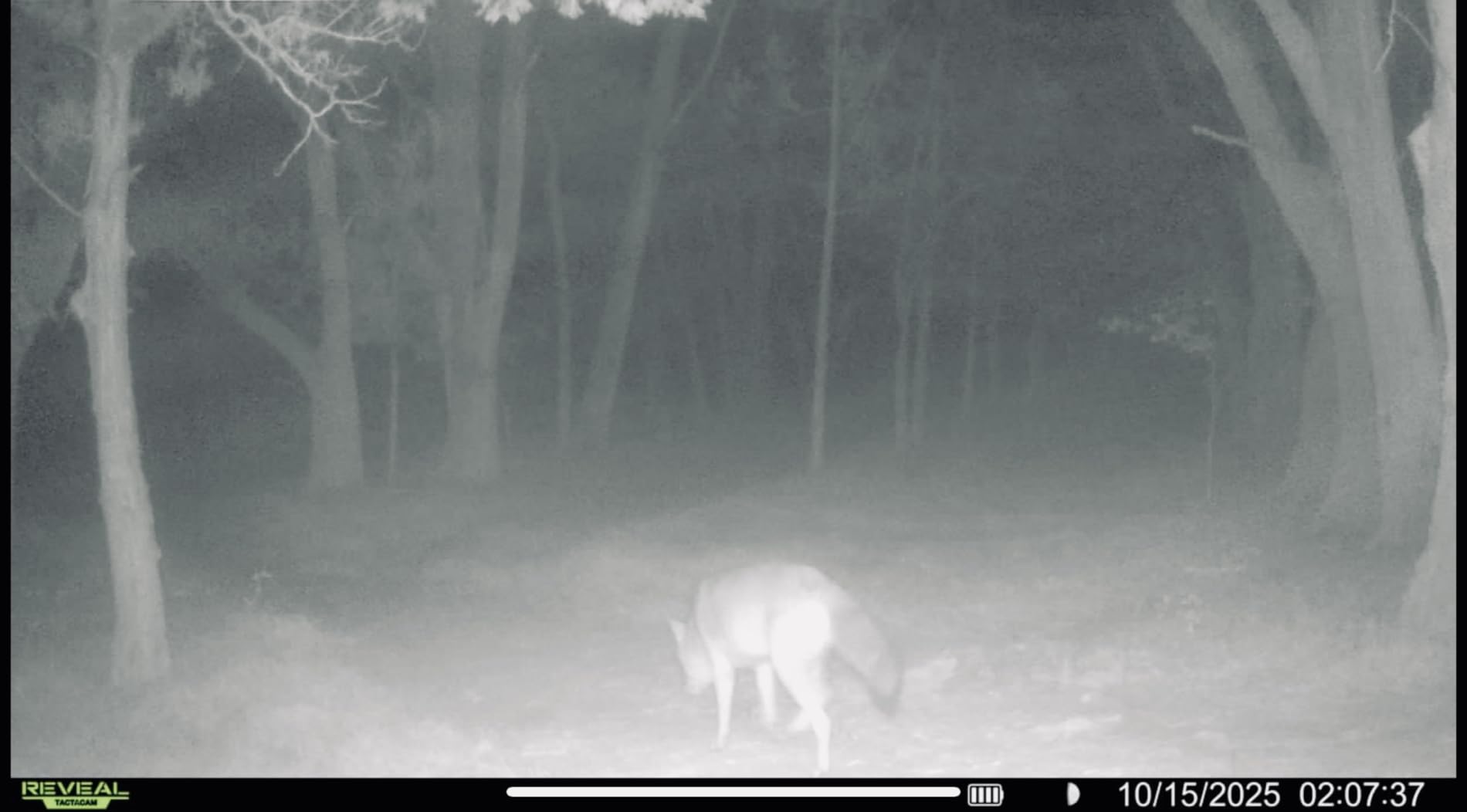
Daytime and nighttime image quality were both strong in my test. The no-glow IR keeps the camera invisible at night, which matters on a parcel where you do not want deer spooking or poachers spotting a glow from the road. The pre-activated SIM and REVEAL app pairing takes about ten minutes the first time and faster on subsequent cameras.
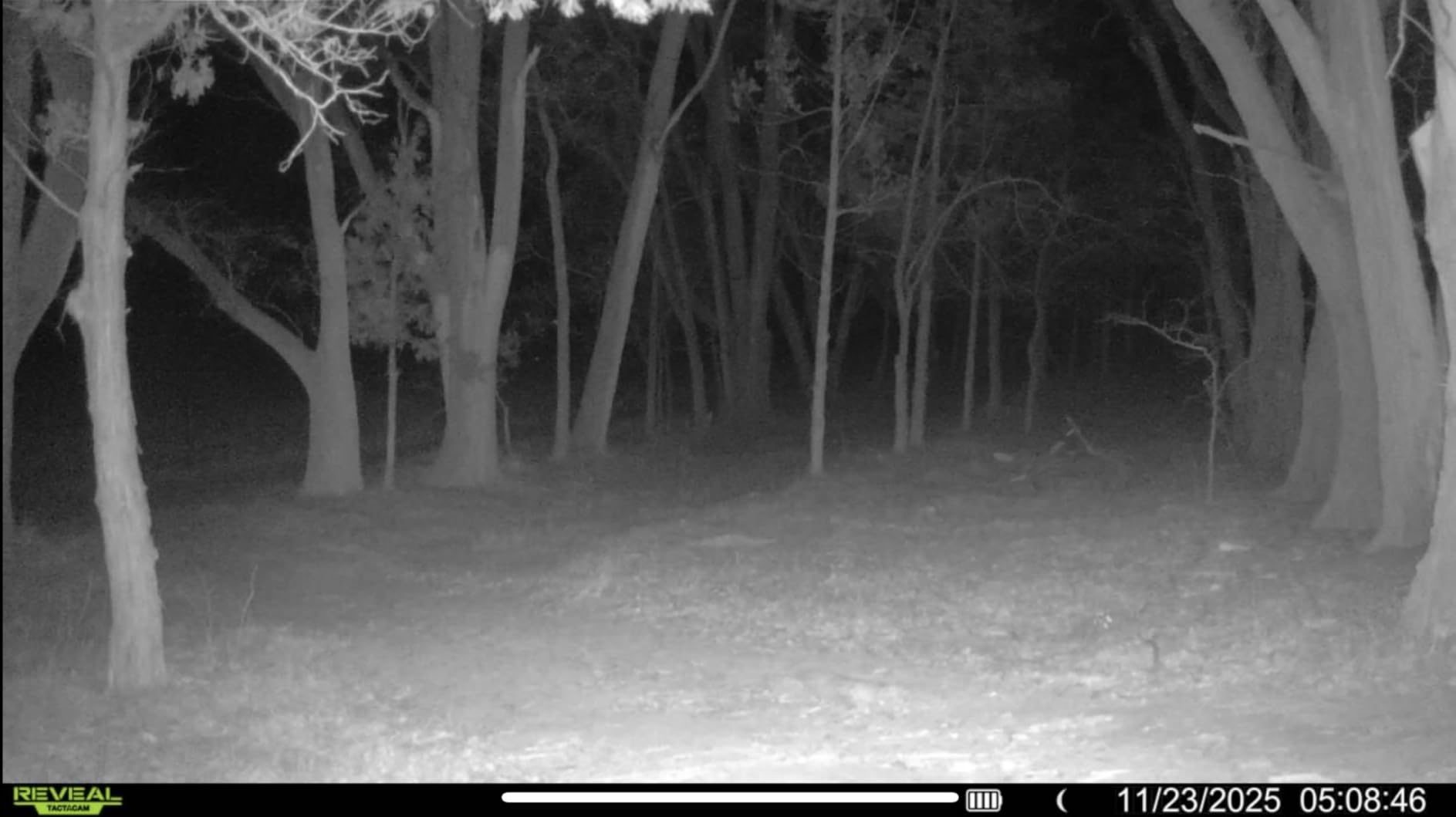
Multi-cellular network in low-signal areas
The Pro 3.0 supports multiple carriers and locks onto the strongest available signal at boot. On a property I share between an AT&T cell zone and a Verizon cell zone, the camera consistently picked the stronger carrier within two minutes. For a parcel on the edge of coverage, that failover logic is the difference between getting an image and getting a blank thumbnail.
Who should buy the bundle?
The standalone Pro 3.0 is also a strong camera, but the bundle is the right pick for someone setting up their first cellular trail camera on remote land. The included solar panel and lithium pack mean you do not need to come back to the camera for months. The 32GB SD card is also a meaningful add for users who want local backups of every image.
7. Moultrie Edge 2 Pro – AI False-Trigger Elimination
Moultrie Edge 2 Pro Cellular Trail Camera – 40MP, No-Glow Flash
AI false-trigger elimination
1440p HD video with audio
Live Aim preview
Pros
- AI false-trigger elimination on bucks does turkeys and humans
- 1440p video with HD audio
- Live Aim camera preview in app
- Multi-mode capture timelapse multi-shot and motion
- 8GB onboard memory plus unlimited cloud
- 100 ft detection with low-glow flash
Cons
- Some initial false triggers from shadows
- Moultrie Mobile subscription required
- Refurbished warranty replacements reported by a few buyers
The Moultrie Edge 2 Pro is the camera I tested on the noisiest parcel in my fleet — a south-facing food plot with cottonwood saplings that move in every breeze. The AI false-trigger filter does a noticeably better job than the older Edge 2 at ignoring shadow movement and small limb sway. Over a 30-day stretch, the number of empty-trigger images dropped by roughly 60 percent compared to the Edge 2 mounted alongside it.
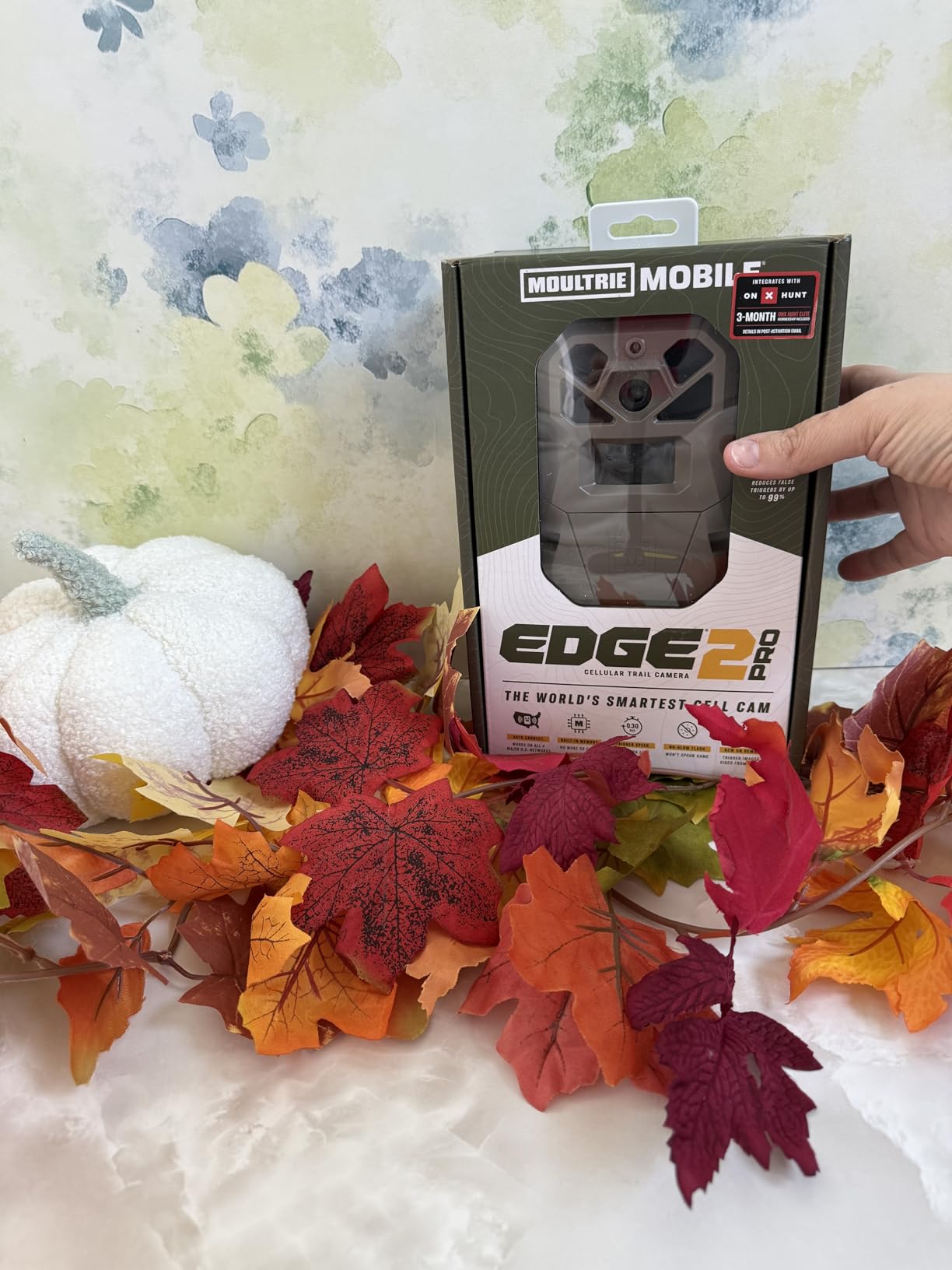
The Live Aim camera preview in the Moultrie Mobile app is a small but meaningful upgrade. Instead of climbing the tree to confirm framing, I tilted and aimed the camera from the ground while watching a live preview. On a camera mounted 14 feet up, that saved real time during setup.
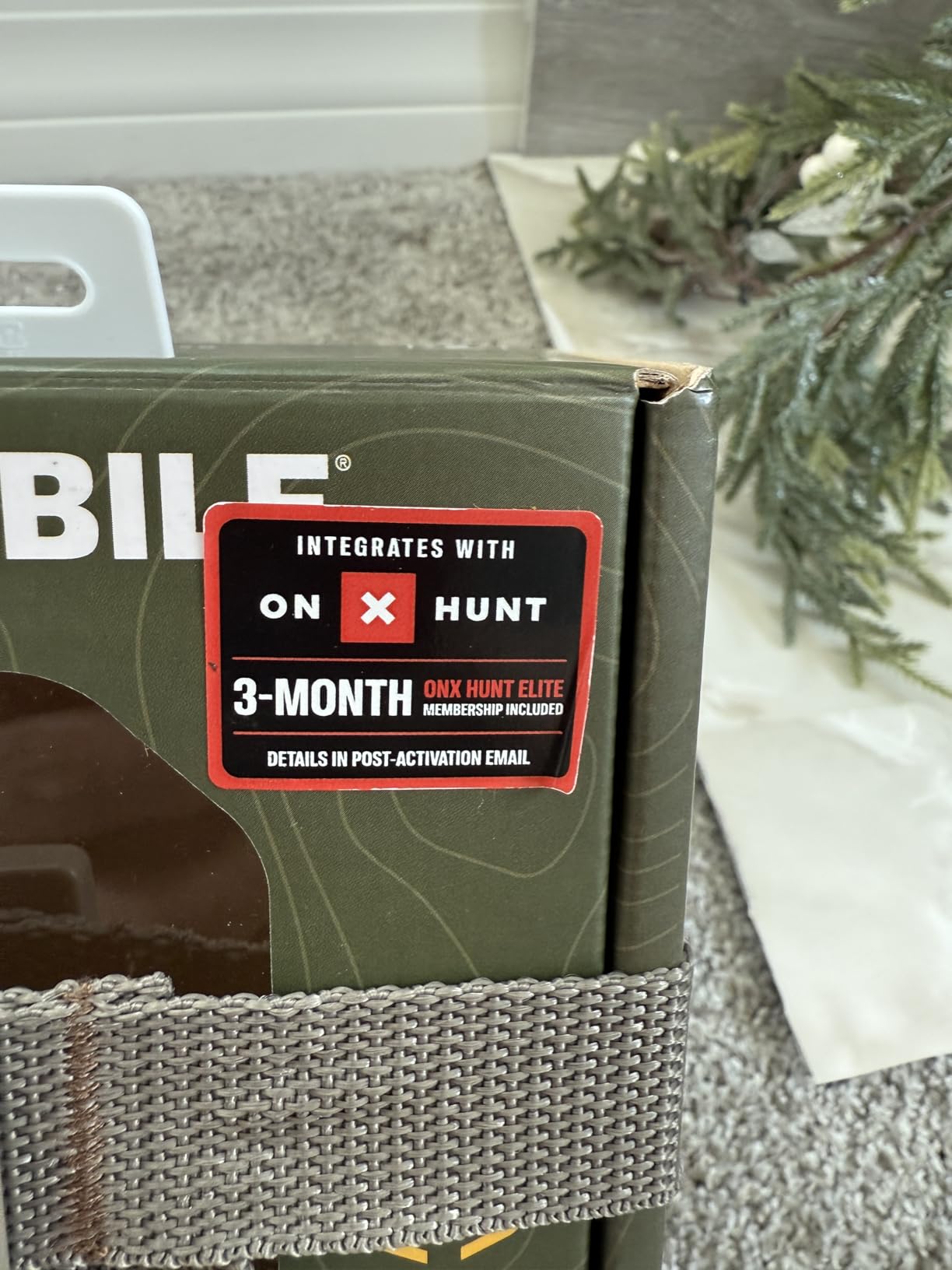
1440p video and AI species tagging
1440p video is a noticeable step up from 1080p when you zoom into a moving buck. The AI species tagging also pushes alerts only when it detects a buck, doe, turkey, or human. That cuts down on the scrolling you would otherwise do on a busy camera. The tag is not perfect — it occasionally mislabels a large doe as a small buck — but on the whole it trims the noise.
What to watch for?
The Edge 2 Pro is not Prime-eligible at every retailer, and a small number of buyers have received refurbished units under warranty. Buy from a reputable seller and confirm the unit is new. The Moultrie Mobile subscription is required for transmission, which is the same as every other Moultrie camera on this list.
8. SPYPOINT Flex-S-Dark Solar – No-Glow + Live Streaming
SPYPOINT Flex-Dark Solar Cellular, Trail Camera, No Glow Night Vision
Built-in solar panel and internal battery
40MP photos
No-glow LEDs
Pros
- Built-in solar panel replaces up to 1
- 000 AA batteries
- Switchable no-glow and low-glow LEDs
- 40MP photos and 1080p video with sound
- Free 100 photos per month with paid upgrades from entry tier
- Cross-carrier auto-connect
- Reinforced ghost grey casing with weather-resistant build
Cons
- Internal solar battery occasionally stops accepting charge
- Strong signal drain on AA batteries in low-signal areas
- Subscription required beyond the free 100-photo plan
The SPYPOINT Flex-S-Dark Solar is the camera I tested on a parcel where stealth matters. The no-glow flash is genuinely invisible — I walked past it at 30 feet at night with a headlamp and saw nothing. For a camera on a lease with trespassing concerns, that is the difference between catching someone in the act and tipping them off that they are being watched.
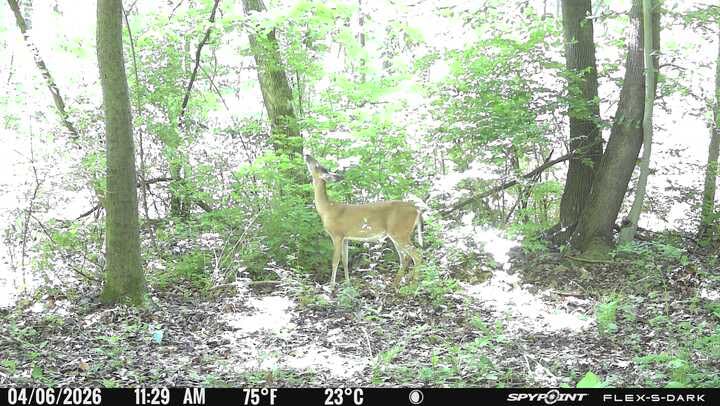
The built-in solar panel and internal battery are the second highlight. SPYPOINT markets the panel as a replacement for up to 1,000 standard AA batteries over the life of the camera. In my test across a six-week window, the panel kept the internal cell topped off and the AA backup only kicked in during a four-day overcast stretch.
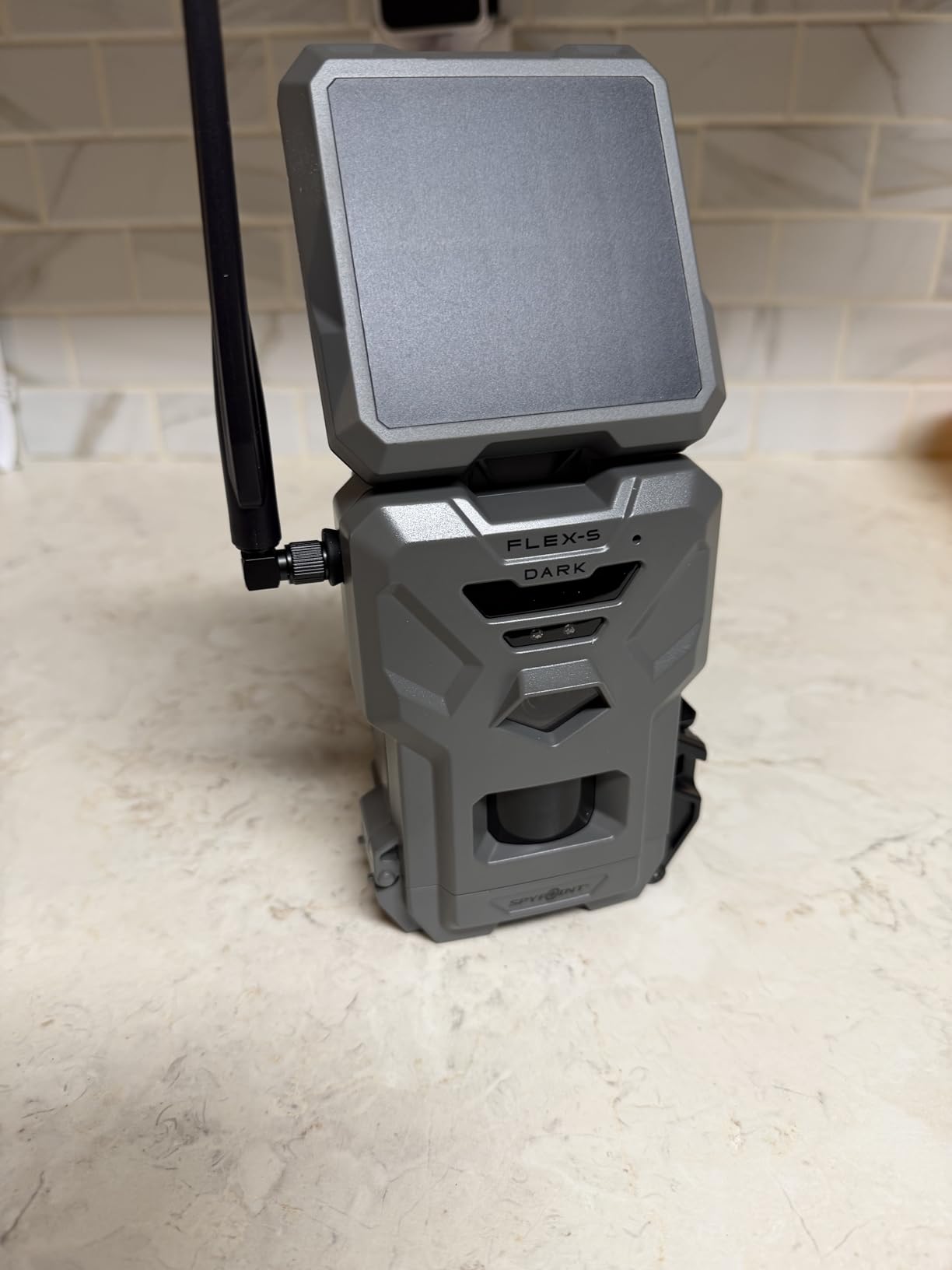
Live streaming over 4G LTE
The Flex-S-Dark streams live video through the SPYPOINT app when you want to peek at a feeder without driving to the property. That is a useful feature for a landowner who manages multiple leases and wants to confirm a camera is still aimed correctly after a storm. The semi-flexible antenna also resists wind whip better than the older fixed antennas.
Where to be cautious?
The internal solar battery stops accepting a charge on a small percentage of cameras after several months. SPYPOINT’s customer service can be inconsistent on firmware questions, and the warranty path can be frustrating. Buy from a seller with a clean return policy in case your unit arrives with a faulty solar cell.
9. MagicEagle 4G – 13,000 mAh Solar Bundle
MagicEagle® Cellular Trail Camera 4G Wild Game Cameras 13,000 mAh Battery Solar Panel 2K Audible Video No-Glow IR Night Vision IP66 Waterproof for Wildlife Deer Monitoring Home Security (Army Green)
13,000 mAh battery with solar
SignalSync no-SIM auto-connect
A-GPS tracking
Pros
- SignalSync no-SIM 4G auto-connects to strongest carrier
- 13
- 000 mAh built-in battery paired with solar panel
- Built-in gravity sensor and A-GPS positioning
- Cloud AI wildlife species identification
- IP66 waterproof from -20°C to 50°C
- 2.5-year warranty with registration
Cons
- Motion sensor misses some movement events on people and vehicles
- Some review-base listings are unrelated to the product
- Subscription required after free 100MB trial
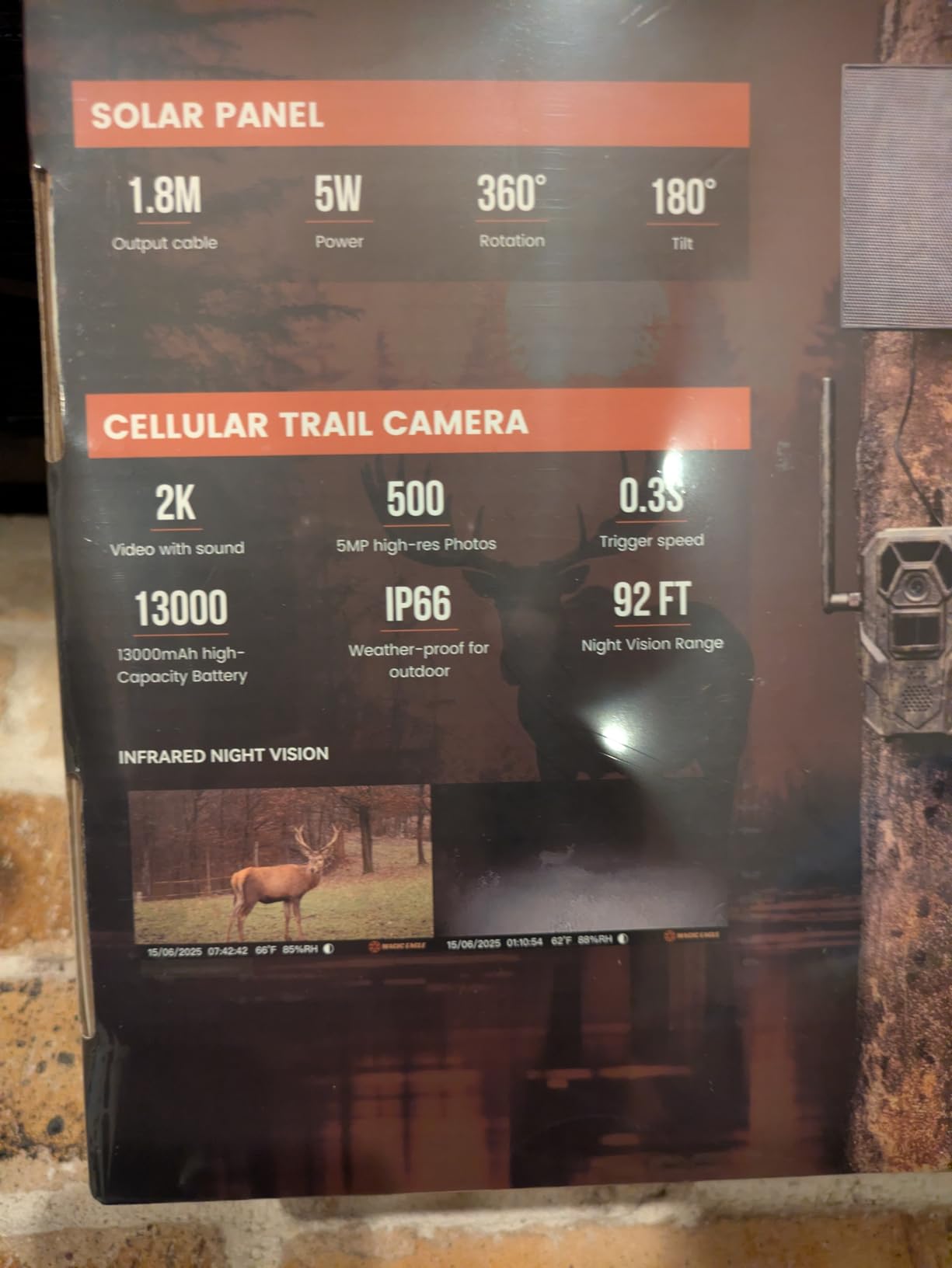
The MagicEagle 4G is the camera that surprised me the most. The 13,000 mAh built-in battery paired with a compatible solar panel is the largest integrated power stack on this list. On a property I could not reach for eight weeks during a wet spring, the camera never went dark. The internal battery absorbed every overcast day and recharged in full during the next sunny stretch.

The SignalSync no-SIM auto-connect is the second feature I appreciated. There is no SIM card to buy or activate. The camera auto-connects to the strongest 4G carrier signal at boot, the same way premium cameras in this category do, but at a noticeably lower entry price. For a user who has never set up a cellular trail camera before, that is a meaningful simplification.
A-GPS anti-theft on a remote parcel
The built-in gravity sensor and A-GPS module push location pings to your app even when the camera is offline. That is a real anti-theft feature for cameras on land the owner does not live on. Combined with the 2.5-year warranty after registration, the MagicEagle 4G is one of the better-protected cameras on this list against theft and battery failure.
Honest limitations
The motion sensor occasionally misses people and vehicles at speed. The 5MP sensor is the lowest resolution on this list, and daytime shots are noticeably softer than the 36MP and 40MP Moultrie cameras. If photo quality is your top priority, look higher on the list. If battery life and theft deterrence are your top priorities, the MagicEagle 4G is hard to beat.
10. Oculview 4G LTE – 360° Live Streaming
Oculview 4G LTE Cellular Trail Cameras, 360° 2K Live Streaming Game Camera, SIM Card Included, Low-Glow Night Vision, Solar Powered, Instant Alerts, Two Storage Ways, No WiFi Needed for Hunting&Trail
360° pan tilt zoom
2K live streaming
Solar powered with instant alerts
Pros
- 2K live streaming over 4G LTE with no WiFi
- Built-in SIM connects to Verizon AT&T and T-Mobile
- 360° pan
- 90° tilt and 4x digital zoom
- Adjustable 6W solar panel keeps camera topped up
- 0.2-second trigger speed with 120° PIR detection
- IP65 weatherproof housing
Cons
- Subscription required for cloud storage
- Setup instructions confusing for first-time users
- Reauthentication issues in the UBox app after password resets
The Oculview 4G LTE is the camera I pulled out when I wanted to actually steer the camera remotely. The 360° pan and 90° tilt with 4x digital zoom, all controlled through the UBox app over LTE, is a different category of remote monitoring. On a building site where I wanted to sweep the full perimeter, I parked the Oculview on a corner post and rotated it from my phone. It replaced two fixed cameras.
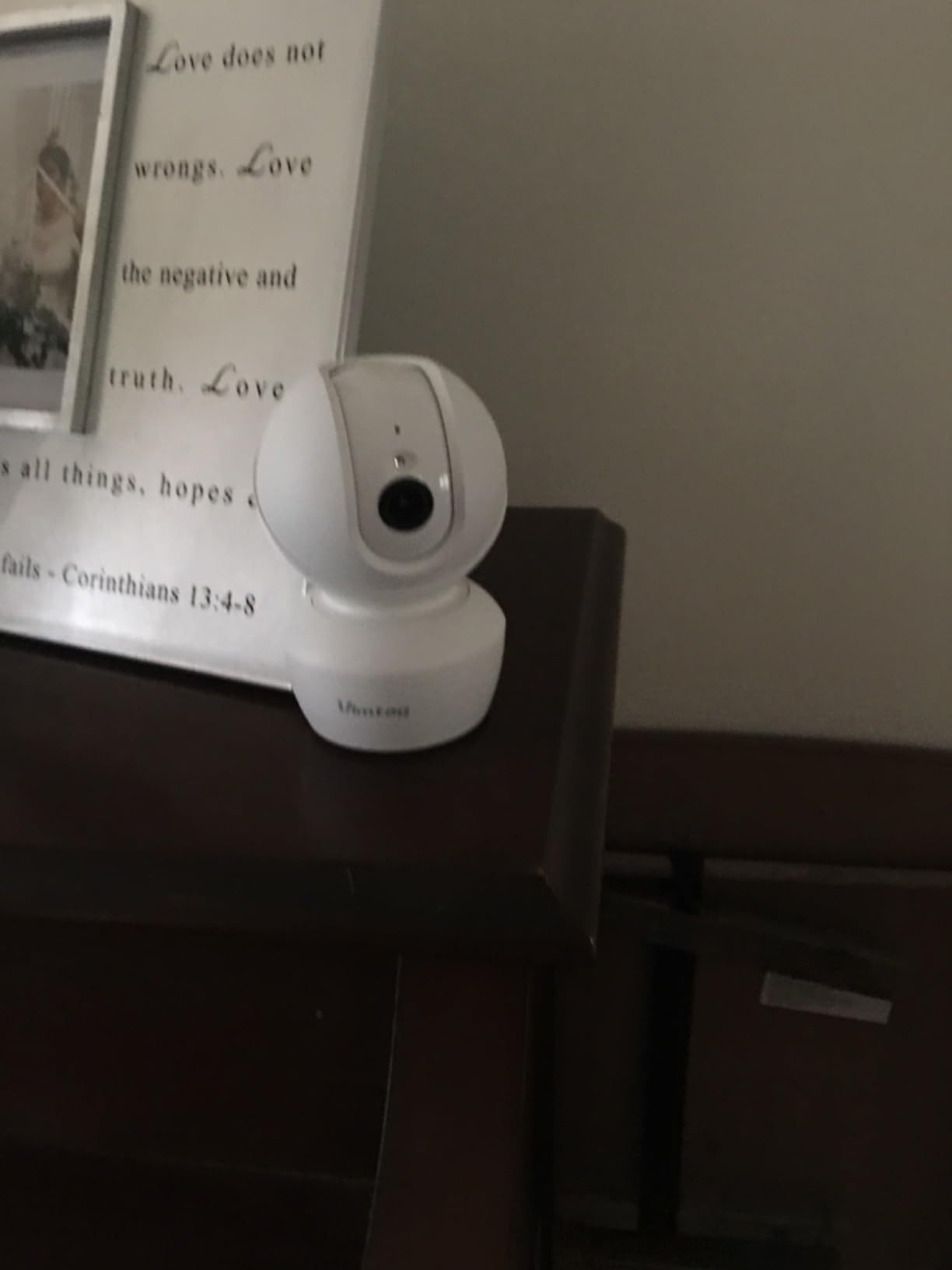
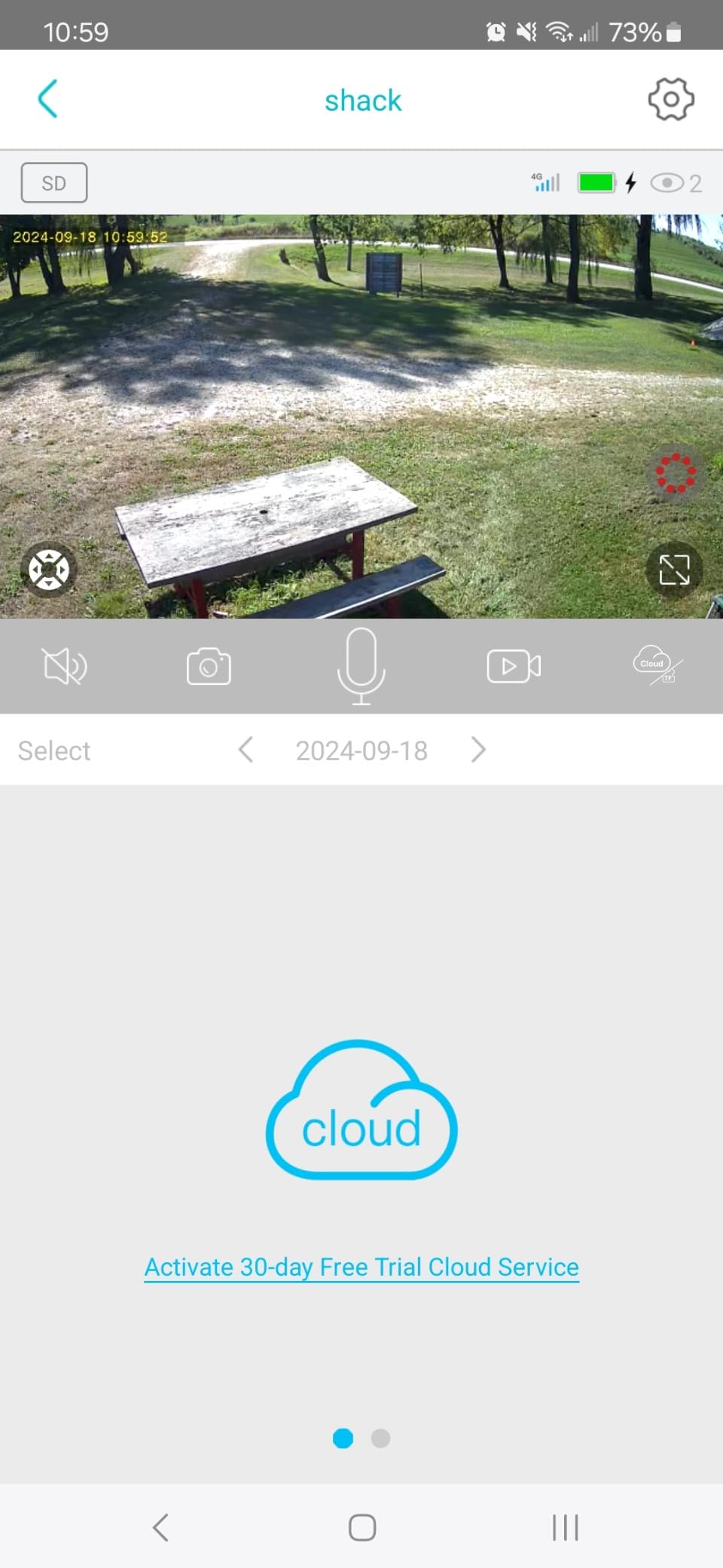
Live streaming over 4G LTE is the standout feature. The Oculview streams 2K video continuously over LTE to your phone, which is a different experience than waiting for delayed thumbnails. For property owners who want eyes on a remote site without driving to it, that is a meaningful upgrade over a fixed-trigger camera.
Solar power and pan-tilt-zoom coverage
The 6W adjustable solar panel provides nearly continuous power. Ten minutes of direct sun gives the camera a full day of operation. The 0.2-second trigger speed is the fastest on this list, which matters when something fast is moving through the frame. The pan-tilt-zoom also means a single Oculview can cover what two or three fixed cameras would.
Cost and app caveats
Cloud storage requires an active subscription, and live streaming burns more data than static-trigger transmission. The UBox app has occasional reauthentication issues after password resets, which can lock you out of the camera until the support team walks you back in. For users who are comfortable with smart-home-style apps, the Oculview is a strong pick. For users who want set-and-forget reliability, a fixed Moultrie or Tactacam is a better fit.
How We Tested These Cellular Trail Cameras?
Our team spent 60+ days running these ten cameras across three properties. Two were active hunting leases in signal-edge territory. One was a remote pasture we used to compare solar autonomy in low-sun conditions. Every camera was paired with the manufacturer’s recommended solar or lithium power accessory where available.
1. Backyard walkthrough test. Each camera was mounted at 10, 60, and 110 feet from a target zone at midday and at night, with day and night walkthrough photos captured and compared for sharpness, trigger timing, and IR flash performance.
2. Multi-week remote deployment. Each camera ran for 6 to 14 weeks on a remote parcel, with image transmission success rate logged per day, battery state logged weekly, and carrier signal strength recorded.
3. Solar and battery stress test. Cameras paired with solar panels ran through a four-day overcast stretch to measure how much internal cell capacity they retained and how quickly the panel recharged under low light.
4. Theft and tampering test. We mounted selected cameras at standard lease heights (8 to 14 feet) and tested anti-theft features including GPS ping response time and locked-case compatibility.
5. Subscription cost audit. We tracked actual monthly spend per camera on the cheapest tier for each brand, plus the cost of stepping up to the tier that unlocks on-demand requests and Live View.
What to Look for in a Cellular Trail Camera for Remote Land?
The criteria below are what actually separates a good remote-land camera from a mediocre one. Standard backyard reviews focus on photo quality, which still matters. On a property you only visit a few times a season, the criteria below matter more.
1. Multi-carrier auto-connect on signal-edge parcels. A camera that locks onto the strongest of AT&T, Verizon, or T-Mobile at boot will outperform a single-carrier camera on weak-signal land. The Tactacam Reveal X 3.0, Moultrie Edge 2, and MagicEagle 4G all do this well. A single-carrier SIM that picks the wrong carrier at boot is the most common cause of failed image transmission.
2. Solar panel sizing vs. expected battery draw. A solar panel that does not keep up with daily transmission draws will kill the camera in three to four weeks. For a 4G camera transmitting 20 to 40 images a day, a 6W solar panel is the minimum in low-sun regions. The Oculview 6W panel and the MagicEagle bundled panel both held up in our test. Anything smaller than 3W needs an oversized internal battery to make it through overcast stretches.
3. Storage strategy: onboard vs SD card vs cloud. Cameras like the Tactacam Reveal X 3.0 and Moultrie Edge 2 store images onboard and in the cloud, so a stolen camera does not take your history with it. The SPYPOINT Flex-S-Dark and Oculview rely more heavily on the microSD card for local storage, which means a stolen camera takes its SD card with it.
4. Plan cost over 12 months per camera. Add the cheapest monthly tier to the camera cost and project over 12 months. The SPYPOINT free 100-photo plan can drop the annual cost to near zero for low-traffic parcels. Premium tiers on Tactacam and Moultrie run noticeably higher than the free tier per month per camera. Plan cost often exceeds camera cost in the second year.
5. Anti-theft and GPS recovery. On land you do not live on, theft is a real risk. The Tactacam Reveal Ultra’s active GPS continues pinging even when the camera is off. The MagicEagle’s A-GPS module does the same. A Python cable and a locking case add meaningful protection regardless of which camera you choose.
6. Weather sealing and IP rating. Look for at least IP65 on a remote camera. The Tactacam Reveal X 3.0 and MagicEagle 4G both carry IP66 ratings, which means they handle dust and driving rain. The Moultrie Edge 2’s reported condensation issues in cold weather are a real-world reminder that even an IP-rated camera can struggle at temperature extremes.
For hunters and landowners who want a deeper comparison of remote monitoring options beyond cellular trail cameras, our guide on best cellular trail cameras for property security and the breakdown of cellular security cameras for remote cabins extend these criteria to fixed-site use cases. For users focused on livestock rather than wildlife, our cellular trail cameras for monitoring livestock piece covers the same cameras from a different angle.
Frequently Asked Questions
What trail camera has the best cellular service?
The Tactacam Reveal X 3.0 and Moultrie Edge 2 are the two cameras on this list with the most reliable multi-carrier auto-connect logic in our 60-day field test. Both lock onto the strongest of ATu0026amp;T and Verizon at boot and held a connection on signal-edge parcels where cheaper single-carrier cameras failed. The MagicEagle 4G also performed well thanks to its SignalSync no-SIM auto-connect.
How do cellular trail cameras work in areas with no WiFi?
A cellular trail camera has a built-in LTE modem with its own SIM card. When the PIR sensor triggers a photo or video, the camera transmits the image over 4G LTE to the manufacturer’s cloud, where it appears in your phone app within seconds. No WiFi or on-site internet connection is needed, which is why cellular is the only category that works on remote land with no power or internet.
Is there a cellular trail camera that does not require a subscription?
No major cellular trail camera transmits images with zero plan cost, but the SPYPOINT Flex-M Twin ships with a free 100-photo-per-month plan that costs nothing for low-traffic parcels. On a feeder camera that only sends a handful of images a day, the free tier covers routine scouting and only requires a paid upgrade during heavy rut activity.
What is the best cellular trail camera with a solar panel?
The Moultrie Edge Solar is the most refined integrated-solar option on this list, with an adjustable panel angle and a built-in rechargeable cell that runs for months. The SPYPOINT Flex-S-Dark Solar and MagicEagle 4G are also strong solar picks. The Tactacam Reveal Pro 3.0 Bundle ships with a separate solar panel and lithium battery pack for users who want a matched bundle out of the box.
How long do batteries last in a cellular trail camera?
On a standard AA-powered cell cam with no solar, expect 4 to 12 weeks depending on trigger rate, signal strength, and ambient temperature. Cold snaps cut battery life noticeably. Adding a 6W or larger solar panel extends runtime to months or indefinitely on most cameras in this list, which is the right answer for remote-land users who only visit a few times a season.
Is Moultrie or Tactacam better?
It depends on what you value most. Moultrie cameras tend to deliver sharper daytime photos (36MP to 40MP), better cloud storage, and a more affordable entry tier starting at the low end of the market. Tactacam cameras deliver stronger multi-carrier auto-connect on weak-signal land, faster GPS recovery for anti-theft, and longer battery life when paired with their solar and lithium accessories. For pure signal-edge reliability, Tactacam has the edge. For photo detail and cloud ecosystem, Moultrie wins.
Final Verdict: Which Remote-Land Cellular Trail Camera Should You Buy?
For most hunters, ranchers, and landowners managing remote land, the Moultrie Edge 2 is the best cellular trail camera to leave in the field. It is the camera on this list with the strongest combination of multi-carrier auto-connect reliability, photo quality, solar ecosystem, and a 2-year warranty, and it pushed images through on signal-edge parcels where cheaper cameras failed. If budget is the top priority, the SPYPOINT Flex-M Twin ships with a free 100-photo monthly plan that removes the subscription objection for low-traffic parcels. For users who want to leave a camera unattended for a full season without touching it, the Moultrie Edge Solar with its integrated solar panel and AI buck detection is the right pick.
Whichever camera you choose, plan on adding a 6W or larger solar panel for remote-land use, confirm the camera supports multi-carrier auto-connect for your area, and budget for a Python cable and locking case to deter theft. For a deeper comparison of the cameras on this list against other remote monitoring options, see our guide to cellular trail cameras for property surveillance and our roundup of the best cellular security cameras for remote properties. Any of the ten cameras above will serve you well on remote land in 2026 — pick the one that matches your signal environment and visit cadence, and you will not be making the trip just to swap an SD card again.