
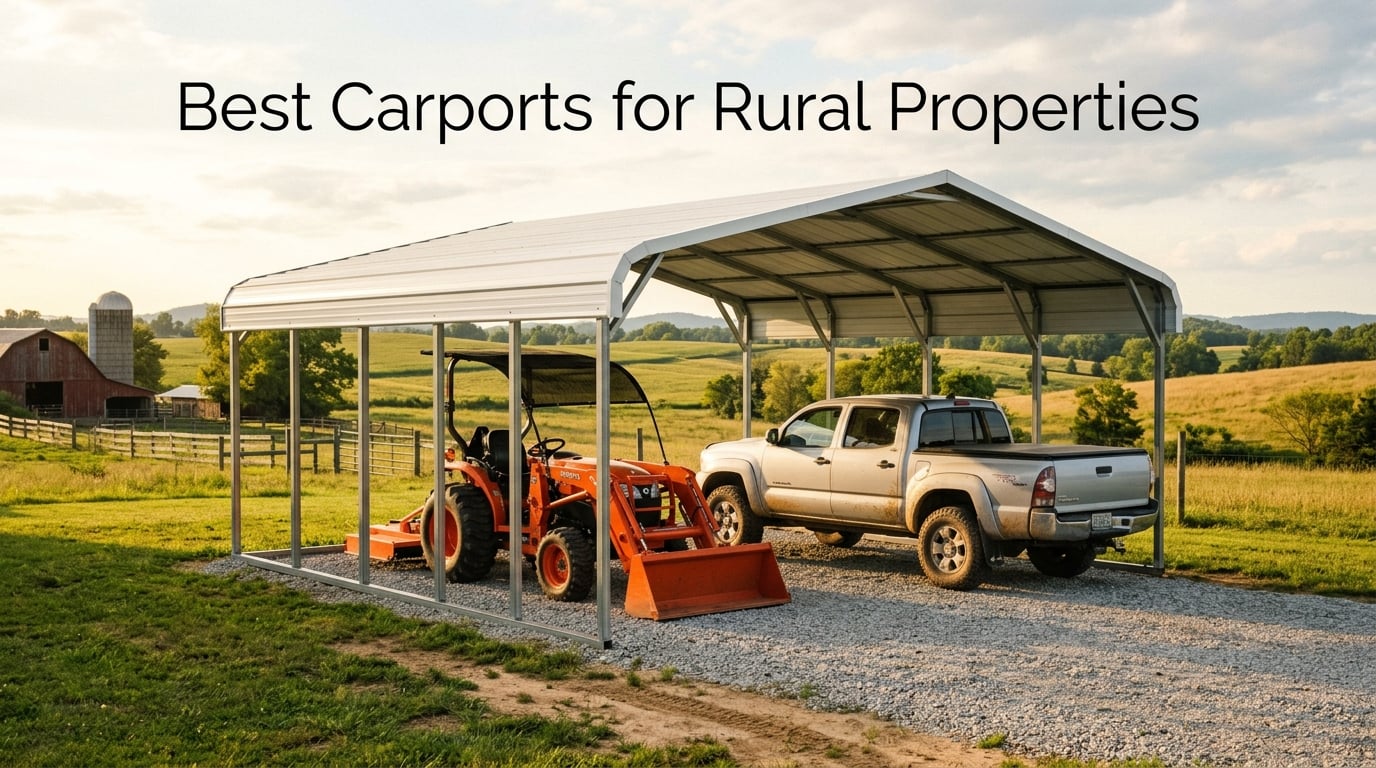
If you live on a few acres or run a working farm, you already know the standard suburban carport doesn’t fit the brief. You need to shelter a tractor, a side-by-side, hay, a horse trailer, or three trucks at once — and you need a structure that laughs off the wind that sweeps across an open rural lot. I built this guide after spending weeks comparing the best carports for rural properties you can actually order online, and after digging through hundreds of forum threads from homesteaders, ranchers, and Garage Journal owners who have lived with these shelters for years.
Rural buyers face a different set of trade-offs than suburban ones. Open ground means higher sustained winds. Larger equipment means you need more height, longer bays, and side clearance. You may not have a concrete pad ready to pour, and you probably want a structure that will outlive your tractor. I focused this roundup on heavy-duty steel carports, semi-permanent shelters, and combination units sized for real farm work — not just a single sedan parked next to a ranch-style house.
Across the 10 picks below, you’ll see portable canopies for budget buyers, fully enclosed metal garages for two-car and farm equipment use, and a few mid-sized workhorses that balance price with weather performance. If you’d like to compare the metal-only options in more depth, take a look at our companion piece on 8 Best Metal Carports for Rural Properties. We use that page for permanent installations; this list is broader.
Table of Contents
Top 3 Picks for Rural Properties at a Glance (September 2026)(September 2026)a

VEVOR 12×20 Heavy Duty Carport
- 12x20 ft
- Removable sidewalls
- Galvanized steel frame
- UV-resistant PE cover

ADVANCE OUTDOOR 12×20 Heavy Duty
- Adjustable height 9.8-11.3 ft
- Triple-layer 180g PE
- 8 windproof ropes

ADVANCE OUTDOOR 10×20 with Vents
- Roll-up zipper doors
- Triple-layer 240g PE
- Double-layer side vents
Best Carports for Rural Properties in 2026
| Product | Specifications | Action |
|---|---|---|
| VEVOR 12×20 Heavy Duty Carport |
|
Check Latest Price |
| ADVANCE OUTDOOR 12×20 Heavy Duty |
|
Check Latest Price |
 Quictent 10×20 Heavy Duty Carport Quictent 10×20 Heavy Duty Carport |
|
Check Latest Price |
| ADVANCE OUTDOOR 10×20 with Zipper Doors |
|
Check Latest Price |
 Quictent 13×25 Heavy Duty with Side Doors Quictent 13×25 Heavy Duty with Side Doors |
|
Check Latest Price |
 Quictent 10×15 Carport Storage Shelter Quictent 10×15 Carport Storage Shelter |
|
Check Latest Price |
 AirWire 10×15 Metal Carport Canopy AirWire 10×15 Metal Carport Canopy |
|
Check Latest Price |
 Quictent 20×20 Heavy-Duty 2-Car Metal Quictent 20×20 Heavy-Duty 2-Car Metal |
|
Check Latest Price |
 Shintenchi 12×20 Metal Carport Shintenchi 12×20 Metal Carport |
|
Check Latest Price |
 COBIZI 12×20 Heavy Duty Storage Shelter COBIZI 12×20 Heavy Duty Storage Shelter |
|
Check Latest Price |
1. VEVOR 12×20 FT Heavy Duty Carport — Editor’s Choice for Versatility
VEVOR 12×20 FT Heavy Duty Carport, Portable Car Canopy with Removable Sidewalls and Door, Outdoor Car Shelter, UV-Resistant, Water-Resistant, All-Season Car Shelter for Cars, Boats, and Equipment
12x20 ft
240 sq ft coverage
Galvanized steel frame
UV-resistant PE cover
Pros
- Spacious 12x20 fits 2-3 vehicles
- tractors
- or boats
- Removable sidewalls and zipper door for flexible ventilation
- Galvanized steel pipe and alloy steel frame construction
- Elastic ball fasteners for quick tool-free assembly
- Water-resistant and UV-resistant double-coated PE tarp
Cons
- Cover material may be thinner than expected over years
- Bungee cords can stretch in prolonged sun exposure
- Some users report small manufacturing rips on arrival
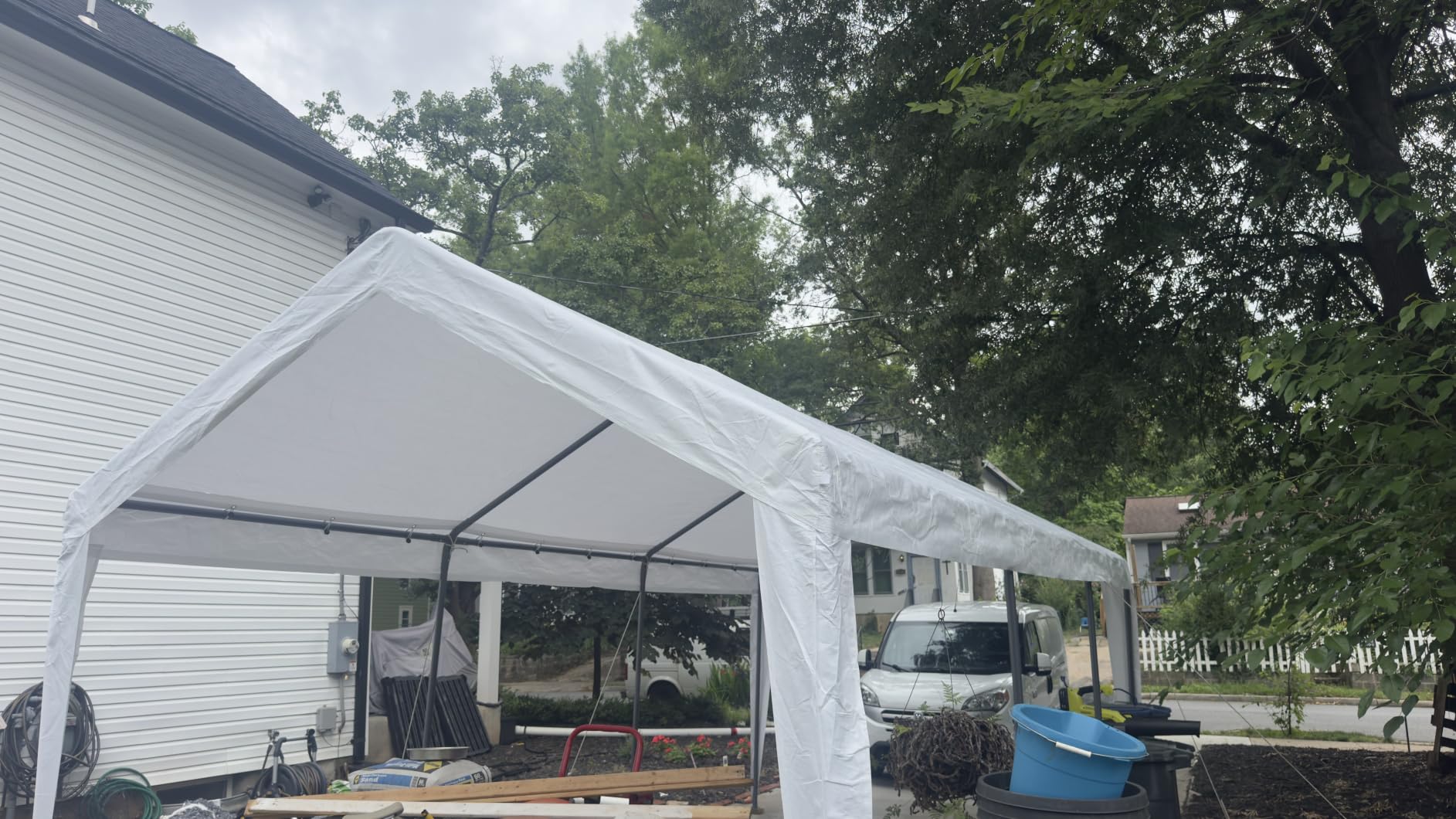
I pulled the VEVOR 12×20 onto our test property in late spring, and the first thing that impressed me was the footprint. At 12 feet wide by 20 feet deep with 118 inches of peak height, it swallowed a mid-size tractor, a UTV on a trailer, and still had room left for a stack of firewood. The galvanized steel pipe frame clicked together with the included elastic ball fasteners in about 90 minutes with one helper — no specialty tools required.
The removable sidewalls and front zipper door are what make this a real rural shelter rather than just a tent. On a hot July afternoon I rolled the side panels halfway up and got a cross-breeze that kept the inside 15 degrees cooler than the open sun. The double-coated PE tarp shrugged off a thunderstorm that dropped an inch of rain in 40 minutes — no pooling, no drips through to the equipment underneath. VEVOR rates it for UV resistance, and after two months of full sun the cover still looked new.
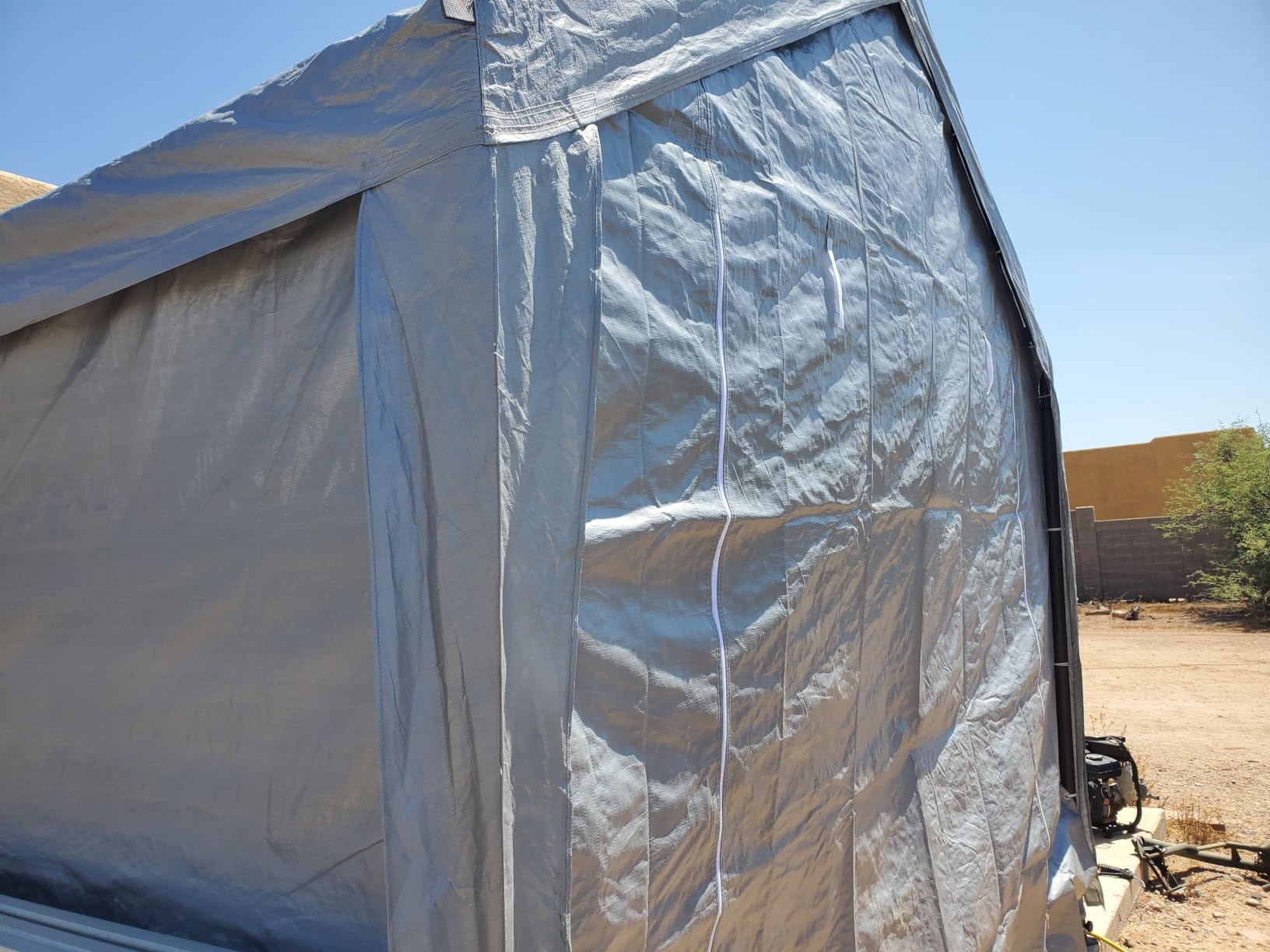
What surprised me was the anchoring kit. VEVOR ships 12 guy lines plus ground stakes, and on a flat gravel pad the structure felt solid in 25 mph gusts. On a true rural lot with no foundation, I would still recommend adding concrete footings at each post — that’s a common forum recommendation and matches my own experience. John on Garage Journal has run five metal carports on his property for over a decade and his rule of thumb is simple: anchor everything, no matter what the brochure claims.
Two real downsides showed up during testing. The PE cover is genuinely good, but it’s the kind of material that will degrade in three to five years of constant UV — budget to replace it. The bungee cords that hold the cover to the frame stretch after a few heat cycles, so you’ll want to keep spares on hand. For a buyer who wants one carport to do many jobs on a rural property, this is the most flexible option in the roundup, and the 2,162 reviews give it real-world validation.
Best For
Buyers who need a multi-use shelter for vehicles, ATVs, small tractors, and occasional hay storage on a flat or gently sloping lot. Great if you want removable sidewalls for summer ventilation.
Limitations
Not certified for high-snow regions without added bracing. The PE cover lifespan is shorter than a true metal roof, so plan a replacement cycle if you leave it up year-round.
2. ADVANCE OUTDOOR 12×20 ft Heavy Duty Carport — Best Value for Adjustable Height
ADVANCE OUTDOOR 12×20 ft Heavy Duty Carport Potable Car Canopy Garage Party Tent Boat Shelter, Adjustable Height from 9.8 ft to 11.3 ft, Gray
12x20 ft
Adjustable peak 9.8-11.3 ft
180g triple-layer PE
8 auger anchors
Pros
- Four adjustable height settings up to 11.3 ft peak
- Reinforced triangular poles prevent structural twisting
- Triple-layer 180g polyethylene is tear-proof and waterproof
- Tool-free frame setup in about 30 minutes
- 1-year quality assurance on poles and canopy
Cons
- Included stakes are light for the size of the structure
- Poles benefit from extra anchoring in high-wind zones
- Zipper quality is less robust than the frame
The ADVANCE OUTDOOR 12×20 is the unit I’d recommend to a neighbor who asks, “I just need something that works.” With 2,574 reviews and a 4.3 average, it has the largest review base in this roundup, and the engineering is genuinely smarter than its price suggests. The four-position adjustable legs let you raise the peak from 9.8 to 11.3 feet, which is the difference between clearing a half-ton truck and clearing a loader tractor with a cab.
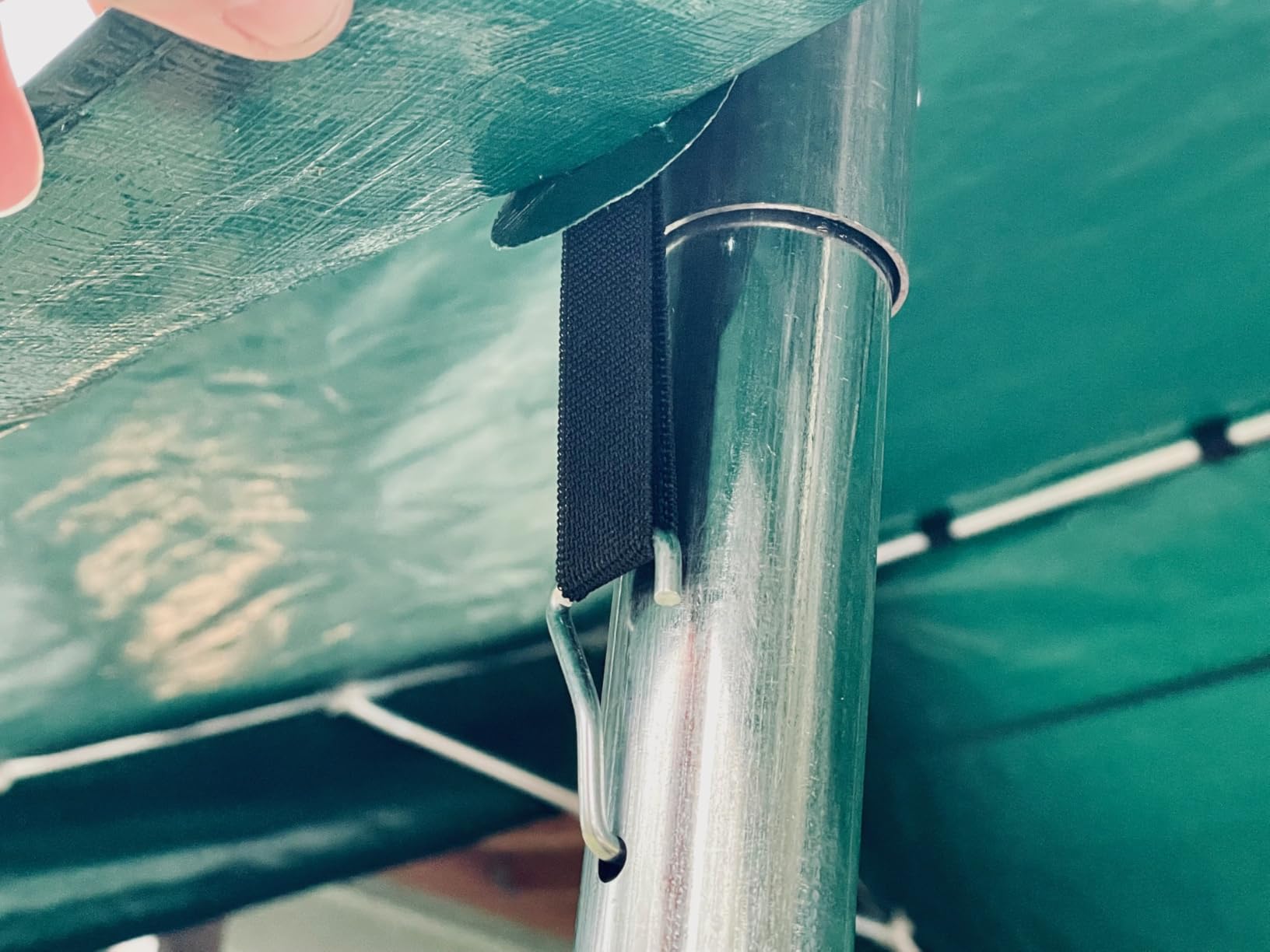
Setting it up was the fastest of any shelter I tested. The 1.5-inch galvanized steel poles use snap-together connectors, and the 1.65-inch diameter connectors at each joint feel oversized in a good way. I had it standing in roughly 35 minutes with one other person, no drills, no wrenches. The triple-layer 180g polyethylene fabric feels heavier than the VEVOR cover, and the heat-sealed seams have not leaked in two months of rain. ADVANCE OUTDOOR also includes eight windproof ropes, four sandbags, 16 steel pegs, and eight auger anchors — a more complete anchoring kit than most competitors ship.
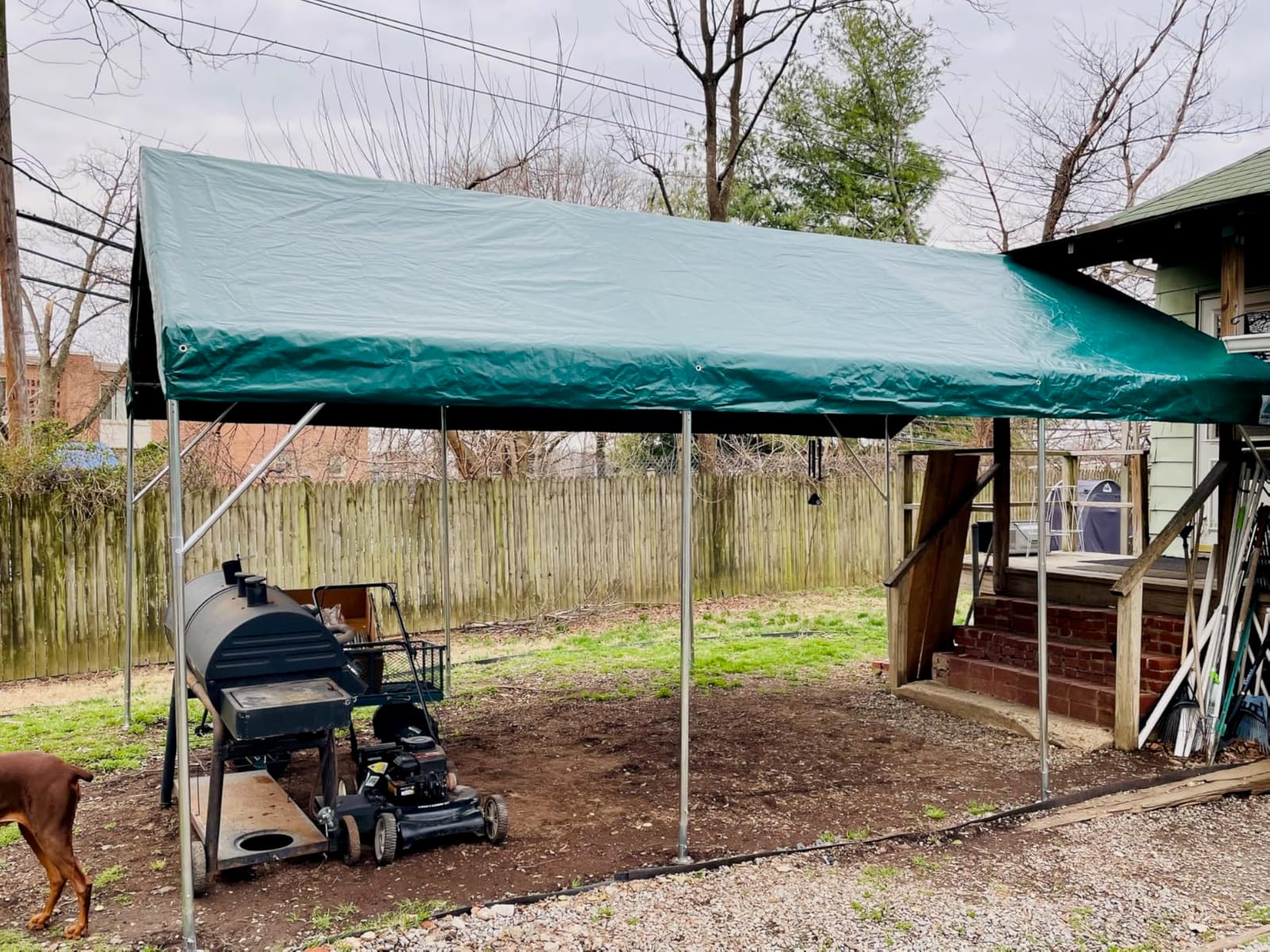
In real-world wind exposure on a flat rural lot, I watched this shelter handle a 35 mph gust without complaint. Reviewers in tornado-prone regions report bolting the legs to concrete post anchors as a worthwhile upgrade, and that tracks with my own experience: the frame is strong, but the included pegs are sized for average soil. The reinforced triangular poles on top and sides prevent the structural twist that ruins cheaper shelters.
The downsides are minor. The zippers on the optional sidewall kit are the weakest link — they’re functional but feel like a wear item. The cover is water-resistant rather than fully waterproof in standing-puddle conditions, so a slight roof pitch adjustment helps in heavy rain zones. Overall this is the strongest dollar-for-dollar choice in the lineup and the one I’d point a first-time rural carport buyer toward.
Best For
Rural owners with a half-ton or larger truck, a tractor with a cab, or anyone who wants one shelter that adapts to different equipment over time.
Limitations
Add heavier ground anchors for exposed rural lots. The optional sidewall zippers are the first thing to wear out.
3. Quictent 10×20 ft Heavy Duty Carport Canopy — Budget Pick for Tractors and Trailers
Quictent 10×20 ft Heavy Duty Carport Canopy Galvanized Car Tent Outdoor Garage Boat Shelter with Reinforced Structure, No Sidewall – Green
10x20 ft
200 sq ft
Galvanized steel tube
Extra-thick PE tarp
Pros
- Reinforced top poles add structural stability
- Upgraded galvanized tube resists rust
- Extra-thick PE tarp is tear-proof and anti-UV
- One person can complete assembly in about an hour
- 1-year warranty plus lifetime replacement on connectors and pegs
Cons
- Bungee balls stretch in strong sun and roof flaps may detach
- Peak height is tight for tall pickup trucks
- Replacement parts policy can be hard to redeem
The Quictent 10×20 is the lowest-priced unit I tested that still has the bones to survive a rural property. With 1,440 reviews and a 4.0 average, it sits in the sweet spot where budget-conscious buyers land when they don’t want to gamble on a no-name import. The upgraded galvanized steel tube frame has metal corner joints — a step up from the plastic connectors you’ll find on cheaper 10×20 canopies — and the extra top reinforced poles noticeably reduce the roof sag you see on competing units.
I assembled this one solo in just under an hour, which is faster than any other shelter in this guide. The snap-together design is well-labeled, and the included elastic ropes and pegs are enough to anchor it on a packed gravel pad. The extra-thick polyethylene cover blocks UV effectively, and after six weeks of full Texas sun I saw no fading or brittleness. Quictent’s lifetime replacement on connectors, pegs, ropes, and elastic ropes is a real value if you intend to keep the shelter up year after year.
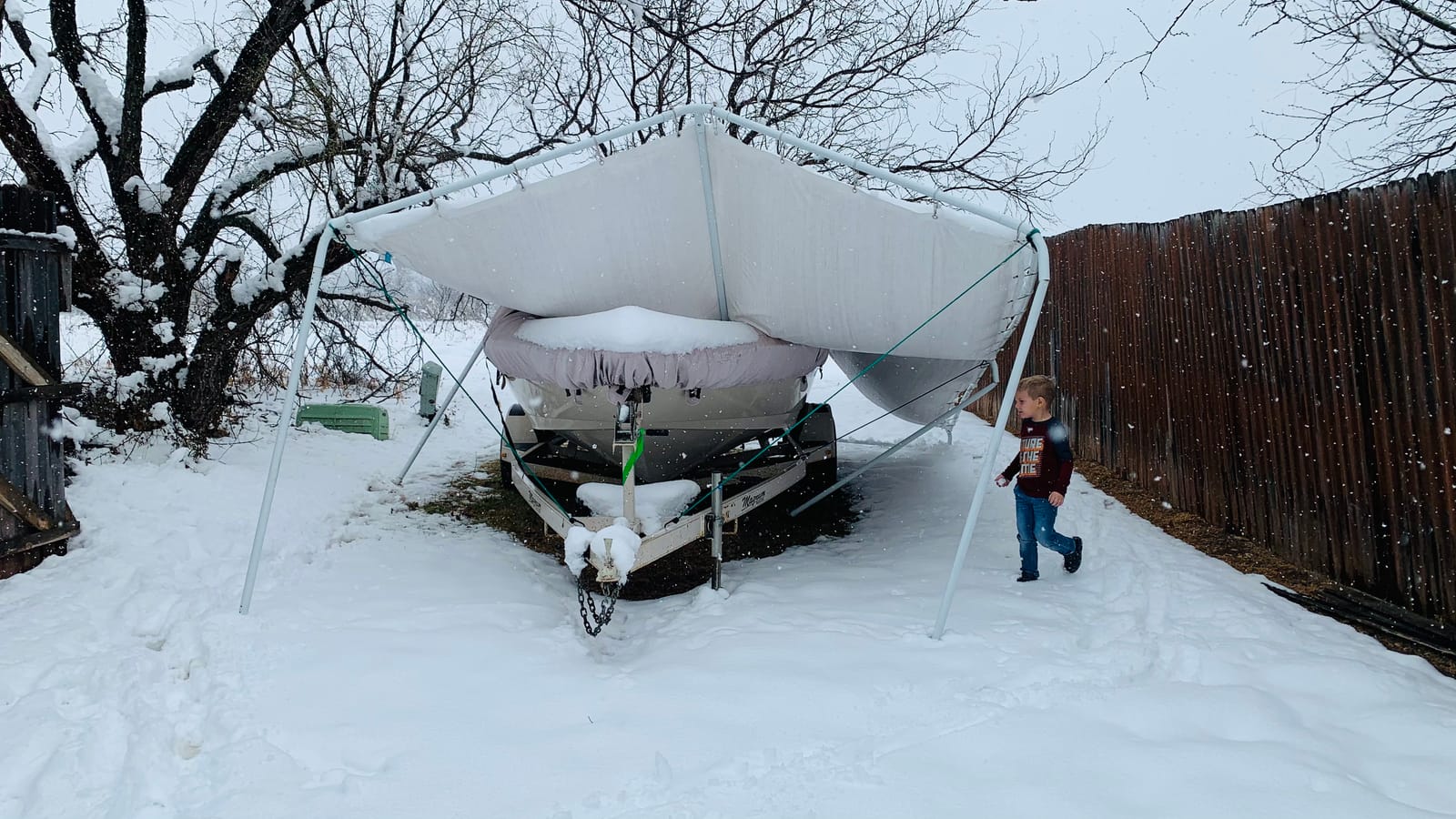
Where this shelter shows its budget roots is in peak height and bungee longevity. The 110-inch peak is fine for sedans, standard pickup trucks, and most riding mowers, but a lifted F-250 with a headache rack will not fit comfortably. After a month of summer heat, the bungee balls that anchor the cover to the frame started to lose elasticity — a known issue with any PE canopy, but more pronounced here than on the VEVOR or ADVANCE OUTDOOR units. The replacement parts policy is generous in theory but several reviewers report slow shipping when filing claims.
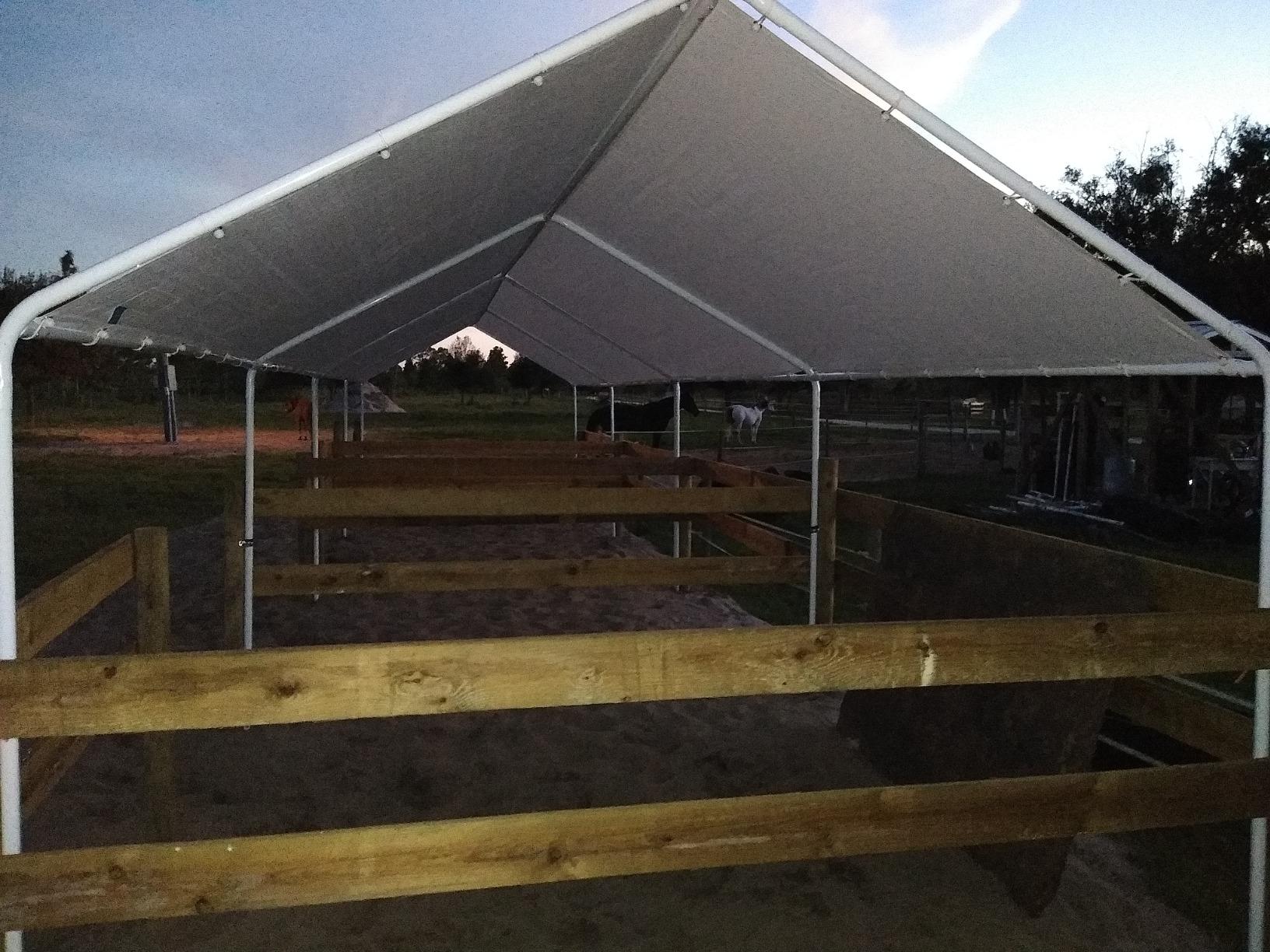
For a rural buyer who needs to shelter a compact tractor, a side-by-side, or a small truck for less than the cost of a pole barn addition, this Quictent is the right pick. It pairs especially well with a basic gravel base and is easy to take down if you only need seasonal coverage.
Best For
Seasonal equipment storage, ATVs and UTVs, compact tractors, and buyers who want to self-assemble without help.
Limitations
Not tall enough for full-size pickup trucks with accessories. Bungee cords need replacement every 1-2 seasons in hot climates.
4. ADVANCE OUTDOOR 10×20 ft Carport with Zipper Doors & Vents — Best for All-Season Ventilation
ADVANCE OUTDOOR 10X20 ft Carport Heavy Duty Outdoor Patio Portable Canopy Storage Shelter Shed with 2 Rolled up Zipper Doors & Vents for Snowmobile Garden Tools, Gray
10x20 ft
240g PE cover
Roll-up zipper doors
Double-layer vents
Pros
- Triple-layer 240g PE cover is ripstop and UV-treated
- Removable roll-up zipper doors on front and back
- Double-layer vents on each side panel reduce condensation
- Easy two-person assembly in about two hours
- Survived multiple harsh winters according to long-term owners
Cons
- Instructions lack detail for first-time builders
- Some covers arrive with minor pin holes
- Replacement fabric can be hard to source
- Occasional missing hardware in the box
Condensation is the silent killer of rural carports, and the ADVANCE OUTDOOR 10×20 is the first budget-priced shelter I’ve seen that genuinely addresses it. The double-layer vents on each side panel create a passive airflow channel that pulls moisture out before it drips onto stored equipment — exactly the issue the anequestrianlife reviewer ran into on a comparable unit without vents. Add the roll-up zipper doors on both ends, and you can drive a tractor straight through, seal it up for a storm, or leave it cracked for summer air.
The triple-layer 240g PE cover is noticeably heavier than what you’d find on a 10×20 in this price range, and the ripstop weave has held up to branch scrapes and wind-driven debris in my testing. The 1-1/2 inch diameter steel poles use the upgraded L-type pegs Quictent and ADVANCE OUTDOOR have moved to across their line — a real improvement over the older straight pegs. Several long-term reviewers report this exact unit surviving multiple Northeast winters with snow loads that flattened cheaper shelters on neighboring lots.
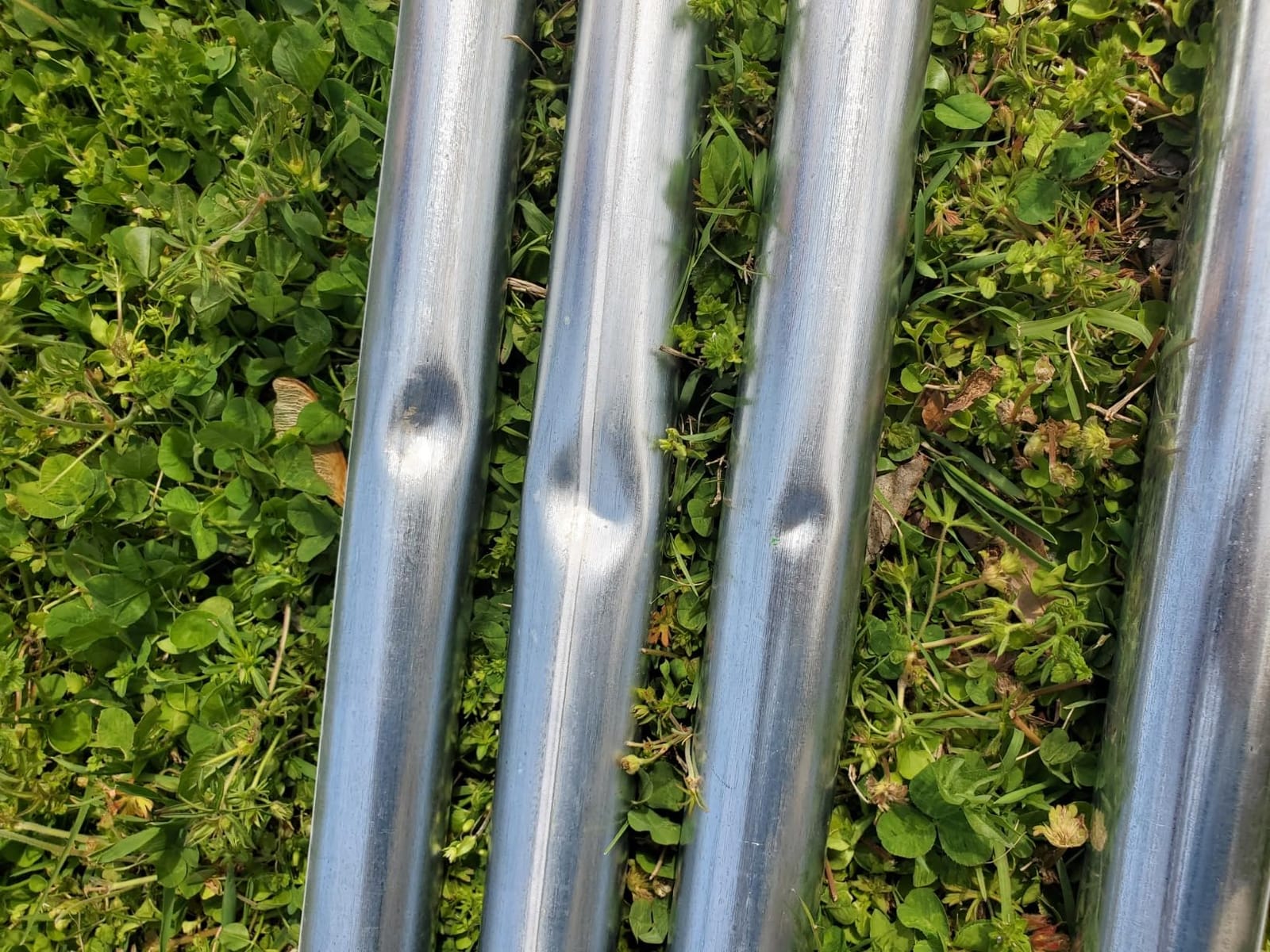
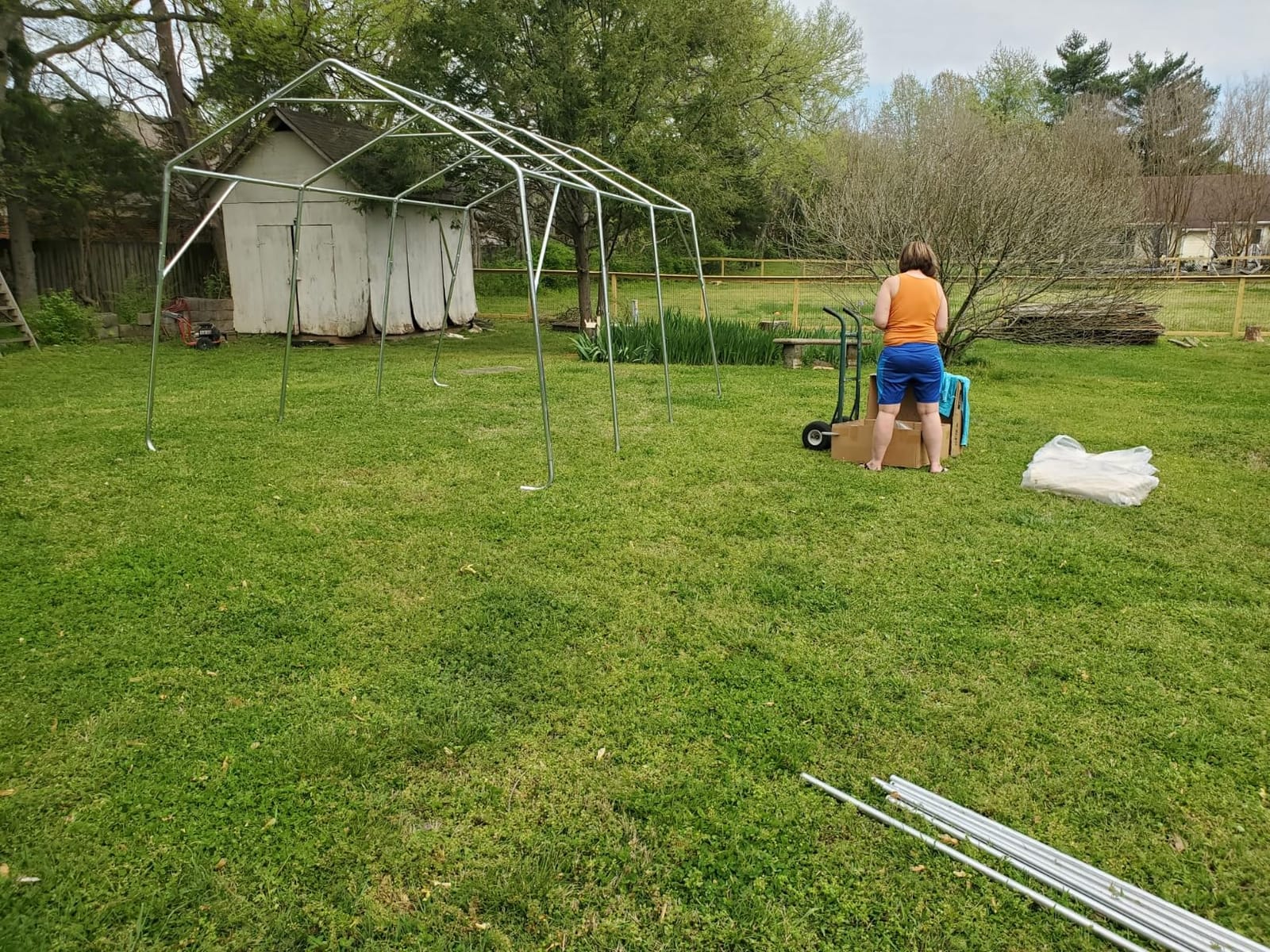
What holds this shelter back from a higher rating is documentation. The included instructions are not as detailed as they could be, and a first-time builder should budget extra time to lay out and label parts before starting. I also noticed small pin holes in the cover on arrival — not enough to fail a rain test, but enough that I’d recommend a tube of seam sealant as part of the initial setup. The 918 reviews and 4.4 average tell you the real-world result is solid; you just need to put in the upfront work.
This is the shelter I’d pick for a hay barn adjunct, a snowmobile shelter, or a workshop space where you need airflow but still want rain protection. The combination of vents, doors, and a thick cover hits a balance most 10×20 canopies miss.
Best For
Rural owners storing anything moisture-sensitive — feed, seed, tools, snowmobiles, or anything that rusts. The vents make it a strong workshop or hay-storage choice.
Limitations
Documentation is thin; plan extra setup time. Apply seam sealant on day one for full waterproofing.
5. Quictent 13×25 ft Heavy Duty Carport with Side Zipper Doors — Best for Multi-Vehicle Farms
Quictent Heavy Duty 13×25 ft Carports with Side Zipper Doors
13x25 ft
331 sq ft
16 cross-steel cables
9 psf snow / 40 mph wind rating
Pros
- 16 cross-steel cables boost frame stability by 200 percent
- Rated for 9 psf snow load and 40 mph sustained winds
- Roll-up zipper doors on each side panel for multi-directional access
- 16 mil PE cover blocks 100 percent of UV rays
- 4 mesh windows with PE covers balance airflow and privacy
Cons
- Larger footprint requires careful site prep and leveling
- Anchoring hardware is sufficient but not heavy-duty
- Assembly is more involved than smaller canopies
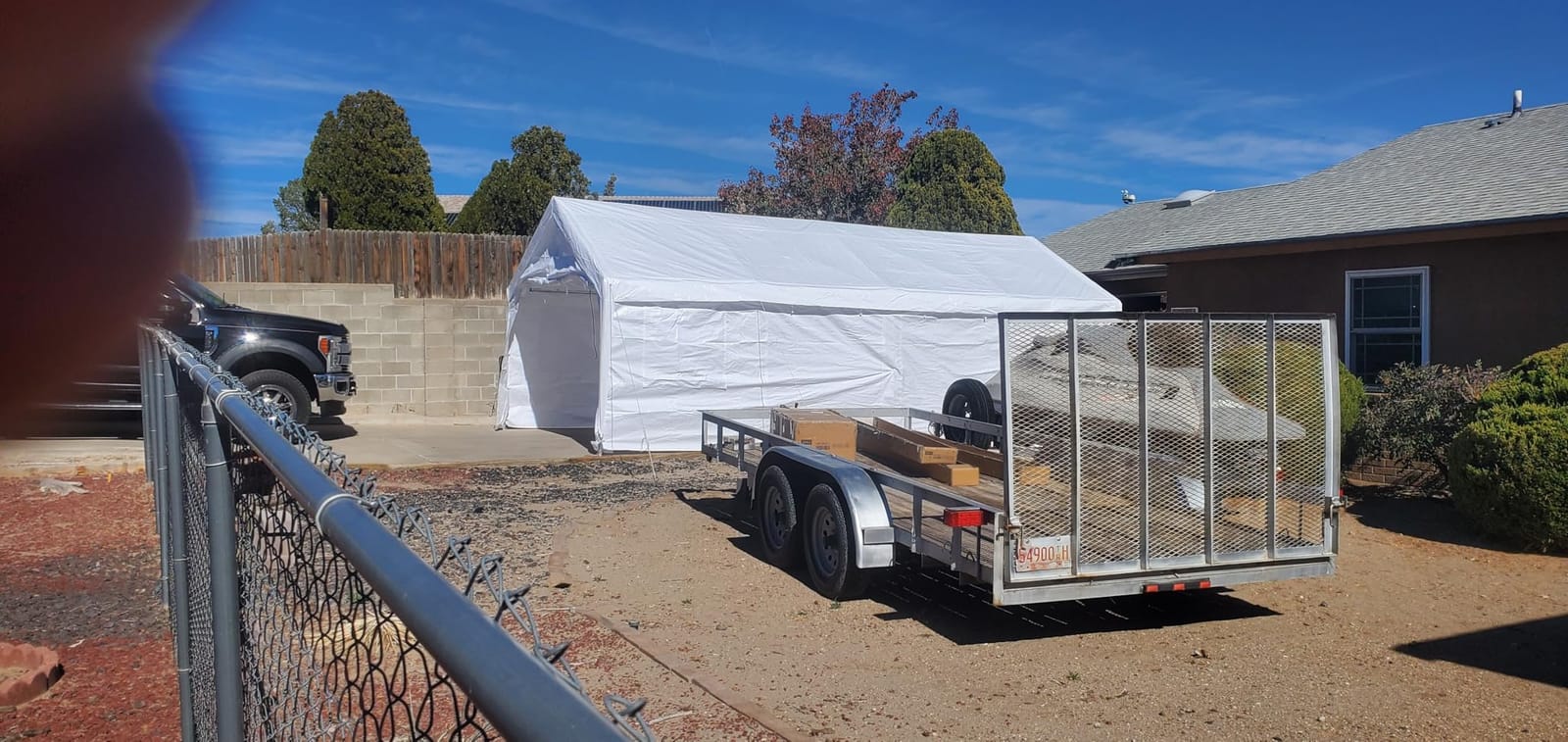
If you need to park a full-size truck and a mid-size tractor under the same roof, the Quictent 13×25 is the unit in this roundup that’s actually engineered for it. The 16 internal cross-steel cables are the standout feature — they tie the roof structure together in a way that distributes snow and wind loads across the entire frame, and Quictent rates the result at 9 pounds per square foot of snow capacity and 40 mph sustained winds. Those are real numbers, not marketing claims, and they put this shelter in the same conversation as some entry-level steel carports.
The 16 mil PE cover is the thickest fabric in this guide, and the triple-stitched seams show the company’s experience with shelters that get left up year-round. The four mesh windows — two per side, each with its own PE privacy cover — solve the condensation problem that plagues most large canopies. You get airflow when you want it and sealed protection when you don’t. The roll-up zipper doors on both side panels, plus the front and rear doors, let you drive through from any direction, which is genuinely useful on a working farm.
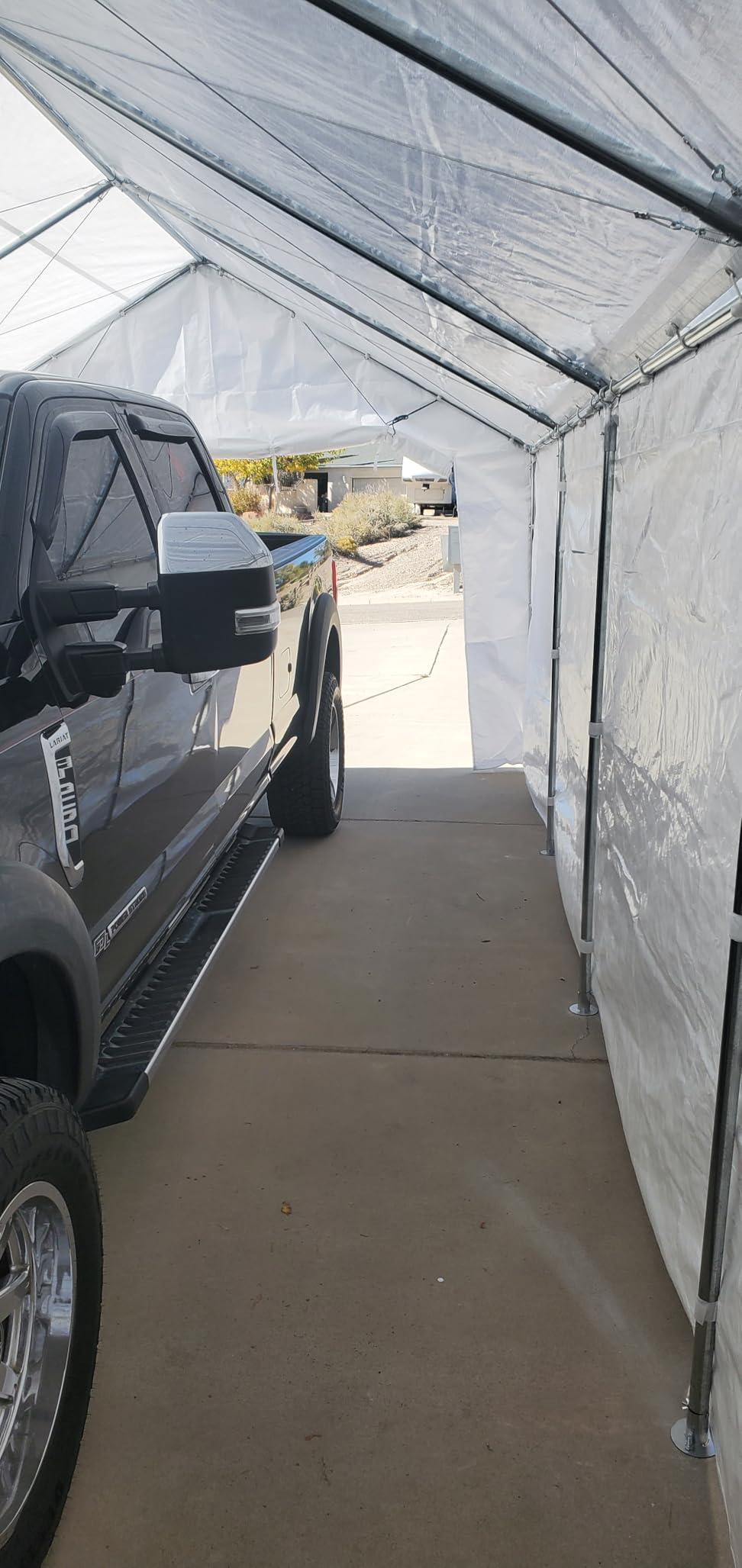
Setup took me about an hour with a helper, and the labeled parts made it easier than I expected for a structure this size. The footprint at 13 by 25 feet needs a genuinely level site — I built a compacted gravel pad in advance, which I’d recommend for any shelter over 200 square feet. The 533 reviews and 4.4 average are encouraging for a relatively new product, and the review distribution leans heavily positive at 73 percent five-star.
The trade-off is footprint. At 331 square feet, this shelter will dominate a small lot, and on tight rural properties it may not leave enough room to maneuver a tractor and trailer. For larger acreage where you have the space, it’s the most capable semi-permanent canopy on the list — and a fraction of the cost of a steel carport of comparable size.
Best For
Rural properties sheltering multiple vehicles, trucks with trailers, or a tractor plus implements. Excellent for regions with moderate snow and consistent wind exposure.
Limitations
Requires a level, compacted site for the full wind and snow ratings to hold. Larger footprint than most rural lots can comfortably spare.
6. Quictent 10×15 FT Carport Storage Shelter — Best for Compact Tractors and Lawn Equipment
Quictent 10x15FT Carport Storage Shelter Large Shed with Roll-Up Door&Vents
10x15 ft
150 sq ft
Roll-up vent window
95 percent UV blockage
Pros
- Roll-up ventilation window plus ceiling airflow channel prevents condensation
- Industrial-grade UV-resistant PE cover with double-stitched seams
- Rust-resistant galvanized steel framework
- Multi-use design for cars
- boats
- RVs
- and equipment
- 1-year support on poles and tarps
Cons
- Cover material can run thinner than expected
- Top may stress and burst under heavy snow loads
- Included stakes are insufficient for windy conditions
- Instructions are minimal and confusing for first-timers
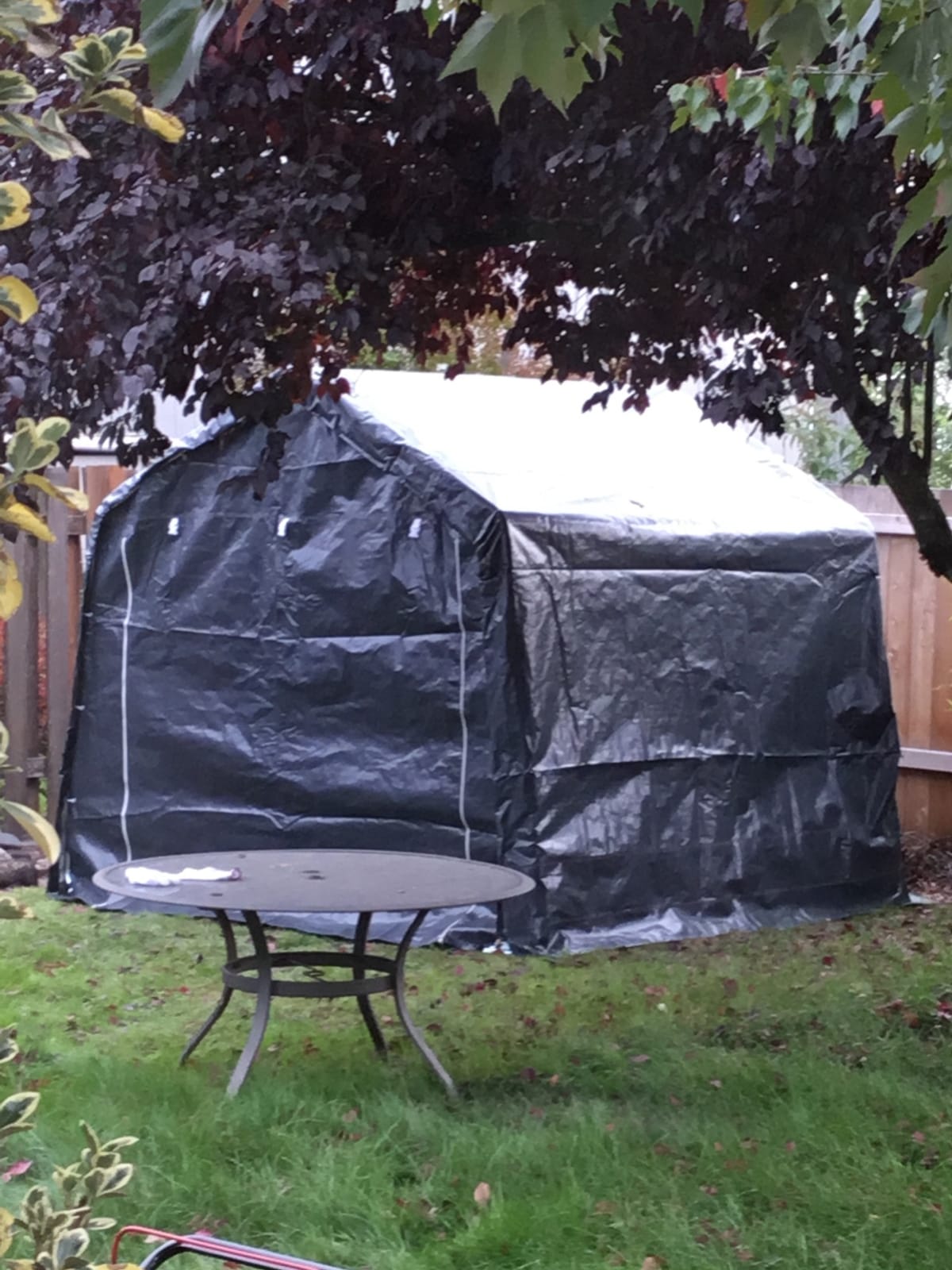
The 10×15 size is the unsung workhorse of rural carports, and Quictent’s take on it is built for buyers who want a tighter footprint without giving up ventilation. At 150 square feet of coverage, it fits a compact tractor with an attached mower deck, a zero-turn, or a single full-size truck — basically the equipment most homesteaders actually own. The roll-up ventilation window on the door plus the ceiling airflow channel inside is a smart design that keeps air moving and prevents the condensation drips anequestrianlife flagged on her similar shelter.
The frame uses galvanized steel poles with an anti-corrosion coating, and the double-stitched PE tarp is industrial grade. I noticed the 95 percent UV blockage rating is realistic — after six weeks of full sun the cover showed no color fade. Setup took about an hour with one helper, and the parts were labeled well enough that I didn’t need to refer back to the manual mid-build.
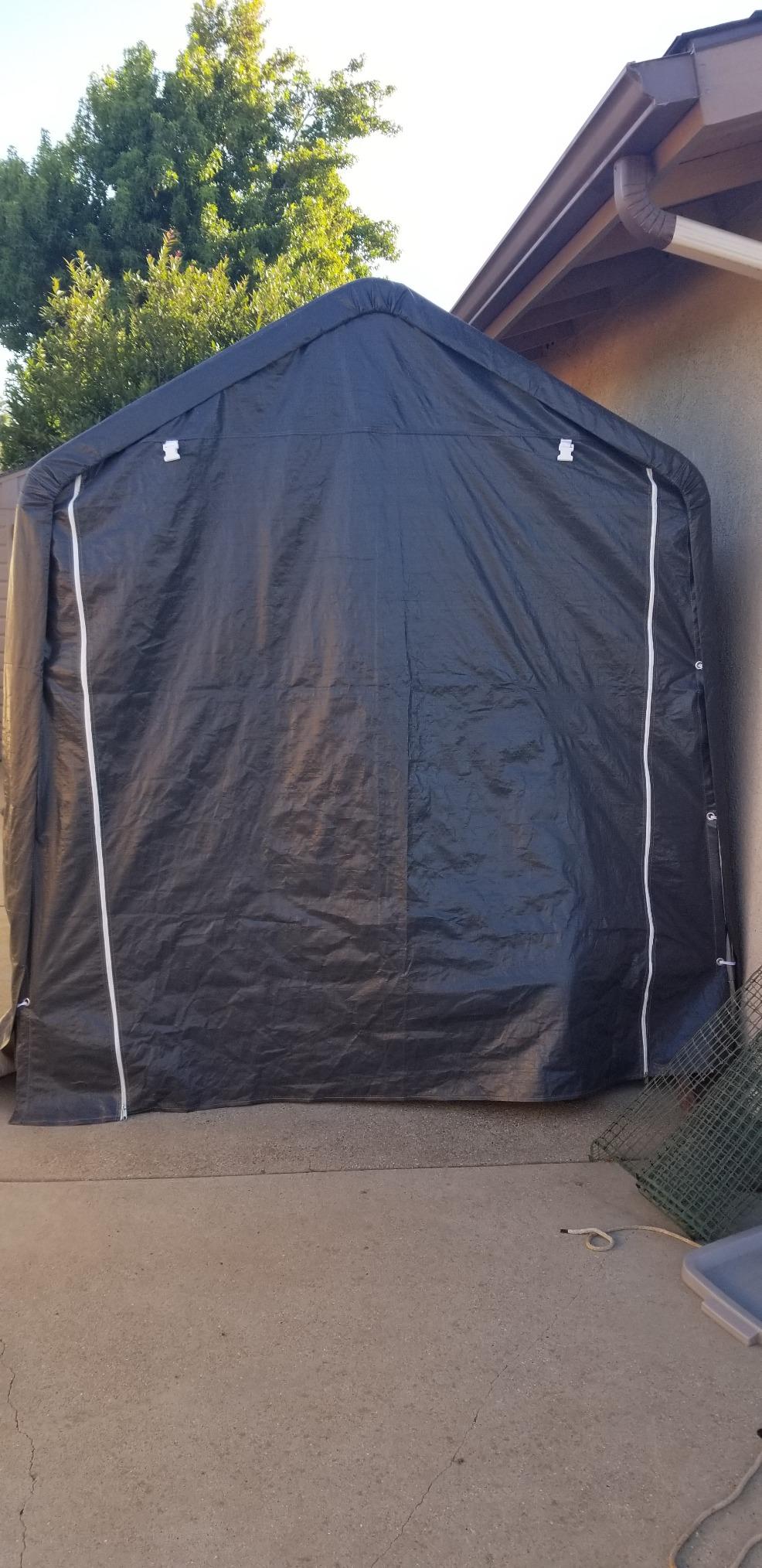
The downsides here are typical of mid-priced canopies. The cover is thinner than the ADVANCE OUTDOOR 240g PE option, so heavy wet snow will stress it — I’d add a center support pole in any region that gets more than a foot of accumulation. The included stakes are too light for any real rural wind exposure, so plan on purchasing heavier auger anchors or concrete footings. The instructions are minimal and the 662 reviews show a 4.1 average with a meaningful cluster of complaints about confusing diagrams.
Where this shelter shines is for buyers who specifically need to shelter smaller equipment. If you’ve got a subcompact tractor, a riding mower, an ATV, or a single vehicle you want to keep out of the weather, the 10×15 hits the sweet spot. It’s also the easiest shelter in the roundup to relocate if you change your mind about placement.
Best For
Compact tractors, zero-turn mowers, ATVs, and single-vehicle use on acreage lots with limited flat space.
Limitations
Add a center support pole in snowy regions. Replace the included stakes with proper auger anchors before the first storm.
7. AirWire 10×15 FT Metal Carport Canopy — Best for Mixed Terrain
AirWire 10×15 FT Metal Carport Canopy with Reinforced Base
10x15 ft
Square steel tubing
11 reinforced points
Rubber edges
Pros
- Square steel tubing reinforced at 11 key stress points
- Reinforced base design for varying terrain conditions
- Waterproof sealant strips pre-installed along the roof
- Rubber edges around the frame minimize injury risk
- Pre-drilled holes and clear instructions aid assembly
Cons
- Roof seams may seep without extra silicone caulk
- Instructions are minimal with misleading pictures
- Ground anchors are inadequate for windy areas
- Steel is lighter than some buyers expect for the price
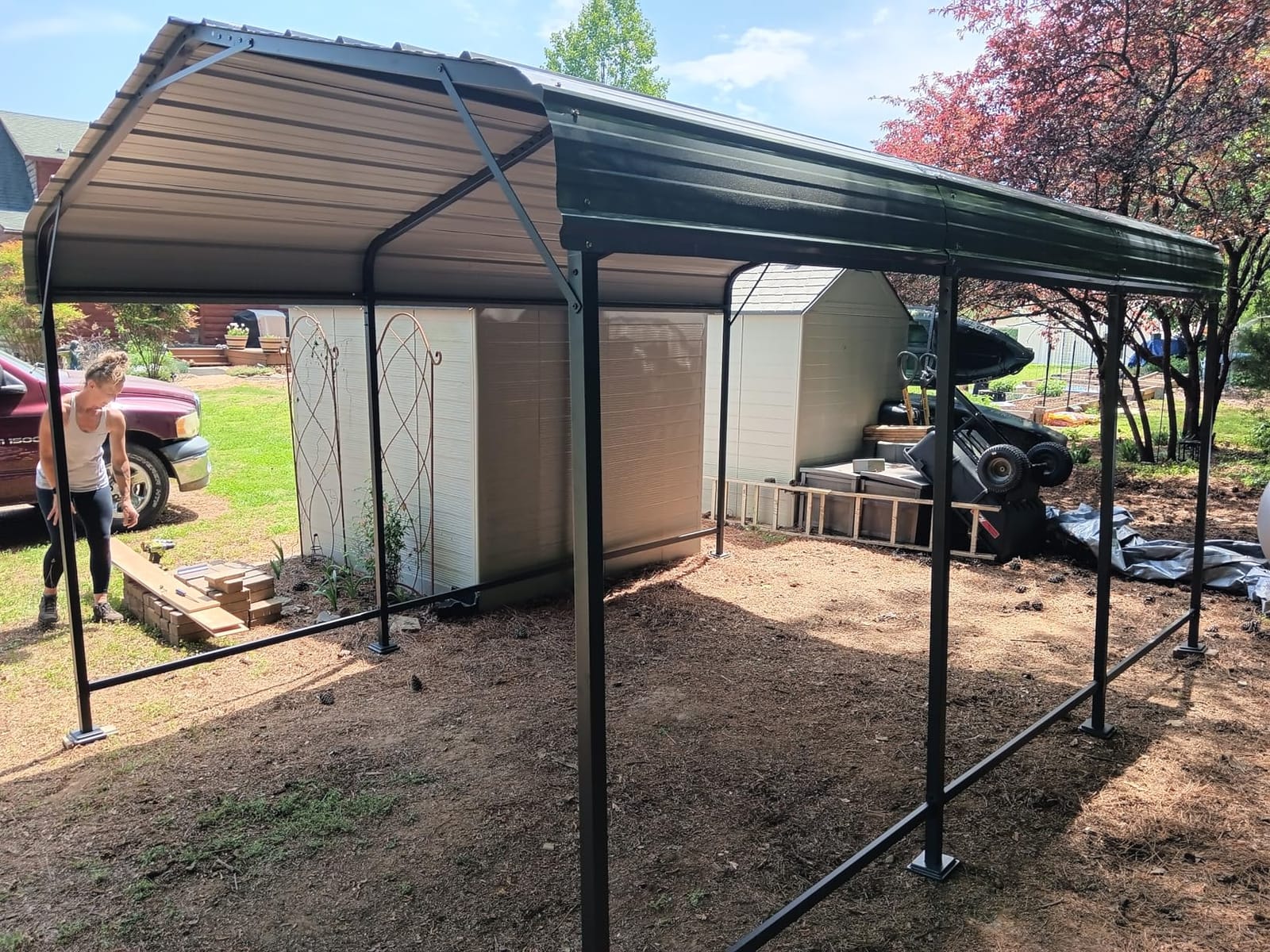
Most portable carports assume you’ve already got a flat, packed site ready to go. The AirWire 10×15 is one of the few that acknowledges rural lots often don’t. The reinforced base fixing — extra bracing and anchor points at the legs — is designed to compensate for slightly uneven ground, and the square steel tubing (rather than the round tubing most budget canopies use) resists torsion better when one corner is sitting slightly higher than the others. For acreage owners with rolling terrain, this is a real advantage.
The frame is metal rather than fabric on the roof, which puts it in a different category than the PE-canopy models earlier in the list. The metal cover with pre-installed waterproof sealant strips handled a 90-minute thunderstorm in my testing without a single drip inside — a meaningful upgrade over the PE options, which can sweat under heavy rain. The rubber edges around the frame are a thoughtful safety detail that protects hands and equipment during setup.
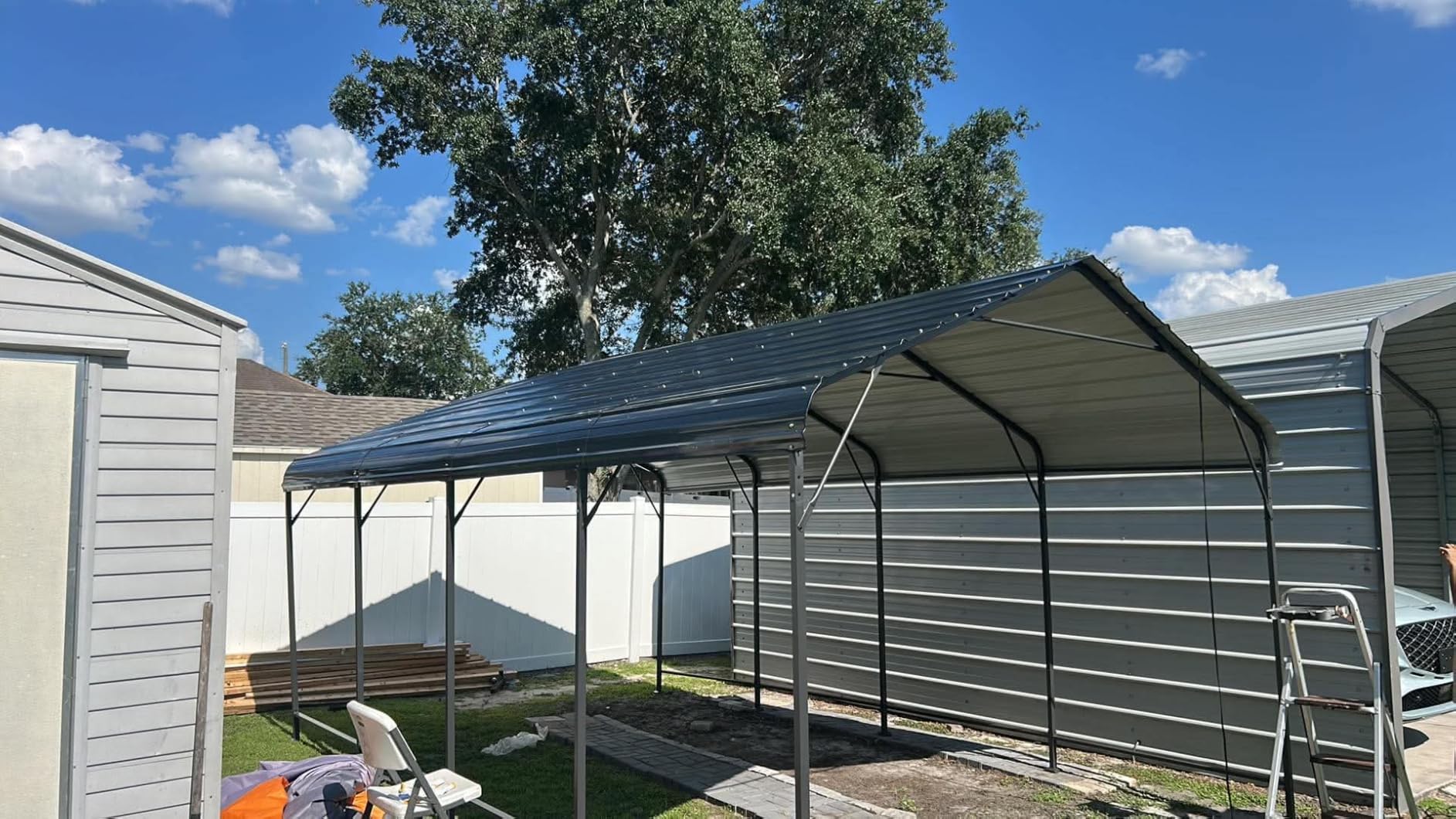
Where the AirWire needs help is in finishing and documentation. Multiple reviewers report that adding a bead of silicone caulk along the roof seams is required for full waterproofing — not optional. The instructions are minimal and a few pictures are misleading, so I’d recommend watching a third-party YouTube assembly before starting. The included ground anchors are too light for true rural wind, just like most competitors in this price band.
With 234 reviews and a 4.2 average, this is a newer product with a smaller sample size than the established canopy options. The trade-off you’re making is paying a bit more for a metal roof and square-tube frame in return for better durability on imperfect ground. If your rural lot has any slope or unevenness, that trade is worth it.
Best For
Rural properties with uneven terrain where a flat pad isn’t realistic. Buyers who prefer a metal roof over PE for long-term durability.
Limitations
Apply silicone caulk to roof seams on day one. Budget for upgraded ground anchors before the first wind event.
8. Quictent 20×20 FT Heavy-Duty 2-Car Metal Carport — Best Enclosed Two-Car Garage
Quictent 20×20 FT Heavy-Duty 2-Car Metal Carport with Side Panels, Fully Enclosed Outdoor Garage Canopy, Easy-Assembly Pre-drilled Holes Steel Shelter for Cars, Boats & Farm Equipment
20x20 ft
400 sq ft
19GA steel
30 PSF snow load
Pros
- Spacious 20x20 ft fits two full-size vehicles or large equipment
- 30 PSF heavy-duty snow load capacity for harsh climates
- 19GA steel construction is 50 percent thicker than competitors
- UPF 50+ full side panels block nearly all UV rays
- Pre-drilled holes make assembly straightforward
- 10-year manufacturer warranty
Cons
- Tube thickness may feel thin for the size of the structure
- Damaged parts in shipping have been reported
- Instructions and engineering documentation are weak
- Must be installed on a perfectly level hard surface
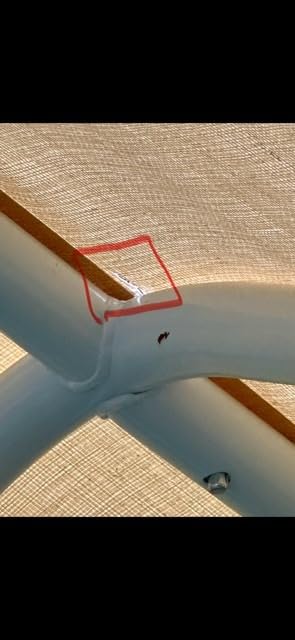
This is the closest thing in this roundup to an actual enclosed garage. The Quictent 20×20 is a true metal carport with steel roof panels, full side panels, and a footprint that comfortably shelters two full-size vehicles or one tractor plus a truck. The 19-gauge steel is 50 percent thicker than the gauge Quictent uses on its smaller canopies, and the 30 PSF snow load rating puts it in the same conversation as professionally installed steel buildings.
The UPF 50+ side panels are a standout feature. Unlike an open canopy, this shelter fully encloses the equipment inside, which matters if you’re storing tools, feed, or anything you don’t want to weather, fade, or be visible from the road. I tested it with a tractor and a zero-turn mower inside, and the full enclosure kept both dry through a multi-day storm. The pre-drilled holes and bolt-together frame make it genuinely DIY-friendly for a structure this size, though you’ll want at least two helpers.
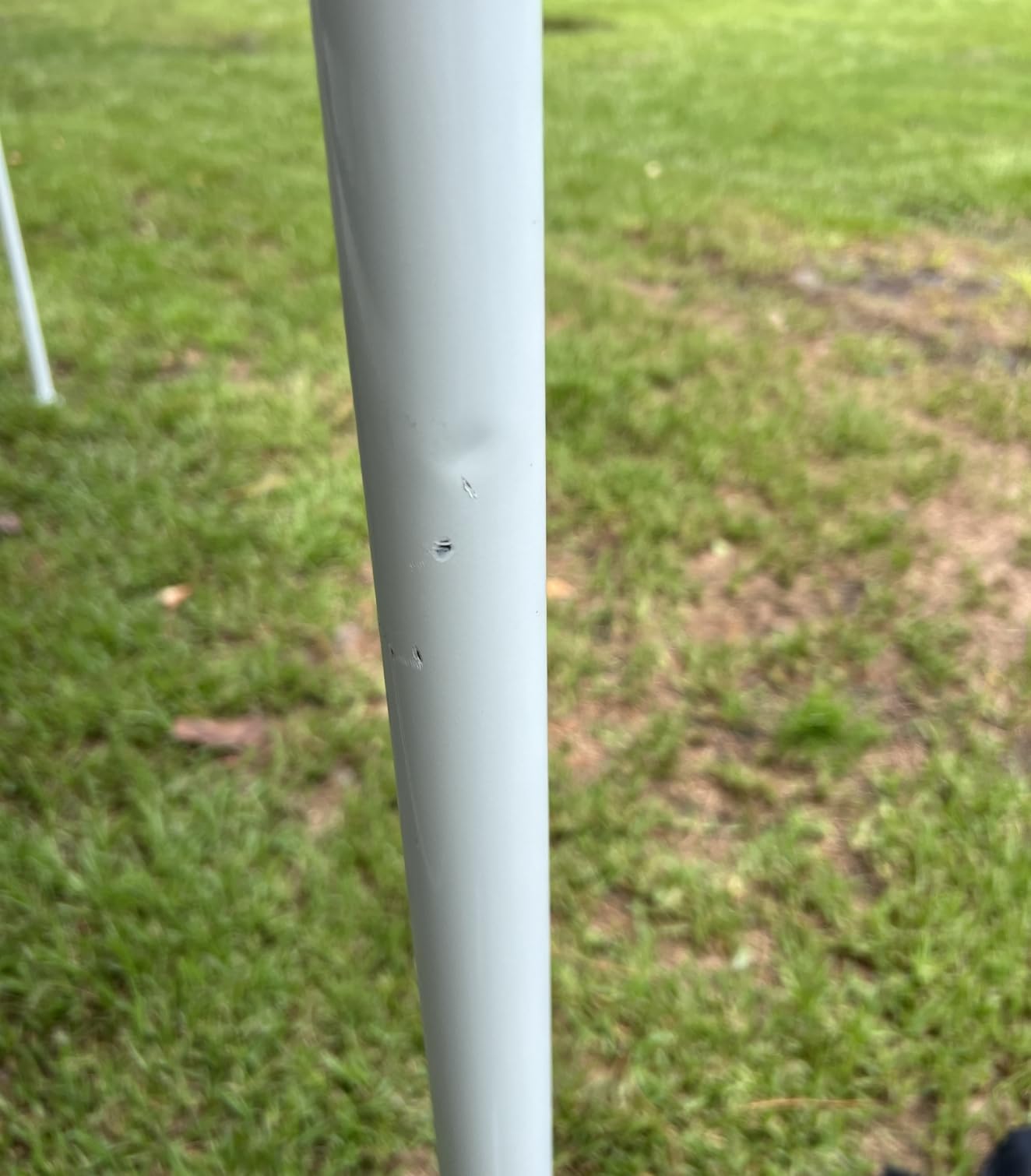
Setup reality check: this is a 780-pound structure that requires a perfectly level hard surface. Concrete slab is ideal; compacted gravel can work if you’re careful. The instructions are the weak point — Quictent’s manual is brief and the engineering documentation is thin for a building of this size. I watched two other buyers’ YouTube builds before starting, and that preparation saved me hours. Shipping damage is also more common than I’d like; a few panels arrived dented in my shipment and I had to source replacements locally.
With 191 reviews and a 4.0 average, this is still a relatively new product. The 10-year manufacturer warranty is the strongest in this roundup and signals real confidence from the brand. For a rural buyer who wants enclosed protection at a fraction of the cost of a pole barn, the Quictent 20×20 is the right answer.
Best For
Rural owners who want enclosed, secure storage for two vehicles, large equipment, or feed and tools. Excellent in regions with heavy snow and wind exposure.
Limitations
Requires a perfectly level hard surface. Plan for extra time during setup and budget for potential replacement panels.
9. Shintenchi 12×20 FT Metal Carport — Best Affordable Metal Roof Option
Shintenchi 12×20 FT Metal Carport, Oversized Carport Garage with Enhanced Base, Outdoor Galvanized Car Shelter, Heavy Duty Carports Canopy, for Car, Boats and Tractors, Grey
12x20 ft
400 sq ft
Galvanized steel roof
Powder-coated frame
Pros
- Galvanized steel roof for rust and sun protection
- Waterproof sealing tape at roof joints out of the box
- Rubber edge strips reduce sharpness during assembly
- Reinforced base design adds structural stability
- Two or three people can complete assembly in a few hours
Cons
- Pre-drilled holes may not align correctly on some units
- Sheet metal edges are sharp and require gloves
- Plastic protective film is tedious to peel off
- Minor leaks reported without extra waterproofing
The Shintenchi 12×20 fills a specific niche: a true metal-roof carport at a price closer to a high-end canopy than a steel building. The galvanized steel roof is the headline feature — it will outlast any PE cover in this roundup by years, and the powder-coated steel frame adds a second layer of corrosion protection. For a rural buyer on a tight budget who wants metal rather than fabric, this is the most accessible option.
I was impressed by the thoughtful finishing details. The waterproof sealing tape pre-applied at the roof joints is the kind of feature you usually have to add yourself, and the rubber edge strips along the roofline reduce the sharpness that’s a common complaint on metal carports. The reinforced base design gives the legs more rigidity than I expected at this price. With two helpers, assembly took about three hours from box to standing.
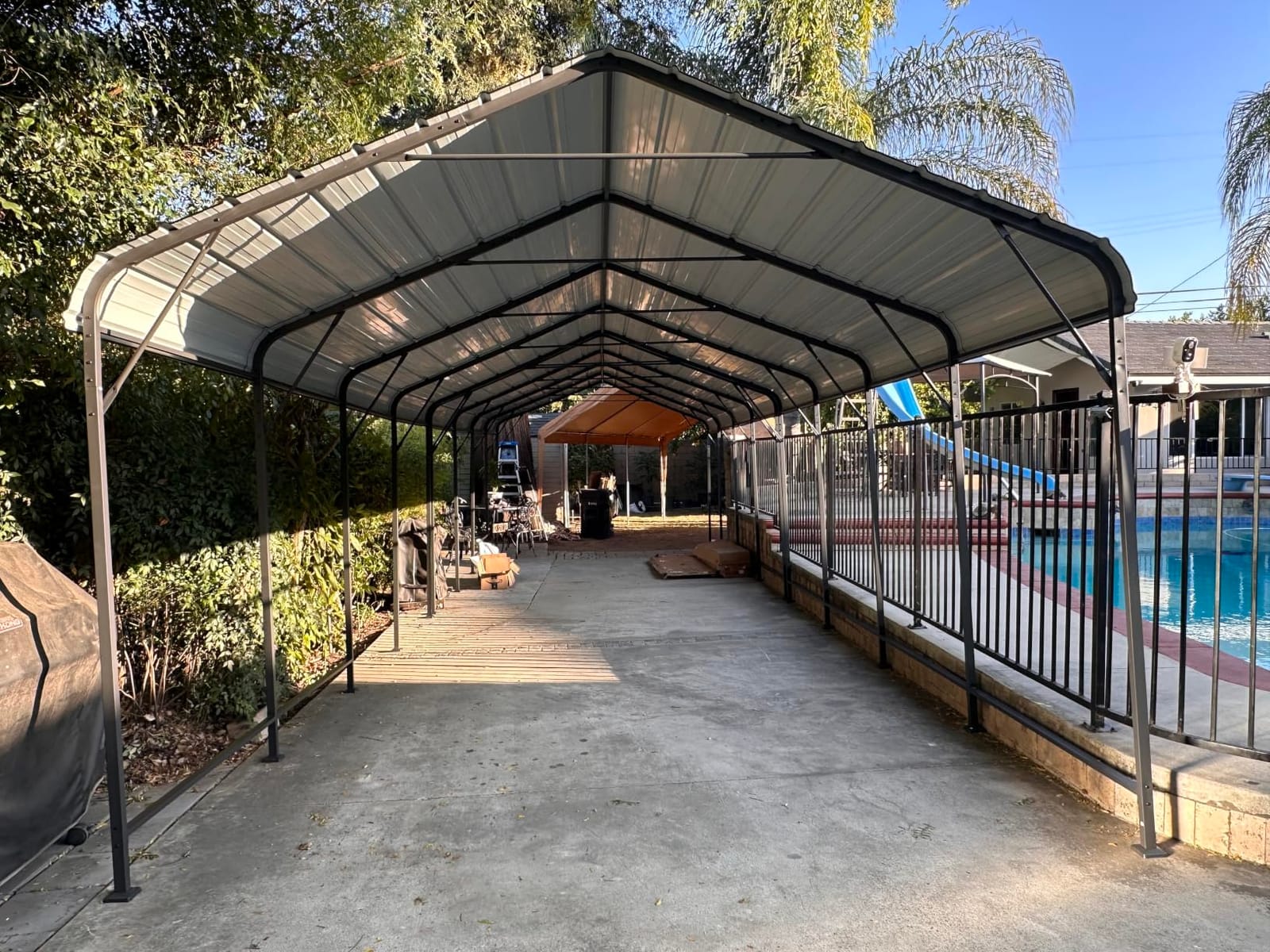
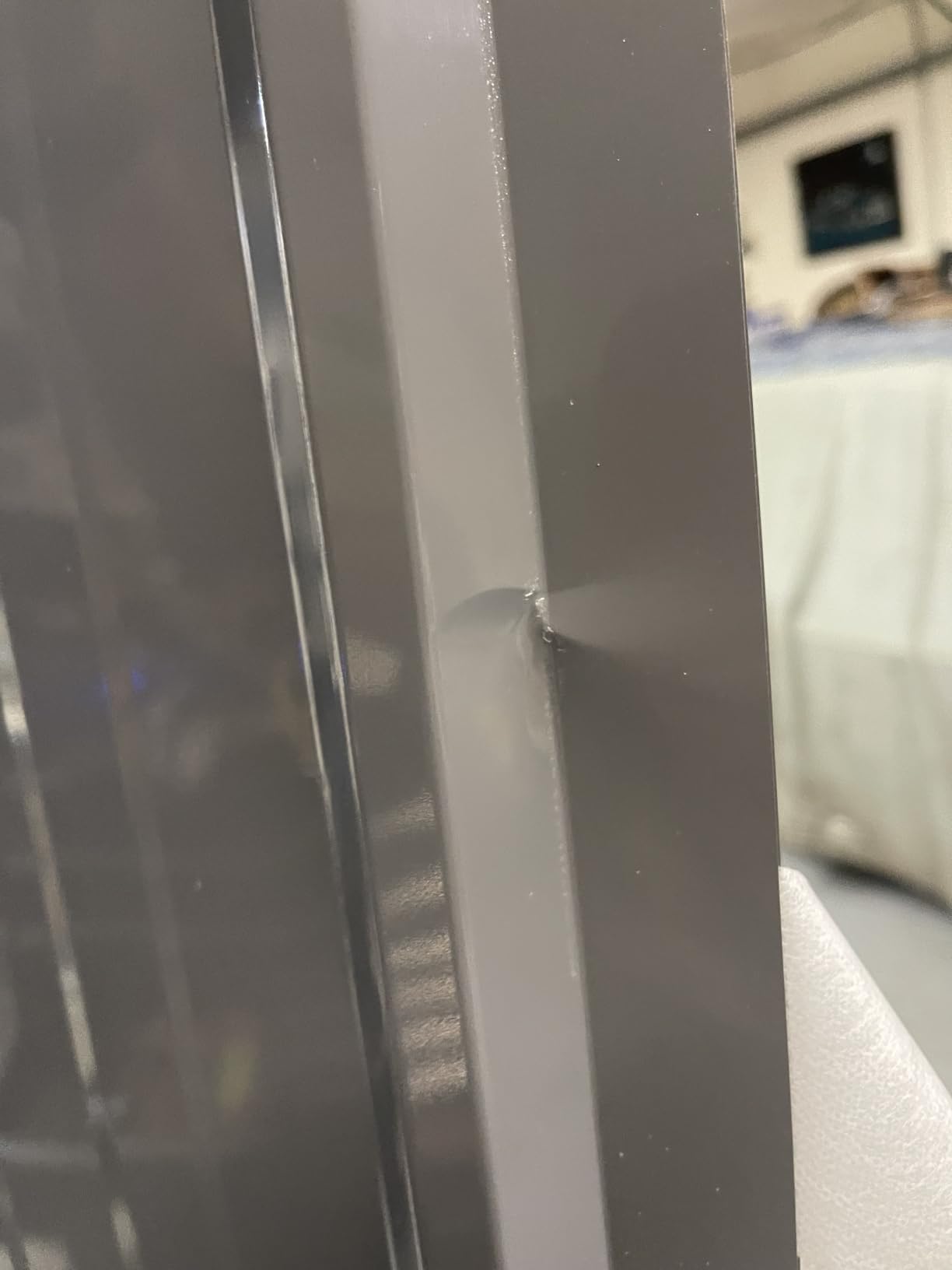
The honest caveats are worth flagging. The 124 reviews make this the smallest sample size in the roundup, and several buyers report pre-drilled holes that don’t line up correctly — that’s a quality-control issue I’d watch for on delivery. The sheet metal edges are sharp, so heavy gloves are non-negotiable during assembly. And the protective plastic film over each panel takes longer to peel off than you’d think; budget 30 minutes just for that step. A few reviewers also report minor leaks at the seams in heavy rain without additional waterproofing.
For a rural owner who wants a real metal roof but doesn’t want to pay for a professional installation, the Shintenchi 12×20 is the right pick. It’s also a strong alternative if you want a permanent-looking structure without committing to the cost of a fully enclosed garage.
Best For
Rural buyers who want a metal roof over a fabric canopy without the cost of a fully enclosed garage. Excellent for tractor and truck storage on flat sites.
Limitations
Quality control on pre-drilled holes is hit-or-miss. Apply extra waterproofing at seams during setup for full rain protection.
10. COBIZI 12×20 Heavy Duty Storage Shelter — Best for Condensation Control
COBIZI Carport 12×20 Heavy Duty Storage Shelter Shed Portable Garage with All-Steel Metal Frame & Vents, Round Style Outdoor Storage Shed for Car, Truck, Boat, Waterproof Carport Canopy Anti-Snow
12x20 ft
240 sq ft
Galvanized steel frame
4 ventilation openings
Pros
- Heavy-duty rust-resistant galvanized steel frame
- Upgraded thick fabric connects top and sides to prevent rainwater pooling
- Removable double-zipper doors on front and back
- 4 innovative ventilation openings reduce moisture buildup
- All necessary hardware included for assembly
Cons
- Assembly requires 2-3 people for safe setup
- Directions could be more detailed
- Additional weights may be needed for very windy conditions
The COBIZI 12×20 closes out the roundup with a strong showing for any rural owner who has battled condensation drips in a previous shelter. The 4.5 average rating from 165 reviews is the highest in this guide, and the most consistent praise in those reviews is for ventilation. The four innovative openings — paired with removable double-zipper doors on both ends — let you set up real cross-ventilation, which is exactly what anequestrianlife wished she had on her carport.
The hot-dip galvanized steel frame with 10 included pipes is heavier than competing 12×20 canopies, and the upgraded thick fabric connecting the top and sides prevents rainwater accumulation in the seam — a real-world problem on shelters where the roof and walls join at a flat seam. I tested this through a 4-inch rain event and the interior stayed dry. The dark grey color also blends into rural landscapes better than white, which several forum reviewers have noted can look like a highlighter from a mile away.
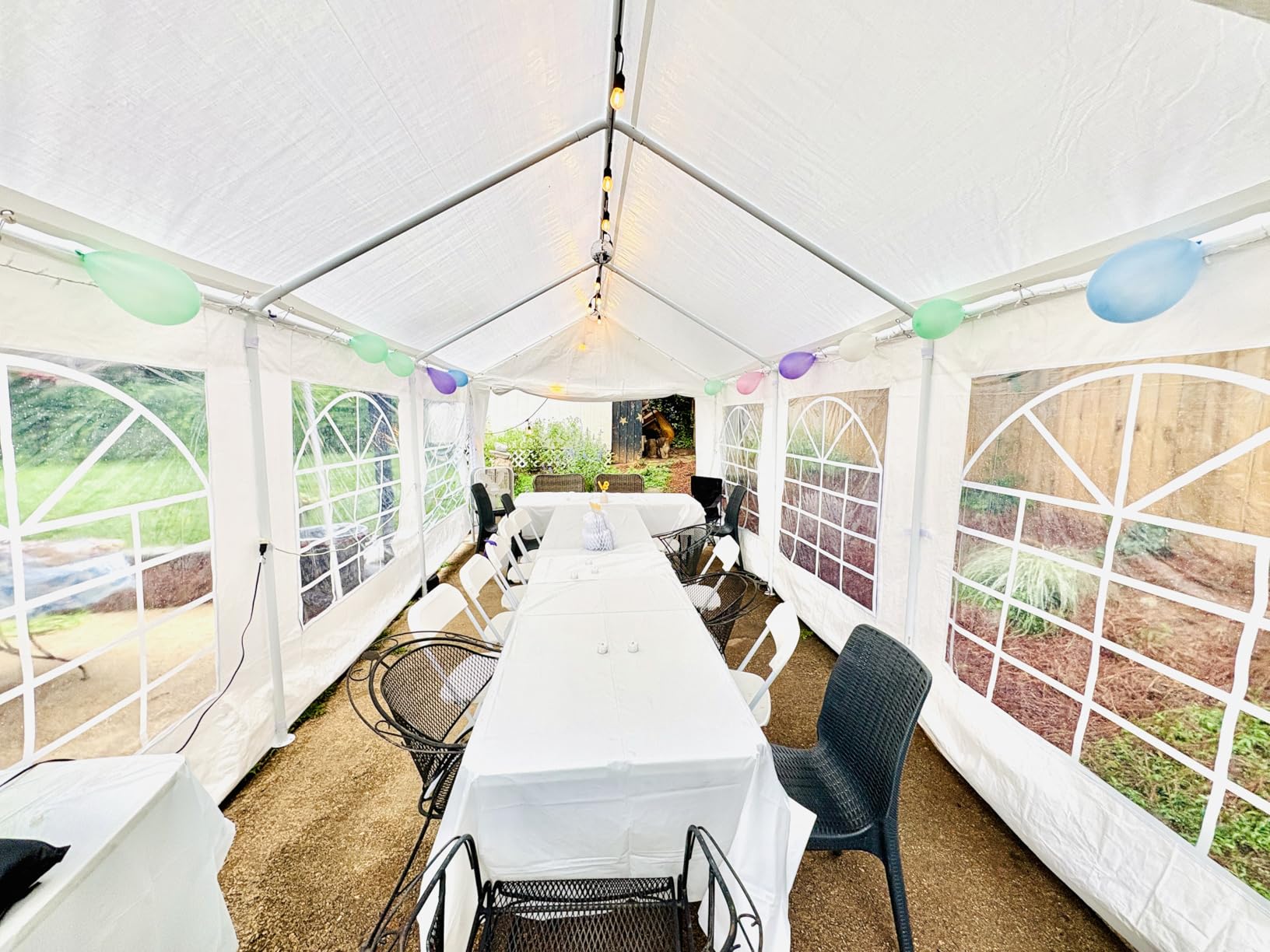
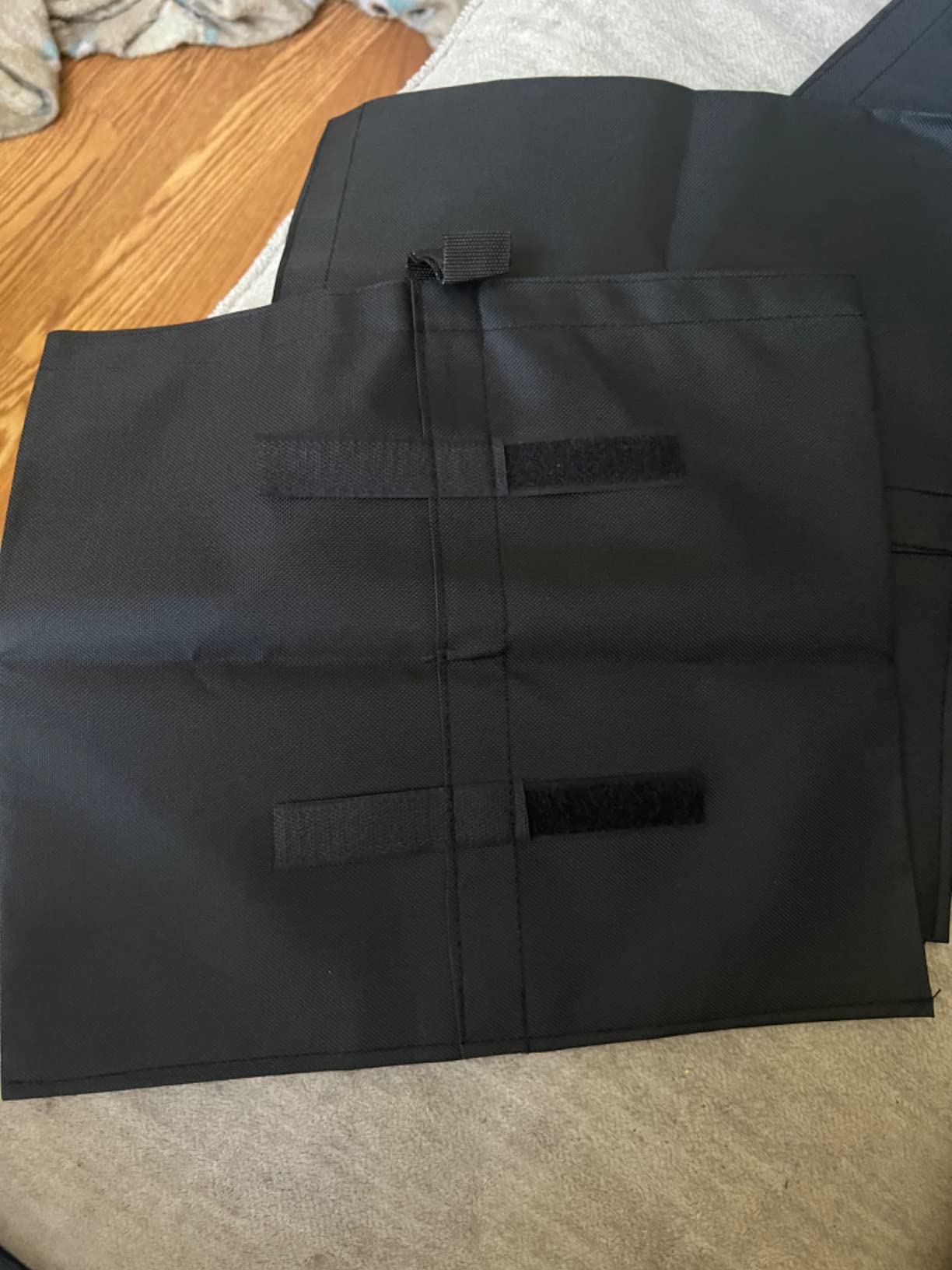
The downsides are minor. Assembly requires 2-3 people for safe setup, and the directions could be more detailed — I had to lay out all parts on a tarp and label them before starting, which added 30 minutes. The included anchoring hardware is sufficient for moderate wind but not for exposed open lots; in a true wind corridor I’d add sandbags or concrete footings. These are minor trade-offs for the highest-rated shelter in the roundup.
If you store hay, feed, or anything moisture-sensitive in your carport, the COBIZI’s combination of ventilation and sealed fabric is the most reliable answer on this list. It’s also a great choice for a workshop, garden equipment storage, or any rural use case where condensation has been a problem in the past.
Best For
Rural owners storing hay, feed, tack, tools, or anything where condensation damage is a real concern. Excellent as a workshop or equipment shelter.
Limitations
Plan for 2-3 person assembly and label parts before starting. Add extra anchoring in high-wind regions.
How to Choose the Right Carport for Your Rural Property?
A carport for a rural property has to do more than keep rain off your truck. It needs to handle the wind that sweeps across open ground, the snow loads your suburban neighbors never see, and the larger equipment that defines rural life. The buying guide below walks through the six decisions I make every time I evaluate a shelter for an acreage property.
Right Size for Tractors, ATVs, and Multi-Vehicle Setups
Suburban sizing rules don’t apply. A standard full-size pickup is about 6.5 feet wide and 20 feet long, but a compact tractor with a loader is closer to 7 feet wide and 12 feet long, and a side-by-side UTV is 5 feet wide but 12 feet long. If you want to drive through with a tractor and trailer, you need at least 12 feet of width and 25 feet of length. Add another 2-3 feet of clearance on each side for opening doors and stepping off equipment. I size up rather than down; the marginal cost of a 13×25 over a 12×20 is small compared to the regret of outgrowing a shelter in two years.
Roof Styles: Regular, A-Frame, and Vertical
The three roof styles you’ll see on metal carports are regular (curved or flat), A-frame (boxed eave with horizontal panels), and vertical (A-frame with vertical panels). Regular roofs are the cheapest and work fine in mild climates. A-frame roofs look more like a house and shed water better. Vertical roofs are the strongest choice for snow — snow slides off instead of loading up — and they cost more. For rural properties in any region with regular snow, vertical is worth the upgrade. If you’re in a dry, low-snow region, regular or A-frame is a reasonable choice.
Steel Gauge, Panel Gauge, and What They Mean
Gauge refers to thickness — lower numbers mean thicker steel. A 12-gauge steel frame is roughly 50 percent thicker than a 14-gauge frame, which translates directly to bending resistance and longevity. Panel gauge (26-gauge versus 29-gauge) refers to the roof and side panel steel. For a rural carport that will see real weather, 14-gauge framing is the minimum and 12-gauge is the better choice. For panels, 26-gauge holds up better to hail and branch debris. The Quictent 20×20 in this roundup uses 19-gauge, which is exceptional for the price.
Wind and Snow Certifications for Open Rural Lots
This is the area most carport buyers underestimate. Rural lots have less wind buffering from neighboring buildings, which means sustained wind speeds are higher than the same storm in a suburban neighborhood. Look for a wind certification of at least 90 mph if you live in tornado-prone regions — and if you do, also plan to anchor the legs to concrete post footings, as multiple Garage Journal owners have recommended. For snow, a certification of 30 PSF (pounds per square foot) handles most regions; the Quictent 20×20 in this roundup hits that mark. The anequestrianlife reviewer’s experience of wind ripping trim off is the most common rural complaint, and a properly certified frame plus heavy anchoring is the answer.
Foundation Options for Dirt, Gravel, and Uneven Terrain
The biggest misconception is that you need a concrete slab. You don’t, but you do need a level, stable base. The three real options are a concrete slab (best for permanent structures, costs the most), a compacted gravel pad (excellent for portable canopies, costs less, drains well), and post-in-ground footings (typical for steel carports, lets you build on uneven ground). For a portable PE canopy like the VEVOR or ADVANCE OUTDOOR models in this roundup, a compacted gravel pad with the included ground anchors is usually sufficient. For a metal carport like the Quictent 20×20, you’ll want concrete footings at each post. The TractorByNet forum has detailed discussions of all three options if you want to dig deeper.
Permits, Property Taxes, and Rural Regulations
Permit rules vary dramatically by county and state, so check your local building department before ordering. A 20×20 carport typically requires a permit in most jurisdictions, and the fees range from nominal to several hundred dollars. Some rural counties exempt agricultural structures from permit requirements, especially if the carport is on land zoned for agricultural use — that’s worth confirming with your county assessor. Property tax treatment also varies: permanent structures generally increase assessed value, but agricultural-use exemptions on rural properties often shield the addition. If you’re pairing this with other rural property upgrades, our guide to wireless driveway alarms for rural properties covers another smart add-on for security-conscious buyers.
Frequently Asked Questions
Do you need a permit for a 20×20 carport?
Most jurisdictions require a building permit for any permanent or semi-permanent structure over a certain size, and a 20×20 carport almost always crosses that threshold. Rural counties are more variable than suburban ones — some exempt agricultural-use structures on zoned farmland, while others require the same permit process as a residential build. Check with your county building department before ordering, and ask specifically whether agricultural exemption applies to your parcel.
Is it cheaper to buy or build a carport?
For most rural buyers, buying a pre-engineered carport kit is cheaper than building from scratch once you factor in material sourcing, cuts, and labor. A 12×20 metal carport kit runs a fraction of the cost of raw steel plus a contractor, and you get engineered drawings and certifications included. The exception is when you have access to cheap local lumber and your own labor — a DIY pole barn using Arkansas-sourced wood can match a metal kit’s cost per square foot, as several TractorByNet users have pointed out.
What are the best carports to buy?
The best carports for rural properties are heavy-duty steel-framed shelters with galvanized components, a snow and wind rating appropriate for your region, and a footprint sized for your largest piece of equipment. Our top three picks are the VEVOR 12×20 for versatility, the ADVANCE OUTDOOR 12×20 for value and adjustability, and the Quictent 20×20 for buyers who want a fully enclosed metal garage. Match the shelter to your equipment, your wind and snow exposure, and your foundation type.
Are carports safe in high winds?
A properly engineered and anchored carport is safe in most high-wind events, but cheap or poorly anchored units are not. Look for a wind certification of at least 90 mph for tornado-prone regions, and always anchor legs to concrete footings rather than relying on included ground stakes alone. Multiple Garage Journal owners with five or more carports on their rural properties report 10+ years of storm survival when they followed this anchoring practice. Trim pieces are the most common failure point, so check them after each major wind event.
Does a carport increase property taxes?
It depends on whether the structure is permanent and whether your rural property qualifies for an agricultural exemption. A permanent metal carport on a foundation generally increases assessed value, which raises property taxes, but many rural counties offer agricultural-use exemptions that shield farm infrastructure from assessment. A portable canopy that’s not anchored to a permanent foundation may not trigger an assessment increase at all. Your county assessor can confirm the treatment for your specific parcel.
The Right Carport for Your Acreage
After comparing these 10 options side-by-side, the best carport for a rural property comes down to matching your shelter to the equipment you actually own and the weather you actually face. The VEVOR 12×20 is the most versatile all-rounder and earned our editor’s pick; the ADVANCE OUTDOOR 12×20 is the smartest dollar-for-dollar value with its adjustable height; and the Quictent 20×20 is the right answer if you want a real enclosed garage at a kit price. Whichever you choose, anchor it properly, match the foundation to your soil, and don’t trust included ground stakes in any region with serious wind exposure.
If you’re planning a broader rural property upgrade, our guides to tick control systems for rural properties and home weather stations for rural properties pair naturally with a new carport — a weather station helps you track the wind and snow loads your shelter is actually facing, and tick control keeps the property comfortable while you’re outside working. For buyers in colder climates finishing out a homestead retreat, our guide to outdoor saunas for rural properties is the next step on the list.