
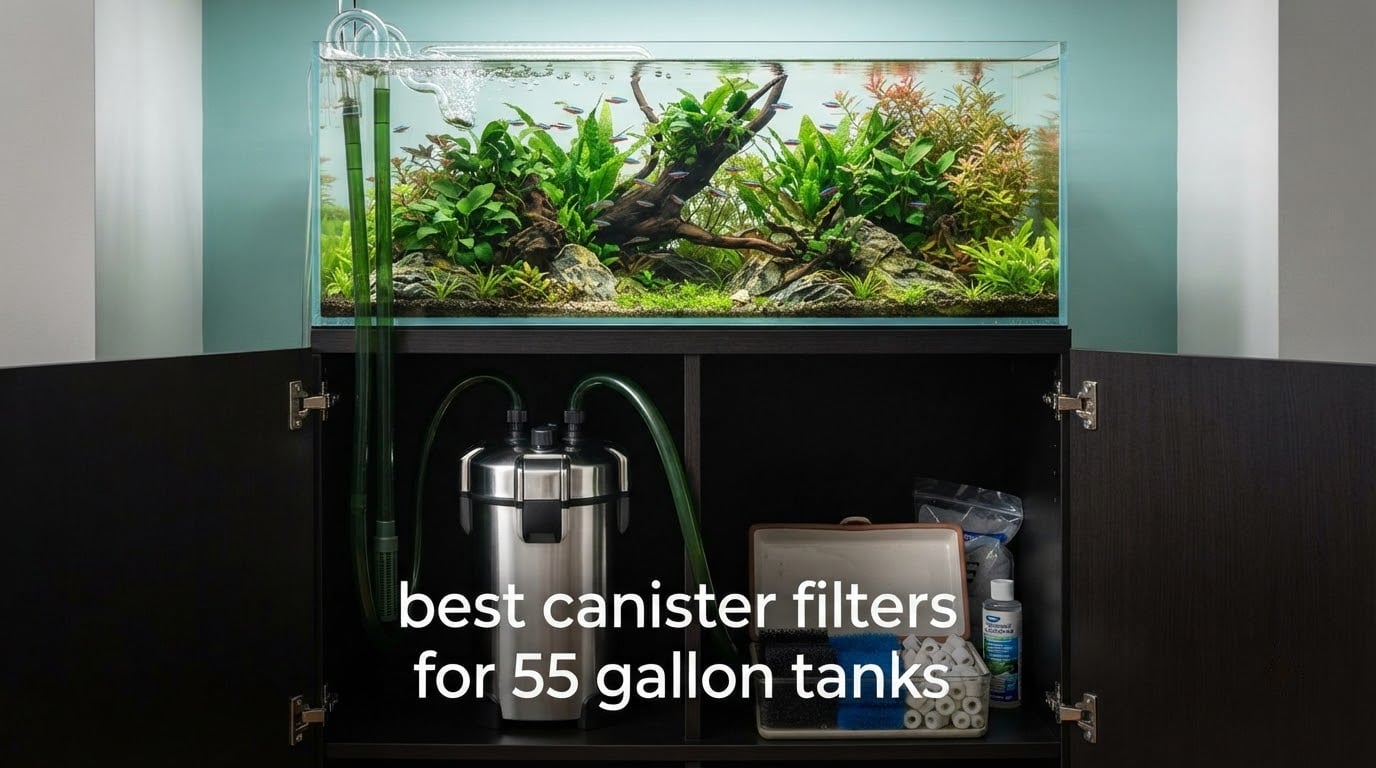
The Fluval 307 is the best canister filter for most 55 gallon tanks, because it pairs a 70 gallon rating with large EZ-Lift media baskets and a pump that owners describe as quiet enough for a bedroom. It is not the right pick for everyone, though. Plenty of 55 gallon owners buy a big canister and then spend the first month dialing the flow back down.
We spent weeks comparing ten of the most popular canister filters for 55 gallon tanks, reading the spec sheets against the complaints and the long-term owner reports. The short version: a 55 gallon tank needs roughly 250-400 GPH of rated flow to hit the 4-6 turnovers per hour that keepers aim for, and every filter on this list hits that target before real-world losses are subtracted.
That last part matters. Manufacturer flow ratings are no-load numbers measured with the intake wide open and no media in the path. Add a full stack of trays, raise the water from the tank surface to the canister head, and your real flow lands somewhere meaningfully lower. We flag that in every review below rather than pretending the box number is what you will feel in the tank.
Table of Contents
Top 3 Best Canister Filters For 55 Gallon Tanks (October 2026)
These three cover the most common situations. If you want one canister and no further reading, start with the Fluval 307. If you are building on a budget and want the media already in the box, the SunSun HW-302 Pro is the value lane. If you want a filter whose tank rating actually matches a 55 gallon tank without oversizing it, the Aqueon QuietFlow is the one that says so on the label.

Fluval 307 Canister
- Rated to 70 gallons
- EZ-Lift center-handle baskets
- Runs up to 25% quieter than earlier models
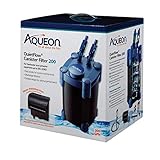
Aqueon QuietFlow
- Rated up to 55 gallons
- Spray bar plus water director
- Media included in the box
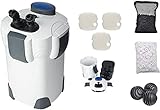
Every Canister Filter in This Roundup Compared in 2026
All ten models get their own review below, and every one of them runs a 55 gallon tank comfortably. The columns that actually change your purchase are the tank rating, the flow class, and whether the media is included, because those three determine what you spend in the first six months.
| Product | Specifications | Action |
|---|---|---|
| Fluval 307 Canister Filter |
|
Check Latest Price |
 Fluval 407 Canister Filter Fluval 407 Canister Filter |
|
Check Latest Price |
 Fluval FX2 Canister Filter Fluval FX2 Canister Filter |
|
Check Latest Price |
| Aqueon QuietFlow Canister Filter |
|
Check Latest Price |
 EHEIM Classic 2213 Canister Filter EHEIM Classic 2213 Canister Filter |
|
Check Latest Price |
 Eheim Pro 4+ 250 Canister Filter Eheim Pro 4+ 250 Canister Filter |
|
Check Latest Price |
 Marineland Magniflow 250 Canister Marineland Magniflow 250 Canister |
|
Check Latest Price |
 Marineland Magnum 290 Polishing Canister Marineland Magnum 290 Polishing Canister |
|
Check Latest Price |
| SunSun HW-302 Pro Canister Kit |
|
Check Latest Price |
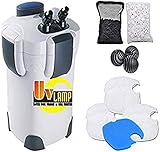 SunSun HW-303B Pro Canister Kit SunSun HW-303B Pro Canister Kit |
|
Check Latest Price |
1. Fluval 307 – Best Overall for a 55 Gallon Tank
Fluval 307 Perfomance Canister Filter for Aquariums up to 70 Gallons
Rated to 70 gallons
EZ-Lift baskets with center handle
6 lb, 16.5 in tall
eTEC pump
Pros
- Rated to 70 gallons so a 55 gallon tank is comfortably covered
- Media stack lifts out with one finger using the center handle
- Pump runs up to 25 percent quieter than earlier Fluval generations
- Over 10k reviews means replacement parts and common fixes are well documented
Cons
- Fluval carbon pouches and pads in the box run small versus aftermarket equivalents
- Included media packs are sometimes described as second-tier stock
- Older design has no self-priming pump
This is the filter we keep coming back to, and the reason is simple: the margin between a 70 gallon rating and a 55 gallon tank is exactly the right amount of headroom. It is not so oversized that a planted tank gets demolished by current, and not so tight that a heavy stocking pushes the biological load past what the baskets can hold.
Media access is the part that wins it over the other Fluval models. The EZ-Lift baskets have a center handle, so the whole stack comes up in one motion instead of tipping a loose pile of sponge onto the floor of your cabinet. On a filter this size, that is the difference between a two minute job and a fifteen minute one.
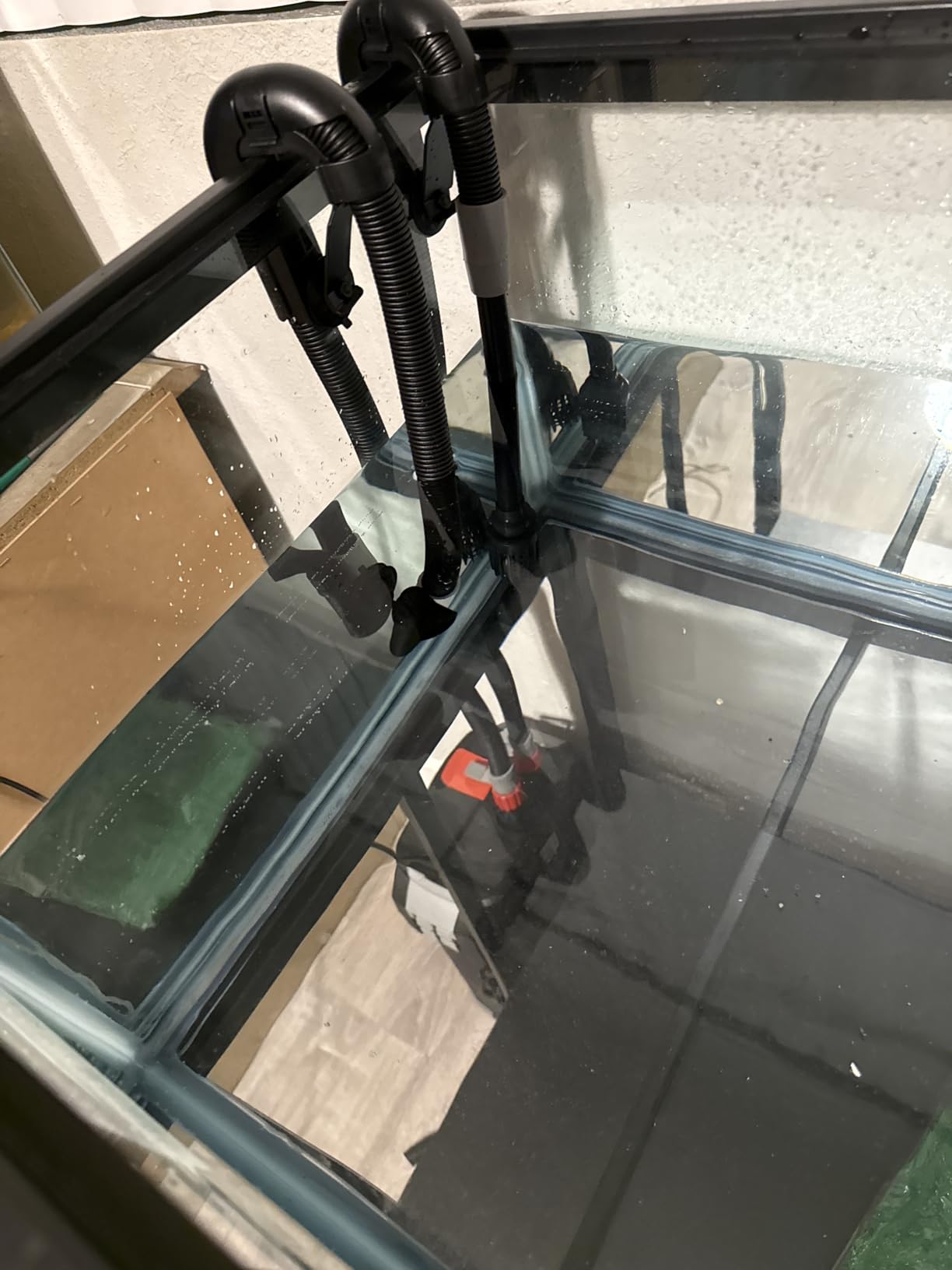
Across more than 10,000 reviews the pattern is consistent. Owners report strong flow, very low noise, and clear water, and the complaints cluster around the same small thing: the consumables that ship in the box. Fluval’s own carbon pouches and filter pads are compact, and a lot of keepers replace them with bulk poly-fill or third-party floss in the first month anyway.
One detail worth planning for. The baskets stack vertically, so the order you build them in determines how water moves through the filter. Coarse sponge belongs at the bottom near the intake, floss above that, and biological media at the top where the water is cleanest. Owners who skip that layout report a dirty top tray and a clogged intake within a few months.
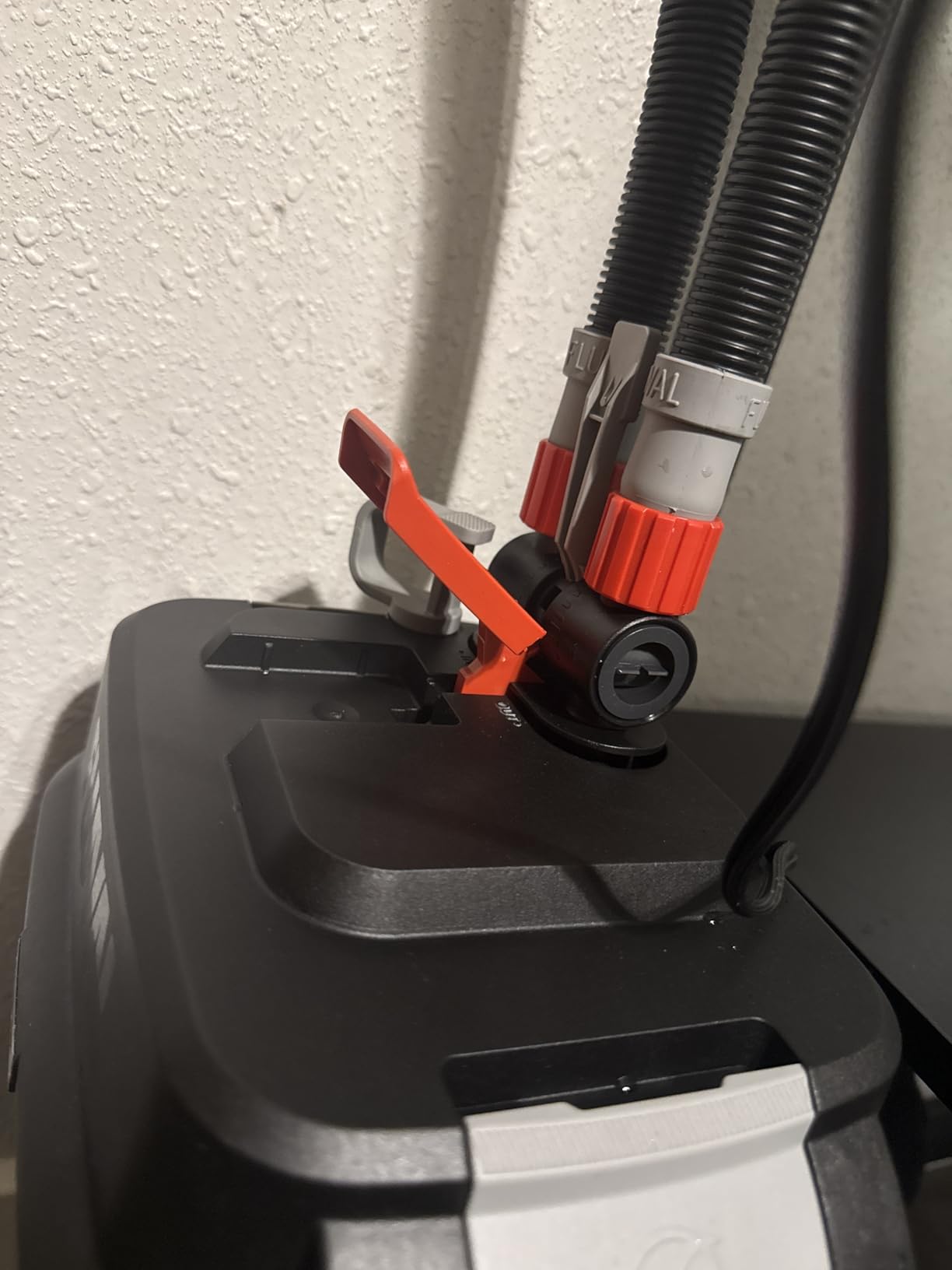
What you should know before you buy?
Measure your cabinet before you order. The body measures 9.45 by 7.09 by 16.54 inches, which fits most 55 gallon stands but not every shallow one. The canister weighs 6 pounds empty, and a wet one is meaningfully heavier, so plan on lifting it with both hands rather than one.
You also need to think about hose length. The filter needs to sit below the tank rim to prime, and the hoses need to reach up and back down without being stretched tight. Overstretched hoses are the most common cause of slow leaks at the head connection, and that is a problem we come back to in the reliability section below.
Who should buy it and who should skip it?
Pick the 307 if you want one filter that handles a 55 gallon tank today and a heavier stocking later, and if you would rather do a monthly media change without dreading it. The center-handle baskets and the room for extra floss are why it keeps a high profile in long-running forum threads.
Skip it if your tank is a heavily planted low-flow setup and you have no spray bar in the plan, or if you are shopping in a lower cost tier. The SunSun HW-302 Pro covers a comparable flow class with a different feature set.
2. Fluval 407 – Best for Heavily Populated Tanks
Fluval 407 Performance Canister Filter – For Aquariums Up To 100 Gallons
Rated to 100 gallons
9.7 lb body
Quick-disconnect valves
eTEC pump
Pros
- 100 gallon rating gives real headroom for a heavily stocked 55 gallon tank
- Quick-disconnect valves and lift-lock clamps simplify cleaning
- Very quiet in a living room or bedroom according to owner reports
- Owners running it on 55 gallon tanks report crystal-clear water
Cons
- Impeller cover can disengage under pressure and stop filtration
- Multi-basket media makes consumable costs higher at change time
- Some owners report a faint hum once running
The 407 is the 307 with more of everything, and the reason to choose it is stocking level rather than tank size. A 55 gallon tank running a full complement of African cichlids, a discus pair, or a community set with heavy feeding produces noticeably more waste than a lightly stocked one. More filter media means more surface area for the bacteria that process that waste.
Owners who switched up from a 307 almost always say the same two things about the jump. Water clarity improves in a heavily stocked tank because there is more mechanical capacity before the trays clog. And the quietness holds up, which matters if the canister is directly under the tank in a living room.
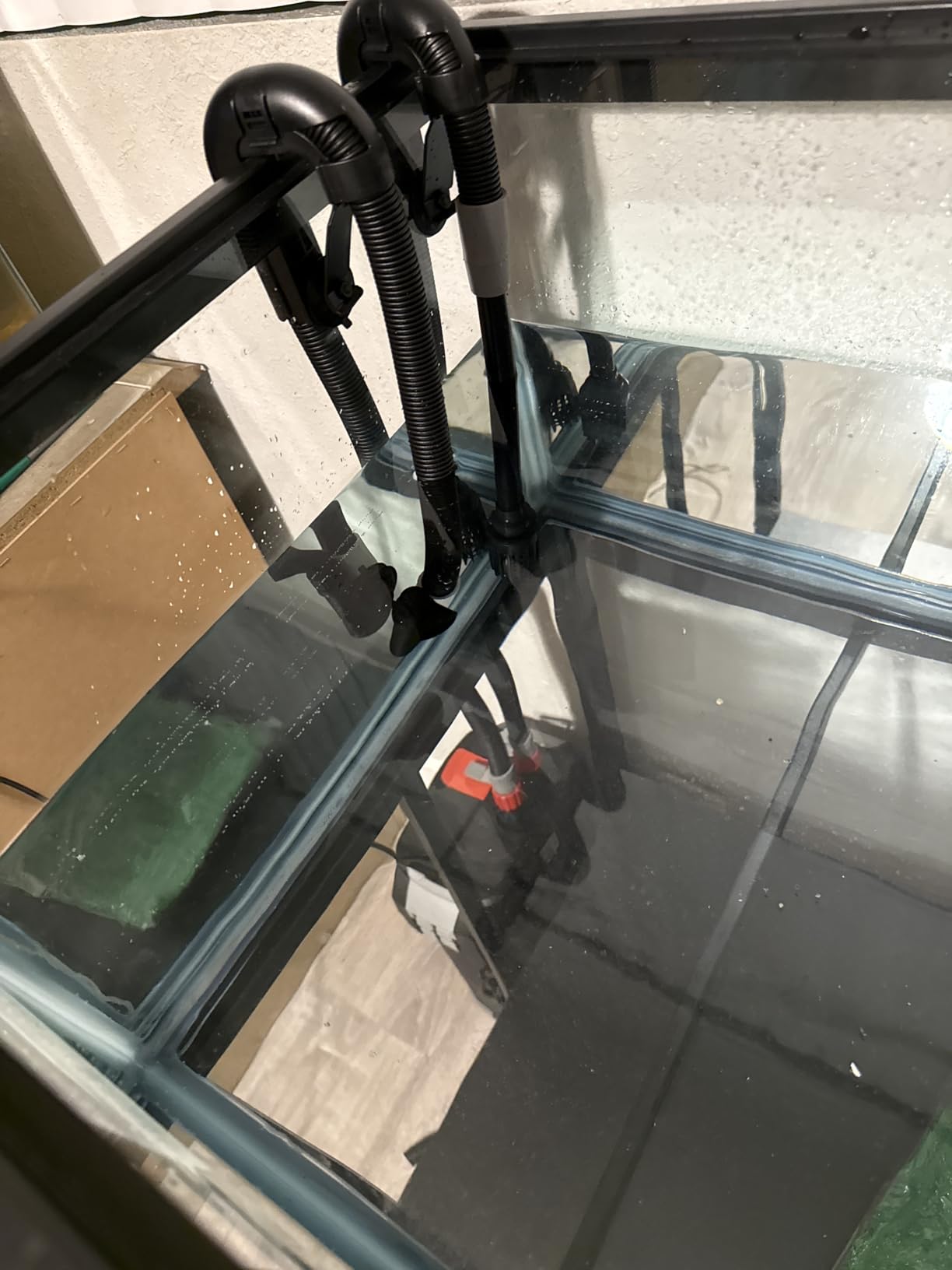
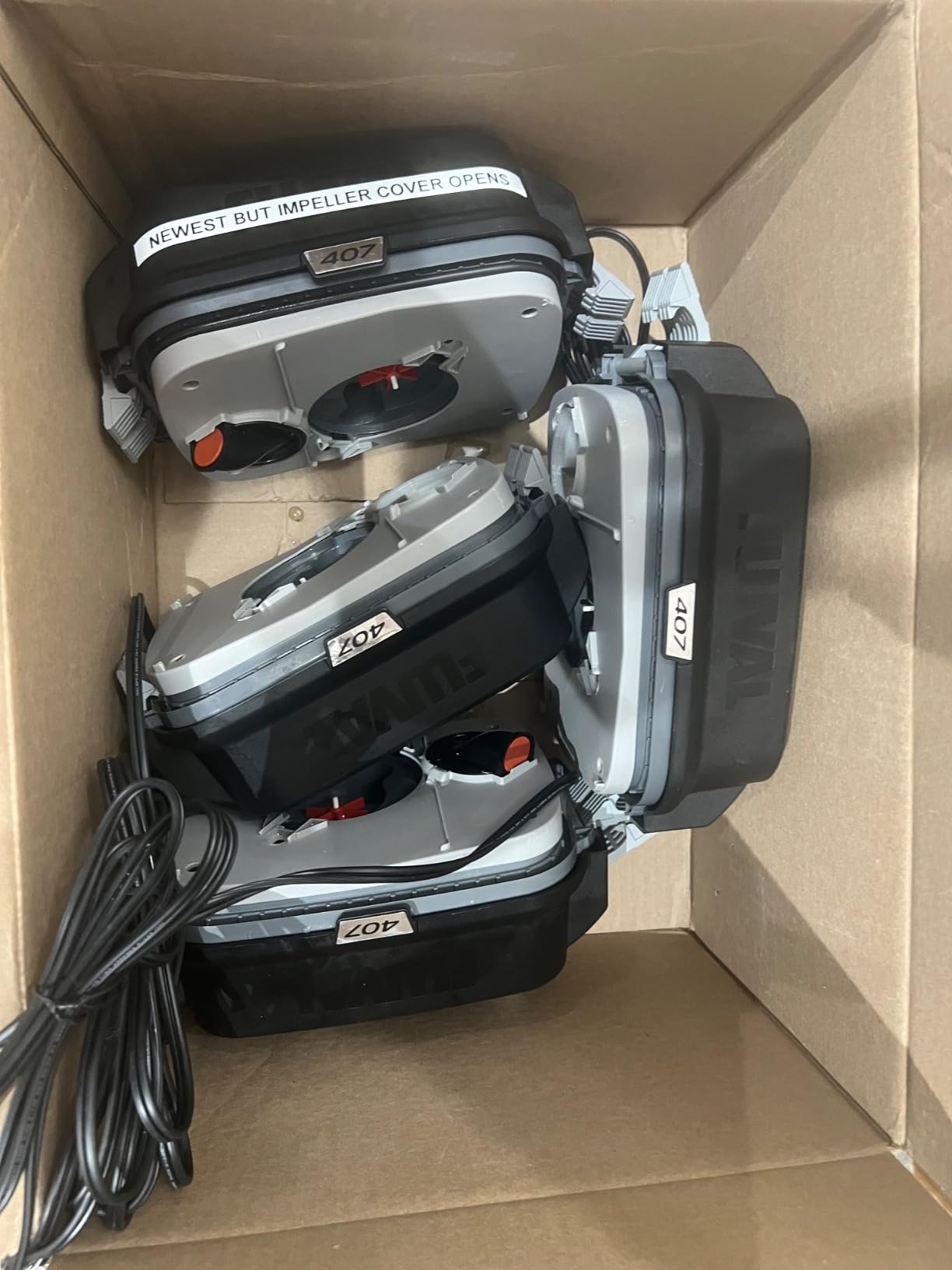
There is a documented failure mode on this model and it is worth understanding before you buy rather than after. A minority of owners report the impeller cover disengaging under water pressure, which halts filtration and leads to a motor head replacement. It is not the common experience, but it is the reason the 407 does not carry the top spot in this roundup despite identical ratings and an almost identical review count to the 307.
That is a real difference in risk profile between two otherwise similar products. On a lightly stocked 55 gallon tank the 307 has more margin before anything stresses it. On a tank that is working hard all day, every day, the additional capacity is worth the extra cost and the slightly larger footprint.
What you should know before you buy?
Size is the practical constraint. The 407 measures 7.09 by 9.45 by 19.29 inches and weighs 9.7 pounds empty, noticeably taller and heavier than the 307. Check the clearance under your stand and make sure you can get it in and out through the cabinet opening.
Plan your media budget too. Because the 407 uses the same multi-basket layout, the ongoing consumable cost is higher at change time than a simpler two-tray design. That is a trade you make willingly for capacity, but it is easier to accept if you know about it in week one.
Who should buy it and who should skip it?
Buy the 407 if your 55 gallon tank is fully stocked, fed heavily, or holding fish that produce a lot of waste. It is also a sensible choice if you may move up to a larger tank and want the filter to come with you.
Skip it if your tank is lightly stocked, because the 307 gives you nearly the same result with less to lift. Skip it too if you have a shallow cabinet, where the height is a genuine problem rather than a minor inconvenience.
3. Fluval FX2 – Best for Maximum Media Volume
Fluval FX2 High Performance Canister Aquarium Filter
475 GPH pump
3.9 L media capacity
16.5 in tall, 14.45 lb
Self-starting Smart Pump
Pros
- Holds up to 3.9 L of media across four baskets
- Four removable baskets that force water through each stage
- Smart Pump self-evacuates trapped air every 12 hours
- Compact 16.5 inch body that fits under most aquariums
Cons
- Sits in the premium tier for canister filters
- Heavier and wider than the classic Fluval models
The FX2 exists for people who want the media volume of a much larger filter in a body that still fits under a standard aquarium. Four removable baskets hold up to 3.9 liters of media, and the design is built so water cannot simply bypass a stage. That no-bypass layout is why the filter stays clear in a tank that produces a lot of debris.
The self-starting Smart Pump is the feature that changes daily life. You fill the canister, plug it in, and it clears trapped air on its own every 12 hours. For a lot of keepers that removes the single most common frustration with canisters, which is a pump that will not prime and a filter that spits bubbles for a week afterward.
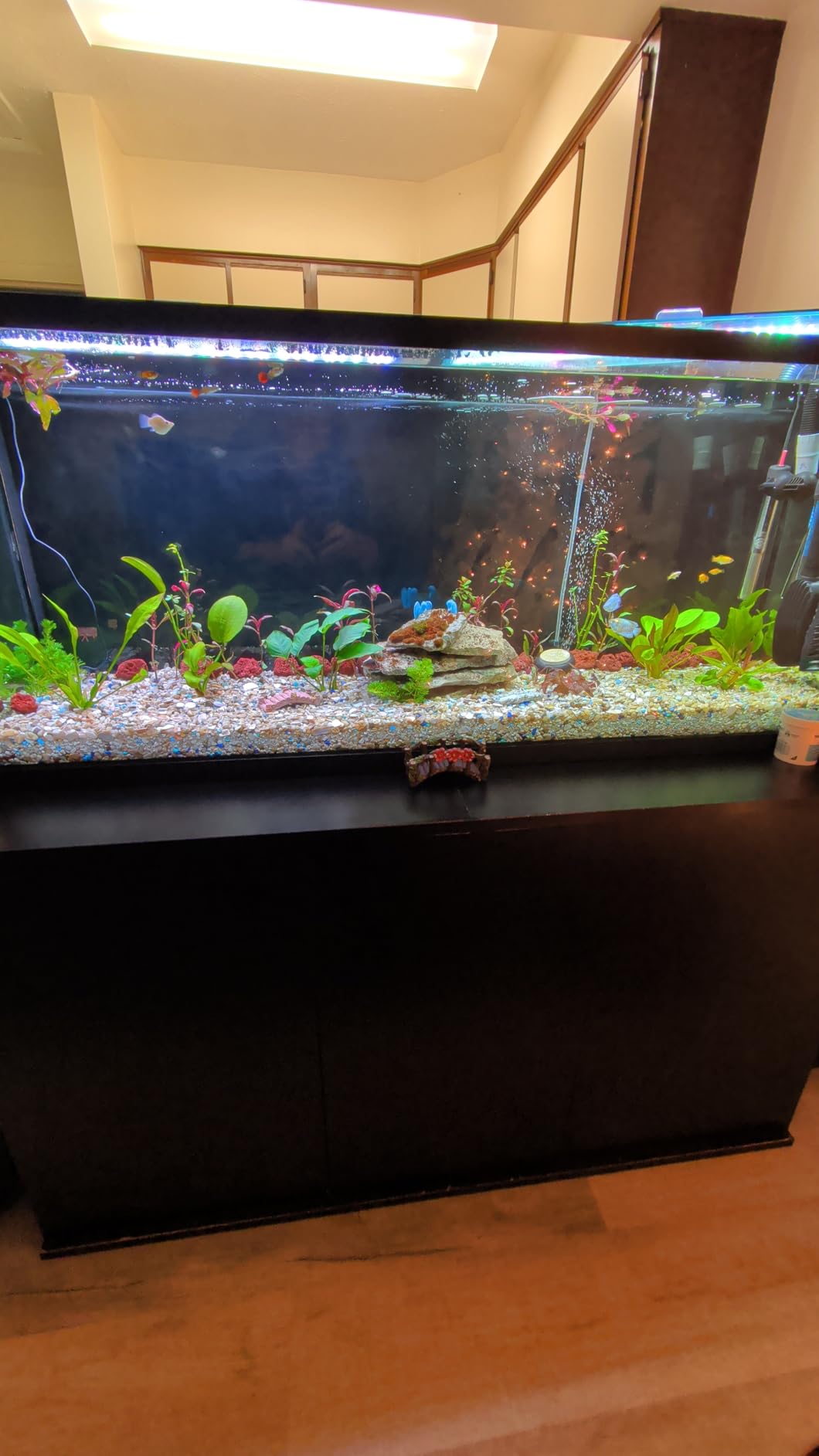
There is a useful utility valve at the base that drains the canister directly, which turns a water change into a closed loop rather than a trip to the sink with a bucket. Combined with the lid-mounted hose clips for storage, it is a design that clearly had maintenance in mind from the start.
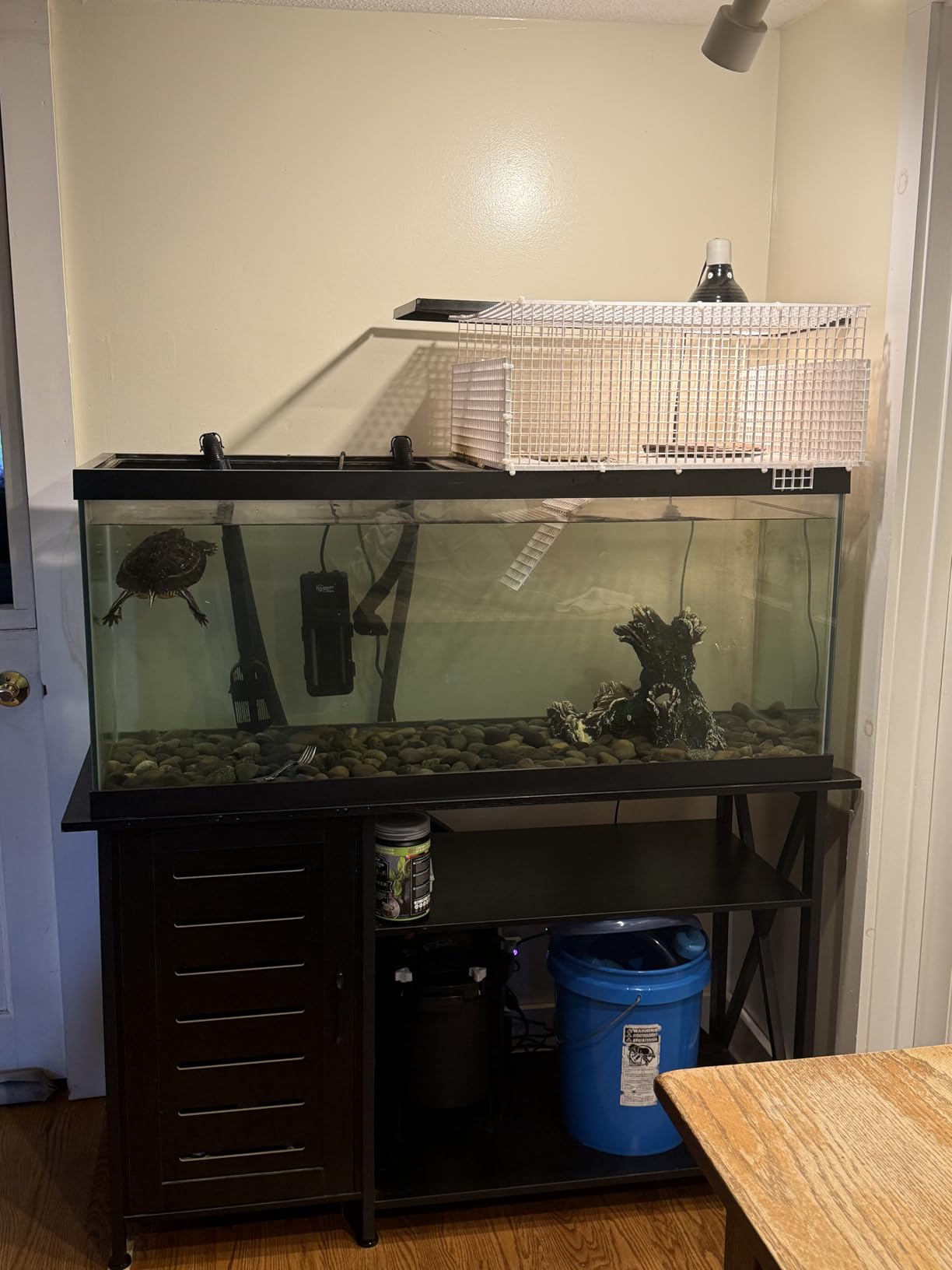
What you give up for that refinement is bulk. At 14.45 pounds and 13.4 inches square, the FX2 is one of the largest canisters in this roundup. It is 15 percent smaller than the FX4 and still fits under most aquariums, but most is not all, and shallow stands are where it fails.
What you should know before you buy?
At 475 GPH rated flow, this is the highest rated pump on this list, well above what a 55 gallon tank requires. That is not a problem in itself because you can always throttle it, but it does mean that unless you fit a spray bar you will be running a very strong current in a relatively small volume of water.
The maintenance story is the strongest argument for it. The four-basket layout gives you room to run a proper mechanical stage without sacrificing biological capacity, and the self-starting pump removes the most common startup failure. If you keep a heavily planted tank that produces leaf debris, the no-bypass design earns its keep.
Who should buy it and who should skip it?
Buy the FX2 if media volume is your priority, if you run a tank that produces heavy debris, or if you want a filter that largely primes itself. It is also a good match for anyone planning to keep a larger tank in the future.
Skip it if the cost of the canister is the deciding factor or your cabinet is shallow. At 14.45 pounds, it is one of the heavier canisters here, and a 55 gallon tank does not require that much capacity.
4. Aqueon QuietFlow – Best Value for a 55 Gallon Tank
Aqueon QuietFlow Canister Aquarium Filter, Up to 55 Gallons (ECOM)
Rated up to 55 gallons
8.5 x 7.5 x 17.25 in
14.55 lb
1 year warranty
Pros
- Tank rating matches a 55 gallon tank exactly
- Three return options included: spray bar plus water director plus polishing unit
- Quick disconnect valves and pump locking heads
- Loaded with carbon and coarse foam and bio-balls and ceramic rings
Cons
- Carbon and the polishing cartridge need monthly replacement
- The hang-on polishing unit is a separate piece of equipment to maintain
This is the one filter in the roundup whose tank rating is exactly 55 gallons, which makes it the least ambiguous choice on the list. Everything else oversizes deliberately. That is not a knock, but if you want a filter that a retailer, a manufacturer sheet, and your own head all agree on, this is it.
The three return options are what make it versatile. A spray bar spreads flow along the back of the tank for even circulation, a water director sends a focused stream for a current-loving stocking, and the included hang-on-back polishing unit handles the final clarity pass. Having all three in the box means you can change your approach as the tank changes.
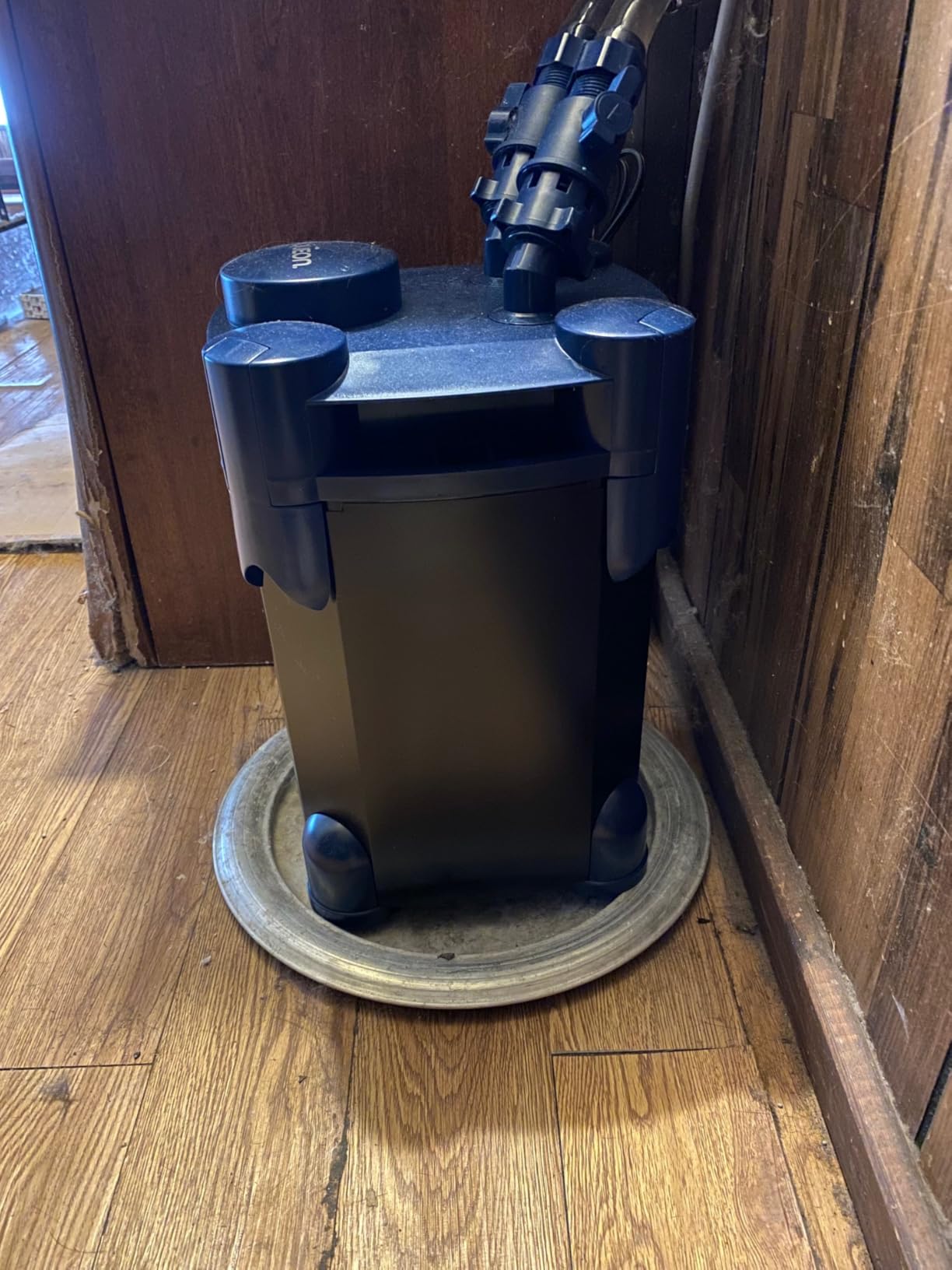
It is also one of the few canisters here that arrives fully loaded. Activated carbon, coarse foam, bio-balls, and bio-ceramic rings all ship in the box alongside the hoses, valves, and connections. For a first canister that saves a separate media run on day one.
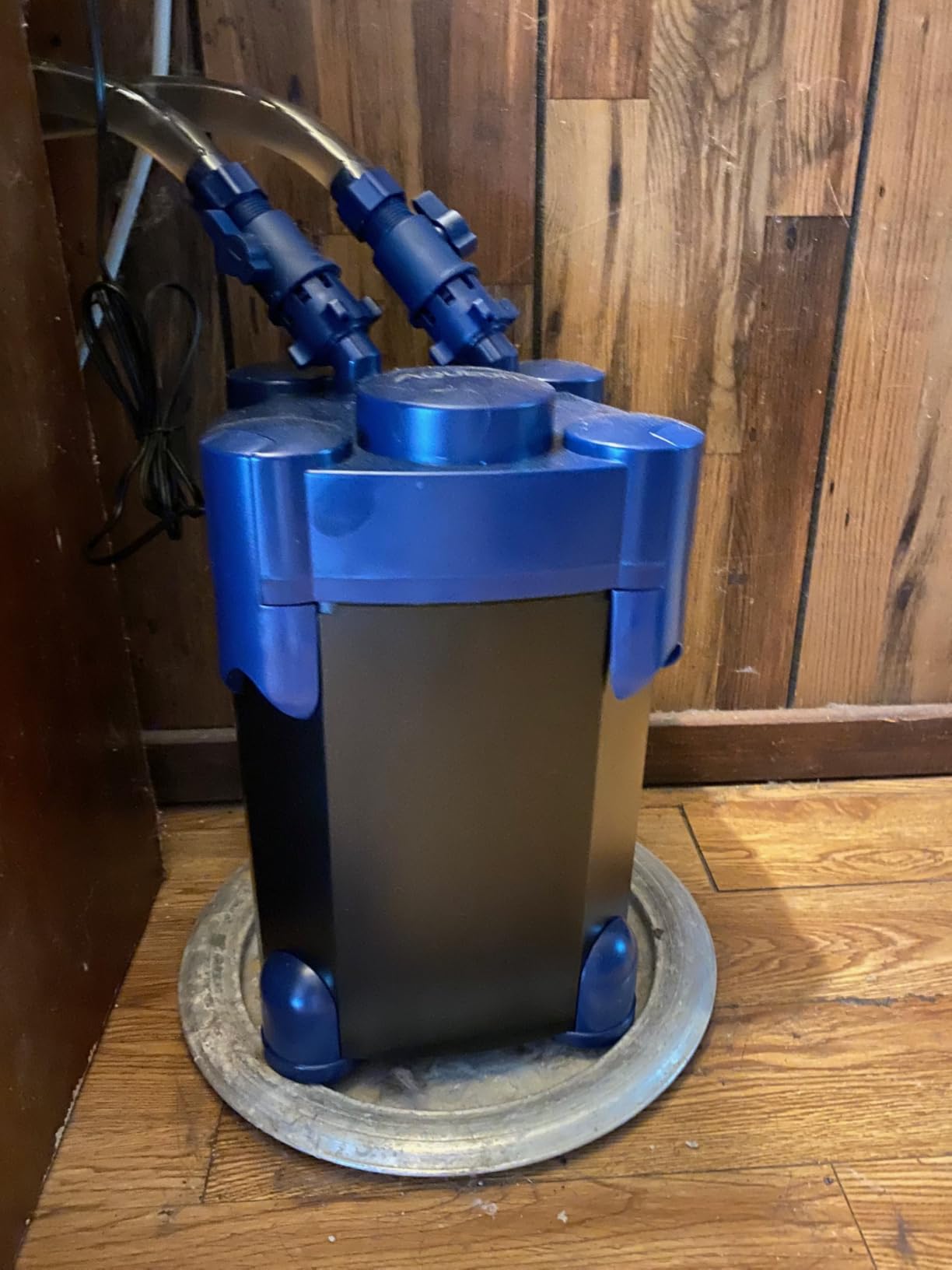
The honest drawback is the recurring cost. Carbon changes every 30 days, and the polishing unit uses large Aqueon replacement cartridges on the same monthly cadence. Over a year that adds up, and it is the reason to consider poly-fill in the carbon tray instead if you want to cut it back.
What you should know before you buy?
Check the tank rating listings carefully before you order, because identical units in this family appear with different capacity claims depending on the retailer. Make sure the one you pick is the up-to-55-gallon version rather than a larger variant that has been mislabelled in the listing.
The hose length is worth measuring against your actual stand layout. A canister that arrives with short hoses and a deep stand is a frustrating afternoon, and the fix is straightforward if you planned for it and annoying if you did not. Cut to length, leave a little slack, and do not force the hoses to stretch to reach.
Who should buy it and who should skip it?
Buy the QuietFlow if you want media in the box on day one, if you want three return options to work with, or if you prefer a filter that is neither minimal nor oversized. It is a particularly good fit for a turtle or axolotl setup where intake protection and gentle turnover matter more than raw flow.
Skip it if you are sensitive to ongoing consumable costs, or if you only need mechanical and biological filtration and would rather not maintain a second hang-on unit alongside the canister.
5. EHEIM Classic 2213 – Best for Longevity
EHEIM Classic Canister Filter 2213, Classic 250 – PetOverstock
12 watt power draw
8 x 6.3 x 13.98 in
4.49 lb
Permo-elastic sealing ring
Pros
- Very low 12 watt power draw for continuous operation
- Permo-elastic silicone ring fixed to the head closes safely after cleaning
- Compact footprint fits most cabinet stands
- Complete with EHEIM Mech and Substrat Pro media plus valves
Cons
- One-star share of 12 percent points to long-horizon seal and aging hardware complaints
- Older design has no self-priming features
- Part availability depends on this model staying in production
The EHEIM name carries a specific kind of reputation in aquarium circles: pumps that keep running for years. This model is the smallest external canister on the list, and it is the one that the longevity reputation describes best. Long-term owners on AquariumAdvice, the forum where Eheim and Fluval are routinely called the two big names in the category, describe EHEIM units as lasting a decade or more with basic upkeep.
That reputation is not uniform, and the rating distribution here shows it. Twelve percent of reviews are one-star, and those tend to be long-horizon complaints about seals and aging hardware rather than first-year failures. If you are buying for a decade, some of that is the expected shape of the curve rather than a reason to pass.
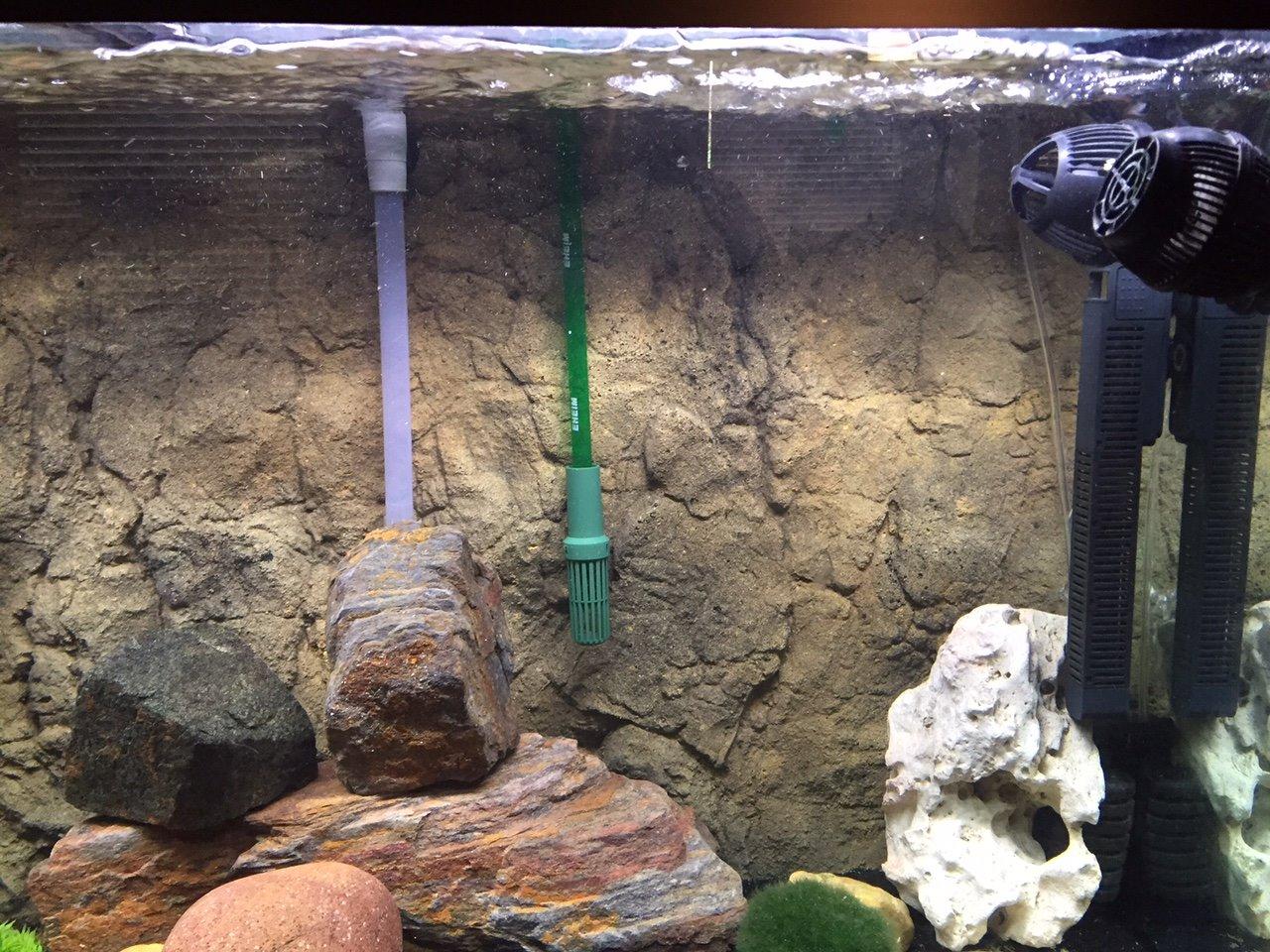
The design details are older but sensible. The silicone sealing ring is fixed to the pump head rather than seated loose, which removes the single most common canister mistake of a flat or twisted seal. The 12 watt draw is remarkable next to modern units and adds up over years of continuous running.
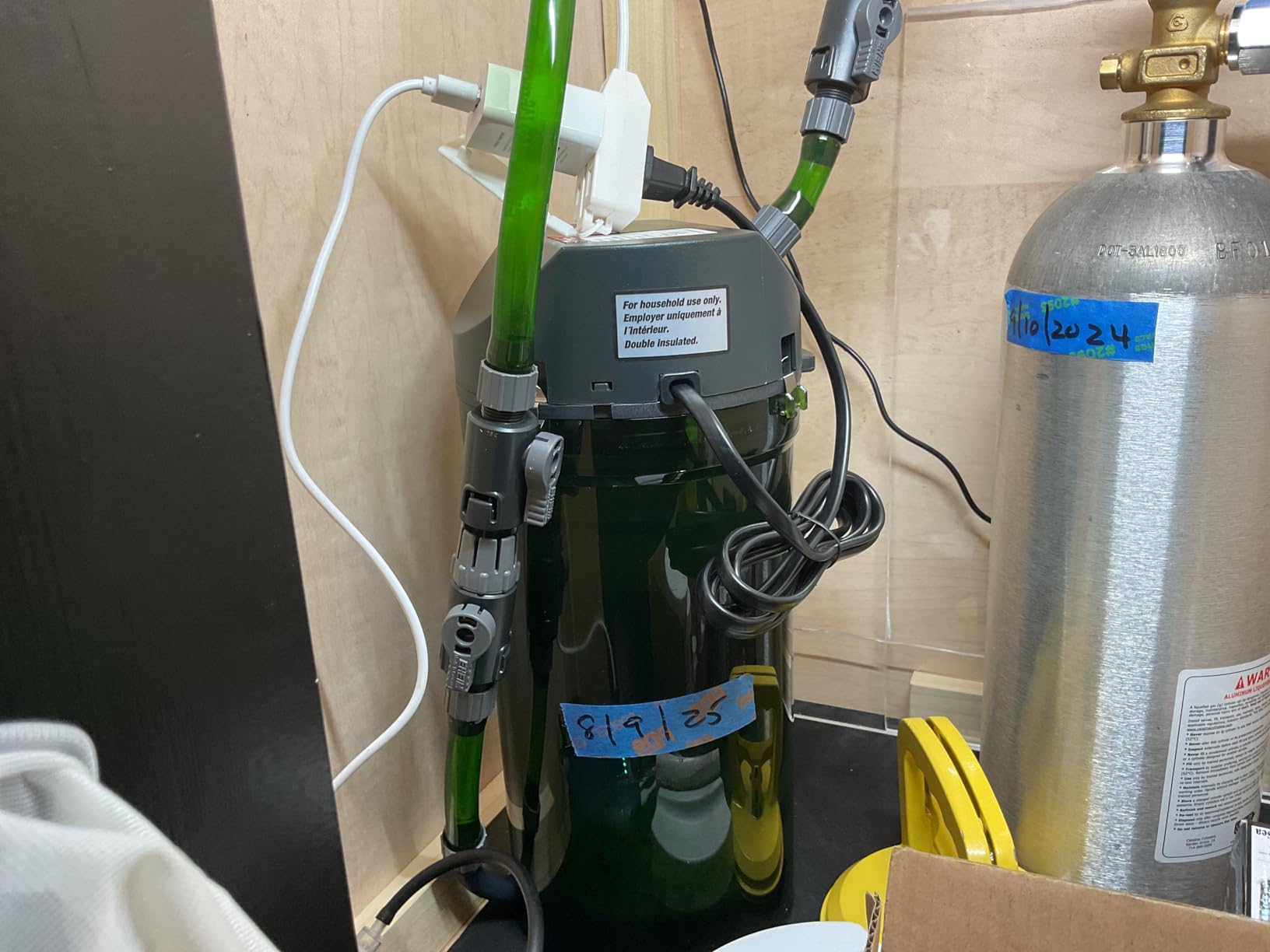
It is also the most compact external canister here at 4.49 pounds and 13.98 inches tall, which makes it an easy fit in a shallow cabinet. The spray bar, inlet pipe, hose, and installation accessories all ship in the box alongside filter sponges and loose media.
What you should know before you buy?
There is no self-priming mechanism on this model. You prime it the traditional way, by filling the canister and pumping the head until it catches. On a 4.49 pound body that is manageable, but it is a step that newer models have engineered away.
Check the listed variants carefully. The listing shows capacity options of 40, 66, and 92 US gallons, so confirm you are ordering the version you actually want for a 55 gallon tank. A lower-rated variant in a 55 gallon tank is the single most common sizing mistake people make, and it is worth a thirty second check.
Who should buy it and who should skip it?
Buy the Classic 2213 if you want a filter you are likely to still own in a decade, if cabinet space is tight, or if you would rather not pay for a pump with features you will not use. The low power draw also makes it a comfortable choice for a tank running continuously.
Skip it if you want a self-priming unit, if you are replacing a filter that failed and want modern conveniences, or if you are starting fresh and want the simplest possible first-time setup experience.
6. Eheim Pro 4+ 250 – Best for Fast Media Swaps
Eheim Pro 4+ 250 Filter up to 65g
Rated up to 65 gallons
10 x 10 x 14 in
12 lb
Pre-filter basket
Pros
- Pre-filter basket removes floss without emptying the canister
- Reported as completely silent in a bedroom or office
- Runs micro-bubble free once primed
- Trays lift straight out for cleaning
Cons
- Impeller cleaning and replacement is fiddly and easy to break
- Instructions are small and disjointed for first-time setup
- Reports of leaking at the hose connector fitting after extended use
The Pro 4+ is the canister for anyone who changes media often. Its pre-filter basket sits at the very top of the stack, so you pull the floss out, swap it, and put it back without draining anything or dismantling the filter. For a tank that needs frequent floss changes, that is a meaningful time saving and it is the reason this model exists.
Silence is the other headline. Owners describe it as quieter than most competing canisters, which is a fair claim for a bedroom or office placement. It is also rated to 65 gallons, so a 55 gallon tank has comfortable margin without the step up in size to the largest units.
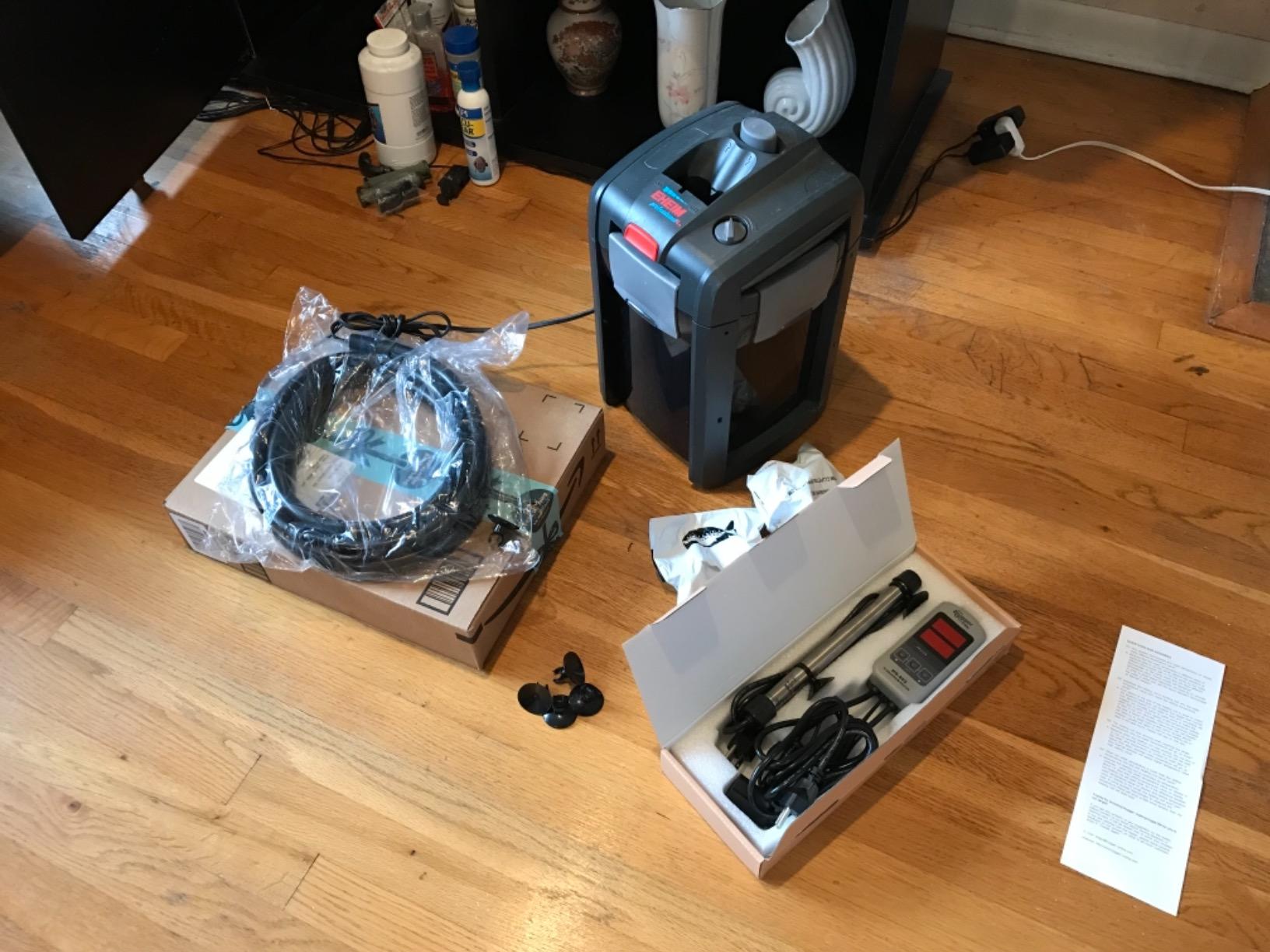
The 3.9 star rating is the lowest in this roundup and the reasons are consistent across the reviews. Priming is harder than it should be because the printed instructions are small and disjointed, and cleaning the impeller is fiddly work that owners say is easy to break if you are careless. Those are both fixable with a few minutes of care.
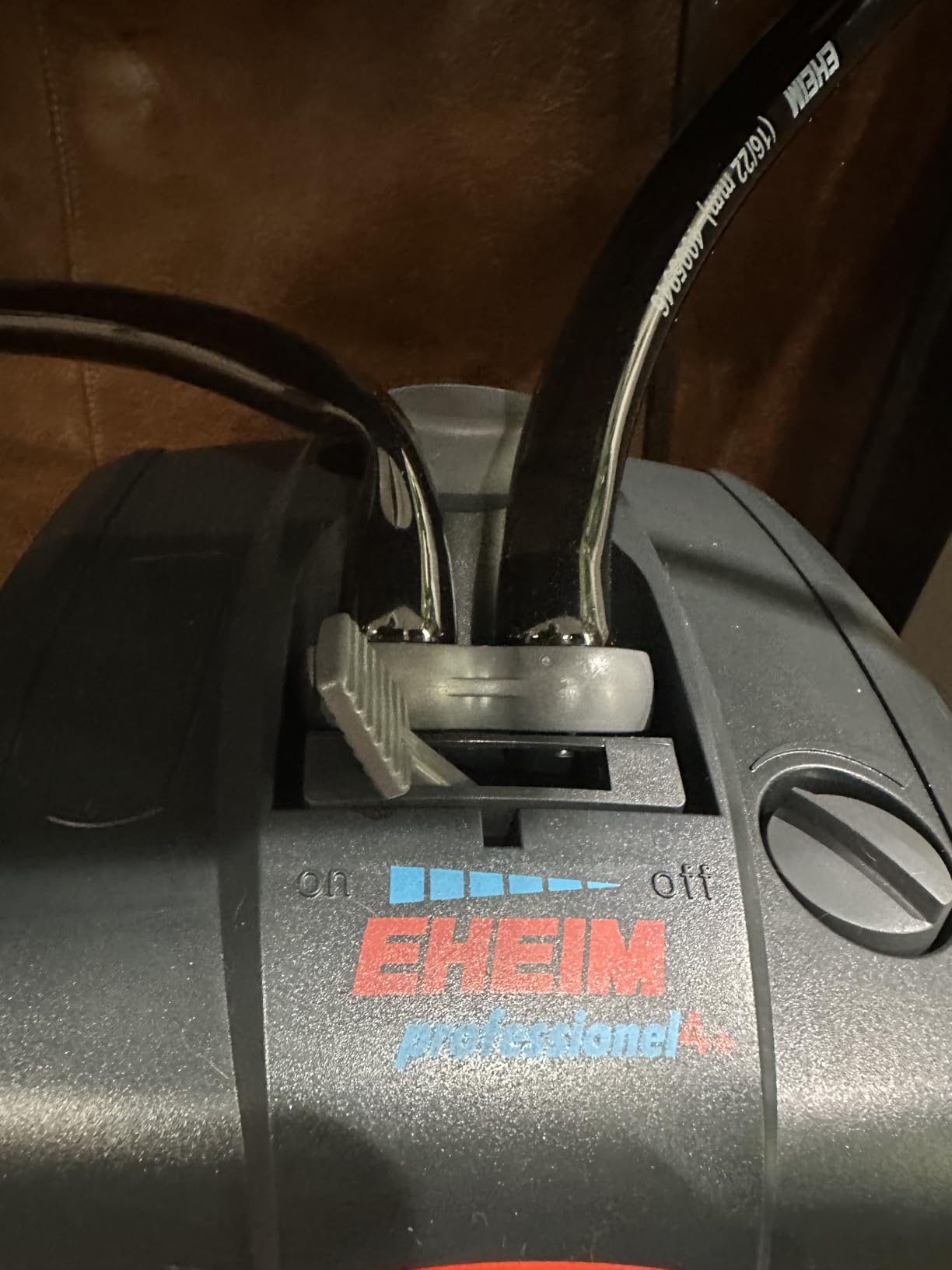
The more serious item is the reported leaking at the hose connector plastic fitting after extended use. That complaint appears often enough to take seriously. Keep the hose runs short and supported rather than stretched, and check the fitting during every media change, because a fitting that is under constant stress is the root cause.
What you should know before you buy?
Set aside ten extra minutes for the first startup. Owners who prime the Pro 4+ without trouble usually do it by filling the canister fully, seating the head carefully, and running the pump in a sink until it catches. Rushing that step is what produces the bubble spitting that haunts new canister owners.
Also plan for how the media stack is ordered. The pre-filter basket is only useful if it stays on top. If you push everything below it, you lose the benefit entirely, and for a tank with floating debris that basket is what keeps the lower trays from clogging in the first place.
Who should buy it and who should skip it?
Buy the Pro 4+ 250 if you swap floss frequently, if your tank is in a bedroom where noise is a real constraint, or if you want simple tray access on a 55 gallon tank. It is a sensible middle step between the Classic and the larger premium units.
Skip it if first-time setup simplicity matters most to you, since the documentation is the weak point, or if you are running a tank where intake clogging is likely and you want the simplest possible intake path.
7. Marineland Magniflow 250 – Best for Beginners
Marineland Magniflow 250 GPH Canister Aquarium Filter
250 GPH for tanks up to 60 gallons
14 x 9.5 x 15.75 in
12.56 lb
Quick prime button
Pros
- 250 GPH is well matched to a 55 gallon tank
- Complete media set in the box with foam and carbon bags and bio-balls and ceramic rings
- Quick prime button handles self-priming startup simply
- Watertight seal lid opens for media changes
Cons
- Bulky 14 x 9.5 x 15.75 inch body takes more cabinet space
- One-star share of 14 percent points to seal and durability complaints
- Heavy 12.56 pound body is awkward in a shallow cabinet
If you have never owned a canister, the Magniflow 250 is the one that makes the fewest demands on you. The quick prime button fills the filter chamber for a self-priming startup, the lid has a watertight seal that lifts for media access, and the Stack N Flo trays force water through each media layer rather than letting it find the easy path around the edges.
That tray design is more than a marketing line. Bypass is why a well-stocked filter still runs dirty, and a tray system that directs water through each layer gives you more predictable clarity than loose media in an open basket. On a 55 gallon tank that shows up as steadier water between changes.
The included media list is long enough that you can run this filter without buying anything else at the start. Filter foam, activated carbon bags, bio-filter balls, ceramic rings, and polishing pads all ship in the box, and it works with Marineland Rite-Size S media if you want to stick with one brand later.
Two cautions. The body is bulky at 14 by 9.5 by 15.75 inches and weighs 12.56 pounds, so it is not a good fit for a shallow cabinet. And the one-star share is 14 percent, the highest here, with the complaints clustering around seals and long-term durability. That is a reason to keep a drip pan under it, which we cover further down.
What you should know before you buy?
At 250 GPH it is rated for aquariums up to 60 gallons, which makes the 55 gallon tank a comfortable middle of the range rather than a stretch. That is a nice change of pace from filters that are all either slightly under or dramatically over for this size.
Check the variant listings before ordering. This model appears in 30, 55, and 100 gallon versions, and the tank rating changes with each. You want the 55 gallon version, and confirming that in the listing takes a moment that prevents a return.
Who should buy it and who should skip it?
Buy the Magniflow 250 if this is your first canister, if you want a complete media package in the box, or if you prefer a straightforward design without extra features to learn. The 250 GPH flow also leaves plenty of room to throttle down with a spray bar.
Skip it if cabinet space is tight, since it is one of the larger bodies here, or if long-term reliability is the priority and you would rather pay up for it.
8. Marineland Magnum 290 – Best for Tight Spaces
Marineland Magnum 290 GPH Polishing Canister Aquarium Filter
290 GPH internal pump
7.5 x 3.5 x 9.88 in
2.91 lb
Two refillable chambers
Pros
- Compact 7.5 by 3.5 by 9.88 inch body fits tight cabinets
- Submerged internal pump starts without a priming routine
- Two refillable chambers accept carbon or custom media
- Micron cartridge delivers a final polishing pass
Cons
- Mounts inside the tank so it occupies display footprint
- Depends on a replaceable micron cartridge that clogs with use
- Rated for aquariums up to 97 gallons which overshoots a 55 gallon tank
This is the odd one out in the roundup, and the oddness is the point. The Magnum 290 is an internal canister. The motor sits submerged inside the tank rather than hanging below it, so there is no cabinet space required at all and no hoses to route. At 2.91 pounds and 9.88 inches tall it is the smallest unit here by a wide margin.
Startup here is about as simple as it gets. There is no priming button, no hose filling, and no head to seat. You set it in the tank, plug it in, and it runs. For a tank on a small stand, in a dorm room, or in a cabinet that cannot take a 16 inch canister, that solves a real problem no external filter can.
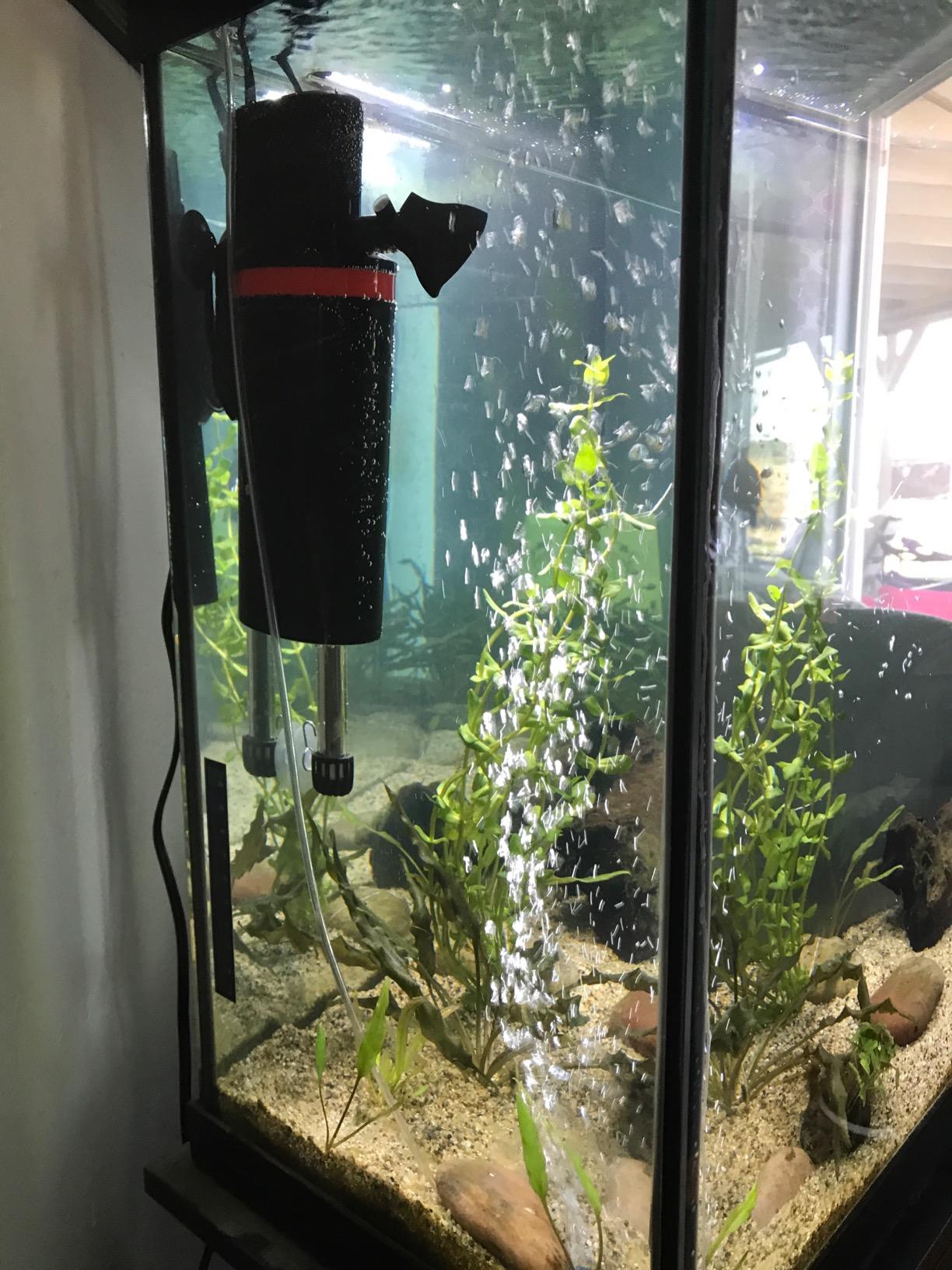
The two refillable chambers are more flexible than they sound. One usually holds carbon and the other takes whatever custom media you want, and a micron cartridge handles the final polish. It is continuous three-stage filtration rather than the multi-basket approach of the external canisters, so the media capacity is genuinely smaller.
The trade-off is display footprint and consumables. An internal filter sits in the tank where you see it, and the micron cartridge has to be replaced as it clogs. At 290 GPH rated for tanks up to 97 gallons, it is also far more flow than a 55 gallon tank needs, so you will be turning it down.
What you should know before you buy?
Decide honestly whether you want a filter hidden or simply accessible. An internal canister means a cable running over the rim and a visible piece of equipment in the aquascape, which some keepers dislike and others barely notice. If your tank is on a counter rather than a stand, this may be the only realistic option.
Watch the intake. An internal filter in a planted tank draws from a fixed position inside the tank, and floating debris or a heavy root mass can reduce flow more than the external canisters with a reach-in pipe. Position it where the flow will be cleanest, away from dense planting.
Who should buy it and who should skip it?
Buy the Magnum 290 if cabinet space is genuinely unavailable, if you want zero assembly and zero priming, or if you want a compact polishing unit alongside a filter you already own.
Skip it if you want a clean look with nothing visible in the tank, if you want large media capacity, or if you would rather not buy replaceable micron cartridges on a schedule.
9. SunSun HW-302 Pro – Budget Pick
SunSun Hw302 265GPH Pro Canister Filter Kit
265 GPH rated flow
Rated up to 75 gallons
9 x 9 x 18 in
3 media baskets
Pros
- 265 GPH covers a 55 gallon tank with room to spare
- Very quiet once running and often reported as inaudible
- Simple forgiving priming that usually starts within a few pumps
- Carbon plus ceramic rings plus bio-balls and filter pads all included
Cons
- Poorly written instructions that require common sense to assemble
- Stiff hoses and cheap-feeling plastic fittings and latches
- Intake and output clips and the lid O-ring wear with long use
- Spray bar outlet is noisy unless angled toward the glass
The HW-302 Pro is the reason budget canister recommendations exist at all. It moves 265 GPH, it is rated for tanks up to 75 gallons, and the Pro kit includes three white filter pads, three media baskets, a pound of premium carbon, a pound of ceramic rings, and a set of bio-balls. Out of the box that is a complete filtration setup, which is where the value in this tier comes from.
Owners repeatedly describe it as outperforming its class. The pump is quiet once it is running, and priming is forgiving in a way that premium models are not, usually catching within a handful of pumps. For a 55 gallon tank at 265 GPH, the flow class is close to ideal once you account for media and lift.
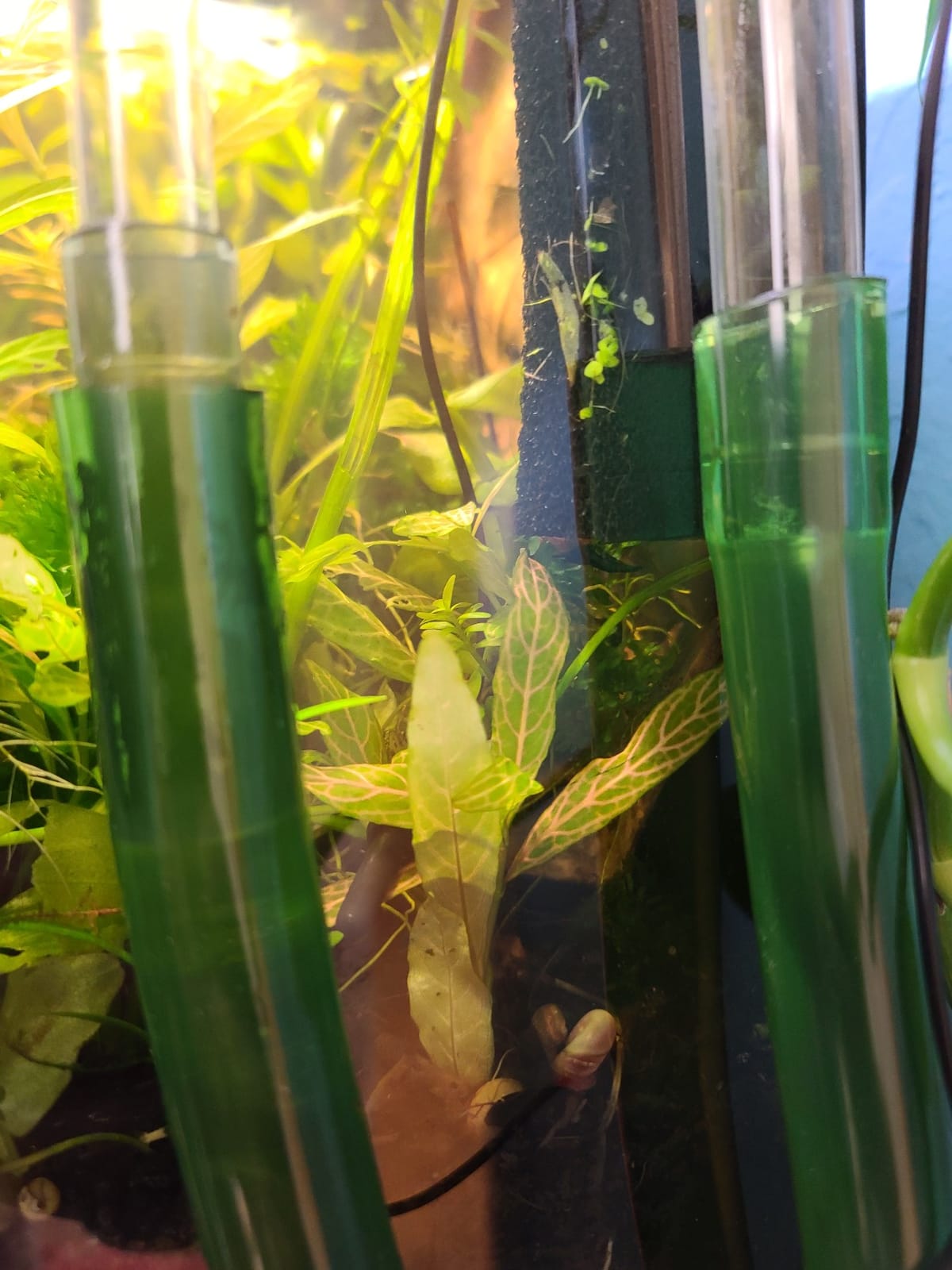
Where it gives ground is hardware and documentation. The hoses are stiff, the latches and fittings feel cheap, and the instructions assume you already know how a canister works. The spray bar also carries a flow valve that angles the outlet, which is how you solve the outlet noise, but you need to know to look for it.
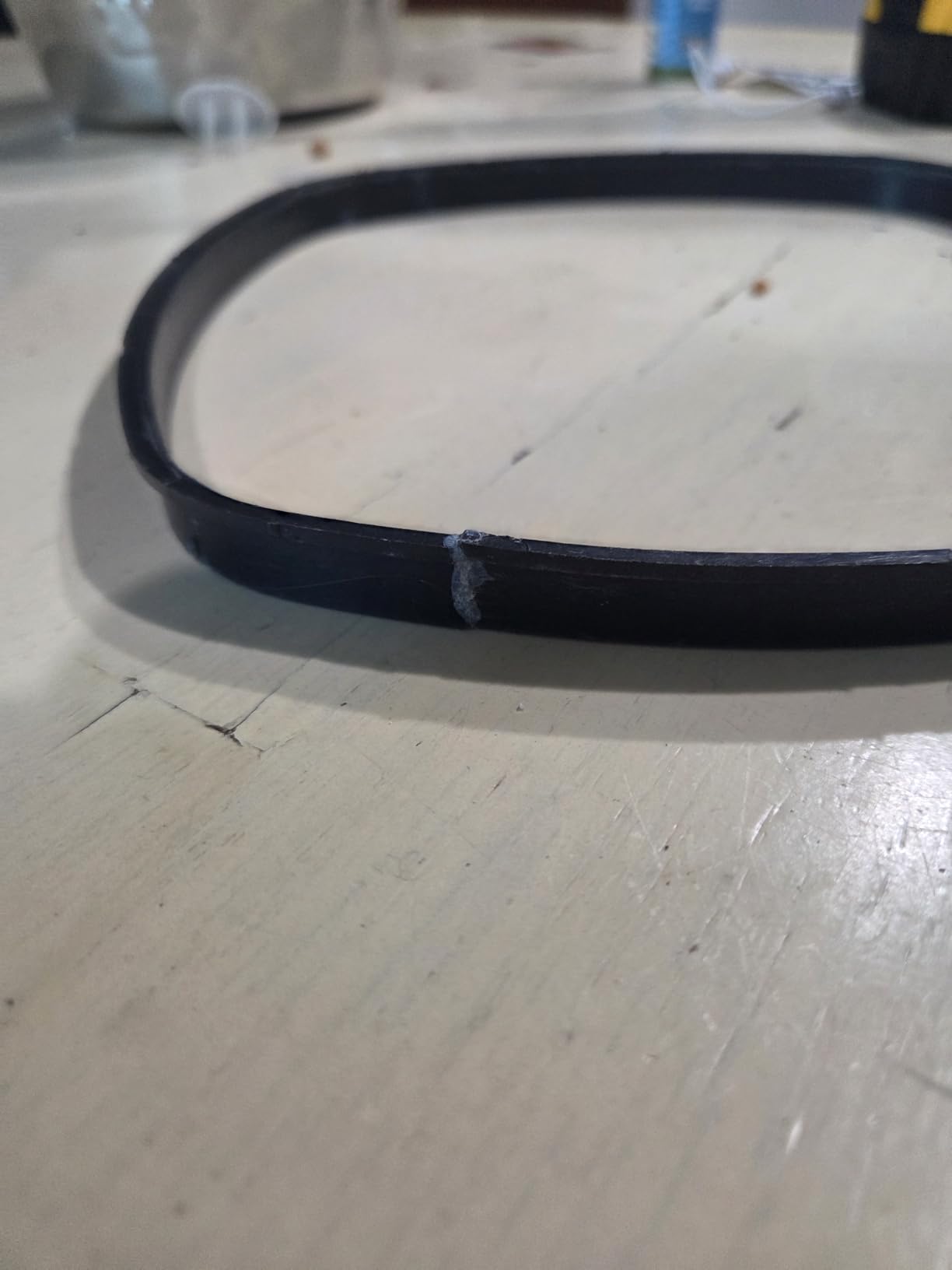
Over years, that entry-level hardware shows. Intake and output clips and the lid O-ring are the parts that wear or break, and they are the components you will be hunting for replacements on. The 9 by 9 by 18 inch body is not small either, so it is a budget filter that still needs real cabinet space.
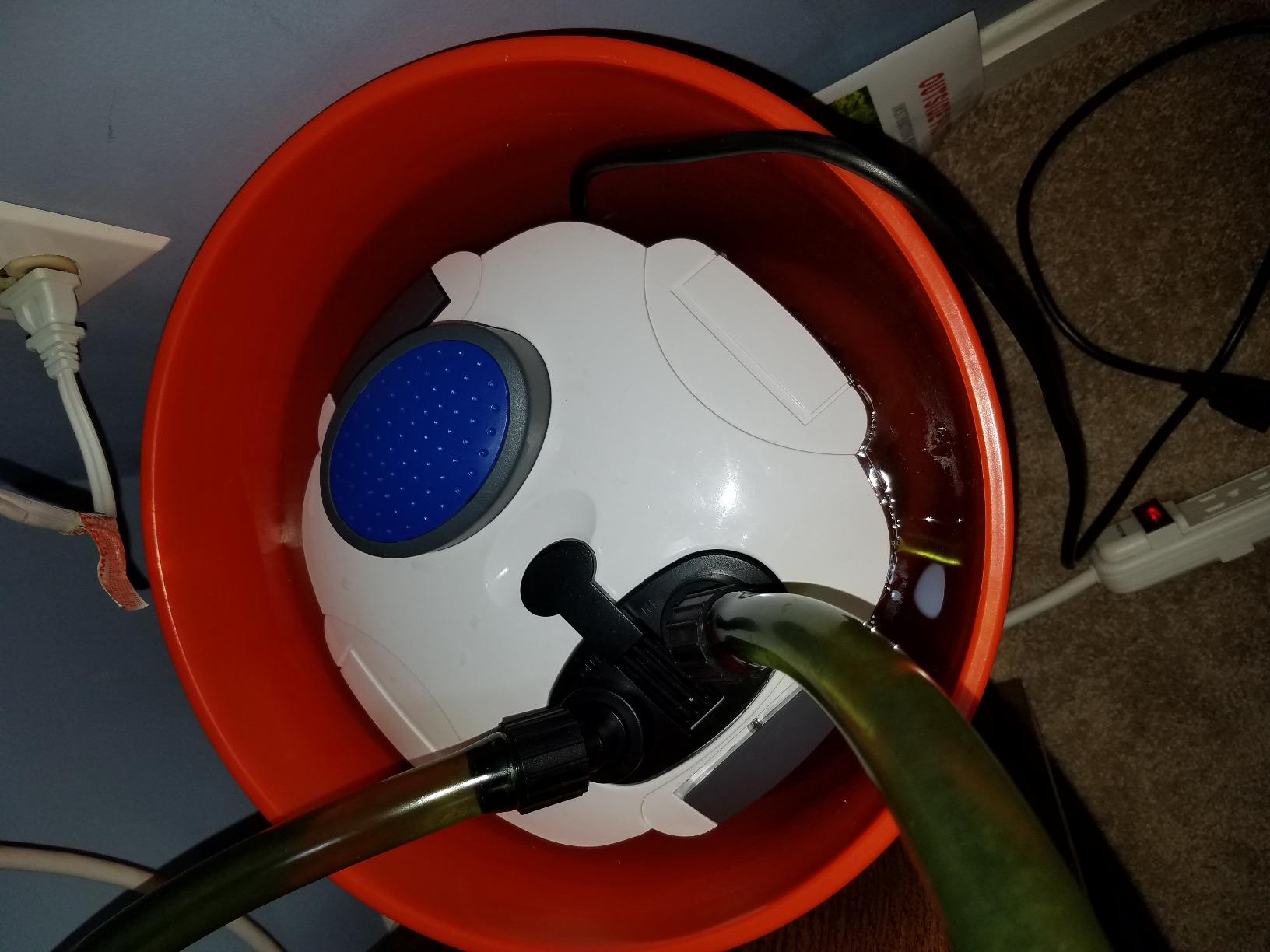
What you should know before you buy?
Pick the Pro kit rather than the base version if you can, because the difference is the included media. At 12 pounds fully assembled it is heavy, so lift it with the hoses disconnected rather than trying to juggle it.
Budget filters are the ones where intake strainers are easiest to overlook. Check the intake screen regularly in a planted tank, because a clogged intake looks like a failing pump and is actually a maintenance problem. Unplug before cleaning any rotor or impeller parts.
Who should buy it and who should skip it?
Pick the HW-302 Pro if you are building a tank on a limited budget, if you want a full media package immediately, or if you would rather spend the difference on fish than on the filter. It is also a sensible first canister for a young keeper learning water changes.
Skip it if you want a unit that will still be running without parts in fifteen years, or if stiff hoses and thin fittings bother you. Those are fair reasons to step up to a mid-tier model.
10. SunSun HW-303B Pro – Best for Green Water Control
SunSun Hw303B 370GPH Pro Canister Filter Kit with 9-watt UV Sterilizer
370 GPH rated flow
Built-in 9-watt UV
12 x 12 x 20 in
3 media baskets
Pros
- 370 GPH flow handles a 55 gallon tank with margin
- Built-in 9-watt UV sterilizer adds algae and clarity control
- Full kit includes carbon plus ceramic rings and bio-balls and filter pads
- Quiet relative to its flow class
Cons
- UV lamp needs periodic replacement to stay effective
- Bulky 12 x 12 x 20 inch body weighing 16 pounds
- Shares the SunSun line's lightweight hardware and documentation limits
The HW-303B Pro is the one to consider when your problem is green water rather than clarity through flow. It carries a built-in 9-watt UV sterilizer, and that is a different mechanism entirely from filtration. UV addresses suspended algae and pathogens by passing water through a chamber where they are exposed to the lamp, which mechanical and biological media cannot do.
It is also the second highest flow rating in this roundup at 370 GPH, with enough media baskets to build a proper three-stage stack. The Pro kit includes three white filter pads, a blue coarse pad, three media baskets, a pound of carbon, a pound of ceramic rings, and a set of bio-balls. The FX2 rates higher at 475 GPH, so this one still leaves headroom to spare on a 55 gallon tank.
At 12 by 12 by 20 inches and 16 pounds, this is one of the largest and heaviest canisters in the guide and it needs honest measuring before you order. It is rated for tanks up to 100 gallons, so on a 55 gallon tank the flow is high and you will almost certainly run a spray bar to spread it.
The UV lamp is the catch. It needs periodic replacement to remain effective, and once the lamp ages you are carrying a bigger, heavier canister for the flow alone. That is a fair trade during a green water episode, and a poor trade as a permanent arrangement if your water stays clear on media alone.
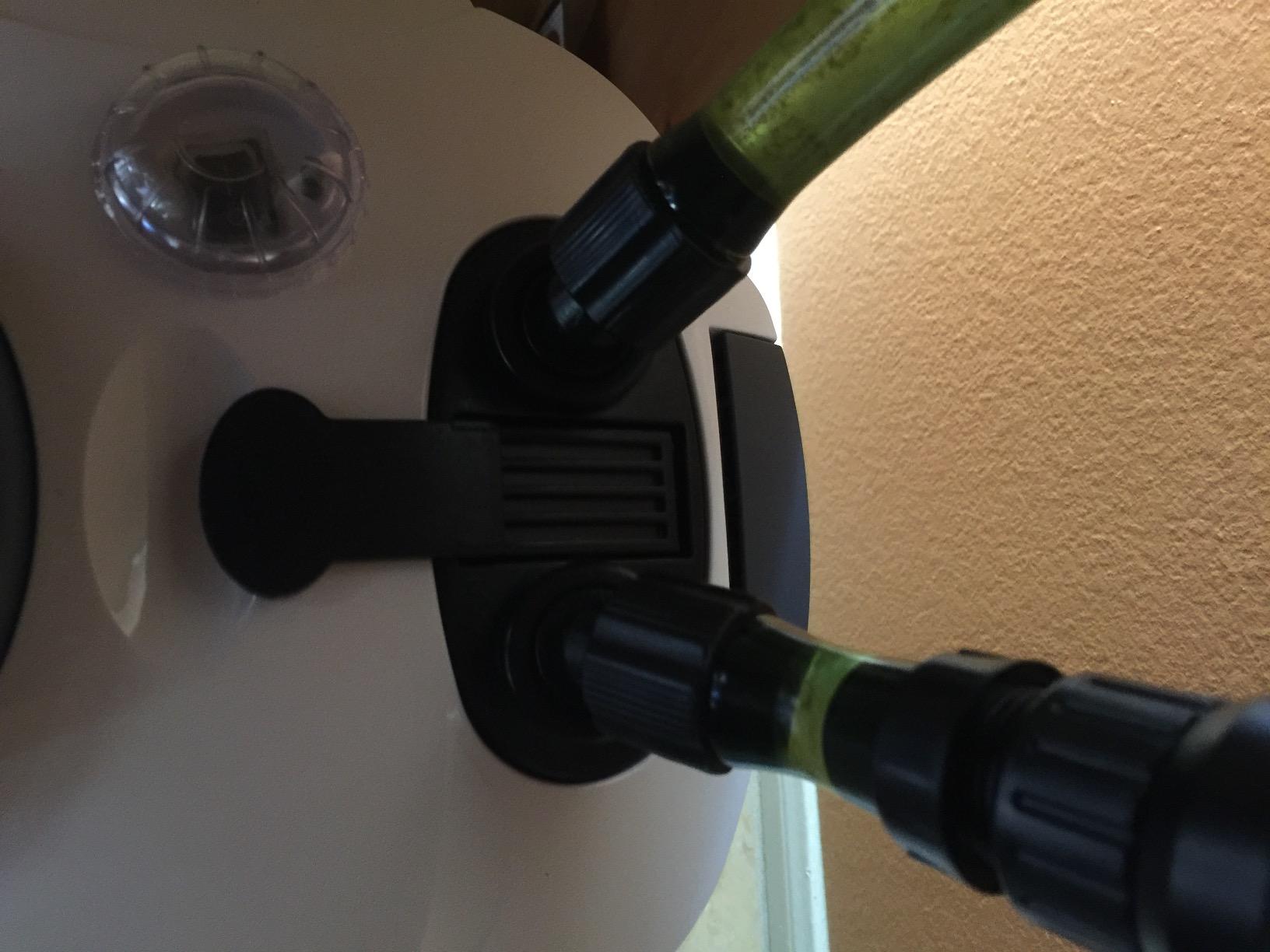
What you should know before you buy?
Measure twice. The listed unit dimensions for this kit are 10.5 by 10.5 by 16 inches, which is smaller than the full 12 by 12 by 20 inch size, so check the larger figure when confirming cabinet clearance. The weight means you will want to drain it before moving it.
Think about what happens after the green water clears. A UV-equipped canister is a strong problem-solving purchase and a questionable daily driver. Many owners keep the unit for the algae season and run something simpler the rest of the year.
Who should buy it and who should skip it?
Buy the HW-303B Pro if you are dealing with persistent green water, if you want high flow with a full media kit, or if you want algae control without buying a separate sterilizer unit. It also suits a heavily stocked tank where more circulation is genuinely useful.
Skip it if your water clears easily with mechanical and biological media alone, if cabinet space is tight, or if you would rather not maintain a UV lamp on a replacement schedule.
How Many GPH Do You Need for a 55 Gallon Tank?
A 55 gallon tank needs roughly 250 to 400 GPH of rated canister flow. The target is four to six turnovers per hour, where a turnover is one full pass of your tank volume through the filter. Aiming at four turnovers on 55 gallons gives you about 220 GPH, six gives about 330 GPH, and keeping the real figure above 250 GPH leaves margin once media and lift height are subtracted.
Rated flow is not real flow
Manufacturer GPH is measured at no load with the intake wide open and nothing in the path. Two things reduce it in a real install. A full media stack adds resistance, and every foot of lift between the tank surface and the canister head costs more. In a typical 55 gallon setup the water falls somewhere below the box number, which is exactly why you should size up rather than aim precisely at a figure.
That is also the community consensus. On AquariumAdvice, keepers repeatedly argue that there is no such thing as over-filtration on a freshwater tank, and veteran owners routinely run a canister rated far above the tank they own. The correction is to run the surplus capacity at reduced output with a spray bar or a flow valve, not to buy a smaller pump.
Who makes the best canister filters?
Fluval – the widest range on the market, from budget to premium, with the most owner documentation and the easiest spare parts to find.
Eheim – the longest-standing longevity reputation in the hobby, with a very low power draw on its classic designs.
Marineland – generous included media and simple self-priming designs that suit first-time canister owners.
Aqueon – filters rated to match standard tank sizes exactly, with multiple return options in the box.
SunSun – the strongest value tier, with complete media kits at flow rates that suit a 55 gallon tank.
Eheim vs. Fluval: Which Brand Should You Buy?
Choose Fluval if you want a broad model range, easy access to replacement parts, and media baskets that are simple to service. Choose Eheim if you are buying for the long term and value a low power draw and a design that has been in production long enough to be proven.
The honest difference is in the reliability record rather than the spec sheets. Eheim and Fluval are consistently called the two big names in the category on AquariumAdvice, where owners report EHEIM units running for a decade or more. The counter-view on the same forum is that not many Fluvals reach five years without needing a part replaced. Neither claim is universal, but together they map the risk profile: Fluval for convenience and parts, Eheim for longevity.
How to Turn the Flow Down on a Canister?
If your canister is too strong for your tank, you have four options, and they combine well. Swap the return for a spray bar, which spreads the same flow along the back wall instead of concentrating it at one point. Use the inline flow valve if the filter has one, and close it down until the current is right. Aim a water director away from the fish and toward the far side of the tank. Add a pre-filter sponge in the top basket to break the stream before it reaches the water.
This is not a niche concern. The top-ranked discussion of this topic on r/Aquariums is a 55 gallon owner whose canister was strong enough to blow apart the substrate and stall plant growth, and who wanted a smaller unit rather than a larger one. Too much flow compacts substrate, exposes roots, and pushes water in directions that make slow-swimming fish work harder than they should.
So if you read nothing else in the buying guide, read this line: a 55 gallon tank almost never needs more flow, it needs flow you can control.
How to Prime a New Canister Filter and Stop Spitting Bubbles?
Bubbles in your return mean air is trapped somewhere in the canister. It is the most common first-week problem new canister owners hit, and it is fixable in a few minutes.
Turn off the power before opening anything.
Fill the canister completely with tank water, not tap water.
Seat the pump head firmly, checking that the O-ring is flat, lightly lubricated, and not twisted.
Close the valves and set the flow control to its minimum position.
Fill the intake and return hoses completely, with no air pockets, and connect them.
Press the prime button or pump the head by hand until you feel suction and see steady flow.
Power up, open the valves gradually, and check the return after a few minutes.
If it still spits after a full cycle, the head is the usual suspect. Power off, reseat it, and check that the sealing ring is seated in its channel rather than sitting on top of it. A head that is only partly closed lets air in continuously, and no amount of waiting fixes that.
Media Stacking and the Monthly Rotation Routine
The media stack is the reason to buy a canister rather than a hang-on-back, and the order you build it in is not a detail. Coarse sponge goes at the bottom nearest the intake, then floss or poly-fill, then biological media at the top where the water is cleanest. Reversing that order starves the biological media and clogs the intake.
The rotation routine is the practice veteran keepers describe on AquariumAdvice and it saves money. Keep floss in the lower trays instead of carbon, because poly-fill costs a fraction of branded carbon pads and does the same mechanical job. Then rotate one tray a month rather than replacing everything at once.
Never discard all your media at the same time. The beneficial bacteria live on the surfaces of that media, and emptying the canister completely resets your biological cycle. A monthly rinse of sponges in removed tank water and a single tray swap keeps the cycle intact while the media still gets cleaned.
Canister vs. Hang-On-Back vs. Sponge Filter for a 55 Gallon Tank
Canister: the most media capacity and the quietest at the surface, hidden out of sight in the cabinet. It also costs the most and has the most parts to maintain.
Hang-on-back: the least expensive and simplest to service one-handed at the tank. Visible on the glass, limited media capacity, and usually louder for its flow.
Sponge filter: the simplest to maintain, with no pump to fail. Needs a separate air line and offers no chemical filtration stage at all.
For a 55 gallon tank the argument is straightforward. A canister earns its cost when you want clear water, a clean look, and a lot of media in a small package. A hang-on-back is hard to beat for simplicity on a modest stocking. A sponge filter is a legitimate choice for a lightly stocked tank or a hospital setup.
Reliability, Warranty, and Known Failure Points
No canister is maintenance free, but the failure modes are well known and mostly preventable. The most common is a seal problem at the head, usually caused by a flat or twisted O-ring rather than by defective parts. The second is a leaking hose connector, and the fix is unglamorous: cut your hoses to length and do not leave them stretched tight against the fitting.
Long hoses under tension are the documented cause of the Eheim connector cracking reported on AquariumAdvice, where shortening the runs resolved the leak. Keep the intake four to ten inches off the tank bottom for better circulation, easier large water changes, and a siphon failure that cannot fully empty the tank.
On the protection side, the practice veteran keepers actually use is simple: set the canister in a plastic dish pan and add a battery-operated water alarm. It costs almost nothing and it turns a catastrophic failure into a nuisance. On Fluval models, keep a spare impeller and head seal on hand, and be aware that FX-series impeller cover latches are reported to break more often than other parts by keepers on cichlid forum threads.
On warranty length, expect uneven coverage. The Aqueon QuietFlow lists a one year warranty, and the coverage on EHEIM and Fluval units here varies by model generation. Read the warranty terms for the specific model rather than assuming the brand policy covers the unit.
More from Hay Net
If you are outfitting a barn, shed, or storage space around the tank, our guides to horse watering troughs and rainwater harvesting tanks for homesteads cover the hardware side of a setup properly. If you need water that stays workable through a hard freeze, our livestock heated water tank reviews cover the electric options.
Frequently Asked Questions
What size filter is needed for a 55 gallon fish tank?
Target four to six turnovers per hour, which for a 55 gallon tank means roughly 250-400 GPH of rated canister flow. Buy a canister rated above 55 gallons and throttle the output with a spray bar or flow valve, because real flow drops once media and lift height are added.
Can I use a canister filter rated for 75 gallons on a 55 gallon tank?
Yes. Extra capacity is useful because real flow always falls below the rated figure. The key is controlling the output, so fit a spray bar, use a flow valve, or aim a water director away from the fish and your substrate.
Which is better, Eheim or Fluval?
Fluval offers a wider model range, easier spare parts and simpler media servicing. Eheim carries the stronger long-term longevity reputation and very low power draw on its classic designs. Choose based on whether you value convenience or longevity.
Why is my filter spitting out bubbles?
Air is trapped in the canister, usually because it is not fully primed or the head is not seated. Turn off the power, fill the canister with tank water, check that the O-ring is flat and untwisted, refill the hoses without air pockets, prime the head, then power up and open the valves gradually.
Are canister filters better for fish tanks?
For a 55 gallon tank, a canister gives you the most media capacity, the quietest operation and a clean look with nothing hanging on the glass. A hang-on-back is cheaper and simpler to service, and a sponge filter is the lowest cost option but offers no chemical filtration stage.
Final Verdict: Best Canister Filters for 55 Gallon Tanks in 2026
The Fluval 307 is the best canister filter for a 55 gallon tank, with a 70 gallon rating that gives you real headroom and center-handle media baskets that make a monthly change painless. For a heavily stocked tank, step up to the Fluval 407. For media volume in a compact body, the Fluval FX2 holds 3.9 liters.
Budget goes to the SunSun HW-302 Pro, which ships with a complete media kit at 265 GPH. The Aqueon QuietFlow is the one rated to exactly 55 gallons, and the EHEIM Classic 2213 is the pick if you want a filter you may still own a decade from now.
Before you order, measure your cabinet, check that the hose runs reach without stretching, and confirm you can throttle the flow. That last one matters more than any spec on the box. Verify the current price and fit before you buy, and if your tank is planted or holds slow-swimming fish, fit a spray bar on day one.