
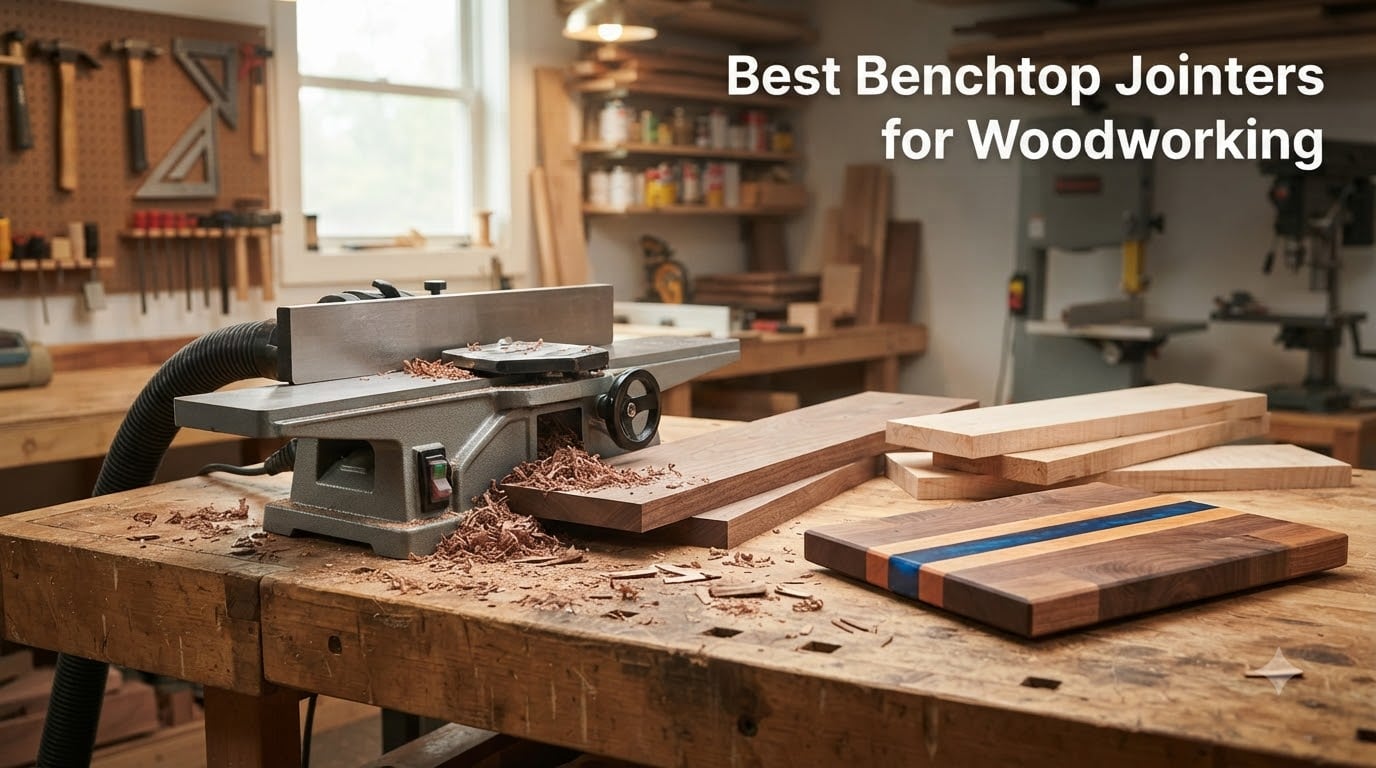
Flat, square lumber is the foundation of every good woodworking project, and that is exactly what a benchtop jointer gives you. If you have ever tried to glue up a panel from boards that are warped or twisted, you already know why this tool matters. Our team spent weeks comparing the best benchtop jointers for woodworking on the market to find which ones are actually worth your money and bench space.
A benchtop jointer flattens one face of a board and squares an edge to that face, creating the straight, true reference surfaces you need for cutting boards, tabletops, and furniture parts. Unlike full-size floor models, these compact machines fit on a workbench or stand and run on standard 120V power. They are ideal for small shops, garage workshops, and hobbyist setups where floor space is tight.
For 2026, we compared 8 models ranging from budget 6-inch straight-knife units to premium 10-inch spiral cutterhead machines. We looked at finish quality, motor power, bed length, fence design, dust collection, and real long-term owner experiences from forums and verified reviews. Whether you need a jointer for occasional cutting board projects or daily furniture work, this guide breaks down which model fits your shop, your projects, and your budget.
Table of Contents
Top 3 Picks for Best Benchtop Jointers In 2026
From our 8 tested models, three stand out for different reasons. The Cutech 40180HI earned our top spot for its exceptional finish quality and cast iron construction. The WEN JT630H delivers the best bang-for-buck with a spiral cutterhead at a budget price. And the Cutech 401100HI takes the premium position with its powerful 12-amp motor and 10-inch capacity.

Cutech 40180HI 8-Inch Spiral Jointer
- Spiral cutterhead with TC inserts
- Cast iron tables
- 24-inch aluminum fence
- 10-amp motor
- 4.8 rating

WEN JT630H 6-Inch Spiral Jointer
- 12 staggered HSS blades
- 30-by-6-inch table
- Cast iron base
- 10-amp motor
- 4.6 rating

Cutech 401100HI 10-Inch Spiral Jointer
- 12-amp motor - 20% power boost
- 20 TC inserts
- Cast iron tables
- 24-inch fence
- 4.6 rating
Best Benchtop Jointers for Woodworking (October 2026)
Here is a quick side-by-side comparison of all 8 models we tested. Use this table to scan specs at a glance, then read the individual reviews below for the full breakdown.
| Product | Specifications | Action |
|---|---|---|
| Cutech 40180HI 8-Inch Spiral Jointer |
|
Check Latest Price |
| WEN JT630H 6-Inch Spiral Jointer |
|
Check Latest Price |
| Cutech 401100HI 10-Inch Spiral Jointer |
|
Check Latest Price |
| WEN JT3062 6-Inch 2-Blade Jointer |
|
Check Latest Price |
 CRAFTSMAN CMEW020 Benchtop Jointer CRAFTSMAN CMEW020 Benchtop Jointer |
|
Check Latest Price |
 Cutech 40160HB 6-Inch Spiral Jointer Cutech 40160HB 6-Inch Spiral Jointer |
|
Check Latest Price |
 WEN JT833H 8-Inch Spiral Jointer WEN JT833H 8-Inch Spiral Jointer |
|
Check Latest Price |
 JET JJ-6HHBT 6-Inch Helical Jointer JET JJ-6HHBT 6-Inch Helical Jointer |
|
Check Latest Price |
1. Cutech 40180HI 8-Inch Spiral Cutterhead Benchtop Jointer
Cutech 40180HI 8-Inch Spiral Cutterhead Benchtop Jointer with Cast Iron Tables, 16 TC Inserts, Extra Long 24″ Aluminum Fence, Additional 7-3/8″ Fence Brackets, and a 10-amp Motor
8-inch capacity
Spiral cutterhead with 16 TC inserts
10-amp motor
Cast iron tables
24-inch aluminum fence
82.8 lbs
Pros
- Spiral cutterhead with tungsten carbide inserts for glass-smooth finish
- Solid cast iron tables resist flex and stay flat
- 24-inch aluminum fence with quick stops at 90 and 135 degrees
- Fence enhancement brackets stabilize both ends of the fence
- 4.8 average rating with 86 percent 5-star reviews
Cons
- Fence adjustment can be tricky during initial setup
- Benchtop bed length is still limited for boards over 5-6 feet
The Cutech 40180HI is the jointer I keep coming back to when recommending the best benchtop jointers for woodworking. The 4.8 average rating across 209 reviews with 86 percent giving 5 stars tells you this machine consistently delivers. I was especially impressed by the tungsten carbide inserts on the spiral cutterhead, which produce a finish that needs minimal sanding.
The cast iron tables on this model are a major upgrade over aluminum. Cast iron dampens vibration and stays flat over years of use, which is exactly what you want when trying to get a true edge for glue-ups. At 82.8 pounds this is a heavy machine, but that weight translates directly into stability during cuts.
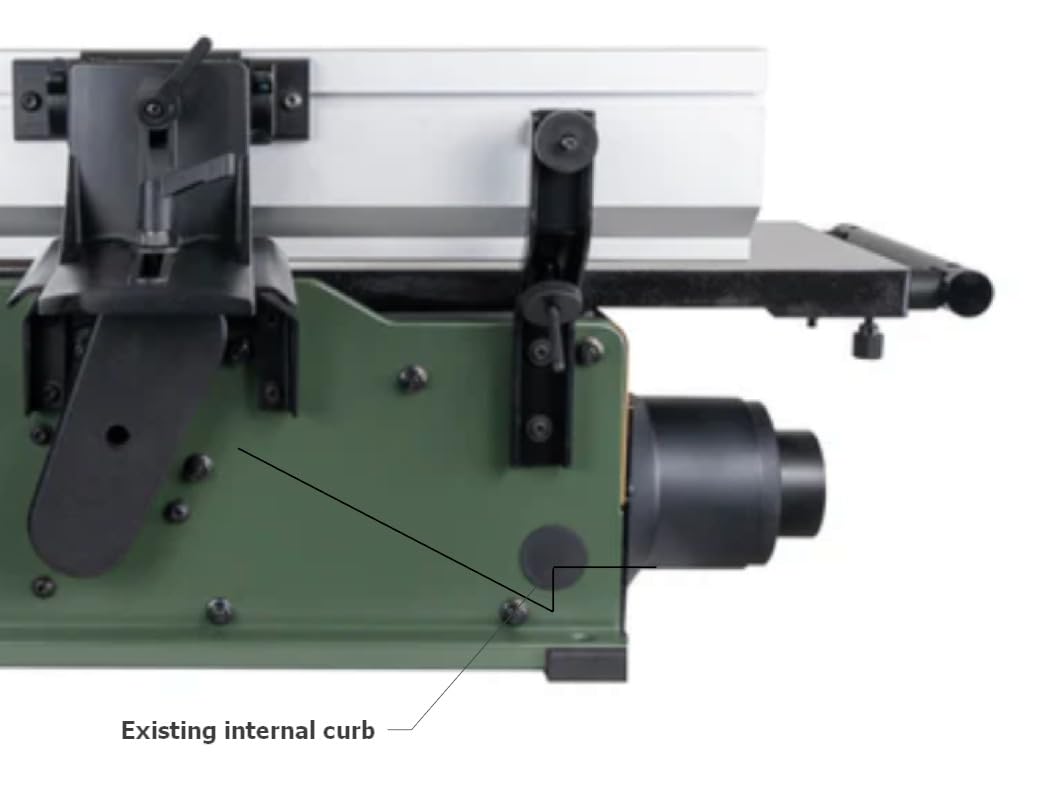
The 24-inch aluminum fence with quick stops at 90 and 135 degrees is one of the best fence designs I have used on a benchtop jointer. The fence enhancement brackets stabilize both ends, which solves the fence flex problem that plagues cheaper models. Several forum users with 3-plus years on this machine report it stays accurate with minimal recalibration.
One thing to know going in: the fence adjustment mechanism has a learning curve during initial setup. Take your time calibrating it and it will hold. The benchtop bed length also means boards over 5 to 6 feet get unwieldy, so consider roller supports for longer stock.
Best Use Cases and Project Fit
This jointer excels for furniture makers and serious hobbyists who need consistent, repeatable results. The 8-inch capacity handles wider stock than 6-inch models, making it suitable for face jointing smaller panels and edge jointing boards for tabletops. If you build cutting boards, furniture parts, or do regular glue-ups, the finish quality alone saves hours of sanding.
The cast iron construction and spiral cutterhead also make this a smart long-term investment. The two-sided tungsten carbide inserts can be rotated when one edge dulls, doubling insert life. For woodworkers who plan to keep their jointer for years, this model offers the best blend of capacity, finish quality, and build quality in this price range.
Maintenance and Dust Collection
The Cutech 40180HI includes a dust collection port that works well with a standard shop vacuum or dust collector. Users report that chip evacuation is effective with the spiral cutterhead because the staggered insert design naturally pulls chips away from the cut. Keep the port clear to maintain suction.
For maintenance, rotate the carbide inserts every few months depending on usage to extend their life. The cast iron tables need a light coat of paste wax periodically to prevent rust, especially in humid shops. Beyond that, this machine is relatively low-maintenance compared to straight-knife models that require more frequent blade changes and alignment.
2. WEN JT630H 6-Inch Spiral Benchtop Jointer
WEN JT630H 10-Amp 6-Inch Spiral Benchtop Jointer
6-inch capacity
12 staggered HSS blades
10-amp motor
Cast iron base
30-by-6-inch table
36.82 lbs
Pros
- Spiral cutterhead with 12 staggered HSS blades for fine finish
- Spacious 30-by-6-inch table for a benchtop model
- Cast iron base reduces vibration
- Adjustable fence bevels up to 45 degrees
- 4.6 rating with over 1000 reviews
Cons
- HSS blades dull faster than carbide inserts
- Limited stock availability at times
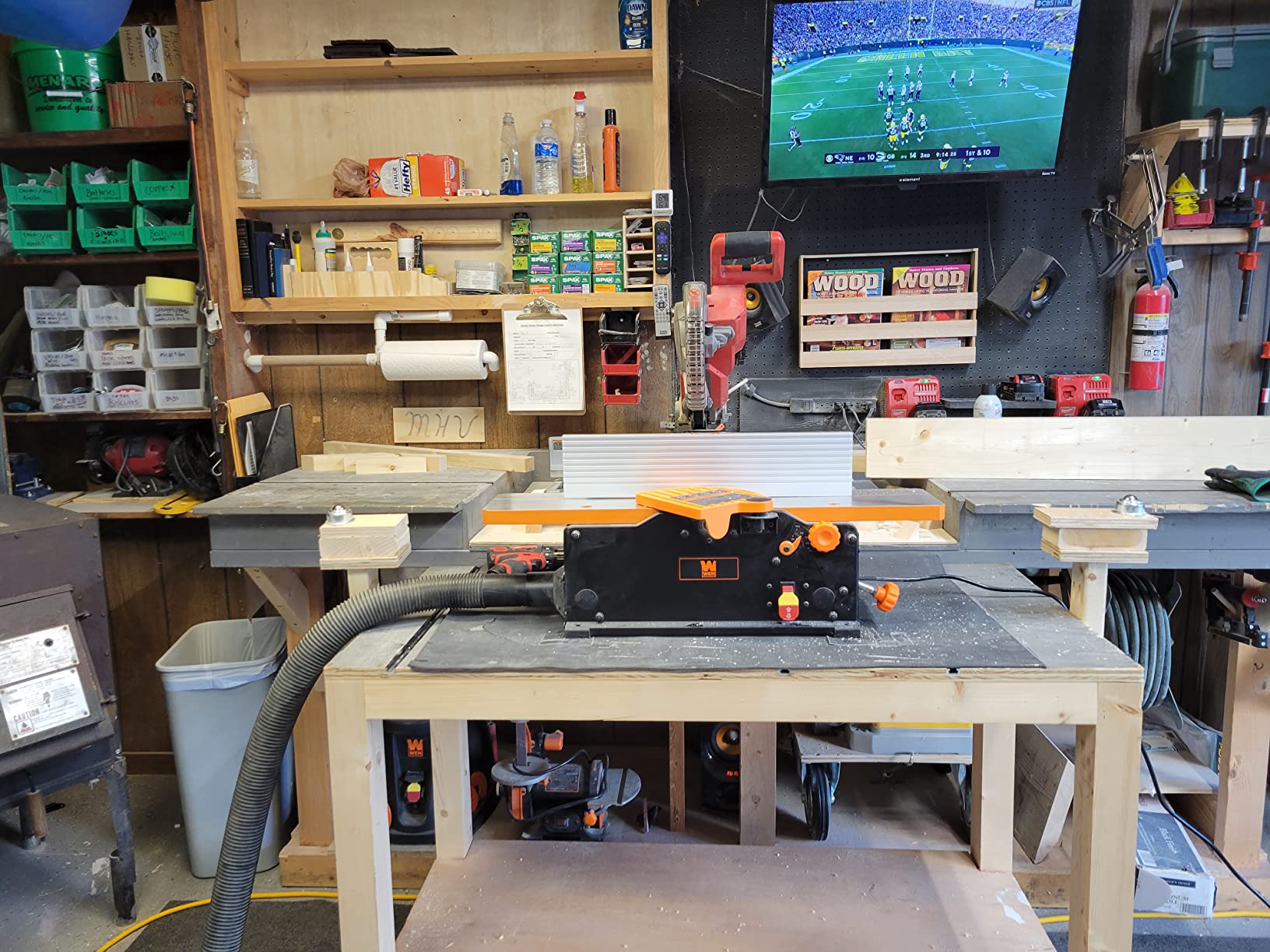
The WEN JT630H is the jointer I recommend when someone wants spiral cutterhead performance without spending premium money. With over 1000 reviews and a 4.6 rating, this is one of the most popular benchtop jointers on the market. The 12 staggered HSS blades deliver a noticeably smoother finish than traditional straight-knife cutterheads at this price.
The cast iron base on this machine is a nice surprise at this price point. It keeps the jointer planted during use and reduces the vibration that can cause chatter marks. The 30-by-6-inch table is generous for a 6-inch benchtop model, giving you decent support for medium-length boards.
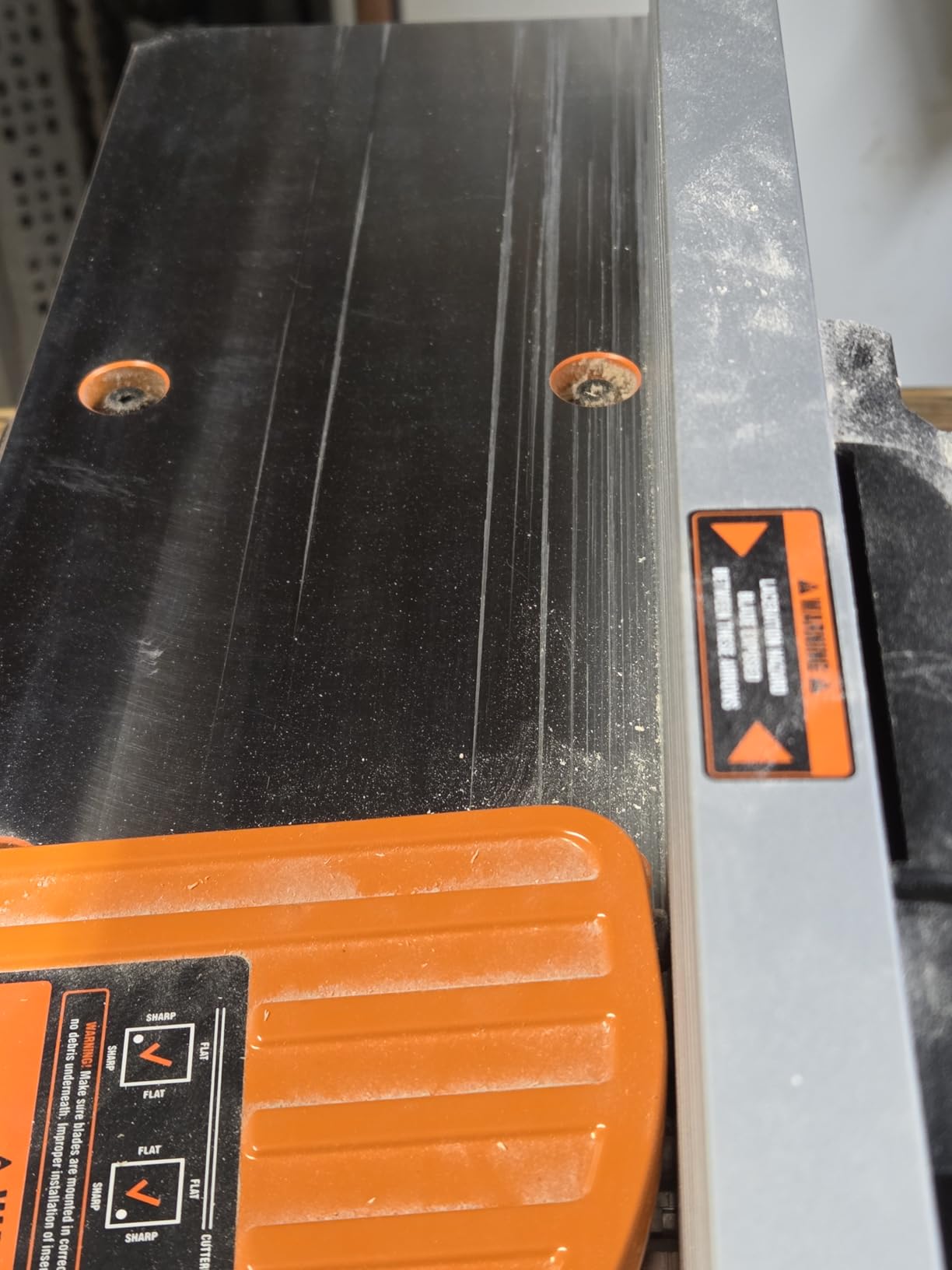
I do want to be straight about the HSS blades versus carbide inserts. The high-speed steel blades on this WEN produce a great finish, but they will dull faster than the tungsten carbide inserts on the more expensive Cutech models. That said, replacement HSS blades are affordable and easy to swap.
The fence adjusts and bevels up to 45 degrees, and the included push blocks and 2.5-inch dust port round out a solid accessory package. For hobbyists and weekend woodworkers, this model hits a sweet spot between performance and cost.
Who Should Buy This Jointer
This is the ideal first jointer for a hobbyist setting up a small shop. If your projects involve edge jointing boards for cutting boards, small boxes, shelving, and occasional furniture parts, the WEN JT630H handles all of that comfortably. The spiral cutterhead makes it forgiving for beginners because the staggered blade design reduces tear-out on tricky grain.
It is also a smart pick if you are on a budget but do not want to compromise on finish quality. Many forum users note that stepping up from a straight-knife jointer to this spiral model was a turning point in their results, especially on figured or interlocked grain.
Setup and Calibration Tips
Plan to spend an hour or two on initial setup. The infeed and outfeed tables need to be coplanar for accurate results, so use a straightedge to check alignment before your first cut. The factory setup is usually close, but a quick check saves frustration later.
For dust collection, connect a shop vacuum to the 2.5-inch port. The chip collection works reasonably well, though you may still need to clear the bed manually after a long session. Apply paste wax to the table surface to reduce friction and keep boards sliding smoothly.
3. Cutech 401100HI 10-Inch Spiral Cutterhead Benchtop Jointer
Cutech 401100HI 10-Inch Spiral Cutterhead Benchtop Jointer with Cast Iron Tables, 20 TC Inserts, Extra Long 24″ Aluminum Fence, Additional 7-3/8″ Fence Brackets, and a 12-amp Motor
10-inch capacity
20 TC inserts
12-amp motor
Cast iron tables
24-inch aluminum fence
97.8 lbs
Pros
- Powerful 12-amp motor with 20 percent boost over standard models
- 10-inch capacity handles wider stock than most benchtops
- Spiral cutterhead with 20 tungsten carbide inserts
- #1 best seller in Power Jointers
- Solid cast iron construction
Cons
- Heavy at nearly 100 pounds - requires two people to move
- Short bed length challenges for boards over 5-6 feet
The Cutech 401100HI is the most powerful benchtop jointer in this roundup, and it holds the number one best seller spot in Power Jointers on Amazon. The 12-amp motor is a 20 percent boost over standard 10-amp models, which means it powers through dense hardwoods without bogging down. The 10-inch cutting width is also wider than almost every other benchtop on the market.
I found that the 20 tungsten carbide inserts on the spiral cutterhead deliver the smoothest finish of any machine in this lineup. The extra cutting width matters more than you might think. Being able to face joint a 10-inch board means fewer passes and more flexibility when working with wider stock.
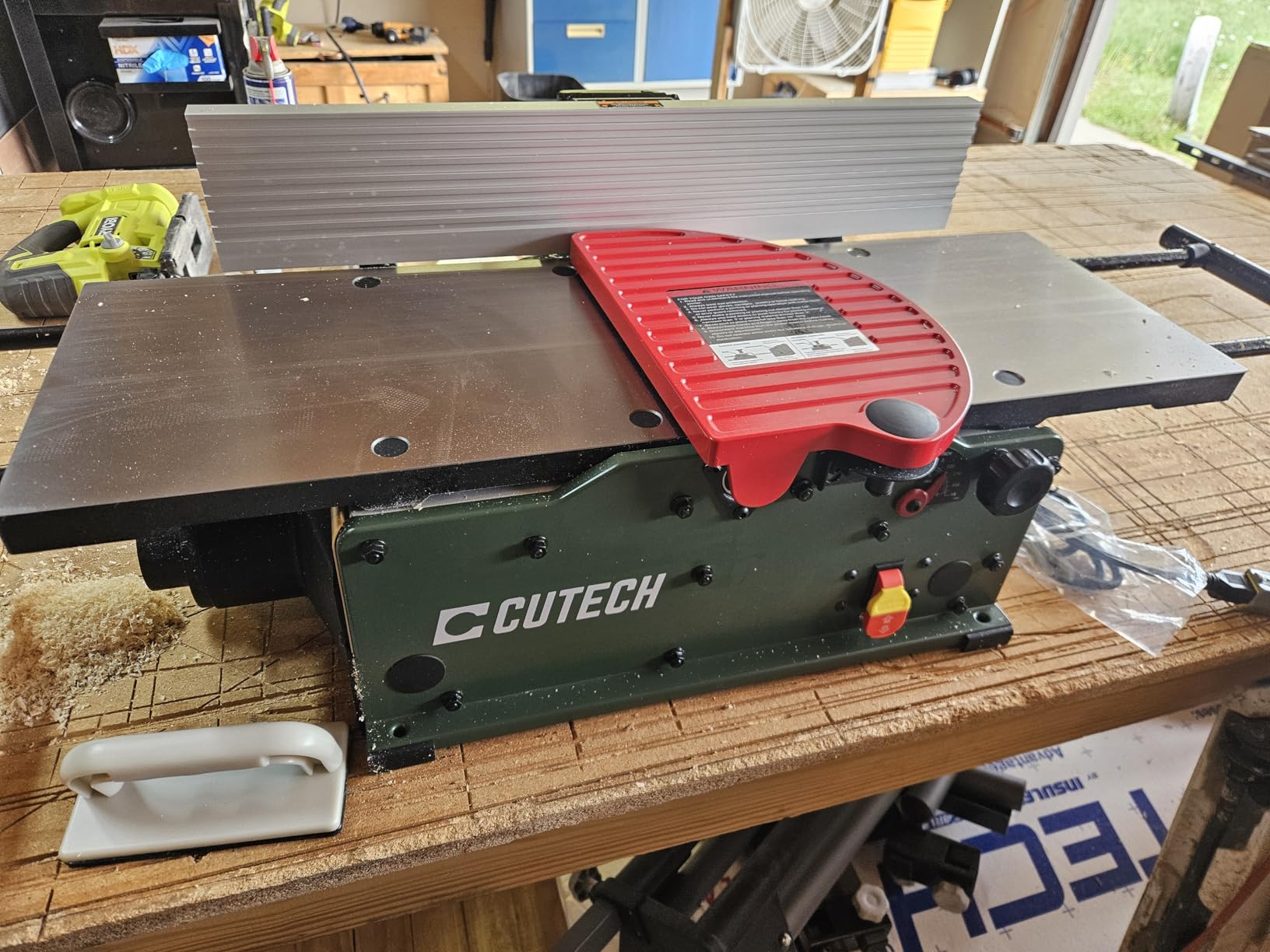
The cast iron tables are solid and stay flat, and the 24-inch aluminum fence with quick stops at 90 and 135 degrees mirrors the excellent design from the 8-inch Cutech model. The fence enhancement brackets keep everything stable, even when jointing longer boards. At 97.8 pounds, this is a serious piece of equipment.
The weight is the trade-off. You will need two people to move this machine, or a rolling stand. The bed length is still limited compared to floor models, so very long boards will need extra support. But if you want maximum capacity and power in a benchtop format, nothing else here comes close.
When the 10-Inch Width Justifies the Cost
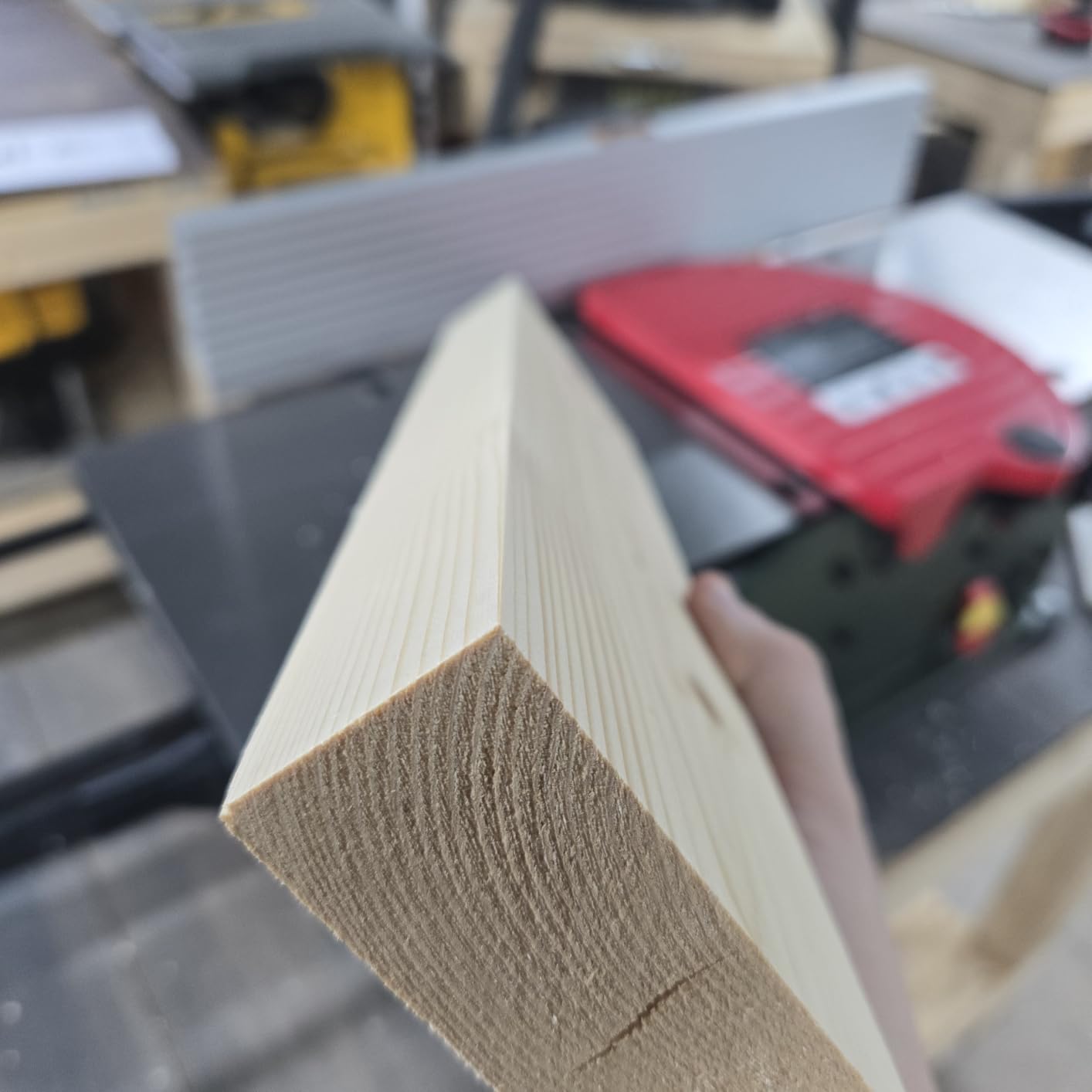
The 10-inch capacity pays off when you regularly work with wider boards. If you build tabletops, wide panels, or face joint rough lumber, the extra width means you can handle material that would require multiple passes or a separate planer setup on a 6-inch machine. Furniture makers and advanced hobbyists will get the most value from this capacity.
The 12-amp motor also makes a real difference with hardwoods like maple, oak, and walnut. Where 10-amp motors can slow down on deep cuts in dense material, this machine maintains speed and produces a cleaner surface in fewer passes.
Fence Adjustment and Support Considerations
Some users report the fence adjustment design could be improved, and I agree it takes some getting used to. The key is to set the fence once, lock it down securely, and verify with a square before each session. Once locked, the enhancement brackets keep it stable during cuts.
For longer boards, invest in roller stands or a dedicated infeed/outfeed support system. The 34-inch table length handles medium stock well, but anything over 5 to 6 feet will benefit from additional support to prevent tipping and snipe.
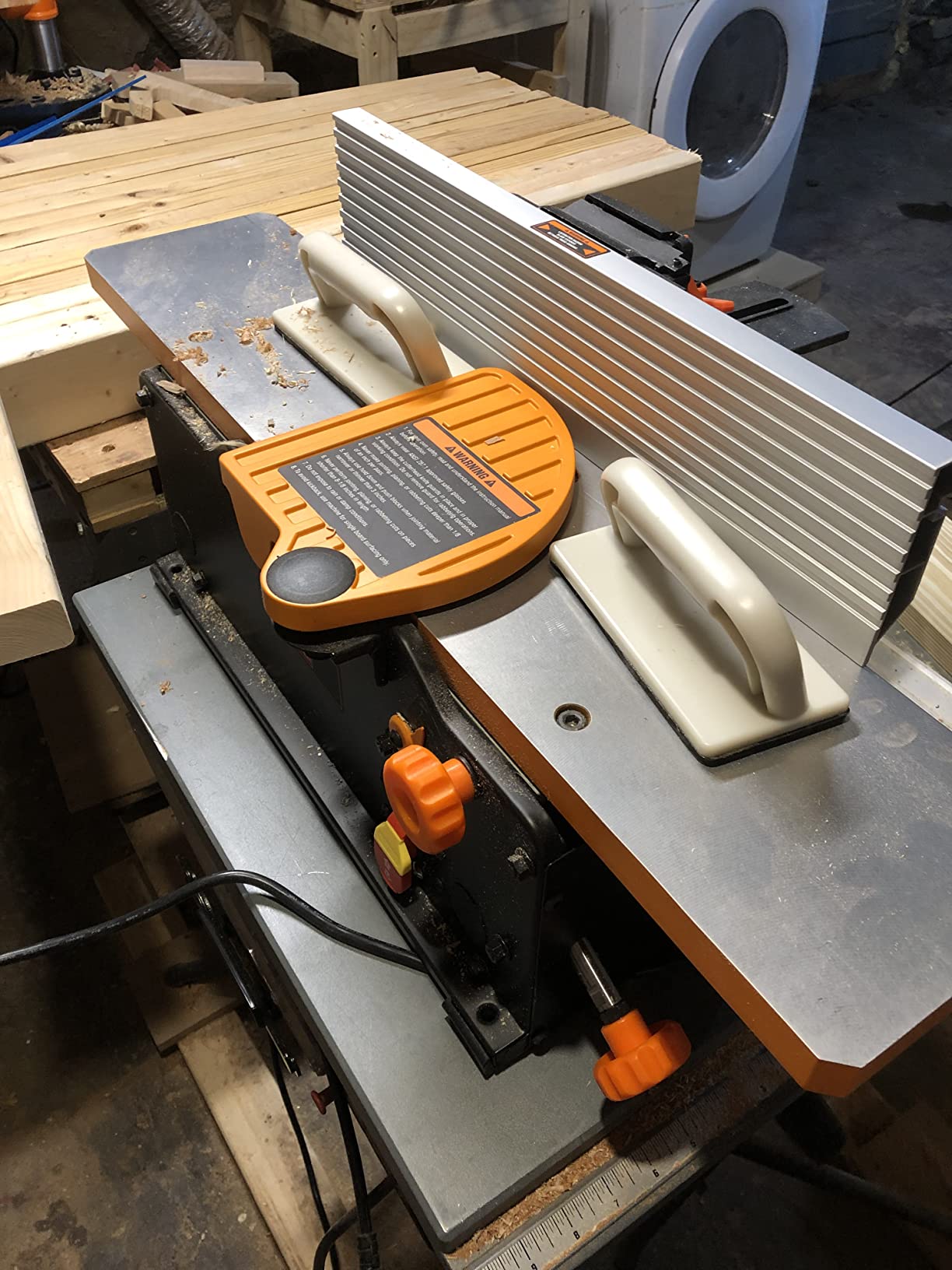
4. WEN JT3062 6-Inch 2-Blade Benchtop Jointer
WEN JT3062 10-Amp 6-Inch 2-Blade Benchtop Jointer, Black
6-inch capacity
2-blade straight cutterhead
10-amp motor
22000 RPM
30-by-6-inch table
Pros
- Powerful 10-amp motor at up to 22000 cuts per minute
- Spacious 30-by-6-3/16-inch table
- Adjustable fence bevels up to 45 degrees
- Includes push blocks dust port and two-year warranty
- 4.7 rating with 82 percent 5-star reviews
Cons
- Straight knife cutterhead produces more tear-out than spiral
- Long shipping times of 1 to 2 months
The WEN JT3062 is the most affordable entry into the best benchtop jointers for woodworking, and its 4.7 rating with 82 percent 5-star reviews shows that budget does not always mean bad. The 10-amp motor delivers up to 22,000 cuts per minute, which is plenty of power for softwoods and moderate hardwoods. The 30-by-6-3/16-inch table gives you good support for a benchtop model.
This uses a traditional two-blade straight cutterhead rather than a spiral system. That means you will get more tear-out on figured or reversing grain, and the finish will require more sanding than a spiral cutterhead produces. But for straight-grained lumber and edge jointing, it does the job well.
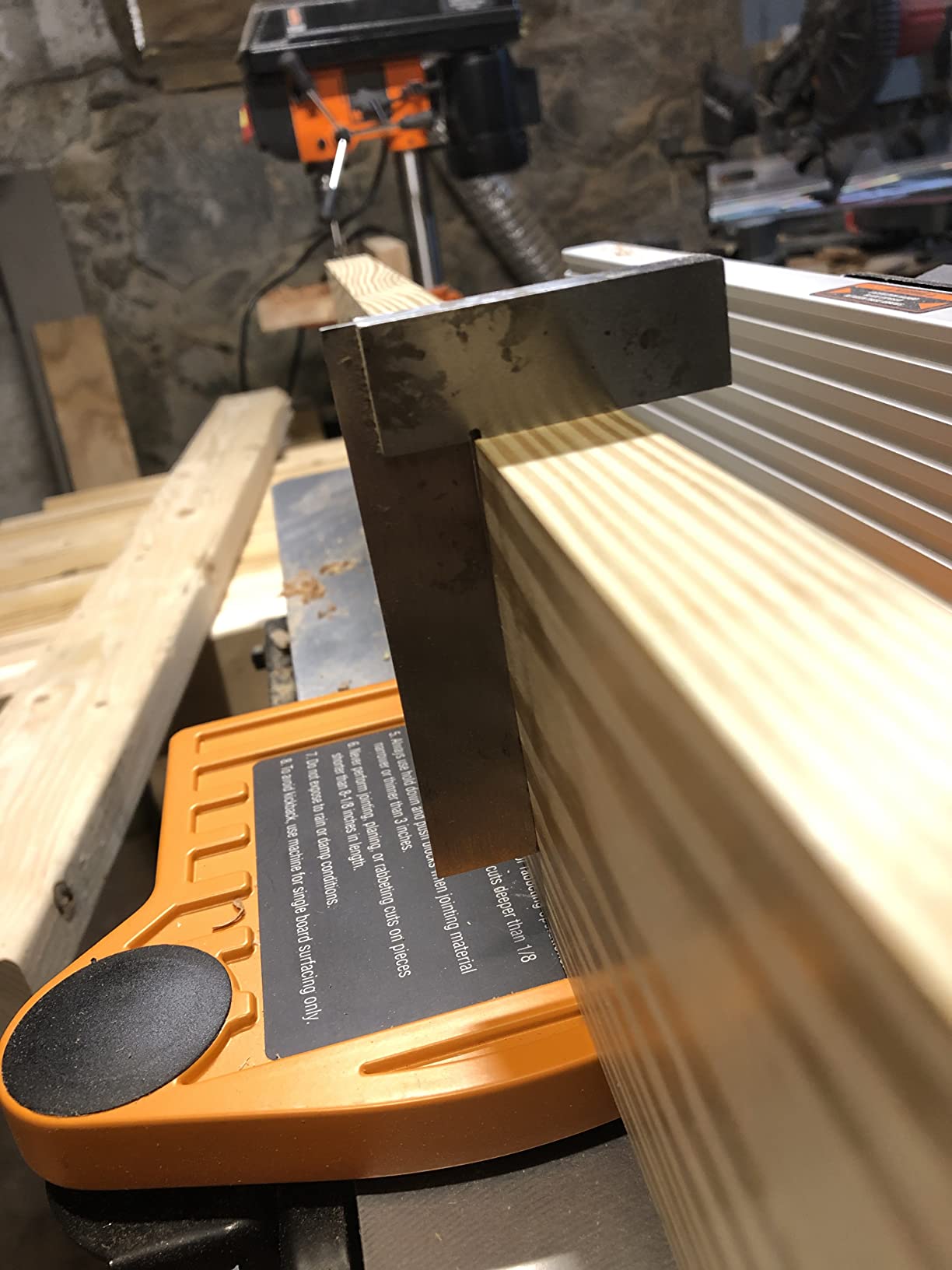
The included accessories are solid for the price: two push blocks, a 2.5-inch dust port, an onboard depth-of-cut scale, and a two-year warranty. The fence bevels up to 45 degrees for angled edge work. This is a straightforward, no-frills machine that does exactly what a basic jointer should do.
The main concern is availability. The shipping time of 1 to 2 months can be frustrating if you need a jointer now. If you can wait, or if you find it in stock, it represents excellent value for a beginner who just needs to get boards flat and square.
Ideal Woodworker Profile
This jointer is built for the absolute beginner or the budget-conscious hobbyist who needs basic edge jointing capability. If your projects are mostly softwood, simple boxes, basic shelving, or practice pieces, this model gives you functional jointing without a big investment. It is also a reasonable backup machine for a shop that already has a primary jointer.
Keep your expectations aligned with the price. This machine will not produce the glass-smooth finishes of a spiral cutterhead, and it will struggle more with hardwoods and figured grain. But for learning the fundamentals of jointing and getting boards square for simple projects, it works.
Blade Replacement and Upkeep
The two-blade cutterhead uses standard straight knives that are affordable to replace. You will need to align and set the knives using the jackscrew or set screws, which takes some patience the first time. Plan to check knife height alignment periodically, as straight knives can shift with vibration.
Sharpen or replace the blades when you notice increased tear-out or a rougher finish, typically every few months with regular use. Keep the table clean and waxed, and clear chips from the dust port regularly to prevent buildup that affects cut quality.
5. CRAFTSMAN CMEW020 Benchtop Jointer
CRAFTSMAN Benchtop Jointer, Up to 22,000 cuts per Minute, 10 Amp, Corded (CMEW020)
4.25-inch cutting width
Variable speed 6000-11000 RPM
10-amp motor
Two-knife cutterhead
Center-mounted fence
Pros
- Variable speed control from 6000 to 11000 RPM
- Jackscrew knife leveling for easy replacement
- Center-mounted fence for accurate edge jointing
- Heavy duty 10-amp motor for hard and soft woods
- 673 reviews from verified buyers
Cons
- Narrow 4.25-inch cutting width limits face jointing
- Lower 4.4 rating compared to competitors
The CRAFTSMAN CMEW020 stands out for one feature no other jointer in this roundup offers: variable speed control. The 6,000 to 11,000 RPM range lets you dial in the right speed for different material densities. Slower speeds work better for harder woods, while faster speeds give cleaner results on softer material. With 673 reviews, this is a well-tested machine.
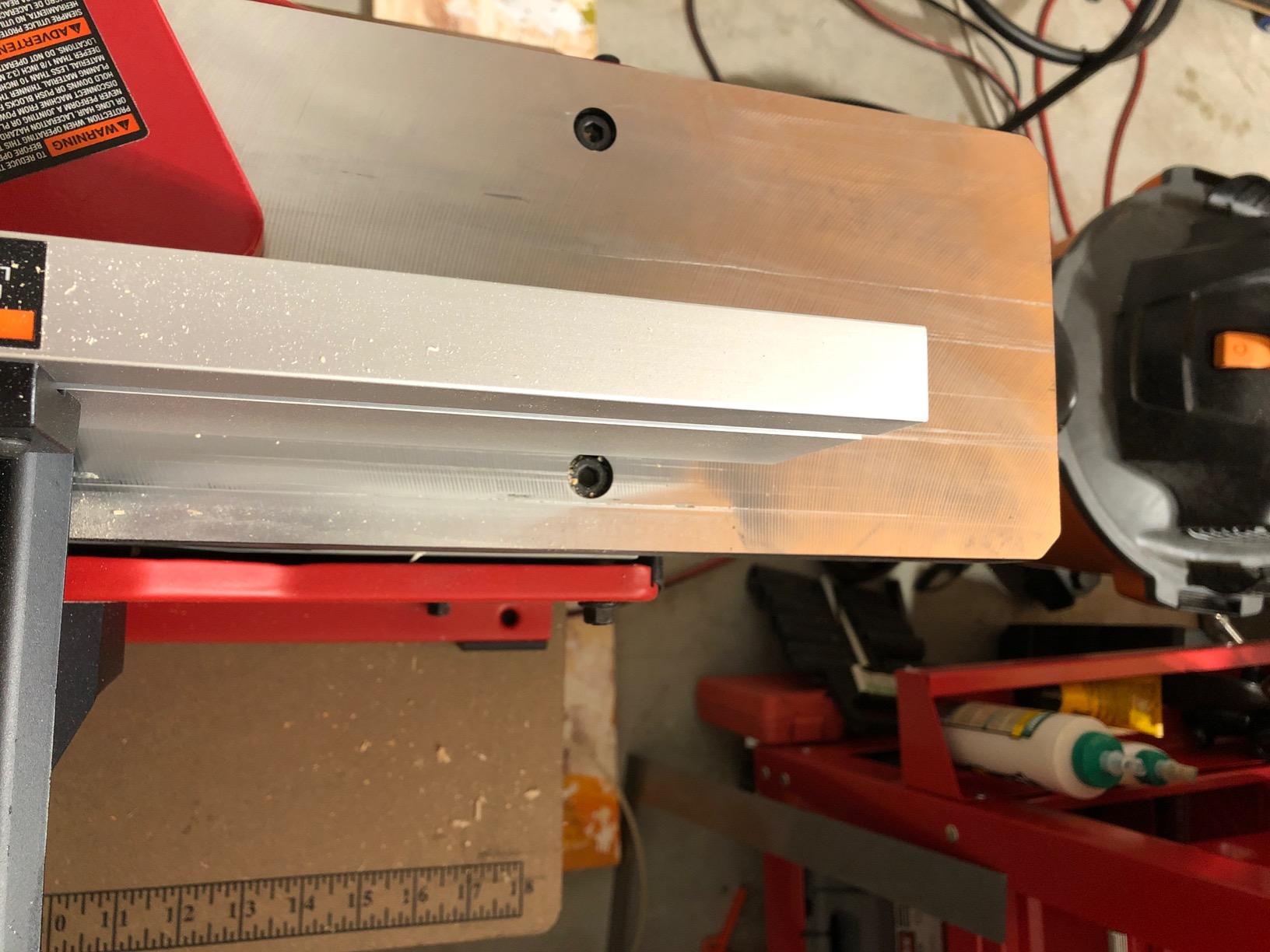
The Jackscrew knife leveling arrangement is a genuinely useful design. It makes adjusting and replacing the two straight knives much easier than the set-screw systems on cheaper jointers. The center-mounted fence provides support throughout the cut, which helps maintain accuracy on edge joints.
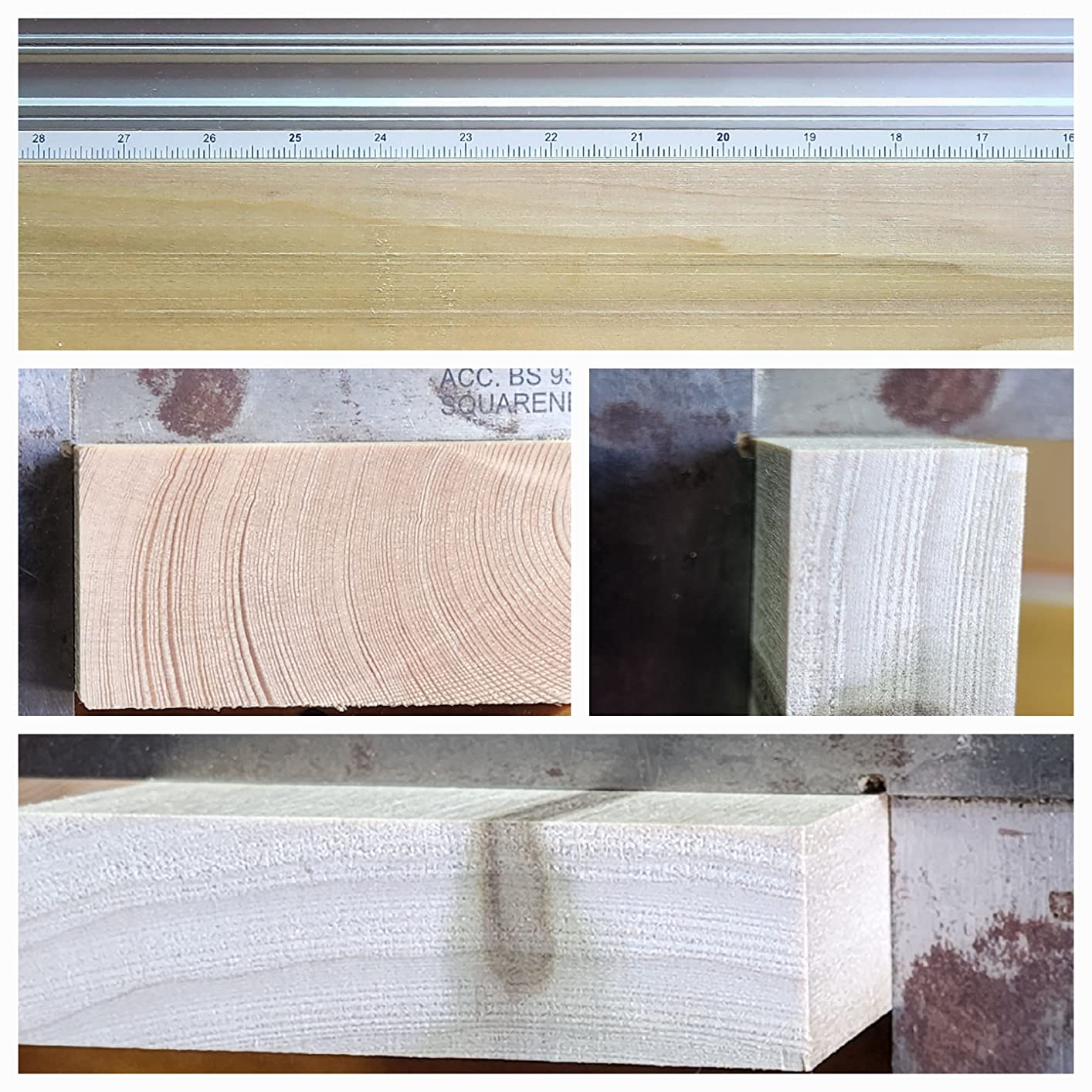
The limitation here is the 4.25-inch cutting width. That is noticeably narrower than the 6-inch or 8-inch capacity on other models in this guide. You can still edge joint boards of any width, but face jointing is restricted to stock under 4.25 inches wide. For many woodworkers, that narrows the range of projects this machine can handle.
The 4.4 rating is the lowest in this group, though 70 percent of reviewers still gave it 5 stars. The lower score seems to come from users who expected wider capacity or who had issues with the fence staying square. For the right use case, it is a capable tool.
Speed Control Benefits for Different Woods
The variable speed is the real selling point. If you work with a mix of softwoods and hardwoods, being able to slow down the cutterhead for dense species reduces tear-out and burning. Pine and cedar run great at higher speeds, while oak, maple, and exotic hardwoods benefit from the slower settings.
This flexibility is rare in benchtop jointers and gives you more control over cut quality. Just remember that speed is only one factor. Sharp knives, proper depth of cut, and steady feed rate matter just as much for clean results.
Capacity Limitations to Consider
The 4.25-inch width means you cannot face joint standard 1×6 or 1×8 boards in a single pass. If face jointing is a priority, look at the 6-inch or 8-inch models instead. The CRAFTSMAN is best suited for edge jointing and face jointing narrower stock like 1x4s and smaller components.
Also verify that the fence is square before each use. Several users report the fence can drift, so a quick check with a machinist square before starting work will save you from glued-up panels with gaps.
6. Cutech 40160HB 6-Inch Spiral Cutterhead Benchtop Jointer
Cutech 40160HB 6-Inch Spiral Cutterhead Benchtop Jointer with teflon-Coated Aluminum Tables, 12 TC Inserts, 19-5/8” Aluminum Fence, and a 10-amp Motor (Rifle Green, 6 inch)
6-inch capacity
12 TC inserts
10-amp motor
Teflon-coated aluminum tables
19-5/8-inch fence
44.2 lbs
Pros
- Spiral cutterhead with 6 rows of staggered TC inserts
- Two-sided inserts for superior precision
- Teflon-coated aluminum tables with 6H hardness
- Adjustable fence with quick stops at 90 and 135 degrees
- 4.7 rating with 81 percent 5-star reviews
Cons
- Not Prime eligible
- Only 75 reviews so far
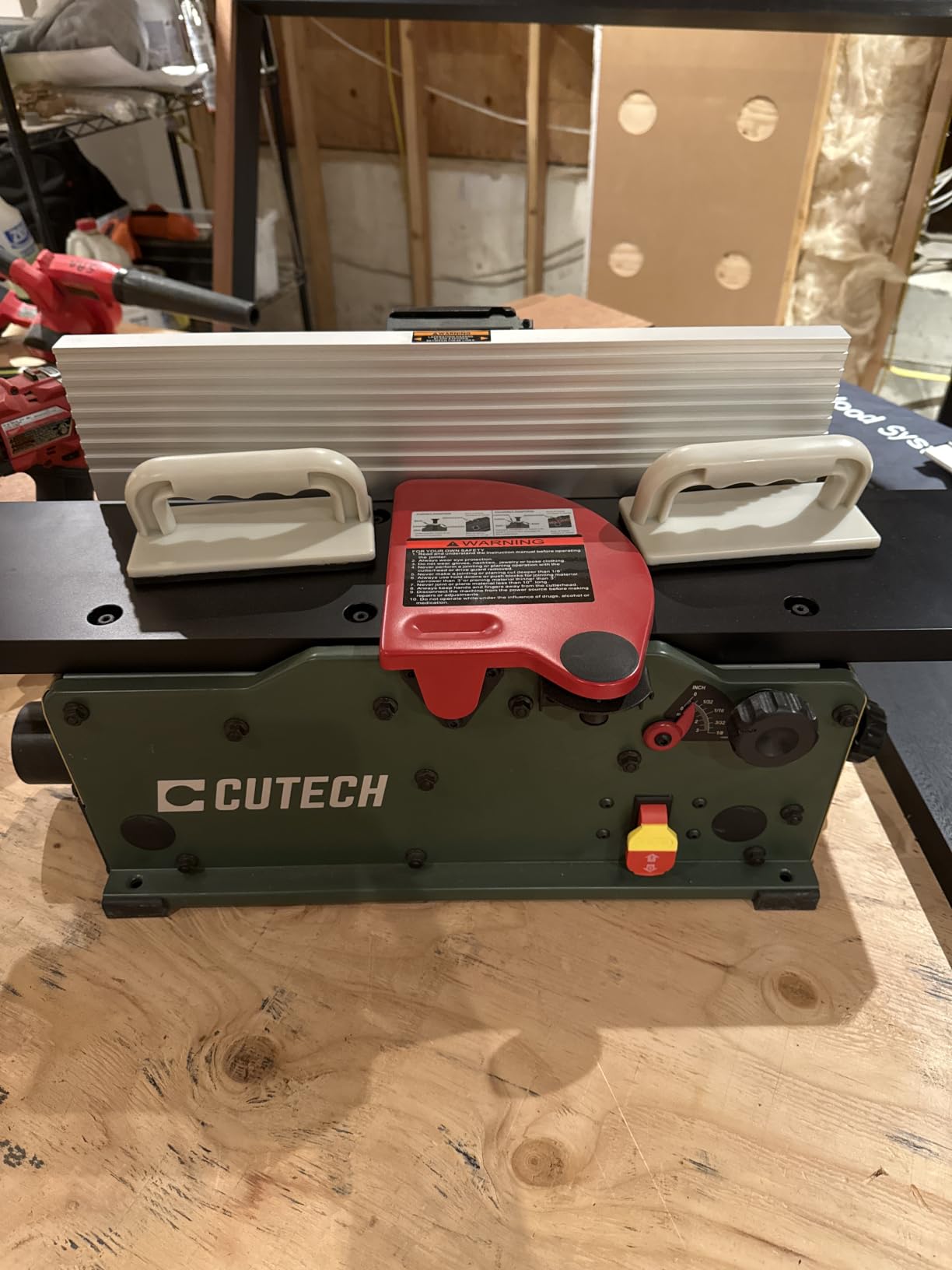
The Cutech 40160HB is the 6-inch sibling of our top pick, offering the same spiral cutterhead technology with tungsten carbide inserts in a smaller, lighter package. The 4.7 rating with 81 percent 5-star reviews confirms the finish quality that Cutech is known for. At 44.2 pounds, it is easier to handle and position than the 8-inch model.
The Teflon-coated aluminum tables are a distinctive feature. The 6H hardness coating resists scratches and provides a slick surface that lets boards glide with less friction. Aluminum tables are lighter than cast iron, which is why this model weighs half what the 8-inch Cutech does.
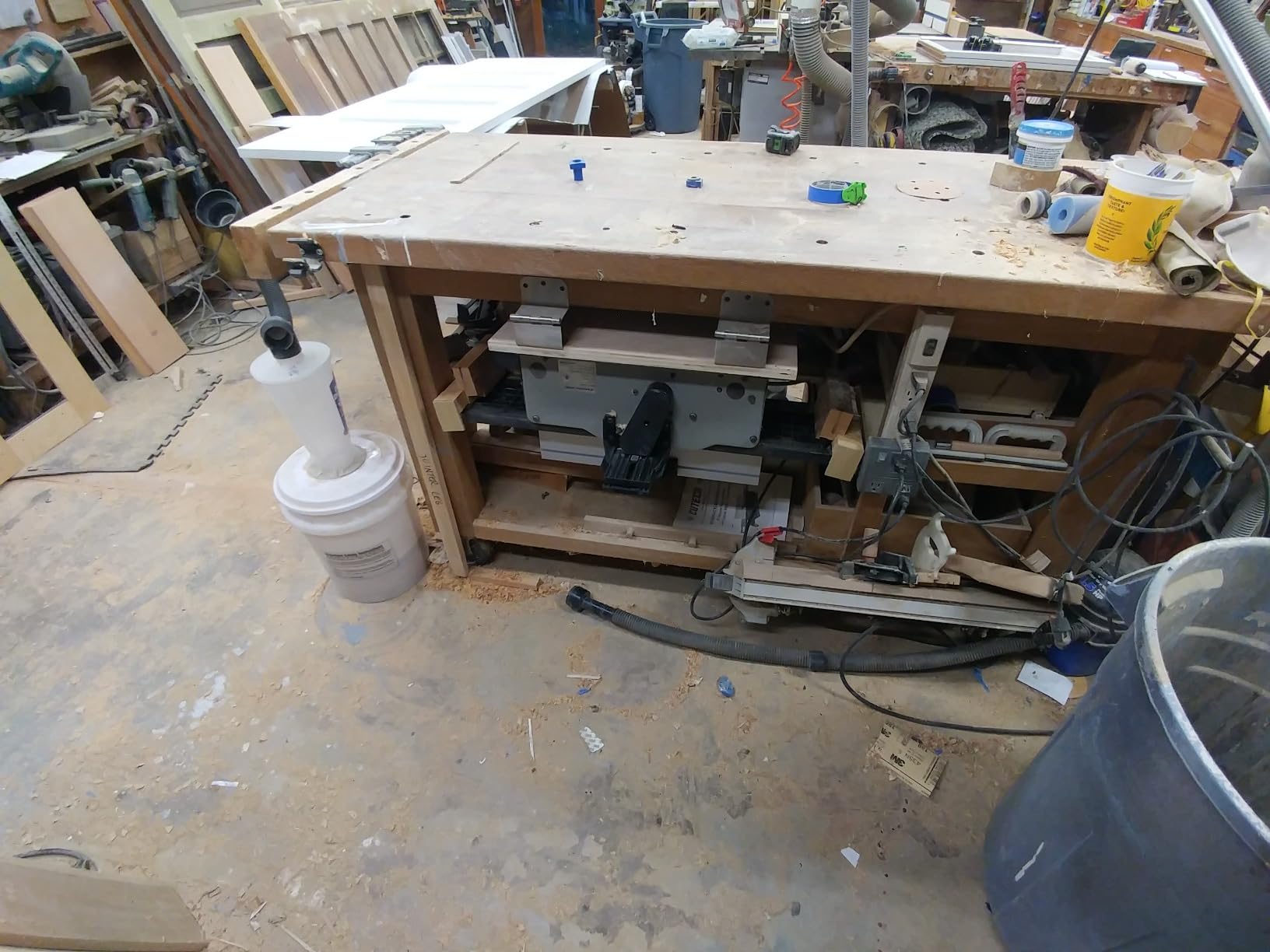
The spiral cutterhead uses 6 rows of staggered tungsten carbide inserts, and the two-sided design means you can rotate each insert when one edge dulls. This gives you double the cutting life before needing replacement inserts. The finish quality is excellent and consistent across different wood species.
The fence has quick stops at 90 and 135 degrees with an adjustable 19-5/8-inch length. It is a well-designed fence that holds its setting. The depth-of-cut pointer is clear and accurate, taking the guesswork out of setting your cut depth.
Comparing to the 8-Inch Cutech
If you are torn between this 6-inch model and the 8-inch Cutech 40180HI, the decision comes down to capacity and table material. The 8-inch gives you wider cutting capacity and heavier cast iron tables for more stability. The 6-inch is lighter, more affordable, and easier to move or store.
For most hobbyists doing cutting boards, edge jointing, and small furniture parts, the 6-inch capacity is sufficient. Step up to the 8-inch if you regularly work with wider boards or want the added stability of cast iron.
Teflon Table Care and Longevity
The Teflon coating reduces friction and protects the aluminum underneath, but it can wear over time in high-traffic areas. To extend the life of the coating, keep the table clean and avoid dragging heavy or rough stock across the surface. A light coat of paste wax adds an extra layer of protection.
The carbide inserts are the long-term value driver here. With two cutting edges per insert and 12 inserts total, you have 24 cutting edges before needing replacements. For a typical hobbyist, that means years of use before any insert maintenance is needed.
7. WEN JT833H 8-Inch Spiral Benchtop Jointer with Extendable Table
WEN JT833H 10-Amp 8-Inch Spiral Benchtop Jointer with Extendable Table
8-inch capacity
16 staggered HSS blades
10-amp motor
33-by-8-inch table extends to 51 inches
Dual dust ports
Pros
- Spiral cutterhead with 16 staggered HSS blades
- Table extends from 33 to 51 inches for longer stock
- 8-inch cutting width for wider boards
- Dual dust ports at 2.5 and 4 inches
- 4.4 rating with 441 reviews
Cons
- Heavier and larger form factor than 6-inch models
- Some quality control concerns noted in reviews
The WEN JT833H solves one of the biggest complaints about benchtop jointers: short bed length. The 33-by-8-inch table extends to 51 inches with support arms, giving you enough bed to handle longer boards that would be unwieldy on other benchtop models. Forum users specifically praise this extendable table feature as a game-changer for their workflow.
The spiral cutterhead uses 16 staggered HSS blades, more than the 12 on the 6-inch WEN. More blades mean more cuts per revolution and a smoother finish. The 8-inch cutting width also lets you face joint wider stock than any 6-inch model can handle.
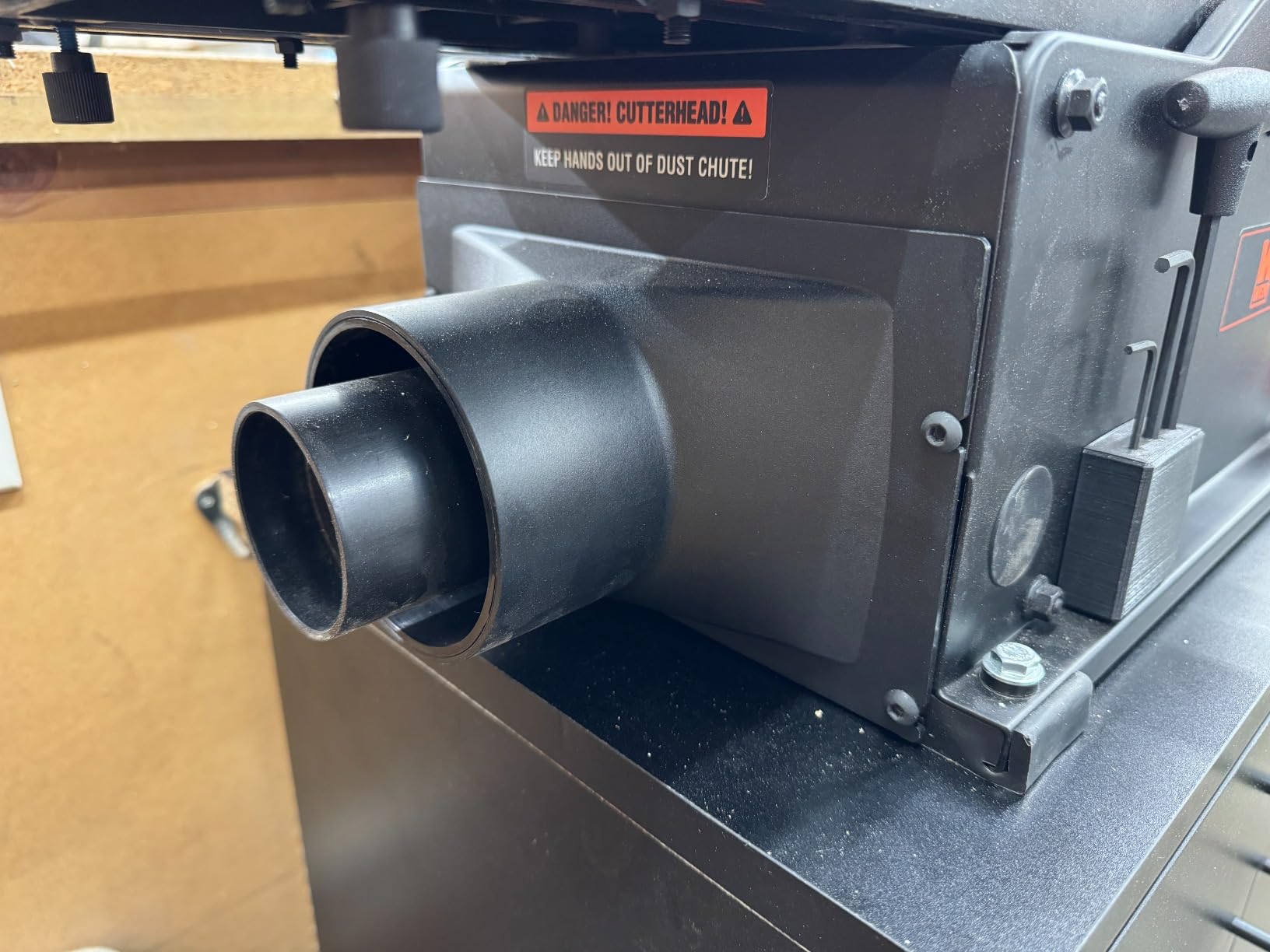
The dual dust ports are a thoughtful touch. You get both a 2.5-inch and a 4-inch port, so you can connect whatever dust collection system you already own without needing an adapter. Effective chip removal keeps the cutterhead clear and improves cut quality.
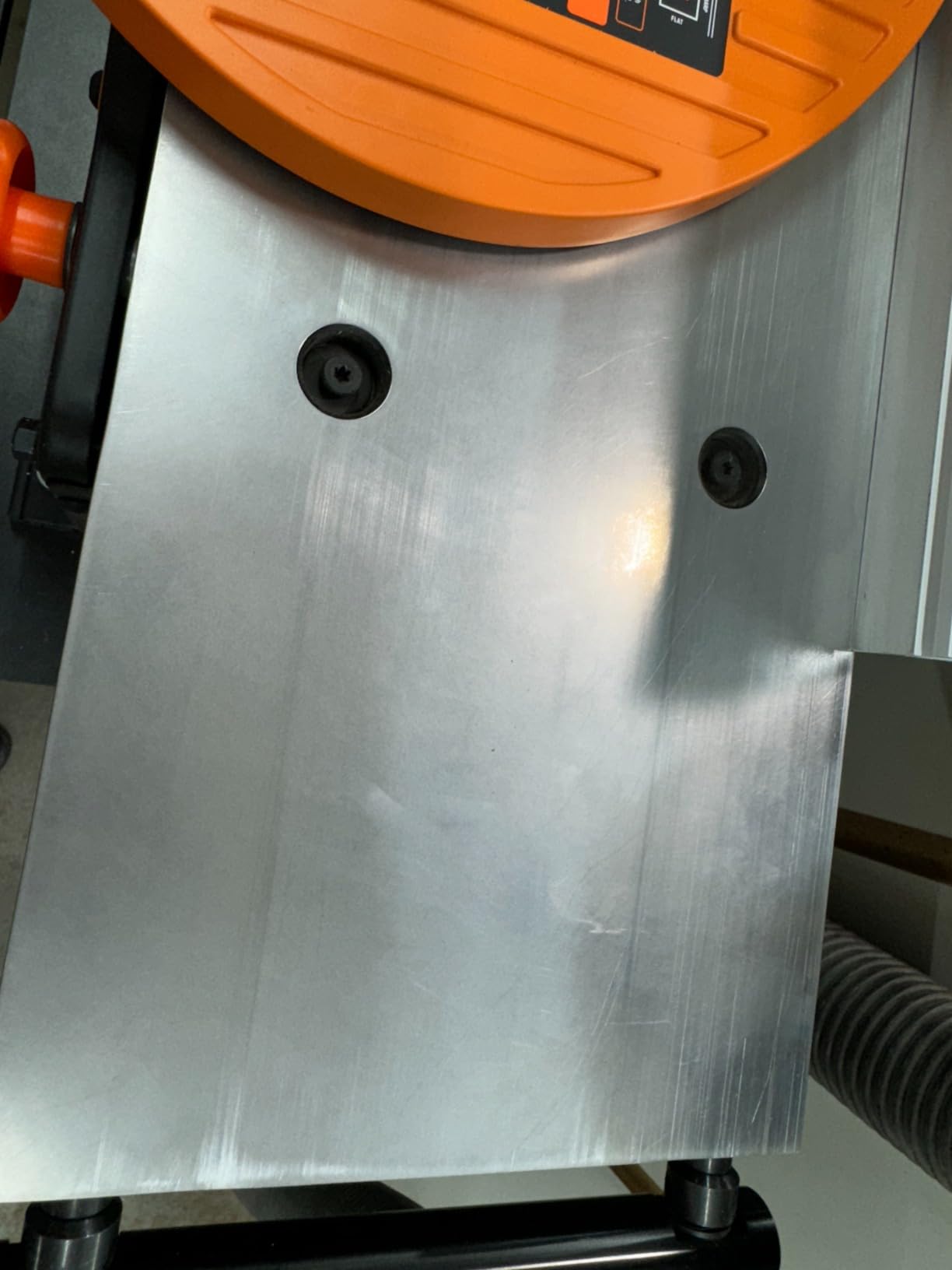
The 4.4 rating across 441 reviews is solid but not stellar, with 70 percent giving 5 stars. Some users report quality control issues like tables that need adjustment out of the box or minor cosmetic defects. The extendable table arms also add bulk, so this machine takes up more bench space than a standard 6-inch model.
The Extendable Table Advantage
If you regularly joint boards longer than 4 feet, the extendable support arms on this model are worth the price alone. Most benchtop jointers struggle with long stock because the bed is too short to support the board properly. The JT833H extends to 51 inches, which handles most furniture-length boards without needing separate roller stands.
When you do not need the extra length, the arms retract and the machine functions as a standard 33-inch benchtop jointer. This flexibility makes it one of the most versatile benchtop jointers for woodworking in a small shop that handles varied project sizes.
Quality Control and What to Check
When your unit arrives, check that the infeed and outfeed tables are coplanar using a straightedge. Some users report needing to shim or adjust the tables to get them perfectly aligned. This is not unusual for benchtop jointers at any price point, but it is worth knowing before you start cutting.
Also inspect the fence for squareness and check that the depth-of-cut adjustment moves smoothly. If anything is off, address it before your first project. A well-calibrated JT833H performs well above its price class for an 8-inch spiral cutterhead jointer with an extendable bed.
8. JET JJ-6HHBT 6-Inch Helical Cutterhead Benchtop Jointer
JET 6-Inch Benchtop Jointer, Helical Cutterhead, 1 HP, 115V 1Ph (JJ-6HHBT)
6-inch capacity
True helical cutterhead with 14 carbide inserts
1HP 15-amp motor
Cast iron tables and fence
5-year warranty
71 lbs
Pros
- True helical cutterhead with 14 indexable four-sided carbide blades
- Heavy-duty cast iron tables and fence
- Fully-adjustable fence with plus/minus 45 degree tilt
- Internal blower motor for dust and chip removal
- 5-year warranty from JET
Cons
- Highest price point in the roundup
- 4.2 rating is the lowest here with only 35 reviews
- Only 6-inch cutting width
- Limited stock availability
The JET JJ-6HHBT is built for woodworkers who want professional-grade construction and a true helical cutterhead in a benchtop format. The 14 indexable four-sided carbide blades give you four cutting edges per insert, which is more than the two-sided inserts on most competitors. JET backs this machine with a 5-year warranty, the longest in this roundup.
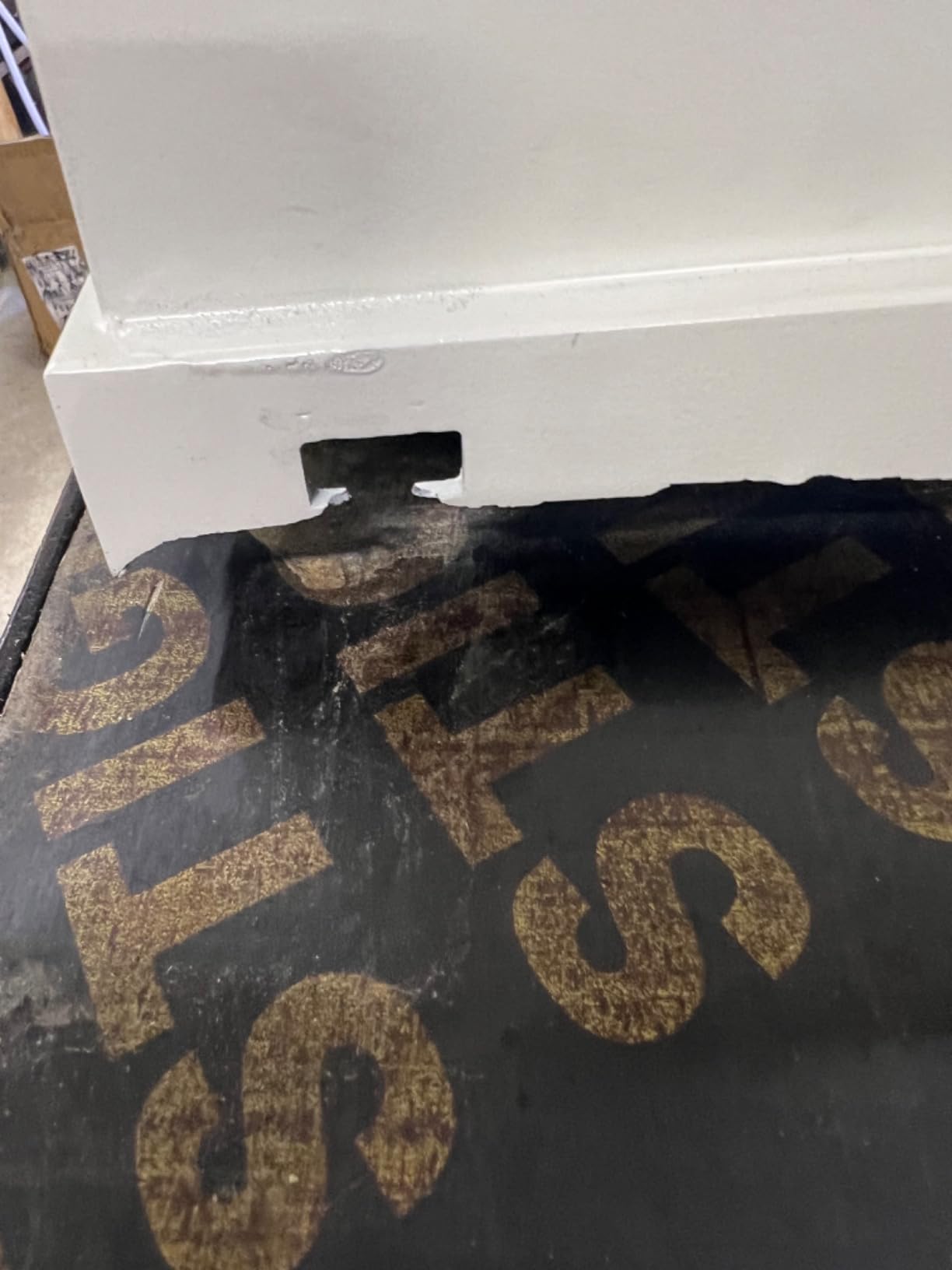
The cast iron construction extends to both the tables and the fence, which is rare even among premium benchtop jointers. Everything about this machine feels solid and built to last decades rather than years. The internal blower motor actively moves chips and dust away from the cutterhead, which is more effective than passive dust ports on most other models.
The 1HP 15-amp motor runs at 10,000 RPM and handles both hard and soft woods without complaint. The fence tilts in both directions with locking stops at plus and minus 45 degrees, which is more versatile than the one-direction bevel on most competitors. The front-mounted toggle switch with a removable safety key is a professional touch.
The trade-offs are real, though. This is the most expensive jointer in the roundup by a wide margin. The 4.2 rating from only 35 reviews suggests some users expected more for the price, with 68 percent giving 5 stars. It also only offers a 6-inch cutting width, so you are paying for build quality and helical technology rather than capacity.
Helical vs Spiral Cutterhead Explained
The JET uses a true helical cutterhead, which differs from the spiral cutterheads on the WEN and Cutech models. A helical cutterhead orients the carbide inserts at an angle to the cutting direction, which creates a true shearing cut that slices through wood fibers rather than chopping them. This produces the smoothest possible finish and the least tear-out on difficult grain.
Spiral cutterheads arrange inserts in straight staggered rows, which is still a major improvement over straight knives but does not shear the wood quite as cleanly. For most woodworkers, the difference is subtle. But if you work with highly figured woods, burled stock, or difficult interlocked grain, the helical advantage becomes noticeable.
Is the Premium Price Worth It
The JET JJ-6HHBT makes sense for serious woodworkers who prioritize build quality, warranty coverage, and the best possible cutterhead technology over raw cutting width. The 5-year warranty provides peace of mind that no competitor in this roundup matches. The four-sided carbide inserts also give you four times the cutting life per insert set compared to two-sided designs.
If you are a professional or advanced hobbyist who uses a jointer daily and wants a machine that will last 15-plus years with minimal maintenance, the investment is defensible. For occasional users or those who need wider capacity, the Cutech 8-inch or 10-inch models offer better value.
Buying Guide: How to Choose the Right Benchtop Jointer?
Choosing between the best benchtop jointers for woodworking comes down to four key decisions: cutterhead type, cutting width, motor power, and table design. Understanding how each factor affects your work will help you pick the right machine for your shop and projects.
The cutterhead is the heart of any jointer, and the type you choose directly impacts finish quality and maintenance.
Straight knife cutterheads use two or three traditional blades. They are the most affordable option and produce good results on straight-grained wood. The downside is more tear-out on figured grain, louder operation, and more frequent blade sharpening or replacement. They are best for budget buyers working primarily with softwoods.
Spiral cutterheads arrange small staggered inserts in rows around a cylindrical head. Each insert takes a small bite, producing a smoother finish with less tear-out than straight knives. When an insert dulls, you simply rotate it to a fresh edge. Spiral cutterheads are the sweet spot for most hobbyists, offering excellent finish quality at a moderate price.
Helical cutterheads orient inserts at an angle to the wood, creating a true shearing cut. This produces the smoothest finish and handles the most difficult grain with minimal tear-out. Helical heads are typically found on premium machines and are worth the investment if you work with figured woods regularly.
The second decision is cutting width, usually 6-inch or 8-inch for benchtop models. A 6-inch jointer handles most edge jointing and face jointing of narrower stock. An 8-inch jointer lets you face joint wider boards, which matters for tabletops, panels, and furniture parts. Forum consensus strongly recommends choosing 8-inch if your budget and bench space allow, because the extra width adds flexibility for future projects.
Motor power matters more than many buyers realize. A 10-amp motor handles softwoods and moderate hardwoods, but can bog down on deep cuts in dense species like maple or oak. The Cutech 10-inch model with its 12-amp motor and the JET with its 15-amp motor are better choices if you regularly joint hardwoods. Underpowered motors leave burn marks and rough surfaces that require extra sanding.
Table material and length affect accuracy and usability. Cast iron tables are heavier and more stable, resisting flex and vibration for cleaner cuts. Aluminum tables are lighter and easier to move but can flex under heavy stock. Longer beds support boards better and reduce snipe, which is why the WEN JT833H with its extendable table is appealing for longer stock. As a rule, look for at least a 30-inch table length for general work.
Finally, do not overlook dust collection. Effective chip removal keeps the cutterhead clear and improves cut quality. Look for models with standard dust port sizes (2.5-inch or 4-inch) that match your existing shop vacuum or dust collector. Several forum users cite poor dust collection as a dealbreaker, so prioritize models with well-designed dust ports and active chip evacuation like the JET’s internal blower.
Frequently Asked Questions
What is the best benchtop jointer for the money?
The Cutech 40180HI 8-Inch Spiral Cutterhead Benchtop Jointer offers the best value for the money with its tungsten carbide inserts, cast iron tables, and 4.8 average rating. For budget shoppers, the WEN JT630H delivers spiral cutterhead performance at a lower price point.
What size benchtop jointer do I need?
For most hobbyists and small shops, a 6-inch benchtop jointer handles edge jointing and face jointing of standard stock. Step up to an 8-inch model if you build tabletops, wide panels, or face joint rough lumber regularly. Choose 10-inch only if you work with wide boards frequently and have the bench space for a heavier machine.
Are benchtop jointers any good?
Yes, modern benchtop jointers are highly capable machines for small shops and hobbyists. Models with spiral or helical cutterheads produce finishes comparable to floor-standing jointers. The main limitations are shorter bed length for long boards and less mass for damping vibration compared to full-size machines.
What is the difference between a 6-inch and 8-inch jointer?
The difference is cutting width. A 6-inch jointer can face joint boards up to 6 inches wide, while an 8-inch jointer handles boards up to 8 inches wide. Both can edge joint boards of any width. The 8-inch gives you more flexibility for face jointing wider stock for tabletops and panels, but costs more and takes up more bench space.
How long do benchtop jointers last?
A quality benchtop jointer with a spiral or helical cutterhead can last 10 to 15-plus years with proper maintenance. Cast iron table models like the Cutech and JET tend to last longest because the tables stay flat over time. Rotating carbide inserts regularly and keeping tables clean and waxed extends the machine’s life significantly.
Can you face joint on a benchtop jointer?
Yes, you can face joint on a benchtop jointer as long as the board width does not exceed the cutting capacity. A 6-inch jointer face joints boards up to 6 inches wide, and an 8-inch handles up to 8 inches. Face jointing removes warp, twist, and bow from one face of a board to create a flat reference surface for planing.
Conclusion
Finding the best benchtop jointers for woodworking in 2026 comes down to matching cutterhead technology, cutting width, and build quality to your specific projects. The Cutech 40180HI earned our Editor’s Choice for its tungsten carbide spiral cutterhead, cast iron tables, and outstanding 4.8 rating. For budget-conscious buyers, the WEN JT630H delivers spiral cutterhead performance at an accessible price. And if you need maximum power and capacity, the Cutech 401100HI with its 12-amp motor and 10-inch width is unmatched.
Whichever model you choose, prioritize a spiral or helical cutterhead over straight knives for better finish quality and lower maintenance. Take time on initial setup and calibration, connect proper dust collection, and your benchtop jointer will serve your shop for years. Pick the one that fits your projects and bench space, and start turning rough lumber into flat, square, glue-ready boards.