
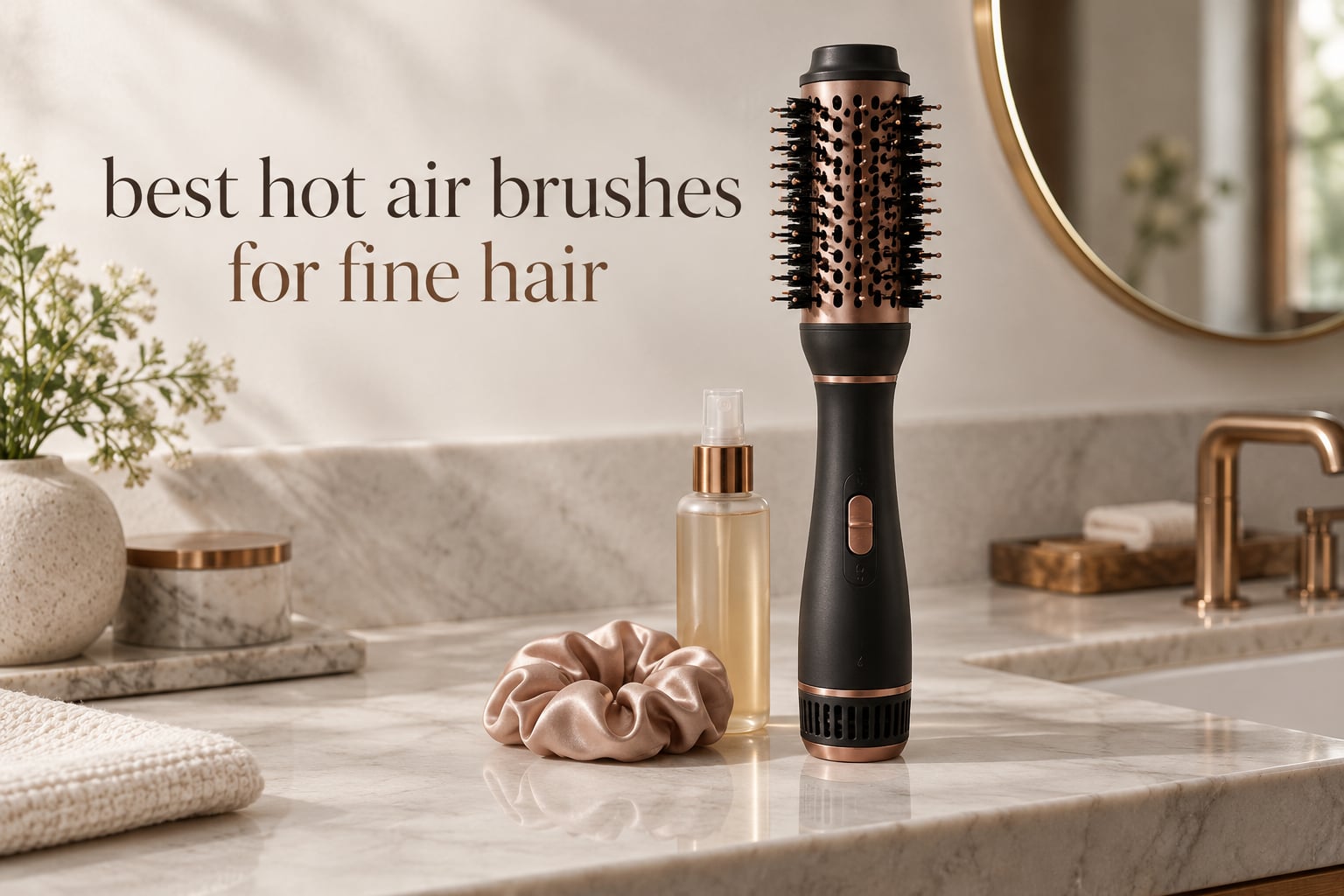
Fine hair punishes hot tools. A few seconds too long at the wrong temperature and fine strands snap at the mid-length, right where they are most visible. Ask anyone who has Googled this at midnight: the problem is rarely wanting a blowout, it is not trusting any tool to give one without paying for it in breakage.
That is where the best hot air brushes for fine hair earn their place. A hot air brush is a two-in-one machine: a motor blows heated air through a vented barrel wrapped in bristles, so drying and styling happen in the same pass. You are not juggling a dryer and a round brush with two hands, which means less total heat exposure and far less mechanical tension on the strand.
We compared ten of them. Five are oval-barrel volumizers, two are compact round brushes for short cuts, one rotates on its own, and two are all-in-one detangling designs. We looked hard at barrel diameter, heat settings, ionic output, bristle type, wattage, weight, cord reach and the real complaints owners keep returning to, then we flagged which ones are genuinely gentle with fine strands and which ones only look the part.
Our short version: barrel size matters more than brand, a genuine low heat setting matters more than wattage, and cool shot is not a luxury feature. If you have fine hair that tangles easily and breaks near the roots, the details below are where your money is either saved or wasted.
Table of Contents
Top 3 Hot Air Brushes for Fine Hair (October 2026)

Hot Tools 24K Gold Blow Dryer Brush
- 24K Gold even heat
- Ionic frizz control
- Cooler metal barrel

The Hot Tools 24K Gold takes our top slot because owners with thin, fine hair describe the low setting as genuinely sufficient, and the metal barrel stays cooler to the touch than plastic-barrel rivals. The Revlon One-Step Volumizer is the most-reviewed tool in the group by a wide margin and the highest rated, though its barrel is oversized for short fine hair. The L’Ange Le Volume is the value pick, with a 60mm variant that fine-haired owners specifically look for.
10 Best Hot Air Brushes for Fine Hair (October 2026)
| Product | Specifications | Action |
|---|---|---|
| Hot Tools 24K Gold Blow Dryer Brush |
|
Check Latest Price |
| Revlon One-Step Volumizer 2.8 in |
|
Check Latest Price |
| L’Ange Le Volume 75mm |
|
Check Latest Price |
 Umeely 4 in 1 Ceramic Titanium Umeely 4 in 1 Ceramic Titanium |
|
Check Latest Price |
 Conair InfinitiPRO Rotating Brush Set Conair InfinitiPRO Rotating Brush Set |
|
Check Latest Price |
 Revlon One-Step Root Booster 1.5 in Revlon One-Step Root Booster 1.5 in |
|
Check Latest Price |
 LANDOT 60mm One-Step Hot Air Styler LANDOT 60mm One-Step Hot Air Styler |
|
Check Latest Price |
 TYMO 4 in 1 Hairdryer and Styler TYMO 4 in 1 Hairdryer and Styler |
|
Check Latest Price |
 Hot Tools Pro Artist 3/4 in Brush Hot Tools Pro Artist 3/4 in Brush |
|
Check Latest Price |
 Conair All-in-One 1000W Ionic Conair All-in-One 1000W Ionic |
|
Check Latest Price |
Two things stand out in that table. First, barrel sizes run from 3/4 inch to 2.8 inches, and that single dimension decides whether the tool works on your hair. Second, every model here has at least two heat settings, but only some have a low setting that is actually mild.
1. Hot Tools 24K Gold Blow Dryer Brush – Best Overall for Fine Hair
HOT TOOLS 24K Gold Blow Dryer Brush, Round Brush Blow Dryer for Salon-Worthy Blowouts in One Step, Fast Styling & Long-Lasting Results
24K Gold round brush
Ionic frizz control
2 heat/speed settings
1.9 lb body
Pros
- Low setting is enough for fine hair
- Metal barrel runs cooler to the touch
- Ionic output reduces frizz and static
- One pass replaces dryer plus brush
Cons
- Switch sits under the barrel and is awkward one-handed
- Bulky body with no cord storage
- Dense bristles snag on curls that are not fully detangled first
This is the one I keep recommending to fine-haired friends who have given up on the idea. Across reviews of thin, wavy, frizzy hair, owners report the same thing: the low setting is enough, the round brush smooths in five to ten minutes, and it replaces a flat iron entirely. That combination is rare in this category, where most tools are powerful and unhelpful on delicate strands.
The 24K Gold coating is the quiet reason. It spreads heat evenly across the barrel instead of creating hot spots, which is exactly what you want when the strand itself is the thing you are protecting. Add the built-in ionic output that holds a neutral charge on the surface, and you get the frizz and static reduction fine hair needs without cranking the temperature.
It is also the only tool in this roundup with a metal barrel that stays cooler to the touch. On a fine head of hair that means less flinching when the brush passes near your scalp, ears and neck, and fewer burned fingertips on the ends.
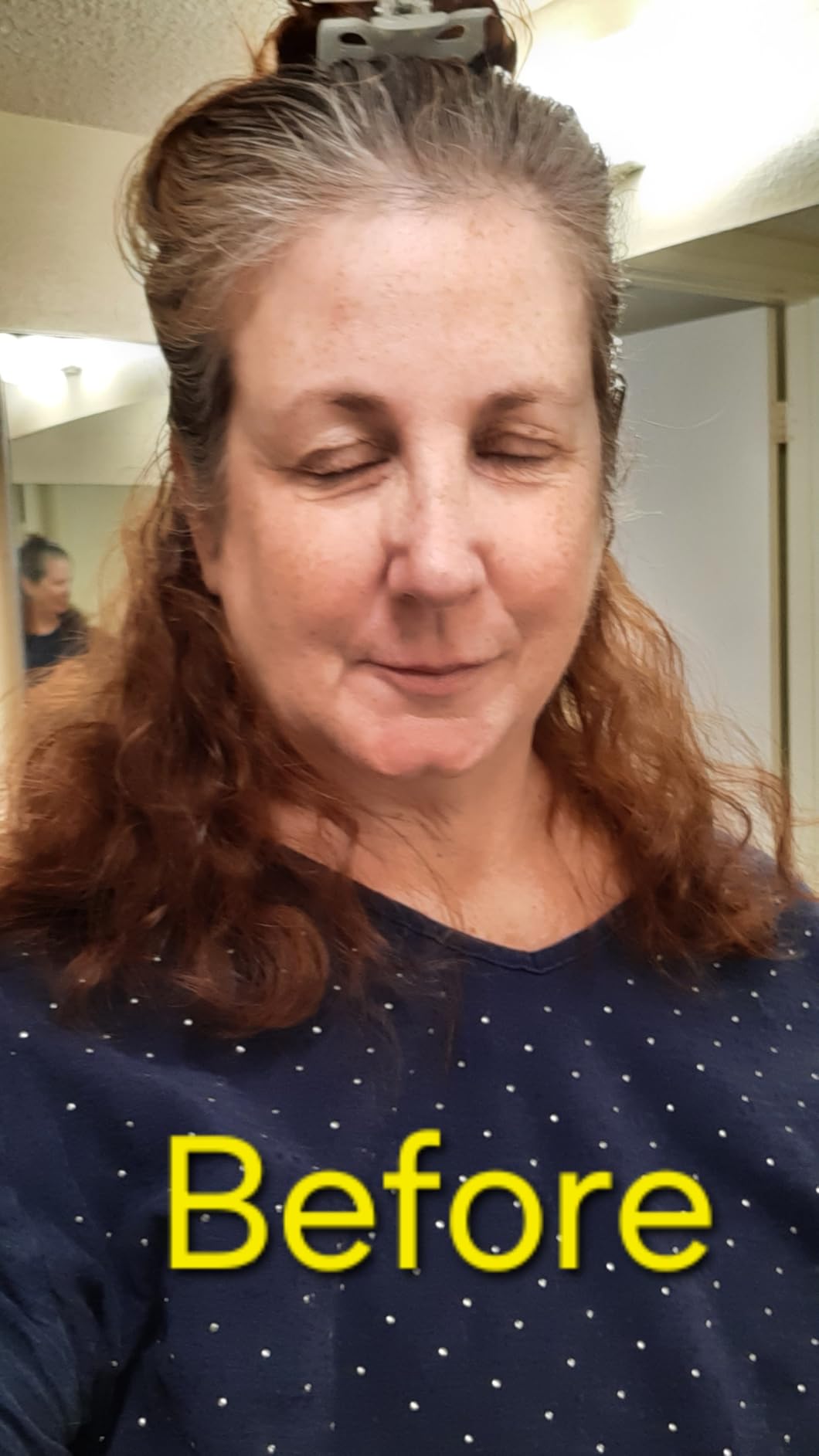
The brush body is a real round brush, not an oval, so the lift comes from tension and rotation of your wrist rather than from the barrel shape. It takes practice. Most owners describe the first few attempts as a learning curve before the tension clicked into place and the result stopped looking windswept.
Because it is a genuine dryer-brush, you can work from towel-dried hair in one pass, or use it as a second pass over hair that is already dry. Fine-haired owners often do both: a quick dry first, then a slow pass on low for the finish.
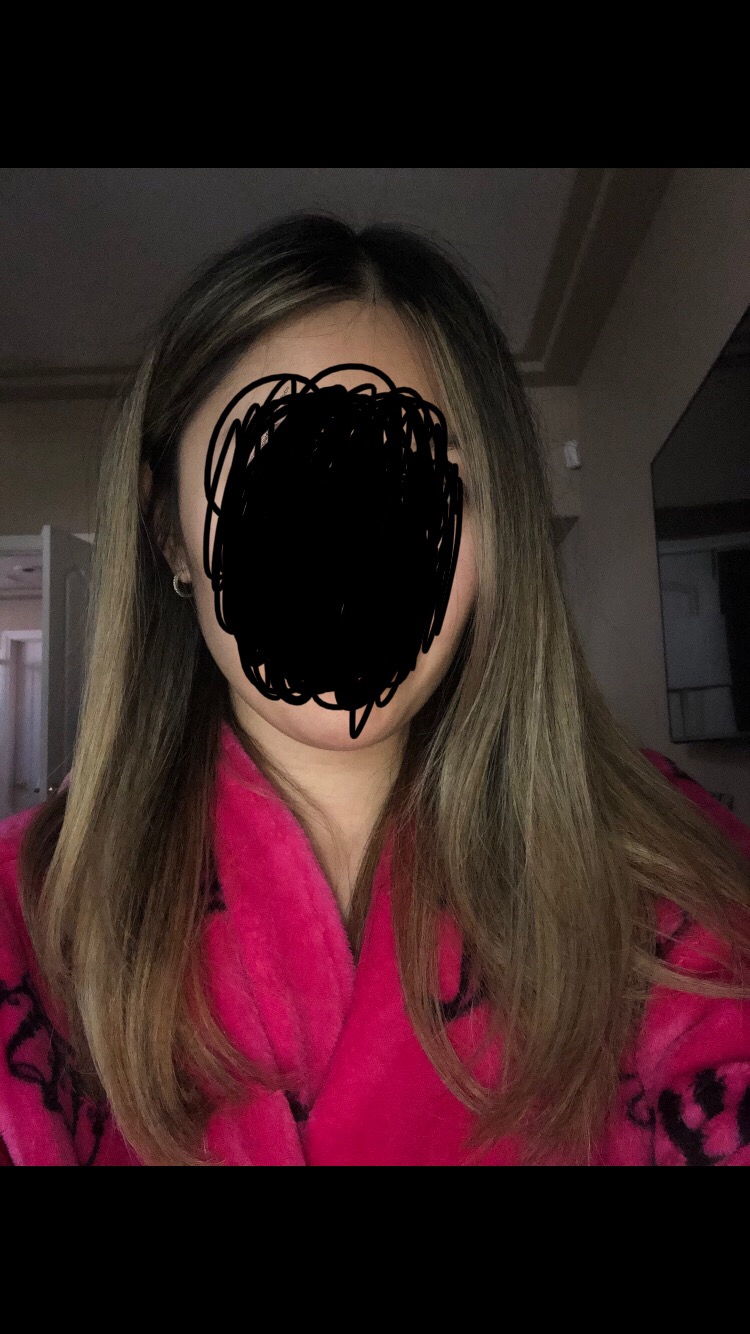
What you get from the low setting
On fine, fine hair, the low setting is the setting you will live on. Multiple owners with thin hair describe smoothing a full head in a single pass without visible heat damage or breakage, even with tension applied. The high setting exists for thick or coarse hair, not for yours.
One recurring note in the reviews: the brush catches hair if you use it on thick curls before detangling. On fine straight or wavy hair, that never came up.
Where the design frustrates people
The power and heat switch sits underneath the barrel, so changing setting mid-style means repositioning the whole tool. With a large brush body and no retractable cord or hang hook, storage is also awkward, and a few owners report motor failure after roughly three years of daily use while others report five or more.
2. Revlon One-Step Volumizer 2.8 in Barrel – Best-Selling and Highest Rated
REVLON One-Step Volumizer Hair Dryer and Styler, 2.8 in Barrel, Black
2.8 in oval barrel
Cool low high settings
Nylon pin and tufted bristles
1.57 lb
Pros
- Largest review base in the group at 4.6 stars
- Oval barrel smooths and lifts in one pass
- Cool setting helps manage heat
- Nylon bristles grip for controlled tension
Cons
- 2.8 in barrel is oversized for short fine hair
- Plastic bristles are less gentle than boar or metal
- Single barrel limits styling options
With well over 350,000 ratings averaging 4.6 stars, the Revlon One-Step Volumizer is the default recommendation in almost every roundup we have read, and for medium-length fine hair it delivers. The oval barrel smooths along its flat sides while the rounded edges build lift at the roots, so a single pass both straightens and adds body.
The review base matters here. When a tool has this many owners, the pattern is well established: reviewers praise the one-step convenience, the smooth finish, and the volume. The most repeated caveat is the barrel diameter, which is the reason this brush sits at number two for our fine-hair specific list rather than first.
Three settings including cool give you real control. Fine-haired owners almost universally report using the lower settings specifically to avoid damage, which is the correct approach.
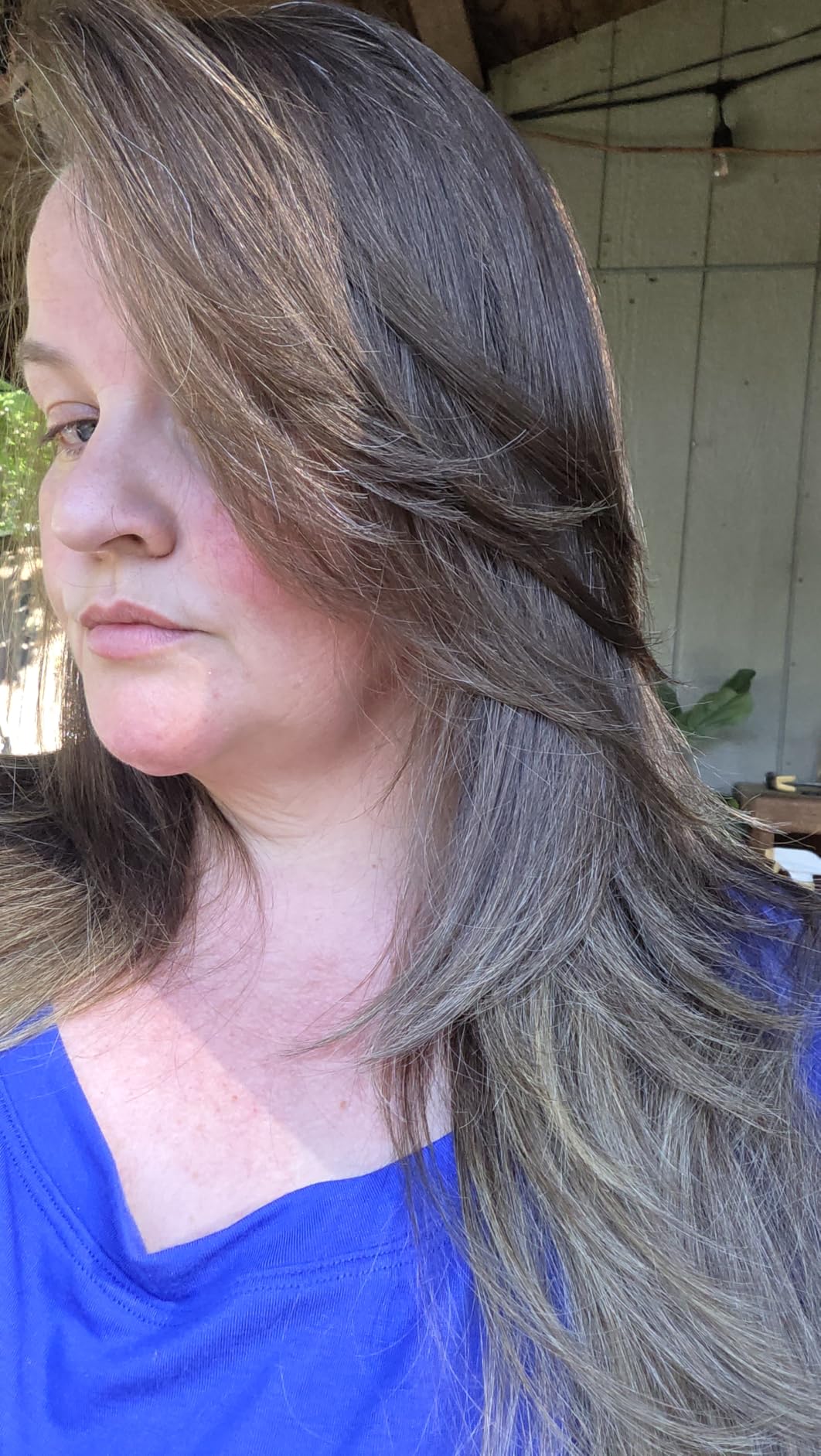
The nylon pin and tufted bristle layout is what makes the tension predictable. Bristles grip and guide rather than comb, so the strand is held evenly instead of catching at random points. That predictable grip is the difference between a smooth pass and a snag.
At 1.57 pounds it is not the lightest tool here, but it is well balanced and the 4.1 by 11.4 by 10.1 inch footprint stays compact enough for a bathroom drawer.

Who the 2.8 inch barrel actually suits
This barrel is built for mid-length to long hair and a classic high-volume blowout. Fine hair that reaches past the shoulders can wrap it comfortably and get the full effect. Fine hair that stops at the chin cannot, and will spend the pass fighting itself.
If your hair is fine but long, this is a genuinely excellent tool. If your hair is fine and short, the 1.5 inch Revlon further down this list or the 3/4 inch Hot Tools Pro Artist will serve you far better.
Why fine-haired owners stay cautious
Plastic nylon bristles heat up more than a metal barrel and can tug on delicate hair, and the fixed single-barrel design means you cannot swap in a different size when your hair or your mood changes. It is a specialist tool for one length of hair, which is why it is a value rather than a universal answer.
3. L’Ange Le Volume 75mm Titanium Blow Dryer Brush – Best Value
L’ANGE HAIR Le Volume 2-in-1 Titanium Blow Dryer Brush | Frizz Control Blowout Hair Dryer Brush for Drying and Styling | Volumizing Hot Air Styler for All Hairstyles | Oval Barrel | Black – 75mm
75mm and 60mm oval barrels
360 degree airflow
1.3 lb
360 degree swivel cord
Pros
- Two barrel sizes including a 60mm for fine hair
- Lightest full-size body in the roundup at 1.3 lb
- Titanium barrel glides with few snags
- Swivel cord prevents tangling
Cons
- On/off switch easy to bump while rolling hair
- Bulky in the hand over long sessions
- Slower drying than some Revlon models
The L’Ange Le Volume is the pick if you want salon smoothness without paying a premium brand’s price, and it is the only brush in this roundup where barrel size is a choice rather than a fixed spec. The 75mm oval model is listed here, but a 60mm variant exists, and fine-haired owners consistently favor the smaller one because it wraps easily.
What stands out in the reviews is the titanium barrel gliding through hair with minimal pulling. For fine, frizzy hair that tangles at the first sign of tension, that single characteristic does more than any feature list can promise. Reviewers describe hair as soft, shiny and frizz-free enough that many of them skip the flat iron afterward.
At 1.3 pounds, this is the lightest full-size oval brush in the group, and that weight difference shows up during a five-minute blowout. The 360 degree swivel cord also keeps the tool from catching on itself as you move.
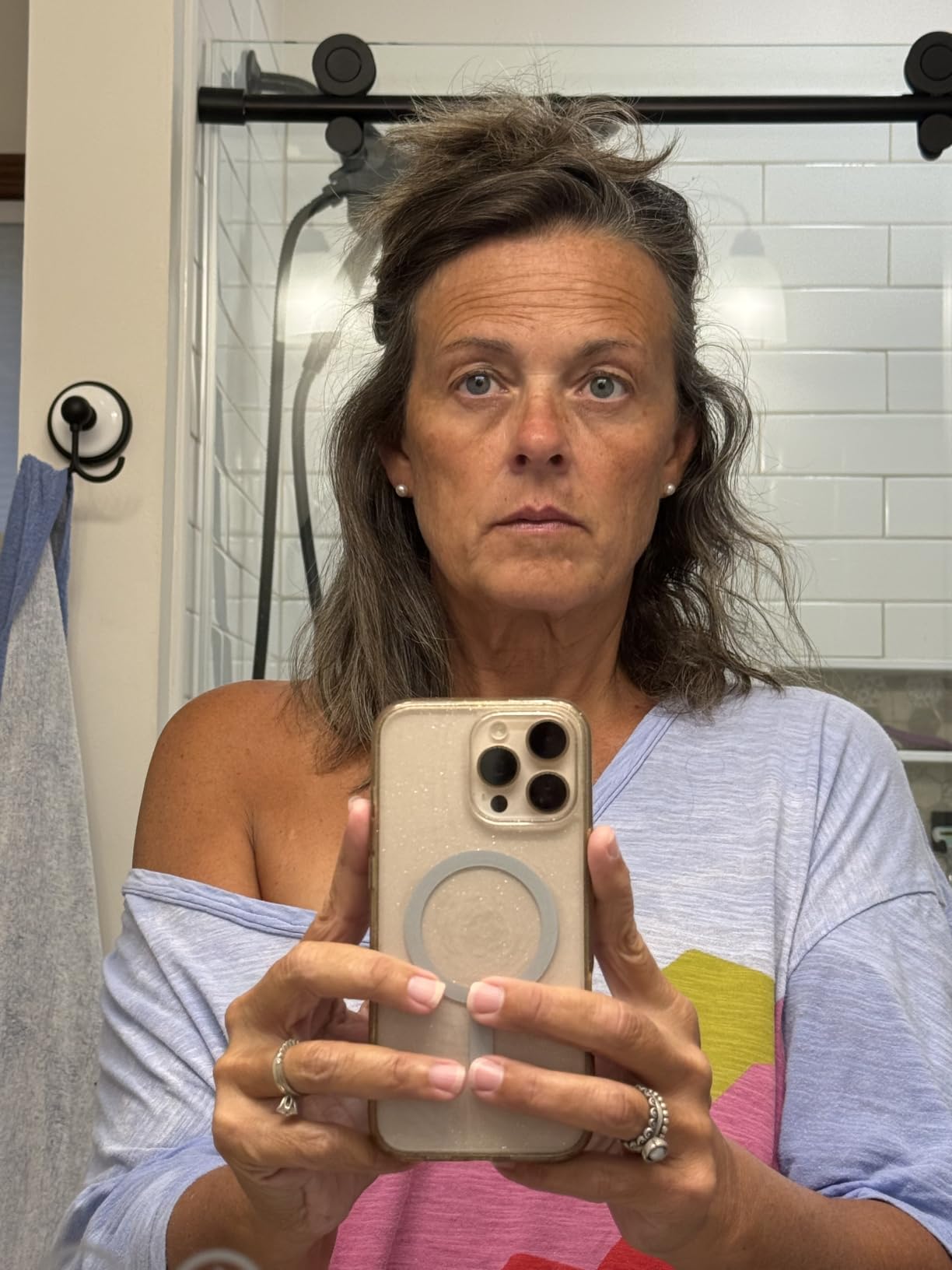
Frizz-free technology here works by sealing the cuticle, which is why the finish reads as polished rather than just smooth. The 360 degree airflow is designed to lift hair at the roots, and with adjustable heat settings the tool handles fine, thick, wavy and curly textures on the same dial range.
Owners frequently report cutting 20 to 30 minutes off their morning routine. For fine hair, which is usually quick to dry but slow to style, that saving is mostly styling time.
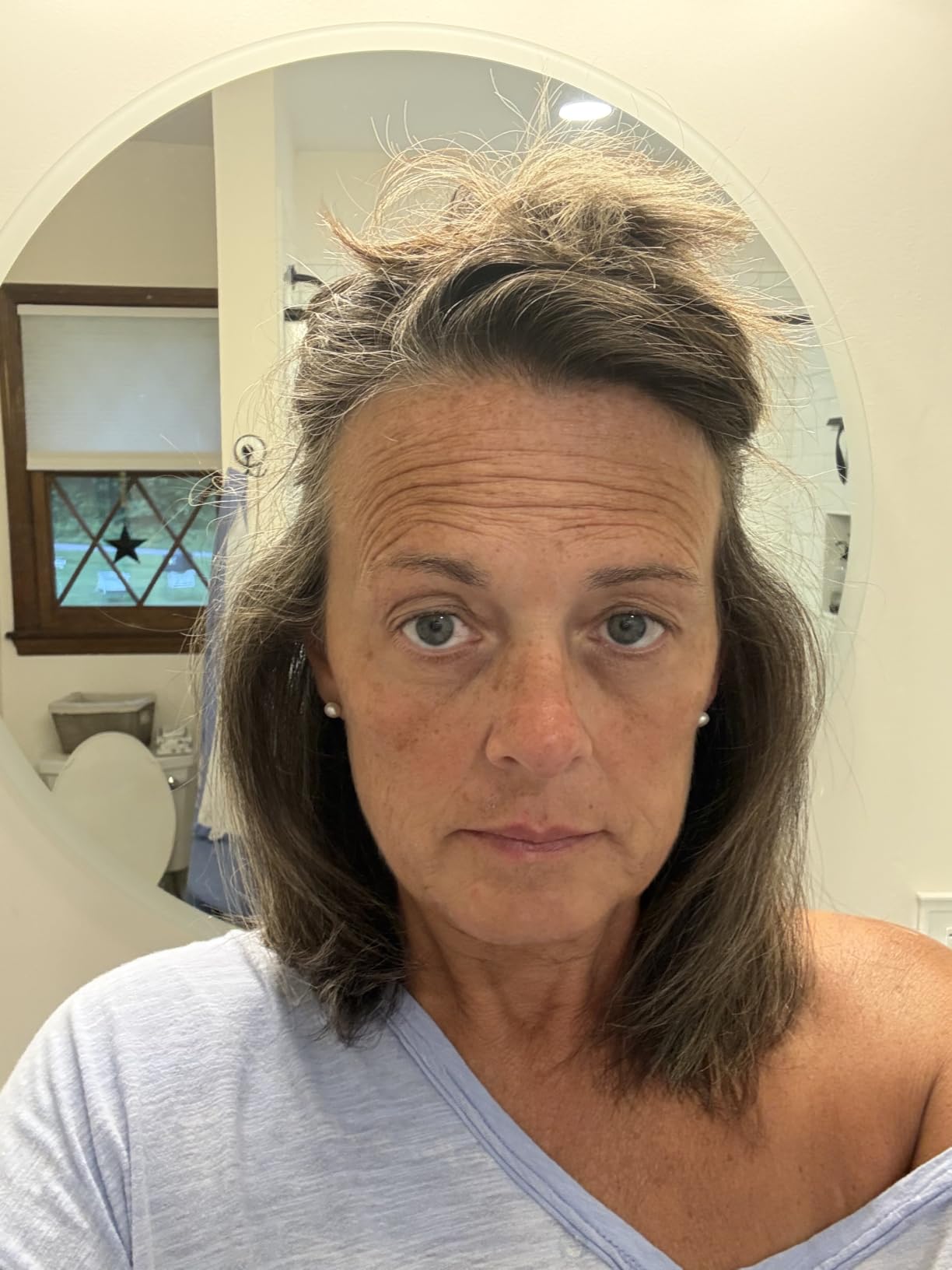
Why the 60mm variant matters for fine hair
A 75mm oval barrel is already tight for fine strands. The 60mm version gives you enough surface to create tension and glide, without the awkward half-wrapped section you get on very fine hair. If you are shopping for this tool specifically for fine hair, this is the variant to look at.
The trade-off is a little less volume per pass, since a smaller barrel wraps a thinner section. On fine hair that is usually the right exchange.
What owners complain about most
By far the most repeated complaint is the on/off switch position. Rolling hair around the barrel can bump the switch and stop the tool mid-style, which interrupts the pass and means you start a section again. A secondary note is that the body feels tiring in the hand after extended use, and a few owners report arriving with faulty models.
4. Umeely 4 in 1 Ceramic Titanium Hot Air Brush – Best Airflow Power
Hair Dryer Brush Blow Dryer Brush in One, 4 in 1 Hairdryer and Styler
1200W motor
Ceramic titanium barrel
Negative ion
3 settings plus cool
Pros
- 1200W motor dries fast from towel-dry
- Negative ions lock moisture and cut frizz
- Long bristles glide through fine hair
- Adds visible body to thin hair
Cons
- Plastic bristles can melt after about a year
- Large brush head suits long hair only
- Only one colour option is dual voltage
The Umeely is the power pick. A 1200W motor with a ceramic titanium barrel and negative ion technology gives you the fastest dry-from-damp in this group, which matters if you like to go from the shower to styled without a separate blow-dry pass.
Owners with fine, thin hair single this model out for adding body and volume without frizz. The oval barrel with 360 degree airflow and the nylon pin plus tufted bristle layout are praised for gliding through fine strands gently while still gripping enough to create lift at the roots, and most users pair it with heat protectant.
Three heat and speed settings plus a cool option give a usable range, and the titanium plates on the barrel help keep heat distribution even.
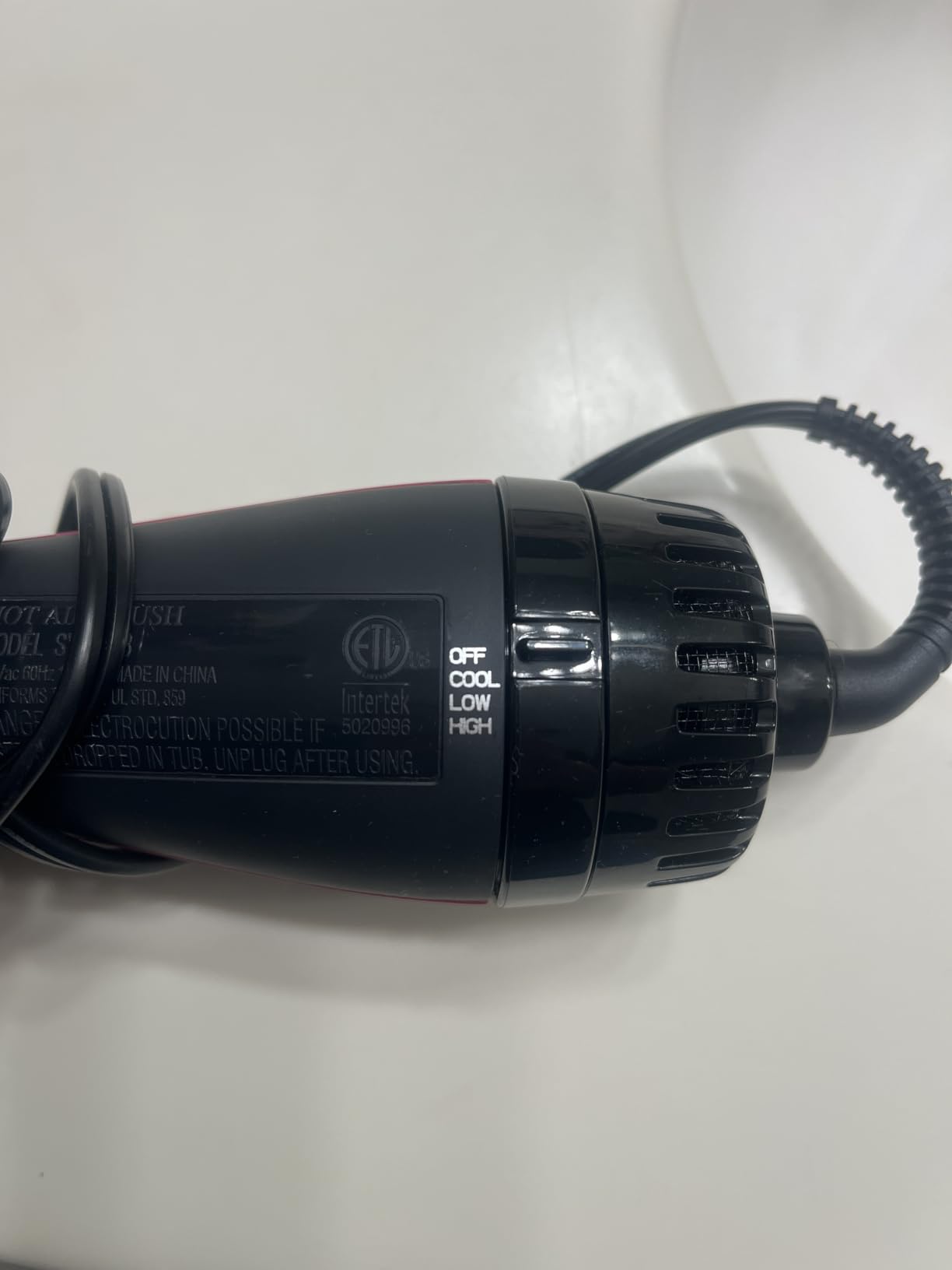
The 1.25 pound body and quick heat-up time are what make it practical for a morning routine. Operation is one-handed, which means you can hold the section with your free hand and control the tension.
Be aware of the safety note that comes with this one: it uses an ALCI plug with ETL certification and is designed for 110-120V US outlets. Of the colour variants, only the black option is dual voltage, which matters if you travel internationally.
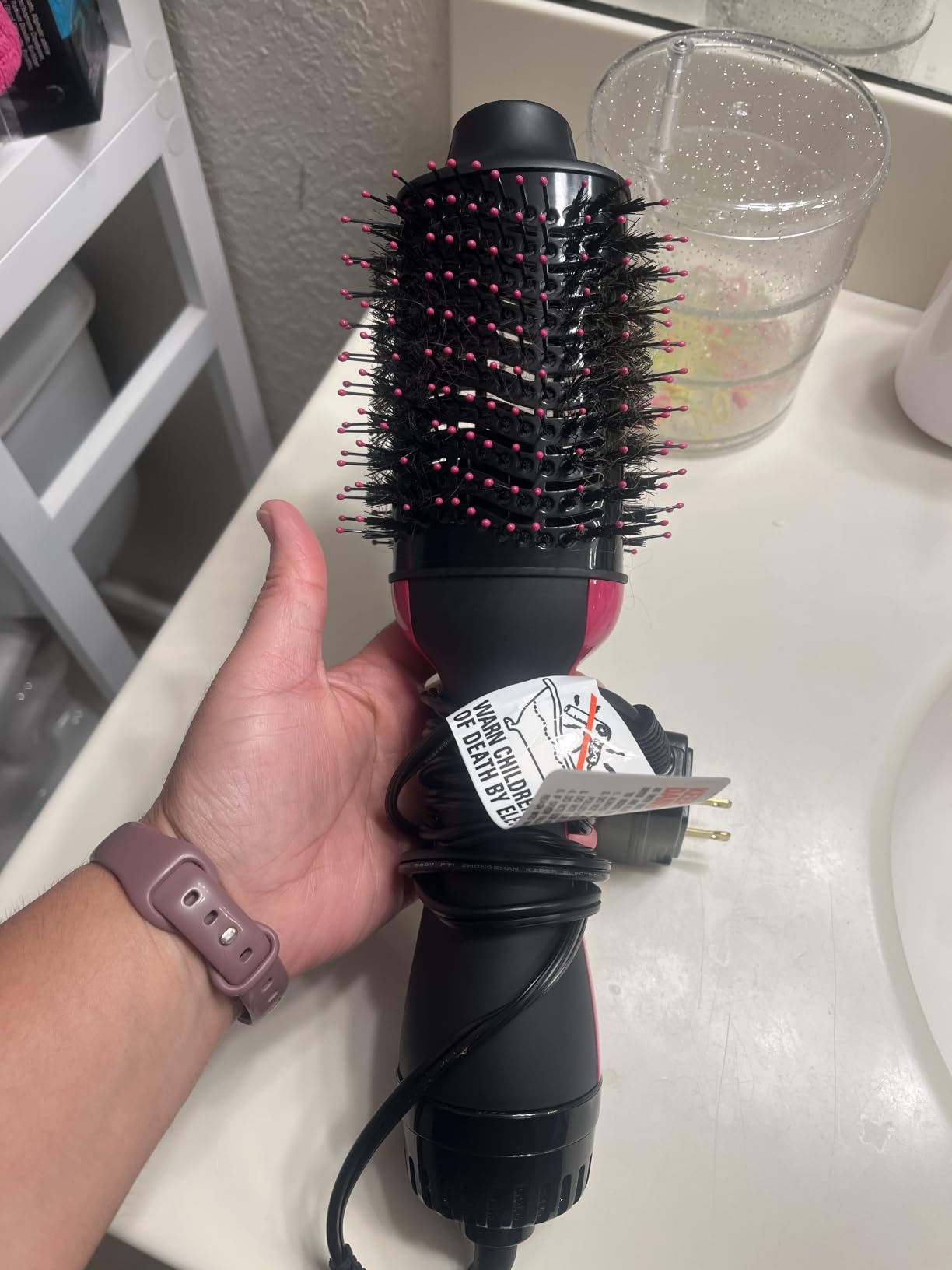
Where the extra power actually pays off
1200W is meaningful when your hair is wetter than towel-dry or when you are drying a full head in one pass. Compared with the 1000W Conair at the end of this list, the difference shows up in time to dry rather than in the finish.
For fine hair that is already almost dry, that extra power is less necessary, which is worth weighing against the durability feedback below.
What fine-haired owners should watch for
The durability of the plastic bristles is the most significant reported weakness, with several owners noting they melted after roughly a year of regular use. The brush head is also large, and it is called out as too big for chin-length or shorter hair, so fine and short is not this tool’s strength. A small number of owners report breakage after minimal use.
5. Conair InfinitiPRO Rotating Brush Set – Best for One-Handed Styling
Conair InfinitiPRO Blow Dryer Brush Set, Rotating, 2″ & 1″ Brush Heads
1.5 in and 2 in detachable heads
Bidirectional auto rotation
Ionic
15.5 in long handle
Pros
- Rotates on its own so you use one hand
- Two brush sizes in one base
- Detachable heads replace a worn brush not the tool
- Long handle eases wrist and shoulder strain
Cons
- Brush stops rotating on the cool setting
- Stops if too much hair is loaded
- Settings cannot change mid-style
- Needs hair roughly 60-70 percent dry first
This is the only self-rotating brush in the roundup, and for fine hair that decision cuts both ways. Owners with wrist, shoulder or carpal issues value it enormously, because the barrel spins itself and you guide rather than wind. Owners with short fine hair find both included heads too large to wrap comfortably.
The bidirectional auto-rotation creates lift, body and bounce without you turning your wrist, and the two detachable heads at 1.5 inch and 2 inch genuinely produce different looks from one base. Secure-lock attachments mean a worn brush can be replaced rather than the whole tool, which is a real durability advantage.
Ionic technology smooths frizz and boosts shine, and the cool-touch barrel tips reduce the fear factor of running something hot near your scalp.
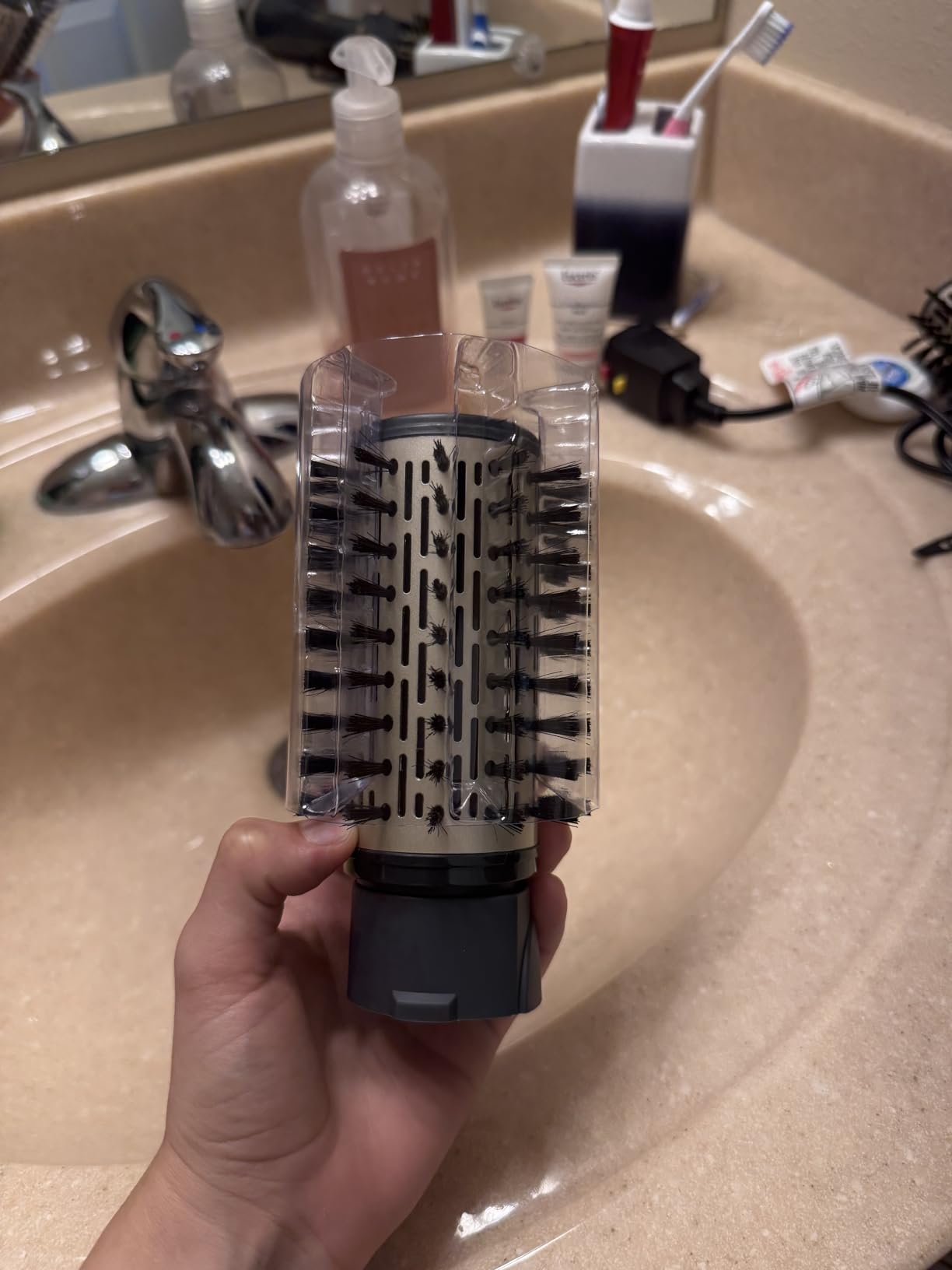
This is also the lowest rated tool here at 4.0 stars, with a 12 percent one-star share, and the reviews explain the gap. It is a capable machine held back by control placement and a cooling setting that stops working when you need it most.
The 15.5 inch total length is noticeably longer than most competitors and does make the tool easier on your wrist over a full head.
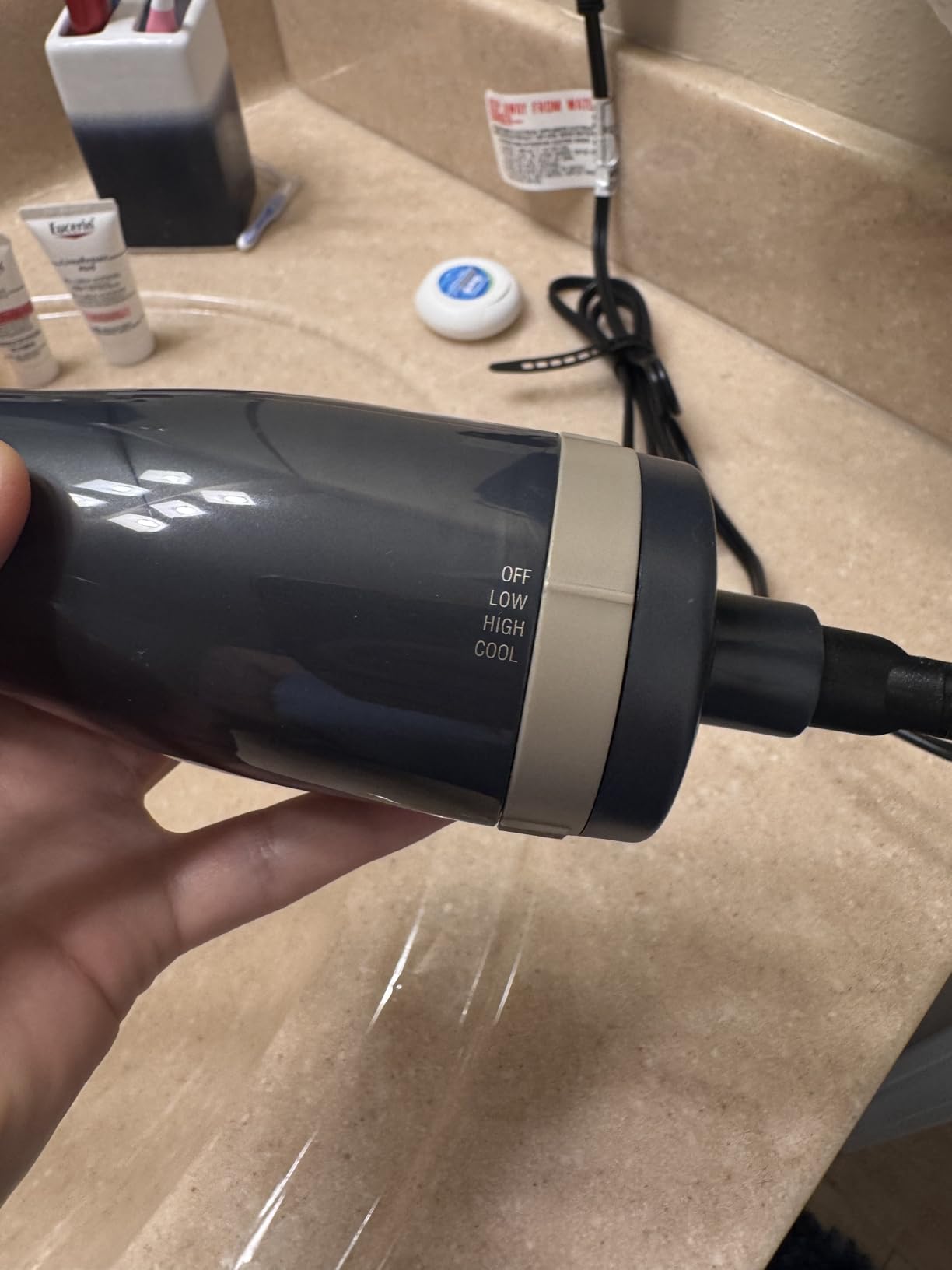
What one-handed styling changes for fine hair
Fine hair tangles easily in hot brushes, and tangling usually starts when your free hand cannot hold tension while the other does two jobs. Because the rotation is automatic, you keep one hand on the section and the brush does the wrapping. Several owners with fine hair call this the reason they kept the tool after upgrading everything else.
Load too much hair at once, though, and the rotation stalls. Small sections are not optional on fine hair with this brush.
The two complaints that decide it for you
First, the brush does not rotate on the cool setting, so you cannot set a curl with cool air, which is a widely repeated complaint. Second, the heat and speed selector is a rotating switch at the base of the handle, so you cannot change setting mid-style, and the dryer function alone is weak enough that hair needs to be roughly 60 to 70 percent dry before you start. A small number of owners report the rotation motor failing within a few months.
6. Revlon One-Step Root Booster 1.5 in Barrel – Best for Short Fine Hair
REVLON One-Step Root Booster Round Brush Hair Dryer and Styler, 1.5″ Barrel
1.5 in round barrel
3x ceramic coating
Ionic
6 ft swivel cord
Pros
- Compact 1.5 in barrel suits chin-length fine hair
- Ceramic coating helps limit heat damage
- Ionic for shine and less frizz
- Root volume and smoothing in one pass
Cons
- Very loud on the high setting
- High setting runs extremely hot
- Cool setting is not very cool
- Barrel does not detach
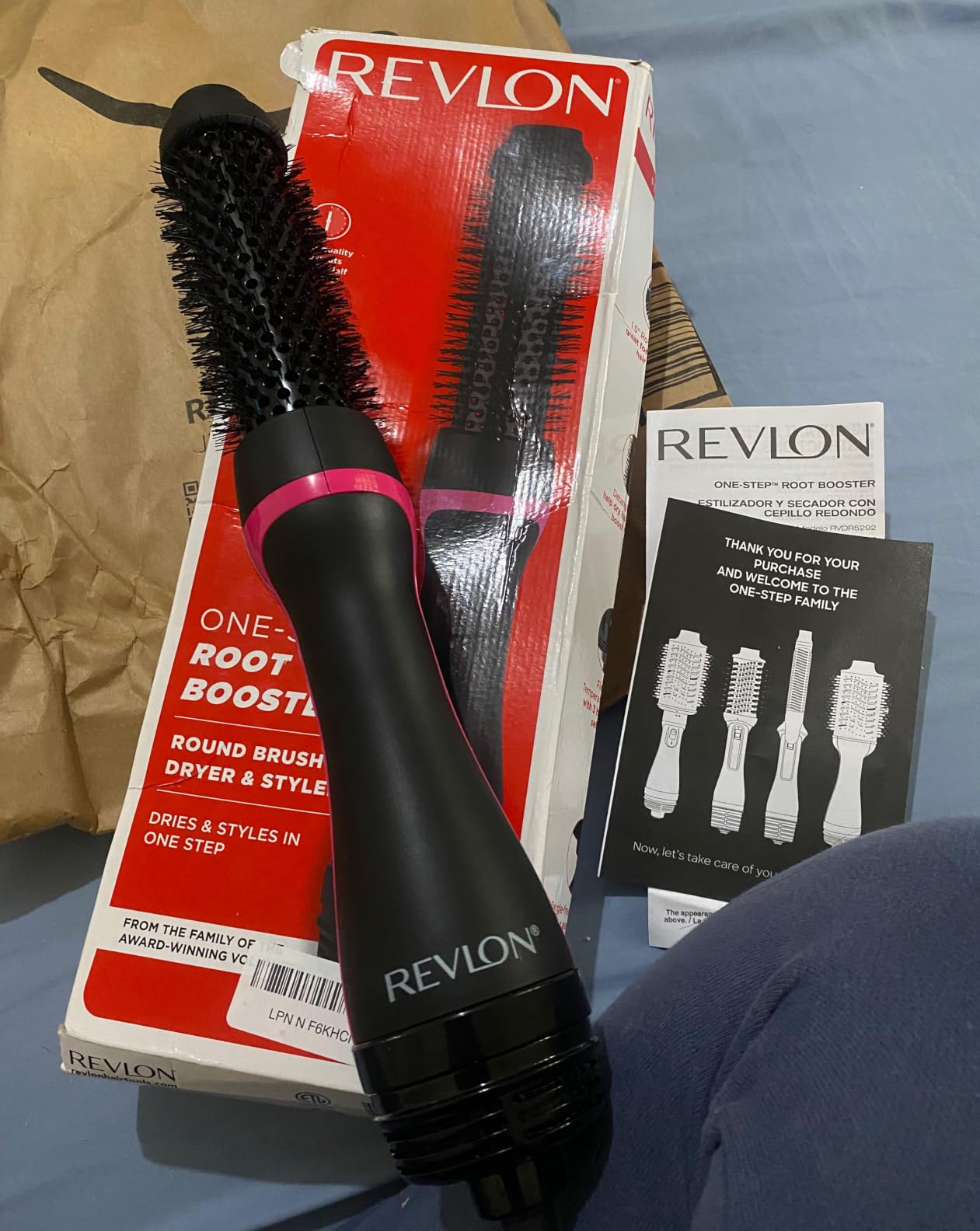
The Root Booster answers the specific problem of fine hair that is short: it is the most compact round brush in the group, and 1.5 inches is a diameter your strands can actually wrap. Owners with fine, thin or chin-length hair rate it as a good fit for exactly that length, and it adds root lift while smoothing in a single pass.
Several owners with fine hair report zero heat damage even on natural 4c hair when used with a heat protectant, and a few note that switching from a flat iron to this brush finally stopped them burning their ears and neck. That is a real quality of life difference on fine hair.
The 3x ceramic-coated barrel spreads heat, and the ionic technology leaves hair smooth and shiny with reduced frizz and static.
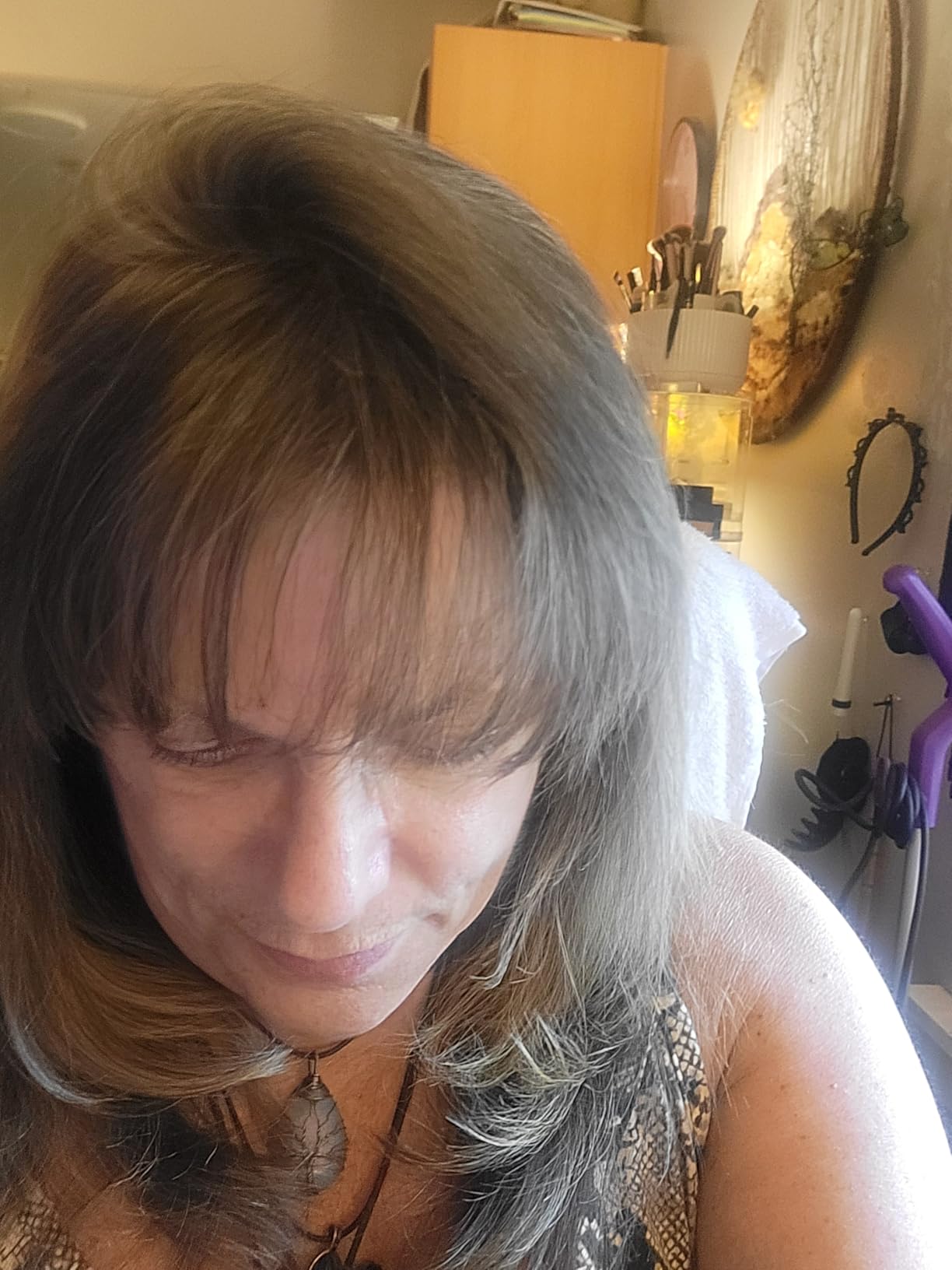
At 1.34 pounds with a 6-foot swivel cord, it is light in the hand and easy to steer around your head. The longer handle than many competitors also makes it easier to control on short hair where precision matters more than sweeping motion.
Three heat settings on low, high and cool cover the basics, though as noted below the high setting is aggressive.
Why barrel diameter beats everything else on short fine hair
On hair that stops at the chin, a 2.8 inch barrel is more surface than the section can wrap, so the hair slides off and the pass does nothing. At 1.5 inches the tension is right and you get a defined bend at the ends plus lift at the root from the same stroke.
Fine hair that sits between chin and shoulder can also manage it, and it is a good option for styling layers or smoothing a fringe.
The heat and noise problem is real
The most common complaint across reviews is that the tool is extremely loud and very hot, with the high setting described as effectively unusable on delicate hair. Most owners settle on low permanently. The cool setting is also not very cool, so it cannot be relied on to set a style, and the base-mounted rotating switch is awkward to change while the brush is in your hair.
Because the barrel does not detach, there is no rough-dry nozzle or alternate barrel. The 8 percent one-star share is driven largely by models arriving non-functional or previously used.
7. LANDOT 60mm One-Step Hot Air Styler – Most Versatile for Fine Hair
LANDOT Hair Blow Dryer Brush 60mm One-Step Hot Air Styler Blowout Volumizer
60mm oval barrel
3 heat 2 speed plus air only
Cool shot
1 year warranty
Pros
- 60mm barrel suits fine flat limp hair
- Low setting tuned for fine hair
- Negative ions leave hair static free
- Ceramic barrel with intelligent heat control
Cons
- Cool setting often blows warm air
- Bulky barrel housing is hard to grip
- Mode buttons need real force to press
The LANDOT is the pick if your hair is fine, flat and limp and you specifically want root lift rather than a smooth bend. The 60mm oval barrel is a genuinely fine-hair size, and owners with fine hair frequently call out the low heat setting as adequate and non-damaging, noting that 60mm is small enough to wrap easily while still lifting the roots.
Three heat and two speed settings give you a usable spread, and the low setting is described in the product’s own guidance as the one suited to fine hair. Negative ions seal the cuticle, and reviewers describe the result as static-free, soft and unusually shiny.
Charcoal-infused heat-resistant bristles are designed to detangle without pulling or snagging, and there is a cleaning brush included, which matters more than it sounds on fine hair that tangles at the first pass.
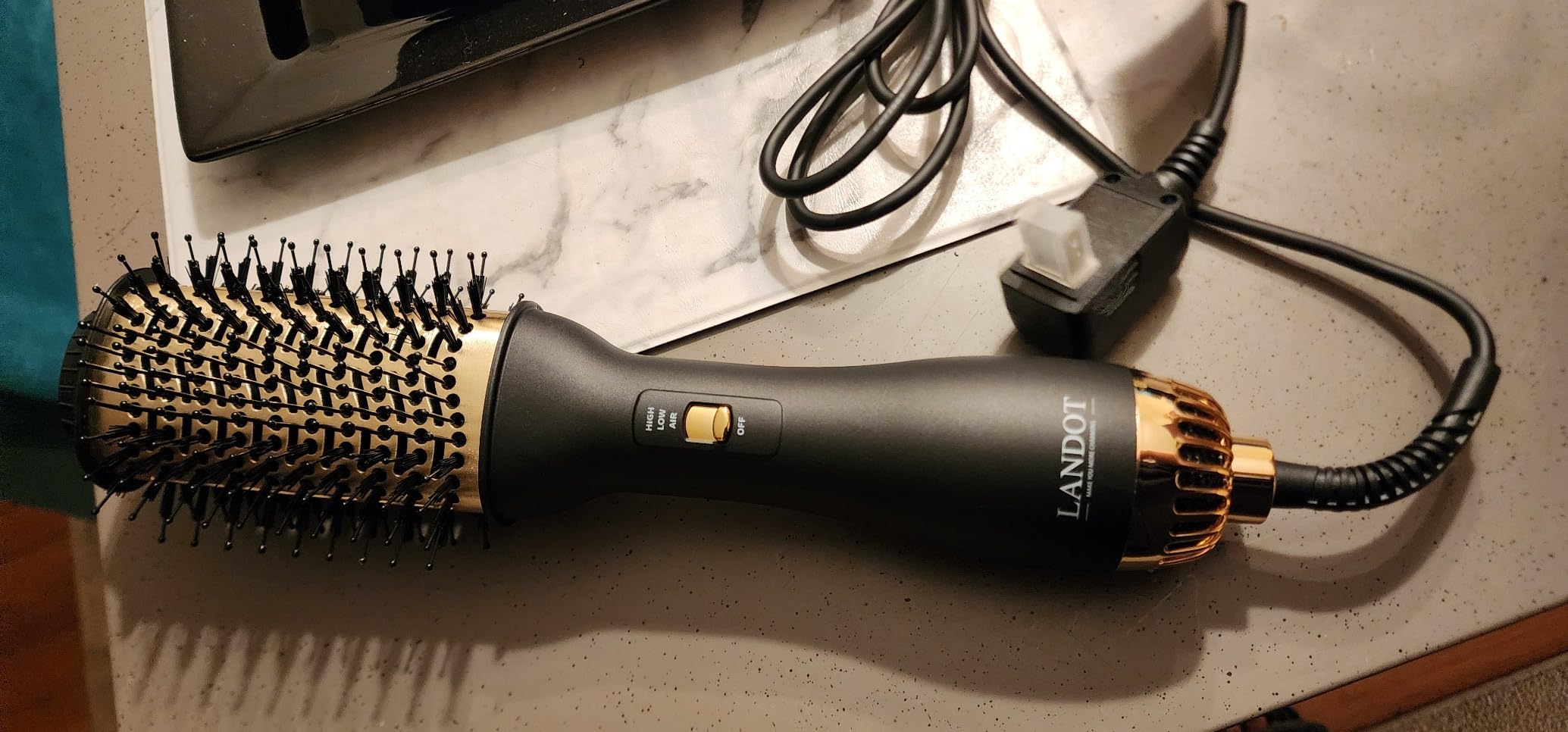
Buttons sit on the handle rather than at the barrel end, which means you can change setting without repositioning the whole tool. That is a small design decision that the Revlon and L’Ange both get wrong, and on fine hair where you are constantly re-gripping, it is noticeable.
A 6.65-foot 360 degree swivel cord, auto shut-off and a one-year warranty round out a package that is more complete than most tools at this level.
Built for the specific job of root lift
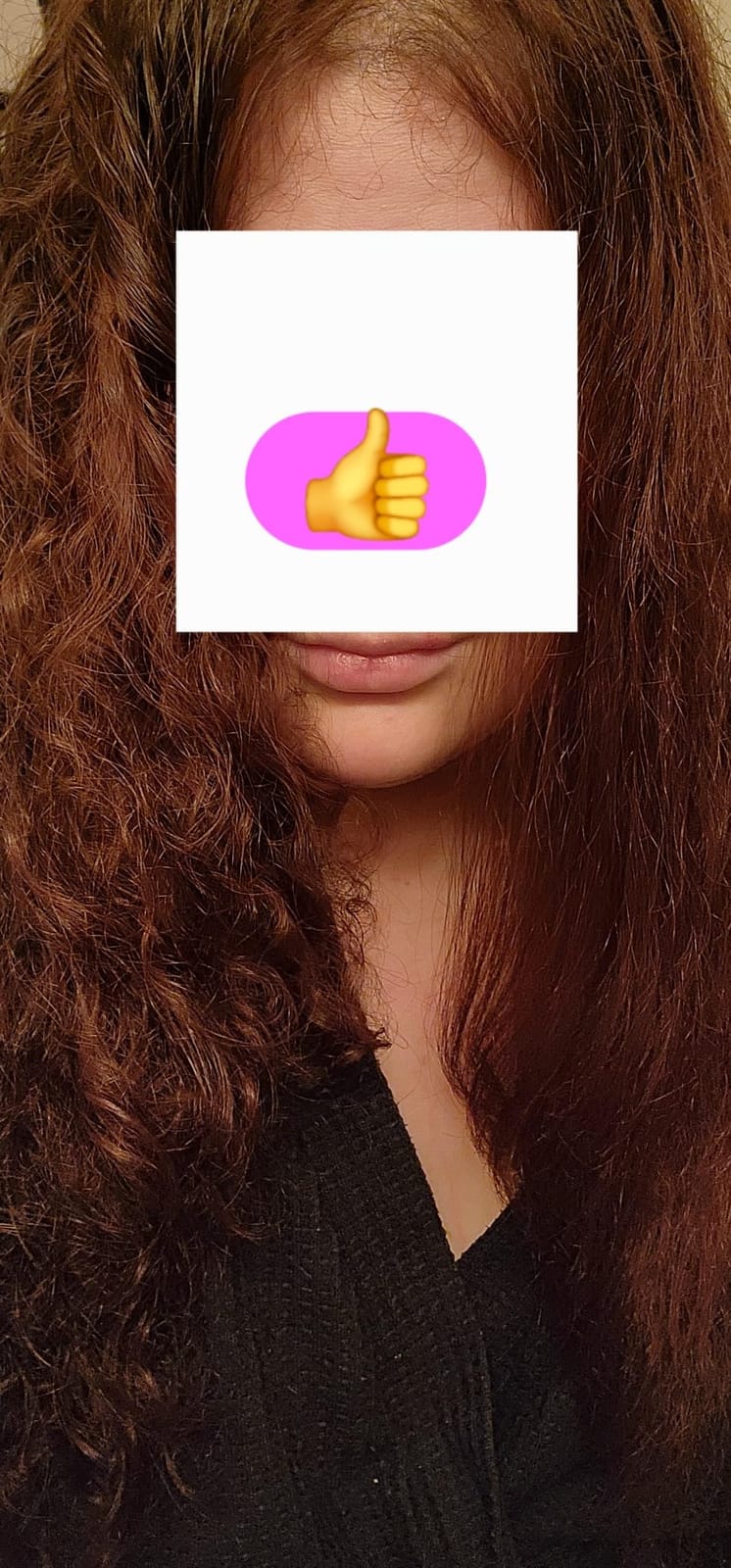
Fine hair that lies flat needs tension placed at the root, not along the length. A 60mm oval barrel with intelligent heat control gives you enough surface to grip a thin section and lift it without the hair needing to be thick enough to fill a larger barrel. This is the closest match in the roundup to that specific request.
The ceramic barrel with temperature regulation is credited with preventing hot spots, which is the other half of fine-hair safety.
Where the budget shows
The most repeated complaint is that the cool or air-only setting does not deliver genuinely cool air, which reduces its value for setting a style, and the high setting runs hot enough that some owners see visible steam. The barrel housing is also bulky and hard to grip for small hands, the mode buttons need noticeable force, and the motor is louder than expected. At least one owner reports the tool failing to produce heat after about three years.
8. TYMO 4 in 1 Hairdryer and Styler – Best for Lightweight Handling
TYMO Hair Dryer Brush Blow Dryer Brush in One, 4 in 1 Hairdryer and Styler
2.85 in nano titanium barrel
200 million negative ions
1200W
0.88 lb item weight
Pros
- Lightest item weight here at 0.88 lb
- Knob ring control prevents accidental switching
- Patented bristles glide without tangling
- Negative ions leave hair smooth and static free
Cons
- 2.85 in barrel too large below shoulder length
- Bristles twist and flatten quickly
- Low settings lack power for very thick hair
The TYMO is the one to look at if hand fatigue is your main reason you dread styling fine hair. The item weight is 0.88 pounds, the lightest in the roundup, and the knob ring control sits at the bottom of the handle where you cannot bump it while rolling hair. That control placement alone solves the single most common complaint we saw across every other tool.
Owners with fine Asian hair report that the lowest setting already feels hot and produces a soft blowout with added volume, and the patented short tufted bristles plus nylon pin anti-scald bristles glide without tangling. The nylon pins also massage the scalp and add a layer of protection between the hot barrel and your head.
A nano titanium-coated barrel with 200 million negative ions is a serious spec sheet for a tool at this level, and users frequently compare the results to premium brands at a fraction of the cost.
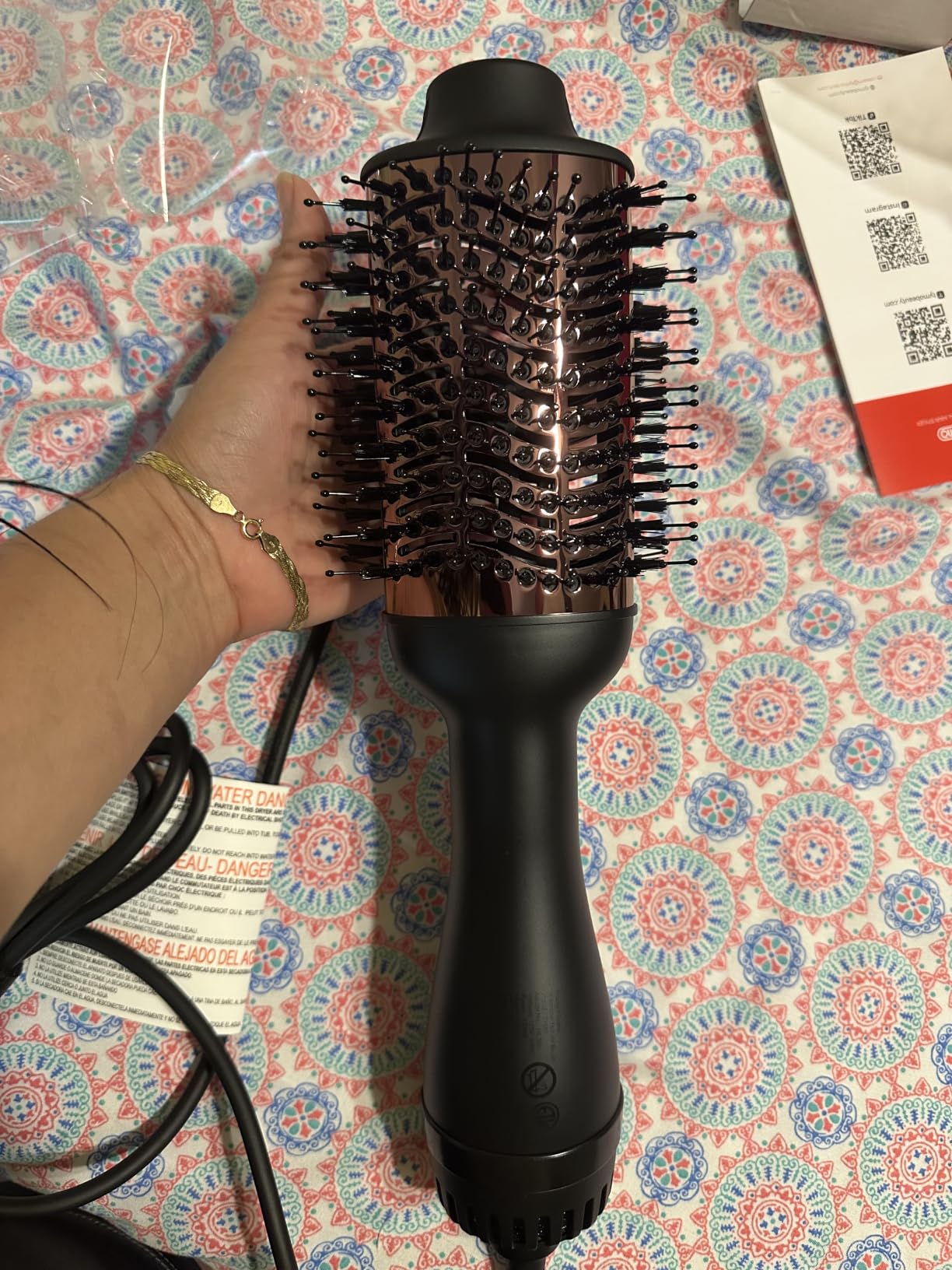
The 360 degree vent with a 50 percent larger surrounding drying area and a 1200W motor mean it also works as a rough-dry base before you pick up another tool, which is how a lot of owners use it.
Three modes are offered: low heat with high speed, medium heat with low speed, and high heat with high speed. On fine hair, the low and medium modes are the ones you will use.
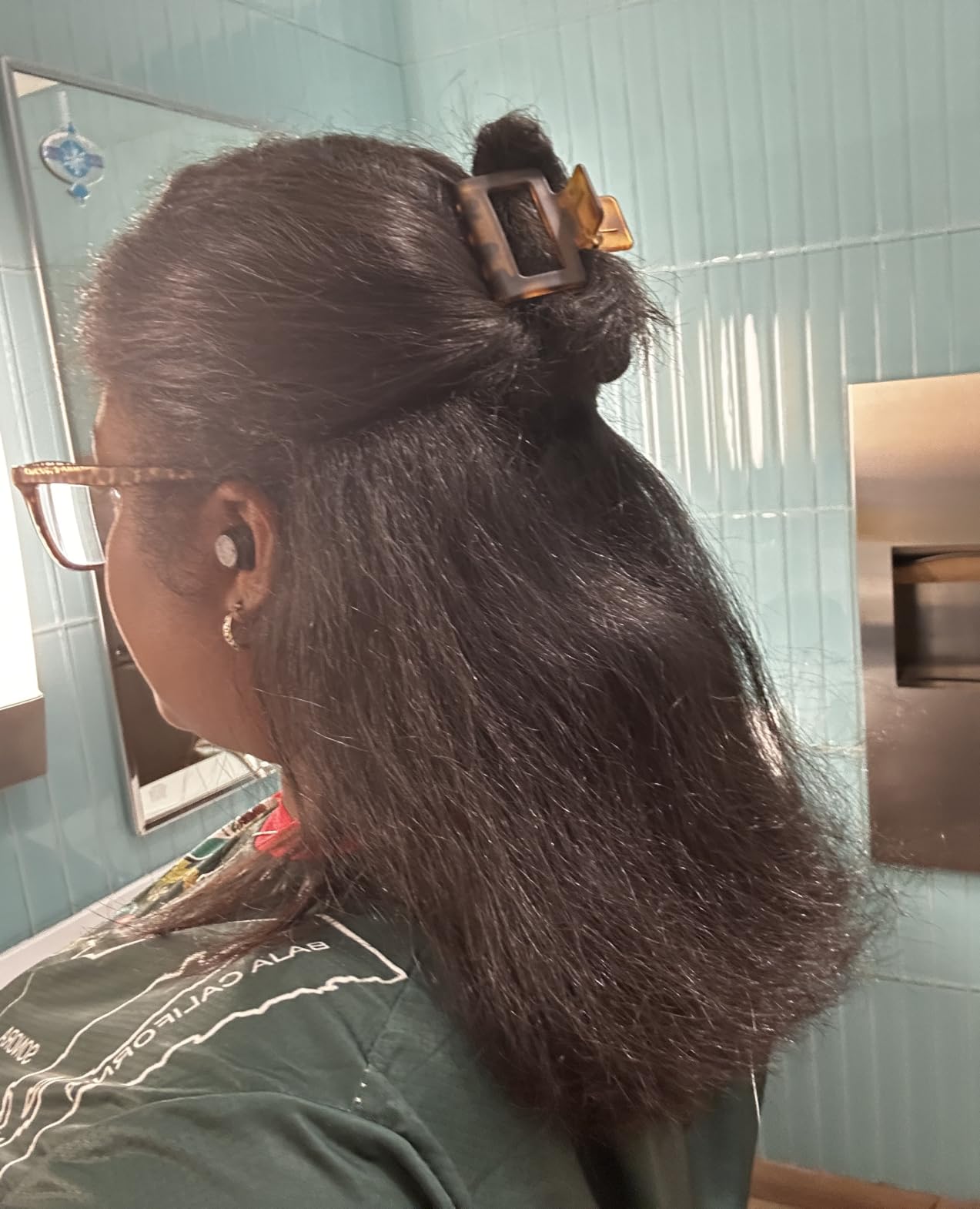
Why the control dial matters more than the spec sheet
Almost every complaint we catalogued in this roundup traced back to a switch that got hit by accident. The knob ring at the base of the handle cannot be triggered by the barrel, which means an interrupted pass, which on fine hair means re-winding a section and adding another pass of tension.
That single design choice is worth more to fine-haired users than an extra heat setting.
Size and durability are the two drawbacks
The 2.85 inch barrel is the widest here and is repeatedly described as unusable for hair shorter than shoulder length, so fine and short is out. Bristles are also reported to twist and flatten after only a few uses, which several reviewers read as an early sign of failure, and that 10 percent one-star share is the highest in the group, driven mostly by early unit failure. Long hair takes roughly an hour to fully dry and style, and the lower settings may not generate enough heat for very thick or coarse hair.
9. Hot Tools Pro Artist 3/4 in Hot Air Styling Brush – Best for Pixie Cuts
Hot Tools Pro Artist 3/4″ Hot Air Styling Brush, Black
3/4 in multi-vent barrel
Curl release switch
8 ft swivel cord
15 oz
Pros
- Smallest barrel here suits fine short hair
- Curl release rotates barrel to untangle
- Ball-tipped flexible bristles comb gently
- 8 ft cord gives good reach
Cons
- Will not dry fully wet hair
- Only two heat and speed settings
- Small barrel means more passes on long hair
If your hair is fine and very short, a pixie cut or a sharp crop, this is the only tool here that will handle it properly. At 3/4 inch the barrel is the smallest in the roundup, which means a fine section wraps completely with no half-and-half struggle, and the fine hair community has specifically reported that an air-cushion style small barrel is what let them get volume without losing hair at the roots.
The curl-release switch is the feature that matters most. It unlocks and rotates the barrel to unwind your hair, which is the direct fix for the tangling and breakage fine-haired owners report with other tools. Instead of unwinding a caught section against the direction of the bristle tension, you release it.
The multi-vent barrel uses flexible ball-tipped bristles that comb through hair gently rather than pinching it, and the 8-foot swivel cord gives you more reach than most tools here, which you will notice when styling the back of your head.
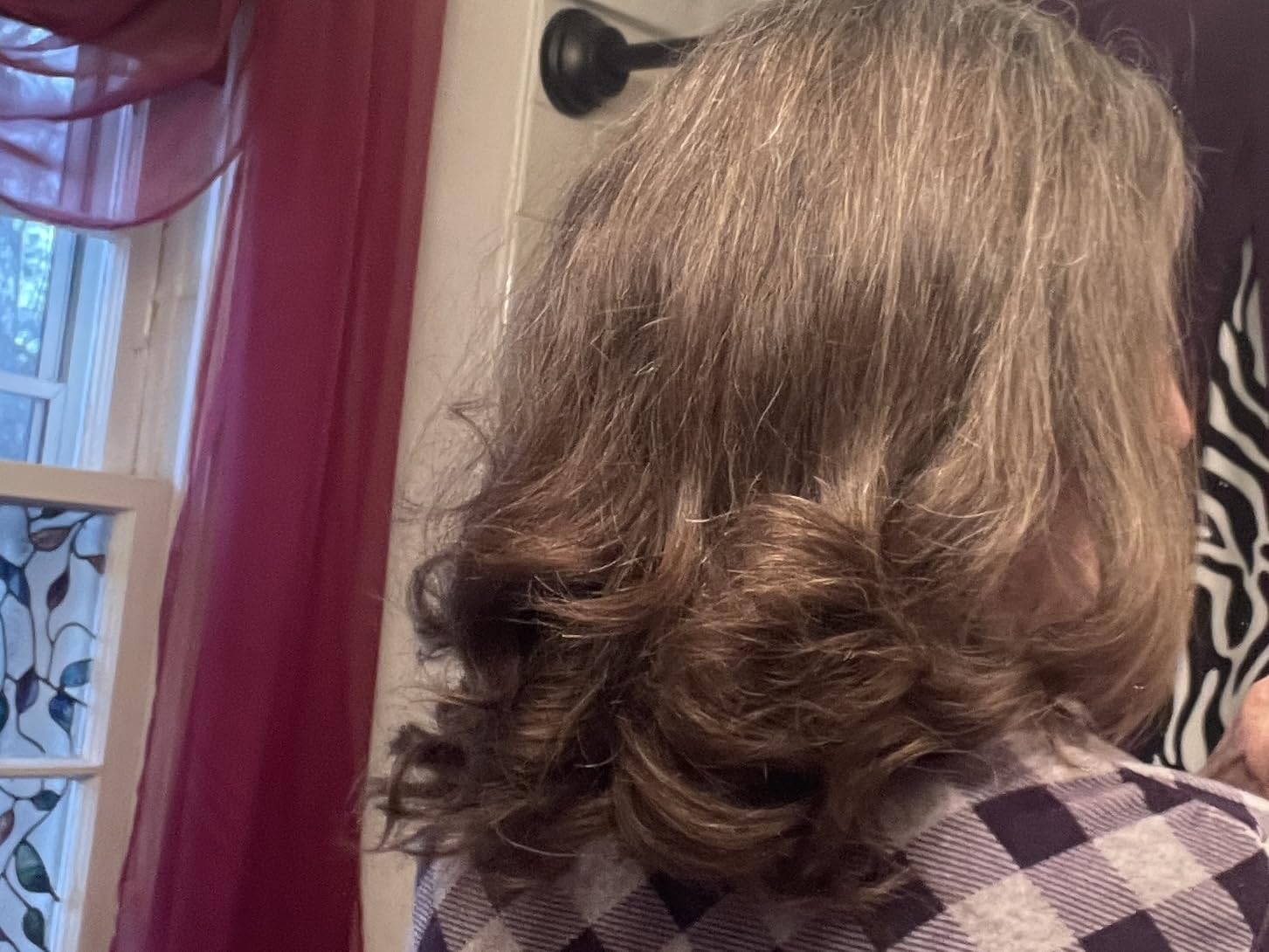
At 15.04 ounces with a soft-grip handle, this is a comfortable tool to hold through a full pass, and a 1 inch variant exists if 3/4 inch feels too tight for your sections.
Be clear about what this is though. The manufacturer states the unit will not dry fully wet hair, and you should towel dry before styling, so it functions as a styler and finishing tool rather than a replacement for your dryer.
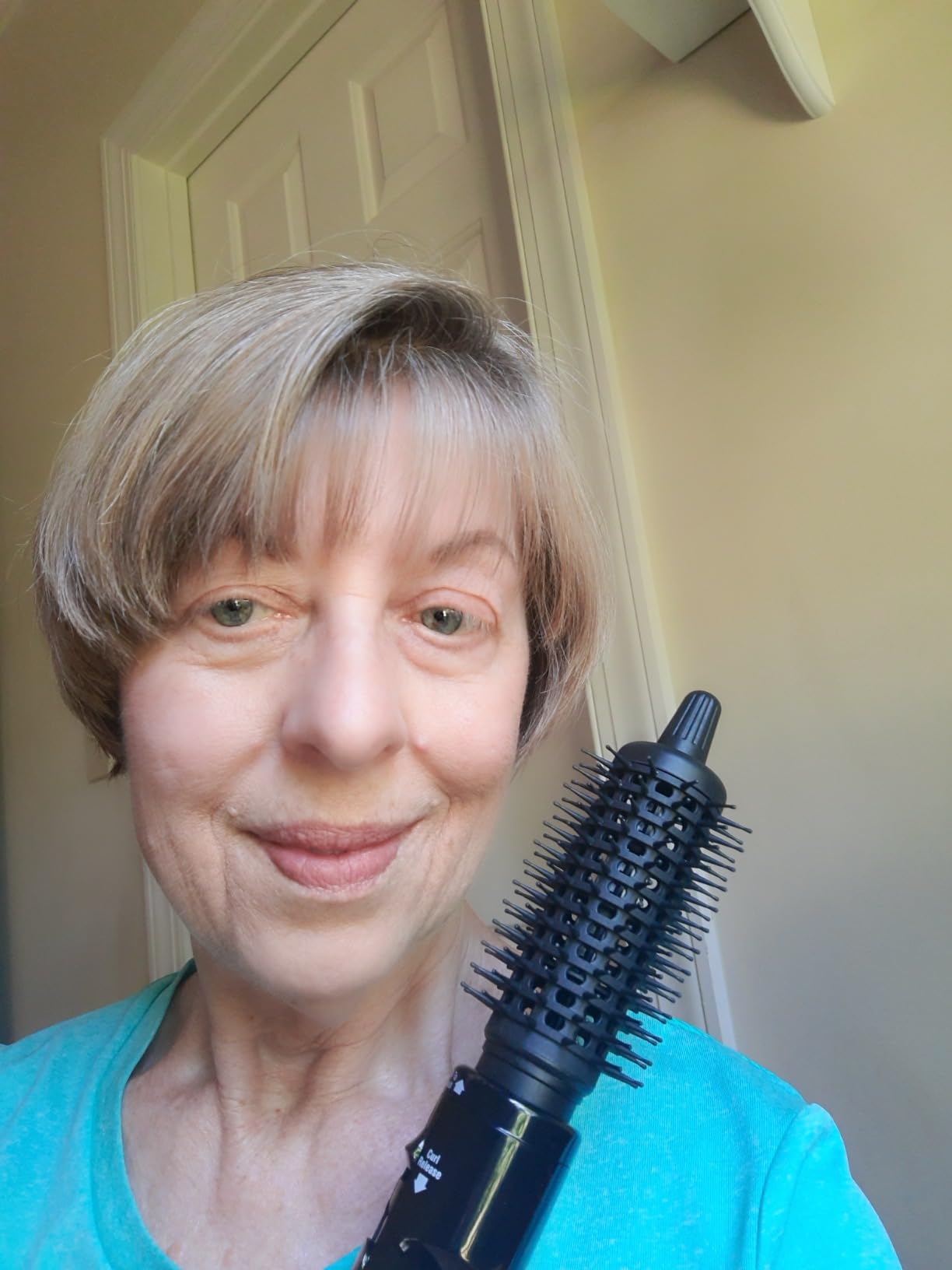
When the smallest barrel is the right barrel
Barrel size should roughly match the diameter of the section you are wrapping. On a pixie cut or chin-length layers, the section is thin, and a 3/4 inch barrel wraps it fully and evenly, which means even tension and an even bend from root to tip. Anything larger simply slides off.
The trade-off is coverage. A small barrel moves less hair per pass, so on long hair you are doing several passes instead of one, and the ratings reflect that split: 62 percent five-star, with the middling feedback concentrated on drying power and control.
The limitation to plan around
Two heat and speed settings is genuinely minimal, so you have less to work with on hair that is thick or on hair that has to be dried fast. The rating also reflects mixed durability and drying-power feedback. For fine, short, already-dry hair, though, two settings and a small barrel are exactly the right amount of tool.
10. Conair All-in-One 1000W Hot Air Brush – Best for Gentle Detangling
Conair All-in-One Hot Air Brush, Ionic Technology, Mixed Bristles, 1000W
1000W
Ionic generator
136 epoxy-tipped bristles
Cool shot
1.8 lb
Pros
- Epoxy-tipped bristles glide through knots without pulling
- Ties for the highest rating here at 4.6 stars
- Ionic generator cuts frizz and boosts shine
- Cool shot sets style without extra heat
Cons
- Newer listing with the smallest review base here
- 1000W is less output than the 1200W models
- Mixed bristles give less root lift than a large oval barrel
The Conair All-in-One is the detangling specialist. With 136 specially spaced, epoxy-tipped flexible nylon bristles, it glides through knots without pulling, and reviewers with fine hair describe it as the gentlest option in the roundup on hair that tangles the moment you introduce tension.
It also ties for the highest average rating in this group at 4.6 stars, with 77 percent five-star ratings and only 3 percent one-star, the lowest negative share of any tool we looked at. Reviewers credit the ionic generator with reducing frizz and leaving hair noticeably shinier, and they specifically appreciate the cool shot button for setting a style without adding heat.
At 1000 watts it is the least powerful tool here, and it works both wet-to-dry on freshly washed towel-dried hair and on dry hair to refresh a second-day style. That second use is what makes it a genuinely daily tool rather than a special occasion one.
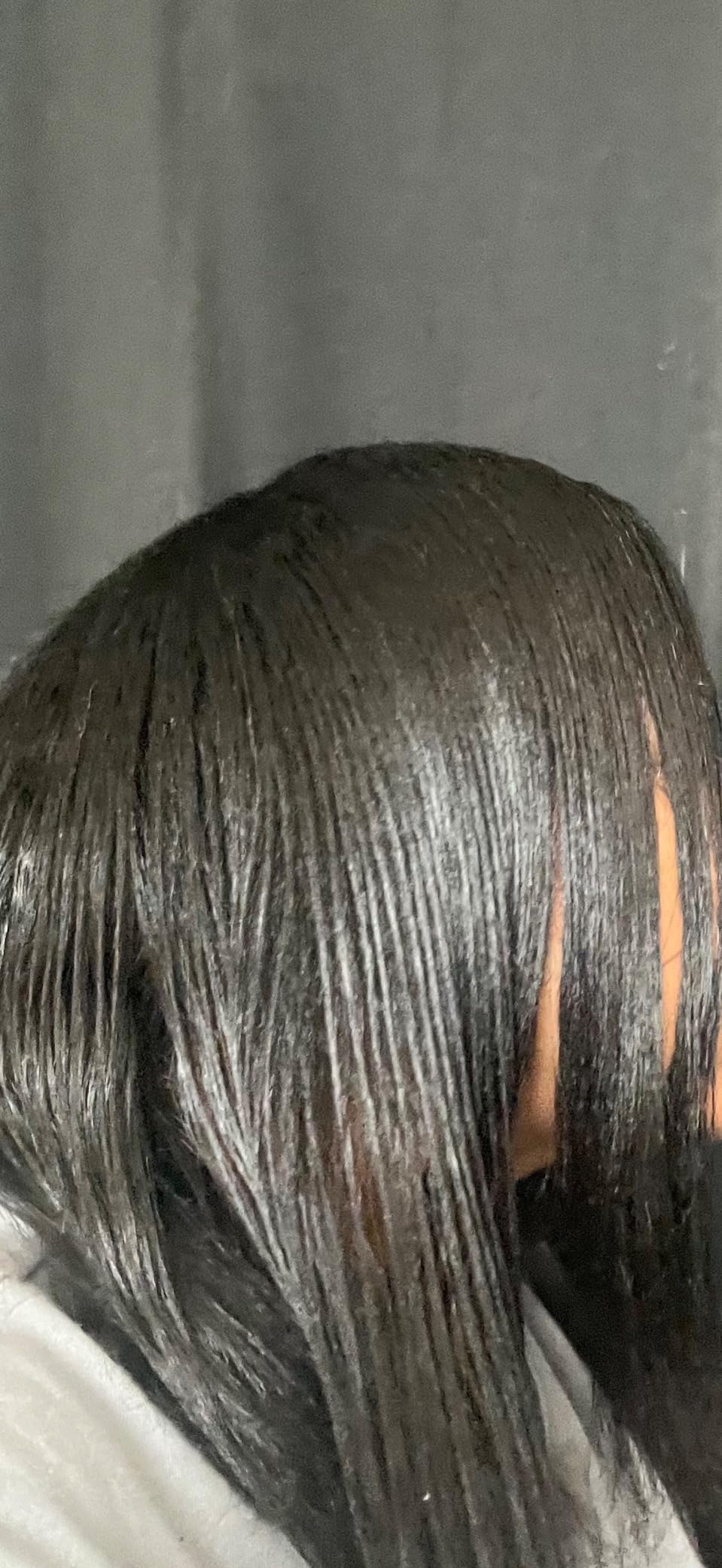
At 1.8 pounds with a 6-foot cord, it is light enough to hold through a long session, and the detangling bristle design means you can use it as a dryer-brush on a second day without re-washing first.
It is also the newest listing in this roundup, so the feedback we have on it covers a shorter ownership period than the established models. That matters for durability claims in particular.
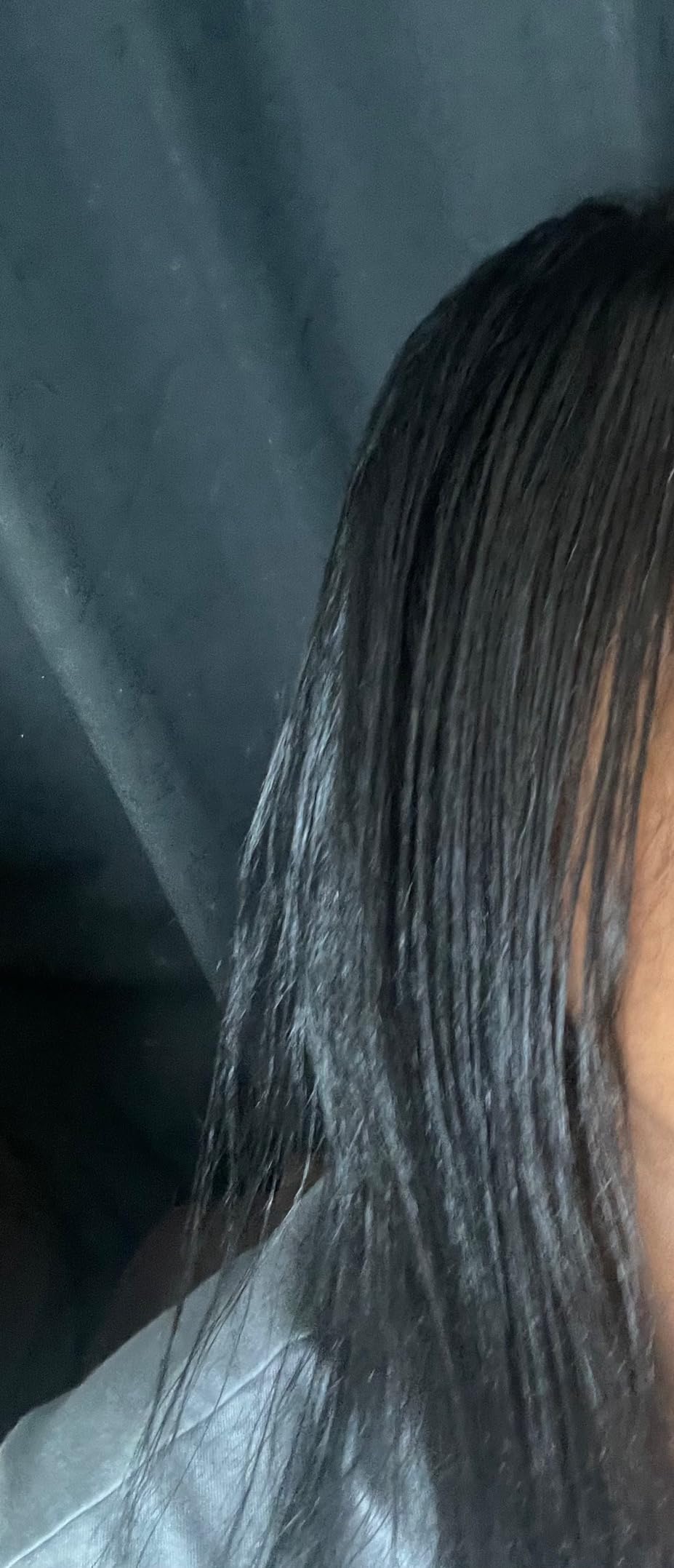
Why detangling comes first for fine hair
Every snag, every hair that wraps twice around the barrel, every pass you repeat to fix a tangle is another pass of tension on a strand that has less tensile strength than a coarse one. Removing the tangles first, with a bristle design that will not pinch, is the single most effective thing you can do to protect fine hair with any hot brush.
That is why this tool ranks highly for breakage-prone fine hair even though its barrel is not the most specialized.
What a lower wattage costs you
At 1000 watts you give up raw drying speed compared with the 1200W models, so a freshly washed head takes a little longer. The mixed bristle design also gives less root lift than a wide oval barrel, so if your priority is volume rather than smoothness, one of the oval brushes will get you there faster. As a newer listing with the smallest review base in the group, long-term durability feedback is still thin.
How to Choose a Hot Air Brush for Fine Hair
Here is what actually decides the purchase, in the order we would think about it. Everything else on the box is marketing. These six things determine whether you get a blowout or a pile of snapped ends.
Barrel size is the decision that matters most
The single most important spec on the whole page is the barrel diameter, and it has to roughly match the thickness of the section you wrap. Fine hair is thin, so a large barrel is not a feature. A 2.5 to 2.8 inch barrel is built for mid-length to long hair, and owners with chin-length fine hair describe it as impossible to wrap.
For fine hair, look at 60mm to 1.5 inch barrels. The 60mm and 1.5 inch options in this roundup are the sizes fine-haired owners actually choose, and the 3/4 inch is the answer for pixie cuts and very short layers. If you can pick between two sizes on one tool, buy the smaller one.
Shape matters second. An oval barrel smooths along its flat faces and lifts at the rounded edges, which is a good all-round shape for adding body without a hard bend. A true round barrel creates a tighter curl and more tension, which is a more advanced technique than fine hair needs on a weeknight.
Hold heat at 250 to 300F
Fine hair should be styled in the 120 to 150C range, which is 250 to 300F. Below roughly 150C, the keratin structure in the hair has not begun to degrade, which is the threshold that appears repeatedly in the dermatological and cosmetic-science literature cited by manufacturers in this category.
The practical problem is that most of these tools do not publish barrel temperature, and many do not have a genuinely mild low setting. The Revlon Root Booster’s high setting is described by owners as effectively unusable on delicate hair, and the LANDOT’s cool setting often blows warm air. Test any tool on a small hidden section for 20 seconds at the lowest setting before you put it near your face, and keep a finger near the strand to check it is warm rather than hot.
For fine hair, less heat plus more time beats high heat plus speed every single time. A second low pass costs you nothing thermally; a scorch mark costs you three months of regrowth.
Ionic output is the anti-frizz lever
Most tools in this roundup include ionic technology, and it is worth understanding what it actually does. Negative ions help seal the cuticle, reduce static, and keep moisture in the strand. For fine hair, which is usually low in natural oil and quick to frizz, that is the feature that does the most visible good.
The difference shows in the finish. Tools with strong ion output, like the TYMO with its 200 million negative ions or the Conair with a dedicated ion generator, tend to produce hair that owners describe as static-free and unusually shiny. If your fine hair is frizzy rather than straight, prioritise a dedicated ion generator over a generic ceramic coating claim.
Bristle type decides whether you snag or glide
Bristles are where fine hair actually meets the tool, and the four types behave very differently. Nylon pin and tufted bristles grip and guide, which gives you controlled tension and is what makes a smooth pass possible on the Revlon Volumizer. Flexible ball-tipped bristles, as on the Hot Tools Pro Artist, comb gently rather than pinch, and are the safest choice if tangling is your main problem.
Charcoal-infused heat-resistant bristles are a mid-ground that detangle without pulling. Boar-bristle blends distribute natural oils but are rare in this roundup. What you want to avoid on fine hair is dense, stiff bristle patterns that grab a thin section and hold it against the barrel.
The upgrade worth making if you break hair is a tool with a curl release or a rotating barrel, because both remove the need to unwind a caught section against the direction of the tension.
Wattage, airflow and why 900 to 1200W is the sweet spot
Wattage tells you how fast the tool dries, not how hot it gets, and those are separate problems. In this roundup the range runs from 1000W on the Conair All-in-One to 1200W on the Umeely and TYMO.
For fine hair, 900 to 1200W is the practical sweet spot. Anything above that gains speed you will not notice on hair that dries in five minutes anyway, and costs you handle heat and weight. Anything below 900W struggles to get a fine head from towel-dry to finished in one pass, and you will end up repeating the pass on the roots, which is exactly the extra tension fine hair cannot absorb.
Airflow design matters as much as raw wattage. A 360 degree vent or a multi-vent barrel moves air around the whole section rather than through one point, which reduces the hot spot problem and lets you use less heat for the same result.
Cool shot matters more than extra heat settings
A cool shot button is not about comfort, it is about setting the shape. Hair is more workable while warm, so a cool blast at the end locks the lift or the bend in place instead of letting it fall as the strand cools on its own.
Only three tools here are described as having a genuinely functional cool shot: the Revlon One-Step Volumizer with its cool setting, the LANDOT with a dedicated cool-shot button, and the Conair All-in-One with its cool shot button. Two more, the Revlon Root Booster and the Conair InfinitiPRO, have cool settings that reviewers say are either not very cool or do not engage the brush rotation. Check this before you buy if you plan to set a style rather than just smooth.
Weight, cord and travel
Weight is a comfort spec that becomes a performance spec over a five-minute routine. In this roundup item weights run from 0.88 pounds on the TYMO to 1.9 pounds on the Hot Tools 24K Gold. The heavy ones are not unusable, they just get tiring, and fine hair is usually quick to dry, so a heavy brush on fine hair is a weight you carry for no benefit.
Swivel cords are near universal in this category and they matter, because a non-swivel cord twists while you work and limits your reach. Cord length is less consistent: the Hot Tools Pro Artist has 8 feet, the L’Ange and LANDOT have rotating 360 degree cords, and several owners of shorter cords describe the restricted reach when styling the back of the head. Longer is better unless you travel.
For travel, dual voltage is the only feature that actually matters, and it is rare. Most of these tools are designed for 110-120V US outlets, and the Umeely’s dual voltage capability applies only to one of its colour variants. If you travel internationally with a hot brush, check the voltage on the specific listing before you pack it.
Hot air brush vs hot brush vs multi-styler
These terms get used interchangeably and they are not the same thing. A hot brush, sometimes called a thermal brush or heated round brush, has no motor and no airflow. It only smooths, and it is meant to be used on dry hair, usually paired with a separate dryer. Using one on wet hair can scald, which is a complaint we saw repeatedly about hot brushes in general.
A hot air brush has a motor. It dries and styles in the same pass from damp hair, and some of them such as the Conair All-in-One also work on fully dry hair for touch-ups. For fine hair, the hot air brush is usually the better choice because it means one pass instead of a dryer pass followed by a hot brush pass.
A multi-styler, in the shape of the Dyson Airwrap or the Shark Flexstyle, uses a rotating barrel driven by the Coanda effect, and it curls as well as dries. That is a different price bracket and a different technique. For fine hair that mainly needs root lift and smoothness, a hot air brush is simpler to learn and easier on the strand.
A Six-Step Routine for Fine Hair Volume
The tool is half the result. The other half is technique, and for fine hair the sequence matters more than the pass count.
Step 1: Pre-dry to 70 to 80 percent, upside down. Before any heated tool touches your hair, get it almost dry. Fine hair is at its most fragile when it is wet, and it is most fragile at 80 percent dry, so a separate rough-dry first is the cheapest breakage prevention available. Flip your head upside down and dry the roots first; this alone can improve root lift noticeably compared with drying hair flat, because gravity pulls the strands away from the scalp in the direction you want them to sit.
Step 2: Apply heat protectant to damp hair. It goes on before drying, not after. A light weight protectant is what reduces the thermal stress on the strand during the remaining passes.
Step 3: Separate a section no wider than the barrel. This is the rule people break. On fine hair, wrapping more than the barrel can hold creates a crease, and a crease on fine hair is a break point. Work in small sections from the back of the head forward.
Step 4: Start at the roots on the low setting. Keep the brush angled slightly away from the scalp so bristles do not press hair flat against it. Lift the section, hold the brush a few seconds to set the tension, then let the airflow do the drying as you draw the brush down the length.
Step 5: Add a second pass only if you need it. Fine hair rarely needs a third pass. Two passes on low is gentler than one pass on high, and the community consensus is that repeating passes, not heat, is where breakage actually happens.
Step 6: Lock it in with cool air. Hit the cool shot or cool setting at the roots while the lift is still there. That is the step people skip, and it is the difference between volume that lasts until lunch and volume that collapses in the car.
A note on technique that comes up constantly in fine hair communities: focusing only on lifting at the roots instead of over-styling the ends is the change that makes fine hair look fuller. Most people over-style the ends because that is the visible part, then wonder why their roots stay flat.
Our broader testing guides cover how we approach tools that need measured rather than judged by eye, if you want to see the method behind these comparisons. The same measured-first approach shows up in our air compressor picks for air tools, where airflow and wattage are the specs that decide the purchase. We also keep our buying guides for equipment where measurement matters even more, like our air purifier picks for pet hair and shop vacuum picks for fine dust, where particle size drives the same kind of buying decisions barrel diameter does here.
Frequently Asked Questions
Do hot air brushes damage fine hair?
They can, and the damage is usually a function of temperature, passes and tension rather than the tool itself. Keeping heat in the 250 to 300F range, pre-drying to 70 to 80 percent, using heat protectant and keeping sections no wider than the barrel will reduce it substantially.
What is the best hot air brush for fine, thin hair?
The Hot Tools 24K Gold is our top pick because fine-hair owners report the low setting is genuinely sufficient and the metal barrel stays cooler to the touch. For fine hair that is also short, the Revlon Root Booster 1.5 inch and the Hot Tools Pro Artist 3/4 inch wrap the section properly.
How hot do thermal brushes get?
It varies widely by model, and most manufacturers do not publish barrel temperature. Based on owner reports, the high setting on several brushes in this category is hot enough to be uncomfortable on fine hair, which is why staying on low and testing a hidden section first matters.
Can you use a hot air brush on wet hair?
A hot air brush has a motor and is designed to work from damp or towel-dried hair. A hot brush has no airflow and should only be used on dry hair, because using it on wet hair can scald. One exception in this roundup is the Hot Tools Pro Artist 3/4 inch, which its maker states will not dry fully wet hair.
Do ionic hot air brushes reduce frizz?
Yes. Negative ions help seal the cuticle and reduce static and frizz while keeping moisture in the strand, which matters most on fine, low-oil hair. The TYMO with 200 million negative ions and the Conair All-in-One with a dedicated ion generator produce the most consistently smooth finishes in this group.
What is the difference between a hot brush and a hot air brush?
A hot brush has no motor and no airflow. It smooths dry hair only and works best paired with a separate dryer. A hot air brush has a motor and dries and styles in the same pass, which for fine hair means one pass instead of two and far less total heat exposure.
The Bottom Line for Fine Hair
If you want one tool and your fine hair is at least chin-length, the Hot Tools 24K Gold is the buy. The low setting does the job, the metal barrel is cooler to the touch than plastic, and it is the one in this roundup that fine-hair owners describe as replacing their flat iron rather than adding to it.
If your fine hair is long, the Revlon One-Step Volumizer is hard to argue with on rating and review volume, though its 2.8 inch barrel tells you who it is really for. If your hair is short and fine, match the barrel to the section instead: 1.5 inch for chin-length, 3/4 inch for a pixie.
Whatever you choose, the barrel size, the lowest heat setting, a real cool shot and a pre-dry to 70 or 80 percent will do more for your hair than any brand name on the box. That combination is how you get the best hot air brushes for fine hair to work for you instead of against you in 2026.