
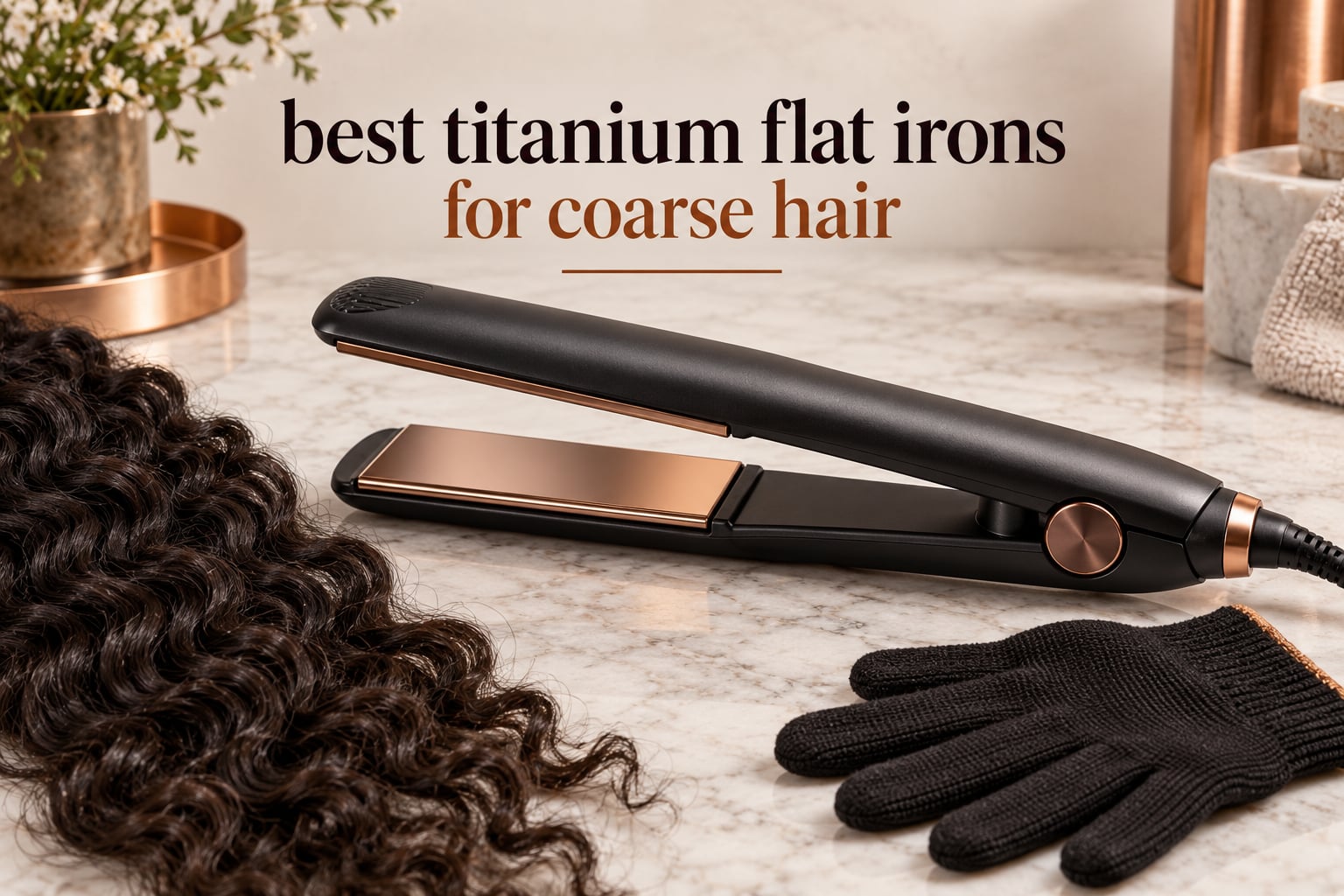
Short answer: yes, titanium is the right plate material for coarse hair. Titanium flat irons heat up fastest, hold temperature most consistently, and do not chip the way ceramic plates do, which is why stylists reach for them on 3A through 4C textures that need serious heat and repeated passes. Our top pick for 2026 is the BaBylissPRO Nano Titanium Ionic, because its extra-long plates and 450F ceiling handle thick hair in a single pass without pulling.
That is the whole argument for titanium, and it is worth being precise about. Heat breaks the hydrogen bonds inside each strand so it can be pressed into a new shape, and the flat pressure of the plates pushes the cuticle down, which is what creates the smooth, shiny finish. As the hair cools the bonds re-form and lock the style in place.
Coarse and thick hair generally needs 375F to 450F to smooth in one or two passes. A ceramic plate that cannot hold that temperature evenly will drift cooler on the second pass, which is why people end up going over the same section three or four times. More passes, not higher heat, is the real source of damage.
We put 12 titanium flat irons through their paces for this guide, focusing on the three things that actually decide whether a titanium iron works on coarse hair: plate width, how steady the temperature stays under load, and how the plates behave when hair is thick, dense and resistant. We ignored anything that was not titanium-plated, even when it was a strong iron, because mixing ceramic into a titanium roundup dilutes the answer for someone who has already decided on the plate material.
Table of Contents
Top 3 Titanium Flat Irons for Coarse Hair in 2026

BaBylissPRO Nano Titanium Ionic
- Extra-long titanium plates
- Up to 450F
- Built-in ion generator
- 4-year warranty

CHI G2 Titanium Infused Ceramic
- Titanium-infused ceramic plates
- Up to 425F
- Digital LCD
- Far-infrared and negative ions

Lizze Extreme Professional
- Nano titanium floating plates
- 250C / 480F max
- Fast heating
- 15.87 ounce body
12 Best Titanium Flat Irons for Coarse Hair (October 2026)
Every pick below is titanium-plated. We list the plate width and the temperature ceiling first because those two numbers decide whether an iron suits dense, coarse hair, and the ion and shut-off details last because they are convenience rather than performance.
| Product | Specifications | Action |
|---|---|---|
| BaBylissPRO Nano Titanium Ionic |
|
Check Latest Price |
| Lizze Extreme Professional |
|
Check Latest Price |
| CHI G2 Titanium Infused Ceramic |
|
Check Latest Price |
 BaBylissPRO Nano Titanium Ultra-Thin BaBylissPRO Nano Titanium Ultra-Thin |
|
Check Latest Price |
 BaBylissPRO Nano Titanium Digital BaBylissPRO Nano Titanium Digital |
|
Check Latest Price |
 ELLA BELLA Titanium with Infrared ELLA BELLA Titanium with Infrared |
|
Check Latest Price |
 VANESSA PRO 2 Inch Titanium VANESSA PRO 2 Inch Titanium |
|
Check Latest Price |
 MQ Professional Titanium 480F MQ Professional Titanium 480F |
|
Check Latest Price |
 CROC Classic Silver Titanium CROC Classic Silver Titanium |
|
Check Latest Price |
 Kristin Ess 3-in-One Titanium Kristin Ess 3-in-One Titanium |
|
Check Latest Price |
 Hot Tools Pro Artist Titanium Hot Tools Pro Artist Titanium |
|
Check Latest Price |
 7MAGIC Nano Titanium 1.7 Inch 7MAGIC Nano Titanium 1.7 Inch |
|
Check Latest Price |
1. BaBylissPRO Nano Titanium Ionic: the widest coverage for thick hair
BaBylissPRO Digital Ionic Flat Iron, Nano Titanium, Dual Voltage, 1 1/4″
Plates: extra-long nano titanium
Max heat: 450F
Built-in ion generator
Warranty: 4 years
Pros
- Extra-long plates cut passes on thick hair
- Does not grab or pull the hair
- Fast heat-up with LED heat settings
- Reported to last years of regular use
- 4-year warranty
Cons
- Bulky and heavier than narrow models
- Outer metal housing runs hot and is not well insulated
This is the iron we kept coming back to. The BNT4094TUC body holds nano titanium-plated plates in a Ryton housing that resists high heat, and the built-in ion generator works alongside a 450F ceiling, which the brand claims gets you to a straight result roughly 40% faster.
Plate width is the reason it wins for coarse hair. The model is offered in 1 1/4 inch, extended-plate and 1 3/4 inch versions, and it is the widest configuration that coarse-haired reviewers describe as single-pass work. On dense hair the wider plate means you are not clamping a narrow ribbon of hair and re-closing the iron three more times to cover the same section.
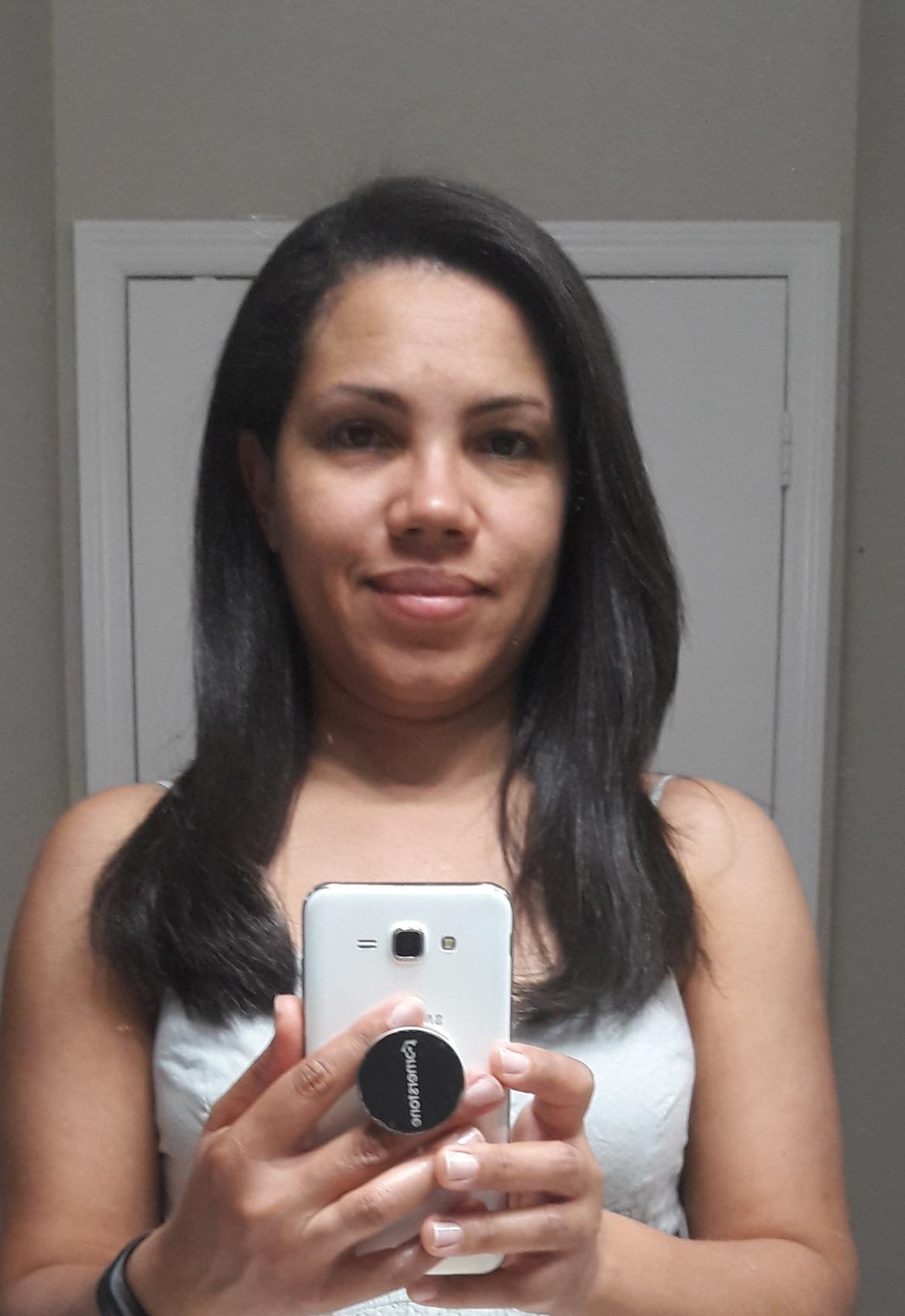
Across unrelated forums, from r/Sephora threads to the QVC community beauty board, this is the model that comes up again and again for thick and textured hair. One r/Sephora commenter put it plainly: they would definitely recommend the Babyliss Pro Nano Titanium because it does not damage their hair nearly as much as other straighteners do. That is a user report, not a lab finding, but it matches what the plate material and the ion generator should do.
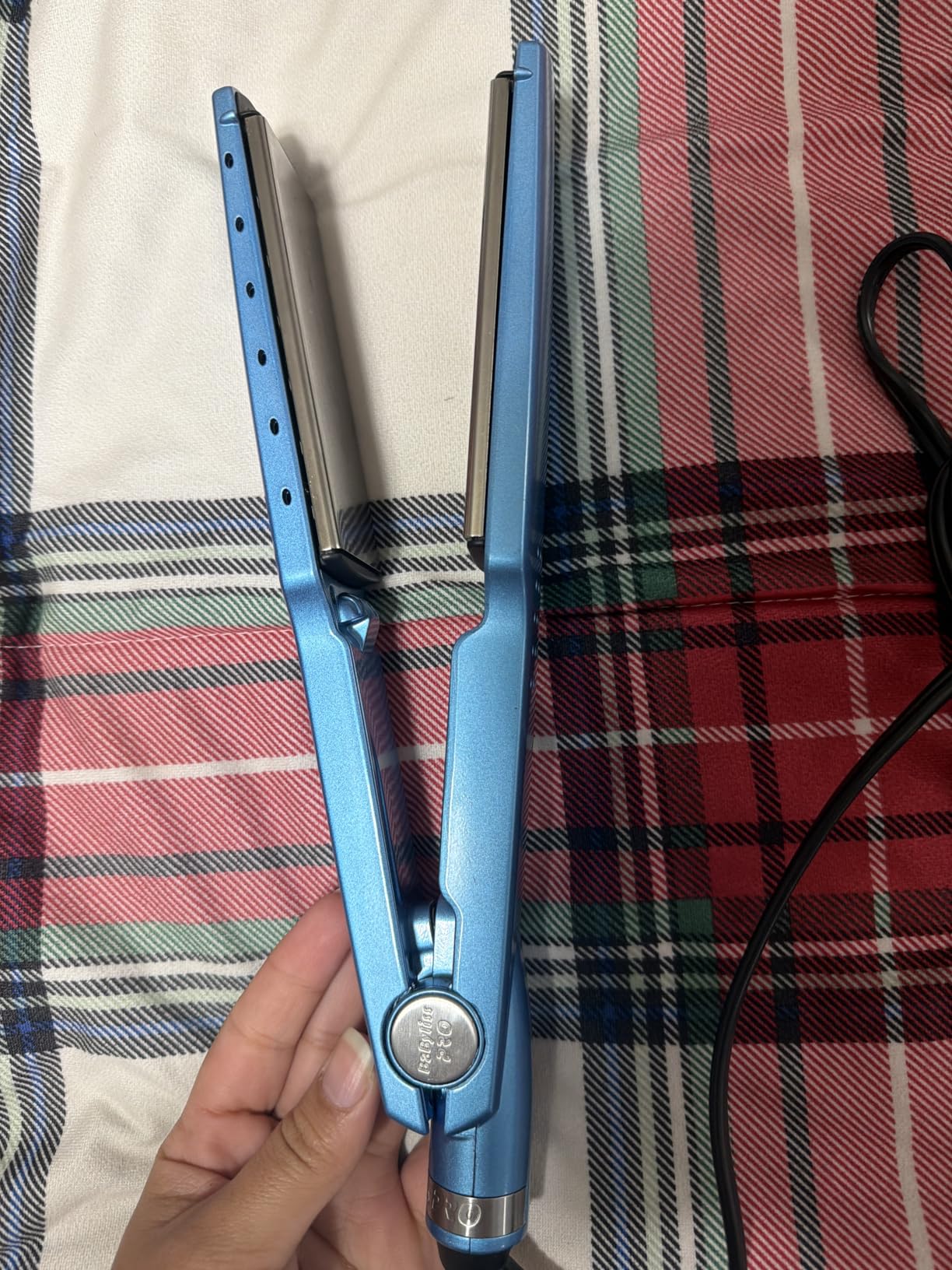
The ion generator matters more than most spec sheets admit. Negative ions help neutralise the static charge that makes coarse hair puff up in humidity, and on 3C and 4B textures the shine from a sealed cuticle is what separates a smooth finish from a flat, frizzy one.
It also handles curls. Owners use the same plates to bend the iron into loose beachy waves, so you are not buying a second tool if you want weekend texture.
The honest drawback is the housing. This iron runs hot on the outside, and users on forums flag the burn risk specifically on titanium models with metal bodies. Keep a heat-resistant glove within reach and rest the iron on its base rather than its shell.
Is the BaBylissPRO too heavy for a full head on long hair?
It is one of the heavier irons here, and on shoulder-length-plus hair a full style is a genuine endurance test. If you straighten more than once a week on hair past the mid-back, the weight adds up faster than the time you save.
The payoff is real though. Because the plates are longer and wider, fewer passes are needed, and a shorter session often offsets the extra grams in your wrist.
Does the BaBylissPRO Nano Titanium Ionic hold temperature under load?
Yes, and that is the main reason it suits coarse hair. The Ryton housing and the high heat output mean the plates recover quickly after clamping a thick, damp section, so the temperature does not sag mid-pass the way it can on lower-output irons.
The 4-year warranty is also the longest in this group, which matters more than most people realise when they are thinking about a multi-year purchase.
2. Lizze Extreme Professional: the highest heat headroom at 480F
Lizze Extreme Professional Hair Straightener | Original Nano Titanium Technology Straightens Dry, Frizzy Hair Curls | 250 Deg. C. (480’f) – 110 Volts : Beauty & Professional Care
Plates: floating nano titanium
Max heat: 480F (250C)
Weight: 15.87 oz
Voltage: 110V
Pros
- Fastest heat-up in the group
- Glides without pulling
- Single-pass results on thick hair
- Popular for keratin and Brazilian treatments
Cons
- 110 volt version limits where you can use it
- Built more for straightening than curling
The Lizze Extreme is built around one idea: put as much heat on the hair as the plate will safely hold. It reaches 250C, or 480F, and it gets there fast. For someone with 4B or 4C hair who has spent years being told to keep the dial lower, that headroom is the feature that matters.
The plates float, which means they tilt slightly to follow the contour of a section rather than pressing only on the flat top. On thick, dense hair that reduces hot spots, and hot spots are where singeing starts. Reviewers consistently report a single pass on thick hair, which is the best possible outcome for damage.
Its 4991 ratings average 4.7 stars with 89% of those at five stars. That distribution usually means a core group of repeat users rather than a spike of one enthusiastic week.
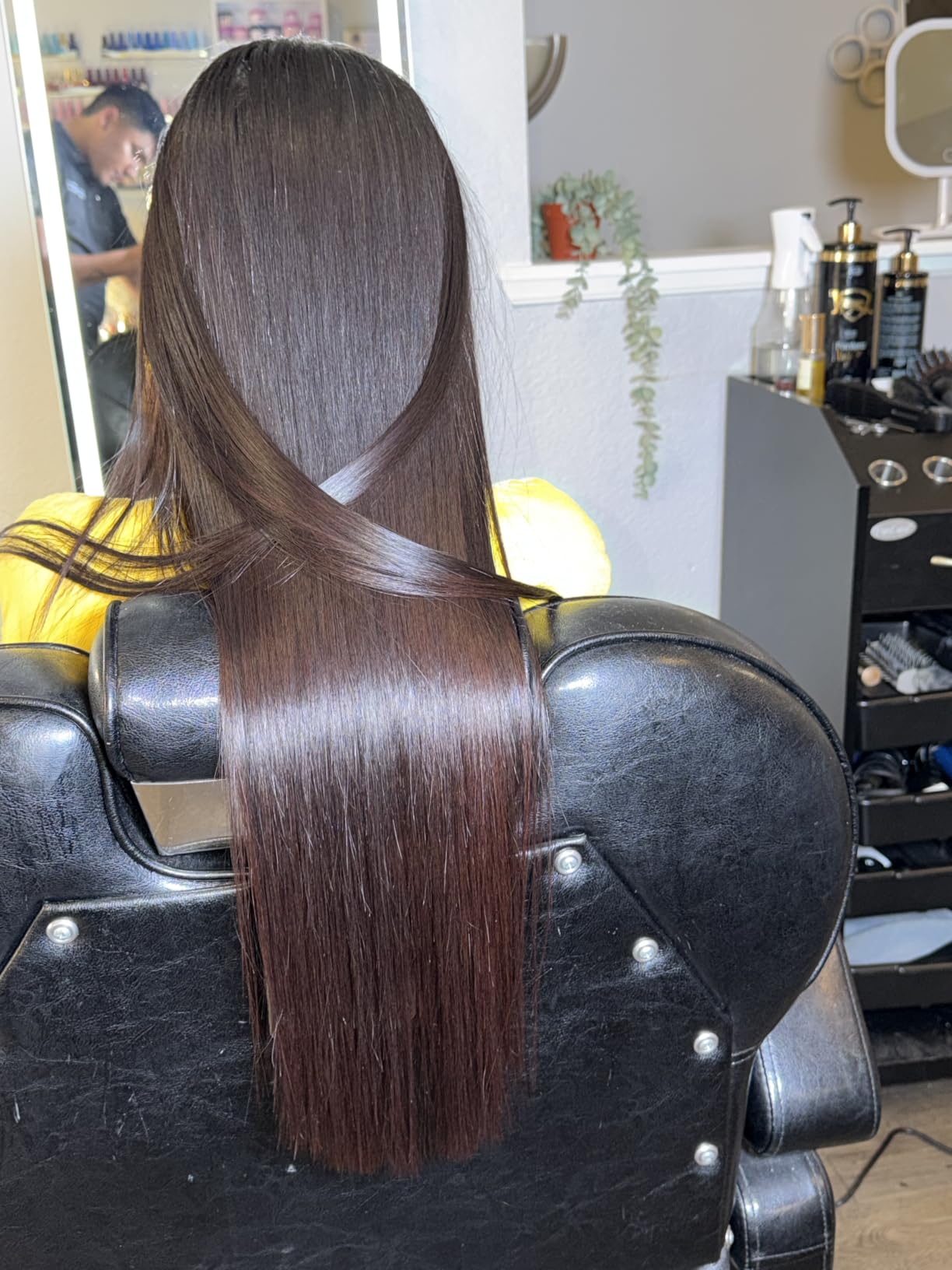
The tool is popular with people doing keratin and Brazilian smoothing treatments at home or in a salon setting. At this temperature, sealing a smoothing treatment is a realistic job rather than a stretch.
Body weight is 14 ounces plus the plates, listed at 15.87 ounces, which keeps it manageable through a long session even on dense hair.
The one thing to check before you buy is voltage. This listing is the 110 volt version, so it is not a travel iron and it will not run on a 220V outlet. That is the tradeoff for the higher heat ceiling and the fast heating.
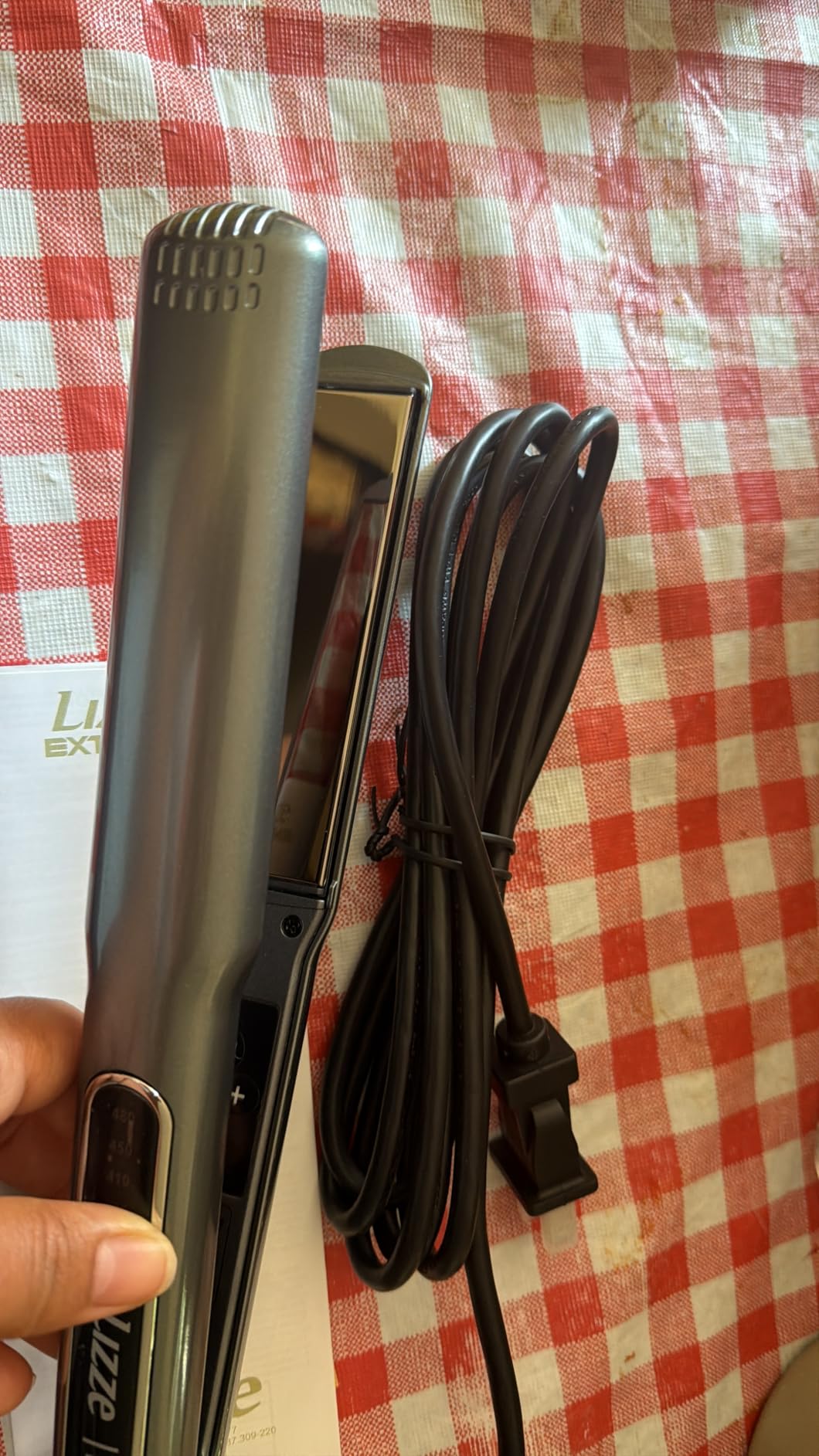
Can the Lizze Extreme handle 4C hair without frying it?
Heat alone is not what damages hair, and the 480F ceiling is not automatically aggressive. What matters is whether you need to go over a section more than once. The floating plates and the recovery on this model are what let most people finish 4C textures in a single pass.
Use a heat protectant, start at 400F rather than the maximum, and only push to 480F when a section genuinely will not smooth. The headroom is insurance, not a target.
Is the Lizze Extreme a curling iron too?
Not really. The plates and the clamp are optimised for pressing and smoothing rather than wrapping, so if curling and waving are part of your routine the BaBylissPRO Ionic or the Kristin Ess 3-in-One serve that better.
Treat it as a straightening and treatment tool, and use a separate clamp or wand for styles that need a wrapped barrel.
3. CHI G2 Titanium Infused Ceramic: the most reviewed and the most precise
CHI G2 Titanium Infused Ceramic 1″ Flat Iron Hair Straightener
Plates: titanium-infused ceramic
Max heat: 425F
Digital LCD
Far-infrared heat, negative ions, dual voltage
Pros
- Most reviews of any iron here at 10620
- Digital LCD makes coarse-hair settings easy to pick
- Far-infrared heat plus negative ions cut frizz
- Dual voltage for travel
Cons
- 1 inch plates need more passes on very thick hair
- Bulkier body than slim professional irons
The CHI G2 is the most reviewed iron in this roundup by a wide margin at 10620 ratings, and at 4.6 stars those ratings hold up. Anyone who wants the settled view of a titanium-infused plate material will find it here.
The plates are titanium-infused ceramic rather than pure titanium, which is a genuine technical difference. Ceramic spreads heat gently and evenly, and the titanium infusion adds glide and durability. What you give up is the highest ceiling: this one tops out at 425F rather than 450F or above.
The digital multicolor LCD is the best temperature interface in this list. Preset temperatures are labelled for fine, medium or coarse hair, so you are not guessing from a row of unlabelled dots, and the display is large enough to read at arm’s length mid-section.
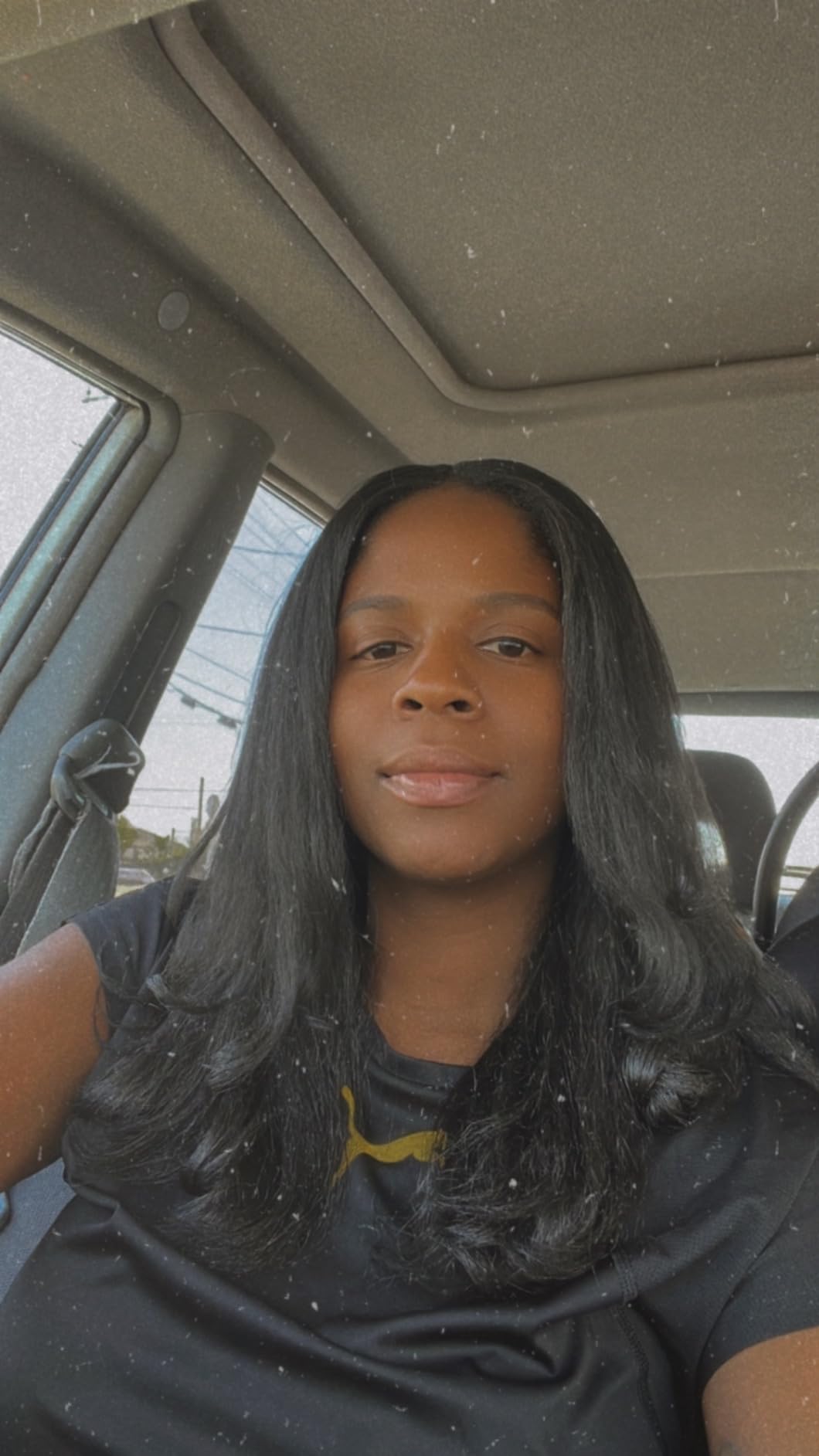
Negative ions and far-infrared heat handle the frizz side of coarse hair well, and dual voltage means it works in most countries without a converter.
Owners also like the ceramic heater core for recovering quickly, which keeps the 425F target stable through thick sections.
Be realistic about the 1 inch plate. On very dense or very long hair it means more passes, and more passes is exactly what you are trying to avoid. For fine to medium coarse hair it is excellent value and precision.
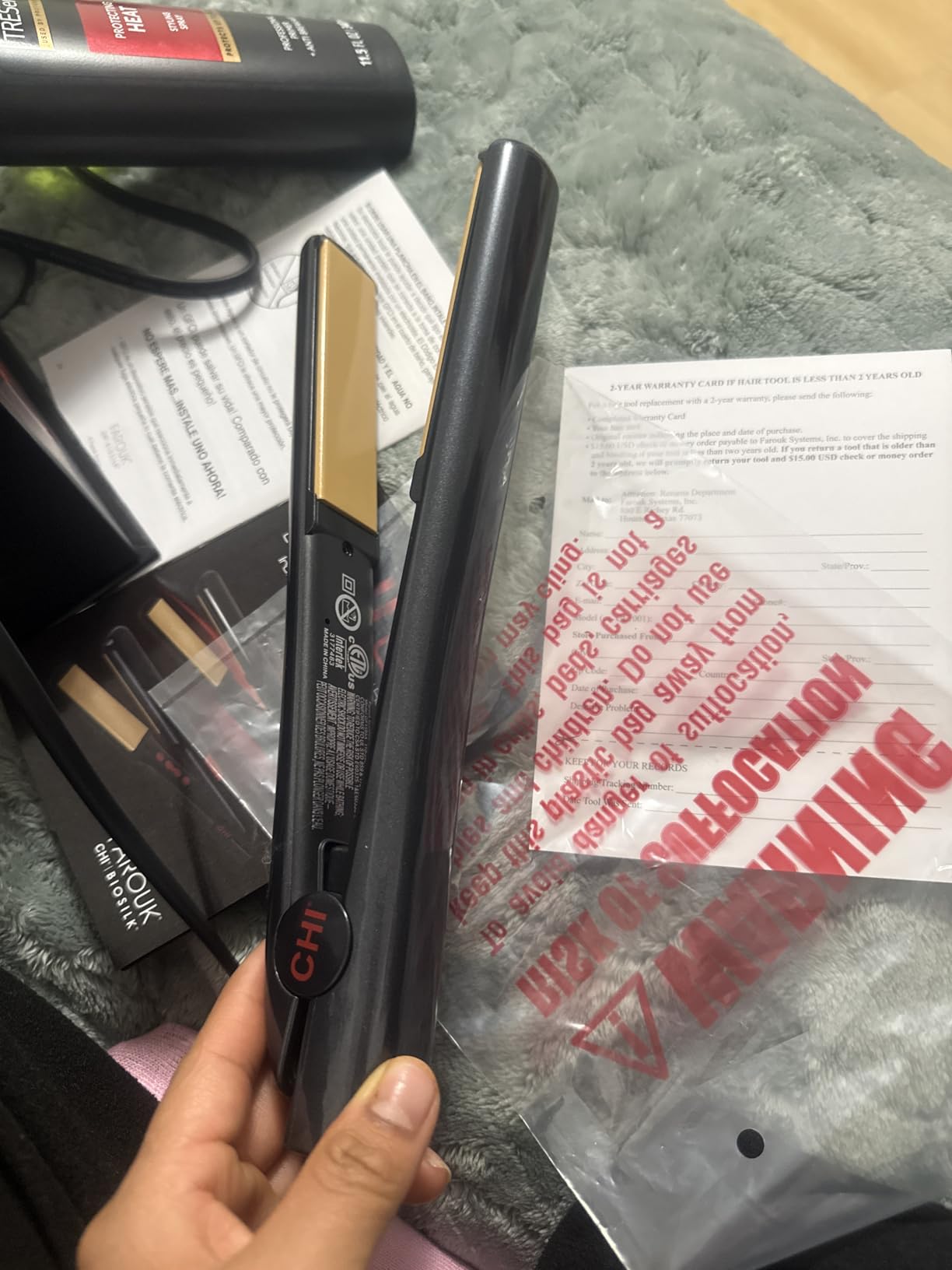
Should a 4C hairstylist buy the CHI G2 or save for a wider plate?
If your hair is 4A to 4B and long, save for a wider plate. The 425F ceiling and 1 inch width will get you there, but with three passes instead of one on the densest sections.
If your hair is 2C to 3B, the CHI G2 is the smarter purchase because the wide plates are wasted on thinner hair and this display takes all the guesswork out of temperature.
Does the CHI G2 reduce frizz on coarse hair?
Yes, through the negative ion output and far-infrared heat rather than through the plate material. Those two together calm frizz and keep the cuticle flatter, which is where the shine on coarse hair comes from.
Reviewers report the ends of their hair looking smooth rather than frizzy after a full pass, and that result holds through humid weather for a day or so.
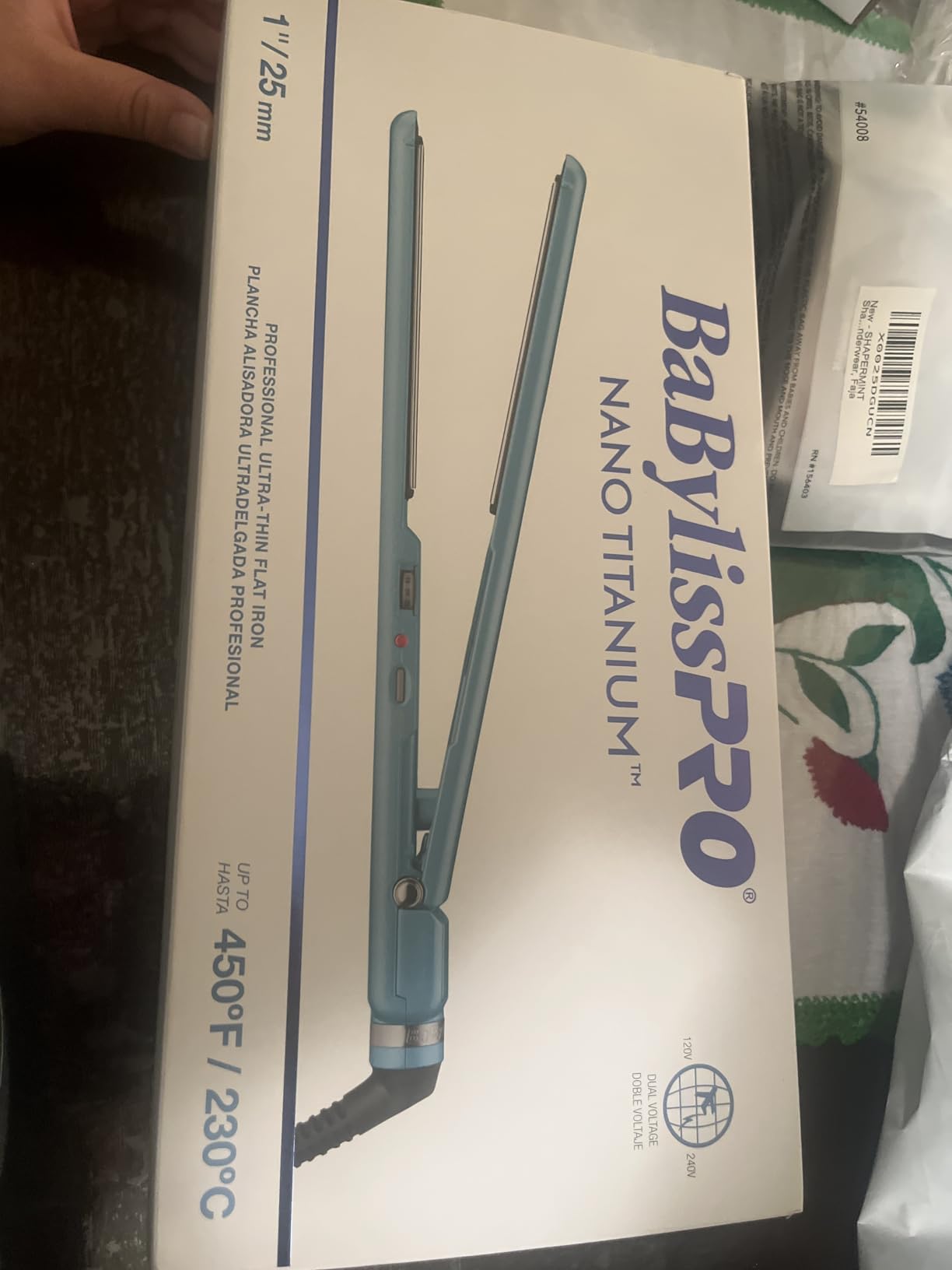
4. BaBylissPRO Nano Titanium Ultra-Thin: the lightest frame with long plates
BaBylissPRO The Ultra Thin Flat Iron, 50 Heat Settings, Nano Titanium, 1″
Plates: 5-inch extended nano titanium
Max heat: 450F across 50 settings
Weight: about 1 lb
9-foot swivel cord
Pros
- Long plates mean fewer passes on thick hair
- About 1 pound so less hand fatigue
- Ultra-thin body gets close to the roots
- Negative ions reduce frizz
Cons
- Plates are only 1 inch wide so thick hair needs sections
- Does not sustain very high heat as consistently as larger irons
This is the version of the BaBylissPRO that solves a specific problem: long thick hair and tired arms. The plates measure 5 inches end to end, so you cover more hair per pass than a standard-length plate, and the body is listed at about 1 pound with an ultra-thin profile.
That thinness is not just marketing. It lets the plates sit closer to the root, which is where coarse hair does most of its frizzing and where you spend more time if you are only working mid-lengths.
Heat control is unusually granular, with 50 adjustable settings up to 450F and a ceramic heater that recovers fast. For someone who straightens 4C hair and needs to find a precise working temperature, having 50 steps rather than 10 is a real convenience.
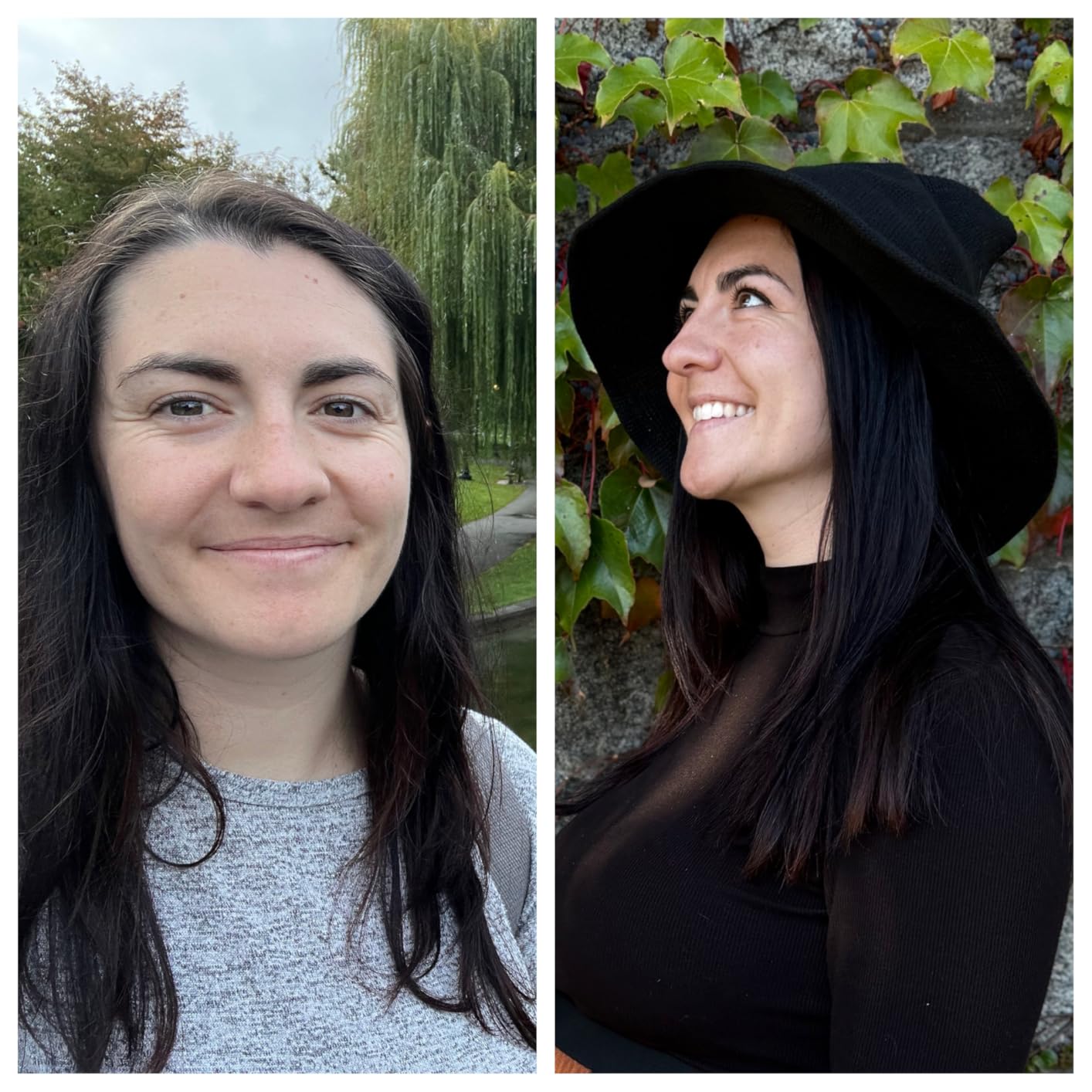
The 9-foot swivel cord means you can turn without the cable wrapping around your wrist, which is a small thing that becomes a large thing at the end of a 40-minute session.
Negative ions and maximum far-infrared heat handle the frizz that coarse hair picks up in dry weather.
Two limits are worth stating plainly. The plate width is 1 inch, so the extra length does not translate into wider coverage. And a small number of reviewers report it does not hold very high heat as steadily as the heavier professional irons, which is the trade for the low weight.
Will the ultra-thin body damage fine or fine-coarse hair?
The thin body gives you more control near the roots, which means it is easier to overdo it. If your hair is fine or 2B, set a lower temperature and keep the same short, fast passes.
For 3C and above, the low weight makes it the one BaBylissPRO that most people on beauty forums describe as comfortable for a full head.
How much does the 5-inch plate length save on long hair?
On long dense hair it removes roughly a third of the passes needed compared with a 3-inch plate, because each clamp covers a longer section. That is the main argument for this model on a head of 4B hair.
It does not replace a wide plate. Coverage across the section still depends on width, so the time saving is real but partial.
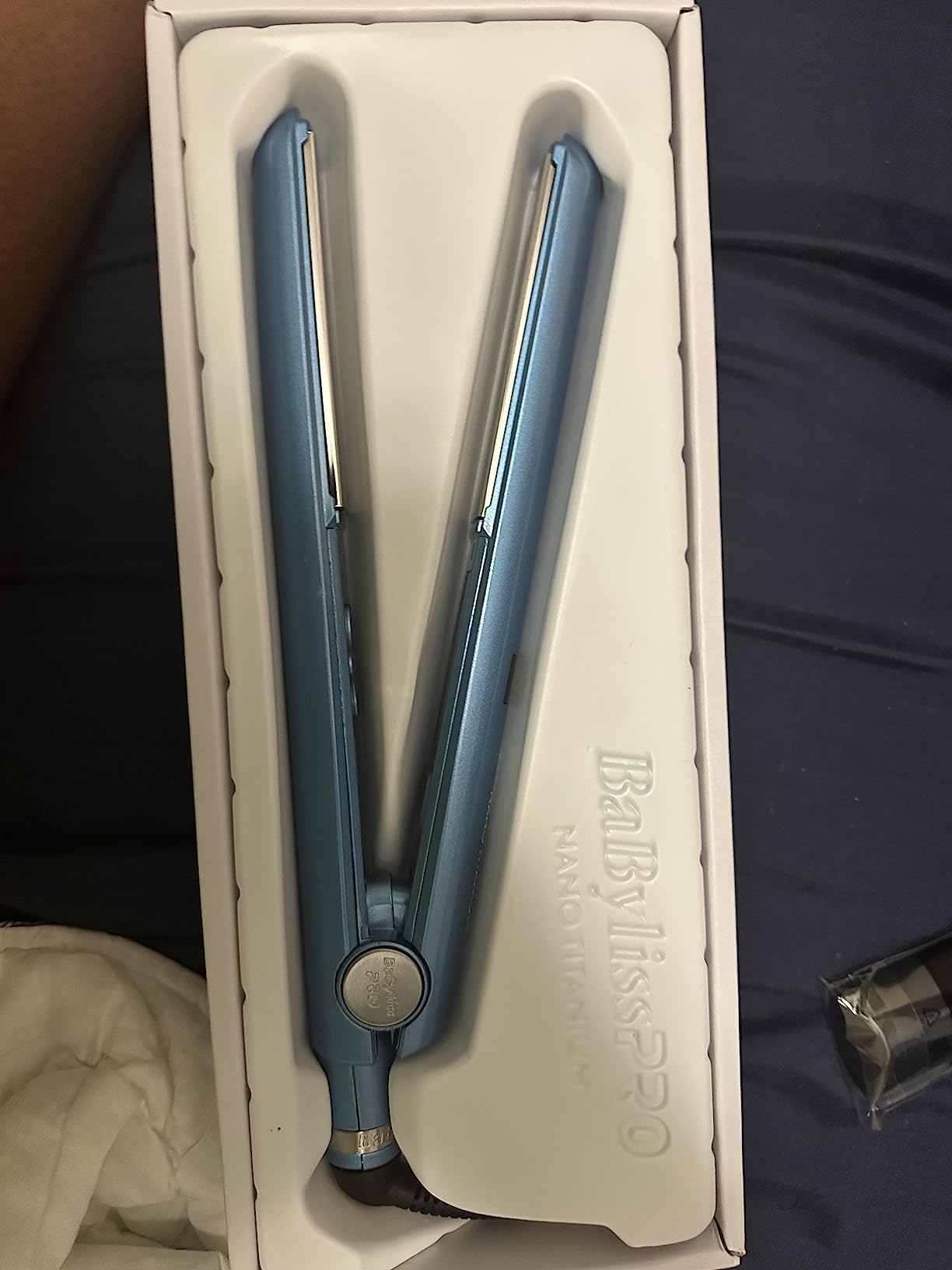
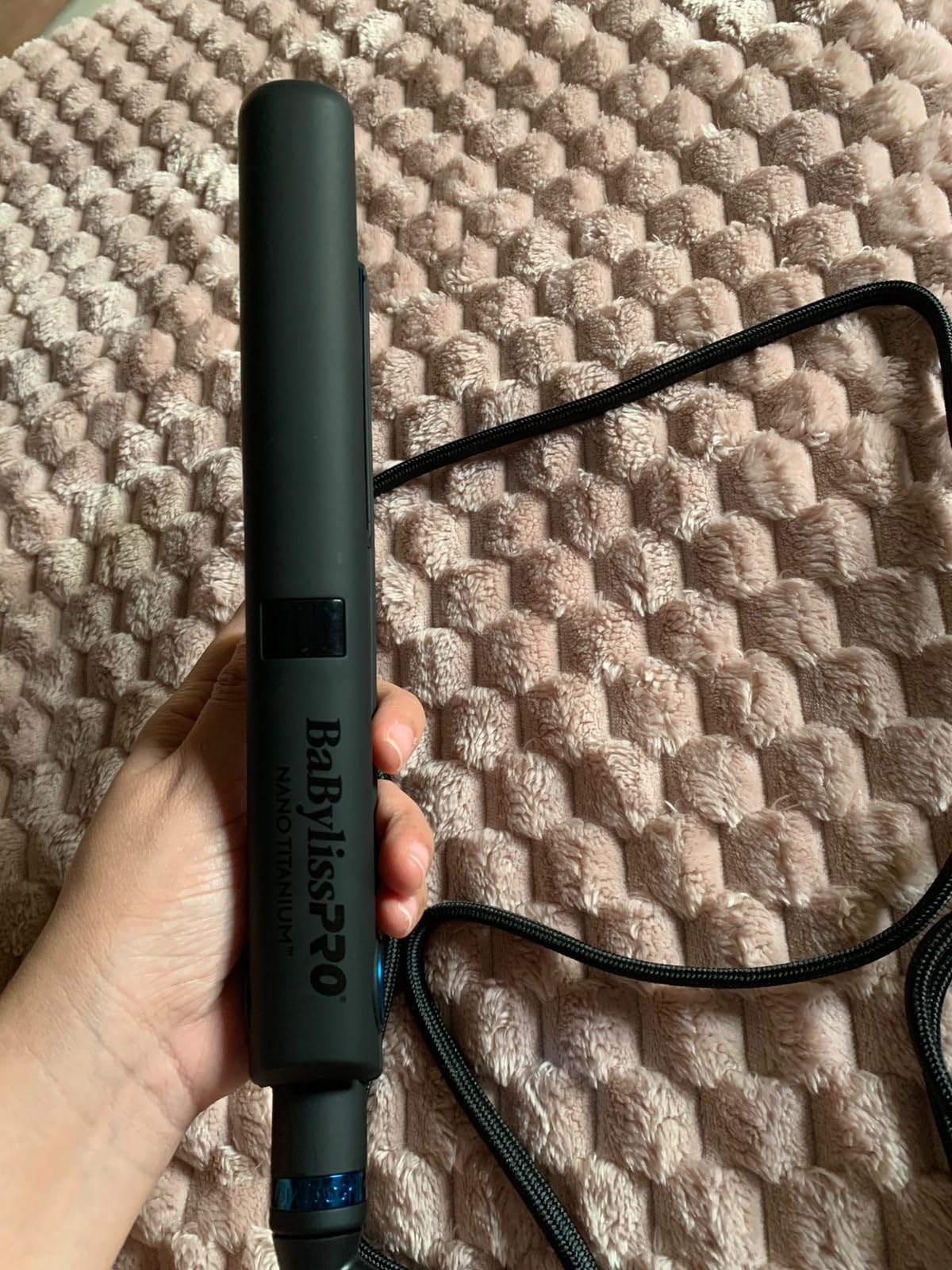
5. BaBylissPRO Nano Titanium Digital: the best titanium iron for travel and dual-voltage use
BaBylissPRO The Digital Flat Iron, Nano Titanium, Memory Setting, 1″
Plates: all-directional floating titanium
Max heat: 450F with memory
Auto dual voltage
9-foot 360 swivel cord
Pros
- Floating plates reduce hot spots and passes
- Memory saves your preferred temperature
- Auto dual voltage works in most countries
- Long swivel cord resists tangling
Cons
- 1 inch plates are narrow for very dense hair
- Runs hot so care is needed near the plates
The BNT4095TUC is the version to pick if you split your time between home and somewhere else. It has auto dual voltage, a 9-foot 360-degree swivel cord, and a memory function that restores your last temperature when you switch it on. For someone with 3C or 4A hair who already knows the setting that works, that is a small luxury you notice every time.
All-directional floating plates are the technical headline. They adjust to the thickness of the section as you clamp, which cuts hot spots and means you need fewer passes on coarse hair than a fixed plate would force.
Heat comes up instantly to 450F, and the nano titanium plating resists corrosion, which matters if you use it on damp hair or with a protectant that leaves a film on the plate.
At 1.2 pounds it sits in the middle of the weight range here, light enough for a carry-on and substantial enough not to feel cheap.
Users consistently highlight consistent heat, the memory function and fewer passes thanks to the floating plates as the three things that made it stick.
The 1 inch plate is the limiting factor for very dense hair. If your hair is 4B or 4C, this is a good travel companion but not your everyday tool.
Is the memory function worth paying extra for?
If you straighten coarse hair more than once a week, yes. You will stop experimenting with settings and re-testing the same temperature, which is where unnecessary passes and unnecessary heat come from.
If you only use an iron twice a year, it is a nice extra rather than a deciding factor.
Does dual voltage work for someone styling in different countries?
Yes, auto dual voltage handles the switch itself, so you do not need a separate converter or a second iron. The 9-foot cord is generous for a hotel desk, though it is not the shortest thing to pack.
Confirm the local voltage is within the supported range before a long trip, and give it time to acclimatise if you are moving between very different altitudes.
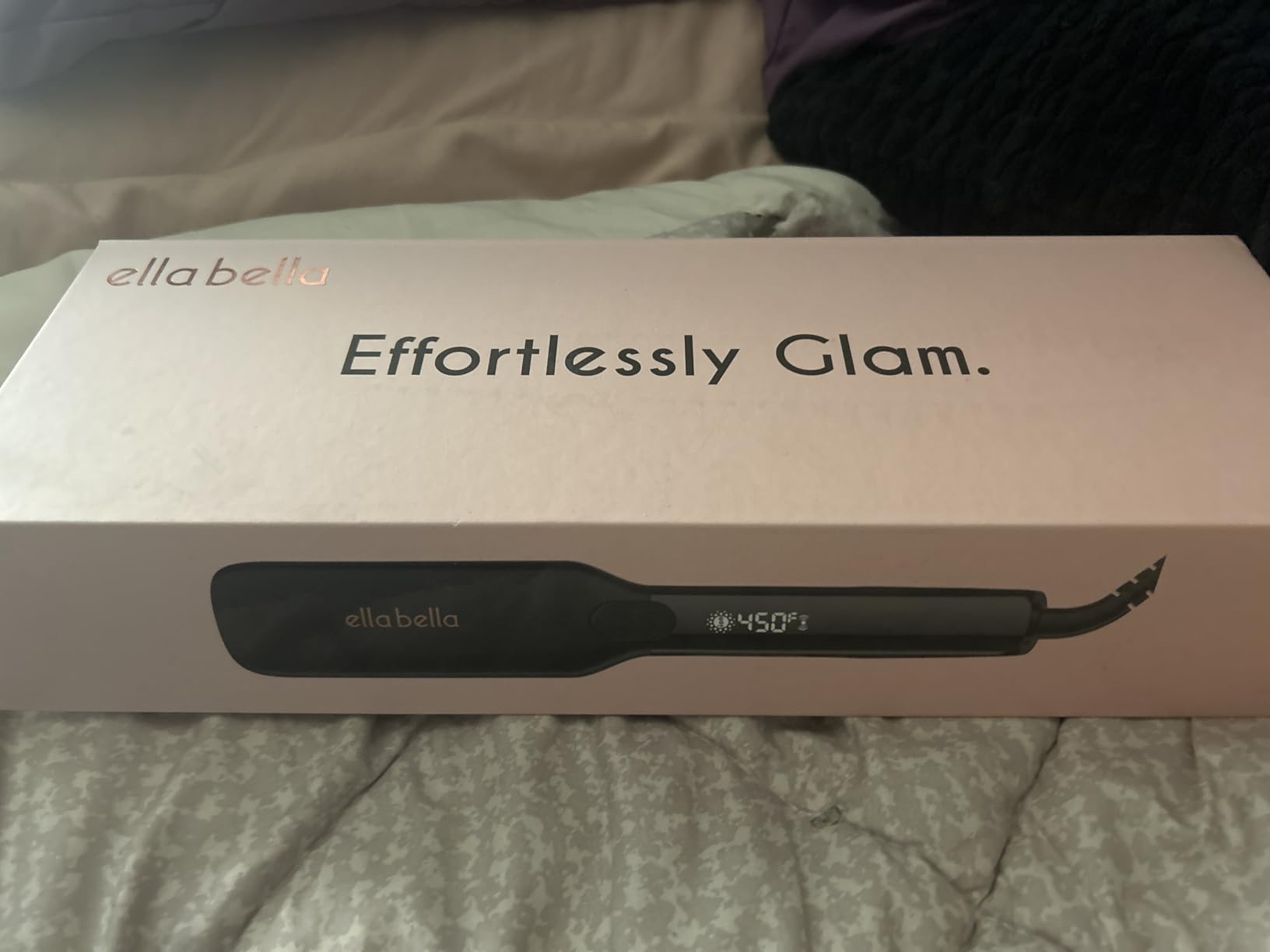
6. ELLA BELLA Titanium with Infrared: the strongest shine and frizz control
ELLA BELLA® Titanium Flat Iron Hair Straightener Large with Infrared
Plates: 1.8 inch titanium with infrared
Heat: 320F to 450F digital
Ionic technology
Auto shut-off, dual voltage
Pros
- 1.8 inch plates handle thick curly hair in one pass
- Infrared plus ions leave hair shiny and less frizzy
- Fast heat-up that holds temperature
- Auto shut-off and dual voltage
Cons
- A minority report the iron powering off after months
- Some users find the vibration tugs at hair
- Heavier body than most irons
At 1.8 inches this plate is wider than most in this group, and it is the one to look at if your problem is frizz rather than time. Owners with long, thick and coarse hair report one-pass straightening, fast heat-up and a finish that stays smooth into humid weather.
Infrared heat works alongside the titanium plates rather than instead of them. It is aimed at keeping the surface of the strand moving moisture around the cuticle, and the ionic system neutralises the static that makes coarse hair expand. Together they are the reason this one gets mentioned for frizz specifically.
Temperature runs from 320F to 450F on a digital display, so you can sit at the lower end for a silk press and push higher when a dense section needs it.
The vibration mode can be switched on or off, which is unusual at this level. Some people like the extra movement for thick hair, others find it tugs, so the switch matters.
Auto shut-off and dual voltage are both fitted, which makes it a safe pick to leave in a bathroom and a workable one to take abroad.
The honest caveat is a reliability thread. A minority of owners report the iron powering off after several months, and the brand is described as responsive with warranty support when that happens. Check the warranty terms before you commit if you have no backup iron.
Does the ELLA BELLA work for a silk press on 4C hair?
Yes, and the lower end of the 320F to 450F range is where you want to be. A silk press is a heat-and-press technique, not a straightening pass, so drop the temperature and work in small sections with a blow-dry first.
The 1.8 inch plates give you the coverage to do a full head in a manageable number of sections, which keeps total exposure time down.
Is the vibration mode good or bad for coarse hair?
It depends on your section size and how much tension you apply. On thick, coarse hair a little movement can help the plates stay in contact, and on finer hair it can tug and pull.
Run it for a few passes and judge for yourself. The switch exists precisely because it is not a universal win.
7. VANESSA PRO 2 Inch: the widest plates in this roundup
VANESSA PRO 2 Inch Titanium Flat Iron, Easy One Pass Styling for Thick Hair
Plates: extra-wide 2 inch titanium
Heat: 265F to 450F, 11 levels
Heat-up: about 30 seconds
Weight: 14 oz
Pros
- Widest plates here
- cover far more hair per pass
- Consistent heat with no hot spots
- Light at 14 ounces
- Good at 375F and below for silk press
Cons
- Wide plates take adjustment if you are used to standard irons
- Some reviewers rate performance as average
Two inches is wide, and it is the reason this iron exists. The brand states plainly that the design covers twice as much hair per pass, aimed directly at thick, coarse, long or high-density hair. On a dense 4B head, the difference between a 1 inch and a 2 inch plate is the difference between one pass and several.
The plates are nano titanium infused with argan oil and keratin micro-conditioners, which is a coating treatment rather than a structural one, but it does contribute to the glide users report.
Eleven heat levels run from 265F to 450F with an LED screen, and it reaches working temperature in about 30 seconds. A 60-minute auto shut-off is fitted, which is a reasonable safety window for a tool this powerful.
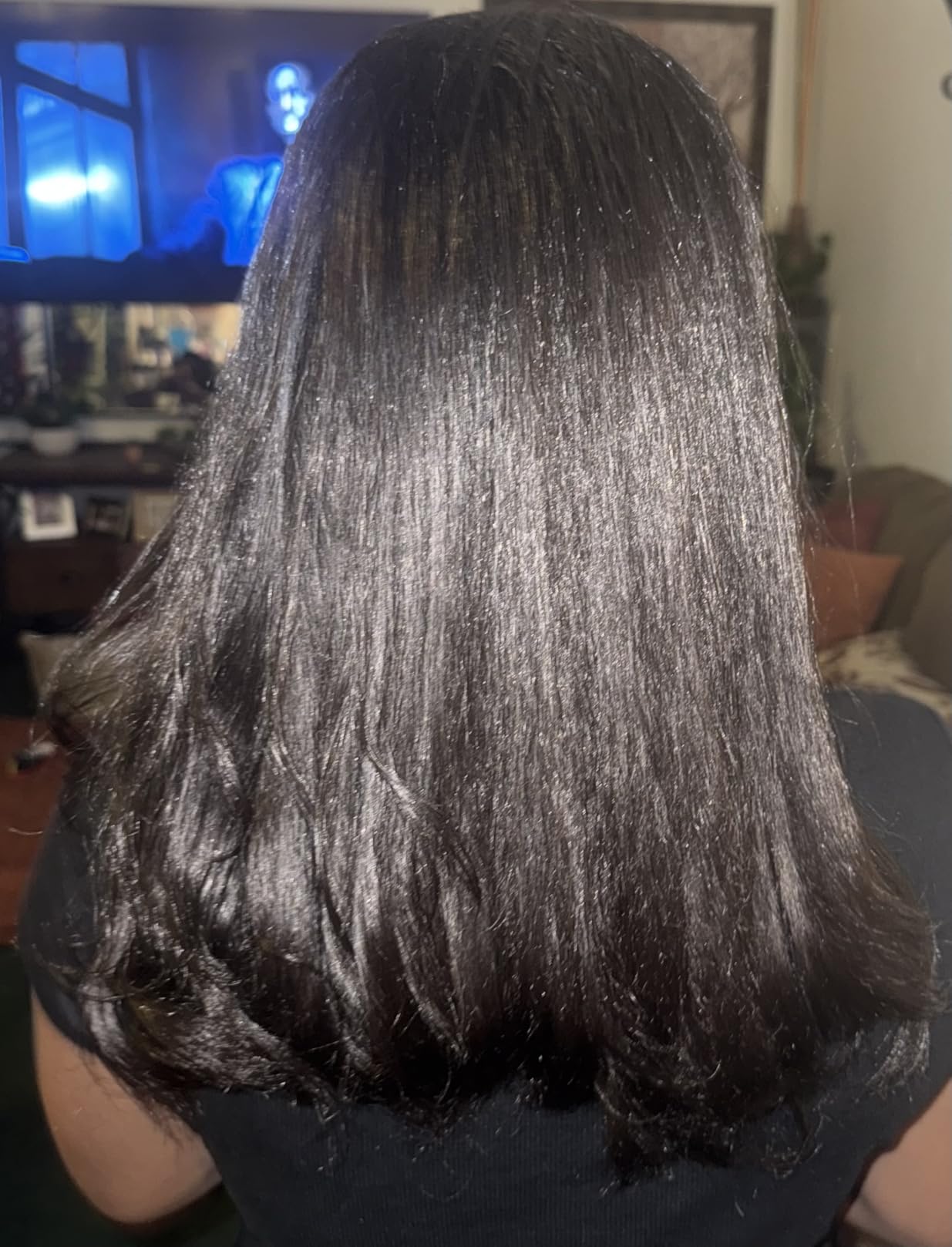
At about 14 ounces, this is a light iron in this group, and reviewers specifically mention reduced frizz and breakage compared with older ceramic irons.
Users doing silk presses report good results at 375F and below, which is a sensible ceiling for a press on 4C hair.
The wide plates take some getting used to. If you have only ever styled with a standard plate, your technique needs to slow down, because the iron is doing more work per pass and heat damage arrives faster when you forget how long the plate has been on your hair.
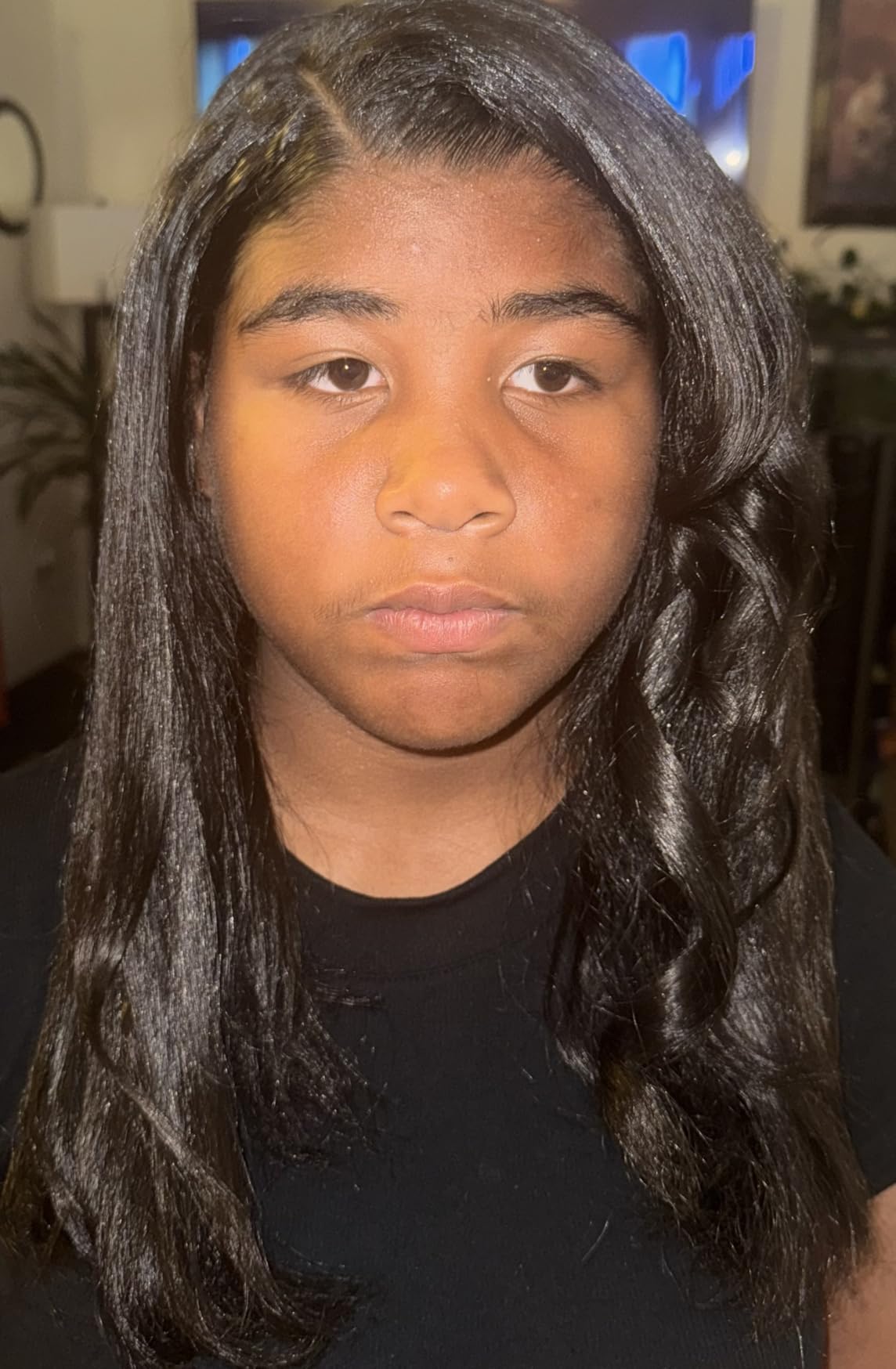
Is a 2 inch plate too wide for normal styling?
No, but it is different. It is designed to clamp a whole section rather than a narrow ribbon, so you will use smaller hand movements and let the plate do the work.
For someone with 2B to 3A hair, the extra width is wasted. For 3C to 4C hair it is the single most useful thing on the spec sheet.
How does this compare with the ELLA BELLA on plate width?
The ELLA BELLA at 1.8 inches is narrower but adds infrared heat and a wider temperature display. The VANESSA PRO is 0.2 inches wider and lighter, at the cost of a firmer structure and fewer temperature steps.
For 4B and 4C hair, take the width. For frizz control on 3C, take the infrared.
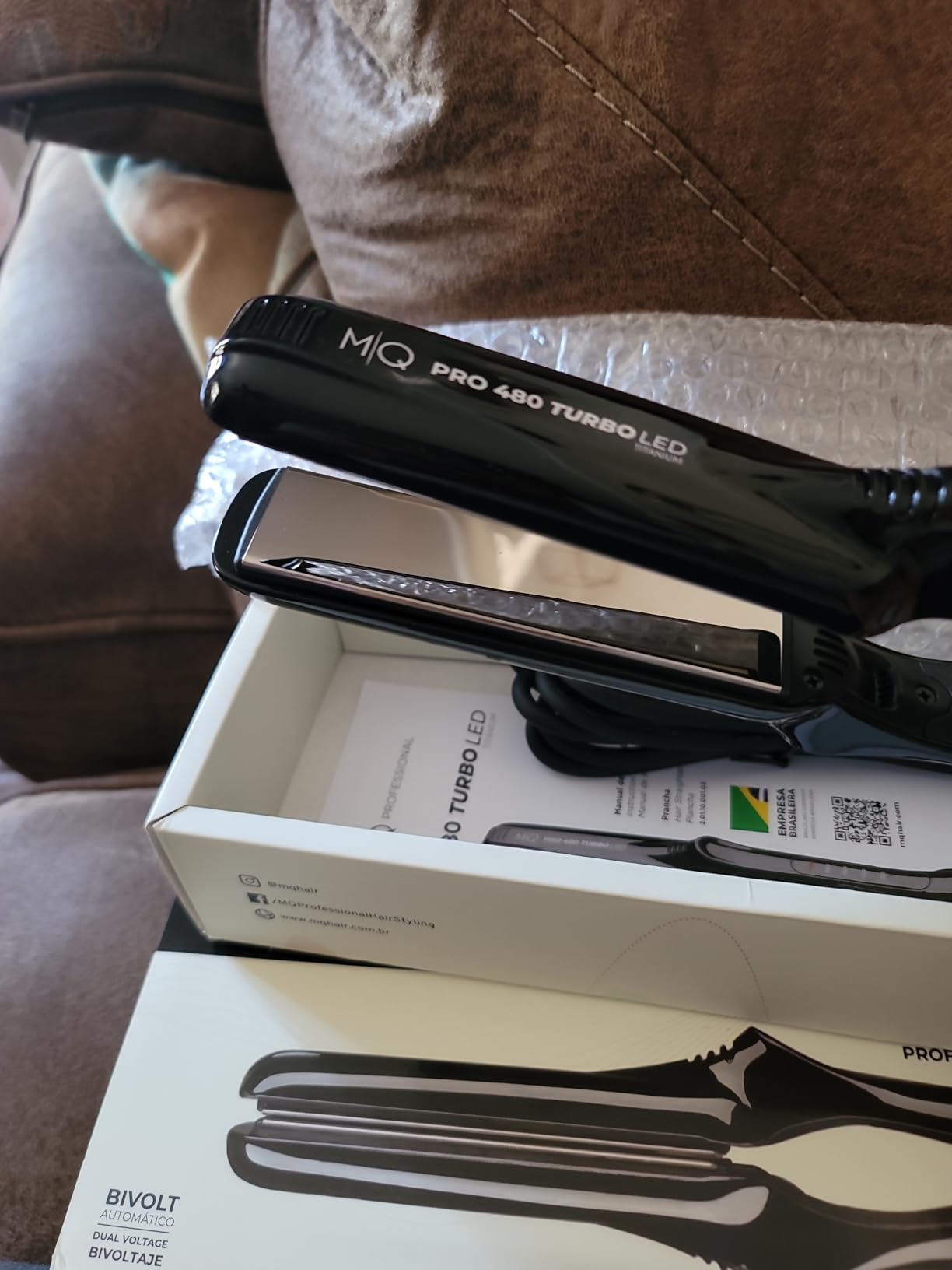
8. MQ Professional Titanium 480F: the highest temperature ceiling here
MQ Hair – Professional Titanium Flat Iron 480°F Turbo Bivolt Black
Plates: ultra-smooth titanium
Heat: 485F turbo mode, 5 levels
MCH heating with instant recovery
Bivolt
Pros
- Highest heat ceiling in this roundup
- Holds temperature steadily without dropping
- Lightweight and ergonomic for long sessions
- Popular for keratin and Brazilian treatments
Cons
- A small number report burning or a burnt-plastic smell
- Markings can appear on the plates over time
- Less established review history
Turbo mode takes this one to 485F, which is the highest ceiling of the twelve. If you are sealing a keratin or Brazilian treatment, or straightening 4C hair that refuses to smooth at 450F, that extra 35 degrees is the reason to look here.
The MCH heating technology with Heating Safe Control delivers fast heat-up and instant recovery, and salon-oriented owners report that the temperature holds steadily without dropping mid-use. Steady heat is what allows a single pass to finish a section.
It is also comfortable to hold. At 1.37 pounds with a wide plate area, owners specifically mention reduced wrist and shoulder strain, which is the opposite of the bulky irons further up this list.
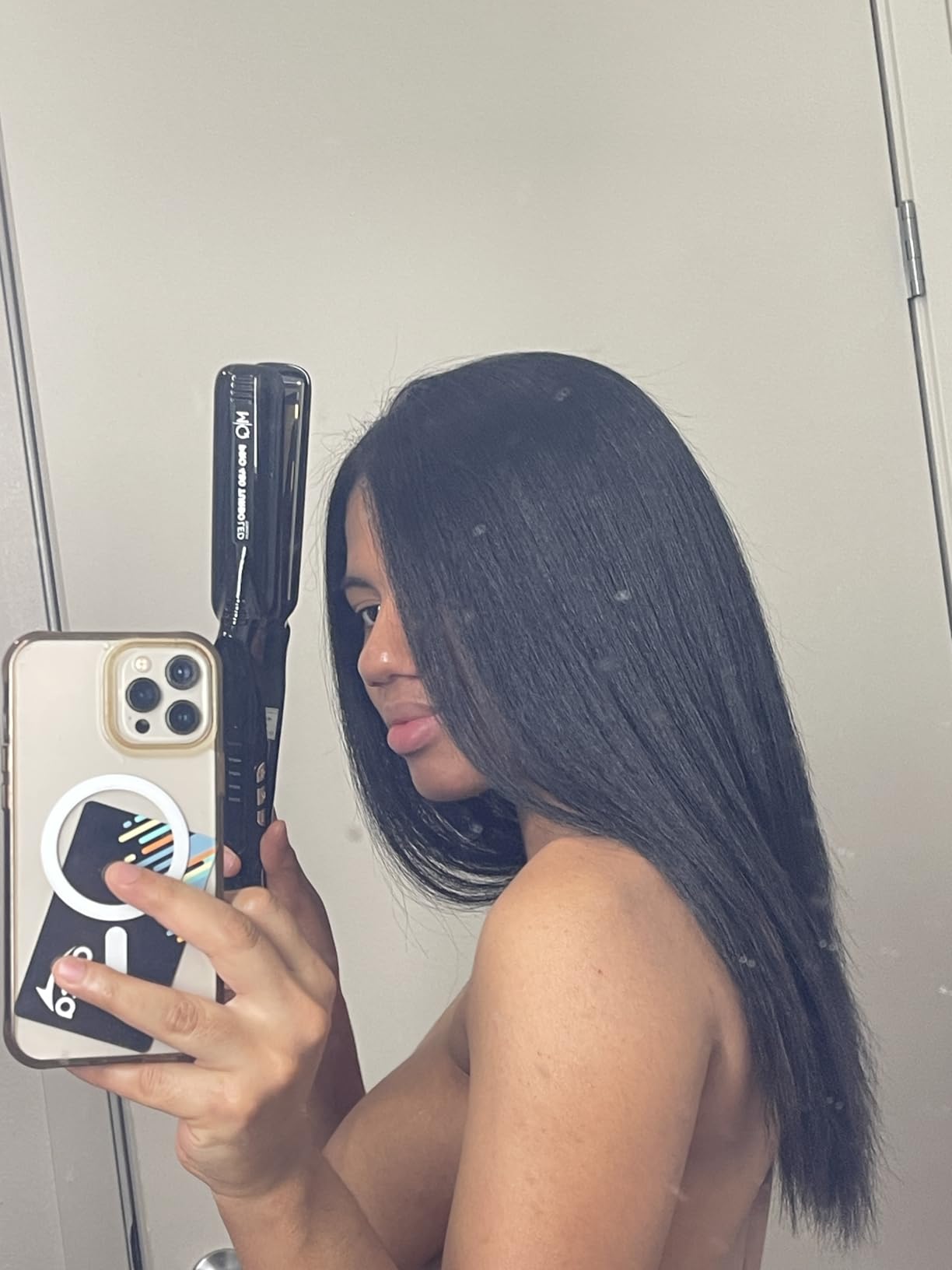
The build uses Japanese components, and it is bivolt, so it works in a salon and travels without a converter.
Be careful at the top of the range. A small number of reviewers report burning or a burnt-plastic smell even at lower settings, and some mention markings appearing on the plate surface over time.
Treat 485F as a treatment setting rather than a daily one. For everyday straightening, a setting in the 400F to 430F range will do the same job with less exposure.
Is 485F safe for daily straightening on 4C hair?
Only occasionally, and only with a pass count of one. The extra heat is useful when a section genuinely will not smooth at a lower temperature, which is a treatment or reseal situation rather than a weekly routine.
If you find yourself reaching for turbo mode every time, step down. More heat does not help when the limit is passes rather than temperature.
What does instant heat recovery mean for coarse hair?
It means the plates climb back to set temperature within seconds of releasing a section, so the next pass is not applied to plates that have sagged.
That consistency is what makes single-pass work possible on thick hair, and it is the reason treatment users keep recommending this model.
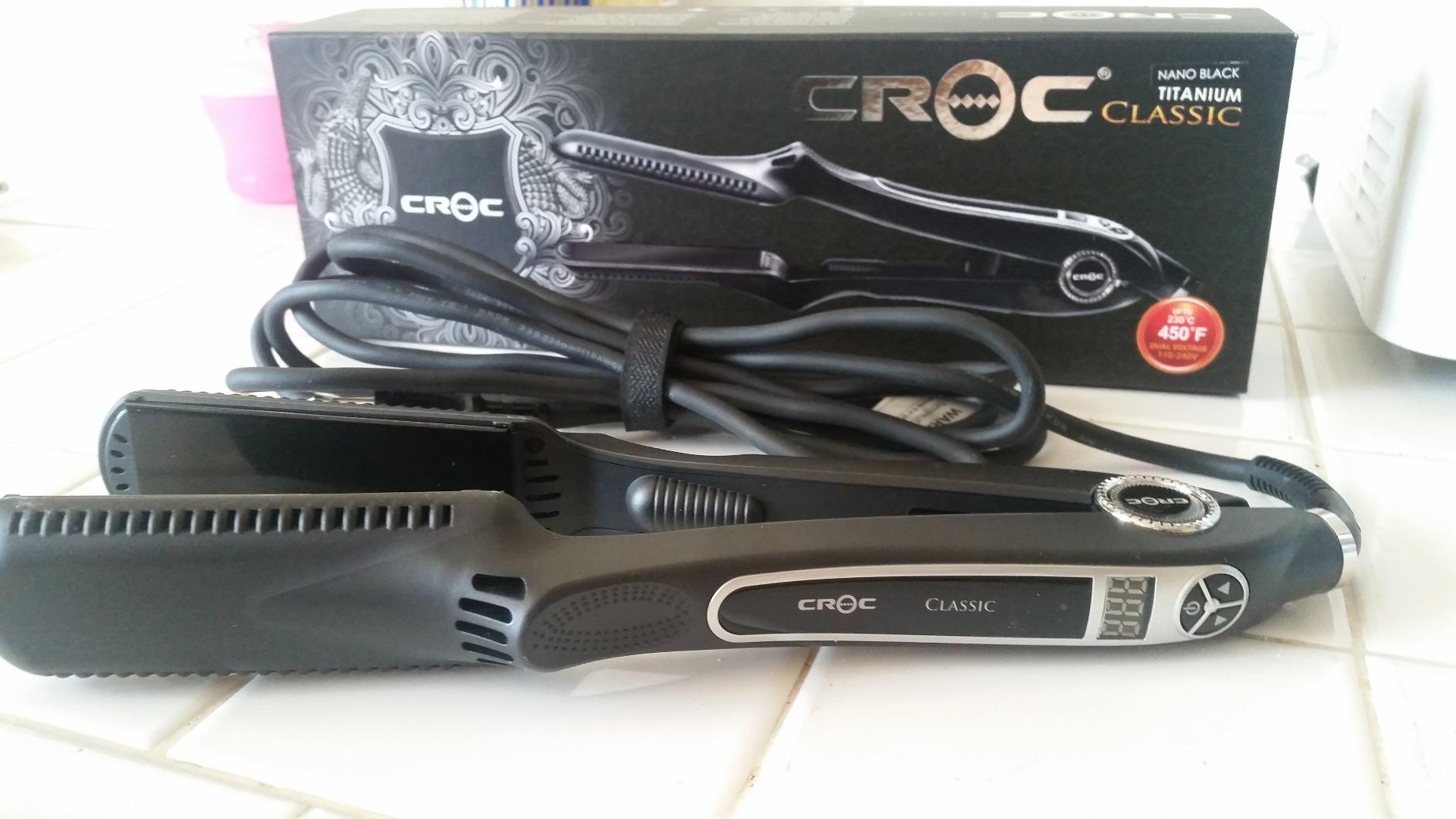
9. CROC Classic Silver Titanium: the most comfortable grip for long sessions
Croc Classic Silver Titanium Flat Iron Hair Straightener, 1.5 Inch
Plates: 1.5 inch nano titanium
Heat: 280F to 450F digital
Negative ions
Slipless Comfort Grip, auto shut-off
Pros
- 1.5 inch plates cut time on very thick hair
- Glides smoothly and flattens in few passes
- Lightweight and comfortable for long sessions
- Digital display remembers your last setting
Cons
- Some owners report the iron stopped heating after one to two years
- Higher cost than similar professional irons
The CROC is built around the handle. The Slipless Comfort Grip is designed to stay cool through a session, and owners with very long, thick and coarse wavy hair single that out as the reason they keep reaching for it. Hand fatigue is the real limit on a 45-minute style with dense hair, and this addresses it directly.
Behind that, the plates do their job. At 1.5 inches they are wide enough to cut styling time on very thick hair, and reviewers report a smooth glide that flattens hair effectively in few passes.
Temperature is fully digital from 280F to 450F and remembers your last setting, and negative ions seal the cuticle for shine. The iron also drops automatically to 370F and shuts off after 30 minutes, which is a thoughtful safety pair for a tool this hot.
Dual voltage means it works in most countries, and long-term owners report many years of use with warranty support behind it.
It is listed at 1 pound, so the comfort comes from the grip shape rather than from low weight.
There is a durability thread worth weighing. A minority of owners report irons that stopped heating after one to two years, and the price sits above several comparable professional irons, so the cost per year of ownership depends heavily on how long it lasts for you.
Is the CROC grip genuinely better for coarse hair?
For long styling sessions, yes. Grip that stays cool and does not force you to change your hold mid-section reduces the number of accidental restarts, and restarts mean re-heating the same section.
Some reviewers with arthritic hands report it as the only iron they can use comfortably at length. That is a specific but real advantage.
What is the idle temperature drop to 370F?
It is a safety feature. If the iron is switched on and not clamped, it settles to 370F rather than sitting at your chosen high setting, and it shuts off entirely after 30 minutes.
Neither feature substitutes for a heat-resistant glove if you have coarse hair and long sessions.
10. Kristin Ess 3-in-One Titanium: the one tool that straightens, curls and waves
Kristin Ess 3-in-One Professional Titanium Hair Straightener, Curler & Waver for Women – Dual Voltage – 440 Degrees – 1 1/4″ – Wet to Dry – Ionic Flat Iron, Curler 2 in 1 – Frizzy, Curly + Thick Hair
Plates: 1.25 inch negative ion gold titanium
Heat: 440F max, 4 presets
Dual voltage with travel cap
2 pounds
Pros
- Straightens
- curls and waves with one tool
- Smooth glide that does not snag or pull
- Curls and waves hold into the next day
- Travel cap and dual voltage
Cons
- About 2 pounds and heavy for long sessions
- Only four preset temperatures and no instructions in the box
- Matte exterior catches hair when rotating
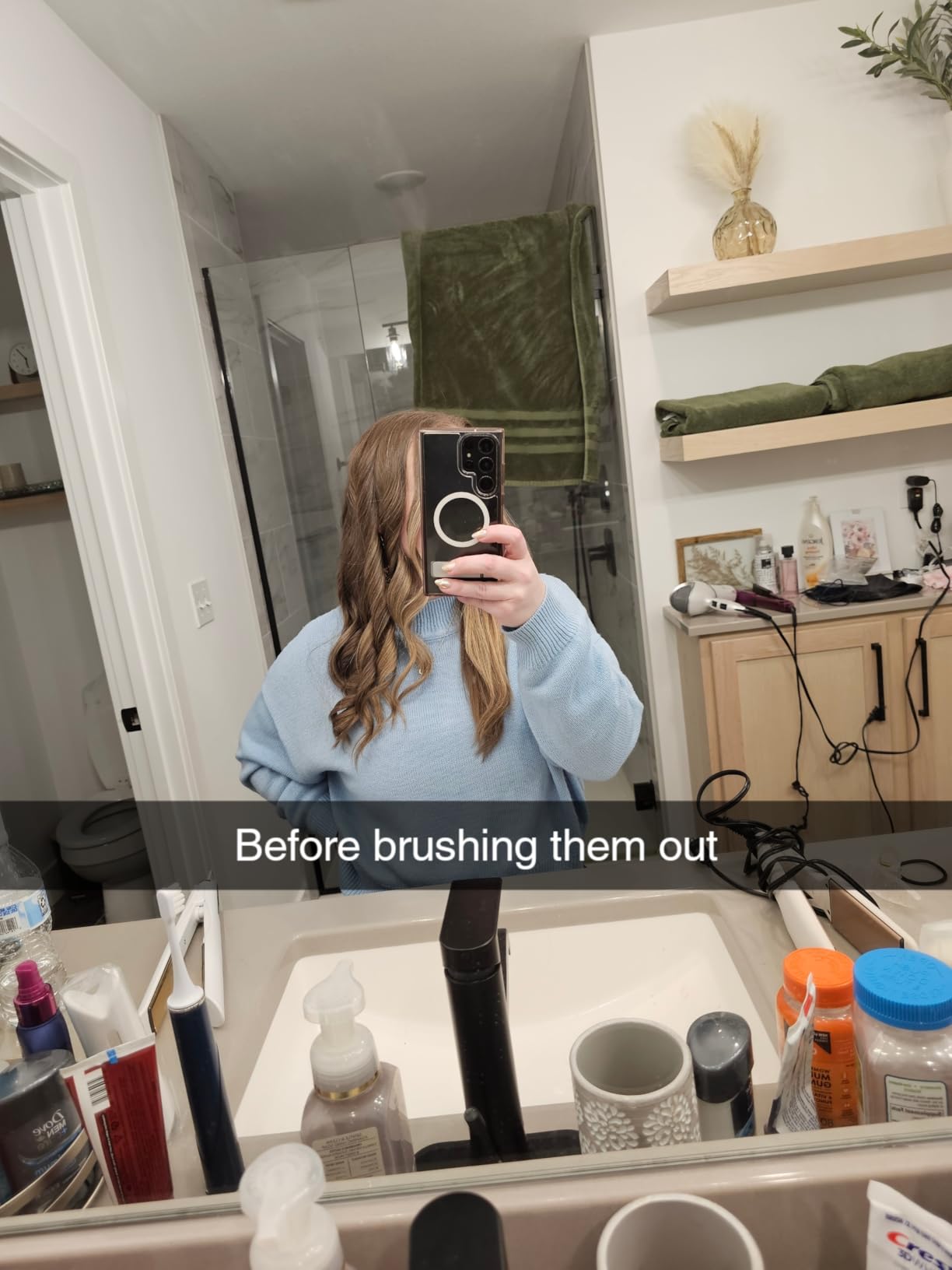
If you straighten, curl and wave, this is the value pick. One tool covers all three, the gold titanium plates with negative ion output glide smoothly enough that they do not snag or pull even on thick, frizzy hair, and owners report that curls and waves hold their shape into the next day.
At 1.25 inches the plates are wider than the standard 1 inch, which helps on coarse hair, and 440F is enough ceiling for most textures that are not fully 4C.
It is also genuinely portable. Dual voltage, a heat-resistant travel cap and a 9-foot swivel cord make it a one-bag solution, and 30-minute auto shut-off is fitted.
The digital display and rounded, durable plate edges help with control on thick hair where snagging is the usual complaint.
Users like the versatility and the glide, especially on thick and frizzy hair that other irons drag through.
Two limitations are real. It weighs about 2 pounds, which is near the top of the weight range here, and there are only four preset temperatures with no instructions in the box explaining how to change them. The matte exterior can also catch hair when you rotate the tool into a curl.
Can one tool replace both a straightener and a curler for coarse hair?
For most people, yes. Owners of thick, frizzy hair report it holding a beach wave overnight, which is the harder test.
It will not match a dedicated curling wand on ringlet definition, but for loose waves and a straight look it removes a tool from your bag and from your budget.
Is 440F enough for 4C hair?
For most 4A and 4B hair, yes, provided the plates are fed thick sections and you keep passes to one. For 4C that will not smooth in a single pass, move up to the MQ Professional or the BaBylissPRO Ionic.
The four preset temperatures are coarse-friendly but coarse-grained, so on 4C you will be living on the top setting.
11. Hot Tools Pro Artist Titanium: the straightforward first titanium iron
Hot Tools Pro Artist Titanium Digital 1″ Flat Iron
Plates: 1 inch titanium floating
Heat: up to 450F variable settings
Weight: about 1.01 lb
Dual voltage, swivel cord
Pros
- Fast heat-up with precise digital control
- Smooth glide with no pulling
- Works well on curly
- thick and wavy hair
- Lightweight and easy to maneuver
Cons
- Display stays lit blue when switched off
- Bulky body makes it hard to reach the roots
- Outer shell runs hot during use
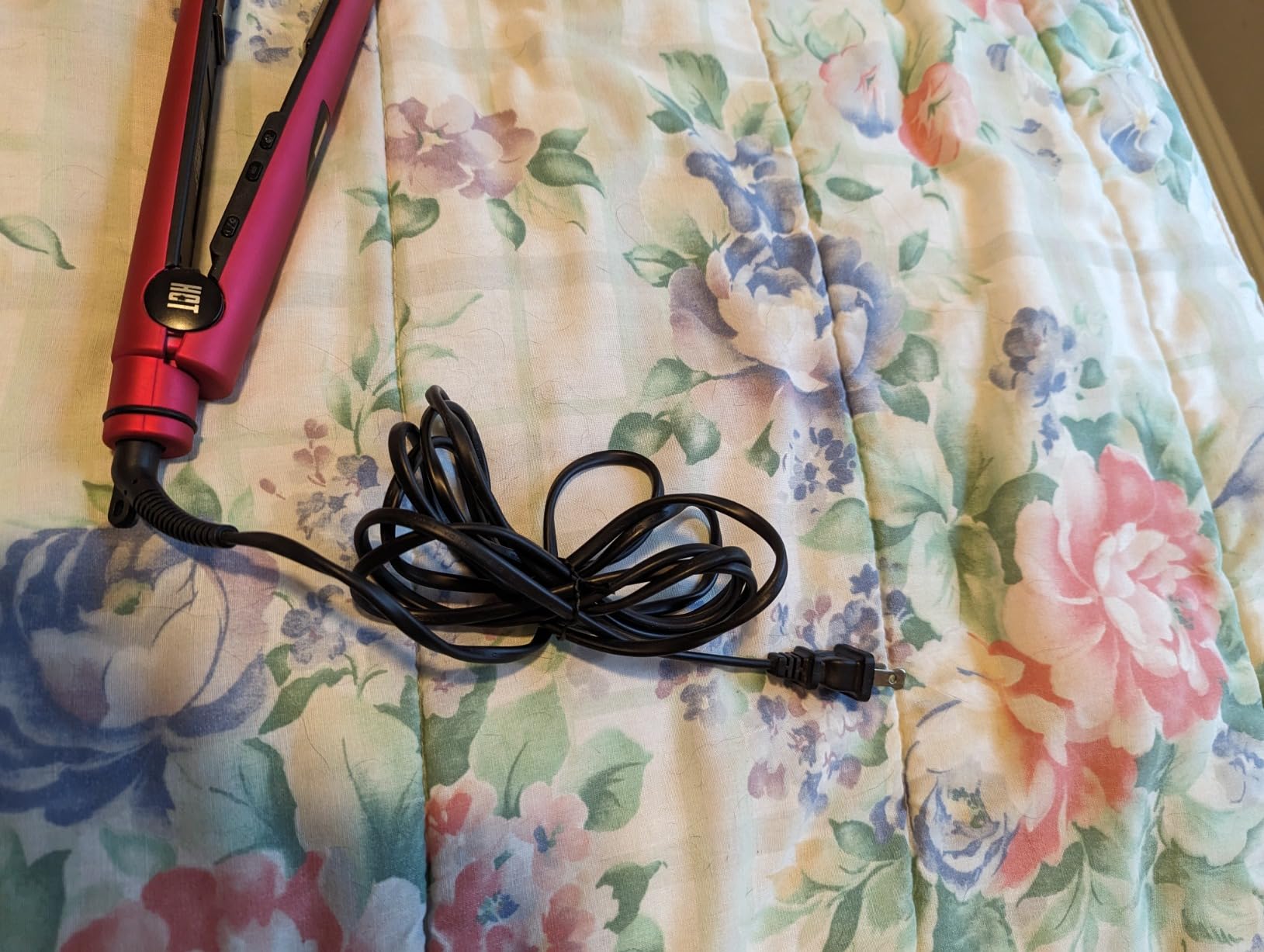
The Hot Tools Pro Artist is the uncomplicated entry point. Titanium floating plates, variable digital settings up to 450F, a soft-touch grip and a tangle-free swivel cord. It does not add an ion generator or infrared heat, and it does not need to, because the job here is a clean, even 450F pass on thick hair.
Owners highlight fast heat-up, precise digital temperature control and a smooth pull-free glide, and the rating sits at 4.6 across 560 reviews with 80% of those at five stars.
At about 1.01 pounds it is light and easy to move through a full head, which matters more for a first tool than extra features do.
Universal dual voltage makes it usable abroad, and the same plates handle curls and beachy waves for anyone who wants more than one style.
The manufacturer is listed as Helen of Troy, a long-standing brand in the category, which usually means parts and support last longer than they do with a newer name.
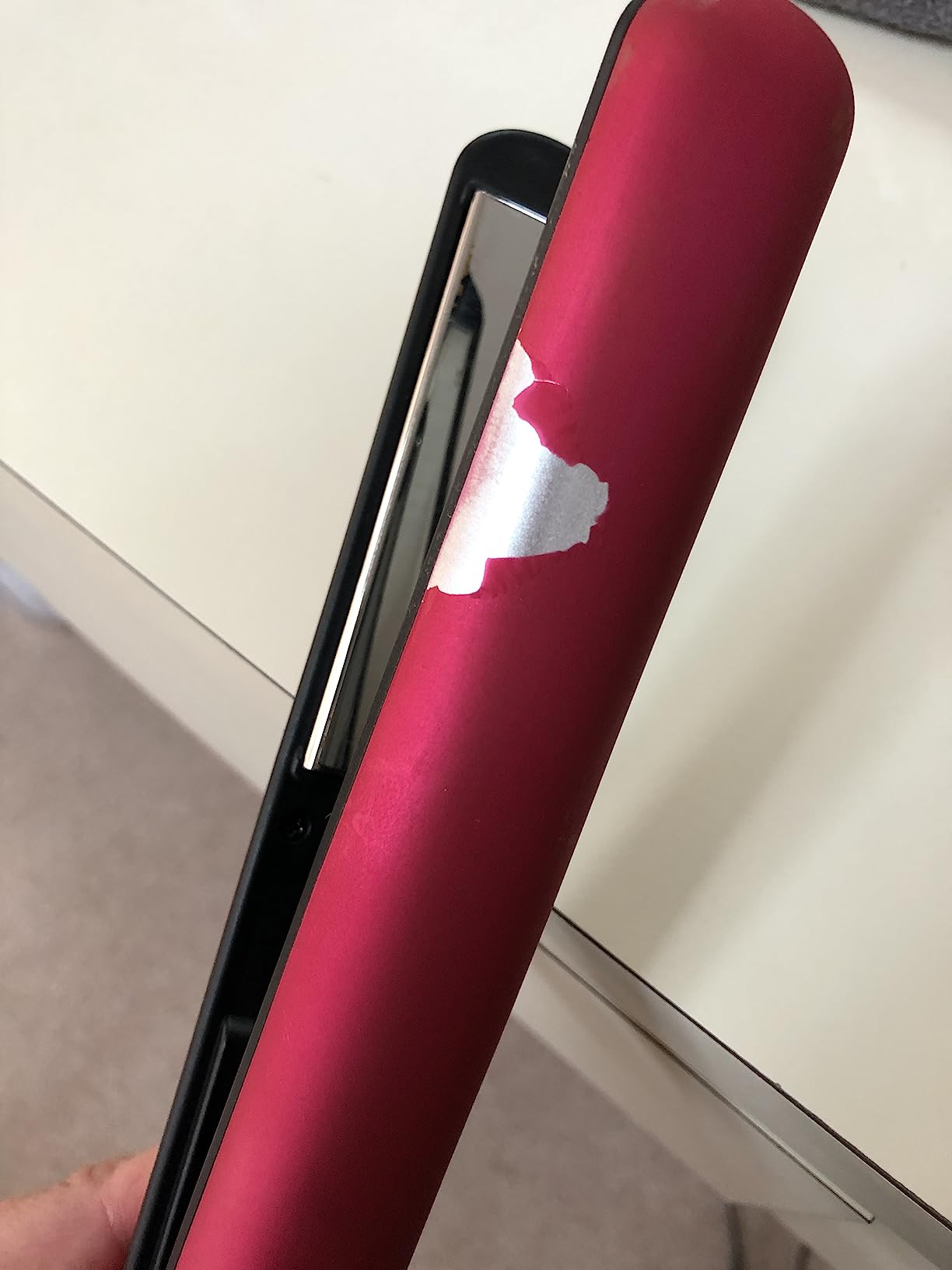
Three drawbacks come up repeatedly. The display stays lit blue when the iron is switched off, the body is bulky enough that getting close to the roots takes practice, and the outer shell runs hot during use, so keep it on a heat mat.
Is the Hot Tools Pro Artist good enough for 4C hair?
The 450F ceiling is right, and titanium floating plates are right, but the 1 inch width means more passes. On 4C that is a meaningful extra cost in heat exposure.
For 3C and 3B it is a genuinely good tool. For 4B and 4C, plan to move up to a wider plate later.
Why does the display stay lit when the iron is off?
It is a standby indicator, not a fault. The heaters are off, so it is not consuming power or creating a burn risk. It simply never finished the shutdown properly.
Some owners find it distracting enough to flag it, which is why it shows up in reviews, but it does not affect performance.
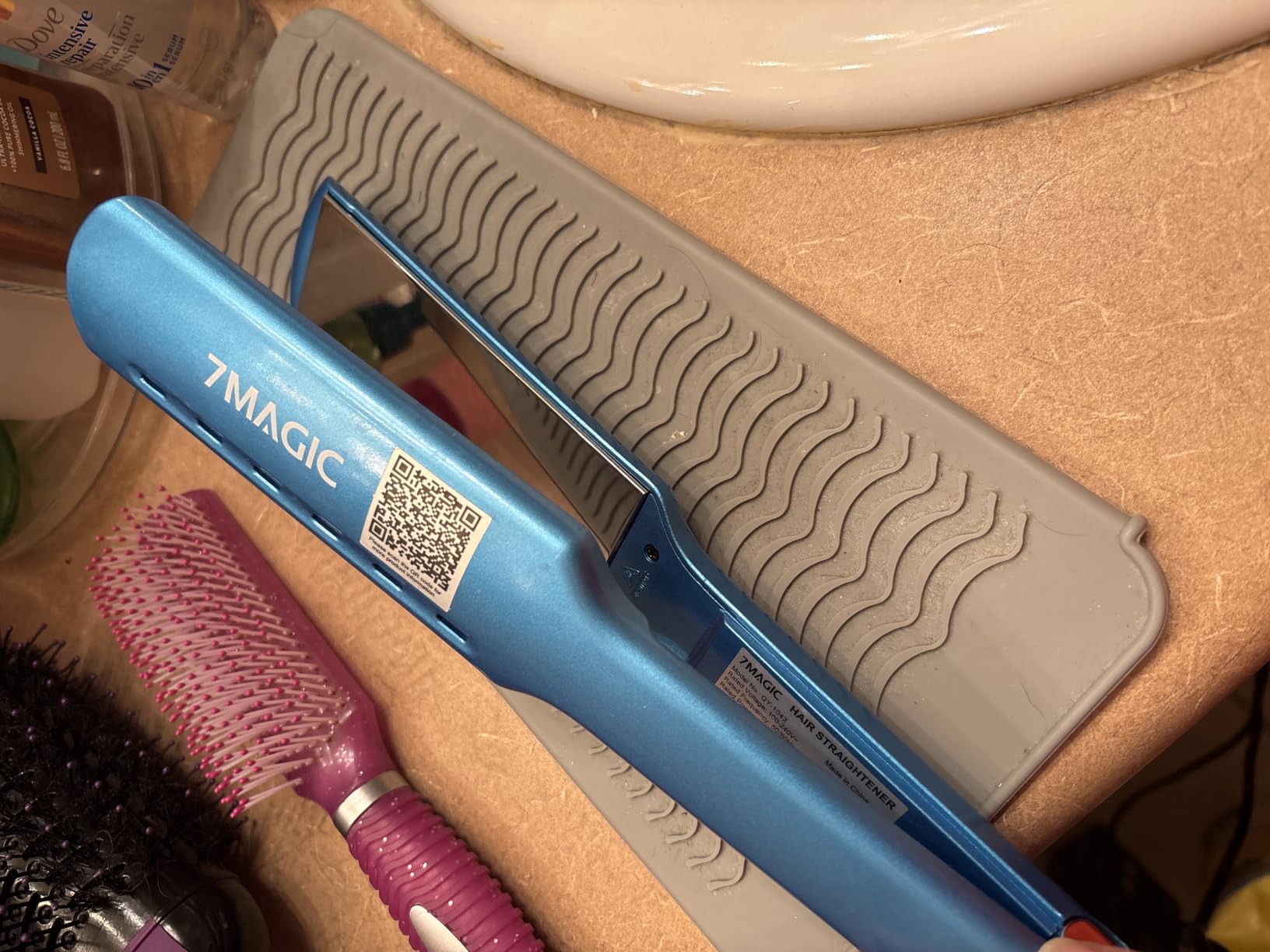
12. 7MAGIC Nano Titanium 1.7 Inch: the budget way into titanium plates
7MAGIC Nano Titanium 1.7″ Flat Iron Hair Straightener for Thick Hair, Blue
Plates: 1.7 inch nano titanium
Heat: 290F to 450F, 5 settings
MCH heating, 3D floating plates
Steam vents
Pros
- Large 1.7 inch plates for thick coarse hair
- Heats in 15 to 30 seconds
- Steam vents allow damp hair styling
- Dual voltage and 60-minute auto shut-off
Cons
- Only 5 heat settings on a side wheel
- Less consistent results at the top of the range
- Short cord for a pro-length style
This is the most affordable way here to get genuine nano titanium plates and a plate wider than most irons in this roundup. At 1.7 inches it covers a lot of thick, coarse hair in a single pass, and owners consistently point to strong value and fast heating as the reasons it works for them.
MCH technology brings it to working heat in 15 to 30 seconds with instant recovery, and the 3D floating plates adapt to how thick the section is, which is what keeps a lower-cost iron from creating hot spots on dense hair.
It also has steam vents, so you can go from damp to styled rather than waiting for hair to dry fully. That saves a step and, on coarse hair, saves a second round of high heat later.
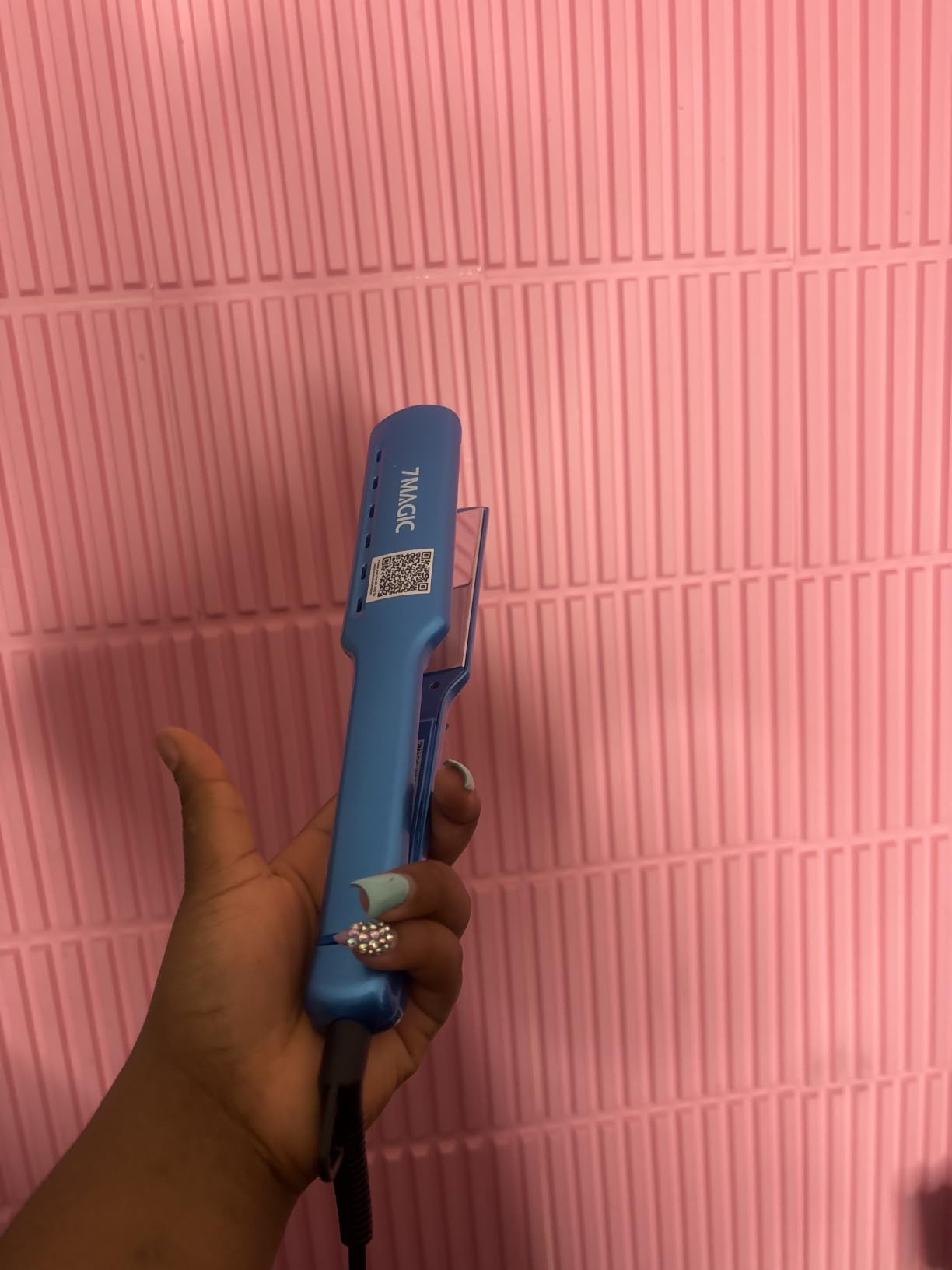
Dual voltage from 110V to 220V, a 360-degree swivel cord and a 60-minute auto shut-off cover the travel and safety basics.
At 4.4 stars across 2347 reviews it holds up well against irons costing considerably more.
The control interface is the compromise. Five settings adjusted by a side wheel, from 290F to 450F, is coarse for someone who needs to dial in a precise temperature for 4C hair, and a few owners report less consistent results at the highest settings than they get from the professional irons.
Is the 7MAGIC a good first titanium iron on a budget?
It is genuinely a good first titanium iron, because the two features that matter for coarse hair, wide plates and quick even heat, are both there. You give up precision in temperature and a small amount of consistency at 450F.
If you can stretch for it, the Hot Tools Pro Artist or the ELLA BELLA give you a digital display and more control, but neither is dramatically better on thick hair.
Does the 5-setting wheel go low enough for fine or bleached hair?
The range starts at 290F, so it is workable, but a 5-step wheel cannot land on a specific 330F the way a digital display can. For bleached or colour-treated hair, read the colour-treated guidance in the temperature section below before choosing.
For 3C and 4B hair with no colour treatment, the wheel is not a limitation.
Why Titanium Plates Suit Coarse Hair Better Than Ceramic
Titanium is a metal plate, and metals conduct heat faster and more evenly than ceramic. That single property produces three practical differences on coarse hair: faster heat-up, steadier temperature under load, and plates that resist chipping.
Ceramic plates are gentler when held at moderate temperatures on fine hair, and they are not wrong choices. On hair that is 3A to 4C, ceramic struggles to hold 400F and above consistently, so a section needs more passes to smooth. More passes is the real damage mechanism.
That is also the nuance the forums argue about. People ask constantly whether titanium is gentler than ceramic, and the honest answer is that plate type on its own did not predict performance in editorial testing of straighteners. What predicts performance is whether you can finish a section in one pass.
Two things titanium does not do well are worth naming. Not every titanium iron includes an ion generator, and without one you lose the static control that keeps coarse hair from puffing up. Titanium housings also run hotter on the outside than ceramic bodies, which is a real burn risk that the category rarely mentions.
One more: a faint crackling or popping sound from titanium plates is normal. Stylists on forums describe it as the sound of even heat distribution, not a sign of damage.
What Temperature to Actually Use on Coarse and 4C Hair
Most people with coarse hair are using too little heat and too many passes. A cheat sheet by texture is more useful than any single recommended number:
1C to 2B (coarse but manageable): 325F to 350F. One pass per section.
2C to 3B: 350F to 375F. One to two passes.
3C to 4A: 375F to 400F. One to two passes, dry hair only.
4B to 4C: 400F to 450F. One pass per section, work thick and do not re-clamp.
Colour-treated or bleached coarse hair: 360F ceiling. Heat above this breaks the colour and thins the strand.
For 4C specifically, stylists recommend a low-and-slow first pass and a higher second pass only where a section will not smooth, rather than starting hot and going over everything twice.
Work from the back of the head forward, and finish each section by cooling it in your hand. A section that is pressed and then moved to the next one while still hot will lose some of the smoothness you just paid for.
How to Straighten Coarse Hair Without Heat Damage
Damage in this category tracks passes, not temperature. Five steps keep the exposure low:
Use a heat protectant rated for the temperature you are about to use, applied to dry hair. Protectant on damp hair dilutes and does less.
Take thick sections. Coarse hair should be clamped in sections the plate can close fully, not in thin ribbons that need a second pass.
Set the temperature by texture using the cheat sheet above, and treat the maximum setting as a ceiling rather than a default.
Expect one pass, sometimes two on the densest 4C sections. If a section needs a fourth pass, the temperature or the section size is wrong, not your technique.
Let each section cool before moving on. Cool-down is what locks the shape, and rushing it is why results fall out by day two.
Add a heat-resistant glove to that routine. The hot outer housing on titanium bodies is the most reported burn complaint in this category, and a glove costs very little compared with a month of not styling.
Rest the iron on its base or a heat mat, not on a towel or a countertop, and put it somewhere it cannot be knocked by a child or a pet.
What to Look for in a Titanium Flat Iron for Coarse Hair
Plate width is the first filter. A 1 inch plate is standard and will make you work. A 1.5 inch plate suits thick, coarse hair well, and 1.7 to 2 inch plates are built for dense 4B and 4C heads where the goal is a single pass. Plate length matters too, and 5-inch plates cover a longer section per clamp.
Look for a real temperature ceiling above 400F. Coarse hair needs headroom. Anything topping out at 350F will work on 3C but will fight you on 4C. The highest ceiling in this roundup is 485F in turbo mode on the MQ Professional, and most of the rest sit between 425F and 450F.
Floating plates reduce hot spots. Plates that tilt to follow the section distribute heat more evenly, which on thick hair means fewer passes and less localised damage. All-directional floating plates are the stronger version of the same idea.
Check whether an ion generator is included. Negative ions neutralise static and help the cuticle lie flat, which is where shine on coarse hair comes from. Some titanium irons in this list have them and some do not, and that difference is easy to miss.
Digital beats a dial. Users with coarse hair consistently complain about manual temperature control. A display that shows the actual set temperature removes the guesswork that causes both under-heating and accidental overheating.
Consider plate width against weight. The widest plates here are also among the heaviest. On long hair that is a trade between passes and fatigue, and the right answer depends on how often you style and how long your hair is.
Look for auto shut-off and a swivel cord. Auto shut-off is standard on most of this list. A 9-foot swivel cord keeps the cable from wrapping around your wrist as you turn, which matters more at the end of a long session than you would expect.
On durability, expect years rather than seasons. Users on beauty forums commonly report titanium irons lasting 8 to 10 years, far longer than ceramic equivalents, because titanium plates do not chip. The counterpoint is that some owners report irons on this category stopping heating after one to two years, so warranty length is a reasonable proxy. The BaBylissPRO Nano Titanium Ionic carries a 4-year warranty, the longest here.
Frequently Asked Questions
Is titanium good for a flat iron?
Yes. Titanium plates are metal, so they heat up faster, hold temperature more consistently under load, and resist chipping compared with ceramic. That consistency is what lets coarse, thick and tightly coiled hair smooth in one or two passes instead of four, and fewer passes is the main thing that reduces heat damage on this hair type.
Which is better for 4C hair, ceramic or titanium?
Titanium. Ceramic plates are gentler on fine hair at moderate temperatures, but on 4C hair they tend to drift cooler as you work, which forces extra passes. Titanium holds 400F to 450F and finishes dense sections in one pass. The 425F CHI G2 is a titanium-infused ceramic compromise that suits 3C to 4A hair well.
How hot should a flat iron be for 4C hair?
Work between 400F and 450F for 4C hair, and use one pass per section rather than repeating it. If your hair is colour-treated or bleached, keep it at or below 360F, because heat above that thins the strand and fades the colour. Many stylists start at 400F and only raise the temperature for a section that genuinely will not smooth.
How many passes should I straighten thick hair with?
One pass is the target, and two is acceptable on the densest sections of 4C hair. If a section needs a third or fourth pass, the issue is usually temperature or section size rather than technique. Each extra pass re-heats an already heated strand, and that repeated exposure is the main source of damage on coarse hair.
Which titanium flat iron is least damaging to hair?
No titanium iron is inherently less damaging, but the least damaging setup is a wide plate that finishes a section in one pass at a controlled temperature. The BaBylissPRO Nano Titanium Ionic, the VANESSA PRO 2 Inch and the ELLA BELLA all cover large sections quickly. Colour-treated coarse hair should stay at or below 360F regardless of model.
The Verdict: Which Titanium Flat Iron Wins in 2026
The BaBylissPRO Nano Titanium Ionic is our best titanium flat iron for coarse hair in 2026. Its extra-long plates, 450F ceiling, ion generator and 4-year warranty make it the most complete tool here for thick, coarse and tightly coiled hair, and it is the model coarse-haired owners name most often across unrelated forums.
If your hair is very dense, the VANESSA PRO 2 Inch finishes sections faster and is lighter to hold. If your priority is shine and frizz, the ELLA BELLA adds infrared heat. And if you need the highest ceiling for keratin and Brazilian treatments, the MQ Professional reaches 485F in turbo mode.
Whichever you pick, the rule is the same: wide sections, one pass, protectant first, and a heat-resistant glove in reach.