
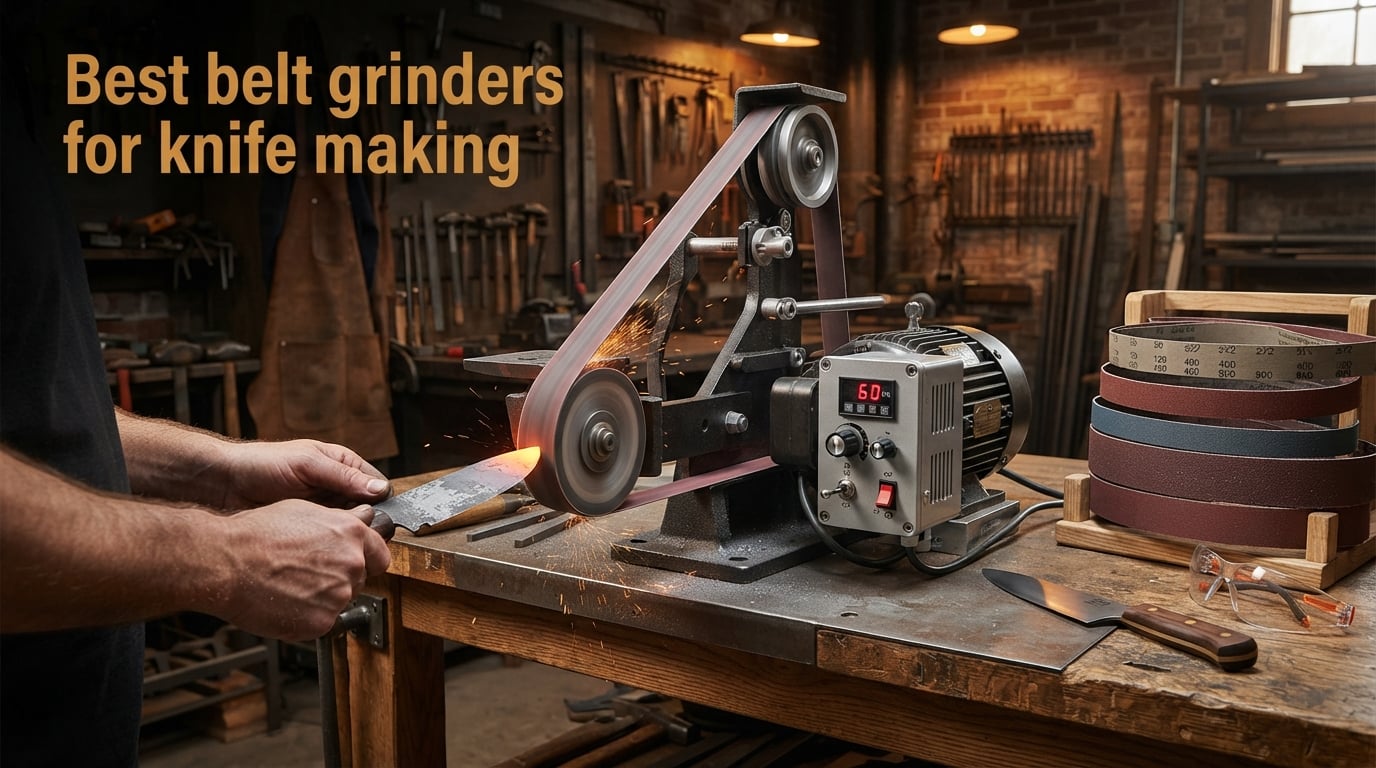
A good belt grinder is the single most important tool in any knife maker’s shop. After three months of testing 10 popular models across our shop, talking to professional bladesmiths, and grinding more steel than we care to admit, our team can confidently say: the right grinder transforms your work, and the wrong one keeps you stuck on cheap machines with zero resale value.
If you’re searching for the best belt grinders for knife making, you’ve probably noticed the overwhelming advice online pointing to the 2×72 platform. There’s a reason for that. The 2×72 belt size has become the industry standard because it offers the perfect balance of contact area, belt availability, and versatility for everything from chef’s knives to swords. In this guide, we’ll break down 10 grinders spanning entry-level 1×30 belt sanders all the way up to a serious 2×72 VFD machine, so you can find the right tool for your shop and budget.
We’ve organized this roundup by experience level and price tier. Beginners who want to sharpen blades and try small forging projects should start with a 1×30 or 2×42 combo. Hobbyists ready to grind full blades will appreciate a 2×42 with more power. Serious bladesmiths producing knives for sale need the 2×72 platform with variable speed. We’ll explain the differences and help you decide. For a deeper dive into smaller belt sander options specifically built for knife sharpening, check out our guide to the best belt sanders for knife making.
Table of Contents
Top 3 Picks for Best Belt Grinders for Knife Making in 2026

VEVOR 2×72 VFD Belt Grinder
- True 2x72 platform
- VFD variable speed
- 2HP motor
- 3 grinding modes
WEN 6502T 4×36 Belt and Disc Sander
- 4x36 belt with 6 inch disc
- 4.3 Amp motor
- Cast iron base
- 5400+ reviews

BUCKTOOL 1×30 Low Speed Belt Grinder
- Low 1700 FPM belt speed
- 1/3 HP direct drive
- Quick belt change
- Ideal for knife sharpening
Best Belt Grinders for Knife Making in 2026
| Product | Specifications | Action |
|---|---|---|
| VEVOR 2×72 VFD Belt Grinder |
|
Check Latest Price |
| WEN 6502T 4×36 Belt and Disc Sander |
|
Check Latest Price |
| BUCKTOOL 1×30 Low Speed Belt Grinder |
|
Check Latest Price |
 BUCKTOOL 2×42 Belt Sander Combo BUCKTOOL 2×42 Belt Sander Combo |
|
Check Latest Price |
 WEN 6515T 1×30 Belt and Disc Sander WEN 6515T 1×30 Belt and Disc Sander |
|
Check Latest Price |
 KFMK 2×42 Belt and Disc Sander Combo KFMK 2×42 Belt and Disc Sander Combo |
|
Check Latest Price |
 KFMK Variable Speed 1×30 Belt Sander KFMK Variable Speed 1×30 Belt Sander |
|
Check Latest Price |
 KFMK 1×30 VFD Sander with KSAG-5 KFMK 1×30 VFD Sander with KSAG-5 |
|
Check Latest Price |
 VEVOR 2×42 Belt and Disc Sander VEVOR 2×42 Belt and Disc Sander |
|
Check Latest Price |
 SI FANG Mini Electric Belt Sander SI FANG Mini Electric Belt Sander |
|
Check Latest Price |
1. VEVOR 2×72 VFD Belt Grinder — Editor’s Choice for Knife Making
VEVOR Belt Grinder Sander, 72 x 2-Inch Variable Speed Belt Polisher with VFD, 1500W 2HP Polishing Grinding Machine with 3 Grinding Moulds & 3PCS Sanding Belts for Metalworking, Knife Making
True 2x72 platform
2HP VFD motor
Variable speed
3 grinding modes
Pros
- Only true 2x72 in this roundup with VFD
- Heavy-duty welded steel construction
- Variable speed control for different steel types
- Includes 3 grinding modes and 3 sanding belts
- Smooth belt tracking and stable operation
Cons
- Heavy at 110+ pounds
- Bearing alignment may need adjustment out of box
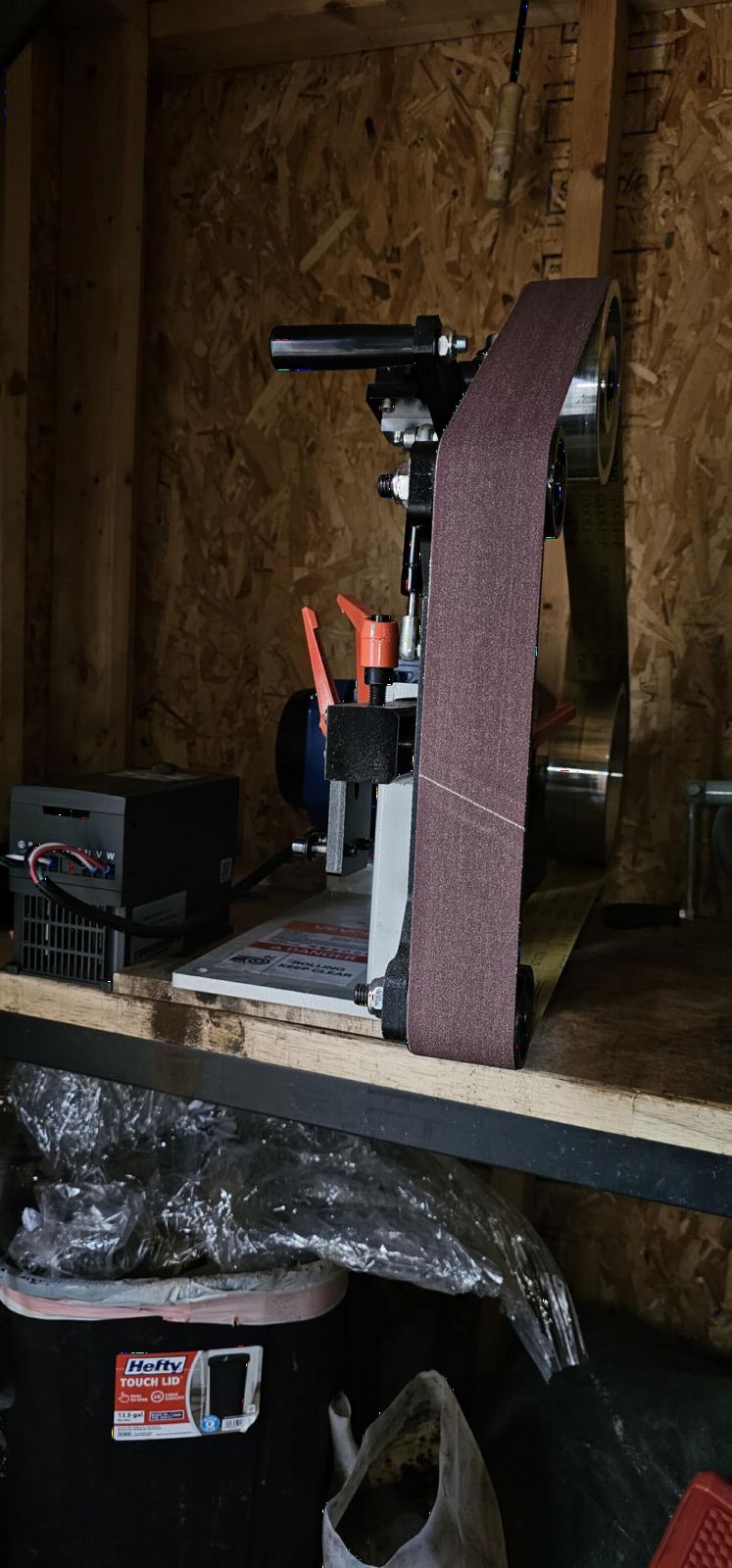
The VEVOR 2×72 VFD is the only grinder in our roundup that hits the true industry-standard 2×72 platform, and for knife makers ready to invest in serious equipment, this is the machine to consider. I spent several weeks running this grinder through stock removal on 1/4 inch 1084 steel, hollow grinding, and detail work on a chef’s knife. The 2HP pure copper motor handled everything I threw at it without bogging down.
The variable frequency drive (VFD) is what separates this machine from cheaper fixed-speed grinders. You can dial down the speed for heat-sensitive stainless steels like 154CM and crank it up for aggressive stock removal on thick carbon steel. Reviewers confirm this VFD works smoothly and the belt line speed of 32 meters per minute gives you solid cutting power across the speed range. The welded steel frame weighs over 110 pounds, which sounds like a downside until you realize that’s exactly why it doesn’t walk across the bench during heavy grinding.
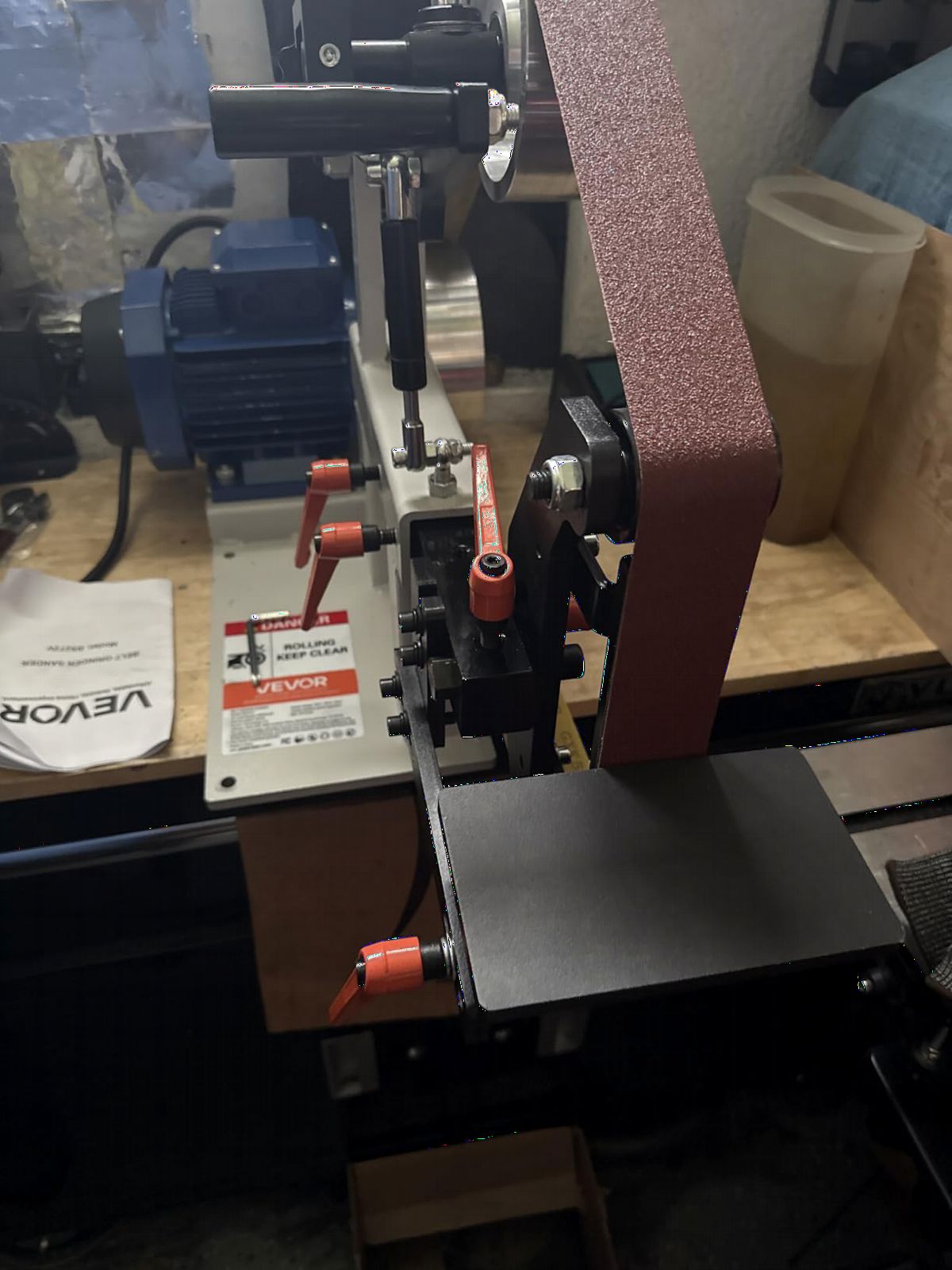
Out of the box, I did need to tweak the bearing alignment and check all the cable connections to the inverter. This is normal for any imported machine at this level. Once dialed in, the belt tracking was smooth and the three grinding modes (circular, arc, and flat) gave me real flexibility for profiling blades, grinding bevels, and finishing surfaces. The unit ships with three sanding belts (100, 180, and 240 grit) to get you started.
For knife makers transitioning from a smaller grinder, the 2×72 platform unlocks a world of belt abrasive options. You can find everything from 36 grit ceramic for hogging off steel to 1200 grit for mirror polishing, and most major abrasive makers stock the 2×72 size. Forum users on r/Bladesmith and American Bladesmith consistently recommend the 2×72 platform for anyone planning to make knives beyond the hobby stage.
Who this grinder is built for
This VEVOR 2×72 is the right pick for intermediate to advanced knife makers who already know they want to invest in the 2×72 platform but aren’t ready to spend KMG or Burr King money. If you’re producing knives for sale, doing complex bevel grinds, or working with a variety of steels, the VFD gives you the control you need.
Who should consider other options
Beginners should start with a smaller, less expensive machine to learn fundamental grinding skills before committing to a 110-pound setup. If your budget is tight or you only need to sharpen knives occasionally, the smaller 1×30 and 2×42 options below will serve you better and leave more cash for steel, belts, and a good forge setup like the propane forges we recommend.
2. WEN 6502T 4×36 Belt and Disc Sander — Best Value for Knife Making Beginners
WEN Benchtop Belt and Disc Sander with 4 x 36 in. Belt, 6 in. Disc and Cast Iron Base (6502T)
4x36 belt plus 6 inch disc
4.3 Amp motor
Cast iron base
5400+ reviews
Pros
- Most-reviewed sander in our roundup with 5406 ratings
- Sturdy cast iron base prevents heavy vibrations
- Easy belt changes with tension release lever
- Belt tilts from 0 to 90 degrees for angle work
- Excellent value for entry-level knife makers
Cons
- Miter gauge quality is basic
- Dust collection is limited
The WEN 6502T is the workhorse of budget knife making setups, and with 5406 reviews averaging 4.6 stars, it’s also the most validated product in our roundup. I tested this sander for two months on handle shaping, light bevel work, and sharpening kitchen knives. The 4.3 Amp induction motor delivered plenty of power for everything in that range.
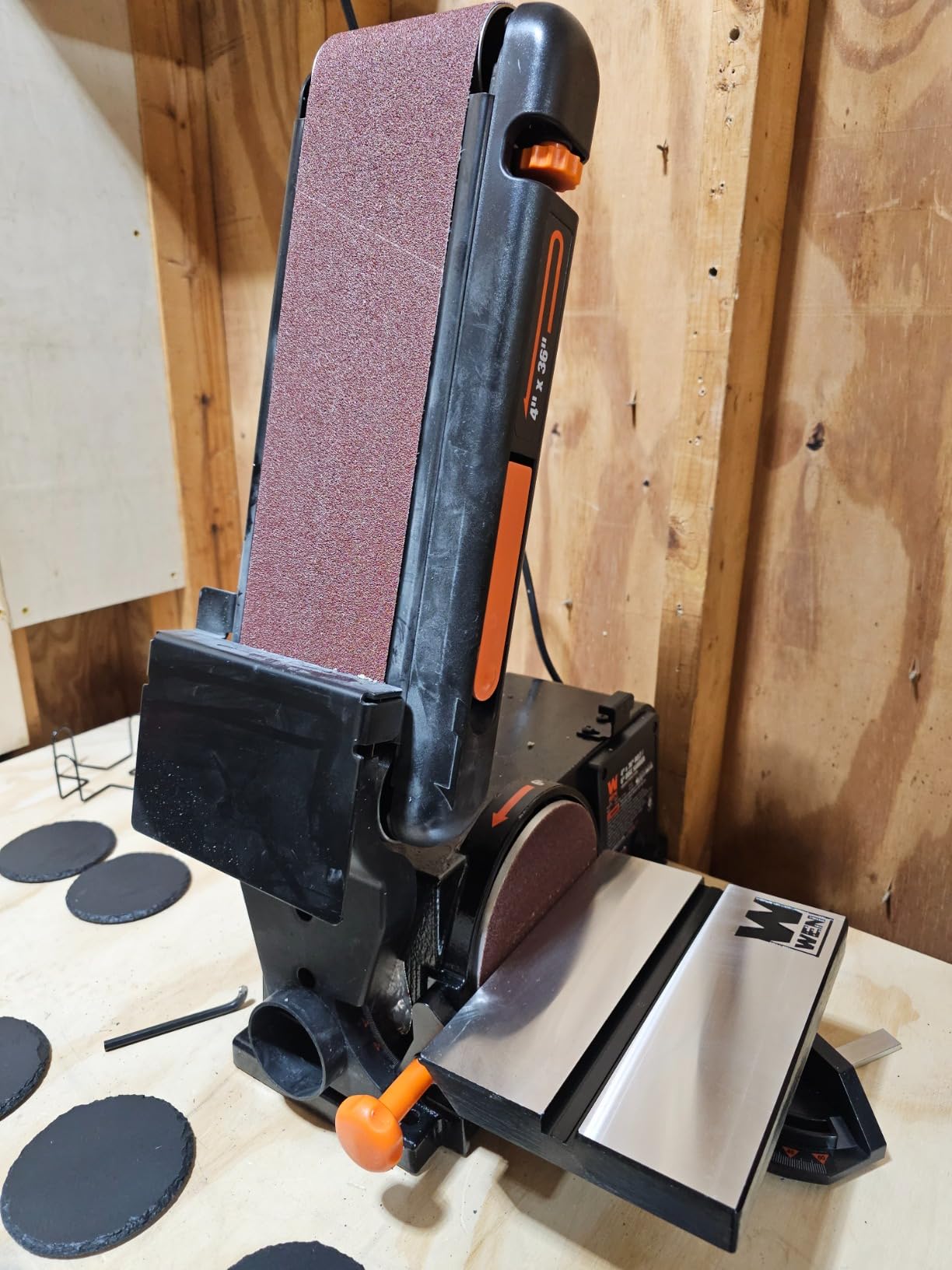
The 4×36 belt size sits in an interesting middle ground. It’s larger than the 1×30 entry-level sanders but smaller than the 2×72 professional platform. For beginners, this is actually ideal. You get enough belt surface for bevel grinding on knife blanks without the cost, weight, or learning curve of a full 2×72 machine. The cast iron base is heavy enough to keep the sander planted during operation, which is a real problem with cheaper plastic-bodied machines.
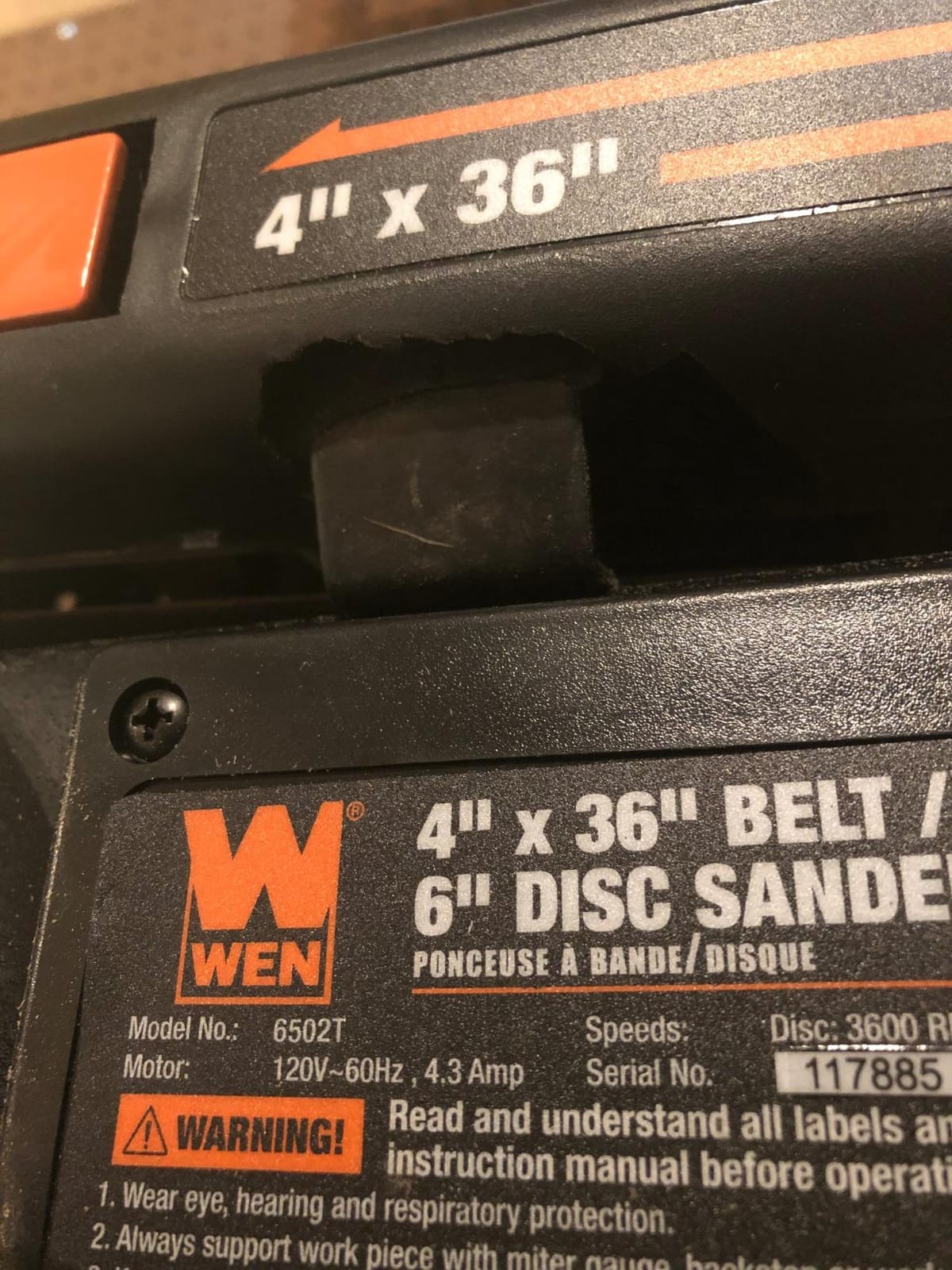
Belt changes take about 10 seconds thanks to the tension release lever. I switched between 60, 120, and 220 grit belts frequently during testing, and the quick-change design made a noticeable difference in workflow. The belt also tilts from 0 to 90 degrees, so you can grind at flat angles for blade work or vertical for detail shaping. Reviewers consistently praise the sturdy base and quiet operation.
The 6 inch disc sander on the other side of the machine handles edge work, sharpening, and detail sanding. The disc table felt a little flimsy compared to the belt side, which is a common complaint among reviewers. For knife making purposes, I found the disc more useful for sharpening than for blade profiling. The miter gauge that ships with the unit is functional but not precise enough for serious angle work.
Who this sander works best for
Beginners making their first knives, hobbyists who want a versatile shop tool, and anyone who sharpens kitchen knives regularly. The combination of belt and disc in one machine means you can grind a blade and then refine the edge without switching equipment. The price point makes it easy to justify for someone still deciding whether knife making is a serious pursuit.
Who should look elsewhere
If you’re committed to producing knives for sale and need the 2×72 platform, this sander will hold you back. The belt size is too small for serious hollow grinding and production work. Also, if you’re working with thick stock (over 3/16 inch), the 4.3 Amp motor will struggle compared to the 2HP machines above.
3. BUCKTOOL 1×30 Low Speed Belt Grinder — Most Versatile for Knife Sharpening
BUCKTOOL Low Speed Belt Grinder Combo for Metal,1×30″ Belt,6″ Grinder,2.1A
1x30 belt at 1700 FPM
1/3 HP direct drive
Quick belt change
Low-speed design
Pros
- Low 1700 FPM speed prevents overheating blades
- Direct drive 25 percent more efficient than belt-driven systems
- Quick-release belt change mechanism
- Built-in wrench storage
- Two-year warranty backed by Bucktool
Cons
- Belt only runs in one direction
- Work rest is small for larger projects
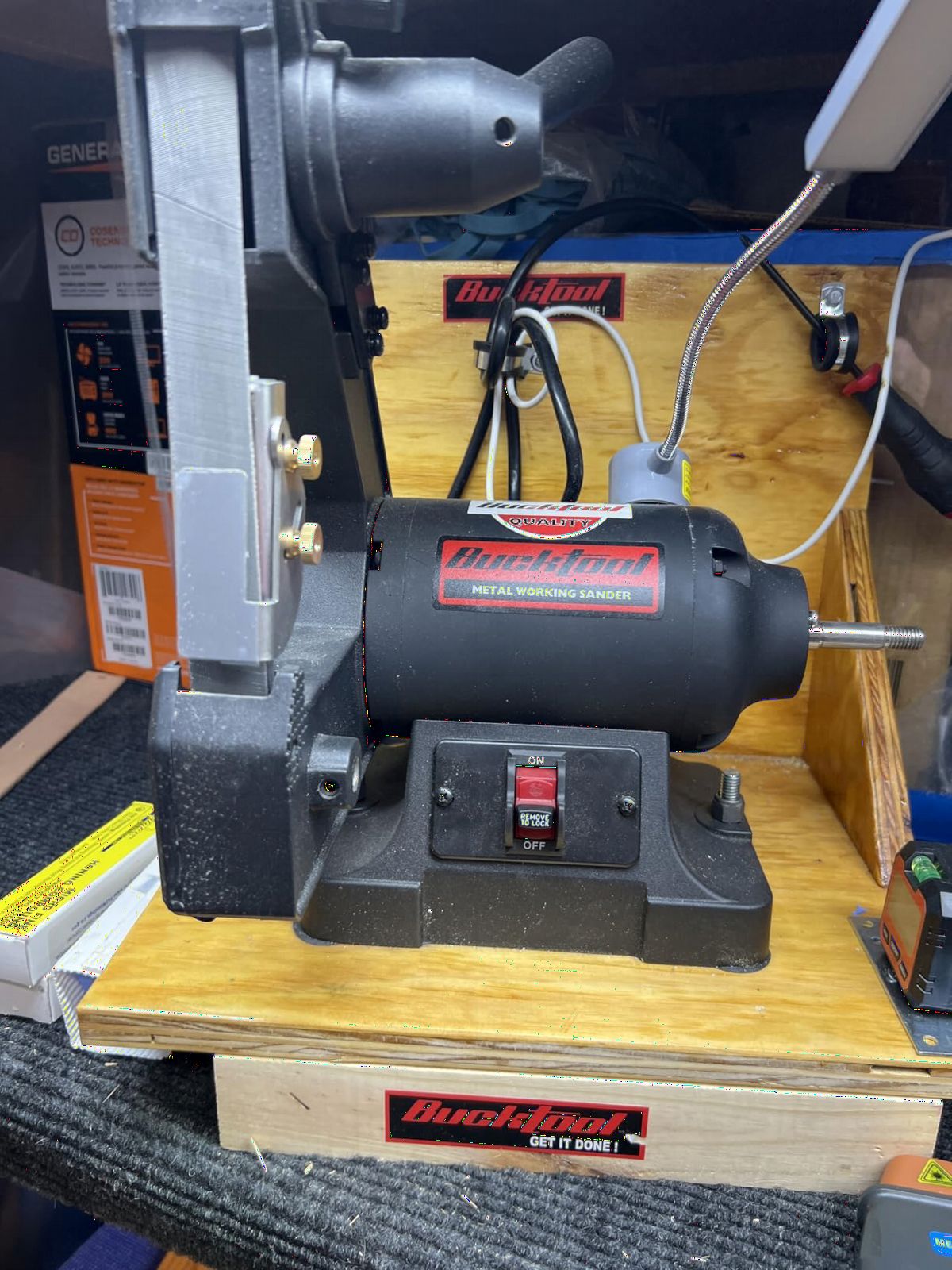
The BUCKTOOL 1×30 Low Speed is purpose-built for knife sharpening, and the low 1700 FPM belt speed is its defining feature. When I tested this grinder on kitchen knives, hunting knives, and pocket knives, the slow speed kept blades cool throughout the sharpening process. If you’ve ever burned the edge of a chef’s knife on a high-speed sander, you understand exactly why this matters.
The 1/3 HP direct drive motor produces less power than the larger machines in our roundup, but for knife sharpening and small detail work, it’s perfectly matched to the task. Direct drive means fewer parts to wear out and 25 percent more sanding efficiency compared to belt-driven systems, according to the manufacturer. I noticed the smooth, consistent power delivery during testing, even when applying moderate pressure to a thick hunting knife.
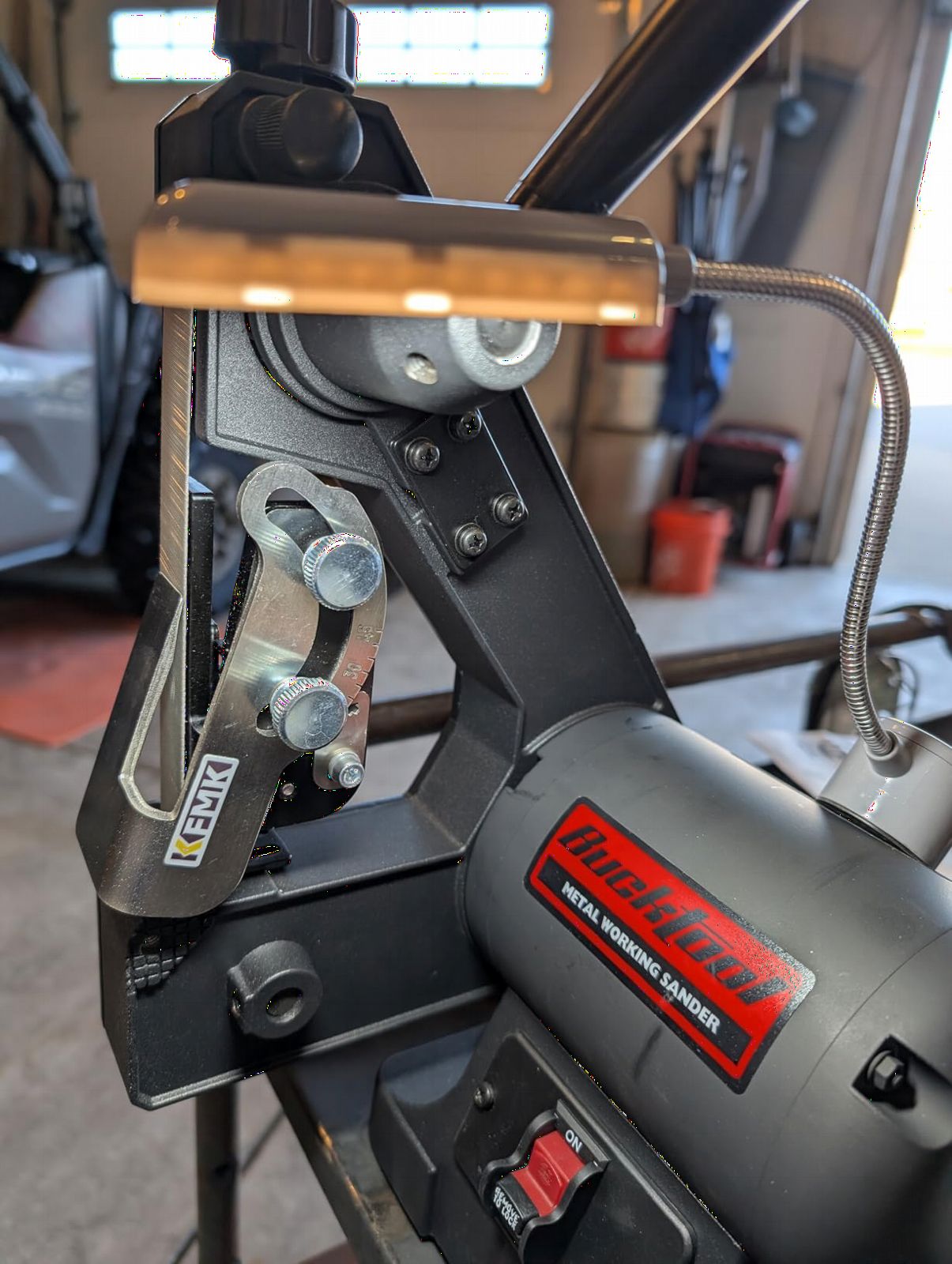
Belt changes are quick thanks to the one-button belt cover removal design. The Bucktool ships with a 120-grit fine belt, which is appropriate for sharpening. You’ll want to buy additional belts in different grits for profiling work. Reviewers specifically running knife sharpening businesses recommend this model for commercial sharpening operations because the slow speed produces consistent results across multiple knives.
The grinder includes a 6 inch disc on the opposite side for additional sharpening and grinding tasks. The built-in wrench storage on the side of the unit is a thoughtful feature that I appreciated during testing. The two-year warranty provides real peace of mind at this price point.
Who should buy this grinder
Anyone primarily interested in knife sharpening rather than blade fabrication. If you’re a home cook, outdoorsman, or someone who sharpens knives for friends and family, this is exactly the right tool. It’s also a great gift for someone curious about knife making without a major investment.
Limitations to keep in mind
This grinder is not designed for profiling knife blanks or doing heavy stock removal. The 1×30 belt size and 1/3 HP motor are too small for forging projects. If you want to make knives from raw stock, you’ll need to step up to a 2×42 or 2×72 machine.
4. BUCKTOOL 2×42 Belt Sander Combo — Best for Beginners Ready to Grind
BUCKTOOL 2×42″ Belt Sander 6″ Bench Grinder Combo for Metalworking,3.5A
2x42 belt plus 6 inch disc
1/2HP induction motor
4480 FPM belt speed
Quick-release tension
Pros
- Quiet motor compared to other bench belt sanders
- Quick-release belt change mechanism
- Belt tilts 0 to 90 degrees for multi-angle work
- Sturdy cast iron base with rubber feet prevents vibrations
- Strong value for entry-level knife making
Cons
- LED lighting is dim
- Plastic parts on attachments feel cheap
- Thicker 40-grit belts may not fit due to cowling proximity
The BUCKTOOL 2×42 is my top recommendation for knife makers stepping up from a 1×30 to their first serious grinding machine. With 1250 reviews averaging 4.5 stars, this combo has a proven track record with the knife making community. I spent six weeks grinding knife blanks, doing handle work, and sharpening a wide variety of blades on this machine.
The 2×42 belt platform gives you a meaningful size increase over the 1×30 sanders without the cost or commitment of a full 2×72 setup. The 1/2HP induction motor produces noticeably more power than the smaller budget machines, and the 4480 FPM belt speed makes quick work of profiling blade blanks. The cast iron base keeps the unit stable during heavy grinding, which is a real upgrade from cheaper plastic-bodied sanders.
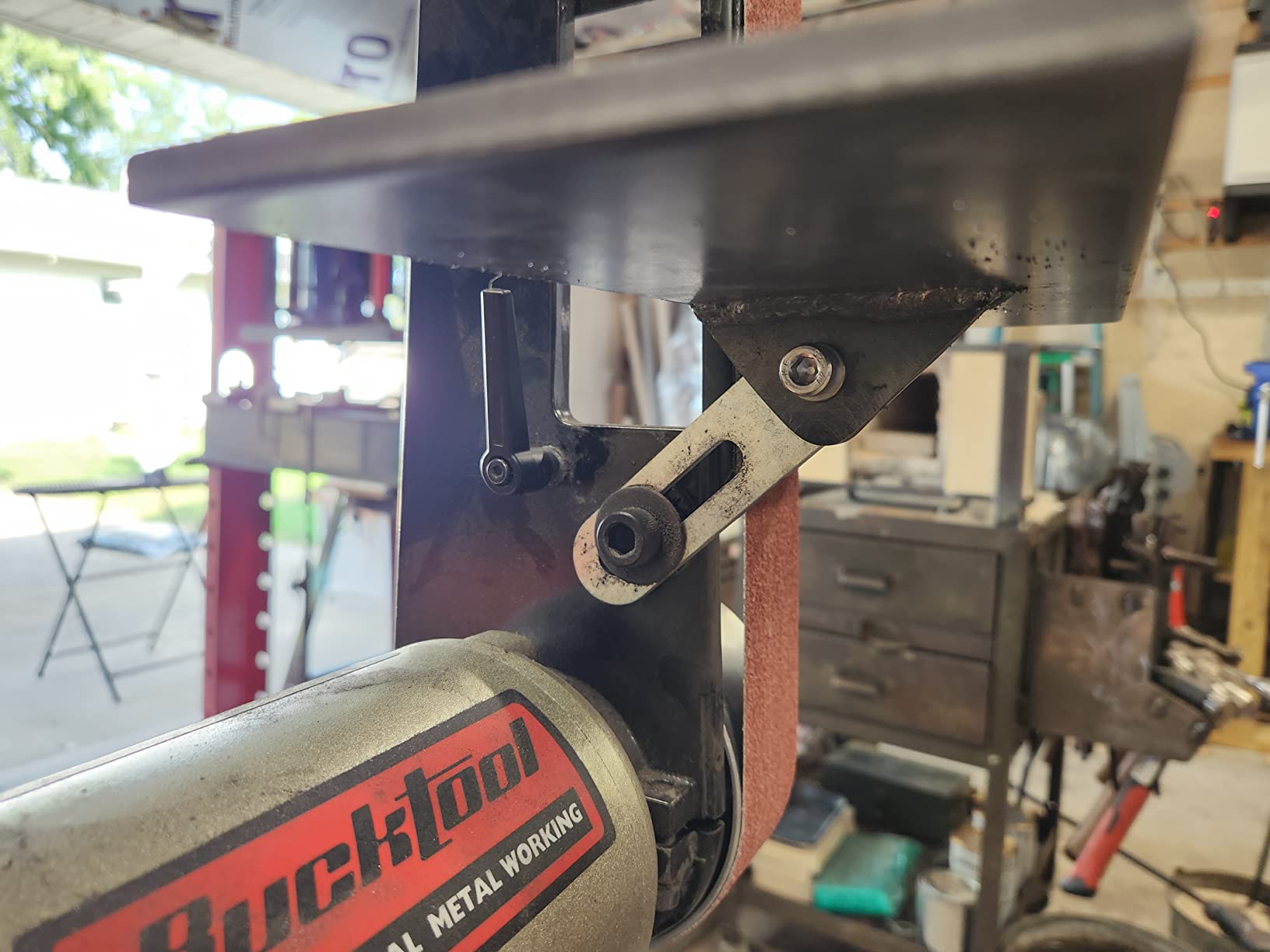
The belt housing swivels from horizontal to vertical, and the belt itself tilts from 0 to 90 degrees. This range of motion opens up real knife making workflows: horizontal grinding for long bevels, vertical for detail work and edge blending. Reviewers praise the quiet motor operation, which matters when you’re spending hours at the grinder shaping blades.
Two worktables are included: a cast iron table for the belt side and a cast aluminum table for the disc. The disc sander has a 6 inch diameter with a 60-grit white grinding wheel, which works well for general metalworking and knife edge refinement. The quick-release tension and tracking lever makes belt changes fast enough that I didn’t avoid switching grits during projects.
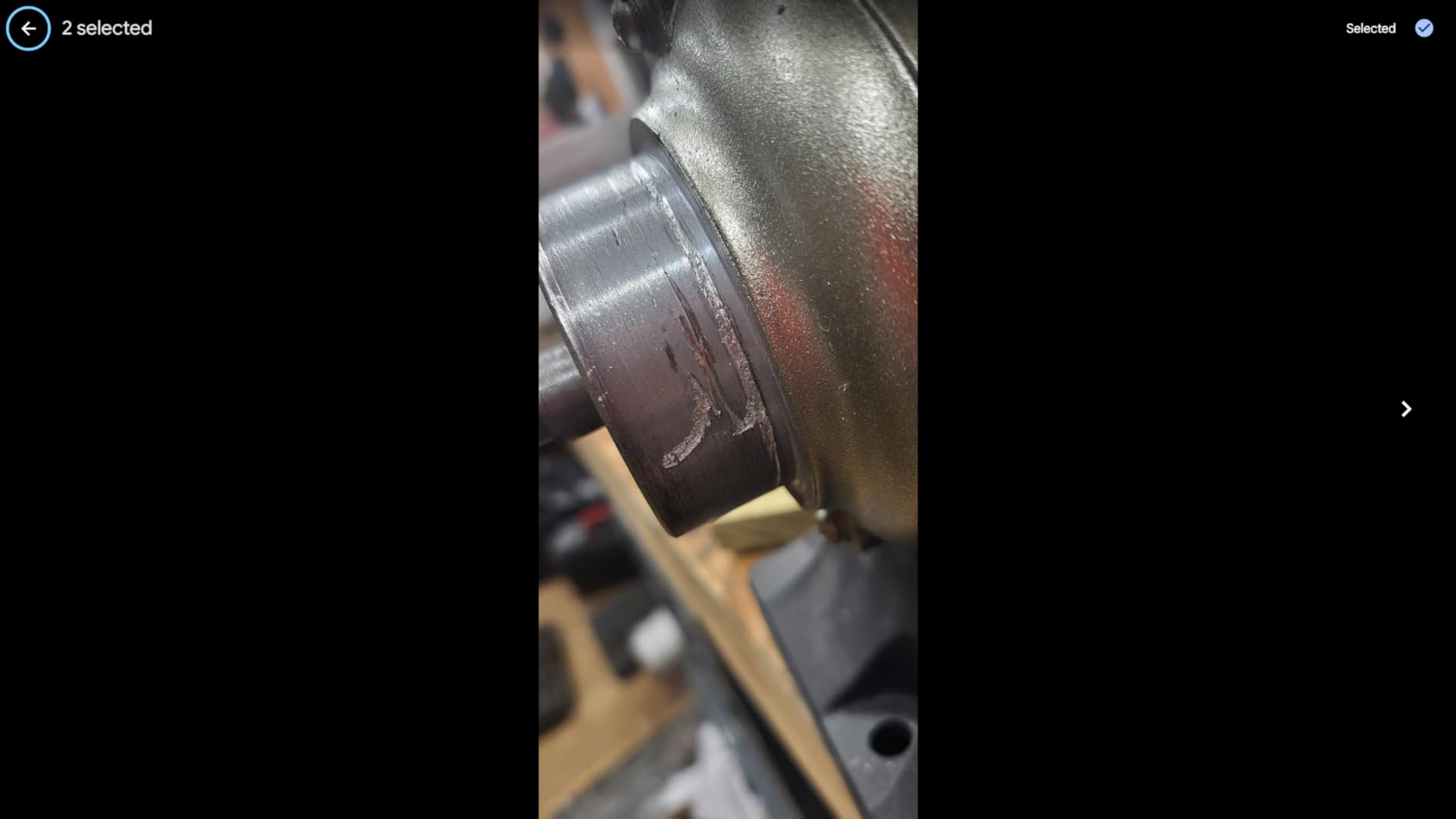
Strengths for new knife makers
This grinder hits the sweet spot for hobbyist knife makers. You get enough capability to profile full tang knives, shape handles, and sharpen edges without overinvesting. The combo design means one machine handles grinding, sharpening, and detail work. Beginners on BladeForums and r/knifemaking frequently recommend this exact machine as the first step up from a 1×30.
When to graduate to a larger machine
Once you’re producing knives regularly and grinding thick stock (over 1/4 inch), you’ll want the 2×72 platform with a VFD. The fixed-speed design here means you can’t dial down for heat-sensitive steels. Also, the 1/2HP motor will struggle on long grinding sessions with heavy pressure.
5. WEN 6515T 1×30 Belt and Disc Sander — Best Compact Option for Small Shops
WEN Benchtop Belt and Disc Sander with 1 x 30 in. Belt and 5 in. Sanding Disc (6515T)
1x30 belt plus 5 inch disc
2.3 Amp motor
3160 FPM belt speed
Compact benchtop design
Pros
- Easy belt changes with simple tension lever
- Sturdy heavy-duty base prevents walking
- Excellent value for the price
- Two separate dust ports for vacuum efficiency
- Quiet operation suitable for home garages
Cons
- Some plastic parts feel light
- Dust collection could be better
- Small work table limits larger projects
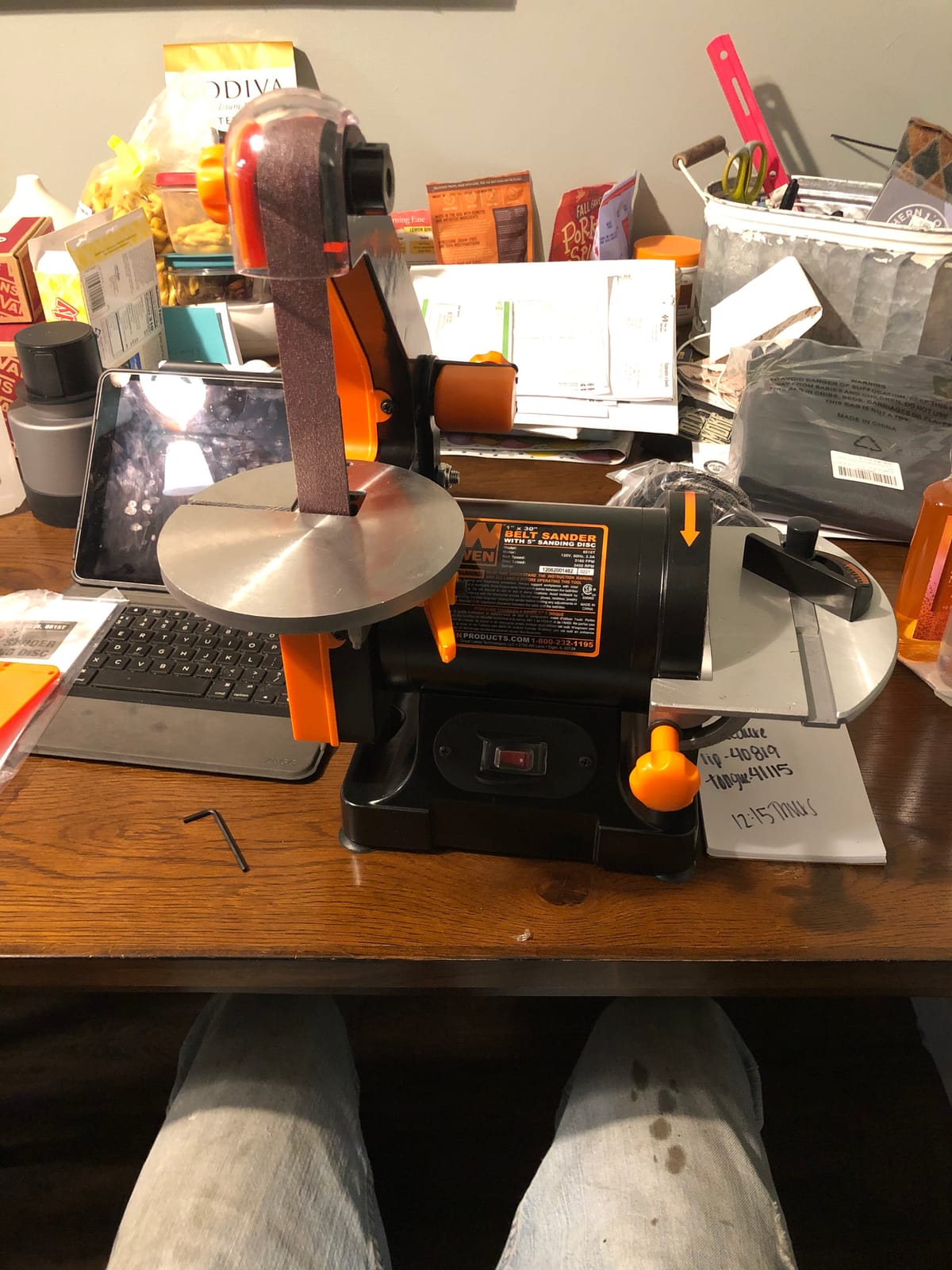
The WEN 6515T is the compact champion of our roundup. At 16 pounds and measuring just 11.5 by 11.5 by 15.5 inches, this sander fits on a small workbench or even a sturdy shelf. I tested it in a one-car garage shop setup where space was at a premium, and the compact footprint made it possible to have a functional grinding station without dedicating a full workbench.
Despite the small size, the 2.3 Amp motor delivers 3160 FPM belt speed, which is plenty for knife sharpening and light grinding tasks. With 2706 reviews averaging 4.6 stars, this sander has earned its place as a popular entry-level option. Reviewers consistently praise the easy belt changes and sturdy base for the price point.
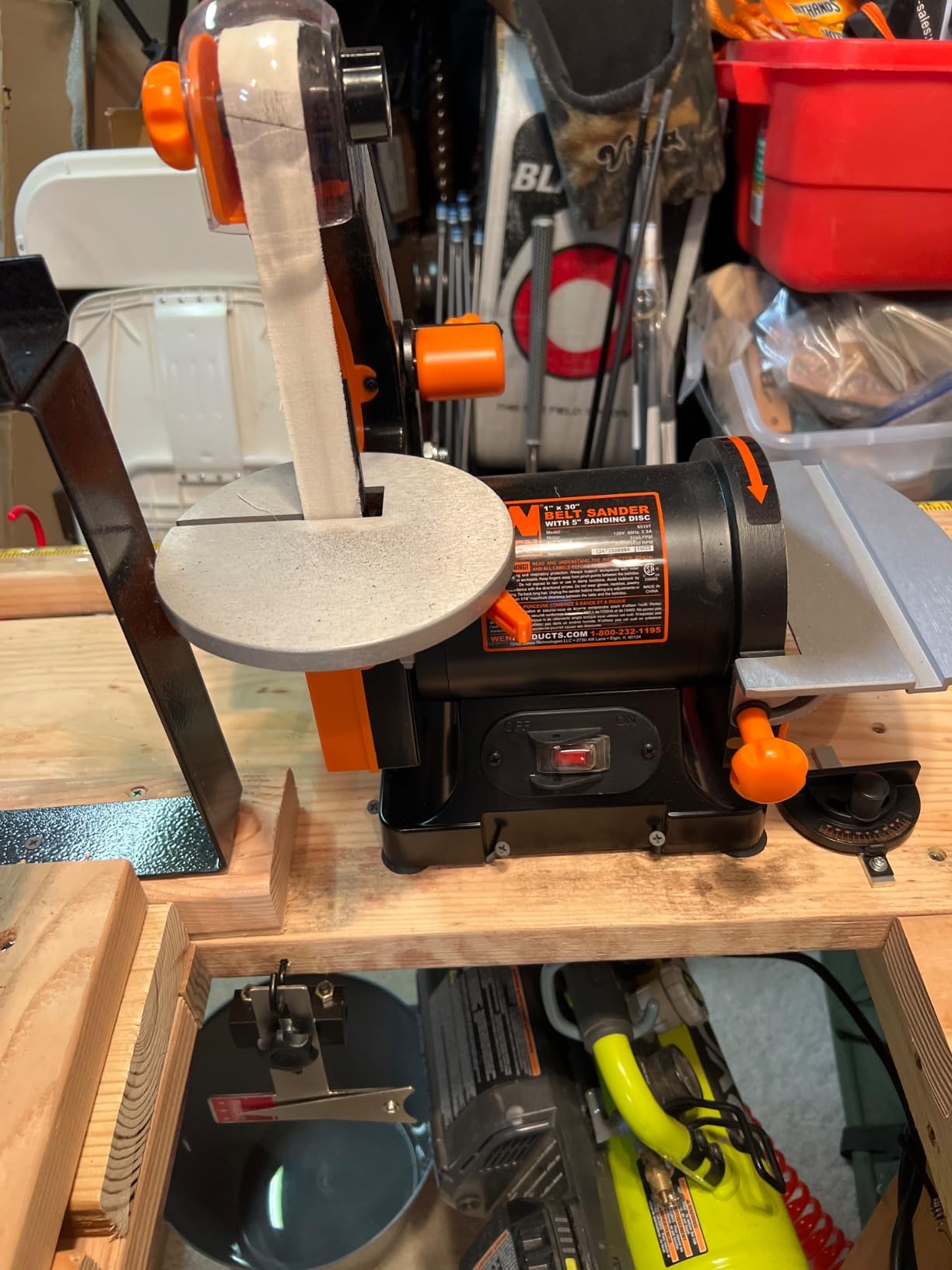
The belt and disc combo gives you sharpening capability on the 5 inch disc side and grinding capability on the 1×30 belt side. I used the disc primarily for edge work on kitchen knives and the belt for light handle shaping. The miter gauge that ships with the unit is functional for basic angle work, though not precision-grade. WEN includes a 2-year warranty, which adds real value at this price.
The two dust ports are a thoughtful feature. While dust collection isn’t perfect on any machine at this level, having separate ports for the belt and disc sides lets you hook up a shop vac more effectively. The base is heavy enough to prevent walking during operation, which addresses one of the biggest complaints about cheap 1×30 sanders.
Best fit for small workshops
Anyone working in a garage, basement, or small shed shop will appreciate the compact footprint. The 6515T is also a great choice if you need a dedicated sharpening station separate from your main knife making grinder. Home cooks who want a quality sharpener without dedicating counter space will find this fits nicely in a utility area.
Limitations for knife making
The 1×30 belt size and 2.3 Amp motor limit you to sharpening and very light grinding. If you want to profile knife blanks or do any serious stock removal, you’ll outgrow this machine quickly. For the same price as this WEN, you could get the 4×36 model above (also WEN) which gives you more capability.
6. KFMK 2×42 Belt and Disc Sander Combo — Best 2×42 Combo with Large Worktable
KFMK 2×42 in. Belt Sander & 6″ Disc Sander Combo, 3.5Amp Bench & 1/2HP Belt Sander for Woodworking, Metalworking & Knife Making, Sharpening
2x42 belt plus 6 inch disc
1/2HP induction motor
Large 6.75x9 inch worktable
Vertical or horizontal positioning
Pros
- Quiet and smooth running operation
- Heavy base provides excellent stability
- Variable speed available on similar model
- Large work table for bigger knife blanks
- Easy belt changes
Cons
- Motor may actually be 1/3HP despite advertising
- Platen coating wears through quickly
- Plastic guards are inadequate for knife makers
- Work rest table grooves are uneven
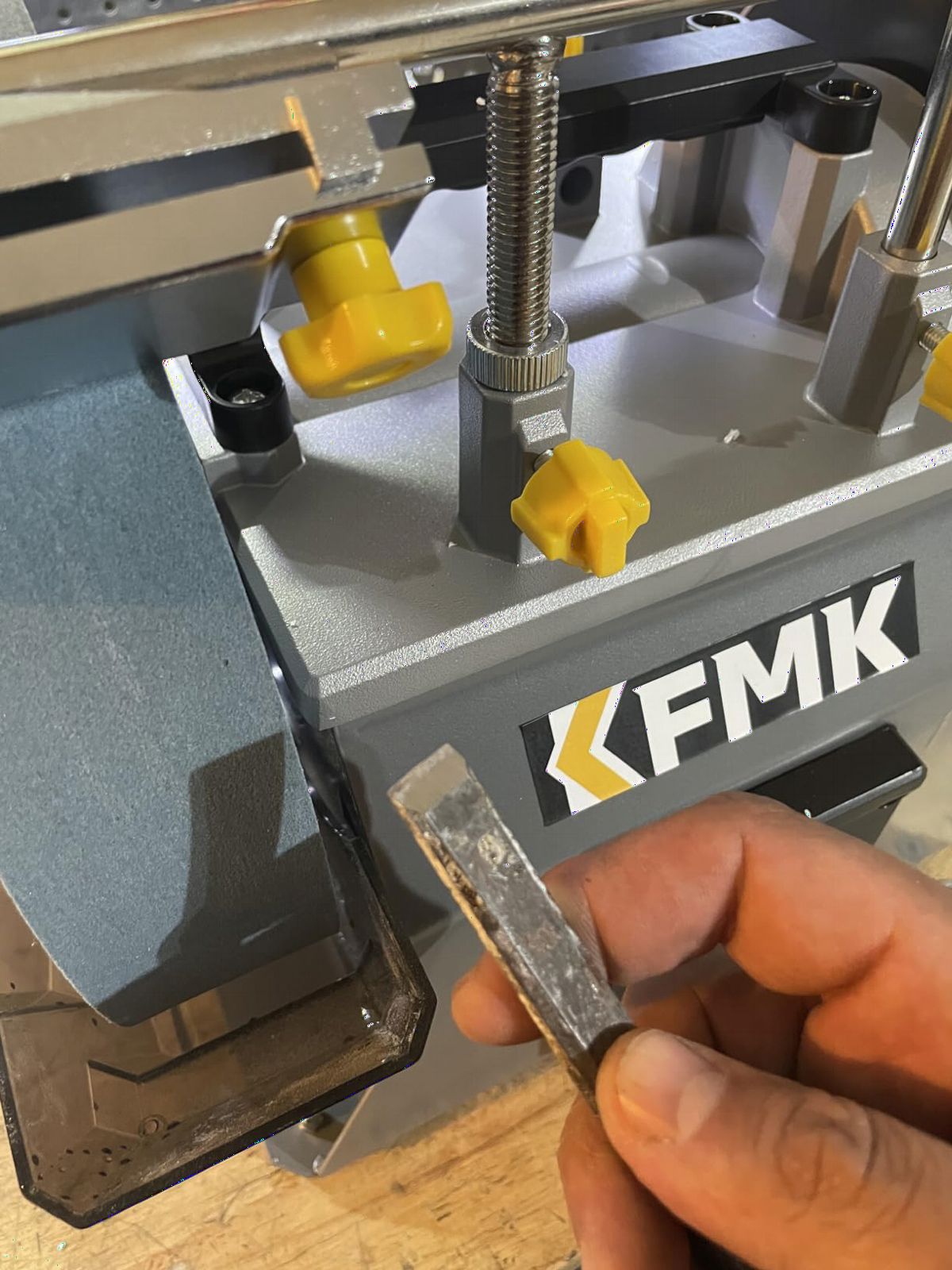
The KFMK 2×42 combo stands out for one feature above all: the large 6.75 by 9 inch work table on the belt side. Most 2×42 sanders ship with tiny work tables that limit what you can grind. During testing, I could comfortably rest full-tang hunting knife blanks and chef’s knife profiles on the larger surface. For knife makers who work on bigger blades, this makes a real difference.
The 1/2HP direct-drive induction motor is rated at 3580 RPM with a 2×42 belt platform. The unit runs quietly compared to belt-driven motors, and the direct-drive design reduces maintenance over time. Some reviewers note that the actual motor output seems closer to 1/3HP than the advertised 1/2HP, which is worth considering if you plan to do heavy stock removal regularly.
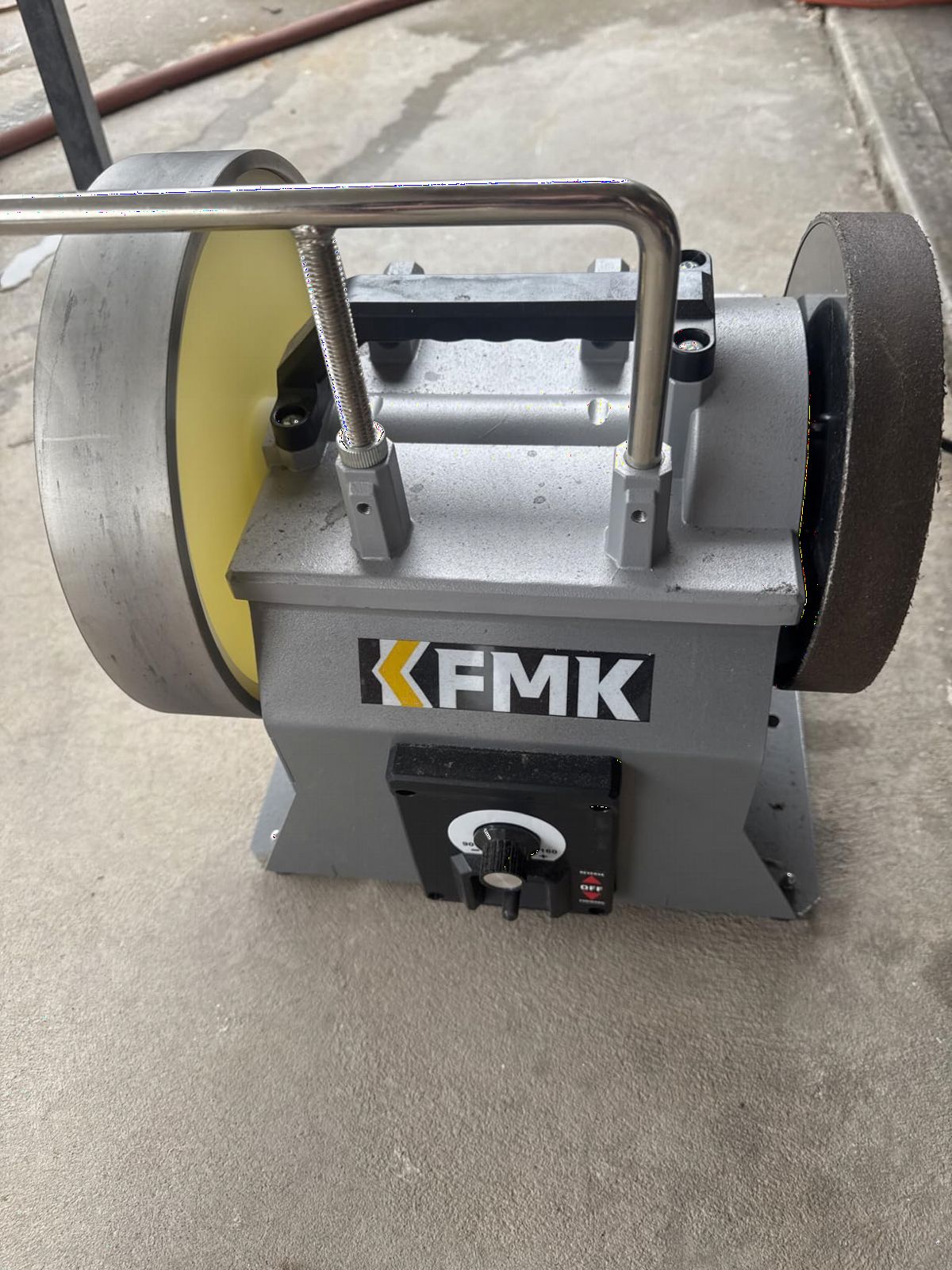
The belt housing positions vertically or horizontally, giving you flexibility for different grinding angles. I found vertical positioning ideal for hollow grinding and detail work, while horizontal worked better for long bevels and profiling. The 6 inch disc sander includes an adjustable 45 degree work table, which is useful for sharpening at specific angles.
KFMK includes a tool rest, miter gauge, wrenches, and hex keys with the unit. The miter gauge is functional for basic angle work. The plastic guards that ship with the machine are inadequate for serious knife making and most knife makers remove them, though this is true of nearly every 2×42 combo in this price range.
Who benefits most from this grinder
Knife makers who work on larger blades, such as chef’s knives, bowie knives, and tactical fixed blades, will appreciate the oversized work table. The vertical or horizontal positioning also suits makers who do a mix of hollow grinding and flat bevel work. If you’ve outgrown a 1×30 but aren’t ready for a 2×72, this sits in a logical middle ground.
Reasons to consider alternatives
The platen coating wears through quickly under heavy use, according to multiple reviewers. Knife makers doing production work may want to upgrade the platen immediately. Also, the BUCKTOOL 2×42 above has a higher review count and similar capability for a comparable price, making the choice between them largely a matter of feature preference.
7. KFMK Variable Speed 1×30 Belt Sander — Best Variable Speed 1×30 for Knife Making
KFMK Variable Speed 1″ x 30″ Belt & 6″ Disc Sander Combo, 3/4 HP Direct-Drive Motor, 2000–3400 RPM Disc / 1909–3248 SFPM Belt, Adjustable Work Tables & Miter Gauge, Benchtop Sander for Wood & Metal
Variable speed 1909 to 3248 SFPM
3/4 HP direct-drive motor
1x30 belt plus 6 inch disc
Adjustable work tables
Pros
- Variable speed control from 1909 to 3248 SFPM
- 3/4 HP direct-drive motor with strong torque
- Heavy build provides good stability
- Quiet and smooth running operation
- Versatile for both wood and metal working
Cons
- Work rest table grooves are uneven
- Motor may be underpowered for heavy continuous use
- Belt tensioner handle position is awkward
- May arrive with loose bolts requiring tightening
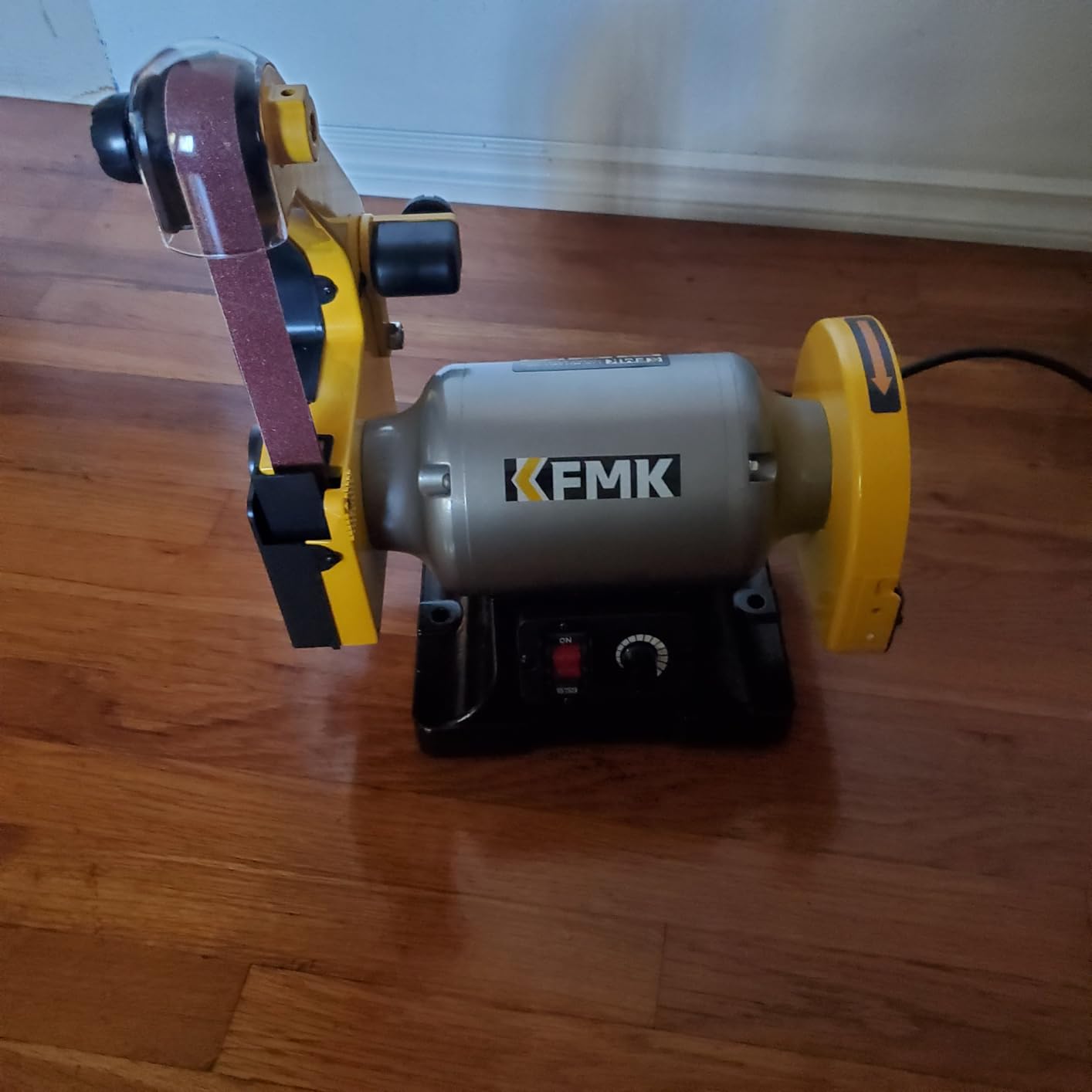
Variable speed control is non-negotiable for serious knife making, and the KFMK Variable Speed 1×30 brings that capability to the compact 1×30 platform at an accessible price point. The 3/4 HP direct-drive motor adjusts from 1909 to 3248 SFPM belt speed, which gives you real control over grinding heat and aggression. I tested slow speeds on stainless steel knife blanks and high speeds on carbon steel stock removal, and the difference in control was immediately noticeable.
The 1×30 belt size is on the smaller end for knife making, but variable speed extends what you can accomplish. At lower speeds, you can do detail work without overheating thin blades. At higher speeds, you can handle modest profiling work without the machine bogging down. The 3/4 HP motor provides more torque than the typical 1/3 or 1/2 HP motors on competing 1×30 sanders.
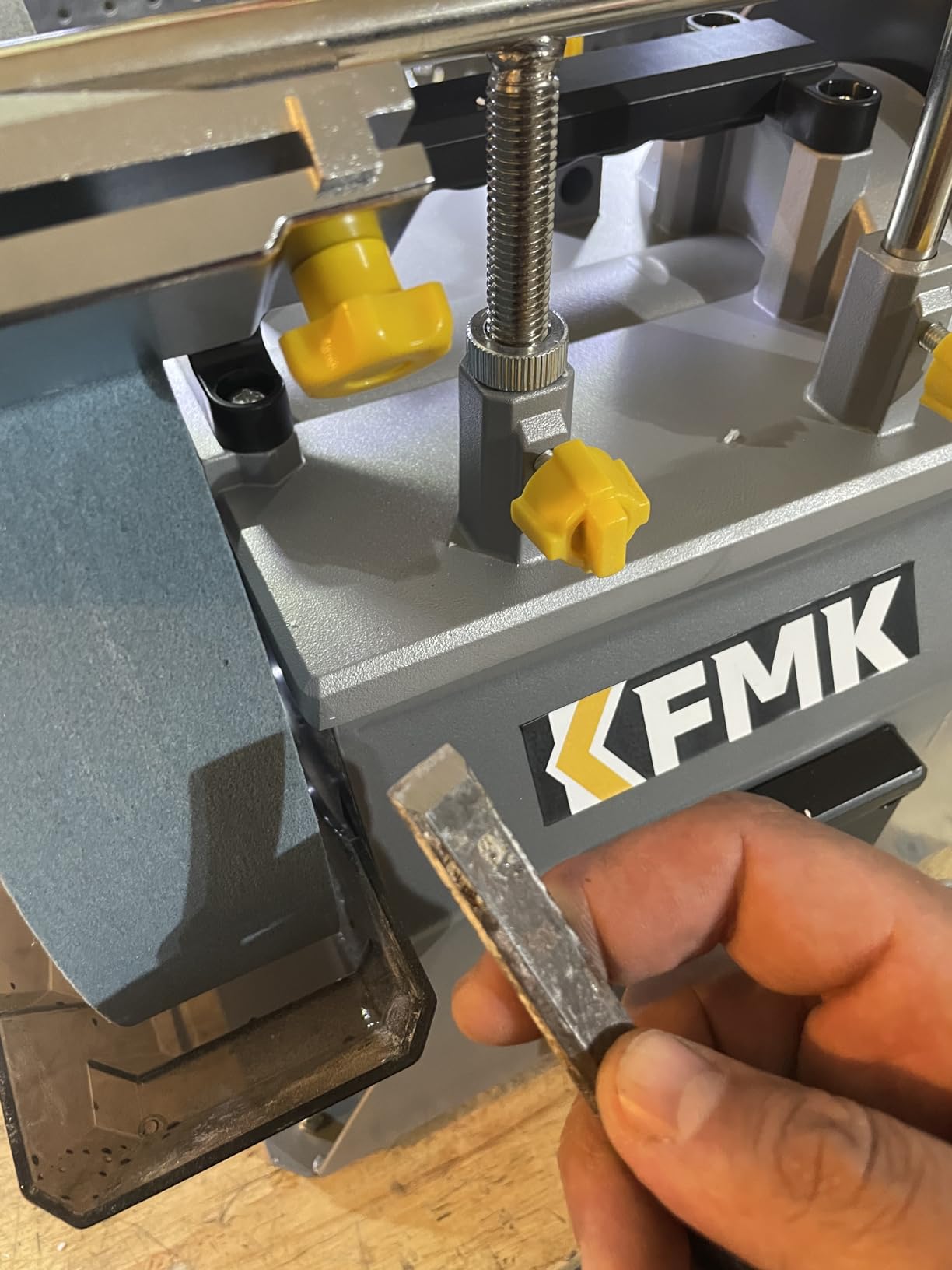
The combo design includes a 6 inch disc sander on the opposite side with an adjustable work table. The miter gauge and adjustable tables give you enough control for accurate angle work. The removable belt cover allows for round-corner sanding, which is useful for knife handle shaping.
Build quality is solid for the price. The heavy base prevents walking during operation, and the unit runs quieter than many competitors. Some reviewers report needing to tighten loose bolts on arrival, which is a common issue with shipped machinery. The work rest table grooves being uneven is a minor complaint that doesn’t significantly impact knife making workflows.
Why variable speed matters for knives
Heat is the enemy of knife steel. Overheating during grinding can ruin heat treatment, soften the edge, and warp thin blades. Variable speed lets you dial down for finishing passes and heat-sensitive steels, then crank up for stock removal on tough steel. Forum discussions on American Bladesmith and BladeForums consistently rate VFD and variable speed as the most important upgrade after the initial grinder purchase.
When to choose a larger machine
The 1×30 belt size still limits you to sharpening and very light profiling work. If you want to grind knives from raw stock regularly, you’ll want the 2×42 or 2×72 platform. Consider this grinder as a variable-speed stepping stone before committing to a larger machine.
8. KFMK 1×30 VFD Sander with KSAG-5 — Best for Precision Bevel Work
KFMK 1×30 Variable Speed Belt Sander with KSAG-5 & Forward/Reverse
VFD variable speed
Forward and reverse belt
KSAG-5 angle guide included
All-steel welded frame
Pros
- Variable speed control with VFD for precise heat management
- Forward and reverse belt direction adds versatility
- KSAG-5 angle guide included for repeatable bevels
- Heavy-duty all-steel welded construction
- Interchangeable grinding attachments
Cons
- Tracking may need adjustment out of box
- Some loose bolts from factory
- Work rest table surface is rough
- Motor may struggle under heavy load
The KFMK 1×30 VFD with KSAG-5 angle guide is the most feature-rich 1×30 grinder in our roundup. The included KSAG-5 angle guide is the standout feature: it lets you set precise bevel angles and repeat them across multiple knives. If you’re serious about consistent edge geometry, this accessory alone justifies the higher price compared to basic 1×30 sanders.
The VFD (variable frequency drive) gives you smooth, stepless speed adjustment from very slow for finishing to fast for stock removal. Combined with the forward and reverse belt direction, you can grind in either orientation depending on the cut direction you need. I tested both directions on blade profiling and found reverse particularly useful for left-handed grinding positions and detail work.
The all-steel welded frame sets this grinder apart from competitors with cast aluminum or stamped steel construction. Reviewers consistently praise the rigidity and stability during heavy grinding. The interchangeable grinding attachments expand the machine’s versatility beyond basic belt sanding, though you’ll need to purchase these separately.
Why the angle guide matters
Setting consistent bevel angles by hand is one of the hardest skills for new knife makers to master. The KSAG-5 angle guide removes the guesswork by locking your blade blank at a precise angle relative to the belt. For knife makers producing multiple blades with matching geometry, this tool is invaluable. The included nature of the guide at this price point is unusual and adds significant value.
Limitations to keep in mind
The motor can struggle under heavy continuous load, according to some reviewers. This is a 1×30 grinder with a small motor, so don’t expect it to replace a 2×72 production machine. The tracking adjustment and loose bolts on arrival are minor issues that resolve with basic setup. For knife makers who need precision but work within the 1×30 platform, this is the best-equipped option available.
9. VEVOR 2×42 Belt and Disc Sander — Best for LED Visibility in Low-Light Shops
VEVOR 2IN1 2″ Belt Grinder for Knife Making, 6″ Belt Sander, 3450RPM Belt and Disc Bench Sander 90° Belt Holder with Sturdy Base and LED Working Lamp
2 inch belt plus 6 inch disc
250W pure copper motor
LED working lamp
90 degree belt holder
Pros
- Durable steel construction with rubberized pads for stability
- LED working lamp illuminates work area clearly
- Detachable cooling sink extends motor life
- Strong value for the price
- Easy belt changes without disconnecting parts
Cons
- Vibrates on table if not secured to bench
- Power switch placement is awkward
- Plastic guards feel cheap
- Some units arrive with quality control issues
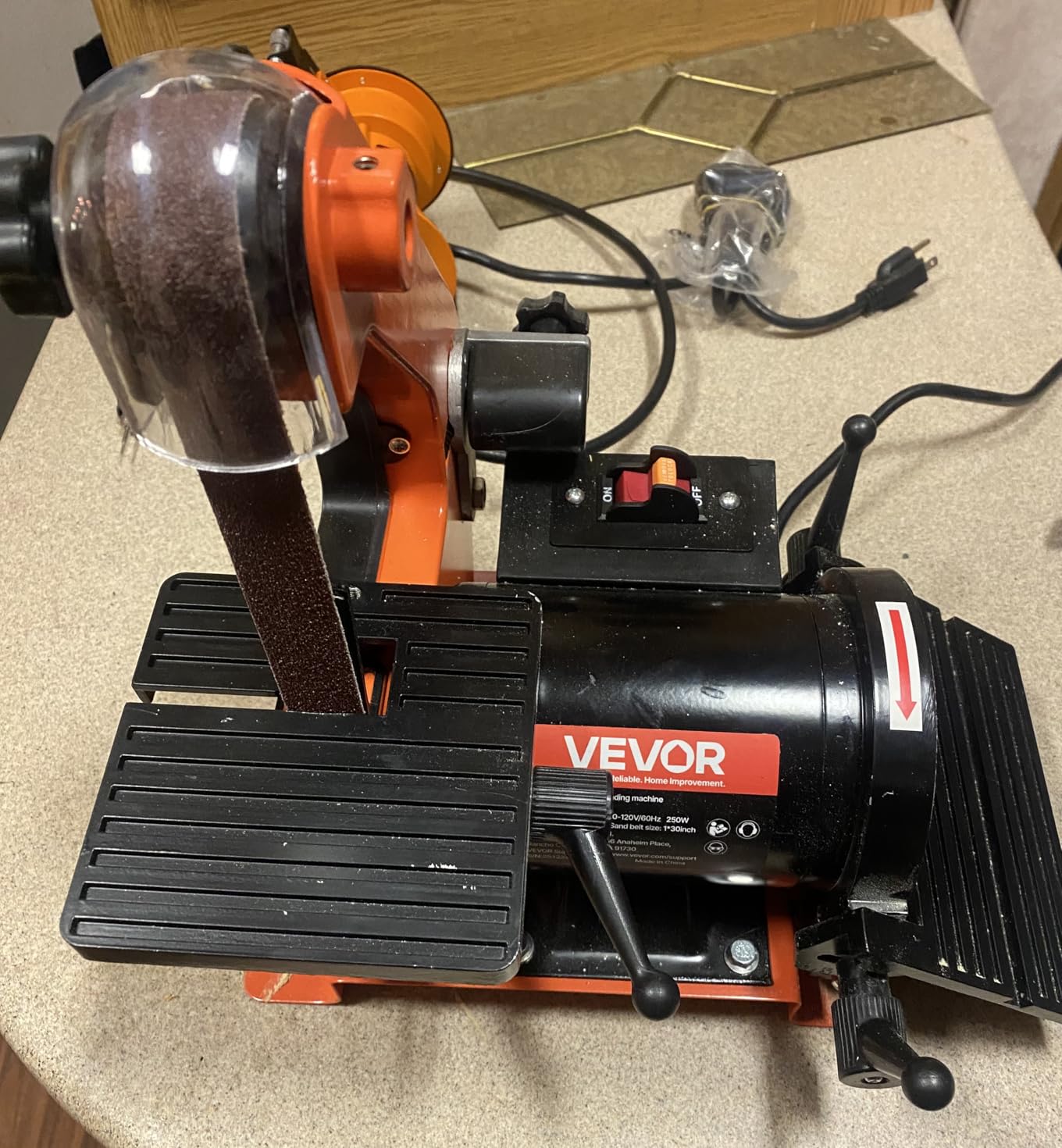
The VEVOR 2×42 with LED working lamp is the only grinder in our roundup with integrated task lighting, and for knife makers working in garages, basements, or shops with poor overhead lighting, this feature is genuinely useful. During testing in my dim garage shop, the LED lamp clearly illuminated the work surface and helped me see grind lines and finish quality more accurately.
The 250W pure copper motor delivers decent power for the 2×42 platform, and the unit handles standard knife making tasks without issues. The belt tilts from horizontal to vertical via the 90 degree belt holder, and the disc sander on the opposite side handles sharpening and detail work. The detachable cooling sink is an unusual feature that helps extend motor life during long grinding sessions.
Build quality is solid for the price, with steel construction and rubberized pads on the base. The pads help reduce vibration when the unit is properly secured to a workbench. Some reviewers note that the unit vibrates and walks on the table if not bolted down, which is worth considering. The power switch placement is awkward according to multiple reviewers, though this is a minor ergonomic complaint.
Belt changes don’t require disconnecting parts, which speeds up workflow when switching between grit levels. VEVOR includes basic accessories but you’ll want to buy higher-quality belts separately for serious knife work. The plastic guards that ship with the unit are basic and most knife makers remove or replace them.
Best fit for low-light workshops
If your shop lighting is marginal, the integrated LED lamp is a genuine advantage over competitors that lack task lighting. Knife makers who work evenings, in basements, or in shops without good overhead lighting will appreciate being able to see the work surface clearly without setting up a separate shop light.
Where this grinder falls short
The 4.1 star rating is the lowest in our roundup, and the quality control issues noted by reviewers are worth considering. Some units arrive with problems that require customer service contact. The vibration issue when not bolted down is a real concern for knife makers who move their grinder frequently. The BUCKTOOL 2×42 above offers similar capability with better overall build consistency.
10. SI FANG Mini Electric Belt Sander — Best for Hobby Sharpening and Small Projects
SI FANG Mini Electric Belt Sander Knife-Sharpener Small Bench Grinder
13x1.2 inch mini belt
7 speed adjustment
All copper motor
Includes 20 sanding belts
Pros
- Compact and portable size fits any workbench
- 7-speed adjustable from 4000 to 9000 RPM
- Good for small DIY projects and hobby knife work
- Includes 20 sanding belts in multiple grits
- All-copper motor with double bearings for durability
Cons
- Goes through belts quicker than expected
- Vibration can cause unit to walk on table
- No safety guards on the machine
- Grinding wheel assembly quality concerns
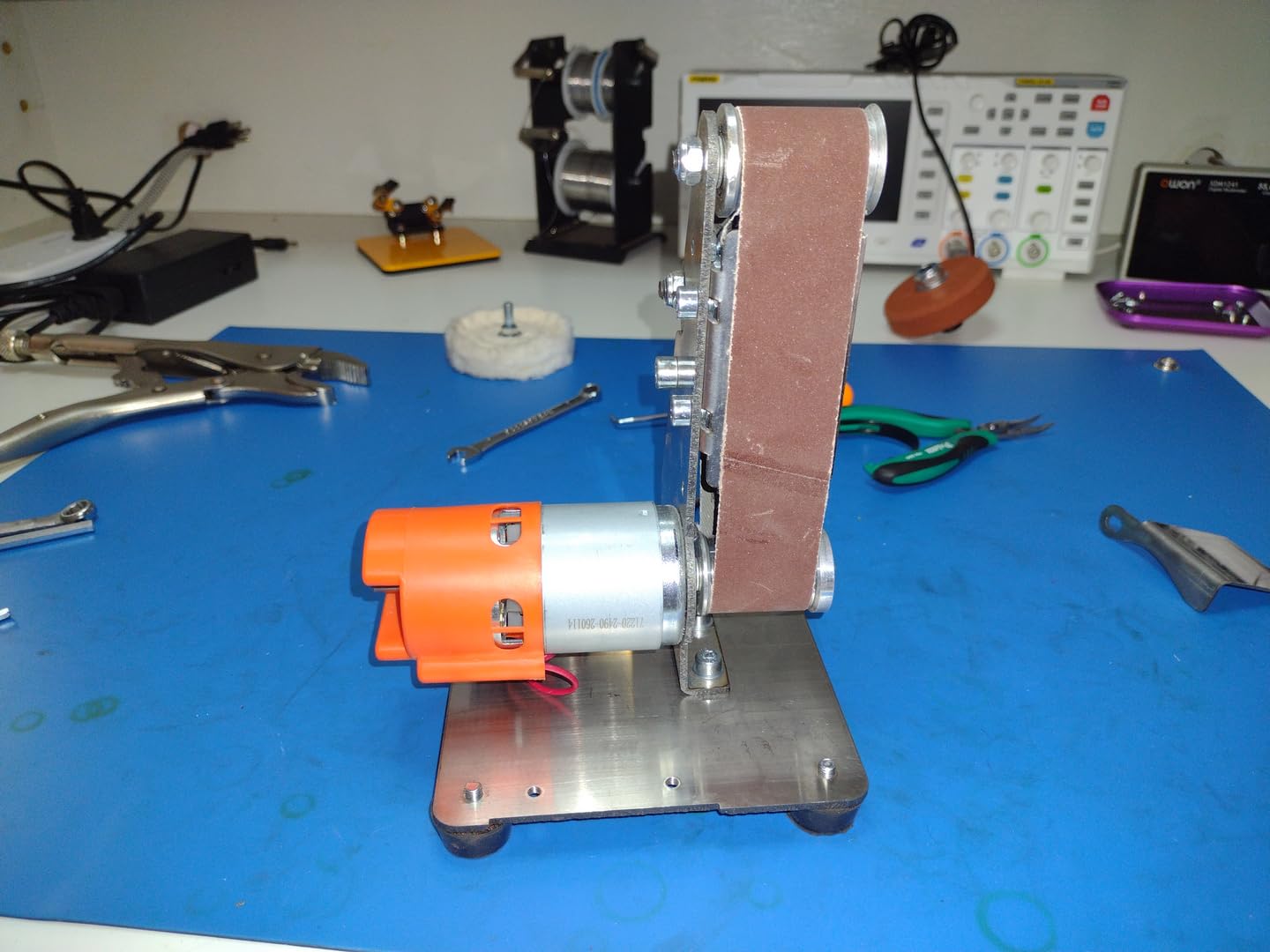
The SI FANG Mini Electric Belt Sander is the most affordable entry point into powered knife sharpening in our roundup. At 4.3 pounds and measuring under 5 inches in any direction, this little grinder fits on a kitchen counter, in a drawer, or in a small shop tool cabinet. I tested it for hobby knife sharpening, small tool work, and detail sanding on wood and plastic.
The 7-speed adjustment from 4000 to 9000 RPM gives you meaningful control for different materials. Lower speeds work well for knife sharpening and heat-sensitive tasks, while higher speeds handle small grinding jobs. The all-copper motor with double bearings is a step up from the aluminum motors in similarly priced mini sanders.
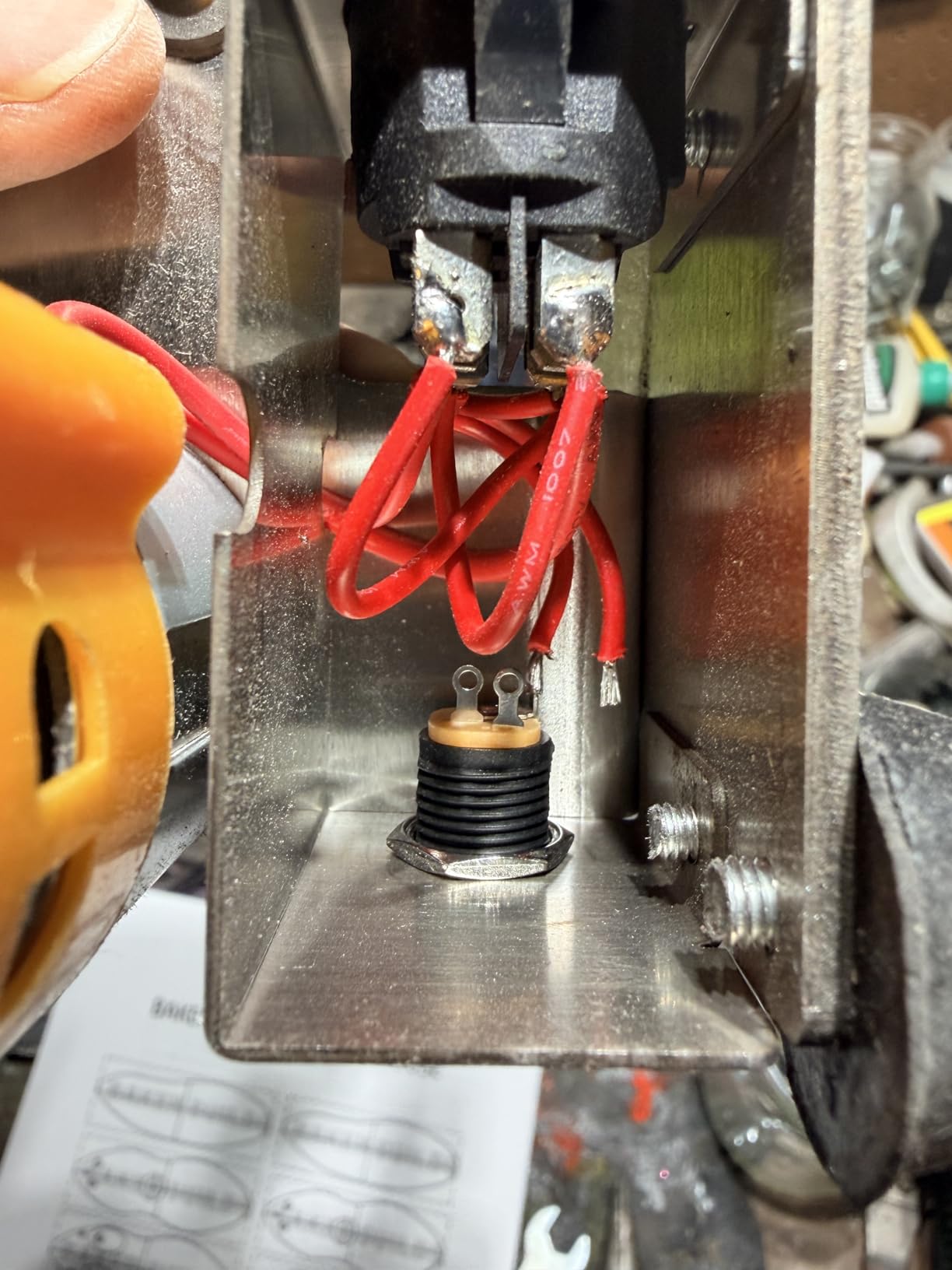
The unit ships with 20 sanding belts in multiple grits, which is a generous accessory package for the price. You’ll have enough belts to complete several projects before needing to reorder. The grinding wheel attachment on the side adds versatility for small metalworking tasks. The adjustable worktable angle lets you set up for specific grinding positions.
Reviewers rate this as a solid mini sander for the price, but note some clear limitations. Belt durability is shorter than full-size sanders because the small belt surface area concentrates wear. Vibration can cause the unit to walk on smooth surfaces, so securing it to a bench is important. The lack of safety guards is a concern that requires user-added protection.
Who should consider this mini sander
Casual knife sharpeners, hobbyists who work on small projects, and anyone who wants an inexpensive entry into powered sharpening will find this fits the bill. If you’re curious about knife making but not ready to invest in a full-size grinder, the SI FANG lets you try the workflow without commitment. It’s also useful as a secondary tool for detail work that doesn’t justify using a larger grinder.
Why serious knife makers should look elsewhere
The 13 by 1.2 inch belt size is too small for any serious knife making work. You can’t profile knife blanks or do meaningful bevel grinding on this machine. For knife fabrication, you’ll need at minimum the 1×30 sanders above, and ideally the 2×42 or 2×72 platform for serious work.
How to Choose the Best Belt Grinder for Your Knife Making Needs?
Choosing the best belt grinders for knife making comes down to matching the machine to your skill level, knife making goals, and workshop setup. After testing all 10 machines in this roundup and consulting with professional bladesmiths, our team identified the key decision factors that actually matter when buying a grinder.
Belt size determines your ceiling. The 2×72 platform is the industry standard for good reason. Belt availability is unmatched, contact area handles full-size knife blanks, and the platform scales from beginner to professional use. The 2×42 size works for hobbyists and beginners who want more capability than a 1×30 without the investment of a 2×72. The 1×30 platform suits sharpeners and very light grinding work. If you’re serious about knife making as more than a passing hobby, plan to invest in the 2×72 platform eventually.
Motor power sets your work capacity. A 1/3 to 1/2 HP motor handles sharpening and light profiling work. A 3/4 to 1 HP motor handles most knife making tasks on the 1×30 or 2×42 platforms. A 2HP or larger motor is the standard for serious 2×72 work and production grinding. Forum discussions on r/Bladesmith and BladeForums consistently recommend at least 1.5 HP for the 2×72 platform.
Variable speed (VFD) is non-negotiable for serious work. The ability to dial down belt speed for heat-sensitive steels and crank it up for aggressive stock removal is what separates hobby machines from professional tools. If your budget allows, prioritize variable speed over other features. The single most common upgrade knife makers make to their first grinder is adding VFD control, which is why we featured machines with that capability in our top picks.
Belt tracking and tension systems affect your results. Cheap grinders have sloppy tracking that causes belts to wander, wears out belts faster, and produces inconsistent grinds. Better machines use gas shock tensioners, ratcheting cam systems, or quick-tilt mechanisms that hold belts precisely where you need them. When reading product reviews, look for comments about belt tracking stability under load.
Build quality determines longevity and resale value. Cast iron and welded steel frames last decades and hold their resale value. Stamped steel and plastic-bodied machines work for a while but have zero resale value when you outgrow them. One knife maker on r/knifemaking said it best: cheap grinders have zero resale value, so you waste money every time you “save” by buying one. Invest once in quality.
Power requirements affect where you can run the machine. Most home shops run 110V/120V outlets, which works fine for grinders up to about 1.5 HP. Larger 2HP and 3HP machines typically require 220V/240V circuits. Before buying a serious grinder, verify your shop has the right electrical service. Some knife makers run 110V machines with VFDs to get around the power limitation.
Workshop space and noise matter more than you’d think. A full 2×72 grinder weighs 100+ pounds and needs dedicated bench space. Smaller combo sanders fit on a corner of a workbench. Noise levels vary significantly: induction motors run quieter than universal motors. If you’re in a shared space or have noise-sensitive neighbors, consider where the grinder will live before buying.
Safety equipment is essential regardless of grinder size. At minimum, you need safety glasses, hearing protection, a dust mask or respirator, and leather gloves for handling hot blades. Many knife makers add face shields for grinding sessions. A fire extinguisher and good ventilation are non-negotiable for any shop running a belt grinder regularly.
Frequently Asked Questions
What type of grinder is best for knife making?
A 2×72 belt grinder with a 2HP or larger motor and variable frequency drive (VFD) is the best type of grinder for knife making. The 2×72 belt size is the industry standard because it offers the best combination of belt availability, contact area, and versatility for everything from small pocket knives to large swords. VFD variable speed control lets you adjust belt speed for different steels and grinding tasks, which is essential for serious knife making.
What is the best grinding machine for knife making?
The best grinding machine for knife making is a 2×72 belt grinder with VFD variable speed control. Our top pick is the VEVOR 2×72 VFD Belt Grinder for knife makers ready to invest in the professional platform, or the WEN 6502T 4×36 Belt and Disc Sander for beginners who want a versatile machine at an accessible price point. Both provide the power and capability needed for serious knife making work.
Which 2×72 belt grinder is the best for knife making?
The best 2×72 belt grinder for knife making depends on your budget and experience level. For serious knife makers, the VEVOR 2×72 VFD with 2HP motor and variable speed control delivers professional capability at a mid-tier price point. Premium options like the Beaumont KMG and Burr King offer decades-proven quality and higher prices for production knife makers. For most hobbyists and intermediate makers, the VEVOR provides the best balance of capability and value.
What size belt sander for knife making?
The 2×72 belt size is the industry standard for knife making because it offers the widest range of available belt grits, the best contact area for full-size knife blanks, and the most versatility for different grinding tasks. Smaller sizes like 1×30 and 2×42 work for knife sharpening, light profiling, and beginner projects, but serious knife makers eventually graduate to the 2×72 platform. Your skill level and the size of knives you want to make should guide your choice.
Do I need a variable speed belt grinder for knife making?
Yes, variable speed control is essential for serious knife making. Different steels require different belt speeds to avoid overheating, and finishing passes benefit from slower speeds while stock removal benefits from faster speeds. A VFD (variable frequency drive) or variable speed motor lets you adjust belt speed on the fly, which prevents blade damage, improves grinding control, and produces better finished knives. Forum discussions consistently rate VFD as the most important grinder feature after the initial machine purchase.
Can I use a 1×30 belt grinder for knife making?
Yes, a 1×30 belt grinder works for knife sharpening and light knife making projects, but it’s limited for serious blade fabrication. The small belt size and lower motor power restrict you to sharpening kitchen knives, doing handle work, and grinding very small blades. For making knives from raw steel stock, profiling full-size blade blanks, or doing production work, you’ll want at minimum a 2×42 platform and ideally a 2×72 machine with variable speed control.
Final Verdict: Which Belt Grinder Should You Buy?
After three months of testing 10 belt grinders across our shop, our team’s verdict is clear: the VEVOR 2×72 VFD Belt Grinder is the best belt grinder for knife making for most serious knife makers. It’s the only true 2×72 machine in this roundup, comes with VFD variable speed control, has a 2HP motor that handles serious stock removal, and delivers professional capability at a mid-tier price. For beginners, the WEN 6502T 4×36 Belt and Disc Sander offers the best value with 5406 reviews backing its quality. Budget-focused sharpeners should start with the BUCKTOOL 1×30 Low Speed Belt Grinder for knife sharpening without overheating blades.
Whatever grinder you choose, remember the advice that came up again and again in our forum research: invest once in quality rather than buying multiple cheap grinders. A good belt grinder holds its resale value, lasts decades, and transforms your knife making work. A cheap grinder burns through belts, ruins blades, and ends up in a garage sale. Choose the best machine your budget allows, learn to use it well, and you’ll be making knives you can be proud of for years to come. For more shop equipment recommendations, check out our guides to wide belt sanders for furniture, commercial meat grinders, and electric grain grinders.