
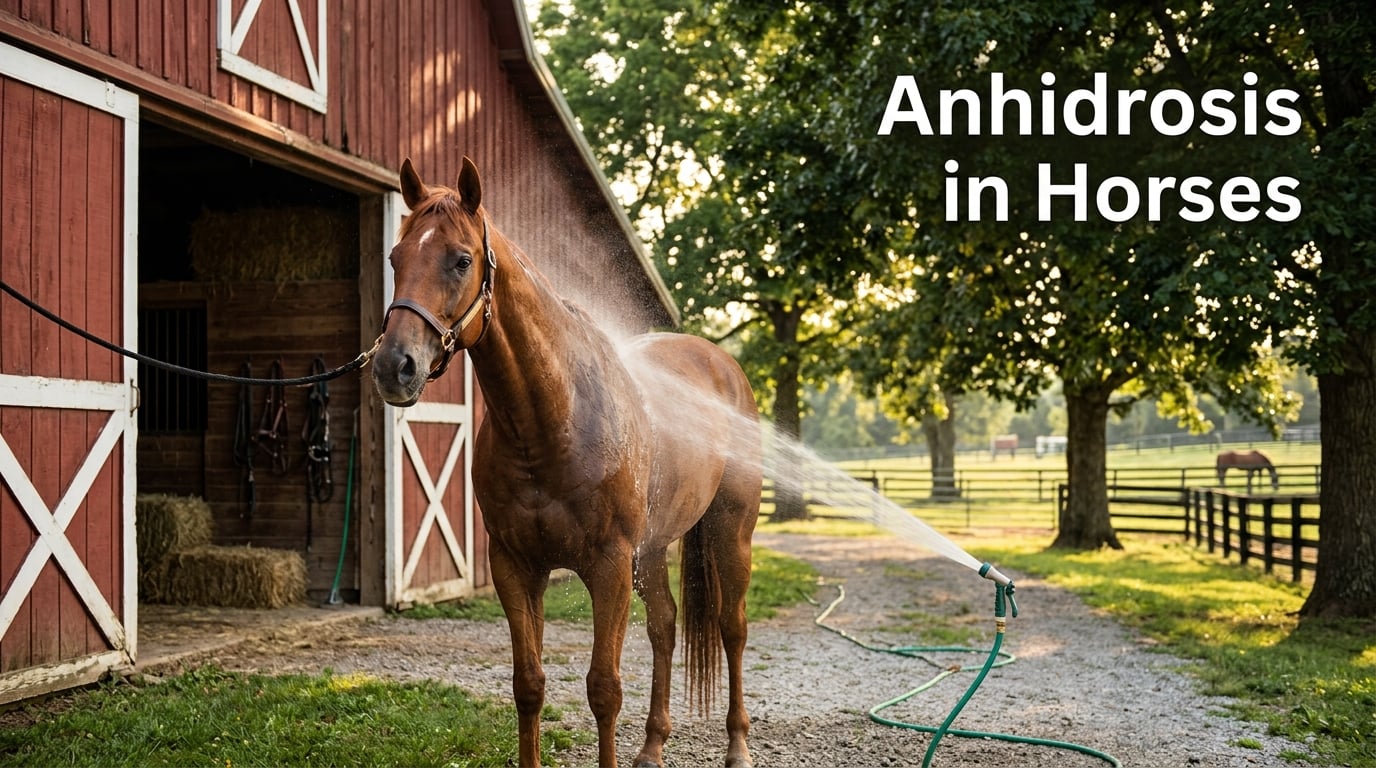
I remember the first time I saw a horse with full-blown anhidrosis. It was a July afternoon in Florida, the kind where the air sticks to your skin like wet tape. A boarder brought her 12-year-old Thoroughbred gelding in from the paddock, and he was panting like a dog after a sprint. His coat was bone dry. Not a single hair was damp. Within five minutes, his temperature read 105.2°F.
That was the day I learned anhidrosis in horses is not a minor inconvenience. It is a life-threatening condition that turns a horse’s most powerful cooling system off. Sweating is how horses regulate body temperature. When that switch breaks, everything else has to compensate, and most horses cannot keep up.
In this guide, I will walk you through what anhidrosis in horses actually is, why it happens, the warning signs every owner should know, and the treatment and management strategies that can save your horse’s life. I have spent years researching this condition and talking with veterinarians who treat non-sweaters in hot, humid climates. By the end, you will have a complete picture of how to recognize, manage, and (in some cases) reverse this frustrating condition.
Table of Contents
What Is Anhidrosis in Horses?
Anhidrosis in horses is the partial or complete loss of the ability to sweat in response to heat or exercise. Affected horses cannot produce enough sweat to cool themselves through evaporative cooling. Without this natural thermostat, their body temperature climbs quickly, especially in warm or humid conditions.
Horses rely on sweat more than almost any other domestic animal. A single horse at hard work can lose 2 to 4 gallons of sweat per hour. That sweat carries away heat as it evaporates, pulling thermal energy off the skin and out of the bloodstream. When a horse cannot sweat, heat has nowhere to go.
Veterinarians often call affected horses “non-sweaters.” The condition is sometimes nicknamed “dry coat syndrome” because the most visible sign is a coat that stays dry even when the horse is hot, stressed, or working hard. Anhidrosis can develop suddenly or progress slowly over months, and severity varies from mildly reduced sweat to a complete inability to sweat at all.
The condition is most common in hot, humid climates. Researchers estimate that 2-6% of horses suffer from some degree of anhidrosis, with rates climbing higher in tropical and subtropical regions like Florida, Louisiana, Texas, and the Caribbean. Anywhere heat and humidity combine to overwhelm the body’s cooling system is anhidrosis territory.
Why Sweating Matters for Horses
Horses are designed to sweat. Their skin contains thousands of apocrine sweat glands spread across nearly the entire body surface. When blood temperature rises, the brain triggers sweat production to dissipate heat.
This system works through evaporation. As sweat evaporates from the skin, it carries heat away from the body. Horses also use respiratory cooling (rapid breathing) as a backup system, but it is far less efficient than sweating. A horse that cannot sweat has lost roughly 65% of its cooling capacity.
The result is hyperthermia, a dangerously elevated core body temperature. Prolonged hyperthermia damages tissues, causes heat stroke, and can be fatal within hours if not addressed.
Causes and Mechanisms of Anhidrosis in Horses
The exact cause of anhidrosis in horses is not fully understood, but researchers have identified four major contributing factors. These factors often combine in affected horses, making the condition complex and sometimes difficult to reverse.
1. Sweat Gland Exhaustion
The leading theory is that anhidrosis develops when sweat glands become overworked and essentially “burn out.” Horses living in hot, humid climates sweat constantly, even at rest. Over time, the sweat glands lose their ability to respond to heat signals.
This exhaustion is similar to what happens in human athletes who train in extreme heat for months. The glands become unresponsive, and sweat output drops or stops entirely.
2. Epinephrine Receptor Desensitization
Horses with anhidrosis often have reduced sensitivity to epinephrine (adrenaline) in their sweat glands. Epinephrine is the chemical signal that tells sweat glands to start producing sweat. When receptors become desensitized, the signal never reaches the gland, and no sweat is produced.
This is why some horses can still sweat slightly under extreme stress but not in normal hot conditions. The receptors respond only to massive adrenaline surges, not everyday heat signals.
3. Electrolyte Imbalance
Heavy sweating washes sodium, chloride, potassium, calcium, and magnesium out of the body. Horses that lose electrolytes faster than they can replace them develop imbalances that affect sweat production. Sodium and chloride are critical for sweat itself, so depletion reduces the volume and effectiveness of sweat.
Chronic electrolyte depletion may contribute to gland exhaustion over time. This is one reason why electrolyte supplementation is a cornerstone of anhidrosis treatment.
4. Genetic and Breed Predisposition
Some horses appear genetically predisposed to anhidrosis. Thoroughbreds, Standardbreds, and warmblood breeds are overrepresented in clinical cases. Horses imported from cooler climates to hot regions (a draft horse moving from Maine to Florida, for example) are at much higher risk than horses born in the heat.
Age may also play a role. Senior horses (15+) develop anhidrosis more often than younger horses, possibly because their sweat glands have simply endured more years of work.
Signs and Symptoms of Anhidrosis in Horses
Recognizing anhidrosis early can save your horse’s life. The symptoms range from subtle to obvious, and they tend to worsen as the condition progresses. Here are the warning signs I watch for in any horse during hot weather.
Dry Coat and Patchy Sweating
The most obvious sign is a dry coat under conditions that should produce heavy sweating. A working horse in 85°F heat should be visibly damp within minutes. A horse with anhidrosis may show patchy sweating (wet under the saddle, dry everywhere else) or no sweating at all.
Some owners describe their horse’s coat as looking “powdered” or having a dusty appearance even when the horse is wet from a bath. This is because the skin cannot produce moisture on its own.
Labored or Rapid Breathing
When sweating fails, the horse’s body shifts to respiratory cooling. You will see fast, shallow breathing, flared nostrils, and sometimes a pumping motion with the flanks. In severe cases, the horse may breathe harder standing still in a shaded stall than a healthy horse breathes at a trot.
Listen for an exaggerated “heave line” developing along the flank. This is a groove formed by the muscles used for forceful breathing, and it shows up over time in chronic anhidrosis cases.
Elevated Heart Rate
A resting heart rate above 50 beats per minute in a calm, cool horse is a red flag. Horses with anhidrosis often have elevated heart rates that do not return to normal quickly after exercise. A rate over 80 after light work signals serious heat stress.
Heat Intolerance and Poor Performance
One of the earliest owner complaints is a horse that “just isn’t performing like he used to.” The horse tires faster, refuses to work in heat he previously handled well, and seems generally unwilling to exert himself. This is often misdiagnosed as laziness, training issues, or general aging before anhidrosis is suspected.
I have heard from multiple riders whose anhidrotic horses were sent for full lameness workups, only to find that the real problem was overheating during exercise.
Other Symptoms
Additional signs include:
Increased water consumption (the horse tries to cool internally)
Dark urine or reduced urine output (signs of dehydration)
Lethargy and reduced appetite
Skin that feels hot to the touch
Seizures or collapse in severe heat stroke cases
Acute vs. Chronic Anhidrosis
Acute anhidrosis appears suddenly, often during a heat wave or after intense training in hot weather. The horse may sweat normally one day and barely sweat the next. Acute cases are more likely to respond to treatment.
Chronic anhidrosis develops gradually over months or years. The horse sweats progressively less each summer until sweating stops entirely. Chronic cases are harder to reverse but can often be managed effectively with the right strategy.
How Anhidrosis in Horses Is Diagnosed?
Diagnosing anhidrosis starts with a thorough veterinary examination. Your vet will rule out other causes of heat intolerance, including respiratory disease, heart problems, and metabolic conditions, before confirming anhidrosis.
The Terbutaline Test
The gold standard for diagnosing anhidrosis is the terbutaline response test. Your vet injects a small dose of terbutaline, a bronchodilator that stimulates sweat glands. In a healthy horse, sweating increases dramatically within minutes. In an anhidrotic horse, sweating either does not increase or only barely responds.
This test is fast, safe, and can be done at the barn. It confirms whether the sweat glands are functional and helps your vet grade the severity of the condition.
Clinical Examination
Your vet will also check for:
Skin biopsy (in rare cases) to look for damaged sweat glands
Blood work to evaluate electrolyte levels and rule out infection
Heart and lung auscultation to rule out cardiac or respiratory causes
Recent history of medications that may affect sweating
Owner Observation
Before calling the vet, spend 15 minutes watching your horse in a hot environment. Take a rectal temperature before and after 10 minutes of light exercise. A rise of more than 2°F suggests the horse is not cooling properly. Photograph the coat so your vet can see what you are describing.
Documenting when the horse sweats, how much, and under what conditions helps your vet build an accurate picture.
Treatment Options for Anhidrosis in Horses
Anhidrosis in horses cannot always be cured, but it can almost always be managed. Treatment focuses on restoring sweat function where possible, replacing lost electrolytes, and creating an environment where the horse can stay cool. Here are the strategies that work.
Electrolyte Supplementation
Electrolyte therapy is the foundation of anhidrosis treatment. Horses with anhidrosis lose massive amounts of sodium, chloride, potassium, and other minerals through any sweat they still produce, plus their urine. Replacing these electrolytes supports sweat gland function and helps the horse thermoregulate.
Most equine veterinarians recommend a daily electrolyte supplement designed for hot-weather use. Products containing sodium chloride, potassium chloride, magnesium, and calcium are ideal. Avoid supplements heavy in simple sugars, as sugar can actually worsen anhidrosis in some horses.
Some owners offer loose salt free-choice in addition to a balanced electrolyte supplement. Others add a teaspoon of table salt to the morning and evening grain. The goal is to keep sodium and chloride levels high enough to support normal sweat production.
Diet and Nutritional Support
Several nutrients have shown promise in supporting sweat gland function in anhidrotic horses:
L-tyrosine: An amino acid that supports adrenal function and may help restore epinephrine sensitivity. Often dosed at 2-3 grams per day for a 1000 lb horse.
Vitamin E: An antioxidant that protects sweat gland cells from oxidative damage. Horses in hot climates need 1500-3000 IU daily.
Vitamin C: Supports adrenal function and antioxidant defenses. Horses synthesize vitamin C naturally, but supplementation may help anhidrotic horses.
Niacin (Vitamin B3): Some studies suggest high-dose niacin (3-4 grams per day) can improve sweating in anhidrotic horses.
A low-sugar, low-starch diet is often recommended. High-carb diets may worsen anhidrosis, possibly because of the metabolic heat produced during digestion.
Alternative and Emerging Treatments
Some owners report success with less conventional approaches. The most famous is beer. Dark beer (like a stout or porter) given at roughly 8-12 ounces daily contains B vitamins, antioxidants, and trace minerals that may support sweat gland function. Anecdotal reports are strong, though clinical evidence is limited.
Acupuncture has also been explored as a treatment for anhidrosis. By stimulating specific points related to thermoregulation, acupuncture may help restore normal sweat patterns in some horses. A handful of equine acupuncturists report success rates above 50% in chronic cases.
Other treatments being studied include:
Omega-3 fatty acid supplementation to reduce inflammation
Adaptogenic herbs like ginseng and ashwagandha
Mitochondrial support supplements (CoQ10)
Medication
Your vet may prescribe medications to support sweating in severe cases. Clonidine, an alpha-2 agonist, has been used experimentally to stimulate sweat glands. Some horses respond to short courses of corticosteroids to reduce gland inflammation.
These medications should only be used under veterinary supervision. They are not first-line treatments but can help in stubborn cases.
Practical Management Tips for Anhidrotic Horses
Management is where most anhidrosis success actually happens. Even if your horse never fully regains sweating ability, you can keep him safe and comfortable with the right routine. Here are the strategies I recommend to every owner of a non-sweater.
Time Your Work
Ride or work your horse during the coolest parts of the day. Early morning (before 9 a.m.) and late evening (after 7 p.m.) are the safest windows in summer. Avoid midday exercise entirely. If you must train in heat, keep sessions under 20 minutes and walk the horse the entire time.
Indoor arenas with fans and shade are far better than outdoor arenas in direct sun. If you do not have access to an indoor, set up shade structures or work under tree cover.
Cool Water Access
Non-sweaters need constant access to cool, clean water. They will drink more than normal horses because they cannot cool through evaporation. In hot weather, offer water every hour and consider adding ice cubes to a bucket.
Sponging or hosing with cold water helps drop body temperature quickly. Focus on the neck, chest, and inside of the legs, where large blood vessels run close to the surface. Scrape off excess water after hosing so it does not trap heat.
Stable Environment
Keep stalls cool with:
Misting fans or industrial barn fans
Straw bedding (cooler than shavings in summer)
Closed barn doors during peak heat, with ceiling fans running
Air-conditioned stalls for severe cases
Stable temperature should stay below 80°F if possible. Above 85°F, even non-working anhidrotic horses can start to overheat.
Consider a Climate Change
For horses in chronic, severe anhidrosis that does not respond to treatment, relocating to a cooler, drier climate is sometimes the best option. I know several owners who moved their non-sweaters from Florida to Colorado or Virginia and saw immediate improvement, with some horses regaining partial sweating ability within months.
This is a major decision and not always practical, but for owners in hot, humid regions with multiple anhidrotic horses, it can be life-saving.
Monitor Temperature Daily
Take your horse’s rectal temperature twice daily during hot weather. A normal resting temperature is 99-101°F. Anything above 102°F in a resting horse warrants immediate cooling measures. Above 104°F, you are dealing with heat stroke and need emergency veterinary care.
Keep a temperature log so you can spot trends. A horse whose temperature rises slowly over several days may be developing a flare-up that you can address before it becomes critical.
Frequently Asked Questions About Anhidrosis in Horses
How do you treat anhidrosis in horses?
Treatment focuses on electrolyte supplementation, nutritional support (L-tyrosine, vitamin E, niacin), dietary changes, and environmental management. Work your horse during cool hours, provide constant cold water, and use fans and shade. Severe cases may need medication or relocation to a cooler climate.
Can anhidrosis be cured?
Anhidrosis in horses cannot always be cured, but it can often be managed effectively. Acute cases may fully recover with prompt treatment. Chronic cases typically require lifelong management but can still lead to good quality of life with the right routine.
What are the four causes of anhidrosis in horses?
The four main causes are: 1) sweat gland exhaustion from chronic overwork in heat, 2) epinephrine receptor desensitization, 3) electrolyte imbalances from heavy sweating, and 4) genetic or breed predisposition, especially in Thoroughbreds and imported horses.
How do I help a horse that does not sweat?
Move the horse to shade, hose with cold water focusing on the neck and legs, offer cool drinking water, and contact your vet immediately if the temperature is above 102°F. Long term, focus on early-morning exercise, electrolyte supplementation, and keeping the stable below 80°F.
Can older horses develop anhidrosis?
Yes. Senior horses (15+) are at higher risk because their sweat glands have endured more years of work. Anhidrosis in older horses tends to be chronic but can still be managed successfully with the right environmental controls and supplementation.
Final Thoughts on Anhidrosis in Horses
Anhidrosis in horses is one of the most frustrating conditions in equine medicine. It steals the horse’s ability to cool itself, and it happens most often in climates where horses need that ability the most. The good news is that with early recognition, aggressive management, and a thoughtful treatment plan, most anhidrotic horses can live long, comfortable, productive lives.
If you suspect your horse has anhidrosis, do not wait. Call your vet, document what you are seeing, and start cooling measures right away. The difference between a quick recovery and a catastrophic heat stroke is often just a few hours of attention.
Living with a non-sweater is not for the faint of heart, but it is absolutely doable. I have seen horses return to full competition careers with the right combination of electrolyte therapy, dietary changes, and barn management. I have also seen owners catch the condition early and reverse it in a single summer. Your vigilance is the most powerful tool you have against anhidrosis in horses, so keep watching, keep learning, and keep your horse cool.