
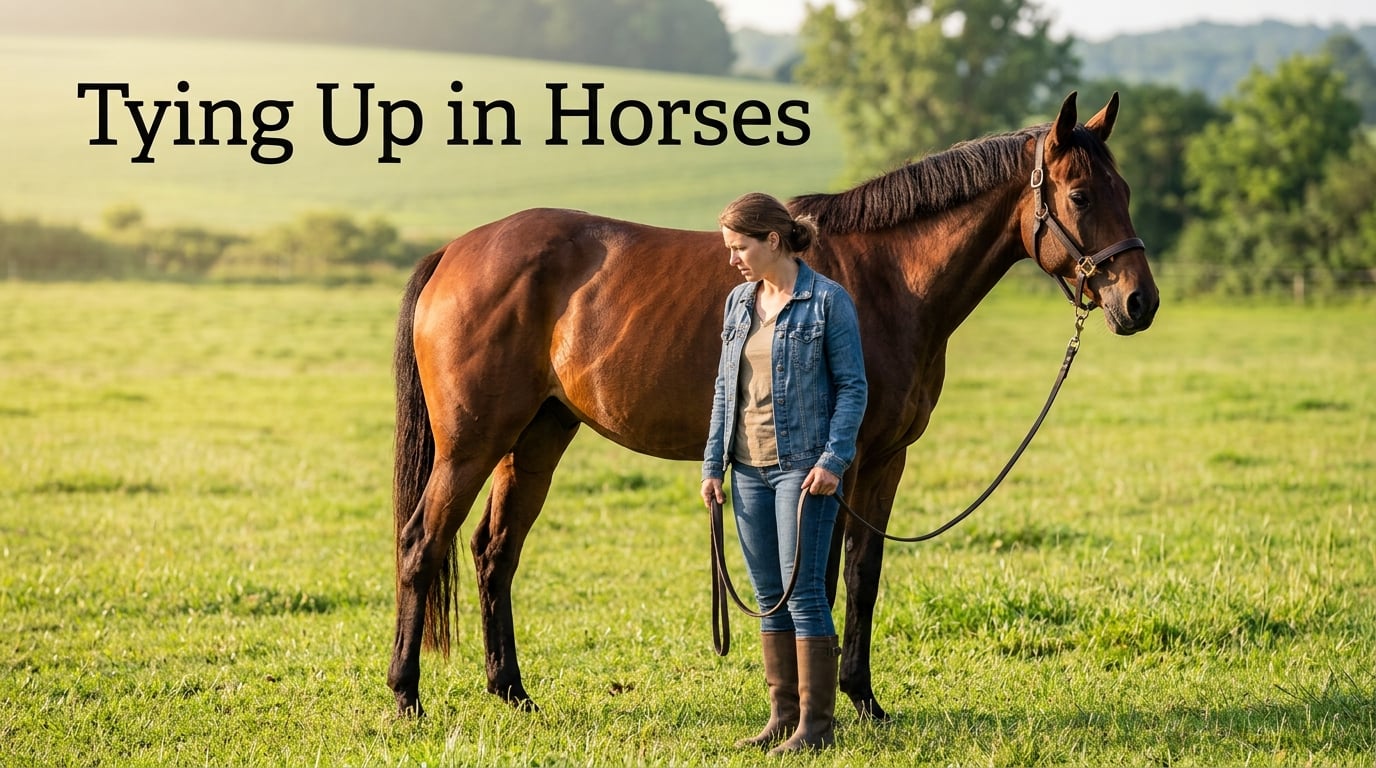
I’ve watched a horse tie up mid-ride, and I’ll tell you straight: it’s one of the scariest things a horse owner can witness. The gelding I rode came to a sudden, awkward halt, his hindquarters locked, his muscles trembling under my legs. He refused to move forward, his sides heaving, sweat pouring off him despite the cool morning. My instructor yelled for me to dismount immediately. That was my first lesson in how quickly tying up in horses can turn a normal ride into a veterinary emergency.
Tying up affects horses of every breed, age, and discipline. Some horses experience a single mild episode after a hard workout. Others battle recurring attacks that end careers. The good news is that with proper management, most horses who tie up once or twice can return to full work. Owners who understand the condition, recognize the early warning signs, and act quickly during an episode give their horses the best chance of a full recovery.
In this guide, I’ll walk you through everything our team has learned from working with veterinarians, trainers, and owners. You’ll get the medical definition, the complete symptom checklist, the difference between sporadic and recurrent forms, and a step-by-step emergency protocol. We’ll cover diagnosis, recovery timelines, dietary changes, and the long-term management strategies that actually prevent future episodes. Let’s start with the basics.
Table of Contents
What Is Tying Up in Horses (Exertional Rhabdomyolysis Explained)
Tying up in horses is a painful muscle disorder in which skeletal muscle fibers break down during or after exercise, causing cramping, stiffness, and a reluctance to move. The medical term is exertional rhabdomyolysis, often shortened to ER. The condition has several older names you may still hear: azoturia, Monday morning disease, setfast, and holiday disease. Each name refers to the same underlying problem: muscle cells rupture, releasing their contents into the bloodstream.
When muscle fibers break down, they release proteins such as creatine kinase (CK) and myoglobin. Elevated CK confirms muscle damage in blood tests. Myoglobin filtered through the kidneys turns urine dark brown, almost coffee-colored, in severe cases. Myoglobin can also damage kidney tissue, which is why severe tying up episodes can become life-threatening within hours.
The condition is not a single disease but a syndrome with multiple causes. Some horses tie up sporadically due to exercise that exceeds their training level. Others have inherited muscle disorders that cause recurring episodes. Understanding which type your horse has determines the treatment approach and long-term outlook.
Why It Matters for Every Horse Owner
Even a single mild episode deserves attention. Research shows that horses who tie up once are statistically more likely to tie up again. Proper management after a first episode can prevent the condition from becoming chronic. Ignoring the warning signs and returning to work too quickly is one of the most common mistakes our team sees in amateur riders.
Tying Up Symptoms: The Complete Checklist
The most common symptoms of tying up in horses include muscle stiffness, a shortened stride, excessive sweating, and a hard refusal to move forward. Symptoms range from subtle to severe, and they can appear during exercise, immediately after, or several hours into cool-down. Here’s the complete checklist from our consultation with practicing equine veterinarians:
- Muscle stiffness and cramping, especially in the hindquarters, back, and shoulders
- Short, choppy, or stiff gait that looks like the horse is walking on glass
- Reluctance or absolute refusal to move forward, backward, or turn
- Excessive sweating disproportionate to the work intensity
- Elevated heart rate (tachycardia) that does not come down with rest
- Rapid or heavy breathing (tachypnea) beyond what the work warrants
- Visible muscle tremors or fasciculations across the flank, shoulder, or hindquarters
- Hard, painful muscles when touched, often feeling “rock hard” or contracted
- Shifting lameness that doesn’t match a specific leg or joint
- Dark brown or reddish urine (myoglobinuria) in severe cases
- Colic-like restlessness, pawing, looking at the flanks, lying down carefully
- Elevated temperature in some cases, especially recurrent episodes
A specific pattern helps distinguish tying up from other problems. The horse typically performs normally for the first 10 to 30 minutes of exercise, then deteriorates rapidly. The shorter the time before symptoms appear, the more serious the episode usually is.
Subtle Symptoms Often Missed
Not every episode looks dramatic. Some horses simply shorten their stride, lose impulsion, or feel “off” without obvious cramping. I’ve known owners who dismissed early episodes as bad behavior, saddle fit issues, or simple tiredness. Any unexplained change in gait or attitude during work deserves a closer look, especially in horses with a previous history.
Types of Tying Up: Sporadic vs Recurrent
Tying up in horses falls into two main categories: sporadic exertional rhabdomyolysis (one-off episodes) and recurrent exertional rhabdomyolysis (repeated episodes with an underlying cause). The distinction matters because treatment and management differ significantly between the two.
Sporadic ER typically results from exercise that exceeds the horse’s current fitness level. Common triggers include a hard workout after a period of rest, an unusually long ride, hot and humid weather, or competition stress. A horse who ties up once after too much grain and not enough work fits the sporadic profile. With proper rest and dietary adjustments, these horses rarely tie up again.
Recurrent ER (RER) describes horses who tie up repeatedly, often with no obvious lifestyle trigger. RER is most common in young Thoroughbreds, particularly nervous fillies and mares. The underlying cause appears to be a defect in calcium regulation inside muscle cells, making them more prone to contraction and damage. Stress, excitement, and even mild exercise can trigger an episode in susceptible horses.
Polysaccharide Storage Myopathy (PSSM) is a separate inherited muscle disorder that causes recurrent tying up. Horses with PSSM accumulate abnormal amounts of glycogen and a polysaccharide called amylopectin in their muscle cells. PSSM Type 1 is caused by a mutation in the GYS1 gene and is most common in Quarter Horses, Paint Horses, Appaloosas, and Draft breeds. PSSM Type 2 has no identified genetic cause and appears in many breeds. Both types cause recurring muscle pain and stiffness.
Quick Comparison: Sporadic vs Recurrent ER
- Sporadic ER: Single episode, clear trigger event, normal CK between episodes, no genetic component identified
- RER: Multiple episodes, stress and excitement trigger, normal muscle between attacks, calcium regulation defect
- PSSM Type 1: Recurrent episodes, GYS1 gene mutation positive, abnormal glycogen accumulation, often improves with dietary fat
- PSSM Type 2: Recurrent episodes, no identified genetic test, abnormal polysaccharide accumulation, similar management to Type 1
What Causes Tying Up in Horses
Tying up in horses results from a mismatch between exercise intensity and the horse’s fitness, combined with contributing factors like diet, electrolyte status, and genetics. No single cause explains every episode. Most cases involve several overlapping triggers.
Exercise mismatch is the most common cause. A horse rested over the weekend and worked hard on Monday may tie up. The classic “Monday morning disease” name comes from draft horses in the early 1900s who rested on Sundays and returned to work on Monday. Horses returning to work after any layup, including post-illness or post-injury rest, are at higher risk.
High-grain diets increase risk substantially. Diets heavy in soluble carbohydrates (sweet feed, oats, corn) cause large blood sugar swings that some researchers believe contribute to muscle instability. Horses on pasture alone rarely tie up if they are breeding-stock animals, while horses on heavy grain rations are overrepresented in studies.
Electrolyte imbalances play a role in many cases. Sodium, potassium, chloride, calcium, and magnesium all affect muscle function. Horses sweating heavily in hot weather or during long competition days lose substantial electrolytes. Replacing only water without electrolytes can worsen the imbalance.
Vitamin E and selenium deficiencies have been linked to muscle damage in some regions. Vitamin E is an antioxidant that protects muscle cell membranes. Selenium works alongside vitamin E in muscle metabolism. Horses in selenium-deficient areas (much of the eastern United States and parts of Canada) may have weaker antioxidant defenses.
Stress and excitement trigger RER in susceptible horses. Travel, competition, new environments, and herd dynamics all raise stress hormones that can affect muscle calcium regulation. Nervous horses are overrepresented in RER cases.
Genetic factors explain why some breeds and individuals are more prone to recurrent tying up. PSSM is a clear genetic disorder. RER has a strong inherited component in Thoroughbreds, even though the specific gene has not been identified.
Tying Up vs Colic: How to Tell the Difference
Tying up and colic can look similar in the early stages, but the differences in muscle tone, sweating pattern, and pain response help distinguish them. Forum threads are full of owners who panicked thinking their horse was colicking when the actual problem was tying up, and vice versa. Here’s how to tell them apart.
Muscle hardness is the most reliable early sign of tying up. Feel the large muscles of the hindquarters, shoulders, and back. Horses with tying up often have firm, contracted, almost rigid muscles. Horses with colic usually have normal muscle tone, even when they are in pain.
Movement pattern differs significantly. A tying up horse plants the feet and refuses to move, or takes very short, stiff steps. A colicking horse typically walks constantly, paws, looks at the belly, and may drop to the ground and roll.
Urination can be a clue. Tying up can produce dark brown or coffee-colored urine from myoglobin. Colic urine is usually normal in color, though the horse may posture to urinate without producing much.
Recent work is the biggest context clue. A horse that ties up usually has a recent history of exercise, often within the past few hours. A colicking horse may have eaten something unusual, shown stress, or be in a high-risk category (geriatric, recent surgery, history of colic).
Both conditions are emergencies, and the wrong treatment can make either worse. If you cannot tell which condition your horse has, call your veterinarian immediately rather than trying to decide on your own.
When to Call the Vet: Emergency Warning Signs
Call your veterinarian immediately if your horse shows any combination of refusal to move, hard muscles, dark urine, or symptoms that don’t improve within 15 to 30 minutes of stopping work. Some episodes resolve quickly with rest and light walking. Others need urgent medical intervention. Knowing the difference can save your horse’s life.
Call the vet now if you see any of these:
- Muscles that feel rock hard or firmly contracted
- Dark brown, red, or coffee-colored urine
- Inability to move at all, even with encouragement
- Heart rate above 60 beats per minute that doesn’t drop with rest
- Respiratory rate above 30 breaths per minute that persists
- Signs of severe pain that don’t respond to walking
- Recumbent horse (lying down and unable to rise)
- Fever above 102.5 degrees Fahrenheit
- Previous history of tying up, especially if multiple episodes
First-time episodes always warrant a vet call. Even if the symptoms seem mild, your veterinarian should confirm the diagnosis, run baseline bloodwork, and rule out other causes. The information from this first episode creates a reference point for future management.
Don’t wait to see if the horse “walks it off.” Severe tying up can cause kidney damage within hours. The longer the muscle stays in crisis, the more myoglobin reaches the kidneys. Early intervention with IV fluids, muscle relaxants, and pain relief dramatically improves outcomes.
Emergency First Aid: What to Do in the First 5 Minutes
Stop work immediately, keep the horse calm and still, offer water, and call your veterinarian right away. What you do in the first five minutes sets the tone for the entire episode. Here’s the step-by-step protocol our team follows:
Step 1: Disengage and stop all work. Pull up immediately. Do not try to push the horse through the symptoms. Do not force the horse to continue, even if you are sure you can make it back to the barn. Continuing work causes more muscle damage and worsens the episode.
Step 2: Get the tack off. Remove the saddle and any tightening equipment. Heat retention makes things worse. Keep the horse in a quiet area away from other horses if possible.
Step 3: Offer water, but do not force it. Most horses will drink if water is available. Cool, clean water is best. If the horse refuses water, do not try to drench it. Wait for the vet’s guidance on hydration.
Step 4: Keep the horse warm or cool as needed. In warm weather, move the horse to shade. In cold weather, blanket the horse to prevent shivering. The goal is to avoid any additional stress on the muscles.
Step 5: Call your veterinarian. Describe the symptoms, the horse’s recent work history, and any previous episodes. Follow your vet’s instructions on whether to walk the horse gently or leave it standing still. In many cases, very gentle walking is appropriate to maintain circulation, but the vet’s advice should guide this decision.
Step 6: Do not administer medications without vet guidance. Even common NSAIDs like phenylbutazone (“bute”) or flunixin meglumine (Banamine) can mask symptoms and complicate diagnosis when the vet arrives. Wait for instructions.
What NOT to Do During an Episode
Do not force the horse to keep moving. Do not offer grain or treats. Do not massage hard, contracted muscles. Do not give any medication without vet approval. Do not try to trailer the horse to a clinic without your vet’s recommendation, as the stress of travel can worsen the episode.
How Veterinarians Diagnose Tying Up
Veterinarians diagnose tying up through physical examination, blood tests measuring muscle enzymes, and sometimes genetic testing or muscle biopsy. The diagnostic process confirms the episode and rules out other conditions with similar symptoms.
Physical examination comes first. Your vet will assess heart rate, respiratory rate, temperature, gut sounds, and muscle tone. They will watch the horse move and palpate the major muscle groups. The classic “hard as a board” feel of large muscle groups is a strong clinical sign.
Blood tests measure muscle enzymes, especially creatine kinase (CK) and aspartate aminotransferase (AST). CK rises within a few hours of muscle damage and peaks at 6 to 12 hours. AST rises more slowly and stays elevated longer. A CK value above 1,000 U/L generally confirms tying up. Values above 10,000 U/L indicate a severe episode. Your vet will also check kidney function through blood urea nitrogen (BUN) and creatinine levels to ensure myoglobin has not damaged the kidneys.
Urine analysis can confirm myoglobinuria. A urine sample showing dark color without red blood cells points to muscle breakdown rather than urinary tract bleeding.
Genetic testing identifies PSSM Type 1. A simple blood sample or hair root test checks for the GYS1 mutation. Horses with PSSM Type 1 benefit from specific dietary and exercise protocols that differ from standard ER management.
Muscle biopsy is the gold standard for diagnosing PSSM Type 2 and other rarer muscle disorders. A small sample of muscle tissue, often taken from the gluteal or semitendinosus muscle, is examined under a microscope. Biopsy typically happens weeks after the episode, once muscle inflammation has settled.
Recovery Timeline: How Long Does Tying Up Last
Mild cases of tying up resolve within 24 to 72 hours, while severe cases may require 2 to 6 weeks of rest before return to work. Recovery depends on the severity of muscle damage, the underlying cause, and how quickly treatment began.
Mild episodes usually mean slightly elevated CK (under 5,000 U/L) and mild muscle stiffness. Most horses return to normal within 24 to 72 hours with rest, NSAIDs, and supportive care. Many can return to light work within a week, though a full training schedule typically requires 2 to 3 weeks of gradual reintroduction.
Moderate episodes involve CK between 5,000 and 20,000 U/L, marked muscle stiffness, and possibly dark urine. Recovery takes 1 to 3 weeks of stall rest with hand walking, followed by 2 to 4 weeks of gradual return to work. These horses need dietary changes and a structured exercise plan to prevent recurrence.
Severe episodes show CK above 20,000 U/L, deep muscle damage, prolonged recumbency, kidney involvement, and possibly life-threatening complications. Recovery takes 4 to 8 weeks minimum, often with 2 to 3 months of rehab. Some horses never return to previous performance levels.
Our team has followed cases that ranged from a single bad Monday to a full 8-week layup. The most consistent factor in successful recovery is the speed of intervention. Horses that received IV fluids and muscle relaxants within the first hour of symptoms consistently recovered faster than those who waited until the next day.
Dietary Management for Horses That Tie Up
Dietary changes for horses that tie up focus on reducing soluble carbohydrates, replacing calories with fat, and ensuring adequate vitamin E, selenium, and electrolytes. For many horses, especially those with PSSM, diet is the single most important management factor.
Reduce soluble carbohydrates first. Replace grain-based feeds with low-starch alternatives. Total dietary starch should stay under 10% of the total ration for PSSM horses and ideally under 15% for other tying-up cases. Replace calories with fat sources like rice bran, vegetable oil, or specific high-fat supplements designed for performance horses.
Forage should form the foundation of the diet. Quality hay at 1.5% to 2% of body weight daily supports gut health and steady energy release. Soak hay for horses with severe PSSM to reduce residual sugar content. Turnout on appropriate grass is fine for many horses, though lush spring grass can trigger episodes in susceptible individuals.
Vitamin E supplementation supports muscle cell membrane integrity. Horses in light work typically need 1,000 to 2,000 IU of natural vitamin E daily. Horses with active muscle damage may need 5,000 IU daily for a month, then tapered to a maintenance dose. Synthetic vitamin E is poorly absorbed, so look for natural d-alpha-tocopherol formulations.
Selenium supplementation is appropriate in deficient regions, but never assume selenium is needed without testing. Selenium toxicity is real and dangerous. Most horses in selenium-deficient areas need 1 to 3 mg of selenium per day, often delivered through a balanced mineral supplement or ration balancer. Whole blood selenium testing confirms whether supplementation is appropriate.
Electrolyte supplementation matters most during heavy work, hot weather, and long trailer hauls. Plain white salt (sodium chloride) at 1 to 2 ounces daily supports baseline needs. Add potassium and magnesium during heavy sweating. Many commercial electrolyte pastes contain adequate combinations, though ingredients vary widely between products.
Sample Diet for a Tying-Up Horse
Working with your veterinarian or equine nutritionist, a typical diet for a 1,000-pound horse with recurrent tying up might include 20 pounds of soaked grass hay, 2 to 4 pounds of a low-starch complete feed, 1 to 2 cups of vegetable oil or rice bran, 1,000 to 2,000 IU of natural vitamin E, and a balanced mineral supplement providing selenium within safe limits. Individual needs vary based on workload, body condition, and bloodwork results.
Exercise and Long-Term Management
Long-term management of tying up in horses combines consistent daily exercise, maximal turnout, gradual fitness building, and stress reduction. Medications and supplements help, but consistent routine is the foundation of prevention.
Daily exercise is non-negotiable. Horses with recurrent tying up do best on a consistent schedule, ideally worked or turned out every single day. Even a day off can increase the risk of the next episode. Weekends where the horse gets Saturday off and works hard on Sunday are a classic setup for a tying up episode.
Turnout provides essential movement. Horses with 24/7 turnout rarely tie up as severely as stalled horses. If full turnout is not possible, maximum daytime turnout with a compatible companion is the next-best option. Movement supports circulation, muscle health, and stress reduction.
Slow reintroduction after an episode is critical. Start with hand walking for 10 to 15 minutes daily, gradually increasing to 30 minutes over a week. Add short ridden sessions at the walk, then walk-trot, then walk-trot-canter over a structured 4 to 6 week program. Skip any step that produces stiffness or reluctance. Pushing through the return to work is the most common cause of recurrence.
Warm-up and cool-down matter more than most riders realize. A 10-minute walk warm-up before any faster work prepares the muscles for exertion. A 10-minute walk cool-down lets the muscles clear metabolic waste. Horses rushed into work or pulled up suddenly are at higher risk.
Stress reduction helps RER horses specifically. Stable routines, consistent handlers, calm turnout companions, and avoidance of unnecessary travel reduce trigger events. Some RER horses also benefit from low-dose daily dantrolene or a daily acepromazine protocol under veterinary supervision during high-stress periods.
PSSM and the Genetic Connection
Polysaccharide Storage Myopathy (PSSM) is a genetic muscle disorder that causes recurrent tying up in horses, especially Quarter Horses, Paints, Appaloosas, Draft breeds, and their crosses. Genetic testing confirms PSSM Type 1, and dietary management dramatically improves most affected horses.
The GYS1 gene mutation responsible for PSSM Type 1 codes for an enzyme that controls glycogen synthesis. Horses with the mutation accumulate abnormal glycogen and amylopectin in their muscle cells. These abnormal deposits damage muscle fibers and trigger the inflammatory response that causes tying up symptoms. The mutation is autosomal dominant, meaning a horse with one copy of the gene will show symptoms, and passes the gene to 50% of offspring.
Breed prevalence varies widely. PSSM Type 1 affects approximately 8% of Quarter Horses in the United States, up to 30% of Belgian Drafts, and occurs in many Warmblood lines. PSSM Type 2 has no identified genetic test but appears in similar breeds and in Thoroughbreds, Arabians, and Standardbreds at lower rates.
Genetic testing is available through several laboratories, including the University of Minnesota and Pet DNA Services of Arizona. Testing costs range from $40 to $75 per horse. A simple hair sample or whole blood sample is sufficient. Testing makes sense for any horse with recurrent tying up and for breeding stock with affected or at-risk breeds.
Our team has seen PSSM horses become essentially symptom-free with strict diet and exercise management. The combination of high-fat, low-starch diet, daily turnout, and consistent exercise can transform a horse’s career. Many PSSM horses have successfully competed in ranch work, lower-level eventing, and trail riding despite their diagnosis.
Prevention Strategies That Actually Work
Prevention of tying up in horses rests on consistent daily exercise, a low-starch high-fat diet, adequate vitamin E and selenium, and prompt response to early warning signs. No single strategy prevents every episode, but a multi-pronged approach dramatically reduces risk.
- Work or turnout the horse every day. Avoid rest days followed by hard work.
- Feed a low-starch diet with high-quality forage as the foundation. Add fat for calories instead of grain.
- Supplement with vitamin E and selenium as needed based on your region’s deficiency status.
- Provide free-choice salt and additional electrolytes during heavy work or hot weather.
- Warm up and cool down every ride, no exceptions.
- Increase work gradually across weeks, not days.
- Manage stress through consistent routines and appropriate turnout.
- Test breeding stock for PSSM Type 1 if they are at-risk breeds.
- Keep a record of every episode, including work intensity, weather, and diet.
- Work with your veterinarian to develop a written management plan.
Owners who take a structured approach consistently report fewer episodes and faster recovery than those who attempt piecemeal changes. The condition responds well to systems thinking.
Frequently Asked Questions About Tying Up in Horses
How do you treat a horse that is tying up?
Stop work immediately, keep the horse calm and still, move it to a shaded or sheltered area, offer water, and call your veterinarian. Do not force the horse to walk unless directed by your vet. Most treatment happens at the farm: IV fluids, muscle relaxants, pain relief, and supportive care. Severe cases may require hospitalization for several days.
What is the prognosis for a horse with tying up?
The prognosis depends on severity and underlying cause. Horses with a single sporadic episode have an excellent prognosis and rarely tie up again with proper management. Horses with recurrent ER or PSSM can still perform well with lifelong diet and exercise management, though some require daily medication. Severe episodes with kidney damage carry a more guarded prognosis.
What is tying up a horse called?
The medical name for tying up in horses is exertional rhabdomyolysis (ER). Older terms include azoturia, Monday morning disease, setfast, and holiday disease. Recurrent forms include Recurrent Exertional Rhabdomyolysis (RER) and Polysaccharide Storage Myopathy (PSSM).
What to give a horse when they tie up?
During an episode, do not give anything until your veterinarian arrives. Long-term, horses that tie up benefit from low-starch diets, added fat for calories, vitamin E supplementation (1,000 to 5,000 IU daily), selenium within safe limits, and balanced electrolytes. Specific supplements like dantrolene may be prescribed for RER horses under veterinary supervision.
Should you walk a horse that is tying up?
Gentle hand walking can help maintain circulation and prevent stiffness, but only if the horse is willing to move. Do not force a horse that is completely refusing to move. Always follow your veterinarian’s specific instructions, as the right approach depends on severity. Walking is often appropriate for mild episodes but can worsen severe cases.
How quickly can a horse recover from tying up?
Mild cases resolve within 24 to 72 hours and return to light work within a week. Moderate cases require 2 to 4 weeks of rest and gradual reintroduction. Severe cases with high muscle enzyme values or kidney involvement need 4 to 8 weeks minimum, sometimes 2 to 3 months of rehabilitation. Recovery is faster when treatment begins within the first hour of symptoms.
Is tying up in horses hereditary?
Some forms are hereditary. PSSM Type 1 is caused by a known genetic mutation (GYS1) and is passed from parent to offspring. RER has a strong inherited component in Thoroughbreds, especially nervous fillies, though the specific gene has not been identified. Sporadic tying up from overexertion is not hereditary.
Can a horse die from tying up?
Yes, severe tying up can be fatal. The mechanism is kidney damage from myoglobin released by damaged muscle cells. Severe episodes can also cause cardiac arrhythmias, recumbency, and secondary complications like pneumonia. Prompt veterinary treatment dramatically improves survival rates, which is why early intervention is critical.
A Final Word on Tying Up in Horses
Tying up in horses is a manageable condition, not a death sentence. The combination of early recognition, prompt veterinary care, and disciplined long-term management keeps most affected horses in active work for years. I’ve seen horses return to successful show careers after severe episodes, and I’ve seen PSSM-positive horses thrive on disciplined diet and exercise programs.
If you take one thing from this guide, let it be this: consistency wins. Daily exercise, consistent diet, gradual fitness building, and quick response to early symptoms prevent most episodes from becoming emergencies. Work with your veterinarian, keep detailed records, and don’t cut corners on the basics. Your horse’s muscles depend on the systems you build around them.
For more information on equine health topics, condition management, and the science behind how horses move, work, and recover, keep exploring our library of resources.