
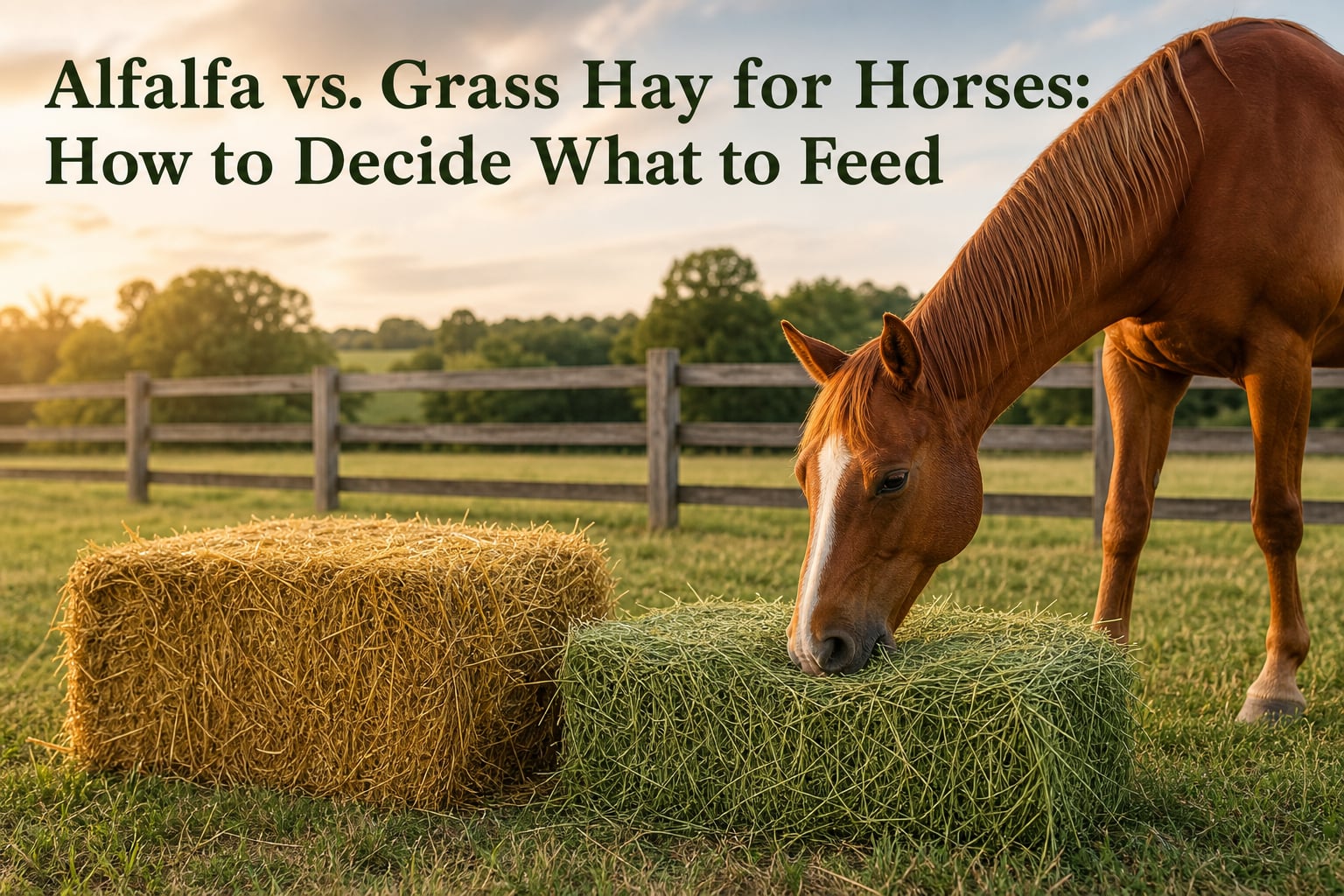
Walk into any feed store and you will hear horse owners debating the same question: which hay is better for my horse? The alfalfa vs grass hay for horses discussion is one of the most common and sometimes confusing topics in equine nutrition. Some owners swear by alfalfa for keeping weight on hard keepers. Others insist grass hay is the only safe choice for easy keepers and metabolic horses.
The truth is, neither hay type is universally better. The right choice depends on your horse’s age, workload, metabolism, health conditions, and even where you live. I have spent years talking with equine nutritionists, veterinarians, and fellow horse owners about this exact topic. What I learned is that the best hay decision always starts with understanding what each type actually brings to the feed bucket.
In this guide, I will break down the nutritional differences, explain which horses benefit from each hay type, address common myths, and give you a practical framework for making the right call for your horse. Whether you are feeding a senior gelding, a lactating mare, or a metabolic pony, you will walk away knowing exactly what to look for.
Table of Contents
Understanding the Basics: What Is Alfalfa and Grass Hay?
Alfalfa is a legume hay, which puts it in the same family as clover and birdsfoot trefoil. It produces leaves and stems that pack significantly more protein, calcium, and calories per pound than grass varieties. When you see those dense, green bales with small leaves clinging to the stems, you are looking at alfalfa.
Grass hay, on the other hand, includes several different species. Timothy, orchard grass, brome, and teff are the most common varieties fed to horses across North America. These hays are generally lower in protein and calcium but higher in structural fiber. That fiber is what helps horses feel full and supports healthy gut function over long periods.
The core difference comes down to nutrient density. Alfalfa delivers concentrated nutrition in every bite, while grass hay provides more volume with fewer calories. Think of alfalfa as a rich meal and grass hay as the bulky salad that fills the bowl. Both have their place, but they serve very different purposes depending on what your horse needs.
Alfalfa vs Grass Hay for Horses: Nutritional Comparison
When you look at the numbers side by side, the nutritional gap between alfalfa and grass hay is significant. Understanding these values helps you match the right hay to your horse’s specific dietary requirements. Here is how they compare on the metrics that matter most.
Crude Protein: Alfalfa typically ranges from 17 to 22 percent crude protein, while grass hays land between 8 and 14 percent. That protein difference matters for growing horses, lactating mares, and horses in heavy work. For a sedentary easy keeper, that same protein level is unnecessary and can even contribute to excess calorie intake.
Digestible Energy: Alfalfa provides approximately 1.15 to 1.2 megacalories per pound, compared to roughly 0.8 to 0.9 megacalories per pound for grass hay. This means a horse eating alfalfa gets more usable energy from less total feed. If your horse needs to gain weight, alfalfa delivers those extra calories efficiently.
Calcium and Phosphorus: Alfalfa is notably high in calcium, often containing 1.2 to 1.5 percent calcium compared to 0.3 to 0.5 percent in grass hay. The calcium to phosphorus ratio in alfalfa can reach 5:1 or higher, while grass hay sits closer to the ideal 1:1 or 2:1 range. This matters because excess calcium can interfere with mineral absorption over time, though healthy horses generally handle moderate alfalfa intake without issue.
Non-Structural Carbohydrates (NSC): This is where grass hay can be tricky. Some grass hays, especially those cut and cured under certain conditions, can have NSC levels above 12 percent. Horses with metabolic syndrome or a history of laminitis often need hay under 10 percent NSC. Alfalfa naturally tends to run lower in NSC, typically between 8 and 11 percent, which makes it a safer option for some metabolic horses.
Fiber Values (ADF and NDF): Grass hay wins on fiber. Acid detergent fiber (ADF) and neutral detergent fiber (NDF) values are consistently higher in grass hays. This means grass hay takes longer to chew and digest, keeping horses occupied longer and supporting a healthier hindgut environment. The extra chewing also promotes saliva production, which buffers stomach acid naturally.
When to Choose Alfalfa Hay
Alfalfa shines when a horse needs concentrated nutrition. If your horse falls into any of these categories, alfalfa may be the right choice for at least part of their forage program.
Hard Keepers: Some horses struggle to maintain weight no matter how much you feed them. Alfalfa gives these horses the extra calories and protein they need without requiring massive increases in total feed volume. I have seen underweight horses gain noticeable condition within four to six weeks of adding alfalfa to their diet.
Performance and Working Horses: Horses in regular training, competition, or heavy work burn more calories and need more protein for muscle repair. Alfalfa delivers both efficiently. Many eventing and dressage riders I have spoken with use alfalfa as part of their feeding program during competition season.
Lactating Mares and Growing Horses: A nursing mare produces milk that demands high protein and calcium. Foals and weanlings need those same nutrients for bone development and growth. Alfalfa is naturally suited to meet these elevated requirements.
Horses with Gastric Ulcers: Research from equine veterinary schools has shown that alfalfa’s higher calcium and magnesium content helps buffer stomach acid. Feeding a small amount of alfalfa before exercise or as part of a regular diet can reduce the severity of gastric ulcers. This is one of the most overlooked benefits of alfalfa, and many horse owners on forums like r/Equestrian have reported positive results after switching.
Senior Horses: Older horses often have dental issues that make chewing tough grass hay difficult. Alfalfa leaves are softer and easier to chew. The concentrated nutrition also helps seniors maintain weight when their digestive efficiency declines.
When to Choose Grass Hay?
Grass hay is the right call for horses that need fewer calories but still need to feel full and satisfied. Here are the situations where grass hay outperforms alfalfa.
Easy Keepers: If your horse gains weight just looking at a hay bale, grass hay is your friend. The lower calorie density means your horse can eat a larger volume without packing on unwanted pounds. This supports natural grazing behavior while keeping body condition in check.
Overweight and Metabolic Horses: Horses with equine metabolic syndrome (EMS), insulin resistance, or a history of laminitis need careful dietary management. Grass hay with a low NSC percentage, ideally tested and confirmed under 10 percent, is the standard recommendation from equine veterinarians. The lower calorie and calcium content helps reduce metabolic stress.
Horses in Light Work or Maintenance: A trail horse ridden a few times a week or a retired companion horse does not need the calorie density of alfalfa. Grass hay provides all the nutrition they need to maintain healthy body condition without excess energy intake.
Horses That Need More Chewing Time: The higher fiber content in grass hay means horses spend more time eating. This is not just about satisfaction. Extended chewing time supports dental health, produces saliva that protects the stomach, and prevents the behavioral issues that come from boredom and underfeeding.
Ponies and Miniature Horses: These easy-keeping equines are prone to obesity and metabolic issues. Grass hay is almost always the safer base forage for small breeds. Many pony owners measure intake carefully and use slow-feed nets to extend eating time even further.
Mixing Alfalfa and Grass Hay: Blending Strategies
You do not have to choose just one hay type. In fact, many equine nutritionists recommend blending alfalfa and grass hay for a balanced approach that captures the benefits of both. A mixed hay program is one of the most popular strategies horse owners discuss in forums.
A common starting ratio is 70 percent grass hay and 30 percent alfalfa. This gives horses the bulk and fiber of grass hay while adding a moderate protein and calorie boost from the alfalfa. For horses that need more calories, flipping that ratio to 60 or 70 percent alfalfa can help with weight gain and performance recovery.
You can blend hays in a few different ways. Some owners alternate feedings, giving grass hay in the morning and alfalfa at night. Others feed a mixed flake at every meal. Still others buy pre-mixed alfalfa-grass bales from their hay supplier. The method matters less than consistency once you find what works.
When transitioning between hay types, always do it gradually over 7 to 14 days. Sudden changes in forage can disrupt the hindgut microbiome and trigger colic or digestive upset. Start by replacing 25 percent of the old hay with the new type. After a few days, move to 50 percent, then 75 percent, and finally a full switch.
I have talked with horse owners who switched too fast and dealt with loose manure or mild colic symptoms. A gradual transition prevents these issues entirely. Your horse’s gut bacteria need time to adjust to the new nutrient profile.
Debunking Common Hay Myths
The alfalfa vs grass hay conversation is loaded with misconceptions. Let me address the most common myths I hear from horse owners and what the science actually says.
Myth 1: Alfalfa makes horses hot. This is probably the most widespread belief in the horse world. The reality is more nuanced. Alfalfa itself does not cause behavioral changes. What can happen is that a horse receiving alfalfa is getting more calories than they need. Excess energy from any source, whether grain or forage, can make a horse feel more energetic. The solution is not to eliminate alfalfa but to balance total calorie intake with the horse’s workload.
Myth 2: Alfalfa damages horse kidneys. This myth likely started because alfalfa is high in protein, and excess protein is processed by the kidneys. However, healthy horses with normal kidney function handle higher protein intake without any problems. The excess nitrogen is excreted safely through urine. Horses with pre-existing kidney disease may need protein restriction, but alfalfa does not cause kidney damage in healthy animals.
Myth 3: More protein is always better. Protein is essential, but excess protein that a horse does not need is simply broken down and used as an expensive energy source. The body converts excess nitrogen to urea, which requires water to flush out. This is why horses on very high protein diets drink more water and produce more urine. It is not harmful, but it is wasteful if the horse does not actually need that protein.
Myth 4: Flake count is how you measure hay. I hear this constantly. Horse owners say they feed two flakes of hay per feeding. The problem is that flakes vary enormously in weight depending on the bale type, how tightly it was baled, and the hay species. A flake of alfalfa can weigh anywhere from 3 to 8 pounds. Always feed by weight, not by flake count. Use a luggage scale or hay scale to measure actual pounds fed.
How Much Hay Should You Feed Your Horse?
The golden rule of equine nutrition is that horses should consume 1.5 to 2 percent of their body weight in forage every day. For a 1,000 pound horse, that means 15 to 20 pounds of hay daily. This baseline does not change based on hay type, but the type does affect how those pounds translate to actual meals.
If you feed grass hay at the lower energy density, your horse will be eating a larger physical volume to hit their daily requirement. With alfalfa, the same weight delivers more calories and protein. This is why switching from grass hay to alfalfa without adjusting the total amount can lead to weight gain.
For horses on a blended program, calculate total forage needs first, then divide between hay types based on your chosen ratio. For example, a 1,000 pound horse eating 18 pounds of total hay per day at a 70/30 grass to alfalfa split would get about 12.5 pounds of grass hay and 5.5 pounds of alfalfa daily.
Always monitor your horse’s body condition score every few weeks. The Henneke body condition scoring system uses a 1 to 9 scale. Most horses do best between a 4 and 6. If your horse is gaining or losing weight on their current hay program, adjust the amount or type accordingly.
Remember that forage should make up the majority of your horse’s diet. The general recommendation is that at least 50 percent of the total diet by weight should be long-stem forage. Grain and concentrates should supplement forage, not replace it.
Cost and Regional Availability Considerations
One factor many guides ignore is that your hay choice is often shaped by where you live. Not every hay type is readily available in every region, and this can significantly impact both your options and your budget.
In the western United States, alfalfa is widely grown and often more affordable. States like California, Idaho, Nevada, and Utah have strong alfalfa production. Horse owners in these regions may find high quality alfalfa at competitive prices, making it a practical choice even for horses that only need a small amount.
In the southeastern United States, the climate favors warm-season grass hays like bermuda and bahia. Alfalfa is less commonly grown locally, which means it ships from farther away and costs more. Many southern horse owners rely primarily on grass hay simply because it is what grows well and what fits their budget.
The Midwest offers good availability of both types. Timothy and orchard grass are common in states like Pennsylvania, New York, and Ohio, while alfalfa is also grown regionally. This gives Midwestern horse owners the flexibility to choose based on their horse’s needs rather than supply constraints.
Cost per ton can vary by 30 to 50 percent between alfalfa and grass hay depending on your location and the time of year. Get to know local hay producers and feed stores. Building relationships with reliable suppliers helps you secure quality hay at fair prices regardless of which type you choose.
Testing your hay is one of the best investments you can make. A forage analysis from a lab like Equi-Analytical costs about $30 to $50 but tells you exactly what you are feeding. You get precise protein, energy, calcium, and NSC values for your specific bales. This takes the guesswork out of matching hay to your horse’s needs.
Frequently Asked Questions
Should I feed my horse alfalfa or grass hay?
The right choice depends on your horse’s individual needs. Feed alfalfa to hard keepers, performance horses, lactating mares, growing horses, and horses with gastric ulcers. Choose grass hay for easy keepers, overweight horses, metabolic horses, and those in light work. Many horses do well on a blend of both types.
Does alfalfa make horses warmer than grass hay?
No, alfalfa does not inherently make horses hot. The myth likely comes from horses receiving excess calories from alfalfa without enough workload to burn them. Any calorie surplus, whether from alfalfa, grain, or grass hay, can make a horse feel more energetic. Balance total calorie intake with your horse’s activity level to prevent excess energy.
Is alfalfa hard on horses’ kidneys?
No, alfalfa does not damage healthy kidneys. While it is true that excess protein is processed through the kidneys, healthy horses handle higher protein intake without issue. Horses with pre-existing kidney disease may need protein restriction, but alfalfa does not cause kidney problems in healthy animals.
Can too much alfalfa cause laminitis?
Alfalfa itself is not a primary laminitis trigger because it tends to be moderate in non-structural carbohydrates. However, overfeeding any calorie-dense hay can contribute to obesity, which increases laminitis risk. Horses with metabolic issues should have their hay tested for NSC levels regardless of whether it is alfalfa or grass.
What is the healthiest hay for horses?
There is no single healthiest hay for all horses. The healthiest hay is the one that matches your horse’s nutritional needs, body condition, and health status. Grass hay with low NSC is healthiest for metabolic horses, while alfalfa is healthiest for horses needing weight gain or ulcer support. Test your hay and match it to your horse’s needs.
What hay should I avoid feeding horses?
Avoid dusty, moldy, or musty-smelling hay regardless of type. Never feed hay with visible mold growth, as it can cause respiratory issues and colic. Avoid hay with high NSC levels for metabolic horses. Also avoid hay that has been rained on extensively during curing, as it loses nutritional value and may develop mold.
Making the Right Hay Decision for Your Horse
Choosing between alfalfa and grass hay for horses does not have to be overwhelming once you understand the nutritional differences and how they align with your horse’s needs. Start by assessing your horse’s body condition, workload, and any health concerns. Then match those needs to the hay type that fits.
Hard keepers, performance horses, lactating mares, and horses with ulcers typically benefit from alfalfa’s concentrated nutrition. Easy keepers, metabolic horses, and those prone to laminitis generally do better on tested low-NSC grass hay. And for many horses, a blend of both types provides the best of both worlds.
Remember to always feed by weight, not by flakes. Test your hay when possible. Transition slowly between types to protect your horse’s digestive health. And when in doubt, consult with an equine nutritionist or your veterinarian. They can evaluate your horse’s specific situation and help you build a forage program that supports long-term health and performance.
The best hay decision is an informed one. Use the comparison data, myth busting, and feeding guidelines in this guide as your starting point. Your horse will thank you with better condition, improved digestion, and the balanced energy they need to thrive.