
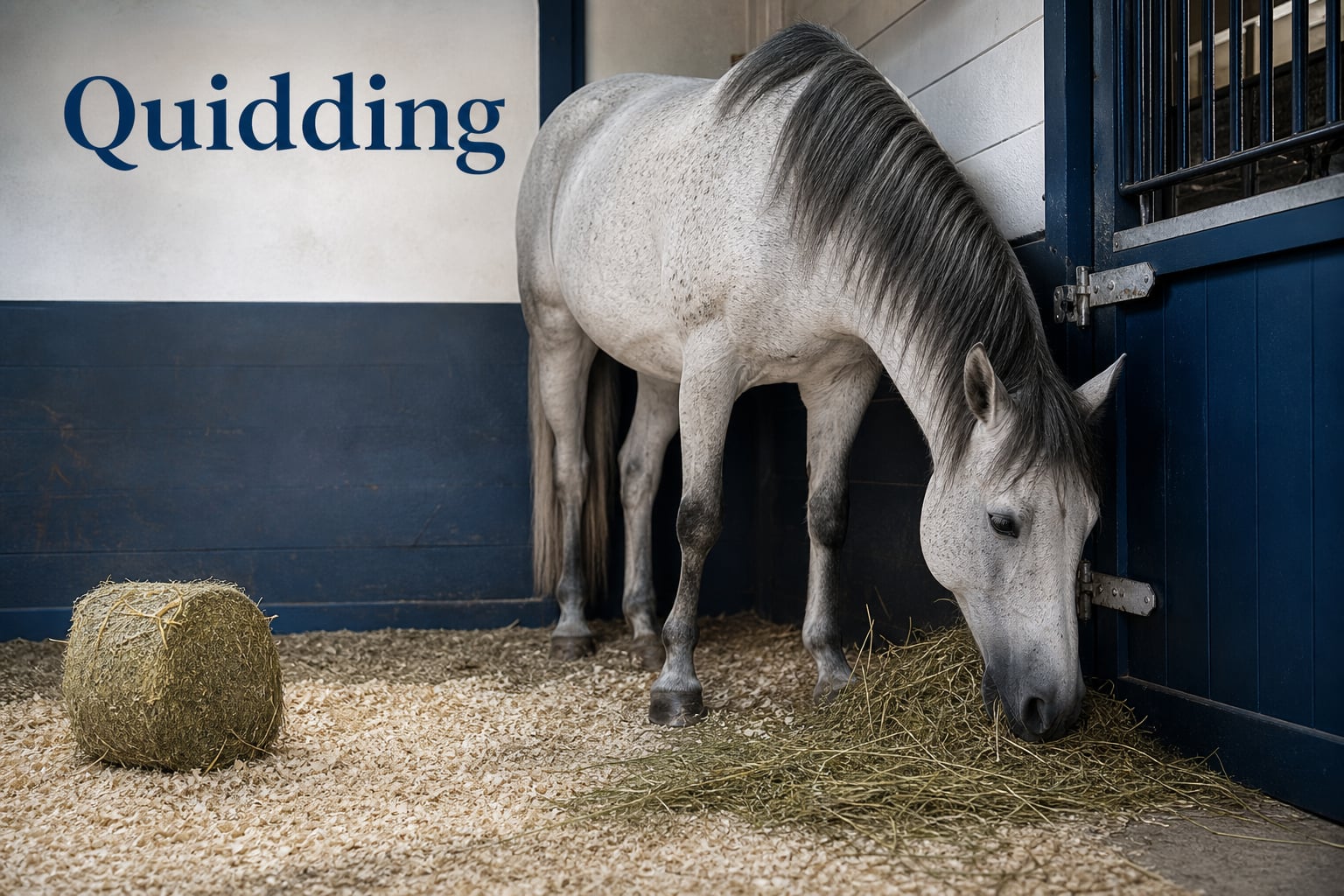
Quidding in horses is when a horse drops partially chewed feed or balls of hay from its mouth instead of swallowing them. It is often a clue that chewing hurts or does not work normally, so a horse that is quidding needs prompt attention rather than a wait-and-see approach.
Owners usually spot the evidence before they see the act itself: damp wads of forage on the floor, in a feeder, or around the muzzle. A horse may still walk up eagerly for meals, which makes the problem easy to miss until body condition or manure changes.
This guide explains what quidding means, what can cause it, what to record, and how to support feeding while your veterinarian investigates. It cannot identify the cause in an individual horse, because a mouth examination is needed to do that safely.
Table of Contents
Quidding is dropping partially chewed food rather than swallowing it
Quidding is the term for a horse dropping feed from its mouth while chewing or leaving behind balls of partially masticated hay, grass, or feed. The soft, fibrous wads are often called quids; people may also describe them as hay balls or bird’s-nest hay.
Normal mastication breaks forage into small, moist particles that the horse can swallow. With quidding, the horse makes some effort to chew but abandons the mouthful because pain, an abnormal bite surface, a weak jaw movement, or another problem gets in the way.
Quick answer: A horse dropping one piece of hay after being distracted is not automatically quidding. Repeated, soggy balls of well-chewed forage, feed spilling while the horse eats, or a new change in eating speed deserves a veterinary call.
Watch one calm meal from a distance before drawing conclusions. Horses can be untidy eaters, but ordinary mess usually looks like loose, dry forage pulled from the feeder; quids are compressed, wet, and clearly worked over by the teeth.
- Likely quidding: repeated damp wads, slow or uneven chewing, and food falling from the side of the mouth.
- May be simple mess: loose hay scattered while rooting through a net or feeder, with normal chewing and no other changes.
- Needs urgent attention: drooling, distress, nasal discharge with feed material, inability to swallow, or a horse that stops eating.
Quidding usually points to oral pain or chewing dysfunction
Dental problems are the most common explanation for quidding horses. A horse’s teeth continue to erupt and wear throughout life, and uneven wear or disease can turn every side-to-side chewing motion into an uncomfortable one.
Sharp enamel points can cut the cheeks or tongue
Sharp enamel points are edges that develop where the upper and lower cheek teeth do not meet evenly. They can rub or cut the inside of the cheeks or tongue, so the horse may alter its chewing pattern, drop food, resist the bit, or carry its head oddly while eating.
Only a qualified veterinarian or equine dental professional working within the rules that apply where you live should decide whether floating, also called odontoplasty, is appropriate. Trying to inspect deep inside the mouth or file teeth yourself risks injury and can make the underlying problem harder to assess.
Fractures and loose teeth can make each bite painful
A fractured tooth, a loose tooth, or a tooth with infection can cause marked horse mouth pain even when the outside of the face looks normal. A foul odor, one-sided nasal discharge, facial swelling, or a preference for chewing on one side makes the need for an examination more pressing.
Treatment may range from correcting a sharp area to addressing infection or extracting a diseased tooth. The right plan depends on the tooth, surrounding tissues, and imaging findings, not on how large the quids look.
Diastemata and periodontal disease trap feed between teeth
Diastemata are gaps between teeth where feed can lodge. Packed forage irritates the gums and can contribute to periodontal disease, which is disease of the tissues supporting the teeth.
Owners sometimes report cleaning sticky material from the mouth or finding that their horse seems hungry but cannot finish forage. That pattern is useful information for the veterinarian, but do not reach into the back of a horse’s mouth: the teeth, tongue, and sudden head movement can all cause serious injury.
Young horses can have retained caps while their teeth change
Young horses shed deciduous teeth, commonly called caps, as permanent teeth emerge. A retained cap or uneven eruption can interfere with the bite and cause chewing difficulty, which is one reason a young horse making hay balls should not be dismissed as merely fussy.
Soft-tissue disease can make chewing uncomfortable too
Ulcers, wounds, inflammation, and other painful conditions in the mouth can lead to horse dropping feed. Because some infectious diseases can also affect the mouth, isolate practical details from guesswork: note the signs, avoid sharing equipment if illness is suspected, and call your veterinarian for instructions.
Non-dental causes also need veterinary attention
Not every horse with quidding has a tooth problem. Disorders affecting the temporomandibular joint, or TMJ, jaw muscles, nerves, or swallowing can reduce normal chewing or swallowing and may need a different diagnostic path.
Dysphagia means swallowing is impaired, not just chewing
Dysphagia means difficulty swallowing. A horse with dysphagia may have feed or water coming from the nostrils, cough during eating, stretch the neck, appear distressed, or leave food because it cannot move it safely from the mouth to the throat.
Those signs are not a home-treatment situation. Remove access to feed only if your veterinarian directs you to do so, keep the horse calm, and seek urgent veterinary advice because aspiration and choke are concerns.
Age-related tooth loss can change the feeding plan
Senior horse teeth may be worn down, loose, missing, or less effective at grinding long-stem forage. Quidding in an older horse can be a signal that the ration now needs a different physical form even after dental treatment has addressed what it can.
Forum discussions often describe owners finding quid balls daily while an older horse remains bright and keen to eat. That experience is a useful reminder that appetite alone does not prove the horse is getting enough usable nutrition.
Warning signs show whether the problem is progressing
Quidding can reduce how much nourishment a horse gets from a meal, especially when most of the ration is long forage. Less effective chewing may also reduce the feed’s preparation for digestion, while the time spent struggling can leave the horse eating more slowly than companions.
Use this five-point check during meals and while doing routine stable work. A short written record gives your veterinarian a clearer picture than a general impression that the horse is “not quite right.”
- Look for quids. Note how often you find wet balls of partially chewed hay, where they are, and whether they are forage, bucket feed, or both.
- Watch the mouth and jaw. Feed spilling, exaggerated chewing, head tilting, drooling, or a preference for one side are meaningful signs.
- Check the horse, not only the feeder. Track body condition, topline, energy, and whether ribs or hips are becoming more prominent.
- Notice manure and water intake. Changes in manure amount, consistency, or visible long fibers can accompany reduced forage processing, although they are not specific to dental disease.
- Record red flags. Bad breath, blood, facial swelling, nasal discharge, fever, distress, or trouble swallowing should be reported promptly.
Warning: Choke is different from quidding, but poorly chewed food can raise concern. If a horse has feed or fluid from the nostrils, coughs, looks anxious, repeatedly stretches its neck, or cannot swallow, contact a veterinarian urgently and do not force feed or water.
Weight loss is often the consequence owners fear most, and it can occur even when the horse seems to eat all day. Taking regular photographs from the same angle and keeping a simple body-condition and meal record can reveal a downward trend sooner than memory can.
A veterinary dental examination finds the cause
A full veterinary evaluation is the safest route when you suspect quidding. Your veterinarian may review diet and history, observe the horse, examine the mouth with appropriate restraint and lighting, and recommend sedation, dental instruments, radiographs, or other tests if the findings call for them.
Step 1 is to document what you are seeing
Take a short video of the horse eating if it can be done without disrupting the meal. Photograph a representative quid beside a familiar object for scale, then write down when the behavior began, which feeds are affected, and whether there has been a recent diet, turnout, bit, or dental-care change.
Step 2 is to check for immediate danger without putting hands in the mouth
From a safe distance, look for swelling, discharge, drooling, distress, or an inability to eat or drink. Do not use your fingers to feel the cheek teeth, pull on a loose tooth, or pry the mouth open; a horse can bite reflexively and many mouth problems are not visible from the front.
Step 3 is to call the veterinarian and give a clear history
Tell the practice whether the horse is still drinking, eating any forage, passing manure, losing weight, or showing choke-like signs. Mention the date of the last dental examination, but remember that a horse can develop a new issue after a routine float.
Step 4 is to follow the care and feeding plan exactly
Dental correction, treatment for gum disease, extraction, pain control, or management of a non-dental condition may be part of the plan. Ask the veterinarian what the horse may eat, whether feed needs to be soaked, and which signs mean you should call back rather than changing the plan on your own.
It is reasonable to ask what each recommended procedure is intended to find or treat and what follow-up is needed. The actual scope of dental care varies with the horse’s findings and local practice, so a personal estimate has to come from the attending veterinary team rather than a generic online figure.
Feed changes can support a horse that cannot chew long forage
Feeding management should support nutrition while the cause is being diagnosed or treated; it should not replace the examination. The goal is to provide a ration the horse can chew and swallow safely, while preserving adequate forage-based nutrition in the form your veterinary and nutrition team recommend.
Soaked forage products can reduce the work of chewing
For some horses, soaked hay pellets or hay cubes can be easier to manage than dry, coarse long-stem hay. Soaking must be done thoroughly and according to the manufacturer’s directions and your clinician’s advice, because dry pellets or cubes can present a choke risk when a horse already struggles with chewing.
A horse may need a forage replacement rather than an extra bucket on top of the usual hay. Your veterinarian or qualified equine nutritionist can help match the amount and nutrient profile to the horse’s body condition, work, age, dental status, and access to pasture.
Complete feeds may help when they are fed as directed
Some senior or complete feeds are designed to be soaked and can provide a more manageable texture for horses with compromised teeth. Whether one is appropriate depends on the horse’s full ration and medical picture, so read the feeding directions and obtain professional guidance before replacing forage.
Make transitions gradually unless a veterinarian gives a different instruction. Sudden feed changes can upset the digestive system, and a horse that begins refusing a new softened meal needs follow-up rather than being left without an acceptable source of nutrition.
Meal setup can make observation and intake easier
Feed a horse with chewing difficulty separately when possible so you can see how much it consumes without competition. Provide clean water, remove spoiled soaked feed promptly, clean containers between meals, and record what went in, what was eaten, and how many quids you found.
Practical check: If a softer ration seems to help, still keep the dental appointment. Owners often find feeding changes useful, but a horse that quids may have pain, periodontal disease, or a fractured tooth that requires direct treatment.
Senior and young horses need age-specific attention
Senior horses deserve close body-condition monitoring because tooth loss and advanced wear can make long forage hard to process. A horse may require more frequent dental assessment based on its individual mouth, especially if quidding, weight loss, or a change in chewing appears.
For an older horse, the realistic goal may be comfortable eating and a well-balanced, chewable ration rather than restoring the mouth to a young horse’s condition. That is why dental care and feeding management often work together rather than being competing solutions.
Young horses also need attention during tooth changes. Report quidding, bad odor, swelling, reluctance to eat, or a sudden change in behavior so the veterinarian can determine whether retained caps or another issue is affecting the mouth.
Recovery should be measured by comfortable eating and stable condition
After dental work, follow the attending veterinarian’s instructions about food, turnout, medication, and rechecks. Some horses may eat cautiously for a short period after an adjustment, but ongoing refusal to eat, new quidding, marked pain, or choke-like signs should be reported rather than assumed to be normal.
Improvement is more than fewer hay balls. Look for relaxed, even chewing; appropriate water intake and manure; steady or improving body condition; and a horse that can finish the prescribed ration without distress.
Continue the record you started before the appointment. It makes a useful before-and-after comparison and helps the care team decide whether the plan is working or needs adjustment.
Quidding horses: common answers provide the next safe step
What does quidding mean in horses?
Quidding means a horse drops partially chewed feed or wet hay balls from its mouth instead of swallowing them. It usually signals pain or difficulty with chewing and should prompt a veterinary assessment, particularly when it is repeated or accompanied by weight loss, drooling, bad breath, or slow eating.
What causes quidding in horses?
Dental pain or abnormal tooth wear is a common cause. Sharp enamel points, fractured or loose teeth, diastemata with trapped feed, periodontal disease, retained caps in young horses, and age-related tooth loss can contribute; jaw, nerve, and swallowing disorders can also be involved.
What should I feed a horse that is quidding?
Call your veterinarian first, then follow the feeding plan they recommend. Depending on the cause, a clinician may advise a safely soaked forage product or a soaked complete feed that the horse can manage, with gradual transitions, careful hygiene, water access, and close monitoring for choke or reduced intake.
Is it normal for a horse not to eat after teeth are floated?
A horse may be cautious after dental work, but it should not be assumed that persistent refusal to eat is normal. Follow the treating veterinarian’s instructions and contact them promptly if the horse will not eat or drink, continues quidding, appears painful, or shows any difficulty swallowing.
What is the 1-2-3 rule for horses?
The phrase 1-2-3 rule is used for different horse-management guidelines and is not a diagnostic rule for quidding. It cannot tell you why a horse is making hay balls; repeated quidding needs a veterinary dental and health assessment.
Quidding needs a prompt cause-focused response
Quidding horses are not being difficult or wasteful: they are showing that eating is not working as it should. Save a sample or photo of the quids, observe a meal safely, contact your veterinarian, and use only the feeding adjustments they recommend.
Early attention can protect comfort, nutrition, and body condition. Once the cause is identified, ongoing equine dental care and a ration the horse can manage give you the best way forward.