
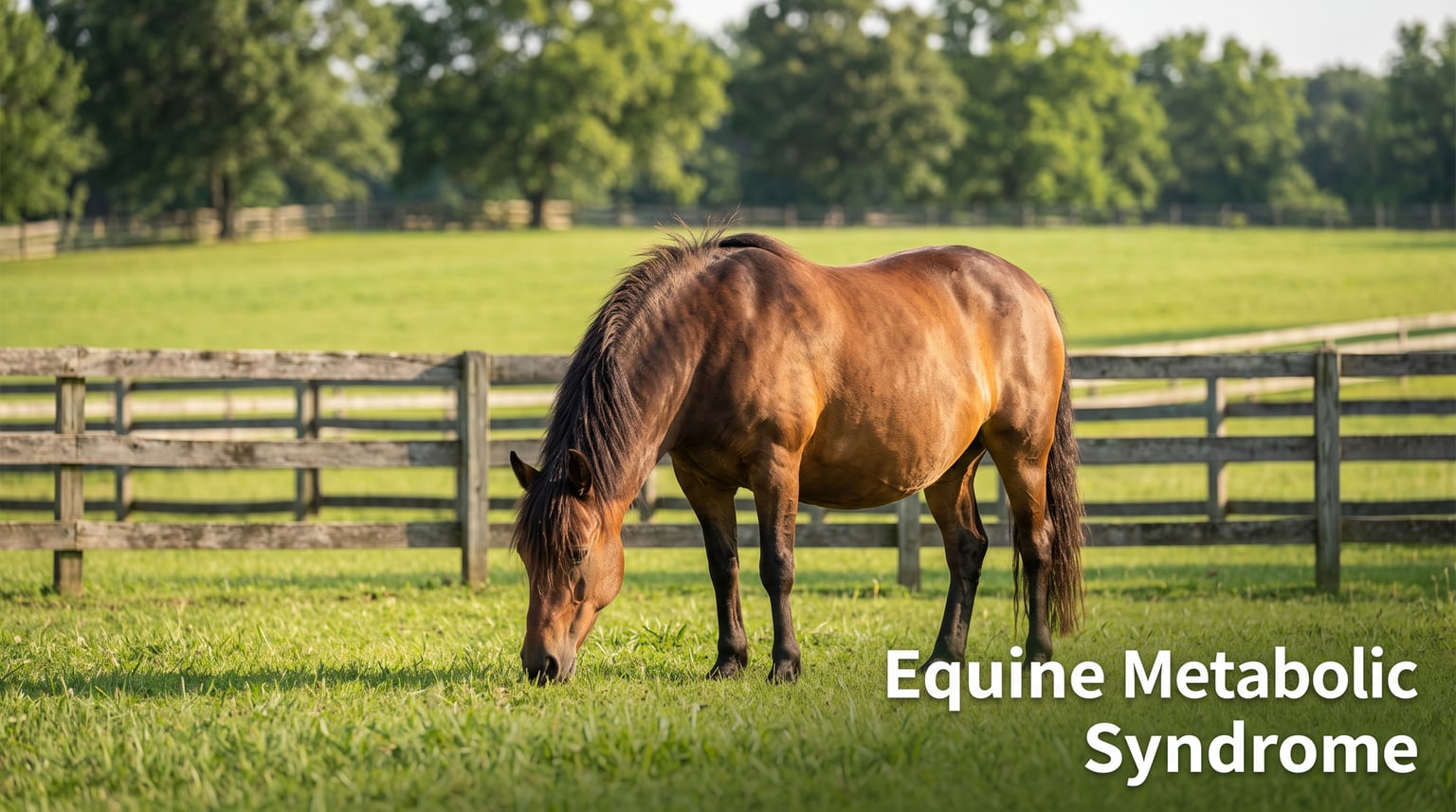
Equine Metabolic Syndrome (EMS) is one of the most significant health problems affecting horses and ponies in 2026 — and one of the most preventable. For many owners, the first clue something is wrong comes when their horse develops laminitis, by which point the underlying hormonal disorder has often been quietly building for months or even years.
The hard truth is that EMS doesn’t announce itself dramatically. It creeps up on horses that are genetically wired to be efficient, thriving on pastures and diets that would have seemed like luxury to their ancestors. By the time the condition becomes visible, real damage may already be underway in the hooves.
The encouraging news is that EMS responds well to management. Many horses with confirmed EMS live comfortable, active lives — but only when their owners understand what the condition actually involves, how to feed for it, and what warning signs to take seriously. This guide covers all of that, drawing on current veterinary guidance to give you a practical, honest picture of what managing an EMS horse looks like day to day.
Table of Contents
What Is Equine Metabolic Syndrome?
Equine Metabolic Syndrome is a hormonal disorder defined by three core features: insulin dysregulation, obesity or abnormal regional fat deposits, and an elevated risk of laminitis. The Merck Veterinary Manual describes it as “a collection of metabolic and clinical features that include insulin dysregulation as a consistent component resulting in an increased risk of laminitis.”
The comparison to human metabolic syndrome or pre-diabetes is genuinely useful here. In both cases, the body struggles to handle dietary carbohydrates efficiently, causing the hormone insulin to spike far higher and stay elevated far longer than it should. Over time, those repeated abnormal insulin spikes cause damage — in horses, most critically to the sensitive structures inside the hooves.
What EMS is not: a straightforward obesity problem. Obesity in a genetically susceptible horse makes things significantly worse, but the underlying hormonal dysfunction is the root issue. That’s why lean horses can also develop EMS, and why the condition persists even after weight loss in some individuals. The goal of management is to work with your horse’s underlying biology rather than simply fighting the scales.
How Insulin Dysregulation Works
When any horse eats grass or grain, the digestive system breaks carbohydrates down into glucose, which enters the bloodstream. The pancreas detects rising blood glucose and releases insulin, which signals cells throughout the body to absorb that glucose for energy. This is a healthy, normal process.
In a horse with EMS, the insulin response to carbohydrate intake is dramatically exaggerated. The pancreas releases far more insulin than is needed — a state called hyperinsulinemia — and the horse’s cells simultaneously become less sensitive to insulin’s signal (insulin resistance). Blood insulin levels spike after meals and take much longer to return to baseline than they do in a healthy horse.
Research has firmly established that it’s this persistently high insulin — not elevated blood sugar — that directly damages the sensitive laminar tissue inside the hoof. This specific form of laminitis is now called hyperinsulinemia-associated laminitis (HAL), and it’s thought to account for the majority of laminitis cases seen in clinical practice. Understanding this mechanism explains why diet is so central to EMS management: if you reduce the carbohydrate load, you reduce the insulin spike, and you reduce the laminitis risk.
Which Breeds Are Most at Risk?
EMS is far more common in what veterinarians call “thrifty” breeds — horse types that evolved over thousands of years to survive on sparse, poor-quality forage in harsh environments. These animals are biologically programmed to extract maximum calories from minimal food, which served them brilliantly on rugged upland terrain but causes serious problems when they’re kept on lush modern pastures.
Breeds with the highest documented EMS risk include:
Native pony breeds (Welsh, Dartmoor, Exmoor, New Forest, Connemara, Highland)
Miniature horses and miniature donkeys
Morgans
Arabians
Warmbloods (particularly Spanish breeds)
Mustangs and feral-type horses
Paso Finos
Andalusians and Lusitanos
That said, any horse of any breed can develop EMS. Quarter horses, Thoroughbreds, and even high-performance sport horses have been diagnosed. Breed predisposition shifts the odds, but it isn’t destiny — and it’s not a reason to ignore warning signs in lower-risk breeds.
The Lean EMS Phenotype
A common misconception is that all EMS horses look obviously overweight. A meaningful proportion of horses with confirmed insulin dysregulation have a normal or even below-average body condition score overall. These “lean EMS” horses often show localized fat deposits in characteristic places — a thick, hard cresty neck or fat pads behind the shoulder — while the rest of their body appears relatively normal.
This lean presentation catches owners off guard because the assumption is that EMS equals obesity. In reality, the genetic predisposition to insulin dysregulation can exist independently of overall body condition. A lean horse with a cresty neck, recurring mild foot soreness, and abnormal blood insulin levels has EMS just as clearly as an obese pony — and needs the same careful dietary management.
Recognizing the lean phenotype matters because these horses are sometimes dismissed as “fine” based on a visual assessment. If there’s any doubt, blood testing is the only way to know.
Clinical Signs and Symptoms of EMS
The signs of Equine Metabolic Syndrome can range from subtle to unmistakable. Knowing what to look for — and what combinations of signs to take seriously — is one of the most valuable things you can do as an owner of a susceptible breed.
Obesity and Regional Fat Deposits
Generalized obesity is the most visible indicator. Body condition scoring (BCS) on a 1-9 scale is the standard method for assessing this objectively. A BCS above 7 out of 9 is generally considered obese in horses, and most veterinarians use this threshold as a clinical flag for EMS risk.
Regional fat deposits are often more diagnostically significant than overall weight, particularly in horses at the lean end of the EMS spectrum. The classic locations to assess include:
Cresty neck: A thick, firm, often “cresty” ridge of fat along the top of the neck. Veterinarians sometimes assign a cresty neck score of 0-5 to track this objectively over time.
Shoulder pads: Pockets of fat behind and in front of the shoulder blades that create a padded appearance.
Tail head deposits: Soft, jiggly fat around the tail head and rump area, sometimes extending down the hindquarters.
Supraorbital fat: Puffiness or fat deposits in the hollows above the eyes — an easily overlooked sign.
Girth area deposits: Fat gathering along the lower belly and girth region.
Any combination of these regional deposits — even on a horse that appears normal weight — is worth discussing with your vet. A cresty neck in particular is one of the most reliably reported early warning signs in published research and clinical practice.
Other Signs to Watch For
Beyond the visible fat deposits, owners of EMS horses often notice a frustrating pattern of weight gain that seems out of proportion to the amount of feed being offered. The horse looks fat on seemingly nothing — and conventional dieting seems to produce little result.
Other clinical signs that may accompany EMS include:
Recurring mild laminitis, particularly during the spring grass flush or after autumn rain
Hoof growth rings (lines in the hoof wall parallel to the coronary band, indicating previous laminitis episodes)
Chronic low-grade foot tenderness, reluctance to walk on hard ground, or a “pottery” gait
Abnormal hair coat or slow shedding (when this is pronounced, consider also testing for PPID)
Increased water intake and more frequent urination (less common in EMS than in PPID, but can occur)
Lethargy or reluctance to work
Laminitis: The Most Serious Consequence
Laminitis is the complication that causes the most suffering in EMS horses, and the one that demands immediate veterinary attention. It occurs when the sensitive laminae — the interlocking tissue connecting the hoof wall to the pedal bone inside — become inflamed, disrupted, and ultimately damaged.
Signs of an active laminitis episode include a bounding digital pulse behind the fetlock joint, heat in the hooves, shifting weight between front feet, a characteristic “sawhorse stance” where the horse leans back to take weight off its front hooves, and severe reluctance or refusal to walk. Some horses show all of these signs; others may show only subtle foot soreness that owners mistake for bruising or stone damage.
In severe or repeated laminitis episodes, the pedal bone can rotate downward or sink within the hoof capsule — changes that may be visible on X-ray and that can cause permanent structural damage to the foot. Owners who have lived through serious laminitis describe it as one of the most emotionally devastating experiences in horse ownership. I’ve seen forum posts from people who managed laminitis bouts stretching 3.5 years, involving round-the-clock grazing muzzles, specialized farriery, hay soaking, and strict dietary regimes. The dedication required is immense — and it underscores why catching EMS early and managing it proactively is so much better than dealing with the consequences.
How Equine Metabolic Syndrome Is Diagnosed?
There is no single test that definitively confirms Equine Metabolic Syndrome. Diagnosis is built from a combination of clinical examination findings, history, and targeted blood work — and ideally, it happens before the horse has its first laminitis episode rather than after.
Resting Blood Insulin Testing
The starting point for most EMS diagnostic workups is measuring a resting blood insulin level. To get an accurate result, the horse must be truly fasted beforehand — no access to grass, hay, grain, or treats for a minimum of 6 hours before the blood draw. Feeding before the test can artificially inflate insulin levels and make a healthy horse appear abnormal.
Reference ranges vary between laboratories, but a resting insulin above 20 microUnits per milliliter (µIU/mL) is generally considered elevated. Some labs use slightly different cutoffs, so always interpret results with reference to the specific laboratory’s normal range. Blood glucose is measured at the same time, and interestingly, horses with EMS very rarely have high blood glucose — normal glucose alongside elevated insulin is actually the typical EMS pattern, and it’s one reason the “horse equivalent of diabetes” comparison has limits.
The main drawback of resting insulin testing is that some horses will produce a normal resting result even though they have an exaggerated insulin response when they eat. For this reason, a normal resting insulin doesn’t fully rule out EMS in a horse with strong clinical signs.
The Oral Sugar Test (OST)
The oral sugar test (OST) is currently the most widely used dynamic test for assessing a horse’s insulin response to dietary carbohydrates. It was designed specifically to catch the horses who look normal on a resting test but mount a problematic insulin spike after eating.
The protocol is straightforward: after an overnight fast, the horse is given a measured dose of corn syrup (typically 0.15 mL per kilogram of body weight — this works out to roughly 75 mL for a 500kg horse). Blood samples are then collected at 60 minutes and 90 minutes after dosing. The 90-minute insulin reading is the key measurement.
Results above approximately 45-65 µIU/mL at 90 minutes suggest insulin dysregulation, though specific cutoffs vary by laboratory and have evolved as more research has been published. The OST has become a standard tool in equine endocrinology because it more reliably reflects how the horse responds to its actual diet rather than just measuring a fasted baseline. If your vet is performing EMS testing, ask whether the OST is included — a resting insulin alone may not give the complete picture.
Additional Diagnostics
Depending on the individual horse’s history and clinical signs, your vet may also recommend several additional assessments alongside the blood work. Radiographs (X-rays) of the front feet are commonly taken in horses that have had any laminitis episodes, to check for pedal bone rotation or sinking and establish a baseline for future comparison.
ACTH (adrenocorticotropic hormone) testing is important to rule out PPID (Pituitary Pars Intermedia Dysfunction, commonly called Cushing’s disease in horses). Both conditions cause insulin dysregulation and laminitis, but they require different treatments. A horse over 10 years of age presenting with insulin dysregulation should ideally be tested for both. Your vet will likely also run a full blood chemistry panel to assess liver and kidney function before considering any medications.
EMS vs. Cushing’s Disease (PPID): What’s the Difference?
Equine Metabolic Syndrome and PPID are frequently confused, partly because they share key features — most notably insulin dysregulation and laminitis risk — and partly because they can occur together in the same horse. They are, however, distinct conditions with different causes, different affected populations, and different primary treatments.
PPID is caused by a benign tumor (adenoma) in the pituitary gland that causes overproduction of hormones including ACTH. It is primarily a disease of older horses, typically presenting after 15 years of age, and it causes a distinctive set of signs beyond laminitis: an abnormally long, curly coat that fails to shed seasonally (hypertrichosis), significant muscle wasting (particularly along the topline), a pot-bellied appearance despite muscle loss, excessive sweating, and increased water intake and urination. PPID is diagnosed by measuring elevated ACTH levels and is treated with a medication called pergolide (Prascend).
EMS, by contrast, is fundamentally a lifestyle and genetics condition. It affects middle-aged horses — typically between 5 and 15 years old — and its primary signs are obesity or abnormal fat deposits, plus laminitis. It doesn’t cause muscle wasting, abnormal coat, or elevated ACTH levels. It’s managed primarily through diet and exercise rather than medication. A horse over 10 years of age can easily have both conditions simultaneously, which is why testing for PPID should be standard practice whenever EMS is diagnosed in a mature horse.
Treating EMS Through Diet and Nutrition
Diet is the single most important treatment for Equine Metabolic Syndrome. Every other intervention — exercise, medications, supplements — works alongside diet, but nothing replaces it. The goal is clear: reduce the amount of dietary carbohydrate reaching the horse’s digestive system, lower the resulting insulin spike after meals, reduce body weight in obese horses, and maintain that progress long-term.
Restricting Non-Structural Carbohydrates (NSC)
Non-structural carbohydrates are the digestible sugars and starches in horse feed that trigger an insulin response. In hay, the main components are water-soluble carbohydrates (WSC, primarily fructans and simple sugars) and starch, together referred to as NSC. In grain and commercial feeds, starch is usually the dominant fraction. All of these raise blood insulin in susceptible horses.
The general target for horses with EMS is hay and forage with an NSC level of 10-12% or below on a dry matter basis. The problem is that common grass hays can range anywhere from 5% to 20% NSC depending on species, maturity at harvest, curing conditions, and storage. You cannot judge NSC content by looking at hay, smelling it, or assessing its quality visually. Feed analysis through a certified forage laboratory is the only reliable method, and it’s far cheaper than managing a laminitis episode.
Grain, sweet feeds, and most commercial “complete feeds” are generally not appropriate for EMS horses unless they are specifically formulated with low NSC and your vet approves them. Molasses, sugar beet pulp with molasses, and high-starch treats should be avoided. Look for a low-calorie, low-NSC vitamin and mineral balancer to ensure your horse meets its nutritional requirements without the calorie load of a regular feed ration.
Hay Selection and Soaking
Choosing the right hay is the foundation of an EMS feeding program. Late-cut grass hay (harvested later in the growing season when the plant has converted more of its stored sugars into structural carbohydrates) tends to be lower in NSC than early-cut hay. Stemmy, more mature hay is generally preferable to lush, leafy, early-season hay for EMS horses.
Legume hays — alfalfa (lucerne), clover — are not automatically disqualifying, but they are significantly higher in energy and digestible fiber than grass hay. Using legume hay as the primary forage for an obese EMS horse tends to make weight management harder. Small amounts of alfalfa added to grass hay are sometimes used to improve palatability or help a horse maintain condition during active weight loss, but the focus should remain on low-NSC grass hay as the bulk of the diet.
When feed analysis isn’t available, or when a horse is in an active laminitis episode and you need to reduce sugar intake urgently, soaking hay in water is an effective short-term tool. Research shows that soaking hay in cold water for 60 minutes, or in warm water for 30 minutes, reduces water-soluble carbohydrate content by approximately 25-30%. The key steps are:
Use a net or bag to contain the hay and make handling easier
Submerge fully and soak for the recommended time
Drain thoroughly and discard the water — it contains the sugars you’ve removed
Feed immediately after soaking to prevent mold growth
Note that soaking reduces minerals as well as sugars, so long-term reliance on soaked hay needs nutritional supplementation
Managing Pasture Access
Fresh grass — especially the lush growth of spring and early summer — is the single biggest dietary threat for an EMS horse. Grass can contain fructan and NSC levels far exceeding what any hay would deliver, and because horses graze almost continuously when turned out, pasture access can mean an enormous carbohydrate load even in a short period.
The risk periods for pasture-related laminitis in EMS horses are spring (rapid new growth, high fructan accumulation), autumn after the first frosts (stress causes grass to accumulate sugars), and during or after drought (stressed grass concentrates sugars as a survival mechanism). Many EMS owners manage their horses in a dry lot (a paddock with no grass) during these high-risk seasons, with all forage provided as analyzed, soaked hay.
For horses that can tolerate some pasture access, a well-fitted grazing muzzle can reduce grass intake by 70-80% while allowing the horse to continue moving freely and engaging in natural grazing behavior. Grazing muzzles take some adjustment time for both horse and owner, but most horses accept them within a week or two. If grazing time is permitted at all, mid-morning on dry days — after the grass has been growing in full sun for several hours — tends to be the lower-risk window, as fructan levels are typically lowest in the morning and peak in the afternoon on sunny days.
Supporting Healthy Weight Loss
If your EMS horse is obese, achieving a healthier body weight is one of the most effective interventions available. Even a 10-15% reduction in body weight can produce meaningful improvements in insulin sensitivity, sometimes bringing blood insulin levels back into the normal range.
A reasonable target is providing approximately 1.5% of the horse’s ideal body weight per day in dry matter hay intake. For an obese 550 kg horse with an ideal weight closer to 450 kg, that’s roughly 6.75 kg of hay dry matter per day. Weigh the hay — scales are far more accurate than estimating by the flake.
Do not be tempted to restrict feed severely. Horses evolved as near-continuous grazers, and very low calorie intake — particularly in already-overweight horses — carries a real risk of hyperlipemia (elevated blood fat levels). Hyperlipemia occurs when the body breaks down fat stores too rapidly, flooding the bloodstream with fat. It’s a potentially life-threatening complication that requires emergency veterinary treatment. Owners in equine forums sometimes describe being caught between two dangers: feed too much and worsen the insulin dysregulation, feed too little and trigger hyperlipemia. Work closely with your vet or an equine nutritionist to set safe, sustainable intake targets rather than attempting aggressive calorie restriction on your own.
Slow feeders, hay nets with small holes, and spreading hay across multiple small piles throughout the day can help stretch the available hay across more of the day, reducing the stress of restricted intake and encouraging more natural feeding behavior.
Exercise and Movement for EMS Horses
Exercise is one of the most powerful natural tools for improving insulin sensitivity in EMS horses — and it’s underused. Regular physical activity helps muscles absorb glucose more efficiently, which directly reduces the degree of insulin response after eating. Even moderate, consistent exercise has measurable benefits for metabolic health.
The critical caveat is timing. Never ask an EMS horse to exercise during an active laminitis episode. Exercise on an acutely laminitic horse risks catastrophic damage to already-compromised laminar tissue, and the consequences can permanently worsen the horse’s prognosis. Wait until the episode has fully resolved, confirmed by your vet, before reintroducing work.
For sound EMS horses, building a regular exercise program is one of the best investments you can make. A useful starting framework includes:
Begin with walking — even 20-30 minutes of daily hand-walking counts and provides real metabolic benefit
Introduce trot work gradually once the horse is comfortable with consistent walking sessions
Aim for at least 30-45 minutes of active movement (walk and trot) 5 days a week as a baseline
Increase intensity gradually over weeks and months — light canter work, transitions, hillwork, and polework all contribute positively
Consider paddock design: “track systems” or “paddock paradise” layouts keep horses moving more throughout the day by placing water, hay, and shelter at different points around a perimeter track
For horses coming out of a laminitis episode, rehabilitation with a farrier experienced in metabolic cases is important. Supportive shoeing or therapeutic trims can make the difference between a horse that can return to work and one that remains too footsore to exercise — which then perpetuates the metabolic problem. Exercise and dietary management work together; neither is fully effective without the other.
Medications Used to Manage EMS
Diet and exercise form the non-negotiable foundation of EMS management. Medications are typically considered when lifestyle management alone isn’t achieving results quickly enough, or when a horse is at acute risk and faster intervention is needed. They are always used alongside — never instead of — dietary control.
Levothyroxine Sodium
Levothyroxine sodium is a synthetic thyroid hormone and one of the most commonly prescribed EMS medications in equine practice. It might seem counterintuitive to prescribe a thyroid drug for a condition that isn’t primarily a thyroid disease — and it’s important to understand that EMS horses do not typically have thyroid problems. Levothyroxine is used off-label here specifically to boost the horse’s metabolic rate, helping the horse burn calories faster and lose weight more efficiently than diet alone would achieve.
Typical doses in horses range from 24 to 48 mg per day in the feed, and treatment is usually prescribed for 3 to 6 months alongside strict dietary management. The medication needs to be discontinued gradually rather than stopped abruptly. It will not fix EMS permanently — without concurrent dietary changes, weight tends to return after the medication is withdrawn. Think of it as a tool to help break the weight loss plateau, not a cure.
Metformin
Metformin is a widely used human diabetes medication that improves insulin sensitivity and reduces glucose production in the liver. Its use in horses has been explored for many years, but the results have been more complicated than initially hoped. Early research found that oral absorption of metformin in horses is significantly lower than in humans, raising questions about whether it reaches meaningful tissue concentrations.
More recent studies suggest metformin may reduce post-meal insulin spikes when administered immediately before feeding, even if systemic absorption is limited — possibly through a local effect in the gut. The current evidence is genuinely evolving, and your vet is best placed to advise on whether metformin is appropriate and supported by the most current research at the time of your horse’s diagnosis.
SGLT2 Inhibitors: An Emerging Option
Sodium-glucose cotransporter-2 (SGLT2) inhibitors are generating real excitement in equine metabolic medicine and represent the most significant new development in EMS treatment in recent years. These drugs work by blocking the kidneys from reabsorbing filtered glucose, causing excess glucose — and therefore the stimulus for insulin secretion — to be excreted in the urine. The result is lower blood glucose, lower insulin drive, and meaningful reductions in circulating insulin levels.
The drugs investigated in horses include velagliflozin and empagliflozin. Early studies have reported promising reductions in blood insulin levels in horses with confirmed insulin dysregulation, and this class of drug is being actively researched in several veterinary schools. They are not yet widely available as licensed veterinary products in all countries, and their use currently remains largely within specialist or research settings.
SGLT2 inhibitors are not yet a first-line EMS treatment, but they represent a genuinely meaningful advance for horses where dietary management has been insufficient or where laminitis risk is acute and rapid insulin reduction is a priority. If you’re managing a horse with difficult-to-control EMS, it’s worth asking your vet whether these agents are available and appropriate in your situation — the landscape is changing quickly.
Preventing Equine Metabolic Syndrome
Preventing Equine Metabolic Syndrome — or preventing a genetically predisposed horse from ever developing clinical disease — is far preferable to managing the consequences. The good news is that the core prevention strategies are the same habits that simply constitute good horsemanship for any “easy keeper” breed.
Manage body weight proactively from the start. Don’t allow ponies and thrifty breeds to become overweight in the first place. An obese pony is far easier to prevent than to slim down, and the risks accumulate with every year of excess weight. Target a body condition score of 4-5 out of 9 for EMS-susceptible breeds — leaner than many owners instinctively feel comfortable with.
Control pasture access year-round, not just in spring. Build restriction into your routine from the beginning with high-risk breeds. Autumn grass after a dry summer, grass stressed by drought or frost, and the first flush of spring growth are all dangerous periods. A grazing muzzle worn consistently from the start of ownership is far less distressing for a horse than one introduced during a laminitis crisis.
Test your hay annually. Send a representative sample of your hay to a certified forage laboratory every season. The cost is minimal compared to a laminitis emergency, and it tells you exactly what your horse is eating. If your hay consistently tests above 12% NSC, find a different source or commit to routine soaking.
Make exercise part of daily routine. Horses that move regularly — even through well-designed paddock setups that encourage natural movement — maintain significantly better insulin sensitivity than horses confined to small areas. Daily exercise is a preventive tool, not just a treatment for horses that are already sick.
Know your horse’s breed risk and test early. If you own a native pony, Morgan, Arabian, or any other high-risk breed, proactive blood testing from middle age onward can catch insulin dysregulation before laminitis ever occurs. Annual resting insulin checks are a reasonable investment for any horse over 10 years of age in a susceptible category.
Schedule regular veterinary check-ups. A physical assessment twice a year — including a body condition score, cresty neck score, and hoof health evaluation — helps catch gradual changes that owners living with their horse daily can miss. Veterinarians who see your horse periodically often notice a creeping weight gain or thickening crest before the owner does.
Don’t underestimate stress as a trigger. Significant physiological stress — transport, illness, sudden dietary change, weaning, or extreme weather — can trigger laminitis in susceptible horses even without a dietary cause. Being aware of this during high-stress periods and implementing additional precautions (such as temporarily restricting pasture access) is a sensible step for known EMS horses.
Frequently Asked Questions About EMS in Horses
Can horses recover from EMS?
EMS cannot be cured, but it can be very effectively managed. Many horses with EMS live comfortable, active lives with consistent dietary control, appropriate exercise, and regular veterinary monitoring. With weight loss and carbohydrate restriction, some horses achieve near-normal insulin levels and remain laminitis-free for years. The underlying genetic predisposition remains, however, meaning that management must continue for the horse’s lifetime.
What are the symptoms of metabolic syndrome in horses?
The main symptoms include generalized obesity or abnormal regional fat deposits (especially a thick, hard cresty neck, fat pads behind the shoulders, and fat around the tail head), recurring laminitis particularly in spring and autumn, horizontal hoof growth rings indicating past laminitis episodes, and unusual difficulty losing weight despite dietary restriction. Some horses with EMS appear lean overall but still have regional fat deposits and abnormal blood insulin responses.
Is equine metabolic syndrome the same as Cushing’s disease?
No, EMS and PPID (Pituitary Pars Intermedia Dysfunction, commonly called Cushing’s disease) are different conditions. EMS is caused by genetic predisposition and lifestyle factors, primarily affects middle-aged horses, and is managed through diet and exercise. PPID is a pituitary gland disorder more common in horses over 15 years old, and causes additional signs including an abnormally long curly coat, muscle wasting, and pot belly appearance. Both conditions cause insulin dysregulation and laminitis risk, and both can occur in the same horse simultaneously.
What triggers EMS in horses?
EMS has a strong genetic component, but it is triggered and worsened by dietary and lifestyle factors. The key triggers are obesity, high-carbohydrate diets (particularly lush spring or autumn pasture), insufficient exercise, and breed predisposition toward efficient calorie use. Genetically susceptible horses — especially native ponies and other thrifty breeds — can develop clinical EMS even on relatively modest amounts of feed if those feeds are high in non-structural carbohydrates.
What do you feed a horse with equine metabolic syndrome?
Feed a horse with EMS low-NSC grass hay (ideally below 10-12% non-structural carbohydrates on dry matter analysis), tested by a certified forage laboratory. Avoid grain, sweet feeds, molasses-containing products, and most commercial concentrates. Restrict or eliminate pasture access during high-risk periods. Provide a low-calorie vitamin and mineral balancer to meet nutritional requirements without excess calories. If hay analysis is unavailable, soak hay for 60 minutes in cold water before feeding to reduce water-soluble sugar content.
Can you reverse equine metabolic syndrome?
EMS cannot be fully reversed because the underlying genetic predisposition remains. However, clinical signs and insulin dysregulation can be dramatically improved through sustained weight loss, dietary management, and consistent exercise. Many horses achieve blood insulin levels within the normal range and remain laminitis-free for years with careful, ongoing management. The realistic framing is that EMS is a lifelong condition requiring lifelong attention — but one that is very manageable with the right approach.
Is EMS in horses hereditary?
Yes, EMS has a strong hereditary component. Certain breeds are significantly more predisposed due to genetics developed over thousands of years of surviving on sparse forage — native ponies, Morgans, Arabians, and Mustangs are prime examples. If one horse in a closely related group develops EMS, related horses should be monitored carefully. However, genetics is not destiny: appropriate management of diet, weight, and exercise can prevent clinical EMS from developing in many genetically susceptible horses.
Managing EMS: The Realistic Picture
Equine Metabolic Syndrome is a lifelong condition that asks something real of the owners who manage it. It’s not a one-time intervention or a problem that resolves itself — it’s a permanent shift in how you think about feeding, turnout, and daily care for your horse.
The owners who do best are the ones who approach it as a management challenge rather than a crisis. They test their hay, they use grazing muzzles without apology, they weigh hay rather than eyeballing flakes, and they build exercise into their horse’s week as a non-negotiable rather than an optional extra. Equestrian community discussions consistently highlight one theme: “it takes real dedication to get the job done” — and that dedication pays off in horses that stay sound, stay active, and have a good quality of life for many years.
If you suspect your horse may have Equine Metabolic Syndrome, the most important next step is a conversation with your veterinarian. Blood testing is straightforward, interpretation has improved enormously in recent years, and there has never been more practical veterinary guidance available on managing this condition. Catching it early — before the first laminitis episode — gives you and your horse the best possible outcome.