
Sweat itches every summer. Your horse rubs against the fence post until the mane is gone. You search for answers. We have walked that path with our own horses, and this guide is everything we wish someone had told us during that first bad season.
This article covers what sweet itch in horses really is, how to recognize it early, what causes the reaction, and the treatment and prevention strategies that bring real relief. You will also find an FAQ section answering the questions we hear most often from fellow horse owners, plus practical management tips drawn from real barn experiences.
Sweet itch is not a simple skin problem. It is an allergic condition that affects your horse’s comfort, behavior, and quality of life for months each year. The good news is that with the right combination of management, medication, and environmental control, most horses live comfortably through the warmer months.
Table of Contents
What Is Sweet Itch in Horses?
Sweet itch in horses is an allergic reaction to the saliva of biting insects, primarily Culicoides midges. When these tiny flies feed on your horse, proteins in their saliva trigger an over-response from the immune system, leading to intense itching, hair loss, and skin damage.
Veterinarians also call this condition equine insect bite hypersensitivity or summer seasonal recurrent dermatitis. The phrase “sweet itch” comes from the way affected horses seem almost painfully itchy, rubbing against anything they can find for relief.
The reaction is technically a type 1 hypersensitivity, which means the horse’s immune system has been previously sensitized to the insect’s saliva. Once sensitized, even a single bite can set off a cascade involving mast cells and immunoglobulin E, the same pathways behind hay fever and other allergies in people.
Who Gets Sweet Itch?
Sweet itch typically first appears when a horse is around 4 years old, though it can develop earlier or later. Native pony breeds, Icelandic horses, Thoroughbreds, and Arabians show higher rates of the condition. Some research suggests a genetic link, which means a horse with one affected parent is more likely to develop it themselves.
I have seen the pattern play out in real barns. A mare and her filly both had terrible sweet itch. Both rubbed their manes raw every summer, and both responded well to the same combination of fly rugs and supplements. That generational pattern is common enough that experienced owners tend to ask about a horse’s family history before buying.
When Does Sweet Itch Happen?
Sweet itch is seasonal. Symptoms flare from late spring through early autumn, when midges are most active. Culicoides midges thrive near standing water, wetlands, and warm, humid conditions. Horses in coastal regions, river valleys, and areas with irrigated pasture often see the worst cases.
In milder climates, symptoms may start as early as April and linger into October. In cooler regions, the season can be shorter, sometimes only eight to ten weeks of peak itch. Once cold weather arrives and the midges die back, most horses experience complete or near-complete remission.
Signs and Symptoms of Sweet Itch
The classic sign of sweet itch in horses is intense itching along the mane, tail, and midline of the belly. Affected horses rub against fences, trees, stall walls, and anything else they can reach. Many will spin to scratch one side with the other hind leg.
Early in the season, you might notice broken hairs at the base of the mane or a slightly ruffled tail. As the reaction progresses, hair comes out in clumps, leaving bald patches. The skin underneath often becomes thickened, scaly, and crusty.
Physical Symptoms to Look For
- Hair loss along the mane, tail head, withers, and dorsal midline
- Thickened, wrinkled skin in chronic cases, sometimes described as “elephant skin”
- Crusting and scabbing where the skin has been traumatized
- Open sores and weeping wounds from persistent rubbing
- Dandruff and scaling, especially along the back and croup
- Inflammation and heat in the affected areas
Behavioral Changes
Beyond the physical signs, sweet itch changes how horses act. A normally calm horse becomes irritable and restless. Some pace their paddocks. Others stand head-down, biting at their sides or stamping their feet constantly. Horses that previously tolerated grooming may flinch or pin their ears when touched near itchy areas.
Behavioral signs often appear before physical ones. We recommend paying attention to a horse who suddenly cannot settle, rubs more than usual, or starts to lose hair along the mane crest. Catching the reaction early lets you start management before the skin becomes badly damaged.
Where on the Body?
Culicoides midges prefer to feed along the dorsal midline, the mane, the tail, the withers, and sometimes the inner thighs and belly. They are weakest fliers, so they thrive where the horse cannot easily swat them. The pattern of hair loss is a strong clue. Symmetrical hair loss on both sides of the mane and tail suggests sweet itch rather than a random skin infection.
What Causes Sweet Itch in Horses?
The root cause of sweet itch in horses is an allergic reaction to proteins in the saliva of biting insects. Culicoides midges are the main culprits, but other insects can contribute, including stable flies, black flies (Simulium), horse flies, and mosquitoes.
Each bite introduces tiny amounts of saliva into the skin. In a sensitized horse, the immune system treats these proteins as threats, releasing histamine and other inflammatory compounds. The result is the itching, swelling, and skin damage you see on the outside.
The Culicoides Midge
Culicoides midges are tiny flies, often less than 3 millimeters long. They breed in standing water, damp soil, and rotting vegetation. Their activity peaks at dawn and dusk, and on still, humid days with little wind. They cannot fly far from their breeding sites, so horses kept near ponds, marshes, and slow-moving streams face the highest exposure.
Windy conditions, bright sunlight, and cold weather all suppress midge activity. This is why stabling horses during peak midge hours, ideally from late afternoon through early morning, can dramatically reduce bites.
Breed Predisposition
Some breeds develop sweet itch more often than others. Native British and Irish pony breeds (Dartmoor, Exmoor, Connemara, Welsh), Icelandic horses, Thoroughbreds, Arabians, and Shire horses all show elevated rates. Horses with darker coats may be slightly more affected, possibly because dark surfaces attract more midges.
Research into the genetic basis of sweet itch is ongoing. Some studies point to specific immune system genes that predispose certain horses to over-react. Until genetic testing becomes routine, breed and family history remain the best predictors of risk.
Why Some Horses Get It and Others Don’t
Not every horse bitten by Culicoides develops sweet itch. The condition requires prior sensitization, which happens when the horse’s immune system has been exposed enough times to build up allergen-specific antibodies. A horse can be bitten for years before suddenly developing full-blown sweet itch, which often confuses owners who think the problem “came out of nowhere.”
How Vets Diagnose Sweet Itch
Diagnosis of sweet itch in horses is usually straightforward. Your veterinarian will examine the pattern of hair loss, the season it occurs, and any history of similar reactions. The classic presentation (mane and tail itching during warmer months) is hard to confuse with other conditions.
To rule out other causes, your vet may recommend skin scrapings to check for parasites, fungal cultures to rule out ringworm, and blood tests or intradermal allergy testing to identify specific Culicoides allergens. Allergy testing is not always necessary, but it helps when planning immunotherapy.
It helps to bring photographs showing the progression of the symptoms, especially if the vet visit happens after the season ends. I have a folder on my phone of three different horses’ sweet itch patches, which made the consultation faster and clearer.
Treatment Options for Sweet Itch
There is no cure for sweet itch in horses. Treatment focuses on reducing exposure to biting insects, soothing the skin, and calming the allergic response. Most horses do best with a layered approach that combines several methods.
Topical Treatments
Medicated shampoos and soothing creams help relieve itching and prevent secondary infection. Look for products containing:
- Colloidal oatmeal or aloe vera for cooling relief
- Antiseptics like chlorhexidine to prevent bacterial infection in broken skin
- Hydrocortisone for short-term inflammation control
- Tea tree oil or manuka honey in some natural formulations
Regular bathing (roughly once a week during peak season) helps remove allergens from the skin. Use lukewarm water and a gentle, fragrance-free shampoo. Avoid over-bathing, which can dry the skin and make itching worse.
Medications
Your veterinarian may prescribe corticosteroids such as prednisolone for flare-ups. These work quickly to break the itch-scratch cycle but are best used short-term because long-term steroid use carries risks like laminitis and immune suppression.
Antihistamines such as hydroxyzine or cetirizine offer milder relief and can be used over longer periods. They work best when started before symptoms peak, so many owners begin them in early spring.
Immunotherapy
For severe cases, your vet may recommend allergen-specific immunotherapy, sometimes called desensitization. Blood or skin tests identify which Culicoides proteins the horse reacts to, and a custom vaccine is given over months to train the immune system to tolerate them. Success rates vary, but some horses see significant improvement within a year.
Natural and Home Remedies
Many owners explore natural options alongside veterinary care. Coconut oil applied topically can soothe dry, cracked skin. Omega-3 fatty acid supplements, often in the form of EO-3 or flaxseed oil, support skin health from the inside out and have helped a number of horses I know.
One forum regular shared that her mare’s symptoms improved about 60 percent after two months on an omega supplement. That kind of response is common enough that most equine nutritionists now recommend essential fatty acids as part of a sweet itch management plan.
Apple cider vinegar added to feed or water is another popular home remedy, though scientific evidence is limited. It may help by supporting overall immune balance.
Prevention and Long-Term Management
Prevention is the cornerstone of managing sweet itch in horses. The goal is to reduce midge bites as close to zero as possible, then support the skin so any accidental bites cause less reaction. Here is the approach that works best for most owners.
Physical Barriers
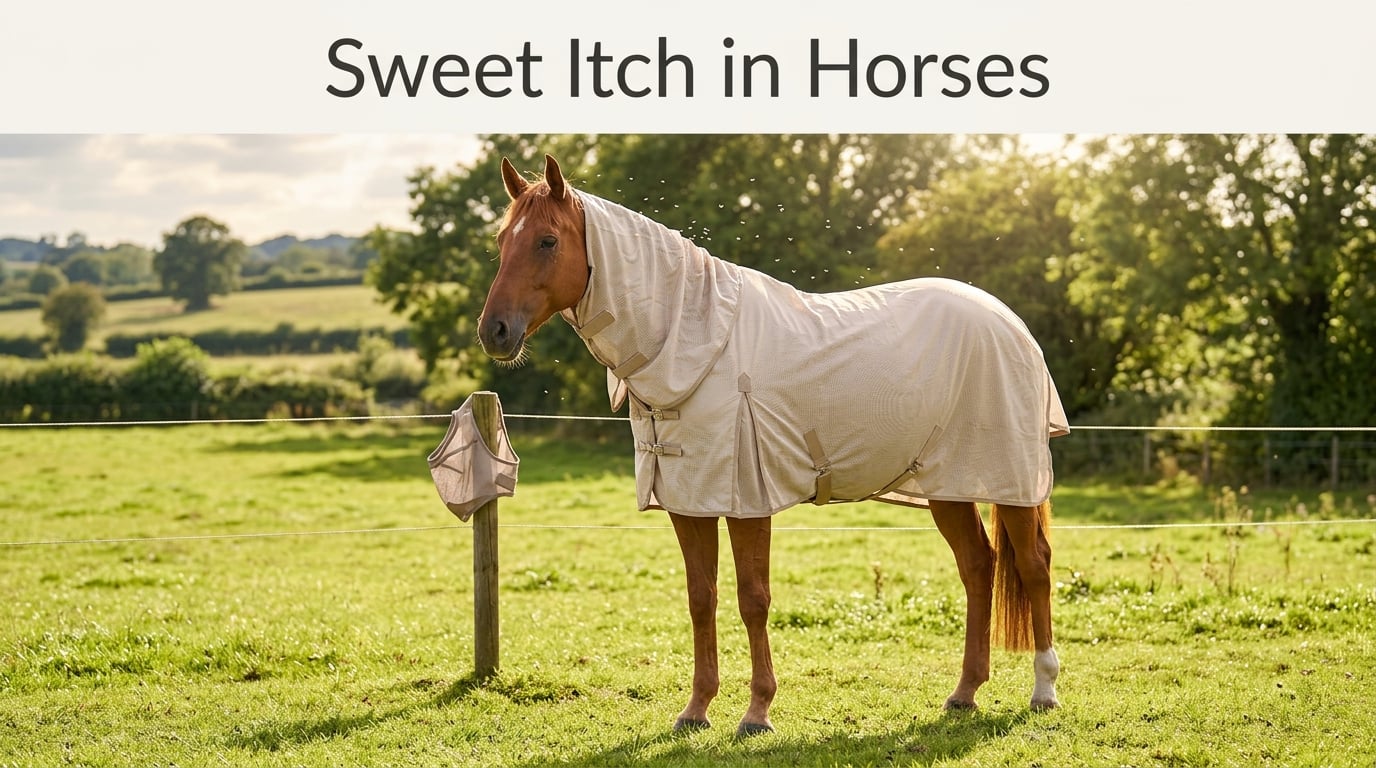
Fly rugs, sweet itch blankets, and full-body bug sheets create a barrier between your horse and the midges. The best options cover from the ears to the tail and down to the knees and hocks. Light-colored or zebra-print patterns may offer extra protection, since some studies suggest striped patterns confuse biting flies.
Fly masks protect the face and eyes. For horses with severe sweet itch, hooded fly masks extend coverage to the neck and poll. Replace rugs and masks annually or as soon as they develop holes, since even small gaps let midges in.
Stable Management
Stabling horses during peak midge hours (usually from around 4 p.m. to 8 a.m.) dramatically reduces bites. Close barn doors and windows with fine mesh screens. Use box fans in the stable, since midges are weak fliers and cannot navigate strong airflow.
Some owners install fine-mesh barrier tape around stable doors. Eliminate standing water near the barn, and consider applying farm-grade larvicides to wet areas where midges breed. Remove manure piles and rotting vegetation regularly.
Fly Repellents and Sprays
Insect repellents containing permethrin, pyrethrins, or DEET provide additional protection. Apply them along the mane, tail head, and midline where midges feed most. Reapply after rain, heavy sweat, or bathing.
Some owners prefer natural repellents with citronella, eucalyptus, or neem oil. These tend to be milder and need more frequent reapplication, but they work for horses with sensitive skin.
Nutrition and Supplements
Diet cannot cure sweet itch, but it can support the immune system and skin barrier. Focus on a balanced forage-first diet with adequate protein, vitamins, and minerals. Some owners reduce sugar and starch intake, since high-glycemic diets may amplify inflammatory responses.
Several supplements have a track record in supporting horses with sweet itch:
- Omega-3 fatty acids (fish oil, flax oil, EO-3) to calm inflammation
- Antioxidants like vitamin E and selenium to support skin repair
- Biotin and zinc for healthy hair and skin growth
- MSM (methylsulfonylmethane) for joint and connective tissue support
- Probiotics to maintain gut health, which influences immune response
One thing to avoid, based on common owner observations, is high-sugar feeds. Many report that horses on rich spring grass or molasses-heavy concentrates show worse symptoms, while the same horses do better on plain hay and ration balancer.
Seasonal Planning
Start your prevention plan before symptoms appear. That means fly rugs on by March or April, repellents in the barn, and stable routines in place by late spring. Most flare-ups happen because prevention started a few weeks too late.
Keep a simple log each season. Note when symptoms start, which products you used, how the horse responded, and when symptoms resolve. After two or three seasons, you will have a personal playbook that predicts your horse’s pattern and the strategies that worked.
Quality of Life Considerations
Severe sweet itch can significantly impact a horse’s wellbeing. Constant itching is stressful. Open wounds risk infection. Behavioral changes can make handling difficult. For a small number of horses with extreme, unresponsive cases, owners may need to discuss long-term quality of life with their veterinarian.
Most horses, even with strong sweet itch, do well with consistent management. The key is layered protection, diligent observation, and a good relationship with your vet. If you are ever unsure whether your horse’s situation is manageable, a frank conversation with your vet is the right next step.
Frequently Asked Questions
Is sweet itch contagious between horses?
No, sweet itch in horses is not contagious. It is an allergic reaction to insect bites, not an infection. Biting insects like Culicoides midges spread from horse to horse, but the allergy itself cannot pass between animals through contact. Horses may share the same pasture and only one will develop sweet itch, while the other shows no symptoms at all.
What age does sweet itch usually start in horses?
Sweet itch most commonly appears when a horse is around 4 years old, though it can develop earlier or later in life. The condition requires prior sensitization to insect saliva, which takes multiple seasons of midge exposure. A horse that has never shown symptoms before can suddenly develop sweet itch if moved to a high-midge area or after a particularly bad biting season.
Can a horse suddenly develop sweet itch even after years without symptoms?
Yes, horses can develop sweet itch suddenly, even after many seasons without problems. The immune system gradually becomes sensitized to insect saliva proteins. At some point, the body crosses a threshold and starts reacting strongly. Moving the horse to a new area with more midges, changes in immune function, or a particularly bad midge season can trigger that first visible reaction.
Does sweet itch go away on its own?
Sweet itch does not go away permanently, but symptoms typically resolve during cooler months when midges are inactive. Each autumn and winter, most affected horses return to a normal appearance as hair grows back and skin heals. The condition returns every spring unless you maintain a consistent prevention and management plan.
What should you not feed a horse with sweet itch?
Avoid high-sugar and high-starch feeds such as sweet feeds, molasses-heavy concentrates, and lush spring grass in large amounts. Many owners report that horses on these rich diets show worse symptoms. Focus on plain hay, a low-sugar ration balancer, and omega-3 rich supplements instead. Always adjust diet changes gradually and consult your veterinarian before major feeding shifts.
Does clipping a horse help with sweet itch?
Clipping the mane, fetlocks, and tail hairs does not help with sweet itch and may actually worsen it. The longer hair helps block midges from reaching the skin. Instead of clipping, focus on regular grooming with a soft brush, soothing shampoos, and full-coverage fly rugs to protect the areas where midges feed.
How often should you bathe a horse with sweet itch?
Bathe a sweet itch horse about once a week during peak season, or every two weeks for milder cases. Use lukewarm water and a mild, fragrance-free shampoo. Over-bathing can dry the skin and increase itching, while too little washing allows allergens to build up on the coat. Always rinse thoroughly and dry the skin before applying fly rugs.
What is the best treatment for sweet itch in horses?
The most effective approach combines multiple strategies, since no single treatment works for every horse. Start with a well-fitted fly rug, daily insect repellent, and stabling during peak midge hours. Add omega-3 supplements, soothing shampoos, and short courses of antihistamines or corticosteroids when symptoms flare. For severe cases, ask your vet about allergen-specific immunotherapy for long-term relief.
Final Thoughts
Sweet itch in horses is one of the most frustrating seasonal conditions owners face. Once you understand that it is an allergic reaction to insect bites, the path forward becomes clearer: reduce exposure, support the skin, calm the immune response, and partner with your vet.
Most horses with sweet itch live happy, comfortable lives with consistent management. Layer your fly protection, start early each spring, log what works, and adjust year over year. Your horse will thank you with calm summer days and a full mane and tail come autumn.