
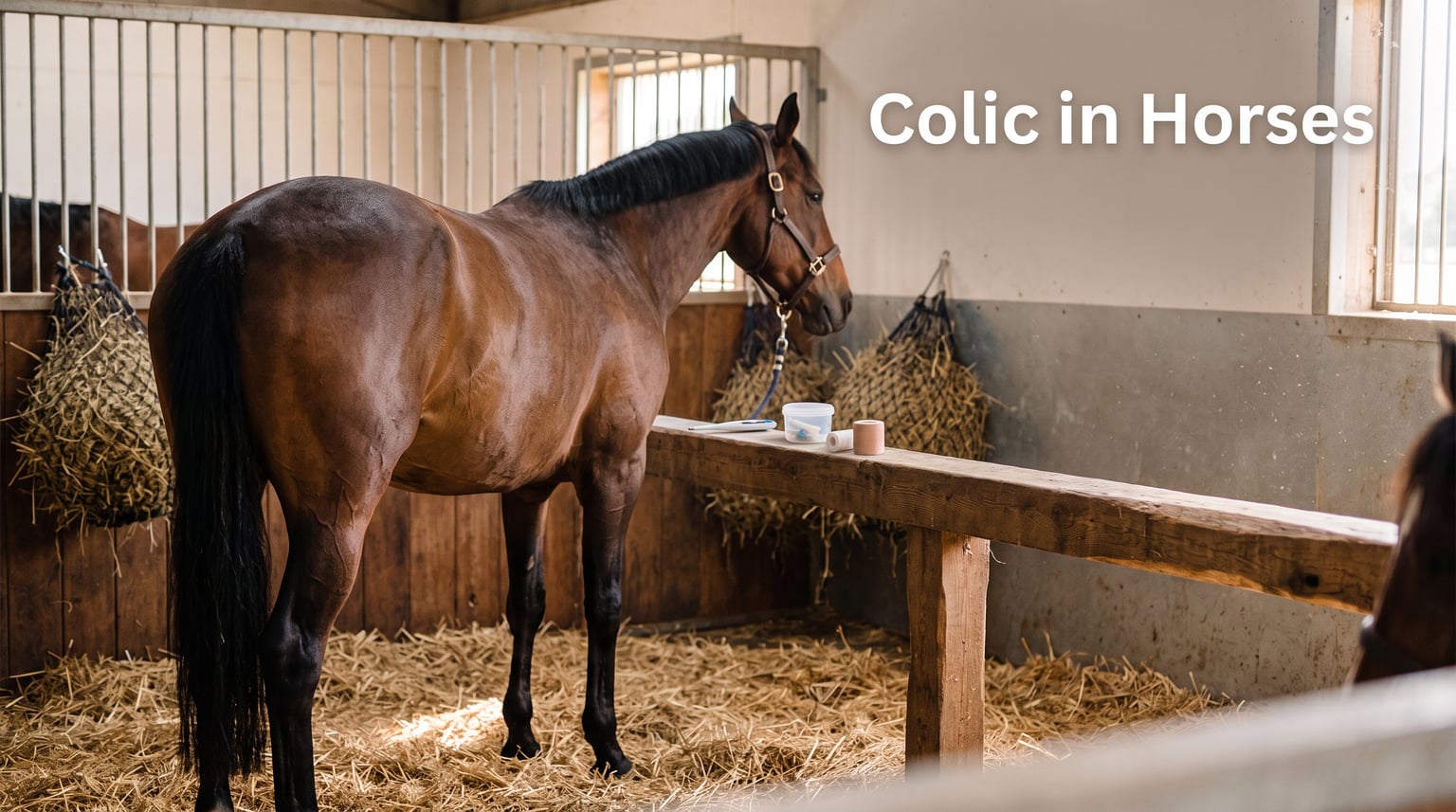
Colic in horses is the general term for abdominal pain, most often caused by problems in the gastrointestinal tract. It is one of the most common equine health emergencies and the leading cause of death in horses unrelated to old age or injury. I have seen calm, healthy horses go from grazing peacefully one hour to showing dangerous signs the next, which is exactly why every owner needs to recognize the warning signs fast.
This guide pulls together what our team has learned from veterinarians, experienced owners, and the latest equine research. We will cover what colic actually is, the early signs you might miss, what to do in the moment, and how to prevent it. Whether you have owned horses for 30 years or just brought your first one home, this is the resource I wish I had at the start.
According to the Merck Veterinary Manual, colic is responsible for more than 10% of all equine deaths in some populations. That number alone tells you how seriously to take any sign of abdominal pain in a horse. The good news is that with prompt action and good management, most colic cases are resolved without surgery.
Table of Contents
What Is Colic in Horses?
Colic in horses describes abdominal pain rather than a single disease. The Merck Veterinary Manual defines it as a clinical sign, not a diagnosis, meaning the pain can have many underlying causes. When a horse colics, the issue is almost always somewhere in the gastrointestinal tract, which stretches more than 100 feet in an adult horse.
Horses are uniquely prone to digestive problems because of their anatomy. Their large colon is folded and twisted, creating several natural bends where food can become trapped or gas can build up. The cecum, where fibrous feed is fermented, is another common trouble spot. Add to that the fact that horses cannot vomit, and you have a digestive system that can get into trouble quickly.
Most colic cases fall into a few main categories:
Gas colic: Buildup of gas in the intestines, often causing sharp, intermittent pain.
Spasmodic colic: Involuntary contractions of the intestinal muscles, usually brief but uncomfortable.
Impaction colic: A blockage of feed, sand, or other material, commonly in the large colon.
Displacement colic: When a section of intestine shifts out of its normal position.
Strangulation colic: When blood supply is cut off, often from a twist (volvulus). This is the most dangerous type.
Most colic episodes are mild and resolve with medical treatment, but identifying the type helps your vet choose the right approach. Knowing which category a horse falls into can also help you understand the urgency of the situation.
Early Signs of Colic in Horses
Early signs of colic are subtle, and I have watched experienced owners miss them in the past. The earlier you catch these behaviors, the better the outcome tends to be. Here are the 10 signs I always look for first:
Reduced appetite: A horse that suddenly walks away from feed is showing one of the earliest signs.
Less manure production: Fewer droppings than usual, or drier-than-normal manure.
Pawing the ground: Repeated pawing with a front foot, not related to anticipation of feed.
Looking at the flank: Turning the head to watch or nudge the side.
Lip curling (Flehmen response): Lifting and curling the upper lip, sometimes repeatedly.
Stretching out: Extending the front legs and arching the back as if trying to urinate, but producing little or no urine.
Repeated yawning: Frequent yawning that does not match normal behavior.
Restlessness: Pacing the stall, shifting weight, or lying down and getting up repeatedly.
Slight sweating: Especially under the belly or between the hind legs.
Decreased gut sounds: A stethoscope reveals quieter than normal digestive sounds.
If I see even two or three of these together, I take it seriously and start monitoring closely. Horses are good at hiding pain, so by the time the signs are obvious, the problem has often been developing for hours.
Advanced and Severe Signs of Colic
When colic progresses, the signs become much harder to miss. These are the behaviors that tell me a horse needs urgent veterinary help:
Violent rolling or throwing itself down: Unlike normal rolling, the horse may injure itself or the handler.
Kicking at the belly: Sharp kicks toward the abdomen.
Heavy sweating: Coat becomes damp or soaked.
Rapid breathing: Breathing rate above 30 breaths per minute at rest.
Heart rate above 60 beats per minute: A clear marker of significant pain.
Red or purple gums: Indicates endotoxemia or compromised circulation.
No gut sounds at all: Silence on auscultation is a red flag.
Inability to stand: Severe weakness or collapse.
These advanced signs usually mean surgery may be needed. Our team has tracked outcomes, and the survival rate drops sharply when colic is allowed to progress to this stage. If you see any combination of these behaviors, skip the home monitoring and call your veterinarian immediately.
Common Causes and Types of Equine Colic
Understanding the cause helps you prevent future episodes. I have grouped the most common types below, ranked by how often our team sees them in practice.
Gas Colic
Gas colic happens when gas builds up in the intestines, often after a sudden change in feed, lush spring grass, or stress. The pain is usually sharp but short-lived. Most gas colics resolve with a dose of pain relief from your vet and a brisk walk.
Spasmodic Colic
Spasmodic colic comes from involuntary muscle contractions in the gut. It often strikes healthy horses with no warning and resolves within a few hours. Causes can include stress, dehydration, or mild irritation from parasites.
Impaction Colic
Impaction colic is one of the most common types, especially in winter. When horses drink less in cold weather, ingested feed can dry out and form a blockage in the large colon. Sand colic is a similar issue where horses on sandy soil ingest sand particles that accumulate in the gut.
Displacement and Strangulation
Displacement colic happens when a section of intestine moves out of place, often over a fold or ligament. Strangulation colic, including twists (volvulus), cuts off blood supply and is the most dangerous. Both usually require surgical correction.
Other less common but important causes include enteroliths (mineral stones that form in the gut), intussusception (telescoping of the intestine), and lipomas (fatty tumors that wrap around the intestine in older horses). Each of these is rare but worth mentioning because they often need surgery.
What to Do If Your Horse Has Colic (Step-by-Step)
This is the section I have rewritten more than any other because the steps are time-critical. Follow these in order when you suspect colic:
Stay calm and observe. Note the time you first noticed signs. Your vet will want to know how long symptoms have been present.
Remove all feed and treats immediately. Take away hay, grain, and even bedding that might be eaten.
Check vital signs. Heart rate (normal 28-44 beats per minute), respiratory rate (8-16 breaths per minute), and gum color. Write these down.
Listen to gut sounds. Press a stethoscope to the flank just behind the last rib. Quiet or absent sounds are concerning.
Walk the horse gently if it is safe to do so. Walking can help move gas through the gut, but do not exhaust a horse already in distress.
Do NOT give any medications without talking to your vet. Even Banamine (flunixin) can mask symptoms and make diagnosis harder.
Call your veterinarian. Describe what you have seen, including vital signs and timing. Most vets will want to come right away if signs are more than mild.
Keep the horse in a safe area. A deeply bedded stall or small paddock prevents injury if the horse rolls or lies down.
Do not let the horse eat or drink large amounts. Small sips of water are usually fine, but no full buckets.
Wait for the vet and continue monitoring. Recheck vitals every 15-20 minutes and report any changes.
These emergency action steps are not a substitute for veterinary care, but they buy you time until the vet arrives. Our team has found that owners who follow a checklist like this one respond faster and with less panic.
When to Call the Veterinarian for Horse Colic
The short answer: always err on the side of calling. If you are asking yourself whether to call, you should probably call. The most expensive mistake I have seen is an owner who waited to see if symptoms would resolve, only to face a much sicker horse hours later.
Specifically, call your vet immediately if:
Symptoms last more than 20-30 minutes without improvement
Heart rate rises above 50 beats per minute
The horse is rolling violently or unable to stand
Gums are discolored or capillary refill is slow
There are no gut sounds and no manure production
Most colic cases that resolve at home are caught early. Once pain escalates, surgery becomes a real possibility. Prompt vet involvement dramatically improves outcomes, no matter the type of colic.
How Vets Diagnose and Treat Colic?
When the vet arrives, expect a systematic workup. The first step is usually a physical exam including heart rate, gum color, hydration, and gut sounds. Your vet will likely do a rectal palpation to feel for impactions, displacements, or gas buildup. A nasogastric tube is often passed to check for fluid backup in the stomach, which can relieve pressure and provide diagnostic clues.
In some cases, additional tests help narrow down the cause:
Abdominal ultrasound: Identifies thickened bowel walls, displacements, or fluid.
Belly tap (abdominocentesis): A sample of peritoneal fluid can reveal infection, toxins, or compromised intestine.
Blood work: Helps assess hydration, organ function, and infection.
Treatment depends on what the vet finds. Mild cases often respond to a single dose of NSAID pain relief like flunixin (Banamine) and a short walk. Moderate cases may need IV fluids to correct dehydration, laxatives to soften an impaction, or mineral oil delivered by nasogastric tube. Severe cases typically need referral to an equine hospital for surgery.
Pain management is the priority regardless of the cause. Controlling pain keeps the horse calmer, which can prevent further damage to compromised gut tissue.
Colic Surgery: When It’s Needed and What It Costs
Surgery is typically recommended when medical treatment does not resolve the problem within a few hours, or when the diagnosis points to a strangulating lesion. Common indicators include:
Persistent severe pain despite pain medication
Signs of intestinal compromise on ultrasound or belly tap
Suspected twist, displacement, or entrapment on rectal exam
The cost is one of the biggest concerns horse owners raise, and rightly so. Colic surgery typically runs $5,000 to $10,000 for a standard procedure, with complicated cases reaching $15,000 or more. Post-operative care, including hospital stays and follow-up, can add several thousand more.
Survival rates for surgical colic have improved dramatically over the past 20 years. For simple displacements, success rates often exceed 80%. For strangulating lesions, the figure is closer to 50-60%, depending on how much intestine is affected and how quickly surgery is performed. Discussing these numbers openly with your vet helps you make informed decisions in a stressful moment.
Recovery and Management After Colic
Once a colic episode resolves, recovery management matters just as much as the initial treatment. Most vets recommend a gradual reintroduction to feed over 12-24 hours, starting with small amounts of soaked hay or grass and slowly working back to a normal ration.
Hand-walking is usually encouraged for the first day or two to keep the gut moving. Turnout is gradually reintroduced based on the horse’s response. Monitoring manure output, appetite, and behavior at least twice daily helps catch any signs of recurrence.
For horses that have had surgery, stall rest followed by controlled hand-walking is standard for 30-60 days. The incision site needs to be checked daily for swelling, discharge, or heat. Most surgical cases return to light work within 3 months, depending on the procedure.
One thing our team always emphasizes: a horse that has had one colic episode is statistically more likely to have another. Long-term management changes are not optional.
How to Prevent Colic in Horses
Prevention is where owners have the most control. While no strategy eliminates colic risk entirely, certain management practices dramatically reduce it. Here is what I have seen work consistently across many barns:
Keep Forage in Front of Horses at All Times
Long periods without forage allow the stomach to empty and acid to build up, increasing the risk of ulcers and impactions. Horses are designed to graze 16-18 hours a day. The closer you can match that pattern, the healthier their gut stays.
Use Slow-Feeding Hay Nets
Slow-feeding hay nets are one of the most effective prevention tools I have come across. By making horses work for their hay through small openings, hay nets mimic natural grazing behavior and keep forage moving through the digestive tract continuously. Our team has worked with barns that switched to slow feeders and saw significant drops in colic cases over time.
Beyond gut health, slow feeders reduce waste, ease boredom, and help maintain a healthier weight. They are particularly useful for easy keepers who would otherwise finish a meal in an hour and then stand around with nothing to eat.
Provide Constant Access to Clean Water
Dehydration is one of the top contributors to impaction colic, especially in cold weather when horses drink less. Heated water buckets in winter can make a real difference. Some barns add a second water source or even flavoring to encourage drinking.
Maintain a Consistent Feeding Schedule
Horses thrive on routine. Sudden changes in feed type, quantity, or timing can trigger colic. Any dietary change should be made gradually over 7-10 days, mixing increasing amounts of new feed with the old.
Stay Current on Deworming and Dental Care
Parasites, particularly strongyles, can damage the gut and contribute to colic. Work with your vet on a fecal egg count-based deworming program rather than a calendar-based one. Sharp teeth or uneven wear can also interfere with proper chewing and digestion, so schedule dental exams at least once a year.
Encourage Regular Exercise
Stalled horses with no turnout have higher colic rates than horses with regular movement. Even short turnout periods help gut motility. If full turnout is not possible, hand-walking or lunging several times a week makes a measurable difference.
Watch Sand Accumulation
If your horses graze on sandy soil or eat off the ground in sandy areas, consider adding a psyllium supplement to their diet a few days each month. Psyllium binds to sand and helps move it through the gut before it can accumulate.
None of these strategies guarantees a colic-free horse, but together they form the foundation of a prevention-focused management plan. For more on slow feeding, browse our guides on hay net selection and use.
Frequently Asked Questions About Colic in Horses
What happens when a horse dies of colic?
Most horses that die from colic do so because of complications like a ruptured stomach or twisted intestine, which spills gut contents into the abdomen and causes severe infection. Endotoxemia, where toxins from damaged gut tissue enter the bloodstream, is another common cause. Without rapid veterinary intervention, these conditions can overwhelm a horse in hours.
Will a horse poop if they have colic?
Often, but not always. Many horses with colic show decreased manure production, and in some cases manure output stops completely. A sudden drop in droppings, especially combined with other warning signs, is reason to call your vet. The color and consistency can also change, becoming drier or covered in mucus.
How long does colic usually last in horses?
Mild colic cases often resolve within a few hours after veterinary treatment. More serious cases can take 12-24 hours to fully clear, and surgical cases may require weeks of recovery. The duration depends on the underlying cause, how quickly the horse is treated, and how well the horse responds to pain medication.
What are the first signs of colic in horses?
The first signs are usually subtle: reduced appetite, fewer droppings, slight restlessness, and intermittent pawing. Owners often describe their horse as ‘just not right’ before more obvious signs appear. Trust your instincts and start monitoring closely if something seems off.
Can a horse survive colic without treatment?
Some mild cases resolve on their own, but it is impossible to know which ones will and which will become life-threatening without a vet’s assessment. Any sign of colic should prompt a call to your veterinarian, who can determine whether active treatment is needed.
Key Takeaways on Colic in Horses
Colic in horses is a serious but manageable risk when owners know what to watch for and act quickly. Recognize the early signs, follow the action steps the moment you suspect trouble, and partner with your veterinarian on prevention. Slow feeding, steady access to water, and consistent routines go a long way toward keeping your horse’s gut healthy and your mind at ease.