
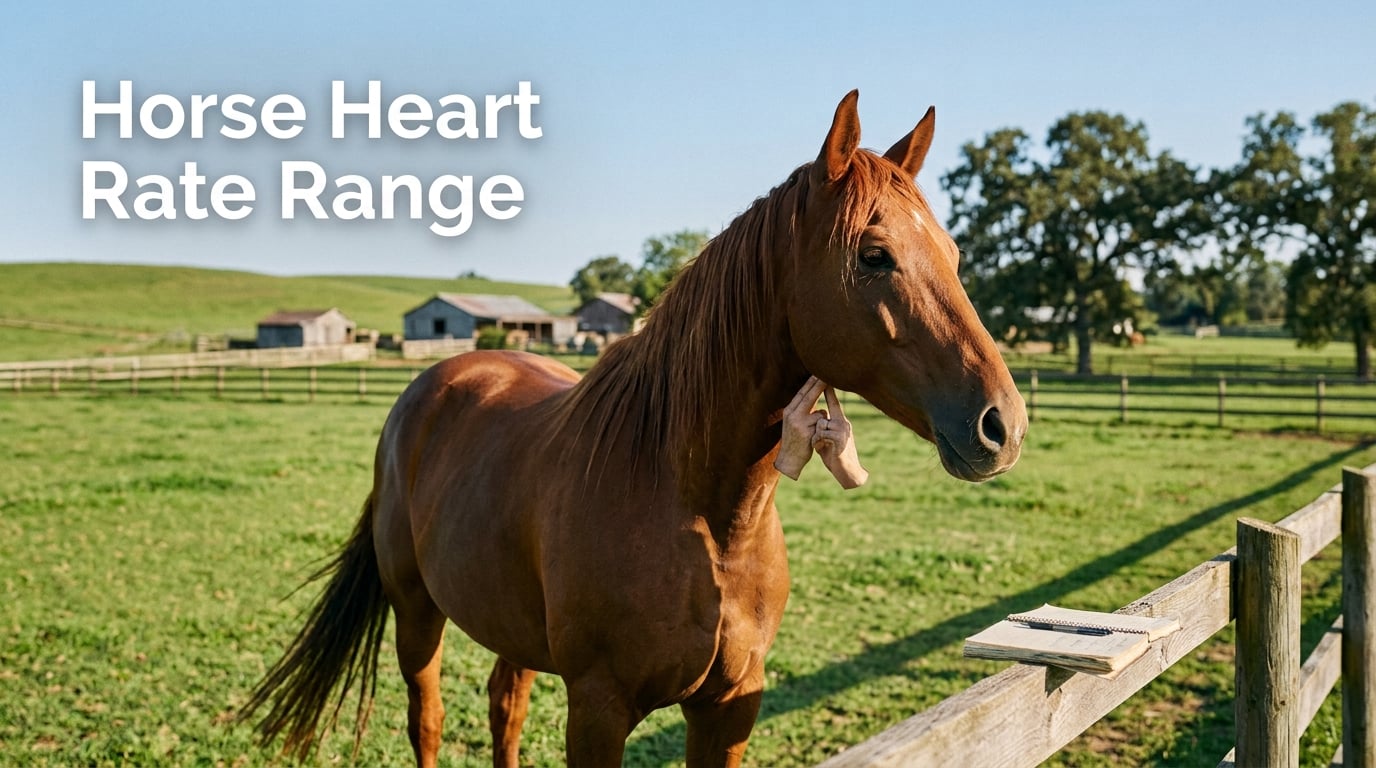
Your horse’s heart rate is one of the most important vital signs you can check at home. Knowing the normal horse heart rate range helps you spot pain, illness, or distress early, before a small issue turns into an emergency.
A healthy adult horse at rest has a heart rate between 28 and 44 beats per minute (bpm). Foals run much faster, and fit sport horses often run lower than the average. In this guide, I’ll walk you through the normal ranges by age, how to measure heart rate using either a stethoscope or your fingers, and the warning signs that mean it’s time to call your veterinarian.
Table of Contents
What Is a Normal Horse Heart Rate Range?
A normal adult horse heart rate range falls between 28 and 44 bpm, with most calm, healthy horses sitting between 30 and 40 bpm. Newborn foals are different. Their hearts beat much faster, anywhere from 80 to 130 bpm, and slow down as they grow.
Horse heart rates are slow compared to humans because horses are large animals with very efficient cardiovascular systems. An average adult horse heart weighs around 4.5 kg (about 10 lbs), and in a fit Thoroughbred or draft cross it can weigh more than 7 kg. That big heart pushes a huge volume of blood with every beat, so it doesn’t need to beat as often to do its job.
One of the most useful facts I’ve learned working with horses is the 4-to-1 heartbeat-to-breath ratio. For every one breath a horse takes at rest, its heart beats about four times. A horse breathing 12 times per minute should have a heart rate near 48 bpm. If the ratio is off, something is usually wrong.
Quick Reference: Normal Horse Heart Rate Range
Adult horse at rest: 28 to 44 bpm (most sit between 30 and 40 bpm)
Fit performance horse: 25 to 32 bpm
Newborn foal: 80 to 130 bpm
Yearling: 40 to 60 bpm
Maximum during hard work: up to 220 to 240 bpm
How to Measure Your Horse’s Heart Rate
You can measure a horse heart rate in two ways: with a stethoscope on the chest, or by feeling the pulse at one of three pulse points. Both methods give accurate results when you follow the steps below.
The fastest way to count is to count beats for 15 seconds and multiply by four. That gives you bpm without having to wait a full minute while your horse wiggles.
Method 1: Using a Stethoscope
A stethoscope is the easiest tool for beginners. The “lub-dub” sound is loud and clear on most horses.
Stand on the left side of your horse, facing the same direction as your horse.
Slide the stethoscope up under the elbow, into the girth area, where you’ll find a triangular patch of skin just behind the elbow.
Listen for the “lub-dub” sound. That’s one heartbeat.
Count beats for 15 seconds, then multiply by four to get bpm.
Repeat the count to confirm. A horse that just walked over from the pasture will read higher than one that’s been quietly standing for 10 minutes.
Method 2: Taking the Pulse by Hand
You can also check a horse heart rate by feel, with no equipment needed. There are three reliable pulse points on every horse.
Facial artery: Runs along the bottom edge of the jawbone, where it wraps around to the cheek. This is the easiest spot to find.
Digital artery: Runs down the back of the fetlock, just above the heel. Use this for lameness checks, since pain in the foot raises the digital pulse.
Coccygeal artery: Under the tail, on the underside. Useful for horses that won’t hold still.
Press gently with two or three fingers (never your thumb, which has its own pulse) until you feel a steady throb. Count for 15 seconds, multiply by four, and you have your horse’s resting heart rate.
Horse Heart Rate by Age
A horse’s heart rate changes a lot over its lifetime. Foals have fast, thready pulses, while mature athletes often have surprisingly slow resting rates. Use this table as your reference when checking young, adult, or senior horses.
| Age Group | Normal Heart Rate (bpm) | Notes |
|---|---|---|
| Newborn foal (under 1 month) | 80 to 130 | Higher in the first 24 hours, then settles |
| Foal (1 to 6 months) | 60 to 90 | Slows steadily as the foal grows |
| Yearling | 40 to 60 | Close to adult range by 12 months |
| Adult horse (2 to 15 years) | 28 to 44 | Most sit between 30 and 40 bpm |
| Senior horse (16+ years) | 30 to 48 | Slightly higher is common |
| Fit performance horse | 25 to 32 | Lower resting rate signals good cardiovascular fitness |
Why Foal Heart Rates Are So Fast
A newborn foal’s heart works harder because its body is small, growing fast, and still adjusting to life outside the womb. The heart rate drops steadily in the first weeks as the heart muscle grows and stroke volume (the amount of blood pumped per beat) increases. By the time a foal is 6 months old, the rate is much closer to an adult’s.
Factors That Affect Horse Heart Rate
Many things push heart rate up or down outside the normal range. Knowing these helps you interpret a reading correctly.
Fitness level. A horse that works regularly develops a stronger heart and slower resting rate. Fit endurance horses often rest at 26 to 32 bpm, while sedentary pasture horses sit closer to 36 to 44 bpm.
Exercise. Heart rate climbs fast during work. A horse trotting under saddle can hit 140 to 160 bpm, and a galloping horse can push 200 to 240 bpm. Recovery is also a key indicator: a fit horse returns to under 64 bpm within 10 minutes of stopping.
Stress, fear, or excitement. A trailer ride, a new environment, or even the sight of a feed bucket can bump the rate up. Always let your horse stand quietly for 10 minutes before taking a “resting” reading.
Pain. Colic, laminitis, and injuries all raise heart rate. A horse with colic often sits between 60 and 90 bpm, even before other signs show up.
Temperature and weather. Heat raises heart rate as the body tries to cool itself. A horse in 35°C (95°F) weather with high humidity will read higher than normal, especially during work.
Breed and size. Draft breeds tend toward the slower end of the normal range, while hot-blooded breeds like Arabians and Thoroughbreds often run a little faster at rest.
Recent eating or drinking. A horse that just finished a meal will read slightly higher. Wait at least 20 to 30 minutes after feeding for an accurate resting rate.
Normal vs. Abnormal: When to Worry
A normal horse heart rate range covers a lot of ground, but certain numbers are red flags. The 1-2-3 rule is a simple way to remember the basic limits.
1: A normal horse should have at least 1 gut sound per minute in each quadrant.
2: Capillary refill time (pressing a finger on the gum) should be 2 seconds or less.
3: The digital pulse should be barely felt, not strong or bounding.
High Heart Rate (Tachycardia)
A resting heart rate above 50 bpm in an adult horse is a yellow flag. Above 60 bpm is usually a problem. Causes include pain (colic is the most common), fever, dehydration, severe blood loss, or heart problems. Call your vet if the rate stays high for more than a few minutes while the horse is at rest.
Low Heart Rate (Bradycardia)
A resting heart rate under 24 bpm in an adult is unusual and worth noting. It can be normal in very fit horses, but it can also signal heart block, electrolyte imbalances, or certain poisonings. If your horse seems dull, weak, or off, contact your veterinarian even with a low reading.
Signs of Heart Failure in Horses
True heart failure is rare in horses, but it does happen. Watch for these warning signs, especially in older horses or those with a known murmur.
Resting heart rate consistently above 50 bpm without an obvious cause
Weak or irregular pulse that doesn’t match the heartbeat heard through a stethoscope
Cool extremities, even in warm weather
Swelling under the belly or along the legs
Exercise intolerance that gets worse over weeks
Fainting or collapse during work
Heart Rate During Exercise and Recovery
Exercise is the fastest way to push a horse heart rate out of its resting range. Knowing what’s normal during and after work helps you train smarter and catch problems early.
During a hard gallop, horses can hit a maximum heart rate of 220 to 240 bpm, close to their physiological ceiling. Heart rate drops fast once the horse stops moving. A fit horse returns to under 64 bpm within 10 minutes and back to baseline within 30 minutes. A slow recovery is a sign of poor fitness, dehydration, heat stress, or underlying heart or lung issues.
If you train with a heart rate monitor, common target zones are:
Warm-up: 60 to 80 bpm
Aerobic work: 80 to 140 bpm
Interval training: 140 to 180 bpm
Maximum effort: 180+ bpm
Frequently Asked Questions
What is a high heart rate for a horse?
A resting heart rate above 50 bpm in an adult horse is considered high and worth watching. A resting rate above 60 bpm is usually a sign of pain, fever, dehydration, or other illness, and you should call your veterinarian. After exercise, however, rates up to 200 to 240 bpm are normal for short bursts.
What is the 1-2-3 rule for horses?
The 1-2-3 rule is a quick check for early signs of serious illness, especially colic. 1: you should hear at least 1 gut sound per minute in each of the four abdominal quadrants. 2: capillary refill time, the color return when you press a finger on the gum, should be 2 seconds or less. 3: the digital pulse at the fetlock should be barely felt, not strong or bounding.
What are signs of heart failure in horses?
Common signs include a resting heart rate consistently above 50 bpm without an obvious cause, a weak or irregular pulse, cool legs and ears, swelling under the belly or along the legs, worsening exercise intolerance over weeks, and fainting during work. Older horses and horses with a known heart murmur are at higher risk.
What is a low heart rate for a horse?
A resting heart rate under 24 bpm in an adult horse is unusually low. It can be normal in very fit horses, but it can also signal heart block, severe electrolyte imbalances, or certain poisonings. If the rate is low and your horse seems dull, weak, or off, contact your veterinarian right away.
How do you take a horse’s pulse?
Press two or three fingers (never your thumb) against the facial artery along the bottom edge of the jawbone, the digital artery at the back of the fetlock, or the coccygeal artery under the tail. Count the beats you feel for 15 seconds, then multiply by four to get beats per minute. A stethoscope on the left side, just behind the elbow, works well too.
Final Thoughts on the Horse Heart Rate Range
A healthy adult horse heart rate range falls between 28 and 44 bpm, with foals running much higher and fit athletes running lower. Knowing your horse’s resting number, taken when the horse is calm, gives you a baseline you can compare against whenever something seems off.
Practice taking the pulse a few times a week until the 15-second count feels easy. Record the number in a notebook or app, along with the date and your horse’s recent activity. Over time, that small habit becomes one of the best tools you have for catching colic, pain, infection, or heart problems before they become emergencies.
If you found this guide useful, bookmark it so you can check the ranges and steps next time you take your horse’s vital signs. When in doubt, call your veterinarian. A quick phone call is always cheaper than a late-night emergency.