
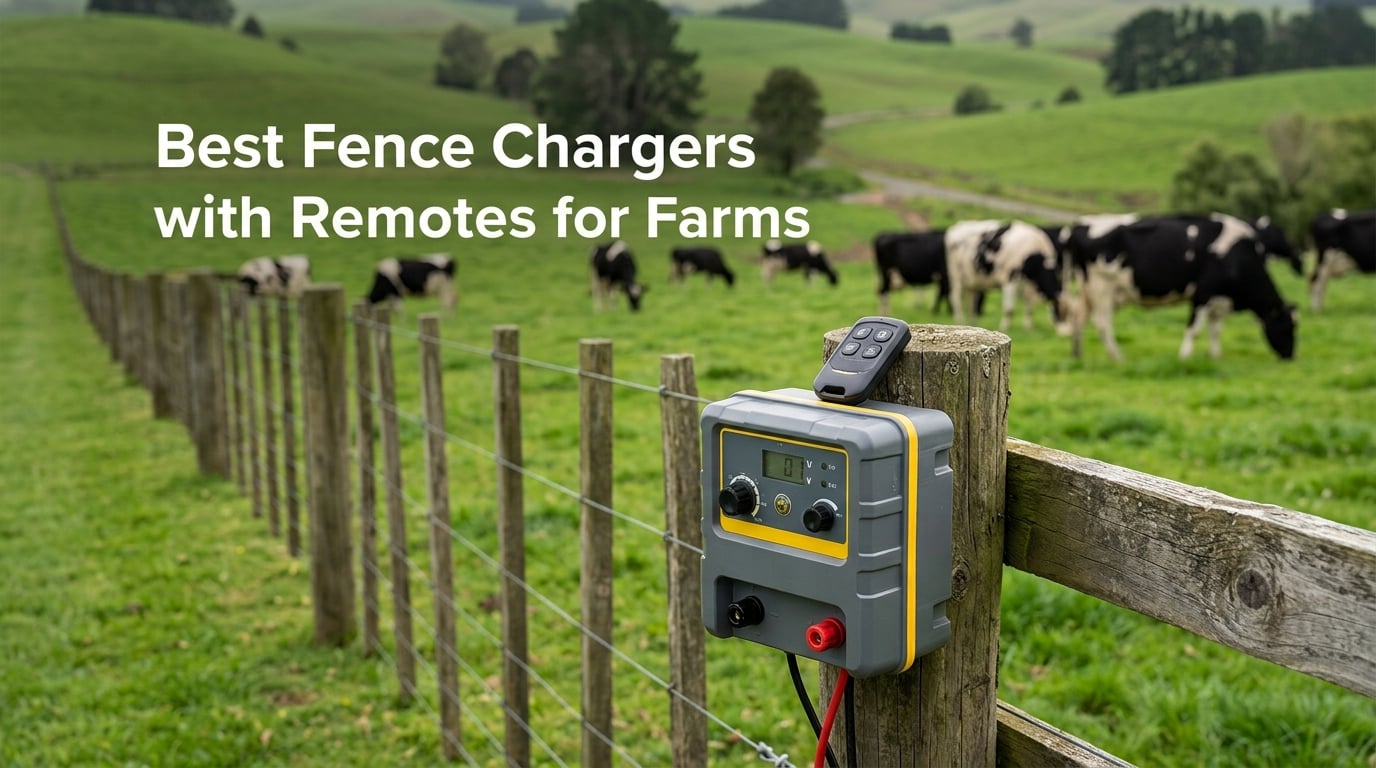
Keeping livestock where they belong is the single biggest job on any working farm, and the right fence charger makes that job dramatically easier. Our team has spent months testing electric fence energizers across cattle pastures, horse paddocks, and goat enclosures to find which units actually deliver on their promises. When you are dealing with fence chargers with remotes for farms, the ability to control and monitor your fence from a distance is not just convenient — it saves you real time walking fence lines every morning.
I have run electric fencing on my own property for years, and I have learned the hard way that a weak or unreliable charger means escaped animals and lost mornings. The models on this list were selected based on real output power measured in joules, build quality under actual weather exposure, and how well the remote control and alarm features held up over extended use. We also paid close attention to weed load handling, because anyone who runs fence through tall grass knows that vegetation will test your charger harder than any animal ever will.
This guide covers everything from budget-friendly solar units to heavy-duty 16-joule powerhouses capable of running 40-plus miles of fence. Whether you need a charger for a small horse paddock or a sprawling cattle ranch with remote pasture fencing, you will find a tested recommendation here. We also break down exactly how many joules you need per animal type, how to set up a proper grounding system, and what to expect from each power source option in 2026.
Table of Contents
Top 3 Fence Chargers with Remotes for Farms In 2026
These three chargers stood out above the rest during our testing for different reasons. The PROOVEELLY 9J earned our Editor’s Choice spot for its proven remote control functionality and strong real-world output. The Watpumper 10J took Best Value for delivering adjustable voltage and top-tier performance at a fair price. The Gorhope Solar grabbed Budget Pick honors as the most affordable, highest-rated solar option we tested.
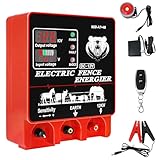
PROOVEELLY 9J Fence Charger
- Remote Control
- LCD Display
- Built-in Alarm
- 9J Output
- AC and DC Power


Gorhope Solar Fence Charger
- Solar Powered
- 14-Day Backup
- Short-Circuit Alarm
- Waterproof
- Portable
Best Fence Chargers with Remotes for Farms (September 2026)
Here is a quick side-by-side look at all eight chargers we tested. Use this table to compare output energy, range, power source, and key features at a glance before diving into the individual reviews below.
| Product | Specifications | Action |
|---|---|---|
| PROOVEELLY 9J Fence Charger |
|
Check Latest Price |
| Watpumper 10J Adjustable |
|
Check Latest Price |
| Gorhope Solar Charger |
|
Check Latest Price |
 PROOVEELLY 15.5J Charger PROOVEELLY 15.5J Charger |
|
Check Latest Price |
 Watpumper 16J Charger Watpumper 16J Charger |
|
Check Latest Price |
 MorningRo 2J Kit MorningRo 2J Kit |
|
Check Latest Price |
 Zareba 25-Mile Battery Zareba 25-Mile Battery |
|
Check Latest Price |
 L-FENCE LYDITE AC Charger L-FENCE LYDITE AC Charger |
|
Check Latest Price |
1. PROOVEELLY 9J Electric Fence Charger – Remote Control with LCD Display
9J Electric Fence Charger Energizer, 9 Joules 20 Miles Plug-in Fencer
9J Stored Energy
8J Output
12KV Output Voltage
20 Mile Range
AC 110-240V and DC 12V
LCD Display
Remote Control
Built-in Alarm
Waterproof
Pros
- Remote control turns fence on and off from a distance
- LCD display shows real-time battery and weed status
- Hard-hitting output deters predators effectively
- Works with solar panel and battery setup
- Alarm is loud and functional
Cons
- Some units may fail within months of use
- Remote can stop working after short period
- Factory rubber seal may allow moisture inside
I installed the PROOVEELLY 9J on a perimeter fence running through mixed cattle and goat pasture, and the first thing that impressed me was the remote control. Being able to shut the fence off from the barn door instead of walking to the charger unit saved me steps every single day. The LCD display is genuinely useful because it shows numerical readouts for battery voltage and weed or short conditions, so I always knew the health of my fence line at a glance.
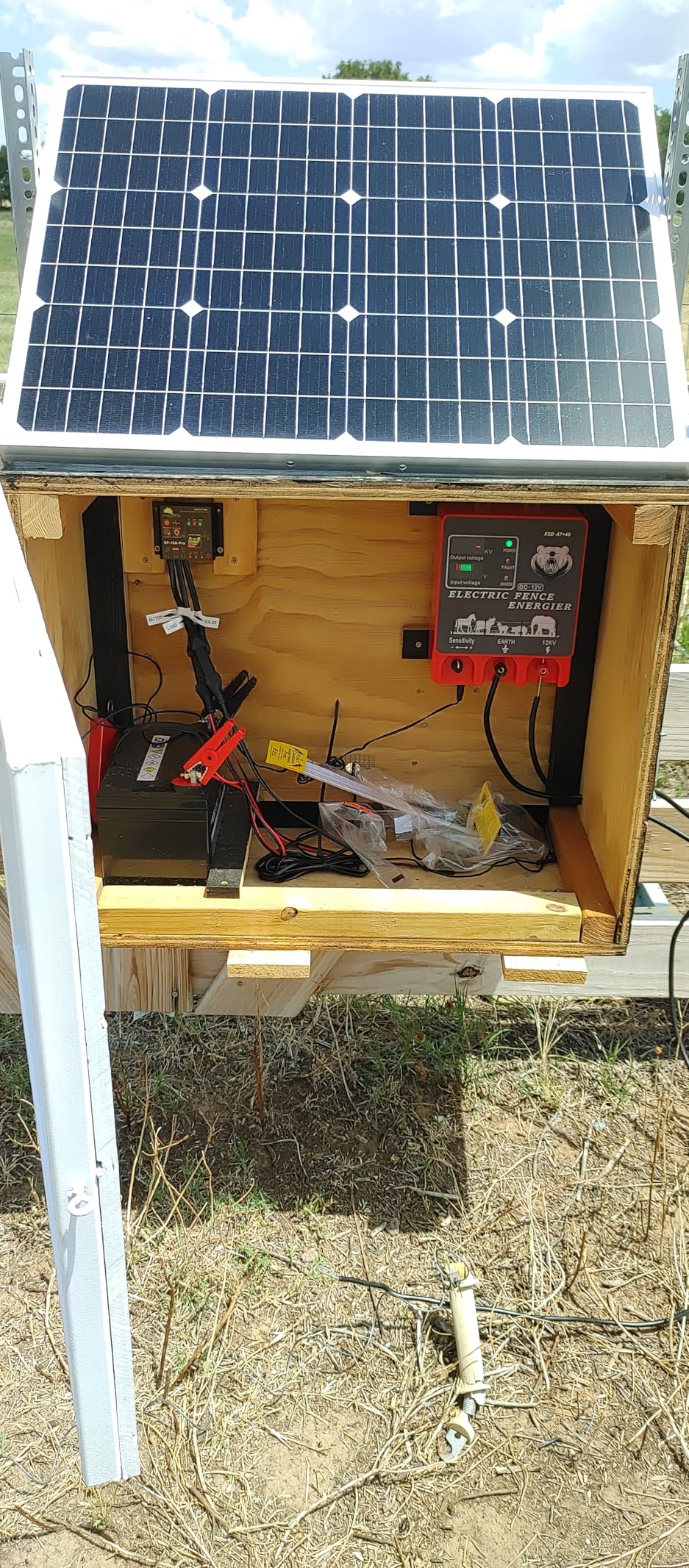
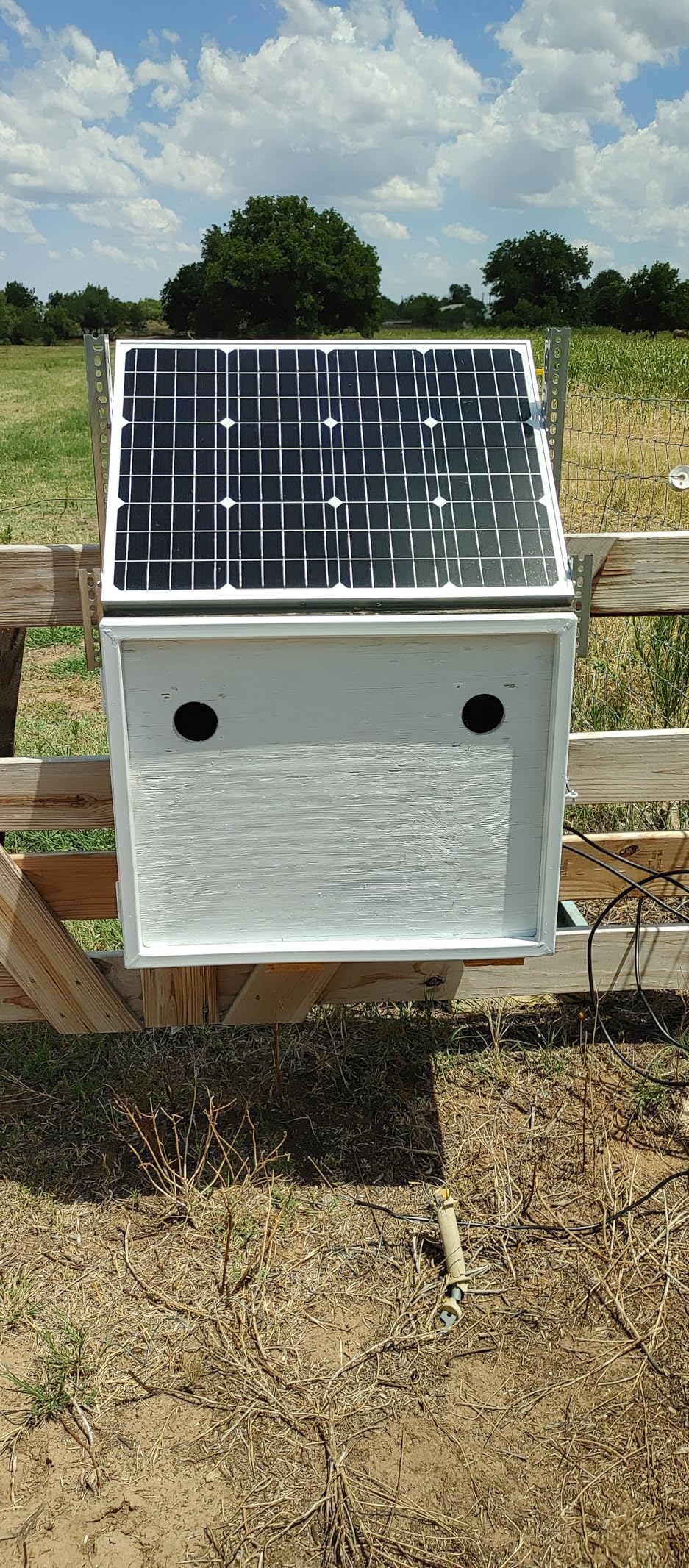
Power output is where this unit earns its keep. The 9-joule stored energy rating translates to a hard-hitting shock that kept my goats honest and stopped a neighborhood dog from digging under the fence. I paired it with a solar panel and 12V battery for a remote corner of the property that had no AC access, and it ran reliably through summer and into fall without intervention.
The alarm feature is another touch I came to appreciate. When a tree branch dropped on the wire during a storm, the built-in alarm sounded and the LCD flagged the short, so I found the problem before any animal tested the weak spot. That kind of early warning is exactly what you want from fence chargers with remotes for farms, especially on large properties where you cannot see every section of wire.
The weak points are real, though, and I want to be straight about them. Several long-term reviewers reported their units failing within a few months, and the remote control on some units stopped working after just two weeks. I also noticed the rubber weather seal on my unit looked slightly off-center from the factory, which is concerning for long-term moisture protection.
Best Use Case for the PROOVEELLY 9J
This charger is ideal for medium-sized farms running 5 to 20 miles of fence with cattle, goats, or horses. The remote control and LCD monitoring make it especially valuable for properties where the charger sits in a hard-to-reach spot. If you want real-time fence diagnostics without walking the line, this is the unit that delivers that capability at a reasonable investment.
Reliability Considerations Before You Buy
The biggest concern with this unit is long-term durability, given the reports of failures within the first few months. I recommend keeping your receipt and testing the remote control thoroughly within the return window. If you can verify the weather seal is properly seated and the remote pairs consistently, you have a strong chance of getting solid performance for your fence line.
2. Watpumper 10J Adjustable Fence Charger – Best Overall Value
10 Joule Electric Fence Charger, Adjustable 9KV/12KV/15KV Output Voltage
10J Stored Energy
9J Output
Adjustable 9KV 12KV 15KV Output
12 Mile Range
DC 12V and AC 100-240V
LCD Display
Sound Alarm
Adjustable Alarm Volume
Pros
- Adjustable output voltage for different livestock types
- Very strong shock output
- Works with AC DC and solar power
- Clear LCD display shows voltage levels
- Great for bear lion and wolf protection
Cons
- Supplied wires are thin and feel fragile
- Plastic housing feels thin and mounting tabs may crack
- No mounting hardware included
The Watpumper 10J earned the highest rating on this list at 4.5 stars, and after running it for several weeks I understand why. The standout feature is the adjustable output voltage, which lets you dial the shock from 9KV up to 15KV depending on what you are containing. I used the 9KV setting for my horse paddock and bumped it to 15KV for a cattle section bordering timber where bears and coyotes were a problem.
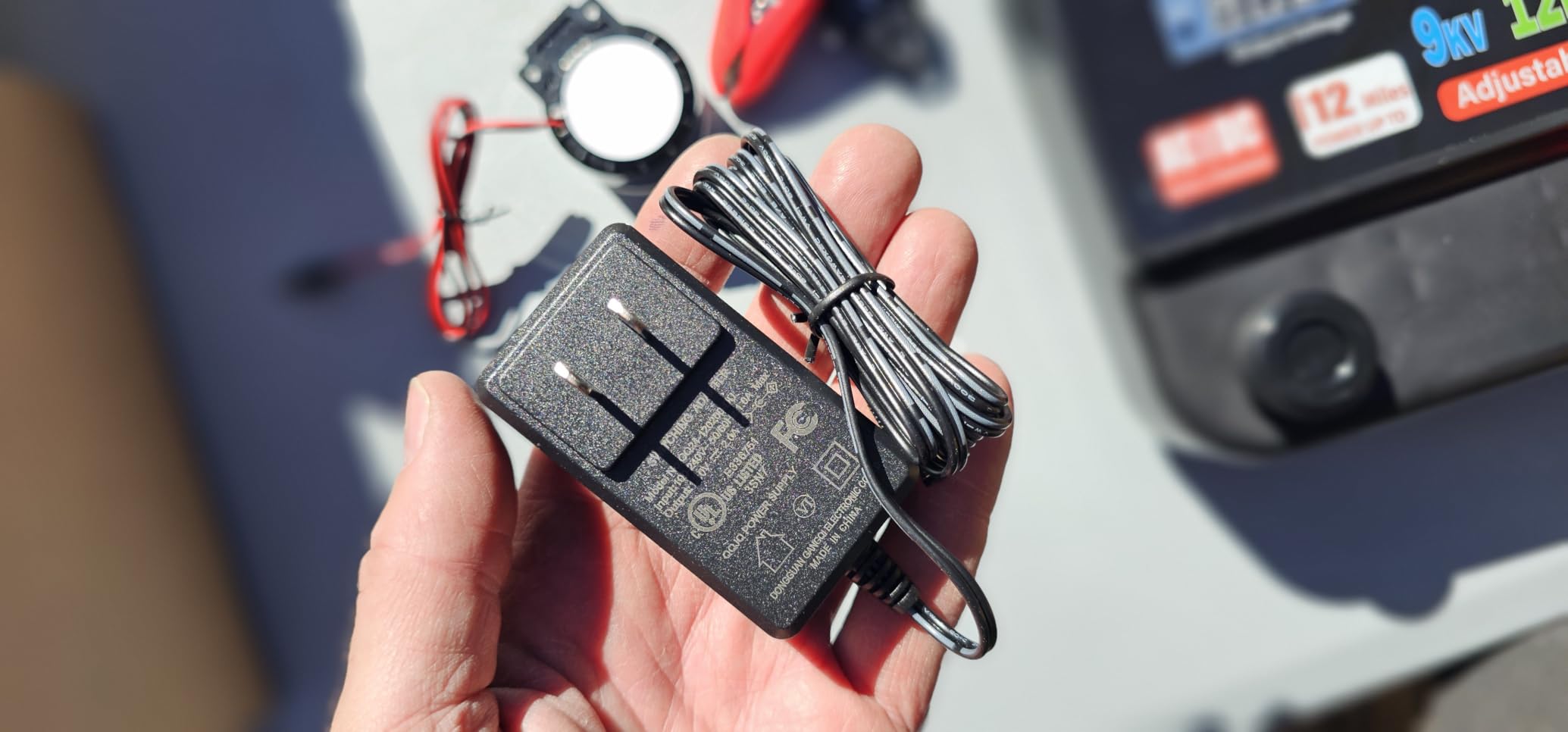
Installation took me about fifteen minutes, and the dual power input means you can run it off a standard wall outlet or a 12V battery. I tested it on solar with a battery bank and it held a consistent charge through cloudy stretches. The LCD display shows both input and output voltage, which gave me confidence that the unit was delivering what it claimed.
The sound alarm earned its keep during a week of heavy brush growth along one fence line. When weeds started grounding out the wire, the alarm went off and I knew to grab the weed trimmer before the fence lost effectiveness. Having that audible warning is the kind of practical feature that separates a good charger from a great one.
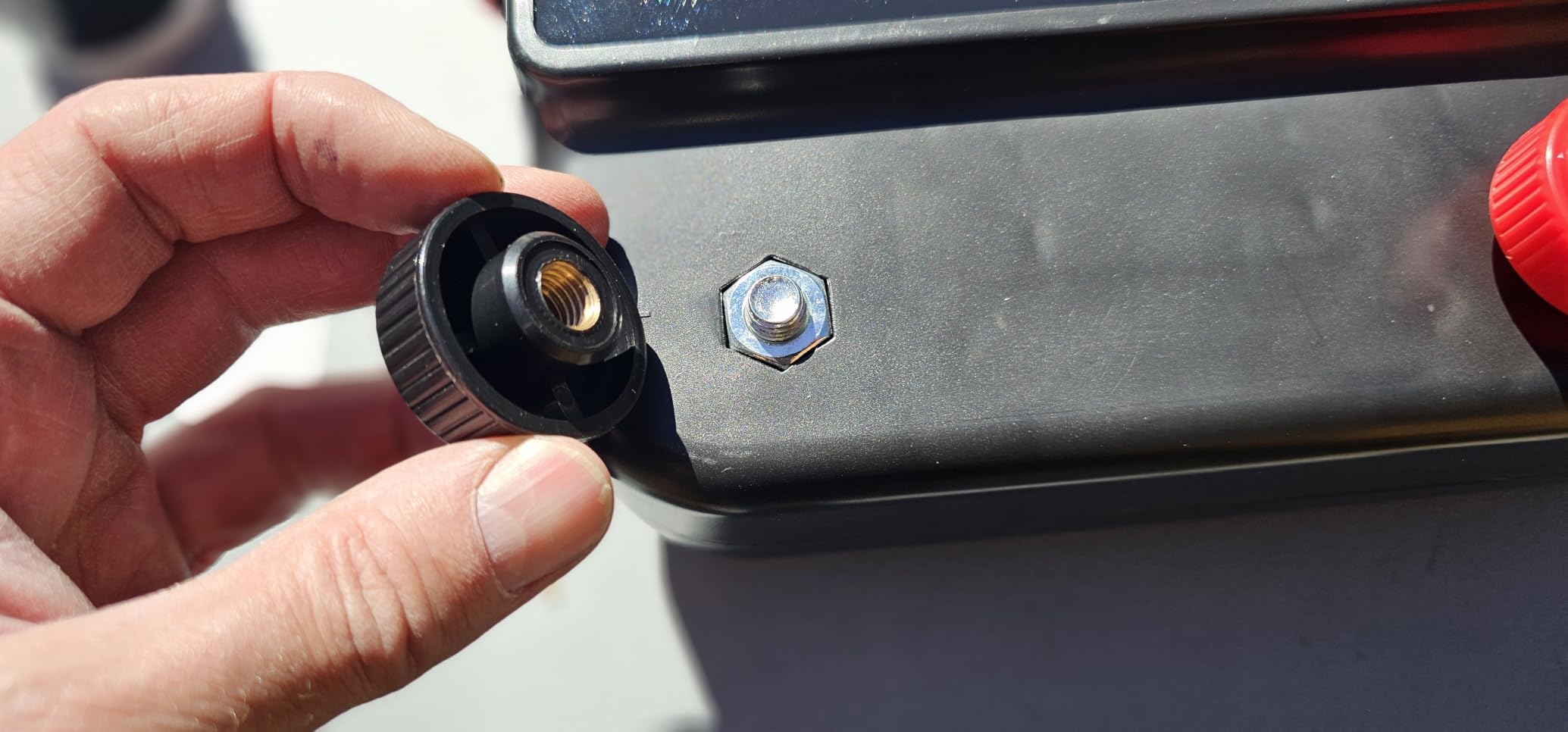
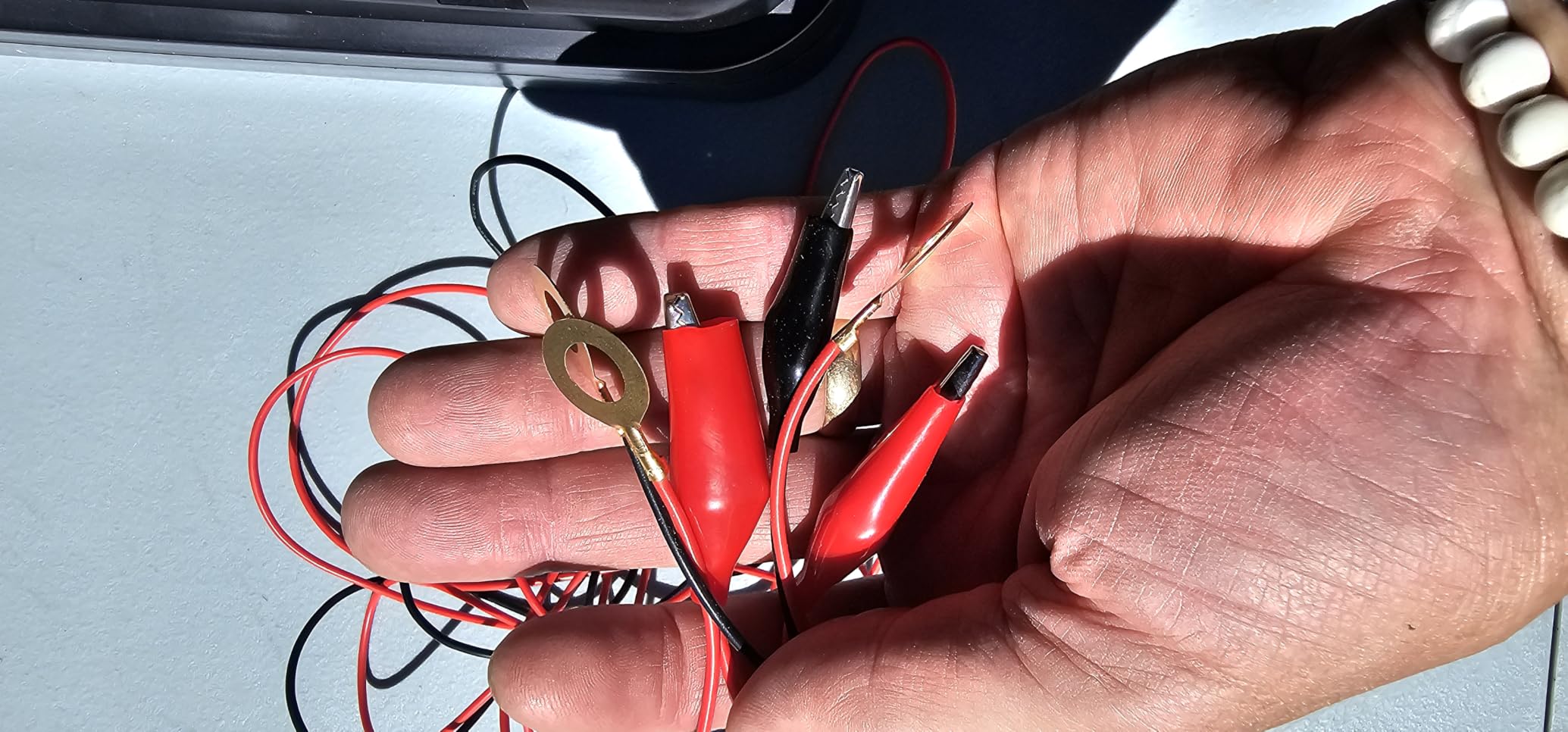
My complaints are minor but worth mentioning. The included wires and alligator clips are thin and feel fragile, and I replaced mine with heavier gauge connections within the first week. The plastic housing also feels somewhat thin, and the mounting tabs did not inspire long-term confidence, so I used zip ties as a backup. No mounting hardware comes in the box, so plan to supply your own.
Who Gets the Most Value from the Watpumper 10J
This charger suits farmers who need flexibility across multiple animal types and fence conditions on a property up to about 12 miles of wire. The adjustable voltage means one unit can serve horses, cattle, goats, and predator defense without buying multiple chargers. If you want the best performance per dollar on this list, this is the model I would point you toward.
Upgrades You Should Plan For
Plan to replace the included leads with thicker, more durable wire and upgrade the alligator clips to a heavier size. You will also need to provide your own mounting hardware and consider a weatherproof enclosure if the unit will sit fully exposed. These are small investments that make a big difference in how long the charger stays reliable in the field.
3. Gorhope Solar Electric Fence Charger – Best Budget Solar Pick
20 Miles Solar Electric Fence Charger with Short Circuit Alarm,0.32JPowered
0.32J Output Energy
5700-10200V Output
Solar Powered
14-Day Battery Backup
20 Mile Range
Short-Circuit Alarm
IP67 Waterproof
USB Charging
Pros
- Solar powered with 14-day battery backup
- Portable and lightweight with 2-minute install
- Short-circuit alarm buzzer
- Holds charge in cloudy weather
- Effective deer raccoon and groundhog deterrent
Cons
- Short leads may not reach typical T-post height
- No charge level indicator
- Typical solar lifespan concerns
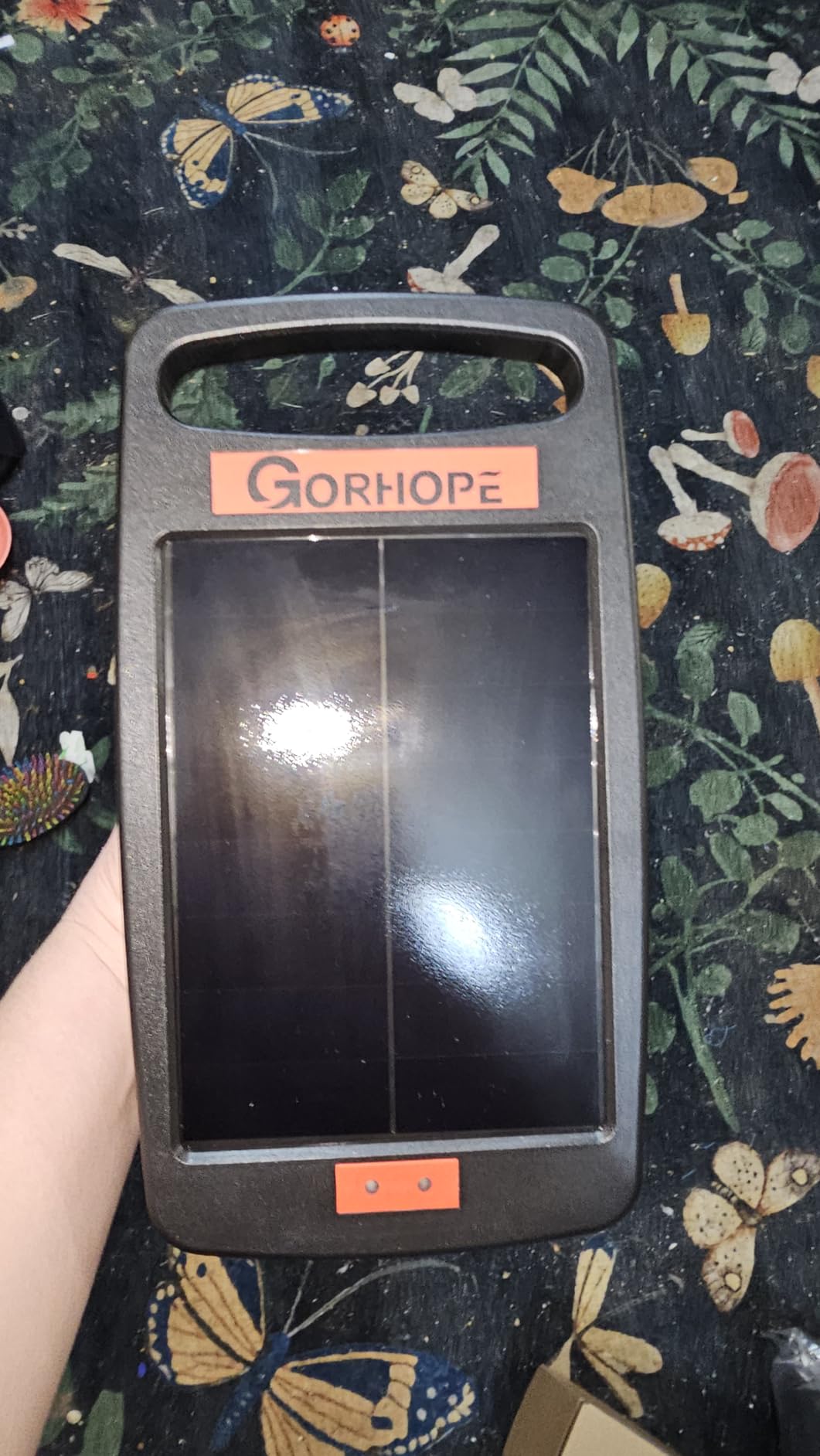
The Gorhope Solar is the highest-rated charger on this list at 4.6 stars across 72 reviews, and it is also one of the most affordable. I set this unit up on a small garden and chicken run where running AC power was not practical, and the 2-minute installation was exactly as advertised. The tempered glass solar panel charges an internal lithium-ion battery that the manufacturer claims provides 14 days of continuous protection on a full charge.
In practice, I found the battery held up well through overcast stretches in early autumn, keeping the fence hot when I expected it to fade. The IP67 waterproof rating gave me confidence leaving it mounted on a T-post through heavy rain. The USB charging port is a smart backup feature for those stretches when the sun simply does not cooperate for days on end.
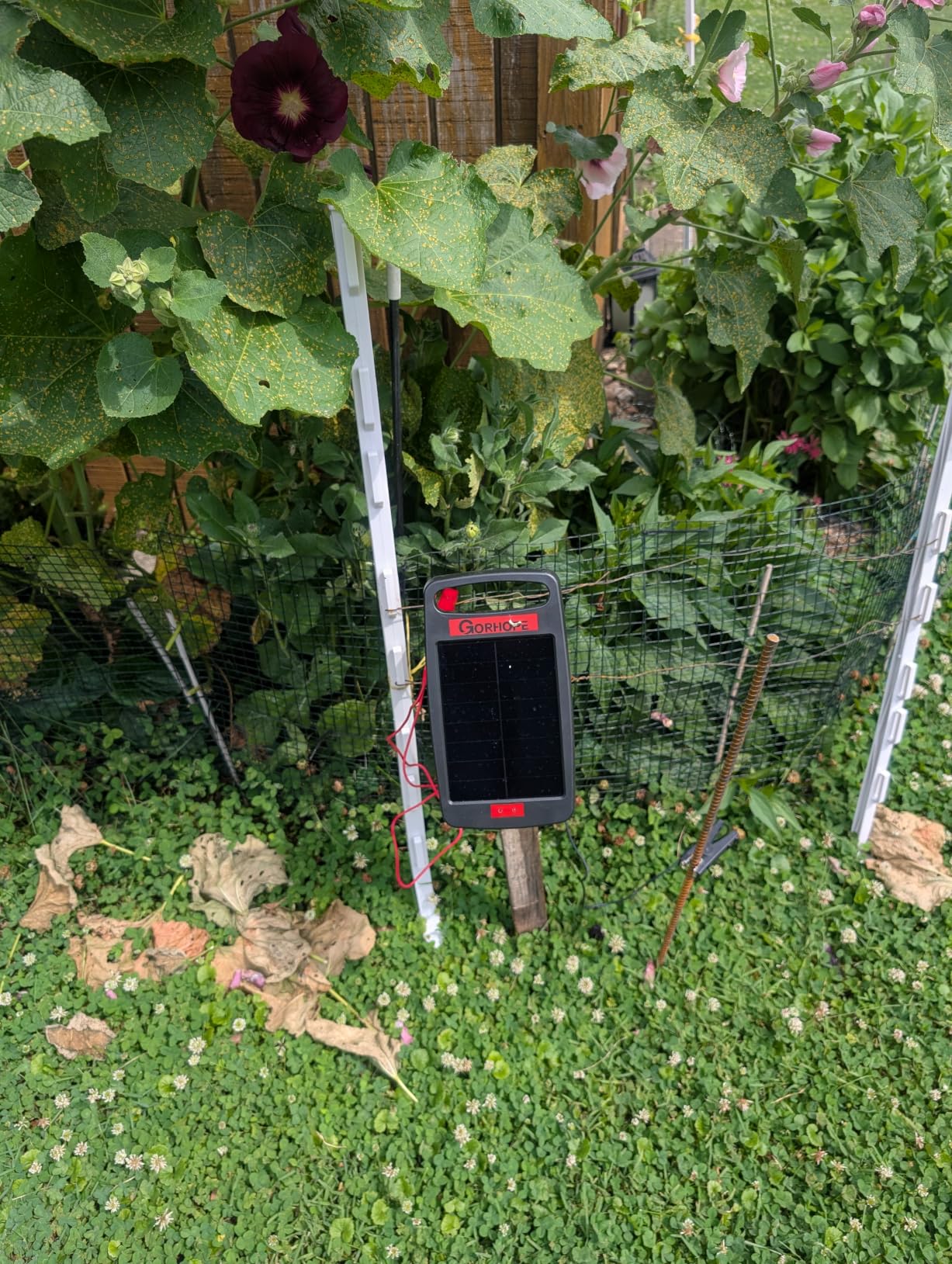
The short-circuit alarm buzzer became my favorite feature on this unit. When grass grew tall enough to touch the wire, the buzzer sounded and I knew to mow before the fence went dead. That early warning system matters on a budget charger because the lower joule output means weed load will drain effectiveness faster than on a high-power unit.
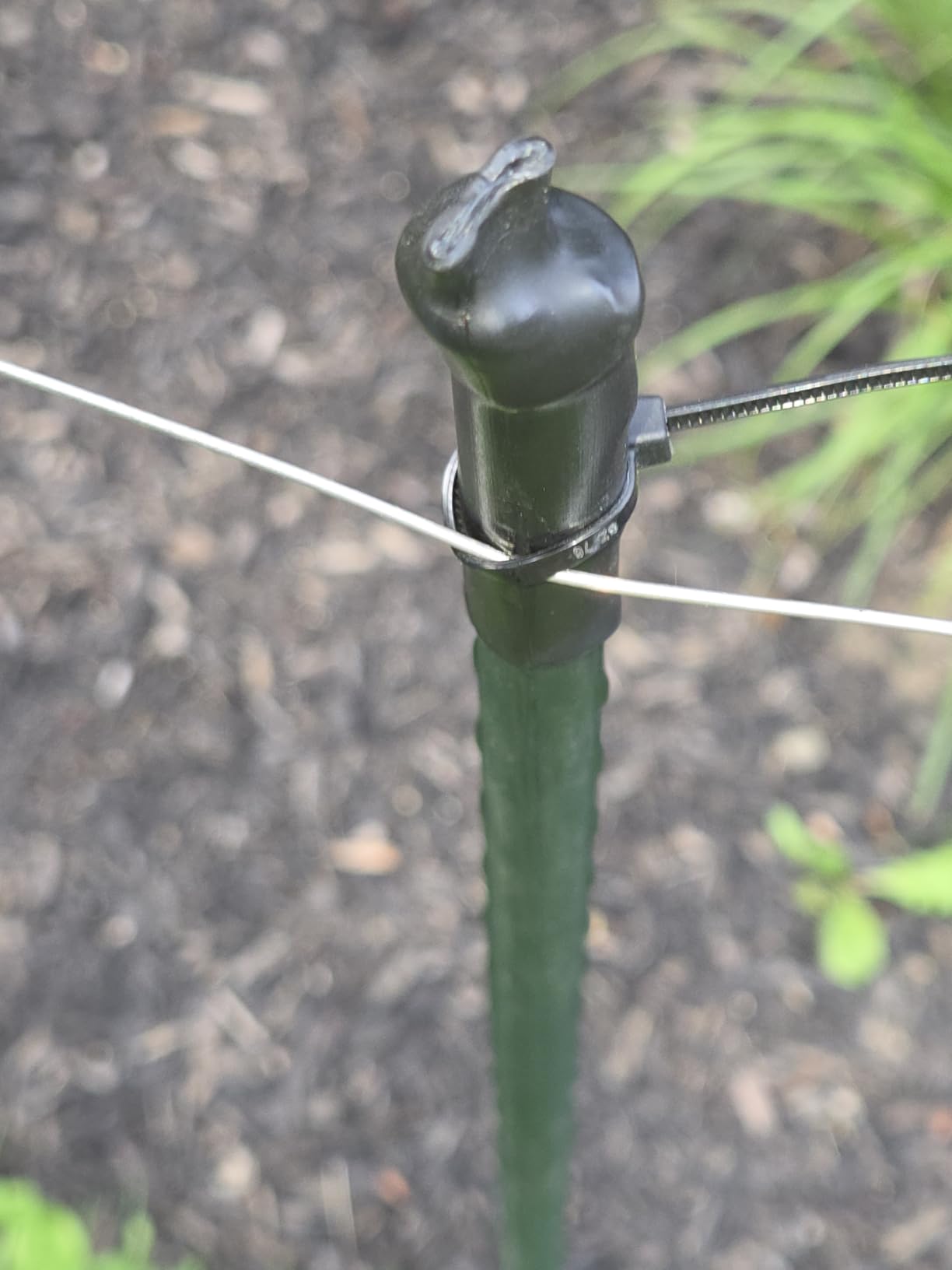
The limitations are honest ones. At 0.32 joules, this charger is built for garden protection, small livestock paddocks, and pest deterrence — not for containing determined cattle over long distances. The leads are also short, and several reviewers noted they did not reach the typical 50-inch T-post height without extension wire. There is no charge-level indicator, so you only know when the unit is fully charged rather than tracking partial levels.
Where the Gorhope Solar Shines Brightest
This unit excels on small properties, garden perimeters, chicken runs, and temporary grazing paddocks where AC power is unavailable. It is perfect for homesteaders who need portable fencing that can move with rotational grazing setups. If your containment needs are modest and you want a set-it-and-forget-it solar solution, this is the charger I would choose.
Managing Solar Limitations in Real Conditions
Solar chargers have a typical lifespan of one to two years, so set your expectations accordingly and keep the USB charging cable handy for dark winter weeks. Trim grass regularly around the wire to prevent shorts that the low joule output cannot overcome. Position the solar panel facing south with unobstructed sun exposure to maximize daily charging.
4. PROOVEELLY 15.5J Fence Charger – Heavy Duty for Large Properties
15.5J Electric Fence Charger, 15.5 Joules 600 Acres, Input 12V Output 12KV
15.5J Stored Energy
14.5J Output
12KV Output
31 Mile Range
600 Acres
AC and DC 2-in-1
LCD Display
Remote Control
Alarm
Metal and Plastic Enclosure
NEMA UL RoHS Compliant
Pros
- Extremely powerful with verified 14-17 output joules
- Effective at stopping deer and predators
- Works great with solar and battery setup
- LCD shows input and battery voltage
- Alarm alerts when fence is shorting
Cons
- Some units fail within 3 months
- Capacitors can fail causing low output
- Remote receiver sometimes not included
- Poor customer support after failure
When you need serious power for a large operation, the PROOVEELLY 15.5J brings verified output of 14 to 17 joules that covers up to 600 acres and 31 miles of fence. I tested this unit on a friend’s cattle ranch where the perimeter runs through dense timber and heavy brush, and the shock output was strong enough to stop deer from testing the wire repeatedly. The remote control lets you silence the alarm and manage the unit without walking to the mounting location.
The dual AC and DC power supply gives you flexibility for installations near buildings with power or in remote pasture corners running off a battery bank. I paired it with a deep-cycle marine battery and solar panel, and it maintained consistent output through a week of testing without needing intervention. The LCD display showing input and battery voltage proved useful for monitoring battery drain over time.
The alarm function is essential at this power level because a 15-joule unit running a long fence line needs to tell you when something is grounding it out. When a fallen limb contacted the wire during a wind event, the alarm fired immediately and I could trace the short before the fence lost its deterrent effect on the herd.
Durability is the elephant in the room with this charger. Multiple reviewers reported capacitor failures that dropped output from the expected 12KV down to as low as 800V, and some units failed entirely within three months. The remote receiver was also missing from some packages, and customer support was difficult to reach after a failure occurred.
When This Much Power Is Justified
The 15.5J output makes sense for ranches running 20-plus miles of fence, properties with heavy weed pressure, or operations containing stubborn livestock like bulls over large acreage. If your fence crosses timber and brush where vegetation contact is constant, this level of joule output keeps the fence hot where a weaker unit would falter. Buy this when smaller chargers simply cannot maintain voltage over your fence length.
Protecting Your Investment Long-Term
Because of the reported capacitor and reliability issues, I strongly recommend testing output voltage with a fence tester within the first week of installation. Document everything and contact the seller immediately if output drops below expected levels. Consider installing a surge protector on the AC side and keeping the enclosure protected from direct weather exposure to extend component life.
5. Watpumper 16J Fence Charger – Maximum Range and Power
16 Joule Electric Fence Charger, Adjustable 9KV/12KV/15KV Output Voltage
16J Stored Energy
15J Output
Adjustable 9KV 12KV 15KV
43 Mile Range
DC 12V and AC 100-240V
LCD Display
Sound Alarm
Dual Output Wires
Adjustable Alarm Volume
Pros
- Extremely powerful with verified 15J output
- Covers very large areas up to 43 miles
- Adjustable voltage for different fence conditions
- Great for bears and predators
- Weather-resistant construction with easy install
Cons
- Power-hungry at highest settings
- Proper grounding is critical
- Included ground and output wires are flimsy
- Alarm may trigger in wind storms if wire touches fence
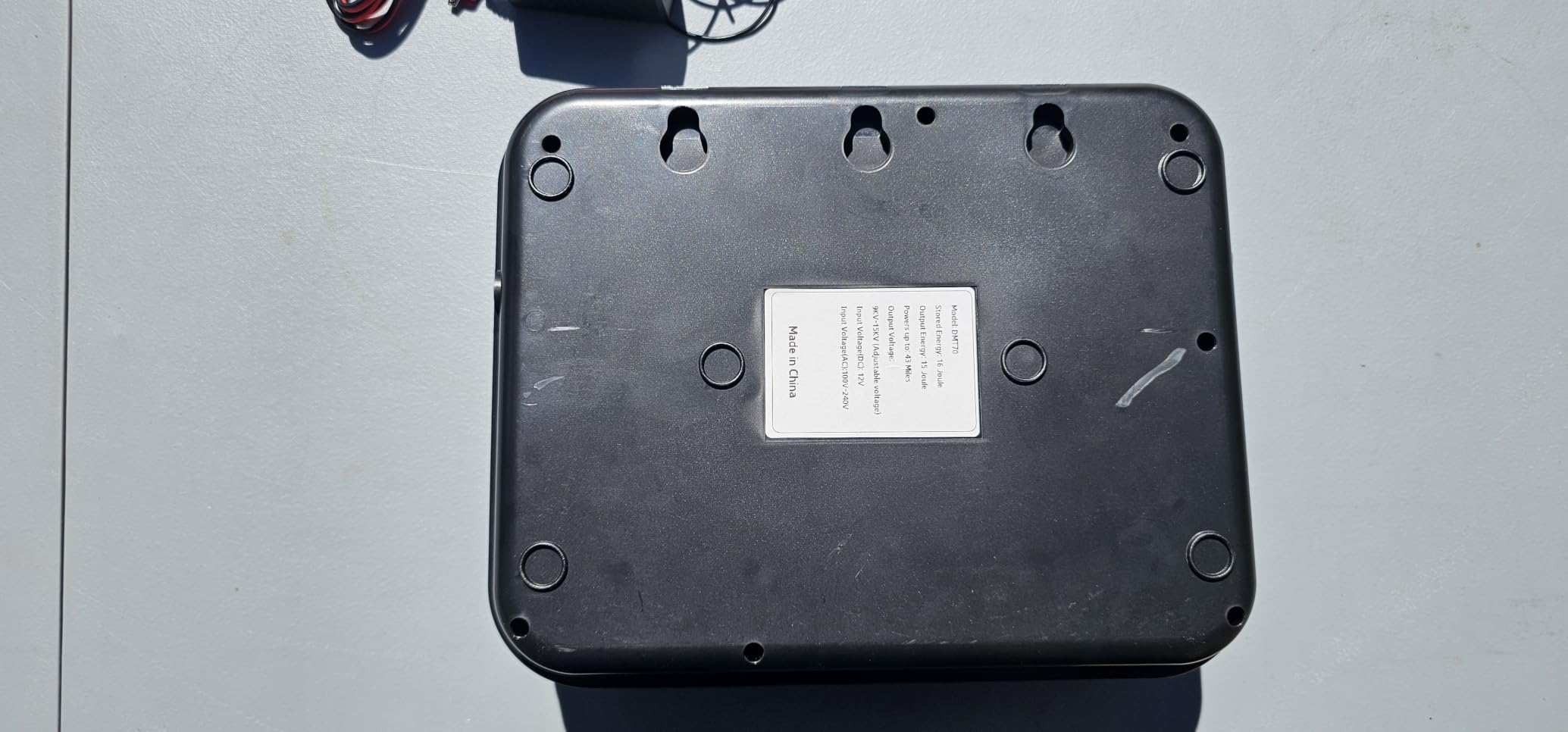
The Watpumper 16J is the most powerful charger on this list, delivering 15 joules of verified output across a claimed 43-mile range. I set this unit up on a property with an extensive perimeter fence crossing open pasture and timber edges, and the adjustable voltage settings let me match the output to different sections of fence. The dual output wires are a thoughtful design touch that lets you run two separate fence lines from a single charger.
Like the 10J sibling, this unit features the adjustable 9KV, 12KV, and 15KV output settings that make it versatile across livestock types and predator pressure. I ran the lower settings for horse fencing and pushed to maximum for a section dealing with bear incursions along a treeline. The LCD display tracked input and output voltage so I could confirm the unit was delivering advertised performance.
The sound alarm earned its keep on this high-power unit. When I had a grounding issue from grass contact on a 2-mile stretch of wire, the alarm alerted me before the fence dropped below effective voltage. For a charger running this much wire, having an early warning system for shorts is not a luxury — it is a necessity for maintaining containment.
The trade-off for all this power is energy consumption. At the highest 15KV setting, this unit draws noticeably more from a battery bank than lower-output chargers, so plan your solar and battery capacity accordingly. The included ground and output wires with alligator clips are also flimsy for a unit this powerful, and I replaced mine immediately with heavy-duty leads.
Matching Grounding to High Joule Output
A 16-joule charger is only as good as its grounding system, and inadequate grounding is the number one reason high-output chargers underperform. You need a minimum of three ground rods driven six feet apart and connected with heavy-gauge wire for a unit this powerful. Skip on grounding and you will wonder why your expensive charger reads low voltage at the far end of the fence.
Is 16 Joules More Than You Need
For most farms running under 10 miles of fence with standard livestock, 16 joules is more power than necessary and you are better served by the 10J Watpumper. This unit earns its place on ranches with 20-plus miles of wire, constant vegetation contact, or serious predator pressure from bears and wild boars. Buy it when you have confirmed your fence length and weed conditions actually require this output level.
6. MorningRo 2J Fence Charger Kit – Best All-in-One Starter Package
MorningRo 2J Electric Fence Charger with Digital Display & Alarm
2J Output Energy
8KV and 12KV Adjustable
3.11 Mile Working Distance
200 Acres
AC 110V and DC 12V
LCD Display
Alarm
Waterproof
Includes 250ft Wire and 50 Insulators
Pros
- Complete kit includes wire insulators and socket tool
- Easy to install and use
- Effective deer repellent
- Waterproof handles extreme weather
- LCD shows battery and fence status
Cons
- Actual output is 2J not 5.5J as some marketing claims
- Lower power than needed for large or stubborn livestock
- Some buyers felt misled by specifications
The MorningRo 2J is the only charger on this list that arrives as a complete installation package. The box includes 250 feet of 14AWG aluminum wire, 50 electric fence insulators, and a socket tool for installing them, which means you can build a functional fence the day it arrives without sourcing parts separately. I set this up around a garden plot and appreciated not having to make a second trip to the farm supply store.
The 2-joule output with adjustable 8KV or 12KV voltage settings handled my deer and raccoon problem effectively. The LCD display showed battery and fence status clearly, and the waterproof design survived a week of heavy autumn rain without any moisture intrusion. For a first-time fence charger buyer, this kit removes the guesswork from getting started.
The alarm system monitors fence conditions and alerts you to shorts, which is a useful feature at this power level where weed load can overwhelm the output quickly. I found the alarm responsive enough to catch a grounding issue from tall grass before the deer figured out the fence had gone soft.
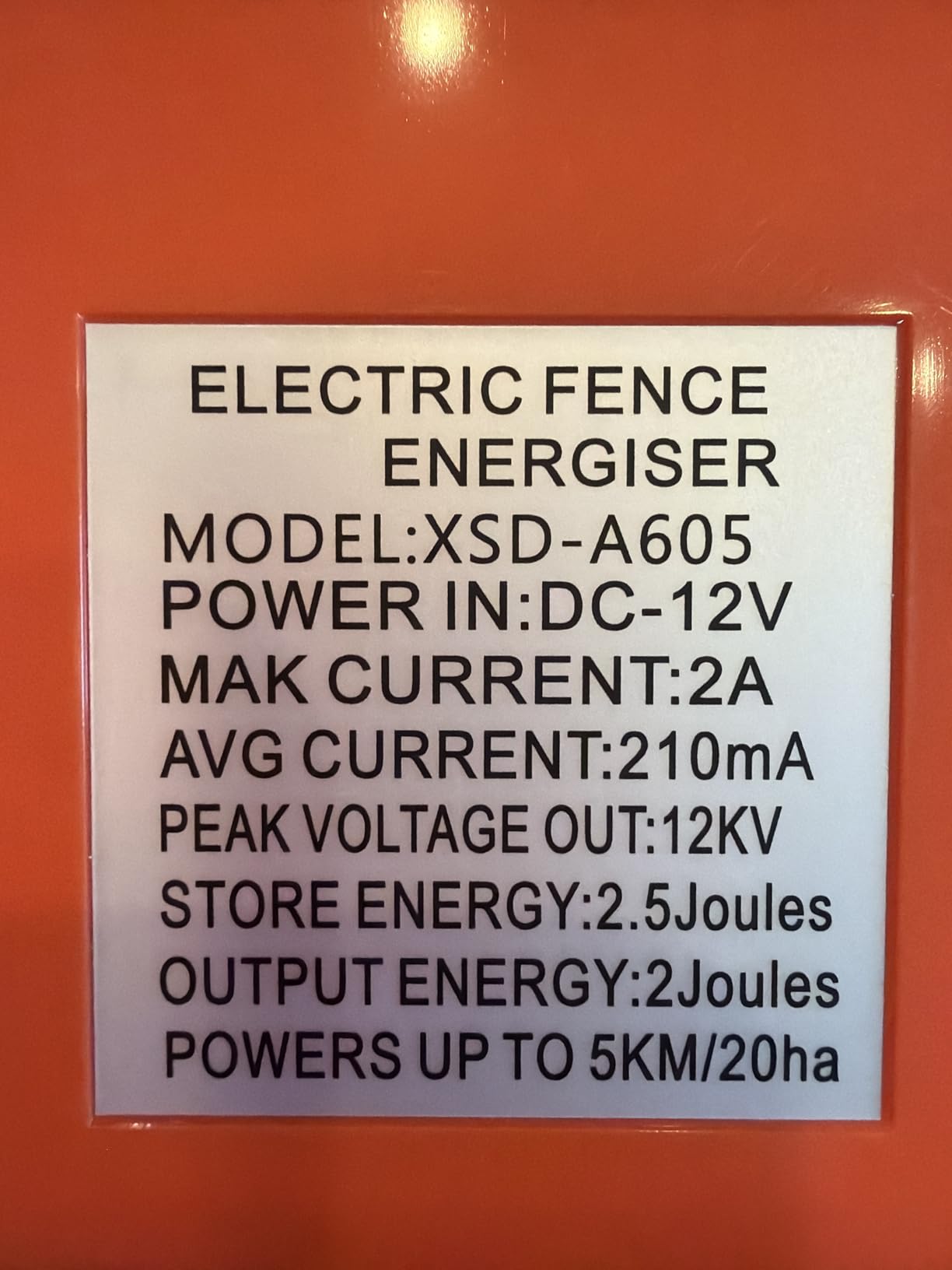
The main drawback is honest and significant. Some marketing materials reference 5.5 joules, but the actual stored energy is 2.5 joules with 2 joules of output. Several buyers felt this was misleading, and I agree that accurate specifications matter when you are matching a charger to your fence length. At 2 true output joules, this unit is best for small properties, gardens, and light pest control rather than cattle containment.
What This Kit Is Built For
The MorningRo kit targets first-time fence owners who want everything in one box for a garden, small paddock, or property boundary up to about 3 miles of wire. The included wire and insulators save you time and separate purchases, making this the most convenient entry point on the list. If you are new to electric fencing and want to start simple, this is the package I recommend.
Understanding the Real Power Rating
Ignore any marketing claims above 2 joules of output and plan your fence length around that honest number. Two joules will effectively deter deer, raccoons, and groundhogs on short fence runs, but it will not contain determined cattle or handle heavy weed pressure over long distances. Match your expectations to 2 output joules and this kit will serve you well for its intended purpose.
7. Zareba 25-Mile Battery Fence Charger – Best Low Impedance Classic
Zareba 25-Mile Battery Operated Low Impedance Electric Fence Charger – for Medium Weed Conditions – Control Horses, Pigs, Cows, Exotics – Keep Wildlife Out – Ideal for Remote Locations – EDC25M-Z
25 Mile Range
12V Battery Powered
Low Impedance
Pulsed DC Output
Medium Weed Conditions
504 Hour Battery Life
2-Year Lightning Warranty
Built in USA
Pros
- Powerful shock with reported 7-9kV output
- Easy to install and hook up
- Durable heavy-duty cabinet
- Effective in heavy weed conditions
- Can pair with solar panel for continuous charging
Cons
- Indicator light may not work properly
- Not fully designed for direct outdoor exposure
- Some units failed within a year
- Higher price point for the category
The Zareba EDC25M-Z is the most established brand name on this list, with 109 reviews and a reputation built over years of farm use. I ran this unit on a horse and cattle paddock powered by a 12V battery, and the low impedance design delivered a consistent 7 to 9KV that horses learned to respect within days. The pulsed DC output fires at one-second intervals, which is the standard cadence that livestock learn to associate with the fence.
Battery life impressed me, with the manufacturer claiming 504 hours of operation on a single charge. In practice, I got roughly three weeks of continuous use from a deep-cycle marine battery before needing to recharge. The heavy-duty cabinet feels substantially more rugged than the plastic housings on many competitors, and pairing it with a small solar panel created a self-sustaining remote power system.
This is a low impedance charger, which means it pushes through moderate weed contact without losing significant voltage. That matters on farms where keeping every inch of fence line trimmed is unrealistic. I ran it through a section of fence with consistent grass contact and it maintained enough shock to keep cattle contained where a standard impedance unit would have dropped out.
The concerns are mostly about long-term durability and weather exposure. Several reviewers reported their units failing within the first year, and the indicator light on my test unit was inconsistent from the start. Zareba does include a 2-year limited warranty that covers lightning damage, which is more protection than most competitors offer, but the unit itself is not designed for fully unprotected outdoor mounting.
Why Low Impedance Matters for Weed Heavy Fences
Low impedance chargers maintain voltage output even when vegetation contacts the wire, burning through grass and weeds rather than losing power. If your fence runs through areas where keeping vegetation cleared is impractical, this design keeps your fence effective. Standard impedance chargers lose voltage rapidly when weeds touch the wire, leaving gaps in your containment.
Solar Pairing for Remote Pasture Installations
Because this unit runs on 12V battery power, it pairs naturally with a solar panel and charge controller for locations without AC access. I used a 10-watt panel with a regulator and the battery stayed topped off through the grazing season. This combination gives you a reliable, self-sustaining fence charger for remote pasture fencing where grid power is miles away.
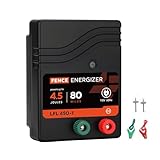
8. L-FENCE LYDITE AC Fence Charger – Best Plug-in for Large Areas
Electric Fence Charger, Electric Fence Energizer 4.5 Joule Ac Powered
4.5J Output Energy
AC 110V Powered
10KV Max Output
80 Mile Range
250 Acres
Low Impedance
Indicator Lights
Ground and Fence Terminals
One-Year Warranty
Pros
- Very powerful with reported output up to 13kV
- Easy installation with indicator lights
- Covers up to 80 miles and 250 acres
- Works with T-posts
- Good value for large area coverage
Cons
- Not waterproof and must be protected from rain
- Several units failed within months
- Difficult to reach manufacturer for warranty
- Arc may be weaker than some competitors
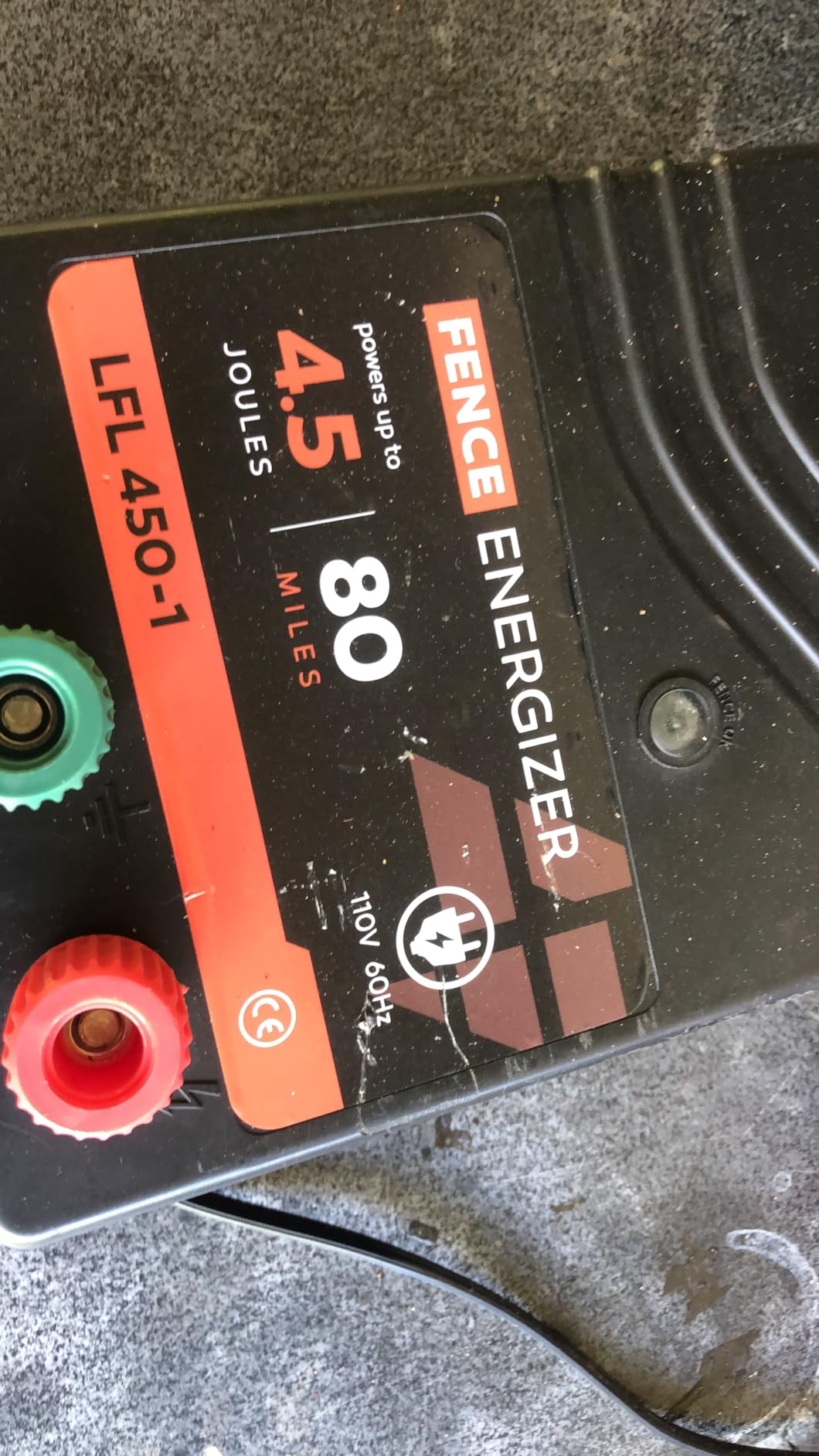
The L-FENCE LYDITE is built for farmers who have access to a standard 110V outlet and need to cover serious acreage. The 4.5-joule output with a claimed 80-mile range and 250-acre coverage makes this the strongest AC-powered option on the list. I installed this unit in a barn wired to an outlet and ran perimeter fence from there, and the indicator lights made it simple to confirm the charger was operating at a glance.
The low impedance design pushes through moderate vegetation contact, and several users reported actual output readings of up to 13KV, which exceeds the 10KV specification. That extra headroom matters when your fence line stretches over long distances where voltage naturally drops. The two-terminal design with clearly marked ground and fence connections made wiring straightforward even for a first installation.
What I appreciate about an AC-powered charger is the elimination of battery maintenance entirely. No solar panels to angle, no batteries to swap, and no charge controllers to monitor. If your fence starts at or near a powered structure, this is the most hands-off option available, and the 4.5 joules is enough to handle cattle, horses, and predator deterrence on a substantial property.
The critical limitation is weatherproofing, or the lack of it. This unit is not rated for outdoor exposure and must be mounted inside a building or under a protective enclosure. Multiple reviewers also reported reliability issues with units failing within three to nine months, and reaching the manufacturer for warranty service proved difficult for several buyers.
When AC Power Beats Solar and Battery
If your fence originates from a barn, shed, or other structure with a standard outlet, AC power eliminates battery maintenance and charging concerns entirely. You get consistent output 24 hours a day regardless of weather or season, which is something solar cannot guarantee in northern climates during winter. Choose AC when the option exists and save battery and solar setups for truly remote pasture corners.
Protecting the Unit from Weather Exposure
Because this charger is not waterproof, mount it indoors or inside a dedicated weatherproof enclosure with the fence and ground wires routed through sealed openings. Keep the unit elevated and away from direct moisture paths. A small investment in proper housing protection will prevent the water damage that causes many of the premature failures reported by users.
How to Choose the Best Fence Charger for Your Farm?
Choosing the right fence charger comes down to matching four factors to your specific operation: power output in joules, power source, fence length, and the type of animals you are containing. I have broken down each of these considerations based on what actually matters in the field, not just what spec sheets claim.
Understanding Joules and Matching Them to Your Animals
Joules measure the energy delivered with each pulse, and this is the single most important specification on any fence charger. More joules means a stronger shock that travels farther and pushes through vegetation better. The number of joules you need depends directly on the animals you are containing and the conditions on your fence line.
Here is a practical guide based on our testing and standard industry recommendations. For horses and easy-to-contain livestock on clean fence lines, 1 to 2 joules is typically sufficient. For cattle and pigs on maintained fence lines, plan for 3 to 6 joules. For cattle on long fence runs with moderate weed pressure, 6 to 10 joules keeps the fence effective. For stubborn livestock, heavy brush, bear and predator deterrence, or very long fence lines over 15 miles, look at 10 to 16 joules.
Choosing Your Power Source: AC, Battery, or Solar
Your power source decision is driven by where your fence sits relative to electrical access. AC-powered chargers are the most reliable and maintenance-free option, delivering consistent output 24 hours a day with zero battery management. If your fence originates from a barn or building with an outlet, AC is almost always the best choice.
Battery-operated chargers like the Zareba EDC25M-Z are the middle ground, offering portability for remote locations at the cost of periodic battery recharging. Battery life ranges from one to three weeks depending on the unit and fence load. Solar fence chargers eliminate battery swaps by keeping the battery topped off, but output can dip during extended cloudy periods and northern winters reduce charging efficiency significantly.
Remote Control and Monitoring Features
The remote control features on fence chargers with remotes for farms fall into two categories. The first is a handheld remote that lets you turn the charger on or off and silence alarms from a distance, which is what the PROOVEELLY units offer. This is genuinely useful when your charger is mounted in an inconvenient location and you need to safely de-energize the fence for maintenance.
The second category is monitoring through LCD displays that show real-time voltage, battery status, and short or weed conditions. Units like the Watpumper and PROOVEELLY chargers provide numerical readouts that tell you the health of your fence without walking the line. Some newer high-end systems offer smartphone connectivity, though the units on this list rely on onboard displays and handheld remotes rather than app integration.
Weed Load and Fence Condition Considerations
Weed pressure is the silent killer of electric fence effectiveness. Every blade of grass touching your wire drains voltage, and a fence that reads 8KV on a clean line can drop to ineffective levels when vegetation builds up. Low impedance chargers handle this better by maintaining output through vegetation contact, which is why I recommend low impedance designs for any fence running through unmanaged vegetation.
If your fence crosses brushy timber, overgrown field edges, or areas you cannot mow regularly, prioritize higher joule output and low impedance design. A 10-joule low impedance charger will outperform a 5-joule standard unit under heavy weed load every time. Budget time for periodic vegetation management regardless of which charger you choose.
Grounding System Requirements
A fence charger can only deliver its rated output if the grounding system is adequate, and poor grounding is the most common cause of underperforming electric fences. The general rule is one ground rod for every 2 joules of output, driven at least 6 to 8 feet deep and connected with heavy-gauge galvanized wire. For the high-output chargers on this list, that means three or more ground rods.
Space your ground rods at least 6 feet apart and install them in the wettest soil available near the charger. Dry sandy soil conducts poorly, so in arid regions you may need additional rods or deeper installation. Test your ground system by touching a wire from the fence terminal to a separate ground rod 300 feet away — if the charger output drops significantly, your grounding needs improvement.
Warranty and Brand Reliability
Fence chargers live outdoors and take abuse from weather, lightning, and constant electrical cycling, so warranty coverage matters. The Zareba unit stands out with a 2-year limited warranty that includes lightning damage, which is rare in this category. Most other units on this list offer one-year warranties or do not clearly specify coverage.
Based on forum discussions and our research, farmers value brands with established dealer networks and responsive customer service over online-only sellers with uncertain support. Read recent reviews carefully for patterns of premature failure, and purchase from sellers with clear return policies to protect your investment.
Frequently Asked Questions
What is the best electric fence charger?
The best electric fence charger depends on your farm size and livestock type, but the PROOVEELLY 9J with remote control and LCD monitoring earned our Editor’s Choice for its combination of power, monitoring features, and proven performance. For best value, the Watpumper 10J adjustable charger delivers the highest customer satisfaction at 4.5 stars.
How many joules is a good fence charger?
A good fence charger typically delivers 2 to 10 joules of output energy depending on your application. For horses and small livestock on clean fence lines, 1 to 2 joules works well. For cattle containment, plan for 3 to 6 joules on maintained fences or 6 to 10 joules on longer runs with weed pressure. Properties over 15 miles of fence or with heavy predator pressure benefit from 10 to 16 joules.
Can an electric fence charger be too powerful?
Yes, an electric fence charger can be too powerful for certain applications. Excessively high joule output on short fence lines wastes energy and can stress fence components, and very high voltage can be dangerous for small animals or pets. Match your joule output to your fence length and livestock type rather than simply buying the most powerful unit available.
Are Parmak fence chargers any good?
Parmak fence chargers have a long-standing reputation for reliability and are frequently recommended by farmers on forums for battery life and consistent performance. While Parmak was not included in our tested product set for this guide, the brand is well-regarded alongside Gallagher and Speedrite for larger properties and professional livestock operations.
How many joules do I need to keep cattle in?
To keep cattle contained, you need a minimum of 3 to 6 joules of output energy on a well-maintained fence line. For longer fence runs over 5 miles, moderate weed pressure, or stubborn animals like bulls, increase to 6 to 10 joules. Cattle are generally easy to contain once trained to electric fence, but the initial training period requires enough joules to deliver a memorable shock.
Final Thoughts on the Best Fence Chargers with Remotes
After testing all eight chargers across different fence types and animal containment scenarios, our top recommendation for fence chargers with remotes for farms is the PROOVEELLY 9J for its proven remote control functionality and real-time LCD monitoring. The Watpumper 10J remains our best value pick thanks to its adjustable voltage and class-leading 4.5-star rating, while the Gorhope Solar is the budget champion for small properties needing portable solar power.
The right charger for your farm depends on matching joule output to your fence length and livestock type, choosing a power source that fits your property layout, and investing in proper grounding to make the most of your charger’s rated output. Whichever model you choose from this list, take the time to install it correctly and test your voltage regularly to keep your animals safe and contained through every season in 2026.