
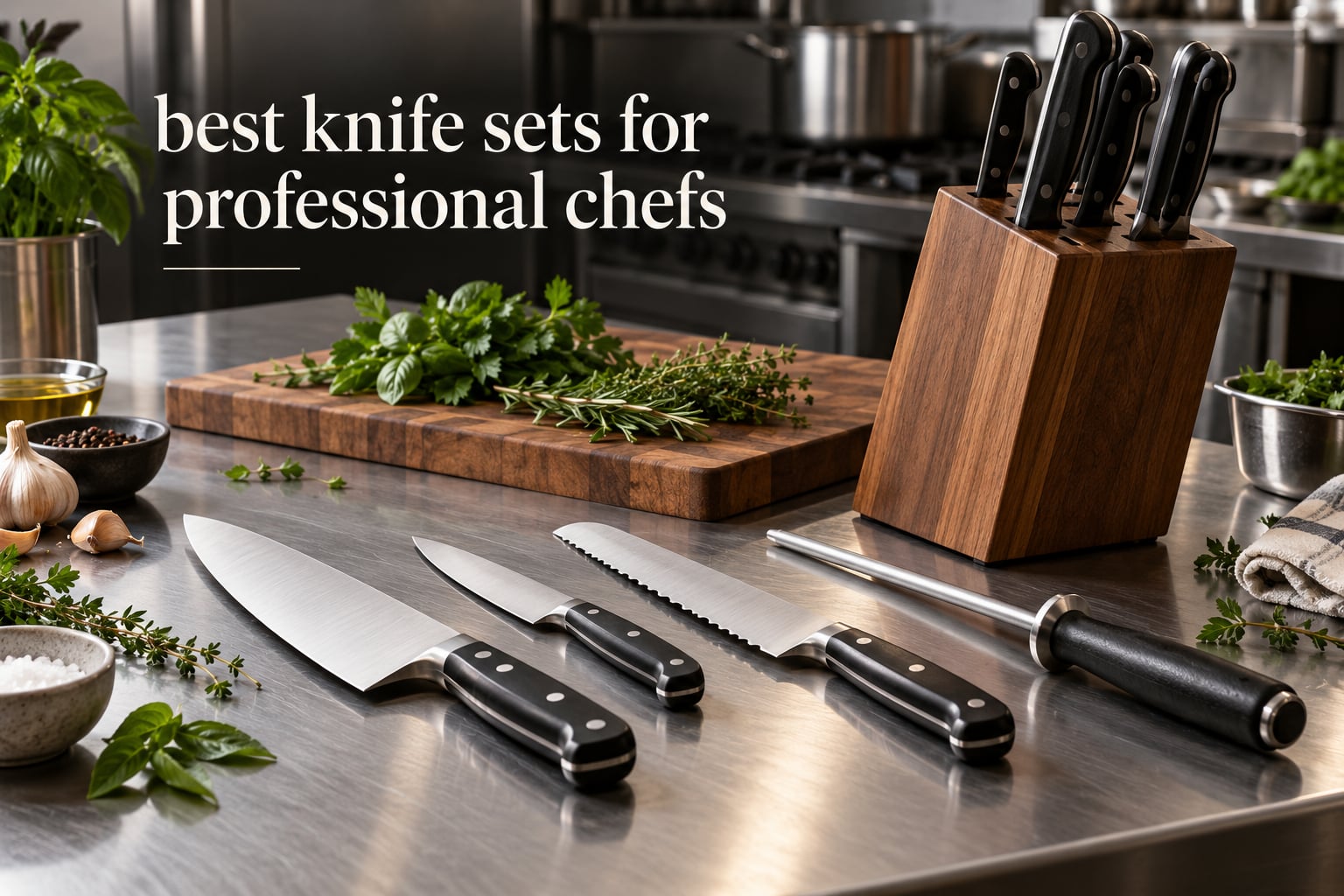
Walk into any restaurant kitchen at 10 p.m. and look at the knife rack. You will not find a twenty-piece block set. You will find a chef’s knife, a paring knife, maybe a boning knife, a honing steel and a cutting board that costs more than most knife sets. That is the honest starting point for anyone searching for the best knife sets for professional chefs, and it is worth sitting with before we get into the picks.
Forums make the same argument from the other end. On r/TrueChefKnives the standing advice is to buy a chef’s knife and a 130 to 150 mm petty knife first, then add only what a specific task demands. Chefs reporting on Quora say the same thing: a working cook owns three to five knives, not thirty, and the large block sitting at home is for company rather than service. We take that seriously, because a roundup that ignored it would be pointless.
So here is what this roundup is actually for. We compared twelve bundled knife sets sold for professional, commercial and culinary school use, reading the construction specs, the steel, the tang, the care rules and the warranty behind each one, then matched those against what a working line actually needs: edge retention through a long shift, a handle that does not wreck your hand, blades that survive sanitation, and enough range to cover mise en place through steak service. If you buy one set from this list, buy it for the reasons below, not because it has the most pieces.
Table of Contents
Top 3 Picks for Knife Sets for Professional Chefs (October 2026)
The three sets below carry our top recommendations. Each won for a different reason: one for total balance of construction and value, one for the professional-grade geometry cooks actually train on, and one for sheer completeness at the working end of the price spectrum.

Mercer Genesis 6-Piece
- Forged high-carbon German steel
- Taper-ground edge
- Santoprene non-slip handle
- 6-piece set with glass block

Victorinox Fibrox 7-Pc Roll
- NSF approved
- Ice-tempered stainless steel
- Bolsterless stamped blades
- 9 inch honing steel

Cuisinart 15-Piece Block
- 15-piece set with six steak knives
- High-carbon stainless blades
- All-stainless hollow handles
- Lifetime warranty
Two of these three carry the full weight of professional endorsement in their design. The Victorinox Fibrox roll is the kit most culinary programs hand out, because NSF approval and bolsterless blades survive being washed, dropped and sharpened by beginners. The Mercer Genesis is the set most cooks graduate to once they know which edge they like.
12 Best Knife Sets for Professional Chefs in 2026
| Product | Specifications | Action |
|---|---|---|
| Mercer Genesis 6-Piece |
|
Check Latest Price |
| Victorinox Fibrox 7-Pc Roll |
|
Check Latest Price |
| Cuisinart 15-Piece Block |
|
Check Latest Price |
 Wusthof Classic 9-Piece Wusthof Classic 9-Piece |
|
Check Latest Price |
 ZWILLING Pro 7-Piece ZWILLING Pro 7-Piece |
|
Check Latest Price |
 Shun Classic Slimline 5-Pc Shun Classic Slimline 5-Pc |
|
Check Latest Price |
 Shun Premier 7-Piece Shun Premier 7-Piece |
|
Check Latest Price |
 Mercer Renaissance 6-Piece Mercer Renaissance 6-Piece |
|
Check Latest Price |
 Mercer 23-Piece School Kit Mercer 23-Piece School Kit |
|
Check Latest Price |
 Henckels Forged Accent 20-Pc Henckels Forged Accent 20-Pc |
|
Check Latest Price |
 Klaus Meyer Stahl 19-Pc Klaus Meyer Stahl 19-Pc |
|
Check Latest Price |
 Victorinox Swiss Classic 5-Pc Victorinox Swiss Classic 5-Pc |
|
Check Latest Price |
How We Picked and Tested These Knife Sets
Every set here was assessed against the same five criteria, and each one is quoted from the manufacturer’s own specification sheet rather than inferred. Edge retention and steel type came first, because steel and hardness determine how many sharpenings a blade needs in a week of service. Construction came second: forged blades with a full tang survive abuse that stamped, bolsterless knives absorb.
Third was ergonomics, measured by handle material, spine profile and set weight, since hand fatigue compounds over a ten-hour shift. Fourth was care burden, because hand-wash-only forged sets and dishwasher-safe stamped sets behave very differently behind a prep line. Fifth was warranty and service, including free sharpening programmes and how long the brand expects the blades to last.
We cross-checked those specs against buyer feedback, focusing on the recurring complaints rather than the five-star summaries: chips on bone, loose rivets, rust from being left wet, and block slots that hold knives at an awkward angle. Where a manufacturer’s claim and owner reports disagreed, we weighted the owner reports, because that is the version you will live with on a Saturday service.
1. Mercer Culinary Genesis 6-Piece Forged Set: Best Overall for Working Chefs
Mercer Culinary M20000 Genesis 6-Piece Forged Knife Block Set, Tempered Glass Block,Black
Forged high-carbon German steel
Taper-ground edge
Santoprene non-slip handle
8 inch chef's knife
Pros
- Forged high-carbon German steel holds an edge through long service
- Non-slip Santoprene grip stays secure with wet hands
- Complete core knife lineup for a prep line
- Limited lifetime warranty from Mercer Tool Corp.
Cons
- Hand wash only
- dishwasher dulls forged edges
- No sharpening steel or shears in this configuration
- Tempered glass block chips and stores little
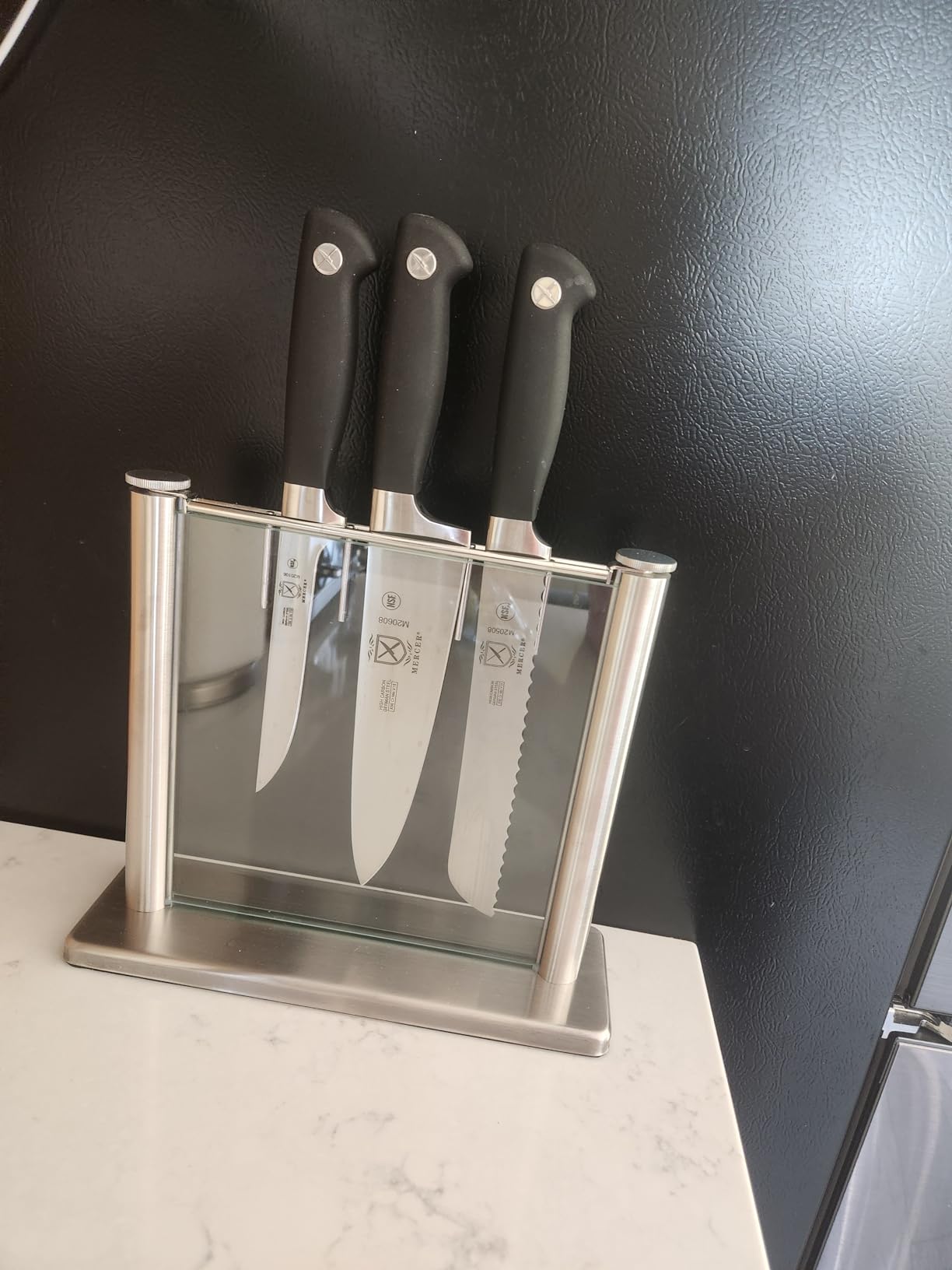
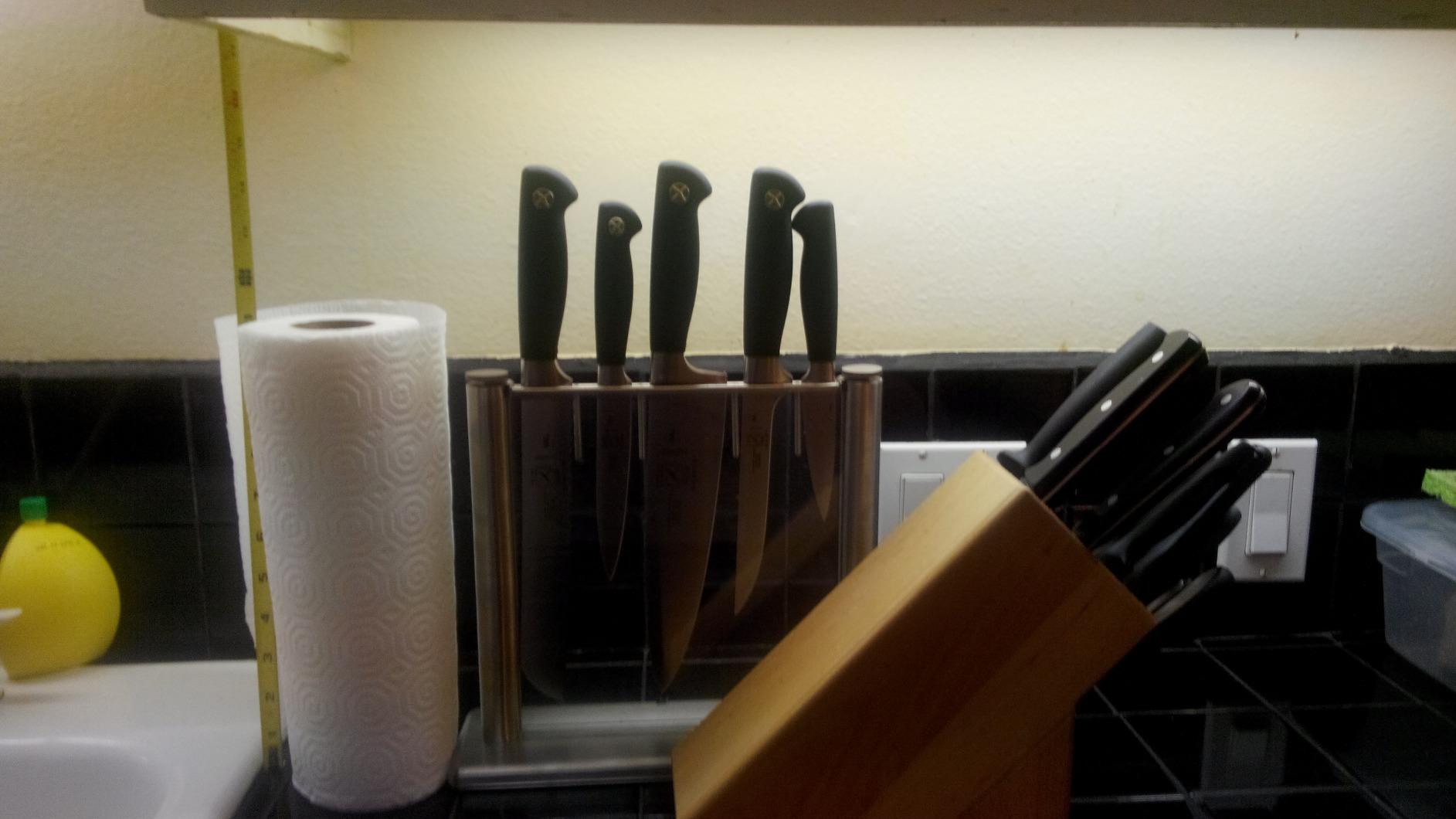
This is the set we hand a line cook who already knows how to sharpen and does not want to think about gear. The blades are precision-forged high-carbon German steel with a taper-ground edge, and the handle is a triple-riveted Santoprene grip that stays put on wet, soapy hands at the sink. That combination is the whole argument: predictable steel, no moving parts, no coating to peel.
The lineup is deliberately unflashy. You get a 3.5 inch paring knife, a 5 inch utility, a 6 inch stiff boning, an 8 inch wavy edge bread knife and an 8 inch chef’s knife, which covers mise en place, poultry breakdown and slicing without hunting for a blade mid-service. Roughly 2,800 owners have rated it, and the volume of long-term feedback is what makes it our most confident recommendation.
What stands out in the owner reports is how little anyone complains once the set is in hand. Recurring praise covers edge retention, balance and the non-slip handles; the recurring complaints are all about care and storage rather than performance. For a professional kitchen that is the correct ratio of feedback to worry about.
The care rule is the part to read twice: this set is hand wash only, and dishwasher cycles dull a taper-ground forged edge faster than anything else in a busy kitchen. Plan a wash station for knives rather than a drop-in rack, and dry immediately. The tempered glass block looks modern but can chip and offers less storage than a wood block, so treat it as a drying stand for daily service and keep the rest of your knives elsewhere.
Why it fits a professional prep line
The five knives cover almost every station task, so a cook can work a whole service off one block. The 6 inch stiff boning knife handles poultry and fish, and the 8 inch chef’s knife takes the bulk prep without fatigue. Nothing in the set is decorative, which is exactly what a working brigade needs.
Weight and balance are even across the set, so there is no adjustment period when you move from the chef’s knife to the boning knife at speed. That consistency matters more than any individual spec when you are cutting for six hours straight.
Where it falls short
No honing steel ships in the box, and in a professional kitchen that is a real gap. You will need a separate steel, and in the Gordon Ramsay knife discussion that comes up constantly: a high-carbon stainless blade dulls between services and a rod takes minutes, not a full sharpening cycle.
The hand-wash-only rule is also a labour cost in a kitchen where dishwashers run continuously. If your operation runs knives through a machine by policy, this set fights you. For a hand-wash brigade or a prep cook who owns their tools, it is the better buy.
2. Victorinox Forschner 7-Pc Fibrox Deluxe Roll: Best for Culinary School and NSF Kitchens
Victorinox Forschner 7 Pc Fibrox Deluxe Culinary Knife Roll Set,Black
NSF approved
Ice-tempered high carbon stainless
Bolsterless stamped blades
9 inch sharpening steel
Pros
- NSF approved set with professional-grade blade geometry
- Ice-tempered steel holds an edge longer than typical stamped blades
- Bolsterless design uses the full blade and sharpens easily
- Fibrox Pro handles stay slip-resistant when wet
Cons
- Stamped construction is less rigid than forged blades
- Soft roll gives less blade protection than a hard block
- Blades are stamped so they carry no full tang
This is the kit that shows up in culinary school hand-outs, and the reason is not marketing. NSF approval is printed on the spec sheet, the blades are ice-tempered high carbon stainless steel, and the handles are NSF approved for slip resistance. That combination is what institutional kitchens and training programs actually specify.
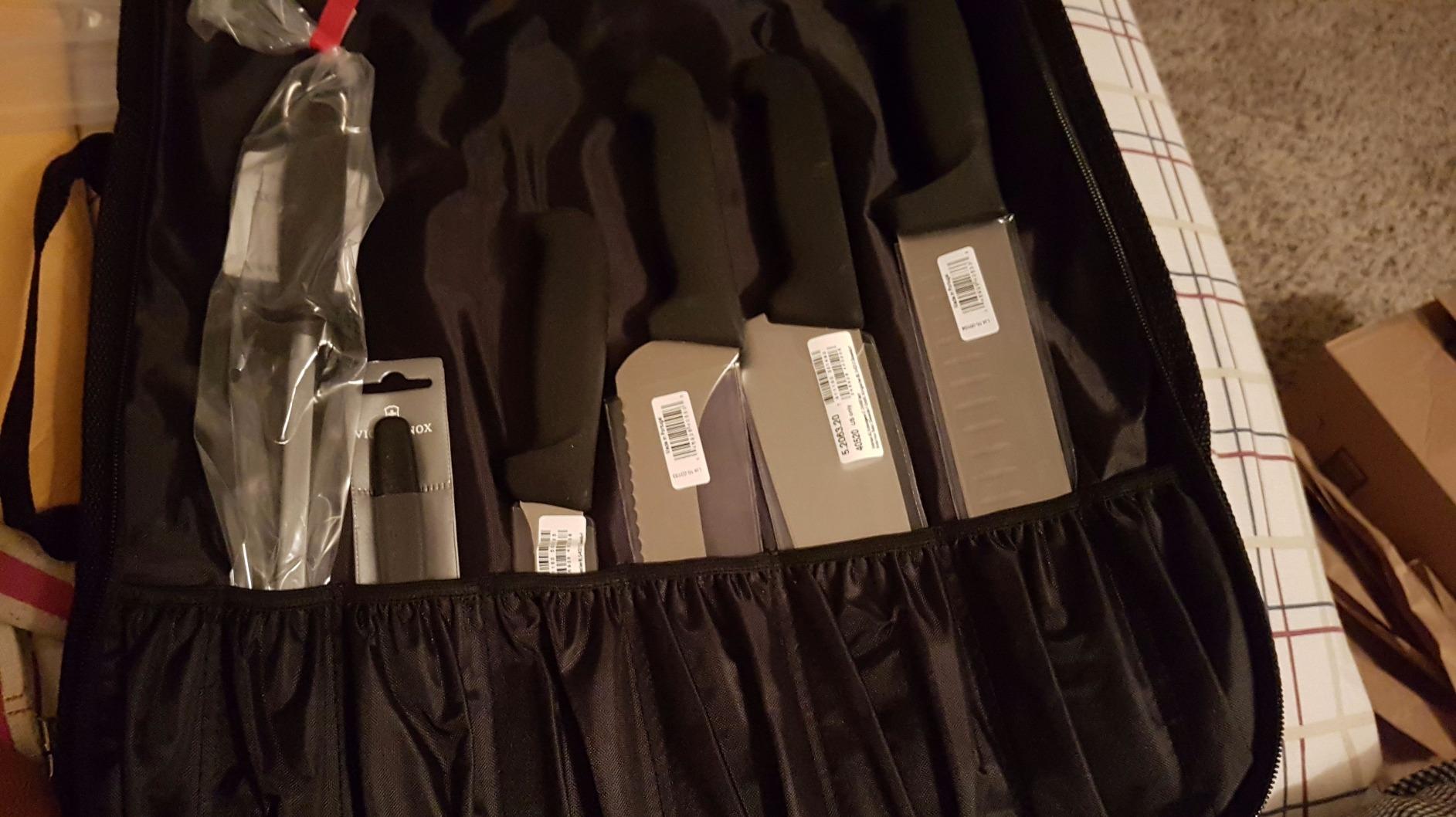
Storage is a ten-inch roll rather than a block, and the seven pieces are a 3-1/4 inch spear point paring, 6 inch boning, 8 inch chef’s, 10 inch Granton slicer and 9 inch offset wavy bread knife, plus a 9 inch sharpening steel. The Granton slicer is the piece most home sets skip and most banquet kitchens need.
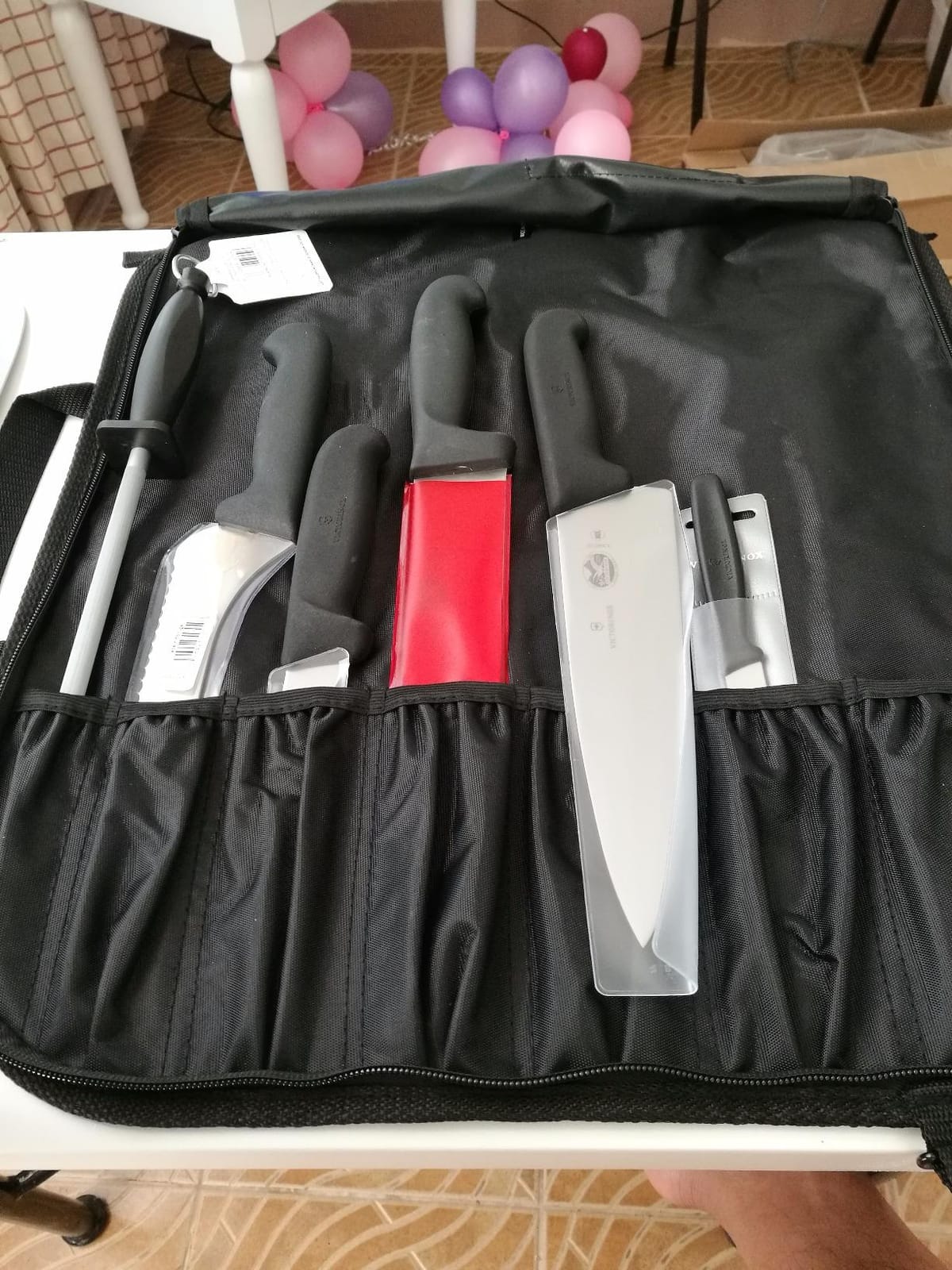
Owners consistently praise the sharpness and how easily the blades return to a good edge on a basic rod, which is exactly the feedback you want from a teaching knife. The slip-proof Fibrox handles are cited just as often, because a wet handle is how knives end up on the floor during service.
The trade-off is construction. These are stamped, bolsterless blades from cold-rolled steel, which means they use the full length of the blade and sharpen more easily than a forged bolster, but they are less rigid and carry no full tang. Under a heavy boning load or a dropped pan, that is the first place a set like this shows its limits.
Why it works for a first knife kit
The bolsterless stamped design is the classic training format because it teaches correct sharpening technique without a bolster getting in the way. Trainees can learn on a knife that will not punish an imprecise stroke, which matters when a dozen students share one station.
The roll also travels. A ten-inch case with seven knives and a steel is easy to move between a teaching kitchen, a catering prep run and a pop-up, and there is no block to lose in a move.
Where it falls short
Stamped steel is the honest weak point. It is softer and less rigid than forged high-carbon German steel, so it loses its edge sooner and flexes more under pressure. In a high-volume line that cuts all day, that is a real cost.
The roll storage is another compromise. Soft fabric protects edges less than a block or a sheath, so knives should travel in guards if the bag takes abuse. If your kitchen needs rock-solid rigidity on bone and frozen product, step up to a forged set.
3. Cuisinart 15-Piece Hollow Handle Block Set: Best Value for a Full Brigade Outfit
Cuisinart 15-Piece Stainless Steel Hollow Handle Block Set, C77SS-15PK
High-carbon stainless steel
Six steak knives
Sharpening steel and shears included
Lifetime warranty
Pros
- Sharp out of the box with solid edge retention for the tier
- All-stainless hollow handles will not absorb odors or swell
- Very complete 15-piece configuration with six steak knives
- Lifetime warranty and responsive service
Cons
- Can show surface rust if left wet
- Some steak knife block slots sit crooked
- Light feel compared with heavier forged sets
- Not ideal for repeated work on bone
With more than 20,000 reviews behind it, this is the most thoroughly tested set in the roundup, and reviewers treat it as the value benchmark. Blades are high-carbon stainless steel, precision-taper ground to a fine edge, with a bolster for stability and all-stainless hollow handles that will not absorb odor or swell the way wood can.
The configuration is where it earns its place in a working kitchen. You get an 8 inch chef, 8 inch slicer, 7 inch santoku, 5.5 inch serrated utility, 3.5 inch paring, 3.5 inch bird’s beak paring, six 4.5 inch steak knives, an 8 inch sharpening steel and household shears, all in a wooden block.
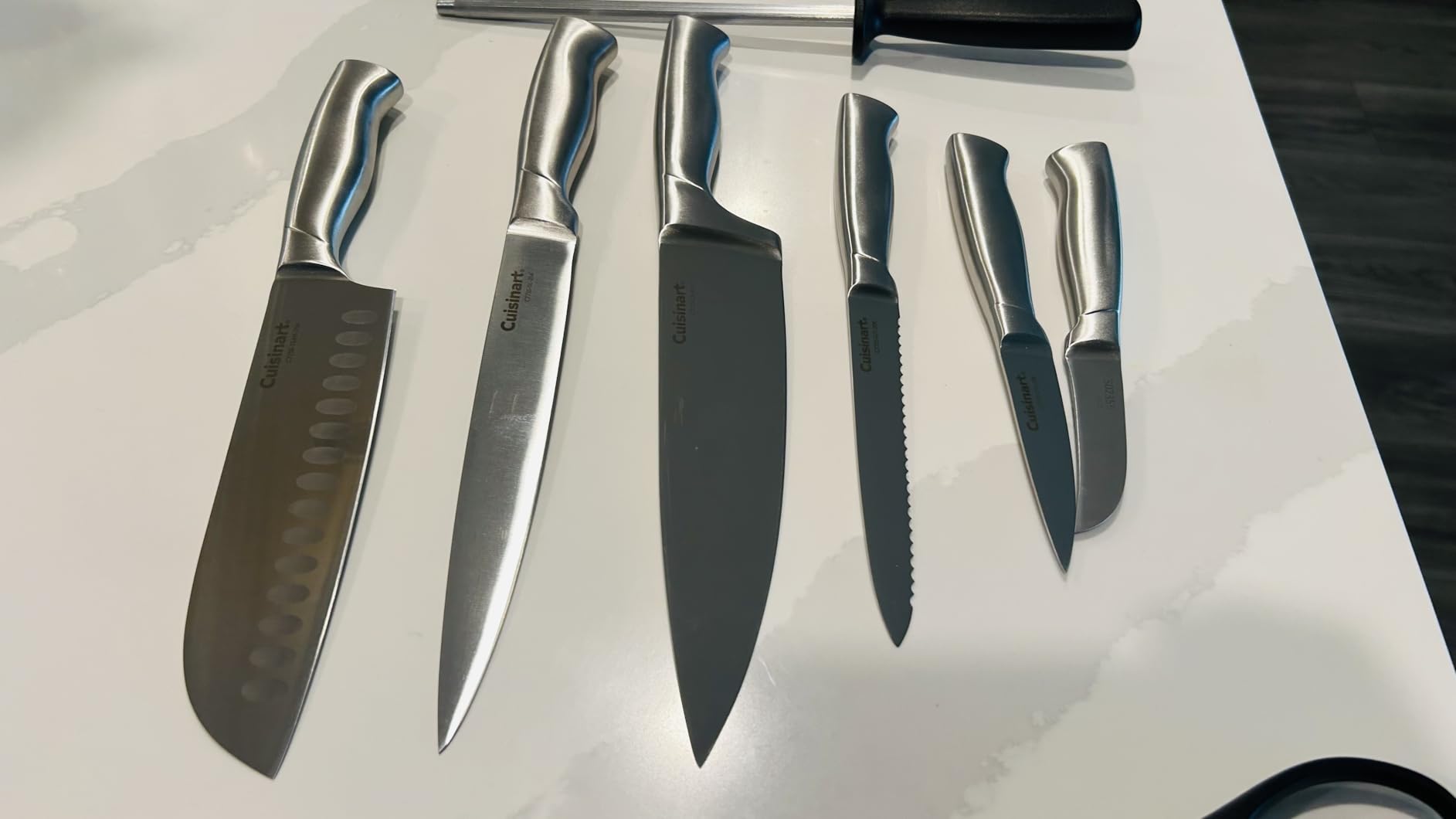
Reviewers broadly call it the best value option: sharp, complete, balanced and low-maintenance next to premium forged sets. Steak service is fully covered without buying six knives separately, which is the exact scenario where a bundle saves real money and a lot of hunting.
The complaints are consistent and manageable. If blades sit wet, surface rust appears, so the wash rule is simple and non-negotiable. A few owners report crooked steak knife slots that leave the knives staggered, and the set feels lighter than heavier forged German sets in the hand.
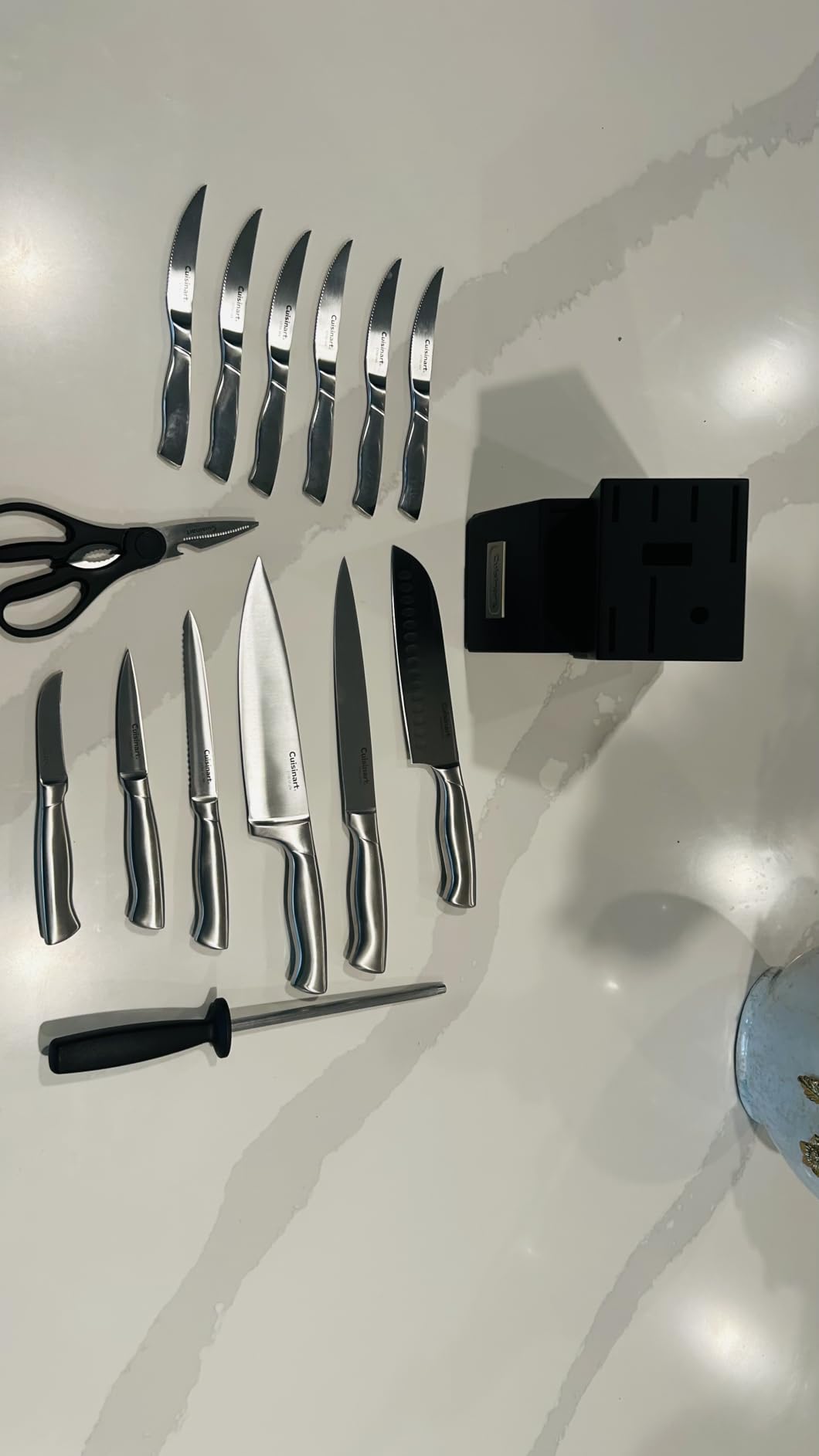
Why it suits steak service and new kitchens
Six steak knives and a sharpening steel in one box removes the single most tedious shopping trip when you are outfitting a new station. The 8 inch slicer and 7 inch santoku give you Western and Japanese profiles side by side, so cooks can pick the blade that suits the task rather than the budget.
All-stainless handles are a genuine advantage in a professional setting. They go into a dishwasher without damage, they do not swell or crack after repeated washing, and they will not absorb the odors and stains that push a wooden handle out of service.
Where it falls short
This is not a boning knife set. There is no flex boning knife and no cleaver, so meat-heavy stations still need a blade bought separately. The all-stainless handle also runs warmer than a wood or POM handle during long shifts.
Rust is the deal-breaker to watch. Stainless steel here is not fully corrosion-proof, and a blade left wet overnight will spot. Anything left wet overnight will spot regardless of brand, but budget stainless spots sooner.
4. Wusthof Classic 9-Piece Acacia Block Set: Best Forged German Set
Wusthof Classic 9-piece Knife Block Set (Acacia)
Fully forged full tang
58 Rockwell hardness
PEtec edge
Made in Solingen
Pros
- Fully forged full-tang high-carbon stainless blades
- PEtec edge holds sharpness roughly twice as long
- Triple-riveted POM handles resist fading
- Solingen manufacture with a lifetime warranty
Cons
- Includes a honing steel but no stone or electric sharpener
- Acacia block is heavy and takes real counter space
- Kiritsuke prep knife is more specialized than most cooks need
Wusthof is the name that comes up first when cooks argue about professional knives, and the Classic line is where the forging happens in Solingen, Germany. Blades are fully forged high-carbon stain-resistant stainless with a bolster, hardened to 58 Rockwell, and the PEtec edge is specified to enhance sharpness and hold it about twice as long as a conventional edge.
The set gives you six blades: 3.5 inch paring, 4.5 inch utility, 5 inch serrated utility, 6 inch kiritsuke prep, 8 inch bread and 8 inch chef’s, plus a 9 inch triple rivet honing steel, come-apart kitchen shears and a 17-slot acacia block. The triple-riveted POM handles resist fading and discoloration, which matters when knives live in a hot line.
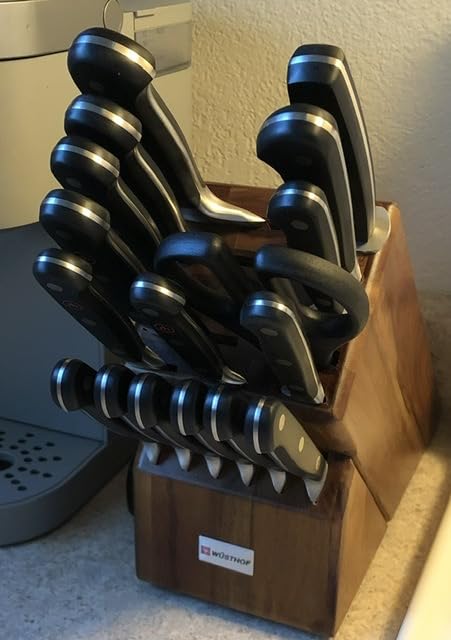
Owners consistently praise the razor-sharp PEtec edges, the solid full-tang balance and the Solingen forging. The main reservation in the reviews is the cost of the set and the weight of the acacia block, which at ten pounds for the package is not a light object to move around a kitchen.
The full tang is the reason this set feels the way it does in service. Weight runs the length of the handle rather than concentrating at the bolster, so the knife balances ahead of the grip and stays controlled through a rocking chop or a push cut on a large onion.
Why experienced cooks trust it
The construction is the selling point, not the styling. Full tang plus a bolster plus 58 Rockwell steel is a combination that survives decades of daily service, and the lifetime warranty reflects that expectation rather than a marketing slogan.
The kiritsuke is the reason to look twice as a buyer. It is a precise, single-bevel-style prep knife that many home cooks never touch, but on a prep line it handles delicate fish trim and small veg work that a French knife would crush.
Where it falls short
Only a honing steel ships in the box. There is no whetstone or electric sharpener, so keeping a 58 Rockwell edge where it belongs means owning sharpening gear separately, and at that hardness it demands a stone rather than a rod.
The acacia block is heavy and large. In a kitchen with limited counter space that footprint is harder to live with than the price, and a magnetic strip or wall rack frees up more room for a working knife.
5. ZWILLING Pro 7-Piece Block Set: Best Ice-Hardened German Set
ZWILLING J.A. Henckels 7-pc ZWILLING Pro Knife Block Set, Black/Stainless Steel
SIGMAFORGE single-piece steel
Ice-hardened FRIODUR blade
Curved bolster
16-slot hardwood block
Pros
- Forged from a single piece of SIGMAFORGE high-carbon NO STAIN steel
- Ice-hardened FRIODUR blades start sharper and hold longer
- Curved bolster extends the hand for control
- Block leaves room for six additional steak knives
Cons
- Included steel and shears are perceived as lower quality
- Some block slots cut at an angle so knives sit oddly
- Assembly origin varies between units
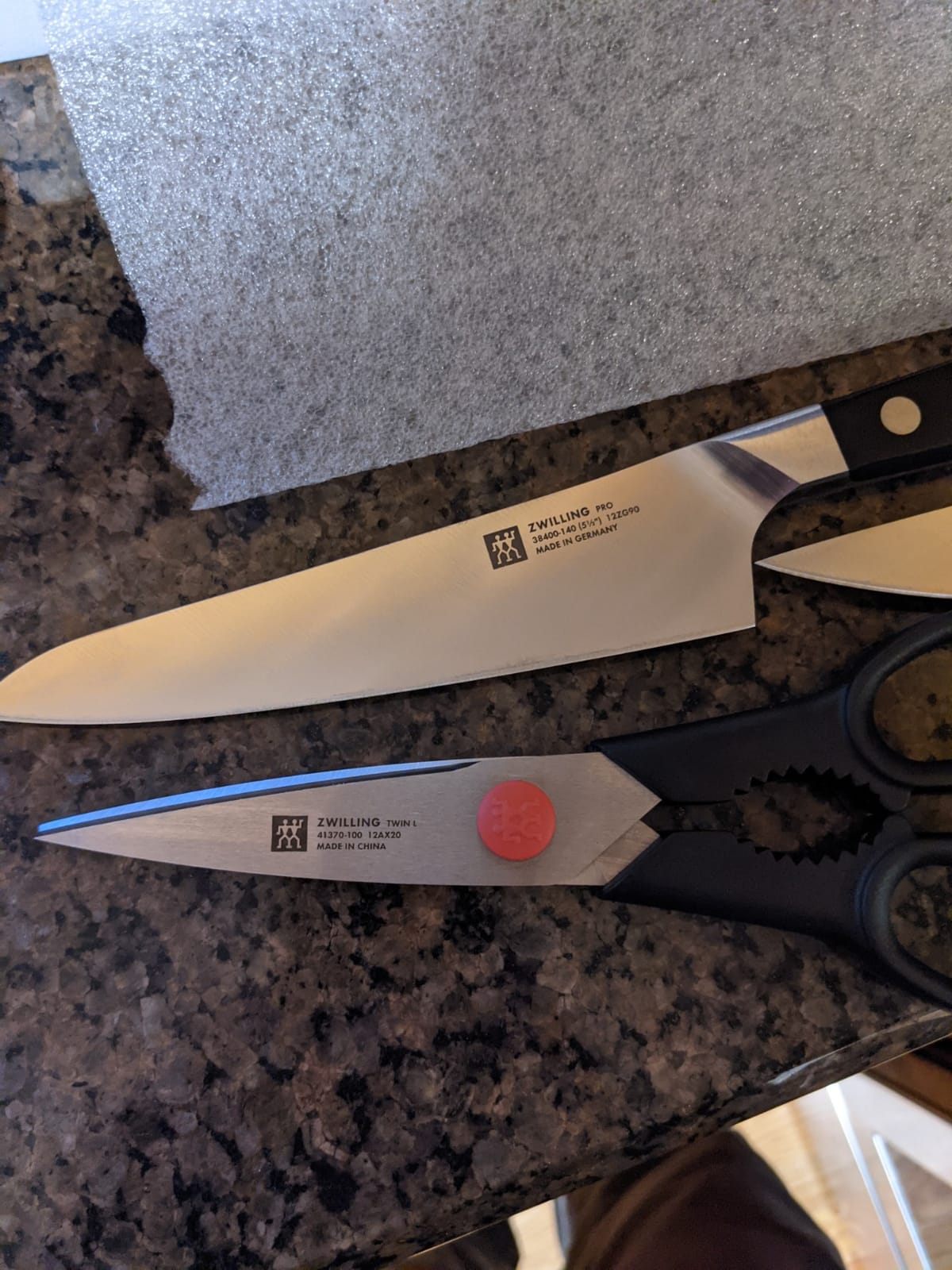
Zwilling’s Pro line is forged from a single piece of SIGMAFORGE high-carbon NO STAIN stainless steel and ice-hardened through the FRIODUR process, which is the specification that separates it from cheaper stamped sets. The blades are precision honed with a laser-controlled edge, and the curved bolster is designed to extend the hand for control.
The four blades are a 4 inch paring, 5.5 inch prep, 8 inch chef’s and 8 inch bread knife, joined by a 9 inch Twin sharpening steel and Twin kitchen shears. The 16-slot hardwood block is the practical feature here: it has room for six more steak knives, so a service can be outfitted from one box.
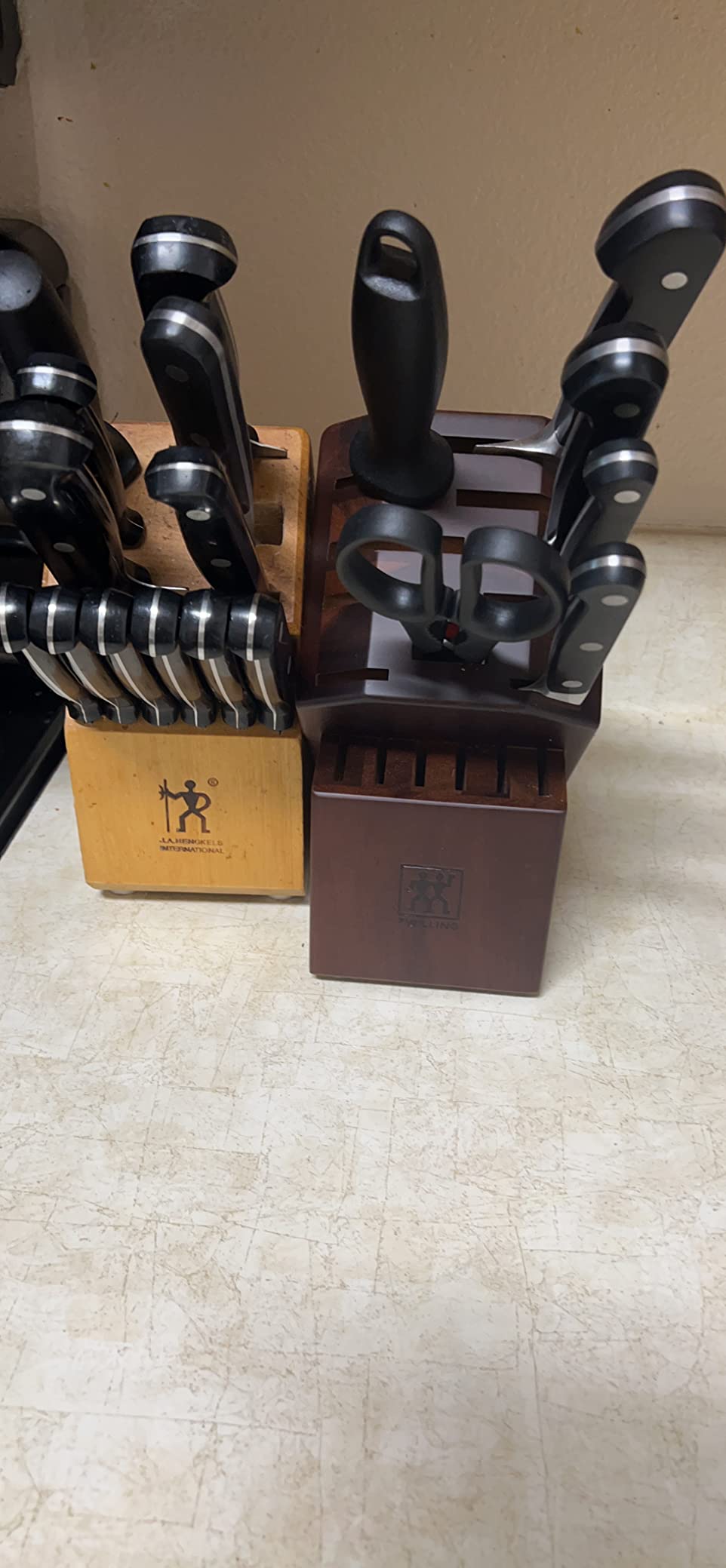
Long-term owners repeatedly describe these as lifetime knives with outstanding balance, weight and edge holding, and several report buying them again as gifts. That is the pattern you want from a professional set: the blade is what people remember, years later.
It is worth being direct about the Zwilling versus Wusthof question, because both appear in this roundup. Zwilling’s ice-hardening is the more aggressive treatment and tends to deliver a slightly crisper initial edge, while Wusthof’s full tang and bolster package feels more robust under load. Owners of both report the same thing about build quality over time.
Why it earns a place on a line
Single-piece forging removes the weak points that stamped knives develop, and the ice-hardening extends time between sharpenings on a busy week. For a cook who sharpens once a week and needs the blade to hold through the weekend, that treatment earns its place.
The curved bolster changes the feel more than the spec sheet suggests. It moves the grip back toward the heel, which makes fine work steadier, and it is noticeable on the smaller prep knife in particular.
Where it falls short
The accessories are the weak point, and owners say so directly. The included sharpening steel and kitchen shears are generally viewed as noticeably lower quality than the blades, so plan to buy a proper steel and a heavier pair of shears for daily work.
Block slot geometry also draws complaints: some slots are cut at an angle that leaves knives sitting at an odd lean. It is cosmetic rather than functional, but in a kitchen where a knife must land in the same spot every time, it is worth seeing the block before committing.
6. Shun Classic 5-Piece Slimline Block Set: Best Japanese-Style Overall
Shun Classic 5 Piece Slimline Block Set
VG-MAX core with Damascus cladding
16-degree edge
D-shaped Pakkawood handle
Slimline bamboo block
Pros
- VG-MAX core with 68-layer Damascus cladding cuts exceptionally sharp
- D-shaped Pakkawood handle feels secure and suits either dominant hand
- Free lifetime sharpening and honing service from the manufacturer
- Slimline bamboo block keeps a small set tidy
Cons
- Only three knives
- no boning or slicer in this configuration
- Steep 16-degree edge is harder to sharpen on standard equipment
- VG-MAX is more prone to chipping on hard bone than German steel
The Shun Classic Slimline is the cleanest expression of a Japanese chef’s knife set: three blades, an 8 inch chef’s, a 3.5 inch paring and a 6 inch utility, with a honing steel in a slimline bamboo block. The core is VG-MAX steel clad in 68 layers of Damascus, ground to a 16-degree edge for precision work.
The D-shaped Pakkawood handle works for either dominant hand, which removes one of the most common reasons cooks return a Japanese knife. It is handcrafted in Japan and the manufacturer provides free sharpening and honing service, a genuine advantage if your kitchen has no one who can sharpen to a fine Japanese edge.
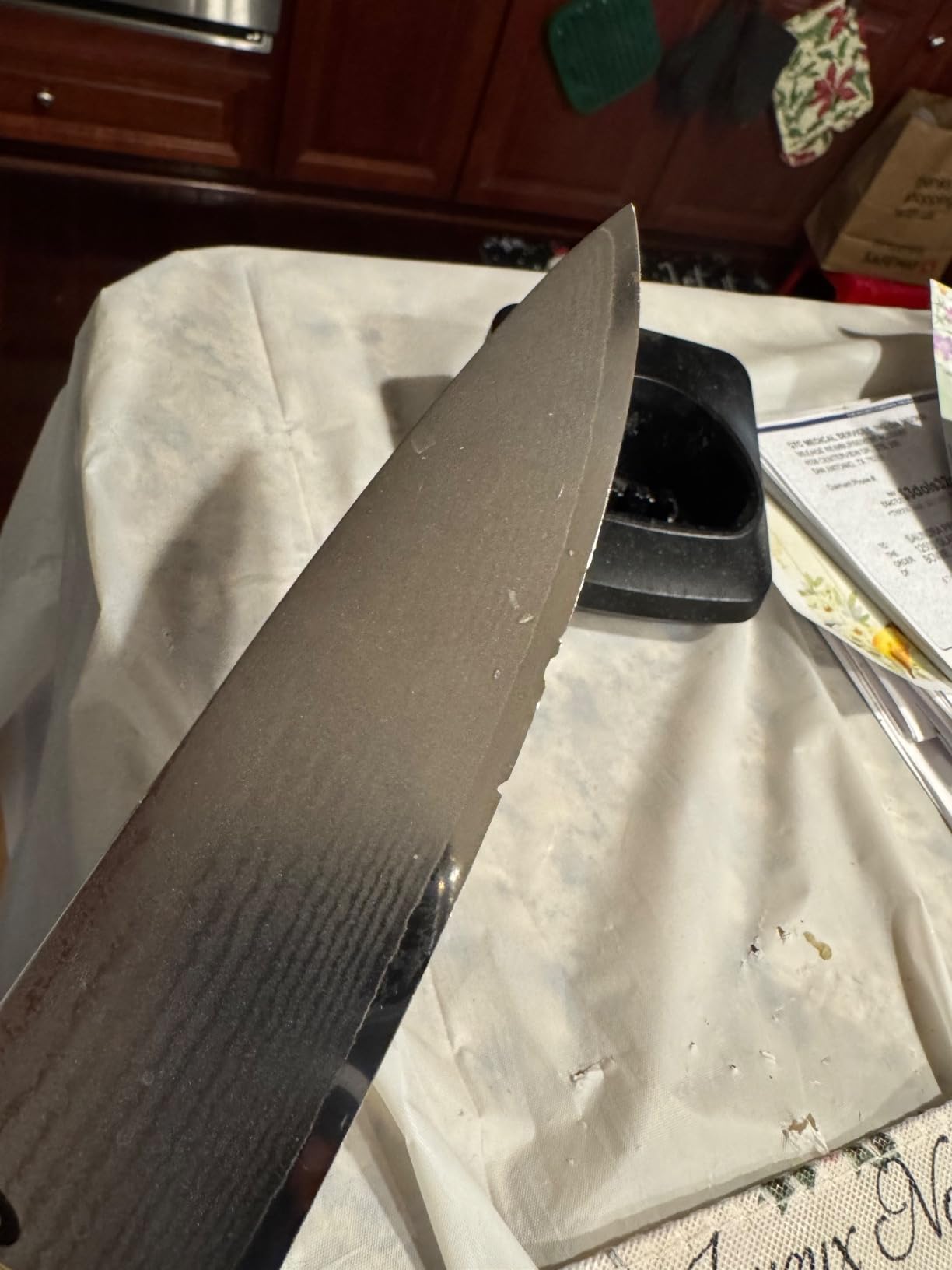
Owners love the out-of-the-box sharpness and the refined feel of the blades, and the slimline block is frequently praised for keeping a small set accessible. The recurring caveat is the piece count and the demands of a very acute edge angle.
That 16-degree edge is the trade to understand before buying. It slices cleaner and holds longer than a 20-degree German edge, but it needs finer stones and more frequent careful honing. The free service exists precisely because sharpening this steel well takes practice.
Why a Japanese set suits precision work
The blade profile and angle give a cleaner cut with less crush on delicate work: fish trim, garnishes, soft vegetables and anything where pushing the knife rather than rocking it matters. For a pastry or garde manger station, that geometry is the reason to own one.
Weight is another quiet advantage. These knives are noticeably lighter than a full-tang German block, which reduces hand fatigue across a long prep shift, and the slimline block takes very little counter space for what it stores.
Where it falls short
Three knives is not a working kit. There is no boning knife, no slicer and no bread knife here beyond the utility, so a line cook would still be sourcing blades. Judge this as the core of a personal kit, not a station’s whole inventory.
VG-MAX is harder than German steel and chips on hard bone or frozen produce if you rush it. Forum chatter about Japanese knives being brittle is largely about technique, but the physics are real: a fine edge and hard steel demand respect.
7. Shun Premier 7-Piece Essential Block Set: Best Hammered Japanese Set
Shun Premier 7 Piece Essential Block Set, Includes 8″ Chef, 4″ Paring, 6.5″ Utility, 9″ Bread Knives & Herb Shears, Handcrafted Japanese Knife Set, Pakkawood Handles
VG-MAX core with 68-layer cladding
Hammered tsuchime finish
16-degree edge
Contoured Pakkawood handles
Pros
- Hammered tsuchime finish genuinely reduces food stick and slicing drag
- VG-MAX steel with Damascus cladding delivers exceptional sharpness
- Herb shears and an 11-slot bamboo block make it a complete working set
- Free lifetime sharpening and honing service
Cons
- Very high cost for a four-knife configuration
- 16-degree edge is difficult to maintain on standard whetstones
- VG-MAX can chip on bone or hard produce
- Heavy 11-pound package for a compact set
The Premier line adds a hammered tsuchime finish to the same VG-MAX core and 68-layer Damascus cladding, ground to the same 16-degree angle. The hammered surface is not decoration: it reduces drag on wet protein and stops food from welding itself to the flat of the blade.
Four blades ship here, an 8 inch chef’s, 4 inch paring, 6.5 inch utility and 9 inch bread knife, plus herb shears, a honing steel and an 11-slot bamboo block. The contoured Pakkawood handles sit differently from the D-shaped Shun Classic and are the ones to try in hand if hand size has bitten you before.
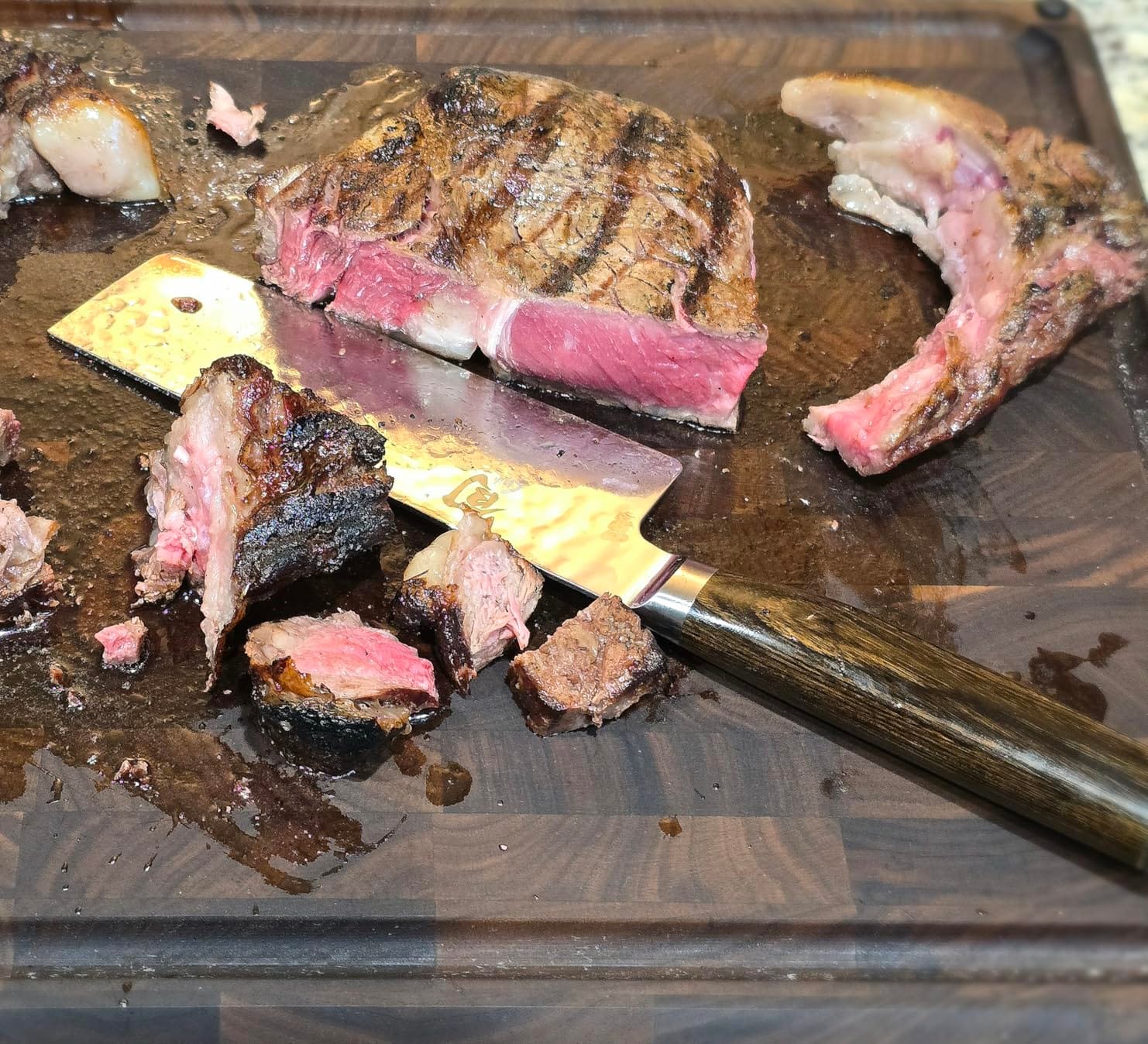
Owner sentiment is strongly positive: people praise the hammer finish, the razor sharpness and the build quality, and the free sharpening service is repeatedly mentioned as the reason they would buy another. The review base is smaller than the German sets, which is worth weighing when you compare long-term evidence.
The herb shears are a small touch that matters in a professional kitchen. Fresh herb and garnish work happens at volume during service, and dedicated shears are faster and cleaner than a knife for chives, parsley and stems.
Why the hammered finish earns its cost
Tsuchime dimpling breaks the contact patch between food and blade. On a station that plates protein after cooking, that means fewer slices welded together and a cleaner release, which is a quality difference you can see on the plate rather than just feel in the hand.
Free lifetime sharpening is unusual at this level and removes the single biggest barrier to owning fine Japanese steel. If nobody on your brigade can sharpen to a 16-degree edge, the service is what makes the set practical.
Where it falls short
Four knives is a small payload for the money, and that ratio is the most common reservation in reviews. If you need a boning knife and a slicer, you are buying them separately no matter which brand you start with.
The package ships at eleven pounds, which is a lot of mass for a compact set and a reminder of the same point: heavy sets feel substantial and also move awkwardly. Plus, the 16-degree edge still has to be maintained, and standard whetstones are not the right stones for it.
8. Mercer Renaissance 6-Piece Forged Set: Best Value Forged German Set
Mercer Culinary M23500 Renaissance 6-Piece Forged Knife Block Set, Tempered Glass Block
Precision-forged German cutlery steel
Triple riveted Delrin handles
Includes 6 inch flexible boning
4.8 pound set weight
Pros
- Precision-forged German steel delivers long-lasting sharpness
- Triple-riveted Delrin handles are durable yet lightweight with a rounded spine
- Includes the core professional knives including a 6 inch flexible boning
- Limited lifetime warranty from Mercer Tool Corp.
Cons
- Hand wash only
- which adds labor in a professional setting
- No sharpening steel or kitchen shears included
- Tempered glass block can chip and shows wear
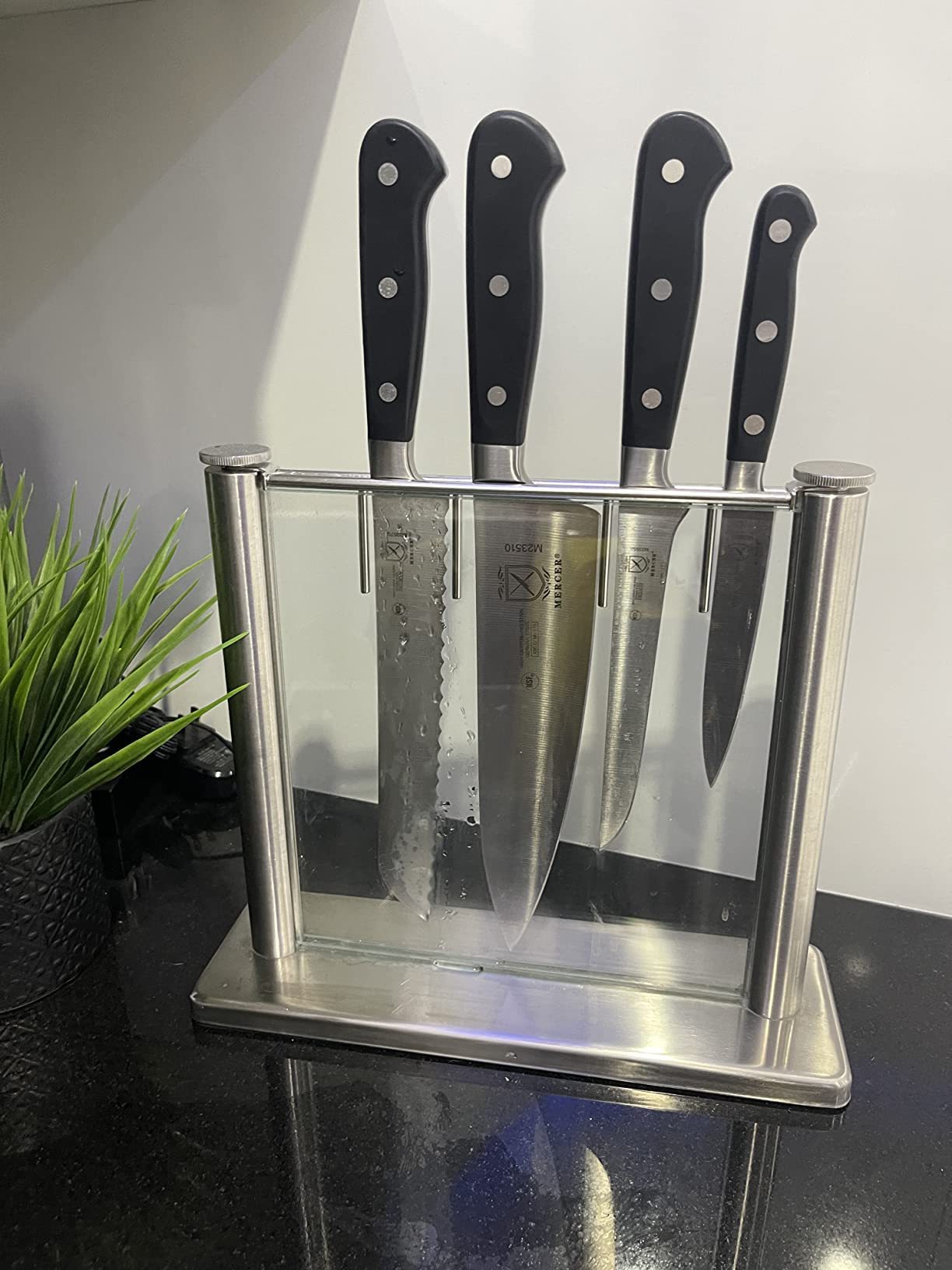
The Renaissance set is Mercer’s forged step up, using precision-forged high-carbon German cutlery steel with triple riveted Delrin handles and a rounded spine for a comfortable grip. That combination is why it holds a 4.8 rating with more than 800 reviews, and why it appears on so many restaurant starter lists.
The blade run is the most professional in the budget tier: a 3.5 inch paring, 5 inch utility, 6 inch flexible boning, 8 inch wavy edge bread and 8 inch chef’s. The flexible boning is the piece that separates this from a home set, because it is the knife a cook actually uses through a meat-heavy service.
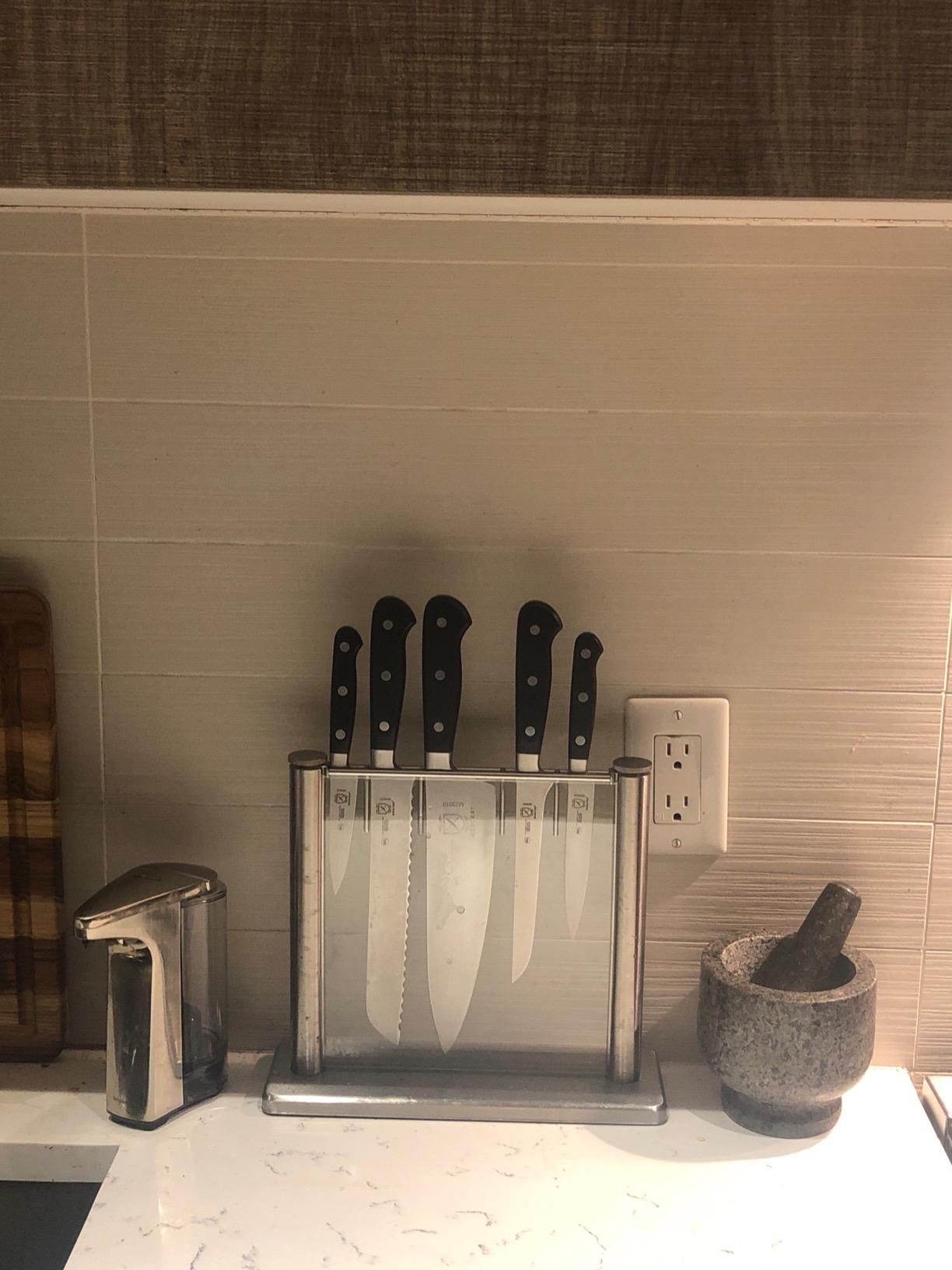
Buyers rate the forged steel edge retention and the balanced, comfortable handles very highly, with most reviews at five stars. Criticism stays narrow and fixable: care requirements and the small piece count. There is a limited lifetime warranty from Mercer Tool Corp., which matters when a knife lives in a working kitchen.
The Delrin handle is the quiet differentiator. It is lighter than POM and does not get slippery as it warms, so across a shift the grip feels the same at the first ticket and the last, and it will not crack in a dish pit the way some cheaper polymers do.
Why it suits a working cook on a budget
Forged German steel at this level gives you the same blade category as sets costing several times more. Edge retention on a taper-forged high-carbon blade holds up through a full day of prep, which is exactly what a busy line needs.
Lightweight handles reduce fatigue. At roughly five pounds for the whole package, this is a set you can carry, move and store without planning around it, unlike the ten-pound German block sets.
Where it falls short
Hand wash only is the biggest operational constraint, and in a kitchen that runs knives through a dishwasher by policy, this set is the wrong answer. Budget for a dedicated hand-wash station and a drying rack.
No steel and no shears ship with it. A honing rod is the first accessory to buy, because a six-knife set without one encourages cooks to skip honing and reach for a stone more often than they should.
9. Mercer Culinary Partners in Education 23-Piece Kit: Best Culinary School Starter Kit
Mercer Culinary Partners in Education 23-Piece Millennia Culinary School Kit,Black
23 pieces in a 10-pocket roll
8 inch chef's and 11 inch Granton slicer
10 inch honing steel
Includes knife guards
Pros
- Bundles the knives with the support kit culinary students actually need
- Includes an 11 inch Granton slicer and 8 inch chef's knife
- 10-pocket roll case keeps the whole kit organized and portable
- Designed for professional foodservice use rather than home kitchens
Cons
- Many of the 23 pieces are non-knife accessories rather than blades
- Hand wash only
- Millennia handles are Asian-style and suit some hands better than others
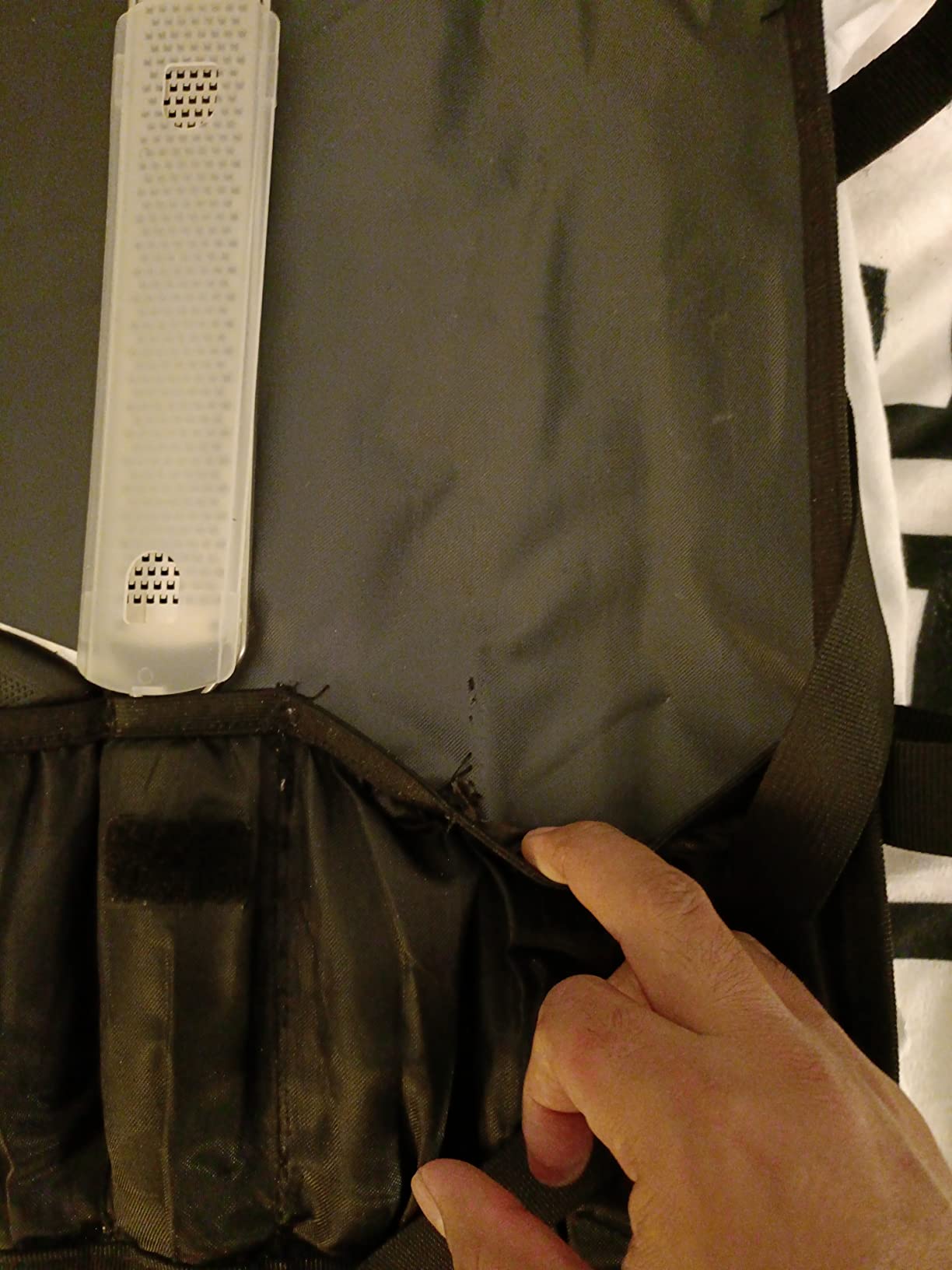
This kit is built around a culinary school supply list rather than a knife catalogue, and that changes what you get. The knives are the Millennia series: an 8 inch chef’s, 3 inch slim paring, 6 inch boning, 8 inch wavy edge bread and an 11 inch Granton edge slicer, plus a 10 inch honing steel and five knife guards.
Then it keeps going with a swivel peeler, pocket thermometer, seven inch straight fork, eight inch offset spatula, melon baller, pastry bag and decorating tips. All of it lives in a 10-pocket roll case, which is the reason this kit shows up in student packing lists and instructor recommendations.
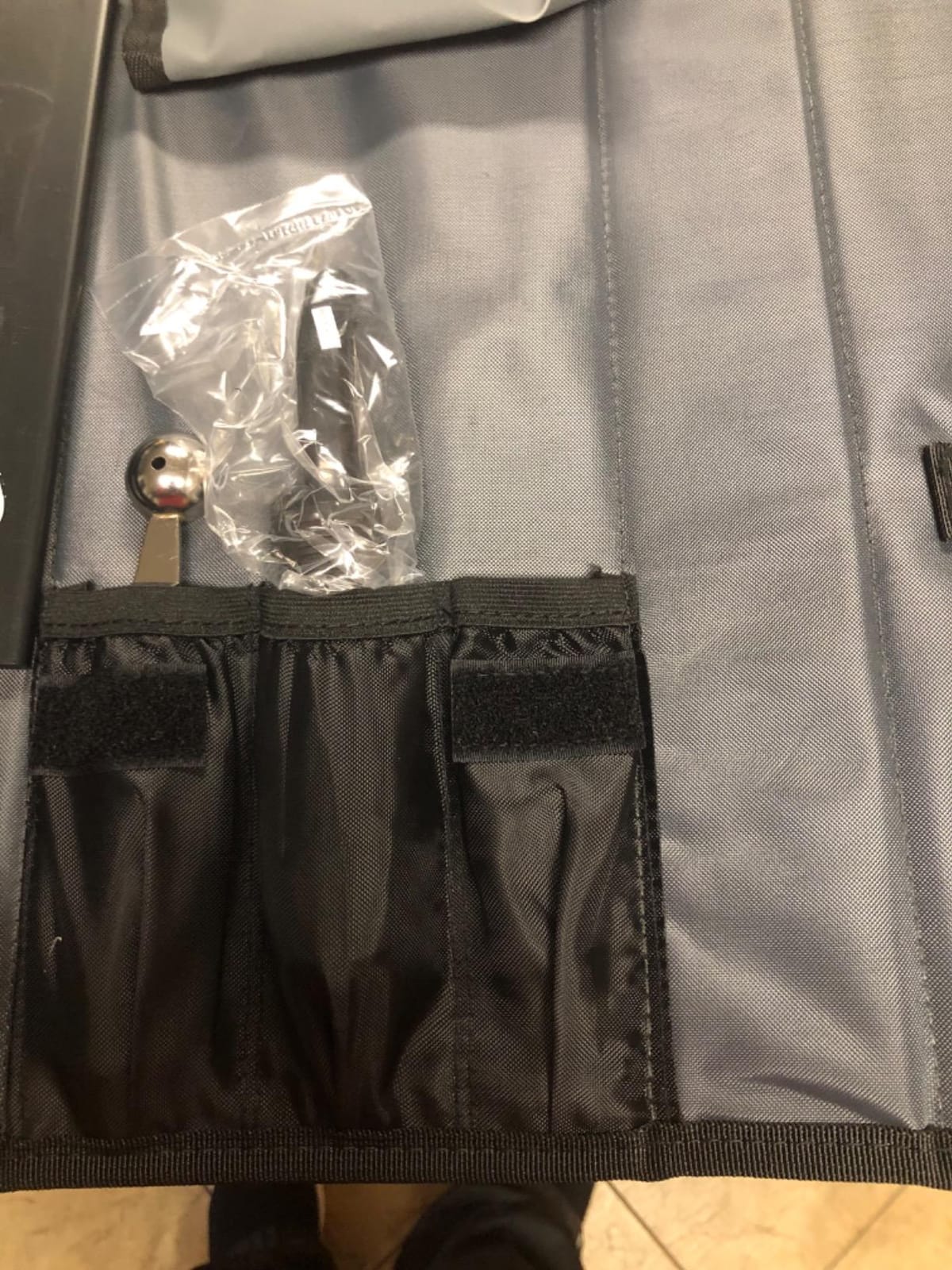
Buyers value this as a complete, organized starter kit that mirrors what a training kitchen actually asks students to own. Reviews highlight the guards, the case and the honing steel as the practical inclusions, with the main complaint being that much of the piece count is tools rather than knives.
That complaint is fair and also the point. A student buying knives alone will still spend money on guards and a thermometer on week one, because a knife dropped on a tile floor in a teaching kitchen is a real and common accident.
Why it makes sense for a first brigade kit
Outfitting a new cook means sourcing knives, guards, a honing steel and basic tools at once. This kit does that in one purchase and in one case, which removes the most common reason students arrive on day one missing something.
The 11 inch Granton slicer is a legitimately professional inclusion. Granton dimples reduce drag and suction on meat, and most home sets do not include a slicer of that length at all.
Where it falls short
Do not judge this set by its piece count. Out of 23 items, only five are knives, and anyone buying it for blade variety will be disappointed. Buying it for tools and organization makes sense; buying it for steel range does not.
Millennia handles are Asian-style in profile, which means thinner and lighter than a German-style handle. Cooks with larger hands frequently report that the handle feels small over a full shift, so test grip before committing.
10. Henckels Forged Accent 20-Piece Self-Sharpening Block: Best Self-Sharpening Block Set
Henckels Forged Accent 20 Piece Self Sharpening Knife Block Set – Black Handles
Self-sharpening block with ceramic rods
Forged full tang on every blade
Eight forged steak knives
Limited lifetime warranty
Pros
- Block maintains the edge continuously as knives go in and out
- Forged full-tang construction on every blade including steak knives
- 20 pieces covering nearly every kitchen task with no empty slots
- Walnut-finish block with stainless face looks good on the line
Cons
- Block is oversized and consumes significant counter space
- Occasional units arrive with a bent tip or uneven grind
- Ceramic self-sharpening inserts are debated among sharpeners
- Finish is a step below a German-made Wusthof Classic
The idea here is simple and, for a busy line, useful: ceramic sharpening rods sit inside each fine-edge slot, angled so every knife is honed as it is drawn and replaced. All blades including the steak knives are forged with a full bolster and full tang, in German stainless steel with strong edge retention.
The count is complete rather than padded. You get 3 inch and 3.5 inch paring, 5 inch serrated utility, 5.5 inch boning and prep, 6 inch utility, a 7 inch hollow edge santoku, 8 inch bread, carving and chef’s knives, eight 4.5 inch forged steak knives, come-apart shears and a walnut-finish block with a stainless face.
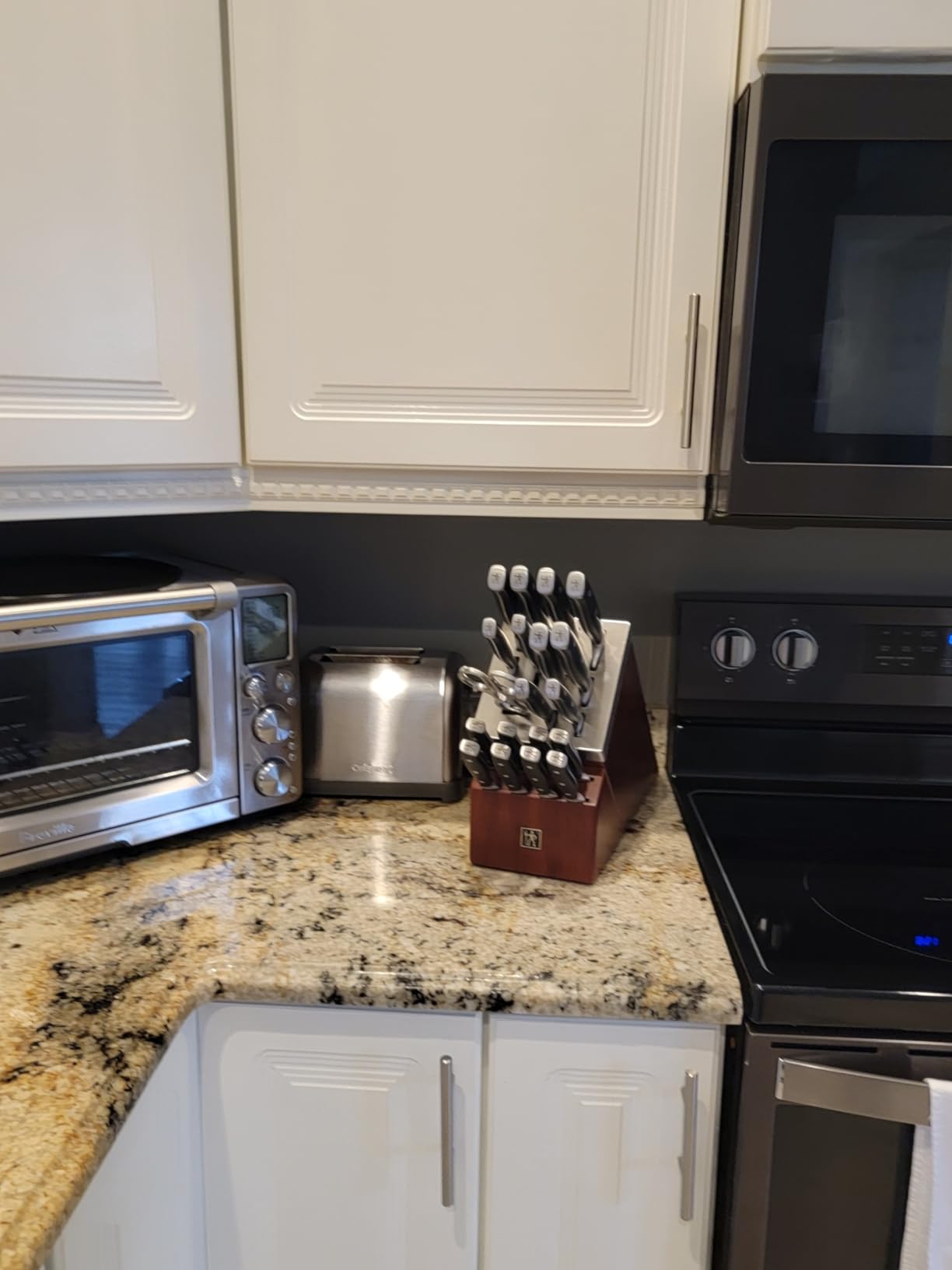
Owners are enthusiastic about true forged full-tang blades combined with self-sharpening convenience at this piece count. The critical themes are the block’s oversized footprint, occasional factory defects like a bent tip or uneven grind, and where the set is assembled rather than where the steel is forged.
The full tang on the steak knives is unusual and worth calling out. Most sets in this roundup give you plain stamped steak knives, and those are the first pieces to bow in a service. Forged ones survive being stacked and carried.

Why the self-sharpening block is worth considering
In a kitchen where nobody has time to hone before service, passive honing is a genuine saving. Blades stay dressed through normal use, which delays the point where a cook decides to stop cutting well and start cutting fast.
The self-sharpening behavior is a real edge-maintenance habit baked into the workflow, which is the same reason professionals keep a honing steel within arm’s reach at all times.
Where it falls short
The block runs roughly sixteen inches and eats counter space that a working station needs for mise en place. On a cramped line, that footprint is a bigger problem than the blade quality.
Trained sharpeners are split on ceramic inserts, and a passive system never replaces a real sharpening session. Also note the assembly origin listed on the spec sheet, because buyers comparing this set to a German-made Wusthof are not comparing the same production standard on finish.
11. Klaus Meyer Stahl 19-Piece Block Set: Best Large Block Set
Klaus Meyer Stahl 19-Piece German Steel Kitchen Knife Block Set (Black)
X50CrMov15 steel at 54-56 HRC
Oil-quenched hardening
Solid sapele wood block
10-year warranty
Pros
- Forged bevelled blades with strong weight and balance
- 19 pieces including eight steak knives at a fraction of German-brand pricing
- Sapele wood block has engraved slot labels so knives return to the right place
- Triple riveted ABS handles are comfortable and non-slip
- 10-year warranty with clearly stated steel and hardness
Cons
- Block's forward-leaning angle takes a large counter footprint
- Hand washing recommended to protect the blades
- Some reviewers report rust concerns if knives are left wet
This is the set to buy when the brief is a whole new kitchen rather than a new cook. Nineteen pieces cover an 8 inch chef’s, 8 inch bread, 8 inch carving, 7 inch and 5.5 inch santoku, 3.5 inch paring, eight forged 4.5 inch steak knives and kitchen shears, with an 8 inch sharpening steel and a solid sapele wood block.
The steel is X50CrMov15 high carbon stainless hardened with oil quenching to 54-56 HRC, which is a proper knife steel rather than a thin stamped grade. The triple riveted ABS handles are German-engineered, and the warranty runs ten years.
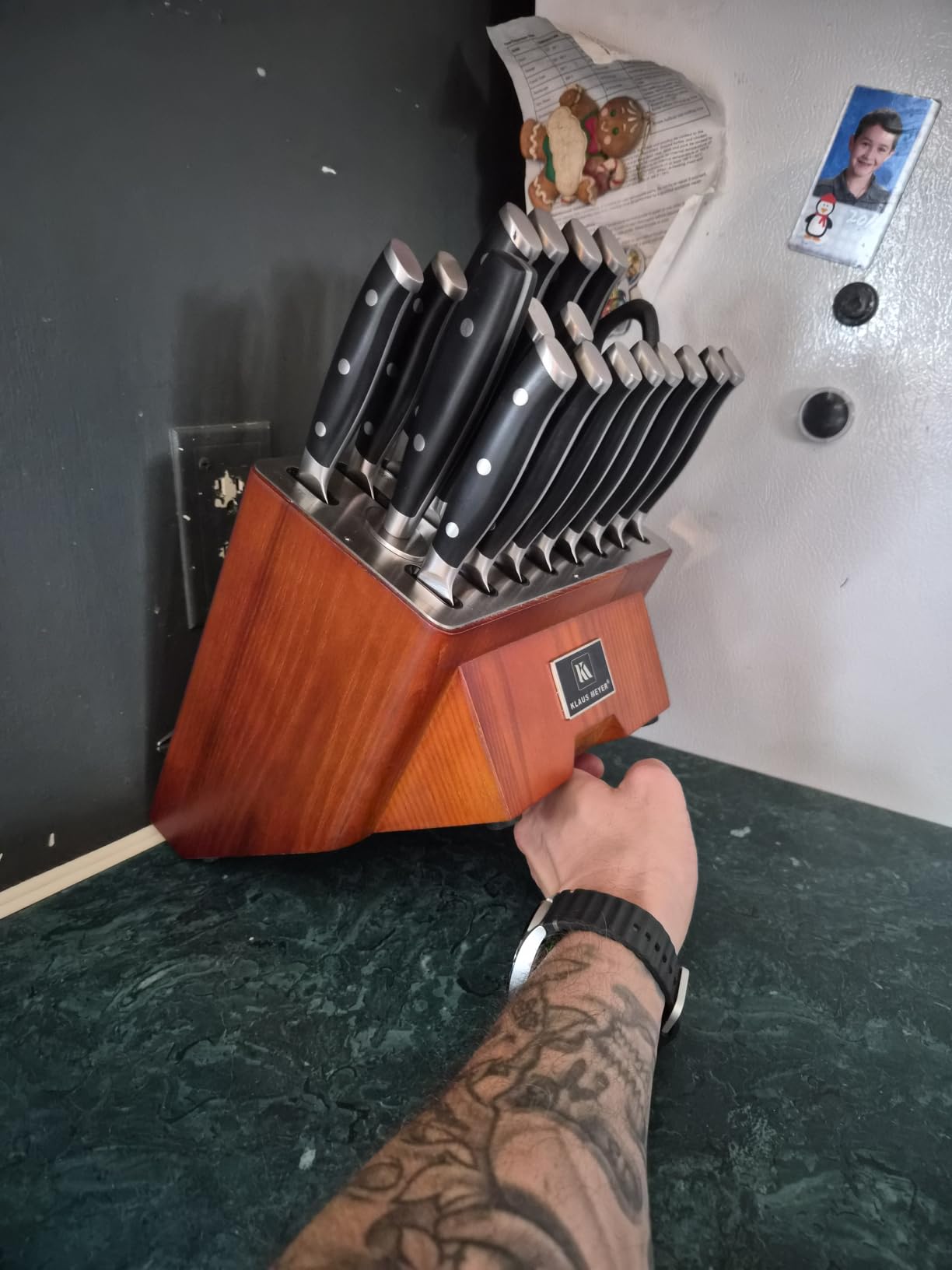
The prevailing sentiment is that this set punches well above its tier. Reviewers, including cooks with restaurant experience, call the blades very sharp, well balanced and comfortable, and single out the unusual completeness of the 19-piece count for the money.
The engraved slot labels on the sapele block are a small design decision with real operational value. Every knife has a marked home, which is how a kitchen keeps a station orderly when four cooks share the same rack and the shift changes at a sprint.
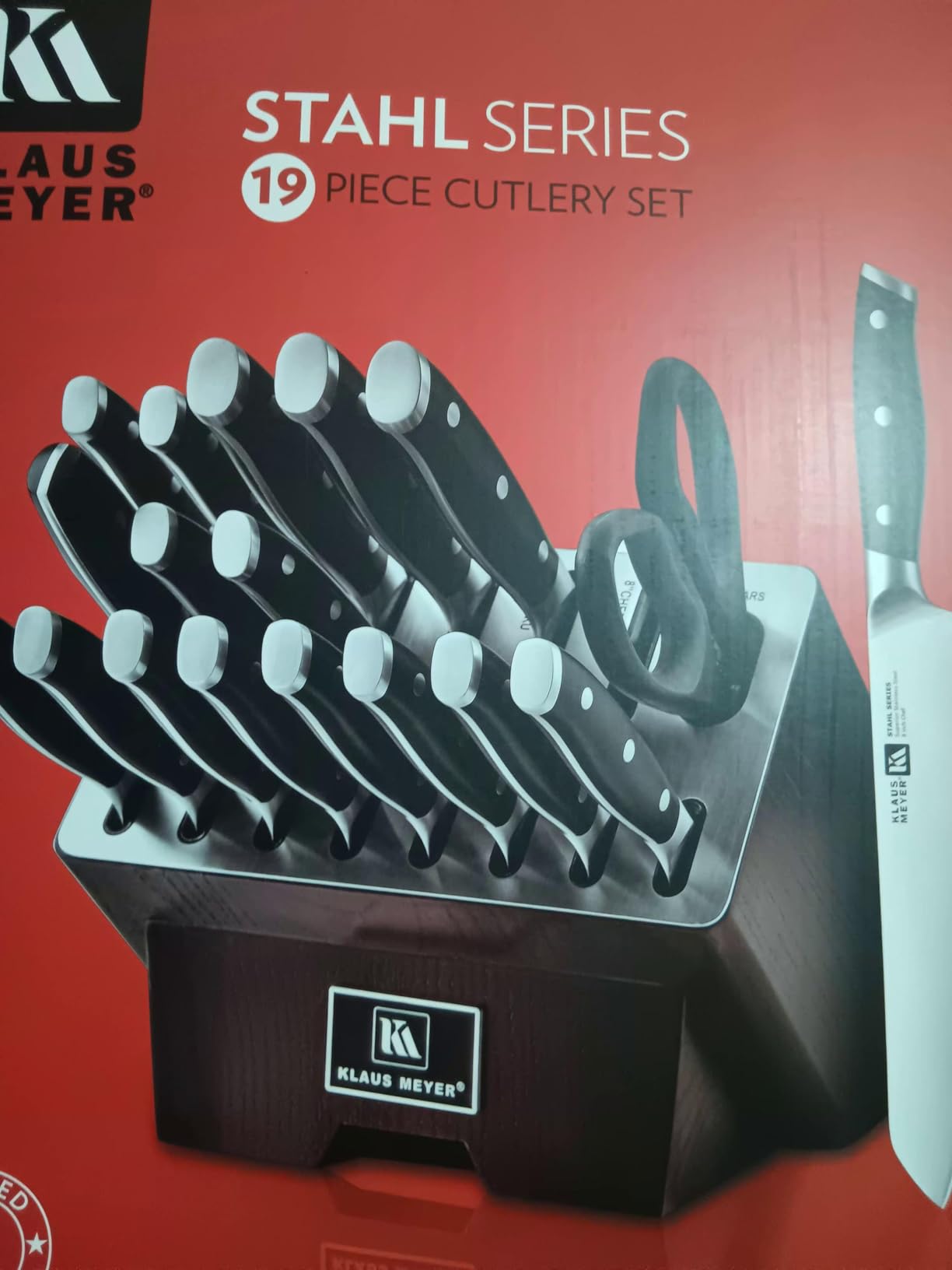
Why it works for outfitting a new kitchen
Completeness is the pitch. A boning knife, two santoku, a slicer, steak knives, a steel and shears in one purchase is the fastest way to equip a station without a shopping list, and eight steak knives covers a full service table.
At 54-56 HRC the blades are hard enough to hold an edge through volume prep, and forged bevelled construction gives the weight and balance that stamped budget sets cannot fake.
Where it falls short
The block leans forward and has a large footprint. That is a real constraint on a prep counter where space is measured in inches, and a wall strip or a smaller block solves it better than accepting the shape.
Rust is the reported care issue. Hand washing is recommended, and blades left wet will spot, so the wash-and-dry routine matters more here than it does with a fully stainless option.
12. Victorinox Swiss Classic 5-Piece Utility and Bread Set: Best Dishwasher-Safe Workhorse
Victorinox Swiss Classic Kitchen Set, 5 Pieces – Utility & Bread Knives
Swiss-made stainless steel
Dishwasher safe
Textured handles
545 gram set weight
Pros
- Made in Switzerland with Victorinox steel expertise
- Extremely sharp out of the box and quick to re-hone on a basic rod
- Textured handles hold grip on wet or slippery hands
- Dishwasher safe and easy to clean
- Covers paring
- utility
- carving and bread tasks
Cons
- No chef's knife or santoku
- so it is not a complete kit
- Swiss steel is softer and loses its edge sooner than premium steels
- Handles are thinner than some cooks expect
- No block or roll included
This is the set for a kitchen where the dishwasher never stops. Blades are Swiss-made corrosion-resistant stainless steel and the set is dishwasher safe, which removes the single most common complaint about forged sets: nobody on the line wants to hand-wash every knife at close.
The five pieces are two 3.25 inch paring knives, one wavy edge and one straight, a 4.5 inch utility, a 7.5 inch carving knife and an 8 inch bread knife. Textured handles maintain grip on wet or slippery hands, and the whole set weighs about 545 grams.
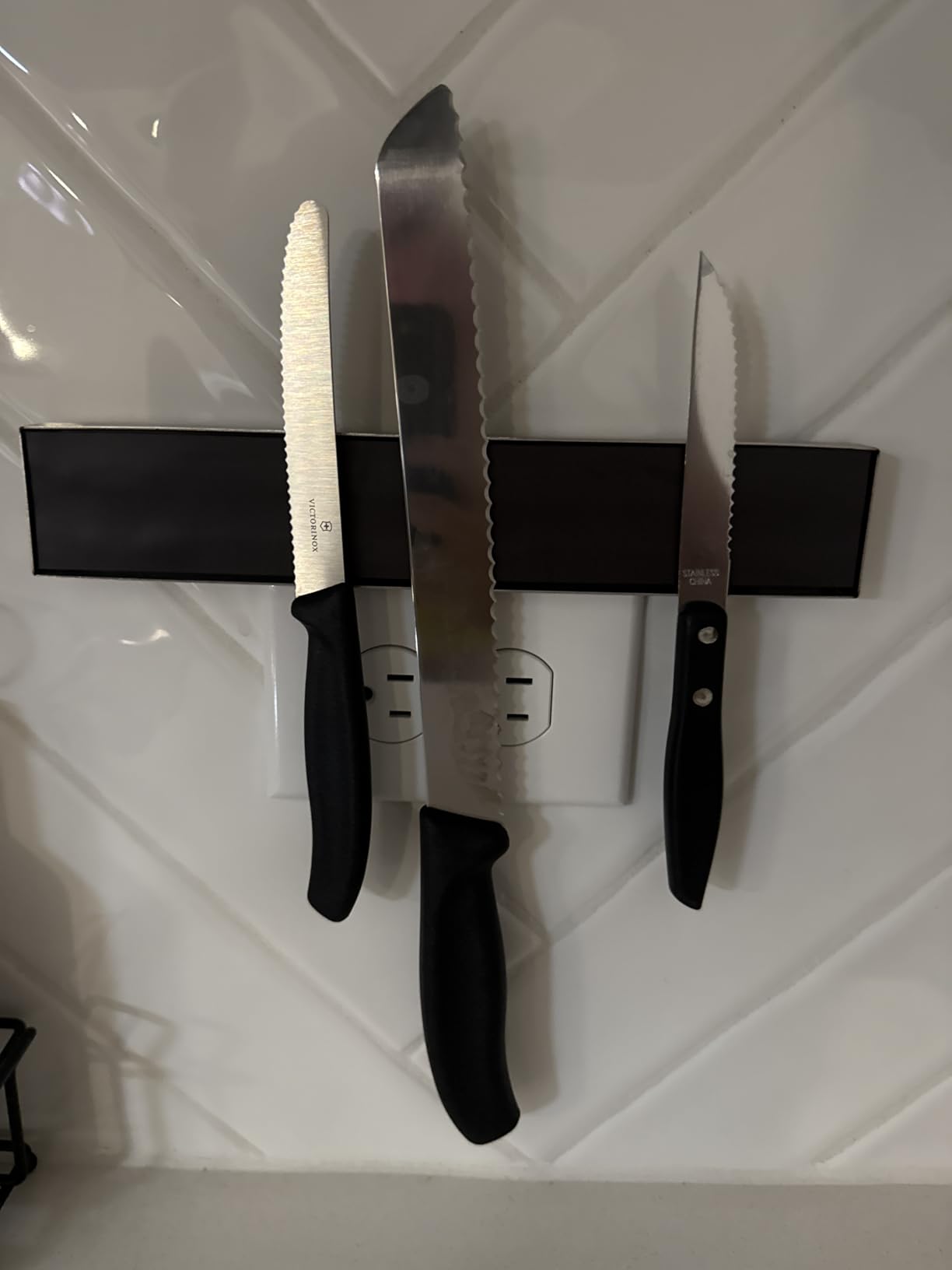
Reviewers treat this as the dependable workhorse: sharp, easy to sharpen, rust-resistant and dishwasher safe, with more than 1,100 ratings behind it. The commonest criticisms are the thin handle profile and the missing chef’s knife.
That thin handle is the honest caveat. It suits cooks who like a light, precise grip and frustrates cooks with larger hands who expect a European-style handle. If you already know your hands dislike thin handles, skip this one.
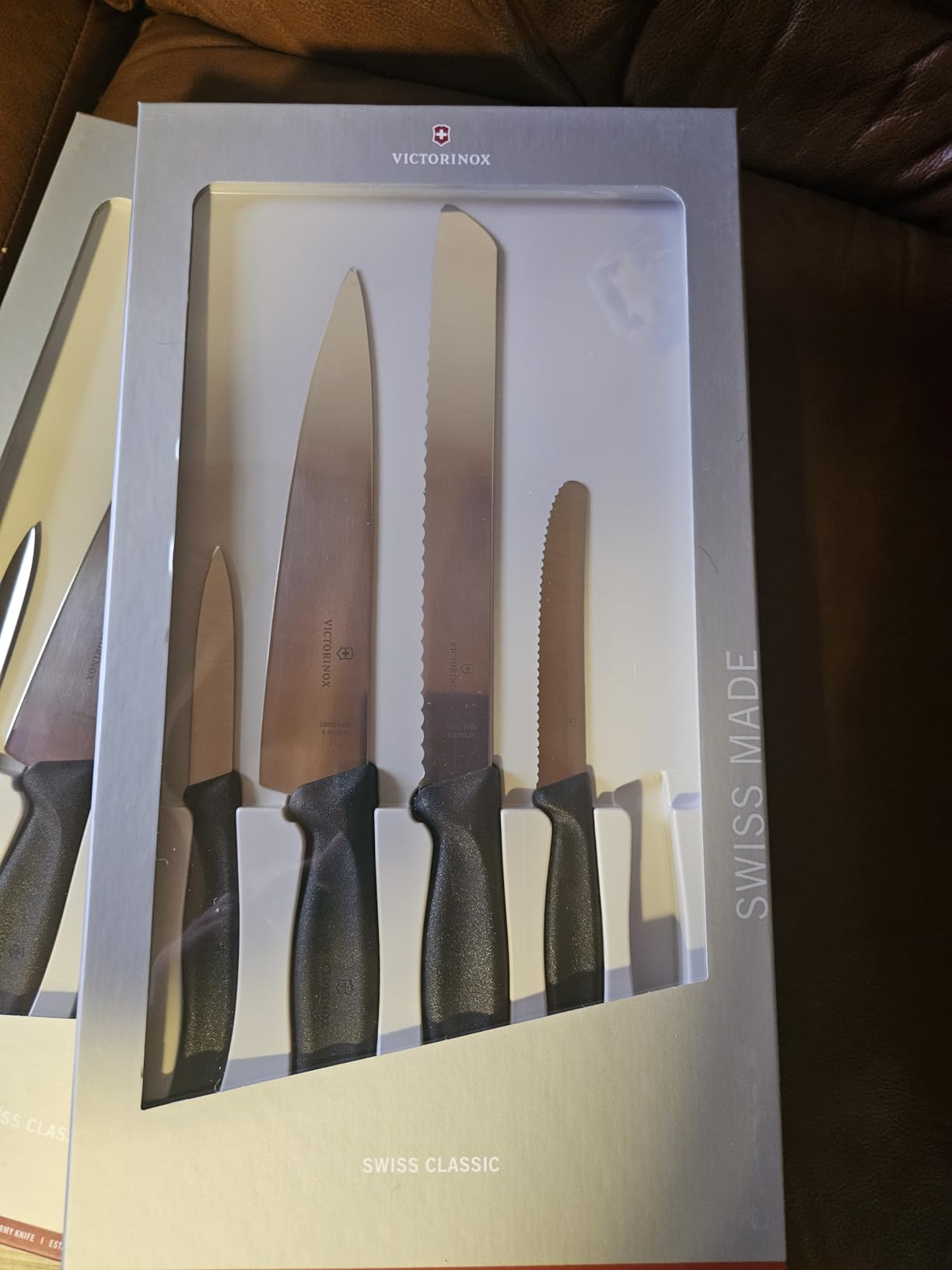
Why it survives a dishwasher-based kitchen
Most professional complaints about premium knives trace back to the dish pit, not the cutting board. A dishwasher-safe stainless set removes that variable entirely, which is why stainless stamped sets still dominate institutional kitchens even when they are not the finest steel on paper.
Textured handles matter more than they sound. On a wash line or on a garnishing station with wet hands, grip is a safety issue, and this handle holds when cheaper smooth plastic does not.
Where it falls short
There is no chef’s knife and no santoku here, so this is not a complete kit for a working line. It is the companion set for a knife you already own, covering carving, bread and fine paring work.
Swiss steel in this set is softer than Japanese or premium German steel, so edge retention sits below the forged sets in this roundup. Plan on a honing steel and more frequent dressing. If you want one set for everything, this is not the one.
Buying Guide: Choosing a Knife Set for Professional Use
A professional set should be judged on the same three criteria that decide any working tool: how long it holds an edge, how it feels at hour six, and whether your kitchen can maintain it. Edge retention is the number one priority in a line, because a dull blade is a slow blade and a slow blade is a safety problem.
What a professional kitchen actually needs
The core is three knives: an 8 inch chef’s knife for general prep, a 3.5 to 4 inch paring knife for detail work, and a serrated bread knife. Those three cover most of a prep shift. Beyond that, add only what a specific station demands: a 6 inch boning knife for poultry and fish, an 8 inch slicer for banquet work, and a knife per cook who will be using it daily rather than occasionally.
A honing steel is not optional in any of those cases. Between the chef’s knife and a whetstone, the steel is what keeps a blade working through service, and a kitchen without one gets blades that are sharpened far less often than they should be.
German versus Japanese versus hybrid steel
German steel, as used by Wusthof, Zwilling and Mercer, is molybdenum high carbon stainless hardened to around 56-58 HRC. It is tougher, more forgiving and more resistant to chipping, which is why it dominates professional kitchens with hard wood boards and fast service.
Japanese steel such as VG-MAX, as used in both Shun sets here, is harder and ground to a steeper 16-degree edge. It takes a cleaner cut and holds longer, but it chips if you hit bone and needs finer stones to maintain. Choose it for precision stations and handle it with more care.
Most cooks end up with both. The honest answer to which tradition is better is that they solve different problems, and a working cook who can only maintain one should choose the one that matches their service.
Stainless versus carbon steel
High-carbon stainless resists corrosion and takes a hard service with no daily care beyond washing and drying. Carbon steel, at the other end of the spectrum, takes a sharper edge than almost anything else and develops a patina, but it rusts if it sits wet and needs a patina to be established first.
For a commercial kitchen that runs all day and washes constantly, stainless is the correct default. Carbon steel earns its place in a dedicated sharpening and drying routine, which is a realistic commitment for a home cook and rarely a realistic commitment on a line.
Full tang, handle and hand fit
A full tang means the steel runs the entire length of the handle, so weight is distributed along the grip and the knife resists twisting under load. It is the clearest construction signal in this roundup, and the Wusthof, Zwilling, Henckels and Klaus Meyer sets all deliver it while the stamped Victorinox and Cuisinart sets do not.
Handle material is a fatigue question. POM and Delrin stay stable through heat and moisture, Pakkawood suits either dominant hand but needs drying, ABS is durable and cheap, and hollow stainless handles run warm. If your hands tire before your shift ends, test the handle before the steel.
Maintenance, sharpening and storage
Hone before you sharpen. A honing steel realigns a rolled edge in seconds and should be used at the start of every shift and any time a blade starts dragging. Whetstone sharpening removes metal, so it happens on a schedule rather than reactively, typically weekly in a professional kitchen and more often for a Japanese edge.
Storage decides how long edges last. A block keeps blades protected but needs counter space and consistent loading habits; a magnetic knife strip saves space and keeps blades accessible; a roll with guards protects blades for transport but is soft against impact. Whichever you choose, wash and dry knives before storing them, because trapped moisture causes rust faster than anything else.
For anyone building their own sharpening setup, our guides to belt grinders for knife making and propane forges for knife making cover the equipment side for anyone who sharpens rather than replaces. For heavier breakdown work, our pick of the best butcher knife sets for home processing is the relevant read.
Frequently Asked Questions
What brand of knives do most professional chefs use?
German forged brands dominate most restaurant kitchens, with Wusthof and Zwilling appearing most often on line racks. Mercer is common where kitchens outfit new cooks because it is inexpensive, tough and replaceable, and Victorinox shows up in culinary school kits and any kitchen that requires NSF approved, dishwasher safe tools. Chefs with high-end stations often add a Japanese knife such as Shun for precision work.
What is the highest rated chef’s knife in this roundup?
Among the sets here, the Mercer Culinary Genesis 6-Piece and the Victorinox Forschner Fibrox 7-Piece both carry a 4.8 rating, with the Genesis holding the larger review base at roughly 2,800 ratings. Individual rating is only half the story: look for a full tang, a stated steel and a hardness figure, then decide which of those suits your service.
Is Zwilling or Wusthof better?
Both are Solingen-area German brands and both appear in this roundup. Zwilling’s ice-hardened FRIODUR treatment and single-piece SIGMAFORGE forging deliver a crisper starting edge, and its curved bolster extends the hand for control. Wusthof’s fully forged full-tang construction with a bolster feels more robust under heavy load and carries a lifetime warranty. Owners of both report comparable long-term build quality.
What knives does Gordon Ramsay actually use?
Ramsay is most closely associated with forged Japanese-style knives, most often a Shun, and the manufacturer offers free sharpening and honing service on its sets. Both Shun sets in this roundup use a VG-MAX core with 68-layer Damascus cladding ground to a 16-degree edge. That choice suits precision work but chips more readily on hard bone than a German full-tang blade.
Is it cheaper to buy a knife set than knives individually?
Bundles usually cost less than the sum of their parts, and the saving is clearest on steak knives and accessories like honing steels and shears. Forum consensus is that the discount is modest rather than dramatic, which is why experienced cooks still start with a single chef’s knife. Judge a set on whether the pieces match your station, not on the discount.
Are expensive chef knives worth it for a professional kitchen?
Yes, when the premium buys construction you can feel: a full tang, forged high-carbon steel and a hardness in the 54-58 HRC range hold an edge longer and survive heavier work than stamped budget steel. The counterweight is that fine Japanese edges need better sharpening skills than a typical busy kitchen has, so a mid-tier forged set is often the better total purchase.
How should professional knives be stored and cleaned?
Wash knives by hand and dry them immediately, then store them in a block, on a magnetic strip or in a guarded roll. Leaving any steel blade wet overnight causes rust, and dishwasher cycles dull forged and taper-ground edges faster than heat damages most stamped stainless. Whetstone sharpening belongs on a schedule, while a honing steel should be used at the start of every shift.
Conclusion: The Best Knife Sets for Professional Chefs in 2026
After weighing construction, edge retention, care burden and long-term owner feedback across these twelve sets, the Mercer Culinary Genesis 6-Piece remains our pick as the best knife set for professional chefs. Forged high-carbon German steel, a taper-ground edge and a non-slip Santoprene handle cover a full prep shift, and the review volume behind it is the deepest in the category.
Take the Victorinox Forschner roll if your kitchen needs NSF approval and dishwasher tolerance, or if you are outfitting culinary students. Take the Wusthof Classic if you want the benchmark forged full-tang German construction, and take the Shun Classic Slimline if precision work is your station and someone can maintain a fine edge.
Whatever you choose, buy fewer knives than the block suggests, add a honing steel on day one, and match the set to how your kitchen actually washes and stores tools. That last step decides more about how long the blades last than any specification on the box.