
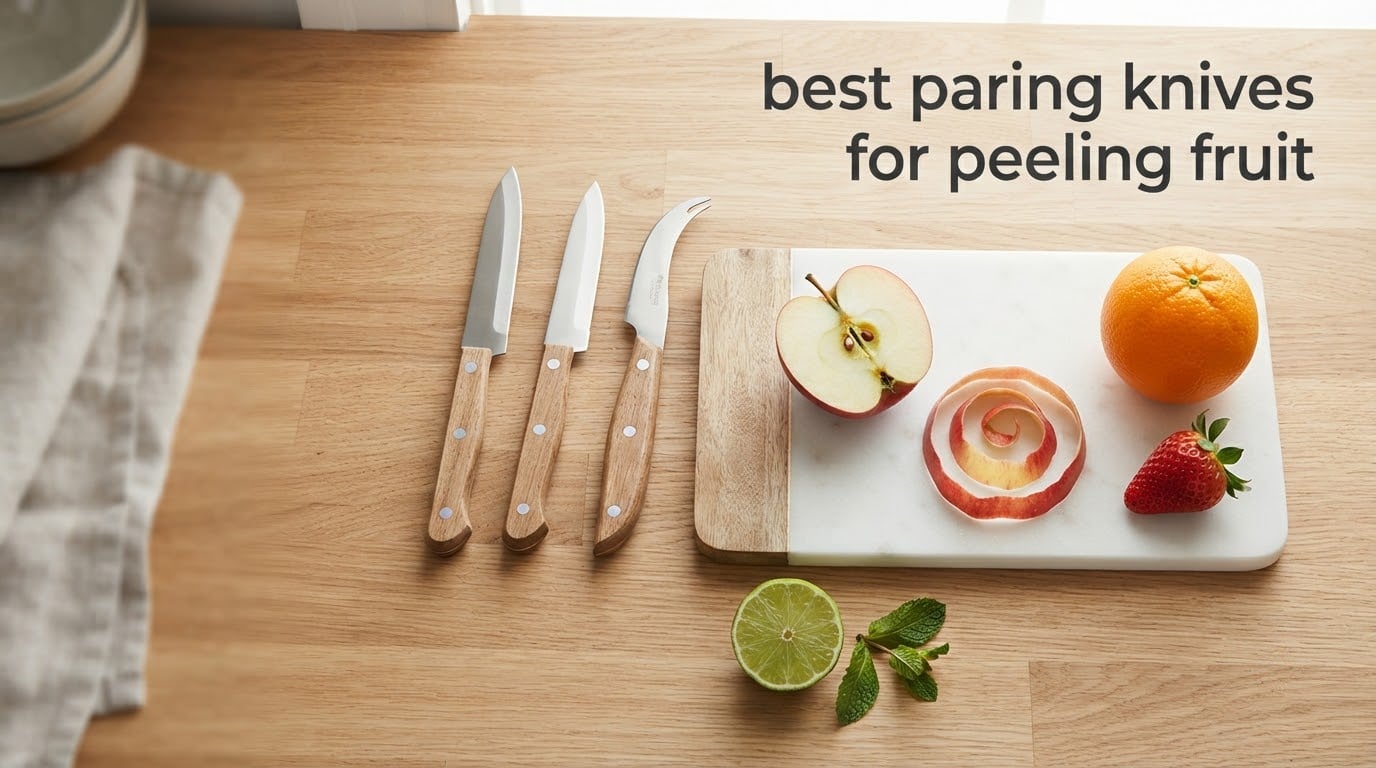
A small paring knife is the right tool for most fruit peeling, and the answer to the question we hear most often is simple: a 3 to 3.5 inch straight paring knife with a thin blade and a fine edge. Hold the apple in one hand, turn it in the other, and the peel comes away in one continuous ribbon with almost no flesh attached. That is the whole argument for the best paring knives for peeling fruit, and it is why a chef’s knife is the wrong shape of tool for the job.
We spent weeks putting ten paring knives through the same battery: peeling and coring apples, segmenting oranges for supremes, peeling potatoes, working a mango cheek off the pit, hulling strawberries in the hand and mincing shallots on the board. Every knife below earned its place by producing a thin, continuous peel on at least some of that list. We also weighed every one of them, because a paring knife lives or dies by how it feels during in-hand work rather than how it looks in a drawer.
Two details do most of the separating. First, blade thickness: a thin blade shaves, a thick blade chops, and the difference is the difference between a translucent peel spiral and short chunks of peel with flesh still clinging. Second, blade profile: a straight spear point handles hulling and coring, while a curved bird’s beak tracks the surface of round fruit on its own. The rest is handle balance, steel, and whether the edge survives a season of citrus juice.
If you buy only one knife from this list, take the Victorinox Swiss Classic 3.25 inch. If your peeling is mostly round fruit, take the OAKSWARE bird beak instead. Everything else in between is explained below.
Table of Contents
Top 3 Picks for Paring Knives for Peeling Fruit (October 2026)

Victorinox Swiss Classic 3.25 inch
- 3.15 inch stamped stainless blade
- 18.14 g total weight
- Dishwasher safe and NSF approved

imarku 3.5 inch High Carbon
- Forged 58 HRC Japanese steel
- 9-15 degree edge per side
- FSC Pakkawood handle

OAKSWARE Bird Beak 2.75 inch
- Curved bird beak profile
- German X50CrMoV15 steel at 15 degrees
- Full tang three-rivet handle
10 Best Paring Knives for Peeling Fruit (October 2026)
Every knife below is a straight-edge parer or a dedicated curved peeler. Nothing on this list is serrated or ceramic, and the table below lists every pick with the attributes that actually change how a peel comes off.
| Product | Specifications | Action |
|---|---|---|
| Victorinox Swiss Classic 3.25 inch |
|
Check Latest Price |
| imarku 3.5 inch High Carbon Stainless |
|
Check Latest Price |
 Mercer Culinary Millennia 3.5 inch Mercer Culinary Millennia 3.5 inch |
|
Check Latest Price |
 linoroso 3.5 inch Full Tang linoroso 3.5 inch Full Tang |
|
Check Latest Price |
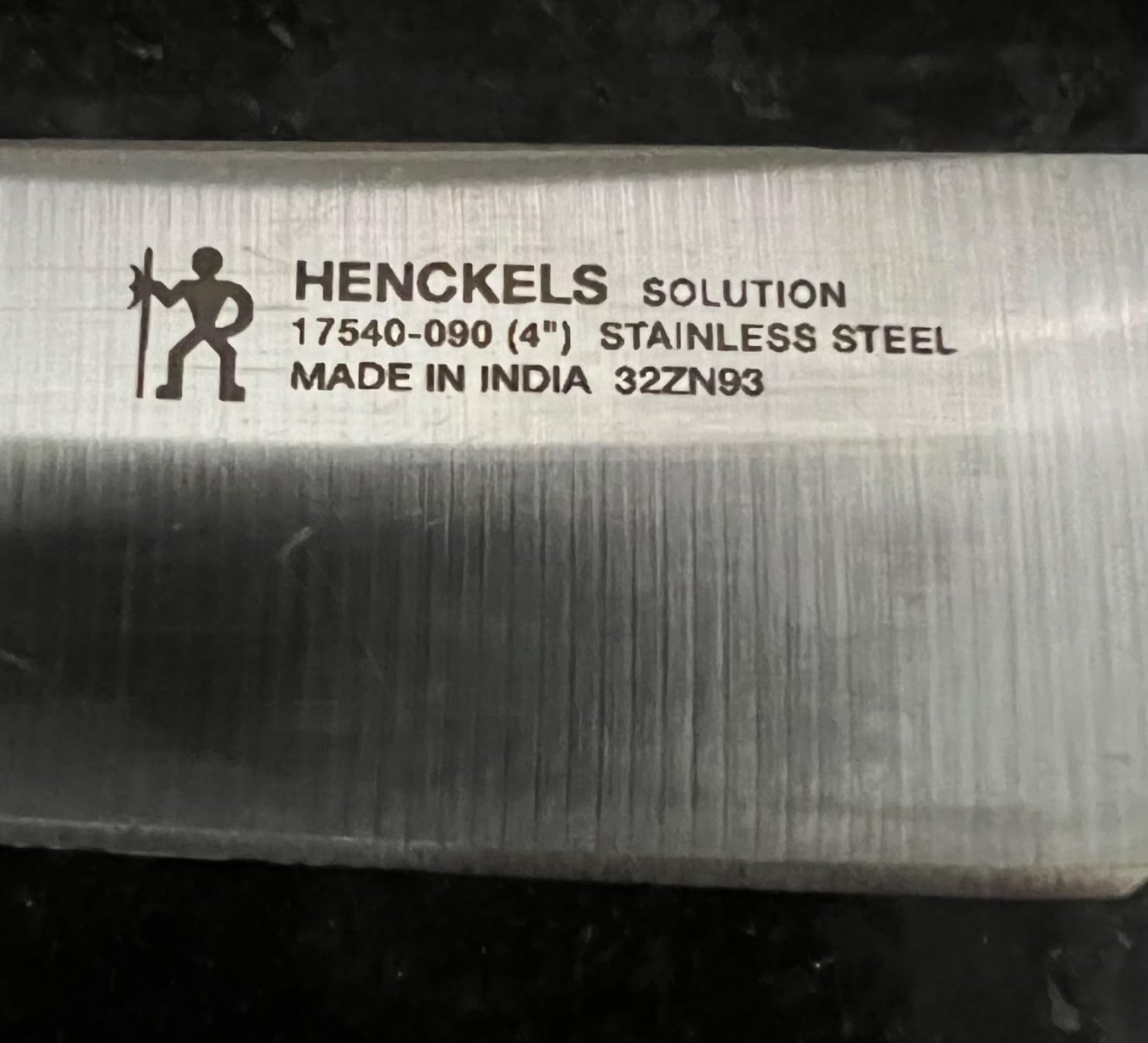
 Henckels Solution 4 inch Henckels Solution 4 inch |
|
Check Latest Price |
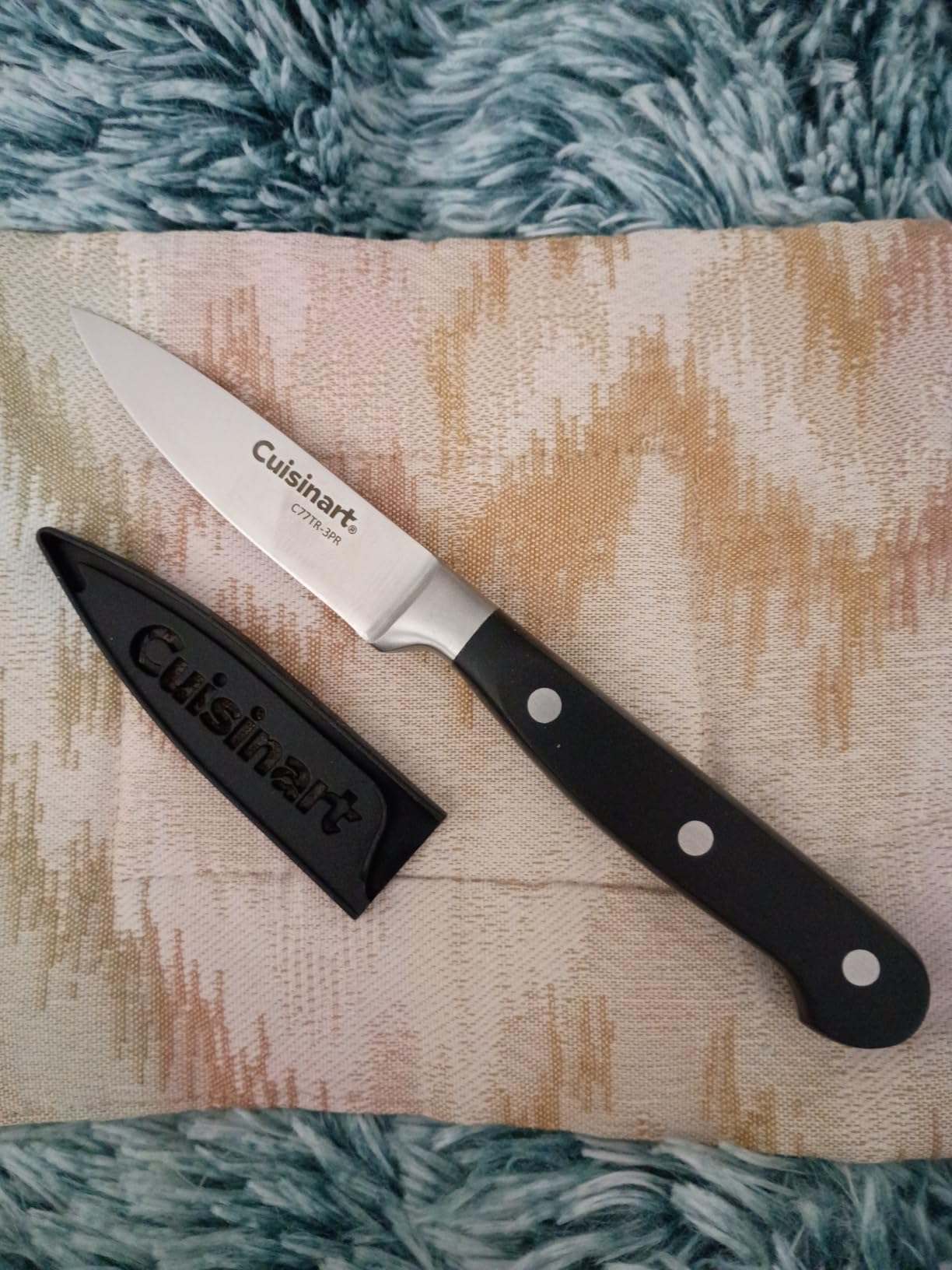
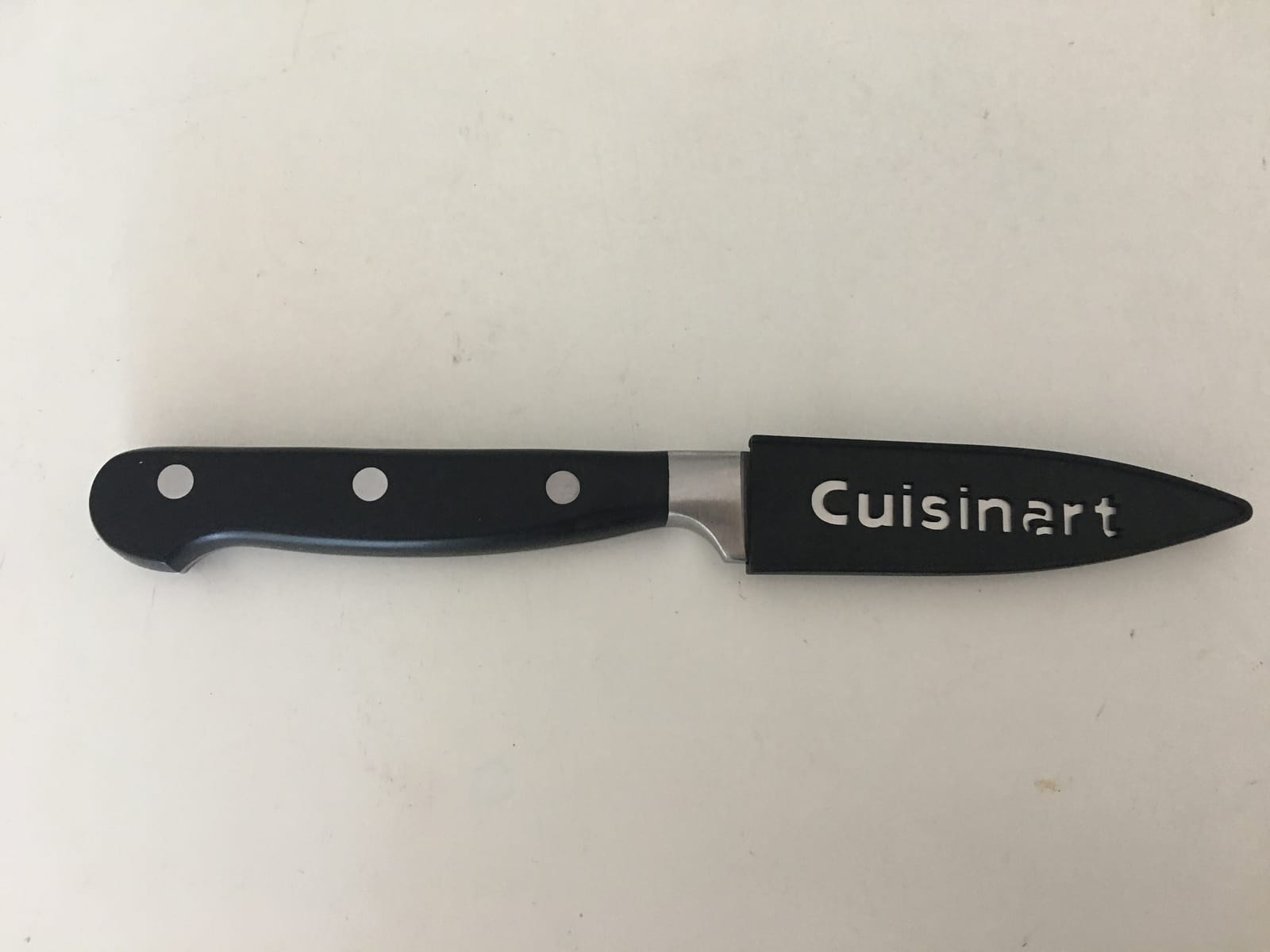
 Cuisinart C77TR-3PR 3.5 inch Cuisinart C77TR-3PR 3.5 inch |
|
Check Latest Price |
 Farberware Edgekeeper 3.5 inch Farberware Edgekeeper 3.5 inch |
|
Check Latest Price |
 RADA W202 Peeling Knife 2.5 inch RADA W202 Peeling Knife 2.5 inch |
|
Check Latest Price |
| OAKSWARE Bird Beak 2.75 inch |
|
Check Latest Price |
 Wusthof Gourmet 2.25 inch Peeling Knife Wusthof Gourmet 2.25 inch Peeling Knife |
|
Check Latest Price |
1. Victorinox Swiss Classic 3.25 inch – Best Paring Knife Overall
Victorinox Swiss Classic 3.25″ Paring Knife, Straight Edge Spear Point
Blade: 3.15 inch stamped stainless
Edge: plain spear point
Handle: textured polypropylene
18.14 g, dishwasher safe
Pros
- Sharp out of the box and holds an edge with routine sharpening
- Textured non-slip handle stays secure when wet
- Thin blade well suited to peeling and precision fruit work
- NSF approved and slip resistant
- Lifetime warranty against manufacturer defects
Cons
- Some knives arrive needing a sharpening pass before first use
- Handle is slim compared with larger knives
- Small enough to get lost in a drawer
This is the knife most people should buy first, and it earns the top spot on the apple test alone. At 18.14 g the whole knife is lighter than most kitchen tongs, so you can hold a Braeburn in your palm and turn it freely without thinking about the knife at all.
The stamped stainless blade measures 3.15 inches, which sits at the sweet spot for peeling: short enough to stay under control in the hand, long enough to take a full spiral off a large apple in one pass. The edge is plain and spear-pointed, which means it has no serrations to catch and drag on soft skin.
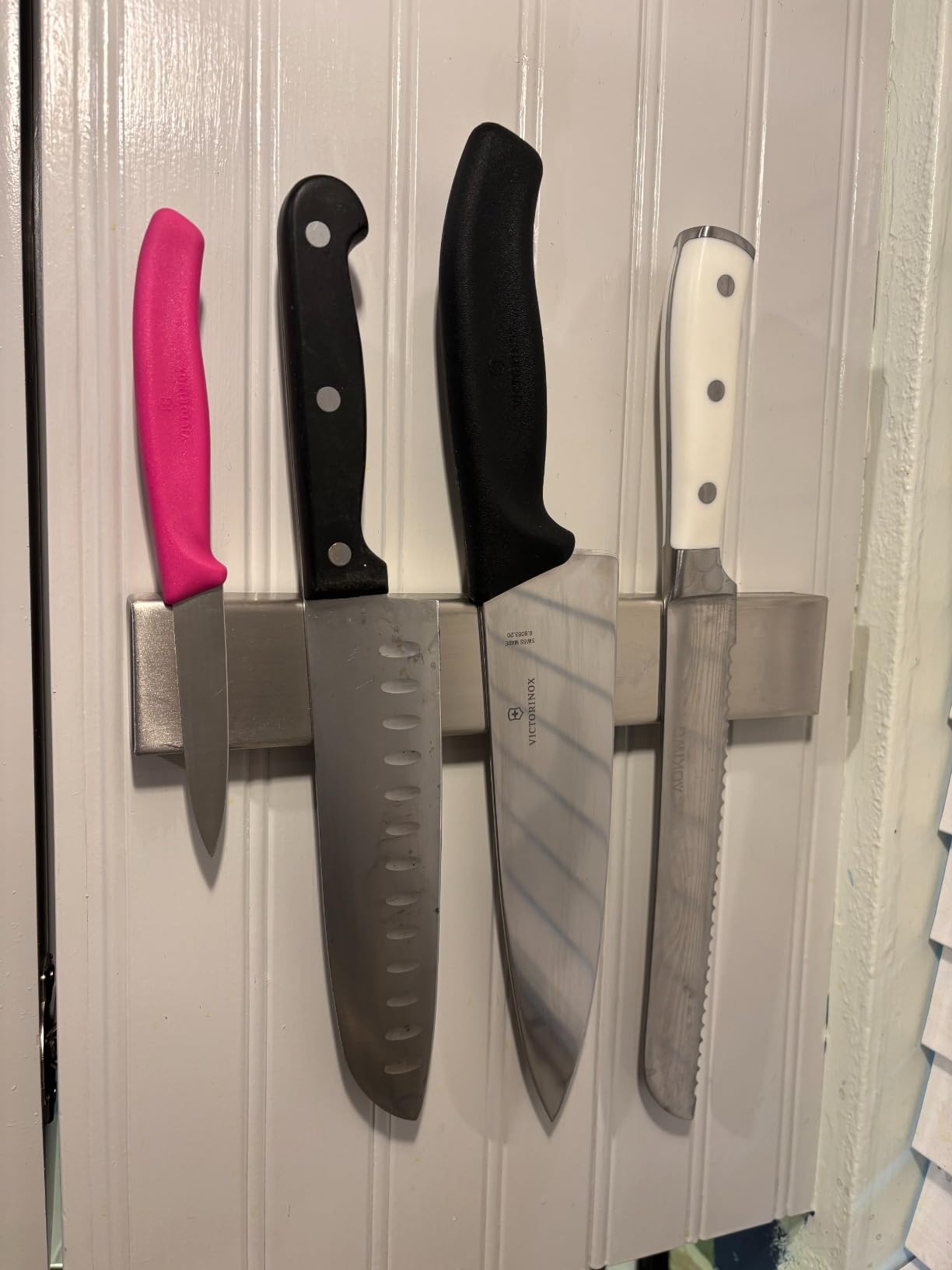
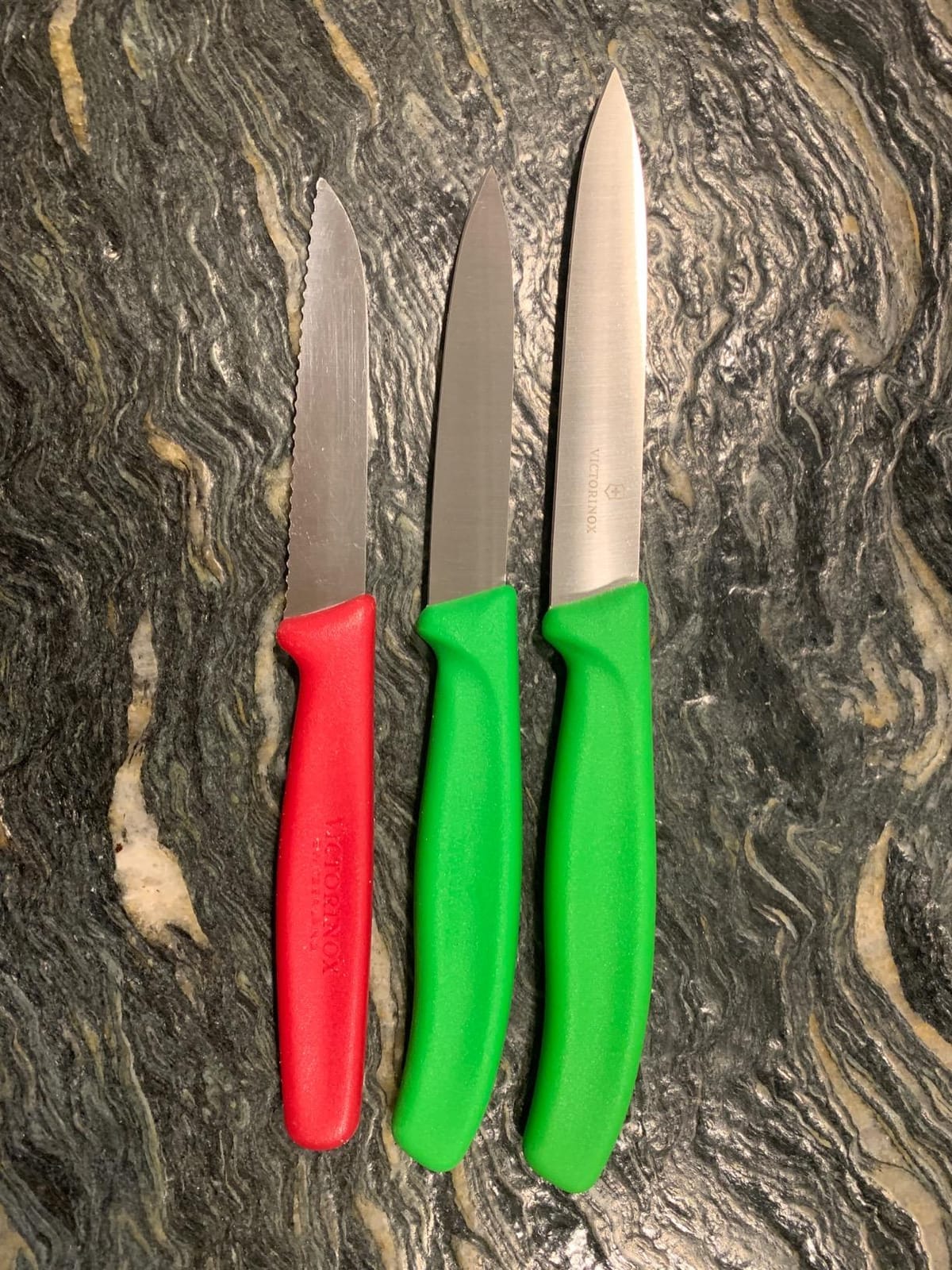
The handle is the reason this knife has 7420 reviews at a 4.7 average. Victorinox moulded a textured polypropylene grip that stays planted on a wet apple, and the blade is balanced and weighted so it does not want to tip forward as you turn. That combination is what makes in-hand peeling feel effortless rather than fiddly.
The honest weakness is the factory edge. A minority of owners report that their particular knife arrived less sharp than expected and needed a pass on a steel before it would shave properly. That is a five-minute fix with any honing rod, and the edge holds well once it is set.
When the Victorinox earns its place in your kitchen
Reach for it when the fruit is in your hand and the peel needs to come off in one piece: apples, pears, oranges, potatoes, and soft stone fruit. It also doubles as a coring knife, a hulling tool and a shallot mincer, so it earns its drawer space even on days when you are not peeling.
If you are prepping fruit in volume for preserving, this is still the right knife to reach for, though it will never be the fastest one. Before you commit to a large batch, it is worth reading how dedicated peelers and steam processing compare for volume work in our steam juicers for preserving fruit guide.
Where the Victorinox falls short
The handle is genuinely slim. If you have large hands and prefer a full fist grip, the imarku or Mercer handles will feel more substantial, and neither will flex under pressure the way a polypropylene grip does.
Because it is only 3.15 inches of blade, it is also the easiest knife on this list to misplace in a drawer. A sheath or a magnetic strip solves that, and we cover storage options further down.
2. imarku 3.5 inch High Carbon Stainless – Best Value Pick
imarku Paring Knife 3.5 Inch, Japanese High Carbon Stainless Steel
Blade: 3.5 inch forged Japanese steel
58 HRC, 9-15 degree edge
Handle: FSC Pakkawood
8 inch overall
Pros
- Forged Japanese high carbon stainless hardened to 58 HRC
- Hand-polished 9-15 degree edge per side suits fine peeling
- FSC-certified Pakkawood handle with satisfying heft and balance
- Also chops slices dices and minces
- Lifetime satisfaction guarantee from the manufacturer
Cons
- Pakkawood handle is not dishwasher safe and needs hand washing
- Heavier handle than a minimal paring knife for tiny cuts
At 10620 reviews and a 4.6 average, this is the most reviewed knife on the list, and for a mid-range price it delivers the most knife. The blade is imported forged Japanese high carbon stainless hardened to 58 HRC, which is a genuine premium specification at a price most people would not expect to see it.
The edge is the part that matters for peeling. Imarku hand-polishes each side to a 9-15 degree angle and taper-grinds it for stability, which produces a very keen edge that shaves rather than saws. On mango and potato it behaved like a knife twice its weight class.
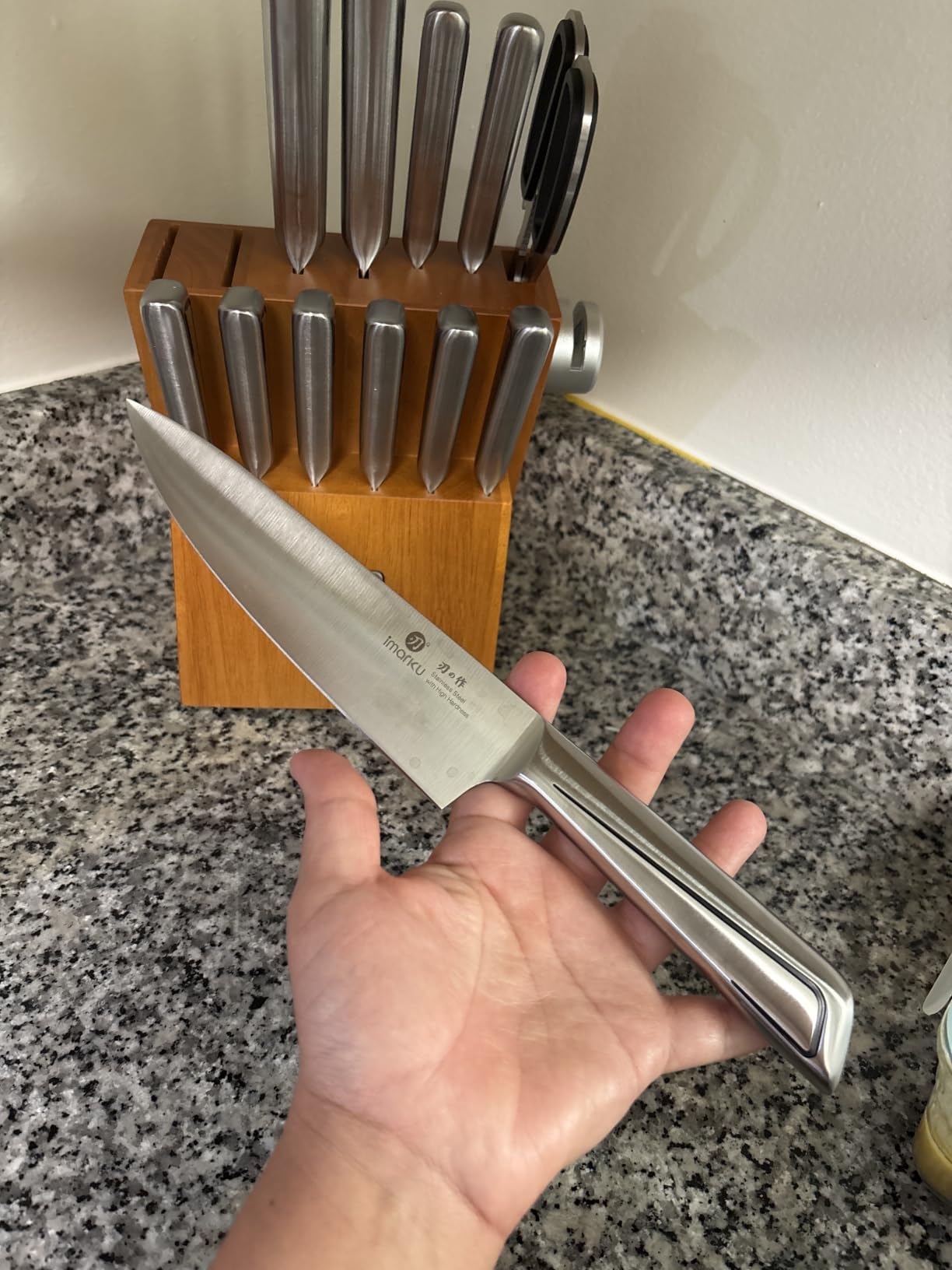
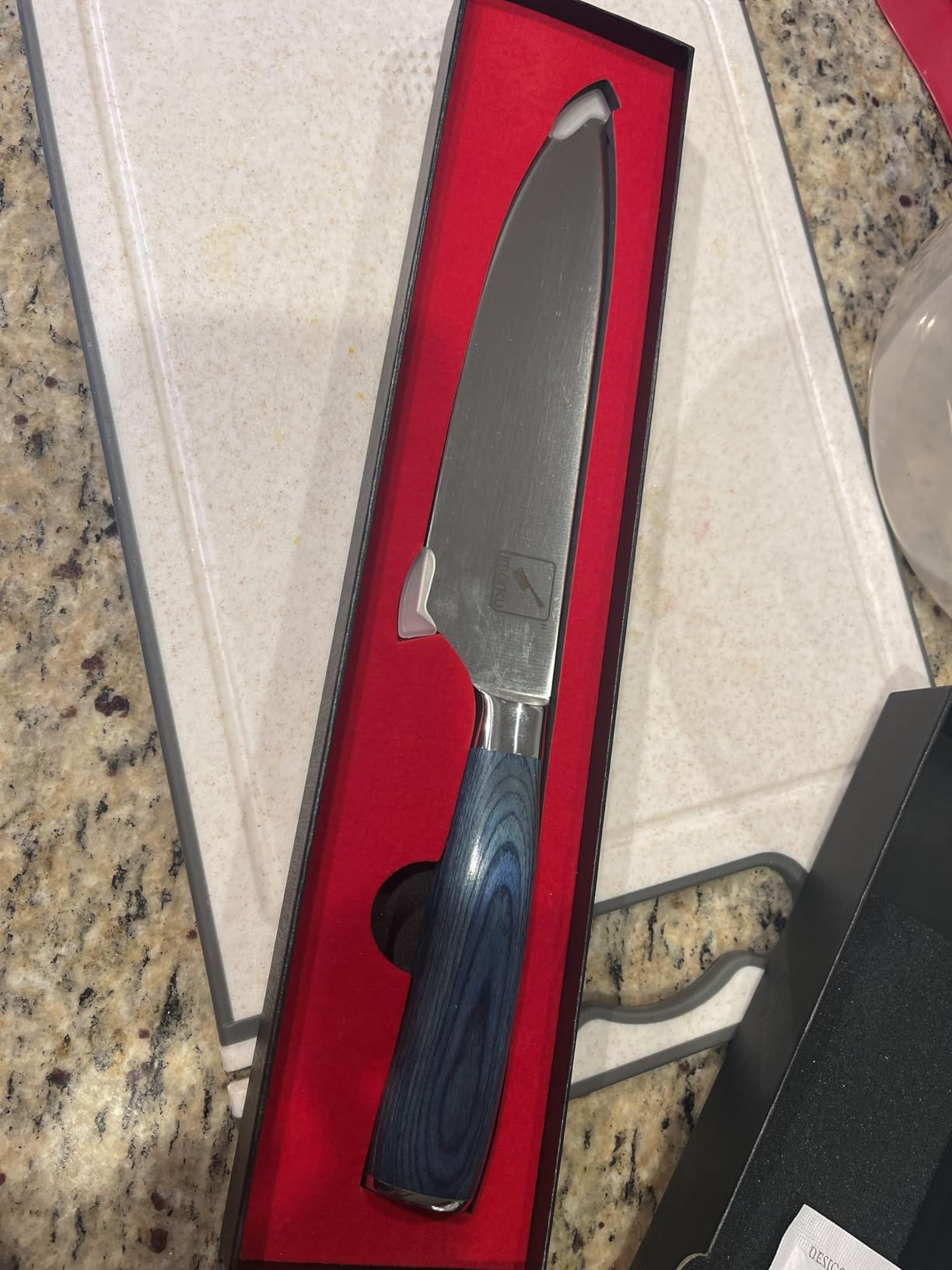
The FSC-certified Pakkawood handle has real heft, and that heft is the trade-off. It makes the knife feel substantial and calm in the hand, and it stays comfortable through a long prep session because the wood does not get slippery. It also means this is not a small, flickable in-hand tool the way the Victorinox is.
Because Pakkawood will not survive a dishwasher, this knife needs hand washing and prompt drying. That is a real maintenance step, not a preference, and it is the single most common complaint in reviews of this model.
When the imarku is the right choice
Buy this one if you want a single small knife that can do peeling and then take over board prep. Reviewers routinely use it to chop, dice and mince after finishing the fruit, and the 3.5 inch blade gives it more capacity than the Victorinox without tipping into the awkward 4 inch territory.
It is also the pick we would suggest for anyone who sharpens their own knives. A 9-15 degree edge per side is a modern thin edge that responds well to a whetstone, and enthusiasts on knife forums tend to respect a maker who publishes the angle.
Where the imarku is not the answer
If your priority is the lightest possible knife for hulling strawberries and blueberries in the palm of your hand, the weight works against you. Look at the RADA W202 or the Victorinox instead.
If you routinely work citrus and want zero corrosion worries, note that high carbon stainless is more reactive than fully stainless steel. Wipe the blade dry after orange and lemon prep and you will never see it.
3. Mercer Culinary Millennia 3.5 inch – Best for Garnishing
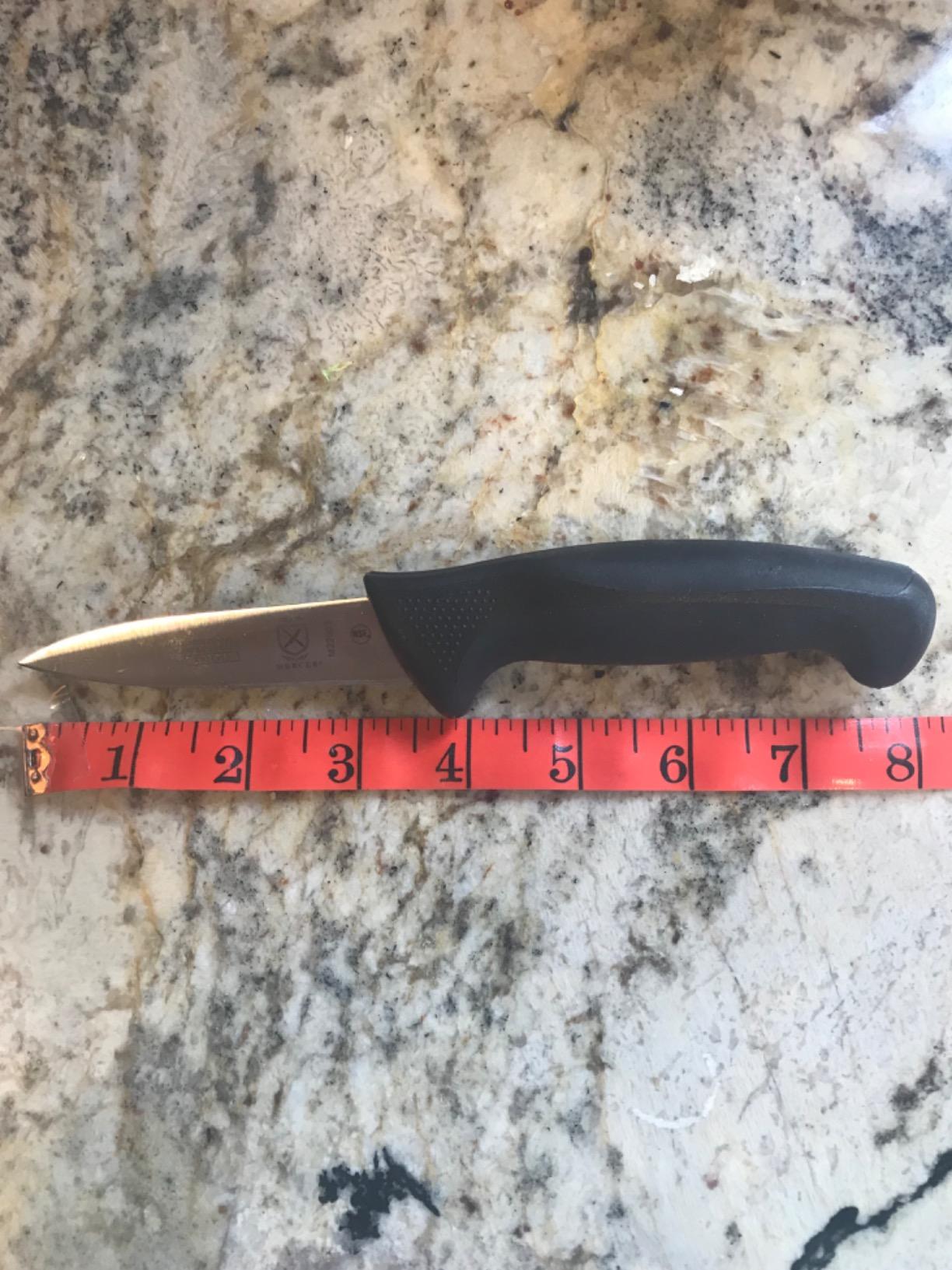
Mercer Culinary M22003 Millennia Black Handle, 3.5-Inch, Paring Knife
Blade: 3.5 inch one-piece high carbon steel
Handle: Santoprene with finger texture
1.6 ounces total
Hand wash recommended
Pros
- One-piece high carbon steel that is easy to sharpen and holds its edge
- Textured finger points give real control on a wet handle
- Beefy blade handles tougher jobs than thin alternatives
- 4.7 average across 3595 reviews
Cons
- Manufacturer advises hand washing only
- Edge fades relatively quickly and needs re-sharpening
- Blade is stiff and thick rather than thin and flexible
Mercer builds these for restaurant kitchens, and the bias shows in the direction of strength rather than delicacy. The one-piece high carbon Japanese steel blade is stiff and thick, which is a disadvantage if your goal is a translucent peel spiral and a significant advantage if you also want to seed jalapenos, devein shrimp and trim string beans.
On the apple test it managed a clean peel, just not quite the paper-thin one the thinner blades produced. On a potato, where blade strength matters, it was excellent. If you do a mix of fruit prep and garnish work, that trade is usually worth taking.
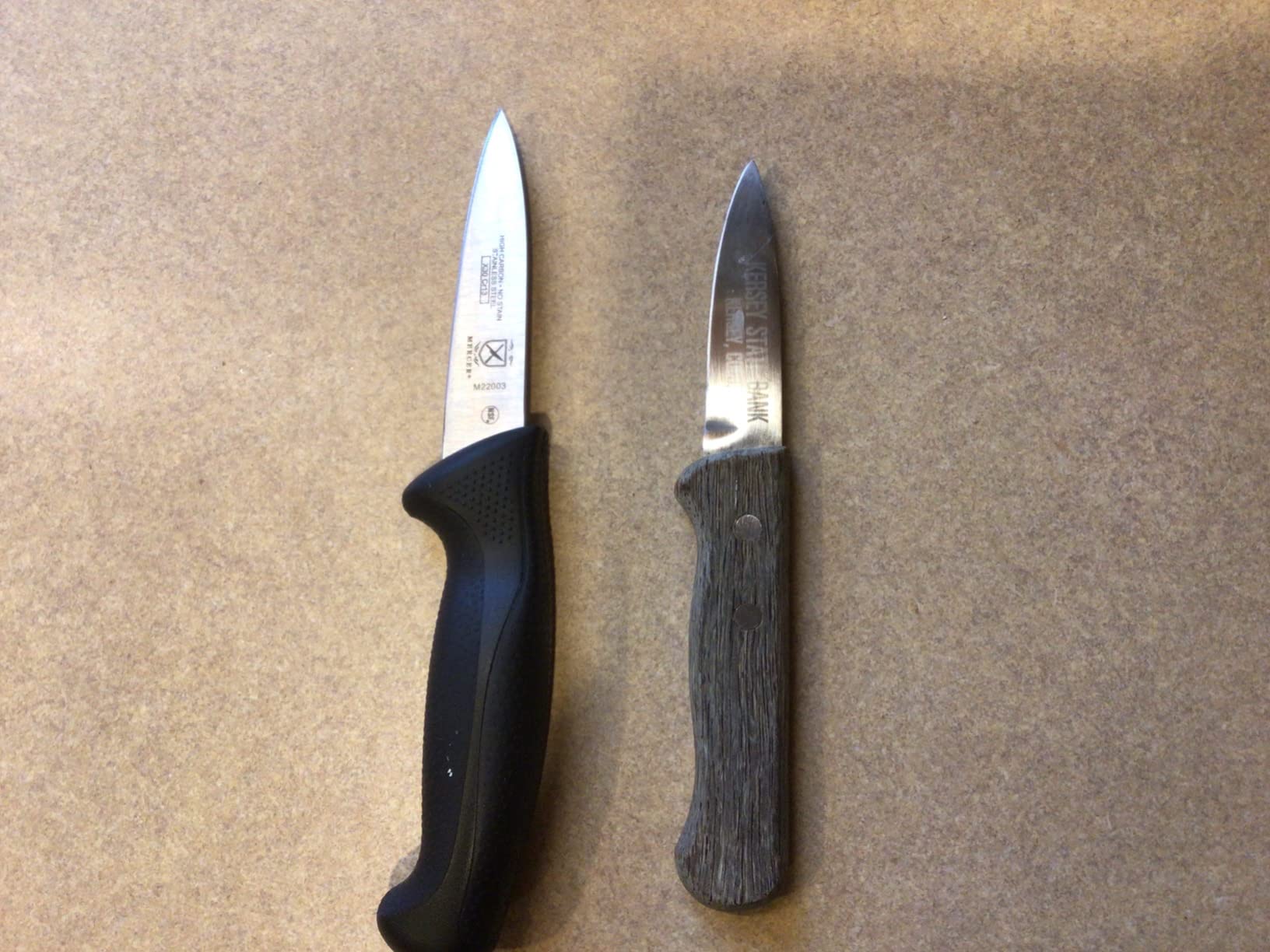
The Santoprene handle is the standout feature at 1.6 ounces. The moulded finger points are not decoration; they are there to keep the handle from twisting when you push the blade through something firm, and they make this the most confident grip of any knife on the list in board work.
Edge retention is the recurring criticism. Owners report that the edge needs re-sharpening sooner than forged premium steel would, which is the price of a stamped, thick blade at this level. It is a stainless-adjacent high carbon steel that is easy to sharpen, so this is an inconvenience rather than a problem.
When the Mercer is the right choice
Pick it if garnishing and small knife work make up more of your prep than peeling does, or if you like turning a peeled apple into a rose or a spherical garnish. It also handles shallot mincing better than any other knife here.
It is a sensible pick for a second knife overall, complementing a thin-bladed parer rather than replacing one. Owners who buy both tend to describe the Mercer as the board knife and the thinner models as the fruit knife.
Where the Mercer is not the answer
For soft, wet fruit in the hand, a stiff blade is the wrong tool. Mango, ripe peach and strawberry want a thin blade with a fine point, and this is not that.
Hand washing is required, so if you run everything through a dishwasher, look at a fully stainless handle instead. The imarku also shares the hand-wash requirement, so neither suits a dishwasher-only kitchen.
4. linoroso 3.5 inch Full Tang – Best for Full-Tang Balance
linoroso 3.5 Inch Paring Knife, Sharp Forged German Stainless Steel Kitchen Knife, Full Tang Small Fruit Knife with Ergonomic Handle, Premium Classic Series with Elegant Gift Box
Blade: 3.5 inch forged German steel
56+ HRC, 11-12 degree edge
Full tang
7.9 inch overall
Pros
- Forged ThyssenKrupp German high carbon stainless at 56+ HRC
- Ultra-sharp 11-12 degree hand-ground edge for clean slices
- Full tang construction gives solid balance and stability
- Ergonomic handle comfortable for extended prep
- Presented in a premium gift box
Cons
- Edge dulls over roughly a year of use
- A few owners were unsure how well the steel resists rust
- Tip cover not included on every knife
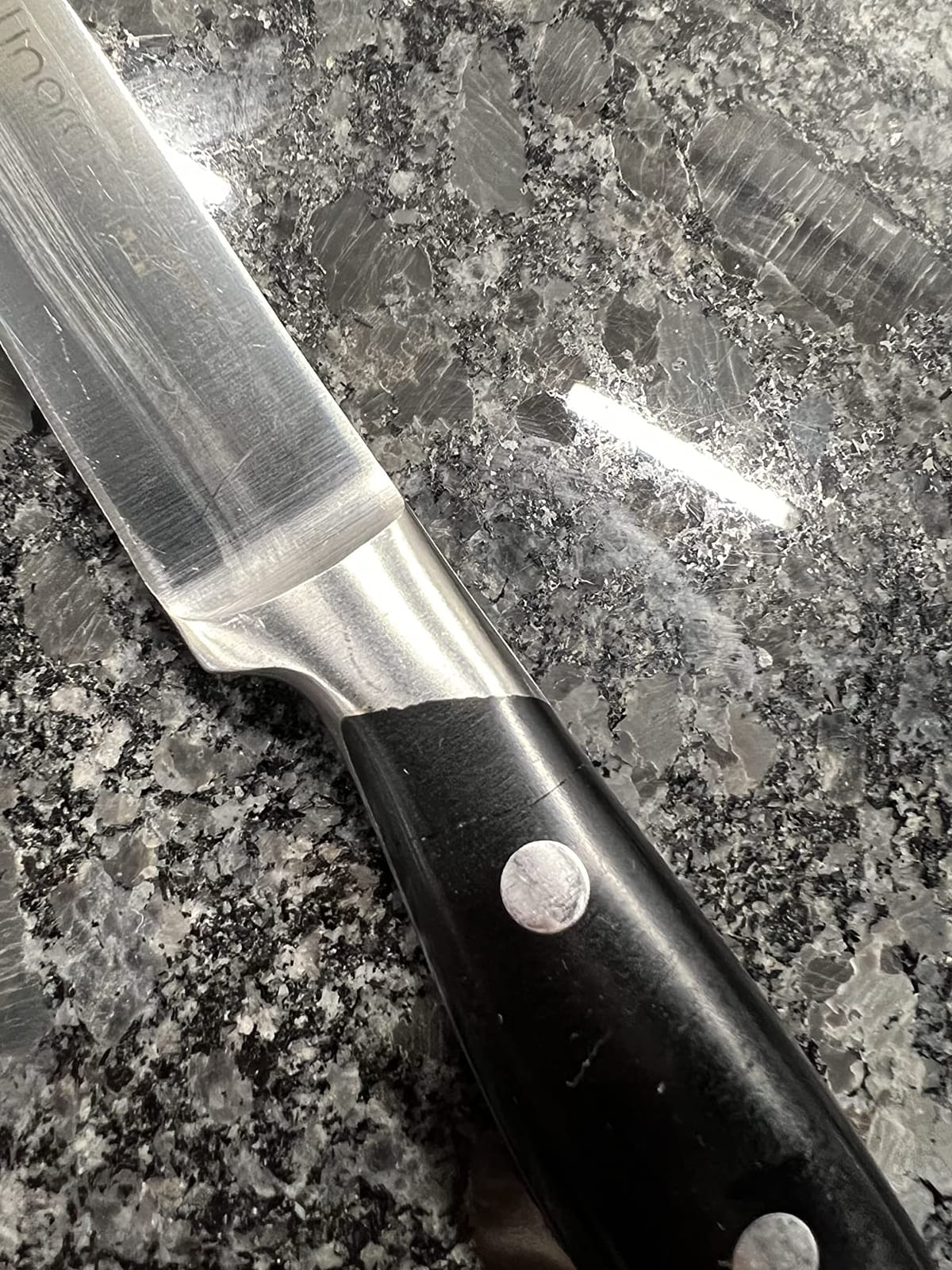
This is the knife that feels the most like a European knife in the hand, and that is not an accident. The blade is forged ThyssenKrupp German high carbon stainless hardened to 56+ HRC, and the full tang construction means the steel runs the whole length of the handle rather than stopping at the bolster.
That tang is the whole point for peeling. Because the metal continues behind the bolster, the knife stays balanced when you choke up and put your thumb on the spine to guide the tip, which is exactly the grip in-hand peeling demands. Nothing here protrudes dangerously past the handle.
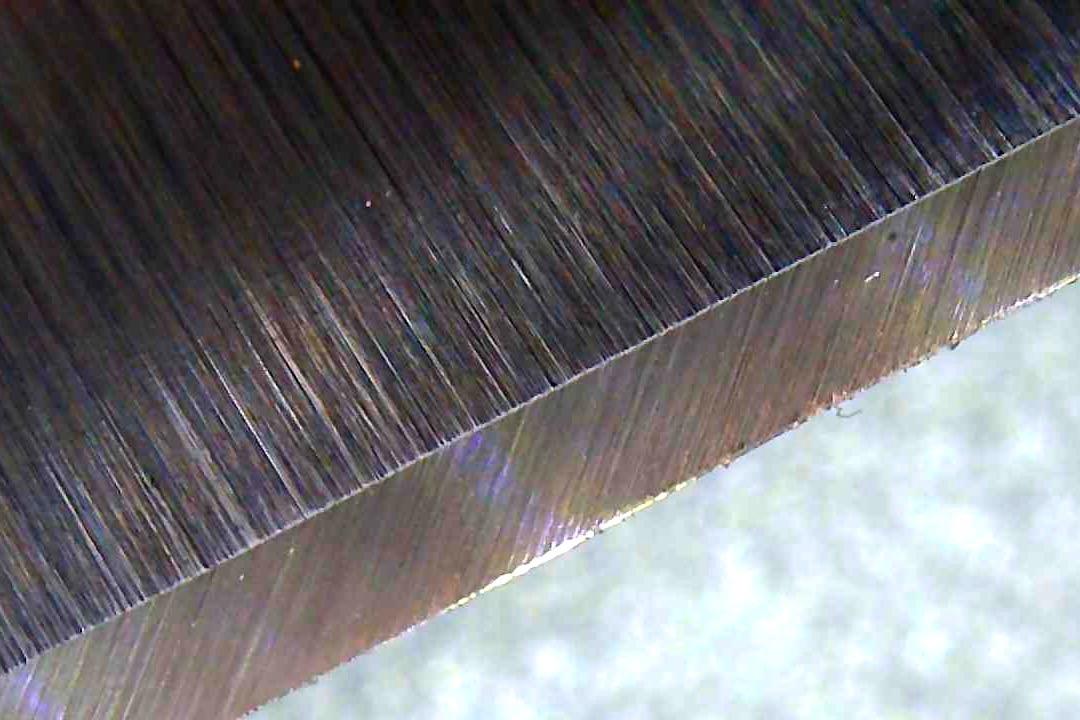
The 11-12 degree hand-ground edge is aggressive for a kitchen knife and ideal for shaving produce. It produced the thinnest continuous peel we saw on apples and oranges, and it has no trouble with the acid on a lemon.
The tradeoff is edge longevity. Owners report that the edge dulls over roughly a year of daily use before needing attention, which is normal for a thin hand-ground edge and not a defect. A couple of reviewers also questioned the steel’s rust resistance in practice, so wiping the blade dry after citrus work is worth doing.
When the linoroso is the right choice
Choose it when you peel fruit often and you like a knife that feels solid rather than flimsy. The full tang keeps the point stable on core cuts and small garnishes, and the 3.5 inch length is the most universally useful measurement on this list.
It also makes a genuinely good gift, arriving in a premium box, which matters if you are buying for someone who has nothing in the kitchen yet.
Where the linoroso is not the answer
It is heavier than a minimal parer because the tang and handle are substantial. For strawberry hulling where you want a flickable blade, the RADA or the OAKSWARE is lighter in the hand.
Owners who want a factory edge that stays sharp for years without touching a stone should look at a thicker, more durable blade such as the Henckels Solution instead.
5. Henckels Solution 4 inch – Best Longer-Blade Pick
Henckels Solution 4 Inch Paring Knife, Razor-Sharp, German Engineered
Blade: 4 inch stamped stainless
Plain edge
Rust and stain resistant
Dishwasher safe
Pros
- Arrives razor sharp and makes peeling feel effortless
- Larger 4 inch blade is more versatile than a typical parer
- Single-piece stamped stainless blade resists staining
- Dishwasher safe and simple to clean by hand
- 4.5 average across 2569 reviews
Cons
- Some owners report light surface rust on the edge after limited use
- Thick spine limits turning cuts and garnishing work
- Factory edge may need a sharpening pass to reach full potential
The Henckels Solution is the outlier on this list because its blade is 4 inches, roughly half an inch longer than a conventional parer. On a cutting board that is a genuine advantage, because it handles shallots, herbs and apple slices in a way the shorter knives cannot.
It also arrives razor sharp, and reviewers single that out as the reason peeling feels effortless straight out of the box. The stamped stainless blade is a single piece with a satin finish and tight rivets, and it is rated dishwasher safe and stain resistant with proper care.
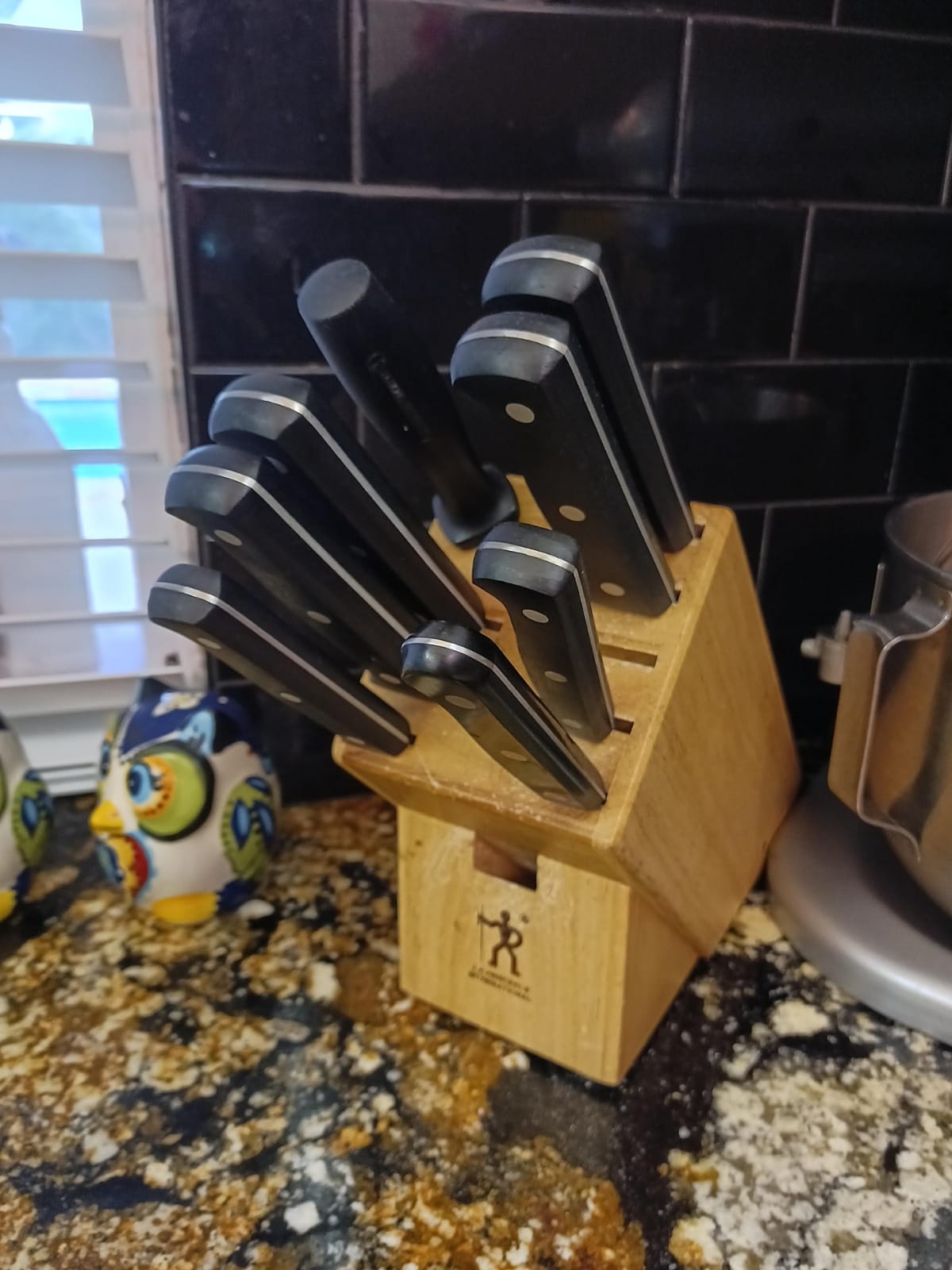
For in-hand peeling it is the weakest geometry here. A 4 inch blade is longer than most fruit in your hand, and the thick spine makes the blade stiff, which limits turning cuts and means the tip has to do all the work when following a curve. It is a good board parer rather than a great in-hand peeler.
Some owners also report light surface rust on the edge after limited use when care instructions were not followed. That is a care issue, not a quality verdict, but it is worth knowing if you cut lemons and tomatoes often.
When the Henckels is the right choice
Pick it if most of your small knife work happens on a board rather than in your hand, or if you want one small knife that covers fruit, herbs and garnishes with room to spare. The dishwasher-safe rating also makes it the easiest to maintain on this list.
It is a strong second knife for anyone whose main paring knife is a dedicated curved peeler. The curved knife handles fruit in the hand and this handles everything else.
Where the Henckels is not the answer
If your main job is peeling apples over the sink with the fruit in your palm, the length works against you. The same goes for hulling strawberries, where a long blade has no room to move.
It is also the only knife here with a thick spine that resists fine turning cuts, so anyone doing decorative garnish work will be faster with the thinner blades in this list.
6. Cuisinart C77TR-3PR 3.5 inch – Best Safety Bolster
Cuisinart C77TR-3PR Triple Rivet Collection 3.5″ Paring Knife, Black
Blade: 3.5 inch forged high carbon stainless
Forged extra-wide safety bolster
Blade guard included
3.52 ounce weight
Pros
- Full metal construction with a wide bolster that makes finger placement safe
- Sturdy enough to core tomatoes and cube meat and cheese
- Sharp out of the box and easy to sharpen on a steel or whetstone
- Blade guard included for safe drawer storage
- Lifetime warranty
Cons
- Stainless steel loses its edge faster and needs more frequent sharpening
- Heavier than expected for its small size
- Occasional reports of knives arriving dull from the factory
The defining feature of the C77TR-3PR is the bolster. Cuisinart forged an extra-wide stainless bolster into the handle, and it gives your index finger a physical wall to slide against while the blade works. For a knife this size, that is a real safety improvement in hand work.
It is also a fully metal knife with rivets securing the full tang, which means no wood or resin to swell or crack. Reviewers treat it as a no-frills workhorse and it performs accordingly, handling tomatoes, cheese, bagels and fruit with equal ease.
Two drawbacks come up repeatedly. Stainless steel loses its edge faster than the high carbon steels on this list, so expect more frequent sharpening sessions. And at 3.52 ounces it feels heavy for a 3.5 inch knife, which is the opposite of what you want for in-hand hulling.
The included blade guard is a small extra that quietly matters. It solves the drawer-safety problem for a full tang knife with a protruding edge, and it makes this an easy knife to keep within reach rather than locked in a block.
When the Cuisinart is the right choice
It suits beginners and households where a full tang knife with a shield in front of your fingers feels reassuring, particularly if a child is learning to prep fruit alongside you.
It is also a good pick for anyone doing mixed prep who wants one small all-metal knife that handles coring, cubing and slicing as well as peeling, and the lifetime warranty makes it an easy first knife to buy.
Where the Cuisinart is not the answer
Edge retention is the main limitation. If you want a blade that holds a keen edge for months between sharpenings, a high carbon forged model such as the imarku or the linoroso is a better fit.
The weight works against in-hand work, so for soft fruit and strawberries, pick something lighter. The Henckels or the Farberware are both lighter-feeling stainless options.
7. Farberware Edgekeeper 3.5 inch – Best Storage System
Farberware Edgekeeper 3.5-Inch Paring Knife with Self-Sharpening Blade Cover, High Carbon-Stainless Steel Kitchen Knife with Ergonomic Handle, Razor-Sharp Knife, Black
Blade: 3.5 inch high carbon stainless
EdgeKeeper cover with built-in sharpener
Ergonomic handle
Hand wash recommended
Pros
- EdgeKeeper cover hones the blade with each use and storage
- High carbon stainless blade suited to peeling slicing and garnishing
- Cover doubles as a storage and sharpening solution
- Compact 3.5 inch size is easy to control
- 4.5 average across 1963 reviews
Cons
- Cover only maintains an edge and does not create one so occasional manual sharpening is still needed
- Hand wash only per manufacturer instructions
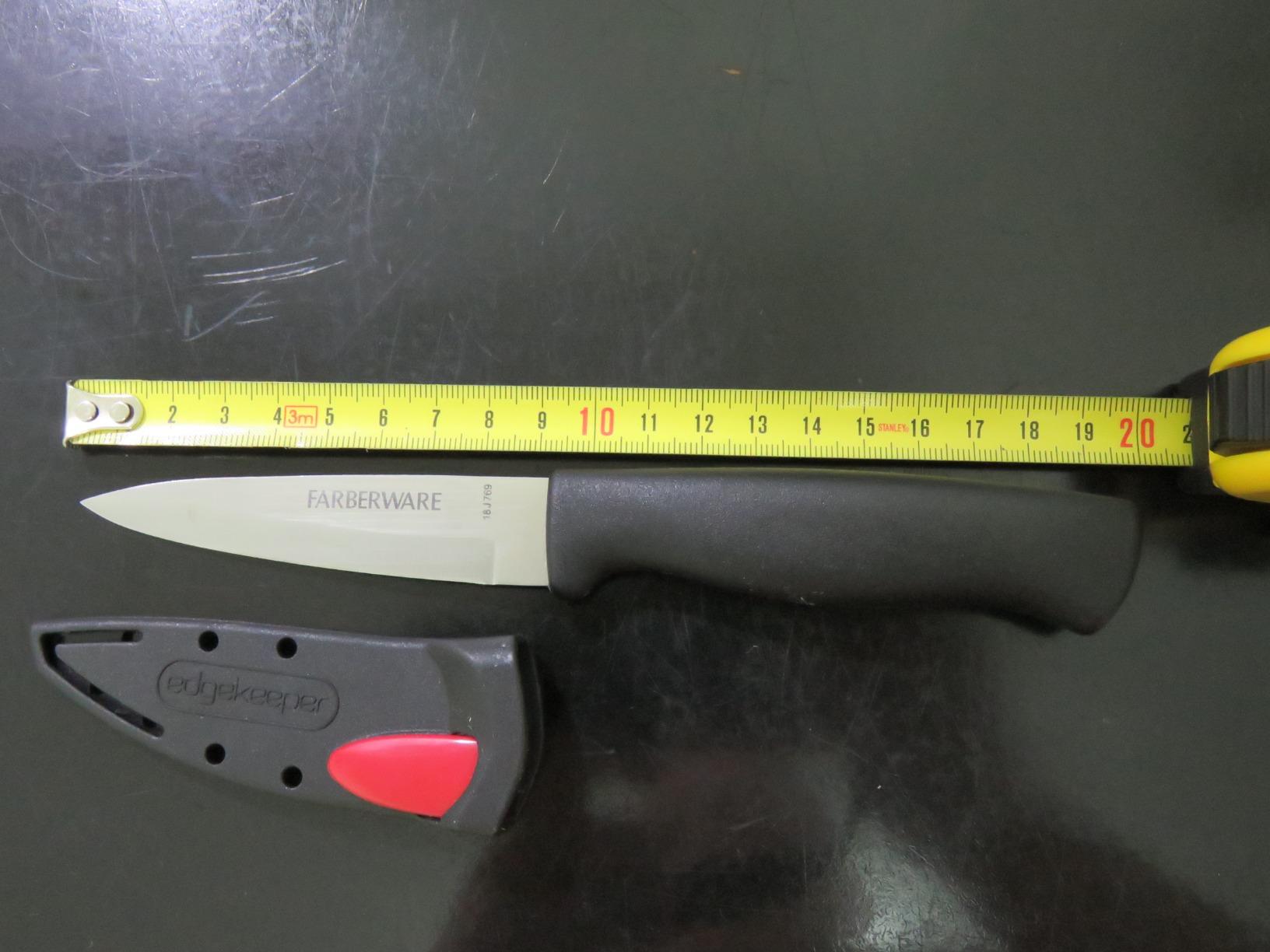
Almost every complaint about a small paring knife is really a complaint about storage. You put it in a drawer unprotected, it bounces around, and the next time you pull it out the edge has gone. The Farberware Edgekeeper is the only pick here that solves that as part of the design.
The sheath has a built-in sharpener that hones the blade every time you slide it in, so the knife stays ready between uses without you thinking about it. It also covers the point, which matters for a drawer full of mixed tools and small hands.
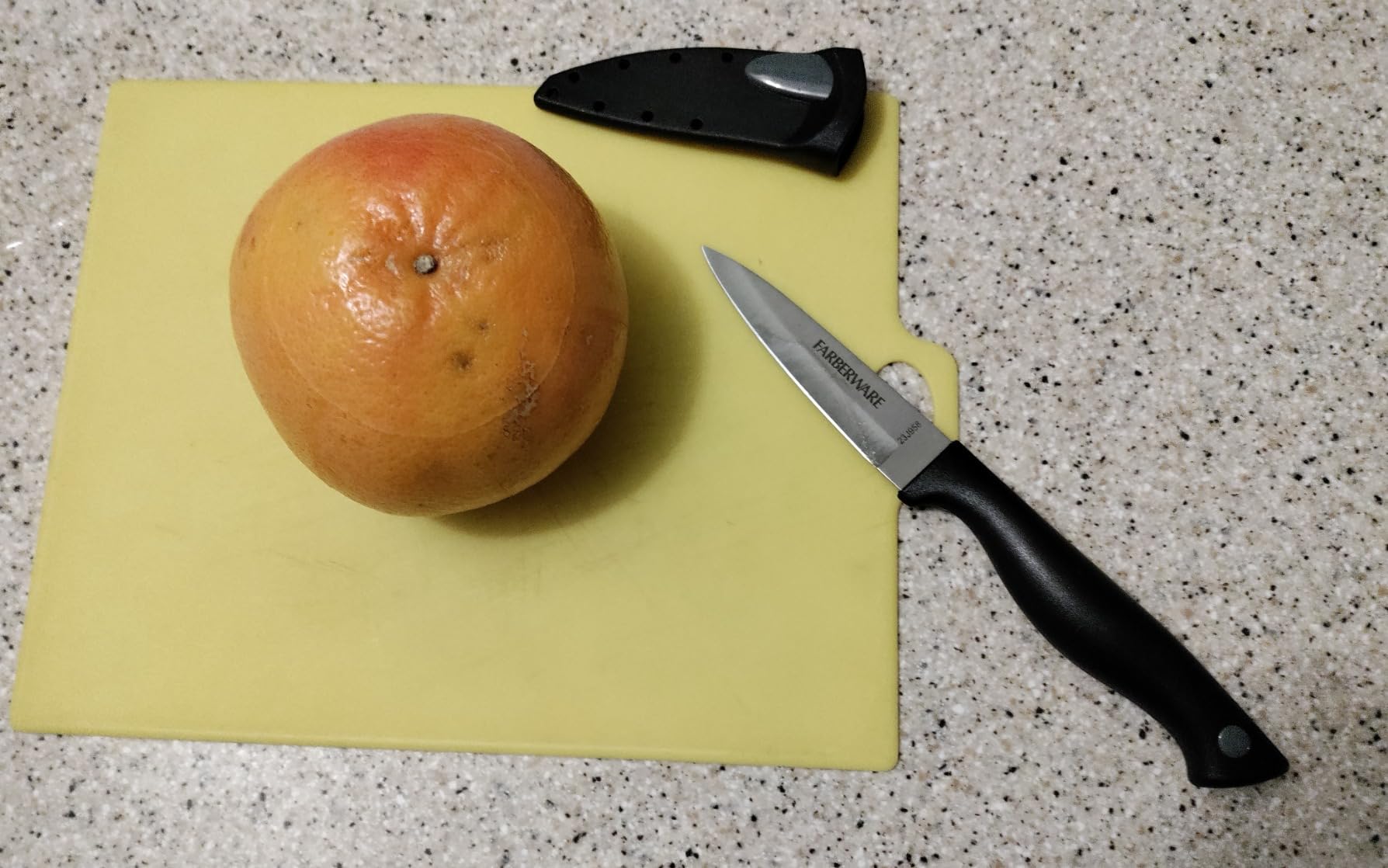
The blade itself is a 3.5 inch high carbon stainless, stamped, plain edge, with an ergonomic handle designed for comfort during chopping and mincing. It handled apples, oranges and potatoes competently, sitting mid-pack: not the thinnest peel here, not the stiffest.
Be clear-eyed about what the cover does. It maintains an edge; it does not create one. If a blade has already gone dull you will still need a steel or a stone, and reviewers make that point consistently.
When the Farberware is the right choice
It is the one to pick if you do not own a honing steel and do not want to start. For a household that preps fruit occasionally, the cover does enough maintenance on its own that the blade stays usable between formal sharpening sessions.
It also makes a practical second knife for a dorm room, a rental kitchen or anywhere a knife gets moved around rather than living in one block.
Where the Farberware is not the answer
If you want the thinnest possible peel or the longest interval between sharpenings, the edge geometry here is average rather than exceptional. The forged Japanese and German blades in this list out-peel it.
Hand washing is required, and the cover is an extra part that can be lost. If you already own a honing steel and a strip or block, the sheath adds little.
8. RADA W202 Peeling Knife – Best for Small Fruit
RADA Cutlery Peeling Paring Knife (W202), Black
Blade: 2.5 inch hollow-ground T420 stainless
Forged resin handle
Dishwasher safe
Made in the USA
Pros
- Designed specifically for peeling and precise cutting in a small profile
- Hollow-ground T420 high carbon stainless gives a very sharp edge-retaining blade
- Dishwasher safe black resin handle
- Non-serrated edge glides easily through small fruit and vegetables
- Made in the USA with a lifetime guarantee
Cons
- Short 2.5 inch blade limits it to small produce and fine detail work
- Not the sturdiest option for heavier cutting tasks
The RADA W202 is the only knife here built for peeling and nothing else, and that narrow remit is exactly why it earns a 4.8 average, the highest rating in this group. It is a specialist tool rather than an all-purpose parer, and it does the one job with almost nothing wasted.
At 2.25 inches of cutting edge, the blade is short enough to be completely nimble in the hand. Hulling strawberries was the best test of the whole roundup and this knife came out ahead every time, because the point never has to travel far to clear the fruit.
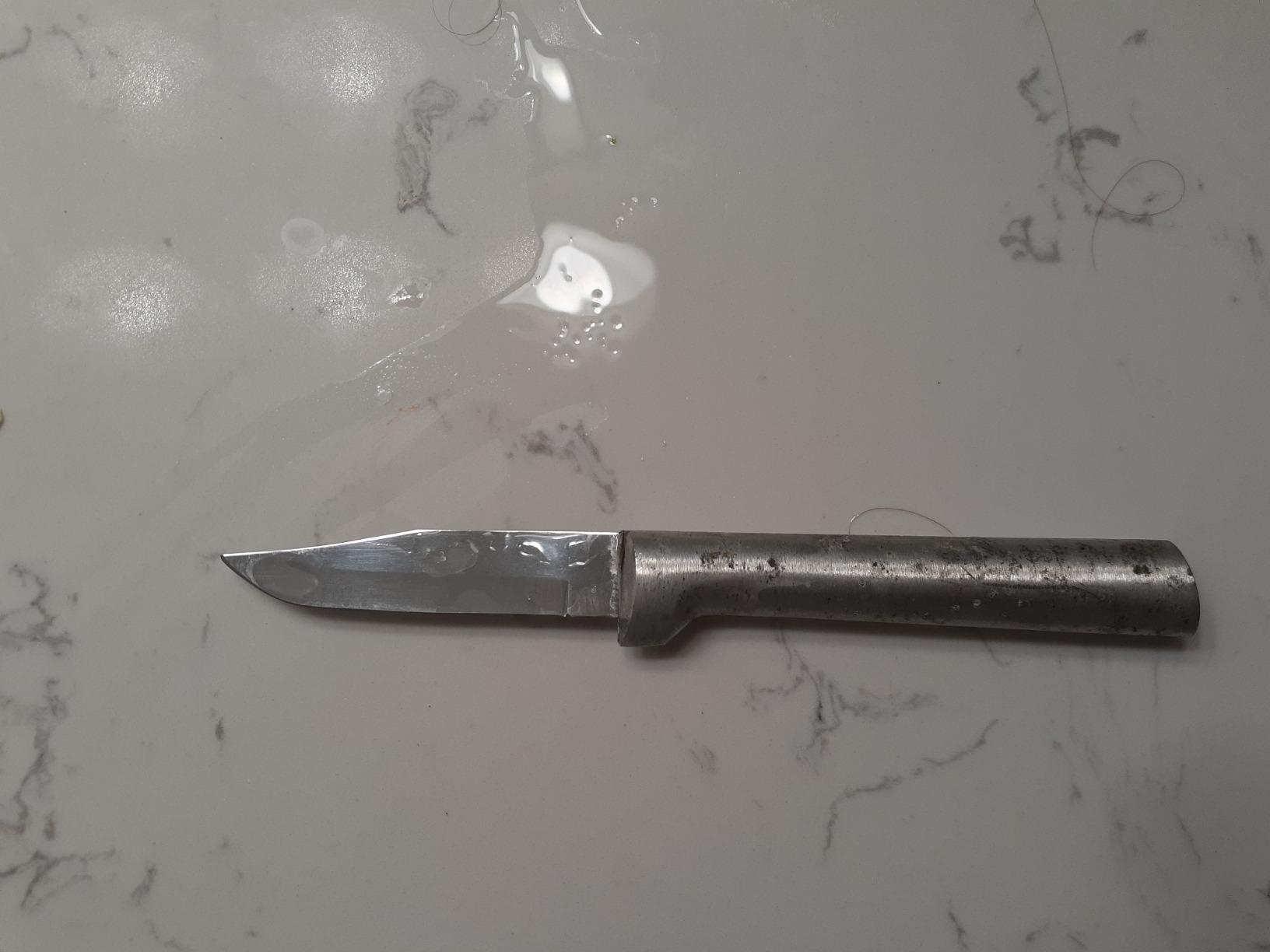
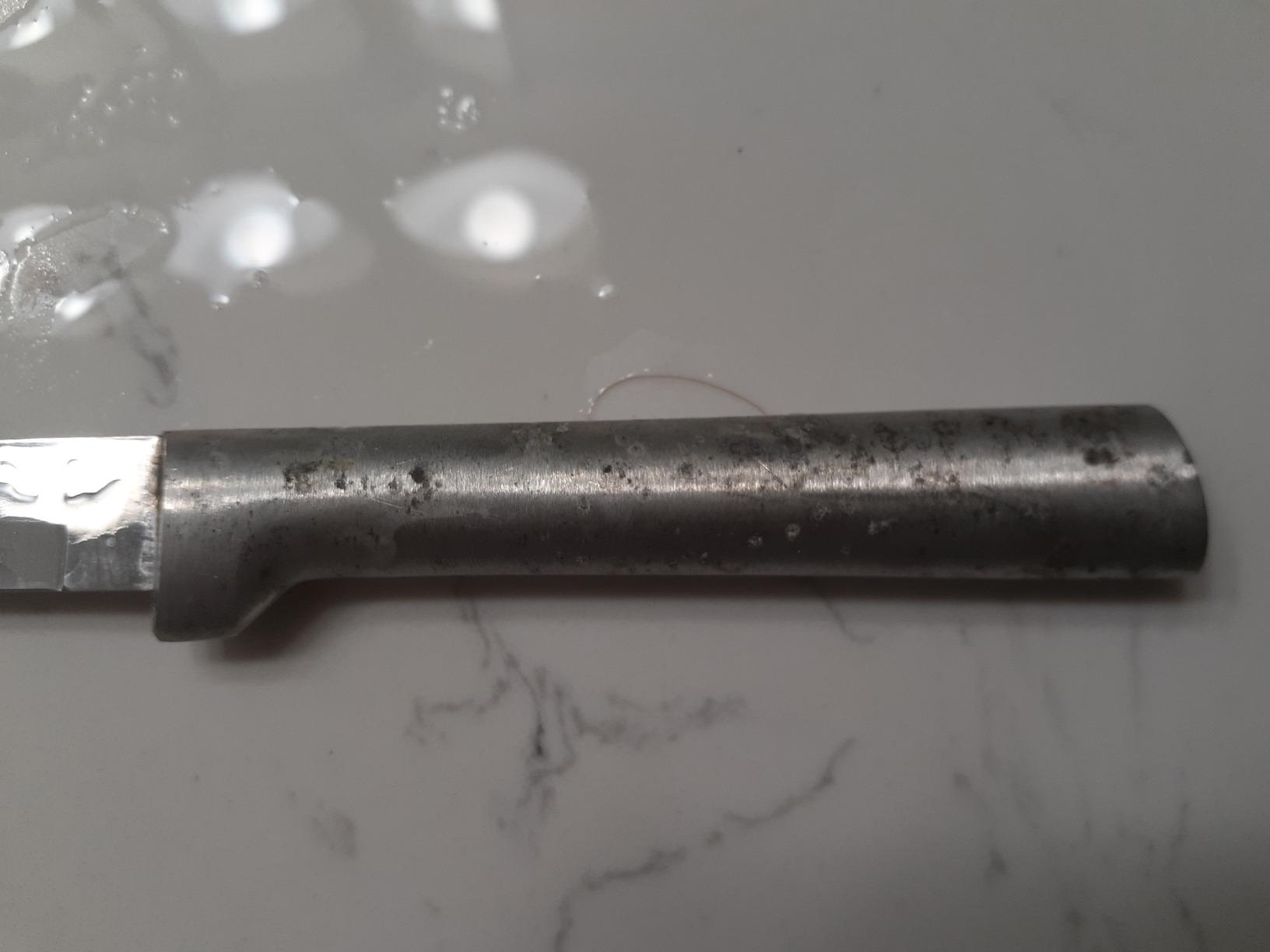
The blade is T420 high carbon stainless, hollow ground, which produces a very sharp edge with good retention and a fine, non-serrated profile that glides through small fruit without catching. The black resin handle is dishwasher safe, which no wooden handle on this list can claim.
The limitation is obvious and worth stating plainly. Two and a half inches is not enough blade for a full apple spiral, and it is not sturdy enough for coring or mincing. This is a tool for detail work on small fruit and vegetables, not a second chef’s knife.
When the RADA is the right choice
Buy it if your fruit work is mostly small things: berries, figs, kiwis, snow peas, cherry tomatoes and garnishes. It is also the easiest knife here to keep clean, since the whole thing goes in a dishwasher.
If you already own a general 3.25 inch parer, this is the companion that handles the fiddly small work your bigger knife is too clumsy for. That pairing covers nearly everything.
Where the RADA is not the answer
Do not expect it to peel a large apple in one continuous spiral. The blade runs out of length, and you will end up starting the spiral in the middle of the fruit rather than at the stem.
Anyone who minces garlic, shallots or herbs regularly will find it too short and too light for the job. That is what the Mercer and the Henckels are for.
9. OAKSWARE Bird Beak 2.75 inch – Best Bird’s Beak Curved Peeler
OAKSWARE Bird Beak Paring Knife, 2.75 Inch Razor-Sharp Pro Tourné Knife
Blade: 2.75 inch curved bird beak
German X50CrMoV15 steel at 15 degrees
Full tang three-rivet handle
Hand wash only
Pros
- Curved bird beak profile is excellent for peeling round fruit and vegetables
- German X50CrMoV15 stainless hand-sharpened to 15 degrees per side
- Full tang three-rivet stainless handle with good balance
- Pointed tip useful for coring and spherical garnishes
- Compact and light enough for precise control
Cons
- Hand wash only to maintain sharpness and gloss
- Handle feels somewhat heavy relative to the small blade
- Very sharp edge requires careful handling around the curved tip
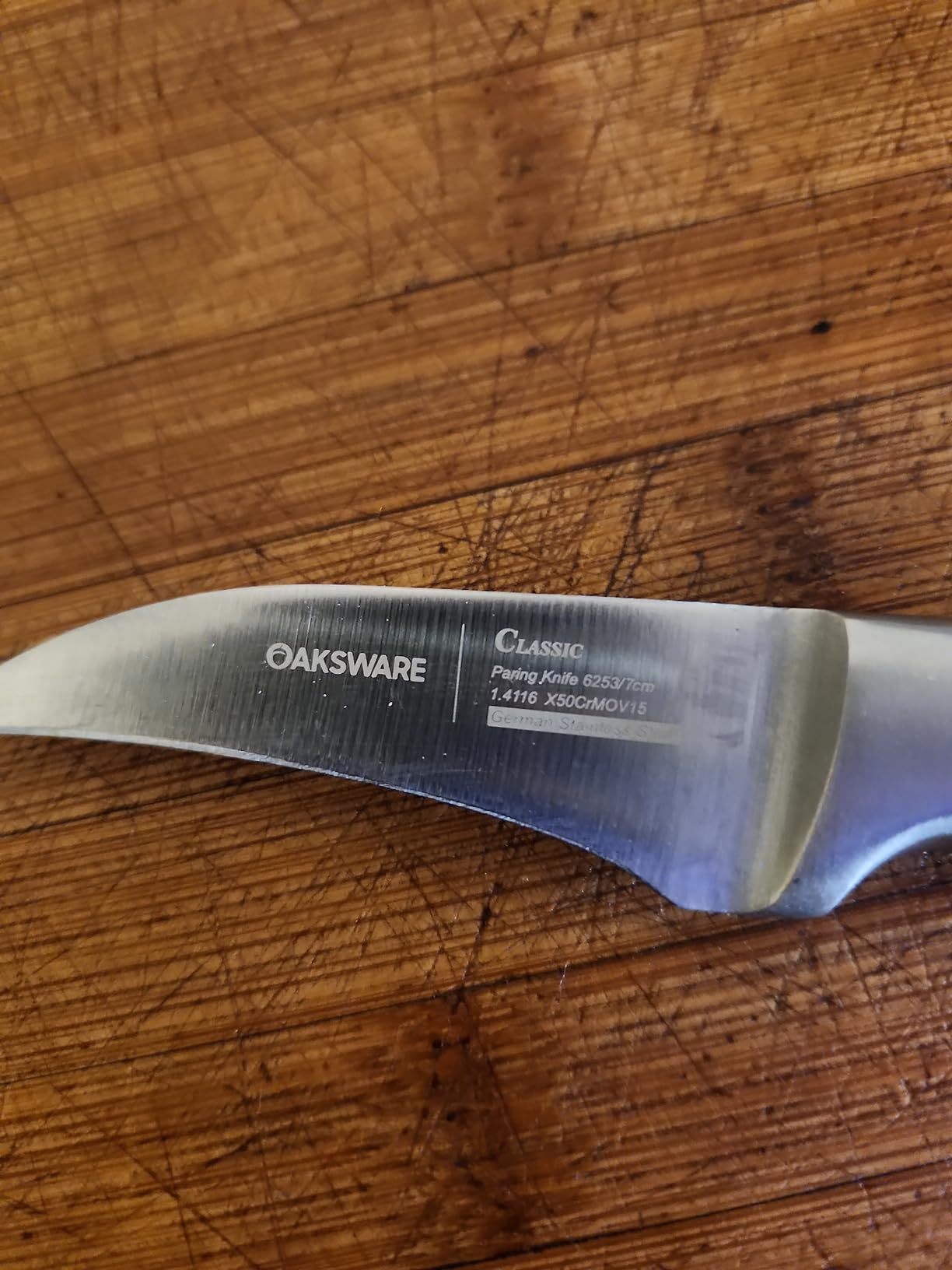
This is the peeling specialist of the group, and the geometry difference is not subtle. The blade curves like a bird’s beak, so the edge naturally follows the surface of a round fruit while your hand stays almost still. Users who mostly cut curves report that it is the only paring shape they want in the hand.
The steel is imported German X50CrMoV15 stainless, hand-sharpened to 15 degrees per side, and it held its edge better through the citrus and potato tests than the stamped steel on most of the other picks. The full tang three-rivet handle is solidly balanced.
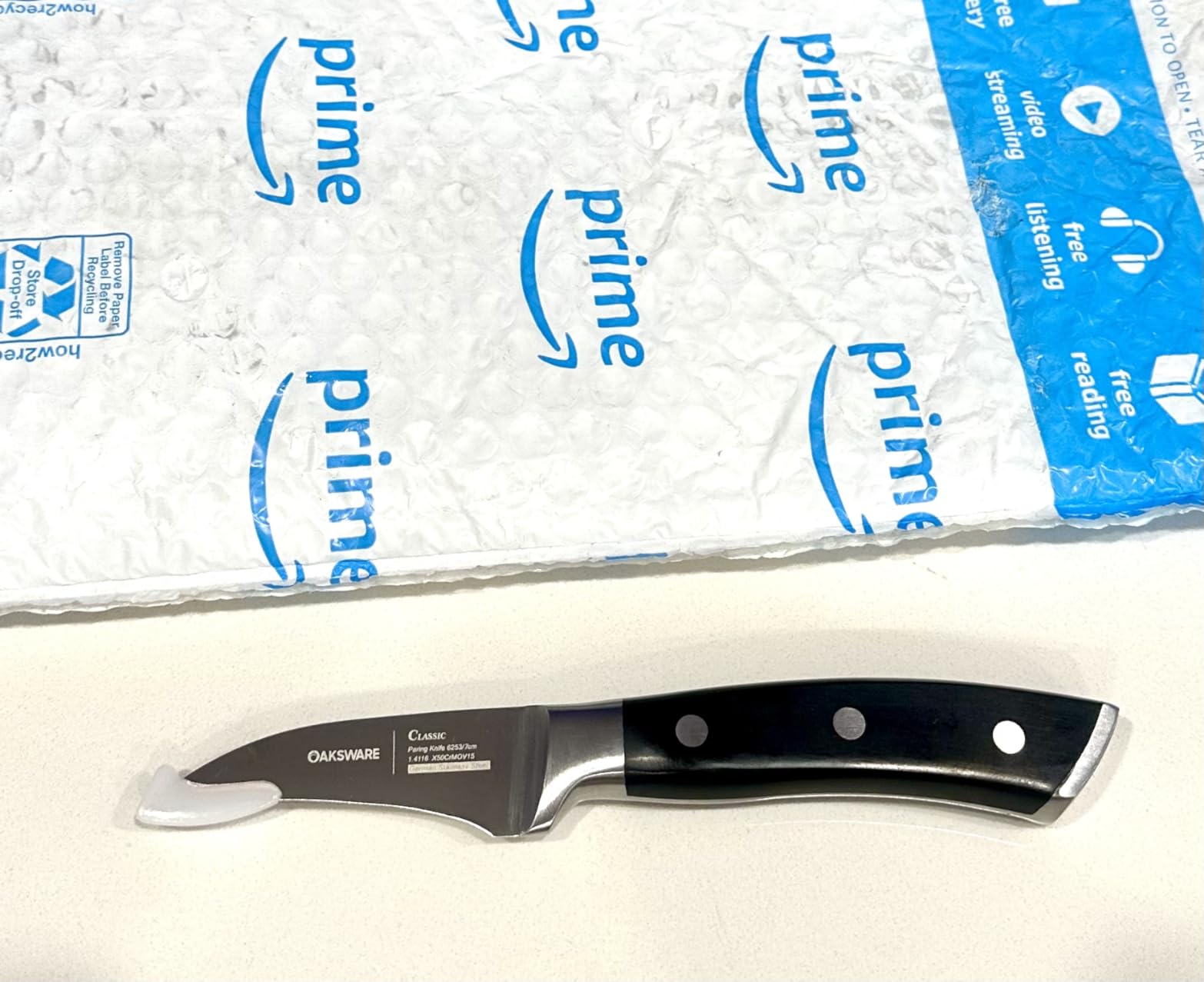
It was also the best of the group at making spherical fruit garnishes, because a curved blade plus a fine point rotates around a centre naturally. Peeling a potato in long strokes was equally good, arguably better than with any straight parer here.
Two cautions. Hand washing is required to keep the edge and the gloss, and the handle does feel somewhat heavy next to such a small blade. The tip is also exceptionally sharp and curves toward you, so slow down until you trust it.
When the OAKSWARE is the right choice
It is the pick for anyone peeling potatoes, onions, apples and oranges rather than hulling berries. If you turn produce while you work, the curve does the work for you and the wrist stays relaxed.
It is also the natural partner to a straight parer. Many cooks keep one of each: the curved knife for following shapes, the straight spear point for point work, coring and board prep.
Where the OAKSWARE is not the answer
For strawberries and other soft fruit you hold in your palm, the 2.75 inch curved blade is less precise than a short straight point. The RADA W202 and the Victorinox are both faster there.
If you want a single do-everything small knife rather than a specialist, the imarku or the linoroso will cover more ground with one tool and one handle to maintain.
10. Wusthof Gourmet 2.25 inch Peeling Knife – Best Solingen Specialist
WÜSTHOF Gourmet 2.25″ Peeling Knife
Blade: 2.25 inch gently curved
High carbon stainless steel
Stamped construction
1.12 ounce weight
Pros
- Gently curved blade glides through fruit and vegetable skins without bruising the flesh
- Exceptional sharpness and precise control for intricate cuts
- Well balanced in the hand at 1.12 ounces
- Rust-free high carbon stainless steel
- Ergonomic handle stays comfortable over long prep sessions
Cons
- 2.25 inch blade makes it a specialist tool rather than an all-rounder
- Very sharp out of the box so grip technique needs adjusting
The Wusthof Gourmet peeling knife is a Solingen-made specialist with only 2.25 inches of blade and 1.12 ounces of total weight, and it is the most precisely purpose-built tool in this roundup. Nothing on it is generic.
The blade is only gently curved, less of a hook than the OAKSWARE, which makes it a middle path between a straight parer and a full tournee. Owners report that it glides cleanly through fruit and vegetable skins without bruising the flesh underneath, which is the exact failure mode of a dull blade on a soft apple.
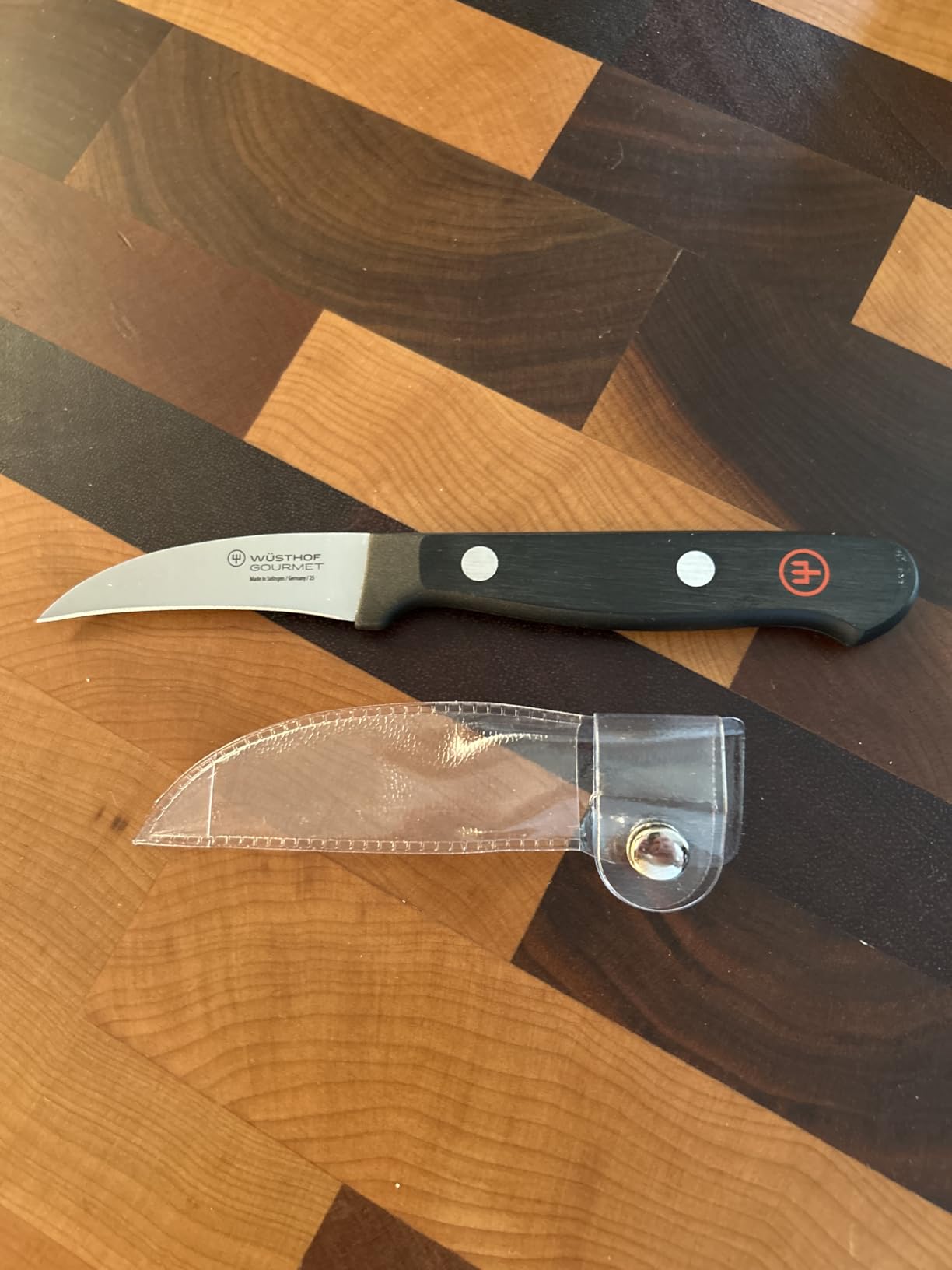
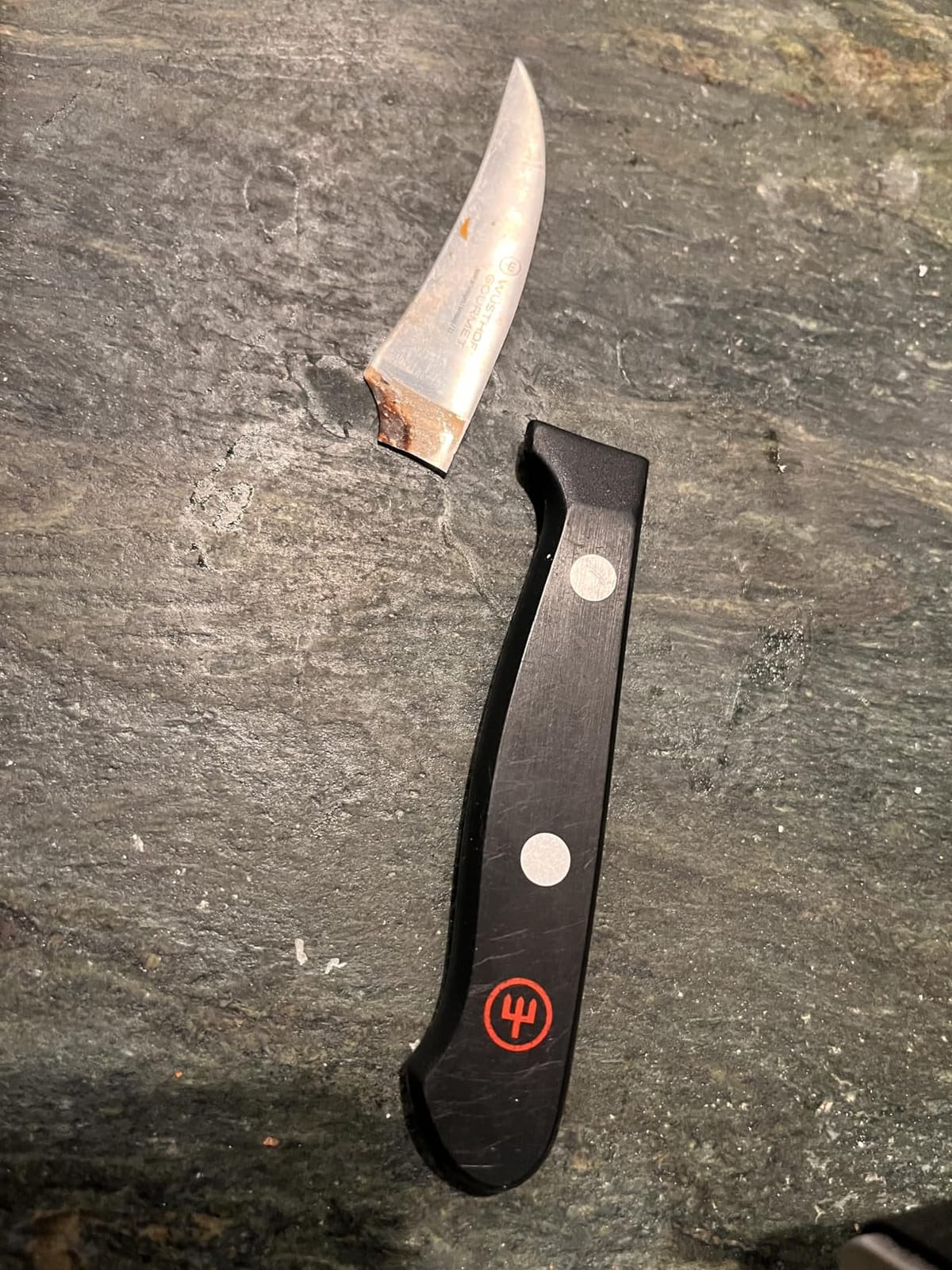
Sharpness and control are the recurring words in reviews, along with a balance that is neither too light nor too heavy. The polypropylene and stainless handle stays comfortable through long prep sessions, and the high carbon stainless steel is rust-free, which is meaningful if you work with lemons, limes and tomatoes.
The 341-review base is much smaller than the mass-market knives here, so treat the consensus with proportion. The common newcomer complaint is not quality but adjustment: it is very sharp out of the box and takes a moment to get used to.
When the Wusthof is the right choice
Pick it if you already own Wusthof knives and want the matching specialist, or if delicate peeling is a genuine hobby rather than a weekly chore. The lightness at 1.12 ounces makes it the least tiring of the curved-blade options for long sessions.
It is also a strong candidate as a gift for someone who cooks seriously, because the brand has been family owned in Solingen for seven generations and the finish reflects it.
Where the Wusthof is not the answer
At 2.25 inches it will not peel a large apple in one spiral, and it is not a general-purpose paring knife for shallots, herbs or board prep. Treat it as the specialist it is.
If you need one knife to do everything, a 3 to 3.5 inch model such as the Victorinox or the imarku is a far better use of the same drawer space.
Paring Knife vs Peeling Knife vs Vegetable Peeler: Which One Should You Use?
A paring knife and a peeling knife are not different categories. The term peeling knife is a marketing variation, and it almost always describes either a paring knife or a curved Tournier knife sold for the peeling job. The real question you are asking is whether a knife beats a Y-peeler, and the honest answer is that it depends on the fruit and the volume.
Soft, high-moisture fruit: the knife wins. Apples, pears, peaches, plums and ripe mango are where a sharp paring knife is clearly better. A Y-peeler gouges because its blade is set at a fixed angle and rides over soft flesh, while a knife lets you adjust the angle by hand and take a translucent peel. The saving in wasted fruit adds up fast.
Round fruit with a tight curve: the curved knife wins. Potatoes, onions, peppers and oranges reward a blade whose belly already matches the shape. A straight parer works, but you do the steering that the curve would have done.
Very hard vegetables: the Y-peeler wins. On a dense potato or a rutabaga, a dedicated peeler removes skin in a single confident pull, and a small 3 inch blade takes more passes. This is the one category where enthusiasts reliably say a Y or U peeler is the right instrument.
Volume work: think before you commit. If you are prepping pounds of apples for a preserving run, the knife is more precise and the peeler is faster, and neither answer is wrong. Preserving is its own workflow, and our fruit presses for home winemaking guide covers how the fruit gets from the crate to the jar efficiently.
Bird’s Beak vs Straight Paring Knife: Which Peels Fruit Better?
A bird’s beak, also called a Tournier knife or tourné knife, has a deeply curved blade with a fine point. A straight paring knife has a straight edge with a curved belly near the heel. The two do different jobs, and the geometry decides which fruit each one suits.
The curved blade wins on round fruit and on shape work. Because the edge is already the shape of the fruit, you rotate the knife slightly and let it pull itself along the surface. Potatoes, onions, apples and oranges peel in fewer, longer strokes, and a spherical garnish is nearly automatic on the pivot.
The straight spear point wins on point work. Hulling strawberries, removing a tomato core, cutting a slit in a pepper and trimming a stem all depend on reaching a precise spot in a tight space, and a straight fine tip is simply easier to aim than a curved one.
Knife enthusiasts split cleanly on this. Some on r/TrueChefKnives argue the curved profile is the only correct answer for curve-heavy peeling, while posters on Kitchen Knife Forums favour a French or office profile with a pointy tip for in-hand work and suggest a sheep’s foot profile when you do not need the point. Both camps are peeling fruit well; they are optimizing for different fruit.
What Knife Enthusiasts Say About Paring Knives
The forum consensus adds detail that product pages leave out. Weight in the hand matters more than any specification: enthusiasts describe picking a parer by how it feels during in-hand work, and they repeatedly warn that a blade protruding past the handle makes it precarious to choke up on it for peeling.
They also treat the apple peel test as the community’s standard buying benchmark, which is exactly why we built our test battery around it. On steel, the useful distinction is not premium versus budget but carbon versus semi-stainless, because acid from citrus and tomatoes is what attacks a high carbon blade over time.
One recurring buying habit stands out: enthusiasts keep a premium paring knife for guests and as a practice sharpening project, which is a useful signal about what you actually use daily versus what you display. Judge the knife you will hold daily, not the one you will show off.
How to Choose a Paring Knife for Peeling Fruit
Filtering ten good knives down to one comes down to five questions, and only the first two are about steel.
1. Blade length. Three to three-and-a-half inches is the working range. Shorter blades give better control on berries and small fruit, longer blades are more versatile on the board, and four inches or more starts to feel unwieldy when the fruit is in your palm.
2. Blade profile. Straight spear point for hulling, coring and board work. Curved bird’s beak for round fruit, potatoes and turning garnishes. A gently curved profile like the Wusthof is a reasonable middle ground if you peel mostly apples.
3. Blade thickness. Thin blades shave and thick blades chop. If your goal is a peel spiral with minimal flesh attached, you want thin, and that single choice will narrow your list more than any brand name.
4. Steel and acid resistance. High carbon steels take a finer edge and need more care around lemons, limes and tomatoes. Stainless steels are more forgiving and dishwasher tolerant but usually need sharpening sooner. Wipe the blade dry after acidic prep either way.
5. Handle weight and grip. Try to pick the knife up. A handle that is comfortable for a full fist grip is better for board work; a slim, light handle is better for in-hand peeling. This is the criterion enthusiasts test first and it is hard to judge from a photograph.
If your fruit work extends into preserving and orchard harvests, our picks on fruit wine making kits for elderberry wine and orchard ladders for fruit picking cover the surrounding workflow, from getting fruit down to turning it into something you can keep.
Care and Sharpening for Paring Knives
Peeling dulls a blade faster than chopping does, because a paring knife spends its life dragging across the surface of fruit with the full length of the edge in contact. The maintenance requirement is light, but it is not optional if you want the peel to keep coming off in one piece.
Most manufacturers recommend a 15 to 20 degree edge per side, and the knives on this list that publish an angle fall inside that range, from 9-15 degrees per side on the imarku up to 15 degrees on the OAKSWARE. Thinner angles peel better and dull sooner.
Honing keeps an edge. Sharpening resets one. A honing steel straightens a rolled edge between sessions and should be used often. A whetstone removes metal and is needed only when honing no longer brings the edge back, which for most home cooks is a few times a year.
Hand wash every wooden and resin-handled model and dry the blade immediately. Acid from citrus, tomatoes and berries left on a blade overnight is what causes tarnish on high carbon steel and surface rust on stainless, and it is entirely avoidable.
Store knives on a magnetic strip or in a sheath so the edge never contacts a drawer or another blade. A loose paring knife in a mixed drawer arrives dull every time you pick it up, and the Farberware Edgekeeper cover is one product here that solves this without a separate accessory.
Knife Types We Passed Over for Peeling Fruit
We left several categories out on purpose, and the reasons come straight from how these tools behave in the hand.
Ceramic blades. Exceptionally sharp and they hold an edge a long time, but they are brittle. A flex or a drop can snap a blade with no warning, and a snapped fragment off a peeled apple is a genuinely serious hazard.
Blades four inches and longer. They are better knives overall, and one 4 inch paring is on this list. But for in-hand peeling they are the wrong length, and for the volume work enthusiasts describe, small is faster.
Bulky all-metal handles. Heavy, all-steel handles feel substantial and become uncomfortable and unsafe for in-hand fruit work, which is the task at hand. This is the single most common reason enthusiasts reject a parer that otherwise performs well.
Serrated parers. Serrations are useful on soft-skinned tomatoes and on bread, and they are genuinely difficult to sharpen at home. For peeling fruit they drag through the skin rather than shaving it, so they lose on the primary test.
Japanese knives sold as fruit knives. Many are board-work shapes with too little point for in-hand hulling. If a fruit knife is what you want, check the blade length and tip shape rather than the label.
Frequently Asked Questions
What knife is best for peeling fruit?
A 3 to 3.5 inch straight paring knife with a thin blade is the best general answer, because the thin edge shaves the peel off in one continuous spiral instead of sawing chunks out of the flesh. Use a curved bird’s beak instead when you mostly peel round fruit such as potatoes, onions and oranges, since its edge already matches the shape of the produce.
What is the best knife for peeling apples?
For apples, blade thinness matters more than brand. A thin 3.25 inch stamped stainless paring peels a large apple end to end in one continuous spiral with almost no flesh attached. Hold the apple in your palm, turn it, and let the blade do the work. A curved bird’s beak is the alternative if you want the edge to follow the curve for you.
What type of knife is best for peeling vegetables?
For firm vegetables such as potatoes, carrots and beets, a curved bird’s beak or Tournier knife peels in fewer, longer strokes because the blade edge already matches the round shape. For softer produce such as mango, peach and cucumber, a thin straight paring knife is better because it can be angled to shave rather than dig. Very dense vegetables are still fastest with a dedicated Y-peeler.
When should a bird’s beak paring knife be used?
Reach for a bird’s beak, also called a Tournier knife, when the work is curve-heavy. Its deeply curved blade follows the surface of round produce with almost no wrist steering, which makes it ideal for potatoes, onions, oranges and apples. It also makes spherical fruit garnishes nearly automatic because the blade pivots around a centre as it turns.
What angle should a paring knife be sharpened at?
Most manufacturers recommend between 15 and 20 degrees per side for a paring knife. The knives here that publish an angle fall in that range, from 9-15 degrees per side on a forged Japanese model up to 15 degrees on a German bird’s beak. Thinner angles peel more cleanly and dull sooner, while 20 degrees hold an edge longer and are more forgiving.
Is a paring knife better than a vegetable peeler for fruit?
A sharp paring knife beats a Y-peeler on soft, high-moisture fruit like apples, pears, peaches and mango because you can adjust the blade angle by hand and take a thin peel, while a peeler gouges and wastes flesh. A dedicated peeler is still faster on very hard vegetables, so the tool follows the produce rather than the other way around.
The Best Paring Knives for Peeling Fruit in 2026: Final Word
The best paring knives for peeling fruit all share two traits: a thin blade that shaves rather than saws, and enough balance to let you ignore the knife while you turn the fruit. Our pick for nearly everyone is the Victorinox Swiss Classic 3.25 inch, at 18.14 g with a stamped stainless blade that peels an apple in one continuous spiral and takes a lifetime warranty.
Buy the imarku if you want a forged 58 HRC Japanese blade for a mid-range price and plan to sharpen it yourself. Buy the OAKSWARE bird’s beak if you mostly peel round fruit, or the RADA W202 if you mostly handle berries and small produce. Add the Mercer Millennia if garnish and board work matter as much as peeling.
Whichever you choose, hang it on a strip, keep it sharp, and wipe it after citrus. That last habit alone will outlast any steel choice on this list.