
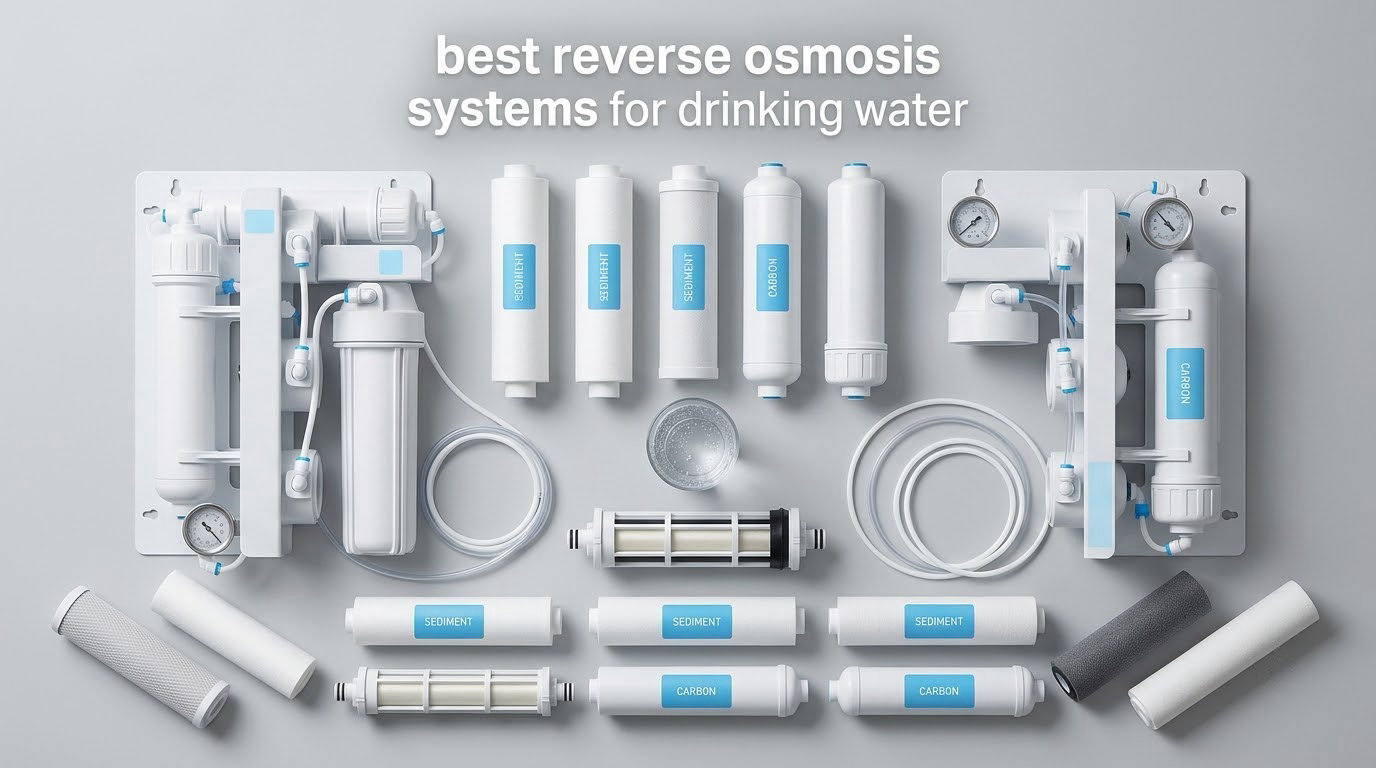
Our pick for the best reverse osmosis systems for drinking water is the iSpring RCC7AK-BN, a 75 GPD under-sink system certified to NSF/ANSI 58 as a complete unit, with an alkaline mineral stage and widely available replacement cartridges. If you have no under-sink cabinet space or will not touch plumbing, the Bluevua RO100ROPOT is the countertop answer. If cabinet space is the problem rather than budget, the Waterdrop G3P600 removes the tank entirely.
That is the short version. This guide covers ten systems across tank-based, tankless and countertop formats, and every one of them filters drinking water well enough for daily use. They differ in the things that decide whether you will still be happy with the choice in three years: how much cabinet space it eats, how fast the water comes out, what the filters cost you, and whether anyone ever verified the certification claim.
Reverse osmosis is a point-of-use technology. It forces tap water against a semipermeable membrane under pressure, letting water molecules through while rejecting most dissolved solids such as salts, fluoride, lead, chlorine byproducts and many organic compounds. The water that passes through is called permeate. The rejected stream goes down the drain as concentrate, and that drain stream is the number most buyers never look at until it shows up on their water bill.
We may earn a commission when you buy through the links on this page, and that does not change the order below. The ranking stands on certification scope, published specifications, review volume and long-run ownership friction, not on who pays us the most.
If you are starting from scratch rather than replacing an old unit, read the tank versus tankless section first. It is the single decision that eliminates half the list, and it is the question people ask most often in the r/WaterTreatment forum threads that sit at the top of the search results for this topic.
Table of Contents
Top 3 Best Reverse Osmosis Systems For Drinking Water (October 2026)

iSpring RCC7AK-BN
- NSF/ANSI 58 certified system
- 75 GPD
- Alkaline pH+ mineral stage
- Standard replaceable cartridges

All 10 Reverse Osmosis Systems at a Glance in 2026
The table below is the short version of the whole guide. Every certification listed is a manufacturer claim about the complete system, not a claim about a single component, and we treat the difference as the most important single filter in our ranking.
| Product | Specifications | Action |
|---|---|---|
| iSpring RCC7AK-BN |
|
Check Latest Price |
 APEC ROES-50 APEC ROES-50 |
|
Check Latest Price |
| Waterdrop G3P600 |
|
Check Latest Price |
 SimPure Y7P-BW SimPure Y7P-BW |
|
Check Latest Price |
 Bluevua RO100ROPOT Bluevua RO100ROPOT |
|
Check Latest Price |
 Frizzlife PD600-TAM3 Frizzlife PD600-TAM3 |
|
Check Latest Price |
 Waterdrop G2 Waterdrop G2 |
|
Check Latest Price |
 Home Master TMHP Home Master TMHP |
|
Check Latest Price |
 GeekPure 6 Stage GeekPure 6 Stage |
|
Check Latest Price |
 VIOMI V6 VIOMI V6 |
|
Check Latest Price |
How We Evaluated These RO Systems?
We ranked these systems on seven weighted criteria rather than on star ratings alone. A star rating tells you that most buyers were not disappointed. It does not tell you whether the certification is real, whether the filters will still be available in five years, or what the system costs to own.
Certification scope carried the heaviest weight. We treat a system certified to NSF/ANSI 58 as an assembly as meaningfully different from a system containing a certified membrane inside an uncertified frame, and we treat a manufacturer’s own test report as a claim rather than a certification. Where a listing says “tested to” instead of “certified” by a named body, that product lost points.
Next came published specifications: rated gallons per day, maximum supported feed TDS, flow rate, and the drain ratio the manufacturer will actually stand behind. Certification claims that only appear in marketing copy without a standard and a body attached counted as unverified.
Review volume and consistency came third. A 4.6 average across more than twenty thousand reviews tells you something a 4.7 across a few hundred does not, particularly about install fit and long-run durability. We also weighted cartridge format heavily, because proprietary cartridges that cannot be bought from a third-party supplier are the hidden cost that most buyers discover too late.
The final criteria were cabinet footprint, whether the system needs electricity, warranty length, and whether it can feed a refrigerator line. A system that scores well on filtration and badly on fit is a system that ends up in a garage.
We did not lab-test membranes or measure rejection rates ourselves. Where we describe a reduction percentage, it is the manufacturer’s published claim, and we label it as such. What we did do is read the specification sheets line by line, compare them against each other, and read thousands of owner reviews to separate recurring patterns from isolated complaints.
1. iSpring RCC7AK-BN – Best Overall, Best Certified System for Everyday Drinking Water
iSpring RCC7AK-BN NSF Certified, 75 GPD, Alkaline 6-Stage Reverse Osmosis System, pH+ Remineralization RO Water Filter System Under Sink Patented Top-Mounted Faucet Design for Easy Installation
75 GPD under sink
6 stage with alkaline pH+ stage
NSF/ANSI 58 certified system
No power required
Pros
- NSF/ANSI 58 certification covers the whole system not just the membrane
- 21560 reviews give the clearest long-run picture in this category
- Alkaline pH+ stage fixes the flat taste that pushes people off RO
- Standard replaceable cartridges available from multiple sellers
- Transparent first stage housing shows contaminant buildup
Cons
- Supplied 1/4 inch tubing is often too short for real under-sink runs
- Storage tank will not always stand upright in a shallow cabinet
- Brine waste ratio of roughly 2:1 to 3:1
This is the system I recommend to most households. It is a 75 GPD under-sink unit rated for feed water up to 750 ppm TDS, operating around 70 psi, and it does not need electricity, which removes the single most common install blocker on the tankless units in this list.
What sets it apart is that the NSF/ANSI 58 listing covers the filtration system rather than an individual component. A certified membrane inside an uncertified manifold is a common shortcut in this category and a genuine gap, because certification is only as good as the weakest part in the train.
Owners report tap water reading around 110 ppm dropping to between 5 and 9 ppm, and iSpring’s US-based technical support will size a system to your actual TDS and pressure readings if you ask. That support is the most underrated feature in this roundup.
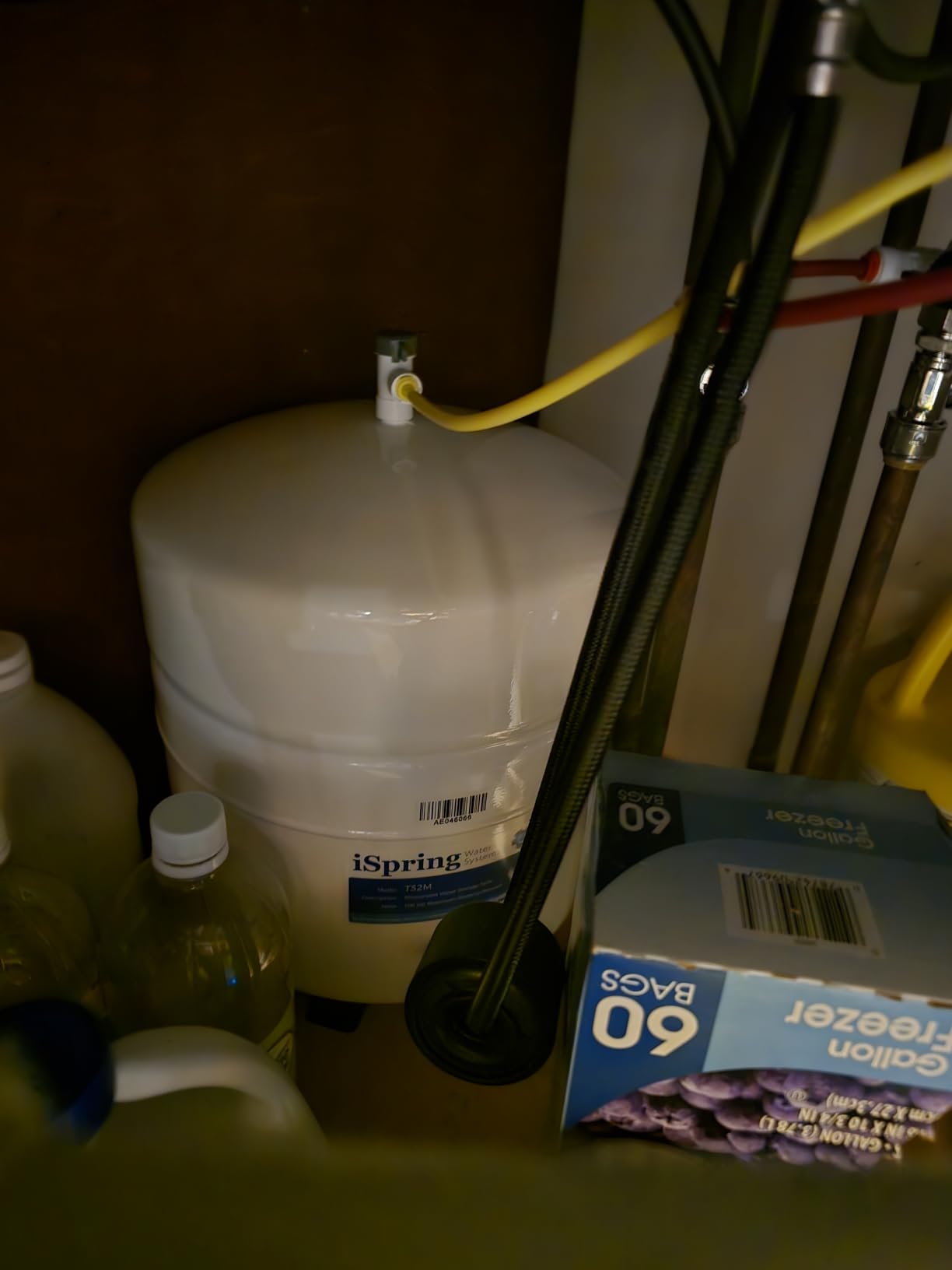
The physical design is clever in a way that solves a real problem. The patented top-mounted fastener lets you mount the whole assembly from above the counter instead of wrestling with it in a dark cabinet, and the clear first-stage housing means you can see sediment loading without pulling anything apart.
Replacement filters come as the F4AK at 6 months, the F9K at one year, the F19K75 at two years and the F28K75 at three years, so the replacement interval is a choice rather than a fixed obligation. The one-year manufacturer limited warranty is ordinary for the category.
What you need to know before you buy?
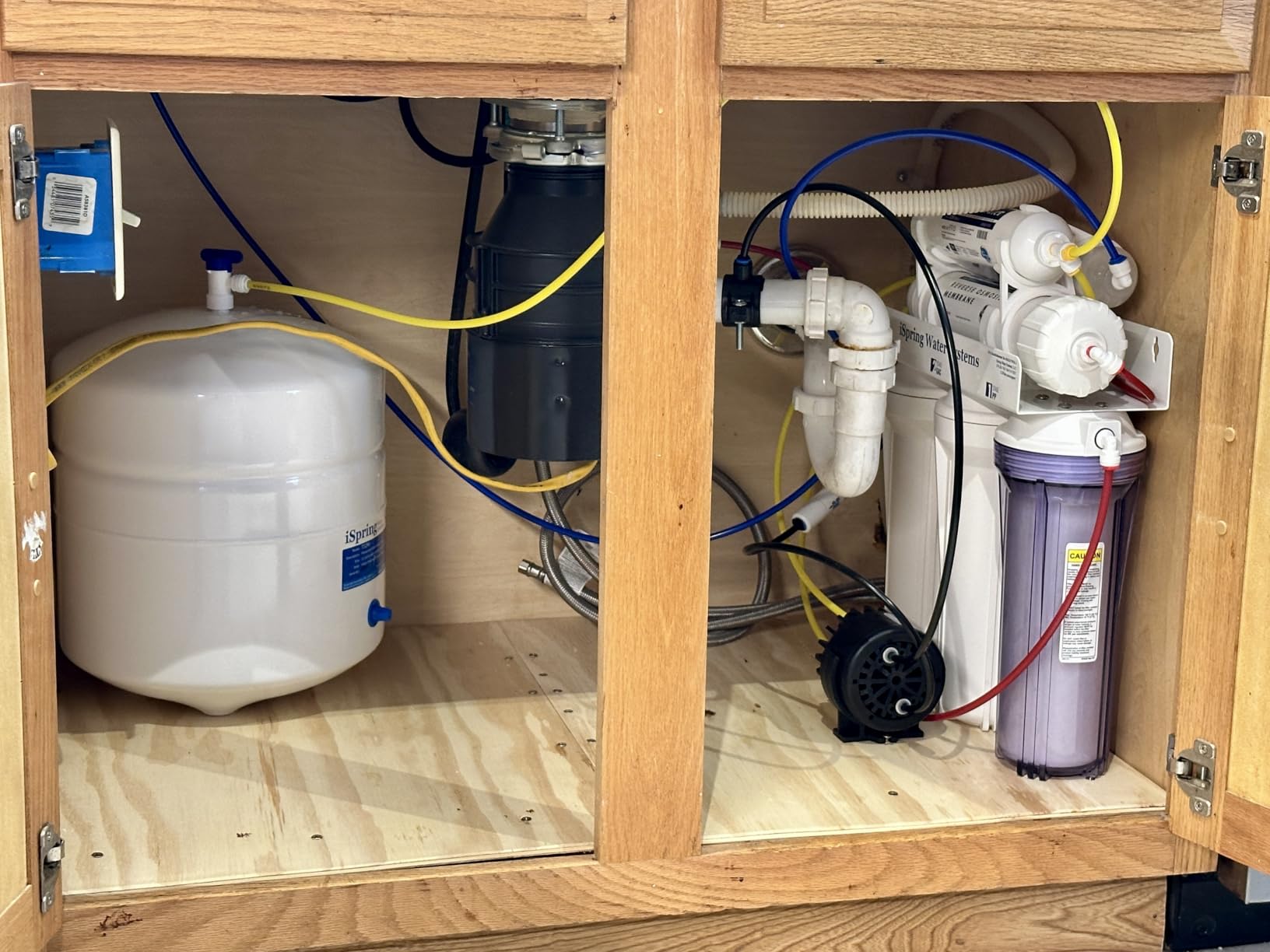
Measure your cabinet depth before ordering. The unit measures 15.5 by 16 by 18 inches and the storage tank will not always stand upright in a shallow cabinet, though it can be laid on its side if the manual allows it in your model.
Buy extra 1/4 inch tubing. Reviewers consistently report the supplied lengths being short for a real run from the cold line to the faucet, and the manual under-explains the 45 degree cut on the black waste line and where the drain saddle belongs.
Who this is wrong for?
Skip it if you plan to run a line to a refrigerator or ice maker and care about gallon per minute speed, since a 75 GPD tank-based unit delivers a trickle compared to a 600 GPD tankless system. It is also the wrong pick for very high feed TDS, since its supported ceiling is 750 ppm.
And if your line pressure sits well below 60 psi, expect slower-than-rated production. A booster pump solves it, but then you are spending toward the premium end of this list anyway.
2. APEC ROES-50 – Best Value, the Dependable No-Frills Under-Sink System
APEC Water ROES-50, 5-Stage Under Sink Reverse Osmosis System, 50 GPD
50 GPD under sink
5 stage carbon and RO
NSF/ANSI 372 and 58
40-85 psi feed
Pros
- 9406 reviews backed by a long filtration track record
- Handles feed water up to 2000 ppm TDS
- Colour coded tubing and quick connects make servicing fast
- Compact 15.5 by 5.25 by 17 inch footprint
- Complete kit includes tank faucet filter set and manual
Cons
- 50 GPD is the slowest output in this roundup
- No remineralization stage so the taste stays close to neutral
- Replacement filters are needed every 6 to 24 months
The ROES-50 is the buy when the budget is the deciding factor and you will never think about the system again. It is rated at 50 GPD, runs on 40 to 85 psi feed pressure, and accepts feed water up to 2000 ppm TDS, which is the highest supported ceiling of any under-sink system here.
That 2000 ppm figure matters more than it looks. Most home RO systems are rated around 300 to 500 ppm, and a buyer on softened well water or high-TDS municipal supply can sit above the limit of a more premium unit.
APEC carries both NSF/ANSI 372 and NSF/ANSI 58, and the colour-coded tubing with quick-connect fittings means a first-time installer can reassemble it in a year without relearning the plumbing.
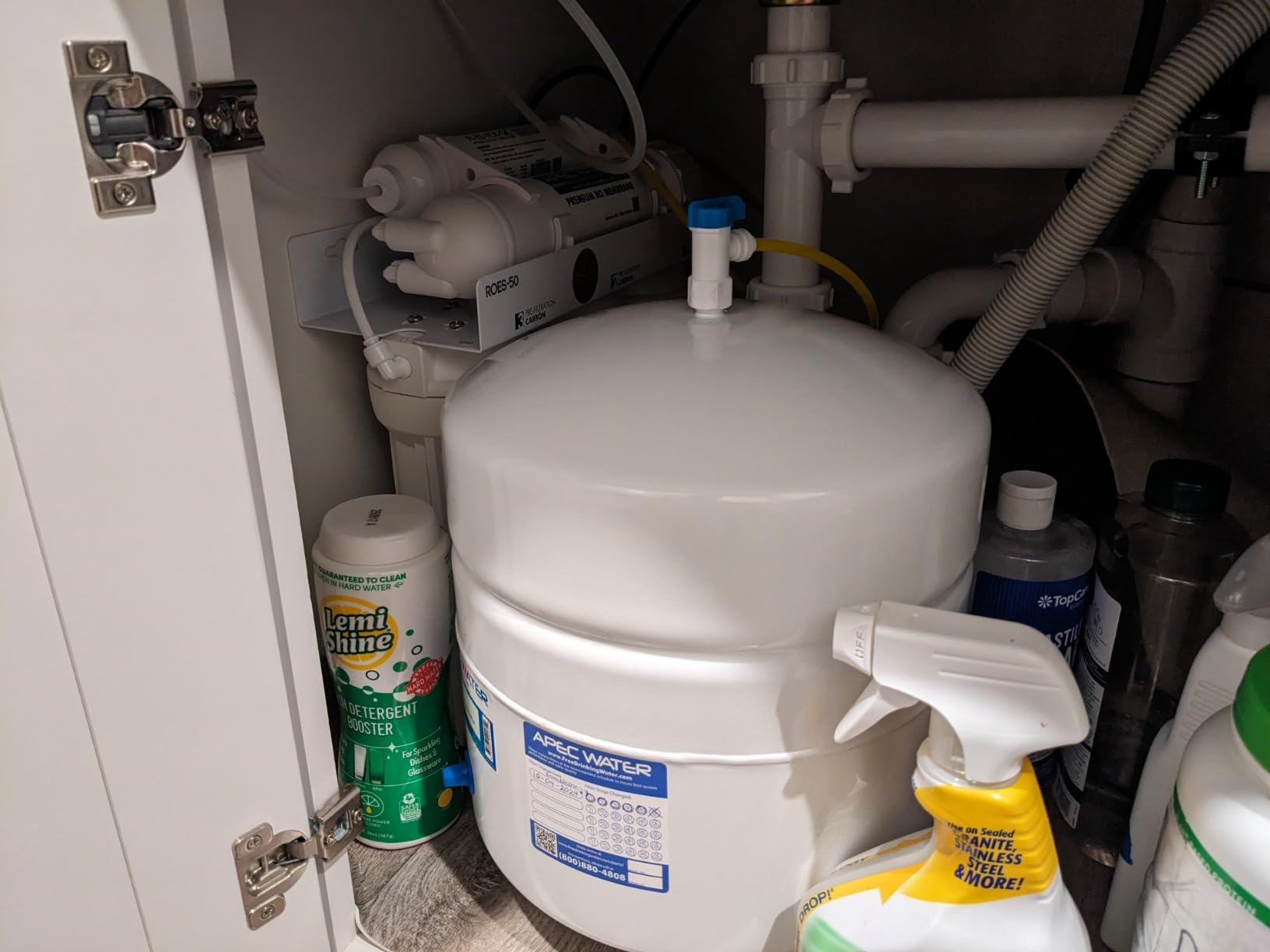
The trade-off is speed. At 50 GPD, a stored gallon takes a while to refill, and owners occasionally report flow slower than they expected. For drinking and cooking in a two to three person household that is a non-issue. For a family of five who cooks a lot, it is a daily irritation.
There is no alkaline stage, so the water tastes closer to neutral than the iSpring. Plenty of reviewers do not care. If flat water is the thing that made you distrust RO in the first place, look at one of the remineralization models instead.
What you need to know before you buy?
It ships with a storage tank, which means water sits stagnant between draws. Forum users ask about this more than any other RO concern, and the practical answer is to flush the faucet for a few seconds after any gap in use, which most people do without thinking about it.
Budget for filters on a recurring schedule. The manufacturer recommends replacement somewhere between 6 and 24 months depending on the stage, and the membrane sits at the longer end of that.
Who this is wrong for?
Do not buy it if anyone in the house expects a full pitcher to refill quickly, or if you want water that tastes like spring water rather than plain filtered water. And if your priority is minimising the drain stream, this is the least efficient machine in the group.
3. Waterdrop G3P600 – Best Premium Tankless, the Most Complete Under-Sink System
Waterdrop G3P600 Tankless Reverse Osmosis Water Filter System, 600 GPD
600 GPD tankless
2:1 pure to drain ratio
NSF 42 53 58 and 372
Smart faucet with TDS display
Pros
- Triple certification covering 58 372 and 42 on one unit
- 600 GPD fills an 8 oz cup in about 8 seconds
- Tankless design frees roughly 70 percent of the cabinet
- Filter changes take about 3 seconds from the front
- Display faucet shows live TDS and filter life
Cons
- Needs an unswitched under-sink outlet which some homes must have rewired
- Replacement cartridges cost noticeably more than competing brands
- Automatic flush can waste water after light use
If you have cabinet space to spare, you do not need the water savings, and you want the highest certified output in the group, the G3P600 is the strongest machine on this list. It runs 600 GPD with a stated 2:1 pure-to-drain ratio and carries NSF/ANSI 58, NSF/ANSI 372 and NSF 42.
The tankless layout is the real story. It frees roughly 70 percent of the under-sink cabinet, which in a small kitchen is the difference between a usable sink cupboard and one full of plumbing. It also means no stored water going stagnant, which is the concern that turns people toward tankless in the first place.
Owners report filter changes taking about three seconds from the front of the unit without tools, and TDS dropping from the high 300s into single or low double digits. That last figure is the honest measure of what the membrane is doing.
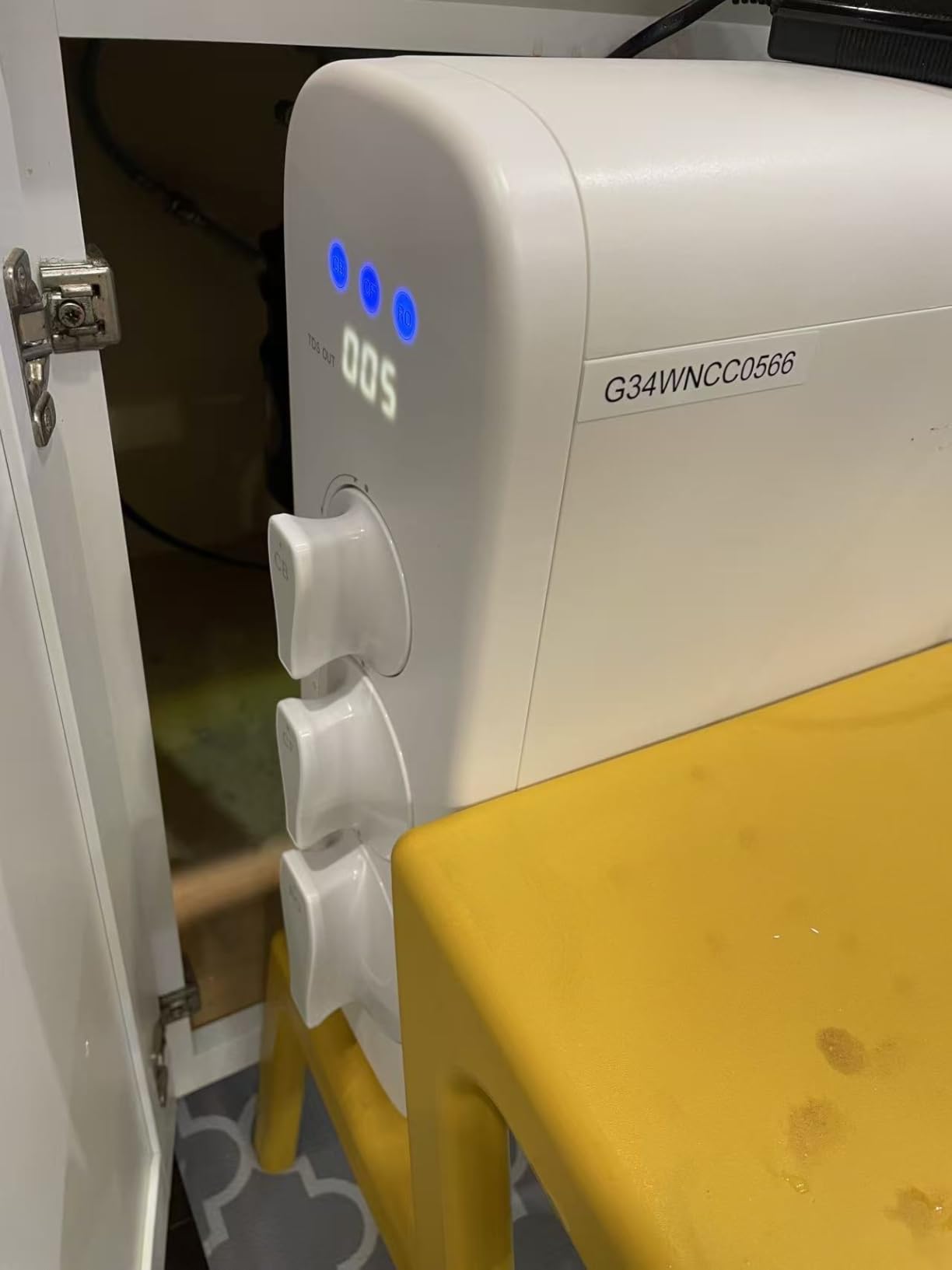
The display faucet shows live TDS and a colour-coded filter life tracker, which removes the guesswork from replacement timing. One reviewer faults the meter for occasionally reporting stale or optimistic values, so treat it as a rough indicator rather than a laboratory reading.
Owners of these tankless units commonly report TDS creep, meaning the first seconds after a long idle read higher until the line flushes. That is a design characteristic of on-demand membrane systems, not a fault, and it settles after a few seconds of flow.
What you need to know before you buy?
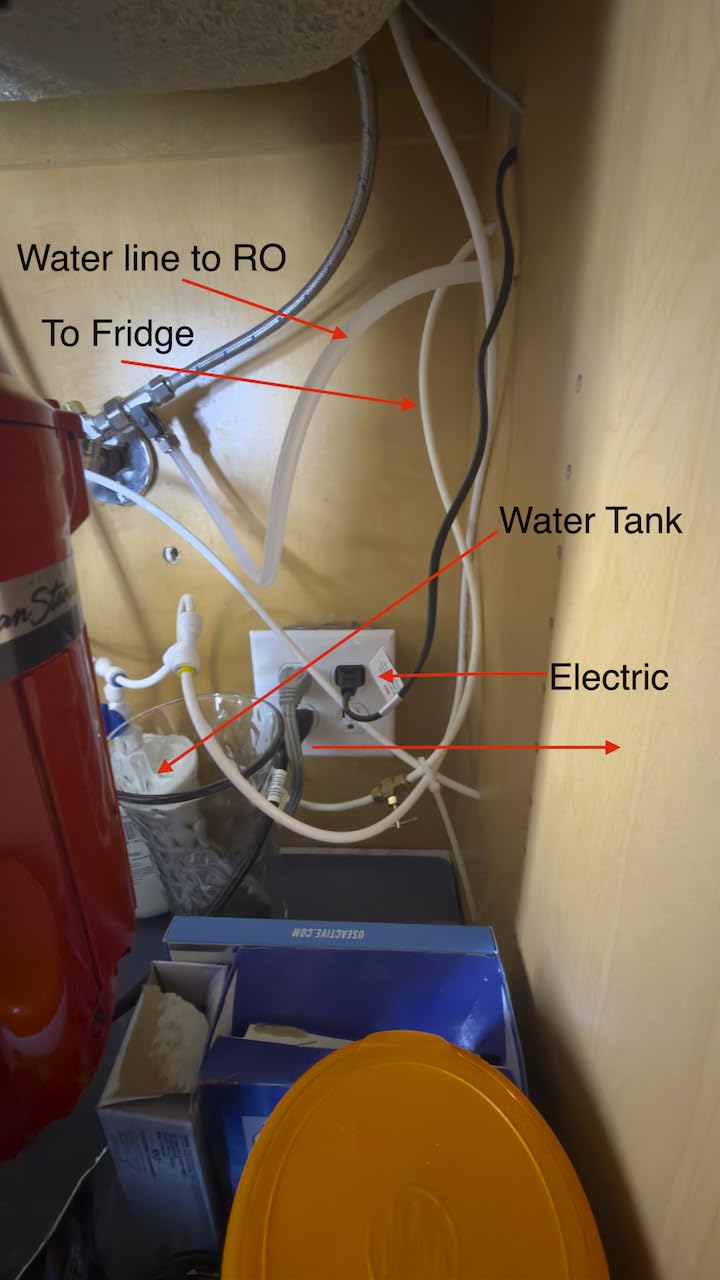
Confirm you have an unswitched electrical outlet under the sink. Some homes need a rewired or new outlet, and that electrician visit can cost more than the difference between this system and the one below it.
Total cost of ownership is the main reservation. Owners name the CF filters on a 6-month cycle, CB filters annually and an expensive membrane, and several mention the CF cartridge being harder to source than the other consumables. Budget accordingly before you commit.
Who this is wrong for?
Do not buy it if your budget is firm, if you need the system to keep working through a power cut, or if filter cost per year matters more than cabinet space. It also runs on corded electric, so it is a poor fit for emergency water planning.
4. SimPure Y7P-BW – Best Countertop Pick for Renters and No-Install Homes
SimPure Y7P-BW UV Countertop Reverse Osmosis Water Filter, 5 Stage RO
Countertop no install
5 stage 0.0001 micron RO with UV
4:1 pure to drain
500 ppm max feed TDS
Pros
- No plumbing or drilling needed
- 4:1 pure to drain is the best efficiency among countertop units
- UV stage adds chemical free microbial protection
- Compact 17.3 by 7.5 by 17 inch footprint
- Glass pitcher avoids storing drinking water in plastic
Cons
- 1.3 gallon rear reservoir refills about once a day for heavy drinkers
- Internal plastic reservoir can taste stale after about a month
- No hot or cold output and nothing during a power cut
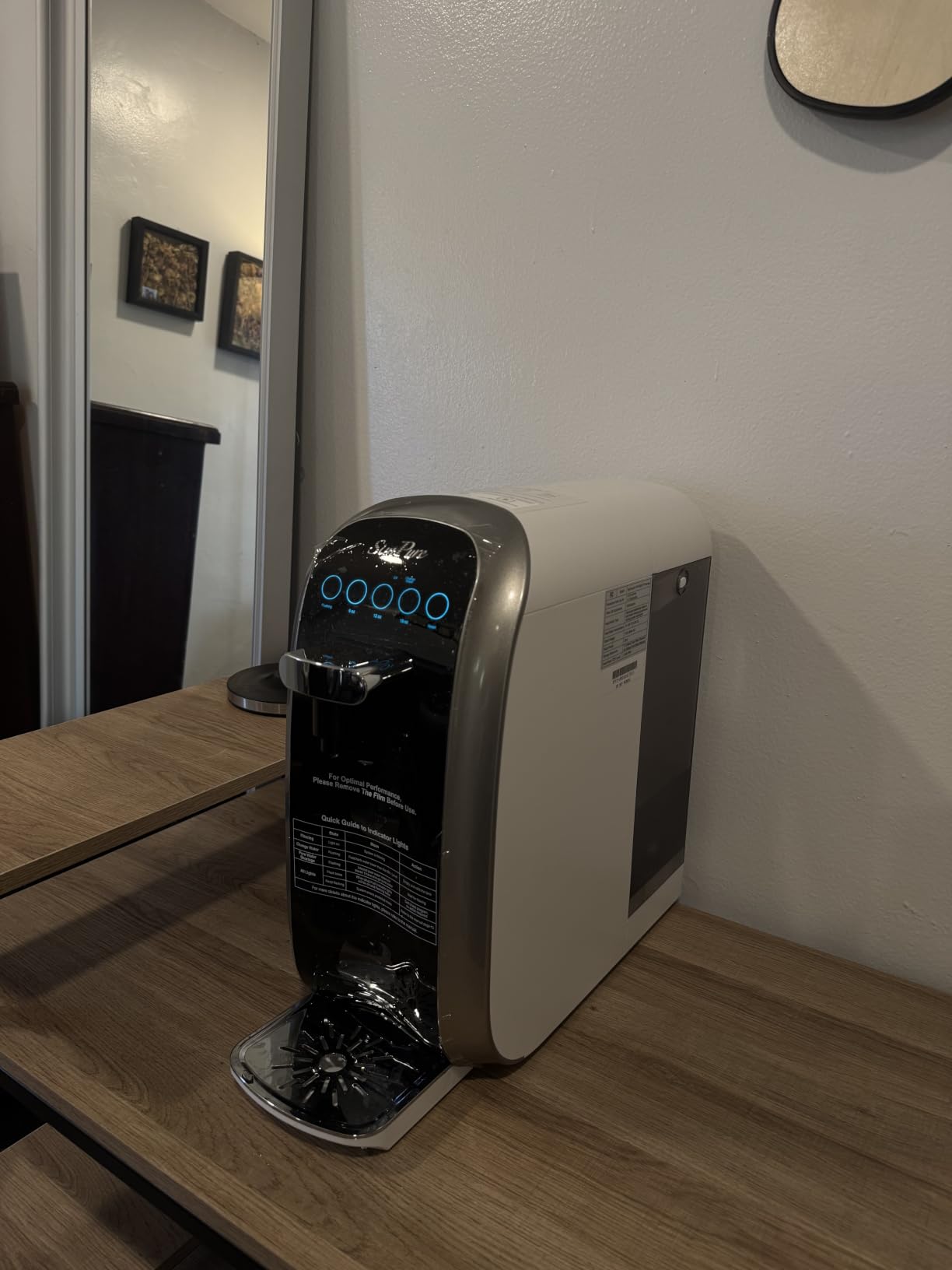
This is the one to buy if you rent, if there is no cold water line you can reach, or if you simply do not want to drill a hole in a counter. The Y7P-BW plugs into any outlet, sits on the counter at 17.3 by 7.5 by 17 inches, and produces purified water on demand.
It is SGS tested against NSF/ANSI 58 and pairs the reverse osmosis membrane with a UV stage, which is unusual at this price point and adds a final microbial kill the under-sink units in this list mostly lack.
The 4:1 pure-to-drain ratio is the best water efficiency of any countertop unit here, and the dispense rate of about 15 seconds for a cup is fast enough that the machine does not feel like a chore to use.
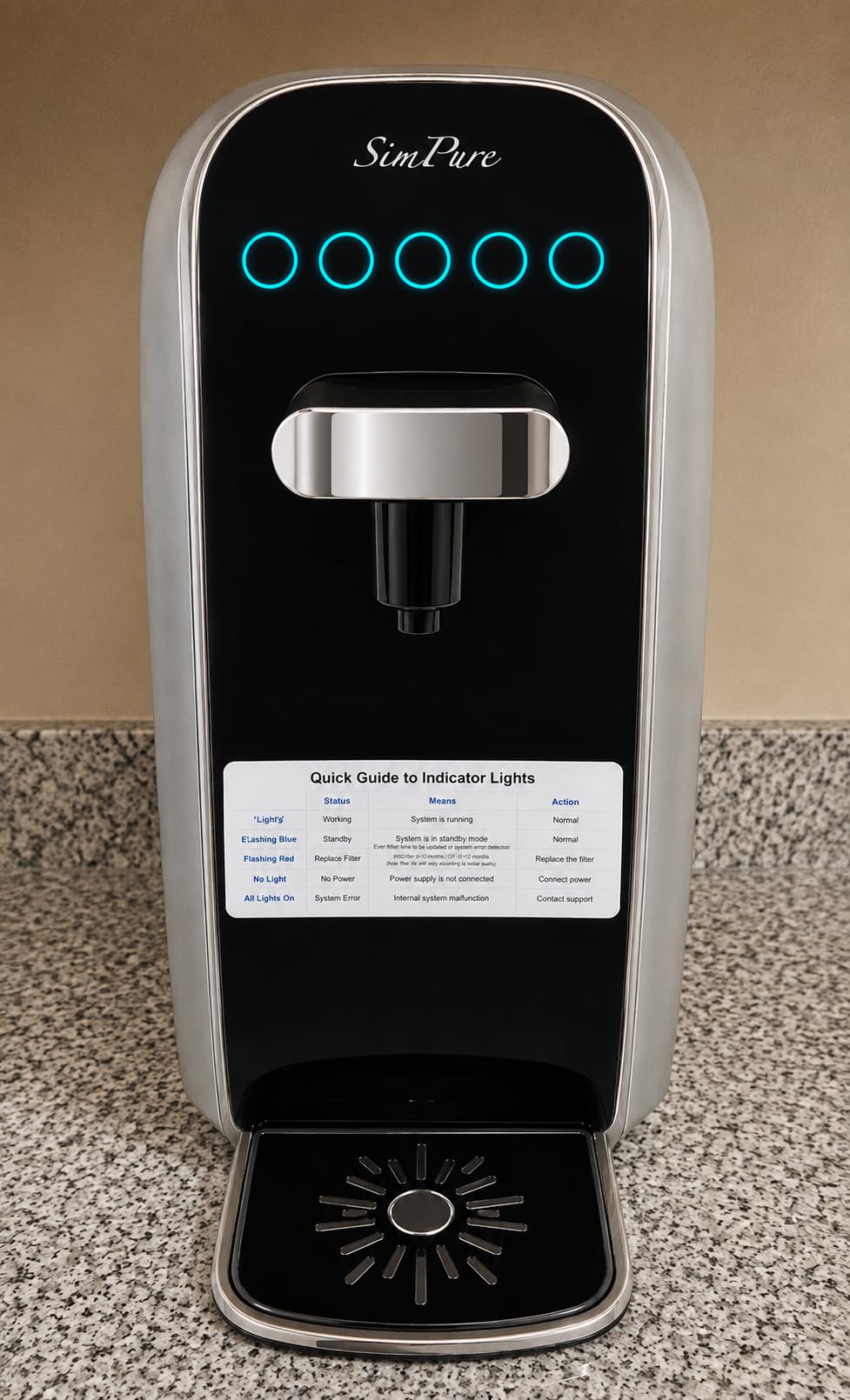
Owners report dramatic results, including one well water reading of 849 ppm dropping to roughly 30 ppm. That is a good demonstration of what RO does, and it is also a warning, because the supported feed TDS ceiling for this unit is 500 ppm.
That 4.2 average is the lowest in the set, and the reason is consistent. Filtration works, the convenience works, and the small internal reservoir is what people complain about. The most prominent negative review describes a plastic-soaked taste developing after about a month and blames the reservoir that cannot be cleaned internally.
What you need to know before you buy?
Accept a maintenance rhythm. The manual calls for daily reservoir rinsing, monthly cleaning and a vinegar or descaler flush every two to four weeks. Skip that and the taste complaints are predictable.
The 1.3 gallon reservoir means refilling roughly once a day for heavy drinkers, and the filters are costly, with one owner replacing both well before the advertised 6-month life. Water comes out at room temperature only.
Who this is wrong for?
Do not buy it if you want hot or cold water, if you need anything to work during a power cut, or if your feed TDS runs above 500 ppm. It is also the wrong tool for a household that wants a dedicated tap rather than a carafe.
5. Bluevua RO100ROPOT – Best Countertop System with a Glass Carafe
Bluevua RO100ROPOT Countertop Reverse Osmosis Water Filter System
Countertop no install
5 stage with remineralization
2:1 pure to drain
12 litre glass carafe
Pros
- Borosilicate glass carafe instead of plastic
- Remineralization stage most countertop rivals skip
- Filter life monitor shows service life and water quality
- Filters rated 12 to 24 months which is longer than most
- Lightest build here at 5 kg with an automatic standby mode
Cons
- Wider and deeper on the counter than the SimPure
- Needs a power source at the counter so nothing during an outage
- Carafe has to be filled and moved manually each cycle
Where the SimPure solves countertop filtering with speed, the Bluevua solves it with materials. It collects purified water in a high borosilicate glass carafe rather than plastic, which removes the secondary contamination question entirely and matches the plastic tank taste that owners of storage-tank systems report.
It is also the only countertop unit here with a remineralization stage, which adds minerals back and rebalances the taste that makes plain RO water taste flat. The 2:1 pure-to-drain ratio is better than the typical under-sink figure, and leftover water from a cycle is retained rather than discarded.
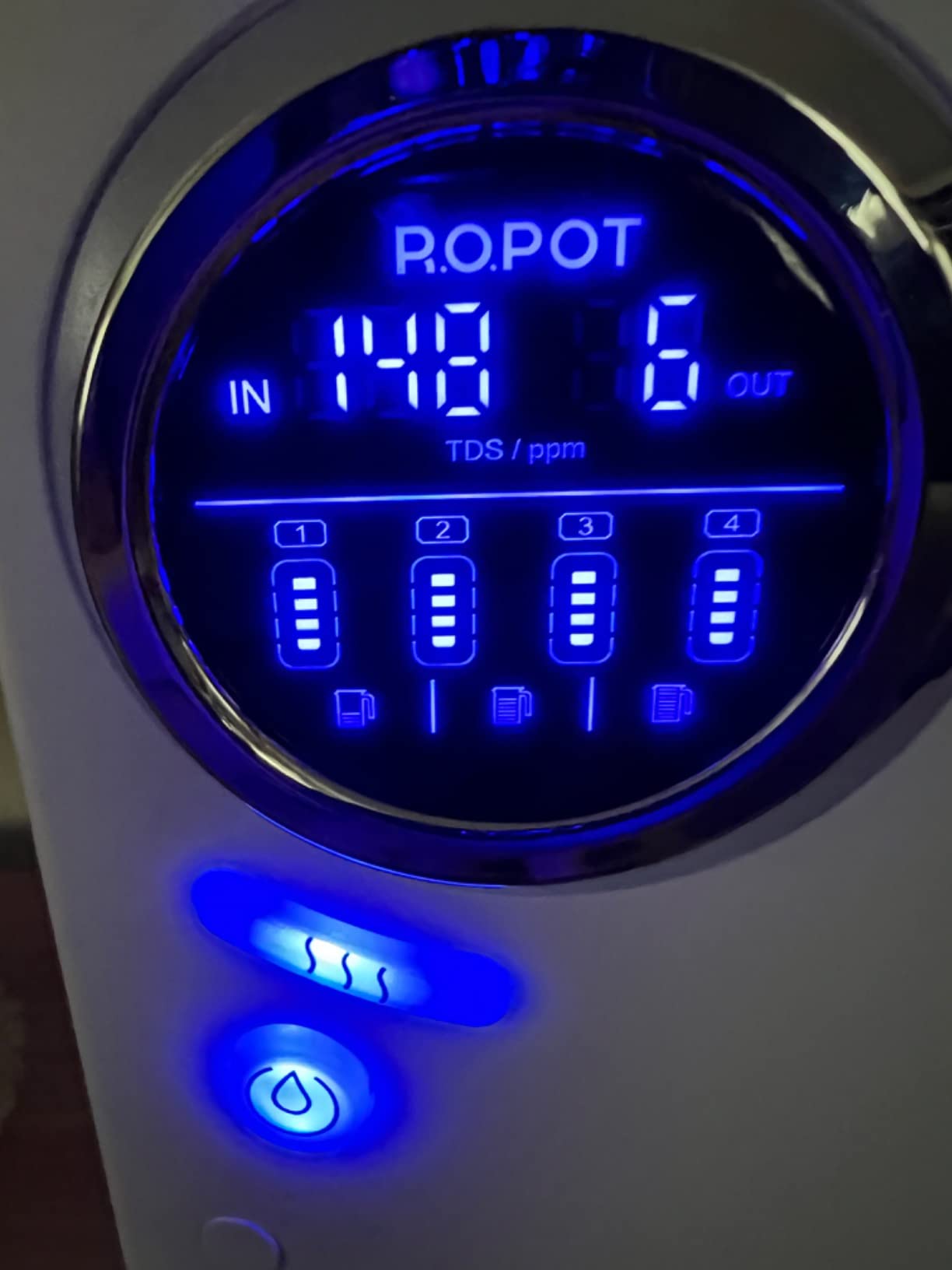
A filter life monitor on the display shows both remaining service life and water quality, which removes the most common reason people run filters far too long.
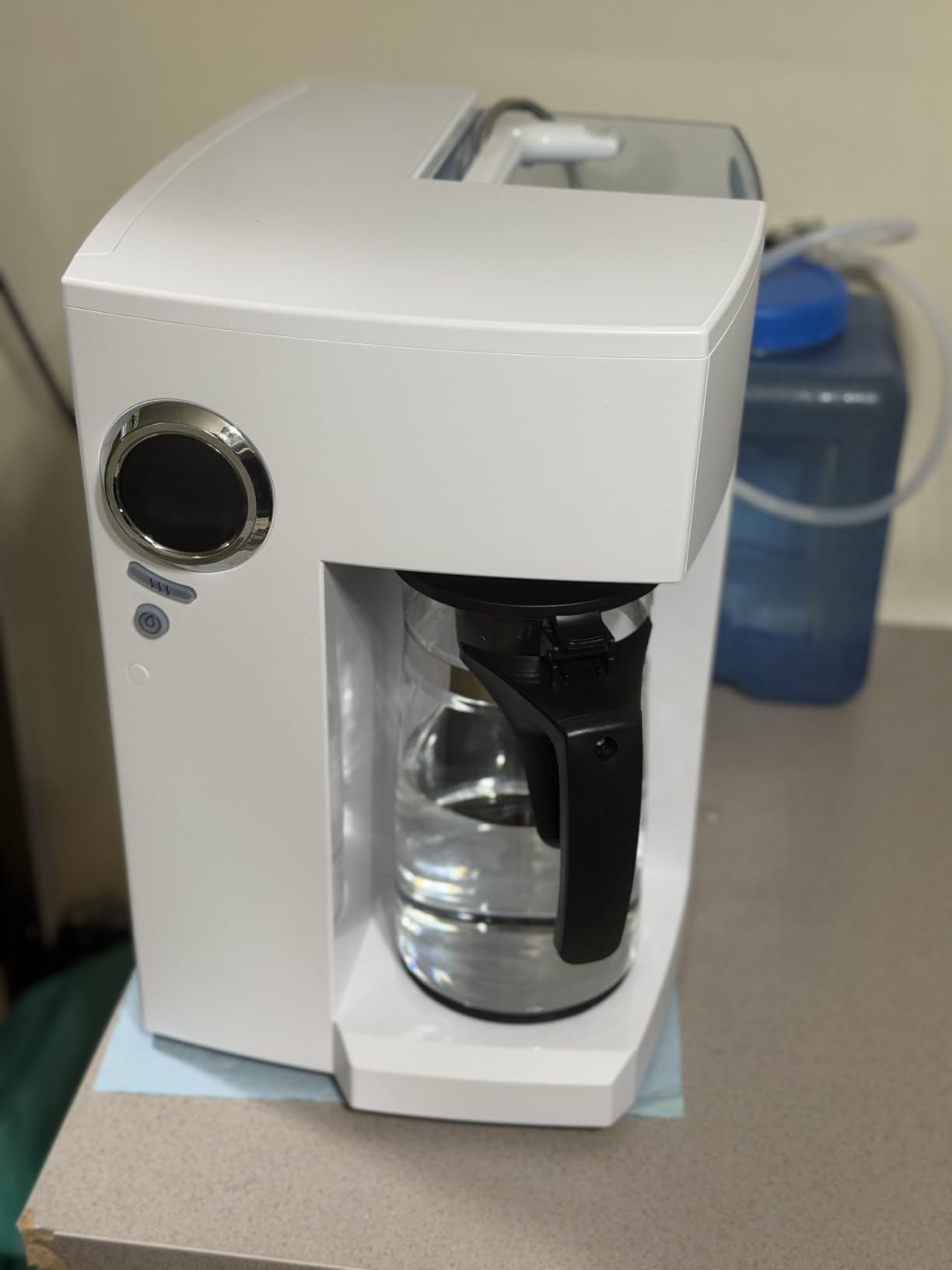
The 4.6 average is among the highest in the set, with reviewers emphasising taste and the drain ratio rather than any filtration shortfall. Complaints are limited to footprint, the need for power and manual filling, which are properties of the form factor rather than defects.
At 5 kg it is the lightest machine here, and the automatic power-saving standby mode means it is not drawing meaningfully when idle. The one-year limited warranty applies once registered.
What you need to know before you buy?
Measure the counter space. At 10.9 by 15.4 by 14.3 inches it is a wider footprint than the SimPure despite weighing less, and a machine that sits where you prep food is a machine that gets resented.
Supported feed TDS goes to 1000 ppm, higher than the SimPure, which widens the range of water it can handle. It still needs a power outlet at the counter, so plan the outage behaviour accordingly.
Who this is wrong for?
Do not buy it if you want a fixed tap, if you need chilled or heated water, or if you will not refill and move a carafe by hand every time you want a glass. It is a countertop convenience product, not a plumbing replacement.
6. Frizzlife PD600-TAM3 – Best Alkaline Tankless with a Smart TDS Panel
Frizzlife Reverse Osmosis Water Filter – Alkaline Mineral pH+, NSF/ANSI 58&53&42&372 Standard, 600GPD Tankless RO Reverse Osmosis System, Under Sink, 2:1 Pure to Drain, Reduce FPAS/PFOA, PD600-TAM3
600 GPD tankless
2:1 pure to drain
3rd stage alkaline pH above 7.5
14.7 by 5.3 by 15.5 inches
Pros
- Integrated alkaline stage corrects the acidic taste of plain RO output
- Smallest under-sink footprint in this roundup
- 600 GPD fills a 330 ml cup in about 10 seconds
- Smart LED panel shows output TDS and filter lifespan
- Certified to NSF/ANSI 58 53 42 and 372
Cons
- Needs under-sink power for the display and pump
- Published item weight of 0.45 g is a listing data error
- No built-in sediment stage so hard water can need a pre-filter
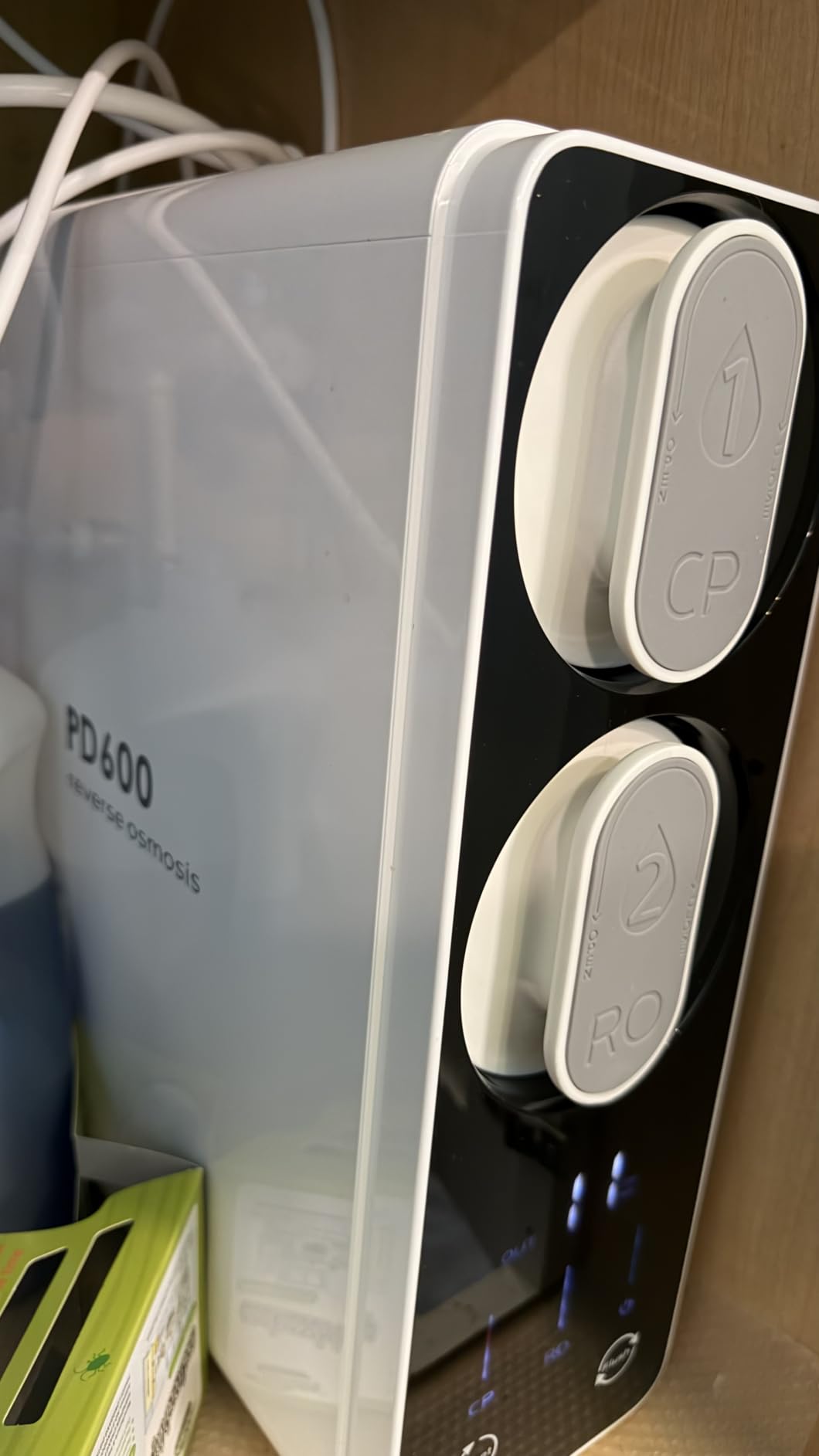
The Frizzlife is the compromise pick for people who want tankless flow and do not want flat-tasting water. Its third stage is an alkaline remineralization filter that lifts the pH above 7.5 and puts minerals back into the water, which is the single most common complaint people have after a few months of plain RO.
It holds 600 GPD with a 2:1 drain ratio and fills a 330 ml cup in about 10 seconds. The body measures 14.7 by 5.3 by 15.5 inches, making it the most compact under-sink unit in this roundup.
Certification covers NSF/ANSI 58, 53, 42 and 372, and the claimed PFAS and PFOA reduction is stated as a manufacturer claim rather than an independently listed figure in our data.
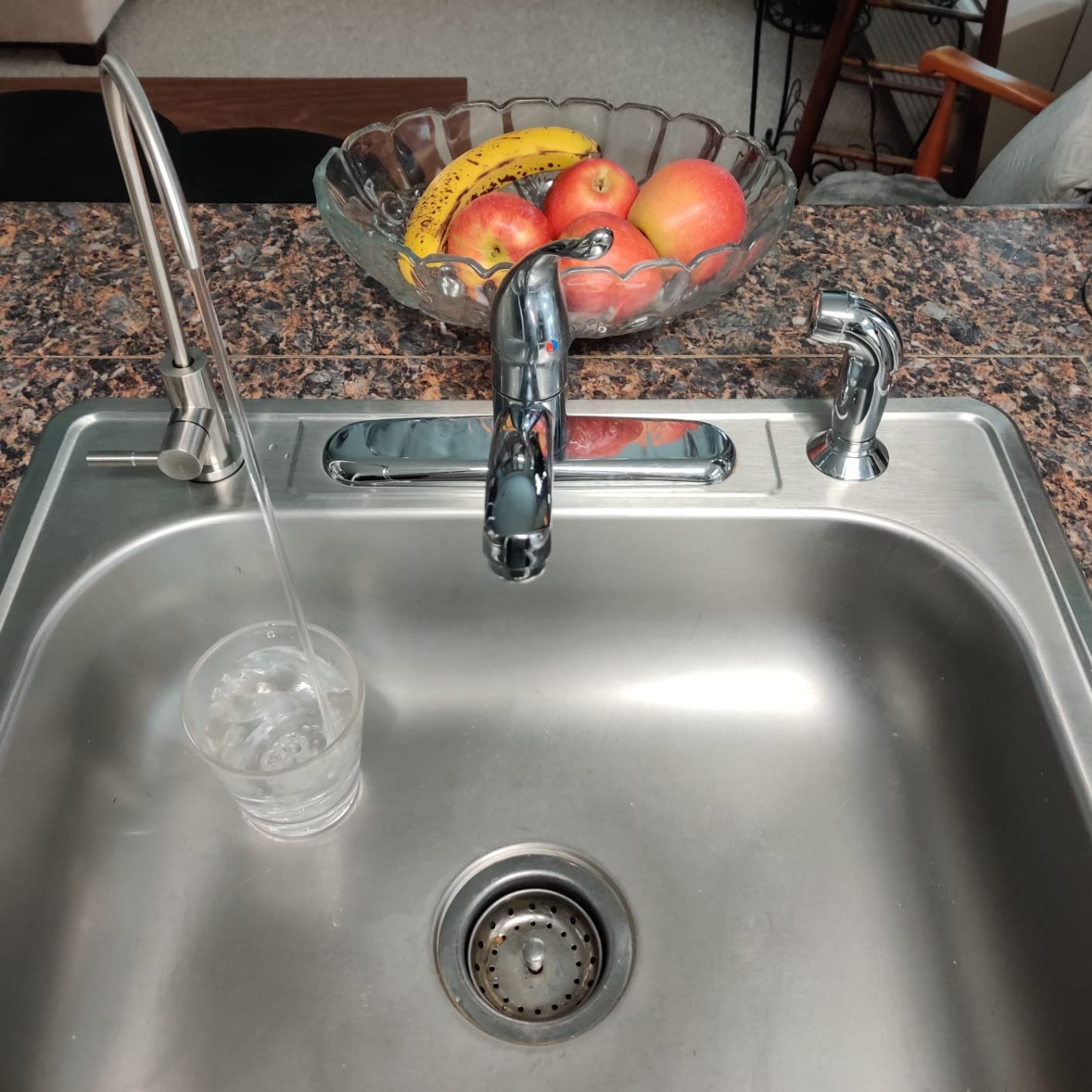
The smart LED panel shows real-time output TDS and the remaining lifespan of each filter, which is a genuine convenience in a system with proprietary cartridges. Reviewers single out the alkaline stage as the reason they picked it over a plain tankless unit.
The main thread of criticism concerns replacement scheduling. The reminders have been reported not matching the manual schedule closely enough for some owners, and one previous owner switched brands over it. If filter timing matters to you, set your own calendar reminders rather than trusting the panel alone.
What you need to know before you buy?
Test your water before installing. Several buyers on hard or sediment-heavy feed water added a separate sediment pre-filter to protect the membrane, because this unit does not include a dedicated sediment stage ahead of the RO.
You need an under-sink electrical outlet for the display and pump. And ignore the listed weight, which reads 0.45 g and is plainly a data error on the listing rather than the real shipped weight.
Who this is wrong for?
Do not buy it if you need the system to run without power, if your feed water is heavily sedimented, or if you would rather buy standard multi-brand cartridges than proprietary ones you can only get from the manufacturer.
7. Waterdrop G2 – Best Budget Tankless for Tight Cabinets
Waterdrop G2 Reverse Osmosis System, 400 GPD Tankless RO Water Filtration
400 GPD tankless
1:1 pure to drain
7 stage composite
NSF/ANSI 372 certified
Pros
- Over 70 percent more under-sink space than a conventional RO setup
- 400 GPD fills a cup in about 12 seconds
- Twist and pull cartridges swap in about 3 seconds
- Integrated water and electrical circuits cut leak points and noise
- Installation typically under 30 minutes
Cons
- 1:1 drain ratio is weaker than the 2:1 models here
- Mechanical faucet has no TDS or filter life display
- Supported feed TDS capped at only 300 ppm
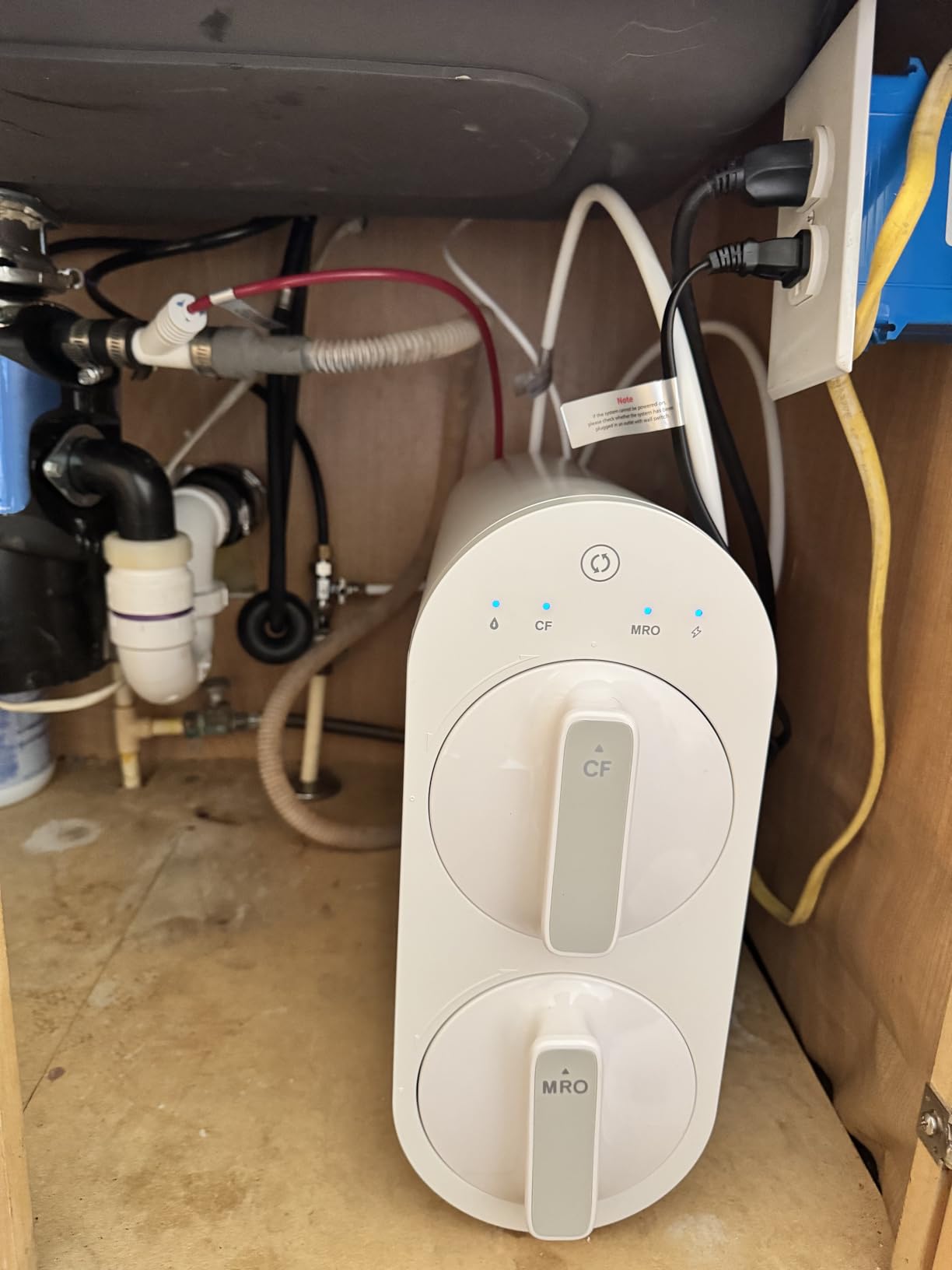
The G2 is the entry point into tankless design, and it exists because the cabinet under the sink is the real constraint in a lot of homes. It saves over 70 percent more storage space than a conventional RO assembly and takes roughly half the footprint.
The 1:1 pure-to-drain ratio is still a large improvement on a typical tank-based system, which commonly runs three to four gallons to the drain for every gallon produced. The manufacturer claims a 300 percent reduction in water waste against ordinary RO.
Filter changes take about three seconds with twist-and-pull cartridges, and owners report the integrated water and electrical housing reducing both leak points and operating noise compared with exposed plumbing.
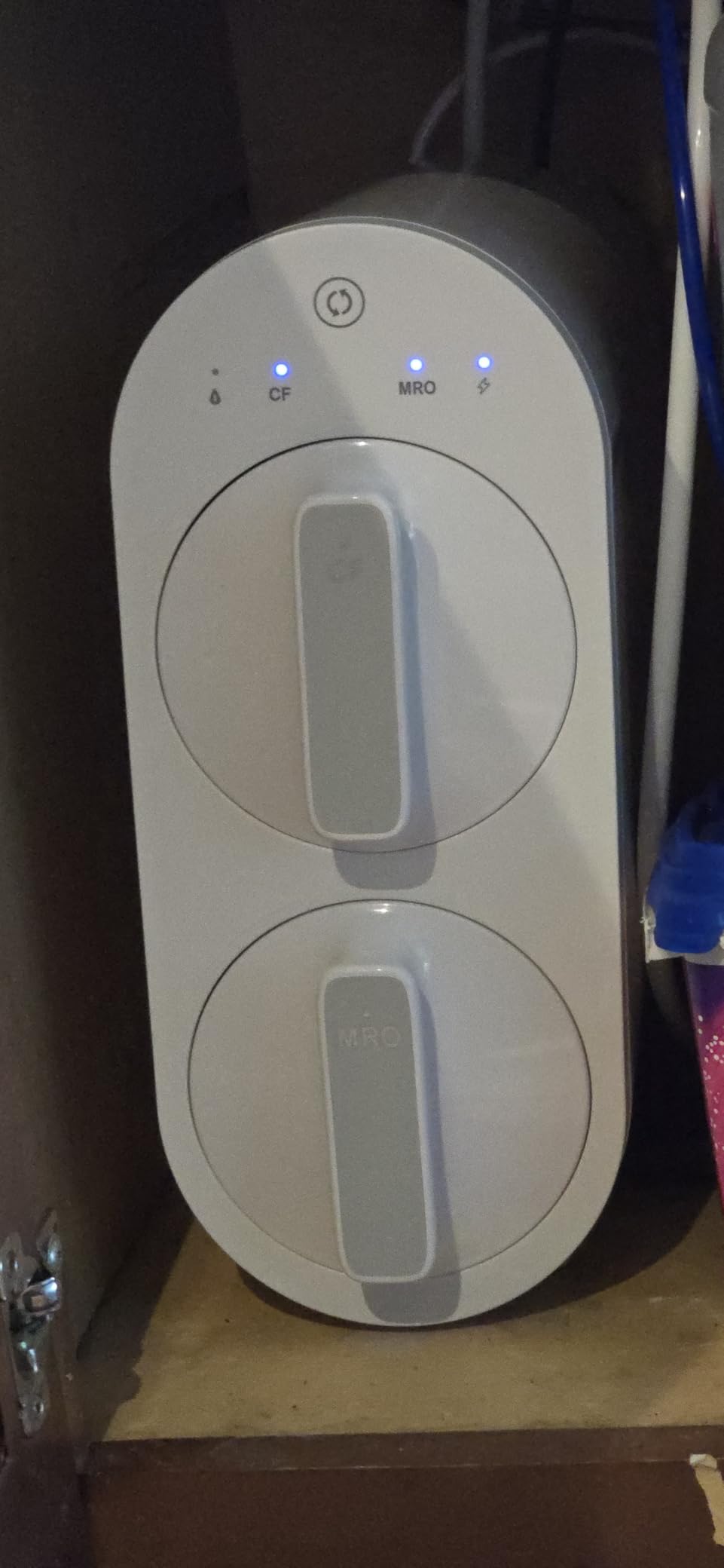
Reviewers respond well to the space saving, the quick swaps and the quiet integrated housing. The 1:1 ratio is regularly mentioned as a clear step up from a tanked system, and just as regularly as a step down from the 2:1 models.
One thing that stands out is the supported feed TDS of 300 ppm, the lowest ceiling in this roundup. If your municipal supply reads above that, this unit is the wrong pick even though it is otherwise well made.
What you need to know before you buy?
Drilling for the faucet and an under-sink electrical outlet are both required. If neither is already in place, that is a plumber or an electrician visit before you even open the box.
The mechanical faucet has no TDS or filter life display, so you are changing filters on a calendar rather than on evidence. Replacement filters are sold separately and add meaningfully to the running cost.
Who this is wrong for?
Do not buy it if your feed TDS runs above 300 ppm, if you want to see what your water is doing in real time, or if water waste is the main thing you are trying to solve, since the 2:1 models do better.
8. Home Master TMHP – Best for UV Protection and the Longest Warranty
Home Master TMHP HydroPerfection Reverse Osmosis System, 9-stages, Patented 2-pass Alkaline Remineralization, Fast 4.5 Sec Fill Rate, 1:1 Waste Ratio, UV Sterilizer 99.9% EPA 97952AZ1, Iron Prefilter
9 stages with EPA registered UV sterilizer
1:1 waste ratio
Iron prefilter included
5 year parts warranty
Pros
- EPA registered UV sterilizer registered as 97952AZ1 adds a final microbial kill
- Highest rating in the roundup at 4.7 across 929 reviews
- Non-electric permeate pump delivers a 1:1 waste ratio
- 1 gpm output fills a 20 oz bottle in about 5 seconds
- 5 year limited parts warranty is the longest here
Cons
- Most expensive unit in the roundup
- Requires under-sink power for the UV sterilizer and pump
- Mounting clips are stiff and awkward inside a cabinet
Home Master is the premium end of this list, and it is the only system here with a 1 gpm maximum flow rate, a nine-stage train, and a UV sterilizer registered with the EPA under number 97952AZ1. That combination is why it carries a 5-year limited parts warranty, the longest in the roundup.
The UV stage is the differentiator. RO membranes reject most dissolved contaminants but the standards are written around dissolved solids rather than microbes, so a certified UV stage closing the train is meaningful for anyone who wants an extra layer rather than relying on the membrane alone.
The patented two-pass alkaline remineralization adds calcium and magnesium back twice, which is the most thorough taste correction of any unit here, and the non-electric permeate pump keeps the waste ratio at 1:1.
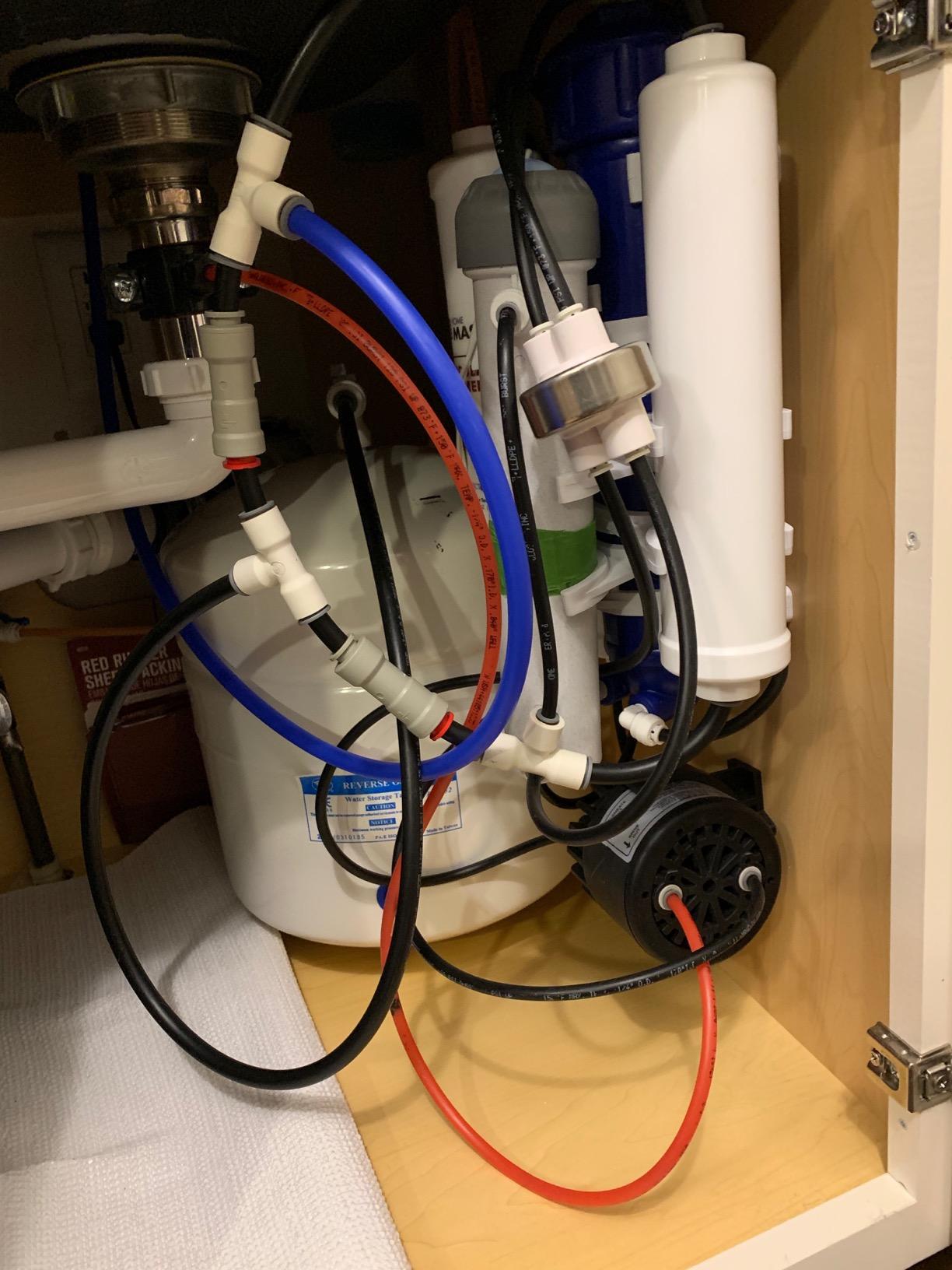
Long-term owners report three-plus years of reliable service, and reviewers consistently cite taste, the 1:1 ratio and annual-only filter changes as the reasons they are satisfied. The 86 percent five-star share is the highest in the set.
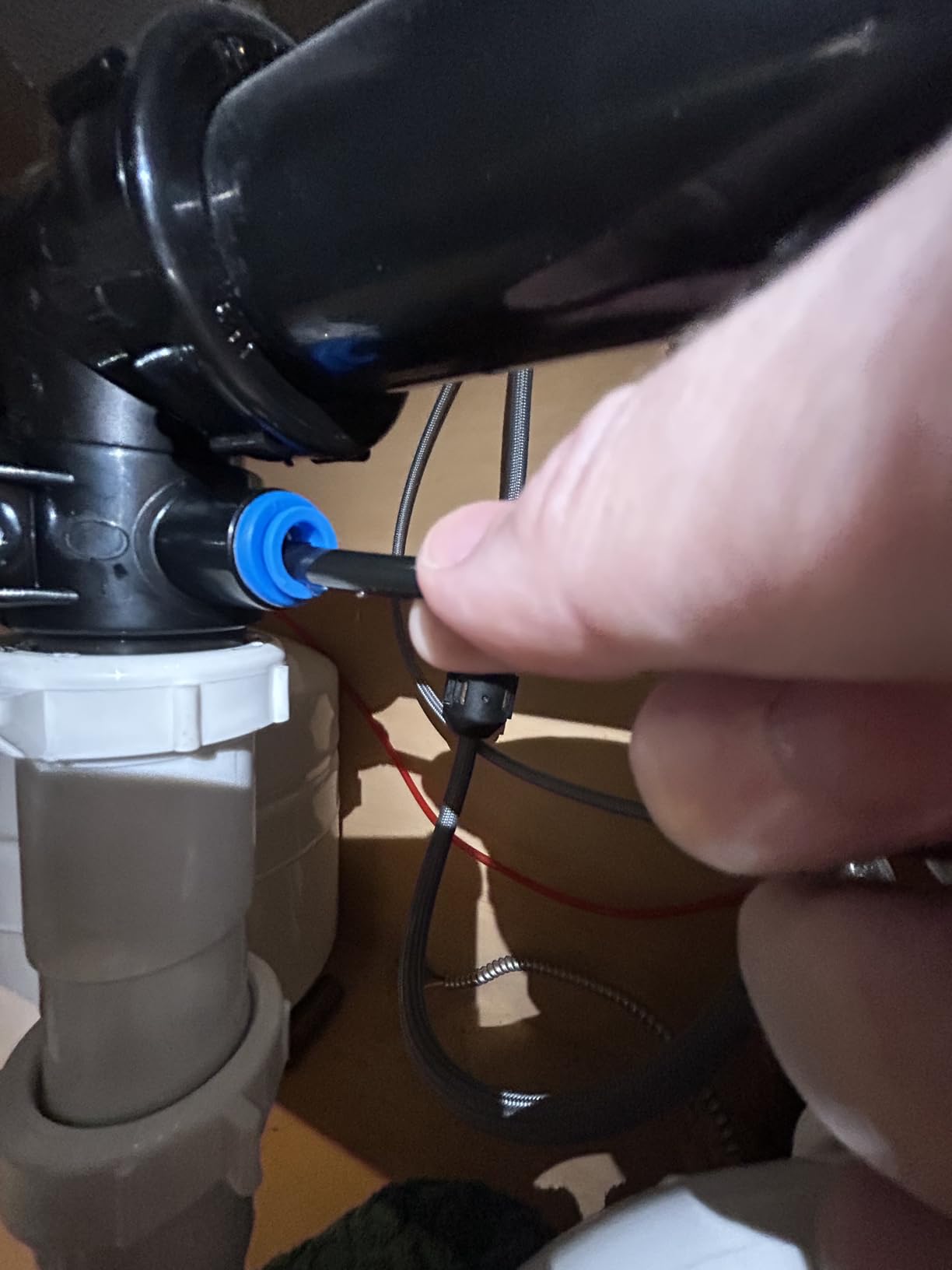
Installation is where the friction sits. Stiff mounting clips, rigid tubing that is harder to reroute than flexible tubing, and quick-connect fittings that need a release tool under pressure are the recurring complaints. Granite counters also mean a basin wrench, and that is a plumber’s job rather than a weekend’s.
What you need to know before you buy?
This is the most expensive unit we cover, and it is the one most likely to be a poor value for a first-time RO buyer. It makes sense when you already know your water needs a UV stage and you want a decade-long ownership horizon.
Replacement cartridges are sold outright with no service subscription, but they are not always easy to source. The operating pressure range of 40 to 100 psi is the widest accepted here, which is helpful on low-pressure rural lines.
Who this is wrong for?
Do not buy it if you are still deciding whether RO suits your water, if cabinet space is tight, or if you want a simple unit you can service with basic tools. The install difficulty is real and the price premium is real.
9. GeekPure 6 Stage – Budget Pick with a Sixth Alkaline Stage
Geekpure 6 Stage Reverse Osmosis RO Drinking Water Filter System-75 GPD
75 GPD under sink
6 stage with alkaline pH 7.5 to 8.5
2.8 gallon storage tank
No power required
Pros
- Lowest entry cost in the roundup and still ships a 6th stage alkaline filter
- 6th stage adds calcium magnesium sodium and potassium
- 75 GPD with a 2.8 gallon tank is a good size to footprint ratio
- No power and no drilling beyond a standard faucet hole
- Owners report matching performance to units bought years earlier
Cons
- Printed directions are sparse so most owners rely on the install video
- No UV stage so there is no final microbial kill
- 2.8 gallon tank is small for high-volume use
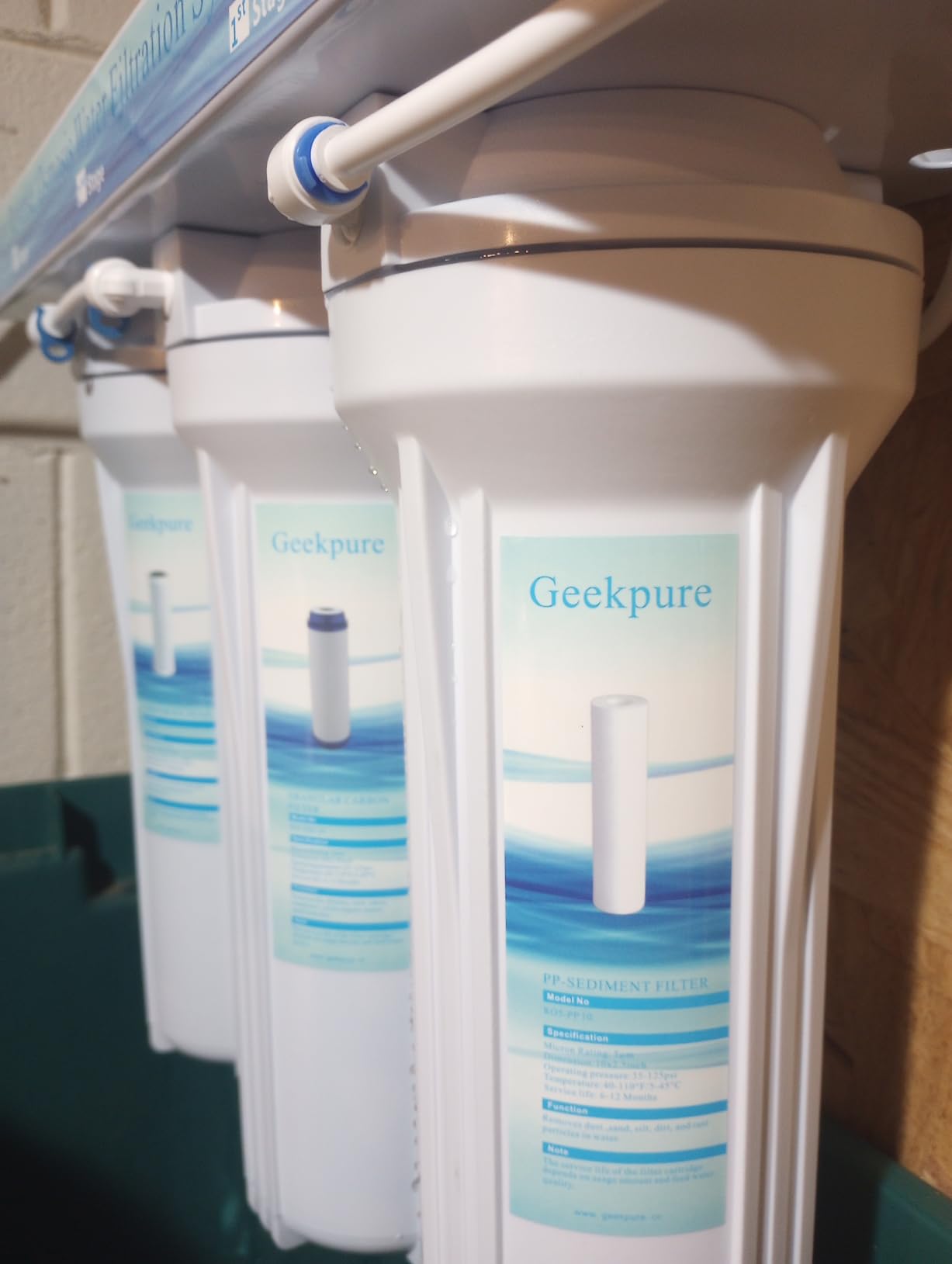
The GeekPure is the cheapest genuine RO system in this roundup, and it is the only budget-tier unit here that includes an alkaline remineralization filter. Owners comparing it to more expensive pH-adjusting systems report getting the same result in the glass.
The sixth stage lifts pH from the acidic 5 to 6.5 range that plain RO leaves up to 7.5 to 8.5, and adds calcium, magnesium, sodium and potassium back into the water. It runs at 75 GPD at 60 psi on feed water between 40 and 100 psi with a maximum of 1000 ppm TDS.
No power is required, which makes it a straightforward fit for older homes and for anyone who does not want an outlet under the sink.
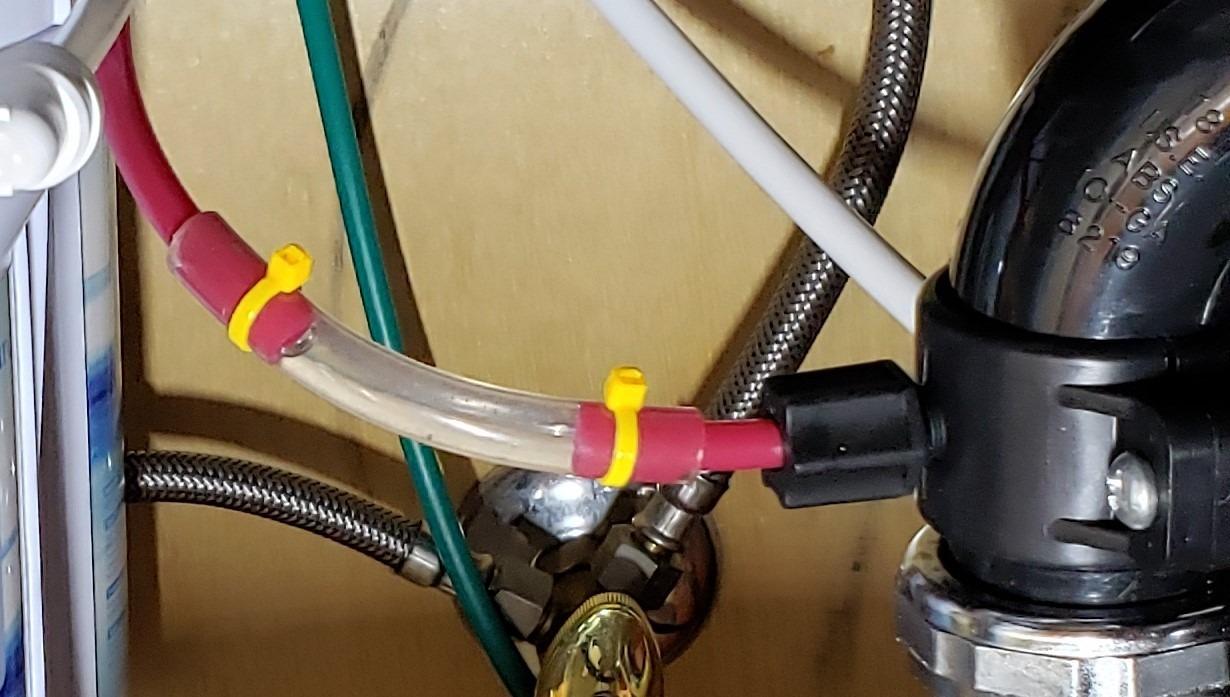
It ships with an NSF-certified membrane, tubing, quick push fittings and storage tank, and the quick connects with colour-coded tubing support a genuine weekend DIY setup. Owners buying a second unit report performance identical to a first bought three years earlier.
Where it falls short is documentation. Printed directions are sparse, so most people work from the online install video. Owners also report the plastic feed water diverter being imperial-only, which matters if you are outside the United States and do not have an adapter.
What you need to know before you buy?
The 2.8 gallon tank is on the small side. In a household that goes through several pitchers a day, you will wait on refill more often than with the 75 GPD units that carry larger tanks.
Replacement filters must be ordered separately under multiple part numbers, and some owners report small leaks on the main cartridge housings until the threads are sealed with PTFE tape. Budget for a roll of tape and fifteen minutes.
Who this is wrong for?
Do not buy it outside the US without a metric adapter, do not buy it if you want a UV stage, and do not buy it if maximum tank capacity matters for a large household. On everything else, it is hard to argue with the entry point.
10. VIOMI V6 – Best Value 600 GPD Tankless on a Tight Budget
VIOMI V6 600GPD Under Sink Tankless Reverse Osmosis Water Filtration System
600 GPD tankless
9 stage with 0.0001 micron membrane
3:1 pure to drain
16.3 by 5 by 12.8 inches
Pros
- Cheapest 600 GPD tankless unit in this roundup
- 9 stage filtration certified to NSF/ANSI 42 53 and 372
- Body frees up to 65 percent of under-sink space
- RO filter rated at 48 months which is the longest claimed life here
- No tank means water is filtered on demand and never sits stagnant
Cons
- Works only with the included faucet so no fridge or ice maker line
- 3:1 drain ratio is the least efficient of the tankless models
- PCB filter life has been reported at about 6 months rather than 24
The VIOMI V6 is the newest and least reviewed product here, at 265 reviews, and it is included because it is meaningfully cheaper than the other 600 GPD tankless options while carrying three certifications.
It is certified to NSF/ANSI 42, 53 and 372, and the manufacturer claims up to 94.75 percent TDS reduction with PFOS above 99.88 percent and PFOA above 99.6 percent. Treat those as published claims rather than a listing we verified independently.
The body measures 16.3 by 5 by 12.8 inches and frees up to 65 percent of the under-sink space. The claimed 48-month RO filter life is the longest advertised in this roundup, and no tank means nothing sits stagnant.
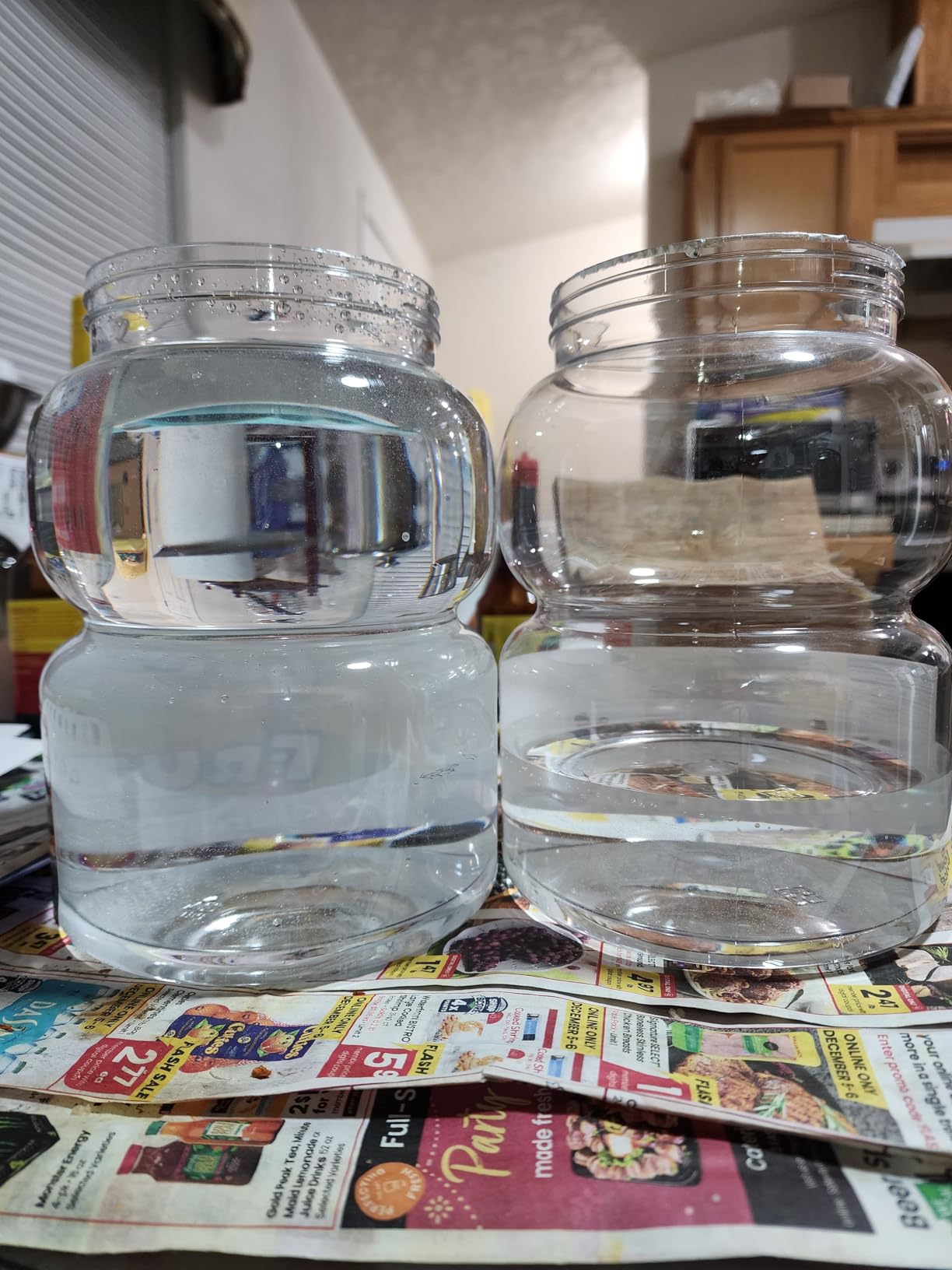
The 4.3 average reflects the immaturity of the product rather than a filtration problem. Specific complaints include a leaking T-bracket cold water connector arriving out of the box, a faucet gasket that would not tighten, and missing PCB filters versus the printed parts list.
The most consistent operational complaint is that the PCB carbon block has needed replacing at around six months rather than the advertised 24. Buyers also note an audible pump hum while the faucet is open, which is a recurring theme across tankless systems in general.
What you need to know before you buy?
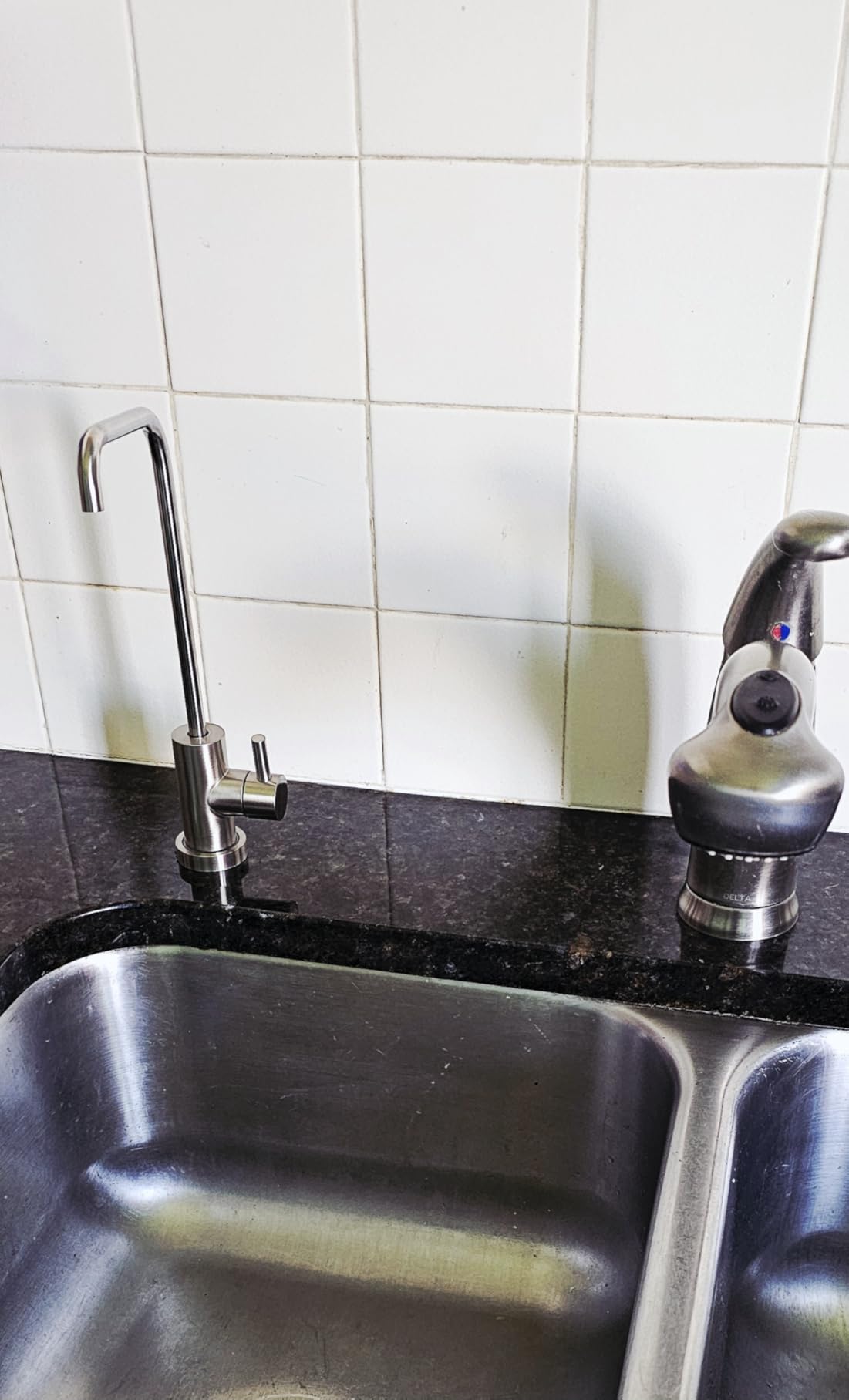
You need two holes, one for the faucet and one for the under-sink drain connection, plus a dedicated electrical outlet. And you need 2 to 3.9 inches of rear clearance for the tubing, so measure cabinet depth before ordering.
The faucet works only with this system. You cannot tee a line to a refrigerator or ice maker, which rules it out for a large share of buyers who want the system on more than one outlet.
Who this is wrong for?
Do not buy it if you need a fridge line, if pump noise bothers you, or if you want a long track record of parts availability. The 3:1 drain ratio is also the least efficient of the tankless group here, so it is not the right pick for a water-waste focus.
Should You Get a Tank, Tankless or Countertop RO System?
Buy a tank-based system if you want the lowest purchase cost, no electrical work, and water available instantly. Buy tankless if cabinet space is tight, you want nothing sitting stagnant, or you plan to fill pots and bottles quickly. Buy countertop if you rent, cannot reach a cold water line, or will not drill a hole.
That is the whole decision. Everything after it is detail, but the detail matters more than most guides admit, so here is how each form factor behaves in real use.
Tank-based systems
A tank holds purified water in a pressurised vessel so the faucet produces a full glass immediately. That is the core advantage, and it is why tank systems still outsell everything else. They need no power, cost less to buy, and lose nothing in filtration quality.
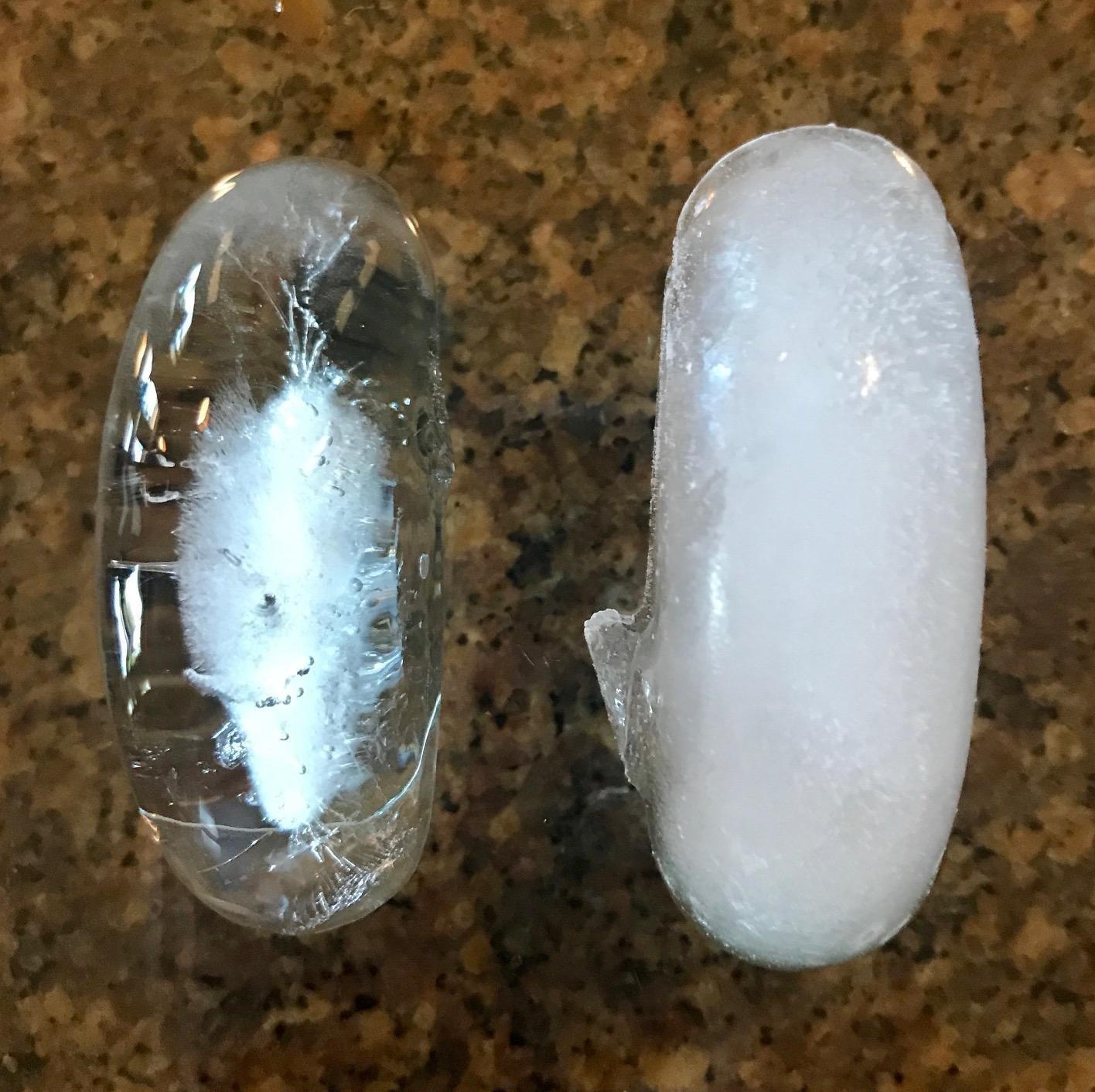
The trade-off is space and stagnation. A typical tank adds three to four gallons of hardware under the sink, and water sits in it between draws. Forum users raise the stagnation and biofilm question more than any other, and the practical answer is a short flush after any gap in use, plus a periodic tank clean.
How Reverse Osmosis Actually Works, and Why Your Drain Bill Notices?
Reverse osmosis forces pressurised feed water against a semipermeable membrane. Water passes through as permeate. Most dissolved solids are rejected and pushed to the far side of the membrane as concentrate, which goes down the drain. That is the whole process, and the drain stream is where the cost of ownership hides.
The number usually printed on the box is the drain ratio, sometimes called the pure-to-drain ratio. A 2:1 figure means two gallons go to the drain for every gallon you drink. A 4:1 figure means four. Multiply by household use and the difference over a decade is substantial.
Recovery and efficiency are different measurements, and the distinction is the one most marketing copy blurs. Recovery is the percentage of incoming water that becomes product. Efficiency accounts for the water the system uses in its own operation, such as backflush and rinse cycles, and is the more honest number for comparing machines.
Nothing on an RO system’s nameplate tells you a typical household will ever use 400 or 600 gallons in a day. Real drinking and cooking use is far below that. A rated GPD figure is a laboratory number at ideal pressure and temperature, and on a cold winter morning at low line pressure you will produce a fraction of it.
That is also why the direct answer to whether high capacity is worth paying for is usually no. A 75 GPD system comfortably serves a family of four. Capacity past roughly 600 GPD is headroom almost no household draws, though it does change the character of the flow at the tap.
Certification Explained: What NSF Standards 42, 53, 58, 372 and 401 Cover?
Certification is the only objective quality signal in this category, and the difference between the standards is where most buyers get lost. NSF/ANSI 42 covers aesthetic claims: taste, odour and chlorine reduction. NSF/ANSI 53 covers health-related contaminants such as lead, arsenic and cysts. NSF/ANSI 58 covers reverse osmosis specifically and covers total dissolved solids reduction.
NSF/ANSI 372 is different in kind. It is not a contaminant standard at all. It certifies that the materials in contact with water are lead-free, which is a plumbing compliance standard rather than a filtration claim.
NSF/ANSI 401 covers a specific set of emerging contaminants, including several PFAS compounds. It is narrower than 53 and worth checking if PFAS is your actual concern, because a 53 certification does not automatically cover every PFAS compound a buyer has read about.
Here is the rule that decides most purchases: certified is not the same as tested to. A manufacturer’s own laboratory report showing a system tested against an NSF standard is a claim. A listing in a certification body’s public database under your model’s part number is a certification. Ask the seller for the listing, and look it up yourself before you order.
Filter Replacement Schedule and What It Really Costs
Every system here uses the same rhythm. Pre-filters that catch sediment and carbon are replaced on the shortest cycle, the reverse osmosis membrane sits in the middle at roughly two to five years, and the post carbon block sits between the two or beyond the membrane depending on the design.
Your real cost driver is cartridge format, not schedule. A system built on standard housings that accept any equivalent filter from any supplier costs you what the market charges. A system built on proprietary composite cartridges costs you what one manufacturer decides, for as long as that manufacturer decides to sell them.
This is the complaint that surfaces most often in the r/WaterTreatment threads on this topic. Buyers describe being unable to source a third-party equivalent for a proprietary cartridge, and prices that stay high regardless of promotions. For a ten-year ownership horizon, that difference can exceed the entire purchase price of a budget system.
The general rule we would apply: pre-filters every 6 to 12 months, the post carbon block at 12 to 24 months, and the membrane at 2 to 5 years. Actual cadence should follow measured TDS and water pressure rather than the calendar alone, which is exactly what the display-equipped tankless units let you do.
Storage tank lifespan is a separate clock. A properly maintained tank lasts many years, but if water sits for weeks without use, the drain line and the tank interior can develop biofilm. Flushing the faucet after idle periods and cleaning the tank on a schedule handles it, and a tankless system sidesteps the question entirely.
How to Install an Under-Sink RO System?
Every under-sink installation needs four things: a tee into the cold water line, a drain connection with a proper air gap, a faucet hole through the counter or an existing sink deck, and cabinet space for the assembly. Tankless units add a fifth: an unswitched electrical outlet under the sink.
The air gap on the drain line is the part that is most often done wrong. The drain tube must run to a point above the sink drain and discharge into it through an air gap, so nothing from the waste line can siphon back into your drinking water. A direct connection without an air gap is a code violation in most jurisdictions.
Pressure is the fourth requirement and the most common reason a system underperforms. Most units want 40 to 60 psi minimum, and the specs in this roundup list 40 to 85 psi for the APEC, 40 to 100 psi for the Home Master and GeekPure, and about 70 psi for the iSpring. Below that, a booster pump is a genuine addition rather than an optional accessory.
If you are on a well, the system needs a sediment pre-filter ahead of the membrane. An RO membrane is not a disinfection barrier and it is not designed to handle iron, sediment or biological load. Our guide to water filtration systems for well water covers the pretreatment side properly, and a dedicated UV purifier is the usual answer for the disinfection step.
Before you commit to a design, test your pressure and your TDS. Both take a few minutes and both will tell you which of the systems on this list actually suits your plumbing.
Who Should Not Buy an RO System?
Do not buy an RO system if your only problem is chlorine taste and odour. A certified NSF/ANSI 42 carbon filter under the sink will do that for a fraction of the running cost and will not strip your water of minerals or send three gallons to the drain for every one you drink.
Do not buy one to treat house-wide hardness. Hardness is a scale problem, and a softener addresses it at the point of use for every tap in the house. An RO at one faucet leaves every other tap exactly as it was.
Do not buy one as your well water disinfection barrier. Membranes are not disinfection devices, and running untreated well water through RO concentrates iron and sediment onto a membrane designed for neither. Pretreat first.
If you want a specific single certified contaminant addressed, a certified non-RO under-sink filter may be the better tool. Gravity filtration systems are a separate category with different strengths and different certification claims, and they are worth comparing honestly rather than dismissing.
And if you are planning around drinking water during a power cut, an electric tankless unit is the wrong architecture entirely. Our emergency water filtration picks cover that scenario with systems that do not depend on household power.
Frequently Asked Questions
Should I get a tank or tankless reverse osmosis system?
Choose a tank-based system if you want the lowest purchase cost, no electrical work and instant water at the tap. Choose tankless if under-sink cabinet space is tight, you dislike the idea of water sitting stagnant in a tank, or you fill large pots and bottles often. Countertop units suit renters who cannot reach a cold water line.
Is there a downside to drinking reverse osmosis water?
Yes. RO strips most dissolved minerals, so the water tastes flat unless a remineralization stage is added, and it sends several gallons to the drain for every gallon produced. It also removes no dissolved gases and does not disinfect. Mineral intake from drinking water is minor compared with diet, and anyone with a clinical condition should ask a clinician rather than a filter vendor.
Is RO water hard on the kidneys?
There is no established clinical evidence that drinking reverse osmosis water at normal daily levels harms healthy kidneys, and the mineral contribution of drinking water is small relative to diet. That said, we are not a medical source and we will not speculate about individual conditions. If you have kidney disease or a clinician has restricted your mineral intake, ask your doctor before changing your water source.
What’s better than reverse osmosis water?
For chlorine taste and odour alone, a certified NSF/ANSI 42 carbon filter is better because it is cheaper to run and does not strip minerals. For a single certified contaminant, a non-RO under-sink filter may be purpose-built. For house-wide hardness, a softener is the right technology entirely. RO remains the most capable option for reducing dissolved solids broadly.
How much does it cost to replace a reverse osmosis filter?
It depends far more on cartridge format than on schedule. Systems built on standard housings accept equivalent multi-brand cartridges and cost what the market charges. Systems using proprietary composite cartridges cost what one manufacturer sets, often indefinitely. Typical cadence is pre-filters every 6 to 12 months, post carbon at 12 to 24 months, and the membrane at 2 to 5 years.
What is the average lifespan of a reverse osmosis water tank?
A properly maintained storage tank commonly lasts several years, and the limiting factor is rarely the tank shell. It is biofilm and sediment build-up on the interior when water sits unused for long stretches. Flushing the faucet after idle periods and cleaning the tank periodically extends its life considerably. Tankless systems avoid the question because there is no stored water at all.
The Best Reverse Osmosis System for Most Households in 2026
For most people, the best reverse osmosis system for drinking water in 2026 is the iSpring RCC7AK-BN. It carries an NSF/ANSI 58 certification covering the whole system, it needs no electricity, it has the largest review base in this roundup, and its cartridges are the least locked-in of the group.
The one condition that changes the answer is cabinet space. If your under-sink cupboard cannot hold a tank, move to the Waterdrop G3P600 for certified 600 GPD output and a 2:1 drain ratio, or the Frizzlife PD600-TAM3 if flat water is the deal-breaker for you.
And if you rent or will not drill a counter, the Bluevua RO100ROPOT is the answer, with a glass carafe, a remineralization stage and no plumbing at all.
Check the certification listing yourself before you order, and measure your cabinet and your line pressure while you are at it.