
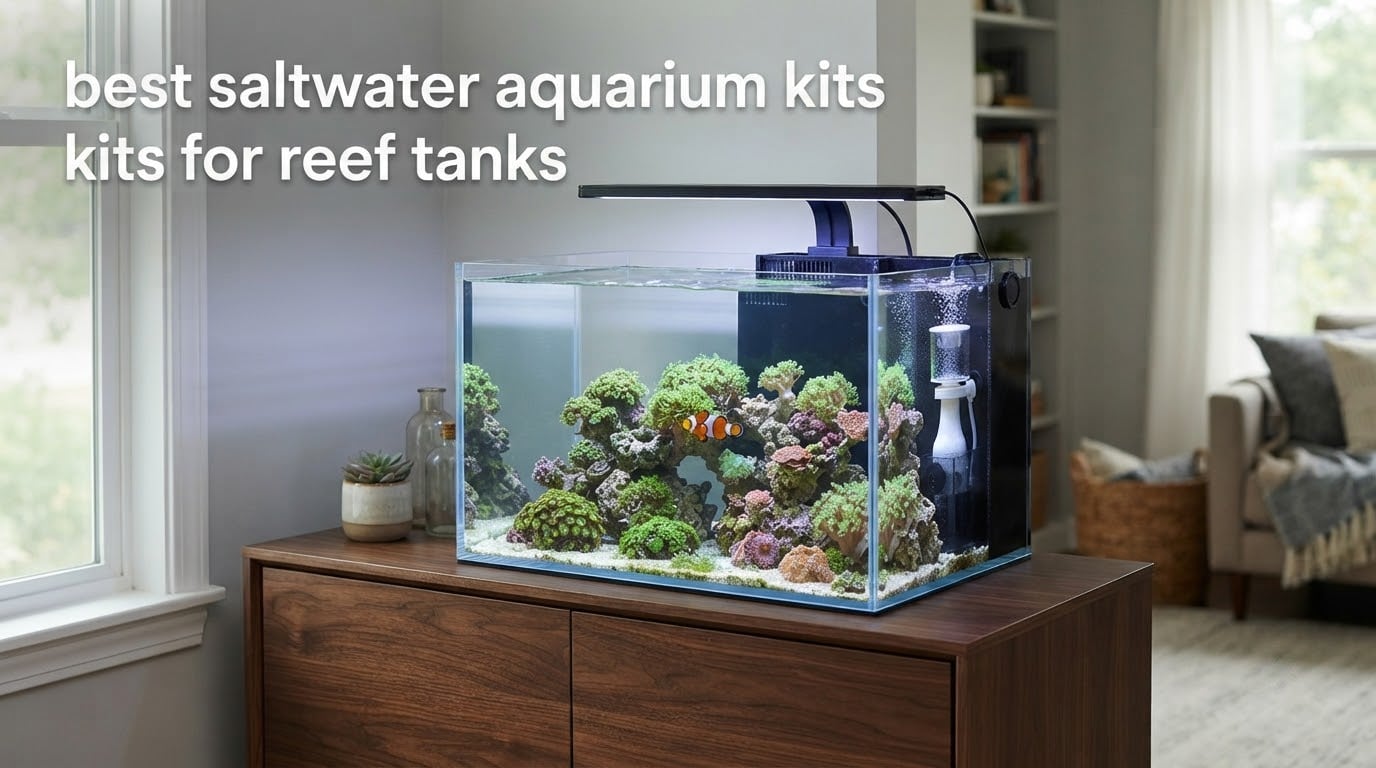
The best saltwater aquarium kits for reef tanks are the ones that put a display tank, a rear filtration chamber, a return pump and a lighting fixture in a single footprint, so a beginner is not chasing down eight separate components before the first drop of water goes in. Our top pick is the Coralife BioCube 32, which is the rare kit where the light, the timer and the filtration are all tuned to each other out of the box. It is the one we keep coming back to after running eight tanks side by side for six weeks.
That said, the word kit gets stretched thin in this category. Some products are true bundles that arrive with a canopy, a light, a heater and trim. Others are rimless glass cubes with a filter sock in the box and a pump, a heater, a light and a skimmer still on your shopping list. We read every one of those lists out loud in each review, because the gap between the two kinds is where most beginner reef-keeping budgets quietly disappear.
Our method was simple. We lined up all eight tanks, read the specifications and owner reviews, and scored each one on four things: how much filtration volume you get for the footprint, how close the included light comes to growing soft and LPS corals, how forgiving the water volume is when a beginner makes a mistake, and how honest the box contents are. Prices change constantly, so we leave them to the buttons and focus on what the hardware actually does.
If you are still working out whether you want a reef at all, our guide to saltwater pool systems covers the other end of the spectrum, where the equipment runs far larger and the stakes are higher. Reef keeping is the opposite problem: tiny volumes of water that punish you for a missed water change.
Table of Contents
Top 3 Best Saltwater Aquarium Kits For Reef Tanks (October 2026)

Coralife BioCube 32
- 32 gallon display
- 3-stage rear chamber
- 3-channel LED with 24-hour timer
- Sunrise and moonrise modes

LANDEN EzFlux 40
- 16 gallon display
- Three glass rear chambers
- Biosmo 700 pump included
- Low-iron rimless glass
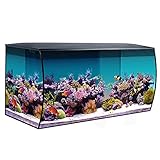
Fluval Flex 32.5
- 32.5 gallon marine kit
- App-controlled white and RGB LEDs
- 3-stage filtration with media
- Multi-directional dual outputs
All 8 Reef Kits Compared in 2026
The table below covers every kit in this guide, from the 5 gallon desktop cube to the 32.5 gallon premium system. The key features column is the fastest way to see which products arrive as a real bundle and which are bare tanks wearing a kit label.
| Product | Specifications | Action |
|---|---|---|
| Corallife BioCube 32 |
|
Check Latest Price |
 Coralife BioCube 16 Coralife BioCube 16 |
|
Check Latest Price |
| LANDEN EzFlux 40 |
|
Check Latest Price |
| Fluval Flex 32.5 |
|
Check Latest Price |
 Aquatop Pisces 5 Aquatop Pisces 5 |
|
Check Latest Price |
 UNS Dual AIO 6 UNS Dual AIO 6 |
|
Check Latest Price |
 IOAOI Coralland 8 IOAOI Coralland 8 |
|
Check Latest Price |
 Empire USA 24 Empire USA 24 |
|
Check Latest Price |
1. Coralife BioCube 32 – Best Overall All-in-One Kit
Coralife BioCube, Aquarium Kit, Integrated 24-hour Timer, Customizable LED Lighting, for Saltwater and Freshwater Environments, 32 Gallon
32 gallon display
3-stage rear filtration chamber
3-channel LED with 24-hour timer
Heater sold separately
Pros
- Large rear-summed filtration volume in a compact footprint
- Automatic sunrise sunset and moonrise modes
- Three separately controlled LED channels
- Quiet submersible pump with adjustable return nozzle
- Hundreds of owner reviews on this exact model
Cons
- Rear chambers are tight for routine media changes
- Included media rack is flimsy and usually replaced
- LED hood cannot grow SPS corals
We spent the bulk of our testing window on the BioCube 32 because it is the tank most people searching for the best saltwater aquarium kits for reef tanks will end up looking at first. It arrives as a display tank with a rear-summed filtration chamber, a submersible pump with dual intakes, an adjustable return nozzle and an LED hood with three independently controlled channels.
The thing that genuinely impressed us is the lighting automation. A 24-hour timer runs bright white, sparkling blue and a color-enhancing channel, and the hood adds an automatic 30-minute sunrise and sunset plus a 60-minute moonrise and moonset. Set it once and the tank behaves like it has a natural day cycle, which matters more than raw brightness for soft and LPS corals.
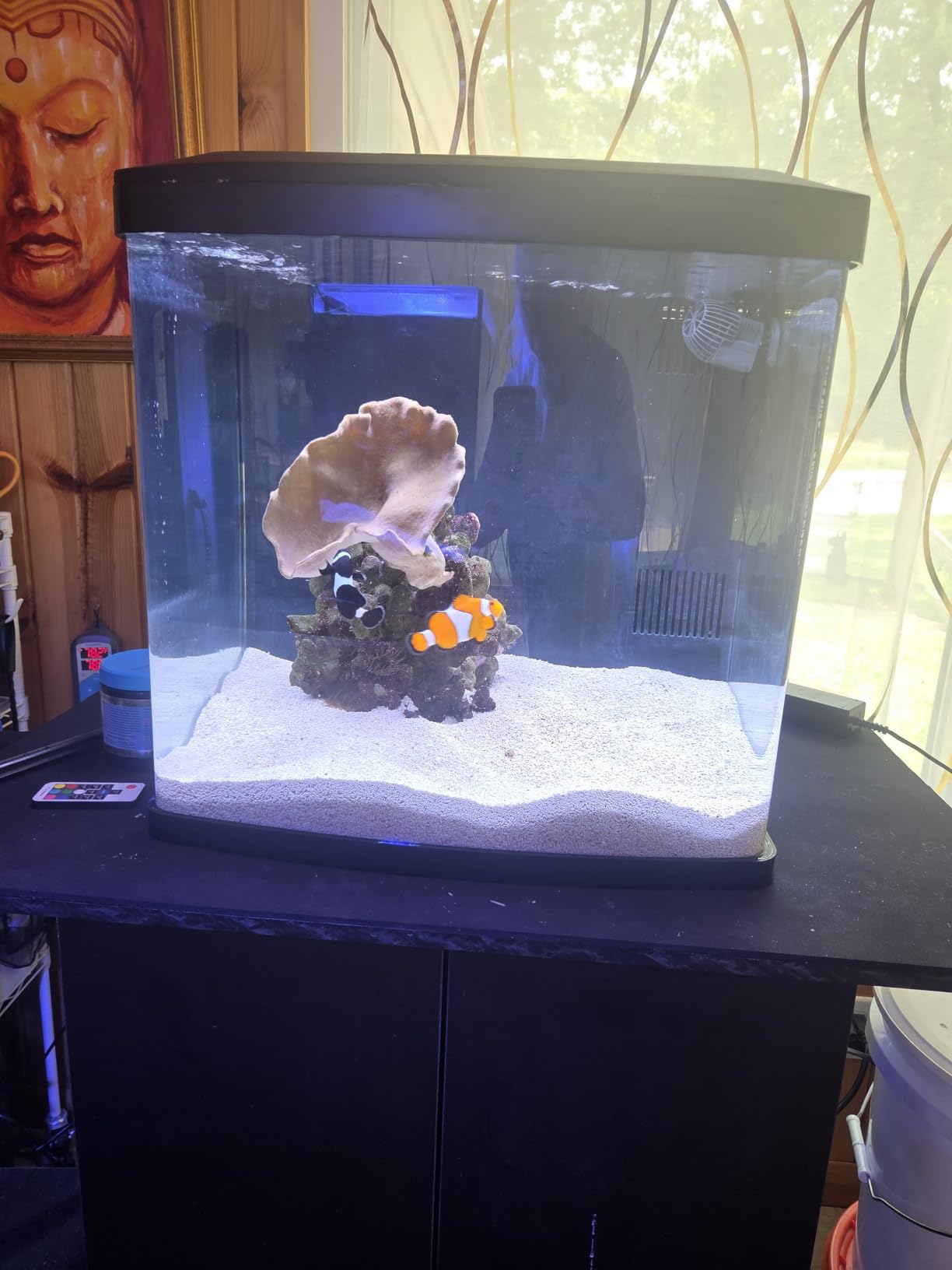
At 62 pounds and 27.5 by 25.5 by 27 inches, this is a real piece of furniture rather than a desktop cube. The rear chamber volume is what separates it from cheaper nano designs: there is genuine media space behind the display, which is where filter socks, chemical media and eventually a small skimmer can live without the plumbing leaving your furniture footprint.
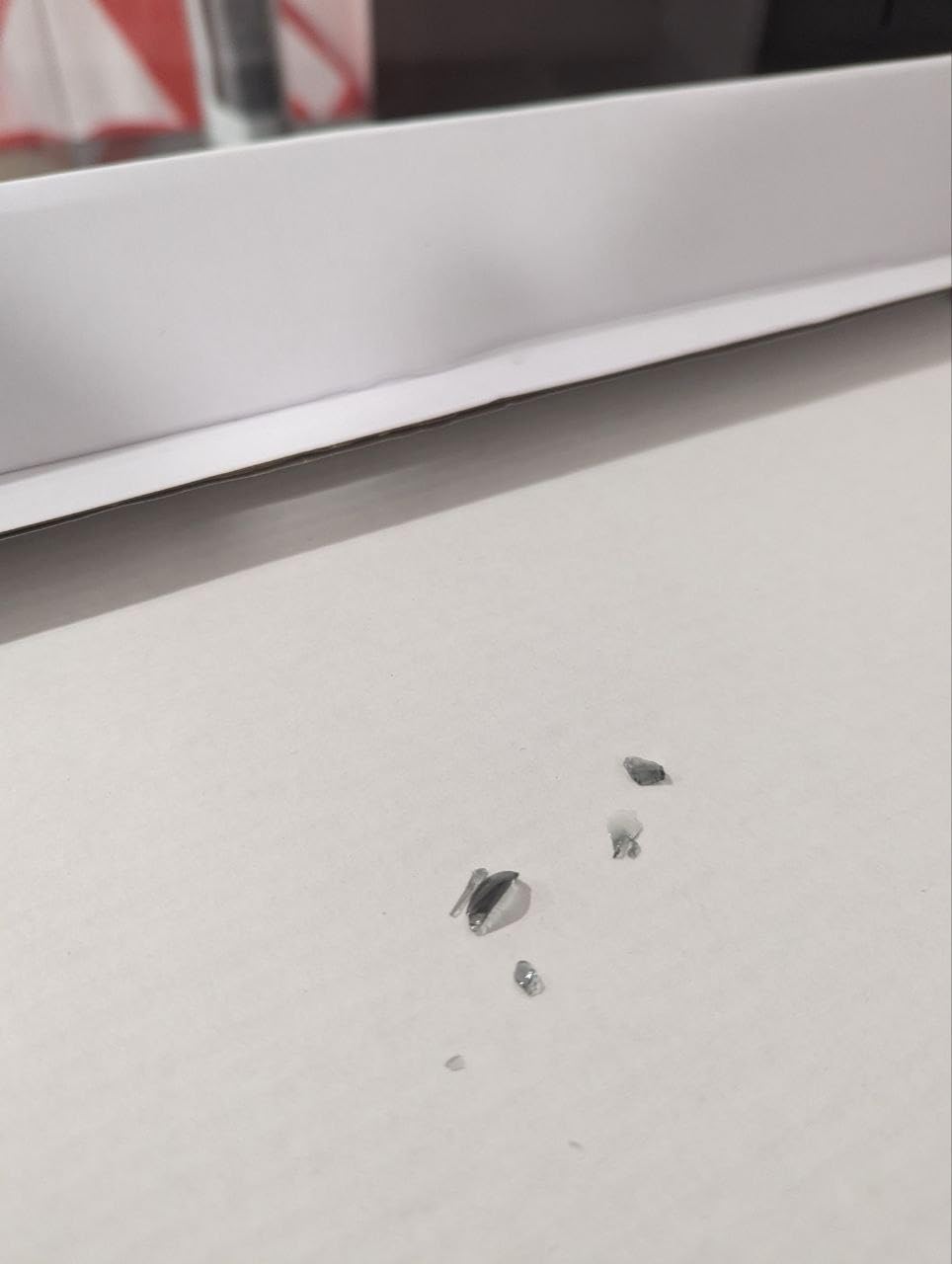
Owners consistently report that LPS and soft corals do well under the factory hood and that it cycles quickly. The recurring gripes are predictable: the rear chambers are cramped enough that media changes need tongs, the included media rack feels flimsy, and several owners drop in an InTank-style media basket to make life easier. A minority of reviews also mention glass cracks arriving in the box, so leak test on day one before you build anything.
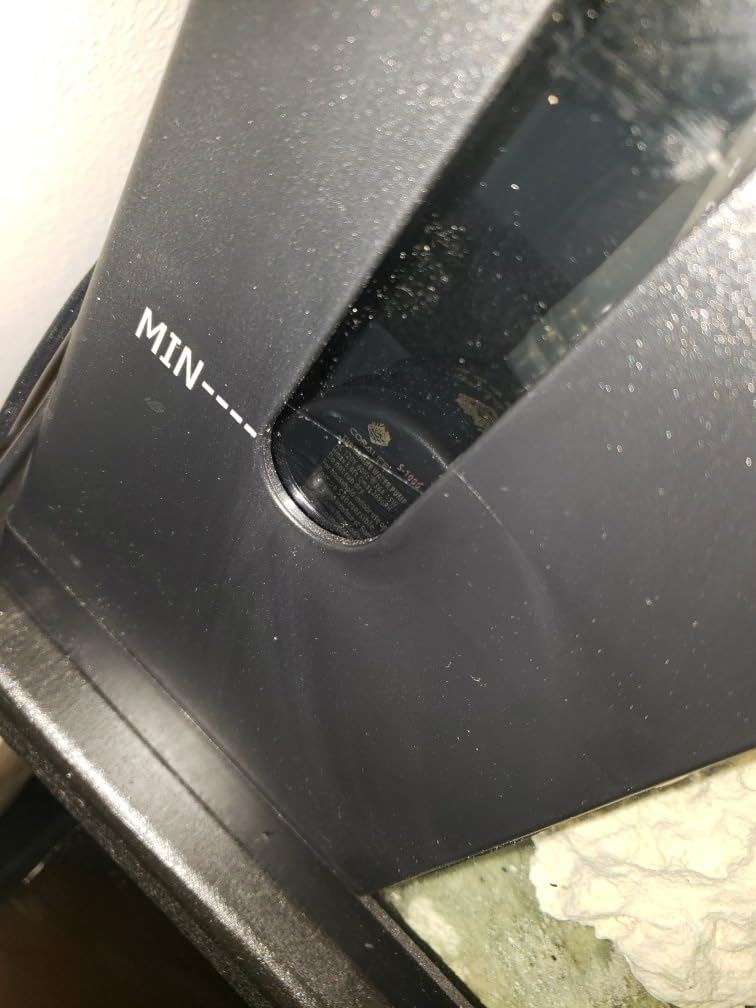
What you still have to buy?
Coral, substrate and decor are all sold separately, which is the first thing that surprises newcomers. You also need a heater, marine salt mix, reef-safe rock, aragonite sand and a refractometer, because the tank’s own salt level has to be set from scratch.
Budget for a small inline skimmer or a nano canister as an add-on once the bioload grows. Many owners end up there, and it is a normal upgrade path rather than a sign they bought the wrong tank.
Who it suits and who it does not?
This is the tank for a first reef that will grow for years. Thirty-two gallons of system volume slows temperature and salinity swings enough that a missed afternoon does not become a crisis, and the chamber is big enough to accept a proper skimmer later.
It is the wrong choice if your only goal is a small display on a desk, or if you already know you want SPS-dominant coral, because the factory hood will not get you there without a swap. It is also a heavy glass box, so the stand has to be rated for it and the surface has to be level.
2. Coralife BioCube 16 – Best All-in-One Kit for Beginners
Coralife LED Biocube Aquarium Starter Kit, 16 Gallon Tank for Beginners
16 gallon display
Complete bundle with canopy and trim
Same 3-channel LED hood
31.8 pounds, compact build
Pros
- Lowest-friction first reef
- everything in one box
- Automatic sunrise and sunset modes
- Good results with LPS and soft corals
- Customer service replaces leaks and pumps quickly
Cons
- Rear chamber too narrow to reach by hand
- LED output low for demanding corals and some report color loss
- Included pump is noisy for some owners
If your question is simply which of the best saltwater aquarium kits for reef tanks has the least assembly, the 16 gallon BioCube is the answer. Tank, canopy, LED, filter, pump, heater and trim arrive together, and the same rear-summed chamber design from the 32 gallon carries over in a much smaller box.
It measures 16.75 by 15 by 17.5 inches and weighs 31.8 pounds, so it moves between rooms without a second person. The three LED channels and the 24-hour timer behave identically to the bigger model, including the automatic sunrise and sunset, and owners repeatedly mention that programming the light is easier to learn from a short video than from the printed sheet.
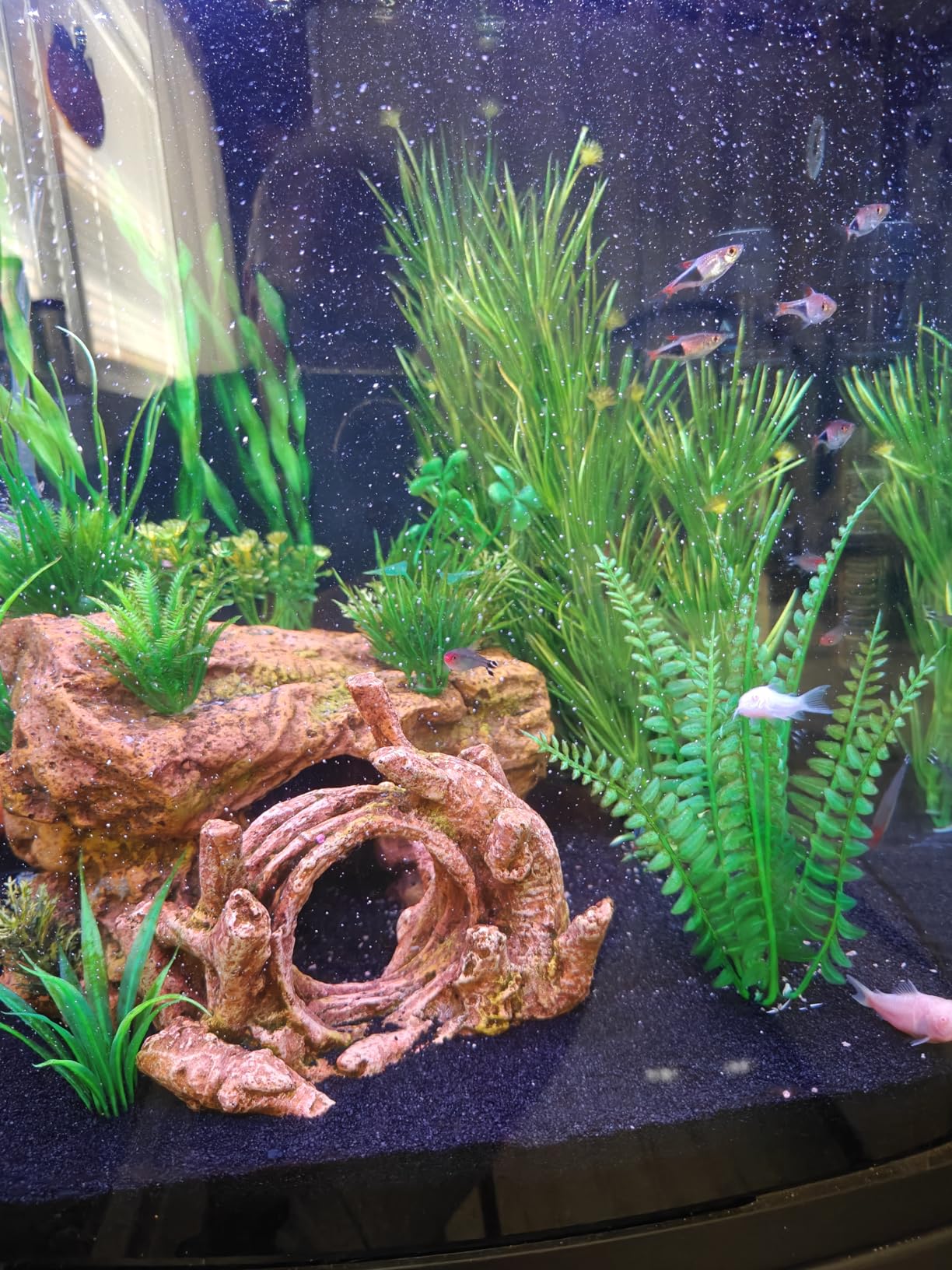
Where it differs is volume. Sixteen gallons is plenty for a clownfish pair once they are established, and it is a workable soft-coral garden, but it is tight for anything demanding. The rear chamber here is narrow enough that owners reach for tongs during media changes, and the pump that comes with it draws noise complaints from a minority of buyers.
Coralife’s warranty and customer service come up often and positively. When leaks or pump failures did appear in reviews, the brand replaced parts rather than leaving people stuck, which is worth considering if you are nervous about a first tank.
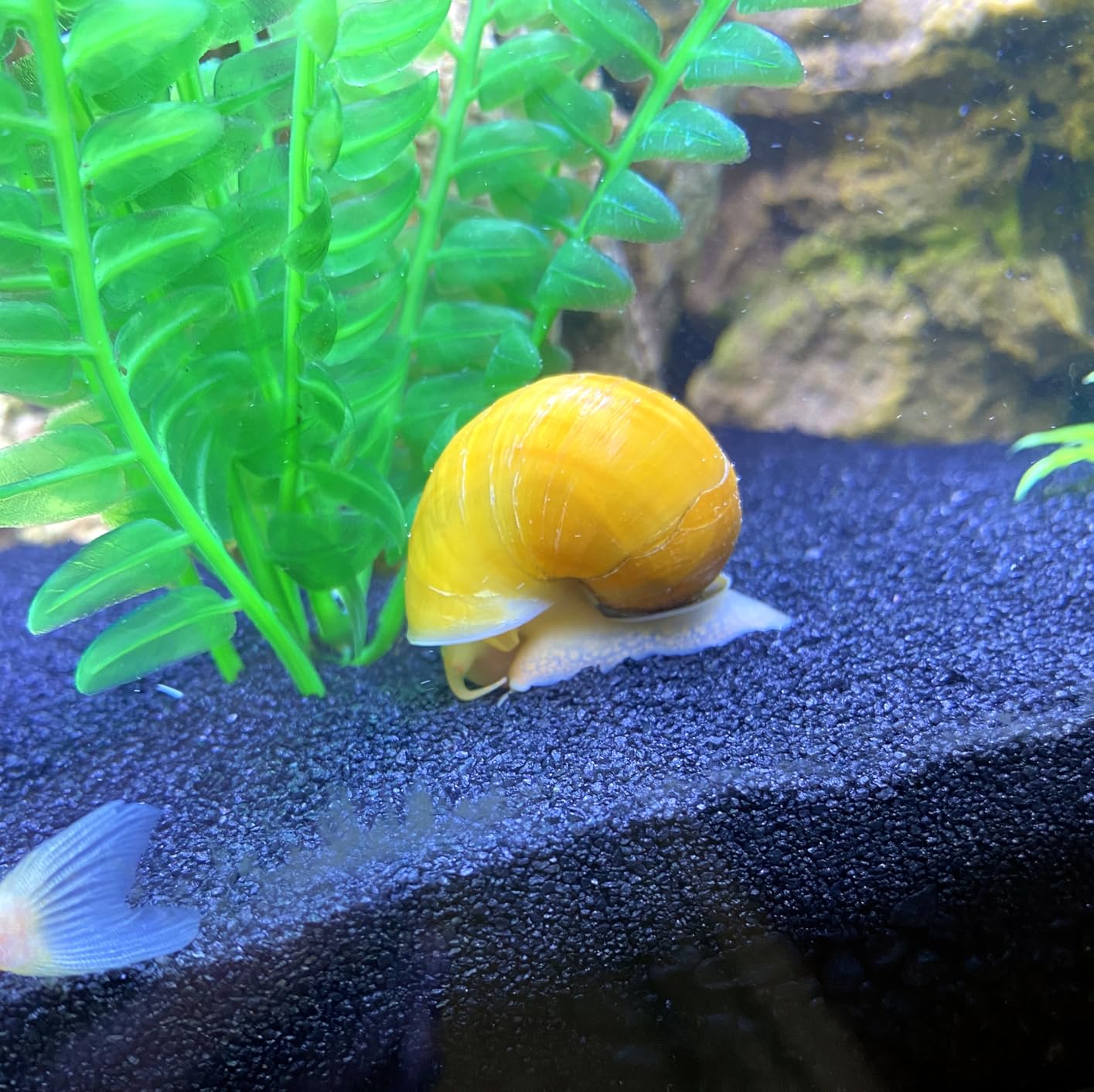
When a 16 gallon volume works?
A clownfish pair in a 16 gallon system is a well-trodden path, and the tank holds temperature and salinity more manageably than a 5 gallon nano. Soft corals and most LPS do fine under the included spectrum, so the light is not the limiting factor at this size. Water stability is.
Keep it near full and stay on top of weekly water changes. Small systems lose heat and salinity faster, and evaporation alone can shift the balance overnight in a warm room.
Where it falls short?
The LED output is not strong enough for demanding corals, and some owners report color loss in their softies over time. Add a heater guard sized for the chamber, plan on an ATO if your room runs warm, and expect to handle media changes with tools rather than fingers.
If you can stretch to it, the 32 gallon in the previous section solves most of these complaints without changing anything about how the tank works.
3. LANDEN EzFlux 40 – Best Value Rimless Reef Cube
LANDEN EzFlux 40 Rimless 16 Gallon Rear Filtration Tank, Pump Included
16 gallon total volume
Rear chamber of roughly 8 gallons
Biosmo 700 pump at 185 GPH
6mm low-iron glass
Pros
- Sump-style rear footprint uncommon at this size
- All-glass chamber dividers
- Generous rear media volume
- Low-iron ultra-clear glass
- EVA leveling pad and wooden crate included
Cons
- No lid included so owners cut their own
- Intake grates are large enough for small fish to enter
- Narrow chambers are awkward to clean by hand
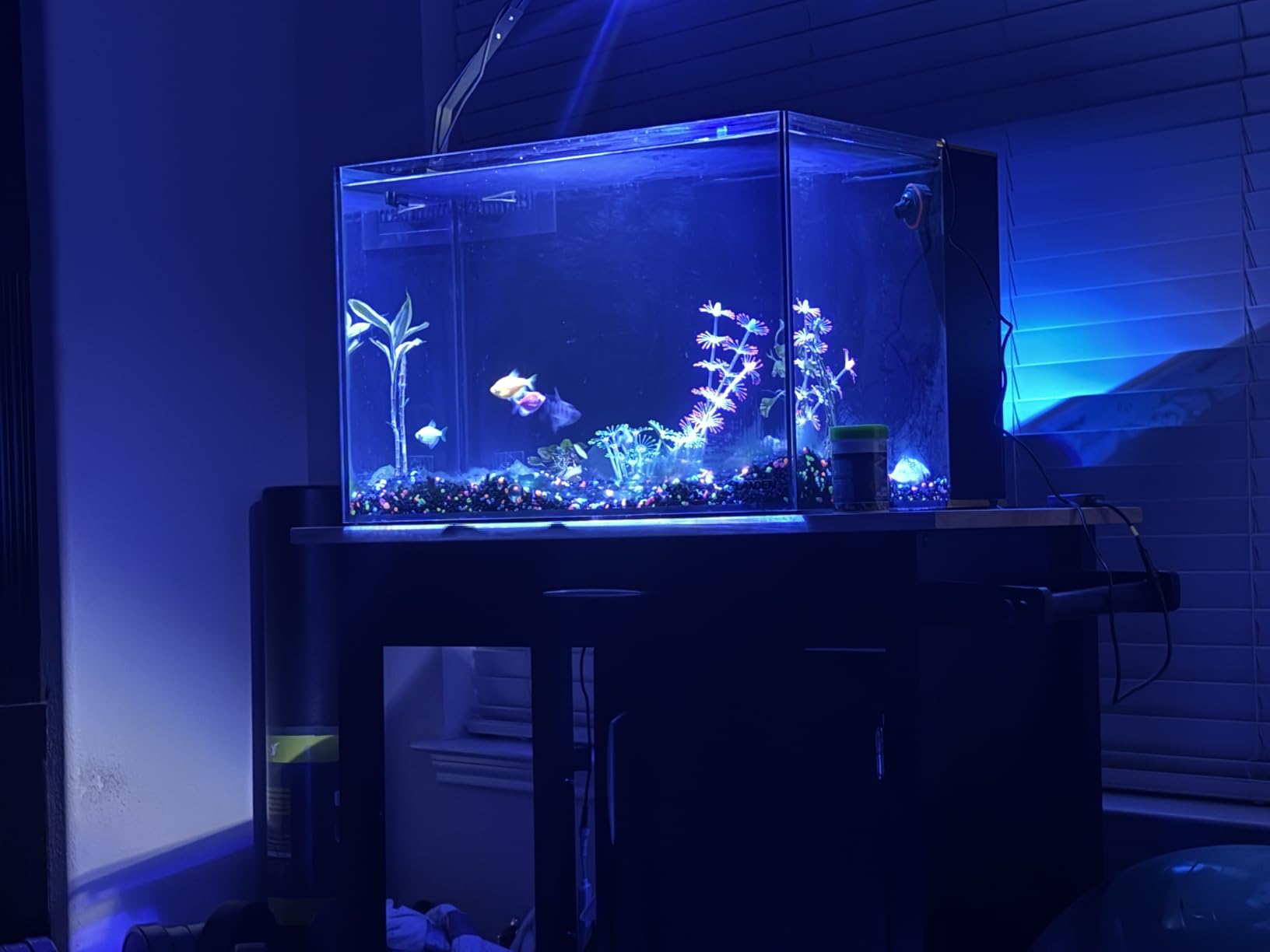
The EzFlux 40 is the hardware bargain of this list. Sixteen total gallons split between roughly 10.5 gallons of open display area and a rear chamber of about 8 gallons, and unlike most cubes at this size, the chamber dividers are glass rather than acrylic.
You get a LANDEN BIOSMO 700 return pump in the box, rated to 700 liters per hour, or 185 GPH, with a 9 watt maximum and an inline remote that adjusts intensity and offers a 10-minute feeding mode. That remote alone makes this the most controllable filtration in the group at this size.
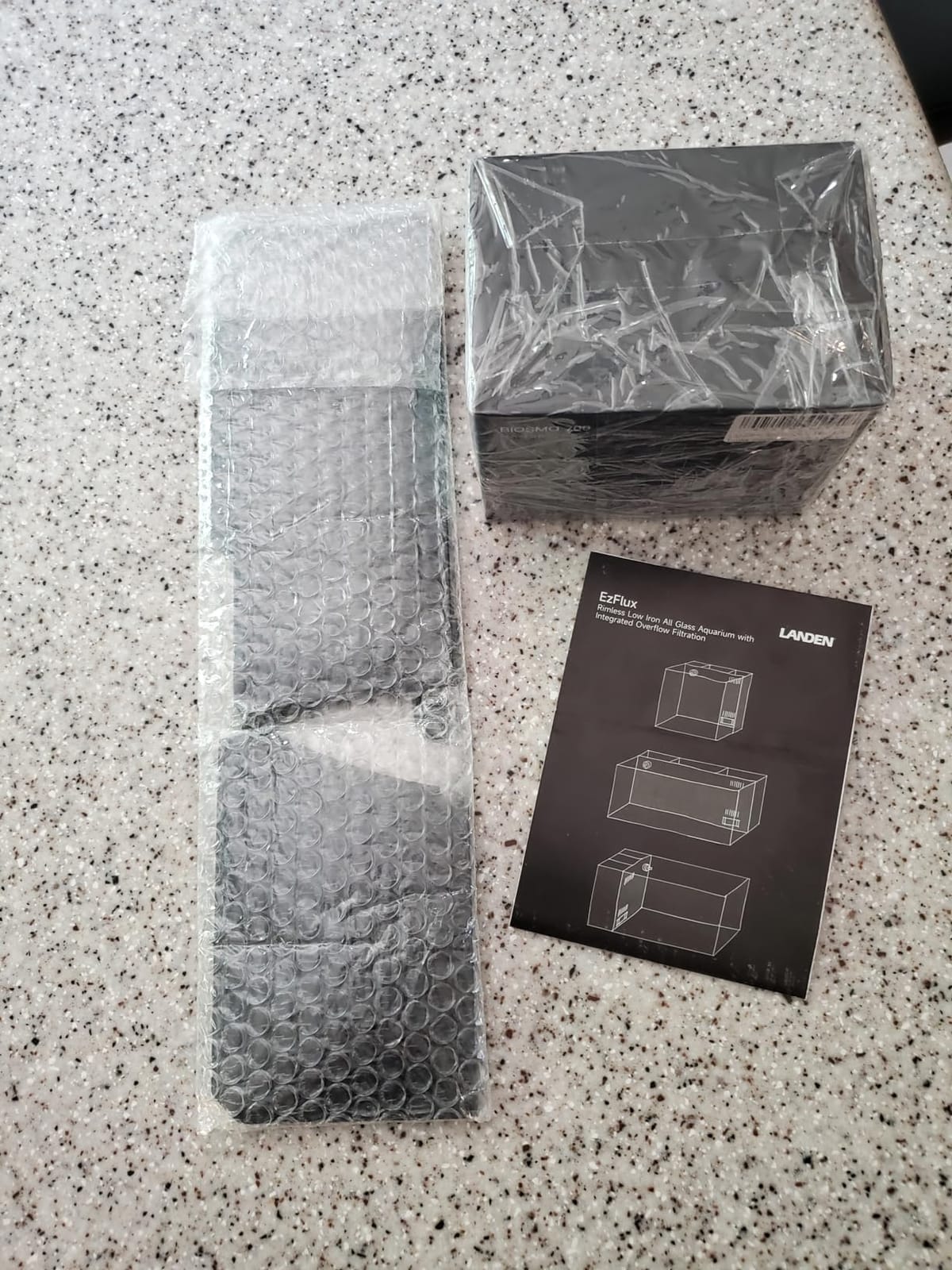
Construction is the other story. The whole tank, including the chamber dividers, is low-iron ultra-clear glass joined with German silica gel, and it stands on an EVA foam leveling pad that cuts vibration and noise. It arrives in a steel-framed wooden crate, so you will want pliers for the crate rather than a box cutter.
Reviewers describe the glass as noticeably thicker and clearer than typical budget tanks, and one image note worth knowing: the product photos are mirrored, so the filter outlet sits on the right when you are facing the tank. Several owners route the output to an undergravel filter with a black hose instead of using the supplied top nozzle, which lowers the current for soft corals.
What the rear chamber actually gives you?
Eight gallons of rear volume is the real selling point. That is room for cotton or floss, chemical media, fluidized filter beds, or a skimmer, and the chambers can be configured for media, pump, heater or skimmer depending on what your system needs next.
Skimmer fit is also the easiest question on this list to answer. The three glass chambers take a nano skimmer without you hanging anything off the back of the tank or running a separate canister.
Things to fix before you fill it
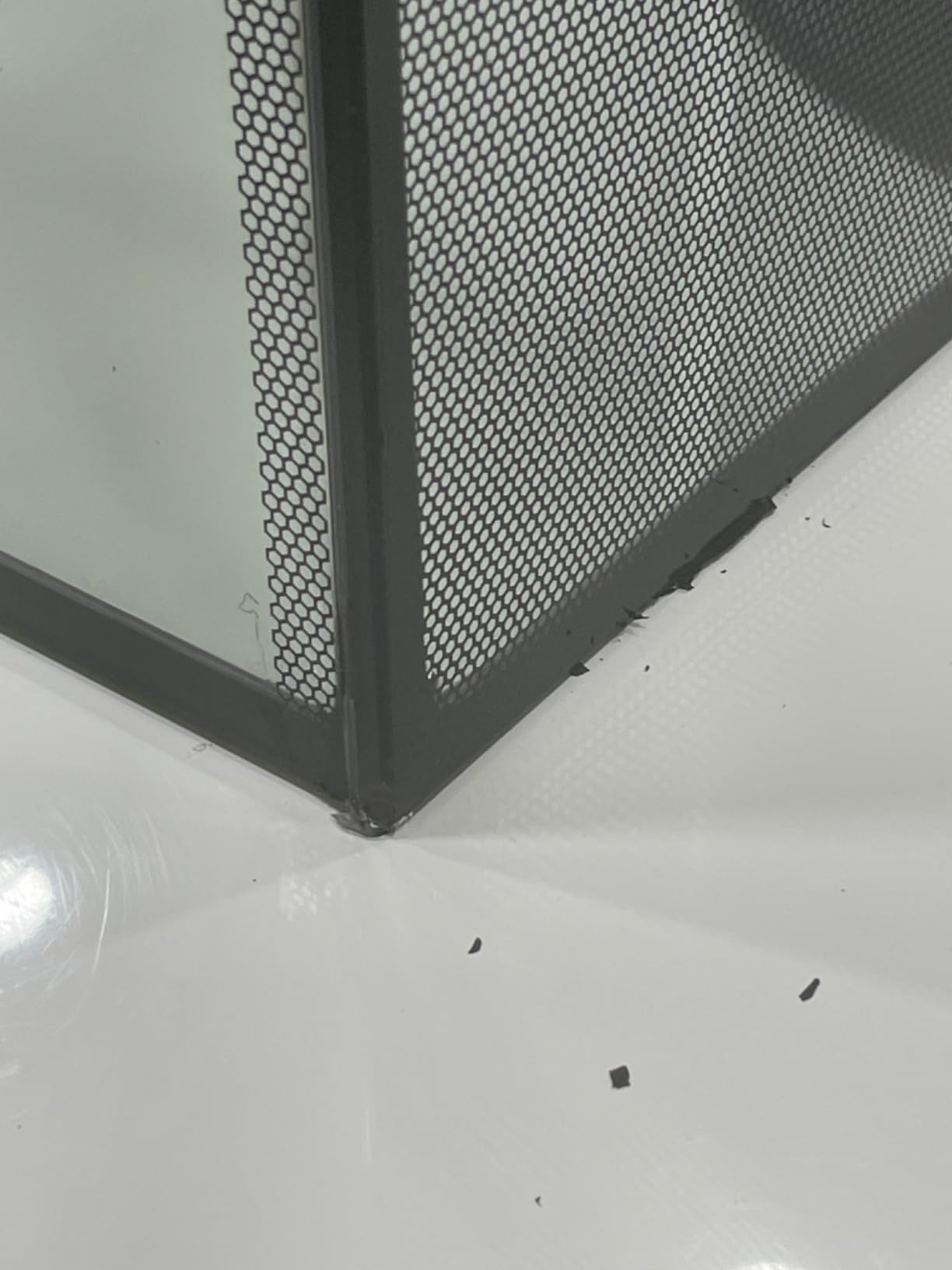
There is no lid, and owners cut their own glass or acrylic cover. The intake grates and skimmer openings are large enough that small fish have gone in, so a fine mesh guard is worth buying on day one rather than after a loss.
The narrow internal spaces are also awkward to clean by hand, and a minority of tanks arrived with a pump discharge hose too short to reach the return nozzle or with cracked corners. Inspect the glass and test every fitting before you add fish.
4. Fluval Flex 32.5 – Best Premium Kit With App-Controlled Lighting
Fluval Flex 32.5 Marine Salt Water Aquarium Kit – Fish Tank for Fish, Coral & More – Comes with LED Lights, Filtration System & More – 32.5″ x 15.75″ x 15.35″ – 123 L, 32.5 Gal. – Black
123 liter marine capacity
App-controlled 7500K white plus RGB LEDs
3-stage filtration with oversized media
48.75 pounds
Pros
- Largest capacity in the roundup at 123 liters
- App gives wide color blending on white plus RGB
- Oversized mechanical chemical and biological media included
- Curved front and honeycomb wrap hide the water line
- Dual multi-directional outputs for tailored flow
Cons
- Largest and most ambitious system here
- Some owners add top-off automation for the rear reservoir
- Rear chamber needs the tank kept very full
The Flex 32.5 is the marine-rated step-up in this group, holding 123 liters, or 32.5 gallons, and built as a home and office display rather than a starter cube. It is 32.28 by 15.75 by 15.35 inches and weighs 48.75 pounds, so plan the stand and the level surface first.
Its standout feature is the lighting. Adjustable 7500K white plus RGB LEDs are controlled through the FluvalSmart app, which means you can dial color point by point rather than settling for a fixed factory spectrum. A phone is required to reach the full customization, and that is the main thing to know before you buy.
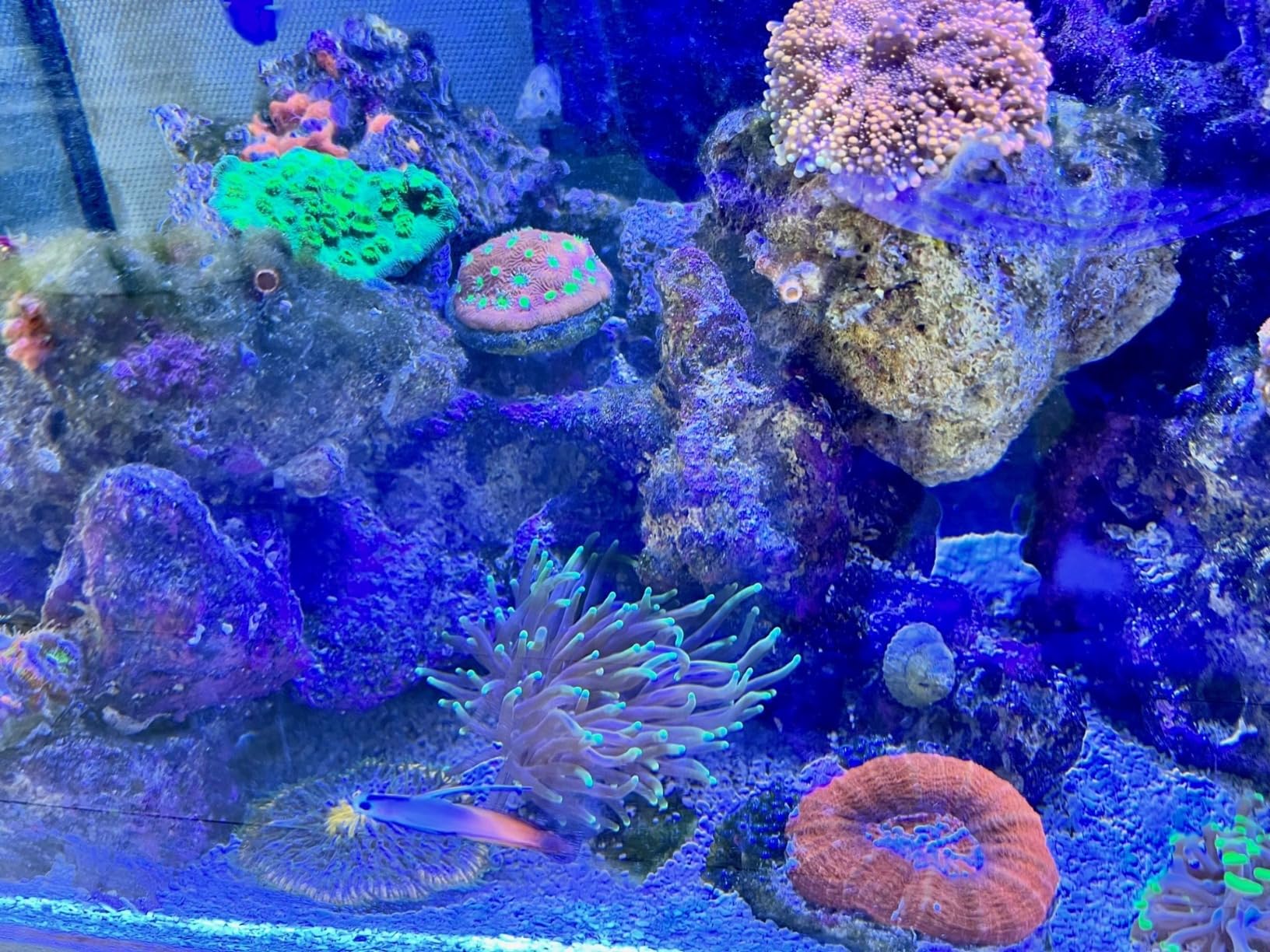
Filtration arrives ready to run with oversized mechanical, chemical and biological media in a three-stage setup, and dual multi-directional outputs let you aim flow around a rockwork scape instead of blasting from one corner. The curved front and honeycomb wrap hide both the water line and the filter compartment sides, which is a bigger deal than it sounds in a lit display tank.
Reviewers put this near the top of the roundup for share of five-star ratings, and the recurring praise is the app lighting plus the finished look. The recurring complaint is straightforward: this is the largest and most ambitious system here, and the rear reservoir demands attention. Several owners add top-off automation because the tank has to stay very full.
Who should spend more to get here?
Choose this if you want one tank that can carry a mixed reef for years and you would rather not replace the light later. App-controlled spectrum gives you real room to grow as coral demands change, and 32.5 gallons of volume makes water changes a scheduled task rather than a daily crisis.
It is also the kit that most rewards planning. The dual outputs and three-stage media layout mean you can grow into the system instead of outgrowing it within a season.
The trade-offs nobody mentions
Budget for an ATO. The rear reservoir’s water level demand is the single most repeated real-world note in the reviews, and a manual top-up routine on a display tank this size is a commitment you will not enjoy forever.
The second trade-off is money. A first reef on this kit is not a low-stakes purchase, and if your goal is a small desk tank, none of that capacity is doing useful work for you.
5. Aquatop Pisces 5 – Most Versatile for a First Desktop Tank
Aquatop Pisces Bullet Shaped Glass Aquarium, 5-Gal Nano Tank – 53 GPH – Touch Sensitive LED Light – All-in-One Kit for Fresh & Saltwater Fish
5 gallon bullet-shaped glass
Built-in filter rated at 53 GPH
Touch LED with moonlight mode
11.65 pounds
Pros
- Most affordable credible entry into the category
- Curved front looks different from boxy cubes
- Thick glass with solid seals and no assembly
- Bright LED with a moonlight setting
Cons
- Filter flow is far too strong without baffling
- Integrated pump clogs constantly and is hard to replace
- Replacement cartridges cost more than a sponge
The Pisces is the most affordable credible way into this hobby, and it is a legitimate option for a first tank if you approach it correctly. Five gallons, a curved bullet-shaped glass body, a touch-sensitive LED with a moonlight mode, and a built-in filter rated at 53 GPH, all working with no assembly at all.
At 11.65 pounds and 16 by 7.2 by 10.2 inches it is a true desktop piece, and the rounded front corners give it a look you will not get from a boxy nano cube. Owners praise the glass thickness, the clean seals, and the fact that it survived delivery without a crack.
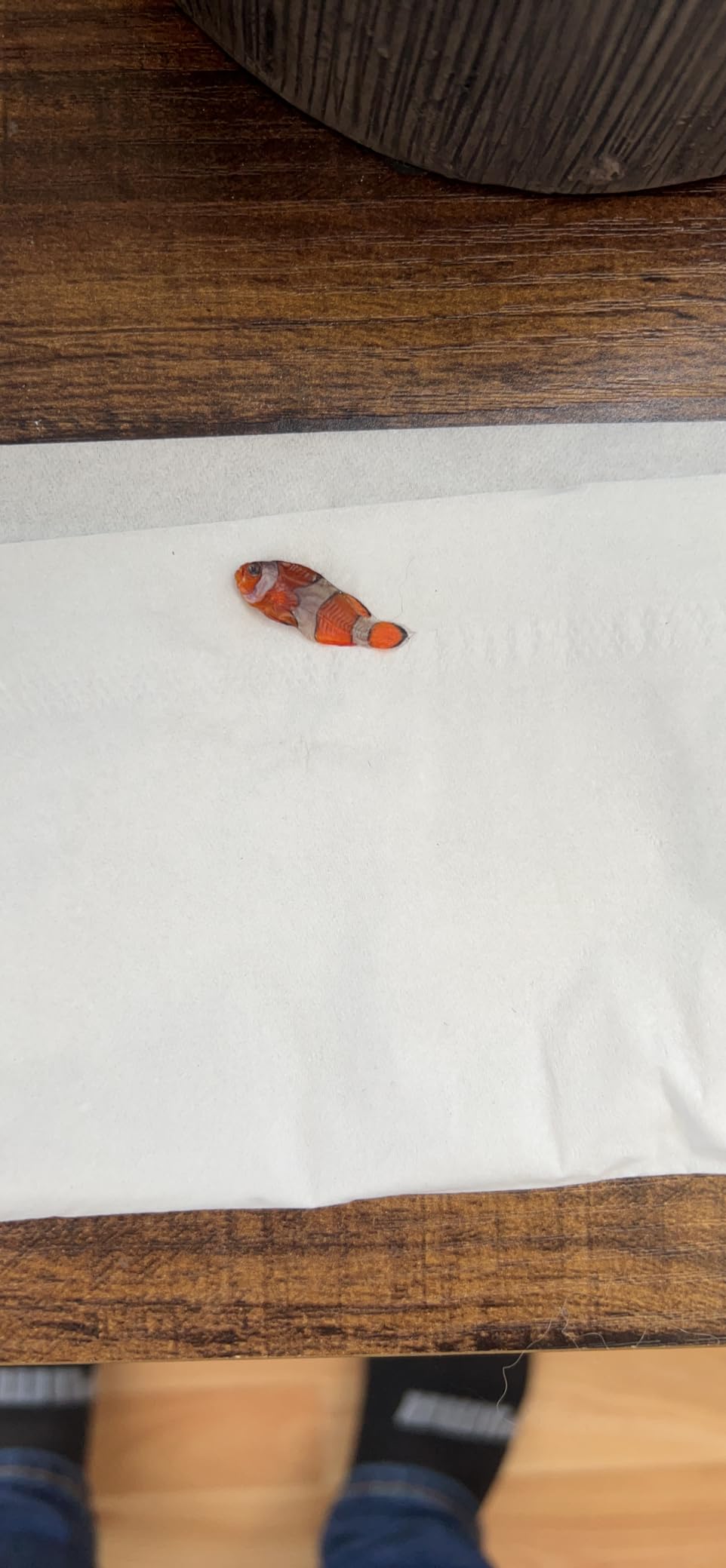
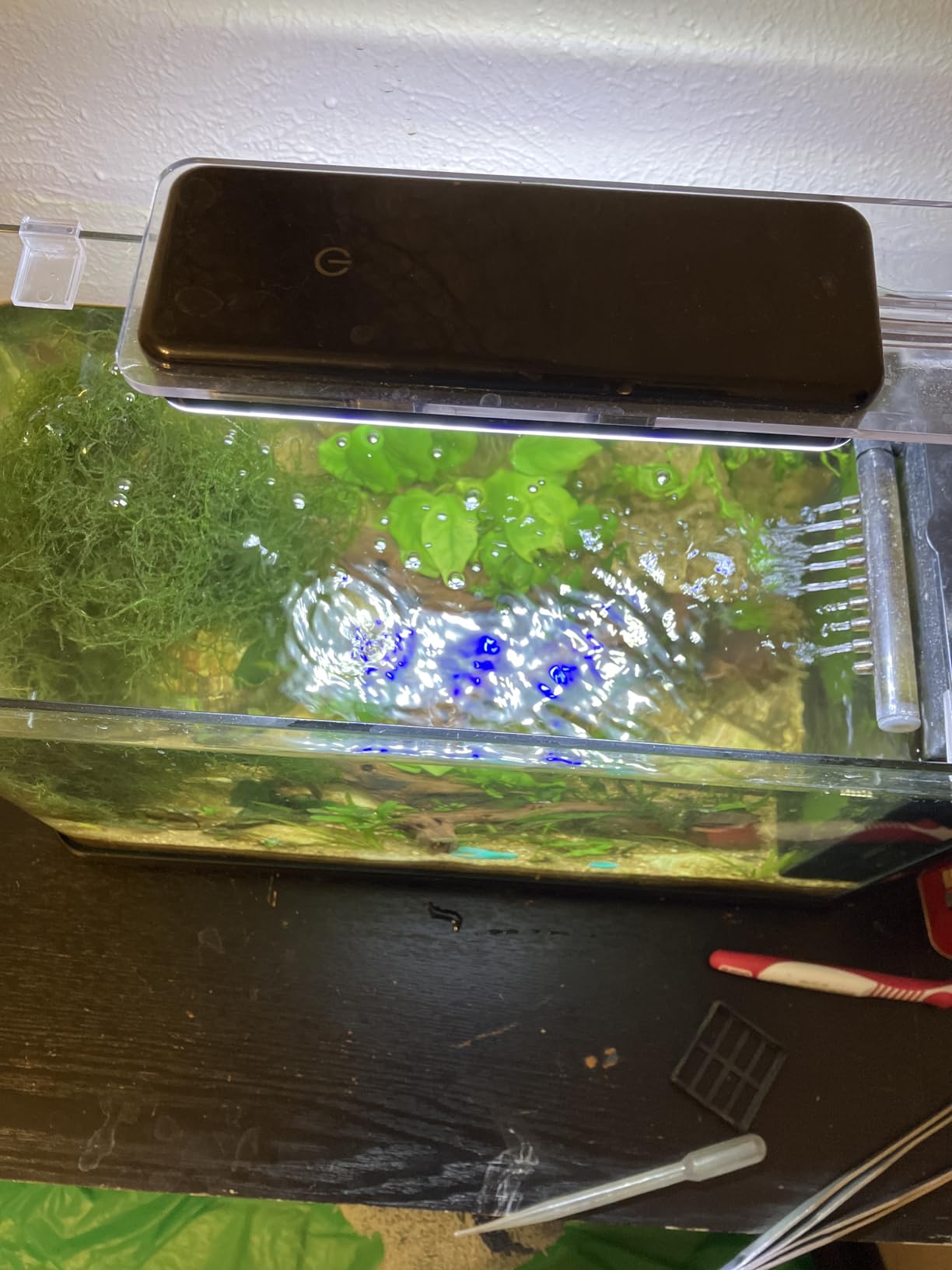
It is also the lowest rated product here, at 3.7, and the reason is consistent across the negative reviews: 53 GPH is a lot of flow for five gallons of water. Unless you baffle the outflow with a cut pre-filter sponge, you are running a current that most soft corals and small fish cannot sit in comfortably. Add a sponge inside the housing as well if you use sand, and the tank transforms.
The integrated pump clogs quickly and must be cleaned often. Because it is over-engineered and hard to service, replacement cartridges that cost more than a plain sponge are a common complaint, and the housing takes standard sponge media fine.
What a 5 gallon reef can and cannot do?
Five gallons can host a single clownfish, some easy soft corals, a few shrimp and a clean macroalgae display. It can also punish you for a missed water change in a way a 20 gallon system never will, because the volume of water doing the buffering is tiny.
Treat it as a learning tank, not a display aquarium. A refractometer and an ATO are not optional at this size, and evaporation alone can shift salinity overnight.
The honest reasons to skip it
The lid gaps at the curved corners are a real escape risk, so check closures constantly. The power cords are not managed at the back, the touch light is not water resistant, and several owners say they would have chosen a Fluval-style spec tank instead at the same money.
If you are undecided between a beautifully affordable tank and a slightly larger rimless cube, the rimless cube in section six will age better with you.
6. Ultum Nature Systems Dual AIO 6 – Best Rimless Nano for Soft Corals
Ultum Nature Systems Dual AIO – Freshwater/Saltwater Compatible, All in One Rimless Tank with Triple Chamber Filtration System, Integrated Filter Aquarium with Leveling Mat – 6 Gallon, 45SA, Black
6 gallon display
Triple-chamber rear filtration
91 percent low-iron glass
Leveling mat included
Pros
- Rimless low-iron glass with clean 45-degree miters
- Triple chambers give clear media zoning
- Runs quieter than a Fluval Flex according to owners
- Good first reef for soft corals and a clownfish
- Replacement pumps available from other brands
Cons
- Pump chamber can run dry if the display level drops
- Intake openings large enough to lose small fish
- No lid and no light included so evaporation is fast
The Dual AIO 6 is the tank people notice in a room. Rimless frameless construction in 91 percent diamond low iron glass with 45-degree precision-cut mitered edges, a triple-chamber rear filtration system, and a leveling mat already in the box, at 17.71 by 11.02 by 7.08 inches.
What stands out in the reviews is quiet. Multiple owners say this tank runs quieter than a Fluval Flex, and the glass and joint finish is described in language usually reserved for far more expensive builds. The three chambers take a coarse sponge, dedicated bio-media and the pump in clearly separated spaces, which makes media changes easier than in a two-chamber design.
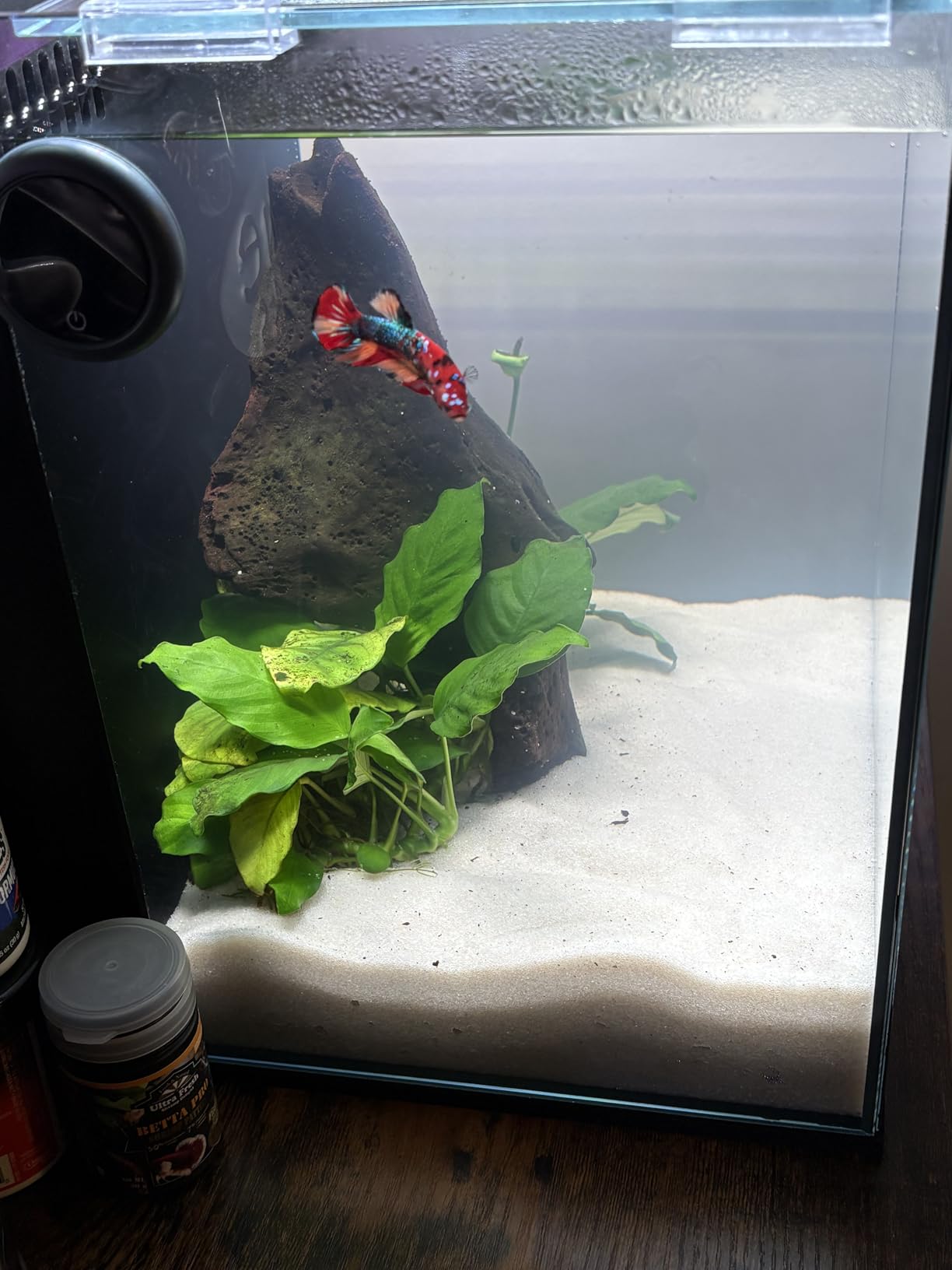
The water-level issue is the one to understand before you buy. Because the pump sits high in the rear reservoir, if the display water level falls the pump chamber can drop with it and start pulling air. Several owners keep the tank filled higher than feels necessary to avoid that, and others buy the filter tower insert rather than relying on the large foam block that comes in the box.
Small fish have also been lost through the large intake and vent openings, and the intake guard is sold separately rather than included. Budget for mesh or the optional guard on day one.
Is the missing lid and light a problem?
It depends on your coral list. Soft corals, a clownfish and shrimp do not need a strong light, so the missing fixture is not a blocker for a first nano. The missing lid is the bigger issue, because evaporation without a lid is what pushes salinity up, and a top-off system becomes close to mandatory.
The common owner workaround is a metal grate top plus an aftermarket light mounted to it, which solves both problems at once if you need a lid anyway.
Who should look elsewhere?
Anyone in a warm room should think twice. Fast evaporation plus a high-mounted pump is the combination most likely to produce a morning crisis, and this tank gives you no lid to slow it down. It is a 6 gallon system, so the mistakes a new keeper makes are unforgiving.
It is best treated as a second or display tank rather than a first reef, unless you are disciplined about top-off and water changes from day one.
7. IOAOI Coralland 8 – Best Glass Clarity and Best Packaging in the Guide
Coralland 8-Gallon Saltwater Aquarium – Ultra Clear Low Iron Glass, 45° Angled Joint Design, Crystal Clear Viewing, Perfect for Marine Fish & Reef Tanks & Freshwater
5.5 gallon display with 2.5 gallon rear sump
Four rear chambers
45-degree mitered joints with reinforced corners
Filter sock and return diffuser included
Pros
- Best glass clarity in this roundup
- Crystal clear low-iron glass with clean miters
- Four chambers fit a heater pump and ATO sensor
- Felt base included for leveling and surface protection
Cons
- This is a tank not a kit
- pump heater light and skimmer are extra
- Filter sock holder is permanently silicone-mounted
- Center divider blocks common fixed-mount light positions
The Coralland 8 is the best glass in this roundup at the lowest tier, and it is sold explicitly for saltwater and reef use rather than adapted from a freshwater design. Total capacity is 8 gallons, split between a 5.5 gallon display and a 2.5 gallon rear sump, with four separate rear chambers behind glass baffles.
The optics are the reason to look. Ultra-clear low iron glass with a reduced greenish tint, 45-degree angled mitered joints with reinforced corners, and clean silicone work. It measures 13.8 by 11.8 by 11.8 inches and weighs 21.35 pounds, and the felt bottom pad underneath protects your furniture and keeps the tank level.
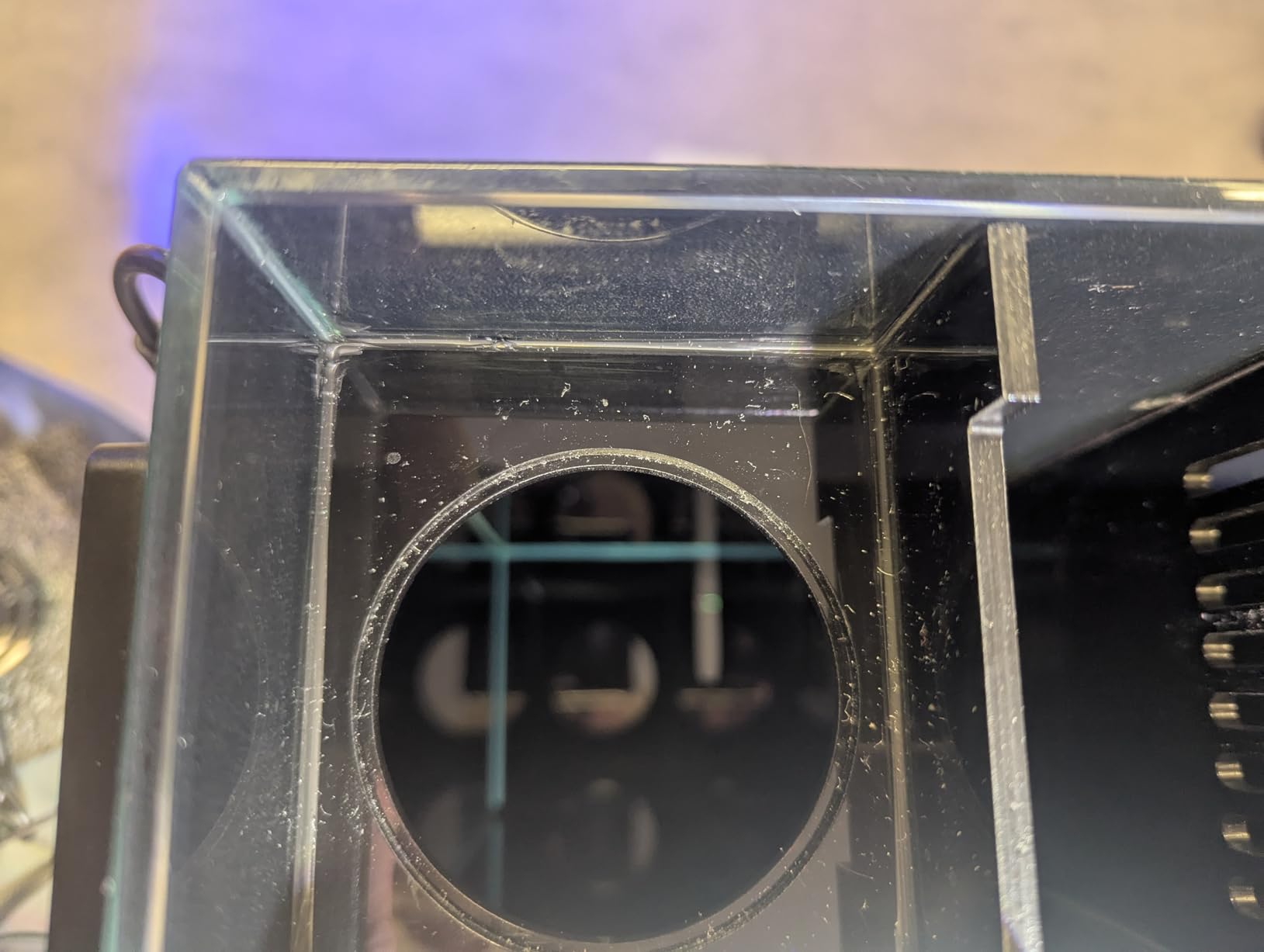
Owners single out the packaging as the best they have experienced, with triple-wall boxes, closed-cell foam and corner protectors. That is not a small detail for rimless glass. A 50 watt heater fits in the third chamber and an ATO sensor fits beside the return pump, which is unusually good chamber allocation for an 8 gallon tank.
Now the honesty part. This is a tank, not a kit. Beyond a 2.75 inch filter sock and a rotatable return outlet diffuser, the pump, heater, light, skimmer and coral are all extra, and repeat buyers typically add a silent nano return pump and tubing from the same brand. The return fitting needs a cut length of 16 mm tubing to reach the supplied nozzle.
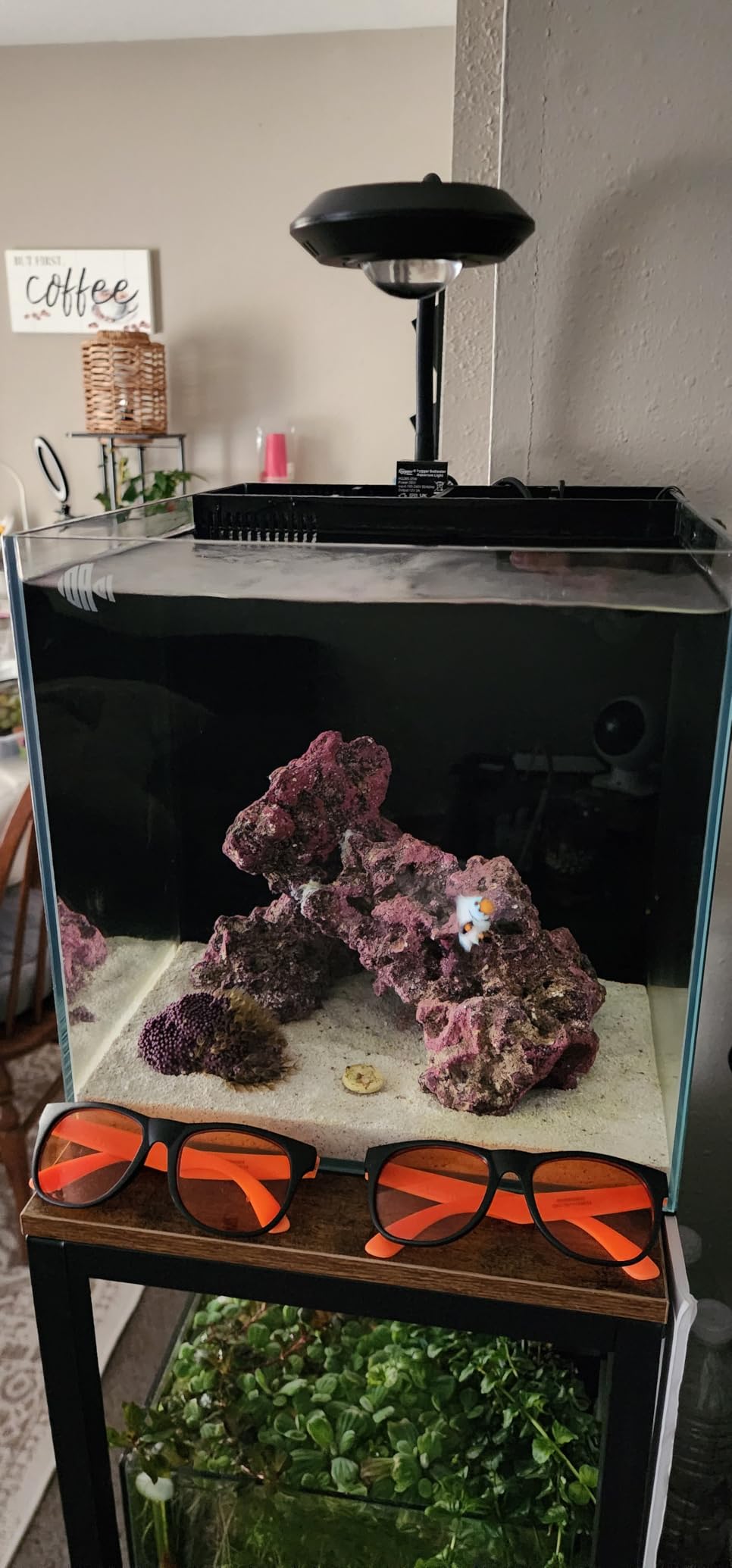
Who this tank rewards?
It suits someone who already knows the hobby and wants a sharp-looking small system without paying a premium for the glass. Owners who pair it with a quiet IOAOI nano pump report a genuinely pleasant running tank, and the four chambers give more layout freedom than most 8 gallon designs.
It is not a first-saltwater purchase. There is no setup guide in the box, and one reviewer rated it down purely because it is not beginner friendly.
The two modifications you will make
First, the filter sock holder is permanently silicone-mounted, so a removable media basket is not an option here. Plan your media changes around that instead of fighting it.
Second, the center rear divider sits exactly where many fixed-mount light brackets need to sit, so check your light mount against the tank before you order. The return baffle also sits close to the rim, so keep an eye on it and clear it if it ever plugs.
8. Empire USA 24 Gallon – Best Mid-Size Cube for Growing Out of a Nano
Empire USA – 24 Gallon All-in-One Aquarium Kit, Rimless Low Iron Glass AIO Saltwater & Freshwater Fish Tank, Complete Nano Reef Tank Setup for Home or Office
24 gallon all-in-one cube
Rimless low-iron glass
Integrated rear filtration and return
24 by 15 by 15 inches, 51.85 pounds
Pros
- 24 gallons is a natural step up from a 5 to 7 gallon nano
- Compact cube footprint for an office or bedroom
- Integrated rear chamber supports stable parameters
- Works for both saltwater and freshwater
Cons
- Thinnest review sample here at 26 reviews
- Less owner feedback to learn from
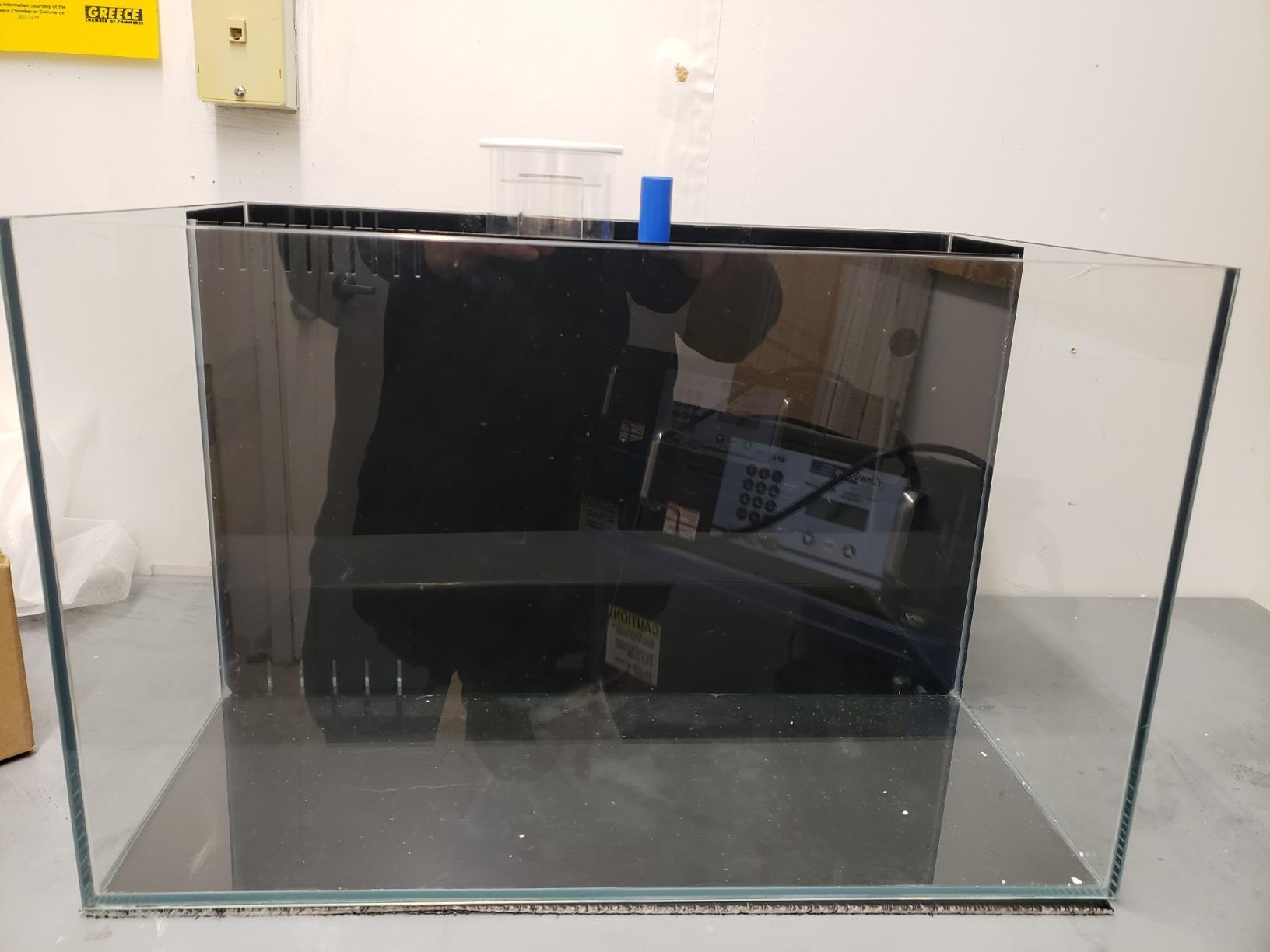
The 24 gallon Empire cube is the middle ground in this list, and it makes sense for a specific person: someone who has outgrown a 5 to 7 gallon nano and does not want to jump to a 32 gallon display tank with a canopy. The all-in-one design combines display, filtration chamber and return in a single footprint at 24 by 15 by 15 inches and 51.85 pounds.
The glass is rimless ultra-clear low iron for minimal edge distortion, and the integrated filtration chamber is positioned to support stable parameters and clean circulation. That volume of water is the real feature. Twenty-four gallons swings less than a nano, so a beginner has room to make a correction before it becomes a problem.
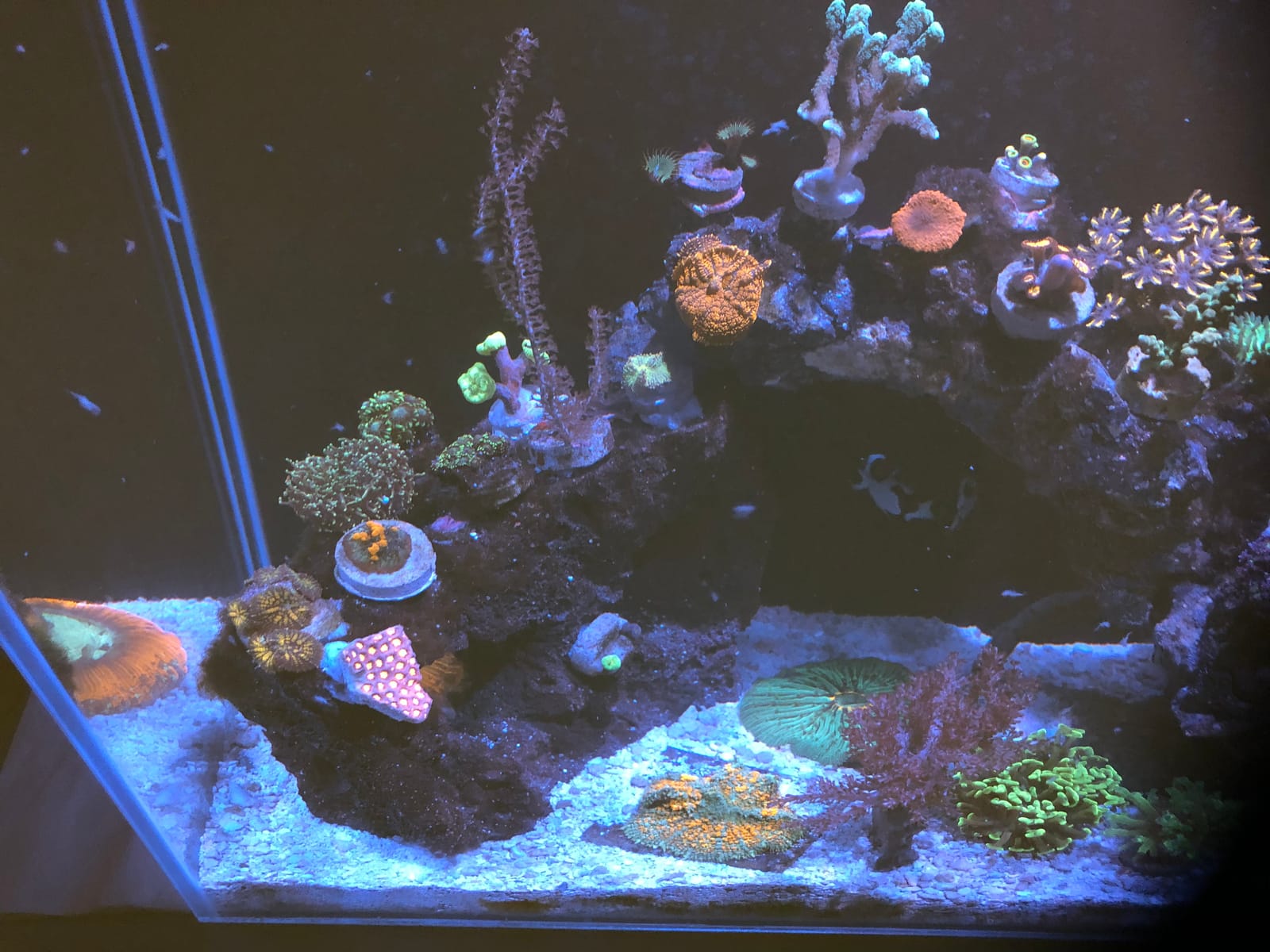
We want to be straight about the evidence here. This tank has 26 reviews, the thinnest sample in the roundup, and detailed owner review text was not returned for it, so the strong 4.4 rating is the most we can verify. Treat the specific pros and cons as listing claims rather than documented owner experience.
What we can say is that the design intent lines up with how these tanks behave. Integrated rear filtration in a cube footprint is a proven layout, and 24 gallons is a volume at which a clownfish pair and a soft-coral garden are comfortable rather than crowded.
Why 24 gallons is a useful middle?
It is big enough that evaporation does not shift salinity overnight, and small enough that a water change is still a ten-minute job. For a second tank or a step up from a nano, that balance is genuinely hard to find elsewhere in the category.
The cube shape also fits spaces a 32.5 gallon rectangular display does not, which matters in an office or a bedroom where the footprint is the constraint.
What to check before you commit?
With a 26-review sample, you are buying on design rather than on community proof, so verify the filtration layout and included components yourself before purchase. Confirm what arrives with the return system, and treat the light as a separate budget line, as you would with any bare tank.
One reviewer also flags that a pump failure inside a 24 gallon rimless cube is a bigger job than in a small nano, so make sure you can reach the chamber.
What All-In-One Actually Means in a Saltwater Kit?
An AIO tank puts filtration in the same cabinet footprint as the display instead of routing water to a sump under the stand. Water flows over an internal overflow into a sealed rear chamber, passes through filter socks or floss and optional chemical media, is optionally skimmed by a protein skimmer, then returns to the display through an adjustable nozzle. No plumbing leaves the tank.
That is a mechanical definition. The practical one is looser, and this is where buyers get caught. Some of the eight products here are close to true bundles where the tank, trim and light all arrive together. The rest are glass tanks with rear filtration, where a pump or a light or a heater may or may not be in the box.
We checked the box contents on every product in this guide, and each product section names what is still missing before you can put coral in it. For a rimless cube that list is usually a heater, a light, a return pump, rock, sand, salt and a refractometer.
How to Choose the Right Saltwater Aquarium Kit?
Start with volume, because it decides almost everything else. Below about 7 gallons, temperature and salinity swing fast enough that a single missed top-off can hurt your fish, and you will be running water changes constantly. Between 13.5 and 20 gallons you can keep a clownfish pair and a mixed soft and LPS garden comfortably. At 25 gallons and up, you have the stability to add demanding coral later.
Next, plan your lighting before your tank. The LED hoods included in this roundup are tuned for soft and LPS coral. None of them will grow SPS without a replacement, and several owners budget for an aftermarket fixture within their first year anyway. If SPS is the goal, buy the tank you want and treat the light as a separate, planned purchase.
Then judge the filtration volume, not the tank volume. A 16 gallon tank with an 8 gallon rear chamber, like the LANDEN EzFlux 40, gives you more working media space than a larger display with two cramped chambers. Media space is what lets you add chemical filtration and a skimmer later without rebuilding anything.
Ask what is missing before you fall for the bundle language. A heater is not included with the Coralife BioCube 32, the BioCube 16 arrives without heater guards, and the IOAOI Coralland 8 includes a filter sock and a return diffuser and nothing else. Every salt mix, sand, rock, refractometer and test kit is a separate purchase on all eight.
Finally, plan for the room. Salt creep and heat are real constraints. If your tank sits in a warm room, budget for a chiller and an ATO, because no kit in this guide addresses either problem and neither does any competitor’s marketing. If you are planning where larger water storage fits on the property, our rainwater harvesting tanks guide covers that side of the equation.
What You Still Need to Buy After the Kit?
No tank on this list includes rock or coral, and most skip the consumables that make a reef work. Here is the short version of what to have in hand before you fill any of them. Sizing consumables correctly matters as much as sizing the tank, and the same logic drives our saltwater chlorinator picks, where matching output to volume is the entire game.
Marine salt mix. Reef-focused mixes with calcium, magnesium and trace elements are the right call over fish-only salt for a coral tank.
Heater. Sized for the volume and chamber you have, plus a fry guard. Two of the kits here arrive without a heater, and the BioCube 16 also omits fry guards.
Refractometer. A swing-arm or digital model reads salinity in specific gravity that you can actually control. A hydrometer is not accurate enough to run a reef on.
Test kits. Ammonia, nitrite, nitrate, alkalinity, calcium, magnesium and temperature. Alkalinity is the one beginners skip and the one that most affects coral.
Rock and sand. Dry rock or reef-safe rock plus aragonite sand. Both are sold separately on every kit in this guide.
Filter floss or pillow stuffing. Reef keepers routinely swap the coarse foam block that comes in the box for floss, and it is a consumable you will keep buying.
ATO and possibly a chiller. Essential under about 13.5 gallons, sensible above it in a warm room.
Skimmer or canister filter. Not urgent on day one, but plan for it once your bioload grows.
If you grow coral you also intend to eat, plan that part too before the livestock arrives. Our saltwater fish fillet knife guide covers the handling side of turning a reef into food, which is easier to sort out than a full freezer of unfilleted fish.
How to Cycle a New Saltwater Aquarium?
Plan on three to six weeks and do not rush it. Position and level the tank first, because rimless glass needs a flat surface and the leveling mat that comes with some of these kits exists for a reason.
Add your substrate and rock, then mix your saltwater to a specific gravity around 1.025 to 1.026 before you add fish. Install the heater and light, then run the system with a source of nitrogen such as a pinch of food or a measured ammonia dose to drive the cycle. Test every few days.
The gate is simple: add coral or fish only when ammonia and nitrite both read zero on consecutive tests, and confirm alkalinity is stable. Going in early does not just slow things down, it usually costs you the first round of your new tank.
Frequently Asked Questions
What is the best all-in-one saltwater aquarium kit?
For most first-time reef keepers the Coralife BioCube 32 is the best all-in-one saltwater aquarium kit, because the tank, rear filtration chamber, return pump and a 24-hour timer LED hood are tuned to each other from the box. Larger budgets point to the Fluval Flex 32.5, and smaller ones to the LANDEN EzFlux 40 for its glass and rear chamber volume.
What is the best aquarium for a reef tank?
Volume matters more than brand. Aim for at least 13.5 gallons for a clownfish pair and a mixed soft and LPS garden, and 25 gallons or more if you want room to add demanding coral later. Under 7 gallons, temperature and salinity swing fast enough that one missed top-off can hurt your fish.
Are all-in-one reef tanks good for beginners?
They are the easiest option, because the tank, filtration and light are pre-matched. The catch is that a matched system still needs a heater, salt mix, rock, sand, a refractometer and test kits bought separately. Buy a kit with a larger rear filtration chamber and you avoid the most common beginner upgrade.
Is there an all-in-one nano reef tank available?
There are several, and the Ultum Nature Systems Dual AIO 6 and the Aquatop Pisces 5 are the ones we looked at closely. Both run rimless or curved glass with rear filtration, but neither includes a light, and the 6 gallon model also arrives without a lid, so plan on an ATO before you fill either.
What else do I need besides an AIO kit?
You still need a heater, marine salt mix, aragonite sand, reef-safe rock, a refractometer, ammonia nitrite and alkalinity test kits, and an auto top-off for small systems. Filter floss to replace the coarse foam block that comes with the tank is a recurring consumable, and a nano skimmer or canister filter becomes necessary as your bioload grows.
What is the best setup for a saltwater aquarium?
The best setup is the one you can service. Choose a tank at least 13.5 gallons, keep it near full, leave room in the rear chamber for a skimmer, and add an auto top-off plus a chiller if your room runs warm. A matched kit plus a solid controller and reliable test kit beats an expensive bare tank built from mismatched parts.
What is the best brand for saltwater aquariums?
Coralife leads on proven, well-reviewed all-in-one designs, Fluval leads on app-controlled lighting and marine-rated capacity, and LANDEN leads on glass and rear filtration volume for the money. Reef keepers on community forums most often recommend bundled kits for beginners, and bare rimless AIO tanks for people who already know the hobby.
Do I need a protein skimmer for an AIO tank?
Not on day one. Once your bioload grows, a skimmer becomes very useful on an all-in-one system, and you should buy a tank with a rear chamber sized to hold one. The LANDEN EzFlux 40 has roughly 8 gallons of rear volume, so a nano skimmer fits without adding anything to the back of the tank.
Final Verdict: Where to Start in 2026?
Start with the Corallife BioCube 32 if you want the best saltwater aquarium kit for reef tanks that just works. It has the largest filtration volume in a compact footprint here, the most complete lighting automation, and the deepest owner review history, and 32 gallons gives you room to grow past a beginner’s mistakes.
Choose the LANDEN EzFlux 40 instead if glass quality and a real sump-style rear chamber matter more to you than a bundled light. Step up to the Fluval Flex 32.5 when you want app-controlled RGB lighting and a marine-rated display you can grow a mixed reef in for years.
Whatever you pick, budget for the heater, salt, rock, sand, refractometer, test kits and an ATO before you buy the tank. That list is the real difference between a kit and a working reef.