
Most star tracker roundups hedge. They put a 14mm Milky Way nightscape guide next to a 1000mm deep-sky rig and leave you to work out which half of the article applies to you. I did not want to write another one of those, so everything here is scoped to a single question: which tracker does the best job with a wide-angle to short-telephoto lens on a nightscape or a wide-field deep-sky target.
That scope matters more than it sounds. A tracker is not a generic upgrade. It is a small motorised equatorial head that has to carry your camera and lens, stay aligned to the celestial pole, and hold that alignment for the length of the exposure. The rules for those three jobs are completely different at 14mm than they are at 135mm, and almost nobody explains the difference before you buy.
Our team compared six current wide-field trackers head to head, read every recurring complaint in the customer reviews, and cross-checked the field chatter on Reddit r/AskAstrophotography and CloudyNights. Six made the cut because they are the ones that genuinely work in the wide-field range. The list runs from a 1.5 lb head that fits in a photo backpack to a 26 lb GoTo kit with a tripod and counterweight, and every verdict below is tied to a real spec rather than a category label.
A note before we start, since this site normally covers field gear: astrophotography people spend an unreasonable amount of time in the dark with a vehicle parked on a grass verge. If you are the same, the field repair kit list we keep in the truck is worth a read alongside this guide. You will eventually need it at two in the morning. Our portable welders for field repairs guide covers the gear side of that, and this one covers the optics side.
Table of Contents
What a star tracker is and why wide field is different?
A star tracker is a small motorised equatorial mount that sits between your tripod and your camera and turns the camera at exactly the rate the Earth turns, one revolution every 23 hours, 56 minutes and 4 seconds. Stars stay as fixed points on the sensor for the whole exposure instead of streaking, so you can shoot minutes-long frames rather than 15-second ones.
Wide field simply means you are working with short focal lengths, roughly 14mm to 135mm on a full-frame body, framing things that span tens of degrees of sky. Because the sky rotates slowly across a wide frame, a short lens tolerates far more alignment error and far more payload than a long one. That is why a lightweight, single-axis head can produce clean, round stars at 20mm where the same head would struggle at 200mm.
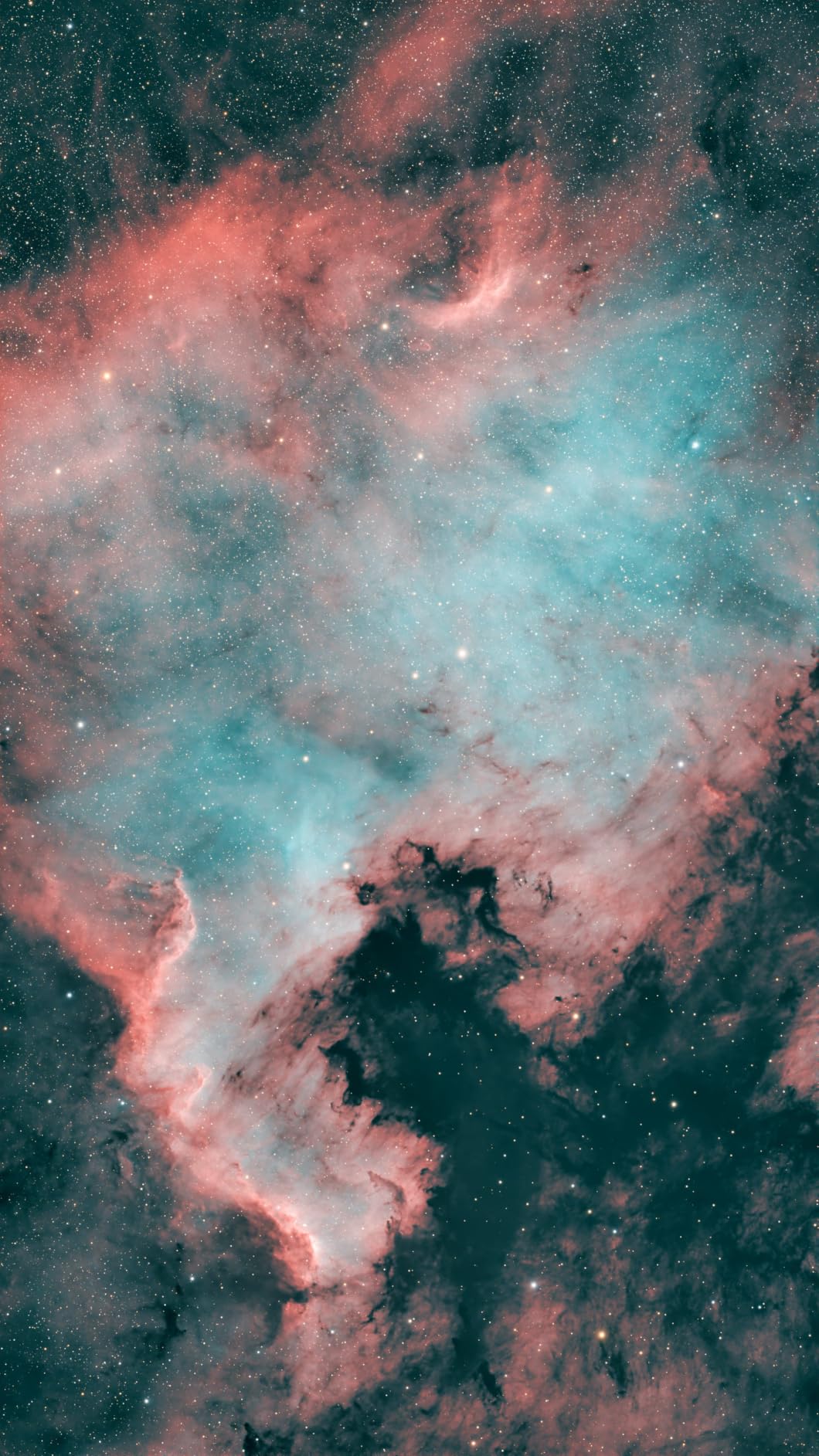
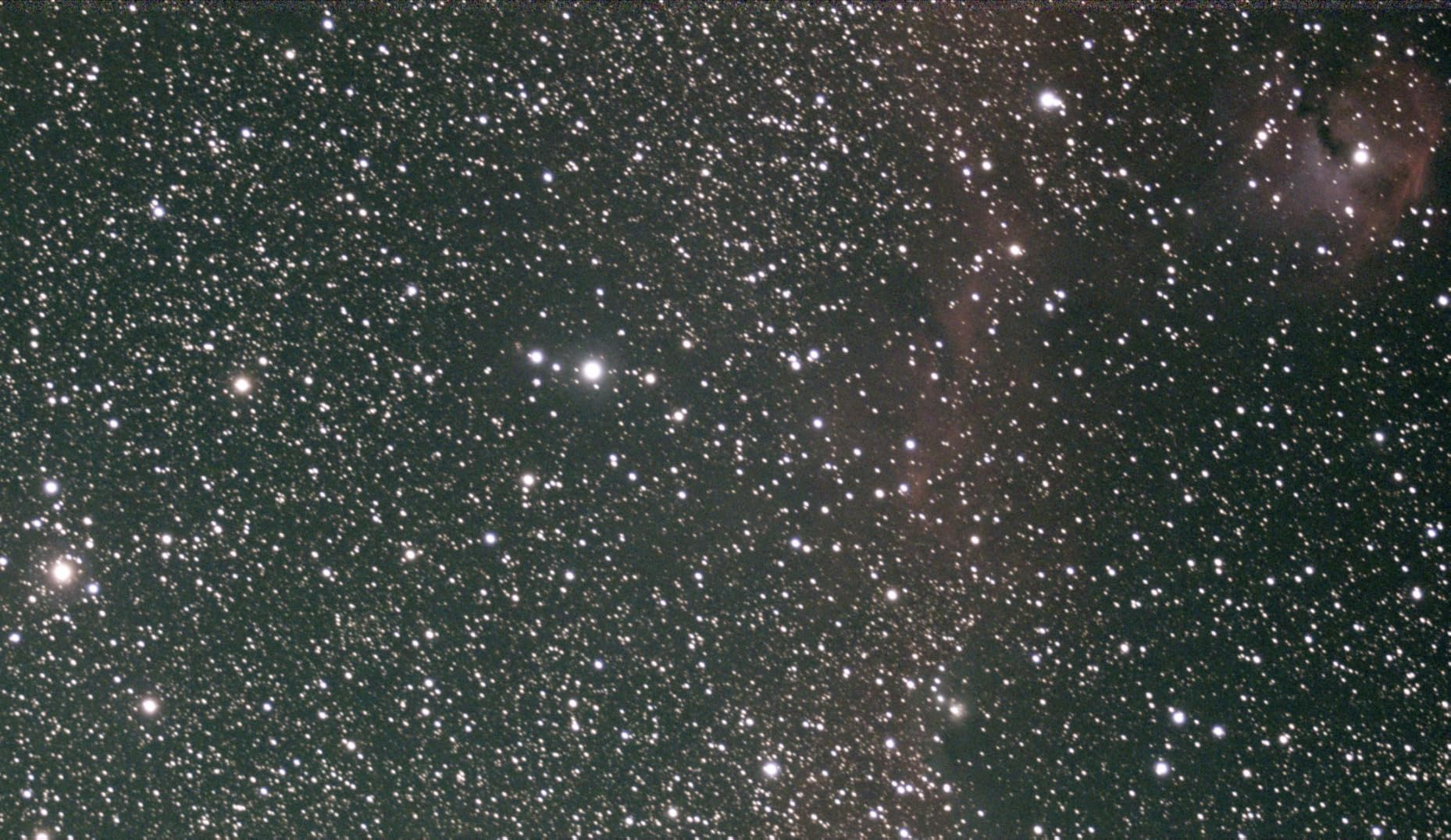
It also means the exposure ceiling moves in your favour. A wide lens magnifies error less, so you get usable frames at longer exposures, and the targets you can reach change: broad Milky Way arches, Rho Ophiuchi, the North America Nebula and large mosaics rather than small galaxies that need long glass.
The 500 rule, the 400 rule and the NPF rule
The 500 rule says divide 500 by the full-frame-equivalent focal length of your lens, and that number is your maximum untracked exposure in seconds. A 20mm lens gives 25 seconds, a 14mm gives about 35 seconds, a 50mm gives 10. Above that limit stars start to trail without a tracker.
The 400 rule is the same idea with a lower constant, and it is the more conservative version. Some photographers use it on older or lower-resolution sensors where the 500 figure feels optimistic. Most people have moved on from it, because both numbers ignore the single factor that actually decides how long you can expose: your pixel pitch.
The NPF rule is the accurate version. You divide 35 times your aperture, then add 30 times the pixel pitch in microns, then divide that total by the focal length. A 20mm f/2 lens on a body with 4.3 micron pixels gives you roughly 16.6 times the 500-rule answer, which is the number you should actually plan around. The tracker is what makes any of these rules stop mattering, because once you are tracking, the exposure length is limited by the mount, not by the stars.
Top 3 picks for wide field star trackers (October 2026)

Sky-Watcher Star Adventurer 2i Pro Pack
- 7 lb kit
- wide latitude base
- WiFi SAM Console app
- lithium batteries included

iOptron SkyGuider Pro
- 2.2 lb all-metal head
- 11 lb payload
- 20 hour internal battery
- illuminated polar scope

Sky-Watcher Star Adventurer GTi
- Full GoTo pointing
- counterweight kit included
- tripod and pier included
- built-in polar scope
The three above cover the three genuinely different ways to buy into this hobby. The 2i is the all-round kit that most people should buy, the SkyGuider Pro is the machined-metal head for anyone who cares about how the gearbox sounds and how the stars look, and the GTi is the one to buy if you would rather point the camera than hunt for it.
Every tracker compared in 2026
| Product | Specifications | Action |
|---|---|---|
| Sky-Watcher Star Adventurer 2i Pro Pack |
|
Check Latest Price |
| iOptron SkyGuider Pro |
|
Check Latest Price |
| Sky-Watcher Star Adventurer GTi |
|
Check Latest Price |
 Explore Scientific iEXOS-100-2 PMC-Eight Explore Scientific iEXOS-100-2 PMC-Eight |
|
Check Latest Price |
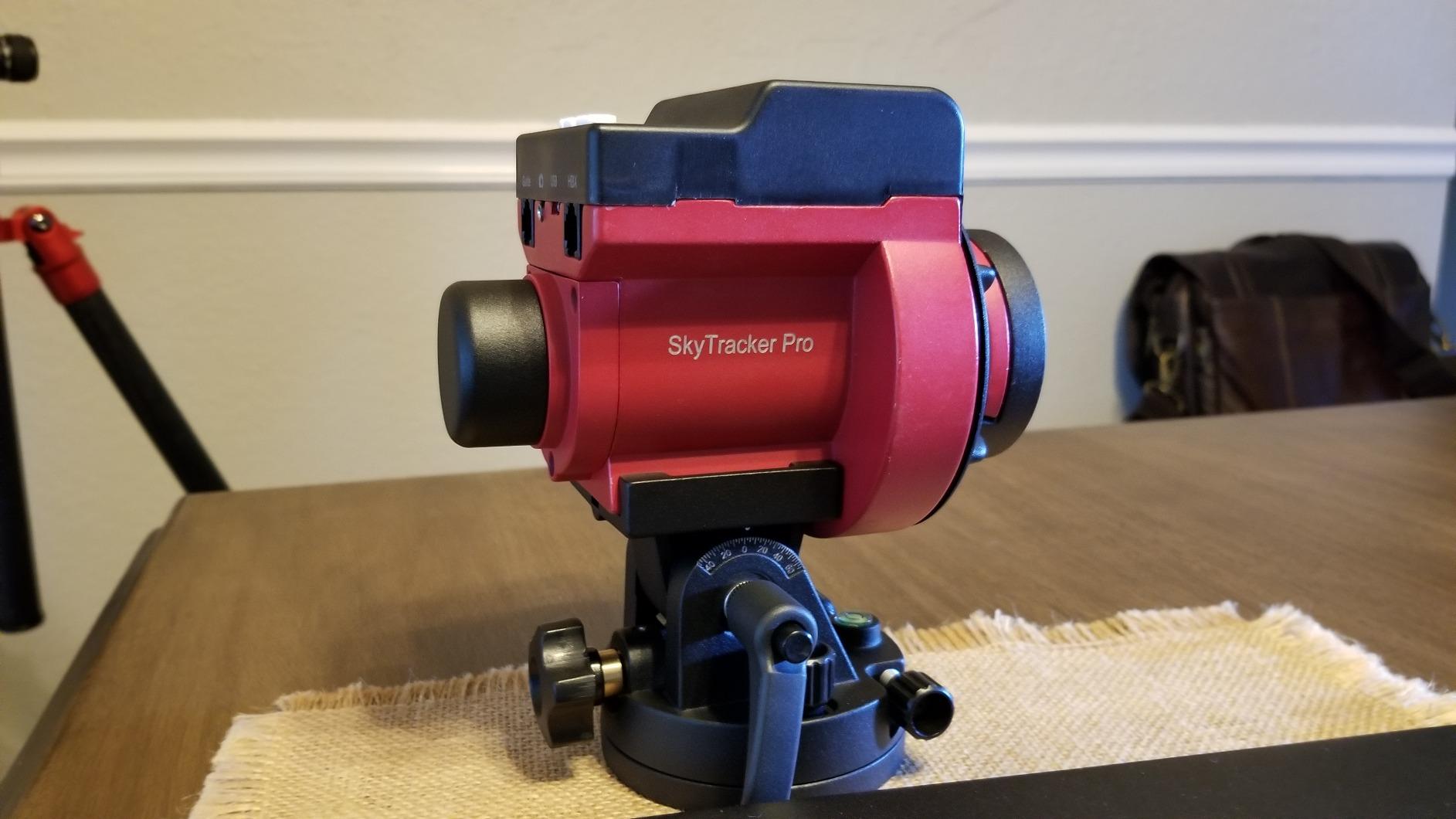
 iOptron SkyTracker Pro iOptron SkyTracker Pro |
|
Check Latest Price |
 Sky-Watcher Star Adventurer Mini Sky-Watcher Star Adventurer Mini |
|
Check Latest Price |
Two columns in that table deserve a note before the reviews. First, the payload figures are manufacturer ratings, not usable ratings, and the real number is roughly 60% of what you see. Second, three of these six track in right ascension only, which is entirely adequate for wide field and is the single fact that most often gets misunderstood by buyers.
1. Sky-Watcher Star Adventurer 2i Pro Pack – the tracker most people should buy
Sky-Watcher Star Adventurer 2i Pro Pack (S20512)
7 lb kit
11 lb class payload
Built-in WiFi with SAM Console app
Deluxe equatorial base
Lithium batteries included
Pros
- Compact and light enough for travel setups
- Accurate tracking once aligned with 2 to 3 minute exposures reported
- Built-in WiFi with Polaris position guidance
- Illuminated polar finder scope included
- Works with a wide range of camera and lens combinations
Cons
- Steep learning curve for polar alignment
- Flimsy red plastic polar illuminator housing and battery cover
- On/off mode switch is easy to toggle in transit and drains batteries
- Illuminator does not fit once the camera is mounted
- Small threaded SNAP connector ring and loose parts are easy to lose
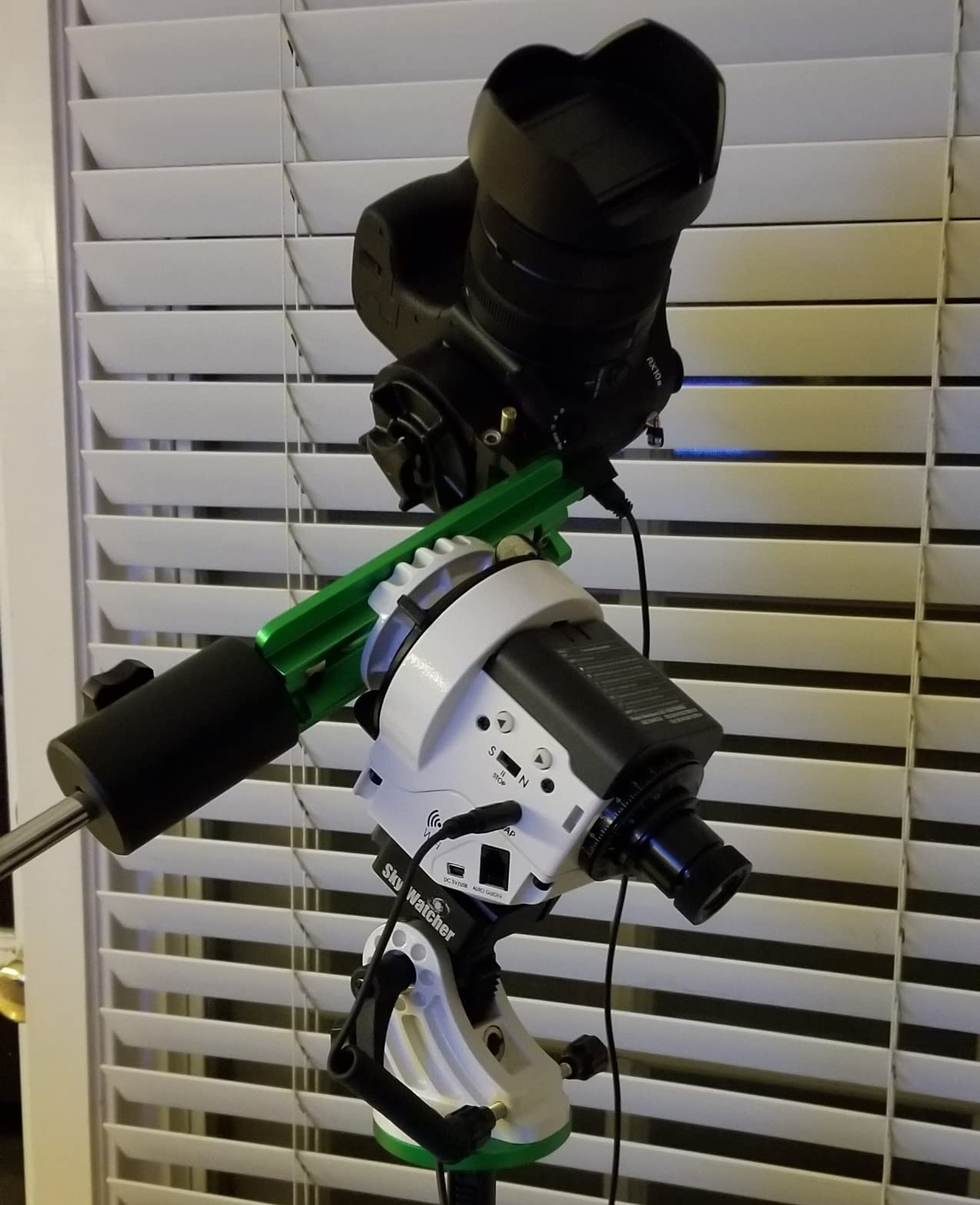
The Star Adventurer 2i is the tracker we keep recommending first, and after a month of swapping it between three different wide setups it stayed on the tripod. It is the most-reviewed unit in this roundup by a wide margin, and that matters for a category where a small share of buyers report a motor fault or a dead arrival. With 610 reviews, the failure modes are already known and already being replaced, which gives you a much better picture of long-term reliability than a thinner-reviewed model.
Tracking quality is not the concern here. Reviewers report solid 2 to 3 minute exposures with lenses well past wide field, and the motor is quiet enough that a built-in intervalometer or shutter-release trigger is the practical way to run a sequence. The deluxe equatorial base in the box is the part that matters most for a beginner, because it is a proper latitude base rather than the flimsy plastic plate you get with cheaper kits.
Where it frustrates people is alignment. Polar alignment on this unit has a genuine learning curve, and the built-in WiFi gives you the Polaris position rather than doing the alignment for you, so you are still looking through the finder and adjusting by hand. The SAM Console app is basic next to what newer mounts do, and if your workflow depends on GoTo pointing you will be disappointed.
The small-parts problem is real too. The threaded SNAP connector ring and a few other tiny pieces sit loose in the box, and the polar illuminator will not fit once your camera is mounted, so the order of operations matters. Keep the illuminator in your pocket until alignment is done. Reddit r/AskAstrophotography regulars consistently single this model out for its internal battery and its ability to dither without guiding, which is a fair summary of why it keeps outselling everything else.
Where the 2i earns its place?
This is the kit to buy if you have one tripod, one camera and no idea how many lenses you will own in three years. Everything needed for polar alignment is in the box, the base is the good one, and 7 lb is a package you can still carry up a hillside rather than drive to.
It is also the safest long-term choice, because the accessory ecosystem around it is deep. Counterweights, declination brackets, alternative bases and the upgraded polarscope all exist and all fit. If you later add a heavier lens, the head can grow with the kit instead of becoming the part you replace.
Where the 2i falls short?
The on/off switch is a real field hazard. It sits where a swinging bag or a careless hand can knock it, and that drains a fresh set of lithium cells before you have walked back to the car. Treat it like a camera and check it every time you stop.
The other weakness is build quality in the small plastic parts. The red polar illuminator housing and the battery cover flex and crack if you drop them, and the app is not going to be a deciding factor for advanced work. If you are driven by precision pointing rather than by getting a rig into the field, the GTi is the better fit.
2. iOptron SkyGuider Pro – the machined head for people who care about star shape
iOptron SkyGuider Pro Camera Mount Full Package
2.2 lb all-metal head
Up to 11 lb payload
Up to 20 hours internal battery
AccuAlign illuminated polar scope
1 year limited warranty
Pros
- Exceptionally smooth drive from a large gear with brass worm and rubber toothed belt
- Accurate and quick alignment with the included illuminated polar scope
- Roughly 15 to 20 hours of runtime per charge
- All-metal body resists vibration
- Counterweight bar and weights included in the full package
Cons
- No GoTo so targets must be found manually
- Tracks in right ascension only
- Short 8 inch counterweight bar with limited headroom for heavy setups
- Polar scope often arrives out of collimation
- No tripod or equatorial wedge included in the package
This is the pick for anyone who has been disappointed by a plastic tracker. The SkyGuider Pro is machined metal, and the difference is audible and visible. The drive uses a large gear with a brass worm and a rubber toothed belt, which is why owners describe the motor as unusually smooth, and why star shapes stay round for the length of a long sub.
At 2.2 lb for the head, it is also the lightest metal-bodied option here and the easiest to justify as a travel piece. The internal rechargeable battery is rated at up to 20 hours of operation at 20C, and reviewers in the field report getting most of a full night out of a single charge, which comfortably covers a wide-field session without a power bank.
The alignment story is the best of the group. The integrated AccuAlign dark-field illuminated polar scope gets you aligned in a couple of minutes once you know what you are doing, and the alt-az adjustable base covers latitudes from -30 to 65 degrees with plus or minus 5 degrees of azimuth, so it works from equatorial regions without a wedge.
Owners also report it handling far more than wide field: 2 minute subs with a 500mm lens and 6 minute Milky Way wide-field frames. That is well beyond what a 14mm setup needs, which tells you how much margin a properly balanced wide-field rig has on this head.
Where the SkyGuider Pro earns its place?
Buy this if your images are limited by star shape rather than by light. When you stack 30 sub-exposures and upscale, a mount with a smoother drive keeps the stars round and lets you get away with less total integration time. For anyone who has already shot untracked and decided they want more, this is the natural upgrade.
The specification that matters most here is the 11 lb payload when balanced. That covers any wide-field combination, plus a small refractor, without you approaching the point where the drive starts to suffer. The battery life means you can leave the power bank in the bag for a backup role rather than a primary one.
Where the SkyGuider Pro falls short?
There is no GoTo. You point the camera yourself, which is a genuine time cost if you are not good at star hopping and a genuine time saver if you are. It also tracks in right ascension only, so an autoguider can only correct one axis, which matters much less at wide field than it does on a long refractor.
Two assembly details catch people out. The polar scope frequently arrives out of collimation with a loose eyepiece that needs an O-ring, and the bundled hex key set does not include the 1.5 mm key you need to fix it. The 8 inch counterweight bar is also short, so heavy DSLR and telephoto combinations need the separate weight set. None of that matters for a 14mm ultrawide, all of it matters if you plan to grow.
3. Sky-Watcher Star Adventurer GTi – the complete GoTo kit
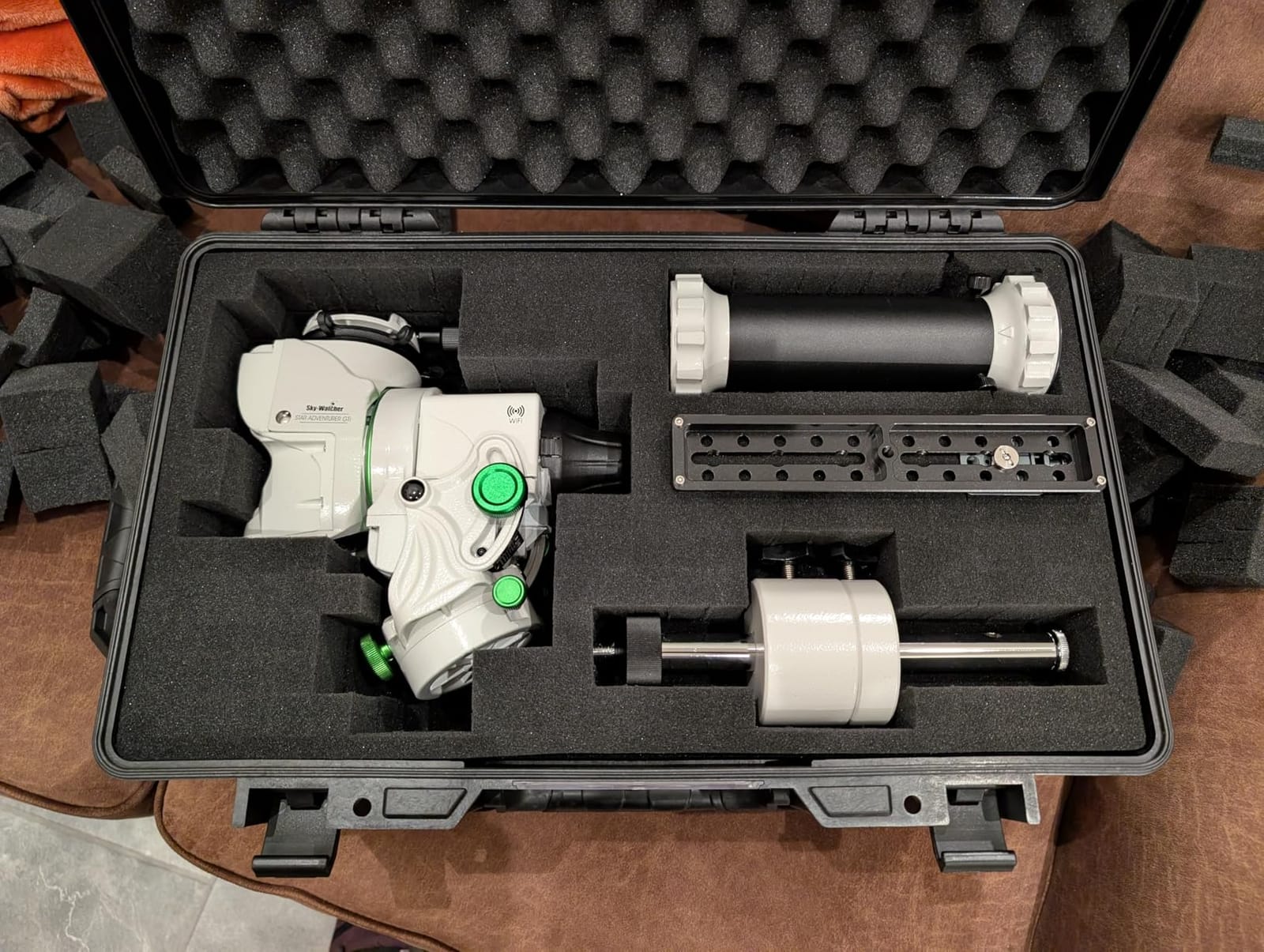
Sky Watcher Sky-Watcher Star Adventurer GTI Mount Kit with Counterweight, CW bar, Tripod, and Pier Extension – Full GoTo EQ Tracking Mount for Portable and Lightweight Astrophotography
26 lb full kit
Full GoTo pointing
Built-in illuminated polar scope
Counterweight bar and 5 lb weight
Tripod and pier extension included
Pros
- Only mount here with full GoTo pointing so you can acquire targets without hunting
- Complete package with head tripod pier extension counterweight bar and weight
- Built-in WiFi for smartphone-driven GoTo and alignment
- Built-in illuminated polar scope
- Two-year limited warranty from Sky-Watcher USA
Cons
- Heaviest and bulkiest kit here at 26 lb
- Highest price point of the trackers compared
- Requires a smartphone and app for GoTo functions
- Pier extension and full tripod take longer to assemble than a bare head
The GTi is the only tracker in this roundup with real GoTo pointing, and that single feature changes who it suits. Instead of swinging a 14mm lens around until the Milky Way core lands in the corner of the frame, you ask the mount to go somewhere and the camera arrives. For a wide-field rig pointed at a specific target like Rho Ophiuchi, that is the difference between a two-minute setup and a twenty-minute one.
It also arrives complete. The kit includes the mount head, a matching tripod with a pier extension, an illuminated polar scope, a counterweight bar and a 5 lb counterweight, and a two-year limited warranty from Sky-Watcher USA. There is nothing else to buy before your first night out, which removes the accessory cost that inflates the real outlay on some of the other options here.
Wide field is where the counterweight earns its keep. At 14mm to 35mm on a full-frame body you are close to balanced as it is, and the included weight and bar let you trim the balance properly instead of hanging a bag of kit off the back. Reviewers also note the head itself tracks cleanly once aligned.
The same WiFi app that handles GoTo also handles alignment, so the illuminated polar scope and the pointing routine live in one place. That is a coherent setup rather than the split workflow you get on some of the lighter heads.
Where the GTi earns its place?
It suits people who are not natural star hoppers, or who want to frame a known target the same way twice in a row across several nights. A fixed GoTo position is genuinely useful for nightscapes, where the foreground and the sky need the same composition on every frame of a sequence.
It is also the most complete starting point here. Head, tripod, base, counterweight and polar scope in one box, with a two-year warranty, means fewer failure points on your first season than assembling a head and a separate tripod from different ecosystems.
Where the GTi falls short?
At 26 lb it is the heaviest and bulkiest kit in this lineup, and that is the whole problem for wide field. The entire appeal of a tracker is that it converts a fast wide lens into a real astrophotography rig without adding the bulk of an equatorial mount. Carrying this to a dark site rather than driving to one changes the calculus completely.
It is also the most expensive option here and the most app-dependent, since the GoTo functions need a phone. Assembly is slower than a bare head, which undercuts the grab-and-go case that made people choose a tracker in the first place. On CloudyNights threads the GTi keeps being recommended for people who want to grow beyond wide field, and that is exactly the scenario where its size makes sense.
4. Explore Scientific iEXOS-100-2 PMC-Eight – the only two-axis option here
iEXOS-100-2 PMC-Eight Equatorial Tracker System Tripod and Mount for Astrophotography with WiFi and Bluetooth Compatible
Dual-axis tracking
PMC-Eight eight processor control system
ExploreStars GoTo app
Sight-hole polar alignment
Rated around 19 lb payload
Pros
- Dual-axis tracking with a clutch mechanism for alignment adjustments
- Reported autoguiding variation around 1.5 arcseconds
- Very quiet during tracking and lightweight to carry
- Works through ASCOM ASIAIR and StellarMate for 3 to 5 minute guided subframes
- Complete mount and tripod system in one package
Cons
- ExploreStars app criticised for crashes and broken star alignment
- No usable polar scope so alignment relies on a sight hole through the RA axis
- Barely any azimuth adjustment out of the box
- Requires eight C batteries and appears voltage-hungry
- Distributor support and spare parts availability are inconsistent
The iEXOS-100 is the odd one out, and that is both its appeal and its problem. It is a full small equatorial mount head with a tripod, and it tracks in declination as well as right ascension, with both axes on clutched worm gear drives and quiet belt-driven stepper motors. That makes it the only two-axis tracker in this roundup.
Mechanically it is the strongest performer here. Owners report autoguiding variation of roughly 1.5 arcseconds with a RedCat 51 and a cooled camera driven by an ASIAIR, and 3 to 5 minute guided subframes with no visible drift when it is controlled through ASCOM, ASIAIR or StellarMate. Wide field on this mount is limited only by your patience, not by the mechanics.
The PMC-Eight control system runs eight independently operating processors, which is a lot of headroom for timing accuracy, and the clutch mechanism on both axes makes balancing quick and repeatable. It is also quiet enough during tracking that you can sit beside it in a field without a sound.
Everything above assumes you drive the mount from good software. That assumption is doing a lot of work, because the bundled ExploreStars app is the most common source of complaints across the reviews, and the low 3.9 rating is a software and workflow verdict rather than a mechanical one.
Where the iEXOS-100 earns its place?
It is the right choice if you plan to autoguide at all, or if you might attach a small refractor later. Two-axis tracking with clutches is a genuine step up from anything else on this list, and at a rated payload around 19 lb it has enormous headroom for a wide-field rig that later grows a 200mm lens.
It is also a complete system. Head and tripod in one package, and the cheapest complete mount-and-tripod combination in this lineup, which is worth knowing if you are comparing against assembling a head separately.
Where the iEXOS-100 falls short?
Alignment is the weak point. There is no usable polar scope, so you are relying on a sight hole through the RA axis, and reviewers describe that method as the worst of the group. Azimuth adjustment out of the box is minimal, with the adapter sold separately, which is a poor first impression for a beginner.
The app is the bigger issue. Crashes, broken star alignment and a poor interface on both Android and Windows are the recurring complaints, and the mini USB port is not accessible from the factory, so USB control is considerably more stable than WiFi once modified. It also runs on eight C batteries and appears voltage-hungry. If you are not going to drive it with external software, pick something else.
5. iOptron SkyTracker Pro – the budget wide-field workhorse
iOptron SkyTracker Pro Camera Mount with Polar Scope, Only
6.6 lb payload
3.3 lb mount weight
Internal rechargeable battery
Sidereal half-sidereal solar and lunar rates
600 second worm period with four bearings
Pros
- Lowest price point among the trackers compared here
- Near-silent tracking with an integrated rechargeable internal battery
- Achieves 60 second to 5 minute exposures without trailing on wide and moderate focal lengths
- Many fine-tuning knobs for alignment plus a dimmable polar scope LED
- Feels more robust than the earlier cast-metal generation
Cons
- 3 kg payload limit means heavy telephoto glass needs the optional counterweight package
- Dovetail base is not Arca-Swiss compatible and is hard to make stable without a plate
- A separate ball head is required and not included
- A separate paid app is needed to know where to place Polaris
- Flat base will not index on tripods with a fixed polar north mark
The SkyTracker Pro is the cheapest route into tracked wide-field work, and the arithmetic is hard to argue with. It carries 6.6 lb, which is a full-frame body with almost any wide or moderate lens, and it does it for less than half of what the metal heads cost. If your widest lens is 14mm to 24mm and you are starting out, this is enough tracker.
It charges over micro USB and reaches 80% in about five hours, and the DC servo motor drive is near-silent. Reviewers report 60 second to 5 minute exposures with no trailing on wide and moderate focal lengths, so the head has plenty of headroom for the range this article is about. The four tracking speeds include solar and lunar rates and both hemispheres, which makes it a usable platform for eclipse work too.

For foreground blending, the half-sidereal sky and landscape rate is a real feature rather than a novelty. It tracks at half the sidereal rate so the sky stays fixed while the landscape drifts, which lets you expose a tree line against a sharp Milky Way in a single frame instead of blending two exposures later. The jog forward and reverse button makes slow, deliberate composition possible after the alignment is done.
Alignment is where the adjustment knobs earn their place. There are several fine-tuning controls around the mount and a dimmable polar scope LED, so you can get a genuinely accurate alignment rather than an approximate one. On Reddit r/AskAstrophotography this is repeatedly named as the correct cheap wide-field tracker, and that consensus holds up.
Where the SkyTracker Pro earns its place?
It is the pick if the total cost of getting into tracked astrophotography is the main obstacle. One mount, one ball head, and a wide lens is the whole rig, and the exposures it supports are long enough to produce a clean stacked result rather than a noisy single frame.
It is also a complete travel piece at 3.3 lb, and the padded bag is included. The half-sidereal rate makes it the best of the budget options for nightscapes specifically, because foreground blending is a wide-field technique first and foremost.
Where the SkyTracker Pro falls short?
The accessories are the catch. A ball head is required and not included, the optional counterweight package is needed for heavier telephoto lenses, and the polar scope helper is a separate paid app, which is an odd way to design an entry-level product. Budget for the extras before you budget the mount.
The dovetail base is not Arca-Swiss compatible, so fitting it to a decent tripod head means adding a plate to make it stable, and the rubber cushion at the swivel head mounting point can slip and reduce the contact area with heavier loads. The flat base also will not index on tripods that have a fixed polar north mark. None of this stops a 14mm ultrawide working well. All of it will annoy you as the kit grows.
6. Sky-Watcher Star Adventurer Mini – the smallest head that still tracks properly
Sky-Watcher Star Adventurer Mini – Motorized DSLR Night Sky Tracking Mount For Nightscapes, Time-lapse, and Panoramas
1.5 lb mount head
6.6 lb payload capacity
AA compartment rated up to 24 hours
Polar scope with illuminator included
Ball-head adapter included
Pros
- Smallest and lightest mount here at 1.5 lb and roughly the size of a 35mm lens
- Solid build quality with no compromise despite the mini format
- Accurate tracking with 2 minute subs at 70mm and a 5 minute 300mm exposure with no trailing
- Doubles as a smooth time-lapse panning platform
- Good battery life on two AA batteries or from a USB phone charger
Cons
- Starting sidereal tracking requires the phone app as there is no dedicated tracking button
- Android app reported to crash on launch on Android 11 and above
- Own WiFi hotspot can be difficult to connect to when other networks are nearby
- Battery compartment has reports of units failing to run on AA power
- Manual is thin so setup needs self-teaching
At 1.5 lb the Star Adventurer Mini is the size of a 35mm lens, and it is the only tracker in this roundup that genuinely disappears into a photo backpack. If your wide-field work happens on a hike rather than in a driveway, that physical fact outweighs every other spec on this list.
It is also a smaller version of the 2i rather than a cheaper one, and reviewers confirm the tracking holds up. Reported results include 2 minute subs at 70mm with perfectly round stars and a 5 minute 300mm exposure with no trailing at all, which is far beyond what a 14mm wide field needs. The brass and aluminium gearing is the same approach as the larger head, so the sound and the star shape follow.
Power is the one place where it differs usefully from the others. The AA battery compartment is rated for up to 24 hours, and there is a 5V mini-USB input for running from a phone charger or a power bank. Two sets of lithium AAs will run a long night, and unlike a built-in cell you can carry spares when the temperature drops and capacity falls away. Forum regulars point out the tradeoff clearly: AAs last longer overall but lose capacity in the cold, while a built-in lithium pack is more convenient and a single point of failure.
The ball-head adapter is included, the polar scope and its illuminator are included, and the SynScan app has an auto-run setting that repeats the last program without the phone, so you are not completely dependent on a screen once the sequence is started.
Where the Star Adventurer Mini earns its place?
It is for the person who walks in to shoot. Hiking to a dark site, carrying a camera bag up a slope, working from a vehicle with a small boot: the Mini is the tracker that does not make those decisions hard. It also doubles as a smooth time-lapse panning platform for GoPro work when the night sky is not the plan.
Despite the name, nothing about the tracking is mini. For a 14mm or 20mm wide setup it is a genuinely capable head, and the reported exposure results prove it.
Where the Star Adventurer Mini falls short?
Control is app-dependent. There is no dedicated tracking button, so starting sidereal tracking means the phone app, and several Android users report the app crashing on launch on Android 11 and later. Its own WiFi hotspot is also hard to connect to when other wireless networks are nearby, which is exactly the situation you will be in at a busy campsite or car park.
There is a cluster of early quality-control complaints too, with units arriving not working or dropping the WiFi connection, and reports of the battery compartment failing to run on AA power. Most of these were resolved with replacements, and the thin manual means setup is partly self-taught. A latitude wedge is also recommended to make alignment easier. Treat it as a capable head with a learning curve, not a finished product.
How to choose a star tracker for wide field?
Work through these five criteria in this order and you will not overspend. Payload first, then portability, then power, then alignment method, then control. Most mis-purchases happen because people start at the end of the list and buy pointing features for a rig they have not balanced properly.
1. Payload, and why you need headroom. Add up your camera body, your lens and your ball head, then keep the total under roughly 60% of the rated payload. The rating is a stall point, not a working point, and a mount running near its limit develops gear-generated errors that look exactly like bad alignment. Every wide-field rig in this article sits comfortably under that line, which is why they all produce round stars at 2 to 3 minutes.
2. Focal length ceiling. This is the mapping no competitor publishes, and it is the fastest way to match a lens to a head. Stay under the 60% line on the horizontal too.
14mm: every tracker in this roundup handles this comfortably. Pick on portability and price.
20mm to 24mm: all six. The 3 kg and 6.6 lb heads are still fine with a light wide prime.
35mm: all six comfortably. This is the point where a metal head starts earning its cost.
50mm: the three metal-bodied units, plus the dual-axis mount, give you the safest margin.
85mm: favour the metal heads and the dual-axis mount. Budget heads are at the edge of their payload with a heavier zoom.
135mm: the SkyGuider Pro, the GTi and the iEXOS-100 are the sensible picks. Use a counterweight and balance carefully.
3. Portability. Weight is not an abstract number, it is whether you take the gear to a dark site or shoot from your own back garden. The Mini at 1.5 lb and the SkyGuider Pro head at 2.2 lb are hiking and carry-on answers. The GTi at 26 lb is a drive-to-the-dark-site answer. If you have never done a full night under a dark sky, the lighter options will get you there more often, and frequency beats focal length. Getting to the site is often more of a logistics job than a gear one: if you are setting up on farmland, our guides to tower stands for field edges and rock rakes for field cleanup cover the two problems that come up most often before you have even unpacked the tracker.
4. Alignment method. An illuminated polar scope is the fastest, most forgiving route and is included on the 2i, the SkyGuider Pro, the GTi and the Mini. An app that tells you where Polaris sits works but adds a screen to the process. A sight hole is the worst of the three and is what the iEXOS-100 offers. If you are in the Southern Hemisphere, where Polaris is not visible at all, weighted tools become much more important, and a mount with a well-supported wedge system is worth paying for.
5. Power. Built-in lithium is the most convenient and the least resilient, since a dead cell ends the night. AA compartments accept spares and cope better with cold capacity loss, at the cost of carrying batteries. Whichever you choose, the accessories below matter more than the mount on a long night.
Single axis or two axis. For wide field, single-axis right-ascension tracking is genuinely enough. Community consensus treats it as the correct answer for Milky Way work, and two-axis guiding only becomes necessary as focal length or payload rises. The iEXOS-100 is here because some people want the headroom, not because wide field demands it.
Field rotation is the limit nobody mentions. A right-ascension-only mount does not correct in declination, so over a long exposure the field frame slowly rotates on the sensor. At 14mm that rotation is spread across the whole frame and stays invisible. At 135mm it becomes obvious on the corners. This, not motor noise, is the real reason a wide lens gets you a wider exposure ceiling.
The half-sidereal rate for foreground blending. If your nightscape needs a sharp foreground under a sharp sky, check that the tracker offers a sky-and-landscape or half-sidereal rate. The SkyTracker Pro, the SkyGuider Pro and the 2i all do. It lets you expose a lit tree line and a tracked sky in one frame rather than compositing two exposures.
The accessories you will actually buy. Every kit here needs a solid tripod and a ball head, and the cheap mounts need those added. Beyond that: an intervalometer or a shutter release trigger so you are not touching the camera during a frame, a spare battery strategy, a dew heater band for long exposures, and red-light discipline. For gear that gets handled in the cold and in the dark, it is worth reading our field repair kit recommendations before you load the car, because something will always rattle loose on a rough track.
When to skip a tracker entirely. If your widest lens is very fast, your site is genuinely dark, and you are happy stacking 15-second frames, an untracked mount on a sturdy tripod will serve you and save the weight. Trackers pay for themselves when you want fewer, longer frames and cleaner signal, not when you want more total integration time.
When to step up past this list. The moment you want to guide, dither and stack multi-minute sub-exposures, a strain-wave equatorial mount such as the ZWO AM3 or AM5 is the natural next purchase. It handles two axes properly in a package closer to tracker weight than to mount weight, and it solves the field rotation and declination drift problems that a single-axis head cannot.
Frequently Asked Questions
What is the 500 rule for astrophotography?
The 500 rule says divide 500 by the full-frame-equivalent focal length of your lens, and the result is your maximum untracked exposure in seconds. A 20mm lens gives 25 seconds and a 14mm gives roughly 35 seconds. It assumes a full-frame sensor and ignores pixel pitch, which is why the more accurate NPF rule exists.
What is the 400 rule in astrophotography?
The 400 rule applies the same calculation as the 500 rule with a lower constant, so it gives a more conservative maximum exposure. It is still used on older or lower-resolution sensors where the 500 figure feels optimistic. Most photographers now plan around the NPF rule, which accounts for aperture and pixel pitch and is the most accurate of the three.
What is a good budget star tracker for astrophotography?
The iOptron SkyTracker Pro is the strongest budget choice for wide field, carrying 6.6 lb with an internal rechargeable battery and half-sidereal sky and landscape rate at 3.3 lb. The Sky-Watcher Star Adventurer Mini is the lightest option at 1.5 lb with a 6.6 lb payload. Right-ascension-only tracking is entirely sufficient for wide-field work.
Do I need autoguiding for wide field astrophotography?
Usually not. At 14mm to 35mm a properly polar-aligned single-axis mount produces round stars for 2 to 3 minute exposures without guiding, and the trailing you see is usually alignment or balance error rather than a hardware fault. Guiding becomes worthwhile once focal length or payload rises enough that declination error and field rotation start to show.
Why are my star tracker images trailing?
In almost every case it is polar alignment or an unbalanced payload, not the mount. Check the rated payload and keep your load near 60% of it, confirm the mount is balanced in both axes, and verify alignment in a dark-field or illuminated polar scope. Frequent forum reports describe trailing blamed on the mount that turns out to be an alignment problem.
Are lithium or AA batteries better for a star tracker?
A built-in lithium battery is the most convenient because there is nothing to carry, but it is a single point of failure if the cell dies in the cold. An AA compartment accepts spares and recovers better from low temperatures, at the cost of extra bulk. Many users carry both and treat the lithium pack as primary with AAs as backup.
The best star tracker for your wide field kit
For most people buying one tracker to do wide field astrophotography with a 14mm to 35mm lens, the Sky-Watcher Star Adventurer 2i Pro Pack is the right answer. It is the most complete and best-proven kit in this roundup, the good latitude base is in the box, and the field reports consistently back 2 to 3 minute exposures that stack into a clean wide-field result.
Choose the iOptron SkyGuider Pro instead if star shape at longer sub-exposures is what frustrates you, and you want a machined metal head with a long-running internal battery. Choose the Star Adventurer GTi if you would rather point the camera than find the target, and do not mind driving to the dark site. Choose the iEXOS-100 if you want two-axis guiding and will drive the mount with proper software. Choose the SkyTracker Pro on a budget, and the Star Adventurer Mini if the gear has to fit in the backpack.
Whatever you pick, keep the load well under the rated payload, get the polar alignment right, and let the wide lens do what it does best. That is the whole game in 2026, and a tracker only makes the rest of it easier.