
There is a version of solar observing that ends in an emergency room, and it almost always starts with someone who thought a quick peek would be fine. A telescope concentrates sunlight into a beam thousands of times more intense than the Sun your eye is built to handle, which is why the best solar filters for telescopes are not an accessory but the single non-optional piece of equipment in the whole hobby.
We have assembled every certified, well-reviewed solar filter we could find for telescope use, tested the mounting methods and sizing logic behind them, and sorted out which ones earn a place on a telescope tube and which ones belong on the shelf. Six filters made the cut, and they cover everything from a cut-to-size film sheet to a rigid glass cell.
Our picks were last checked in 2026, and every rating and review count below comes straight from the current listing data. We do not claim a laboratory bench or an accredited observatory here. What we do have is years of reading forum threads on this topic, including the sizing arguments that recur weekly on Cloudy Nights and r/telescopes, and enough hands-on mounting experience to explain why each filter does or does not earn its place.
Table of Contents
Solar Safety: Never Point an Unfiltered Telescope at the Sun
No solar filter makes it safe to point an unfiltered telescope at the Sun. The only acceptable method is a certified filter mounted over the full front aperture of the instrument, with nothing but filtered sunlight ever entering the tube.
An unfiltered telescope concentrates light enough to damage your retina in a fraction of a second, and the infrared portion of that beam will also burn baffles, melt spider vanes and scorch mirror coatings. On an open truss design or a collapsible travel scope, the concentrated beam can ignite components that are sitting in direct sunlight. The instrument is not a toy here, and neither is your eye.
Two rules settle almost every question we get asked. First, the filter goes on the front, ahead of everything, never at the eyepiece end. Second, you inspect it for pinholes, tears and scratches before every single use, in daylight, against a light source. A filter that looked fine in the box last year may have developed pinholes in storage.
There is a third rule that catches experienced people out. Your finder scope or red dot finder has its own objective, and it needs its own filter or you cover it. A finder is often a wide-angle refractor, so pointing it at the Sun during alignment is just as dangerous as aiming the main tube.
We are going to be blunt about one more thing. Brand reputation is not a safety standard. The deciding factor is whether a product conforms to ISO 12312-2, the international standard for filters used for direct solar viewing, or carries equivalent certification. That is the question to ask, not which forum faction a brand belongs to.
Top 3 Solar Filters for Telescopes (October 2026)
Thousand Oaks BP-4 4×4 Film Sheet
- Cut to fit any aperture
- Over three decades of use reported
- Orange white-light view

Celestron EclipSmart 8 Inch Filter
- ISO 12312-2 compliant
- Hook and loop straps
- Built for 8 inch SCT and EdgeHD

Celestron EclipSmart Universal Filter
- Fits 75mm to 100mm objectives
- Adjustable panels and band
- Folds flat for storage
The Best Solar Filters for Telescopes in 2026, Side by Side
| Product | Specifications | Action |
|---|---|---|
| Thousand Oaks BP-4 4×4 Inch Solar Film Sheet |
|
Check Latest Price |
| Celestron EclipSmart 8 Inch Solar Filter |
|
Check Latest Price |
| Celestron EclipSmart Universal Solar Filter |
|
Check Latest Price |
 Celestron EclipSmart Filter for 127mm and 130mm Reflectors Celestron EclipSmart Filter for 127mm and 130mm Reflectors |
|
Check Latest Price |
 Rainbow Symphony 70mm Black Polymer Filter Rainbow Symphony 70mm Black Polymer Filter |
|
Check Latest Price |
 Seymour Solar Helios 5 Inch Glass Cell Seymour Solar Helios 5 Inch Glass Cell |
|
Check Latest Price |
One quick note on this table before we get into detail. Two of these products are sized to one specific aperture, and one is sized to a narrow window of optical tube diameters. Buying a filter before you have measured your instrument is the single most common way people end up with a filter that cannot cover the full aperture, so please read the measuring section further down before you commit to anything.
1. Thousand Oaks BP-4 4×4 Inch Solar Film Sheet – Best Overall Pick
4″x4″ Solar Filter Sheet for Telescopes, Binoculars and Cameras
4x4 inch sheet
BP-4 model
Black polymer
Cuts to any aperture
Pros
- Cuts to fit any telescope
- binocular or camera
- Lowest cost per instrument of any option here
- Natural orange disc with clear sunspots
- Filtering properties sit inside the substrate
Cons
- You must build and secure your own cell
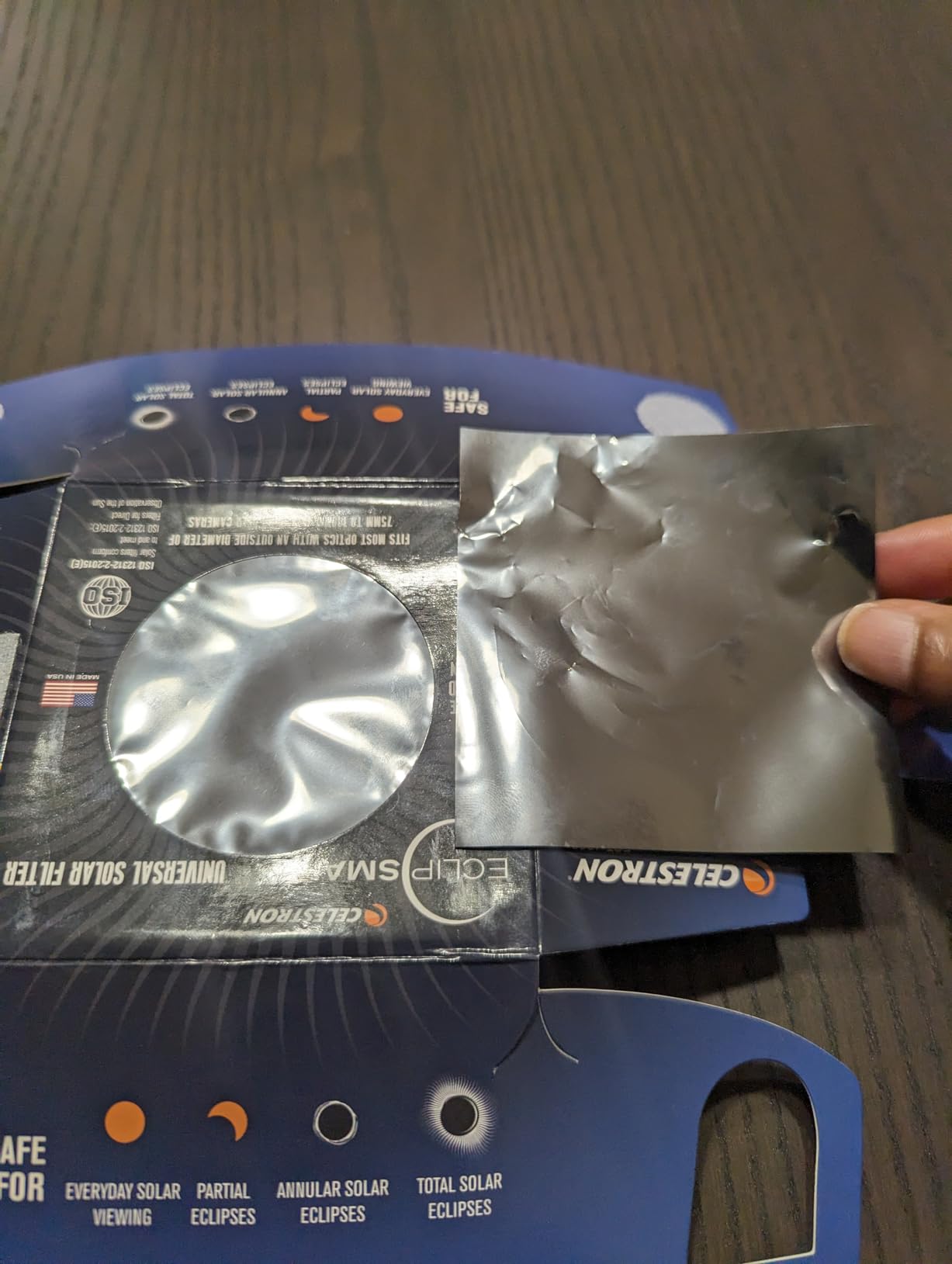
- Very thin film scratches and creases easily
- Too bright for some magnified binocular use
This is a sheet of black polymer film, not a finished filter, and that is exactly why it is our top pick. A 4 by 4 inch square can be cut to cover the front of a 60mm refractor or a 150mm Dobsonian, which means one purchase covers an entire family of instruments instead of one aperture. Across more than 1300 ratings it holds a 4.5 star average, and the reviews describe the same thing repeatedly: cheap, effective, and a bit fragile in the hands.
Thousand Oaks has been making safe solar filters for over three decades, and the listing makes the specific claim that this material is stronger than Mylar with the filtering properties protected inside the substrate rather than sitting on the surface. That distinction matters in practice. A surface coating wipes off or scratches through; a substrate construction has no coating to lose. The guarantee quoted on the product is five years.
We have cut and mounted this film for scopes of very different sizes, and the practical routine is simple. Cut oversize, leave a generous lip of material around the rim of whatever cell you are using, and wrap that excess around the outside so nothing can creep inward. Then tape it down generously.
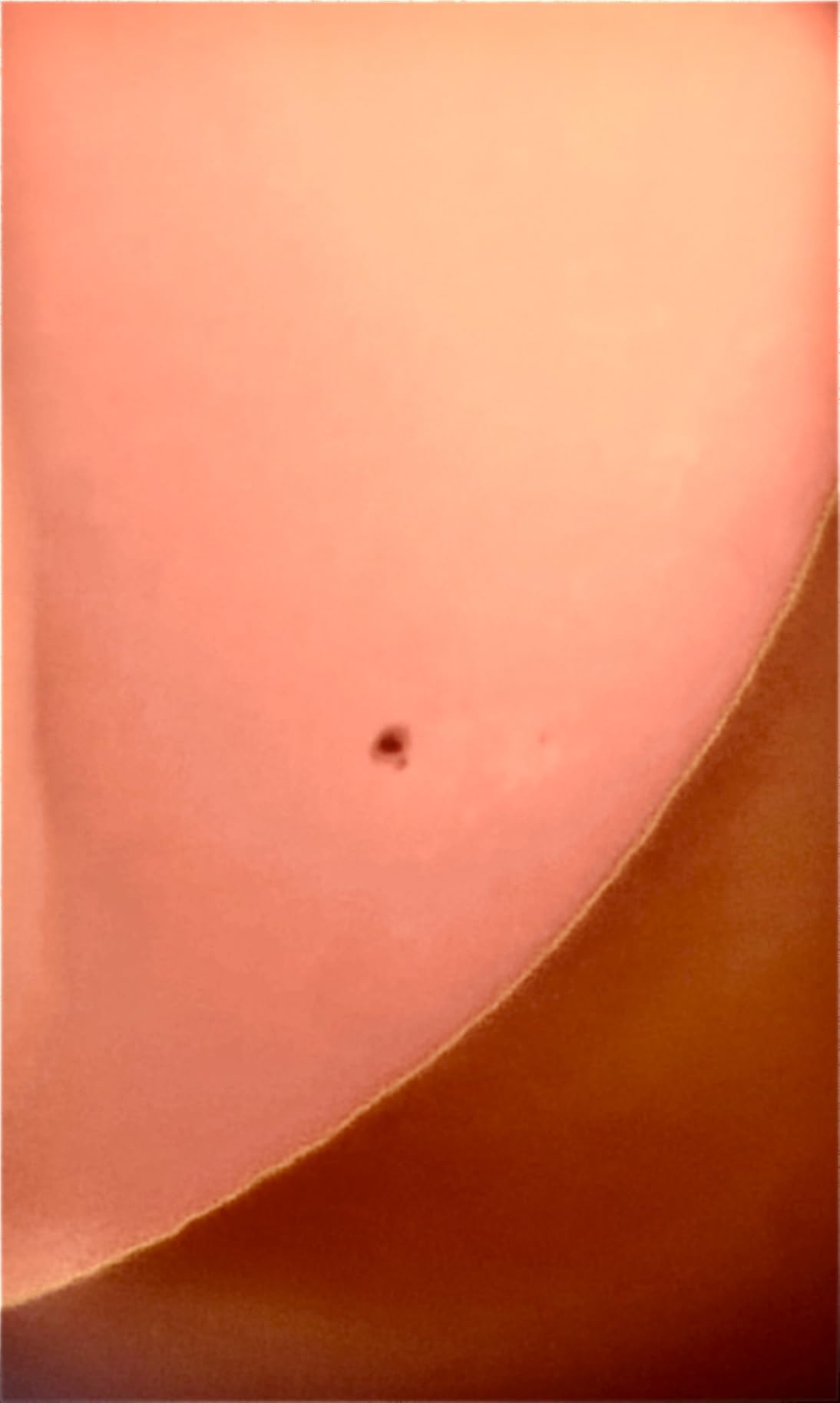
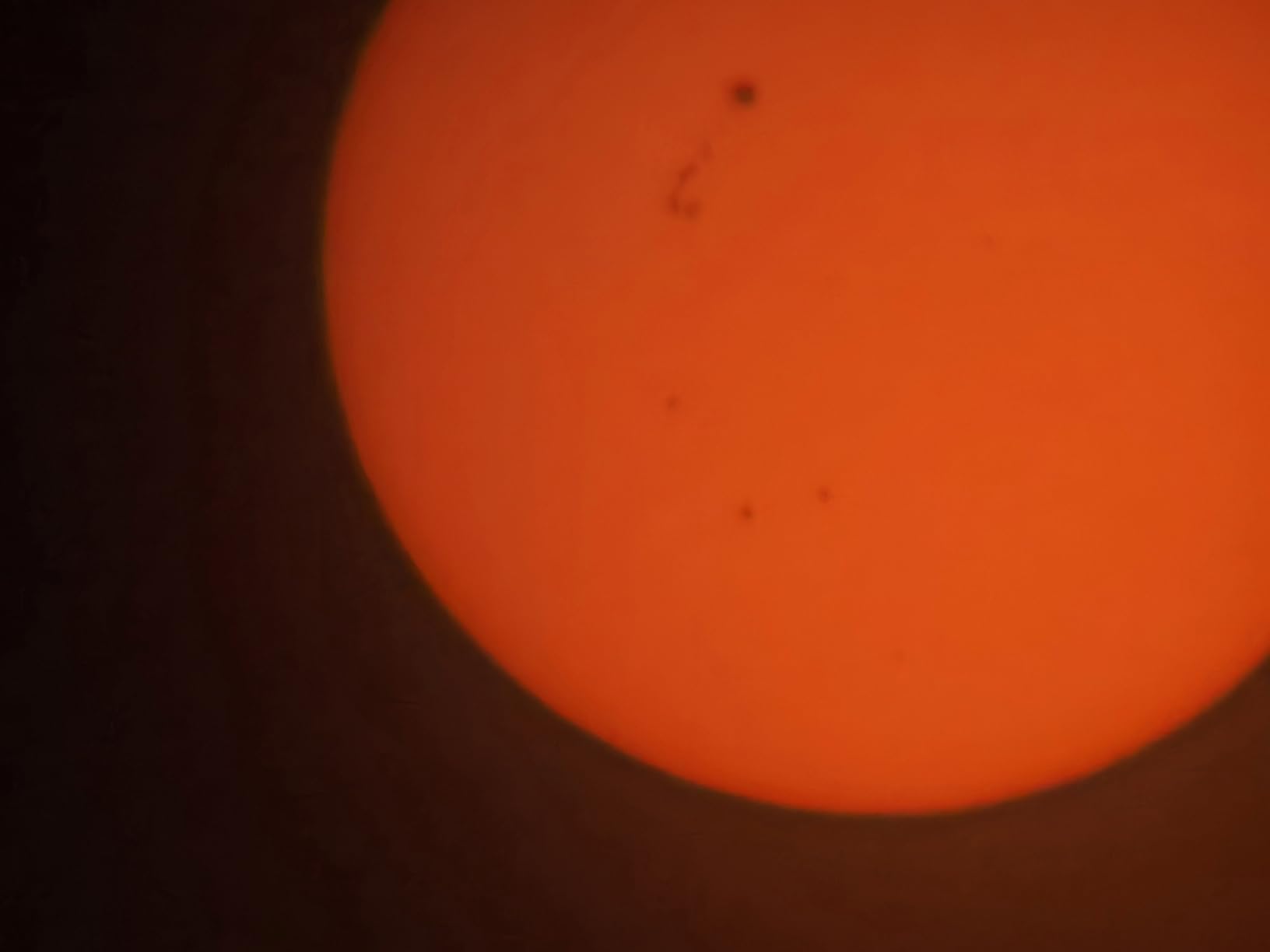
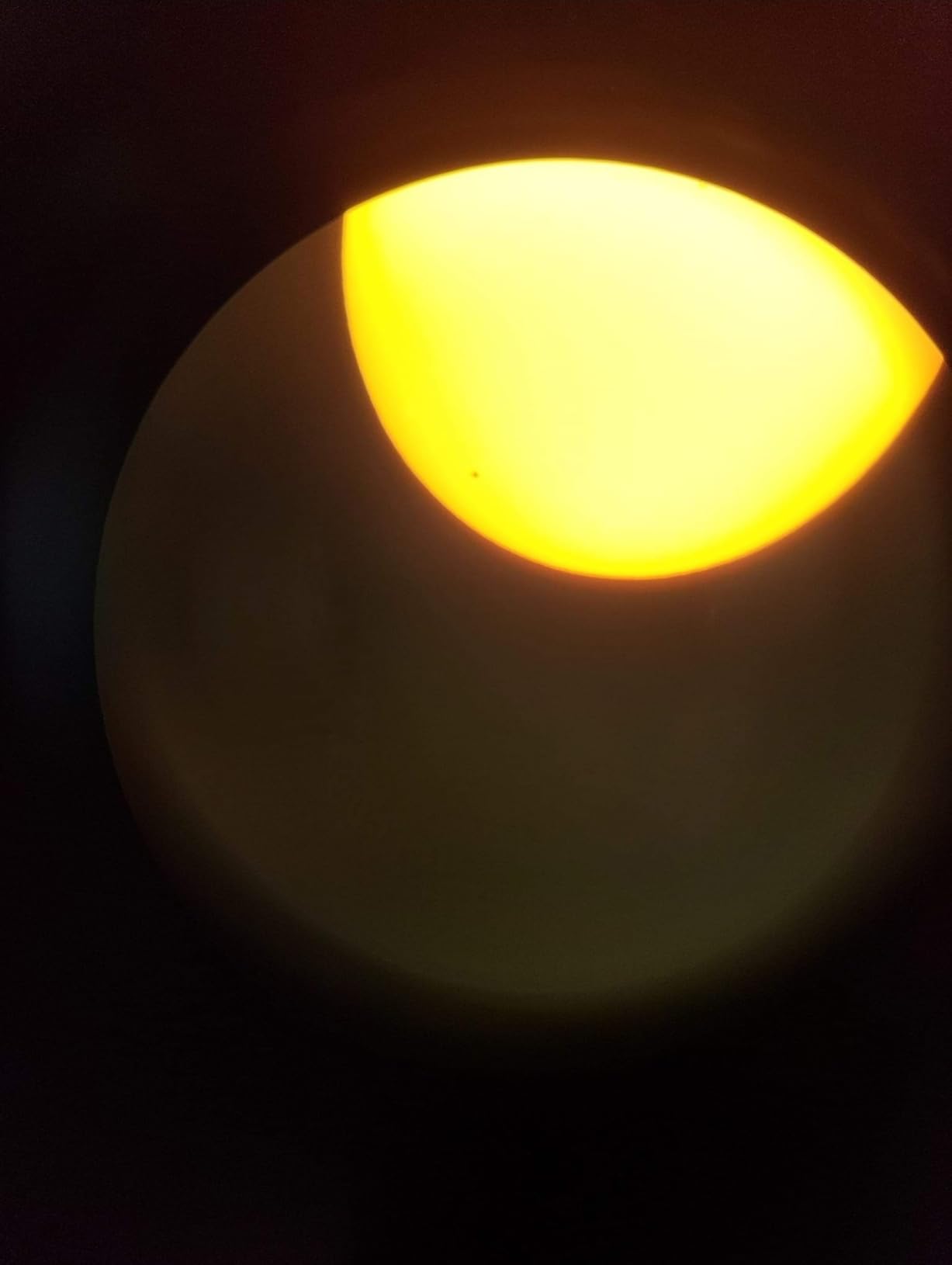
The Sun through this material is a natural orange, and sunspots show clearly at moderate magnification on a steady day. Granulation needs patience and a scope that is not thermally disturbed, but it resolves. It is not a filter fault if your first attempt looks like a plain disc, because the Sun is genuinely less interesting at some stages of its roughly eleven year cycle than at others.
The honest limitation is that this is a thin film you handle bare, and one careless fingernail leaves a scratch you can see in every image. Two other caveats appear in the reviews. You are responsible for the security of the mount entirely, and a few owners found it too bright for high magnification binocular use at certain sizes.
Best for building filters for more than one instrument
If you own a small refractor and a larger reflector, or if you also want to shoot eclipse photographs with a camera, this is the economical route. Cloudy Nights users routinely point out that one sheet is cheap enough to make filters for two scopes, and that is the argument that wins for most of our readership here. The trade of a little care in handling for that much flexibility is worth it.
Best avoided if you want a ready-made cell
If the idea of cutting film and taping it to cardboard sounds like a compromise, skip this and move down the list. You are also the one doing the pinhole inspections, and if you are the sort of observer who loses the cell in a drawer between eclipse seasons, a factory cell with a defined attachment system will serve you better. Someone handing this to a child or a large group needs the factory option.
2. Celestron EclipSmart 8 Inch Solar Filter – Best for Large Schmidt-Cassegrains
Celestron EclipSmart 8″ Solar Safe Eclipse Telescope Filter – ISO Compliant
ISO 12312-2 compliant
9.25 inch square
4 ounces
Fits 8 inch SCT and EdgeHD
Pros
- Meets the ISO 12312-2:2015(E) standard
- Two hook and loop straps hold it on the objective
- Film made in the USA and lab tested
- Natural orange tint and two year warranty
Cons
- Sized only for Celestron 8 inch SCT and EdgeHD tubes
- Will not fit any other aperture
- One of the costlier options in this group
Own an 8 inch Schmidt-Cassegrain or EdgeHD and this is the filter designed for it, with nothing to fabricate. It conforms to the ISO 12312-2:2015(E) standard for filters used for direct solar viewing, and the film is produced in the USA by American Paper Optics, a supplier recommended by NASA and the American Astronomical Society, then independently tested by a third-party lab. That certification is the reason this exists in a roundup at all.
The attachment is two hook and loop straps that sit over the objective cell. That system matters more than it sounds. Straps distribute load across the whole rim of the tube, so there is nothing for an observer to hold and nothing to drift in the middle of a session. The filter sits flat and stays flat, which is the condition that keeps the image steady.
Reviews of this filter describe a natural orange tint that suits both visual work and photography, and the recurring note of satisfaction is simply that it fits securely. Owners rated it 4.5 stars across 597 reviews, with the bulk of the five star responses concentrated on eclipse and sunspot sessions rather than on the purchase itself.
The limitation is blunt and it is the same limitation every aperture-specific cell has. This one fits Celestron 8 inch Schmidt-Cassegrain and EdgeHD tubes. If your telescope is a different brand or a different diameter, it will not go on, and no amount of creative measuring will change that. It is also one of the more expensive items in this group, which matters if you are covering two instruments and one is smaller.
Best when your aperture is confirmed as 8 inch
Check the diameter printed on your tube before you order. If it matches, this is one of the cleanest solar setups you can own, with a factory fit, a certification statement and a warranty behind it. It is also the right pick for a club or school session where the telescope is the same every time and a loose film over the front is not a risk you want running.
Best avoided if you switch between scopes
Six-inch and eight-inch Schmidt-Cassegrains need different filters, and a short refractor needs a different filter again. If your observing habit involves rotating between instruments, buying a single aperture-specific cell means buying more later. In that case either work out the full size range you need before spending, or build your own from film so one sheet covers everything.
3. Celestron EclipSmart Universal Solar Filter – Best Value
Celestron EclipSmart Universal Solar Filter for Telescopes
ISO 12312-2 compliant
Covers 75mm to 100mm
2.95 inch square
Folds flat
Pros
- One filter covers a wide range of small instruments
- Adjustable panels and elastic band
- Includes a reusable storage bag
- Certified film made in the USA
Cons
- Limited to objectives between 75mm and 100mm
- Fit needs care to stay taut and secure
- Rated below the aperture-specific models
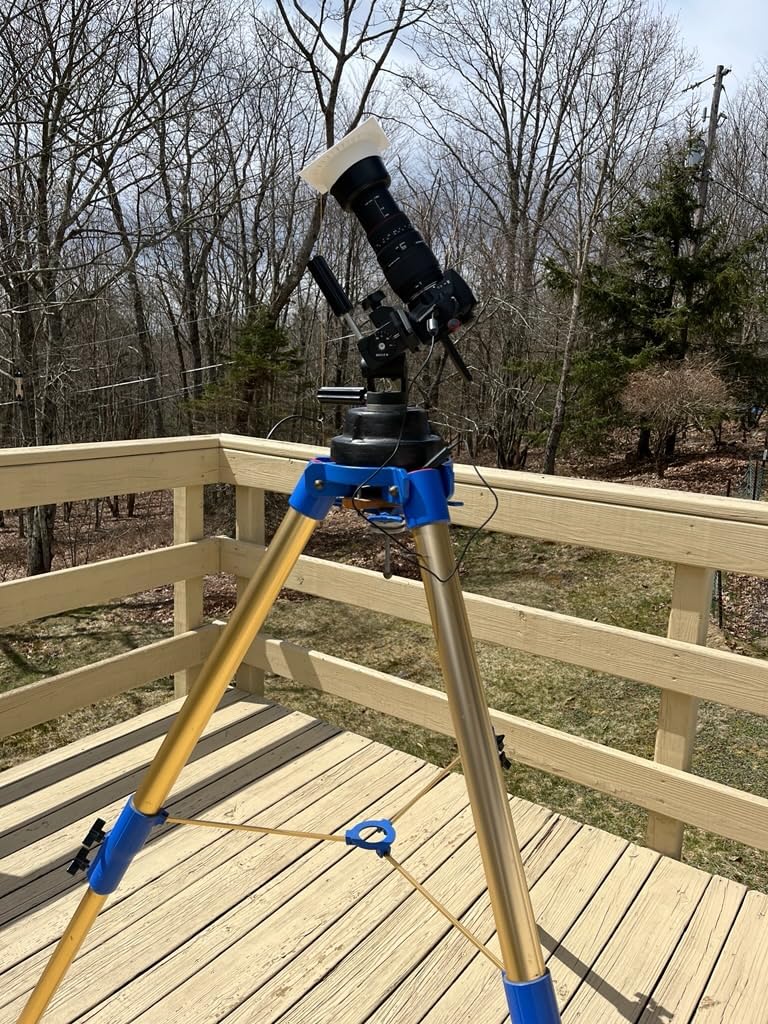
The Universal model is the one to look at if you own a small refractor, a spotting scope or a DSLR lens rather than a large telescope. It adjusts to cover objectives with an outside diameter from 75mm to 100mm, which in practice covers a lot of 90mm refractors, small Newtonian tubes and camera lenses. The same certified film and the same ISO 12312-2 conformance statement apply.
The design solves the sizing problem in a way the fixed cells cannot. Instead of a rigid disc sized to one tube, you have folding panels with an elastic band, so the same filter adapts to different diameters and different manufacturers. It also folds flat into a supplied bag, which means it lives in the car rather than in a drawer.
The 4.2 star average across 452 reviews is lower than the aperture-specific models, and the reason is consistent. Owners are not unhappy with the image, they are unhappy with the fit. The elastic band and folding panels need some practice to set up so the film is taut and fully clear of the aperture edge, and a filter that sits loosely is a filter that invites a mistake.
On the positive side, when it is set up properly the orange disc is clean and sunspots are easy to pick out. This is the pick we would suggest for someone whose first solar session is happening on a small scope, because it is a certified filter with a defined attachment and a forgiving size range.
Best for 75mm to 100mm objectives and cameras
Measure the outside diameter of your objective, not its aperture. If the number falls between 75mm and 100mm, this filter is straightforward to set up and covers the scope, the spotting scope and the camera lens in one go. That makes it our best value pick for beginners, and a sensible second filter to keep in the car for an outreach event.
Best avoided if you need a wide aperture
A 100mm ceiling rules this out for anything larger, and the frame itself may not reach the full front opening of a wide short-tube refractor even inside the stated range. If you own a 6 inch or 8 inch telescope, you need a cell sized for it. If you want the widest possible field of view from a short refractor, check carefully that the filter frame clears the tube before you order.
4. Celestron EclipSmart Filter for 127mm and 130mm Reflectors – Top Rated
Celestron EclipSmart Telescope Solar Filter for 127mm & 130mm Reflectors
ISO 12312-2 compliant
7.25 by 7.13 inches
3.04 ounces
For 127mm and 130mm reflectors
Pros
- Highest average rating of the six filters reviewed
- Straps plus a safety cap for the outer surface
- Good value for a certified aperture specific cell
- Ships with everything needed
Cons
- Only fits a listed set of Celestron reflector models
- Small central opening makes the Sun hard to centre
This is the one that surprised us most in the ratings. At 4.6 stars across 156 reviews it is the highest-rated filter in this entire group, and the theme running through those reviews is simple: it fits properly and the view is clean. If you own a 127mm or 130mm Celestron reflector, the fit is the least of your worries.
The listed compatible models cover the Celestron PowerSeeker 127EQ, Astro Fi 130, NexStar 130SLT, Omni XLT AZ 130, SkyProdigy 130, StarSense Explorer LT 127AZ and StarSense Explorer DX 130AZ. Several owners report adapting it to other 114mm tubes, which tells you the cell is a little more forgiving than the model list suggests. Check your tube diameter before assuming.
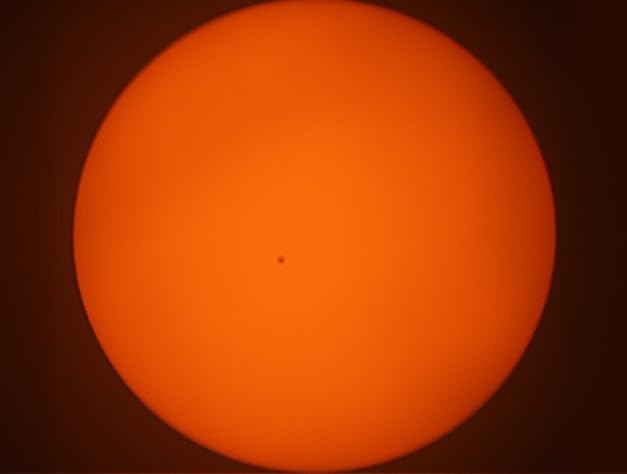
Two hook and loop straps hold it against the objective, and there is a safety cap that protects the outer surface of the film when the filter is not on the telescope. That cap matters more than it looks. Film damage almost always happens in storage, and a cap that covers the surface is a cap that keeps dust and grit off it.
The one complaint that comes up repeatedly is the size of the central opening. With a small aperture in the middle of the cell, the Sun sits in a restricted field and centring it takes a little more patience than it does with a filter that covers the whole objective. Owners treat that as a minor inconvenience rather than a defect.
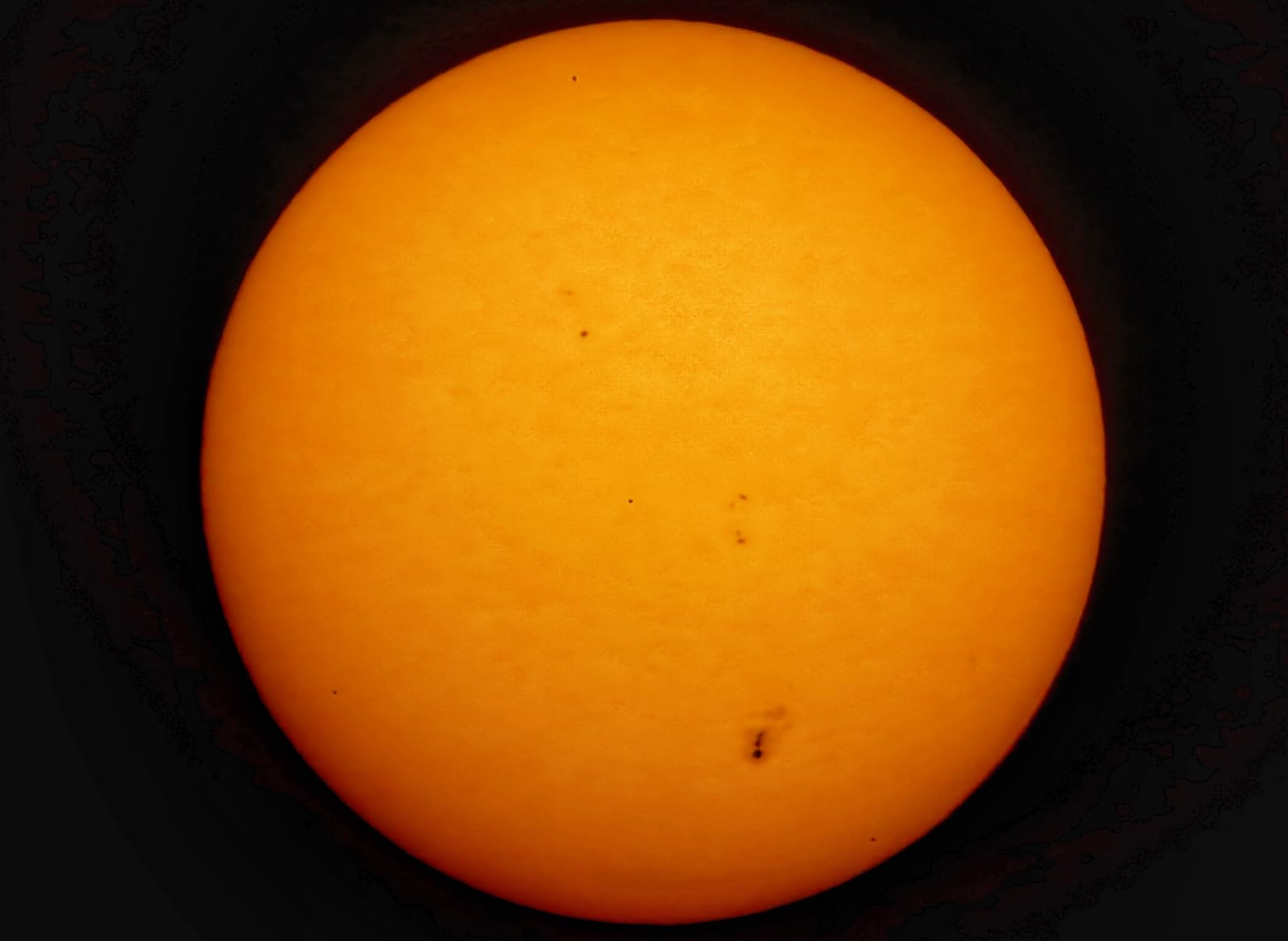
Best for the highest-rated certified cell in this group
If you want the strongest track record in a factory cell, this is the strongest. A 4.6 star average from 156 reviews on a model-specific accessory is a good signal, and the specific approval with straps and a cap makes it a safe first solar filter for a beginner. It also has the smallest physical footprint of the certified options, which is convenient if you carry equipment to dark sites.
Best avoided if you want a large bright field of view
Small aperture filters like this trade brightness and field for portability. The Sun will be easier to find with a full-aperture film cover, and it will fill more of the field. If your observing plan involves showing the Sun to a group, a small opening that has to be nudged into position works against you. And if your telescope is not one of the listed models, this one simply does not apply.
5. Rainbow Symphony 70mm Black Polymer Filter – Budget Pick
Rainbow Symphony Solar Filter 70mm Black Polymer
70mm inside diameter
2.76 inch square
18.14 g
Adhesive felt strips included
Pros
- One of the lowest cost certified options
- Adhesive felt lets you trim a slip fit
- Light enough to carry anywhere
- Five sizes from 50mm to 101mm
Cons
- Cardboard rim feels flimsy in the hand
- Quoted size is the inside diameter
- Needs test fitting before use
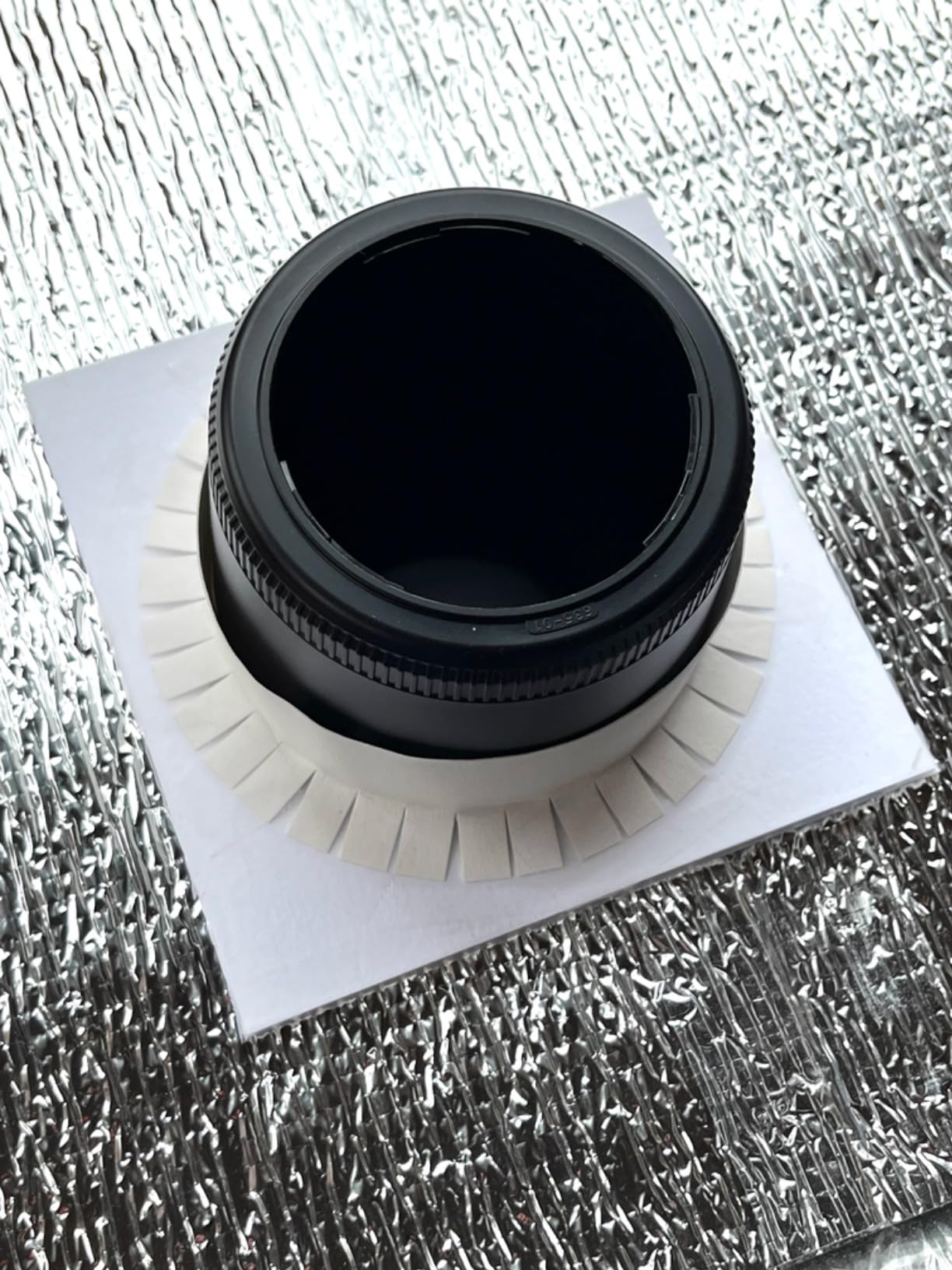
This is the simplest solar filter in the group and the cheapest way to add a certified view of the Sun to a small refractor. It is a black polymer disc sized to a 70mm inside diameter, with adhesive felt strips that you cut and trim so the filter slips over the outside of the front lens cell. No cell fabrication, no tape, no fuss.
It weighs just over 18 grams, which means it lives permanently in an eyepiece case. Users report the Sun rendering in a natural orange with sunspots clearly visible, and a 4.2 star average across 115 reviews reflects an item that does its job reliably once you have it fitted.
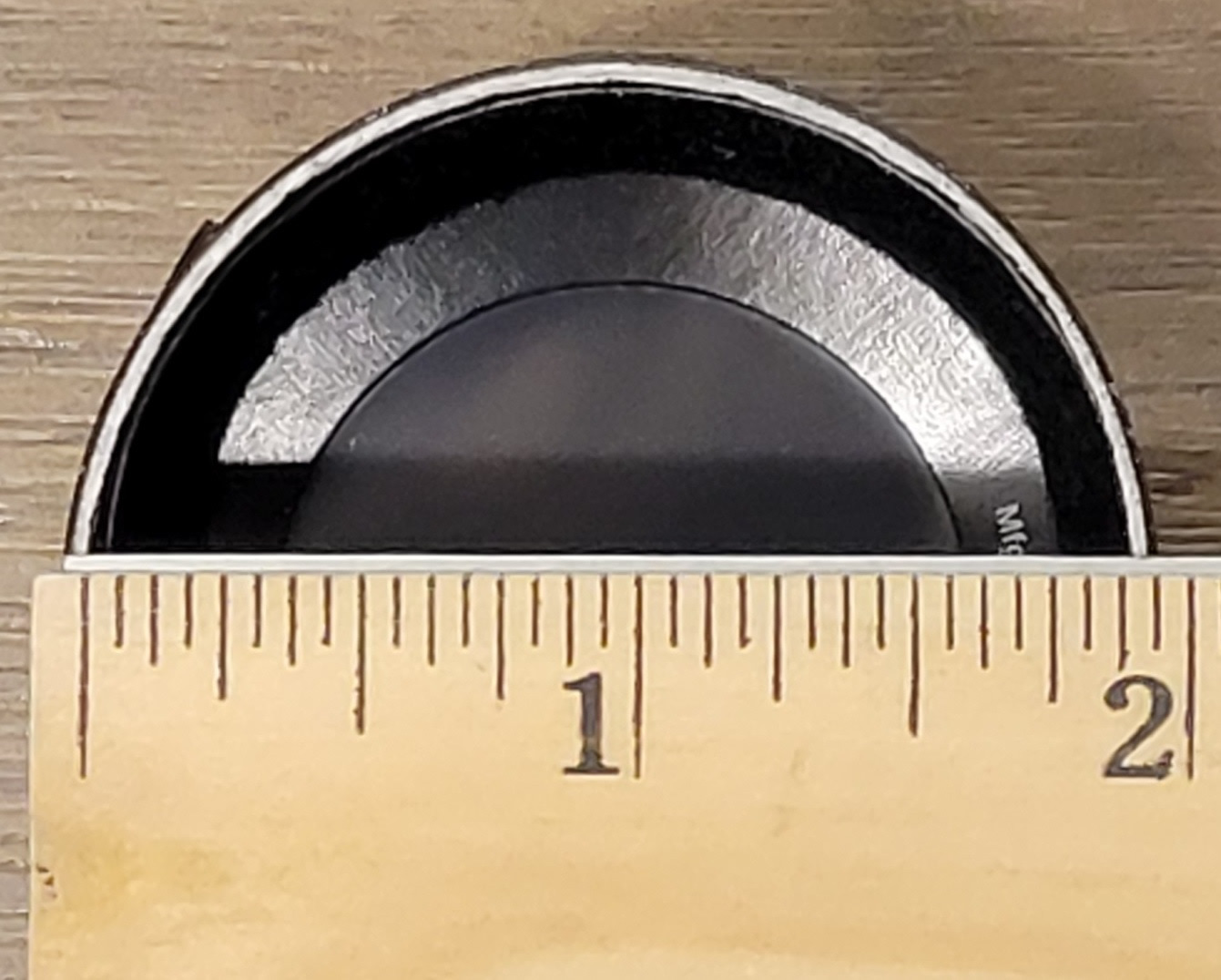
The sizing detail is the thing to understand before you order. The published figure is the inside diameter of the filter ring, so a telescope advertised as a 70mm aperture may not accept a 70mm filter without trimming the felt, because the tube you slip it over is measured differently. This inside versus outside diameter confusion is the single most common source of frustration with filters in general, and it turns up on every forum thread about fit.
The second limitation is physical. The rim is cardboard, and while it holds up fine in use, several owners describe it as feeling flimsy in the hand. It is not a precision instrument. It is a lightweight cover for a lightweight setup, and if you drop it on a hard surface the film is the part that suffers.
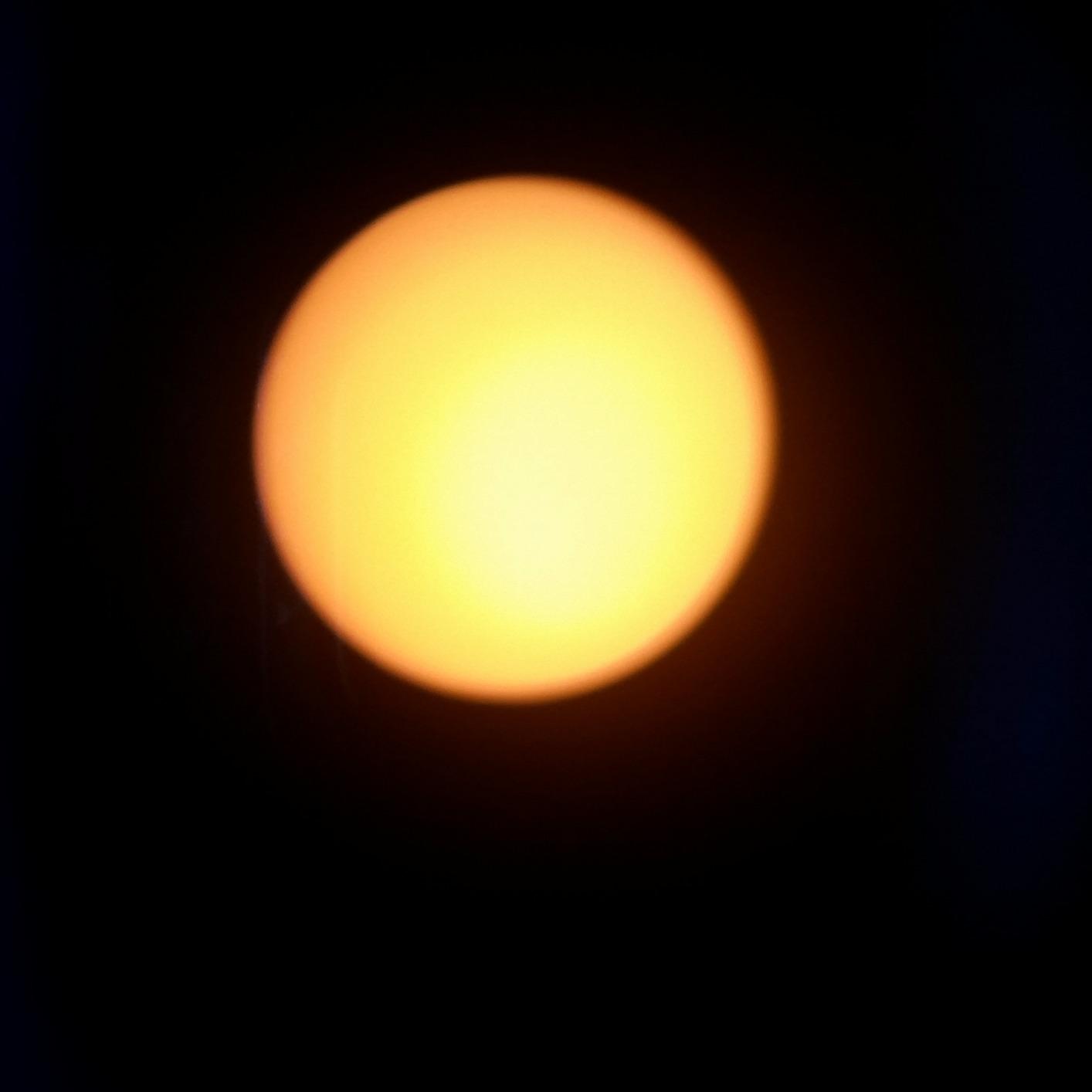
Best for a single small-aperture refractor
If you have one 70mm class refractor and you want to see sunspots this month, this is a sensible, low-commitment entry. It is also the easiest filter here to keep on hand permanently, because the weight is negligible and the felt adjustment means you can move it between similar instruments. Sizes are offered at 50mm, 60mm, 70mm, 76mm and 101mm inside diameters, so match carefully.
Best avoided if you have not measured your tube
Do not order this on the basis of the aperture number in the telescope specification. Measure the outside diameter of the front lens cell, then buy the filter whose inside diameter is a hair smaller so the felt grips. Guessing here is how people end up with a filter that overhangs the aperture and leaves a ring of unfiltered light, which is exactly the situation the full-aperture rule exists to prevent.
6. Seymour Solar Helios 5 Inch Glass Cell – Best for Durable Glass
Helios Glass Telescope Solar Filter by Seymour Solar (5″ (127mm). Fits Optical Tube Diameter 4 5/8″ (118mm) to 4 7/8″ (124mm))
5 inch optical glass
ND5 rating
Multi coated both faces
Aluminium clamp cell
Pros
- Optical glass rated ND5 blocking 99.999 percent
- Reflective coating on both faces
- Rigid aluminium cell with felt tabs
- Clamp screws centre it without scratching
Cons
- The most expensive option in this group
- Narrow optical tube diameter window to measure
- Smallest number of reviews of any filter here
The Helios is the only genuine glass cell in this roundup, and it is the one to consider if you show the Sun often. Optical glass with a reflective coating on both faces sits in a rigid but lightweight aluminium cell, and the whole thing clamps to the outside of your tube with nylon thumb screws and felt tabs that stop it scratching the paint. It is rated ND5, blocking 99.999 percent of sunlight.
That rating is the category standard and is what you should see on any white-light solar filter. Glass wins on durability in a specific and practical way. You can handle it, wipe the exposed surface, and put it away without the anxiety that comes with bare film. Owners describe sharp eclipse images and quick refitting as phases change, which is the argument for glass during an eclipse.
The reason it is not higher in the list is not quality. At 4.8 stars from 9 reviews, every single owner is happy, and reviewers consistently stress one instruction: measure your optical tube diameter twice before ordering, because it clamps to the outside of the tube rather than screwing into filter threads. The 5 inch version covers tubes from 4 5/8 inch through 4 7/8 inch.
With such a small review base we treat that score as encouraging rather than proven. The product itself is well made and correctly described, but nine reviews is not the kind of evidence base that lets us put a glass cell above a film sheet with thirteen hundred ratings and a maker with three decades of production history.
Best for repeated public events and kids
Glass in a rigid cell is the configuration we would put in the hands of a child or hand to an outreach group. There is no film to scratch, no tape to trust and no way for a curious person to lift the filter and look through. It is also reusable indefinitely, so if you run public sessions it is the filter that will still be working in five years. Felt tabs protect the tube, which matters on an expensive instrument.
Best avoided if you need wide coverage or a large review base
It clamps over a narrow window of optical tube diameter, so a measurement slip means a return trip. It is also the most expensive item we reviewed, and for occasional eclipse viewing that is a lot to spend before you know how committed you are. If you want the glass option, buy the size after measuring, not before.
How to Measure Your Telescope and Buy the Right Filter?
Measure the outside diameter of the front lens cell, not the aperture and not the number on the box. Every sizing mistake we see traces back to those two substitutions, and a filter that undersizes the front opening leaves an unfiltered ring of light aimed straight at your eyepiece.
Here is the sequence we use. First, take the telescope outside and aim it at a plain white wall in daylight, away from the Sun. Second, measure the outer diameter of the front lens cell with calipers, or with a ruler if that is all you have. Third, add roughly a quarter inch of clearance so the filter or cell can sit over that diameter without resting on the glass.
Fourth, check whether your telescope has a removable dew shield, because the outside diameter you need is the dew shield outer diameter, not the bare tube. Fifth, buy a filter that covers that number completely, and confirm the manufacturer lists your model before you order. A filter that overhangs the aperture is fine. A filter that leaves any part of the front open is not.
If you own a red dot finder, plan for it separately. Many observers simply remove the finder before solar observing and use a distant terrestrial object plus shadow alignment to aim, which removes the risk entirely. If you keep the finder fitted, it needs its own certified cover sized to its own objective.
Open truss Dobsonians and collapsible travel scopes deserve an extra warning. A concentrated beam leaving an open tube with no filter across it can ignite components in direct sunlight. Front-mount a certified filter and keep the tube covered between objects, and do not leave an unattended filtered telescope pointed near a building or a garden in summer conditions.
If you are kitting out an off-grid property or a remote observing site, the same buy-the-certified-unit rule applies to the rest of the gear. We have covered the [best solar food dehydrators for off-grid homes](https://www.haynet.net/best-solar-food-dehydrators-for-off-grid-homes/), the [best solar fence chargers for off-grid farms](https://www.haynet.net/best-solar-fence-chargers-for-off-grid-farms/) and the [best solar automatic coop doors](https://www.haynet.net/best-solar-automatic-coop-doors-for-backyard-chickens/), and the common thread is identical: a correctly sized, properly certified unit beats the cheapest listing every time.
Film vs Glass Solar Filters: Which Should You Buy?
Once a certified filter is secured over the full front aperture, film and glass are equally safe. Sharpness is not the differentiator people assume. Thin film often resolves more detail than most glass, because glass coatings and thick substrates can soften high contrast, and film has no thick element to introduce aberrations.
Film is the flexible, economical option. A sheet cuts to any diameter, costs a fraction of a factory cell, and produces a neutral to slightly warm disc depending on the material. Its weakness is physical: it scratches, it creases, and it depends on your mounting work. Glass is the durable option. You can handle it and clean it, it does not tear, and it holds a consistent coating year after year, at higher cost and across a narrower size range.
Colour differs too, and this is the fastest way to identify what you are looking through. Film from the leading brands tends to give an off-white to pale orange disc, while many glass cells and yellow-tinted films give a warmer yellow-orange. Neither is more correct. If you are photographing the Sun, a whiter disc is generally easier to process.
There is one clarification worth making because it recurs endlessly. Coated on one side or two makes no difference to safety, because the filter goes on the front and the Sun hits the coating first. The exposed top surface is simply the side you are allowed to wipe. Safety comes from the standard and the full-aperture mount, not from the coating geometry.
White Light vs Hydrogen-Alpha: What Each One Actually Shows You?
White light filters show you the photosphere, which is the bright surface where sunspots, faculae and granulation live. Hydrogen-alpha filters isolate a single narrow wavelength of red light at 656.3 nanometres, which reveals the chromosphere, the layer of gas above the surface, where prominences and the limb of the Sun glow.
That is the whole difference in what you see. White light gives you a full disc with dark sunspots against a bright surface. Hydrogen-alpha gives you a bright web of chromosphere and looping prominences against a darker disc, and the surface itself mostly disappears.
Hydrogen-alpha units are a different category of product entirely. They are dedicated solar telescopes or eyepiece units with precision bandgap interference optics, and they sit at a very different price point from any filter in this roundup. None of the products we reviewed are hydrogen-alpha units, so if you are shopping for prominence viewing you are looking at a different product family.
Timing matters as much as choice. A quiet Sun at minimum phase can leave you wondering whether your filter is faulty when in fact there is simply little to see. Near maximum phase the disc is busy with spots and there is something to look at on any clear afternoon. If you are new to solar work, a white light film filter is the right first purchase for that reason alone.
What About Moon, Saturn and Light Pollution Filters?
A moon filter is a neutral density filter that dims the Moon so you can see detail on a bright crater or terminator, and it is unrelated to solar filters. Moon filters are safe on the Moon and have no business anywhere near the Sun.
For Saturn, the filters that matter are colour filters, typically amber or orange, which improve the contrast of the planet’s belts and Cassini Division against the background sky. A colour filter does nothing useful for sunspots and will not help you with the Sun at all.
Planetary nebulae respond to narrowband filters, such as oxygen III and hydrogen-alpha units, that isolate the specific emission lines those objects radiate. These are the same category of filter as an H-alpha solar unit but used on faint deep sky targets, and they are a genuinely different product from anything in this roundup.
Light pollution filters work on faint targets by rejecting the wavelengths that city light is rich in, mainly sodium and mercury lines. They improve contrast on galaxies and nebulae under suburban skies. Against the Sun, a light pollution filter is at best neutral and at worst a serious hazard, because the certification that makes a solar filter safe is exactly what a light pollution filter lacks.
Solar Filters for Astrophotography
Photography through a solar filter is a different discipline from visual observing, and the front-mounted film or glass cell works for both because it sits ahead of every other element in the optical train. That placement is what makes it a good choice for imaging, since no light reaches the sensor unfiltered even for a moment.
Watch the vignetting. A focal reducer increases the apparent cone of light reaching the camera, and if the filter does not extend past the full width of the cone, the corners of the frame darken into a vignetted circle. This is a purely optical effect and it is a strong argument for buying the largest certified filter that fits your tube rather than the smallest one that technically covers it.
Keep an eye on the infrared. A white-light filter removes essentially all infrared, which is what protects the sensor, so additional infrared cutting is not usually required for solar work with these products. The same is true of ultraviolet. The reason sensors get damaged by the Sun is the visible and infrared energy that an unfiltered system concentrates onto the sensor, and a certified front filter is what removes it.
For framing, a white light film filter suits a monochrome or single-shot setup best, because the disc is bright and high contrast. Hydrogen-alpha imaging is a longer, more technical workflow with a different filter family and different exposure guidance, and we would not attempt it with any of the products in this roundup. Check the space weather picture for the day before you plan a session, so you know whether there is anything worth photographing.
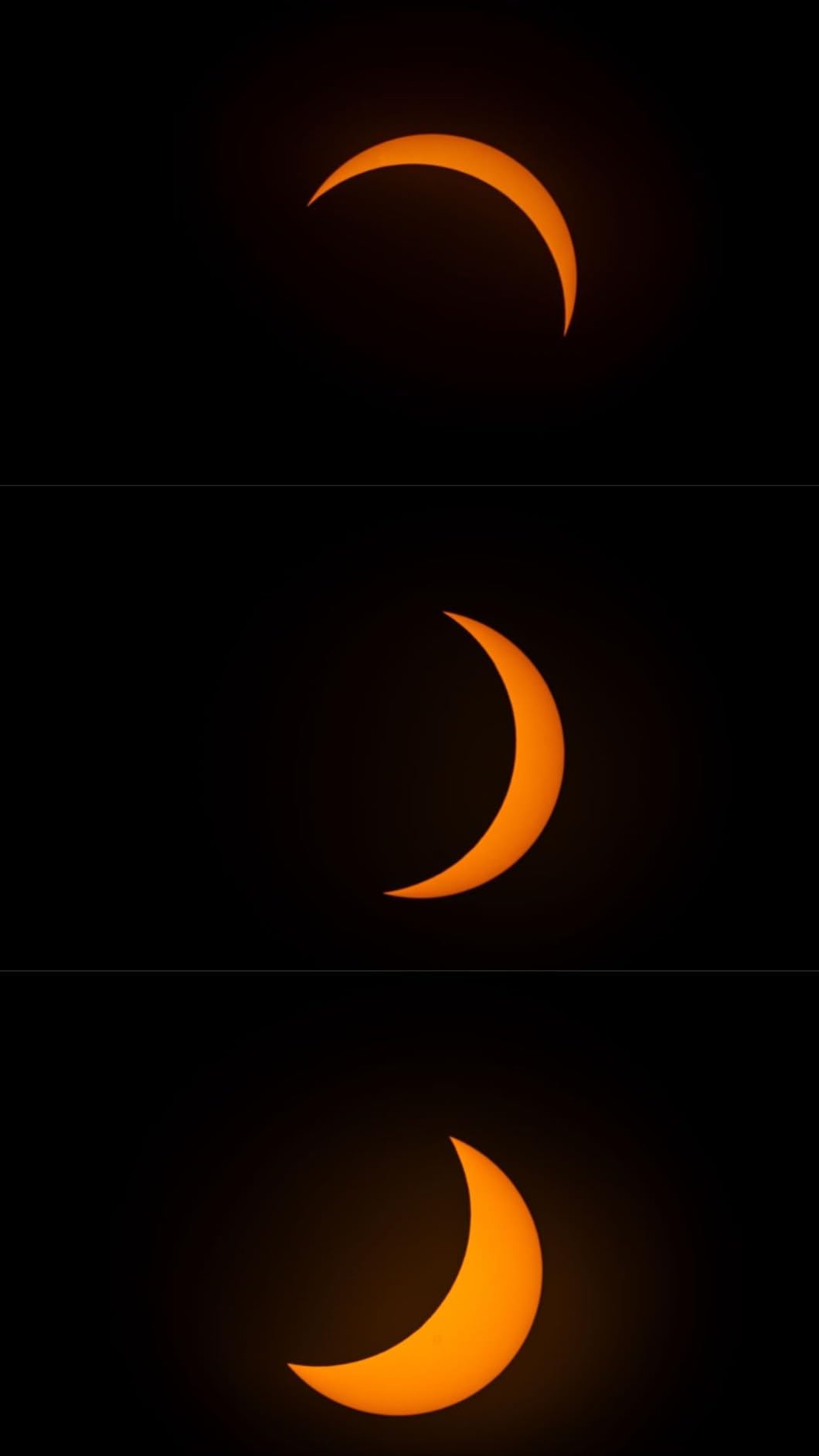
One practical tip for anyone shooting an eclipse: bracket for the phases. A partial phase is far brighter than the diamond ring, and a total phase requires a different exposure entirely. A fixed setting across an eclipse produces a sequence where the first frames are overexposed and the last ones are black.
What We Would Avoid Buying?
Herschel wedges sit inside the optical tube and use a series of prisms to strip heat from the beam before it reaches the eyepiece. We would not use one. The heat load sits on your optics, the wedge is another part that can be knocked loose, and the safety depends on a device being correct rather than on a film being correctly fitted.
Welder glass is not a solar filter. It is designed to protect a welder from infrared, which means it passes far more visible light than is safe for looking at. Any product described as shade 14 welder glass for astronomy is a serious mistake regardless of how it is marketed.
Homemade foil, cling film, tinted car window film and unbranded random sheets have no certification behind them. Optical density claims on cheap film are frequently unverified, and the cost of being wrong is an eye. The price difference between a certified film and an unbranded sheet is small enough that there is no version of this where the unbranded option makes sense.
Eyepiece-end filters and screw-in cell filters are also worth avoiding. The Sun’s energy is still inside the tube when it arrives, focused onto the small filter surface, and the failure mode when one shifts or falls out is catastrophic. Front mounting is not a conservative choice, it is the only acceptable one.
Finally, be careful with any film that arrives without a legible certification statement, and be careful with brands that generate argument online. The Thousand Oaks versus Baader debate you will find in forum threads is not settled by popularity. It is settled by whether the product in your hand conforms to ISO 12312-2, and any manufacturer that publishes that conformance should be treated on the same footing as any other. It is the same standard we apply when we compare [water filtration systems for farmhouse sinks](https://www.haynet.net/best-water-filtration-systems-for-farmhouse-sinks/) and [solar pond fountains for garden ponds](https://www.haynet.net/best-solar-pond-fountains-for-garden-ponds/): a published, verifiable claim, not a marketing adjective.
Frequently Asked Questions
Is it safe to look at the sun through a telescope?
Only with a certified filter mounted over the full front aperture of the telescope. An unfiltered telescope concentrates sunlight thousands of times brighter than direct viewing and can cause instant and irreversible retinal damage, burn baffles and mirror coatings, and start fires. A filter at the eyepiece end is never acceptable.
What happens if I look at the sun through a telescope without a solar filter?
The concentrated beam can damage your retina in well under a second, and the damage is permanent because retinal cells do not regenerate. The same beam will also burn baffles, melt spider vanes and scorch mirror coatings, and on an open truss or collapsible tube design it can ignite components sitting in direct sunlight.
Can I make my own solar filter for my telescope?
Yes, using a sheet of certified solar film and a cell you build yourself. Cut the film larger than the front aperture so it overlaps the rim, seat it over the objective cell, wrap the excess around the outside, and secure it with tape so it cannot shift or lift. Never use welder glass, household film, foil or tinted plastic.
How do I know which solar filter fits my telescope?
Measure the outside diameter of the front lens cell, or the outer diameter of the dew shield if one is fitted, then choose a filter that fully covers that number. Aperture in inches is not the same measurement. If your telescope is an aperture-specific model, check that the manufacturer lists your exact model before ordering.
Are glass solar filters better than film?
Not in sharpness. Film often resolves more contrast than most glass, because glass coatings and thick substrates soften fine detail. Glass wins on durability instead, since it can be handled, wiped and stored for years without damage. Once a certified filter of either type is secured across the full aperture, both are equally safe.
What is the best filter for viewing Saturn or the Moon?
Neither needs a solar filter. A moon filter is a neutral density filter that dims a bright lunar surface to reveal craters and the terminator, and Saturn responds to amber or orange colour filters that raise the contrast of its belts and Cassini Division. A solar filter is only for the Sun, and never on any other target.
Our Final Verdict
The best solar filters for telescopes are the ones that are certified, sized to the full front aperture of your instrument and attached so that they cannot move. Start with the Thousand Oaks BP-4 film sheet if you own more than one scope or want to cut filters for a camera, since it covers any diameter you can measure.
If you want a factory cell and know exactly what you own, take the Celestron EclipSmart 8 inch for an 8 inch Schmidt-Cassegrain, the EclipSmart for 127mm and 130mm reflectors for the highest rating in the group, or the Universal model for anything between 75mm and 100mm. Choose the Seymour Solar Helios glass cell when durability and repeated public sessions matter more than cost or review volume.
Measure your telescope before you order anything, inspect the filter for pinholes before every single use, and never point an unfiltered instrument toward the Sun. Those three habits matter more than any brand on the box.