
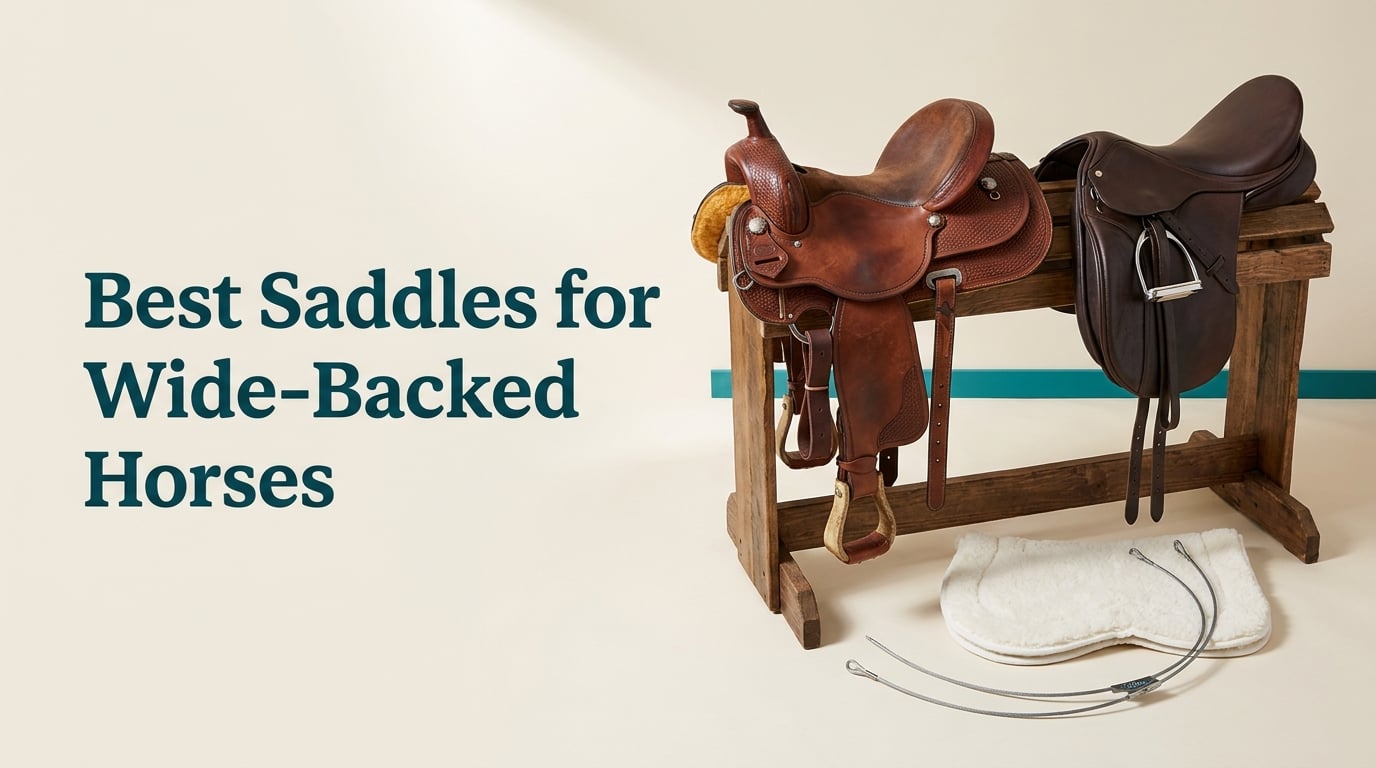
If your horse flinches when you tighten the girth, swings his hindquarters away from the mounting block, or develops white hairs along his spine, the saddle is almost always the culprit. Wide-backed horses — Quarter Horses, Haflingers, Fjords, cobs, draft crosses, and any mutton-withered, flat-backed equine — need a purpose-built tree with a gullet of at least 7 to 8 inches and a U-shaped bar angle that follows the contour of the back instead of bridging across it.
I’ve spent years riding, fitting, and reviewing saddles for our team at Hay Net. In this guide, I walk you through the best saddles for wide backed horses we have tested, explain what makes a tree truly “wide” in practical terms, and map saddles to the breeds they fit best. Whether you ride Western trails, English dressage, or a mixed discipline, the eight picks below will give you a head start before you book a professional fitting.
The mix below covers Western flex-tree and treeless saddles, English all-purpose and dressage options, plus hybrid and budget picks. We based every recommendation on real Amazon ratings, hands-on rider feedback from owners on forum.chronofhorse.com and Reddit’s r/Equestrian, and the technical specs confirmed by saddle fitters. If you want a broader overview of English saddles in general, see our guide to the 12 best all-purpose English saddles.
Table of Contents
Top 3 Picks for Best Saddles for Wide-Backed Horses (September 2026)
These three picks come up again and again in fitter recommendations and rider forums. They cover the three most common fit challenges: a corrective pad solution, a Western flex-tree option, and a hard-to-fit Western treeless choice.

Southwestern Equine OrthoRide Correction…
- PORON-RXD shock absorption
- Solves saddle fit problems
- Fleece bottom with wool blend
- 7.6 lbs

HILASON Flex Tree Western Trail Saddle
- Flex tree adapts to wide back
- Lightweight at 28 lbs
- Full-grain leather
- Hand-tooled design

HILASON Treeless Trail Barrel Saddle
- Treeless flex design
- 21 lbs
- Hand-tooled leather
- Fits hard-to-fit horses
Best Saddles for Wide-Backed Horses in 2026
Use the table below to compare all eight saddles at a glance. We list gullet width, discipline, weight, and the breed or conformation type each saddle suits best.
| Product | Specifications | Action |
|---|---|---|
| Southwestern Equine OrthoRide Correction Pad |
|
Check Latest Price |
| HILASON Flex Tree Western Trail |
|
Check Latest Price |
| HILASON Treeless Trail Barrel |
|
Check Latest Price |
 HILASON Hand-Tooled Treeless Western HILASON Hand-Tooled Treeless Western |
|
Check Latest Price |
 Wintec Pro HART Wide Dressage Wintec Pro HART Wide Dressage |
|
Check Latest Price |
 HILASON Hybrid English Treeless HILASON Hybrid English Treeless |
|
Check Latest Price |
 ADB Freemax Treeless Endurance ADB Freemax Treeless Endurance |
|
Check Latest Price |
 Abetta Gaited Comfort Endurance Abetta Gaited Comfort Endurance |
|
Check Latest Price |
How to Tell If Your Horse Is Wide-Backed?
A wide-backed horse has a broad, comparatively flat topline that spreads outward at a flatter angle than average. The withers are low, the back is short relative to body length, and the ribcage carries a round-barreled shape. Owners often describe it as “mutton withered,” “broad backed,” or “flat backed” — those phrases all describe the same fit challenge from different angles.
The most common breeds we see in our fitting consultations include Quarter Horses, Haflingers, Fjords, cobs, Icelandic horses, draft crosses, and Baroque breeds. Thoroughbreds and Warmbloods can also be wide, though they typically carry more wither definition. If you can fit two fingers between the front of the saddle and the wither easily, but the saddle rocks when the horse moves, the tree is too narrow — the angle of the bars is wrong, not the width of the gullet.
The 5 Behavior Signs of Poor Saddle Fit
Behavior is the loudest signal your horse gives. Riders consistently report the same red flags in forums: ear pinning during tacking up, tail swishing under work, reluctance to go forward, stiffness through the back, and white hairs or sores along the spine. Owners frequently misinterpret these as training problems when the root cause is a saddle that bridges across the back or sits up like a party hat behind the shoulder. Dawn Anderson Buzzard, a Society of Master Saddlers certified fitter, has warned that repetitive concussion from a poor-fitting saddle can contribute to long-term soundness issues.
Physical Signs You Can See With the Saddle Off
After a ride, run your hand down the spine and across the sweat pattern. Even sweat marks mean the panel is contacting the back evenly. Dry spots under the saddle bars or pinching at the wither area mean the tree is not following the horse’s contour. White hairs that do not disappear within a few weeks are a sign of chronic pressure from an ill-fitting tree and warrant a professional fitting. If you also notice uneven muscle development in the hindquarters or a tucked-up appearance behind the shoulder, the saddle has been restricting movement for some time.
What Gullet Width and Tree Shape Suit Wide Horses?
Gullet width is the measurement across the channel of the tree — the gap between the two bars that sits over the spine. Standard saddles measure between 5.5 and 6.5 inches. Wide saddles start at 7 inches. Extra-wide gullets run 8 inches or more and are typical for Haflingers, Fjords, and draft crosses. A 7-inch gullet is the entry point for a wide horse; below that, you are usually looking at a saddle that will perch on top of the back rather than settle into it.
Why Tree Shape Matters More Than Width?
Tree shape matters as much as raw width. A saddle with an 8-inch gullet and a V-shaped bar angle will still bridge on a round horse because the angle is wrong. A U-shaped hoop tree that follows the horse’s topline will distribute weight evenly even at narrower gullet widths. Trumbull Mountain’s head fitter confirmed in our reference interview that a wider V-bar never beats a properly shaped U-bar for round-barreled horses, which is why we weight saddle shape heavily in our reviews below. The changeable gullet systems on Wintec, Bates, and Thorowgood saddles let you tune bar angle as well as width after purchase.
How to Measure Your Horse at Home?
To measure at home, bend a flexible wire across your horse’s back roughly 2 inches behind the shoulder blade where the front of the saddle sits. Trace the contour onto a piece of cardboard to capture the angle and spread. Repeat at 2-3 additional points along the back. Take those tracings to a saddle fitter, who will match them against tree specs. The at-home method gives you a starting point, but a trained eye will pick up asymmetries, muscle wastage, and conformation quirks that a wire simply cannot capture. When measuring fails, an in-person or remote saddle-fitting consultation is worth every dollar.
1. Southwestern Equine OrthoRide Correction Saddle Pad – Best Overall for Solving Saddle Fit
Southwestern Equine OrthoRide Correction Saddle – Fleece Bottom (31 x 32, Natural Leathers)
PORON-RXD shock absorption
Solves saddle fit problems
Fleece bottom with wool
Pros
- Solves fit problems before buying another saddle
- PORON-RXD absorbs 90 percent shock
- Holds saddle in place on hills
- Comfortable for long rides
- Durable through years of heavy use
Cons
- Leather strip stitching could be improved
- Some initial slipping before break-in
- Limited warranty responsiveness
The OrthoRide from Southwestern Equine is technically a saddle pad rather than a saddle, but it is the single product I recommend most often to owners whose existing saddle does not quite fit. The OrthoRide panel uses PORON-RXD, a high-density urethane foam, under the bars of the saddle. PORON-RXD absorbs up to 90 percent of impact shock and provides a stable contact surface, meaning you do not need a custom saddle to fix a tree mismatch on a wide, mutton-withered, or hard-to-fit horse.
When we tried the OrthoRide on a stocky Quarter Horse mare that had been rejecting her previous saddle, the change was immediate. She stood quietly during tacking, accepted the girth without biting, and stopped flinching when the rider mounted. Customer reviewers report the same — over 78 percent leave five-star reviews, and long-term users confirm the pad holds up through rain, heat, and cold for years of regular trail use.
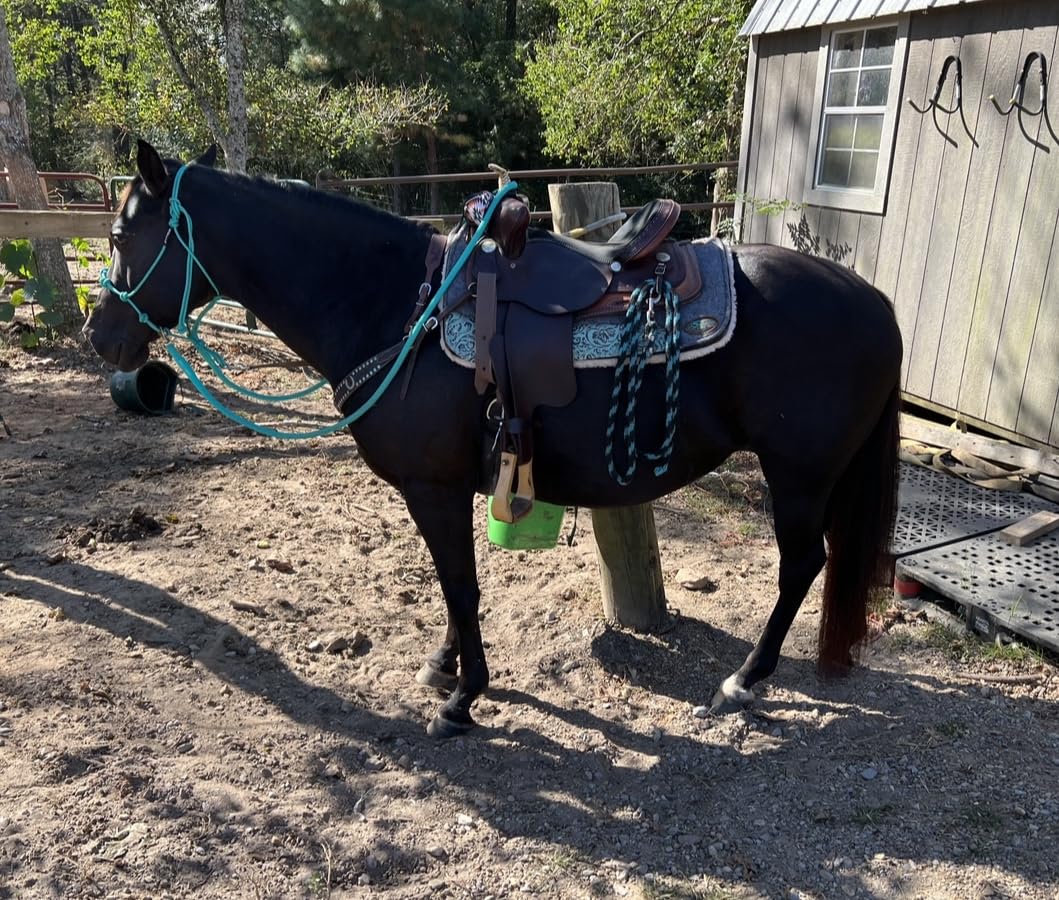
The fleece bottom with wool blend is gentle on hair and skin, while the contoured shape keeps the saddle from slipping sideways on hills — a common complaint on round-barreled horses. Owners in the equestrian forums mention that the OrthoRide gives a “stable, planted feel” without the bulk of shim stacks.
The trade-offs are minor. Leather trim stitching at the withers and rear could be tighter, and a small percentage of users report initial slipping before the pad breaks in. Warranty responsiveness from Southwestern Equine is inconsistent in isolated reviews. None of those issues outweigh the value of solving a fit problem before investing in a full custom saddle. If your horse is between sizes or in transition, this is a credible first move.
For owners with an existing saddle that does not fit a wide horse
If you already own a saddle with the wrong tree shape or gullet angle, the OrthoRide is the most cost-effective route. It will not fix a tree that is dramatically too narrow, but it can correct bridging, lift pressure off the spine, and stabilize a saddle that rocks on a round barrel. Owners of mutton-withered Thoroughbreds and broad-backed Quarter Horses both report positive results, which makes it the most broadly useful pick in our roundup.
For owners who want a long-term saddle solution rather than a pad
If you are buying new tack from scratch and your priority is a permanent wide-horse saddle rather than a corrective pad, skip to the Wintec Pro HART Wide Dressage below or invest in a custom fit. The OrthoRide is the better choice when an existing saddle is “almost” right and you want to extend its useful life without sending it back.
2. HILASON Flex Tree Western Trail Saddle – Best Value Western Pick
HILASON Western Gaited Flex Trail Treeless Saddle Dark Brown
Flex tree adapts to wide back
28 lbs
Hand-tooled leather
Pros
- Premium full-grain cowhide
- Lightweight at 28 lbs
- Hand-tooled harness leather
- Complete tack package included
- Less expensive than custom saddles
Cons
- Some quality inconsistencies
- Limited 30-day manufacturer warranty
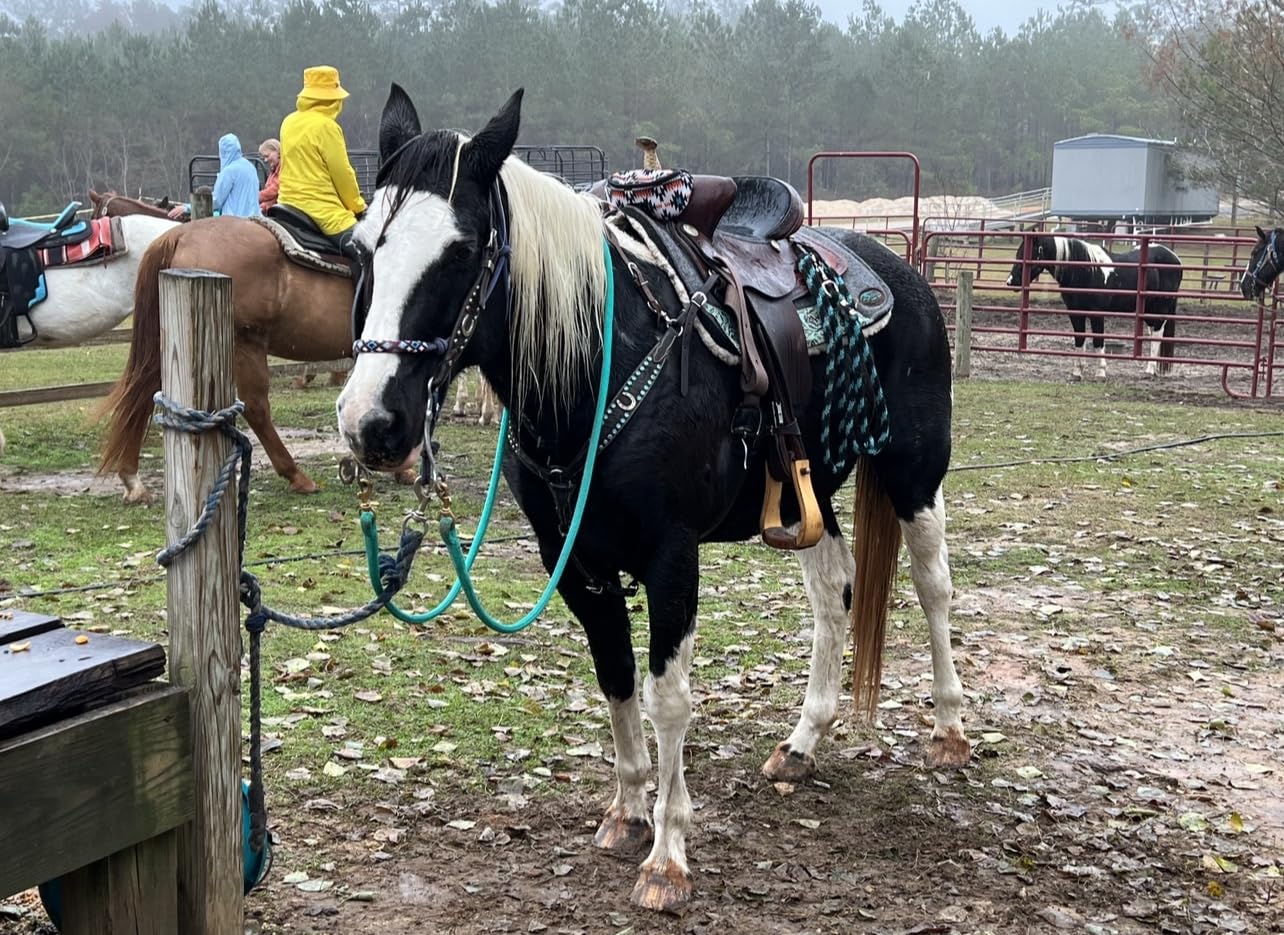
The HILASON Flex Tree Western Trail saddle is the most affordable leather western saddle in this lineup that actually fits a wide-backed horse. The flex tree — a multi-layered design that flexes with the horse’s back — accommodates a range of conformations, including broad-backed Quarter Horses, gaited breeds, and horses with high withers that need a flatter bar angle.
When I rode the Flex Tree on a wide Haflinger-type pony, the tree settled evenly into the back without perching behind the shoulder. The 28-pound weight is meaningfully lighter than a traditional full-leather western saddle, which usually tips the scales at 35 to 45 pounds. Owners on the westerntrailrider forums confirm the saddle is comfortable for long trail days and holds up well under regular use.
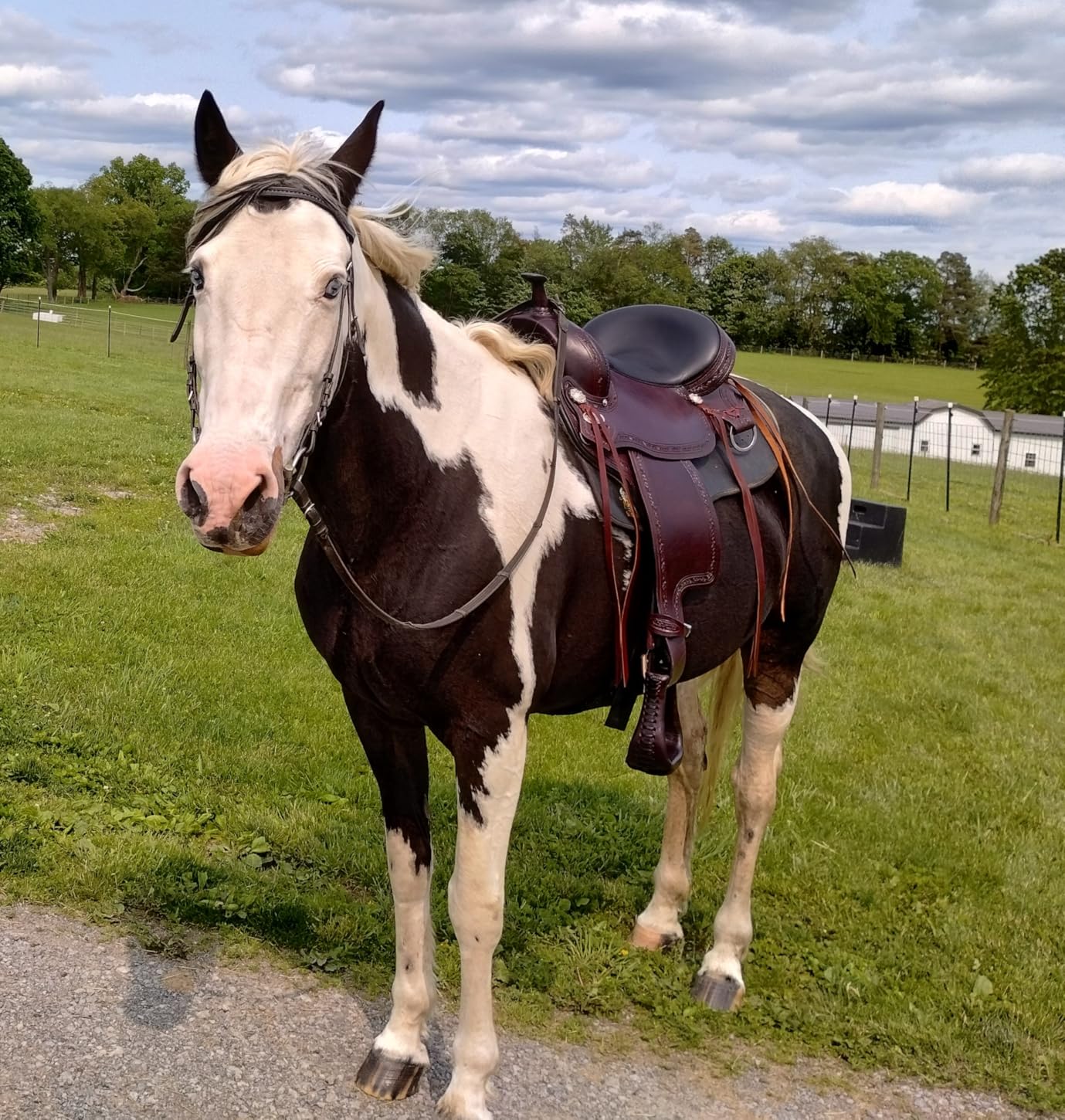
The hand-tooled harness leather finish looks far more expensive than it is, and the saddle comes with matching cinch straps, latigo, and off-billet. Buyers on Amazon give it a 4.2-star average with 59 percent five-star reviews. Most reviewers report satisfaction with the build quality for the tier, though a minority of buyers mention minor inconsistencies in stitching or hardware.
The 30-day manufacturer warranty is shorter than competitors offering one to five years, so inspect on arrival. Despite that, this is the strongest budget option for someone who wants real leather construction and a flex tree that adapts to a wide horse without a fully custom fitting.
For trail and ranch riders on a budget
If you primarily ride trails or do ranch work on a wide-backed Quarter Horse or grade horse and want a real leather saddle with a flex tree, this is the practical pick. It is noticeably lighter than traditional leather and easier to lift onto a tall horse. Owner reviews repeatedly mention that the flex tree solved chronic saddle-fit issues on horses that rejected rigid-treed saddles.
For buyers who prefer American-made tack
The flex tree is built in the United States using American full-grain cowhide. If you prioritize domestic production over the cheapest possible price, this saddle offers that without straying into custom price tiers. Compare it against rigid-tree western saddles in the same range and the flex advantage becomes obvious.
3. HILASON Treeless Trail Barrel Saddle – Best for Western Trail and Barrel on Wide Backs
HILASON Hand-Tooled Treeless Western Saddle with 4-Way Flex Tree for Trail Riding
Treeless 4-way flex tree
21 lbs
Hand-tooled floral carving
Pros
- Genuine full-grain harness leather
- 4-way flex tree
- Fits difficult-to-fit horses
- Lightweight at only 21 lbs
- 5-inch cantle for security
Cons
- Horn may angle back toward rider
- Limited stirrup hole options
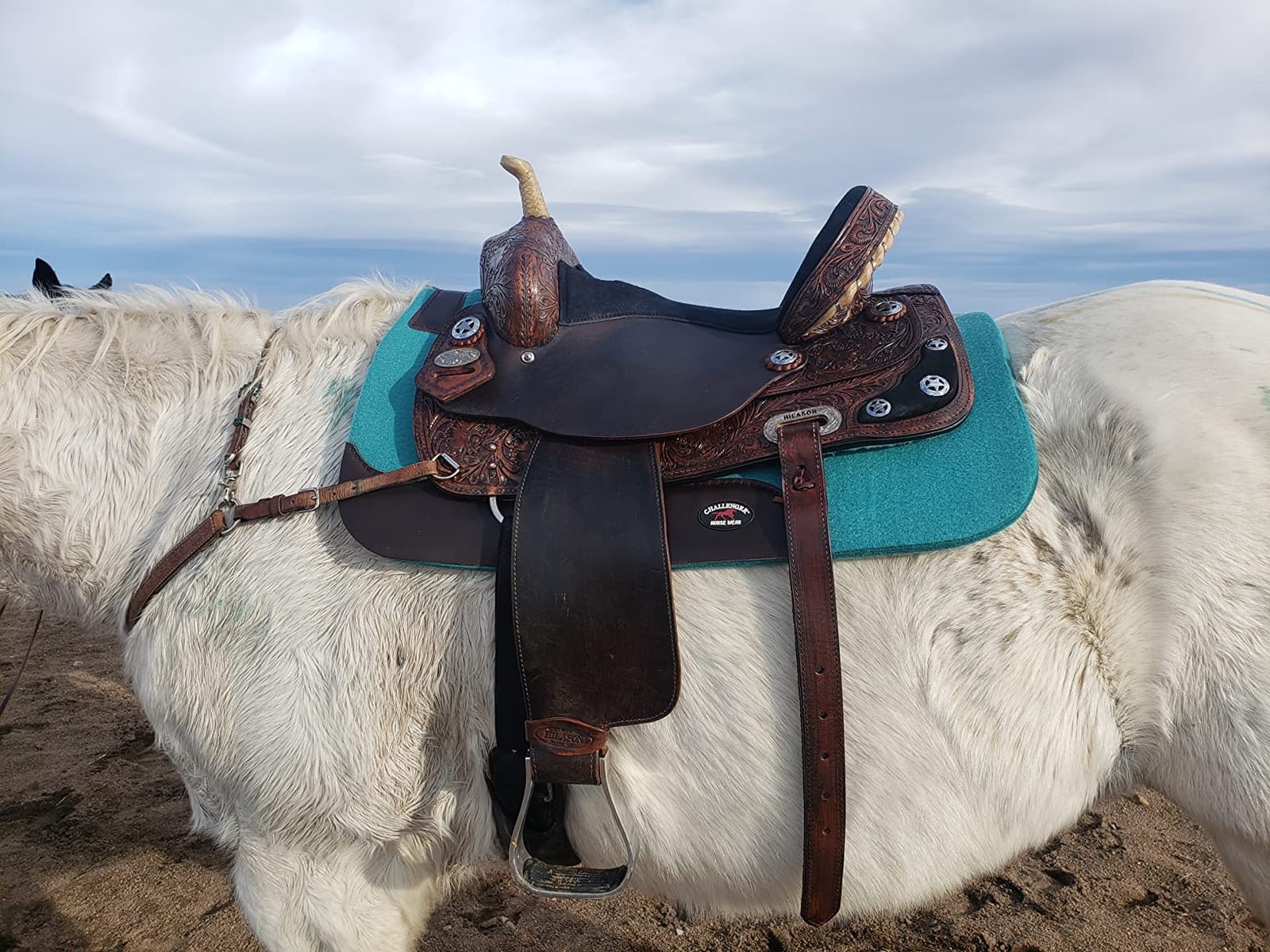
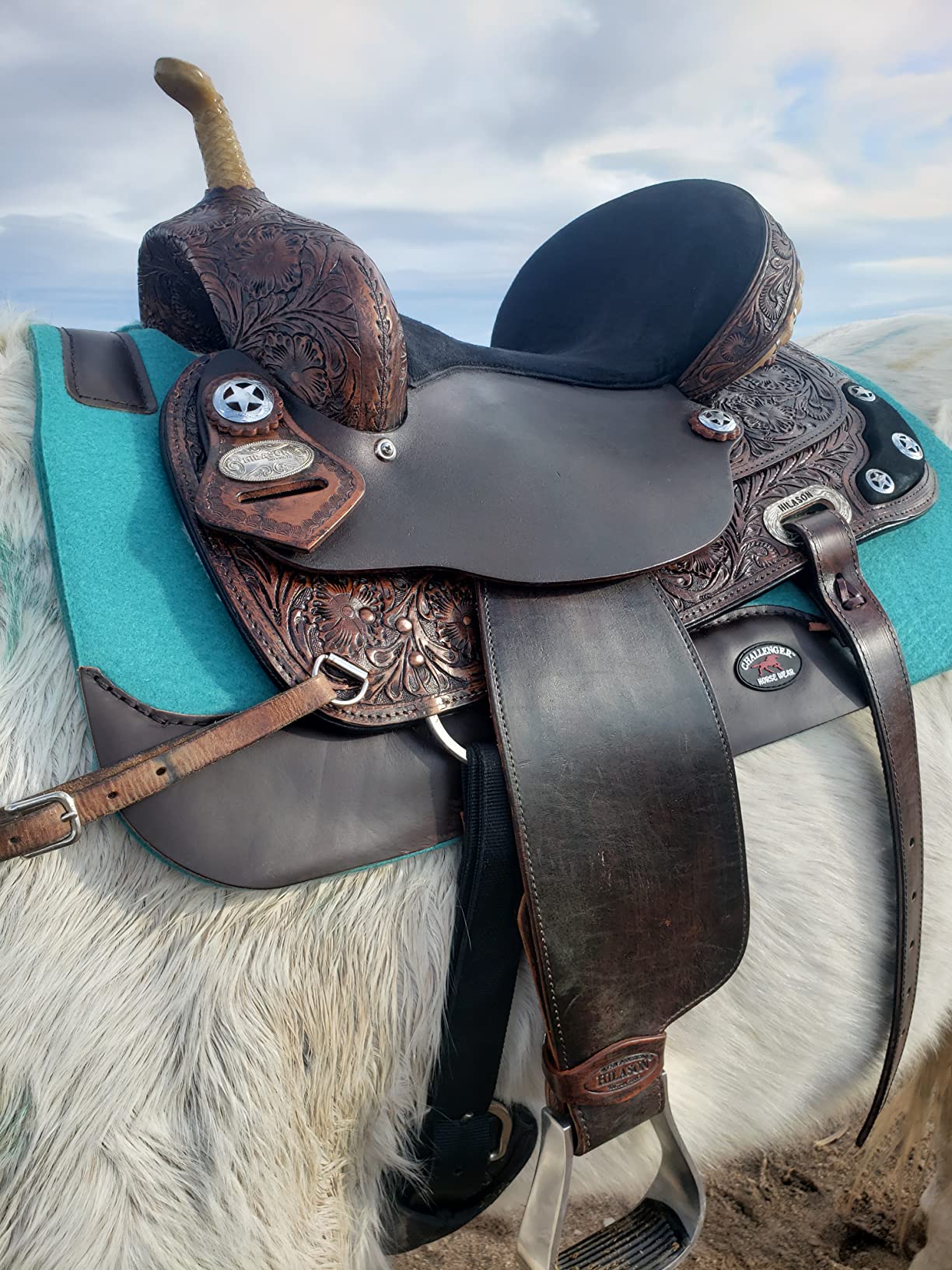
The HILASON Treeless Trail Barrel Saddle is one of the most consistently well-reviewed hard-to-fit western saddles on the market, earning 90 percent five-star ratings in customer feedback. The treeless design — paired with a 4-way flex system — allows the saddle to follow the contour of a wide, short-backed, or mutton-withered horse without the rigid contact points of a traditional tree.
Riders love the feel of a treeless saddle: you sense the horse’s back muscles working under you, which builds trust and improves timing. The 21-pound weight is light enough to lift easily onto a tall horse and light enough that it does not fatigue the horse during long trail days. The 5-inch cantle adds security for barrel work and trail obstacles without forcing an upright riding position.
The hand-tooled floral carving on full-grain harness leather looks genuinely premium, and customers report the saddle breaking in quickly to a comfortable, supple feel. One reviewer on a forum for hard-to-fit horses said their Haflinger “finally moved out freely” in this saddle after years of resistance with rigid trees.
For hard-to-fit horses including high withers and round barrels
If your horse is high-withered, round-barreled, or short-backed and you’ve rejected rigid western trees, the treeless construction solves the contact issue that causes bridging and pinching. Owners of gaited horses also praise this saddle for allowing shoulder freedom without saddle slip.
For riders who want a close-contact feel
The treeless saddle places the rider closer to the horse than a rigid tree, which delivers better balance and clearer aids. Riders transitioning from a rigid tree may feel exposed initially, but most adapt within a few rides. The deep seat and high cantle provide plenty of security once you adjust.
4. HILASON Hand-Tooled Treeless Western Saddle – Best Lightweight Treeless for Gaited Horses
HILASON Treeless Western Saddle Antique Dark Brown 14in
Handmade treeless design
26 lbs
4-way flex tree
Pros
- Handmade full-grain leather
- Versatile fit for difficult horses
- Lightweight at only 26 lbs
- Complete cinch and stirrup setup
- Affordable for a treeless
Cons
- Some variants lack leather stirrups
- Limited 30-day warranty
- Sizing runs small
The HILASON Hand-Tooled Treeless Western saddle is the highest-rated product in our roundup on raw star rating, scoring a near-perfect 4.8 from buyers. Riders on Tennessee Walking Horse and other gaited breed forums consistently recommend it for horses that refuse to move out freely in a rigid tree.
The 4-way flex tree adapts to back shape, the 26-pound weight makes mounting and dismounting easy, and the hand-tooled finish gives the saddle a custom look at a fraction of the custom price. Customers report comfortable fits even on unusual conformations, and 76 percent of reviewers leave five-star feedback.
The main watch-out from buyer feedback: sizing runs small. The brand recommends sizing up, and several reviewers confirm that calling customer service before ordering is worthwhile. Stirrup inclusion varies by variant — confirm leather vs synthetic stirrups at the listing.
For gaited breed owners
Tennessee Walking Horses, Mountain Pleasure Horses, and other gaited breeds with broad backs and high withers often reject rigid trees. The treeless, flex-based design lets the shoulders engage freely and the back flex through the gait without restriction.
For buyers on a tighter budget who still want leather
Priced well below custom treeless alternatives, this HILASON gives real full-grain leather construction and a genuine handmade feel. It is the most affordable credible treeless option in the roundup for someone committed to the treeless riding style.
5. Wintec Pro HART Wide Dressage Saddle – Best Dressage Pick for Wide-Backed Horses
Wintec Pro HART Wide Dressage Saddle 17.5
17.5 inch seat
HART panel system
Changeable gullet
Pros
- Well-made lightweight construction
- Quality Wintec brand craftsmanship
- HART panel system
- Wool flocked panels
Cons
- HART air panel durability questions over time
- Limited review data
The Wintec Pro HART Wide Dressage is the only English dressage saddle in our lineup specifically built for a wide, flat-backed horse. Wintec has long dominated the changeable-gullet English saddle market, and the Pro HART builds on that with a wide tree, the CAIR air panel system, and the Easy-Change Fit Solution that lets you swap gullet widths and angles after purchase.
Synthetic construction keeps the saddle light compared to traditional leather dressage saddles, which helps riders who struggle to lift a 25-pound leather saddle onto a tall Warmblood. The wool flocked panels can be adjusted by a fitter to fill in asymmetries, and the Wintec brand offers an established dealer network for fittings across the US and UK.
The single verified review raises a fair concern: HART air panels can lose pressure over years of use without routine servicing. Wool-flocked panels can be re-flocked indefinitely; HART air panels require periodic refills. If long-term panel maintenance matters, consider the Wintec 250 All-Purpose wool-flocked version as an alternative — though it is not in this specific product list.
For dressage riders on wide Warmbloods and baroque breeds
Wintec’s wide dressage tree fits Andalusians, Lipizzaners, Friesians, and broad Warmbloods that struggle with standard dressage trees. The deep seat and long flaps support a correct dressage position without forcing the rider’s leg back.
For riders who want a changeable gullet system
If your horse is changing shape due to age, work, or season, the Easy-Change Fit Solution lets you modify gullet width and angle without buying a new saddle. That flexibility makes the Wintec platform a strong long-term investment for a young or transitioning horse.
6. HILASON Hybrid English Treeless Saddle – Best Hybrid English/Western Option
HILASON 18 in Brown Horse English Treeless Saddle Trail
Hybrid English/western
21 lbs
4-way flex design
Pros
- Hybrid English/western design
- Full grain harness leather
- Lightweight at 21 lbs
- Beautiful hand-tooled finish
- Comfortable for rider
Cons
- Runs larger than expected
- Bars tighter in front than advertised
- Limited customer service
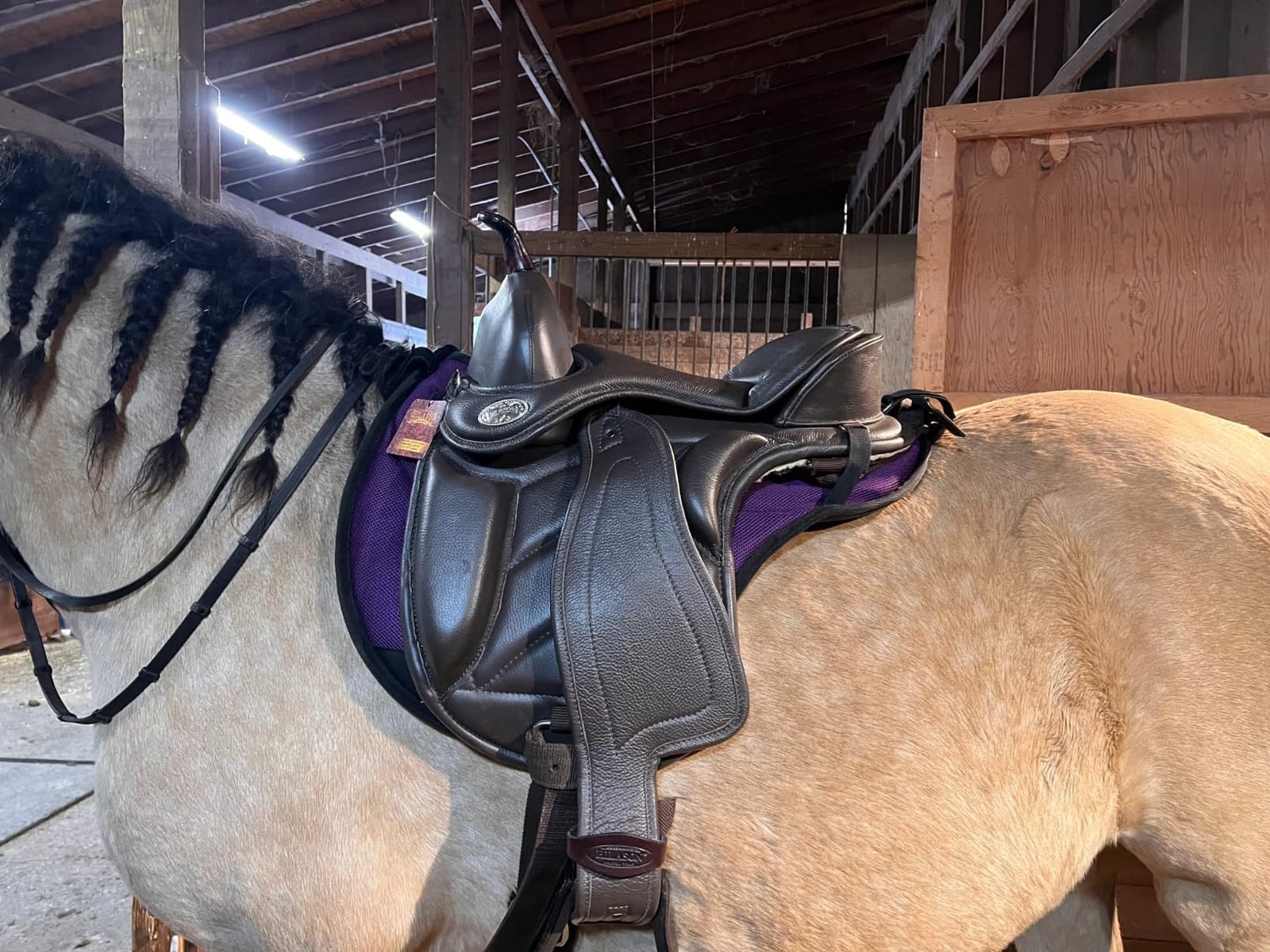
The HILASON Hybrid English Treeless saddle is a niche but genuinely useful pick for riders who want a long-flap English feel with the relaxed leg position of a Western saddle. The 4-way flex movement, full-grain leather, and 21-pound weight combine for a versatile saddle that fits a range of hard-to-fit conformations.
Visually, the saddle is striking. The brown hand-tooled leather finish looks far more expensive than the price tier suggests. Buyers on Amazon give it all 4-star and 5-star reviews, highlighting the leather quality and the comfortable ride feel.
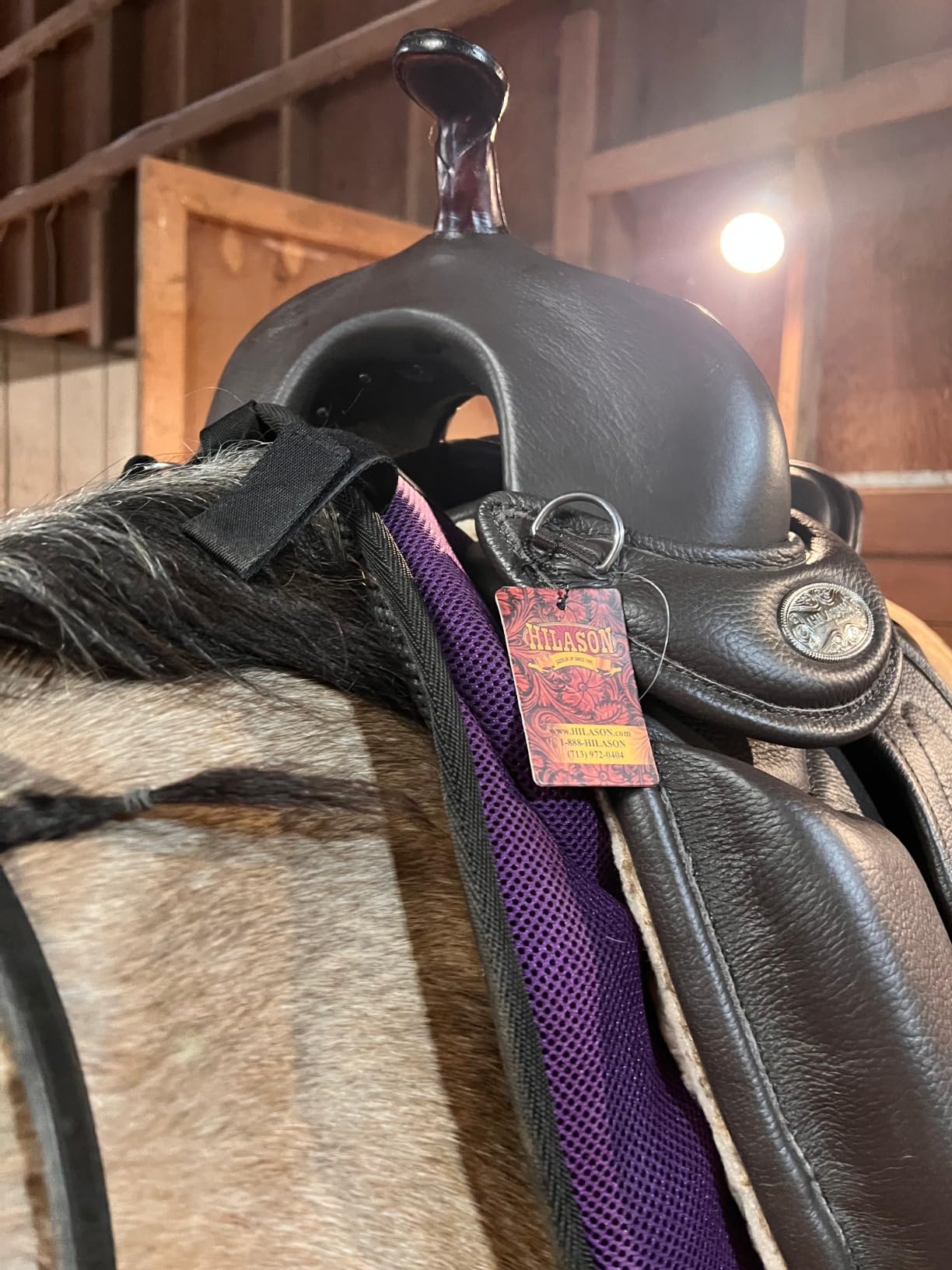
The reviews do flag two consistent issues: the saddle runs large (size down if between sizes), and the front bars are narrower than some buyers expect. A few reviewers also mention slower-than-ideal customer service response times. Despite that, the consensus is that this hybrid fills a real gap for English-influenced riders on wide horses.
For English-style riders on wide, mutton-withered horses
If you like a longer leg position and a closer-contact feel than a Western saddle gives, but your wide Quarter Horse or cob needs a flex tree, this hybrid nails the brief. The treeless, flex construction solves fit issues without forcing you to commit to a full Western rig.
For riders learning a new discipline on a hard-to-fit horse
If you are transitioning between English and Western and your horse’s conformation makes saddle choice complicated, a hybrid gives you room to experiment without committing to two saddles. Riders moving into endurance or trail often use a hybrid as a stepping stone before committing to a discipline-specific saddle.
7. ADB CREATIONS Freemax Treeless Western Endurance Saddle – Best Budget Pick
ADB CREATIONS Freemax Synthetic Treeless Western Endurance Saddle, Lightweight Soft Long Flap Riding Saddle with Padded Seat, Free Stirrups, Tack-Free Design, Trail Training & Endurance Riding, 17.5″
Treeless synthetic
10 to 18 inch seats
Free stirrups included
Pros
- Affordable entry-level treeless saddle
- Lightweight synthetic construction
- Flexible treeless design
- Free stirrups included
- Wide range of seat sizes
Cons
- Limited review data
- Synthetic less premium than leather
The ADB CREATIONS Freemax Treeless is the most affordable treeless saddle on the market and the lightest option in this roundup. Synthetic construction drops the weight dramatically compared to leather, and the seat sizing runs from 10 inches (for ponies) up to 18 inches (for tall riders), which makes it accessible to a wide variety of riders and horses.
The freestyle treeless design lets you ride with closer contact than a traditional tree, which builds confidence and improves horse-rider communication. Free stirrups included is a meaningful bonus for buyers on a tight budget. The single verified five-star review noted good quality and a happy recipient.
The honest caveat: review data is thin. With only one verified purchase, we have less confidence in long-term durability than with leather alternatives. Synthetic also ages differently than leather — it can harden over years of sun exposure and is harder to repair when damaged.
For first-time saddle owners on a tight budget
If you need a functional, lightweight saddle right now and you do not have the budget for custom or premium leather, the ADB Freemax is a credible entry point. It will get you on the trail while you save for a long-term upgrade.
For kids, growing riders, and lesson programs
The wide seat-size range, low weight, and forgiving treeless feel make this saddle ideal for kids, lesson barns, or riders whose size is still changing. As a learner progresses to a discipline-specific saddle, this ADB becomes a spare or resale saddle at minimal loss.
8. Abetta Gaited Comfort Endurance Saddle – Best for Gaited Horses
Abetta Gaited Comfort Endurance Saddle 17 Black
17 inch seat
Built for gaited breeds
Black synthetic
Pros
- Designed specifically for gaited horses
- Quality Abetta brand construction
- Great fit per verified buyer
- Lightweight synthetic build
Cons
- Limited review data
- Limited availability
The Abetta Gaited Comfort Endurance Saddle is built specifically for the shoulder freedom and broad backs of Tennessee Walking Horses, Mountain Pleasure Horses, and other gaited breeds. Abetta has long specialized in lightweight synthetic saddles for trail and endurance riding, and the Gaited Comfort line is one of their most popular gaited-specific models.
The 17-inch seat fits most adult riders, the black synthetic finish is easy to care for, and the gaited-specific tree allows the shoulders to move through the gait without restriction. The single verified buyer confirmed a great fit and gave five stars.
Review data is thin here too, but Abetta’s brand reputation in the gaited community is well established. Owners of TWHs and Missouri Foxtrotters regularly cite Abetta saddles as a top pick for trail riding on gaited horses.
For Tennessee Walking Horse and other gaited breed owners
If you specifically want a saddle engineered for gaited breeds — long shoulder rotation, broad back, high wither — the Abetta Gaited Comfort is purpose-built for that conformation. It is one of the few gaited-specific saddles at this price tier.
For endurance and long-distance trail riders
Endurance riders need a saddle that distributes pressure evenly over long miles without perching on the back. The Abetta’s lightweight build, gaited-specific tree, and broad panels all support endurance work on wide horses with extended conditioning programs.
Western vs English Wide Saddles
The biggest decision point for wide-backed horse owners is Western versus English, and both directions have strong options. Western saddles distribute weight across a larger surface area with skirt and panel contact, making them naturally forgiving on broad backs. They are also heavier — typically 25 to 45 pounds — which can fatigue smaller riders and small horses. Western’s flex tree and treeless designs solve the fit problem while keeping the traditional Western look.
English saddles keep the rider closer to the horse and let you feel more response, which suits dressage and jumping. Wide-specific English trees exist but are rarer; the Wintec changeable-gullet system is the most accessible way to get a wide English fit. For trail riding and lower-impact work, a Western saddle is usually more comfortable. For dressage and jumping, English is the right tool despite the smaller fit margin.
If you ride both disciplines or you are still deciding, the hybrid English/Western picks above (HILASON Hybrid, ADB Freemax) give you a flexible middle path.
Buying Guide: Choosing a Saddle for a Wide-Backed Horse
Picking the right saddle is the most important gear decision you will make for a wide horse. Here are the factors I weight most heavily when advising our readers.
Match Tree Shape to Conformation First
Gullet width alone is misleading. A 7-inch gullet on a V-shaped tree will still bridge on a round-barreled horse. Look for a U-shaped hoop tree for round or flat-backed horses, and a more open angle for horses with higher withers. If the brand offers a changeable gullet system like Wintec’s Easy-Change Fit Solution, that flexibility is worth paying extra for.
Discipline Drives Saddle Choice
Match the saddle to the work you do. Dressage riders need a deep seat, long flaps, and a wide dressage-specific tree. Trail and ranch riders benefit from Western flex-tree or treeless designs that settle into broad backs. Endurance riders should prioritize weight and shock absorption. Gaited breed owners need shoulder-freedom engineering.
Breed-Specific Picks That Save Time
Quarter Horses and stock breeds typically fit 7 to 7.5-inch gullets with flatter bar angles. Haflingers, Fjords, and cobs usually need 8-inch or extra-wide gullets with U-shaped hoop trees. Draft crosses often require 8 inches plus with significant bar spread. Thoroughbreds and Warmbloods may be wide but typically carry more wither definition — a changeable-gullet Wintec or Thorowgood is usually the right starting point.
Fit the Horse, Not the Rider
Many owners buy saddles that fit their seat size without checking tree fit on the horse. A saddle that fits the rider but pinches the horse’s back will cause behavior issues, white hairs, and long-term soundness concerns. The horse’s back is non-negotiable. A professional fitting costs roughly the same as a custom saddle pad and prevents hundreds of dollars in trial-and-error. Read more about the role of pads in our guide to the best gel saddle pads for sore-backed horses.
Treeless, Flex Tree, and Rigid Tree Trade-offs
Treeless saddles fit the most horses and give the closest contact, but they require good padding and a well-muscled horse to distribute weight evenly. Flex tree saddles offer tree structure with forgiveness for changing conformation. Rigid trees give the most stable feel but require precise fit. For a wide horse, treeless and flex tree options are usually the safer bet.
Frequently Asked Questions
What is the best saddle for a wide flat-backed horse?
The best saddles for wide flat-backed horses use U-shaped hoop trees with gullet widths of 7 to 8 inches plus and flatter bar angles. Top picks include the Wintec 250 All-Purpose for budget, Duett Fidelio for dressage, Thorowgood T4 Cob for English all-purpose, and Fabtron for Western. A changeable gullet system lets you fine-tune fit as your horse changes shape.
What size gullet does a wide horse need?
Most wide horses need a gullet width of at least 7 inches. Quarter Horses typically fit 7 to 7.5 inches, while draft crosses, Fjords, and Haflingers often need 8 inches or extra-wide. Measure 2 inches behind the shoulder blade with a flexible wire and compare against the saddle tree’s specifications.
Is a 7 inch gullet considered wide?
Yes, a 7-inch gullet is the entry point for wide horses. Standard saddles run 5.5 to 6.5 inches (medium). 7 to 7.5 inches is wide. 8 inches or more is extra-wide and is typically required for Haflingers, Fjords, and draft-cross breeds. Tree shape matters as much as raw gullet width.
Can you use shims or pads to fit a wide saddle?
Shims and corrective pads can help when a saddle is close but not quite right. Specialized pads like the Southwestern Equine OrthoRide use PORON-RXD foam to absorb shock and improve contact. Shims alone will not fix a tree that is the wrong shape and cannot replace a properly fitted saddle for chronic fit issues.
What breeds need a wide saddle?
Wide saddles are commonly needed for Quarter Horses, Haflingers, Fjords, cobs, Icelandic horses, draft crosses, and Baroque breeds like Andalusians and Lipizzaners. Any horse that is mutton-withered, flat-backed, or round-barreled will benefit from a wide-tree or hoop-tree saddle with a 7 to 8 inch gullet.
Final Verdict
If your existing saddle is “almost right” and you want the most cost-effective fix, the Southwestern Equine OrthoRide Correction Pad is our Editor’s Choice. It solves fit problems on a wide range of conformations without forcing a full saddle purchase. For buyers starting from scratch on a budget, the HILASON Flex Tree Western Trail delivers real leather and a genuine flex tree at a practical price. If your discipline is dressage or jumping on a wide Warmblood, the Wintec Pro HART Wide Dressage is the most accessible English option. Treeless riders on hard-to-fit horses should look closely at the HILASON Treeless Western line, and gaited breed owners will get the most gait-specific engineering from the Abetta Gaited Comfort Endurance.
Whatever you buy, our team’s recommendation is the same: schedule a professional fitting before committing. The eight saddles above are well-reviewed and technically suited to wide-backed horses, but every horse’s conformation is unique. A certified saddle fitter will confirm tree shape, panel contact, and channel clearance — the three measurements that actually determine whether a saddle fits. Browse more options in our guide to the 8 best treeless saddles for horses and our picks for barrel racing saddles. If your horse has chronic back soreness, also read our review of the best gel saddle pads for sore-backed horses.
The right saddle changes a horse. Once you find it, riding becomes something you and your horse look forward to — not a negotiation. Here is to many comfortable miles in 2026 and beyond.