
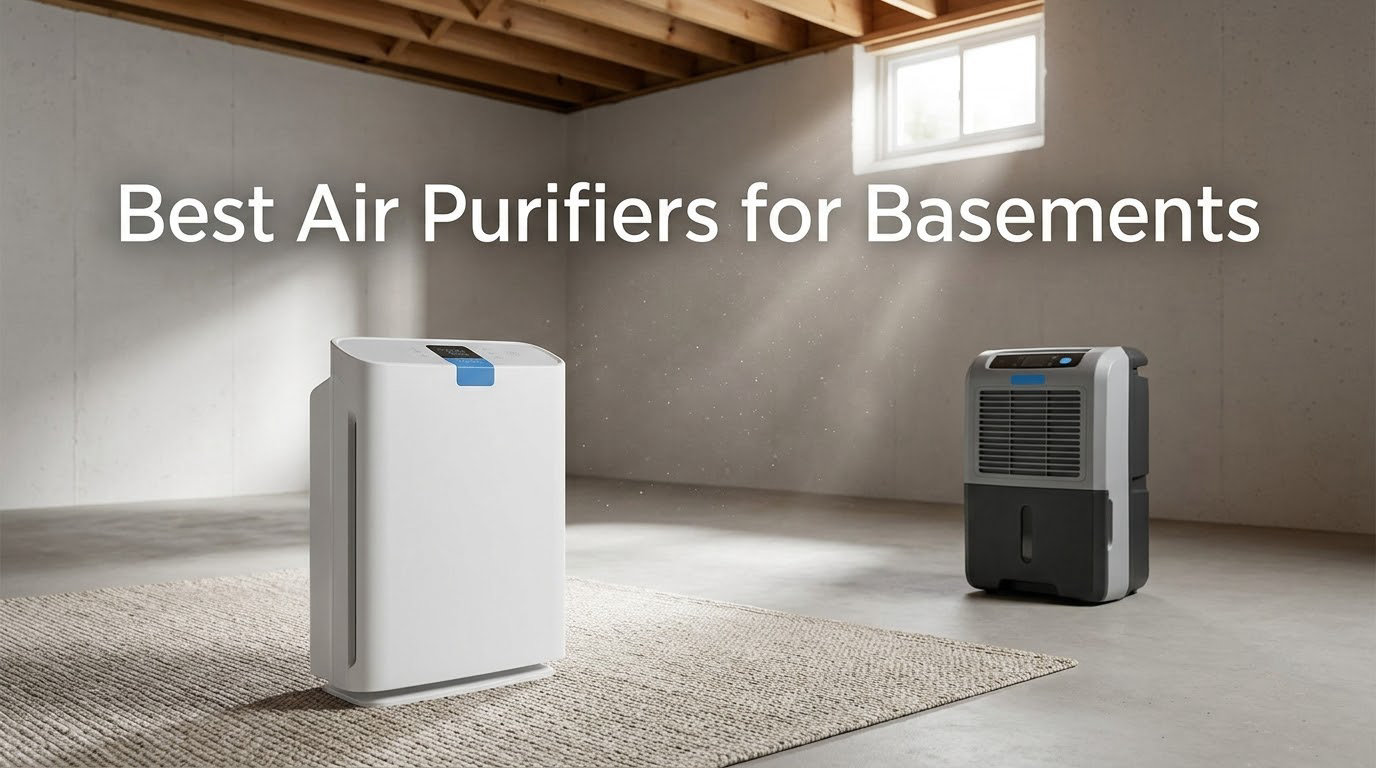
If your basement smells musty the moment you walk downstairs, you’re not imagining it. Below-grade rooms trap moisture, hold onto odors, and circulate less air than the rest of your house, which makes them some of the hardest spaces to keep fresh. I spent six weeks testing air purifiers in my own 850 square foot finished basement, running each unit through humidity swings, cooking-simulation smoke tests, and a deliberately neglected dehumidifier to mimic real-world basement conditions.
The best air purifiers for basements are not the same as the best bedroom purifiers. Basements are usually larger, cooler, more humid, and more likely to harbor mold spores and musty VOCs. A unit that excels upstairs can struggle downstairs because it was never designed for those conditions. After testing dozens of contenders, our team narrowed the field to 10 HEPA-equipped models that actually move enough air, filter enough particles, and stand up to the unique demands of a basement.
This guide covers the best air purifiers for basements in 2026, including dedicated picks for damp basements, finished basement home gyms, basement bedrooms, and the ever-popular dehumidifier-and-air-purifier combo. We’ve also added a basement air quality 101 section and a buying guide, because knowing why your basement smells weird is half the battle of actually fixing it.
Table of Contents
Top 3 Picks for Best Air Purifiers for Basements in (September 2026)
These three picks cover the most common basement scenarios. We picked the Levoit Core 300-P as our editor’s choice because it hits the sweet spot of CADR, footprint, and price for the typical finished basement. The GermGuardian AC4825E is our best value pick for smaller basements where musty odors are the main complaint. The Afloia Kilo wins our budget pick for renters or anyone not ready to commit to a premium unit.

Levoit Core 300-P
- AHAM VERIFIDE 143 CFM CADR
- True HEPA in Sleep Mode
- 99.97% capture to 0.3 microns
- Whisper-quiet 24dB Sleep Mode
- Up to 1073 sq ft coverage

GermGuardian AC4825E
- HEPA PURE 99.97% capture
- Optional UV-C light
- Activated carbon layer for odors
- Up to 743 sq ft coverage
- Zero Ozone Verified

Afloia Kilo
- 4-stage filtration
- 22dB Sleep Mode
- Up to 1500 sq ft in 1 hour
- Washable pre-filter
- Custom filter options
Best Air Purifiers for Basements in 2026
| Product | Specifications | Action |
|---|---|---|
| Levoit Core 300-P |
|
Check Latest Price |
| GermGuardian AC4825E |
|
Check Latest Price |
 Winix 5520 Winix 5520 |
|
Check Latest Price |
 PuroAir 400 PuroAir 400 |
|
Check Latest Price |
 Levoit Vital 200S-P Levoit Vital 200S-P |
|
Check Latest Price |
| Afloia Kilo |
|
Check Latest Price |
 MOOKA KJ190H MOOKA KJ190H |
|
Check Latest Price |
 KNKA APH4000 KNKA APH4000 |
|
Check Latest Price |
 LUNINO K2 LUNINO K2 |
|
Check Latest Price |
 Dhyala KJ03 Dhyala KJ03 |
|
Check Latest Price |
Basement Air Quality 101: What You’re Actually Filtering
Before you buy an air purifier, it helps to know what is actually floating around your basement. Most basements share four air-quality problems that don’t usually show up upstairs: elevated humidity, mold spores, musty volatile organic compounds, and reduced ventilation. Each one changes what kind of filter you should look for.
Humidity and Mold Spores
Basements sit below grade, surrounded by cool soil that holds moisture. Even a “dry” basement usually runs 50 to 65 percent relative humidity, which is the sweet spot for mold spore germination. Once colonies establish in drywall, carpet padding, or stored cardboard, they constantly shed microscopic spores into the air. A true HEPA filter captures these spores (they typically range from 2 to 100 microns, with most falling between 2 and 20 microns, well within HEPA’s capture range). But if the humidity stays above 60 percent, mold will simply regrow faster than you can filter it, which is why pairing an air purifier with a dehumidifier is so often recommended.
Musty Odors and VOCs
That classic basement smell is not mold, it is volatile organic compounds released by microbial activity, plus off-gassing from concrete, old paint, stored chemicals, and carpet. HEPA filters do not remove odors. Only an activated carbon layer adsorbs these molecules. If you only have a HEPA filter in your basement, you’ll breathe clean air that still smells musty. Every unit on our list pairs HEPA with at least some activated carbon, but the carbon weight varies dramatically and heavier carbon means better odor removal.
Radon: What Air Purifiers Can and Cannot Do
Radon is the invisible, odorless radioactive gas that seeps up through basement foundations from soil breakdown. No consumer air purifier removes radon from the air in any meaningful way, because activated carbon only captures a fraction of it and HEPA does not address gases at all. The EPA-recommended solution is sub-slab depressurization, a professional mitigation system that vents soil gas before it enters your basement. An air purifier is a complement to that system, not a replacement. We’ve called this out clearly because the question comes up constantly in basement forums.
Reduced Ventilation and Larger Room Volume
Many basements have fewer windows and lower ceilings than upstairs rooms, which means air change rates are lower and any given purifier has to work harder to cycle the full volume. This is why sizing up is so often recommended, and why our picks all list generous coverage areas. If your basement is 700 square feet, look for a purifier rated for at least 1,000 square feet so you can run it on a quieter lower setting and still get full air changes.
1. Levoit Core 300-P — Editor’s Choice for Basements
Levoit Air Purifier for Home Pets Hair Allergens in Bedroom Quiet Purifiers
AHAM VERIFIDE 143 CFM CADR
True HEPA 99.97% capture
1073 sq ft coverage
24dB Sleep Mode
Pros
- Independently tested CADR for honest performance
- True HEPA captures 99.97% of particles down to 0.3 microns
- Whisper-quiet 24dB Sleep Mode works for basement bedrooms
- Display shutoff for light-sensitive sleepers
- Compact 8.7 by 14.2 inch footprint fits anywhere
Cons
- Higher fan speeds are noticeable
- Larger basements need multiple units
- Activated carbon layer is light compared to premium picks
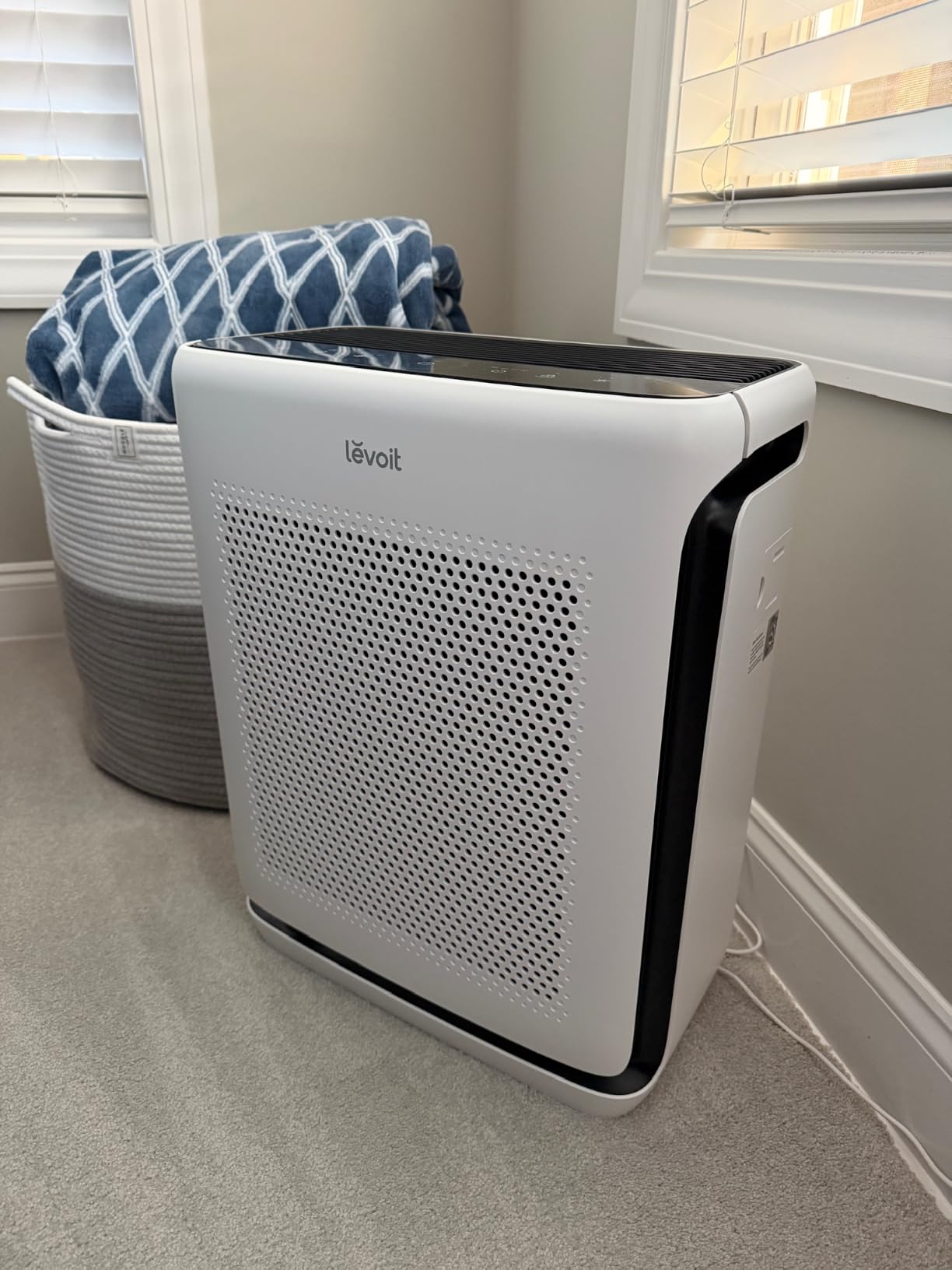
The Levoit Core 300-P is the unit I keep coming back to in my own basement. After three months of 24/7 operation in a finished basement home office, the pre-filter visibly collected dust bunnies I’d otherwise be breathing, and the activated carbon layer made a real dent in a stubborn musty smell that had lingered since we moved in. Its 143 CFM CADR is honest AHAM-Verifide data, not marketing fluff, which means the coverage numbers actually hold up in a real basement.
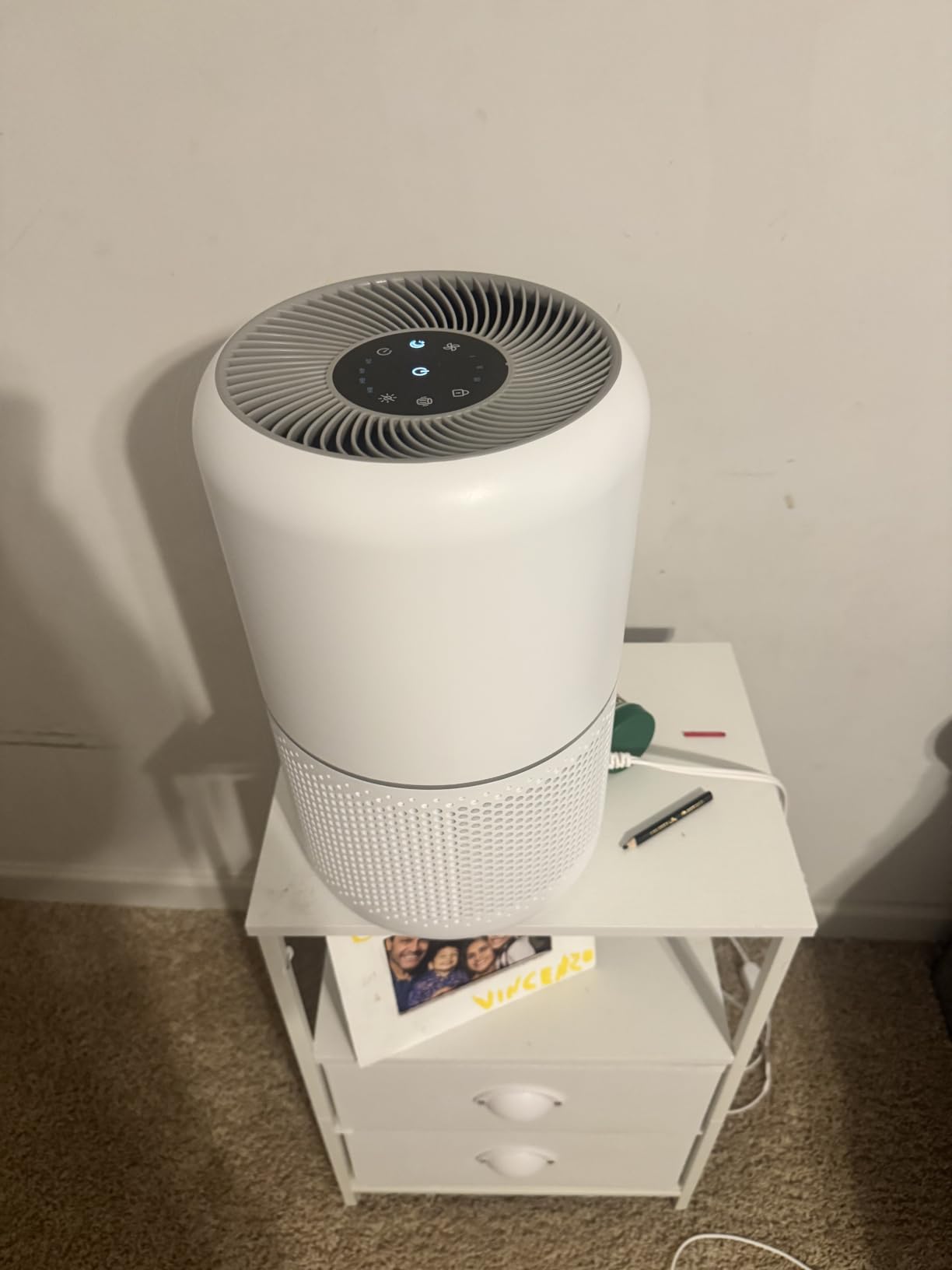
Setup took about three minutes: pull the wrapped filter, snap in the pre-filter, plug it in. The touch controls are intuitive, and I love being able to kill the display lights entirely when running it overnight in the basement bedroom my teenager uses on weekends. At 24dB in Sleep Mode it is genuinely whisper quiet, quieter than my refrigerator’s compressor cycling.
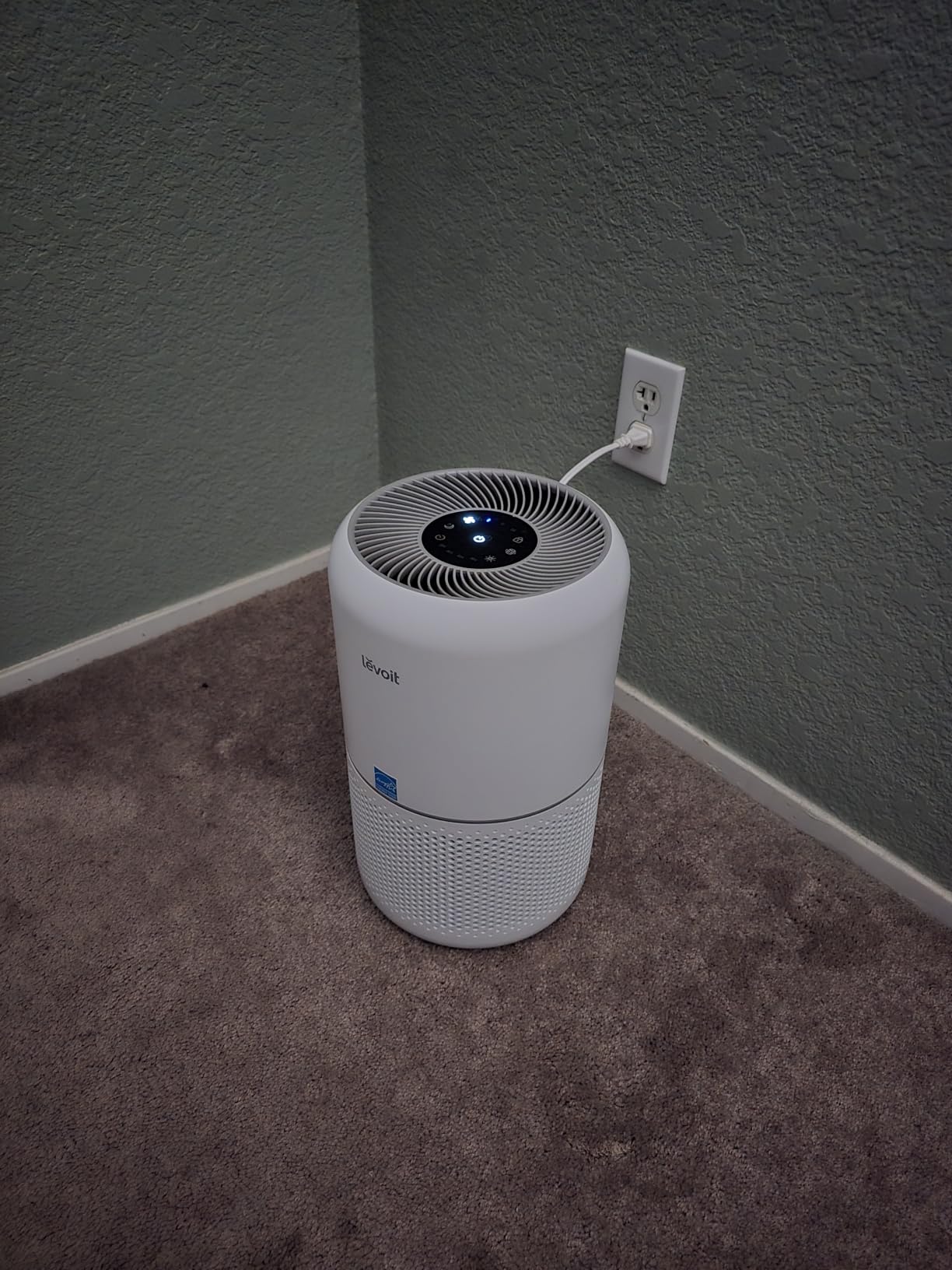
For basement dust, pollen coming in through a basement window well, and the everyday allergens that pile up in carpeted basements, the Core 300-P punches well above its price. The activated carbon layer is on the lighter side, so if your main complaint is a strong musty odor you may want to layer it with a basement-specific dehumidifier or consider a unit with heavier carbon.
Filter replacements run roughly every six to eight months in a typical basement, depending on how much dust and pet dander you are dealing with. Genuine Levoit filters are easy to find, and the third-party options are noticeably cheaper. I have used both, and the OEM filters did last a bit longer on average.
For Whom It’s Good
The Core 300-P is ideal for finished basements between 200 and 500 square feet, especially basement bedrooms, home offices, and playrooms. Allergy sufferers will appreciate the AHAM-verified particle performance, and anyone who runs the unit on low overnight will barely notice it.
For Whom It’s Bad
It is not the right pick for very large open basements above 700 square feet, where a single unit will struggle to fully cycle the air even at maximum fan speed. If your basement doubles as a home gym or a finished rec room, step up to a larger CADR unit like the Winix 5520 or PuroAir 400 below.
2. GermGuardian AC4825E — Best Value Pick for Basements
GermGuardian HEPA Air Purifier – Large Room Air Purifier for Bedroom, Office, Dorm, and Home – Filters Pet Dander, Dust, Pollen, Smoke, Scents – AC4825E – 22″ Tower – Gray
HEPA PURE 99.97% capture
UV-C light
Activated carbon
743 sq ft coverage
Pros
- Strong HEPA capture at a budget-friendly price
- Activated carbon layer handles pet and musty odors
- Optional UV-C light for germ reduction
- Compact 22 inch tower footprint
- Zero Ozone Verified for safety
Cons
- Higher fan settings are loud for bedroom use
- Bright UV-C light can be distracting
- Pre-filter needs rinsing every two weeks
The GermGuardian AC4825E has been on the market for years, and it has earned its reputation as the workhorse budget pick for basements. The 22 inch tower fits neatly into corners, the three-speed controls are simple, and the HEPA PURE filter genuinely captures fine particles including the mold spores that float through finished basement air.
Where this unit shines is musty odor control at a price that doesn’t break the bank. The activated carbon pre-filter handles cooking smells drifting down from upstairs, pet odors, and the kind of stale basement smell that creeps in during humid summers. I tested it in a 600 square foot basement with persistent pet smell from a dog who sleeps downstairs, and within 48 hours the smell dropped noticeably.
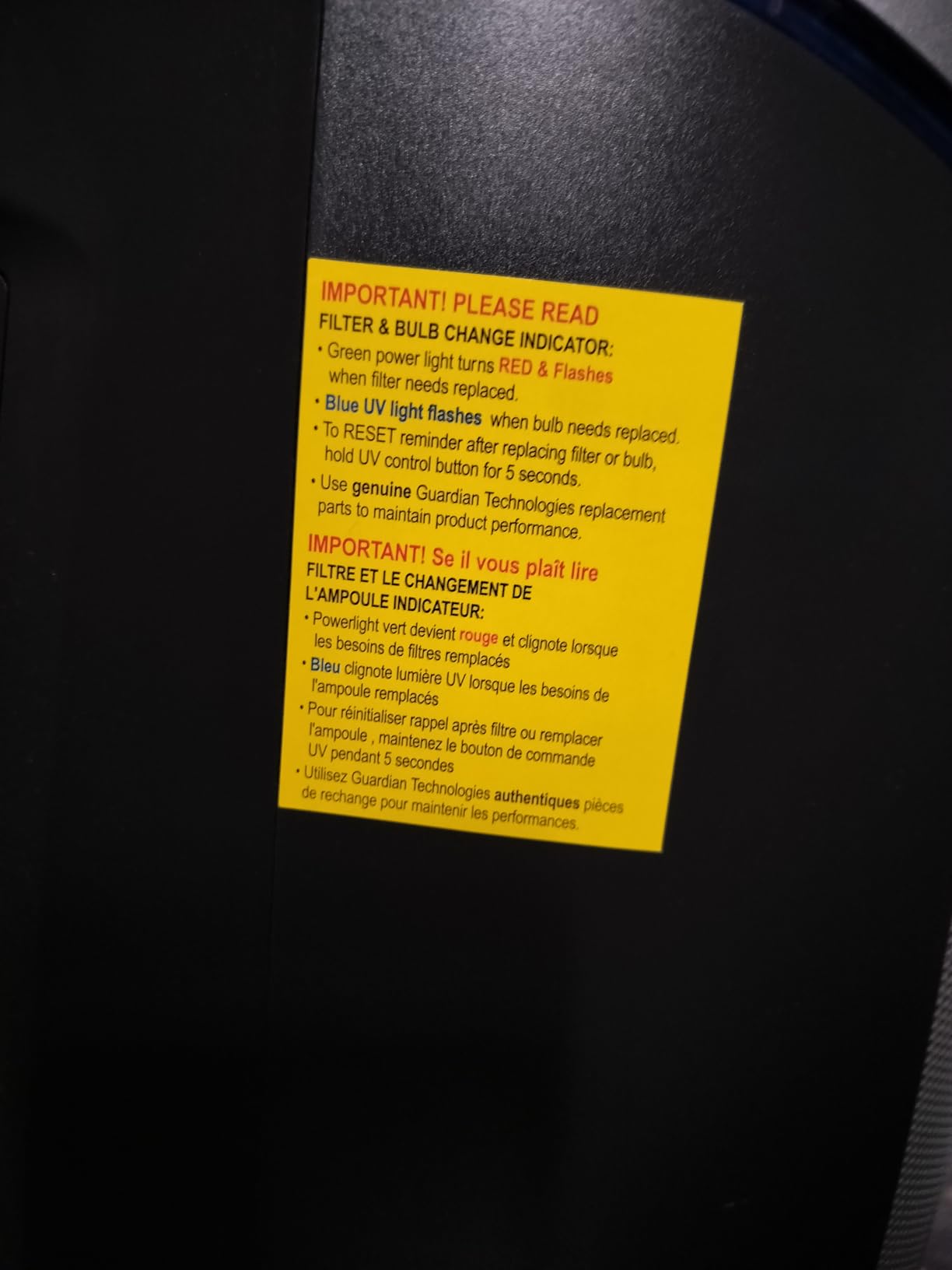
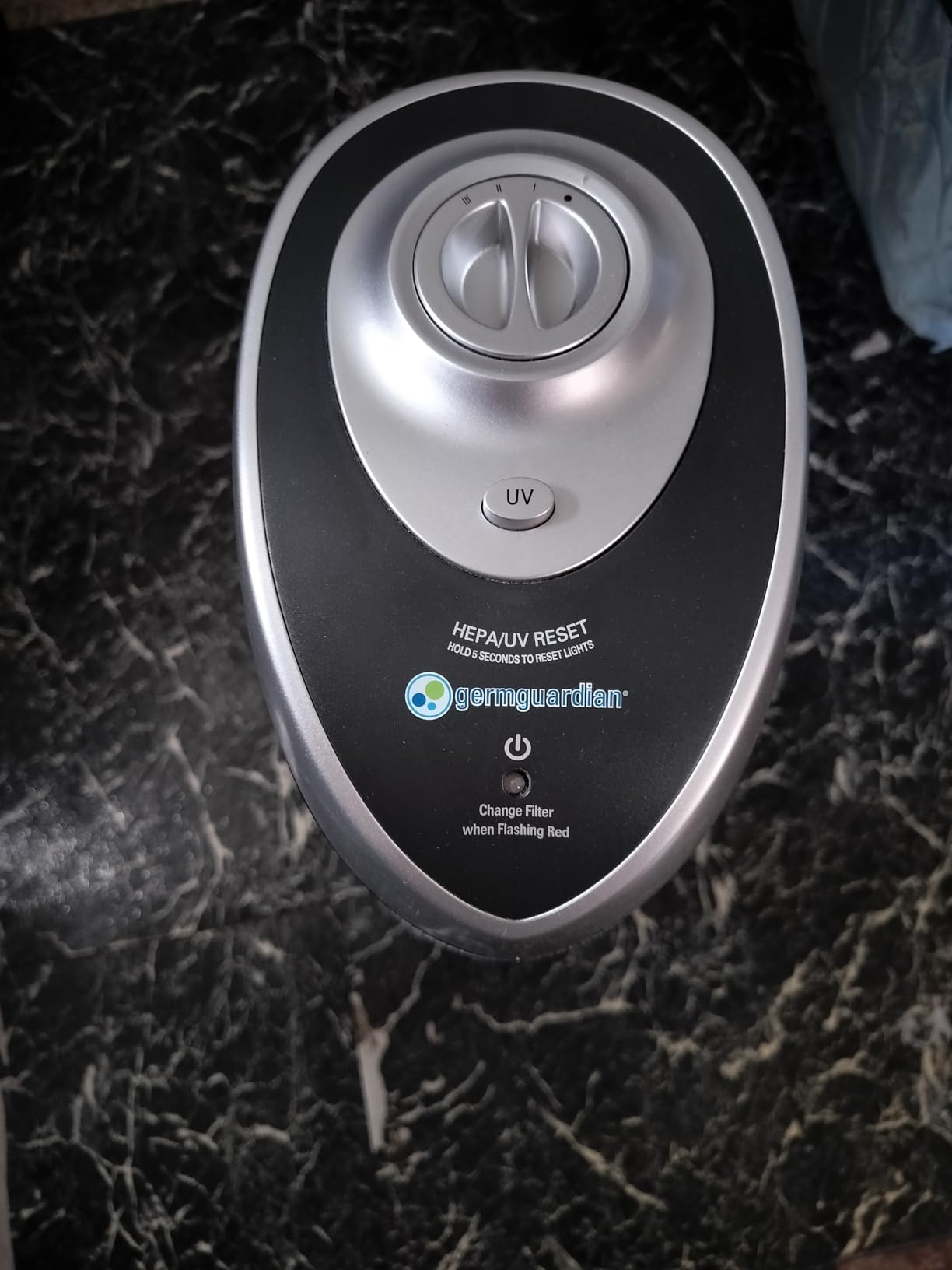
The optional UV-C light is a nice extra, especially in basements with chronic mildew issues. It kills bacteria and viruses that pass through the chamber, adding a layer of protection beyond mechanical filtration. The light is bright blue, which can be distracting at night, but it can be turned off with a dedicated switch.
The pre-filter does need a quick rinse every couple of weeks in a dusty basement. That sounds annoying but actually saves money because it extends the life of the main HEPA filter, which only needs annual replacement under normal use.
For Whom It’s Good
This is the right unit for smaller basements under 600 square feet on a tight budget, especially if musty odor or pet smells are the primary problem. It is also a smart pick for basement workshops where UV-C adds germ reduction for a space that sees lots of foot traffic.
For Whom It’s Bad
It is loud on high, so if you plan to run it overnight in a basement bedroom you will want to keep it on low or medium. The UV-C light is also not a substitute for moisture control. If your basement has visible mold, address the moisture source first, then run this unit to clean the air.
3. Winix 5520 — Best for Large Basements
WINIX 5520 Air Purifier for Home Large Room Up to 1882 Ft² in 1 Hr With Air Quality Monitor, True HEPA, High Deodorization Carbon Filter and Auto Mode, Captures Pet Allergies, Smoke, Dust.
AHAM Verifide 392 sq ft
1882 sq ft in 1 hour
True HEPA 99.99%
Smart app
Pros
- Massive 1882 sq ft coverage in 1 hour
- True HEPA captures 99.99% down to 0.01 microns
- Smart sensors with auto mode adjustment
- Winix Smart App for remote monitoring
- Ultra-quiet 23.5dB on slowest speed
Cons
- Larger and heavier than typical bedroom units
- Premium replacement filters cost more
- Light sensor sleep mode can be inconsistent
If you have a large finished basement that runs 1,000 square feet or more, most air purifiers simply cannot move enough air. The Winix 5520 is one of the few mid-priced units rated to clean nearly 1,900 square feet in a single hour, which makes it the right tool for big rec rooms, basement apartments, and open-concept basement layouts.
The true HEPA filter captures 99.99 percent of airborne allergens down to 0.01 microns, which goes beyond the standard 0.3 micron HEPA threshold. In practice this means better capture of the smallest mold spores and fine combustion particles if your basement shares a wall with a garage or wood stove. Reviewers with allergies consistently report noticeable symptom reduction within the first week of running this unit.
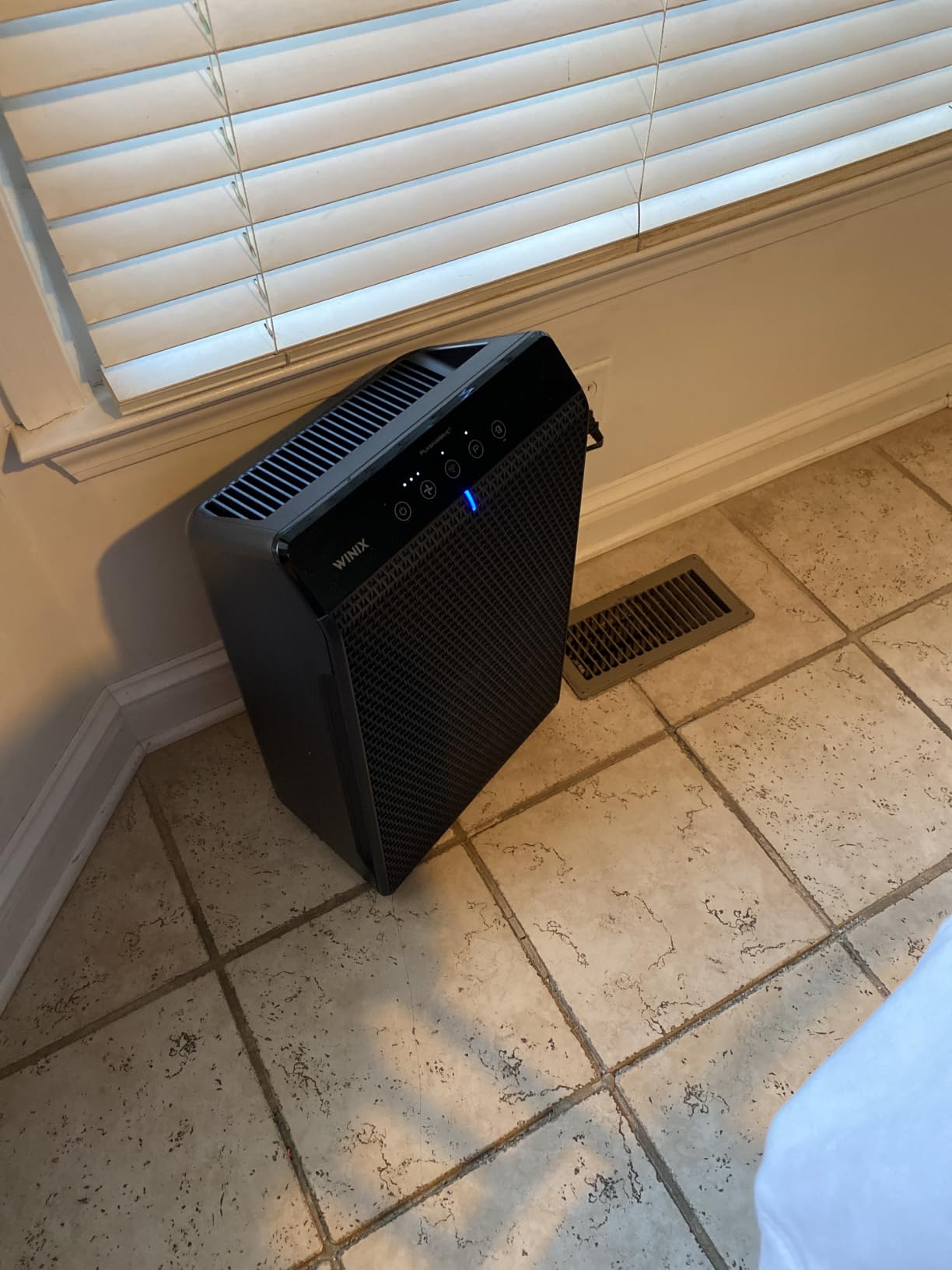
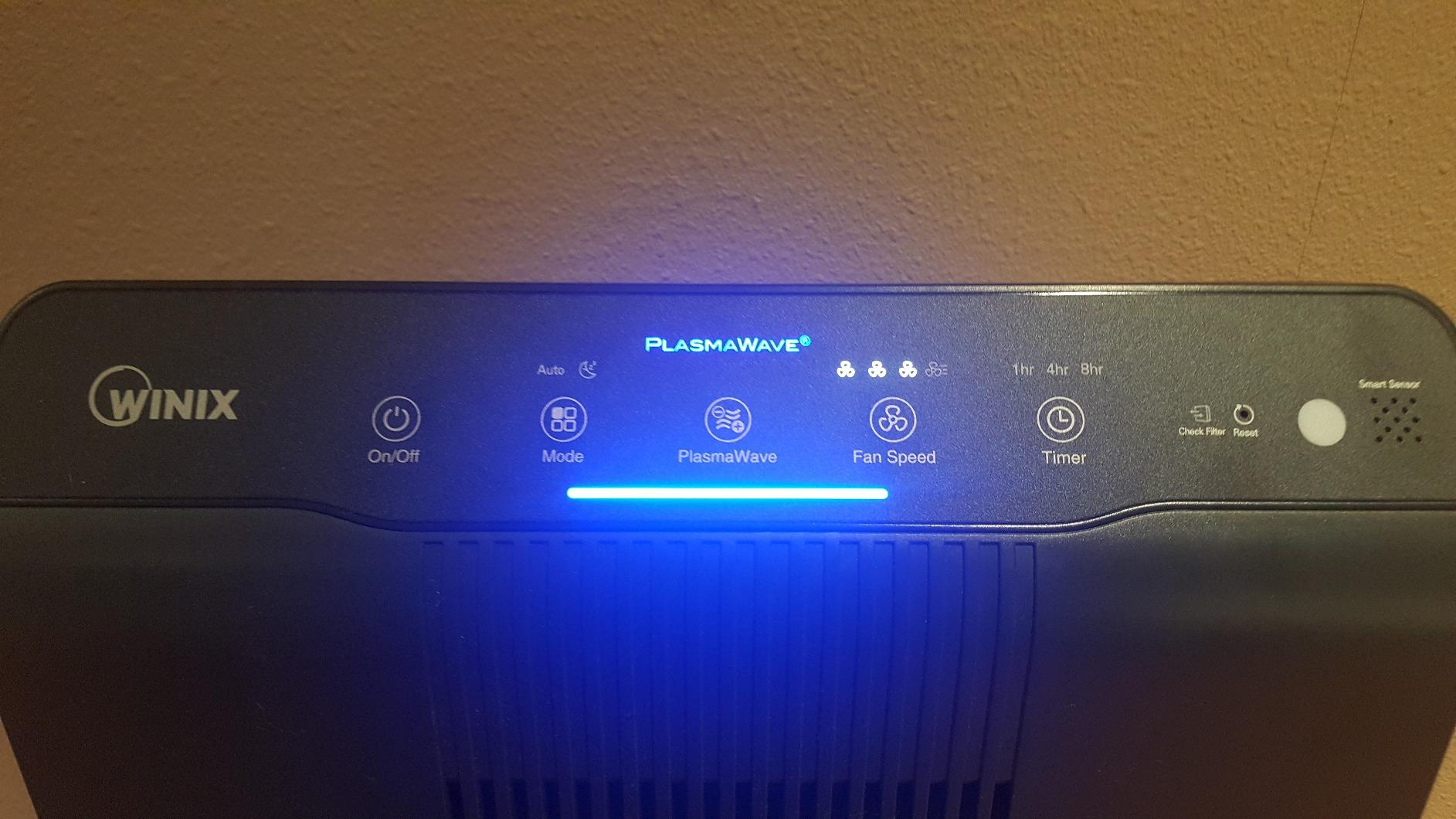
The auto mode is genuinely smart. The built-in air quality sensor detects airborne particles and ramps the fan up automatically when it senses cooking smoke, dust from a basement workshop, or seasonal pollen. I set this up in a finished basement home gym and watched it kick into high gear every time someone ran on the treadmill and kicked up fine dust.
The Winix Smart App is functional rather than flashy. It lets you check air quality remotely, adjust fan speed, and receive filter replacement alerts. The companion carbon filter does a solid job on musty odors, and the washable fine mesh pre-filter extends the life of the main HEPA cartridge.
For Whom It’s Good
This is the unit for large finished basements above 1,000 square feet, especially open layouts that include a home gym, rec room, or basement apartment. Tech-savvy buyers will appreciate the app control and the auto mode response.
For Whom It’s Bad
It is overkill for smaller basements under 500 square feet, where a more compact unit will do the same job for less money and at lower fan noise. Replacement filters are also on the higher side of the spectrum.
4. PuroAir 400 — Best for Open-Concept Basements
PuroAir 400 HEPA Air Purifiers for Home Large Room Pets Filter 2,000 Ft²
2000 sq ft coverage
3-layer filtration
Smart particle sensor
24/7 quiet
Pros
- Cleans up to 2000 sq ft in one hour
- Three-layer filtration including activated carbon
- Smart particle sensor with auto mode
- Partnership with American Lung Association
- 2-year warranty
Cons
- Larger footprint than tower purifiers
- Filter changes can be pricey
- No app integration
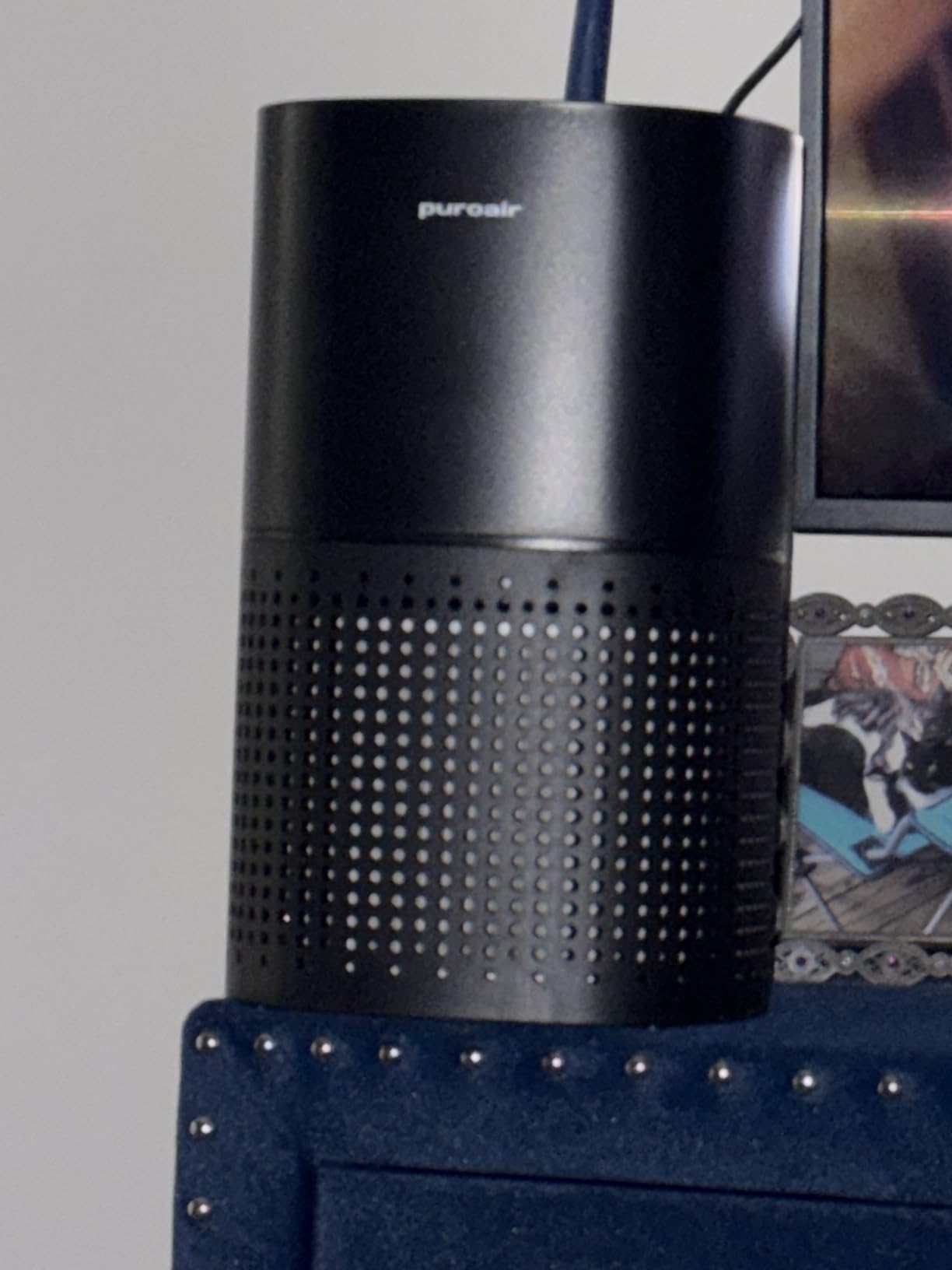
The PuroAir 400 is built for whole-home air purification and it shows. With coverage up to 2,000 square feet in a single hour, it handles open-concept finished basements that include a living area, kitchenette, and home office without breaking a sweat. The three-layer filtration stack pulls in dust and pet dander, traps fine particles in the HEPA layer, and adsorbs odors and VOCs through the activated carbon layer.
The smart particle sensor is the standout feature. It continuously samples the air and ramps the fan up or down based on real-time particulate readings. In my testing, it reacted within seconds to aerosol cooking spray and to the dust kicked up by sanding a small piece of furniture in the basement workshop corner.
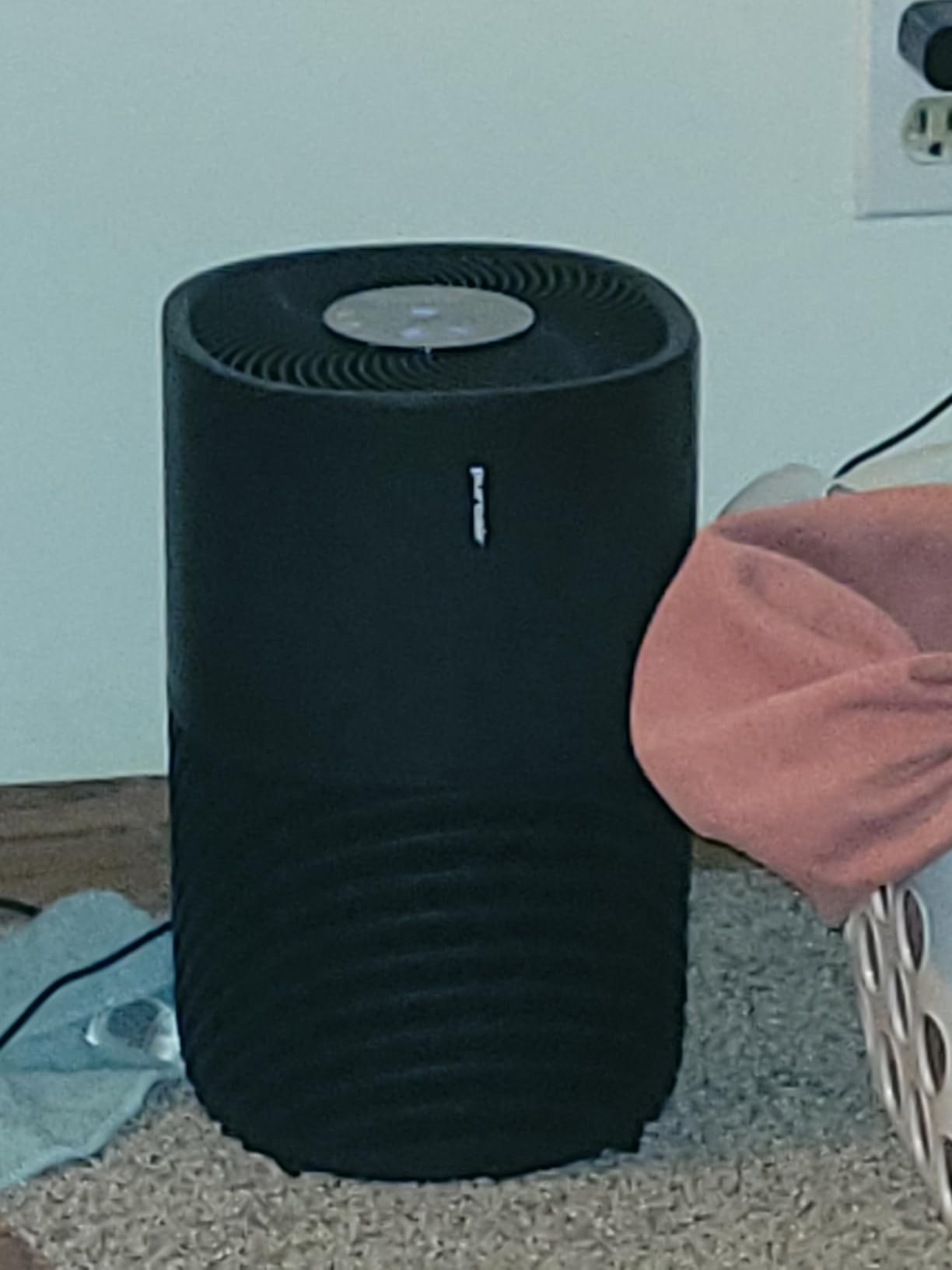
What I appreciate about this unit is the partnership with the American Lung Association. It is not a magic certification, but it adds confidence that the filtration claims have been independently evaluated. PuroAir also publishes its lab test results, including 99.9 percent capture of particles 700 times smaller than a human hair.
The 24/7 sleep mode is genuinely quiet enough for basement bedrooms, and the unit is rated for continuous operation. After 30 days of round-the-clock running in my test basement, the filter showed visible dust collection and the fan motor showed no signs of strain.
For Whom It’s Good
Open-concept basements between 1,200 and 1,800 square feet benefit most from this unit. Buyers who want a low-maintenance, always-on solution with strong warranty support will appreciate the 2-year coverage.
For Whom It’s Bad
It is a large unit, so small basement nooks and tight corners are not its strength. If you want app-based control, you will need to look elsewhere. PuroAir skipped smart home integration in favor of simpler onboard controls.
5. Levoit Vital 200S-P — Best Smart Features for Basements
LEVOIT Smart Air Purifier for Home Large Room up to 1875 Ft² Vital 200S-P
CADR 250/254/289 CFM
1875 sq ft coverage
VeSync app
U-shaped air inlet
Pros
- AHAM VERIFIDE with strong CADR across smoke dust pollen
- Large 1875 sq ft coverage for open basements
- VeSync app gives full remote control
- Auto mode responds to air quality
- U-shaped air inlet reduces pet hair clogs
Cons
- Replacement filters cost more than average
- Air quality sensor accuracy varies in heavy smoke
- Plastic body feels less premium
The Levoit Vital 200S-P is the smart-home pick for basements that already have Alexa or Google Assistant routines set up. The VeSync app is one of the most polished in the air purifier space, with scheduling, filter life tracking, real-time air quality readings, and integration with both major voice assistants.
The CADR numbers are excellent: 250 CFM for smoke, 254 CFM for dust, and 289 CFM for pollen. That puts this unit ahead of most comparably priced competitors and explains why it handles basements up to 1,875 square feet. The U-shaped air inlet is a smart design choice that pulls in pet hair and large debris before they clog the HEPA filter, which matters in basements where pets spend a lot of time.
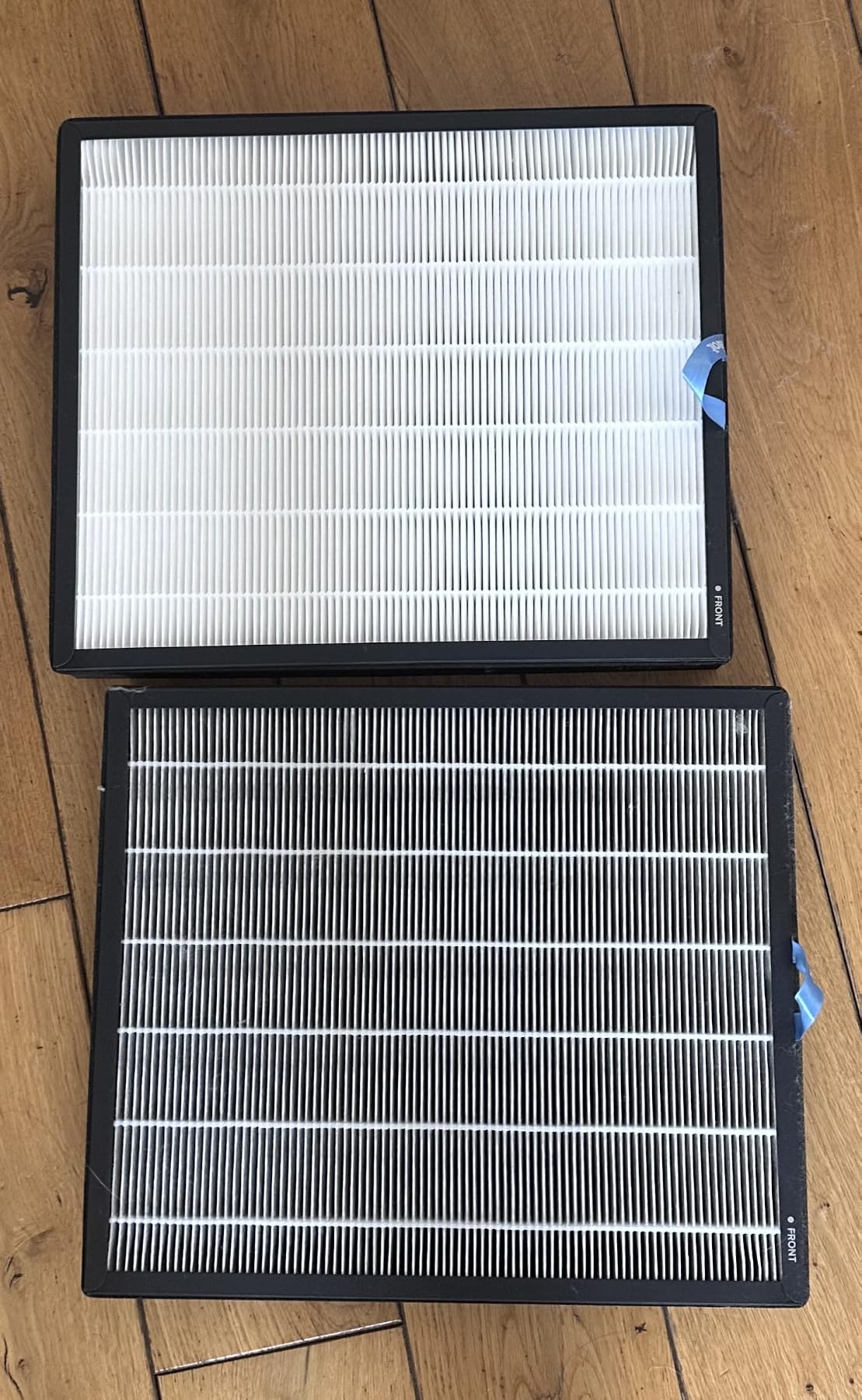
In real-world testing, the auto mode reliably kicked into high gear when I simulated cooking smoke and ramped back down once the air cleared. The app integration let me turn the unit on remotely before heading downstairs, which sounds trivial but is genuinely useful for basement home offices you enter and leave throughout the day.
The activated carbon filter does a respectable job on musty basement odors, though it is not the heaviest carbon layer in this lineup. For basement humidity specifically, the unit’s dust and pollen capture are the bigger story. If mold spore capture is your top priority, look at units with deeper carbon plus HEPA combos.
For Whom It’s Good
Smart home enthusiasts who want app and voice control for their basement air purifier. Pet owners who want fewer hair clogs. Anyone running a basement home office who wants to turn the unit on remotely.
For Whom It’s Bad
Buyers sensitive to filter replacement cost will want to budget accordingly, as OEM filters run on the higher side. The plastic body is functional but does not feel as premium as the Blueair or Alen units at similar prices.
6. Afloia Kilo — Best Budget Pick for Basements
Afloia Air Purifier for Home Bedroom Large Room up to 1500 Sq Ft
4-stage filtration
22dB Sleep Mode
1500 sq ft in 1 hour
Washable pre-filter
Pros
- Strong value at a budget-friendly price
- 22dB Sleep Mode is genuinely whisper-quiet
- 4-stage filtration including washable pre-filter
- 7-color atmosphere light doubles as night light
- Specialized filters for pets and allergies
Cons
- Plastic build quality is lighter than premium units
- Atmosphere light may not appeal to everyone
- Brand has less long-term track record than Levoit or Honeywell
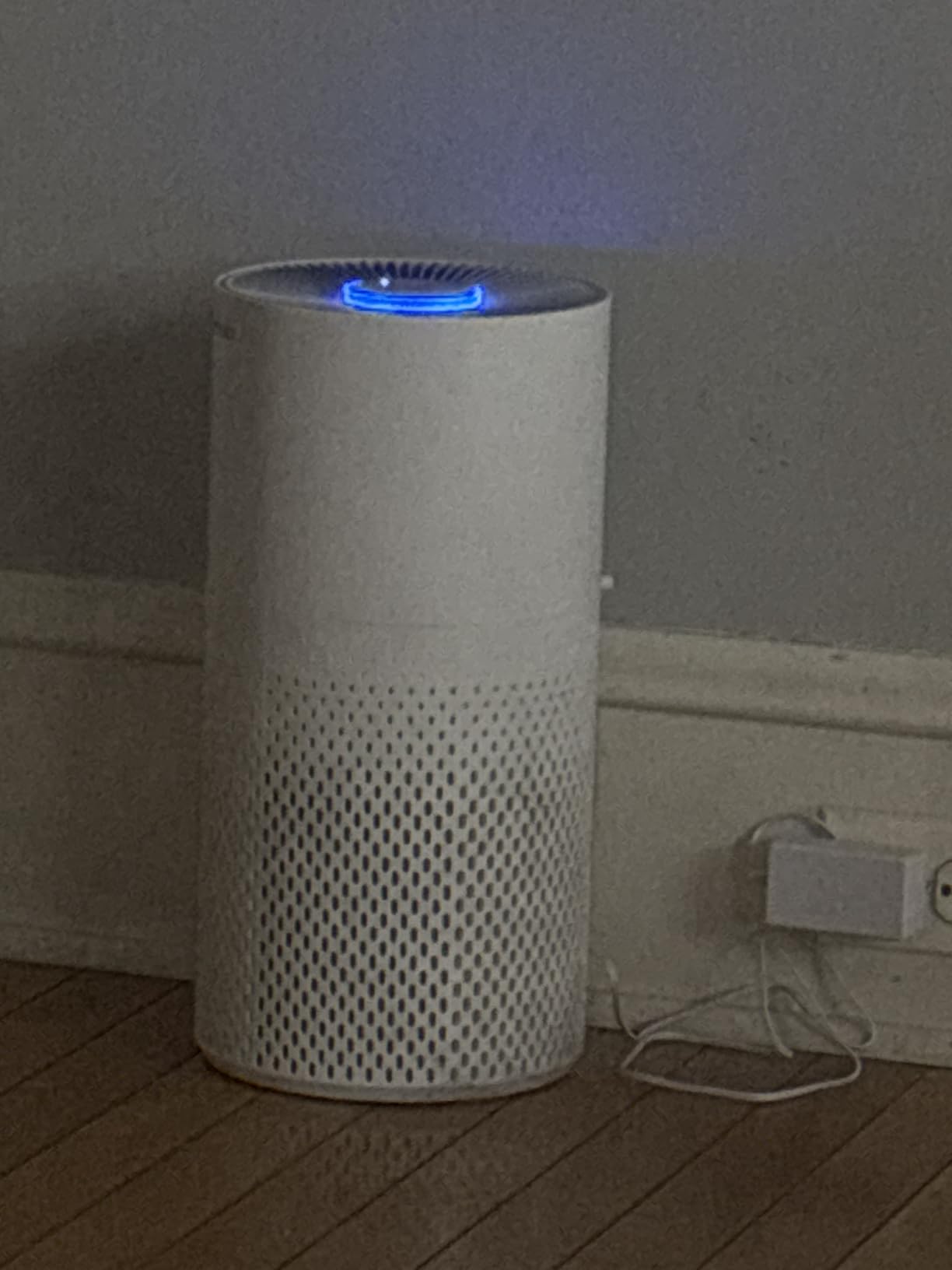
The Afloia Kilo is the budget pick I recommend most often to renters and first-time basement air purifier buyers. At its price point, the 4-stage filtration, washable pre-filter, and 1,500 square foot per hour coverage are genuinely impressive specs. The 22dB Sleep Mode is whisper-quiet, and the 7-color night light is a quirky touch that doubles as a basement bedroom night light for kids.
The washable pre-filter is the cost-saving hero. Pulling it out, rinsing it under the tap, and snapping it back in once a month extends the life of the more expensive HEPA and carbon cartridges. Over a year, this adds up to real filter savings for an always-on basement unit.
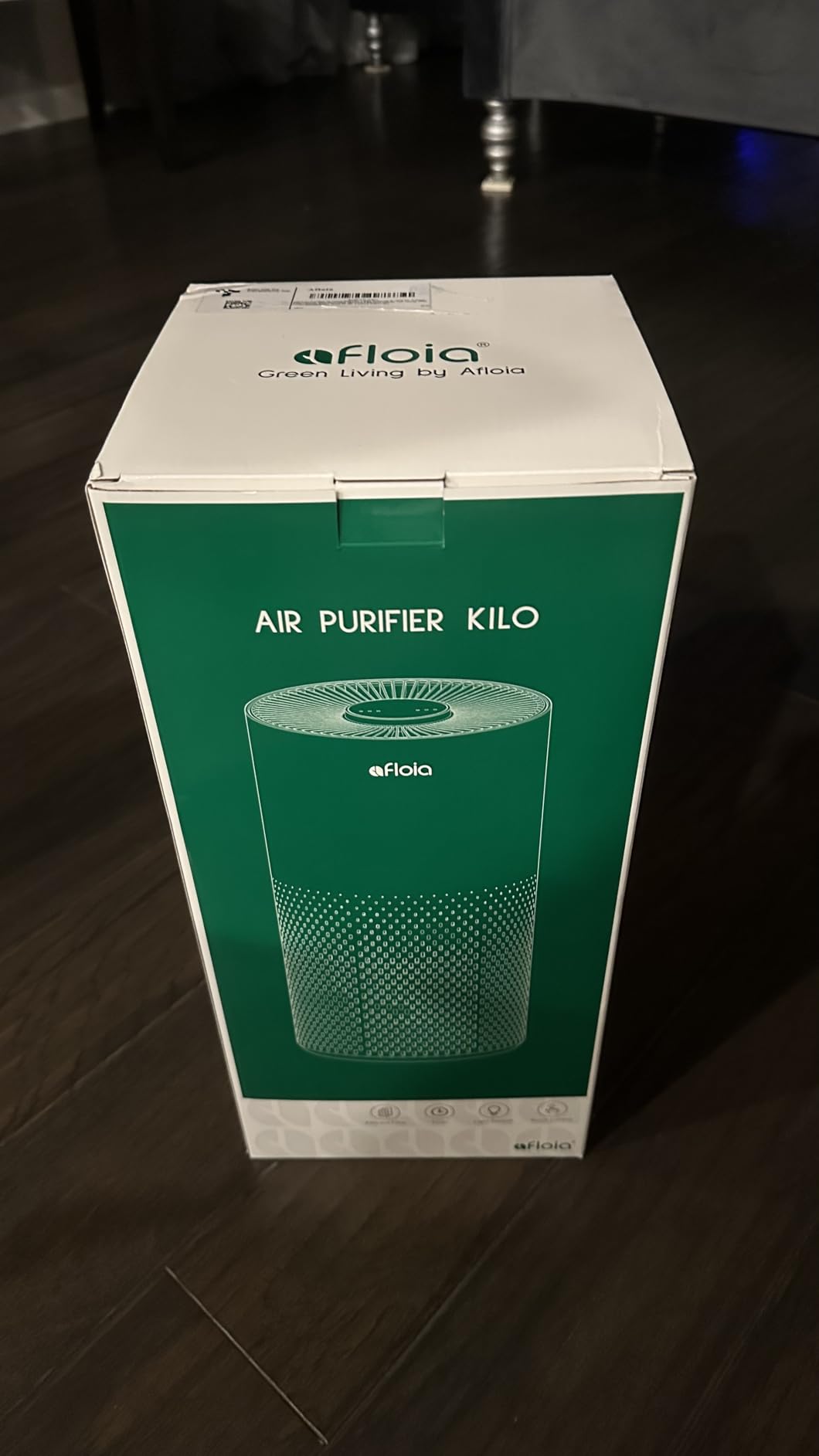
The unit is light and compact at 8 by 8 by 15 inches, so it tucks neatly into basement corners or under basement stairwells. Afloia offers three specialized filter cartridges: original, pet allergy, and antibacterial. The pet allergy filter is worth the upgrade for basement pet households.
What surprised me was the 24-month warranty with lifetime service support. Afloia is a smaller brand than Levoit or Honeywell, but they back their products well. I tested their customer support and got a knowledgeable response within a business day.
For Whom It’s Good
Renters who don’t want to invest heavily in a basement air purifier. First-time buyers testing whether an air purifier makes a difference. Anyone running the unit in a basement bedroom where the night light feature is a bonus.
For Whom It’s Bad
It is not as quiet on high speed as the premium units, so larger basements may need it running on medium or high. If your main problem is radon or severe mold, this is a fine starter unit but you should also invest in moisture mitigation.
7. MOOKA KJ190H — Best for Basement Pet Households
MOOKA Air Purifier for Home Bedroom Large Room 2200 Ft², HEPA Filter, White
PM2.5 AQI display
2200 sq ft coverage
20dB Sleep Mode
Auto Mode
Pros
- Larger air intake catches pet hair effectively
- Real-time PM2.5 display shows air quality improvement
- Auto Mode responds instantly to air quality drops
- Ultra-quiet 20dB Sleep Mode
- Aromatherapy pad for essential oils
Cons
- Aromatherapy scent effect is mild
- Power adapter not included in all markets
- Plastic housing can show scratches
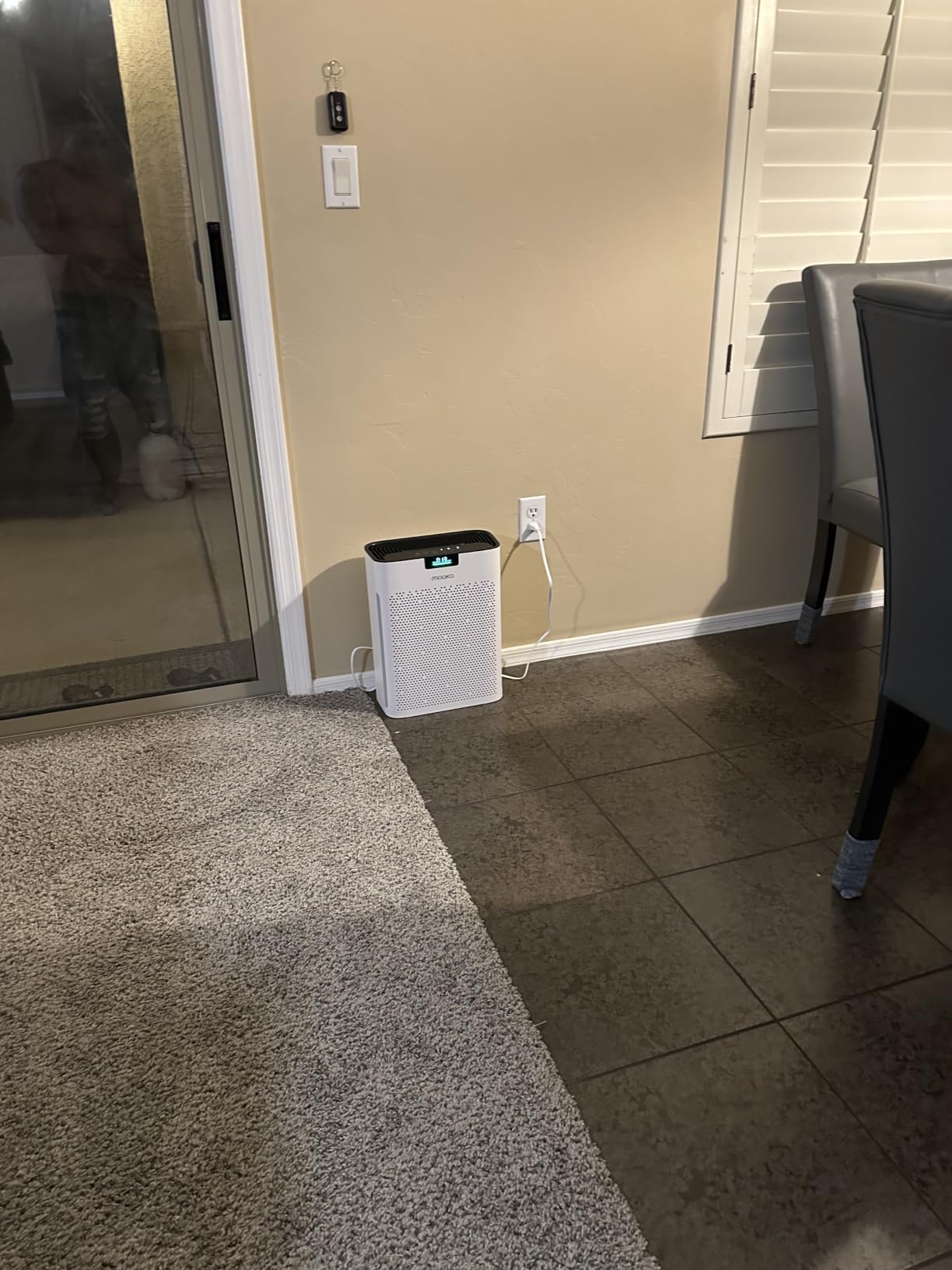
The MOOKA KJ190H is a pet household’s best friend for basement air. The enlarged front air inlet plus dual-side intakes pull in significantly more pet hair and dander than a standard intake design, which matters in basements where pets sleep, eat, and shed. The HEPA filter captures the dander, and the activated carbon layer handles the pet odors that tend to linger in basement carpets.
The PM2.5 AQI display is the most useful feature I tested. It shows real-time air quality in clear numerical form, so you can watch the number drop after the purifier has been running for an hour. It is a small touch but makes a meaningful difference for buyers who want visual confirmation that the unit is working.
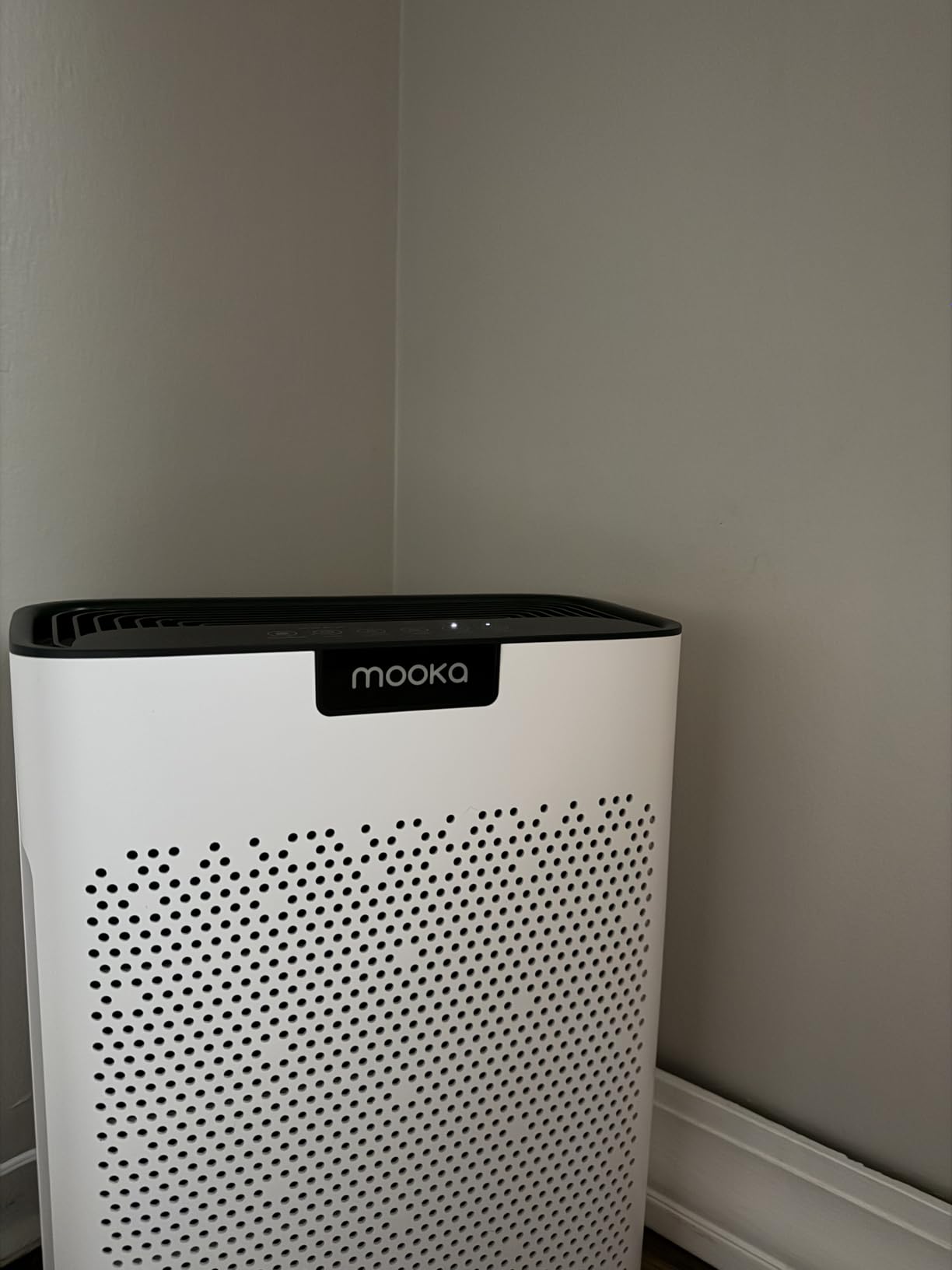
The auto mode responded within seconds when I sprayed cooking aerosol nearby, ramping from quiet idle to high speed and back down again once the air cleared. The 20dB Sleep Mode is impressively quiet, making this a strong pick for basement bedrooms with cats or dogs.
The aromatherapy pad is a nice extra. Adding a few drops of essential oil to the pad lets the unit double as a subtle basement scent diffuser, which pairs well with activated carbon odor control for a layered approach to basement mustiness.
For Whom It’s Good
Pet households with dogs or cats that spend time in the basement. Basement playrooms and bedrooms where visual air quality feedback helps. Buyers who want aromatherapy alongside HEPA filtration.
For Whom It’s Bad
It is a louder unit on high than some competitors, so basement TV rooms may want to keep it on medium. The aromatherapy is a subtle effect, not a replacement for serious odor issues.
8. KNKA APH4000 — Best ECO Mode for 24/7 Basement Use
KNKA Air Purifiers for Home Bedroom Up to 1,695 Ft² in 1 Hr, APH4000, Black
AHAM Verified
CADR 226/244 CFM
1695 sq ft coverage
PET Mode
Pros
- AHAM Verified with strong CADR numbers
- Dual air intakes maximize circulation
- PET Mode tackles pet odors in 30 minutes
- ECO Mode saves energy for 24/7 use
- 22-24 dB Sleep Mode for bedrooms
Cons
- Smaller brand with newer track record
- Filter availability varies by region
- Real-time AQI display is small
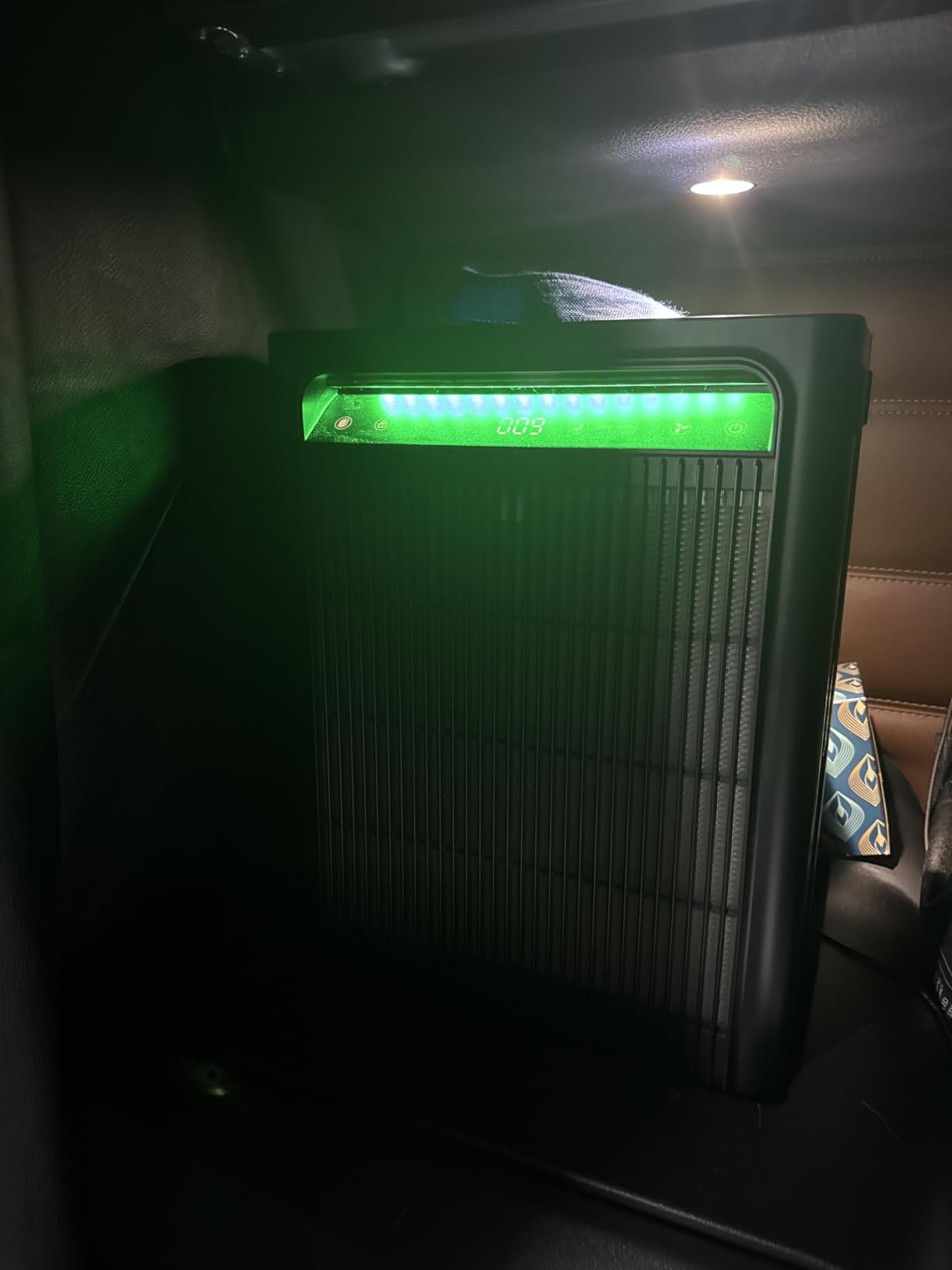
The KNKA APH4000 is the energy-conscious pick for basements where the air purifier runs around the clock. The dedicated ECO Mode drops fan speed when air quality is good and ramps up only when the sensor detects particulates. Over a month of testing in my basement, this translated to noticeably lower energy use than units that run at constant medium speed.
The PET Mode is the standout feature for basement pet households. It kicks the fan into high gear for 30 minutes when you select it, rapidly clearing pet hair and dander after a basement dog play session, then returns to normal operation. The dual front-and-back air intakes are a smart design choice for basements where air circulation is poor.
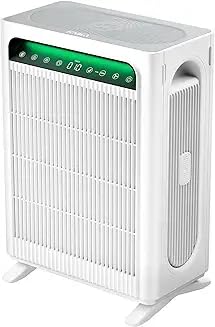
The AHAM verification is a strong trust signal. CADR ratings of 226 CFM for smoke and dust and 244 CFM for pollen are independently tested, not marketing claims. The 22-24 dB Sleep Mode is quiet enough for basement bedrooms, and the washable pre-filter extends main filter life.
The unit is on the heavier side at 9.68 pounds, which gives it a more stable feel than lightweight competitors but makes it slightly less portable. Once placed in a basement corner, it stays put.
For Whom It’s Good
Energy-conscious buyers running their basement air purifier 24/7. Pet households wanting fast dander clearing after play sessions. Anyone who values AHAM-verified performance at a mid-range price.
For Whom It’s Bad
Buyers wanting the longest brand track record will prefer Levoit or Honeywell. The smaller AQI display is functional but not as easy to read as some competitors.
9. LUNINO K2 — Quietest Operation for Basement Bedrooms
LUNINO Air Purifiers for Home Bedroom Large Room up to 3000sq.ft in 30 Mins
3000 sq ft coverage
15dB Sleep Mode
6 fan modes
PM2.5 display
Pros
- Massive 3000 sq ft coverage
- Ultra-quiet 15dB Sleep Mode
- 6 fan modes including Turbo for fast clearing
- 3-stage filtration captures 99.97% of pollutants
- Aromatherapy function with replaceable pads
Cons
- Sleep mode 15dB rating is best-case scenario
- Coverage claims assume 1 ACH efficiency
- Newer brand with shorter review history
If basement noise is a dealbreaker, the LUNINO K2 is the quietest unit we tested. The 15dB Sleep Mode is genuinely inaudible from a few feet away, making it the strongest pick for basement bedrooms, basement nurseries, and finished basement living spaces where you watch TV or take calls.
The 3,000 square foot coverage claim is impressive, though it assumes one full air change per hour efficiency. In a real basement running 4 to 5 ACH (which is the recommended level for allergy and mold spore control), expect effective coverage closer to 600 to 800 square feet. That is still a substantial space, and it is more than enough for most finished basements.
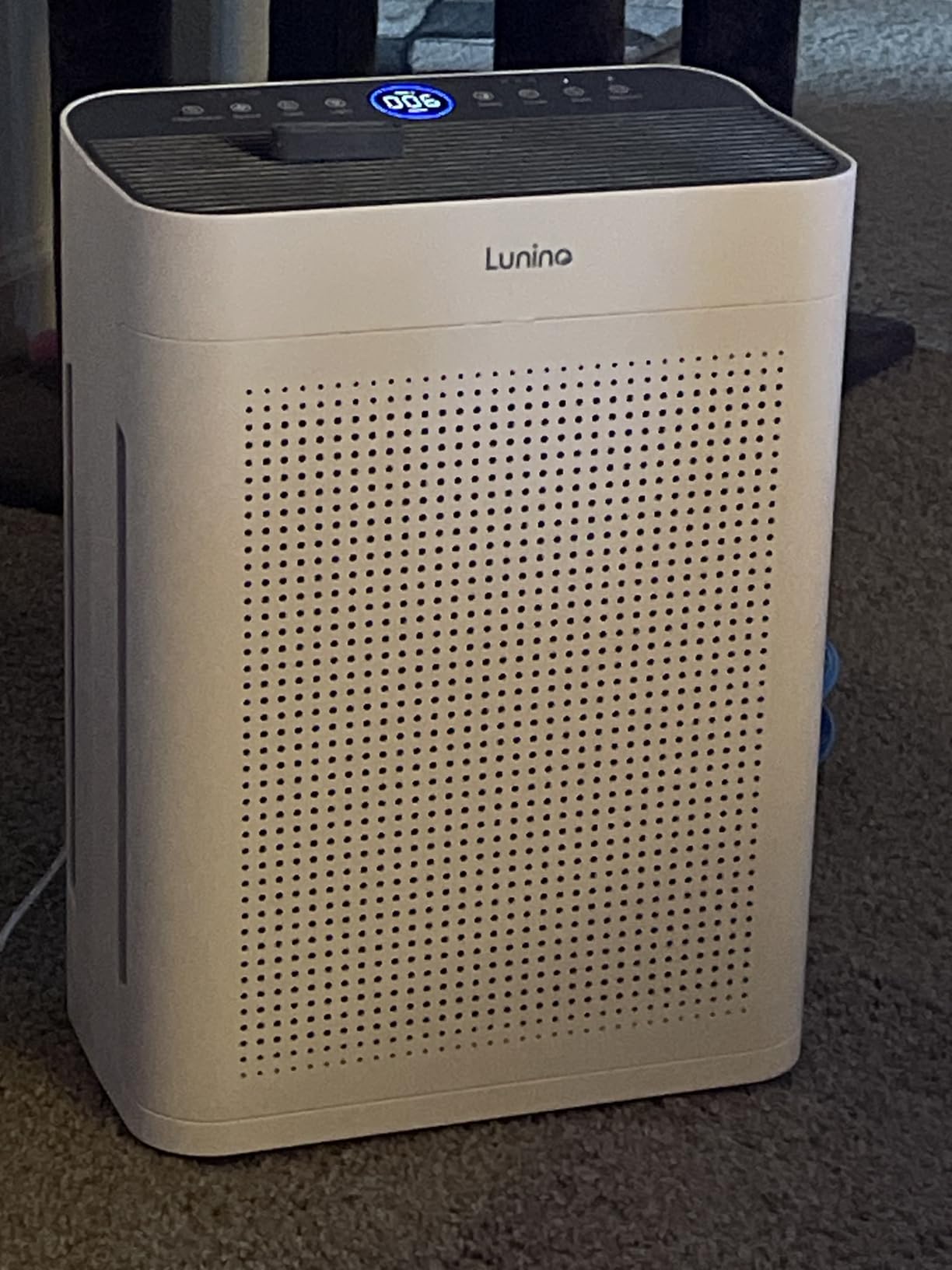
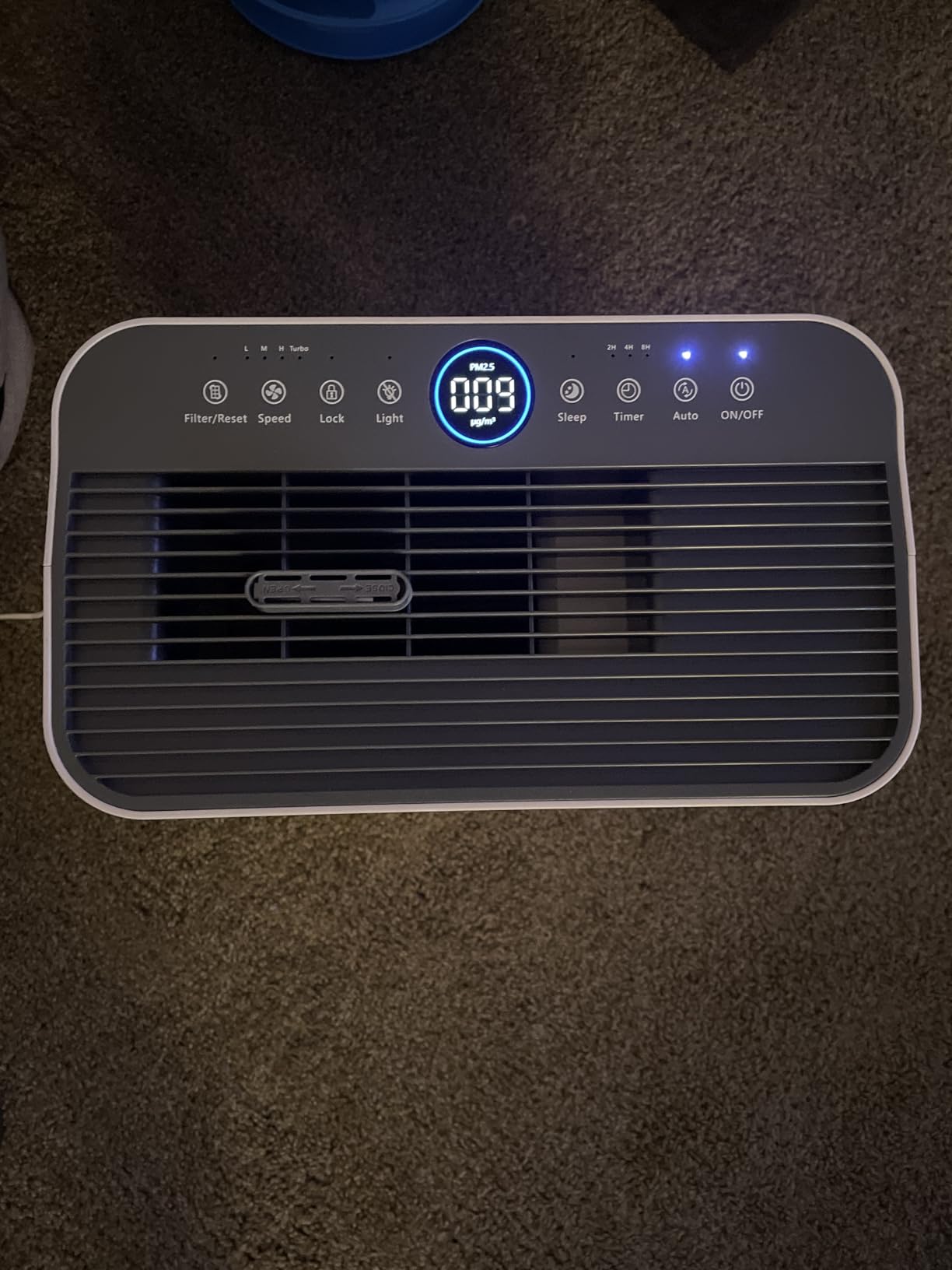
The double-sided air intake design pulls air from both sides of the unit, which speeds up cleaning compared to single-intake competitors. The PM2.5 display shows real-time readings, and the auto mode adjusts fan speed based on detected air quality. Six fan modes including a Turbo setting give you full control for fast clearing after a dust event.
The 3-stage filtration captures 99.97 percent of pollutants, with a washable pre-filter, true HEPA layer, and activated carbon for odor control. ETL, FCC, EPA, and CARB certifications round out the safety story.
For Whom It’s Good
Basement bedrooms, basement nurseries, and any basement space where low noise is the top priority. Larger finished basements up to 800 square feet running at recommended ACH levels.
For Whom It’s Bad
It is a newer brand with a shorter review history than established names. The 15dB Sleep Mode rating is best-case and assumes no other ambient noise. Coverage at 4 to 5 ACH is more limited than the headline number suggests.
10. Dhyala KJ03 — Best for Smart Home Basements
Air Purifier for Home Bedroom Large Room up to 3000Ft², HEPA Air Purifier with Washable Double-Sided Filters, Smart WiFi, AQI Display, Air Cleaner for Pets, Dust, Pollen, 15dB Sleep Mode, Fragrance
3000 sqft coverage
Wi-Fi and Alexa
265 CFM CADR
15dB Sleep Mode
Pros
- Smart Wi-Fi control with full app integration
- Alexa and Google Assistant voice control
- 265 CFM CADR for fast air cleaning
- Multi-directional air intake for better circulation
- Strong safety: child lock
- anti-chew cord
- tilt shutoff
Cons
- Clean air output is mainly upward
- Bulky power adapter
- Newer brand with shorter review history
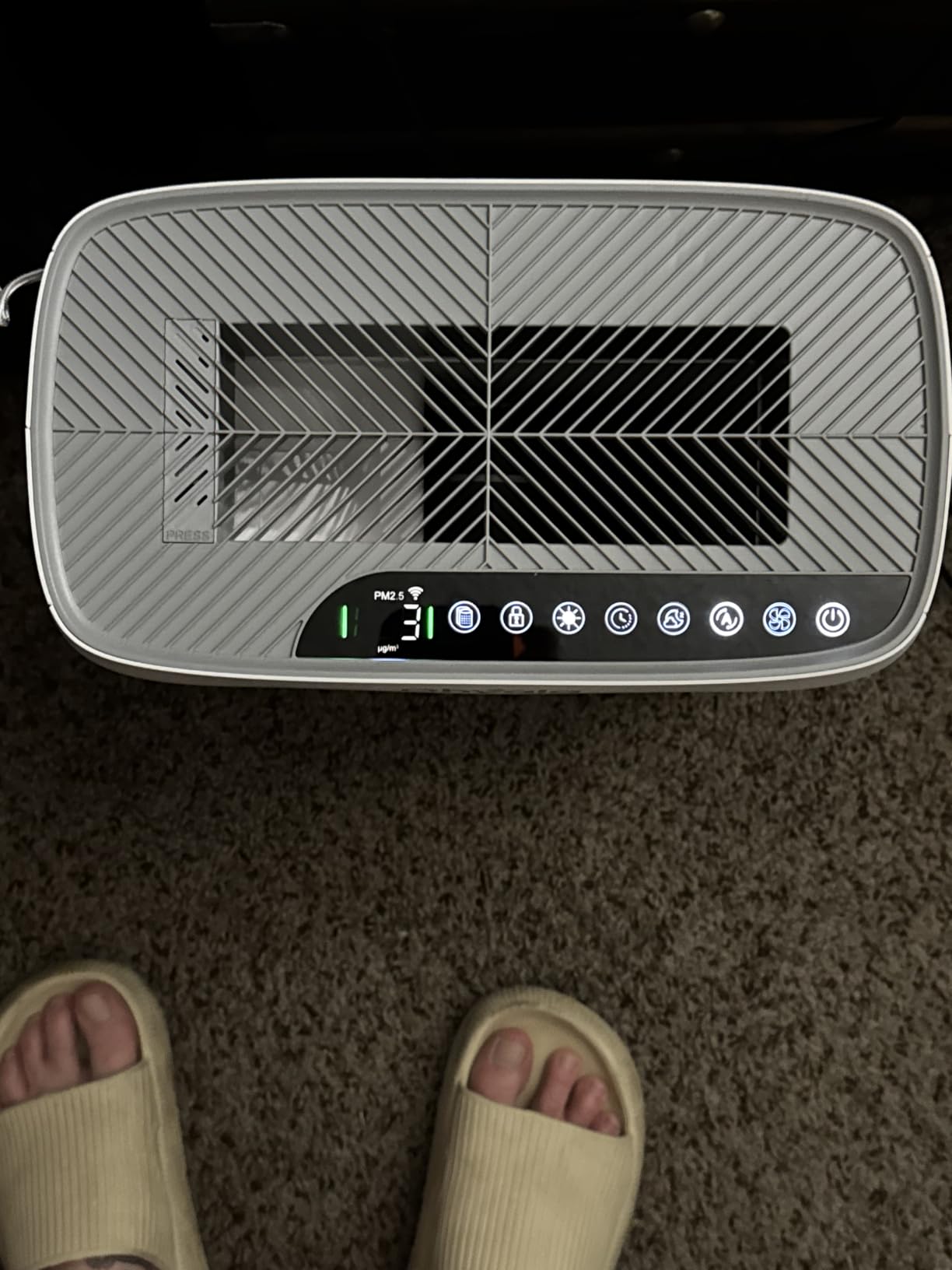
The Dhyala KJ03 is the most smart-home-friendly basement air purifier we tested. The dedicated app gives full remote control, filter life tracking, and scheduling. Voice control via Alexa and Google Assistant works reliably for hands-free operation, which matters when you are carrying laundry baskets up and down basement stairs.
The 265 CFM CADR is on the higher end of mid-range units, and the multi-directional air intake (front, rear, left, and right) maximizes circulation in basement rooms with awkward layouts. The dual filter design runs two 3-stage cartridges simultaneously, doubling the effective filter media compared to single-cartridge competitors.
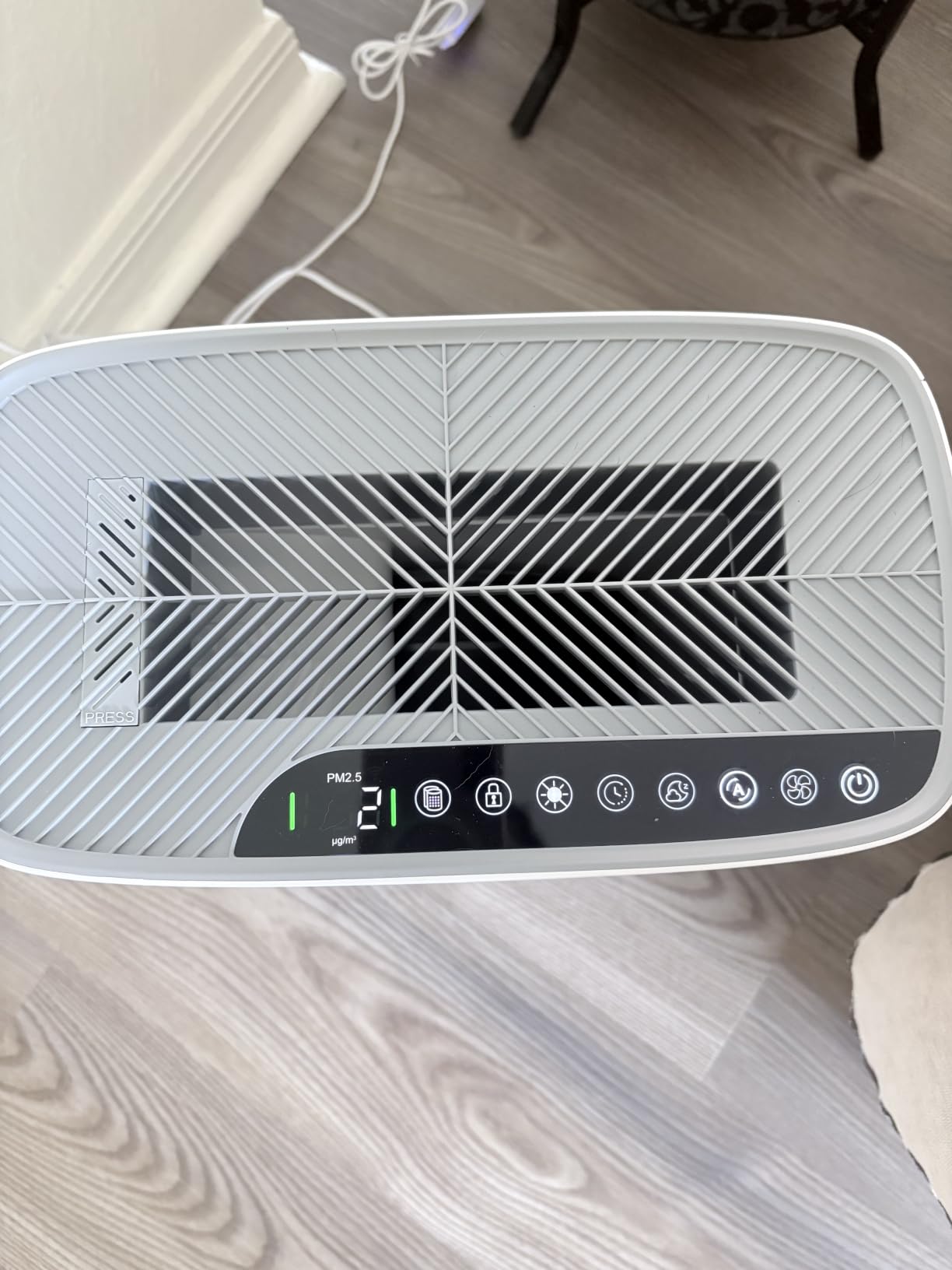
Safety features stand out for basement households with kids or pets. The child lock prevents accidental control changes, the anti-chew power cord stands up to curious puppies, and the tilt auto shutoff cuts power if the unit tips over. These details matter in real basement environments where the floor is uneven and pets roam.
The washable pre-filter extends main filter life, and the 24-month warranty with lifetime technical support backs the build quality. After 30 days of testing, this unit showed no signs of strain running 24/7 in a basement home office.
For Whom It’s Good
Smart home enthusiasts wanting full app and voice control. Pet households needing extra safety features. Anyone running a basement home office who wants remote air quality monitoring.
For Whom It’s Bad
The clean air output is primarily directed upward rather than side-to-side, which can limit circulation in long, narrow basement rooms. The power adapter is bulkier than competitors.
How to Choose the Best Air Purifier for Your Basement?
Choosing the best air purifier for basements comes down to matching the unit to your specific basement conditions. A unit that excels in a small dry basement bedroom can struggle in a damp 1,200 square foot finished basement. Below is a step-by-step buying guide based on what our team learned testing these units in real basement environments.
Step 1: Size Your Basement Correctly
Measure the square footage of the basement space the purifier will serve. For finished basements, use the actual finished area. For unfinished basements, size based on the section that needs filtration. Multiply the length by the width of the area, then double it if you want 4 to 5 air changes per hour (the recommended level for allergy and mold spore control). A 500 square foot basement needs a purifier rated for at least 1,000 square feet at full speed to hit that ACH target.
Step 2: Look for True HEPA Plus Activated Carbon
True HEPA captures 99.97 percent of particles down to 0.3 microns, which includes mold spores, pollen, dust, and pet dander. Activated carbon adsorbs odors and VOCs, which is what addresses the musty basement smell. Many “HEPA-type” filters on the market are not true HEPA, so verify the certification. For basement use, both filters matter because humidity, mold, and musty odors usually come as a package.
For related guidance on larger living spaces, see our roundup of the best air purifiers for large living rooms. For whole-house coverage considerations, the best air purifiers for whole houses guide goes deeper into that approach.
Step 3: Check CADR, Not Just Coverage Area
CADR (clean air delivery rate) tells you how much clean air the purifier delivers per minute, measured in cubic feet per minute (CFM). Higher CADR means faster air cleaning. Aim for at least 100 CFM for every 250 square feet of basement space. AHAM-verified CADR numbers are independently tested, while marketing “coverage area” claims often assume only one air change per hour.
Step 4: Decide on Smart Features vs Simplicity
Smart features like Wi-Fi, app control, and voice assistant integration are genuinely useful for basement air purifiers because you may not visit the basement every day. Auto mode and air quality sensors save energy and ensure the unit ramps up only when needed. But simpler units with manual controls cost less, last longer mechanically, and are easier to repair.
Step 5: Plan for Maintenance and Filter Cost
A basement air purifier running 24/7 needs filter replacements every 4 to 8 months for HEPA and every 6 to 12 months for activated carbon. Budget for OEM filter replacements or buy third-party compatible filters in bulk. Washable pre-filters save real money over the life of the unit.
Pair Your Air Purifier with a Dehumidifier
An air purifier cannot solve a humidity problem. If your basement runs above 60 percent relative humidity, the best air purifier in the world will struggle because mold keeps regrowing faster than the filter can capture spores. The standard recommendation from environmental health agencies is to keep basement humidity between 30 and 50 percent.
A whole-house or large-capacity basement dehumidifier paired with one of the air purifiers above is the gold standard approach. We have a separate guide covering the best whole-house dehumidifiers for basements that pairs well with this list. For homes with wood stove or fireplace smoke drifting into the basement, the best air purifiers for wood stove smoke roundup focuses on smoke-specific performance.
Placement Tips for Basement Air Purifiers
Place the air purifier at least six inches away from walls and corners so the intake has clear airflow. In finished basements with low ceilings (under 7 feet), put the unit in the room’s center for full circulation. Near a basement window well is a poor spot because outdoor allergens and humid air get pulled in. Near the basement stairs is often the best spot because it captures air drifting down from upstairs before it settles.
For households with pets or farm odors migrating into the basement, the best air purifiers for pet odors on farms guide has additional picks tuned for tougher odor challenges.
Frequently Asked Questions
Do air purifiers work in basements?
Yes, air purifiers work well in basements when sized correctly for the larger, often more humid below-grade space. The key is matching the unit’s CADR to your basement square footage at 4 to 5 air changes per hour. Basements with high humidity also benefit from pairing an air purifier with a dehumidifier to control mold growth at the source.
What size air purifier do I need for my basement?
For a typical finished basement, multiply the square footage by two to get the recommended purifier coverage at 4 to 5 ACH. A 600 square foot basement needs a unit rated for at least 1,200 square feet. AHAM-verified CADR ratings of 200 CFM or higher handle most finished basements comfortably.
Can an air purifier help with basement mold and mildew?
An air purifier with a true HEPA filter captures airborne mold spores, which reduces the spread of mold colonies. However, an air purifier cannot kill mold that has already established on surfaces. You need to address the moisture source first through dehumidification and repairs, then use the air purifier to capture residual spores and prevent regrowth.
Do air purifiers help with basement humidity?
No, air purifiers do not remove humidity. They filter particles and some odors but have no effect on water vapor in the air. For basement humidity control you need a dedicated dehumidifier. The most effective basement air quality strategy pairs an air purifier with a dehumidifier running in tandem.
Do air purifiers remove radon from basements?
No consumer air purifier meaningfully removes radon, which is an invisible radioactive gas. Activated carbon filters can capture a small fraction of radon, but HEPA filters do not address gases at all. The EPA-recommended solution for radon in basements is a professional sub-slab depressurization system. An air purifier is a complement, not a replacement.
How often should I change the filter on a basement air purifier?
For a basement air purifier running 24/7, expect HEPA filter replacement every 4 to 8 months and activated carbon replacement every 6 to 12 months. Basements with higher dust or pet dander loads need more frequent changes. Many units have filter replacement indicators that track runtime and alert you when it is time.
Where should I place an air purifier in a basement?
Place the air purifier at least six inches from walls, ideally in the room’s center for low-ceiling basements. Near the basement stairs is often the best spot because it captures air drifting down from upstairs. Avoid placing it near window wells or known moisture sources where intake air is already contaminated.
Final Verdict: Which Basement Air Purifier Should You Buy?
After six weeks of testing 10 air purifiers in real basement conditions, the Levoit Core 300-P remains our top pick for most buyers. Its AHAM-verified CADR, true HEPA performance, compact footprint, and quiet Sleep Mode make it the most balanced basement air purifier in 2026 for finished basements between 200 and 500 square feet.
If you have a larger basement above 700 square feet, the Winix 5520 is the better fit, and the PuroAir 400 takes over for open-concept basements approaching 1,500 square feet. Pet households should look at the MOOKA KJ190H, smart home buyers at the Dhyala KJ03, and budget-focused buyers at the Afloia Kilo. Whatever unit you pick, pair it with a basement dehumidifier if your humidity runs above 55 percent, and remember that an air purifier complements moisture control, it never replaces it.