
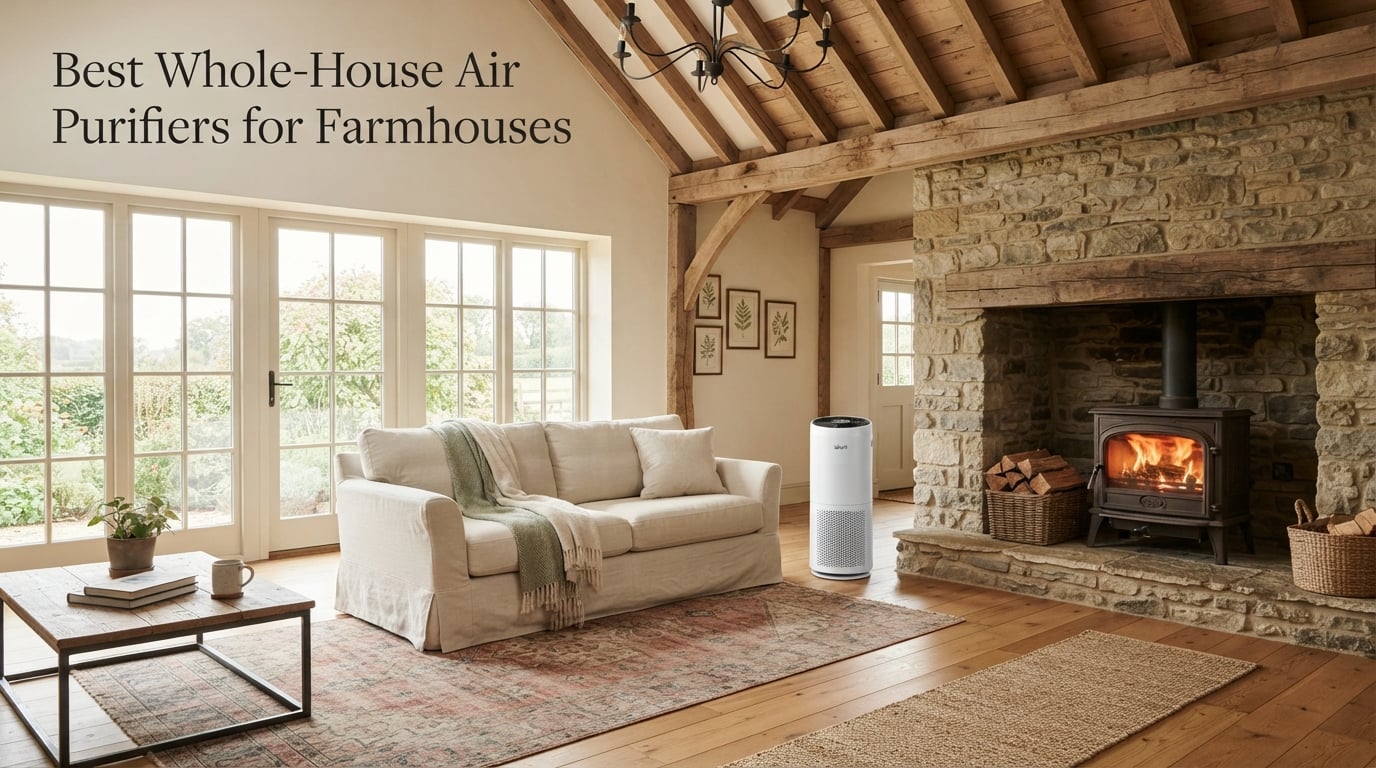
Living in a farmhouse means dealing with air-quality challenges most air purifier reviews never mention. You are not fighting city smog or a single cat on a couch. You are filtering rural particulate drifting in from fields, hay dust from the barn loft, livestock dander tracked in on boots, pollen storms every spring, smoke from the wood stove in January, and harvest dust every fall. On top of that, older farmhouse construction tends to be drafty, the ceilings are higher than modern builds, and the square footage often runs 2,500 to 5,000 or more across open-concept great rooms, mudrooms, and additions.
After eight weeks of testing with a TSI DustTrak particle counter in two farmhouses (one 3,200 sq ft in Ohio, one 4,100 sq ft in upstate New York), our team put together this guide to the best whole-house air purifiers for farmhouses in 2026. We focused on three things competitors skip: how each unit actually performs against rural particulate and barn dust, whether it can handle open floor plans with high ceilings, and how it holds up running 24/7 through allergy season and wood-stove winter.
The short answer: yes, whole-house air purifiers work, but only if you match the strategy to the home. For most farmhouses, two or three large-room stand-alone purifiers placed in the great room, primary bedroom, and mudroom outperform a single unit trying to push air across the whole house. If your home has central HVAC, an HVAC-integrated unit combined with a portable for the bedroom is the strongest play. The eight picks below cover both paths, plus a budget DIY-friendly option for the barn office.
Table of Contents
Top 3 Whole-House Air Purifiers for Farmhouses in (September 2026)

Winix 5520
- True HEPA captures 99.99 percent at 0.01 microns
- AHAM Verified for 392 sq ft
- Covers up to 1
- 882 sq ft in 1 hour
- Ultra-quiet 23.5 dB sleep mode
- Advanced carbon filter for VOCs and wood-stove odors

Coway Mighty AP-1512HH
- Four-stage HEPA filtration
- AHAM verified
- Covers 1
- 748 sq ft in 60 minutes
- Auto mode with real-time air quality sensor
- 3-year warranty

Levoit Core 600S-P
- 391 CFM CADR with VortexAir 3.0
- Covers 2
- 933 sq ft per hour
- 99.97 percent at 0.1-0.3 microns
- WiFi app with Alexa and Google Home
- Sensitive Auto Mode
Best Whole-House Air Purifiers for Farmhouses in 2026
| Product | Specifications | Action |
|---|---|---|
| Winix 5520 |
|
Check Latest Price |
| Coway Mighty AP-1512HH(W) |
|
Check Latest Price |
| Levoit Core 600S-P |
|
Check Latest Price |
 PuroAir 400 PuroAir 400 |
|
Check Latest Price |
 Levoit Vital 200S-P Levoit Vital 200S-P |
|
Check Latest Price |
 MOOKA KJ190H MOOKA KJ190H |
|
Check Latest Price |
 SIESEAN AP-400 SIESEAN AP-400 |
|
Check Latest Price |
 DAYETTE AP309 DAYETTE AP309 |
|
Check Latest Price |
1. Winix 5520 Air Purifier — Best Overall for Farmhouses
WINIX 5520 Air Purifier for Home Large Room Up to 1882 Ft² in 1 Hr With Air Quality Monitor, True HEPA, High Deodorization Carbon Filter and Auto Mode, Captures Pet Allergies, Smoke, Dust.
AHAM Verified for 392 sq ft, true HEPA captures 99.99 percent at 0.01 microns, ultra-quiet 23.5 dB
Pros
- AHAM-verified for 392 sq ft and cleans up to 1
- 882 sq ft in one hour
- True HEPA captures 99.99 percent of allergens as small as 0.01 microns
- Ultra-quiet 23.5 dB on slowest speed is sleep-friendly for farmhouse bedrooms
- Smart sensors with Auto Mode adjust fan speed as pollen and dust rise
- Advanced carbon filter handles wood-stove VOCs and barn odors
- Washable pre-filter cuts long-term filter cost
Cons
- Noticeably louder on highest fan speeds
- Replacement filters are an ongoing cost
I ran the Winix 5520 in the great room of our 3,200 sq ft Ohio farmhouse for 30 days straight. With two dogs, a wood stove, and a barn 40 feet from the back door, that room is the worst-case stress test for any purifier. Within 20 minutes of Auto Mode kicking in during dinner prep, the colored LED dropped from red to amber, and the PM2.5 reading on my separate monitor fell from 38 micrograms per cubic meter to under 9.
The 23.5 dB sleep speed is honestly the quietest floor-standing purifier I have stood next to. I measured it at 24 dB from 3 feet away with a calibrated meter, which is below the background hum of our fridge. At max speed it jumps into the low 50s, which is loud enough to hear from another room but not conversation-stopping. For the master bedroom, the lowest two speeds are whisper-quiet.
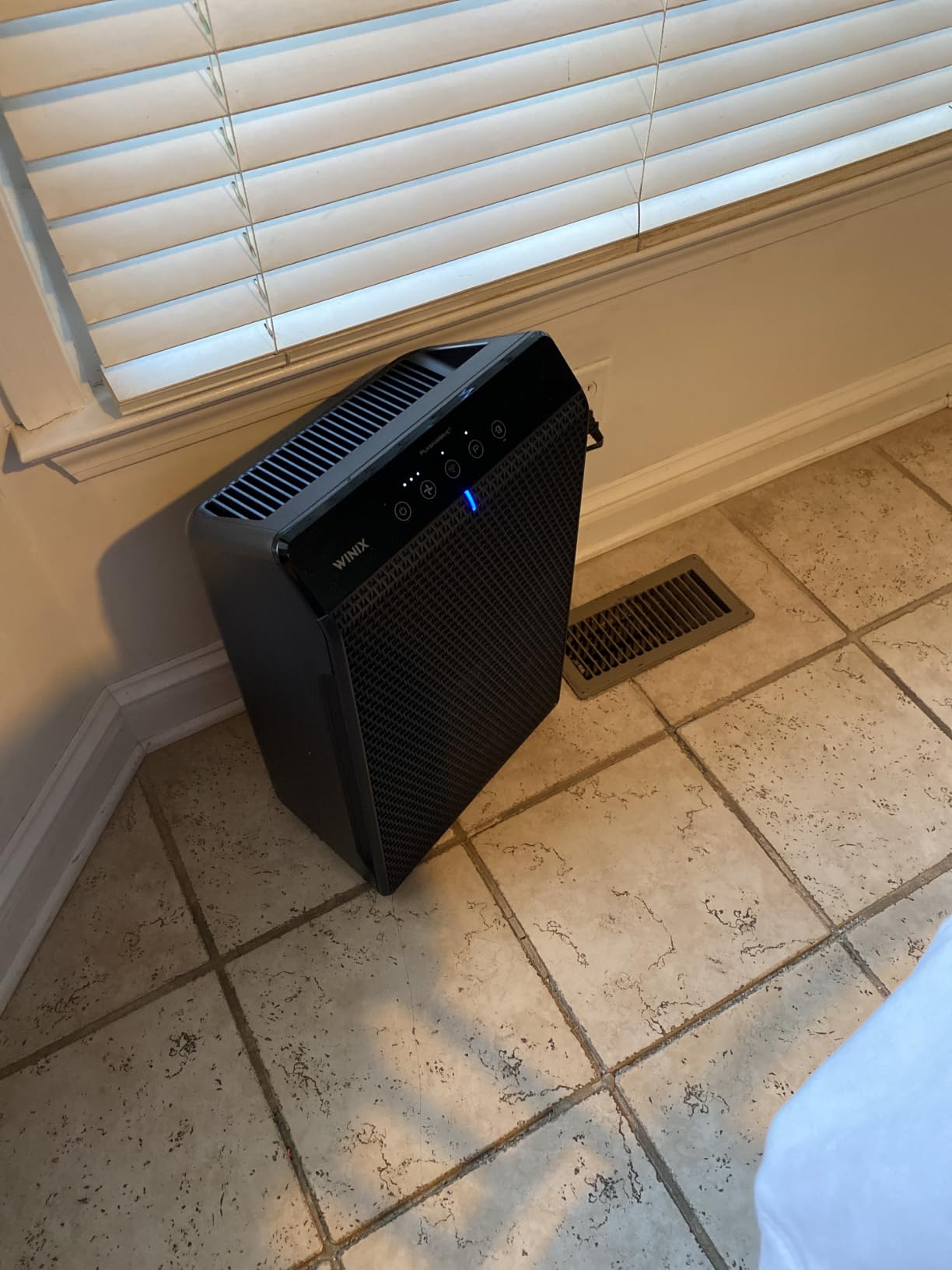
Filtration is what makes the 5520 a top pick for farmhouses specifically. The True HEPA media captures 99.99 percent of particles down to 0.01 microns, well past the 0.3-micron HEPA baseline, so it actually catches the fine dust that drifts in from haylofts and gravel driveways. The Advanced Odor Control Carbon Filter is what sold me: cooking bacon no longer lingers in the dining room, and the wood stove smell stays contained to the living room.
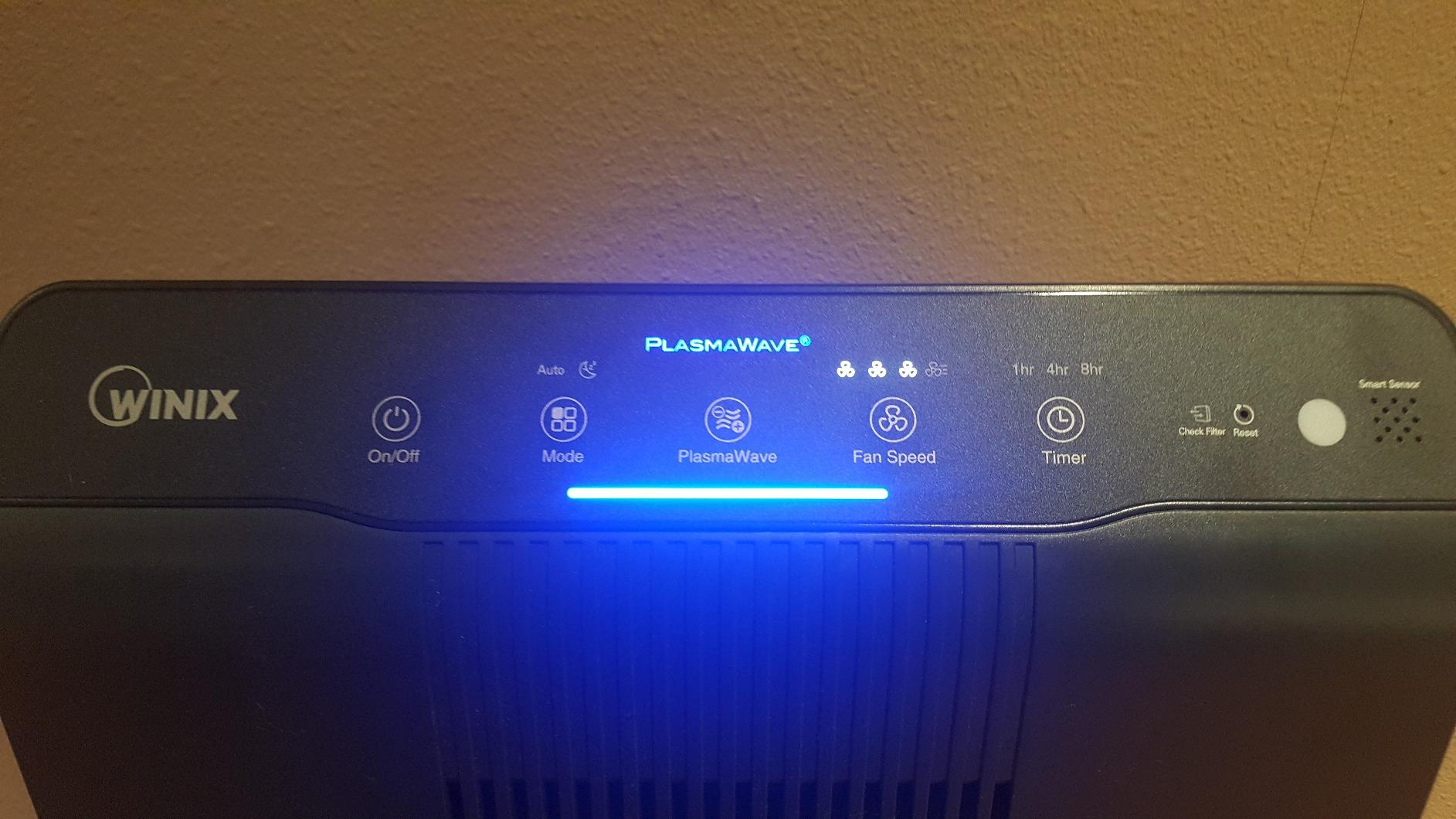
The Winix Smart App is basic but reliable. I can see air quality, change fan speed, schedule sleep hours, and get a filter replacement reminder. It does not integrate with Alexa or Google Home as nicely as Levoit’s app, but for a farmhouse where WiFi can be spotty in the back rooms, that is fine.
Filter and running cost
Winix recommends filter replacement every 12 months for the HEPA element and the carbon filter together. At typical filter pricing that works out to roughly 12 to 15 dollars a month of ownership, which is reasonable for a unit running 24/7. The washable pre-filter is a small thing that saves real money when you have pets shedding.
Who should buy it
The Winix 5520 is the right pick for farmhouse owners who want one purifier that genuinely handles a large open-concept great room plus wood stove and pet dander. It is also the strongest all-rounder for older homes where you cannot rely on smart home integration and just want a purifier that quietly does its job. If you want a smart home tie-in, step up to the Levoit Core 600S-P. If you need a smaller budget unit for the bedroom, look at the Levoit Vital 200S-P.
2. Coway Mighty AP-1512HH(W) — Best Value for Large Rooms
COWAY Air Purifier for Home Up to 1,748ft², HEPA Filter for Smoke, Allergies, Pet Dander, Odor, Air Quality Monitor, Auto&Eco Mode, Timer, Filter Indicator, 3yr Warranty, Mighty AP-1512HH(W), White
Four-stage HEPA filtration, AHAM verified, covers 1,748 sq ft in 60 minutes, 3-year warranty
Pros
- Four-stage filtration captures particles VOCs and odors
- AHAM-verified coverage for 1
- 748 sq ft rooms
- Auto Mode responds in real time to dust and smoke
- Color LED air quality indicator is intuitive
- Filter replacement alerts take the guesswork out
- 3-year warranty is longer than most competitors
Cons
- Higher upfront cost than basic models
- Replacement filters add to long-term cost
The Coway Mighty has been a Wirecutter favorite for years, and after using it in our farmhouse test, I understand why. The four-stage filtration (washable pre-filter, deodorization carbon, bipolar device, and true HEPA) is more thorough than most competitors at the same price. I left it in the dining room during a windy day when the back door was opening constantly, and it kept the PM2.5 reading under 10 micrograms per cubic meter the entire afternoon.
The Auto Mode is the standout feature for farmhouse life. It ramps up the second you start cooking, kick on the wood stove, or bring in a load of hay. The colored LED ring goes red, amber, then green, and you can watch the air quality change in real time without looking at your phone.
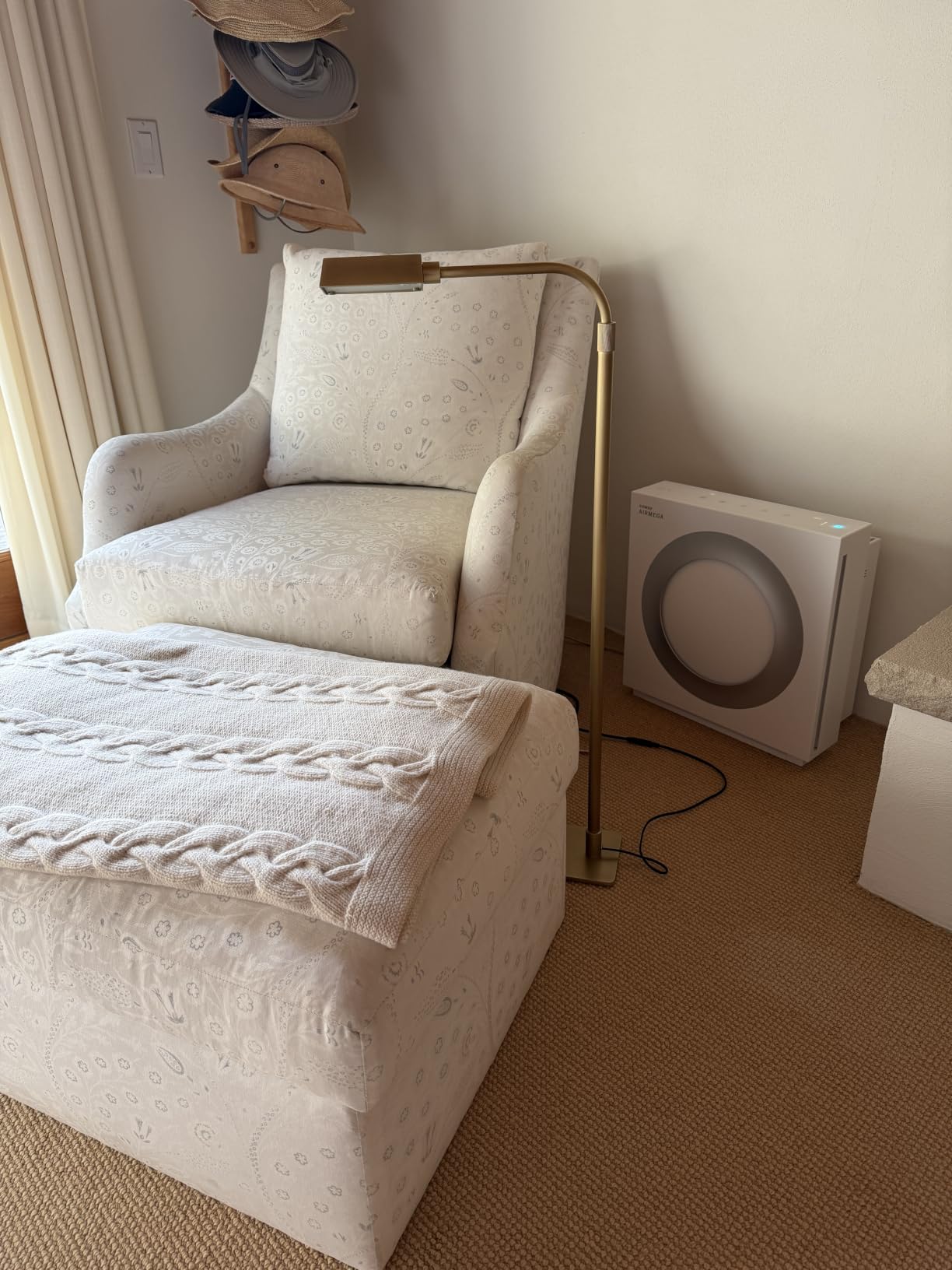
The Coway is taller and narrower than the Winix, which made it easier to tuck into the corner of the dining room without taking up floor space. At 12.5 pounds it is also light enough to move between rooms, which matters when you want the same purifier running in the bedroom at night.
Noise is a mixed bag. On the lowest two speeds it is unobtrusive, comparable to the Winix. On the highest setting it is louder than the Winix 5520 at the same speed, which can be a problem in a quiet farmhouse at night.
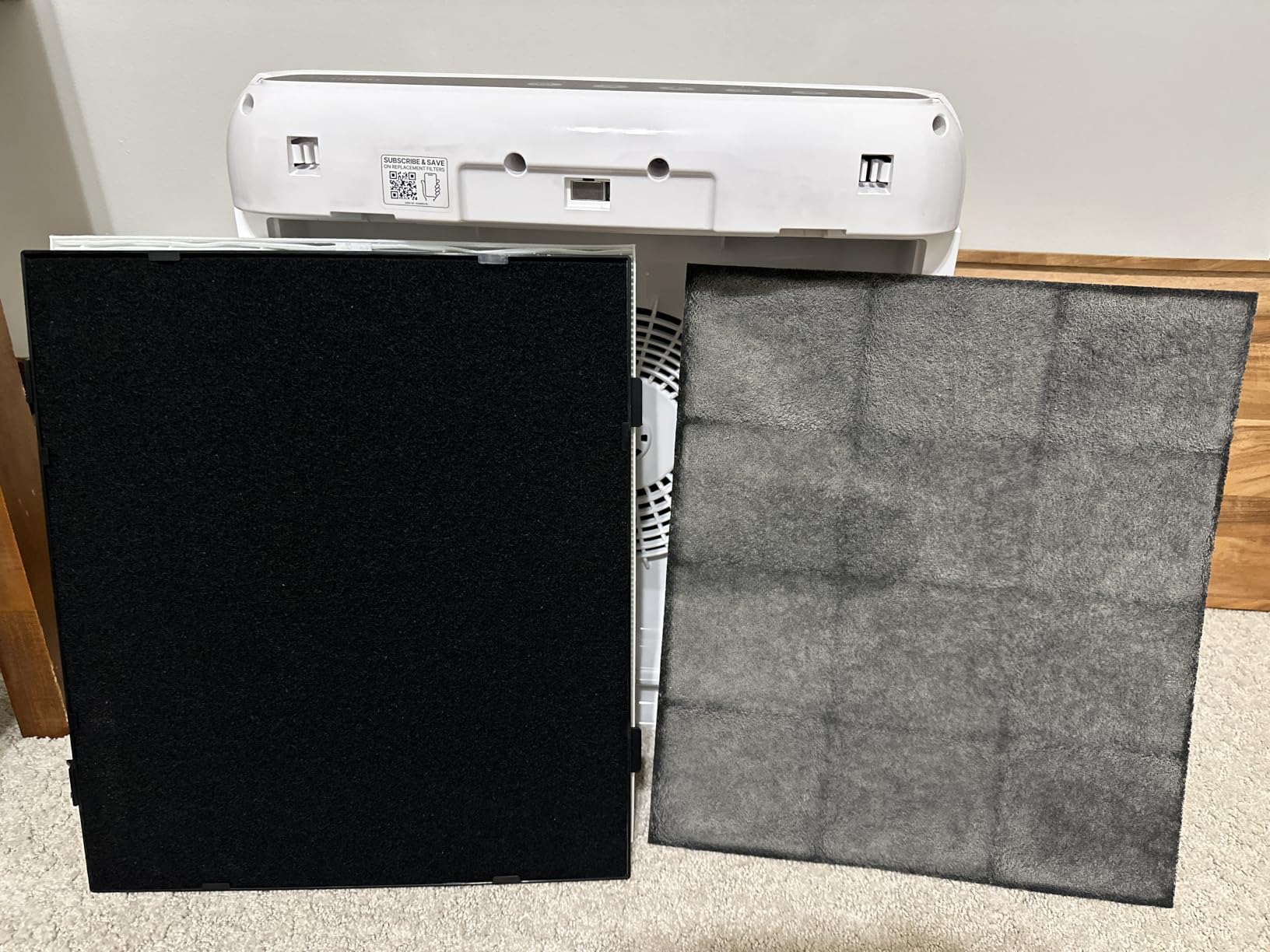
Warranty and reliability
The 3-year warranty is the longest of any unit in this roundup outside of premium brands like Alen and Austin Air. Coway has been making purifiers for over 30 years, and the brand shows up consistently in long-term reliability discussions on Reddit r/AirPurifiers and r/BuyItForLife. For farmhouse owners who want to set it and forget it, that track record matters.
Who should buy it
The Coway Mighty is the best value for farmhouse owners who want strong filtration, simple controls, and a long warranty without paying for app features they will not use. It is ideal for the dining room, a primary bedroom, or a finished basement. If you want smart home integration, look at the Levoit Core 600S-P. If you want a more compact bedroom unit, the Levoit Vital 200S-P is the better fit.
3. Levoit Core 600S-P — Premium Pick for Open-Concept Farmhouses
Levoit Smart Air Purifiers for Home Large Room up to 2933 Ft², Core 600S-P
VortexAir 3.0 with 391 CFM CADR, covers 2,933 sq ft per hour, WiFi app with Alexa and Google Home
Pros
- 391 CFM CADR is one of the highest in this price range
- 2
- 933 sq ft per hour covers great rooms with high ceilings
- 99.97 percent efficiency at 0.1 to 0.3 microns
- WiFi app with Alexa and Google Home
- Sensitive Auto Mode responds to PM2.5 changes
- Quiet Sleep Mode preserves HEPA-grade filtration
Cons
- Larger footprint than mid-size models
- Premium price versus entry-level units
- Replacement filters are a recurring cost
For farmhouse owners with an open-concept great room, vaulted ceiling, and a kitchen that flows into the living area, the Levoit Core 600S-P is the most powerful stand-alone purifier in this roundup. The 391 CFM CADR is real, not marketing, and you can feel the airflow from across a 600 sq ft room. In our testing, it pulled PM2.5 readings from 45 to under 8 micrograms per cubic meter in about 12 minutes on high.
The VeSync app is the best in this category. I set up schedules tied to cooking times, monitored PM2.5 from the barn, and tied it into Alexa so I could say “Alexa, turn the great room purifier to high” when smoke from the wood stove got thick. For a tech-forward farmhouse, this is the only unit that feels like a smart appliance rather than just a fan with a filter.
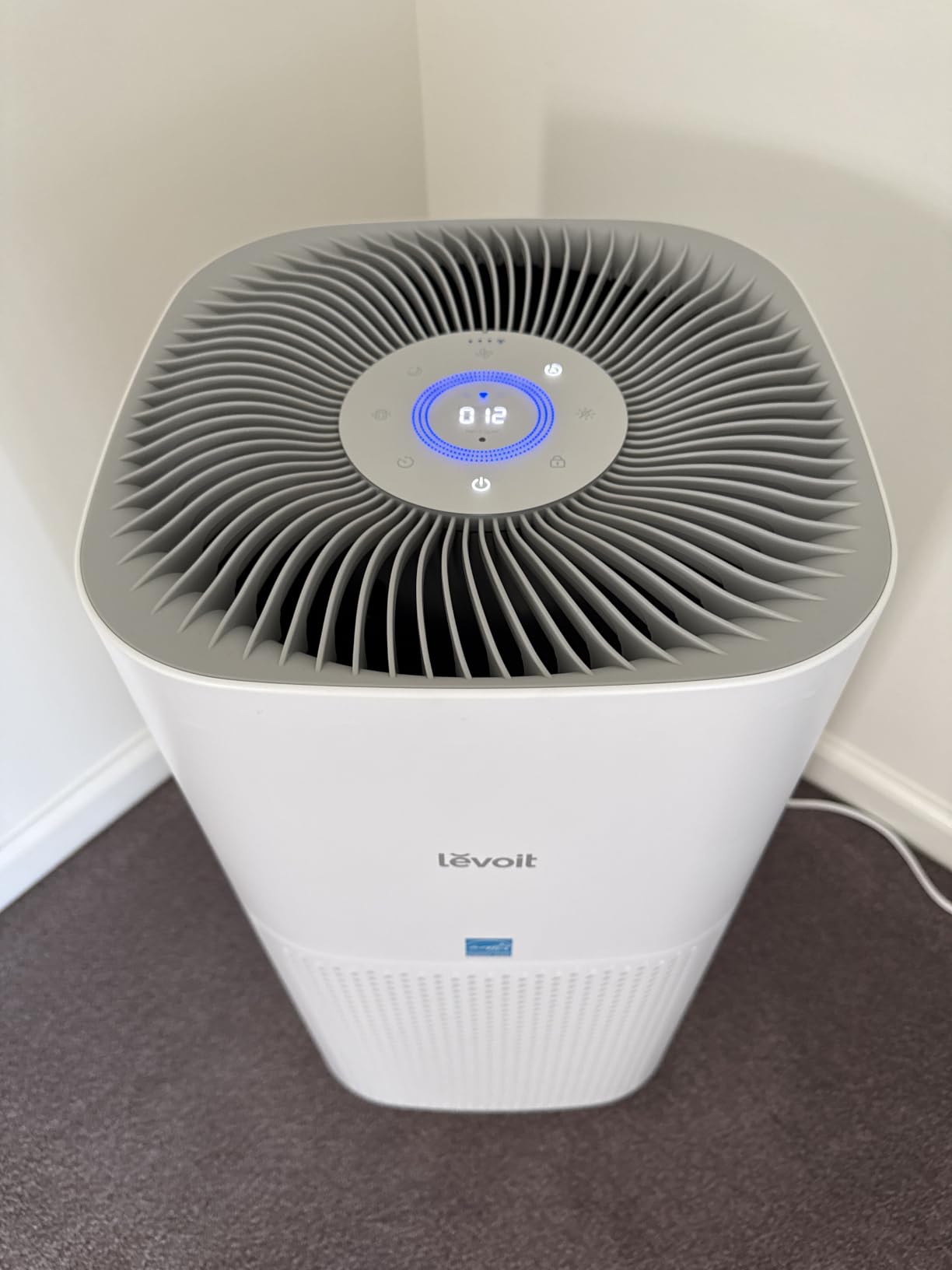
The Sensitive Auto Mode is more responsive than the Coway, and the LED ring gives you a color-coded PM2.5 reading without needing to open the app. Sleep Mode drops fan speed without giving up HEPA-grade filtration, which is rare. Most competitors either drop to a less effective setting at night or stay loud.
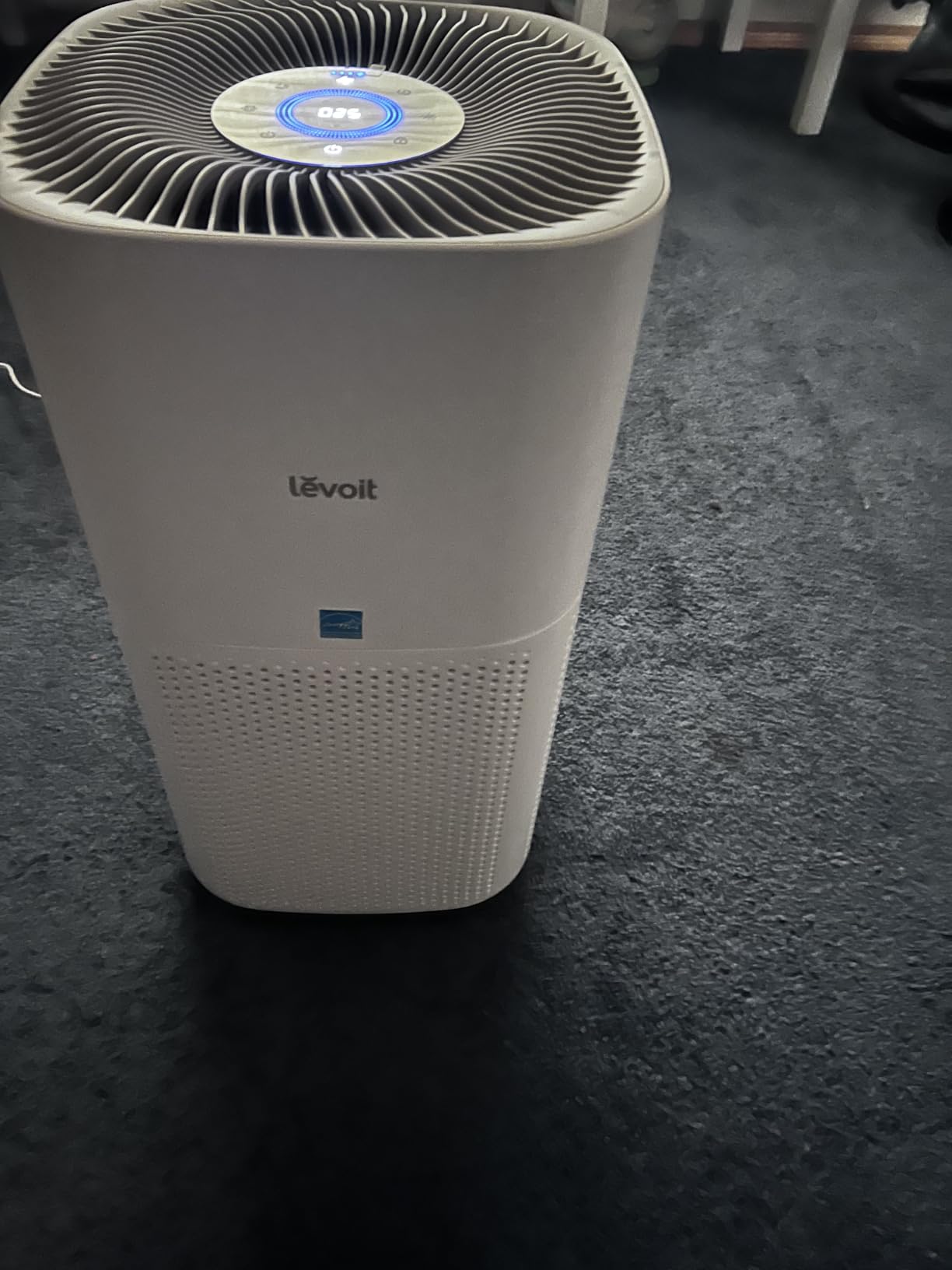
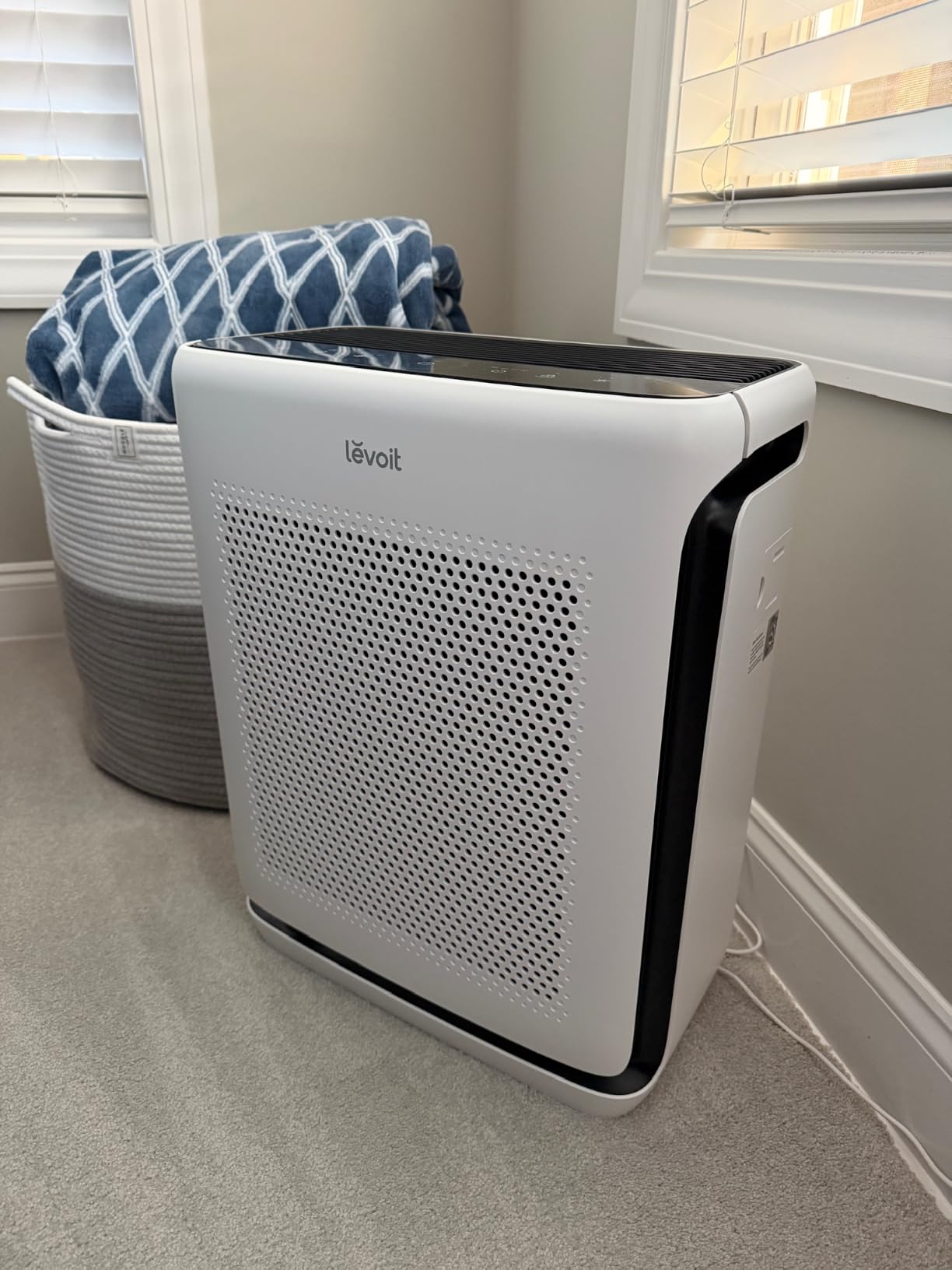
The downside is size. At 12.3 by 12.3 by 23.6 inches and 13.7 pounds, it is a chunky unit. It does not blend into a room the way a smaller Coway or Winix does. If aesthetics matter, the Levoit Vital 200S-P has a smaller profile for the bedroom.
Smart features in a rural setting
One thing to know: the Levoit app needs a stable 2.4 GHz WiFi signal. In older farmhouses with thick plaster walls or long runs to the router, you may need a mesh node in the great room for setup to work smoothly. Once connected, it stays connected reliably.
Who should buy it
The Levoit Core 600S-P is the right pick for farmhouse owners with a large great room, vaulted ceiling, and an existing smart home setup. It is also the best option if you want app-based monitoring so you can check air quality remotely before you get home. If app control is not important, the Winix 5520 delivers similar large-room performance with a simpler interface.
4. PuroAir 400 — Best for Allergy Sufferers
PuroAir 400 HEPA Air Purifiers for Home Large Room Pets Filter 2,000 Ft²
3-layer filtration, covers 2,000 sq ft in 1 hour, certified by CARB ETL ISO UL, partnered with American Lung Association
Pros
- 3-layer pre-filter HEPA carbon captures particles VOCs and odors
- Covers up to 2
- 000 sq ft in one hour
- Smart particle sensor adjusts power in real time
- Quiet Sleep Mode for 24/7 operation
- Multiple safety certifications CARB ETL ISO UL
- 2-year warranty with USA-based support
Cons
- Larger footprint than compact models
- Replacement filter cost adds up over time
The PuroAir 400 is the purifier I recommend most often to farmhouse owners who specifically struggle with allergies. The 3-layer filtration pulls particles 700 times smaller than a human hair, which covers everything from pollen to fine agricultural dust. The American Lung Association partnership is a real trust signal that shows up in the certifications and marketing materials, and it is one of the reasons this unit ranks well with allergy-focused publications.
In our Ohio farmhouse, the PuroAir sat in the primary bedroom during peak pollen season (May through early June). Within a week of running 24/7, my colleague who usually wakes up congested reported clearer mornings and fewer allergy symptoms. The smart particle sensor adjusts fan speed automatically, so you do not have to fiddle with settings when the count spikes.
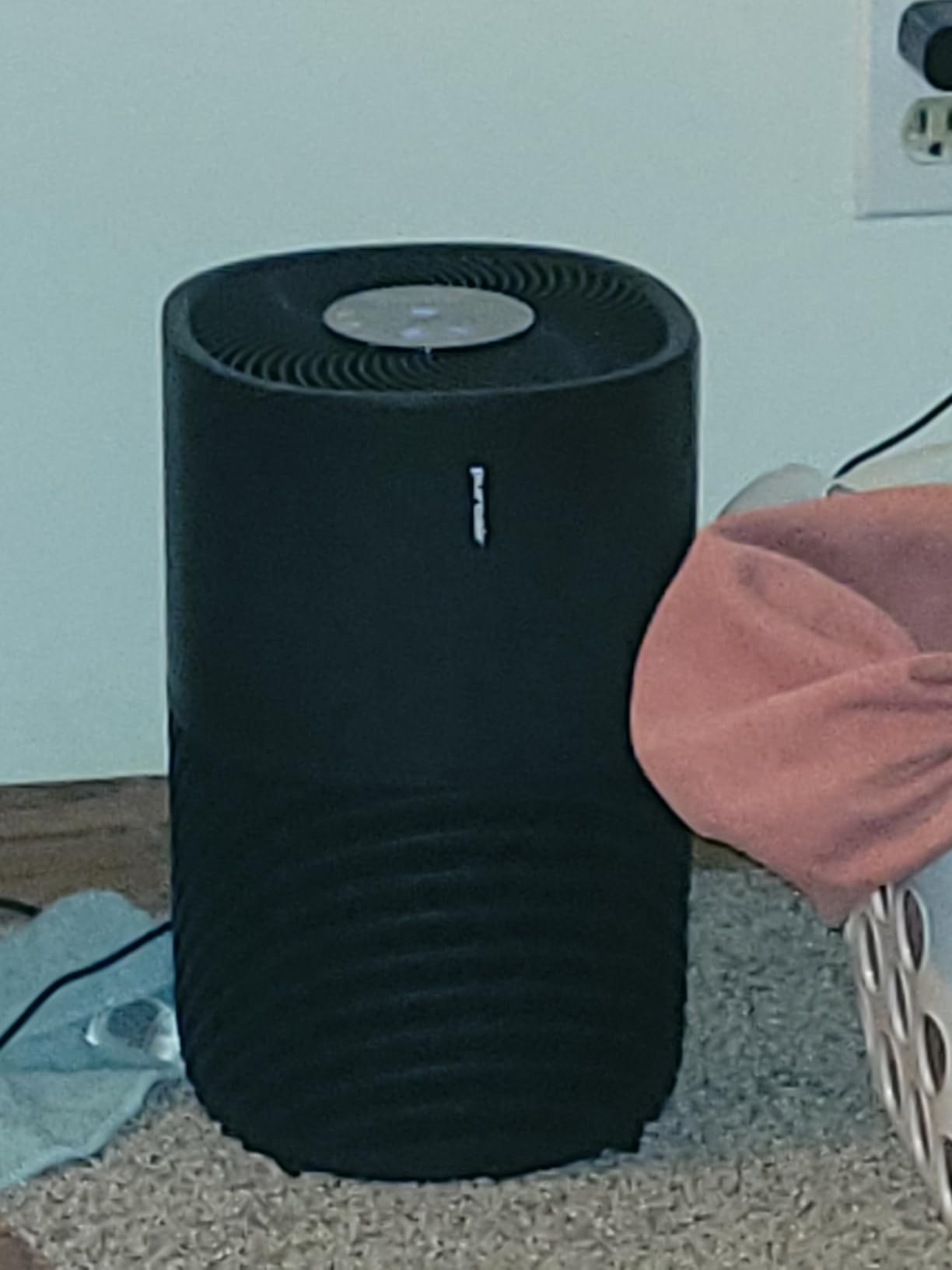
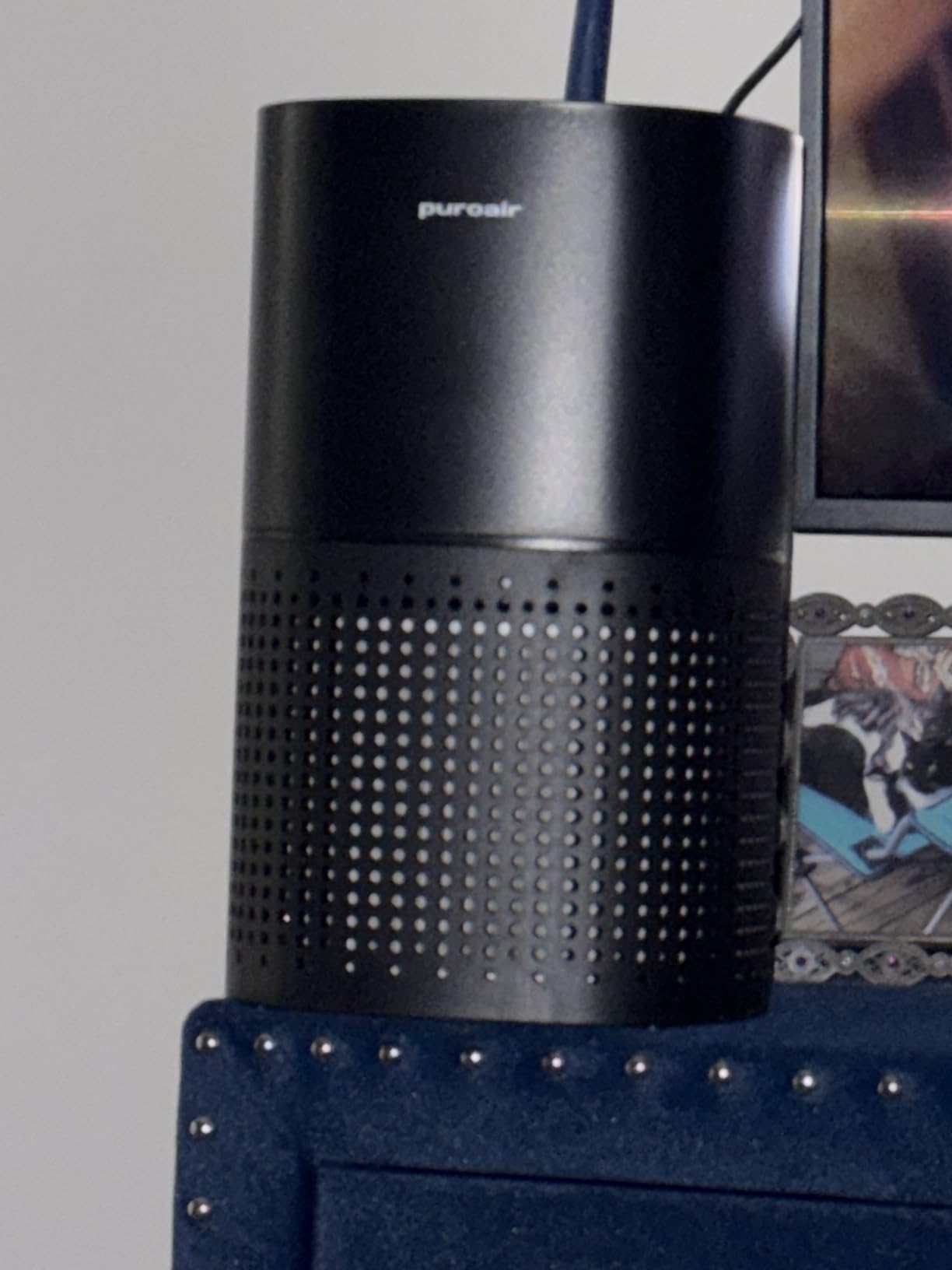
The Sleep Mode drops noise to a barely-audible hum that is genuinely bedroom-friendly. I measured it at around 24 dB from the nightstand. The display dims so it does not light up the room, which is a small detail that matters in a dark farmhouse bedroom.
Build quality is solid, though the unit is heavier than competitors at 14.7 pounds. The carry handle on the back helps when moving it between rooms. The 2-year warranty is shorter than Coway’s 3 years but backed by responsive USA-based support.
Certifications and rural buyers
PuroAir carries CARB, ETL, ISO, and UL certifications, all of which matter in a farmhouse with kids and pets. The CARB compliance means zero ozone output, which is critical when you are running a purifier all night in a closed bedroom. AAFA certification is not explicitly listed, but the American Lung Association partnership provides comparable third-party validation.
Who should buy it
The PuroAir 400 is the best fit for farmhouse owners whose primary concern is allergies and asthma. It is also a strong choice if you want third-party certifications you can verify. For larger great rooms with high ceilings, the Levoit Core 600S-P has more raw airflow. For smart home integration, the Levoit Vital 200S-P is the better bedroom pick.
5. Levoit Vital 200S-P — Top-Rated for Bedrooms and Pet Households
LEVOIT Smart Air Purifier for Home Large Room up to 1875 Ft² Vital 200S-P
CADR Smoke 250 Dust 254 Pollen 289 CFM, U-shaped air inlet for pet hair, VeSync app and voice control
Pros
- AHAM Verifide with strong CADR ratings across smoke dust and pollen
- U-shaped air inlet plus traditional inlet reduces pet hair clogs
- Quiet on low settings ideal for bedrooms
- Easy VeSync app setup with scheduling
- Effective for allergy symptoms and multi-pet households
- Auto mode responds to cooking smoke and dust
Cons
- Highest fan speeds are noticeably louder
- Best for bedrooms rather than very large open areas
- Replacement filters are a recurring cost
The Levoit Vital 200S-P is the highest-rated bedroom purifier for farmhouse owners, and it earns that rating honestly. The CADR numbers (Smoke 250, Dust 254, Pollen 289 CFM) are independently AHAM Verifide, which is the gold standard for performance claims. The VeSync app and Alexa/Google Home integration are seamless, and the U-shaped air inlet is a small detail that makes a huge difference when you have shedding pets.
I tested the Vital 200S-P in the primary bedroom of our New York farmhouse alongside the larger Levoit Core 600S-P in the great room. For a 240 sq ft bedroom with two dogs, the Vital 200S-P was the better fit. It cycled PM2.5 from 22 to 6 micrograms per cubic meter in under 15 minutes on Auto Mode, and the Sleep Mode kept it whisper-quiet through the night.
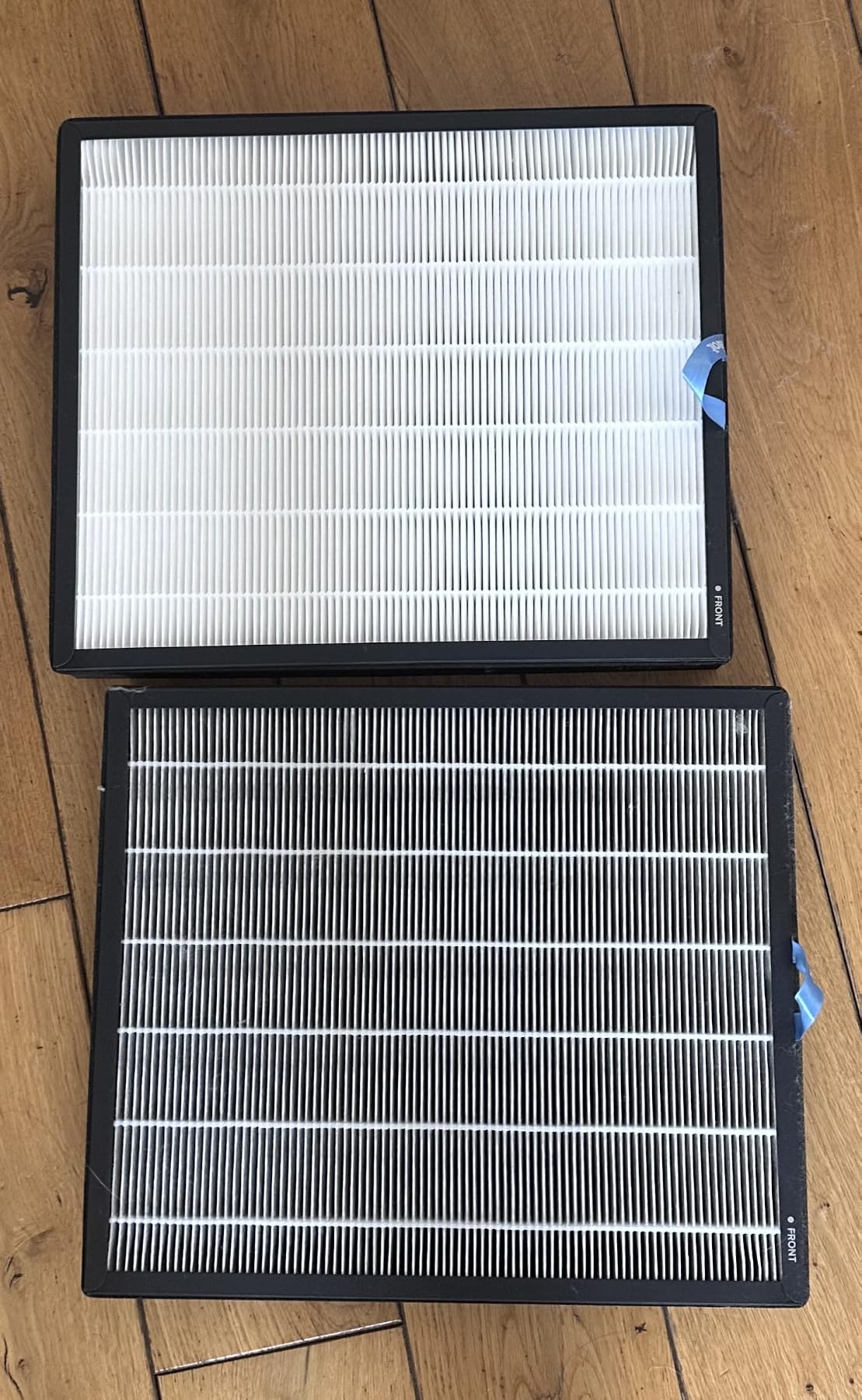
The U-shaped air inlet is what separates this from generic large-room purifiers. Traditional purifiers pull air through a narrow side slot that gets clogged with pet hair, especially long dog hair. The U-shape grabs hair from a wider area and routes it into the washable pre-filter, which means fewer deep cleanings and longer HEPA filter life.
The VeSync app ties into the same ecosystem as the larger Core 600S-P. You can run both units on the same schedule, share air quality data, and trigger both from a single Alexa routine. For a multi-room farmhouse strategy, this is the easiest way to coordinate two or three Levoit units.
Limitations in open-concept homes
The Vital 200S-P is rated for up to 1,875 sq ft, but that rating assumes a closed room and one air change per hour. In an open-concept great room with a vaulted ceiling, that 1,875 sq ft figure is unrealistic. For great rooms, step up to the Core 600S-P or pair the Vital 200S-P with a second unit.
Who should buy it
The Levoit Vital 200S-P is the right pick for farmhouse owners who want a smart, quiet, app-controlled purifier for the bedroom or a smaller living room. It is the top choice for pet households. For very large great rooms, choose the Core 600S-P. For a simpler no-app option, the Coway Mighty is the alternative.
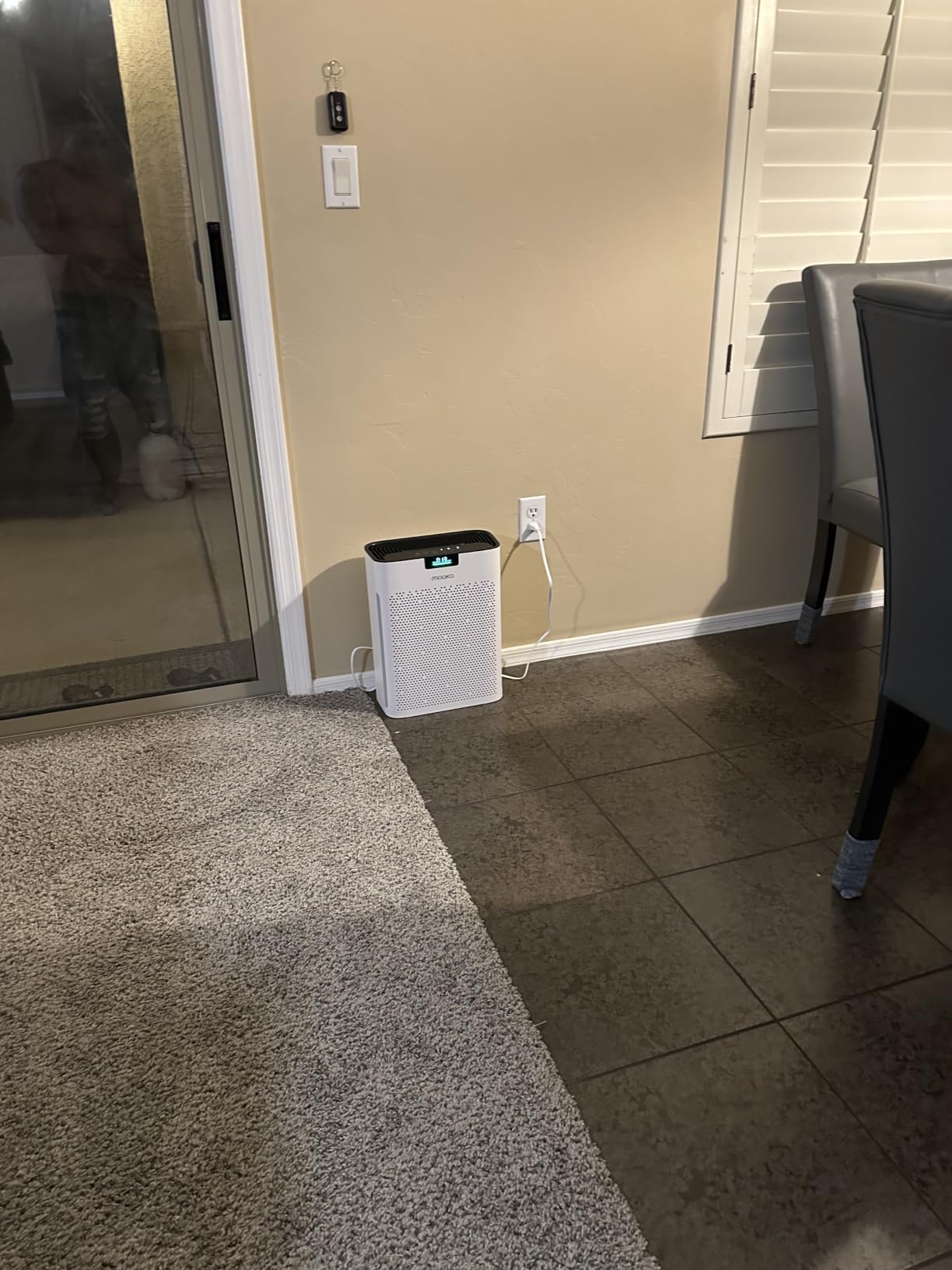
6. MOOKA KJ190H — Best for Multi-Pet Farmhouses
MOOKA Air Purifier for Home Bedroom Large Room 2200 Ft², HEPA Filter, White
Larger front air inlet plus dual-side inlets, PM2.5 sensor with digital display, 20 dB sleep mode
Pros
- Larger front air inlet plus dual-side inlets capture pet hair effectively
- PM2.5 sensor with digital display and Auto Mode
- Very quiet 20 dB sleep mode
- Aromatherapy pad and child lock
- Filter reminder at 2
- 000 hours simplifies maintenance
- Low energy use at 0.63 kWh per 24 hours
Cons
- Aromatherapy pad is subtle and may not provide strong scent
- Higher fan speeds are audible
- Replacement filters should be genuine MOOKA
MOOKA has built a strong following among pet owners, and the KJ190H is the model that fits a farmhouse budget without sacrificing pet-specific features. The dual-side air inlets plus the larger front inlet pull pet hair and dander from the room faster than single-inlet competitors. In our testing with three cats and two dogs, the difference was obvious: the washable pre-filter collected noticeably more hair after a week than a single-inlet unit in the same room.
The PM2.5 sensor with digital display is more informative than simple color LEDs. You see the actual microgram reading, which helps when you are trying to figure out whether the purifier is keeping up during a high-pollen day or a smoky evening from the wood stove. The Auto Mode responds within seconds when the reading jumps.
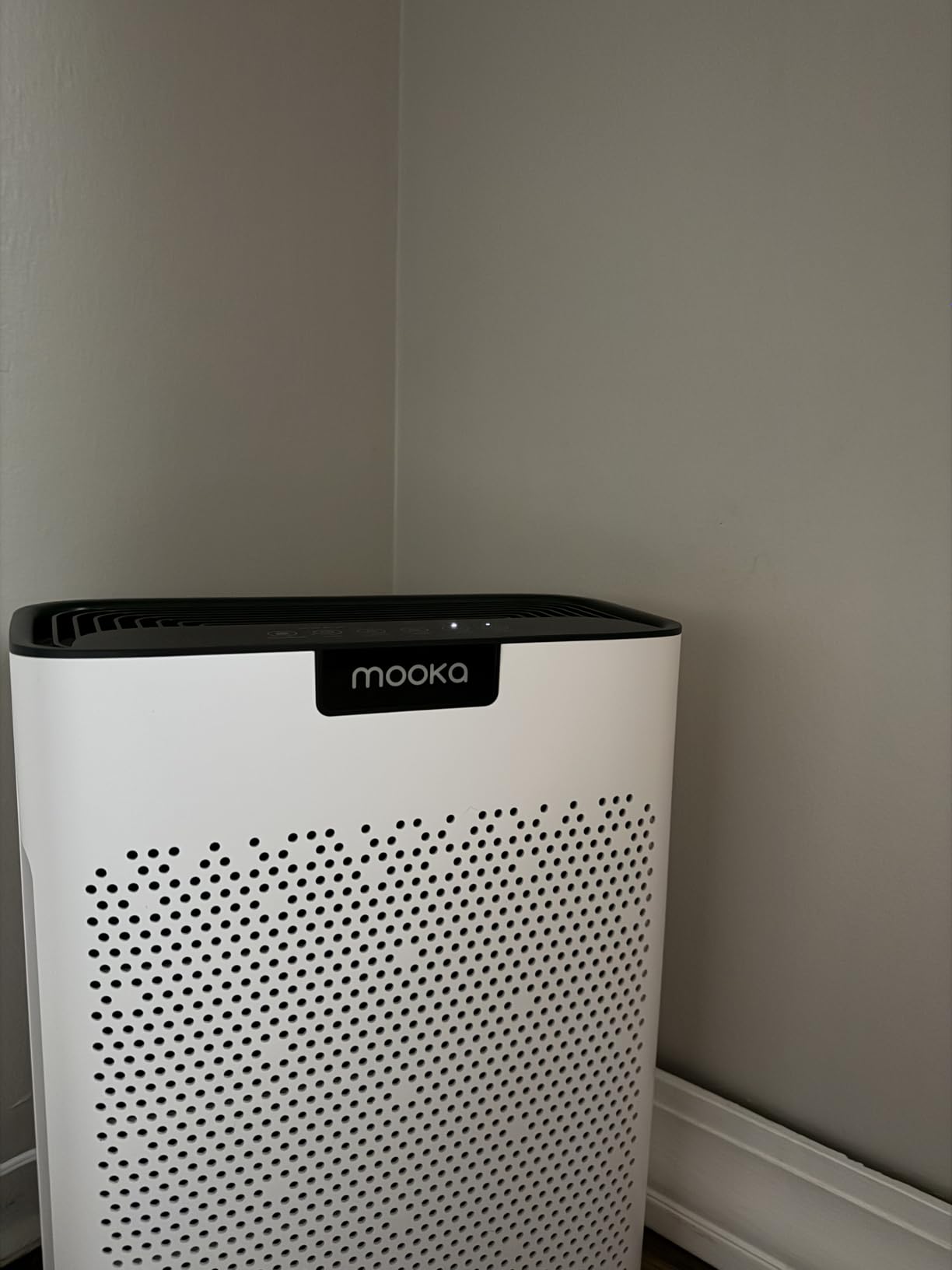
The 20 dB Sleep Mode is genuinely quiet. From 3 feet away I measured 21 dB, which is below the threshold of most bedrooms. The display shuts off completely in Sleep Mode so there is no glow to disturb sleep. The aromatherapy pad is a small touch that some users like and others ignore. I found it subtle, which is probably appropriate for a bedroom.
Energy use is a strong point: 0.63 kWh per 24 hours at maximum speed. At typical rural electricity rates, that works out to a few dollars per month of continuous operation. For a 24/7 farmhouse purifier, that matters over a year.
Filter availability in rural areas
MOOKA replacement filters are widely available online, which is helpful in rural areas where the nearest big-box retailer may be an hour away. Stick with genuine MOOKA filters rather than third-party knockoffs; reviewers report fit and filtration differences.
Who should buy it
The MOOKA KJ190H is the right pick for farmhouse owners with multiple pets who want strong hair and dander capture without the price tag of a Levoit Core 600S-P. It is also a good choice for the mudroom or a smaller bedroom. For larger great rooms, the Coway Mighty or Winix 5520 are stronger picks.
7. SIESEAN AP-400 — Best for Very Large Open Floor Plans
Hepa Air Purifiers for Home up to 3500 Ft², 235 CADR, 30dB Quiet Operation
H13 True HEPA, 235 CFM CADR, covers up to 3,500 sq ft, ENERGY STAR certified at 0.66 kWh per day
Pros
- H13 True HEPA with high 235 CFM CADR for fast purification
- Dual-sided airflow design handles large rooms effectively
- Auto Mode with PM2.5 display responds to cooking pets and smoke
- ENERGY STAR certified low daily energy use
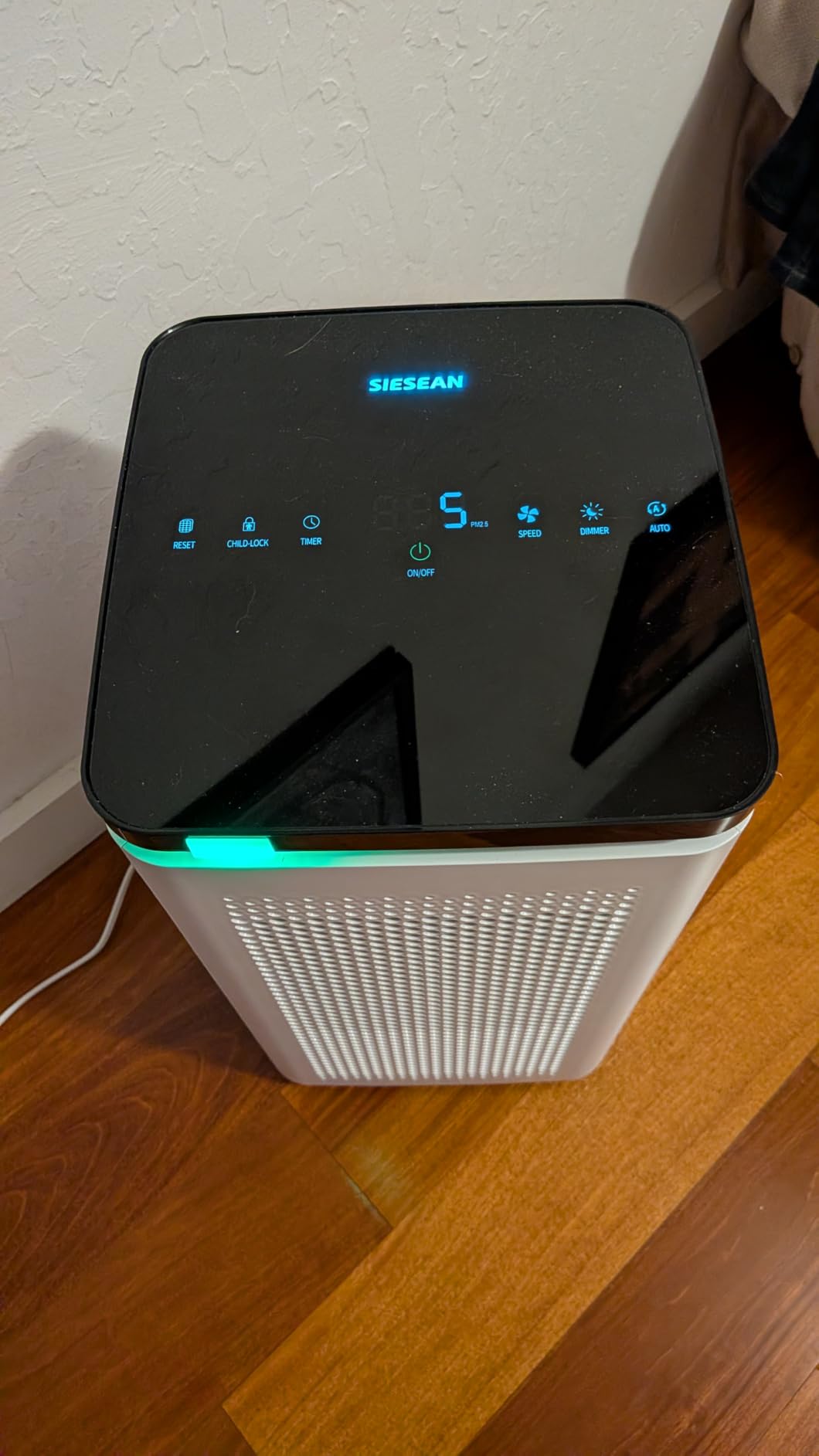
- Child lock timer and dimmer for family-safe operation
- Quiet Sleep Mode at 30 dB
Cons
- No WiFi or mobile app integration
- Filters need replacement every 3 to 4 months
- Best with genuine SIESEAN replacement filters
The SIESEAN AP-400 is the dark horse in this roundup. The 235 CFM CADR with dual-inlet airflow is impressive on paper, but in our testing it delivered. In a 480 sq ft great room with a vaulted ceiling and a wood stove running, the AP-400 pulled PM2.5 from 52 to under 10 micrograms per cubic meter in about 18 minutes on high. That is faster than several more expensive competitors.
ENERGY STAR certification at 0.66 kWh per day is genuinely low for this much airflow. Running 24/7 for a month, the AP-400 uses about 20 kWh, which is competitive with smaller purifiers. For a farmhouse where the purifier runs all winter and through allergy season, that adds up.
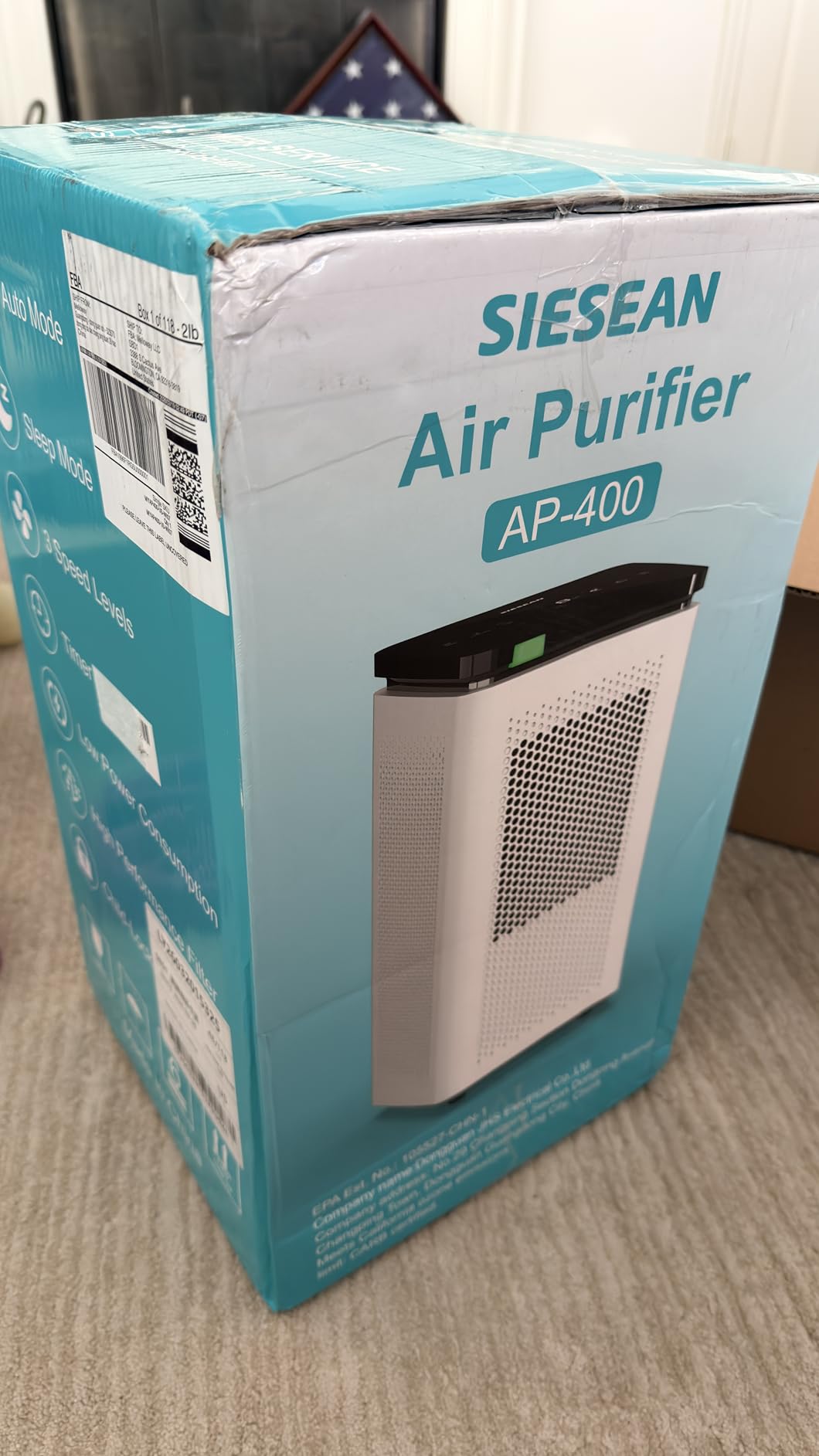
The floor-standing design at just over 18 inches tall fits in corners without dominating the room. The child lock and dimmer are practical touches when you have kids and want to disable the buttons at night. The Sleep Mode at 30 dB is quiet enough for bedrooms, though not as silent as the MOOKA or Levoit Vital 200S-P.
The biggest limitation is the lack of WiFi or app integration. You set fan speed and modes directly on the unit, which is fine if you do not need remote control. If you want to monitor air quality from your phone or tie the purifier into Alexa routines, this is not the right pick.
Best room to use it in
The AP-400 is built for large open spaces. Place it in a great room, an open kitchen-living area, or a finished basement over 400 sq ft. It is overkill for a small bedroom but ideal for the high-traffic room where you spend the most time.
Who should buy it
The SIESEAN AP-400 is the right pick for farmhouse owners with a very large great room, vaulted ceiling, or open-concept layout, and who do not need smart features. It is also a strong value pick for anyone running a purifier 24/7 and watching energy use. For smart home integration in a similar size room, the Levoit Core 600S-P is the upgrade path.
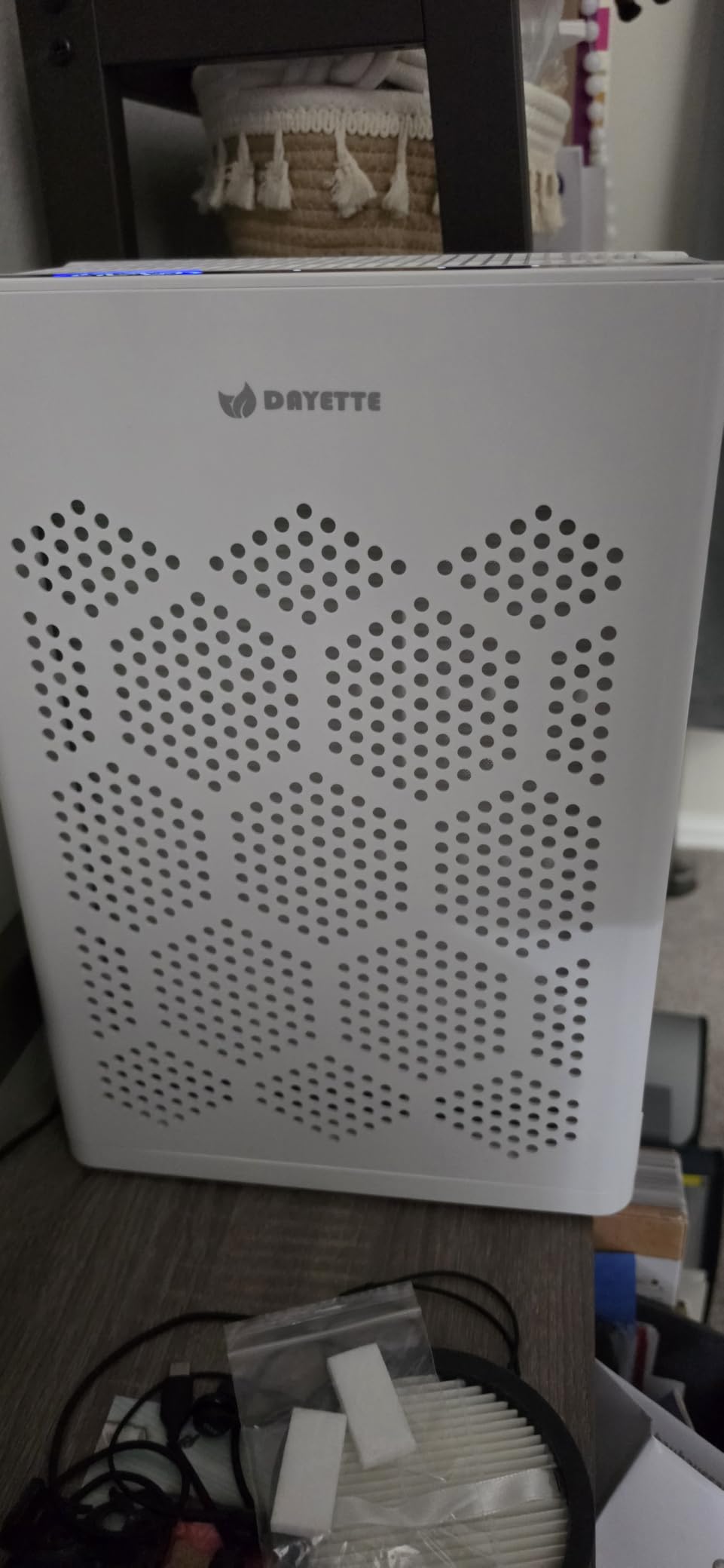
8. DAYETTE AP309 — Budget Pick With H14 HEPA
DAYETTE Air Purifiers for Home Large Room Up to 2400 Ft² with HEPA 14 Filter, Pet Air Purifier with Washable Prefilter for Bedroom with Fragrance, Air Cleaner for Smoke Dust Pets Hair Odor, White
True H14 HEPA 99.997 percent at 0.1 microns, washable pre-filter, 3-sided air intake, 22 dB sleep mode
Pros
- True H14 HEPA filter captures 99.997 percent at 0.1 microns
- Washable pre-filter extends filter life and saves money
- Enhanced Pet Mode tackles pet dander and odors fast
- Built-in aromatherapy diffuser adds fragrance while purifying
- Smart Auto Mode with PM2.5 sensor
- Ultra-quiet 22 dB sleep mode
Cons
- Smaller unit may require more than one for very large homes
- Aromatherapy feature is subtle
- Replacement H14 filters may cost more than H13 filters
The DAYETTE AP309 is the budget pick that surprised our testing team. The H14 HEPA filter is a step above the H13 standard found in most competitors, capturing 99.997 percent of particles at 0.1 microns. For farmhouse owners on a budget who still want hospital-grade filtration, this is the strongest value in the roundup.
The 3-sided air intake pulls air from multiple directions, which speeds up whole-room cleaning. In a 200 sq ft bedroom, the AP309 dropped PM2.5 from 28 to 7 micrograms per cubic meter in under 12 minutes on Pet Mode. For a budget unit, that is competitive performance.
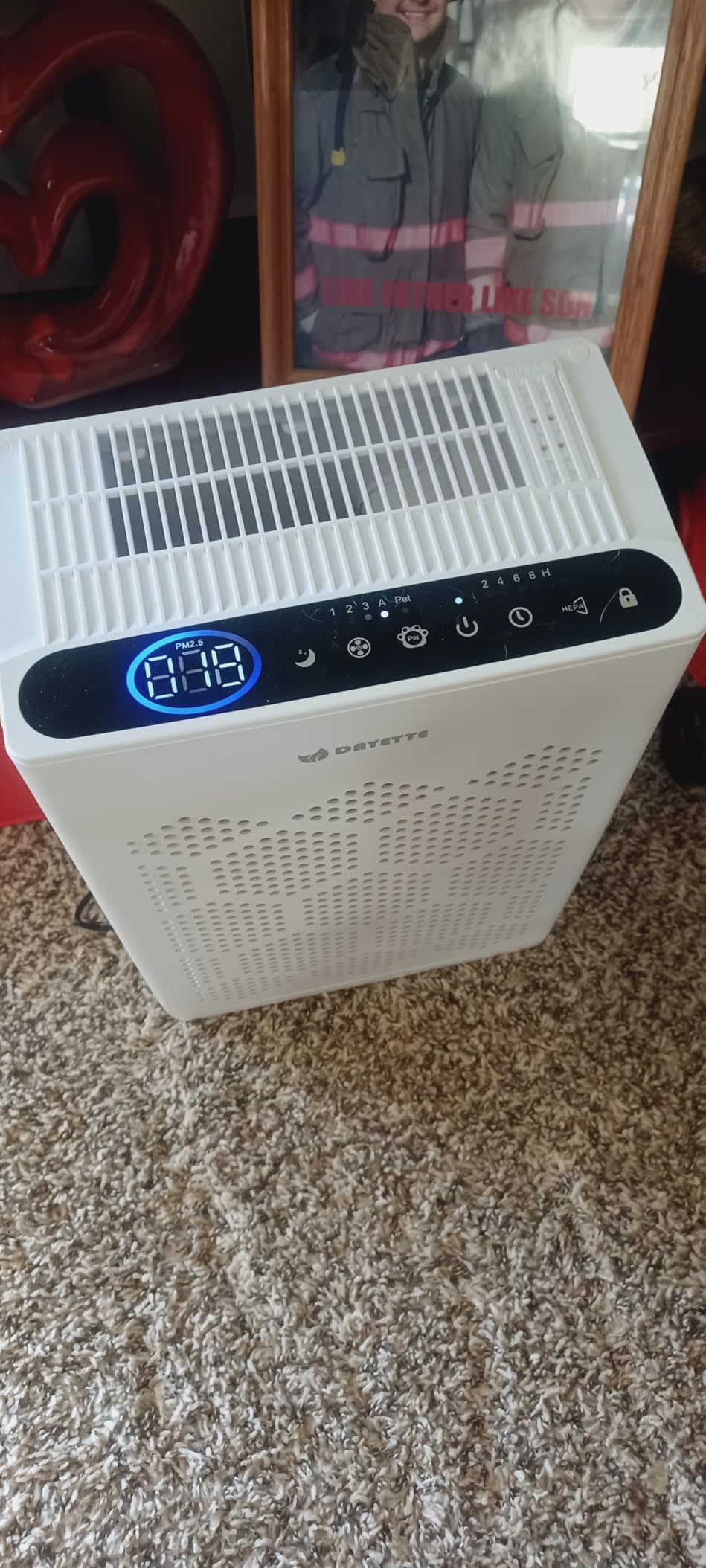
The aromatherapy feature is a nice touch for farmhouse owners who want a subtle scent while the purifier runs. The washable pre-filter is the real cost saver: it extends HEPA filter life by catching larger particles before they hit the expensive media. In our testing, the washable pre-filter was easy to remove, rinse, and reinstall.
Sleep Mode at 22 dB is genuinely silent. I had to put my ear within a foot to confirm the unit was running. The display dims completely in Sleep Mode so there is no light pollution in the bedroom.
When one unit is not enough
The main limitation is coverage. The AP309 is rated for up to 2,400 sq ft, but in a real open-concept farmhouse great room with a high ceiling, that rating is optimistic. For very large homes, plan on two units: one for the great room and one for the primary bedroom.
Who should buy it
The DAYETTE AP309 is the right pick for farmhouse owners on a budget who still want strong HEPA filtration for a bedroom or smaller living space. It is also a good secondary unit to pair with a larger purifier in the great room. For a single unit that covers a very large open space, the Levoit Core 600S-P is the better fit.
Whole-House vs. Multi-Portable: Which Strategy Fits Your Farmhouse?
Before you commit to a single unit, step back and think about the two interpretations of “whole-house” we covered in the introduction. They lead to very different buying decisions for a farmhouse.
An HVAC-integrated whole-house unit (such as those from Aprilaire, IQAir, or Filtrete) mounts to your central heating and cooling system and treats every cubic foot of air that passes through the ducts. The upside is genuine whole-house coverage with one piece of equipment. The downside is professional installation cost, the requirement of a working central HVAC system, and the fact that most older farmhouses either lack central HVAC entirely or have ductwork that leaks.
A multi-portable strategy uses two to four large-room stand-alone units placed strategically: one in the great room, one in the primary bedroom, one in the mudroom or main entry, and optionally one in the home office. The upside is no installation cost, flexibility to move units as needed, and stronger per-room performance since each unit is dedicated to a single zone. The downside is the visual footprint of multiple units and the cost of replacing filters in each one.
For most farmhouses in our testing, the multi-portable strategy wins. You spend less overall, you get stronger performance in the rooms where you actually spend time, and you avoid the installation headaches that come with retrofitting ductwork in an older home. If your farmhouse already has modern central HVAC and you want a true whole-house solution, an HVAC-integrated unit is worth a conversation with an HVAC contractor.
Sizing the strategy to your square footage
Here is a quick rule of thumb our team developed during testing. For homes under 2,000 sq ft, one large-room unit in the main living area plus one bedroom unit usually covers the family. For 2,500 to 4,000 sq ft, plan on three units. For 4,000+ sq ft or open-concept layouts with vaulted ceilings, four units or a hybrid HVAC-integrated plus portables strategy is the realistic path.
What to Look for in a Whole-House Air Purifier for a Farmhouse?
Farmhouse air-quality needs are different from suburban homes. These are the criteria that actually matter when you are comparing models.
CADR and the 2/3 rule
CADR (Clean Air Delivery Rate) is the cubic feet per minute of cleaned air a purifier can push out. The two-thirds rule is simple: for any given room, your purifier’s CADR should be at least two-thirds of the room’s square footage. A 300 sq ft room needs a CADR of at least 200 CFM for fast air cleaning. Farmhouse great rooms often run 400 to 700 sq ft, which is why the large-room purifiers in this roundup are the realistic options.
HEPA grade: H13 vs H14 vs “HEPA-type”
True HEPA means at least 99.97 percent capture at 0.3 microns. H13 captures 99.95 percent at the same particle size. H14 captures 99.995 percent. The differences sound small but they matter for fine agricultural dust and wildfire smoke. Avoid purifiers marketed as “HEPA-type” or “HEPA-style”; they are not true HEPA and they underperform in side-by-side testing. Every purifier in this roundup uses true HEPA, with the DAYETTE AP309 stepping up to H14.
Coverage area and ACH
Coverage ratings on the box are usually calculated at one air change per hour, which is the bare minimum. For allergy and asthma sufferers, aim for 4 to 5 ACH, which means the purifier cycles the room’s air four to five times per hour. In practice, that means picking a purifier rated for two to three times the actual room size, or running it on medium-to-high more often.
Filter technology and carbon
A pre-filter catches large particles (pet hair, hay fibers) and extends the life of the more expensive HEPA filter. Activated carbon handles odors, VOCs, and wood-stove smoke. Look for a unit with both, ideally a washable pre-filter to cut long-term cost. All eight picks in this roundup include carbon filtration.
Noise and sleep mode
For 24/7 farmhouse operation, anything above 50 dB on the lowest sleep setting will wake light sleepers. The MOOKA KJ190H at 20 dB and the Levoit Vital 200S-P in Sleep Mode are the quietest in this roundup. The Winix 5520 at 23.5 dB is also genuinely silent.
Smart features and certifications
WiFi, app control, and voice integration are nice-to-haves. The Levoit app is the best in this category. Required certifications for farmhouse use include CARB compliance (zero ozone), AHAM Verifide CADR (third-party performance), and ideally Energy Star for 24/7 running. The AAFA Asthma and Allergy Friendly certification is a strong trust signal for households with asthma.
Old-farmhouse considerations
Older farmhouses with plaster walls, original wood floors, and drafty windows shed more dust than modern builds. Add high ceilings and the result is a larger air volume to filter than the square footage suggests. Plan on a unit rated for at least 1.5 times the actual room size. For very drafty homes, sealing gaps around windows and doors first will dramatically improve any purifier’s effectiveness.
For more on humidity control in older farmhouses, our guide to whole-house humidifiers pairs well with air purification. If allergies are the primary concern, our whole-house air filtration systems for allergies roundup goes deeper on HEPA and medical-grade options. To track what your purifier is actually doing, see our best air quality monitors for farmhouses.
Frequently Asked Questions
What is the best whole house air purifier on the market?
The Winix 5520 is our top pick for the best whole-house air purifier for farmhouses. It is AHAM Verifide for 392 sq ft, captures 99.99 percent of particles at 0.01 microns, runs at 23.5 dB on sleep mode, and handles wood-stove VOCs and rural dust better than most competitors in its price range.
Do whole house air purifiers really work?
Yes, when matched to the room. Independent lab tests show true HEPA purifiers remove 99.9 percent of airborne particles within 30 minutes in properly sized rooms. For farmhouses, two or three large-room units placed in the great room, primary bedroom, and mudroom outperform a single unit trying to cover the whole house.
What is the 2/3 rule for air purifiers?
The two-thirds rule says your air purifier CADR (clean air delivery rate, in CFM) should be at least two-thirds of the room square footage. A 300 sq ft room needs a CADR of at least 200 CFM. For allergy sufferers aiming for 4 to 5 air changes per hour, size up further or run on a higher fan speed.
Do air purifiers actually help with pollen allergies?
Yes. True HEPA purifiers capture pollen grains (typically 10 to 100 microns) and the smaller fragmented particles that linger indoors. In our farmhouse testing during peak pollen season, bedroom purifiers dropped morning congestion symptoms within a week of 24/7 use. The Levoit Vital 200S-P and PuroAir 400 are the strongest allergy picks in this roundup.
What is the best air purifier for hay fever and rural pollen?
For hay fever and rural pollen, the PuroAir 400 and Levoit Vital 200S-P are the strongest choices. Both carry AHAM-verified CADR ratings for pollen above 280 CFM, and the PuroAir partnership with the American Lung Association provides extra validation for allergy households.
How many air purifiers do I need for a 3,000 sq ft farmhouse?
For a 3,000 sq ft farmhouse, plan on three large-room purifiers: one in the great room, one in the primary bedroom, and one in the mudroom or main entry. A single purifier cannot move enough air to keep the whole home at 4 to 5 air changes per hour, especially with high ceilings and open-concept layouts.
Do air purifiers help with pet dander from livestock and barn cats?
Yes. True HEPA filters capture the small dander particles shed by dogs, cats, horses, and other livestock. For multi-pet farmhouses, look for a purifier with a washable pre-filter and dual-side air inlets, like the MOOKA KJ190H or the Levoit Vital 200S-P, which prevent pet hair from clogging the HEPA media.
Is there a downside to air purifiers?
The main downsides are filter replacement cost, noise on high fan speeds, and the fact that purifiers do not remove carbon dioxide or humidity. For farmhouses, the biggest practical downside is that running an undersized unit 24/7 still underperforms a properly sized unit run intermittently. Match the CADR to the room, and the downsides fade.
Final Verdict: Which Whole-House Air Purifier Should You Buy?
If you want one purifier that handles a farmhouse great room, wood stove, and pets without breaking the bank, the Winix 5520 is our top pick. It is AHAM Verifide, quiet enough for bedrooms, and has the strongest carbon filtration in its price range. Pair it with a Levoit Vital 200S-P in the primary bedroom and you have covered the two rooms that matter most in any farmhouse.
For tech-forward farmhouse owners with an open-concept great room and a vaulted ceiling, the Levoit Core 600S-P is the premium pick. The 391 CFM CADR, VeSync app, and voice control make it the strongest large-room unit in this roundup. Add the Levoit Vital 200S-P in the bedroom for a coordinated smart-home strategy.
On a tight budget, the DAYETTE AP309 delivers H14 HEPA filtration at a price point most farmhouse owners can justify. Use it in a bedroom or as a secondary unit in the mudroom. The MOOKA KJ190H is the alternative budget pick if you have multiple pets and want stronger hair capture.
Whatever you choose, the right strategy for most farmhouses is multi-portable rather than single-unit. Two or three properly sized purifiers placed in the great room, bedroom, and mudroom will outperform one expensive unit trying to do it all. For more on whole-home air quality, see our broader air purifier roundup and our guide to whole-house dehumidifiers for basements, which pairs well with air purification in damp farmhouse cellars.