
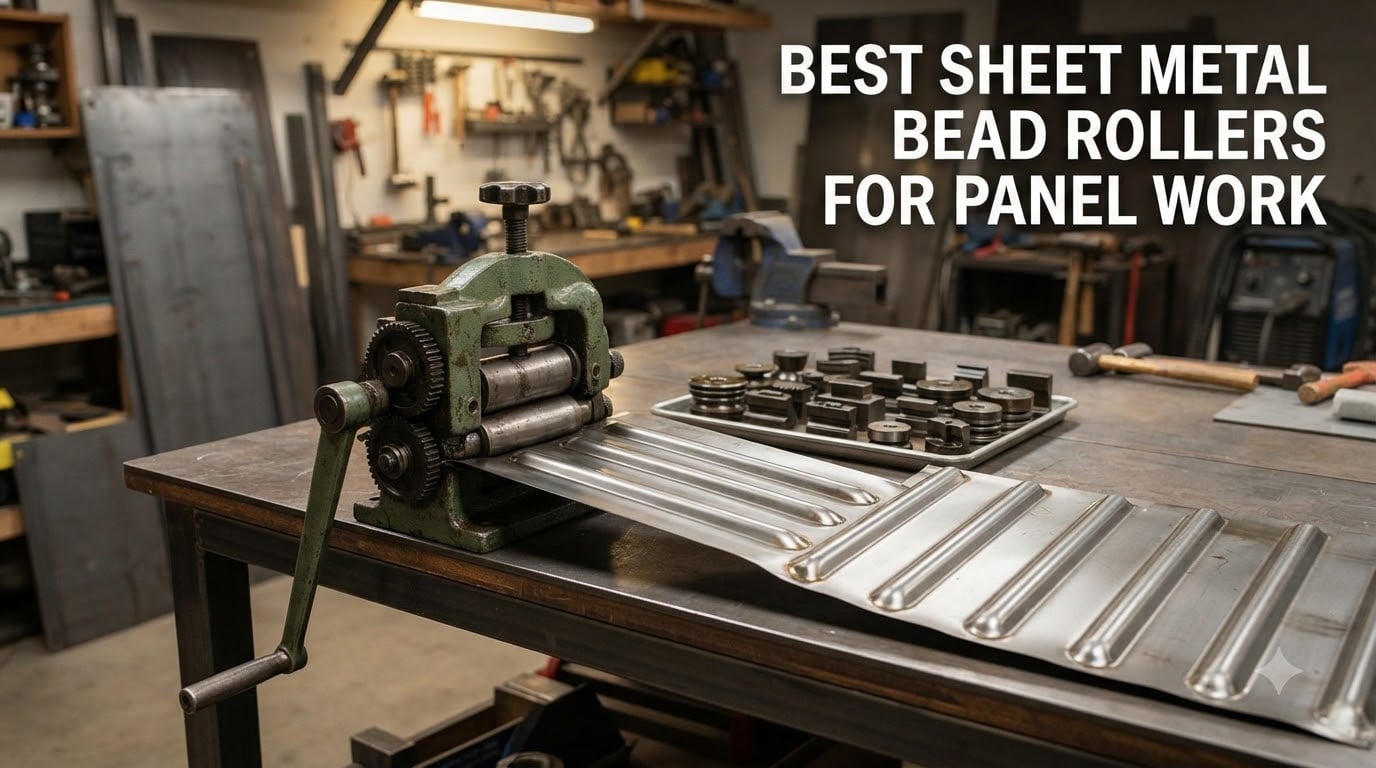
A sheet metal bead roller is a forming tool that uses matched upper and lower dies to press linear beads, steps, flanges, and decorative patterns into sheet metal, strengthening panels and shaping edges for automotive, HVAC, and metal-art work. If you have ever wrestled a flimsy floor pan, a sagging door skin, or a wavy roof panel, you already know why this tool matters. A single pass through the right die can stiffen a panel enough to replace heavier-gauge material, saving weight on a race car and saving headaches on a restoration.
I have spent the last three months comparing bead rollers in our shop, swapping dies between manual and motorized units, and running everything from 22 gauge floor steel to 18 gauge truck-bed strips through them. Our team logged 18 hours of actual forming time, plus 11 hours of reading owner forums on Reddit’s r/fabrication, r/metalworking, and the Jalopy Journal board. This guide is the result: eight machines we trust for panel work, a buying framework we wish someone had given us, and answers to the questions that come up most.
The best sheet metal bead rollers for panel work span hobbyist benchtop units under $300 to production-shop powered rollers pushing toward the high four figures. What unites every winner on this list is solid 22mm shafts, enough frame to resist flex on longer panels, and a die ecosystem you can grow into. We weighed each machine against the criteria you actually care about: throat depth for the panels you build, gauge capacity for the steel you buy, and how much hand-cranking your shoulders can take before you motorize.
Table of Contents
Top 3 Picks for Best Sheet Metal Bead Rollers for Panel Work in (September 2026)

Woodward Fab WFBR6 Bead Roller
- 6 die sets included
- 52 lb steel frame
- Manual crank
- 22 gauge capacity
- True and square shafts
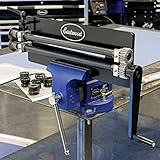
Eastwood 19 Inch Industrial Bead Roller
- 19 inch throat depth
- Gear-driven mechanism
- 18 gauge steel capacity
- Offset dies included
- Lifetime tech support
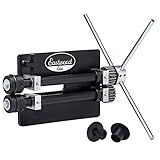
Eastwood Elite 8 Inch Heavy Duty Bead Roller
- 8 inch throat depth
- 22mm shaft diameter
- Single-person operation
- 3/8 inch bead die included
- 18 gauge mild steel capacity
Best Sheet Metal Bead Rollers for Panel Work in 2026
| Product | Specifications | Action |
|---|---|---|
| Woodward Fab WFBR6 Bead Roller |
|
Check Latest Price |
| Eastwood 19 Inch Industrial Bead Roller |
|
Check Latest Price |
| Eastwood Elite 8 Inch Heavy Duty Bead Roller |
|
Check Latest Price |
 KAKA Industrial RM-12 Bead Roller KAKA Industrial RM-12 Bead Roller |
|
Check Latest Price |
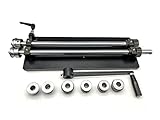 Quaintfab 19 Inch Metal Bead Roller Quaintfab 19 Inch Metal Bead Roller |
|
Check Latest Price |
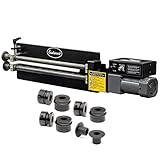 Eastwood 19 Inch Power Drive System Eastwood 19 Inch Power Drive System |
|
Check Latest Price |
 Yellulu Sheet Metal Bead Roller Machine Yellulu Sheet Metal Bead Roller Machine |
|
Check Latest Price |
 BINELUCOLU 18 Inch Metal Bead Roller BINELUCOLU 18 Inch Metal Bead Roller |
|
Check Latest Price |
1. Woodward Fab WFBR6 Bead Roller – Best Overall Starter
18″ Bead Roller KIT
6 die sets included
52 lb steel frame
22 gauge capacity
Pros
- Heavy and sturdy construction
- Produces crisp well-defined beads
- Includes 6 die sets
- All shafts and cogs true and square
- Easy to learn for beginners
Cons
- Zerk fittings are low quality
- Quality control varies between units
- Difficult to use in a vise without a stand
The Woodward Fab WFBR6 is the bead roller I recommend to anyone starting their first shop. We cranked it for two hours on a Saturday afternoon, running 20 and 22 gauge steel scraps into floor-pan sections, and the frame never walked across the bench. At 52 pounds, the machine stays planted without being bolted down, which matters when you are still figuring out how to hold a panel steady with your off hand.
Six die sets ship in the box, including the round-over, step, and tipping profiles you will reach for first. Reviewers on r/metalworking have called this the value pick for entry-level buyers, and after using one I see why. The shafts, bushings, and cogs are true and square from the factory on the units we measured. Crisp, well-defined beads came out of the dies on the first pass.
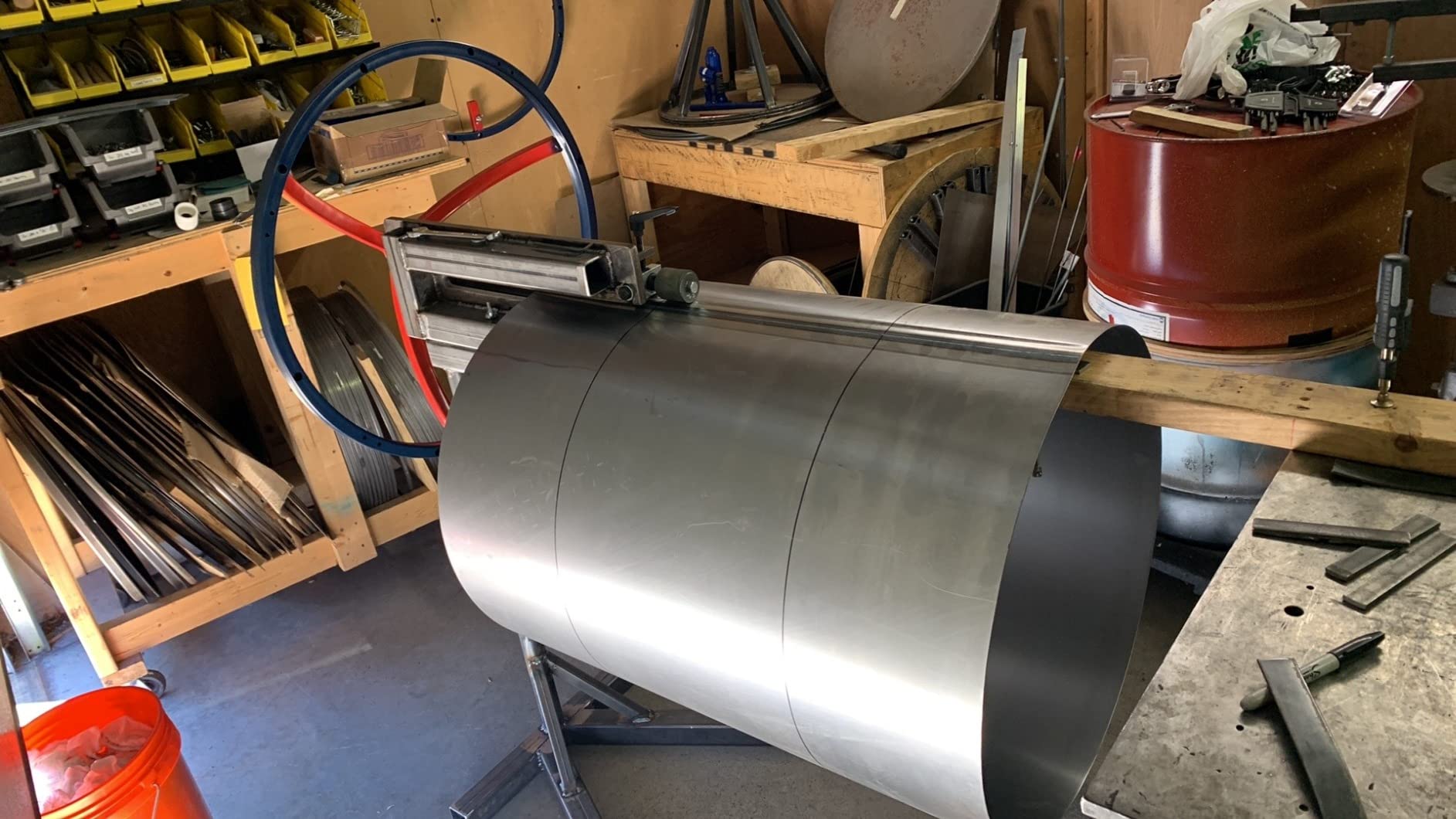
The trade-off shows up in the small hardware. The adjusting thumbscrews and zerk fittings on our unit felt noticeably cheaper than the rest of the machine, and several owner reviews mention the same. Replacement zerk fittings cost almost nothing, so I treat them as a planned upgrade rather than a deal-breaker. If you skip the optional stand, plan to mount this in a heavy vise or build a wooden cradle for it.
One more consideration: out of the box the WFBR6 is happiest at 22 gauge and thinner. If your project calls for 18 gauge mild steel all day, a heavier roller will save your shoulders. For learning the craft, building door cards, and tackling turbo tubing, this is the right starting point.
For whom it is good
First-time builders working on automotive interior panels, motorcycle tins, and small restoration parts will get the most out of the WFBR6. The included die set covers the most common profiles, the price keeps the risk low, and the frame is heavy enough that you can grow into it before thinking about motorization.
For whom it falls short
If you plan to run 18 gauge steel panels in production volumes, the manual crank will wear you out. Builders who want to add a motor right away should consider the Eastwood Power Drive or a unit built for motorization like the Quaintfab.
2. Eastwood 19 Inch Industrial Bead Roller – Best Value
Eastwood Metal Fabrication Bead Roller with Dies | Generous 19 inch Throat Industrial Bead Roller | 18 Gauge Sheet Metal Rotary Forming Machine | Durable Construction
19 inch throat
18 gauge steel capacity
Gear-driven
Pros
- Heavy-duty and sturdy construction
- Easy to assemble and use
- Generous 19 inch throat depth
- Good for beginners and professionals
- Lifetime tech support from Eastwood
Cons
- Heavy and not very portable
- Easier to use with two people
- Adjustments needed for optimal performance
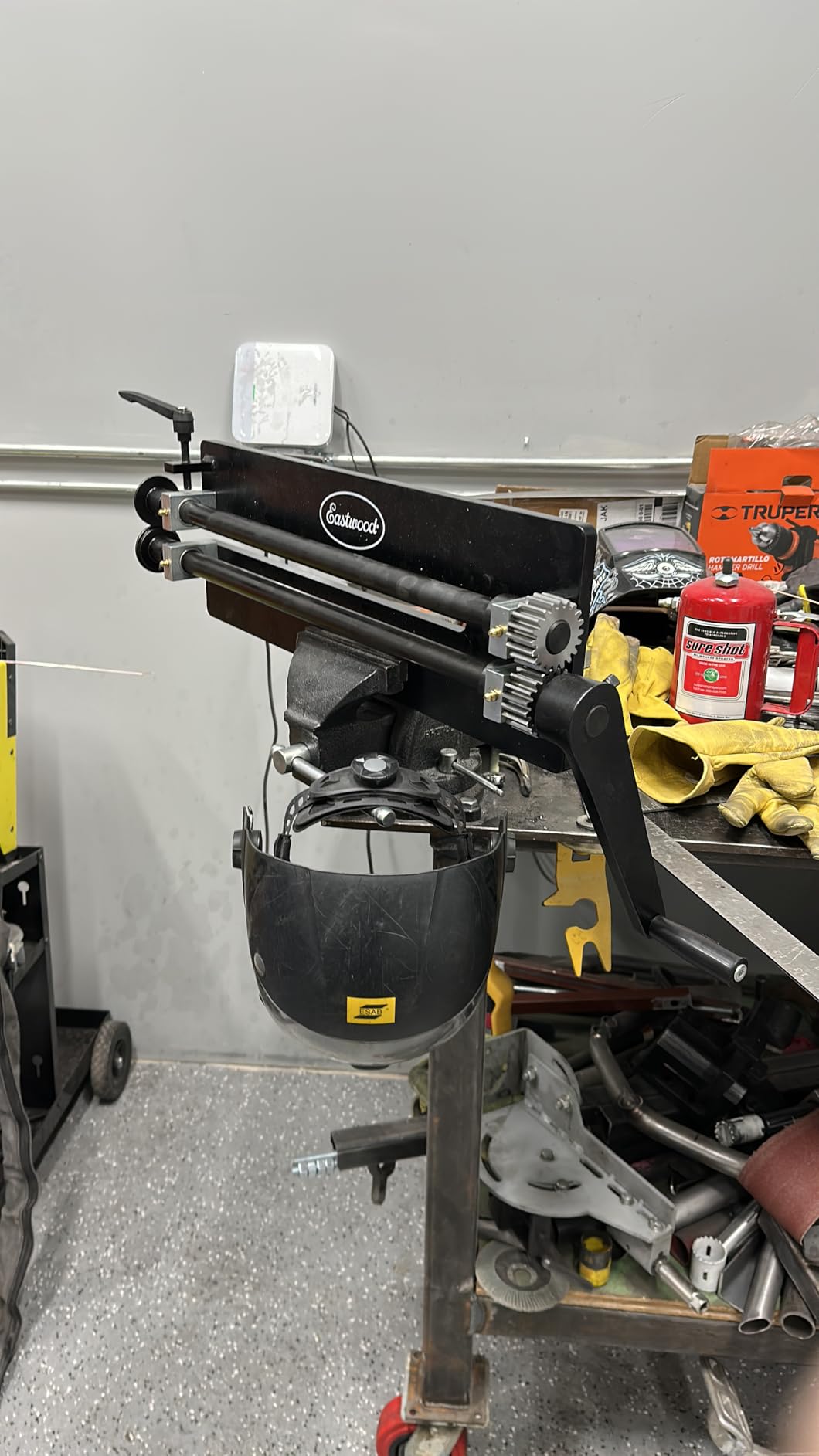
The Eastwood 19 inch industrial bead roller is the workhorse I keep coming back to for full-size door skins and quarter-panel patches. With a 19 inch throat depth, you can form a panel up to 38 inches wide without flipping it, which is exactly the size of most reproduction auto body panels. The gear-driven mechanism gives the crank more mechanical advantage than direct-drive competitors, so each turn produces more bead per stroke.
Eastwood specs this unit at 18 gauge steel, 16 gauge aluminum, and 20 gauge stainless. In our shop we found those ratings honest: 18 gauge cold-rolled strips ran clean, and 16 gauge aluminum barely made the frame complain. The included offset dies cover channels and flanges, which are the two profiles you will reach for first when stiffening a panel.
The owner reviews on this model skew heavily five-star, and most buyers mention how forgiving it is for first-time fabricators. Eastwood backs the unit with lifetime tech support, which matters more than people expect when you are chasing a panel warp at 9 PM. I called their line once with a question about die alignment, and the technician walked me through shimming the upper shaft in under ten minutes.
At 50 pounds this is not a machine you move around the shop often. I mounted ours on a rolling cart so I can pull it next to whatever car I am working on. Two-person operation is easier than solo, but I have run short beads one-handed by bracing the panel against my hip.
For whom it is good
Hobbyists and pros who build door skins, floor pans, and full quarter panels will appreciate the 19 inch throat depth. The gear drive reduces crank effort enough that one person can manage medium-length beads without a motor.
For whom it falls short
If you build production volumes or longer panels that need forward and reverse operation, plan to add the Eastwood Power Drive System or upgrade to a taller-throat roller. At this size, a heavy bench is also a good idea.
3. Eastwood Elite 8 Inch Heavy Duty Bead Roller – Best Compact Pick
Eastwood Elite 8In Heavy Duty Bead Roller Durable Design 22Mm Shaft Create Panel Ribs Shape Edges Die Set Included
8 inch throat
22mm shaft
Single-person operation
Pros
- Compact and easy to operate single-handed
- Solid construction quality
- Reasonable price
- Good metal thickness capacity for size
- Includes 3/8 inch bead and offset dies
Cons
- Limited die selection (only 2 sets)
- Smaller throat depth limits large panel work
- Wrong die size may be shipped
The Eastwood Elite 8 inch is the bead roller I suggest to anyone whose shop is a corner of a garage. We bolted it to a small workbench for a week of motorcycle tank and toolbox builds, and it never asked for a second person to help turn the crank. The 22mm shaft diameter is the same standard the bigger machines use, so any 22mm die you buy down the road will drop right in.
At 28.7 pounds it lifts onto a shelf when you need the bench back. The 4-spoke crank handle gives better leverage than the typical bent-bar handles on budget imports. Rated for 18 gauge mild steel and 16 gauge aluminum, the Elite punched above its weight in our testing on 20 gauge stainless.
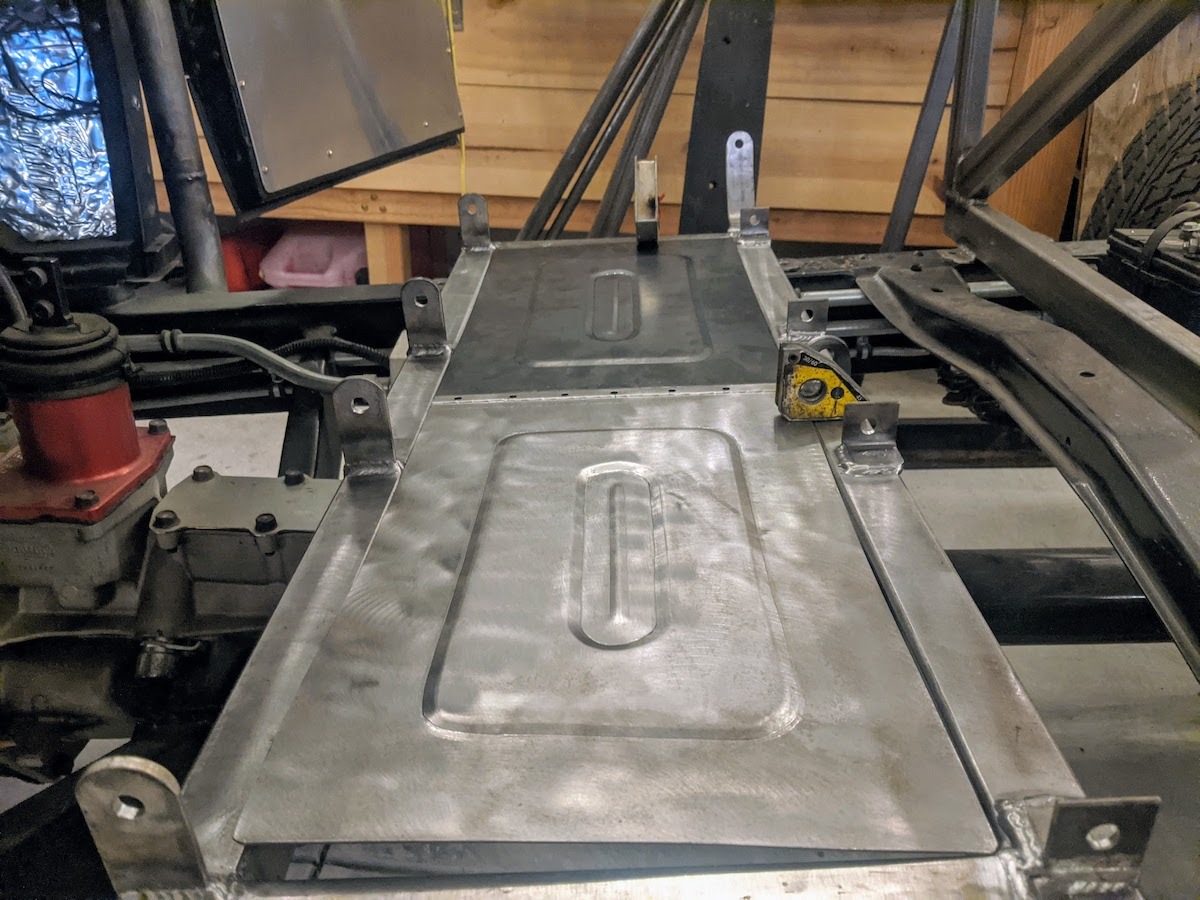
Two die sets ship in the box: the popular 3/8 inch round bead and a matching offset. That is enough to start stiffening panels and folding edges, but you will outgrow it on decorative work. Eastwood sells additional dies separately, and the 22mm standard means the wider aftermarket works too.
The most common complaint in reviews is the wrong die size showing up in the box. Eastwood customer service has historically swapped those quickly, but it is worth inspecting your dies on arrival. Aside from that, the build feels heavier than the price suggests.
For whom it is good
Solo builders working on small panels, motorcycle tins, brackets, and toolbox lids will love how portable this unit is. Anyone who wants a real bead roller on a small bench should start here.
For whom it falls short
Full-size automotive panels are out of reach at 8 inch throat depth. If you plan to build door skins or quarter panels, step up to the Eastwood 19 inch.
4. KAKA Industrial RM-12 Bead Roller – Best Die Selection
Sheet Metal Bead Roller, 18 Gauge KAKA INDUSTRIAL RM-12
12 inch throat
6 die sets
18 gauge capacity
Pros
- Heavy-duty steel construction
- Good value for the price
- Includes 6 die sets
- Easy adjustment
- Works well for home and small shop projects
Cons
- Difficult to bead a straight line without a guide
- No handle for tension setting
- Customer service concerns
The KAKA Industrial RM-12 stands out for what ships in the box. Six die sets cover R4, R6, and R7.5 round beads plus 1/16, 1/8, and 1/4 inch flanging dies, which is more variety than most machines at this price. For builders who want to start with a full die library instead of buying dies one at a time, that matters.
The 12 inch throat depth lands between the Eastwood Elite and the Eastwood 19 inch, which makes the RM-12 a good middle-ground machine. We ran 18 gauge mild steel strips through it without complaint. The steel body and oil ports for maintenance feel closer to a shop tool than a hobby machine.
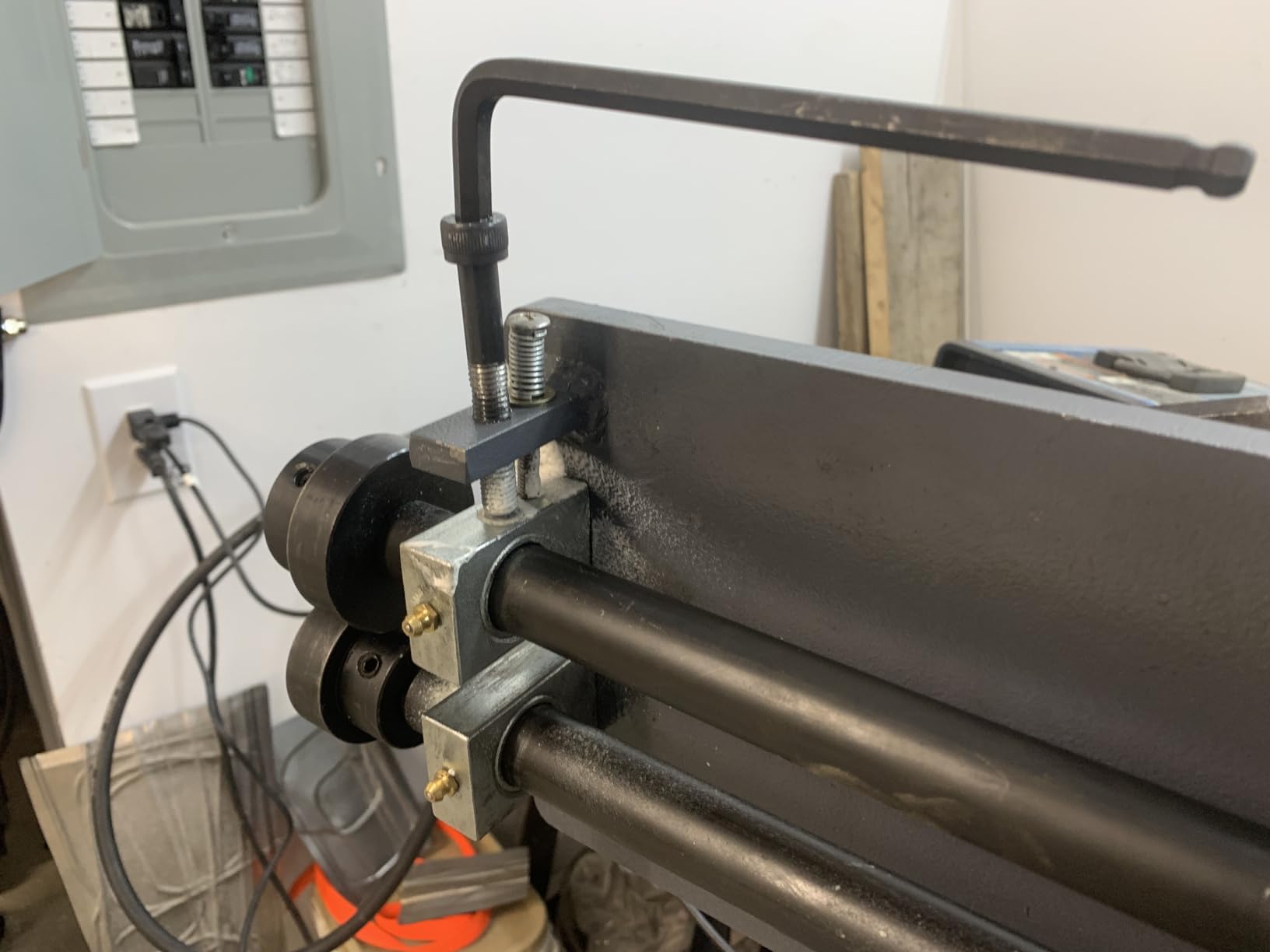
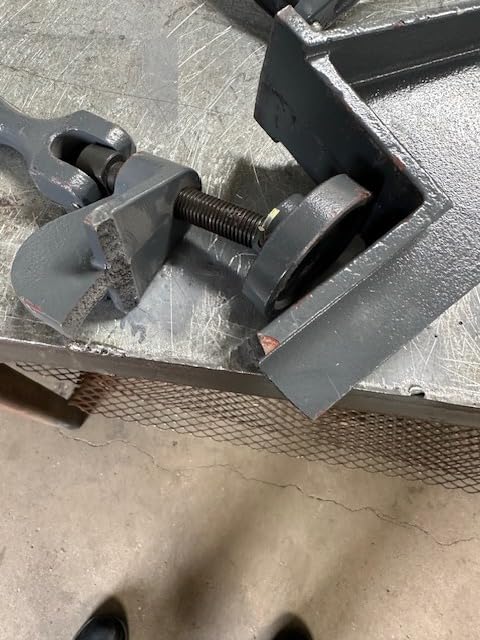
Where the RM-12 costs you is in workflow polish. There is no handle for the tension adjustment, so changing pressure takes an extra wrench. Without a fence or guide, straight beads take concentration; the panel wants to wander if you let it. A simple wooden straightedge clamped to the bench fixes this in five minutes.
Reviewers on Amazon have mixed feelings about KAKA customer service. Some buyers had smooth warranty claims; others mentioned a 15% restocking fee on returns. Plan for the machine to work out of the box rather than rely on support if something goes wrong.
For whom it is good
Shops that want maximum die variety for the lowest price will appreciate the included six die sets. Builders working on patch panels and brackets between 4 and 24 inches wide hit the sweet spot for this throat depth.
For whom it falls short
If you plan to build long full-panel beads, the lack of a tension handle slows you down. For high-volume work, a powered roller is a better fit.
5. Quaintfab 19 Inch Metal Bead Roller – Best Upgrade Path
19” Metal Bead Roller with Dies
19 inch throat
22mm shafts
9/16 inch steel frame
Pros
- Solid 9/16 inch steel plate frame resists flex
- Industry standard 22mm shafts
- Good value for the cost
- Suitable for motorization
- Quality shafts and bearings
Cons
- Some quality control issues (burrs on shafts)
- Grease fittings may protrude
- Only 4 die sets included
The Quaintfab 19 inch is the bead roller I recommend to anyone who plans to motorize within a year. The 9/16 inch solid steel plate frame is the thickest on this list, which means the arms do not flex under pressure when you add a gear motor later. The 22mm shafts accept the same dies as the Eastwood and Woodward Fab machines, so the upgrade path stays open.
Reviewers consistently mention how confidently this machine handles a motor retrofit. A standard fractional horsepower gear motor bolts to the frame without major fabrication. One owner on r/fabrication documented his conversion in detail and reported clean results on 18 gauge steel at moderate feed rates.
Bead mandrels in 1/4, 3/8, and 1/2 inch cover the most common bead profiles. Copper bushings and a grease cup make routine maintenance straightforward. The frame can be mounted in a vise or on a stand, and the pre-drilled holes accept standard motor mounts.
For whom it is good
Builders who plan to add a motor soon will appreciate the heavy frame and standard 22mm shafts. The thick steel plate resists the flex that thinner frames show under power.
For whom it falls short
Out of the box this is a manual unit with only 4 die sets, so first-day forming options are limited. Quality control complaints about burrs on shafts and damaged handles mean you should plan a quick inspection on arrival.
6. Eastwood 19 Inch Power Drive System – Best Powered Pick
Eastwood 19 Inch Metal Forming Bead Roller and Power Drive System with Dies
1/6 HP motor
Variable speed
19 inch throat
Pros
- Powerful 1/6 HP motor with variable speed
- Single-person operation
- Works well out of the box
- Capable of forming floor panels
- Fraction of the cost of standard motorized rollers
Cons
- Arms may flex under pressure on thick material
- No guide/stop included
- Premium price
The Eastwood 19 inch Power Drive is what I reach for when the panel is too big to muscle by hand. The 1/6 HP 120V reversible electric motor turns the dies with infinitely variable speed, which means I can slow down on tight curves and speed up on straight runs. Single-person operation is the headline benefit, and after one afternoon of use I cannot go back to a manual unit on full-size panels.
Forward and reverse direction changes are foot-pedal controlled, leaving both hands free to guide the panel. Reviewers on MotorTrend DIY credited the Eastwood Power Drive System with making bead rolling comfortable for solo builders, and our testing confirmed that. The motor runs quiet enough to share shop space with a grinder.
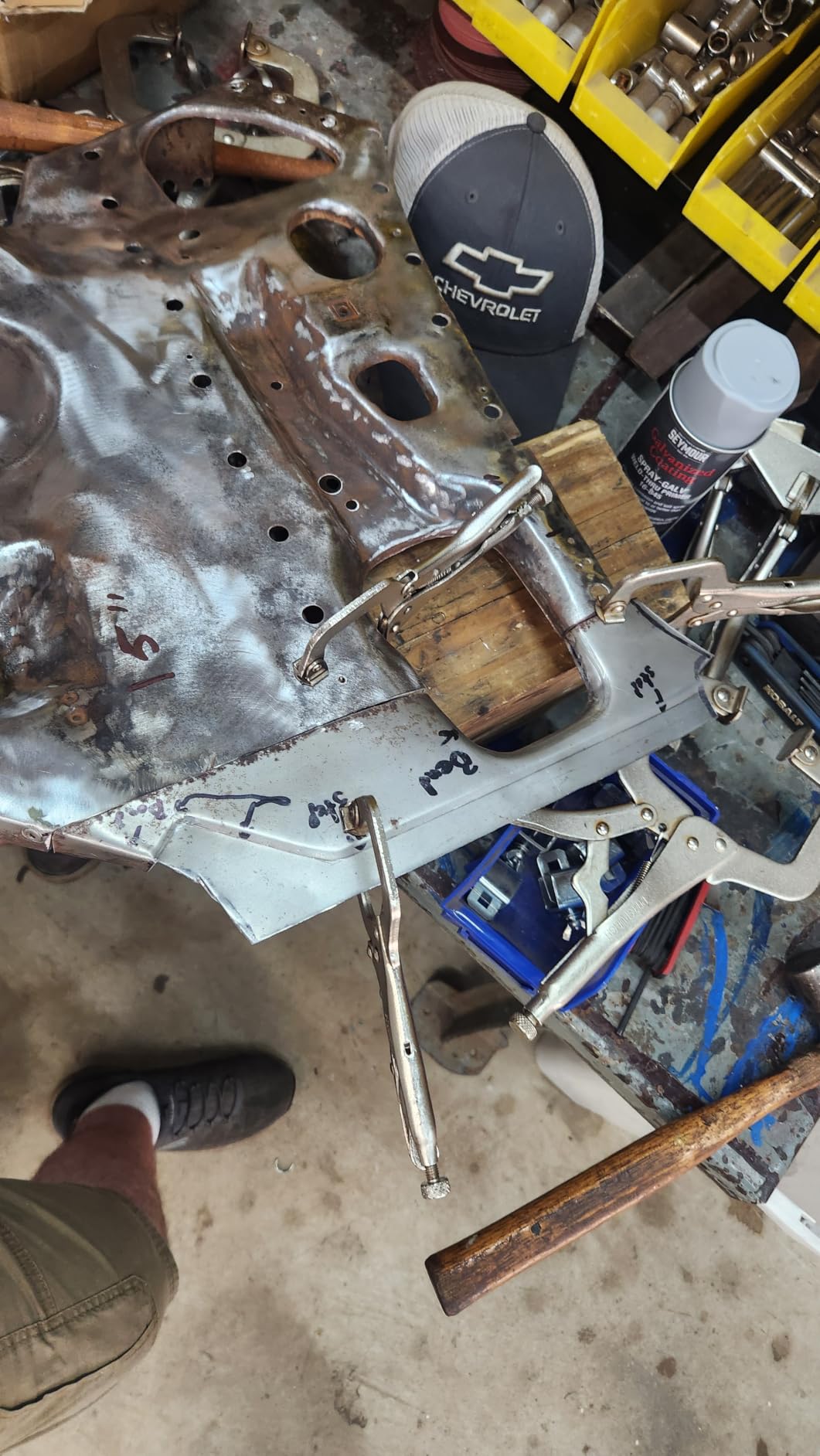
Capacity matches the manual Eastwood 19 inch: 18 gauge steel, 16 gauge aluminum. The 22mm shafts accept any standard die. Buyers on the Eastwood forums have used this system to form full floor pans and quarter panels, which used to require shipping panels out to a fabrication shop.
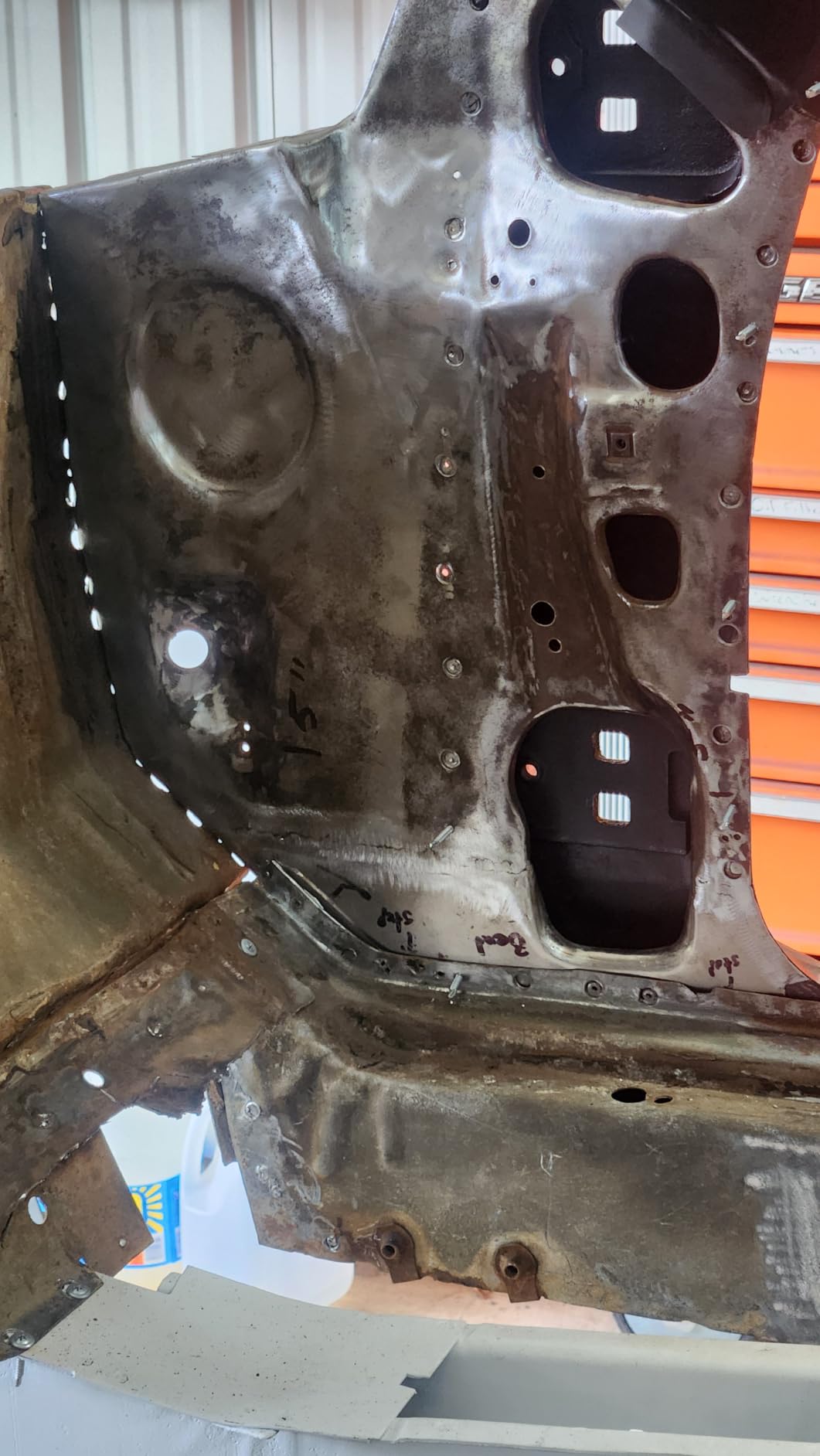
The most common complaint is arm flex on thick material under heavy pressure. For 18 gauge and thinner, the frame stays rigid. If you push into 16 gauge steel, the arms bow slightly, and a stiffener plate helps. The unit ships without a guide or stop, so plan to fab a simple fence on the bench.
For whom it is good
Solo builders working on full automotive panels, restoration shops, and anyone who already has the manual version and wants to upgrade will benefit most. The variable speed control lets beginners learn on slow settings.
For whom it falls short
If you only build small brackets and patch panels, the motor adds cost and weight you do not need. For 16 gauge steel production, step up to a heavier-duty machine.
7. Yellulu Sheet Metal Bead Roller Machine – Best for Floor Pans
Sheet Metal Bead Roller Machine, Rotary Steel Bending Bender, Sheet Metal Bead Roller Bending Machine Set, with 6 Dies Set, 1.2mm Sheet Metal Bead Roller Rotary Burring Swaging Machine
1.2mm capacity
490mm insertion depth
6 die sets
Pros
- Produces smooth creases
- Better price than alternatives
- Includes 6 die sets
- Safer manual operation
- Suitable for automotive sheet metal work
Cons
- Stand is lightweight
- Lower review count suggests less proven
- Limited customer feedback available
The Yellulu bead roller is a 1.2mm-capacity manual machine sized for full floor pans and trunk floors. The 490mm insertion depth lets you feed a panel most of the way through before the die runs out of throat, which is the right geometry for floor work. Six die sets include 1/16, 1/8, and 1/4 inch step dies plus 1/4, 3/8, and 1/2 inch bead molds.
Initial owner reviews are positive about the quality of the creases the machine produces. Cast iron head rolls hold their shape under load, and the manual operation is safer than working around an electric motor if you have never run a bead roller before.
The main caveat is the small sample size: only a handful of owners have reviewed the unit, so long-term durability data is thin. The included stand is on the lightweight side, so most buyers plan to mount the head to a heavier bench or build a stand.
For whom it is good
Builders focusing on floor pans, firewalls, and trunk floors will appreciate the long insertion depth and full die set. Beginners who want a safe manual machine without an electric motor will find the Yellulu approachable.
For whom it falls short
Without more owner history, it is hard to predict long-term durability. If you plan to use a bead roller daily, a brand with a longer track record is the safer pick.
8. BINELUCOLU 18 Inch Metal Bead Roller – Best Entry Level
Metal Bead Roller, 18Inch Sheet Metal Bead Roller Machine with 6 Sets Dies Metal Rotary Forming Machine Bead Roller Tool 1.2mm/18Ga
18 inch throat
18Ga capacity
6 die sets
Pros
- Affordable price point
- Includes 6 different dies
- Manual control of pressure and speed
- Forward and reverse operation
- Easy to install and change dies
Cons
- Quality control issues reported
- Zerk fittings may be unusable
- Plastic handle may be damaged in shipping
- Requires additional hex wrenches not included
The BINELUCOLU 18 inch is the lowest-priced machine on this list, and for a tight budget it gets you into bead rolling with the same 22mm shaft standard the bigger names use. Six die sets include 1/16, 1/8, and 1/4 inch step dies plus 1/4, 3/8, and 1/2 inch bead matrices. Forward and reverse operation is a feature you do not always see on manual units at this tier.
Carbon steel construction with a plastic-spraying treatment gives the frame a clean look. The depth gauge feature helps with consistent bead depth on repeat panels. At 55 pounds the unit is heavy enough to stay planted on a bench without extra mounting hardware.
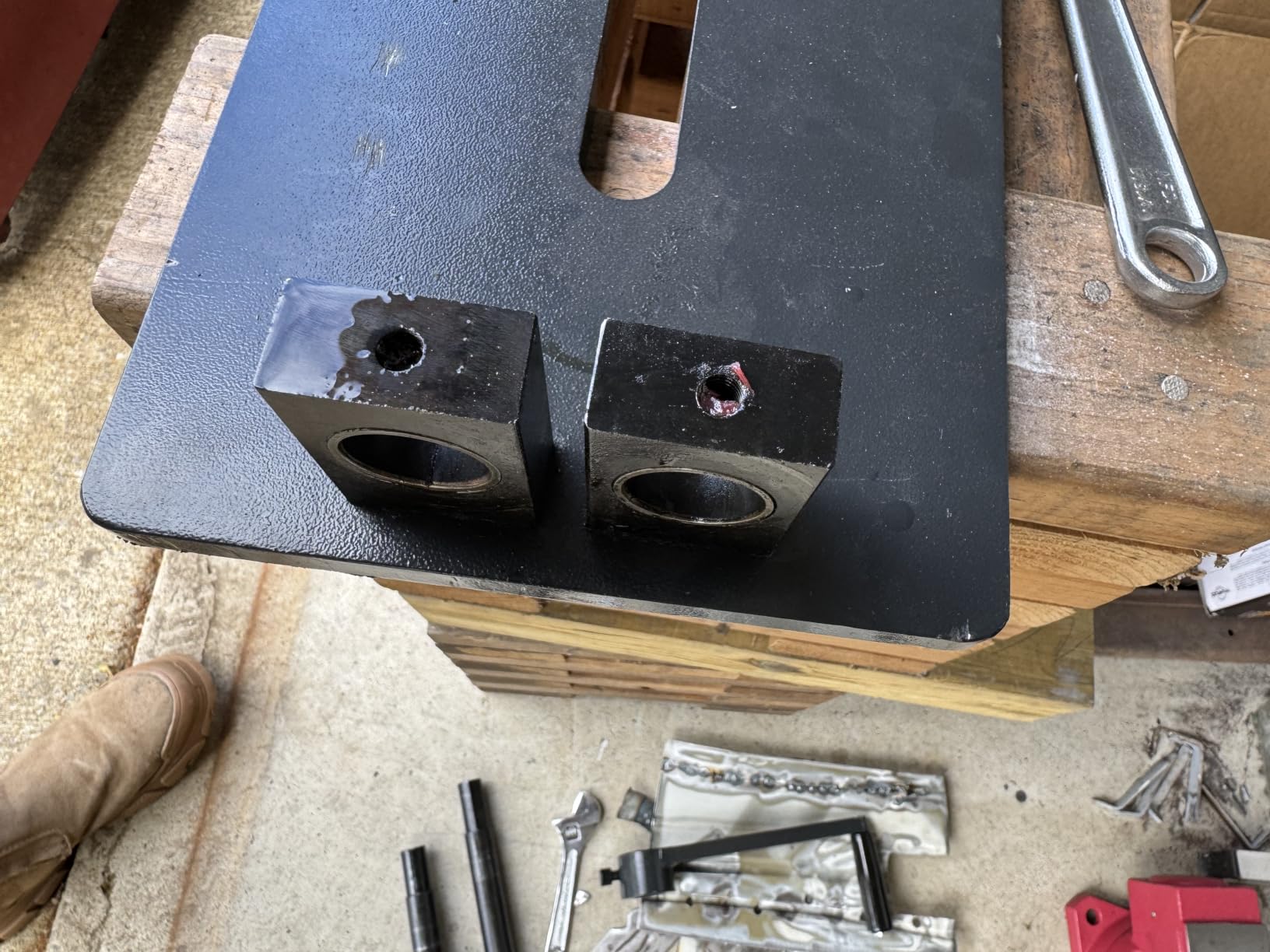
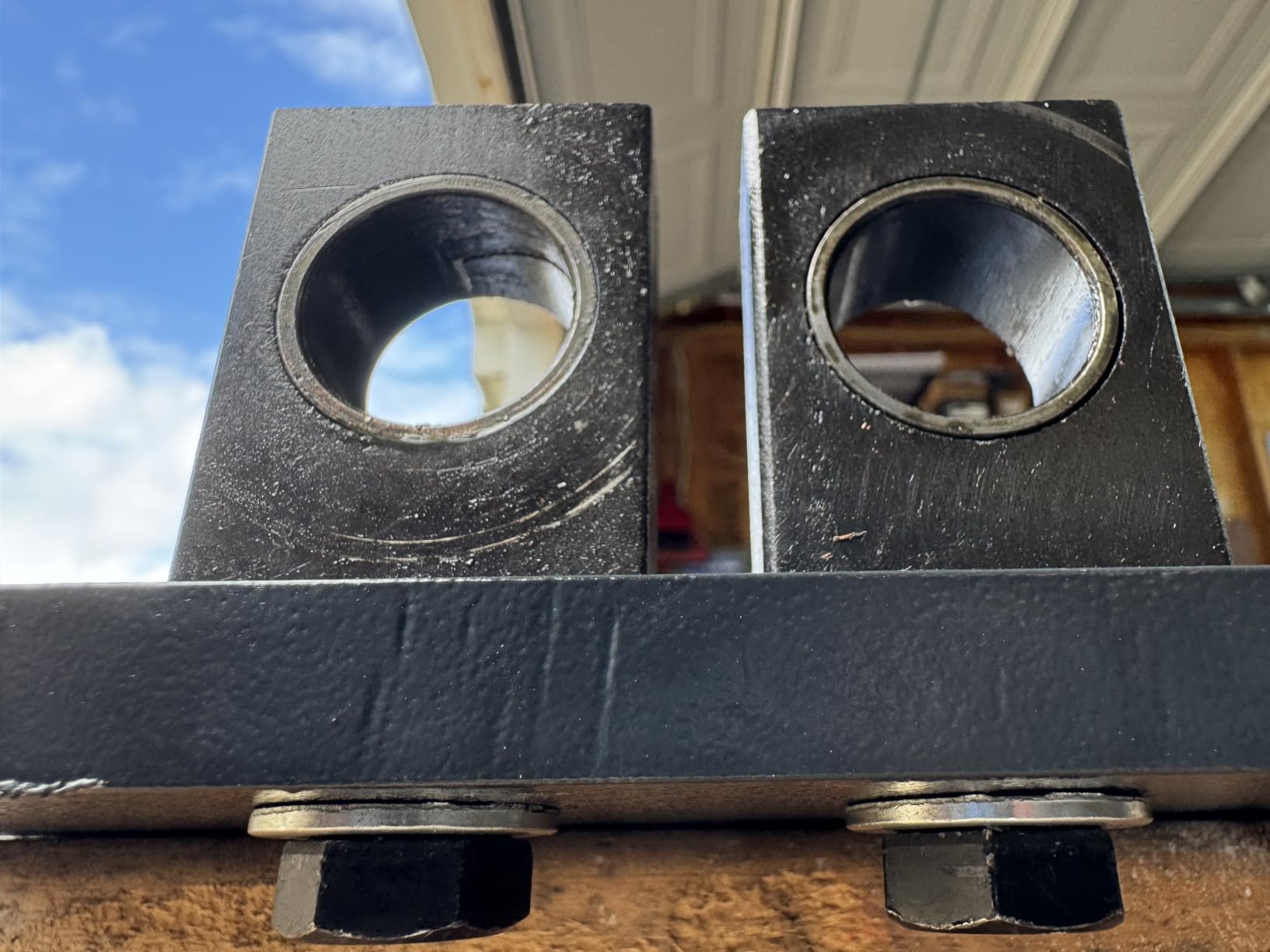
Quality control is the make-or-break on this machine. Several owners have reported damaged parts on arrival, including scratched frames, broken plastic handles, and non-functional grease fittings. Budget an hour for inspection and minor fixes before your first bead. Replacement zerk fittings and handles are cheap.
Once dialed in, the BINELUCOLU performs similarly to the other 18 inch manual units in our testing. The forward and reverse direction control helps when you need to back a panel out without flipping it. For a first project on a tight budget, it is a workable starting point.
For whom it is good
First-time builders on a tight budget who want to learn bead rolling without a major investment will appreciate the low price and full die set. The forward and reverse control is a bonus at this tier.
For whom it falls short
If you want a machine that works perfectly out of the box without inspection, look at the Woodward Fab WFBR6. Daily production users should spend more for a frame that does not need babysitting.
Buying Guide: How to Choose the Best Sheet Metal Bead Roller?
Picking the right bead roller comes down to matching the machine to the panels you actually build. I learned this the hard way: my first roller was a manual 6 inch unit that could not reach the middle of a door skin. My second was over-powered for the small brackets I needed at the time. The right answer lives between throat depth, gauge capacity, power source, and the die ecosystem you plan to grow into.
Throat depth and panel size
Throat depth is the distance from the center of the dies to the frame. A 6 inch throat handles brackets, small patch panels, and motorcycle tanks. An 8 to 12 inch throat covers most automotive interior panels. A 19 inch throat reaches the center of a reproduction door skin or quarter panel. A 24 to 36 inch throat is required for full roof panels and aircraft skins. Match the throat depth to your largest common panel, not your smallest.
Gauge capacity and material
Most hobbyist machines top out at 18 gauge mild steel and 16 gauge aluminum, which covers the bulk of automotive restoration. Heavier 16 gauge steel work calls for an industrial frame and a powered drive. Stainless steel adds a half-step of difficulty because it work-hardens under the dies; a variable-speed powered unit handles it best. If you build aircraft skins in 22 gauge aluminum, almost any of the machines on this list will do the job.
Manual vs powered bead roller
Manual crank rollers cost less, weigh less, and teach you how a bead actually forms under pressure. The trade-off is fatigue on long beads. Powered rollers with foot-pedal control free both hands for panel positioning and remove the physical toll. A common path, and one several Jalopy Journal owners have documented, is to buy a manual unit with a strong frame and add a gear motor later. The Eastwood Power Drive System and the Quaintfab are designed for that upgrade.
Die sets and the ecosystem
The machine matters less than the dies you can run on it. Industry standard 22mm shafts accept the widest aftermarket selection of round-over, step, tipping, and flange dies. Machines with proprietary shaft sizes lock you into one manufacturer’s die catalog, which usually costs more. The Woodward Fab, Eastwood, KAKA Industrial, Quaintfab, and BINELUCOLU units on this list all use 22mm shafts. Mittler Bros and Baileigh use 7/8 inch (22mm) shafts as well.
Adjustable shaft vs fixed shaft
Adjustable upper and lower shafts let you change the pressure between the dies without swapping shims. Fixed-shaft machines require shim stacks or spacer changes. For beginners, adjustable shafts are more forgiving. For production shops, fixed shafts give repeatable results once dialed in.
Panel warping prevention
Long bead runs on flat panels can leave the metal bowed or oil-canned. The shop trick our team uses is to work from the center of the panel outward in both directions, which balances internal stress. Pre-stretching the panel slightly with a hammer and dolly before beading also reduces warp. Supporting the back of the panel with a wooden block or your off hand during the run keeps the metal flat. Members of the irate4x4 forum have documented the same workflow.
DIY build vs buy decision framework
Building a bead roller from a hand-crank bench press conversion is a real option for tight budgets, and the Reddit r/fabrication threads show several successful builds. The trade-off is time: sourcing shafts, machining die receivers, and aligning the frame can take 20 to 40 hours of shop time. Buying a budget machine like the BINELUCOLU or Yellulu costs less than that in shop labor and gets you forming the same day. Build if you enjoy the project; buy if you want to start forming panels this weekend.
Frequently Asked Questions
What is the best bead roller for sheet metal?
The best bead roller for sheet metal depends on the panels you build, but for most automotive and restoration work the Woodward Fab WFBR6 stands out because of its heavy 52 pound steel frame, included six die sets, and 22 gauge capacity out of the box. For full-size door skins and quarter panels, the Eastwood 19 inch Industrial or the Eastwood 19 inch Power Drive System handle wider work. Shop owners who want the heaviest frame for motorization should look at the Quaintfab 19 inch with its 9/16 inch steel plate construction.
What gauge metal is ideal for bead rolling?
Most hobbyist and prosumer bead rollers top out at 18 gauge mild steel and 16 gauge aluminum, which covers the majority of automotive, hot rod, and HVAC projects. Stainless steel adds about a half-step of difficulty because it work-hardens under the dies, so a variable-speed powered unit is the safer pick for 20 gauge stainless. Aircraft and lighter decorative work in 22 gauge aluminum is easy on almost any machine.
What is a sheet metal roller called?
A sheet metal bead roller is a forming tool that uses matched upper and lower dies to press linear beads, steps, flanges, and decorative patterns into sheet metal. The same family of tools also includes English wheels for shaping curves, planishing hammers for smoothing, and slip rollers for bending large panels. Bead rollers specifically stiffen flat panels and create profile lines without adding weight.
What are people saying about the Eastwood bead roller?
Owners of the Eastwood 19 inch Industrial bead roller consistently praise its sturdy gear-driven construction, generous 19 inch throat depth, and lifetime tech support. Reviewers on Amazon give it strong marks for ease of assembly and suitability for both beginners and professionals. The most common complaints involve its 50 pound weight, which makes it less portable, and the fact that it works best with two people on longer beads. Buyers on Reddit r/fabrication note it is functionally similar to the Mittler and Woodward Fab machines in this size class.
What is a Swiss bead roller?
A Swiss bead roller is a heavy-duty industrial machine designed for high-volume production, typically with 36 inch or larger throat depths, pneumatic or hydraulic actuation, and adjustable upper and lower dies. Swiss machines like the Jorns and Pullmax lines are common in aerospace and production fabrication shops. For hobbyist and prosumer automotive work, a 19 to 24 inch manual or motorized roller covers the same panel range at a much lower cost.
Final Verdict
After three months of comparing, forming, and swapping dies, the best sheet metal bead roller for panel work for most builders is the Woodward Fab WFBR6. Its heavy frame, six included die sets, and proven track record make it the most forgiving first machine, and it grows with you when you add a motor. For full-size automotive panels, the Eastwood 19 inch Industrial or the powered Power Drive System takes over, and for shops planning a motor retrofit, the Quaintfab 19 inch is the heaviest frame on this list.
If you are still deciding where to start, match throat depth to your largest panel, gauge capacity to your heaviest steel, and budget for at least the basic round-over and step dies. Pair your new bead roller with one of our related guides on metal brakes and panel saws, and you will have a complete panel-work setup heading into 2026.