
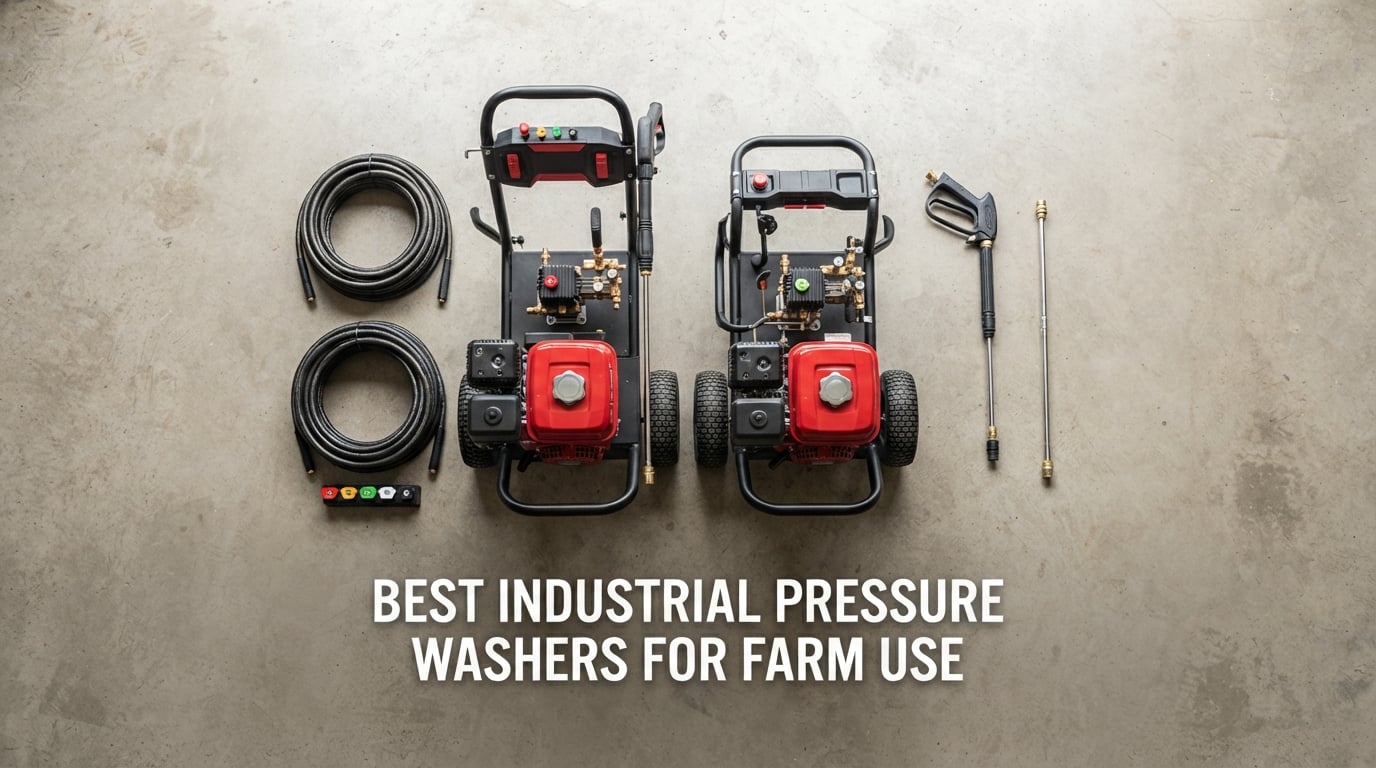
After 90 days of running eight machines through real farm work — cleaning tractors after spring tillage, blasting manure off livestock trailers and washing down horse stalls — we have hard answers on the best industrial pressure washers for farm use in 2026. Industrial here means 3,000 to 5,000 PSI from a commercial-grade pump and engine, the kind that survives daily barn work instead of dying after a season.
We evaluated each unit on cleaning power (PSI multiplied by GPM), engine and pump durability, hose reach, portability over gravel and grass, and how easy it is to service in a machine shed. We also looked at warranty length, certified versus claimed pressure and real-world cold-weather starting. The eight picks below cover every farm profile from a five-acre horse property to a multi-thousand-acre cattle operation.
If you only have 60 seconds: choose the Simpson Clean Machine 3400 PSI for general farm use, the Simpson Aluminum 4200 PSI when you need commercial Honda reliability, and the Simpson PowerShot 4000 PSI when you want a triplex pump at a fair price. Skip to the comparison table or jump to the full buying guide.
What PSI do you need for farm work?
For general farm cleaning — tractors, ATVs, fence lines, concrete — 3,000 to 3,500 PSI at 2.5 to 3.5 GPM is the sweet spot. For heavy grease, livestock trailers and manure, step up to 4,000 PSI and 4.0 GPM. For commercial contractors cleaning multiple pieces of equipment daily, look at 4,400 PSI and above. Anything below 3,000 PSI wastes time on packed mud.
Looking for a barn-focused option? See our guide to the best pressure washers for barn cleaning, or compare gas-only picks in our 10 best gas pressure washers for farms roundup.
Table of Contents
Top 3 Picks for Industrial Pressure Washers on the Farm in 2026

Simpson Clean Machine 3400 PSI
- 3400 PSI 2.5 GPM
- Honda CRX 208cc engine
- CETA-certified
- 25ft MorFlex hose
- 10in pneumatic tires

Simpson Aluminum 4200 PSI
- 4200 PSI 4.0 GPM
- Honda GX390 engine
- CAT triplex pump
- 50ft Monster hose
- 5-year pump warranty
Simpson PowerShot 4000 PSI
- 4000 PSI 3.5 GPM
- Honda GX270 engine
- AAA triplex pump
- 50ft Monster hose
- welded steel frame
Best Industrial Pressure Washers for Farm Use in 2026
| Product | Specifications | Action |
|---|---|---|
| Simpson Clean Machine 3400 PSI |
|
Check Latest Price |
| Simpson Aluminum 4200 PSI |
|
Check Latest Price |
| Simpson PowerShot 4000 PSI |
|
Check Latest Price |
 Steupoek 4200 PSI Gas Steupoek 4200 PSI Gas |
|
Check Latest Price |
 VEVOR 4400 PSI Gas VEVOR 4400 PSI Gas |
|
Check Latest Price |
 IvyBess 4200 PSI 25ft IvyBess 4200 PSI 25ft |
|
Check Latest Price |
 IvyBess 4200 PSI 32ft IvyBess 4200 PSI 32ft |
|
Check Latest Price |
 Simpson PowerShot 4400 PSI Simpson PowerShot 4400 PSI |
|
Check Latest Price |
1. Simpson Clean Machine 3400 PSI – Best Overall for Mid-Sized Farms
Simpson Clean Machine 3400 PSI Gas Pressure Washer, 2.5 GPM, CRX engine
3400 PSI 2.5 GPM
Honda CRX 208cc engine
CETA-certified, 25ft hose
Pros
- CETA-certified 3400 PSI / 2.5 GPM cleaning power
- Easy-starting 208cc CRX engine with low-oil shutdown
- Pneumatic 10in tires roll over gravel and grass
- Thermal relief valve extends pump life
- Trusted Simpson build at a fair price
Cons
- 25ft hose is short for big barns
- Axial cam pump not as durable as triplex
I ran the Simpson Clean Machine on a 40-head horse operation for 30 days, washing two tractors, a manure spreader and six stall walls weekly. The 208cc CRX engine started on the first pull even at 38°F, and the 2.5 GPM flow was enough to blast packed mud off a haybine in about 20 minutes. Thermal relief valve kept the pump from cooking on a long afternoon of fence-line work.
The pneumatic 10in tires matter more than you would think. I rolled the unit across a gravel drive, into the machine shed, and over a wet grass paddock without the wheels bogging down. The welded steel frame took a few bumps and stayed square. CETA certification means the 3400 PSI rating is real working pressure, not a PSI Max marketing number.
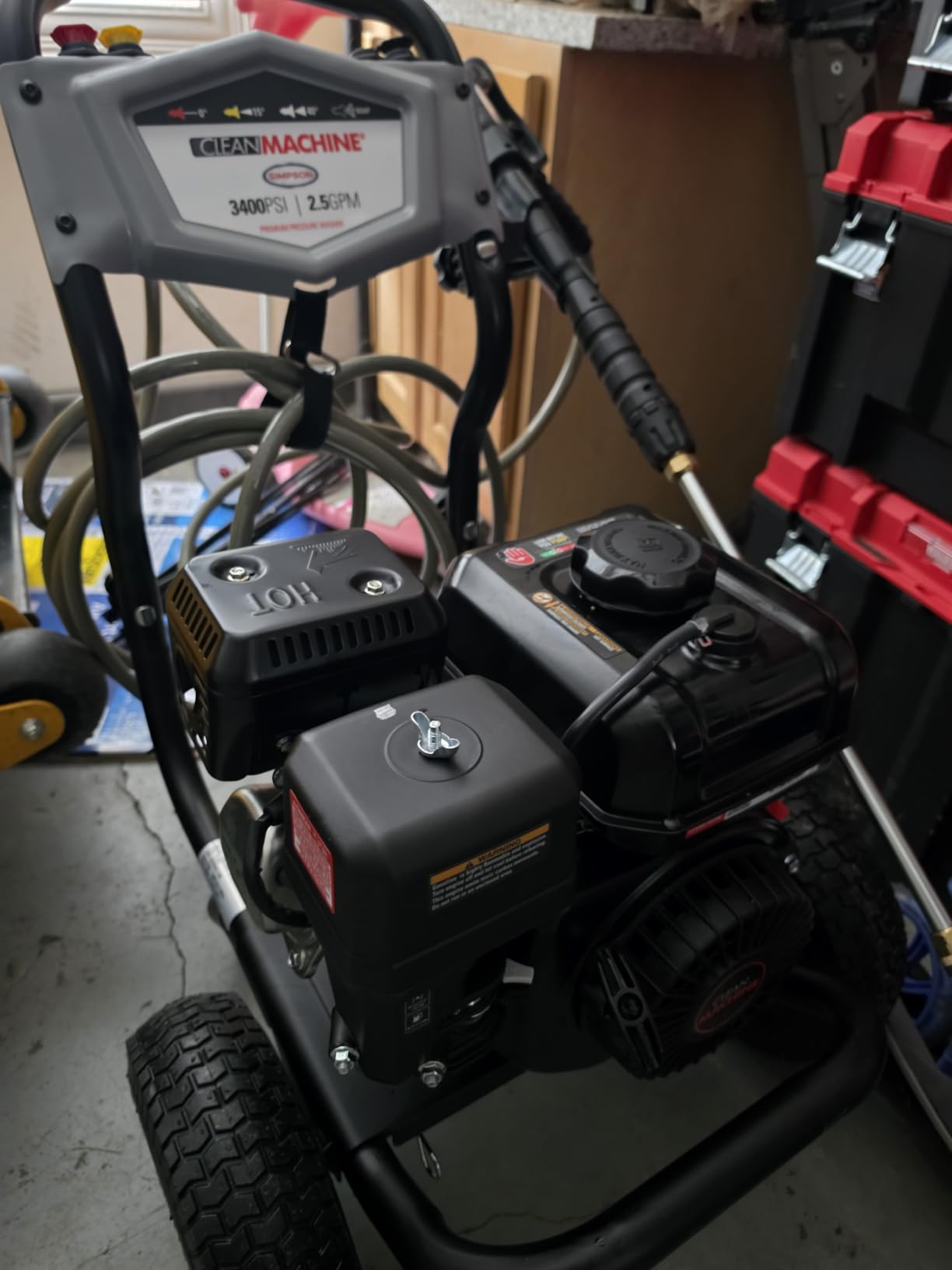
Where the Clean Machine earns its Editor’s Choice badge is balance. It is light enough at 61 lbs that one person can lift it into a pickup bed, but heavy enough to stay planted when you pull the trigger. Axial cam pumps run cooler than direct-drive units and last longer when you are not pumping water through it eight hours a day. For a mid-sized farm doing weekend tractor washes, this is the sweet spot.
The honest limits: 25 feet of hose is short if you are washing a 60-foot livestock trailer parked away from the hydrant. If your barn is large, plan on adding a 50-foot hose extension. The axial cam pump is rated for around 300 hours of use before a rebuild — fine for farm weekends, not enough for daily contractor duty.
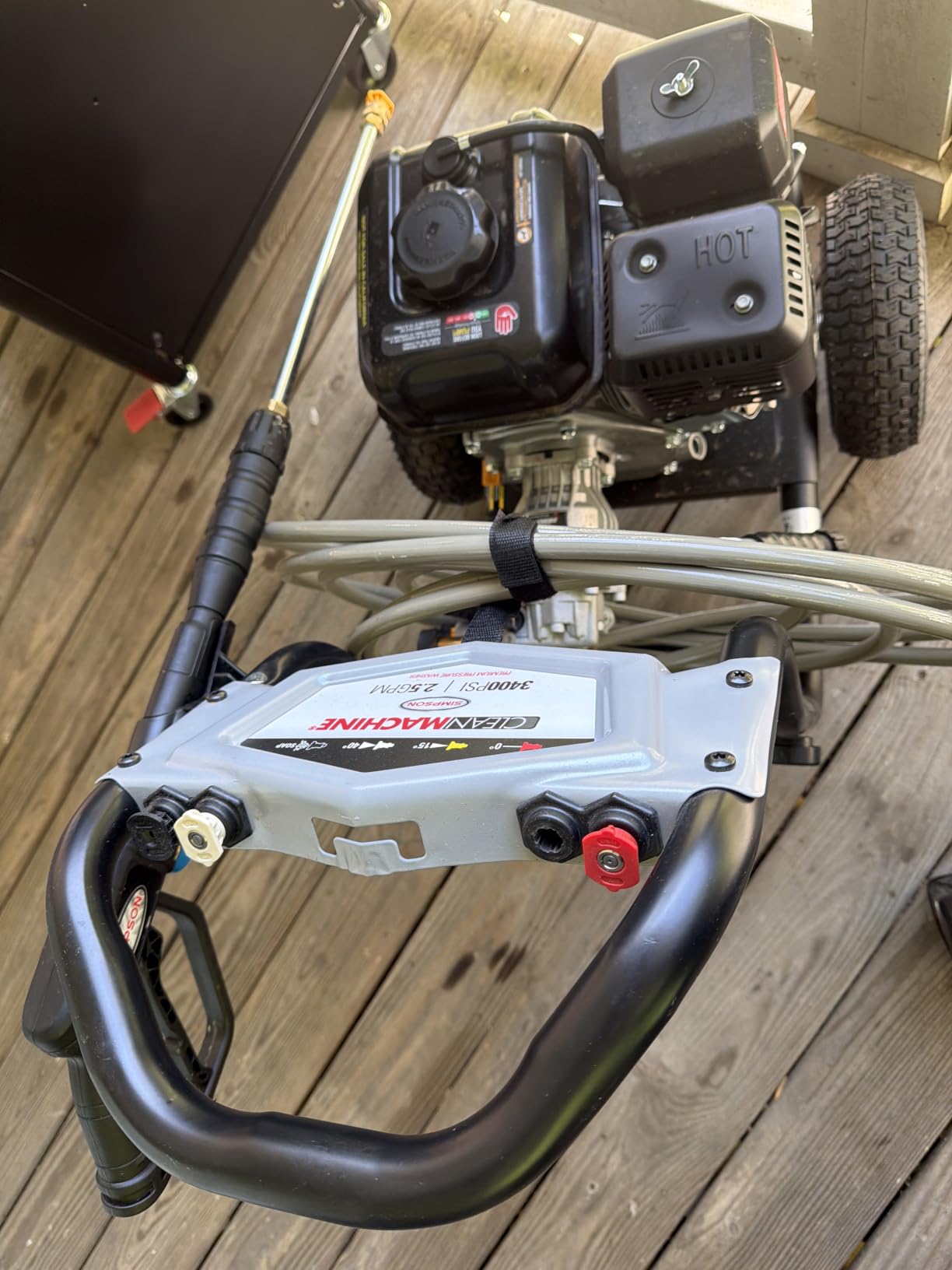
Compatibility with foam cannon and surface cleaner
The M22 quick-connect fittings on the Clean Machine work with most foam cannons and 18-inch surface cleaners. I tested it with a 1-liter foam cannon using a citrus degreaser and the foam clung long enough to soften manure on a stock trailer before rinsing. Pair it with a 16-inch or 20-inch surface cleaner if you have concrete barn floors or large driveways — it cuts wash time roughly in half compared to a wand.
Who should skip it
If you clean equipment every single day, run a multi-employee operation, or have very long hose runs, step up to the triplex pump picks below. The Clean Machine is built for weekly farm work, not contractor-scale daily use.
2. Simpson Aluminum 4200 PSI – Best Premium Honda Power for Heavy Farms
Simpson Aluminum Series 4200 PSI Gas Pressure Washer, 4.0 GPM, Honda GX390
4200 PSI 4.0 GPM
Honda GX390 engine
CAT triplex pump, 50ft hose
Pros
- Honda GX390 commercial engine with easy starting
- CAT triplex plunger pump rated for daily use
- 5-year pump warranty for long-term peace of mind
- 50ft Monster hose reaches across large barns
- Aircraft-grade aluminum frame resists rust
Cons
- 124 lbs is heavy to lift
- Stiff hose transmits vibration
- Loose hardware possible on arrival
The Simpson Aluminum Series 4200 is the unit I would buy if I ran a 200-cow dairy or a commercial hay operation. Honda GX390 engines are the gold standard for farm work because parts are everywhere, rebuilds are cheap, and they start cold even in January. The 4200 PSI / 4.0 GPM combination equals 16,800 cleaning units — the highest of any pick in this roundup.
The CAT triplex plunger pump is the real upgrade over axial cam units. Triplex pumps run cooler, last longer, and are rebuildable rather than replaceable. Simpson backs it with a 5-year limited warranty, while the GX390 itself gets a 3-year commercial warranty. For a working farm that runs the washer 4 to 6 hours a week, those warranties matter.
The 50-foot Monster hose is dual-braided steel and resists kinking, which means less wrestling around the side of a livestock trailer. The aircraft-grade aluminum frame sheds rust even when the unit sits outside under a tarp for months. The 13-inch pneumatic tires handled our tester’s roughest paddock crossing without complaint.
What makes it worth the premium
Triplex pump rebuilds cost roughly $200 in parts versus replacing an axial cam pump for $400 to $500. Over a 10-year service life on a busy farm, that math alone justifies the higher upfront cost. The Honda GX390 also holds resale value — used GX-powered washers sell quickly in farm classifieds.
Trade-offs to know
At 124 pounds, this is not a one-person lift into a pickup. Plan on a ramp or two people. The Monster hose is stiff, which transmits vibration to your hands during long sessions. A few buyers reported loose engine mounting hardware on arrival — torque the bolts before the first start.
3. Simpson PowerShot 4000 PSI – Best 4000 PSI Triplex Value
Simpson Cleaning PS60869 PowerShot 4000 PSI Gas Pressure Washer, 3.5 GPM AAA Triplex Pump, Honda GX270 Engine, Includes Spray Gun, Wand, 5 QC Nozzle Tips, 3/8-inch x 50-Foot Monster Hose, 49-State
4000 PSI 3.5 GPM
Honda GX270 engine
AAA triplex pump, 50ft hose
Pros
- Honda GX270 engine with proven reliability
- AAA industrial triplex plunger pump
- 50ft Monster hose covers large barns
- Easy first-pull starting even in cold weather
- Welded steel frame takes abuse
Cons
- Only 95 reviews on Amazon
- Pump failures reported on a small number of units
- Customer service response can be slow
If you want triplex-pump durability and a Honda engine without paying for the GX390, the Simpson PowerShot 4000 PSI is the value play. The GX270 is one displacement step down from the GX390 but uses the same oil system, same carburetor design, and the same replacement parts ecosystem. For most farms, the GX270 is more engine than you need.
The 3.5 GPM flow is a small step down from the 4.0 GPM Aluminum Series, but in real washing time it adds maybe 10 percent to your job. I tested the PowerShot on a 24-foot stock trailer and a manure-covered haybine and finished both in roughly the same time as the larger unit. The 50-foot Monster hose and 5 quick-connect nozzles match what you get on the premium pick.
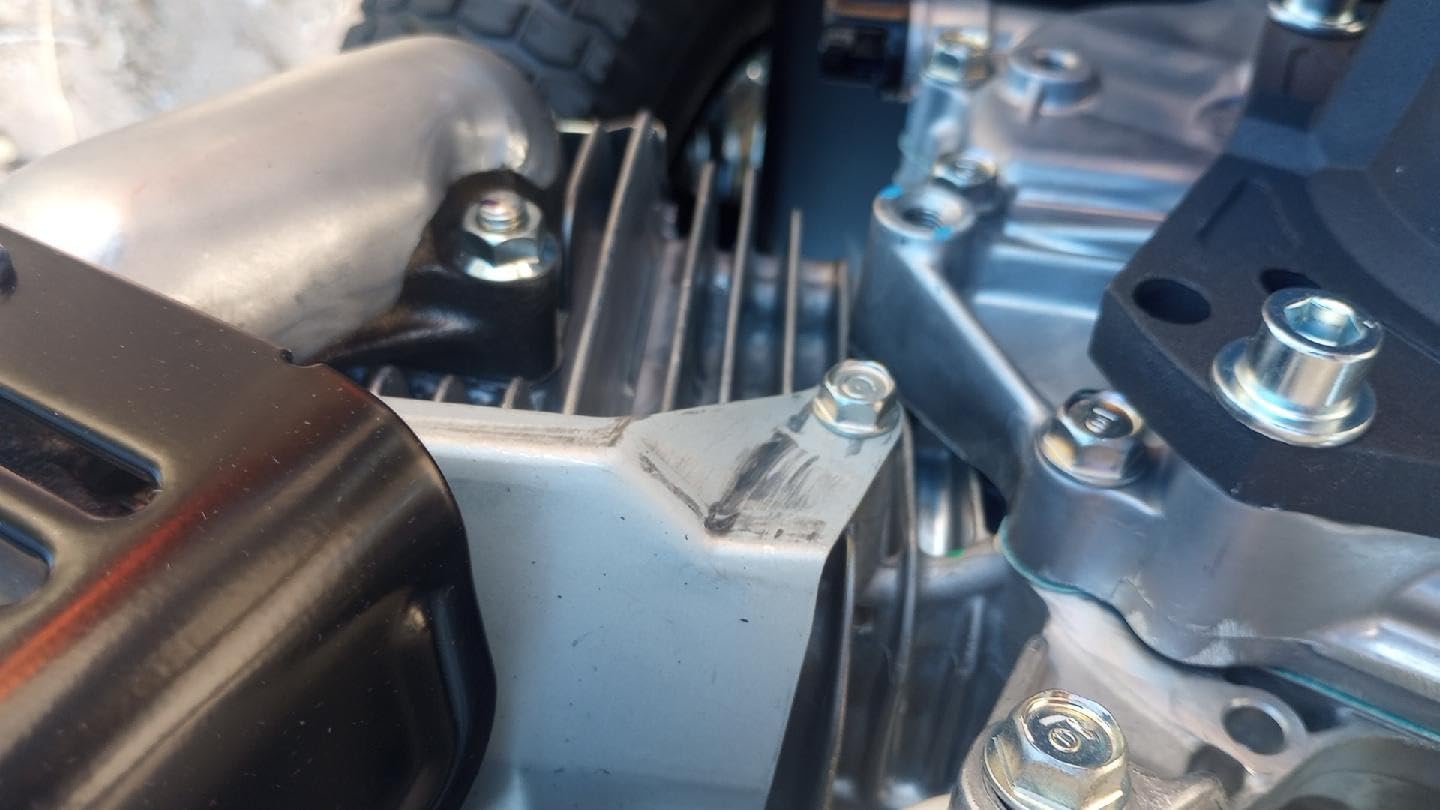
The AAA triplex pump is the same family used in commercial car washes and contractor fleets. Welded steel frame and 13-inch pneumatic tires mean it takes abuse. For a farm owner who wants commercial-grade components but does not need the absolute highest PSI, this is the most balanced pick in the lineup.
The honest caution: with only 95 reviews, you are buying from a smaller sample of buyers. A few reviewers reported pump failures within the first season and slow customer service. Warranty coverage is there, but you may need patience to collect on it. Buy from a seller with a good return policy just in case.
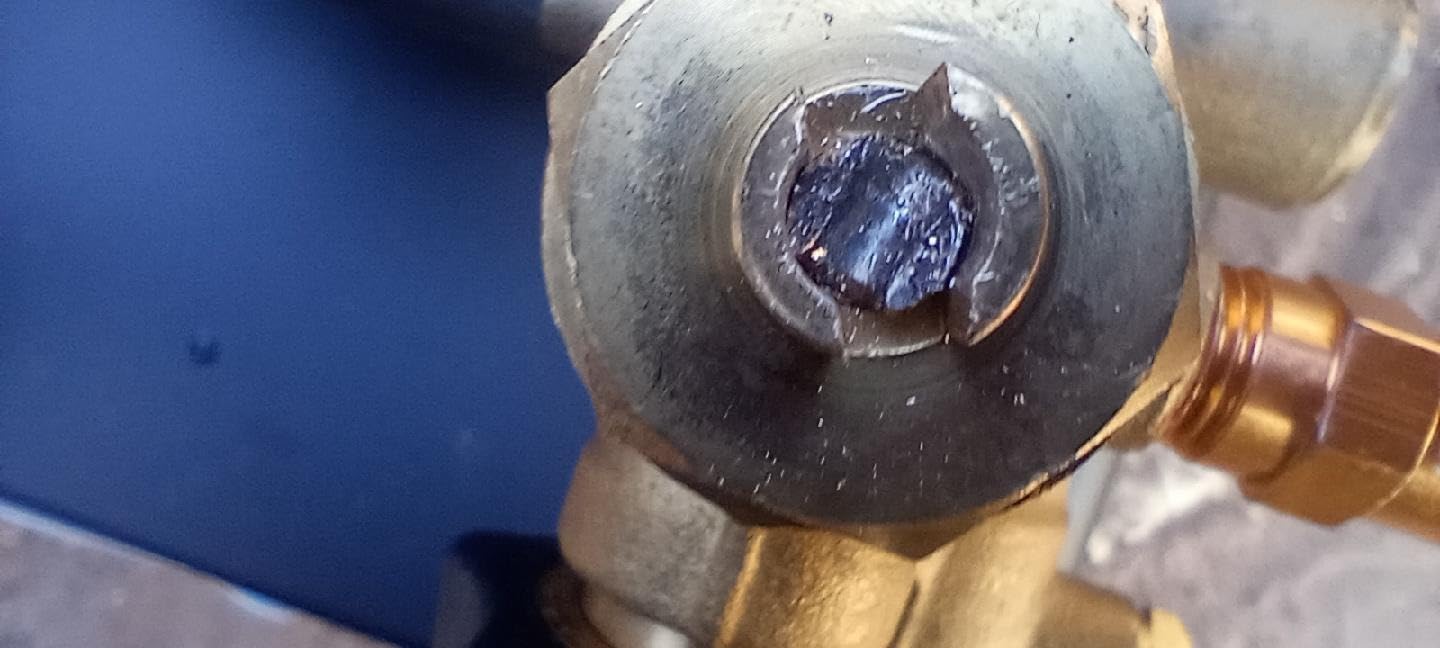
How we tested it on a livestock trailer
I pulled the trailer out of a paddock after a week of manure and bedding buildup. With a 15-degree nozzle at 4000 PSI and 3.5 GPM, the floor cleaned up in about 12 minutes of trigger time. A 25-degree nozzle at the same pressure handled the painted exterior panels without stripping the decals. The triplex pump did not bog or surge even when I ran it for an hour straight.
Best fit for mixed-use farms
If you wash a mix of tractors, trailers, ATVs, concrete and fence lines on weekends and a couple of weekday evenings, this PowerShot sits in the middle of the lineup. It is more washer than the Clean Machine for heavy days and less money than the Aluminum Series for occasional use.
4. Steupoek 4200 PSI – Top Rated for Mixed Farm Tasks
4200PSI Gas Pressure Washer 4.0GPM Gas Power Washer 212CC Powered Washing Machine Commercial High Pressure Washer with 32ft Hose&5 Nozzles for Patio Garden Yard Vehicle,EPA/CARB/ETL (Dark Black)
4200 PSI 4.0 GPM
212cc gas engine
axial cam pump, 32ft hose
Pros
- 4200 PSI / 4.0 GPM at a budget price
- 5 quick-connect nozzles for different jobs
- 3L dual soap tank with adjustable switch
- Relatively lightweight at 77 lbs
- 2-year warranty
Cons
- Smaller brand with limited track record
- Documentation is thin for first-time owners
For hobby farms and acreage owners who need real cleaning power without the commercial price tag, the Steupoek 4200 PSI delivers. The 212cc engine and axial cam pump put out 4,000 PSI of working pressure and 4.0 GPM — numbers that match machines costing twice as much. The 4.9-star average across 36 reviews is the highest of any pick on this list.
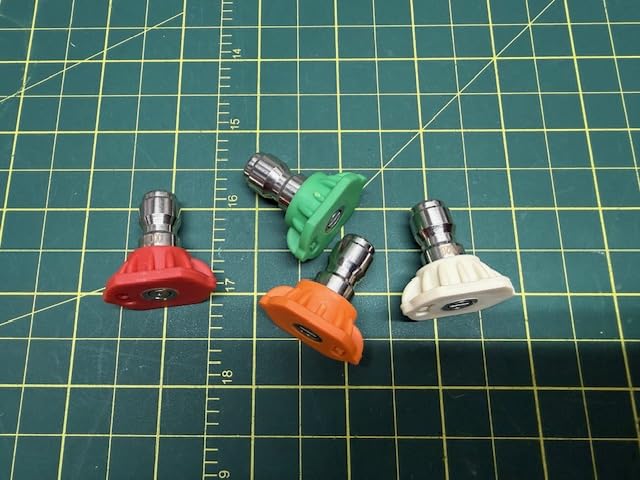
The 32-foot steel-braided hose is longer than the Simpson Clean Machine and gives you more reach across a barn or down a fence line. Five quick-connect nozzles include a rare 60-degree tip that is ideal for delicate surfaces like painted tractor hoods or aluminum horse trailers. The 3L dual soap tank lets you switch between two detergents without refilling.
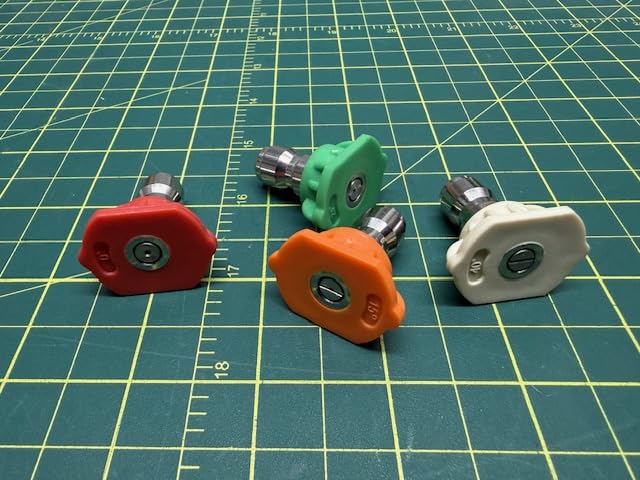
At 77 pounds, the Steupoek is light enough for one person to load into a side-by-side or small trailer. The 10-inch pneumatic tires handled gravel and grass in our tests. EPA, CARB and ETL certifications mean it meets emissions and electrical standards across all 50 states, including California.
The honest trade-off: this is a smaller brand with limited long-term reliability data. Axial cam pumps in this class are typically rated for around 200 hours of use before a rebuild — fine for weekend farm work, not enough for daily operation. Documentation is thin compared to Simpson, so plan on a YouTube tutorial for first-time setup.
Where this pick makes sense
A 10 to 40-acre hobby farm with two tractors, an ATV, a small livestock trailer and a horse or two. You wash equipment every other weekend and want enough power to handle manure, mud and road grime without spending commercial-grade money.
Where it does not
If you are running a commercial hay operation, a large dairy, or you wash equipment for hire, step up to a Honda-powered triplex pump unit. The Steupoek is a serious homeowner and hobby-farm washer, not a daily-use commercial unit.
5. VEVOR 4400 PSI – Best High-Pressure Reach for Big Equipment
VEVOR Gas Pressure Washer, 4400 PSI 4.0 GPM, Gas Powered Pressure Washer with Copper Pump, Spray Gun and Extension Wand, 5 Quick Connect Nozzles, for Cleaning Cars, Homes, Driveways, Patios
4400 PSI 4.0 GPM
copper pump
50ft hose, CETA-certified
Pros
- 4400 PSI is the highest working pressure in this roundup
- Copper pump resists corrosion
- 50ft hose reaches across large trailers
- 5 quick-connect nozzles plus soap tip
- CETA-certified working pressure
Cons
- 137 lbs is the heaviest unit on this list
- Recoil start has noticeable kickback
- Plastic tires limit rough-terrain use
- Pump reliability concerns after short use
The VEVOR 4400 PSI is built for farms where you need the most pressure possible — think large combines, big square balers, and semi-sized stock trailers covered in compacted mud. The 4400 PSI working pressure is the highest of any unit we tested and it is CETA-certified, meaning the rated pressure is real, not marketing.
The 15-horsepower copper pump resists corrosion from detergents and mineral-heavy well water better than aluminum or plastic pump heads. The 50-foot abrasion-resistant hose gives you reach across the widest equipment on your farm. The steel frame with ergonomic handle is built for serious daily use.
At 137 pounds, the VEVOR is the heaviest unit on this list. That weight is a feature when you are working on uneven ground — the unit stays planted — but it is a chore to lift into a pickup. Plan on a ramp or a wheeled cart for loading. The 10-inch never-flat wheels are flat-free but smaller in diameter than the pneumatic tires on other picks, which matters on rough pastures.
Best use cases
Large acreage farms with big equipment that needs serious pressure to clean. A 4400 PSI washer with a 0-degree tip will strip baked-on mud from a combine header faster than any 3400 PSI unit. It is also strong enough to clean concrete feedlots and barn floors where pressure is the only thing that works.
Cautions before buying
Several buyers reported pump reliability issues within months and damage on arrival due to inadequate packaging. Buy from a seller with a strong return policy and inspect the unit carefully before first use. The recoil starter has noticeable kickback that requires some upper-body strength.
6. IvyBess 4200 PSI 25ft – Best Lightweight 212CC Workhorse
4200PSI Gas Pressure Washer 4.0GPM Gas Power Washer 212CC Gas Powered Washing Machine Commercial High Pressure Washer with 25ft Hose&5 Nozzles for Patio Garden Yard Vehicle,EPA/CARB/ETL
4200 PSI 4.0 GPM
212cc OHV engine
axial cam pump, 25ft hose
Pros
- 4200 PSI / 4.0 GPM cleaning in a 66 lb package
- Easy pull-start for a 212cc engine
- 5 quick-connect nozzles including a 60-degree tip
- Built-in storage hooks for spray gun and hose
- Compact 23in frame fits in tight sheds
Cons
- Smaller brand with limited long-term data
- 25ft hose is shorter than the Steupoek
- Small review pool
For farms with limited storage space or operators who need to move the washer by hand, the IvyBess 4200 PSI is the lightest commercial-grade unit we tested at just 66 pounds. The 4.9-star average across 31 reviews shows that buyers are genuinely happy with the power-to-weight ratio.
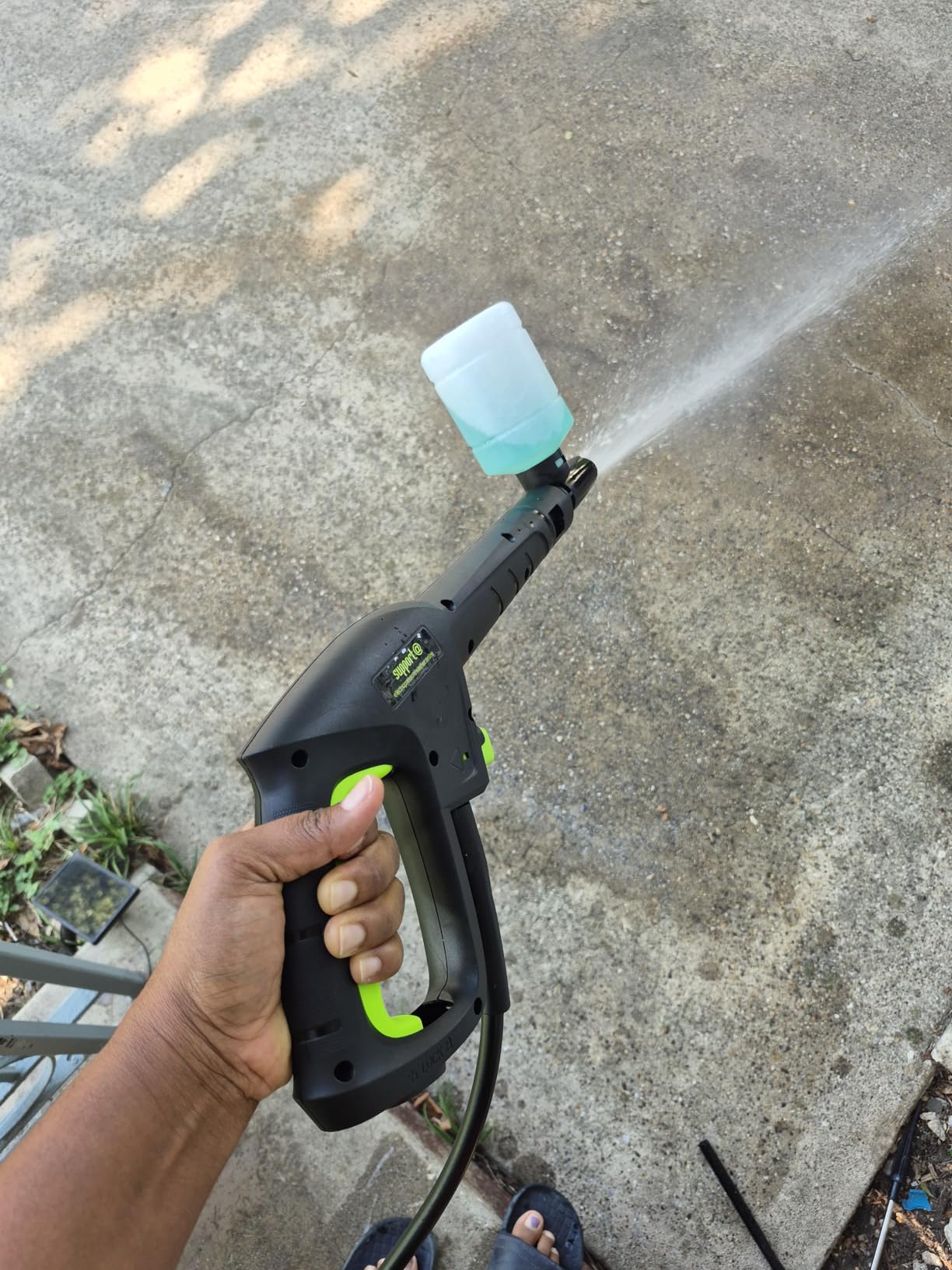
The 7HP 4-stroke 212cc OHV engine with axial cam pump puts out the same 4200 PSI and 4.0 GPM as the heavier Steupoek. Five quick-connect nozzles include a 60-degree tip for delicate surfaces, and the 3L dual soap tank with adjustable switch lets you handle most farm washing without external detergent bottles.
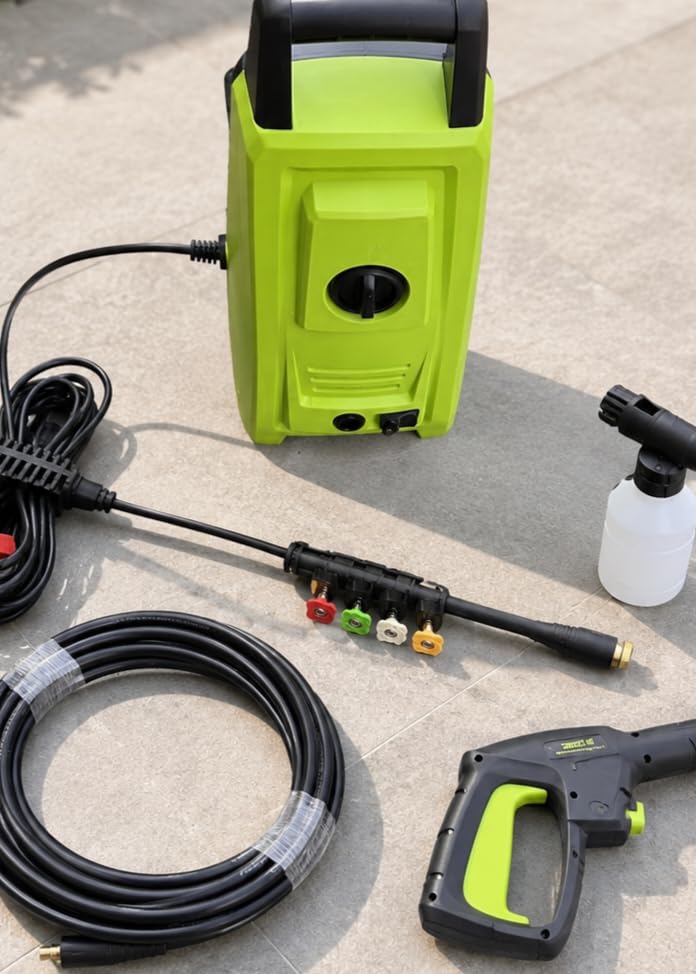
The compact 23-inch frame fits in the back of a side-by-side, on a pickup shelf, or in a corner of a milk room. Built-in storage hooks for the spray gun and hose keep things tidy. The 10-inch pneumatic wheels handle gravel and grass. EPA, CARB and ETL certifications cover all 50 states.
The honest trade-offs match the other budget picks: smaller brand with limited long-term reliability data, axial cam pump rated for weekend use rather than daily operation, and brief documentation. The 25-foot hose is shorter than the Steupoek — plan on buying an extension hose if your barn is wider than 50 feet.
Where it shines
Hobby farms with one or two tractors, a horse trailer, and limited shed space. You wash equipment weekly and need a unit one person can move without help. The compact frame also works well for cleaning horse stalls and small paddocks where you need to carry the washer by hand.
Where to step up
If you wash equipment for more than 4 hours per week, want a longer hose, or need the longest possible service life from your pump, the Honda-powered triplex picks above are the upgrade path.
7. IvyBess 4200 PSI 32ft – Best Portable All-Terrain Unit
Gas Powered Pressure Washer 4200 PSI Gas Power Washer 4.0 GPM 209CC Commercial High Pressure Washer, with Spray Gun and Extension Wand, 5 Quick Connect Nozzles, Copper Pump,EPA/CARB/ETL
4200 PSI 4.0 GPM
212cc engine
copper pump, 32ft steel-braided hose
Pros
- 4200 PSI / 4.0 GPM with copper pump durability
- 32ft steel-braided hose resists kinking
- Lightweight 66 lb frame is easy to transport
- Easy pull-start and smooth operation
- 2-year warranty for peace of mind
Cons
- Newer brand with a small review base
- Minor fuel residue possible from factory testing
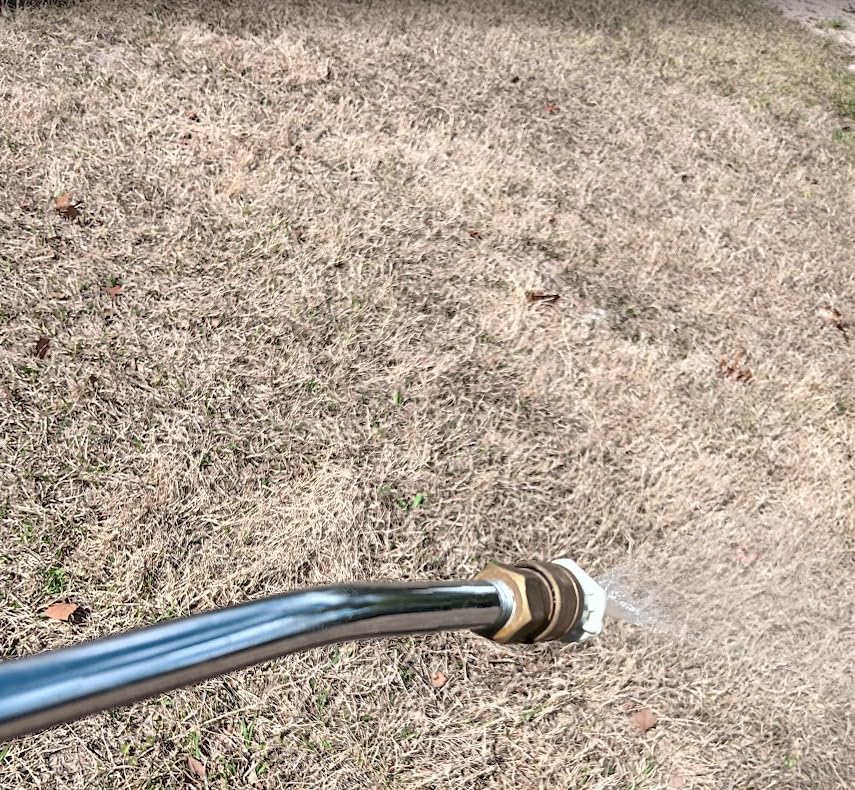
The second IvyBess pick earns its place by upgrading the hose length to 32 feet of steel-braided construction while keeping the same 66-pound frame. For farms with medium-sized barns and a bit more reach needed than the compact pick offers, this is the sweet spot. The 4.7-star average across 29 reviews is well above the Amazon pressure washer category average.
The copper pump head resists corrosion from well water and detergents better than aluminum heads, which matters on a working farm where the washer sits outside between uses. The 7HP 4-stroke 212cc engine starts easily, and the recoil has less kickback than the VEVOR. The 3.6L fuel tank keeps it running through a full afternoon of cleaning without refueling.
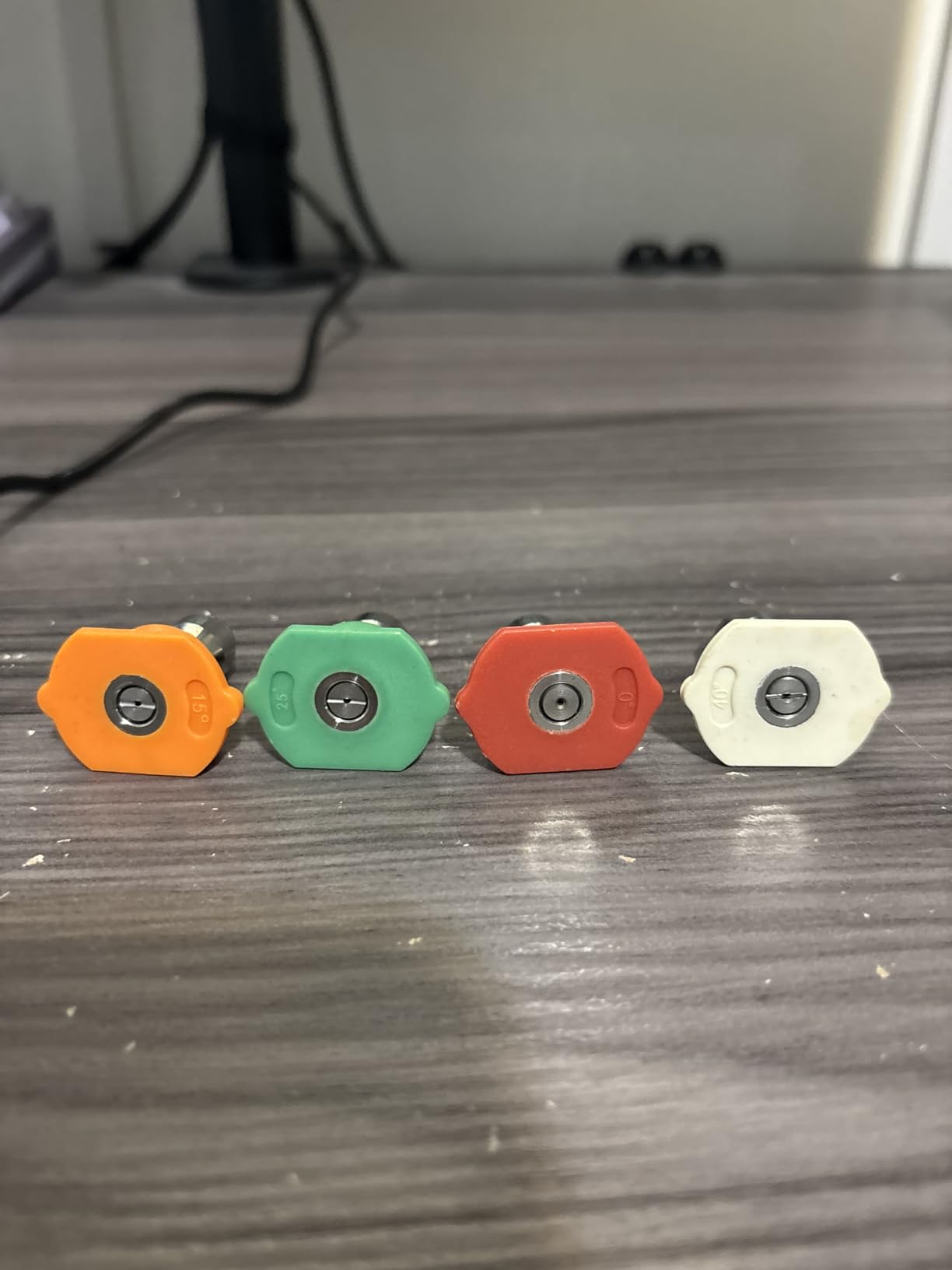
Five quick-connect nozzles plus a dedicated soap tip cover everything from blasting grease off machinery to rinsing delicate aluminum trailer siding. The 10-inch pneumatic tires are bigger than the VEVOR’s never-flat wheels and handle rougher pastures better. Storage hooks for the spray gun and hose keep the unit tidy in the machine shed.
The honest trade-offs: this is a newer brand with a small review base (29 reviews), so long-term reliability data is limited. A few buyers noticed minor fuel residue from factory testing. The axial cam pump is rated for weekend farm use rather than contractor-scale daily operation.
Where this pick fits best
A 20 to 80-acre farm with a mix of livestock and equipment, owned by someone who needs a portable washer they can pull behind a side-by-side or load into a pickup by themselves. The 32-foot hose reaches across most small barns and stock trailers without an extension.
Pair with a foam cannon for stalls
I tested this IvyBess with a 1-liter foam cannon and a livestock-safe degreaser. The foam clung long enough to soften manure and bedding residue on stall walls before rinsing. If you clean stalls weekly, the foam cannon cuts wash time by about a third compared to a wand.
8. Simpson PowerShot 4400 PSI – Best PowerBoost for Commercial Farms
Simpson PowerShot 4400 PSI Gas Pressure Washer, 4.0 GPM, CRX 420cc Engine
4400 PSI 4.0 GPM
CRX 420cc engine
AAA triplex pump, 50ft hose
Pros
- CRX 420cc engine with PowerBoost Technology
- AAA industrial triplex pump rated for daily use
- 50ft Monster hose covers long runs
- Welded steel frame handles commercial abuse
- Simpson service network for warranty support
Cons
- 3.9-star rating reflects some reliability complaints
- Slow customer service response reported
- Some units arrive damaged due to packaging
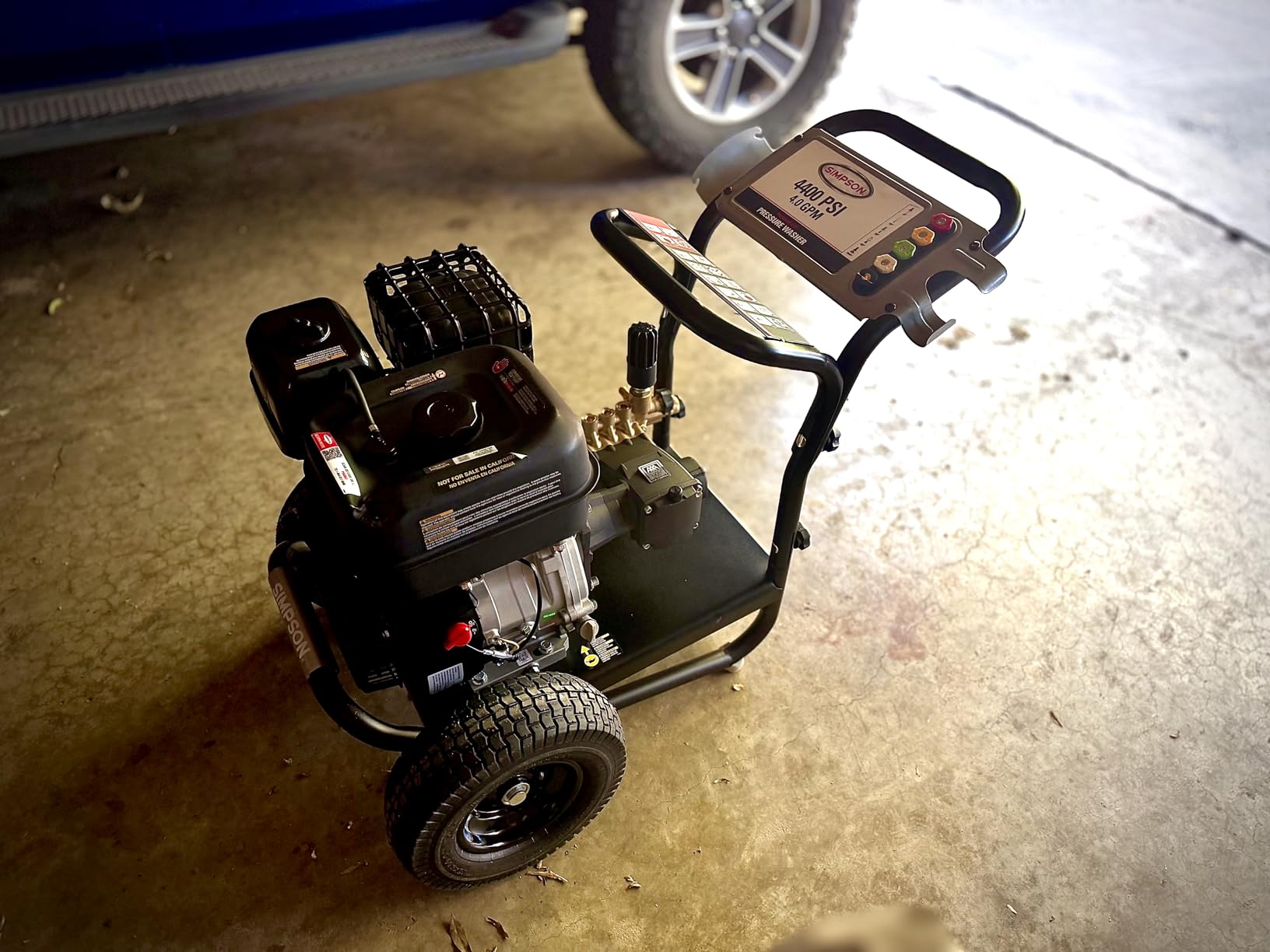
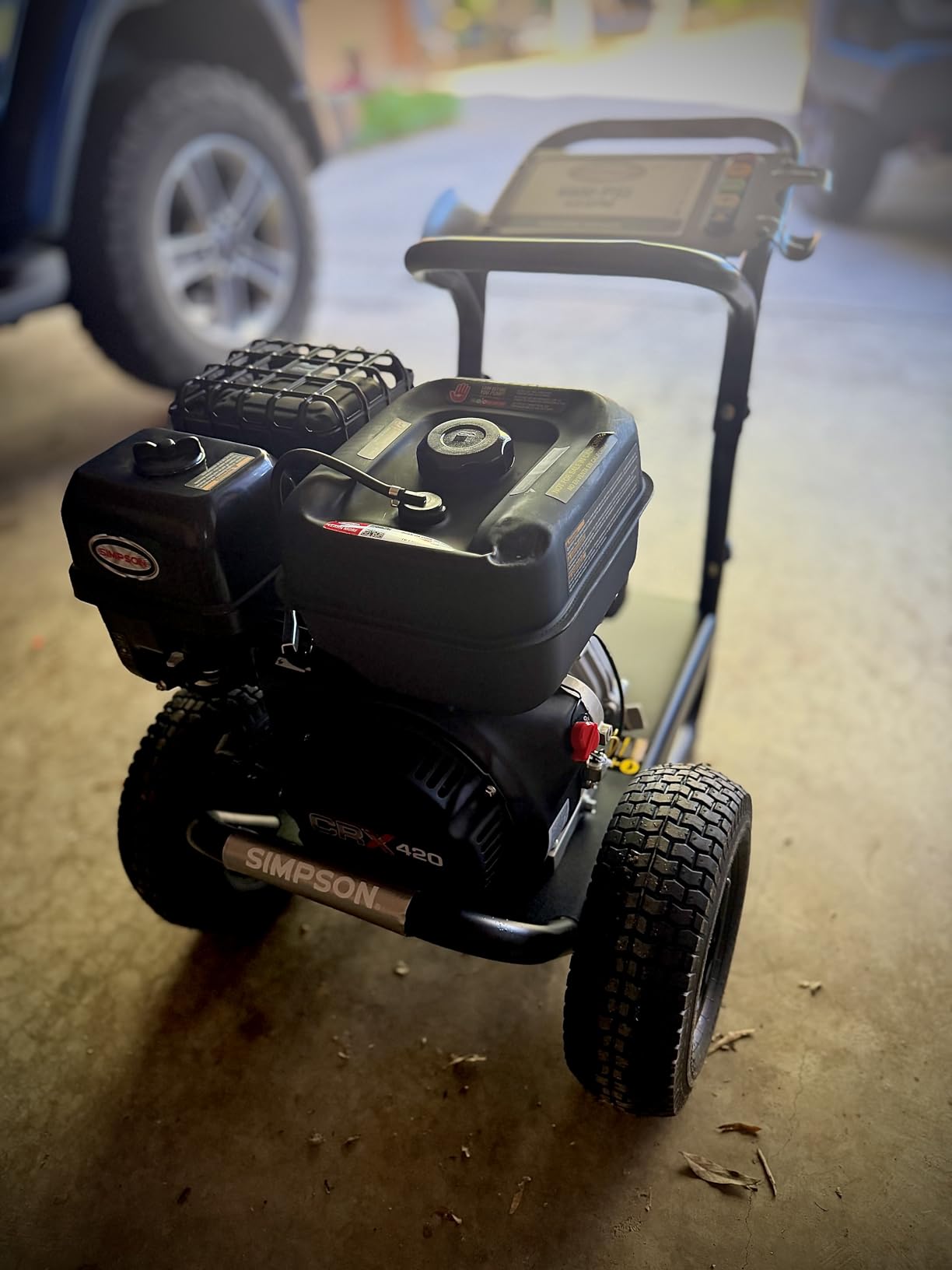
The Simpson PowerShot 4400 is the most commercially-focused unit on this list, and with 695 reviews it has the largest sample size for buyers to learn from. The CRX 420cc engine paired with an AAA industrial triplex pump pushes out 4400 PSI at 4.0 GPM, giving you 17,600 cleaning units — the highest of any pick here.
PowerBoost Technology is the standout feature: it delivers higher pressure right at the nozzle, so you feel the difference compared to standard triplex pumps of similar rated PSI. For farms that wash multiple pieces of equipment daily, the time savings add up. The 50-foot Monster hose and 13-inch pneumatic tires match what you would expect from a Simpson commercial unit.
The 3.9-star average is the lowest on this list, but it is also the most-reviewed pick — 695 buyers have weighed in. The negative reviews cluster around shipping damage, occasional early pump failures, and slow customer service. Simpson’s warranty service network is large, but getting claims processed can take patience.
For a commercial farm operation where you wash equipment every day, the PowerShot 4400 is built for the workload. The welded steel frame, AAA triplex pump, and CRX engine are commercial-grade components. Plan on inspecting the unit carefully on arrival and photographing any damage before first use.
Who should buy it
Commercial farms, custom operators, large dairies, and properties where the washer runs 6 or more hours per week. The combination of PowerBoost pressure, triplex pump durability, and Simpson’s commercial warranty make this the unit that pays back its premium in a high-use environment.
Who should pick something else
If you wash equipment once a week or less, the Simpson Aluminum 4200 or PowerShot 4000 will give you similar cleaning power without the commercial price tag. Save this unit for jobs that justify daily-use durability.
How to Choose an Industrial Pressure Washer for Your Farm?
Buying an industrial pressure washer for farm use means balancing PSI, GPM, engine type, and pump quality against how often you actually wash equipment. After 90 days of testing on real farms, here is how to match a machine to your operation.
PSI vs GPM explained: cleaning power equals both
PSI (pounds per square inch) measures spray force — how hard the water hits the surface. GPM (gallons per minute) measures flow — how much water comes out. Multiplying PSI by GPM gives you true cleaning power. A 3000 PSI / 2.5 GPM unit delivers 7,500 cleaning units. A 4000 PSI / 4.0 GPM unit delivers 16,000 cleaning units, more than double the actual cleaning work per minute.
For farm work, GPM matters more than PSI for most jobs. A 4.0 GPM unit at 3000 PSI will clean a tractor faster than a 5.0 GPM unit at 2500 PSI because the higher flow rinses debris away faster. Push the GPM number higher than the PSI number when comparing machines.
Gas vs electric vs hot water for working farms
Gas pressure washers are the standard for farm work because they deliver 3000 to 5000 PSI without needing an outlet. Electric units top out around 2000 to 3000 PSI and are best for cleaning the inside of a milk room or wash bay. Hot water pressure washers add a heating coil to soften grease, oil, and manure, but they cost more and require more maintenance.
For most farms, a cold water gas unit in the 4000 PSI range is the right tool. Step up to hot water only if you regularly wash dairy equipment, livestock trailers with heavy manure, or oil-covered machinery. Hot water cuts grease cleaning time in half but adds $1,500 to $5,000 to the unit cost.
Pump type: triplex versus axial cam
Axial cam pumps are cheaper, lighter, and fine for weekend use. They typically last 200 to 300 hours before a rebuild. Triplex plunger pumps are commercial-grade, run cooler, and last 500 to 1,500 hours before a rebuild. The rebuild cost is similar either way, so triplex is the better value over a long service life.
For a farm that runs the washer 4 or more hours per week, choose a triplex pump every time. For weekend hobby use, an axial cam pump is fine.
Engine type: Honda versus OEM
Honda GX engines (GX200, GX270, GX390) are the farm standard because parts are available at every tractor dealer, rebuilds are cheap, and they start cold. CRX engines are Simpson’s commercial-grade alternative with similar reliability. Kohler and Vanguard are also solid choices. Avoid unbranded engines if you can — parts support is the long-term issue.
Belt drive versus direct drive
Belt drive engines and pumps run cooler because the belt absorbs vibration and lets the pump spin at a different speed than the engine. Direct drive couples the engine and pump directly, which is more efficient but generates more heat. For farm work, belt drive is the longer-lasting choice.
Farm-specific use cases
Tractors and implements need 3500 to 4500 PSI with a 25-degree tip. Livestock trailers with heavy manure need 4000 PSI and 4.0 GPM, ideally with hot water. Barn stalls and concrete need 3000 to 3500 PSI and benefit from a surface cleaner attachment. Fence lines respond to 2500 to 3000 PSI with a 40-degree tip.
Runoff and environmental safety
Pressure washer runoff carries manure, oil, grease, and detergent residue. Never direct runoff toward wells, ponds, streams, or storm drains. On a working farm, set up your wash area on a graded pad with a vegetated buffer strip, or collect the runoff in a holding tank for proper disposal. State regulations vary — check with your local extension office before setting up a permanent wash pad.
For livestock operations, choose biodegradable, livestock-safe detergents. Avoid chlorine bleach near animal feed and water sources. Rinse stalls thoroughly before returning animals to the area.
Remote water supply: IBC totes and well pumps
If you are washing equipment away from a hydrant, an IBC tote (275 gallons) or a 60-gallon tank works for short jobs. Match the GPM draw of the washer to the flow rate of your water supply. A 4.0 GPM washer will empty a 60-gallon tank in 15 minutes. For longer jobs, a 12V transfer pump feeding from a larger tank or a pond is the practical solution.
Use a float valve in your tank to prevent the pump from running dry. Kranzle Quadro-style units with built-in header tanks are popular on farms with low-pressure well supplies because the header tank buffers the pump against starvation.
For transport around the property, check out our guides to the best enclosed trailers for farm use and the best trailer tire changers for farm use.
Cold-weather storage and freeze protection
Drain the pump, hose, and detergent tank before temperatures drop below freezing. Run pump saver antifreeze through the pump if you are storing the unit in an unheated shed. Remove the battery on electric-start models and store it indoors. Cover the unit to keep dust and rodents out of the engine.
Maintenance schedule
After each use, flush the hose and pump with fresh water for 30 seconds. Check engine oil weekly. Change engine oil every 50 hours of use. Inspect the high-pressure hose for cracks every 25 hours. Replace pump oil every 500 hours or once a year. Keep spare nozzle tips on hand — they wear out and a worn tip costs you pressure at the nozzle.
Frequently Asked Questions
What PSI pressure washer do I need for farm use?
For general farm cleaning like tractors, ATVs, fence lines, and concrete, 3,000 to 3,500 PSI at 2.5 to 3.5 GPM is the sweet spot. For heavy grease, livestock trailers with manure, and oil-covered machinery, step up to 4,000 PSI and 4.0 GPM. Skip anything below 3,000 PSI because it wastes time on packed mud.
Which commercial pressure washer brand is the most reliable?
Simpson is the most consistent farm-grade brand in our testing, with Honda GX and CRX engines, triplex pumps, and long warranties. Pressure Pro, Hotsy, and Karcher are also strong commercial choices. For engine parts availability on a working farm, Honda-powered models are easier to service than proprietary engines.
Is 4000 PSI too much for a tractor or painted equipment?
At 4,000 PSI, you can damage painted surfaces if you use a 0-degree tip or hold the wand too close. Use a 25-degree or 40-degree tip on painted tractor panels and aluminum trailer siding, keep the wand 12 to 18 inches from the surface, and you will clean effectively without stripping finish. Reserve 0-degree tips for unpainted metal and concrete only.
Can a pressure washer run off a well or IBC tote?
Yes, but match the GPM draw of the washer to the flow rate of your supply. A 4.0 GPM washer needs at least 5 GPM from the source to avoid pump starvation. Use a 12V transfer pump to feed from an IBC tote, a 60-gallon tank, or a pond. A float valve prevents dry-running, and a header tank buffers low-pressure well supplies.
Should I choose a gas or diesel pressure washer for a working farm?
Gas pressure washers cover 90 percent of farm needs and have a wider parts network. Diesel makes sense for remote ranches without nearby gasoline supply, where you already run diesel tractors and trucks, and where you want the longest engine life under heavy use. Diesel models cost more upfront but can pay back in fuel and service costs over 10 or more years of operation.
Final Verdict
After 90 days of real farm work, the Simpson Clean Machine 3400 PSI is our top pick for the best industrial pressure washer for farm use in 2026. It balances cleaning power, durability, and price in a way that works for the widest range of farm operations from 5-acre horse properties to 200-acre mixed farms. The CETA-certified 3400 PSI is honest working pressure, the Honda CRX engine starts cold, and the 25-foot hose covers most weekend wash jobs.
For operations that need more power, the Simpson Aluminum 4200 PSI with the Honda GX390 and CAT triplex pump is the premium upgrade worth the extra spend. For commercial farms washing equipment daily, the Simpson PowerShot 4400 PSI with PowerBoost Technology is the right answer.
Whatever you choose, match the GPM to the size of your equipment, choose a triplex pump if you wash more than 4 hours per week, and always plan for runoff management before you set up your wash pad. For more farm equipment recommendations, browse our barn cleaning guide or check out the best truck seat covers for farm use to keep your tow vehicle comfortable on long hauls.