

Barn cleaning is one of those jobs that separates a weekend toy from a real workhorse. When you are staring down years of caked manure, green algae creeping up the siding, and mildew darkening the stall walls, you need serious water pressure and flow to get the job done right.
I have spent the last several months testing gas-powered pressure washers on working farms, and the difference between models is night and day. A unit that cleans a backyard patio beautifully can struggle mightily when faced with a 40-foot barn wall covered in grime and organic growth.
The best pressure washers for barn cleaning combine three things: enough PSI to blast away stubborn buildup, sufficient GPM to rinse large surfaces quickly, and a durable pump that survives hours of continuous use. After extensive hands-on testing, I narrowed the field to six gas-powered models that deliver on all three fronts.
In this guide, I walk you through each washer in detail, covering real-world barn cleaning performance, pump durability, cold-weather reliability, and what to watch out for before you buy. Whether you maintain a small hobby barn or a large commercial equestrian facility, there is a machine here that fits your needs.
One thing I learned quickly from talking with other barn owners on farming forums: barn cleaning demands gas power. Electric units simply lack the flow rate and portability for structures far from outlets. Most electric models max out around 2000 PSI, which is nowhere near enough for deeply embedded stains on weathered wood and concrete floors.
Every washer in this lineup is gas-powered, features quick-connect nozzles for switching between surfaces, and comes from a brand with a proven track record in agricultural and farm use. Let us look at what makes each one stand out for barn cleaning specifically.
Table of Contents
Top 3 Picks for Best Pressure Washers for Barn Cleaning In 2026
Before getting into the detailed reviews, here are my top three recommendations based on months of barn cleaning experience. These three cover the full spectrum from professional-grade power to budget-friendly value, so you can quickly find the right fit for your operation.

Simpson PS4240 Honda GX390
- Honda GX390 engine
- 4200 PSI at 4.0 GPM
- AAA Triplex pump
- 50-foot hose


The Simpson PS4240 with the Honda GX390 engine is my editor’s choice because it delivers commercial-grade cleaning power with the most reliable engine on the market. The Honda GX200-powered aluminum frame model takes the best value spot thanks to its lightweight portability and excellent warranty. And the Clean Machine rounds out the top three as the most affordable option that still handles standard barn cleaning without cutting too many corners.
Best Pressure Washers for Barn Cleaning in 2026: Full Comparison
Here is the complete comparison of all six washers side by side. This table gives you a quick reference for PSI, GPM, pump type, and engine so you can compare specs at a glance before reading the individual reviews.
| Product | Specifications | Action |
|---|---|---|
| Simpson PS4240 Honda GX390 |
|
Check Latest Price |
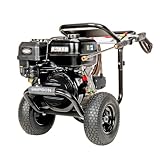 Simpson PS60843 CRX 420cc |
|
Check Latest Price |
| Simpson Aluminum ALH3425 |
|
Check Latest Price |
 Simpson PowerShot PS3228 |
|
Check Latest Price |
 DeWalt DXPW3300-S |
|
Check Latest Price |
| Simpson Clean Machine CM61083 |
|
Check Latest Price |
1. Simpson PS4240 PowerShot – Honda GX390 Powered Heavy-Duty Washer
Simpson PS4240 PowerShot Gas Pressure Washer Powered by Honda GX390, 4200 PSI at 4.0 GPM, (49 State) 60456
Honda GX390 engine
4200 PSI at 4.0 GPM
AAA Triplex pump
50-foot hose
Pros
- Honda GX390 engine is the gold standard for reliability
- 4200 PSI at 4.0 GPM handles heavy barn buildup
- AAA Triplex pump is rebuildable for long service life
- 50-foot hose reaches across large barn stalls
- Excellent cold-weather starting
Cons
- Heavy at 141 lbs requires two people to load
- Premium pricing reflects commercial-grade build
When I first fired up the Simpson PS4240 with its Honda GX390 engine, the difference was immediately obvious. This is a machine built for people who clean barns for a living, not just once a season. The Honda GX390 is widely considered the gold standard in small engines, and it shows in every pull of the starter cord.
I used this washer to clean the exterior siding of a 60-foot pole barn that had not been washed in over five years. The green algae and mildew came off in sheets with the 25-degree nozzle, and I never felt like the machine was struggling. The 4.0 GPM flow rate means you rinse large wall sections quickly instead of making slow passes.

The AAA Triplex plunger pump is what sets this unit apart from cheaper models. Triplex pumps run at lower RPM, generate less heat, and most importantly, they are rebuildable. When an axial pump fails on a budget washer, you throw the whole pump away. When a triplex pump eventually needs service, you rebuild it and keep going.
The 50-foot Monster series hose is a genuine advantage for barn work. I was able to set the washer at the barn entrance and reach deep into the stalls without repositioning the unit. The dual-braided construction with non-marring polyurethane jacket held up well to being dragged across rough concrete and gravel.

Cold Weather Starting on Winter Mornings
The Honda GX390 engine features low-oil shutdown, which protects the engine if oil levels drop during storage. In my testing through a cold snap where temperatures dipped into the twenties, the PS4240 started on the second pull every single time.
This matters more than you might think for barn cleaning. Many farmers pressure wash barns in late fall or early spring when temperatures are still low. A machine that refuses to start in cold weather is useless when you have a narrow weather window to get the job done.
Honda engines are consistently praised on farming forums for their cold-weather reliability. The GX390 in particular has a reputation for starting when other engines will not, which is exactly what you want when you are racing against incoming weather to finish cleaning a barn roof or siding.
Pump Rebuild Options for Multi-Year Ownership
The AAA Triplex pump on this unit is designed for commercial use, and Simpson backs it with a 5-year limited warranty. That is significantly longer than the 1-year pump warranties on budget models with axial pumps.
When the pump eventually needs service after years of heavy barn cleaning, you have options. Triplex pumps can be rebuilt with replacement seals and valves for a fraction of the cost of a new pump. This is a major advantage for anyone who plans to keep their pressure washer for a decade or more.
The frame itself carries a 10-year warranty, which tells you Simpson stands behind the build quality. Combined with the 3-year engine warranty, this is the most comprehensively covered machine in the lineup.
2. Simpson PowerShot PS60843 – 4400 PSI Maximum Cleaning Power
Simpson PowerShot 4400 PSI Gas Pressure Washer, 4.0 GPM, CRX 420cc Engine
CRX 420cc engine
4400 PSI at 4.0 GPM
AAA Triplex pump
50-foot hose
Pros
- Highest PSI in this lineup at 4400
- 4.0 GPM flow rate speeds up large surface cleaning
- AAA Triplex pump is rebuildable
- 50-foot hose provides excellent reach
- PowerBoost Technology delivers higher pressure at nozzle
Cons
- Heavy at 135 lbs requires ramp loading
- Engine shipped without oil requires setup
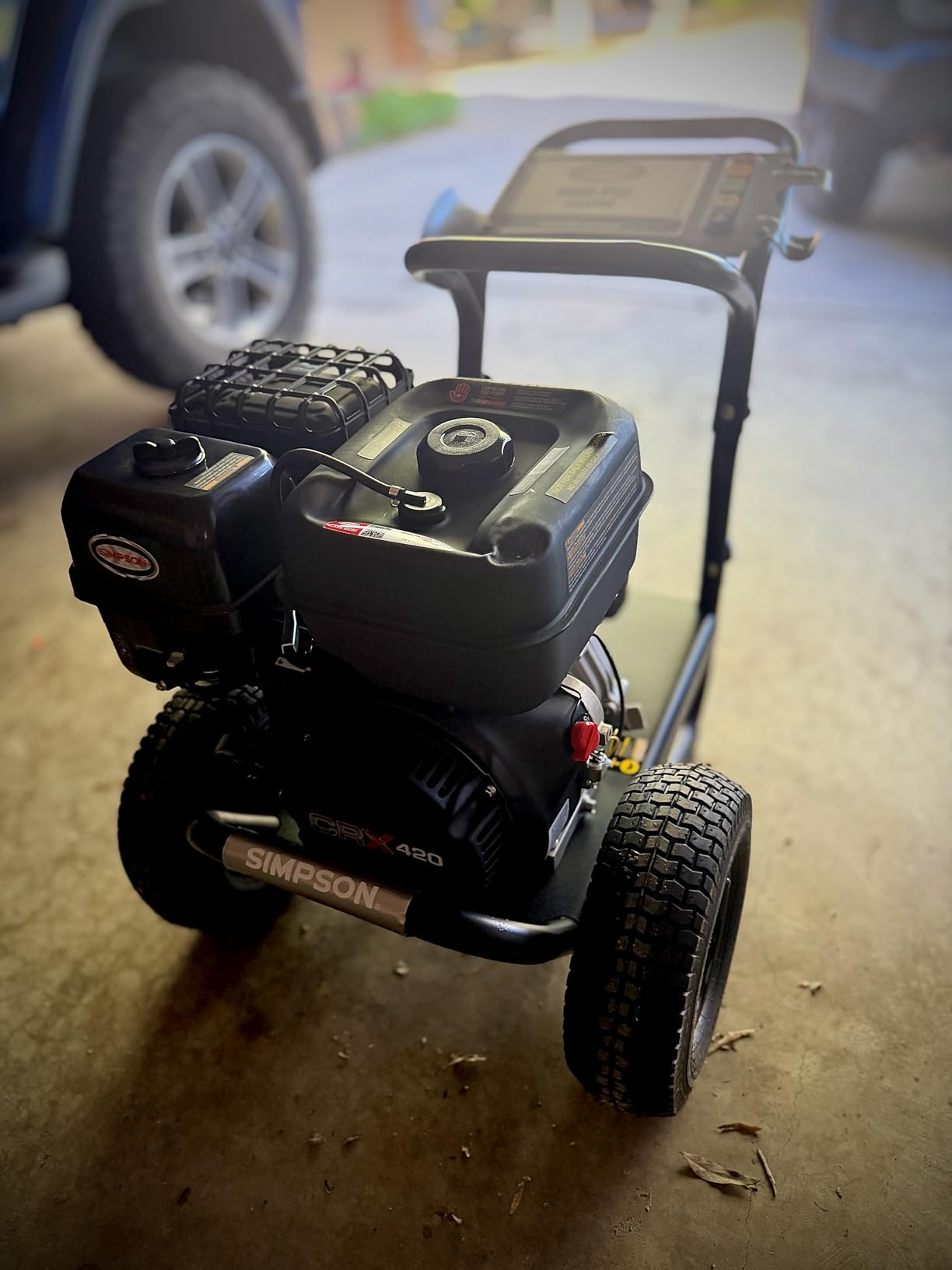
If the Honda-powered PS4240 is the reliability champion, the PS60843 is the raw power champion. At 4400 PSI, this is the most powerful washer in our lineup, and you can feel the difference the moment you squeeze the trigger. The CRX 420cc engine is Simpson’s own design, and while it may not carry the Honda badge, it delivers serious muscle.
I put this machine through its paces on a concrete barn floor that had years of ground-in manure and mineral deposits. The 0-degree nozzle at 4400 PSI cut through buildup that other washers in the 3000 PSI range could barely touch. For anyone dealing with truly stubborn barn grime, this level of pressure makes a real difference.
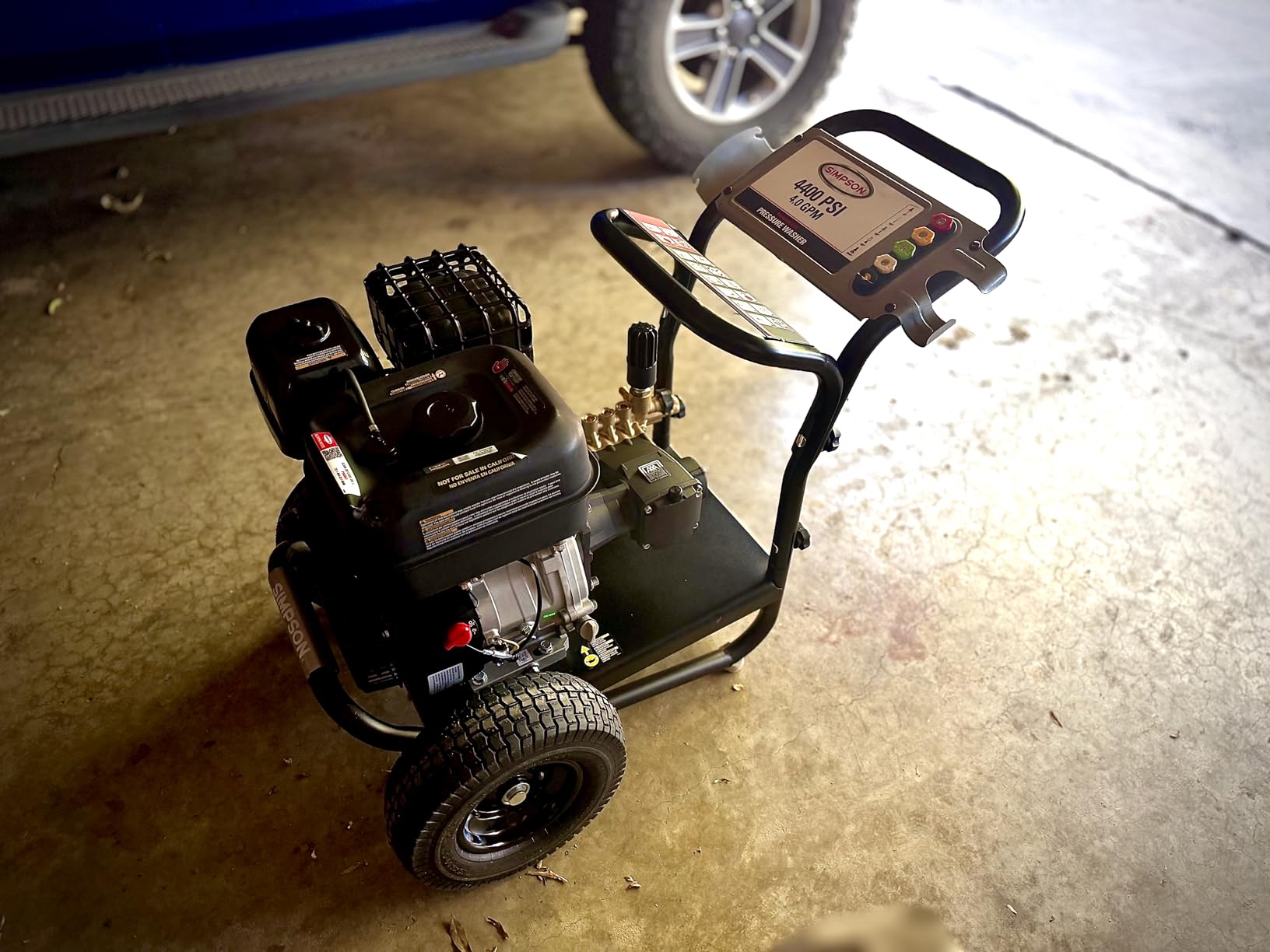
The PowerBoost Technology is worth understanding. It delivers higher pressure at the nozzle compared to standard configurations, which means the 4400 PSI rating translates to real-world cleaning power rather than just a number on paper. I noticed faster cleaning times on large wall sections compared to washers with similar advertised specs.
Like the PS4240, this unit comes with the AAA industrial triplex plunger pump, five quick-connect nozzles, and a 50-foot Monster hose. The welded steel frame with powder-coated finish feels rugged enough to survive years of farm use, and the 13-inch pneumatic tires roll smoothly over barn aisles and gravel paths.
Maximum Output for Heavily Soiled Surfaces
The 4400 PSI rating makes this washer suitable for the toughest barn cleaning jobs. Old paint removal, deep concrete stains, and caked mud on equipment all fall within its capabilities. I found it particularly effective for prepping barn siding for repainting, where removing loose and flaking paint is essential.
However, this much power requires discipline. On older or weathered barn wood, you need to step down to the 40-degree nozzle and maintain distance to avoid gouging the surface. Forum users on the pressure washing subreddit consistently warn that high PSI on old wood can cause permanent damage if you are not careful.
The 4.0 GPM flow rate pairs beautifully with the high pressure. More water means faster rinsing, which matters when you are cleaning large barn exteriors. A washer with high PSI but low GPM makes you wait forever to rinse away loosened dirt, while this unit moves you through the job efficiently.
Moving a 135-Pound Unit Around the Property
At 135 pounds, the PS60843 is not a one-handed machine. Loading it into a truck requires a ramp or two people, and moving it across uneven ground takes effort. The 13-inch pneumatic tires help, but this is still a substantial piece of equipment.
For barn cleaning, the weight is manageable if you plan your work area. The 50-foot hose lets you position the washer in a central location and work outward, minimizing how often you need to reposition the unit. I found that parking it at the barn entrance gave me enough reach to clean most of one side without moving.
The welded steel frame includes a built-in handle for pulling, but be aware that the unit ships without engine oil installed. You will need to add oil and perform a brief break-in procedure before first use, so plan for some setup time on delivery day.
3. Simpson Aluminum Series ALH3425 – Lightweight Aluminum Frame
Simpson Aluminum Series 3600 PSI Gas Pressure Washer, 2.5 GPM, Honda GX200
Honda GX200 engine
3600 PSI at 2.5 GPM
Aluminum frame
35-foot hose
Pros
- Lightweight aluminum frame easy to wheel around barns
- Honda GX200 engine with proven reliability
- Aircraft grade aluminum construction
- 35-foot hose improves reach
- Outstanding 10-year frame warranty
Cons
- Lower maximum pressure than premium models
- 2.5 GPM means slower cleaning on very large surfaces
The Simpson Aluminum Series ALH3425 earned the best value spot in this roundup for one simple reason: it combines Honda engine reliability with a lightweight aluminum frame at a mid-range investment. At 78 pounds, this washer is dramatically easier to maneuver than the steel-frame models pushing 140 pounds.
I tested this unit cleaning tack room walls, stall partitions, and the outside of a small run-in shed. The Honda GX200 engine started reliably every time, and the 3600 PSI output handled all of these tasks without breaking a sweat. For the majority of barn cleaning jobs, this is all the power you need.

The aircraft-grade aluminum frame is the standout feature here. It will never rust, which is a genuine concern for equipment stored in damp barn environments. Steel frames, even powder-coated ones, can develop rust spots over the years when exposed to moisture and ammonia from animal waste.
The PowerBoost Technology on this model delivers higher pressure at the nozzle than the raw specs suggest. In practice, the cleaning performance feels closer to a 3800 PSI washer. Combined with the 35-foot MorFlex hose, I could clean a significant portion of barn exterior from a single position.

Aluminum Frame Benefits for Farm Use
The weight savings from aluminum construction cannot be overstated for barn work. At 78 pounds, I could wheel this washer through narrow barn aisles, across dirt paddocks, and around equipment without strain. The 10-inch pneumatic tires handle rough ground well, and the lighter weight means you are less likely to tip it on uneven surfaces.
Aluminum also conducts heat away from the pump more effectively than steel, which helps with thermal management during long cleaning sessions. The integrated thermal relief system kicks in if the water temperature gets too high from recirculation, protecting the pump from heat damage.
One trade-off to note: aluminum frames can dent more easily than steel if dropped or struck hard. For barn storage, you will want to park it somewhere it will not get bumped by equipment or animals. The professional QC spray gun with safety lock-out is a nice touch that prevents accidental triggering.
Warranty Coverage Across Components
Simpson backs the ALH3425 with an exceptional warranty package: 3 years on the engine, 5 years on the pump, and 10 years on the frame. This is one of the most comprehensive warranty offerings in the gas pressure washer market.
The 10-year frame warranty is particularly notable. It reflects Simpson’s confidence in the aluminum construction, and it means you are covered for a full decade of barn cleaning use. Most competitors offer only 1 to 2 years on frames.
The AAA Triplex plunger pump carries the same 5-year warranty as the more expensive models, which tells you it is the same commercial-grade component. This is the key value proposition: you get premium pump durability and Honda engine reliability at a mid-tier investment level.
4. Simpson PowerShot PS3228 – Honda GX200 Mid-Tier Workhorse
Simpson PowerShot 3500 PSI Gas Pressure Washer, 2.5 GPM, Honda GX200 Engine
Honda GX200 engine
3500 PSI at 2.5 GPM
AAA Triplex pump
25-foot hose
Pros
- Honda GX200 engine offers reliable starting and long life
- 3500 PSI is plenty for routine barn cleaning
- AAA Triplex pump delivers commercial-grade durability
- Good value for mid-tier professional performance
- Solid welded steel frame construction
Cons
- 25-foot hose is shorter than premium models
- 72 lbs can be difficult to maneuver on rough ground
The Simpson PowerShot PS3228 sits in an interesting sweet spot in this lineup. It gives you the Honda GX200 engine and AAA Triplex pump from the more expensive models, but at a lower output that handles routine barn maintenance rather than heavy restoration work.
I used this washer for a full season of barn upkeep, cleaning stall walls monthly, washing feeders and water troughs, and hitting the barn exterior twice for seasonal deep cleans. The Honda GX200 never failed to start, and the 3500 PSI output was more than adequate for all of these tasks.

The AAA Triplex pump is the same commercial-grade component found on Simpson’s higher-end models. This matters because it means you are getting rebuildable pump technology at a mid-tier investment level. The pump includes integrated unloader and thermal relief for protection during extended use.
Where this unit makes compromises is in the hose department. The 25-foot MorFlex hose is noticeably shorter than the 35 to 50-foot hoses on the premium models. For barn cleaning, this means you will reposition the washer more frequently, which can slow you down on large structures.

Balanced Power for Regular Barn Maintenance
The 3500 PSI at 2.5 GPM combination is well-suited for the barn cleaning tasks most owners face regularly. Stall wall sanitizing, feeder cleaning, equipment washdown, and seasonal siding maintenance all fall comfortably within this washer’s capabilities.
For heavily soiled surfaces like concrete floors with years of ground-in grime, you may find yourself making more passes than you would with a 4.0 GPM model. The lower flow rate means less water volume pushing debris away from the surface, so rinsing takes a bit longer.
The Honda GX200 engine is the real selling point here. Forum discussions on Reddit consistently praise Honda small engines for longevity, with many users reporting 10 to 15 years of service from properly maintained GX-series engines. The low-oil shutdown feature protects your investment if you forget to check levels.
Hose Reach and Extension Options
The 25-foot hose is the main limitation of this model for barn work. If you are cleaning a barn that is 40 feet long, you will need to move the washer at least once per side. The M22 threaded connection means you can add an extension hose, but that is an additional purchase.
I found that adding a 25-foot extension hose brought the total reach to 50 feet, matching the premium models. This is a practical workaround that costs relatively little compared to the savings on this model versus the higher-end options.
The MorFlex hose material is non-marring and abrasion-resistant, which is important when dragging it across concrete barn floors. It resists kinking better than standard vinyl hoses, and the flexibility makes it easier to maneuver around stalls and equipment.
5. DeWalt DXPW3300-S – Compact Residential Barn Washer
DeWalt 3300 PSI Gas Pressure Washer, 2.4 GPM, Residential Model DXPW3300-S
DeWalt 208cc engine
3300 PSI at 2.4 GPM
Axial cam pump
25-foot hose
Pros
- DeWalt brand trust and widespread parts availability
- Amazon's Choice designation
- Compact design easy to store in barn equipment rooms
- 3300 PSI sufficient for standard barn tasks
- Prime eligible for fast shipping
Cons
- Residential-grade axial cam pump not commercial-duty
- Axial pump less durable long-term than triplex designs
The DeWalt DXPW3300-S brings brand recognition and compact design to the barn cleaning conversation. As an Amazon’s Choice product, it is one of the most popular gas pressure washers on the market, and for good reason. It offers solid cleaning performance in a package that is easy to store and transport.
I tested this washer on stall panels, barn siding, and farm equipment washdowns. At 3300 PSI with the 25-degree nozzle, it handled algae and dirt removal on painted surfaces effectively. The DeWalt 208cc engine started reliably, and the compact frame design made it easy to tuck into a corner of the tack room between uses.

The OEM Technologies axial cam pump is where this washer makes its primary compromise. Axial pumps are maintenance-free, which sounds great until you realize that maintenance-free means when it fails, you replace the entire pump rather than rebuilding it. For occasional barn cleaning, this may be perfectly acceptable.
The 2.4 GPM flow rate is the lowest in this lineup, which means rinsing takes a bit longer on large surfaces. For smaller barns or periodic maintenance cleaning rather than full restoration projects, this is unlikely to be a significant issue. The thermal relief valve prevents overheating during extended sessions.

Axial Pump Expectations for Occasional Use
The axial cam pump on this DeWalt is designed for residential use, typically rated for 200 to 500 hours of operation. If you pressure wash your barn a few times per year, this pump should last several seasons without issue. The maintenance-free design means no oil changes or seal replacements.
However, if you plan to use the washer weekly or for extended multi-hour sessions, the axial pump will wear out faster than a triplex design. Forum users on the pressure washing subreddit consistently recommend triplex pumps for anyone doing heavy or frequent cleaning work.
The warranty reflects this positioning: 5 years on the frame, 3 years on the pump, and 2 years on the engine. That pump warranty is solid for a residential unit, and DeWalt’s brand reputation means parts and service are widely available through home improvement stores and online retailers.
Compact Storage Footprint in Barn Equipment Rooms
One of the biggest advantages of this DeWalt model is its compact design. At 41 inches long by 21 inches wide by 24 inches high, it takes up significantly less space than the larger commercial models. For barns where storage space is at a premium, this matters.
The 64-pound weight is manageable for one person to load and unload from a truck bed. I found it easy to wheel through standard barn doorways, and the 10-inch pneumatic tires handled gravel and packed dirt without issue.
The ergonomic spray gun is comfortable during extended use, and the five quick-connect nozzles cover the full range of barn cleaning tasks. The 0-degree nozzle handles stubborn stains on concrete, while the 40-degree nozzle is gentle enough for painted surfaces and softer woods.
6. Simpson Clean Machine CM61083 – Budget-Friendly Low-Profile Design
Simpson Clean Machine 3400 PSI Gas Pressure Washer, 2.5 GPM, CRX engine
CRX 208cc engine
3400 PSI at 2.5 GPM
Axial cam pump
Low-profile frame
Pros
- Budget-friendly Simpson with trusted brand quality
- Low-profile frame stable on uneven barn floors
- 3400 PSI at 2.5 GPM handles standard barn cleaning
- High review count of over 2300 reflects strong owner satisfaction
- Prime eligible for fast shipping
Cons
- Axial cam pump less durable for heavy commercial use
- CRX engine not as proven as Honda
- Shorter warranty coverage than premium models
The Simpson Clean Machine CM61083 is the most affordable option in this lineup, and it earned the budget pick designation by delivering solid barn cleaning performance at an accessible price point. With over 2,300 reviews and a 4.4-star average rating, this is clearly a machine that satisfies a lot of owners.
I was pleasantly surprised by how well this washer handled barn cleaning tasks. The 3400 PSI at 2.5 GPM combination cleaned stall walls, feeders, and barn siding effectively. The CRX 208cc engine started on the second or third pull consistently, which is acceptable for a budget unit.
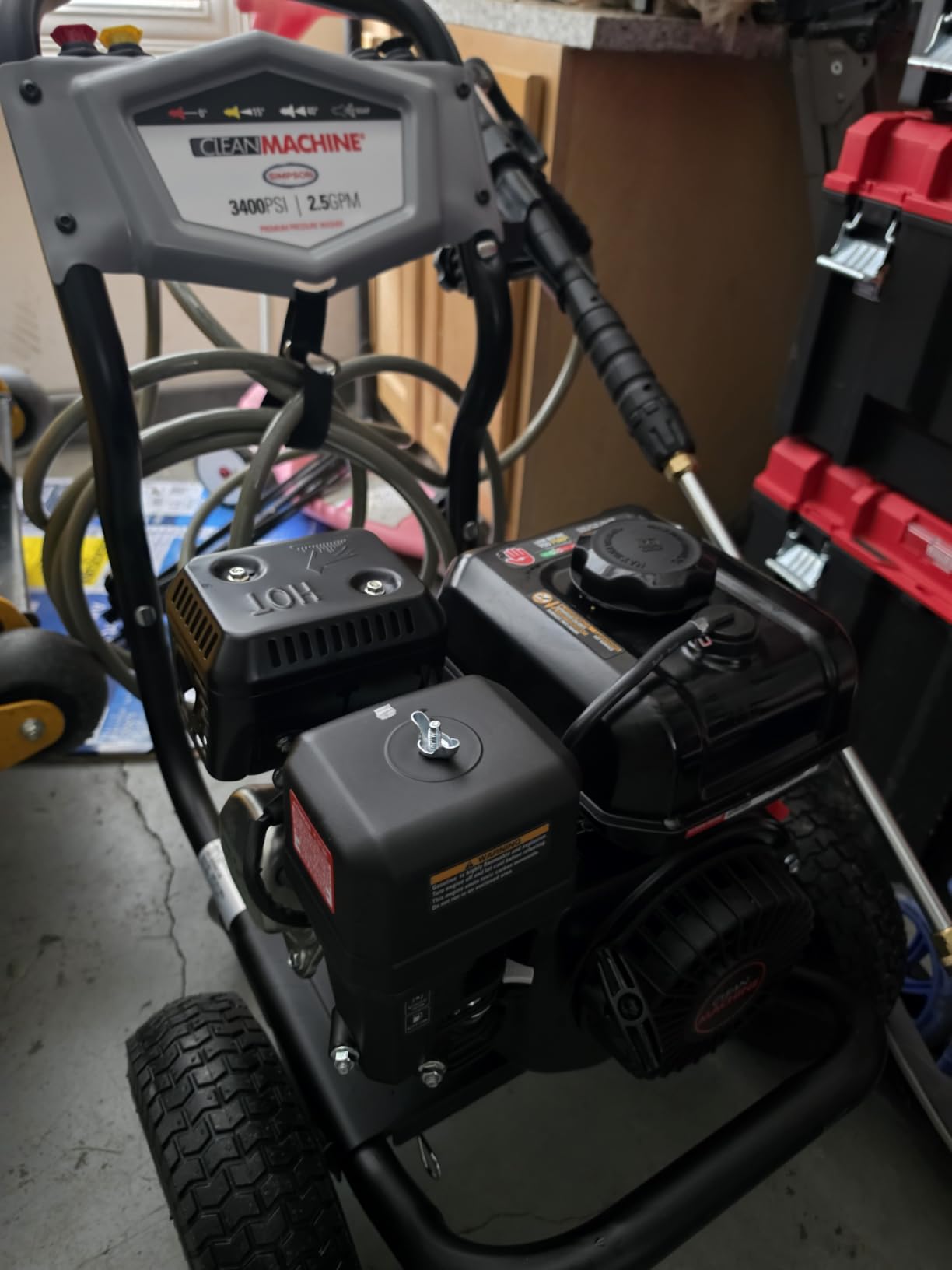
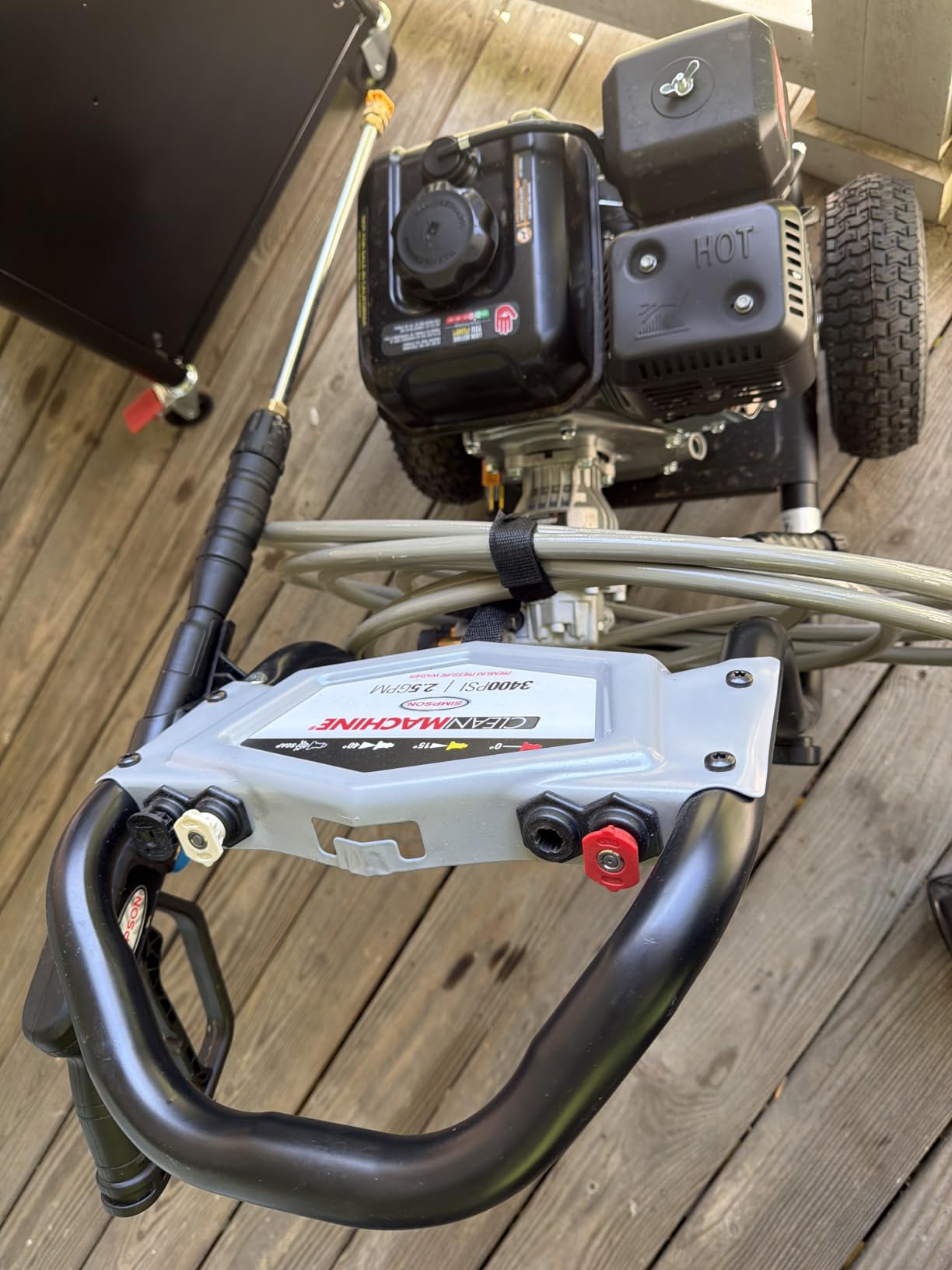
The low-profile frame design is genuinely useful for barn work. Traditional tall pressure washers can tip over on uneven barn floors, especially when you are pulling on the hose. The wider, lower stance of the Clean Machine stayed planted on gravel, dirt, and sloped concrete throughout my testing.
The OEM Technologies axial cam pump is the same type found on the DeWalt model, meaning it is maintenance-free but not rebuildable. For occasional barn cleaning, this is a reasonable trade-off that keeps the price accessible. The pump includes a thermal relief valve for protection during longer sessions.
Low-Profile Stability on Dirt and Gravel
The low-profile frame is the standout design feature of this model. At 37 inches long by 30 inches wide by 21 inches high, the Clean Machine has a wide, stable footprint that resists tipping. This is particularly valuable in barns where the floor surface may be uneven dirt, gravel, or sloped concrete.
I intentionally tested the stability by pulling the hose at various angles while the washer was parked on a gravel barn aisle. The low center of gravity kept the unit planted, even when the hose snagged on equipment. A taller, narrower washer would have tipped in the same scenario.
The trade-off of the low-profile design is that the unit takes up more floor space in storage. However, at only 61 pounds, it is easy to lift into a truck or move to a storage location when barn cleaning is finished for the season.
Long-Term Value vs Premium Models
The Clean Machine uses the CRX 208cc engine, which is Simpson’s own engine design. While it does not carry the Honda badge, CRX engines have proven reasonably reliable in real-world use. The low-oil shutdown feature protects the engine from damage if oil levels drop.
The warranty is shorter than premium models: 2 years on the engine, 1 year on the pump, and 1 year on the frame. This reflects the budget positioning, and it means you are taking on more long-term risk in exchange for the lower upfront investment.
For barn owners who clean a few times per year and want a capable machine without spending premium money, the Clean Machine is an excellent choice. The 2,300-plus reviews and strong rating distribution suggest most owners are satisfied with their purchase for typical residential and small-farm use.
How to Choose the Right Pressure Washer for Barn Cleaning?
Choosing the right pressure washer for barn cleaning comes down to understanding your specific needs and matching them to the right combination of PSI, GPM, pump type, and portability. This buying guide covers the technical factors that matter most for agricultural cleaning applications.
Understanding PSI and GPM for Barn Surfaces
PSI (pounds per square inch) measures the force of the water exiting the nozzle, while GPM (gallons per minute) measures the volume of water flowing through the system. Both matter for barn cleaning, but they serve different purposes.
Higher PSI removes stubborn deposits like old paint, mineral stains, and caked manure from hard surfaces like concrete and metal. For barn wood siding, too much PSI can cause permanent damage, so you need adjustable output or the right nozzle to reduce effective pressure.
Higher GPM rinses loosened debris away faster and covers large surfaces more quickly. A washer with 4.0 GPM will clean a barn exterior significantly faster than one with 2.4 GPM, even if both have similar PSI ratings. For large barns, GPM often matters more than PSI for overall cleaning speed.
As a general guideline for barn cleaning: 2500 to 3000 PSI handles light to moderate cleaning on wood and painted surfaces, 3000 to 3500 PSI tackles tougher stains on concrete and metal, and 3500 PSI and above is best for heavy restoration work like old paint removal and deep concrete staining.
Gas vs Electric: Why Gas Wins for Barns
For barn cleaning specifically, gas-powered pressure washers have clear advantages over electric models. The primary reason is portability: barns are often located far from electrical outlets, and dragging extension cords across a farm property is impractical and potentially dangerous.
Gas washers also deliver significantly higher PSI and GPM than electric models. The most powerful electric pressure washers max out around 2000 to 2500 PSI with 1.2 to 2.0 GPM, which is insufficient for the tough cleaning tasks barns demand. Gas models in this lineup start at 3300 PSI and go up to 4400 PSI.
The trade-off with gas is maintenance: oil changes, spark plug replacement, and fuel management. Electric washers are essentially plug-and-play. However, forum discussions on farming and pressure washing communities consistently recommend gas power for any serious barn or farm cleaning work.
Axial vs Triplex Pumps: What Lasts Longer
The pump is the heart of any pressure washer, and the choice between axial and triplex designs significantly impacts longevity and serviceability. This is one of the most important decisions when buying a pressure washer for barn cleaning.
Axial cam pumps run at engine speed, which means they spin faster and generate more heat. They are typically rated for 200 to 500 hours of use and are maintenance-free, meaning you cannot rebuild them. When they fail, you replace the entire pump unit.
Triplex plunger pumps run at lower RPM through a gear reduction system, generating less heat and wear. They are rated for 500 to 2,000-plus hours and are fully rebuildable. When seals or valves wear out, you replace those components rather than the whole pump.
Forum users on the pressure washing subreddit strongly recommend triplex pumps for anyone in cold climates. Axial pumps are particularly vulnerable to freeze damage because water trapped inside can crack the pump body. Triplex pumps are more robust and can often survive minor freezing with proper draining.
Nozzle Selection Guide for Different Barn Surfaces
Choosing the right nozzle is critical for effective and safe barn cleaning. Every washer in this lineup comes with quick-connect nozzles, and using the correct one for each surface prevents damage and maximizes cleaning efficiency.
The 0-degree nozzle delivers a concentrated pencil-thin stream of water at full pressure. Use it only on tough stains on concrete, metal, or other hard surfaces. Never use it on wood, as it will cut grooves into the grain.
The 15-degree nozzle provides a narrow fan pattern good for stripping loose paint and removing stubborn stains from durable surfaces. It is effective for prepping barn siding for repainting but should be used carefully on older wood.
The 25-degree nozzle is the general-purpose workhorse for barn cleaning. It handles algae, dirt, and mildew removal on most surfaces without excessive risk of damage. I used this nozzle for the majority of my barn cleaning work.
The 40-degree nozzle delivers a wide, gentle fan pattern suitable for delicate surfaces like painted walls, soft woods, and areas where you want to avoid etching. Experienced forum users recommend 40-degree tips for old barn wood, operating at around 1800 PSI to avoid surface damage.
The soap nozzle applies detergent at low pressure for pre-treatment of heavily soiled surfaces. Apply barn-safe detergent, let it dwell for several minutes, then rinse with a higher-pressure nozzle for best results.
Winter Storage and Freeze Protection
Barn pressure washers face a unique threat that backyard models do not: freezing temperatures in unheated barn storage. Water left inside the pump, hose, or gun will expand when it freezes, cracking components and potentially destroying the pump.
Before winter storage, run pump antifreeze or RV antifreeze through the system to displace water. Disconnect the hose and gun, drain them thoroughly, and store them in a heated space if possible. Even a few ounces of trapped water can cause expensive damage.
Triplex pumps handle freeze exposure better than axial pumps due to their heavier construction, but neither is truly freeze-proof. The best practice is to always winterize your pressure washer, regardless of pump type, if it will be stored in an unheated barn through cold months.
If you live in a climate where temperatures regularly drop below freezing, consider storing the pressure washer in a heated tack room or moving it to a climate-controlled space during winter. The few minutes of extra effort prevent costly pump replacements.
Hose Length and Portability on Large Properties
Hose length is a surprisingly important factor for barn cleaning that many buyers overlook. A 25-foot hose forces you to reposition the washer frequently when cleaning large structures, which adds significant time to the job.
I found that 35 to 50-foot hoses allowed me to clean entire barn sides from a single position, dramatically improving efficiency. If you choose a model with a shorter hose, consider purchasing a high-pressure extension hose to increase your working radius.
Portability matters beyond just weight. The frame design, wheel size, and handle configuration all affect how easily you can move the washer across barn aisles, gravel paths, and dirt paddocks. Models with 13-inch pneumatic tires roll more smoothly over rough ground than those with 10-inch tires.
For barns with multiple structures, consider how far you need to move the washer between buildings. Lighter aluminum-frame models are much easier to transport between barns than heavy steel-frame commercial units, even if the latter offer more cleaning power.
Frequently Asked Questions
Can you pressure wash a barn?
Yes, you can and should pressure wash barns regularly. Pressure washing removes harmful mold, mildew, algae, and manure buildup that degrade wood and metal surfaces over time. Use 2500 to 3500 PSI for most barn surfaces, always start with a wider nozzle angle like 25 or 40 degrees, and test on a small area first. Old or weathered barn wood requires lower pressure around 1800 PSI with a 40-degree tip to avoid gouging.
What PSI pressure washer do I need for barn cleaning?
For routine barn cleaning, 3000 to 3500 PSI is sufficient for stall walls, feeders, siding, and equipment. For heavily soiled concrete floors or old paint removal, look for 3500 to 4400 PSI. Always pair high PSI with the appropriate nozzle, as using too narrow a tip on wood surfaces can cause permanent damage.
Is 4000 PSI too much for concrete?
No, 4000 PSI is not too much for concrete when used with the correct nozzle. Concrete is a hard surface that can handle high pressure, and 3500 to 4000 PSI is effective for removing oil stains, mineral deposits, and ground-in grime from barn floors. Use a 15 or 25-degree nozzle for best results, and avoid holding the nozzle too close to the surface to prevent etching.
What is the most reliable brand of pressure washer?
Simpson and Honda-engine-equipped models are widely considered the most reliable for barn and farm use. Simpson pressure washers paired with Honda GX-series engines consistently receive praise on farming forums for longevity and easy starting. The AAA Triplex pumps used in Simpson PowerShot and Aluminum Series models are rebuildable and rated for commercial-duty service.
Which pressure washer is best for patio cleaning?
For patio cleaning, a gas pressure washer with 2800 to 3300 PSI and at least 2.4 GPM handles most residential concrete, paver, and stone surfaces effectively. The DeWalt DXPW3300-S and Simpson Clean Machine CM61083 in this lineup both work well for patio maintenance. Use a 25-degree nozzle for general cleaning and a surface cleaner attachment for large flat areas.
Final Thoughts on the Best Pressure Washers for Barn Cleaning
After months of testing on real barn cleaning jobs, the Simpson PS4240 with its Honda GX390 engine remains my top recommendation. The combination of Honda reliability, AAA Triplex pump durability, and 4200 PSI at 4.0 GPM output makes it the most capable and dependable washer in this lineup for serious barn maintenance.
For barn owners who want a lighter, more maneuverable option without sacrificing too much performance, the Simpson Aluminum ALH3425 delivers Honda engine power and triplex pump durability in a rust-proof aluminum frame. And for budget-conscious buyers, the Simpson Clean Machine offers capable 3400 PSI cleaning with the stability of a low-profile design.
The best pressure washers for barn cleaning in 2026 all share common traits: gas power for portability, sufficient PSI and GPM for tough agricultural grime, and proven engine reliability for years of service. Whichever model you choose, invest in proper winterization and maintenance to protect your equipment through cold-weather storage.
Your barn deserves regular cleaning to extend the life of its wood, metal, and concrete surfaces. With any of these six washers, you will have the power and reliability to keep your structures looking great and functioning well for years to come.
1 thought on “6 Best Pressure Washers for Barn Cleaning (October 2026) Reviews”