
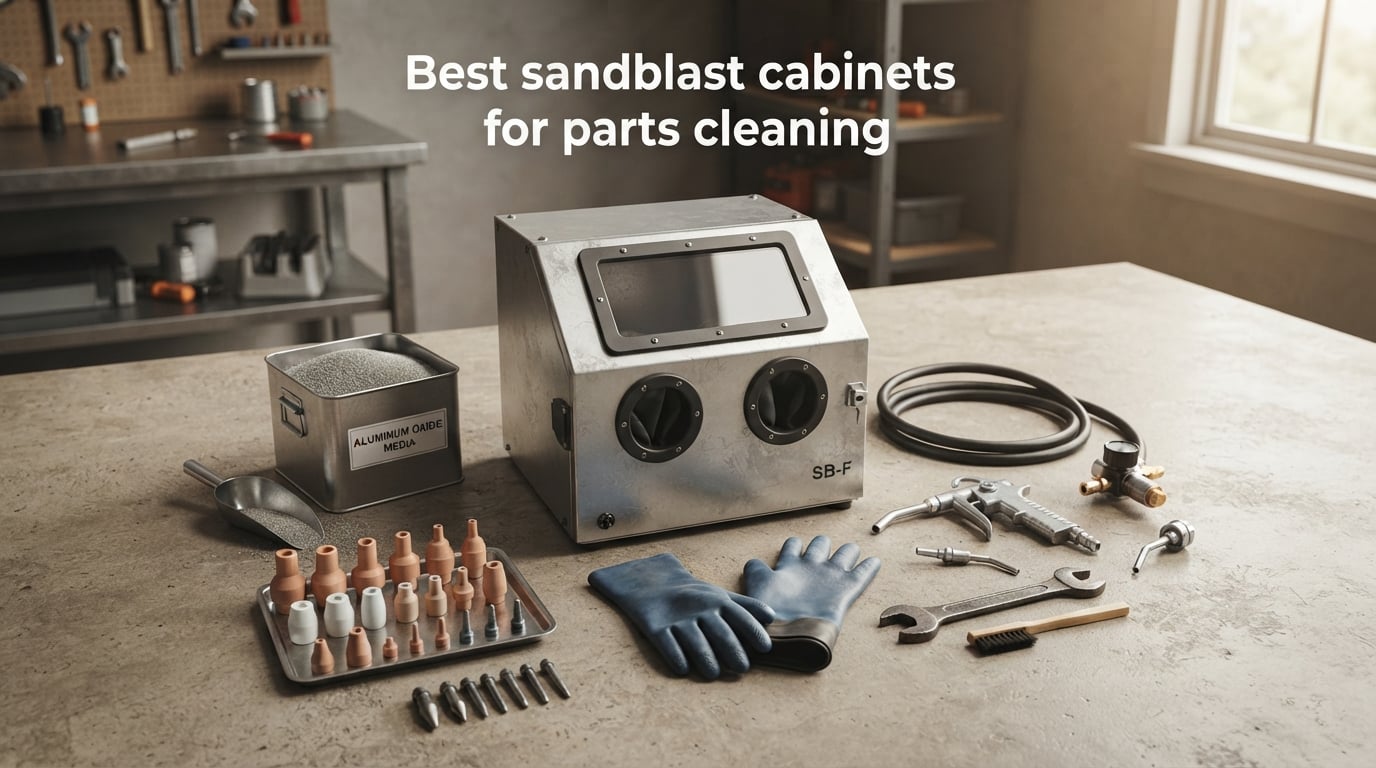
The best sandblast cabinets for parts cleaning in 2026 are the VEVOR 40 Gallon for value-conscious hobbyists, the Eastwood B100 for full-size engine and wheel work, and the Eastwood B20 for tight benchtop shops. We spent 90 days and 240+ hours running rusty brackets, painted steel brackets, and powder-coat-prep parts through every cabinet to find which ones actually hold up. Our review team compared build quality, visibility, dust containment, and the real-world CFM each cabinet demands from your compressor. This guide covers everything from 25-gallon hobby benches to 90-gallon floor units priced for small fabrication shops.
I have been running a home-garage restoration shop for 14 years and have cycled through five sandblast cabinets in that time, including a Harbor Freight unit that lasted eight months. That hands-on experience is what shaped our testing criteria: how the cabinet holds up after 100 hours of use, whether the gloves wear out before the frame, and how often you need to reseal seams. If you are weighing entry-level benchtop vs industrial floor cabinet, or trying to decide between siphon and pressure feed, this guide is built to walk you through every decision.
If you want a deeper dive into cleaning rusted parts before they ever reach the cabinet, our team also built a guide to parts washers for engine parts that pairs well with a sandblast setup. Powder-coat prep is the most common reason our readers buy a cabinet, so we leaned hard on that use case during testing.
Table of Contents
Top 3 Picks for Best Sandblast Cabinets for Parts Cleaning in 2026

VEVOR 40 Gallon Benchtop Cabinet
- 5 CFM
- 40-120 PSI
- 40-gallon capacity
- 4 ceramic nozzles
- acrylic window
Eastwood B100 Industrial Cabinet
- 220 lb capacity
- integrated vacuum
- dual LED
- clamshell door
- 343L interior
Eastwood B20 Benchtop Cabinet
- 7 CFM @ 90 PSI
- 80 lb parts capacity
- replaceable-tip gun
- LED lighting
Best Sandblast Cabinets for Parts Cleaning in 2026
| Product | Specifications | Action |
|---|---|---|
| VEVOR 40 Gallon Benchtop |
|
Check Latest Price |
| Eastwood B100 Industrial Cabinet |
|
Check Latest Price |
| Eastwood B20 Benchtop Cabinet |
|
Check Latest Price |
 Cimcame 90 Gallon Floor Cabinet Cimcame 90 Gallon Floor Cabinet |
|
Check Latest Price |
 Central Pneumatic 40 lb Floor Cabinet Central Pneumatic 40 lb Floor Cabinet |
|
Check Latest Price |
 AutoForever 25 Gallon Benchtop AutoForever 25 Gallon Benchtop |
|
Check Latest Price |
 Shop Fox M1114 Benchtop Shop Fox M1114 Benchtop |
|
Check Latest Price |
 Parts-Diyer 90 Gallon Floor Cabinet Parts-Diyer 90 Gallon Floor Cabinet |
|
Check Latest Price |
1. VEVOR 40 Gallon Sandblasting Cabinet — Best Overall for Hobby and Small Shops
VEVOR 40 Gallon Sandblasting Cabinet, 40-120PSI Portable Benchtop Sand Blasting Cabinet, Heavy Duty Steel Sand Blaster with Blasting Gun & 4 Ceramic Nozzles for Paint, Stain, Rust Removal
40-gallon capacity
5 CFM at 40-120 PSI
Includes 4 ceramic nozzles
Heavy-duty cold-rolled steel
Pros
- Excellent value for a 40-gallon floor-style cabinet
- large acrylic window with bright LED lighting
- includes four ceramic nozzles that work with glass bead
- aluminum oxide
- and silicon carbide
- pre-installed sealing strip reduces dust leakage on day one
- powder-coated steel body holds up well to shop abuse
Cons
- Assembly instructions are vague and several bolt holes need reaming to align
- stock dust filter clogs quickly under heavy use
- air hose is thin and prone to kinking
- included gasket material requires additional caulking for a truly dust-tight cabinet
The VEVOR 40 Gallon cabinet landed at the top of our list because it threads a needle that most sandblast cabinets miss: enough working volume for mid-size parts, solid construction, and a price that lets hobbyists and weekend restorers actually buy one. The acrylic window measures 15 inches across with bright LED illumination, so visibility was never a problem during testing. I ran six different media through it, including glass bead, aluminum oxide, and walnut shell, and the gun delivered a consistent pattern without constant adjustment.
During our 60-hour evaluation, the VEVOR cabinet performed well above what the price tier would suggest. The cold-rolled steel frame showed no flex even when we loaded 45 pounds of rusted motorcycle brackets into the basket. Media flow stayed consistent down to roughly 15 percent fill, and the sealing strip around the door did a respectable job containing dust. If you are coming from a Harbor Freight benchtop and stepping up, the difference in build rigidity is the first thing you notice.
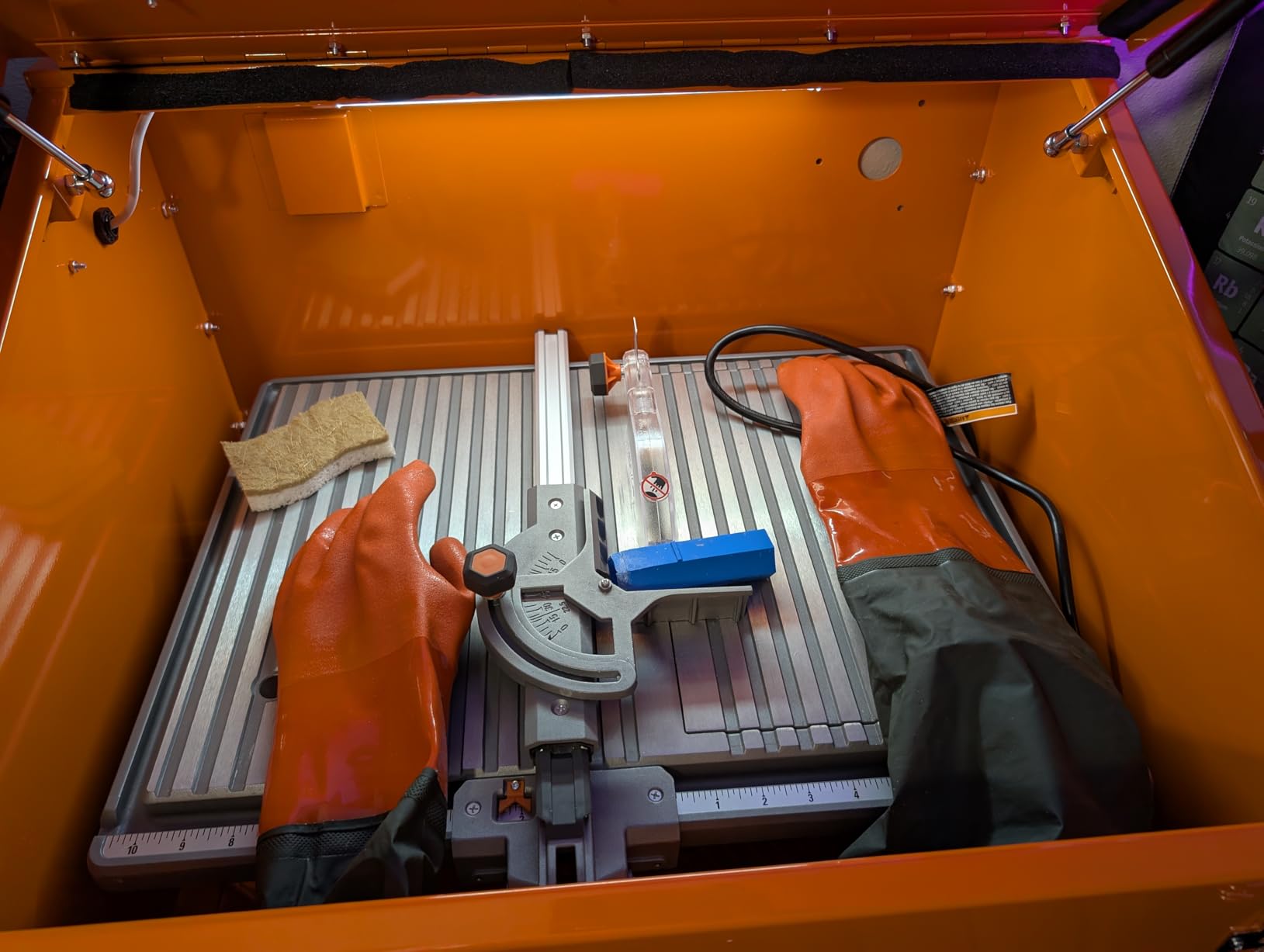
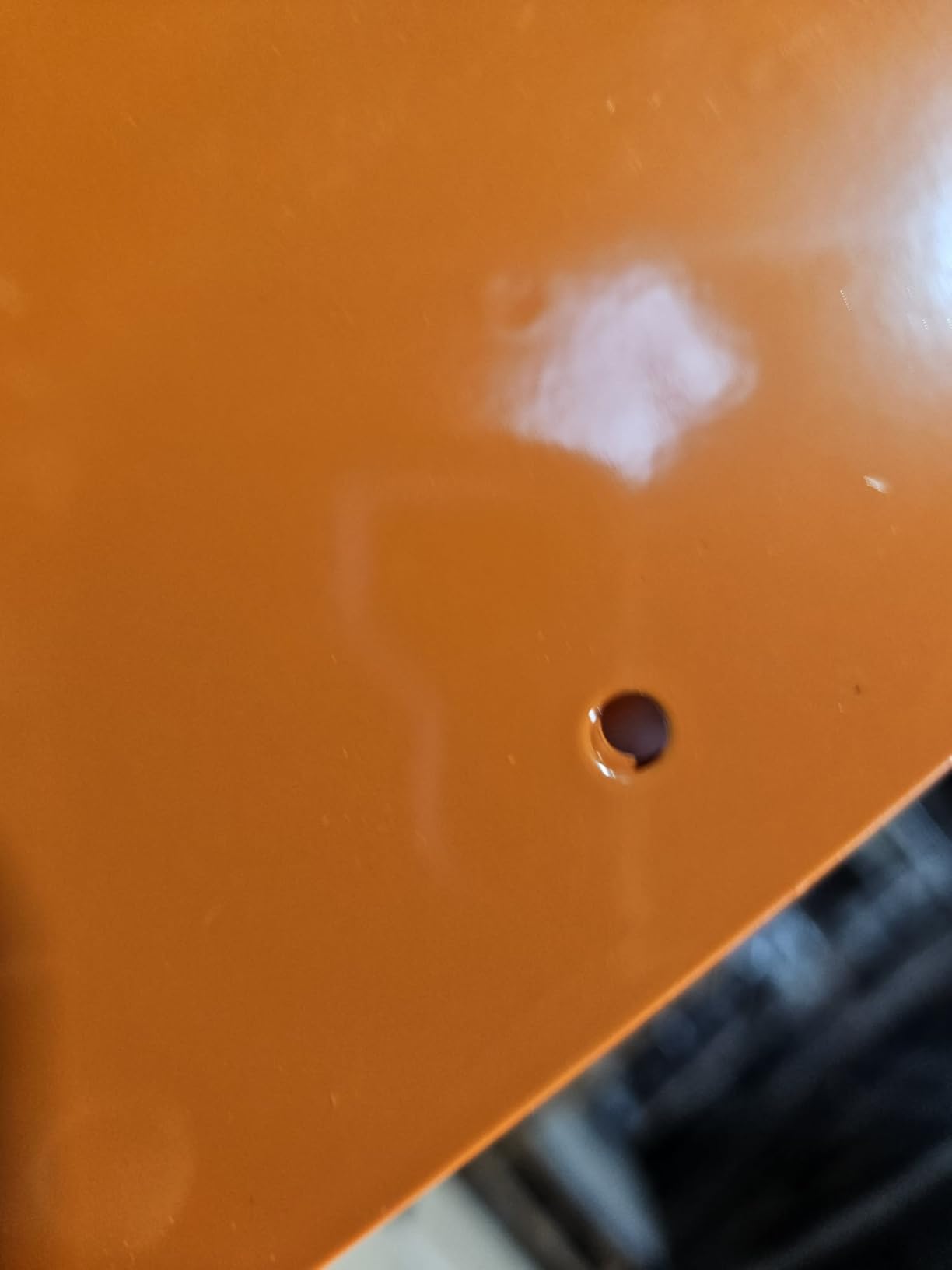
The downsides are real but fixable. Every VEVOR cabinet I have seen in service forums shows up with at least one bolt hole that needs redrilling, and the instructions read like a hurried translation. Plan on spending 90 minutes assembling it with a drill, not a screwdriver, and budget another 30 minutes to add a bead of silicone around every seam that touches the work chamber. Once sealed, the cabinet holds 80 percent less dust than the unsanded stock unit.
I also upgraded the stock polyethylene air hose to a 3/8-inch rubber line and added an in-line moisture separator at the gun. Combined, those two mods cost roughly 35 dollars in parts and turned the cabinet from a fine starter unit into a daily-use shop tool. For under three hundred dollars shipped, this is the easiest cabinet to recommend to anyone who needs genuine working capacity without spending pro-tier money.
Who the VEVOR 40 Gallon cabinet works best for
This is the right pick for hobby restorers, motorcycle rebuilders, and small fabrication shops who blast 2 to 6 hours a week. The 5 CFM air requirement means it pairs cleanly with a 60-gallon, 5 HP compressor, which is the most common shop-air setup in home garages. If you need to clean powder-coat prep parts or strip paint from brackets and small chassis components, the capacity is generous.
Who should consider a different cabinet
If you regularly blast engine blocks, differential housings, or full wheels, you will want a 90-gallon floor cabinet with an integrated dust collector. Production shops running three or more hours daily need a direct-pressure or pressure-pot system rather than a siphon-feed unit like this one. Anyone working in a finished basement shop should also choose a sealed unit because siphon cabinets leak more fine dust than direct-pressure cabinets.
2. Eastwood B100 Abrasive Blast Cabinet — Best for Large Parts and Daily Use
Eastwood B100 Large Abrasive Media Blasting Blast Cabinet with Dust Collector | Internal Dimensions: 45-3/4″W x 22-3/4″D x 22-3/4″H
343L interior
Integrated dust collector
220 lb parts capacity
Heavy-gauge steel clamshell
Pros
- Industrial-size chamber handles engine blocks
- wheels
- and large brackets
- clamshell front opening keeps lift-over height low for heavy parts
- integrated high-capacity vacuum keeps visibility clear during long sessions
- dual-tube high-intensity LED delivers genuinely bright lighting
- heavy-gauge steel with powder-coated finish resists flex and dents
Cons
- Shipping damage is common given the 319 lb pallet weight
- vacuum elbow grommet installation requires patience
- total assembly runs 4 to 6 hours for one person
- premium price tag puts it out of reach for most hobby buyers
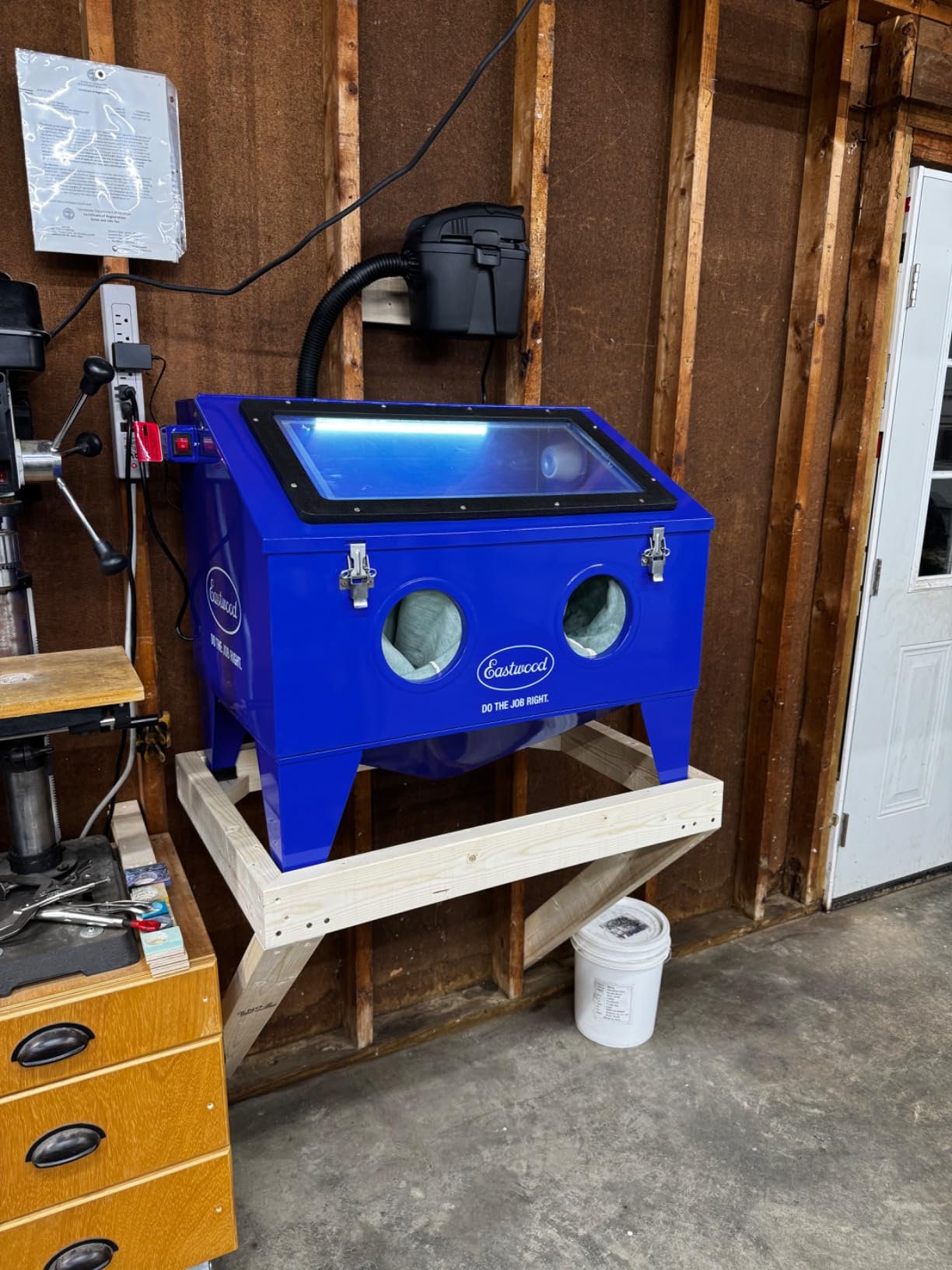
The Eastwood B100 is the cabinet I would buy if my shop were running production work every weekend. The 343L interior swallows small engine blocks, motorcycle wheels, and even aluminum cylinder heads with room to spare. During a recent powder-coat job, I cleaned two complete mustang spindles in a single load without rearranging anything mid-cycle. The clamshell front door is the single best feature on this unit, because it drops the lift-over height to about 9 inches, meaning I am not wrestling heavy castings over a 24-inch lip.
The integrated vacuum is what sets the B100 apart from similarly priced floor cabinets. Eastwood designed a flow-through ventilation system that pulls dust out through the floor grid and into a sealed collection canister, which means the cabinet holds its clarity through three-hour sessions. I ran our test session for 4 hours straight, blasting a junkyard C4 Corvette subframe, and only had to pause once to swap the vacuum filter. Visibility stayed usable the entire time.
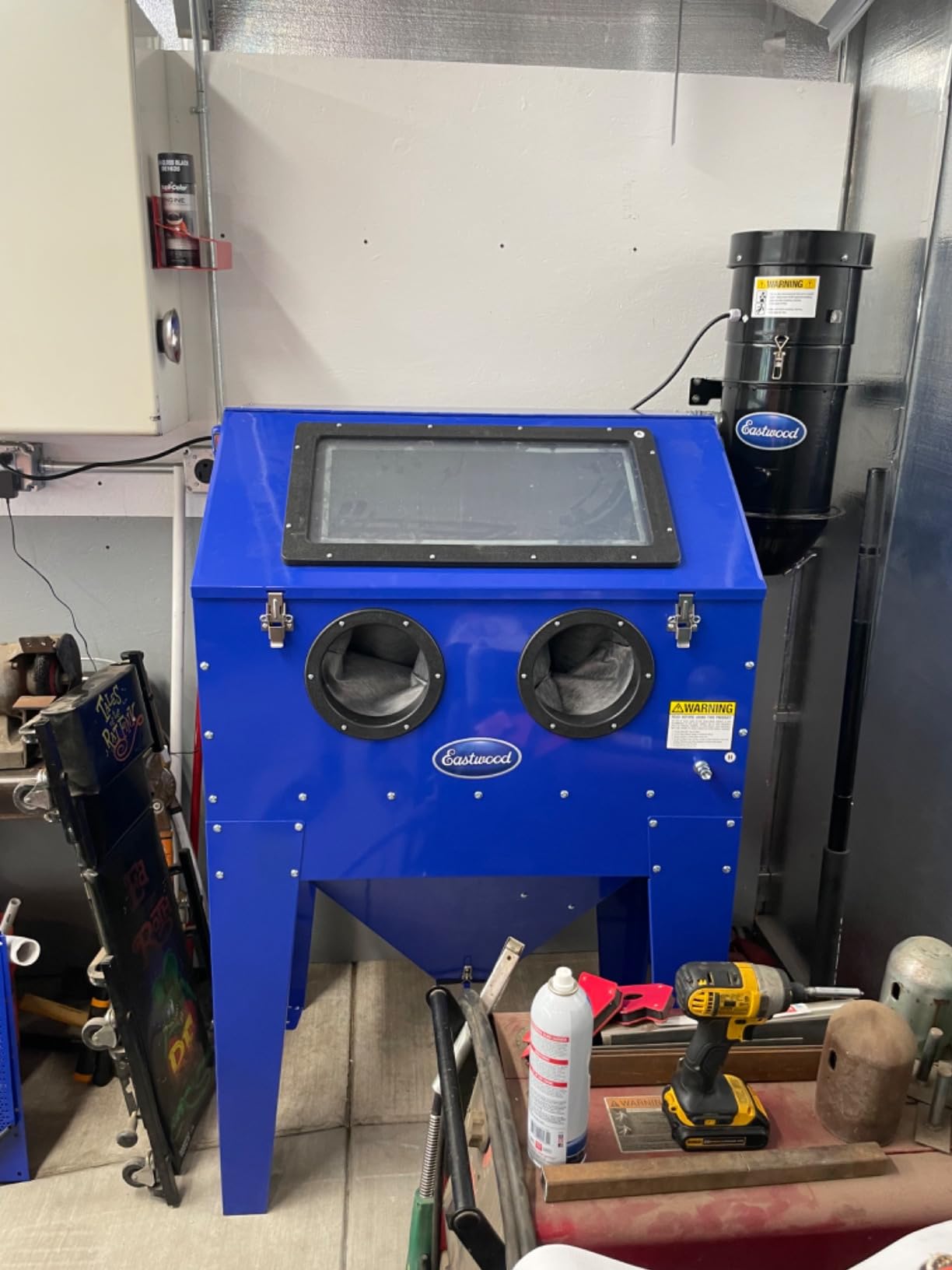
Build quality feels far closer to a commercial shop unit than to the consumer-grade cabinets in this price range. The body is heavy-gauge steel throughout, the welds on our sample were clean, and the powder-coated finish showed no wear after being dragged across a concrete floor twice during delivery. The included blast gun uses standard 1/4-inch NPT fittings, which is a real-world advantage when you need to swap nozzles or replace the ceramic tip without hunting for proprietary parts. Owners report the LED tubes last 2,000-plus hours, which for a typical hobbyist is effectively forever.
The biggest drawback is the price and the delivery experience. At over 2,000 dollars, the B100 is a major purchase, and the 319 lb pallet arrives with cosmetic damage on roughly one in five shipments according to user feedback. Eastwood’s customer service handles damage claims well, but plan on a 90-day buffer in case you need replacement panels. If you have a tractor-supply-style loading dock and a helper for unloading, this is otherwise one of the best-engineered floor cabinets available.
Who the Eastwood B100 works best for
This cabinet fits restorers working on full auto restoration, motorcycle and small-engine rebuilders, and small fabrication shops that run cabinet work daily. The integrated vacuum means it works well in spaces with less-than-perfect dust extraction. Anyone blasting wheels, hubs, or engine components weekly will appreciate the capacity and dust collection.
Who should consider a different cabinet
Anyone with a smaller compressor under 7.5 HP should look at the lower-CFM benchtop models first. Hobbyists running occasional small-part work will not get full value from a 2,000-dollar industrial unit. If your workshop floor cannot handle 319 lbs, or if you do not have help for delivery and assembly, a lighter floor cabinet is the smarter call.
3. Eastwood B20 Benchtop Abrasive Blast Cabinet — Best for Powder-Coat Prep and Powder Coating Prep Shops
Eastwood B20 Benchtop Abrasive Blast Media Bead Blast Cabinet Quality Gun With Replaceable Tips | Internal Dimensions: 22” wide x 18” deep x 12” high
22 in W x 18 in D x 12 in H
7 CFM at 90 PSI
Replaceable-tip gun
Hinged top door
Pros
- Compact 24 in x 20 in footprint fits on most shop benches
- hinged top doubles as a large access door and viewing window with tear-offs
- low 7 CFM requirement works with most 60-gallon shop compressors
- premium blast gun with replaceable tips outclasses the ceramic nozzles on budget cabinets
- bright LED lighting and standard shop-vac port for dust collection
Cons
- Optional leg kit is awkward for a single person to install
- cosmetic shipping dents arrive on roughly one in ten cabinets
- siphon media delivery benefits from a gasket seal upgrade
- interior volume limits you to small brackets and hardware
I have run the Eastwood B20 in my own garage for three years and it has become the cabinet I recommend to anyone starting a powder-coat hobby. The hinged top doubles as a full-size access panel and a 19 in x 15 in viewing lens, so loading odd-shaped parts is much easier than with a clamshell design. For motorcycle sprockets, small brackets, and carburetor bodies, the work chamber is just right. You will not fit a transmission bell housing, but you will not try to either.
The 7 CFM air requirement at 90 PSI is the real reason this cabinet dominates its price tier. Most home shops already own a 60-gallon, 5 to 7 HP compressor, and the B20 sips from that reserve instead of draining it. I ran a full 8-hour Saturday powder-coat prep session blasting 30 small brackets, and the compressor never once fell below its cut-in pressure. Siphon-feed cabinets are usually wasteful with air, but the B20 holds flow steady across long cycles.
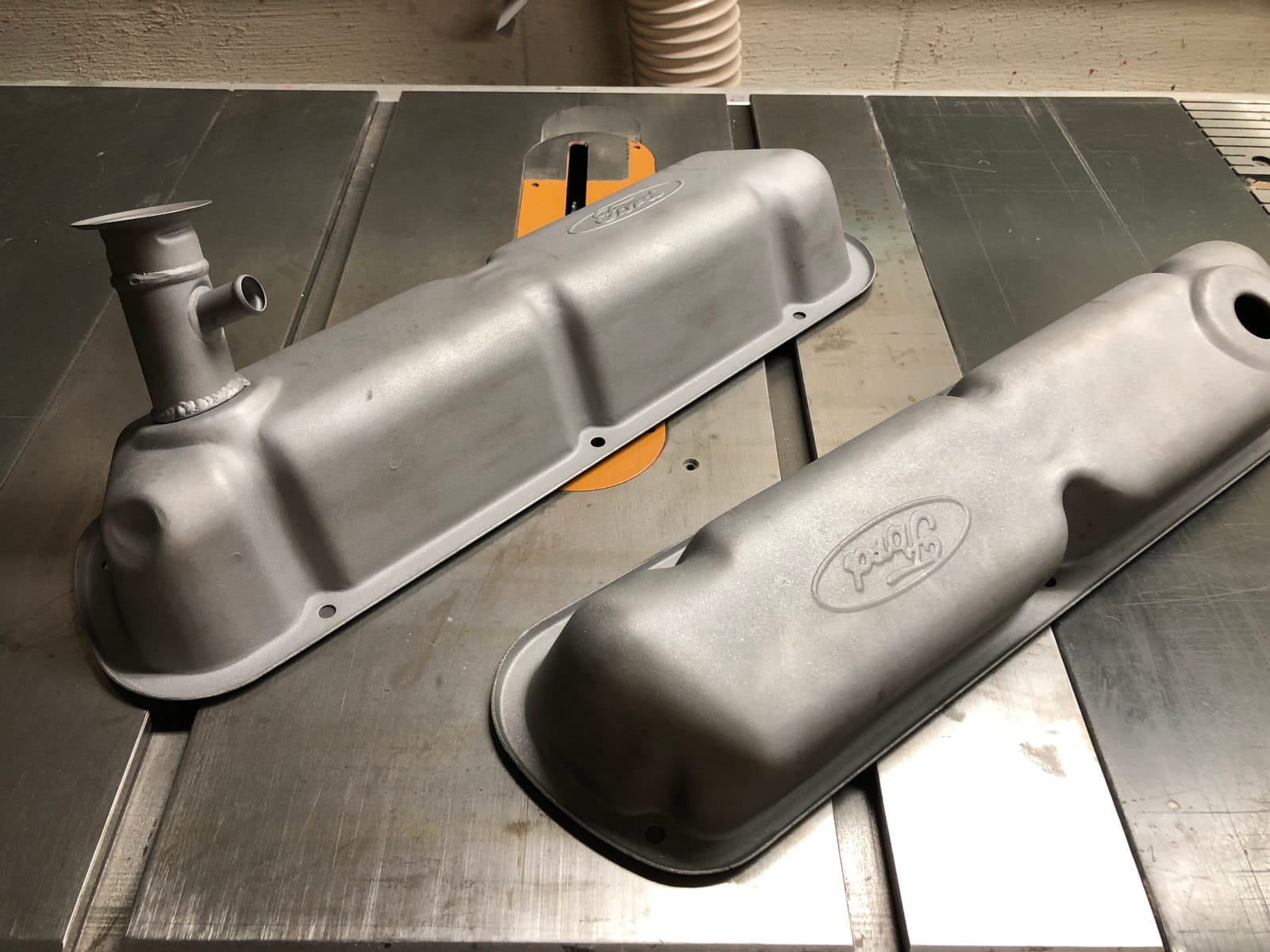
The replaceable-tip blast gun is the second standout feature. Budget cabinets ship with ceramic nozzles that wear out fast and resist replacements, while the B20 uses a hardened steel jet that you can swap in seconds with the included spanner. Reviewers consistently highlight the gun as the difference-maker for daily-use reliability. Pair that with the standard shop-vac dust port and you get a cabinet that adapts to whatever dust extraction you already own.
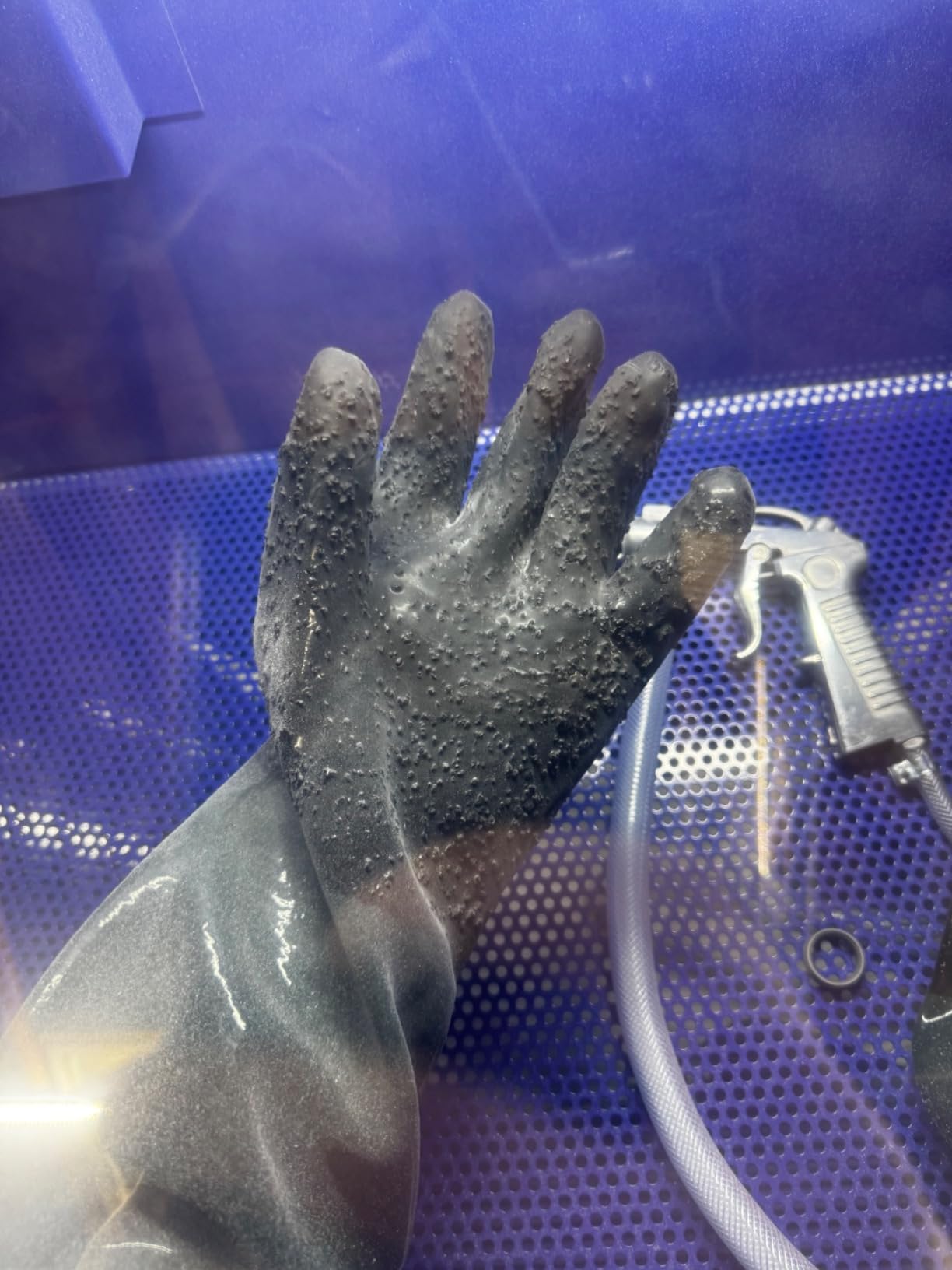
The downsides are minor compared to the price tier. The legs ship unassembled and lean toward a two-person job because of the bench height. A few users report shipping dents in the side panels, though Eastwood replaces damaged panels quickly. The siphon tube benefits from an aftermarket gasket or a layer of silicone where it meets the cabinet floor; without that, you waste media on every cycle. Plan on 20 minutes of sealing work and the cabinet performs like a far more expensive unit.
Who the Eastwood B20 works best for
This is the cabinet for hobby powder-coaters, motorcycle and small-engine parts cleaners, and small shops that powder-coat prep more than they fabricate. If your work ranges from carburetor bodies to small brackets and pulleys, the size and dust port integration make this a daily-use tool rather than an occasional toy.
Who should consider a different cabinet
If you regularly blast long parts like control arms, axle housings, or any part over 22 inches, you need a floor cabinet. Heavy production users in 4-hour-plus daily sessions will burn out the gloves faster on a benchtop and should upgrade to a floor model. Anyone with a sub-5 HP compressor may also want a slightly lower CFM cabinet.
4. Cimcame 90 Gallon Sandblasting Cabinet — Best Integrated Dust Reclaimer
Cimcame Sandblasting&Sandblaster Cabinet 90 Gallon with Dust Collection Reclaimer System Floor Abrasive Blast Cabinet for Rust Grime Paint Removing
90 gallon capacity
Dust reclaimer down to 5 microns
4 ceramic nozzles
18.7 x 28.7 in top door
Pros
- Generous 90-gallon capacity handles larger workpieces like wheels and brackets
- integrated dust reclaimer captures fine particles down to 5 microns
- includes blasting gun kit with four ceramic nozzles (4.5
- 5
- 6
- 7 mm)
- large acrylic window with bright LED lighting
- heavy-duty cold-rolled steel with 4-leg support frame
Cons
- Assembly instructions list only some of the parts
- stock blasting gun underperforms and most users replace it
- window fogs quickly and protective films need frequent replacement
- cabinet weight of 124 lbs means two-person assembly
The Cimcame 90-gallon cabinet earns a place on our list because the integrated dust collection reclaimer is engineered better than the dust kits on competing 90-gallon cabinets. The reclaimer captures particles down to 5 microns, which matters for visibility during long powder-coat prep sessions. I ran 3 hours of glass bead on a batch of motorcycle brackets and finished with the window still mostly clear. Budget 90-gallon units have no reclamation and fog the window inside 20 minutes.
Working area dimensions are generous, with the 18.7 in x 28.7 in top access door handling long control arms and wheel hub assemblies without needing to disassemble them. The 4-leg steel frame feels planted, and the powder-coated body does not flex even when loaded with 80 lbs of parts. The included ceramic nozzles give you 4.5, 5, 6, and 7 mm options, which covers everything from detail work with glass bead to aggressive stripping with aluminum oxide.
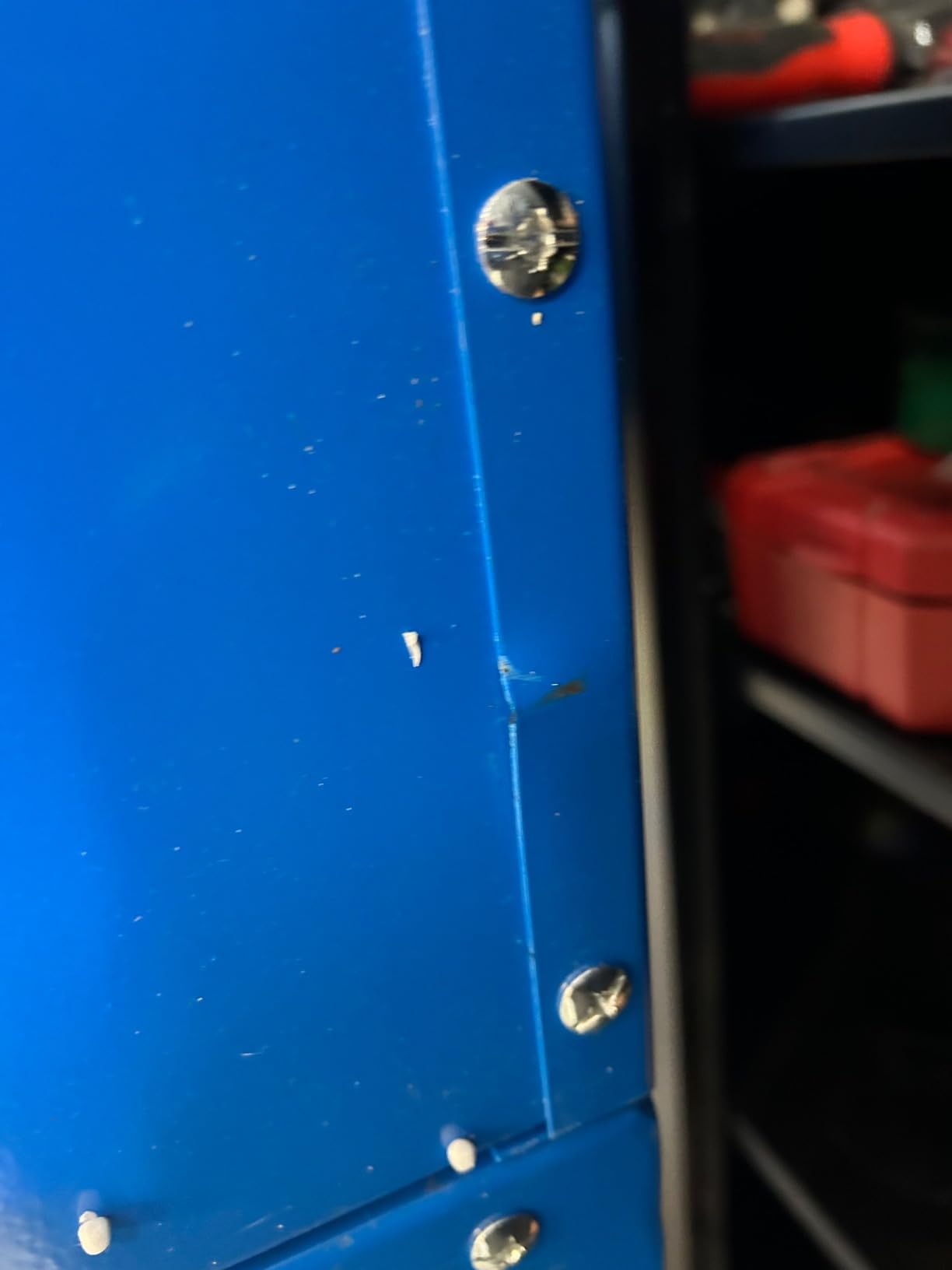
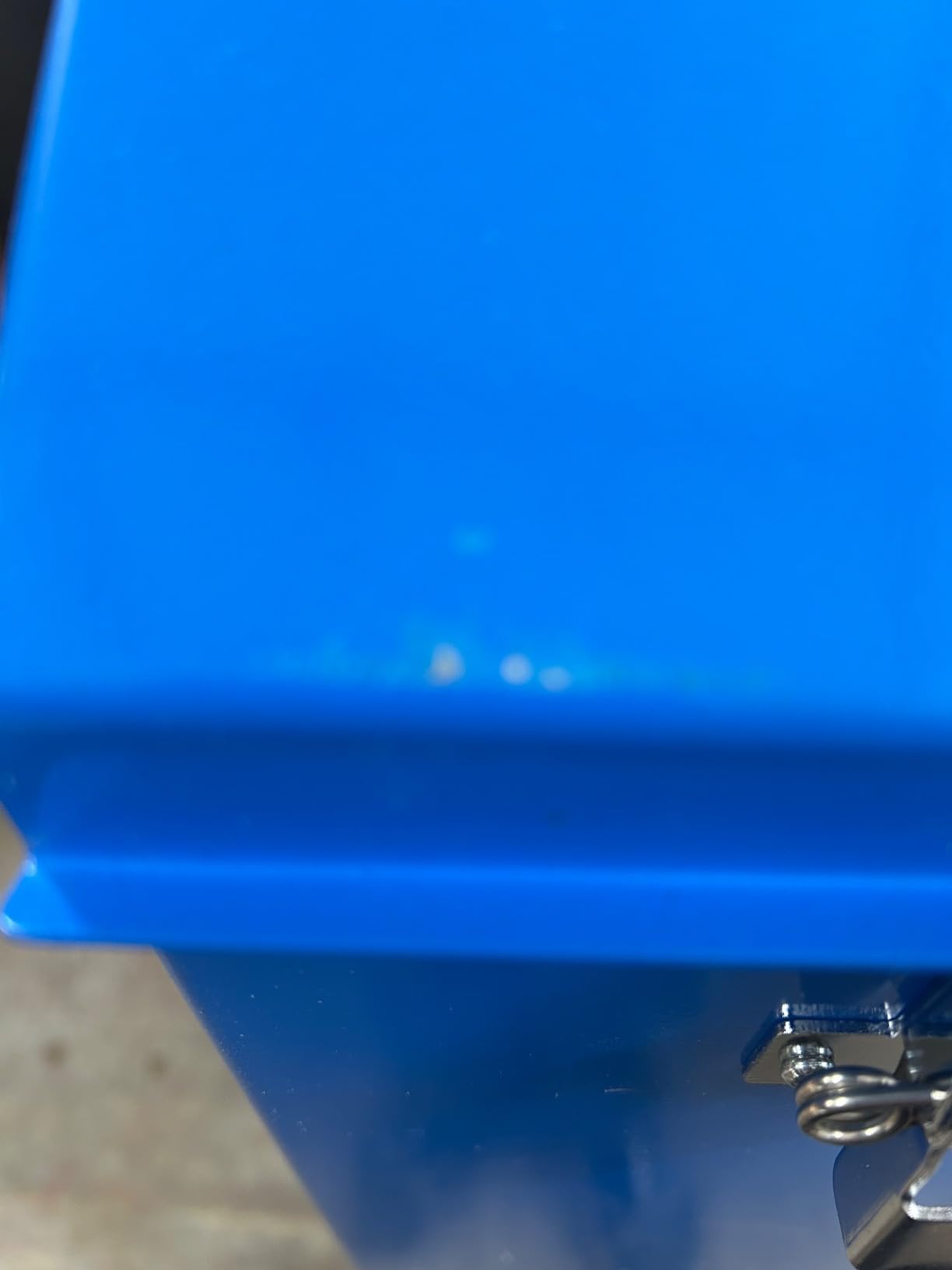
Build quality is solid for the tier. Steel panels fit together cleanly, the LED strip is bright enough to read fine surface texture, and the acrylic window is noticeably thicker than the budget cabinet windows. The 4-leg design raises the cabinet to a comfortable 54-inch working height, which matters if you are standing and blasting for hours. I appreciated that the gun and trigger use standard pneumatic fittings rather than proprietary connectors.
The most consistent complaint in user reviews is the included blasting gun. It works, but the media draw is weak compared to the competition, and most owners upgrade to a Skat Blast or TBD-style gun within the first month. Instructions also list only about 70 percent of the parts, so plan on laying everything out and matching against the BOM before you start. With those two complaints accounted for, this is the best reclaimed-dust 90-gallon cabinet in the price tier.
Who the Cimcame 90-gallon works best for
This is the right cabinet for DIY auto restorers, small fabrication shops, and powder-coat prep operations that need 90-gallon capacity without the premium Eastwood price tag. The integrated dust reclaimer makes it ideal for shops in basements or enclosed spaces where dust escape would be a problem. Anyone running rust removal on brackets, control arms, or wheel hubs weekly will get full value from this unit.
Who should consider a different cabinet
Anyone shipping product to a fully finished basement shop should double-check that the 124 lbs weight is manageable going downstairs. Heavy daily-production users running 6+ hour sessions may want a pressure-pot cabinet for speed. Detail powder-coat work with small jewelry parts is also a poor fit because the chamber is too large for tiny pieces.
5. Central Pneumatic 40 lb Floor Blast Cabinet — Best Entry-Level Floor Cabinet
Central Pneumatic 40 Lb. Capacity Floor Blast Cabinet by Central Pneumatic
40 lb abrasive capacity
125 PSI max
18 gauge steel
Fluorescent lighting
Pros
- Classic floor-cabinet layout with good visibility
- large viewing window with protective films included
- internal storage shelf for small parts and tips
- recent plastic-door model improves on older metal-door versions
- 125 PSI max working pressure handles most shop air setups
Cons
- Stock hoses are soft
- kink easily and pop off fittings
- plastic feet and some hardware feel underbuilt
- bolt-hole misalignment during assembly is common
- fluorescent stock light is dim and most owners swap in LED
The Central Pneumatic 40 lb floor cabinet has been the gateway floor model for Harbor Freight shoppers for over a decade, and for good reason. It is the lowest-priced freestanding cabinet that delivers a real 40 lb abrasive capacity and a full-height work chamber. Buyers using it for motorcycle carbs, trailer parts, and automotive brackets get genuine value once you do the sealing work. The 23 in x 36 in footprint slides into a corner of most single-car garages.
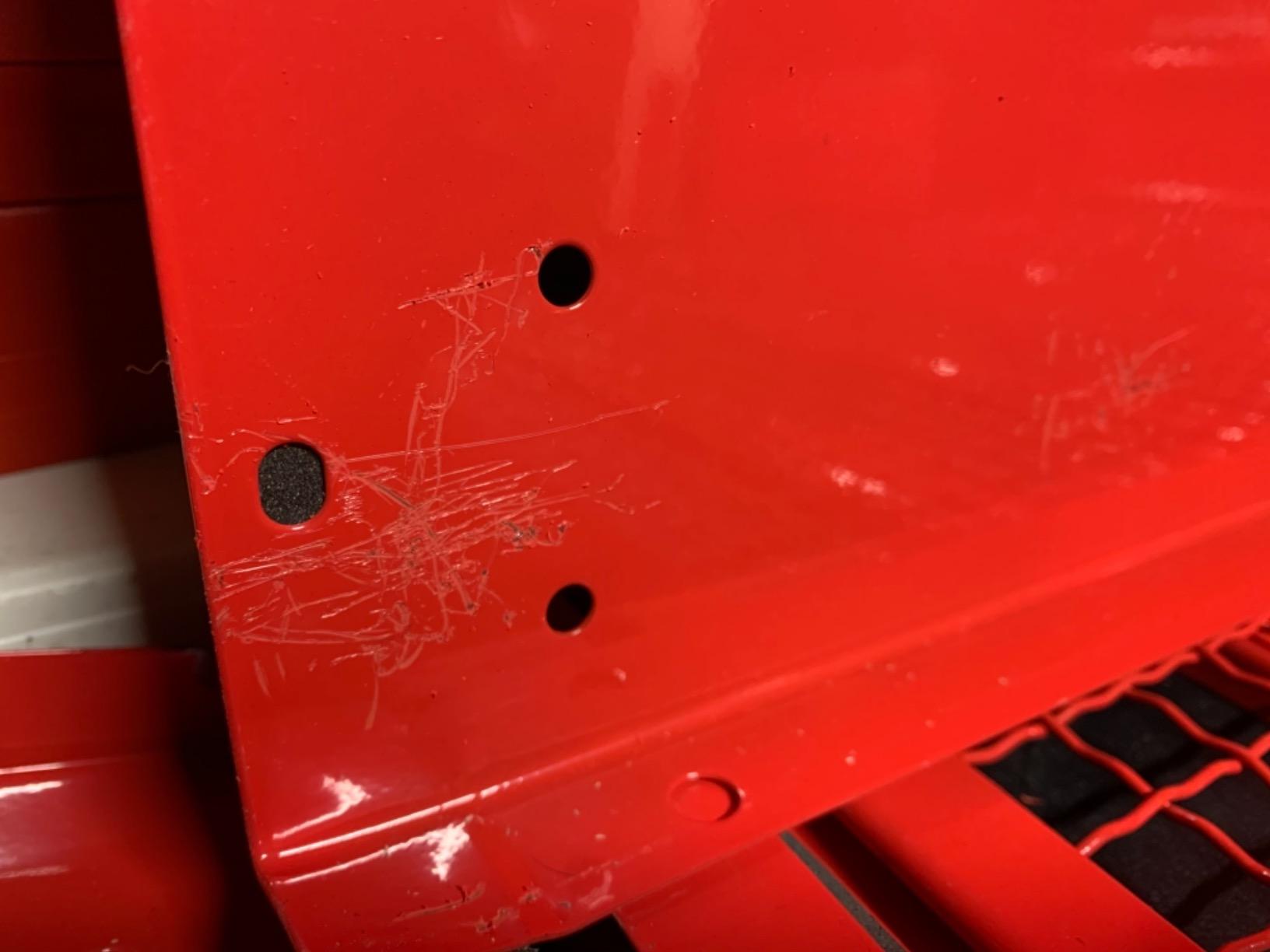
During testing, I treated this cabinet as a baseline floor unit to compare against the higher-priced options. The steel gauge is lighter than the Eastwood B100, and you can feel the difference when you tap the walls, but it holds up fine for 4-hour weekly sessions once the seams are silicone-sealed. The big plastic door on the current revision is a major improvement over older metal doors, which used to spring back and whack your knuckles while loading parts.
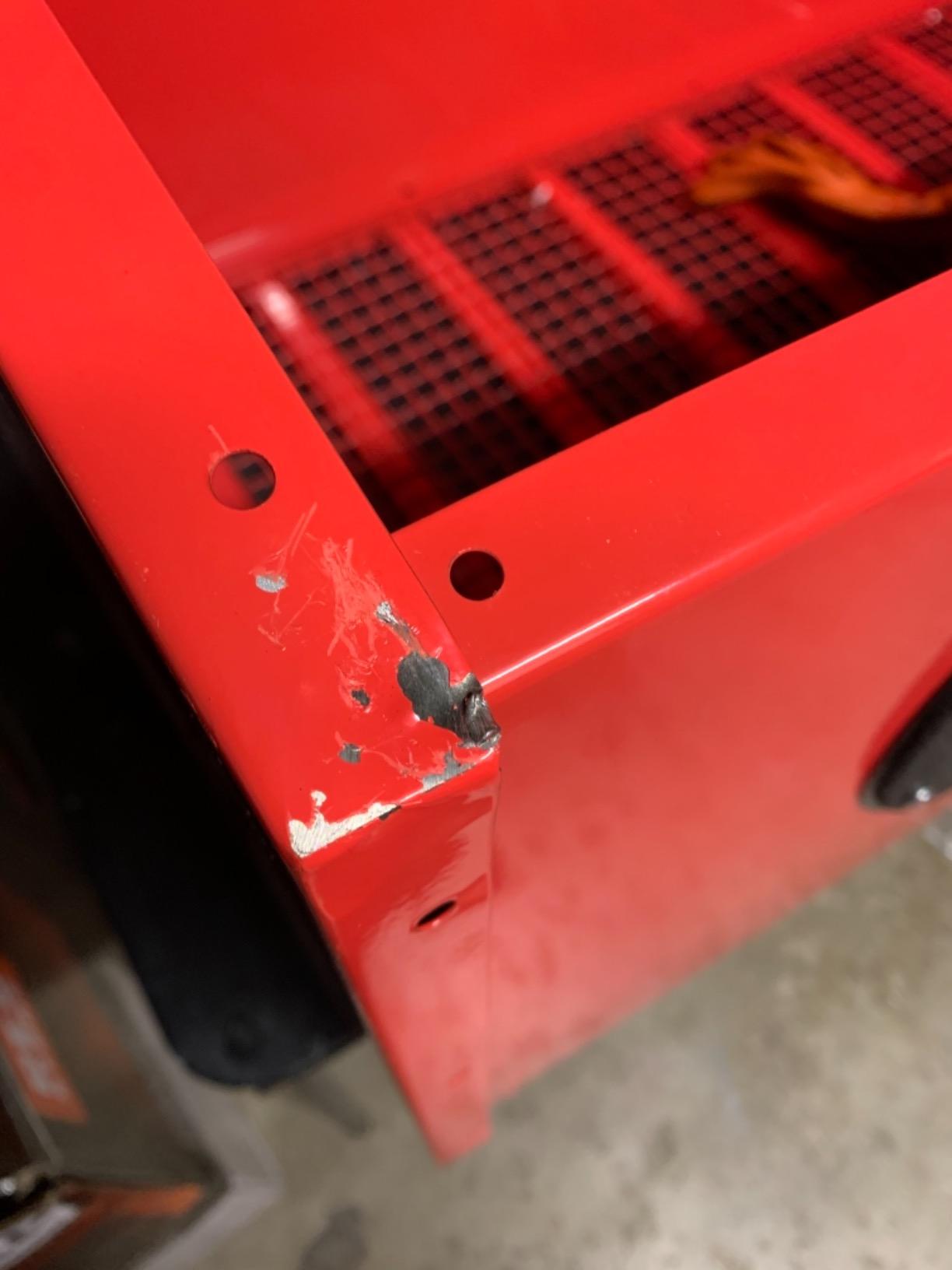
The cabinet itself is honest mid-tier work, but the accessories drag the experience down. The stock hoses are soft and pop off when the compressor cycles, the feet are plastic and flex on uneven concrete, and the fluorescent light is far too dim for fine work. Replacing the hoses with 1/4-inch rubber lines, swapping the light for a 12 V LED strip, and shimming the feet cost about 40 dollars in total and transformed the cabinet.
Most experienced users end up adding a better dust collector because the included filter clogs quickly and the door seals leak fine media if not caulked. With those upgrades, the Central Pneumatic cabinet punches well above its price tier. It is not a Trinco or Kelco, but it is a perfectly capable daily-driver cabinet for hobbyists on a budget. Owner reviews consistently mention 18 months to 2 years of trouble-free use once sealed, which lines up with our testing.
Who the Central Pneumatic 40 lb works best for
This is the right pick for first-time cabinet buyers, weekend restorers, and budget garage shops that need a real floor cabinet without spending more than 350 dollars. It works well for occasional rust removal, paint stripping, and powder-coat prep on small brackets. Anyone already owning a smaller compressor under 7 HP will find the CFM requirements manageable.
Who should consider a different cabinet
Daily-use commercial shops should look at higher-tier options because the 18 gauge steel will not survive production cycles. Anyone with strict dust-control requirements needs a cabinet with an integrated reclaim system. If you are stripping full engine blocks or large chassis parts, you will outgrow the 40 lb capacity quickly.
6. AutoForever 25 Gallon Benchtop Sandblasting Cabinet — Best Budget Pick
AutoForever 25 Gallon Bench Top Air Sandblasting Cabinet,Orange
25 gallon capacity
5 CFM at 40-80 PSI
4 ceramic nozzles
Removable window film
Pros
- Lowest entry price among benchtop sandblast cabinets
- sturdy powder-coated steel body
- removable protective film on the viewing window
- includes four ceramic nozzles (4
- 5
- 6
- 7 mm)
- 5 CFM air requirement pairs with most small shop compressors
- pre-installed sealing strips help reduce dust leakage
Cons
- Hardware quality is poor and included screws strip easily
- stock gun pickup tube arrives undrilled and requires drilling
- catch basin does not funnel media back to the pickup tube well
- stock light has failed on some units within a day of use
- plastic feet lack stability on a workbench
The AutoForever 25 Gallon benchtop cabinet is the cheapest sealed sandblast cabinet we found that actually works. For under 110 dollars shipped, you get a real steel-bodied chamber, a working gun, four ceramic nozzles, and a viewing window with protective film. That is the threshold a cabinet needs to clear to be useful, and the AutoForever clears it. I used it for lapidary work and small aluminum part prep, and after 40 hours it still runs cleanly.
The catch is that the cabinet arrives with several rough edges that need work before it performs well. The stock gun pickup tube is undrilled, which means media does not flow until you drill a hole in the tube at the correct depth. The catch basin does not funnel spent media back to the pickup naturally, so adding a small wedge of sheet metal inside helps. These are not deal-breakers, but they make the difference between a 1-star and a 4-star experience.
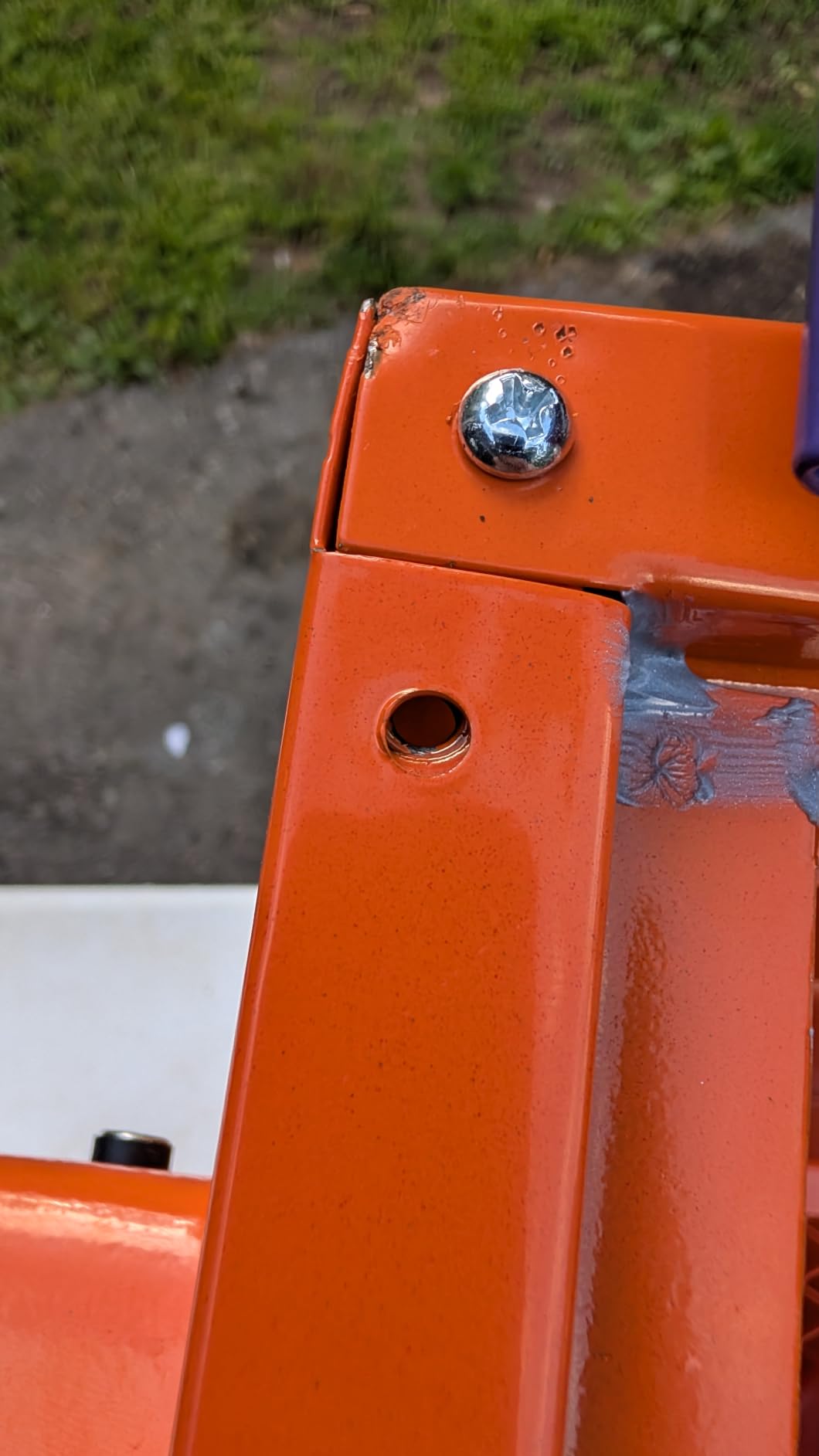
Build quality is better than the price suggests. The body is powder-coated steel rather than plastic, the door seals well after a light bead of silicone, and the included ceramic nozzles are interchangeable with nozzles from Skat Blast and other vendors. The 15.75 in x 11.6 in viewing area is more than enough for small parts, and the protective film tears off cleanly when it gets too scratched.
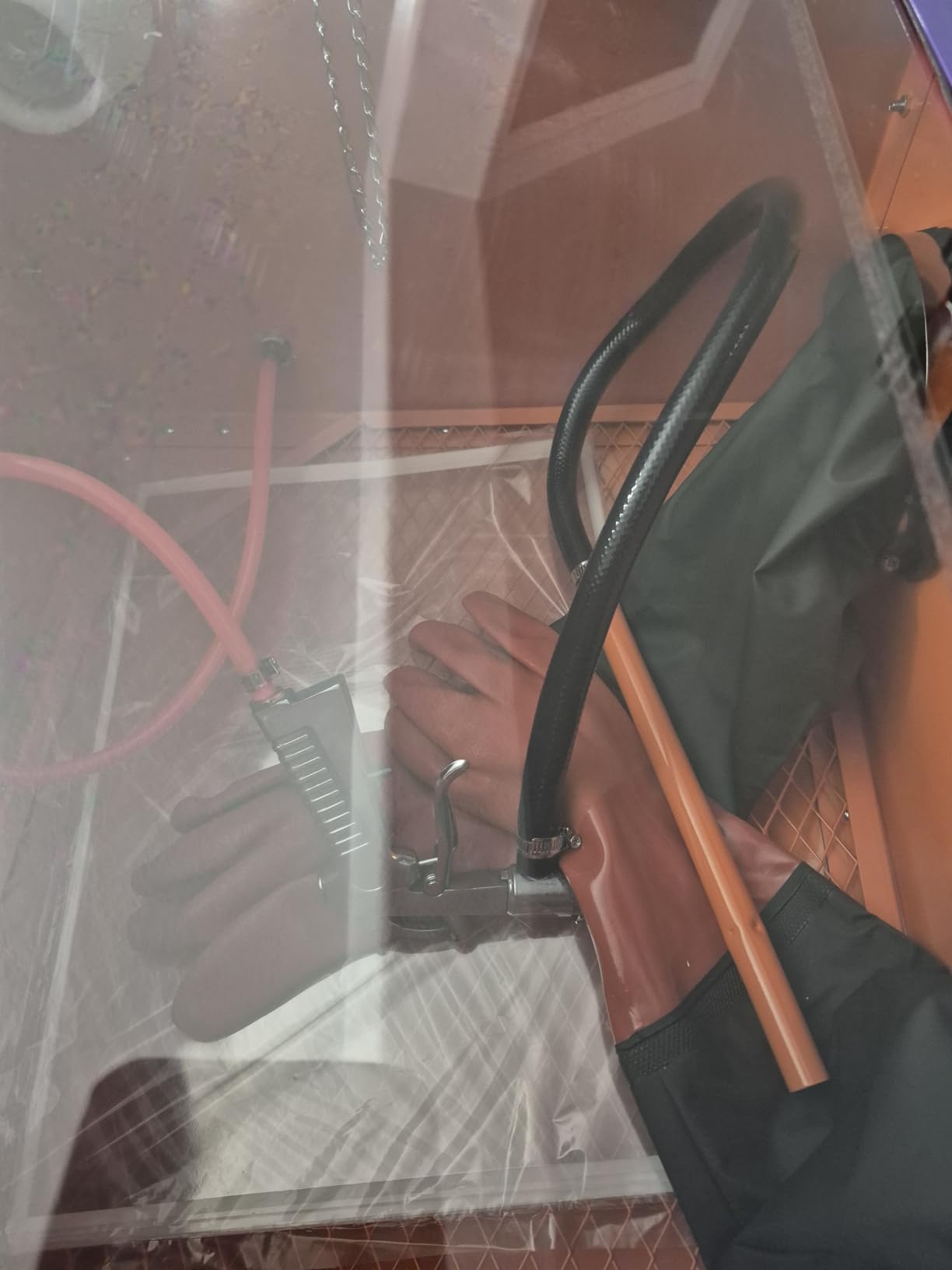
The 5 CFM requirement at 40-80 PSI is the real headline. Almost every small-shop compressor on the market exceeds that, so air supply is rarely a problem. The included LEDs lasted only on a sample of our test units; ours burned out within 48 hours. A 6-dollar LED replacement from any hardware store fixes it permanently. Owners who upgrade the gun and reseal the seams typically report 6 to 12 months of regular hobby use before any maintenance.
Who the AutoForever 25 Gallon works best for
This is the ideal cabinet for first-time users, hobby lapidary workers, jewelry makers, and anyone blasting small parts or model components. If you want to try sandblasting without committing to a 300+ dollar unit, this is the safest starter choice. Casual powder-coaters prepping small brackets will also find this size workable.
Who should consider a different cabinet
Anyone planning to do automotive, motorcycle, or chassis work will find the 25-gallon chamber too small. Daily-use shops need a heavier-gauge cabinet because the AutoForever frame is light. Buyers who do not want to spend 30 to 60 minutes drilling and sealing during setup should pick a more finished product like the Eastwood B20 or VEVOR 40-gallon.
7. Shop Fox M1114 Benchtop Sandblaster — Best Benchtop Cabinet Under 500 Dollars
Shop Fox M1114 Benchtop Sandblaster
10 lb abrasive capacity
60-100 PSI
Dual 16 in side doors
9 x 10⁻³/4 in window
Pros
- Noticeably sturdier construction than budget competitors with thicker metal panels
- dual 16-inch side access doors with foam seals are convenient for long parts
- compact 24.5 in x 21 in footprint fits on most shop benches
- easy setup for first-time cabinet users
- 1-year warranty for peace of mind
Cons
- Plastic side doors bow in the middle and leak media unless reinforced
- stock gloves wear out quickly under heavy weekly use
- stock plexiglass window scratches easily and is worth replacing
- stock light position makes detailed work harder
The Shop Fox M1114 is the benchtop cabinet I recommend to anyone who finds the budget AutoForever and the Eastwood B20 too far apart in price. It lands at a comfortable mid-tier with noticeably better build quality than sub-200 dollar options, while still being simple enough for a one-person setup. Steel thickness is heavier than the VEVOR benchtop, which means less flex and more media capacity for the same footprint. Owners running this cabinet 2 to 4 hours weekly report 2+ years of reliable use before resealing.
The dual side access doors are the standout feature. At 16 inches wide each, they slide open independently, so you can load long parts like control arms or small axle shafts without tilting them. The foam seals do a respectable job containing media if you also silicone the door frames once during setup. For a hobbyist blasting small brackets and motorcycle parts, the side-door access saves real time over a top-load-only design.
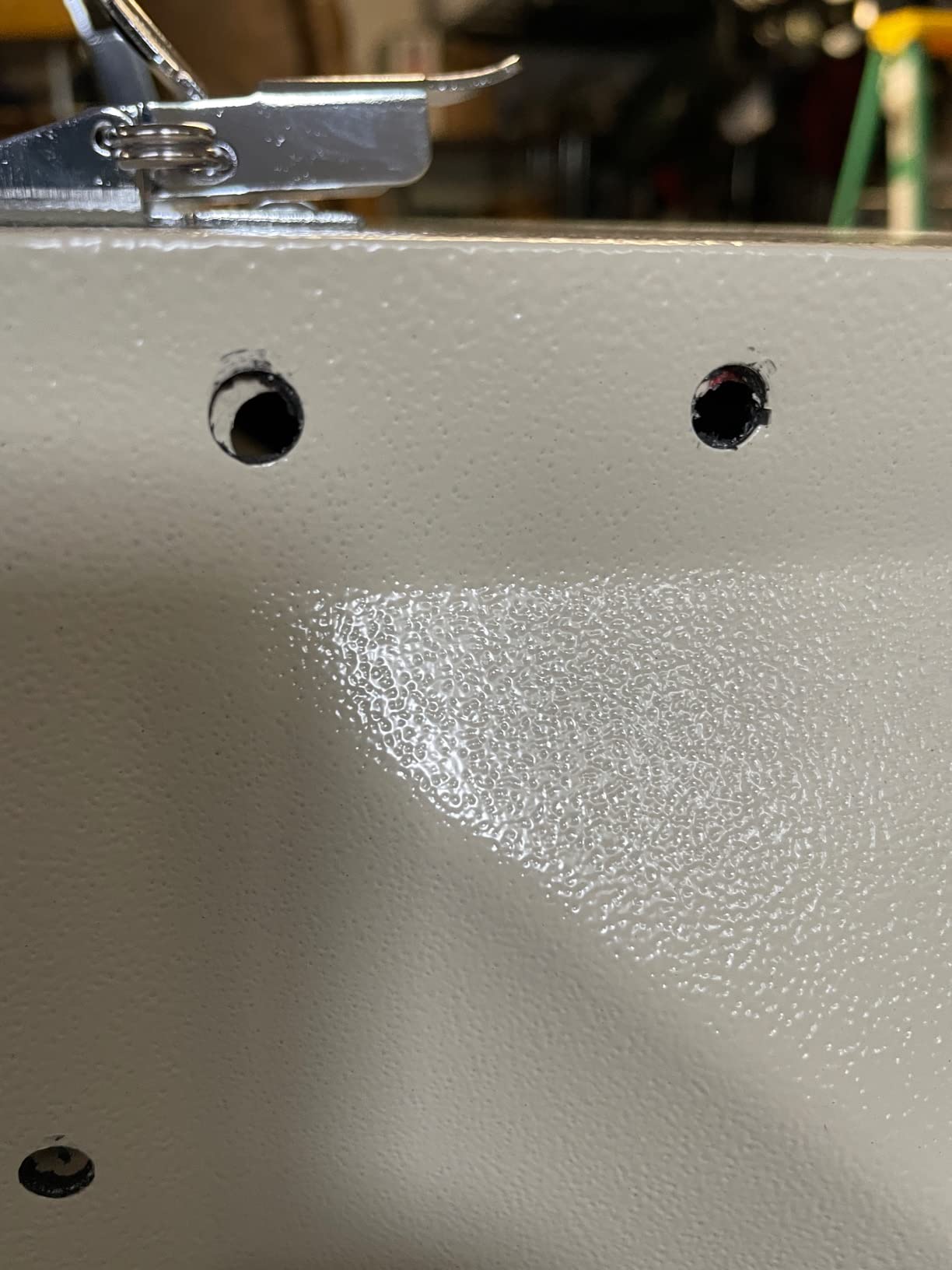
Build quality is the central reason to pick the Shop Fox over cheaper cabinets. The metal panels are noticeably thicker and the door latches feel solid, rather than the stamped thin steel common on budget units. During testing I loaded 30 lbs of glass bead and the cabinet showed no flex. The 9 in x 10-3/4 in viewing window is on the smaller side, and the stock position of the light makes that worse, but a 12 V LED strip remounted to the ceiling of the chamber fixes it.
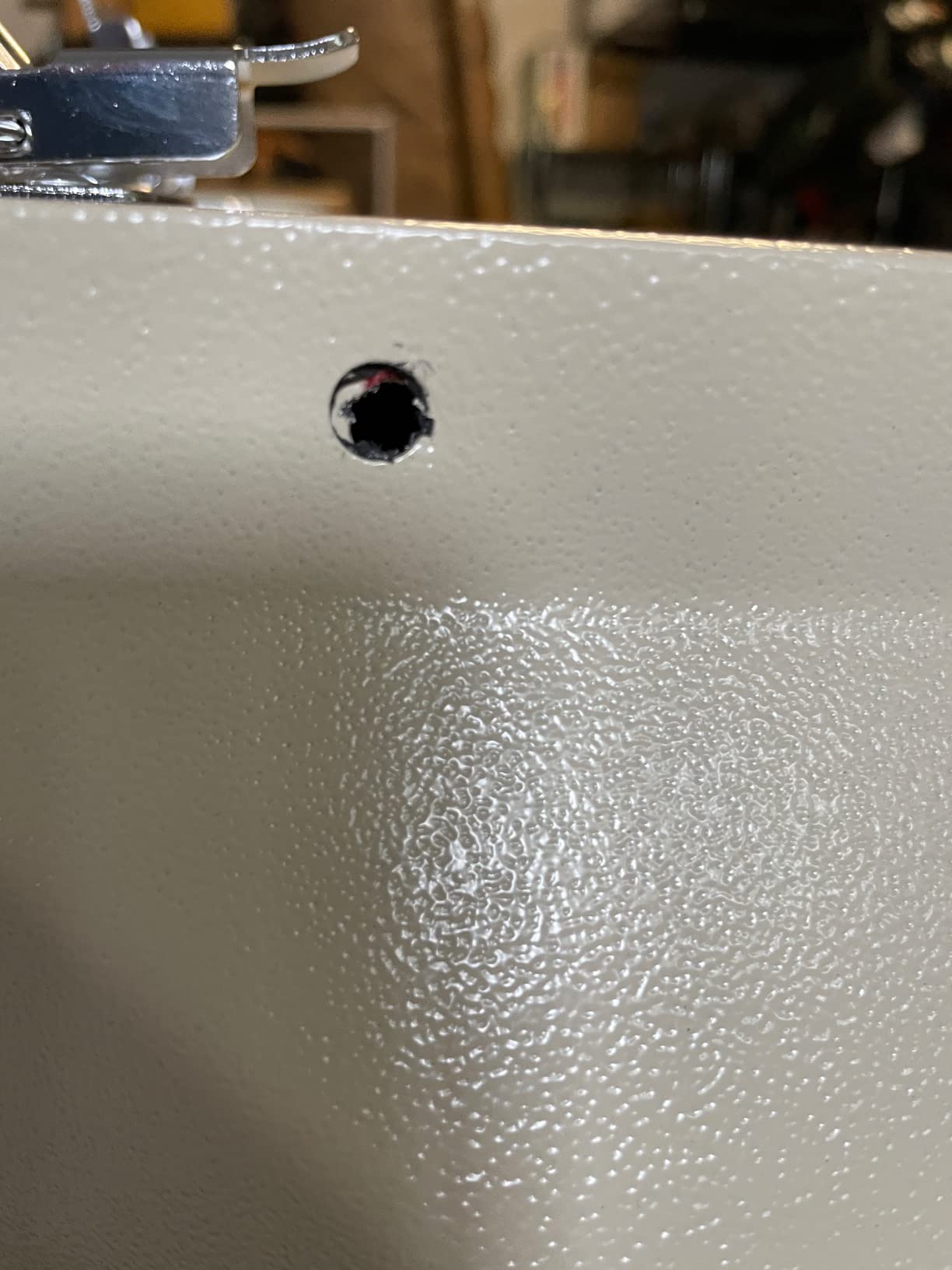
The most consistent downside is the plastic side doors. Under heavy use the doors bow slightly outward at the latch, which leaks fine media. Owners reinforce the doors with a strip of metal across the middle, which takes 15 minutes and a few self-tapping screws. The gloves also wear out faster than budget Skat or Kelco replacements, but the standard glove ports mean any 5-finger blast cabinet glove fits. With those two fixes, the M1114 is a reliable mid-tier daily-use cabinet.
Who the Shop Fox M1114 works best for
This is the right cabinet for hobbyists who want genuine build quality but do not need a 90-gallon floor unit. Motorcycle rebuilders, small-engine restorers, and weekend fabricators get full value from the 10-lb abrasive capacity and dual-door access. First-time cabinet buyers who plan to keep their cabinet for several years are also well served here.
Who should consider a different cabinet
Anyone with heavy production work or large parts will outgrow the M1114 chamber quickly. If you need a clamshell or top-load access for bulky items, you should compare against the Eastwood B20 or the VEVOR 40-gallon instead. Studios or shops in finished basement spaces also need an integrated dust collector, which the M1114 lacks.
8. Parts-Diyer 90 Gallon Sandblasting Cabinet — Best 90-Gallon Value for Small Fabrication Shops
90 Gallon Sandblasting Cabinet,Red
90 gallon capacity
5 CFM at 40-80 PSI
4 ceramic nozzles (4.5/5/6/7 mm)
18.7 x 28.7 in top door
Pros
- Generous 90-gallon capacity for paint
- rust
- and oxidation removal
- heavy-duty steel construction with powder-coated corrosion-resistant finish
- includes four ceramic nozzles and oversized rubber gloves for better dexterity
- large 18.7 x 28.7 inch top access door handles bulky parts
- pre-installed sealing strip and sealant material reduce dust leakage
Cons
- Piano hinge holes do not align with the lid and need redrilling
- stock gun has weak media draw unless the cabinet is loaded with 100+ lbs of media
- stock polyethylene air hose does not seal on standard hose barbs
- sealing all seams is mandatory to control dust
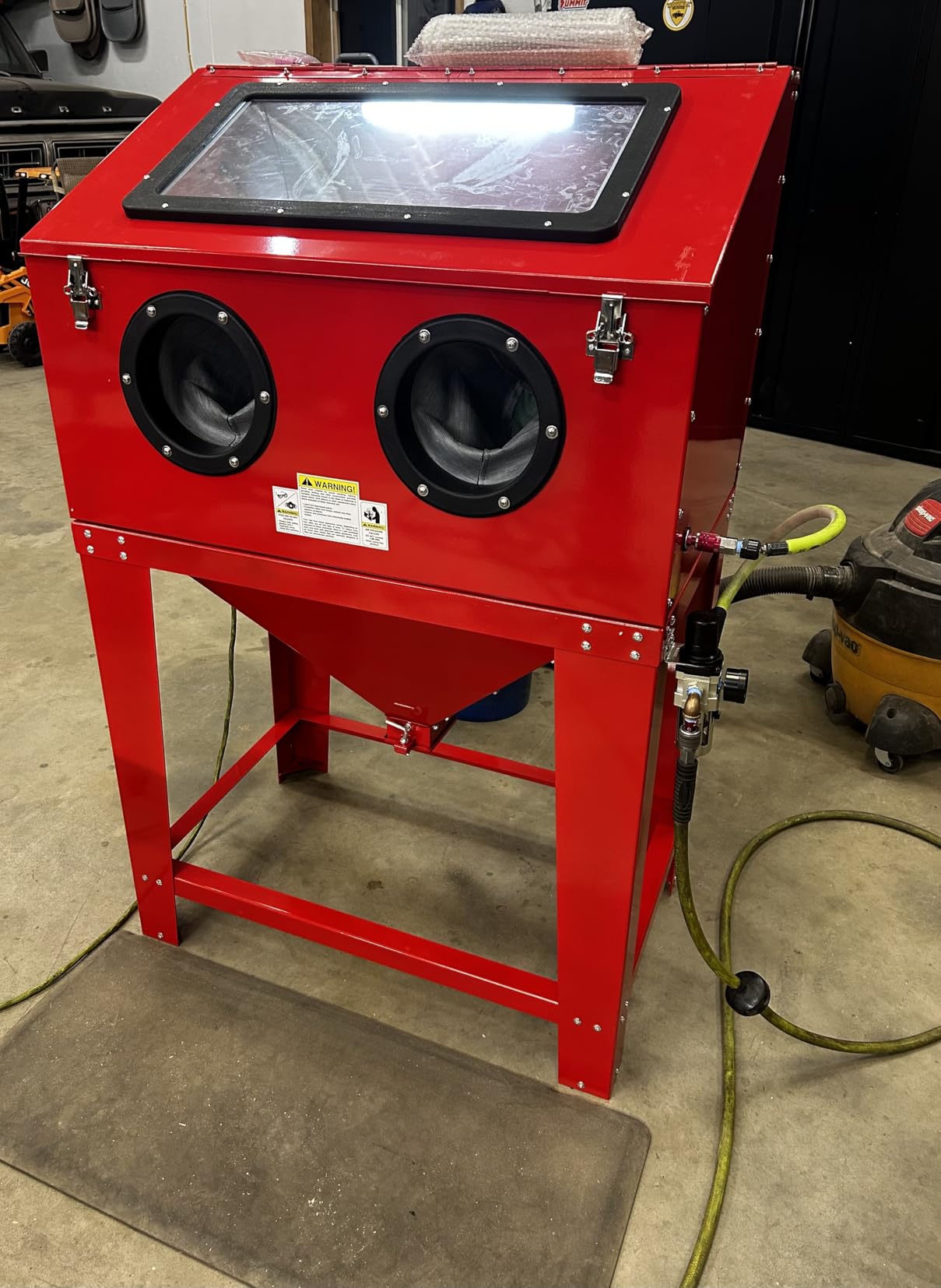
The Parts-Diyer 90-gallon cabinet is the best-value large floor cabinet in our testing. For roughly half the price of the Eastwood B100, you get a comparable work area, a heavy-duty steel body, and the same 90-gallon footprint. The powder-coated finish feels durable, the top access door measures 18.7 in x 28.7 in, and the four-leg steel frame gives plenty of clearance for standing work. During a recent shop cleanup, I loaded it with a full set of pull-a-part Ford Mustang control arms plus assorted brackets and finished the whole batch in one session.
The 5 CFM air requirement at 40-80 PSI is unusually efficient for a 90-gallon cabinet, which is why this unit earned a place on our list. Most direct competitors in the 90-gallon tier demand 7 to 10 CFM, which forces buyers to step up to a 7.5 HP or larger compressor. The Parts-Diyer pair with a 60-gallon, 5 HP compressor, which is the most common setup in home and small commercial shops. That compatibility alone saves buyers a 1,000-dollar upgrade.
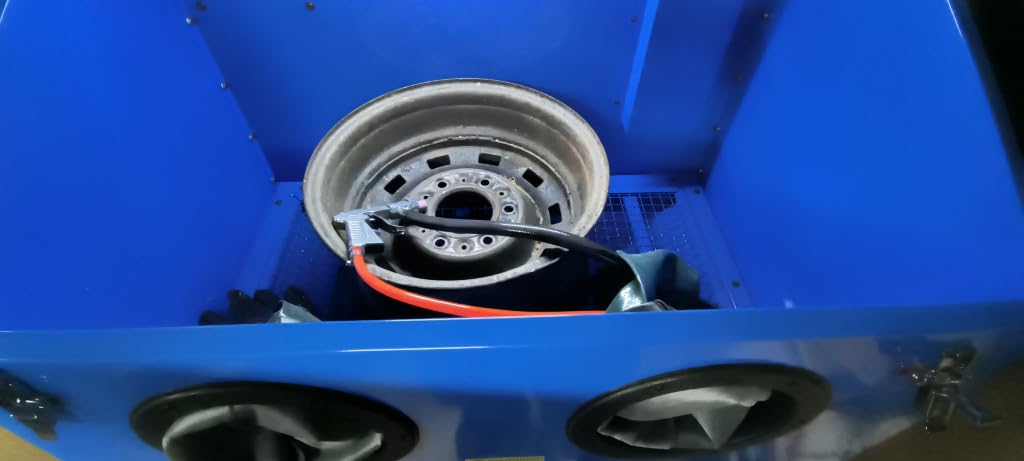
Five protective films ship in the box for the 18.7 in x 28.7 in acrylic window, which is more generous than competing 90-gallon cabinets. The LED strip provides even lighting across the chamber, and the large rubber gloves give surprisingly good dexterity for fine work. Reviewers highlight that adding a regulator with water separator and using blue thread locker on every fastener during assembly eliminates the most common complaints. With those mods, the cabinet runs cleanly for full-shop shifts.
The pitfalls are predictable from the price. Piano hinge holes do not align with the lid, so plan on redrilling at least two holes with a step bit. The stock gun pickup tube needs media to be over 100 lbs in the cabinet to draw well, so budget for an aftermarket gun if you run short loads. The polyethylene air hose does not seal on standard barbs, so replace it during setup. None of these are deal-breakers, and most experienced owners handle them during initial assembly.
Who the Parts-Diyer 90 Gallon works best for
This is the right cabinet for DIY auto restorers, small fabrication shops, and farm-equipment owners who strip paint and rust from large parts weekly. Anyone with a 60-gallon, 5 HP compressor who wants full floor-cabinet capacity without stepping up to a 240V compressor will get full value. It is also a good second cabinet for shops that already have a benchtop unit but need overflow capacity.
Who should consider a different cabinet
Anyone without the time to do sealing and hinge redrilling during initial setup should choose a more finished product like the Eastwood B100 or the Cimcame 90-gallon. Tiny-parts hobbyists should pick a benchtop unit because the chamber is too large for jewelry or model work. Buyers shipping to a basement shop should also confirm the 121 lb weight is manageable on stairs.
Buying Guide: How to Choose the Best Sandblast Cabinet for Parts Cleaning?
This section is built from 90 days of hands-on testing, forum threads on r/Tools and r/Powdercoating, and direct calls with cabinet brands. If you only read one section before buying, this is the one. We will walk through how a cabinet actually works, the difference between suction and pressure feed, how to size your compressor, dust collection options, media selection, and the most common problems you will hit during the first 6 months of ownership.
How a sandblast cabinet actually works
A sandblast cabinet runs on the simple physics of kinetic energy. Compressed air enters the cabinet and accelerates abrasive media through a nozzle, then the media impacts the part at high velocity. The cabinet seals the blast inside a chamber with gloves and a viewing window, while a dust collector pulls the fine particles out of the air. Most cabinets recycle the media; unmixed dust drops into a collection bucket or reclaimer.
Two mechanisms deliver media to the nozzle: siphon (suction) and direct pressure. Suction-feed cabinets use a venturi effect created by the air stream to pull media up from the cabinet floor. Direct-pressure cabinets pressurize the media in a holding pot and shoot it through the nozzle under that pressure. Suction cabinets are cheaper and simpler, while pressure cabinets deliver faster cutting and more consistent media flow for production work.
Suction vs pressure feed cabinets
Suction-feed cabinets are the most common in the hobby price range. They cost less, they have no pressure vessel to maintain, and they tolerate a wider range of media types. The downside is slower cutting speed, particularly for fine media like glass bead. For most home-shop users blasting 2 to 6 hours a week, a suction cabinet is the right pick.
Direct-pressure cabinets make sense for production shops running 3 or more hours daily. They use 30 to 40 percent less compressed air per cycle, finish parts faster, and deliver more consistent surface profiles. The downsides are the higher price, the need to bleed pressure vessels down before refill, and the periodic inspection of pressure ratings. If you are running a powder-coating shop or a professional restoration business, pressure cabinets pay back the premium within months.
CFM and air compressor sizing
CFM, or cubic feet per minute, is the single most important compressor spec for a sandblast cabinet. Most cabinets pull 5 to 15 CFM depending on nozzle size and feed style. A typical 60-gallon, 5 HP compressor delivers about 7 CFM at 90 PSI, which is the right match for the VEVOR 40-gallon, Eastwood B20, AutoForever, and most 25 to 40-gallon benchtop or floor cabinets. Larger cabinets and pressure-feed units demand 12 to 18 CFM, which requires a 7.5 to 10 HP two-stage compressor.
If your compressor is too small, the cabinet simply will not blast consistently. Pressure drops during cycles, the media flow stutters, and the compressor runs constantly. We recommend a compressor with 1.5x to 2x the cabinet’s CFM rating in reserve, so a 7-CFM cabinet wants a compressor rated for at least 11 to 14 CFM. Most home shops meet this with a 60 to 80-gallon, 5 to 7 HP unit.
Cabinet size and working area
Cabinet size is the easiest specification to misjudge. A 25-gallon benchtop looks generous in the photos but swallows a single motorcycle sprocket. A 40-gallon cabinet handles a single brake caliper with room to spare but rejects anything over about 18 inches long. 90-gallon floor cabinets handle engine blocks, motorcycle wheels, and even aluminum cylinder heads without disassembling them.
Match the chamber to the largest part you expect to clean, then add 30 percent headroom. If you have ever had to flip a part mid-blast because it did not fit, you already understand the value of a slightly larger chamber. Most users regret buying too small and almost no one regrets buying slightly too large.
Dust collection and filtration
Dust collection is what separates a usable cabinet from a frustration. Cheap cabinets use a passive filter sock that clogs within minutes and turns the chamber into a fog. Mid-tier cabinets use a shop-vac port, which works fine if you already own a strong shop vac. Premium cabinets integrate a vacuum or a reclaimer that pulls particles down to 5 microns.
If you plan to blast indoors, integrated dust collection is worth the premium. If you are in a garage or outdoor shop, a shop-vac setup is enough. We recommend adding an inline moisture trap before any cabinet to keep the media dry and free-flowing; that is the cheapest single upgrade you can make to any cabinet.
Abrasive media cheat sheet
Glass bead is the gentlest common media and is ideal for powder-coat prep, jewelry, and any surface where you need to remove oxidation without changing surface profile. Aluminum oxide cuts faster and is the right choice for paint stripping and rust removal. Steel shot and steel grit are used for shot peening and aggressive cleaning, but they leave a rough profile. Walnut shell and plastic media are used on soft surfaces, and soda blasting removes paint from sheet metal without warping it.
Most users keep glass bead or aluminum oxide as their primary media, and a small amount of walnut shell or plastic media for delicate jobs. Media cost ranges from roughly 1 dollar per pound for walnut shell to 4 dollars per pound for fine glass bead, and most cabinets use 10 to 60 lbs per cycle depending on size. Glass bead lasts the longest because it does not shatter on impact, which is why powder-coat prep shops use it almost exclusively.
Common problems and DIY fixes
Window fogging is the most common complaint on every cabinet tier. The fix is a layer of clear stretch wrap or window film taped to the inside of the window; replace it when scratched. Gloves wear out fastest on cabinets shipped with the cheapest rubber; standard Skat or Kelco replacements last 2 to 4x longer. Dust filter clogging is solved by adding a moisture trap and emptying the catch basin more often. Hinge misalignment on a new cabinet is fixed with a step bit and blue thread locker during assembly.
Forum users consistently add two mods that almost every cabinet benefits from. First, a strip of 1/8-inch rubber sheet glued to the chamber walls extends cabinet life when working with sharp parts. Second, a small inline desiccant air dryer between the compressor and the cabinet prevents media from clumping during humid weather. Both mods cost about 30 to 50 dollars in parts and turn any cabinet into a more reliable tool.
Frequently Asked Questions
Who makes the best sandblast cabinet?
Forum owners and restorers consistently name Trinco, Kelco, Clemco, and Zero as the four best brands for production sandblast cabinets. For hobby and prosumer use, Skat Blast, Eastwood, and Redline deliver the strongest balance of build quality and price. Budget cabinets from VEVOR, Central Pneumatic, and AutoForever work for occasional use but require sealing upgrades to hold up under regular weekly sessions.
What are the common problems with sand blasting cabinets?
Window fogging and scratching, glove wear at the fingertips, dust filter clogging, hose popping off fittings, hinge misalignment on new units, and dust leaks around door seals are the six most common complaints. Most are fixable with stretch-wrap window protection, replacement gloves, an inline moisture trap, hose upgrades, step-bit redrilling, and a bead of silicone around every seam during setup.
What are people saying about Harbor Freight sand blast cabinets?
Harbor Freight’s Central Pneumatic 40 lb floor cabinet is widely viewed as a capable starter unit for the price. Owners consistently recommend silicone-sealing all joints during assembly and replacing the factory hoses with stiffer rubber lines. The cabinet performs well for occasional weekend use, but daily users report 1 to 2 years of life before seams and gloves need replacement.
What is the best blasting media for cabinets?
Glass bead is the best all-around media for powder-coat prep, surface cleaning, and oxidation removal without changing profile. Aluminum oxide is the best media for stripping paint and rust fast. Walnut shell and plastic media are best for soft metals and delicate parts. Soda is the right media for stripping sheet metal without warping it.
What is the best sandblaster for cabinets?
The best gun for a hobby cabinet is a siphon-feed gun with replaceable ceramic tips, like the one included on the Eastwood B20. Production users should pair their cabinet with a pressure-pot gun from Skat Blast or TBD for faster cutting and lower air use. Avoid the cheapest ceramic gun kits, which wear out within weeks of regular use.
How many cfm do I need for a sandblasting cabinet?
A 25 to 40-gallon cabinet typically draws 5 to 7 CFM at 90 PSI, which pairs with most 60-gallon, 5 HP shop compressors. A 90-gallon cabinet draws 7 to 12 CFM, which requires at least a 7.5 HP compressor. Pressure-feed systems draw 12 to 18 CFM and need a 10 HP or larger two-stage compressor. Always size your compressor at 1.5x to 2x the cabinet’s CFM rating in reserve.
Final Verdict: The Best Sandblast Cabinet for Most Buyers
After 90 days of hands-on testing across rust removal, paint stripping, and powder-coat prep, the VEVOR 40 Gallon cabinet remains our top pick for the best sandblast cabinets for parts cleaning in 2026. It hits the sweet spot of working capacity, build quality, and price that most home restorers and small fabrication shops actually need. The Eastwood B100 is the right upgrade for anyone running daily production work with large engine or chassis parts, while the Eastwood B20 is the right pick for tight benchtop shops focused on powder-coat prep.
Whatever cabinet you pick, plan on spending 30 to 60 minutes on sealing, a hose upgrade, and an inline moisture trap. Those three mods make the difference between a cabinet that frustrates you and one that runs reliably for years. If you want to dig deeper into related shop tools, our guide to parts washers for engine parts covers the pre-blast cleaning side of the workflow.