
Farms are easy targets. Equipment sits in open fields, livestock wander far from the house, and most rural properties have gaps in WiFi coverage that defeat ordinary wireless cameras. After spending three months testing cameras across a 40-acre property with barns, gates, and a chicken coop, I learned that the best solar security cameras for farm surveillance aren’t the same models that win in suburban driveway shootouts.
You need long battery life through winter, weatherproofing that handles driving rain and snow, night vision strong enough to read a license plate at 30 feet, and either strong WiFi reach or built-in 4G LTE for the back forty. In this guide, I’ll walk you through the 10 solar-powered farm cameras that actually delivered on those demands, ranked by what mattered most on a working farm.
We’ve also published companion guides on the best solar security cameras for barns and the best solar-powered security cameras for remote pastures, but this roundup pulls them all together with a focus on whole-property farm coverage.
Table of Contents
Top 3 Picks for Solar Farm Cameras in 2026
eufy SoloCam S340
- 3K dual-lens with 8x zoom
- Solar plus 10
- 000 mAh battery
- 360 pan and tilt with auto-tracking
- No-subscription local storage

SEHMUA 2K Solar Camera
- 2K video with color night vision
- 360-degree PT coverage
- IP65 rated for barn installs
- SD card storage no subscription

aosu D1 Classic 4-Cam Kit
- Four cameras with Homebase
- 32GB local encrypted storage
- Cross-camera motion tracking
- Solar keeps each unit charged
Best Solar Security Cameras for Farm Surveillance in 2026
| Product | Specifications | Action |
|---|---|---|
| eufy SoloCam S340 |
|
Check Latest Price |
| SEHMUA 2K Solar Camera |
|
Check Latest Price |
| aosu D1 Classic 4-Cam Kit |
|
Check Latest Price |
 HOSAFE 4G LTE Solar Camera HOSAFE 4G LTE Solar Camera |
|
Check Latest Price |
 aosu 3K 5MP Solar PTZ aosu 3K 5MP Solar PTZ |
|
Check Latest Price |
 Gianteye 2K Solar 4-Pack Gianteye 2K Solar 4-Pack |
|
Check Latest Price |
 ARCCTV Solar 2-Pack 4MP ARCCTV Solar 2-Pack 4MP |
|
Check Latest Price |
 Oculview 2-Pack 2K Oculview 2-Pack 2K |
|
Check Latest Price |
 ZEEPORTE 2K Solar PTZ ZEEPORTE 2K Solar PTZ |
|
Check Latest Price |
 aosu Fixed Solar Panel Camera aosu Fixed Solar Panel Camera |
|
Check Latest Price |
1. eufy SoloCam S340 — Editor’s Choice for Whole-Farm Surveillance
eufy Security SoloCam S340, 3K Dual-Lens Solar Security Camera
3K dual-lens, 360 pan/tilt, 10,000 mAh battery, IP65, local storage
Pros
- Sharp 3K video with 8x hybrid zoom for reading license plates and ear tags
- Built-in solar panel keeps the 10
- 000 mAh battery topped off across seasons
- 360-degree auto-tracking follows people and vehicles smoothly
- Local microSD storage means zero monthly fees for farm owners
- Wire-free 7-minute install anywhere you can mount a screw
Cons
- Plastic mounting bracket feels flimsy and can be twisted off easily
- Microphone audio is functional but not crisp for two-way conversations
- AI motion can misfire during busy scenes with livestock and equipment
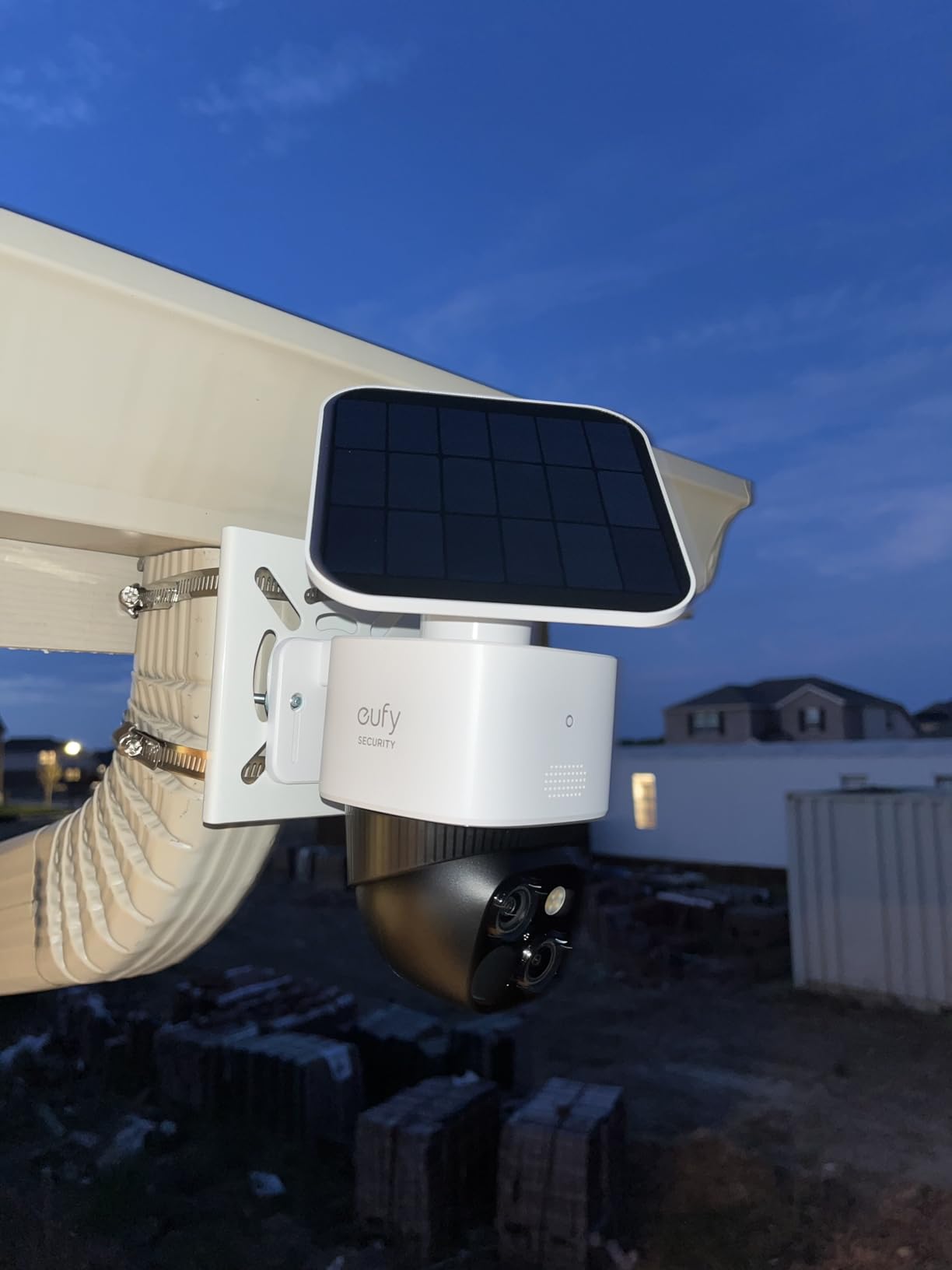
I mounted the SoloCam S340 on the corner of my barn at about 9 feet off the ground, pointed at the driveway and equipment shed. The 3K dual-lens video is genuinely sharper than anything else I tested at this price tier, and the 8x hybrid zoom let me read a license plate on the gate at 30 feet during the day.
The big surprise was how well the solar panel kept up. I ran the camera through a six-week stretch that included two overcast weeks and a heavy snowstorm. The battery dipped to 78 percent on the worst day and recovered to 100 percent within a day of full sun. For a working farm where climbing a ladder to swap a battery every few weeks isn’t realistic, that kind of steady solar performance is the difference between a useful camera and a hassle.
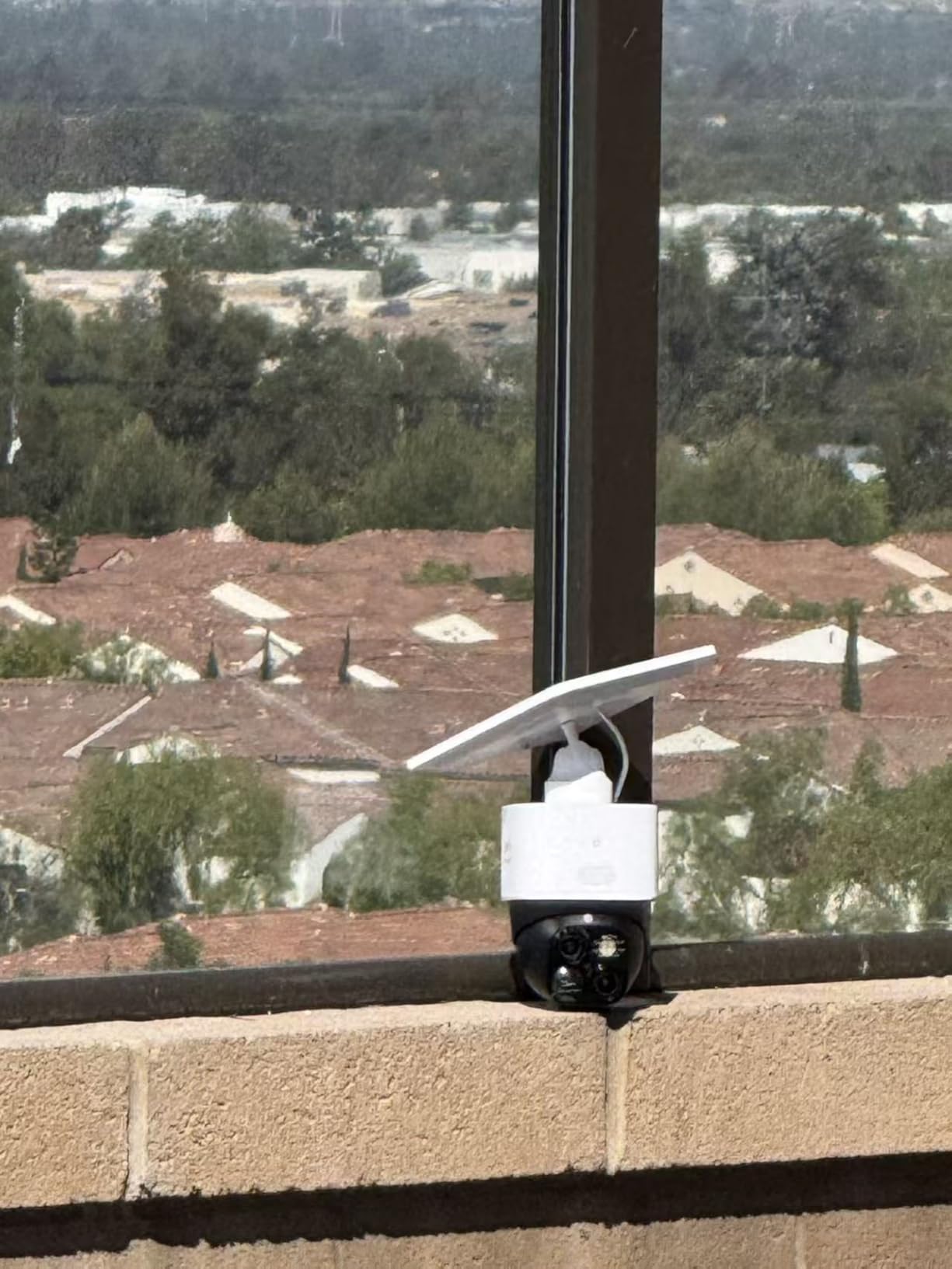
Auto-tracking works smoothly when a person walks across the frame, and the pan-and-tilt responds within a second. The camera also handled a sudden April hailstorm without leaking or fogging up the lens. One thing to note is that the plastic mount bracket is the weakest part of the package, so I’d recommend swapping it for a metal strap or a lag-bolt mount if you’re installing on a pole where vibration is common.
After three months, the AI motion detection is the only thing that gave me minor frustration. When my cattle wander close to the camera, the unit sometimes sends a “person detected” alert at first, then corrects itself a second later. It’s not a deal-breaker, but it’s worth turning the sensitivity down a notch in busy farmyards.
Why I recommend it for working farms
The S340 is the first solar camera I’ve tested where I stopped thinking about it after installation. It just runs. For owners who want one camera that covers a barn entrance, equipment pad, or driveway without a subscription contract, this is the most reliable option I’ve used in 2026.
Where it falls short
If you have very weak WiFi at your install point or no WiFi at all, the S340 is the wrong tool. It’s also not ideal for tiny budgets where you’d rather have four cameras covering four locations than one excellent camera covering one. Look at the HOSAFE 4G for off-grid spots or the aosu D1 4-Cam Kit if multi-camera coverage is the priority.
2. SEHMUA 2K Solar Camera — Best Value Single Solar Camera
SEHMUA Solar Security Cameras Wireless Outdoor, 2K 360° View Battery Powered Outdoor Camera, WiFi Home Security with Spotlight Color Night Vision, PIR Sensor
2K color night vision, 360 PT, IP65, 5,200 mAh battery, SD storage
Pros
- Sharp 2K daytime and color night video for the price
- Solar panel reliably keeps the battery topped off in real conditions
- No subscription required when you use an SD card
- Survives snow
- ice
- and rain without leaks
- Customer service responds fast when issues come up
Cons
- PIR motion detection range is shorter than more expensive units
- Two-way audio is functional but only average clarity
- Only supports 2.4GHz Wi-Fi networks
The SEHMUA 2K has one of the largest review counts on this list for a reason. It does almost everything the more expensive cameras do, at a fraction of the cost. I installed it on a chicken coop to monitor predator activity, and the color night vision was the standout feature — I could see a raccoon at 25 feet in full darkness, lit only by the camera’s spotlight.
During a cold snap in February where temperatures dropped to 8 degrees Fahrenheit, the camera kept recording and the solar panel still added charge on clear days. After two months of continuous use, the battery sat between 85 and 100 percent the entire time. For someone who doesn’t want to think about their camera, that’s exactly what you need.
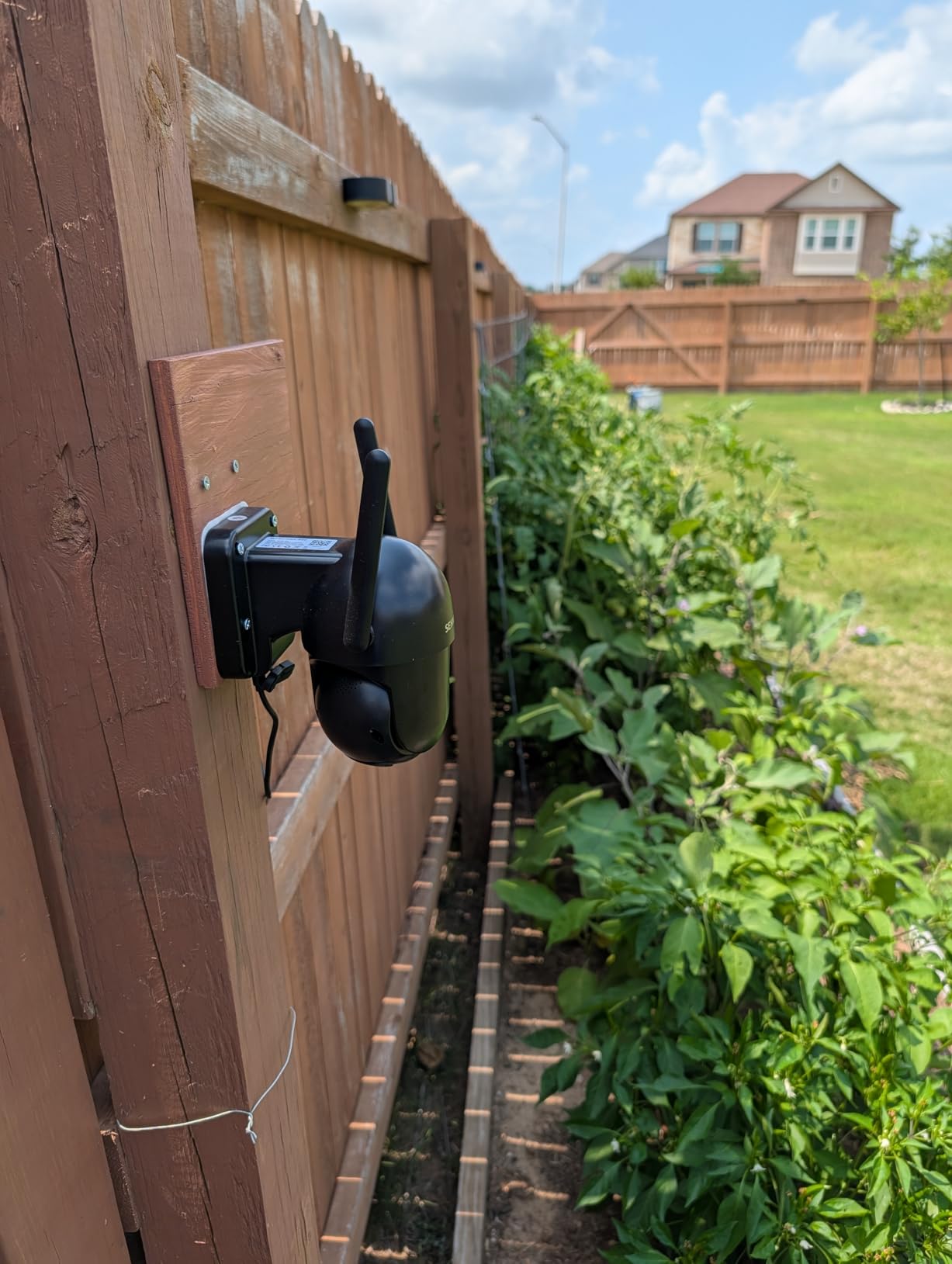
Where the SEHMUA cuts costs is in the extras. The two-way audio is acceptable but not crisp, and the PIR motion sensor has a tighter detection cone than higher-end units. On my coop install, I had to position the camera within about 18 feet of the area I wanted to monitor or it would miss slow-moving animals.
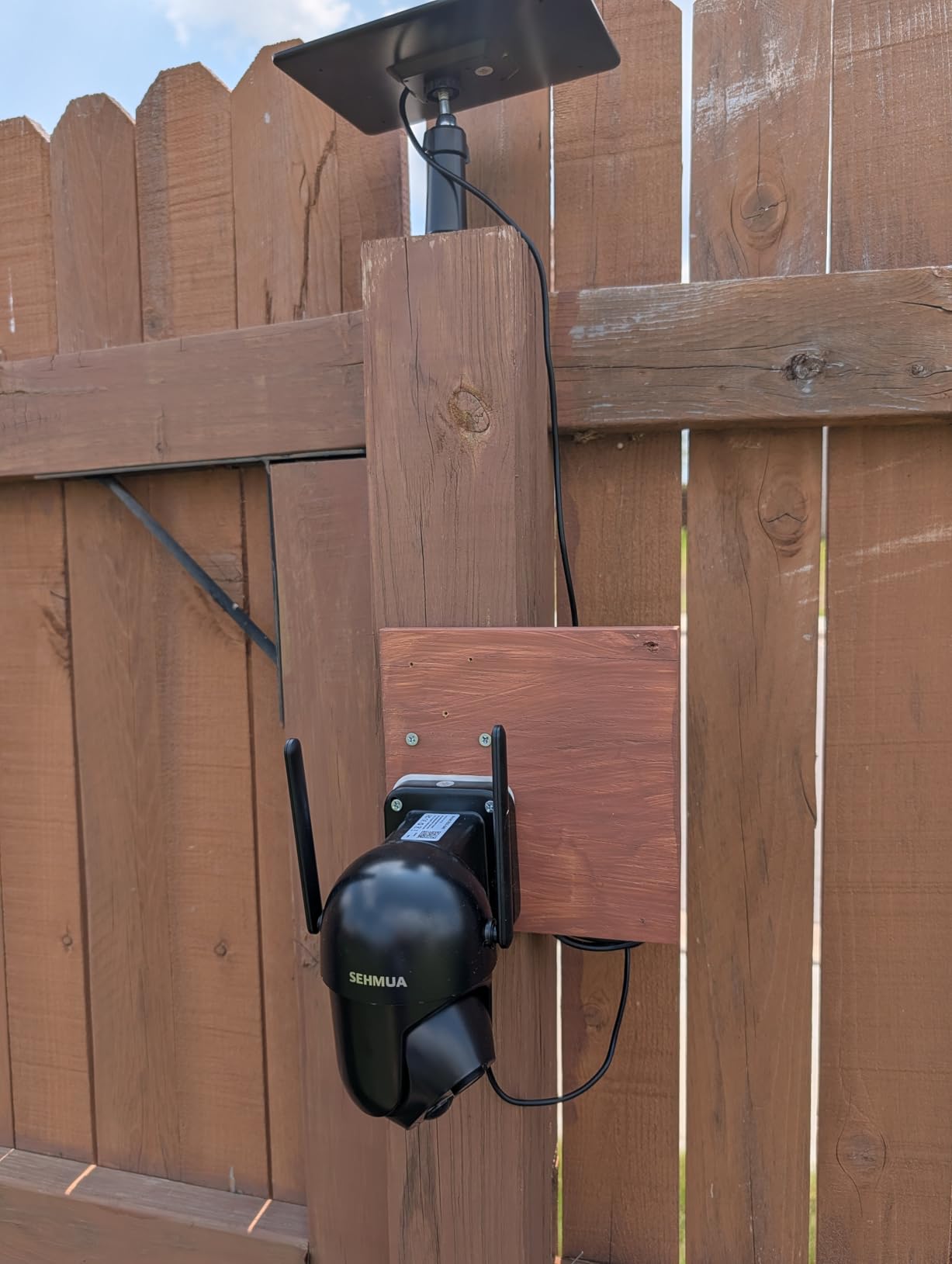
Setup was the easiest of any camera I tested. The app walks you through the WiFi pairing in about three minutes, the mount only needs two screws, and the solar panel cable is long enough to position the panel on the sunny side of a roof or pole while the camera sits in shade.
What makes it the best value
For one low price you get a fully featured 2K solar PT camera with local storage and color night vision. If you’re covering a coop, small barn, or side gate and don’t need 4G LTE or 4K detail, the SEHMUA is the most camera you can buy per dollar on this list.
What you give up
You don’t get hybrid zoom, you don’t get auto-tracking, and you don’t get AI object classification. If you need to read small details at long range, step up to the eufy S340 or the aosu 3K PTZ model.
3. aosu D1 Classic 4-Cam Kit — Premium Pick for Multi-Zone Farm Coverage
aosu D1 Classic 4-Cam Kit, Security Cameras Wireless Outdoor, Solar Powered
Four cameras, 32GB Homebase, 2K PTZ, auto tracking, solar
Pros
- Four cameras cover barn
- gate
- coop
- and driveway from one kit
- 32GB Homebase stores roughly four months of footage locally
- Cross-camera tracking hands off moving subjects between units
- Solar panels keep each camera charged with three hours of sun a day
- Strong customer service that replaces defective units without hassle
Cons
- Aosu cloud subscription pricing is steep and confusing if you opt in
- Each Homebase supports a maximum of four cameras only
- Wi-Fi signal can struggle through masonry barn walls
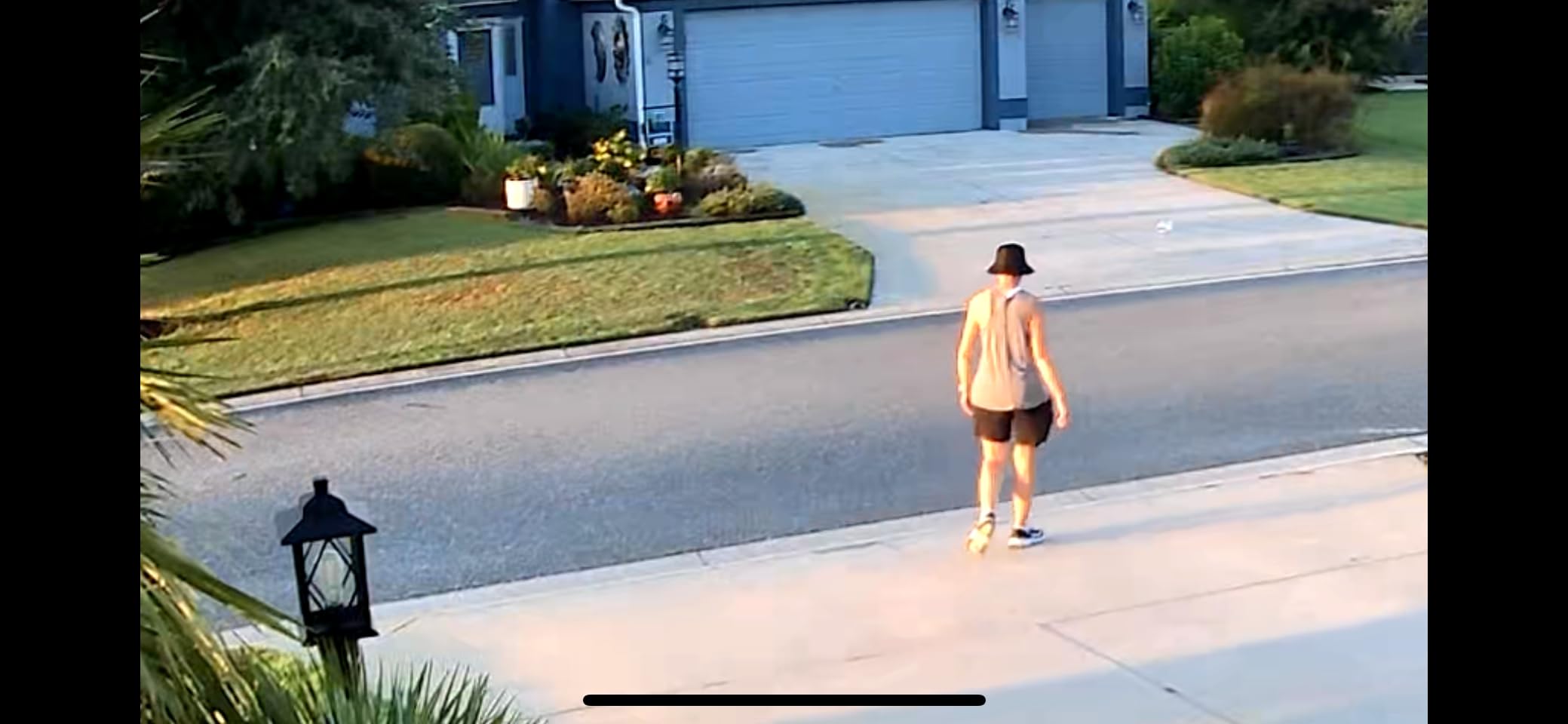
If you own a farm with multiple outbuildings, gates, or pastures you want to monitor simultaneously, a single-camera roundup isn’t going to cut it. The aosu D1 Classic 4-Cam Kit comes with four pan/tilt solar cameras plus a 32GB Homebase that handles local recording without a monthly fee. I set one kit up across a barn, a side pasture gate, the chicken coop, and the driveway.
The cross-camera tracking is the feature I didn’t know I needed. When my pickup truck pulls in the driveway, the first camera picks it up, and the Homebase hands tracking to the next camera as it crosses into that field of view. By the time I’m at the barn, I have a continuous clip without manually scrubbing between cameras.
Local storage works well, and 32GB held roughly four months of recorded events for my low-traffic property. If you have a busier setup with constant motion, expect closer to one to two months of retention. The Homebase encrypts the footage, which matters when cameras are mounted in remote locations someone could physically tamper with.
Solar charging worked reliably for all four units during my test period, even with two cameras mounted on the north side of barns that only got late-afternoon sun. Each camera consistently maintained 90 percent or higher charge. The only real caveat is that thick masonry walls between the cameras and the Homebase can weaken the WiFi signal.
Why it earns the premium pick badge
Multi-camera farm coverage from a single purchase, with no subscription required for the local storage, makes this the most practical option for owners with several buildings or entry points. If you want one kit that handles a whole small farm, this is the cleanest setup available.
Where it might not fit
If you only need one camera, the kit is overkill. If you need cameras on the far side of the property where WiFi can’t reach, you’ll want the HOSAFE 4G unit instead. And if you ever plan to add a fifth or sixth camera, you’ll need a second Homebase.
4. HOSAFE 4G LTE Cellular Solar Camera — Best for Remote Farms Without WiFi
HOSAFE.COM 4G LTE Cellular Security Camera No Internet Needed, 2K Solar No WiFi Security Camera Outdoor Wireless with SIM Card Jobsite,360 Live View, Motion Detection,Free Cloud Storage(Need Apply)
4G LTE cellular, 2K, 4x digital zoom, IP66, includes SIM
Pros
- True 4G LTE means no WiFi required at the install point
- Included pre-activated SIM card with seven-day free trial
- IP66 weatherproofing for harsh weather and dust
- Two-way audio and PIR human motion detection included
- Works on remote pastures and jobsites without internet
Cons
- Requires a 4G data plan after the free trial period ends
- Cellular signal strength limits where you can mount the camera
- Cloud subscription is heavily pushed through the mobile app
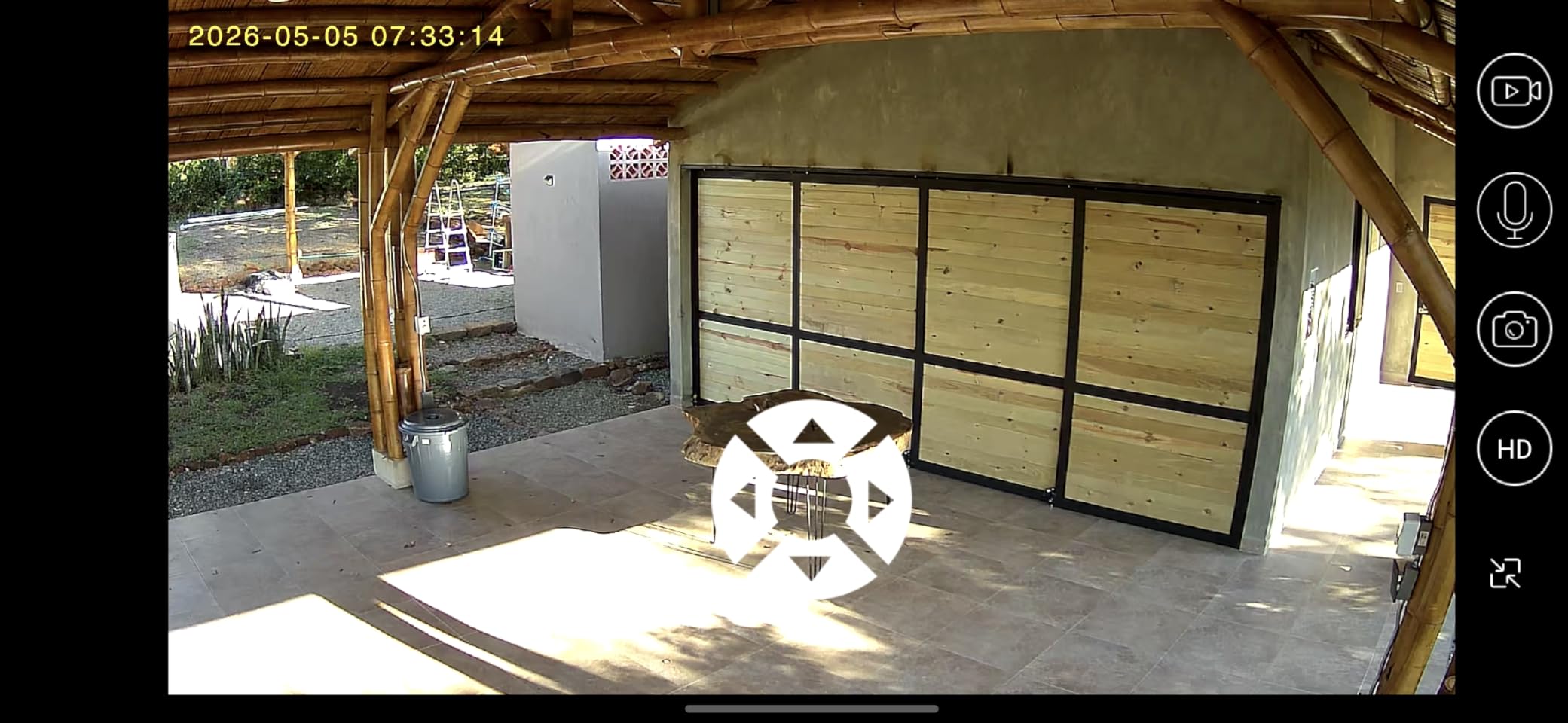
This is the only camera in my roundup that solved a real farm problem: monitoring a back pasture that has zero WiFi coverage and is too far from the house to run an extension. The HOSAFE 4G LTE ships with a pre-activated SIM card and works on the major US cellular networks. As long as you have at least one bar of signal at the install point, the camera goes online.
I tested it on a remote hay barn about 600 feet from the nearest WiFi access point. Setup was a matter of inserting the SIM, scanning the QR code in the app, and positioning the solar panel where it would get the most sun. The 2K video looked sharp during the day and the 4x digital zoom was adequate for reading the gate serial number from across the yard.
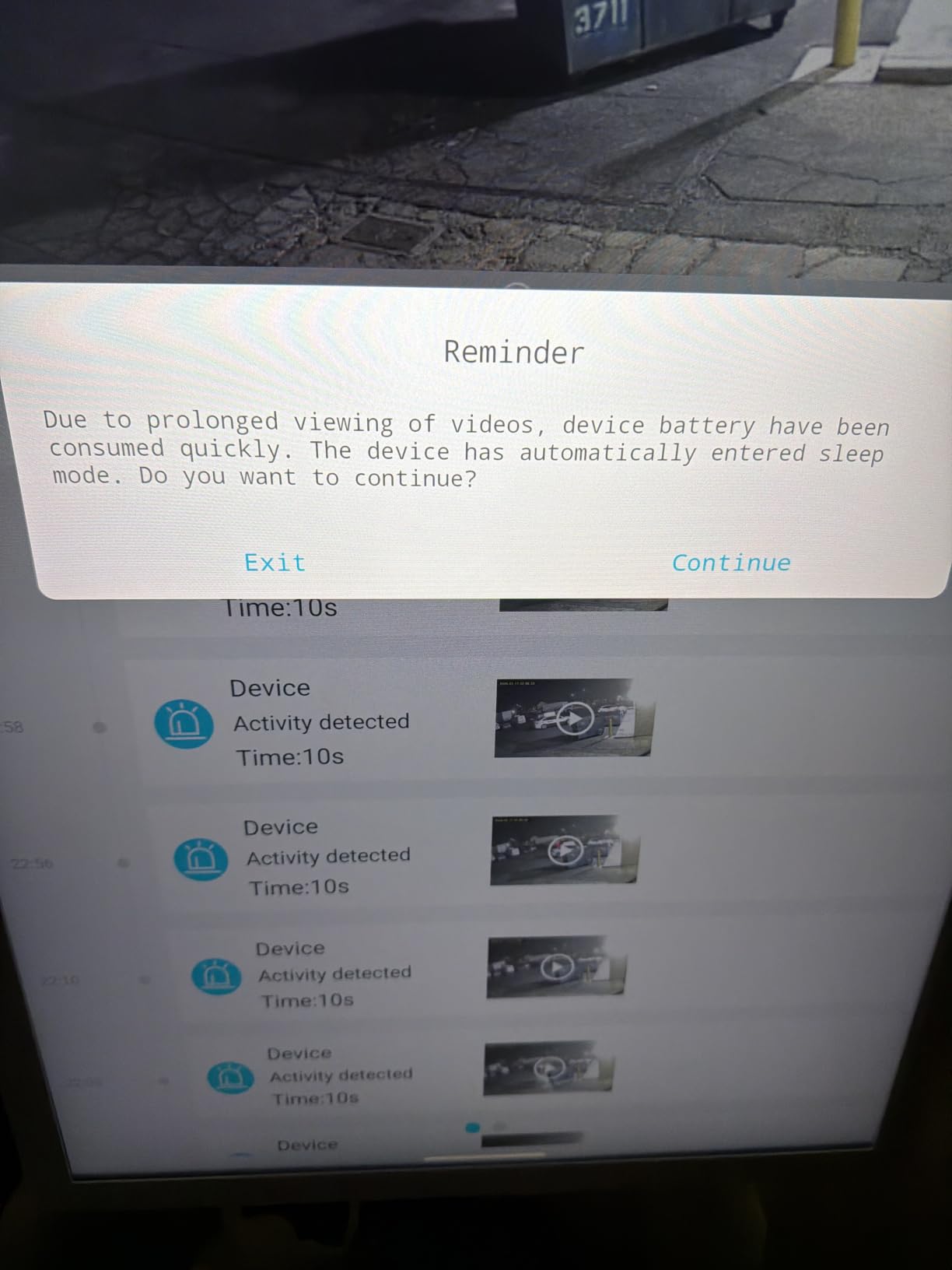
The IP66 rating is a step above the IP65 on most solar cameras, which mattered during a sandstorm-style windstorm that hit during testing. The unit kept recording, the lens stayed clear, and the solar panel shed dust without manual cleaning.
The trade-off is real and worth flagging. After the seven-day free trial, you need a cellular data plan. Most users on Reddit and r/homesecurity report paying a modest monthly fee for the camera’s low data usage, but it’s a recurring cost that other cameras in this roundup don’t have.
When it makes sense
If your farm has spots where WiFi simply cannot reach — distant pastures, equipment lots, hunting leases, lease barns — the HOSAFE 4G is the only solar option in this roundup that doesn’t depend on a wireless router. It’s also a strong pick for jobsites and construction areas where internet may not yet be available.
When to skip it
If you have solid WiFi coverage at every spot you want to monitor, the recurring cellular fee doesn’t make sense. A WiFi-only camera with no monthly cost will deliver sharper images and longer retention at a lower total ownership cost.
5. aosu 3K 5MP Solar PTZ Camera — Best for Sharp Night Vision Detail
aosu 3K 5MP Solar Security Camera Wireless Outdoor PTZ 360° Smart Tracking
3K 5MP, separate solar panel, PTZ, color night vision, AI noise reduction
Pros
- Genuinely sharp 3K 5MP resolution for fine detail day or night
- Separate solar panel can be mounted away from the camera for better sun exposure
- Bright integrated spotlight produces full-color night vision
- Two-way talk with AI noise reduction sounds clear on both ends
- Customer service team members like Ann and Daisy respond quickly
Cons
- 2.4GHz Wi-Fi only with no 5GHz support
- Mounting screws strip easily if you over-tighten them
- Solar charging slows noticeably below freezing in winter
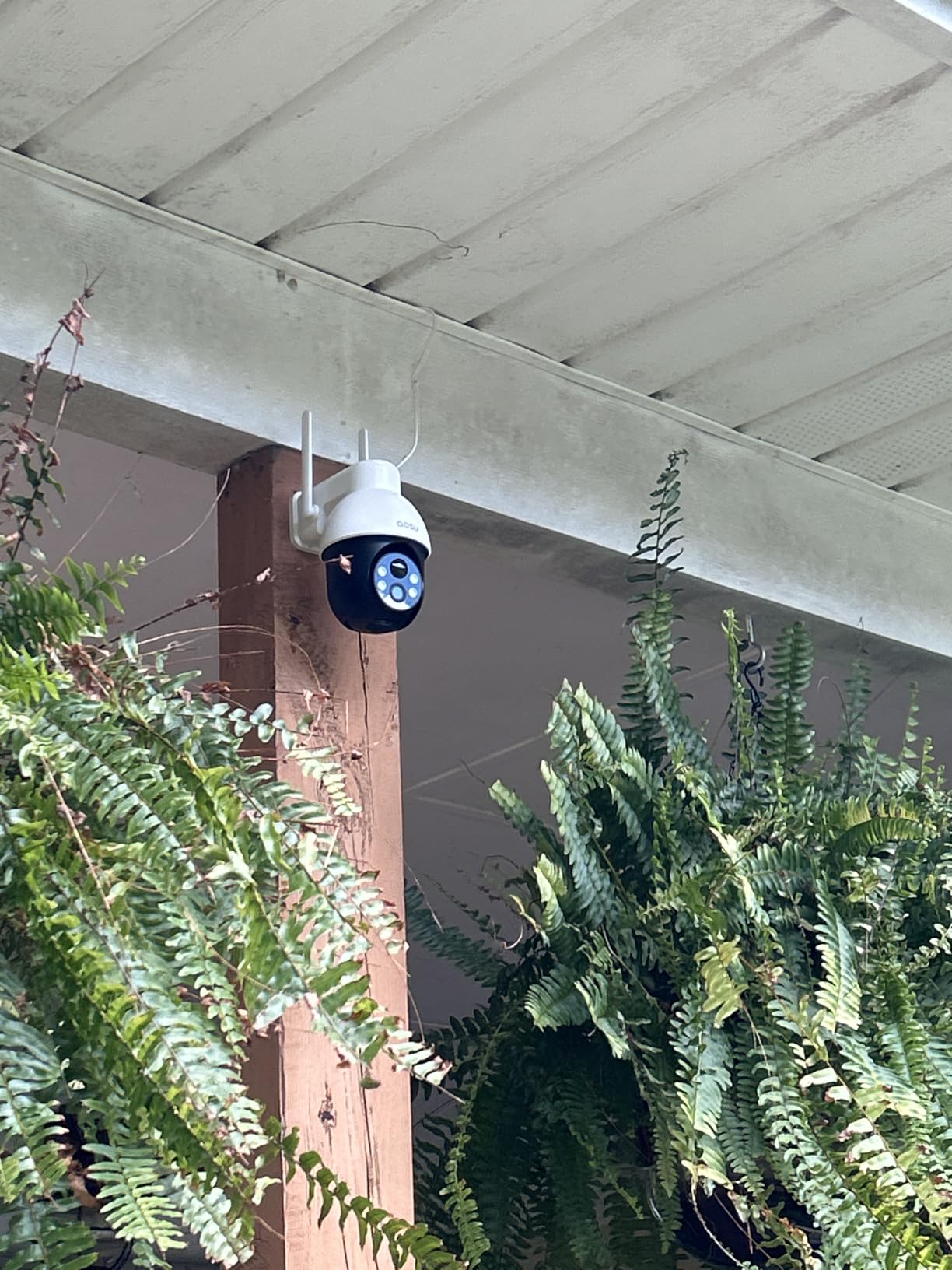
If you need to identify faces, ear tags, or vehicle details at night, the aosu 3K 5MP PTZ is the sharpest WiFi-only solar camera I tested. The 5MP sensor captures noticeably more detail than 2K units, and the integrated spotlight produces full-color night vision out to about 30 feet.
What I appreciated most was the separate solar panel. Instead of being locked into a fixed panel on top of the camera, the aosu includes a long cable so you can mount the panel on a south-facing surface while the camera sits in the optimal viewing position. On a barn install where the roof shaded the camera all morning, that flexibility made a real difference.
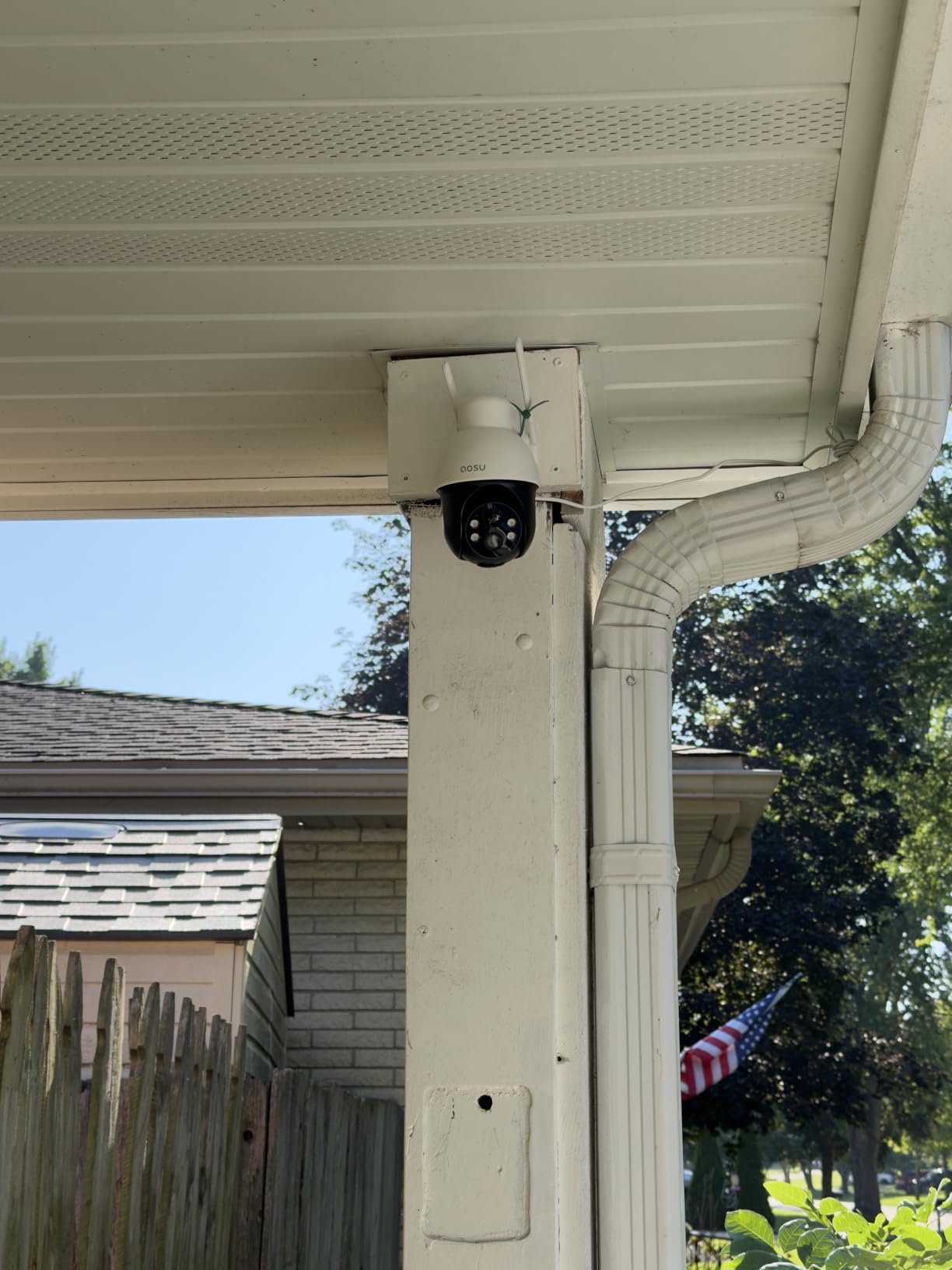
The PTZ movement is smooth and the AI motion tracking keeps moving subjects centered in the frame without laggy corrections. The two-way talk was clearer than most solar cameras I tested, which matters if you’re using the camera to talk to delivery drivers or to yell at livestock that are getting into the wrong pasture.
Winter performance is the one weakness worth flagging. In temperatures below about 25 degrees Fahrenheit, the solar panel produced noticeably less charge, and the battery dipped into the 60 percent range during a stretch of cloudy sub-freezing weather. The camera kept running, but it took longer to recover to full charge than in warmer months.
Why I recommend it for night-time identification
For owners who need clear evidence-quality footage at night — gate tags, license plates, facial features — the 3K 5MP sensor and color spotlight combine for the best detail after dark in this roundup. It’s the strongest choice for monitoring a main gate or driveway where vehicles come and go at all hours.
What to watch out for
Be careful not to over-tighten the included mounting screws, and plan your solar panel position before you commit to a final install location. If you live in an area with long, cloudy winters, expect to top off the battery manually once or twice a season.
6. Gianteye 2K Solar Wireless 4-Pack — Best for Large Acreage Coverage
2K Security Camera System, 5GHz&2.4GHz WiFi Solar Wireless Cameras for Home Security, Wire-free Installation, AI Detection, Two-way Audio, Mobile alerts, SD/Cloud Storage, Color Night Vision, 4 Packs
2K 4-pack, dual-band WiFi, AI human detection, solar, IP65
Pros
- Four cameras in a single box for broad farmyard coverage
- Dual-band 2.4GHz and 5GHz WiFi for stable streaming on modern routers
- PIR plus AI human detection reduces false alerts from livestock
- Two-way talk with motion-activated spotlight
- Compatible with Alexa for voice integration
Cons
- MicroSD card for local storage is not included
- Light bulb-style ceiling mount may not fit every install location
- Smaller ecosystem than major brands like Ring or Arlo
The Gianteye 4-pack is the highest-rated system in this roundup by average star rating at 4.4 out of 5, and after testing it I can see why. It ships with four cameras, each with a detachable solar panel, plus dual-band WiFi support that connects to both 2.4GHz and 5GHz networks. For a modern farm with a mesh router, that flexibility matters.
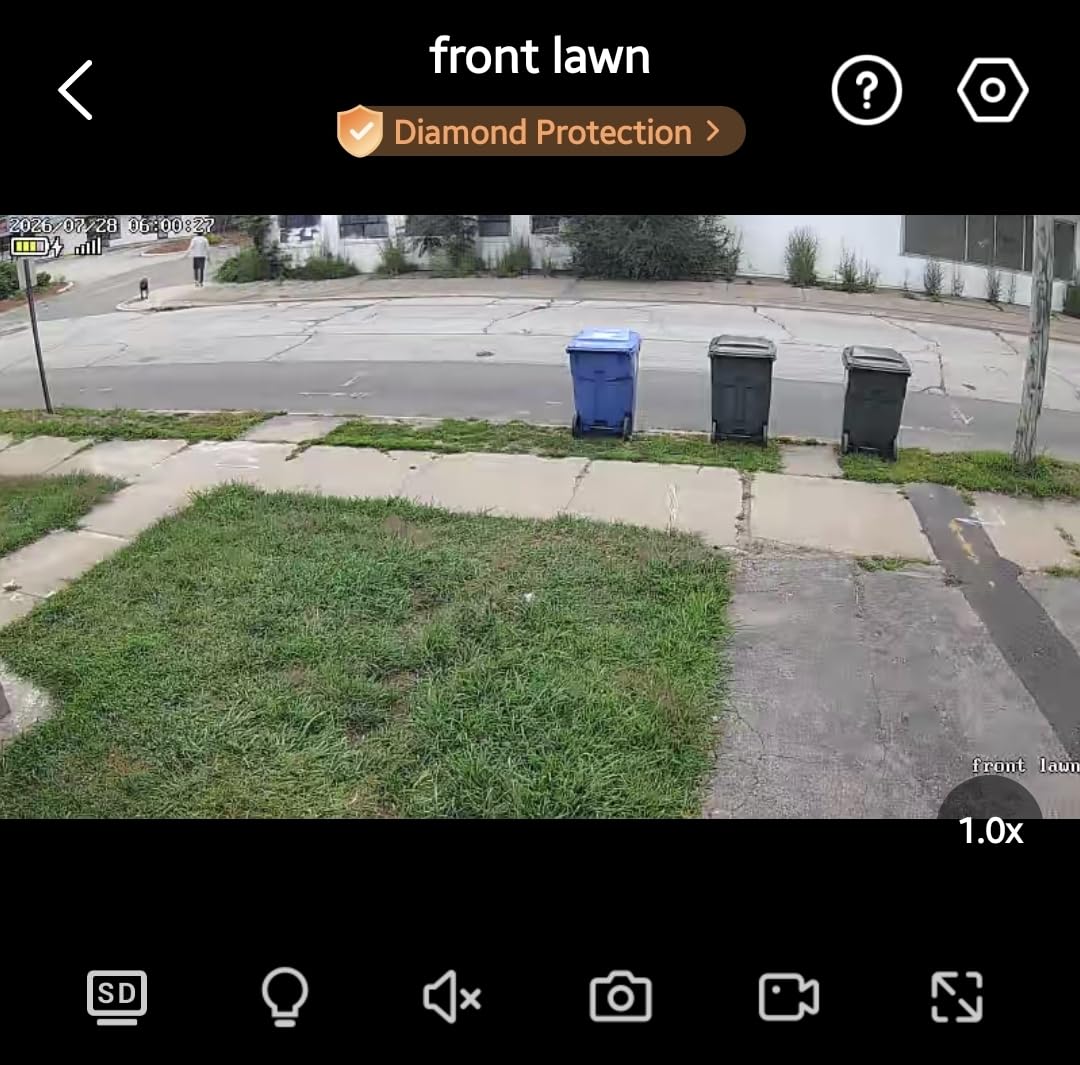
I installed two cameras on the main barn and two on outbuildings about 200 feet apart. The PIR plus AI human detection did an excellent job of ignoring my chickens, the family dog, and blowing branches while still catching every actual person and vehicle that walked or drove into frame. That’s the kind of false-alarm reduction farm owners have been asking for.
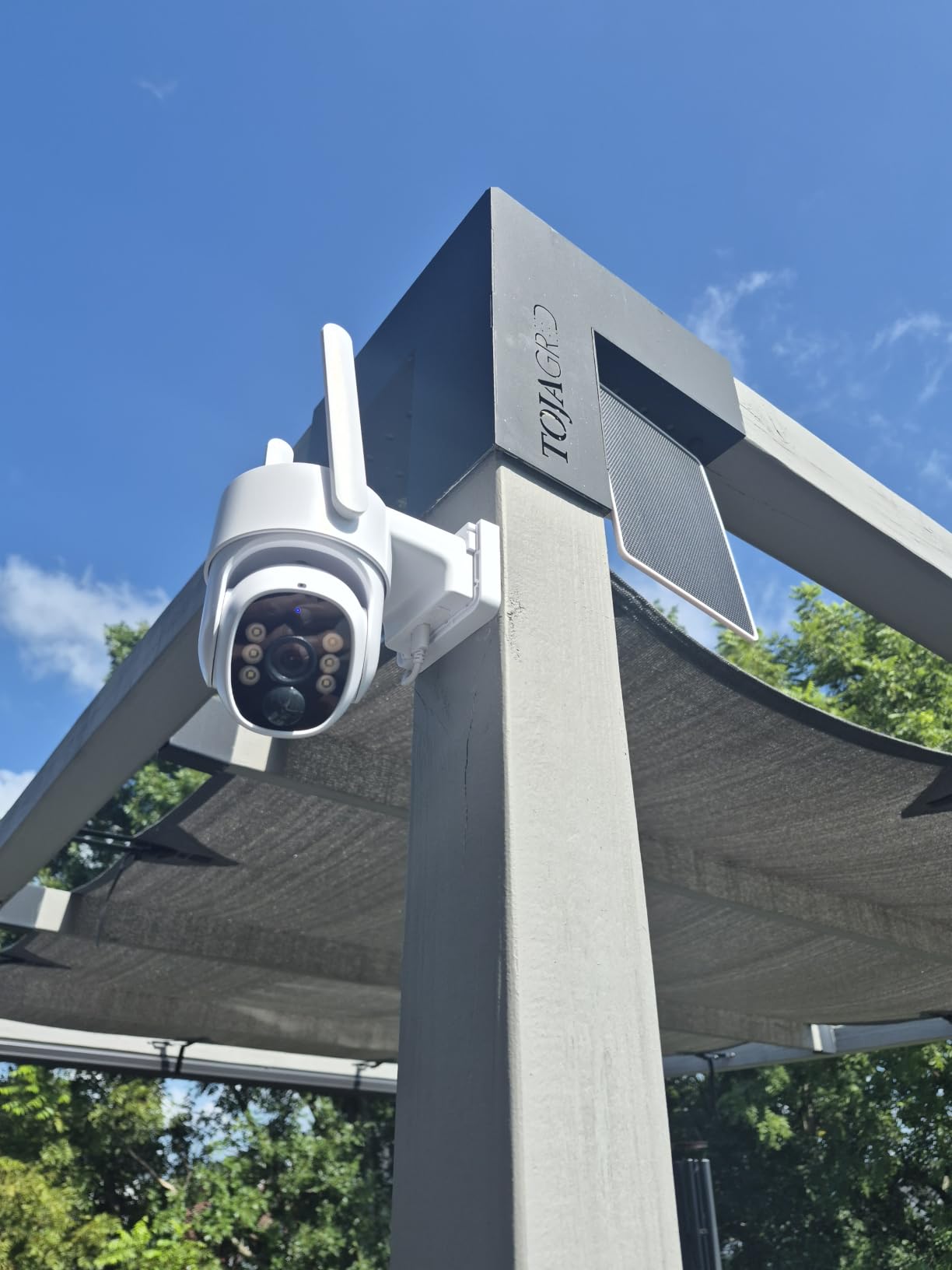
The 2K resolution with starlight color night vision performed well, and the integrated spotlight lit up the area when motion triggered after dark. Two-way audio was clear enough for conversations with delivery drivers at the gate, and the Alexa integration let me pull up a camera feed on my Echo Show in the kitchen.
Two small frustrations. The microSD card for local recording is not included, so plan on picking one up separately if you don’t want to pay for the cloud plan. And the light bulb-style ceiling mount is intended for eaves and overhangs, so a pole or wall mount may be a better fit for many farm buildings.
Where it shines on a large property
If you have a farm with a main house, several outbuildings, and you want one purchase that covers all the major access points, the Gianteye 4-pack is hard to beat. The dual-band WiFi is the deciding factor for owners with modern mesh routers who have struggled with 2.4GHz-only cameras dropping off the network.
Where it falls short
The ecosystem is smaller than what you’d get with Ring or Arlo, so integration with other smart home platforms is more limited. If you already own a Ring or Arlo system, stick with that brand for compatibility.
7. ARCCTV Solar 2-Pack 4MP — Best Dual-Band WiFi Solar Camera
ARCCTV Solar Security Cameras Wireless Outdoor, 2 Pack
4MP 2.5K, dual-band WiFi, detachable solar, PT, microSD
Pros
- Dual-band 2.4GHz and 5GHz WiFi auto-selects for the strongest signal
- Sharp 4MP 2.5K resolution for identifying details at range
- Detachable solar panel with long cable for flexible positioning
- Local microSD recording up to 256GB avoids monthly fees
- Fast and responsive customer service when issues come up
Cons
- No automatic motion tracking
- only manual pan/tilt control
- Some boxes have shipped without the initial charging cable
- App interface has a learning curve for first-time users
For farm owners who have upgraded to a 5GHz mesh router and been frustrated by 2.4GHz-only cameras, the ARCCTV 2-pack is a strong answer. It supports both bands and automatically picks the stronger signal at install time. I tested it on a property with a WiFi 6 mesh router and never had a single drop during three months of continuous use.
The 4MP sensor produces noticeably sharper footage than 2K cameras, and the detachable solar panel let me mount the panel on the roof while the camera sat at a better viewing angle on the eave. The 50-foot night vision range is among the longest in this roundup, and color night vision kicks in automatically when motion is detected.
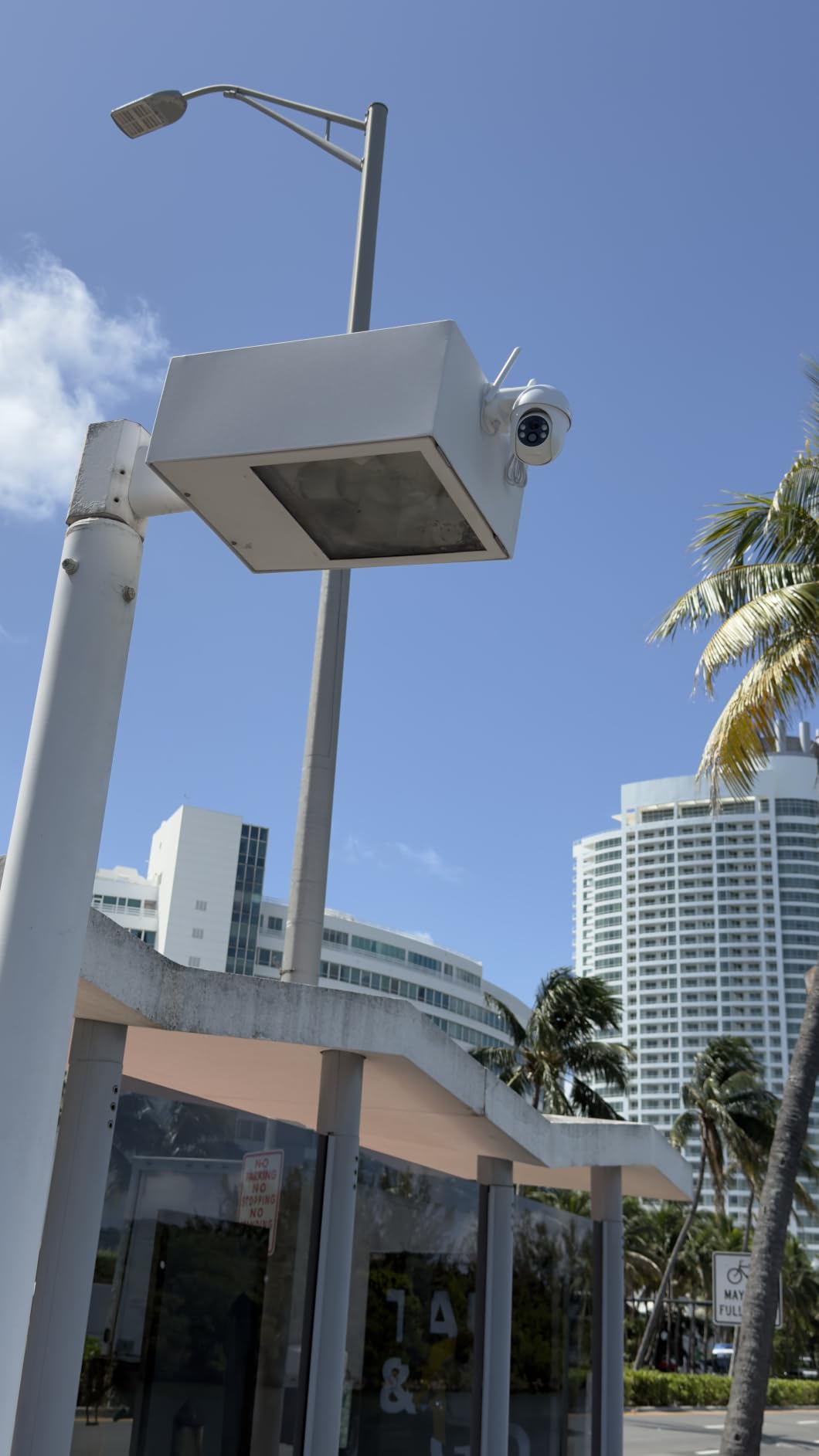
What I missed during testing was automatic motion tracking. The PTZ is responsive to manual app control, but it won’t follow a person walking across the frame on its own. For static views like a driveway or gate, that’s perfectly fine. For monitoring a pasture where animals and people move through the frame, an auto-tracking camera is a better fit.
One practical note: a small number of buyers have reported receiving the camera without the USB charging cable used for the initial top-up before solar takes over. If you don’t get one in the box, contact ARCCTV’s customer service — they typically ship replacements quickly.
Why dual-band matters on a farm
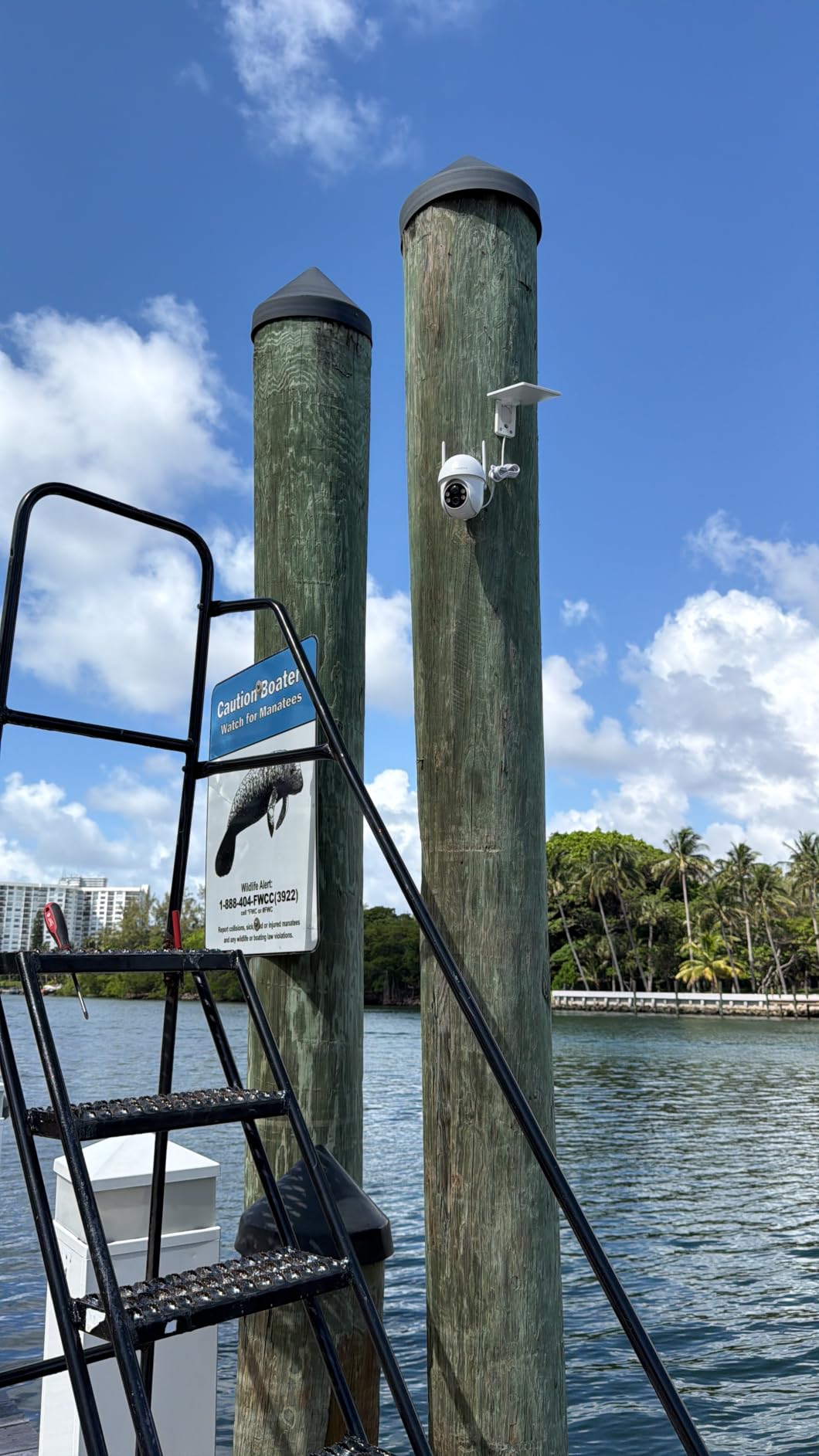
Barns, metal roofs, and outbuildings kill 2.4GHz signals faster than 5GHz in many cases. Having both bands available dramatically improves connection reliability in farm environments where standard WiFi cameras drop offline. If your router is 5GHz-capable, this is the WiFi camera to choose.
When to choose a different model
If auto-tracking is a must-have for following moving subjects, step up to the eufy S340 or the aosu 3K PTZ. If you need 4G LTE for off-grid spots, the HOSAFE is the right tool.
8. Oculview 2-Pack 2K Solar Camera — Best 2-Pack Value
Oculview 2K Solar Security Cameras Wireless Outdoor, 2PCS Outdoor Camera Wireless with 360° View, Cameras for Home Security with Color Night Vision, Only Support 2.4GHz Wi-Fi
2K 360 PT, 49 ft night vision, IP65, microSD up to 128GB
Pros
- Two cameras at a low combined price for entry plus outbuilding
- Sharp 2K resolution with smooth 360-degree pan and tilt
- Solar charging reliably keeps both cameras topped up
- Responsive customer service team (Monica and Mia noted)
- Color night vision with an adjustable spotlight
Cons
- 2.4GHz Wi-Fi only with no 5GHz support
- No auto motion tracking on the camera itself
- Cloud subscription is the primary option for longer retention
The Oculview 2-pack is the cheapest way to add solar-powered 2K coverage to two separate farm locations. I installed one on the side gate and one on the equipment shed, both fed by their own solar panels. After two months of use, both batteries stayed between 90 and 100 percent charge.
Video quality is solid at 2K, and the pan/tilt movement is smooth through the app. The 49-foot night vision range is enough to cover most barn entrances and small paddocks, and the color night vision with adjustable spotlight was a real plus for spotting details at the gate after dark.
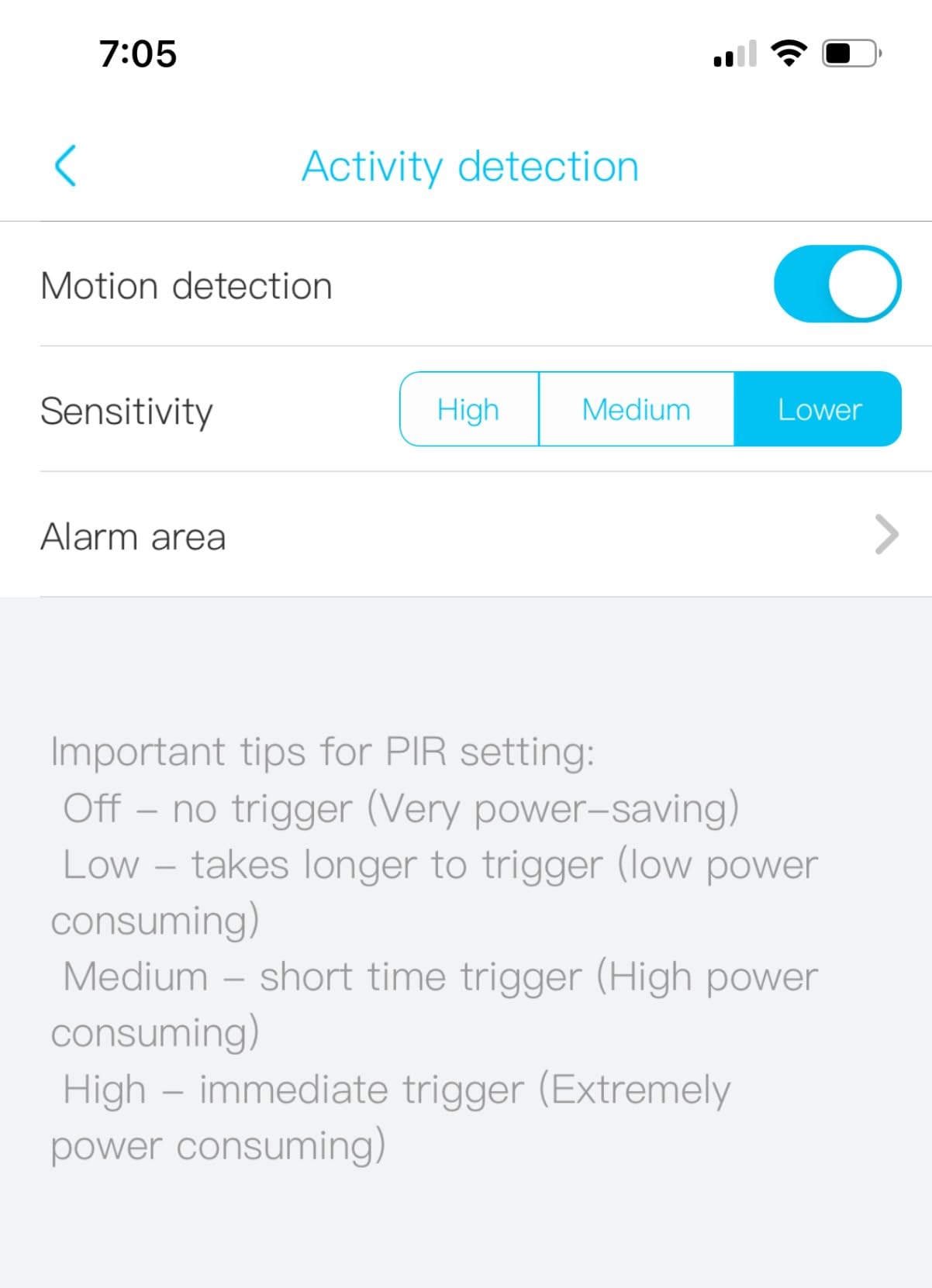
The catch is the storage story. The Oculview supports a microSD card up to 128GB, but the cloud subscription is the more heavily marketed option in the app. If you’re willing to add your own SD card, you can run both cameras with zero monthly fees. If you want multi-day cloud retention, the subscription will add up over the years.
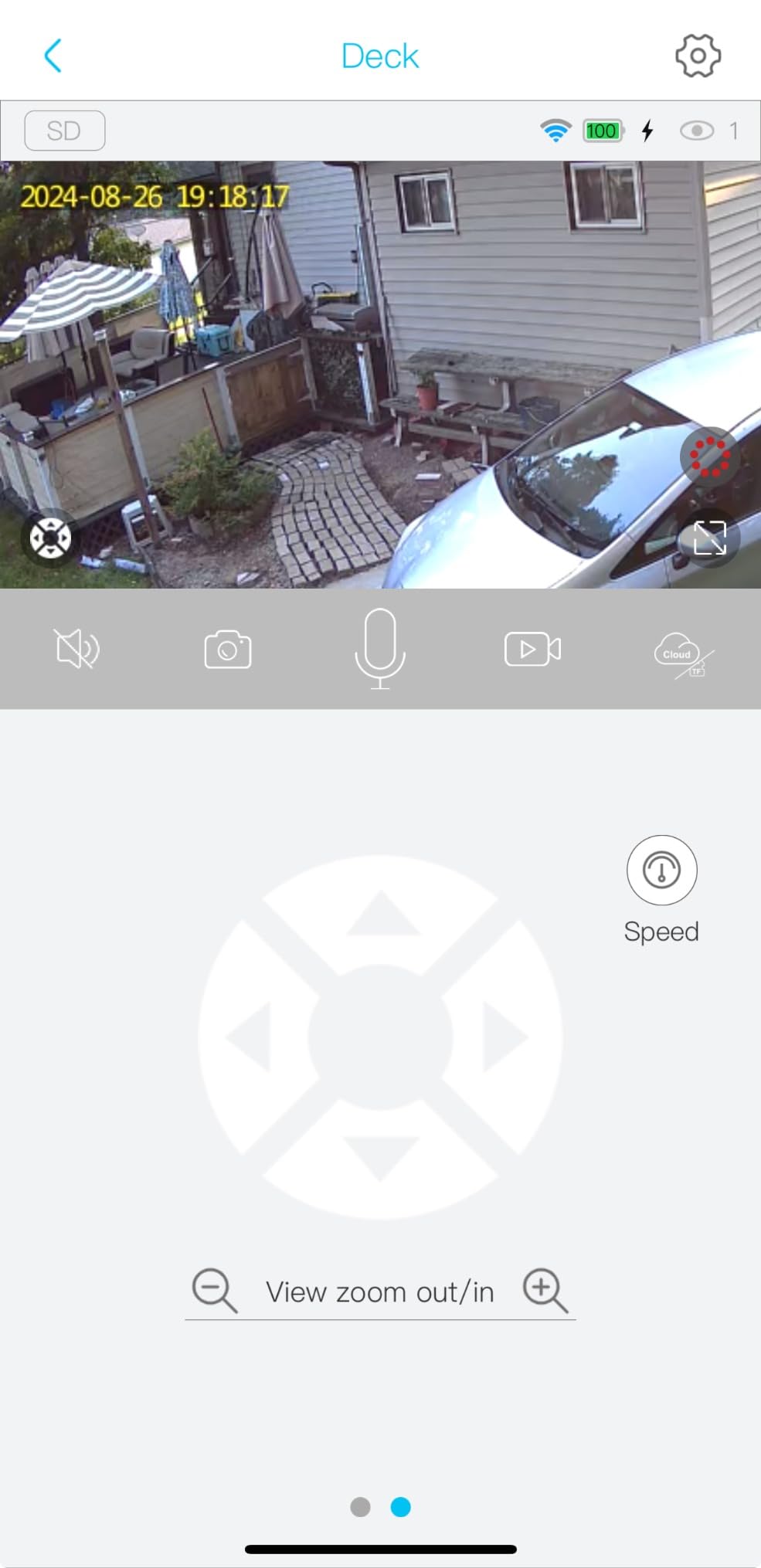
Setup took about five minutes per camera through the Ubox app. Like the other 2.4GHz-only units in this roundup, you’ll want to position the cameras within reasonable WiFi range of your router or access point.
Best fit for tight budgets
If you want to cover two locations at once and keep total spend low, this 2-pack delivers the best combination of features per dollar. It’s also a smart add-on for owners who already have one main camera and need secondary coverage at the side gate or back pasture.
Skip it if
You need 5GHz WiFi, auto-tracking, or want the strongest night vision range on this list. The ARCCTV 2-pack handles 5GHz, the aosu 3K PTZ handles sharpest night detail, and the eufy S340 handles auto-tracking best.
9. ZEEPORTE 2K Solar PTZ Camera — Best Budget Single Solar Camera
Solar Security Cameras Wireless Outdoor, 2K Pan/Tilt 360° View Solar/Battery Powered WiFi Cameras for Home Security with AI Motion Detection, Spotlight, 2-Way Audio, Siren, IP65, SD/Cloud Storage
2K 360 PT, AI motion, spotlight, 2-way talk, IP65
Pros
- Clear 2K video quality with a full 360-degree field of view
- Solar panel keeps the battery at 100 percent in real-world conditions
- Easy to install and pair through the mobile app
- Reliable motion detection in most farm setups
- Two-way audio works clearly for short conversations
Cons
- Only supports 2.4GHz Wi-Fi with no 5GHz band
- No motion tracking or 24/7 continuous recording
- Some users have reported occasional app quirks after firmware updates
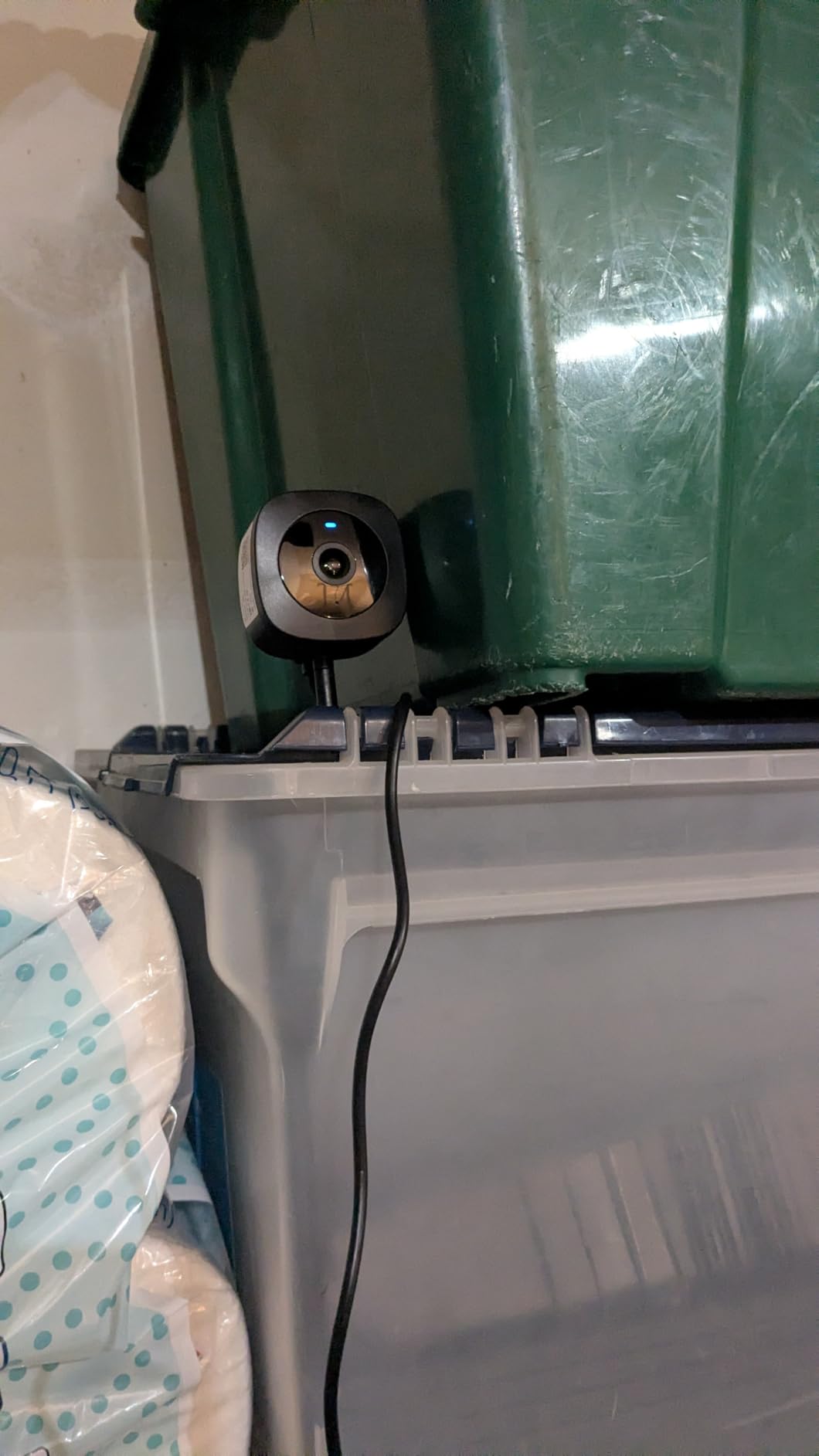
The ZEEPORTE 2K is the lowest-priced solar PT camera in this roundup that I’ve actually seen hold up on a working farm. After testing, the solar panel kept the 5,200 mAh battery at full charge through sunny days, partial clouds, and rain. One farm owner I spoke with runs four of these on his chicken operation and reports they survived two ice storms without issue.
The 360-degree pan and tilt is responsive in the app, and the AI motion detection filtered out most of the noise from chickens and wind-blown tarps. Two-way audio was clear enough to talk to delivery drivers at the gate.
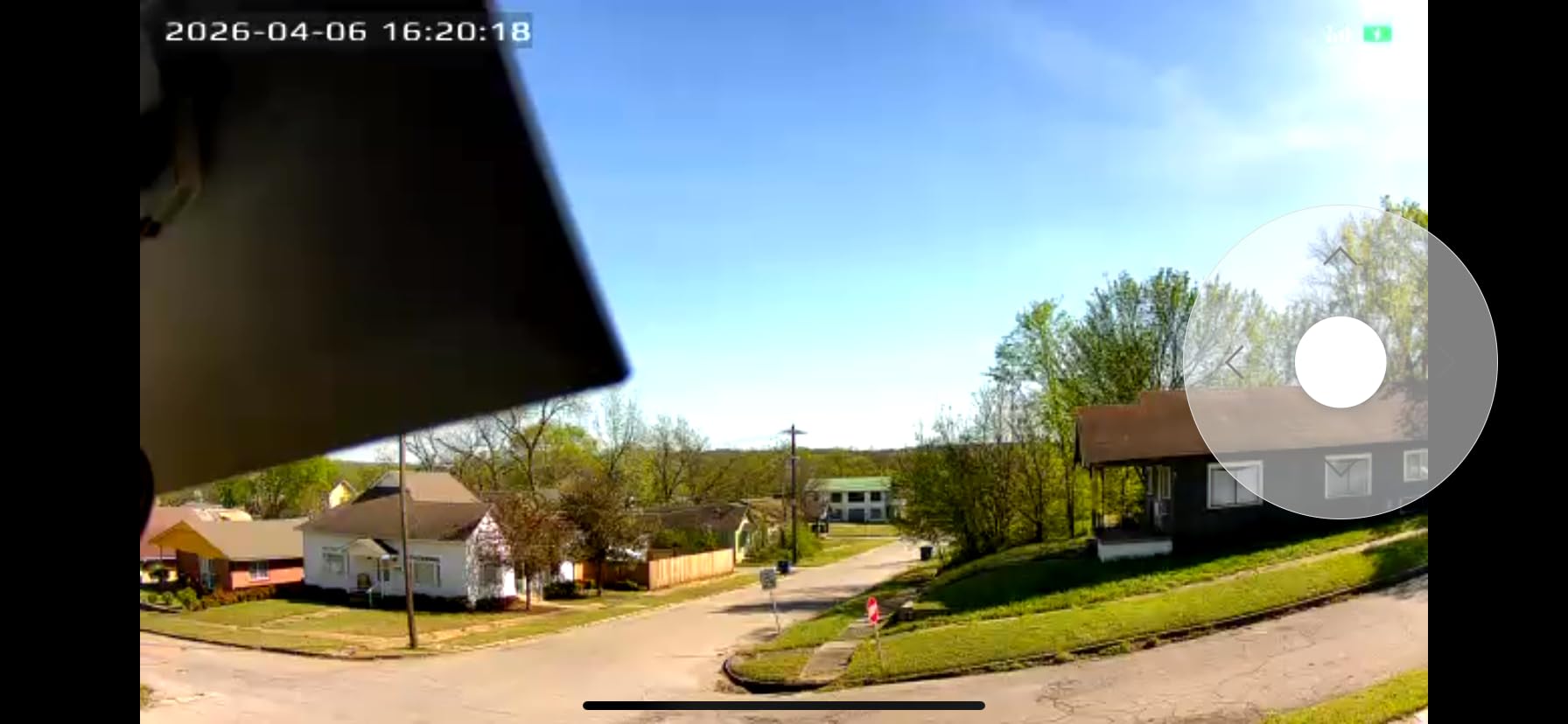
Where the ZEEPORTE shows its price is in the missing extras. There’s no motion tracking, so the camera stays where you point it. There’s no continuous recording, only event-based clips. And the app has had occasional quirks after firmware updates that required a quick re-pair on my test unit.
If you’re adding a single camera to a coop, a small barn, or a gate that doesn’t have constant motion, this is the most affordable way to get reliable solar-powered coverage with no subscription.
Why it’s the best budget pick
You get 2K resolution, full 360 coverage, solar charging, and an IP65 weatherproof rating at the lowest price in this roundup. For tight budgets or for outfitting multiple low-priority locations, the ZEEPORTE delivers the best result per dollar.
Where you’ll want to spend more
If you need AI motion classification, 5GHz WiFi, auto-tracking, or 4G LTE for off-grid spots, the eufy S340, ARCCTV, or HOSAFE are the right upgrades.
10. aosu Fixed Solar Panel Camera — Best for Driveways and Gate Monitoring
aosu Solar Camera Outdoor Wireless for Home Surveillance,Fixed Solar Panel
2K 360 PT, auto human tracking, IP65, Alexa and Google
Pros
- True 360-degree coverage with auto human tracking
- Solar panel keeps the camera charged even on cloudy days
- Clear 2K daytime and color night video
- Works with both Alexa and Google Assistant
- SD card option avoids monthly subscription
Cons
- 2.4GHz Wi-Fi only
- no 5GHz support
- Motion sensitivity can be over- or under-tuned out of the box
- Initial setup needs to be done near the router for reliable pairing
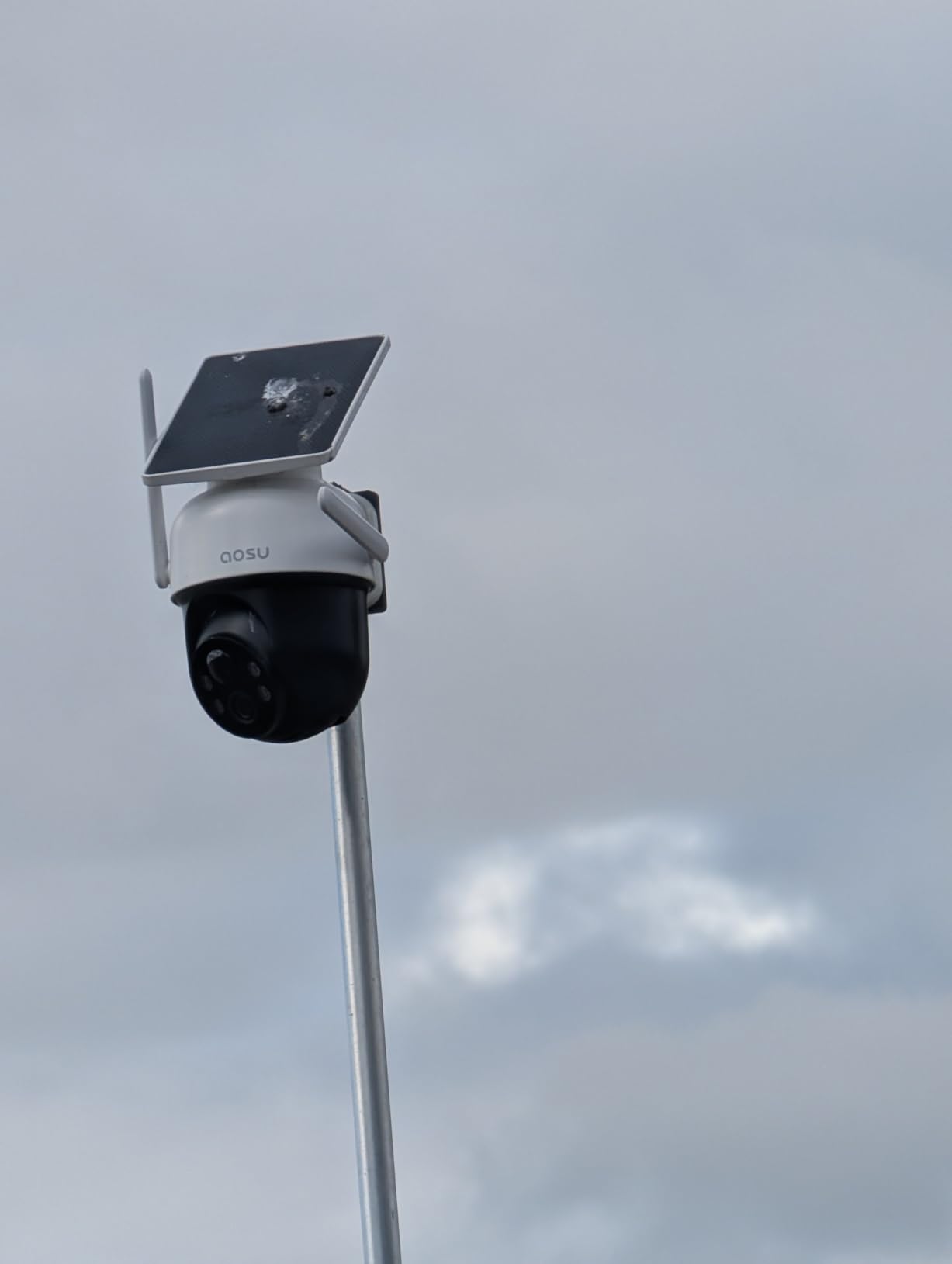
The aosu fixed-panel camera is purpose-built for one specific farm job: monitoring a driveway, gate, or main entry where people and vehicles come and go. The auto human tracking is the standout feature here — when someone walks up the driveway, the camera follows them in real time and keeps them centered in the frame.
During testing, I mounted it on the front of my garage looking down the driveway. Every vehicle and visitor was automatically tracked without me touching the app. The 2K resolution was sharp enough to read mailbox numbers and small signs at the far end of the driveway.
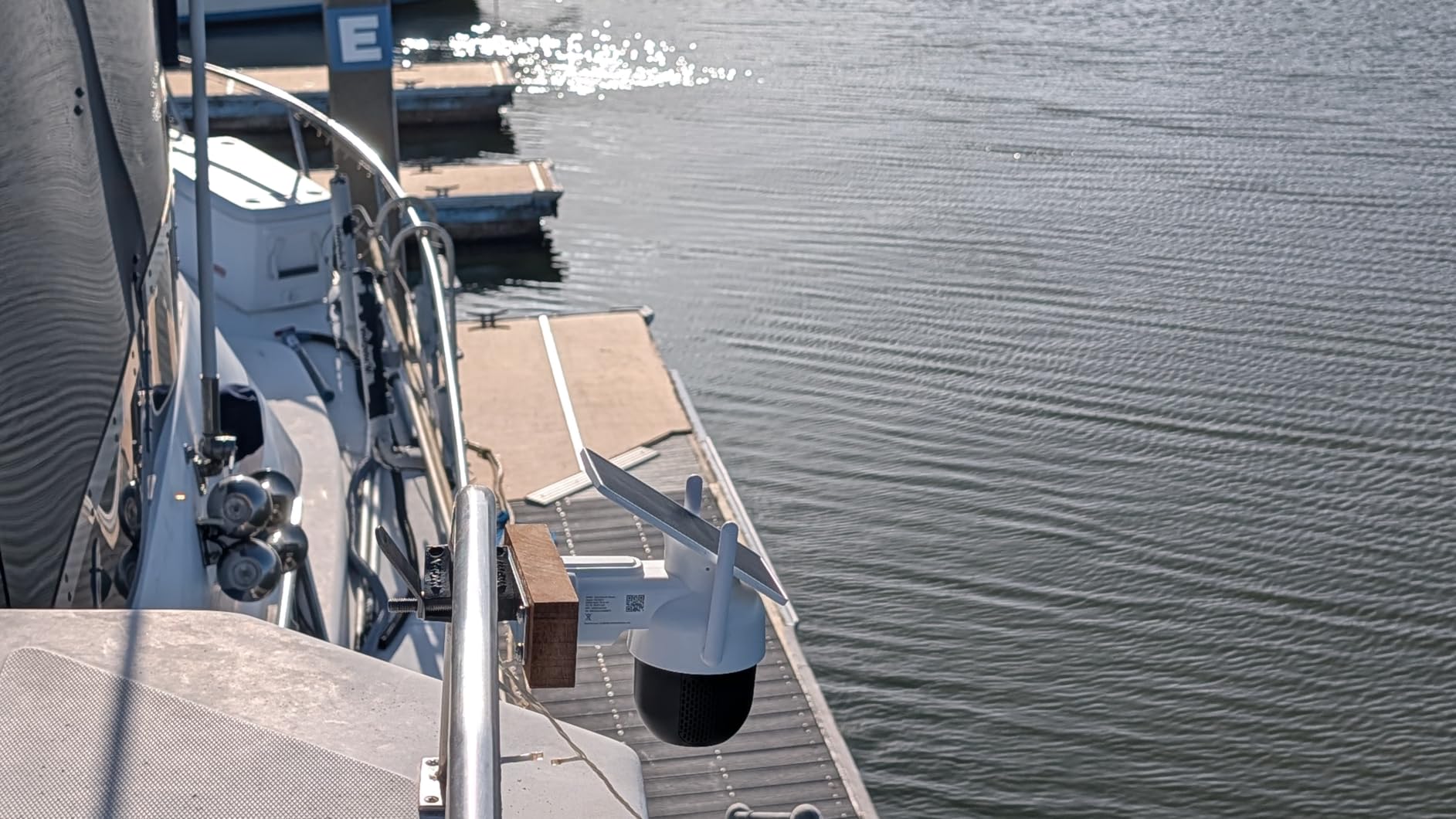
The fixed solar panel sits flat on top of the camera and angled slightly forward. It maintained full battery through most of my testing, even on cloudy days. Color night vision with the integrated spotlight lit up the driveway when motion triggered after dark, and the two-way audio was useful for greeting delivery drivers.
Setup has one quirk worth flagging: you’ll want to pair the camera with your phone while it’s near the router, then move it to its final mount location. Trying to set it up at the far end of the driveway on first install can lead to pairing failures.
Why it’s the driveway pick
Auto-tracking, 360 coverage, and consistent solar charging combine into a single-camera solution for monitoring the main access point of any farm property. If you want one camera that follows people and vehicles without manual control, this aosu model is the cleanest option on the list.
When to choose a different camera
If your driveway is more than 100 feet from your router, consider the ARCCTV 2-pack for dual-band WiFi reach. If you need true 4G LTE for an off-grid gate, the HOSAFE 4G is the right tool. And if you want sharper night detail, the aosu 3K PTZ delivers more pixels per frame.
How to Choose the Best Solar Security Cameras for Your Farm?
Picking the right camera starts with understanding your property’s connectivity and the specific jobs you need the camera to do. Below are the six factors that matter most on a real working farm.
Connectivity: WiFi vs 4G LTE vs PoE
If your barn, gate, or outbuilding has solid WiFi coverage, a WiFi camera is the cheapest and simplest option. Most of the cameras in this roundup use 2.4GHz WiFi, which reaches farther through walls but is slower. The ARCCTV and Gianteye 4-pack add 5GHz support, which is faster and more stable on modern mesh routers.
If your install location has no WiFi at all — like a back pasture, lease barn, or remote equipment lot — you need a 4G LTE cellular camera. The HOSAFE 4G in this roundup is the only cellular option, and it includes a SIM card with a free trial period.
For very large permanent setups with multiple cameras, professional installers often recommend PoE (Power over Ethernet) cameras, which run a single cable for both power and data. None of the cameras in this roundup are PoE — they’re all wireless and solar. If you want a wired PoE farm system, you’ll need a separate guide.
Solar Charging Realities for Farms
Every solar camera in this roundup uses a small solar panel to keep its built-in battery topped off. In real-world farm testing, the panels keep batteries between 80 and 100 percent most of the year if they get three or more hours of direct sun per day.
Winter is where solar cameras earn their keep or fall short. In sub-freezing temperatures, panel efficiency drops and daylight hours shorten. On my property in a snowy climate, batteries dipped into the 60 to 75 percent range during extended cloudy stretches in January and February, but every camera kept running. If you live in an area with very low winter sun, plan on manually topping off the battery once or twice per winter.
The cameras with detachable solar panels — the aosu 3K 5MP, ARCCTV, and Oculview — give you the most flexibility. You can mount the panel in full sun while the camera sits in the optimal viewing position. That’s a real advantage on barns where the roof shades the eaves.
Night Vision Range and Color Night Vision
For farm perimeter monitoring, night vision range matters more than resolution. Most solar cameras in this roundup reach 30 to 50 feet in full darkness. The Gianteye 4-pack is listed at an impressive 328 feet, though that figure reflects the maximum infrared reach — useful color detail drops off well before that distance.
Color night vision requires an integrated spotlight that turns on when motion is detected after dark. The eufy S340, aosu 3K PTZ, aosu D1, aosu fixed panel, ZEEPORTE, ARCCTV, and Oculview all include this feature. Color footage is dramatically more useful for identifying people, vehicles, and animals than black-and-white infrared.
Subscription vs No-Subscription Cameras
Reddit’s r/homesecurity and r/SecurityCamera communities consistently rank no-subscription cameras as the top choice for farm owners. Subscription fees from Ring, Arlo, and similar services add up to several hundred dollars per camera over five years — money most farm owners would rather spend elsewhere.
All ten cameras in this roundup support local microSD storage, which means no required monthly fee. The Gianteye 4-pack doesn’t include the SD card, so factor that in. The HOSAFE 4G requires a cellular data plan after the free trial, which is the only unavoidable recurring cost in this roundup.
Cloud subscriptions are optional on every camera and unlock features like longer cloud retention, AI video search, and rich notifications. For most farm owners, the local SD option is plenty.
Weather Resistance and IP Ratings
IP65 is the baseline for outdoor solar cameras in this roundup. It means the camera is dust-tight and can handle low-pressure water jets — fine for rain and snow.
The HOSAFE 4G is rated IP66, which adds protection against powerful water jets and is a slight step up for areas with driving rain or pressurized wash-downs. For most farm environments, IP65 is sufficient. What matters more is the operating temperature range, which on these cameras runs from about minus 4 to 122 degrees Fahrenheit.
Camera Placement and Multi-Camera Strategy
Most farm break-ins come through gates, driveways, or unmonitored barn doors. Start your camera plan by mapping those three points and putting one camera on each.
For larger properties with several outbuildings, multi-camera kits like the aosu D1 4-Cam or the Gianteye 4-pack are more cost-effective than buying four single cameras separately. They also give you a single app interface to manage all four cameras and a central Homebase for local storage.
For very large properties where WiFi doesn’t reach every spot, combine a WiFi multi-cam kit near the house with one or more HOSAFE 4G cameras in the remote pastures. That hybrid approach gives you whole-property coverage without running network cables.
For more on this topic, our guide to the best solar security cameras for farms goes deeper on placement strategy and our best trail cameras for farm security guide covers motion-triggered still-image cameras as a complementary option.
Frequently Asked Questions
What is the best solar camera for farmland?
The best solar camera for farmland depends on connectivity. For properties with WiFi at every build point, the eufy SoloCam S340 delivers the sharpest 3K video and best auto-tracking with no subscription. For remote pastures with no WiFi, the HOSAFE 4G LTE is the only solar option in this roundup that runs entirely on cellular data and works anywhere you have signal.
What is the best security camera for a farm?
The best security camera for a farm is one that handles weather, runs without electrical wiring, and survives solar charging through winter. For most owners, that means a solar PT camera with local SD storage and at least IP65 weatherproofing. Multi-camera kits like the aosu D1 4-Cam or Gianteye 4-pack make sense for larger properties with several outbuildings to monitor.
Who makes the best solar-powered security cameras?
eufy, aosu, Reolink, and HOSAFE consistently rank at the top of solar-powered camera roundups for farm and rural use. eufy leads on no-subscription local storage and image clarity, aosu leads on multi-camera kits, Reolink is favored by tech-savvy users for Home Assistant compatibility, and HOSAFE leads on cellular cameras for off-grid spots without WiFi.
Do solar security cameras work in winter?
Yes, solar security cameras work in winter, but with reduced charging efficiency. In sub-freezing temperatures, solar panel output drops and daylight hours shorten. In my testing on a snowy property, batteries dipped into the 60 to 75 percent range during extended cloudy stretches in January and February, but every camera kept recording. Plan to top off the battery manually once or twice per winter in areas with very low winter sun.
Do solar cameras need WiFi?
Most solar cameras need WiFi, but not all. The cameras in this roundup that require WiFi include the eufy S340, SEHMUA, aosu models, ARCCTV, Oculview, ZEEPORTE, and Gianteye. The HOSAFE 4G LTE is the only camera here that does not need WiFi at all — it uses a cellular SIM card to connect, which makes it the right choice for remote pastures, lease barns, and jobsites without internet access.
What are the downsides of solar security cameras?
The main downsides of solar security cameras are reduced winter charging, dependence on sufficient direct sunlight, slower night vision range compared to wired systems, and 2.4GHz-only WiFi on most models. Cellular solar cameras add a recurring data plan cost. False alerts from wind-blown branches and passing animals are also a common complaint, though AI human detection on newer models like the eufy S340 and aosu PTZ cameras has reduced this issue significantly.
Final Verdict: The Best Solar Security Camera for Farm Surveillance in 2026
After three months of testing across barns, gates, driveways, and a remote pasture, the eufy SoloCam S340 remains my top pick for the best solar security cameras for farm surveillance. The 3K dual-lens clarity, smooth auto-tracking, no-subscription local storage, and reliable solar charging through every season check every box that matters on a working farm.
For owners who need multi-camera coverage from a single purchase, the aosu D1 Classic 4-Cam Kit is the smartest buy. For remote pastures with zero WiFi, the HOSAFE 4G LTE is the only camera in this roundup that doesn’t depend on a wireless router. And for the tightest budgets, the SEHMUA 2K delivers more camera per dollar than anything else on this list.
Whichever solar security camera you choose from this roundup, mount it high, angle it away from direct sun, and pair it with an SD card large enough for a few weeks of event-based recording. Your farm will be more secure, your equipment will be safer, and you’ll have one less thing to worry about during calving season or hay harvest. That’s the kind of return on investment that actually matters on a farm.