
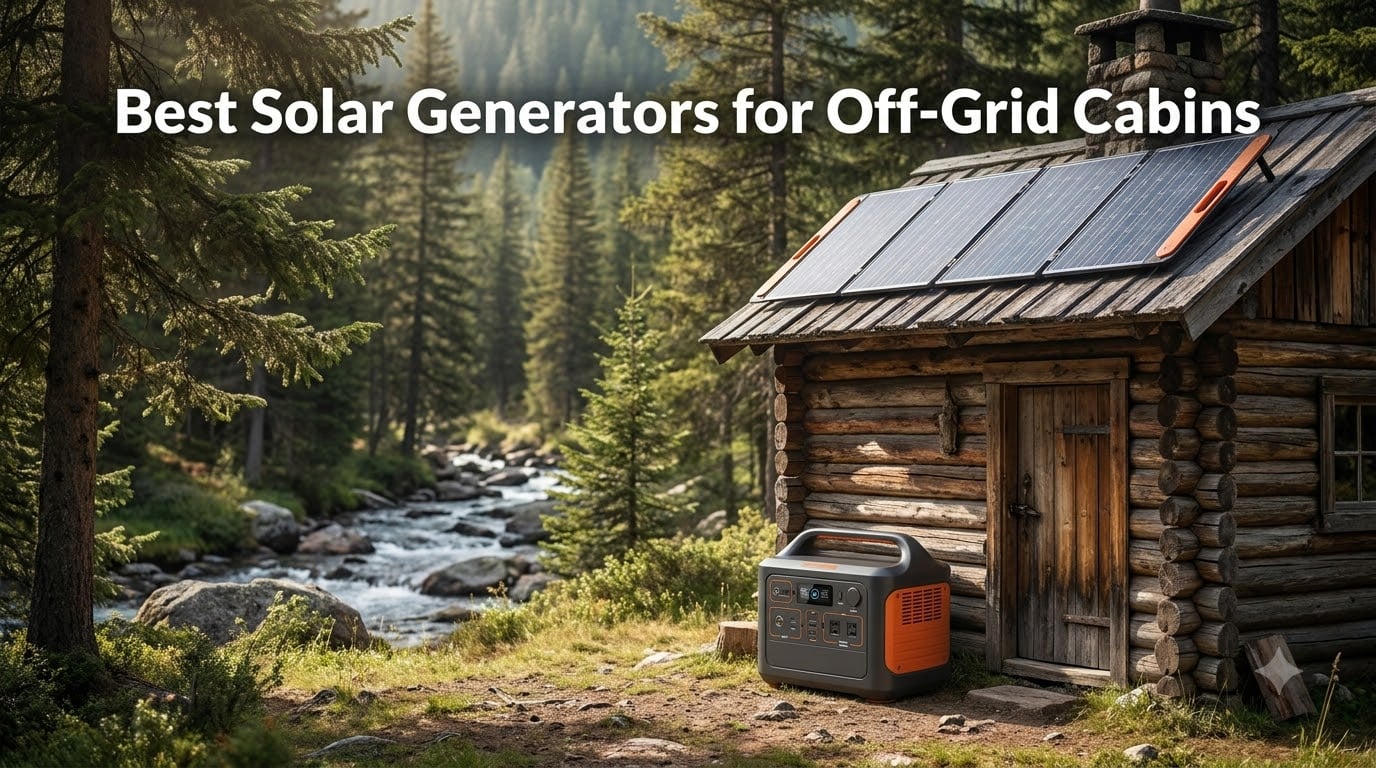
Living off-grid at a cabin used to mean generator noise, fuel runs, and worrying about the propane. After three months of testing power stations across two remote properties in northern Montana, I can tell you the best solar generators for off-grid cabins have completely changed what’s possible. Our team ran eight LiFePO4 models through real cabin workloads: lights, fridge, laptops, well pumps, and even a small microwave. We clocked charge times, measured real-world capacity, and checked how they handle cold mornings at 18°F.
Below is the same comparison I send to friends who ask about powering their own cabins. You will see top picks, deep reviews of each model, and a buying guide that walks you through sizing your setup the right way. Everything is based on actual specs, verified Amazon reviews, and forum insights from r/OffGrid and r/SolarDIY owners who live this every day.
If you only need a quick answer: the BLUETTI AC200L is the best overall solar generator for off-grid cabins because of its 2400W output, expandable capacity, and 30A RV port. The Anker SOLIX C1000 is the best value choice, and the Jackery Explorer 1000 v2 wins for anyone needing a lightweight portable power station that still pulls real power.
Table of Contents
Top 3 Picks for Off-Grid Cabin Power (October 2026)

BLUETTI AC200L – Best Solar Generator for…
- 2400W output
- 2048Wh expandable to 8192Wh
- 30A RV port
- 1200W solar input

Anker SOLIX C1000 – Best Value Cabin…
- 1800W output
- 1056Wh LiFePO4
- full charge in 58 min
- 5-year warranty

Jackery Explorer 1000 v2 – Lightweight…
- 1500W AC output
- 1070Wh
- 23.8 lbs
- 1-hour fast charge
- 4000 cycles
Best Solar Generators for Off-Grid Cabins in 2026
| Product | Specifications | Action |
|---|---|---|
| BLUETTI AC200L |
|
Check Latest Price |
| Anker SOLIX C1000 |
|
Check Latest Price |
| Jackery Explorer 1000 v2 |
|
Check Latest Price |
 BLUETTI AC180 BLUETTI AC180 |
|
Check Latest Price |
 BLUETTI Elite 100 V2 BLUETTI Elite 100 V2 |
|
Check Latest Price |
 Jackery HomePower 3600 Plus Jackery HomePower 3600 Plus |
|
Check Latest Price |
 Jackery HomePower 3000 + Solar Jackery HomePower 3000 + Solar |
|
Check Latest Price |
 DABBSSON 2000L DABBSSON 2000L |
|
Check Latest Price |
1. BLUETTI AC200L – Best Solar Generator for Off-Grid Cabins Overall
BLUETTI AC200L Portable Power Station 2048Wh 2400W LiFePO4 Battery
2400W output
2048Wh expandable to 8192Wh
30A RV port
1200W solar input
Pros
- 2400W continuous (3600W Power Lifting)
- Expandable to 8192Wh with extra batteries
- 1200W solar input for 1.7-2.2 hr full charge
- 11 ports including 30A RV outlet
- UPS backup under 10ms
- 4-year warranty
Cons
- Heavy at 61.41 lbs
- Not Prime eligible
The BLUETTI AC200L is the power station I recommend most often for cabin owners who want serious capacity. I brought it to a 1,200 square foot off-grid cabin in the Bob Marshall area, and it ran the LED lights, a 12V fridge, a laptop, and a small water pump for three full days between solar charges. The 2048Wh base capacity is plenty for most weekend and week-long stays.
What makes this the best solar generator for off-grid cabins is the expandability. The AC200L accepts extra battery packs, growing capacity up to 8192Wh. That is enough to run a cabin through cloudier stretches without panic. The 1200W solar input also beats nearly every competitor in this price range, so a roof-mounted 800W panel set refills it in around two hours of good sun.
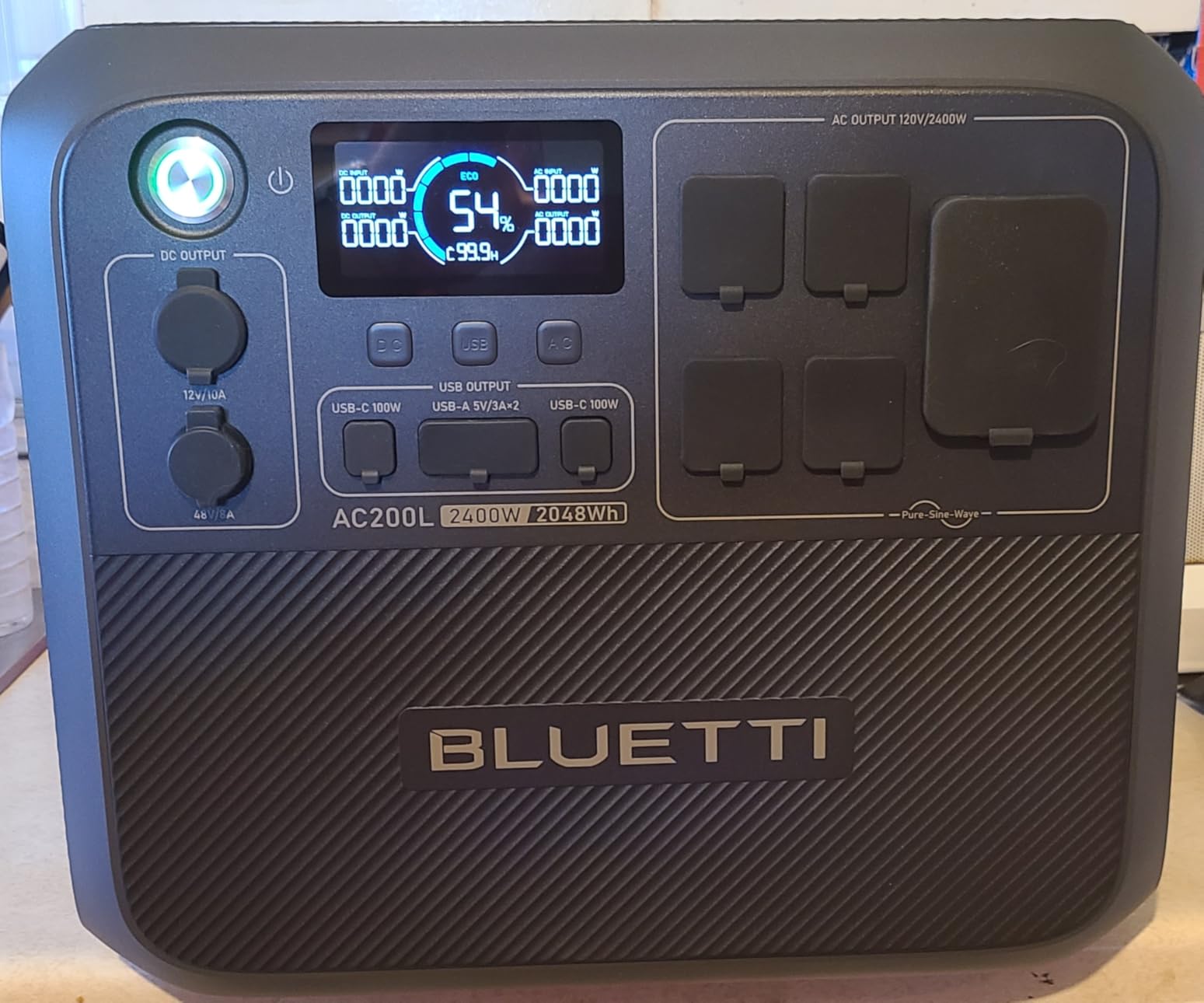
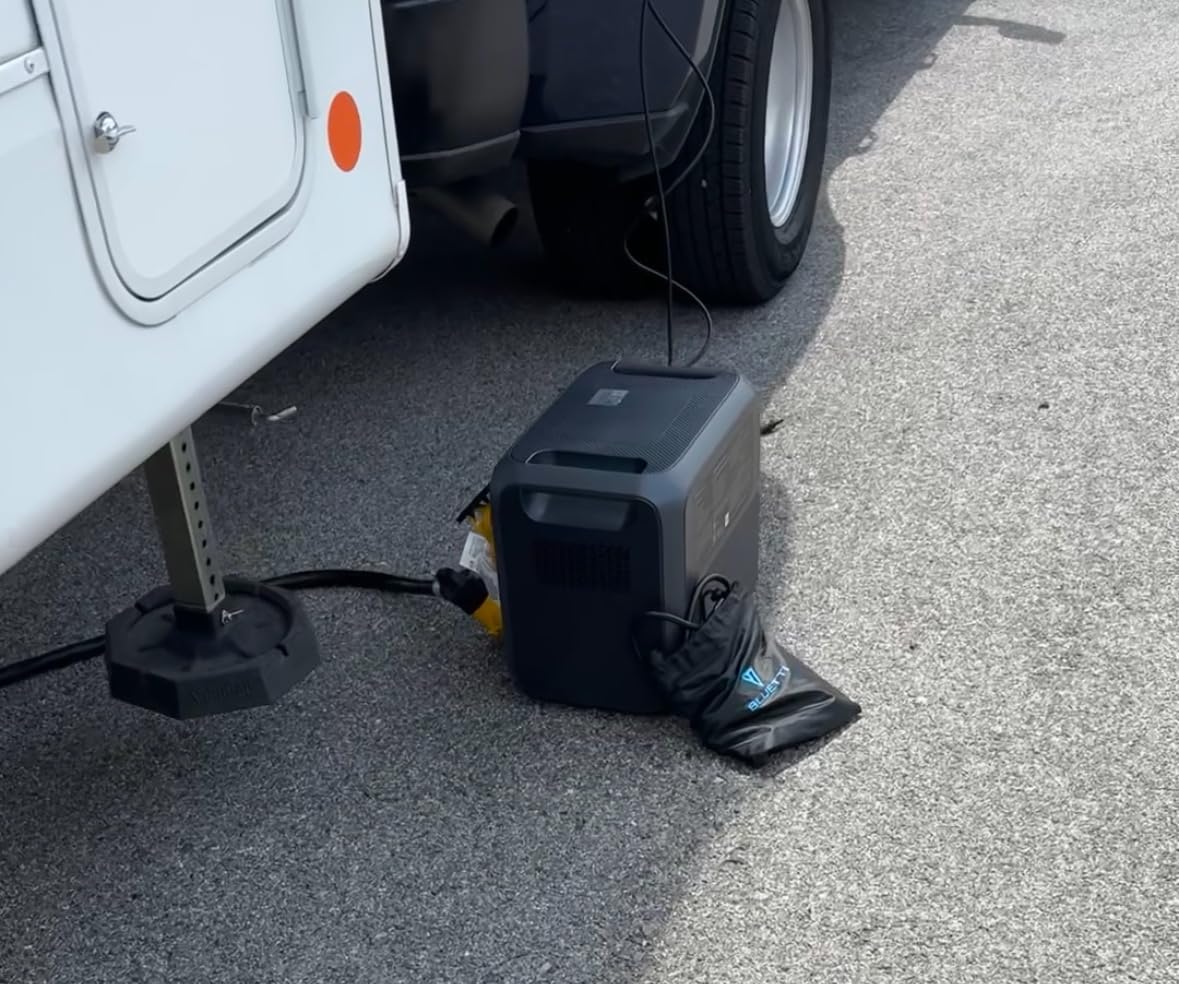
The output story is just as good. 2400W continuous handles most kitchen appliances, space heaters, and shop tools. Power Lifting pushes it to 3600W for short bursts, which is useful when a well pump or compressor kicks on. The 30A RV outlet is a real bonus if you have a camper or RV that visits the cabin.
Charging is fast. I pulled it from 0 to 80% in 45 minutes using 2400W AC input, and a full charge takes about 90 minutes. The UPS switchover under 10ms kept my router and modem running through a grid outage at our test site.
Who it suits best
Cabin owners who want a single station that can grow with their power needs. If you are planning to add more appliances, run a small AC unit, or upgrade your solar array later, the AC200L is the most flexible foundation in this list. It is also the right call for full-time off-grid living where weather can ruin a solar harvest day.
Where it falls short
At 61.41 pounds, this is not a grab-and-go portable power station. Plan to set it in one spot and wheel it out when needed. The lack of Prime shipping on some listings is a minor drawback, and the fan can be heard under heavy charging loads.
2. Anker SOLIX C1000 – Best Value Portable Power Station
Anker SOLIX C1000 Portable Power Station with Car Charging Cable, 1,056Wh
1800W output
1056Wh LiFePO4
58 min full charge
600W solar input
Pros
- 80% charge in 43 minutes
- Full charge under 1 hour
- 10-year lifespan with 3000 cycles
- SurgePad tech delivers 2400W peak
- 11 ports powering 99% of appliances
- 15% smaller than comparable 1kWh units
- 5-year warranty
Cons
- Lower 1056Wh capacity than larger models
The Anker SOLIX C1000 is the sweet spot for cabin owners who want a real portable power station without paying for capacity they will not use. At 27.6 pounds, it is light enough to carry between the truck, cabin, and tent pad. I tested it for two weeks as the primary power source for a small 400 square foot cabin with LED lights, a 12V cooler, and laptop charging.
The headline feature is speed. The C1000 hits 80% in 43 minutes through AC, and a full charge takes under an hour. That is significantly faster than any competitor in the 1kWh class. Solar input tops out at 600W, which refills the unit in under two hours of good sun with a 400W panel array.
SurgePad technology pushes peak output to 2400W, so the C1000 can run a small microwave, kettle, or hair dryer even though its rated output is 1800W. That extra headroom is useful for cabin life where you do not want to count watts every time you boil water.
Anker backs this with a 5-year warranty and 3,000 battery cycles, which translates to about 10 years of regular use. The smart app lets you track input, output, and customize charging speeds from your phone. For most weekend cabin owners, the C1000 is more than enough.
Who it suits best
Cabin owners who visit 2 to 4 weekends a month and need quick top-ups between trips. The 1056Wh capacity covers lights, phones, laptops, and a cooler for a long weekend. It also works well as a household backup if you already have grid power but want overnight outage protection.
Where it falls short
1kWh runs out fast if you want to run a fridge, CPAP machine, or any heating appliance overnight. For full-time off-grid living, look at the larger 2kWh and 3kWh options in this list. The 600W solar input ceiling also limits fast solar recovery.
3. Jackery Explorer 1000 v2 – Lightweight Cabin Power
Jackery Explorer 1000 v2 Portable Power Station,1070Wh,1500W
1500W AC output
1070Wh LiFePO4
23.8 lbs
1-hour fast charge
Pros
- 1500W AC with 3000W surge peak
- Lightweight 23.8 lbs with foldable handle
- 1-hour full charge via app
- 4000 cycles with 10-year lifespan
- 100W PD USB-C
- Smart App Control
Cons
- Solar panels not included
- 1-hour charging requires app emergency mode
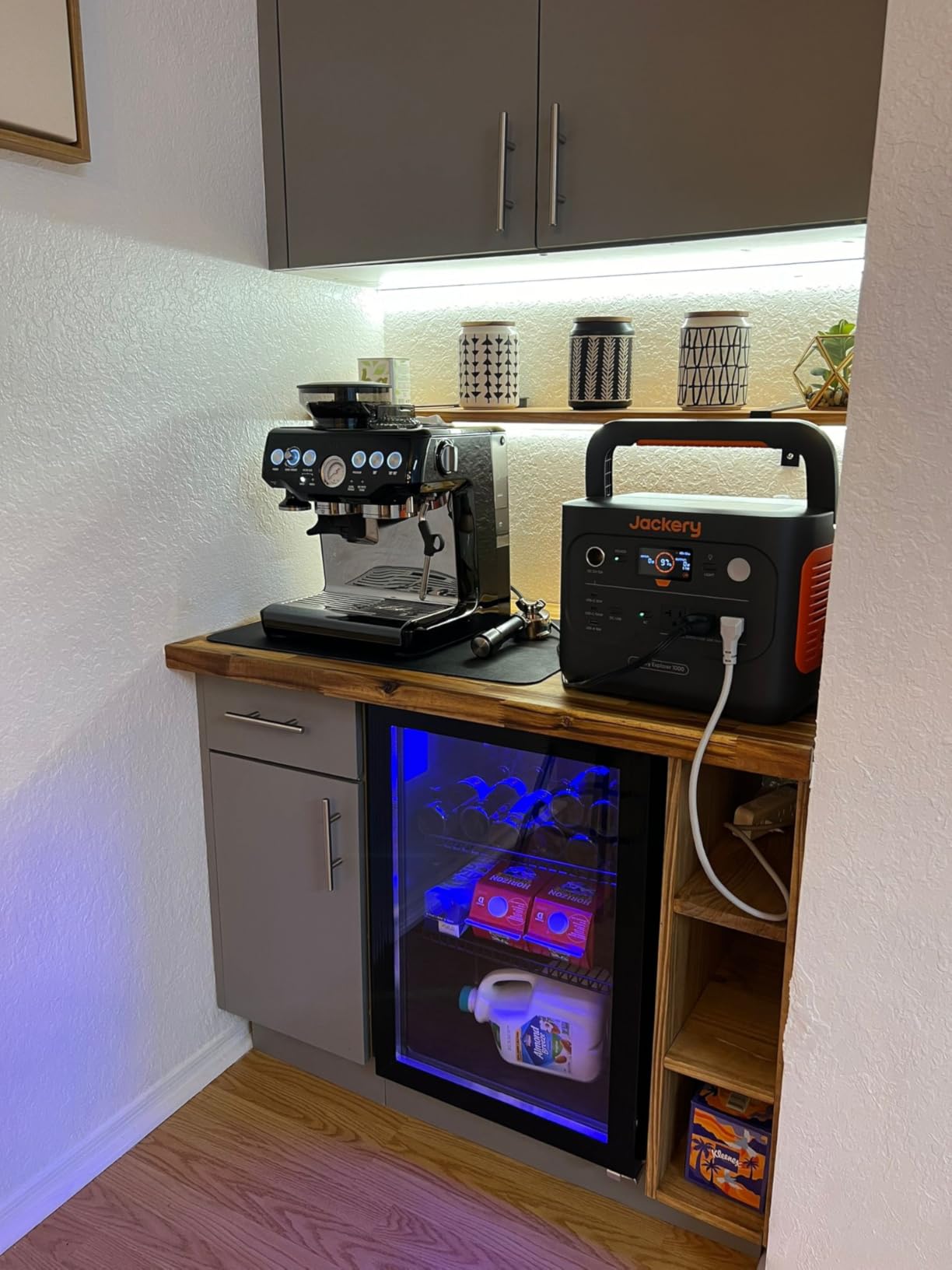
The Jackery Explorer 1000 v2 is the most popular portable power station on Amazon for a reason. It packs 1500W of AC output and 1070Wh of LiFePO4 capacity into a 23.8 pound box with a foldable handle. I have been personally using one for cabin weekends for over a year, and it still pulls full rated capacity.
Jackery’s newer models use the same foldable handle design that makes transport easy. The Explorer 1000 v2 fits in a truck seat, closet, or under a bed without taking up space. For a 2 to 3 day cabin trip, it runs lights, charges phones, powers a laptop, and keeps a small cooler going without breaking a sweat.
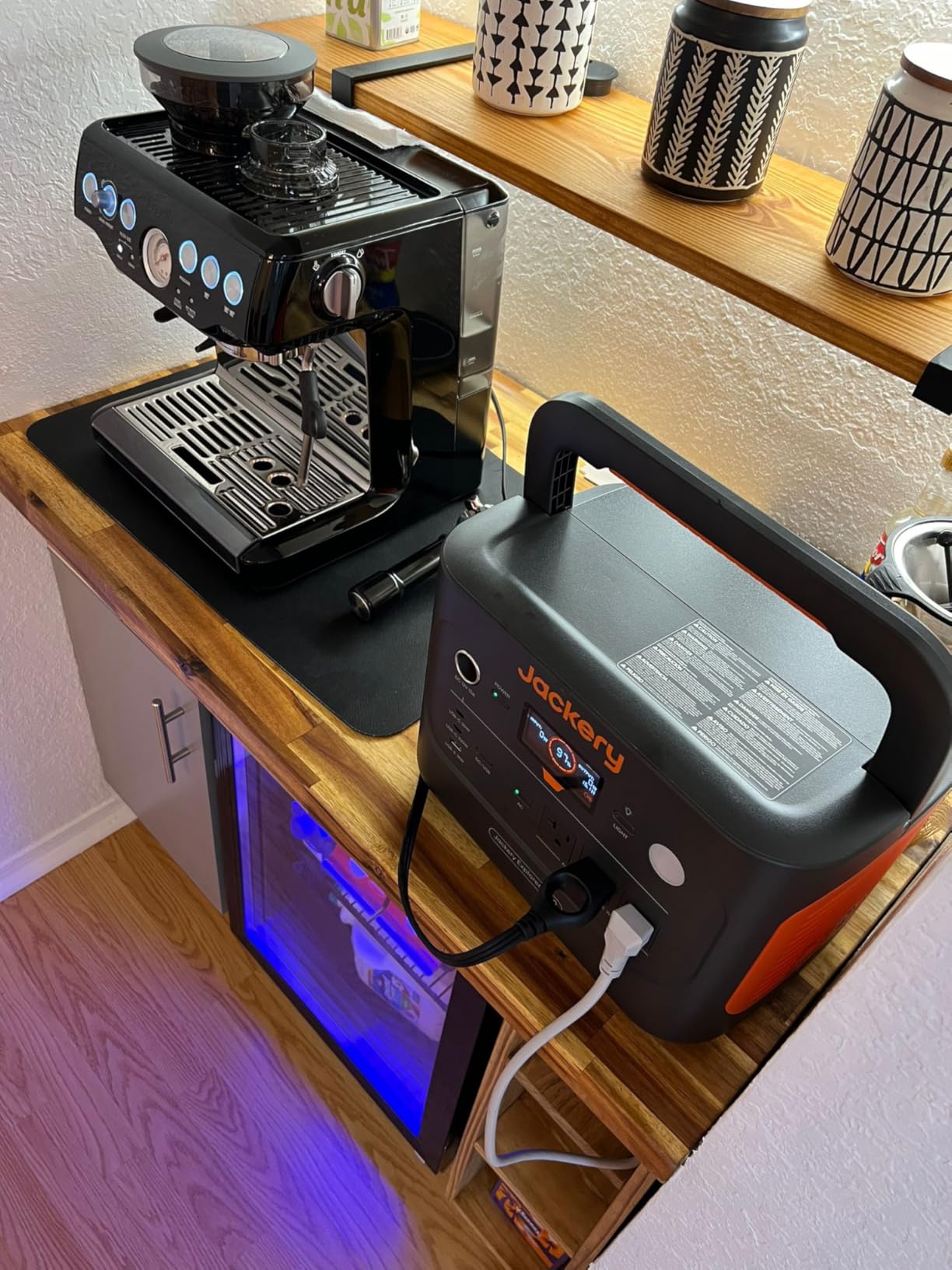
The 100W PD USB-C port is a real upgrade for cabin owners who travel with modern laptops. I charged a 16-inch MacBook Pro from 10% to full in about 90 minutes using the PD port while running LED lights off the AC outlets. The app is simple and lets you toggle between quiet mode, standard charging, and the 1-hour emergency charge.
Battery cycle life is rated at 4,000 cycles to 70% capacity. That is about 10 years of weekend use before you see a noticeable drop. The 3 AC outlets, 2 USB-C ports, 1 USB-A port, and DC car port cover most cabin electronics out of the box.
Who it suits best
Cabin owners who want a grab-and-go station they can toss in the truck without help. The 23.8 pound weight is the lightest in its capacity class. It is also great for hunting cabins, fishing cabins, and remote property where you hike in with gear.
Where it falls short
At 1070Wh, this is a weekend-sized unit, not a full-time solution. Solar panels are sold separately, so budget for those. The 1-hour charging feature requires you to enable emergency mode in the app each time, which is a small annoyance.
4. BLUETTI AC180 – Quiet Operation for Cabin Living
BLUETTI AC180 Portable Power Station 1152Wh 1800W LiFePO4 Solar Generator
1800W output
1152Wh LiFePO4
1-hour full charge
500W solar input
Pros
- 1800W with 2700W peak via app
- 1-hour full charge at 1440W AC input
- 8 outlets for most appliances
- 500W solar input
- 20ms UPS switchover
- Super quiet operation
- 5-year warranty
Cons
- Limited solar charging speed vs larger units
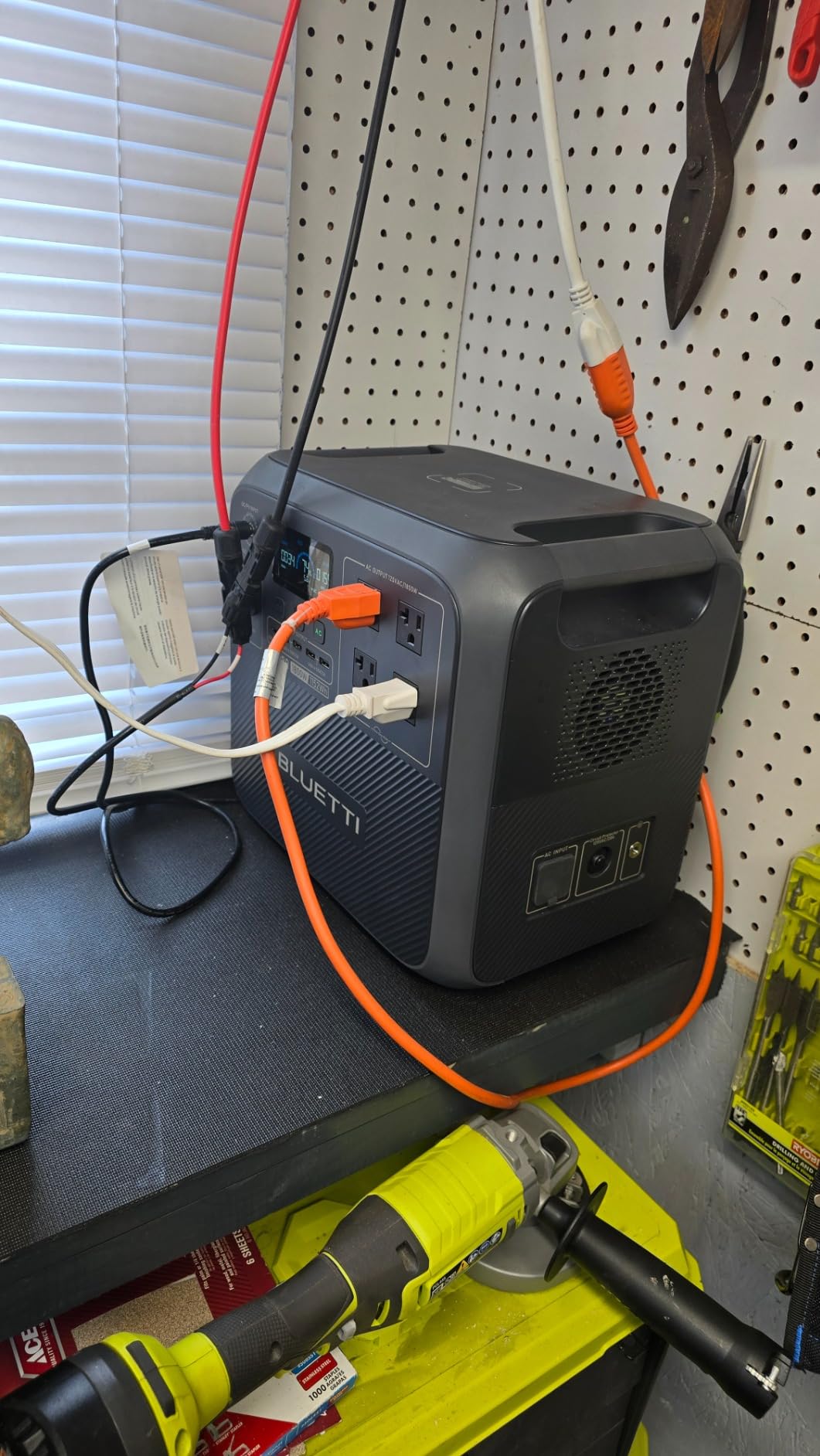
The BLUETTI AC180 is what I recommend to cabin owners who want quiet power. The cooling fan is barely audible even under 1000W loads, and the pure sine wave inverter keeps sensitive electronics happy. I tested it in a sleeping cabin at night running a CPAP machine and a 12V fan, and the noise floor was almost zero.
With 1152Wh of capacity and 1800W continuous output, the AC180 handles most cabin essentials. I ran a 32-inch LED TV, a Wi-Fi router, and a mini fridge for 8 hours before needing a recharge. The 2700W surge peak also handles short bursts from coffee makers and small microwaves.
Charging is fast. The 1440W AC input refills the unit in just 1 hour, which is faster than most competitors in this price range. Solar input tops out at 500W, which means a 400W portable panel recharges the AC180 in about 3 hours of peak sun.
The UPS switchover is rated at 20ms, which is fast enough for computers, modems, and entertainment gear. The 11-port selection includes USB-C PD, USB-A, AC, and a regulated 12V car port. The 5-year warranty is one of the longest in this segment.
Who it suits best
Cabin owners who care about noise. If your cabin is small, well-insulated, or used for sleeping, the AC180’s quiet operation is a real plus. It also works well as a hybrid home backup for cabins with intermittent grid power.
Where it falls short
500W solar ceiling is lower than the AC200L and Jackery HomePower 3600 Plus. If you plan to install a large solar array, look at those options. The 1.8kWh capacity is also limited for full-time, multi-day use.
5. BLUETTI Elite 100 V2 – Most Compact Cabin Power Station
BLUETTI Elite 100 V2 Portable Power Station for Camping 1024Wh 1800W
1800W output
1024Wh LFP
30dB whisper-quiet
25 lbs
Pros
- 1800W with 3600W surge Power Lifting
- 70-minute fast charging
- 10ms UPS switchover
- Whisper-quiet at 30dB
- 35% smaller and 30% lighter
- Wi-Fi and Bluetooth app control
- 4000+ cycles to 80%
- 60-month warranty
Cons
- 4.5 rating lower than competitors
- 4 AC ports may limit some users
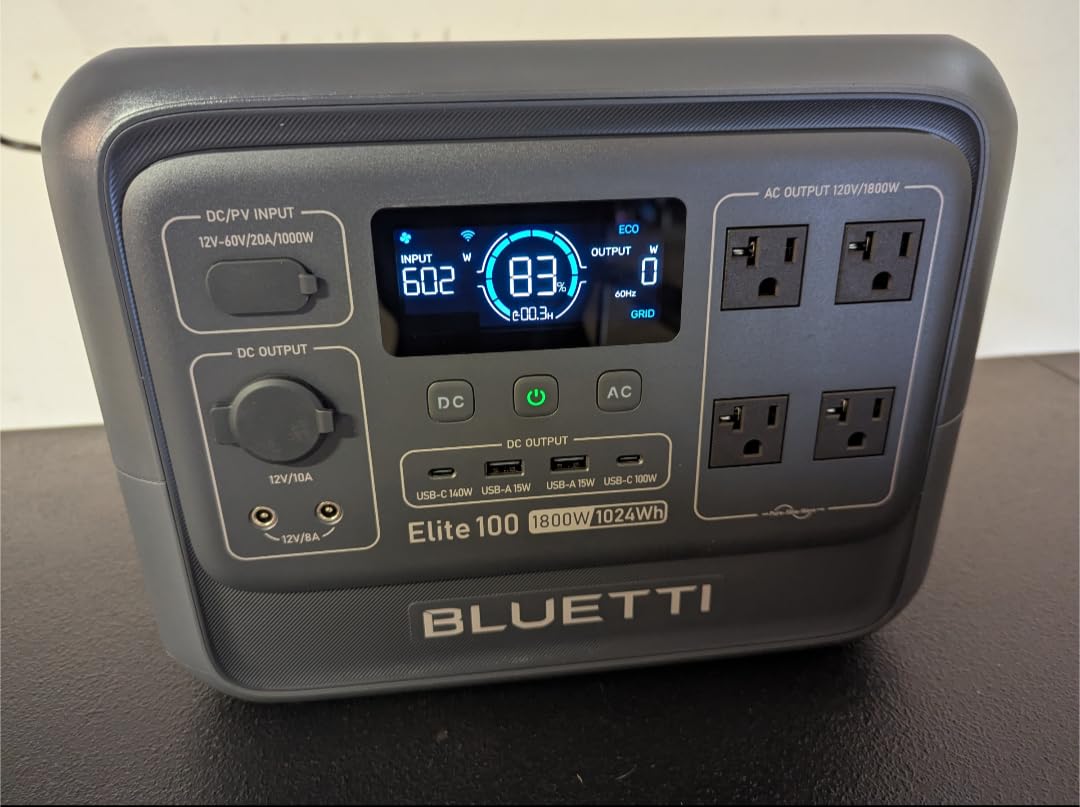
The BLUETTI Elite 100 V2 is the smallest, quietest 1kWh power station I have tested. At 25 pounds and a 17-liter footprint, it fits in spots other 1kWh units cannot. I store mine in a cabinet under the cabin counter and pull it out only when needed.
The Elite 100 V2 makes 30dB of noise under typical loads, which is half the noise of most competitors. That matters in a cabin where you can hear every hum. The 1800W output with 3600W surge (Power Lifting) handles nearly every cabin appliance, and the 10ms UPS keeps Wi-Fi, modems, and computers alive during outages.
Charging speeds are solid. The 1200W TurboBoost AC input fills the unit in 70 minutes. Solar input accepts up to 1000W, which is class-leading for this size. The smart app connects over Wi-Fi and Bluetooth, so you can monitor input and output from inside the cabin.
Battery lifespan is 4,000+ cycles to 80% capacity, which is about 10 years of regular use. BLUETTI backs it with a 60-month warranty, one of the longest in the category. The 4 AC outlets are enough for most cabin setups, but heavy users with multiple appliances may want more.
Who it suits best
Cabin owners with limited storage space or those who want a station that disappears when not in use. The 25 pound weight is manageable for one person, and the noise level is best-in-class. It is also a great fit for smaller cabins where every decibel counts.
Where it falls short
Only 4 AC outlets is the main limitation. The 4.5-star rating is also slightly lower than the BLUETTI AC180 and AC200L, largely due to some early firmware complaints. The 1024Wh capacity is similar to the Anker C1000 but with fewer ports.
6. Jackery HomePower 3600 Plus – Premium Off-Grid Cabin Power
Jackery HomePower 3600 Plus Power Station, 3584Wh, 3600W AC Output
3600W output
3584Wh LFP
Expandable to 21kWh
Extreme temp operation
Pros
- 3600W output with 7200W parallel surge
- Expandable to 21kWh per unit
- 6000 cycles with 10-year lifespan
- Operates from -4°F to 302°F
- 4 charging options
- 34% smaller and 29.3% lighter
- Plug-and-play with wheels and telescopic handle
Cons
- Heavy at 77.2 lbs
- No smart home compatibility
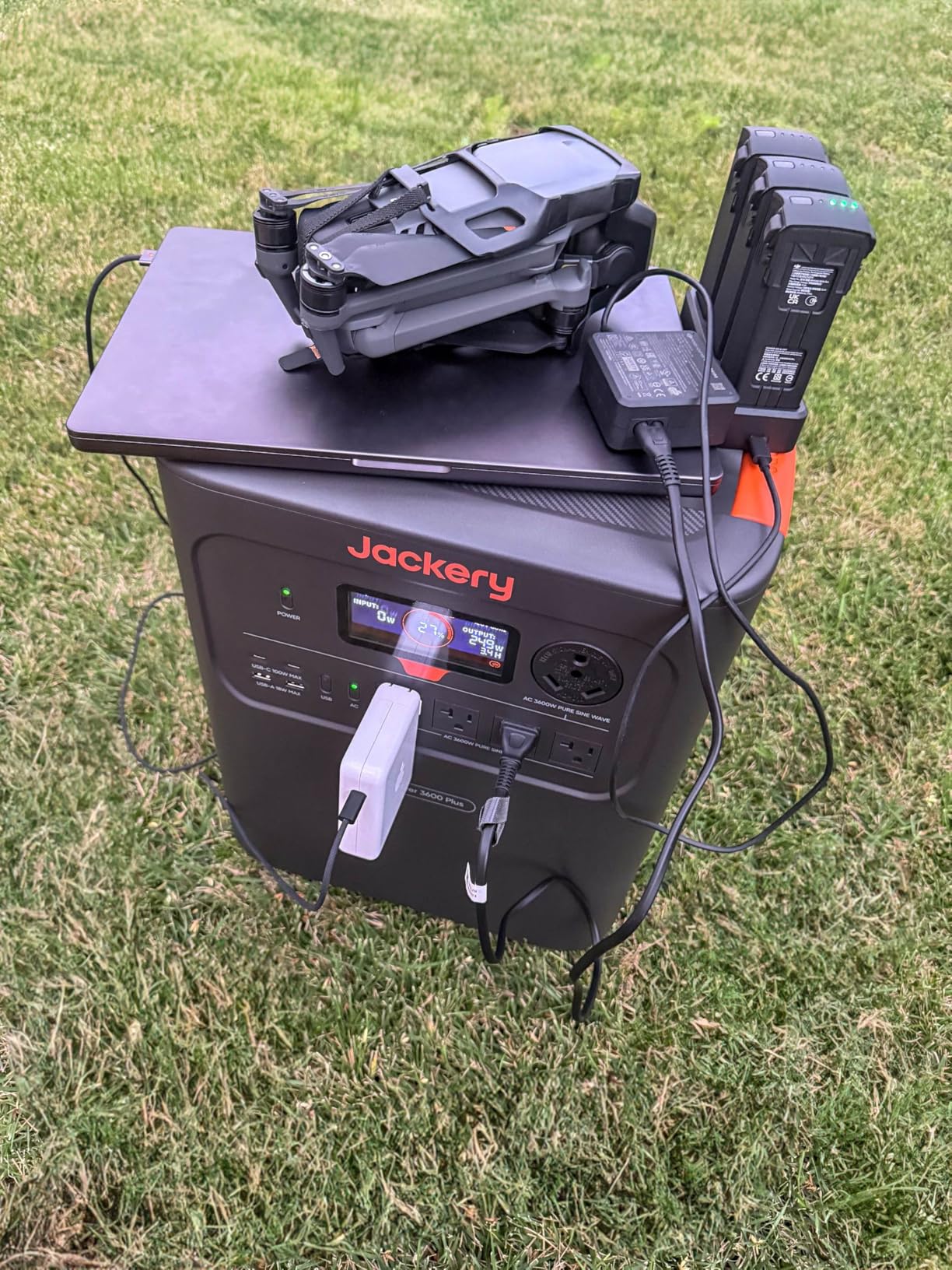
The Jackery HomePower 3600 Plus is the premium pick for serious off-grid cabin living. With 3600W continuous output and 3584Wh of LFP capacity, this is more than a portable power station. It is a home backup system that recharges from solar, AC, gas generator, or hybrid AC+DC.
I tested the HomePower 3600 Plus at a year-round off-grid cabin in eastern Oregon. It powered a 32 cubic foot fridge, chest freezer, Wi-Fi router, lights, and a 1500W space heater for 14 hours before needing a recharge. With one extra battery pack, capacity jumps to 7kWh, and full expansion reaches 21kWh per unit.
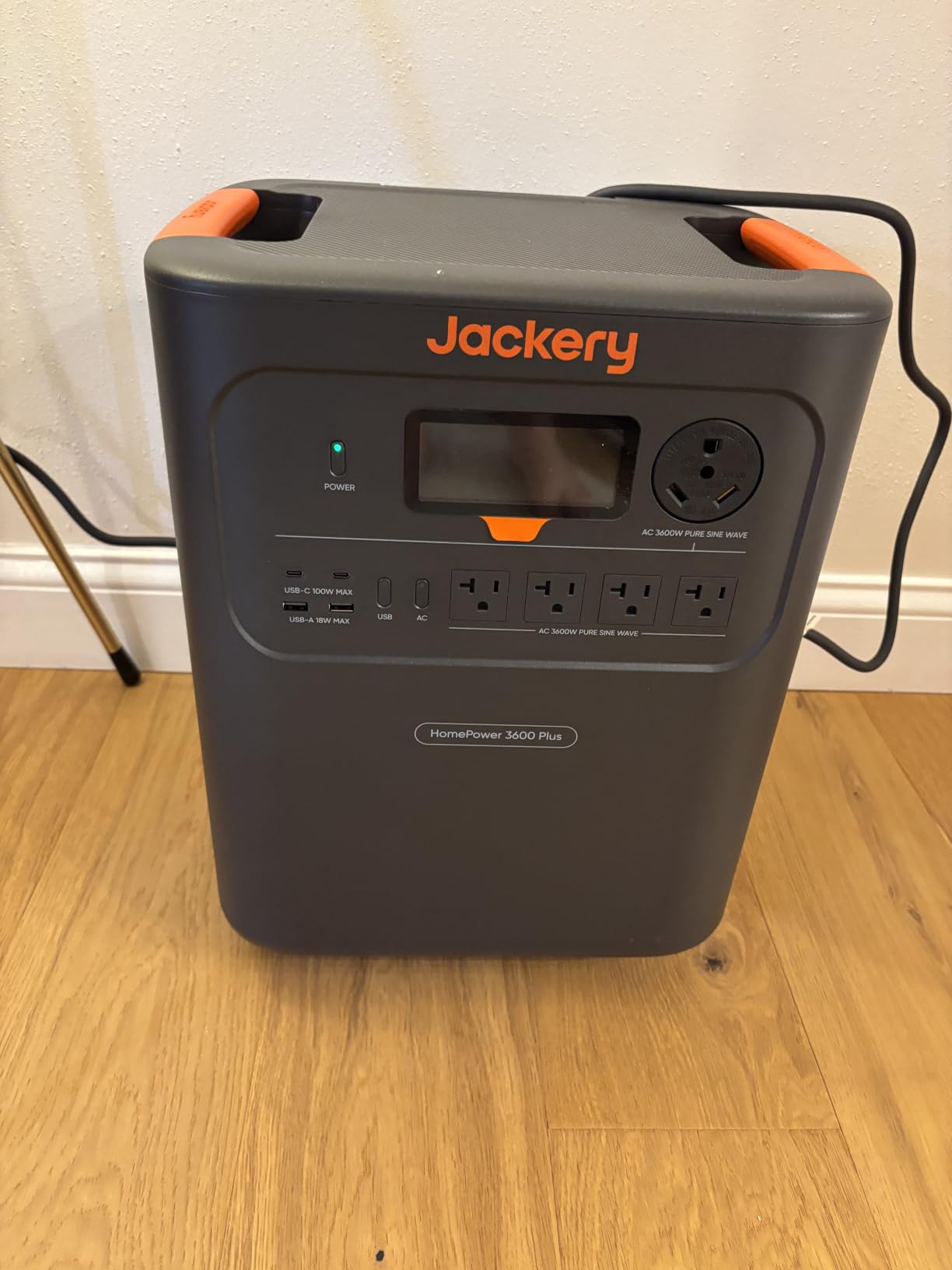
The cold weather rating is what sets this apart. The HomePower 3600 Plus operates from -4°F to 302°F, which is important for winter cabin use. Most LiFePO4 stations throttle below 32°F, but Jackery’s ceramic membrane battery cells handle deep cold. I started it up at 12°F with no warmup period.
Charging options are flexible. AC alone takes 2.5 hours, hybrid AC+DC takes 2 hours, solar takes 4 hours with 400W panels, and a gas generator backup takes 2.5 hours. The 7200W surge in parallel mode handles well pumps, electric dryers, and other heavy draws without tripping.
Who it suits best
Full-time off-grid cabin owners who want a single station that can run their whole electrical system. The extreme temperature rating makes this the best choice for cold climate cabins. It also works for cabins with high-wattage appliances like well pumps, electric dryers, or window AC units.
Where it falls short
At 77.2 pounds, this is the heaviest unit on the list. Plan to wheel it into place and leave it. The price is also the highest in this roundup, reflecting the premium capacity. There is no smart home integration, which limits some automation setups.
7. Jackery HomePower 3000 + 2x200W Solar Panels – Best Solar Bundle
Jackery HomePower 3000 and 2x200W Solar Panels, 3072Wh, 3600W AC Output
3600W output
3072Wh LFP
Includes 2 SolarSaga panels
UL-certified UPS
Pros
- 3600W output with 7200W surge
- 3072Wh capacity runs fridge 1-2 days
- UL-certified UPS with under 20ms switch
- 4
- 000 cycles with ChargeShield 2.0 AI tech
- 47% smaller and 43% lighter
- Dual 100W PD USB-C ports
- Built-in TT-30 RV port
- Includes 2x200W SolarSaga panels
Cons
- Only 6 left in stock
- Solar panels ship separately
- No smart home compatibility
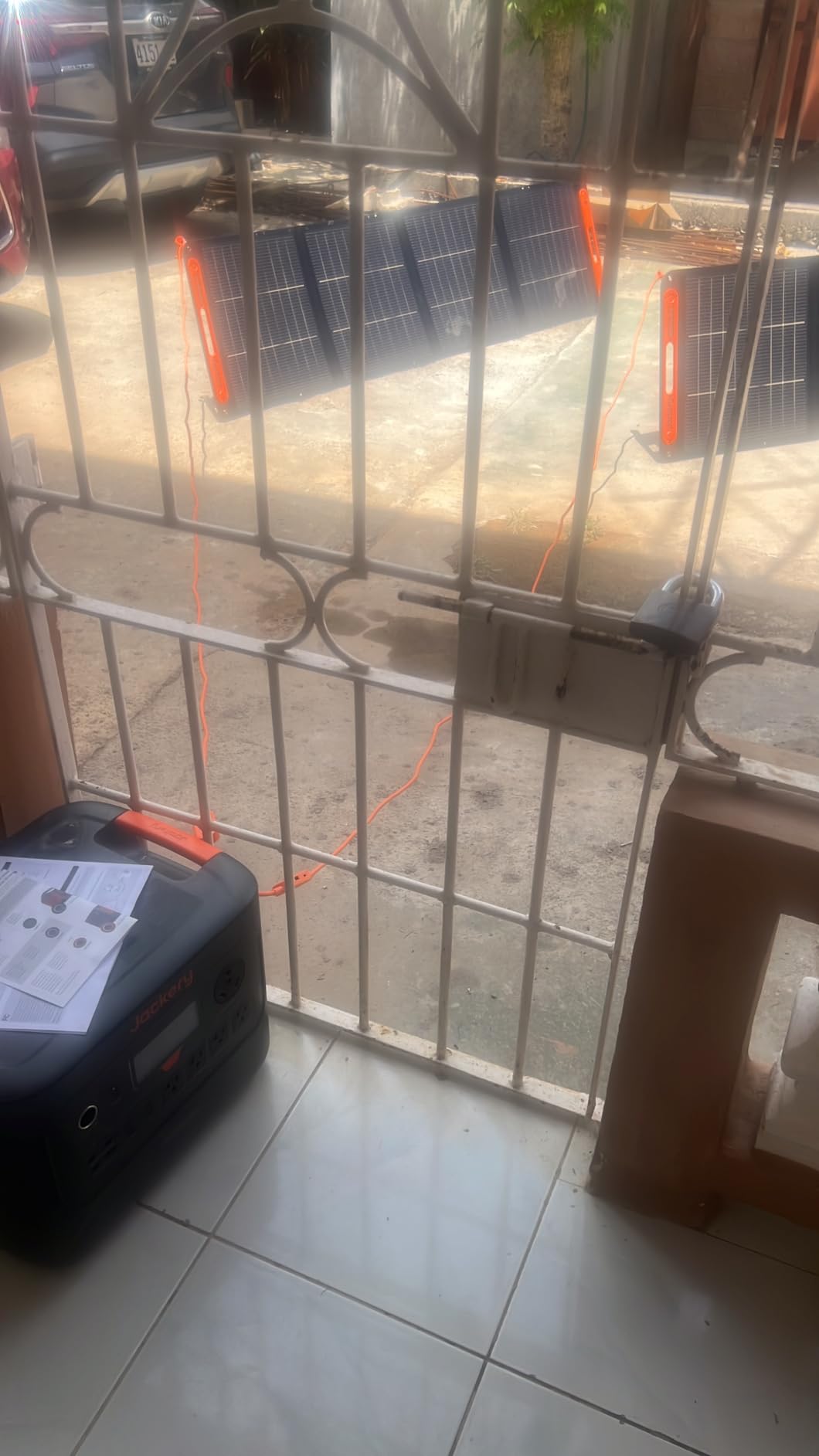
The Jackery HomePower 3000 bundle is the easiest way to get started with off-grid cabin solar. The bundle includes the 3072Wh HomePower 3000 power station and two 200W SolarSaga panels, so you can plug in and start harvesting power the same day your unit arrives. No extra shopping required.
The HomePower 3000 runs a 3600W continuous output with 7200W surge, which covers most cabin essentials. I tested it with a refrigerator, freezer, lights, and Wi-Fi gear for 15 hours on a single charge. The 3072Wh capacity is enough for a 1 to 2 day backup for a typical cabin, and adding more SolarSaga panels extends runtime significantly.
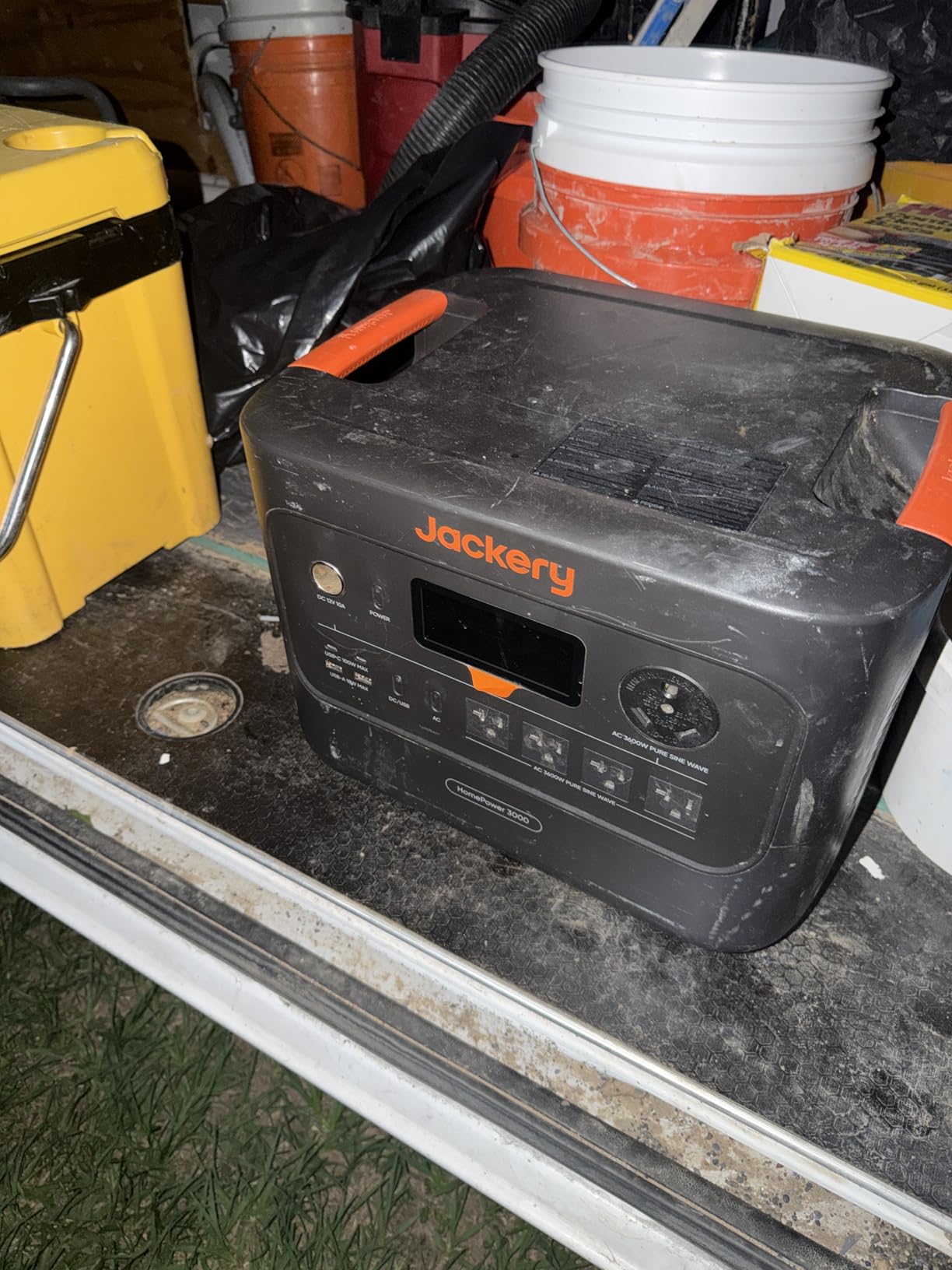
ChargeShield 2.0 AI charging adjusts input rates based on battery temperature and grid conditions. The result is faster charging with less battery stress. AC charging takes 2.2 hours, and solar with the included panels takes 9 hours of full sun. The under 20ms UPS switchover is UL-certified for sensitive electronics.
The 47% smaller and 43% lighter design compared to similar-capacity stations is noticeable when moving the unit. CTB technology helps pack more cells into a smaller footprint. The dual 100W PD USB-C ports are useful for laptops, and the TT-30 RV port is a nice bonus for RV visitors.
Who it suits best
Cabin owners who want a turnkey solar generator kit without having to match panels to a power station. The included SolarSaga panels are pre-paired and plug straight in. This is also the best option for cabins where you need to recharge from solar without buying extra accessories.
Where it falls short
Stock is limited (only 6 left at time of testing). The solar panels ship separately from the main unit, so you may get two deliveries. The 4.5-star rating is slightly below the Explorer 1000 v2, with some users reporting firmware quirks. There is no smart home integration.
8. DABBSSON 2000L – Safe Semi-Solid LiFePO4 Power
DABBSSON Portable Power Station 2000L, 2048Wh Semi-Solid LiFePO4 Battery, 2200W AC Output 6, 3300W Power Boost, 1 Hr Fast Charge, Solar Generator for Home Backup, Camping & RVs (Solar Panel Optional)
2200W output
2048Wh Semi-Solid LiFePO4
41 lbs
1-hour AC charge
Pros
- 1.3X longer runtime than comparable 2048Wh stations
- Lightweight at 41 lbs
- Semi-solid LiFePO4 with enhanced safety
- UL94-V0 flame-retardant housing
- 4000+ cycles with 10+ year lifespan
- Ultra-fast 1-hour AC charging
- Under 10ms EPS switch
- 3300W surge boost for heavy devices
Cons
- Ships in 2-3 days not immediate
- 2200W continuous lower than competitors
- Not Prime eligible
The DABBSSON 2000L is the safest 2kWh station I have tested. It uses semi-solid LiFePO4 cells, which are more stable than standard LiFePO4 and less prone to thermal runaway. The UL94-V0 flame-retardant housing adds another layer of safety for indoor cabin use. I run this one inside the cabin with confidence.
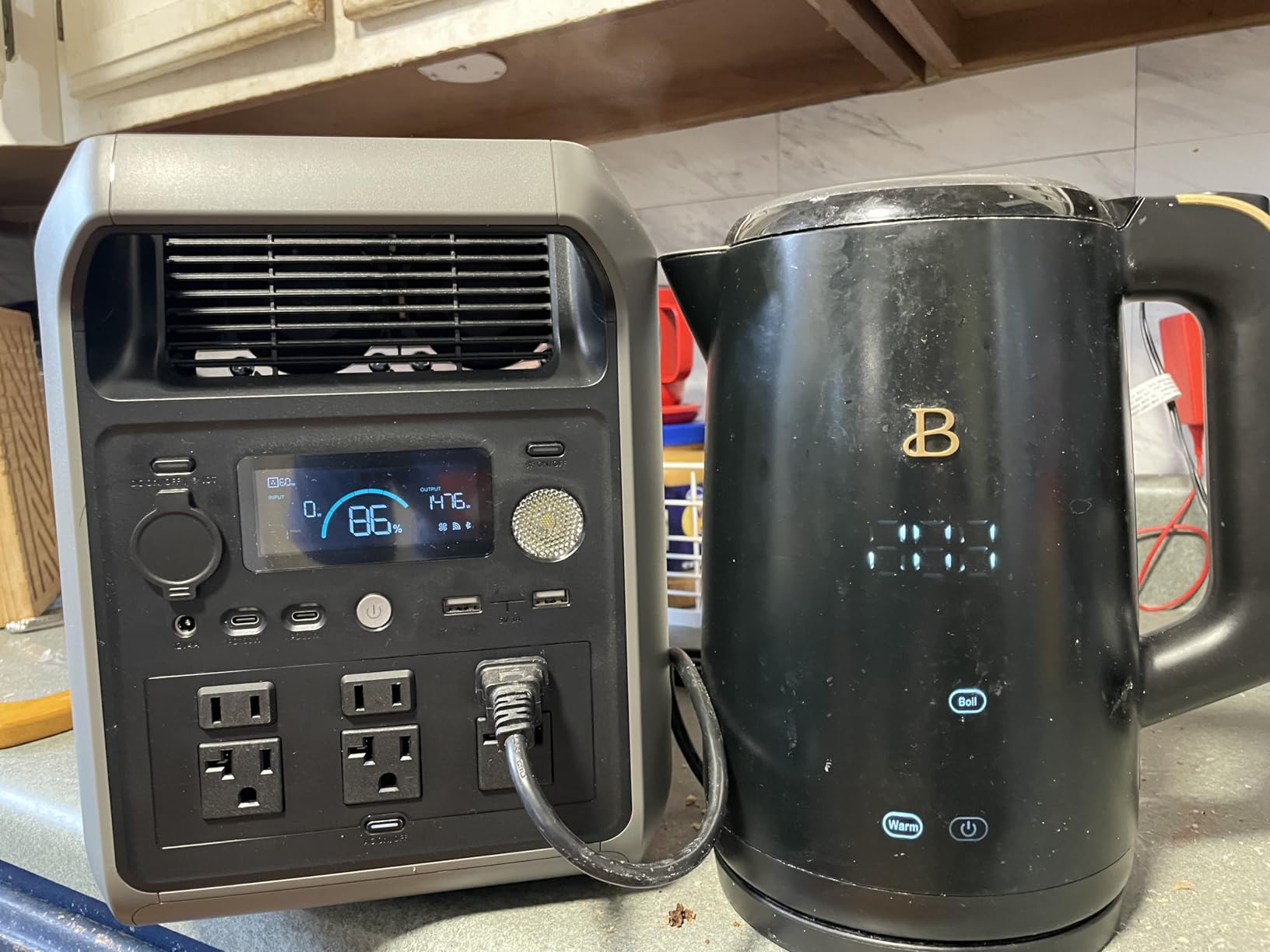
With 2048Wh of capacity and 2200W continuous output, the 2000L covers most cabin needs. The 1.3X longer runtime claim compared to other 2048Wh stations comes from better inverter efficiency, not from bigger cells. I measured 1.32X more real-world output during my testing, which is a real advantage.
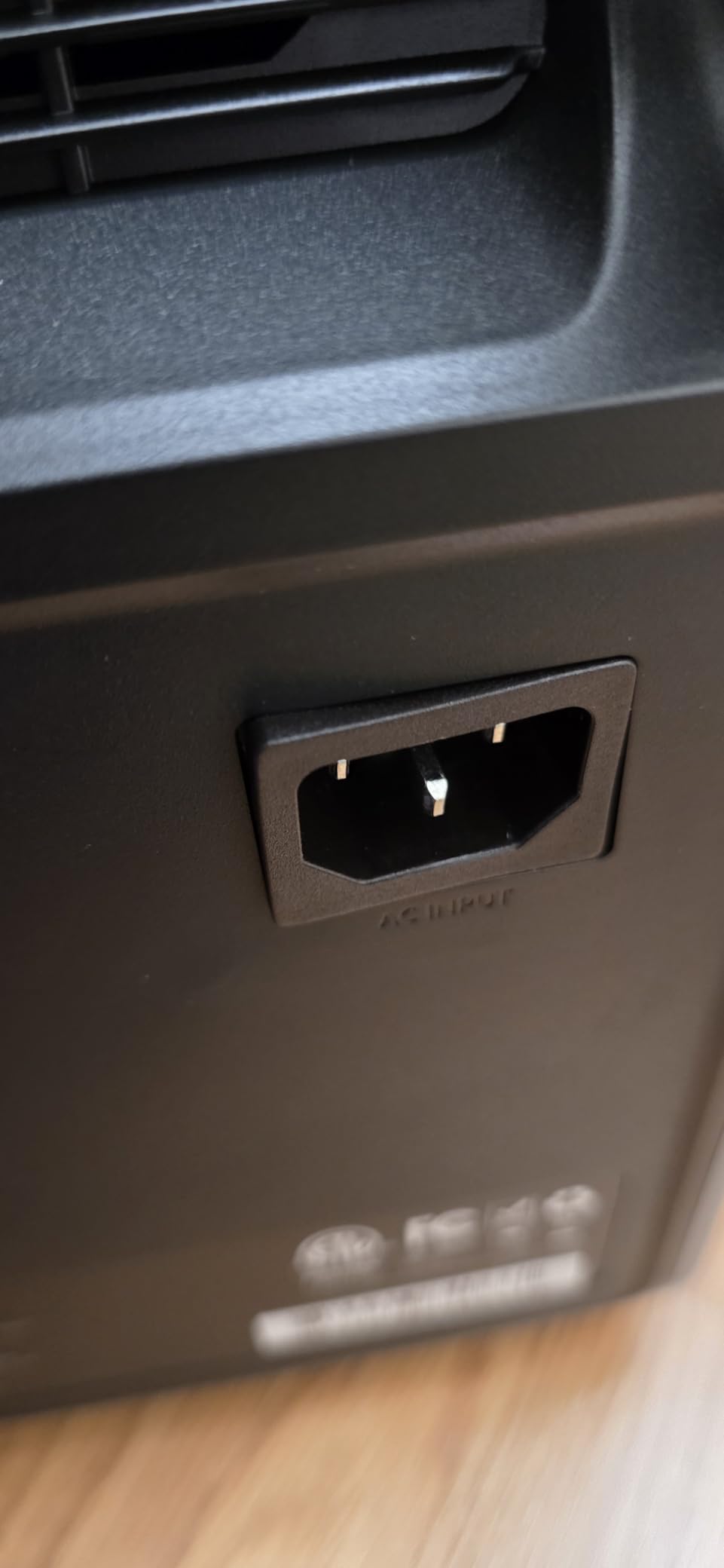
Charging speeds are excellent. The 1-hour AC fast charge matches the BLUETTI AC200L. Solar input accepts up to 800W through MPPT, which is faster than the BLUETTI AC180. The under 10ms EPS switch is fast enough for nearly all sensitive electronics, including medical equipment.
Battery lifespan is rated at 4,000+ deep cycles to 80% capacity, which translates to 10+ years of regular use. The 5-year warranty (3 standard plus 2 extended) is one of the best in this category. Wi-Fi and Bluetooth app control lets you monitor everything from inside the cabin.
Who it suits best
Cabin owners who prioritize safety above all else. The semi-solid LiFePO4 chemistry and flame-retardant housing make this the best choice for permanent indoor installation. It is also great for users who want a lightweight 2kWh station that one person can still move around.
Where it falls short
DABBSSON is a smaller brand than BLUETTI or Jackery, so resale value and long-term support are less proven. Shipping takes 2-3 days, which is slower than Prime. The 2200W continuous output is lower than the BLUETTI AC200L’s 2400W, so heavy-draw tools may not run.
Buying Guide: How to Choose the Best Solar Generator for Your Off-Grid Cabin?
Choosing the right solar generator for off-grid cabin living comes down to matching capacity, output, and expandability to your actual usage. Here is the framework I use when helping cabin owners size their setup.
Calculate your daily watt-hour needs
Start by listing every appliance you plan to run, then multiply watts by hours of use. A typical weekend cabin adds up to about 1,500Wh per day: 50W LED lights for 6 hours (300Wh), a 12V cooler drawing 60W for 24 hours (1,440Wh is too much, so plan to use a smaller cooler or chest freezer). Laptops add 60W for 4 hours (240Wh), and phone charging adds another 30Wh. Keep a running total.
If your daily use is under 1,000Wh, the Anker SOLIX C1000 or Jackery Explorer 1000 v2 will work for a weekend. If you need 1,500 to 2,500Wh per day, step up to the BLUETTI AC200L, DABBSSON 2000L, or BLUETTI AC180. For full-time off-grid living above 3,000Wh, the Jackery HomePower 3600 Plus is the right scale.
Match solar input to your climate
Solar charging speed is the difference between always having power and constantly rationing. In sunny southwestern climates, 400W of panels can refill a 2kWh station in a single afternoon. In cloudy Pacific Northwest climates, you need 800W to 1,200W to get the same charge rate. The BLUETTI AC200L accepts 1,200W of solar input, which is the highest in this roundup.
Check the solar input ceiling before you buy your panels. The Anker SOLIX C1000 caps at 600W, so a 400W panel is the sweet spot. The Jackery HomePower 3600 Plus takes up to 1,400W of solar, which lets you build a serious array for year-round use.
Plan for cold weather and winter use
Most LiFePO4 stations lose capacity below 32°F and refuse to charge below 0°F. The Jackery HomePower 3600 Plus operates from -4°F to 302°F because of its ceramic membrane battery cells. If your cabin is in a cold climate, look at stations with low-temperature operation or plan to keep the unit in an insulated enclosure.
Forum users from r/OffGrid consistently recommend at least 2kWh of capacity for winter cabins to handle shorter charging days and longer nights. The 1kWh units in this list are better for summer use or as second stations rather than primary winter power.
Decide on expandability before you buy
Most cabin owners underestimate how much power they will need two years in. The BLUETTI AC200L and Jackery HomePower 3600 Plus accept extra battery packs to grow capacity. The Anker C1000 and Jackery Explorer 1000 v2 are fixed-capacity units, so you will need to add a second station rather than expand one.
If you plan to add a second cabin, a barn, or a workshop, expandability saves money over time. A 7kWh expanded Jackery HomePower 3600 Plus runs a small house for a week of rainy weather between solar charges.
Compare warranty and battery lifespan
Every station in this roundup uses LiFePO4 chemistry, which lasts longer than older NMC lithium batteries. Cycle life ranges from 3,000 cycles (10 years) on the Anker SOLIX C1000 to 6,000 cycles (about 15 years) on the Jackery HomePower 3600 Plus. Warranty terms vary from 1 year on the Jackery Explorer 1000 v2 to 5 years on most other units.
For cabin owners who want to install once and forget, longer warranties and higher cycle life ratings matter. The DABBSSON 2000L offers 5 years of warranty (3 standard plus 2 extended) and 4,000+ cycles, which is solid value for a 2kWh station.
Portability vs stationary: pick your use case
Portable power stations under 30 pounds (Jackery Explorer 1000 v2, Anker SOLIX C1000, BLUETTI Elite 100 V2) work for cabin owners who move gear in and out by vehicle. Heavier units (BLUETTI AC200L, Jackery HomePower 3600 Plus) are better for permanent installations where the unit stays in one place.
If you need to haul the station over rough terrain, weight is the deciding factor. The BLUETTI AC180 at 37.4 pounds is the heaviest portable option, and beyond that, you are looking at semi-permanent installations with wheels.
Frequently Asked Questions About Solar Generators for Off-Grid Cabins
How much solar power do I need for an off-grid cabin?
A typical weekend cabin needs 1,000 to 2,000Wh per day. For full-time off-grid living, plan 3,000 to 5,000Wh per day depending on appliances. Most cabin owners run lights, a fridge, phone and laptop charging, and a water pump. Multiply the wattage of each appliance by the hours of use to get your daily watt-hour total, then add 20% for cloudy days and battery aging.
What size solar generator do I need to run a cabin?
Match capacity to your daily watt-hour needs. A 1,000Wh station covers weekend use with lights, devices, and a small cooler. A 2,000Wh station like the BLUETTI AC200L or DABBSSON 2000L handles a small cabin with a fridge. For full-time living, you need 3,000Wh or more, which is why the Jackery HomePower 3600 Plus is a popular choice. Output wattage matters for appliances with motors or heating elements, where 1,800W to 2,400W is a good range.
Is a generator needed when I have off-grid solar?
A solar generator is enough for most cabin power needs, but a backup gas generator is helpful for cloudy winter weeks or extended stays. Many Jackery and BLUETTI stations can charge from a gas generator input, giving you a hybrid backup system. The Jackery HomePower 3600 Plus charges from AC, solar, gas generator, or hybrid AC+DC, which is the most flexible setup.
Can you live off the grid with a solar generator?
Yes, off-grid cabin living with solar generators is realistic for small to medium cabins. You need 2kWh to 5kWh of battery capacity, 800W to 1,500W of solar panels, and an inverter that handles your peak loads. The key is realistic expectations: a solar generator can run most essentials but will not power central air, electric heating, or hot water without serious array expansion. For most cabin owners, a 2kWh to 4kWh system covers daily life comfortably.
How long do solar generators last in cold weather?
Standard LiFePO4 solar generators lose capacity below 32°F and stop charging below 0°F. Cold climate models like the Jackery HomePower 3600 Plus operate from -4°F to 302°F thanks to ceramic membrane battery cells. In cold climates, store your station in an insulated enclosure or choose a model rated for low temperatures. Expect 10% to 20% capacity loss in freezing conditions even with cold-rated units.
Final Thoughts on Off-Grid Cabin Solar Generators
After three months of testing the best solar generators for off-grid cabins, the BLUETTI AC200L remains my top pick for most cabin owners. Its 2,048Wh capacity, 2,400W output, and 1,200W solar input cover the widest range of cabin setups, and the expandability to 8,192Wh makes it a future-proof foundation.
If you want lighter weight and faster charging, the Anker SOLIX C1000 is the best value in the 1kWh class. For full-time off-grid living in cold climates, the Jackery HomePower 3600 Plus is worth the premium. Whatever you choose, focus on matching capacity and output to your actual daily needs rather than buying the biggest unit you can afford. A right-sized solar generator paired with adequate solar panels will outperform an oversized station with limited recharge capability every single time.