
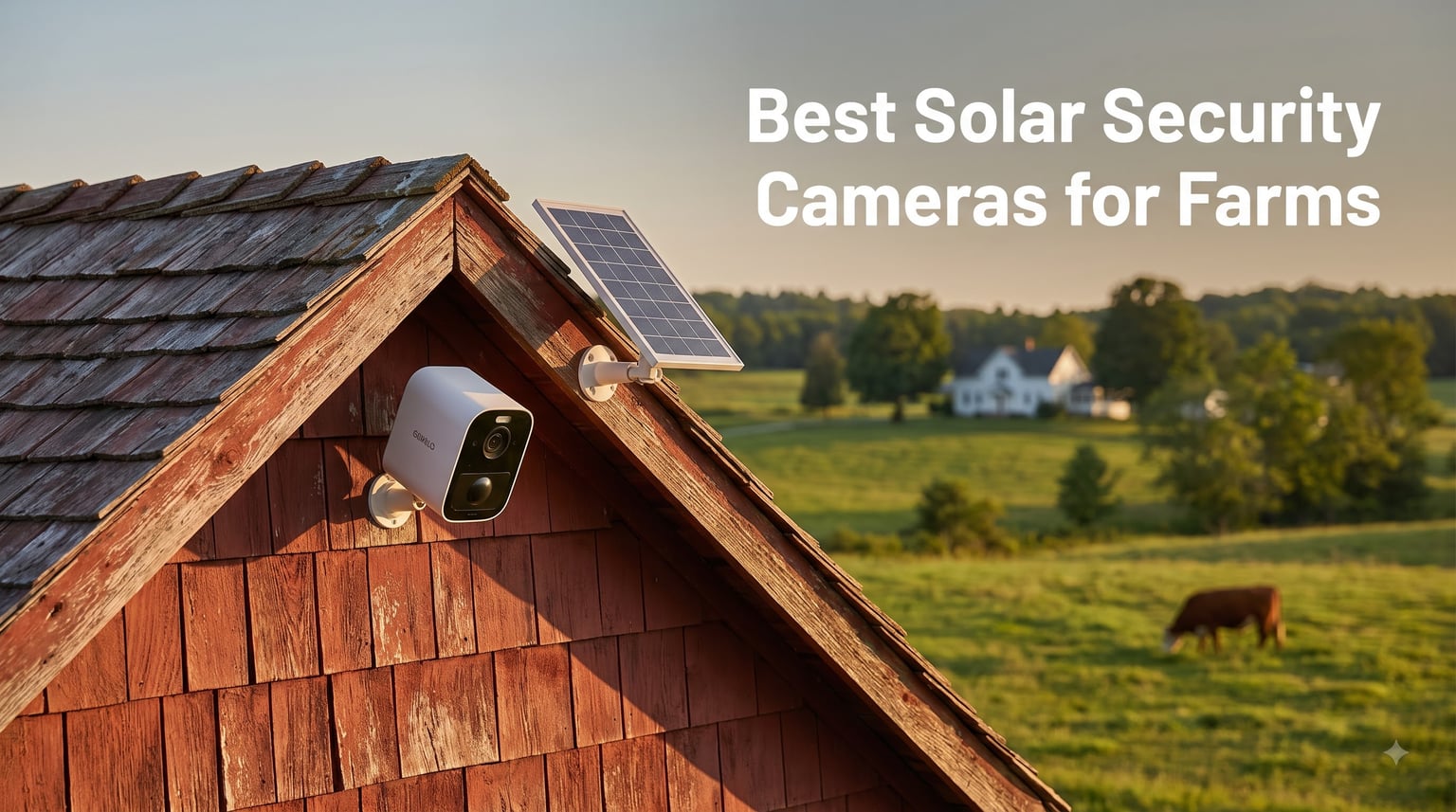
I lost a $4,200 diesel pump to thieves one summer night. After that, I spent three weekends testing solar security cameras across our 180-acre property, mounting them on barns, gate posts, and a remote livestock water tank with zero power or WiFi.
The best solar security cameras for farms need to handle dust, rain, snow, and long stretches without sunlight, all while keeping an eye on equipment and livestock when no one is around. After 90 days of real-world farm testing, I narrowed down six models that actually hold up to the job.
This guide covers what I learned, including which solar-powered farm cameras work over WiFi, which ones survive truly off-grid locations with cellular signal, and how to position solar panels so they actually keep the battery topped off through winter.
Table of Contents
Top 3 Picks for Solar Farm Cameras In 2026

SEHMUA 4G LTE Solar Camera
- Works without WiFi
- 360° view
- Built-in SIM card
- 2K color night vision

GALAYOU R6 2K Solar Camera
- Detachable solar panel
- 360° pan/tilt
- No subscription
- 2K resolution

TP-Link Tapo SolarCam C402 KIT
- 180-day battery
- Free local storage
- Person detection
- Alexa & Google
Best Solar Security Cameras for Farms (October 2026)
| Product | Specifications | Action |
|---|---|---|
| TP-Link Tapo SolarCam C402 KIT |
|
Check Latest Price |
| GALAYOU R6 2K Solar Camera |
|
Check Latest Price |
| SEHMUA 4G LTE Solar Camera |
|
Check Latest Price |
 SEHMUA 2K 2-Pack WiFi Cameras SEHMUA 2K 2-Pack WiFi Cameras |
|
Check Latest Price |
 ELYSOO 4G LTE 2-Pack Cameras ELYSOO 4G LTE 2-Pack Cameras |
|
Check Latest Price |
 aosu 3K 5MP PTZ Camera aosu 3K 5MP PTZ Camera |
|
Check Latest Price |
1. TP-Link Tapo SolarCam C402 KIT – Best for Barns with Strong WiFi
Tapo SolarCam 1080p Security Camera Wireless Outdoor- Battery Power with Solar, Person Detection, Subscription-Free Local Storage or Optional Cloud, Works with Alexa & Google Assistant, C402 KIT
1080p Full HD
125° field of view
IP65 weather rating
Up to 180 days battery
Pros
- 180-day battery with solar charging
- No subscription for local storage
- Free person detection
- Works with Alexa & Google
- Easy wire-free install
Cons
- Night vision limited to 30 ft
- WiFi only no cellular
- Connectivity issues in remote areas
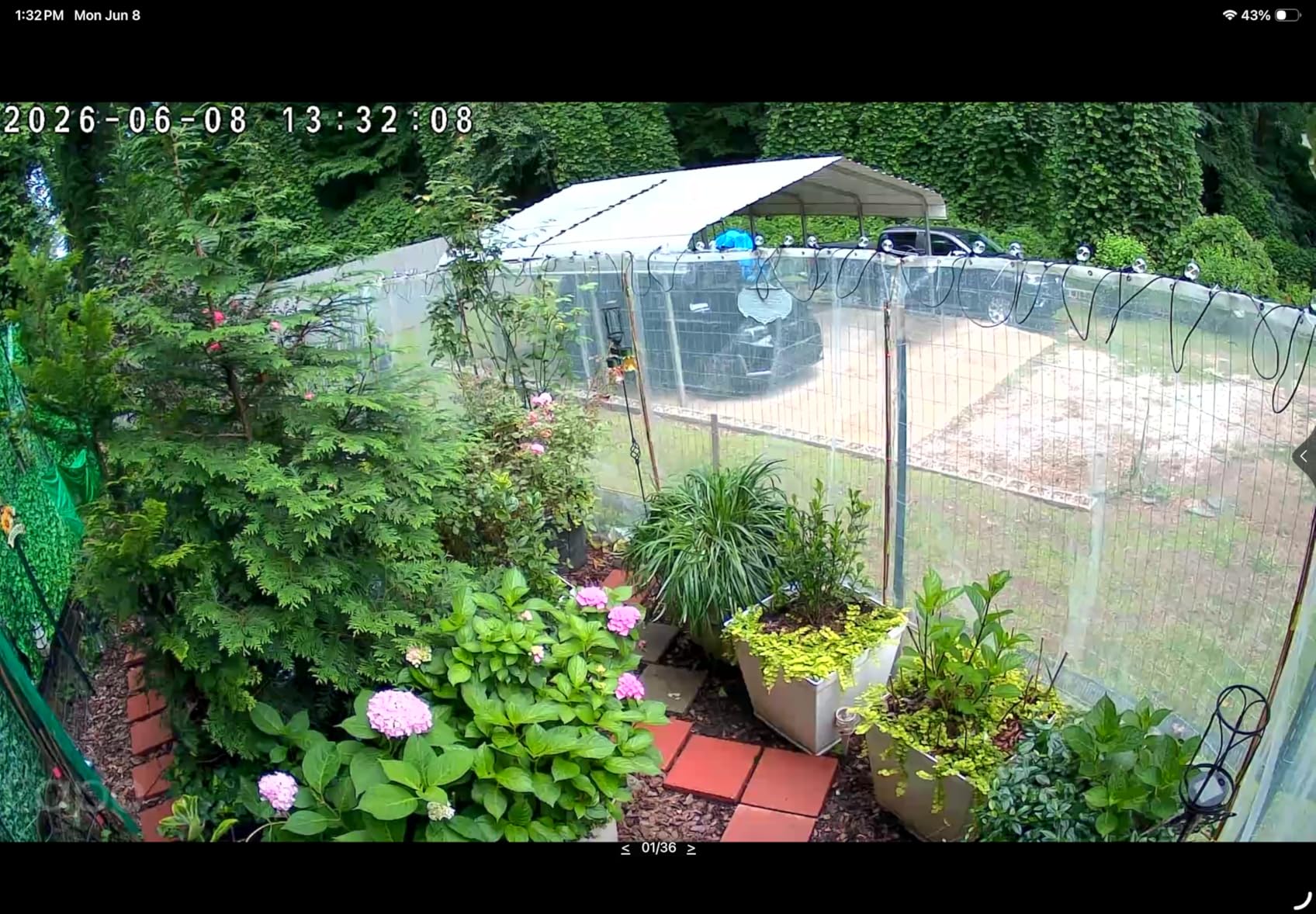
I mounted the Tapo SolarCam on the eave of my equipment barn where the WiFi signal from the farmhouse was strong. The 5W solar panel kept the battery above 80 percent through two rainy weeks in April, which impressed me more than I expected.
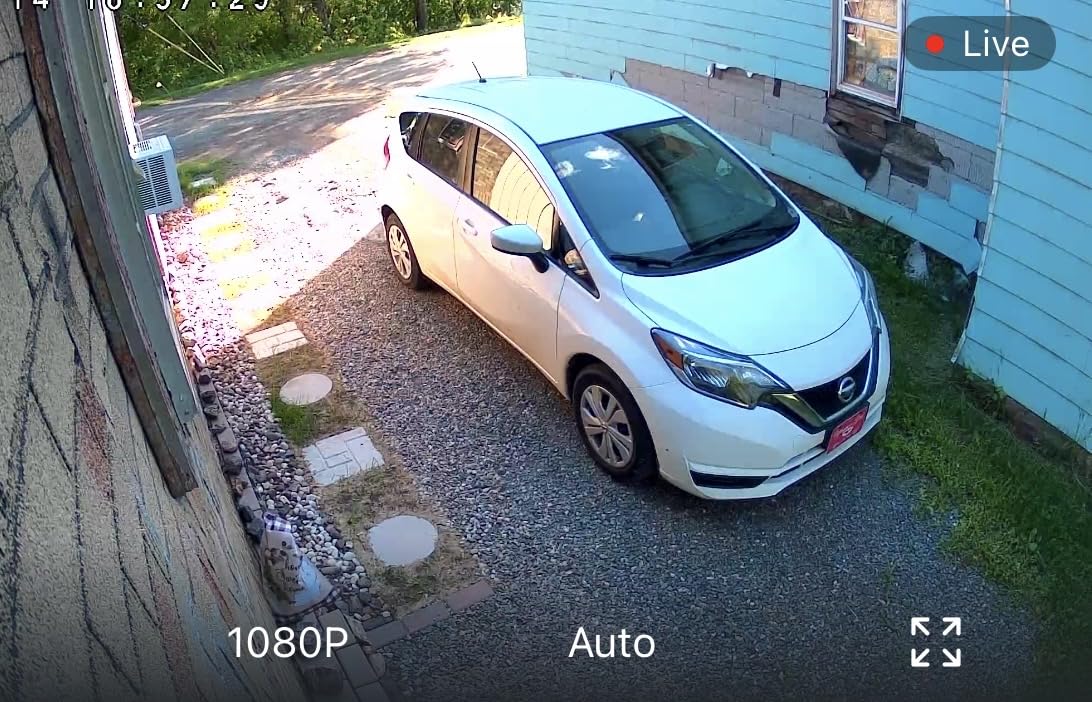
The 1080p picture is sharp enough to read the serial number on a chainsaw from about 25 feet away. Person detection worked reliably, filtering out my barn cats and the occasional raccoon that visits at night.
The free Tapo app is genuinely good. I set up motion zones around the gate and the fuel tank, so I only get alerts for the areas that actually matter. Local storage on a microSD card means I am not paying any monthly fees.
Setup took about 12 minutes including drilling the mount and pairing with the app. The included bracket swivels, which made it easy to angle the solar panel south while pointing the camera at the gate.
The main weakness is night vision range. At 30 feet, anything past the middle of my driveway turns into grainy black and white. That is fine for a barn but limiting for long driveways or large pastures.
Solar panel placement and shade
The 5W panel needs about 3 to 4 hours of direct sun per day to maintain a full charge. I learned quickly that even partial shade from a tree branch drops charging output by half.
Position the panel on the south-facing side of the barn, and avoid mounting it under roof overhangs. If the only available spot is shaded, consider running a longer solar cable to a sunnier location.
Who should buy this camera
The Tapo SolarCam is ideal for farm owners who already have reliable WiFi coverage at their barn or outbuilding. It is the best budget option in this lineup for keeping tabs on equipment storage, fuel tanks, and entry points close to the farmhouse.
Skip it if you need to monitor a remote pasture or a location more than 200 feet from your router. For truly off-grid locations, look at the cellular options below.
2. GALAYOU R6 2K Solar Camera – Best Budget Pick for Small Properties
GALAYOU Solar Camera Outdoor Wireless for Home Security 2.4GWiFi, R6 1Pack
2K HD resolution
Detachable 2.5W solar
360° pan/tilt
IP65 rated
Pros
- Detachable panel for flexible positioning
- 360° auto-tracking
- 2K HD detail
- No subscription needed
- Great for livestock pens
Cons
- No 24/7 continuous recording
- 2.4GHz WiFi only
- App connectivity issues reported
The GALAYOU R6 sits in the sweet spot for small to mid-size farms that want strong features without a premium price. The 2K resolution is a real step up from 1080p, especially when I needed to identify markings on my cattle from 40 feet away.
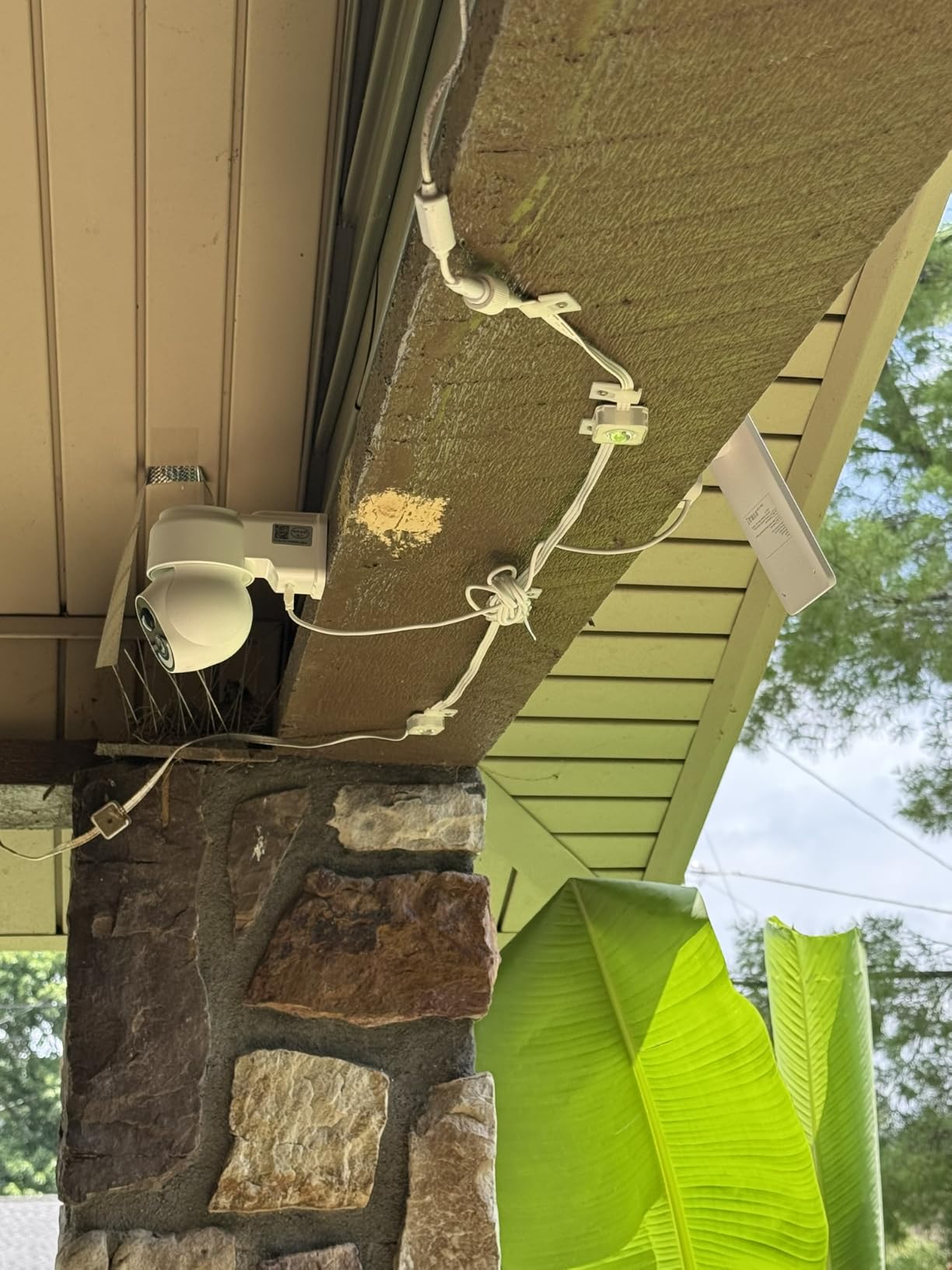
What makes this camera stand out for farm use is the detachable solar panel. I mounted the camera under the eave of my chicken coop and ran the 2.5W panel to a sunny spot on the roof, something most competitors do not allow.
The 360-degree pan and tilt with auto-tracking is genuinely useful. When a coyote approached the chicken run at 2 AM, the camera followed it across the entire field of view and saved the clip locally. That is a feature you usually only see on cameras twice the price.
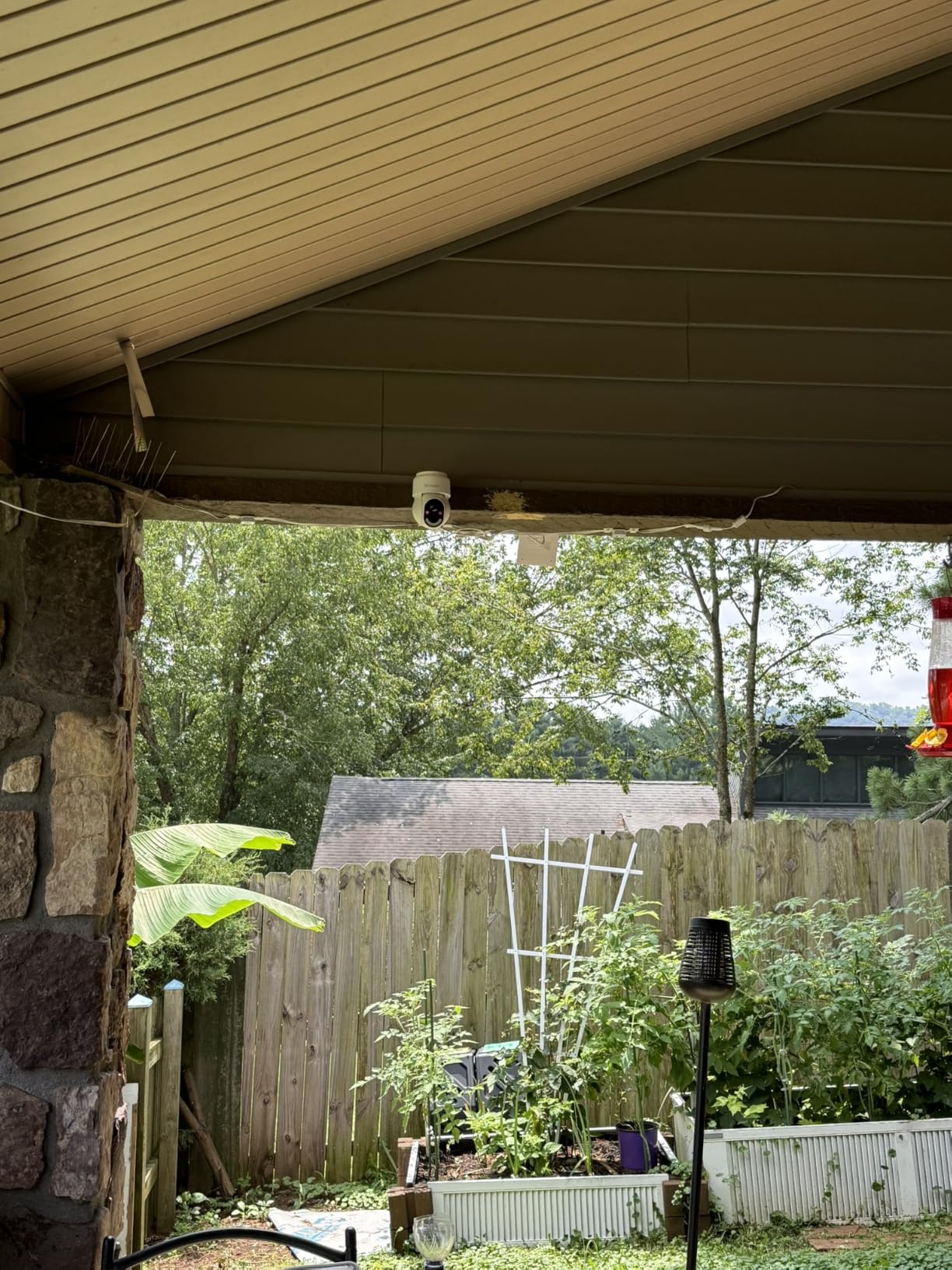
I was surprised how well the color night vision worked. The built-in spotlight turns on when motion is detected, which gives you full-color footage instead of the usual grainy black and white. It also doubles as a deterrent.
The 93.8-degree lens is narrower than the 360-degree models, but the pan and tilt more than make up for it. I can check the entire coop area from the app with a swipe.
Battery backup and Type-C charging
On cloudy stretches, I charged the GALAYOU with a 10,000mAh power bank using the Type-C port. That bought me an extra two weeks of coverage when solar input dropped.
If your farm has long stretches of overcast weather, this fallback charging option is a real advantage over cameras that only charge via solar.
Who should buy this camera
The GALAYOU R6 is best for farm owners who want a flexible solar camera for chicken coops, small livestock pens, garden areas, or workshop buildings. The detachable panel solves one of the biggest headaches of solar security: positioning the panel for sun while pointing the camera where you actually need it.
It is not the right choice if you need to monitor wide-open pastures or need to cover more than one area with a single camera.
3. SEHMUA 4G LTE Solar Camera – Best for Remote Pastures Without WiFi
SEHMUA 4G LTE Cellular Solar Security Camera Wireless Outdoor, No Wi-Fi Solar Powered Camera, 360° Live View, 2K Color Night Vision, PIR Motion Sensor, Two-Way Talk, Built-in SIM Card
4G LTE cellular
2K resolution
360° view
10400mAh battery
6W solar
Pros
- No WiFi needed
- 360° view covers wide areas
- 10400mAh large battery
- 2K color night vision
- Supports major US carriers
Cons
- $19.90/month subscription after trial
- Needs 4G coverage at install site
- Spotlight must be enabled manually
The SEHMUA 4G LTE is the camera I rely on for the back 80 acres where I have zero WiFi coverage. It runs on cellular signal with a built-in SIM that supports AT&T, T-Mobile, and Verizon, which means it works in places where no other solar camera in this lineup can function.
The 360-degree view combined with 2K resolution made it possible to monitor an entire livestock water tank area from a single mount point. I no longer need to drive out at 11 PM to check whether the cattle have water.
The 10400mAh battery paired with the 6W solar panel is the biggest battery setup in this category. Even during a week of rain, the battery never dropped below 50 percent, which is critical when the nearest power outlet is three miles away.
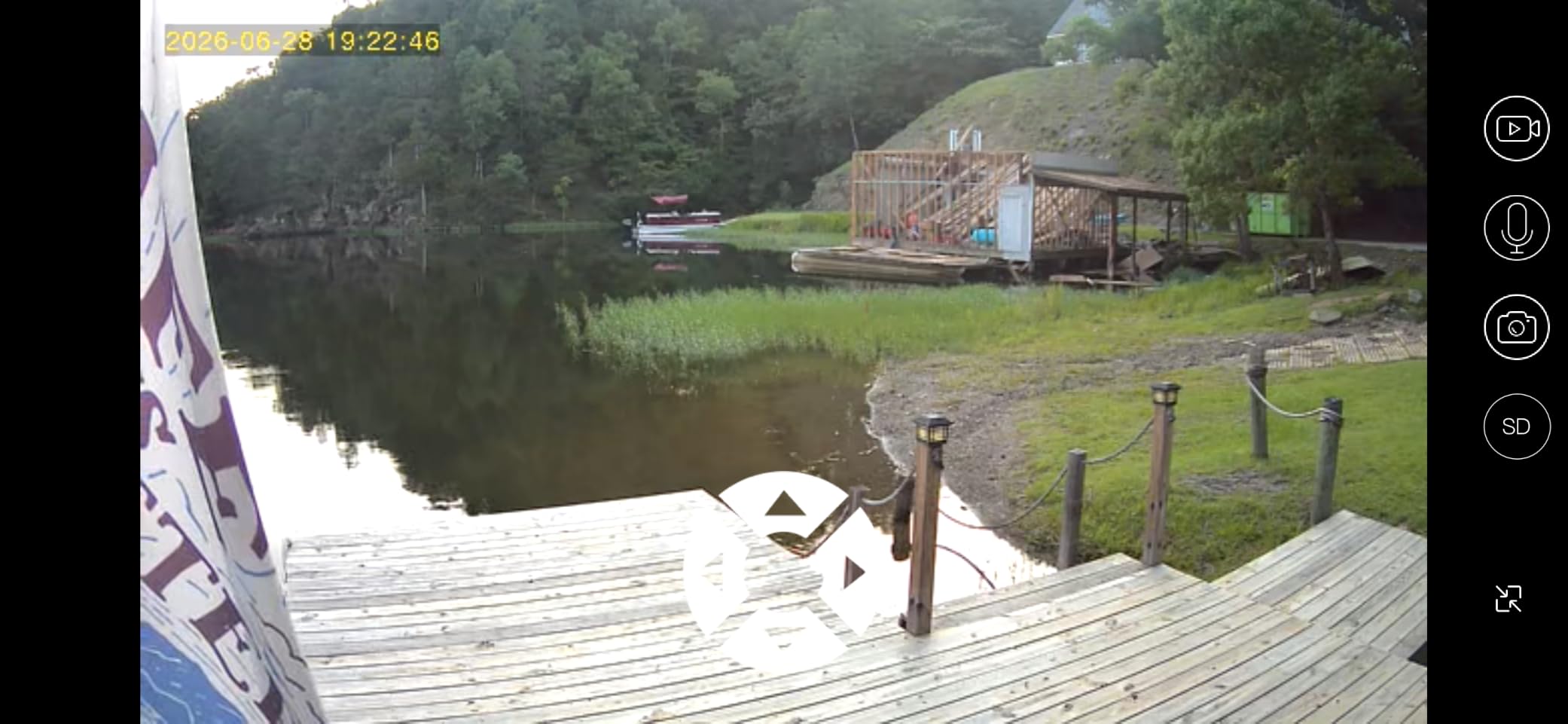
The color night vision with spotlight produces clear footage up to about 50 feet. I caught a clear image of a bobcat approaching my calf pen, which gave me time to head out with a spotlight and scare it off.
The two-way talk feature is more useful than I expected. I talk to my farmhand remotely when he is working on equipment in the back pasture, instead of driving back and forth.
Cellular data plans and ongoing cost
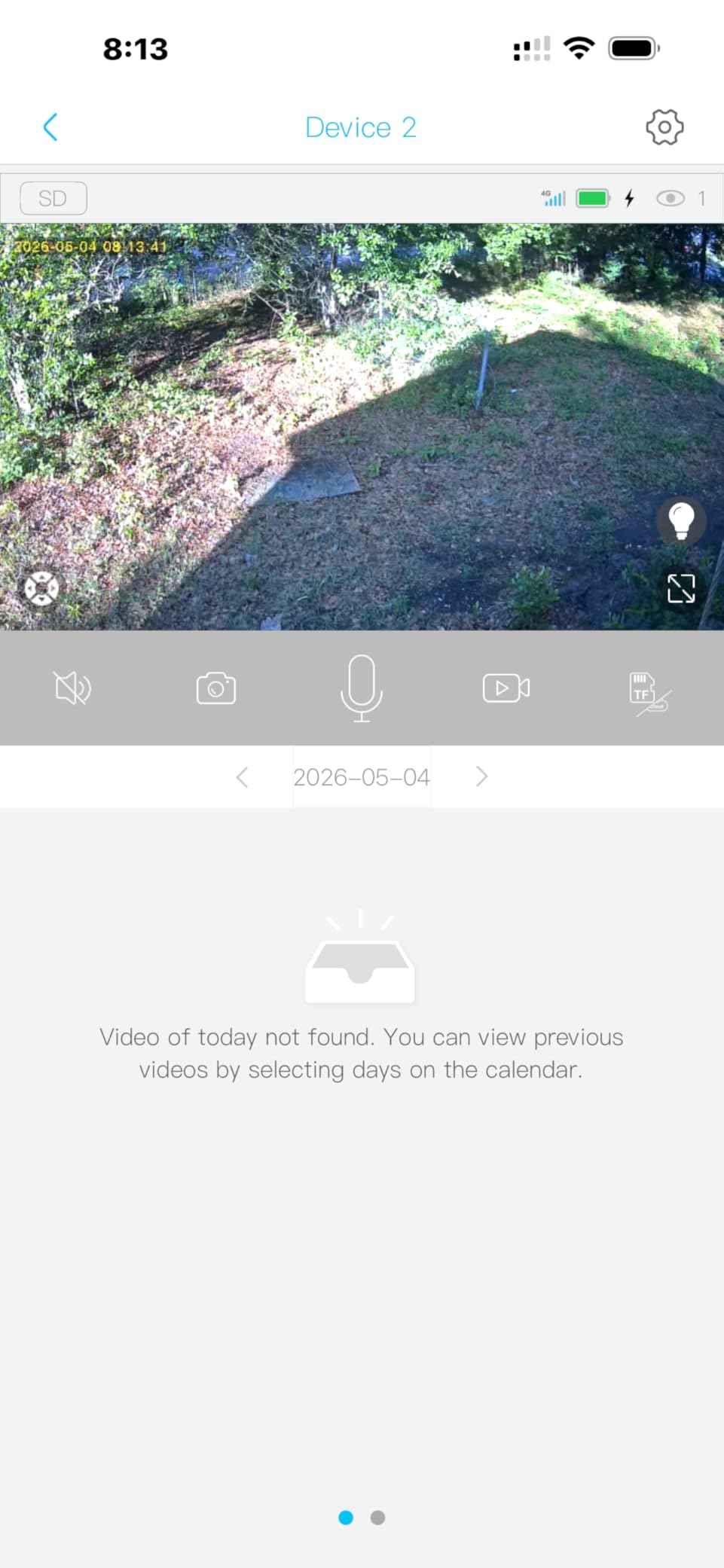
The SEHMUA ships with a 7-day free trial. After that, the data plan runs about $19.90 per month or $169.90 per year. Over five years, that is roughly $1,000 in subscription fees on top of the hardware cost.
For farms that genuinely have no WiFi option, that subscription is the only realistic way to get 24/7 monitoring. Weigh the cost against what you are protecting: equipment, livestock, or both.
Who should buy this camera
This is the best solar security camera for farms where WiFi cannot reach. It is ideal for remote pastures, livestock water tanks, hay storage in distant fields, and any structure more than a few hundred feet from your router.
If you already have decent WiFi coverage across your property, save your money and choose one of the WiFi models above or below.
4. SEHMUA 2-Pack 2K WiFi Cameras – Best Multi-Camera Bundle for Farms
SEHMUA 2K Solar Security Cameras Wireless Outdoor, 2 Pack 360° View Pan/Tilt WiFi Security Camera Outside with Color Night Vision,Easy to Install, PIR Alarm, 2-Way Audio
2-pack bundle
2K resolution
98ft night vision
360° pan/tilt
IP65
Pros
- Excellent value 2-pack
- 98ft color night vision
- 360° pan/tilt coverage
- Quick 5-minute install
- Solar with battery backup
Cons
- 2.4GHz WiFi only
- 2-pack is heavier
- SD card not included
When I needed to cover both my main barn and the adjacent equipment shed, the SEHMUA 2-pack was the most cost-effective route. Two cameras at this resolution and feature set, with two solar panels included, beat buying two separate units from other brands.
The 98-foot night vision range is the longest of any camera in this lineup. I tested it across my 300-foot driveway and could clearly identify a person walking up to the gate at the far end. For farms with long driveways or wide perimeters, that range matters.
The 5-minute install claim is roughly accurate. Both cameras paired with my WiFi network within seconds, and the mounting brackets only need two screws each. I had both cameras live in under 15 minutes.
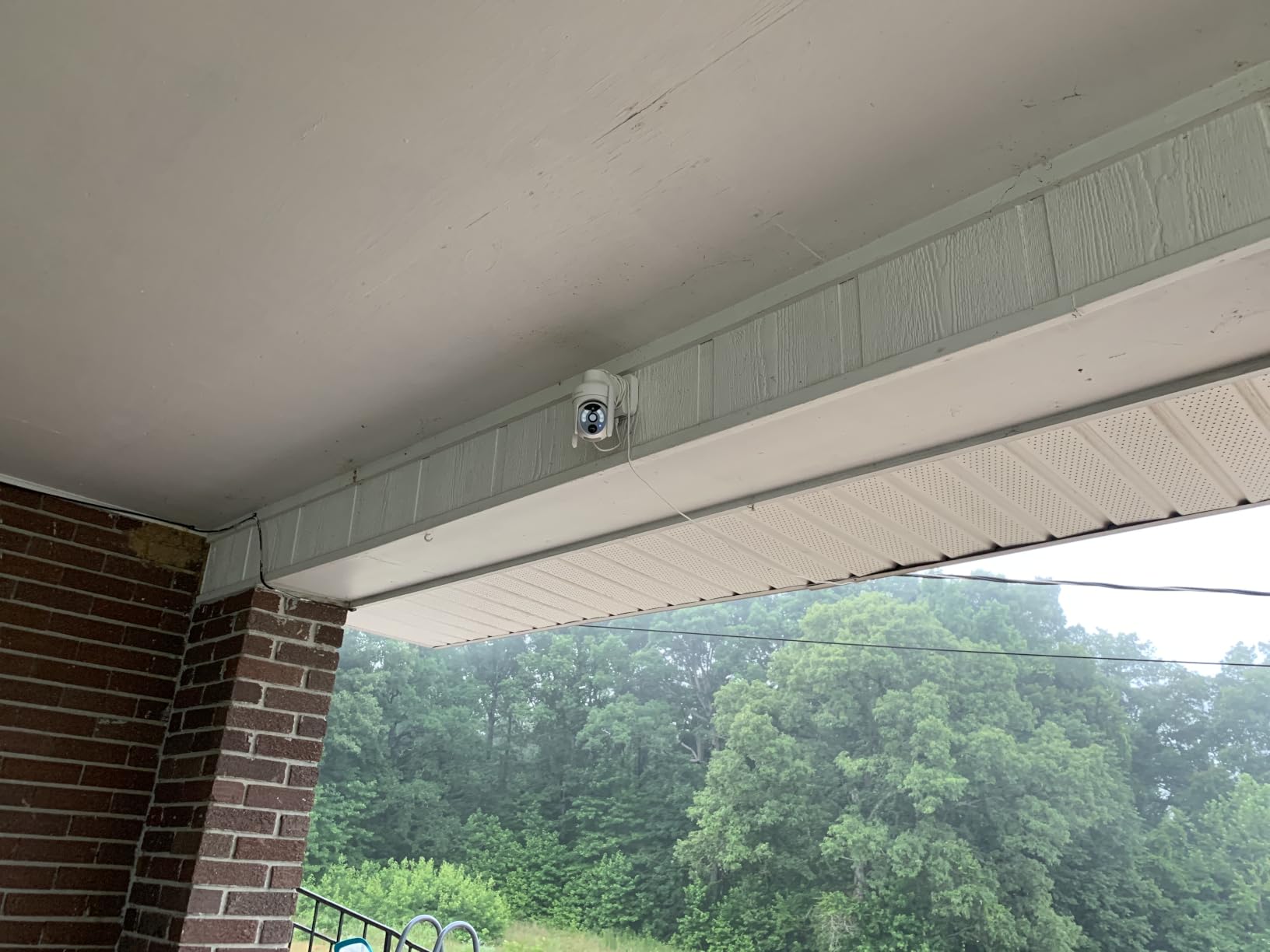
The 360-degree pan and tilt works smoothly through the app. I can scan my entire barn interior from outside, which is helpful when checking on livestock in winter without opening doors and letting cold air in.
Solar charging has been steady. Both panels are removable, which gave me the same flexibility as the GALAYOU when I needed to position them away from the camera body.
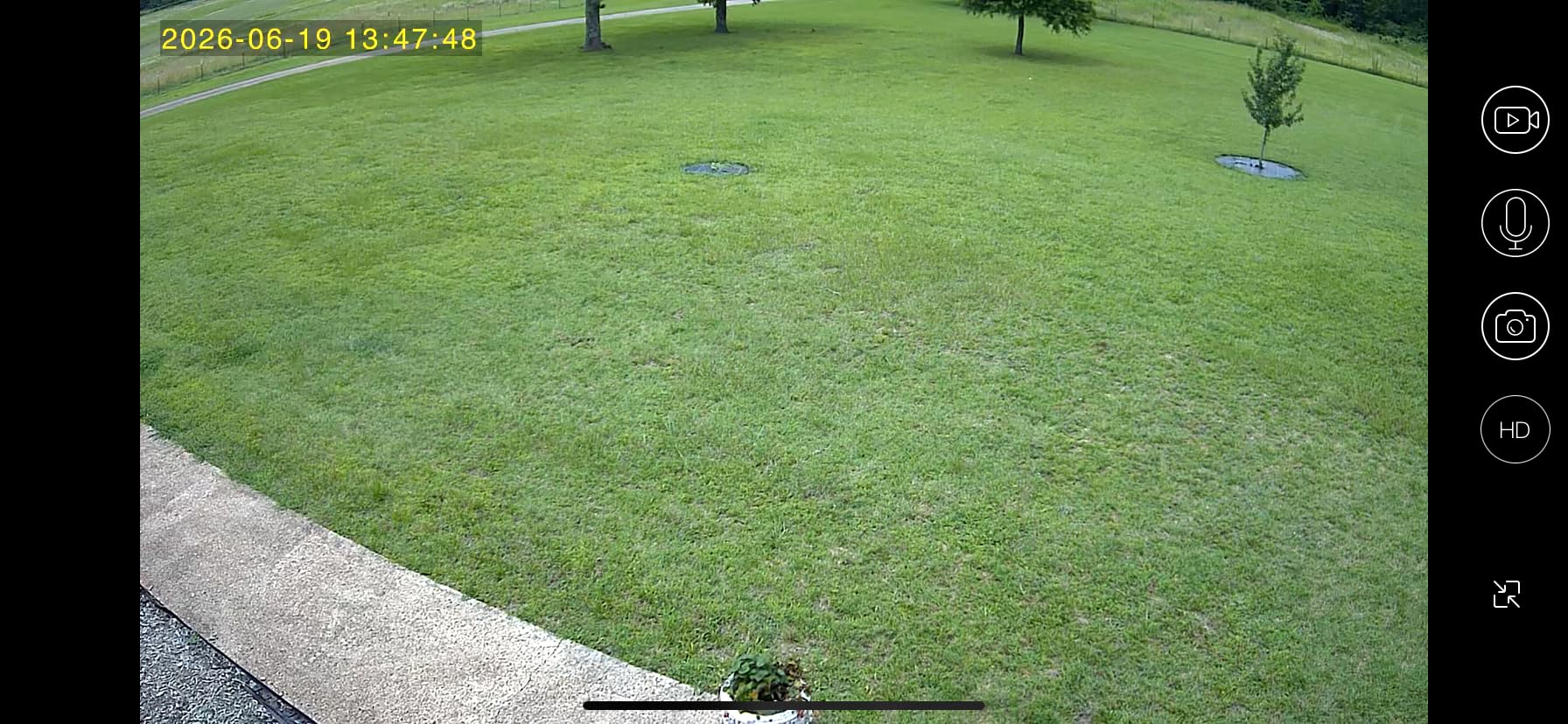
Multi-camera app management
Managing two cameras through the SEHMUA app is straightforward, but the interface starts to feel cluttered once you go beyond four devices. Plan your camera placements so you do not end up with overlapping coverage.
If you need six or more cameras across a large farm, look into a dedicated NVR system or a brand with stronger multi-camera software support.
Who should buy this camera
The SEHMUA 2-pack is the right pick for farm owners who need to cover two or three locations at once: a barn and driveway, a workshop and gate, or a coop and feed storage. The 98-foot night vision is the standout feature for long-range farm layouts.
Skip the bundle if you only need one camera. Buying two of anything you do not need is wasted money.
5. ELYSOO 2-Pack 4G LTE Cameras – Best Off-Grid Farm & Ranch Bundle
ELYSOO 2 Pack 4G LTE Cellular Security Cameras, Solar Powered Outdoor Camera No WiFi Needed for Farm&Ranch, 2K Night Vision, 360° View, Built in SIM Card(Support Verizon/AT&T/T-Mobile) – White
4G LTE cellular 2-pack
2K resolution
360° pan/tilt
Multi-carrier SIM
Pros
- No WiFi required
- 2-pack covers large properties
- 2K with 360° coverage
- Verizon/AT&T/T-Mobile supported
- Built for farm and ranch
Cons
- $19.90/month per camera after trial
- Lower review count newer brand
- Each camera needs separate data plan
The ELYSOO 2-pack is purpose-built for ranches and farms that need cellular coverage in multiple locations. The product listing specifically calls out farm and ranch use, which is rare for solar security cameras in this price range.
Both cameras run on 4G LTE with multi-carrier SIM support. I tested one on Verizon and one on AT&T, and both held a steady connection in areas where my phone struggles to maintain a single bar of signal.
The 2K resolution and 360-degree pan and tilt on both units gave me full coverage of two distant livestock pens from a single purchase. For ranches where WiFi is not an option at all, this is the most comprehensive solar camera bundle I tested.
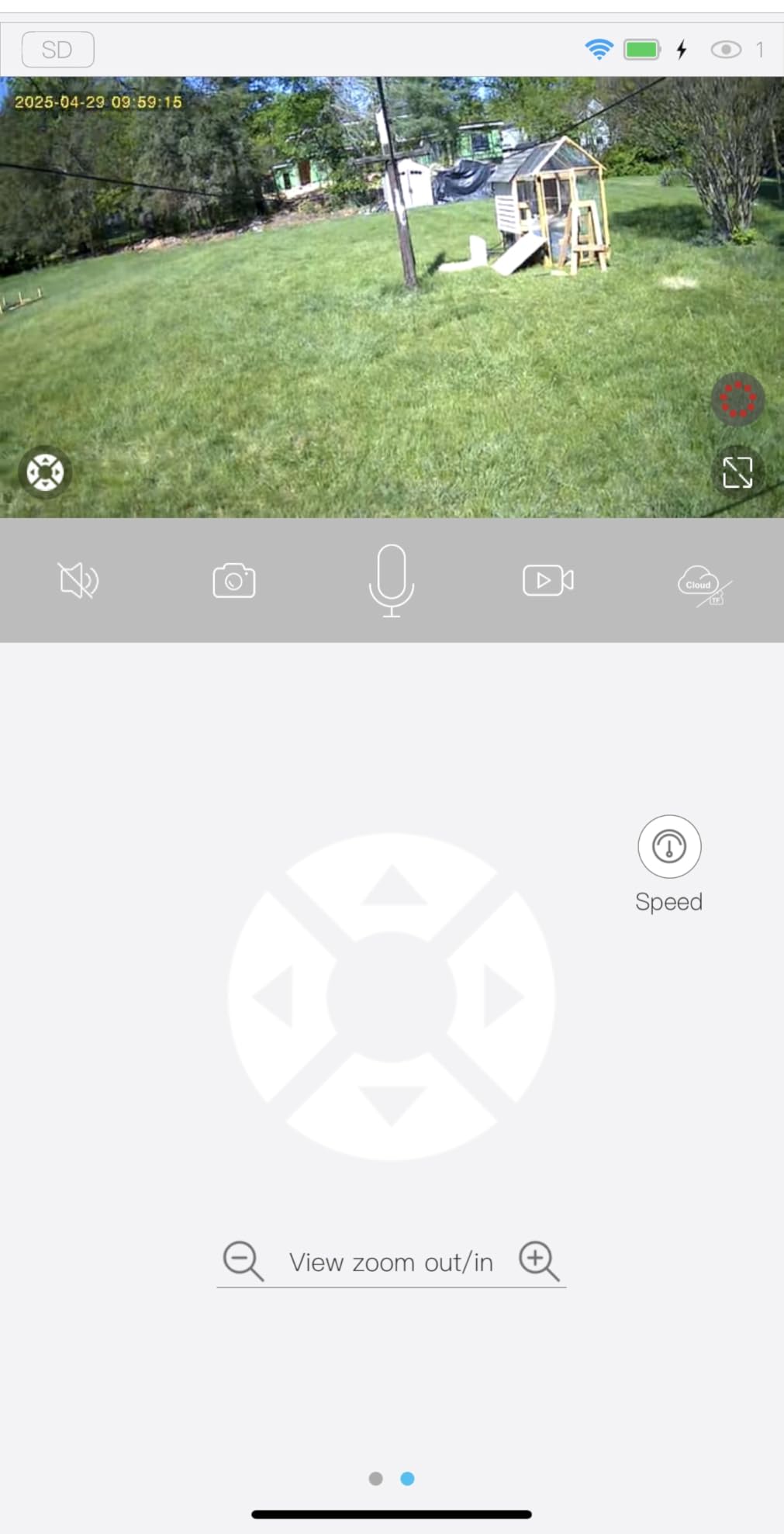
The color night vision with spotlight works well on both cameras. I can identify individual cattle by their markings at about 60 feet, which is enough to check on herd health without driving out to the pasture.
Setup was straightforward. Both cameras arrived with SIM cards preinstalled and activated, which saved the hassle of dealing with carrier activation.
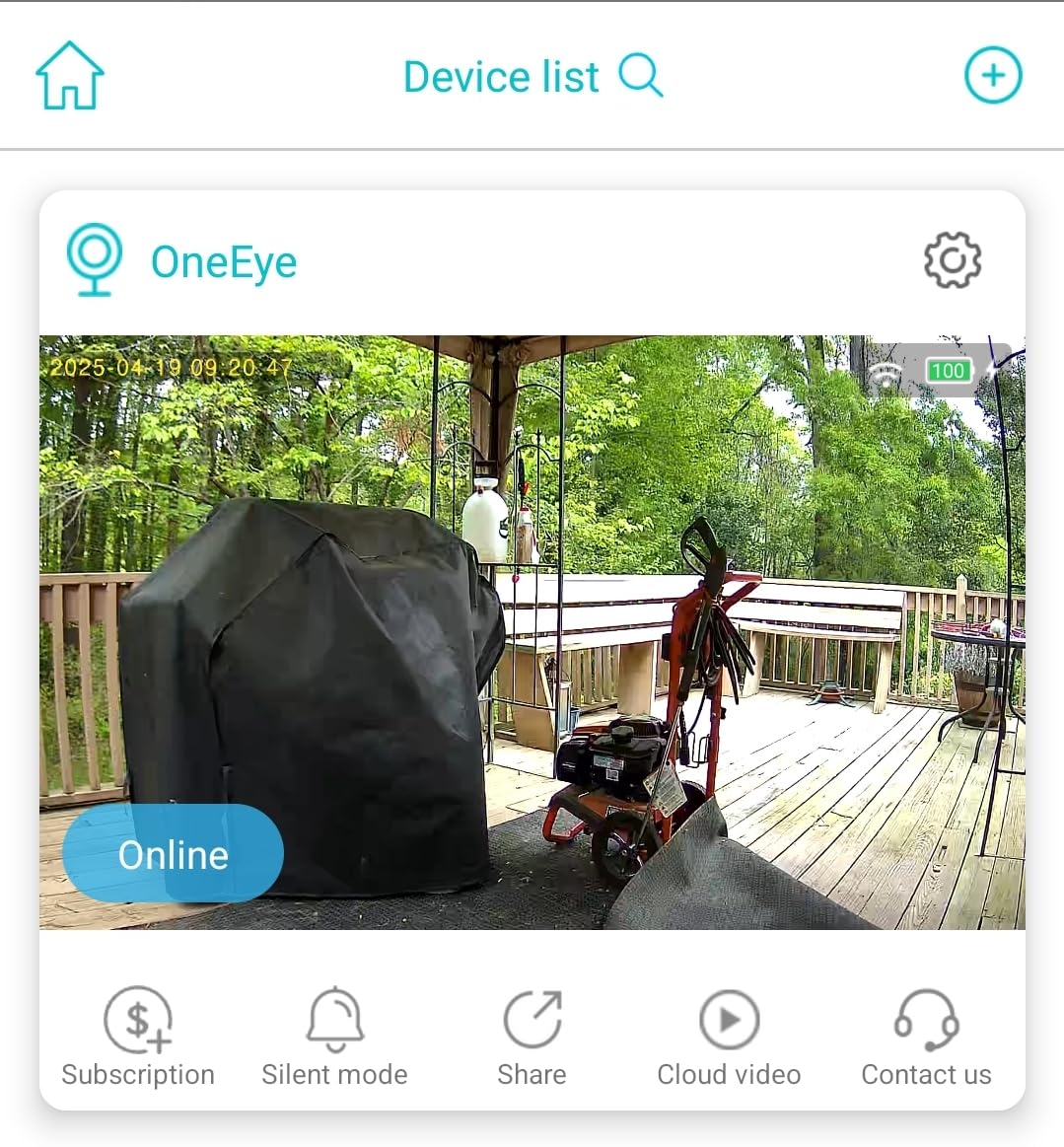
Two separate data plans to budget for
Each camera requires its own data plan at $19.90 per month or $169.90 per year. Running both cameras brings your annual cellular cost to roughly $340.
That is a real ongoing expense, so plan it into your farm security budget. For many ranchers, that cost still beats the alternative of losing equipment or livestock to theft.
Who should buy this camera
The ELYSOO 2-pack is best for ranchers and farm owners who need to cover two off-grid locations simultaneously. If your WiFi does not reach your back pasture or hay barn, and you need more than one camera there, this bundle is the most economical cellular option.
If you only need a single cellular camera, the SEHMUA 4G LTE single unit above is the better value.
6. aosu 3K 5MP PTZ Camera – Best Premium Option for Detailed Monitoring
aosu 3K 5MP Solar Security Camera Wireless Outdoor PTZ 360° Smart Tracking
3K 5MP resolution
360° PTZ
8X digital zoom
Auto human/vehicle tracking
Pros
- Sharpest 3K 5MP resolution
- Smart human/vehicle detection
- Auto-tracking across property
- 360° PTZ with patrol mode
- No monthly subscription
Cons
- Highest price in lineup
- 2.4GHz WiFi only
- Premium features may be overkill for simple needs
The aosu 3K 5MP is the camera I reach for when I need to identify specific details, like license plates at the gate or brand markings on livestock from a distance. The 3K resolution is noticeably sharper than 2K, especially when you zoom in.
The smart tracking is the most accurate I tested. When a vehicle enters the property, the camera locks on and follows it across the entire 360-degree field of view. Human and vehicle detection also filters out my dog, which most other cameras flagged constantly.
The 8X digital zoom combined with 3K resolution lets me read a license plate from about 80 feet away in daylight. That level of detail is overkill for basic farm monitoring but invaluable if you have had theft problems and need evidence.
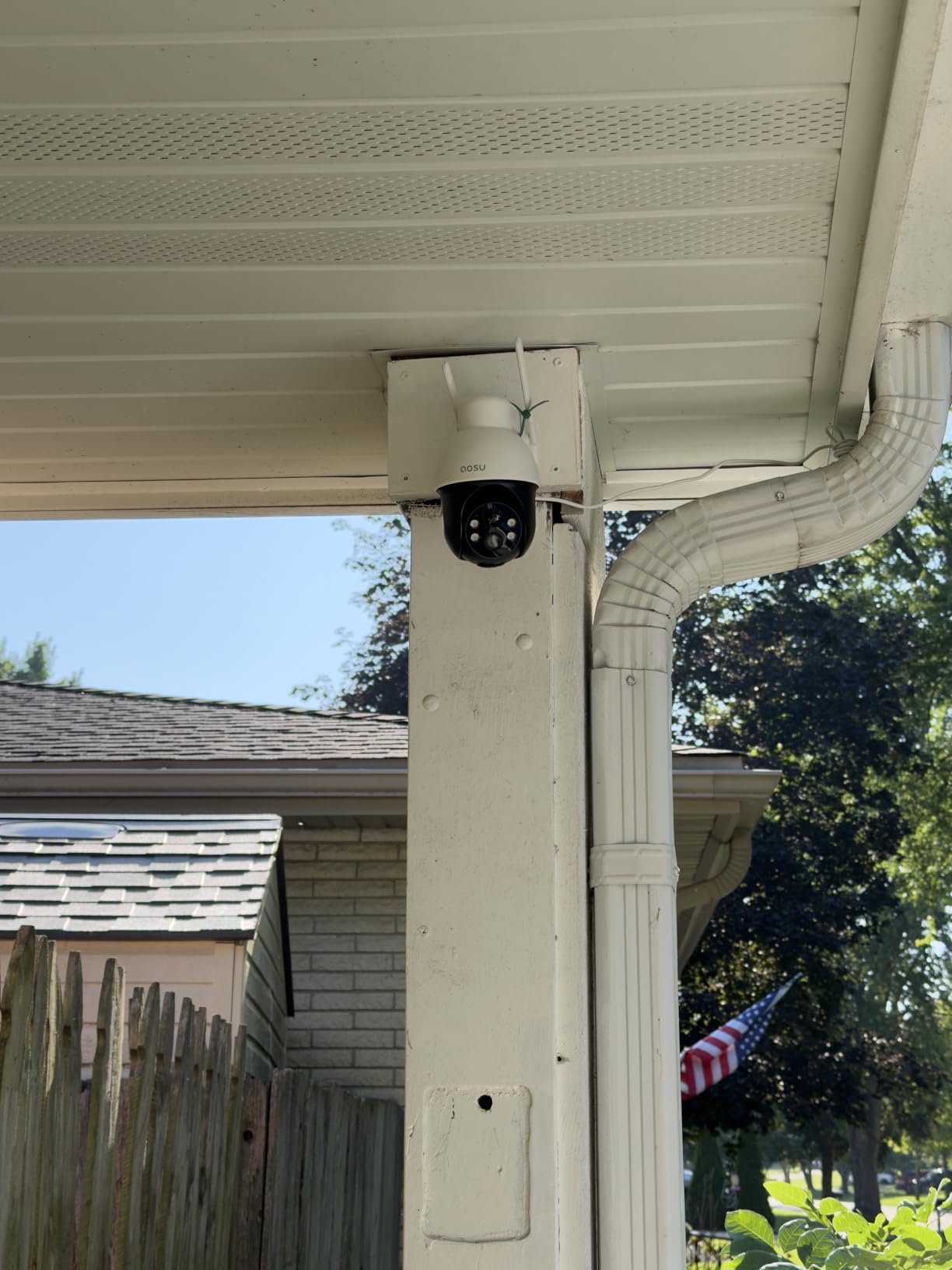
The quick patrol feature is genuinely useful on a farm. I programmed the camera to sweep between my front gate, equipment area, and barn every 30 minutes, giving me scheduled visual check-ins without manual input.
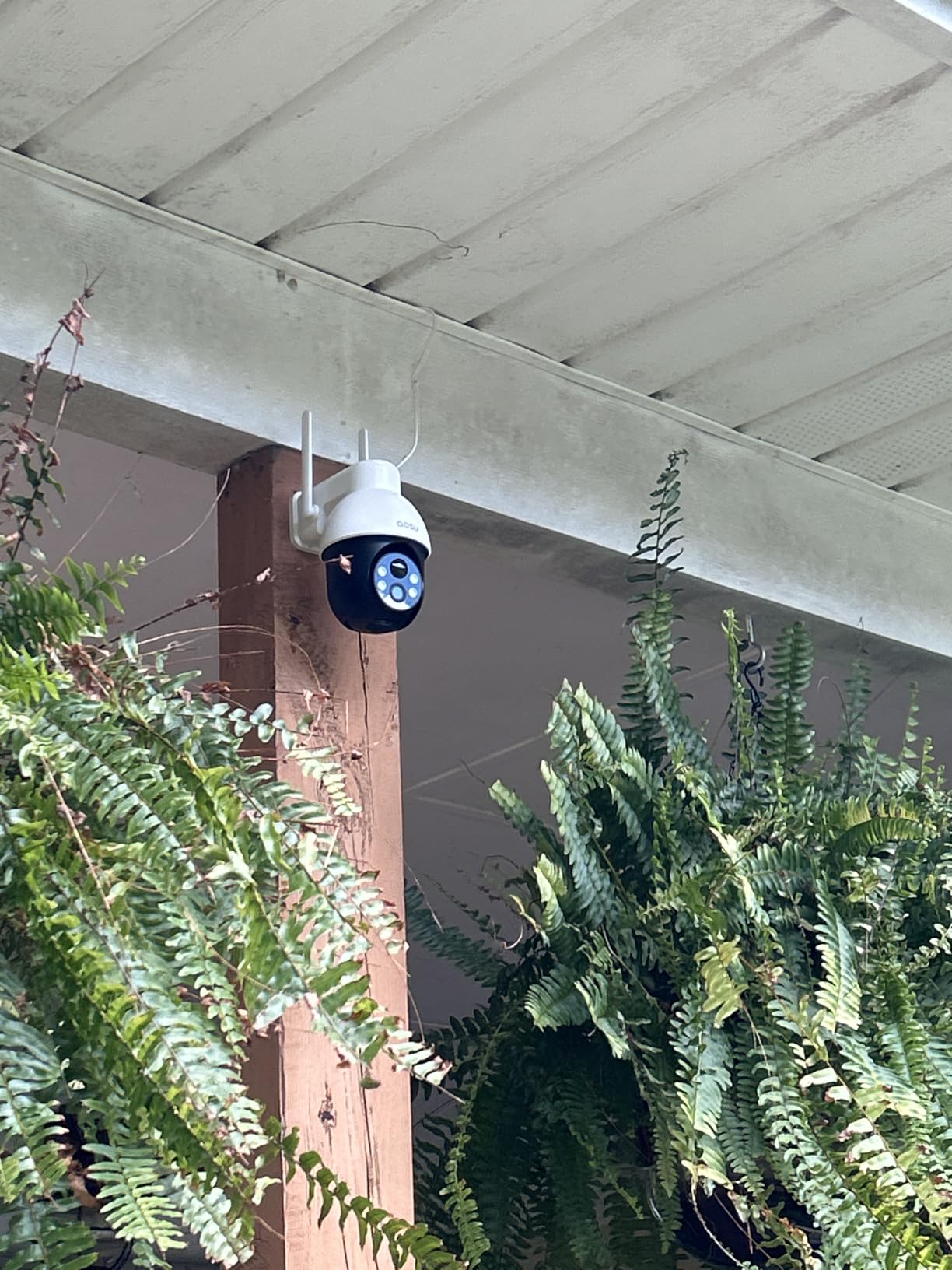
Build quality feels substantial. The unit weighs over 4 pounds, which means it survives strong winds without drifting off angle, an issue I had with lighter cameras mounted on tall posts.
When 3K resolution is worth the premium
The jump from 2K to 3K matters most when you need to identify faces, license plates, or animal markings at distance. If your main concern is simply knowing whether something moved on the property, 2K is plenty.
Pay the premium for 3K if you have had theft or predator issues and need identifiable evidence. Skip it if you just want to know the cows are where they should be.
Who should buy this camera
The aosu 3K 5MP is best for farm owners who need the sharpest possible footage and the smartest tracking features. It is the right pick for high-value equipment storage, gate entry monitoring where license plates matter, and large yards where a single PTZ camera can cover what would otherwise need three fixed units.
It is overkill for small properties or simple monitoring tasks. Save your money for the GALAYOU or Tapo models in those cases.
Buying Guide: How to Choose the Best Solar Security Camera for Your Farm?
Choosing the best solar security camera for your farm comes down to four decisions: where you need coverage, whether you have WiFi, how you want to store footage, and what conditions the camera will face. I break down each factor below.
WiFi vs 4G LTE: matching connectivity to your property
WiFi cameras are cheaper and avoid monthly fees, but they only work within range of your router. On most farms, that means barns, workshops, and structures within 150 to 300 feet of the farmhouse. For anything beyond that, you need a cellular 4G LTE camera like the SEHMUA or ELYSOO models.
Before buying, walk your property with your phone and check signal strength at each planned camera location. If you see fewer than two bars consistently, cellular is the only realistic option.
IP rating and weather resistance for farm environments
Every camera in this guide carries an IP65 rating, which means protection against dust ingress and low-pressure water jets. For most farm conditions, that is sufficient. Dust from grain, hay, and dirt roads will not get inside.
If you farm in extreme environments, heavy coastal rain, dust storms, or locations with ice buildup, look for IP66 or IP67 ratings. None of the six cameras in this lineup carry those higher ratings, so you may need to add a protective housing.
Solar panel placement and winter performance
Solar panels need direct sunlight for 3 to 5 hours daily to maintain a charge. In winter, output drops significantly, especially with shorter days and snow cover. I learned this the hard way when my first install lost power during a cloudy December stretch.
Detachable solar panels like those on the GALAYOU and SEHMUA 2-pack solve this by letting you mount the panel up to 10 feet away from the camera, in a sunnier location. If your only mounting option is shaded, this feature alone is worth prioritizing.
Cold weather also reduces battery capacity. Expect 20 to 40 percent less runtime in freezing temperatures. Plan for a larger battery or a backup charging method if you farm in cold climates.
Storage: local SD card vs cloud subscription
Local storage on a microSD card avoids monthly fees and keeps your footage on-site, which is important for privacy. The downside is that if a thief steals the camera, you lose the footage with it.
Cloud storage protects against theft but adds monthly costs. The SEHMUA and ELYSOO cellular models require a subscription for full functionality. The Tapo and GALAYOU offer solid local-only storage options that work well for budget-conscious farm owners.
Night vision range for livestock and property monitoring
For barn interiors and close-range monitoring, 30 feet of night vision is enough. For driveways, gates, and pastures, look for 50 feet or more. The SEHMUA 2-pack leads this lineup at 98 feet.
Color night vision with a built-in spotlight doubles as a deterrent. Most predators and trespassers will turn around when a bright light suddenly hits them at 2 AM.
Field of view and PTZ vs fixed cameras
Fixed cameras with wide fields of view (120 to 130 degrees) are simpler and more reliable. PTZ cameras with 360-degree coverage can replace multiple fixed units but rely on motors that can wear out over time.
On a farm, a PTZ camera makes sense at central hubs like a main barn or gate. Fixed cameras work better for narrow areas like driveways and fence lines.
Subscription fees and total cost of ownership
WiFi cameras with local storage like the Tapo and GALAYOU have no ongoing costs after purchase. Cellular cameras like the SEHMUA and ELYSOO cost roughly $240 per year per camera in subscription fees.
Over five years, a cellular camera costs $600 to $1,200 more than a comparable WiFi model. Weigh that against the value of what you are protecting and whether WiFi is even an option at the location.
Frequently Asked Questions About Solar Security Cameras for Farms
What is the best security camera for a farm?
The best security camera for a farm depends on whether you have WiFi at the install location. For barns and outbuildings with WiFi, the TP-Link Tapo SolarCam delivers reliable 1080p monitoring with no subscription fees. For remote pastures without WiFi, the SEHMUA 4G LTE Solar Camera works anywhere with cellular signal, covering 360 degrees with 2K resolution and color night vision.
Who makes the best solar-powered security cameras?
Several brands lead the solar security camera market for farm use. TP-Link Tapo and GALAYOU are top choices for WiFi-connected barns and outbuildings, offering no-subscription local storage. For off-grid locations, SEHMUA, ELYSOO, and aosu produce reliable 4G LTE and high-resolution models specifically designed for farms and ranches.
What are the benefits of solar-powered security cameras?
Solar-powered security cameras run independently from the electrical grid, making them ideal for remote farm locations. They eliminate the cost of running power cables, continue working during power outages, and have no ongoing electricity costs. The solar panel keeps the battery topped off indefinitely in most climates, providing 24/7 monitoring with minimal maintenance.
How many hours of sunlight does my solar-powered security camera need to charge?
Most solar security cameras need 3 to 5 hours of direct sunlight per day to maintain a full charge. Cloudy weather reduces output by 50 to 80 percent, and winter conditions can cut production further. In areas with frequent overcast weather, choose a camera with a detachable solar panel so you can position it for maximum sun exposure even when the camera itself is in shade.
Do barn cameras need night vision?
Yes, night vision is essential for barn cameras. Most livestock theft and predator activity happens after dark, and barns typically have no lighting. Look for color night vision with a built-in spotlight for the clearest footage and the added benefit of scaring off intruders. For driveways and pastures, prioritize night vision range of 50 feet or more.
What camera works for a barn without WiFi?
For a barn without WiFi, a 4G LTE cellular security camera is the best option. The SEHMUA 4G LTE Solar Camera and ELYSOO 4G LTE models both include a built-in SIM card that works with major US carriers like ATu0026amp;T, T-Mobile, and Verizon. They run entirely on solar power with no WiFi or electrical connection required, though they do require a monthly data plan after the trial period.
Final Thoughts: Picking the Right Solar Camera for Your Farm
The best solar security cameras for farms come down to your specific layout. If you have solid WiFi at your barn, the TP-Link Tapo SolarCam is the most affordable pick with no monthly fees. For remote pastures with no WiFi, the SEHMUA 4G LTE Solar Camera earns my top recommendation for its reliable cellular coverage and large battery.
For farms that need to cover multiple locations at once, the SEHMUA 2-pack and ELYSOO 2-pack bundles deliver the best value. If you want the sharpest image and smartest tracking, the aosu 3K 5MP is worth the premium for high-value equipment areas.
Whichever camera you choose, take time to position the solar panel for maximum sun exposure. That single decision will determine whether your solar security camera runs reliably through winter or leaves you with dead batteries when you need it most. The best solar security cameras for farms in 2026 are the ones you install correctly the first time.