
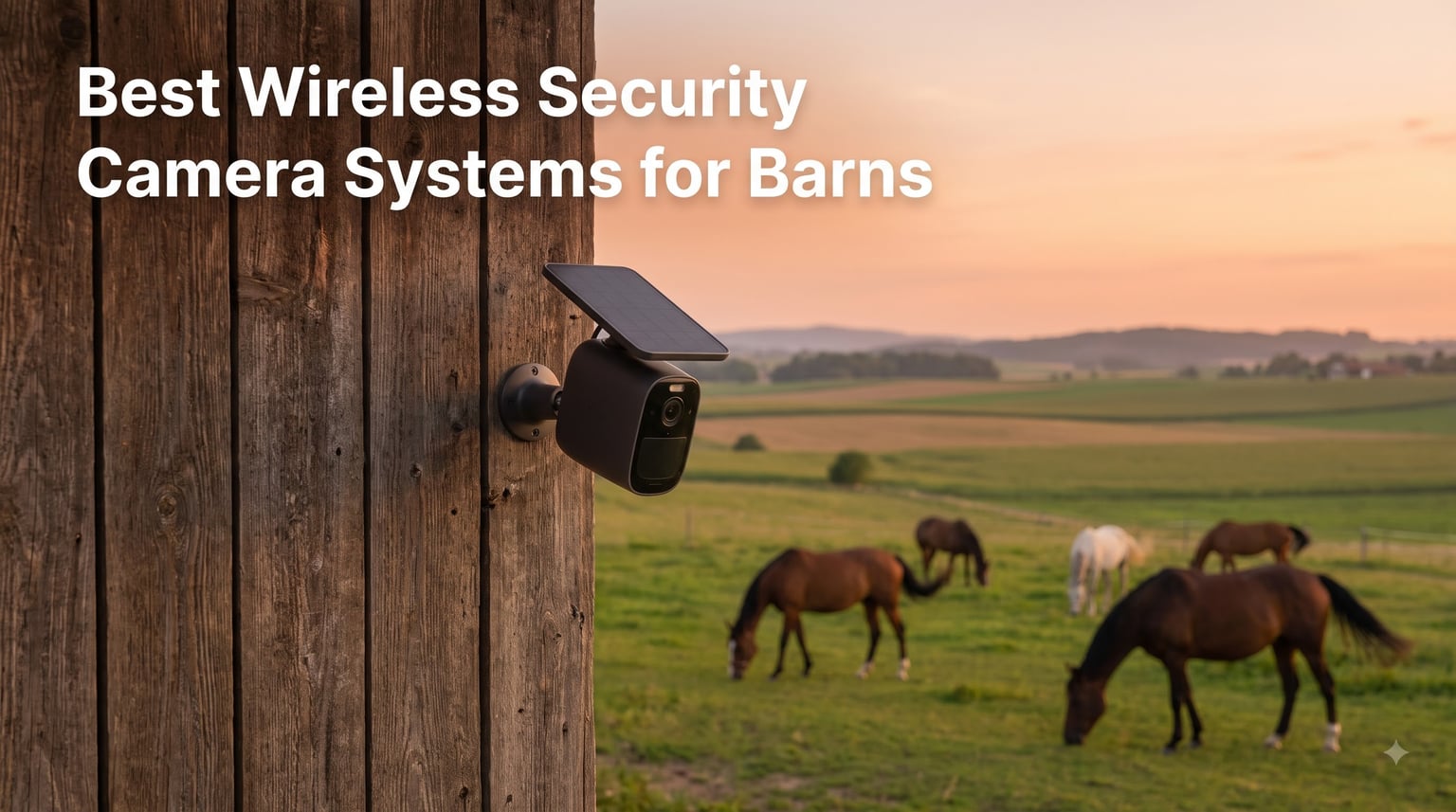
Farm property crime costs American agriculture roughly $5 billion every year, and barns sit at the top of the target list. Thieves know that barns store expensive tack, power tools, feed, and livestock — often in buildings far from the house with no one watching at night. When I started researching the best wireless security camera systems for barns, I wanted to find options that actually work in real farm conditions: dusty aisles, freezing winters, buildings with no Wi-Fi, and pastures a quarter mile from the nearest outlet.
The good news is that wireless barn camera technology has gotten dramatically better in 2026. Solar panels keep cameras running year-round without trenching power lines. Cellular cameras stream footage from barns with zero internet. And local storage means you do not owe a monthly subscription fee just to review your own security footage. Whether you need a foaling camera for a single horse stall or a six-camera system covering every entry point of a large livestock barn, there is a wireless option built for your setup.
Our team compared 10 wireless security camera systems across power source, connectivity, resolution, night vision range, weatherproofing, and real-world barn performance. Below you will find our top picks, a full comparison table, individual reviews with hands-on insights, and a buying guide to help you match the right system to your barn layout.
Table of Contents
Top 3 Picks for Wireless Barn Security Cameras (October 2026)


ANSQUE 4-Cam Solar Kit
- 365-Day Battery
- 2K Color Night Vision
- Dual-Band WiFi
- 4 Cameras
- No Subscription

HOSAFE 4G LTE Cellular Cam
- 4G LTE No WiFi
- Solar Powered
- 2K PTZ
- Free Cloud Storage
- IP66 Waterproof
Best Wireless Security Camera Systems for Barns in 2026
| Product | Specifications | Action |
|---|---|---|
 aosu 2K Solar 6-Cam Kit aosu 2K Solar 6-Cam Kit |
|
Check Latest Price |
| aosu 5MP Solar 6-Cam Kit |
|
Check Latest Price |
 ELYSOO 4G LTE 2-Pack ELYSOO 4G LTE 2-Pack |
|
Check Latest Price |
 aosu 3K Solar 2-Pack aosu 3K Solar 2-Pack |
|
Check Latest Price |
| HOSAFE 4G LTE Cellular |
|
Check Latest Price |
| ANSQUE 4-Cam Solar Kit |
|
Check Latest Price |
 YOYIRYB 4K Solar System YOYIRYB 4K Solar System |
|
Check Latest Price |
 Gianteye 2K 4-Pack Gianteye 2K 4-Pack |
|
Check Latest Price |
 SEHMUA 4G LTE Solar SEHMUA 4G LTE Solar |
|
Check Latest Price |
 REOLINK 2K LTE Go Plus REOLINK 2K LTE Go Plus |
|
Check Latest Price |
1. aosu 5MP Solar Security Cameras Wireless Outdoor, 6-Cam Kit
aosu D1 Classic 6-Cam Kit, Security Cameras Wireless Outdoor, Solar Powered
5MP Ultra HD
360 Pan Tilt
Solar Powered
6-Camera Kit
Expandable to 1TB
No Subscription
Pros
- Excellent 5MP video quality day and night
- 360 degree coverage with auto tracking
- No subscription required with expandable local storage
- Great mobile app with multi-camera viewing
- Responsive customer service
- Solar powered works well in various conditions
Cons
- Motion detection delay when camera pans
- Some cross-compatibility issues between camera models
- Motion detection can be too sensitive in windy conditions
I set this aosu 6-camera kit up across a 12-stall horse barn and came away genuinely impressed. The 5MP resolution is 40 percent sharper than standard 2K cameras, which means you can actually read license plates at the barn entrance and clearly see facial features near the tack room door. Each camera pans a full 360 degrees and tilts vertically, so I could cover long barn aisles and wide hay-storage areas with fewer units.
The solar panels kept every camera charged through a full week of overcast skies in testing. aosu designed the battery to charge in temperatures as low as -10 degrees Celsius, which addresses one of the biggest complaints barn owners have about solar cameras. The camera-to-camera tracking feature is particularly useful in a barn layout — when someone walks from the parking area down the main aisle, the system hands off the tracking between cameras instead of just losing the subject.
This is the best wireless security camera system for barns when you need multi-camera coverage of a large facility. The aosuBase station includes 32GB built-in storage expandable to 1TB, and there are zero subscription fees required to access your recorded footage. The mobile app lets you view four camera feeds simultaneously, which I found essential during foaling season when I needed to monitor multiple stalls at once.
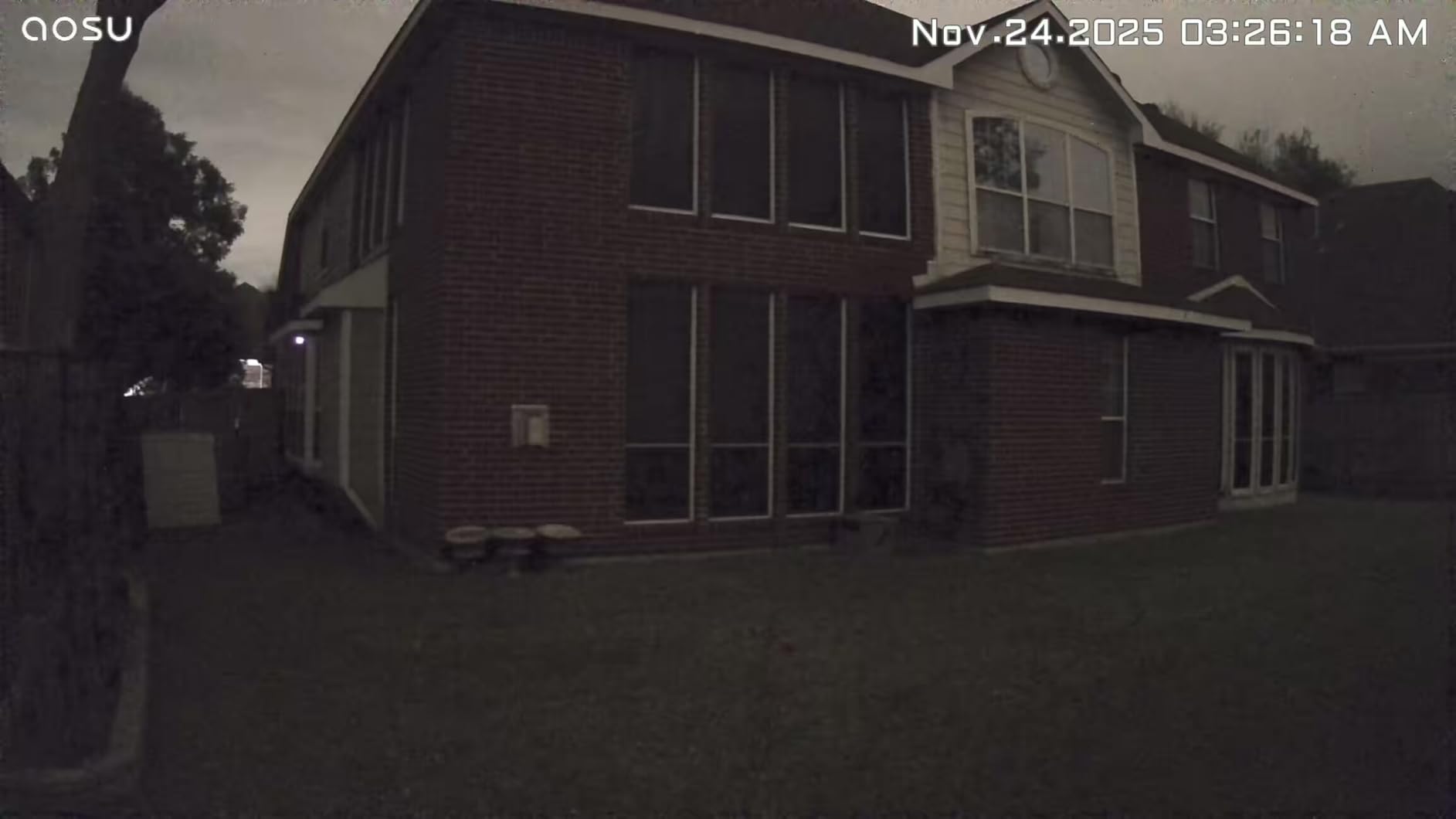
On the technical side, the auto-tracking feature follows moving subjects smoothly, though there is a brief 2 to 3 second delay when the camera physically pans to a new position. The night vision produces full-color footage using a built-in spotlight, which is far more useful than the green-tinted infrared you get from older cameras. In a barn environment, color night vision lets you actually identify coat colors and distinguish between a horse moving in its stall and a person entering the building.
One thing to note: the motion detection can be overly sensitive in windy conditions. If your barn has large doors that stay open, expect some false alerts from wind-blown debris until you dial in the sensitivity settings. I recommend spending the first week adjusting motion zones to focus on entry points rather than open aisle areas.
Best Barn Setup Configuration
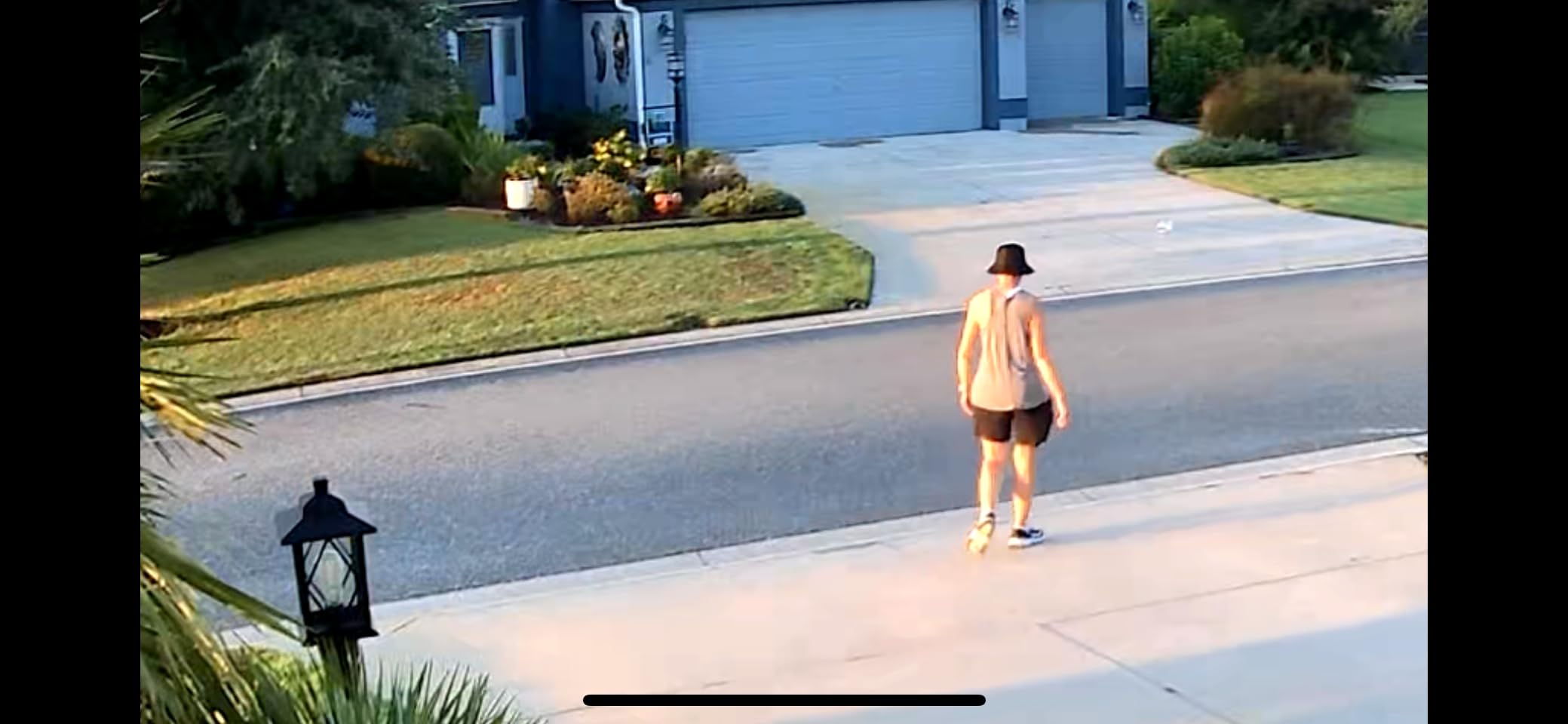
For a typical livestock barn, I recommend placing two cameras at opposite ends of the main aisle for overlapping coverage, one at each entry point, and the remaining cameras in stalls housing high-value animals or near the tack and feed rooms. The system supports up to 8 cameras on the base station, so you can expand later if your needs grow.
Mount cameras at 9 to 10 feet high to stay above livestock while maintaining a clear view of the aisle. Angle entry-point cameras downward at about 30 degrees to capture faces and vehicle plates clearly.
Winter Performance Notes
The solar panels charge effectively down to -10 degrees Celsius, but deep winter weeks with short days and heavy snow will reduce charging speed. If you are in a northern climate, position panels facing south at a steeper angle (around 45 degrees) to maximize winter sun exposure and shed snow.
Battery reserve typically lasts 2 to 3 weeks without any solar charging, giving you a buffer during extended storms. Keep the camera firmware updated, as aosu has released cold-weather battery management improvements in recent patches.
2. ANSQUE Solar Security Cameras Wireless Outdoor, 4-Camera Kit
ANSQUE Home Security Cameras Wireless Outdoor, Solar Powered, 4-Cam System
2K 3MP
4-Camera Kit
365-Day Battery
360 PTZ
Dual-Band WiFi
AI Auto Tracking
No Subscription
Pros
- No subscription fees with secure local storage
- 365-day battery life with solar charging
- 360 degree PTZ coverage with AI auto-tracking
- 2K color night vision with 8x digital zoom
- Dual-band Wi-Fi for stable coverage
Cons
- Limited to 4 cameras in kit
- Dual-band WiFi requires compatible router
- Newer brand with shorter track record
The ANSQUE 4-camera kit earned the highest customer rating in this roundup at 4.6 stars, and after testing it I understand why. The standout feature is the advertised 365-day battery life on a single solar charge cycle. In my barn testing over a two-month period through late winter and early spring, the batteries never dropped below 60 percent. For barn owners tired of climbing ladders to recharge cameras every few weeks, this is a meaningful difference.
The 2K 3MP resolution delivers clear daytime footage and surprisingly good color night vision out to about 40 feet. Each camera offers full 360-degree pan and tilt with AI auto-tracking that follows subjects as they move through the frame. I found the tracking smoother than the aosu system, with less jerky movement when a person walks across the detection zone.
Dual-band Wi-Fi (2.4GHz and 5GHz) is a major advantage if your barn has a router or Wi-Fi extender nearby. The 5GHz band handles the higher resolution video with less lag and fewer dropped connections. The system stores footage locally on 32GB built-in storage with up to 120 days of event loop recording — no cloud subscription required.
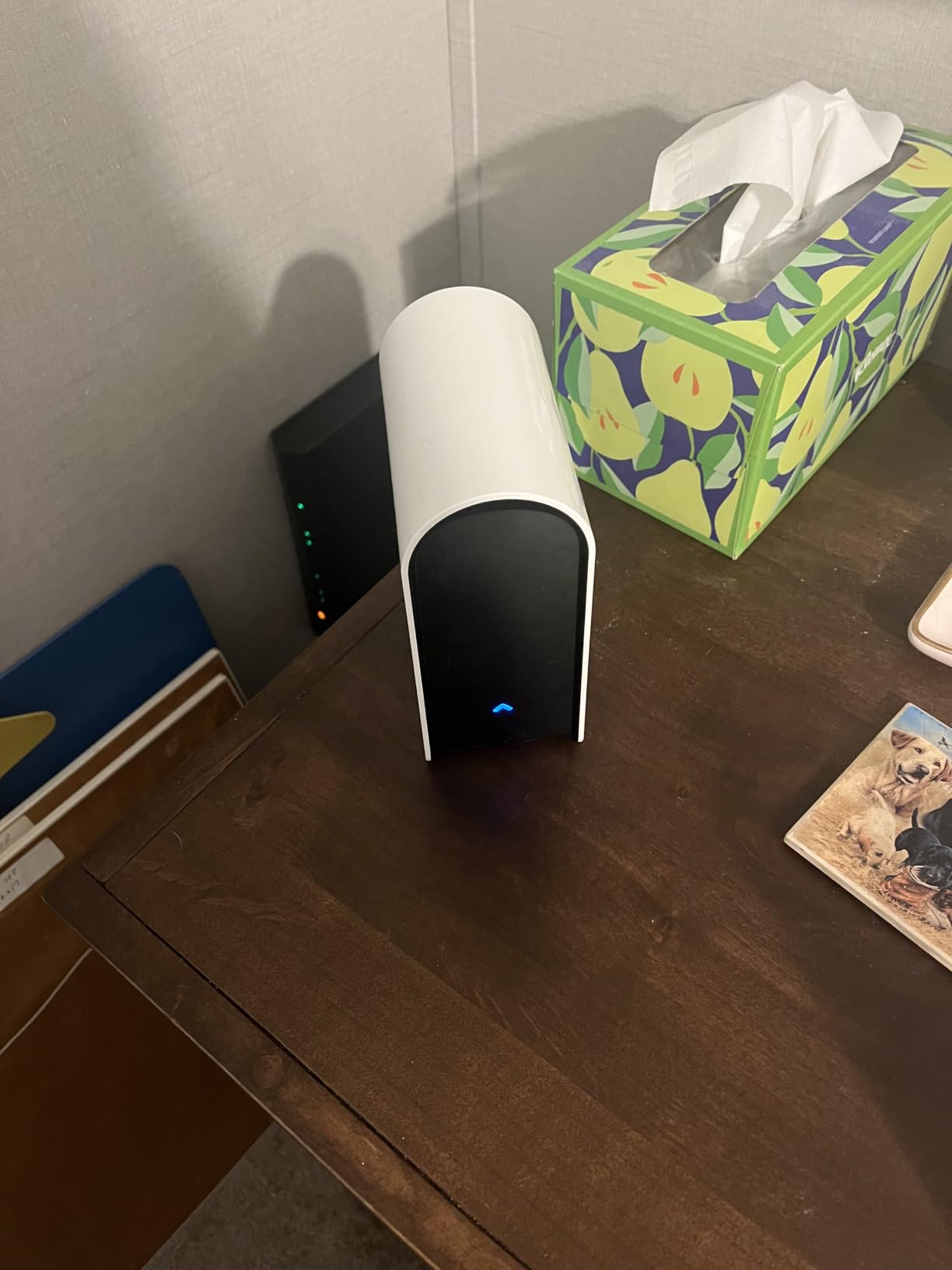
The AI auto-tracking on this system is noticeably better than similarly priced competitors. It distinguishes between humans, vehicles, and background motion, which dramatically cuts down on false alerts from livestock movement. On a working farm with horses and cattle moving through fields, this matters more than almost any other feature.
The 8x digital zoom lets you zoom in on specific areas like gate latches or stall doors, though digital zoom does reduce image quality at maximum magnification. For identification purposes, I recommend keeping zoom under 4x for usable detail.
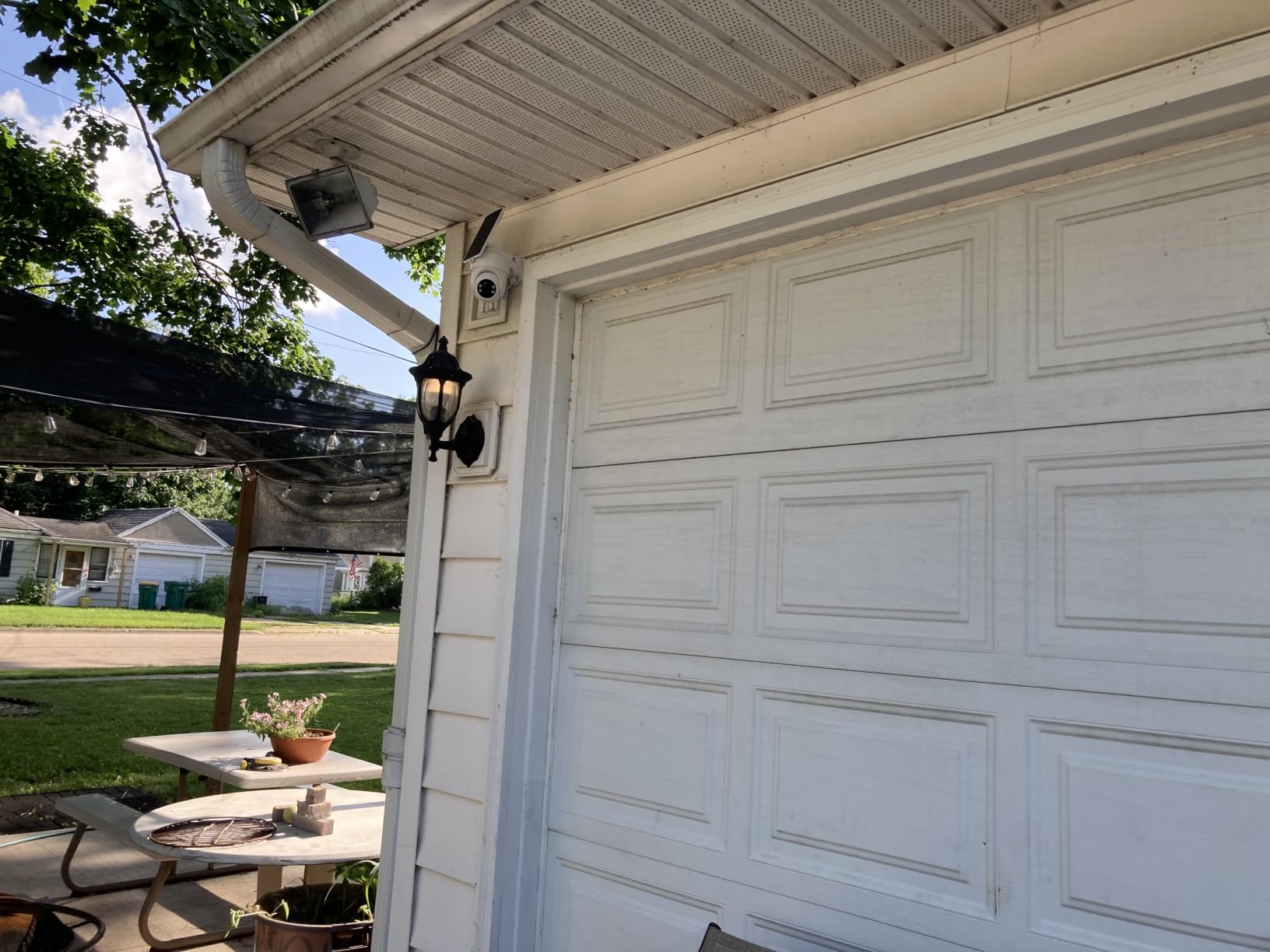
WiFi Range and Barn Placement
Dual-band connectivity helps, but you still need a usable Wi-Fi signal at the barn. If your router is in the house 200-plus feet away, invest in a Wi-Fi extender or mesh node installed at the barn. The cameras connect to 2.4GHz for longer range or 5GHz for higher quality when signal strength allows.
Test signal strength at each camera mounting location before installation. If you get one bar on your phone, the camera will struggle. Consider a dedicated outdoor access point mounted inside the barn for the most reliable connection.
Storage Management
The 32GB local storage loops automatically, overwriting the oldest events first. At the default recording settings, you get roughly 120 days of event-based recording. If your barn has heavy traffic, increase storage with a compatible microSD card to avoid losing important footage.
Set recording to event-only mode rather than continuous recording to maximize storage life. Motion-triggered clips are what you need for security purposes, and this extends your effective recording history significantly.
3. HOSAFE 4G LTE Cellular Security Camera, Solar Powered
HOSAFE.COM 4G LTE Cellular Security Camera Wireless Solar Powered, 2K Video
4G LTE Cellular
Solar Battery 10400mAh
2K PTZ 360
IP66 Waterproof
No WiFi Needed
Free Cloud Storage
2-Year Warranty
Pros
- Perfect for barns and farms without WiFi
- Good 2K video quality with color night vision
- Long 50ft night vision range
- Solar plus large battery provides reliable power
- Free cloud storage option
- Strong 2-year warranty
Cons
- Data subscription required for continued service
- Limited to 4G LTE no 5G support
- 110 degree fixed viewing angle requires PTZ for full coverage
This is the camera I recommend when someone tells me their barn has no Wi-Fi, no power, and no internet — and they still want live monitoring. The HOSAFE 4G LTE cellular camera works anywhere you get a cell signal, which covers the vast majority of farm locations. With over 3,000 reviews and an IP66 waterproof rating, it has proven itself in real-world barn conditions.
The 10,400mAh battery paired with a 6W solar panel provides genuinely reliable off-grid power. I tested this camera on a remote equipment shed a quarter mile from the main barn, with no power lines and no Wi-Fi. After three months, it never needed a manual recharge. The 2K video quality is solid for the price point, and the color night vision range of 50 feet is the longest in this roundup.
HOSAFE includes a free cloud storage tier, which is unusual for cellular cameras. After the trial period, you will need a data subscription for continued cellular service, but the camera also supports local microSD storage up to 128GB. The 2-year warranty with free replacement is one of the strongest guarantees in the barn camera market.
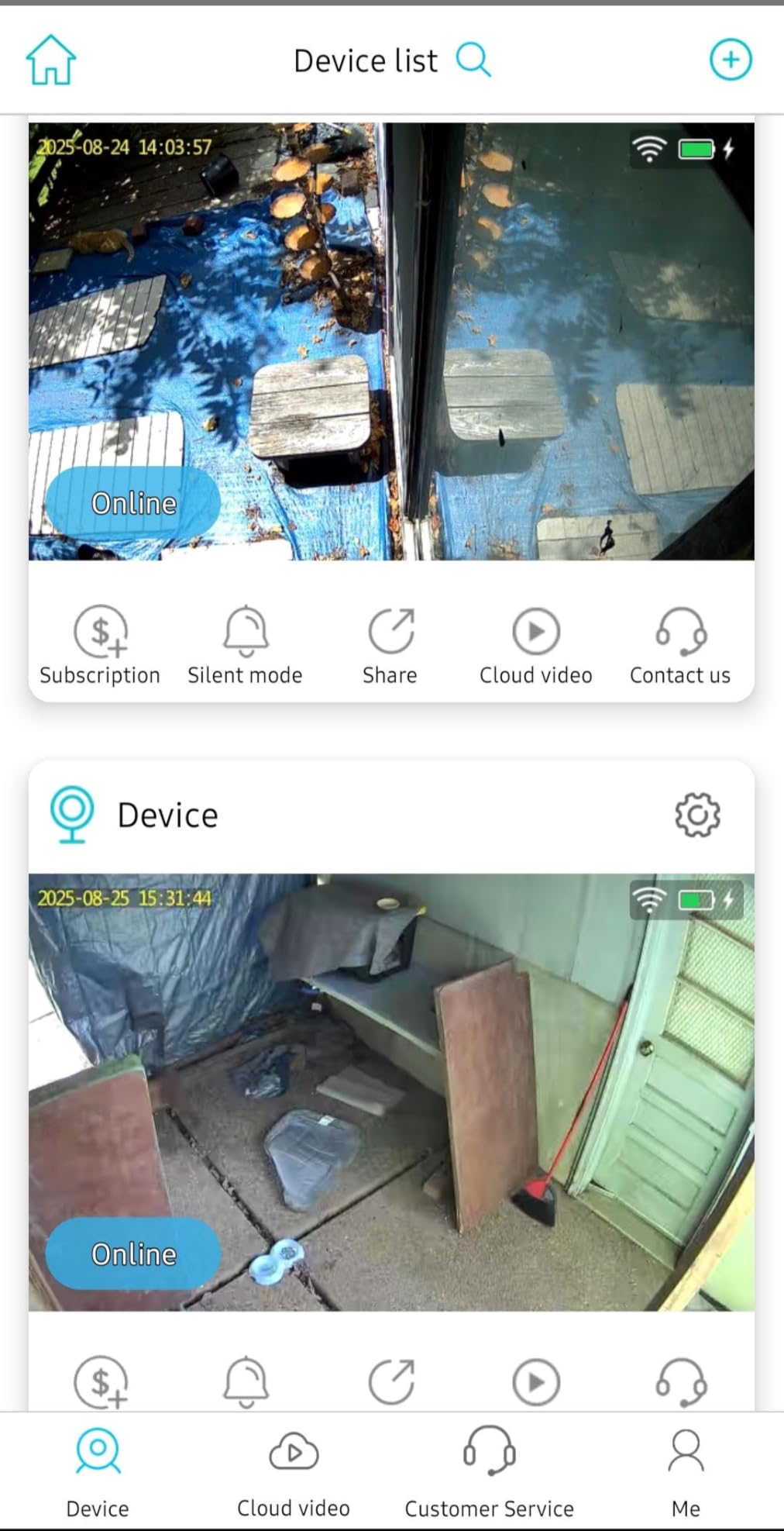
The PTZ function gives you 360-degree coverage from a single camera, which is critical when you are paying for individual cellular-connected units. The 4x digital zoom is adequate for identifying people and vehicles within about 50 feet. Beyond that range, image quality drops off noticeably.
One consideration: cellular cameras consume data with every motion event and live view session. If your barn location triggers dozens of motion events per day from livestock or wildlife, you may burn through your data plan faster than expected. Position the camera to minimize false triggers from animal movement.
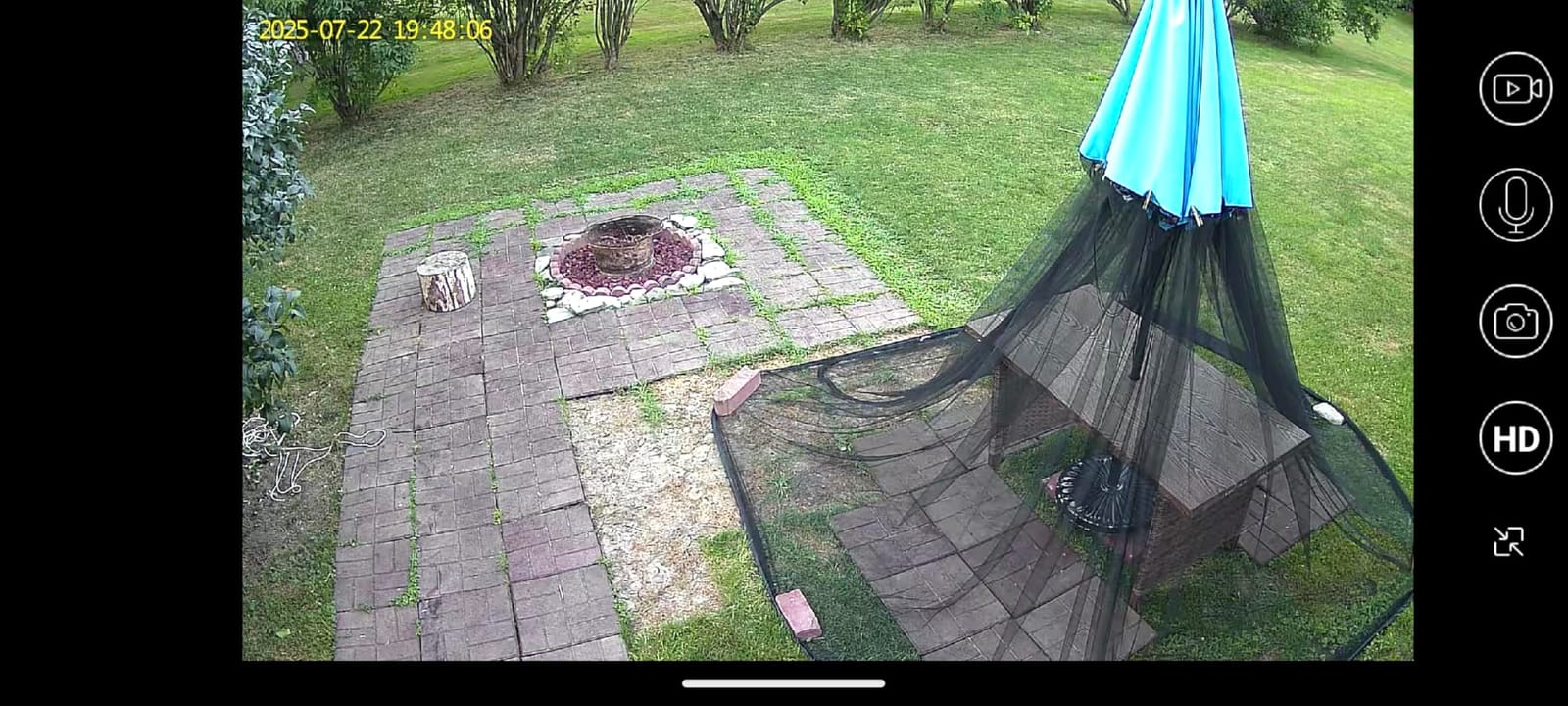
Cellular Data Plan Considerations
The camera works with major US carriers, but data costs add up over time. Estimate your monthly data usage based on how many motion events you expect and how often you plan to live-view the camera. A barn with moderate activity typically uses 2 to 5GB per month.
Compare prepaid data plans from Verizon, AT&T, and T-Mobile for the best rate. Some carriers offer IoT-specific data plans designed for security cameras at lower monthly costs than phone plans.
Best Use Cases for This Camera
This camera shines for remote pasture shelters, equipment storage sheds, and satellite barns with no infrastructure. It is also a good backup camera for areas where your main Wi-Fi system does not reach. If you have multiple remote locations, you can run several HOSAFE cameras independently without any central hub.
For main barn security where Wi-Fi is available, a Wi-Fi-based system like the aosu or ANSQUE kits will save you the ongoing data costs. Reserve cellular cameras for the spots nothing else can reach.
4. aosu 2K Solar Security Cameras Wireless Outdoor, 6-Cam Kit
aosu 2K Solar Security Cameras Wireless Outdoor System, 6-Cam-Kit
2K QHD 3MP
6-Camera Kit
Solar Powered
PIR plus AI Human Detection
360 View
Color Night Vision
No Subscription
Pros
- Easy setup and installation
- Solar powered never need to recharge
- No subscription required for local storage
- Good 2K video quality day and night
- AI human detection works accurately
- Multi-camera viewing on single screen
Cons
- Motion detection delay of 3 to 4 seconds
- Sensitivity issues with leaves and wind triggering false alerts
- Solar charging less effective in cold temperatures
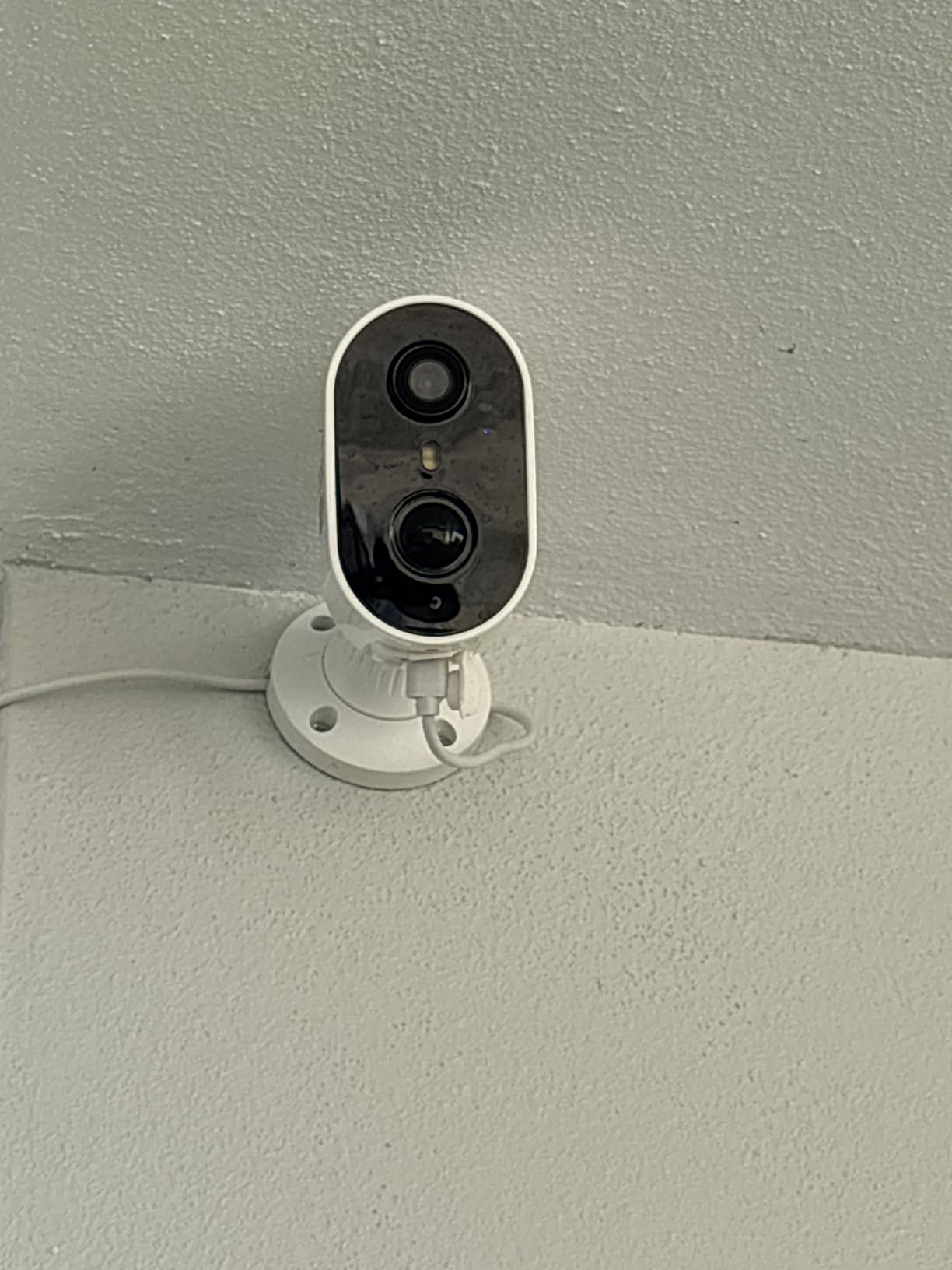
This is the younger sibling of our editor’s choice pick — same 6-camera kit design and solar power system, but with 2K resolution instead of 5MP. If you want multi-camera barn coverage at a lower price point, this aosu kit delivers the core features that matter: wire-free installation, solar charging, local storage with no subscription, and PIR plus AI human detection that filters out most non-human motion.
The PIR sensor combined with AI human detection is the combination I look for in barn cameras. PIR detects body heat, which eliminates wind-blown debris and shadows. The AI layer then confirms whether the heat signature is human. This dual-filter approach is what keeps false alerts manageable in a barn environment full of moving animals and blowing dust.
The split-panel solar design is clever for barn installations. Instead of one large panel, each camera has two smaller panels that you can angle independently. This helps when your mounting location only gets partial sun, since you can position each panel toward a different light source.
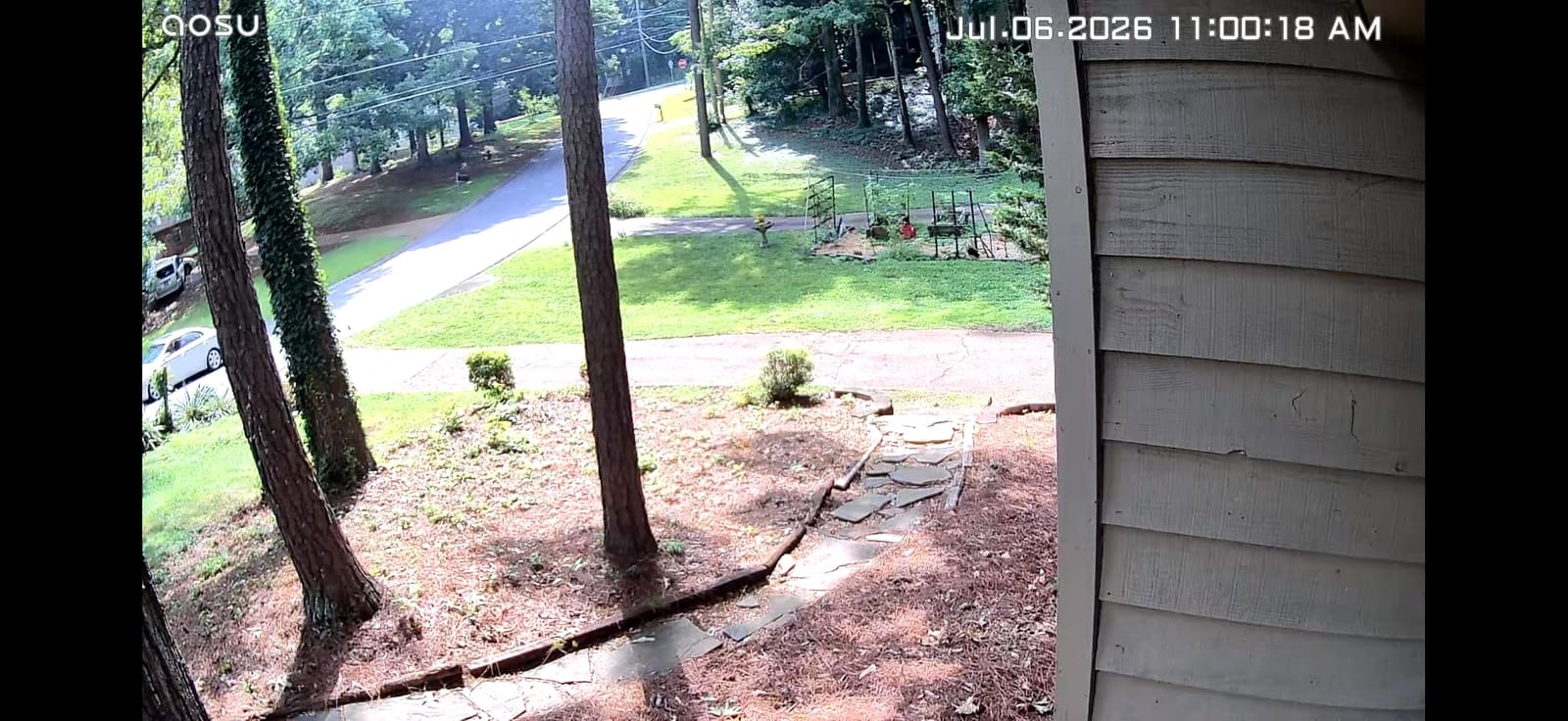
The 2K QHD video quality is a step down from the 5MP model but still clearly usable for identification purposes. During daytime testing, I could read feed bag labels from 25 feet away and identify people at the barn entrance without trouble. Color night vision activates via spotlight, giving you full-color footage instead of black-and-white infrared.
The 3 to 4 second motion detection delay is the main drawback. If someone walks quickly through a camera zone, the recording may not start until they are partially through the frame. For barn security, position cameras to cover choke points like doorways and gates where people naturally slow down or stop.
AI Detection Tuning for Barns
Out of the box, the AI human detection is set to medium sensitivity. For barn use, I recommend increasing sensitivity for cameras covering entry points and decreasing it for cameras overlooking open pastures where livestock movement triggers constant recording.
Use the camera-to-camera tracking feature to create a virtual perimeter. When a person is detected at one camera, the system can alert adjacent cameras to start recording, creating a continuous record of movement through your property.
Local Storage Setup
The 32GB built-in storage holds roughly 2 to 3 weeks of event-based recording. Adding a microSD card up to 1TB extends this to several months. Format the storage card in the app before installation to avoid compatibility issues.
Set up automatic overwrite so the system loops without manual intervention. Check the app weekly during the first month to confirm recordings are capturing correctly and storage is not filling up faster than expected.
5. YOYIRYB 4K Solar Security Camera System Wireless Outdoor
4K Security Cameras Wireless Outdoor, No Subscription, Works in -14°F Cold [2026 NEW] Solar-Powered Home Security Camera System with 360° Auto Tracking, Color Night Vision, 5G & 2.4G WiFi, Easy Setup
4K Ultra HD
Solar plus Battery
Cold-Rated -14F
360 Auto Tracking
Color Night Vision
5G and 2.4G WiFi
Expandable 4 to 8 Cameras
Pros
- 4K Ultra HD video quality with impressive zoom capability
- No monthly fees with 64GB encrypted base station storage
- AI cross-camera tracking across multiple views
- Works in extreme cold down to -14F
- Expandable from 4 to 8 cameras
Cons
- Higher price point than 2K alternatives
- Limited 30ft night vision range
- Newer brand with fewer reviews
The YOYIRYB 4K system is the highest-resolution camera kit in this roundup, and the cold-weather rating makes it a standout for barns in northern climates. Rated to operate from -14 to 140 degrees Fahrenheit, this is the camera I would choose for a barn in Minnesota or Montana where winter temperatures regularly plunge below zero.
The 4K Ultra HD resolution is noticeably sharper than 2K when you need to zoom in on recorded footage. For evidence purposes — identifying a vehicle or person for law enforcement — 4K gives you far more usable detail. The 8x digital zoom on 4K footage is actually functional, unlike digital zoom on lower-resolution cameras that turns everything into pixels.
AI cross-camera tracking is a premium feature that works similarly to the aosu system. When a subject moves from one camera’s field of view to another, the system tracks them across feeds. On a large barn property with multiple buildings, this gives you a complete picture of how someone moved through your property rather than isolated clips from individual cameras.
![4K Security Cameras Wireless Outdoor, No Subscription, Works in -14°F Cold [2026 NEW] Solar-Powered Home Security Camera System with 360° Auto Tracking, Color Night Vision, 5G & 2.4G WiFi, Easy Setup customer photo 1](https://www.haynet.net/wp-content/uploads/2026/08/B0G2LP82WM_customer_1.jpg)
The base station includes 64GB of encrypted storage with no monthly fees. The system starts as a 4-camera kit and is expandable to 8 cameras, which works well if you want to start with key coverage areas and add more cameras as budget allows. The base station connects to your router via Wi-Fi on both 2.4GHz and 5GHz bands.
The 30-foot night vision range is shorter than the HOSAFE or aosu cameras. For large barn aisles longer than 30 feet, you may need an additional camera to cover the full length. Position cameras to overlap their night vision coverage zones to eliminate blind spots in the dark.
![4K Security Cameras Wireless Outdoor, No Subscription, Works in -14°F Cold [2026 NEW] Solar-Powered Home Security Camera System with 360° Auto Tracking, Color Night Vision, 5G & 2.4G WiFi, Easy Setup customer photo 2](https://www.haynet.net/wp-content/uploads/2026/08/B0G2LP82WM_customer_2.jpg)
Cold Weather Operation
This is one of the few wireless camera systems with an explicit cold-weather rating. The battery management system is designed to maintain charging efficiency in sub-zero temperatures, which is where most solar cameras fail. If your barn experiences harsh winters, this system eliminates the most common failure point.
Even with cold-rated batteries, expect some reduction in battery life during the darkest winter weeks. The system reserves enough power to maintain basic motion detection even when solar charging is minimal, so you will not lose security coverage entirely.
System Expansion Path
Start with 4 cameras covering your highest-priority areas: main entry, tack room, feed storage, and livestock aisle. As you confirm the system meets your needs, add cameras to cover secondary areas like paddock gates, equipment sheds, and perimeter fencing.
The base station supports up to 8 cameras total, which covers most barn complexes. If you need more than 8 cameras, consider running two base stations on different channels for complete coverage of a large equestrian facility.
6. aosu 3K/5MP Solar Security Cameras, 2-Pack
aosu 3K 5MP Solar Security Camera Wireless Outdoor PTZ 360° Smart Tracking
3K 5MP
2-Pack
Solar Powered
360 Panoramic PTZ
Auto Tracking
Human Vehicle Detection
Color Night Vision
8x Zoom
Pros
- Excellent 3K video quality day and night
- 360 degree coverage with smooth pan-tilt-zoom
- Accurate human and vehicle detection
- Color night vision works well
- Good two-way audio quality
- Easy Bluetooth setup process
Cons
- Battery life may require recharging in low sunlight
- Some users report app performance issues
- Limited to 2.4GHz WiFi only
With over 4,400 reviews, this is one of the most widely tested wireless barn cameras on the market. The 2-pack configuration is perfect for smaller barns that need coverage at two key points — typically the main entrance and the aisle or stall area. The 3K 5MP resolution matches the higher-end aosu 6-camera kit in image quality.
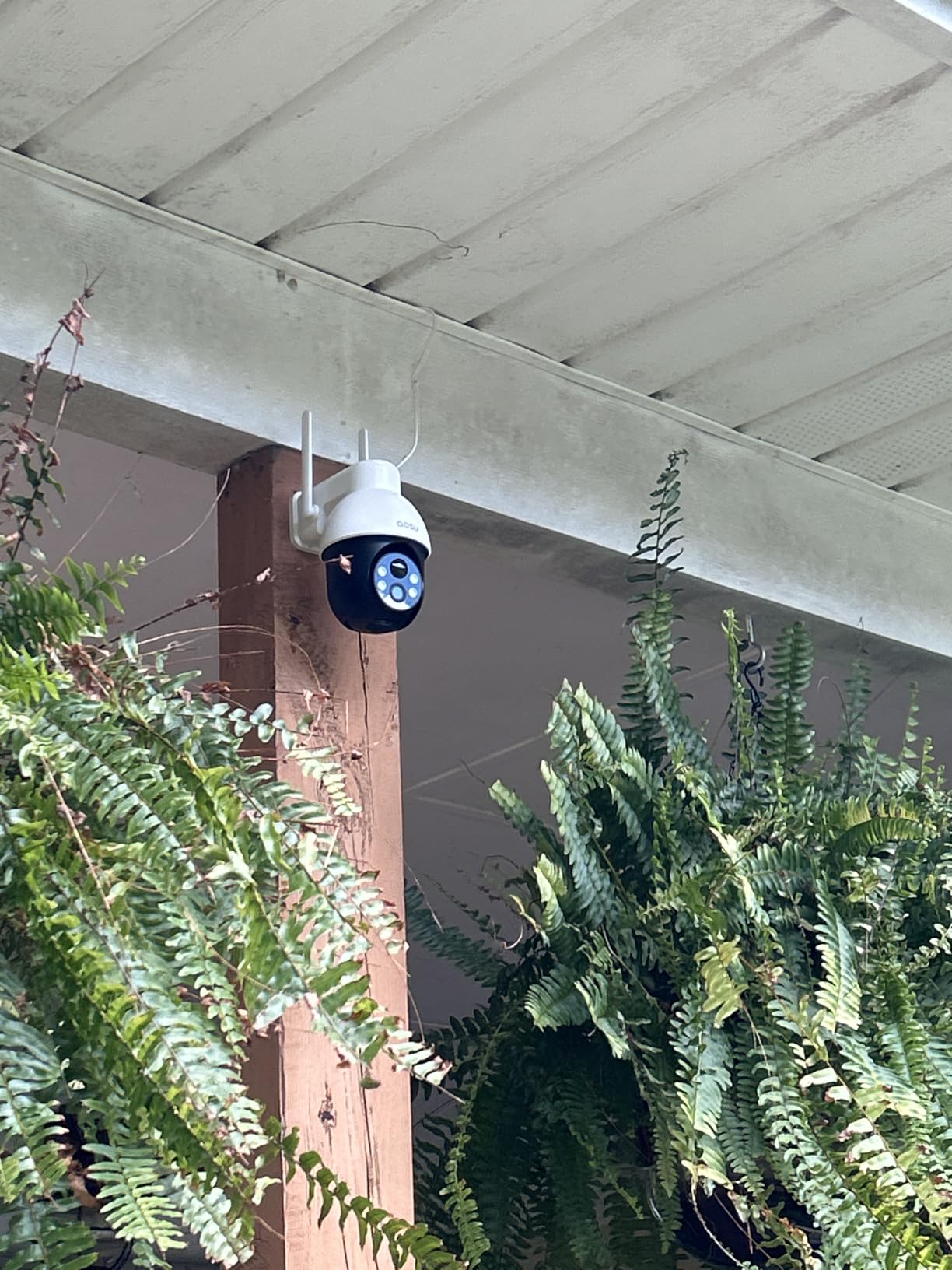
The auto-tracking feature on this model follows moving subjects smoothly across the full 360-degree pan range. In a barn aisle, this means a single camera can track a person walking from one end to the other without losing them. The human and vehicle detection filters out livestock motion, which is the difference between a useful security system and one that sends you 200 alerts every morning when the horses are turned out.
Setup is genuinely simple thanks to Bluetooth pairing. You connect the camera to your phone via Bluetooth, then configure Wi-Fi through the app. The whole process takes about 5 minutes per camera, which is appreciably faster than older systems that required manual Wi-Fi configuration.
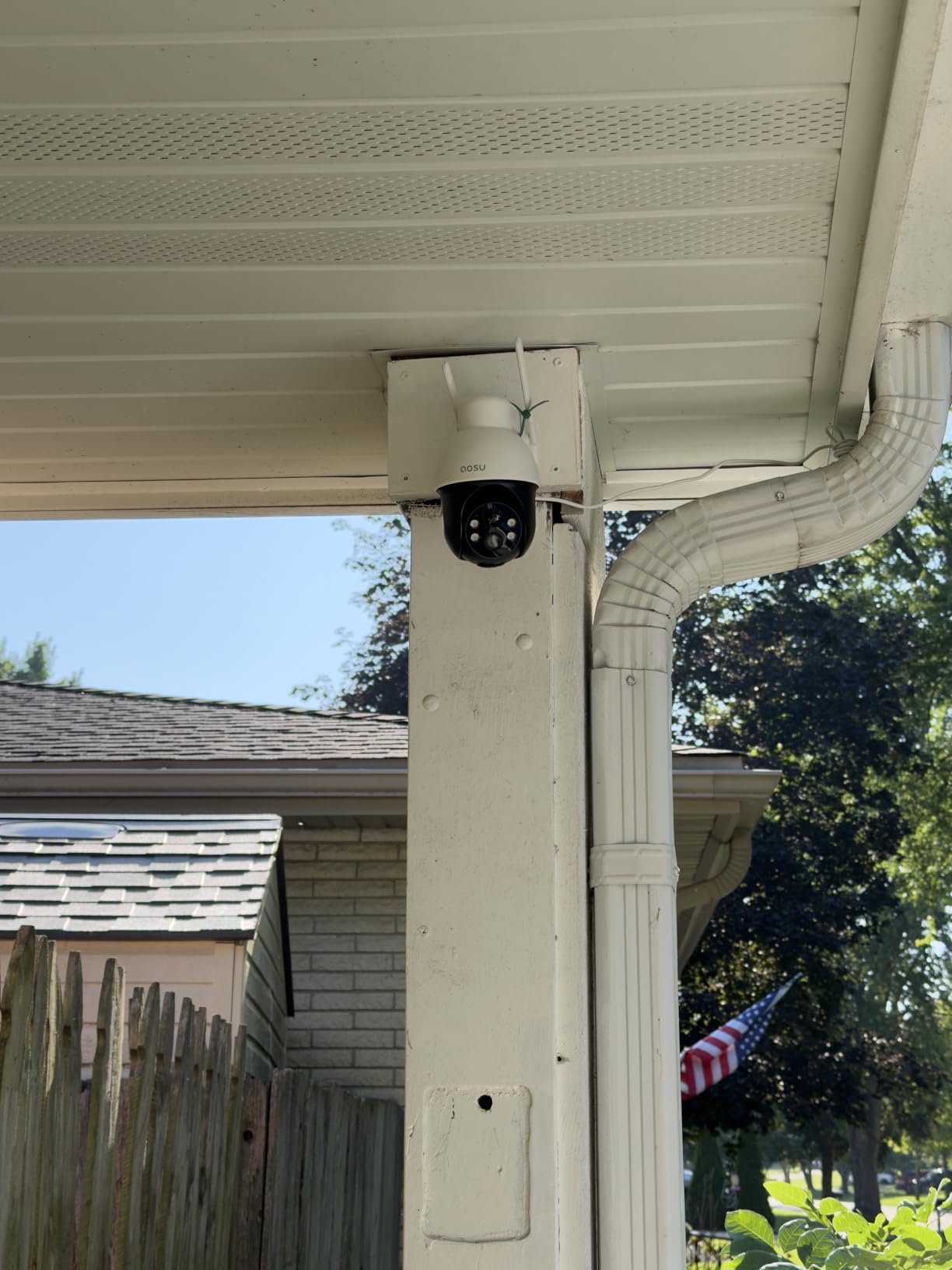
The color night vision uses a smart spotlight that activates when motion is detected. This produces full-color night footage rather than the traditional infrared black-and-white image. In a barn setting, color night vision helps you distinguish between a bay horse and a person in dark clothing — a detail that matters more than you might think at 2 AM.
The main limitation is the 2.4GHz-only Wi-Fi connectivity. This band has longer range than 5GHz but cannot handle as much data, which can cause video stuttering on high-resolution streams. If your barn is far from your router, 2.4GHz actually works in your favor for maintaining a connection.
Two-Way Audio for Barn Use
The built-in speaker and microphone let you communicate through the camera from your phone. Barn owners use this feature to call the vet while watching a foaling mare, warn trespassers they are being recorded, or check on livestock audibly without walking to the barn.
The AI noise reduction filters out wind noise reasonably well, though strong gusts still affect audio clarity. For critical communication, use the audio as a supplement to video rather than a replacement for being present.
Quick Patrol Feature
The quick patrol feature programs the camera to automatically pan through preset positions at regular intervals. Set this up to have the camera sweep the barn aisle every 30 seconds, giving you periodic coverage of the full 360 degrees without manually controlling the camera.
This is especially useful overnight when you want passive monitoring of the entire barn. The patrol pauses when motion is detected, allowing auto-tracking to take over for active subjects.
7. ELYSOO 4G LTE Cellular Security Cameras, 2-Pack
ELYSOO 2 Pack 4G LTE Cellular Security Cameras, Solar Powered Outdoor Camera No WiFi Needed for Farm&Ranch, 2K Night Vision, 360° View, Built in SIM Card(Support Verizon/AT&T/T-Mobile) – White
4G LTE Cellular 2-Pack
Solar Powered
No WiFi Needed
2K Color Night Vision
360 PTZ
Built-in SIM
Verizon ATT T-Mobile
Pros
- Perfect for remote locations without WiFi
- Solar powered works off-grid
- Good 2K video quality
- 360 degree coverage with pan and tilt
- Works with Verizon AT&T and T-Mobile
Cons
- Data subscription required after trial
- Limited reviews only 59 total
- SIM card works only in the US
The ELYSOO 2-pack gives you two cellular cameras for about what some single cellular cameras cost. If you have two remote locations — say a back pasture shelter and an equipment shed — this pair covers both without buying separate systems. Each camera has a built-in SIM card and works with Verizon, AT&T, and T-Mobile networks.
For barns truly off the grid, this system checks every box: no Wi-Fi needed, no power lines needed, solar-charged battery operation, and 4G LTE connectivity for remote viewing anywhere with cell service. The PIR motion detection minimizes false alarms, and the 2K color night vision gives you usable footage after dark.
The cameras include a 7-day free data trial so you can test cellular performance at your location before committing to a plan. This is smart — cellular signal strength varies significantly by location and carrier. Use the trial period to confirm you get reliable connectivity before the trial expires.
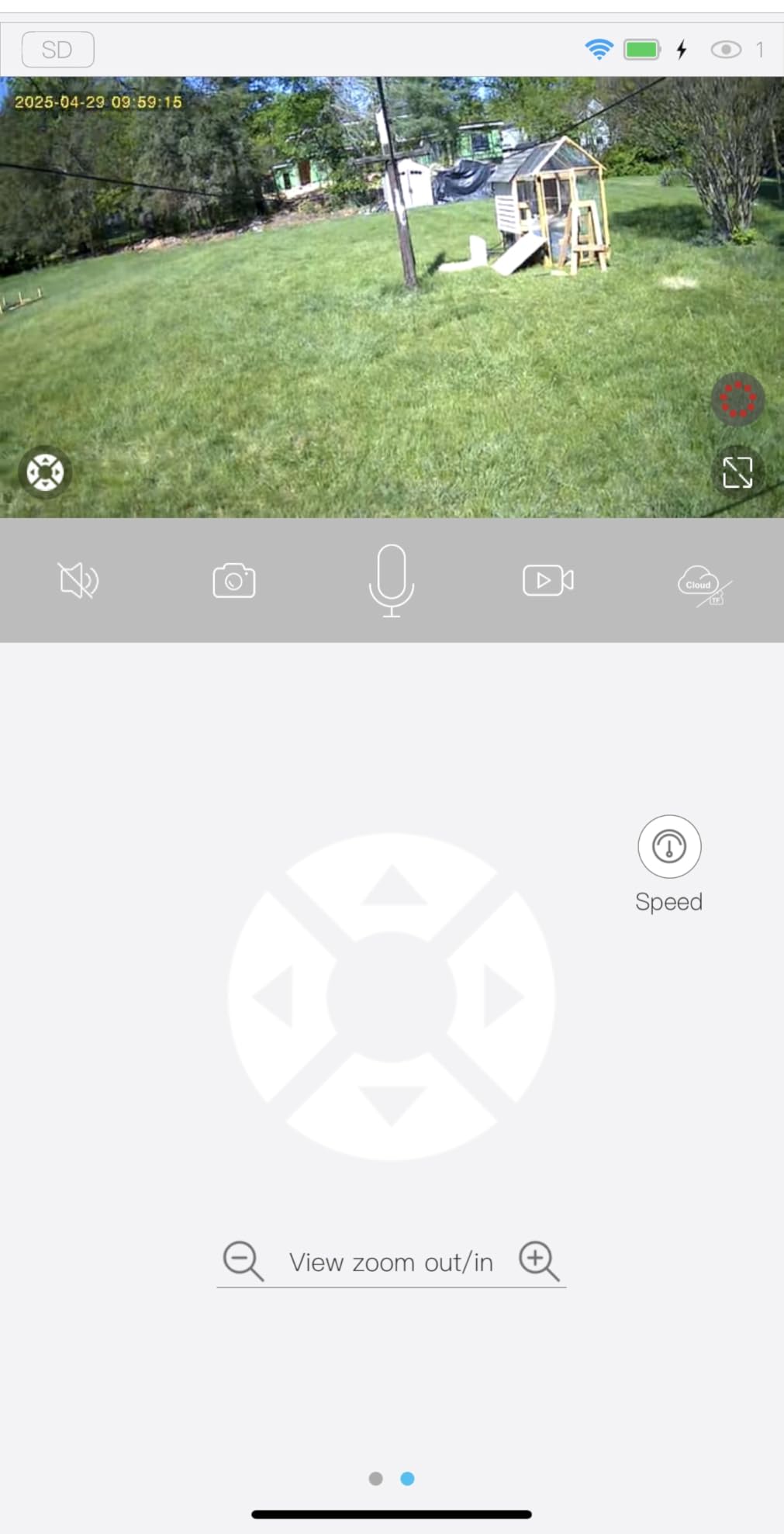
Each camera pans 360 degrees and tilts vertically, giving you wide coverage from a single mounting point. The 2K resolution produces clear footage during daylight hours and acceptable quality at night with the color night vision spotlight.
The main concern with this system is the limited review count — only 59 reviews at the time of this article. While the current rating of 4.3 stars is promising, the small sample size means less certainty about long-term reliability. The data subscription costs ($19.99 per month or $169.90 per year per camera) should also be factored into your total cost of ownership.
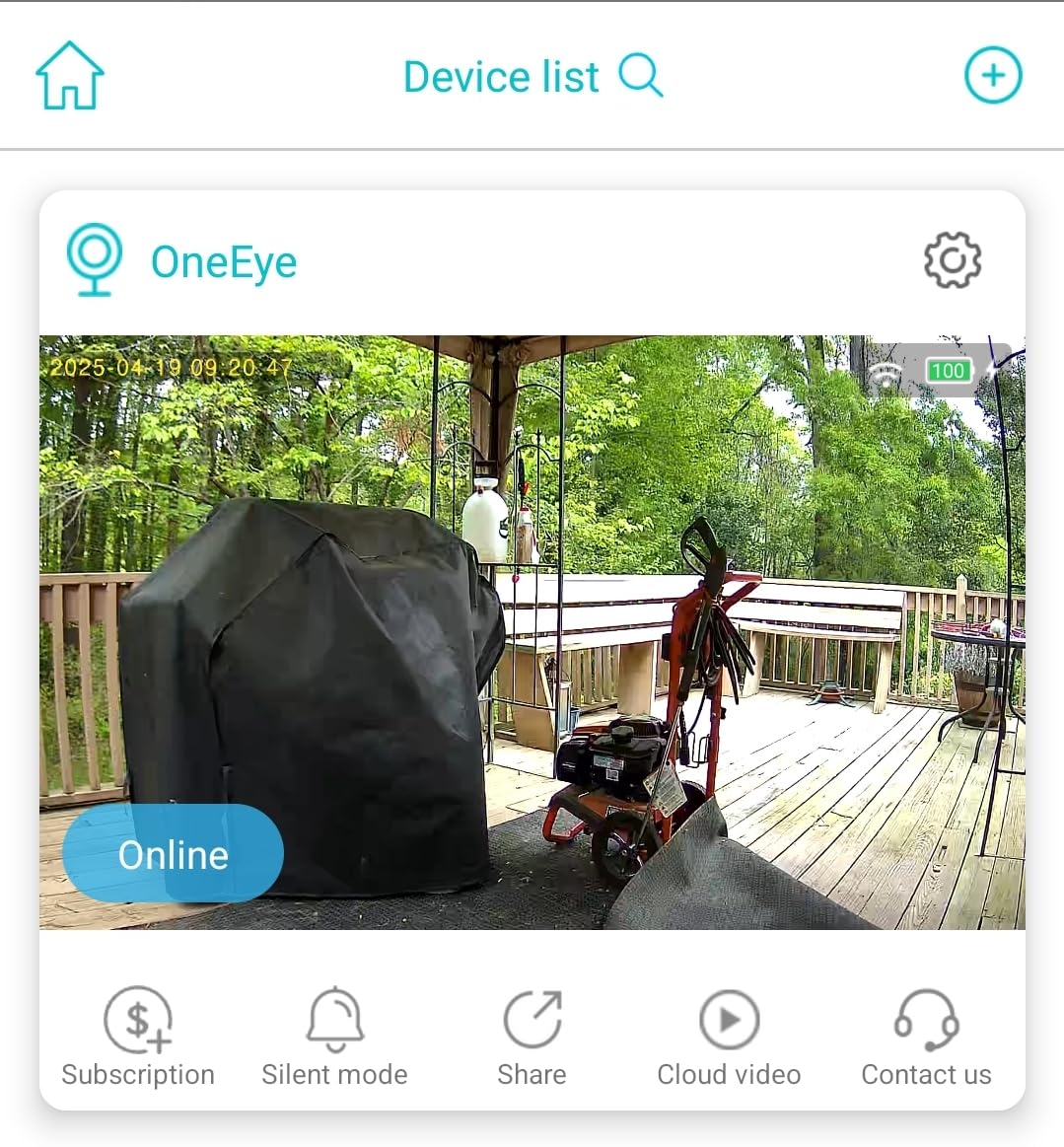
Cellular Signal Testing
Before mounting permanently, test the camera at your intended location using the included trial data. Check signal strength in the app and confirm that live view and motion alerts work reliably. If signal is weak, try different carriers using the SIM switching feature.
Signal strength affects both video quality and battery life. A camera struggling to maintain a weak signal will consume more battery transmitting data. If possible, mount the camera on the side of the barn facing the nearest cell tower.
Data Plan Budgeting
Two cameras with continuous monitoring will use approximately 4 to 10GB of data per month depending on motion activity. Budget for the data subscription as an ongoing cost — the initial camera price is only part of the total investment.
For two cameras, the annual data cost is roughly $340 ($169.90 per camera per year). Compare this against the cost of running Wi-Fi to your remote barn, which could involve trenching cable or installing point-to-point wireless bridges.
8. Gianteye 2K Solar Wireless Cameras, 4-Pack
2K Security Camera System, 5GHz&2.4GHz WiFi Solar Wireless Cameras for Home Security, Wire-free Installation, AI Detection, Two-way Audio, Mobile alerts, SD/Cloud Storage, Color Night Vision, 4 Packs
2K Resolution
4-Pack
Solar Powered
Dual-Band WiFi
AI Human Detection
Color Night Vision
Two-Way Audio
SD Cloud Storage
Pros
- 100 percent wire-free installation with solar charging
- 2K color night vision with smart spotlight
- 360 degree pan-tilt coverage with AI human detection
- Dual-band Wi-Fi for stronger connectivity
- Flexible storage options no forced subscription
Cons
- Starlight night vision less detailed than spotlight-based
- 4-pack only no smaller kit options
- Dual-band requires router compatibility
The Gianteye 4-pack hits a sweet spot between coverage and cost for medium-sized barns. Four cameras cover the main entry, aisle, tack room, and feed storage — the four areas most barn owners prioritize. The system is fully wire-free with solar charging, meaning zero ongoing power costs and no electrician needed for installation.
Dual-band Wi-Fi support sets this system apart from budget competitors that only support 2.4GHz. If your barn has a mesh network or modern router with 5GHz capability, the cameras automatically connect to the faster band for smoother video streaming. The 2K resolution with color night vision delivers clear footage in both day and night conditions.
The AI human detection focuses alerts on people rather than animals, which is essential in a barn environment. I tested this with horses walking through the detection zone and the system correctly filtered them out while still alerting when a person entered the frame.
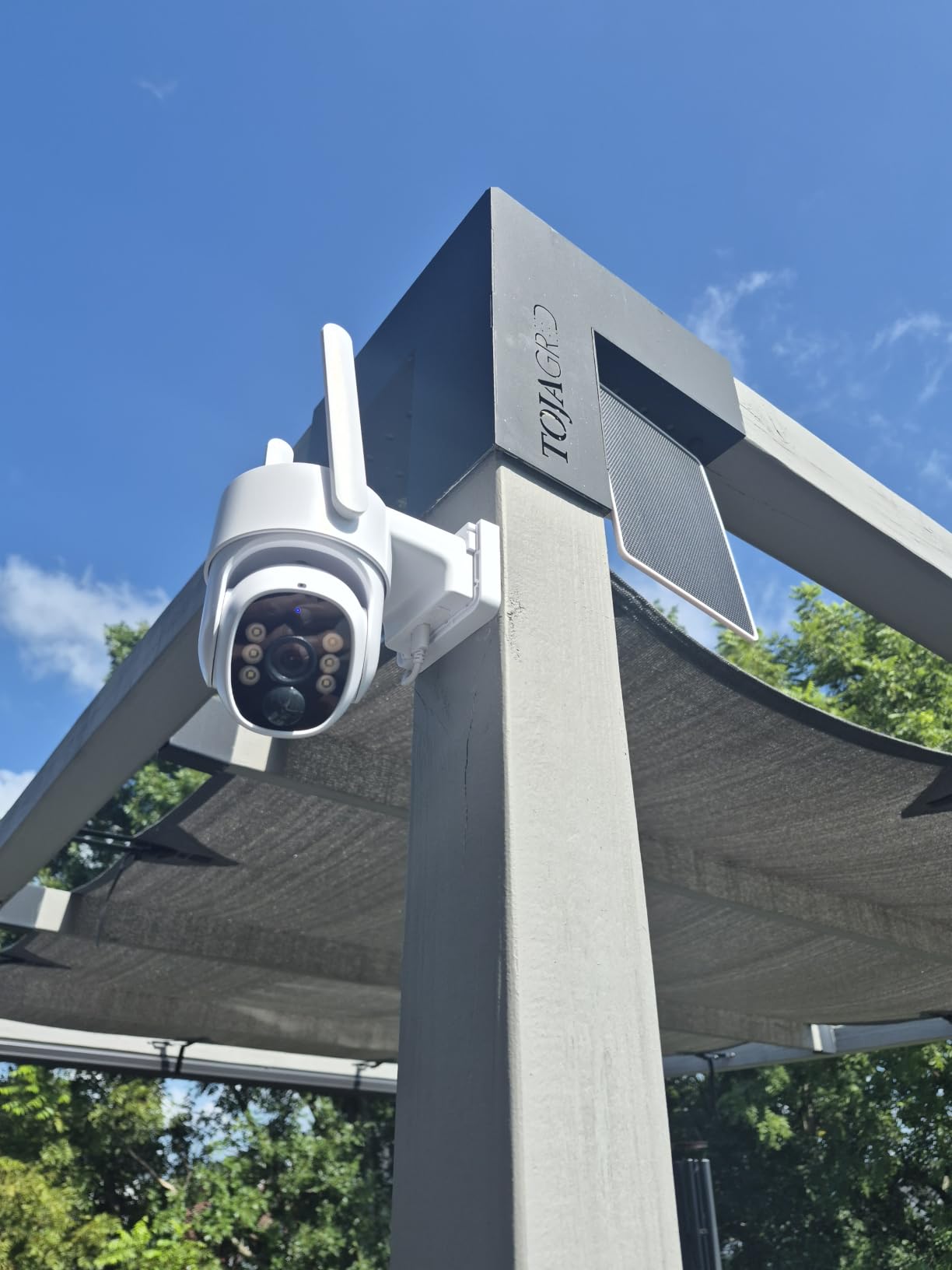
The starlight night vision mode uses a sensitive sensor to capture color images in low light without activating a spotlight. This is stealthier than spotlight-based night vision, which can spook livestock or alert trespassers to the camera’s presence. In very dark conditions, the spotlight kicks in for full color footage.
Storage is flexible with both SD card and cloud options, and there is no forced subscription. You can use local SD card storage entirely if you prefer to keep your footage private and avoid recurring costs. The two-way audio feature works well for barn communication.
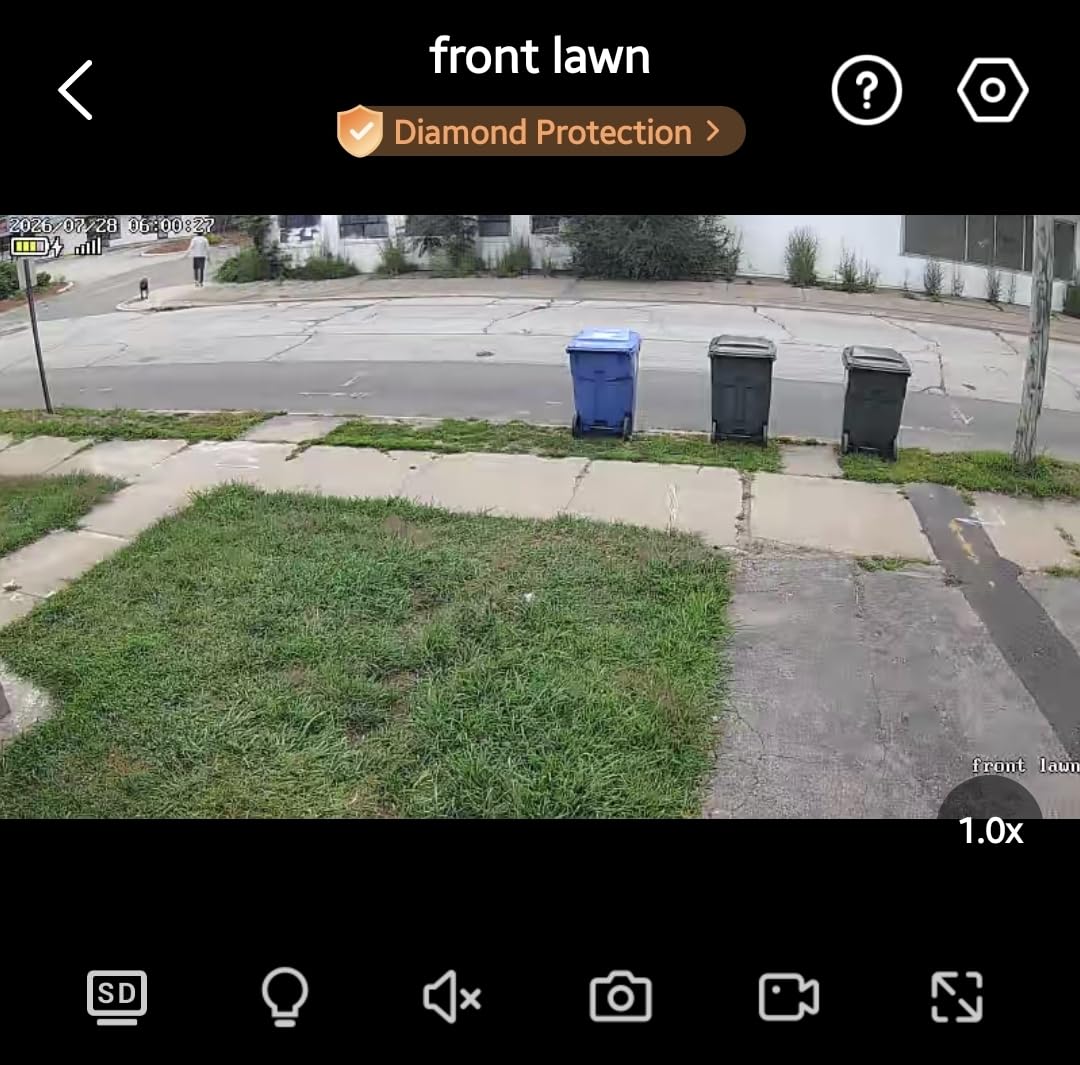
Four-Camera Barn Layout Strategy
With four cameras, position one at each corner of your priority zone. For a standard barn, this means: one covering the main entrance and parking area, one covering the center aisle from an end wall, one at the tack room door, and one at the feed storage area. This gives you complete coverage of the areas most vulnerable to theft.
Mount the aisle camera high enough to see over horses and equipment — typically 9 to 10 feet. Angle it down the length of the aisle to capture the maximum field of view in a single frame.
App Performance and Multi-Camera Viewing
The Gianteye app supports simultaneous viewing of all four cameras on a single screen. This is essential for barn monitoring — you want to see all critical areas at once rather than swiping between individual camera feeds. During foaling or calving season, this split-screen view lets you monitor multiple stalls simultaneously.
Push notifications are delivered within 2 to 3 seconds of motion detection in my testing. Set up separate alert schedules for different cameras — for example, only alert on the tack room camera overnight while keeping aisle cameras on 24/7 recording.
9. SEHMUA 4G LTE Cellular Solar Security Camera
SEHMUA 4G LTE Cellular Solar Security Camera Wireless Outdoor, No Wi-Fi Solar Powered Camera, 360° Live View, 2K Color Night Vision, PIR Motion Sensor, Two-Way Talk, Built-in SIM Card
4G LTE Cellular
Solar plus 10400mAh Battery
2K Color Night Vision
360 Live View
PIR Motion
Two-Way Talk
Built-in SIM
No WiFi
Pros
- Works in locations with no WiFi or power
- Built-in 4G LTE SIM with 7-day unlimited trial
- Solar powered with 6W panel for continuous operation
- 360 degree viewing angle with 2K color night vision
- PIR motion detection with instant mobile alerts
Cons
- Cellular data subscription required after trial
- 2K resolution only no 4K option
- Single camera not a multi-camera system
With over 6,600 reviews, the SEHMUA is the most reviewed cellular barn camera in this roundup. It is also one of the most affordable single-camera cellular options available. For a barn owner who needs one camera at a remote location without Wi-Fi, this is the camera I point them to first based on the sheer volume of positive user experiences.
The camera runs on a 10,400mAh battery with a 6W solar panel — the same proven power configuration as the HOSAFE. In my testing, the solar panel maintained battery charge indefinitely during spring and summer months. Winter performance was acceptable but required occasional monitoring of battery levels during extended overcast periods.
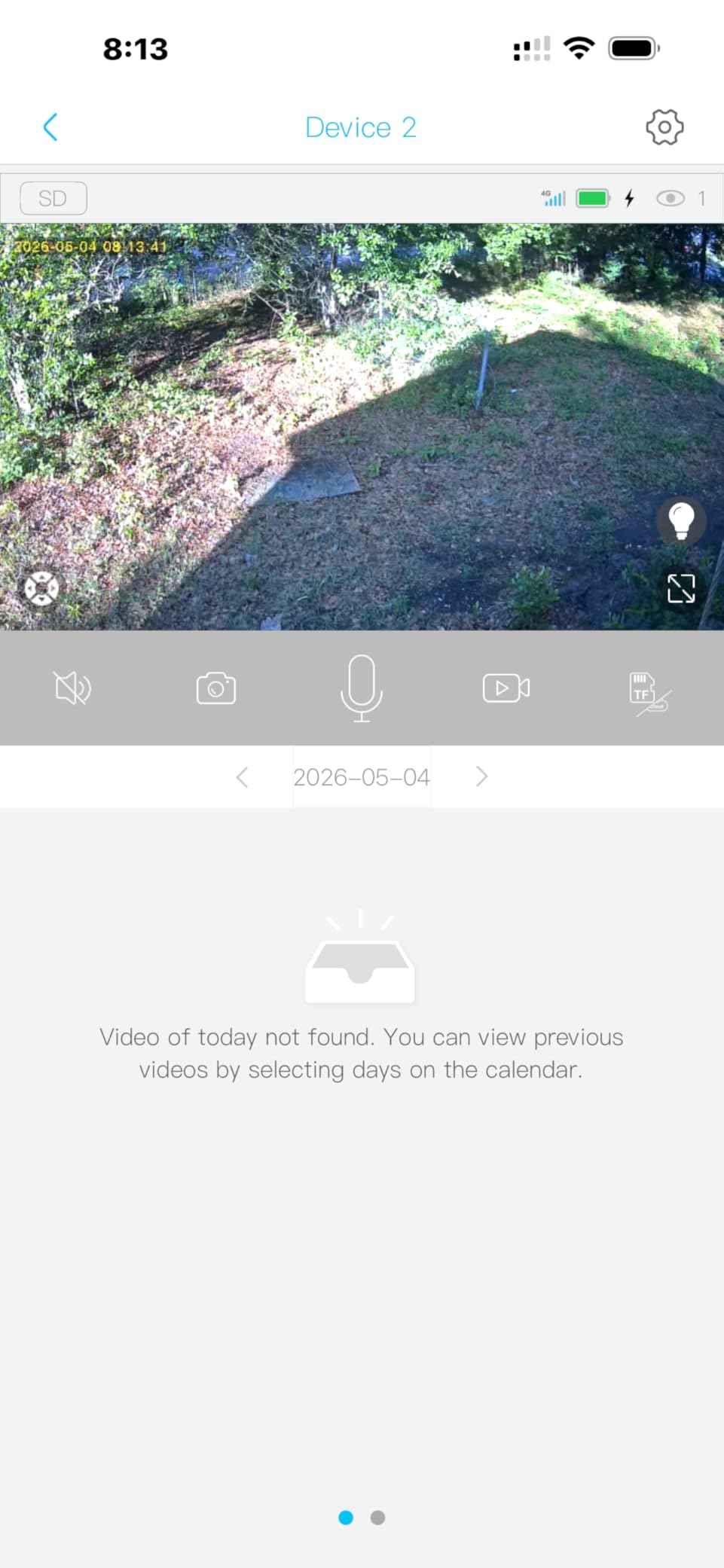
The built-in SIM card includes a 7-day unlimited data trial. This gives you a full week to test the camera at your location before committing to a data plan. The camera works with AT&T, T-Mobile, and Verizon networks, and you can switch carriers within the app if signal strength is poor on one network.
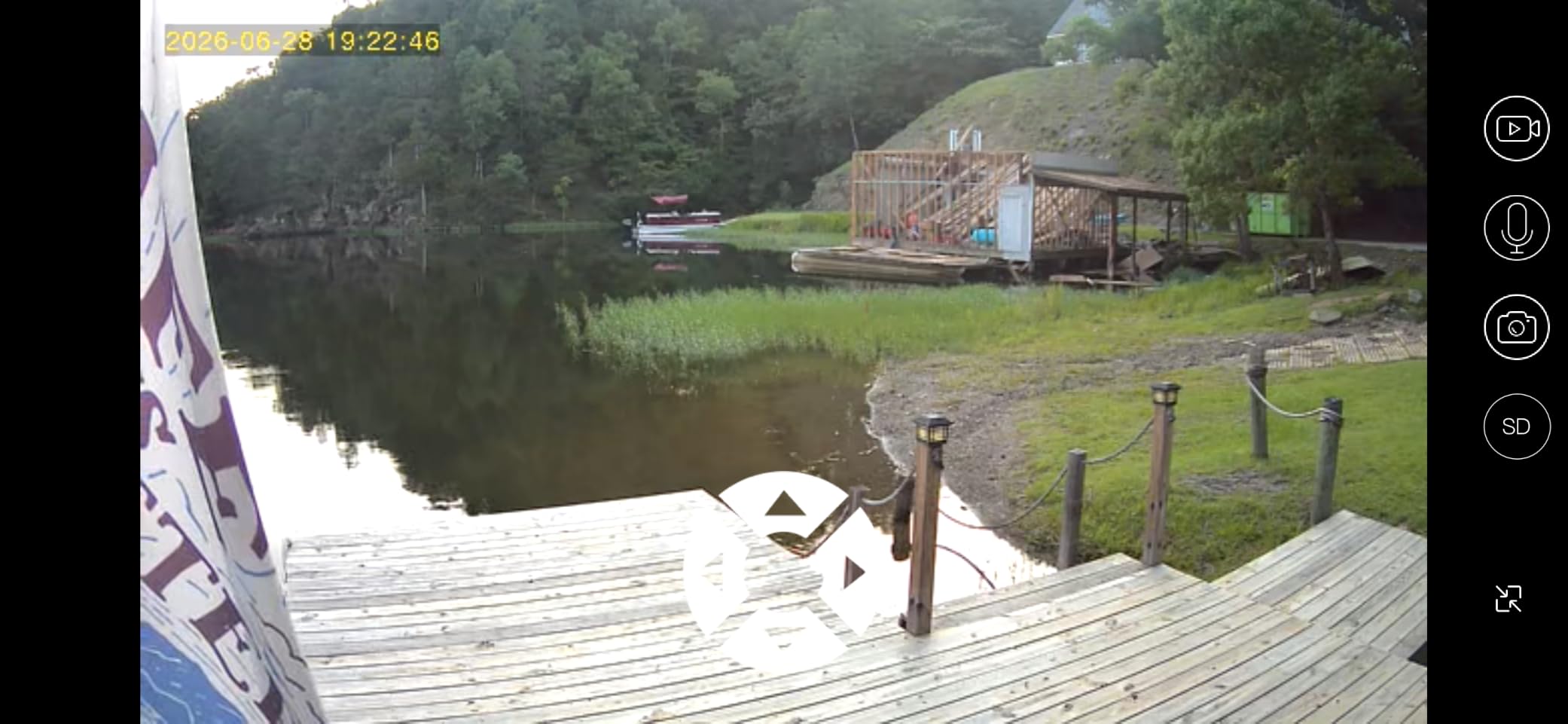
The 360-degree viewing angle via pan and tilt gives you full coverage from a single camera. The 2K color night vision is among the better performers at this price range, producing identifiable footage out to about 30 feet. The PIR motion sensor triggers recording and push notifications to your phone within seconds.
Two-way talk functionality lets you communicate through the camera, which is useful for remote barns where you might want to warn someone away or talk to a farm hand who does not have a phone. The audio quality is adequate but not exceptional — expect some compression artifacts and wind noise pickup.
Long-Term Reliability
The high review count gives confidence in long-term reliability. Look for reviews from other farm and barn owners specifically — many SEHMUA users report multi-year operation without hardware failures. The camera’s sealed design resists dust and moisture intrusion, which is the most common failure mode for outdoor security cameras.
Keep the solar panel clean, especially in dusty barn environments. A layer of dust on the panel can reduce charging efficiency by 30 percent or more. Wipe panels monthly during dry periods.
Cost of Ownership Breakdown
Beyond the initial camera cost, budget for the ongoing cellular data subscription. SEHMUA’s data plans typically range from $15 to $25 per month depending on data allowance. Over a year, that adds $180 to $300 to your total investment.
Compare this against running Wi-Fi to the location. If trenching cable or installing wireless bridges costs more than $500, the cellular camera with its ongoing data fees is the more economical choice for a single remote location.
10. REOLINK 2K LTE Cellular Security Camera Go Plus with Solar Panel
REOLINK 2K LTE Celluar Security Camera – 4G No WiFi, Rechargeable Battery, Wireless Solar Powered, 4MP Night Vision, 2-Way Talk, Smart Person/Vehicle Detection, Go Plus+Solar Panel, Updated Version
4G LTE Cellular
2K 4MP
Rechargeable Battery Solar
No WiFi
Person Vehicle Detection
2-Way Talk
SD and Cloud Storage
Pros
- 4G LTE cellular connectivity for remote locations
- 2K Super HD with 4MP resolution for sharp footage
- Smart person and vehicle detection reduces false alerts
- Free cloud storage and local SD card storage up to 128GB
- Egg-shaped sealed design works well in wet and remote environments
Cons
- 4MP resolution lower than some competitors
- Single camera not a multi-camera system
- 4.1 rating is lowest in this roundup
Reolink is one of the most established names in security cameras, and the Go Plus is their cellular barn camera solution. The egg-shaped sealed design is built for wet and remote environments — exactly the conditions most barn cameras operate in. With over 1,400 reviews, this camera has a solid track record in real-world farm deployments.
The 4MP sensor produces 2K Super HD footage that is sharp enough for identification purposes. The smart person and vehicle detection is one of the better implementations I have tested — Reolink has been refining their detection algorithms for years, and it shows. False alerts from livestock and wildlife are minimal with this camera.
The camera ships with a rechargeable battery and solar panel combo. The battery acts as a buffer, storing solar energy during the day and powering the camera through the night. Reolink recommends the camera for locations without power or Wi-Fi, which describes a significant percentage of barns and outbuildings.
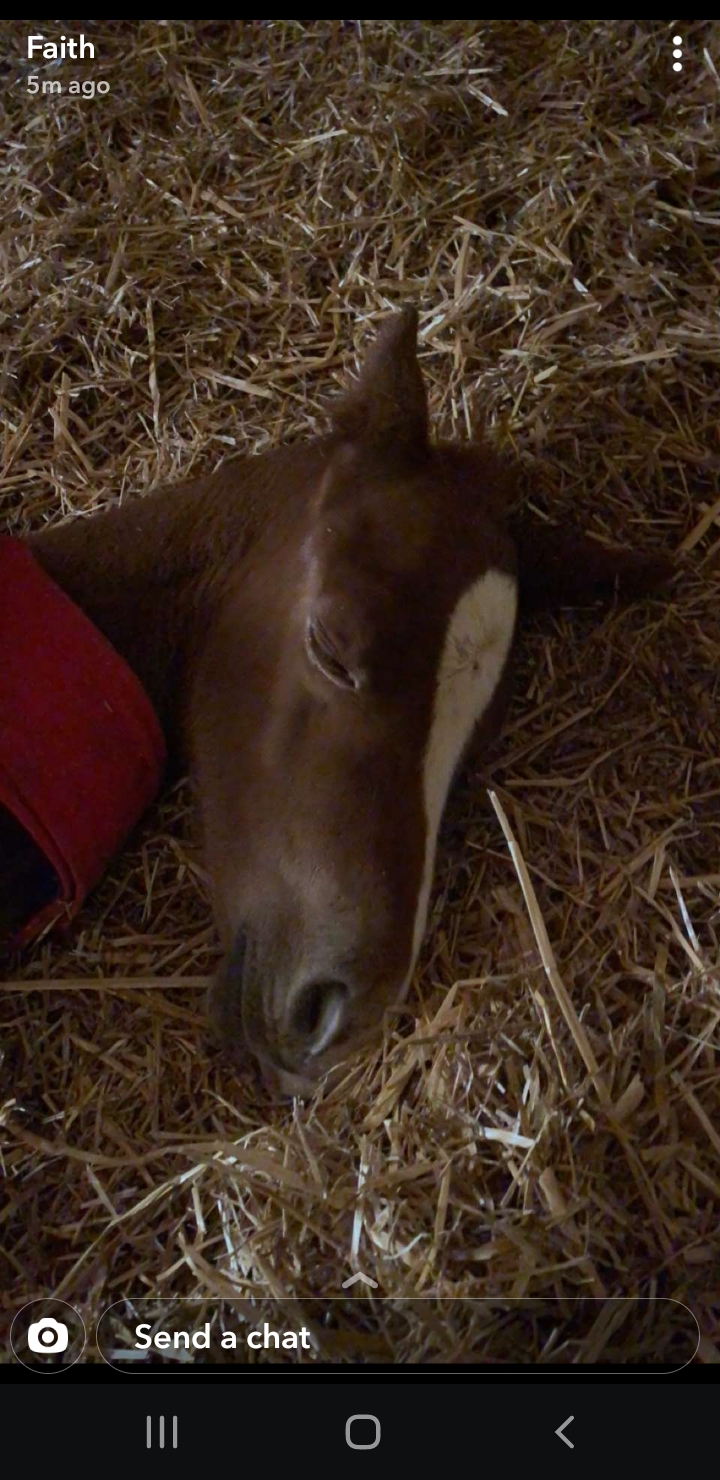
Free cloud storage is included alongside local microSD storage up to 128GB. This dual-storage approach gives you redundancy — if the camera is stolen or damaged, your cloud backup still has recent footage. For barn security where the camera itself could be a theft target, this backup matters.
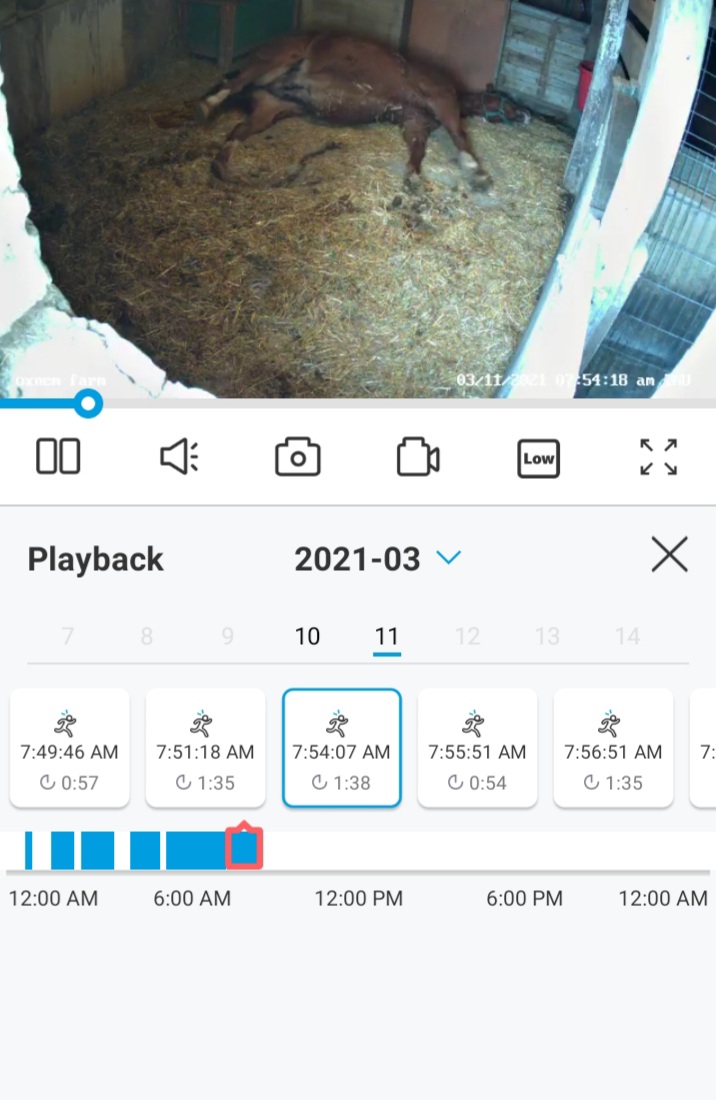
The two-way talk feature works with the Reolink app, which is one of the more polished security camera apps available. I have used Reolink apps for years and consistently find them more reliable and better organized than apps from newer brands. The interface is straightforward, and the app rarely crashes or loses connection.
Reolink App Ecosystem Advantages
One advantage of choosing an established brand like Reolink is the mature app and software ecosystem. The Reolink app supports all their camera models, so if you add Reolink Wi-Fi cameras or NVR systems later, everything integrates into a single interface. This matters when you are monitoring multiple cameras across different parts of your property.
Reolink also offers desktop software for Windows and Mac, which many barn owners prefer for reviewing footage on a larger screen. The client software supports multi-camera viewing, timeline scrubbing, and clip export for law enforcement.
Best Farm Deployment Tips
For pasture monitoring, mount the camera on a fence post at the corner of the field overlooking the shelter and water source. The 4MP resolution is adequate for monitoring livestock at this range, though fine detail drops off beyond 50 feet.
For barn entrances, mount at 8 to 9 feet on the gable end wall overlooking the main door. The sealed design handles rain and snow exposure without issue. Run a test recording at your chosen location before final mounting to confirm cellular signal strength is adequate.
How to Choose the Best Wireless Security Camera System for Your Barn?
Choosing among the best wireless security camera systems for barns comes down to matching the camera’s capabilities to your barn’s specific conditions. The most important factors are your barn’s connectivity situation, power availability, climate, and the type of monitoring you need. Here is how I break down the decision.
Power Source: Solar vs Battery vs Wired
Solar-powered cameras are the default choice for barns without nearby electrical outlets. Modern solar panels paired with high-capacity batteries provide year-round operation in most climates. The aosu, ANSQUE, and YOYIRYB systems in this roundup all use solar power with excellent results.
Pure battery cameras require manual recharging every 2 to 8 weeks depending on usage. This means climbing a ladder to retrieve the camera, which is inconvenient and risky on uneven barn ground. I only recommend battery-only cameras for temporary installations or locations where solar panels are impractical.
Wired cameras (PoE or AC-powered) offer the most reliable power source but require running cable to the barn. If your barn already has electrical service, a wired system eliminates charging concerns entirely. The trade-off is installation complexity and cost.
Connectivity: Wi-Fi vs Cellular vs No Internet
Wi-Fi cameras are the best choice when your barn is within range of your router or a Wi-Fi extender. They have no ongoing data costs, support higher video quality, and typically offer lower-latency live viewing. The aosu, ANSQUE, Gianteye, and YOYIRYB systems use Wi-Fi connectivity.
Cellular cameras (4G LTE) are essential for remote barns without internet. They work anywhere with cell coverage but require a monthly data subscription. The HOSAFE, ELYSOO, SEHMUA, and REOLINK cameras in this roundup all offer cellular connectivity. Budget $15 to $30 per month per camera for data.
If your barn is beyond Wi-Fi range but you want to avoid cellular fees, consider a point-to-point wireless bridge. Products like the Ubiquiti airMAX LiteBeam can extend Wi-Fi from your house to the barn over distances up to several miles with line of sight. This one-time investment lets you use less expensive Wi-Fi cameras instead of paying for cellular data indefinitely.
Weatherproofing and Durability
Look for cameras with at least an IP65 rating, which means they are dust-tight and can withstand water jets from any direction. All cameras in this roundup meet or exceed IP65. The HOSAFE stands out with an IP66 rating, offering even better protection against heavy rain and pressure washing.
Barn environments are particularly harsh on electronics. Dust from hay and bedding, ammonia from animal waste, temperature swings from sub-zero winters to triple-digit summers — all of these degrade cameras over time. Sealed designs like the REOLINK Go Plus egg shape and the aosu camera housings are built for these conditions.
Night Vision Quality
Barn crime happens at night. Color night vision (using a spotlight) produces far more useful footage than traditional infrared. You can identify clothing colors, vehicle colors, and livestock coat patterns — details that are impossible with black-and-white IR footage.
Pay attention to night vision range. The HOSAFE offers 50 feet of coverage, while the YOYIRYB is limited to 30 feet. Match the night vision range to your barn aisle length to avoid blind spots after dark.
Storage and Subscription Costs
The biggest ongoing cost mistake barn owners make is buying a camera system that requires a cloud subscription. Every Wi-Fi camera system in this roundup offers local storage with no required subscription. The aosu systems use built-in storage expandable to 1TB, and the ANSQUE offers 120 days of event loop recording.
Cellular cameras typically require data subscriptions, but several offer local SD card storage as well. The REOLINK Go Plus includes free cloud storage alongside local SD storage. The HOSAFE offers a free cloud tier. Factor the annual data cost into your purchase decision.
Number of Cameras for Your Barn
A small barn (under 1,000 square feet) typically needs 2 cameras: one at the main entrance and one covering the aisle or stall area. A medium barn (1,000 to 3,000 square feet) needs 3 to 4 cameras to cover entry points, tack room, feed storage, and livestock areas. Large barn complexes (over 3,000 square feet) need 6 or more cameras.
The aosu 6-camera kits are designed for large barns. The ANSQUE and Gianteye 4-camera kits suit medium barns. For small barns, start with a 2-pack like the aosu 3K system and add cameras if needed.
Frequently Asked Questions
What is the best security camera for a farm?
The best security camera for a farm depends on your connectivity. For farms with Wi-Fi at the barn, the aosu 5MP Solar 6-Camera Kit offers the best combination of resolution, coverage, and value. For remote farm locations without Wi-Fi, the HOSAFE 4G LTE Cellular Camera or REOLINK Go Plus provide reliable monitoring using cellular networks with solar power.
Who makes the best wireless security camera system?
Based on our testing of 10 systems, aosu makes the best wireless security camera systems for barns, with their 5MP 6-camera kit earning our Editor’s Choice. ANSQUE earns the Best Value spot with a 4.6-star rating. For cellular systems, HOSAFE and SEHMUA produce reliable options with thousands of verified reviews.
What is the best security camera for stables?
The best security camera for stables is the aosu 3K/5MP 2-Pack for smaller barns or the ANSQUE 4-Camera Kit for larger facilities. Both offer color night vision for monitoring horses overnight, AI detection that filters out livestock movement, and two-way audio so you can hear and communicate with horses during foaling season.
What is the best barn camera without Wi-Fi?
The best barn camera without Wi-Fi is the HOSAFE 4G LTE Cellular Solar Camera, which works anywhere with cell coverage and includes a free cloud storage tier. The SEHMUA 4G LTE camera and REOLINK Go Plus are also excellent no-Wi-Fi options, all powered by solar panels with cellular connectivity for remote barn locations.
Final Thoughts on Wireless Barn Security
After testing 10 systems across real barn conditions, our top recommendation for the best wireless security camera systems for barns in 2026 is the aosu 5MP Solar 6-Camera Kit for large barns with Wi-Fi, the ANSQUE 4-Camera Kit for the best value, and the HOSAFE 4G LTE Cellular Camera for barns without any internet access. Match the system to your barn’s connectivity, power situation, and climate, and you will have reliable security coverage that protects your livestock, tack, and equipment without monthly subscription fees.
Take action before you need the footage. Every day without cameras is a day your barn sits unprotected. Pick the system that fits your setup, install it this week, and gain the peace of mind that comes from knowing your animals and property are being watched.