
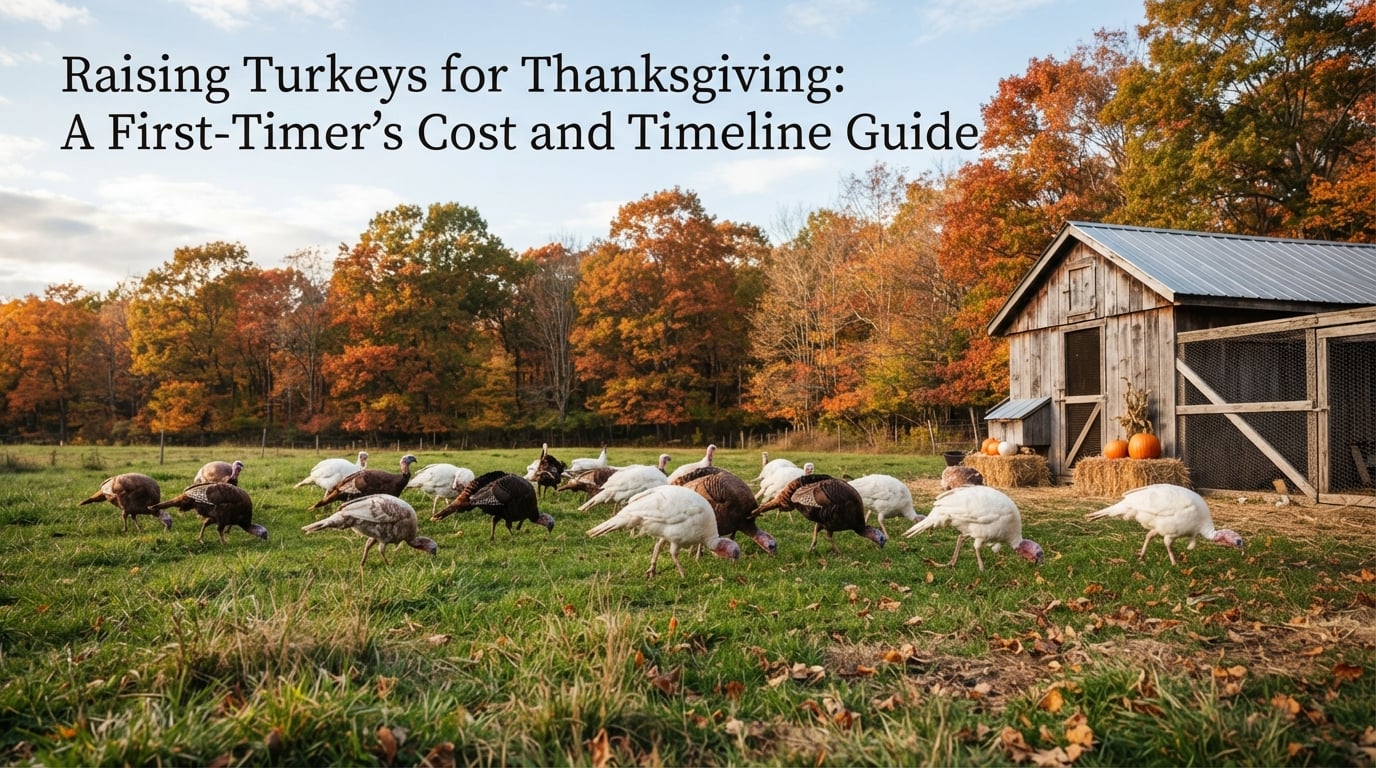
There is something deeply satisfying about serving a turkey you raised yourself on Thanksgiving Day. The bird on your table represents months of care, attention, and a direct connection to your food that no grocery store purchase can match. I remember the first time we raised our own Thanksgiving turkey—the flavor was richer, the meat was juicier, and the entire family felt a sense of pride that made the holiday even more meaningful.
If you are considering raising turkeys for Thanksgiving for the first time, this guide covers everything you need to know about the timeline, costs, and practical steps to bring your bird from poult to table. Raising turkeys for Thanksgiving requires planning 14 to 22 weeks in advance, depending on the breed you choose. This guide walks you through each stage, from ordering poults in spring to processing day in late fall. By the end, you will have a clear roadmap to raise your own Thanksgiving turkey successfully.
Table of Contents
Why Raise Your Own Thanksgiving Turkey?
Raising your own turkey gives you complete control over what goes into your holiday meal. You decide what your bird eats, how it lives, and when it is processed. Store-bought turkeys, even premium brands, cannot match the freshness of a bird that was processed days before Thanksgiving rather than months.
The flavor difference is noticeable. Pasture-raised turkeys that eat a varied diet develop deeper, richer meat than birds raised on just commercial feed. Many first-time raisers are surprised by how much better their home-raised turkey tastes compared to anything they have bought at the store.
Beyond flavor, raising your own turkey connects your family to the food system in a meaningful way. Children learn where their food comes from, and adults gain skills that build self-sufficiency. Even if you live on a small suburban lot, you can raise a few turkeys for Thanksgiving with proper planning.
The cost is often comparable to buying a high-quality turkey, and sometimes even cheaper. While you will not save money compared to a bargain grocery store bird, you will get far superior quality for a similar price to what you would pay for a premium heritage or organic turkey. For many families, that trade-off is well worth the effort.
Raising Turkeys for Thanksgiving: Your Complete Timeline
Timing is everything when raising turkeys for Thanksgiving. You need to work backward from the fourth Thursday in November to determine when to order your poults. The timeline below will help you plan each stage of the process.
May Through Early July: Order Your Poults
Most hatcheries ship turkey poults from April through July. For a Thanksgiving harvest, you want to order your poults between mid-May and early July. Ordering in May gives your birds plenty of time to reach full size by late November. If you order in July, choose a fast-growing commercial breed so your bird reaches processing weight on time.
Popular hatcheries often sell out early, so place your order by March or April for the best selection. You can also check local feed stores, which sometimes carry poults during spring chick season.
Weeks 1 Through 8: The Brooding Phase
Your poults will arrive as day-old chicks, typically by mail. The first six to eight weeks are the most critical and fragile period. Poults need to be kept in a brooder with consistent heat, proper ventilation, and access to fresh water and high-protein starter feed.
During this phase, you will gradually reduce the brooder temperature by about 5 degrees each week until the poults are fully feathered and can regulate their own body temperature. This is when most first-timer losses happen, so careful attention during brooding pays off.
Weeks 8 Through 16: Transition to Outdoor Housing
Once your poults are fully feathered and the weather is consistently warm, usually around 8 weeks old, you can transition them to outdoor housing. Start with short outdoor periods and gradually increase their time outside. By 10 to 12 weeks, your turkeys should be living outside full-time in a secure run with shelter.
This is also when you will transition them from starter feed to grower feed with slightly lower protein content. Your turkeys will grow rapidly during this phase, so make sure they have plenty of space to move and forage.
Weeks 16 Through 22: Finishing Phase
In the final weeks before processing, your turkeys will put on significant weight. Commercial breeds like Broad-Breasted Whites may reach processing weight by 16 to 18 weeks, while heritage breeds often need 20 to 28 weeks to fully mature.
If you are raising a heritage breed, you may need to start your poults earlier in May so they reach proper weight by Thanksgiving. Monitor your birds’ weight and adjust feed as needed during this finishing phase.
Processing: 1 to 2 Weeks Before Thanksgiving
Plan to process your turkey 1 to 2 weeks before Thanksgiving Day. This gives the meat time to rest and allows you to handle any unexpected challenges without rushing. Many first-time raisers find that processing the weekend before Thanksgiving works well.
You can process your turkey yourself if you have the equipment and skills, or you can hire a mobile processor or take your bird to a local processor. Some areas have poultry processing services specifically for small-scale producers.
Cost Breakdown: What to Expect?
Understanding the costs involved helps you budget appropriately and avoid surprises. Here is a realistic breakdown of expenses for raising turkeys for Thanksgiving.
Poult Costs
Turkey poults typically cost between $8 and $15 each, depending on the breed and hatchery. Heritage breeds often cost more than commercial breeds. Most first-time raisers order 3 to 6 poults to account for potential losses and have backup birds. You can expect to spend $24 to $90 on poults for a small batch.
Feed Costs
Feed is your largest ongoing expense. Turkeys eat more than chickens and require higher protein feed. A single turkey will consume approximately 70 to 100 pounds of feed from poult to processing. At current feed prices of roughly $20 to $30 per 50-pound bag, you can expect to spend $30 to $60 per bird on feed.
Starter feed (28% protein) costs more per pound than grower and finisher feeds. Factor in approximately $15 to $20 for starter feed, $15 to $25 for grower feed, and $10 to $15 for finisher feed per bird.
Brooder Setup
If you already raise chickens, you may have most of what you need. If you are starting from scratch, expect to spend $50 to $150 on a brooder setup. This includes a brooder box or tote, heat lamp or brooder plate, bedding, feeder, and waterer.
Housing and Fencing
Outdoor housing costs vary widely based on what you build. A simple turkey tractor or mobile pen can cost $100 to $300 in materials. A permanent shelter with attached run may cost $300 to $800 or more, depending on size and materials.
Turkeys need secure housing to protect them from predators, especially at night. Raccoons, foxes, and neighborhood dogs are common threats. Budget for sturdy fencing and a predator-proof shelter.
Processing Costs
If you process your turkey yourself, your only cost is equipment, which you may already own or can borrow. If you hire a mobile processor or take your bird to a processor, expect to pay $15 to $40 per bird. Some processors charge extra for plucking, bagging, or other services.
Total Estimated Cost
For a single turkey raised from poult to table, expect to spend approximately $80 to $150 in total costs, not including housing. If you already have housing and brooder equipment, your out-of-pocket costs may be closer to $50 to $80 per bird.
Compare this to a premium heritage turkey at $5 to $10 per pound, and you will find that raising your own is often comparable in cost. The real value comes in quality, freshness, and the satisfaction of raising your own food.
Choosing the Right Turkey Breed
The breed you choose affects your timeline, feed costs, and the eating experience. Here are the main options for raising turkeys for Thanksgiving.
Broad-Breasted White
The Broad-Breasted White is the most common commercial turkey breed. These birds grow rapidly, reaching processing weight in 14 to 18 weeks. Toms can reach 30 to 40 pounds live weight, yielding 25 to 30 pounds of dressed meat. Hens are smaller, typically reaching 15 to 20 pounds dressed.
These birds produce maximum meat in minimum time. They are ideal if you want a classic Thanksgiving turkey with plenty of white meat. However, they cannot reproduce naturally and have shorter lifespans due to their rapid growth.
Broad-Breasted Bronze
Similar to the White, the Broad-Breasted Bronze offers fast growth and high meat yield. Some raisers prefer the flavor of Bronze turkeys, though the difference is subtle. These birds have dark feathers and look more like traditional farm turkeys.
Heritage Breeds: Bourbon Red, Narragansett, and Others
Heritage breeds grow slower and smaller than commercial breeds, but many people prefer their flavor. Bourbon Reds are popular for their rich taste and attractive appearance. Narragansett turkeys are known for their calm temperament and excellent foraging ability.
Heritage breeds take 20 to 28 weeks to reach processing weight and typically yield 12 to 18 pounds dressed for hens and 18 to 25 pounds for toms. You will need to start these birds earlier in spring for a Thanksgiving harvest.
Which Breed Should First-Timers Choose?
For first-time raisers focused on Thanksgiving dinner, I recommend Broad-Breasted Whites or Bronze turkeys. They grow quickly and predictably, which reduces the risk of your bird not reaching weight by the holiday. If you are willing to start earlier and want a unique eating experience, try a heritage breed.
Brooding Turkey Poults: The Critical First Weeks
The brooding phase is when most first-timer losses occur. Poults are fragile and need precise conditions to thrive. Here is how to set them up for success.
Brooder Setup
Before your poults arrive, prepare a brooder that is warm, draft-free, and predator-proof. A large plastic tote, stock tank, or purpose-built brooder box works well. The brooder should provide at least 6 inches of space per poult for the first week, expanding as they grow.
Line the brooder with pine shavings, paper towels, or straw. Avoid smooth surfaces like newspaper, which can cause leg problems. Do not use cedar shavings, as the oils can irritate young poults.
Heat Requirements
Poults need consistent heat for the first 6 to 8 weeks. Start with a brooder temperature of 95 degrees Fahrenheit for the first week. Reduce the temperature by 5 degrees each week until you reach ambient temperature or the poults are fully feathered.
Use a heat lamp with a red bulb or a brooder plate. Red bulbs are gentler and reduce pecking behavior. Position the heat source at one end of the brooder so poults can move closer to or farther from the heat as needed.
Watch your poults to gauge temperature. If they huddle under the heat lamp, they are too cold. If they crowd the edges away from the lamp, they are too hot. Ideally, poults should be spread evenly throughout the brooder.
Feed and Water
Poults need high-protein starter feed with 26 to 28% protein. Turkey starter is formulated for their rapid growth needs. Do not substitute chick starter, which has lower protein content that will slow turkey growth.
Use a proper poult waterer or a shallow dish with marbles to prevent drowning. Poults can drown in even shallow water. Make sure water is always clean and fresh. Dip each poult’s beak in water when they first arrive to teach them where to drink.
Preventing Poult Mortality
First-time raisers often lose poults in the first 4 weeks. Common causes include temperature fluctuations, dehydration, drowning, and disease. To minimize losses, keep the brooder clean, maintain consistent heat, and check on your poults several times daily.
Do not overcrowd the brooder, and make sure all poults can reach feed and water easily. If a poult appears weak or is not eating, separate it and provide extra attention. Sometimes extra warmth and easy access to food and water can save a struggling poult.
Feeding Your Growing Turkeys
Turkeys require different feed at different stages of growth. Following the proper feeding schedule keeps your birds healthy and growing at the right rate.
Starter Feed: Weeks 1 Through 8
Feed turkey poults a 26 to 28% protein starter feed for the first 8 weeks. This high protein content supports their rapid bone and muscle development. Provide starter feed free-choice, meaning they can eat as much as they want at all times.
Grower Feed: Weeks 8 Through 16
Transition to a 20 to 24% protein grower feed once your turkeys are fully feathered and moved outdoors. This feed supports continued growth while reducing cost. Continue feeding free-choice during this phase.
Finisher Feed: Weeks 16 Through Processing
In the final weeks, you can switch to a finisher feed with 16 to 18% protein, or continue with grower feed. Some raisers supplement with grains like corn to add fat and improve flavor. Avoid changing feed dramatically in the last week before processing.
Daily Feed Amounts
A single turkey poult will eat about 1 pound of feed per week during the first 8 weeks. As they grow, consumption increases to approximately 2 to 3 pounds per week per bird. By the finishing phase, each turkey may eat 4 to 6 pounds of feed per week.
Water Requirements
Turkeys need constant access to clean water. A single turkey will drink 1 to 2 gallons of water per week as a poult, increasing to 3 to 5 gallons per week as an adult. In hot weather, water consumption doubles. Always provide more water than you think they need.
Housing and Space Requirements
Turkeys need adequate space to grow and stay healthy. Unlike chickens, turkeys grow quite large and require more room as adults.
Brooder Space
During the brooding phase, provide at least 6 inches of floor space per poult initially, expanding to 1 square foot per poult by 8 weeks. Overcrowding leads to stress, disease, and pecking problems.
Outdoor Run Space
Once your turkeys move outside, they need significantly more room. Provide at least 10 square feet per bird in a covered run. For pasture-raised turkeys, allow 25 to 50 square feet per bird for adequate forage. Turkeys on good pasture can get up to 30% of their diet from grasses and insects.
How Many Turkeys Can You Raise on 1 Acre?
On good pasture, you can raise 50 to 100 turkeys per acre using rotational grazing. However, for first-timers, 25 to 50 turkeys per acre is more manageable. Rotating birds through different areas prevents overgrazing and reduces disease buildup.
Shelter and Roosting
Turkeys need a dry, draft-free shelter for protection from weather and predators. Unlike chickens, turkeys are not strong fliers, so they do not need high roosts. A low roost 1 to 2 feet off the ground works well. Provide 2 to 3 feet of roost space per adult turkey.
Predator Protection
Turkeys are vulnerable to predators, especially at night. Secure your housing with hardware cloth, not chicken wire, which raccoons can tear. Bury fencing at least 12 inches underground or extend it outward to prevent digging predators. Close turkeys in their shelter every night.
Common Health Issues and Prevention
Turkeys are generally hardy birds, but they face certain health risks that first-time raisers should understand.
Blackhead Disease
Blackhead disease is a serious concern for turkey raisers. It is caused by a parasite that turkeys contract from chickens. If you keep chickens, keep your turkeys separate. The parasite can live in the soil for years, so avoid raising turkeys on land where chickens have lived.
Respiratory Issues
Turkeys are susceptible to respiratory infections, especially in damp or poorly ventilated conditions. Provide adequate ventilation in your housing without creating cold drafts. Clean bedding regularly to reduce ammonia buildup, which irritates respiratory systems.
Coccidiosis
This intestinal disease affects young birds in damp, dirty conditions. Keep brooders and runs clean and dry. Some raisers use medicated starter feed to prevent coccidiosis in poults. If you plan to process organically, discuss prevention options with your vet or hatchery.
Vaccination Considerations
Most small-scale raisers do not vaccinate turkeys, but discuss options with your hatchery or vet. Some hatcheries offer vaccination for common diseases at a small additional cost.
Pros and Cons of Raising Your Own Thanksgiving Turkey
Before committing to raising turkeys, consider both the benefits and challenges.
Pros
You get a fresher, better-tasting turkey than you can buy at the store. You control what your bird eats and how it lives. The experience builds self-sufficiency skills and creates family memories.
Children learn valuable lessons about where food comes from. For many families, the pride of serving a home-raised turkey makes the effort worthwhile.
Cons
Raising turkeys requires a 4 to 6 month commitment of daily care. Poults are fragile, and first-time raisers may experience losses. Feed costs add up, and you may not save money compared to buying a premium turkey.
Processing can be emotionally challenging if you have never butchered an animal before. Unlike chickens, turkeys are seasonal, so you will not have year-round eggs or continuous production.
Processing Day: What to Expect?
Processing your Thanksgiving turkey is a significant moment. Here is what to expect.
When to Process
Process your turkey when it reaches target weight, typically 1 to 2 weeks before Thanksgiving. This allows the meat to rest and lets you handle any issues without stress. Most raisers find the weekend before Thanksgiving works well.
Weight Targets
For Broad-Breasted turkeys, process toms at 30 to 40 pounds live weight for 25 to 32 pounds dressed. Process hens at 18 to 24 pounds live weight for 14 to 18 pounds dressed. Heritage breeds vary more, but aim for similar dressed weights based on your needs.
DIY vs Professional Processing
If you have experience butchering poultry, you can process your turkey at home. You will need killing cones, a sharp knife, a scalder or large pot of hot water, a plucker or willingness to hand-pluck, and bags for the finished bird. Home processing costs nothing beyond equipment.
If you are not comfortable processing yourself, hire a mobile processor or take your bird to a local facility. Mobile processors come to your property and handle everything. This costs $15 to $40 per bird but eliminates the work and emotional difficulty.
Emotional Preparation
First-time raisers often find processing emotionally challenging. You have cared for this bird for months. Give yourself permission to feel whatever you feel.
Many raisers find comfort in knowing their turkey lived a good life and will nourish their family. Some families choose to have someone else handle processing specifically to avoid this emotional weight.
How Many Turkeys Should You Raise?
Deciding how many turkeys to raise depends on your goals and situation.
Sizing for Your Thanksgiving Meal
A general rule is 1 to 1.5 pounds of dressed turkey per person. For 10 people, you need a 12 to 15 pound turkey. For 15 people, plan for an 18 to 22 pound bird. A 20 pound turkey feeds 10 to 14 people generously with leftovers.
Will a 20 lb turkey feed 20 people? No, a 20 pound turkey is better suited for 10 to 14 people. For 20 people, you need a 28 to 30 pound turkey or two smaller turkeys. Cooking two smaller turkeys often works better than one massive bird, as they cook more evenly.
Raising Extra for Mortality
Always raise 2 to 3 more turkeys than you need. Poults are fragile, and even experienced raisers lose birds. Having extras gives you a buffer so you still have a turkey for Thanksgiving even if some poults do not survive. You can always sell or give away extra processed birds.
Space Considerations
Do not raise more turkeys than your space allows. Overcrowding leads to health problems and stress. If you have limited space, focus on raising one or two high-quality birds rather than overcrowding a larger group.
Frequently Asked Questions
How many turkeys can you raise on 1 acre?
You can raise 50-100 turkeys per acre on good pasture using rotational grazing. For first-timers, 25-50 turkeys per acre is more manageable and allows for proper pasture recovery time between rotations.
How long does it take to raise a 20 lb turkey?
Commercial breeds like Broad-Breasted White reach 20 lbs dressed weight in 14-18 weeks. Heritage breeds take 20-28 weeks to reach the same weight due to slower growth rates.
Will a 20 lb turkey feed 20 people?
A 20 lb turkey feeds 10-14 people generously with leftovers. For 20 people, plan for a 28-30 lb bird or cook two smaller turkeys for more even cooking.
What is the best breed of turkey to raise for meat?
Broad-Breasted White turkeys are the best choice for maximum meat yield in minimum time, reaching processing weight in 14-18 weeks. For superior flavor, heritage breeds like Bourbon Red are excellent but require 20-28 weeks to mature.
Is it hard to raise a turkey for Thanksgiving?
Raising turkeys is moderately challenging. The first 4 weeks are the most difficult due to poult fragility and precise heat requirements. After the brooding phase, turkeys become easier to care for and are often hardier than chickens.
Is it profitable to raise turkeys?
Raising turkeys rarely saves money compared to grocery store prices, costing $80-150 per bird including feed and supplies. However, you get premium quality comparable to $5-10/lb store turkeys, making it worthwhile for those who value freshness and self-sufficiency.
Getting Started With Raising Turkeys for Thanksgiving
Raising turkeys for Thanksgiving is a rewarding experience that connects you to your food in a meaningful way. Plan ahead by ordering poults in spring, set up a proper brooder for the critical first weeks, and provide consistent care through the growing season. Whether you choose fast-growing Broad-Breasted Whites or flavorful heritage breeds, the bird on your Thanksgiving table will be fresher and more satisfying than anything you can buy.
Start by marking your calendar for poult ordering in early spring, calculate your space and budget needs, and connect with local hatcheries or feed stores. By next Thanksgiving, you will have the satisfaction of serving a bird you raised yourself.