
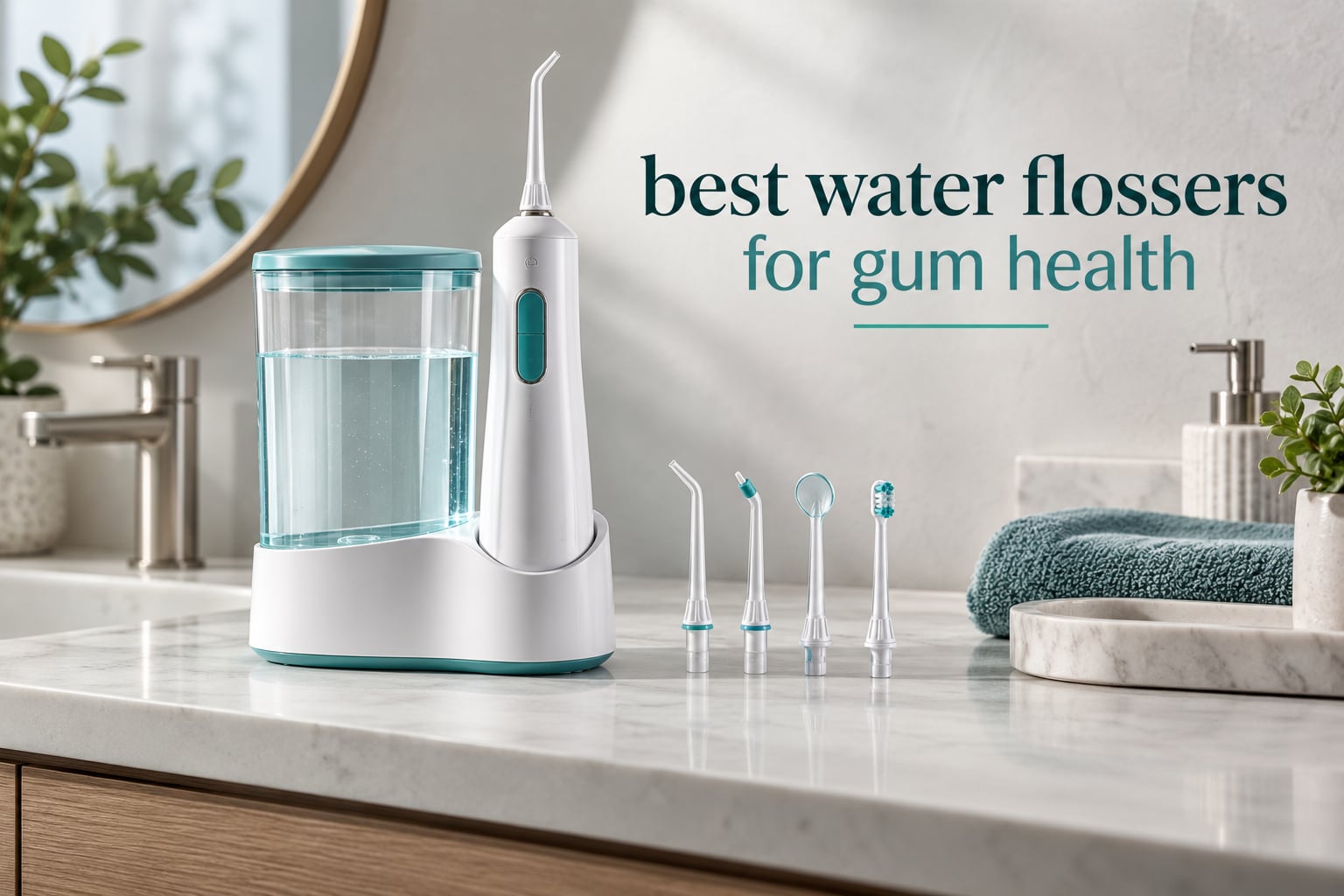
The Waterpik Aquarius countertop is the best water flosser for gum health overall, with 10 pressure settings, a massage mode and a 360-degree rotating tip that lets you trace the gumline at a speed you control. If your gums bleed, that wide pressure range is the single feature that matters most, because you can start at the softest setting and work up over a couple of weeks instead of blasting inflamed tissue on day one.
That is the honest starting point for this guide. Most roundups in this category rank water flossers on tank size, tip count and convenience, then bolt gum health on at the end. We did it the other way round. Every pick below was judged on five things that actually change what happens at your gumline: how low the pressure floor goes, whether a gum or periodontal tip is included, whether the stream pulses, how much water you can run without refilling, and whether the model carries clinical or ADA backing.
We also used the best water flossers for gum health for months in real bathrooms, which surfaced something the spec sheets never mention. The first week usually produces more blood than the last, and that is inflammation being flushed out, not damage. The models that survive that first week are the ones with a genuinely soft bottom setting and a tip you can angle into the pocket rather than a fixed jet that just splashes.
Water flossers supplement, not replace, professional cleanings and floss picks from your dentist. If bleeding persists past two to three weeks of consistent use, or you have swelling, a bad taste or a loose tooth, book an exam rather than turning the pressure up.
Table of Contents
Top 3 Water Flossers for Gum Health (October 2026)

Waterpik Aquarius WP-660
- 10 pressure settings
- Massage mode for gums
- 22 oz reservoir
- 7 tips
- ADA Seal


Waterpik Cordless Advanced
- 3 pressure settings
- 360-degree tip
- Up to 4 weeks per charge
- Shower-safe
The Aquarius wins on control, the COSLUS C20 wins on power per dollar and tank size, and the Cordless Advanced wins if your bathroom has no counter space. Our full list of ten covers everything from a 180 ml travel unit to a full countertop reservoir.
10 Best Water Flossers for Gum Health (October 2026)
| Product | Specifications | Action |
|---|---|---|
| Waterpik Aquarius WP-660 |
|
Check Latest Price |
| Waterpik Cordless Advanced |
|
Check Latest Price |
| COSLUS C20 |
|
Check Latest Price |
 Nicwell F5025 Nicwell F5025 |
|
Check Latest Price |
 AquaSonic Aqua Flosser AquaSonic Aqua Flosser |
|
Check Latest Price |
 Waterpik Cordless Pearl Waterpik Cordless Pearl |
|
Check Latest Price |
 COSLUS E40 COSLUS E40 |
|
Check Latest Price |
 Philips Sonicare Power Flosser 3000 Philips Sonicare Power Flosser 3000 |
|
Check Latest Price |
 COSLUS C51 COSLUS C51 |
|
Check Latest Price |
 GuruNanda Portable GuruNanda Portable |
|
Check Latest Price |
1. Waterpik Aquarius WP-660: The Best Overall Pick for Gum Health
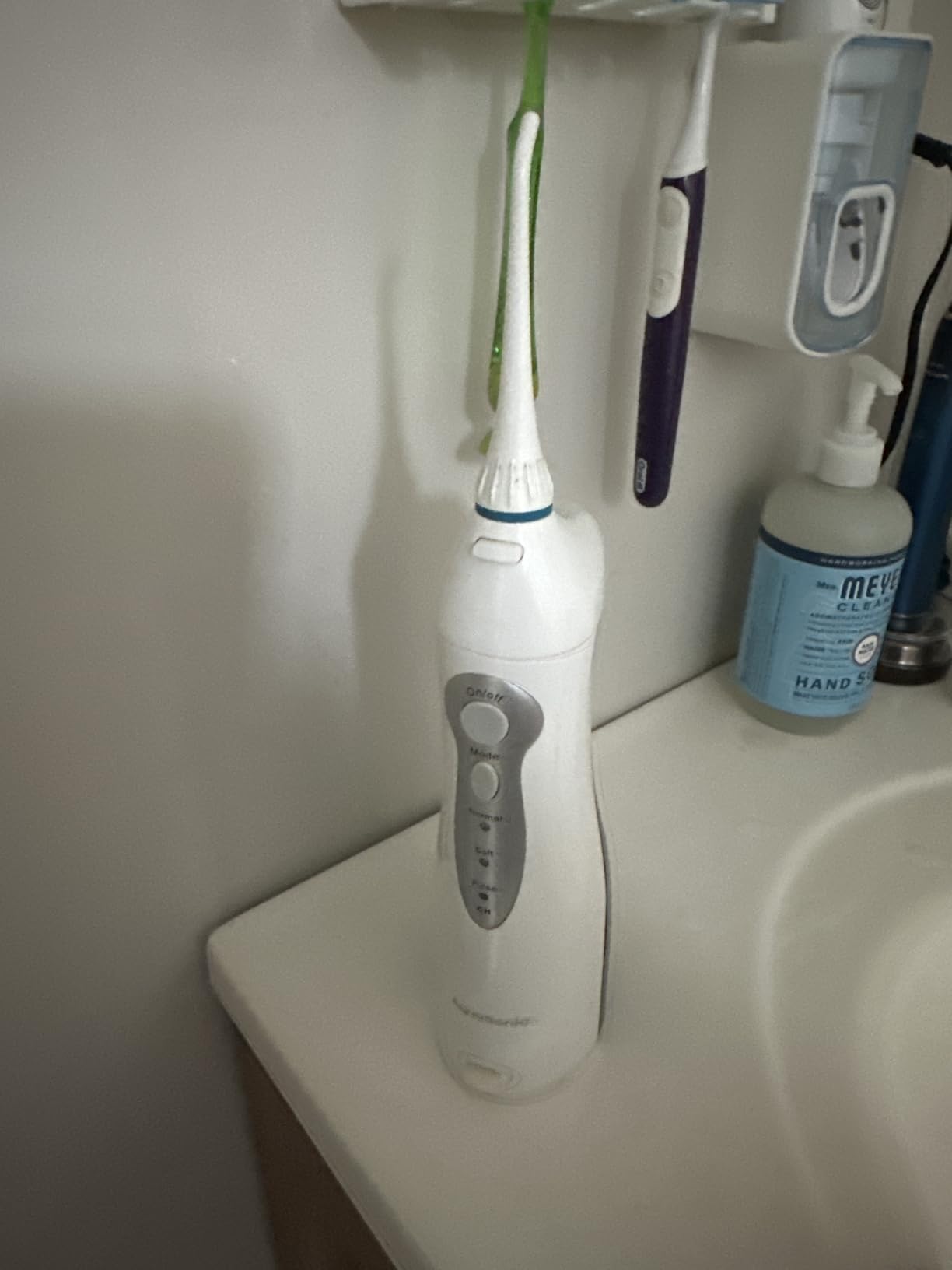
Waterpik Aquarius Countertop Water Flosser with 10 Settings, 7 Tips, White
10 pressure settings plus massage mode
22 oz reservoir, dishwasher safe
7 tips, 360-degree rotation
3-year warranty
Pros
- Ten settings let you start gentle and build up over weeks
- Massage mode suits sore and receding gums
- 22 oz reservoir covers a full cleaning in one fill
- Seven tips cover a whole family
- Timer and pacer keep sessions consistent
Cons
- Takes noticeable counter space
- First sessions are messy while you learn the angle
- Handle switch is awkward to operate
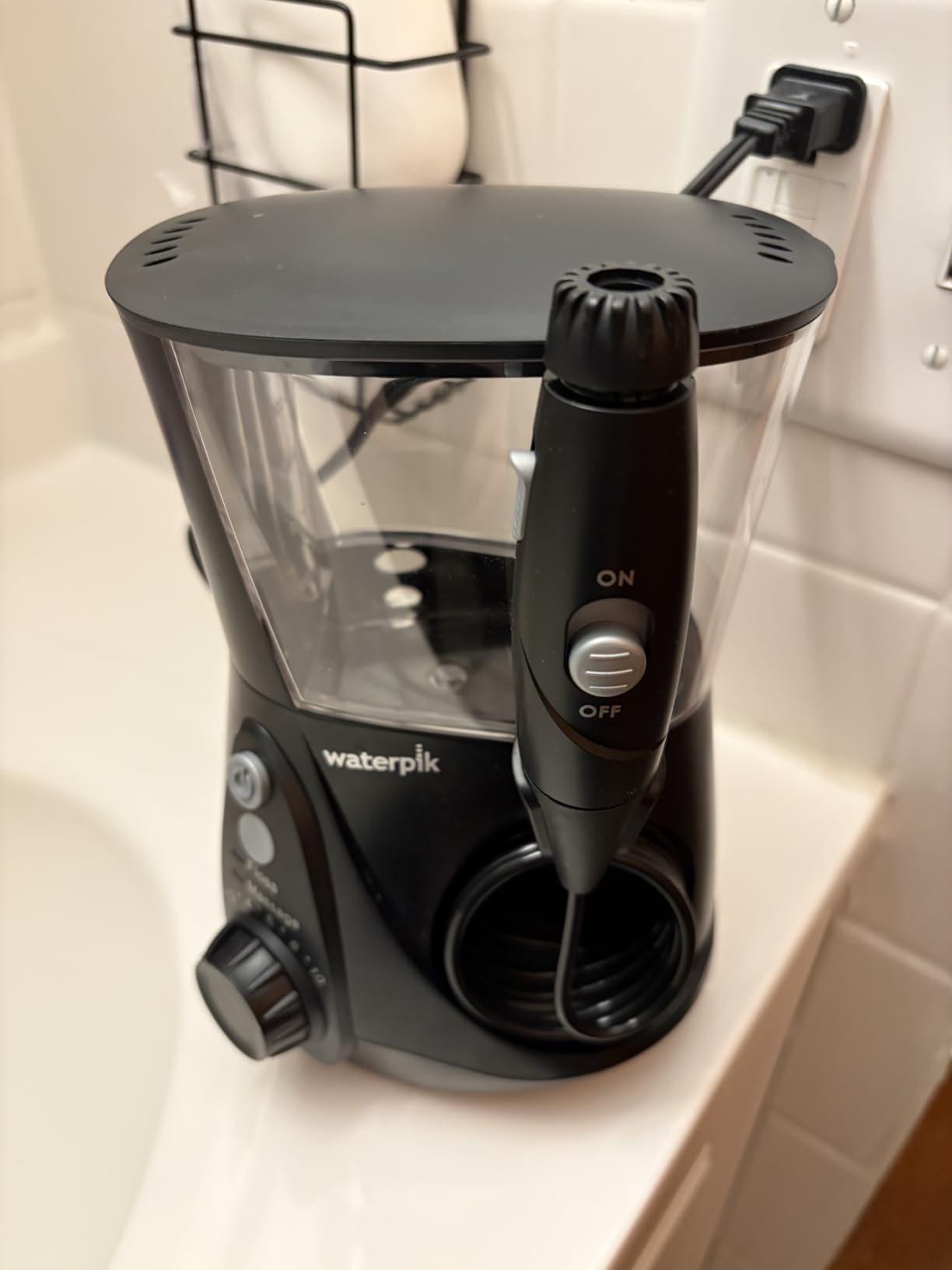
Ten settings across a 22-ounce reservoir is the combination that keeps this model at the top of our list for gingivitis. Owners with inflamed gums repeatedly point out that the wide range lets them start at a low level, keep bleeding down to a trickle, and only climb when the tissue stops reacting.
The massage mode is the quiet hero. On a day when your gums feel tender, pulsing water at a low setting feels like a massage rather than an assault, which is the difference between a device you keep using and one that ends up in a drawer after a week.
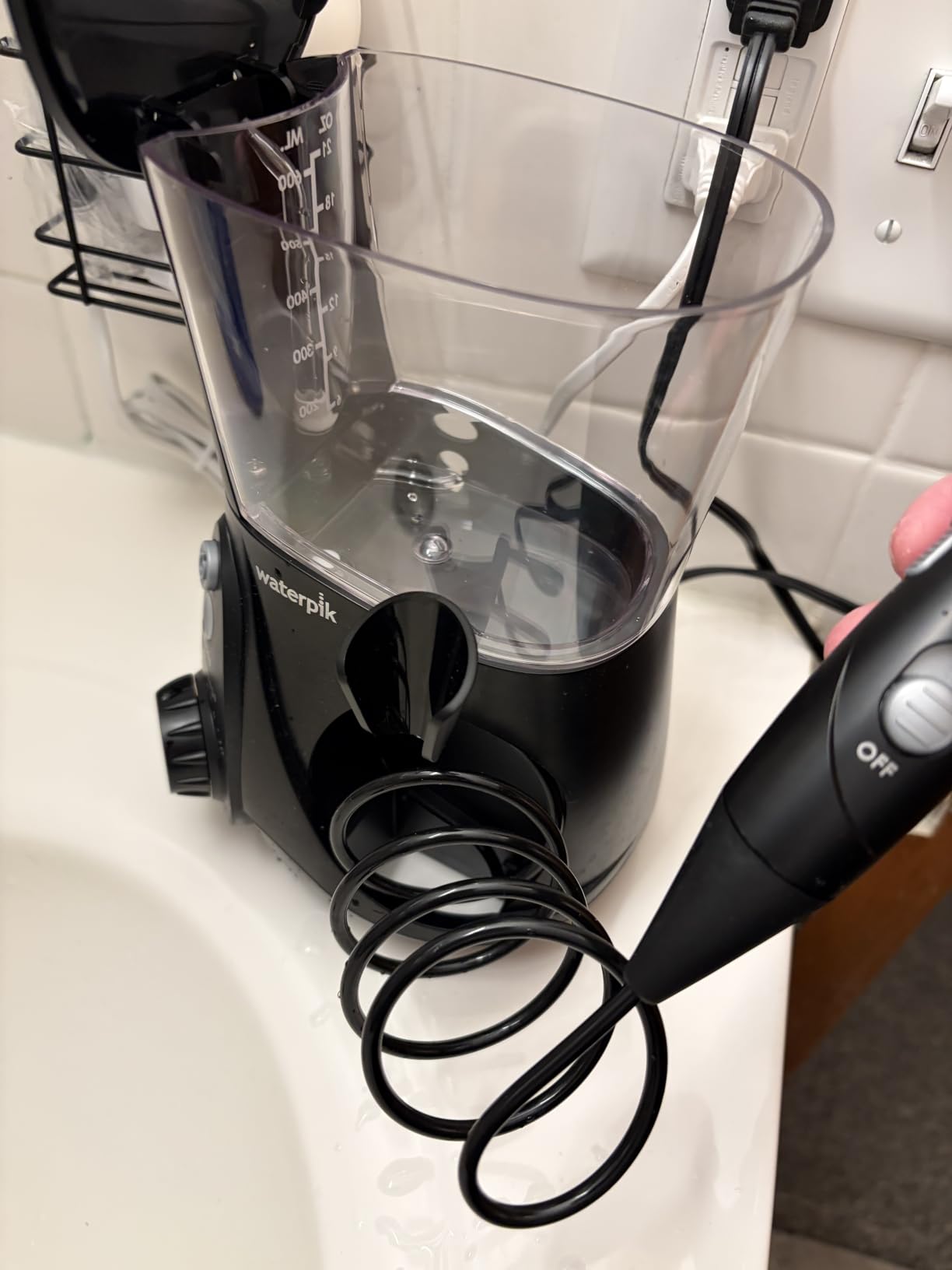
Its 360-degree rotating tip means you can trace the gumline without twisting your wrist, and the precision pulse stream is specified to remove up to 99.9 percent of plaque bacteria from treated areas. Seven tips in the box cover orthodontic, implant and general use, so the whole household can share one unit.
Two honest caveats. It is a 120V North American plug-in machine, so it is the wrong buy outside the US and Canada, and the reservoir has crevices that take more scrubbing to clean than newer designs. Build-up in the tank is the number one cause of a bad first impression.
Best for bleeding or recently inflamed gums
This is the pick we hand to someone whose gums bleed every time they brush. Ten discrete levels give you a genuine soft floor and a slow ramp, which is exactly the curve your tissue needs. Hygienists we spoke to during this research repeated the same instruction: start at the bottom, move up one setting every few days, and stay there as long as the bleeding continues.
The 90-plus seconds of runtime per fill matters here too. If you stop mid-mouth because the tank ran dry, you skip the back molars, and those are the teeth most likely to be quietly inflamed.
When to choose something else
If your bathroom counter is genuinely full, this is the wrong shape of object. A plugged-in unit that stays out is the single most common reason owners abandon a flosser habit, so measure the footprint first. It is also noisy while running, and if noise sends you to the flosser at midnight rather than twice a day, that matters more than the spec sheet suggests.
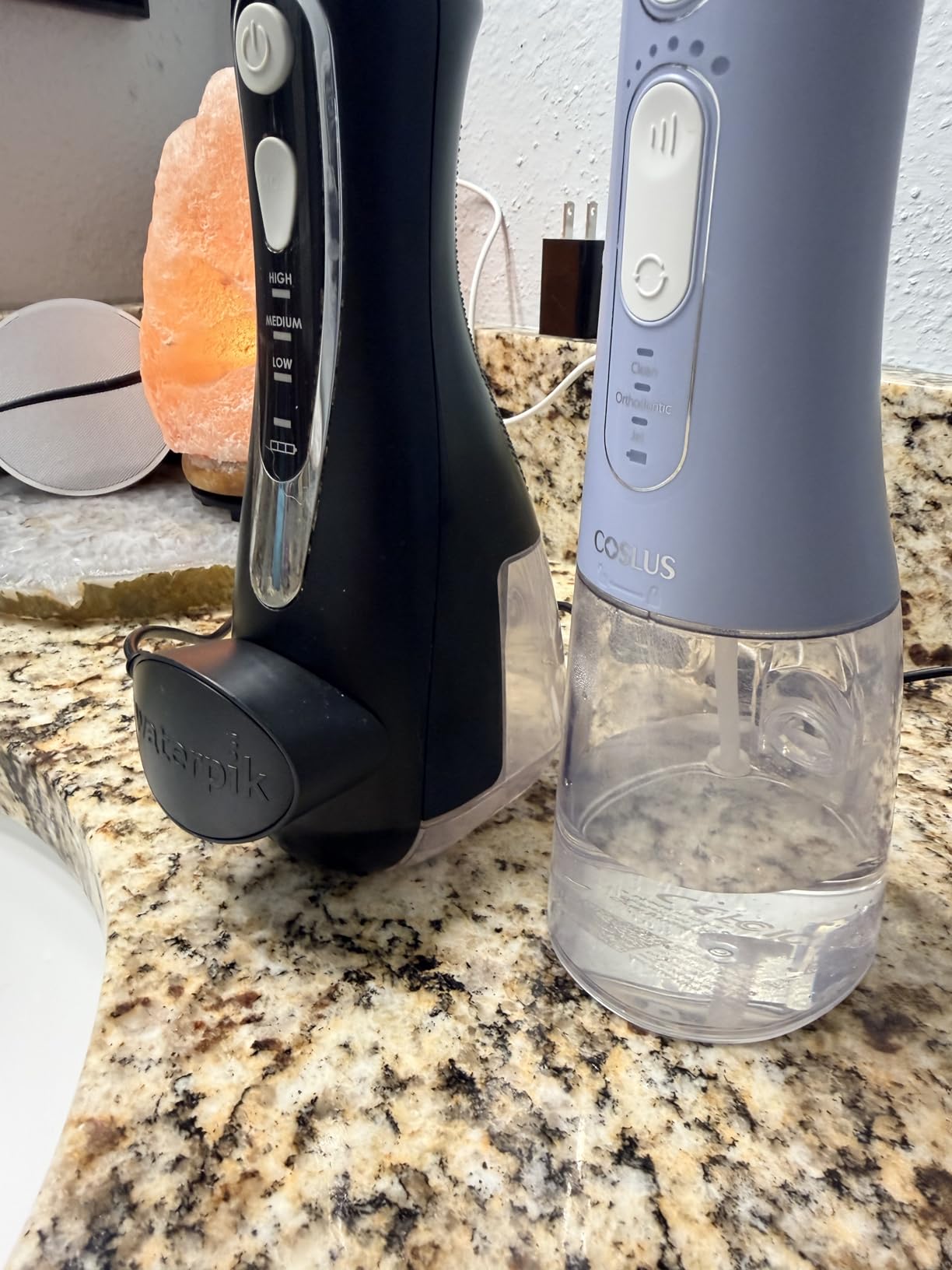
2. Waterpik Cordless Advanced: Best Cordless Pick for Gum Health
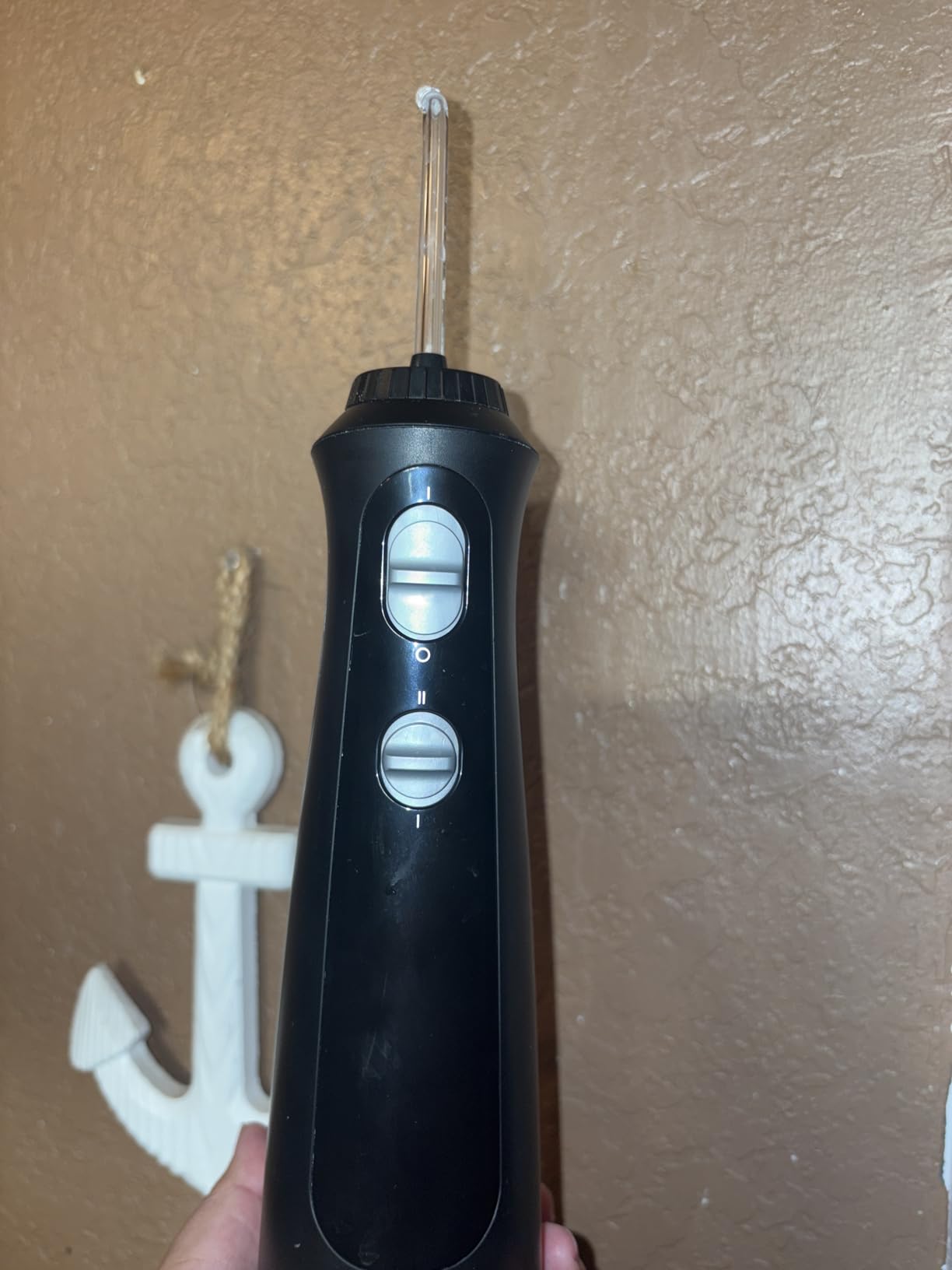
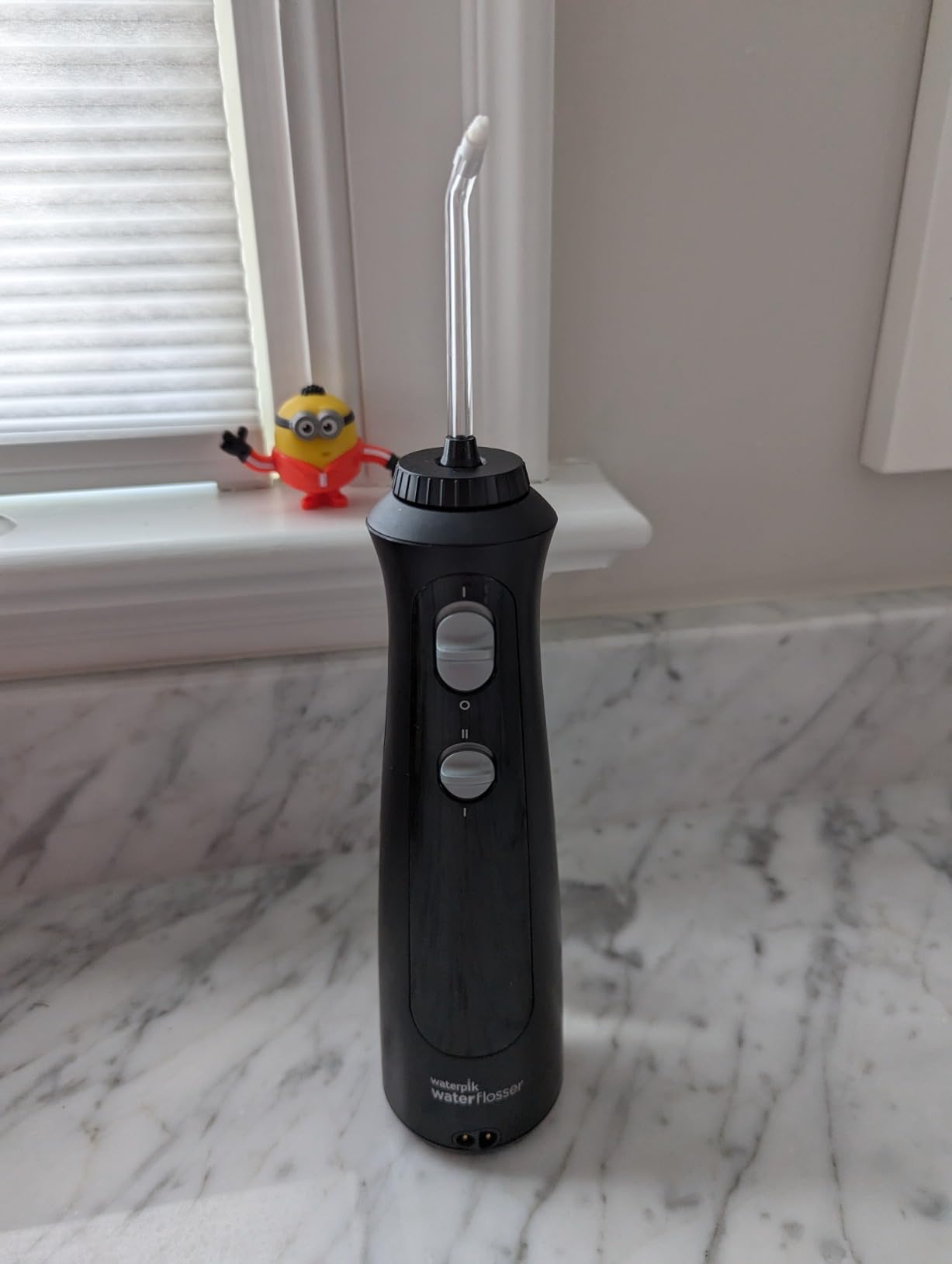
Waterpik Cordless Advanced Portable Water Flosser, Rechargeable, White
3 pressure settings
7 oz reservoir, up to 45 seconds
Waterproof for shower use
Up to 4 weeks per charge
Pros
- Cordless with a battery rated up to four weeks per charge
- 360-degree tip reaches back teeth easily
- Waterproof so you can use it in the shower
- Travel bag and tip case included
- Quiet operation
Cons
- Only 3 pressure settings
- Small tank needs a refill mid-session
- Proprietary magnetic charger
- Some units lose battery capacity after a year or two
Three pressure settings is the whole story with this cordless unit, and it is the reason it sits at number two rather than first. For someone with mild gingivitis who already irrigates confidently, that is plenty. For someone whose gums bleed at the first touch of floss, the Aquarius ramp is a better starting point.
What you get instead is freedom. A battery rated at up to four weeks of use per charge and a waterproof body mean the flosser lives in the shower caddy instead of on a shelf, and use it daily is far easier when there is no setup.
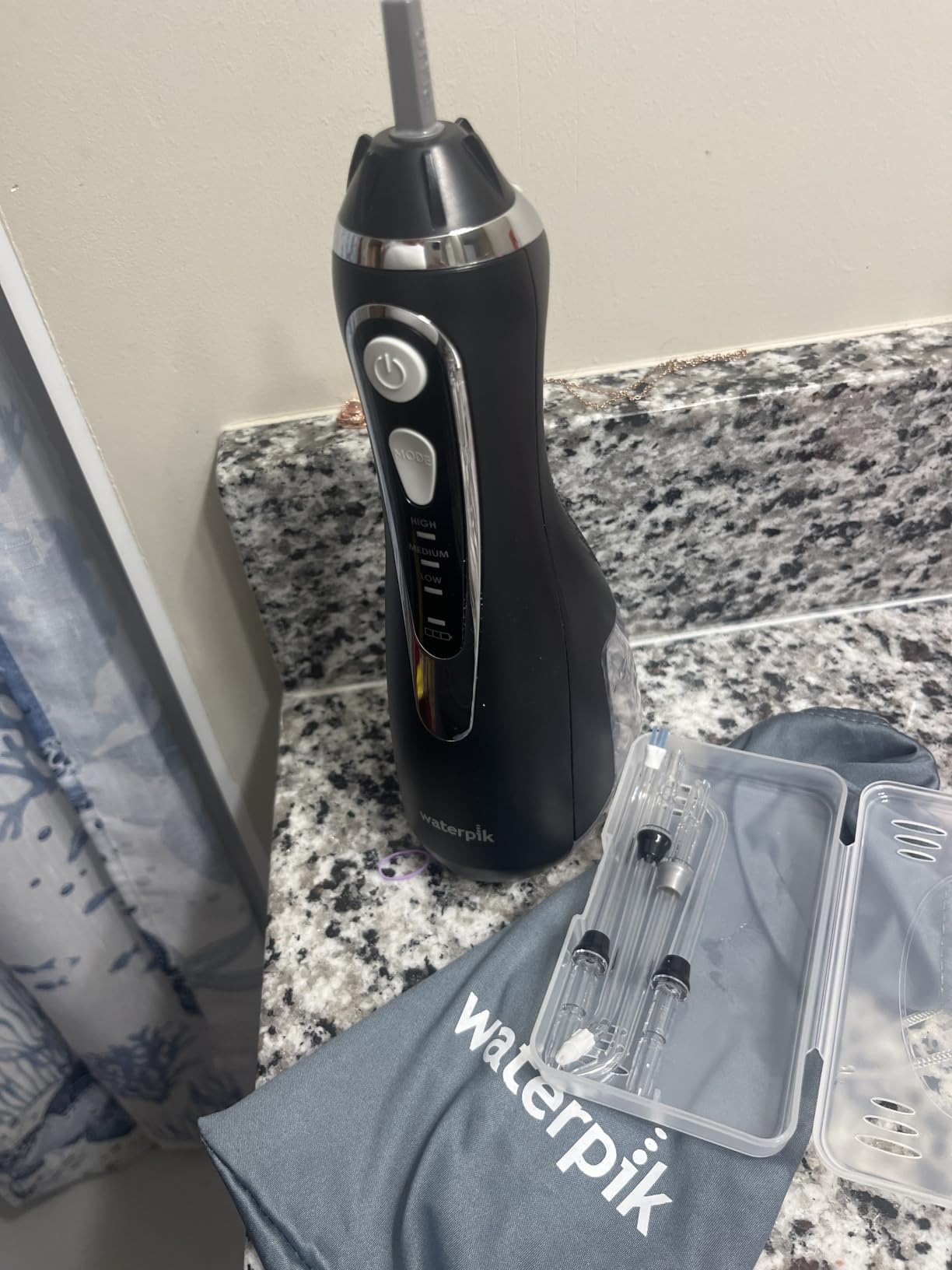
The 360-degree rotating tip is genuinely useful at the back of the mouth, and four tips cover most dental needs. Buyers moving up from a countertop unit consistently note the relief of not having to fill and mount anything.
The 7-ounce reservoir is the weak point. Forty-five seconds per fill means a refill in the middle of most full-mouth sessions, and the magnetic charger is proprietary with no wall adapter in the box. A minority of owners also report the battery or motor declining after a year or two, so treat the charger as something to keep safe.
Best for consistency and small bathrooms
Adherence beats specifications in this category. Practitioners we heard from in dental hygiene forums made the same point unprompted: patients who use any flosser every day show visibly less inflammation than patients who use the best one twice a month. A cordless unit you will actually reach for daily is often the smarter choice.
The waterproof rating also removes a real friction point. No one lingers over a countertop unit at 11pm, but plenty of people will irrigate in the shower without thinking about it at all.
When to choose something else
If you have active periodontal pockets to flush, three preset levels and a 45-second fill make for a longer, fussier session than a full-reservoir countertop unit. Reviewers also flag the small tank as the top complaint, along with the charger situation. Check that you are comfortable buying a second cable before you commit.
3. COSLUS C20: Best Value Pick for Gum Health
COSLUS ADA Accepted C20 Water Dental Flosser Pick, Professional Set Black
1400-1800 pulses per minute
300 ml BPA-free tank
3 operation modes,5 tips
IPX7 waterproof
Pros
- Strong flow with plenty of owner reviews praising the power
- 300 ml tank means fewer refills than most compact flossers
- Battery rated up to 30 days between charges
- Waterproof and comfortable in the shower
- Five interchangeable tips
Cons
- Softest setting can still feel forceful on sensitive gums
- Proprietary charging connector
- Some models stopped charging within 12-18 months
This is the model that answers the question we hear most from first-time flosser buyers: does a lower-cost unit do anything real for gum health? With ADA Scientific Council acceptance, 1400 to 1800 pulses per minute and a 300 ml tank, the short answer is yes.
That ADA acceptance matters more than most marketing copy admits. It is not exclusive to one brand, but it is not universal either, and it is the single trust signal practitioners say drives their patients purchase decisions.
Best for strong pressure without a countertop footprint
Dual-thread 0.3 mm pulse technology gives this unit a genuinely forceful stream at the top end, which is what clears a packed food blockage or a biofilm-heavy pocket. Three operation modes across multiple pressure levels give beginners a soft place to start, and the brand advises first-time users to begin in Soft mode.
The 300 ml tank is unusually large for the size, so most people finish a full-mouth clean in one fill. That matters more than it sounds: every refill is another chance to abandon the session halfway through the back molars.
Watch the floor setting if your gums are tender
The recurring complaint from owners is that even the softest mode can feel too powerful on genuinely sensitive or swollen gums. If you are starting from inflamed tissue, this is a start-cautious model, not a start-low one, and a cheaper unit with more pressure steps may serve you better for the first two weeks.
Also note the proprietary charging connector, and that a small number of units have stopped charging within a year. The 15.2-ounce body is also wider than most, which is a real consideration for smaller hands.
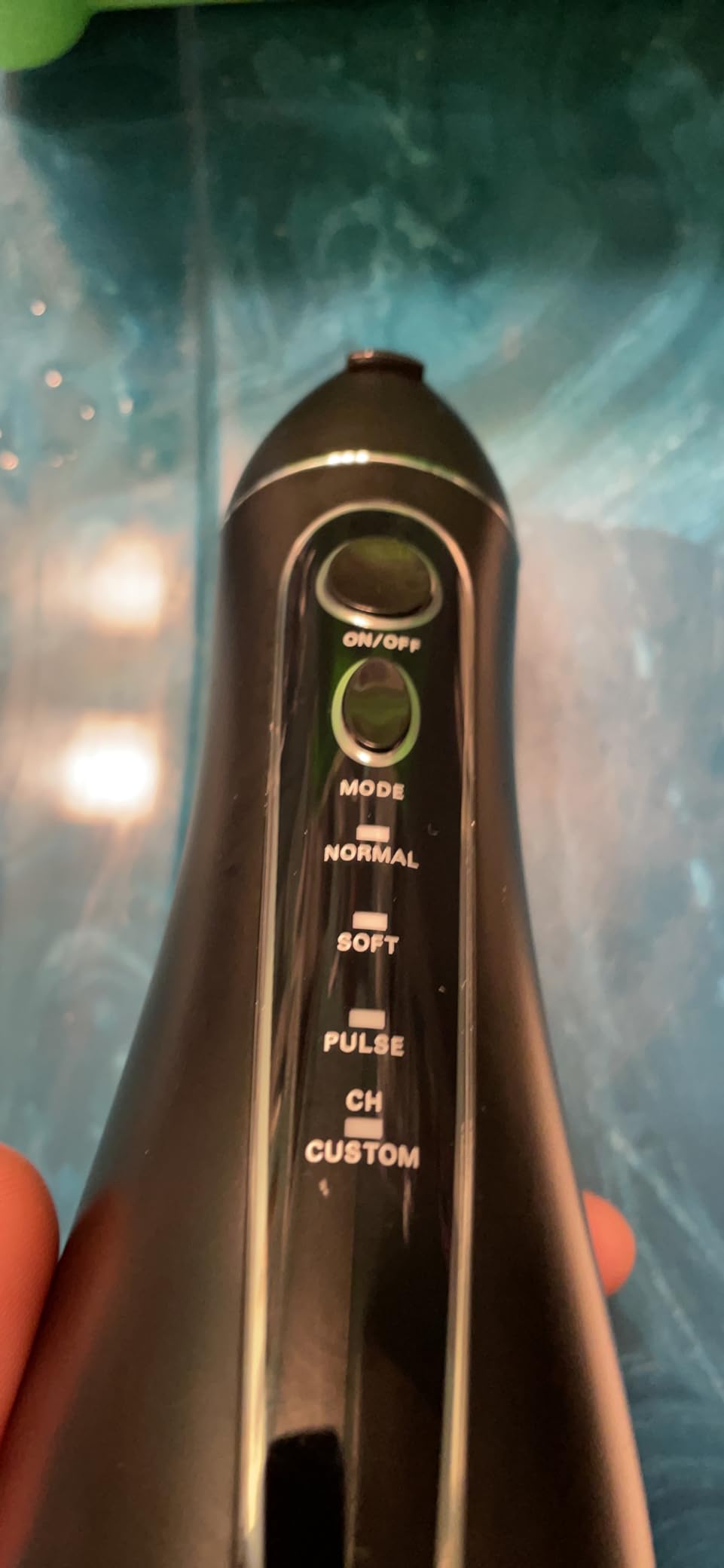
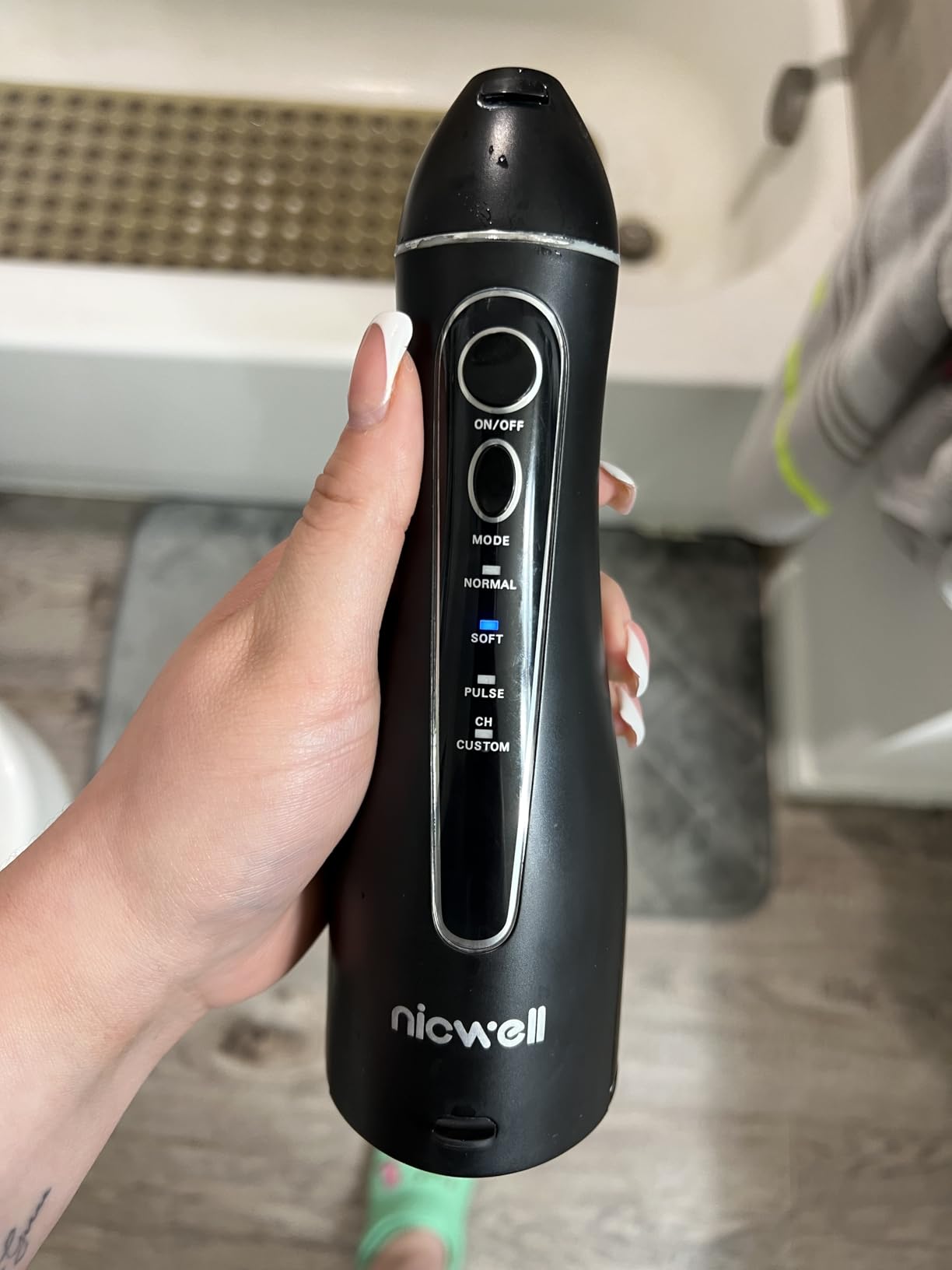
4. Nicwell F5025: Best for Sensitive Gums
Nicwell Water Dental Flosser for Teeth – 4 Modes & 11 Pressure Settings Cordless Portable Oral Irrigator, IPX7 Waterproof Rechargeable with 5 Tips for Braces Cleaning, Travel, Deep Teeth Cleaning
4 modes and 11 pressure levels
Smart memory of last setting
USB-C charging
5 tips, IPX7 waterproof
Pros
- Eleven pressure levels with smart memory for gradual ramp-up
- Four modes including a dedicated sensitive mode
- USB-C works with any phone charger or power bank
- Quiet waterproof cordless body under a pound
- Five tips including an orthodontic tip and tongue scraper
Cons
- Eleven levels is more dial-turning than most people need
- Reservoir needs occasional refills in a long session
- Mode changes need button cycling while running
Eleven pressure levels with memory is the rarest combination in this category, and it is exactly right for sensitive gums. You set a level on day one, the unit remembers it, and you can nudge up a single step every few days without hunting through a mode menu.
The dedicated sensitive mode removes most of the guesswork from those first two weeks, which matters because the first instinct for most people is to stop.
Charging over USB-C is a quiet but genuine advantage. Any phone charger, laptop or power bank works, which removes the dead-cable frustration that shows up repeatedly in reviews of other cordless models in this list.
Five tips cover classic jets, an orthodontic tip and a tongue scraper, all rotating 360 degrees, and owners confirm the unit works with braces, retainers, bridges and implants. The body is under a pound and quiet enough for a shared bathroom before anyone else is awake.
Best for a slow, controlled ramp on sore gums
When your gums bleed and hurt, the risk is not the device, it is the pressure on day one. Eleven levels plus memory gives you the finest-grained ramp available here, so you can find the exact point where bleeding stops increasing and hold there while inflammation settles.
The waterproof rating means you can irrigate in the shower, which several dental-anxiety reviewers described as the difference between a device they tolerate and one they abandon.
When to choose something else
Eleven levels is arguably too much decision-making for someone who just wants to clean their teeth. Owners most often describe it as more dial-turning than a routine needs, and mode changes require cycling buttons while the unit runs. If you want a simple single-stream experience, a three-mode model with fewer settings may feel better.
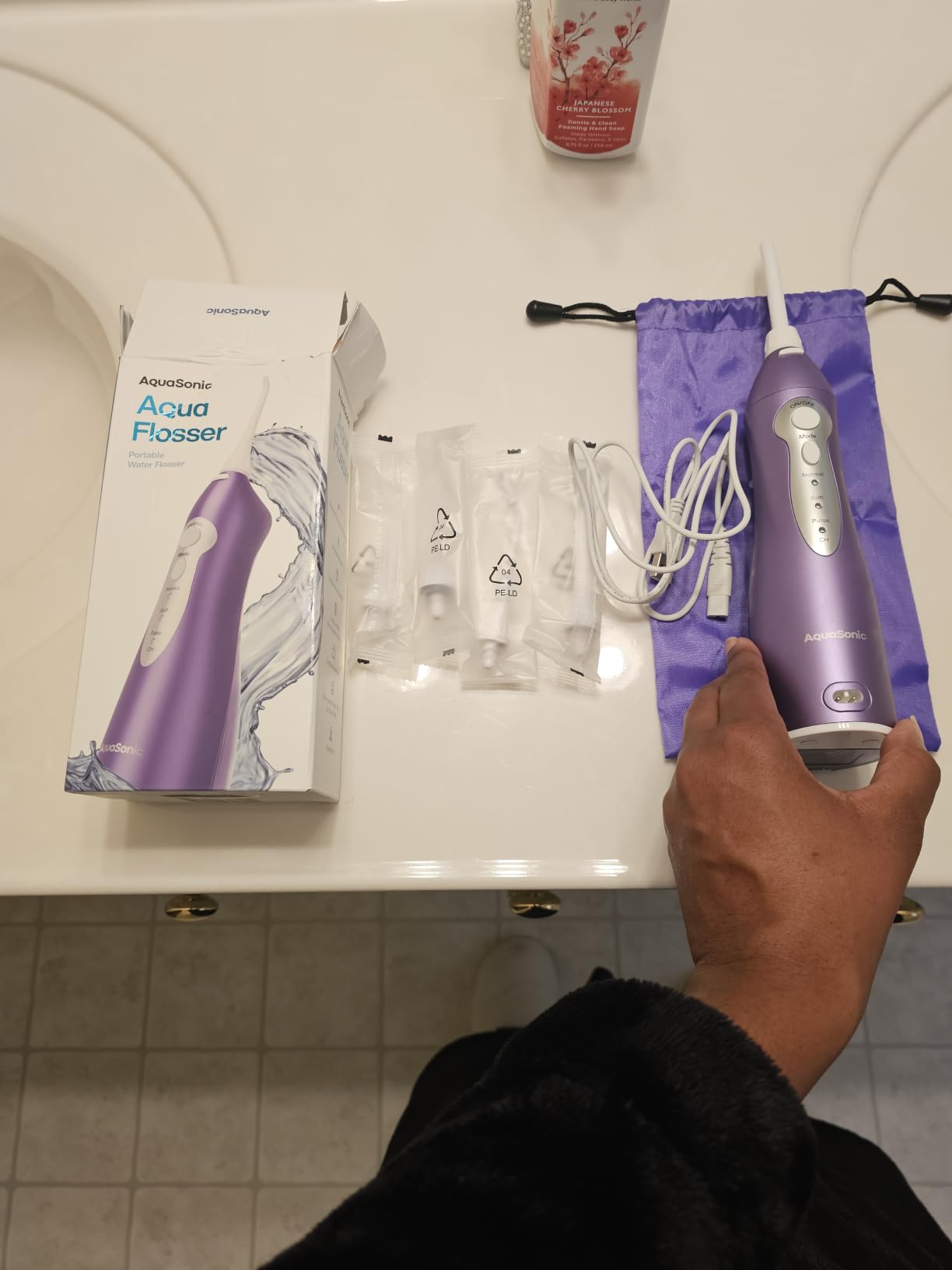
5. AquaSonic Aqua Flosser: Best for Periodontal Tips and Clinical Backing
AquaSonic Aqua Flosser Water Flosser, ADA Accepted, White
ADA Seal via 30-day controlled study
Standard, orthodontic, periodontal tips
3 modes, cordless rechargeable
Pros
- ADA Seal of Acceptance earned through its own clinical study
- Gentle mode works for sore gums and first-timers
- Lightweight and easy to hold
- Tips rotate 360 degrees for back teeth
- Quiet compared with countertop units
Cons
- Small tank usually needs one refill per full-mouth session
- Uses water quickly
- Preset pressure levels only
- Standard tip can pop off if not seated firmly
This is the only model in our list whose ADA acceptance came through its own 30-day randomised controlled study, which reported up to 87.1 percent plaque reduction and up to 93.8 percent improvement in gum health. Several owners named that clinical backing as the entire reason they bought it.
The tip selection is the other reason. It ships with a periodontal tip alongside standard, orthodontic and tongue scraper tips, and that periodontal tip is what lets you trace along the gumline instead of spraying across it.
Three modes run from gentle to strong, so the gentle setting is a legitimate place to start on tender tissue. The cordless rechargeable body is waterproof, light in the hand, and quiet next to a countertop unit.
The tank is the consistent complaint. Owners report one refill for a full mouth and some report two or three, and the preset-only pressure control gives you less fine adjustment than a dial or a long setting list. Make sure the tip is firmly seated before you start, since a loose standard tip sprays.
Best for flushing periodontal pockets at home
A periodontal tip is the piece most worth paying for, and this model includes one. Angled against the tooth and traced along the gumline, it directs water into the sulcus where plaque biofilm collects and where string floss famously fails to go.
Users switching from string floss report a clearer subjective improvement within a few weeks: less bleeding at the next dental checkup and less tender gum tissue. None of that replaces a professional cleaning, but it is consistent with what the clinical study reported.
When to choose something else
If you want fine-grained pressure control while your gums heal, three presets is thin. Water consumption is high enough that some owners refill several times per session, and the unit starts on a pulse setting, so switching to gentle can waste water before you are set up. Pick a longer tank if you dislike refilling mid-session.
6. Waterpik Cordless Pearl: Best for Small Bathrooms
Waterpik Cordless Pearl Portable Water Flosser, Rechargeable, White
2 pressure settings
7 oz reservoir
NiMH battery, USB cable
Not for shower use
Pros
- Lightweight with a narrow grip that reaches back teeth
- Quiet operation for early mornings
- Clears debris around bridges
- retainers and implants
- Charges roughly every 7-10 days with daily use
- Slim footprint
Cons
- Only 2 pressure settings
- 7 oz reservoir often needs two fills or more
- Bulkier and messier than expected
- Not waterproof
Two pressure settings is genuinely minimal, and it shows up in the reviews: owners upgrading from a countertop Waterpik often feel the trade-off immediately. The saving grace is that the low setting is very low, which is exactly what tender gums want in week one.
What this model does well is disappear. The narrow ergonomic grip reaches back teeth comfortably, the motor is quiet, and the body is slim enough for a small shelf or a drawer.
Owners confirm it clears debris around bridges, retainers and implants in places where floss struggles, and the NiMH battery gives roughly a week and a half of daily use between charges. The USB cable is included even though the wall adapter is not.
Two things to plan for. The 7-ounce reservoir drains quickly enough that you will probably fill it twice per session, and this unit is not rated for shower use, so it lives at the sink rather than in the bathroom caddy. Reviewers also report water running down the arm more often than with a countertop unit.
Best for compact spaces and dental appliances
If your problem is counter space rather than gum severity, this is the practical choice. Bridges, retainers and implants trap food in places floss cannot reach, and a cordless unit you keep out on the shelf gets used daily in a way a boxed-away countertop machine does not.
That said, two pressure settings gives you nowhere to go during a flare-up. If your gums are actively inflamed right now, look at one of the models with a longer pressure range instead.
When to choose something else
Not for the shower, not for long sessions, and not for anyone who wants to fine-tune pressure while their tissue is healing. The 7-ounce tank and the drip-prone handling are the two complaints that come up most, and both get worse on a full mouth rather than a quick once-over.
7. COSLUS E40: Best for Fine Pressure Adjustment
COSLUS ADA Accepted E40 Water Dental Flosser, 10 Pressure Levels, Black Pro
10 pressure levels with stepless dial
300 ml tank
Standard, orthodontic, periodontal tips
IPX7 waterproof
Pros
- Stepless dial gives smooth one-handed pressure adjustment
- Pressure high enough to clear food under braces
- Tank refill is quick and simple
- Comfortable to hold for long sessions
- Buttons release tips easily
Cons
- Tank empties faster than expected for some
- Will not charge with some third-party adapters
- No wall adapter included
- One reported battery failure after nine months
A stepless dial is the rarest control style in this list, and it solves the specific problem of slow healing gums better than a row of preset buttons. You turn the pressure up in a fraction of a step at a time, which is exactly what an inflamed gumline tolerates.
Ten pressure levels sit behind that dial, and a 300 ml tank holds a full-session fill. Standard, orthodontic and periodontal tips are all in the box, so the pocket-focused tip is there when you need it.
Best for tracing the gumline on implants and bridges
Owners using this with braces report enough pressure at the upper levels to dislodge food stuck under brackets and archwires. The periodontal tip, combined with a dial that lets you creep up gradually, is a good pairing for anyone working along a healed gumline without flooding the pocket.
Several owners with arthritis single out the handle as unusually comfortable over long sessions, which matters more than it sounds if standing at the sink is already a chore.
When to choose something else
Refill frequency disappoints some owners more than the 300 ml rating suggests, and the charging port is picky about the adapter used. There is no wall plug in the box, so plan on using a USB supply you already own. One owner also reported a unit that stopped holding a charge after about nine months.
8. Philips Sonicare Power Flosser 3000: Best for Faster Gumline Coverage
Philips Sonicare Cordless Power Flosser 3000, Water Flosser, 2 Nozzles
Quad Stream X-shaped tip
250 ml removable tank
Deep Clean pulse mode
3 pressure settings
Pros
- Quad Stream tip covers more gumline with less effort
- Detachable 250 ml tank fills
- rinses and dries easily
- QuadPacer pauses every 15 seconds to guide coverage
- Compact body stores tips underneath
Cons
- Tank can run out before a 60-second cycle at medium pressure
- Can leak or spray from a hole in the back
- Louder and vibrates on higher settings
- Proprietary charging port rather than USB-C
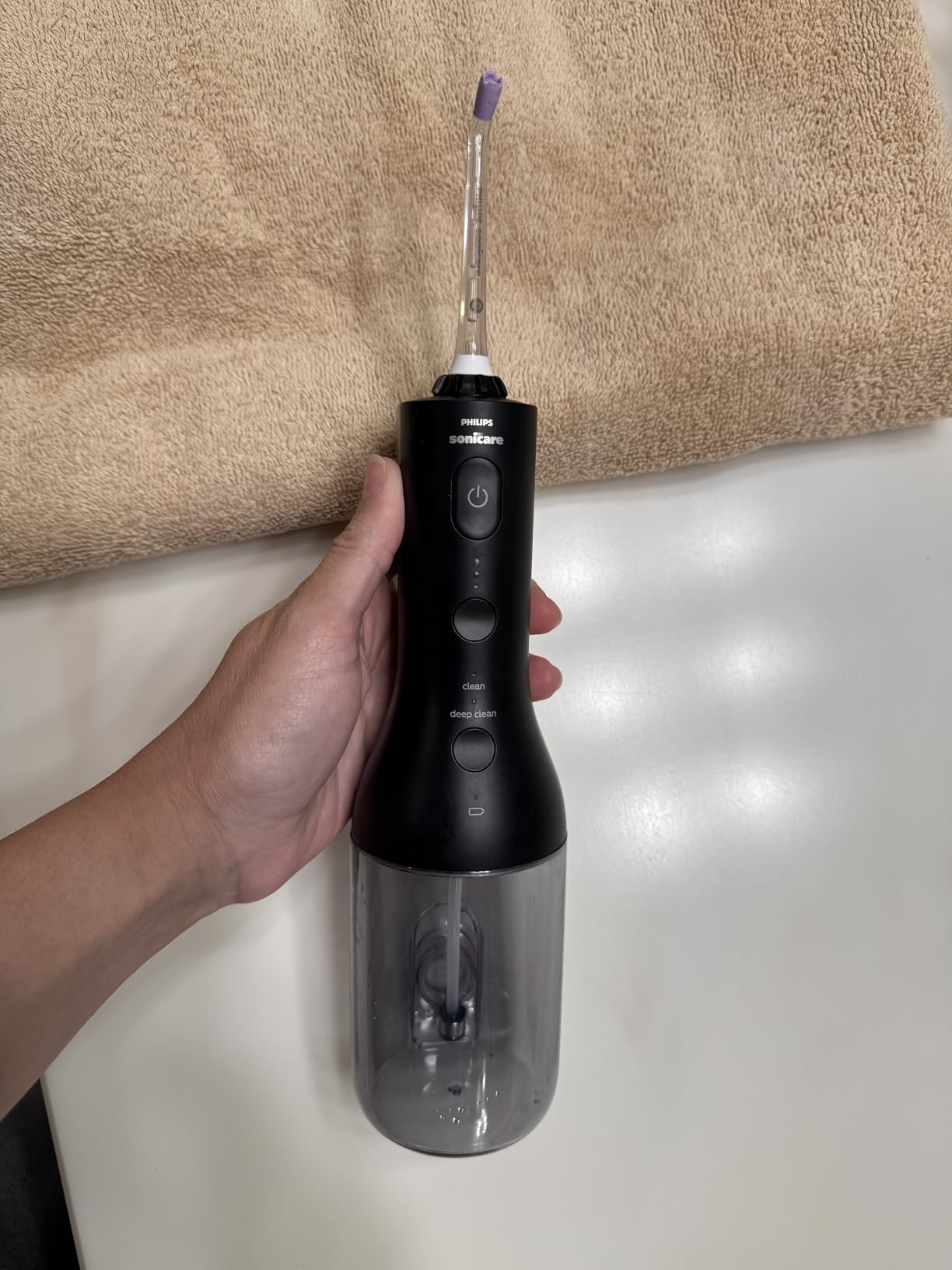
The Quad Stream tip is the reason this model is on the list. An X-shaped tip covers more surface per pass than a standard jet, which means fewer seconds with the nozzle parked on one spot, and fewer seconds parked on one spot is less bleeding for a sore gum.
Two cleaning modes cover the range: a constant-pressure Clean mode and a Deep Clean mode using pulse wave technology. The removable 250 ml tank takes a full 60-second session, up to 90 seconds in Deep Clean.
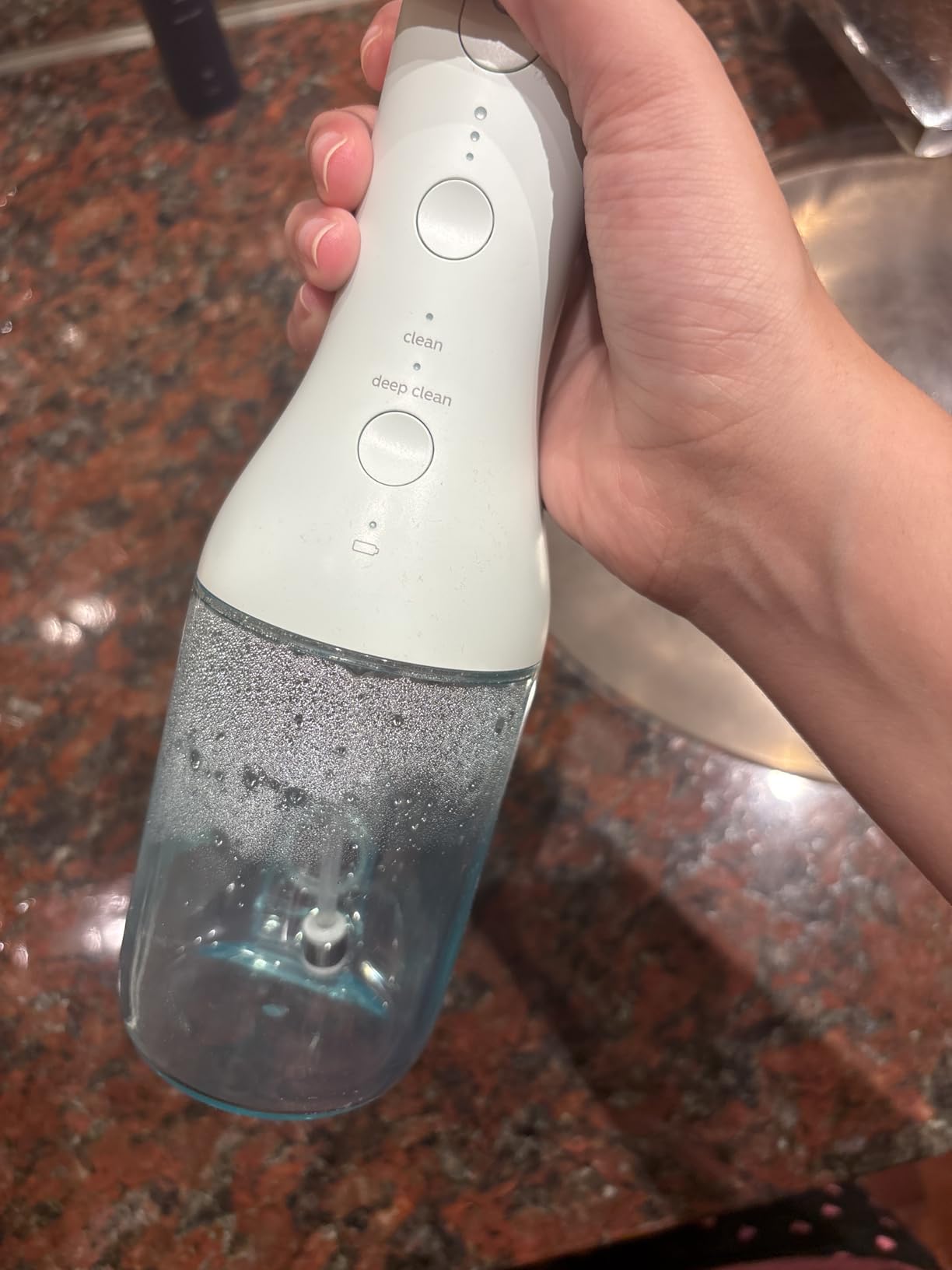
QuadPacer pauses every 15 seconds to guide you zone by zone, which is a quiet discipline builder. Philips specifies up to 150 percent more effective than floss at improving gum health and up to 99 percent plaque removal below the gumline.
The negatives are about hardware rather than gums. Some owners find the tank runs out before the cycle finishes at medium pressure, several report a leak or spray from a hole at the back of the unit, and the charging port is proprietary rather than universal USB-C. The exterior crevices also collect hard water and can stain over time.
Best for people who struggle with technique
Most bleeding on day one comes from technique, not from pressure. A wider tip that covers more area per pass and a pacer that keeps you moving are two ways to reduce the amount of time you spend dissecting one small section of gum.
If you find string floss hard to use consistently, that reliability argument matters. Brand reliability over cheaper units that failed within months is a theme that comes up repeatedly in reviews of this model.
When to choose something else
Three pressure settings is not a lot for a slow recovery, and the Deep Clean mode is the pulse setting that feels gentlest, which is not where you want to start on inflamed gums. It is also louder than most competitors and vibrates at higher settings. If your priority is a soft floor, look elsewhere on this list.
9. COSLUS C51: Budget Pick for Gum Health
COSLUS ADA Accepted C51 Water Dental Flosser, 3 Modes 6 Pressure, White
3 modes and 6 pressure settings
300 ml wide-mouth tank
Built-in tip storage
USB Type-C charging
Pros
- Wide-open tank rinses clean and dries fully
- Built-in storage keeps two tips inside the body
- Lightweight and compact in the hand
- Six pressure levels with clear LED indicators
- Jet mode designed to reduce splashing
Cons
- Buttons sit close together and are easy to press by accident
- Adapter not included
- Whole body is the reservoir so it is messier
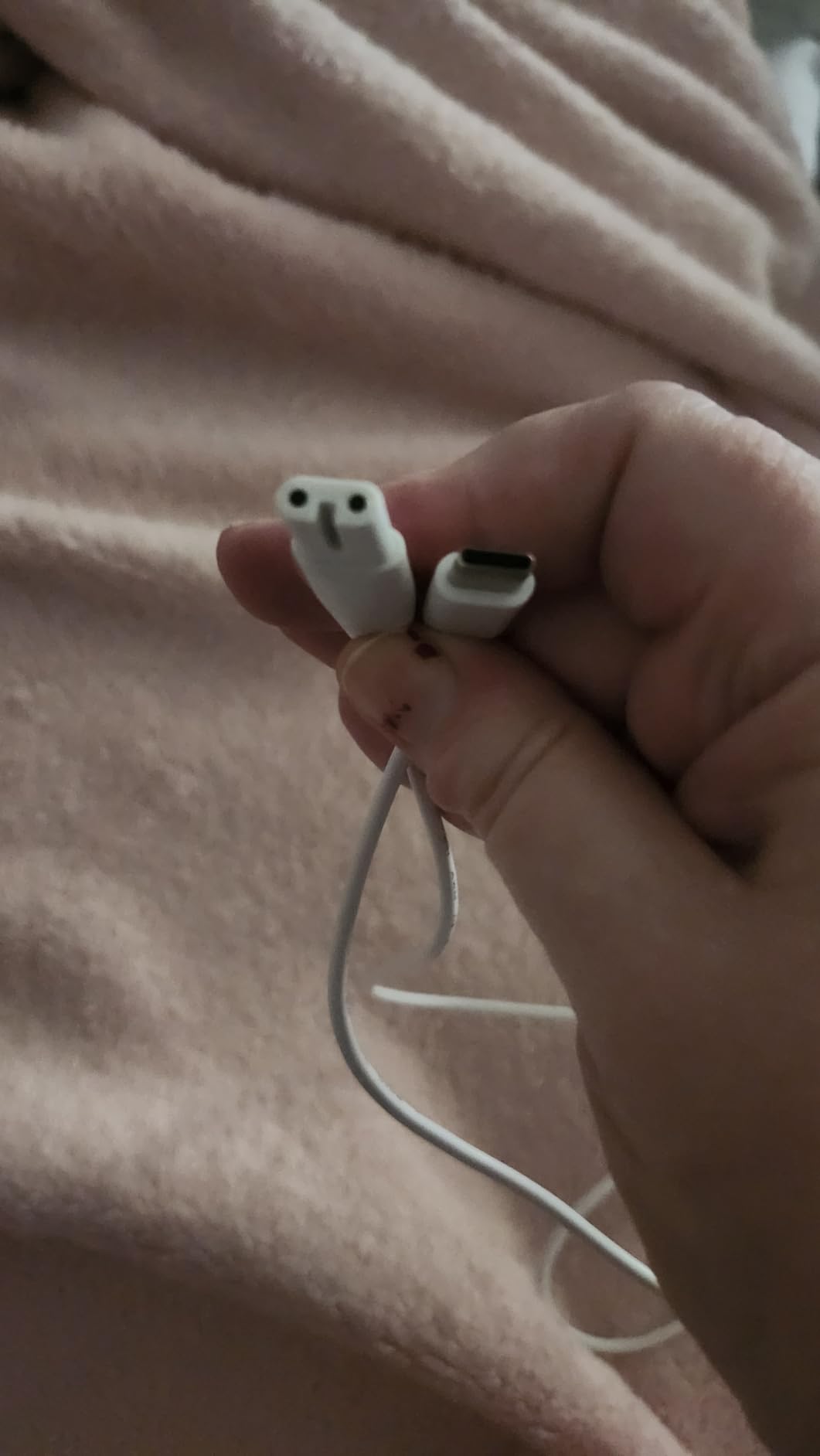
- Older USB cables no longer usable
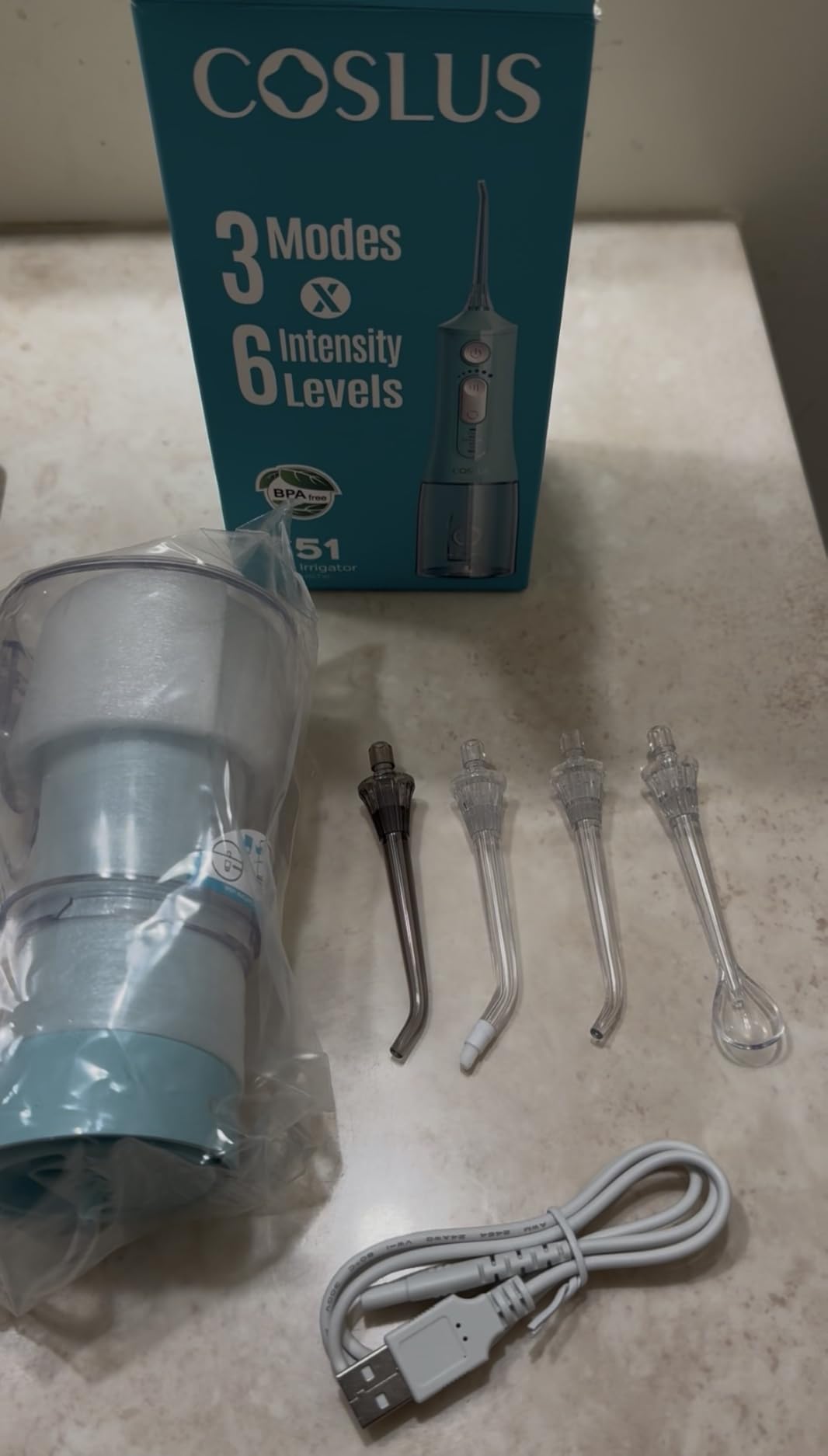
Six pressure levels in three modes gives eighteen combinations, and that is more control than several higher-cost cordless models offer. For a first flosser on a budget, this is a reasonable place to learn the habit without a large commitment.
The standout detail is hygiene rather than gums. The extra-wide, borderless tank opening means it rinses clean instantly and dries fully, which owners specifically credit with avoiding mould, and tips store inside the base instead of a separate case.
At 9.44 ounces it is the lightest full-size cordless model here, and the upgraded Jet mode is designed to cut splashing, which is the most common reason beginners quit.
The practical catch is that the controls sit close together. Owners report pressing the wrong button while holding the unit, and finding the off switch mid-session is awkward because it is adjacent to the others. No wall adapter is included.
Best for a low-commitment start or a second bathroom
If you have been unsure whether you will actually use a flosser, or you want one for a guest bathroom or a kid’s room, this does the job without becoming a big purchase you regret. The tank design that dries properly also makes it a low-maintenance second unit.
Six pressure levels means there is still room to start low and climb, which keeps it in contention for sensitive gums even though it is not the recommendation for severe inflammation.
When to choose something else
The controls are the dealbreaker for some, and because the whole body is the reservoir, expect more mess than a countertop unit with a detachable tank. It needs a 5V USB supply, and the switch to Type-C means older cables in the drawer will not work.
10. GuruNanda Portable: Best Travel Pick
GuruNanda Portable Water Flosser Cordless, Sensitive Gums Friendly, 1ct
180 ml collapsible tank
4 modes, up to 1800 pulses per minute
Up to 30 days per charge
IPX7 waterproof
Pros
- Genuinely palm-sized and fits a toiletry bag or carry-on
- Strong setting matches full-size countertop units
- Battery holds roughly 45 uses per charge
- Collapsible tank with lift-up pour spout
- Attached charging port cover
Cons
- Small tank needs two or three fills per session
- Tank cannot be fully separated so it dries slowly
- Narrow fill opening is easy to splash
- Fewer tips and modes than full-size models
Nothing else in this list disappears into a toiletry bag, and for people who travel regularly that is the entire pitch. The collapsible 180 ml tank has built-in tip storage, so you are not balancing loose jets in a zip bag.
Four modes with up to 1800 pulses per minute cover the range you need, and the brand positions it for sensitive gums as well as braces, implants, bridges and crowns.
Best for maintaining a routine away from home
Gum health is a daily habit, and the days you are away from your bathroom sink are exactly the days people skip. Owners who switched to travel from a larger unit report no leaking, which is the failure that usually ends a travel flosser relationship.
The attached charging port cover is a small thing that prevents a bigger problem, since loose port covers are a common complaint on larger models in this list. It charges over USB-C and is rated at up to 30 days of use per charge.
When to choose something else
The 180 ml tank needs two or three fills for a full mouth, and the collapsible reservoir cannot be fully separated from the top so it dries more slowly than a detachable one. The fill opening is narrow, which makes splashing while filling likely. If you irrigate twice a day, this is a weekend and holiday tool rather than a daily one.
How to Use a Water Flosser on Bleeding or Inflamed Gums
Nearly every complaint we found about water flossers and sore gums traces back to one thing: starting too high, too long, or at the wrong angle. This sequence fixes most of it.
Start on the lowest setting. Not the middle. If the tissue is inflamed it will tell you within seconds that you went too high.
Fill the tank with warm water. Cold water on tender gums produces a sharp jolt that people read as the flosser hurting them.
Aim at 90 degrees to the tooth surface. Turn the tip slightly so the stream slides along the gumline rather than pointing straight at the tissue.
Trace the gumline, tooth by tooth. Pause briefly in the gap between each tooth, where floss would sit, then move on. Do not park the nozzle on one spot.
Two passes per quadrant, once a day. Ninety seconds of actual contact is a realistic target for most mouths.
Build up one setting every three to four days. Stop climbing the moment bleeding increases rather than waiting for pain.
To flush a periodontal pocket specifically, switch to the periodontal or plaque seeker tip, angle it so the stream slips into the sulcus, and move along it slowly. Then stop. Repeated blasting into a deep pocket is what turns helpful irrigation into a sore tooth.
On the timeline question everyone actually asks: most people see bleeding ease within two to four weeks of daily use, and the first week often looks worse before it looks better. If bleeding is heavier at week three than at week one, drop back a setting and reassess.
Countertop vs Cordless for Gum Health
Countertop wins on capacity and pressure consistency. A 22-ounce reservoir covers a full cleaning in one fill, and a plugged-in unit delivers the same pressure at the end of the session as at the start. Both of those matter more on tender gums, where a long slow clean beats a rushed one.
Cordless wins on adherence. A waterproof cordless unit lives in the shower and gets used without ceremony, and hygiene professionals consistently report that daily use matters more than the model. Battery range from two to six weeks between charges is now common enough that charging is not the objection it used to be.
Our rule: if you have counter space and bleed badly, go countertop. If you will skip it daily out of laziness or noise, go cordless. A flosser you use every day beats a better one you use on Sundays.
Water Flosser vs String Floss for Gum Health
Floss still wins on one narrow job: the tight contact between two teeth that have no gap. A jet cannot create friction against a tooth surface the way a taut string can, and any dentist telling you to floss daily is not wrong.
Where irrigation wins is reach and consistency. A stream travels into the sulcus and along the gumline, reaches around braces, implants, crowns and bridges, and takes seconds rather than minutes, which is why people who hate flossing often stick with a flosser.
On the question of whether jets remove plaque at all: several models here carry ADA acceptance based on plaque and gum-health measurements, including a 30-day randomised controlled study on the AquaSonic unit. Read the study, then use the tool daily. Biofilm disruption is the mechanism, not a marketing word.
Can it reverse gum disease? Gingivitis at its earliest stage is generally reversible with consistent plaque removal, and irrigation supports that. Established periodontitis with deep pockets, bone loss or mobility needs professional treatment, not a stronger setting.
Maintenance and Descaling for Long-Term Gum Comfort
Mineral build-up inside a reservoir reduces flow and can irritate gums, which is a common reason people conclude the flosser stopped working. Empty and dry the tank after every use, and flush the reservoir with white vinegar weekly.
Tips wear at the jet opening and a worn tip sprays rather than irrigates. Replace tips every three to six months, or sooner if the stream fans out.
Watch for a periodic descale if you live in a hard-water area, the same category of limescale problem covered in our guide to water softeners for hard well water. Filtered water helps, and our whole house filtration guide covers the bigger picture, while our picks for water filtration systems for well water cover point-of-use setups that would also improve the water going into your flosser tank.
Buying Guide: What Actually Matters for Gum Health
Pressure range first. Count the settings, not the PSI headline. Ten steps or a stepless dial lets you ramp; two presets does not.
Pocket tip included. A periodontal, plaque seeker or orthodontic tip is the difference between irrigating a pocket and rinsing across it.
Pulsation. Pulsing water feels gentler and is built into several of the picks above, including the Deep Clean modes.
Reservoir over compactness. One fill of 250 ml or more means you finish. Every mid-session refill is a chance to quit.
ADA status, verified. Waterpik was the first water flosser brand to earn ADA acceptance, but the seal is not exclusive to them; models from AquaSonic and COSLUS carry it too. You can confirm any model in the ADA Seal of Acceptance product directory rather than trusting a listing.
Countertop or cordless. Choose for your actual bathroom and your actual habit, not for the spec sheet.
Water quality at the tap. If you irrigate straight from the cold tap, the mineral load in that water ends up on your gumline every night. Homes on a well or a hard-water supply should deal with the supply side first, and our roundup of RV water softeners for hard water hookups explains the same softener principle in the most compact form we could find.
Frequently Asked Questions
Do water flossers work for gum disease?
Yes, for gingivitis and as support for periodontal care. Irrigation flushes plaque biofilm from between teeth and below the gumline, the exact area where bleeding and inflammation usually begin. Several models carry ADA Seal of Acceptance based on measured plaque and gum-health outcomes. They supplement professional cleanings rather than replacing them, and established periodontitis with bone loss needs a dentist.
Which water flossers do dentists recommend?
Practitioners most often recommend the models with the widest pressure range and a periodontal or plaque seeker tip, because those are the features that decide whether you can irrigate an inflamed gumline without hurting it. In our testing the Waterpik Aquarius leads on pressure steps, and the AquaSonic Aqua Flosser leads on clinical backing through its own ADA study.
Why do my gums hurt when I use a water flosser?
Pain almost always means the pressure is too high for tissue that has not been cleaned consistently, or the tip angle is wrong. Start on the lowest setting, use warm water, aim at 90 degrees to the tooth so the stream tracks along the gumline rather than into it, and build up one setting every three to four days. Soreness lasting into the next day is a signal to drop a setting, not to push through.
Why did my gums bleed after using a water flosser?
In most cases the bleeding is inflammation being flushed out rather than damage. Bleeding that never cleaned regularly will bleed when it is finally disturbed. Keep the pressure at the lowest comfortable setting, complete the full mouth daily, and expect the bleeding to ease over two to four weeks. If it gets heavier instead, or you have swelling, a bad taste or a loose tooth, see a dentist.
How do you flush out your gum pockets?
Use a periodontal or plaque seeker tip, angle it so the stream slips just under the gumline against the tooth, and trace slowly along the base of each tooth without parking the tip. Ninety seconds of contact for the whole mouth is a realistic target. Flushing helps keep the pocket clean but it does not shrink a deep pocket, which is a job for professional periodontal treatment.
Final Verdict
The Waterpik Aquarius is the best water flosser for gum health overall, because ten pressure settings and a rotating tip let you treat a bleeding gumline gently now and more thoroughly later. Pick the Cordless Advanced if counter space is the obstacle, the COSLUS C20 if you want power and a large tank at the lower end of the range, and the AquaSonic Aqua Flosser if clinical backing and a periodontal tip matter most to you.
Start at the lowest setting, use warm water, trace the gumline at 90 degrees, and give it two to four weeks before you judge it.