
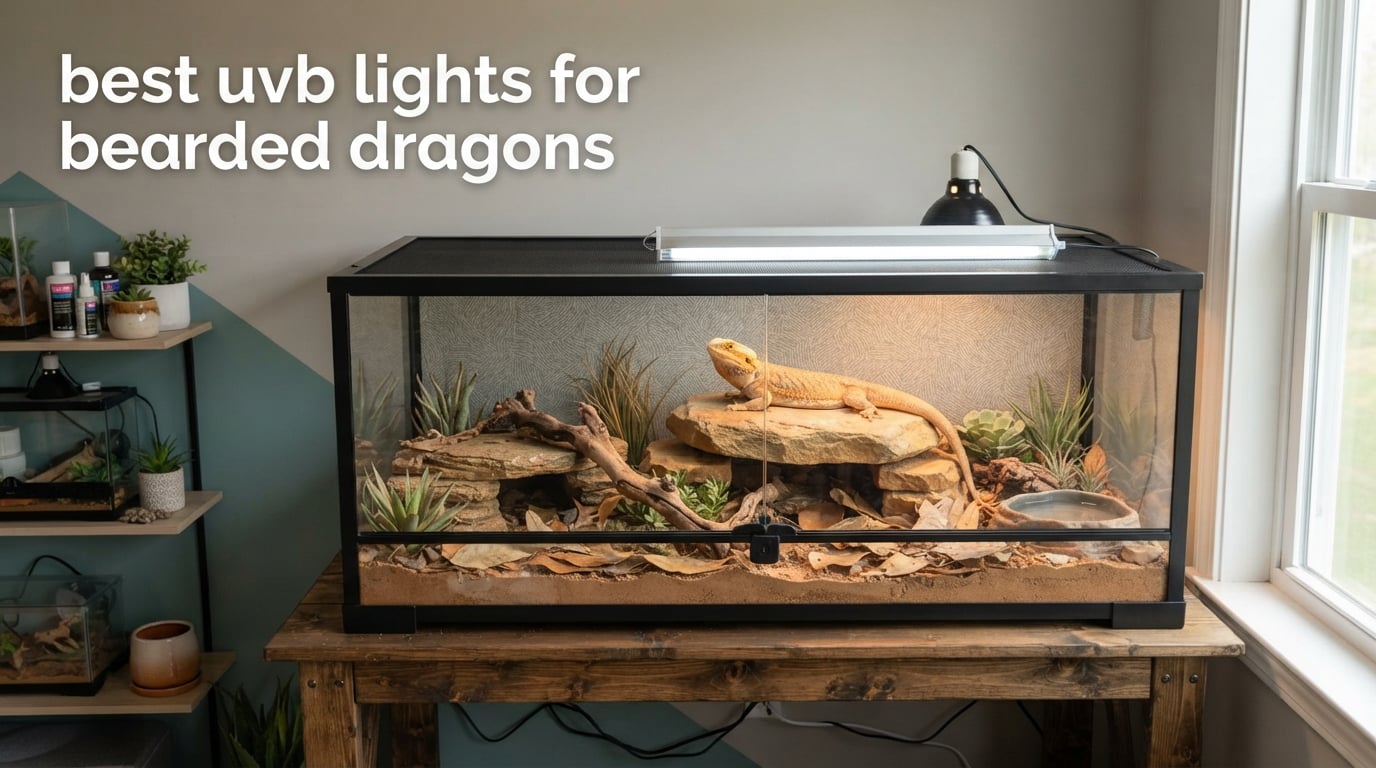
A linear T5 High Output (T5 HO) fluorescent tube rated at 10% to 14% UVB is the best UVB light for a bearded dragon, because it delivers usable UV across the whole basking surface instead of a small hot spot. Our top pick is the Zoo Med ReptiSun 10.0 T5 HO 24W two-pack, which carries the highest rating in this group and the strongest owner evidence behind it.
I have kept bearded dragons and read the husbandry forums for years, and the same two answers come back every time: buy a linear T5 HO tube, and match the tube length to the enclosure rather than the other way round. Glass and plastic block almost all UVB, so an unfiltered basking spot behind glass is not lighting your dragon. That is why the best UVB lights for bearded dragons in 2026 are all tube-and-fixture setups rather than a single bulb dropped into a dome.
One honesty note before we start. We did not bench-test these eight products with a UVI meter. We compared manufacturer specifications, wattage, reflector and ballast design, and thousands of owner reviews, then cross-checked the conclusions against what experienced keepers report on r/BeardedDragons and the BeardedDragon.org forums. Where we could not verify a claim, we left it out. If your dragon is already showing symptoms, talk to an exotic veterinarian before changing anything.
Table of Contents
Top 3 Best Uvb Lights For Bearded Dragons (October 2026)
Zoo Med ReptiSun 10.0 T5 HO 24W
- Linear T5 HO tube
- 10 percent UVB
- two-pack
- 4.6 star owner rating
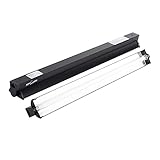
REPTI ZOO T5 HO 10.0 Combo Kit 24W
- Hood plus 24W desert 10.0 tube
- curved polished reflector
- low profile

Zoo Med ReptiSun 10.0 Mini CFL 13W
- Compact 10 percent UVB and 30 percent UVA
- quartz glass
- mounts any orientation
All 8 UVB Lights Reviewed Side by Side in 2026
Every product below runs a 10% desert UVB output, which is the range that suits a bearded dragon. The differences that matter are fixture design, coverage area, and how long the output lasts before it needs replacing.
| Product | Specifications | Action |
|---|---|---|
| Zoo Med ReptiSun 10.0 T5 HO 24W 2-Pack |
|
Check Latest Price |
| REPTI ZOO T5 HO 10.0 UVB Combo Kit 24W |
|
Check Latest Price |
 Hygger Zoo T5 HO 22-Inch 10.0 UVB Combo Kit Hygger Zoo T5 HO 22-Inch 10.0 UVB Combo Kit |
|
Check Latest Price |
 REPTI ZOO Dimmable LED UVB Light REPTI ZOO Dimmable LED UVB Light |
|
Check Latest Price |
| Zoo Med ReptiSun 10.0 Mini Compact Fluorescent 13W |
|
Check Latest Price |
 LUCKY HERP Desert 10.0 UVB Compact Fluorescent 23W LUCKY HERP Desert 10.0 UVB Compact Fluorescent 23W |
|
Check Latest Price |
 Jugbuy 23W Desert 10.0 UVB Spiral Compact 2-Pack Jugbuy 23W Desert 10.0 UVB Spiral Compact 2-Pack |
|
Check Latest Price |
 GeeKoit 5W Desert 10.0 UVB LED GeeKoit 5W Desert 10.0 UVB LED |
|
Check Latest Price |
Why UVB Light Is Non-Negotiable for Bearded Dragons?
Bearded dragons are desert reptiles that evolved sitting under open sun for hours. Their skin converts UVB into vitamin D3, and D3 is the only thing that lets them absorb the calcium they eat. Cut the UVB and the calcium simply passes through them, unused.
That chain runs like this: UVB triggers vitamin D3 production in the skin, D3 enables calcium absorption from the gut, and that calcium maintains bone density, muscle function and egg production. Miss the UVB and the outcome is metabolic bone disease, or MBD, which shows up as soft or bent bones, swelling in the jaw and limbs, tremors, and a shortened life. Juvenile dragons are the most at risk because they are growing fastest during the exact window when most keepers get the setup wrong.
Reptile biologists describe this with Ferguson zones. A bearded dragon adapted to open desert sun is a Ferguson Zone 3 species, and keepers measure delivered light with a UVI meter, aiming for a UVI of roughly 4.0 to 6.0 at the basking surface. If you want to check your own setup, that meter is a small purchase and it ends the guessing.
The glass myth is worth repeating because it comes up constantly. UVB does not pass through ordinary glass or plastic, so a dragon basking under a lamp behind a window receives heat and visible light but almost no useful UV. Outdoor time in direct sun is excellent, but it needs shade available so the animal can move out of the beam, and it should never be a substitute for a tube running indoors.
If you are also planning the rest of the setup, our guides to outdoor security lights for large properties, solar flood lights for parking areas and solar flood lights for driveways cover the lighting logic on the human side of a habitat, which is a different problem from UV for reptiles.
T5 HO vs T8 vs Compact Fluorescent: What to Buy and What to Avoid?
Linear T5 HO tubes win on one thing above all: they spread UV evenly along their whole length, so a dragon can move along the basking surface and still receive useful light. Everything else in this comparison is a compromise on that.
T5 HO fluorescent (best choice). Runs a T5 lamp on a high-output electronic ballast, sits above or just inside the top of the enclosure, and covers roughly half to four-fifths of the enclosure length. Rated 10% to 14% UVB for desert species.
T8 fluorescent (acceptable, with a catch). Cheaper and dimmer, and it has to be mounted inside the enclosure rather than over a mesh top. Many keepers use it successfully for smaller setups.
Compact fluorescent and spiral coil (not recommended for adults). These concentrate output into a narrow cone, so the animal has to sit almost on top of the bulb to get a usable dose, and keepers keep raising eye problems, including photokeratoconjunctivitis, when a dragon stares into a coil for hours.
Mercury vapor bulb (situational). Powerful and hot, and it can light a very large enclosure on its own, but it needs careful distance control and is not a first purchase for a standard setup.
LED UVB (newer, lower output). Long-lived and dimmable, but a small LED source covers a smaller patch of the basking surface than a tube, so it struggles to light a full-length adult enclosure on its own.
There is a second trap that catches people, and it is not about bulb shape at all. Retail carousels are full of 2.4% and 7% shade-dweller kits that are built for crested geckos and other forest species. The packaging and the listings look almost identical to a desert kit, so check the percentage printed on the box before you buy, not just the product photo. A bearded dragon needs a desert-rated 10% to 14% tube.
1. Zoo Med ReptiSun 10.0 T5 HO 24W (2-Pack) – Best Overall UVB Light for Bearded Dragons
Zoo Med 24 Watt T5 HO ReptiSun 10.0 UVB Lamp, 2pk
Two 24W T5 HO tubes
10 percent UVB for desert species
Strong brighter output for MBD prevention
Pros
- Highest average rating in this group at 4.6 stars
- Measured UVI output matches the desert target level
- Two tubes per pack so a spare is always on hand
- Newer bulbs emit increased UVA2 for a warmer natural balance
Cons
- Fluorescent tubes are fragile in transit
- Occasional reports of one tube dead on arrival
- A replacement tube may not seat in an older ballast
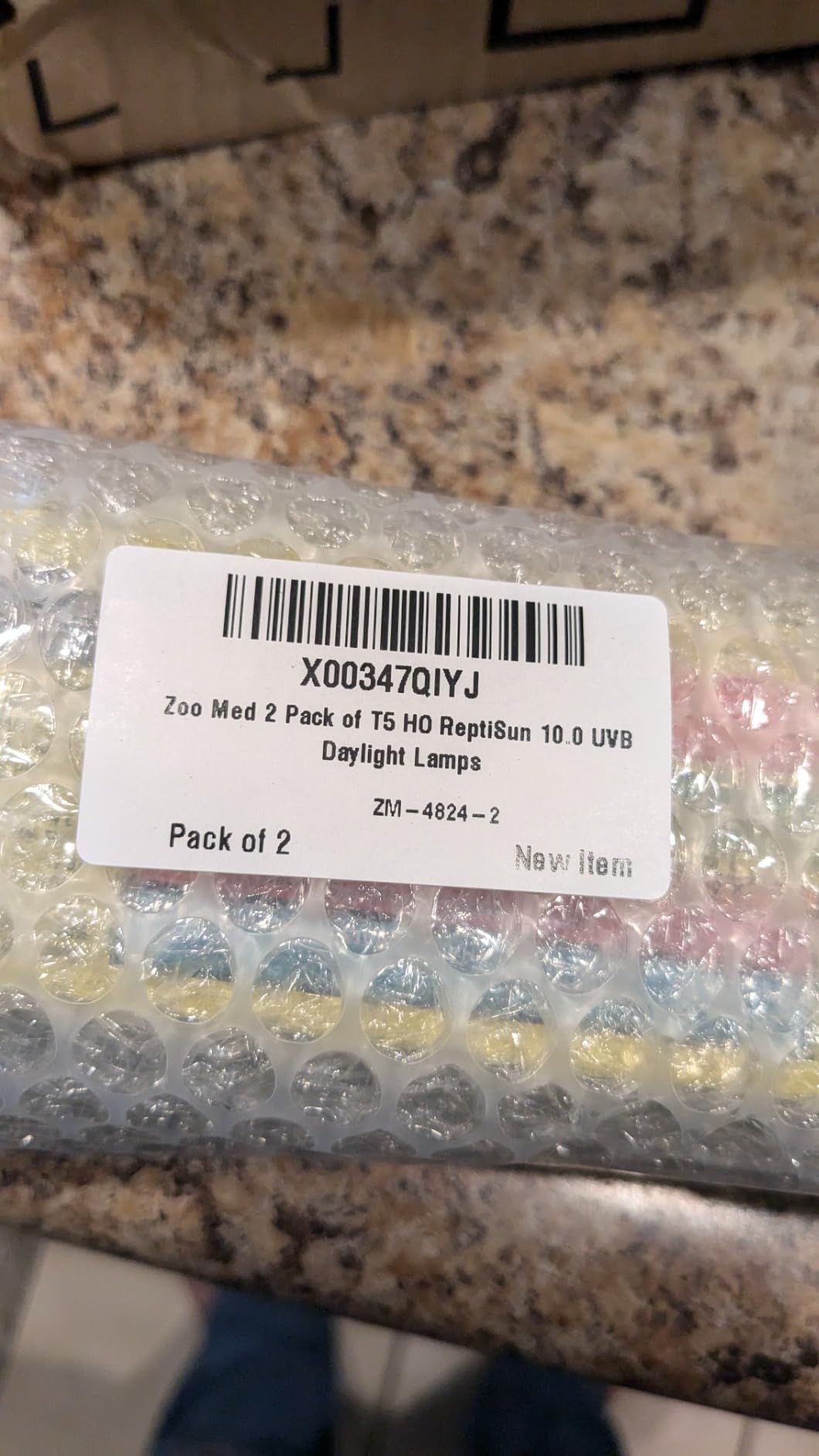
This is the tube experienced keepers name most often, and the review data backs that up rather than contradicting it. At 4.6 stars across 798 reviews it holds the highest average rating of any product we looked at, and the owners who measured output report UVI readings that line up with the desert target.
What stands out is the number of keepers saying these tubes outlasted the suggested replacement interval. That is not universal, and it depends heavily on how the fixture is mounted, but it runs against the common complaint on the forums that bulbs fail far earlier than advertised.
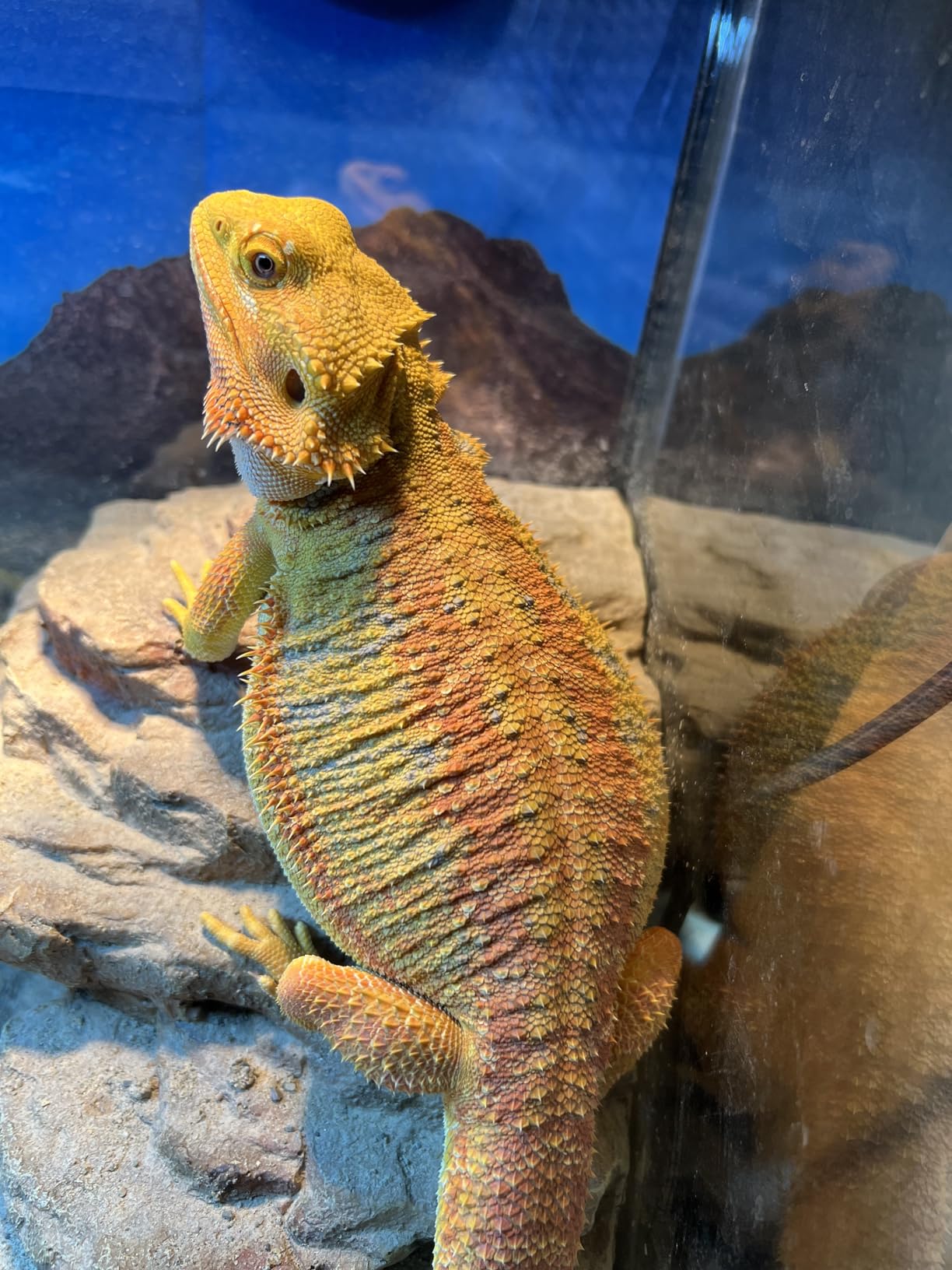
The two-pack format is the quiet advantage here. Owning a spare means a failed tube does not become an emergency, and a tube replaced every 12 months on a schedule rather than a flicker never leaves the animal without UV for weeks. Newer production runs carry a stronger UVA2 component, which some first-time owners mistook for a fault until they confirmed the spec sheet.
Owners running large adult dragons on 24W tubes report a bright, even wash rather than a hotspot. The complaints that do appear are mostly logistics: the glass is fragile, and a small number of buyers received one tube that was dead or did not seat properly in an older ballast.
What you should check before ordering?
Check that you already own a fixture that takes 24W T5 HO tubes, or budget for one. The bulbs in this pack are the tube only, with no reflector, so a bare bulb mounted loosely will not deliver the output the reviews describe.
Check the wattage against your enclosure width. A 24W tube is sized for a 24-inch-wide enclosure; wider setups need a 39W tube for 36 inches and a 54W tube for 48 inches. A too-small tube in a wide tank is the most common reason a keeper concludes their lighting is weak.
When another option fits better?
Skip this if you are starting from zero and want a single purchase. Nothing here includes a hood, so you would still be choosing a fixture separately, and the combo kits below cover that in one box.
Skip it also if your enclosure is under 18 inches wide, where a full-length 24W tube will not sit correctly. A compact bulb matched to a tight space is a better fit there, and we cover that case further down.
2. REPTI ZOO T5 HO 10.0 UVB Combo Kit 24W – Best All-in-One Fixture and Tube
REPTI ZOO T5 HO UVB Lighting Combo Kit, Terrarium Hood Comes with Desert 10.0 UVB T5 Lamp (24W)
24W T5 HO hood plus 10 percent UVB tube
Curved polished reflector
500 lumens maximum output
Pros
- Hood and desert 10.0 tube in one box
- Curved polished reflector raises lamp efficiency
- Low profile fits under mesh or inside a vivarium
- On and off switch with a removable power cable
Cons
- Lowest average rating in this group with a notable share of one-star reviews
- Some lamps arrive dead or flickering
- Plastic hood parts can yellow with heat over time
This kit solves the practical problem that trips up most first-time keepers: you get the hood and the lamp in a single box, so there is no guessing about whether a fixture matches a bulb. The included lamp is a 24W desert 10.0 T5, the correct output for a bearded dragon.
The reflector is the part worth noting. It is a curved polished design rather than a flat one, and it directs more of the lamp output downward onto the basking surface, which matters when your fixture is mounted over a mesh top and a chunk of the UV never makes it through.
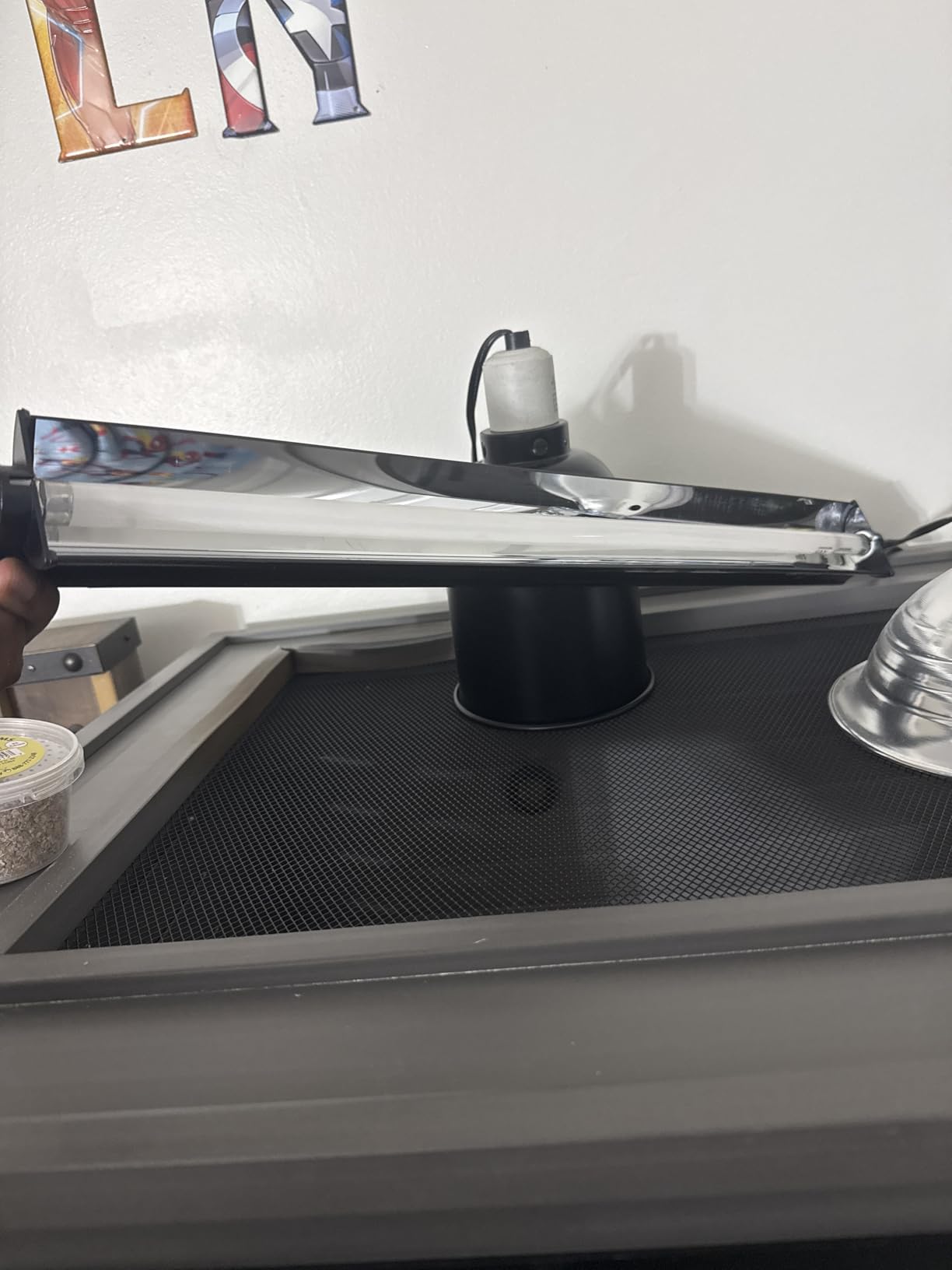
Owners consistently mention the small things: the low profile sits neatly under a screen, the removable cable makes setup simple, and the end caps make the lamp safer to handle. Several also note the 24W version is well matched to a standard 24-inch bearded dragon enclosure.
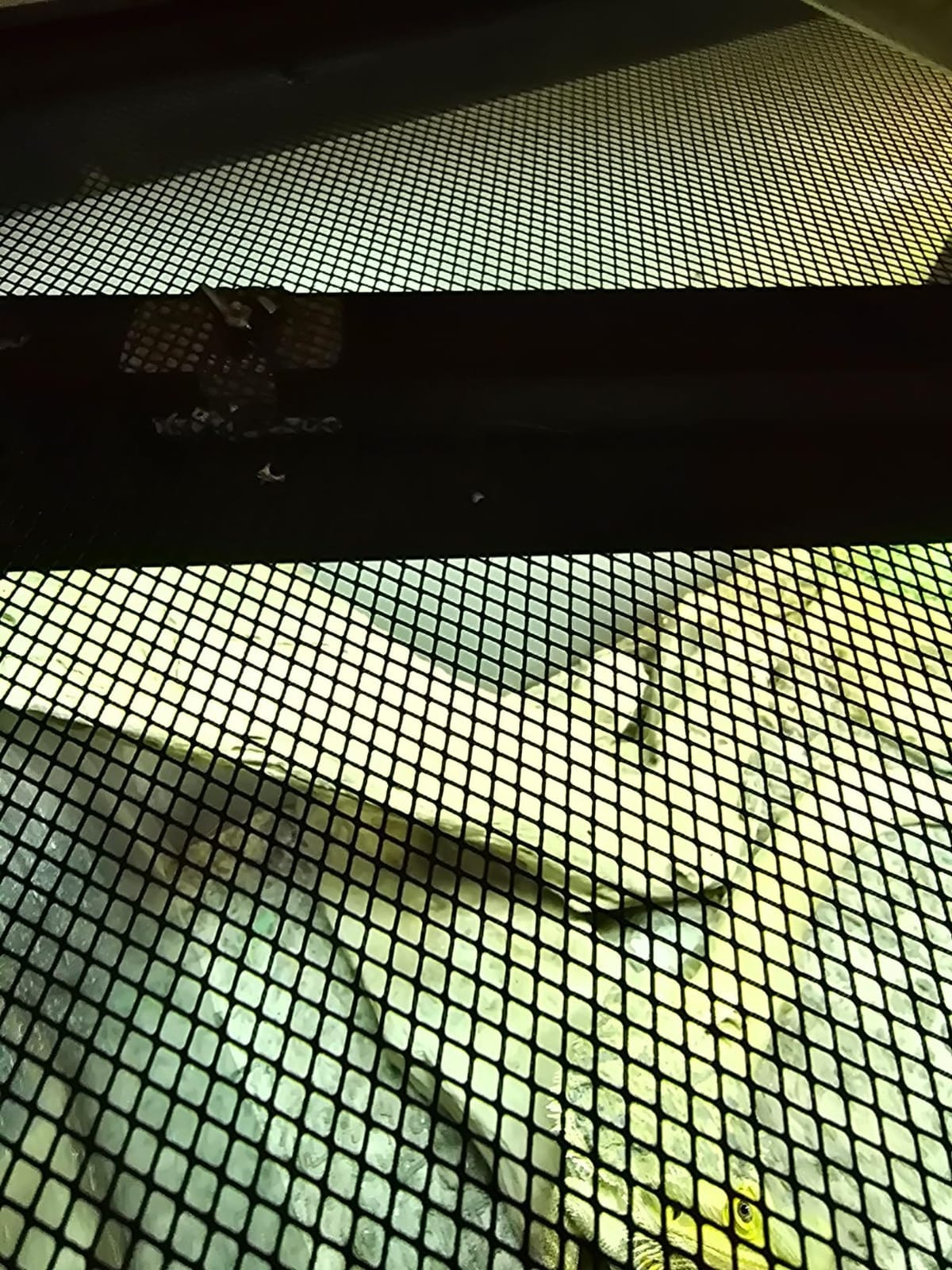
The reliability is where this one falls behind our top pick. It holds a 4.2 average across 1720 reviews, and a noticeable share of those are one-star reports about a lamp that arrived dead or flickered. The plastics on the hood are also the part most likely to yellow with sustained heat.
What to check before buying?
Check the enclosure width against the wattage. This is the 24W version, meant for 24-inch enclosures, and it does not stretch to cover a 48-inch setup. Longer versions at 39W and 54W exist for wider tanks.
Check how the hood is mounted. This low profile works both under a mesh cover and inside a glass tank, and the mounting method changes how far above the basking surface you can safely set it.
When another option fits better?
Skip this one if you are sensitive to early failure. The share of one-star reviews here is higher than anywhere else in this roundup, and a kit bundled with a weak lamp may look like a saving up front but costs you in replacements later.
Skip it if you already own a good T5 HO fixture. In that case buying the tube alone is the cheaper path, and our top pick is the stronger tube to put in it.
3. Hygger Zoo T5 HO 22-Inch 10.0 UVB Combo Kit – Best Aluminum Fixture Build
T5 UVB Reptile Light Fixture HO UVB Bulb Lighting Combo Kit, 10.0 UVB Light for Reptiles Terrarium Hood with 24W Reptile Light Bar UVA UVB Desert Lamp for Bearded Dragon Turtle Tank, 22Inch
22 inch T5 HO fixture with 24W 10.0 UVB tube
Polished curved aluminum reflector
Aluminum hood sheds heat
Pros
- Fixture and 10.0 tube bundled together
- Aluminum housing runs cooler than plastic hoods
- Mounts on mesh
- inside a tank
- or in a wooden vivarium
- Installs across three enclosure styles
Cons
- Several reports of early failure just past the return window
- Hanging hardware can shift position inside a tank
- Blue protective film must be removed or the lamp can fail
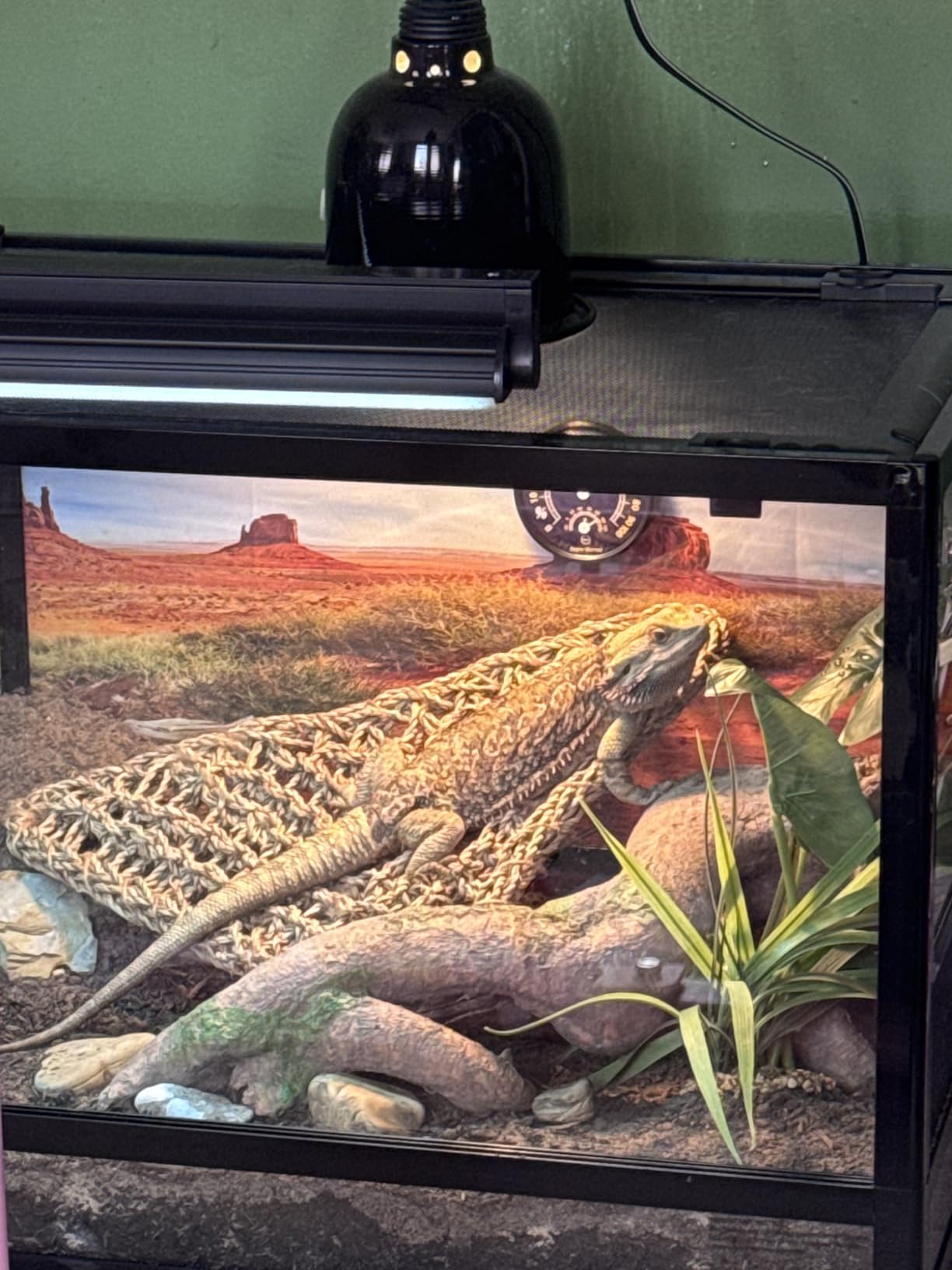
The difference between this kit and the previous one is the housing material. It is built from aluminum rather than plastic, and that matters in a fixture that sits over a basking surface for ten hours a day in a hot enclosure.
Aluminum draws heat away from the lamp instead of trapping it, which is the main reason a T5 HO output declines early in cheaper plastic hoods. The curved polished reflector sends more of that output down toward the animal, and the stated purpose is stronger, brighter UVB over the basking area.
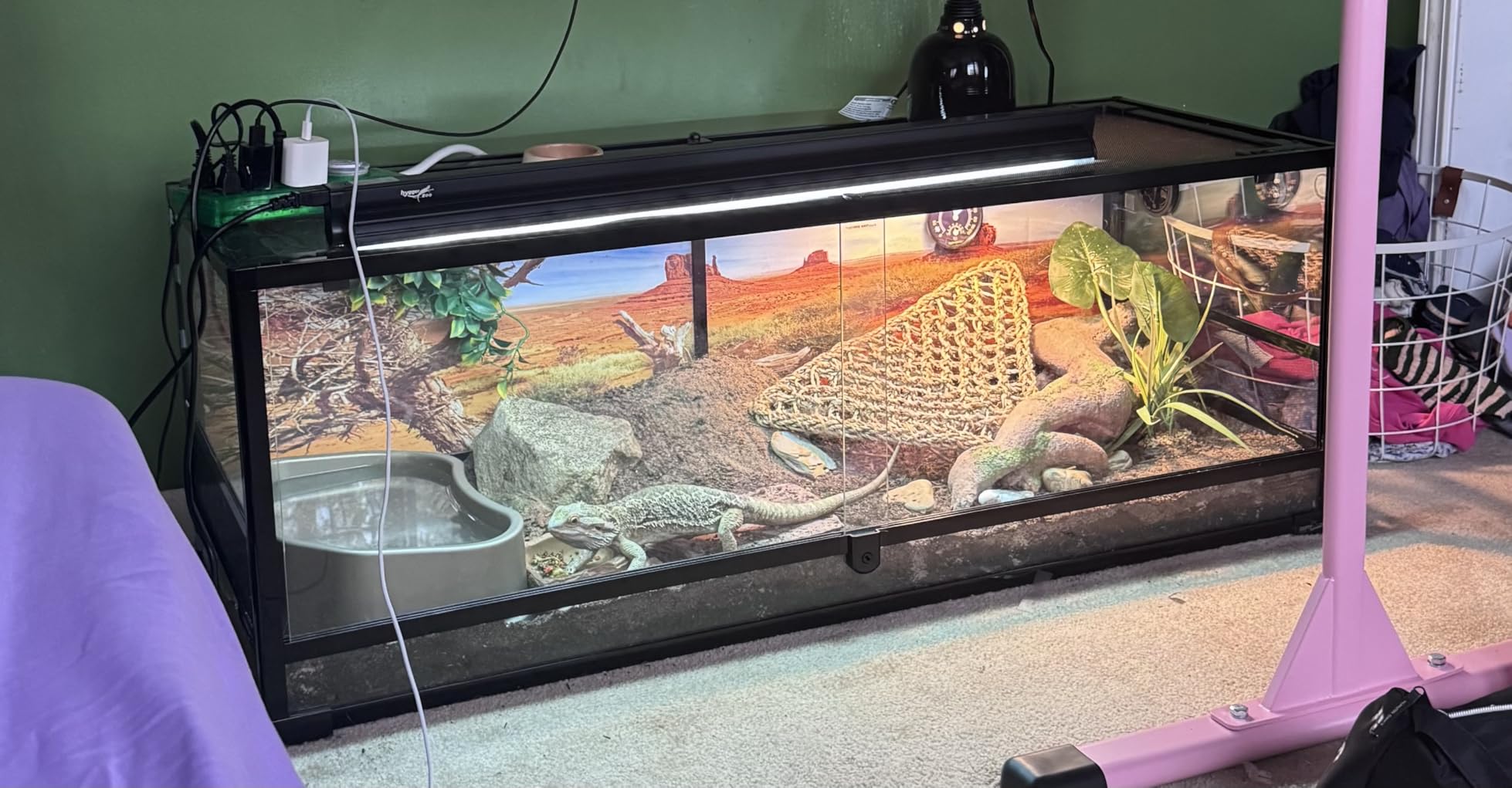
Owners who remove the blue shipping film before fitting the lamp report stable, effective light and lizards that become visibly more active once it is switched on. The mounting flexibility is another repeated positive, since the same kit works above a mesh cover, inside a glass tank, or in a wooden vivarium.
Read the instructions before the first power-on, because the lamp arrives with a blue protective film. Several reviews describe bulbs failing or cracking when the film was still fitted, and the film also masks the output. The other recurring complaints are hanging hardware that does not stay put and lamps that stop working shortly after the return window closes.
What to check before buying?
Check the length of your enclosure opening. This is a 22-inch fixture, which is a common fit for a 40-gallon style juvenile tank, and longer variants are listed for bigger setups.
Check that you pull the blue film off. It is a small step with an outsized effect on whether the lamp survives its first month.
When another option fits better?
Skip this if you are after the highest confidence in long lamp life. The early-failure reports here cluster just past the return period, which is a narrow window to detect a problem.
Skip it if the hood hardware will be jostled by a large adult dragon. A 22-inch kit in a tall enclosure where the animal can reach the fixture needs a more secure mount than hooks and clips.
4. REPTI ZOO Dimmable LED UVB Light – Best for Adjustable Dawn-to-Dusk Output
REPTI ZOO UVB Reptile Light with Dimming, LED UVB Light Bulb Fixture for Bearded Dragon Gecko Lizard Turtle Snake, Adjustable Brightness UVA UVB Lamp for Tropical & Desert Reptile
6W dimmable LED UVB source
Up to 303 uW per square cm at 4 inches
Tropical 5.0 and Desert 10.0 modes
Pros
- LED avoids the constant lamp replacements of CFL tubes
- Two UVB modes in one fixture
- Adjustable brightness for day
- night and sunset
- Low 6W draw with hooks for mesh mounting
Cons
- Absolute UVI output trails a high-output T5 tube
- Fixture and LED array are sold as a single item
- Owners report dimmer output than hoped for large adults
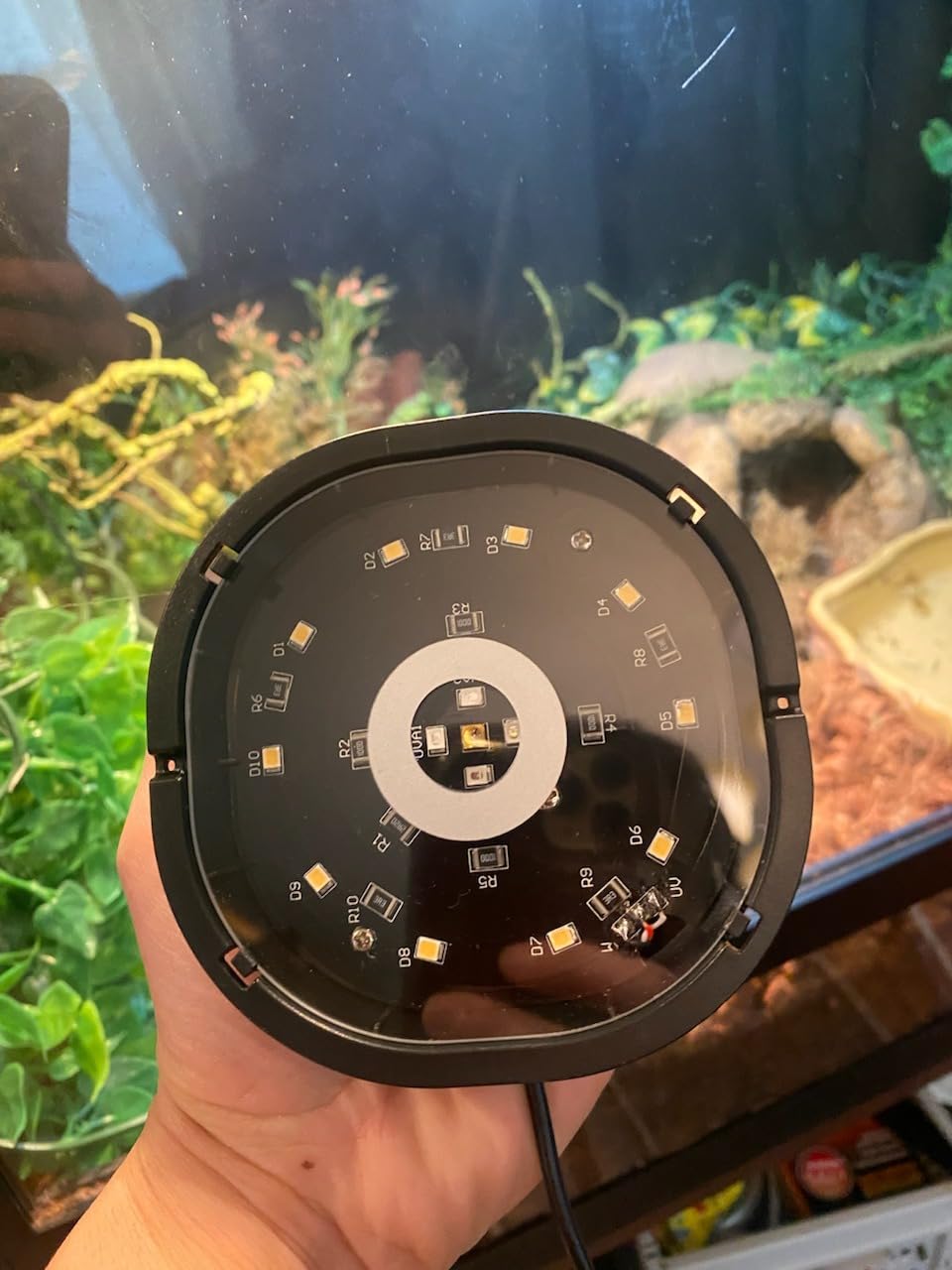
This is the only adjustable setup in our list, and that is its real draw. The brightness control lets you run a low overnight level, a warm evening level, and a full daytime output, which supports a natural photoperiod and a calmer animal than a light that switches abruptly on and off.
The mode switch is the other useful part. One setting is Tropical 5.0 and the other is Desert 10.0, so the same fixture serves a forest gecko and a desert dragon if your collection changes. Rated output is up to 303 uW per square centimetre at 4 inches.
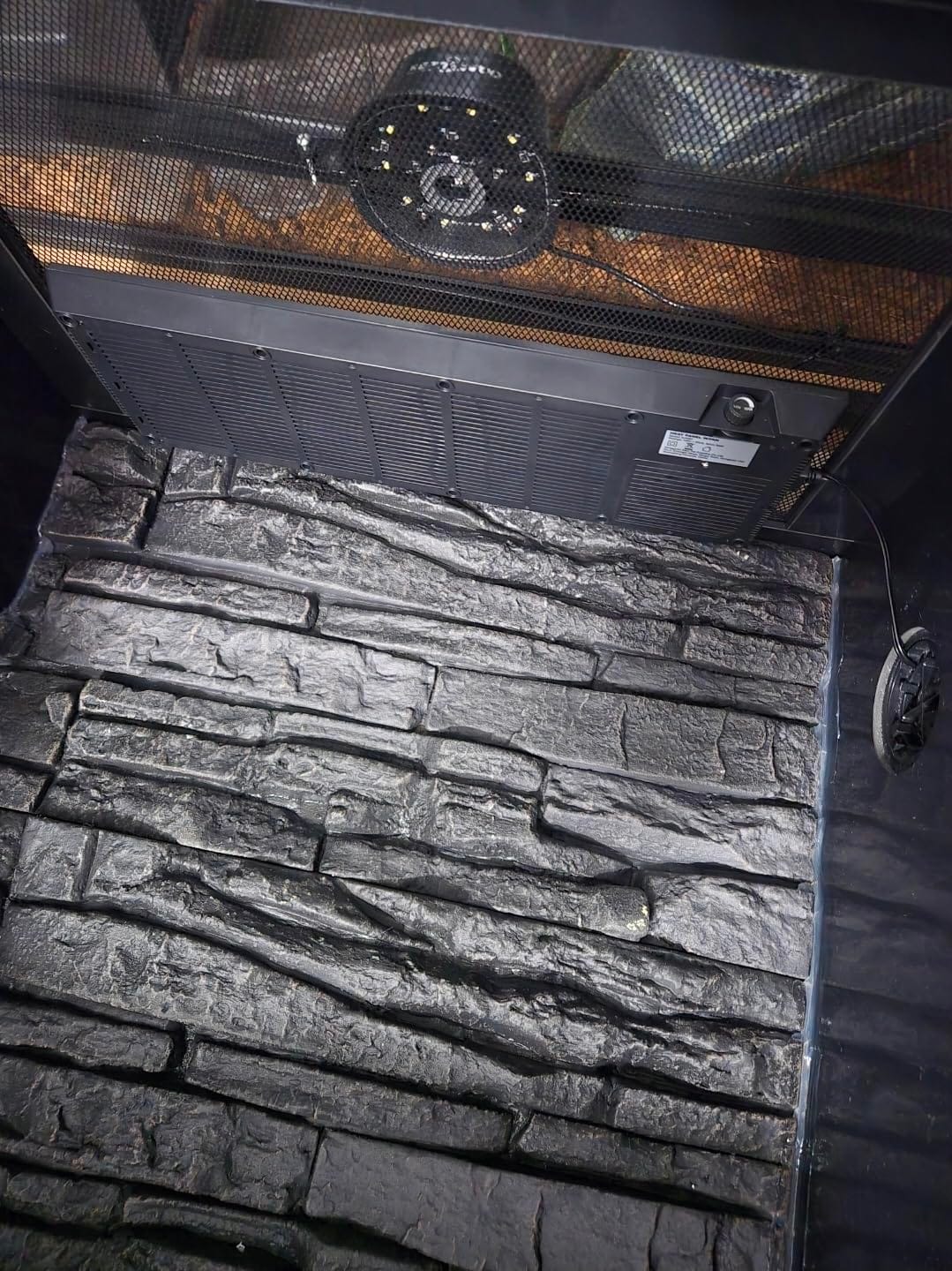
The trade-off is coverage area. A single LED source of this size lights a patch, not a basking surface, so in a 4-foot adult enclosure the dragon has to sit close to it to get a useful reading. That is exactly the arrangement the herpetology community warns against, because a concentrated UV spot encourages a dragon to sit and stare instead of moving along a gradient.
There is also no replacement path. The fixture and the LED array are supplied as a single item, so when the output finally fades you replace the whole fixture rather than swapping a bulb, which erases much of the cost saving the low wattage promises.
What to check before buying?
Check the size of your basking surface against the beam. If your dragon can sprawl across half the enclosure top, this source will not cover it, and a tube is the better answer.
Check your mains voltage. LED fixtures like this are built for standard household power, so if you keep reptiles on a different supply you will need something else.
When another option fits better?
Skip it for a large adult dragon in a 75-gallon or 120-gallon enclosure. Owners of larger animals report the output is dimmer than they expected for the space.
Skip it if your collection is all desert species. The Tropical 5.0 mode is genuinely useful for a mixed collection and largely wasted on a single bearded dragon.
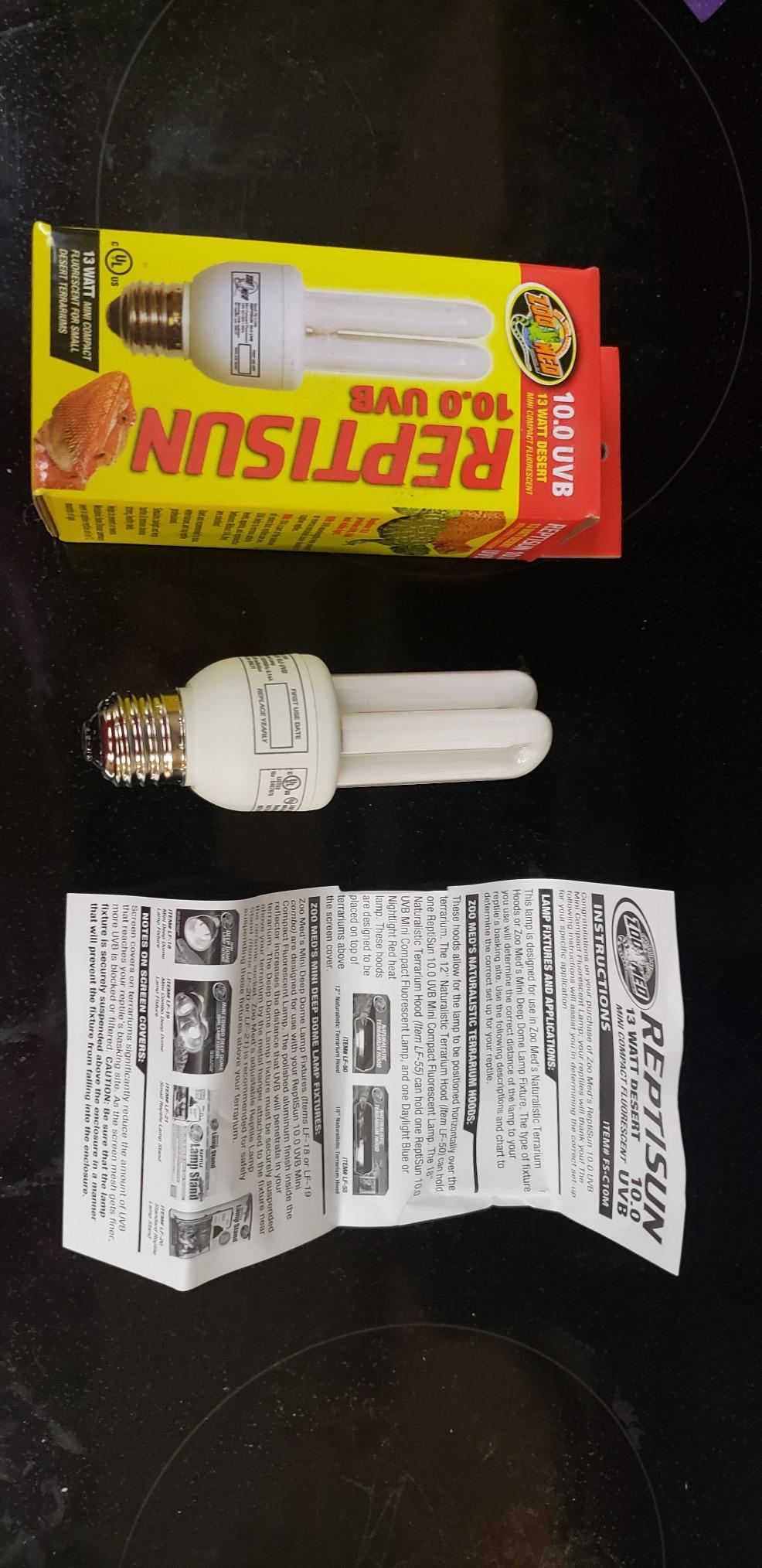
5. Zoo Med ReptiSun 10.0 Mini Compact Fluorescent 13W – Most Reviewed, Not Our Primary Pick
Zoo Med ReptiSun 10.0 Mini Compact Fluorescent Lamp 13 Watts
13W compact fluorescent
10 percent UVB and 30 percent UVA output
Quartz glass construction
Pros
- Most reviewed product in this group with 3771 ratings
- Quartz glass is built for maximum UVB penetration
- Mounts vertically or horizontally
- Long track record across desert species
Cons
- Narrow beam forces the dragon to sit very close
- UVB output reported to fade noticeably within about 6 months
- Small number of buyers received bulbs that did not light
With 3771 reviews at a 4.5 average, this is the most reviewed lighting product in the group, and the feedback is overwhelmingly from keepers using it successfully on tortoises, turtles and small desert reptiles. It is a dependable, well-known part of the hobby.
The build detail that matters is the quartz glass. Rather than standard glass, which filters UVB, this lamp uses a UVB-transmitting quartz envelope, and that is the reason its output holds up better than a typical compact bulb of the same shape.
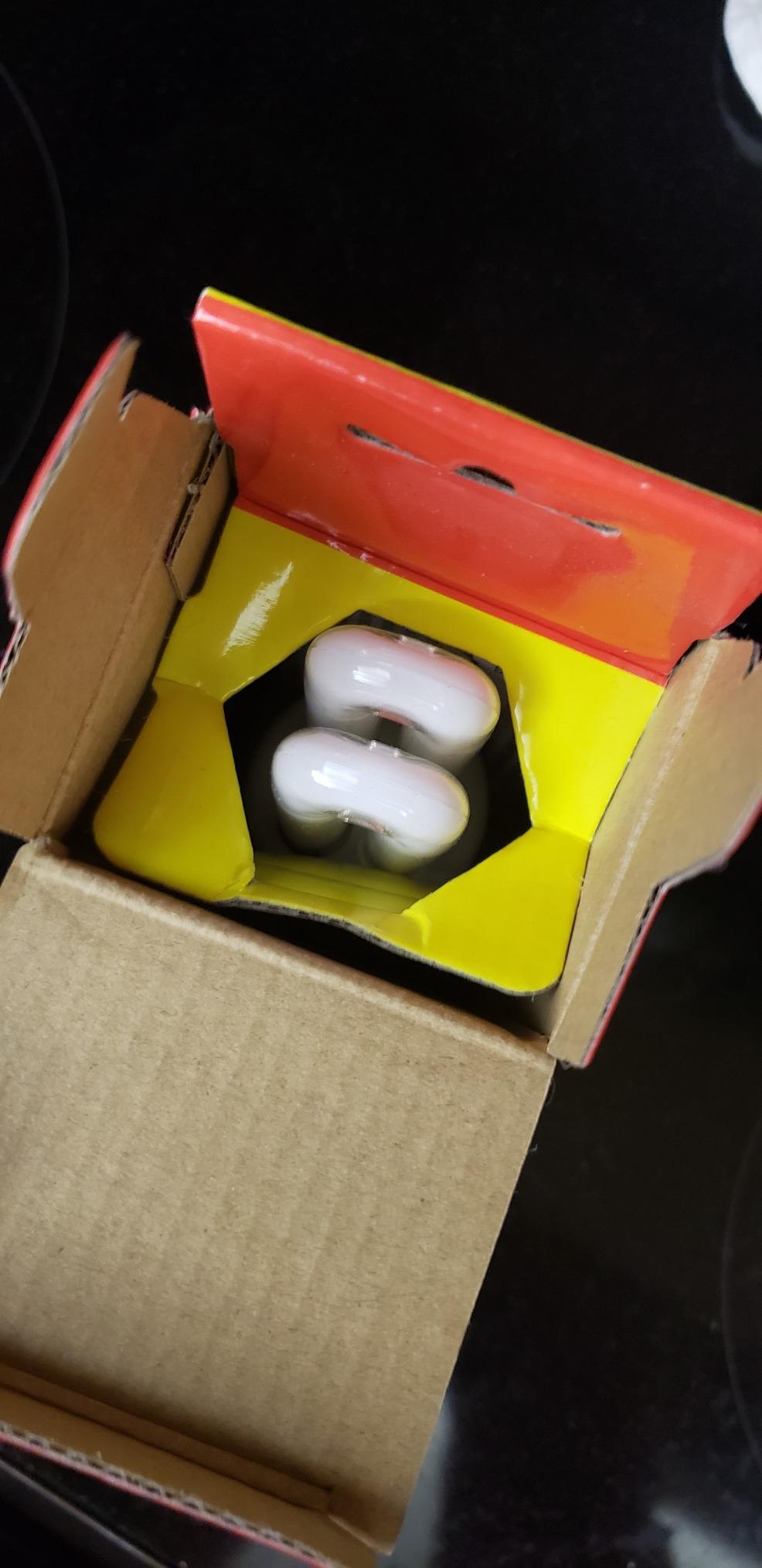
Owners also like the flexibility of the fitting. It can be oriented vertically or horizontally, which makes it easier to work into a tight dome arrangement where a straight tube simply will not fit. The low power draw is another plus for a small enclosure.
Here is the honest limitation. A compact bulb throws a narrow beam, so a dragon has to position itself directly under it to receive a usable dose, and the most common feedback is that the output drops to around half after about six months. It is a reasonable part-time solution for a small setup and a poor single answer for a full-size adult.
What to check before buying?
Check how close your dragon will have to sit. If the only way to reach a good dose is directly under the bulb, the setup is one you will have to supervise every day, and that concentrated staring is exactly what keepers try to avoid.
Check your replacement rhythm. With output reported to fade in around six months, budget for two bulbs a year rather than one.
When another option fits better?
Skip it for a full 4-foot adult enclosure. There is no arrangement of a 6-inch bulb that covers a 48-inch basking surface, and any promise otherwise is misleading.
Skip it if you are setting up from scratch. It needs a matching dome fixture, and a tube-and-hood kit solves the same problem with a wider, safer spread of light.
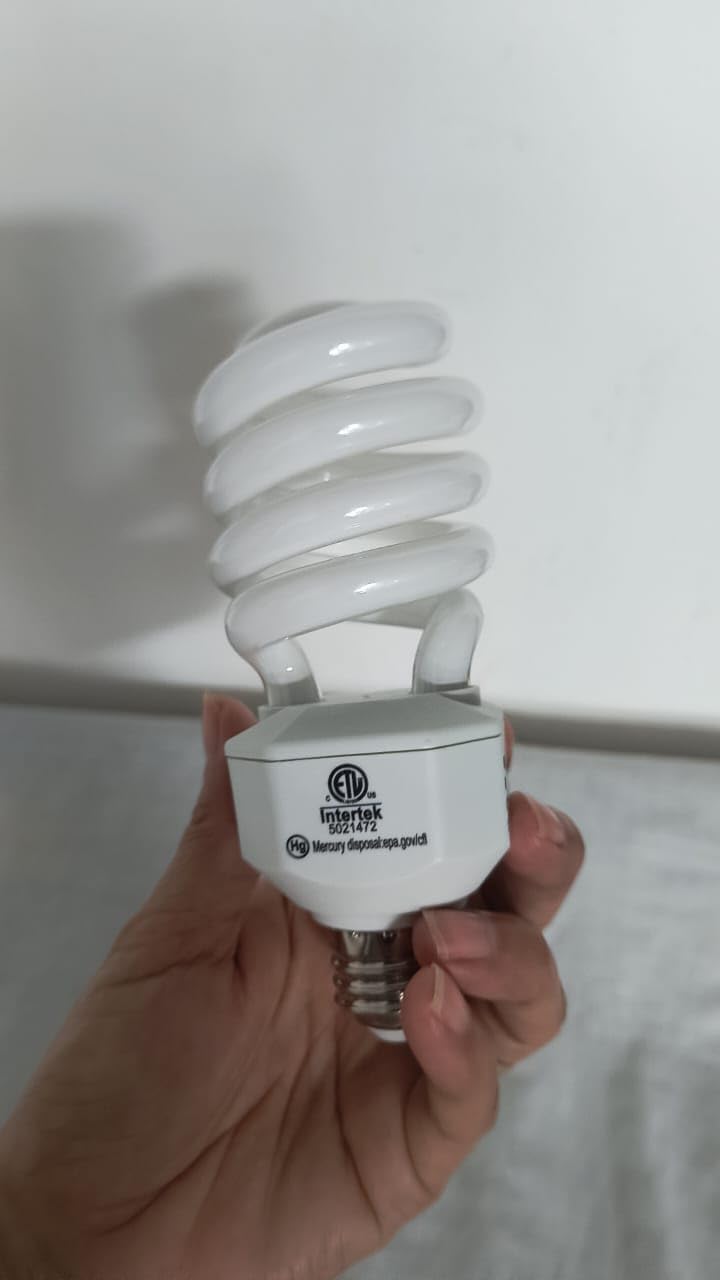
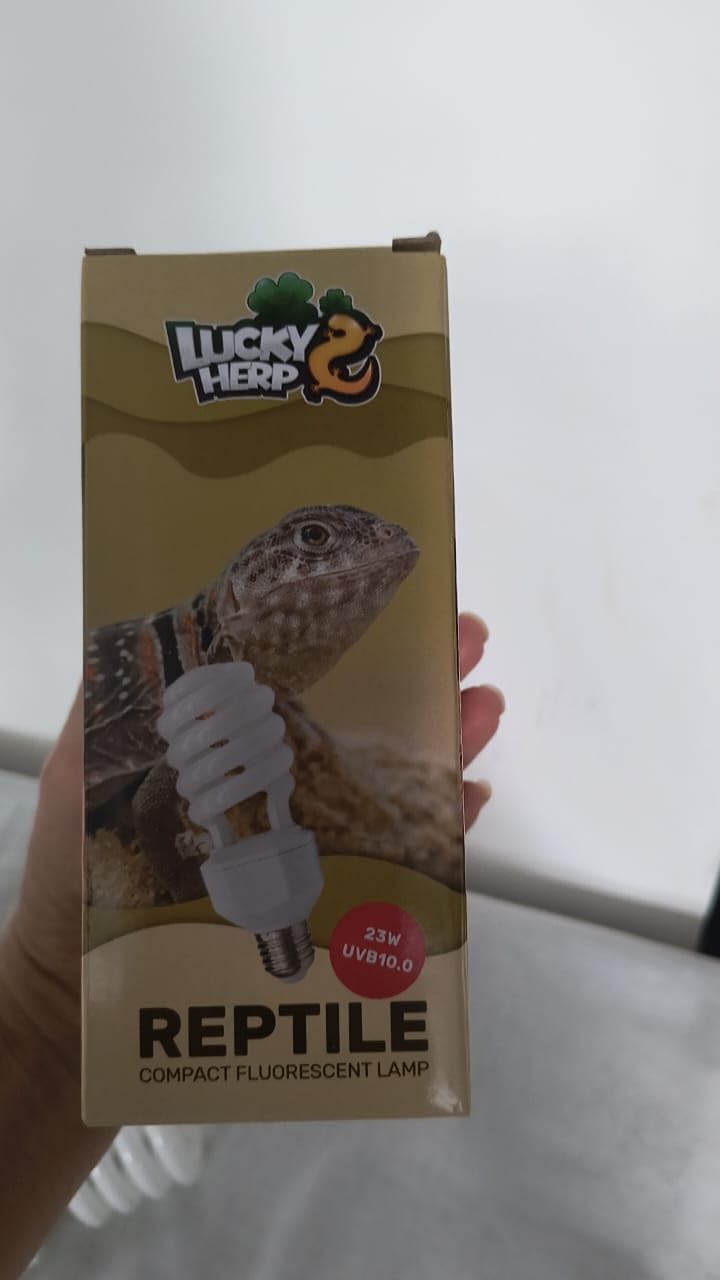
6. LUCKY HERP Desert 10.0 UVB Compact Fluorescent 23W – Best Bright Budget Tube
LUCKY HERP UVA UVB Reptile Light 10.0, Desert UVB 150 Compact Fluorescent Lamp, UVB Light for Reptiles 23W, UVA UVB Reptile Light Bulb, UVB Bulb for Reptiles Bearded Dragons Lizards Tortoises Snakes
23W compact fluorescent on an E26 base
10 percent UVB and 30 percent UVA
1265 lumens at 6000 Kelvin
Pros
- Bright
- natural-looking light that shows off dragon colouring
- Standard E26 base fits common domes and fixtures
- Low running cost with a wide range of strength variants
- Responsive after-sales service on faulty bulbs
Cons
- A portion of bulbs arrive defective or burn out within weeks
- Occasional flicker at startup
- 110-120V design does not suit overseas mains power
What separates this one from other budget compact bulbs is brightness. Rated at 1265 lumens and a 6000 Kelvin colour temperature, it produces a noticeably whiter, cleaner wash that owners say makes a dragon’s colouring and patterning stand out in a way dimmer tubes do not.
It is also the most flexible of the budget options. The E26 base is the standard household screw fitting, so it drops into the dome fixtures most keepers already own, and the brand sells a spread of wattages so you can match it to a small or larger enclosure. Both come from the fitting rather than the lamp itself, so check the clearance in your dome before ordering.
Several owners of bearded dragons report visible improvement in activity level and appearance after installation, and the listed UVB lifespan runs up to a year with a manufacturer recommendation to replace every 6 to 12 months. Customer service gets specific mention for resolving faulty lamps quickly with a refund or a replacement credit.
The durability is the weak point. A recurring group of reviews describes bulbs arriving defective, flickering at startup, or failing within a month or two, and the 110-120V design means it will not run on overseas mains power without a converter.
What to check before buying?
Check the beam width against your enclosure before you commit. Brightness is not the same as coverage, and this is still a compact bulb in a dome rather than a tube across the top.
Check your supply voltage if you are outside the United States and Canada. The design is built for 110-120V only, and a converter will not restore full output.
When another option fits better?
Skip it for a large adult enclosure where a full-length tube is available. Even a bright compact concentrates its output into a small area.
Skip it if you want a set-and-forget installation. The share of early-failure reports here is high enough that you should plan on owning a spare.
7. Jugbuy 23W Desert 10.0 UVB Spiral Compact Fluorescent (2-Pack) – Best Two-Pack Value
Jugbuy UVB Reptile Light Bulb 10.0, 23W UV Spiral Compact Florescent Terrarium Lamp Ideal for Desert Reptiles Bearded Dragons Lizard Tortoise Iguanas Chameleons Snake – 2 Pack
Two 23W spiral desert 10.0 CFL bulbs
E26 base at 110-130V
10 percent UVB and 30 percent UVA
Pros
- Two-pack pricing undercuts buying single bulbs separately
- Solar meter readings confirm the 10.0 UVB rating
- Fits standard dome lamp fittings
- Quartz glass slows the output fade rate
Cons
- Bulb life varies from about two months to several years
- Not suitable for leopard geckos and other shade-loving species
- Runs warm to the touch under a dome
This pack solves the same problem as our top pick, one tier down in output type. You get two 23W spiral desert 10.0 bulbs rather than one, so you always have a working spare without a second order, and the pair costs meaningfully less than buying singles.
Owners who checked the output with a solar meter report that it matches the advertised 10.0 UVB rating, which is not something you can say about every budget bulb. The quartz glass envelope is credited with a slower fade rate than typical compact fluorescents.
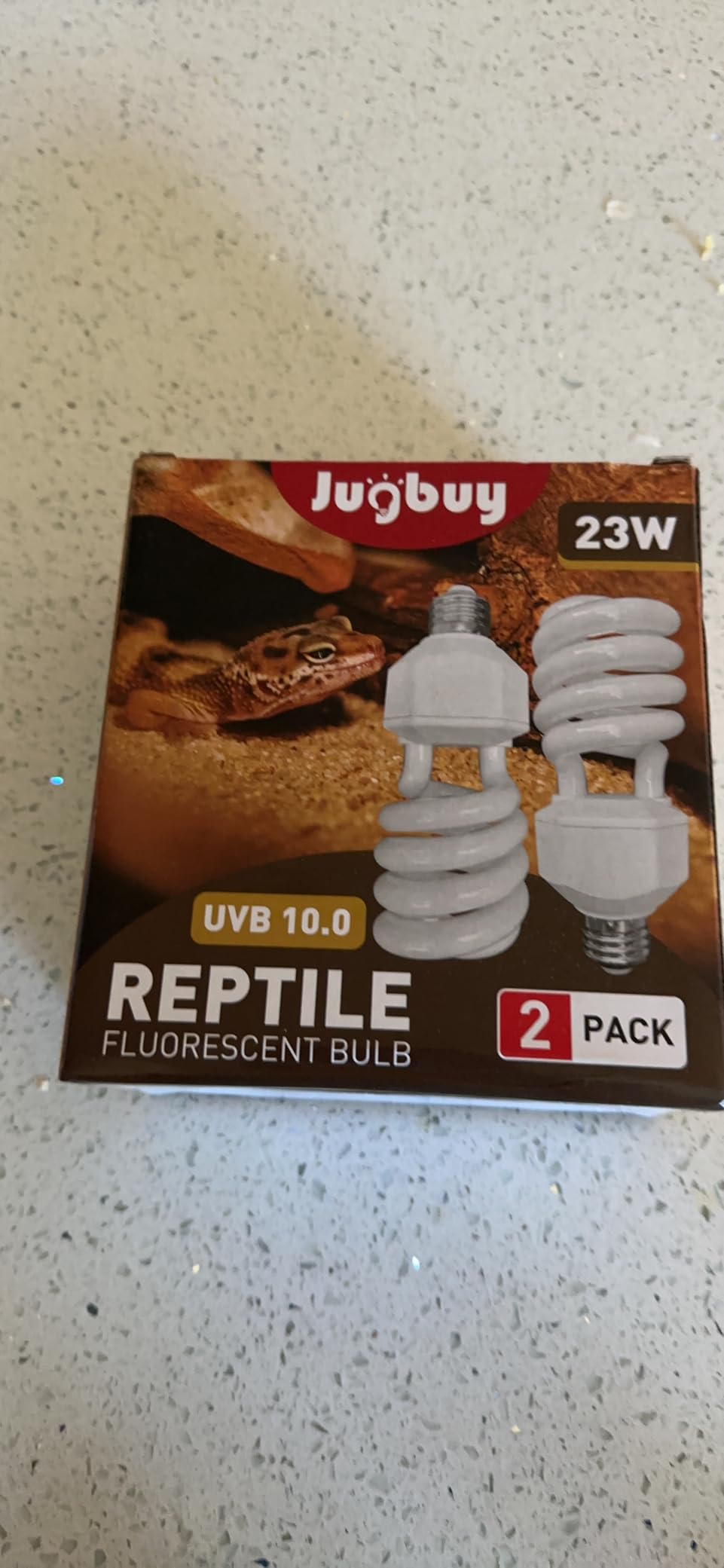
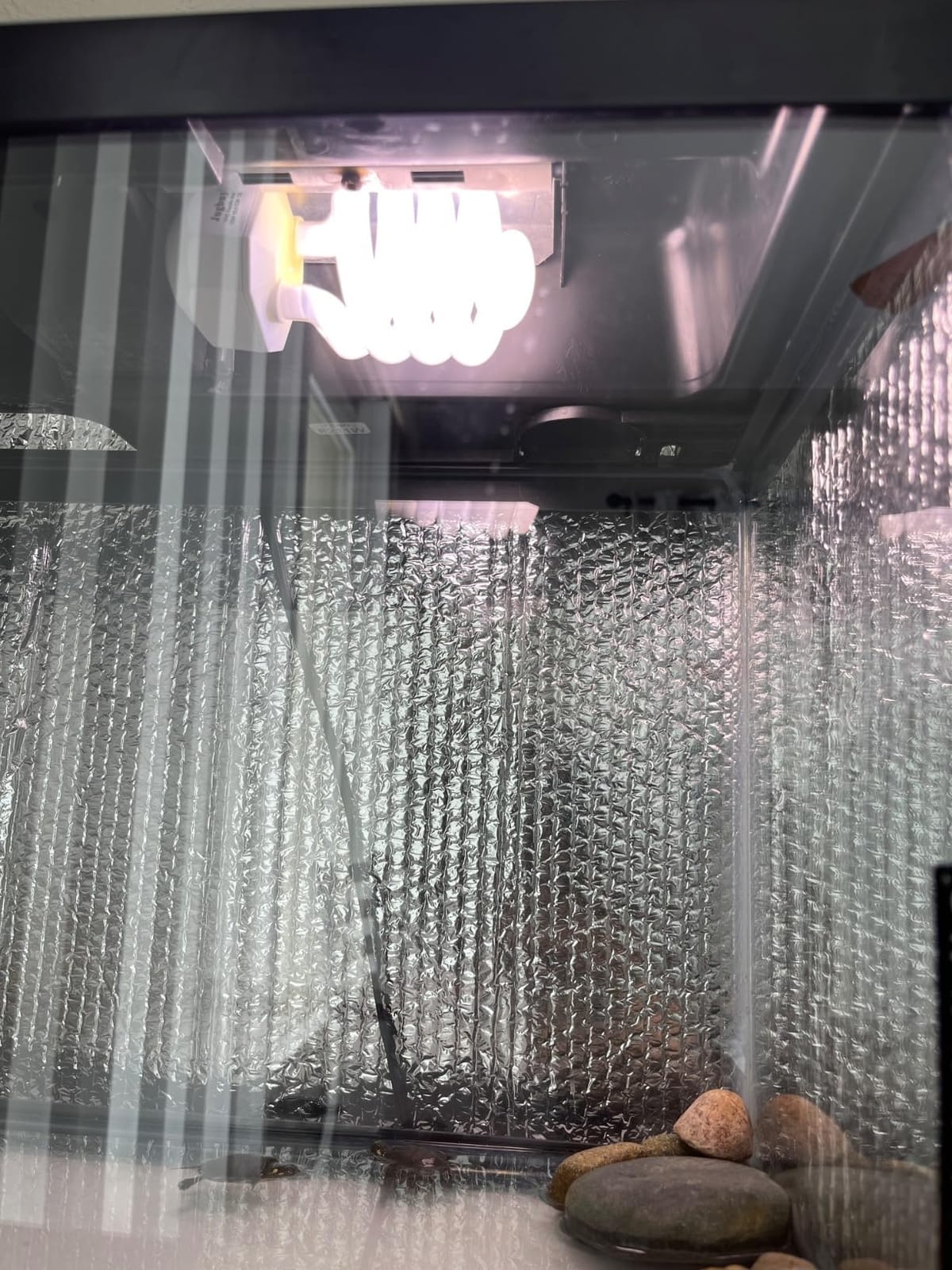
The lamp is specified as 10% UVB and 30% UVA with no harmful UVC output, and it runs on a standard E26 base across a 110-130V range. It is a straightforward drop-in for a dome fixture, and the pack includes bulbs in 5.0, 10.0 and 15.0 variants depending on what you pick.
The split that drives the reviews is lifespan. Some owners report multi-year service, while others describe a bulb lasting around two months, and that inconsistency is the reason this sits lower on the list despite a solid 4.4 average. It also runs warm under a dome, so ventilation matters.
What to check before buying?
Check that you have two dome fixtures or are happy rotating one bulb. A two-pack is only a saving if you have somewhere for the second bulb to live.
Check the diameter of the spiral against your fixture clearance. Spiral compact bulbs are taller than straight tubes and will not fit every dome or hood.
When another option fits better?
Skip it if your collection includes leopard geckos or other shade-loving species. This is a desert 10.0 bulb, and putting it on those animals is the wrong spectrum entirely.
Skip it if your setup depends on the beam covering the whole basking surface. A spiral bulb concentrates its output, and a tube does not.
8. GeeKoit 5W Desert 10.0 UVB LED – Best Low-Wattage Supplement
GeeKoit Premium High-Intensity UVB Reptile Light for Optimal Calcium Metabolism,5-Watt 10.0 Desert UVB Light Ideal for Desert-Dwelling Reptiles Bearded Dragons Tortoises
5W UVB LED on an E26 socket
Desert 10.0 spectrum
Slower output decay than a CFL
Pros
- Extremely low 5W power draw for a UV source
- LED output decays more slowly than a compact fluorescent
- Standard E26 socket fits most lamp holders
- Small and inexpensive to add alongside a heat lamp
Cons
- 5W output is modest for a large adult dragon
- Adds no meaningful heat so a heat lamp is still required
- Not suitable for leopard geckos and forest species
This is the smallest and least powerful item we reviewed, and that framing matters. At 5W it is a supplement rather than a complete system, useful when you want UV in a small setup without adding a fluorescent tube and a hood to the parts list.
The technology choice is the interesting part. UVB LED output decays more slowly than a compact fluorescent, which means it holds usable UV longer than the CFL bulbs above it and removes the six-month replacement cycle that keepers complain about most.
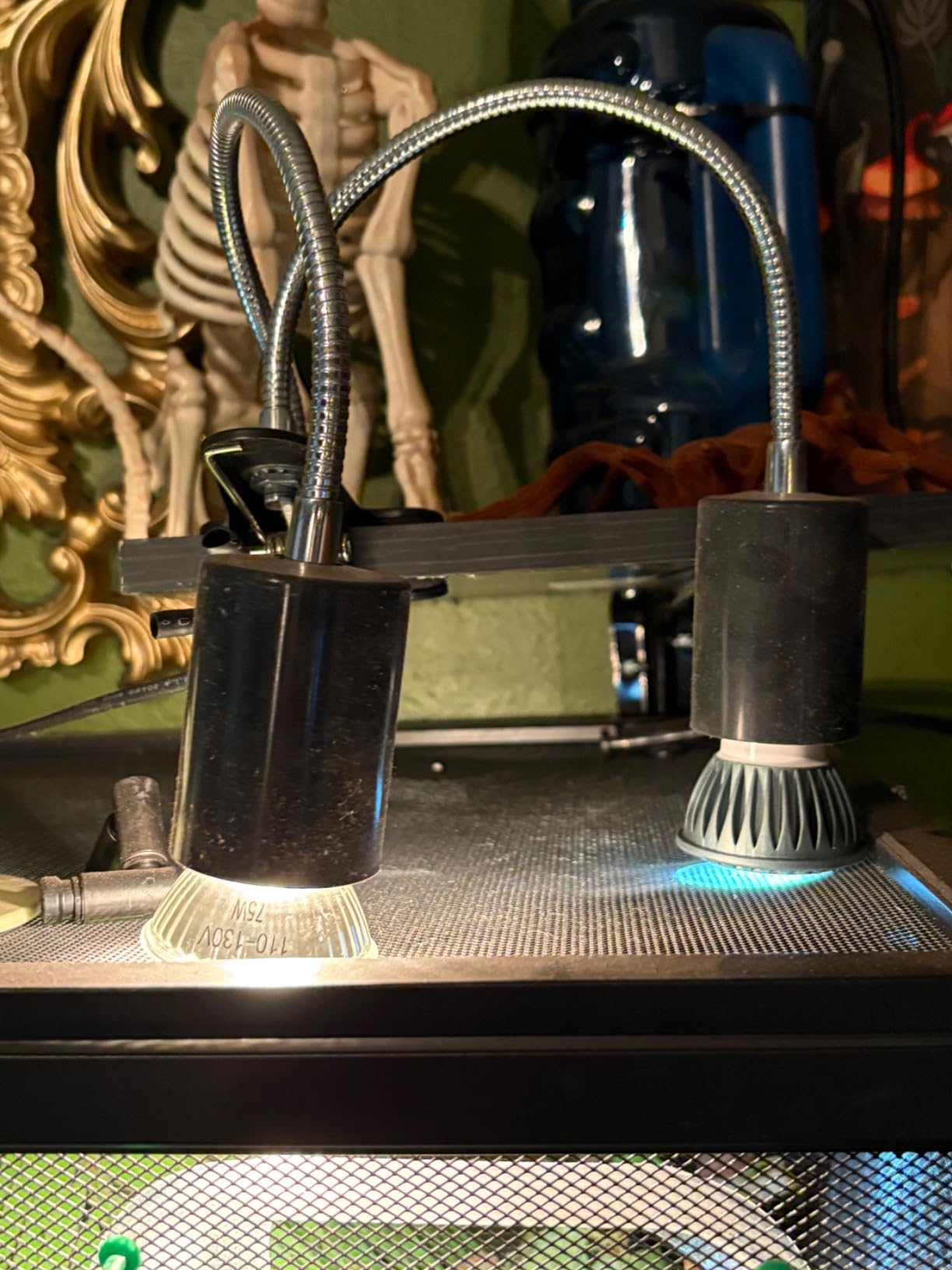
Owners treat it as an affordable add-on, pairing it with a basking lamp for heat and relying on the LED only for the UV component. The 5W draw is negligible to run, and the standard E26 socket means it fits the lamp holders most people already own.
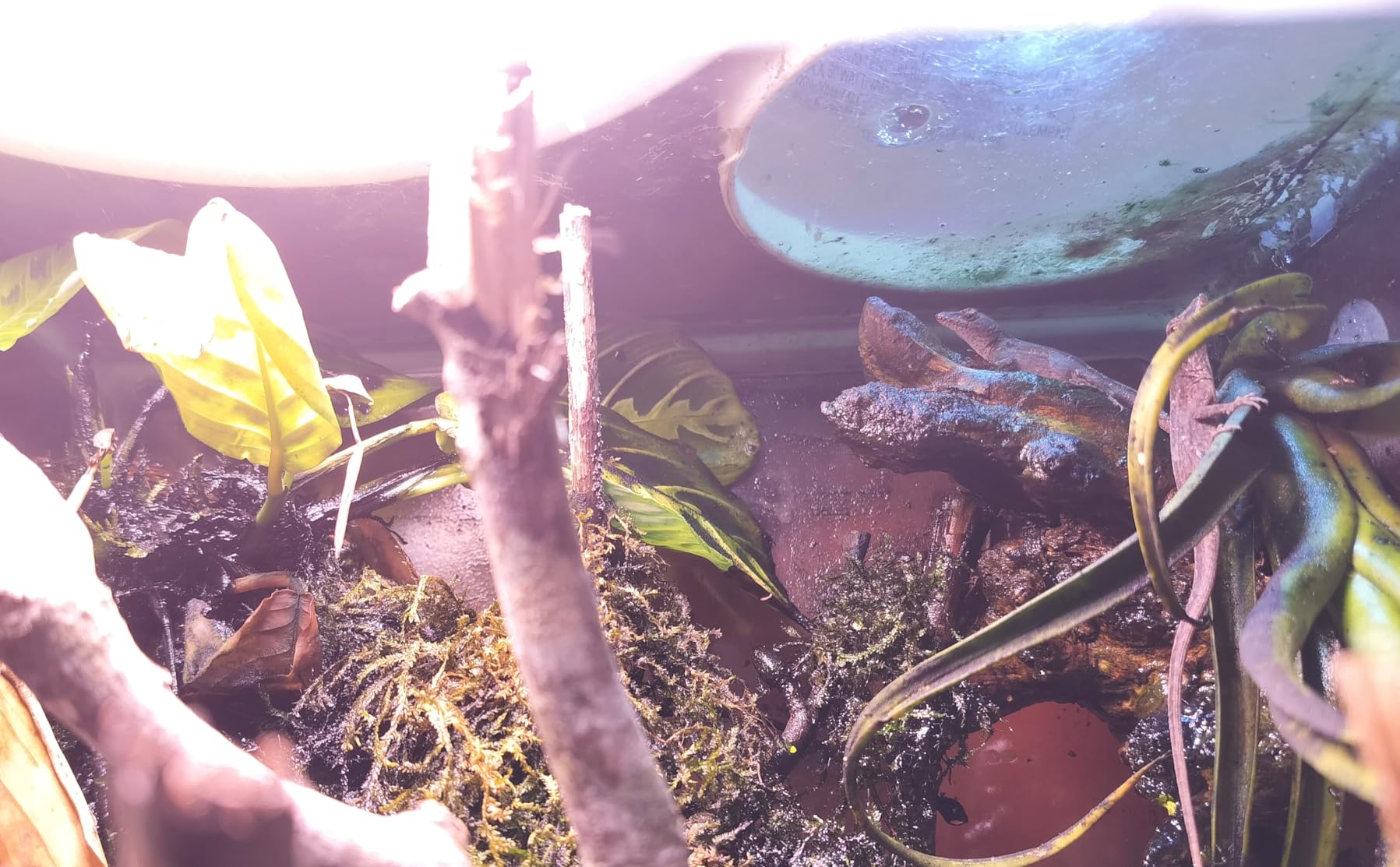
Set expectations clearly. The consensus in the reviews is that this works in smaller setups and alongside a heat lamp, but that the output is not sufficient on its own for a large adult dragon, and it contributes nothing to the thermal gradient. The desert 10.0 spectrum is also wrong for shade-loving species.
What to check before buying?
Check that you already have heat handled. This lamp adds no meaningful heat, so you still need a basking lamp or ceramic emitter sized to your enclosure.
Check the distance you can hold it at. UV readings fall off quickly with distance, and a low-output source only works inside a fairly tight range.
When another option fits better?
Skip it if this is your only light source for a full-size adult. The 5W output will not carry a 4-foot enclosure on its own.
Skip it for a mixed collection with forest species. There is no lower-output mode here, so a leopard gecko in the same room would be exposed to desert-level UV it should not receive.
How Far Should a UVB Light Sit From a Bearded Dragon?
Distance is the number one thing that goes wrong, and getting it wrong makes an excellent lamp perform like a weak one. Two variables decide it: how strong the lamp is, and whether it sits above a mesh screen or inside the enclosure.
Tube length. Choose a tube roughly 50% to 80% of the enclosure’s length, so the animal can move out of the brightest area when it wants to.
Over a mesh top. Mount the fixture 7 to 11 inches above the basking surface, and measure from the tube to the surface rather than to the screen.
Mounted inside. Inside the enclosure the same tube should sit 12 to 18 inches from the basking surface, because nothing is filtering the output.
Screen material. Mesh typically blocks 30% to 45% of UV, and fine metal mesh and coated screens block more than wider plastic mesh. Bamboo and wood screens are worse still.
Compacts and spirals. A dome bulb runs 6 to 10 inches above the surface at most, which is exactly why we do not recommend it as a primary source.
Wattage is a separate job from distance. Use 24W for a 24-inch-wide enclosure, 39W for 36 inches, and 54W for 48 inches. A 24W tube stretched across a 48-inch enclosure looks tidy and quietly delivers a dose that is well short of what a growing juvenile needs.
If you already own a fixture, the decision is easy. Buy a tube that matches the fixture’s length and wattage rating and stick to a desert 10% to 14% output. If you are starting from nothing, a combo kit with the hood and the tube is one purchase instead of two, and it removes the most common compatibility mistake.
Verify rather than assume. A UVI meter is an inexpensive tool, and held at the basking surface it should read somewhere in the 4.0 to 6.0 range for a healthy adult. If it reads far lower, the fix is usually moving the fixture, shortening the distance, or testing with the screen removed to see how much the mesh is costing you.
One last filter on the listing itself. Kit names often lead with the fixture and bury the percentage further down, so scroll to the specification line before you add anything to a basket, and treat 2.4% and 7% as automatic no for a bearded dragon.
Bearded Dragon UVB Buying Guide: Seven Checks Before You Buy
Check the percentage on the box, not the listing photo. Desert species need 10% to 14%. Retail carousels are crowded with 2.4% and 7% shade-dweller kits that are built for forest geckos and that look almost identical in a thumbnail. This is the single most expensive mistake available to a new keeper.
Check the format against your enclosure. A linear T5 HO tube covers a basking surface. A compact or spiral bulb covers a spot. Neither is wrong, but they answer different problems, and buying a compact for a 4-foot adult tank is a common and disappointing outcome.
Check the fixture quality if you already have one. The reflector shape, the ballast, and whether the housing is aluminum or plastic all change the amount of UV that reaches the animal. A bare bulb in an open dome loses a meaningful share of its output in every direction that is not down.
Check the mounting position. Above a mesh screen the fixture sits closer, because the screen filters part of the output. Inside the enclosure it sits higher, because nothing is in the way. Mount it once and then measure the result rather than guessing from the manual.
Check the photoperiod you will actually run. Bearded dragons do best on roughly 10 to 12 hours of light a day, with the UVB on during the bright part of that window. Shortening the day in winter is a natural seasonal change, and lengthening it in summer is a normal adjustment, but the light should always be on a timer.
Check that a UV gradient is possible. A long tube with a shaded basking area lets the animal regulate its own dose. A single hot spot does not, and that is the behavioural argument against compact bulbs as a primary source.
Check the replacement interval and plan for it. T5 HO tubes are generally changed every 12 months, and T8 tubes every 6 to 12 months, because the phosphor ages even while the lamp still glows normally. Set a calendar reminder rather than waiting for a visible failure.
Signs Your Bearded Dragon Is Not Getting Enough UVB
MBD develops slowly, which is exactly why it goes unnoticed until it is advanced. If you are seeing any of the following, get the lighting fixed now and book an exotic vet, because the bone changes do not reverse on their own.
Swollen or rubbery-looking jaw and limbs, or a jaw that looks wider than the skull behind it
Bent or kinked limbs, bowed legs, or a spine that curves along the tail
Tremors in the head, feet or whole body, and unusual difficulty walking or climbing
A lethargic dragon that basks for long stretches without moving to regulate its own temperature
Stunted growth in a juvenile, or an adult that has lost muscle mass along the limbs and tail
Soft, misshapen claws, a frequent early sign keepers often dismiss as a growth quirk
A bulb that is lit is not necessarily working. Phosphor degrades and output drops while the lamp still glows, which is why keepers on the forums so often report lighting that looks fine and a dragon that is still showing signs. Replacing the tube on schedule is cheaper than treating the result.
If bulbs are dying repeatedly, triage it in this order: confirm the tube itself is the problem by testing a known-good tube, check the ballast and wiring, and remove any dimmer or controller that might be driving the tube below its operating range. Keepers report early failures linked to dimming equipment often enough that it is worth ruling out.
Frequently Asked Questions
What is the best UV strip light for a bearded dragon?
A linear T5 High Output fluorescent tube rated at 10% to 14% UVB is the best UV strip light for a bearded dragon, because it spreads usable UV evenly along the whole basking surface. Our top pick is the Zoo Med ReptiSun 10.0 T5 HO 24W two-pack, which holds the highest owner rating in our group. Match the tube length to roughly 50% to 80% of your enclosure length, and place it 7 to 11 inches above the basking surface if it sits over a mesh top.
Are UVB lights good for bearded dragons?
Yes, a proper UVB light is essential rather than optional. UVB triggers vitamin D3 production in the skin, and D3 is what allows a bearded dragon to absorb calcium from its diet. Without enough UVB, that calcium passes through unused and the result is metabolic bone disease, showing up as soft bones, a swollen jaw, tremors and a shortened life. Glass and plastic block almost all UVB, so a heat lamp alone behind glass is not enough.
Can too much UVB hurt a bearded dragon?
Too much direct UV is genuinely harmful, and the risk comes from the animal staring into a concentrated source. Compact and spiral bulbs throw a narrow beam, forcing a dragon to sit almost on top of them to get a usable dose, and keepers report eye problems including photokeratoconjunctivitis in that situation. The fix is not more UVB but a better shape of light: a long tube with a shaded basking area lets the dragon self-regulate by moving out of the beam.
How many hours a day do bearded dragons need UVB light?
Bearded dragons do best on roughly 10 to 12 hours of light a day, with the UVB on during the brighter part of that window. Run it on a timer so the day length stays consistent, since an irregular photoperiod disrupts the circadian rhythm. Seasonal variation is natural and healthy, so shortening the day in winter and lengthening it in summer is fine. UVB is not needed overnight, and leaving it on all night offers no benefit.
How often should I replace my bearded dragon’s UVB bulb?
Replace a T5 HO tube every 12 months and a T8 tube every 6 to 12 months, whether or not it still lights up. The phosphor coating inside the lamp ages and delivers less usable UV long before the filament fails, which is why a glowing bulb can be starving your dragon. Set a calendar reminder rather than waiting for a flicker. If your dragon shows symptoms of deficiency, replace the tube immediately and consult an exotic veterinarian.
Which UVB Light Should You Buy in 2026?
The best UVB lights for bearded dragons in 2026 all share one trait: a linear T5 HO tube at 10% to 14% UVB, sized to your enclosure and mounted close enough to deliver a usable dose. Start with the Zoo Med ReptiSun 10.0 T5 HO 24W two-pack if you own a fixture already, and pick the REPTI ZOO or Hygger Zoo combo kits if you want the hood and the tube in one box.
Whatever you choose, measure the result with a UVI meter rather than trusting the packaging, and set a 12-month replacement reminder the day you install it. If your dragon is already showing signs of deficiency, fix the lighting today and book an exotic vet in parallel.