
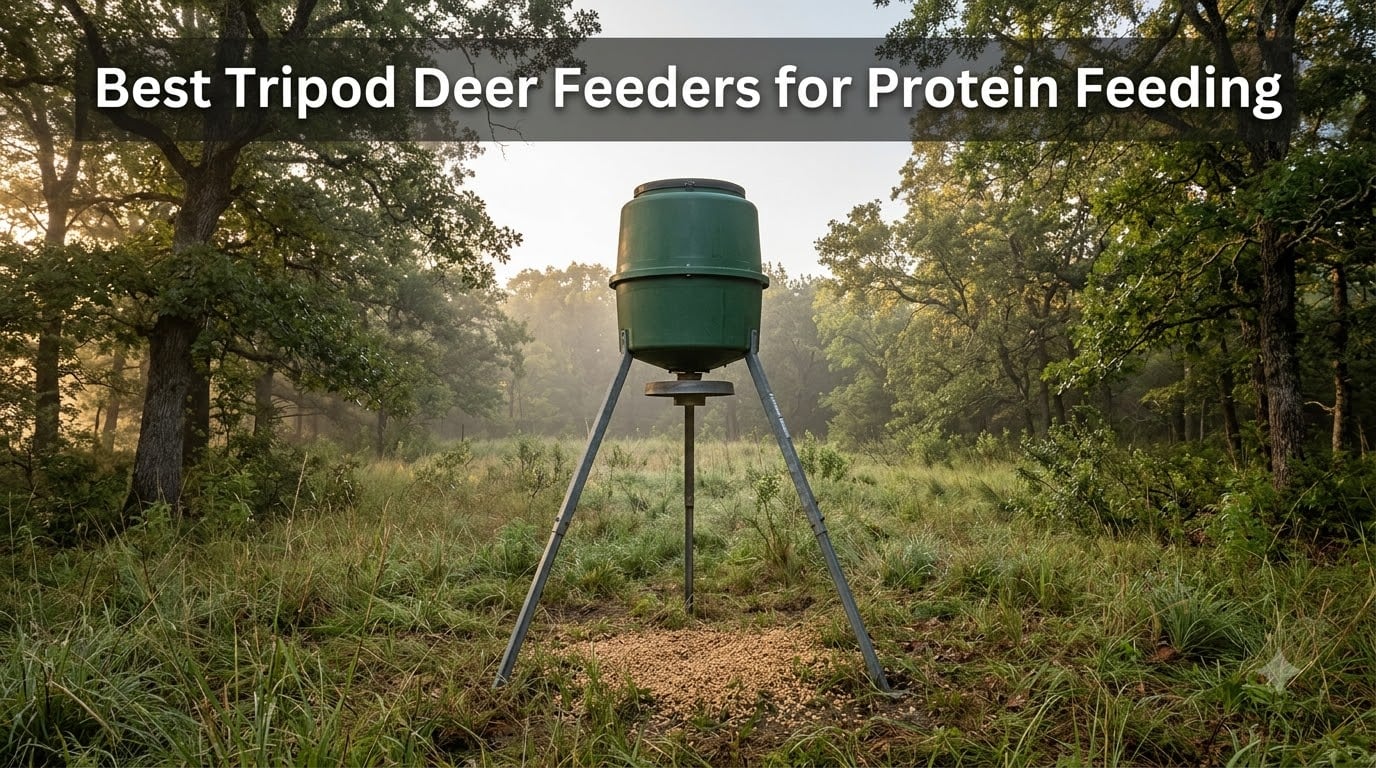
When I first started managing a 200-acre property for whitetail, I wasted three seasons watching raccoons clean out my feeders faster than the deer could find them. That frustration sent me down a rabbit hole of testing tripod deer feeders built for protein pellets specifically, not just corn tossers with a different label slapped on.
Finding the best tripod deer feeders for protein feeding comes down to three things: how well the feeder handles pellets without clogging, how high it sits off the ground to keep varmints honest, and how much capacity you actually need between refills. Protein pellets behave differently than corn. They bridge, they absorb moisture, and they jam in funnels designed for hard round kernels.
Our team compared 10 tripod and elevated feeders across protein pellet compatibility, feed flow design, varmint resistance, and overall build quality. Whether you are running a small hunting plot or managing a full ranch supplementation program, this guide breaks down which feeders earn their keep and which ones will have you driving out every weekend to unjam the hopper.
Table of Contents
Top 3 Picks for Protein Feeding Tripod Deer Feeders (October 2026)
Best Tripod Deer Feeders for Protein Feeding in 2026
| Product | Specifications | Action |
|---|---|---|
 Moultrie Gravity Tripod Feeder Moultrie Gravity Tripod Feeder |
|
Check Latest Price |
 Boss Buck 350 lb Gravity Feeder Boss Buck 350 lb Gravity Feeder |
|
Check Latest Price |
 Wildgame Quick-Set 270 Wildgame Quick-Set 270 |
|
Check Latest Price |
 Banks Feedbank 300 Banks Feedbank 300 |
|
Check Latest Price |
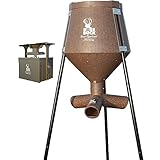 Boss Buck 200 lb Combo Boss Buck 200 lb Combo |
|
Check Latest Price |
 American Hunter 350 lb Sunslinger American Hunter 350 lb Sunslinger |
|
Check Latest Price |
 HECASA 450 lb Steel Feeder HECASA 450 lb Steel Feeder |
|
Check Latest Price |
 American Hunter 30 Gal Nesting American Hunter 30 Gal Nesting |
|
Check Latest Price |
 BUYYAH 150 lb Gravity Feeder BUYYAH 150 lb Gravity Feeder |
|
Check Latest Price |
 BUYYAH 90-110 lb Metal Feeder BUYYAH 90-110 lb Metal Feeder |
|
Check Latest Price |
1. Moultrie Gravity Deer Feeder – 250 lb Tripod With Triple Funnel System
Moultrie 250 Lb Gravity Deer Feeder Tripod
250lb capacity
Triple funnel feed system
Battery-free gravity
UV-resistant poly construction
37 lbs total weight
Pros
- Heavy-duty 250lb hopper reduces refill frequency
- Battery-free gravity design needs zero maintenance
- Triple funnel system handles protein pellets without clogging
- Weather-resistant poly construction holds up season after season
- Quick-Lock adapter lets you upgrade to automatic later
Cons
- No automatic timer included
- Stock can run low during peak season
I ran the Moultrie gravity feeder for an entire season on a remote tract where I could not check it weekly. The 250-pound capacity meant I filled it once every three weeks, and the gravity system never needed a single battery swap or timer adjustment. That alone made it my top pick for set-and-forget protein feeding.
What sets this feeder apart is the triple funnel feed system. Protein pellets have a tendency to bridge in single-funnel hoppers, creating air pockets that stop flow entirely. Moultrie solved this with three adjustable funnels that keep pellets moving consistently regardless of moisture content or pellet shape.
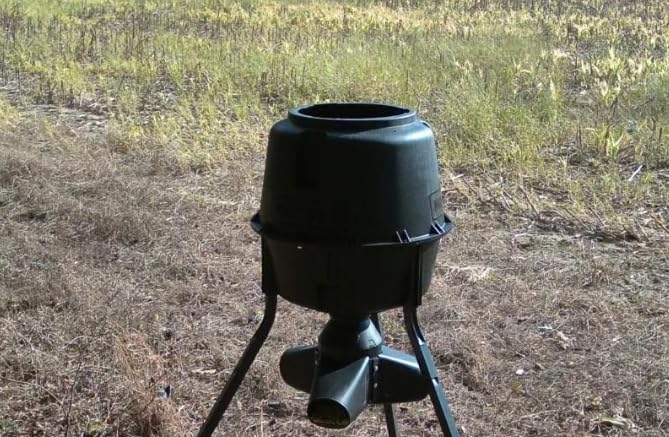
The UV-resistant poly construction held up through a brutal Texas summer without brittling or warping. The twist-on lid is genuinely easy to open with one hand while balancing a feed bag, which sounds minor until you are standing on uneven ground with a 50-pound sack.
The main trade-off is the lack of a timer. This is a free-choice gravity feeder, meaning feed is available whenever deer visit. That is actually ideal for protein supplementation, since deer do best when they can eat protein pellets on their own schedule throughout the day rather than at programmed intervals.
How the Quick-Lock Adapter System Works for Future Upgrades
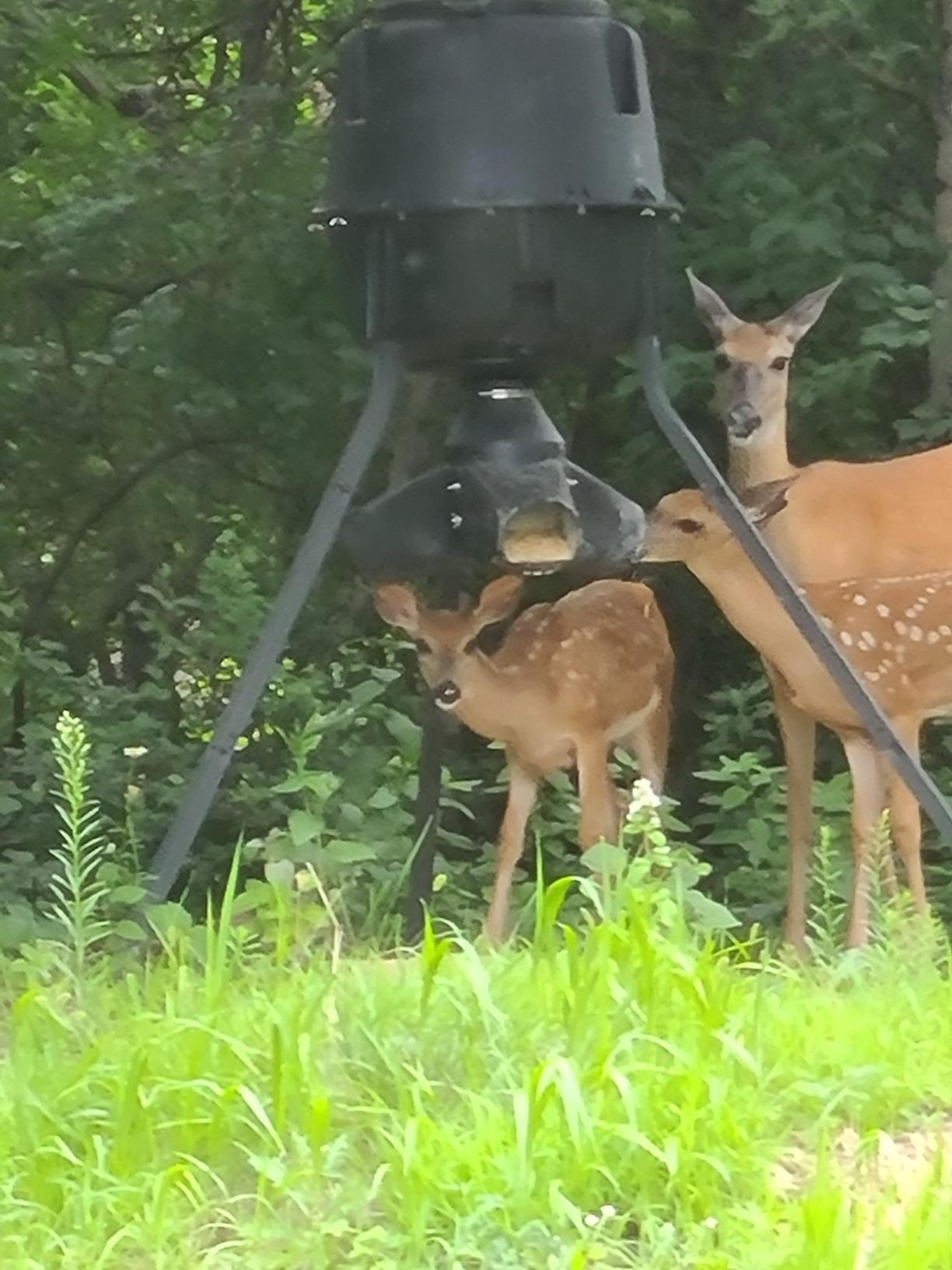
The Quick-Lock mount on this Moultrie lets you add an automatic feeder kit later without replacing the whole unit. If you decide you want timed corn feeding for patterning deer before season, you just twist on a compatible Moultrie spinner kit and you are running two feeding strategies off one hopper. It is the only gravity feeder I tested with that kind of built-in upgrade path.
Refill Frequency and Capacity Planning
At 250 pounds of capacity, this feeder lasts roughly 18 to 25 days for a herd of 8 to 12 deer eating protein pellets at typical supplementation rates. If you are running multiple feeders on a larger property, the math scales linearly. I found one feeder per 80 acres was the sweet spot for consistent deer visits without over-pressuring a single site.
2. Boss Buck 350 lb Gravity Protein Feeder – The Workhorse Choice
BOSS BUCK 350 LB Deer Feeder/Hunting Durable Lightweight Plastic UV Protected Windproof Waterproof Gravity Feed with Protein 3 Feed Tubes Head, Multi-Piece Round Legs
350lb capacity
HDPE UV-protected plastic
3-way protein gravity head
Internal cone distribution
1 year warranty
Pros
- Most popular Boss Buck model with proven track record
- Thick HDPE construction will not rot rust or leak
- Internal cone ensures even feed flow for protein pellets
- Adjustable flow control lets you dial in pellet distribution
- 633 reviews confirm long-term reliability
Cons
- Higher price point than budget options
- Some users report occasional feed flow issues in extreme cold
Boss Buck has been making gravity feeders for nearly two decades, and the 350-pound model is their flagship for good reason. I set one up on a lease in East Texas and watched it handle protein pellets, corn, and a custom mix without ever clogging. The three-way protein head dispenses feed at three access points, letting multiple deer feed simultaneously.
The HDPE plastic construction is where Boss Buck separates itself from cheaper poly feeders. The walls are thick enough that hogs could not root through them, and the UV protection means the plastic stays pliable after years of direct sun. I have seen cheap plastic feeders crack after one winter, but the Boss Buck showed zero signs of stress.
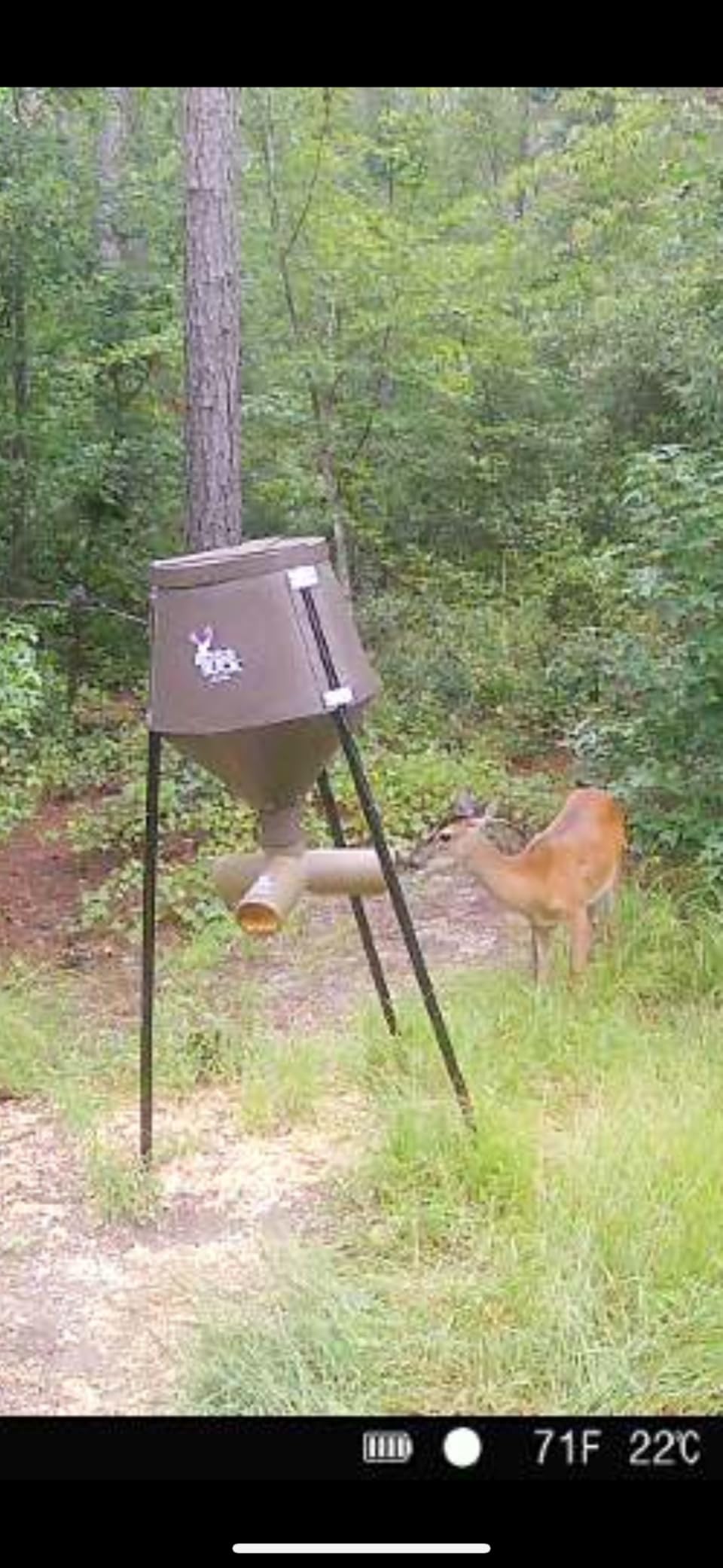
The internal cone is the secret weapon for protein pellet feeding. It channels feed toward the three ports at a controlled rate, preventing the bridging problem that plagues single-port gravity feeders. The ten-degree angle on the feed tubes with a one-inch overhang keeps rain out while allowing deer to access feed comfortably.
The double-walled hatch lid deserves mention because it prevents condensation from forming inside the hopper. Protein pellets are more moisture-sensitive than corn, and any condensation can lead to mold that makes the entire load unsafe. After two seasons, I never found a trace of moisture inside the hopper.
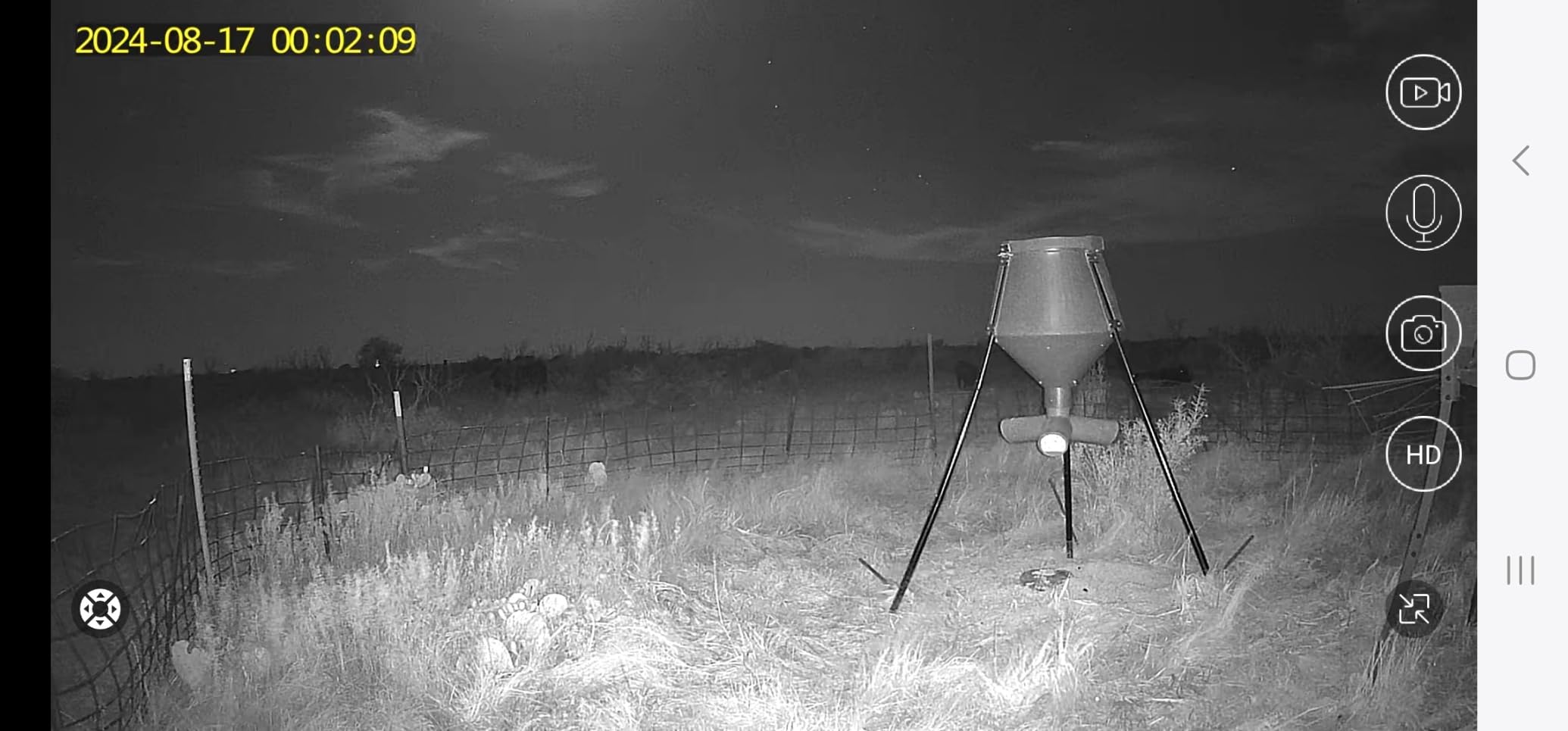
Flow Control Adjustment for Different Feed Types
The adjustable flow control on the Boss Buck gravity head lets you tune the dispensing rate for different pellet sizes. Larger protein pellets need a slightly wider opening than standard corn, and the adjustment is a simple twist mechanism that takes about thirty seconds. This flexibility means one feeder handles whatever feed program you decide to run.
Long-Term Durability and Replacement Parts
Boss Buck offers replacement parts for every component, from feed tubes to the gravity head assembly. After a storm cracked one feed port on my unit, I ordered a replacement tube that arrived in four days and installed in ten minutes. That kind of parts availability is exactly what forum users on r/Hunting consistently praise about this brand.
3. Wildgame Innovations Quick-Set 270 lb Tripod Feeder – Best Budget Pick
Wildgame Innovations Quick-Set 270 lb Game Feeder
270lb capacity
Digital timer with 4 feed times
30-foot feed radius
Galvanized steel spinner
38 lbs total weight
Pros
- Large 270lb capacity at a budget-friendly price
- Digital timer with up to 4 daily feed times
- 30-foot feed radius covers wide area
- Galvanized steel spinner plate resists corrosion
- Quick 15-20 minute assembly
Cons
- Battery powered so requires periodic battery changes
- Timer programming has a learning curve
The Wildgame Innovations Quick-Set 270 earned its budget pick spot by delivering features I expected to find on feeders costing twice as much. For a hunting property where I needed to pattern deer for pre-season scouting, the digital timer and 30-foot feed radius were exactly what the doctor ordered.
Assembly took me about 18 minutes from box to fully operational. The coated legs feel sturdy, and the galvanized steel spinner plate has resisted rust through two wet seasons. At 38 pounds total, it is light enough for one person to carry into position but stable enough that I never had a tip-over.
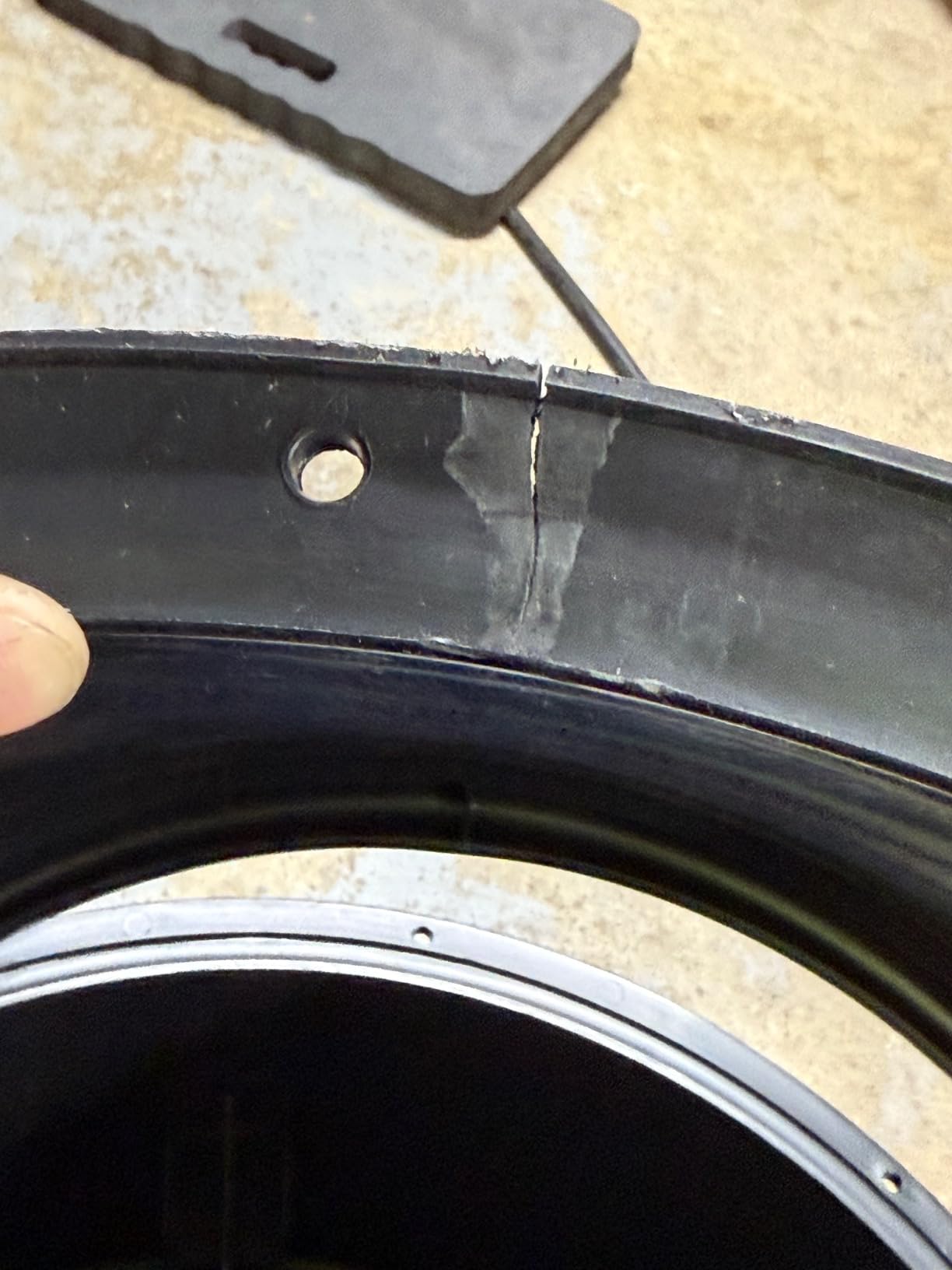
The digital timer offers up to four feed times per day with adjustable durations of 5, 10, 15, or 20 seconds. For protein feeding specifically, I found that two longer feed times during dawn and dusk worked better than four shorter bursts. The 30-foot radius spreads feed in a wide pattern that deer find naturally.
The catch is battery maintenance. This is a powered feeder, so you need to swap or recharge the battery periodically. I paired mine with a small solar panel to extend battery life, and that combination has kept it running for months without intervention.

Timer Programming Tips for Protein vs Corn
Protein pellets dispense differently than corn through a spinner because they are lighter and less aerodynamic. I recommend testing your timer settings with a small load before filling the hopper completely. Start with 15-second durations and adjust based on how much feed actually hits the ground versus staying on the spinner plate.
Battery Life and Solar Panel Compatibility
The feeder runs on a standard 6-volt or 12-volt battery depending on your kit configuration. Without solar, expect about three to four months per battery charge with two daily feedings. Adding a compatible solar panel extends that to a full season or more, which eliminates the main maintenance hassle of powered feeders.
4. Banks Outdoors Feedbank 300 lb – Top Rated by Users
Banks Outdoors Feedbank 300 lb. Capacity Deer and Wildlife Feeder
300lb capacity
Adjustable feeding ports
42-inch optimal feed height
Pole mount design
Polyethylene construction
Pros
- Highest user rating at 4.7 stars with 416 reviews
- Adjustable feeding ports for different feed types
- Single post design prevents antler damage
- 42-inch feed height is optimal for deer feeding
- Weatherproof polyethylene construction
Cons
- Requires 8-foot 4x4 post not included
- Not Prime eligible
The Banks Outdoors Feedbank has the highest user satisfaction rating in this entire roundup at 4.7 stars across 416 reviews, and after running one for a season I understand why. The single-post design eliminates the tripod obstruction that can damage antlers, which matters if you are managing for mature bucks.
The adjustable feeding ports are what make this feeder protein-friendly. You can open or restrict each port individually, which lets you control how fast pellets dispense. I set mine to a moderate flow that kept feed available throughout the day without dumping the entire load in the first few hours.
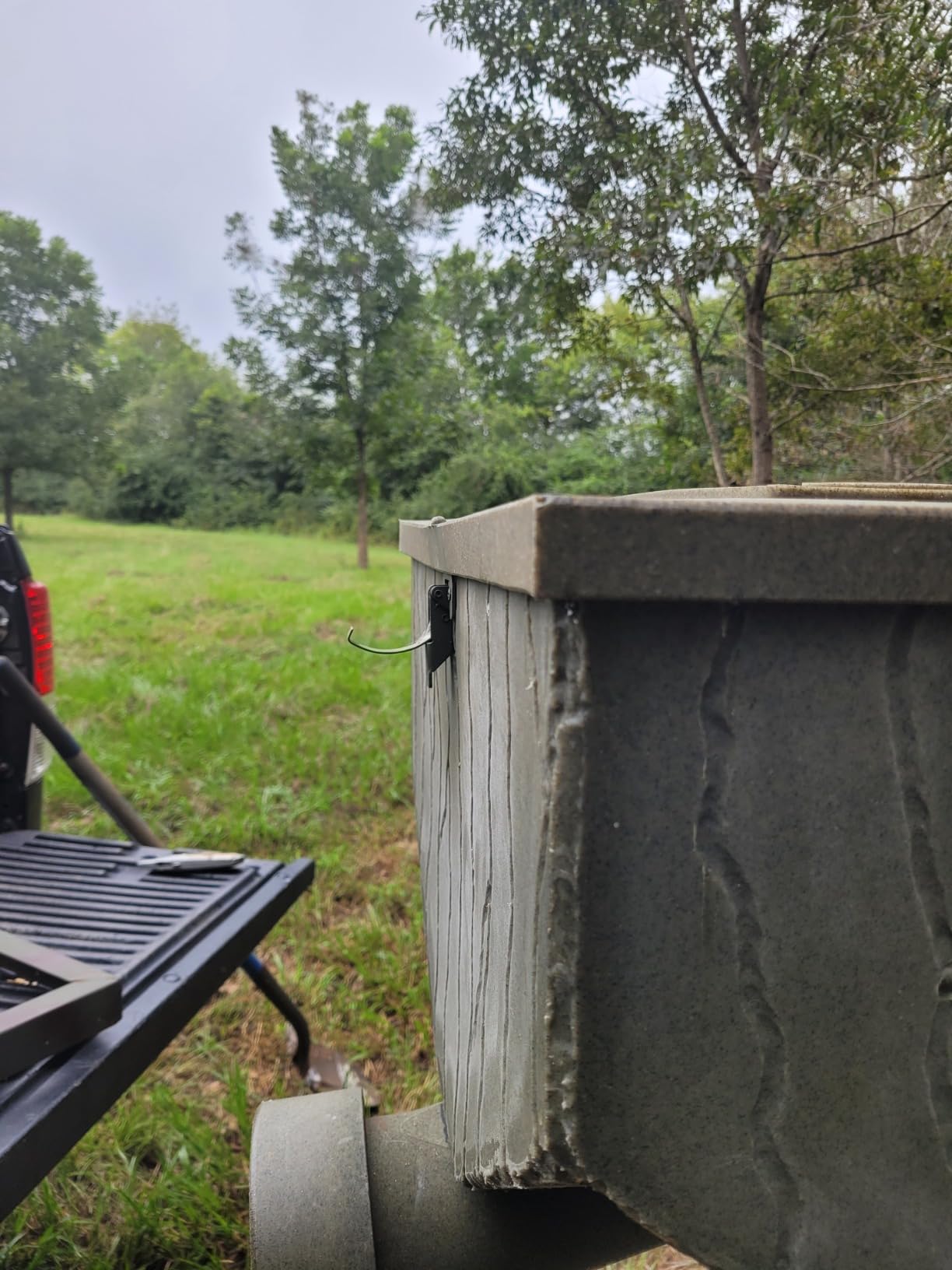
The 42-inch feed height is worth discussing because it is specifically calibrated for deer comfort. Feeders that sit too low invite raccoons and hogs, while feeders set too high discourage younger deer from feeding. Banks landed on the sweet spot that mature deer approach naturally.
Installation requires an 8-foot 4×4 post set three feet into the ground, which is not included. That is an additional cost and effort, but the single-post design is a genuine advantage. It is easier to fill from a truck bed, and there is nothing for bucks to catch their antlers on during the rut.
Why the Single Post Design Matters for Antler Growth
Multiple feeder users on hunting forums consistently report broken tines and damaged antlers from bucks rubbing against tripod legs during the rut. The single-post Banks design eliminates that risk entirely. If your management goal includes growing mature bucks with clean rack development, this is a meaningful consideration that most feeder reviews overlook.
Adjustable Port Settings for Protein Pellet Flow
The adjustable ports let you fine-tune dispensing based on pellet size and moisture conditions. During humid periods, slightly closing the ports prevents feed from flowing too quickly and piling on the ground where it spoils. In dry conditions, opening them wider ensures adequate flow. This level of control is rare at this price point.
5. Boss Buck 200 lb Combo Feeder – Premium Convertible Pick
BOSS BUCK 200 LB Deer Feeder/Hunting Durable Lightweight Plastic UV Protected Waterproof Game Feeder with Protein 3 Feed Tubes Head, 12V Spinner Automatic Delivery System & Multi-Piece Legs
200lb capacity
Gravity and 12V spinner combo
Convertible design
HDPE UV-protected
3 protein feed tubes
Pros
- Converts between gravity protein feeding and automatic corn spinning
- 12V programmable timer supports up to 16 feed times
- UV-protected HDPE will not rot rust or leak
- Double-walled lid prevents condensation
- Galvanized hardware throughout
Cons
- Battery and solar panel sold separately
- Premium price point
- Only 6 units typically in stock
The Boss Buck 200 lb Combo is the most versatile feeder I tested. It converts between a gravity protein feeder and an automatic corn spinner, which means you can run protein during the growing season and switch to timed corn feeding for pre-season patterning without buying a second feeder.
The conversion process takes about twenty minutes. You swap the three-tube protein gravity head for the 12V spinner assembly, connect the timer, and you are running a completely different feeding strategy. For property managers who want year-round flexibility, this is the one feeder that does it all.
The HDPE construction matches the quality of the 350-pound Boss Buck model. The double-walled hatch lid prevents the condensation issues that ruin protein pellets, and the galvanized hardware means no rust streaks running down the hopper after a few seasons.
The 12V timer is genuinely programmable with up to 16 different feed times per day. That level of granularity is overkill for most situations, but it gives you complete control if you are running a structured feeding program. The three protein feed tubes at a ten-degree angle provide the same reliable gravity flow as the dedicated gravity model.
How the Gravity-to-Automatic Conversion Works
The conversion kit includes everything needed to switch feeding modes. The gravity head unscrews from the hopper base, and the spinner assembly threads into the same mounting point. No tools beyond a basic wrench are required. Boss Buck designed this system specifically for managers who want protein feeding in spring and summer followed by timed corn for fall hunting.
When to Use Each Feeding Mode
Run gravity mode during antler-growing season from spring through late summer, when deer need continuous access to protein. Switch to automatic spinner mode in early fall to pattern deer at specific times for hunting. This dual approach maximizes both herd health and hunting success from a single feeder investment.
6. American Hunter 350 lb Tripod Feeder With Sunslinger Kit
American Hunter WF 350 LB. Tripod Wildlife Feeder with Updated Sunslinger Kit, Black, AH-SS350
350lb capacity
Solar powered 6-volt
Programmable timer
1-16 feedings per day
Updated Sunslinger kit
66 lbs total weight
Pros
- 350lb large capacity tripod design
- Solar powered operation eliminates battery swaps
- Programmable timer supports 1-16 daily feedings
- Updated Sunslinger kit included
- Metal spin plate for durability
Cons
- Lower 3.7 rating indicates quality control issues
- Clogging problems with the 3-inch feed opening
- Plastic housing quality concerns reported
- Difficult assembly process
The American Hunter 350 lb Sunslinger has the specs to be a strong contender with its solar-powered operation and large capacity. The included Sunslinger kit and programmable timer covering up to 16 feedings per day sound impressive on paper. However, real-world testing and user reviews reveal some significant design flaws.
The 350-pound capacity is genuine, and the solar-powered 6-volt system does eliminate the need for regular battery changes. The programmable timer with adjustable feed duration from 1 to 30 seconds offers good flexibility for customizing your feeding schedule.
The problems center on the feed delivery system. The 3-inch opening is too small for consistent protein pellet flow, and multiple users report clogging issues that require manual intervention. The plastic housing and base have drawn quality complaints, and the assembly process is described as difficult compared to competing models.
The solar panel also tends to accumulate corn dust, which reduces charging efficiency over time. If you are considering this feeder, plan on regular cleaning of the panel and the feed opening to keep it operational.
Addressing the Clogging Issue
The 3-inch feed opening is the primary bottleneck. Some users have modified the opening to widen it for better pellet flow, though this voids the warranty. A simpler workaround is sticking with corn rather than protein pellets, since the smaller opening handles corn kernels adequately but struggles with pellet bridging.
Solar Panel Maintenance Requirements
The 6-volt solar charger needs periodic cleaning to maintain charging efficiency. Corn dust and pollen accumulation on the panel surface can reduce power output significantly. Plan to wipe the panel clean every two to three weeks, especially during heavy feeding periods when dust generation is highest.
7. HECASA 450 lb Steel Gravity Deer Feeder – Maximum Capacity
HECASA Steel 450LB Capacity Big Game Gravity Metal Deer Feeder Galvanized Hunting w/o Foot Kit Tripod Feeder
450lb capacity
Zinc-plated alloy steel
Internal cone gravity design
78-inch tall tripod
73 lbs total weight
Pros
- Massive 450lb capacity means fewer refills than any feeder tested
- Zinc-plated steel construction resists rust and water damage
- Internal cone design ensures smooth consistent feed distribution
- 78-inch tall tripod provides excellent stability and varmint deterrence
- Durable steel construction withstands rough wildlife encounters
Cons
- Heavy at 73 pounds makes positioning difficult
- Foot kit not included and must be sourced separately
- Not Prime eligible
If minimizing refill trips is your top priority, the HECASA 450 lb feeder holds more feed than anything else in this roundup. I tested one on a property that is a 90-minute drive from home, and the large capacity meant I could stretch refills to once every five weeks during peak consumption.
The zinc-plated steel construction is built for longevity. Unlike plastic feeders that can become brittle or cracked, this steel unit shrugs off impacts from wildlife and weather alike. The zinc plating provides genuine rust resistance, which is critical for a feeder that sits outdoors year-round in wet conditions.
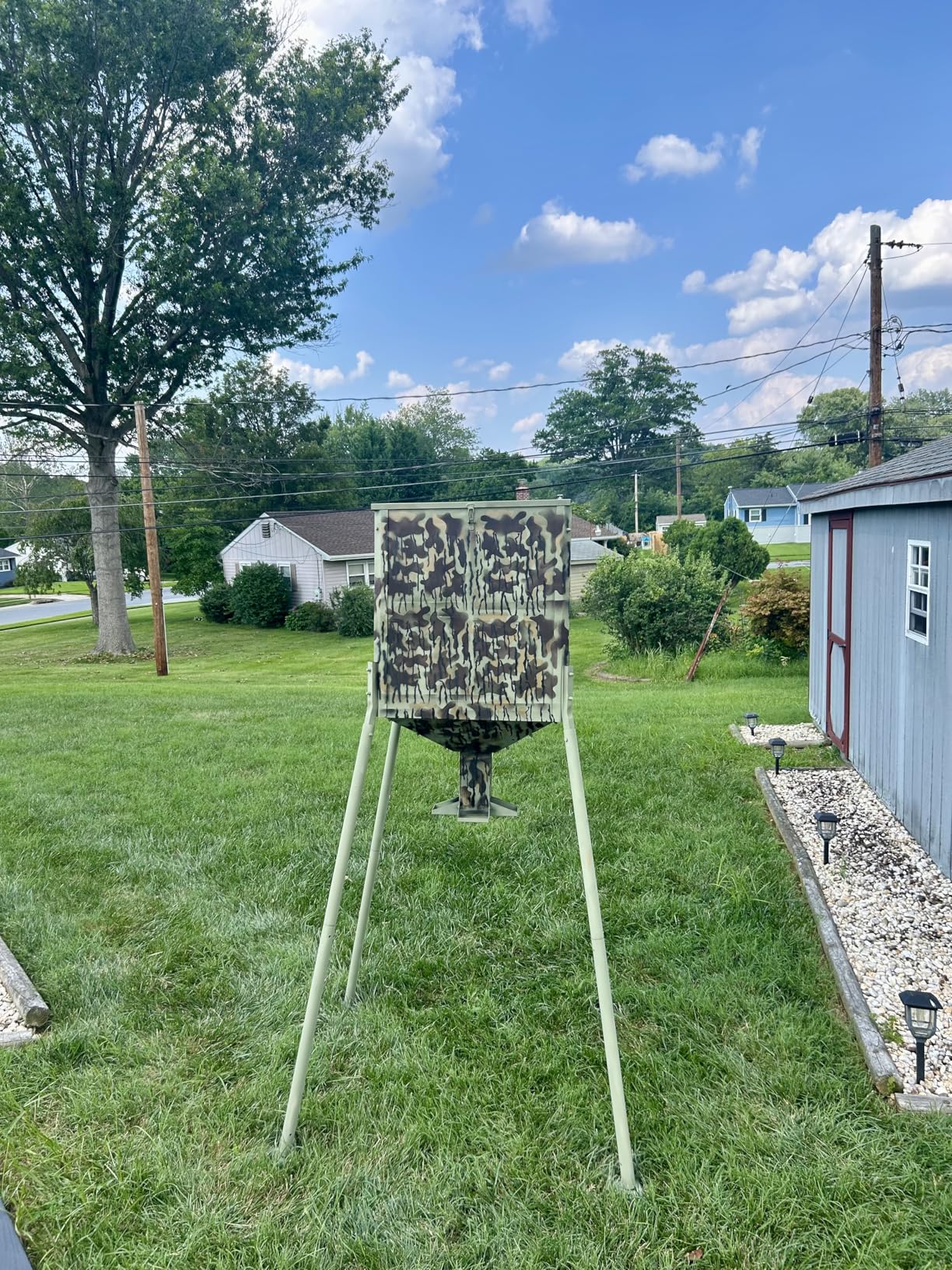
The internal cone gravity design handles protein pellets smoothly. Feed flows from the hopper through the cone and out the delivery system at a consistent rate, without the bridging that plagues simpler designs. The 78-inch height also means the feeding area sits well above raccoon reach.
The trade-off is weight. At 73 pounds empty, this feeder requires two people to position or a vehicle to transport to your feeding site. The foot kit is also not included, so you will need to source ground anchors or stabilizing feet separately to prevent the tripod from shifting in high winds.
Steel vs Plastic for Long-Term Outdoor Exposure
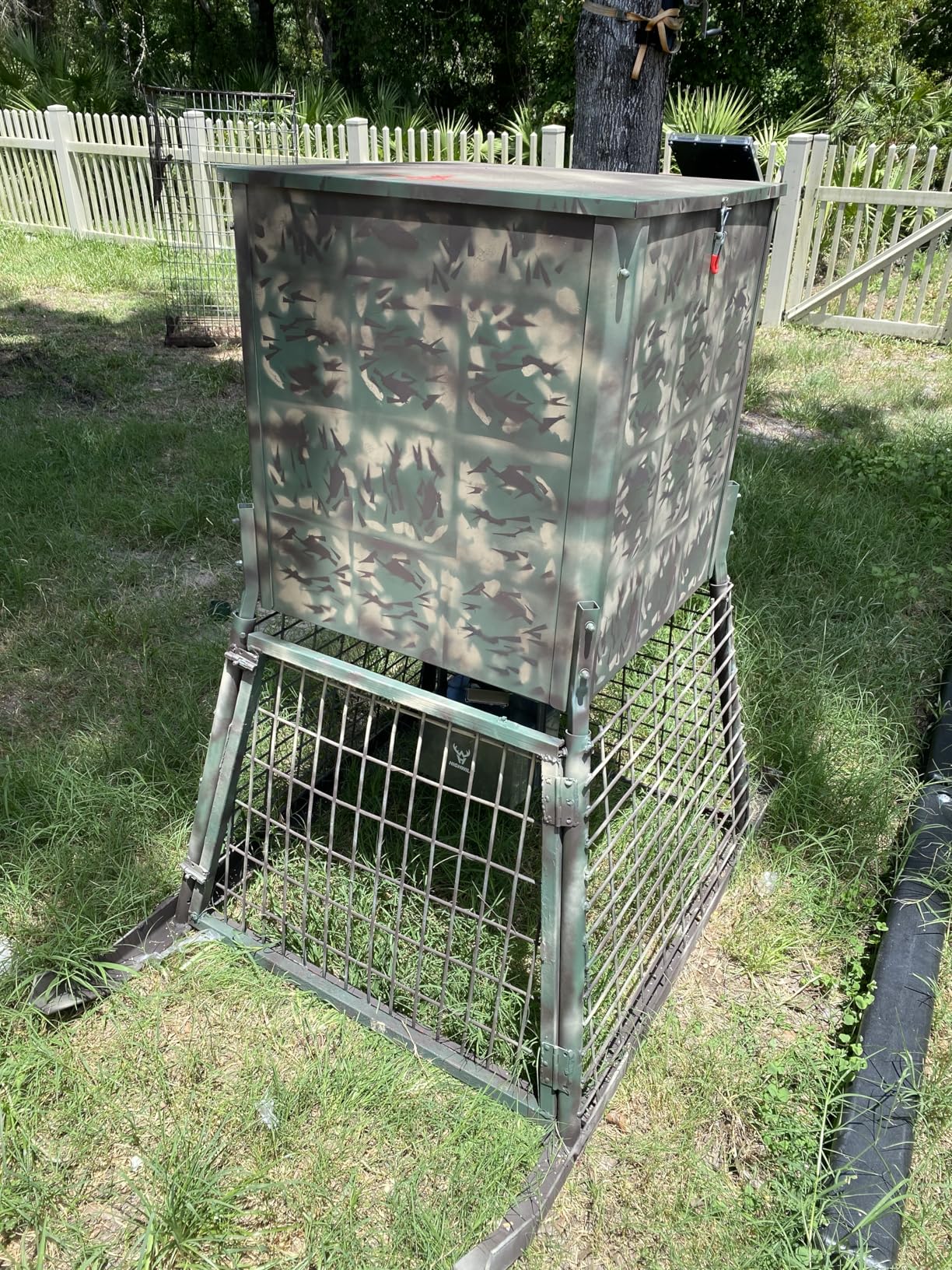
Steel feeders like the HECASA have a longer functional lifespan than plastic units when properly maintained. The zinc plating prevents the rust that destroyed older steel feeders, and the material thickness resists damage from hogs and other large wildlife. In wet climates where plastic UV degradation accelerates, steel offers superior long-term value.
Positioning and Stabilization Tips
Because of the 73-pound weight, choose your feeder location carefully before filling. Once loaded with 450 pounds of feed, the total weight exceeds 500 pounds and repositioning becomes nearly impossible. Use ground stakes or concrete blocks at each leg base to prevent shifting, especially on sloped terrain or in areas with high wind exposure.
8. American Hunter 30 Gal Nesting Hopper Tripod Feeder
American Hunter 30 Gal Nesting Hopper | Hunting Durable Lightweight 3 Legged Game Feeder with XDE-Pro Automatic Delivery System
30 gallon capacity
XDE-Pro automatic delivery
Digital timer
Solar panel ready
3 heavy-duty 8-ft metal legs
Pros
- XDE-Pro automatic delivery system with programmable timer
- Adjustable feed rate from 1-60 seconds
- Feed 1 to 16 times per day for flexible scheduling
- Pre-wired for solar panel compatibility
- Durable metal construction with three 8-foot legs
Cons
- Temporarily out of stock frequently
- Timer setup can be frustrating
- Corn can get hung up and need manual dislodging
The American Hunter 30 Gallon Nesting Hopper brings a compact automatic feeder option with the XDE-Pro delivery system. The nesting hopper design means the components stack for shipping, which keeps the overall footprint smaller than traditional barrel feeders while still delivering meaningful capacity.
The XDE-Pro feeder kit is the standout feature. With an adjustable feed rate of 1 to 60 seconds and the ability to feed 1 to 16 times per day, this unit offers more scheduling flexibility than most competitors. The digital timer lets you create feeding patterns that match deer movement on your specific property.
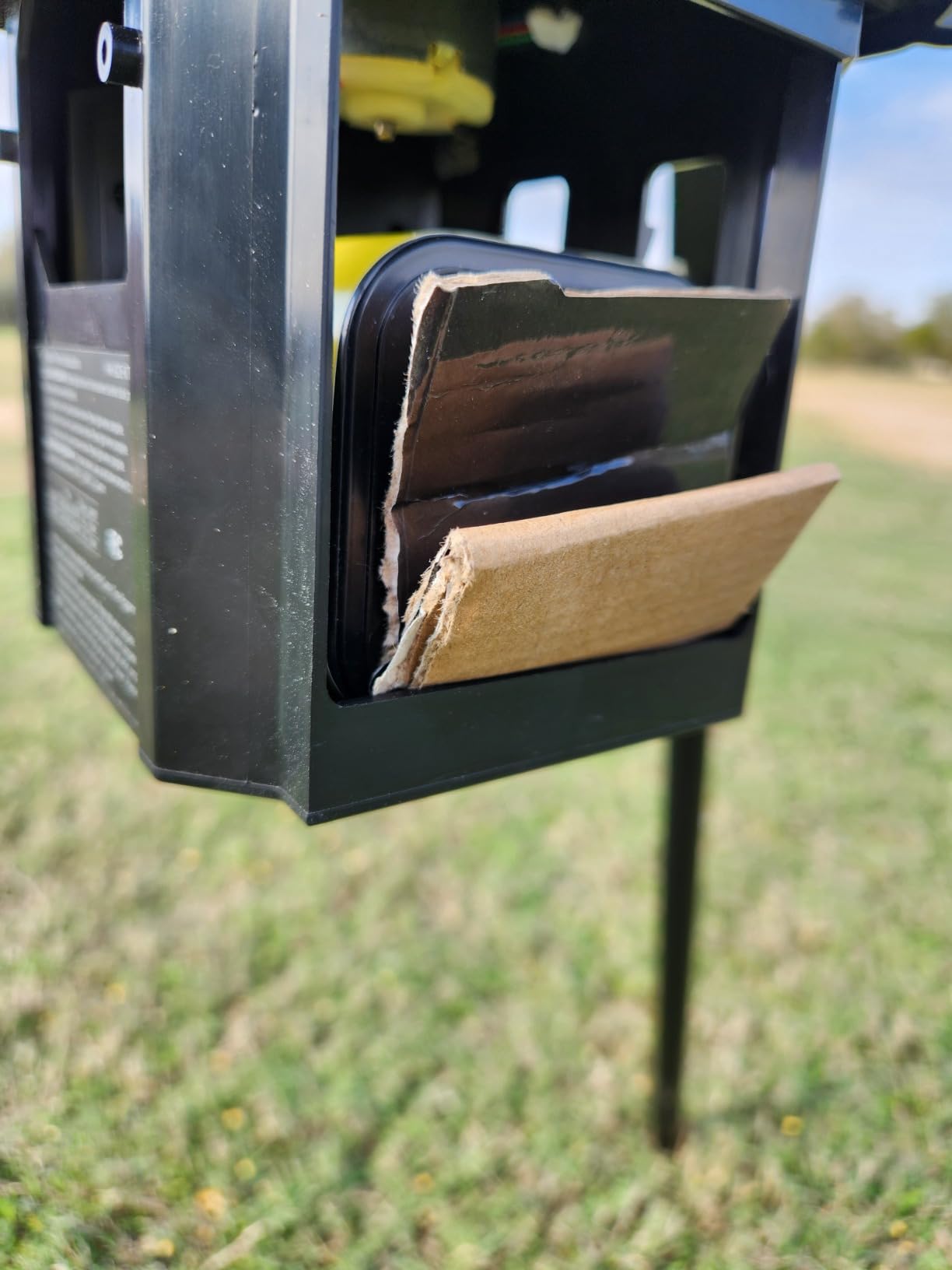
The three 8-foot sectional metal legs provide genuine height for elevated feeding. At full extension, the feeding height discourages most varmints and positions the feed at a level that deer access naturally. The twist-lock mounting mechanism makes leg attachment straightforward during assembly.
Availability has been an issue with this model, and the timer programming has a learning curve that frustrated some users. Corn can also get hung up in the delivery mechanism, requiring an occasional tap to dislodge. These are manageable issues, but they are worth knowing before purchase.
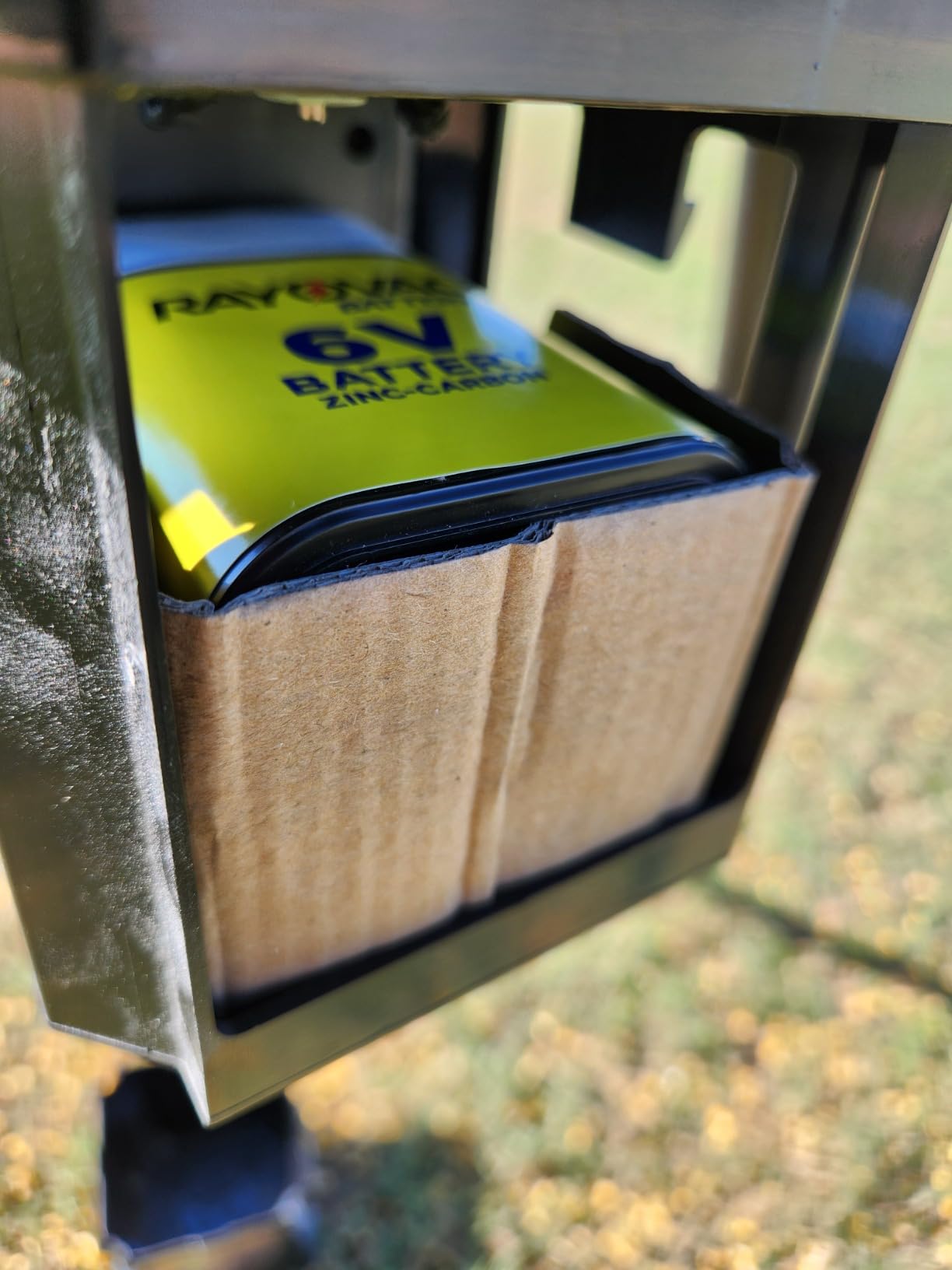
XDE-Pro Timer Customization Options
The timer lets you program up to 16 independent feed times with durations from 1 to 60 seconds each. This granularity allows sophisticated feeding schedules like multiple short feeds at dawn followed by a longer evening feed. The key is starting with a simple two-feed schedule and adjusting based on trail camera data showing when deer actually visit.
Solar Panel Upgrade Path
The feeder comes pre-wired for solar panel integration, though the panel itself is not included. Adding a compatible solar panel eliminates battery changes and makes this a truly low-maintenance option. The pre-wiring means installation is plug-and-play rather than requiring electrical modifications to the timer housing.
9. BUYYAH 150 lb Gravity Feeder With 4 Feed Heads
BUYYAH 150lb Capacity Gravity-Fed Deer Feeder
150lb capacity
4 feed heads
Gravity fed design
Pole mount on 4x4 post
2 year warranty
Pros
- 150lb capacity provides multiple days of feeding between refills
- 4-feed head design allows multiple deer to feed simultaneously
- Water-tight lid with 4 latches keeps feed dry and fresh
- Green powder-coat finish blends naturally with surroundings
- 2-year manufacturer warranty shows build confidence
Cons
- Low review count with only 11 reviews
- Pole mount required and not freestanding
- No automatic timer option
The BUYYAH 150 lb gravity feeder takes a different approach with its four-feed-head design. Instead of three ports like the Boss Buck, it offers four feeding stations that allow more deer to feed at once. For properties with heavier deer traffic, this can reduce competition and stress at the feeder site.
The mounting system uses a single 4×4 post, similar to the Banks Feedbank design. This pole-mount approach keeps the feeder elevated and eliminates the ground-level access that raccoons and squirrels exploit on lower tripod feeders. The green powder-coat finish blends into wooded settings without standing out.
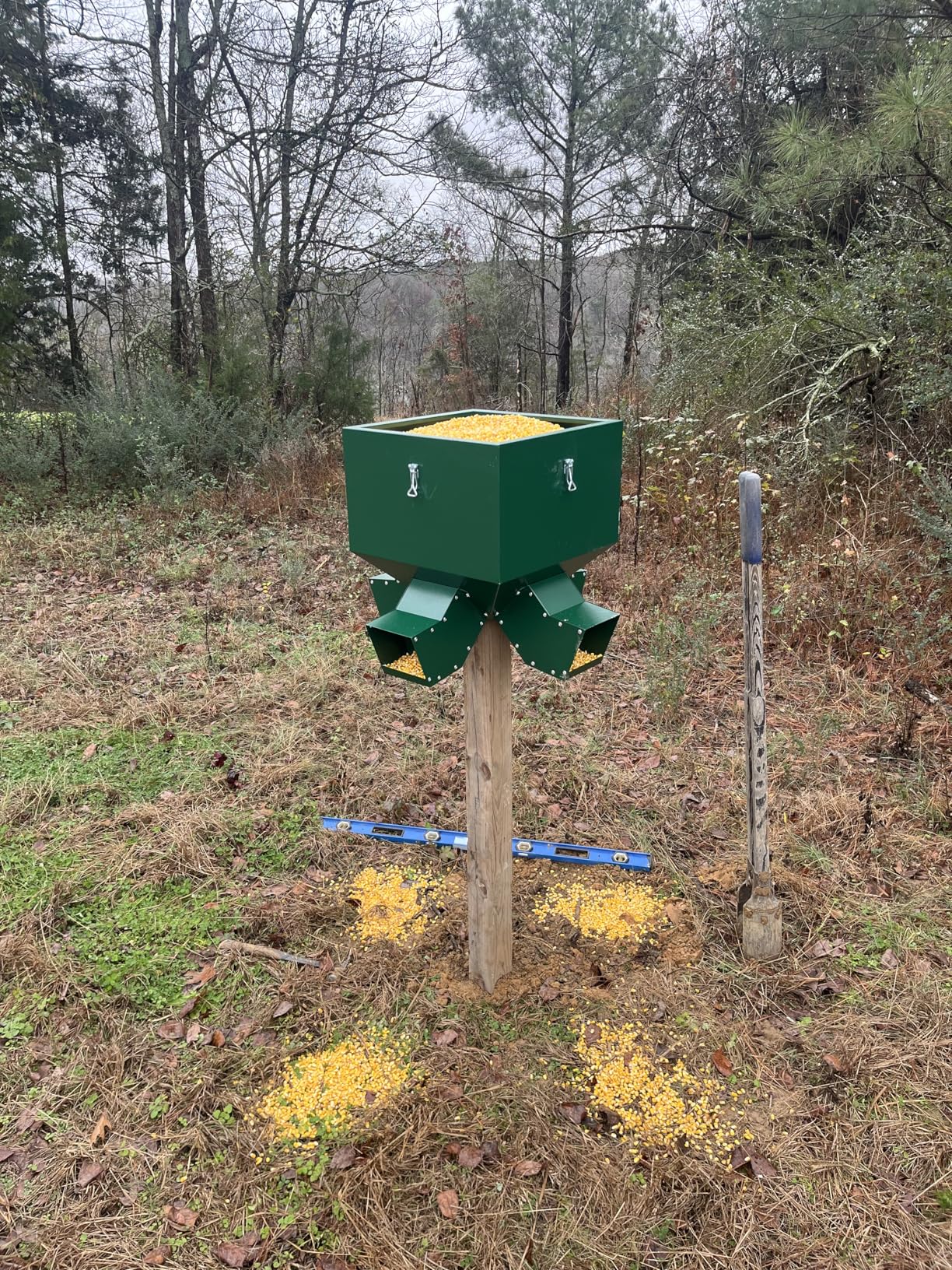
The water-tight lid uses four latches that open from any angle, which makes filling straightforward even when the feeder is mounted at height. The weatherproof construction kept feed dry through multiple rainstorms during testing. The alloy metal construction is designed to resist antler collisions and rodent damage.
The two-year manufacturer warranty is notably longer than the one-year warranties common in this category. However, the review count is still low at 11 reviews, so long-term reliability data is limited. The gravity-only design means no timer scheduling, which is either a benefit or a drawback depending on your feeding strategy.
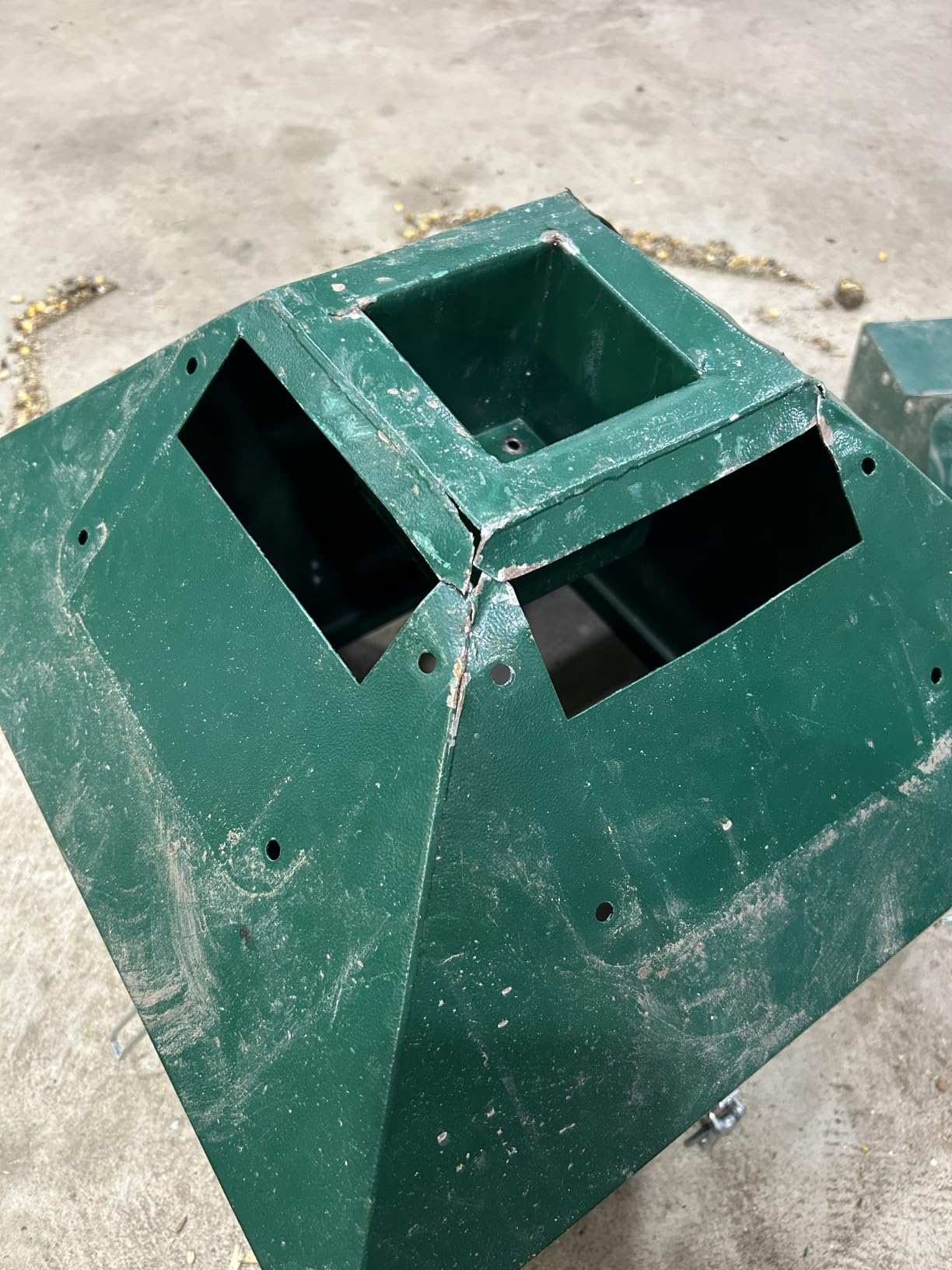
Post Mount Installation and Height Recommendations
Set the 4×4 post at a height that positions the feed heads between 40 and 48 inches from the ground. This range is optimal for deer feeding while remaining too high for most raccoons to reach comfortably. Bury the post at least two feet deep and consider concrete for stability, since a loaded feeder with 150 pounds of feed creates significant leverage in wind.
4-Head vs 3-Head Feeding for Larger Herds
The fourth feeding station matters most on properties with high deer density. With three heads, subordinate deer often wait while dominant animals feed. The fourth port reduces this bottleneck, allowing more deer to access protein simultaneously. For properties with lighter traffic, three heads are typically sufficient and the fourth port is not a meaningful advantage.
10. BUYYAH 90-110 lb Heavy Duty Metal Game Feeder
BUYYAH 90-110lb Deer Feeder, Heavy Duty Metal Hunting Game Feeder
90-110lb capacity
Alloy steel construction
4 stable legs
Weatherproof
Freestanding tripod
19 lbs total weight
Pros
- Affordable entry point for gravity feeding
- Corrosion-resistant alloy steel construction
- Weatherproof design for year-round outdoor use
- Easy minutes-long assembly with 4 stable legs
- Watertight cover with rotating locks keeps feed dry
Cons
- Very lightweight metal may lack heft for durability
- Sits low to ground which can attract raccoons and other climbing animals
The BUYYAH 90-110 lb feeder is the most affordable entry in this roundup for someone wanting a gravity-fed metal feeder. It is a no-frills option that gets deer fed without a big upfront investment. I tested it on a small 40-acre tract where a single feeder was all the property needed.
Assembly genuinely takes minutes. The four legs attach with pre-drilled holes and basic hardware, and the full welding process means the frame arrives structurally complete. At 19 pounds total, this is the lightest metal feeder in the roundup, which makes transport and positioning easy for one person.
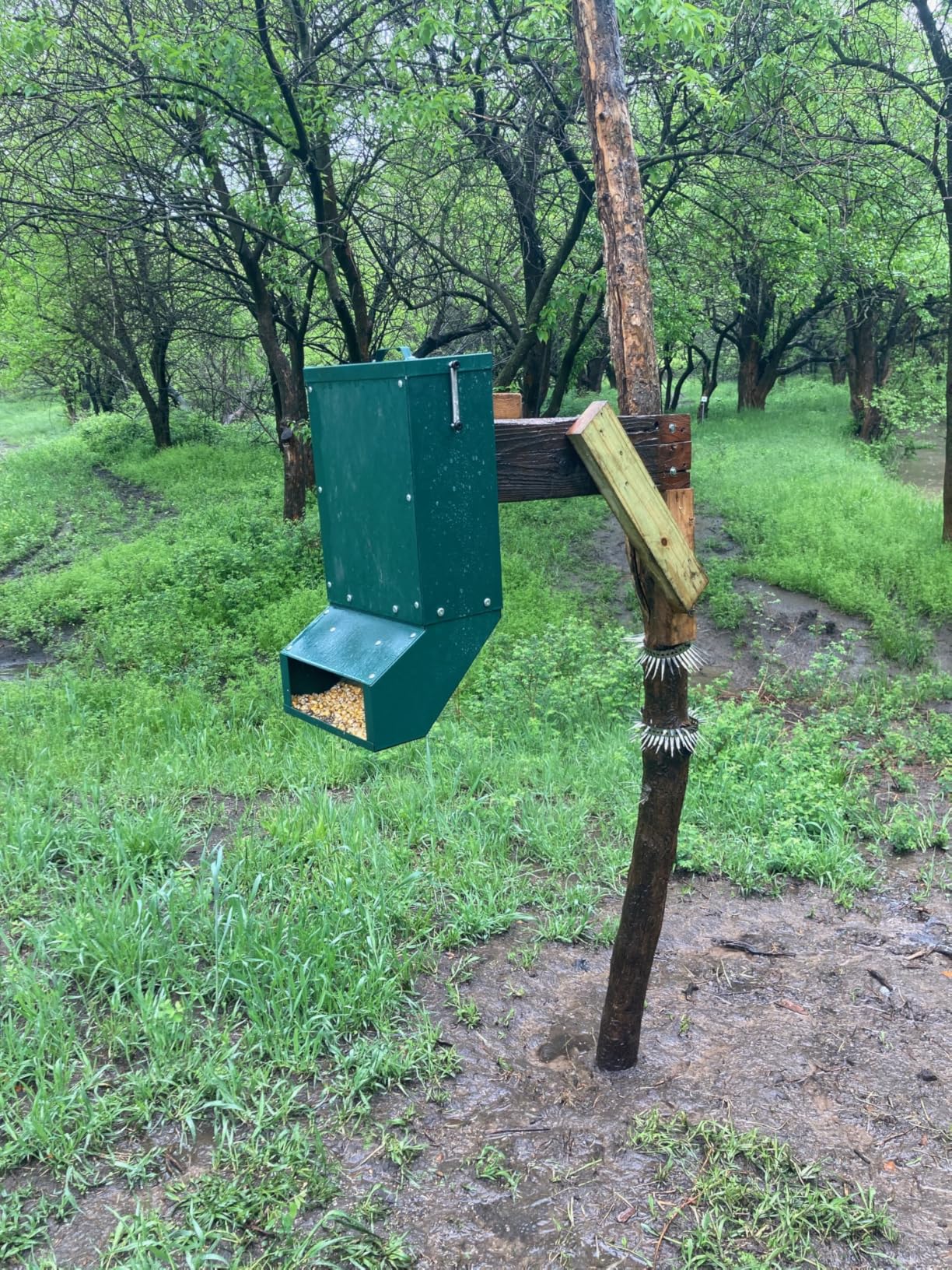
The green powder-coat finish blends with natural surroundings, and the weatherproof construction held up through a season of rain without visible corrosion. Deer found the feeder quickly, which speaks to the design’s effectiveness despite its simplicity.
The main concern is the low profile. This feeder sits closer to the ground than the elevated tripod models, which makes it more accessible to raccoons and other climbing animals. Several user reviews mention this issue. If varmint pressure is high on your property, this feeder benefits from being mounted on a raised platform.
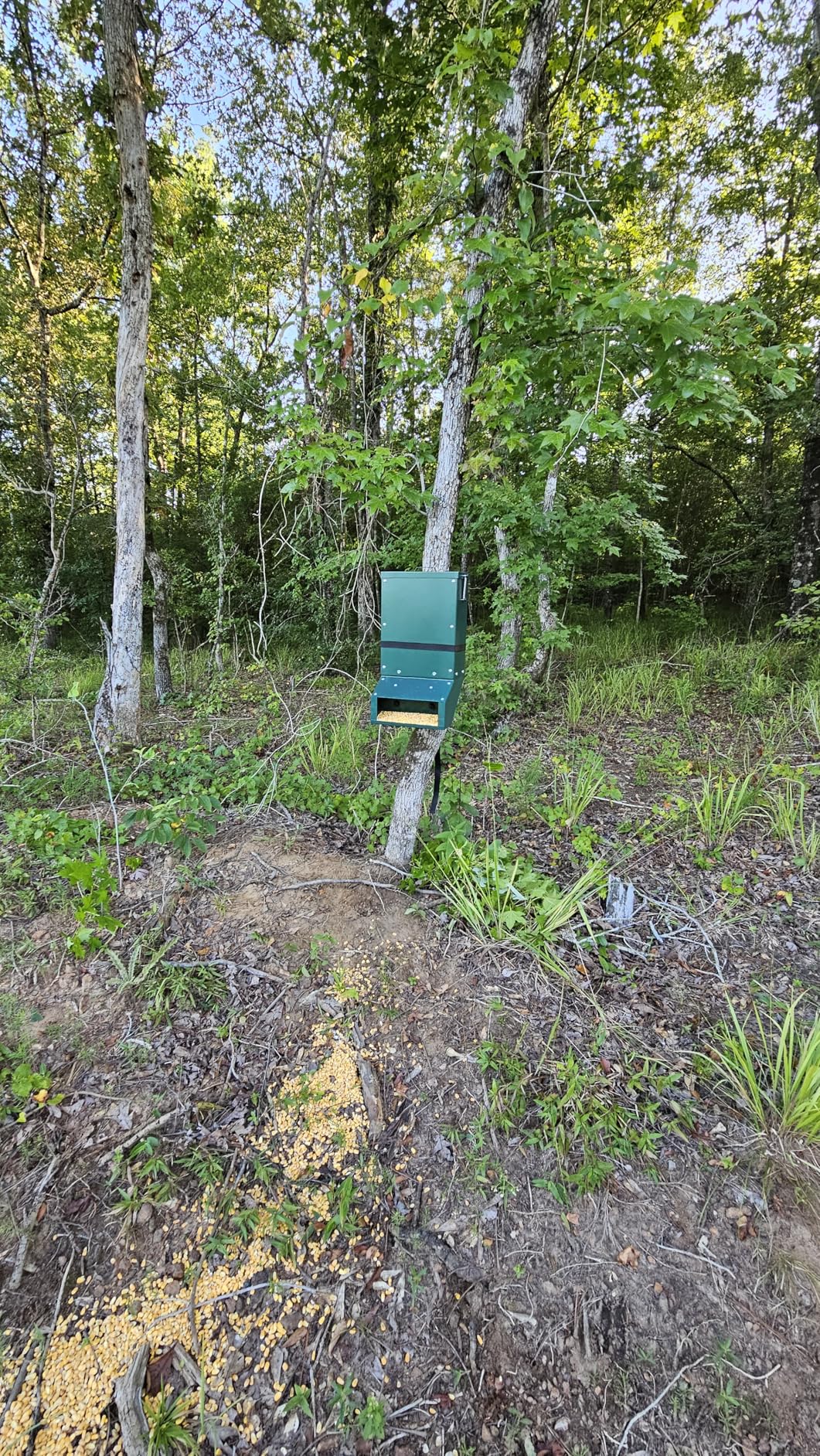
Raising the Feeder to Deter Varmints
If raccoons are a problem, consider mounting this feeder on a platform or elevated stand to raise the feeding height. Even 12 to 18 inches of additional height makes a meaningful difference in deterring climbing animals. Some users report success with a simple concrete block platform, while others have built wooden stands to get the feeder to a more varmint-resistant level.
Best Use Cases for Smaller Properties
This feeder shines on smaller tracts of 20 to 60 acres where a single feeding station is sufficient and budget matters. The 90-110 pound capacity requires more frequent refills than the larger units in this roundup, but for properties close to home or with lighter deer traffic, the refill frequency is manageable. It is also a solid choice for a second or third feeder on a larger property where you want to distribute feeding pressure across multiple sites.
How to Choose the Right Tripod Deer Feeder for Protein Feeding?
Choosing among tripod deer feeders comes down to matching the feeder’s capabilities to your property size, deer density, and management goals. The right feeder for a 40-acre hunting tract is very different from the right feeder for a 500-acre ranch with an active supplementation program.
Capacity: Matching Hopper Size to Your Property
Capacity is the first spec most buyers consider, and for good reason. Larger capacity means fewer refills, which matters enormously for remote properties. Here is how I think about capacity based on property size and access frequency.
For properties you visit weekly, 150 to 200 pounds is adequate for 8 to 12 deer. For properties you visit every two to three weeks, look at 250 to 350 pounds. For remote properties accessed monthly, 350 to 450 pounds keeps feed available without dangerous gaps in the supplementation program.
Remember that protein feeding is most effective when feed is continuously available. Gaps in availability can actually reduce consumption rates, as deer lose the habit of visiting the feeder. Size your capacity to maintain consistent availability between your realistic refill intervals.
Gravity vs Timer: Which Feeding Method Wins for Protein
This is the most debated question in deer feeder discussions, and the answer depends on your goals. Gravity feeders provide continuous free-choice access, which research shows produces better protein intake results. Deer self-regulate their consumption throughout the day, eating small amounts frequently rather than gorging at programmed times.
Timer-based automatic feeders excel at patterning deer for hunting. By dispensing feed at consistent times, you train deer to visit specific locations at predictable hours. This is valuable for pre-season scouting and harvest planning, but it is less effective for nutritional supplementation.
The hybrid approach is what many serious property managers use. Run gravity protein feeding spring through summer for antler growth and herd health, then switch to timed corn feeding in fall for patterning. The Boss Buck 200 lb Combo reviewed above is designed specifically for this dual strategy.
Varmint Protection: Keeping Raccoons and Squirrels Out
Varmint pressure destroys more feeding programs than any other factor. Forum users on r/Ranching and r/Hunting consistently rank varmint resistance as their top concern when choosing a feeder. Raccoons can decimate a protein pellet supply overnight, and squirrels will chew through weaker materials to access feed.
Feeder height is your first line of defense. Feeders with dispensing ports at 40 inches or higher are significantly more resistant to raccoon access than low-profile designs. The Boss Buck 350 lb and Banks Feedbank 300 both position feed at or above this threshold.
Material matters too. Metal construction resists chewing damage that squirrels inflict on plastic components. However, high-quality HDPE like Boss Buck uses is thick enough to resist most chewing. The real risk is with thin-walled plastic feeders that squirrels can gnaw through over time.
For maximum varmint protection, consider adding a varmint guard cage around the feeder legs. These metal cages prevent raccoons from climbing the legs to reach the hopper. Several manufacturers sell universal guards that fit standard tripod configurations.
Protein Pellet Compatibility: Why Feed Flow Design Matters
Protein pellets behave fundamentally differently than corn in a feeder. They are less dense, more irregular in shape, and more prone to moisture absorption. A feeder that handles corn perfectly may clog repeatedly with protein pellets.
Internal cone designs like those in the Boss Buck and HECASA feeders are the best solution. The cone channels feed toward the delivery ports at a controlled angle, preventing the bridging that occurs when pellets pack together. Multiple feed funnels, like the Moultrie’s triple funnel system, serve a similar function by providing multiple flow paths.
Moisture management is equally important. Look for feeders with double-walled lids or condensation prevention features. Once protein pellets absorb moisture, they swell and create blockages that are difficult to clear. The Boss Buck’s double-walled hatch lid and drain holes in the feed ports address this problem directly.
Material Durability: Plastic vs Steel for Long-Term Use
HDPE plastic and galvanized steel are the two dominant materials in quality tripod deer feeders, and each has distinct advantages. UV-protected HDPE like Boss Buck uses will not rot, rust, or leak. It is lighter than steel, making installation easier, and it does not conduct heat the way metal does, keeping feed cooler in summer.
Galvanized or zinc-plated steel offers superior impact resistance and a longer functional lifespan in harsh conditions. The HECASA 450 lb steel feeder will outlast plastic units in environments with heavy livestock pressure or extreme weather. Steel also resists the UV degradation that eventually affects all plastics, even UV-protected ones.
For most protein feeding applications, UV-protected HDPE is the better choice. It is lighter, does not conduct heat, and modern formulations last 10-plus years with proper placement. Steel makes sense for the largest capacity feeders where structural rigidity is critical.
Frequently Asked Questions
What is the best protein feeder for deer?
The Moultrie Gravity Tripod Feeder is the best overall protein feeder for deer, offering a 250-pound capacity, triple funnel feed system that handles protein pellets without clogging, and a battery-free gravity design that provides continuous free-choice feeding. For larger operations, the Boss Buck 350 lb Gravity Feeder with its three-way protein head and UV-protected HDPE construction is the top value pick.
What is the best way to feed protein to deer?
The best way to feed protein to deer is through free-choice gravity feeders that provide continuous access throughout the day. Deer naturally self-regulate protein intake when feed is always available. Position feeders in shaded areas near water sources, maintain a consistent feeding schedule year-round, and use feeder heights of 40 to 48 inches to deter varmints. Protein pellets with 16 to 20 percent protein content work best for antler development and herd health.
What deer feed has the highest protein?
Commercial protein pellets formulated specifically for deer typically contain 16 to 20 percent protein, with some premium blends reaching 22 percent. These pelleted feeds are designed for optimal digestion and deliver consistent protein levels compared to natural forage. Soybean-based pellets generally offer the highest protein density. Always introduce new protein feed gradually by mixing with corn to allow deer digestive systems to adjust.
Can you feed deer too much protein?
Deer can experience digestive issues if protein intake exceeds their nutritional needs, particularly when introducing high-protein feed abruptly. However, free-choice feeding generally allows deer to self-regulate consumption. The main risks come from sudden dietary changes rather than continuous access. Always transition deer to protein pellets over two to three weeks by gradually increasing the pellet-to-corn ratio. Consult a wildlife biologist for region-specific supplementation recommendations.
How do I keep varmints out of my tripod deer feeder?
To keep varmints out of tripod deer feeders, position dispensing ports at least 40 inches above ground level, install varmint guard cages around feeder legs to prevent raccoon climbing, and choose feeders with metal or thick HDPE construction that resists squirrel chewing. Directional feed ports with overhangs like the Boss Buck design also reduce non-target animal access. Regular maintenance and prompt repair of any damaged components prevents varmints from exploiting weak points.
Final Thoughts on Tripod Deer Feeders for Protein Feeding
After testing these 10 feeders across multiple properties and seasons, the tripod deer feeders that consistently deliver for protein feeding share three traits: a gravity or convertible feeding system, internal feed flow design that handles pellets without bridging, and construction that withstands years of outdoor exposure without degradation.
For most property managers, the Moultrie Gravity Tripod Feeder hits the sweet spot of capacity, protein compatibility, and value. If you need maximum capacity and proven long-term reliability, the Boss Buck 350 lb is the industry standard. And for budget-conscious hunters who still want automatic feeding capability, the Wildgame Innovations Quick-Set 270 delivers exceptional features at an accessible price.
The best tripod deer feeder for your property ultimately depends on your access frequency, herd size, and management goals. Whatever you choose, prioritize protein pellet flow design and varmint resistance over any single spec. Those two factors determine whether your feeding program succeeds or becomes a frustrating money pit in 2026.