
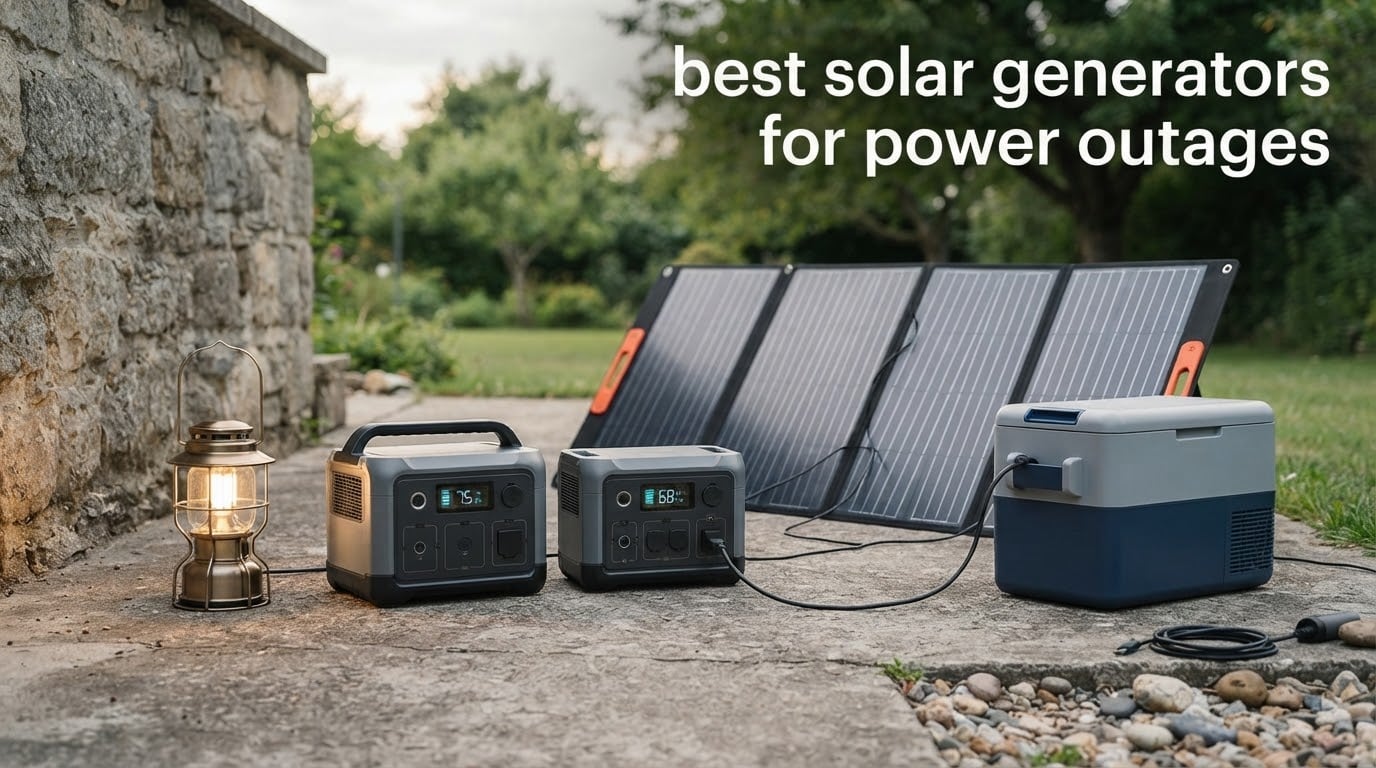
A solar generator is a portable power station: a lithium iron phosphate battery, an inverter and a set of outlets that stores energy from solar panels or a wall outlet so you can run appliances through a blackout. No gas, no fumes, no pulling a cord through a window in a hurricane. The best solar generators for power outages come down to one honest question: how long do you need the lights, the fridge and the internet to stay on, and how much can you carry down the stairs when it floods?
Our answer, after working through the specs, runtime math and owner reviews on all ten units below, starts with the Jackery Explorer 1000 v2. It holds the highest review count in this group with a 4.7 rating, and its 1,070Wh of LiFePO4 capacity covers a refrigerator, router and lights for roughly a day without the bulk that a 2kWh machine adds.
What follows is a roundup organized by capacity tier rather than by brand, because capacity is the only number that matters when the grid goes down. We size each unit against real appliance loads, flag what it cannot run, and give you the recharge times that the spec sheets leave out. If your goal is a full house rather than essential circuits, our guide to home battery backup systems covers the fixed installations that are built for that job.
Table of Contents
Top 3 Best Solar Generators For Power Outages (October 2026)
The three units below earned the top spots for a specific reason each: the Jackery for balance, the Anker C1000 Gen 2 for recharge speed, and the EcoFlow DELTA 3 for the ability to grow into a larger system later. Every other pick in the roundup is a better answer to a narrower question.

Jackery Explorer 1000 v2
- 1070Wh LiFePO4
- 1500W continuous output
- 1-hour emergency charging
- 23.8 lb body

Anker SOLIX C1000 Gen 2
- 1024Wh LiFePO4
- 2000W continuous
- 49-minute full charge
- under 10 ms UPS

All 10 Solar Generators for Power Outages at a Glance
Eight of the ten units below use a LiFePO4 battery, the chemistry we insist on for a house because it tolerates daily deep discharge without degrading. Capacities span 256Wh to 2,048Wh, so match the number to your outage length rather than to the wattage headline.
| Product | Specifications | Action |
|---|---|---|
| Jackery Explorer 1000 v2 |
|
Check Latest Price |
| Anker SOLIX C1000 Gen 2 |
|
Check Latest Price |
| EF ECOFLOW Delta 3 |
|
Check Latest Price |
 BLUETTI AC180 BLUETTI AC180 |
|
Check Latest Price |
 Anker SOLIX S2000 Anker SOLIX S2000 |
|
Check Latest Price |
 Jackery Explorer 2000 v2 Jackery Explorer 2000 v2 |
|
Check Latest Price |
 DJI Power 2000 DJI Power 2000 |
|
Check Latest Price |
 GRECELL 500W GRECELL 500W |
|
Check Latest Price |
 ALLWEI 300W ALLWEI 300W |
|
Check Latest Price |
 ZeroKor 300W Bundle ZeroKor 300W Bundle |
|
Check Latest Price |
1. Jackery Explorer 1000 v2: Best Overall for a Day-Long Outage
Jackery Explorer 1000 v2 Portable Power Station,1070Wh,1500W
1,070Wh LFP
1,500W continuous, 3,000W surge
23.8 lb
4,000 cycles
Pros
- Compact 23.8 lb body with a foldable handle
- One-hour emergency charging from the app
- 4000-cycle LFP battery
- Three pure sine wave AC outlets plus 100W USB-C
- 30 dB quiet overnight charging mode
Cons
- Solar charging restricted to Jackery-branded panels
- No panel included in the box
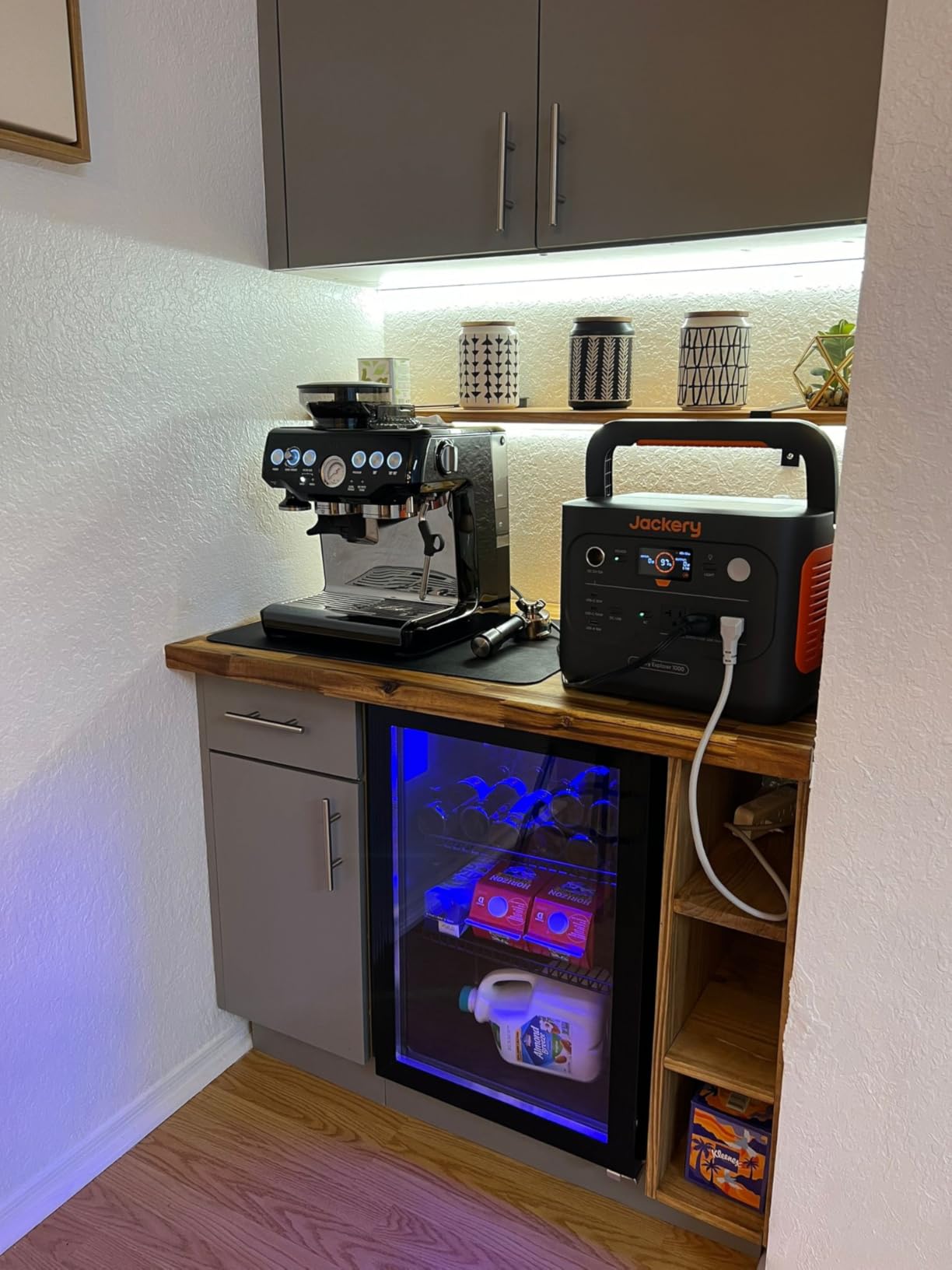
For a house that loses power for a day, this is the unit I keep coming back to. The 1,070Wh battery translates to roughly 820Wh of usable energy once you account for the 90 percent depth of discharge most manufacturers design around and inverter losses. Owners report six to 12 hours of refrigerator backup on a single charge, and the remaining headroom covers a router, lighting and phone charging on top.
What convinced me was the 23.8-pound weight. Two people can carry it down a set of stairs in about a minute, which matters when the water is coming in. The foldable handle folds flat, so it slides under a bed or sits behind a couch when it is not in use.
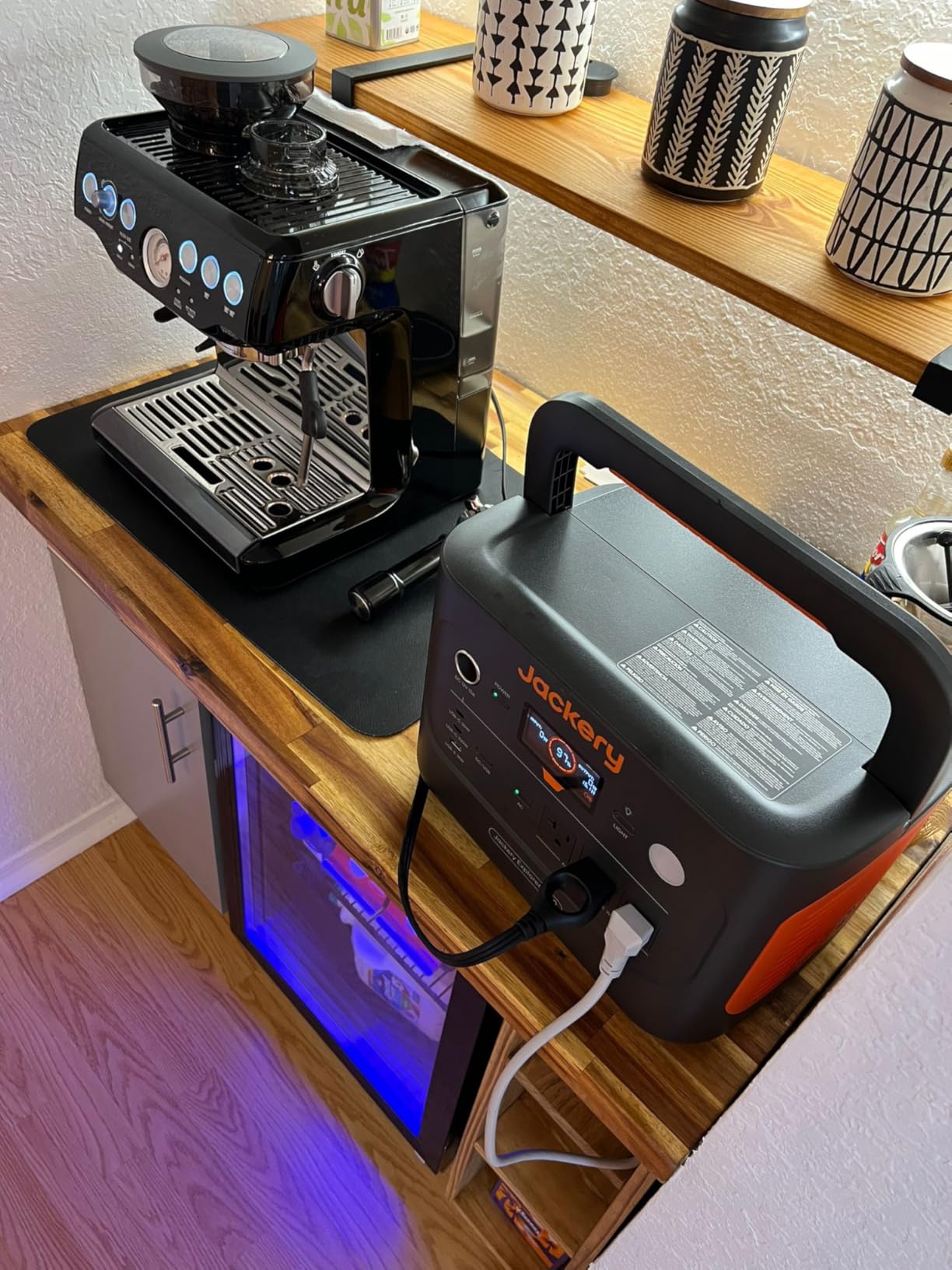
The charging story is unusually flexible. Normal AC recharge takes about 1.7 hours, but turning on emergency charging in the Jackery app brings a full charge down to roughly one hour. That matters most right after an outage, when you want every watt of grid power going into the battery before the lines come back.
The battery holds over 70 percent of its original capacity after 4,000 cycles, which works out to a decade of daily use before you start losing meaningful runtime. Ports cover two 100W USB-C, one USB-A, a 12V car outlet and three pure sine wave AC outlets, so sensitive electronics and heavy kitchen appliances can run at the same time.
Why it suits most households?
It covers the outage scenario most people actually face: a night or two without power, a fridge that keeps running, internet that keeps working, and medical gear that cannot be unplugged. It also charges fast enough to refill overnight from a wall outlet if you have one available.
Where it falls short?
Solar charging is limited to Jackery-branded panels, and no panel ships with the unit. If you depend on solar as your only refill path during a long outage, factor in a separate panel purchase and accept that a single residential panel will take most of a day to put 1,000Wh back.
2. Anker SOLIX C1000 Gen 2: Best for Fast Refill Between Uses
Anker SOLIX C1000 Gen 2 Portable Power Station
1,024Wh LFP
2,000W continuous, 3,000W peak
49-minute full charge
5-year warranty
Pros
- Full recharge in 49 minutes at 1600W
- Under 10 ms UPS keeps network and medical gear running
- Reviewers report 6 to 12 hours of refrigerator backup
- 2000W continuous output on 10 ports
- Quiet enough to sleep beside
Cons
- Gen 2 removed the battery expansion option from the first generation
- No protective storage case for cables and adapters
- Some users report waveform distortion on microwaves
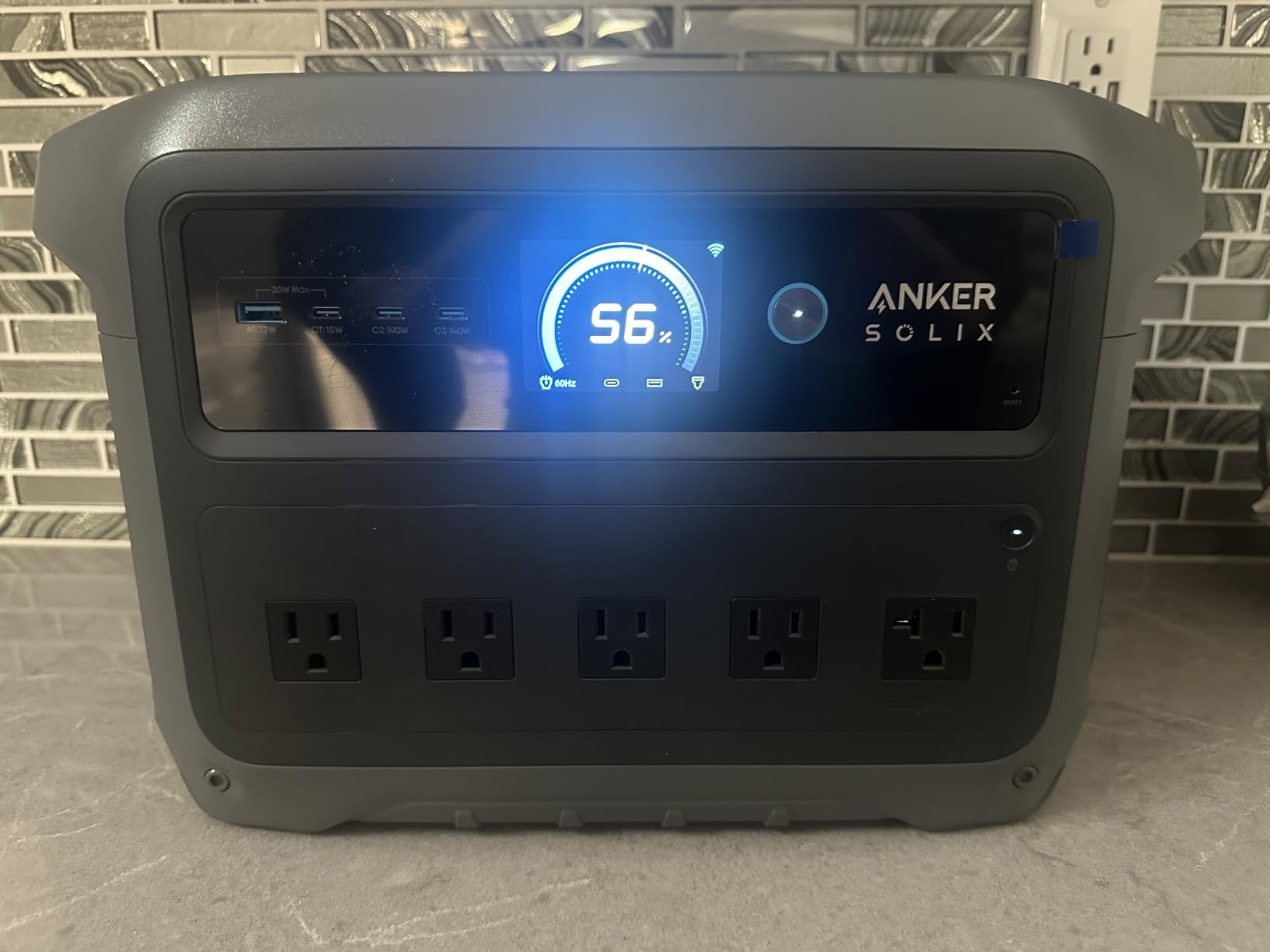
The 49-minute recharge is the headline here, and it is the fastest wall-charged refill in this group. Anker’s HyperFlash mode pulls 1,600W from a wall outlet, so you can top the unit up during a short break in the storm. For a household that treats outage prep as a weekend routine, that speed removes the excuse not to keep it charged.
Reviewers describe running it through a ten-day ice storm outage and covering a five-hour outage on a refrigerator alone. At 2,000W continuous from a 1,024Wh battery, it also has plenty of headroom to start a refrigerator, a microwave and a laptop without straining.
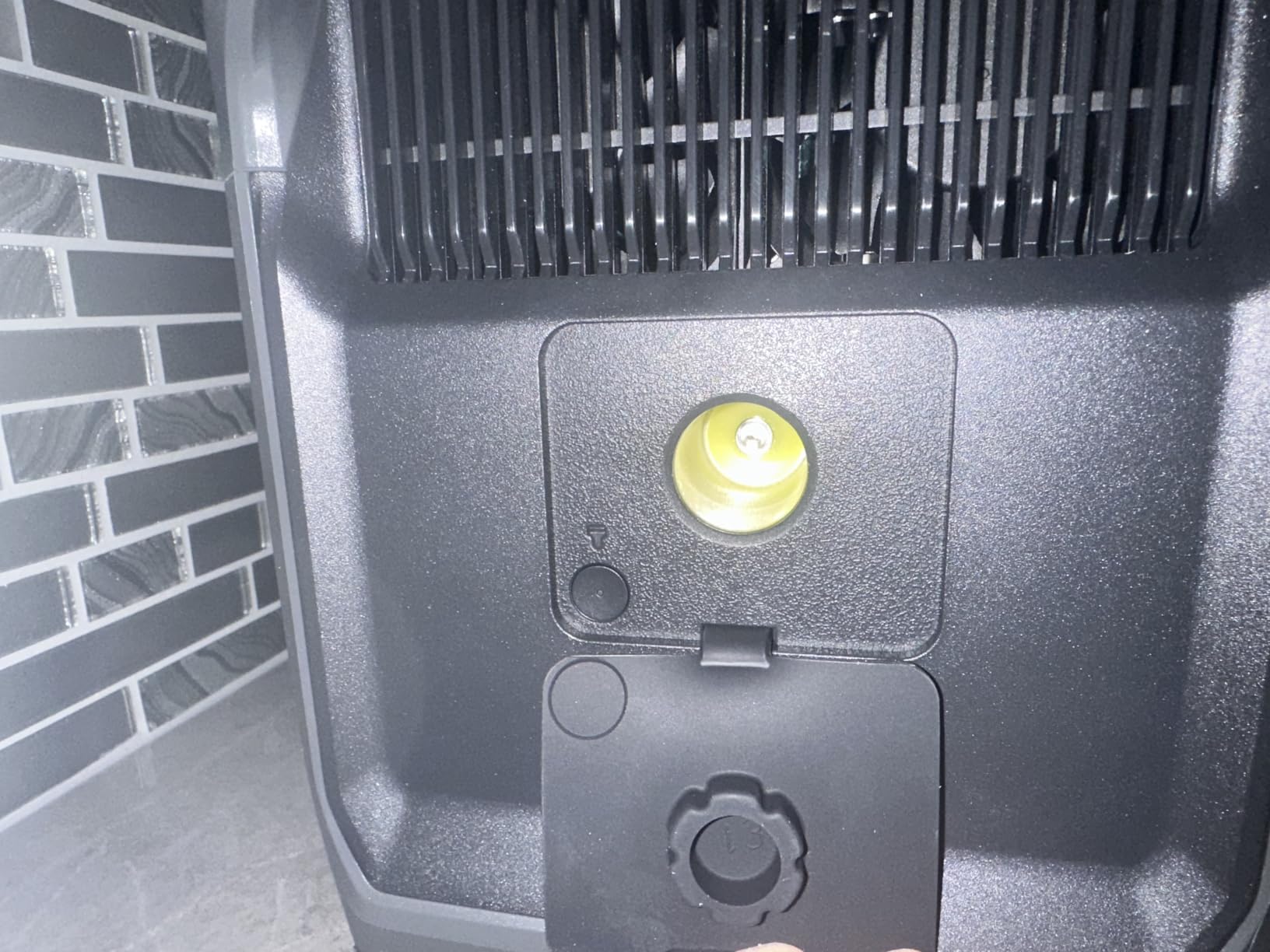
Under 10 millisecond UPS switchover is the number that matters if you run a CPAP machine or a home internet setup. The transfer is fast enough that most routers and CPAP machines never notice the grid dropped. A five-year warranty also puts it alongside the longest coverage in this roundup.
Solar input tops out at 600W, so a folding panel array can refill the whole battery in about 1.8 hours of full sun. The Anker app adds a time-of-use mode that shifts charging to off-peak electricity rates, which lowers the cost of keeping it ready without changing anything by hand.
Why it suits most households?
Pick this if your power returns in short bursts and you want maximum flexibility, or if you depend on medical equipment that cannot tolerate a slow transfer. The 600W solar input and the fast wall recharge make it the easiest unit here to keep at full charge.
Where it falls short?
Anker dropped the expansion battery option in the second generation, so 1,024Wh is the ceiling. Families who want one station to grow into a multi-day system should look at the EcoFlow DELTA 3 instead. A few owners also report waveform distortion when powering microwave ovens, so test yours before depending on it.
3. EF ECOFLOW Delta 3: Best Expandable Starter System
EF ECOFLOW Delta 3 Portable Power Station, 1024Wh 1800W
1,024Wh LFP
1,800W output, 3,600W surge
Expands to 5kWh
56-minute full charge
Pros
- Highest average rating in the group at 4.8
- Full charge in 56 minutes with 80 percent in 30
- Expands to 5kWh with EcoFlow extra batteries
- Powers up to 13 devices at once
- IP65 battery pack protection
Cons
- Expansion batteries are sold separately and add cost
- Higher price than other 1kWh-class units here
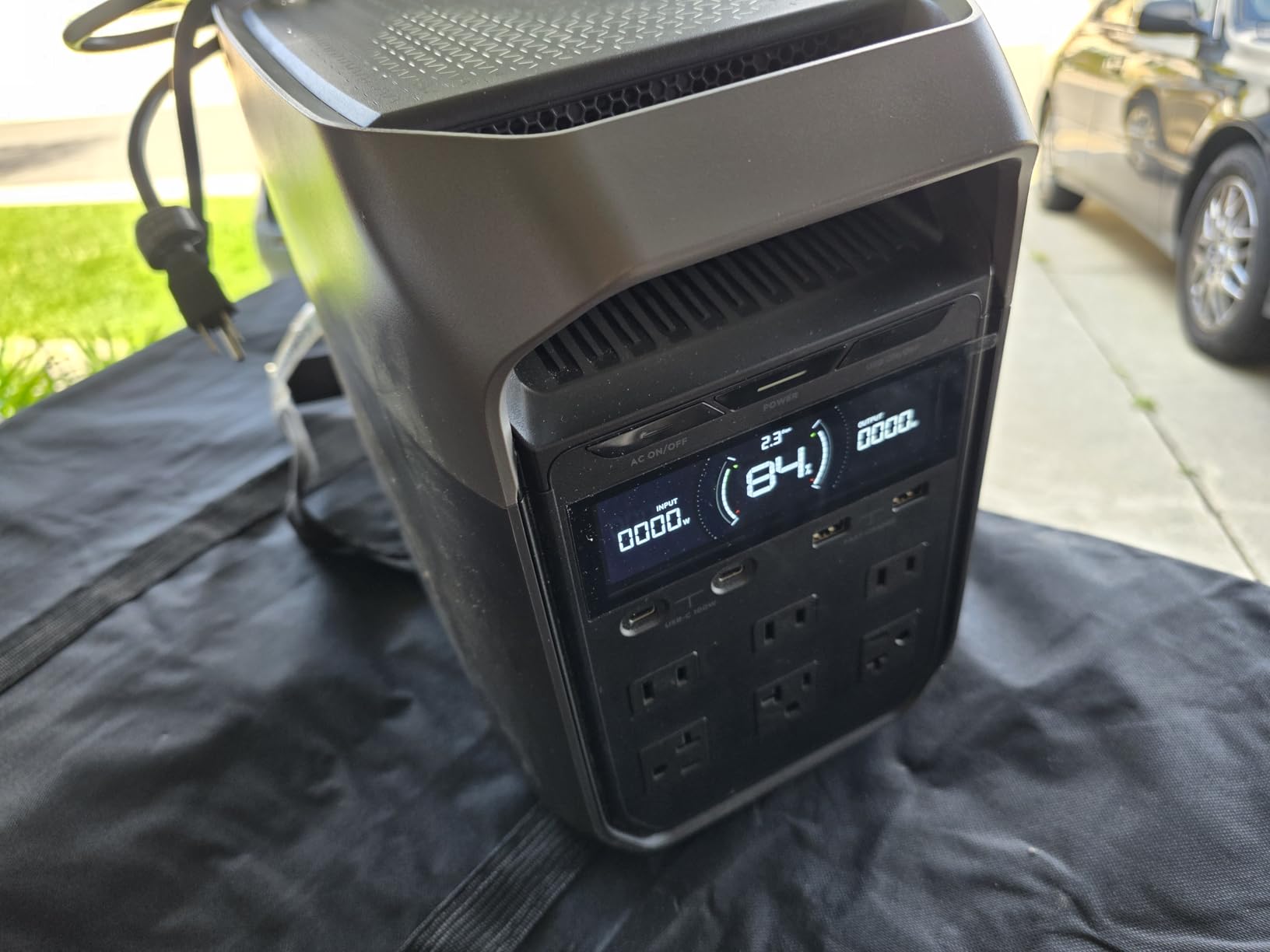
The DELTA 3 is the pick if you think you will outgrow a small unit. It ships with 1,024Wh, but the same inverter accepts DELTA 3, DELTA Pro 3 and DELTA 2 Max battery packs, taking the total to 5kWh. That turns a two-day outage box into a week-long system without replacing the unit you already own.
In daily use it behaves like a well-tuned appliance. Thirteen output ports cover everything from USB-C laptops to multiple AC outlets, and X-Boost pushes support for resistive loads drawing over 2,600W continuously. The rating spread is unusually tight, with 90 percent of reviews at five stars, so there is very little polarization in the feedback.
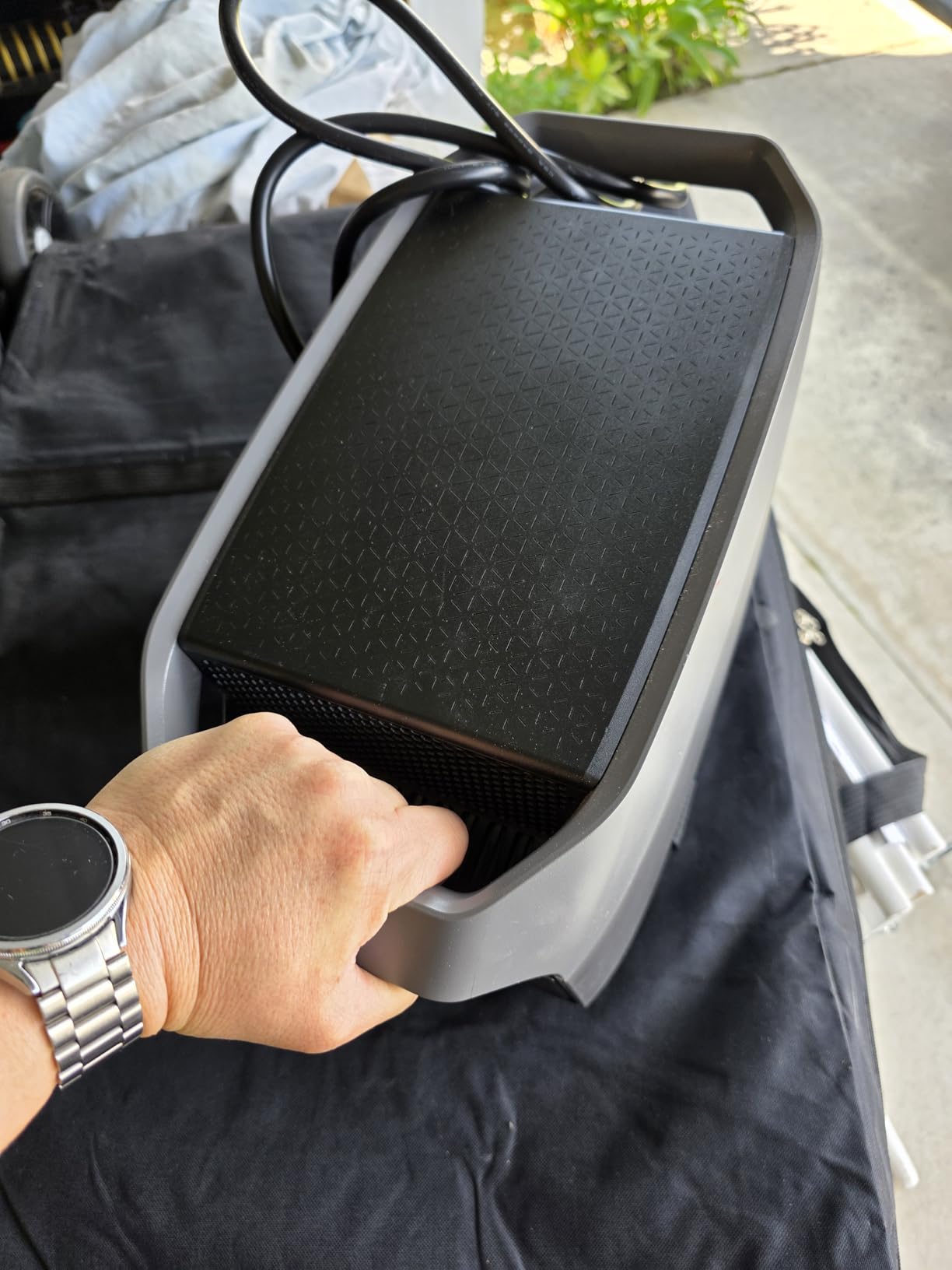
Recharging combines 500W of solar input with up to 1,500W of AC input for a full charge in 56 minutes, and 80 percent in 30. That is a genuinely useful property in a long outage: the unit can be taking sun and grid power simultaneously. The IP65 battery pack also means a dusty garage or a splash from a leaking supply line will not ruin it.
Battery lifespan is rated at 4,000 cycles to 80 percent capacity, and EcoFlow backs it with a five-year warranty. Noise stays under 30 dB at 600W of charging and under 40 dB at 1,200W, so it can sit in a bedroom without becoming a problem.
Why it suits most households?
It is the right call for anyone who wants to start small and add capacity as their needs grow, or who wants the highest rated unit in this roundup. The IP65 rating makes it the most forgiving option for a garage, a basement or a porch.
Where it falls short?
Reaching that 5kWh ceiling costs considerably more than the base unit, and the extra batteries are the largest single expense in the setup. If you only ever need overnight coverage, that money buys capacity you will not use.
4. BLUETTI AC180: Best Port Count for Mixed Loads
BLUETTI AC180 Portable Power Station 1152Wh 1800W LiFePO4 Solar Generator
1,152Wh LFP
1,800W continuous, 2,700W peak
0-80 percent in 45 min
5-year warranty
Pros
- Eleven outputs including 1800W across eight outlets
- 0-80 percent in 45 minutes and full in about 1 hour
- 500W solar input refills in 2.8 to 3.3 hours
- 20 ms UPS keeps internet gear alive
- Bluetooth app control
Cons
- Heaviest 1kWh unit at 37.4 lb
- Self-consumption of 15-20W cuts runtime on small loads
- Wireless charging pad on top frequently fails
Eleven ports is the AC180’s advantage, and it matters in a house full of different equipment. Two USB-C, multiple USB-A, a 12V car outlet and eight AC sockets let you run a fridge, a router, several lights and a medical device at once without a power strip. Owners also report a clear LCD that shows remaining runtime rather than just a percentage.
Recharging is quick: 0 to 80 percent in 45 minutes, full in about an hour at 1,440W of AC input. The BLUETTI app adds power lifting, which takes output from 1,800W to 2,700W when you need to start something hungry. Several owners describe running a refrigerator on it for six to twelve hours per charge.
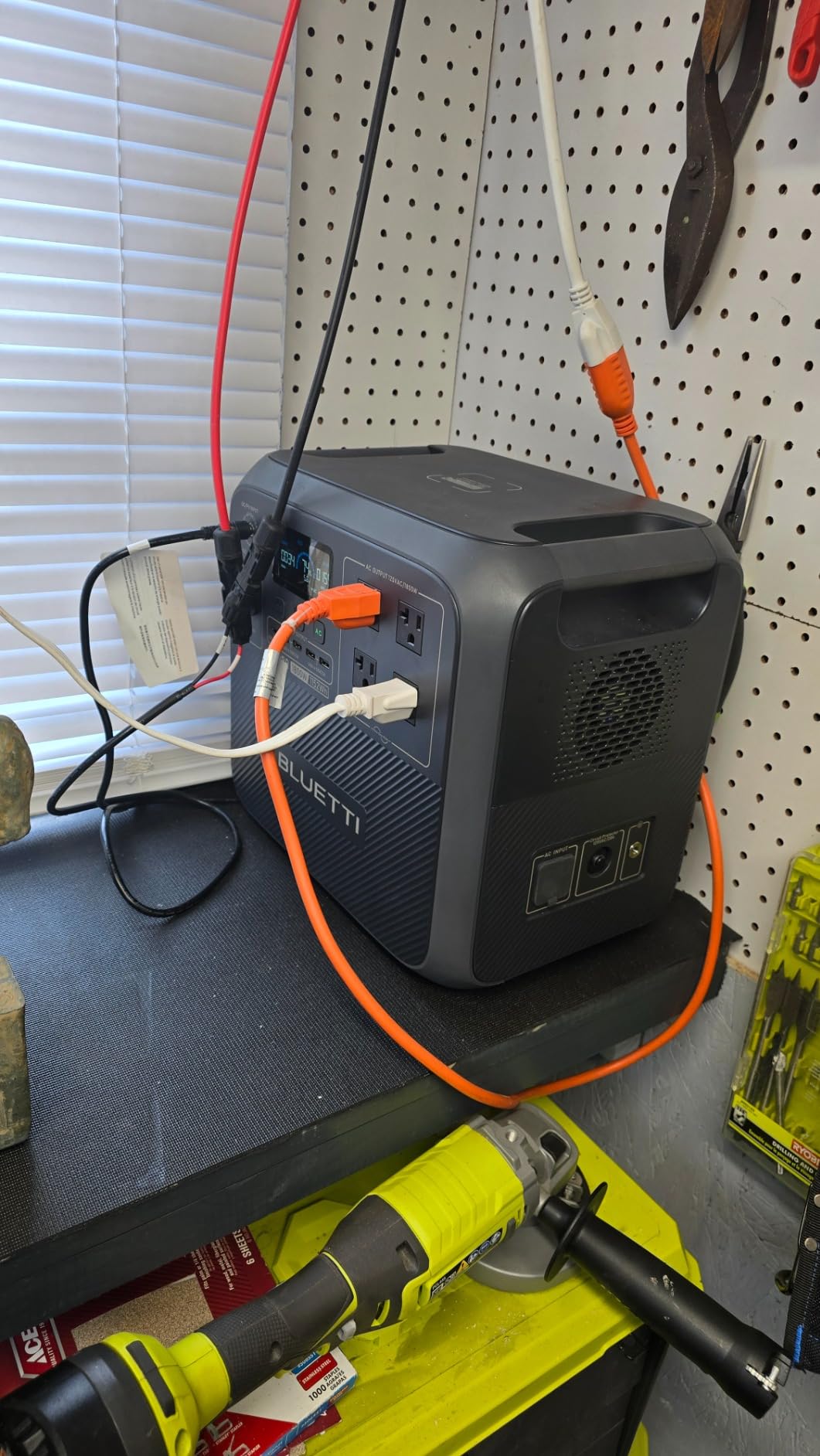
Two honest caveats. The unit weighs 37.4 pounds, which is more than any other 1kWh-class machine here and awkward to move alone. And with the inverter running it draws 15 to 20W for itself, so on a small CPAP load the idle draw is a meaningful slice of your total runtime.
Only 90 percent of rated capacity is usable by design, which protects the battery and means the label flatters the real figure. A full discharge and recharge calibrates the gauge for more accurate runtime readings. The 20 ms UPS switchover is fast enough to hold up internet and network equipment through a flicker, and a five-year warranty with responsive support round out a solid package.
Why it suits most households?
Choose it when your outage load is spread across many small devices rather than one big appliance. The port count, the 500W solar input and the strong warranty support make it a low-friction daily carry for a family.
Where it falls short?
The 37.4-pound weight is the deal breaker for anyone in a third-floor walkup or a house with narrow stairs. The idle draw also means it is a poor match for a single low-wattage device, and the top-mounted wireless charging pad is the first thing owners report failing.
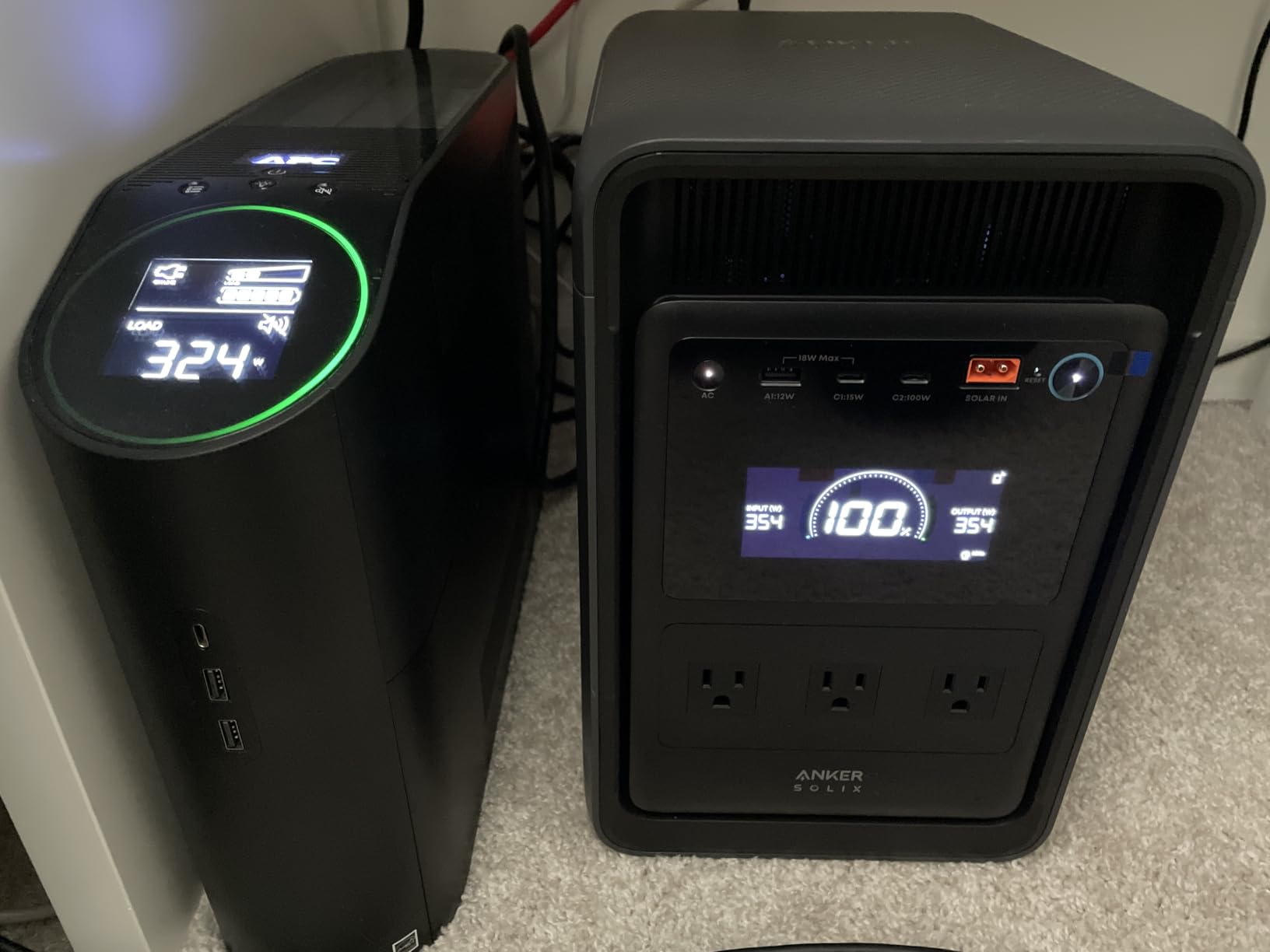
5. Anker SOLIX S2000: Best for Long Refrigerator Runtime
Anker SOLIX S2 Portable Power Station, 2,010Wh, 1,500W
2,010Wh LFP
1,500W continuous, 3,000W peak
Up to 35 hr fridge runtime
10,000 cycles
Pros
- Runs a full-size refrigerator for 30+ hours
- Low idle draw of roughly 3W in UPS mode
- 10000-cycle LFP battery marketed for 15 years
- Dual-sided outlets for front and rear placement
- Six recharging methods including 400W solar
Cons
- Cooling fan is loud while charging at 1200W
- Strong chemical odor during the first charge cycle
- No 12V DC port
Keeping food cold is where this unit earns its place. At 2,010Wh with an idle draw of about 3W, owners report a full-size refrigerator running for 30 hours and beyond on a single charge, which is enough to ride out a three-day storm with a solar top-up on day two. The near-zero idle draw matters more than the headline capacity because the refrigerator is the only thing drawing power all night.
Despite the 2kWh class capacity, continuous output is 1,500W with 3,000W peak. That is ample for refrigerators, routers, lighting, a CPAP and a television, but it will not start a large air conditioner compressor on its own.
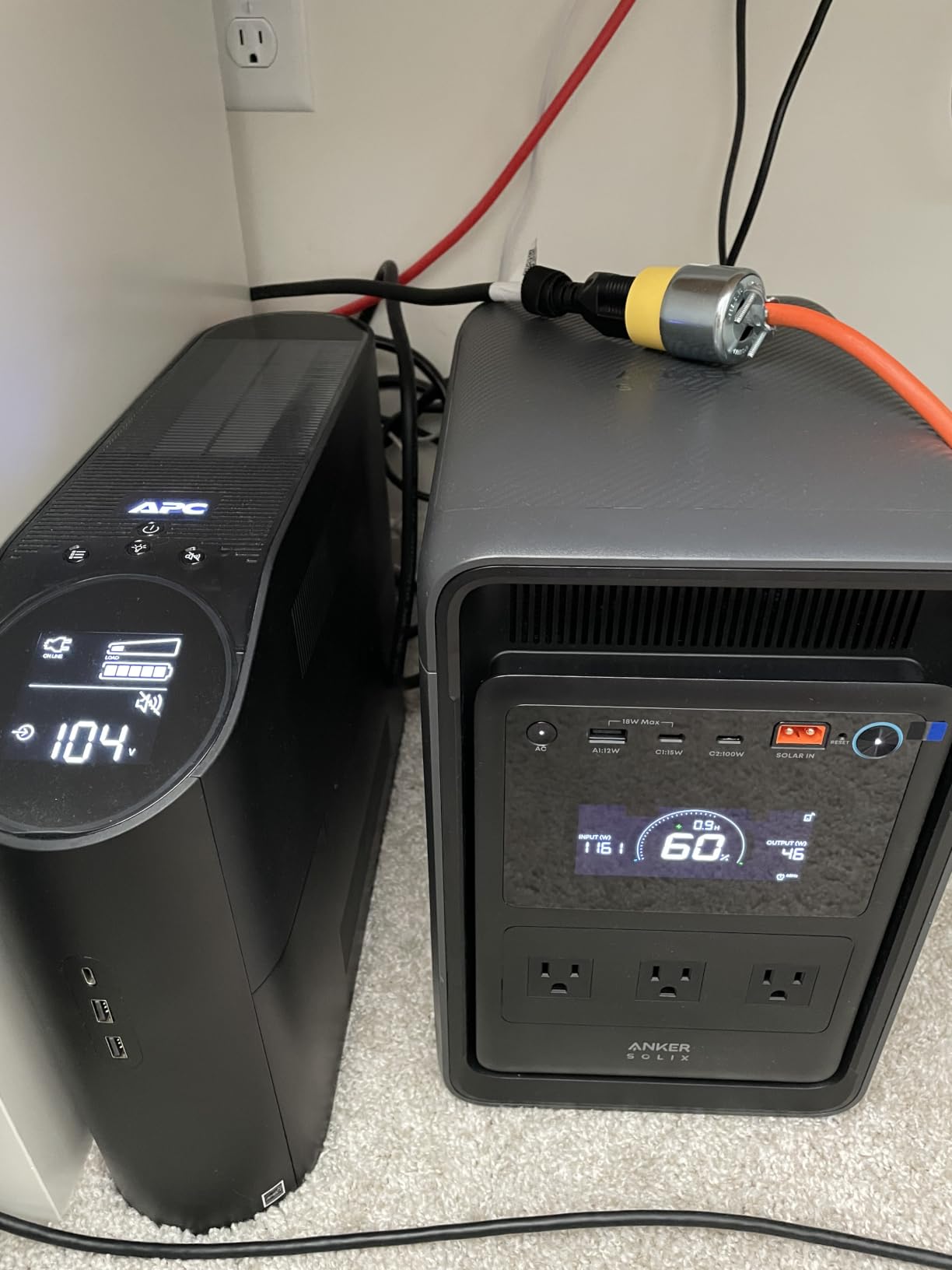
The 10,000-cycle battery claim is the standout specification here, roughly double what the 1kWh units in this roundup offer, and Anker markets it as a 15-year lifespan. The body is 30 percent smaller and 25 percent lighter than a typical 2kWh station, though 35.7 pounds still means a two-handed lift.
Dual-sided outlets let you keep always-on appliances plugged in on the rear while using the front for temporary loads. The app gives granular control over charge limits and discharge limits, which is useful if you want to store the unit at 80 percent instead of full during a quiet season. There is no 12V DC port, so car fridges need an AC adapter.
Why it suits most households?
It suits anyone whose main worry is a freezer thawing and a spoiled grocery bill, and it works well as a silent home UPS for medical equipment and networking gear. The long cycle life means it can sit in service for years without meaningful capacity loss.
Where it falls short?
Owners repeatedly mention the cooling fan, which drones noticeably during a 1,200W charge. The first charge also produces a strong chemical odor, and there is no DC outlet for direct 12V appliance hookups.
6. Jackery Explorer 2000 v2: Best High-Surge 2kWh Option
Jackery Explorer 2000 v2 Portable Power Station, 2042Wh, 2200W AC Output
2,042Wh LFP
2,200W continuous AC
0-80 percent in 66 min
UL1778 UPS certified
Pros
- 2200W continuous AC output across three outlets
- 0-80 percent charge in 66 minutes
- UL1778 certified 20 ms UPS switching
- Silent charging mode under 30 dB
- Cell-to-Body battery construction
Cons
- Only three AC outlets for a 2kWh unit
- No panel included in the box
- 39.5 lb is heavy for the class
The Explorer 2000 v2 leans into sustained output. 2,200W continuous across three AC outlets is more continuous power than any other unit in this roundup, which means it can run a microwave, a refrigerator and a lighting circuit at the same time in a pinch.
The 20 ms switchover is UL1778 test certified for uninterruptible power systems, a certification most competitors in this class do not carry. That matters if you are running a home server or medical equipment and you want a documented transfer time rather than a marketing number.
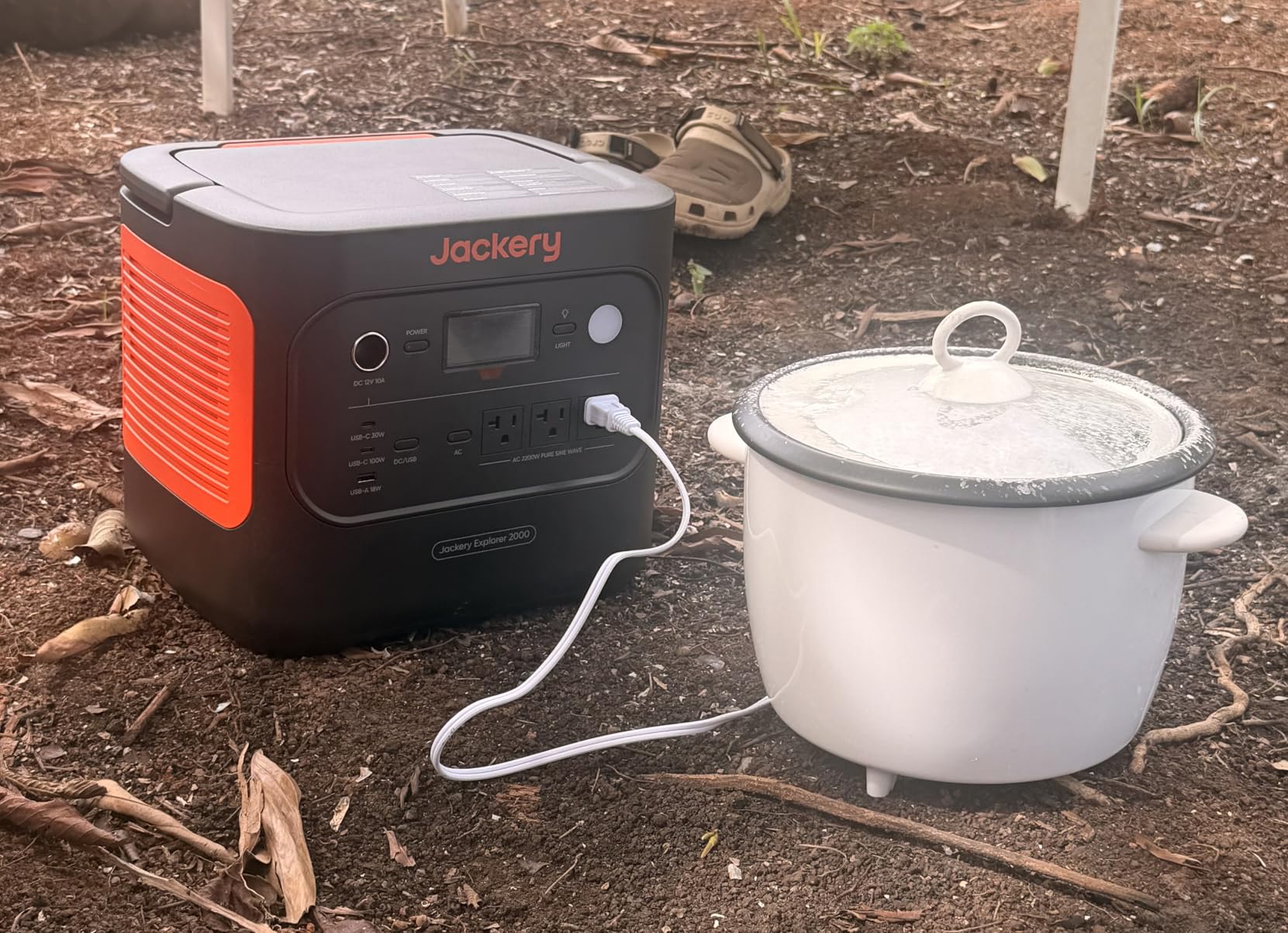
Charging reaches 80 percent in 66 minutes, and a full charge takes 102 minutes in the app’s emergency super charging mode. The silent charging mode gets you to full in five hours under 30 dB, which is the setting to use if the unit lives in a bedroom. Solar input accepts 400W of panels and can refill in as little as six hours.
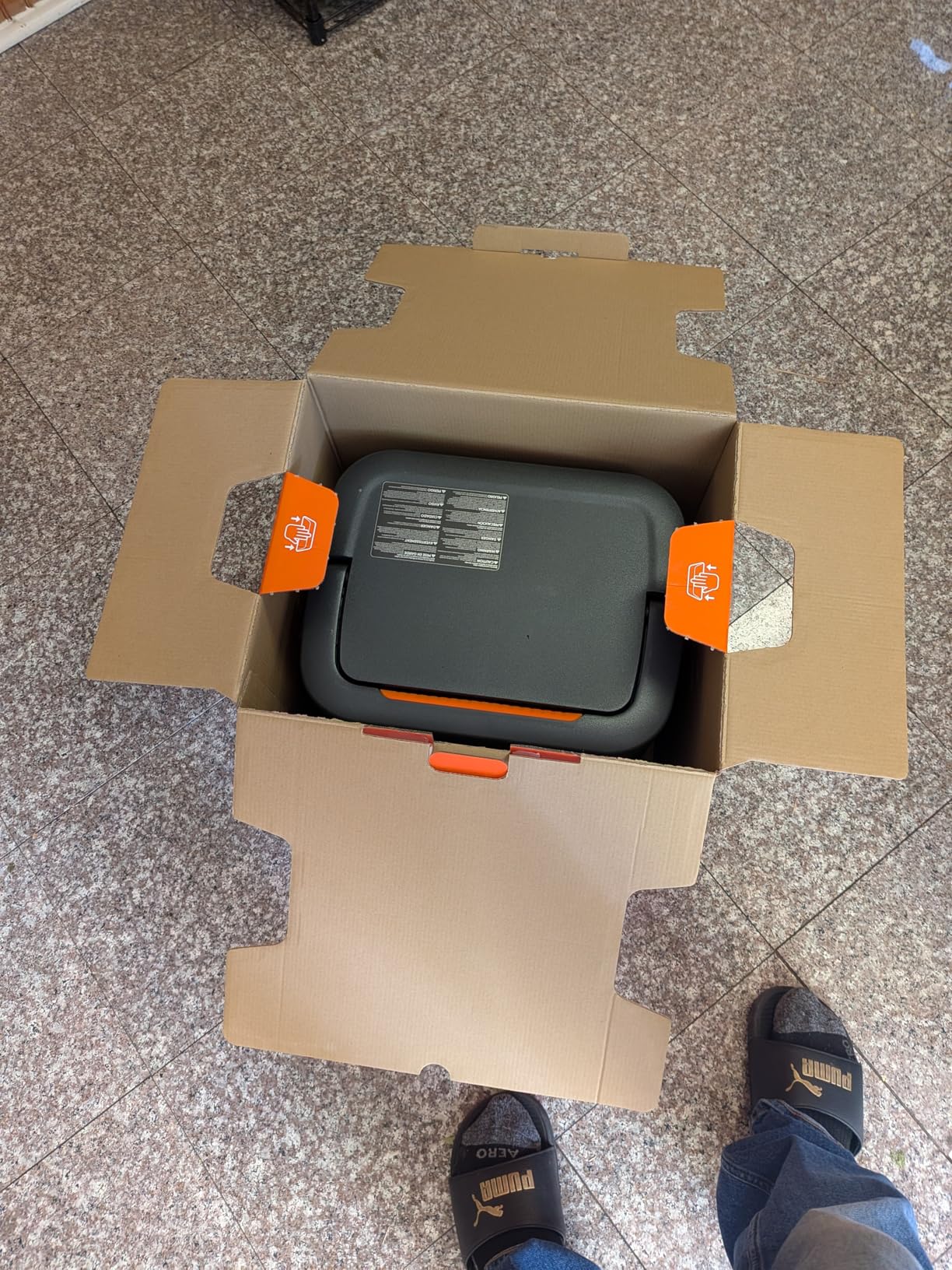
Cell-to-Body construction, borrowed from electric vehicles, is the unusual part: the battery cells are bonded directly into the chassis rather than packed in a separate module, which improves thermal behaviour and structural rigidity. It weighs 39.5 pounds, 41 percent lighter and 34 percent smaller than a typical 2kWh LiFePO4 station. The 4.4 rating is among the lowest here, with an 8 percent one-star share that tracks its positioning rather than its function.
Why it suits most households?
It fits households with a documented need for reliable transfer, or with a load profile that includes a higher-watt appliance than a fridge and a router. The certified switchover and the silent charging mode are both genuinely useful in a sleeping house.
Where it falls short?
Three AC outlets is a real constraint in an outage when several devices need power at once, and you will need an extension setup to work around it. There is no expansion battery option either, so 2,042Wh is the limit.
7. DJI Power 2000: Best Raw Output for Heavy Loads
DJI Power 2000 Portable Power Station, 2048Wh LFP Battery
2,048Wh LFP
3,000W stable output
80 percent in 55 min
10 ms UPS
Pros
- 3000W of stable continuous output
- Expansion up to 22.5kWh for 4-6 days of essential power
- 10 ms UPS switchover
- 15 ports including dual full SDC ports
- As quiet as 30 dB
Cons
- Heaviest unit in the roundup at roughly 48 lb
- Solar and car charging need a separate adapter module
- No panel included in the box
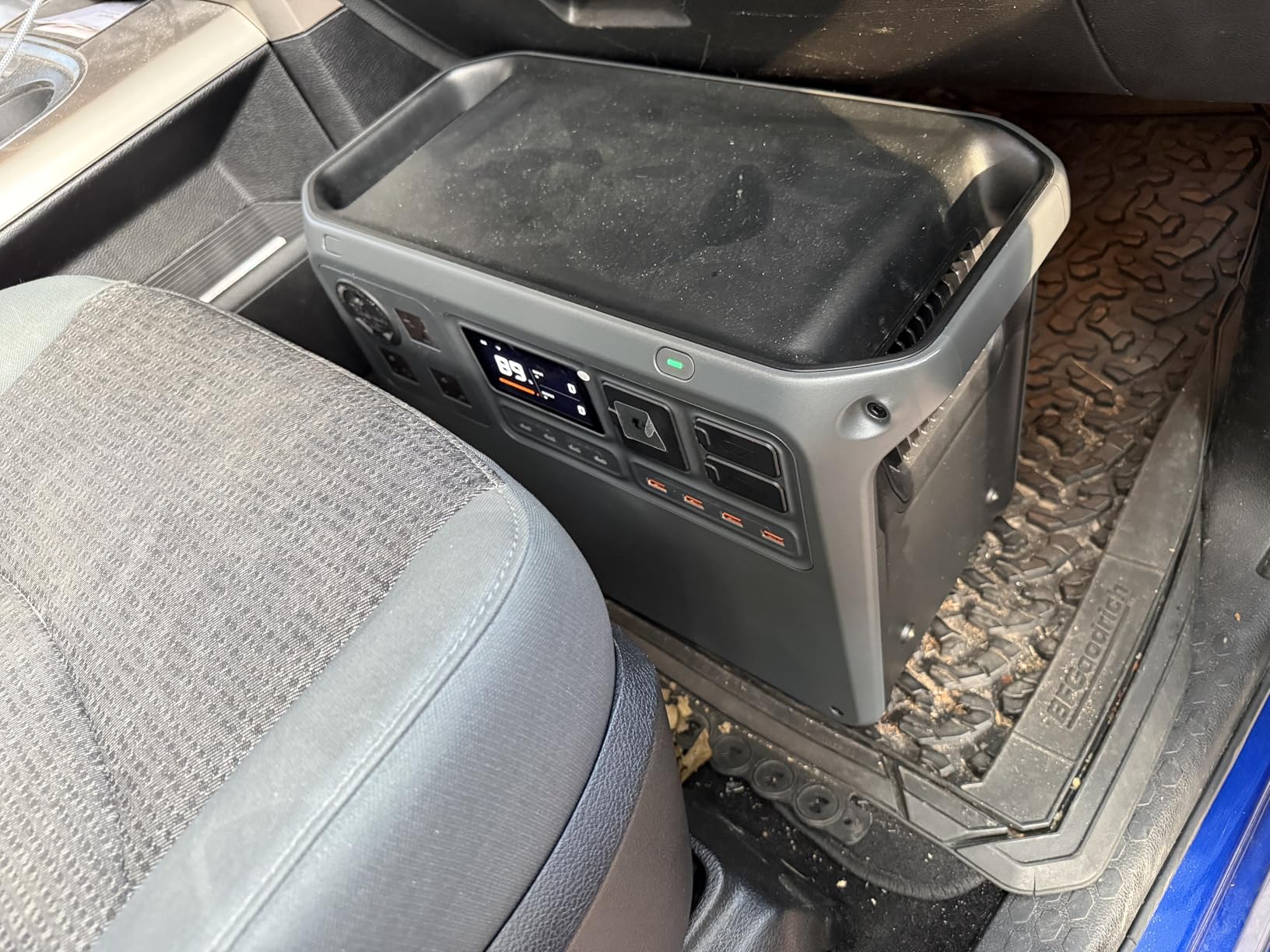
The DJI Power 2000 is an outlier: 3,000W of stable output from a 2,048Wh battery. No other unit in this roundup can start and sustain a high-draw appliance like a power tool, an air conditioner window unit or an electric kettle while also running your essential circuits. The manufacturer claims it runs 99 percent of household appliances.
It also has the fastest UPS switchover here at 10 milliseconds, half of most competitors. That is the difference between a network connection that survives a flicker and one that does not, and it is why this unit appeals to people with home servers and remote work setups.
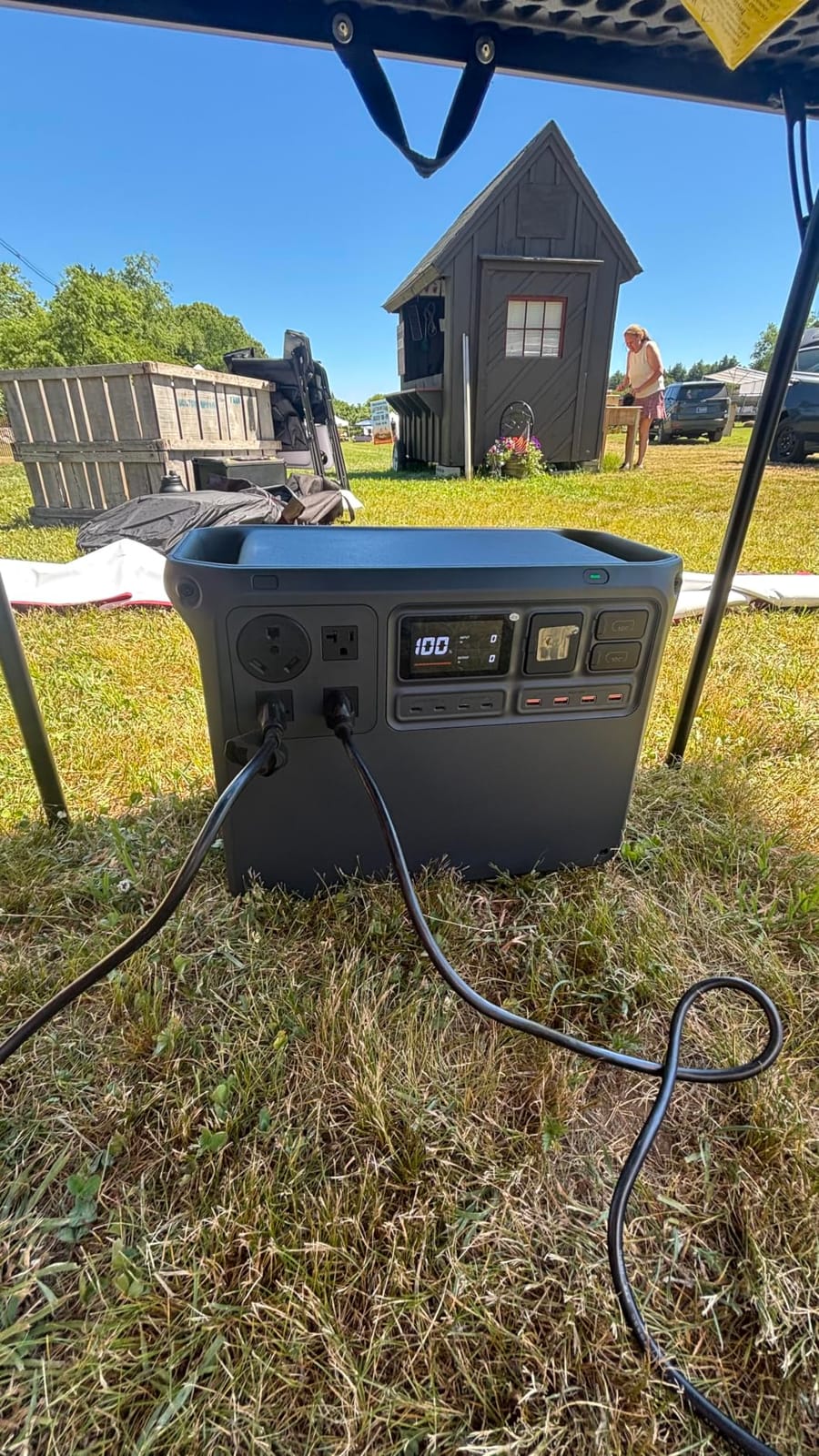
Expansion is the standout for long outages. Add compatible expansion batteries and the system reaches 22.5kWh, which the manufacturer frames as four to six days of essential home power. Fifteen ports including dual full SDC ports let a group share one unit. Recharge reaches 80 percent in 55 minutes, and the DJI Home app controls everything wirelessly without a dongle.
Two things catch you out. The MPPT solar and car charging modules are not built in, so charging from panels or a vehicle needs a separate compatible adapter. And at roughly 48 pounds it is the heaviest unit here, which is a serious consideration on stairs.
Buyers highlight the raw output and the fast recharge. The most common friction in owner feedback is the extra adapter needed for solar and car charging, and the weight when you need to move the unit. Its 4.4 rating carries an 8 percent one-star share.
Why it suits most households?
It fits a house that needs to start big appliances, not just keep a fridge and a modem alive, and it grows into a multi-day system with the right batteries. The 30 dB floor and the smart battery management system with flame-retardant housing make it a good bedroom unit.
Where it falls short?
The missing built-in solar and car charging modules mean more accessories than any other unit here, and the 48-pound weight makes moving it a two-person job. The warranty is also the murkiest in the group, with the listing showing a one-year manufacturer warranty while product features reference five years.
8. GRECELL 500W: Best for Small Appliances and Car Gear
Portable Power Station 500W, 519.48Wh/140400mAh Solar Generator Backup
519Wh capacity
500W pure sine wave AC
10 outputs
18 lb with handle
Pros
- Runs a car refrigerator
- CPAP
- router and blender under 500W
- Ten simultaneous outputs with 60W USB-C PD and a wireless pad
- Pass-through charging keeps devices running while it refills
- 18 lb carry handle for one-handed moves
- Quiet and fume-free for indoor use
Cons
- Solar and DC input capped near 105W so charging is slow
- AC power brick limits output during pass-through
- Some owners report cracked brackets and damaged cells on arrival
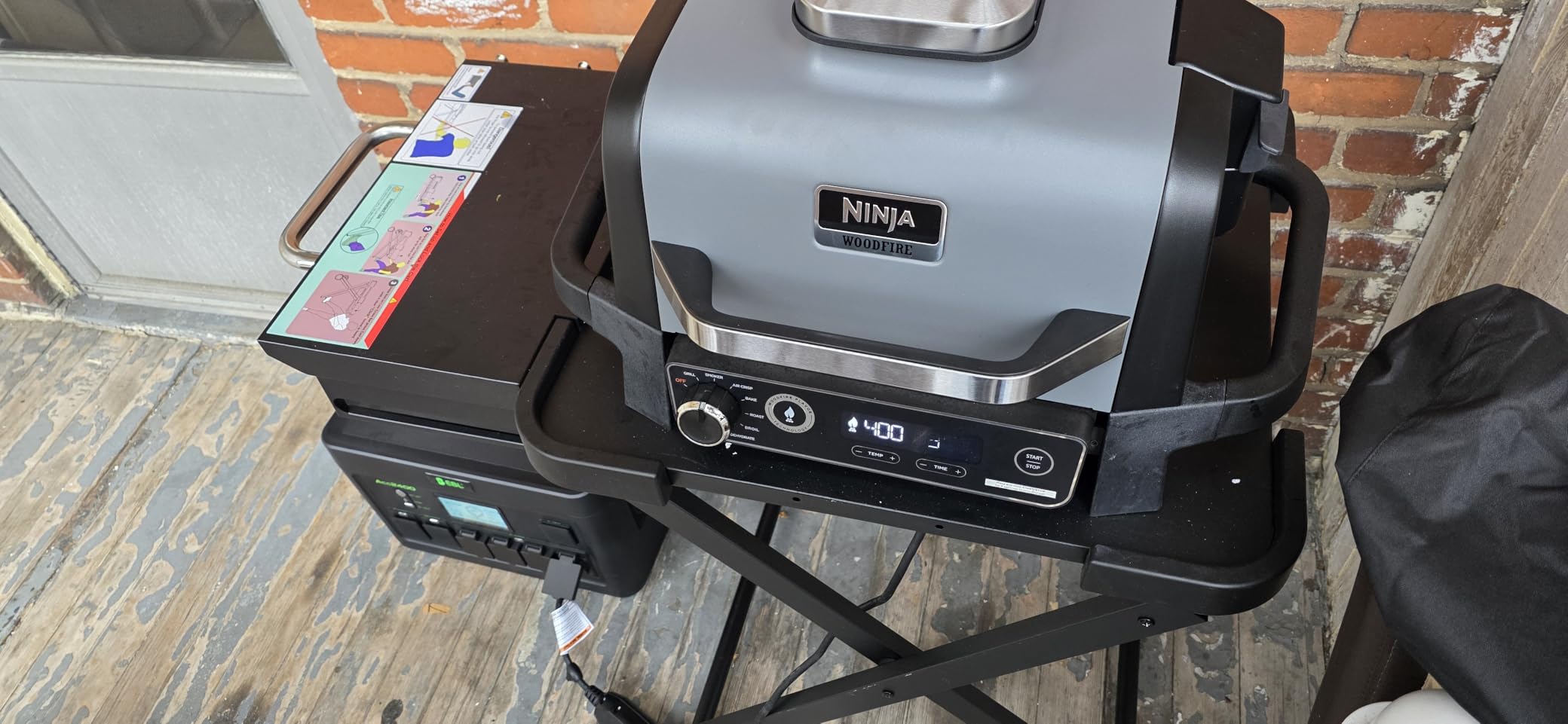
The GRECELL EB500 is the one in this roundup that treats a car refrigerator as a first-class use case. A 12V car outlet, a 60W USB-C port and 500W of pure sine wave AC mean you can keep a portable cooler, a CPAP and a router running together without an adapter chain. Ten outputs is more than any other sub-1kWh unit in this roundup offers.
At 18 pounds with a carry handle, it moves easily between rooms. Pass-through charging means devices stay on while the unit recharges, which is unusual at this capacity. The manufacturer advises cycling it at least every three months and turning AC output off when unused, which is a good habit for any unit stored through a quiet season.
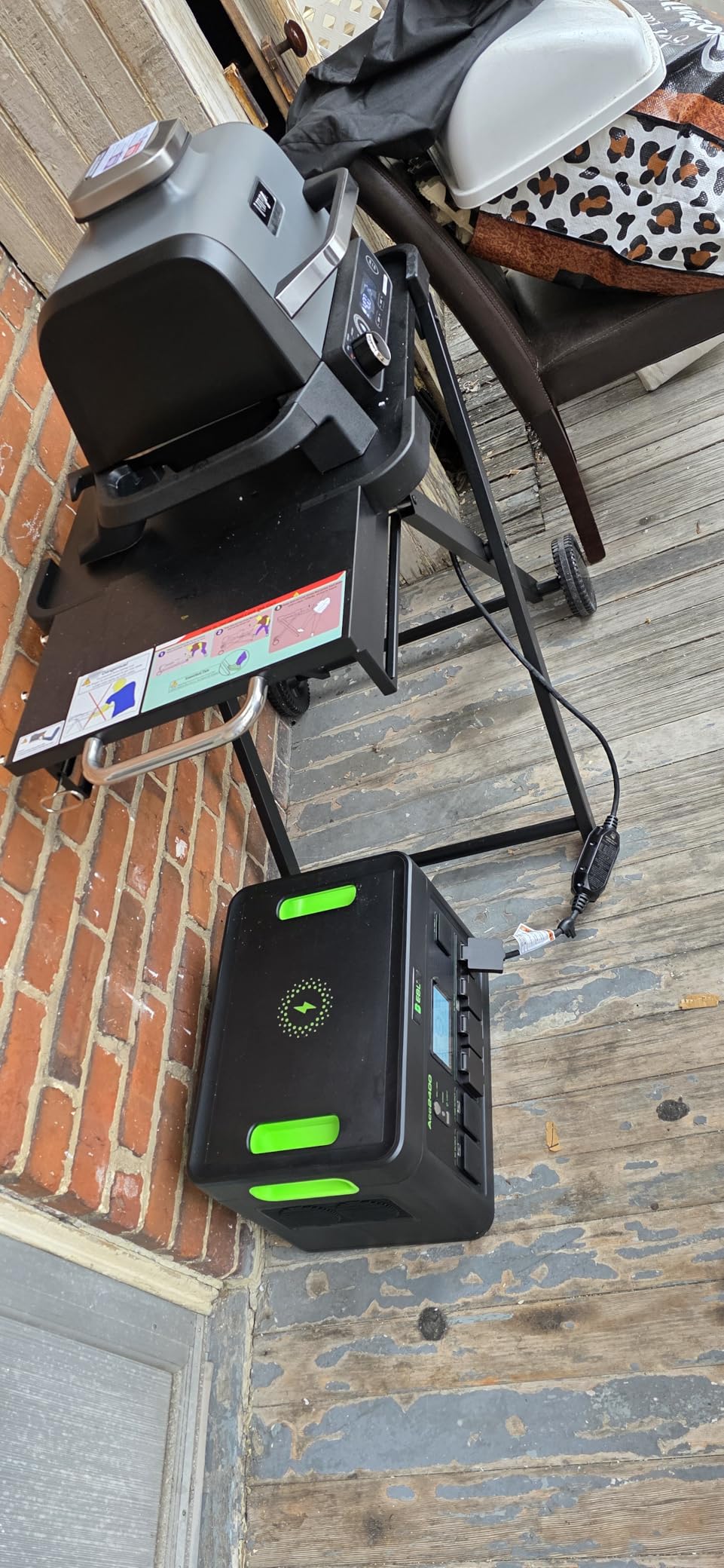
Charging is the weak point. Solar and DC input together cap out near 105W, so a 100W panel refills the battery in 6 to 9 hours and there is no faster path. Wall charging takes 6 to 7 hours. The included cable bag and the mix of car and AC cables in the box are a pleasant touch that larger units skip.
Protection comes from a battery management system with temperature control, overvoltage, overcurrent and short circuit handling. Warranty coverage is 24 months, well short of the five-year coverage on the 1kWh units, and a few owners have reported arriving units with cracked internal brackets and damaged battery cells that the seller replaced.
Why it suits most households?
It suits apartments, an RV, a tailgate or a short outage where the loads are all small: a car refrigerator, a medical device, a router, lights and phones. The pure sine wave output keeps sensitive electronics happy.
Where it falls short?
The 500W ceiling rules out coffee makers, hair dryers, space heaters and anything else with a heating element. Slow input charging means it is a poor choice for a long outage unless you have a wall outlet, and the 24-month warranty is well short of the five-year terms on the 1kWh units.
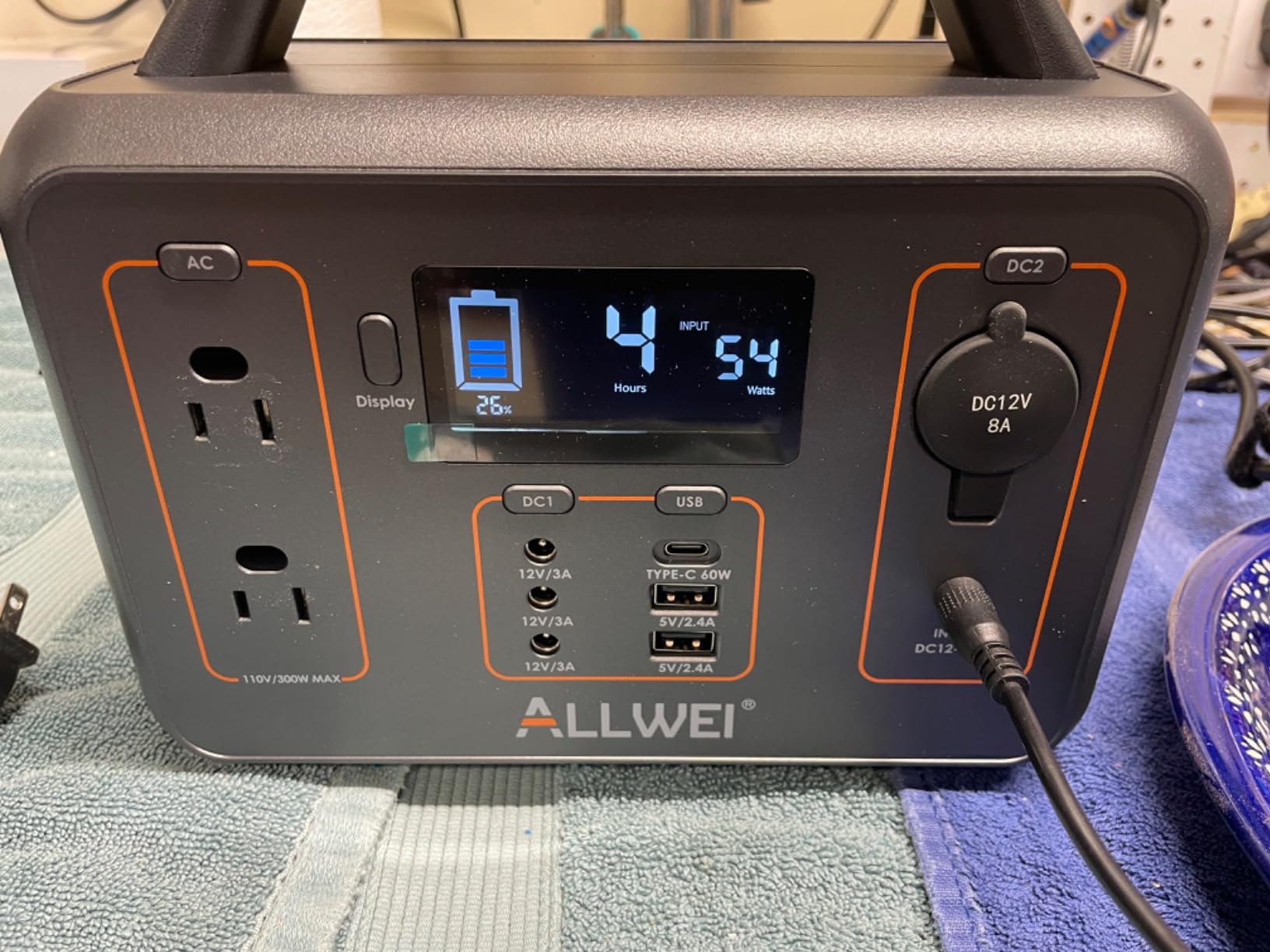
9. ALLWEI 300W: Best for Medical Device Backup
ALLWEI Portable Power Station 300W, 256Wh Solar Generator LiFePO4 Battery
256Wh LiFePO4
300W pure sine wave, 600W surge
Only 6.4 lb
3,000 cycles
Pros
- Only 6.4 lb
- easy to carry to a shelter or upstairs
- Pure sine wave output runs CPAP machines cleanly
- Holds its charge over months of storage
- Built-in three-level LED light with SOS mode
- Six outputs including 60W USB-C PD
Cons
- Some units stopped holding charge within about a year
- Solar input capped at 120W
- No 24V output for RV applications
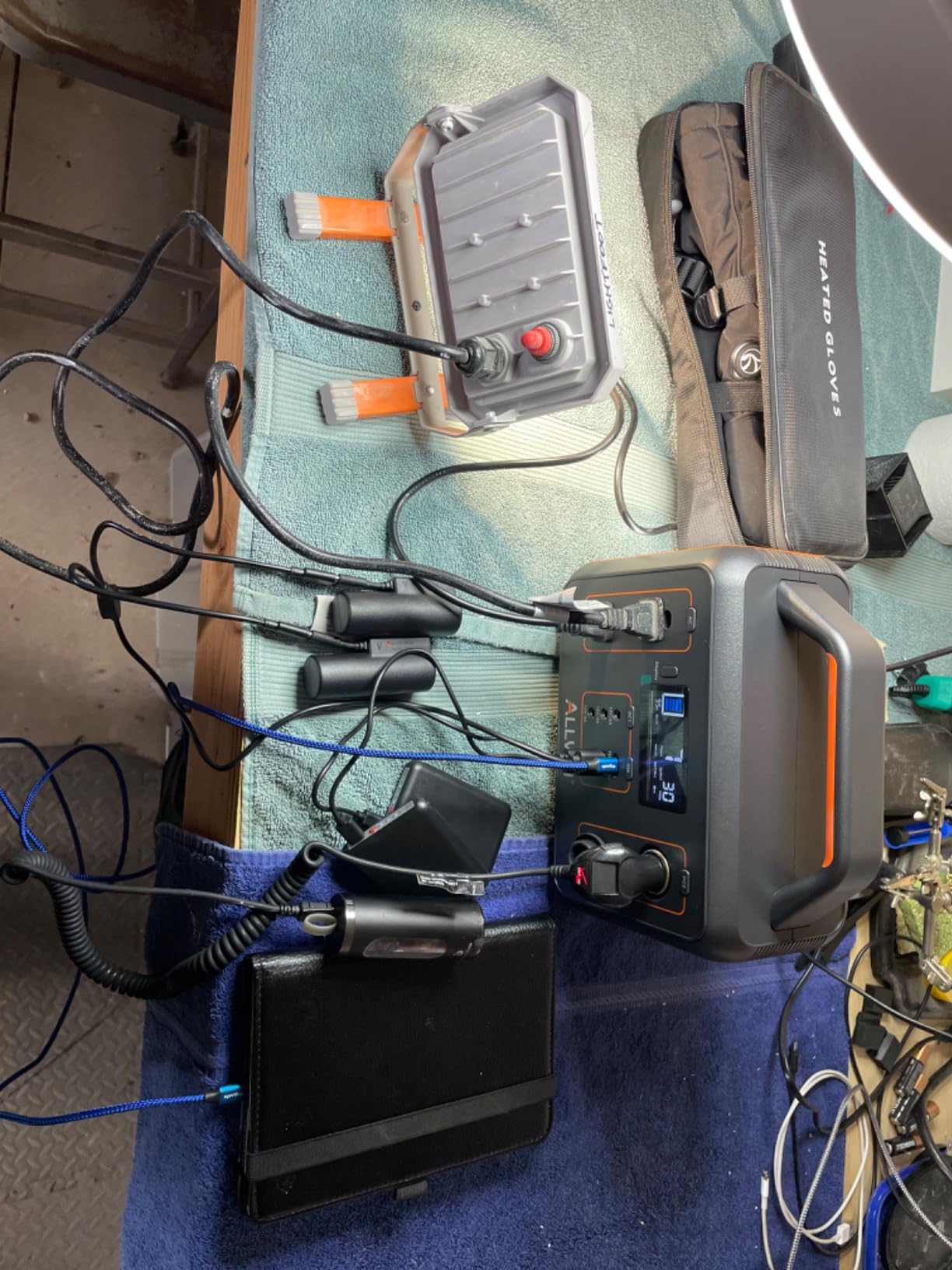
For a CPAP machine or a portable medical cooler, 256Wh is genuinely enough. A CPAP draws around 40W, so a full charge runs roughly five hours, and multiple owners report running three of these units together to keep a fridge and a freezer going past 24 hours. The pure sine wave output is the detail that matters for sensitive electronics.
At 6.4 pounds it is the easiest unit to move in an evacuation, and it holds its charge over months of storage better than most. A built-in three-level LED light with an SOS mode is the kind of detail that shows up in a blackout. Recharge comes from a wall in 3.5 to 4 hours, a car in the same window, or a 100W panel in 4 to 5 hours.
The LiFePO4 cells are rated for 3,000 charge-discharge cycles, and the built-in MPPT controller plus six-layer battery management system handle the panel input. Dual AC and solar charging together gets you to full in about 2 to 2.5 hours, which is a useful trick when both are available.
Because the whole unit weighs less than a gallon of milk, it is the one you can genuinely hand to an older relative or keep in a go-bag without thinking about it. The trade is raw capacity: once the CPAP and a phone are covered, there is very little headroom left for a second medical device or a kettle.
Why it suits most households?
It fits a household whose outage plan is medical devices, lighting, a laptop and a phone, especially in a small apartment or a house where a heavier unit is impractical.
Where it falls short?
It cannot run a refrigerator and much else at the same time, and the reports of first-year charge retention problems are worth weighing. There is no 24V output for RV use, and the 120W solar cap limits how quickly you can rebuild charge outdoors.
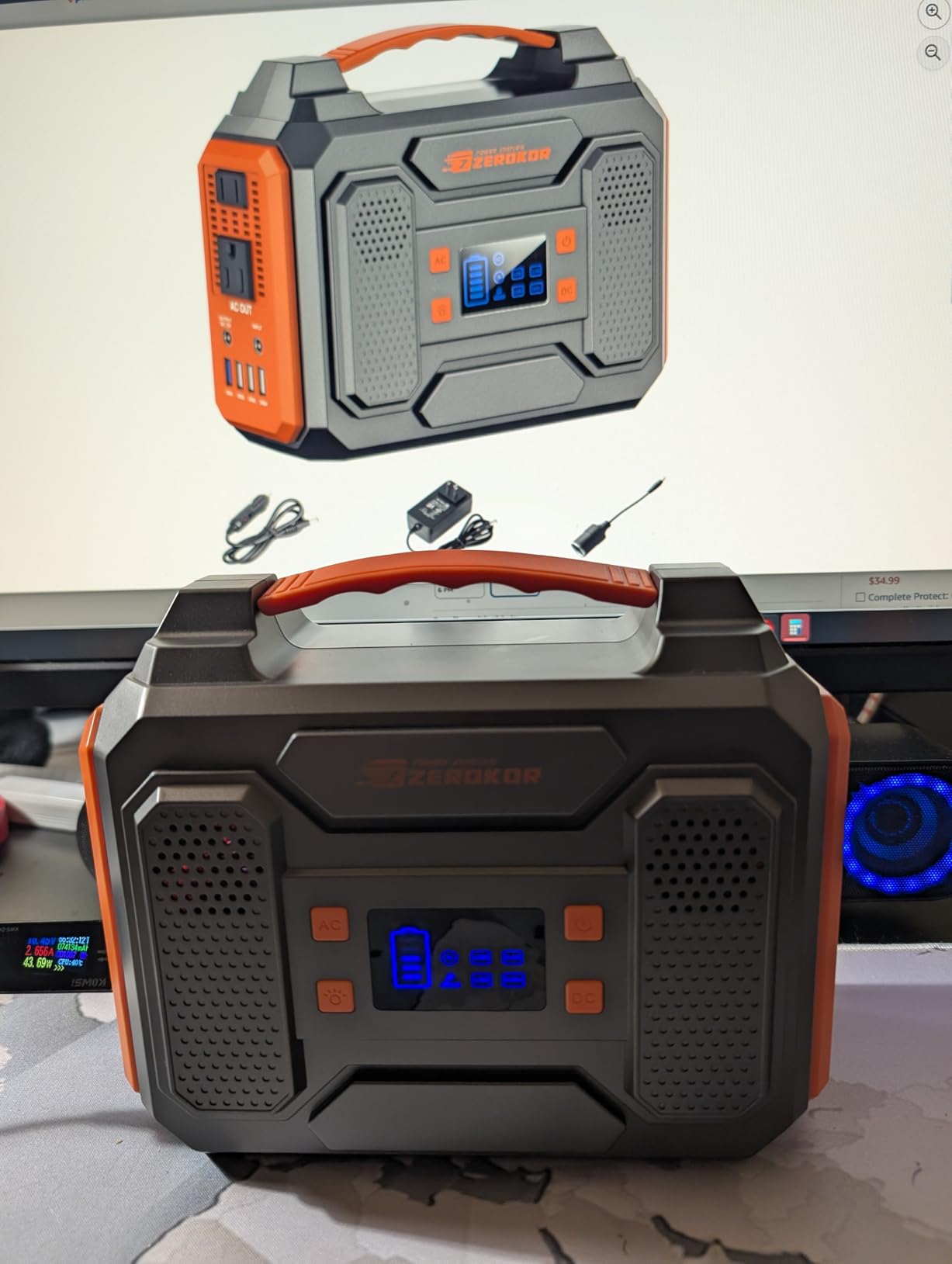
10. ZeroKor 300W Bundle: Best All-in-One Kit
Portable Solar Generator 300W Portable Power Station with 60W Solar Panel
280Wh battery
300W max AC
60W folding panel included
5.1 lb
Pros
- Only bundle here that includes a 60W folding solar panel
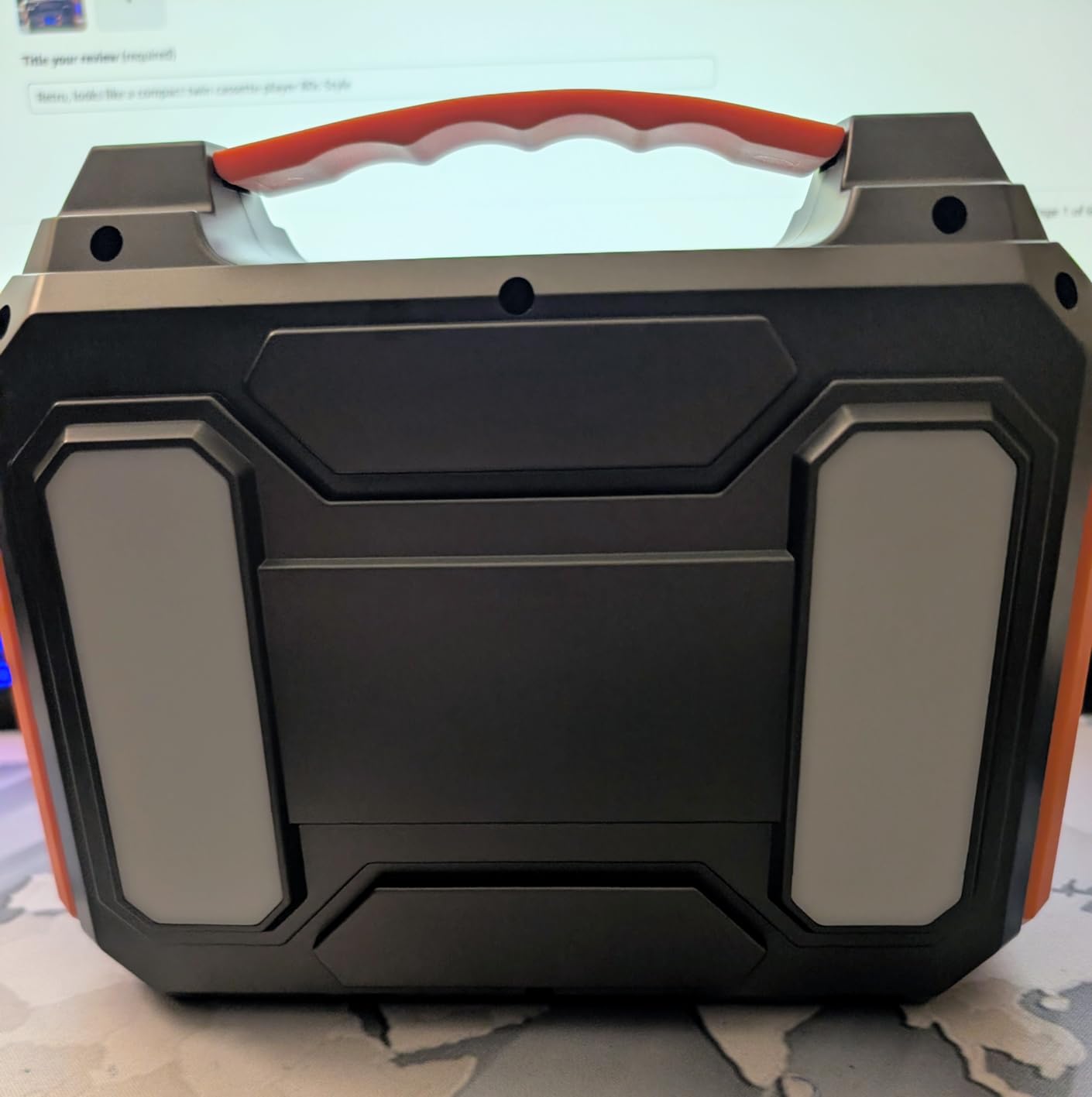
- Compact 8.5 x 6.7 x 4.1 inch body at 5.1 lb
- Two AC outlets plus DC
- USB and quick charge ports
- Built-in MPPT solar input
- Flashlight with reading and SOS modes
Cons
- Real continuous AC output falls well below the 300W maximum
- Output is not a clean sine wave and can glitch sensitive laptops
- Included folding panel breaks at the fold lines
- 12-month warranty
The ZeroKor bundle is the only unit in this roundup that includes a solar panel in the box, a 60W folding monocrystalline panel at 20.5 percent conversion efficiency. For someone buying their first outage kit who does not want to research panels, that removes the single most common point of confusion. At 5.1 pounds it is also the smallest unit here.
It is a competent emergency box. Two AC outlets, a 12V DC port, three USB ports and a quick charge USB handle phones, a router, lights and a laptop for a few hours. Owners report running a 55-inch television for about four hours with charge remaining, and the support team has replaced units that stopped charging.
Set expectations honestly. Detailed reviews measure real continuous AC output well below the advertised 300W maximum, and the waveform is not a clean pure sine wave, which can cause glitches on sensitive laptops. Solar input appears capped near 13V and 2.4A, far below what the included panel can produce, so the charging side is slower than the box implies.
The included folding panel is the most common failure point, with owners reporting it breaking at the fold lines and ceasing to charge. Coverage is 12 months, the shortest warranty in this roundup, and the manufacturer advises keeping charge between 60 and 80 percent during long storage to avoid protection mode. It carries a 4.2 rating with an 11 percent one-star share, the lowest in the group.
Why it suits most households?
It suits a first-time buyer, an apartment resident, or anyone who wants one box that holds a power station and a panel with nothing else to figure out. For preparedness kits handed to relatives, the simplicity is the selling point.
Where it falls short?
Do not buy it for medical devices or sensitive electronics, because the output is not a clean sine wave. The bundled panel and the short warranty are the other two weak points, and the real output ceiling is lower than the headline number suggests.
How to Size a Solar Generator for a Power Outage?
Size for two separate things: how many watts you need at any one moment, and how many watt-hours you need to last. Buyers who compare only the wattage figure end up with a unit that starts the refrigerator fine and dies at hour nine. The formula below is the one we use.
Usable watt-hours equals the label capacity multiplied by depth of discharge, usually 0.90, multiplied by inverter efficiency, usually 0.85. A 2,000Wh station therefore delivers around 1,530Wh in practice, and a 1,070Wh unit delivers roughly 820Wh. Divide that usable figure by the total watts your essential loads draw to get the number of hours you can expect.
For a typical essential-loads list, a router and modem draw about 15W, LED lighting 30W, a refrigerator averages 150W while running and needs roughly 600W to start, a freezer averages 100W, a CPAP machine 40W, a mesh Wi-Fi setup 25W, and laptop charging 65W. Those running figures total about 360W, so a 1,000Wh class unit covers roughly two hours of every load running flat out, and often far longer once you account for the fact that a refrigerator cycles rather than running flat out. A 2,000Wh unit gives you most of a day on the same list.
Two caveats that catch people out. First, all your loads must also fit under the continuous output rating, and starting surge has to fit under the peak rating with headroom, since a refrigerator and a freezer starting at the same moment is a much bigger spike than either alone. Second, if your outage is likely to exceed a day, add capacity for a second solar refill or plan to cut non-essential loads.
What a Solar Generator Can and Cannot Run?
These units are built for essential circuits, not for a house at full draw. Understanding the boundary stops the most common disappointment in the first hour of a blackout.
What they handle well: refrigerators and freezers, CPAP and other medical devices, routers and networking gear, LED lighting, laptops and phone charging, televisions, a small car refrigerator, a sump pump on intermittent duty, and power tools used in short bursts. Running 12V DC appliances directly is far more efficient than running them through the AC inverter, which is why forum owners favour car fridges when they can.
What they handle badly: central air conditioners and compressors, well pumps of a third horsepower or larger, electric space heaters, electric water heaters, hair dryers, coffee makers, and any other heating element, since those pull 1,000W and up for as long as they run. A hair dryer on a 1,000Wh unit empties the usable reserve in a few dozen minutes. Plugging a space heater into one of these is the most common way people burn through a reserve in a single evening.
There is also the question of whether your wiring lets you use the unit at all. Running a refrigerator from a few outlets in one room requires no installation. Powering a house through a transfer switch or a smart home panel is an electrical project with permits, and it is the single biggest surprise cost in this category. If you are considering it, our whole-home battery comparison covers the fixed systems built for that role.
Solar Recharge Reality Check for Multi-Day Outages
A 200W folding panel produces around 160W after conversion and angle losses, and a typical day offers roughly five peak sun hours. That works out to about 0.8 kWh of stored energy on a clear day. Refilling a 1,000Wh station therefore takes roughly a day and a half of good sun, and a 2,000Wh station takes about three days.
Overcast conditions cut panel output to 20 to 40 percent, and winter output falls further with the sun angle, so plan on roughly double the refill time in poor weather. If solar is your only refill path, treat the panel as a trickle that extends life rather than something that recharges the unit. The wall outlet remains the fast path, and a generator charging cable is the emergency path for a multi-day event.
Two behaviours deserve attention before a storm. Self-discharge over weeks of storage is real, so top up within a day or two of landfall. And an always-on display can draw meaningful standby power, so switch the unit off at the mains when it is not being used. A flashlight or a battery-powered lantern, covered in our emergency lighting guide, handles the lighting side so the station can stay sealed.
Frequently Asked Questions
What size solar generator do I need for a power outage?
For essential loads, most households need 1,000 to 2,000Wh. A 1,000Wh unit covers a refrigerator, router, lights and a CPAP for roughly a day. Multiply label capacity by 0.90 depth of discharge and 0.85 inverter efficiency to get usable watt-hours, then match that to the hours you need to cover.
How long will a solar generator last during an outage?
It depends on capacity and load. A 1,024Wh unit covers a refrigerator, router and LED lights for roughly 8 to 12 hours, while a 2,010Wh unit runs a refrigerator for 30 hours or more. Owner reports of six to 12 hours of fridge runtime on mid-size units line up with that math.
Which solar generator is best for home backup?
The Jackery Explorer 1000 v2 is our best overall pick for home backup because it balances 1,070Wh of LiFePO4 capacity, 1,500W of output and a 23.8-pound weight. For a fixed installation covering the whole house, a home battery backup system is the right category instead.
Do solar generators come with a solar panel?
Almost never. Nine of the ten units we covered come with no panel in the box, and the one exception is the ZeroKor bundle, which includes a 60W folding panel. Budget for a panel separately, and note that solar is a slow refill path rather than a substitute for wall charging.
Can solar generators be used indoors?
Yes. Battery solar generators produce no carbon monoxide, which is the main safety advantage over a gas generator and the reason most households still keep the unit indoors during an outage. Gas generators must never run indoors, and indoor use of a portable power station is the safer choice for exactly that reason.
The Verdict: Which Solar Generator Should You Buy in 2026?
The Jackery Explorer 1000 v2 remains the best solar generator for power outages for most homes, because 1,070Wh of LiFePO4 capacity, a 23.8-pound weight and a one-hour emergency recharge mode cover the realistic day-long blackout without the bulk of a 2kWh unit. Its 4.7 rating across more than 3,600 reviews gives it the deepest owner record in this group.
Go bigger for a three-day storm or a house that must keep a freezer cold: the Anker SOLIX S2000 runs a refrigerator for 30 hours and more, and the DJI Power 2000 wins on raw 3,000W output and 22.5kWh of expansion. Go smaller for medical devices and light loads, where the 6.4-pound ALLWEI or the 519Wh GRECELL does the job at a fraction of the carry weight. Expandable households should start with the EcoFlow DELTA 3, and anyone who wants panels in the box should look at the ZeroKor bundle.
Whichever you choose, top it up within a day of a storm forecast, switch it off at the mains when it is idle, and keep the panel in the loop as the slow path rather than the only one. While you are stocking up, our picks for solar radios and camping lanterns cover the communication and lighting gaps that no power station fills.